Bhutan - The Mysterious Mountain Kingdom
In early 2026, the Gulf War caused a little bit of a mess to my travel plans, but on the bright side, the situation led me to Bhutan, one of the more peaceful spots on the planet.
Bhutan is probably one of the most enigmatic places on earth, rarely heard of and removed from most (but not all) geopolitics. Maybe that’s what makes it so intriguing. I spent a little less than two weeks in the country - intense ones with a lot of moving around, hiking, sights, people, culture, festivals, architecture, and more, and yet I know there is still more to see here, especially towards the centre and east.
Nevertheless, this blog will probably end up having almost 200 images, such is the richness of angles to cover. Stay with me until the end, which features some of my favourite photos of the trip.
Getting There…
Bhutan is a relatively small landlocked country in the eastern Himalayas of South Asia. Although you can enter through a few land borders from India (but not from China in the north - the border is disputed) most tourists would arrive via its only international airport in Paro. That is easier said than done, for two reasons: first, Bhutan levies a USD 100 per day Sustainable Development Fee on tourists from almost every country, and an official guide is mandatory, there is no self-driving tourism here for example. My guide Chencho and driver Nima were both excellent, so no complaints here.
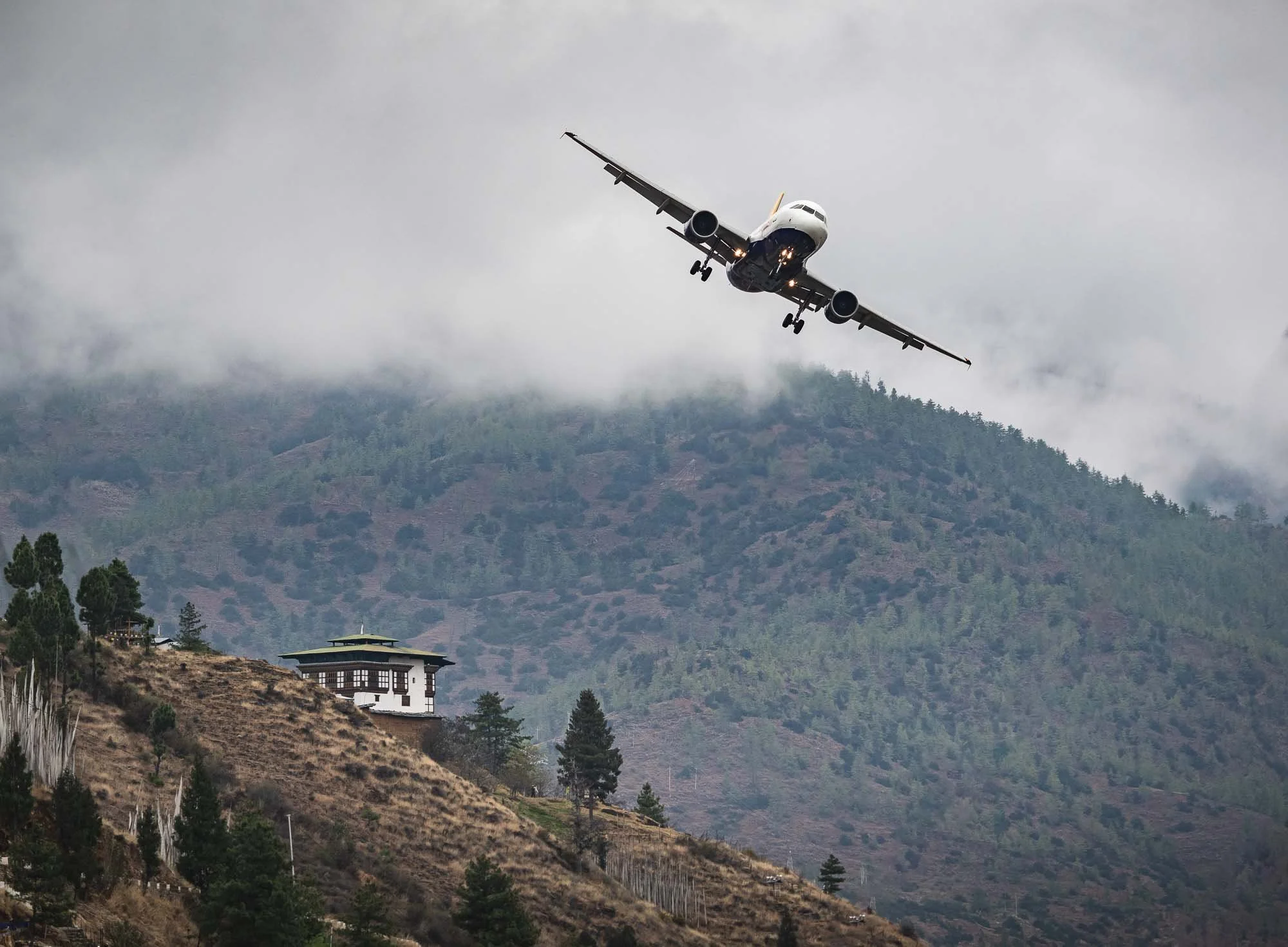
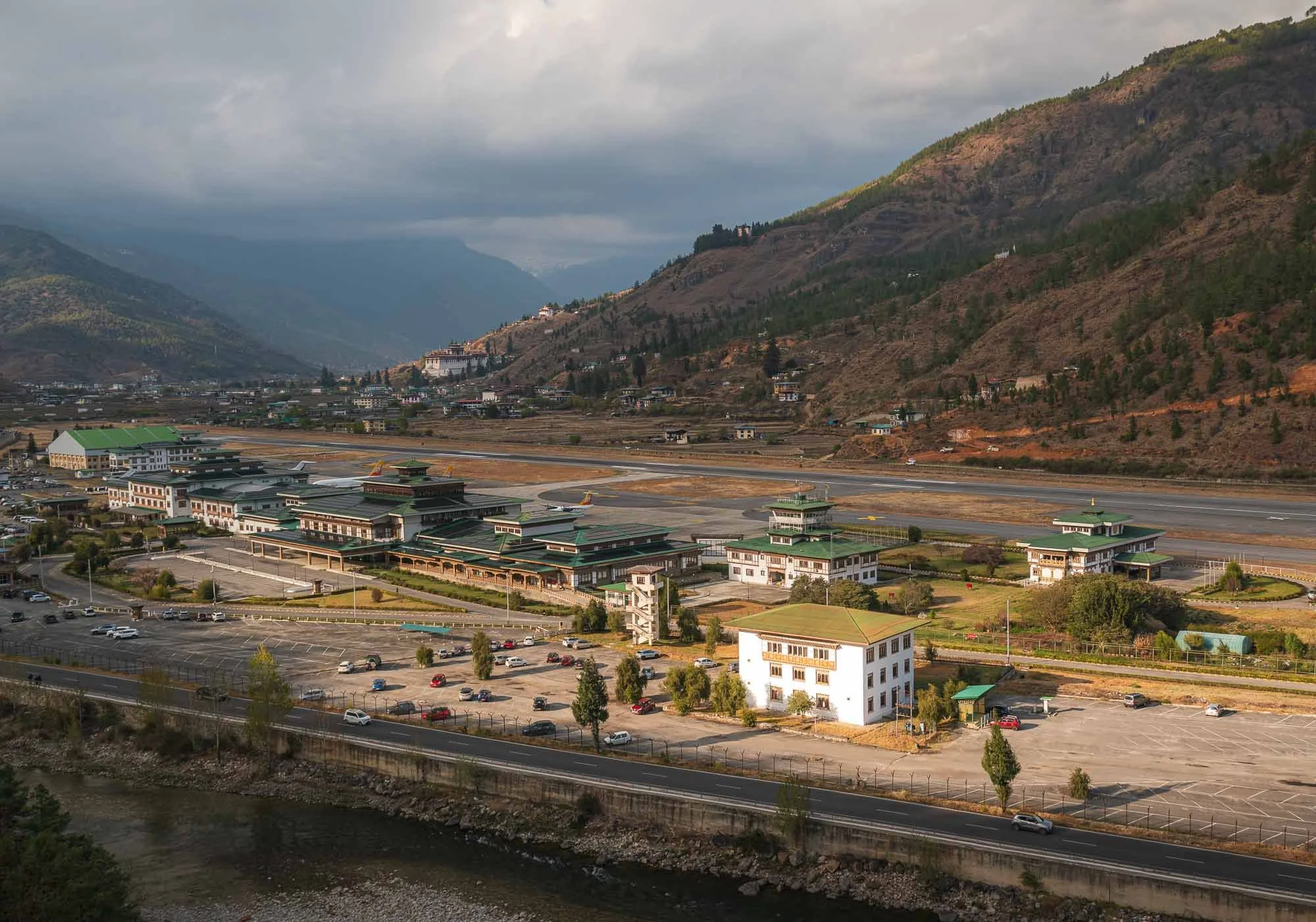
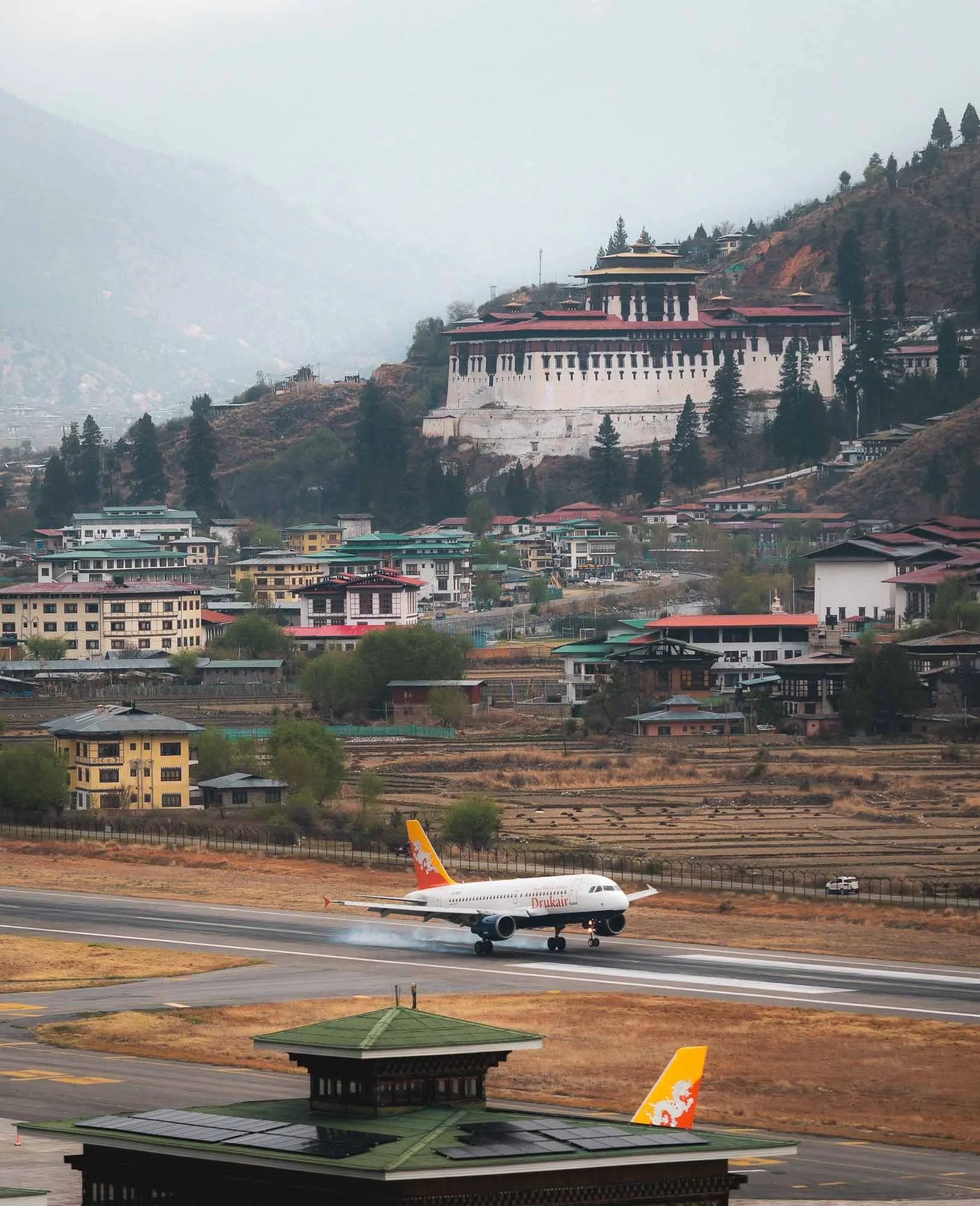
The second reason is its only international airport, generally considered one of the most difficult landings in the world due to its location in a narrow valley, with frequent poor visibility. Only a handful of airlines fly to and from a few countries, and only a few specially trained pilots are allowed to make the banked manual visual approach without the standard instrument-assisted landing systems.
My own arrival flight was delayed a few hours due to clouds (making such a visual approach impossible) - while I was in Paro I made sure to observe a few of the rather interesting landings with the backdrop of one of the many forts, more on that to come.
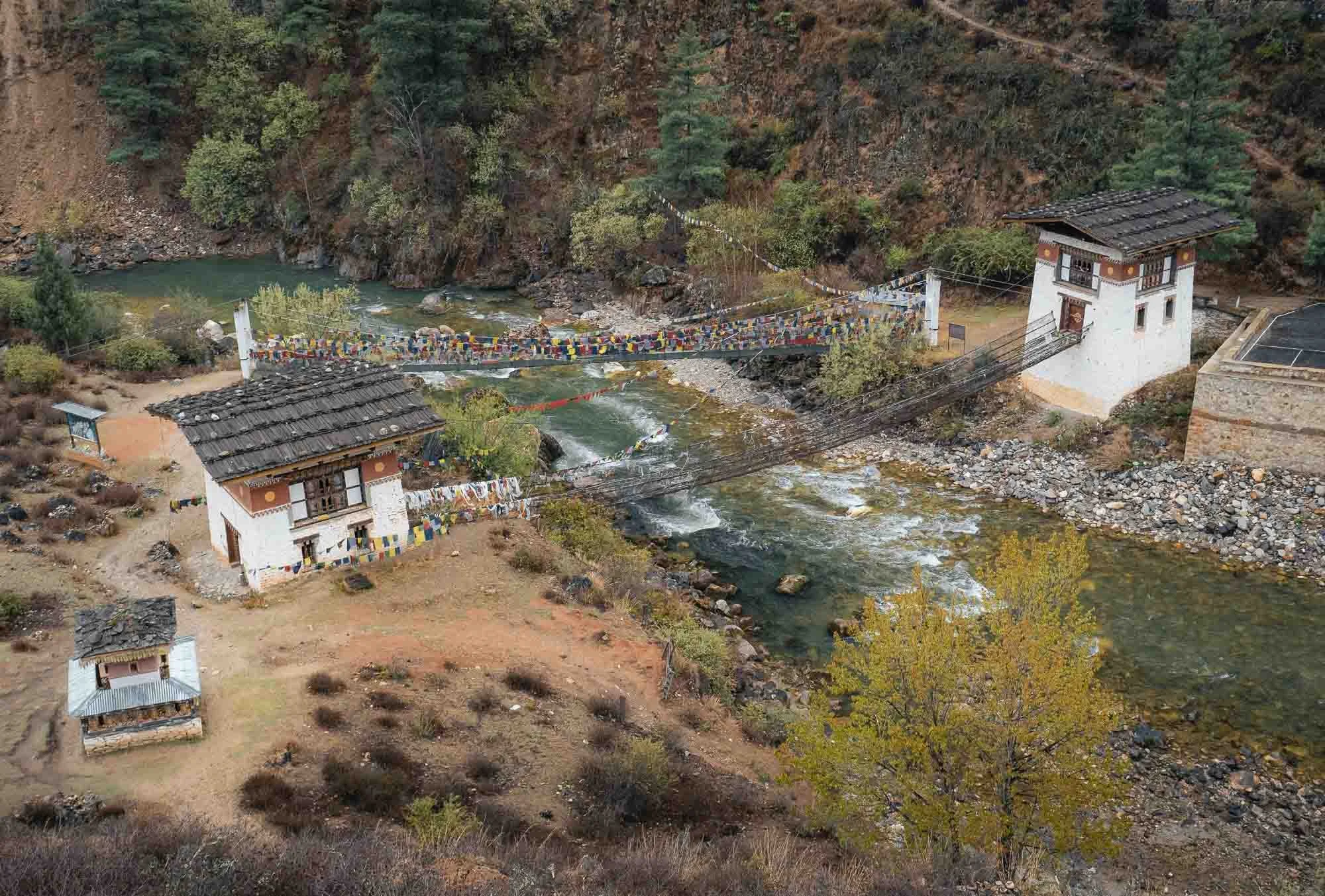
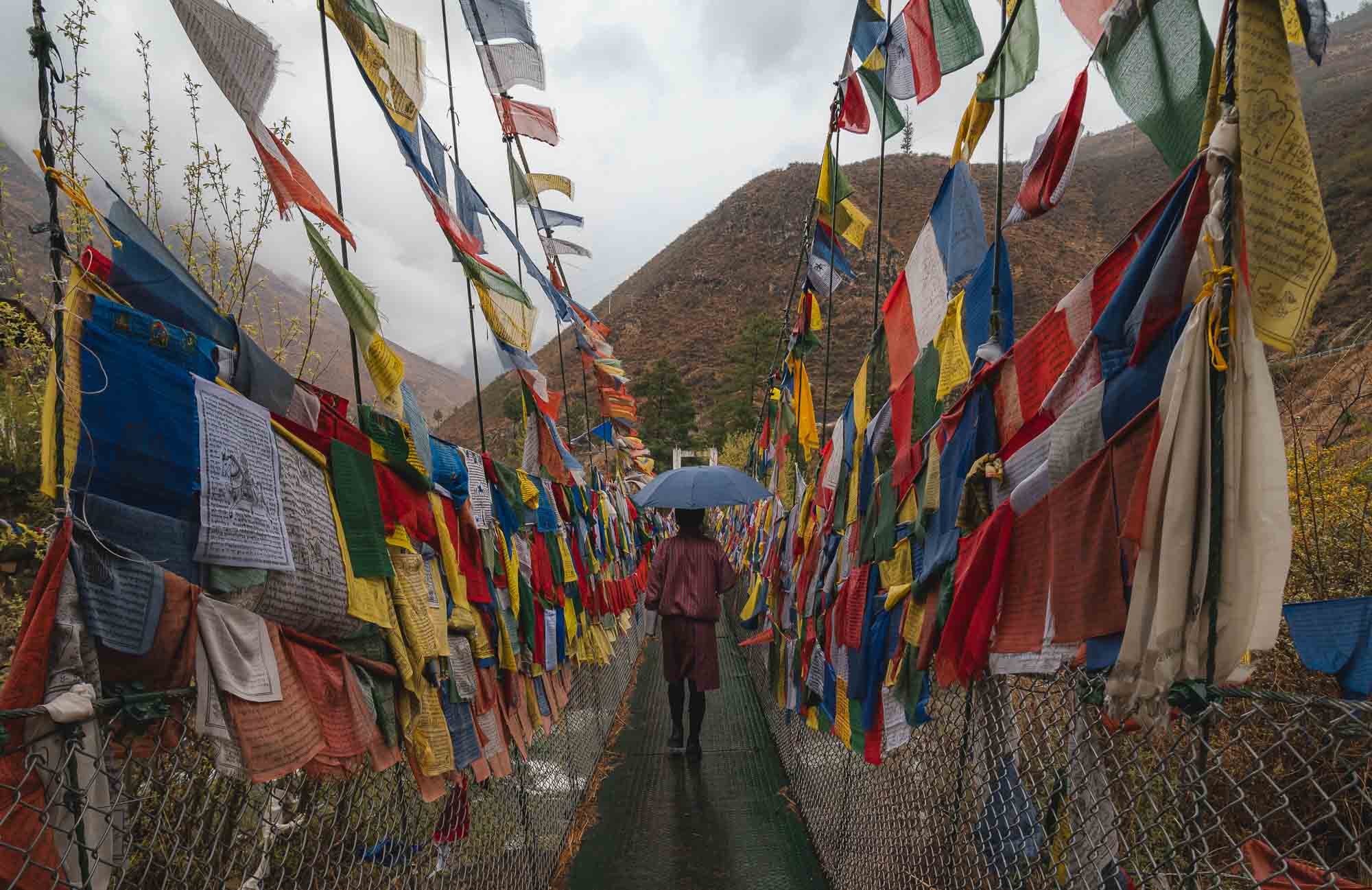
Once I made it a few hours later than planned, it was still rainy. A drive to Thimphu, the capital was on the agenda, with a short stop at a picturesque monastery of Tachog Lhakhang, accessible through one of the many rope bridges in the country. If you look closely, you’ll see there are actually two bridges here, the one without flags being the oldest in the country (from 1420) and - possibly for this reason - not in use anymore.
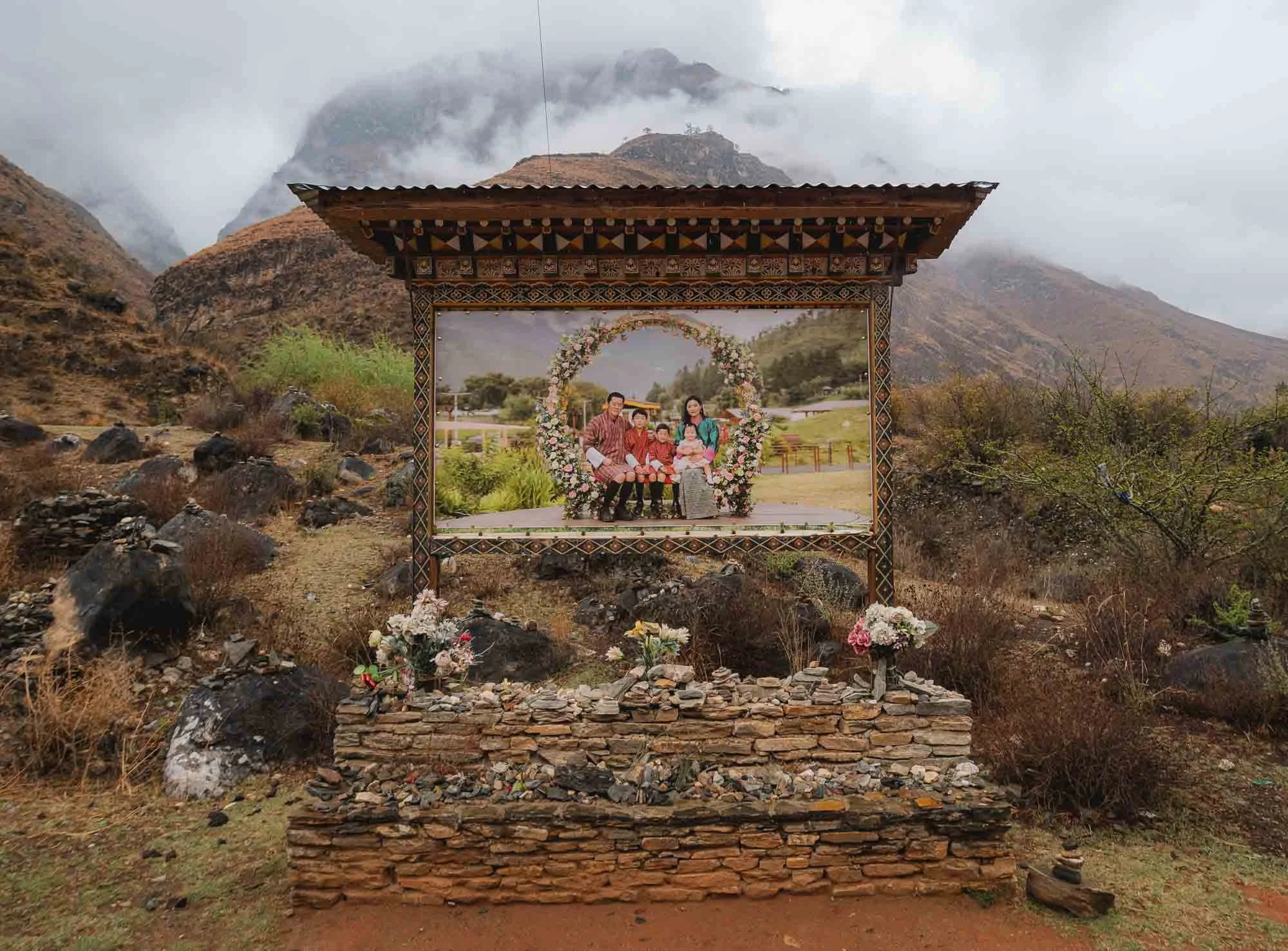
At this point I also had my first encounter with the political system of the country: Wikipedia says it’s a unitary parliamentary semi-constitutional monarchy - in effect a Kingdom, ruled by the so-called Dragon King (what a title). In practice, it holds general elections in a parliamentary form of government, but the royal family is present everywhere and from what I observed and been told, highly respected.
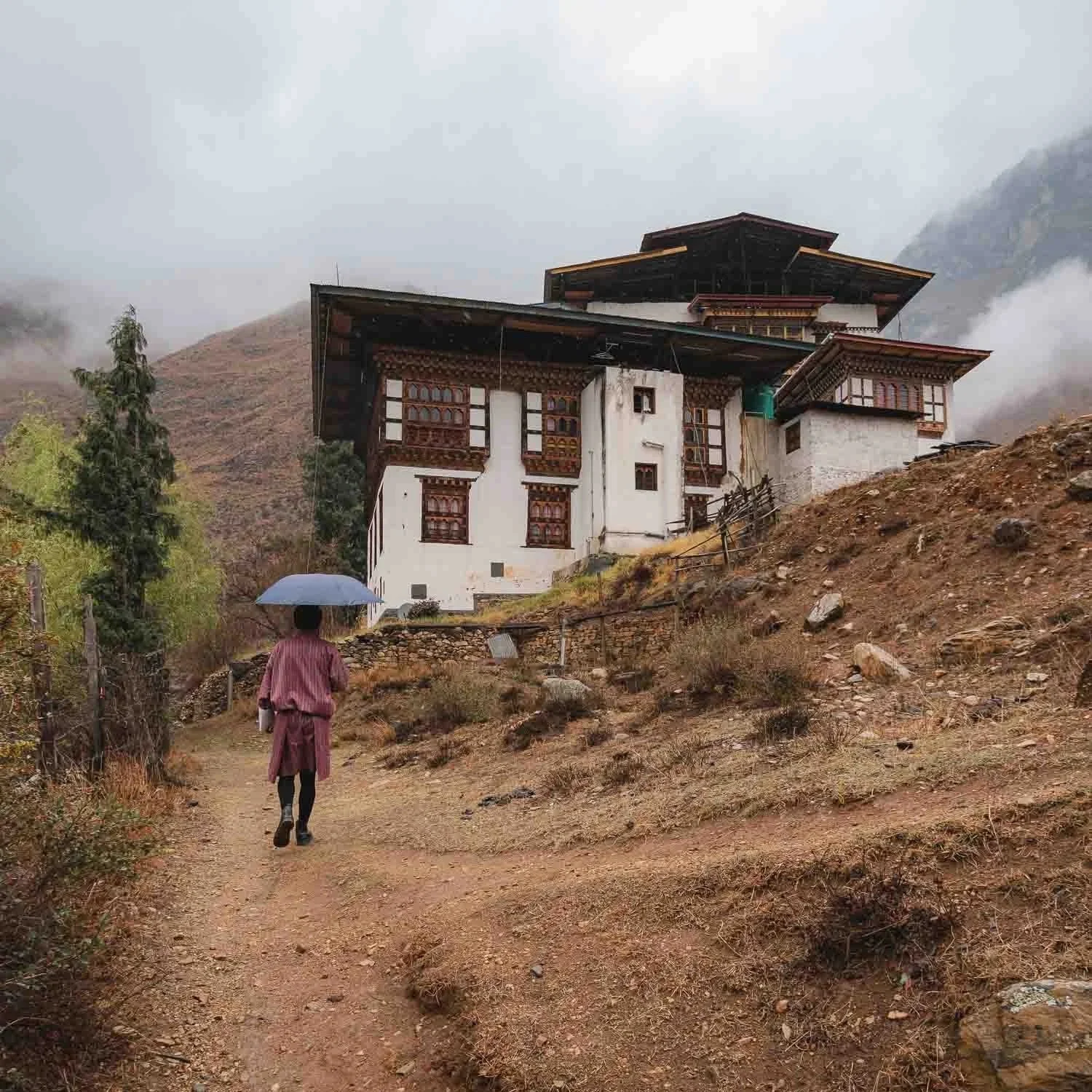
My guide Chencho and I walked up to the temple, where he showed me a statue of the so-called “Bearded Master”: Guru Rinpoche. He is omnipresent in the temples of the country, and considered the civilizational founder who established Buddhist Vajrayana practice across the region.
It also featured a rather curious artifact inside (no photos - none of the temples in Bhutan allow photography or videos inside and they’re quite strict about it): a spot where a woman had prayed so many times for so long that her footprints were eternalized in the stone floor.
Buddhism covers more than 75% of the around 800,000 people in the country, and its evidence is everywhere. The balance is mostly Hinduism, mostly from Indian influence in the south.
Thimphu
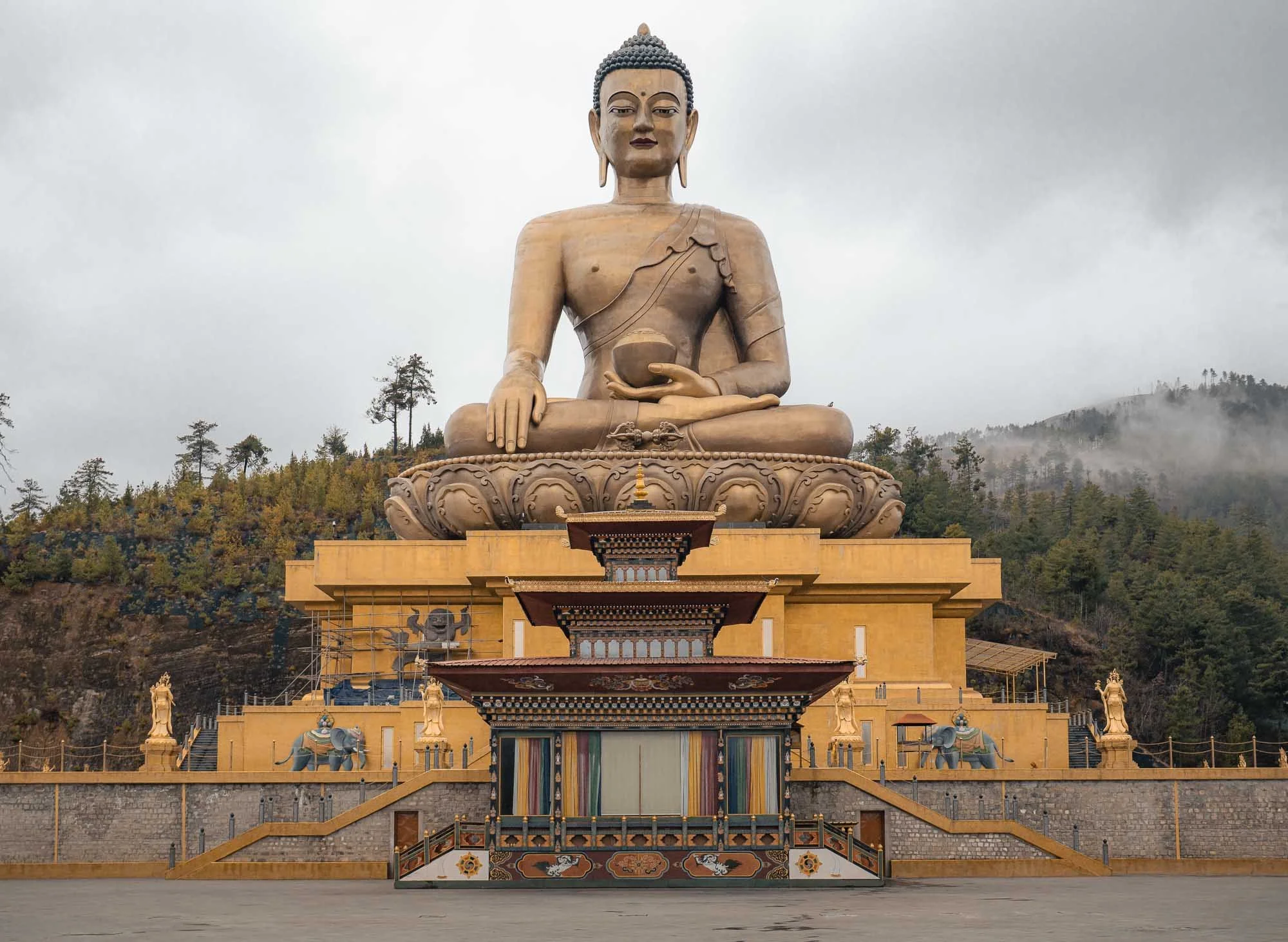
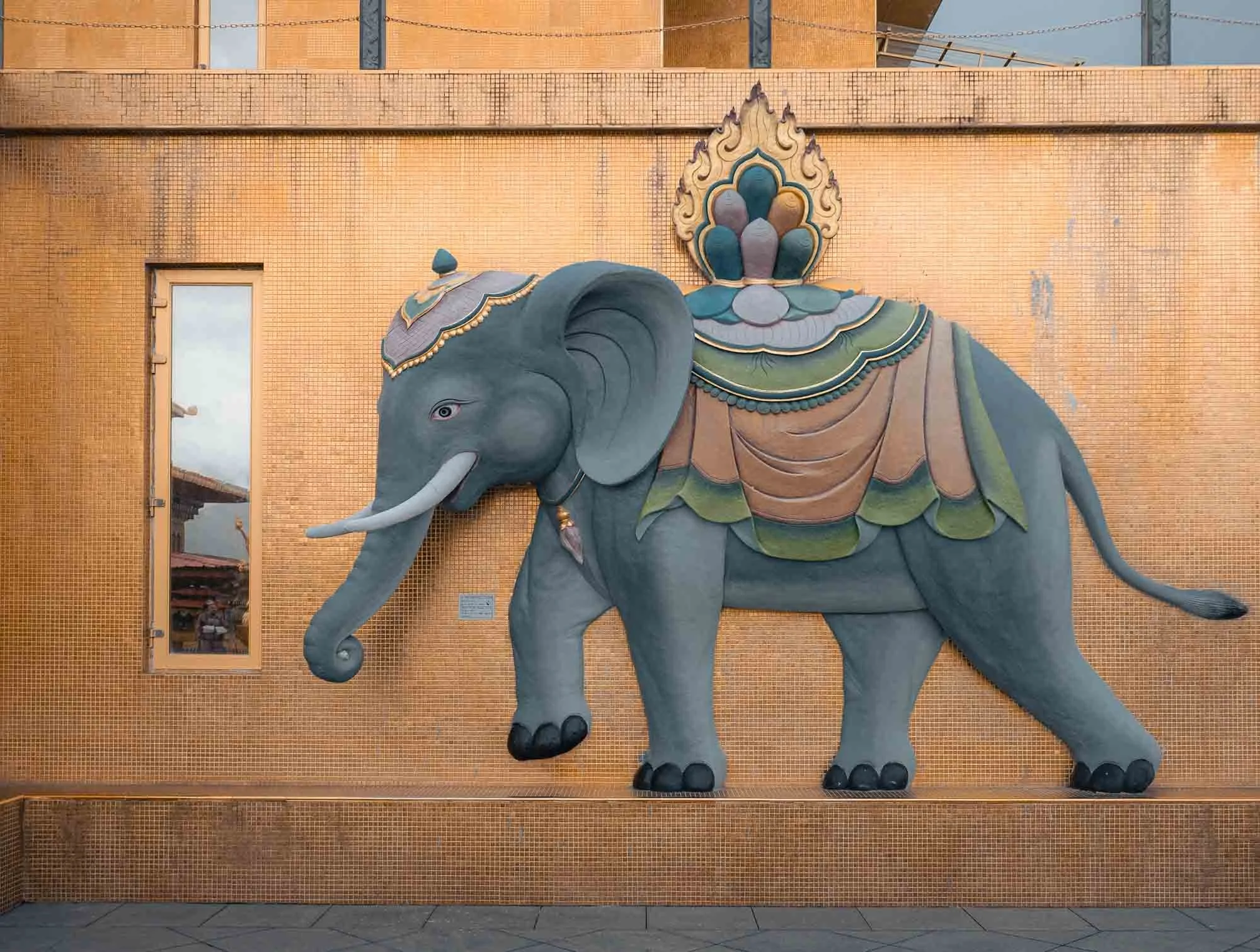
After about an hour drive we arrived at the capital, or more specifically, the Great Buddha Dordenma, a 50- metre-tall bronze statue overlooking the city. It was completed in 2015 and houses over 100,000 smaller Buddha statues inside and was built to emanate peace to the world, so they say. Indeed Bhutan has been ranked 21st on the Global Peace Index in 2025.
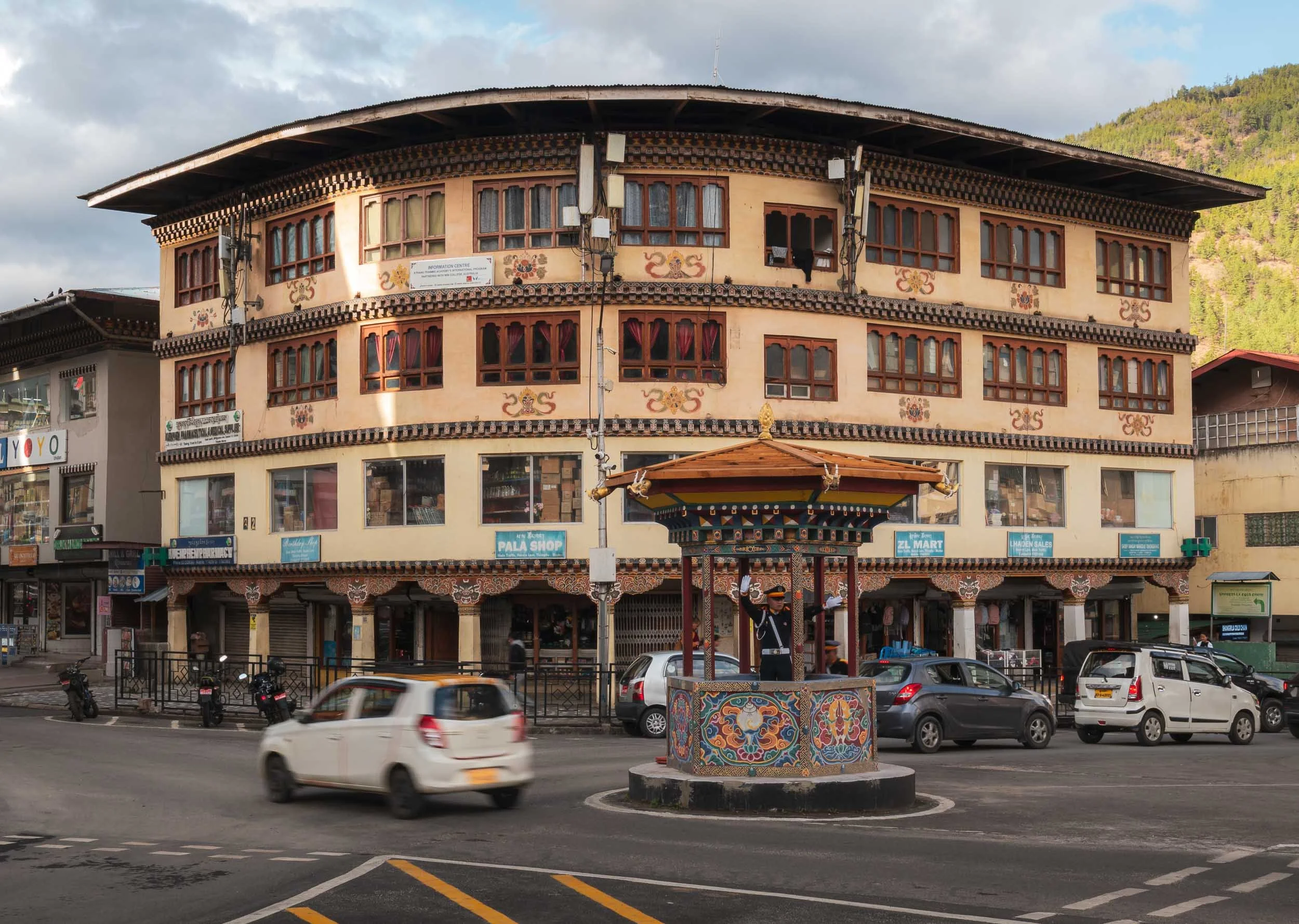
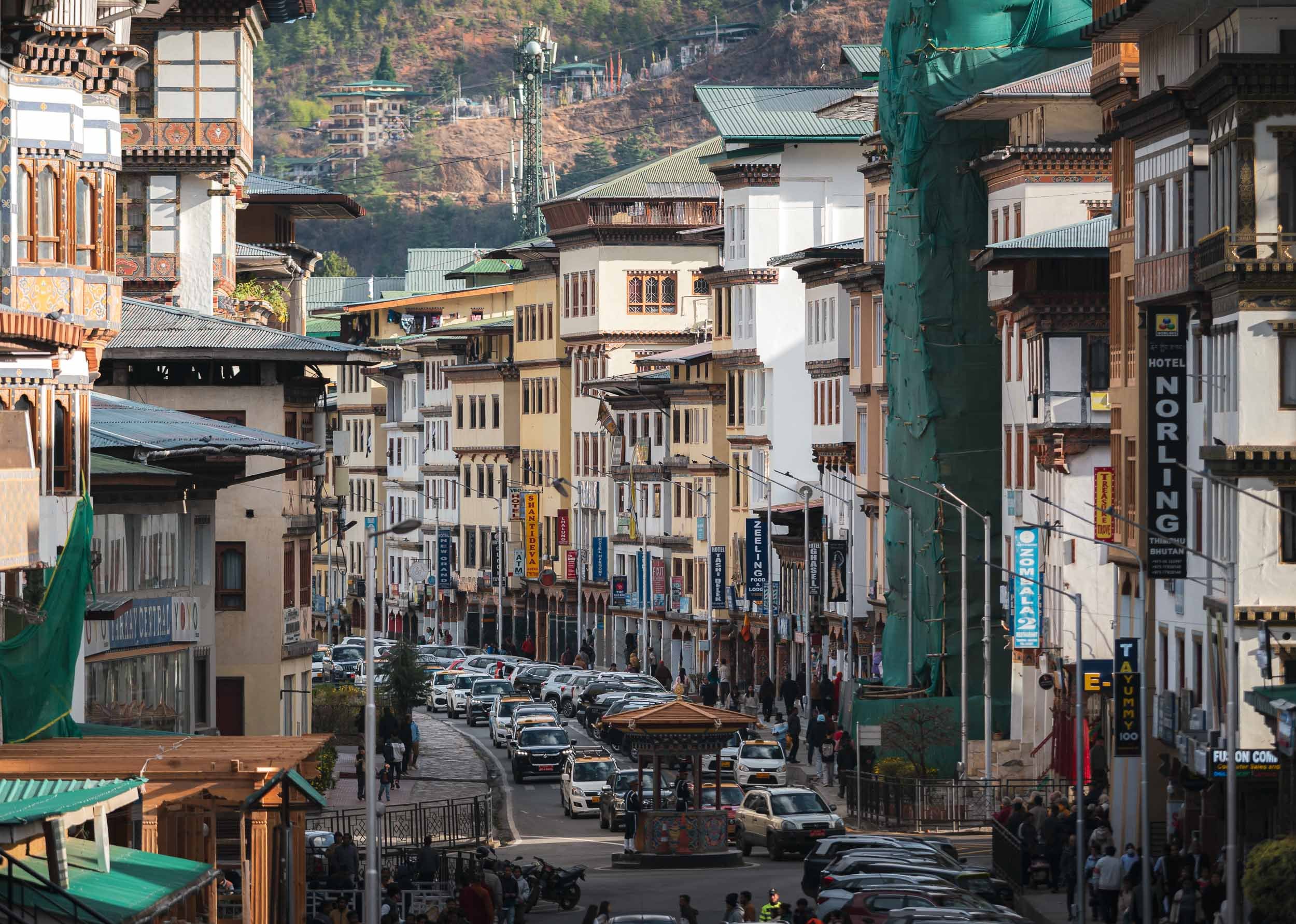
Thimphu is a relatively small capital, with a population of just over 100,000 people. In the Bhutanese spirit of calm, honking is not allowed on its road, and this is more or less adhered to from my observation - a stark contrast to neighboring India. The city also doesn’t have any traffic lights, the main intersection is managed by a white-gloved police offer housed in a little structure in a more human-centric approach.
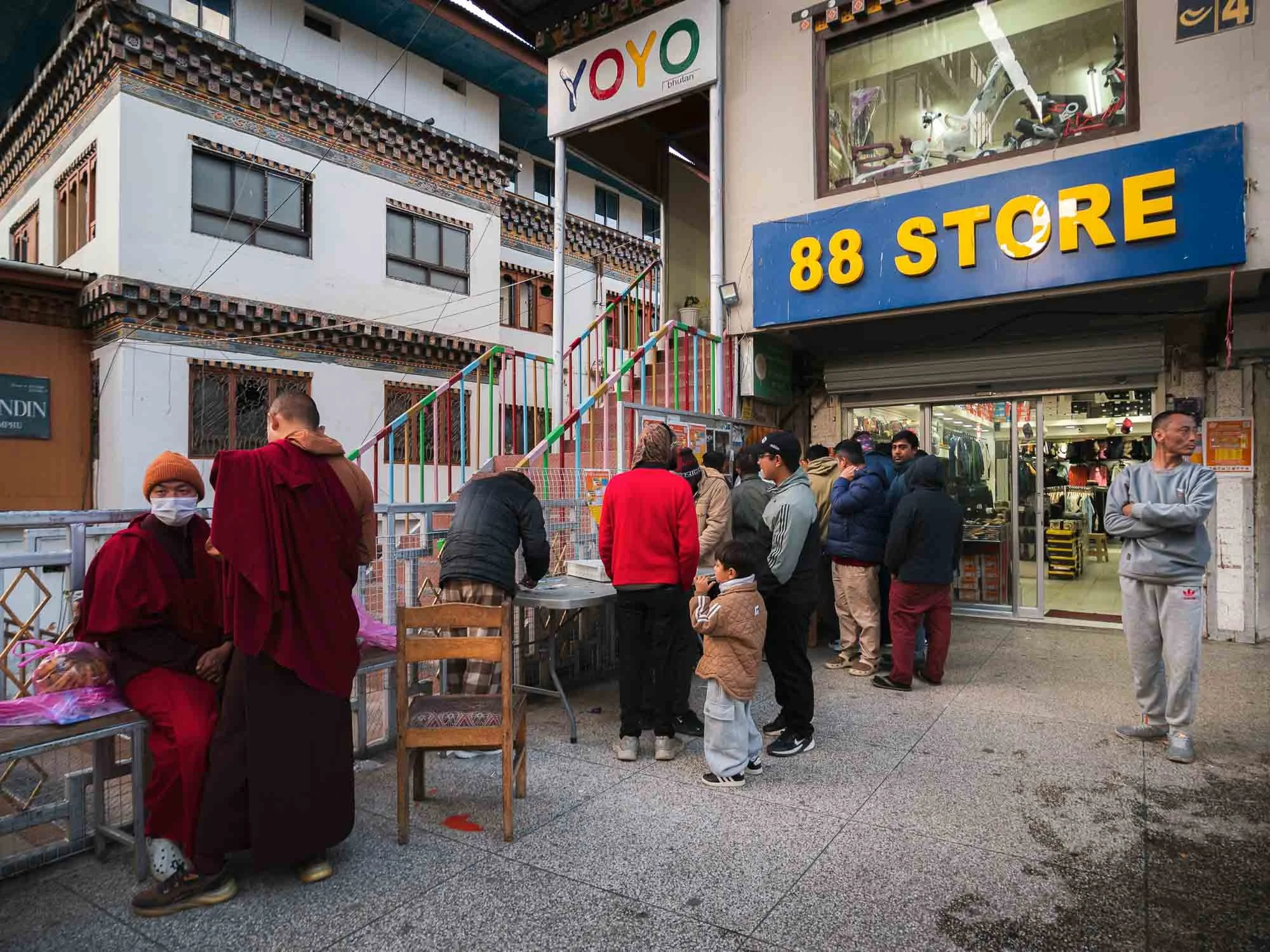
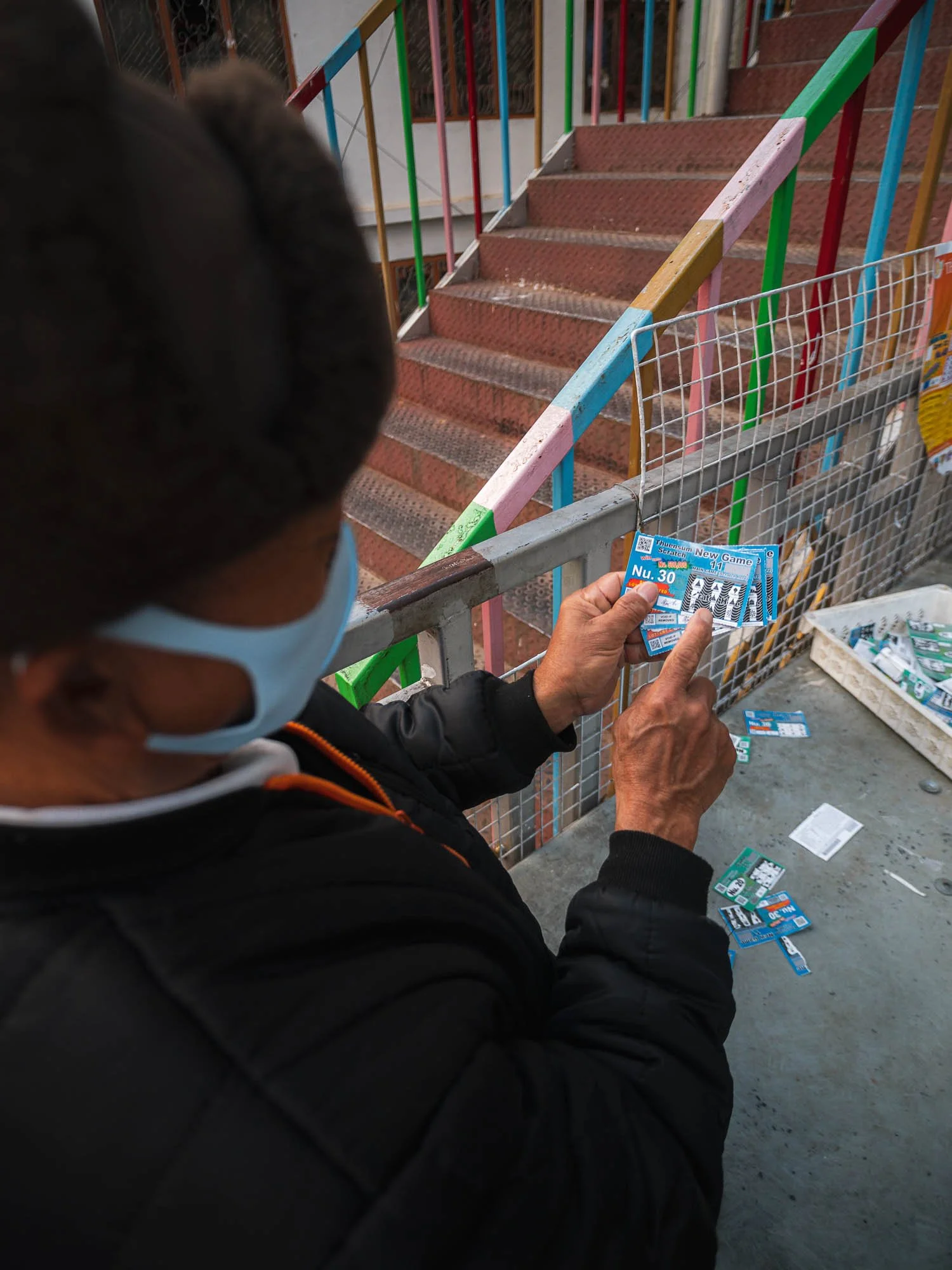
It otherwise has not that much to offer - the busiest spot I encountered was a local lottery stall. Gambling is frowned upon in Buddhism, but not forbidden. This man was not lucky according to his explanation of the various insignia on his ticket.
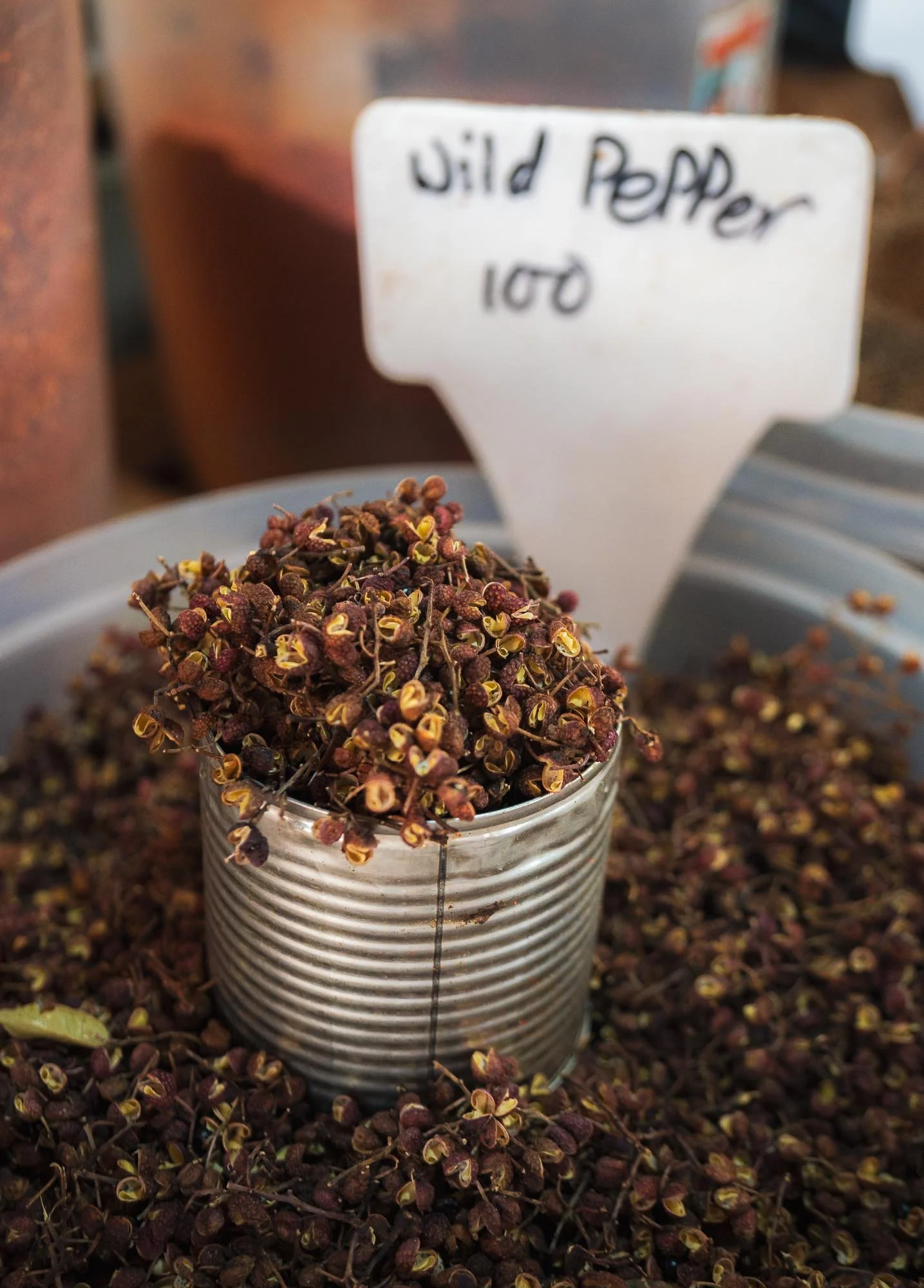
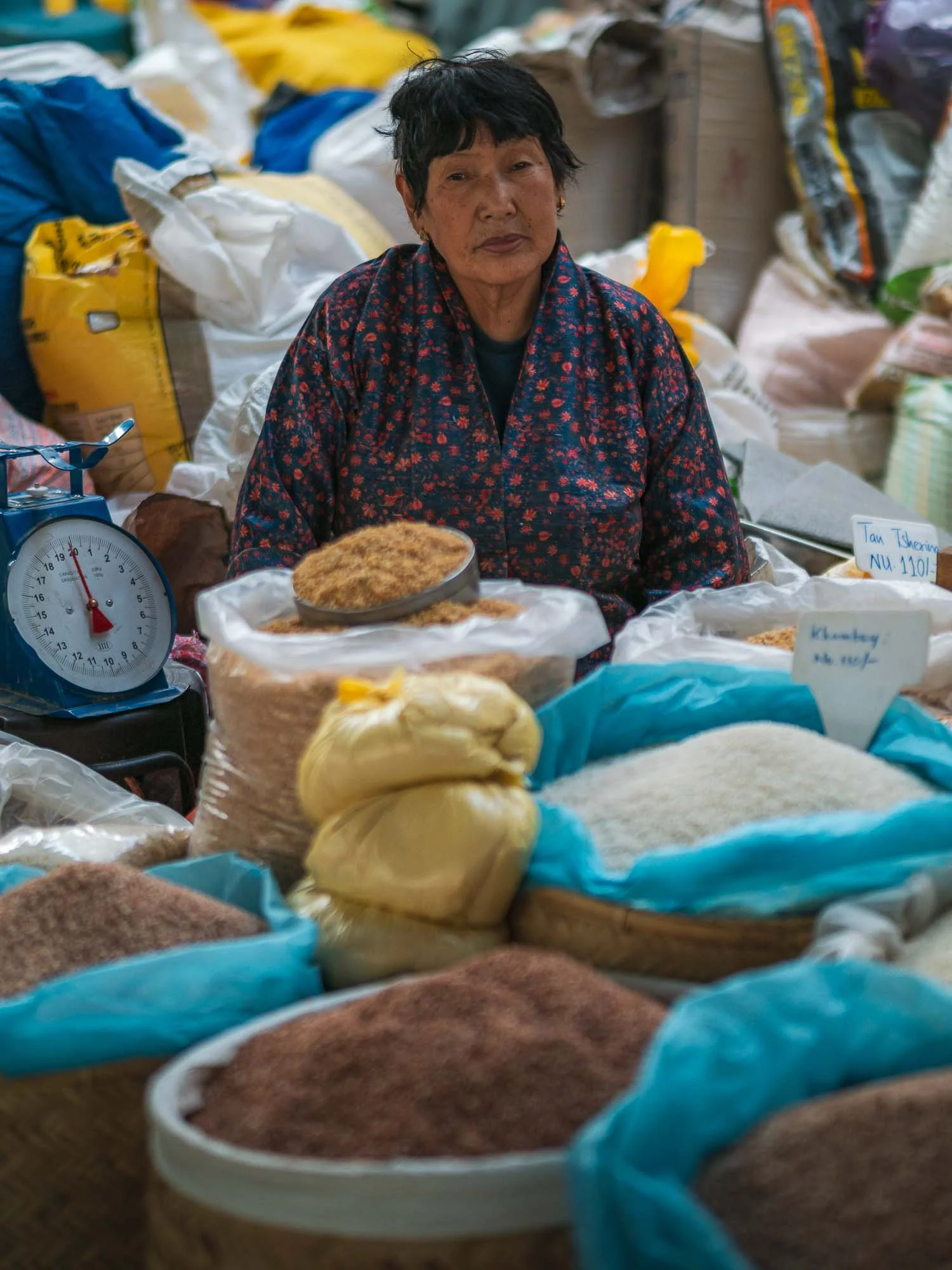
The market had a little more to offer than lottery tickets - mainly of agricultural nature, such as wild pepper. Agriculture makes up a large portion of the country’s economy despite the rugged terrain (almost 99% is considered mountainous), with significant subsistence farming.
Cheri Monastery
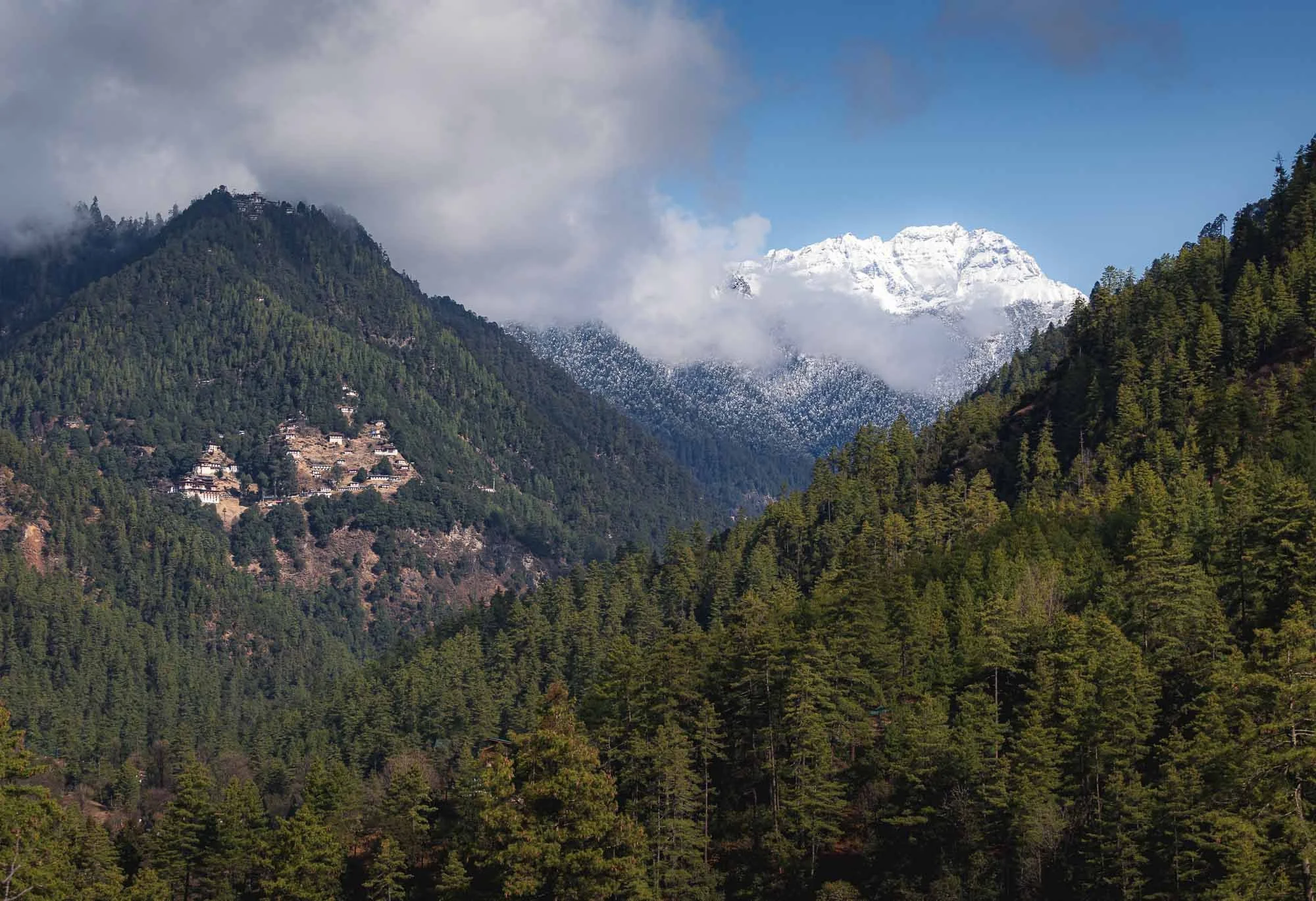
The next day brought brighter conditions and a chance for a first small hike to another monastery, visible on the left here, with a second outpost even higher up the mountain - visible just below the clouds on the left.
The monastery gave my first glimpse at the incredible architecture all around Bhutan, which is more or less unique to the country - only Tibet seems to feature a similar style. Mostly a mix of compacted earth, stone masonry and the amazingly detailed wooden elements, arranged in interlocking patterns without supporting nails or metal brackets.
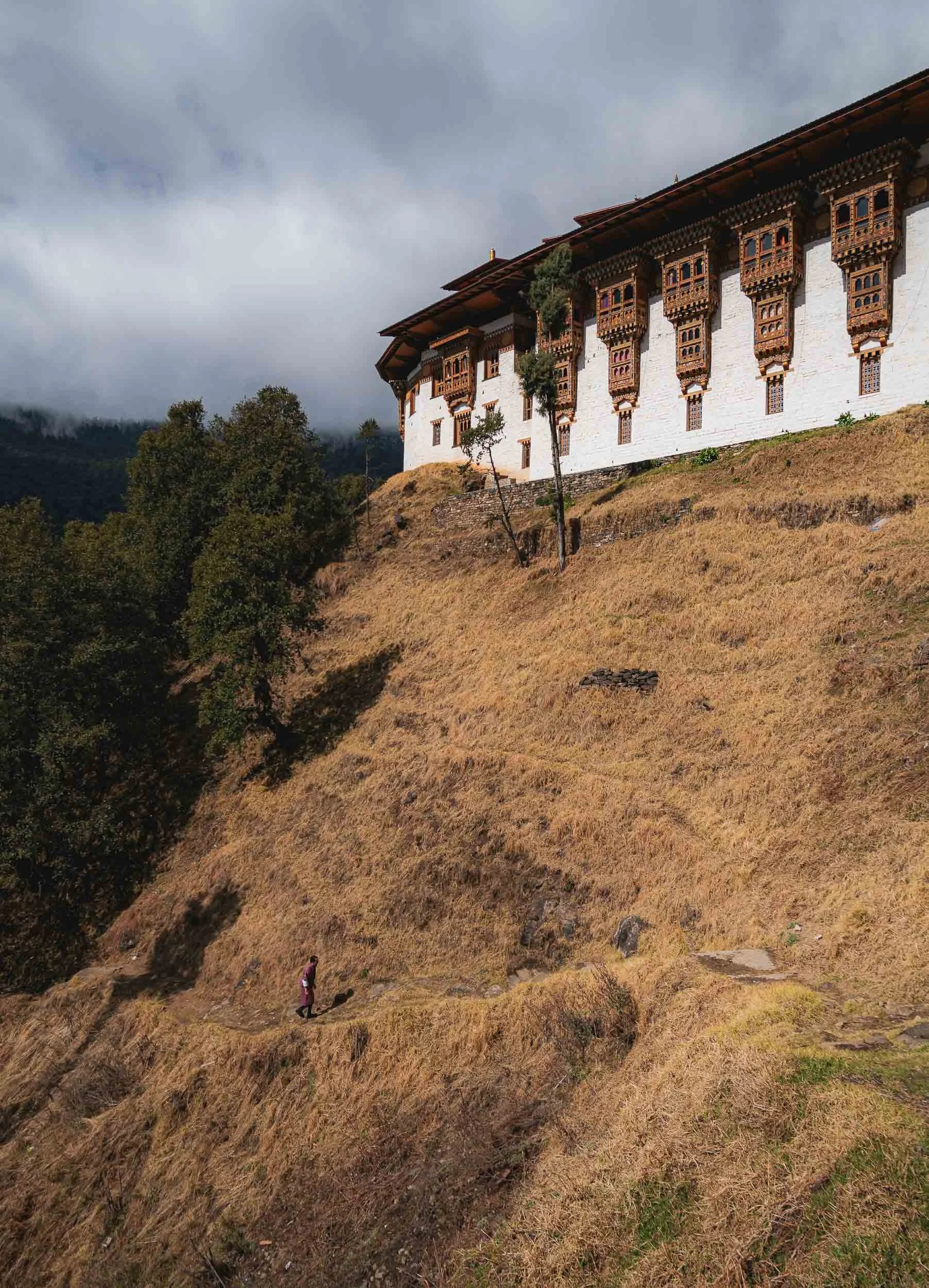
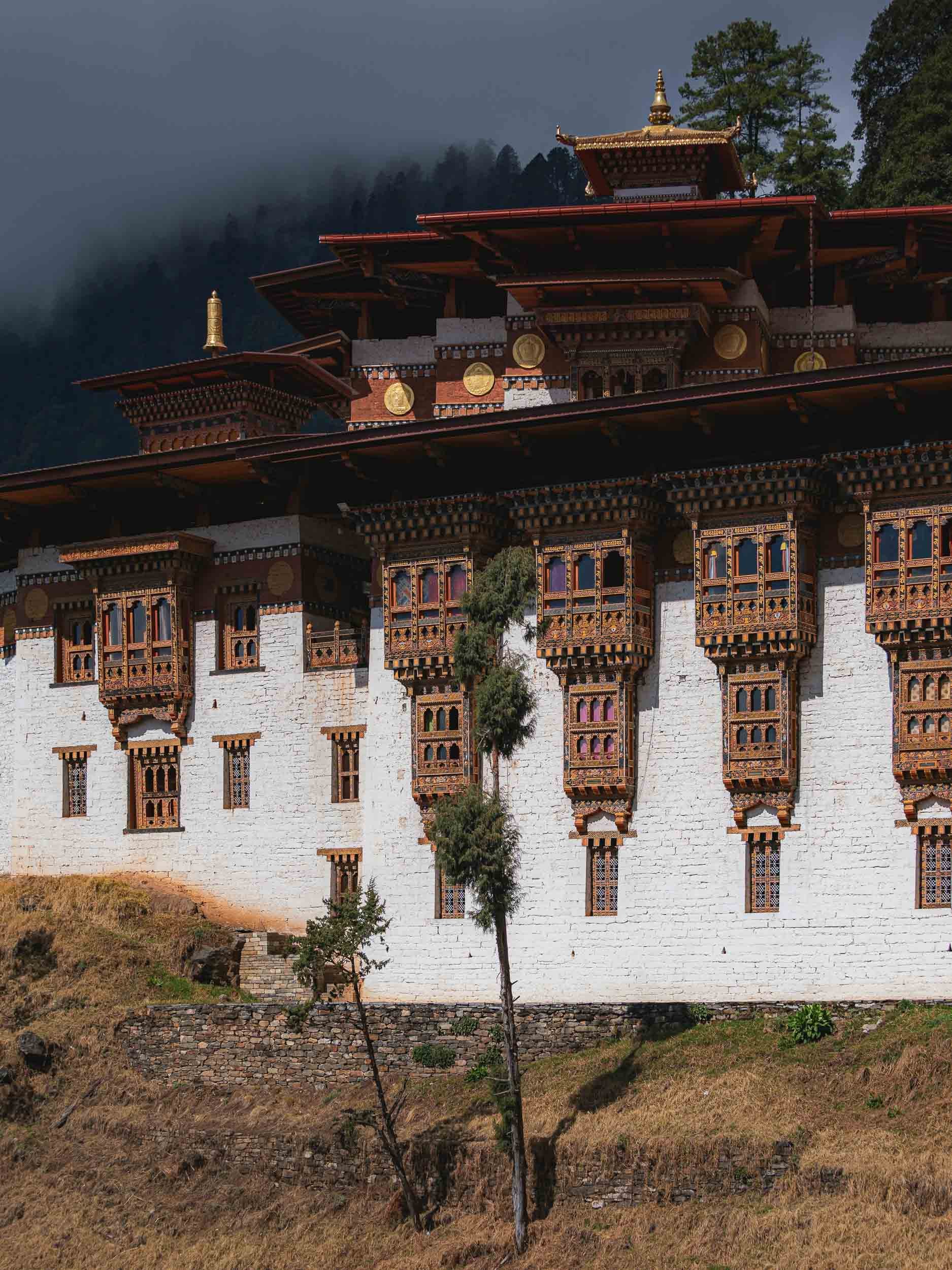
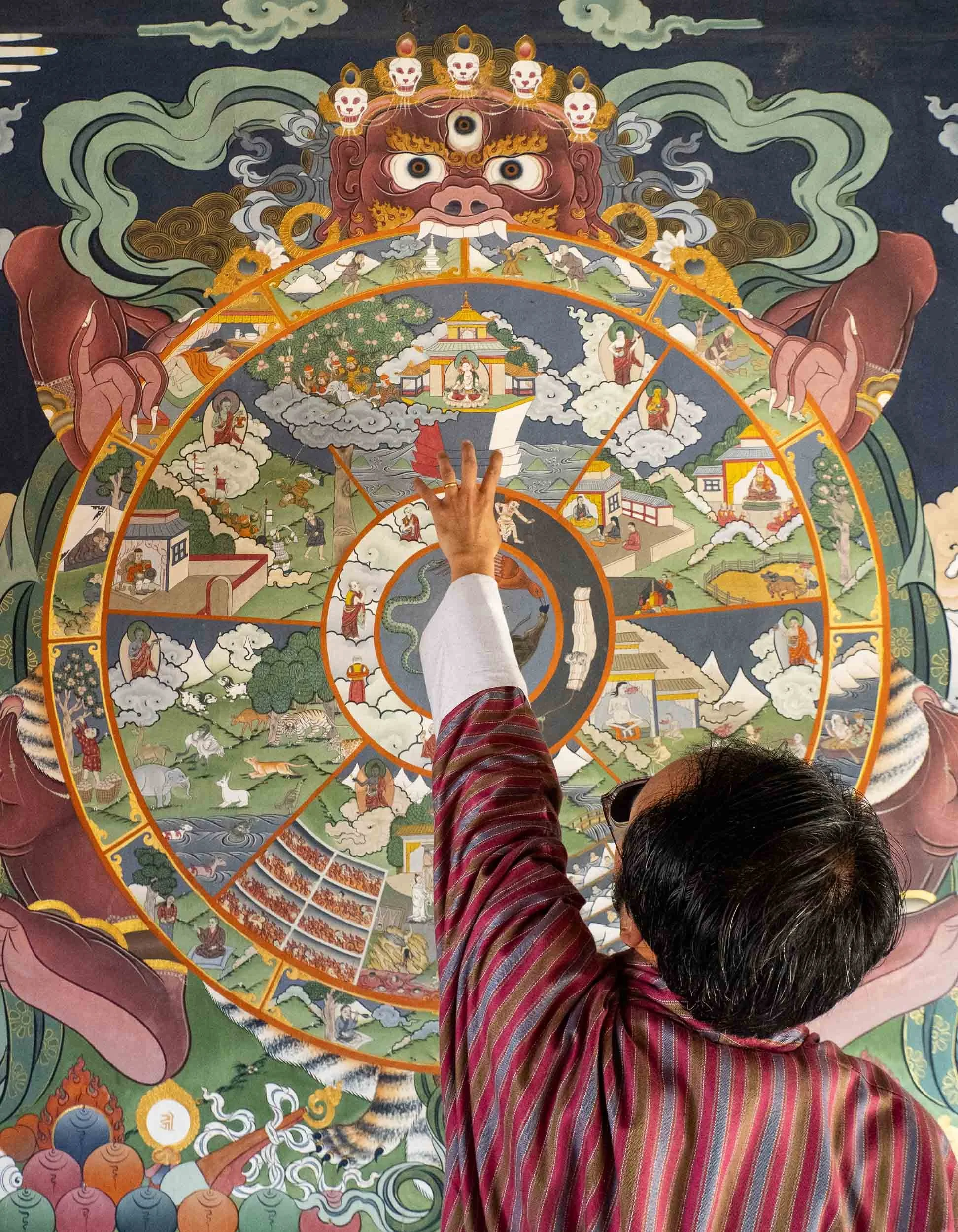
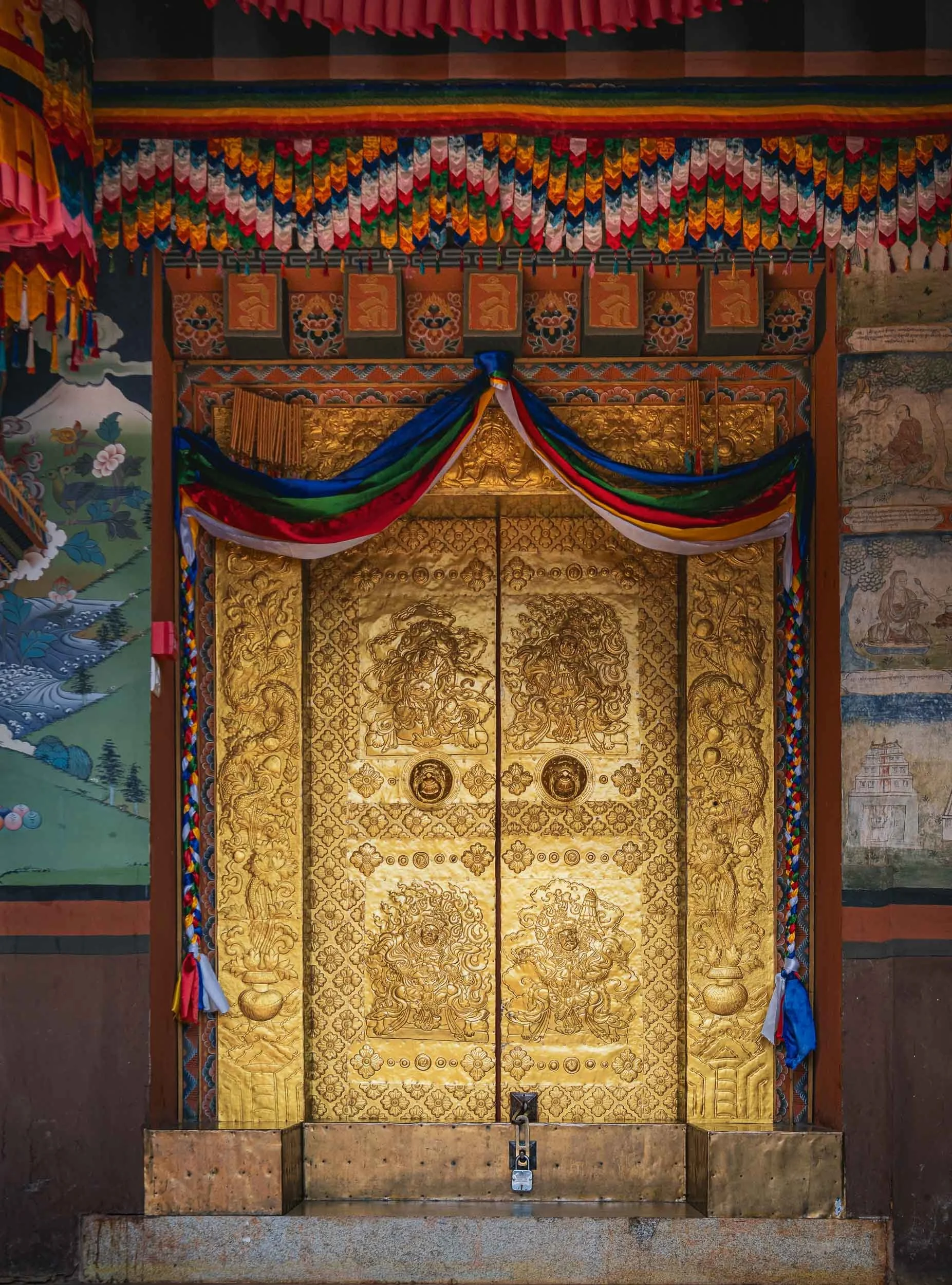
Thick, gold-slated doors protect the entrance, mostly wooden with carvings and gold leaf or powder mixed into paint. Chencho explained the Buddhist wheel of life that can be found painted at many of the temples, representing a kind of circle of existence in Buddhist cosmology.
Tashichho Dzong
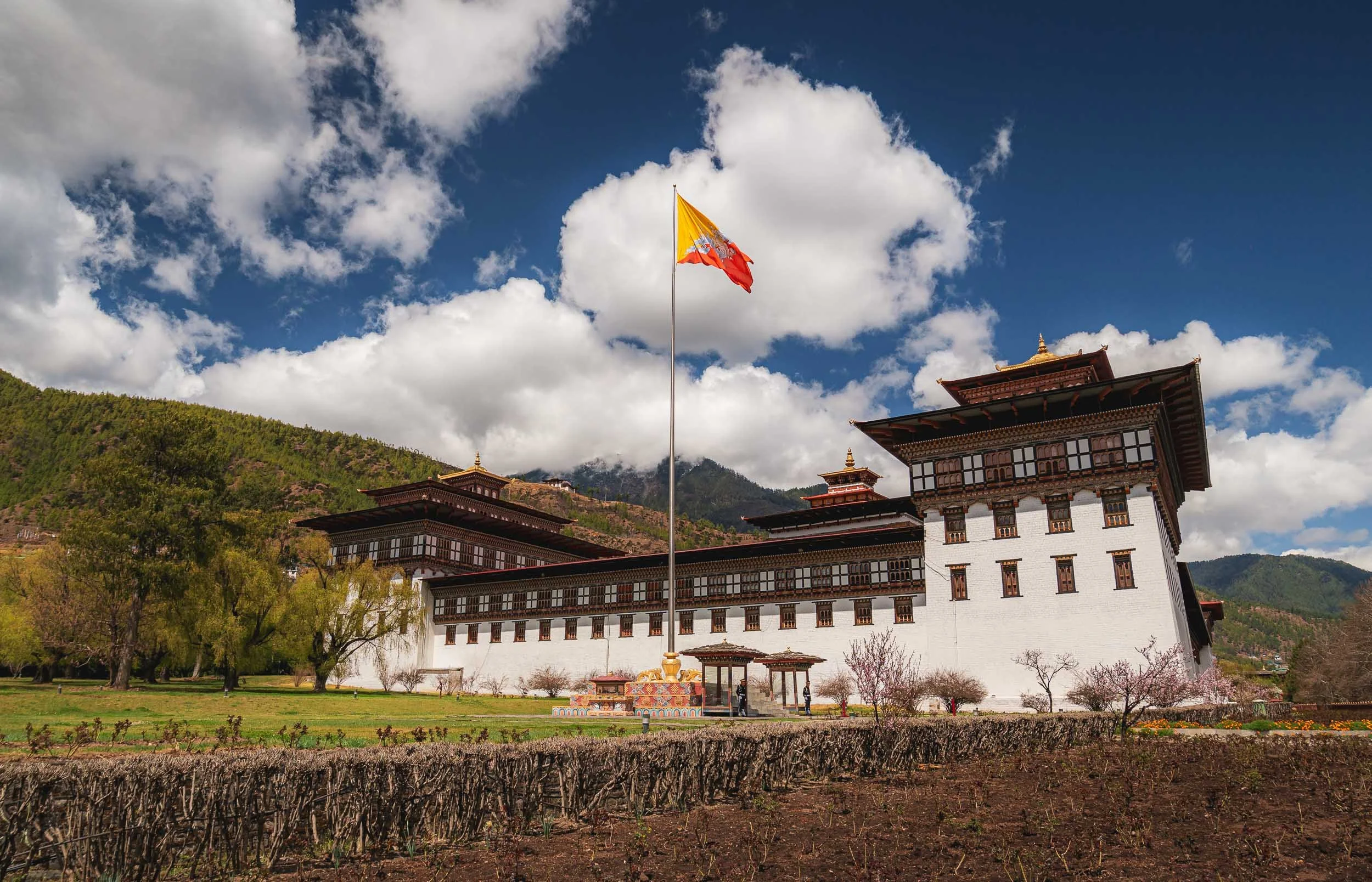
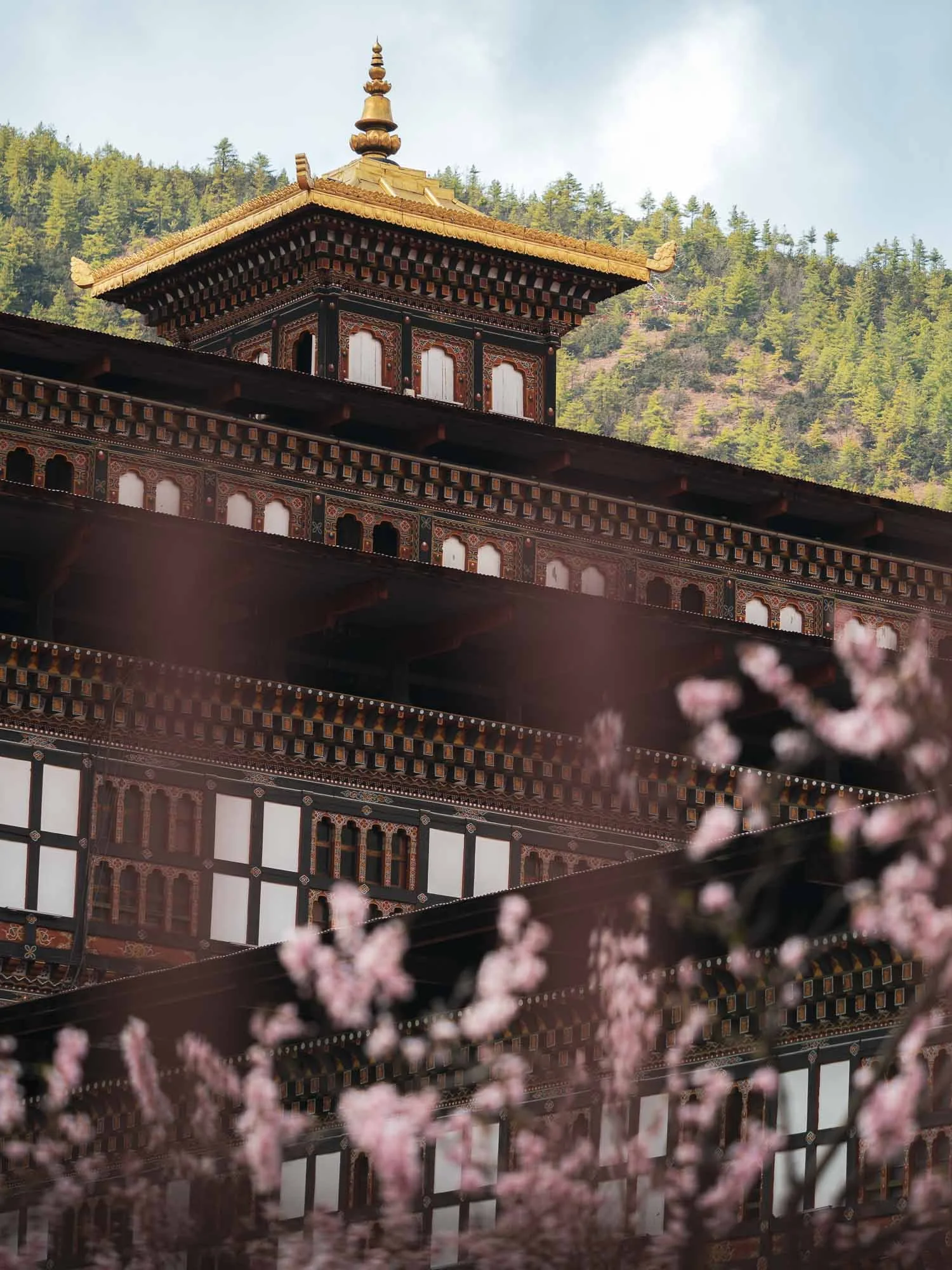
Back in the city, we visited its primary “Dzong” - meaning fort - an impressive structure serving a dual religious and secular function as the seat of the central monastic body and government offices of the King, including the throne room. Note Bhutan’s amazing flag - absolute winner!
The impressive structure originally dates back to the mid 17th century, but was damaged several times due to fire (a common story among the many heavily wooden structures in Bhutan) and earthquake. Its last restoration into the current form was largely finished in the 1960s.
🐉
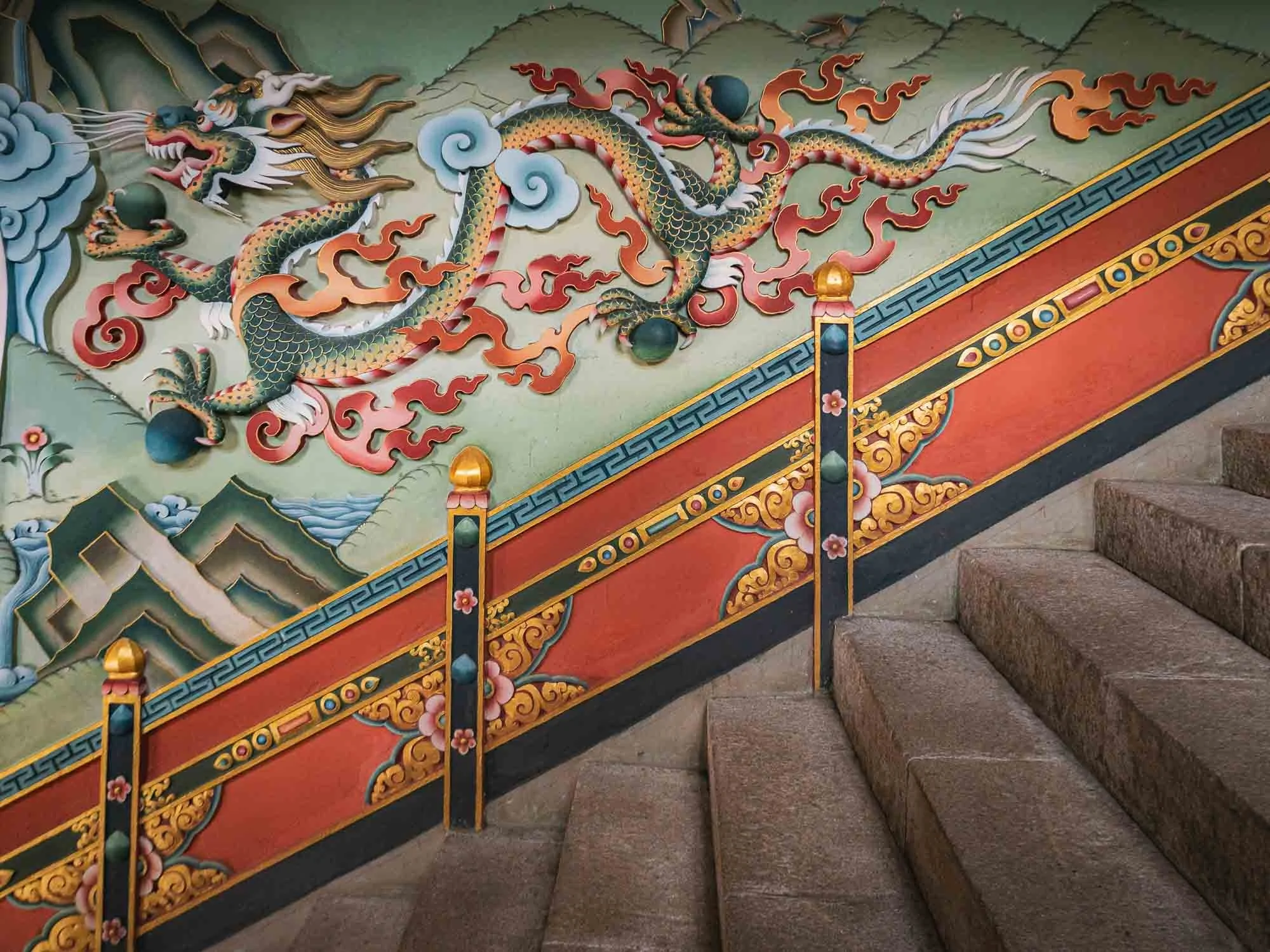
The dragon relief at the entrance staircase, Bhutan’s central national and religious symbol. The country is literally called Druk Yul - “Land of the Thunder Dragon”.
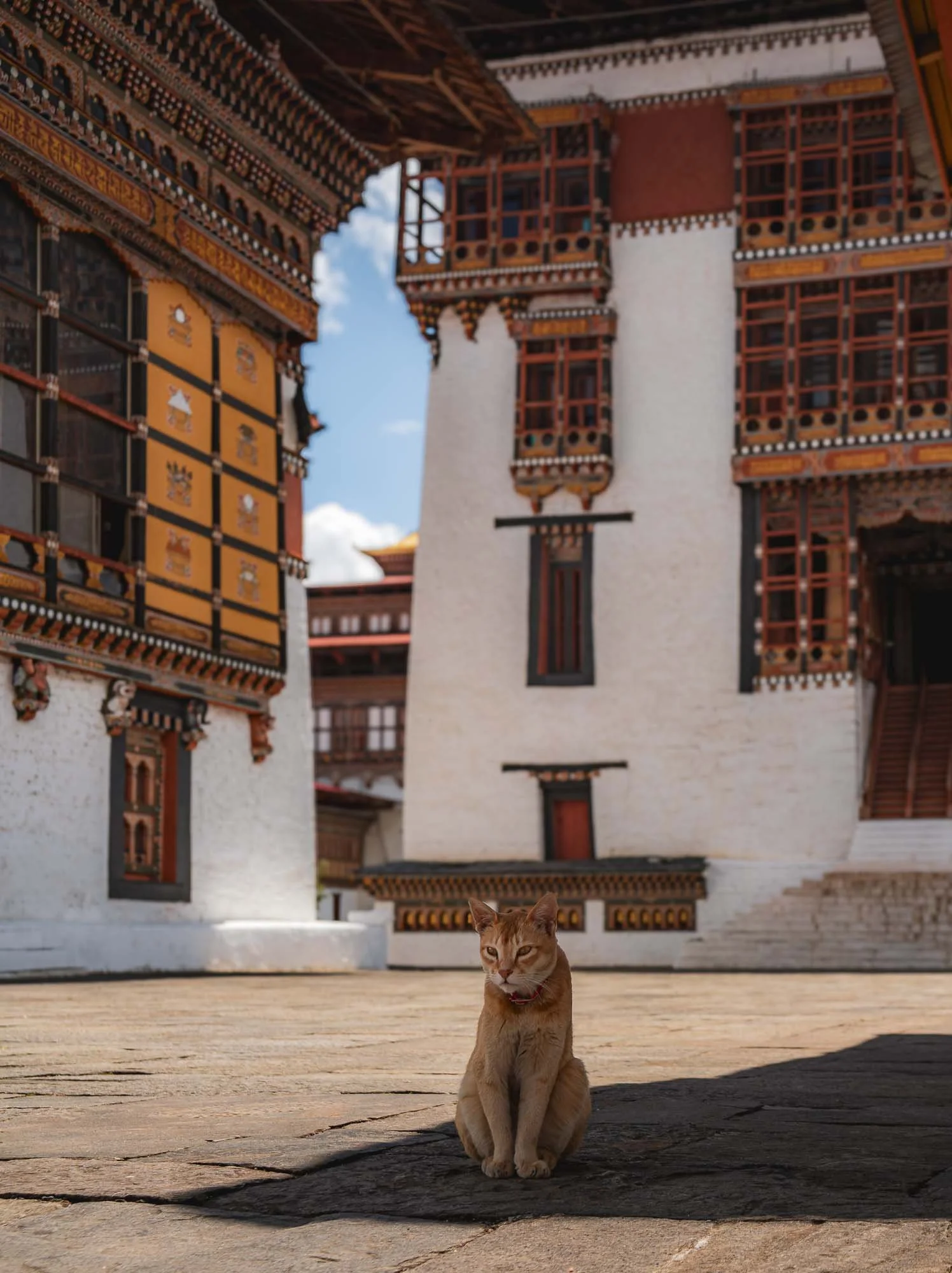
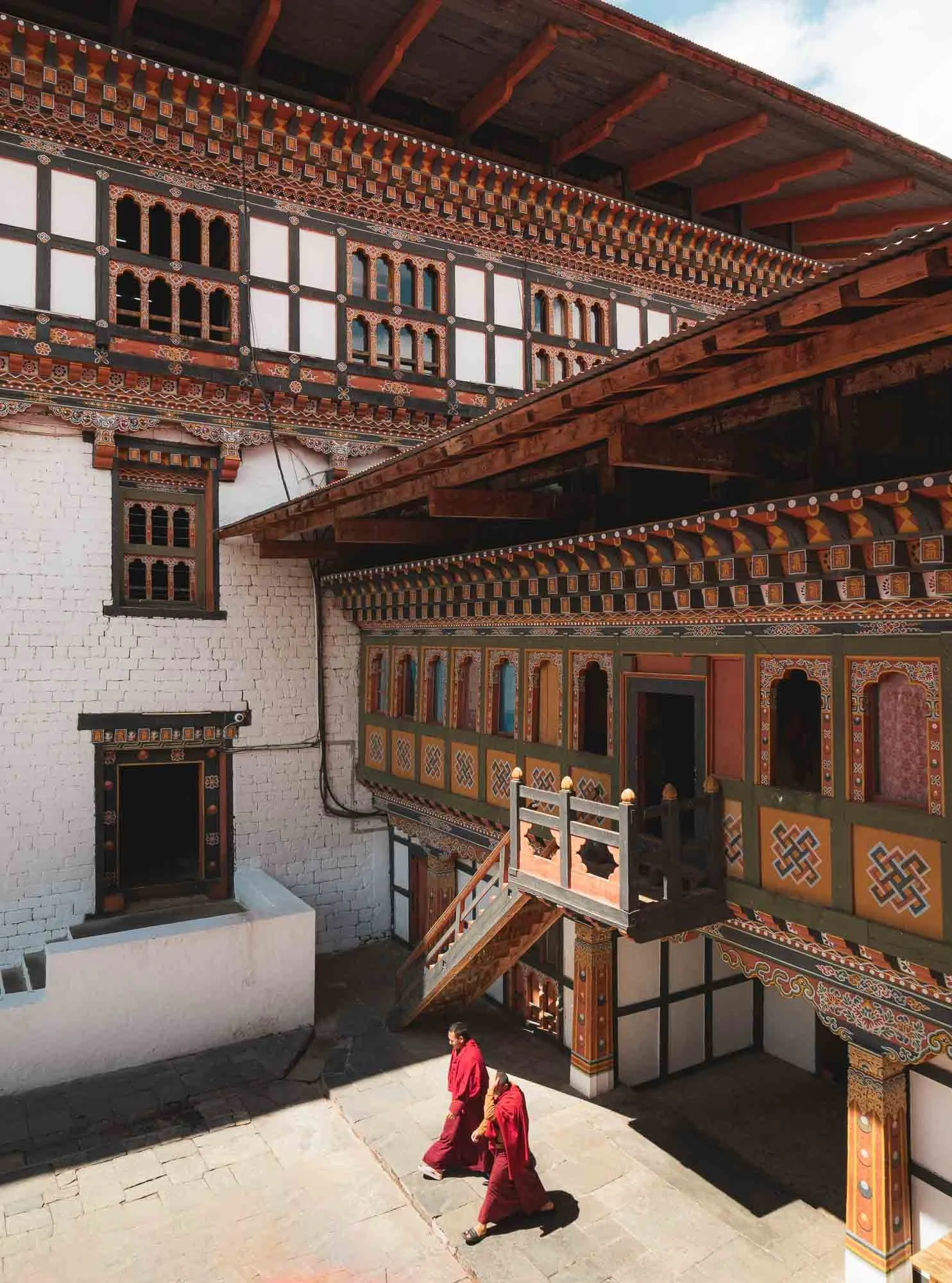
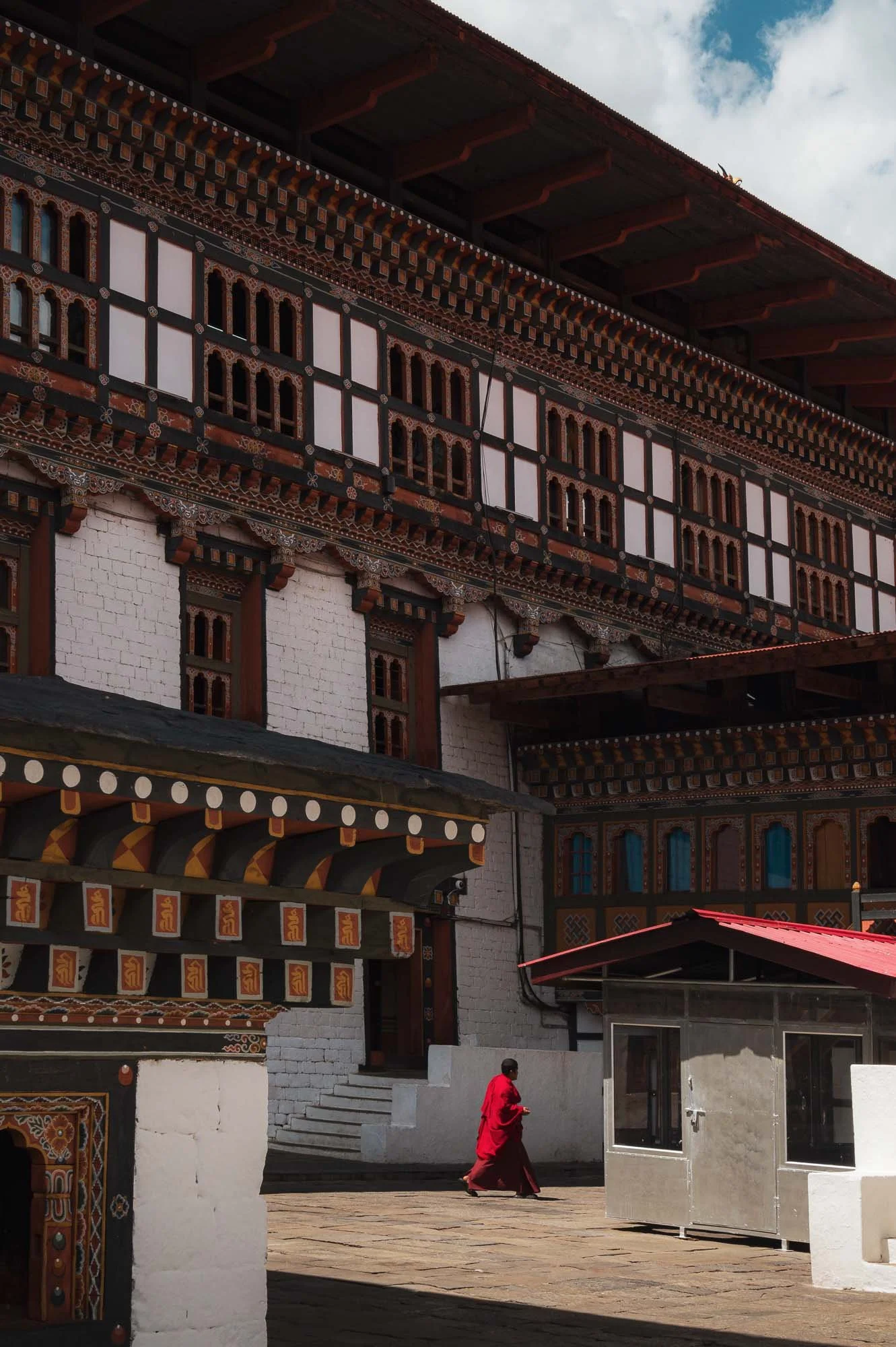
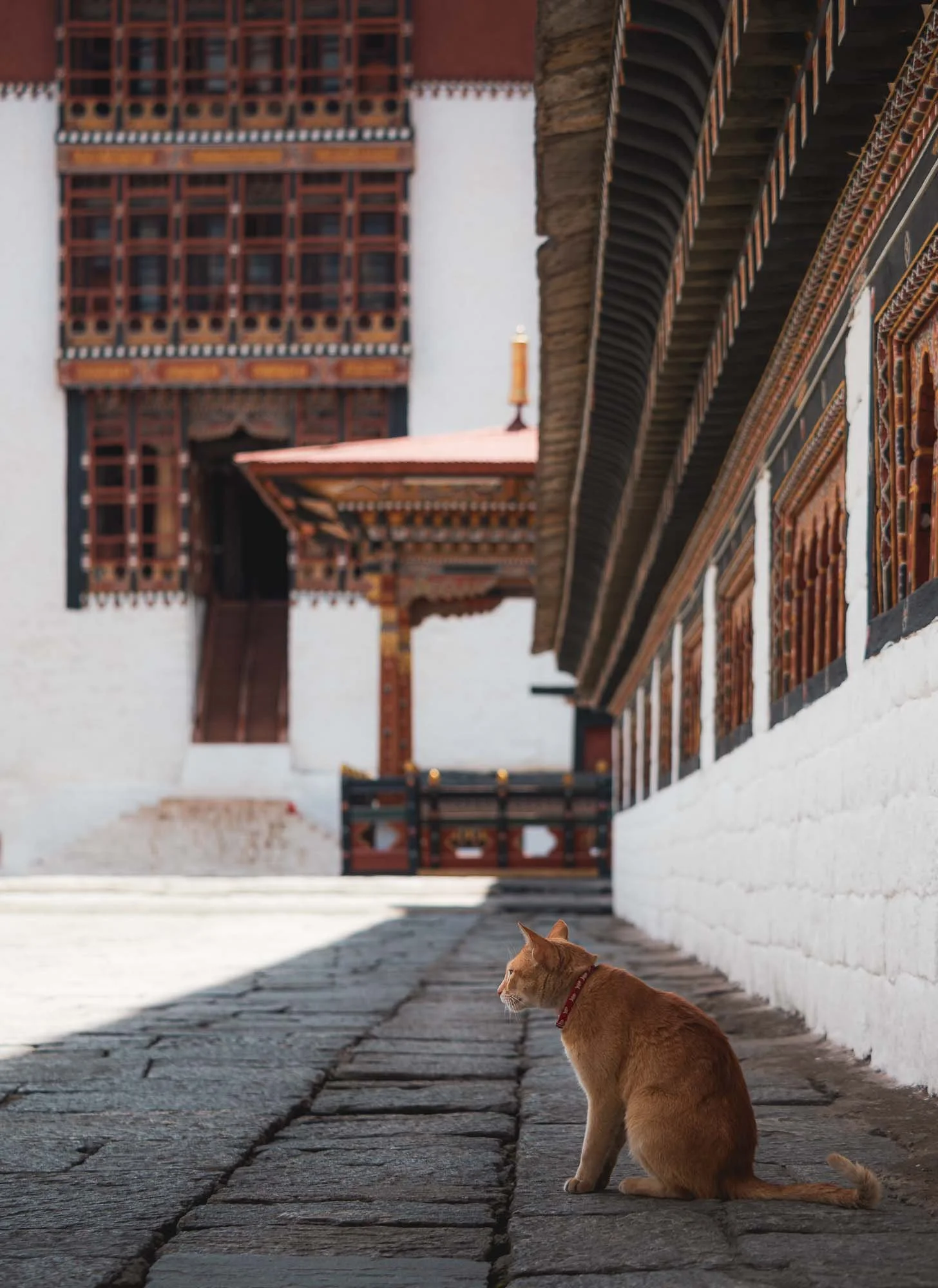
I spent a couple of hours here soaking up the calm atmosphere, virtually without any other tourists, waiting for monks or cats to move into position for a good photograph. They were obedient.
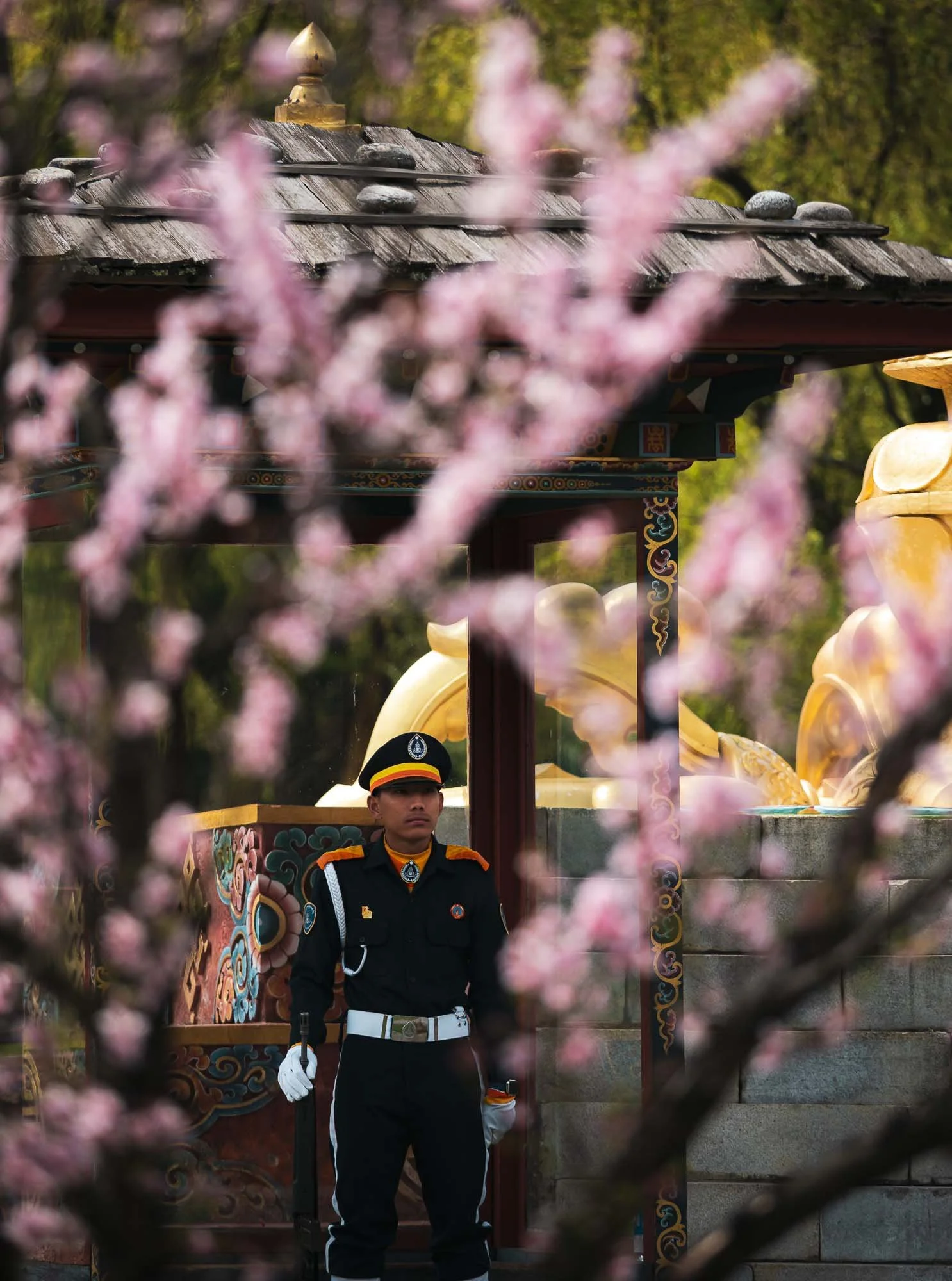
The spring cherry blossoms around the fort, which is formally guarded due to its administrative functions - not all areas are accessible to the public.
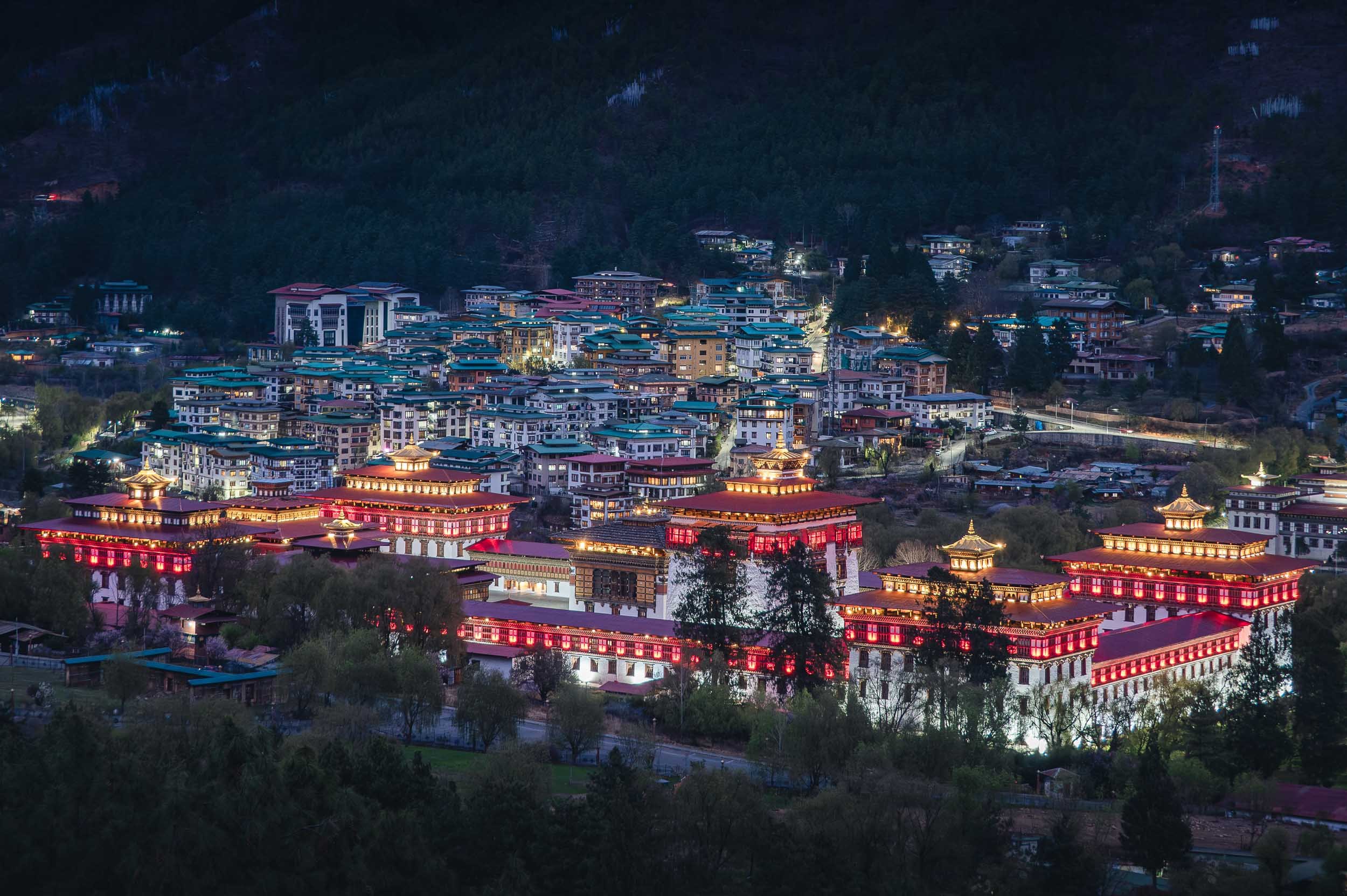
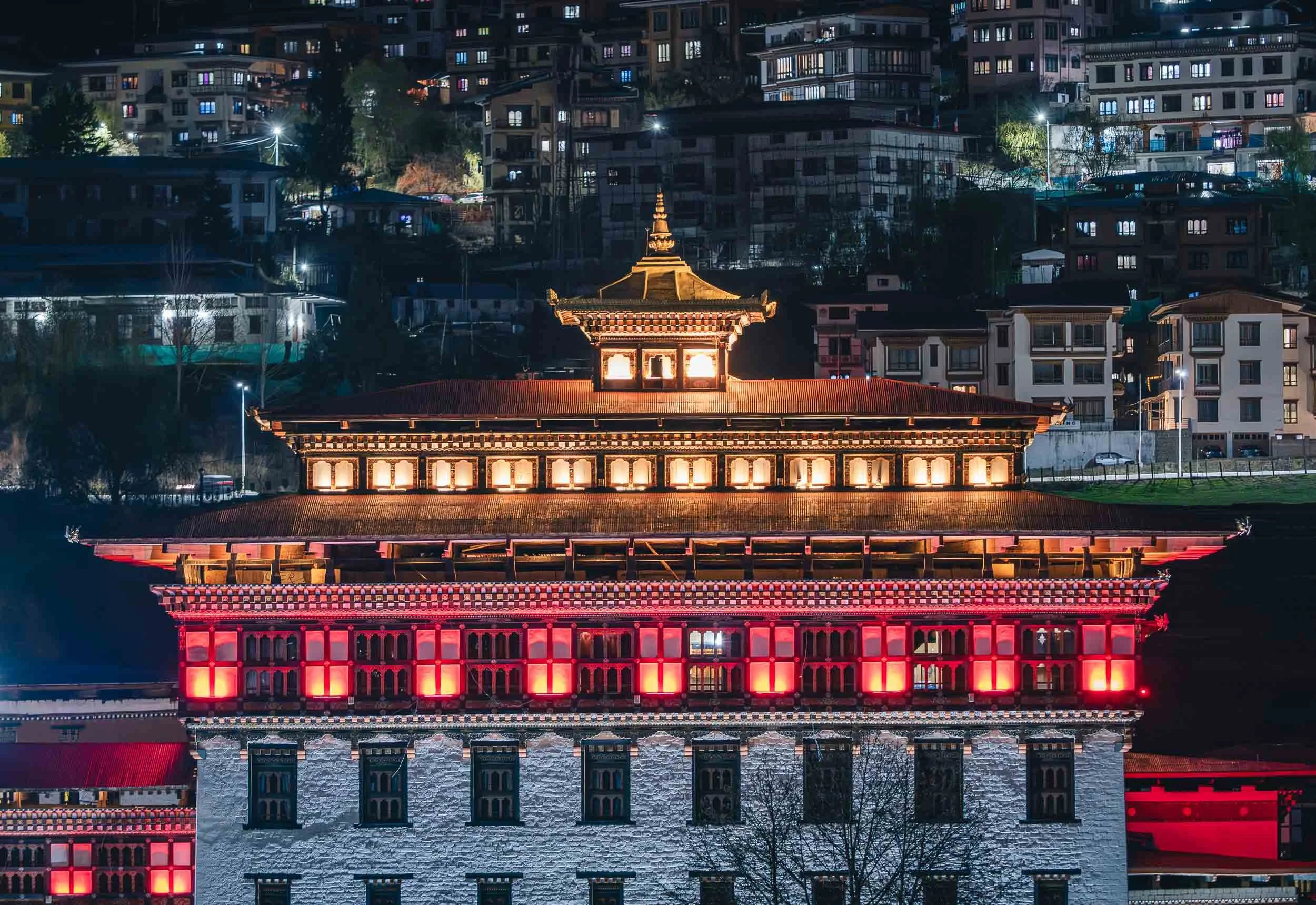
The Dzong is lit up beautifully at night, and I found two more viewpoints in the city to document it from.
Bhutan Takin
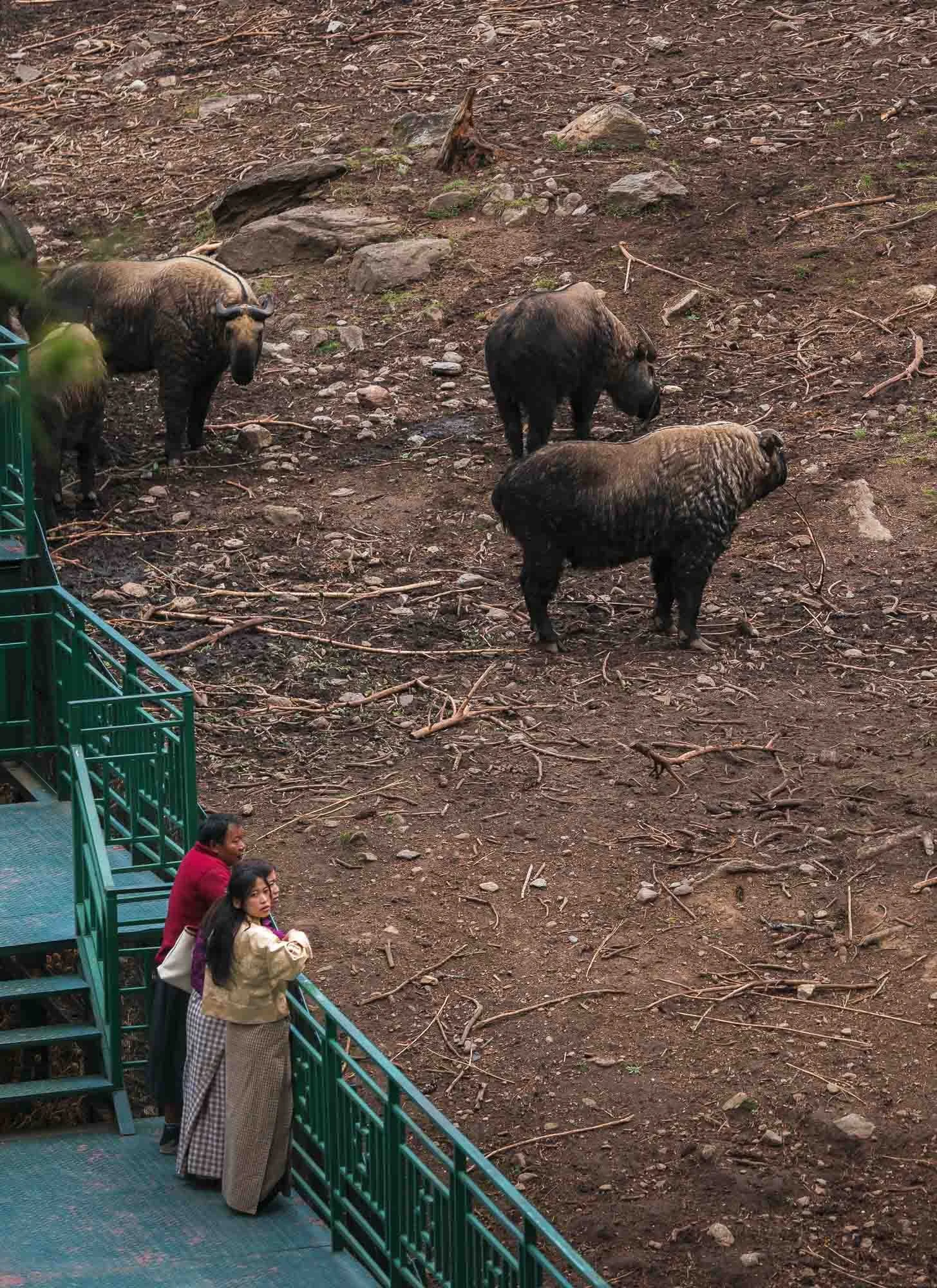
Beyond the mythical dragon, Bhutan features significant biodiversity, likely owing to a combination of factors such as its focus on sustainable development, the extreme geographical spread (its lowest point is just 100m above sea level, whereas its tallest mountain reaches over 7000m), and forest cover of more than 70%. One of the lesser known and more peculiar mammals is its national animal: the Bhutan takin.
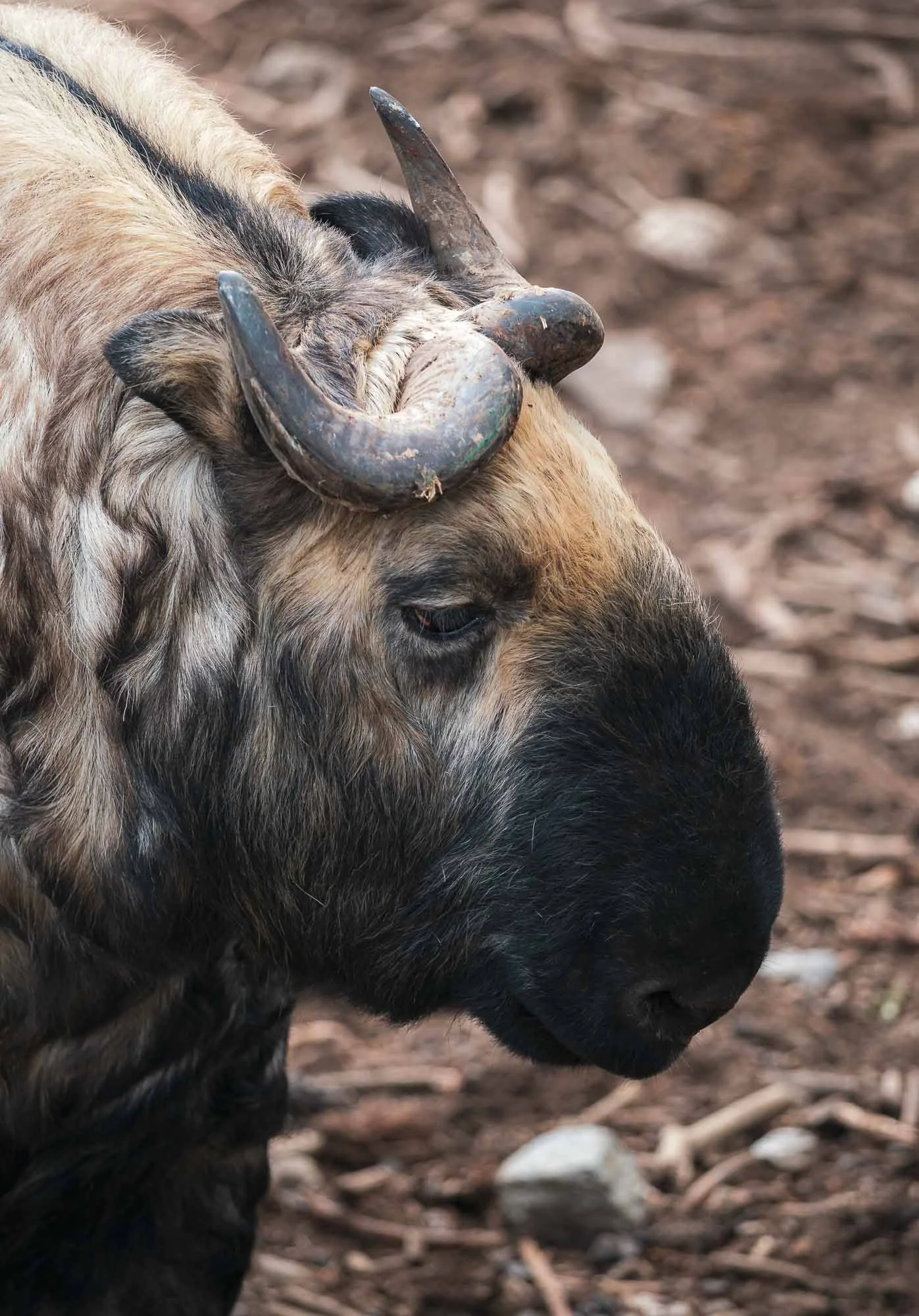
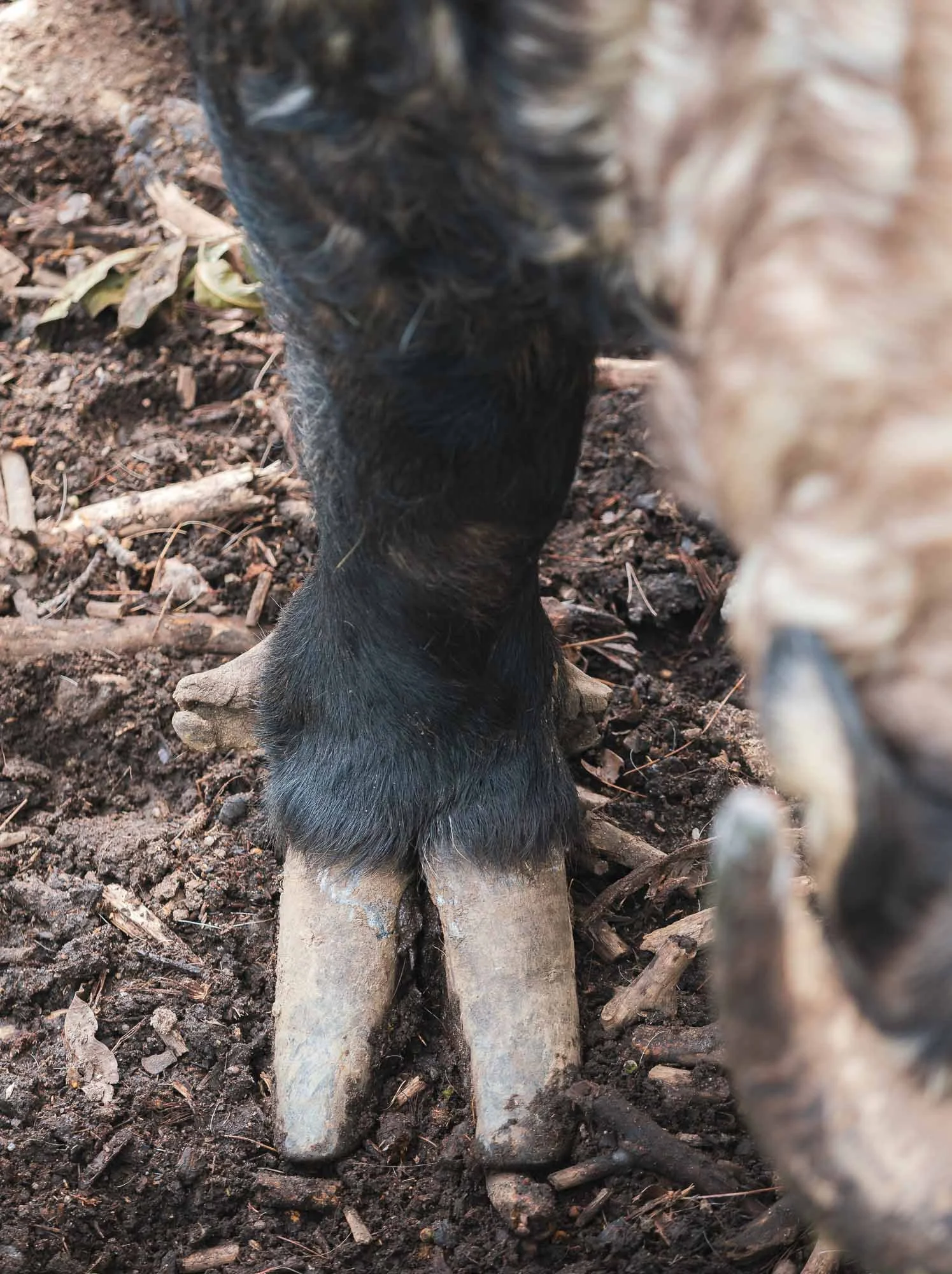
Spotting it in the wild is a rather difficult endeavor, but Thimphu is home to quite a decent and well-frequented mountain zoo, which houses a good number of them. While classified as vulnerable, the animal is protected in the country, probably for its cultural significance: as the legend of Drukpa Kunley (the Divine Madman, he would appear again later in the trip, read on…) goes, villagers asked him to perform a miracle. He told them to first bring a cow and a goat for dinner. After they served the animals, he ate them completely, leaving only bones. He then placed the goat’s head on the cow’s skeleton, clapped, and the animal combination came back to life and ran into the meadow. One can’t help but see the resemblance in the takin.
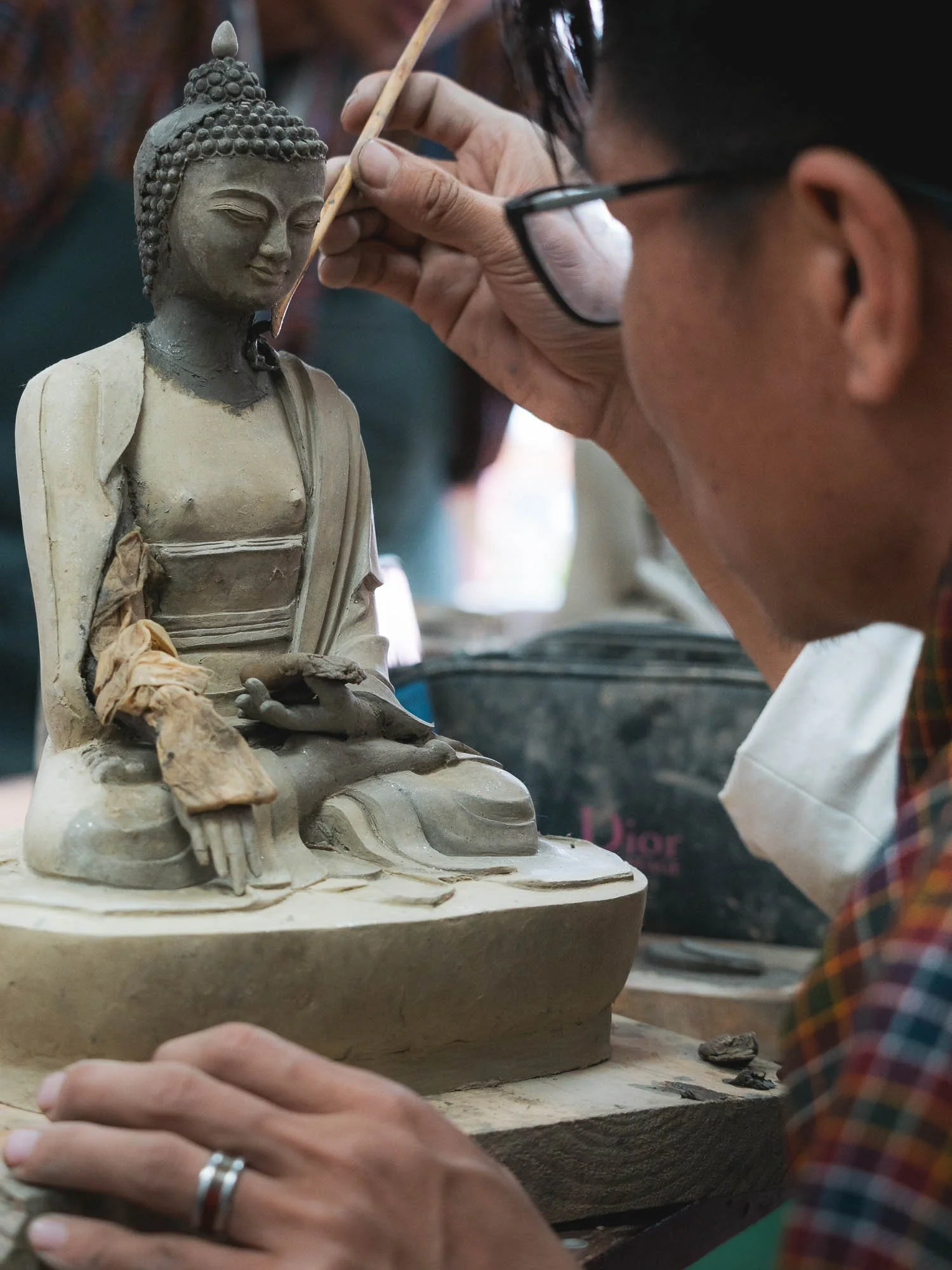
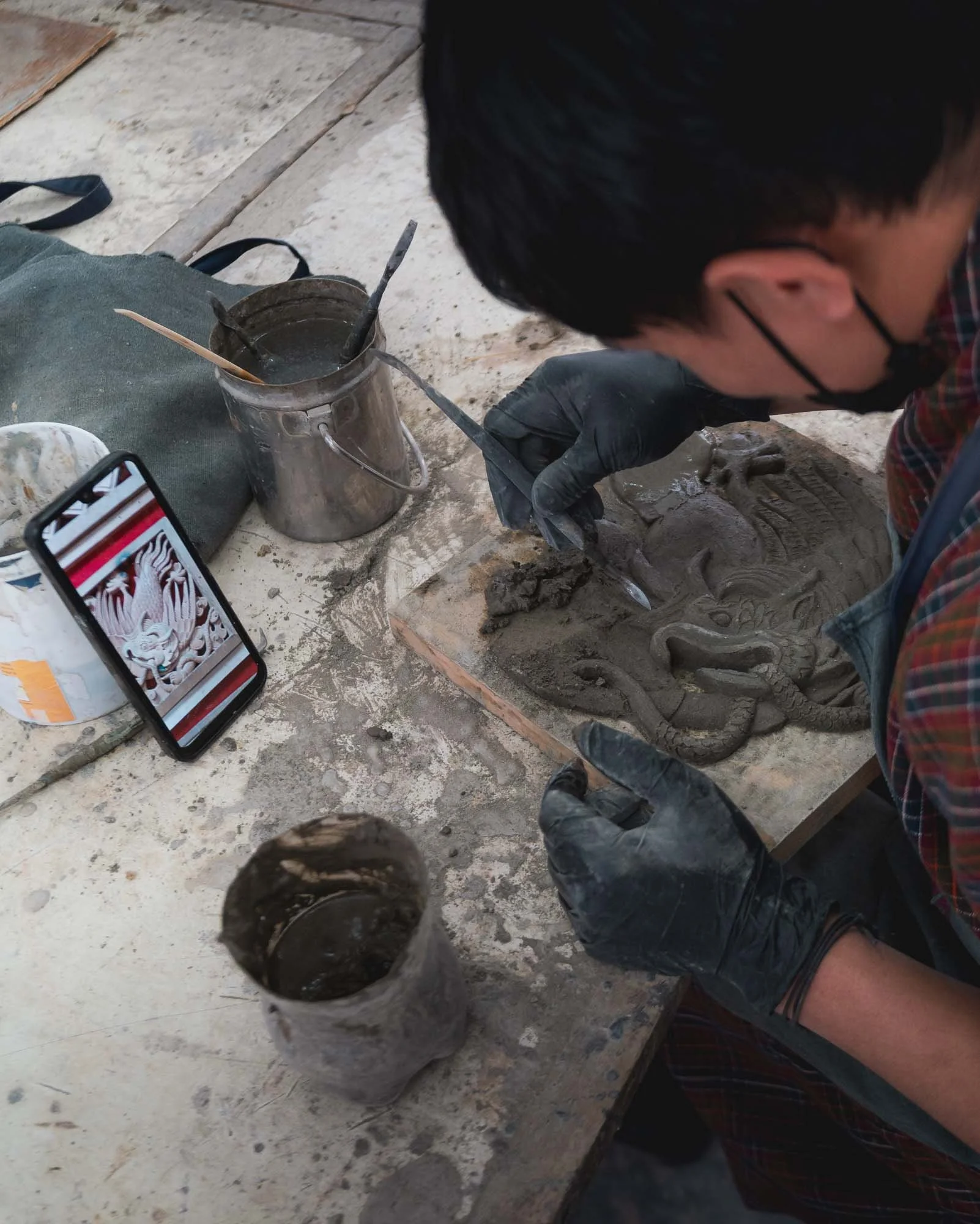
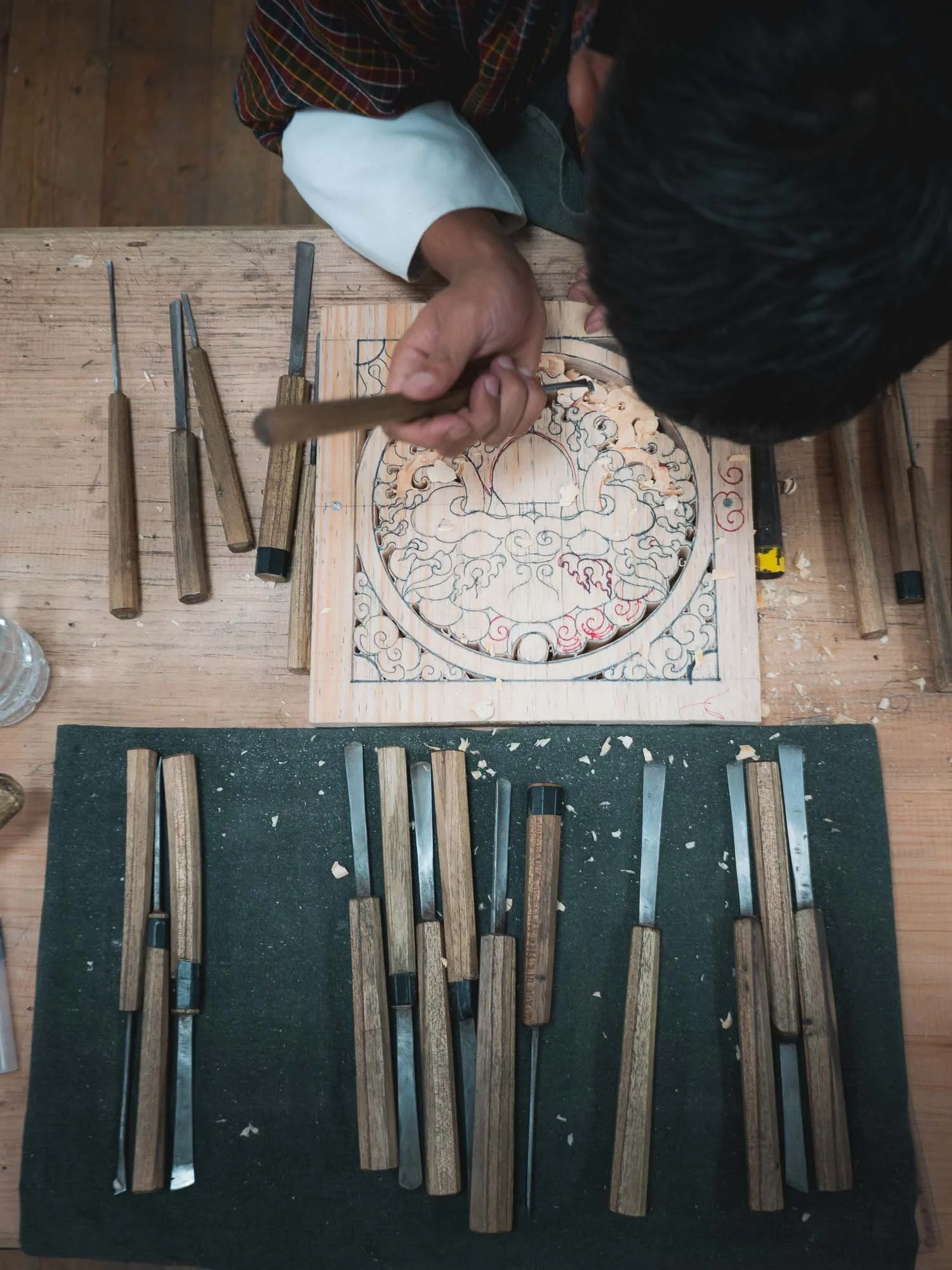
Moving on to a different kind of workmanship. For my time in Thimphu I had planned to visit a few places housing local artisans and craftsmen. No better spot to start this than the “Institute of thirteen Arts and Crafts” - collectively called Zorig Chusum and representing the formal classification of the country’s traditional disciplines.
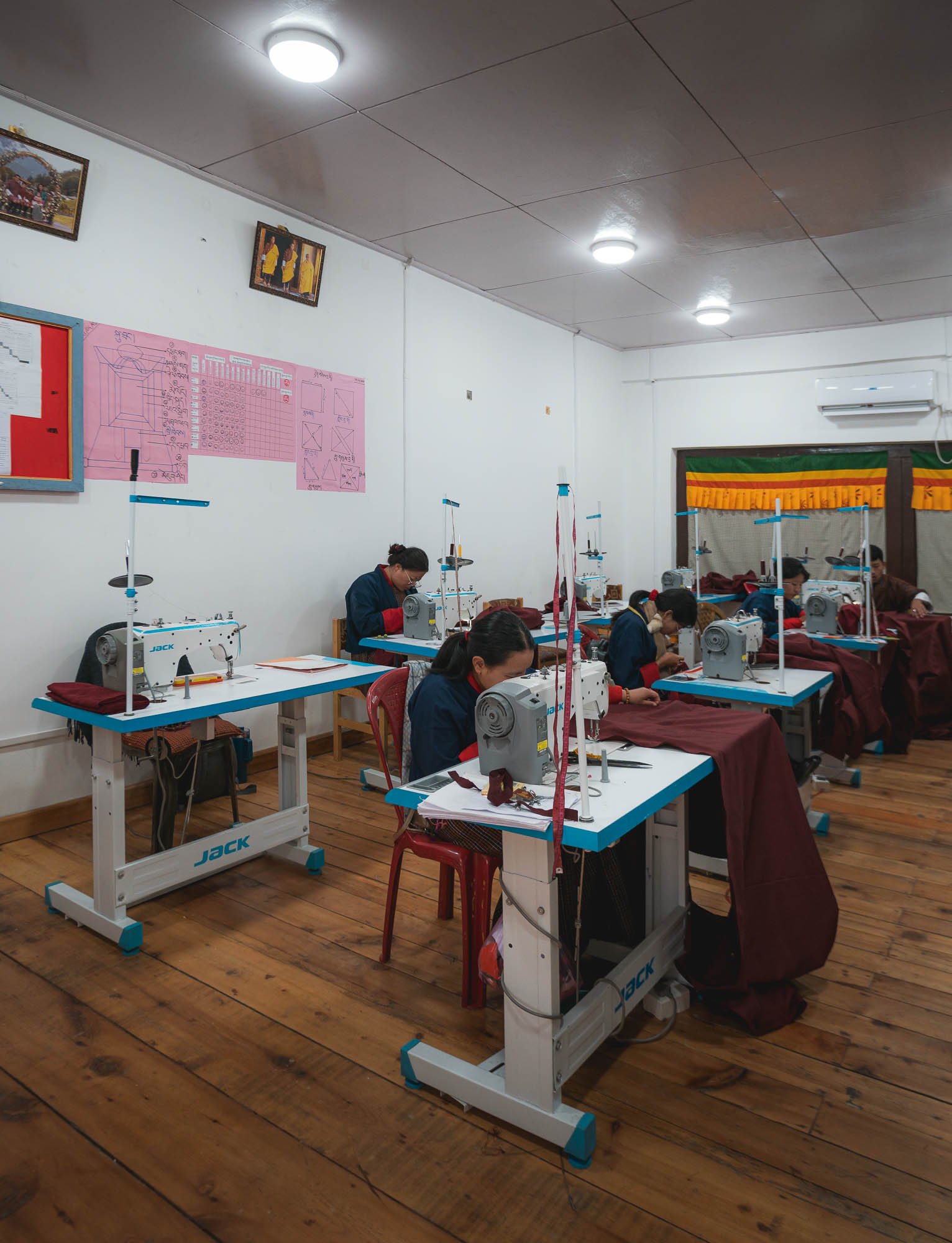
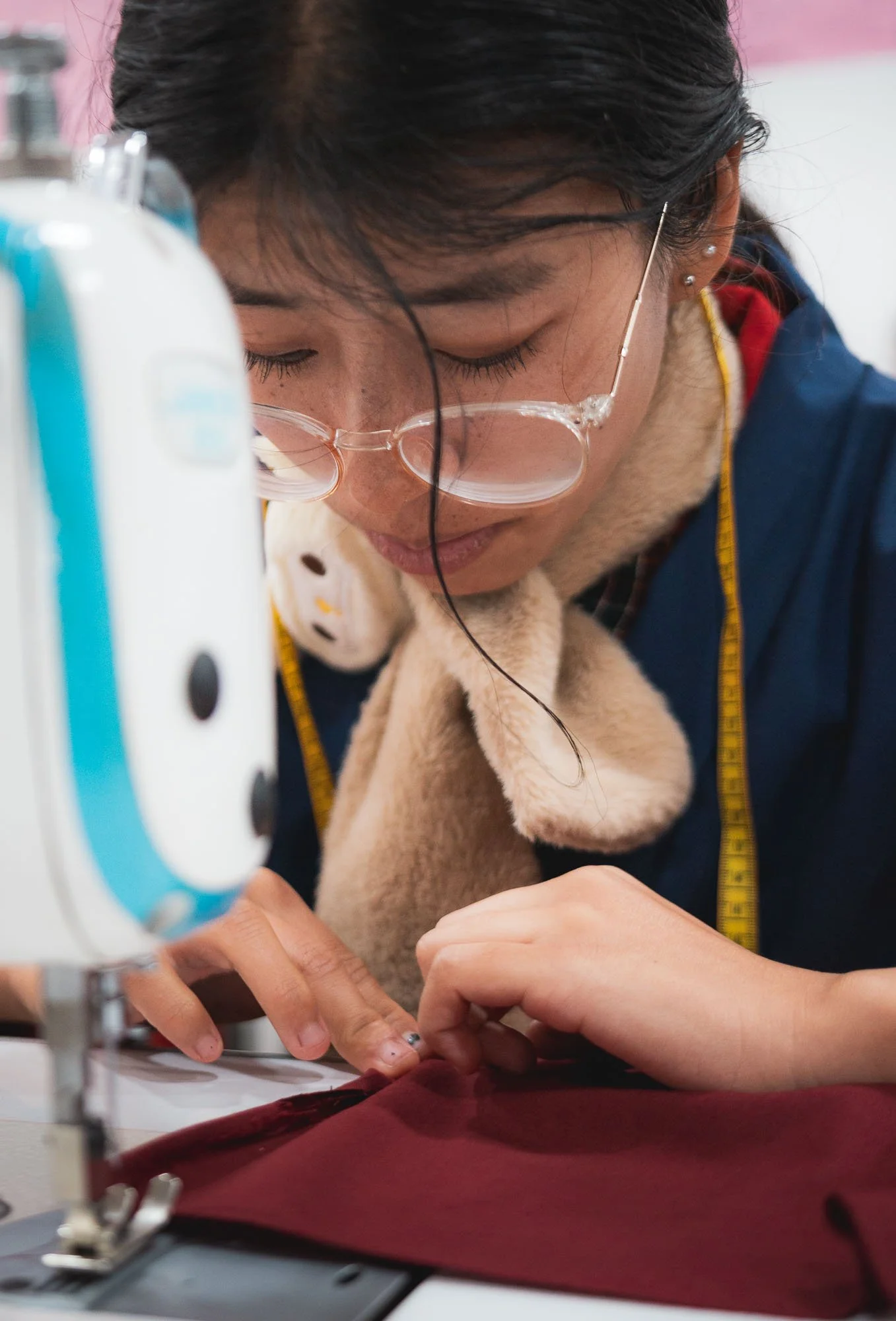
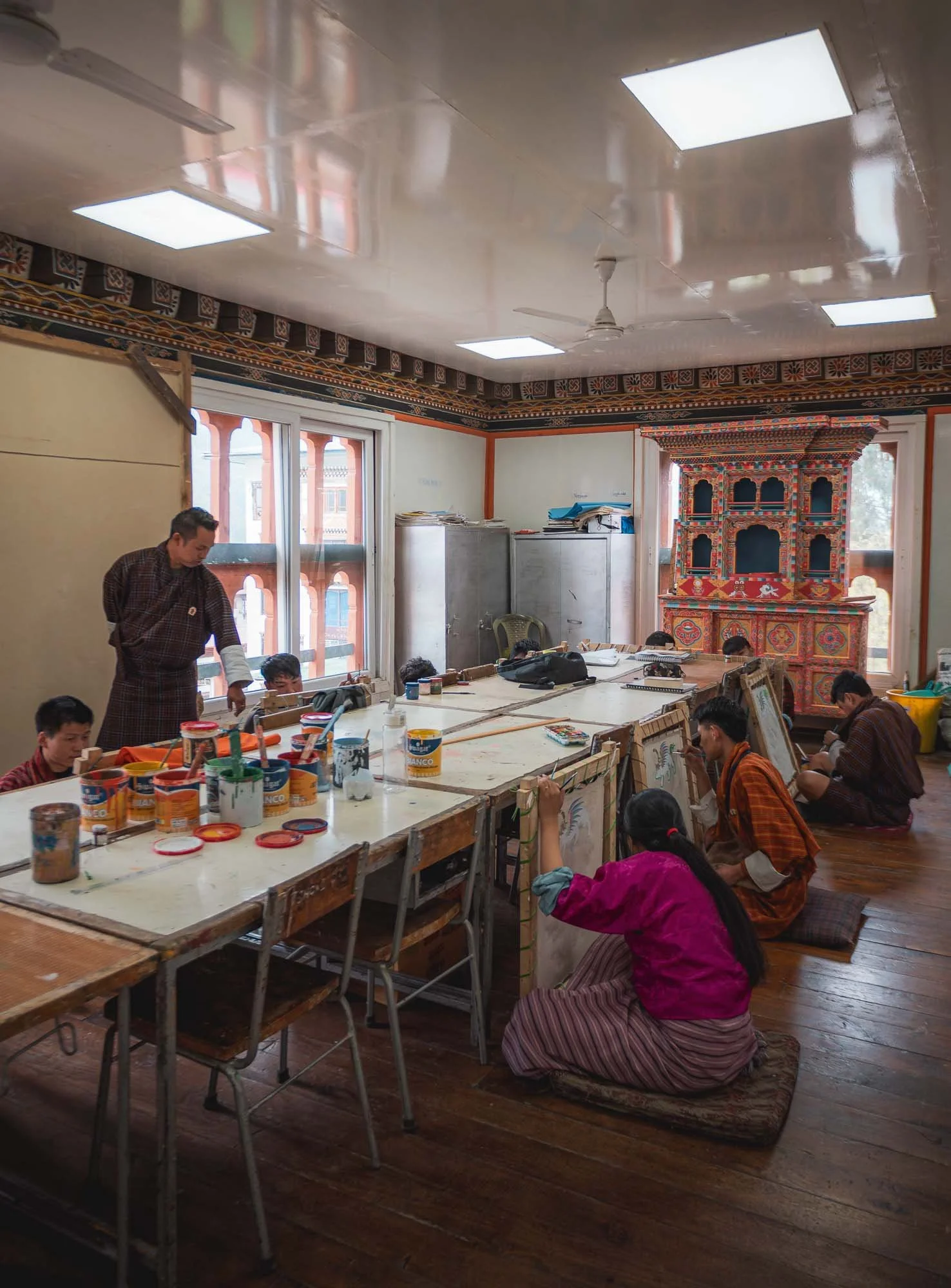
The school is not far from the city centre and dedicated to vocational training and encouraging entrepreneurial activities around tailoring, painting, sculpture, carving and more, many of them tied closely to the construction aspects of Dzongs and monasteries, or the various religious uses such as mask making and paintings for temples.
For a small fee, visitors are allowed to walk through the institute and check out the various classes in progress, such as the painting class here. Students attend courses anywhere from 3 months to 2 years depending on the level of skill and certification they want to attain.
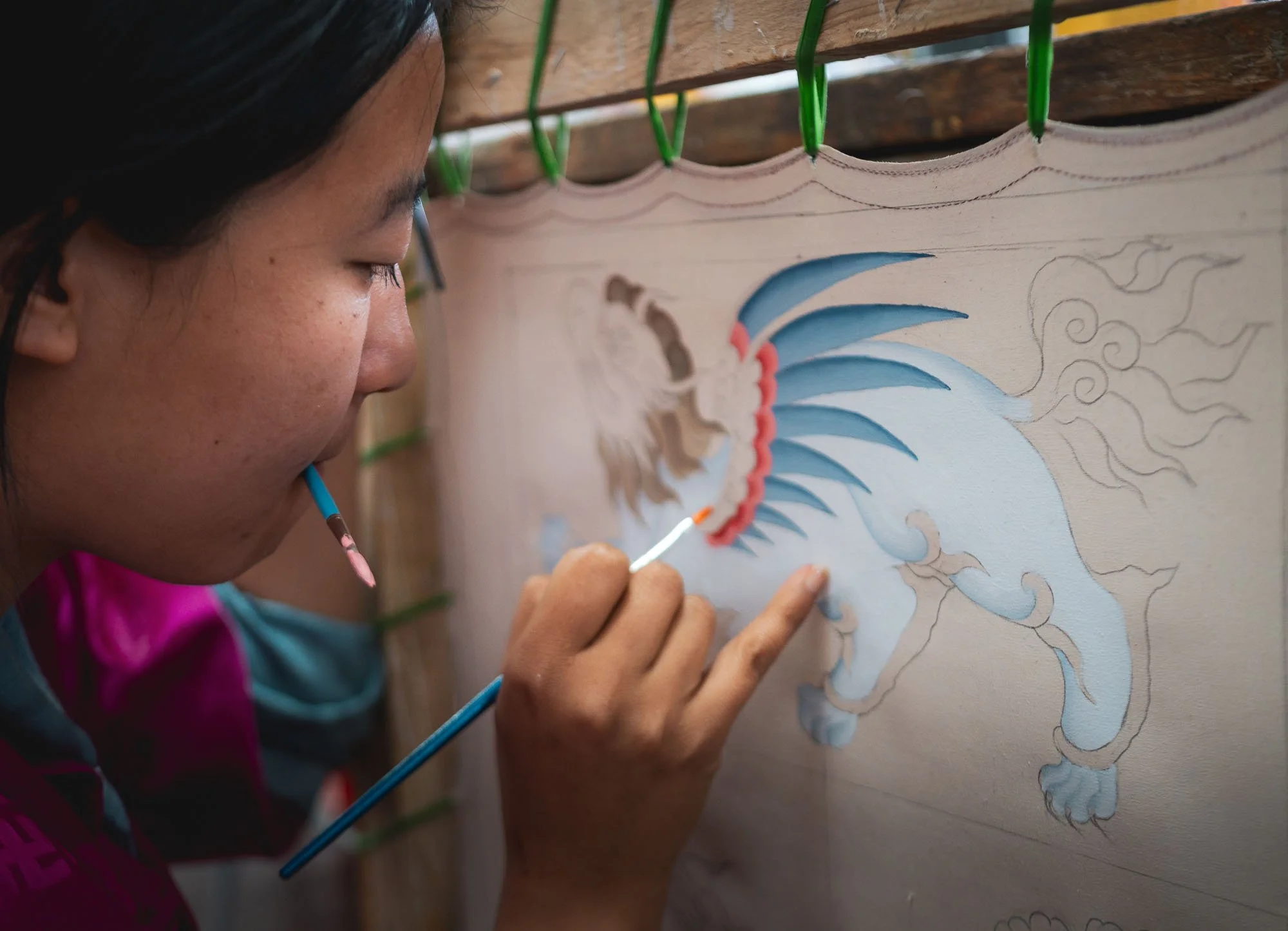
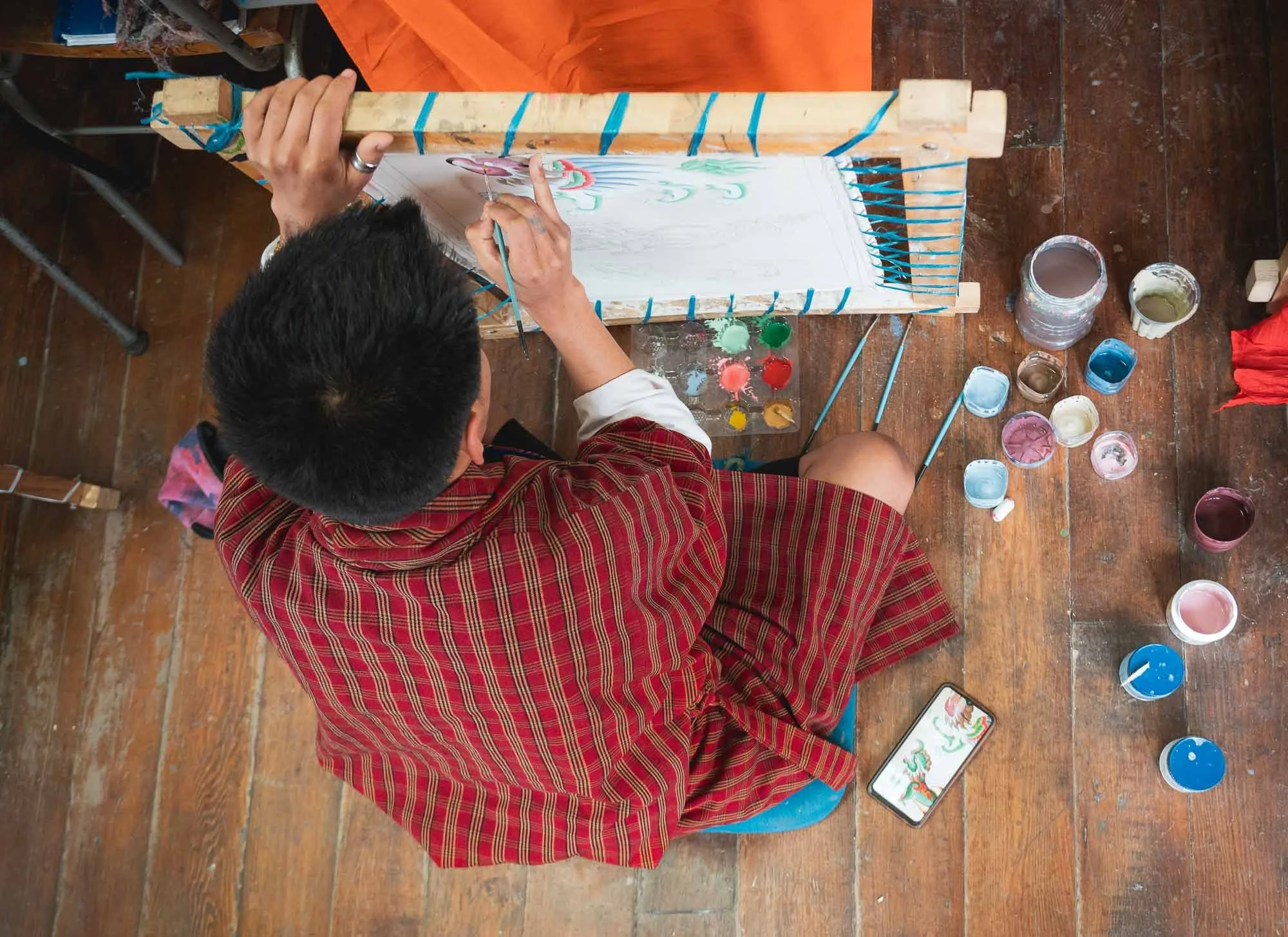
Schedules, performance, and quality monitoring don’t seem to be very relaxed! Indeed, a lot of the cultural aspects of Bhutan are not purely organic, but heavily institutionalized with skill development through formal training and government programs that preserve and regulate the national heritage.
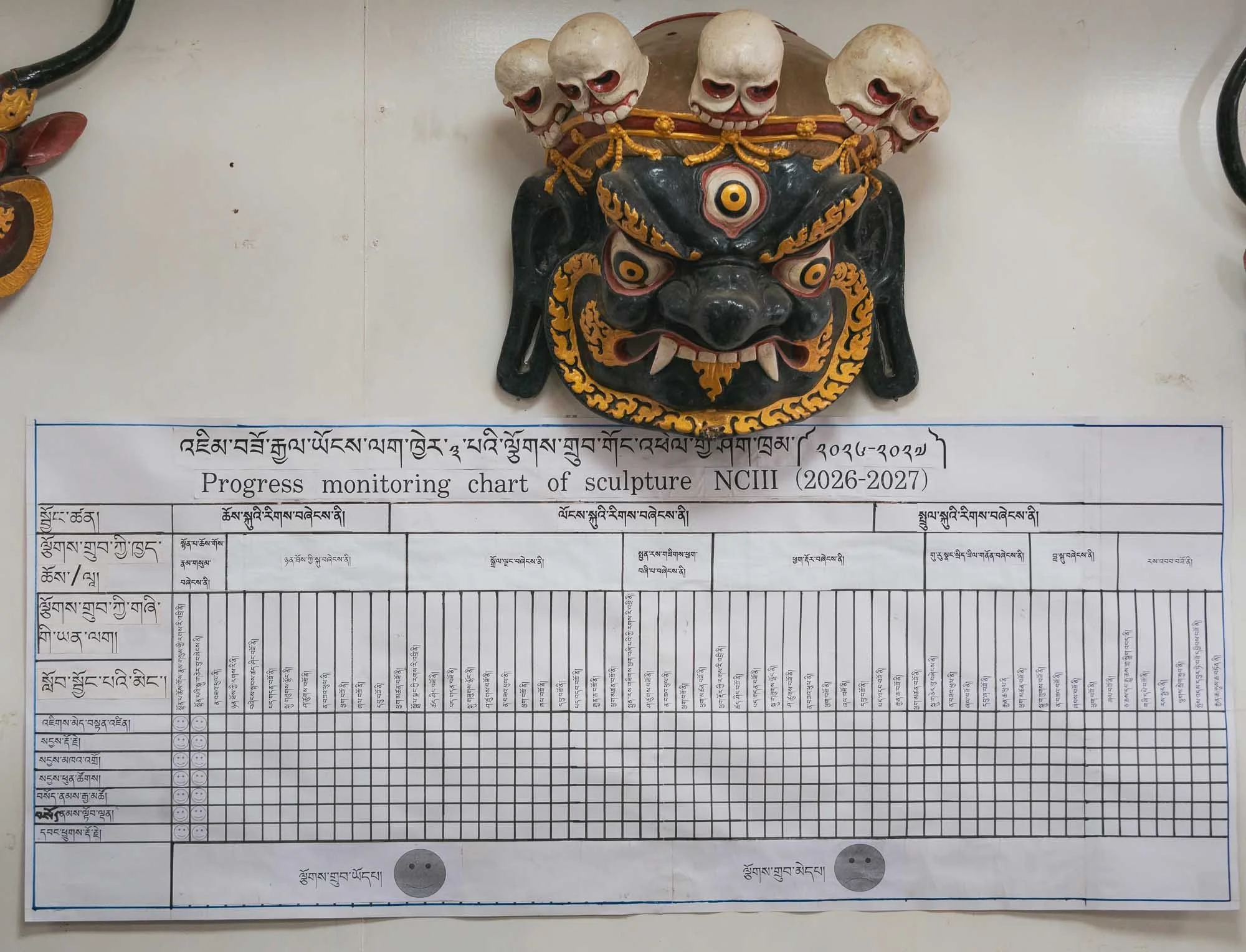
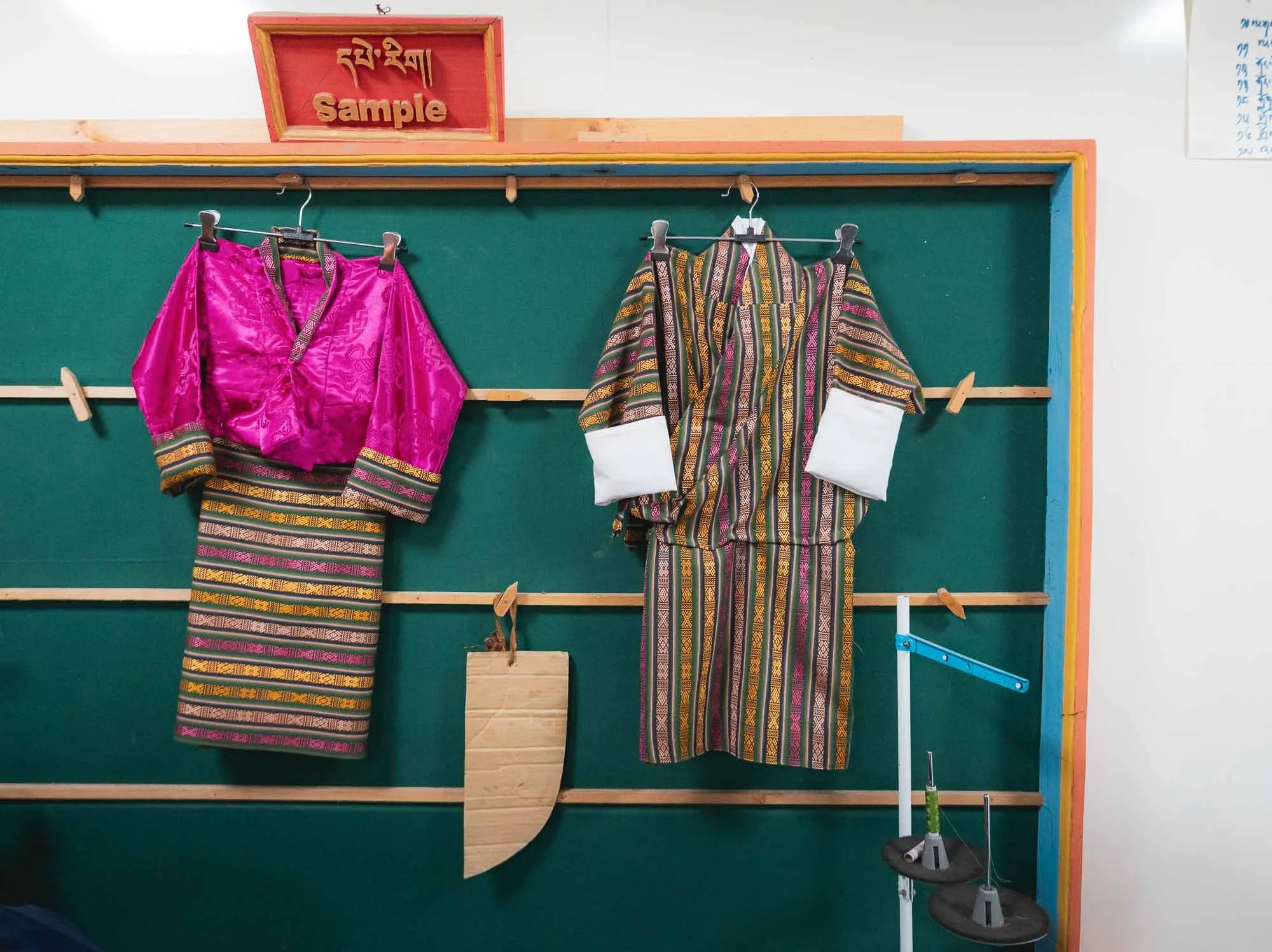
This is evident in the day to day architecture of local houses and dress style as well - it encourages a unified visual identity wherever you go, but for better or worse arguably may also be a little restrictive to evolution and individualism.
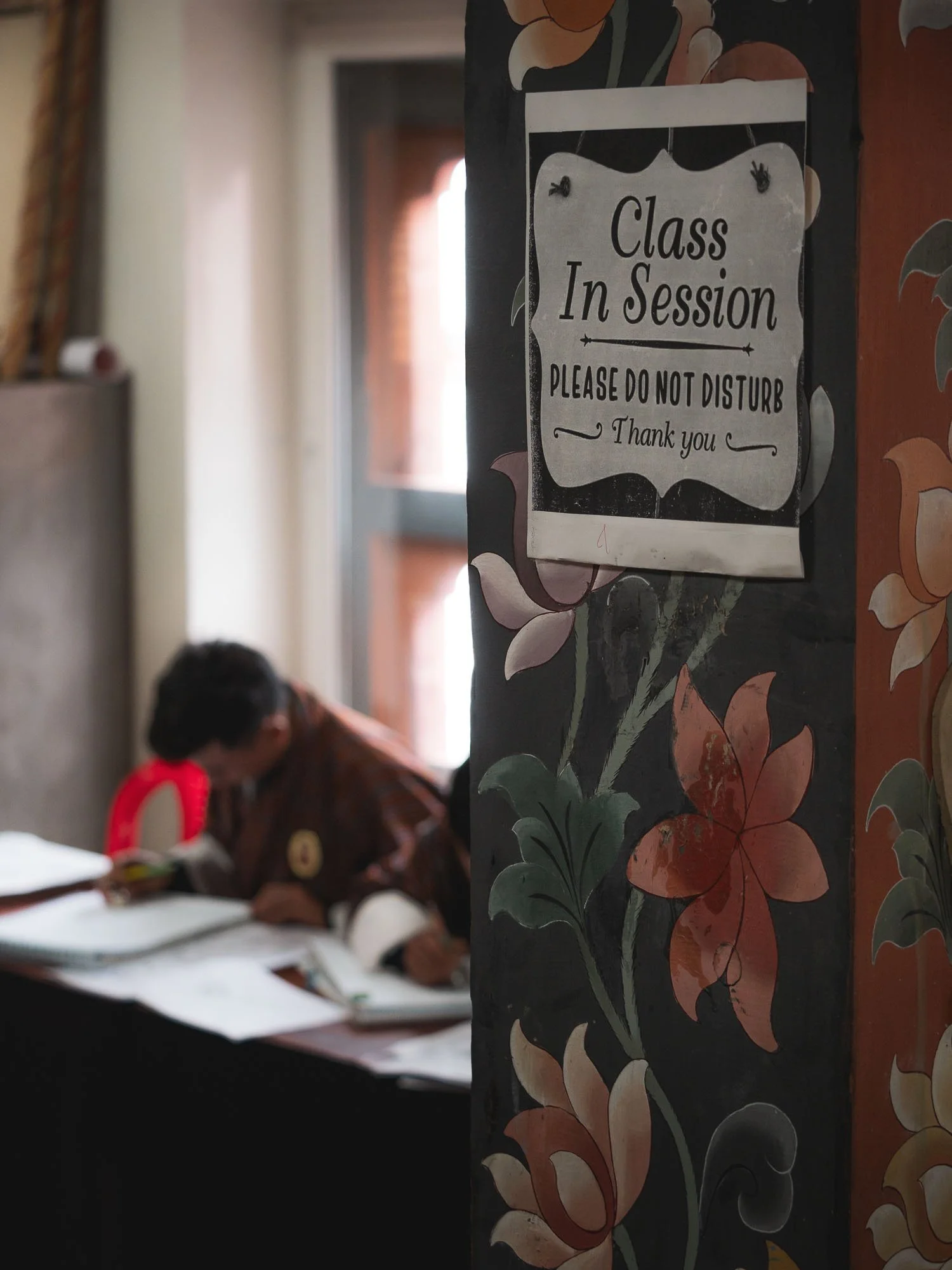
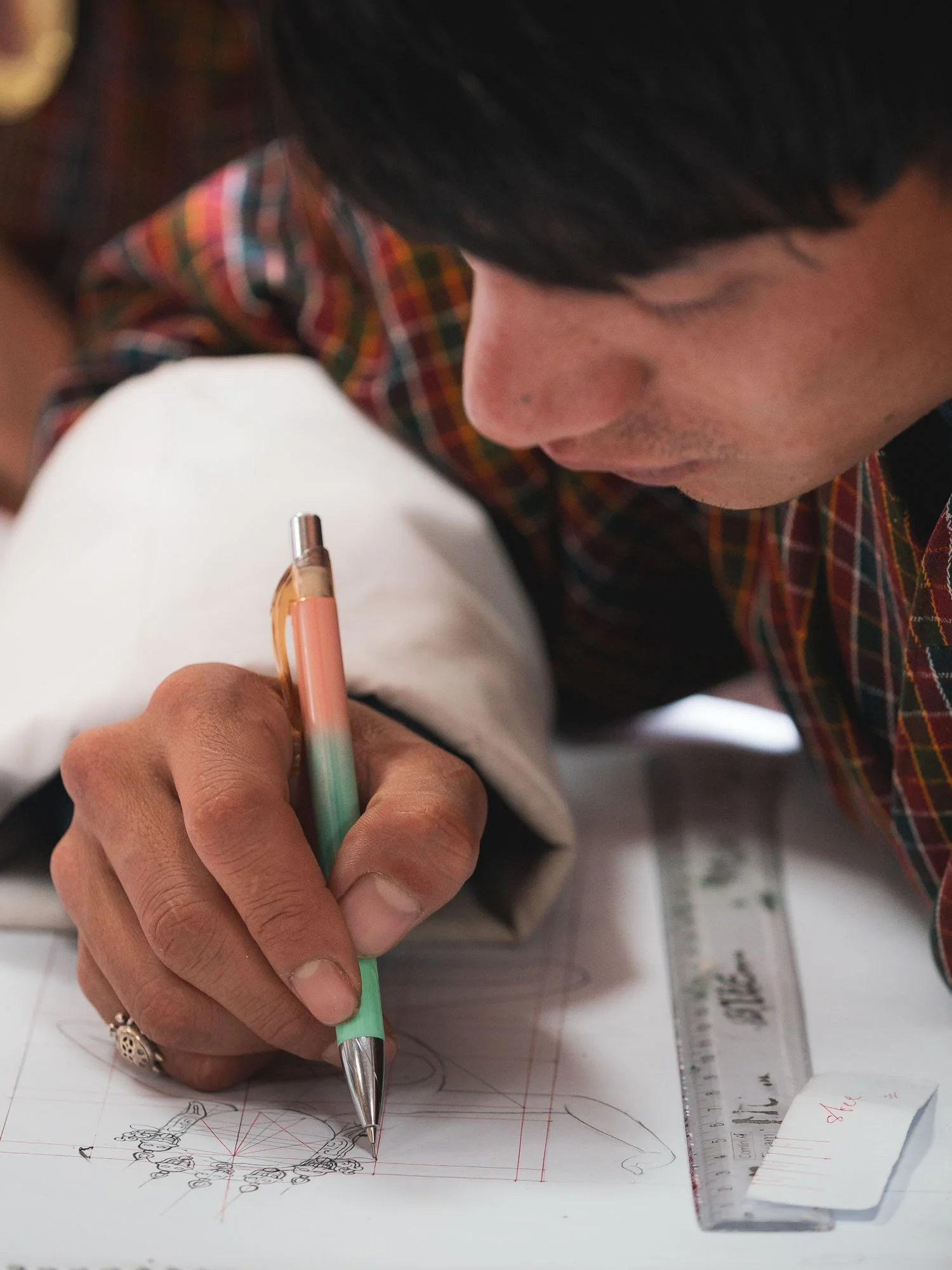
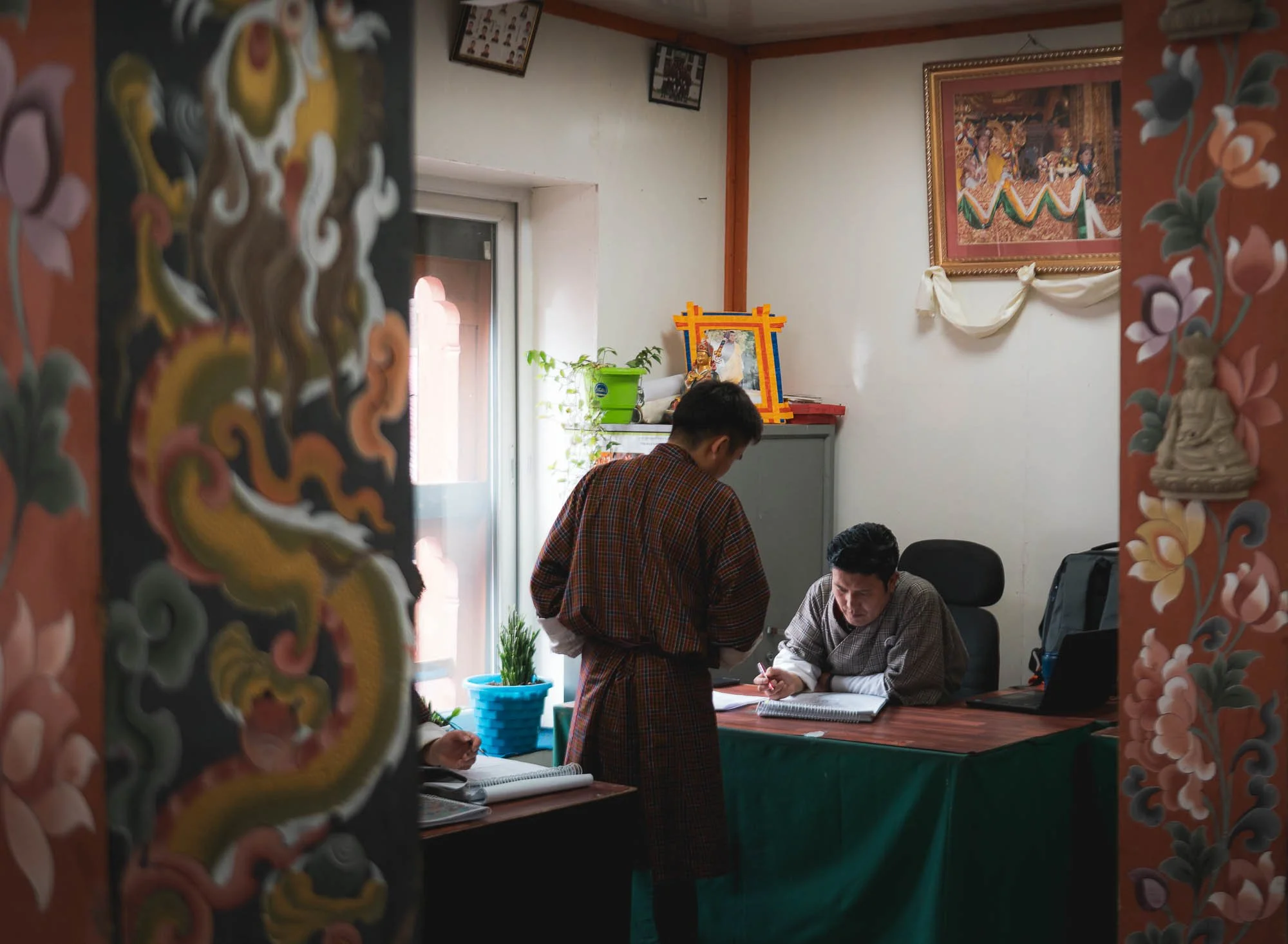
Experienced professors provide feedback and observe the student’s work, which seems largely focused on replication more so than creative expression.
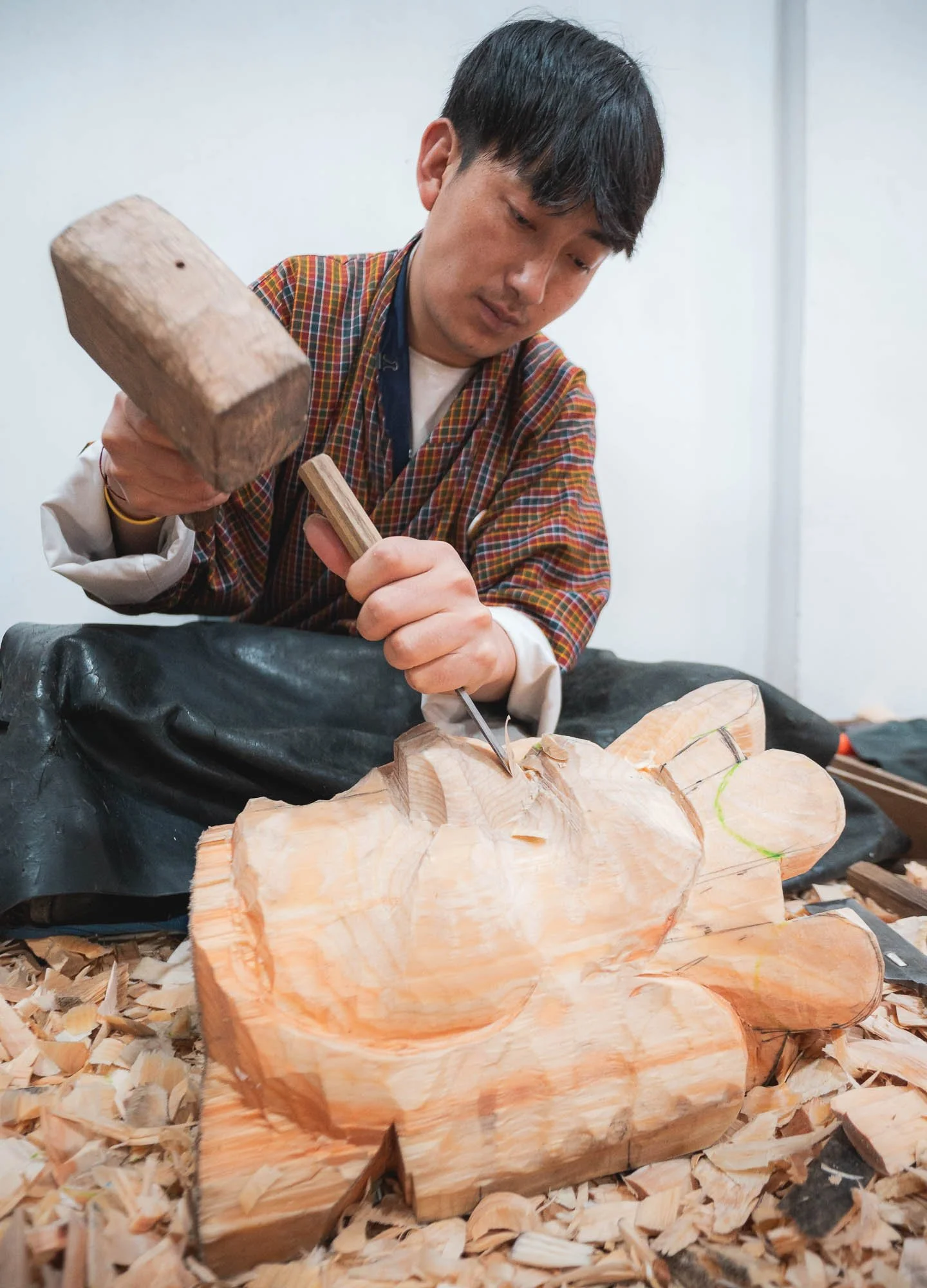
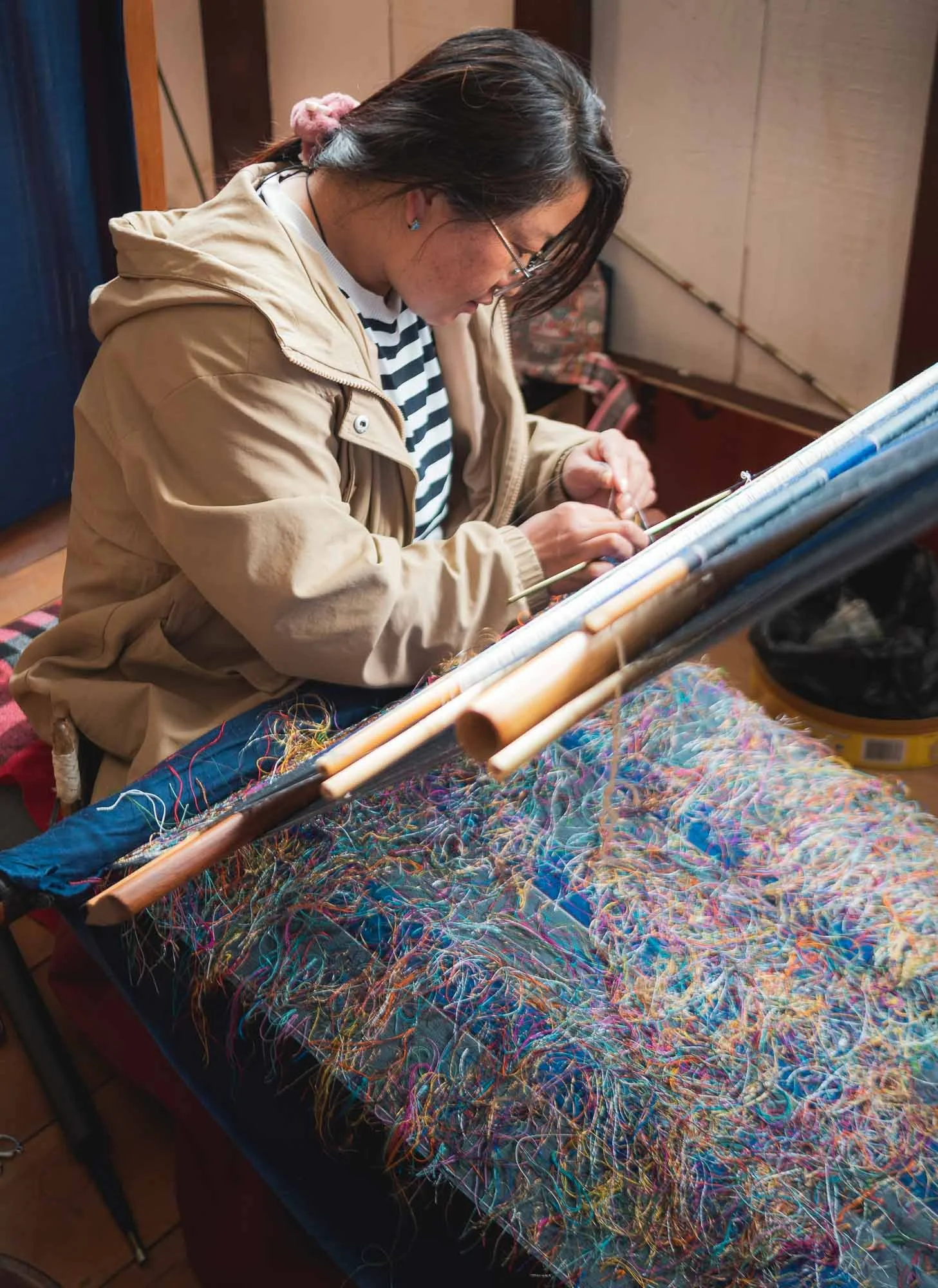
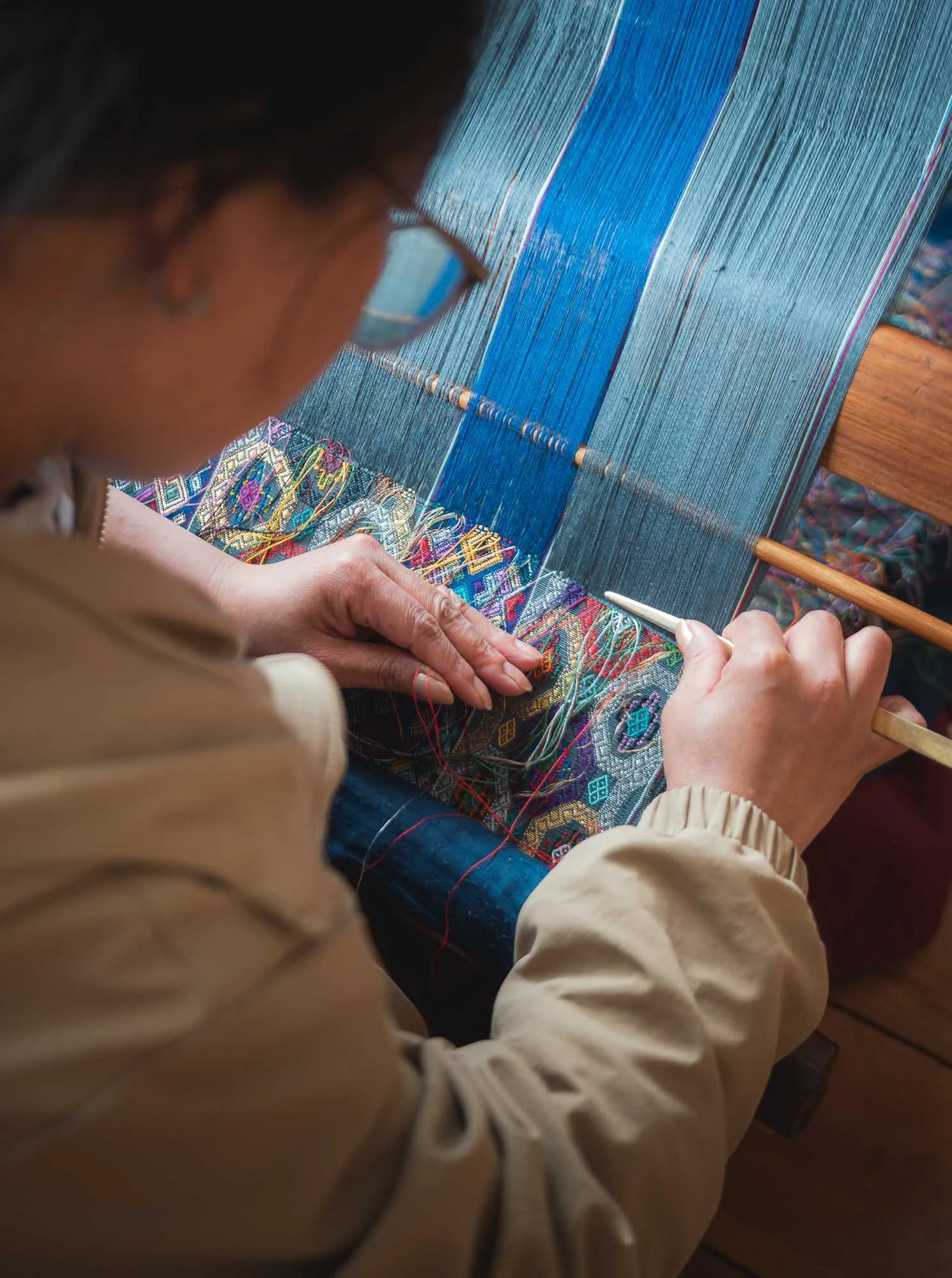
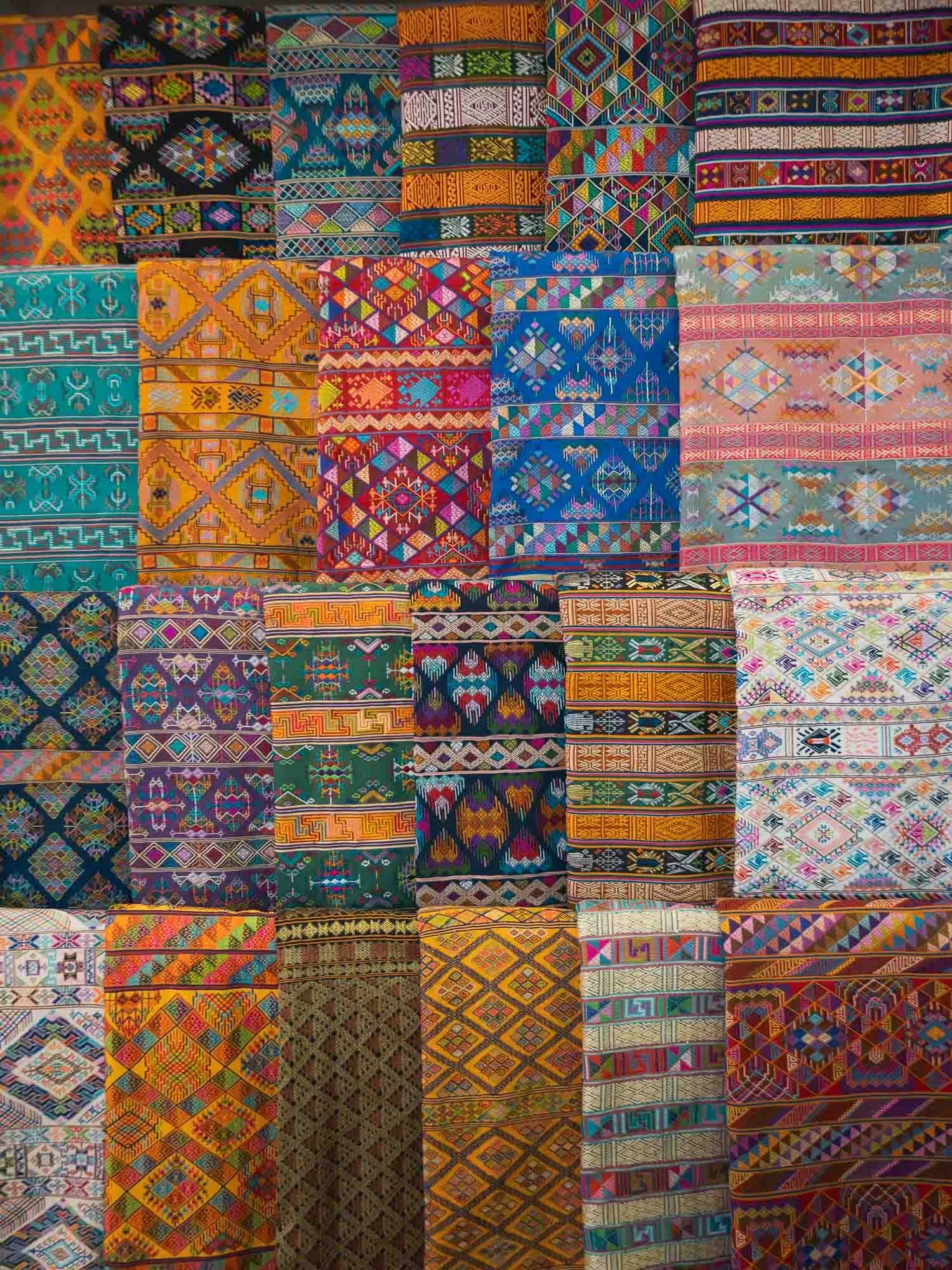
Weaving is one of the thirteen disciplines, and the dedicated Royal Textile Academy manages classes, market access opportunities, and a museum for this discipline, mainly practiced by women. It was closed for some renovations during my visit, but there are several other weaving centers dotted around the city.
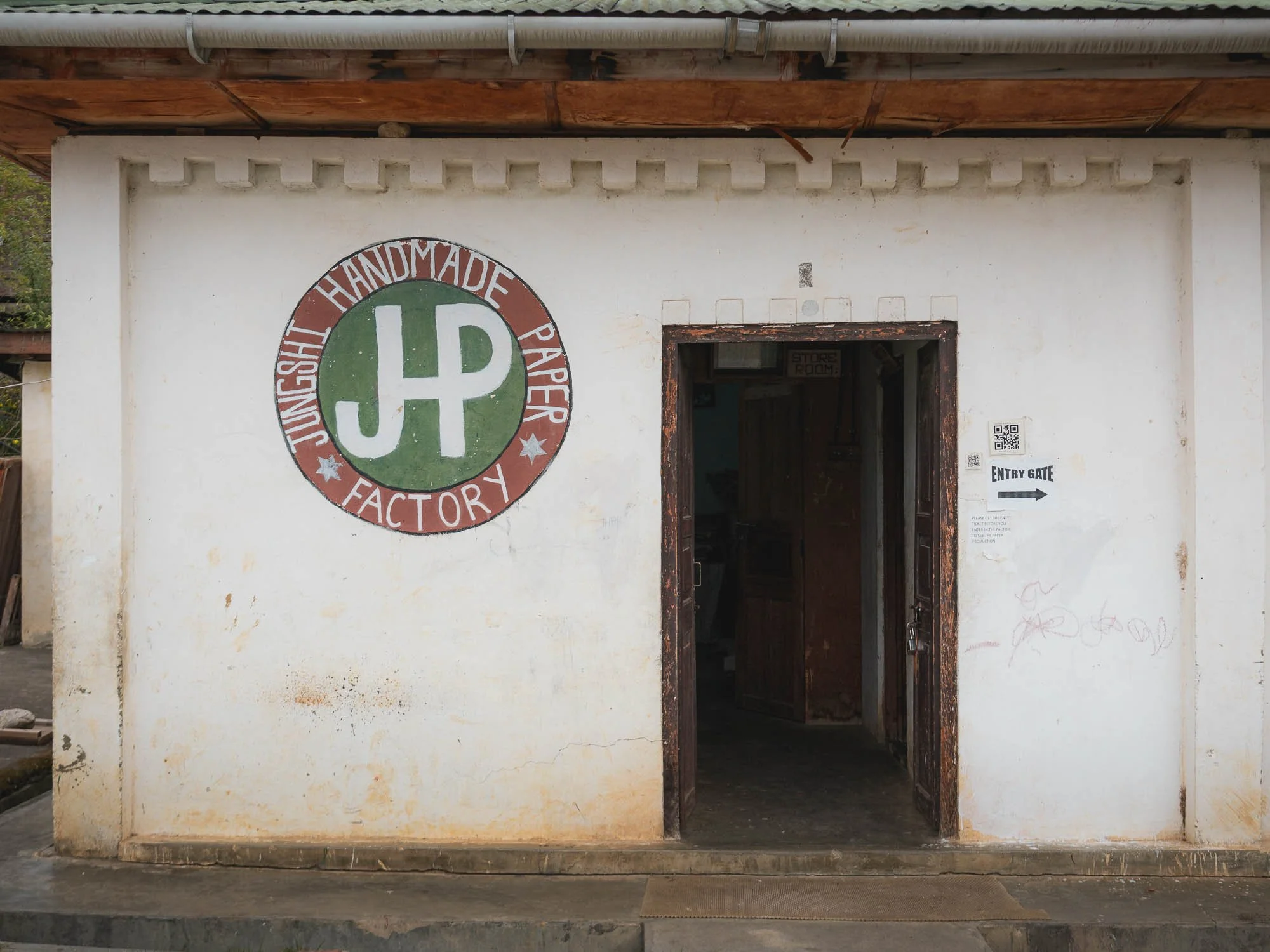
📜 Traditional Paper Making
A little less formal and codified was the next place I visited, and it turned out to be one of my favorite spots.
To make the paper here, Daphne plant fibers are first extracted by soaking and boiling the bark, then cleaned and broken down into pulp manually. This is mixed with water and a natural binder and spread in thin layers onto a screen to form sheets.
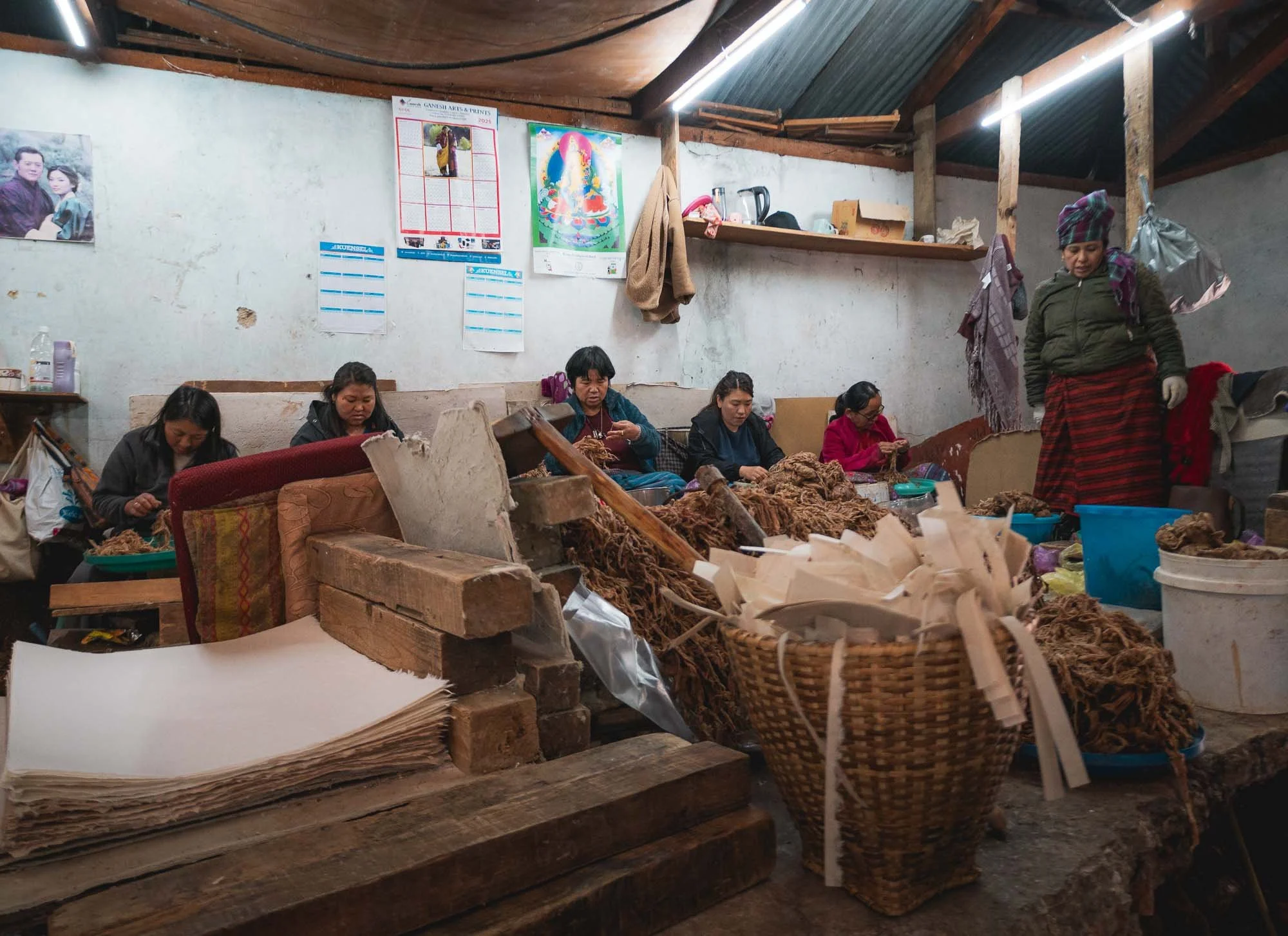
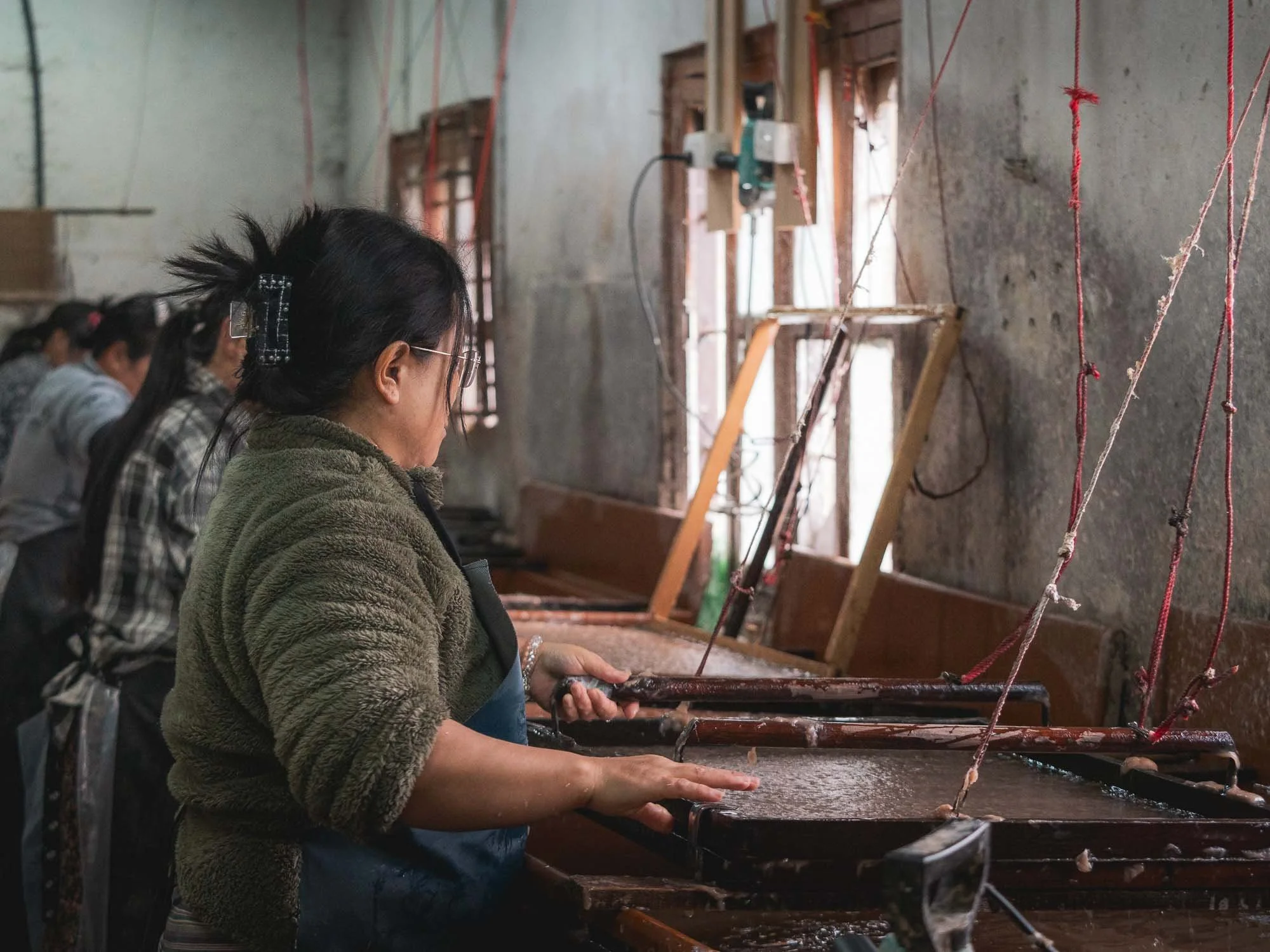
The sheets are then pressed to remove excess water, and dried individually on heated boards. They last for decades without chemical treatment.
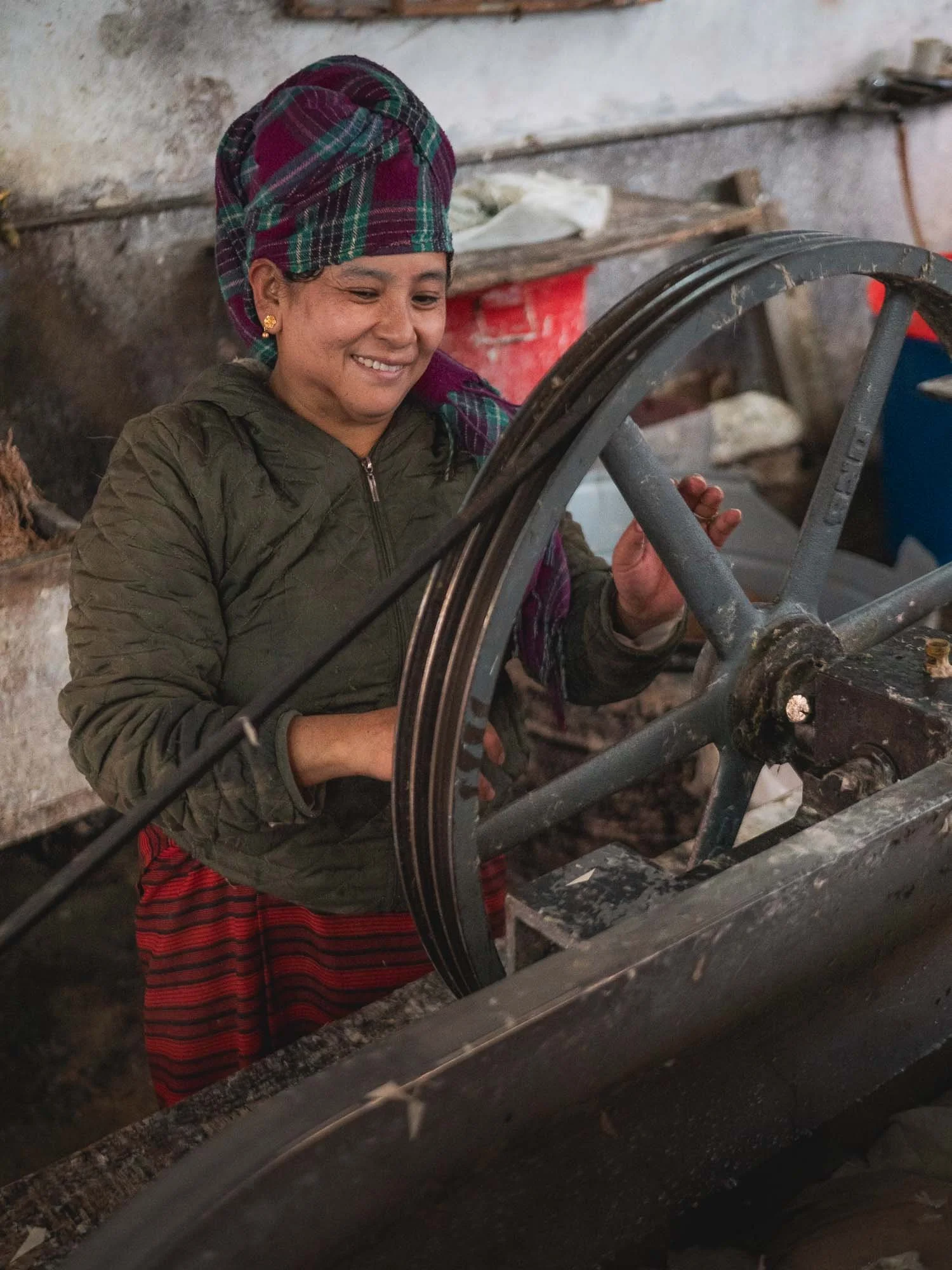
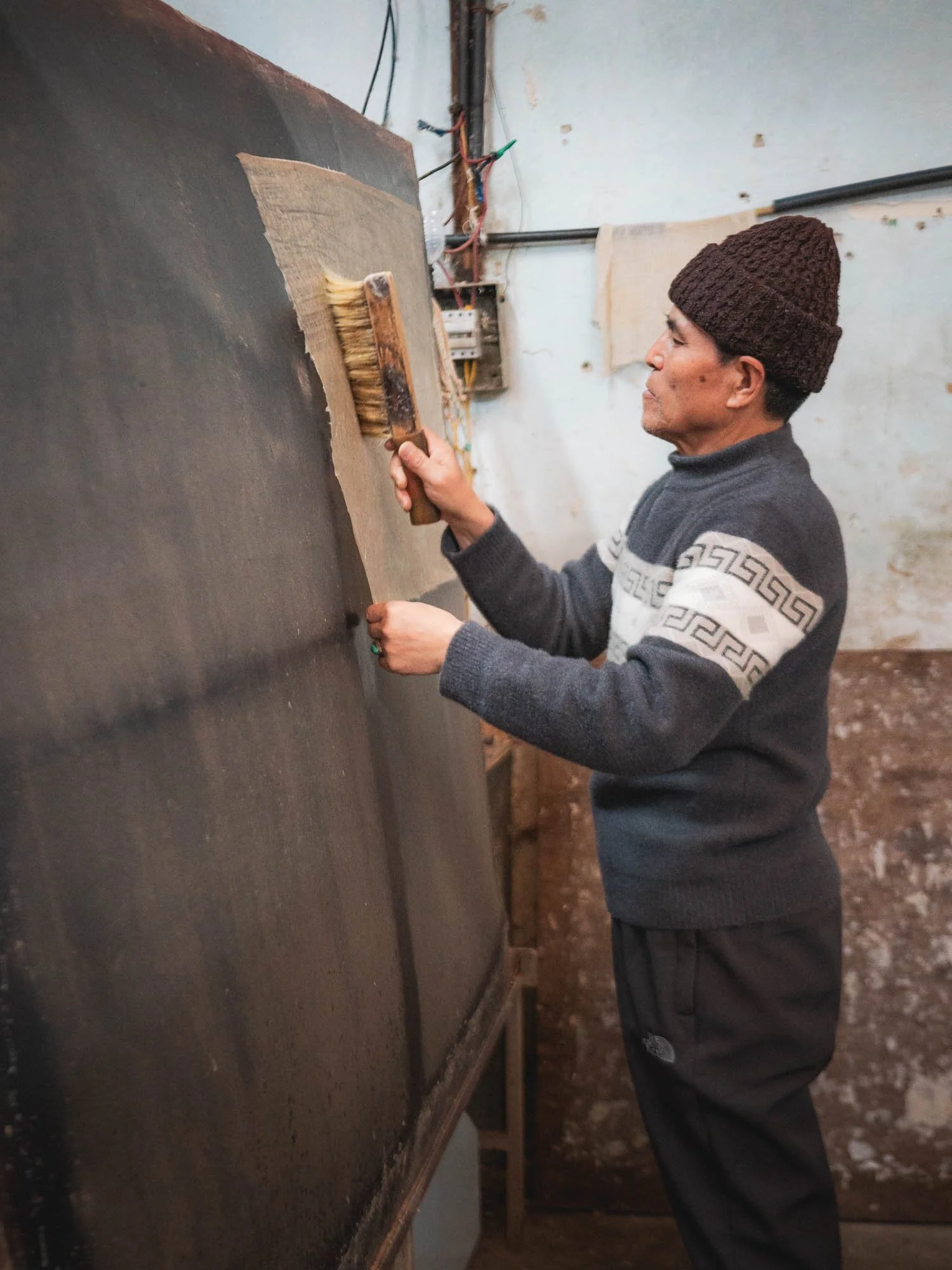
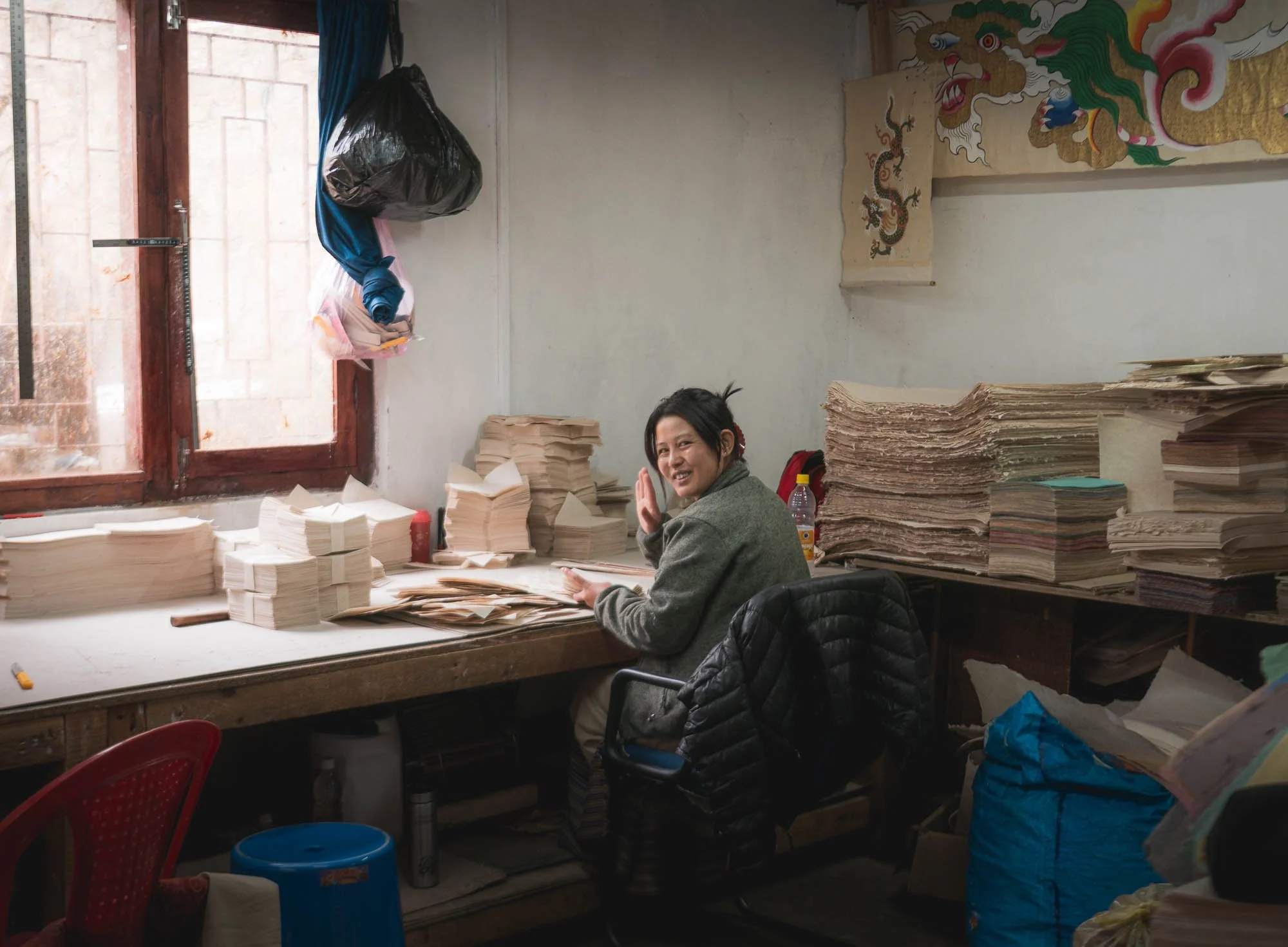
Historically, it was used for religious texts and official documents, nowadays it is commonly used for more industrial applications like packaging, and some of the paper is packaged and sold in their in-house shop as small postcards, note books, and similar items.
Although those are very expensive (overpriced, one could say), I couldn’t resist and bought plenty of sheets to try and print some photos on.
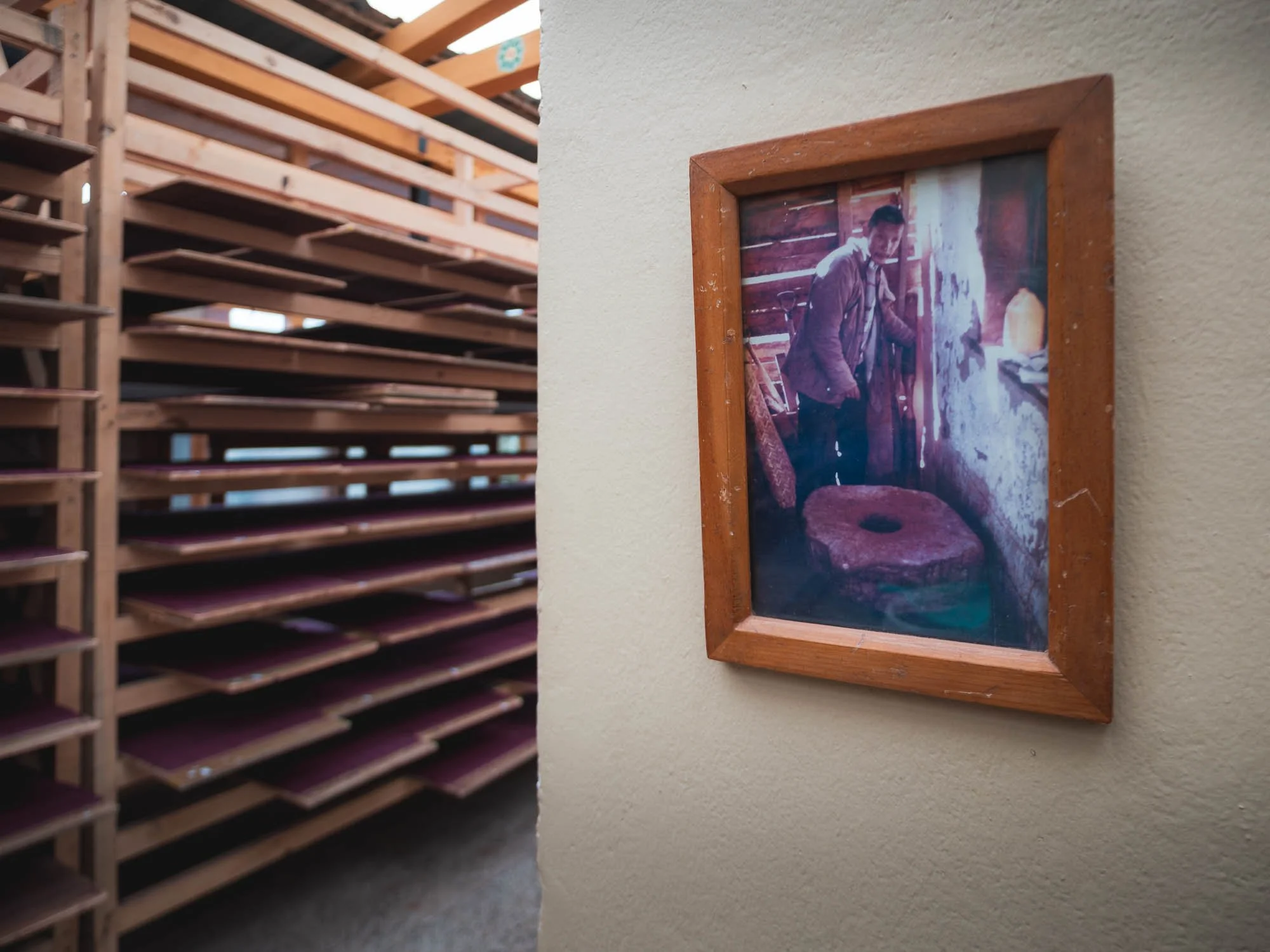
Incense Making
My last exploration into the world of Bhutanese crafts was at a local incense factory, which has been running for over 50 years, as the second generation owner told me.
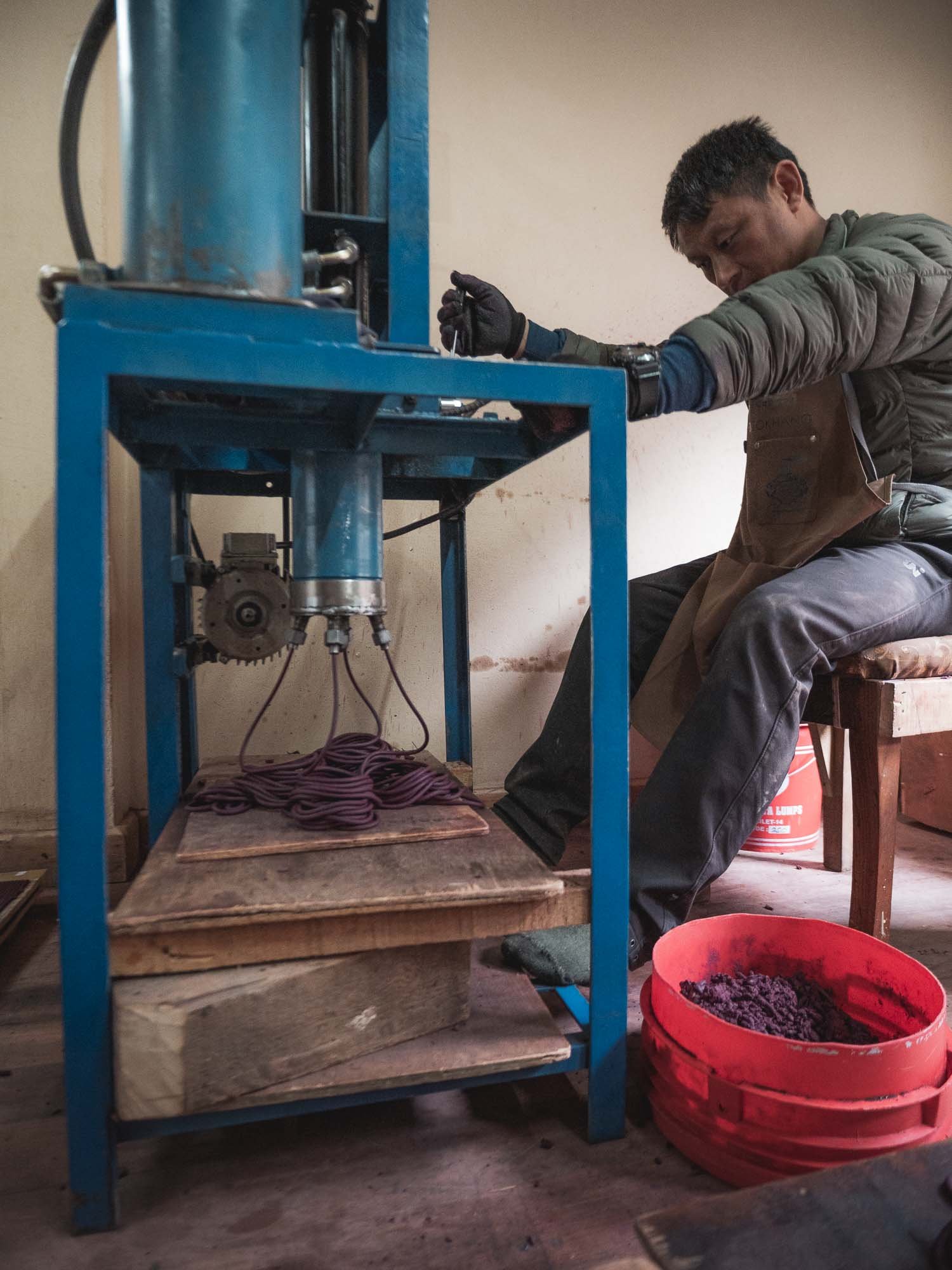
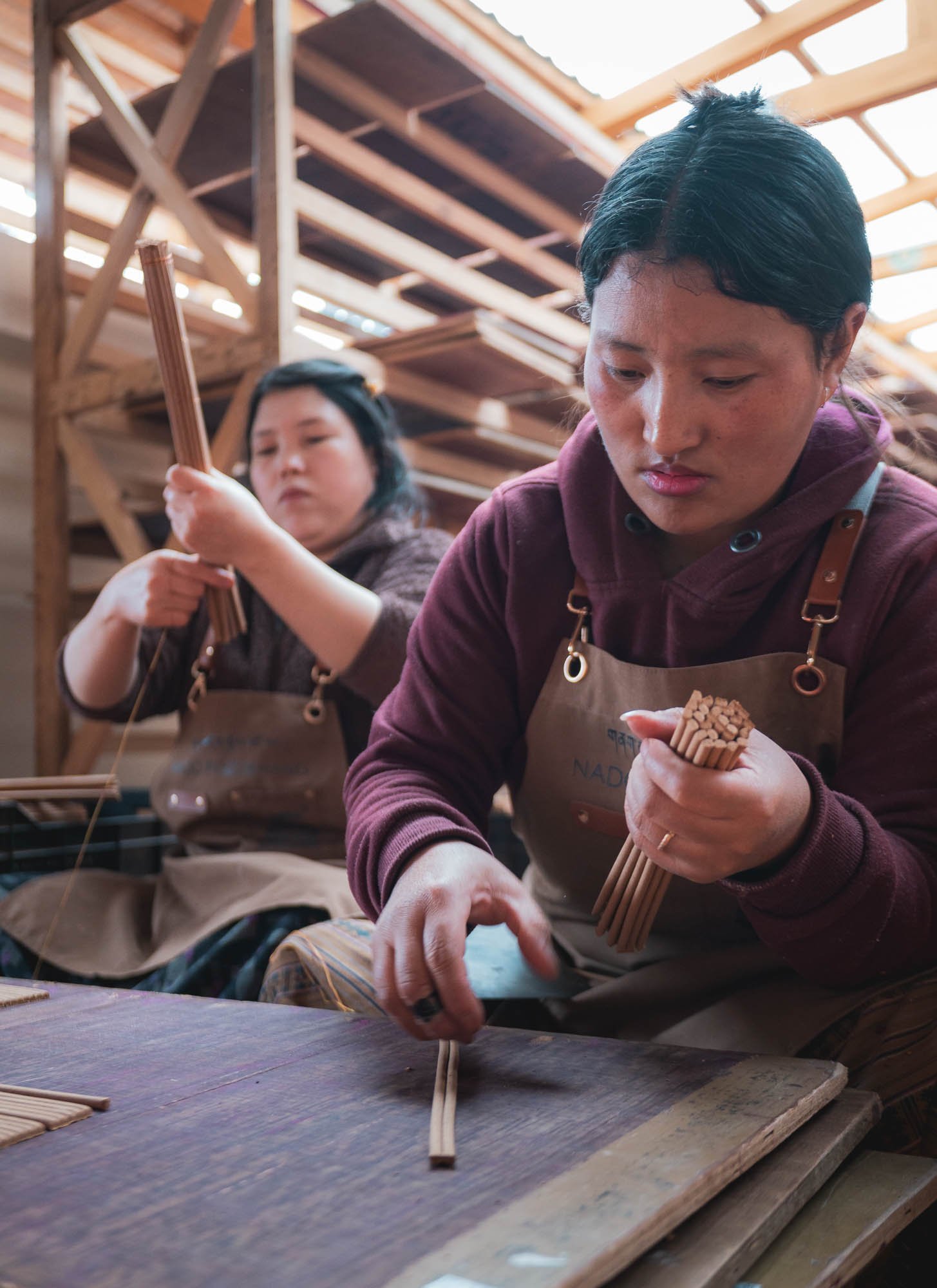
Incense here is mostly plant-based, from herbs, roots, and resins. They are first ground and dried (which produces a really strong stench and eye-watering sharp dust), then mixed with water into a paste, pressed into long tubes and then rolled and cut by hand, before being air-dried.
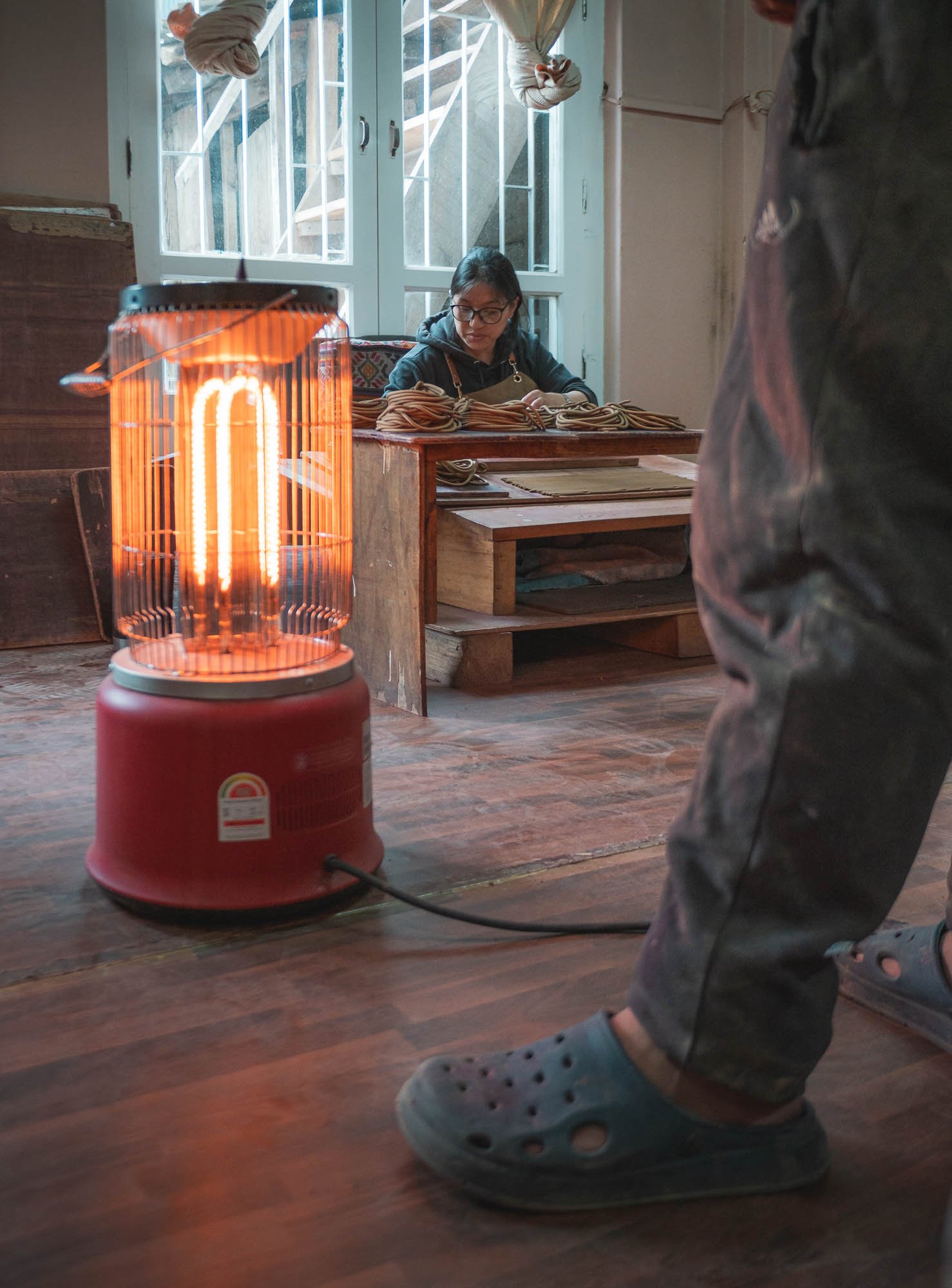
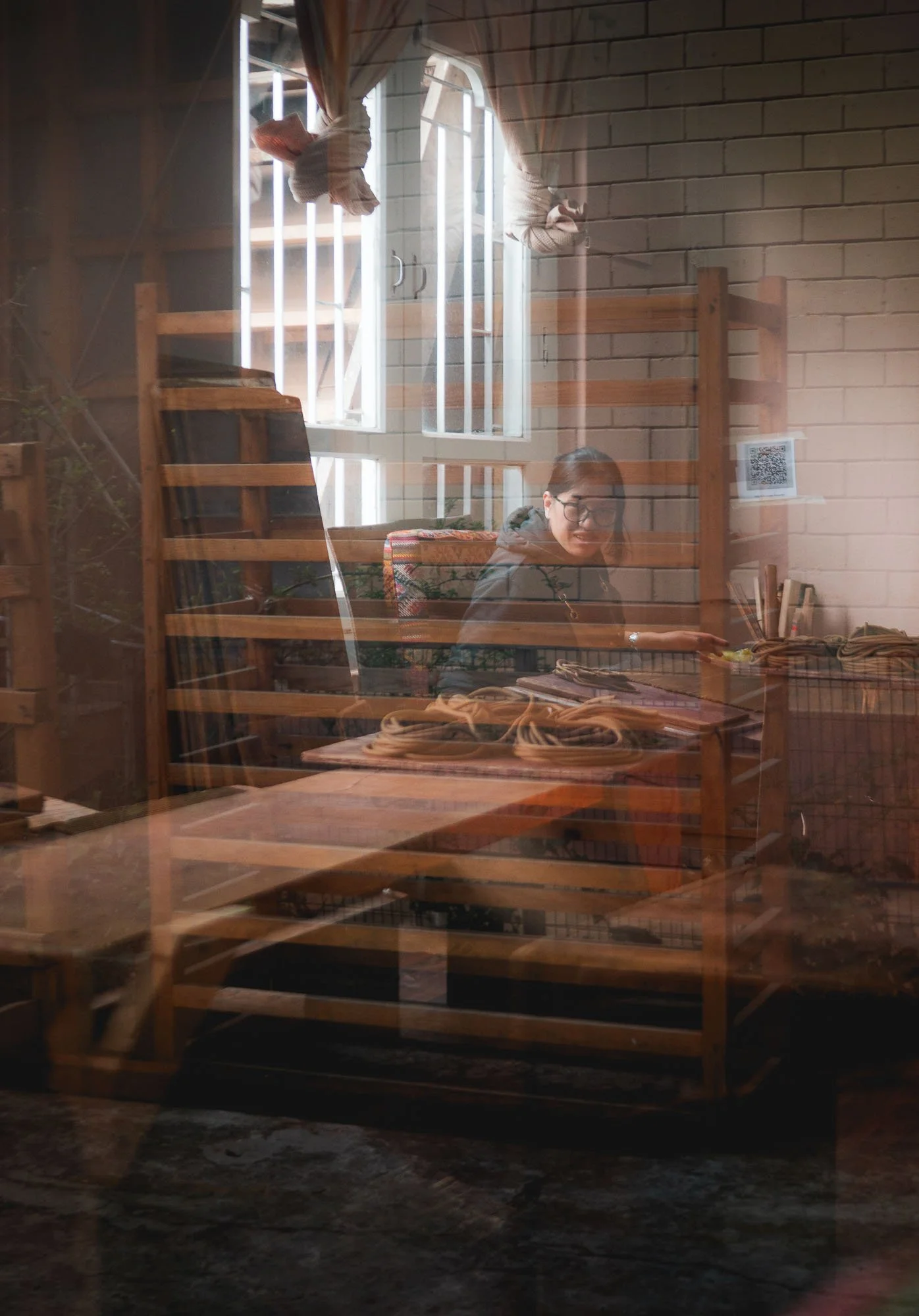
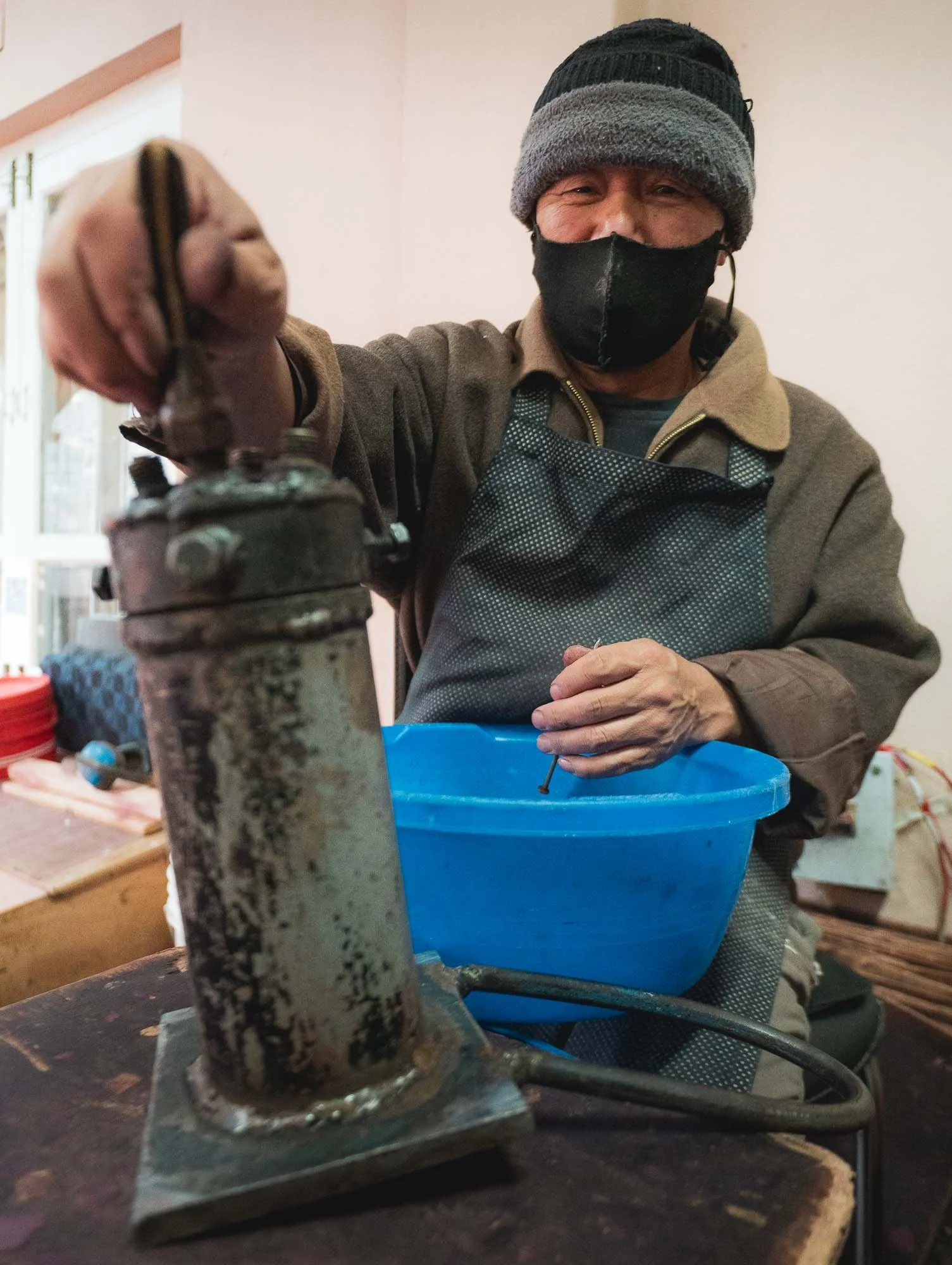
In house machine repairing… wearing a mask is a good idea in here, the dust filling the air from the finely ground base ingredients is definitely not healthy. With this, it was time to leave the capital and move a little further east.
Dochula Pass & Beyond
To do so, you cross the Dochula pass at around 3100m following a winding, but decent (not a guarantee everywhere as I’d later find out) road.
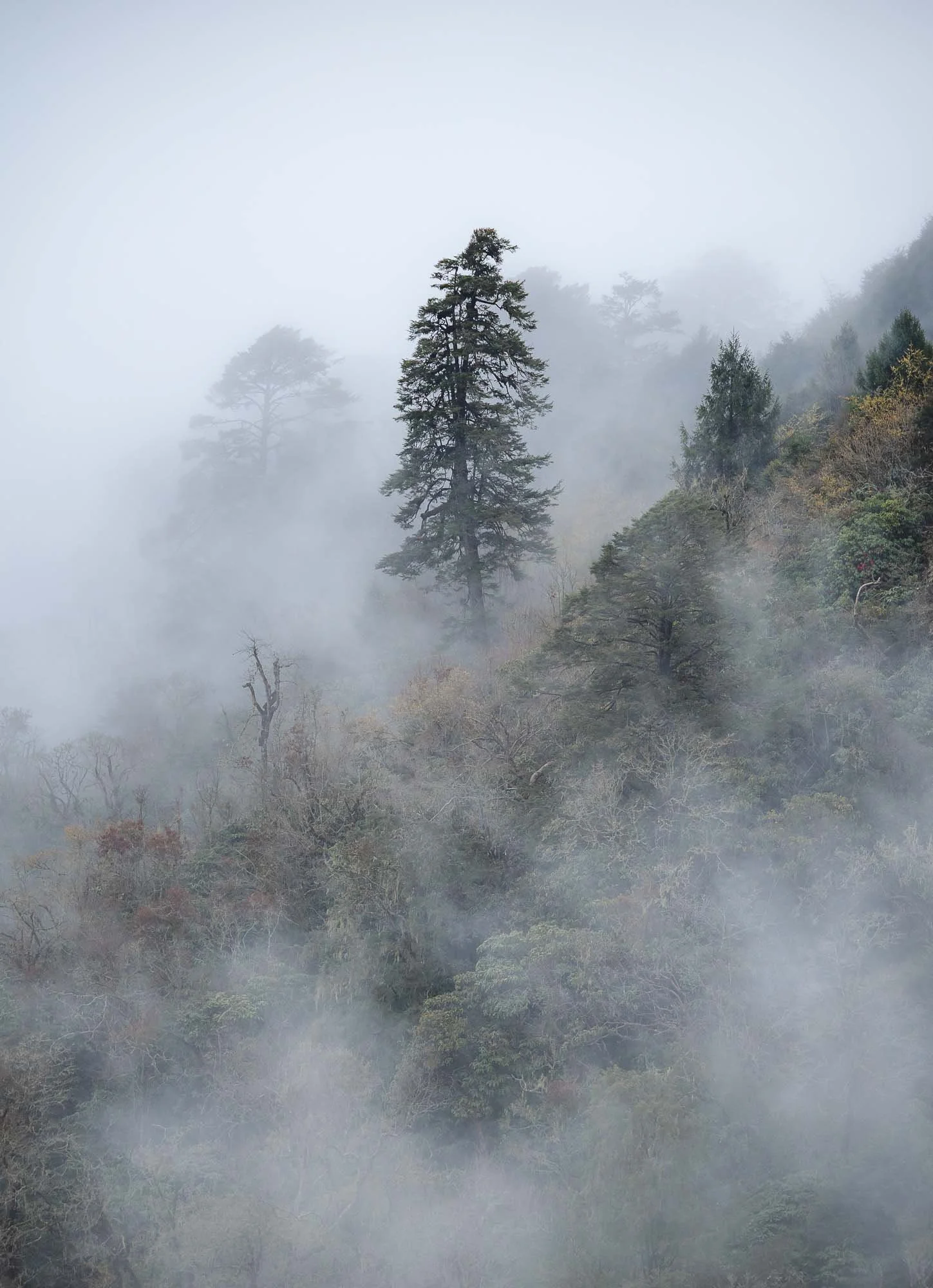
On a clear day it offers a view of the eastern Himalayas, alas that was neither the case on the way there or the return trip, which is quite common. Clear days in the mountains here can mostly be enjoyed in October or November, but the misty atmosphere also had its charm.
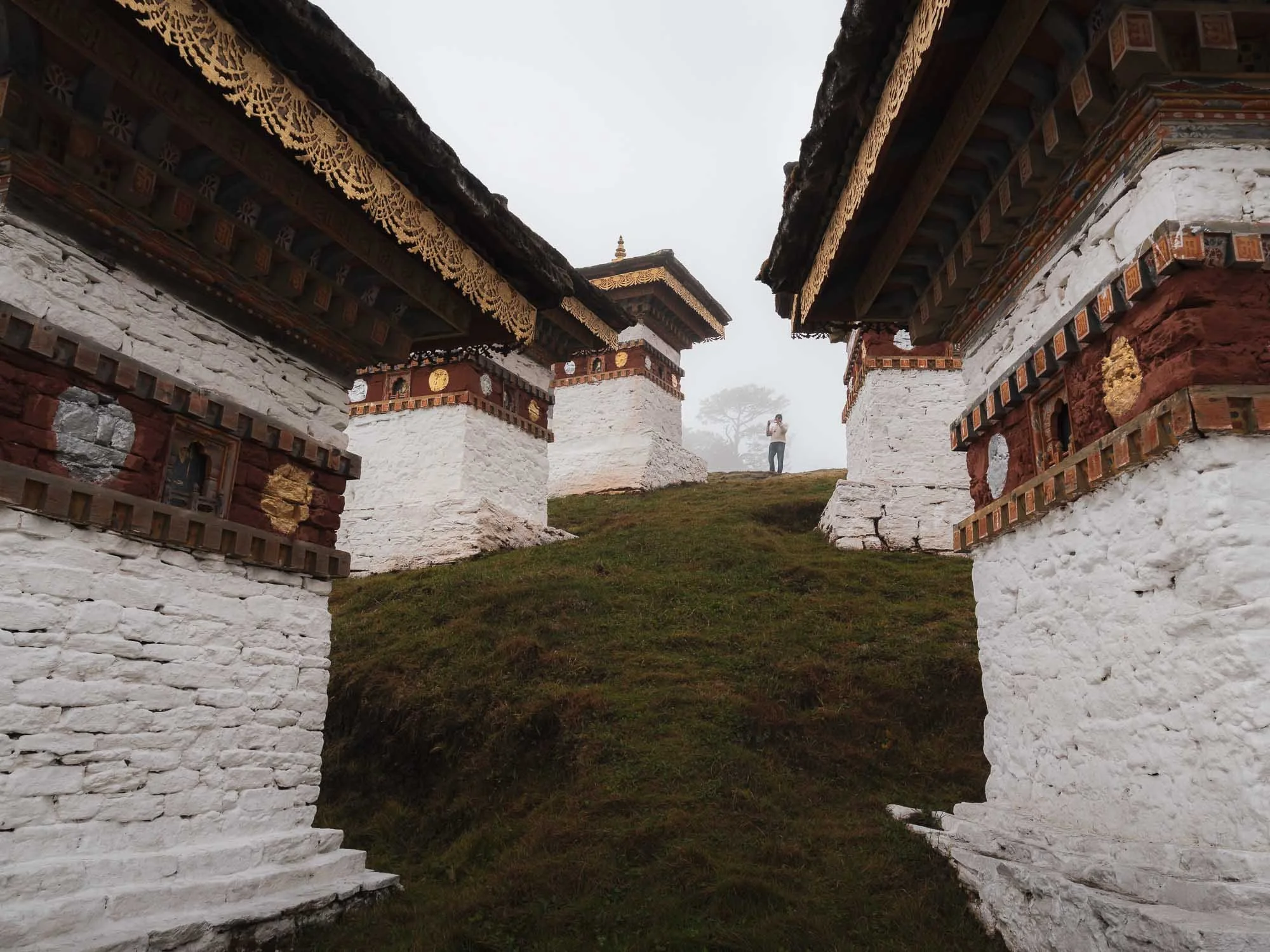
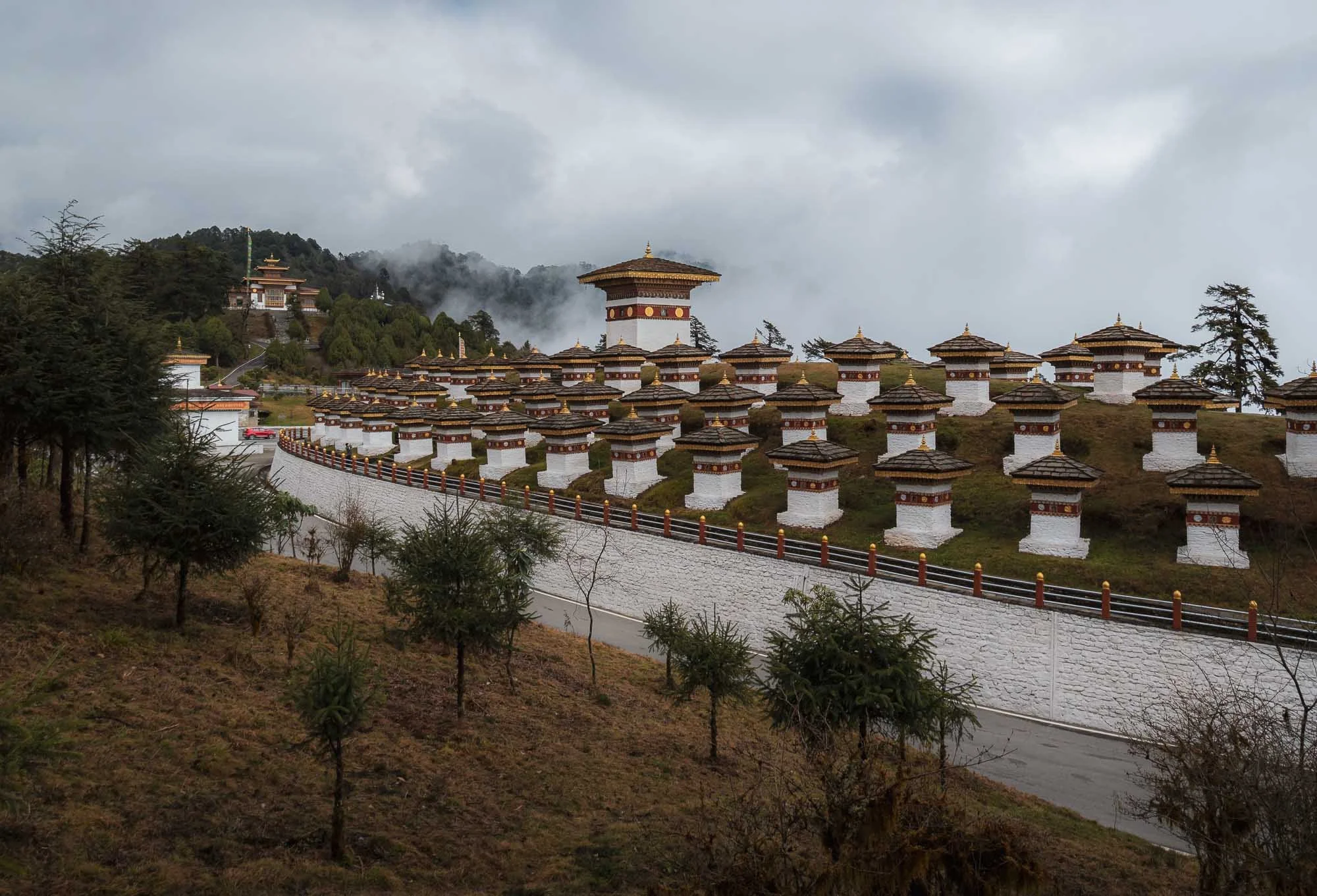
Many people visit the pass for the 108 chortens, a memorial constructed in 2004 at the very top in honor of the Bhutanese soldiers killed in military operations in the south against Indian insurgents the year before.
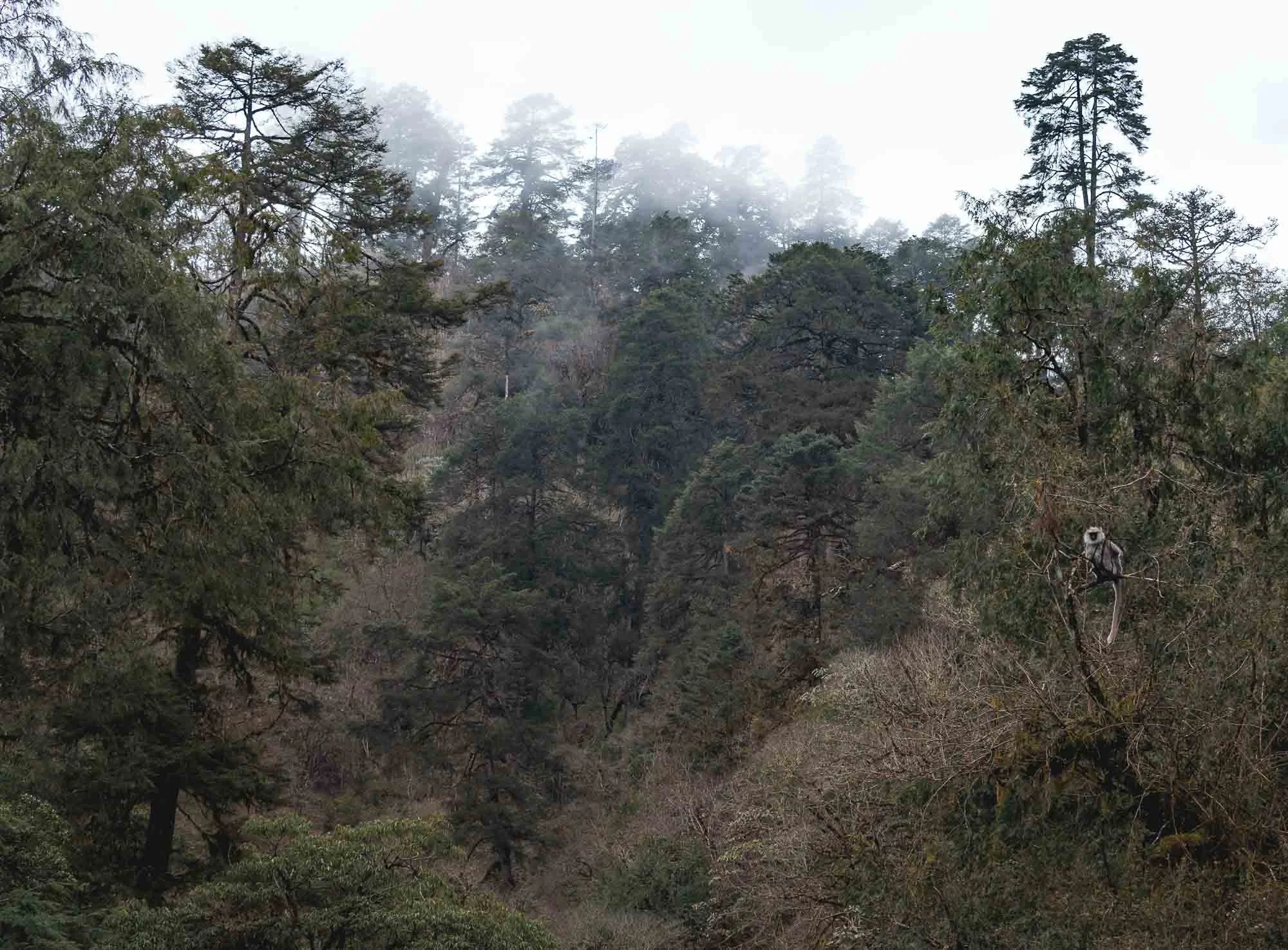
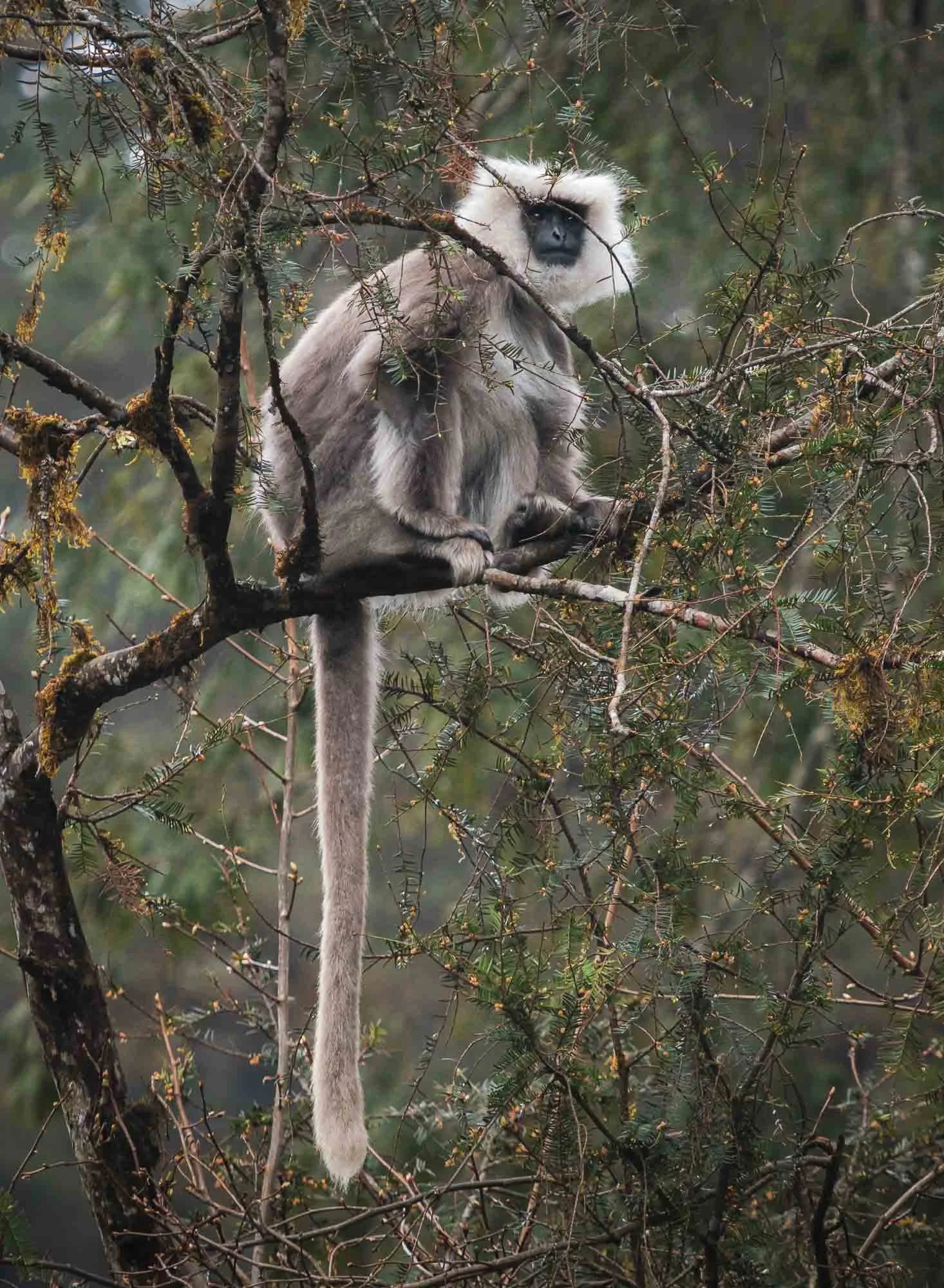
Instead of returning back, we made our way down the other side into the valleys, and had the chance to spot a grey langur with its characteristic black face on the roadside. It’s very rare golden cousin is endemic to Bhutan and small parts of India, and much harder to spot in the wild.
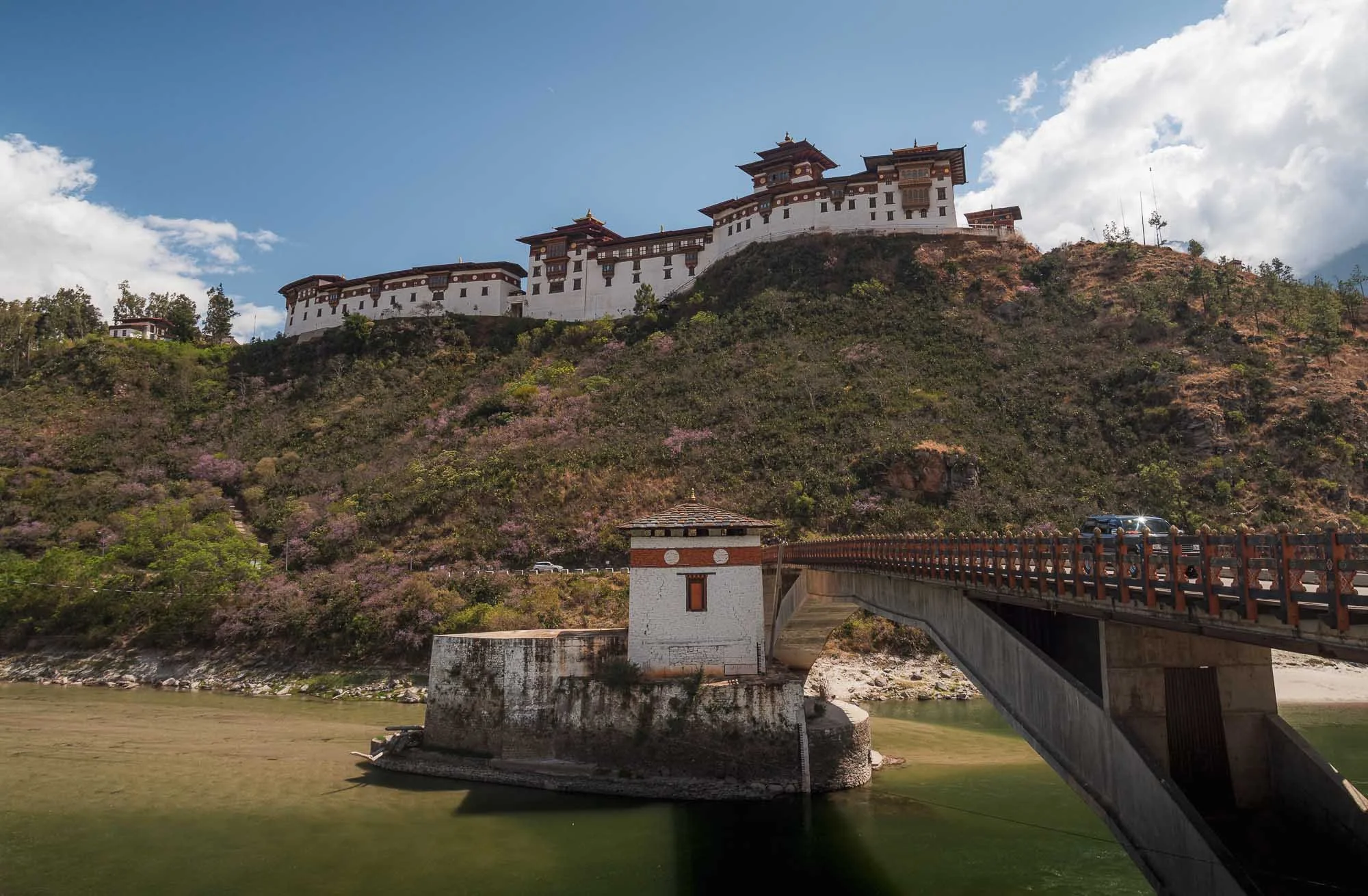
Once descended, we crossed the Puna Tsang Chu river and its valley and headed further east, but not without a short stop for a photo of the Wangdue Phodrang Dzong, at the ridge above the river confluences. It was almost fully destroyed by fire in 2012, and has been reconstructed over the last years.
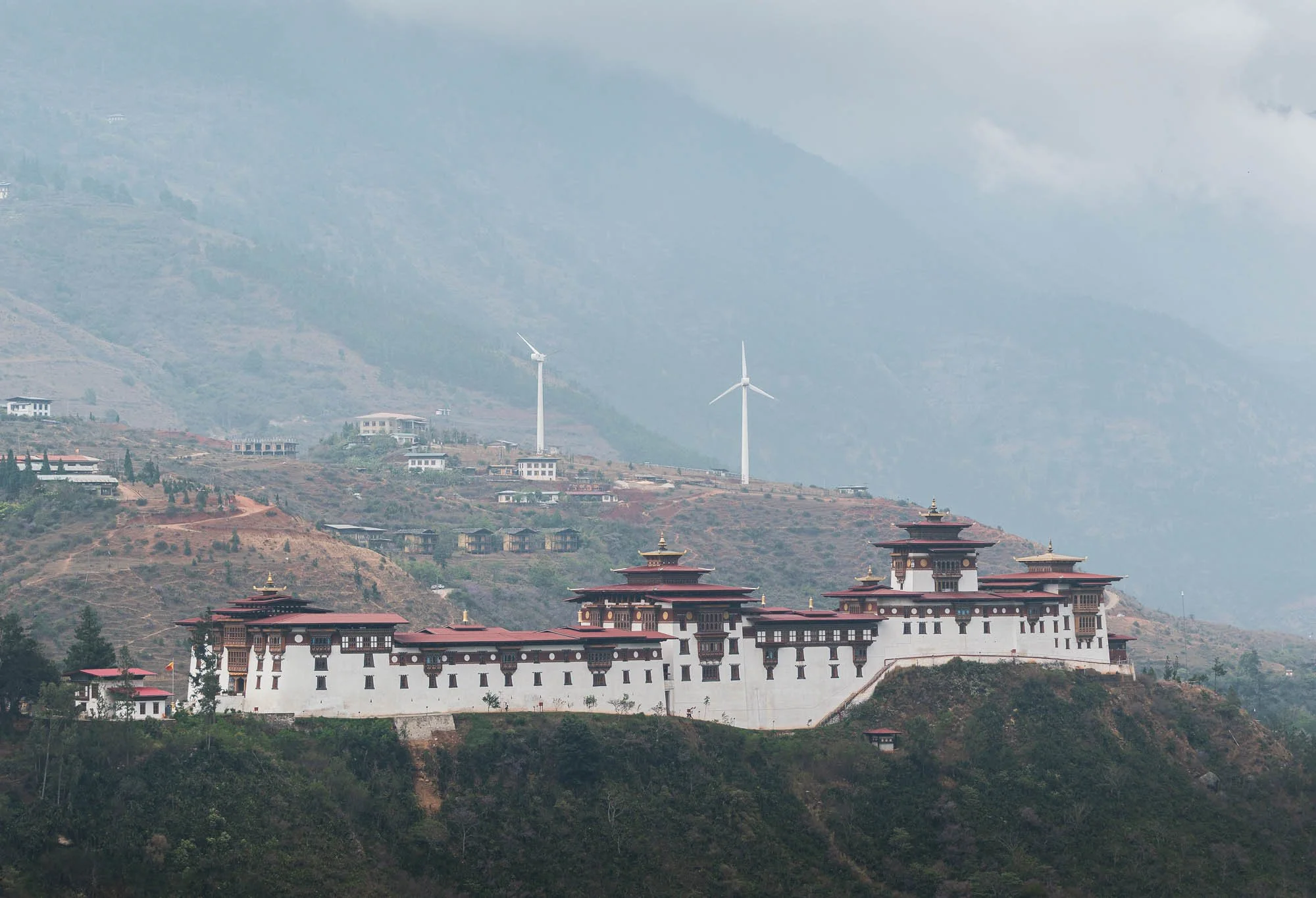
Despite the wind farm in the background, Bhutan’s electricity is almost entirely generated from hydropower owing to its many rivers. In fact, exports of energy to India are a major revenue source for the country, although it still imports fuel for local generators and uses biomass for heating, for instance.
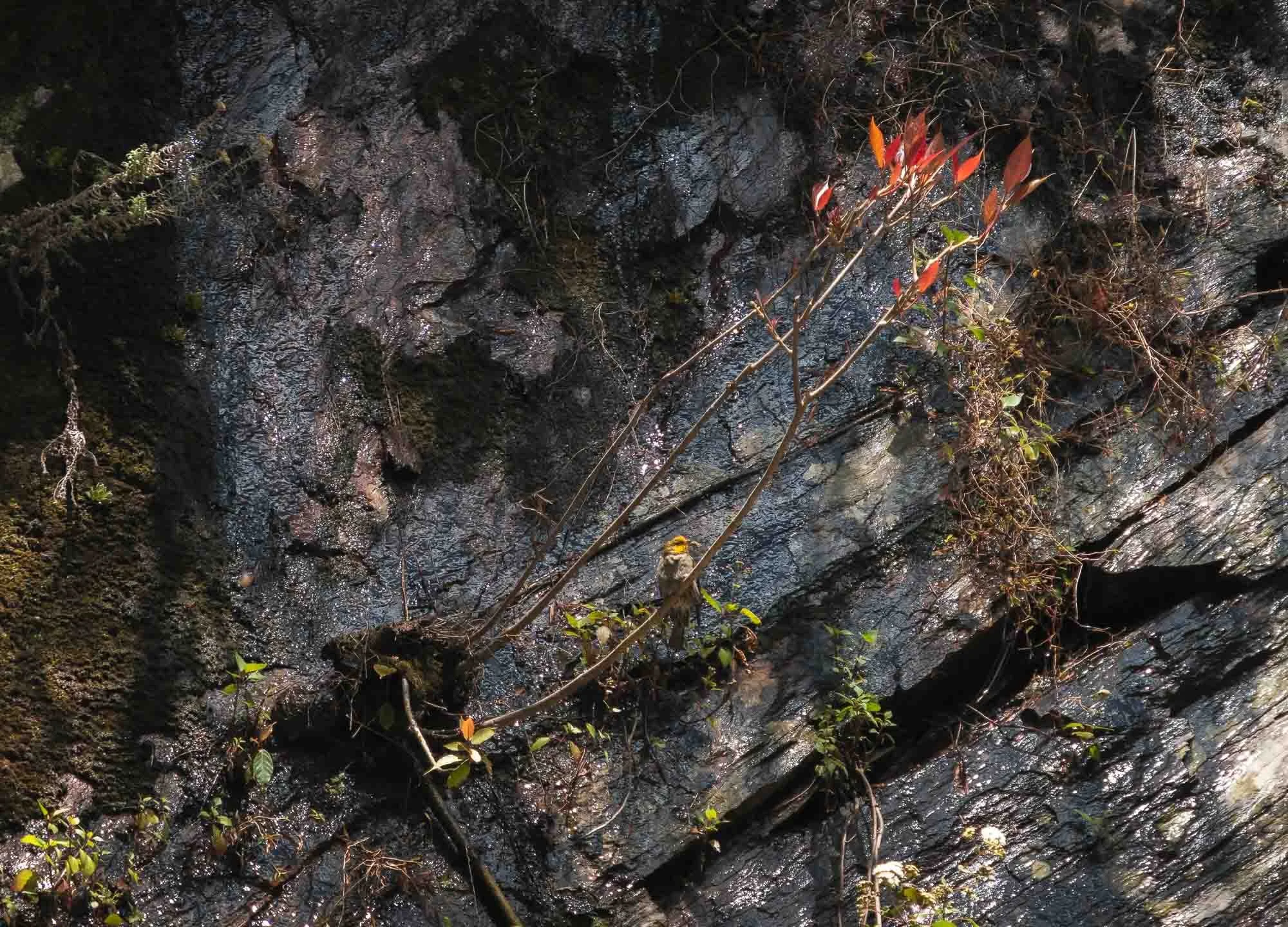
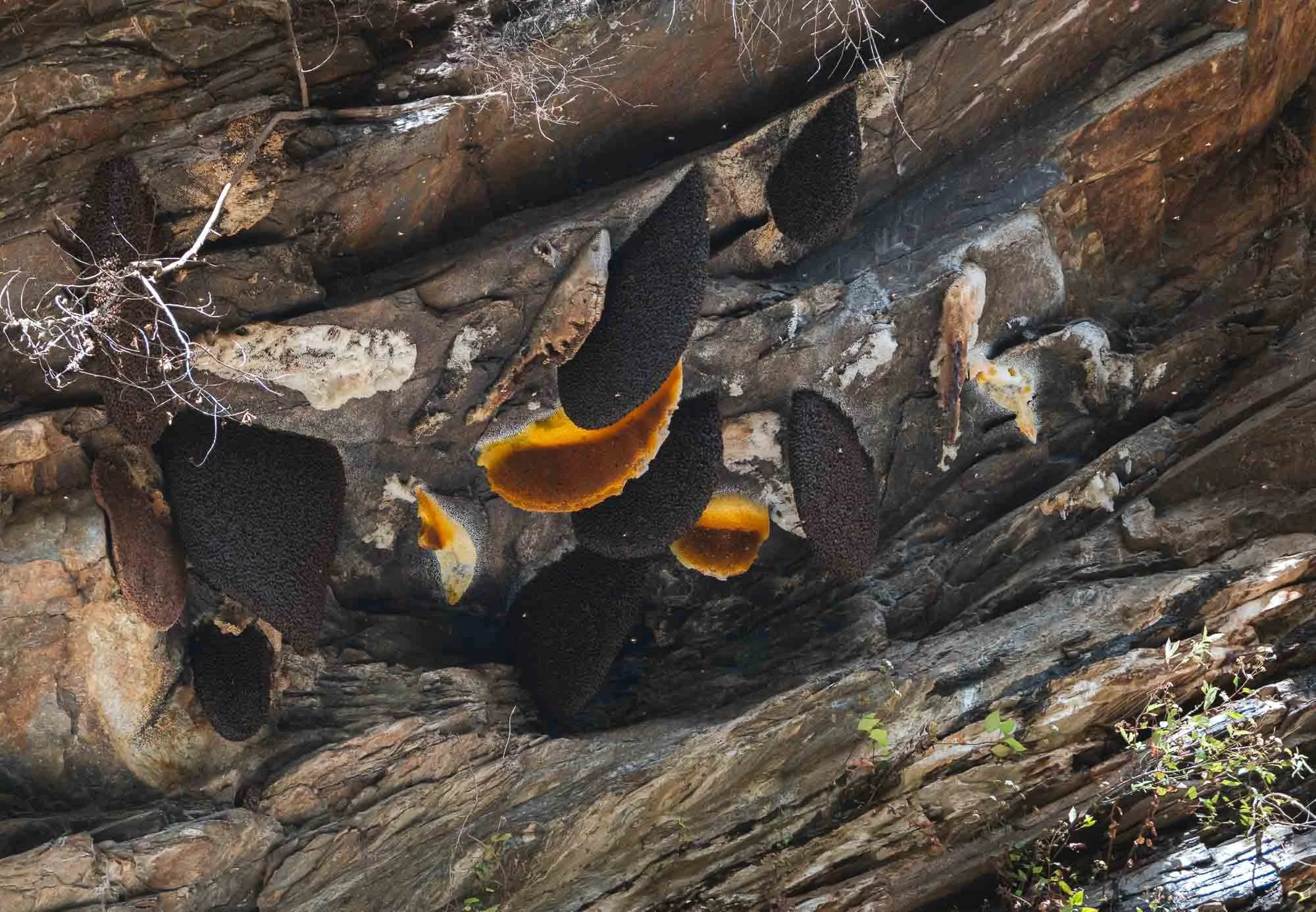
We continued our way to cross Lawala Pass at 3300m into the Phobjikha basin - the roads here were demonstrably worse, and recent rains didn’t help. An interesting sight a bit lower on the slopes were cliff-nesting giant honey bees and the accompanying yellow-rumped honeyguide, which I only spotted because a group of birders had stopped by the side of the road to photograph it - Birding tourism is quite common in Bhutan owing to its many rare and endemic avian species.
Gangtey
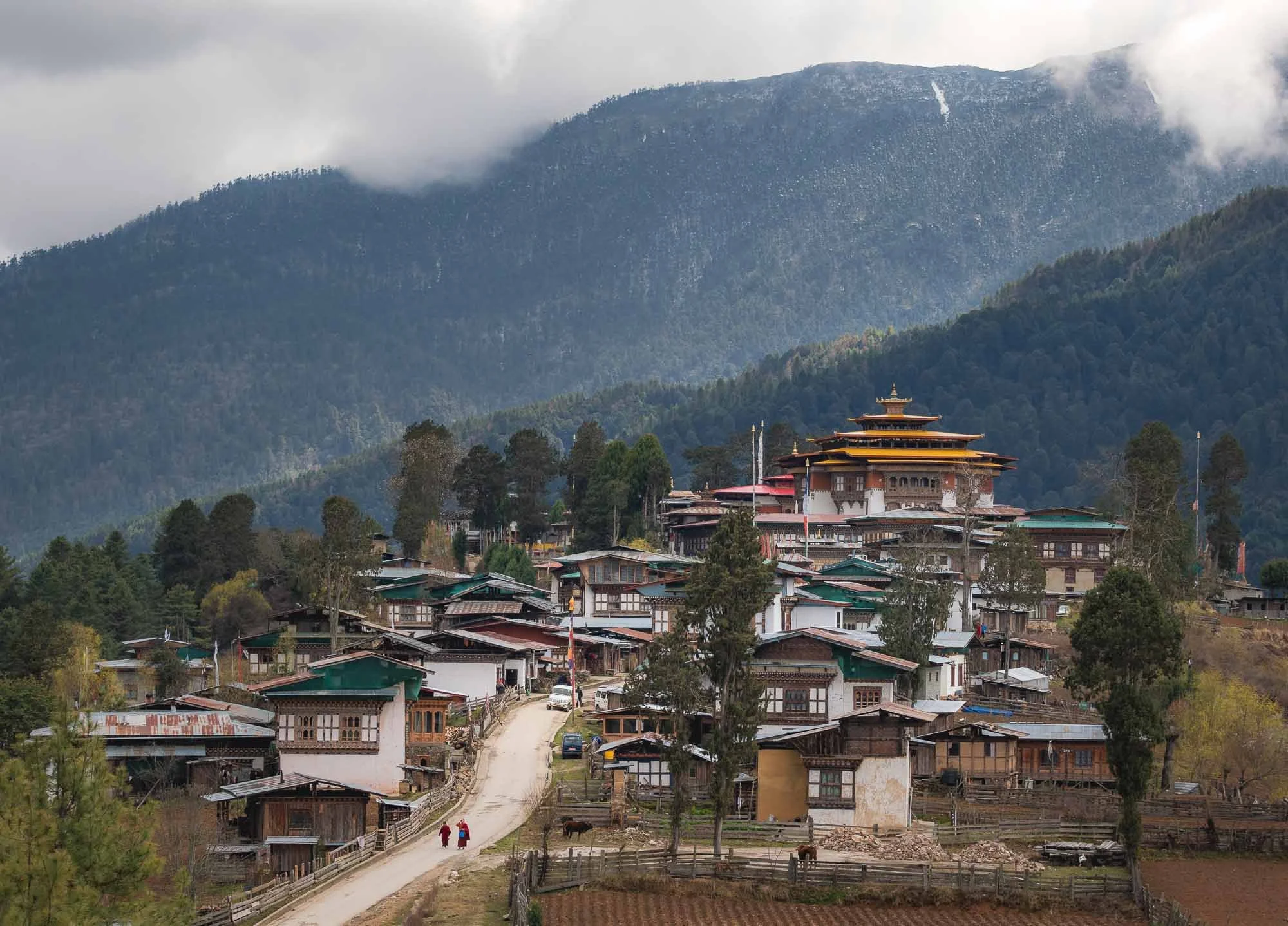
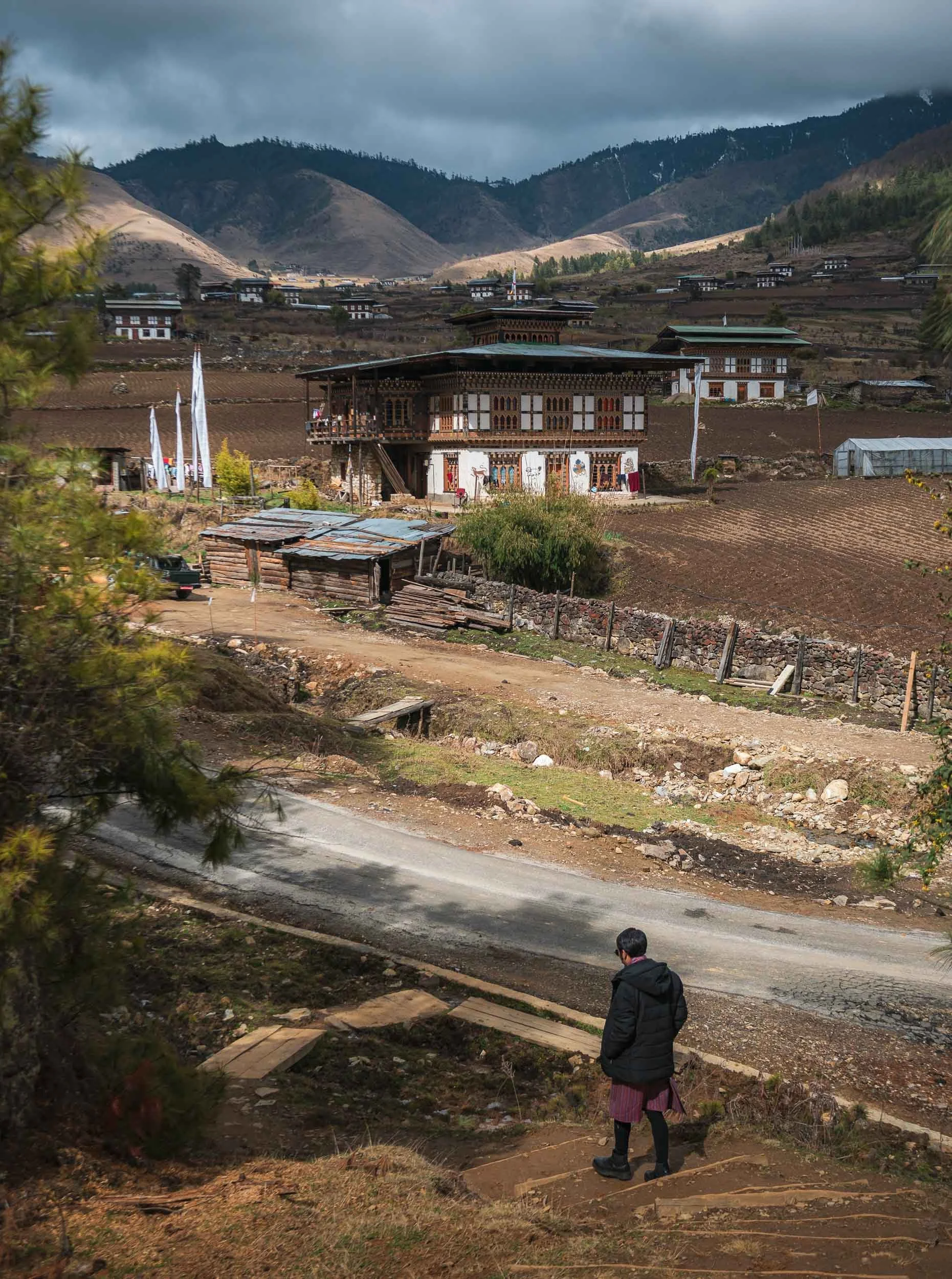
We finally arrived at one of my favorite spots in the country, this view of the small town of Gangtey and its monastery overshadowing the local houses.
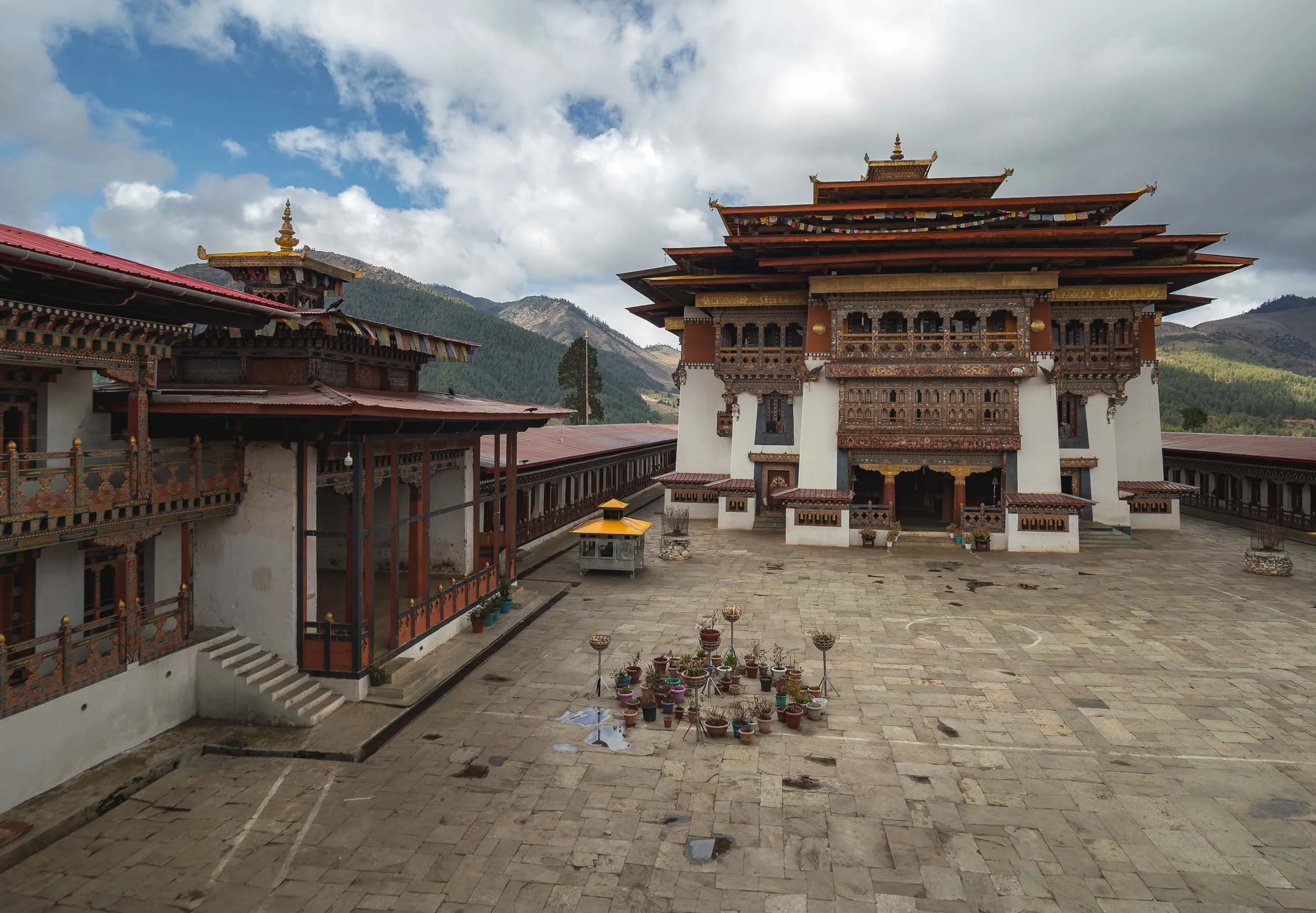
The 17th century monastery was renovated in the early 2000s - while a bit smaller and less monumental than the more famous Dzongs it’s quite beautiful with a lot of intricate details.
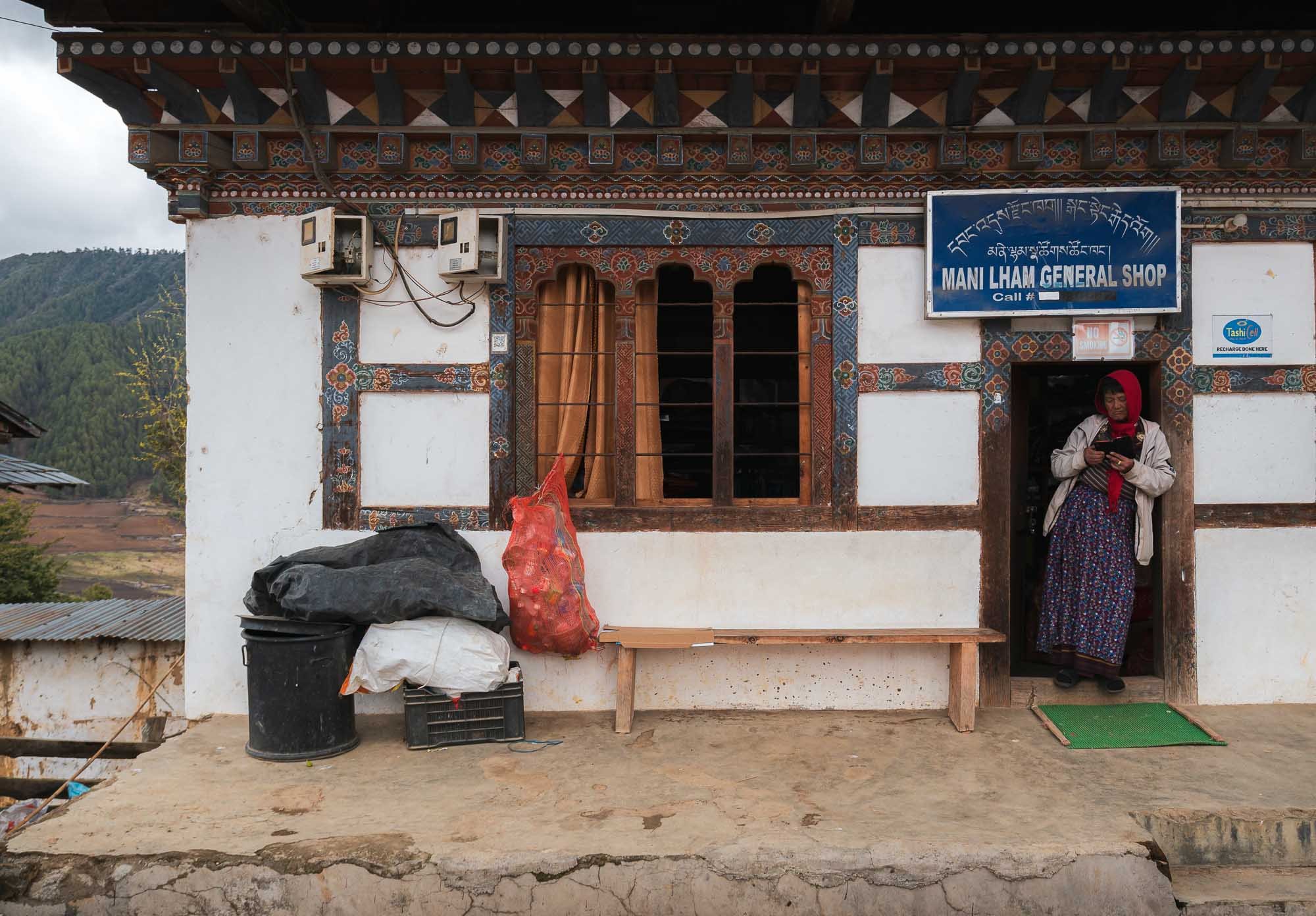
Things are quite rural here otherwise - the main shop on the left and the local branch of the Bhutan development branch on the right. I wonder what collateral they accept for a loan?
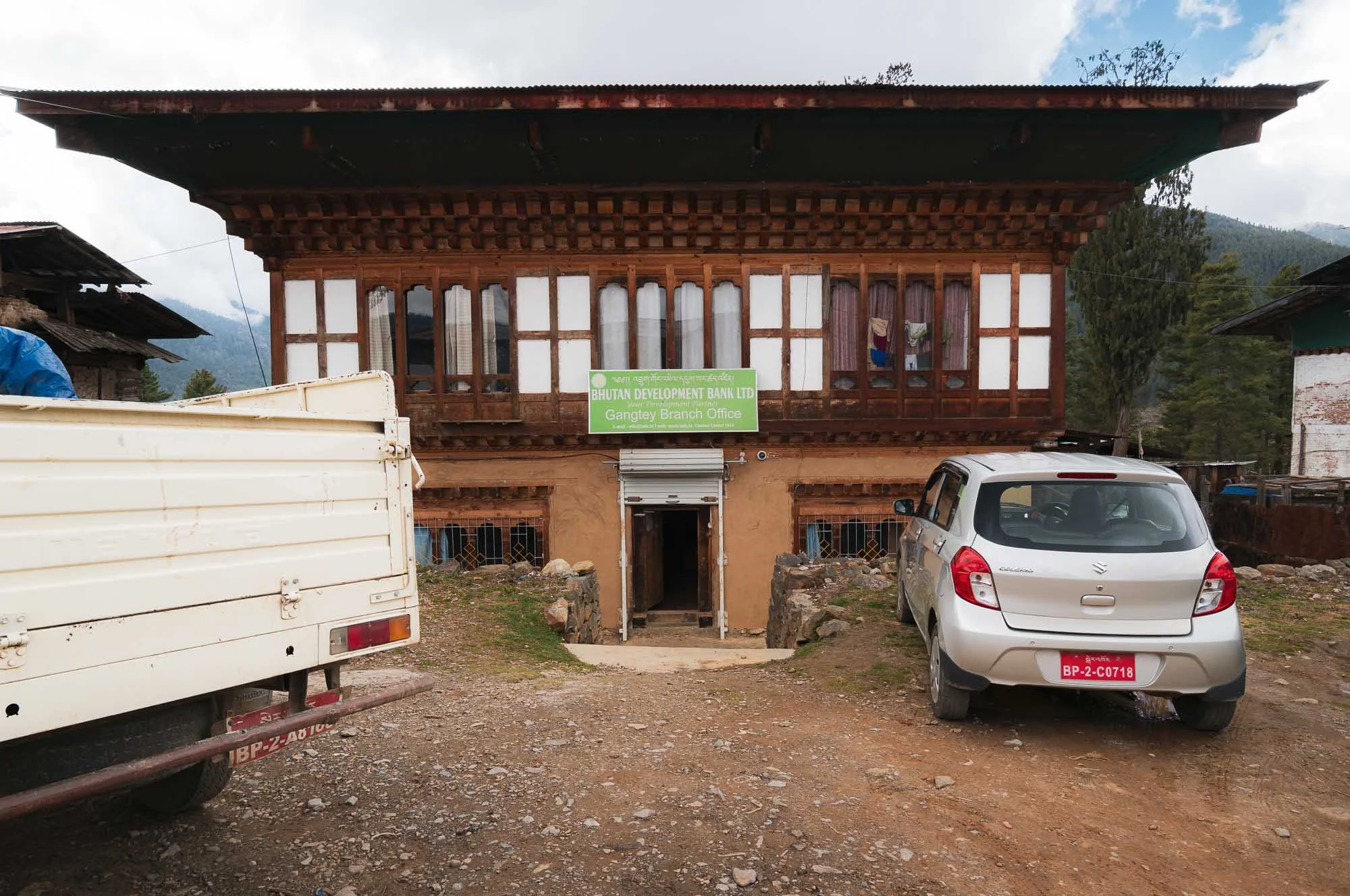
From here, we took a beautiful walk into the Phobjikha Valley along the Gangtey nature trail, crossing river trails and spotting a few of the tall white prayer flags, marking mourning rituals for the deceased.
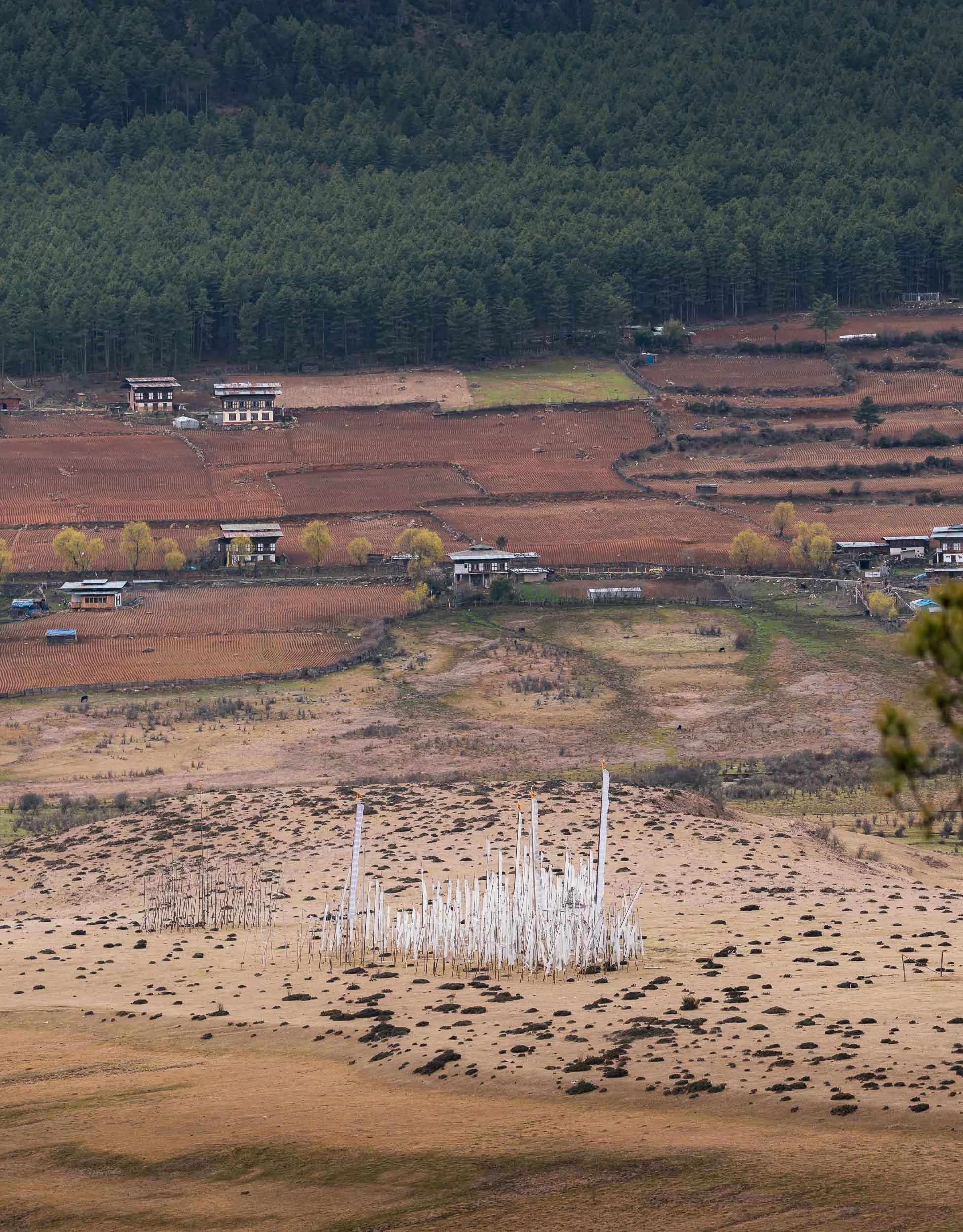
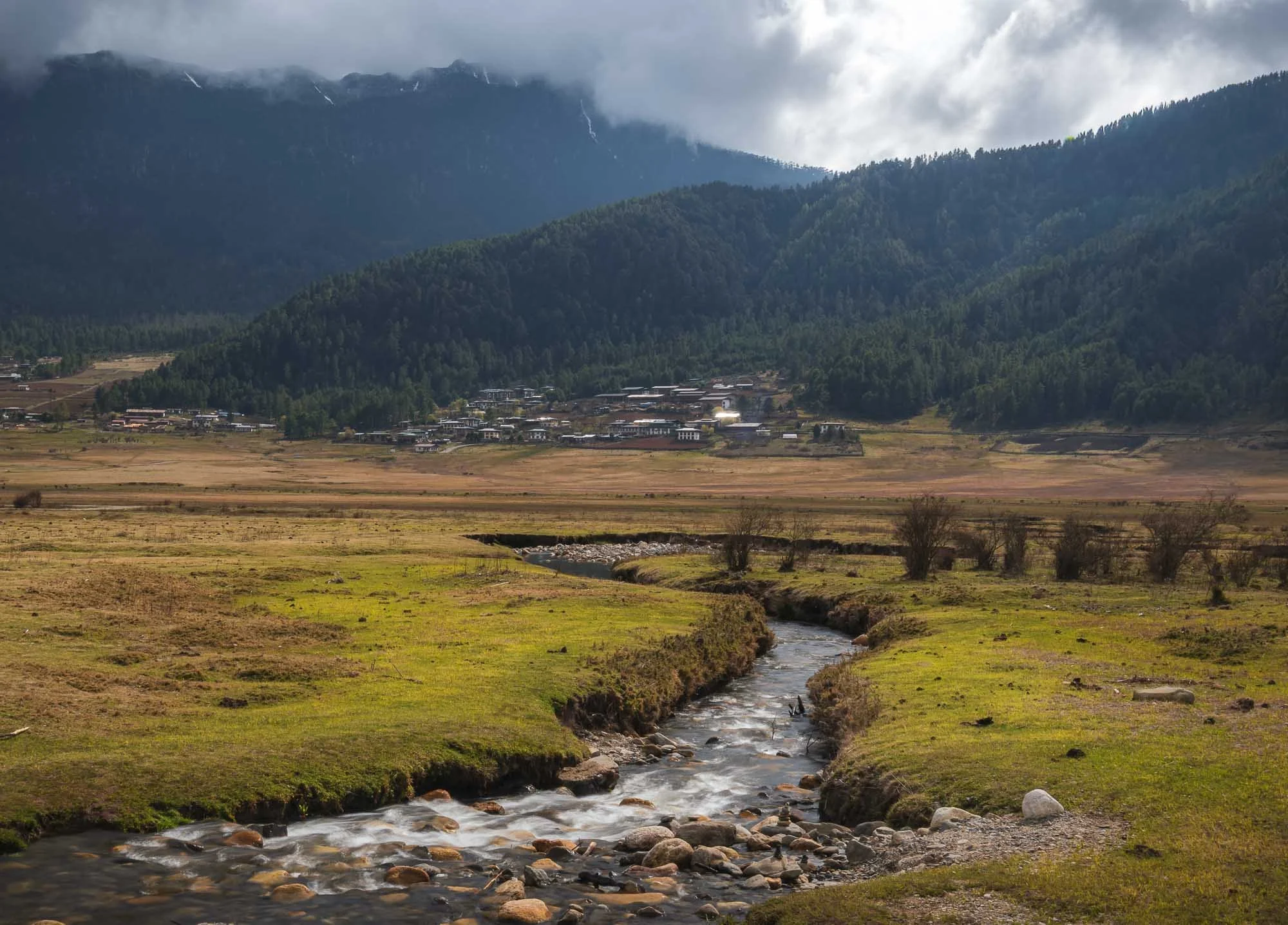
The valley itself is famous for its seasonal black-necked cranes, which arrive here in November and stay until March, using the wetlands around the central river as a wintering site. They are heavily protected - even power lines have been moved underground to reduce risk - and have a cultural relevance to the area.
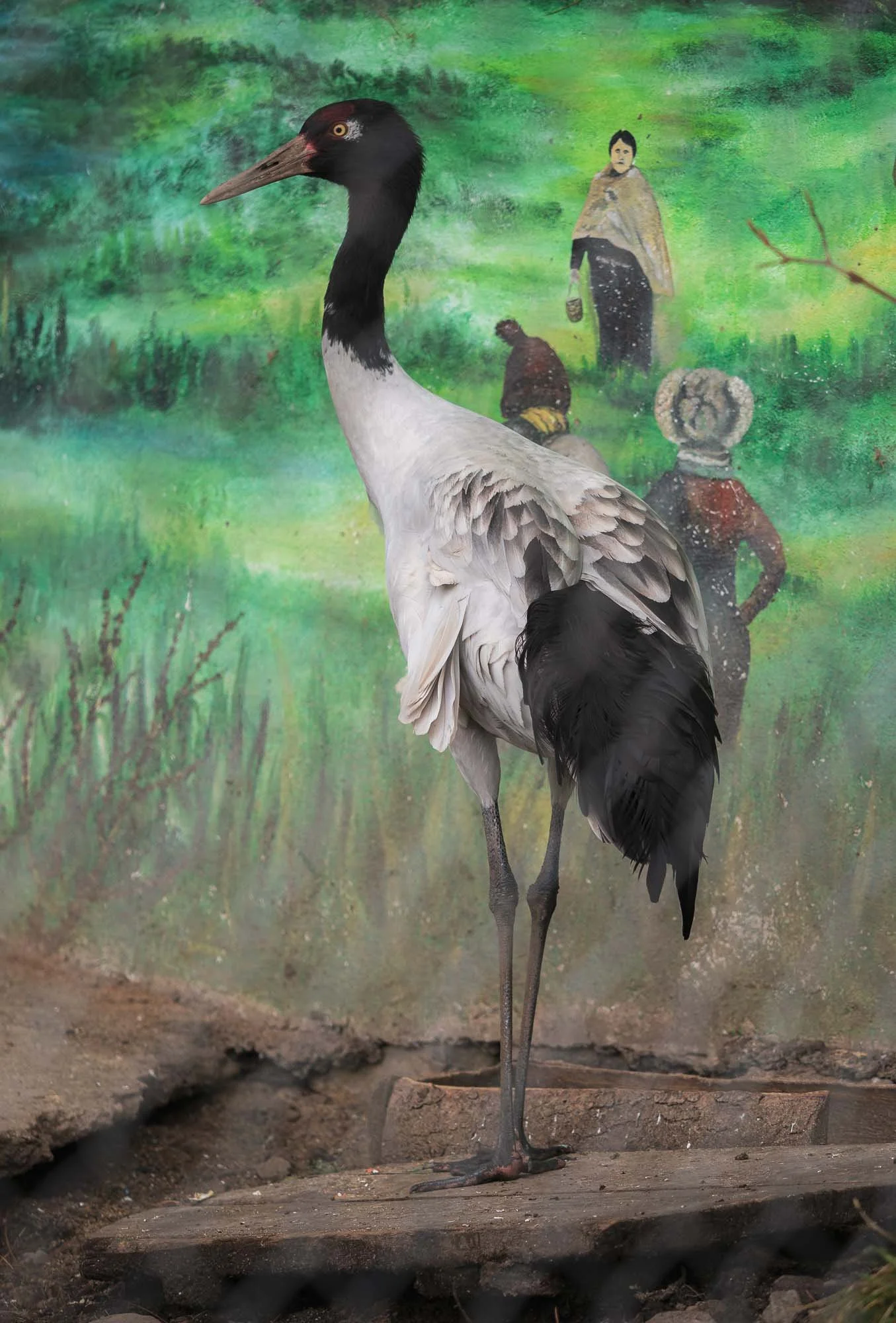
The cranes had already left by late March, so I didn’t get to see a wild one. The local visitor centre specifically built around these birds is home to two rescued individuals, which suffered injuries - they are prey for leopards in the area, for example.
Despite its remoteness, the area attracts quite a few of the aforementioned birding tourists, and the edge of the wetland is home to very small high-end results such as Six Senses (which has 5 resorts in the country), reflecting the upper scale tourism approach of the country.
Oddly, Bhutan’s national bird is the raven, rather less ecologically significant, but a representing a protective deity in Bhutanese Buddhism.
We headed back the next day, once again spotting the elevated Dzong of Wangdue, and a rather interesting football field, as well as the old village of Rinchengang across the river, which I explored a little.
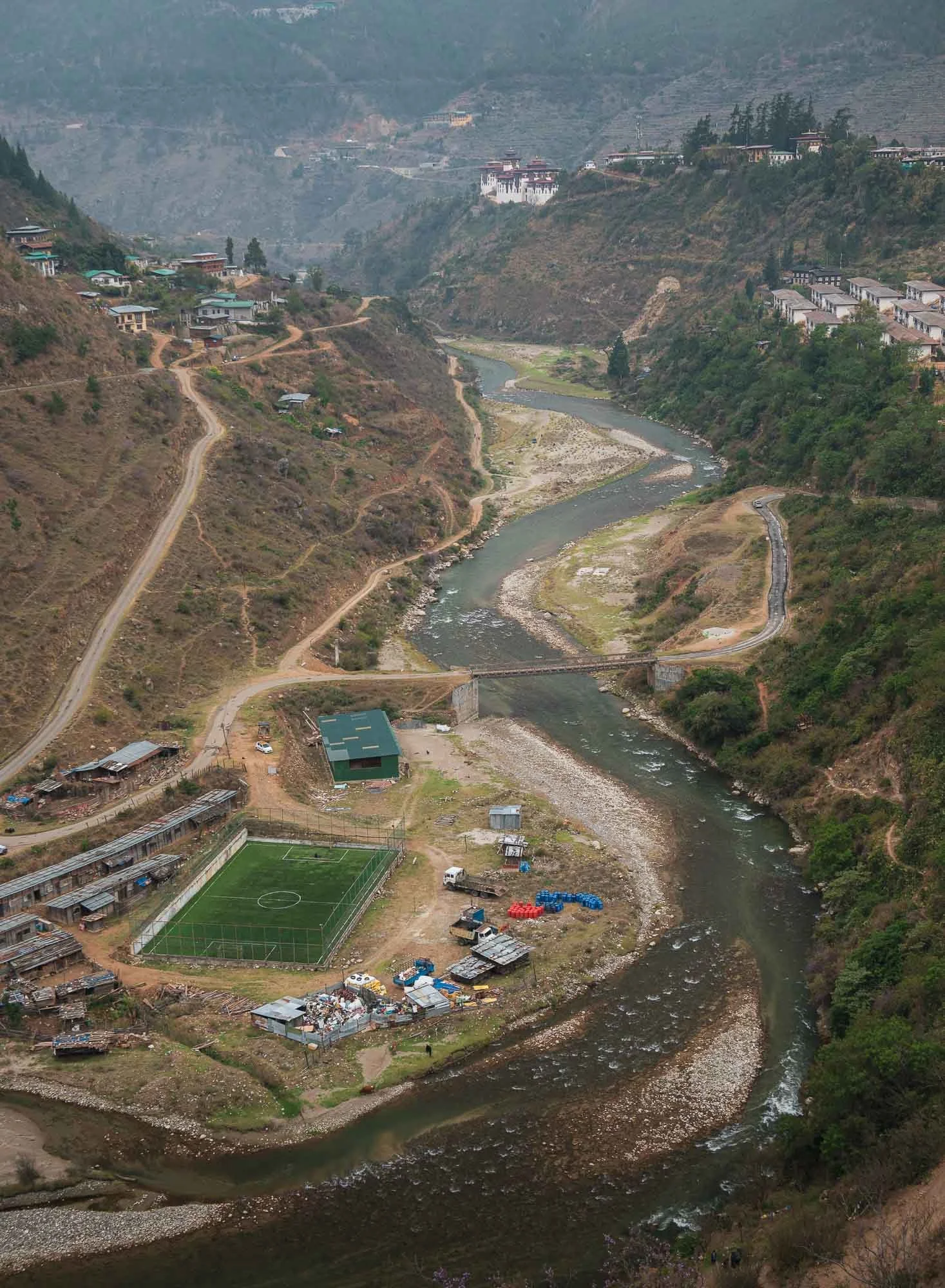
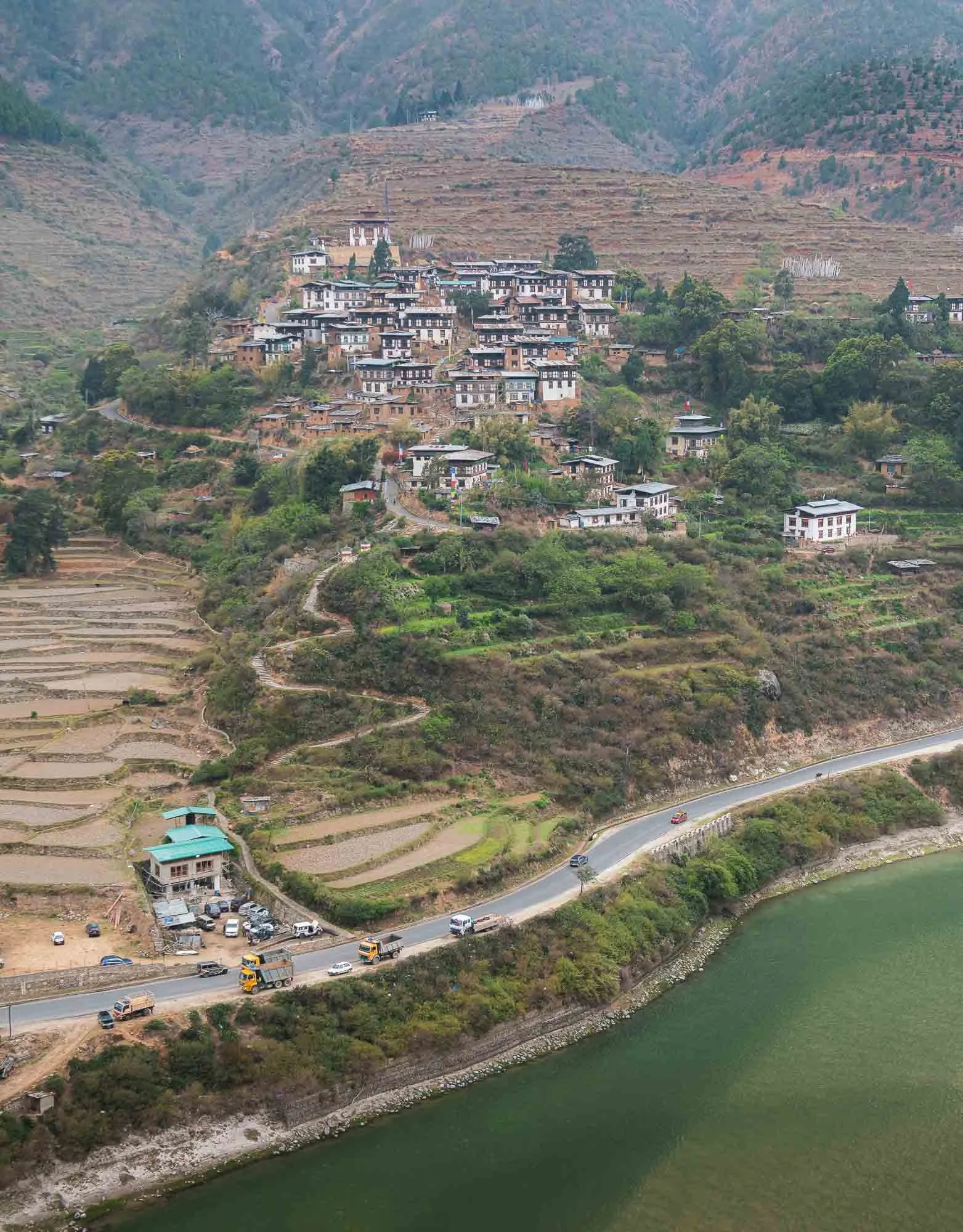
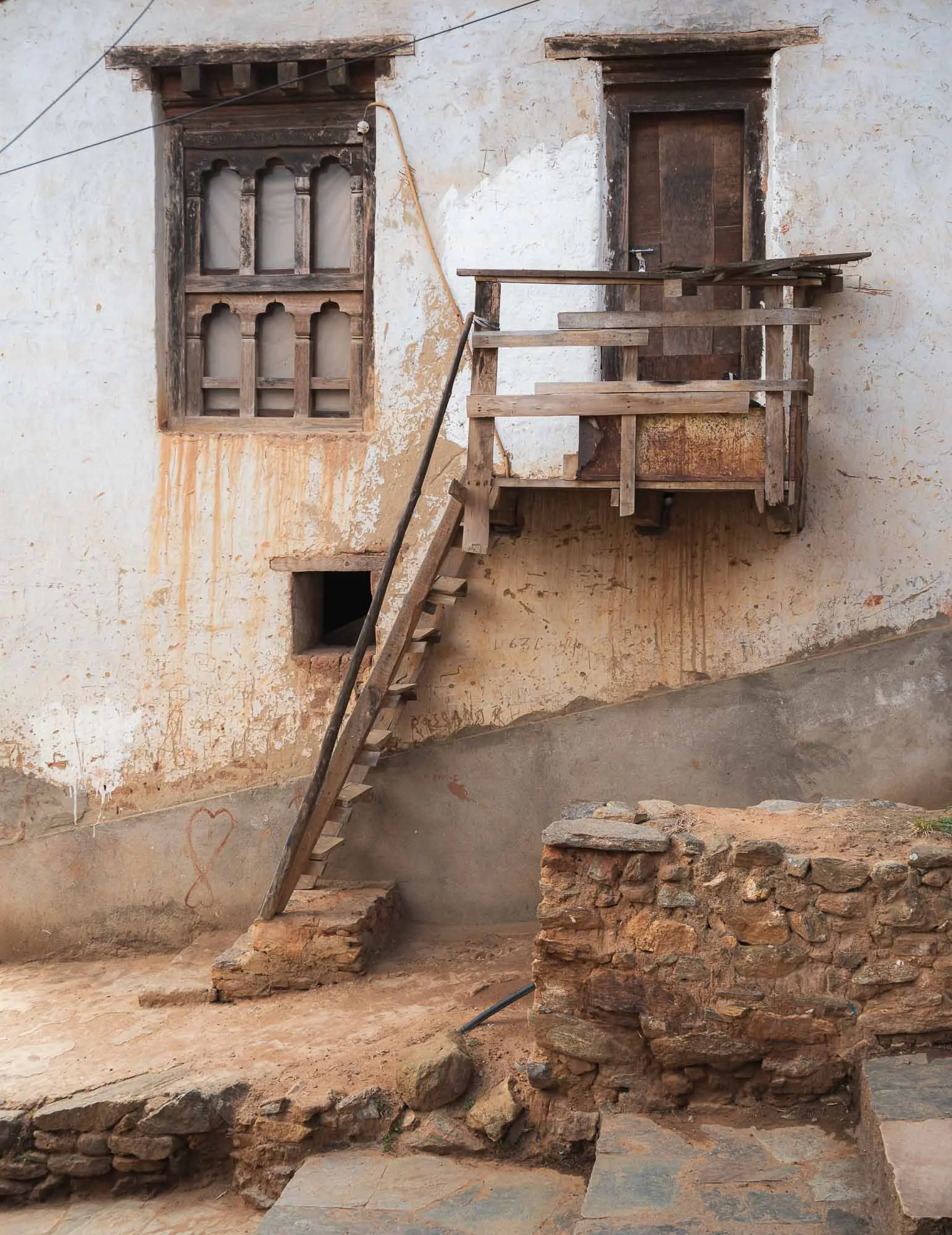
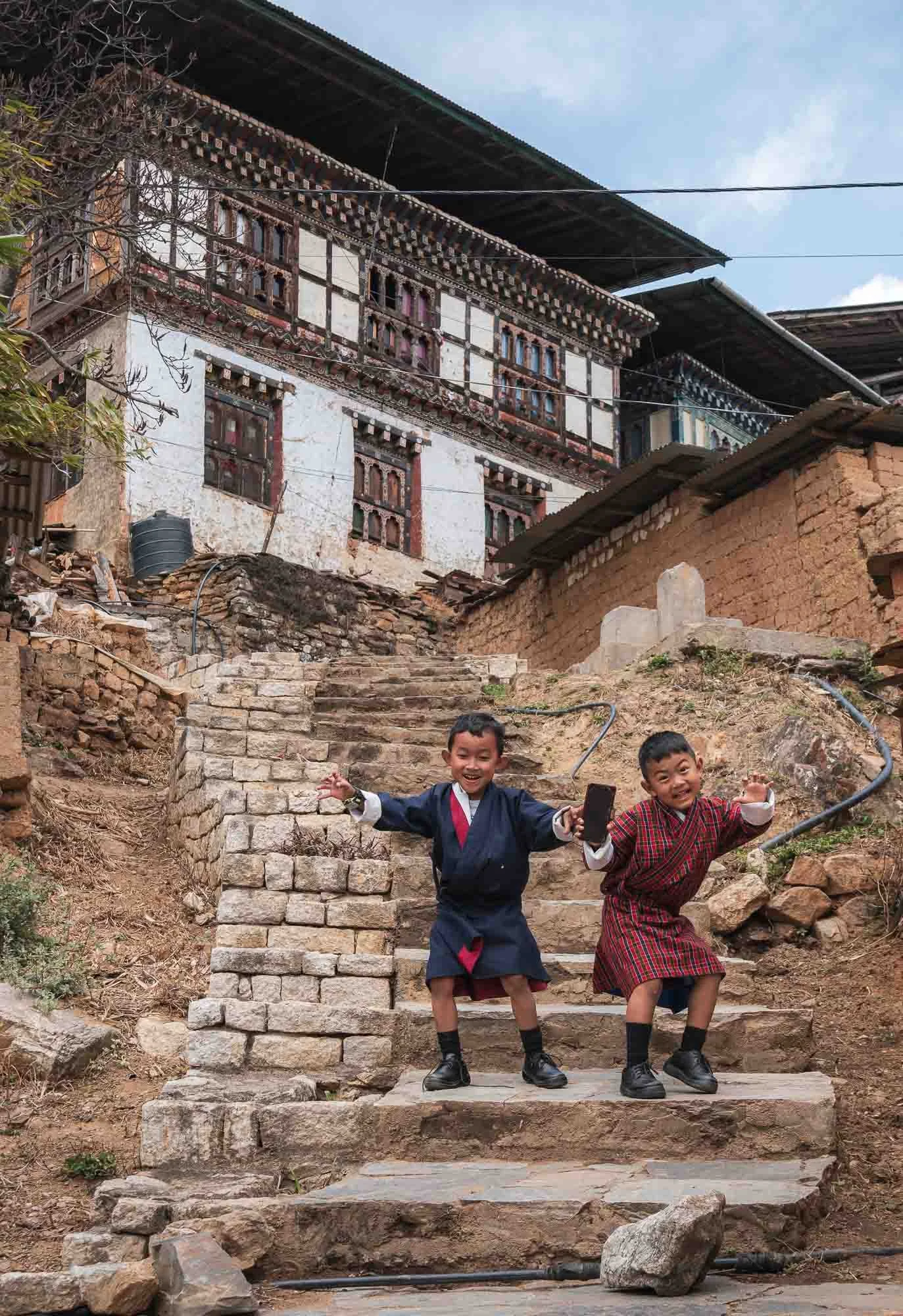
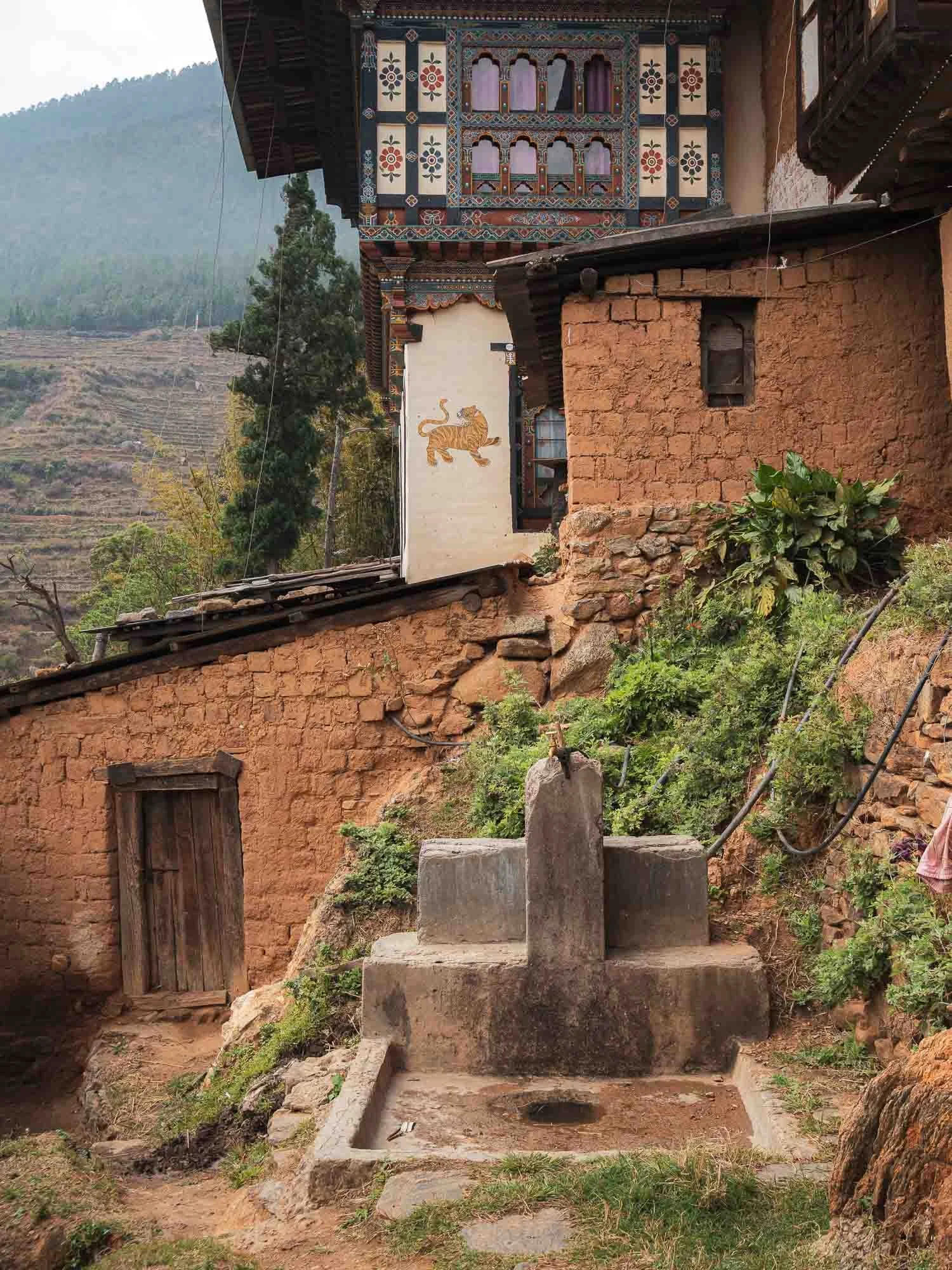
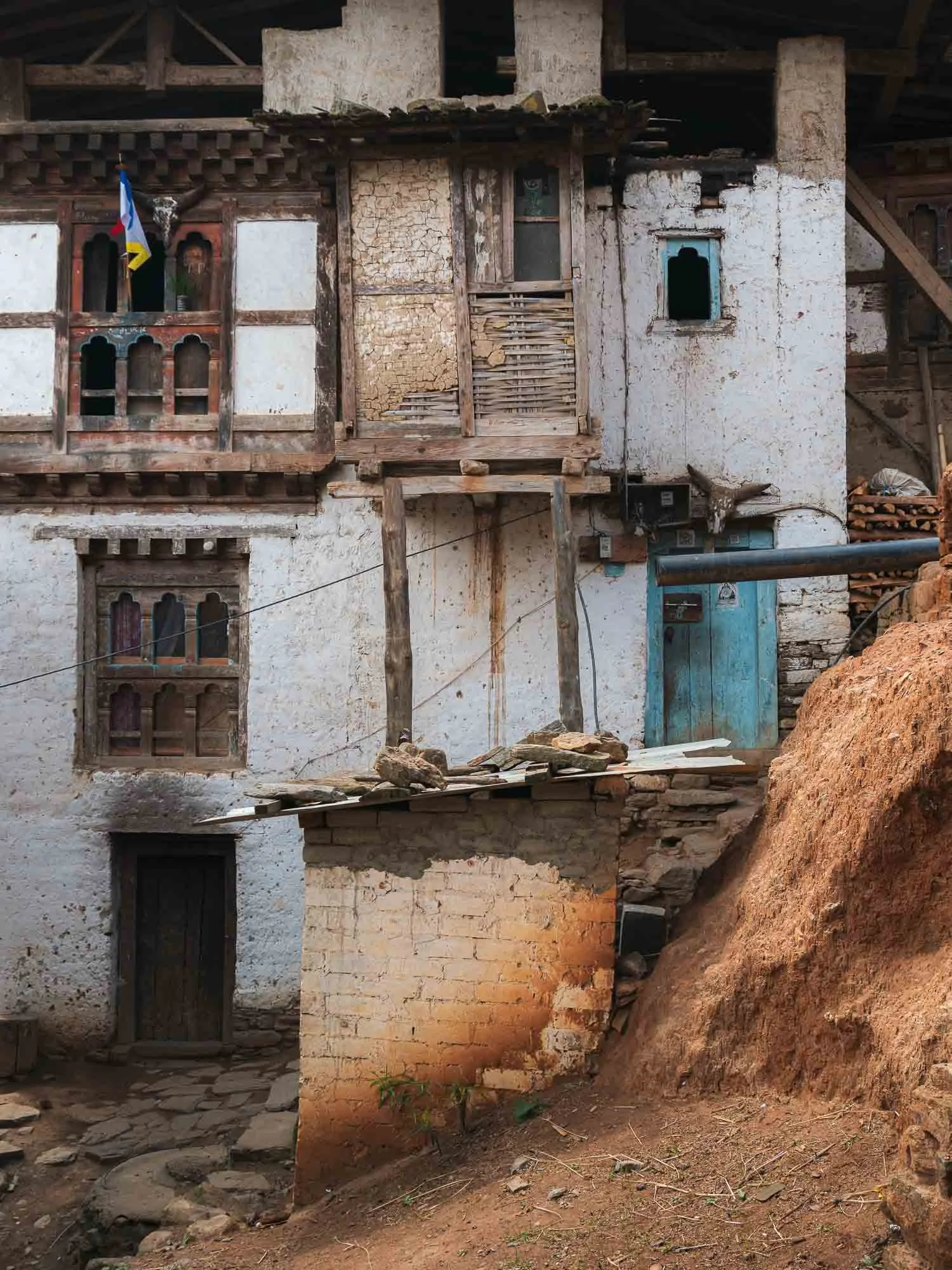
The rather unusually compact traditional village is said to be one of the oldest in Bhutan, and characteristic by tightly packed houses with stone roads inaccessible for cars. It was renamed to Drinchengang and is slowly being revived as a cultural reference village - many of the houses now have QR codes to learn about their history and past inhabitants.
The Fertility Temple
Do you remember the Divine Madman from the story of the takin?
We visited the 1499 temple dedicated to this Buddhist master next - his story and what remains is probably the main attraction for tourists in this region. But not only - it’s also couples praying for children and women hoping to get pregnant that come here.
This is because the temple is known for its ability to bless people with babies, evident by a book full of pictures of parents from all around the world holding their rose-cheeked newborns - often unexpectedly so due to illness or other struggles to conceive - after having visited the temple and subduing themselves to one of the various rituals that supposedly address any obstacles to having a child.
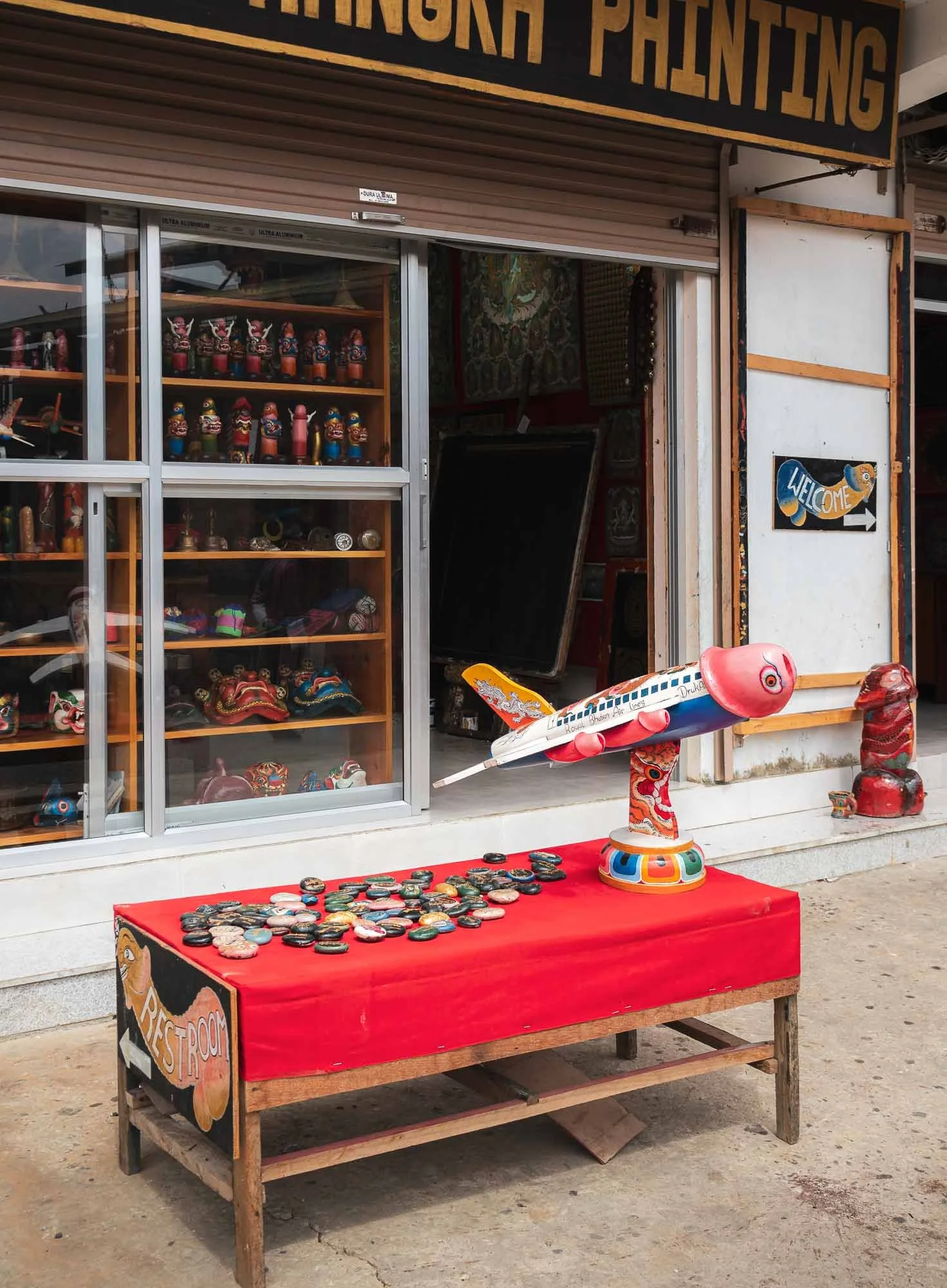
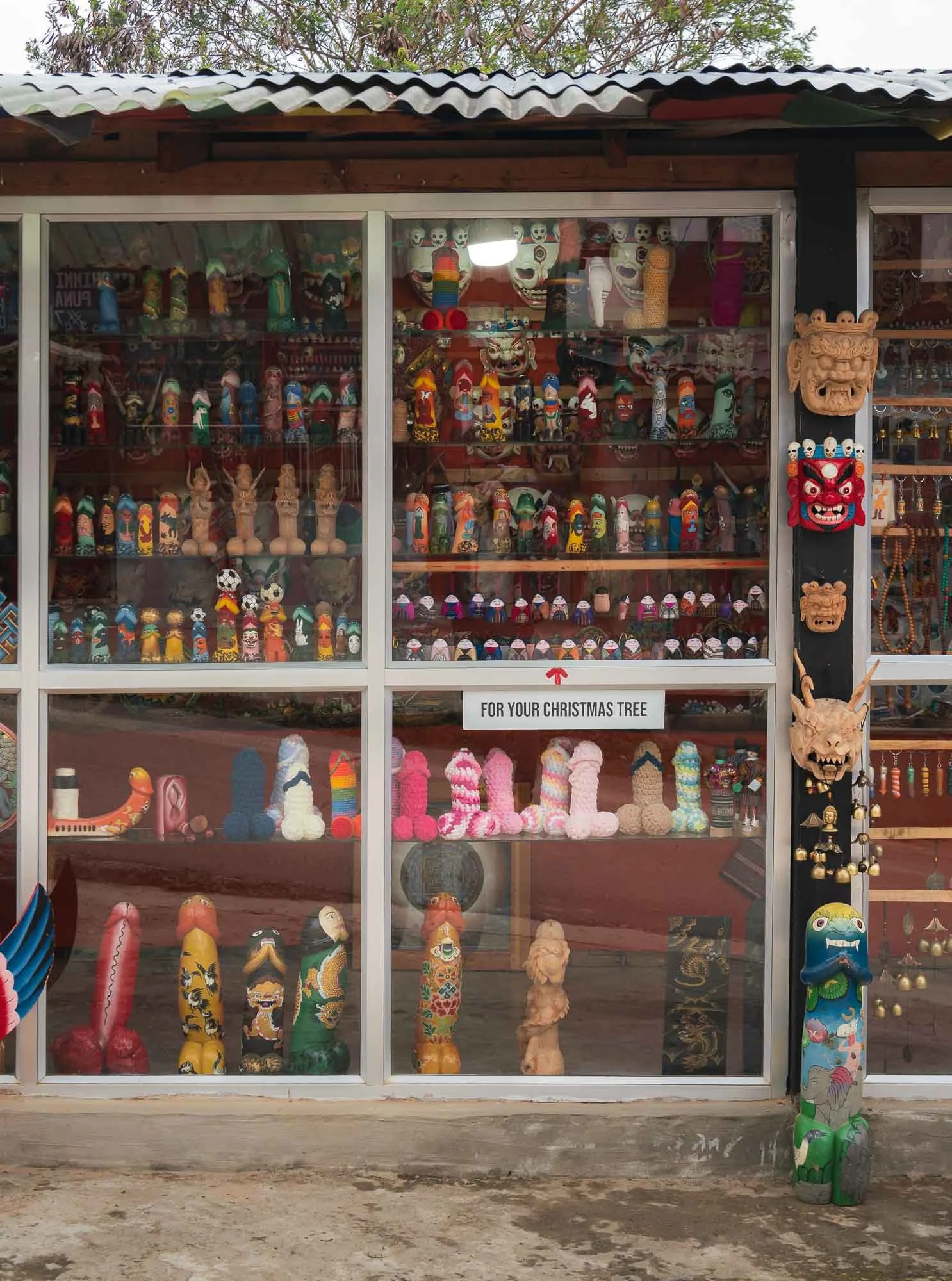
This belief is rooted in the stories of the Buddhist master known as the “Divine Madman,” who rejected traditional conventions and taught through more unconventional behavior, often using sexual themes and his (many) interactions with women as a way to make things memorable. The primary symbolism to reflect his powers follow a phallic theme, mirrored in the many small shops selling relevant artifacts accordingly. In general it’s hard not to notice the symbols around door frame carvings and paintings all around Bhutan.
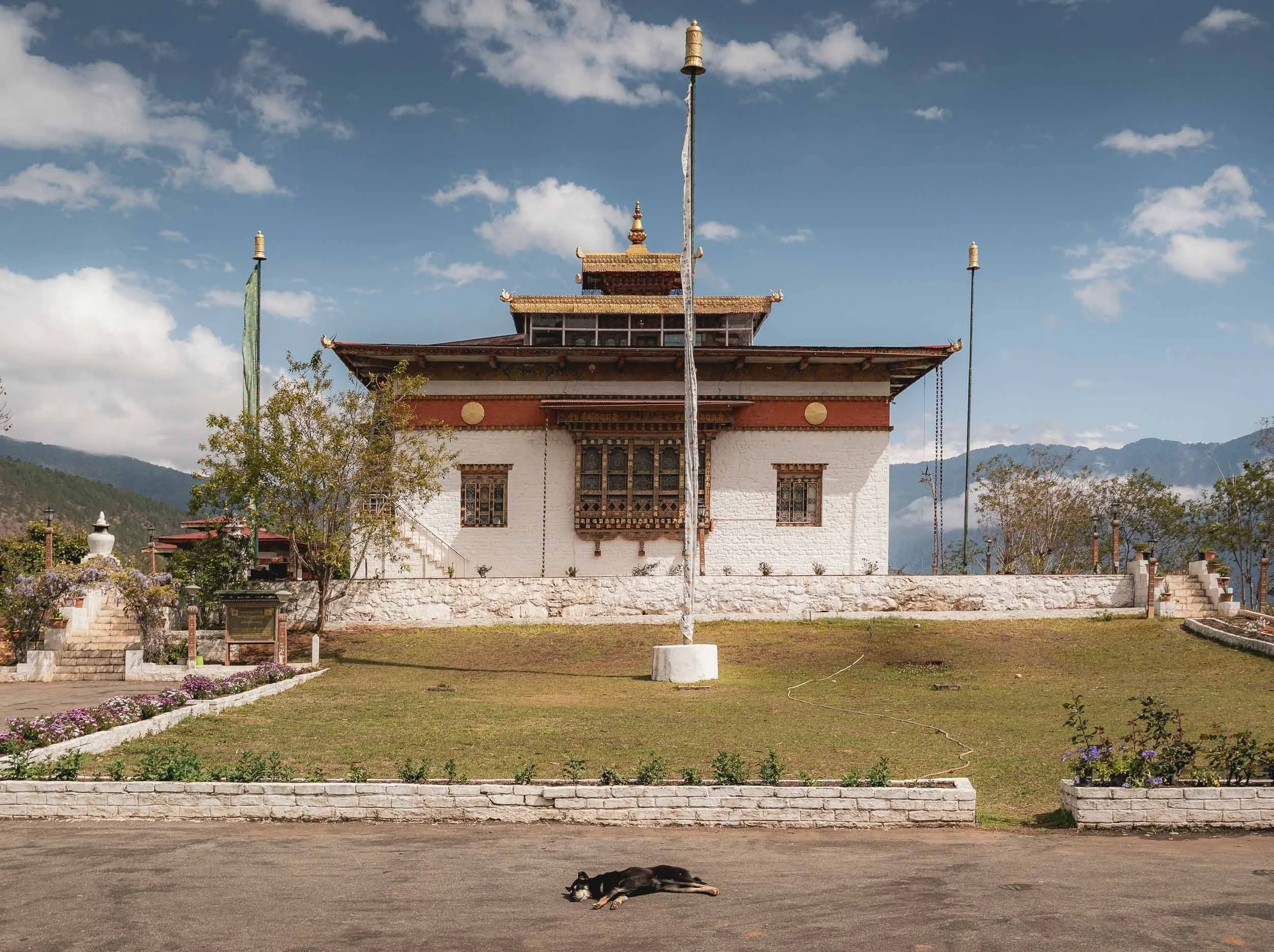
Wolakha Nunnery
In what one might describe as an antithesis to the above, we next visited the nunnery of Wolakha.
Aside from the beautiful views over the valleys, it features interesting architectural aspects such as the primary stupa following the design more common in Nepal (with painted eyes) as opposed to the more abstract, less adorned Bhutanese chorten style of the Vajrayana tradition.
On the right, the temple for the thousand-armed Avalokiteśvara, a deity for compassion and support in suffering.
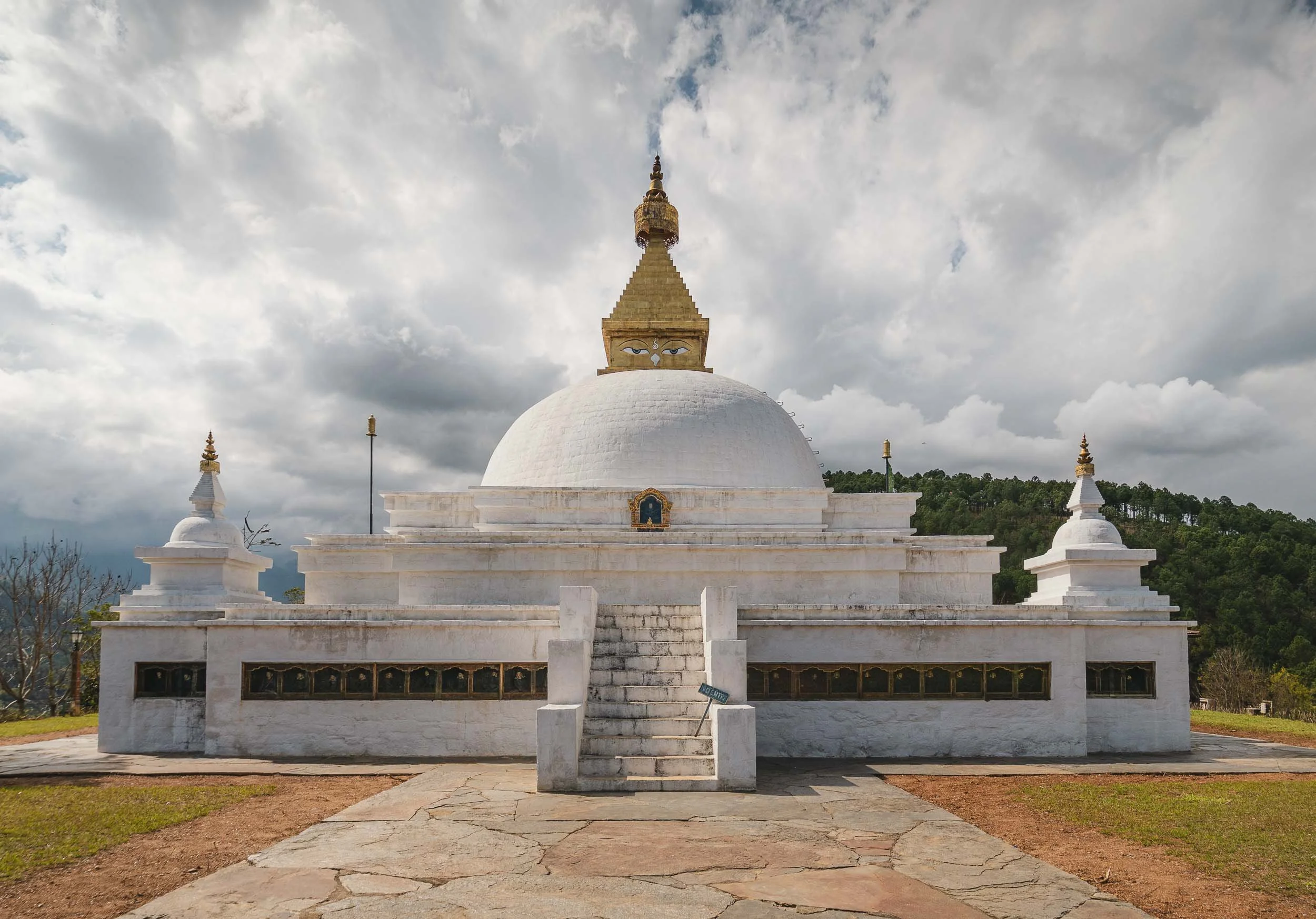
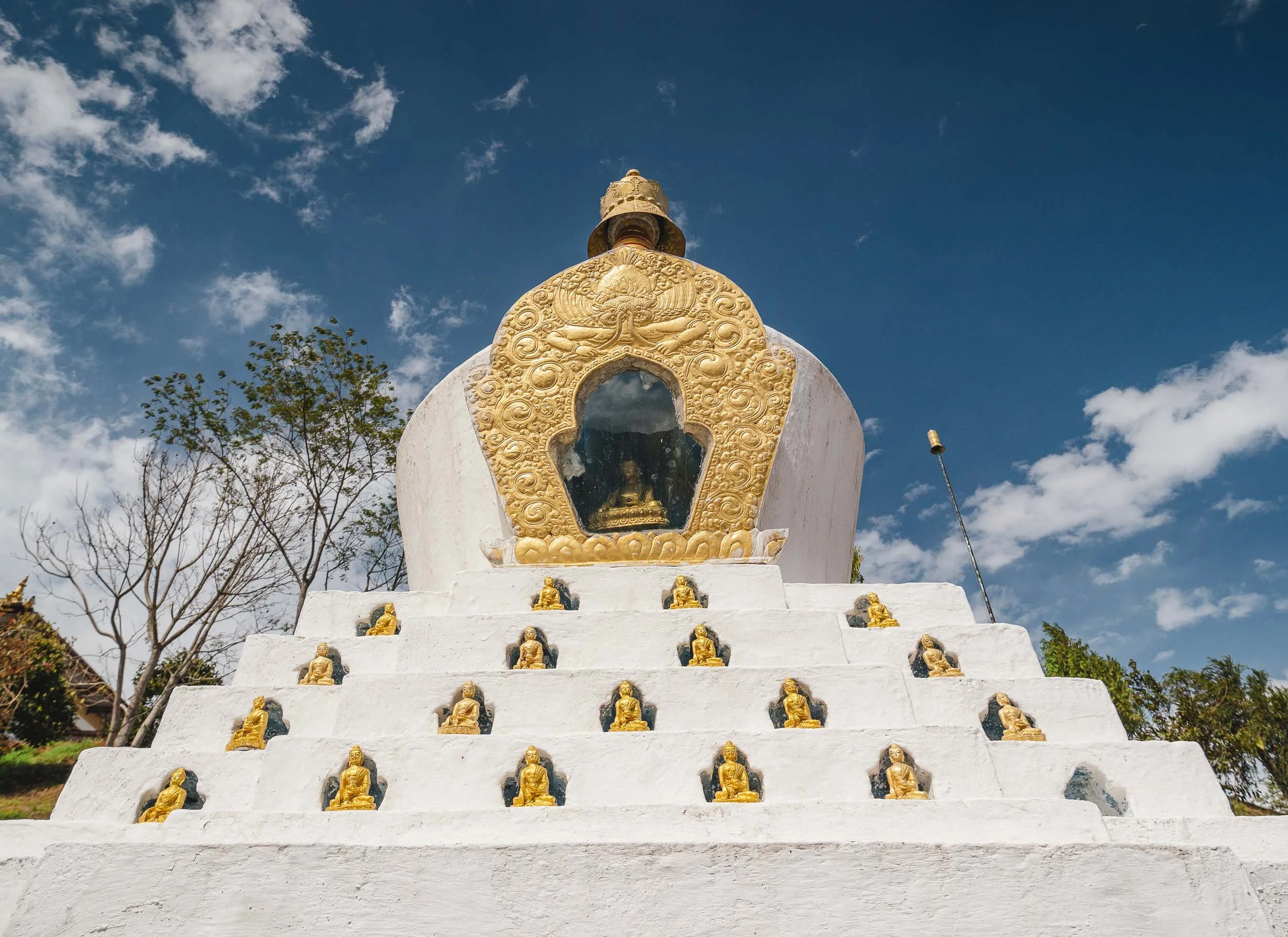
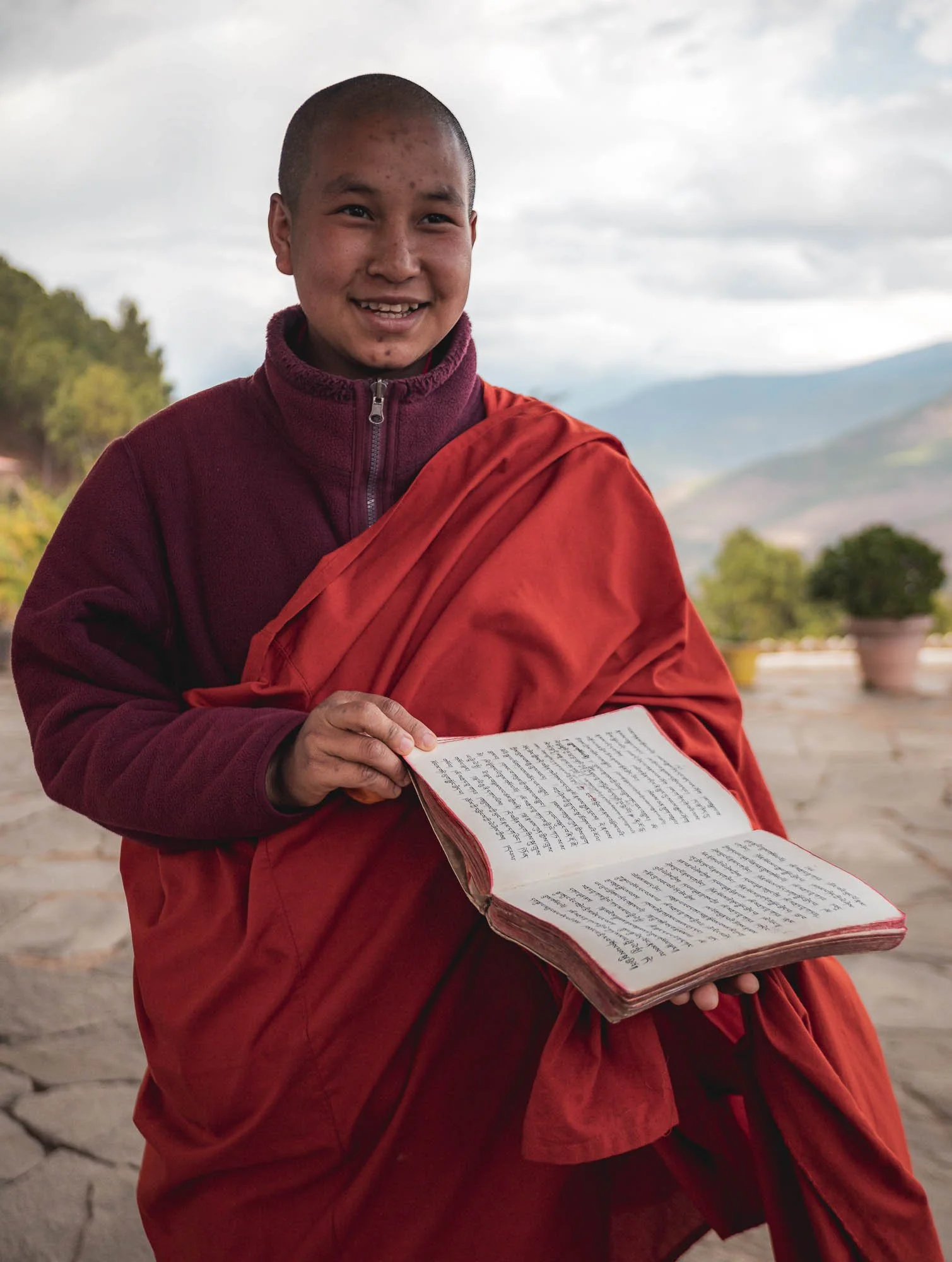
The nunnery features education and vocational activities and its pupils - mostly aged 6 to 18 or so - happily showed me their evolving skills and the readings and writings they practiced. While nuns historically had less institutional support than monks, there are now quite a few nunneries around the country.
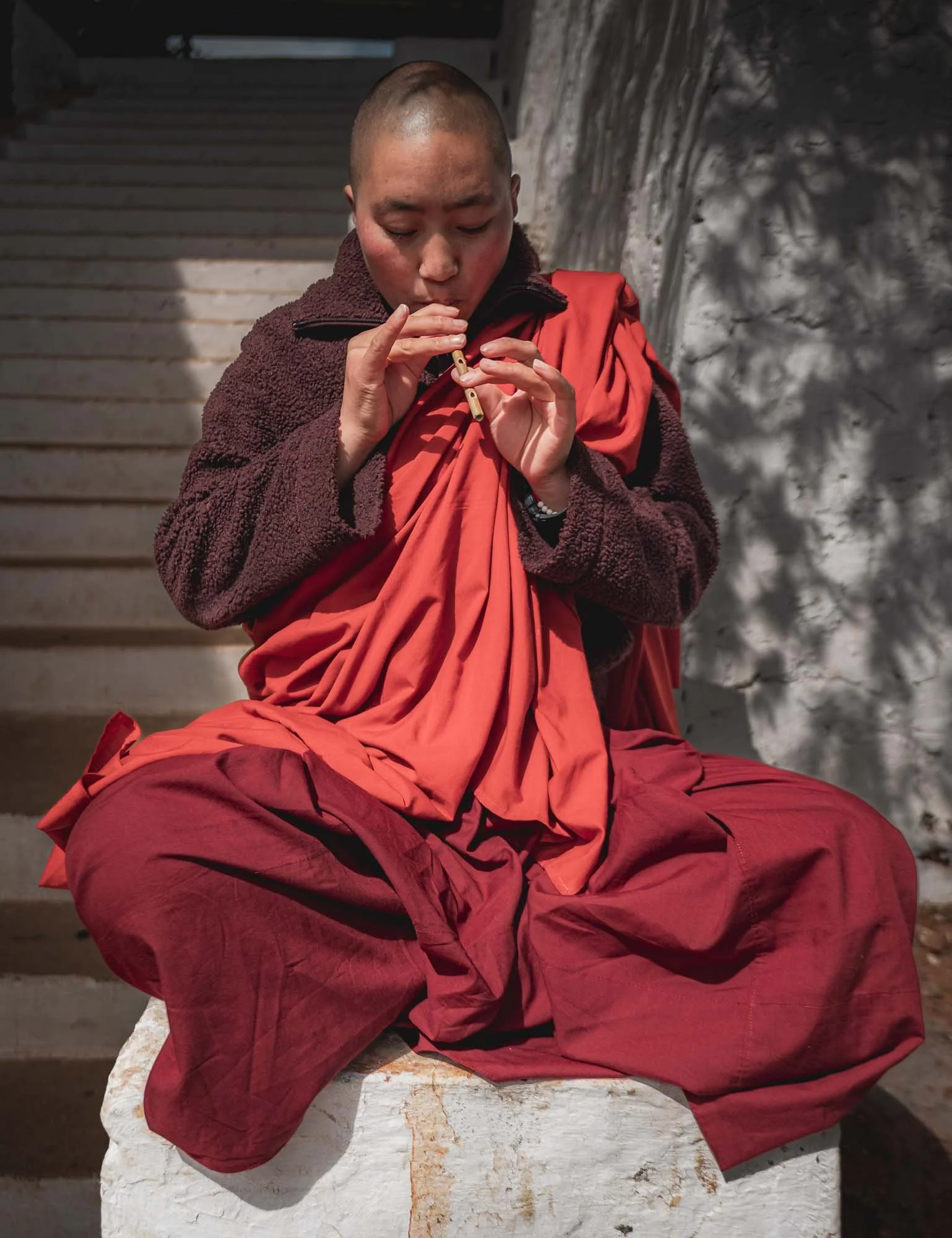
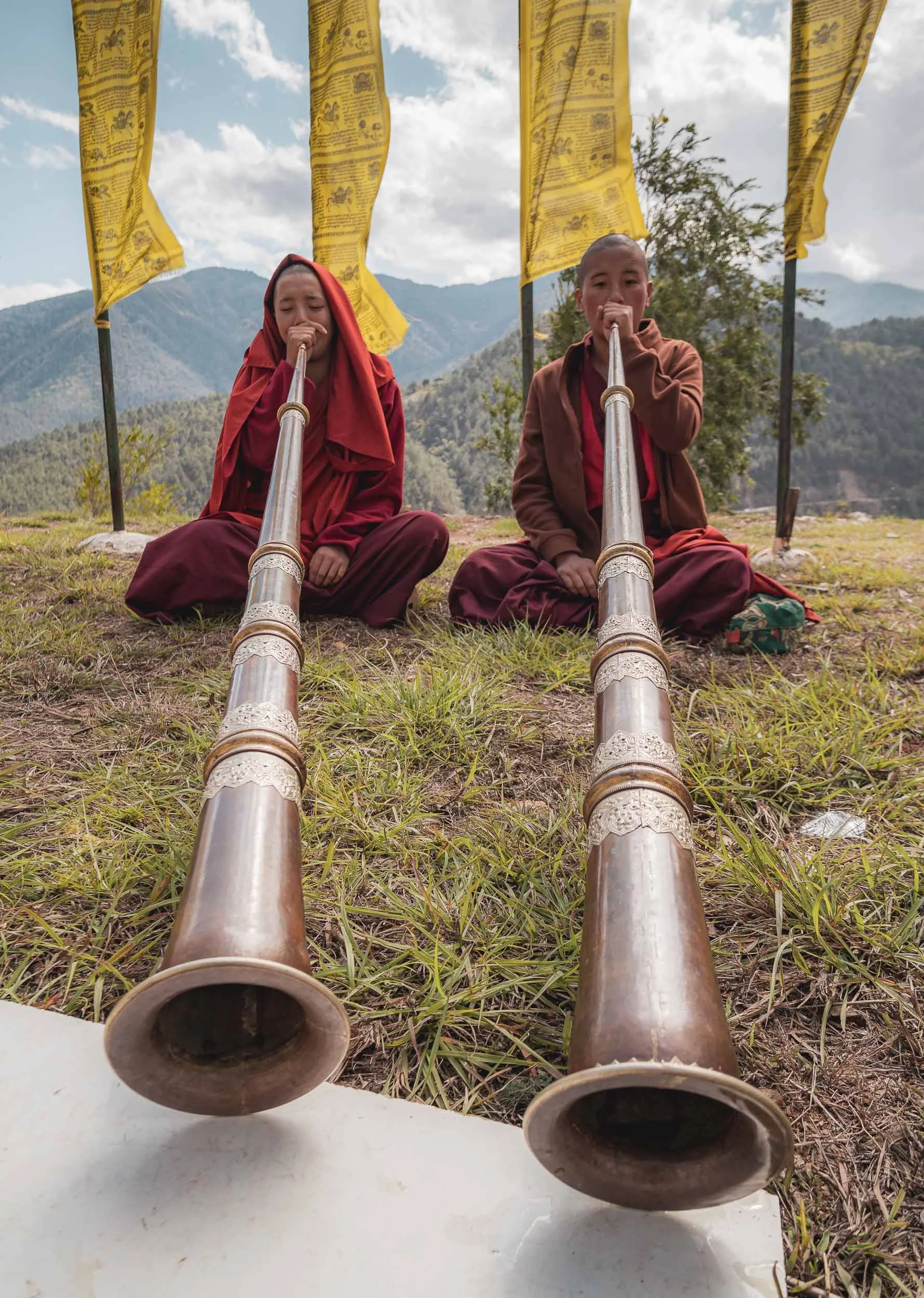
They were also practicing the Dungchen, a long kind of horn producing a deep drone sound used during monastic rituals and festivals. It takes them several years to master it.
Khamsum Yulley Namgyal Chorten
Not far from here lies another picturesque monastery, reachable after crossing another flagged suspension bridge, followed by a short walk through the rice paddies, and a brief hike up the hill.
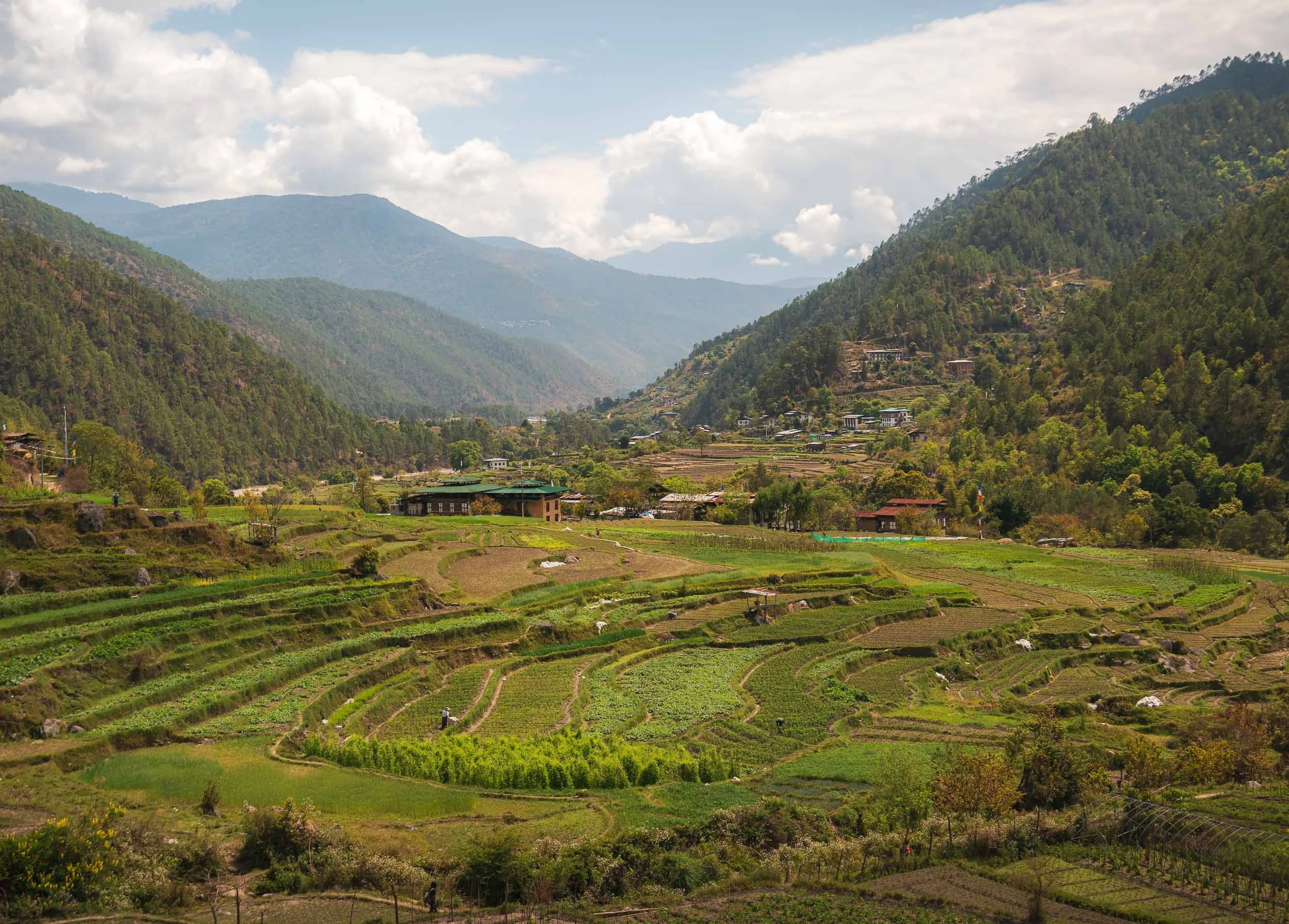
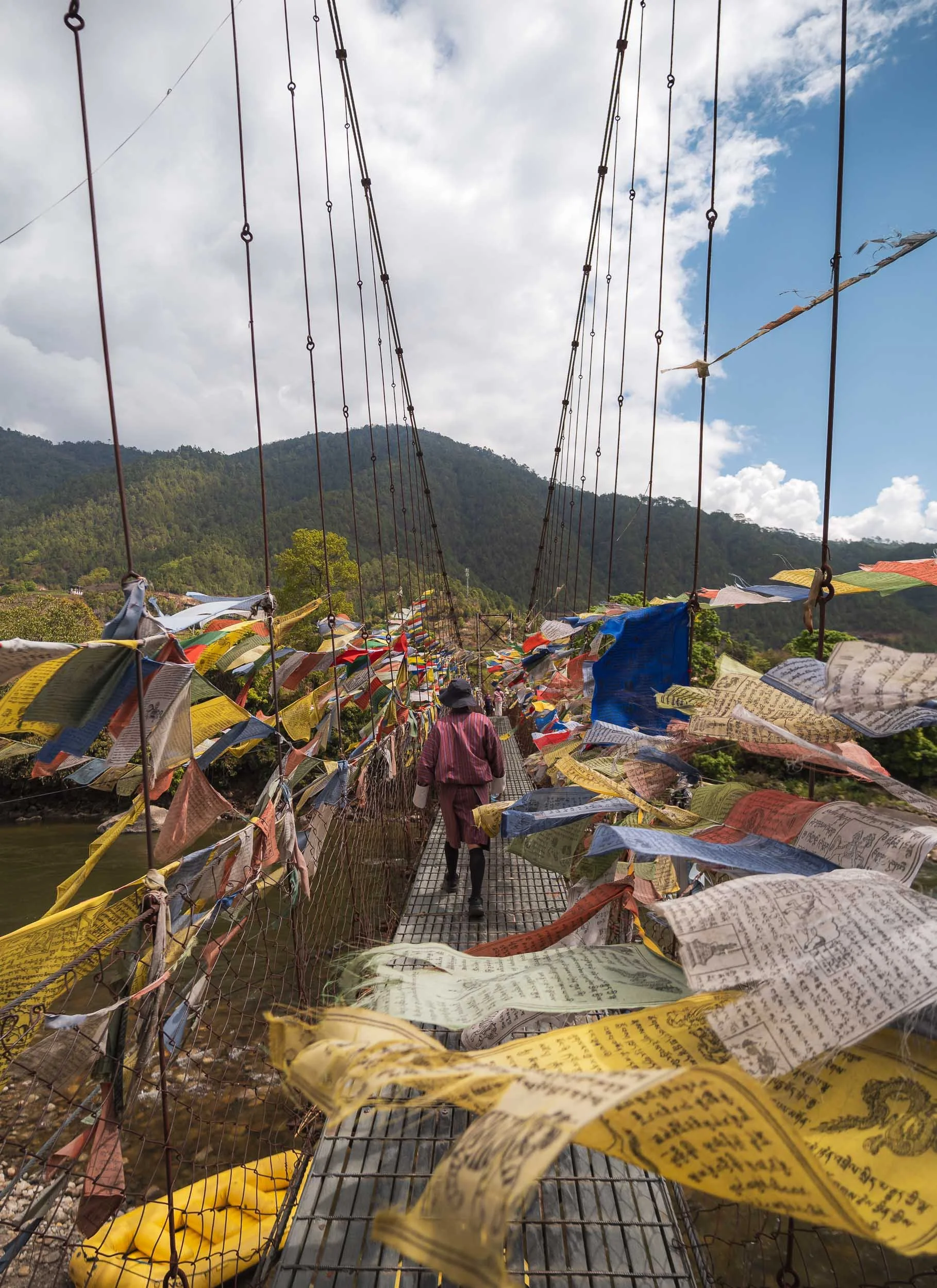
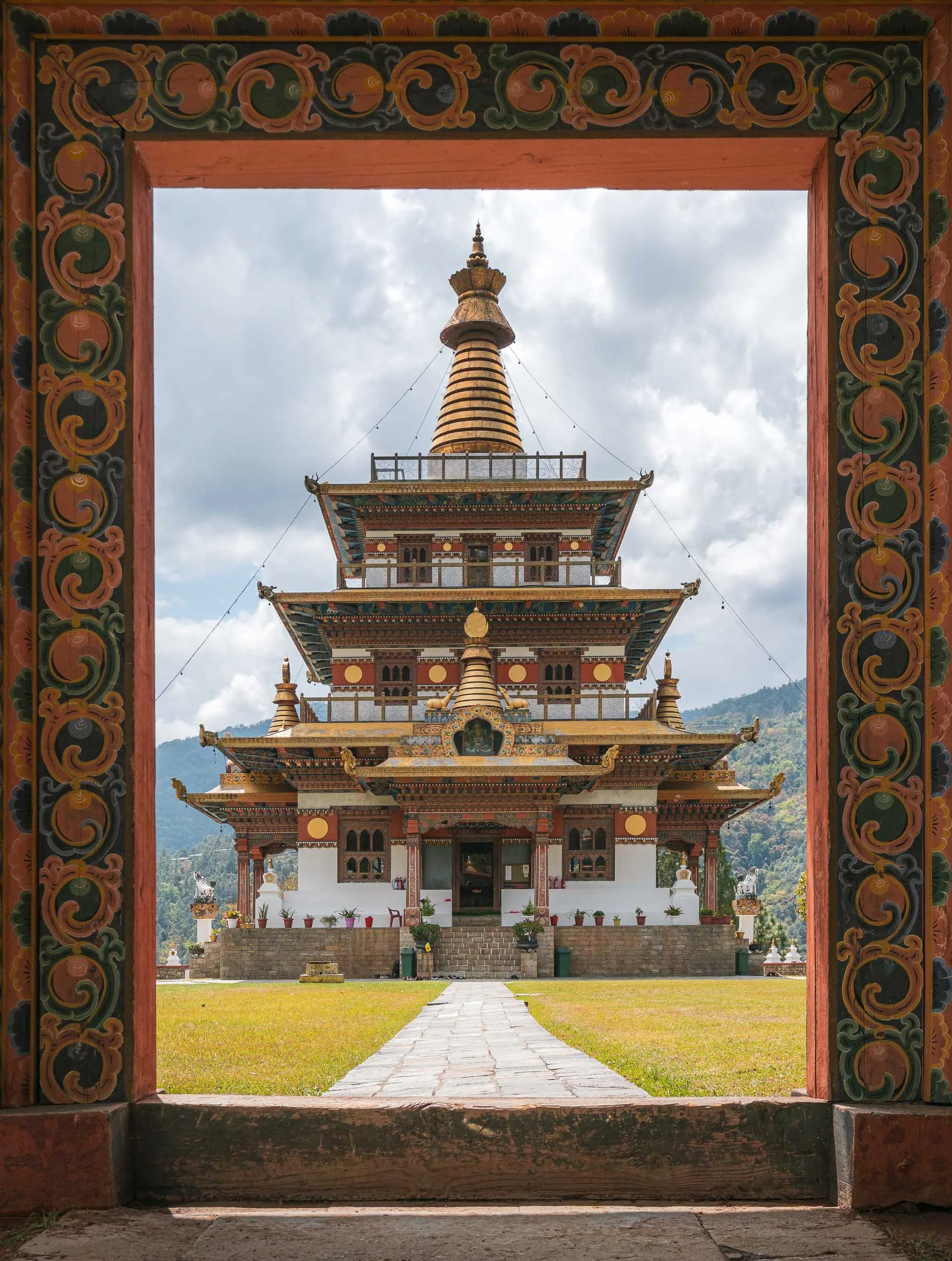
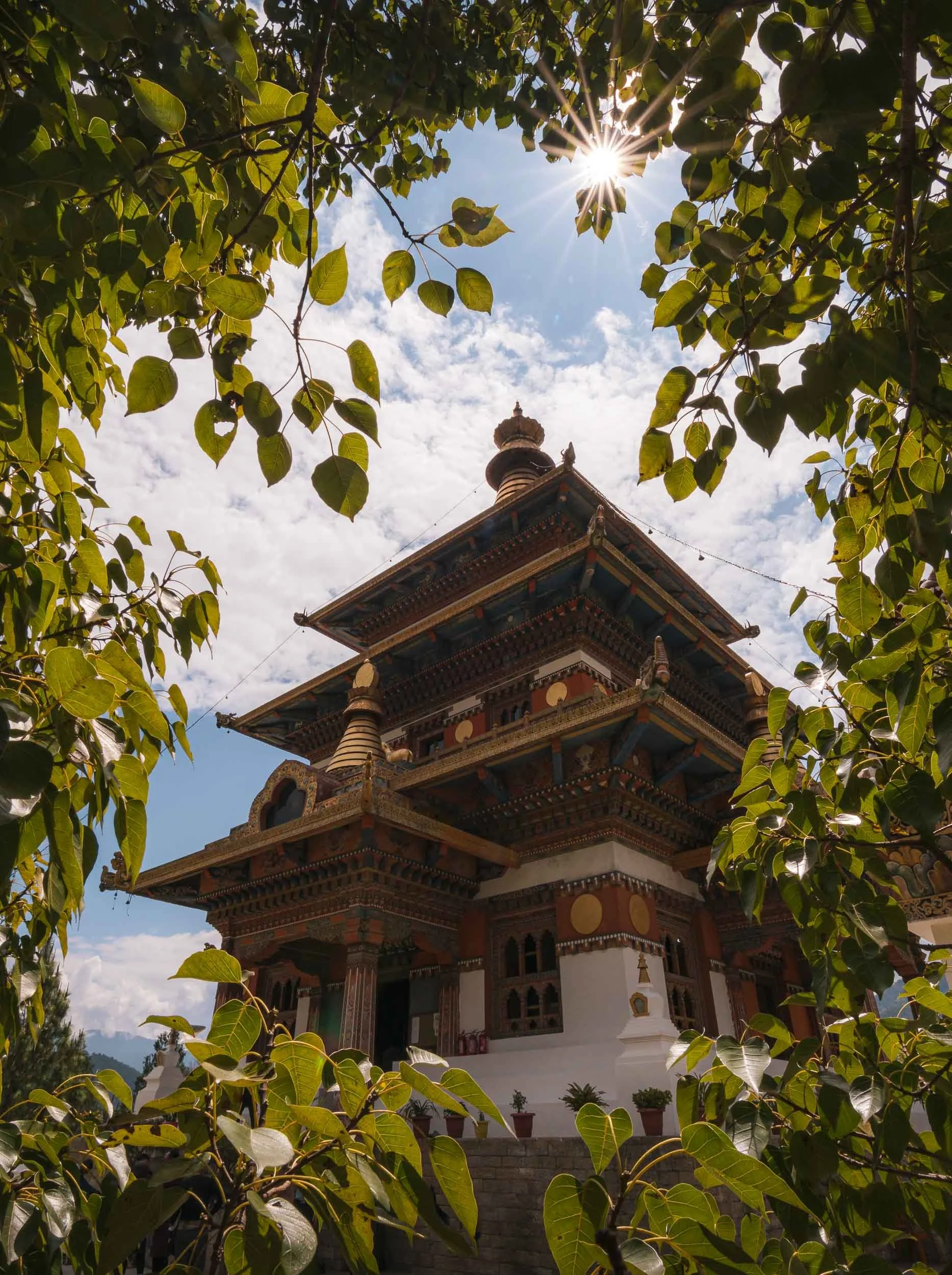
This one was built fairly recently and opened in 2004 - unlike many of the other chortens it has an accessible, multi-level interior, centered around promoting stability and peace in the region.
The Palace of Great Happiness
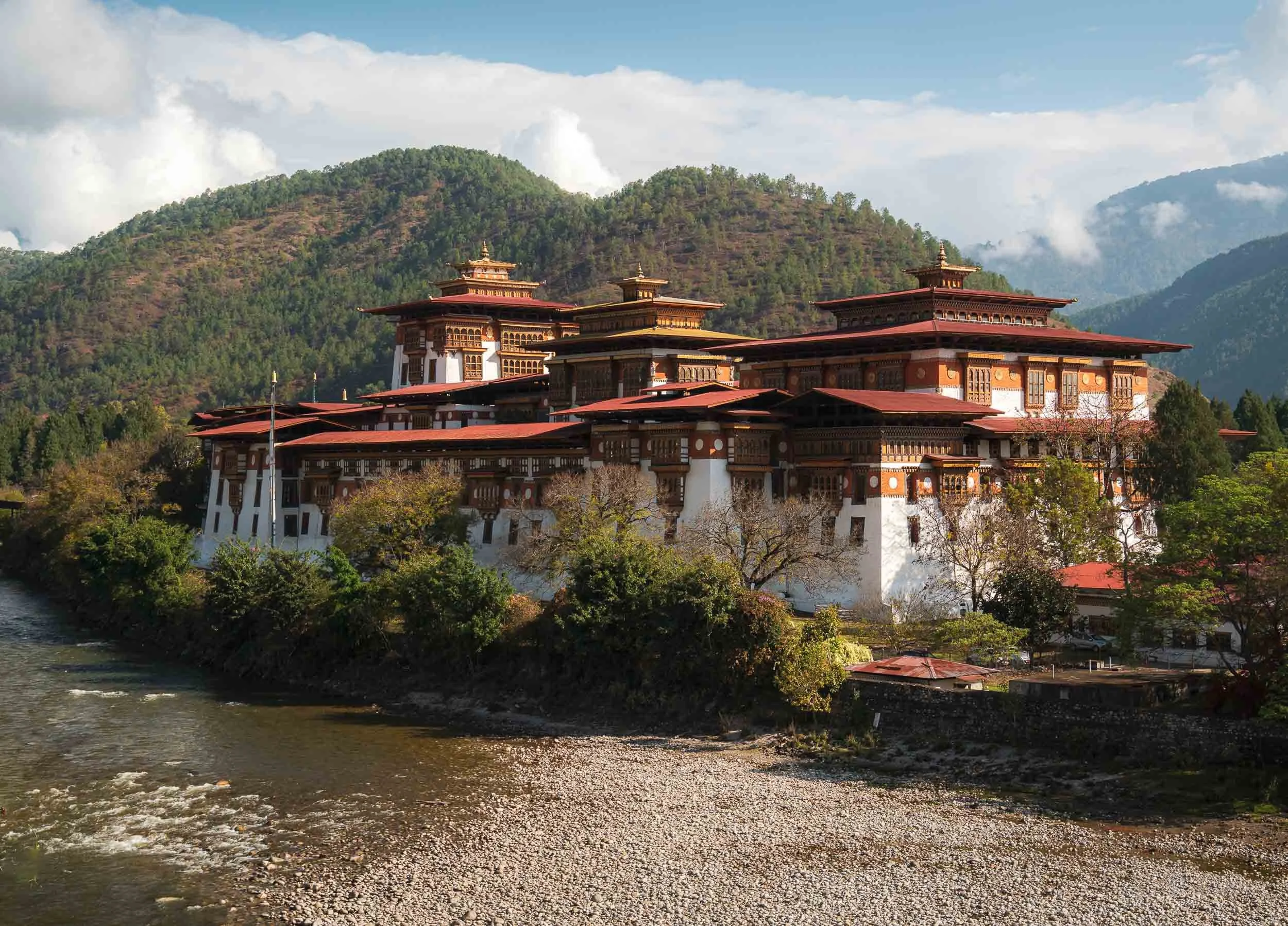
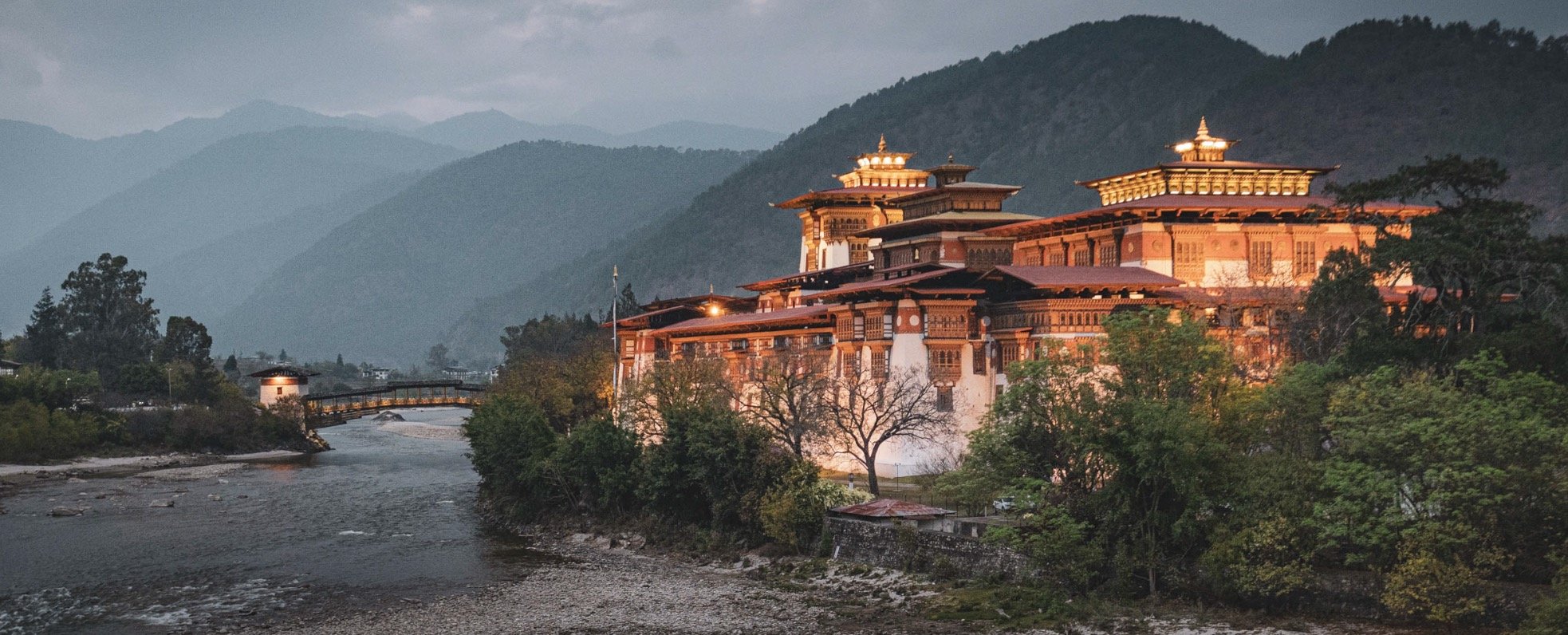
Despite the many interesting sights in the area, it’s undeniable that the Punakha Dzong steals the show, and also became one of my personal favourite places in the country. Its beautiful location at the confluence of the Pho Chhu and Mo Chhu rivers (representing male and female parts), the amazing architecture and its historic significance as the old capital of Bhutan until 1955 are some of the reasons for its appeal.
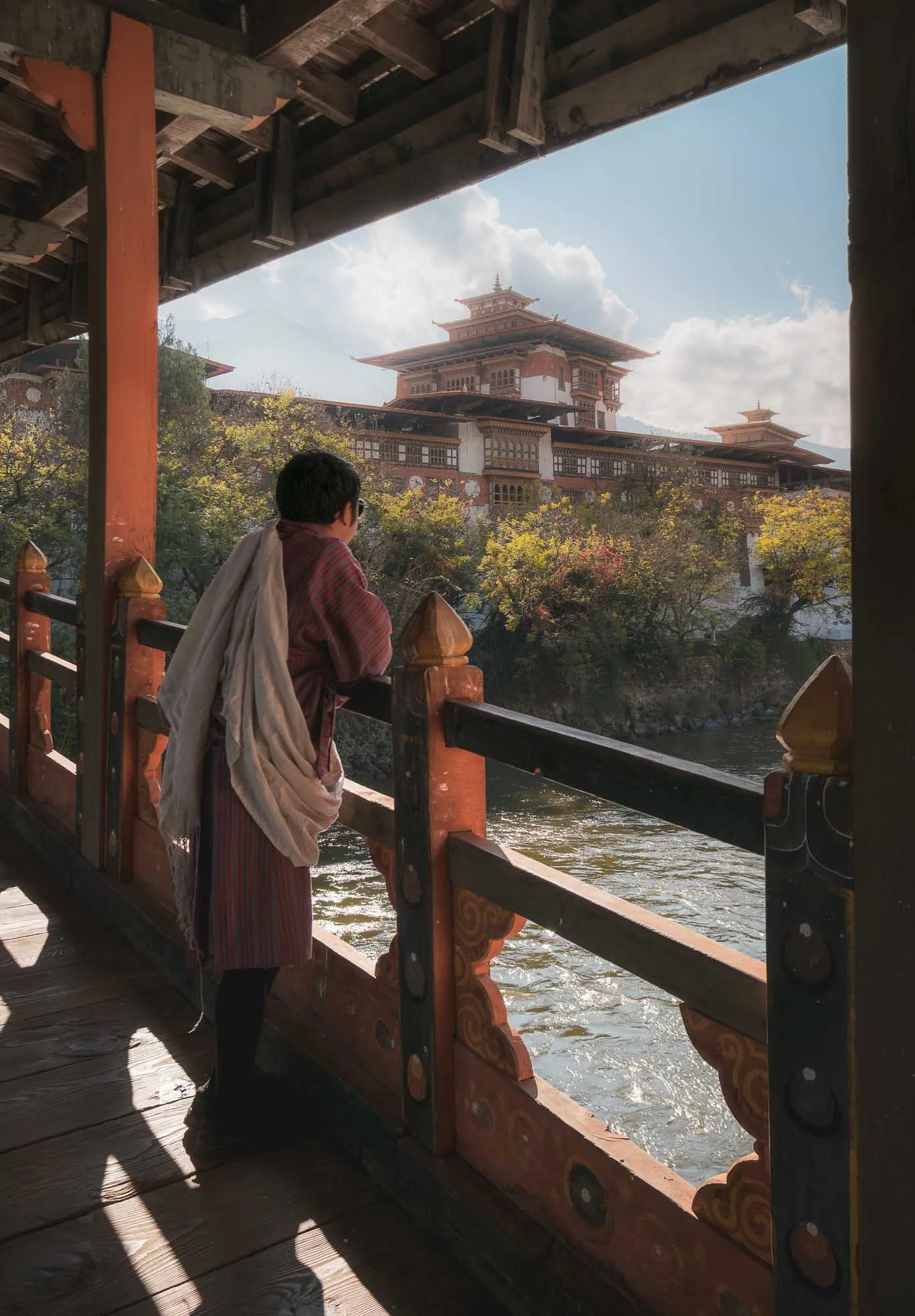
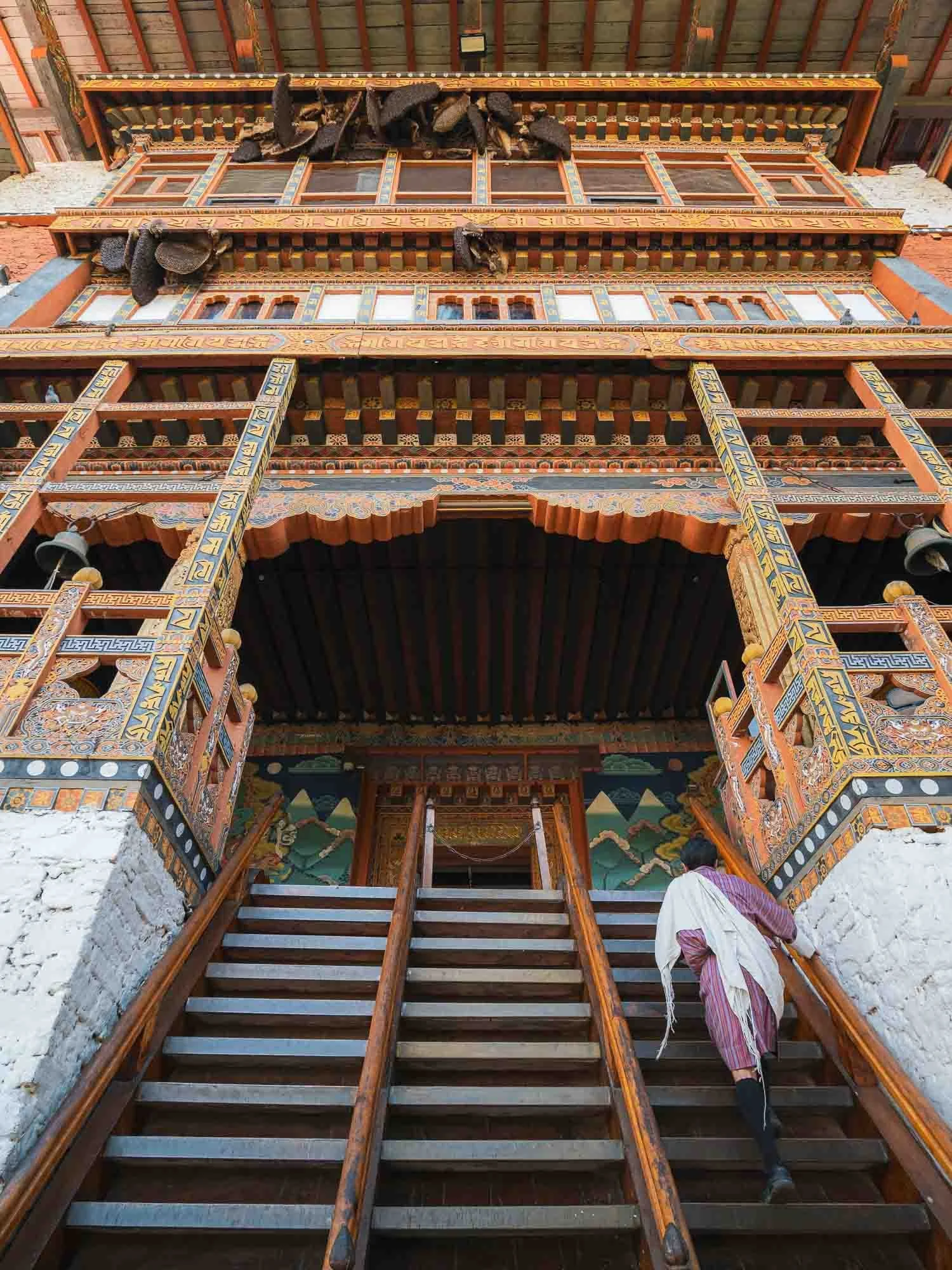
To enter, you cross the traditional timber cantilever bridge (re-built several times due to flood damages, last time in 2008) and then climb the steep stairs designed as a defensible entry point towards the courtyard. Always glad to have Chencho here as an involuntarily model - it is mandatory for guides to wear the local traditional outfit, and the more formal scarf is required for a Bhutanese to enter administrative buildings, which many Dzongs still serve as.
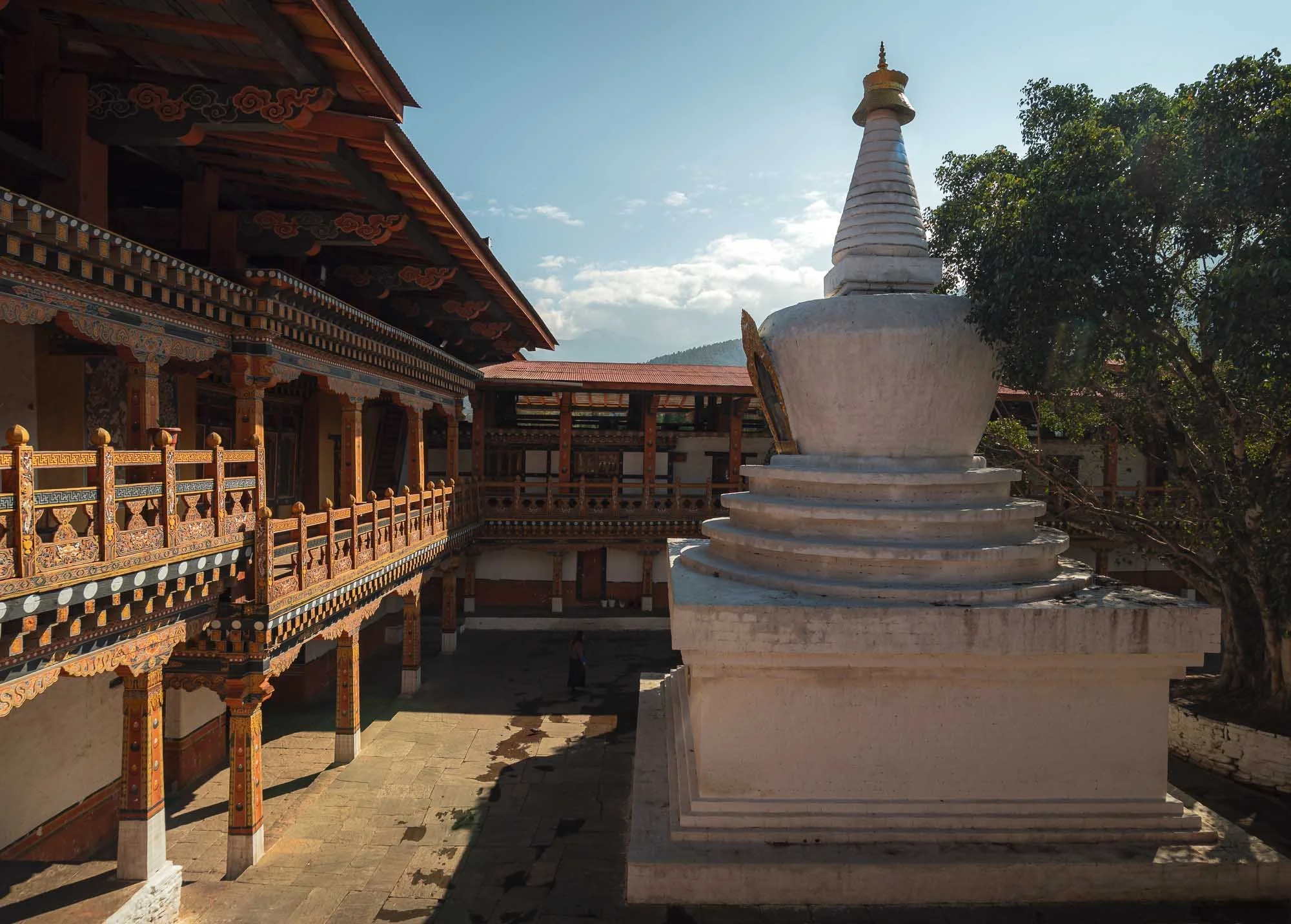
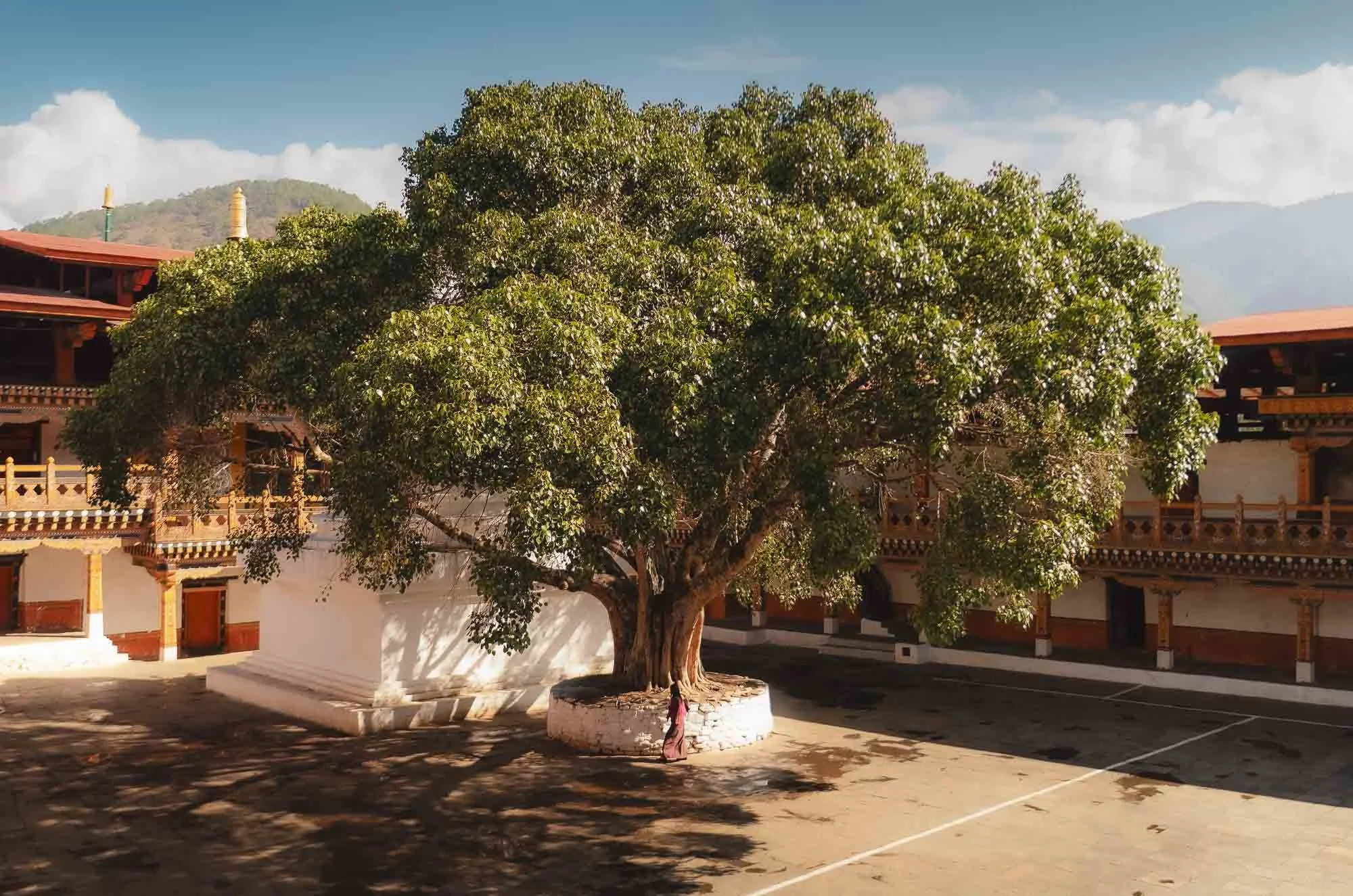
The courtyard is home to a large stupa and a jacaranda tree. The fort is surrounded by them which must be quite pretty during the few weeks when they show their purple bloom in the spring, but I wasn’t lucky enough to see that.
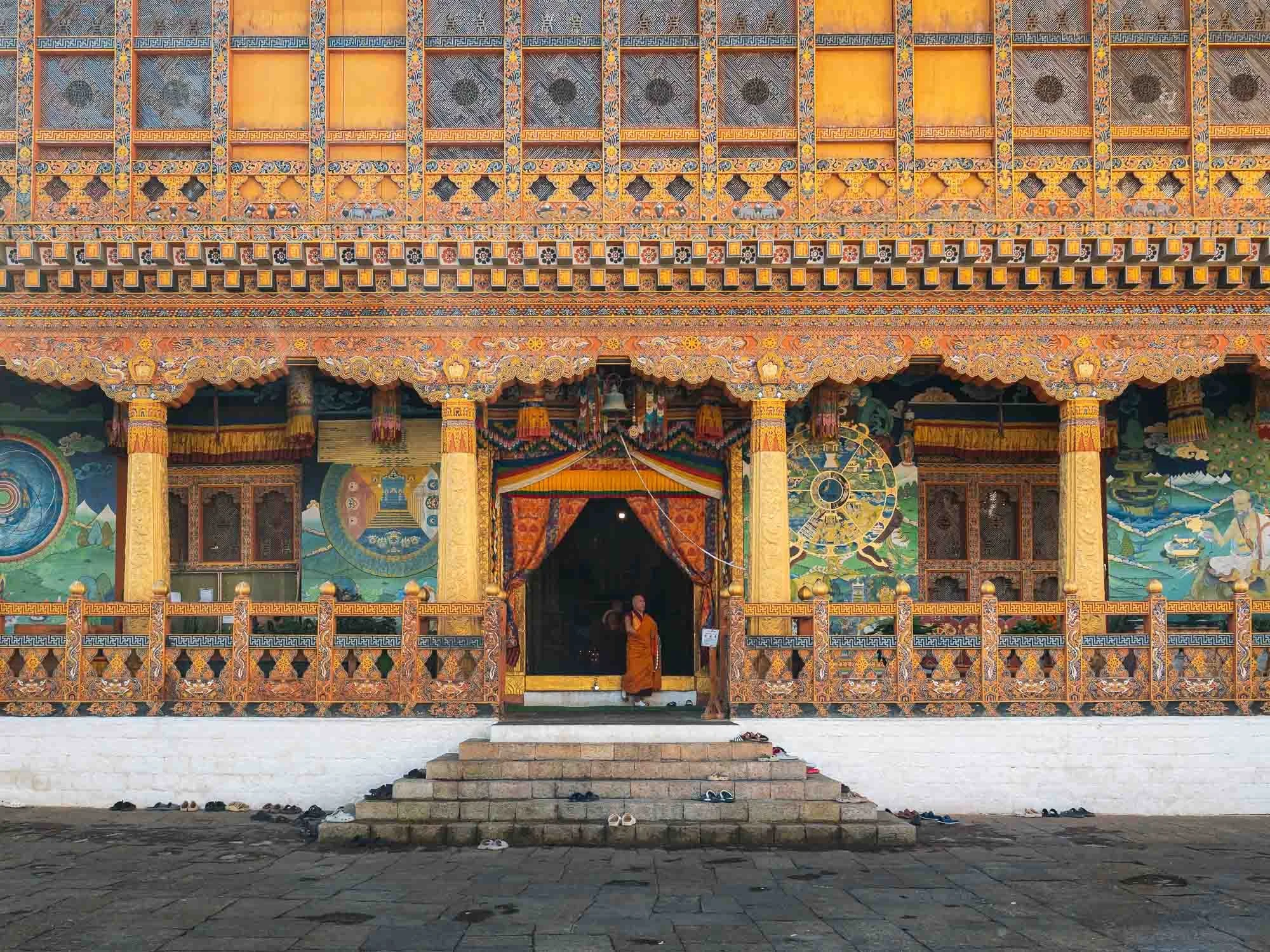
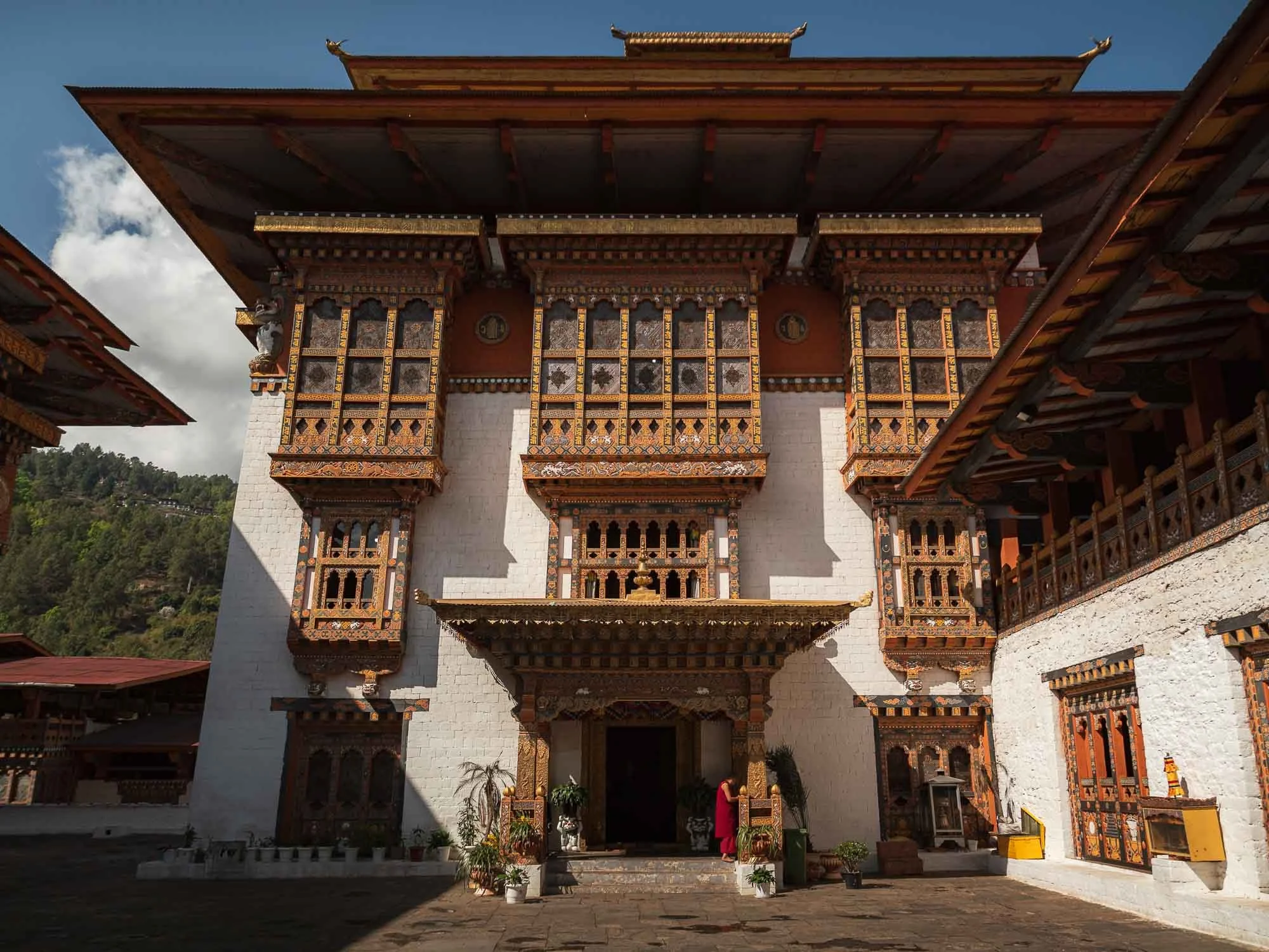
While some temples and courtyard spaces are public, several parts are off limits, such as the administrative areas and specific inner buildings housing some of the most important local religious relics.
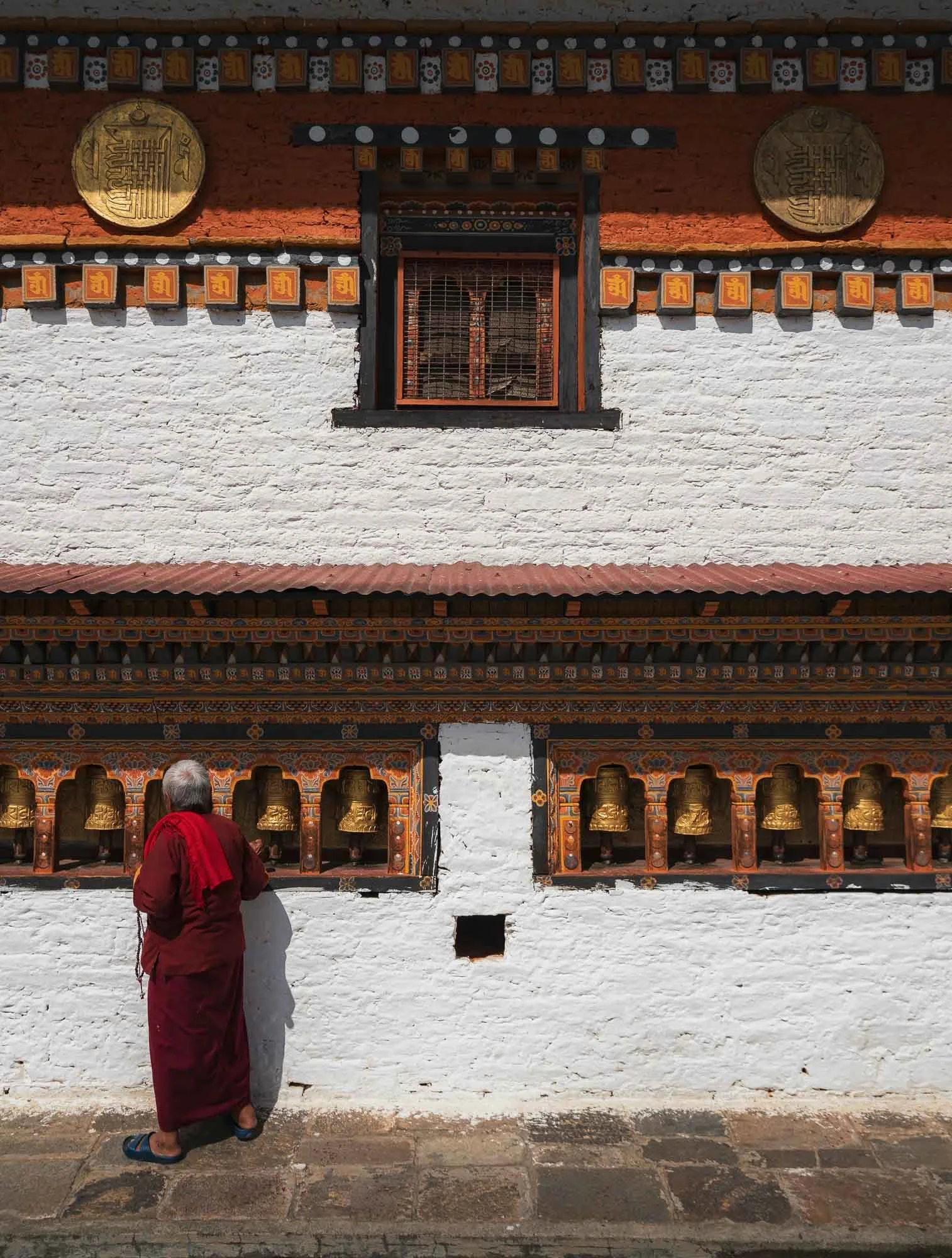
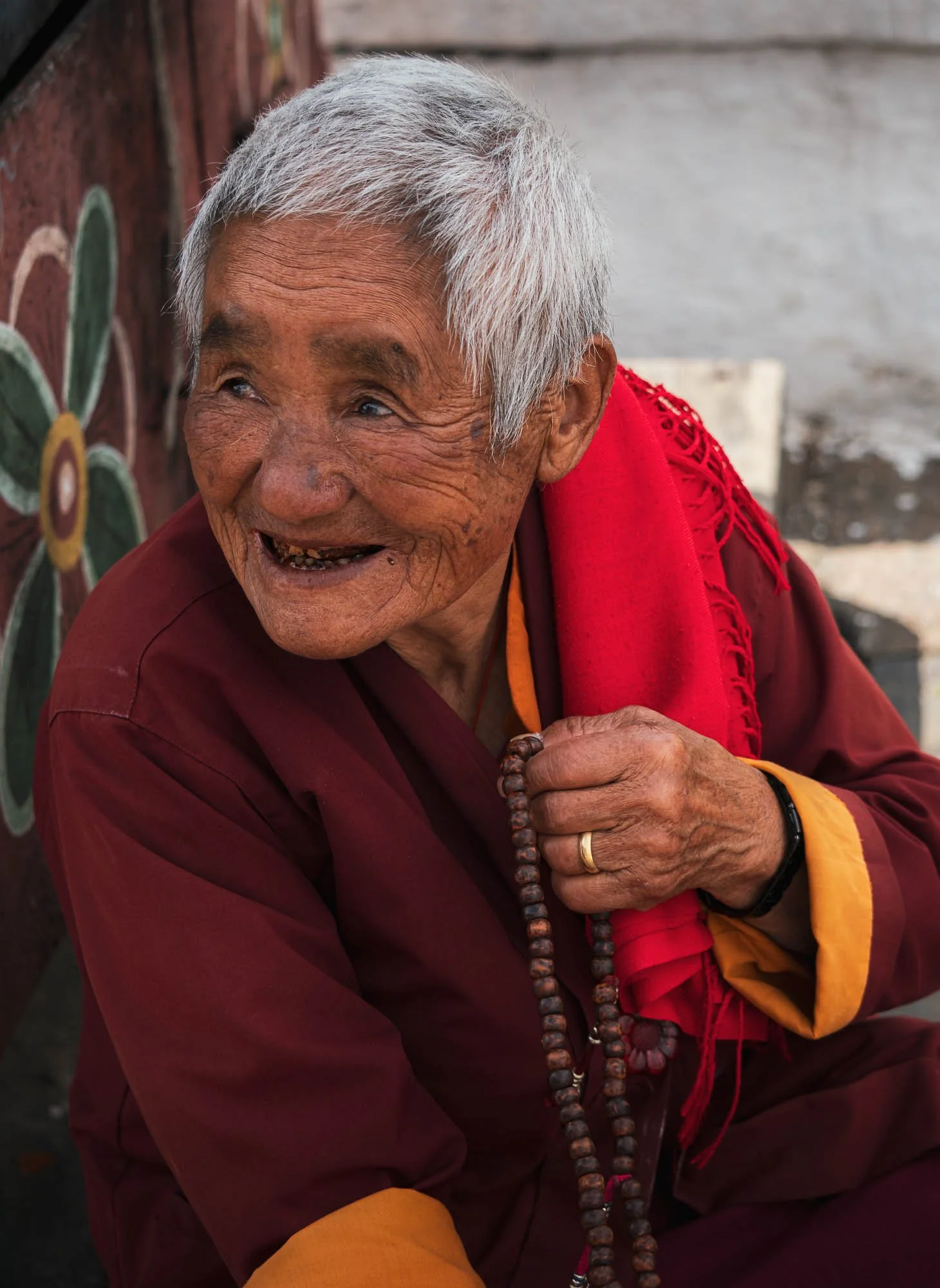
Just outside the main structure lies a smaller building where this elderly lady conducted her daily ritual of clockwise rotation around the temple, spinning the prayer wheels. She also showed me her string of the 108 prayer beads used to count mantra recitations and - I can’t validate this - told Chencho that she accumulates 30,000 counts every day.
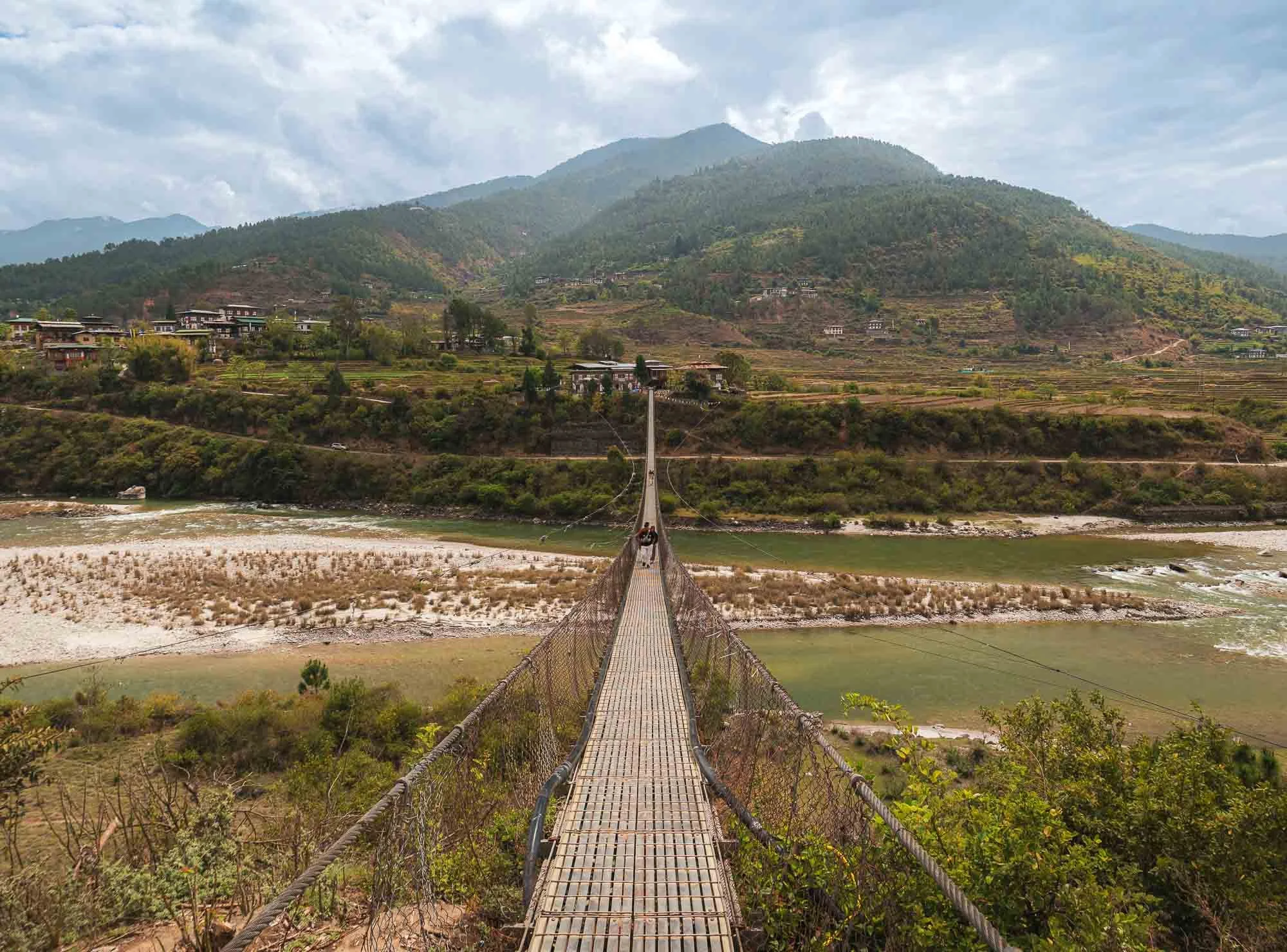
Just a few hundred metres from here you can cross the Pho Chhu river on Bhutan’s longest suspension bridge (around 180m) - it’s not so much a tourist attraction but provides actual connectivity between the Dzong and the nearby villages on the opposite side of the main entrance.
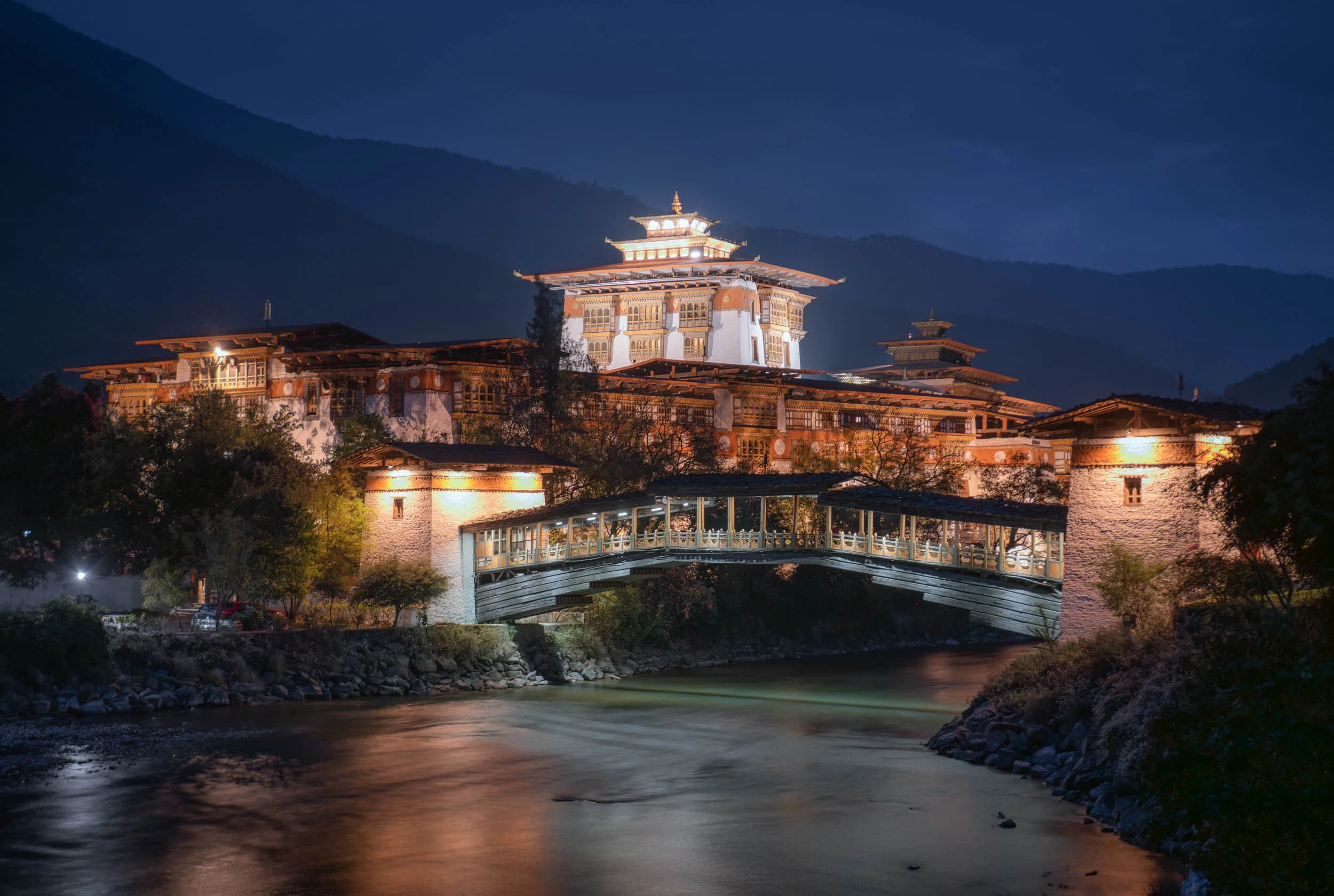
Night View
We came back in the evening for a night view - like many of the Dzongs, this one is beautifully illuminated as well.
Return to Paro
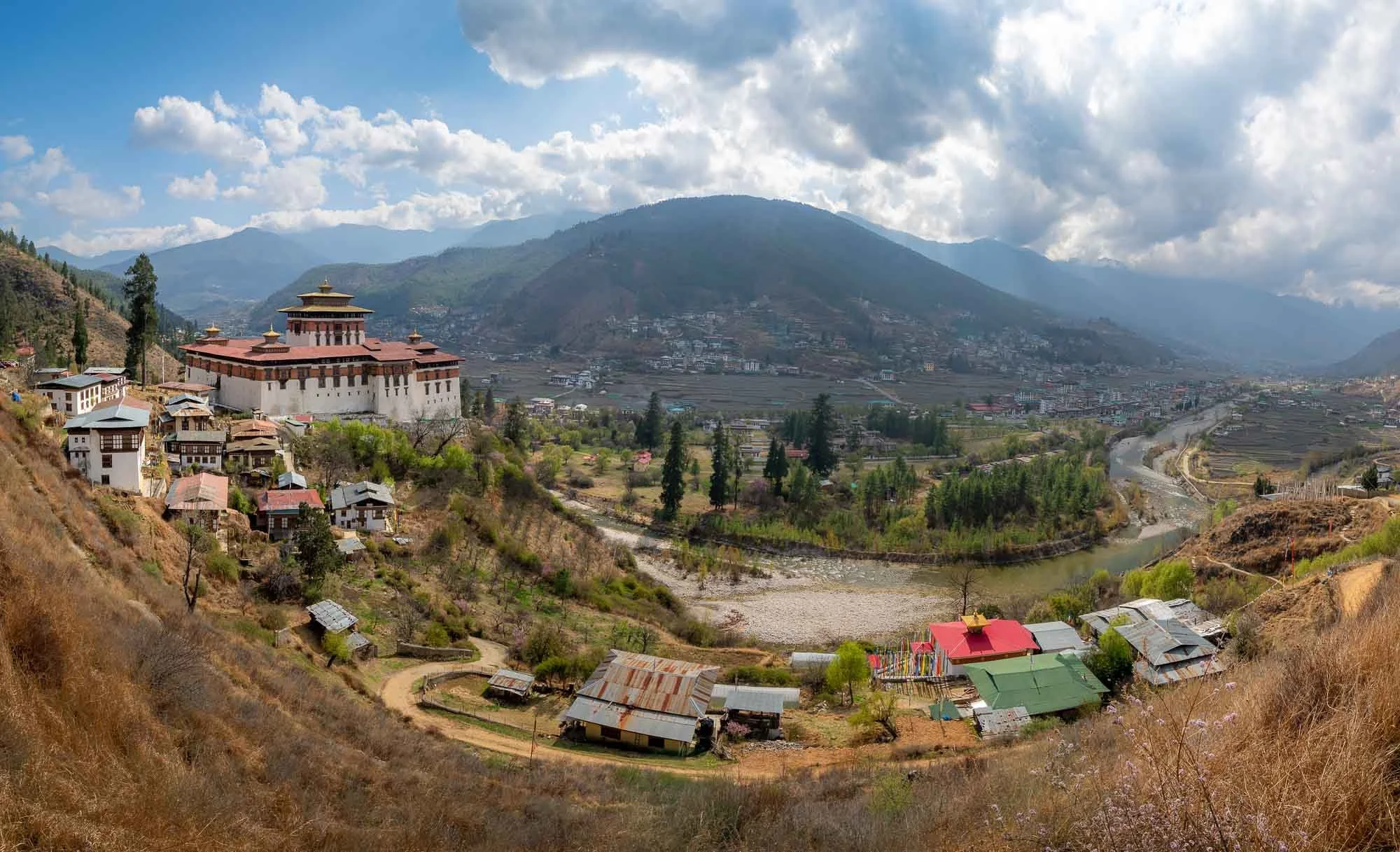
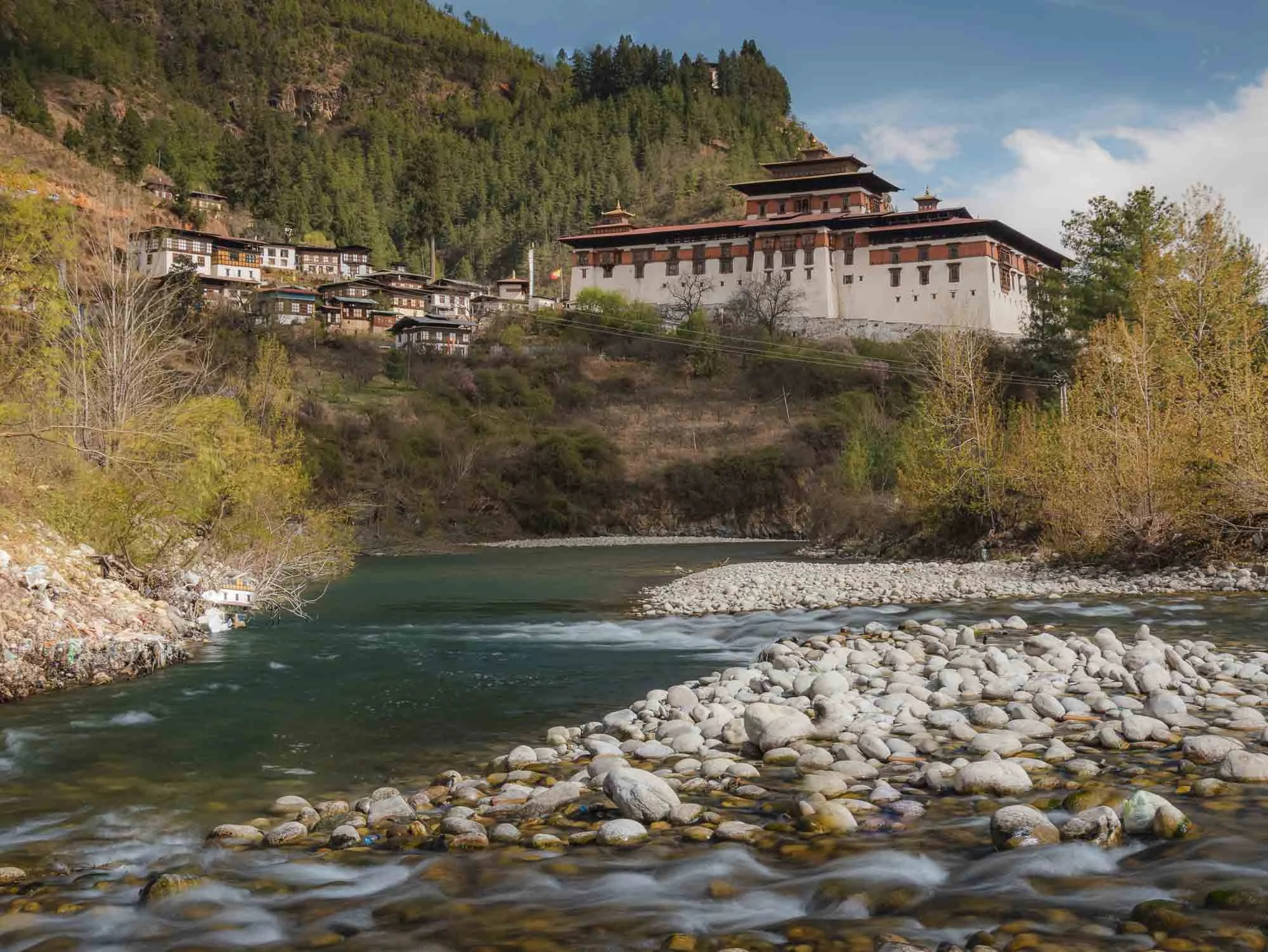
And with this, we headed back to where the trip started, but there were a few more things on the agenda. Paro‘s valleys are a little more open and wider than most of the rest of the country, resulting in a lot of agricultural space and it being home to the (still barely fitting) airport. Of course, the city features another Dzong as well, built in 1646 and seen here on the left - more on that later…
Chele la pass
Having said that, we left the valleys on the next morning for the highest motorable road in Bhutan, passing through a beautiful forest, and reaching the 3980m summit with a small temple at the top. That’s still far from the highest peak of Bhutan, Gangkar Puensum at 7570m, which is also the highest unclimbed mountain in the world. It has been designated as off-limits by the government to protect its sanctity.
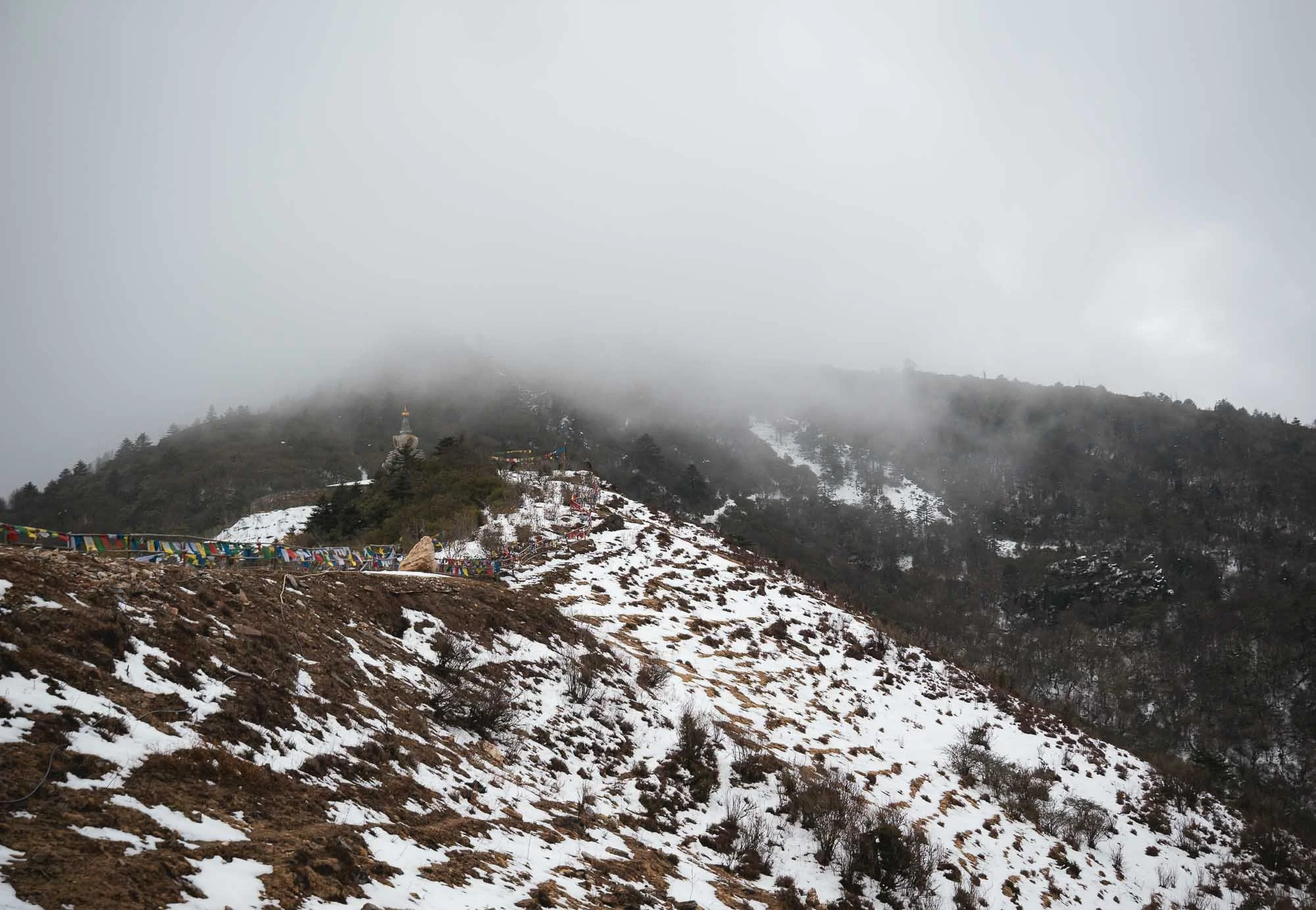
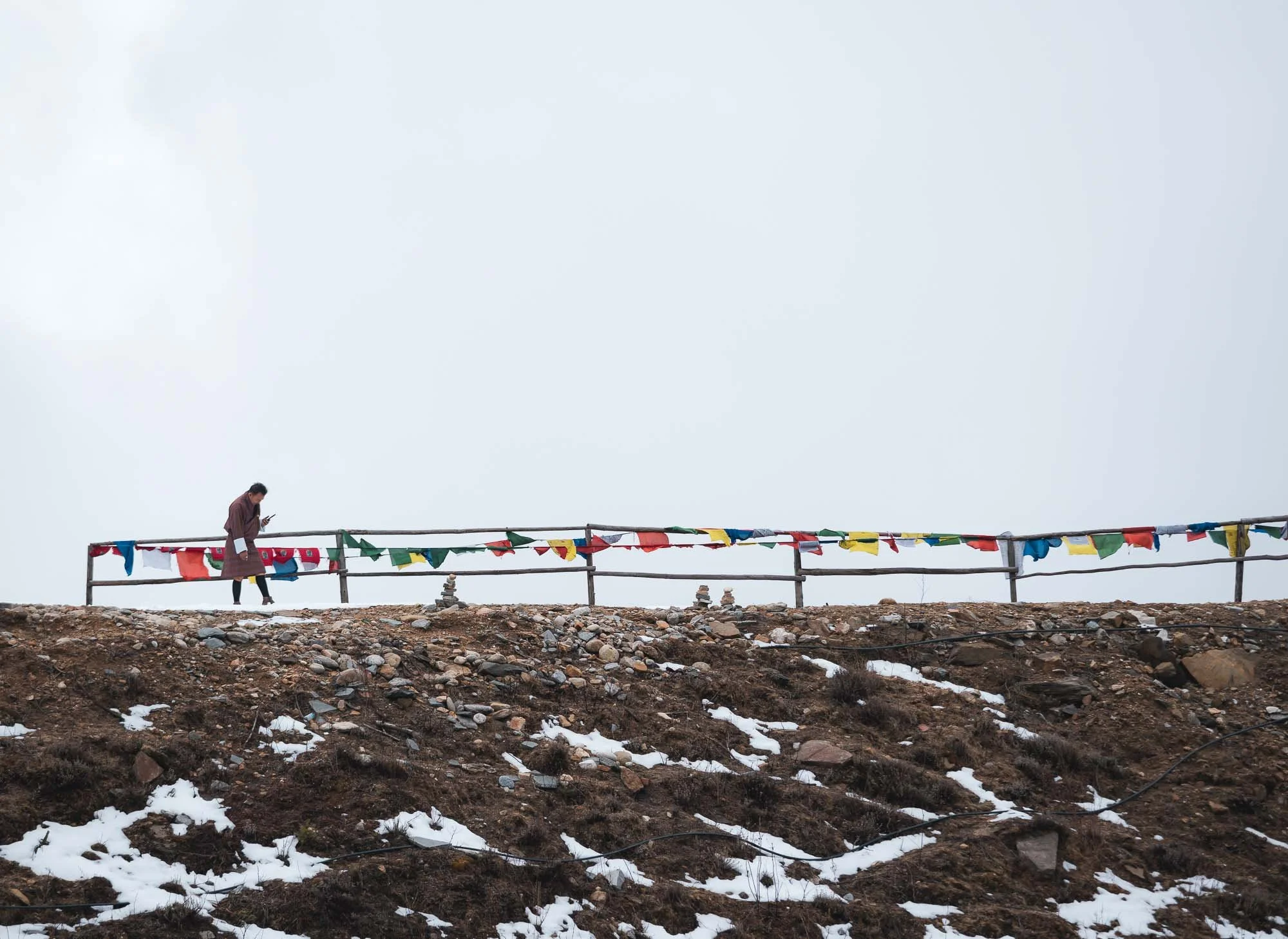
I’m not sure this drive was worth it given the cloudy conditions - nevertheless it gave me a little close up glimpse at the Himalayan snow. Born near the Alps, that was not quite as exciting to me as to the many Indian tourist families who arrived as we left and excitedly grabbed and lay down in whatever white patches were left next to the road. Surprisingly this is quite a rare occurrence: I was told snow has been quite spare in the valleys of Paro and Thimphu over the last years, something the locals attributed to global warming multiple times.
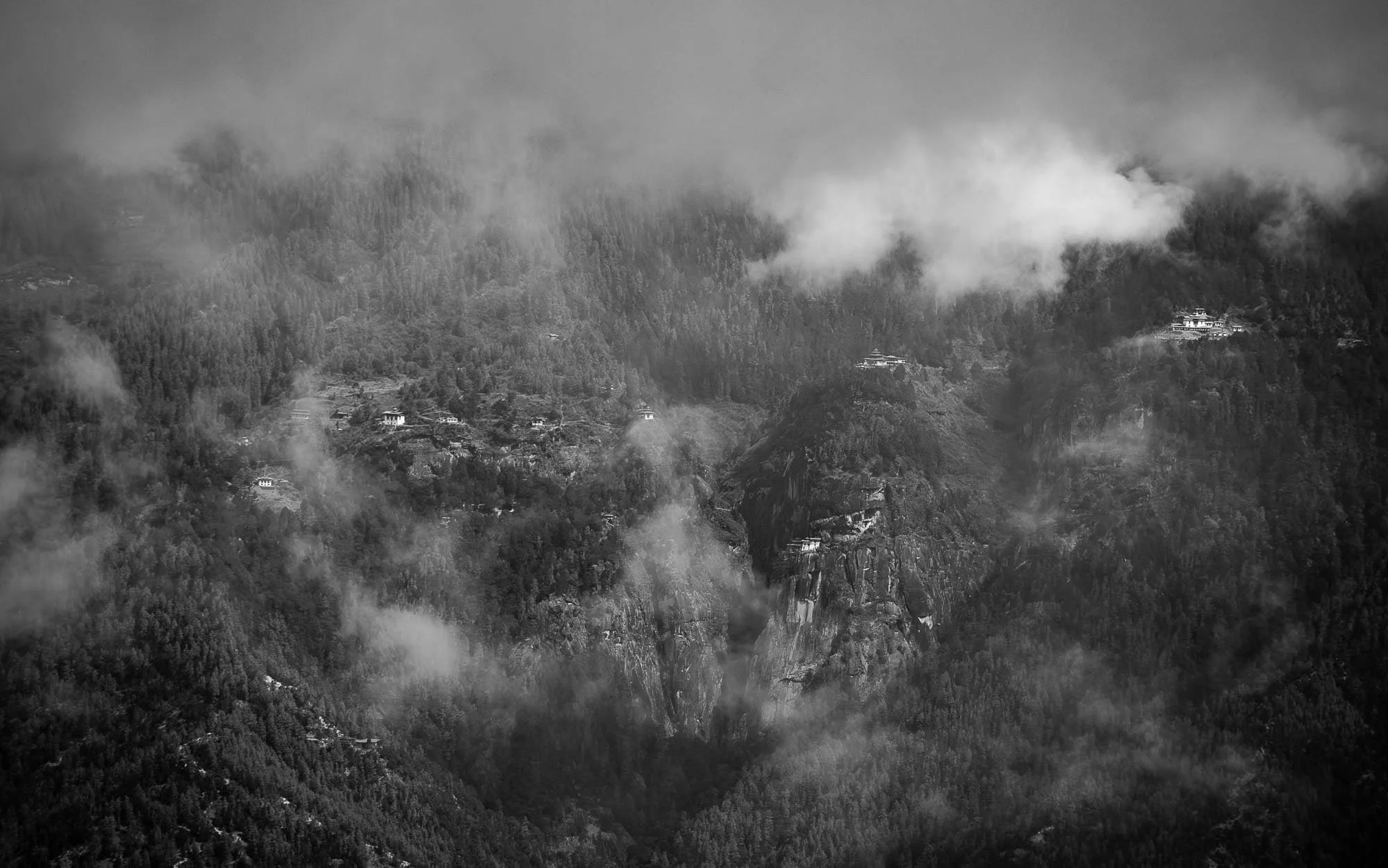
As the clouds opened up for a brief moment, my driver pointed at something in the opposite mountains I didn’t expect to see from here: Bhutan’s most famous sight, at a distance of what I suspect must be 20km or so made an appearance right in the centre of this image. It would be my destination for the next morning, read on…
Bhutan’s Crown Jewel
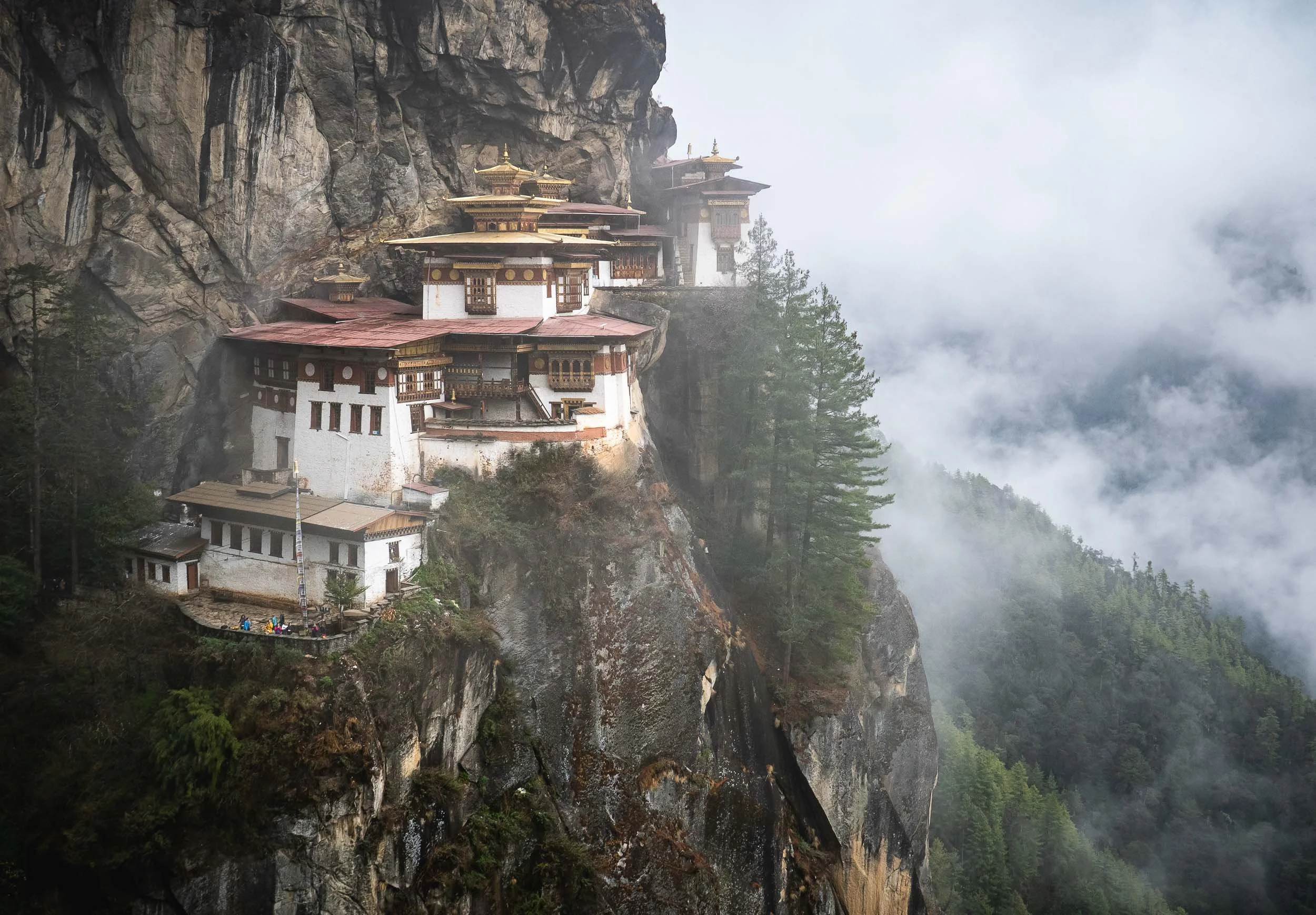
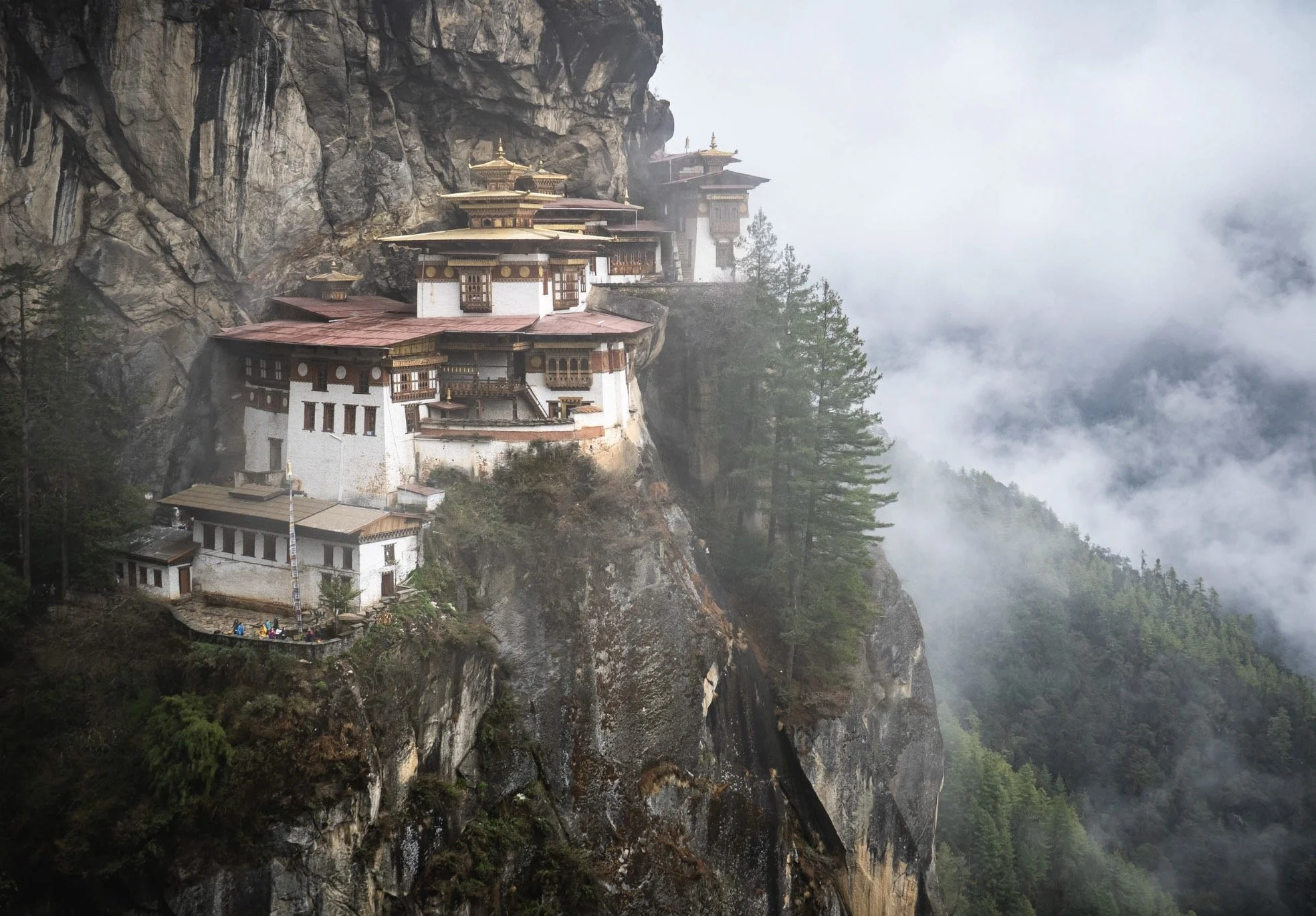
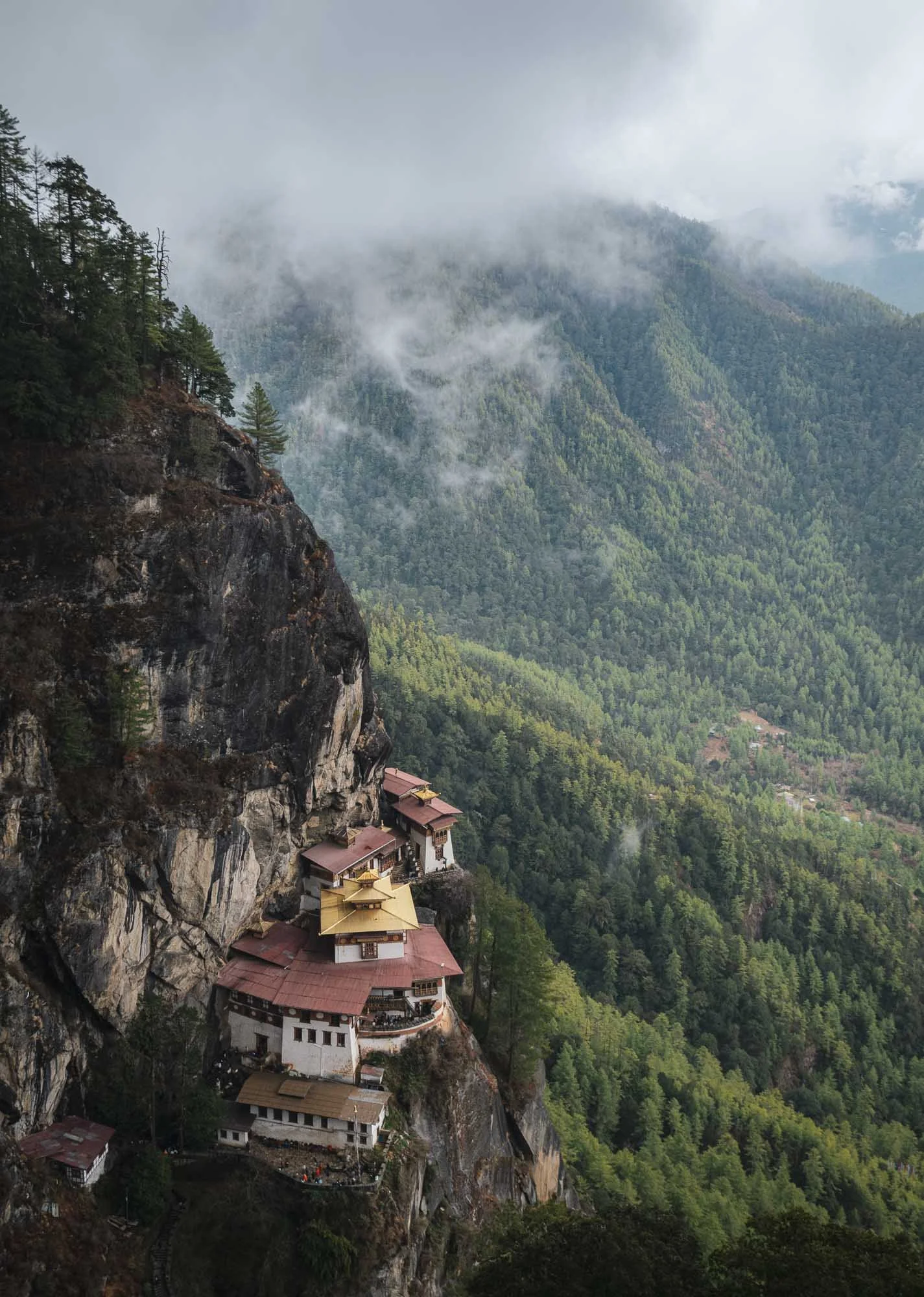
Opinions may vary on whether it’s justified (even my own mind isn’t quite so clearly settled, because I really enjoyed the Dzongs), but one thing is undoubtedly true: the so-called Tiger’s Nest monastery is Bhutan’s most iconic sight, and it doesn’t disappoint. We set off very early in the morning for the 30min drive to try and beat the crowds, but frankly speaking, no place I’ve visited in Bhutan felt particularly busy (sometimes it was the opposite). The same was true here as well, despite a few buses in the parking lot and some groups making their way up the trail.
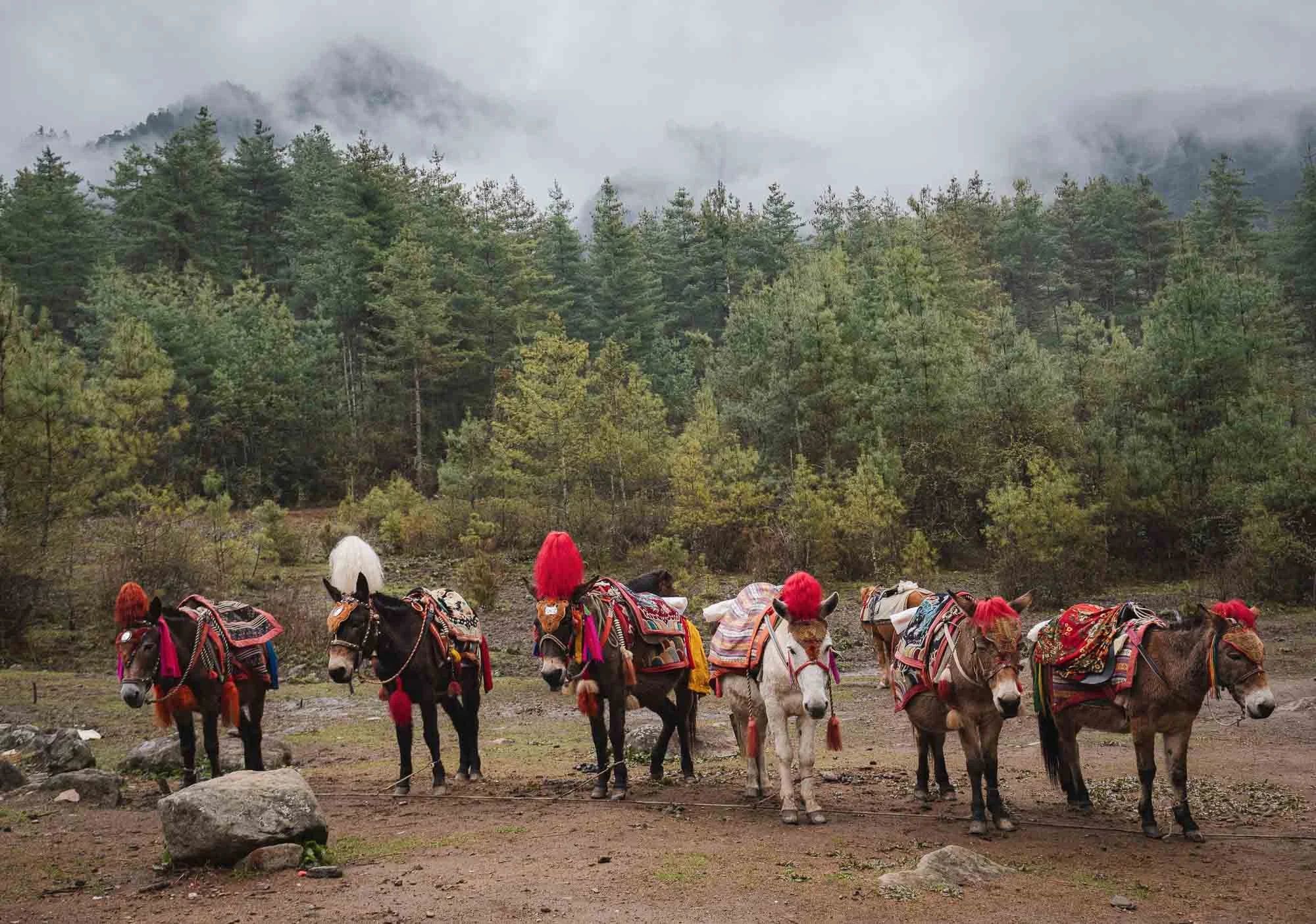
Speaking of the trail, to reach the cliffside monastery requires about 2-3h of hiking, depending on your speed and the amount of breaks you take. Part of it can be done by horses waiting at the bottom, but the second half has a few steeper elements, culminating in a lot of stairs at the end, so you won’t escape a little bit of physical exercise. Nothing extreme, but not a relaxed walk either, especially given the monastery’s altitude of 3,120 metres.
It’s worth it though, not only for the final destination, but also the forest, its inhabitants such as the beautiful magpies, and smaller temples and waterfalls on the way.
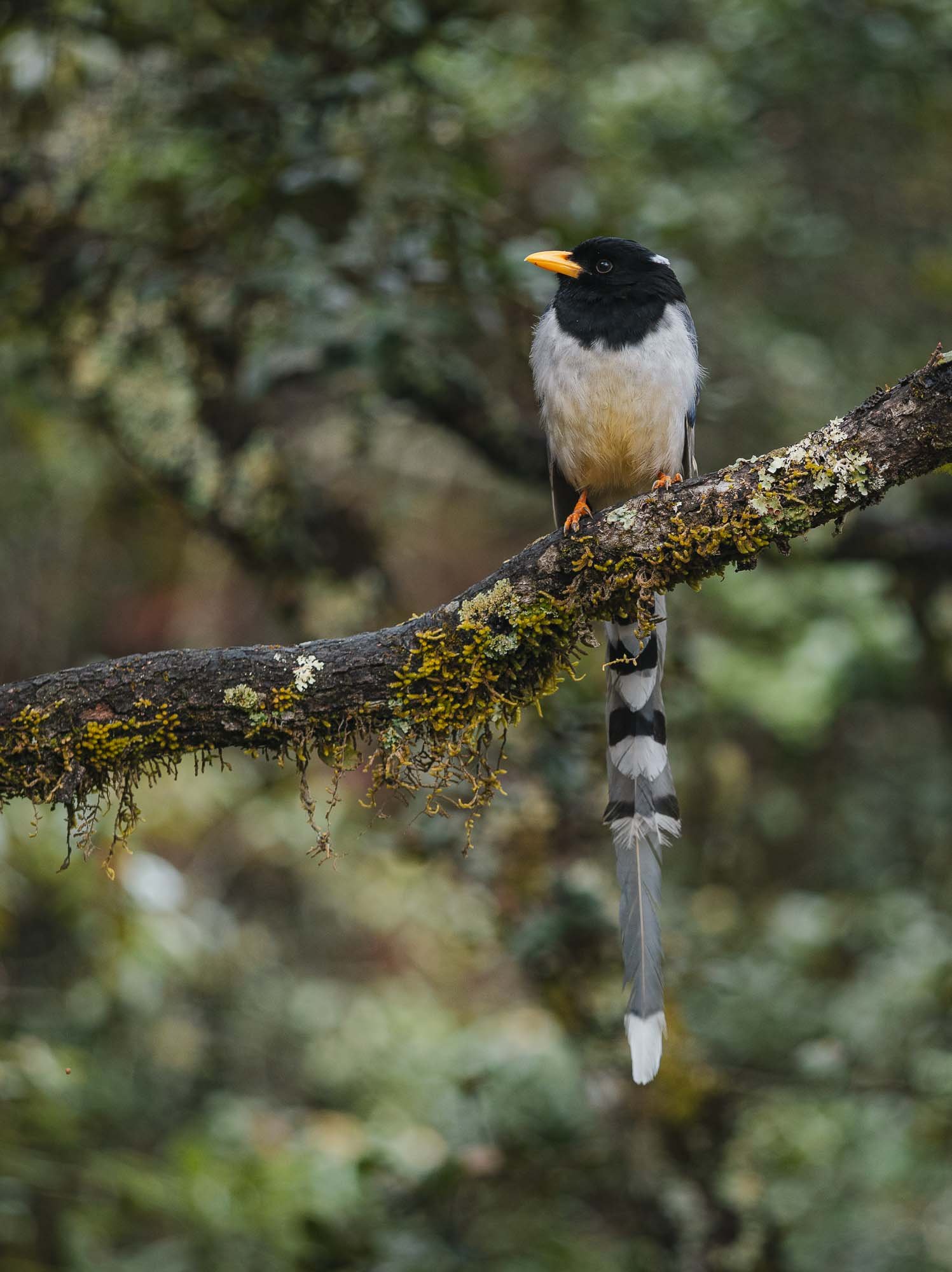
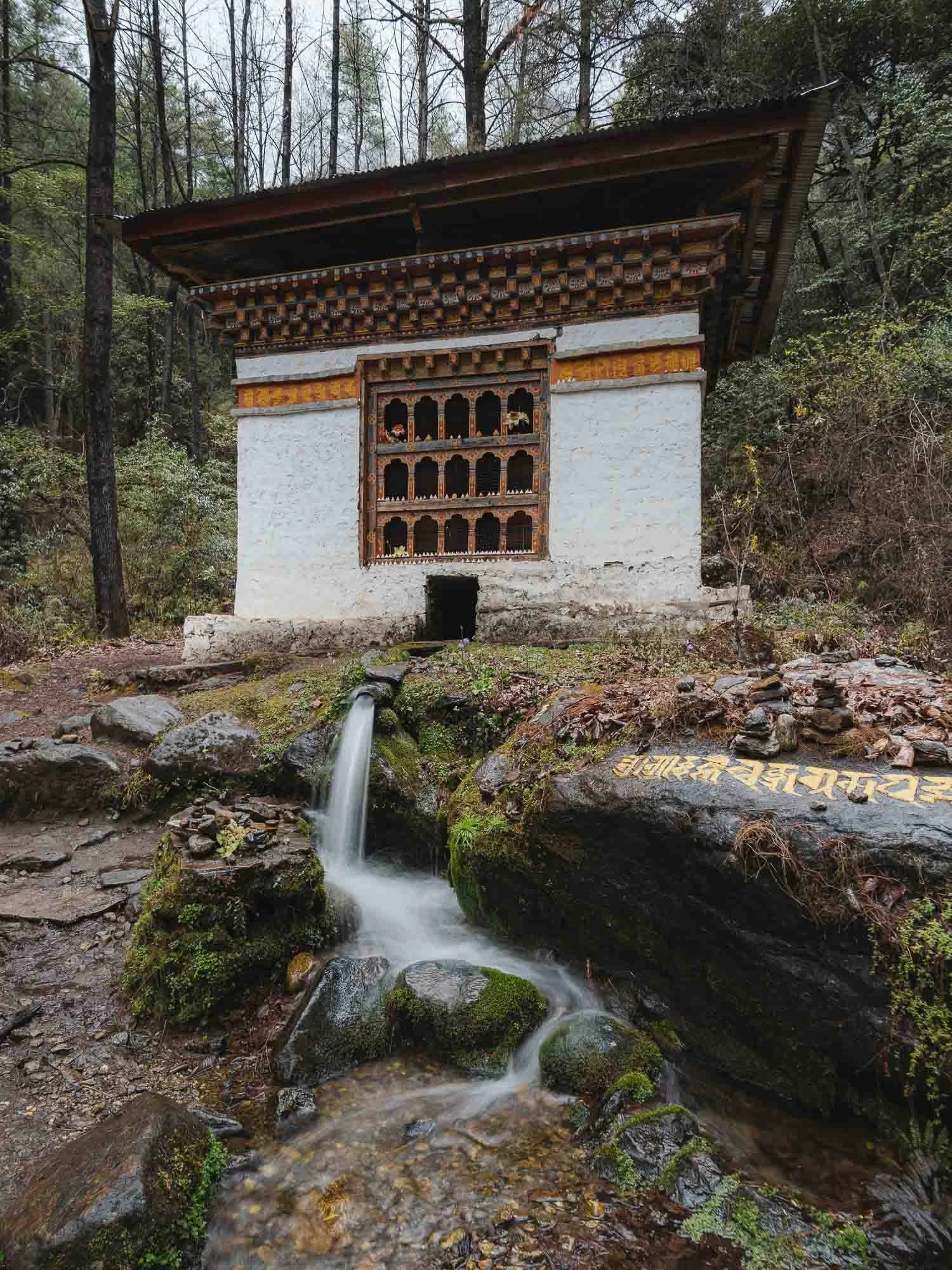
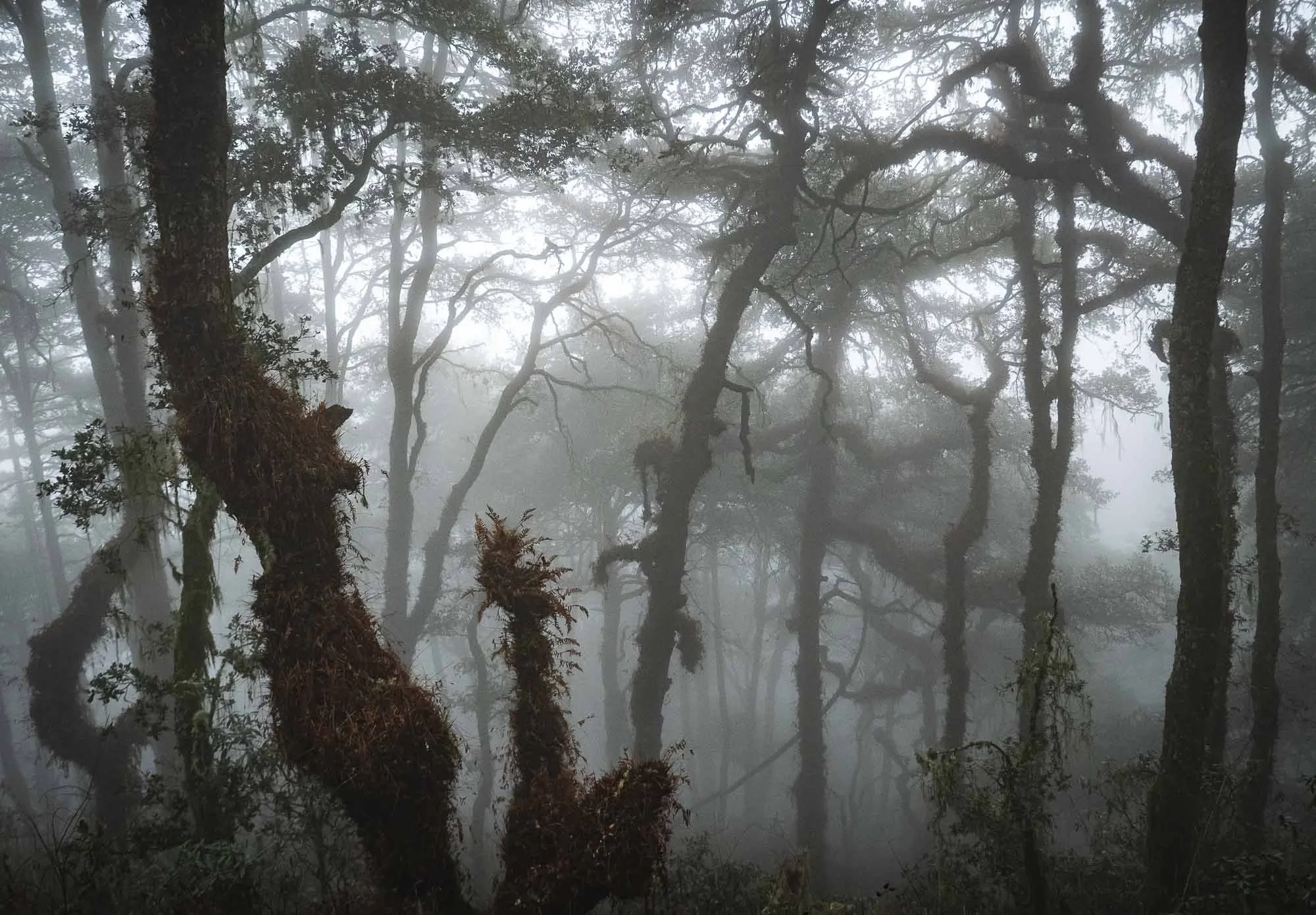
As we left in the morning I was a little afraid it would rain, but also had hope that the moody clouds would hang around and create a mysterious atmosphere in the scenery, and wasn’t disappointed…
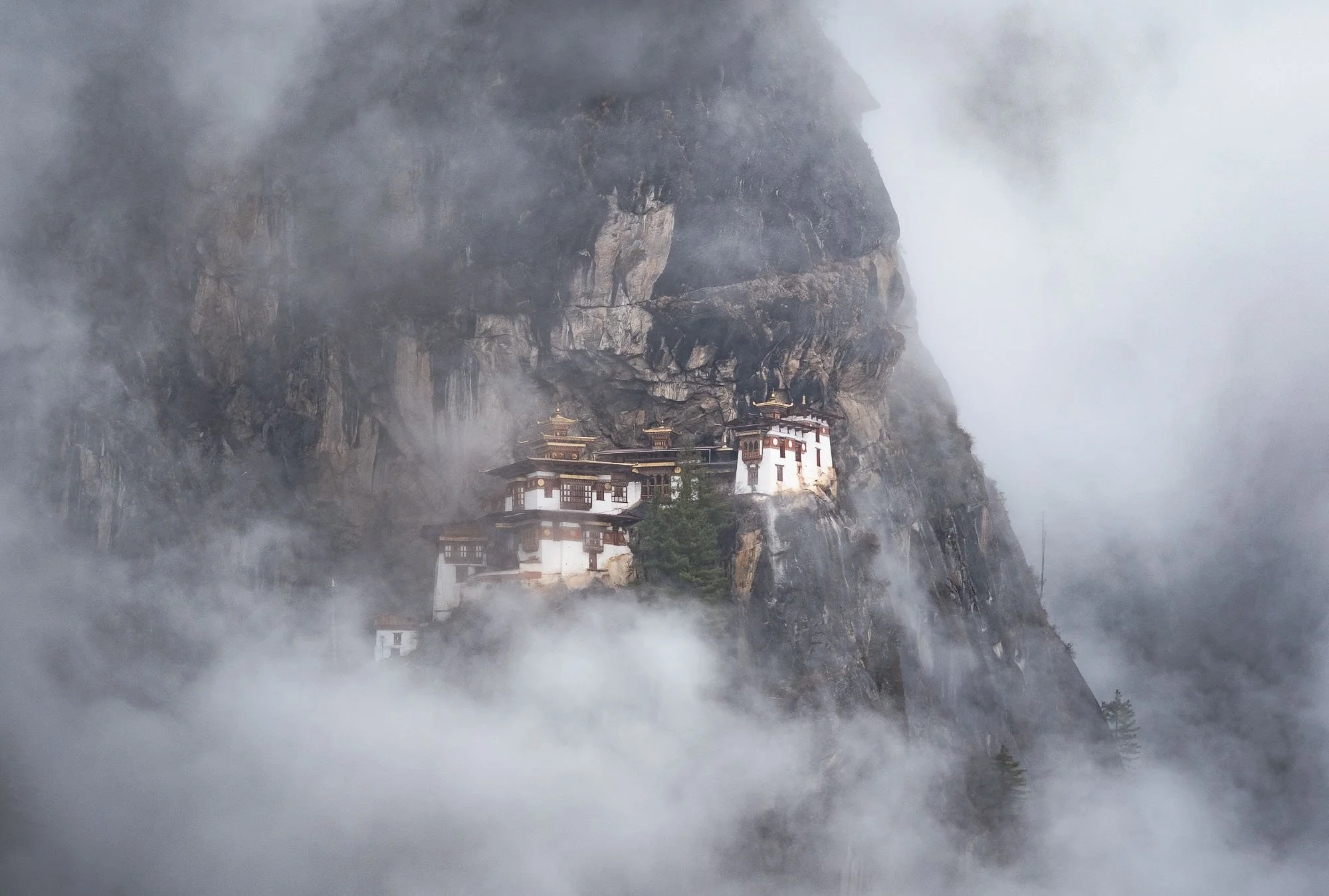
Even though the monastery was was occasionally completely covered in clouds, as is often the case, with a bit of patience conditions that wouldn’t generally be considered ideal produce some of the more intriguing and less common photos - I still want to see it in the snow one day as well though!
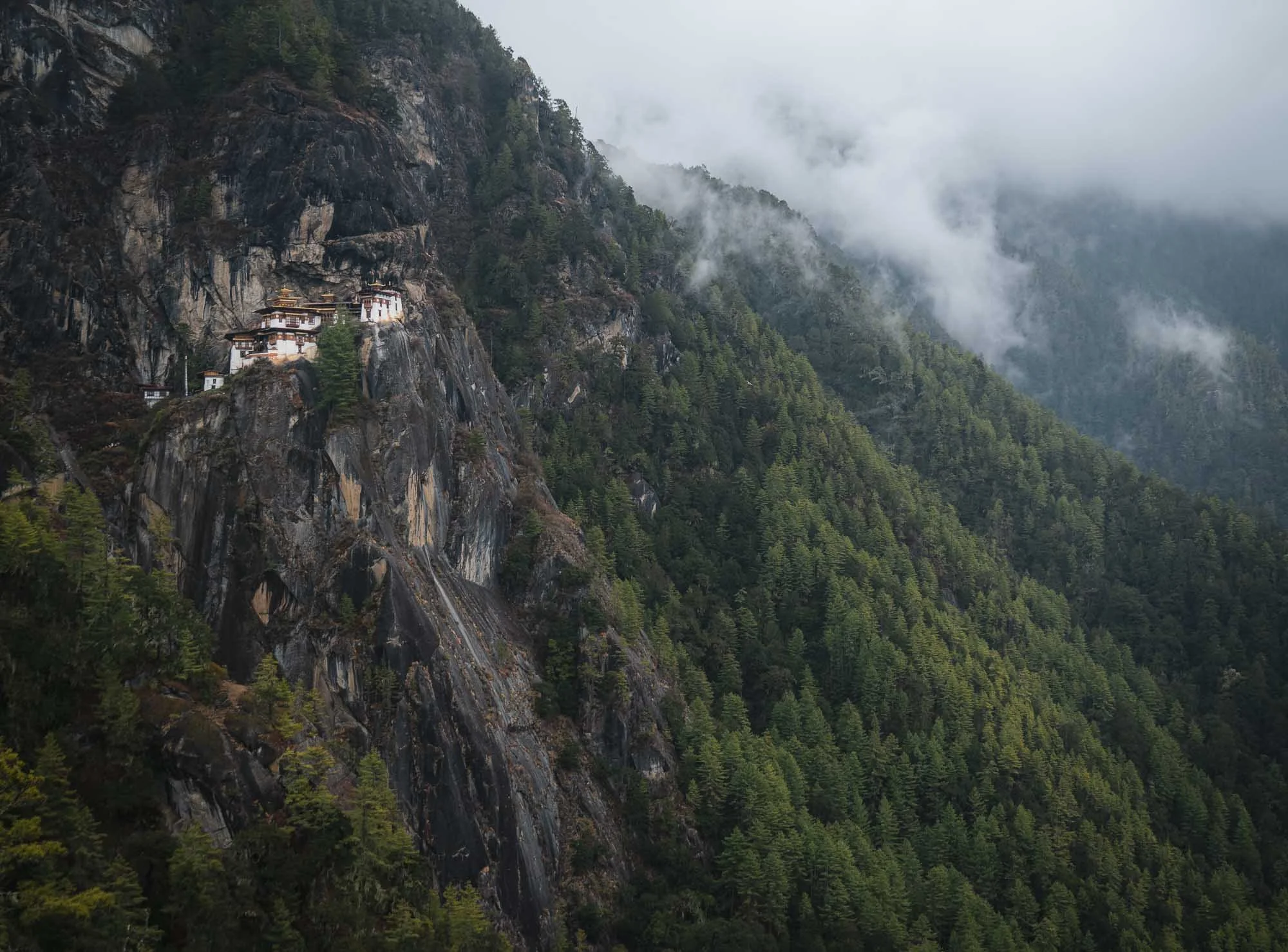
The complex actually consists of several main temples and residential shelters adapted into the rocky terrain. It was restored in 2005 after (you know the story by now) a fire broke out in 1998.
The monastery was originally started more than 300 years ago, and marks the site where Guru Rinpoche is said to have meditated in the 8th century after arriving on the back of a tigress (hence the colloquial term Tiger’s Nest - its actual name is Paro Taktsang), establishing Buddhism in the region. This makes it one of the most important religious sites in the country. Once you arrive, visitors need to lock away their cameras and phones and are searched before entering the interior courtyard and various temples holding some of Bhutan’s most sacred artifacts.
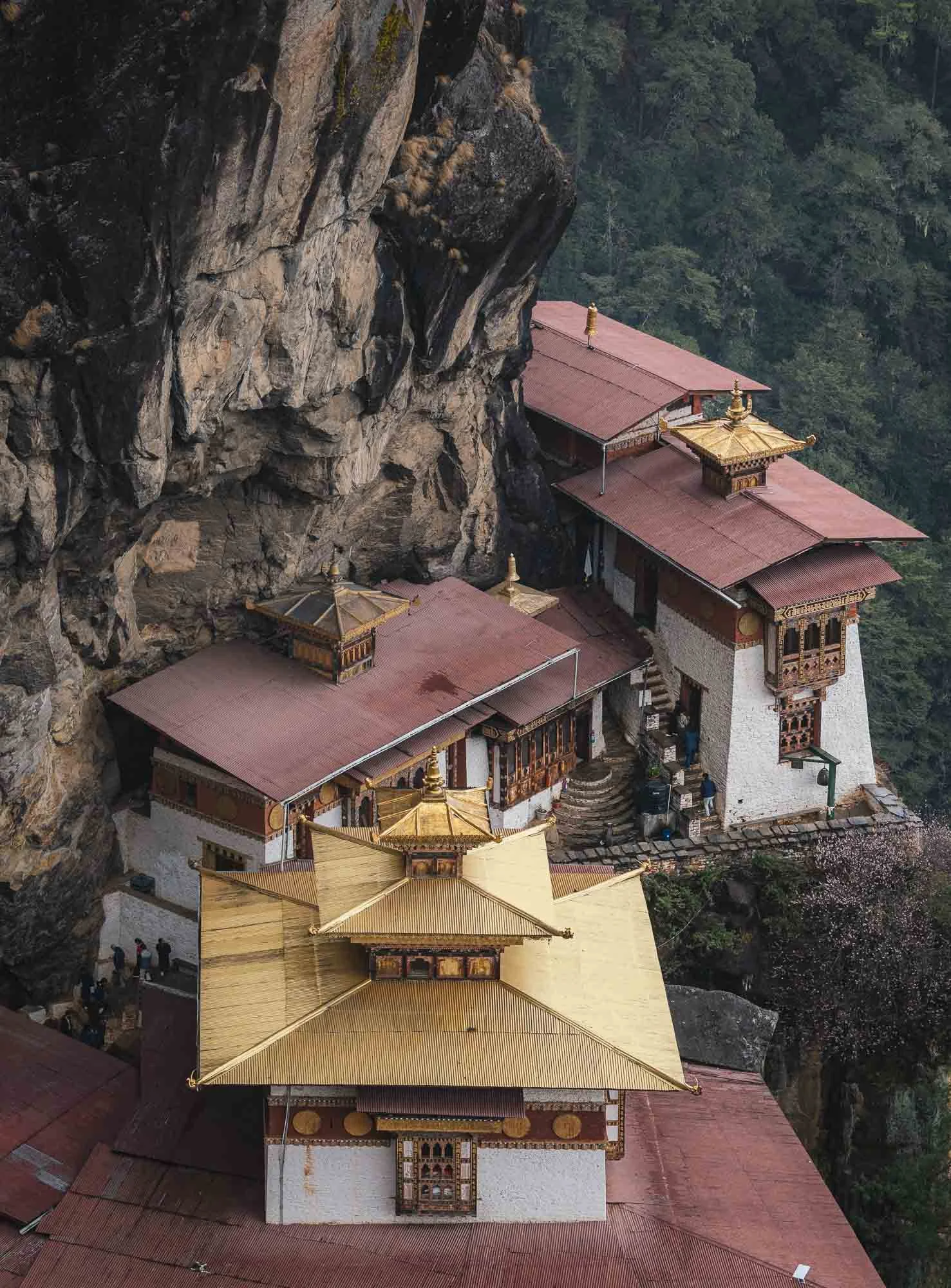
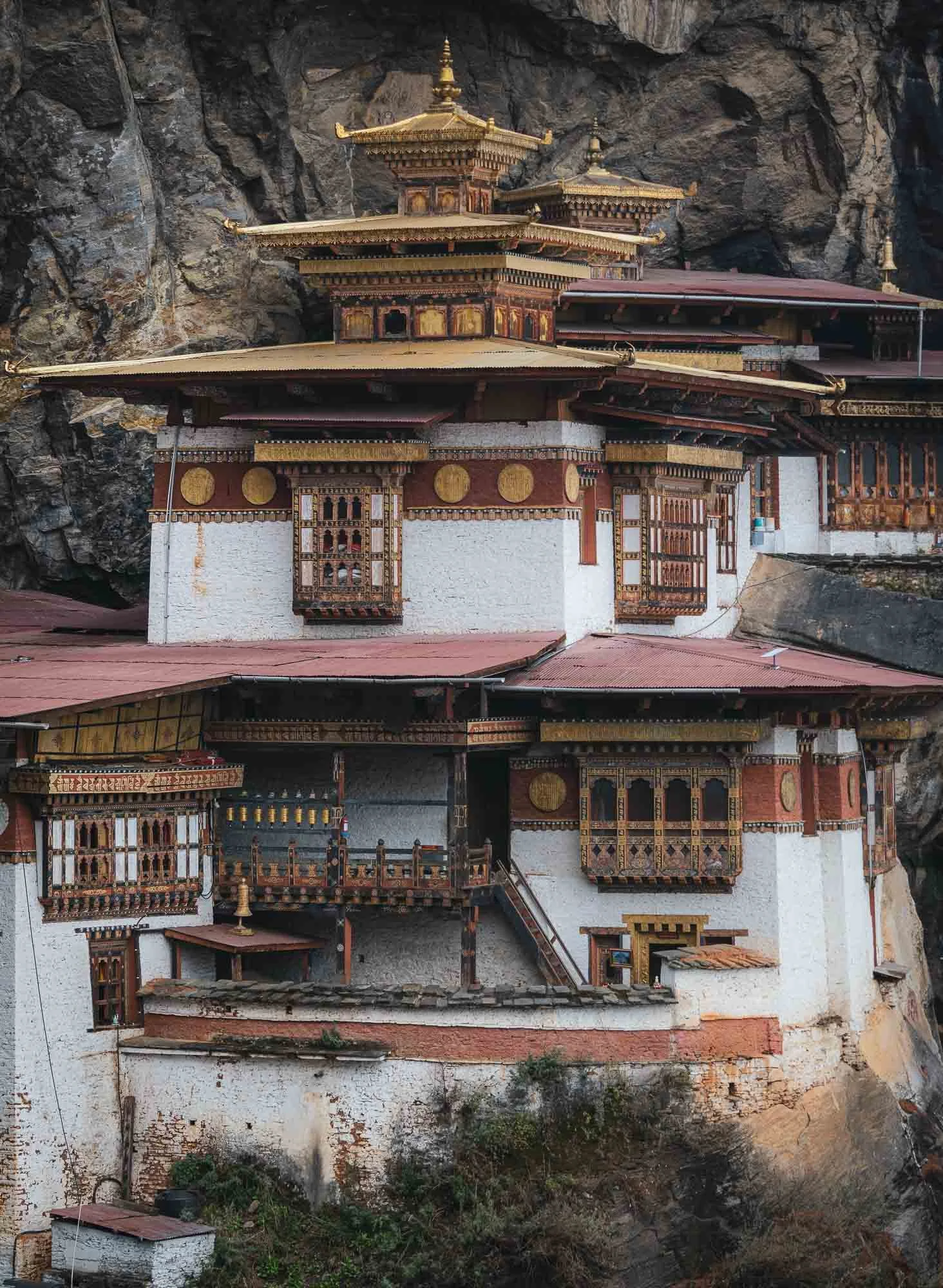
Looking backwards from the monastery you can see the tall waterfalls on the right with a small shrine embedded into the bedrock, and the stairs along the cliffs on the left. My guide told me that when he first came to Tiger’s Nest a few decades ago, accessing it required a bit more questionable climbing than nowadays.
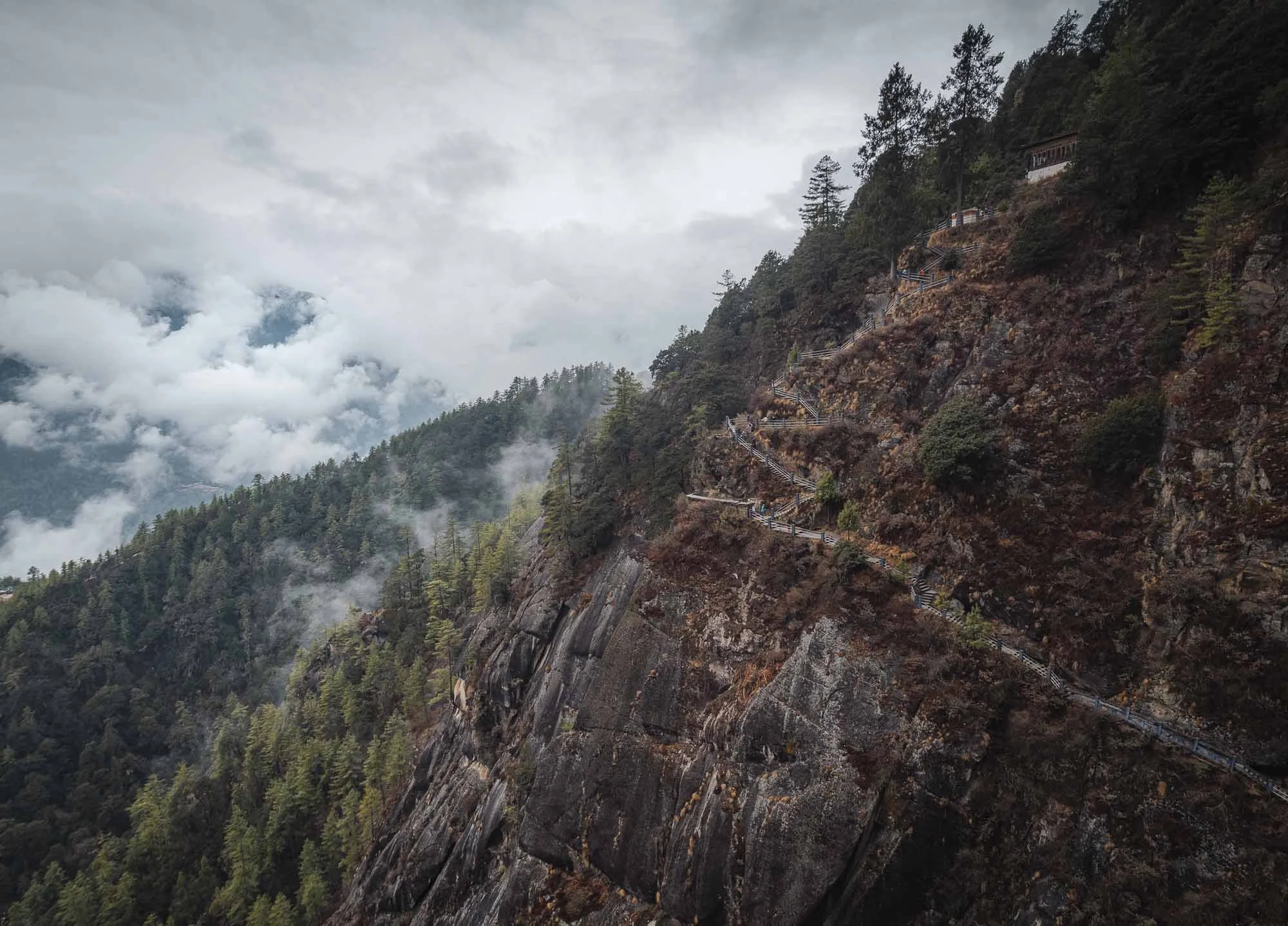
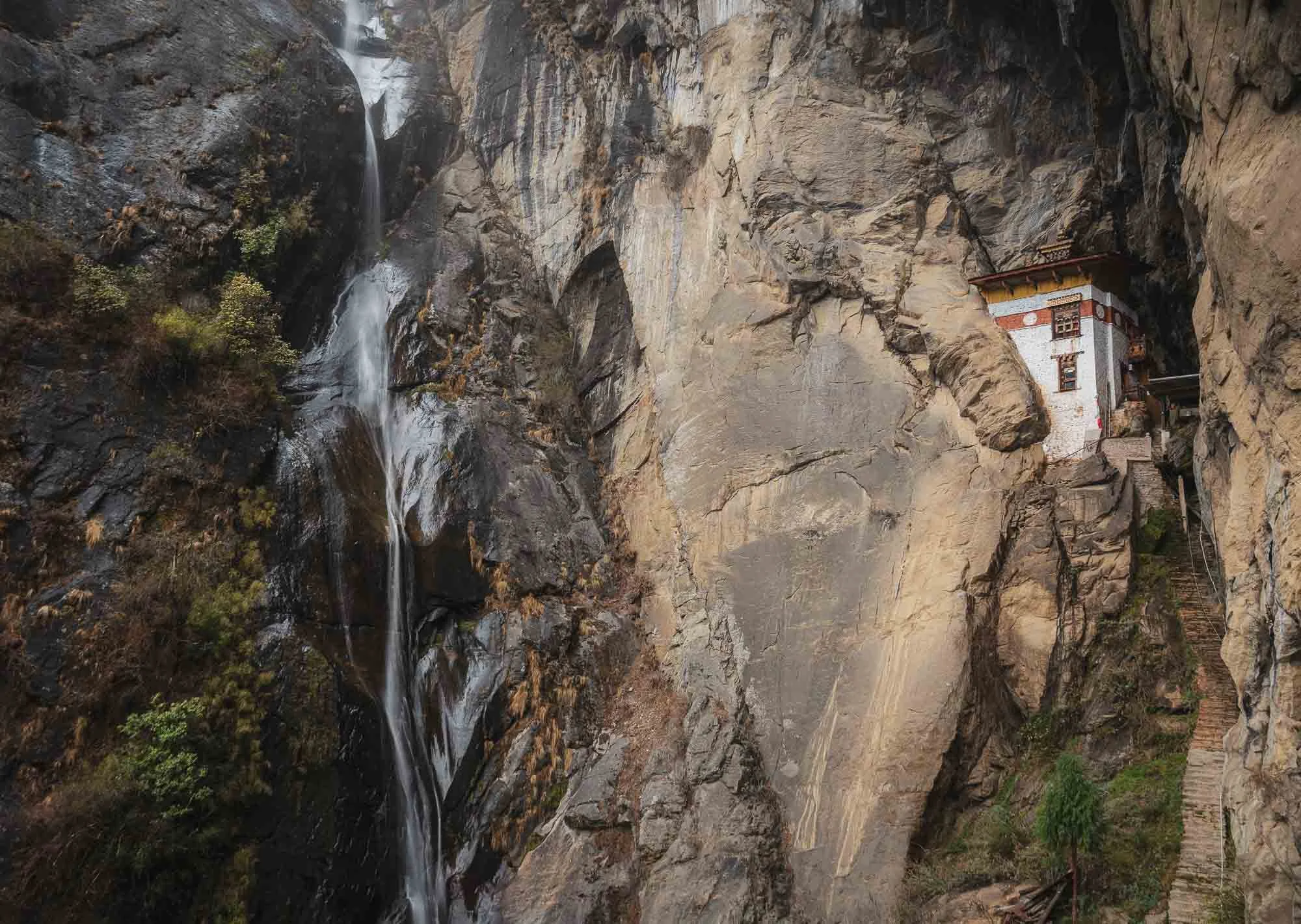
After all those stairs you’d be forgiven for just wanting to head back down, but it’s worth to continue the climb a little higher, where several more important religious spots and temples await.
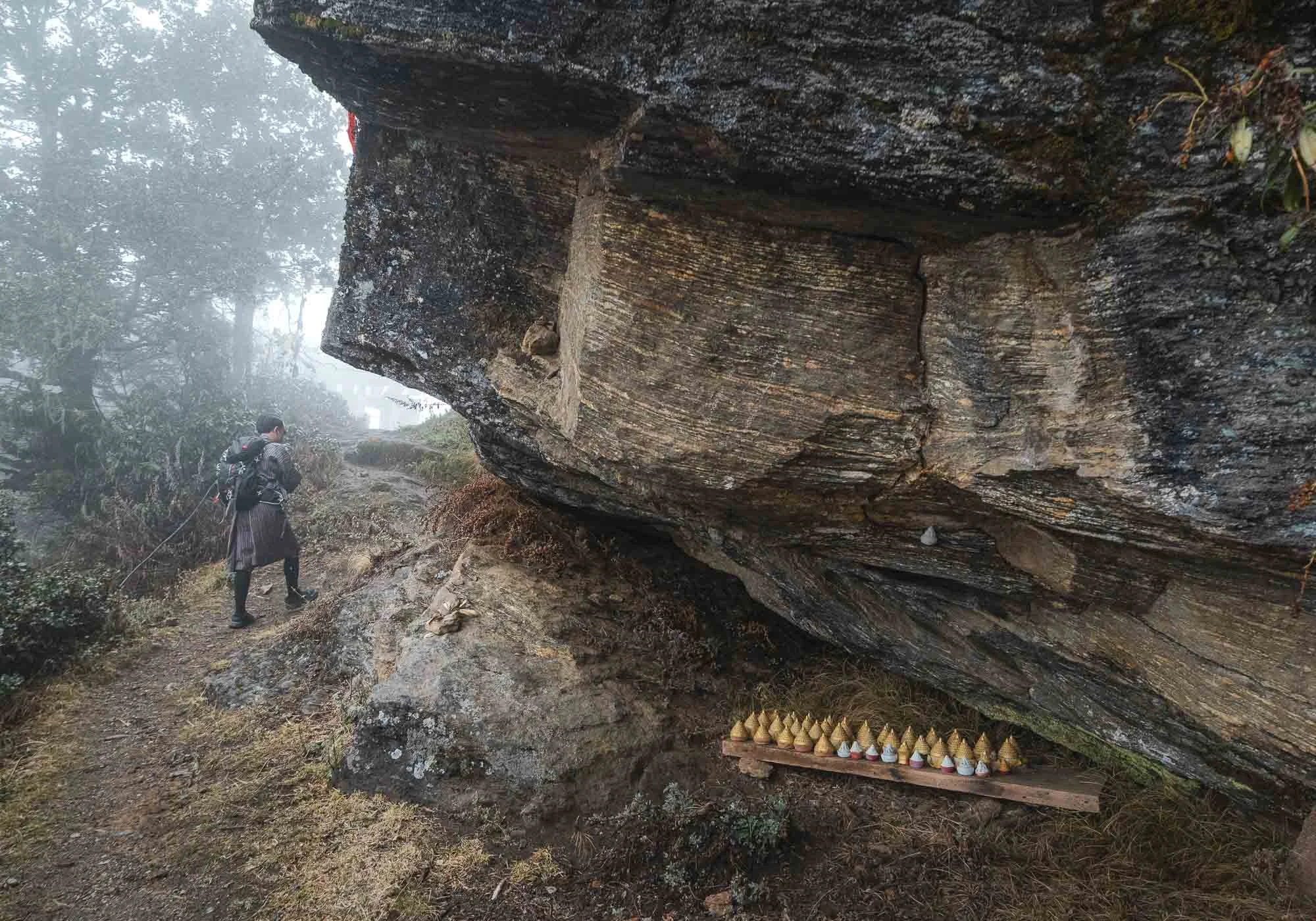
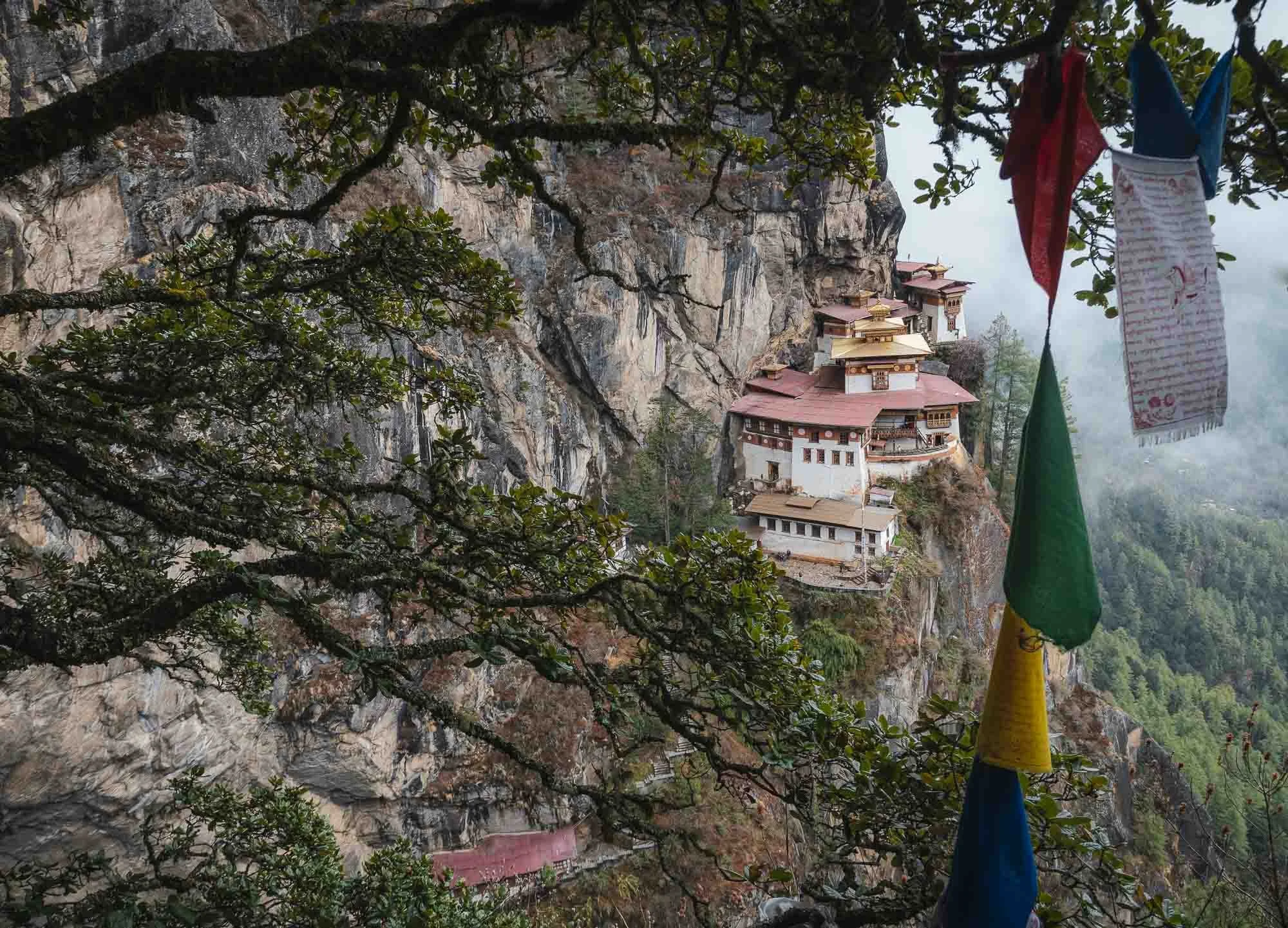
Throughout the entire hike there are several viewpoints along the way if you keep your eyes open - a few more angles below.
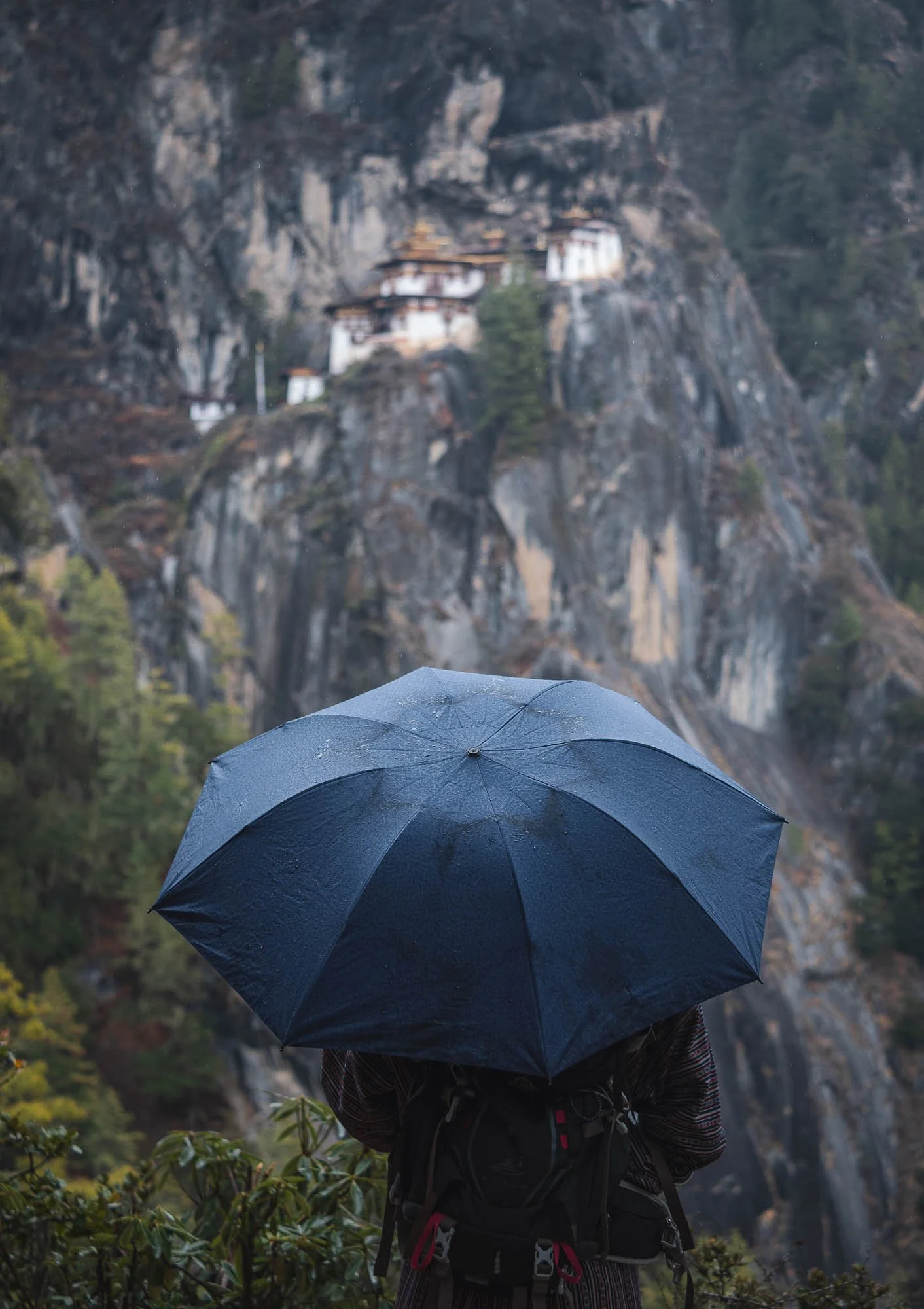
If you look back at the photo from Chele la pass, you’ll see that Tiger’s Nest is not as isolated as it may first seem, in fact it’s accessible from multiple places and surrounded by several more structures featuring the consistent local architectural style.
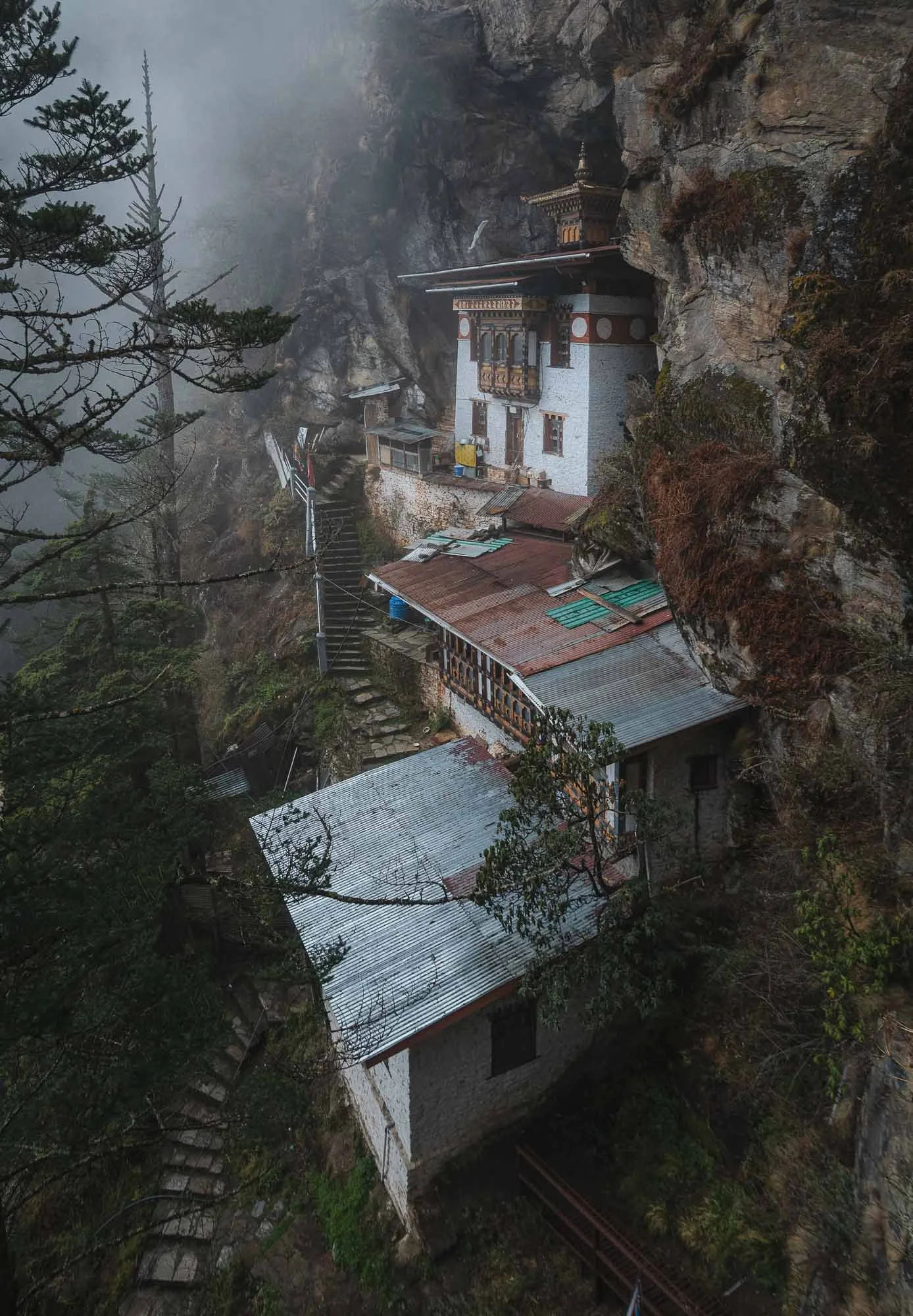
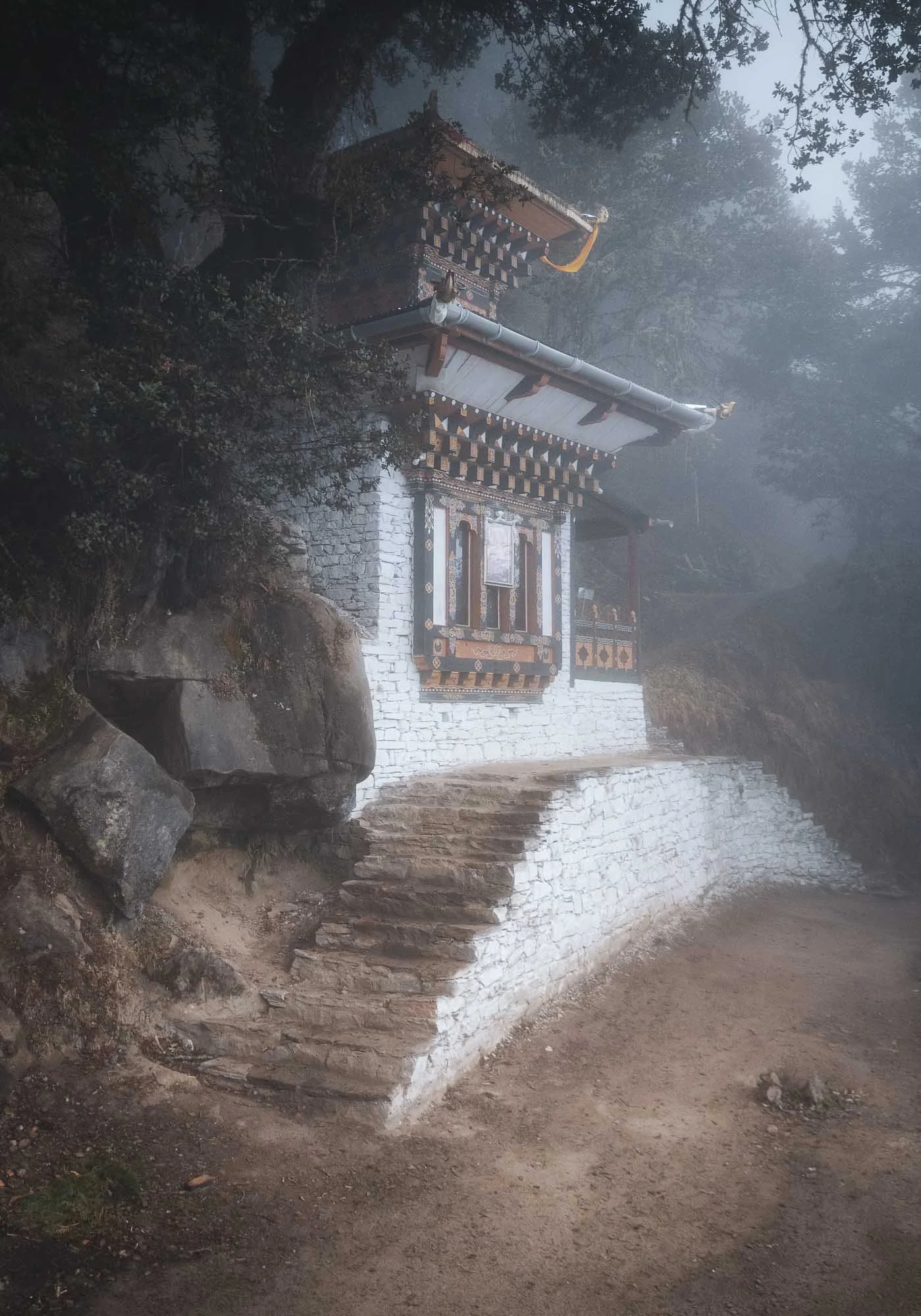
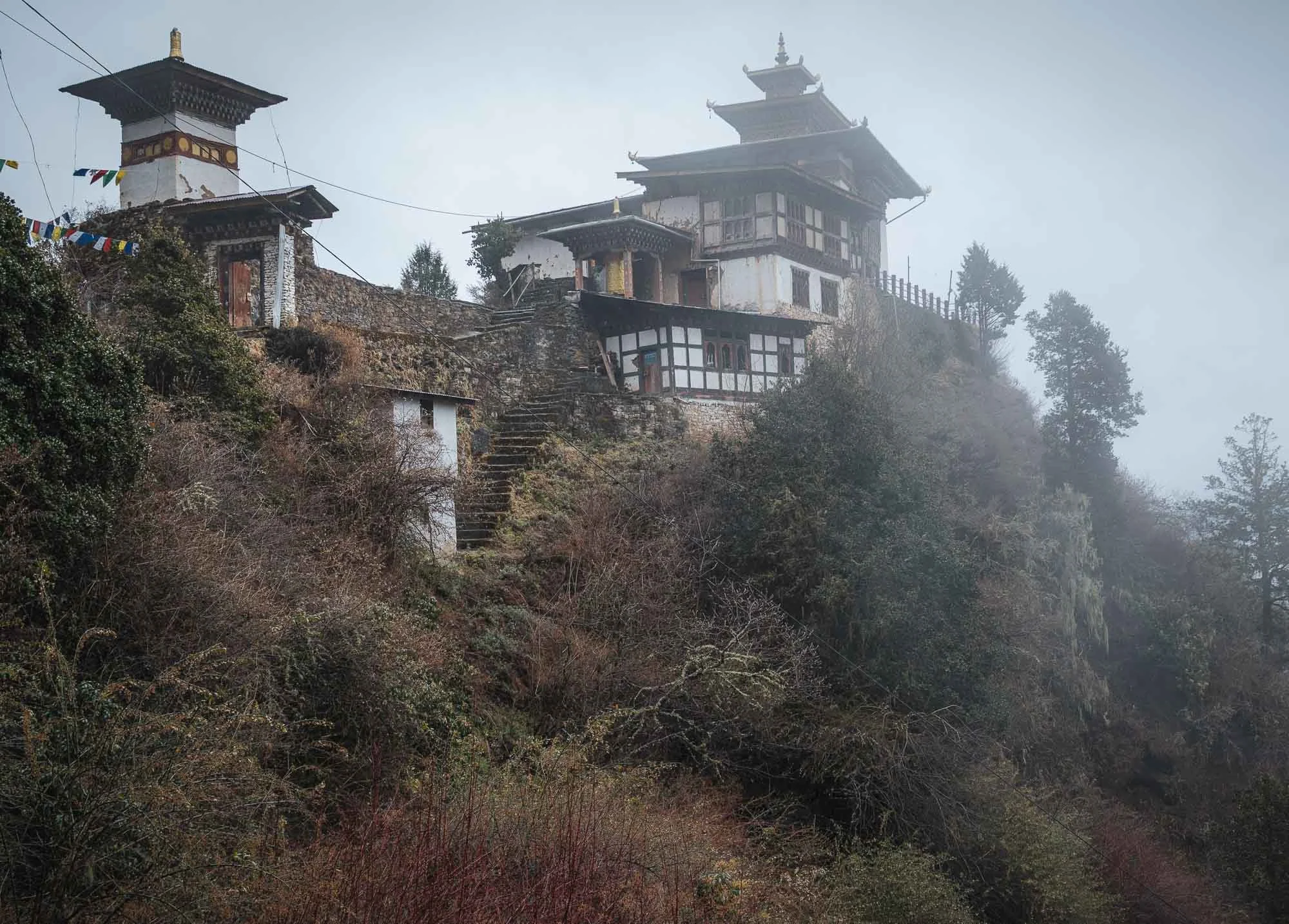
Despite this, not many people seem to make their way further up, possibly because the path is a lot rougher here and features a few questionable metal ladders. We were the only people as we arrived at the Zangdok Pelri temple.
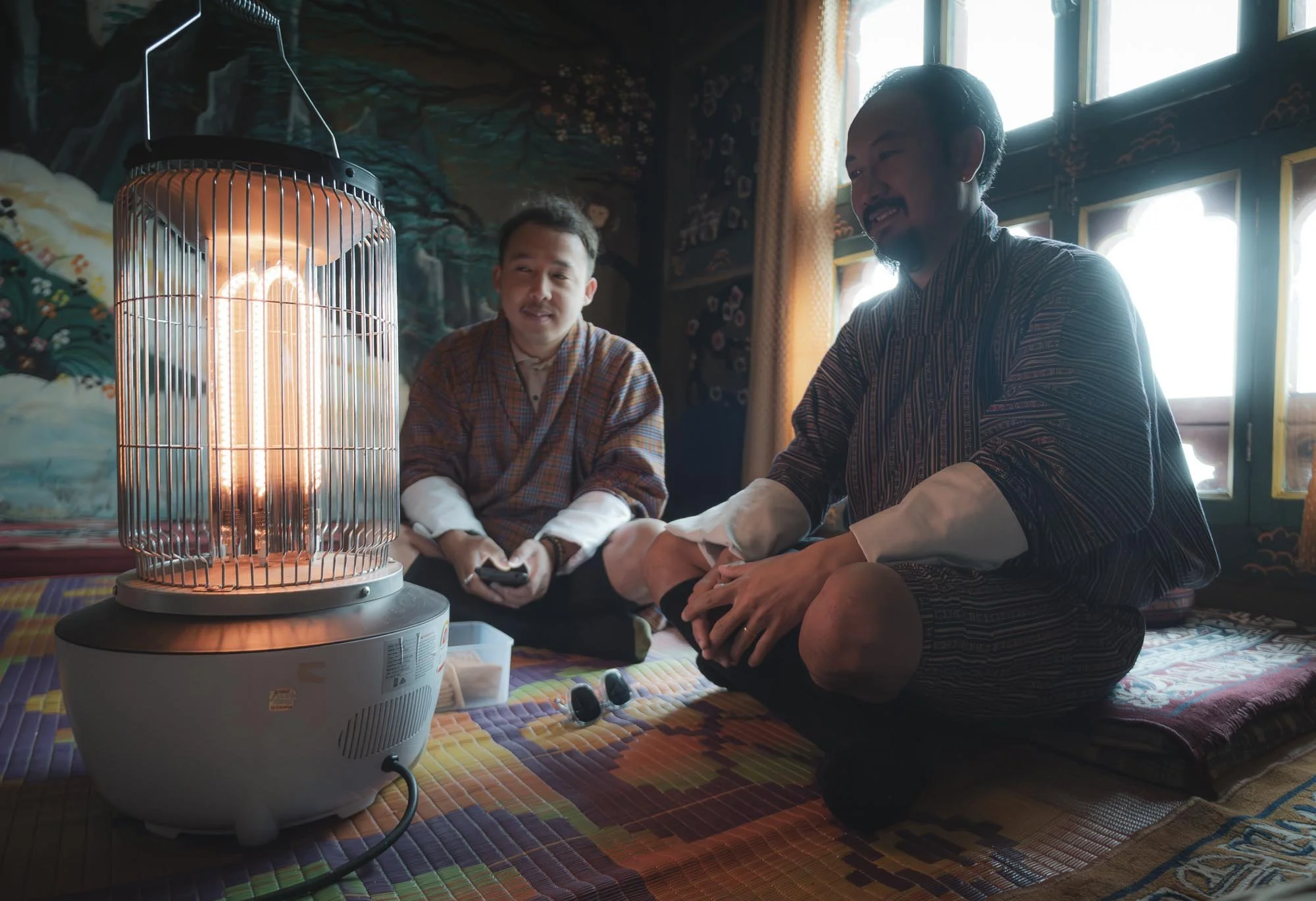
Shortly after, the clouds and some rain caught up with us - luckily the resident lama (a respected monk teacher) who is staying here for several months to perform rituals, let us into his cabin, offering some heat and food that local ladies had brought for him the day before. No chance I could eat it and live to see the next day 🌶️🥵, but Chencho and Nima enjoyed themselves.
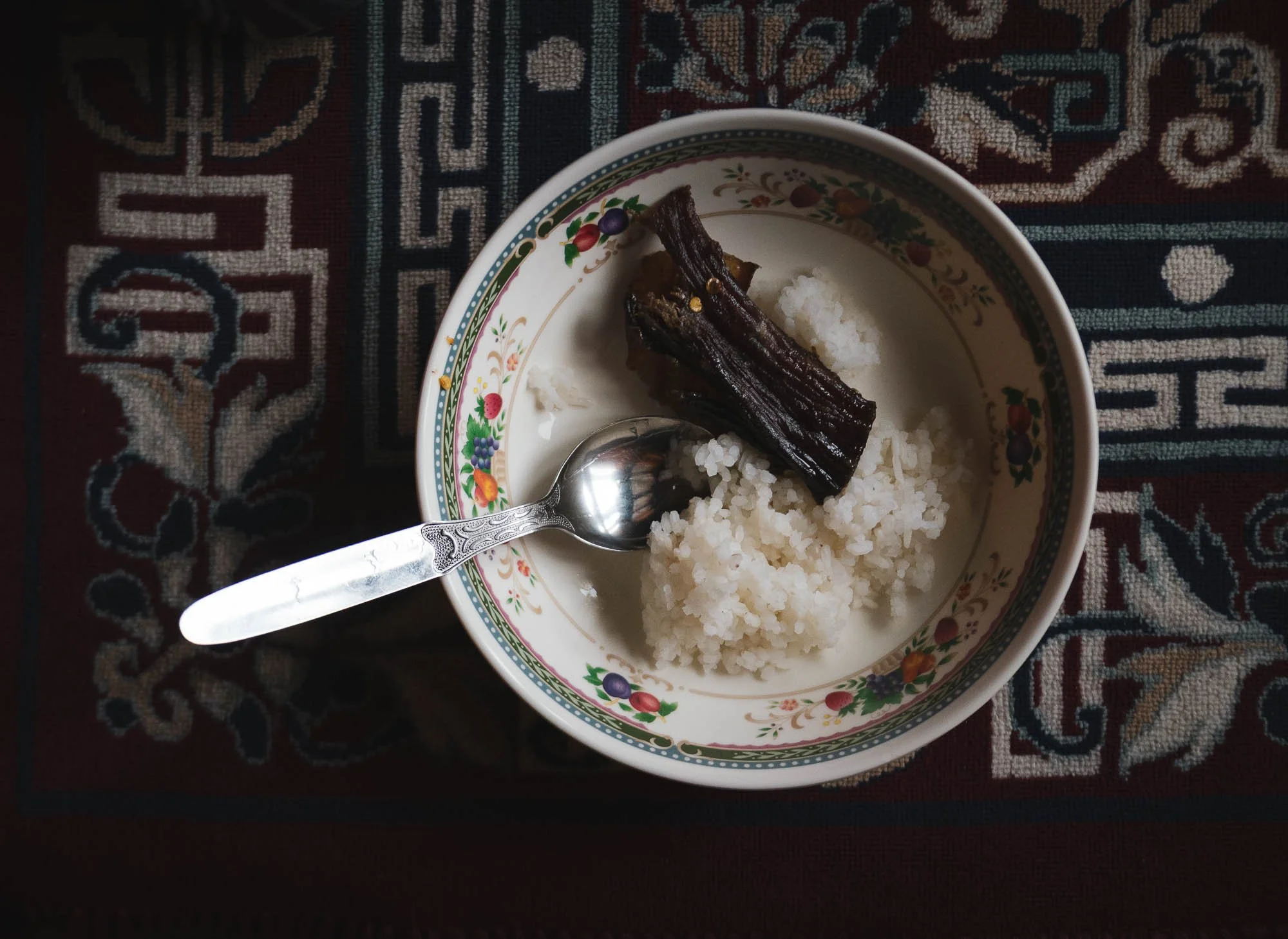
We left shortly after - with quite a few photography breaks and the extra temples beyond the monastery, and lunch at the little cafe on the way down, it took a total of a very worthwhile six hours from start to finish.
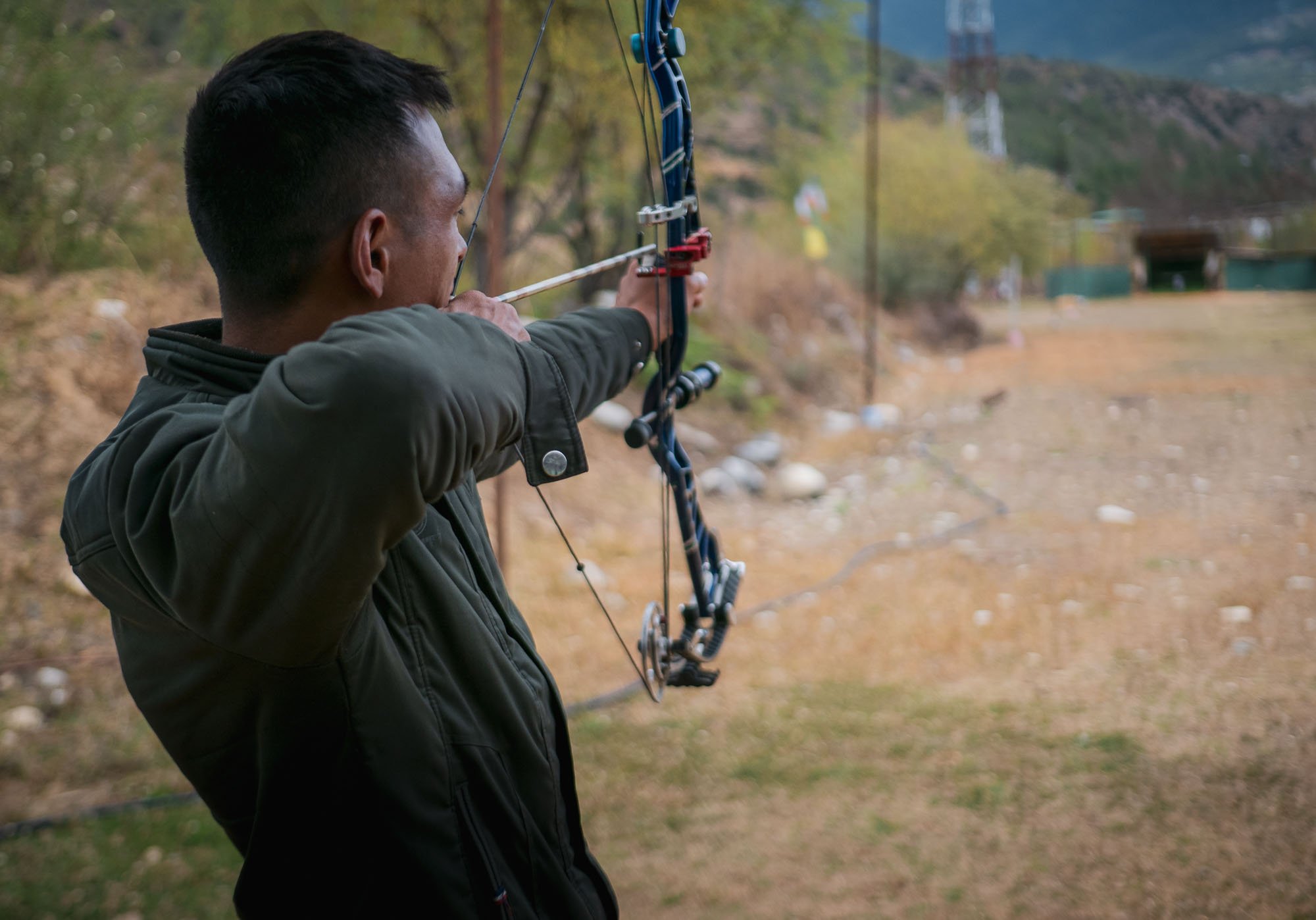
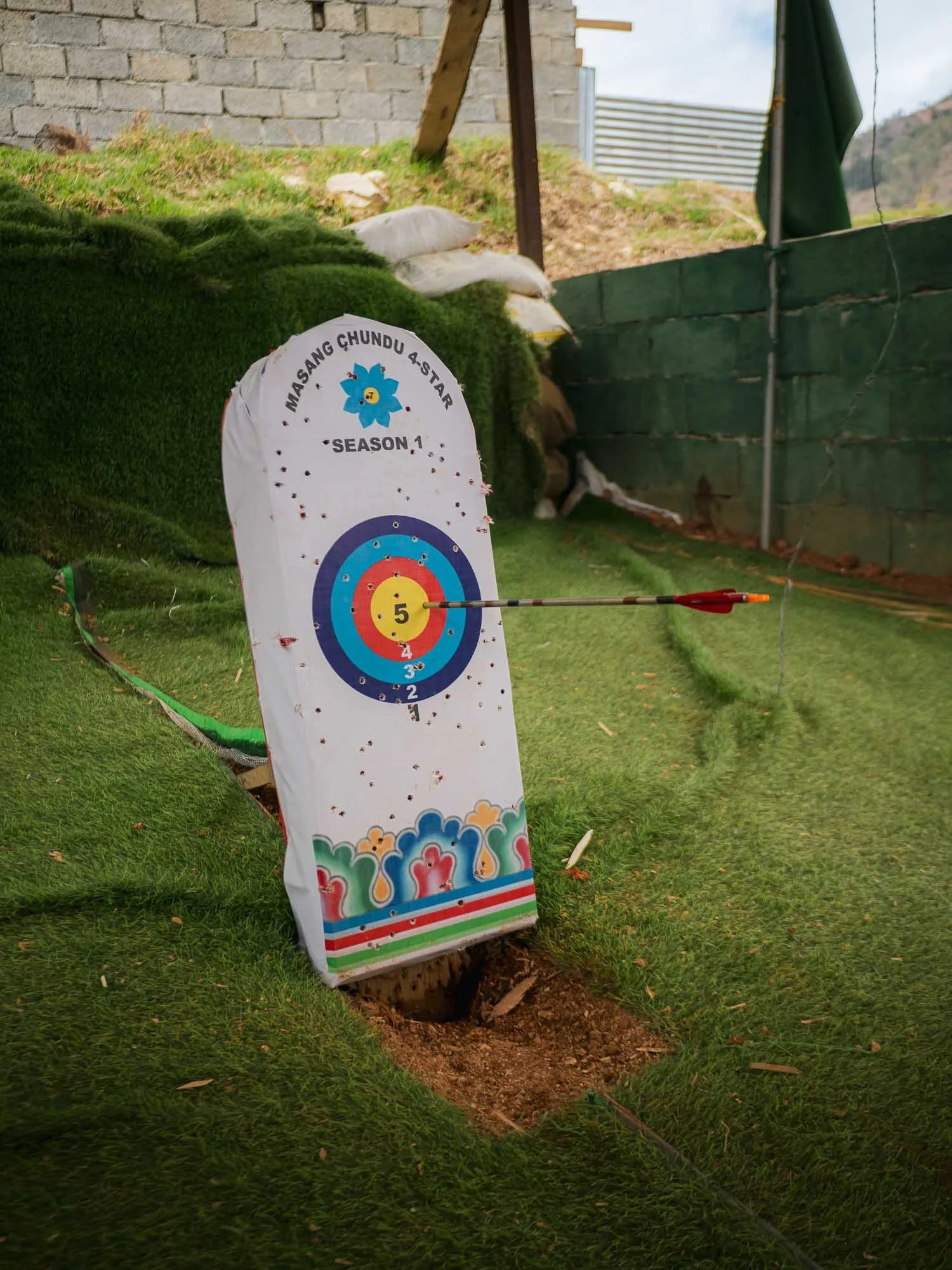
Driving back, we passed a group of people performing Bhutan’s national sport: archery. But here, it comes with a twist. Traditional matches are shot from a distance of about 140-145 meters (!), that’s roughly double the Olympic distance of 70 meters. Not difficult enough? The target is even smaller, with the bullseye being just 6cm in diameter, half of the Olympic version. It’s pretty ridiculous to see this first-hand: on the left picture you can just about make out the white dot in the centre of the little wooden structure in the distance - that’s what the rings are printed on.
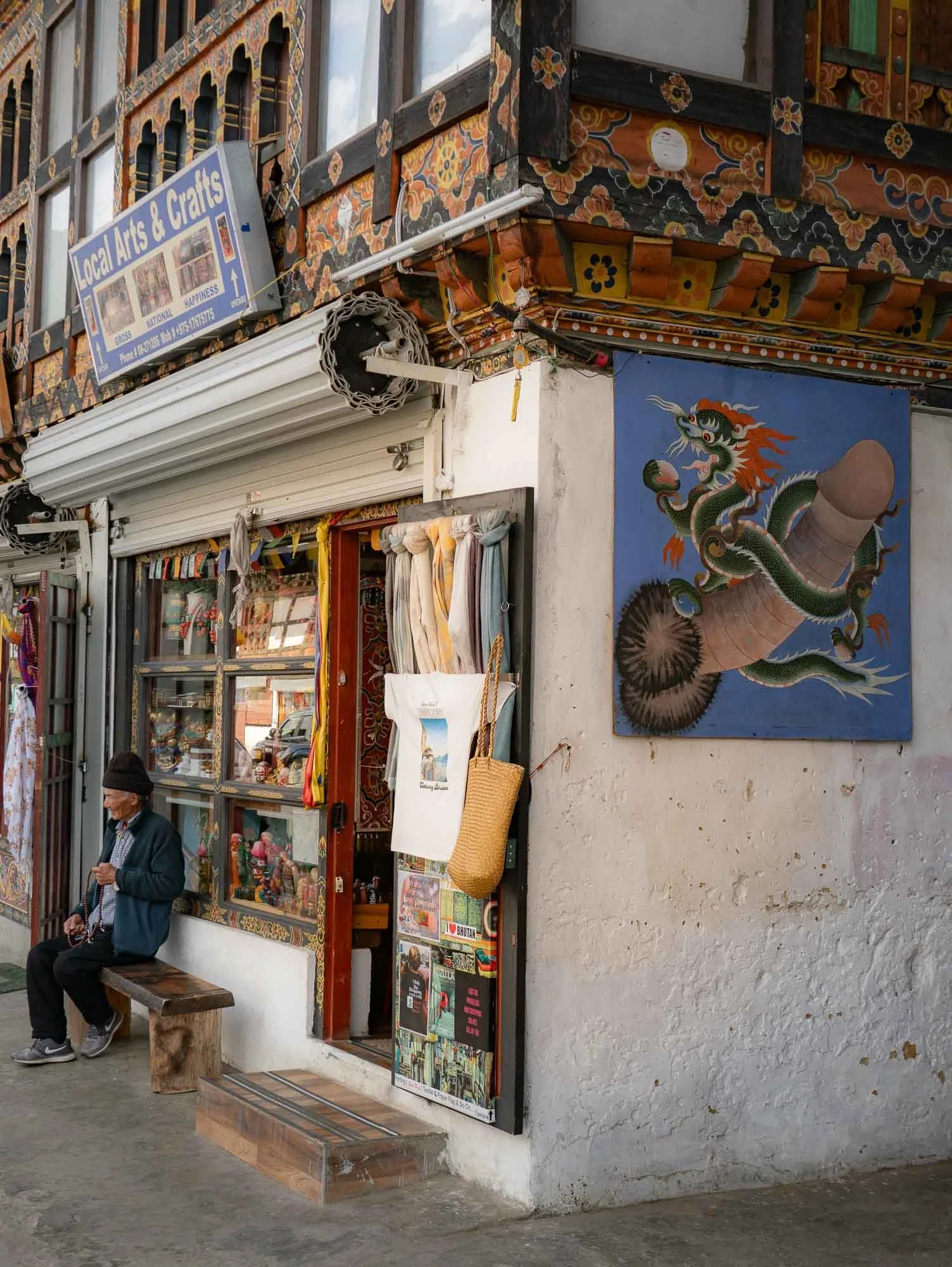
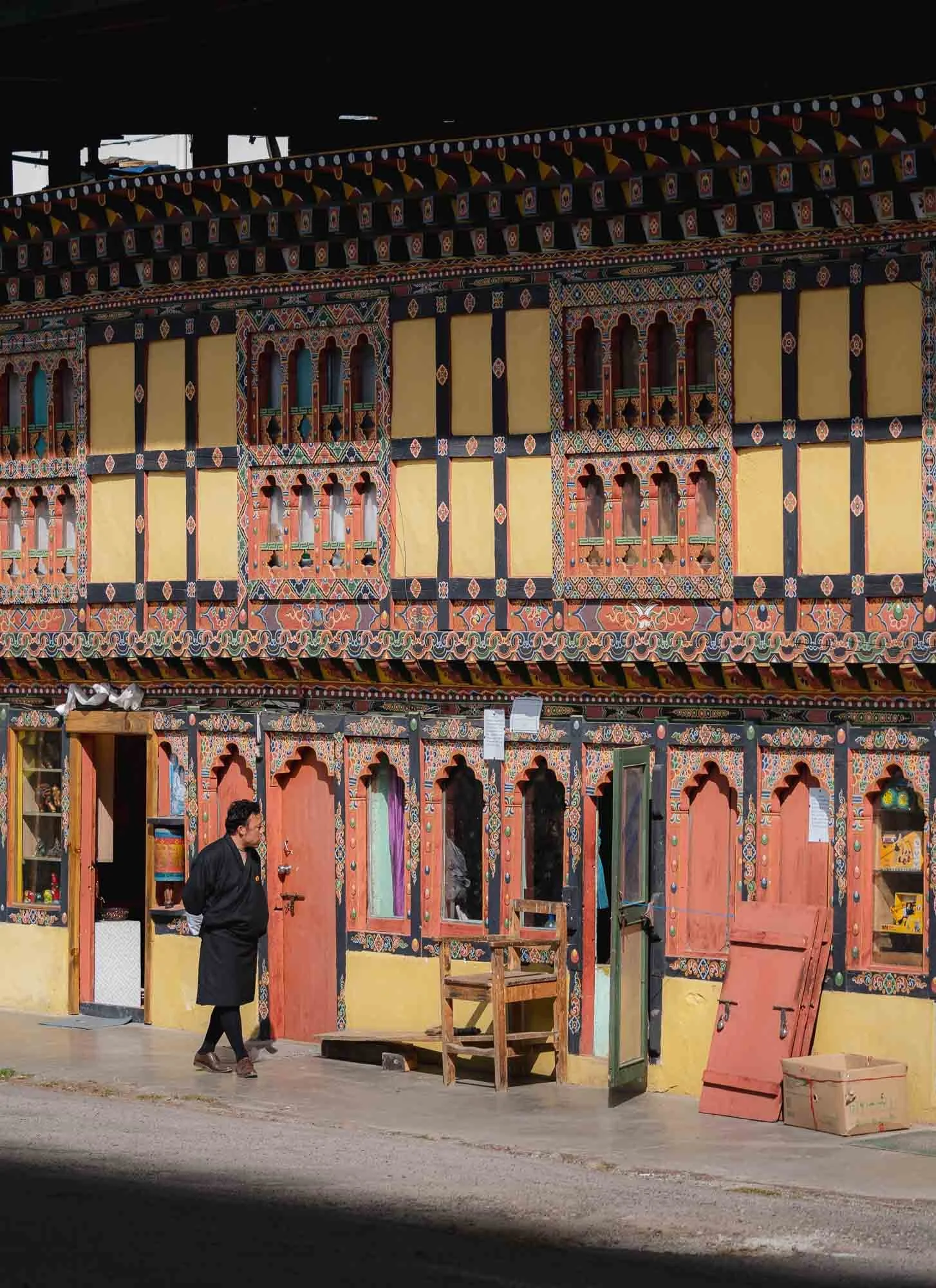
I also took a short walk through Paro - as the primary gateway into the country it’s relatively touristic, but the main street is still interesting and features the traditional architecture and symbolism, albeit mostly housing touristic shops and restaurants or cafes.
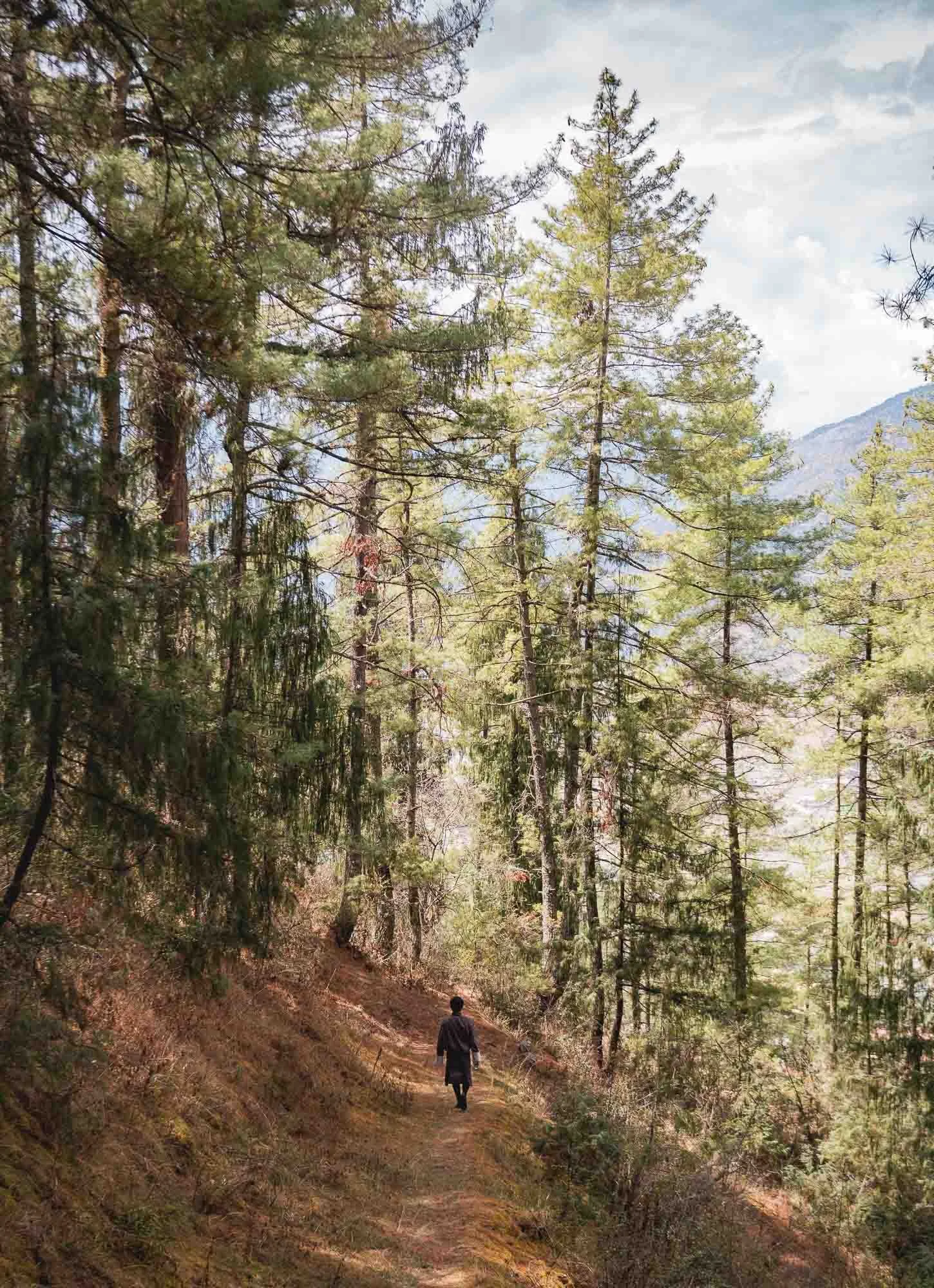
Another small hike followed through the woodlands around the city - Chencho grew up just around the corner of the Dzong, often roaming between the tall Himalayan Cypress - Bhutan’s national tree.
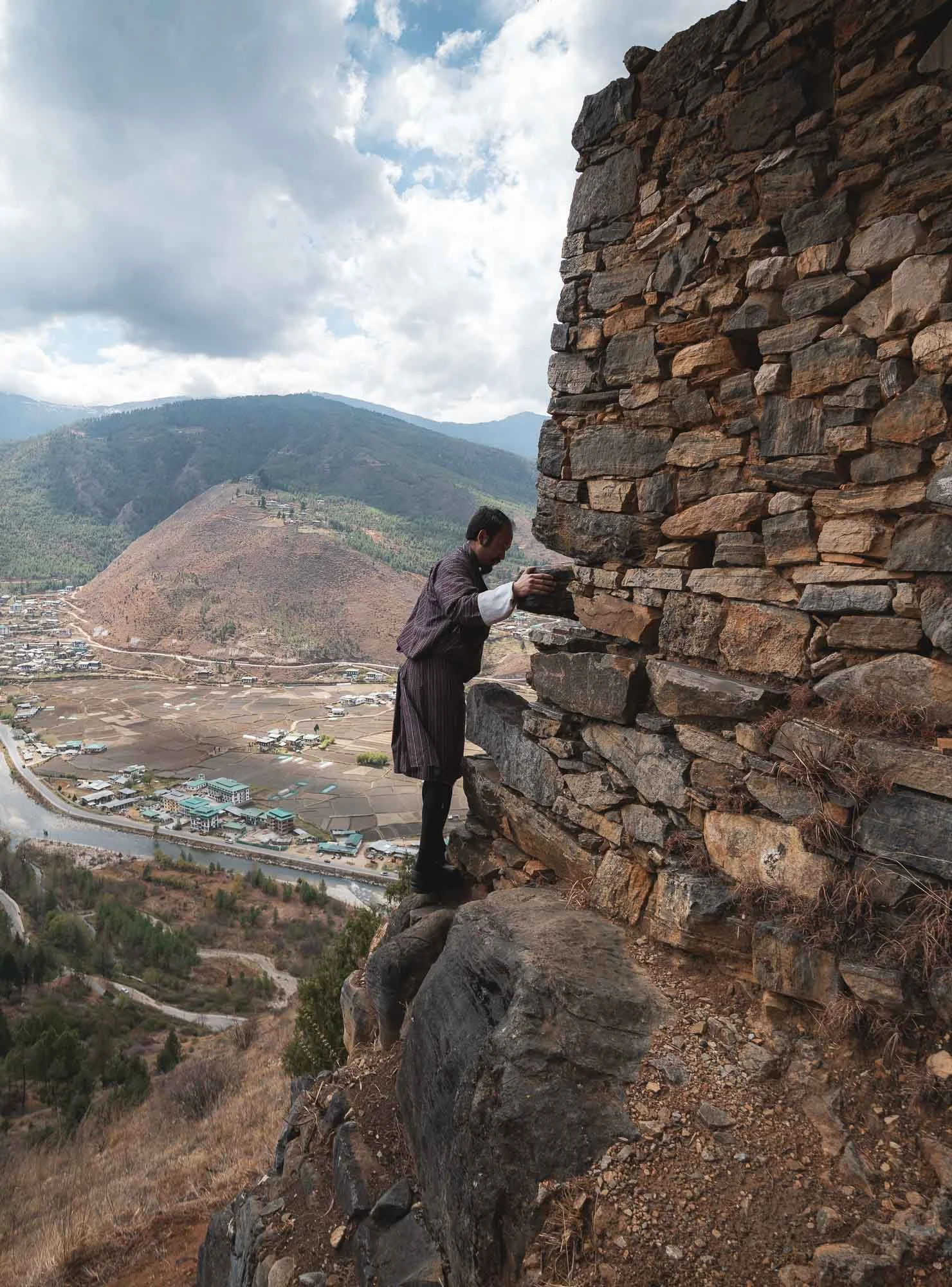
The leisurely path led to one of the oldest surviving forts in the country, said to date back to 1352, but now seemingly a mostly abandoned relic.
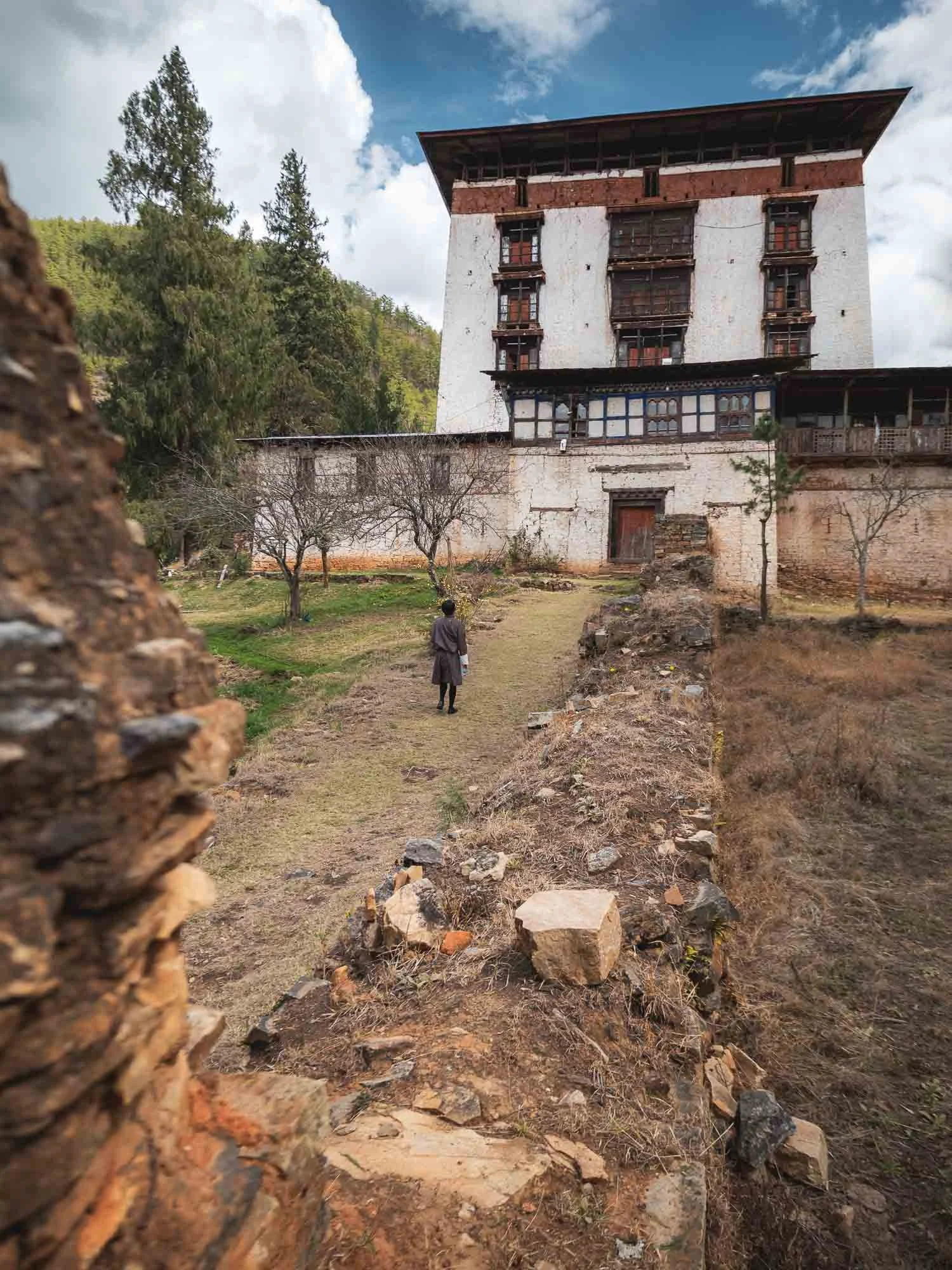
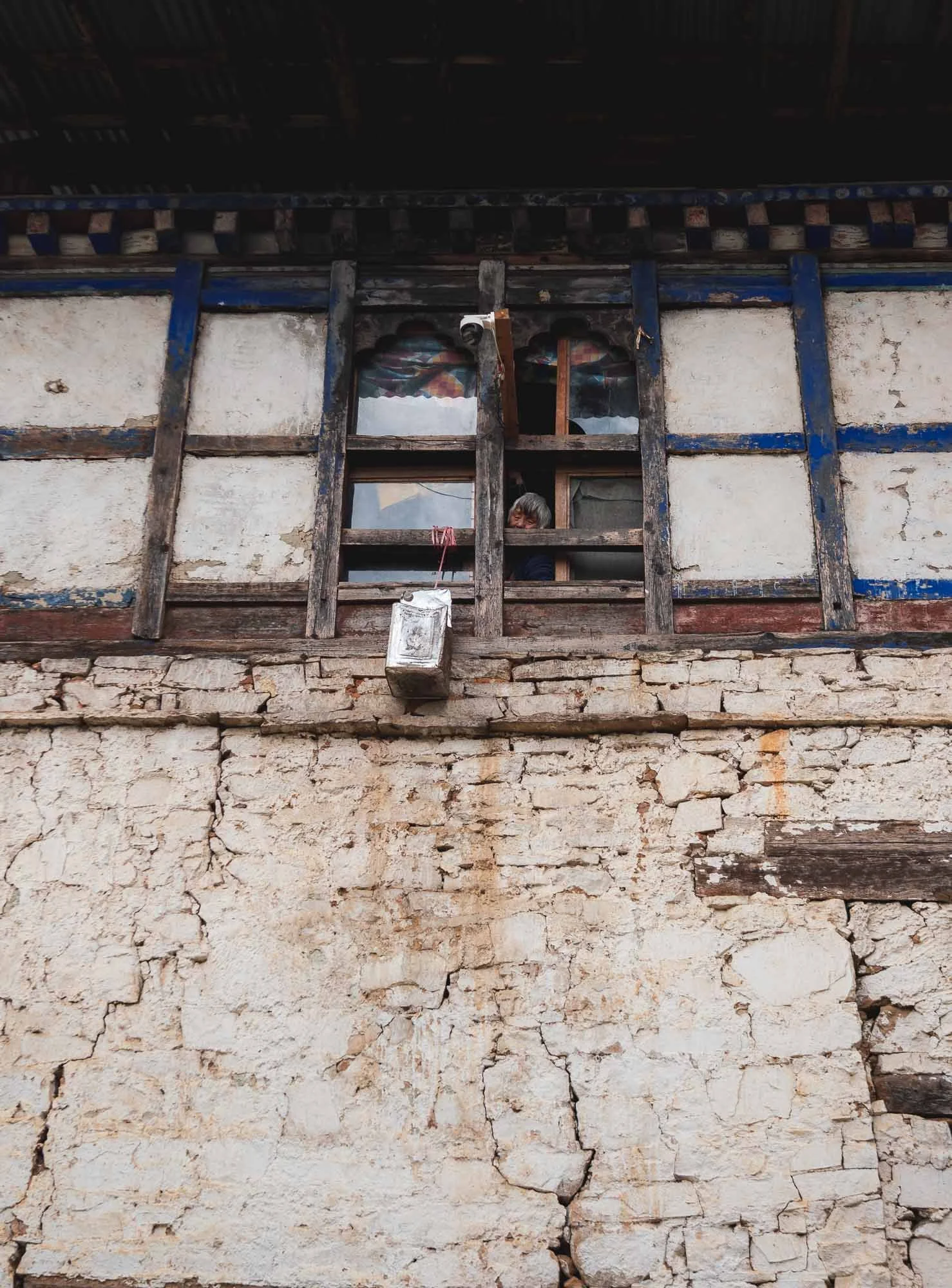
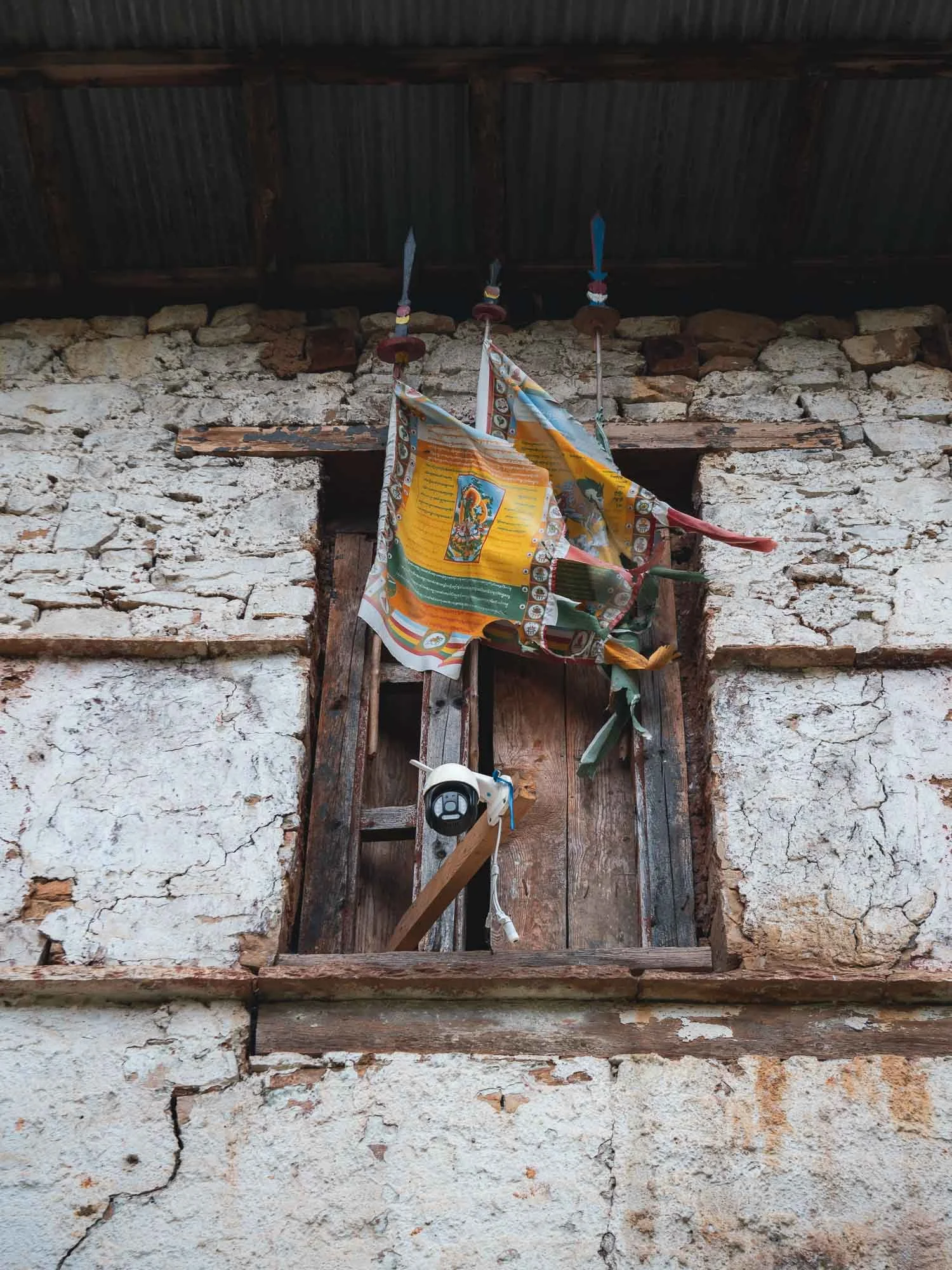
That’s not to say it is unoccupied. As we approached, I noticed a high pitched sound emanating from the building, and realised it was a motion activated camera that alerted an older lady of visitors. She promptly looked out the window to greet us but sadly the fort is not open to the public.
The Paro Tshechu
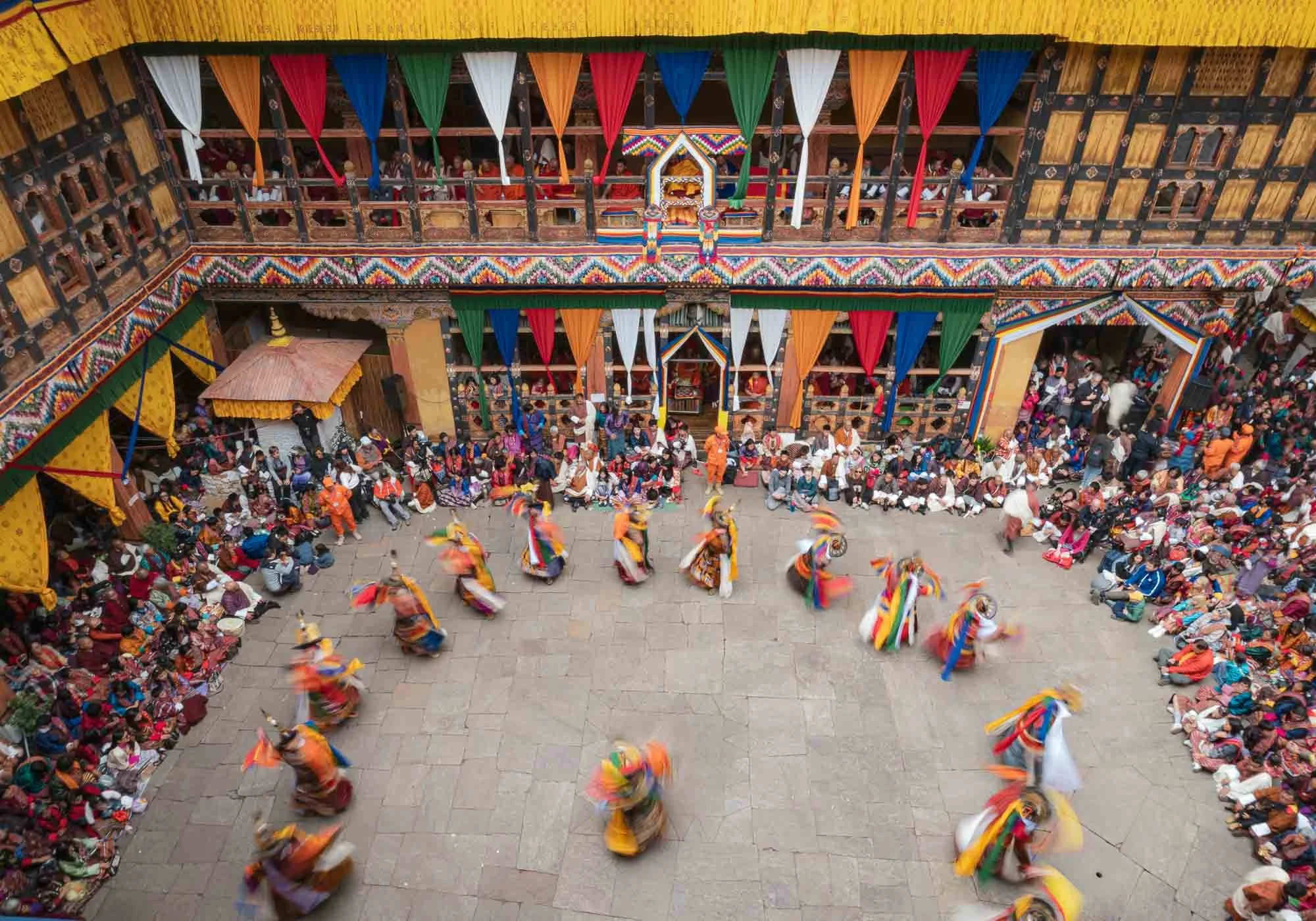
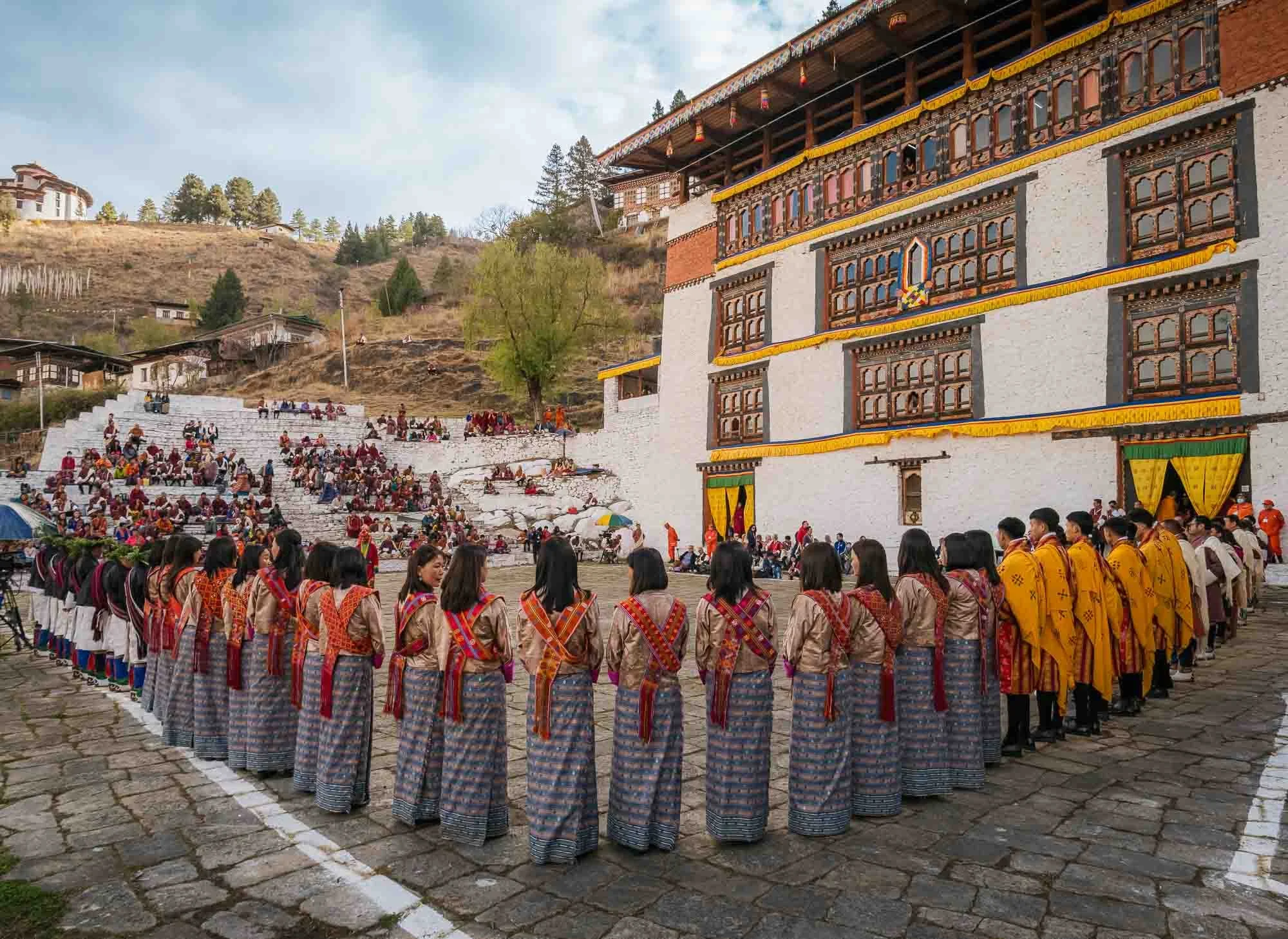
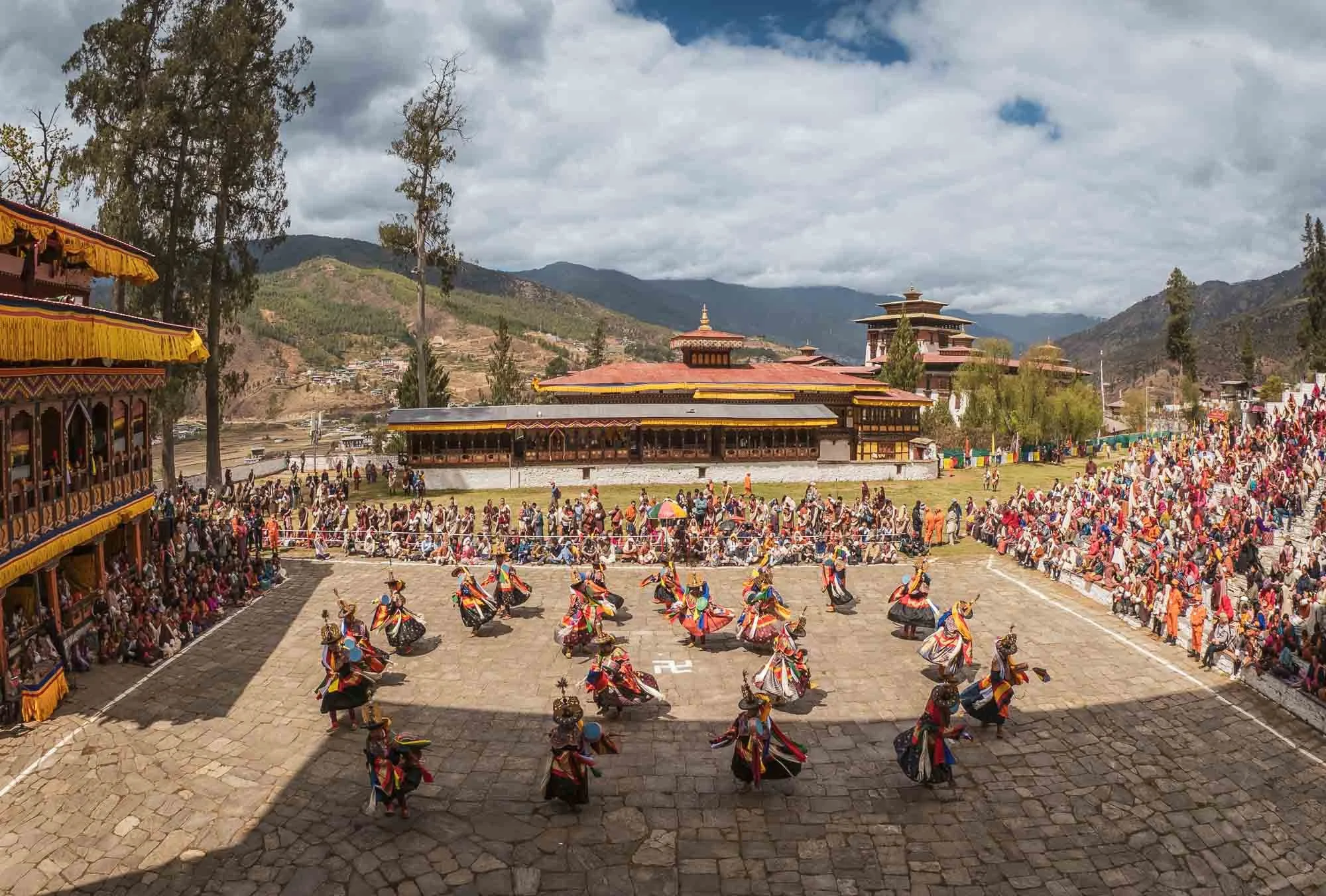
But aside from the Tiger’s Nest, there was a second main reason to spend a few days here, particularly in late March: over five days, the city is home to one of the most important and largest Tshechu (10th day in lunar calendar marker) festivals in Bhutan. It serves to generate merit and transmit the teachings of Guru Rinpoche through sacred dances, traditional music, and historic costumes. Its first day takes place inside Paro Dzong.
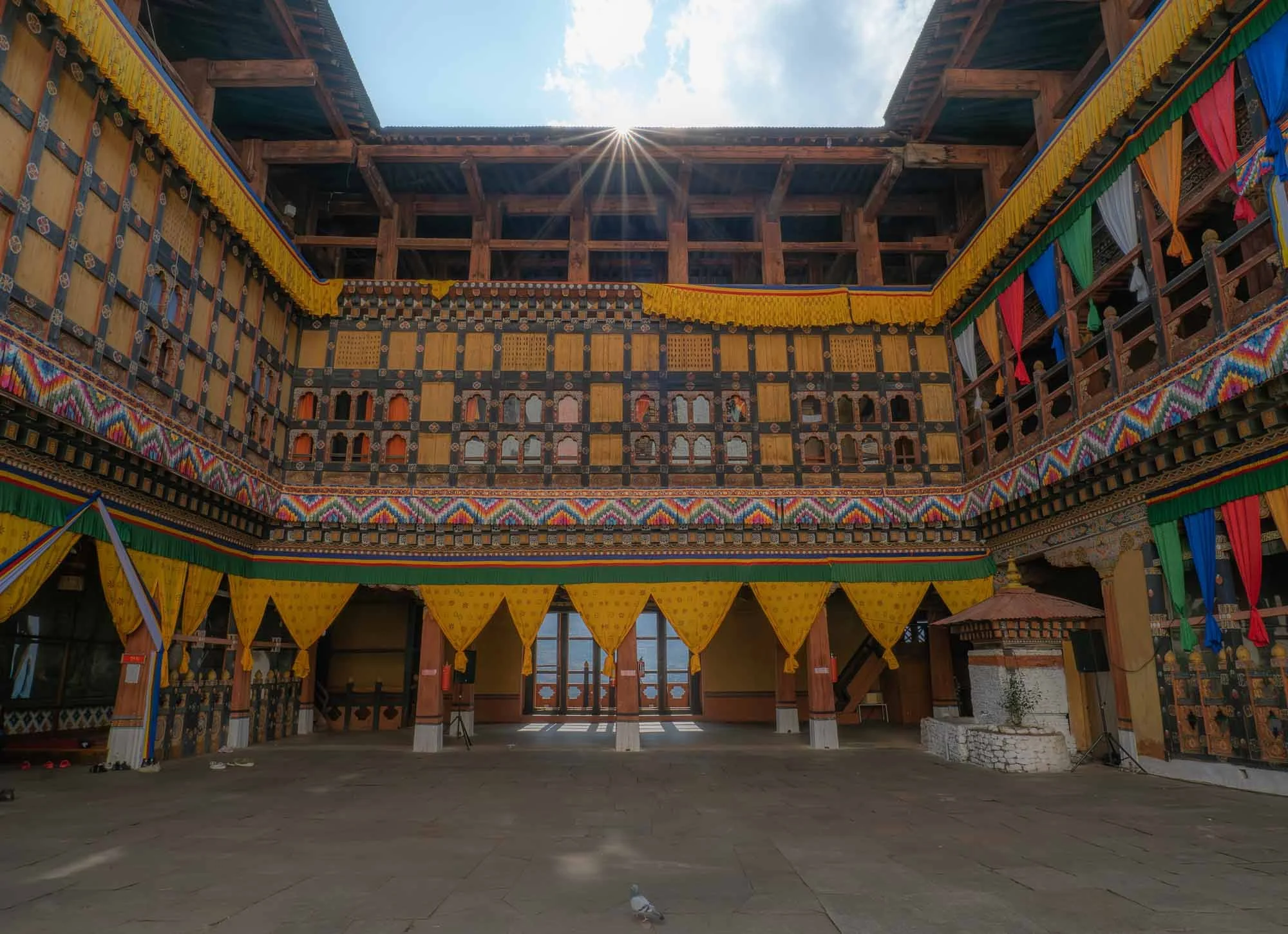
I visited the day before the festival for a quiet moment where the only other visitor was this pigeon, but the colorful decoration (and a few last minute dancing and singing practice) gave away that things were to become a lot more crowded soon.
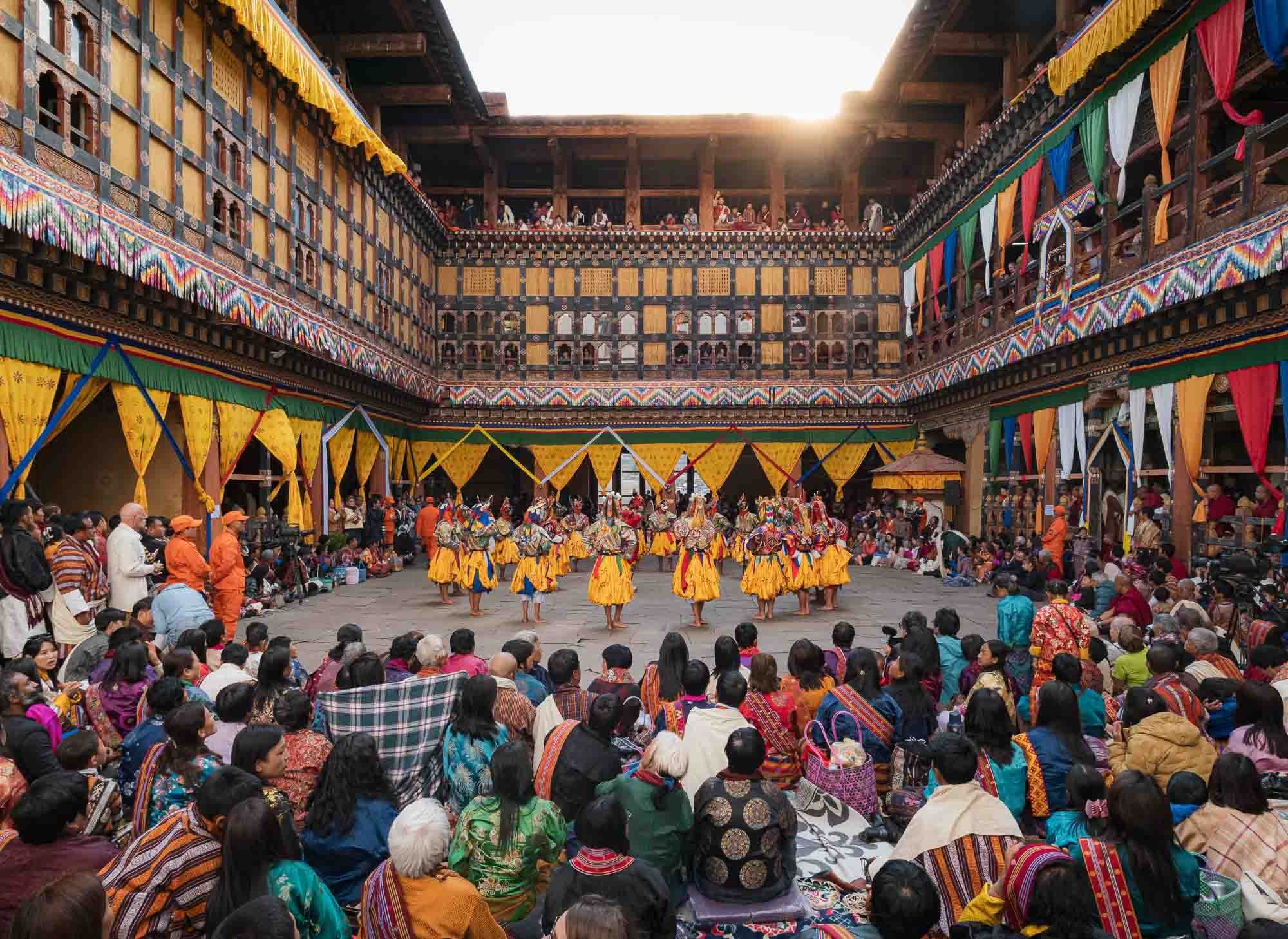
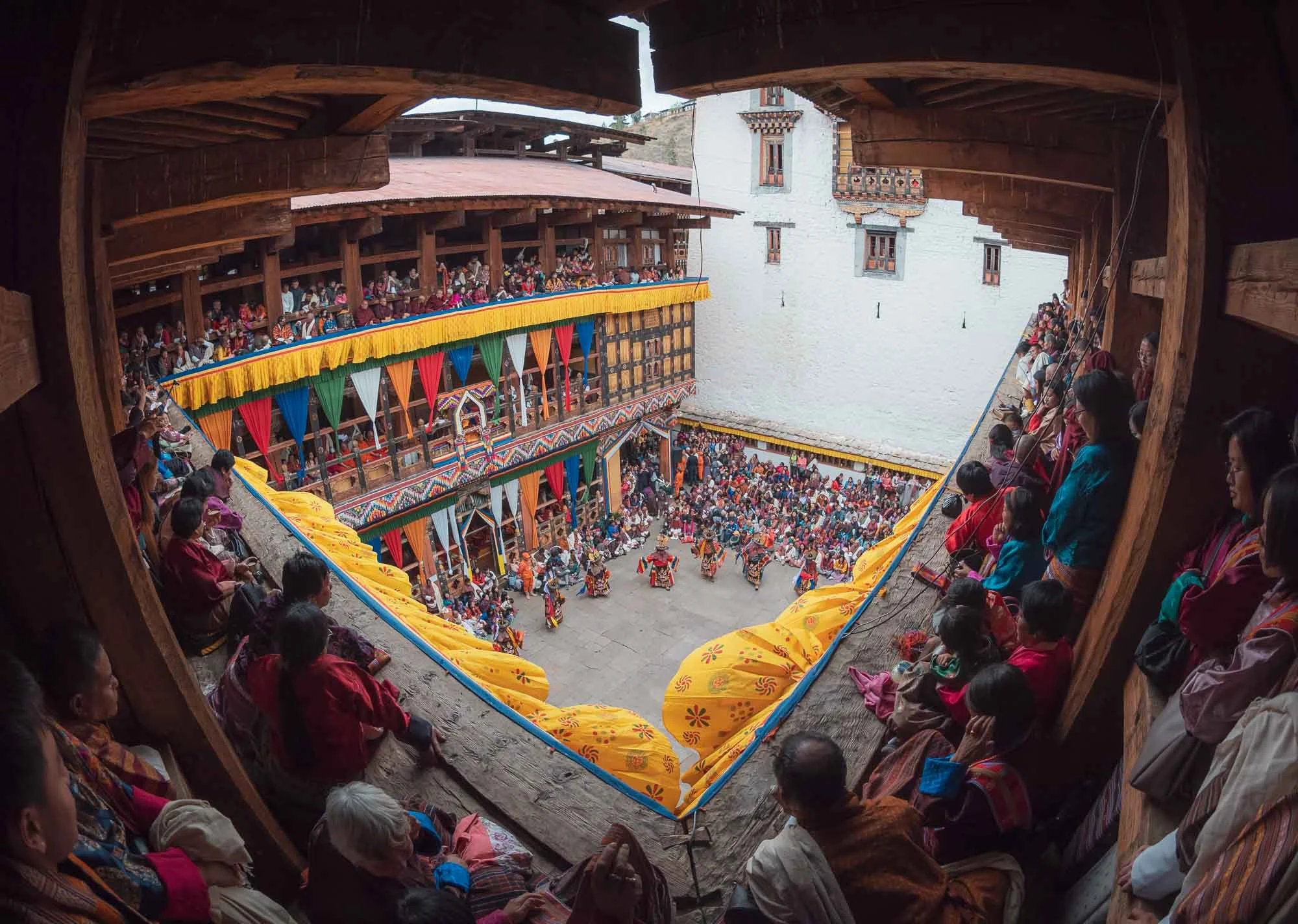
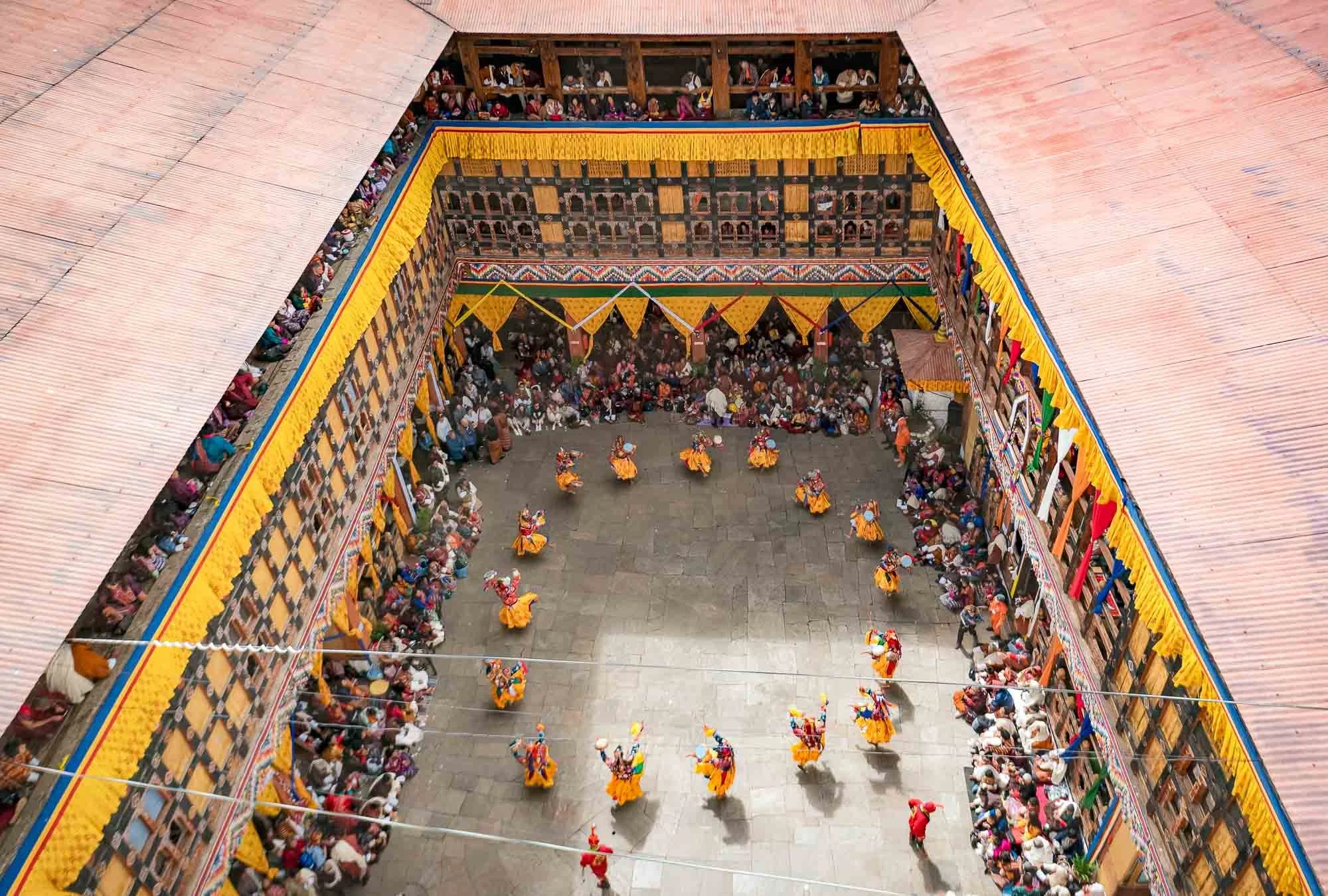
And indeed, this was the same spot the next day during the opening of the festival - crowds occupying every floor, nook, and cranny of the courtyard, with dancers performing in the centre. But one step at a time…
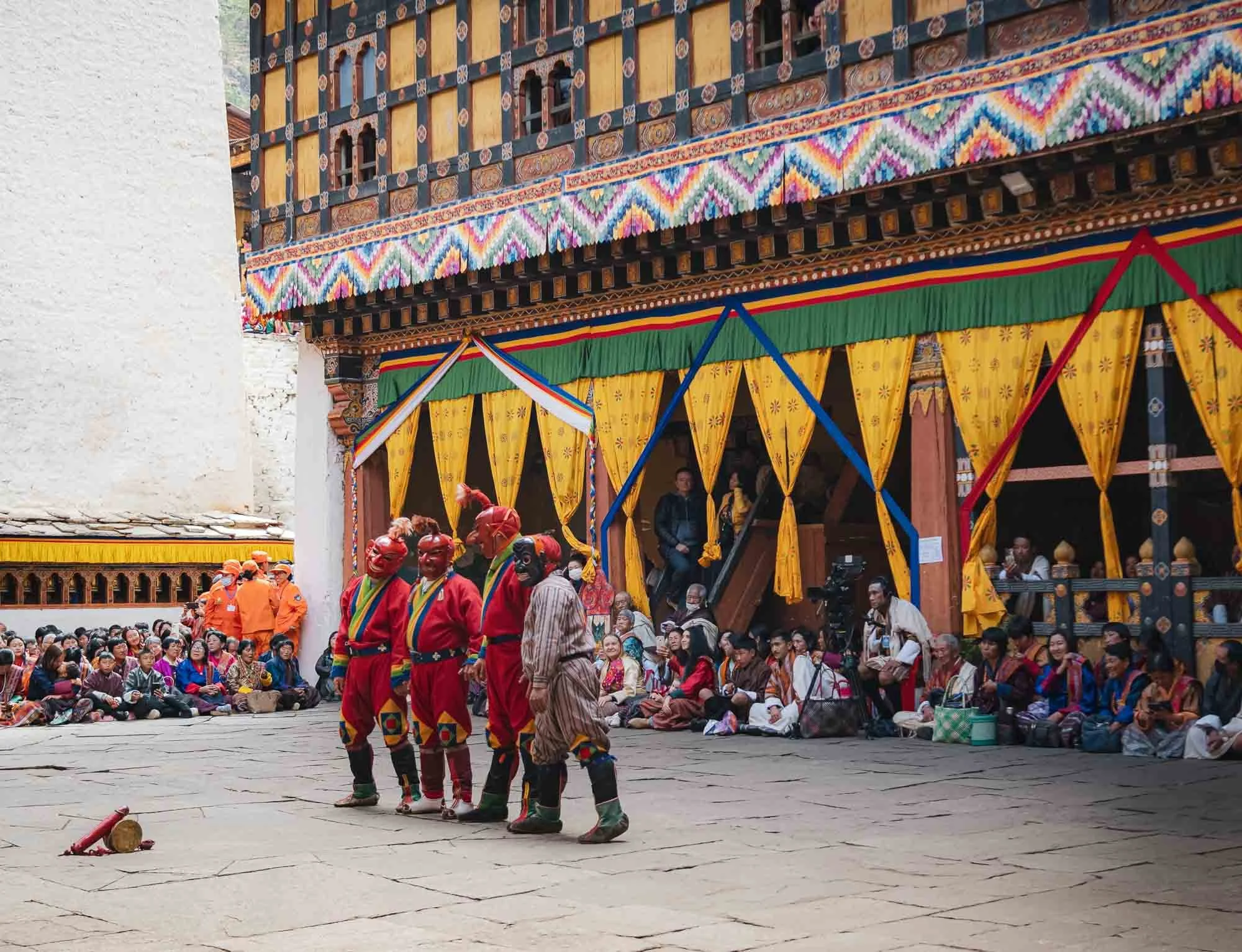
The proceedings are kicked off and hosted by the so-called Atsara (sacred clowns), who serve various roles, from teaching moral lessons and keeping the audience engaged, to managing the flow of performances all day, at times using their wooden phallic symbols seen in front of them here to do so...
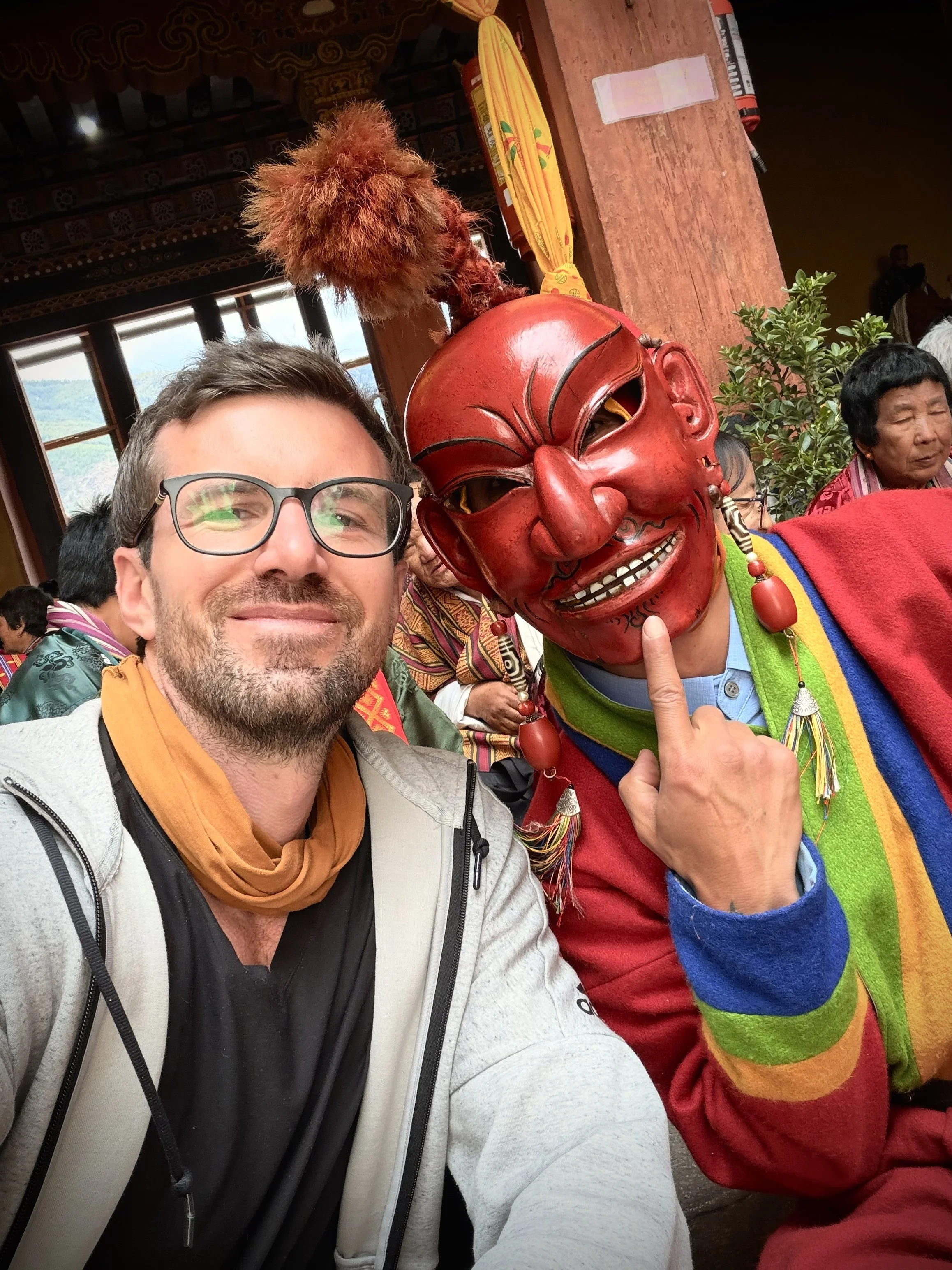
I had a chance to chat and take a selfie with one of them, and they seem to be born entertainers.
It’s a colorful affair of different dances and performances accompanied by varying music, with spectators in traditional local dresses all around. It’s often a family day out with three or more generations sitting together, bringing lunch and watching the activities.
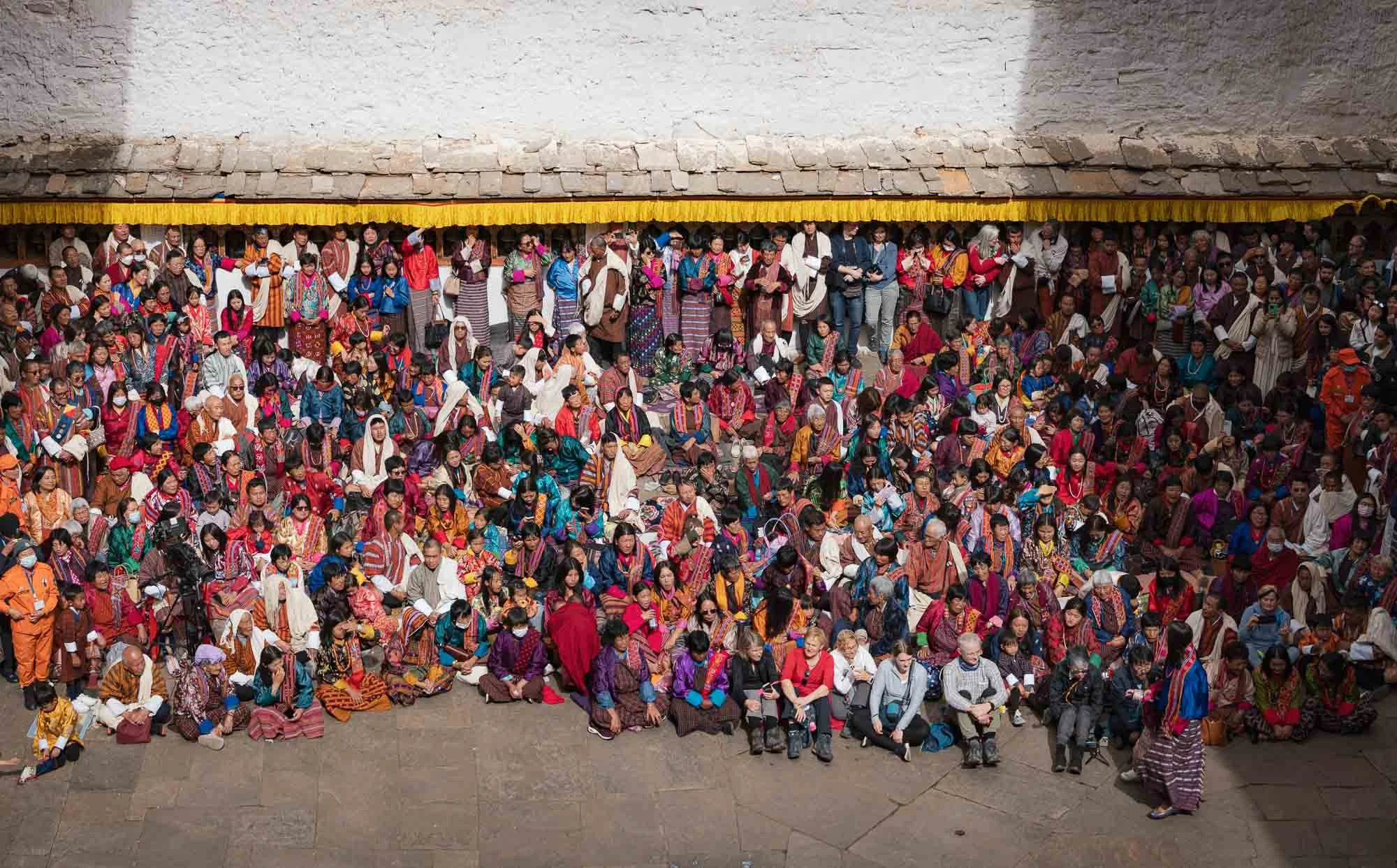
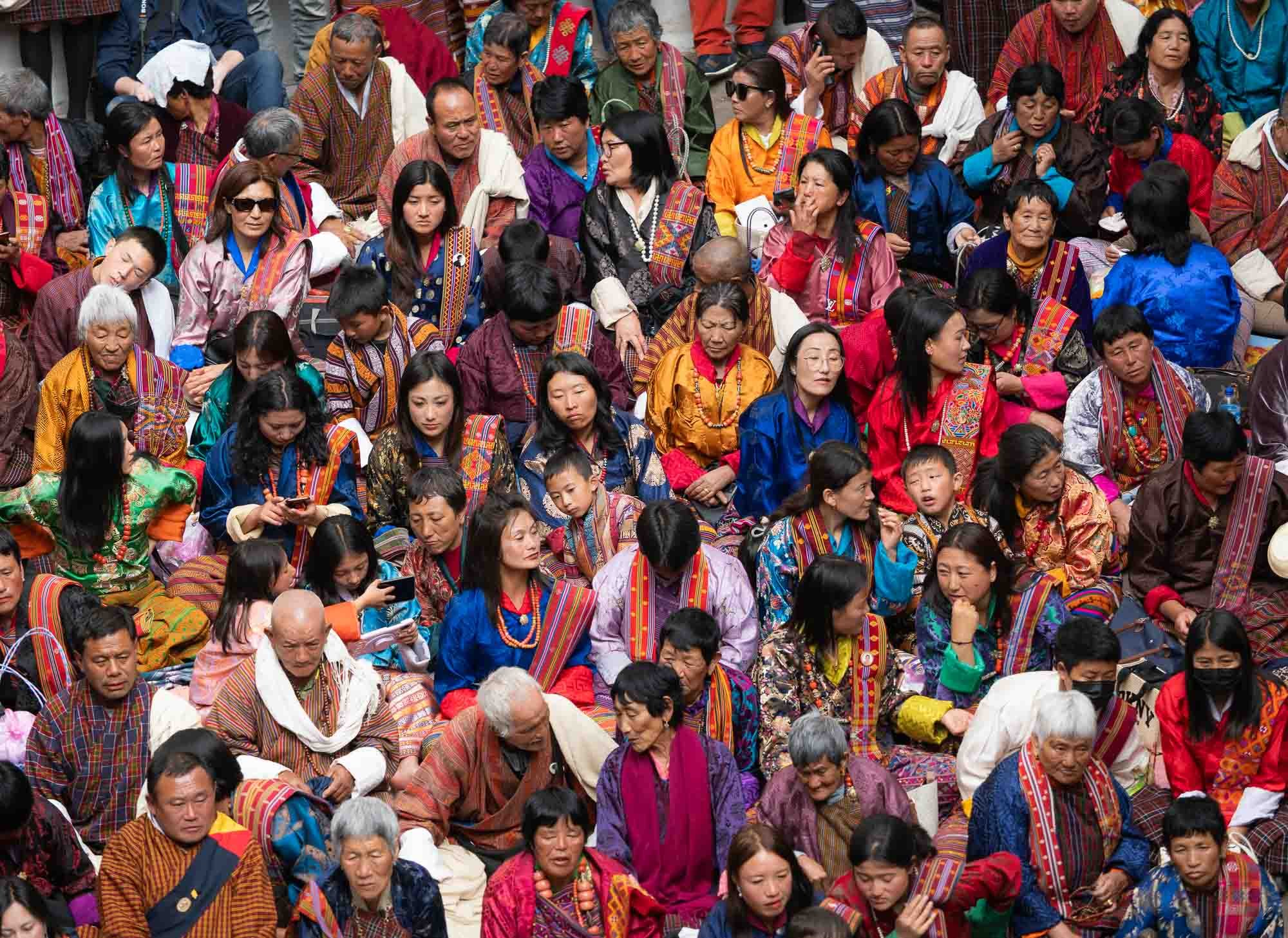
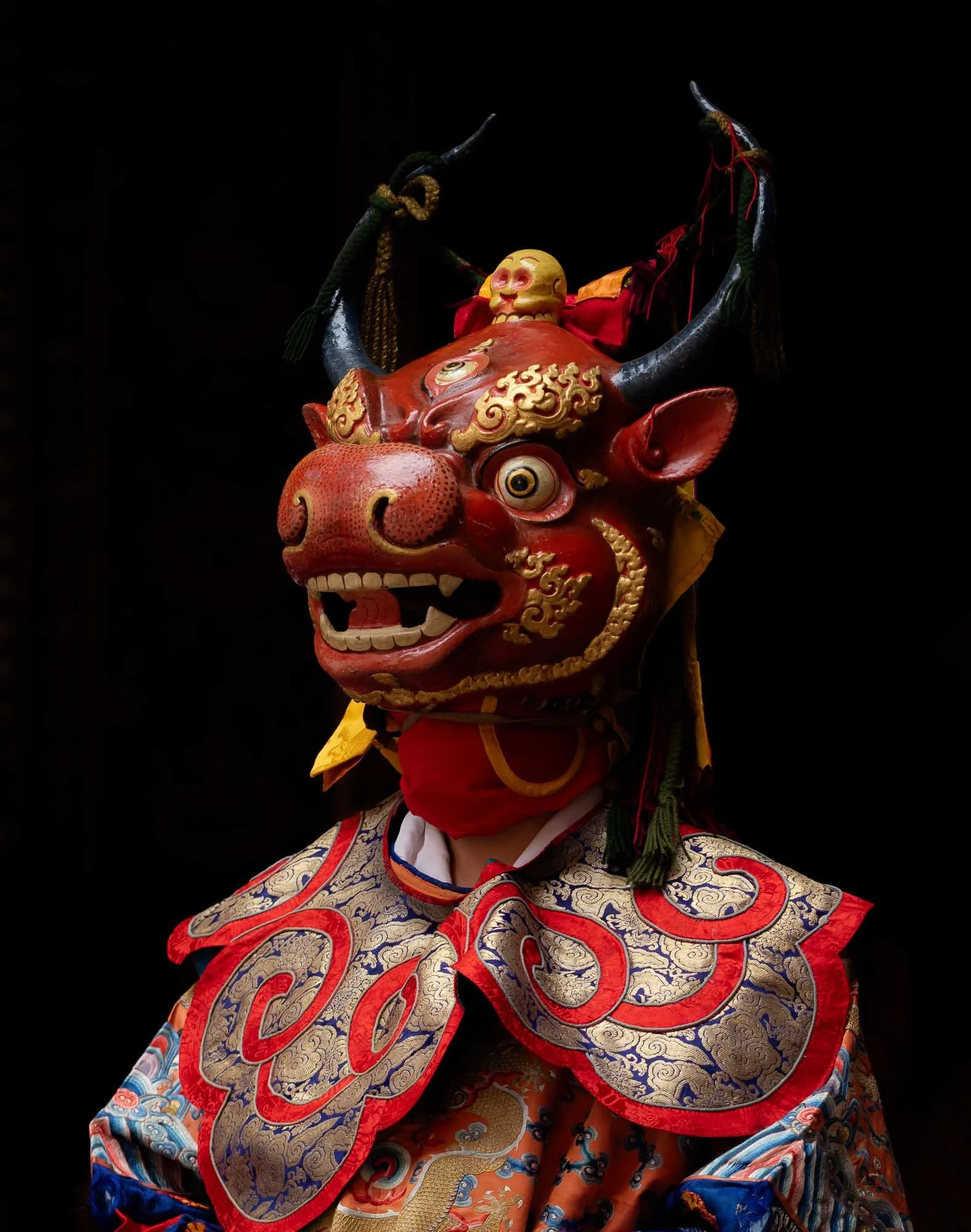
Equally colorful but sometimes a little more scary are the wooden masks of the performers, such as this one. If I recall it is part of the first dance related to overcoming the forces of death and blessing the ground for subsequent dancers.
The masks and dresses change as the day progresses, so does the music, rhythm, and choreography.
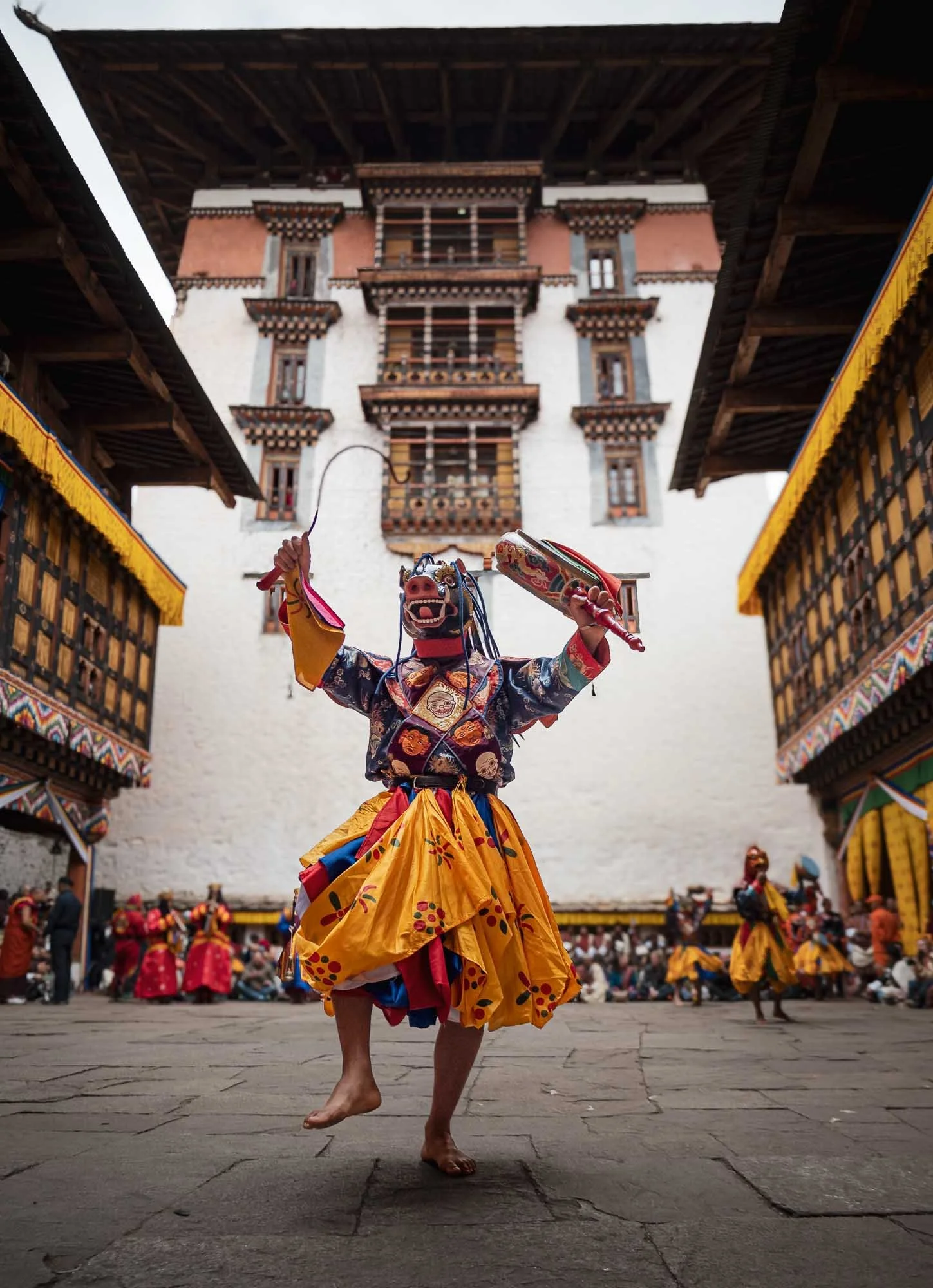
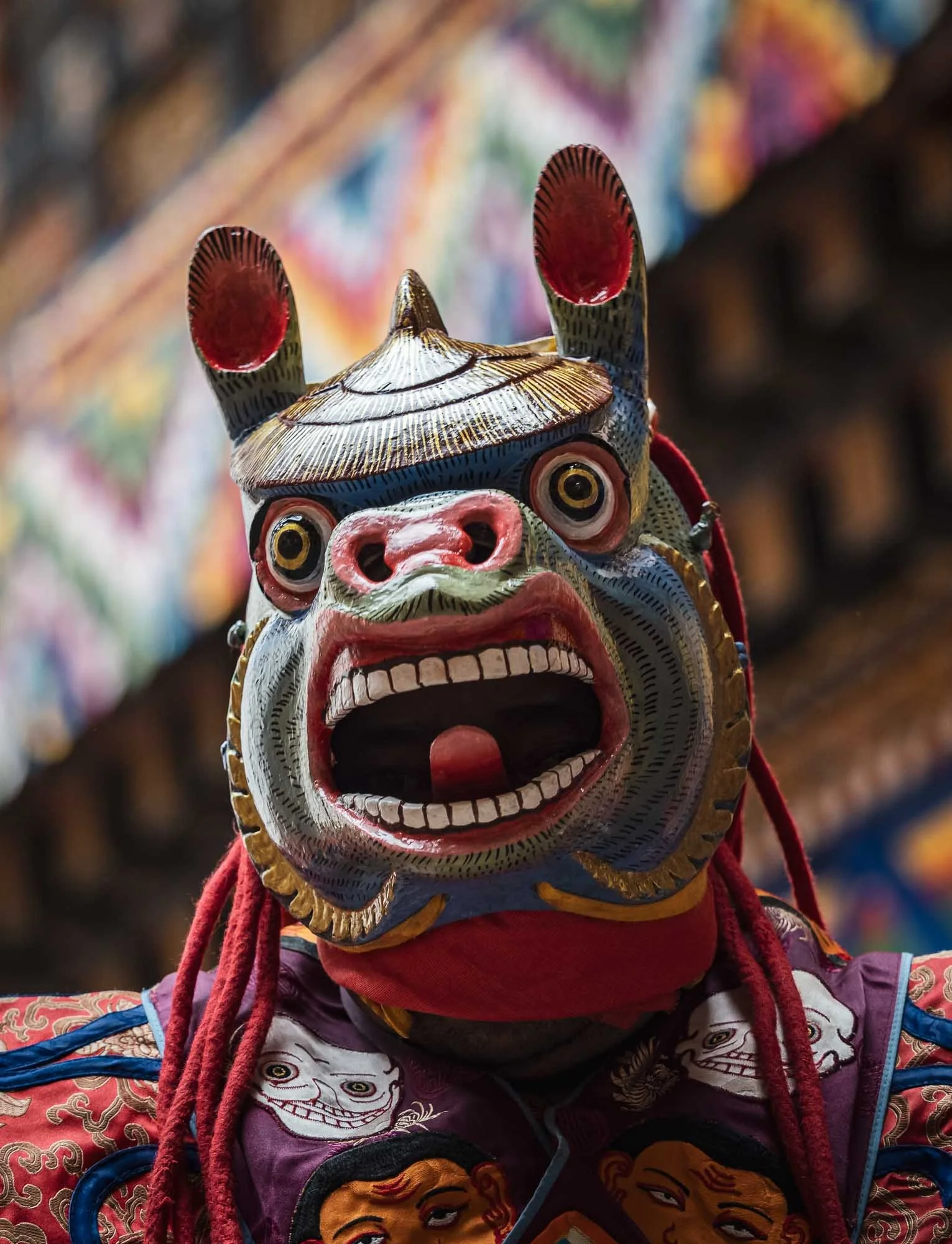
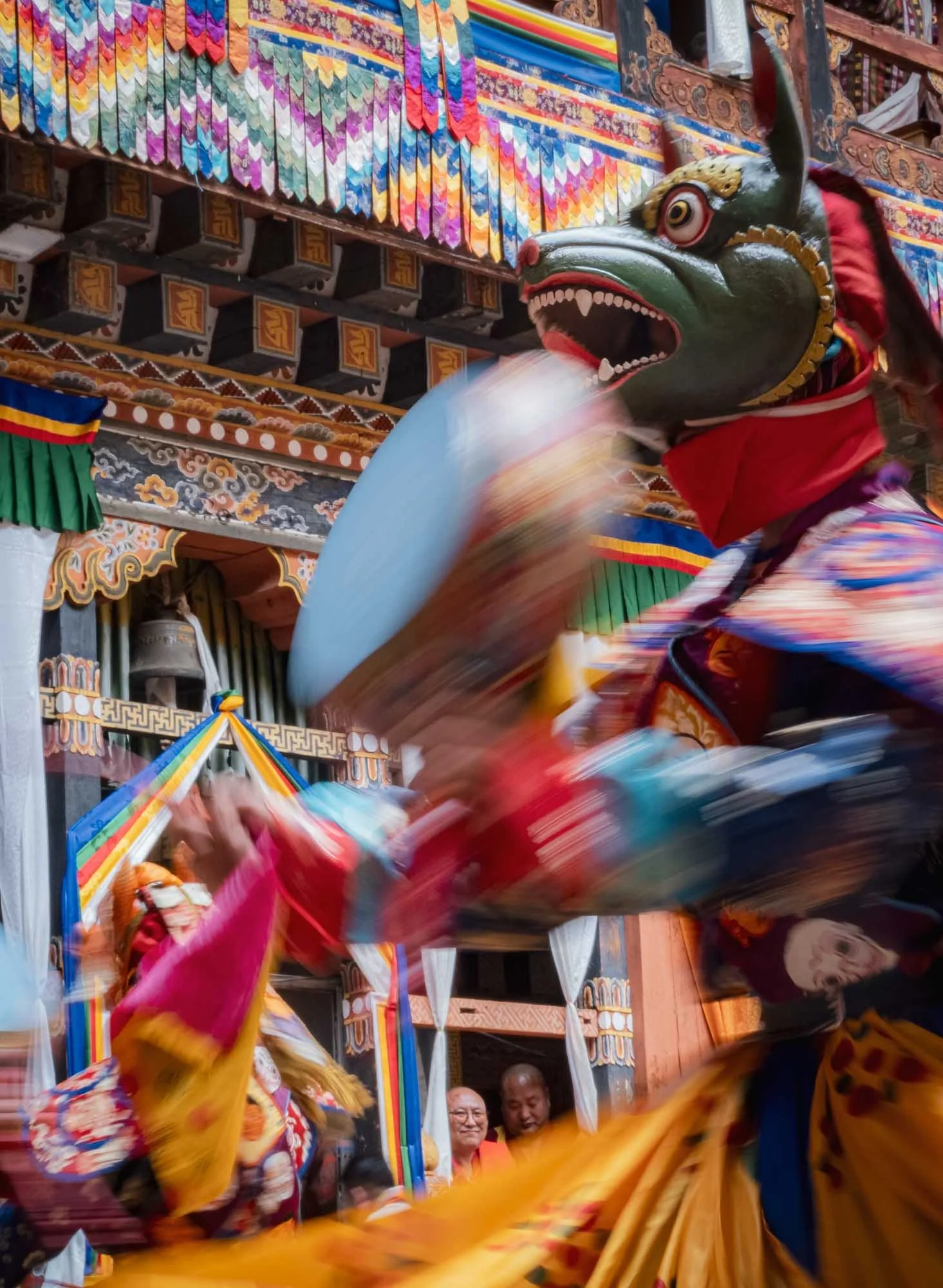
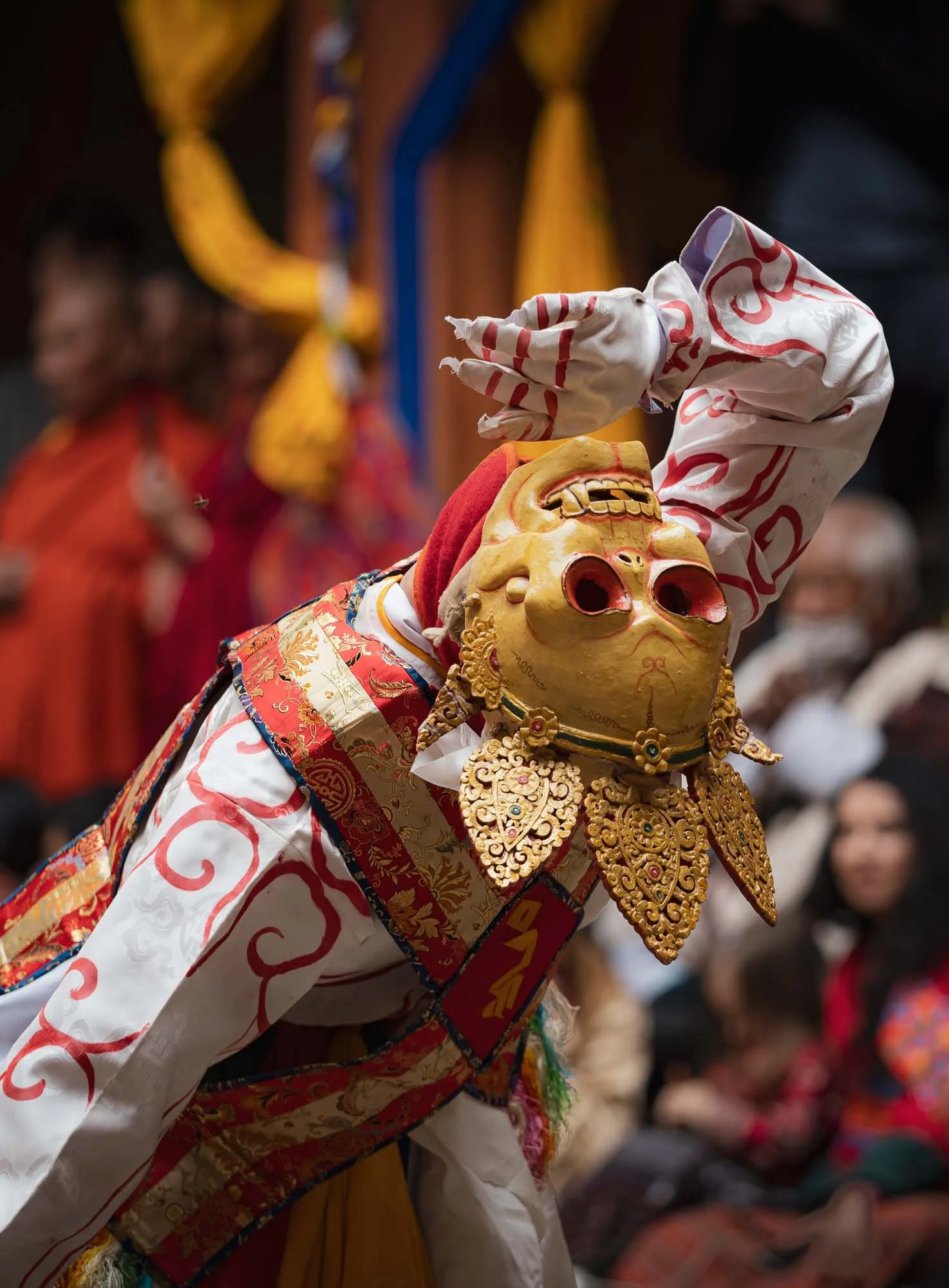
Every performance symbolizes a certain practice or teaching: the Black Hat Dance with its elaborate costume serves to celebrate the victory of good over evil and the purification of space, for example.
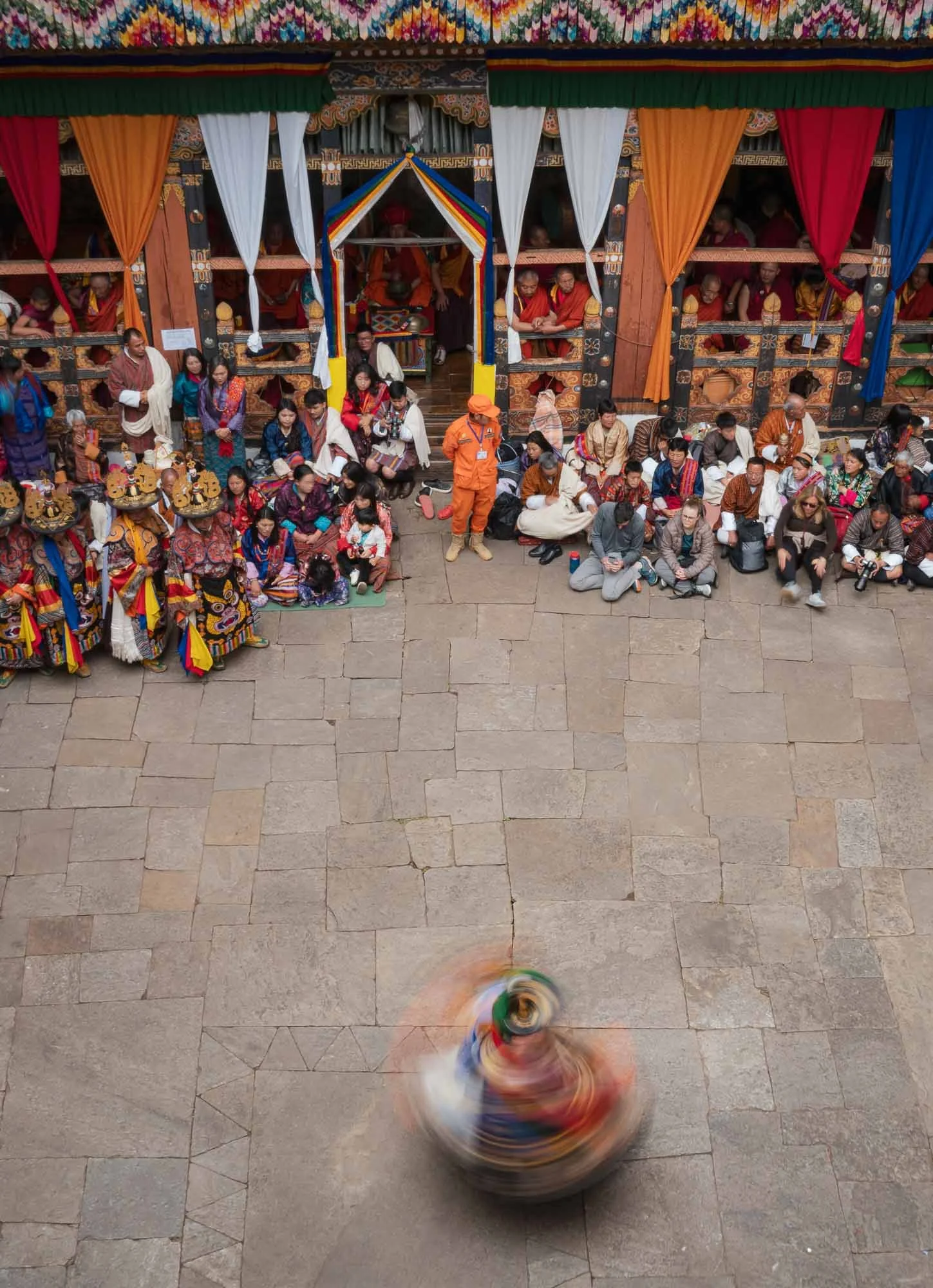
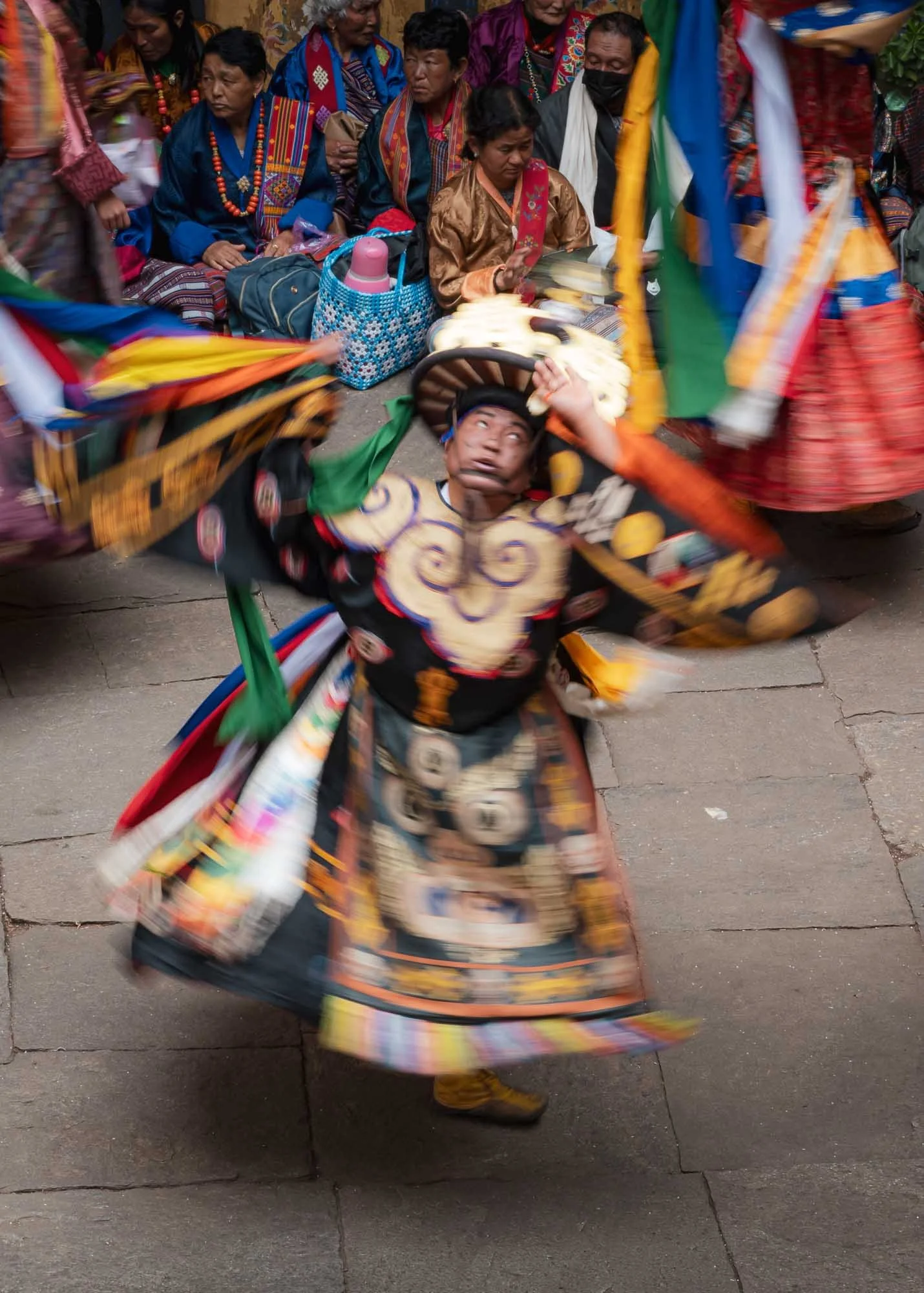
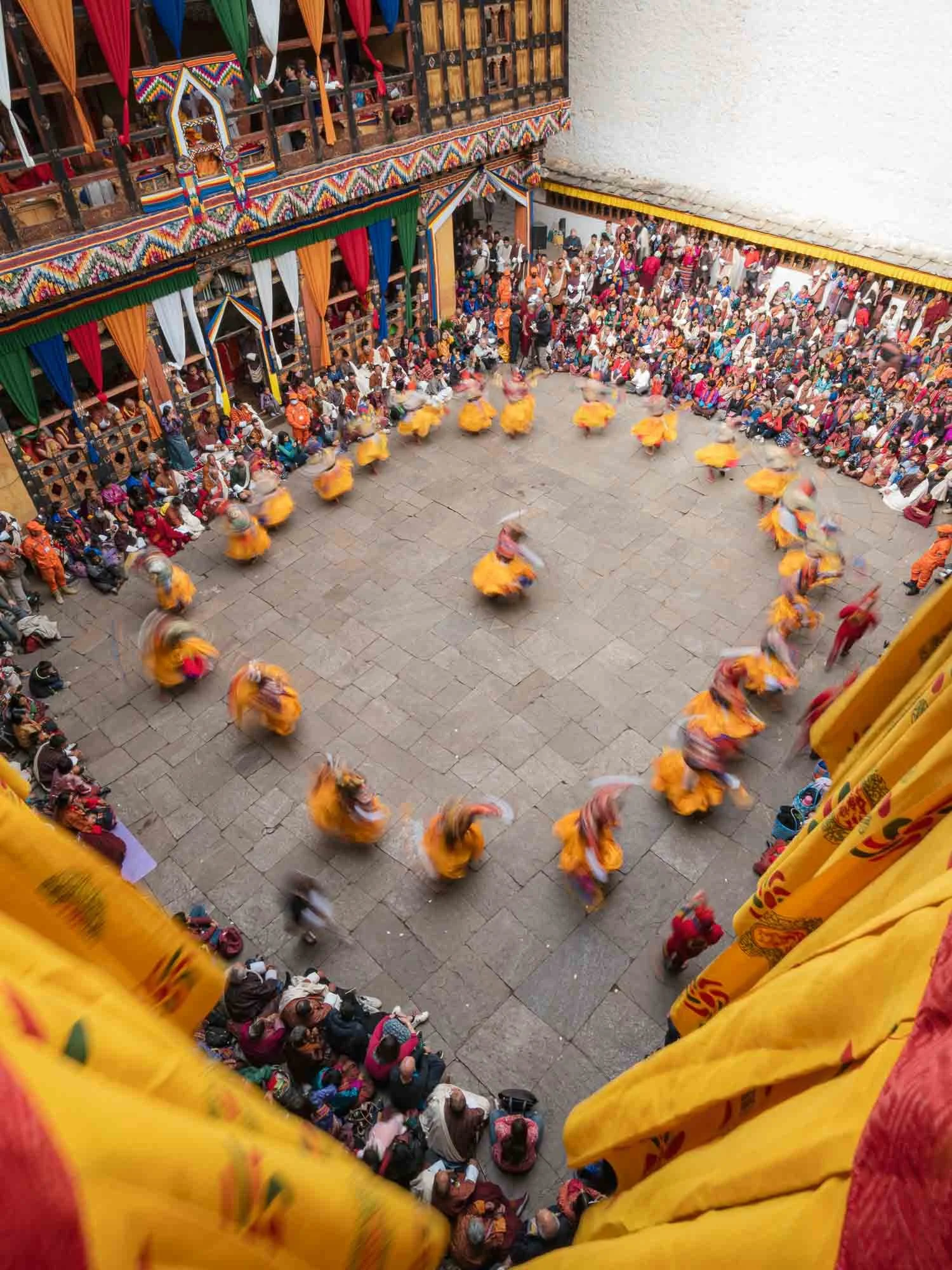
While quite a crowded affair at times, the very limited space makes the festival feel intimate and connects the spectators to the performers closely.
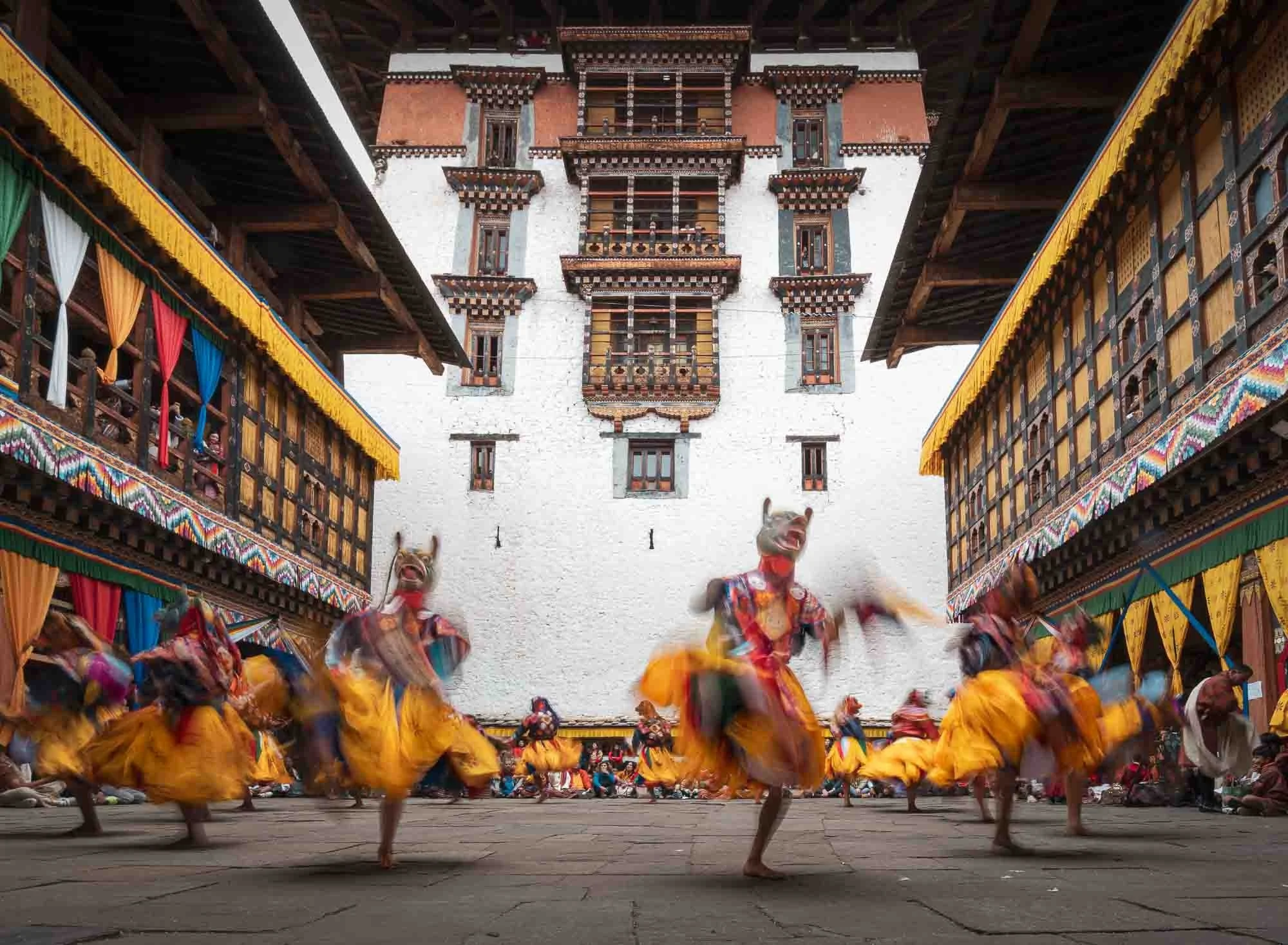
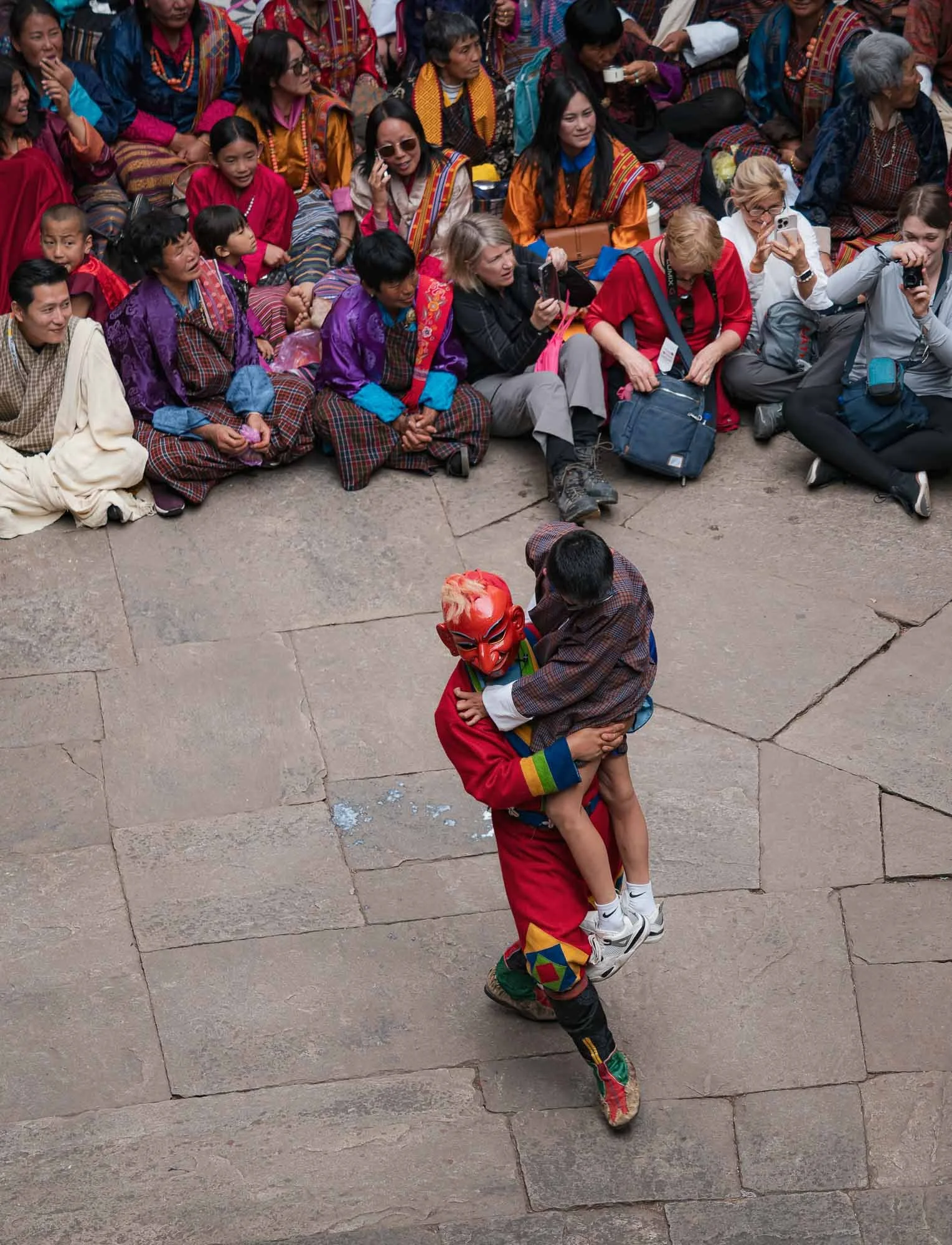
Sometimes a little too closely - audience participation is not always optional…
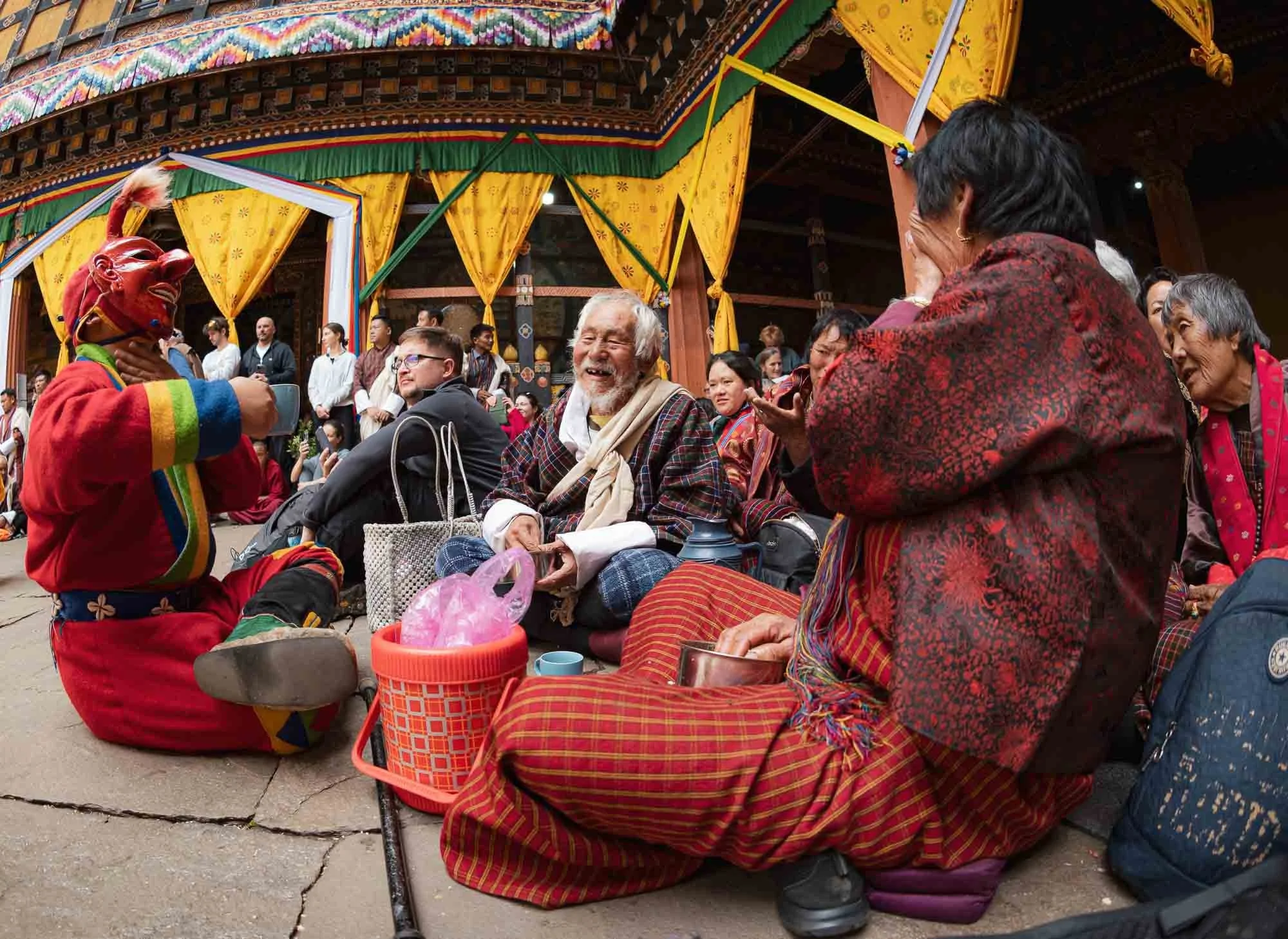
…but mostly a pleasant and humorous affair. I can’t be sure what this Atsara said though - given the expression of the women on the right, it may have been quite audacious. Not unlikely, from what I observed.
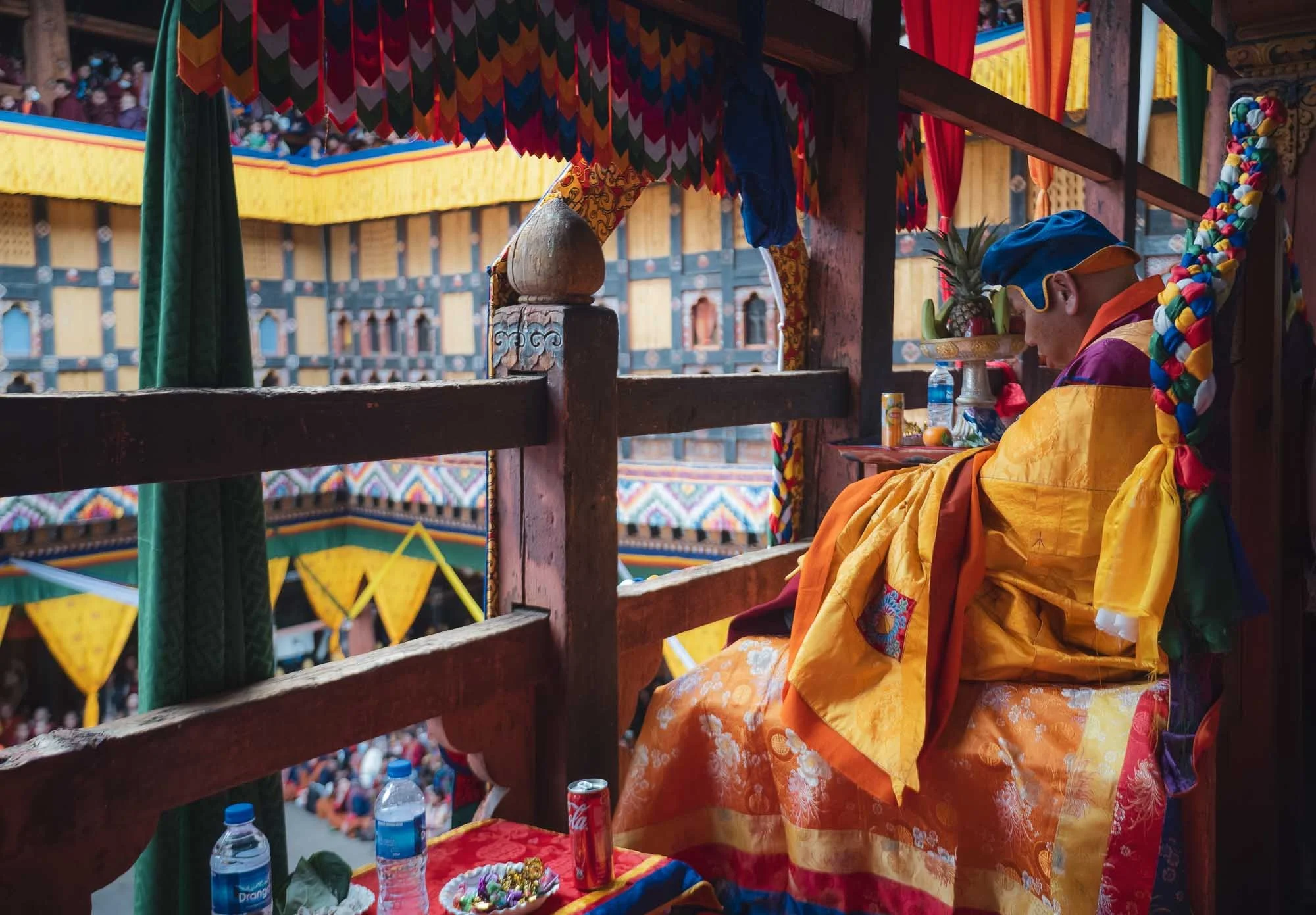
A dedicated section (into which I had the chance to sneak in for a bit) houses seats for the most important lamas and senior monks of highest monastic authority. If I recall, this one was the most respected person, immediately appealing to me for his choice of drink (and offering me some sweets).
I spent almost the full day here - the photographic opportunities are endless, and the cultural aspects quite interesting - part of the commentary is done in English and explains the purpose and background of the performances. Below are some clips of the day.
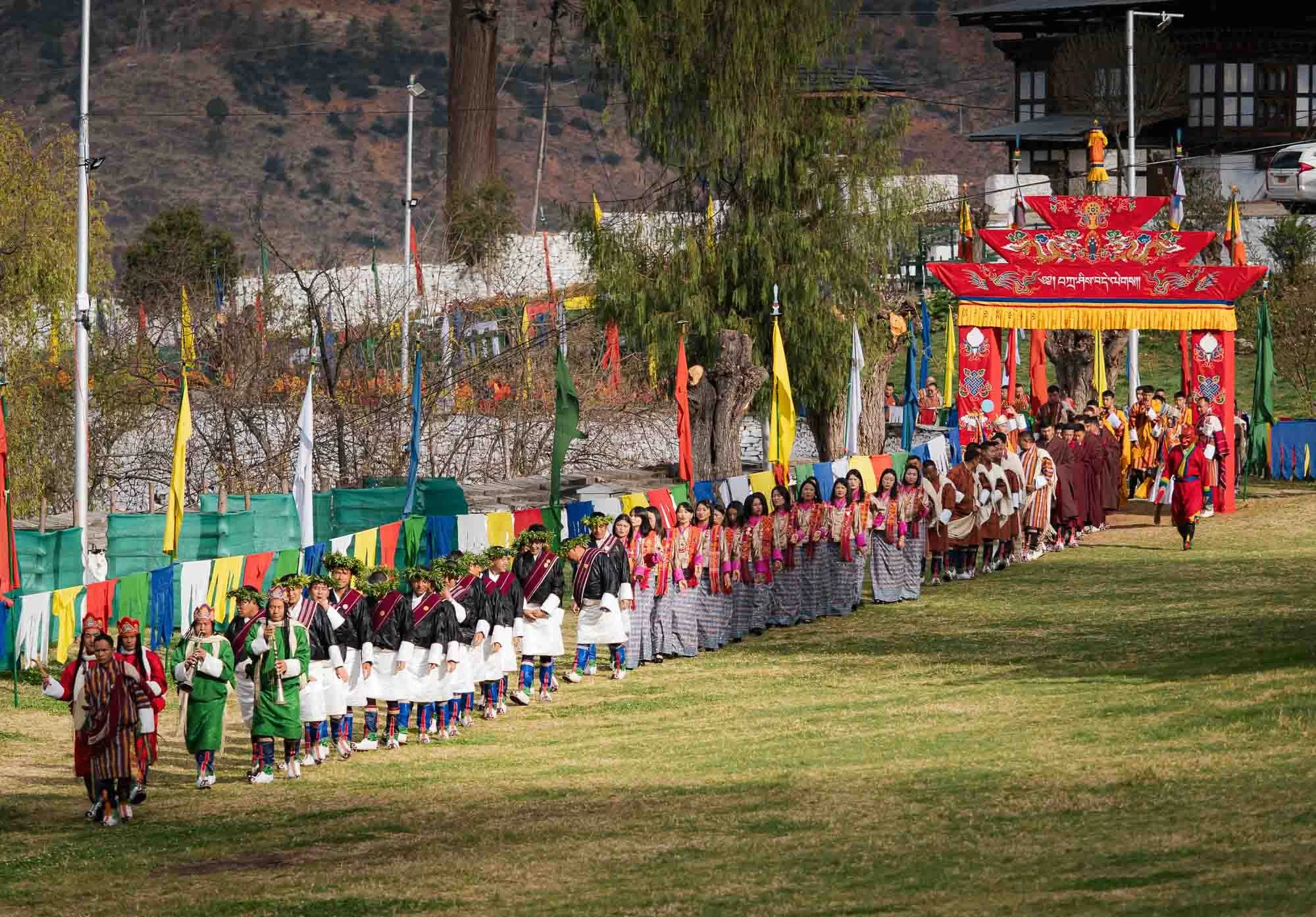
The second and subsequent days take place in the outer courtyard in front of the Dzong, with a procession of the participants arriving in the morning.
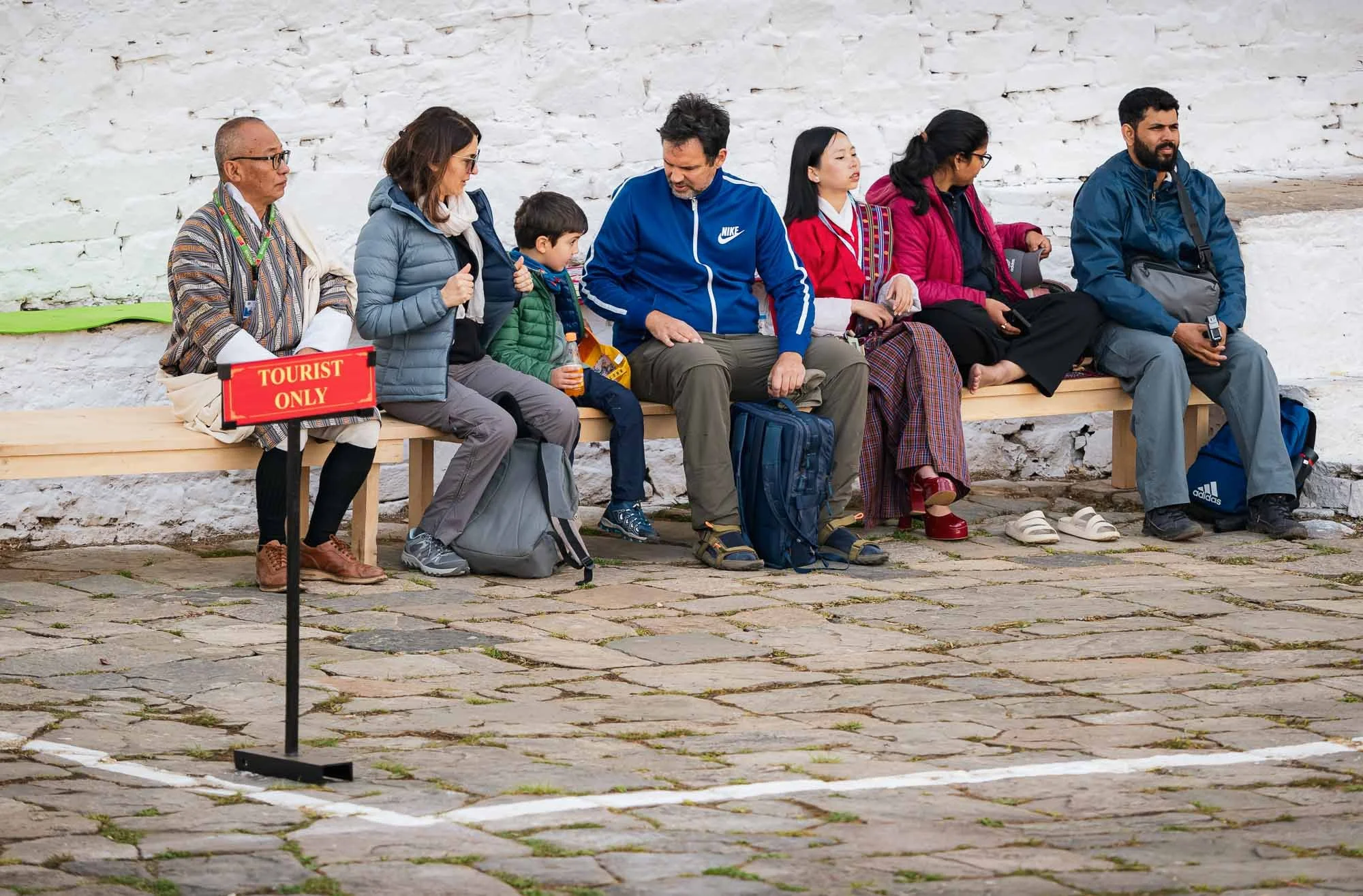
I couldn’t help but chuckle at this well-intended but somewhat awkward tourist section, which I of course didn’t let myself get confined to. While there were a few international tourists around, the vast majority of the attendees were locals.
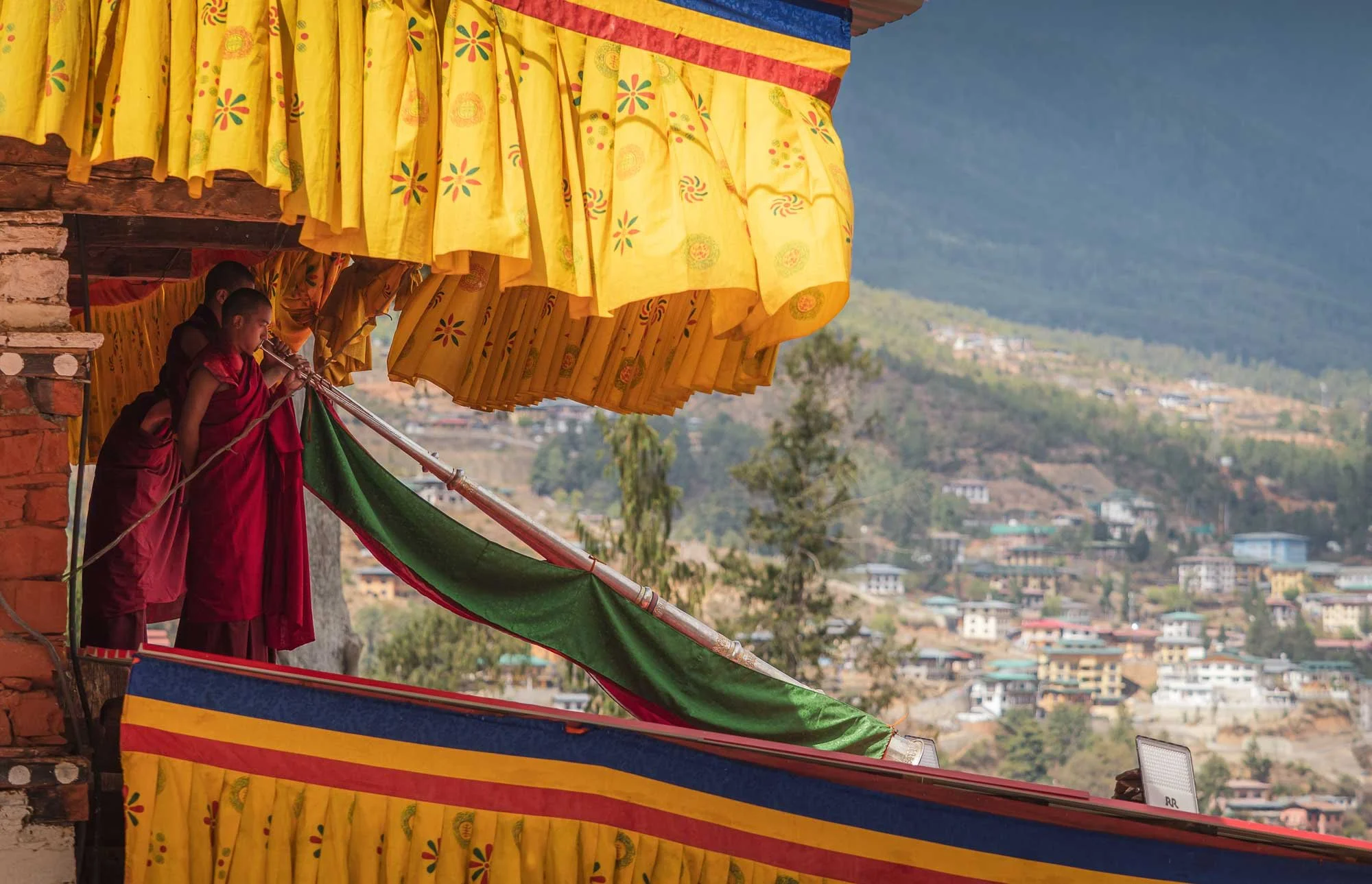
The Dungchen being played during the entry of the performers - it was nice to hear them played skillfully after observing the practice at the nunnery.
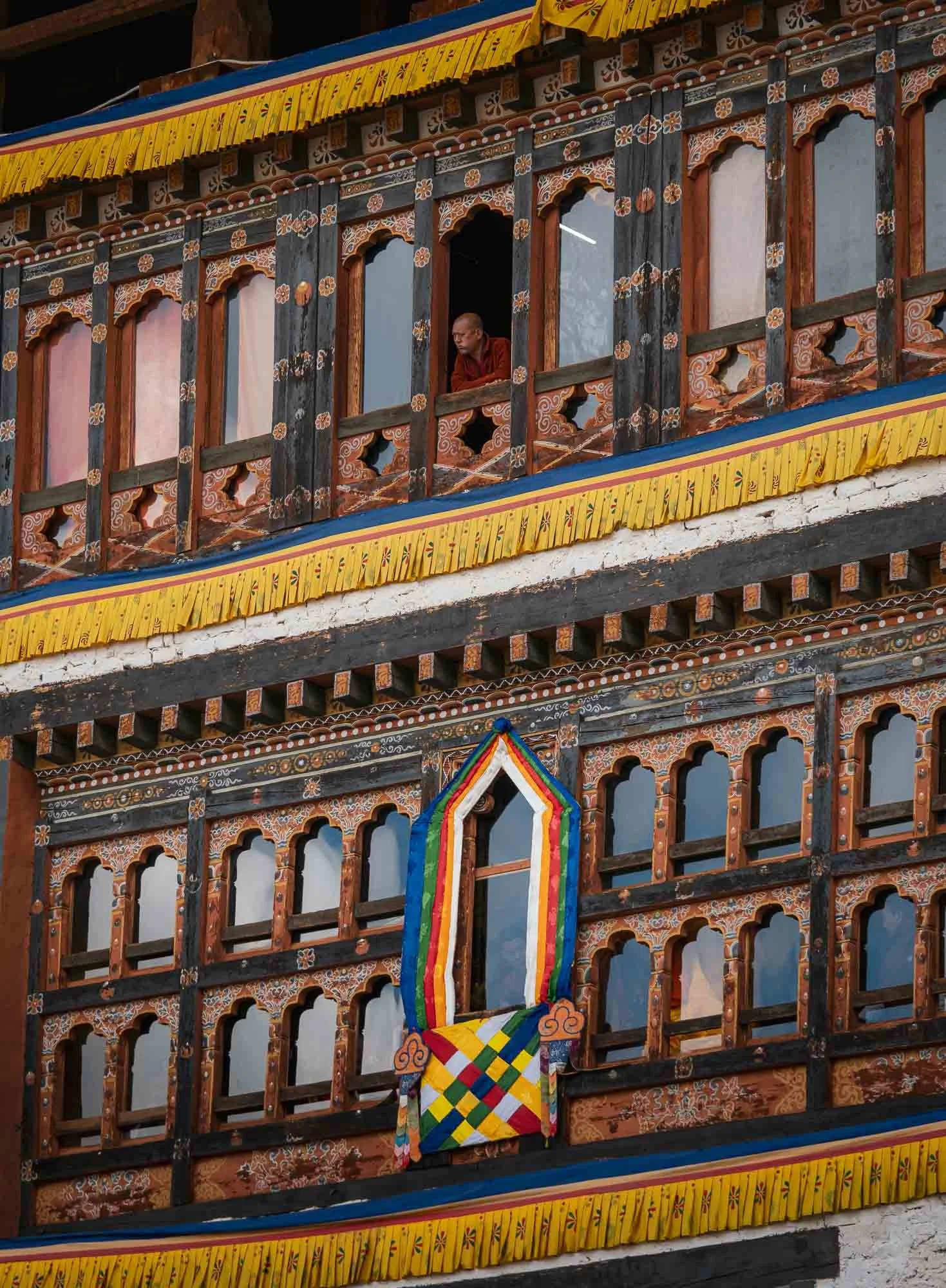
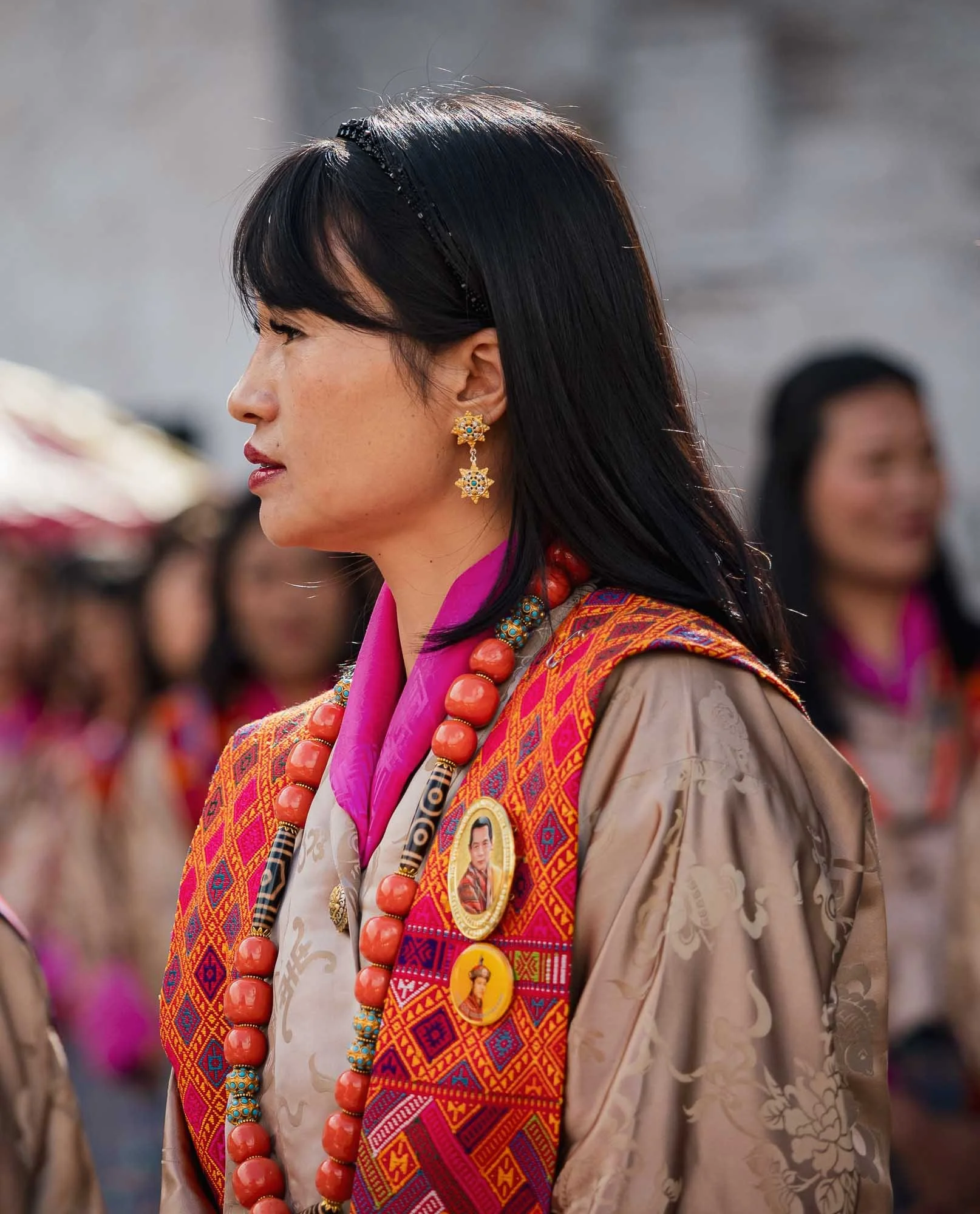
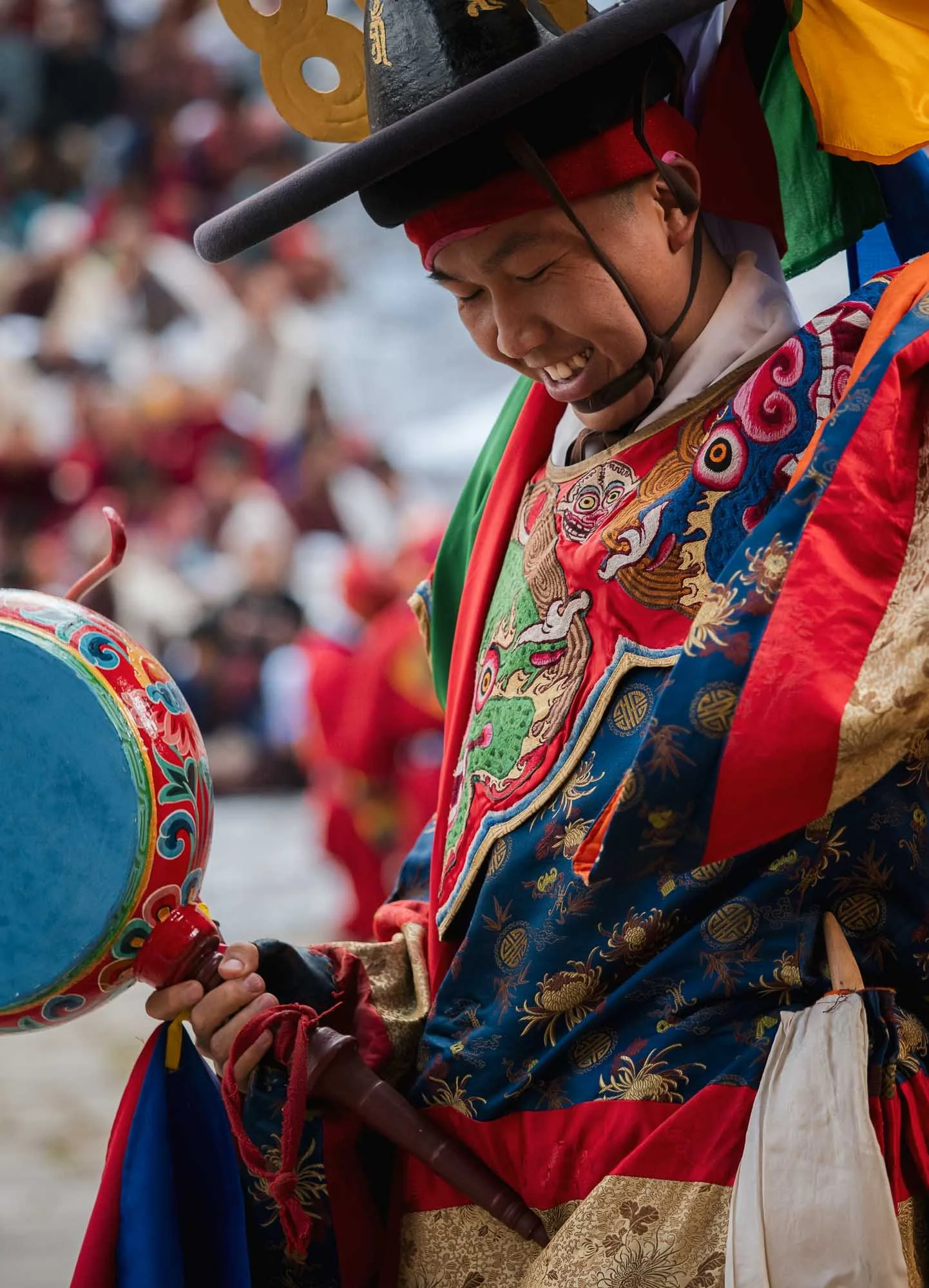
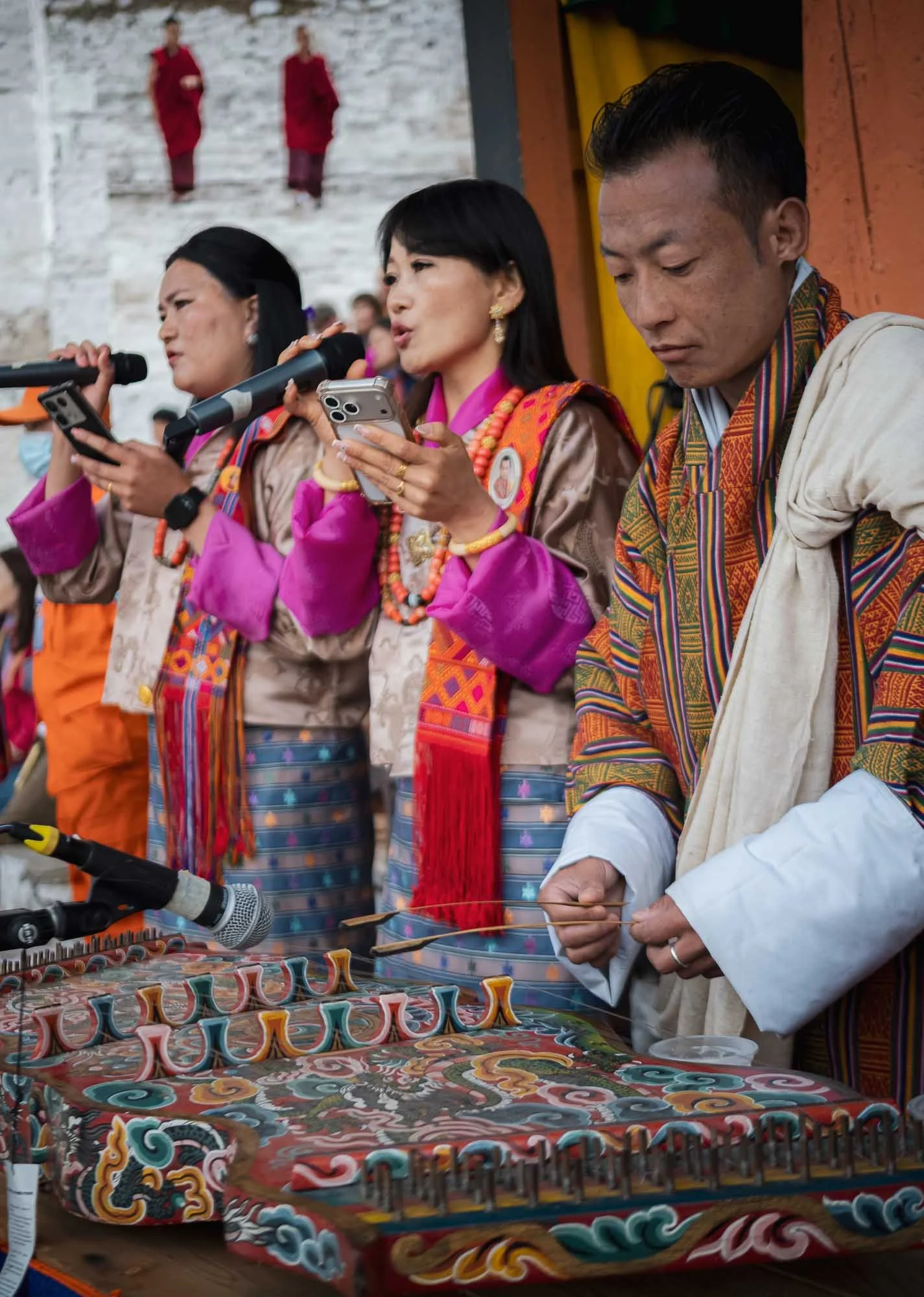
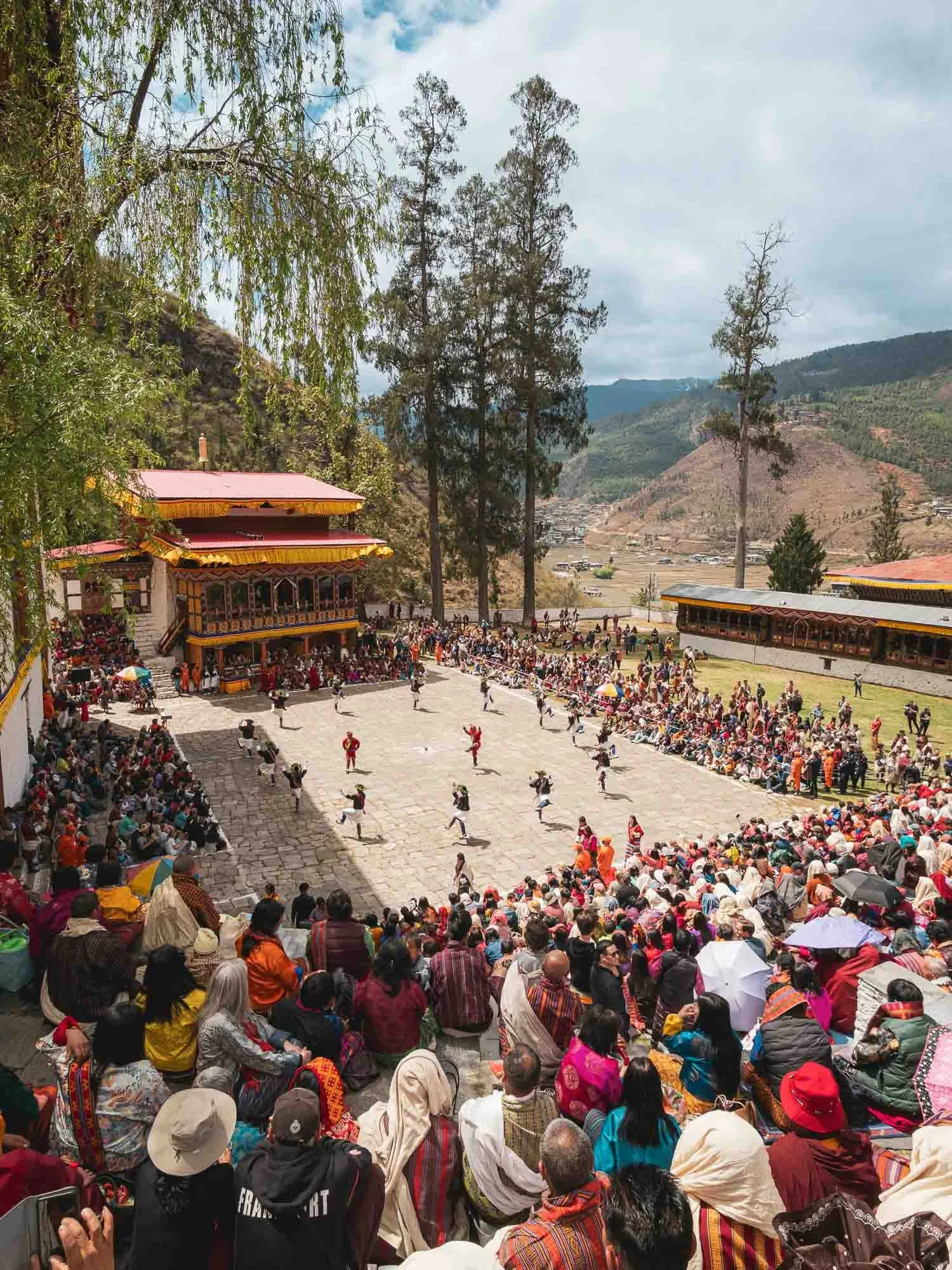
The location out in the open gives the festival a much more casual atmosphere. I preferred the first day but this was the perfect slightly more relaxed follow up.
This is also where on the final day the festival culminates in the revealing of the thongdrel, a sacred tapestry of Guru Rinpoche - I didn’t get to see this part anymore though, as this was the end of my time in Bhutan. Nepal was next.
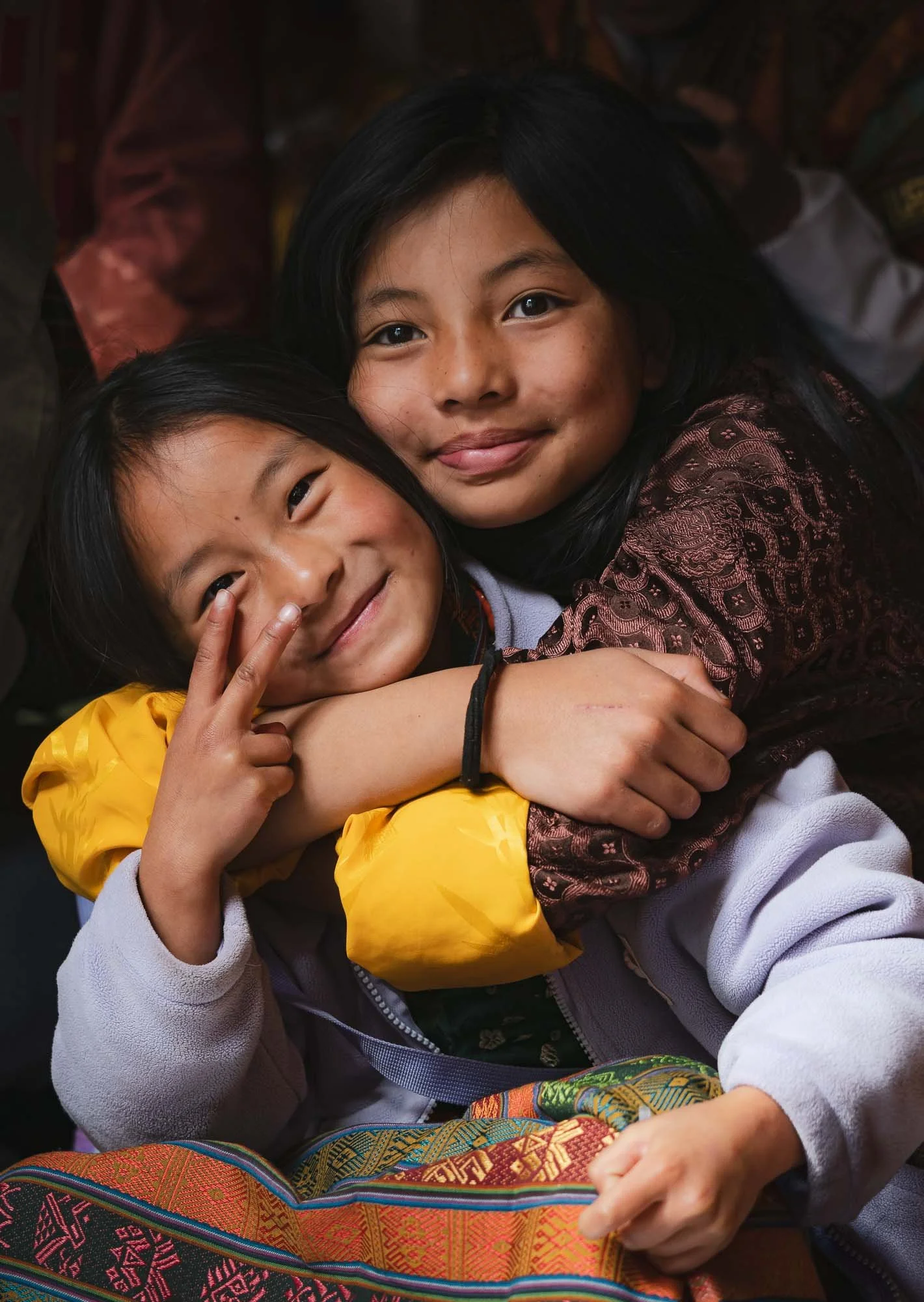
There is clearly a large amount of focus on preserving its roots and national unity, and Bhutan’s development model has long been famous for its idea of Gross National Happiness, prioritizing well-being, culture and environmental protection over pure economic output. Nevertheless, things may (have to?) undergo some change. While GNH remains an ideological basis, more conventional metrics have played an increasingly significant role in recent times.
For example, Gelephu Mindfulness City was announced in 2023 as a special economic zone three times the size of Singapore, designed to attract investment as a multi-sector economic hub, and also housing a new airport given its location in the lowlands near the Indian border.
Financing is meant to be driven by the country’s Bitcoin reserves. Bhutan held one of the largest national Bitcoin funds, at its peak estimated at $1.5Bn, mostly created through mining from its hydropower surplus (unlike US and Chinese holdings which were mostly seized). Its exposure has since been heavily reduced but remains significant.
We shall see if the country can maintain its sustainable happiness approach while at the same time creating attractive opportunities for its next generation - emigration, particularly to Australia, seems to be surging in recent years.
Subscribe to my newsletter to get notified and don’t miss out on more Wonders of the Globe.
Other Recent Posts:
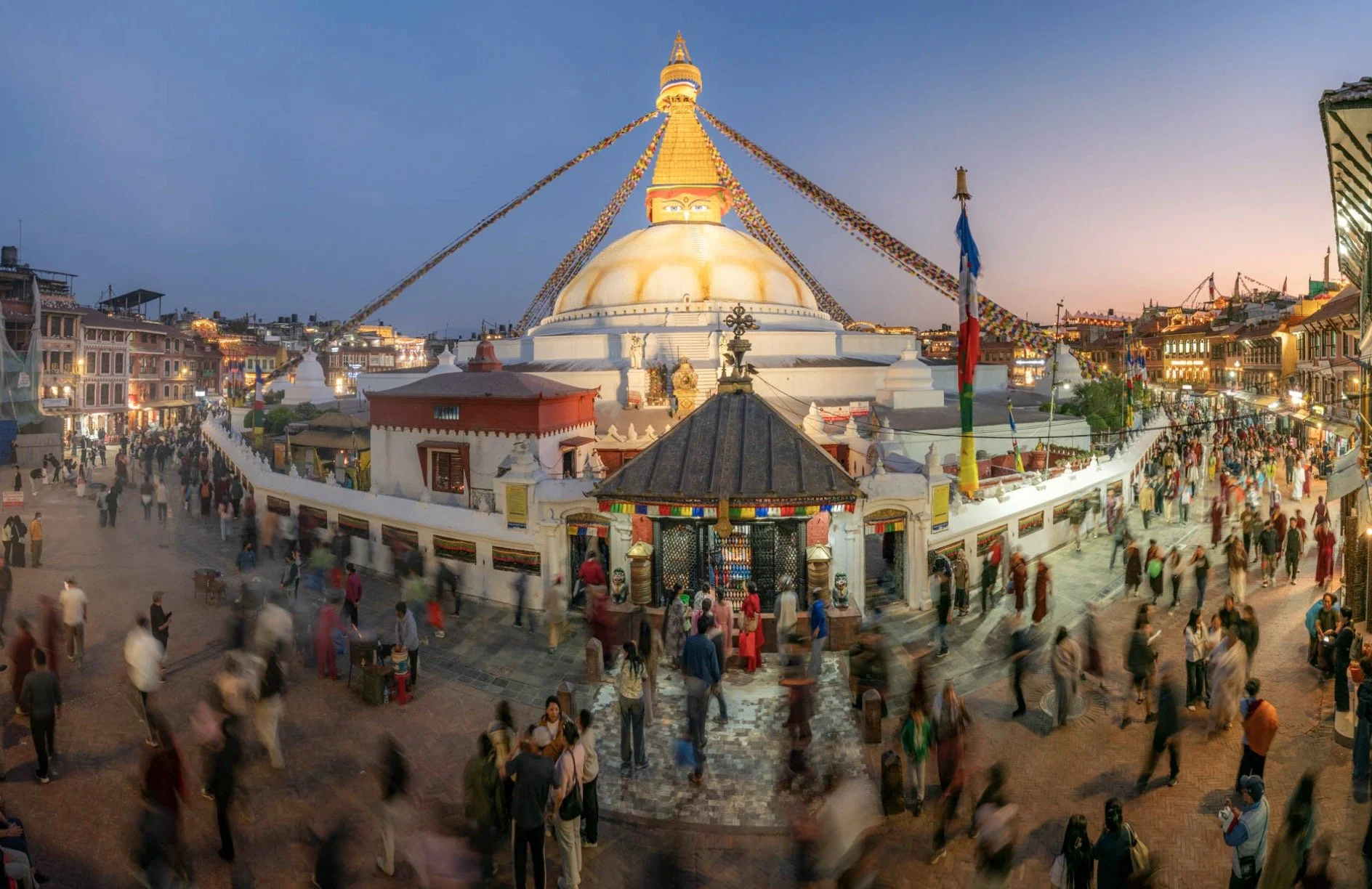

The Ghost of the Mountain
In search for one of the most elusive cats on the planet in the mountain ranges of northern India - with some incredible sights.
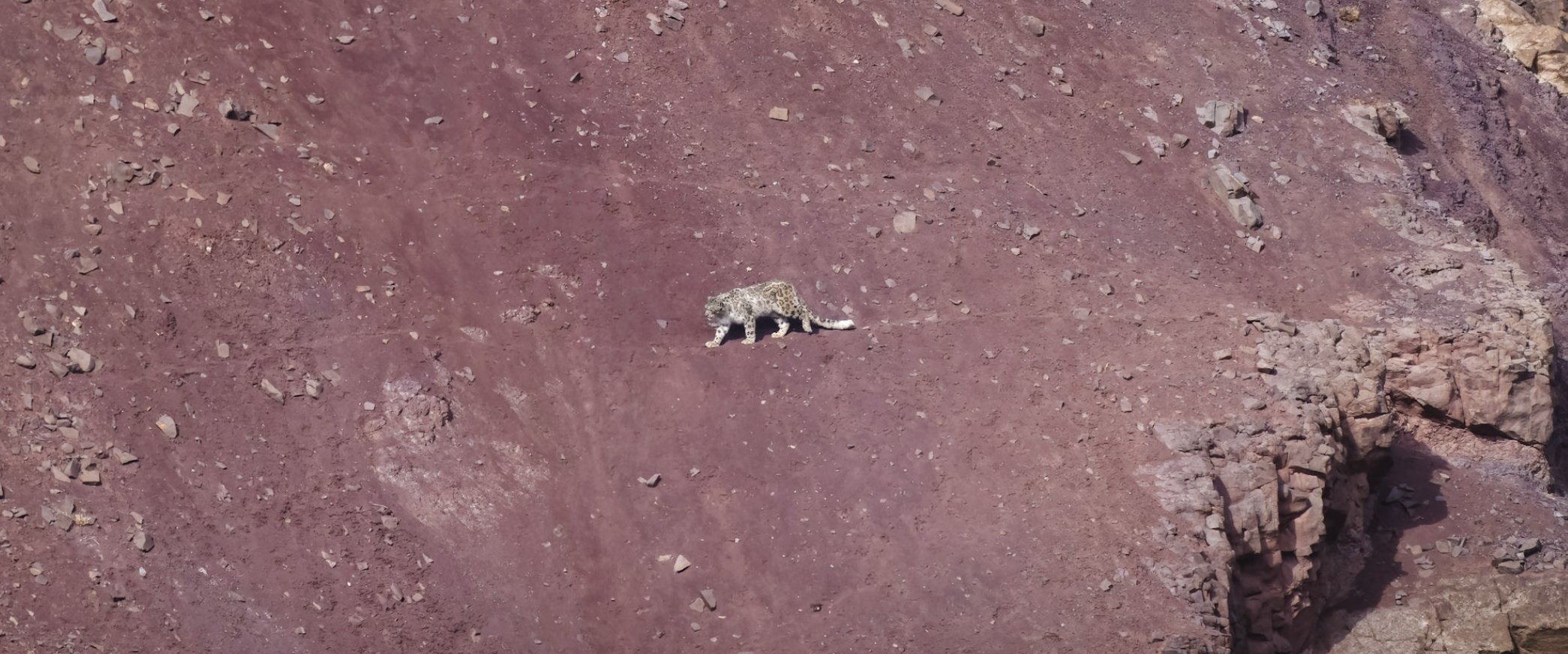
In March 2023 I finally took a trip I had already planned previously, but our old spiked friend Covid-19 had a different idea at the time. The good thing is that on my next attempt I was able to combine my time in the mountain ranges of Ladakh with a few extra days in other parts of India - more on that in a future blog.
For today’s episode, the focus is on an area of the world’s most populous nation that in some ways is very different than the (already diverse) rest of the country: The union territory of Ladakh in the very north, bordering China and Pakistan, and sitting entirely above 2500m in the Himalayan and Kunlun mountain ranges. Why did I come here? To find the ghost of the mountain…
After a short flight from Delhi, my trip started in Leh, the historic capital of the ancient Kingdom of Ladakh at an elevation of 3500m. I spent two days here to acclimate, highly recommended to avoid altitude sickness before making your way further up into the mountain ranges up to 5000m.


The view over the river valley from our hotel, and the historical sites of Namgyal Tsemo Monastery and Tsemo Castle on the right side.
Influences
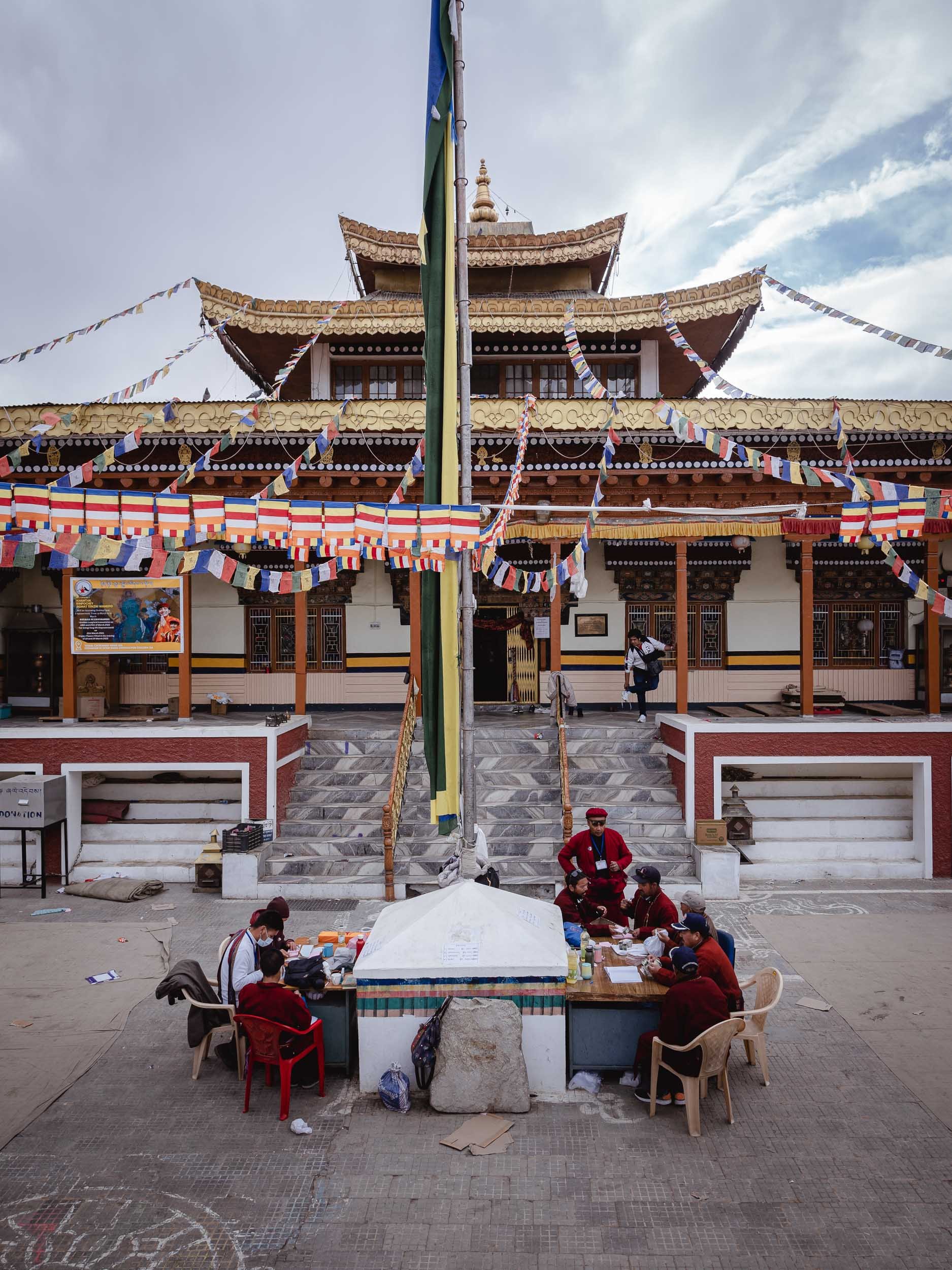
Tibetan influences are evident all around in the area, starting with its people (40% buddhist) and the temples. The region has a very distinct culture, which also includes a Ladakhi language spoken by almost half the population of around 300,000.


Leh was once an important trade route along the Indus Valley. Today it has become a tourist destination during the summer months, but the winter time (I visited in March) are generally very quiet.


First Sights
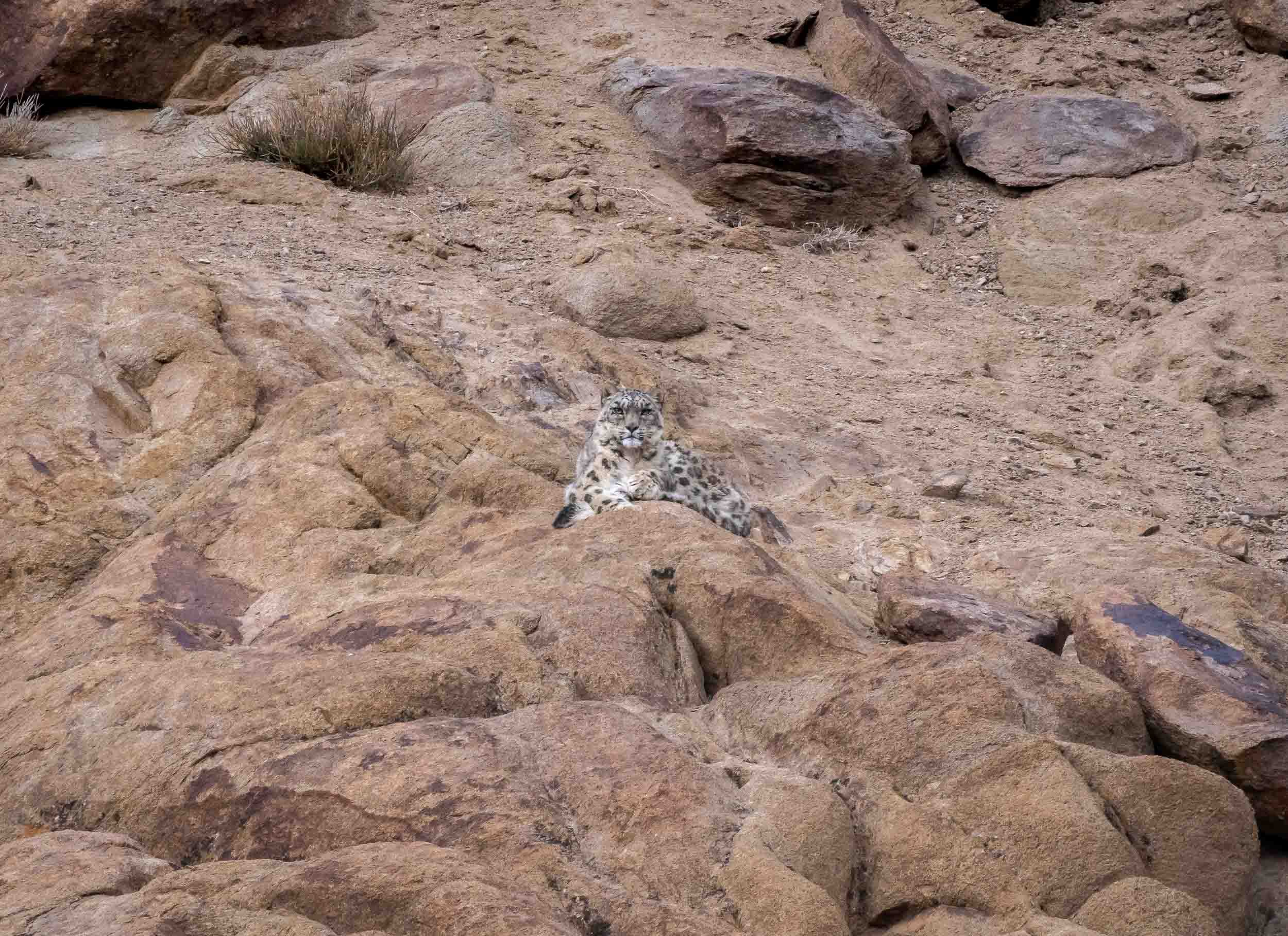
Our time to acclimate was cut short - on the day after arrival, we got a call in the morning that told us some spotters had seen a snow leopard about 1h drive away. When you hear this, you jump and get moving. While Ladakh is one of the best places in the world to see these elusive cats, it is believed they number around 300 at best, in an area of almost 60,000 sqkm - good luck! There’s a snow leopard in the photo on the left, and I guarantee you you’d never see it with your bare eyes alone.

Can you spot it?
Here’s a zoomed version of the panorama above, a small portion almost exactly in the middle. Look closely… hint, it’s lying flat in the lower centre of the photo.
And here’s the answer below. At a focal length of 1200mm, you can finally see this amazing creature sunbathing and yawning after its mid-morning nap. Scroll up again to see if you can make out where it is in the panoramic view from our viewpoint.
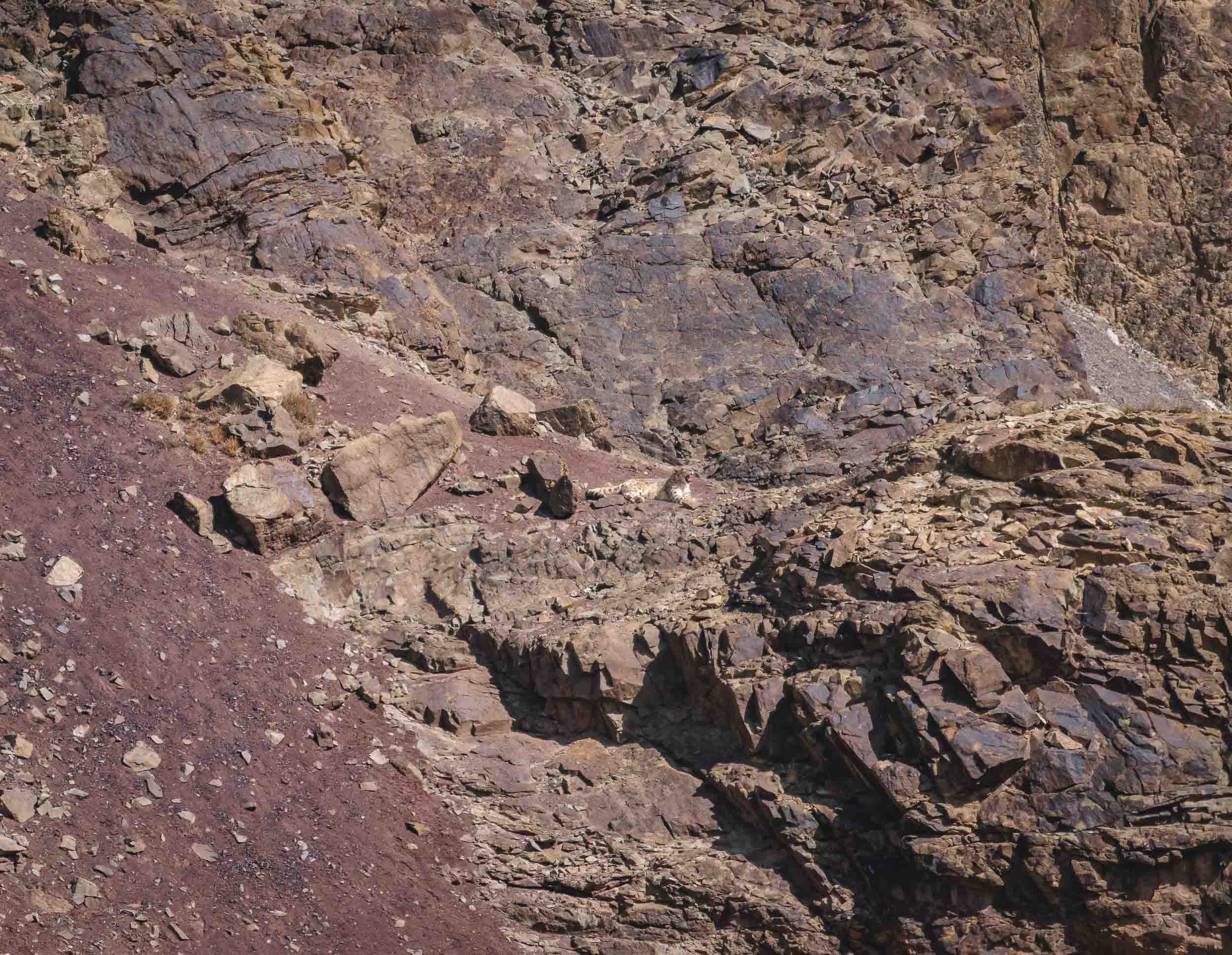
Snow leopards are mostly active around dawn and dusk, and exhibit many characteristic behaviors that we observe with the feline friends that live in our houses, such as the typical cleaning poses, scent rubbing, and yawning. They also cannot roar, but have been observed purring at times.


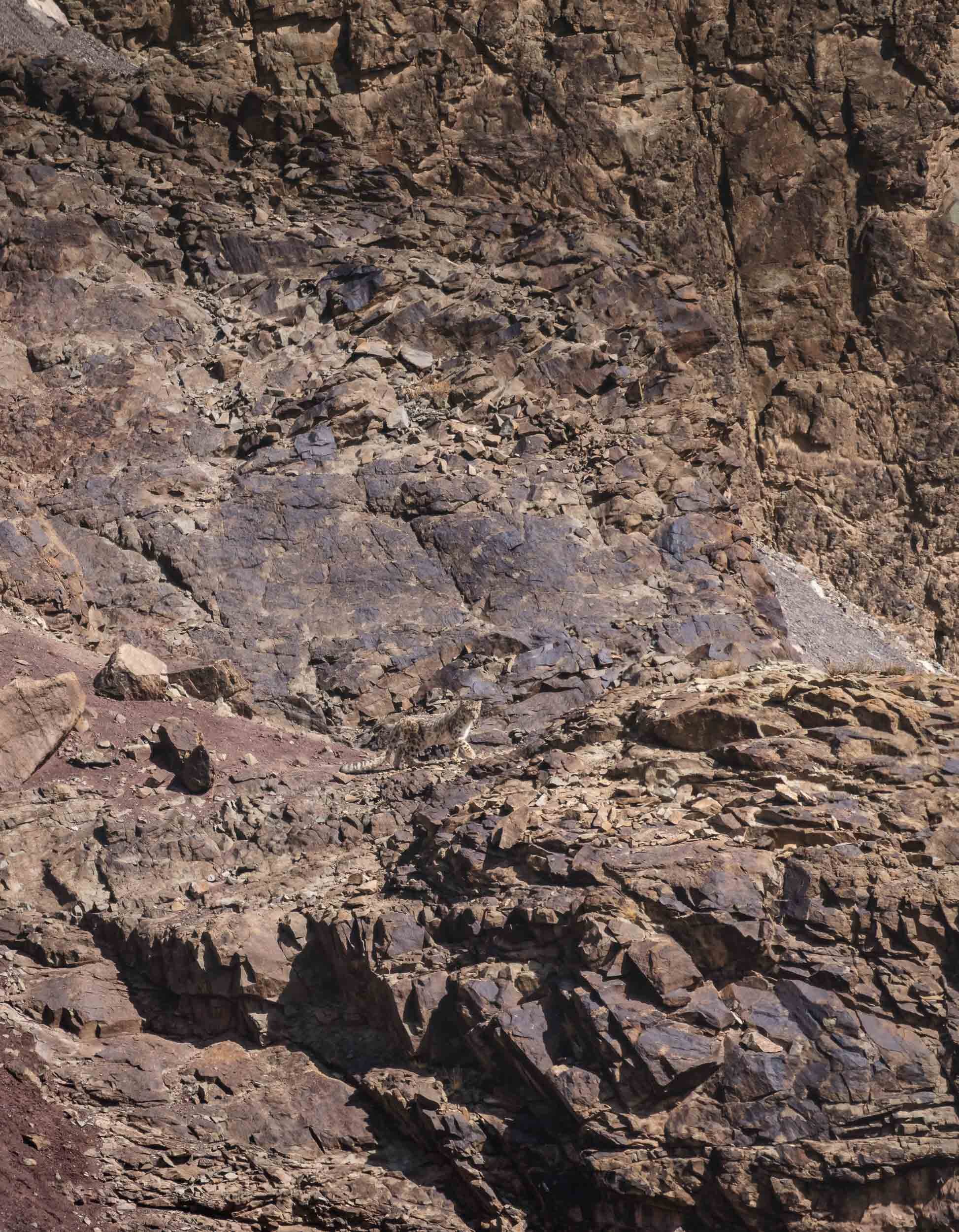
After about 3 hours of napping and cleaning, the snow leopard slowly made its way to the left, transversing the richly coloured mountain ranges, which were already free of snow in early March - that was gonna change a few days later at higher altitudes. If you scroll back up to the first panoramic image of this landscape, you’ll be able to make out where the cat was heading…


In the photos above, you can see the large tail, very thick due to its purpose as fat storage, and covered in a layer of fur, allowing snow leopards to use it as a blanket when asleep. Sleeping wasn’t on this individual’s mind anymore though. It was headed for three urial that has been peacefully eating on the slopes on the left, and was carefully approaching them, taking cover behind rocks and ridges from time to time. This is when we got excited - there was a definitive chance to see a hunt now, something that is almost never observed in the wild.

The Hunt
Things were in place. This photo features both the snow leopard approaching in hunting mode, and two urial, native wild sheep, not yet realizing the danger they are in.
Need some help finding either of the two parties? Take a look at these two images, zoomed in to the bottom left, and right, respectively.


The urial have been making their way down the cliff to feed on grass and bushes that grew between the cracks, while the snow leopard had managed to approach them from above without being seen - the whole process took almost an hour. After another few minutes of deliberation, the cat decided the moment had come and made its way down the slope.


One jump, and the three urial realized what was about to happen and scattered down the slope. For a split second the snow leopard wasn’t sure which one to follow, but once it had made its decision, there was no going back.


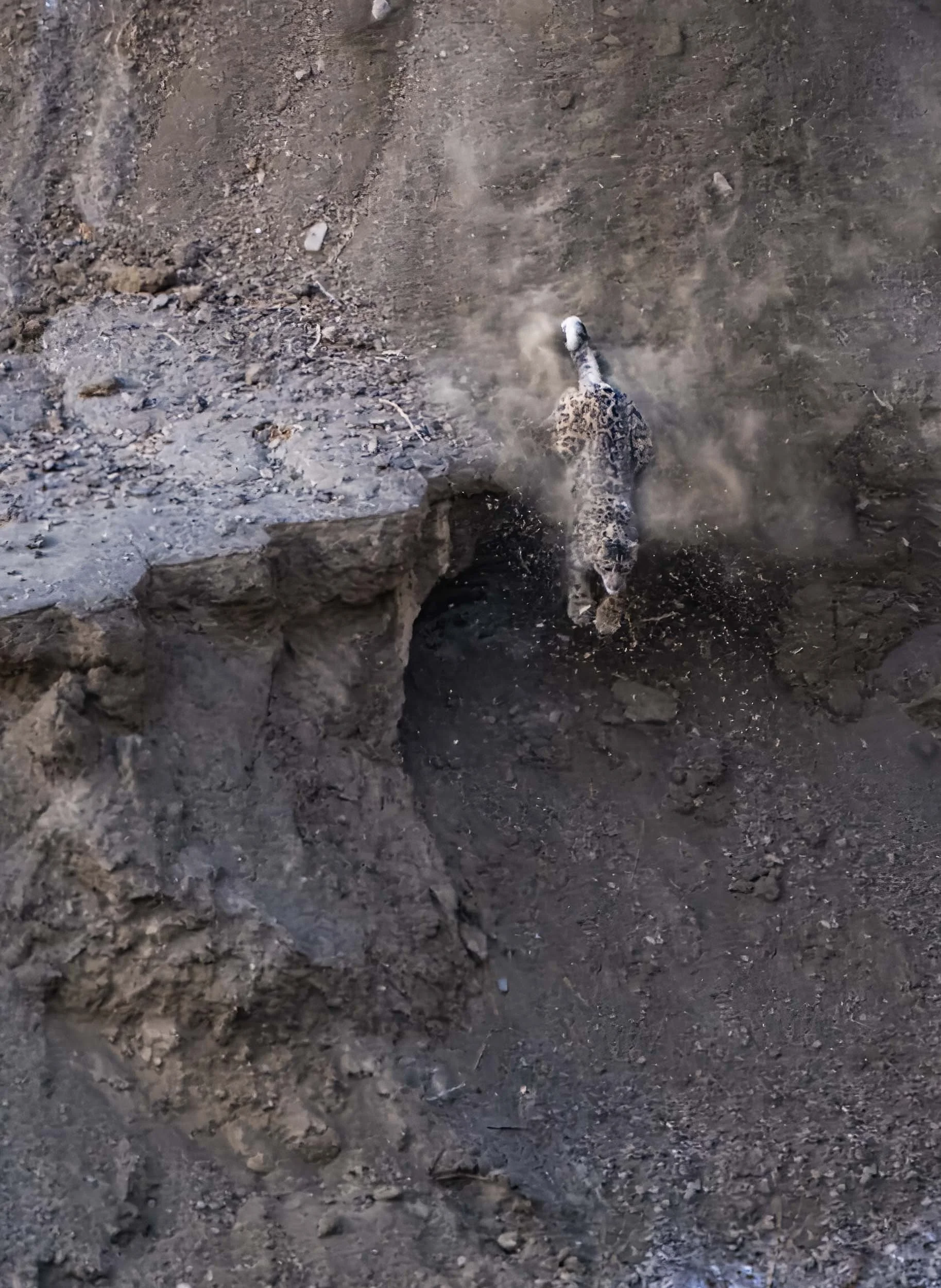

At this point, the speed at which everything happened and the athleticism of both animals as they raced down the cliff was completely overwhelming - I thought I was prepared to get the shots I was hoping for, but things happened way faster, in a much wider field of view, and a darker environment than I had anticipated, making my photos mediocre at best. This might be the topic of another blog post or a talk some day, as I learnt quite a few lessons for situations like this, even though I had been photographing a lot of action-packed wildlife before. For those interested in the photographic details, in short, shifting away from continuous autofocus, sticking to a very long focal length at the expense of light, and getting greedy with shutter speed, are all mistakes to avoid.
Dramatic
Here’s an iPhone video of the hunt taken by one of the spotters (and copyright and credit to him) next to me almost from start to finish. It doesn’t do justice to the steepness of this cliff, which was the reason the urial ended up stumbling and falling to its death into the canyon road that passes below (where we drove a few hours earlier).
The hunt ended with the snow leopard killing the urial with a bite at its neck, and the cat dragged the large sheep a few meters back up the cliff.


Pose of Success
This was also the closest we had come to the animal, still at least 500m away I’d say but enough to see the beautiful details of this incredible cat.
Post-Hunt Rest
With the kill a few dozen meters below, the snow leopard retreated under a huge outcrop to rest a bit, observing its surroundings and probably waiting for darkness to creep in before it would go back to eat - we left it alone at this point.


Despite the excitement of having witnessed this incredible sight, for the next days (and even while writing this 9 months later) I couldn’t quite shake the little disappointing voice in the back of my head telling me I had missed some once in a lifetime photos. Once in a lifetime sounds a bit dramatic, you say?
Our main spotter, who worked for the BBC and other wildlife documentaries being filmed in the region, told us he had not once seen a hunt from start to finish in his 15 year career. With this perspective in mind, the fact I got lucky enough to experience it at all started to overshadow the lack of a perfect photo.
Ulley

It’s difficult to deny that we had already witnesses the highlight of the week here as we made our way from Leh further into the mountains on Day 3. The destination was the small village of Ulley, a group of around 10 houses in a valley at over 4000 meters, which offers a cozy small lodge as a home base for people looking to get a glimpse at the ghost of the mountain. On the way, we passed the confluence of the Indus and Zanskar rivers, seen above.

Likir Monastery
Another highlight as we moved along the dirt roads was this monastery built in the 14th century and, according to Buddhist mythology, the first construction by the Tibetan monks.

Historical Evidence
Petroglyps that have been found around the region, such as here in a small collection along the Indus River, are over 5000 years old. Ladakh has been populated since the Neolithic times.

Once we arrived in Ulley, these were the views into the valley we got to enjoy from the observation area at the lodge. The spotters set up their scopes and binoculars here each morning to look for animals roaming on the slopes.

Ghost Spotting
The spotting crew is what makes it possible to see snow leopards - or really any animals at all - in this area. Their experience and skill at observing the surrounding mountain ridges is incredible to observe. Most of the spotters here have been working in this field for over 10 years and often support film crews for wildlife documentaries or researchers. Some of them have installed their own camera traps to help document the animals in the region.


(I believe) a Himalayan vulture and a bearded vulture - one of the various birds we found in this area, alongside snowcocks and partridges.
The Return of Winter
Winter had arrived after a few days, and the valley was suddenly covered in snow and fog. While March signals the end of the very cold season, occasional snowfall happens until April.


Those conditions weren’t the best for spotting animals, but they were even worse for some local workers and their families, who were hired by the government to improve road access to the village. Their tents suffered from the weight of the snow, and heating (using dried cow dung) became essential.


Day to day life was impacted as well - it becomes difficult to dry your laundry when it freezes in the snow instead. During the winter months, there is no running water in the village, and availability of electricity is temporary at best.

A small collection of buddhist chorten, a type of stupa, at the top of the mountain road, serving as depositories for Buddha relics.

400 Years
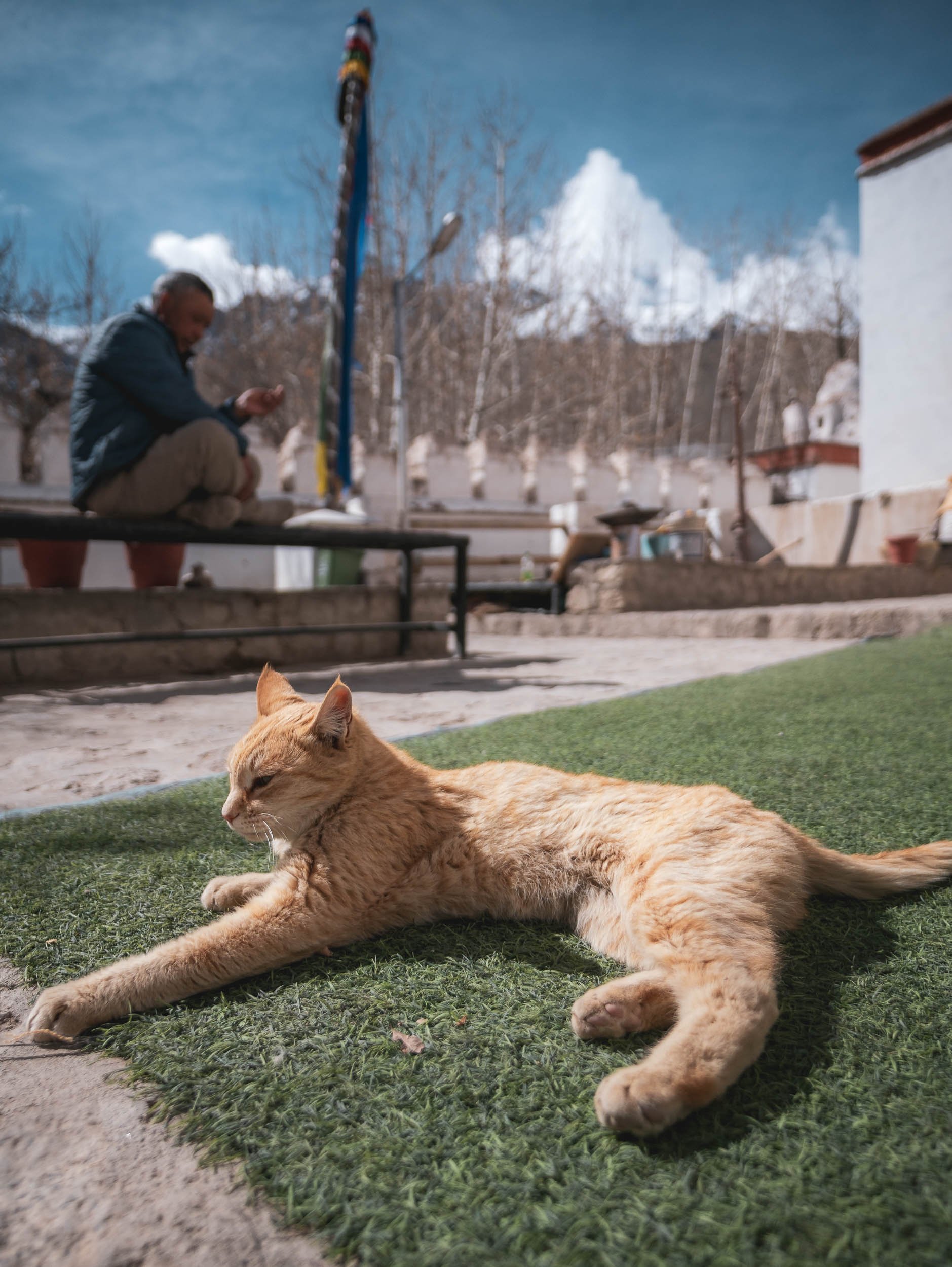
Is the age of this local house, which we saw while exploring the valley above the lodge on foot. The couple who lives here are the parents of one of the girls working in the lodge, and they kindly invited us for tea. A beautiful way to warm up - it was -15C outside. The cat had to do the same, can you spot it in the photos below?


Seeing the interior of the structure and the many artifacts that have been in use here for centuries was really interesting: Pots that have been passed down generations, skillfully brewed local Kahwa tea, and the traditional wedding belt worn by the couple’s daughter.

Couple in the Snow
I don’t often take portraits, but sometimes moments present themselves where you can capture an unfiltered natural scene. One of my favorite photos from the trip.

Nightfall
The stars rising over the mountain ranges and the weather cleared up.

Exploring
Prayer flags are commonly seen in this area when driving from village to village, as we did the next day. They’re, meant to bless the surrounding countryside and usually come in five colors: blue for the sky, white for air, red for fire, green for water and yellow for earth.


Yak Cow Mix
It’s rare to see wild yaks in the area, but the domestic cow type mix is commonly seen.

On the Lookout
Regular stopping and scanning while traversing the mountain roads along the many cliffs and valleys is the way to see animals here.


Aside from the elusive snow leopards, the mountain ranges of Ladakh are home to other fascinating animals that adapted to the harsh and cold environment, such as the vulnerable Urial, with only 1500 of the Ladakhi subspecies left.


As well as Ibex, such as this female looking for food under a large boulder and the group of males on the right.

Another highlight of Ladakh that is rare to see can be found in the photo above. In fact, there are at least seven of them. Take a close look…🐺 Himalayan wolf are an endangered species generally found above 4000m, with just a few hundred individuals usually moving in packs of a dozen or more individuals. We had the chance to see a distant pack quickly moving along through the rocky landscapes for a few minutes.
A Day of Sightings

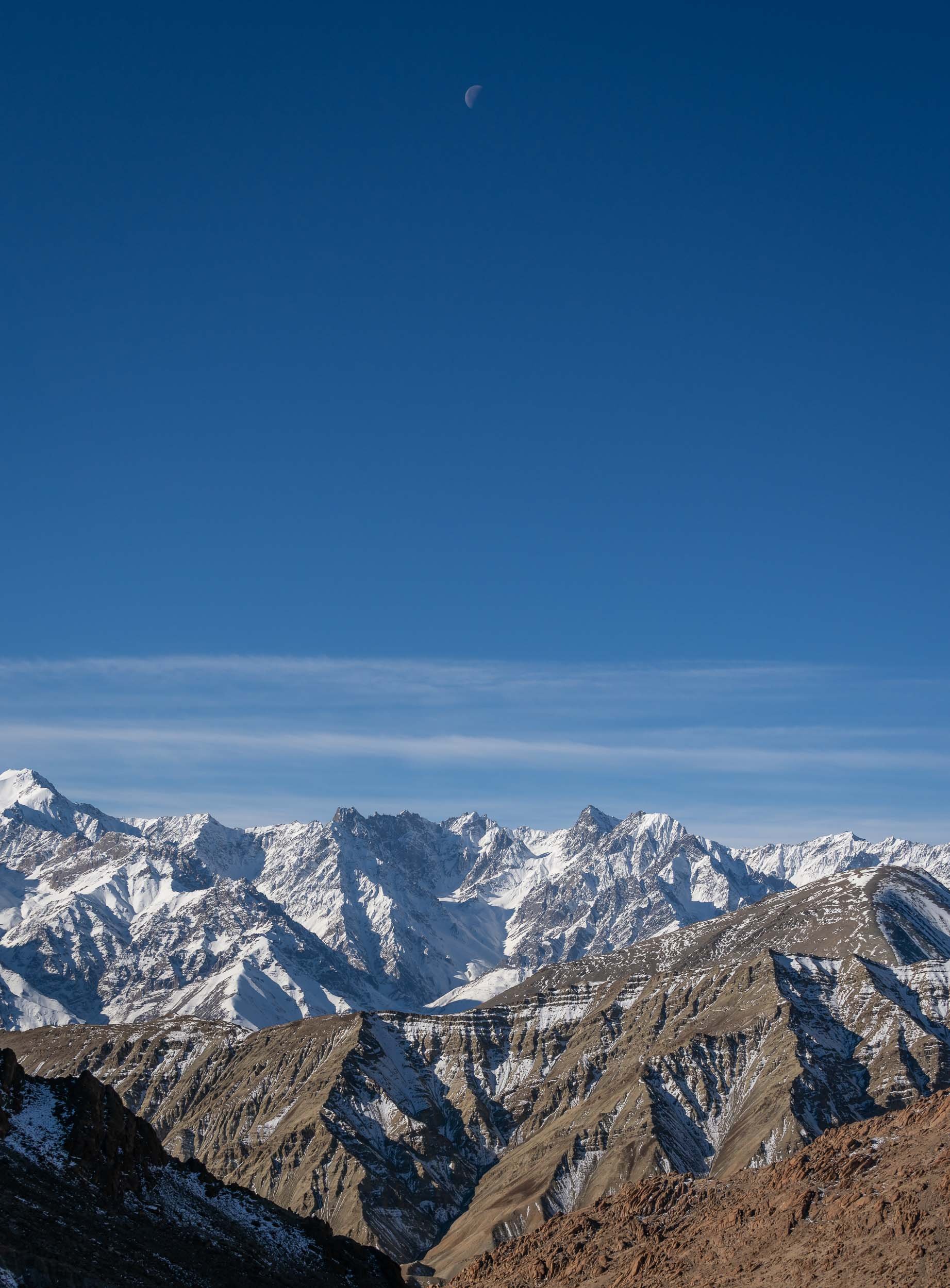
As the weather cleared up and the half moon rose over the Himalayan mountain ranges, our second snow leopard sighting for the week happened to occur in the valley of the village, just a very short drive away.


That drive however was followed by a hike through a nearby canyon - which at 4000m elevation with a dropping blood oxygen and a lot of equipment becomes a bit tougher than normally. In the end, this sighting showed us some remains of a previous meal the cat enjoyed, and a very brief distant glimpse of a snow leopard’s head at the ridge after waiting for several hours. That’s a much more common snow leopard expedition sight - can’t always expect a hunt!

Sighting 3
On a late afternoon on the same day we got another call - a snow leopard was sighted not too far from one of the roads through the local villages. Our guides made the call to give up on the lazy cat on the ridge, and go for this one instead. A good decision.
While still relatively far if you are used to African safaris (which are nothing like this), it was probably the closest sighting we had. And what a beautiful individual, with a big furry head, showing us its teeth as well.

Snow leopards are generally solitary, with each individual occupying a home range of over 100 square km with little overlap. There are less than 10,000 estimated to remain in the wild, with almost half of them in China alone. The rest is spread over the mountain regions of Central Asia, from northern Mongolia down to the Himalayas and westwards to Afghanistan. In Ladakh, they are the state animal.

Tired Eyes
After that day, our spotters deserved some rest time, that’s for sure.
In Movement
A few clips of the sightings we had during the week - overall, with a total of 3 snow leopard encounters plus ibex, urial, and a pack of wolf, it was definitely an above average week (let alone seeing a hunt!).
On the last day we visited another local village residence a little bit higher up on the cliff. The main house was built using traditional methods, where the animals are kept on the lowest floor to provide natural heating for the first floor above, where the family lived.
The animal enclosure has been expanded to a separate house with a netted roof to avoid predators.


The interior features a similar style as the previous house we visited, with the typical oven and pots, a traditional oven for heating, and centuries-old wooden beams supporting the upper floor.


Women of the Family
A feature of Ladakhi society that distinguishes it is the high status and relative emancipation enjoyed by women, compared to other rural parts of India.
Former Days
Another interesting house in the village was this former local school, which was closed down recently. The few children that live here now head to a nearby village instead. Many of the family members work or study in Leh or elsewhere during the winter, but come back to their villages in the summer.


Monastery of Alchi
As our time in Ulley came to an end, we stopped at this 1000-year-old monastery on our way back to Leh, featuring 1000s of prayer wheels (which you should always turn clockwise for good luck!)

Kind people all around, incredible mountain ranges, and the most amazing cats in the world. Ladakh was a special and unexpected side of India. And that was it before heading back to Delhi - more on that soon!

This is the second part of my Nepal blog, leaving the Kathmandu valley and exploring the wildlife of Bardiya, Pokhara’s mountain views, and more.