
Samburu - Warriors & Wildlife in the North of Kenya
One of northern Kenya’s most iconic regions is the Samburu area for its cultural significance, unique animals species, and elephant conservation projects.
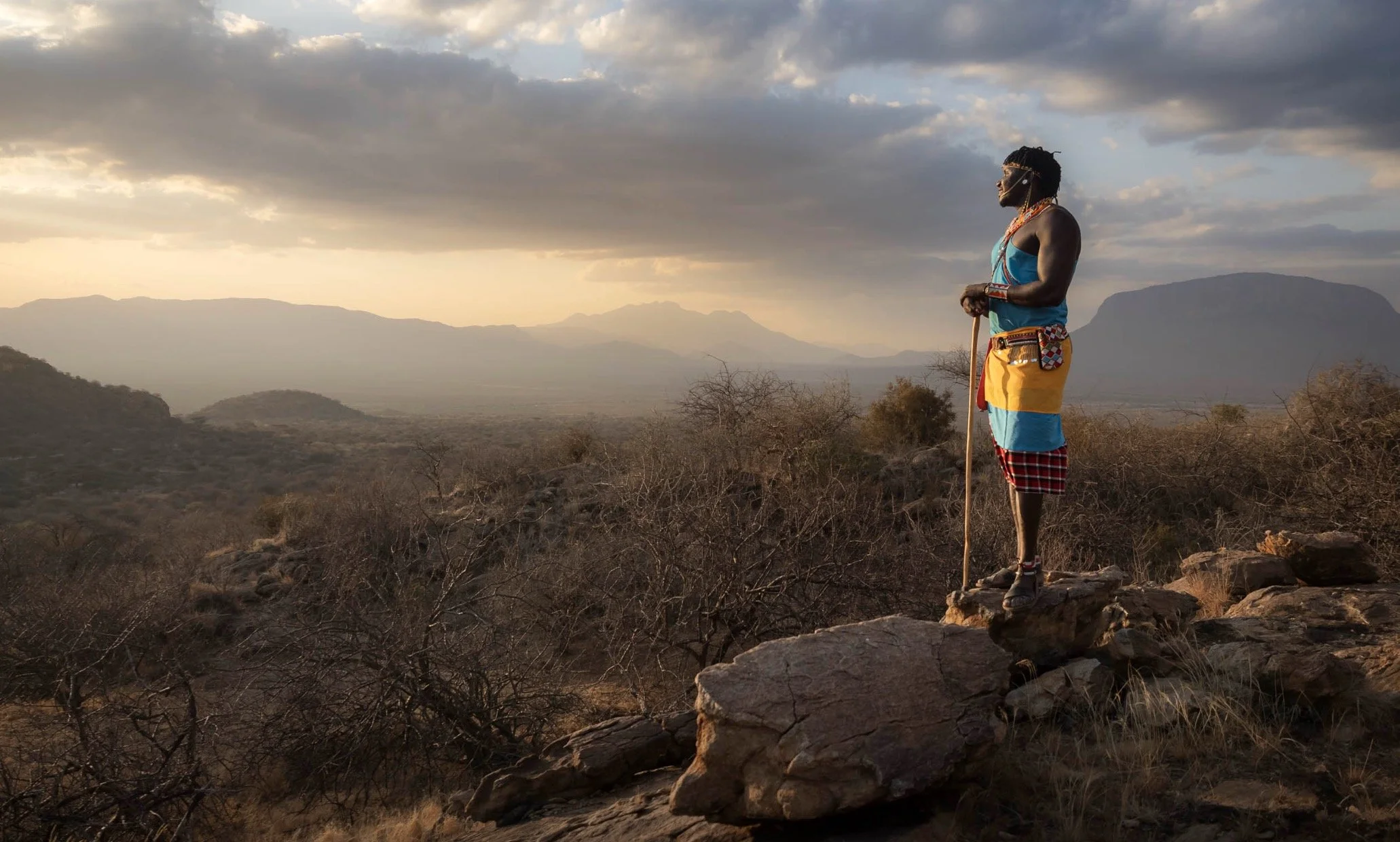
Although I’ve been to Kenya several times, and even to the northern parts, one region that has been on my list for a while is Samburu County. The reasons are various: it features beautiful bush landscapes, is home to several endemic species and associated wildlife conservation efforts, and of course the Samburu semi-nomadic pastoralists.
Read on to learn more about my attempts to cover all of this in 6 days.
Into the Drought
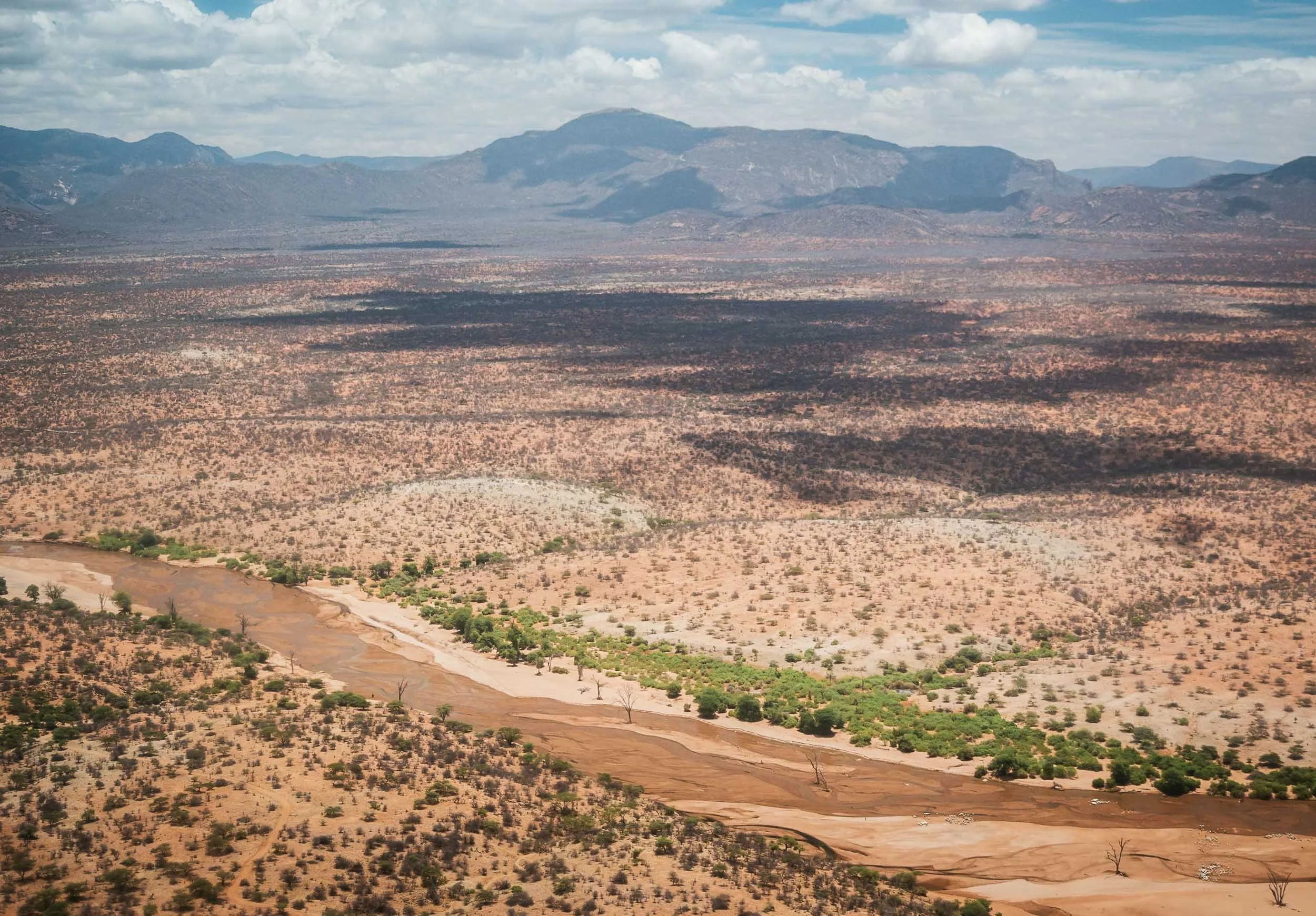
The local flight from Kenya’s capital takes just about an hour, and the further you head north, the more the greenery of the lower rift valley mountains turns into dried-out river beds and bush lands dominated by orange, red, and yellow tones, owing to the fact I visited Samburu during the dry season in August.
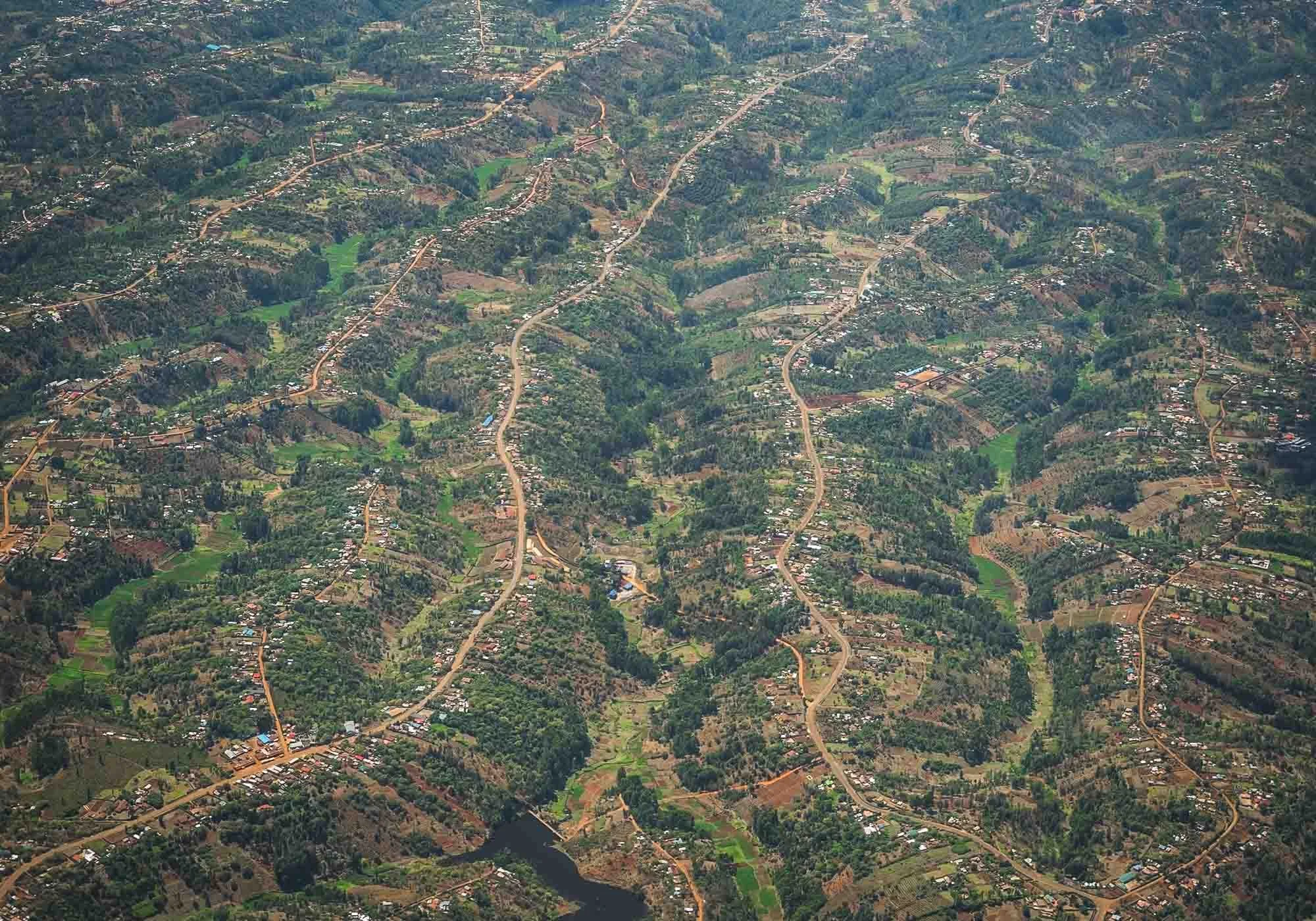
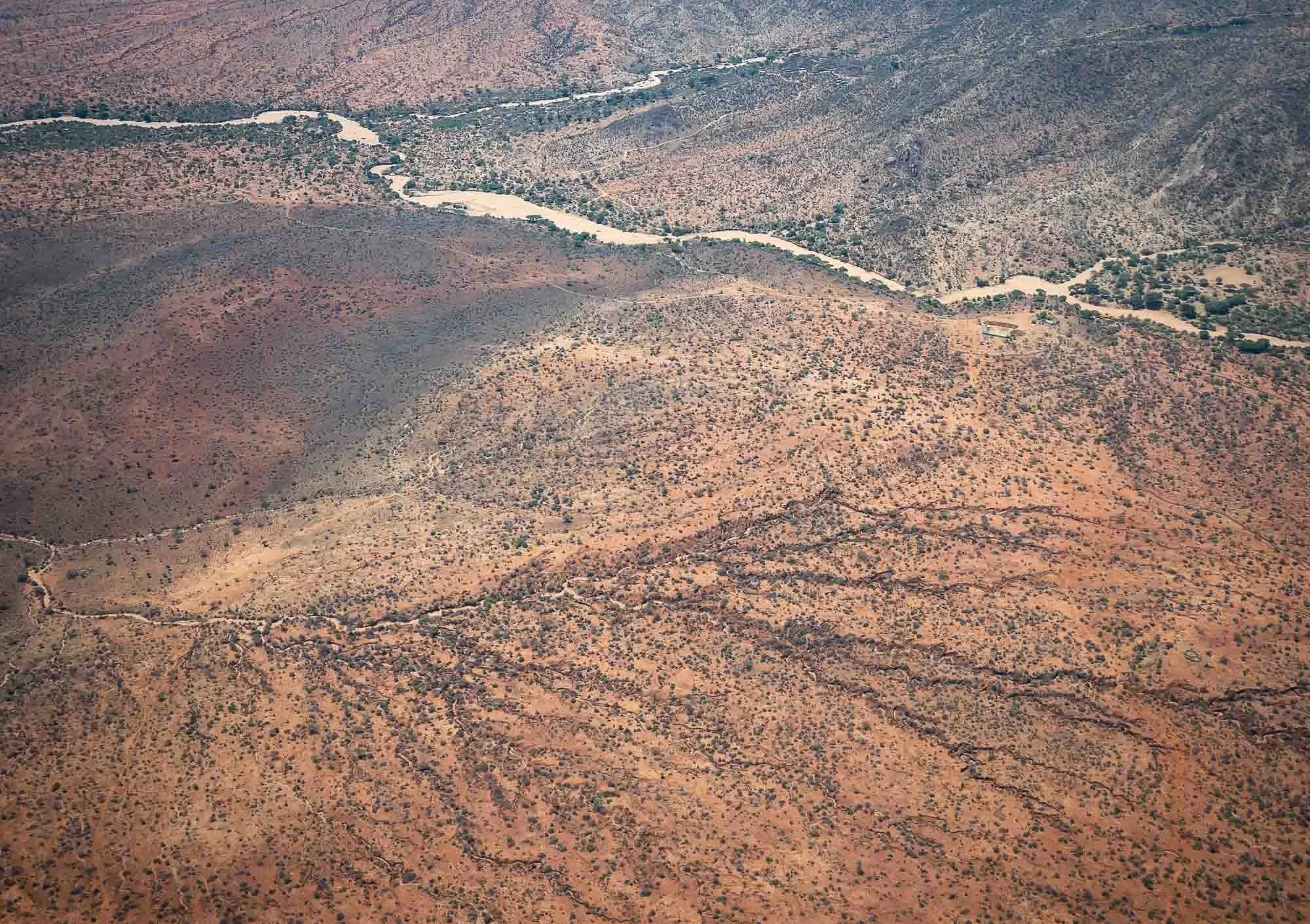
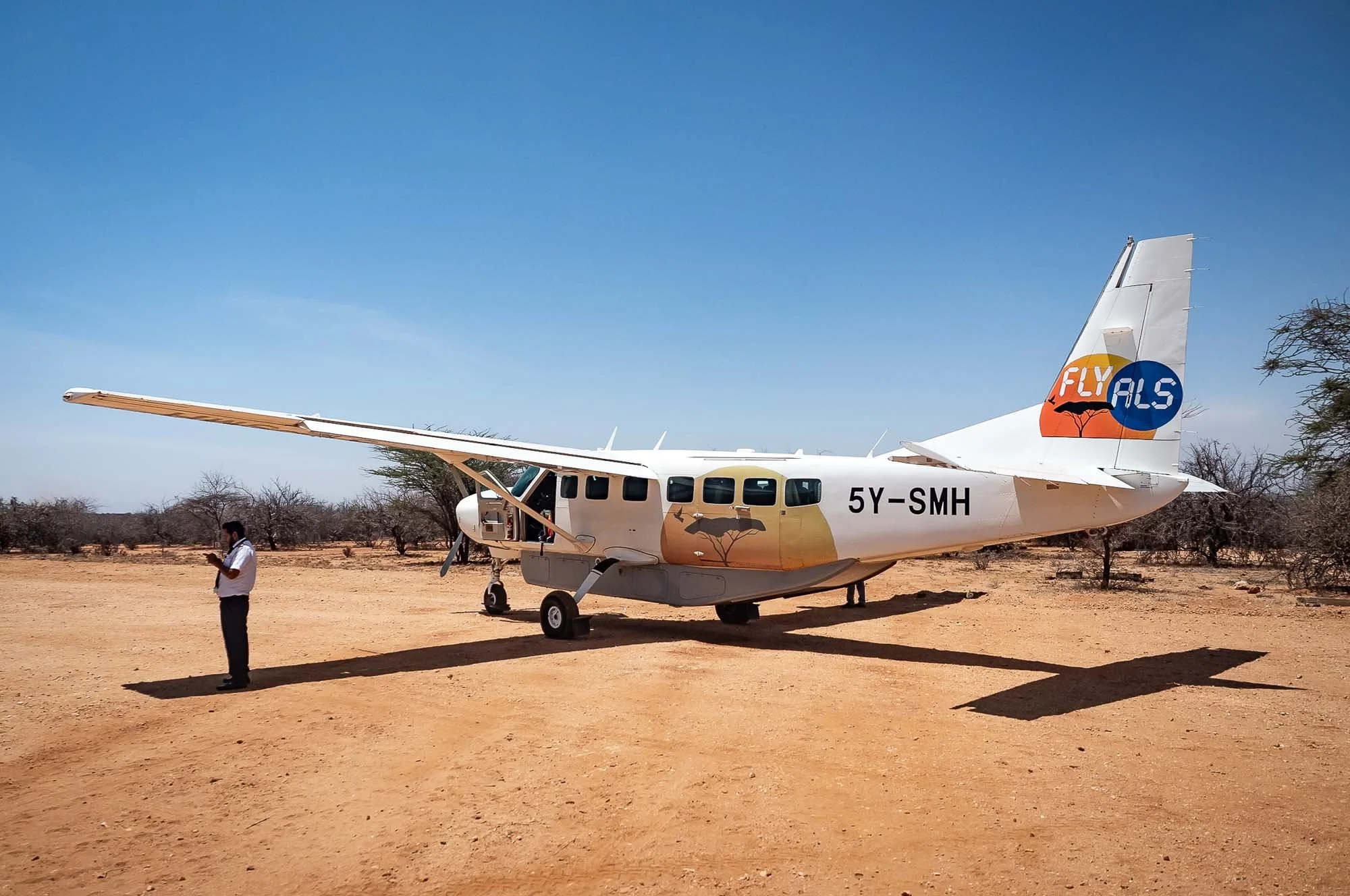
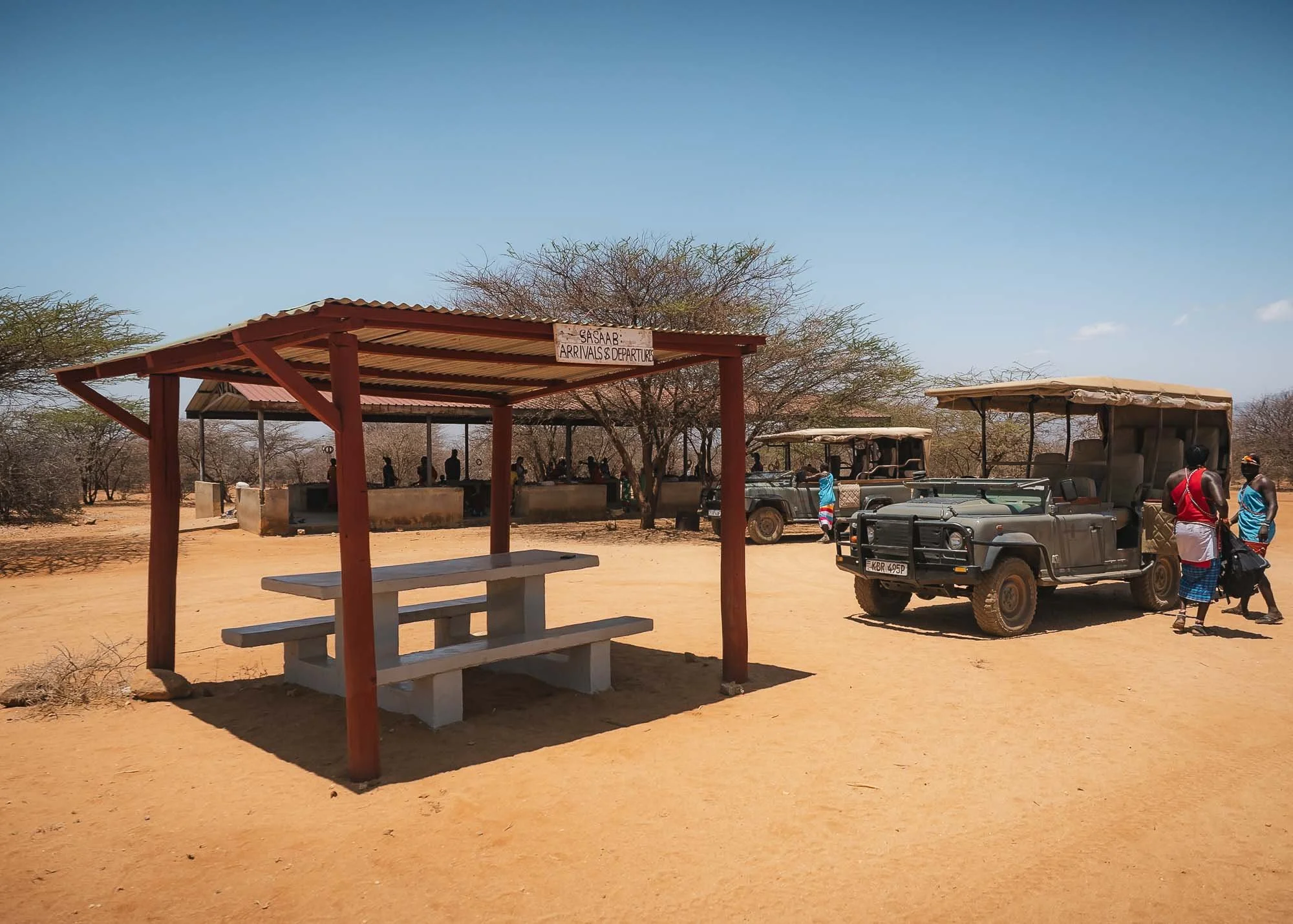
Getting to Nairobi was an absolute disaster due to a local air traffic control strike, which meant I missed out on another part of Kenya I had planned to visit during this trip. The journey from Nairobi to Samburu was a little smoother - not quite though, as the local airstrip in Kalama was closed for military exercises. We landed a bit further out at Saasab - arrival and departure hall pictured below.
Sera Conservancy
After meeting Jimmy, a local Samburu who’d be the guide for the week, the first destination was Sera Conservancy, a good 4 hour drive further north. The goal here was to do something that’s quite unique to this specific place…
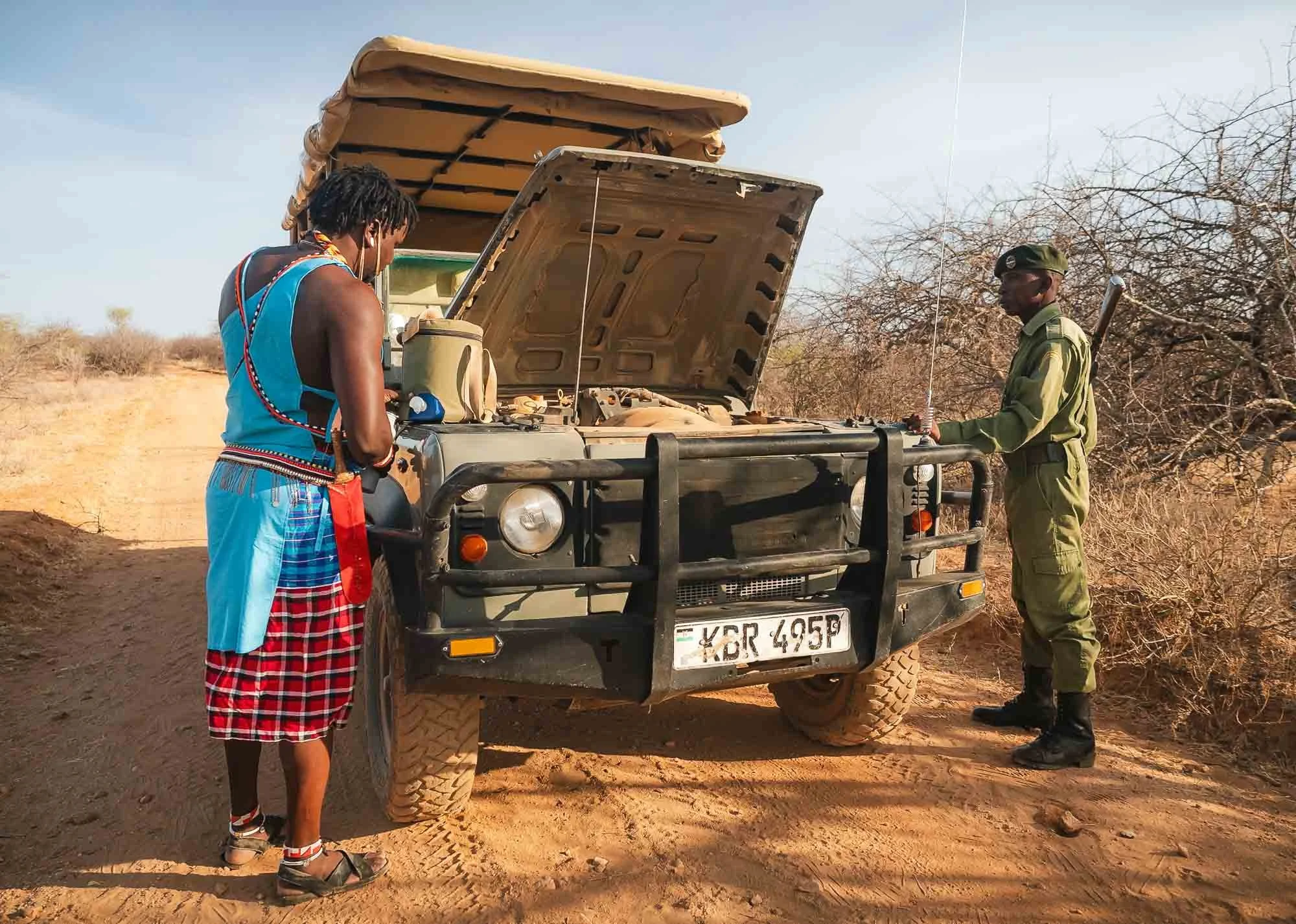
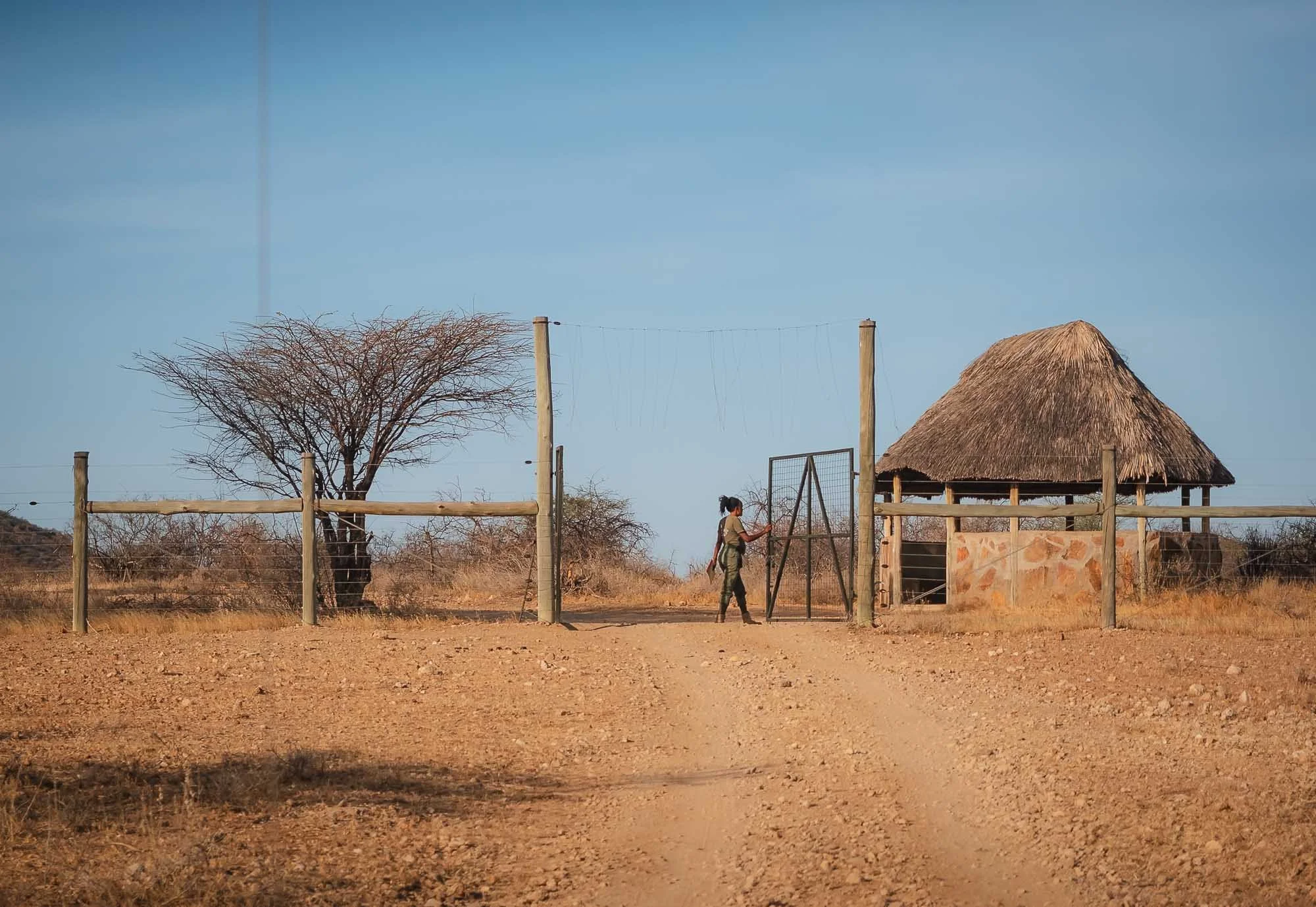
First we had to overcome a brief breakdown as the radiator didn’t like the heat, but then entered the conservancy: the first and only community-owned and operated black rhino sanctuary in East Africa. What makes it special is that - accompanied by an armed ranger - you’re allowed to track these elusive creatures on foot…
Two of the Northern Five
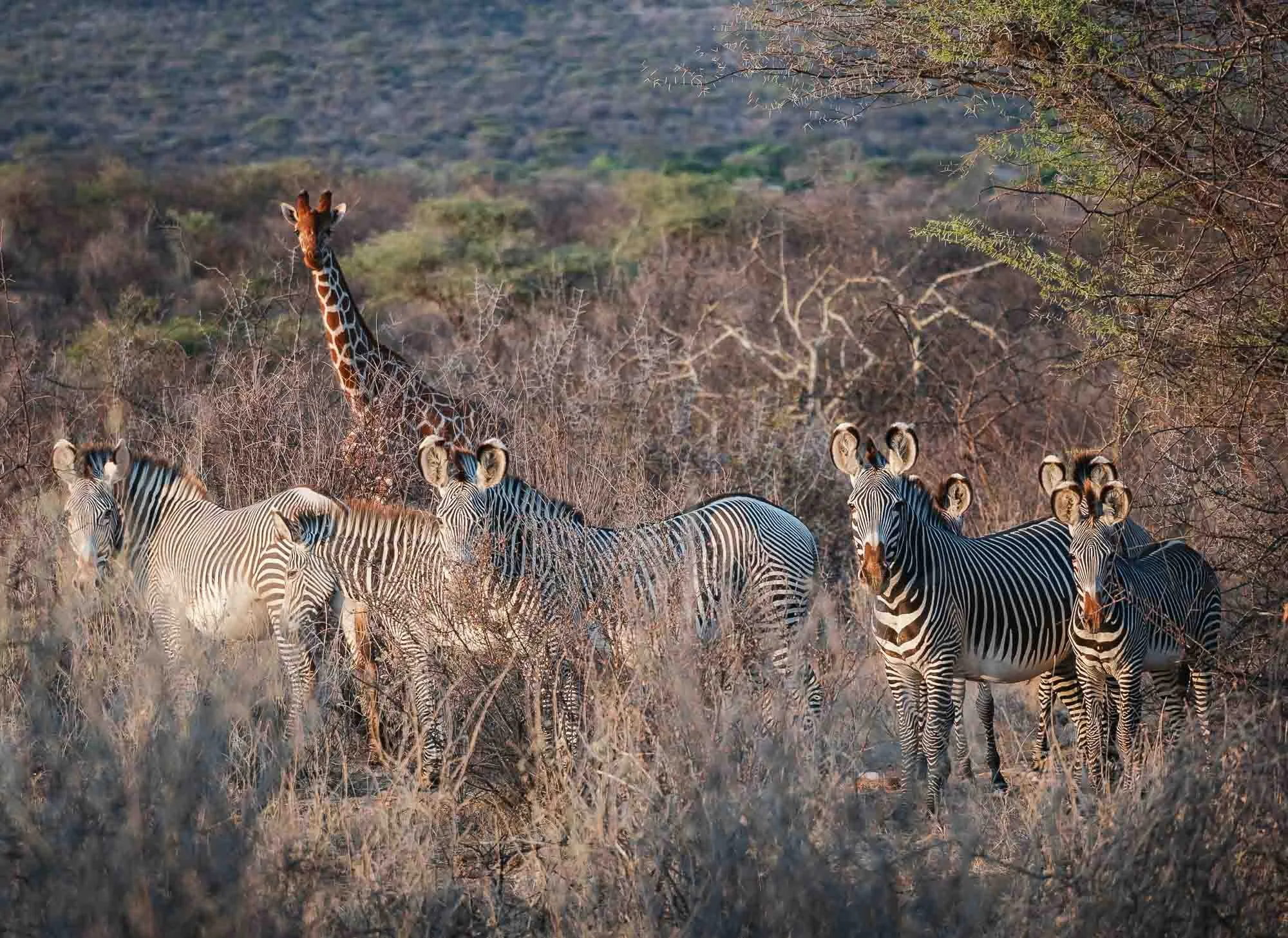
Before that though, we explored the conservancy by car and spotted two of the so-called Northern Five, a group of species that is more or less endemic to this area.
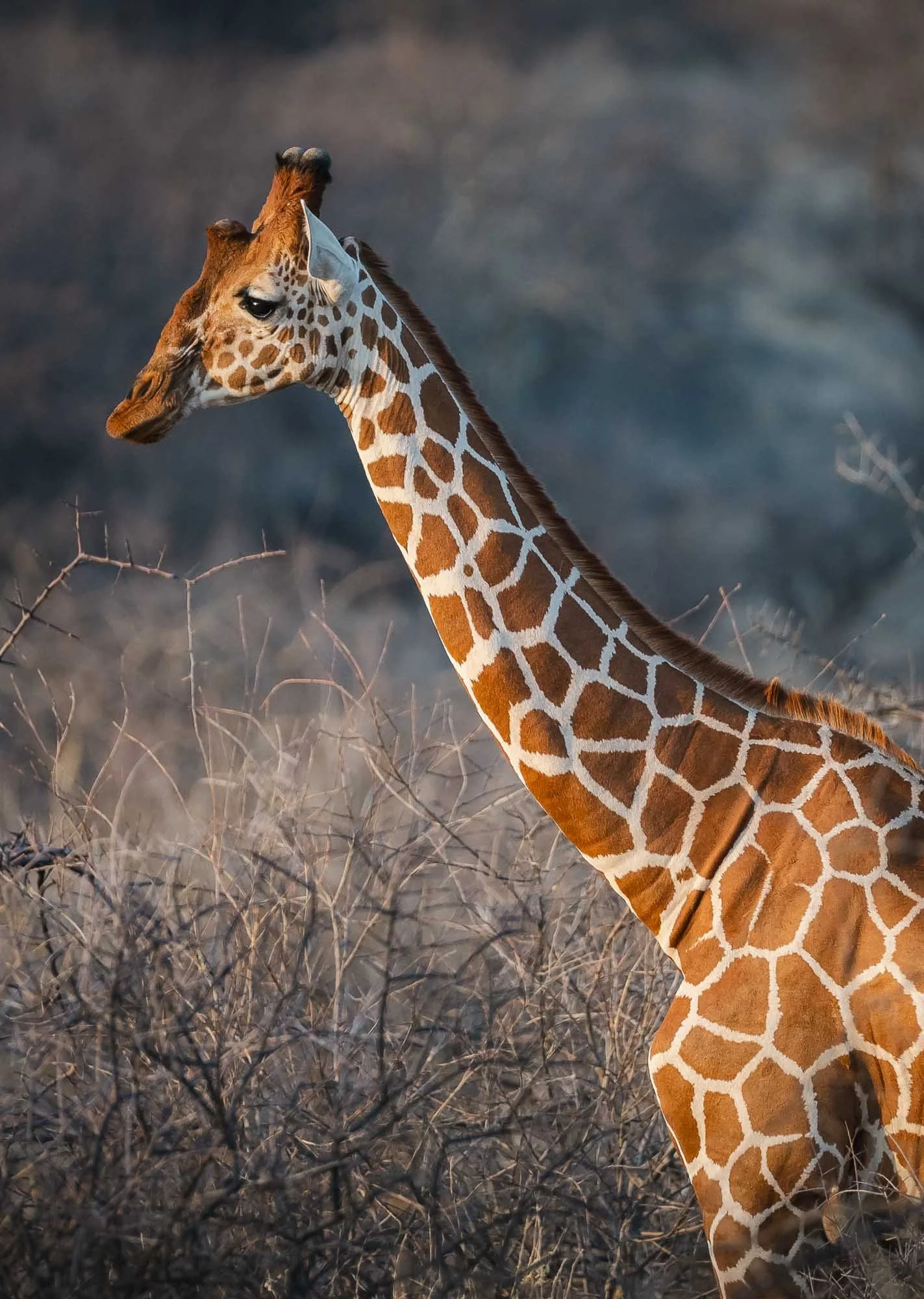
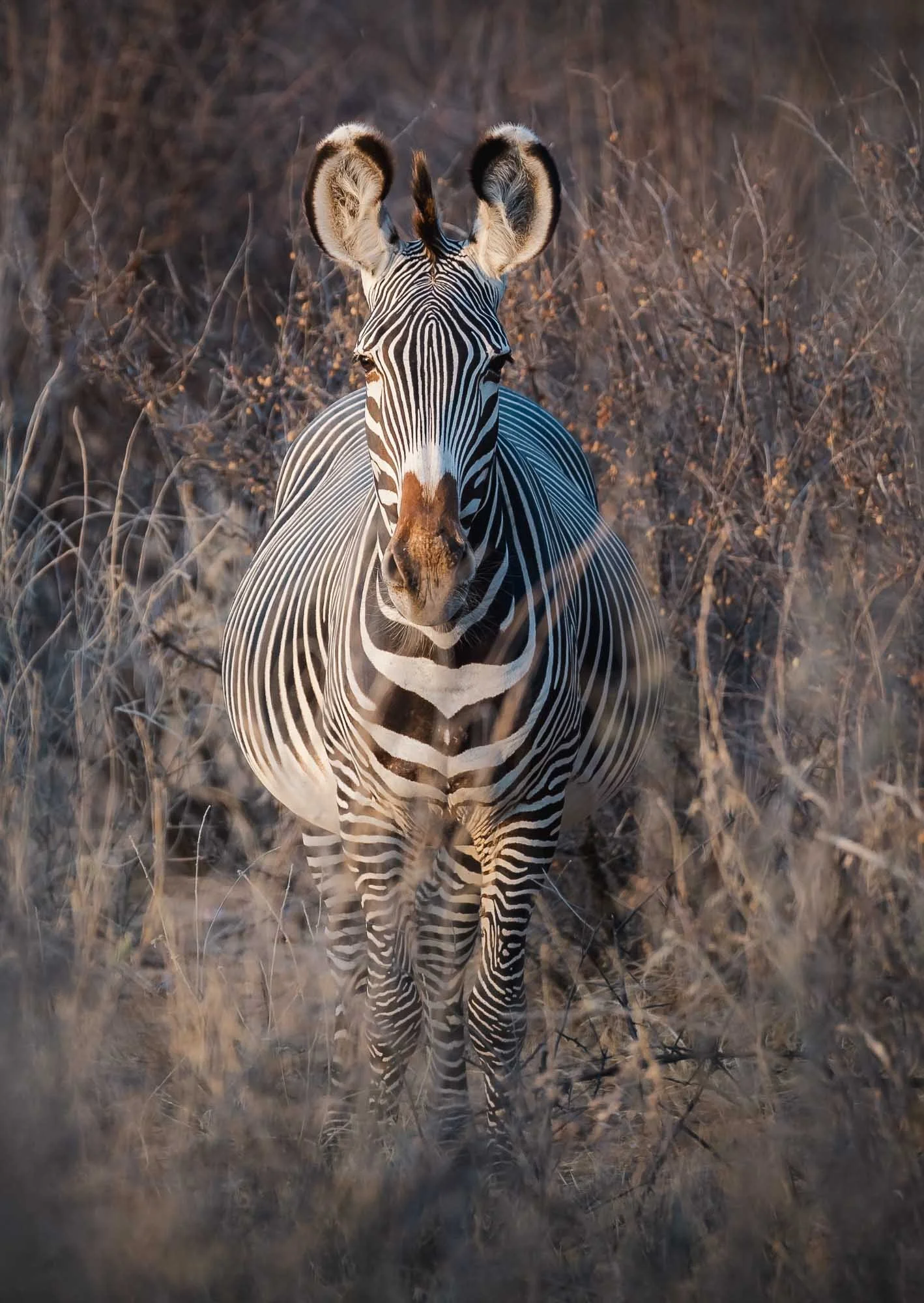
Both of these species are endangered, and subtly differ from their more common variants: the reticulated giraffe has a more defined pattern with thinner stripes than for example the Masai giraffe. The Grevy’s zebra is larger than the common plains zebra, with narrower stripes and large, rounded ears - a slight Mickey Mouse resemblance if you ask me.
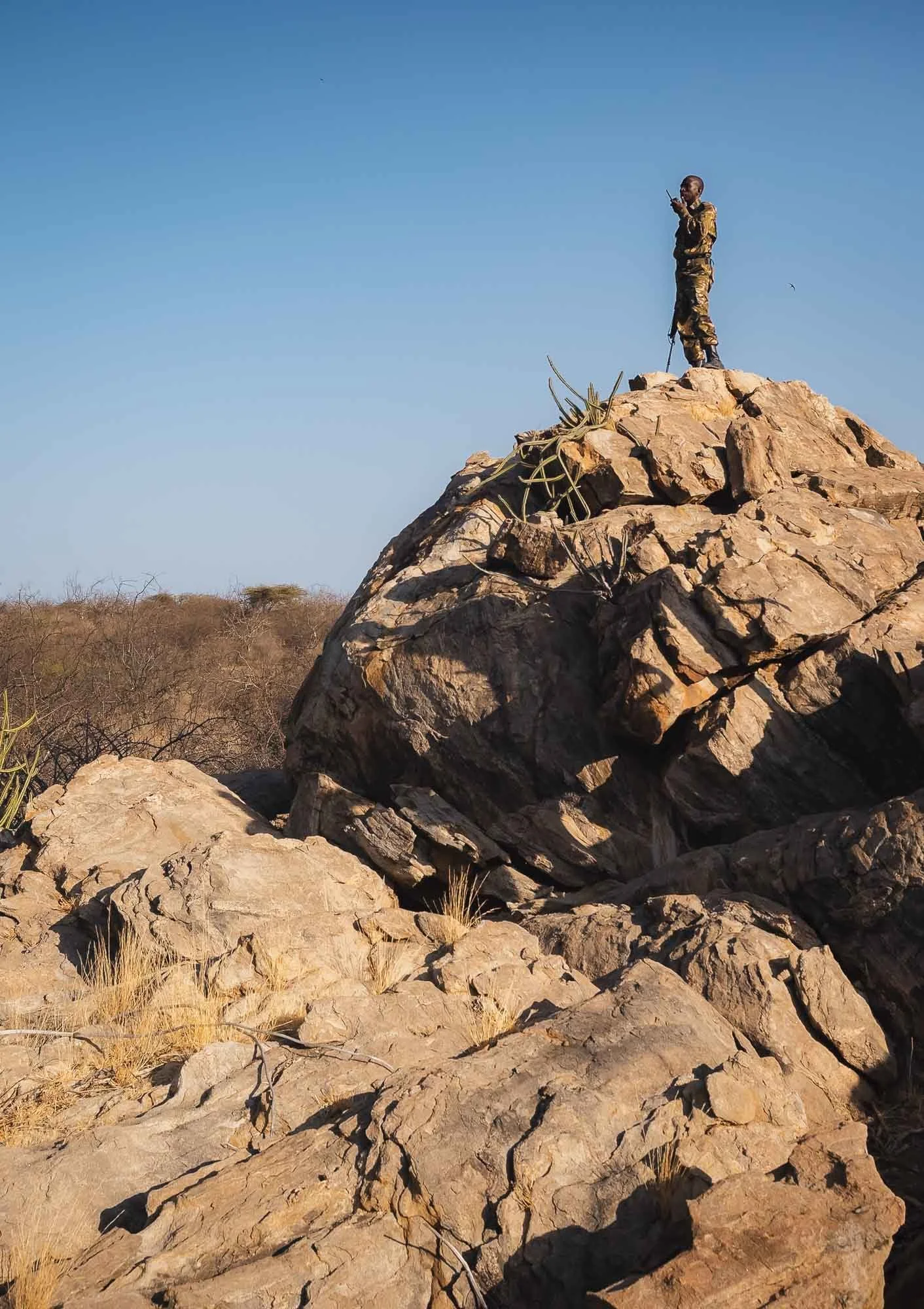
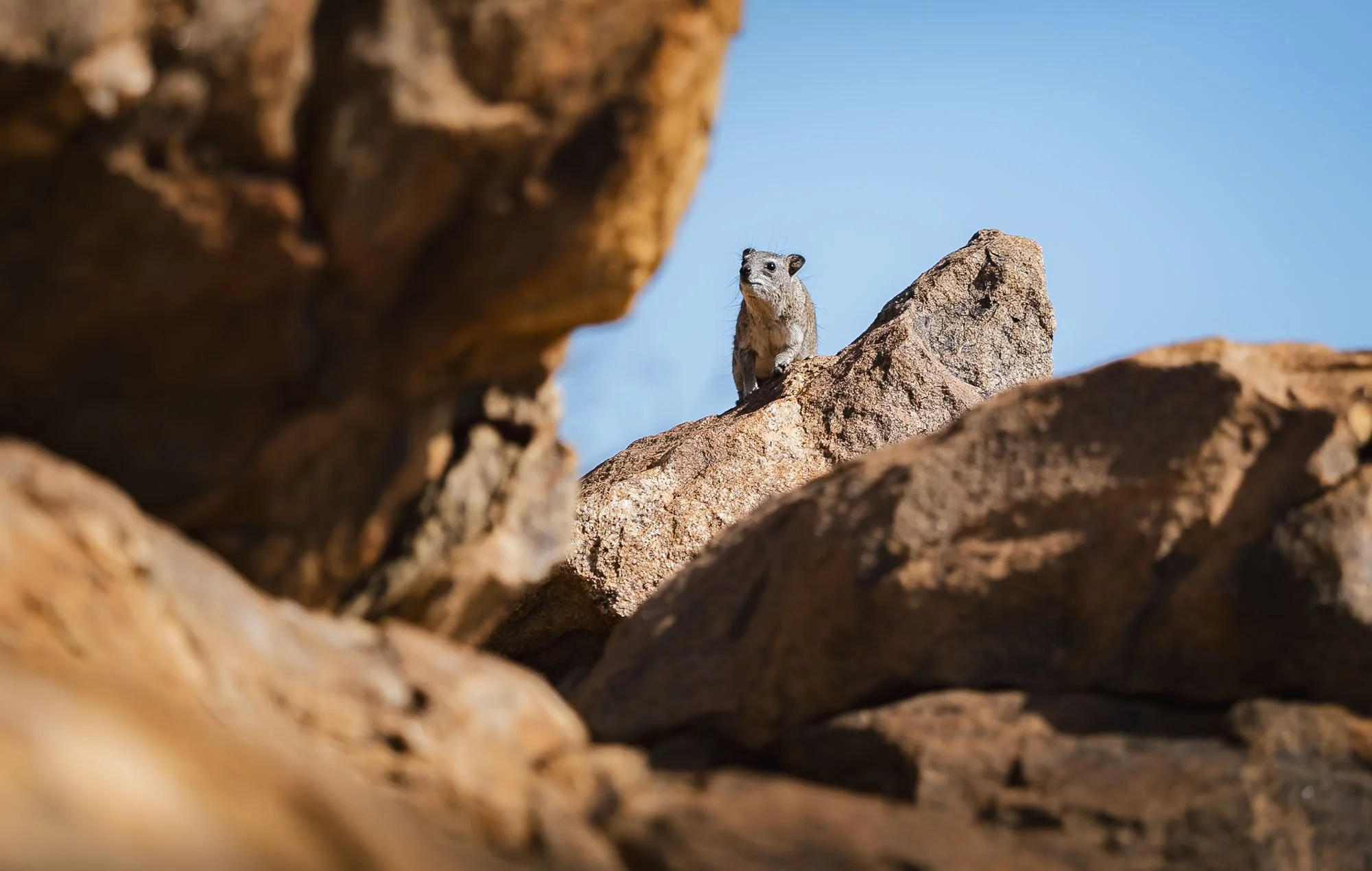
But our goal was to find one of the 20+ rhinos that occupy the 10,000 hectare sanctuary. The first group was introduced in 2015 after they became extinct here in the 1980s due to poaching. Despite their size, it turns out to be quite difficult to find one, and for an hour all we spotted was these little rock hyraxes (their closest relatives are elephants - yep, look it up!)
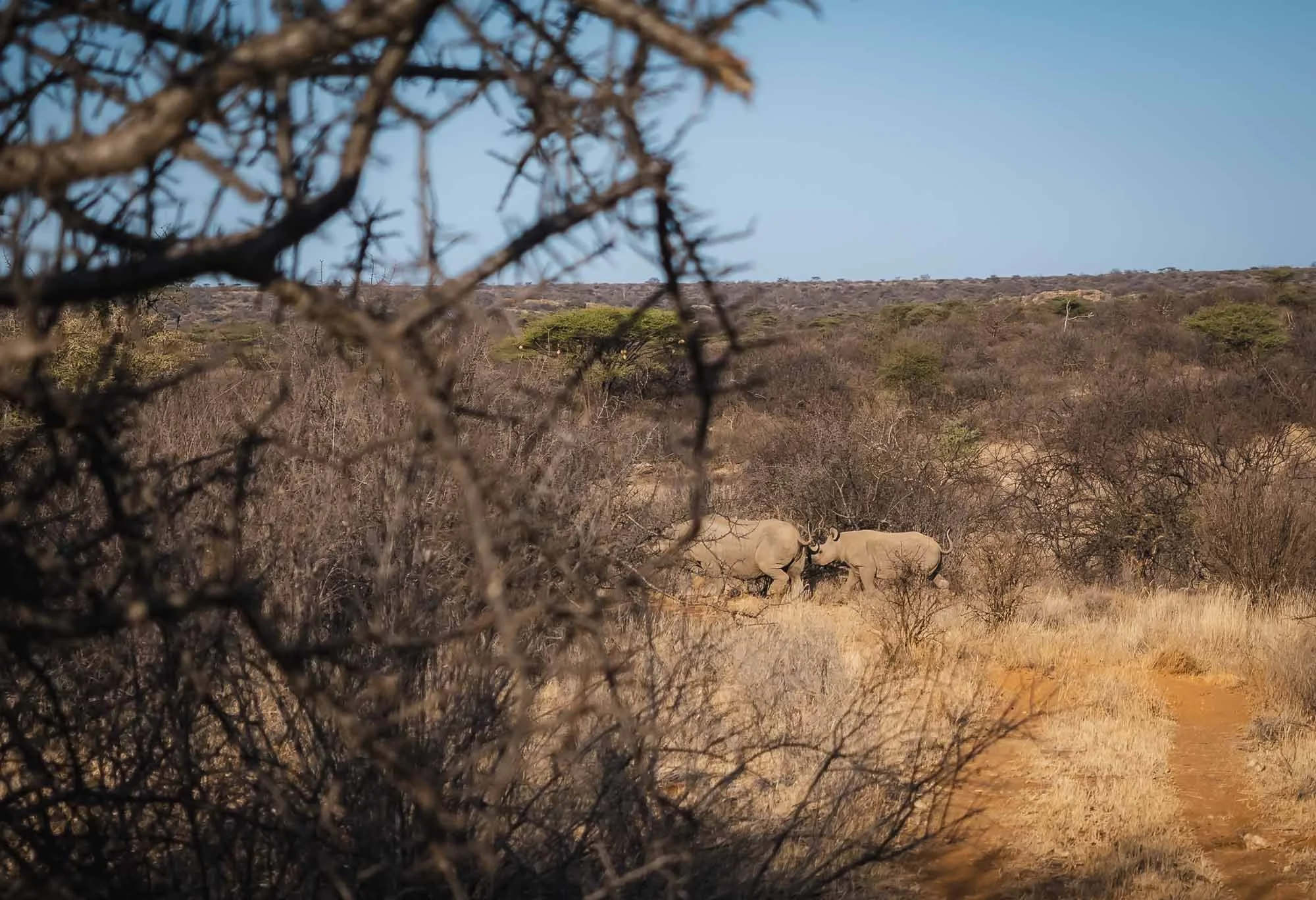
A ranger called us to tell they had spotted a mother and her calf, and we rushed to the location in the car, only to see them disappear within a second of our arrival.
Despite weighing over a ton, Rhino’s can be remarkably quick and are very effective at hiding in the bush - we looked for these two for a while but could not find them again.
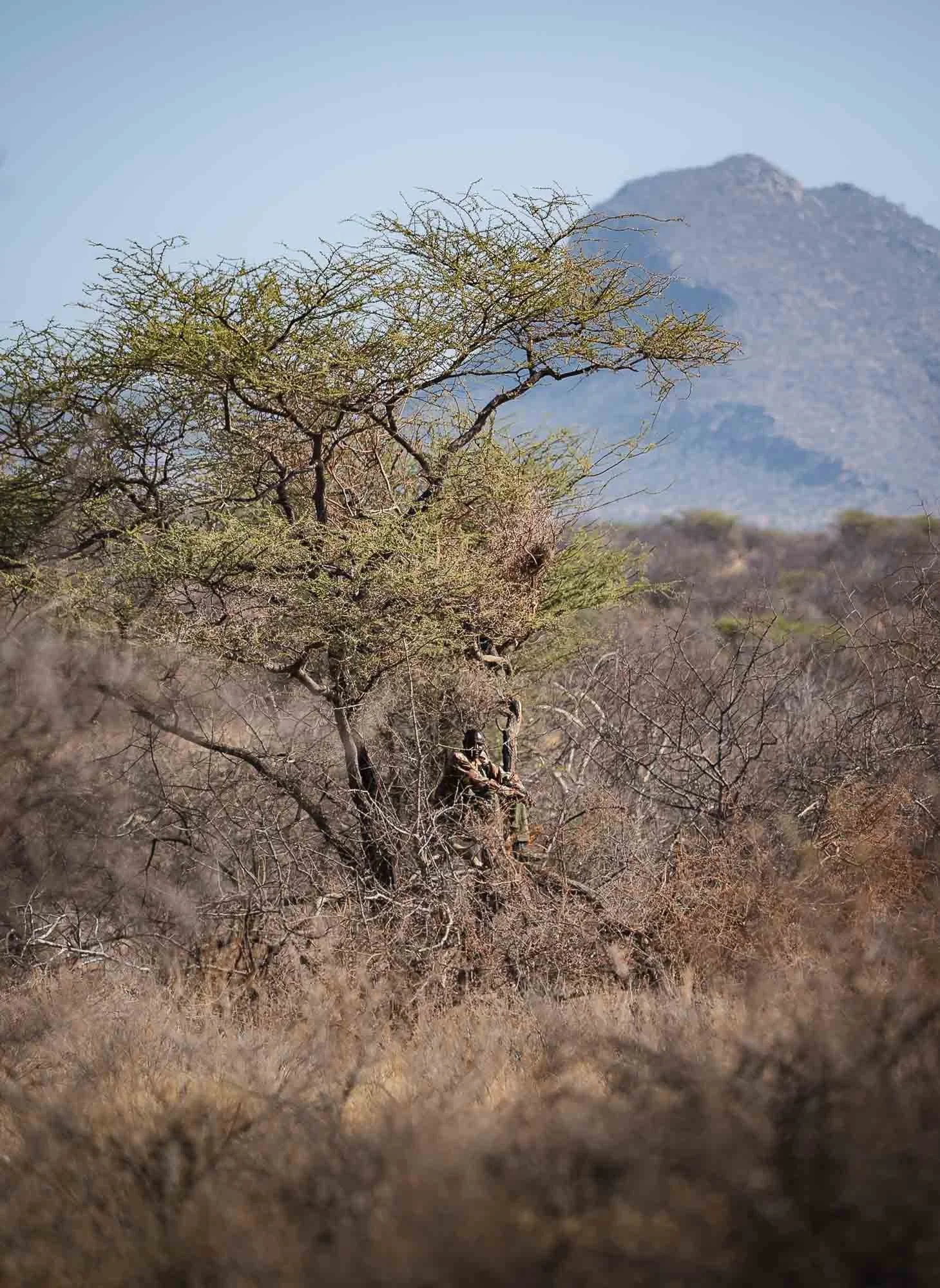
While searching we got another call from a ranger patrolling the area. He had spotted a male black rhino not far from us - and rescued himself into a tree while waiting for our arrival.
An encounter on Foot
And indeed, there was a black rhino not far from him. Jimmy had traded his signature Samburu outfit for more camouflaged tones, and we slowly and quietly approached to get a closer look.
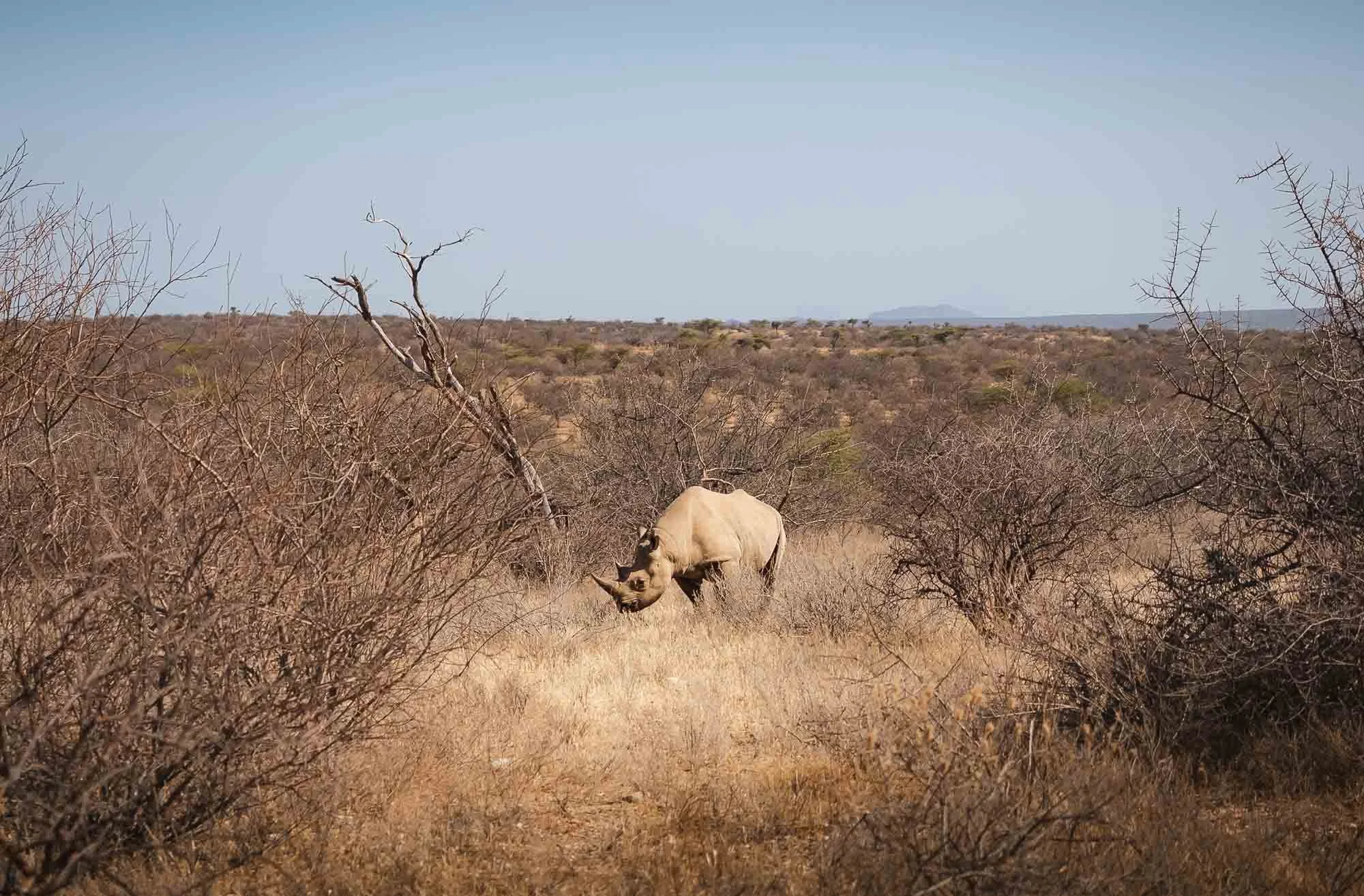
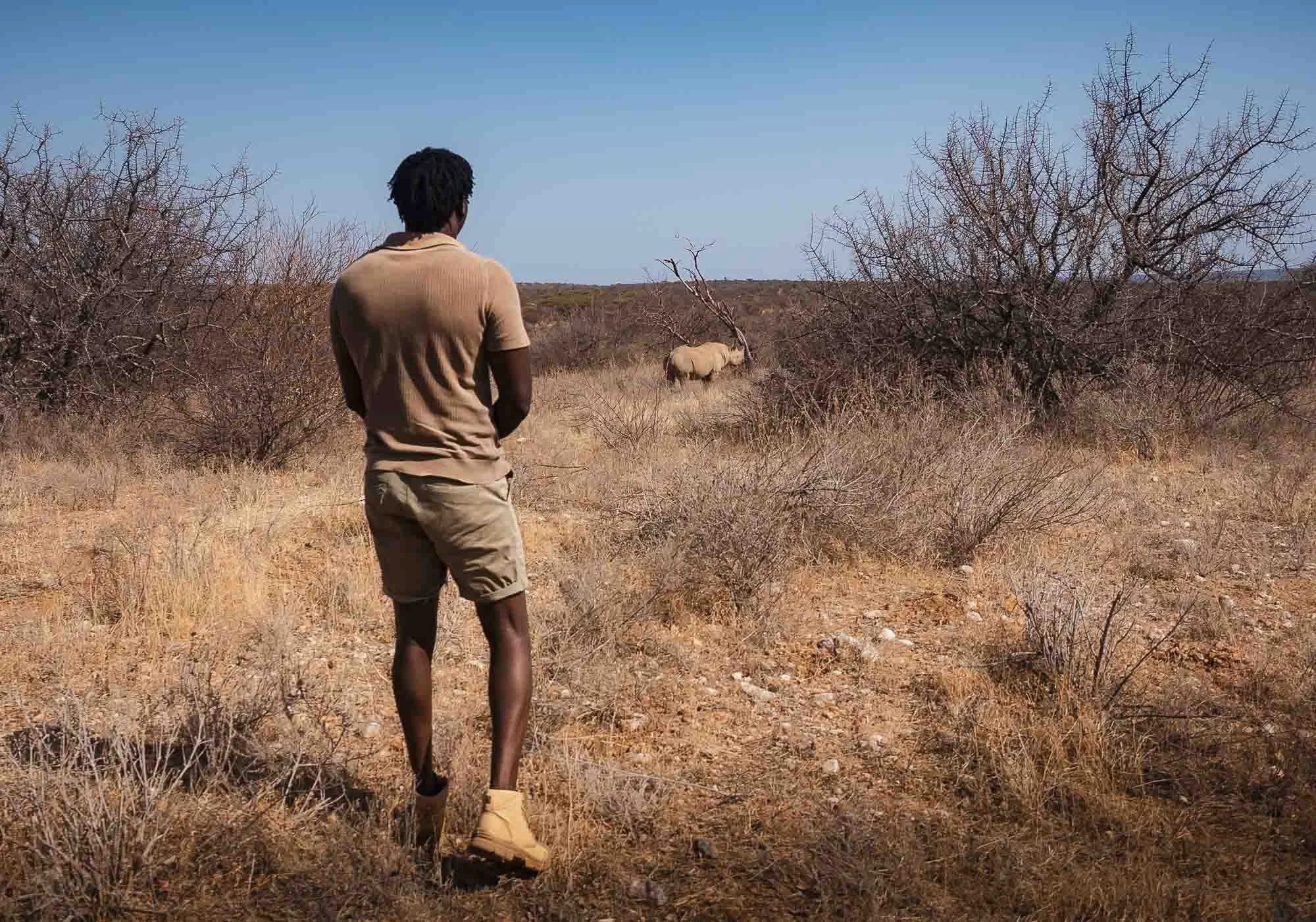
As always, being in the bush without the protected surroundings of the car is a totally different wildlife experience, and also provides a much more imposing perspective of animals than the elevated view from a Land Cruiser. Short video below.
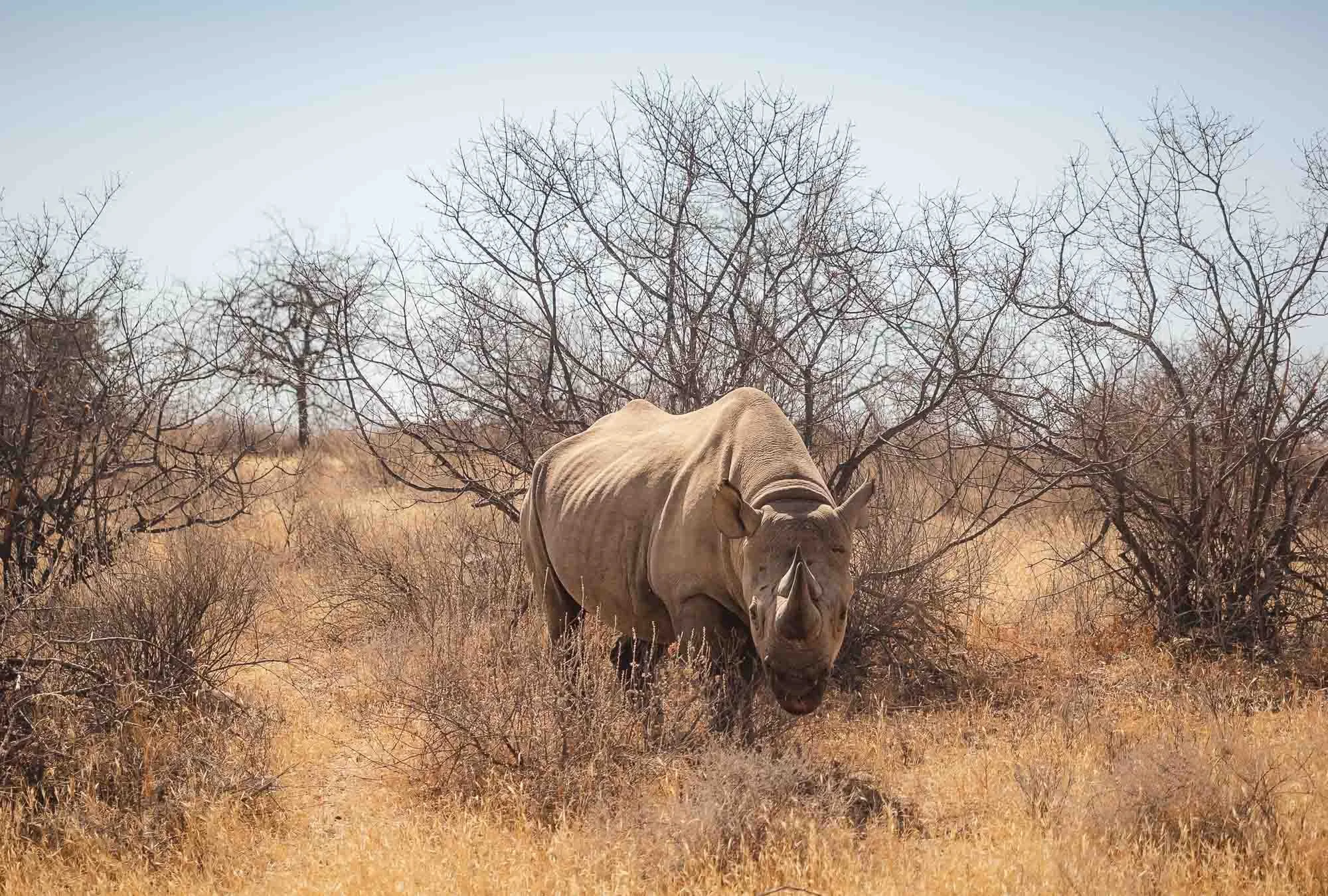
Black rhino can be aggressive and you do not want to get close to these horns, so in order to get a little closer , we went back into the car.
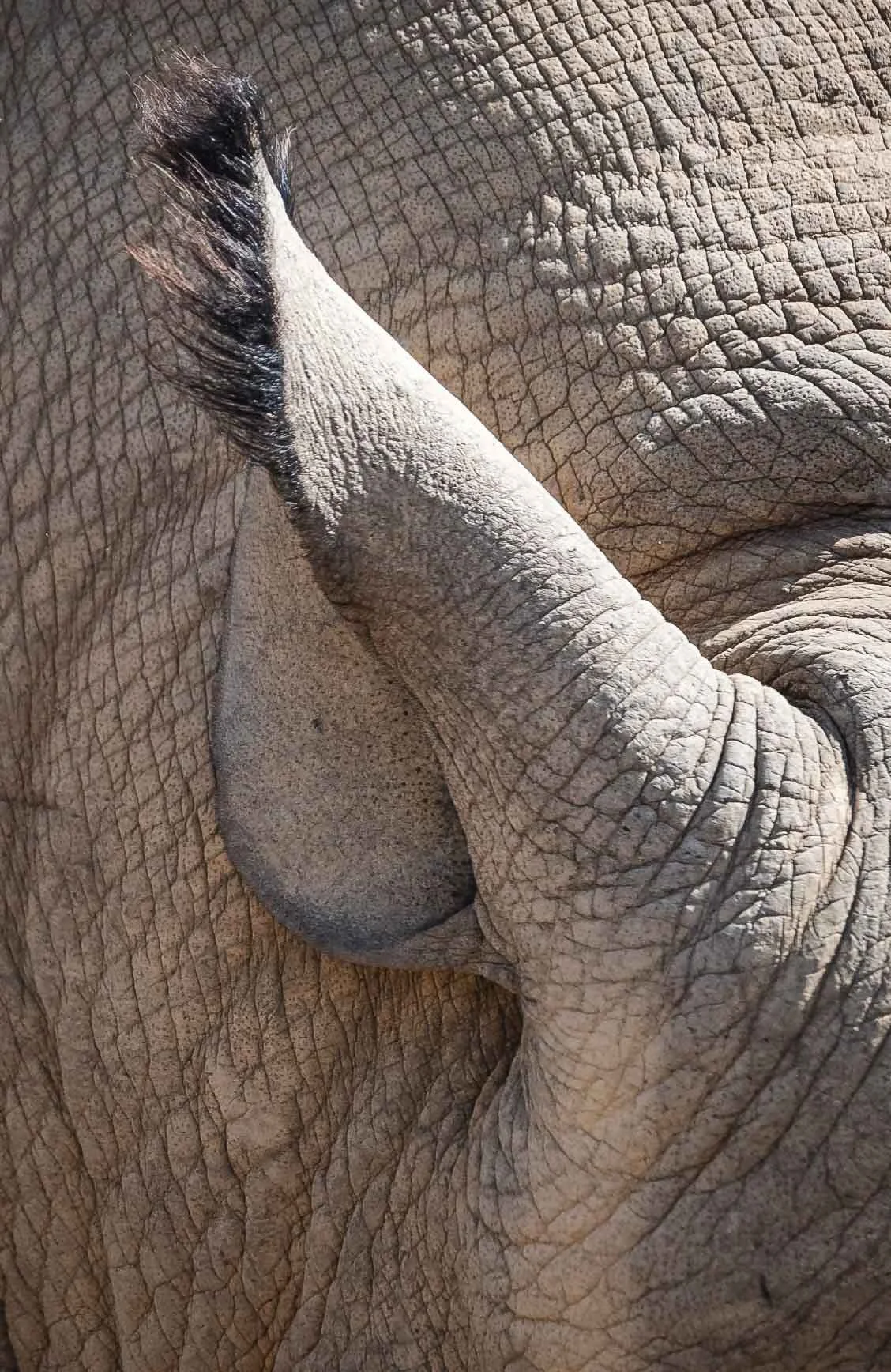
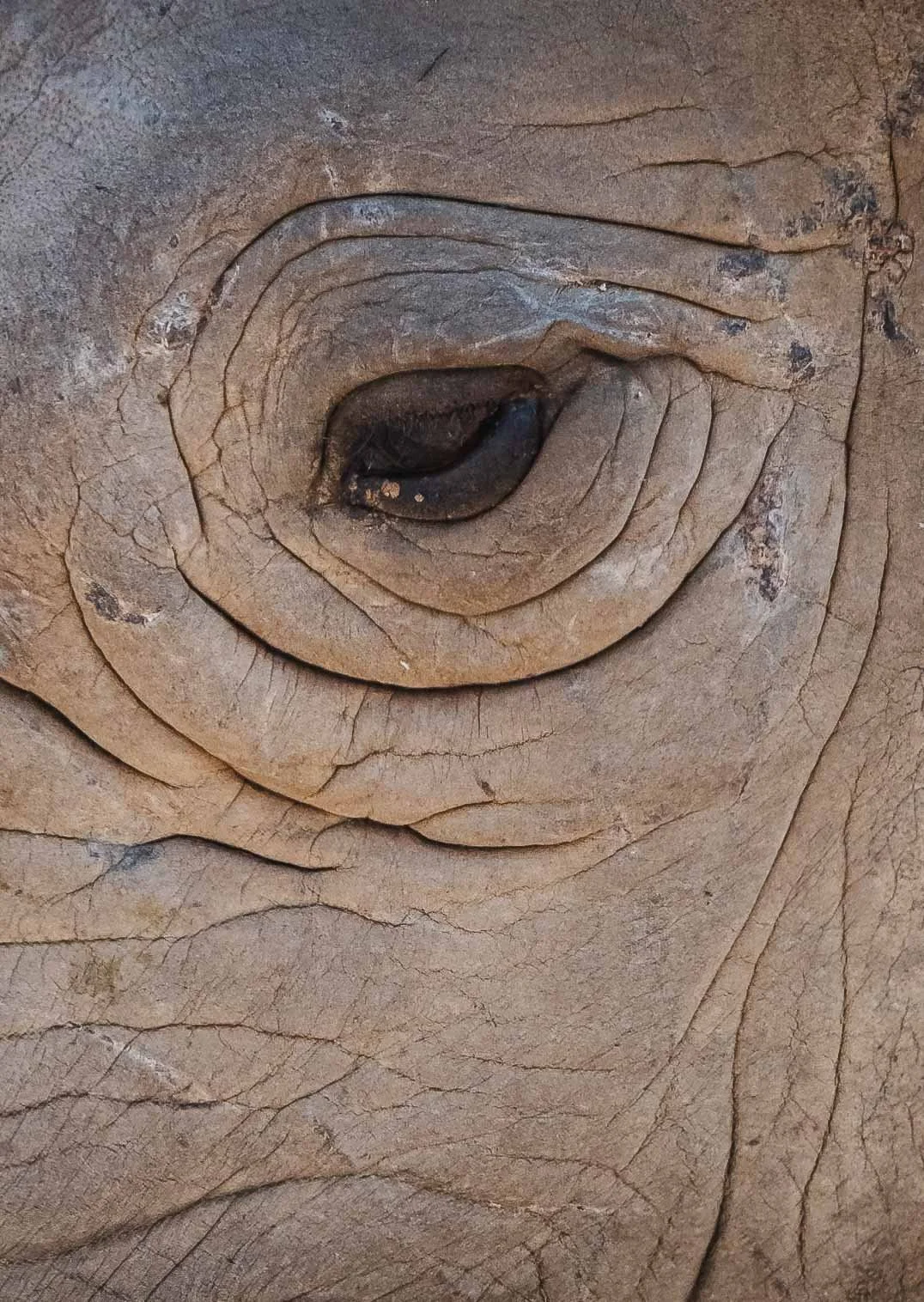
Luckily, this individual was quite relaxed - in fact, it is somewhat used to humans, having grown up in a nearby sanctuary, which we’d visit as well. Mission accomplished!
The Samburu Singing Wells
Just outside the sanctuary, we were looking for another special feature of this region. Water is a scarce and precious resource in Samburu, particularly during the dry season.
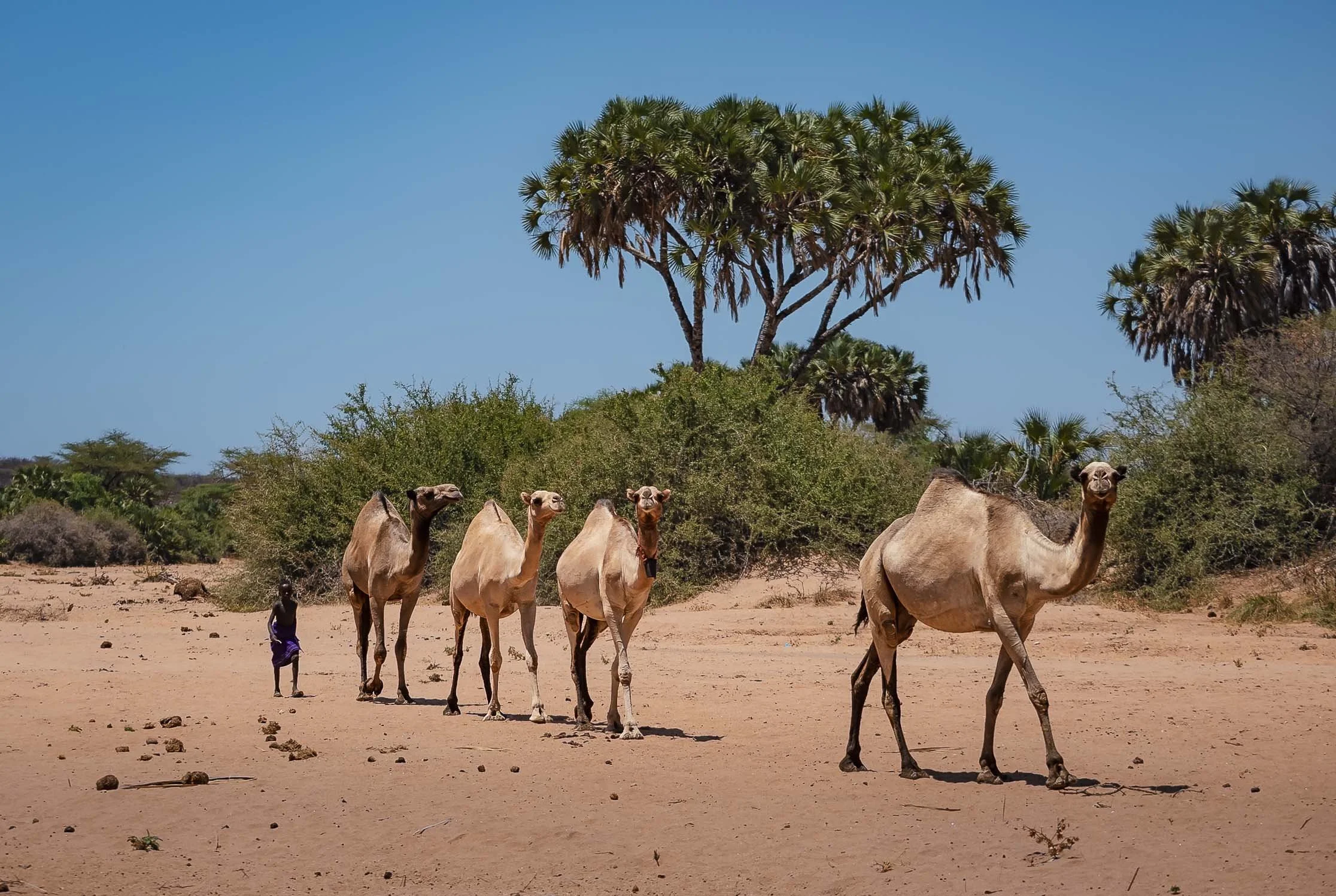
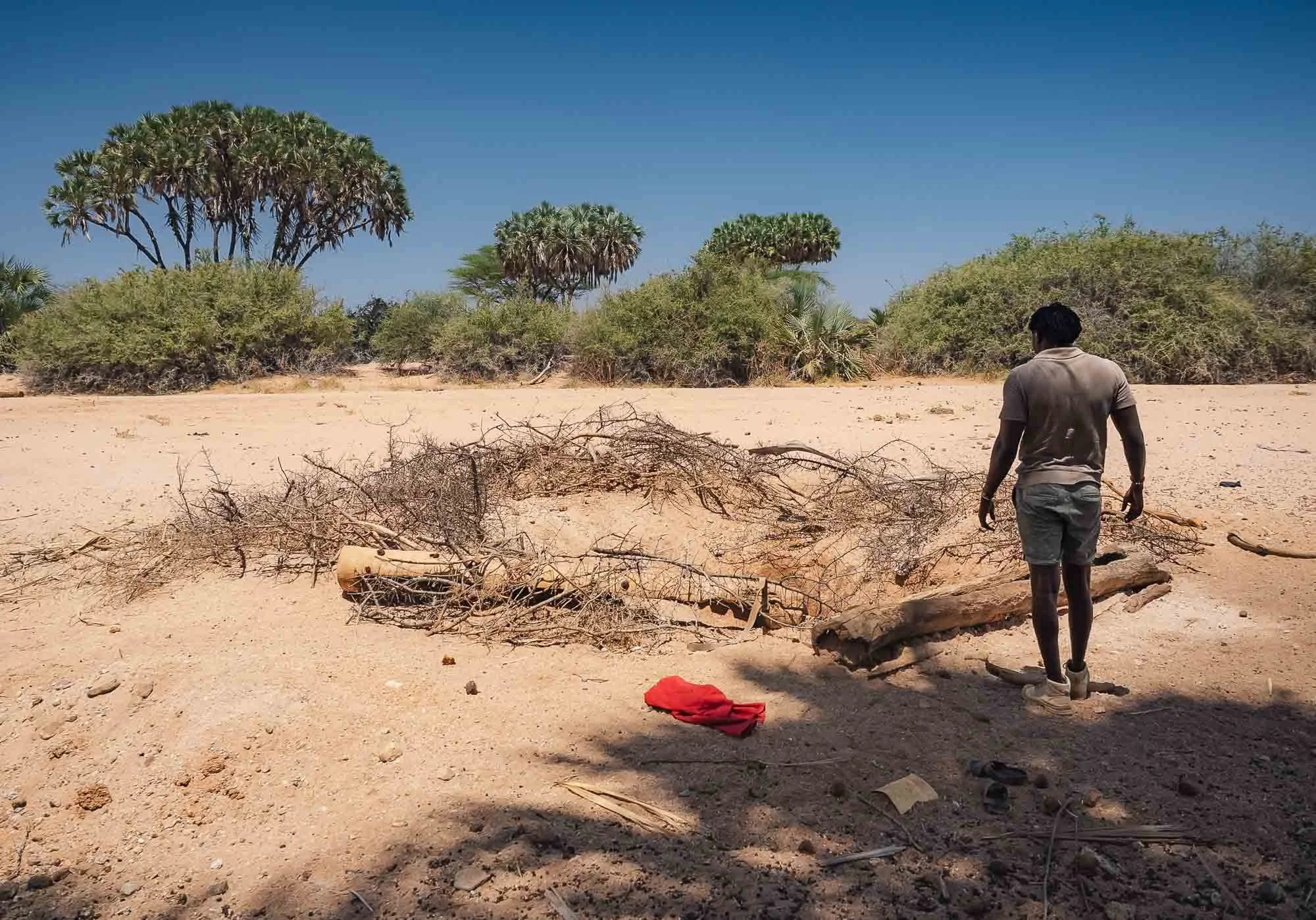
At the traditional Singing Wells, local herders dig deep into dry riverbeds to reach underground water for their livestock. As they draw water up by hand, they sing rhythmic songs to coordinate their work and call their animals - mostly goats, cows, and camels.
One such camel herd was approaching, led to the well by a young boy who was assigned by the family to take the animals out for food and drink today and was happy for me to take photos.
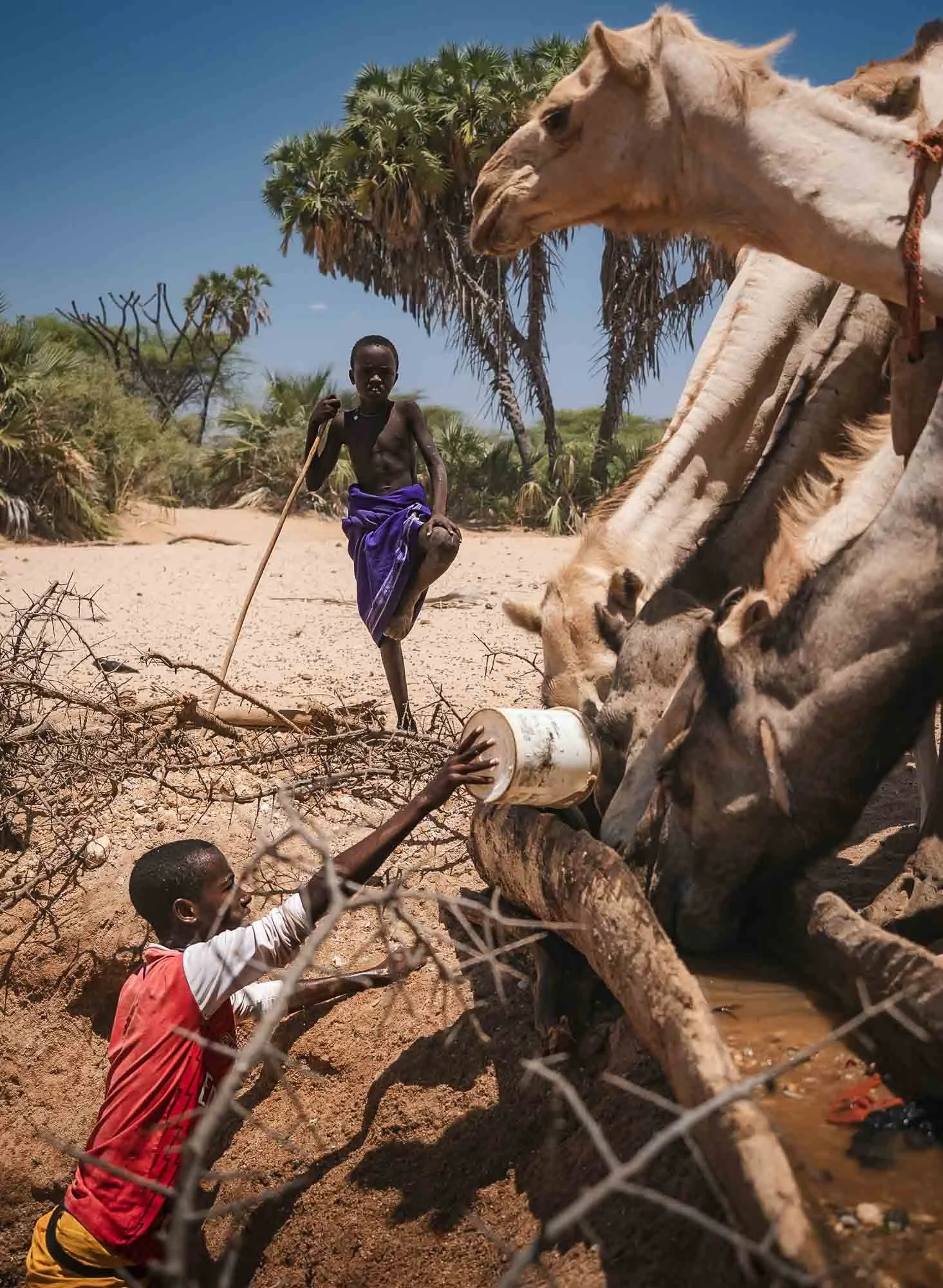
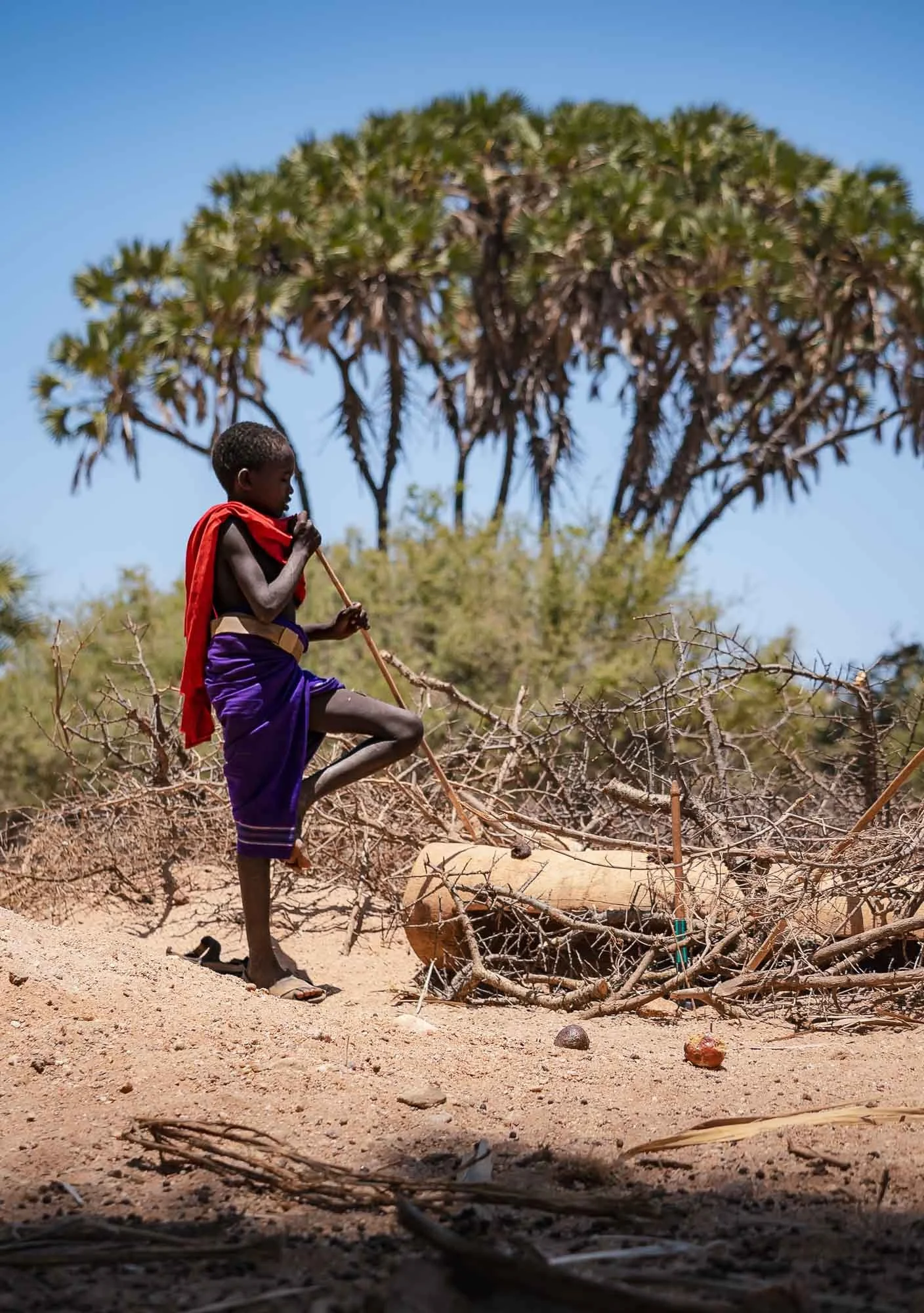
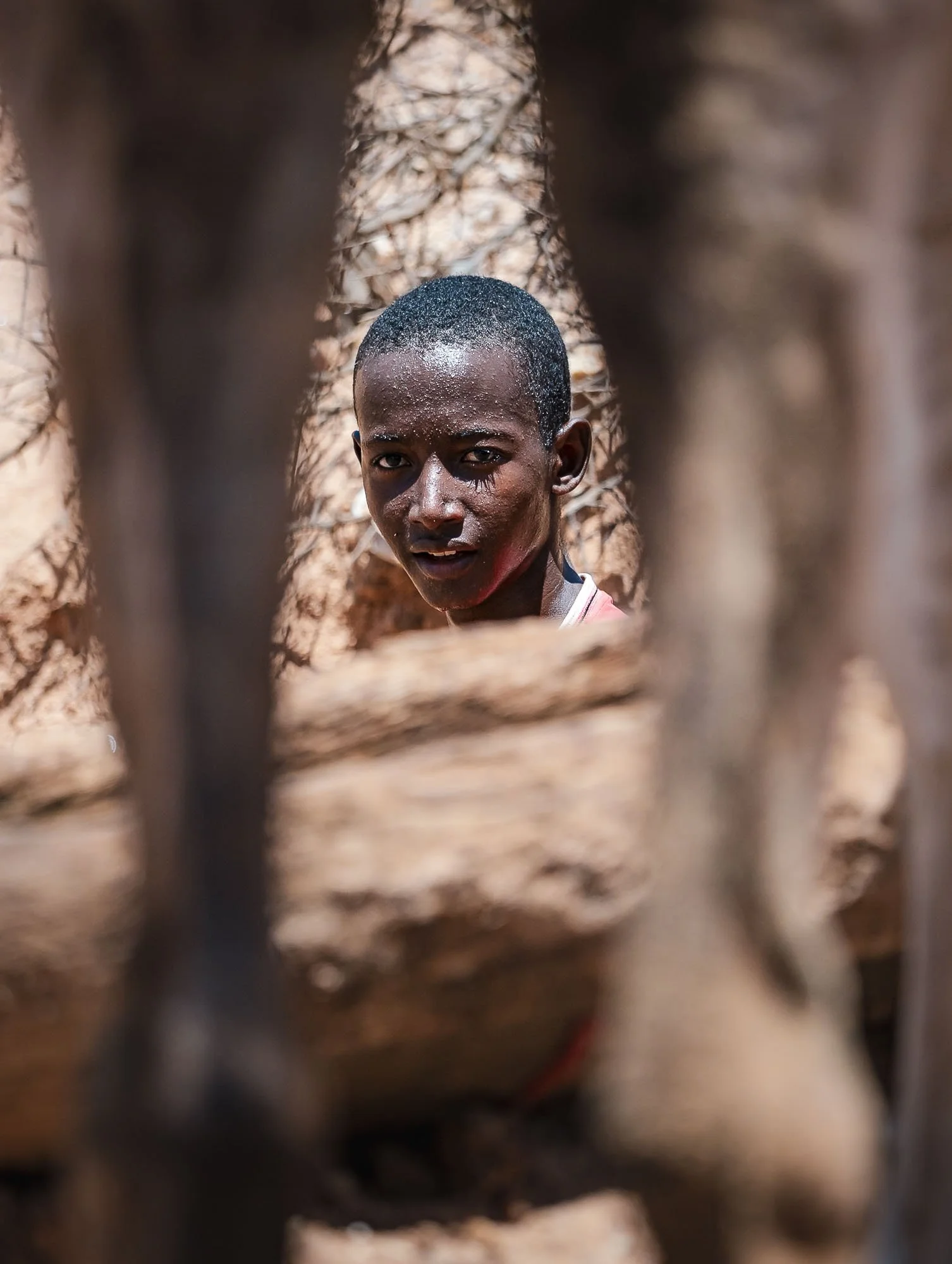
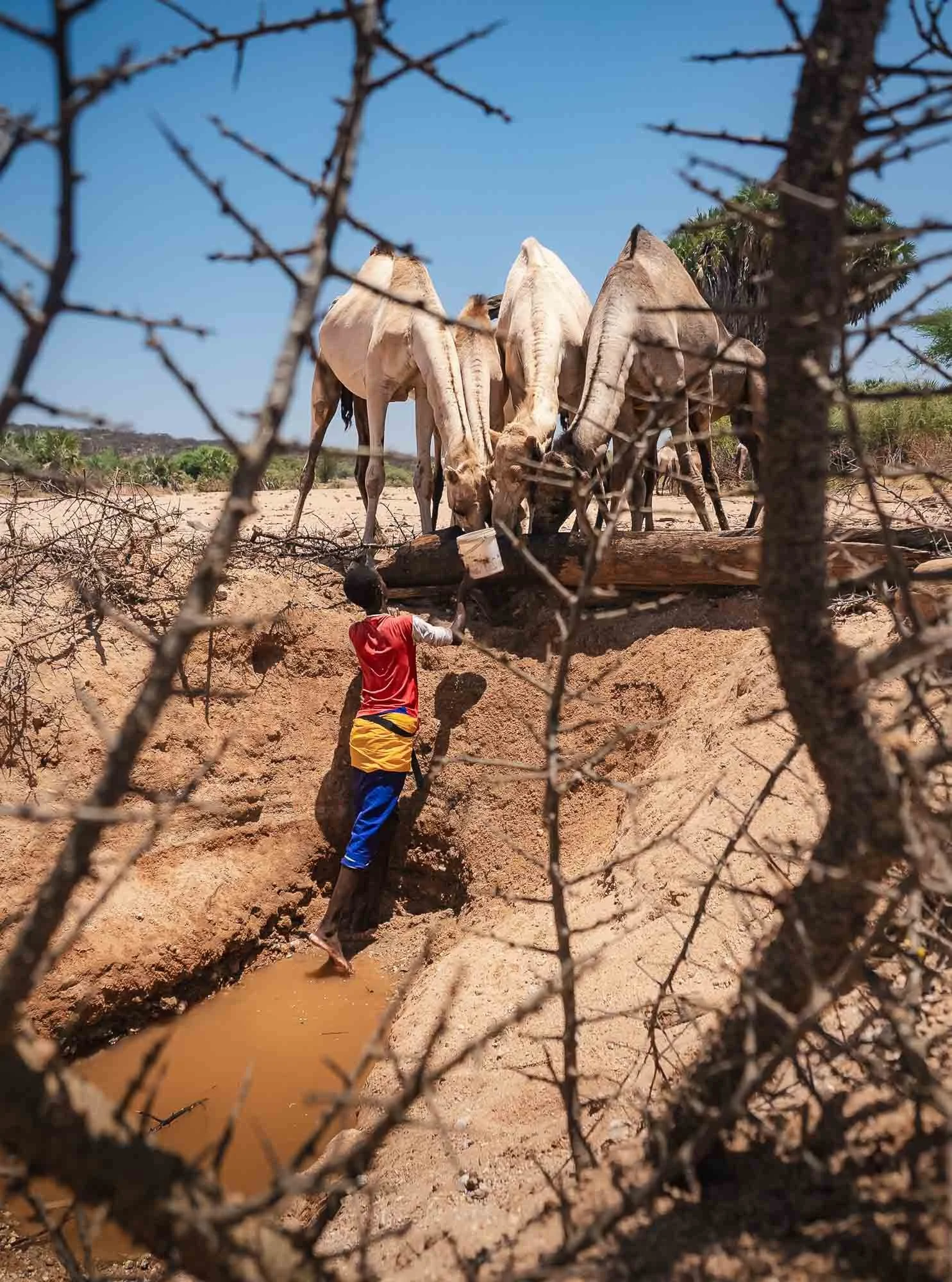
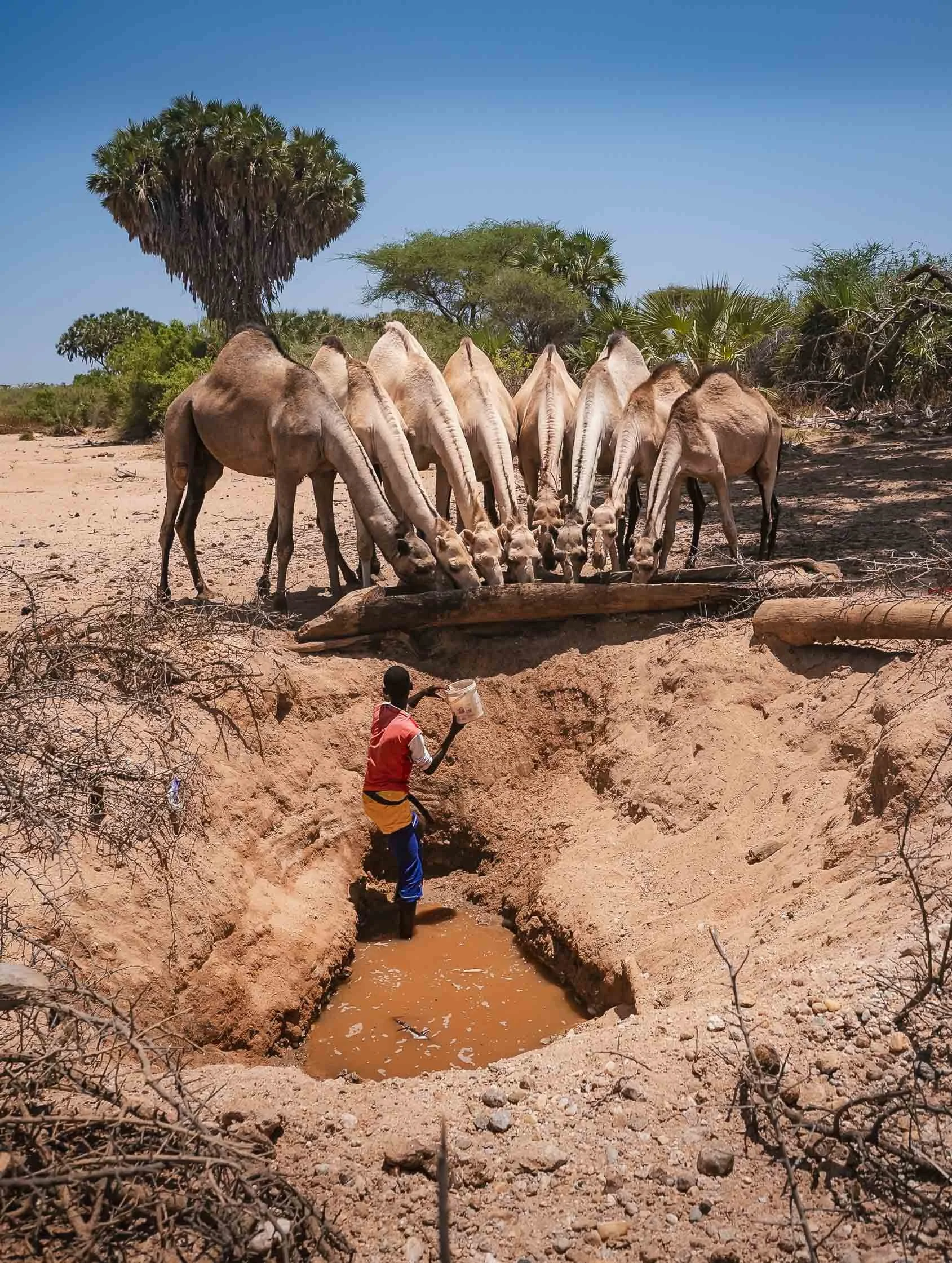
A teenage boy appeared a few minutes later and started to use a bucket to move the water from the well about 2 meters underground into a carved tree trunk, serving as the trough for the animals.
The rest of the well is surrounded by thorny branches to keep wild animals out - nevertheless, especially elephants use these water sources, often to their own detriment, as we’d learn later.
Over half an hour around 30 camels quenched their thirst here before the boys disappeared again, but we’d get another chance to see this tradition later.
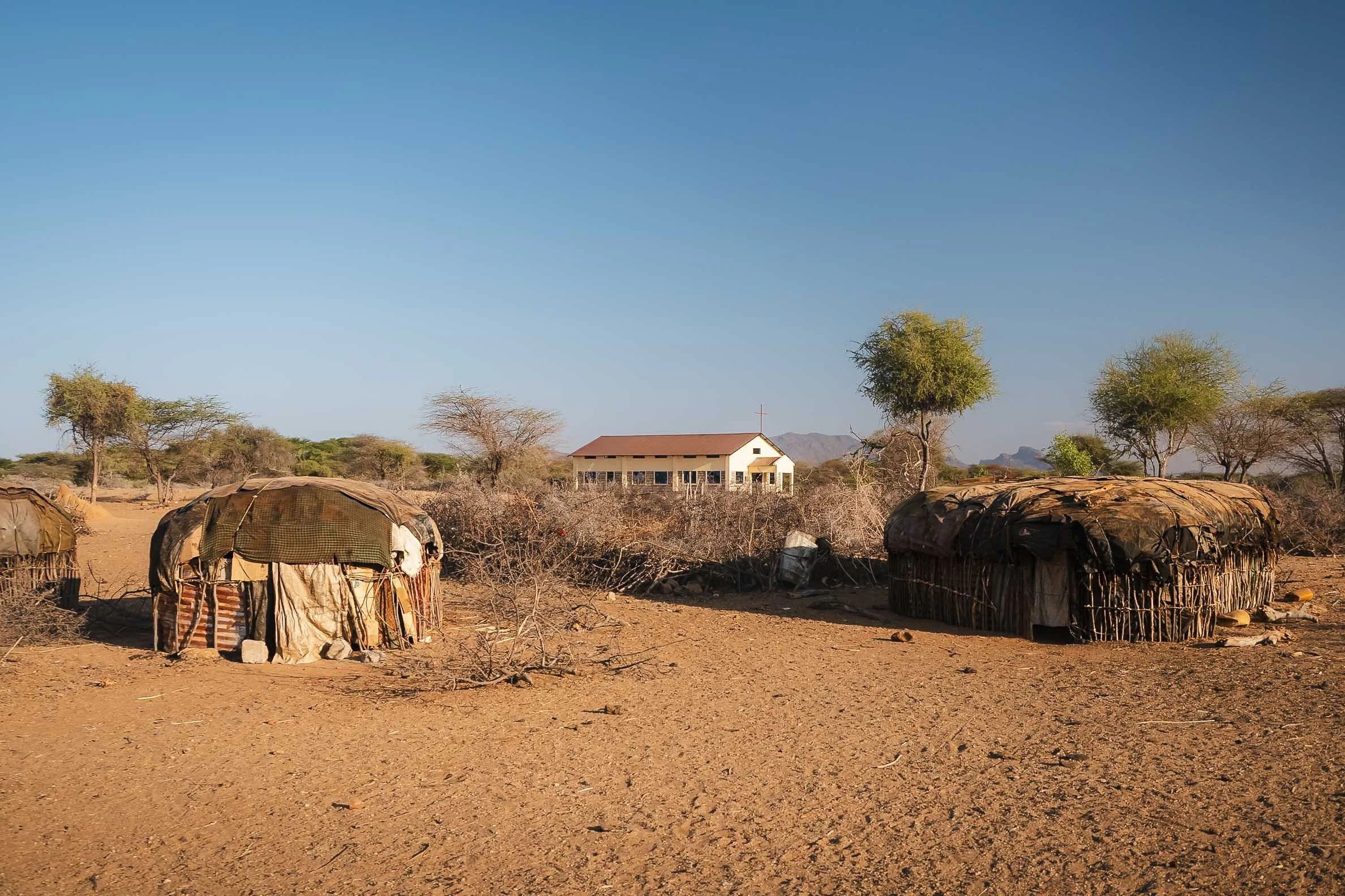
In the meantime, Jimmy took us to one of the more permanent local villages not far from the wells.
While the Samburu people are generally nomadic pastoralists, over the last decades it became more common for some family groups to settle semi-permanently.
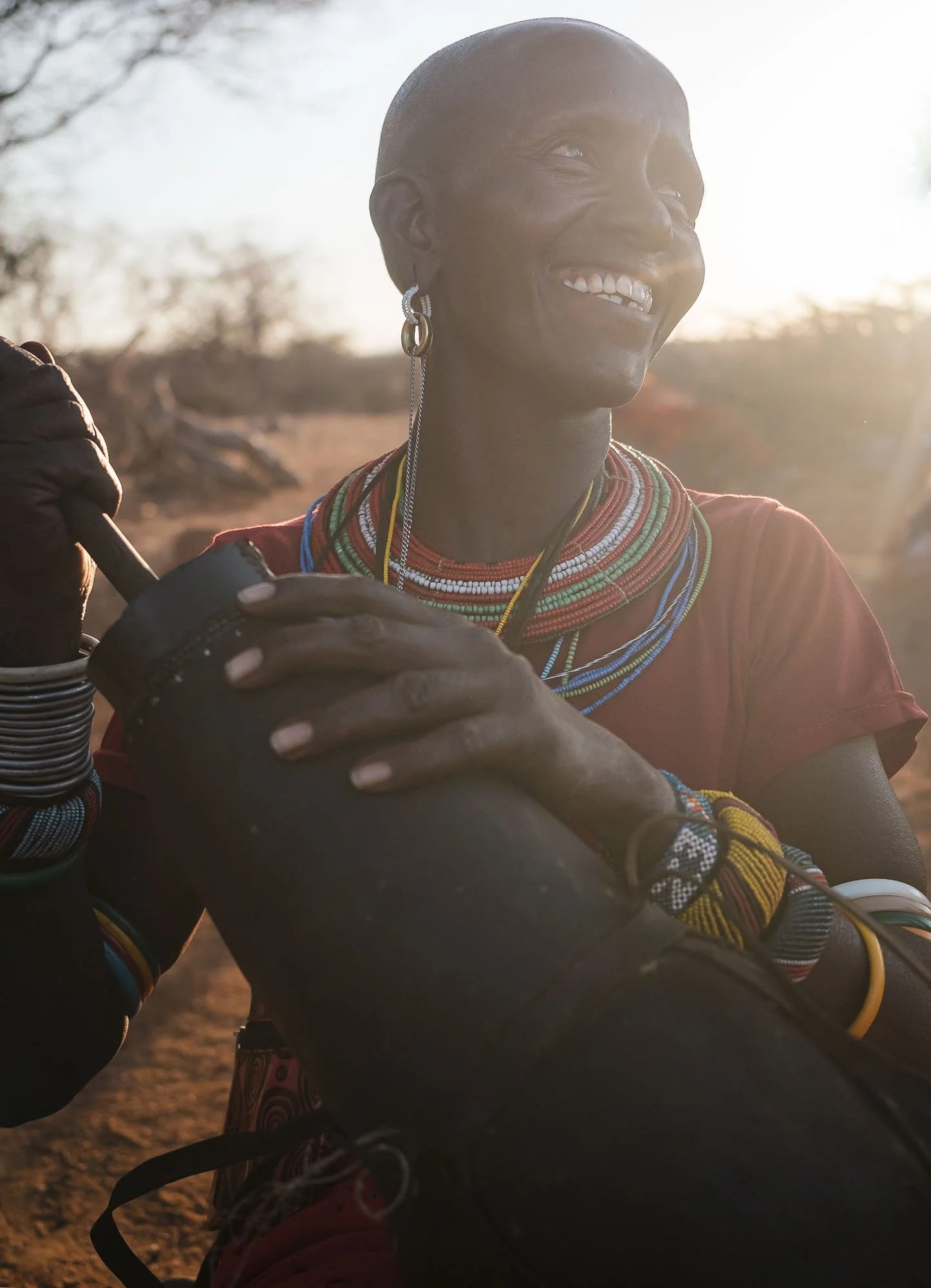
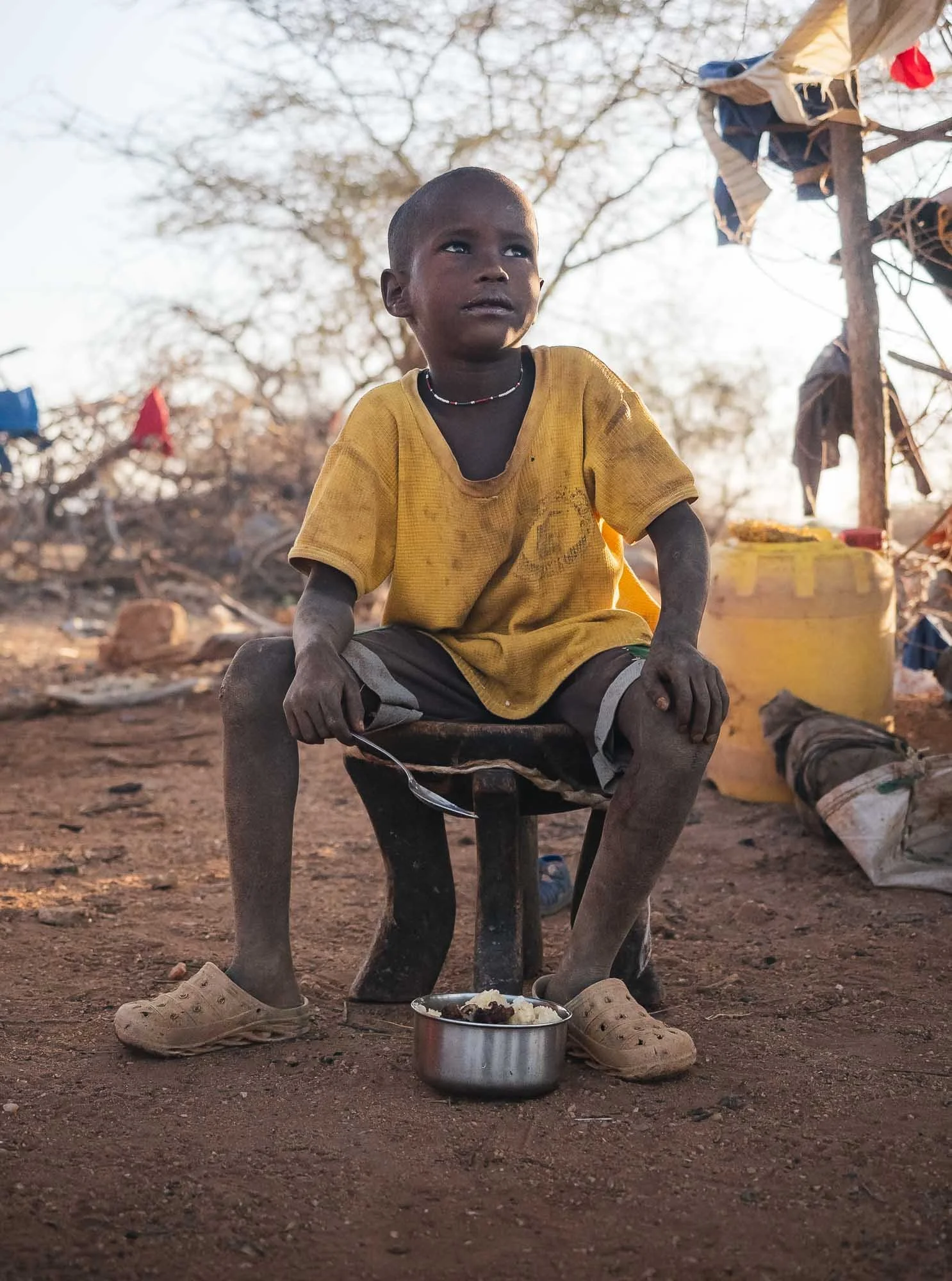
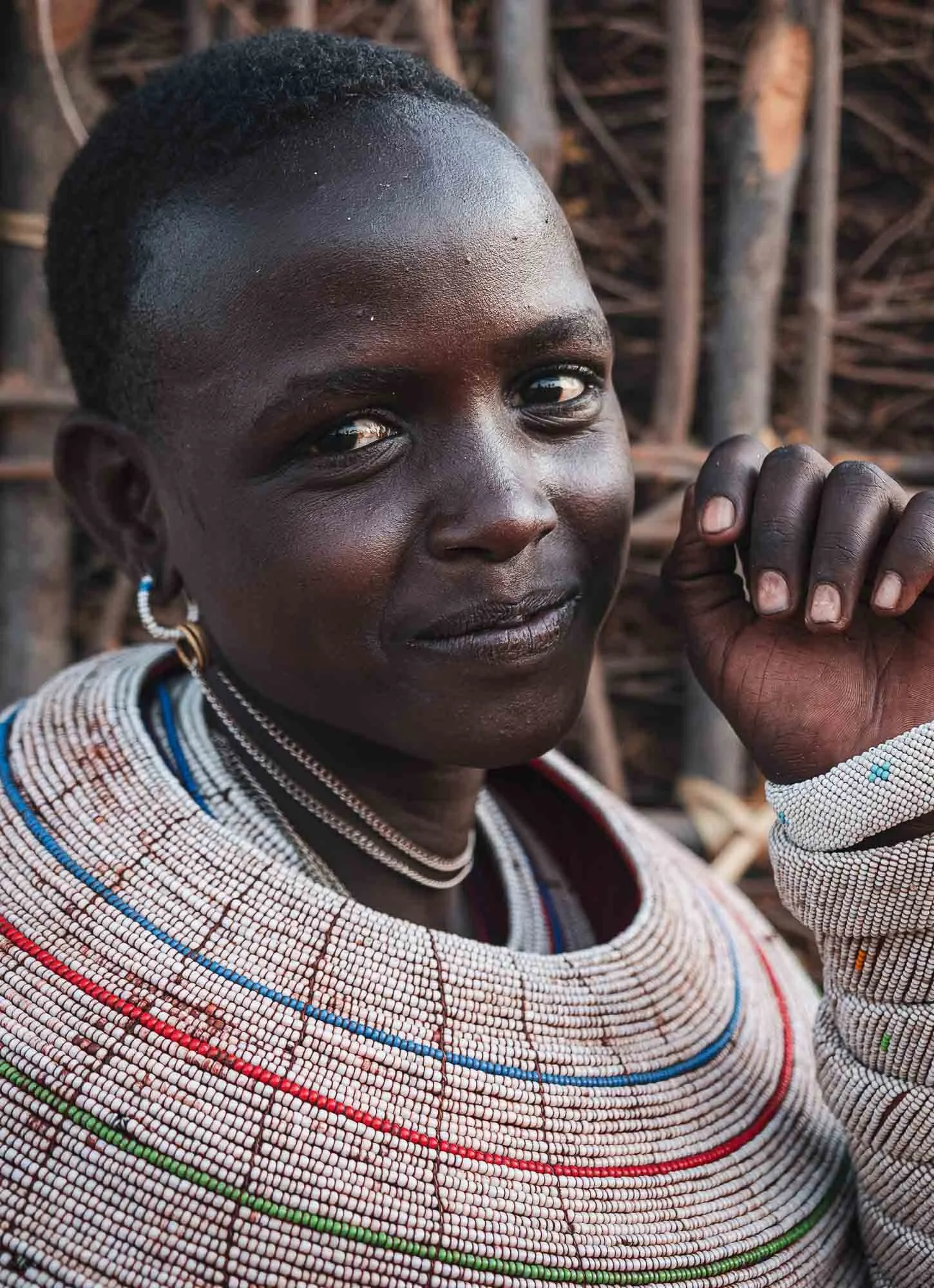
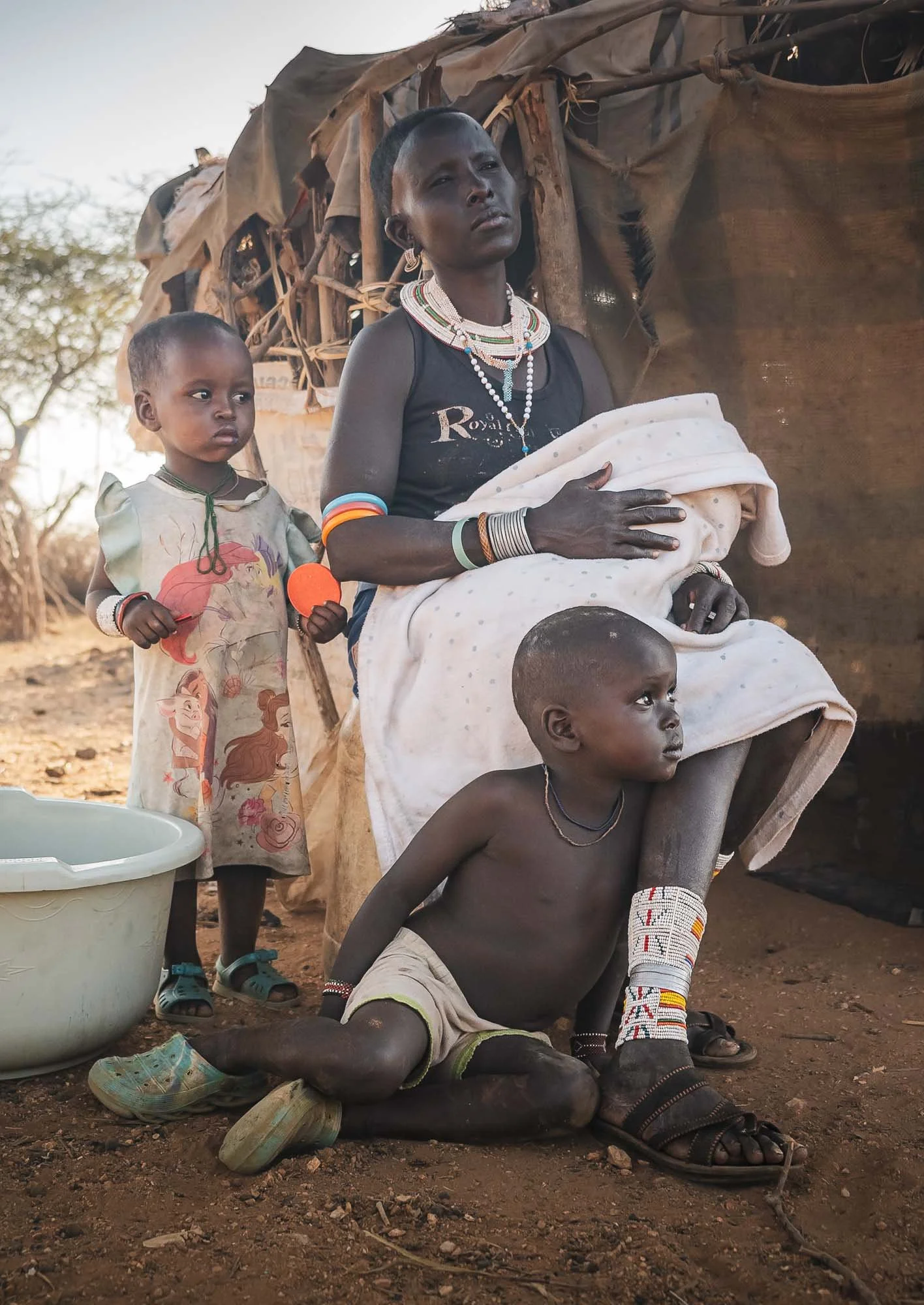
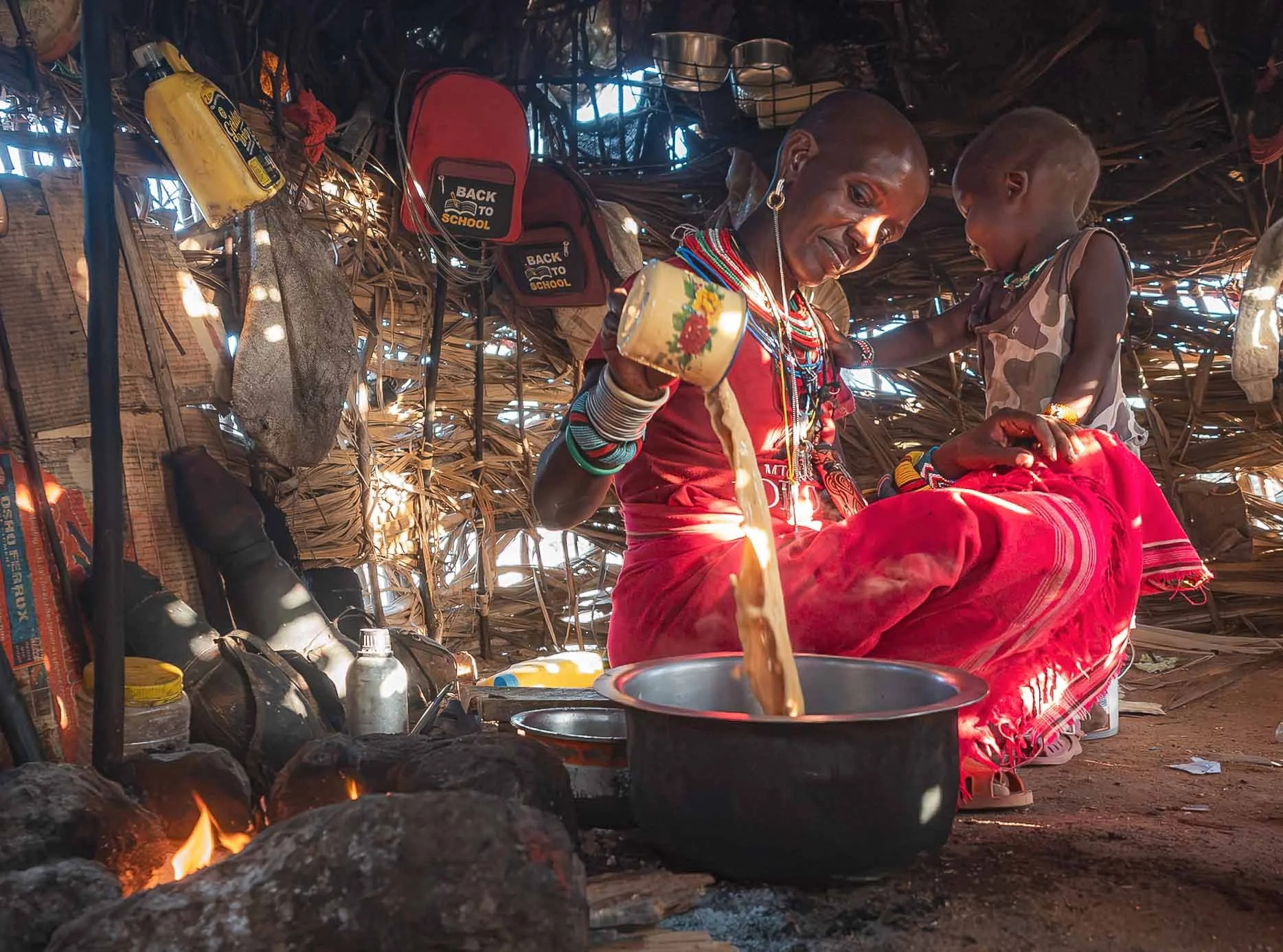
Tourists here are rare, but the locals were quite welcoming, open to photography and showing their ways of living.
This woman invited us into her house for tea, a common drink for them with milk and sugar - the only way I like it.
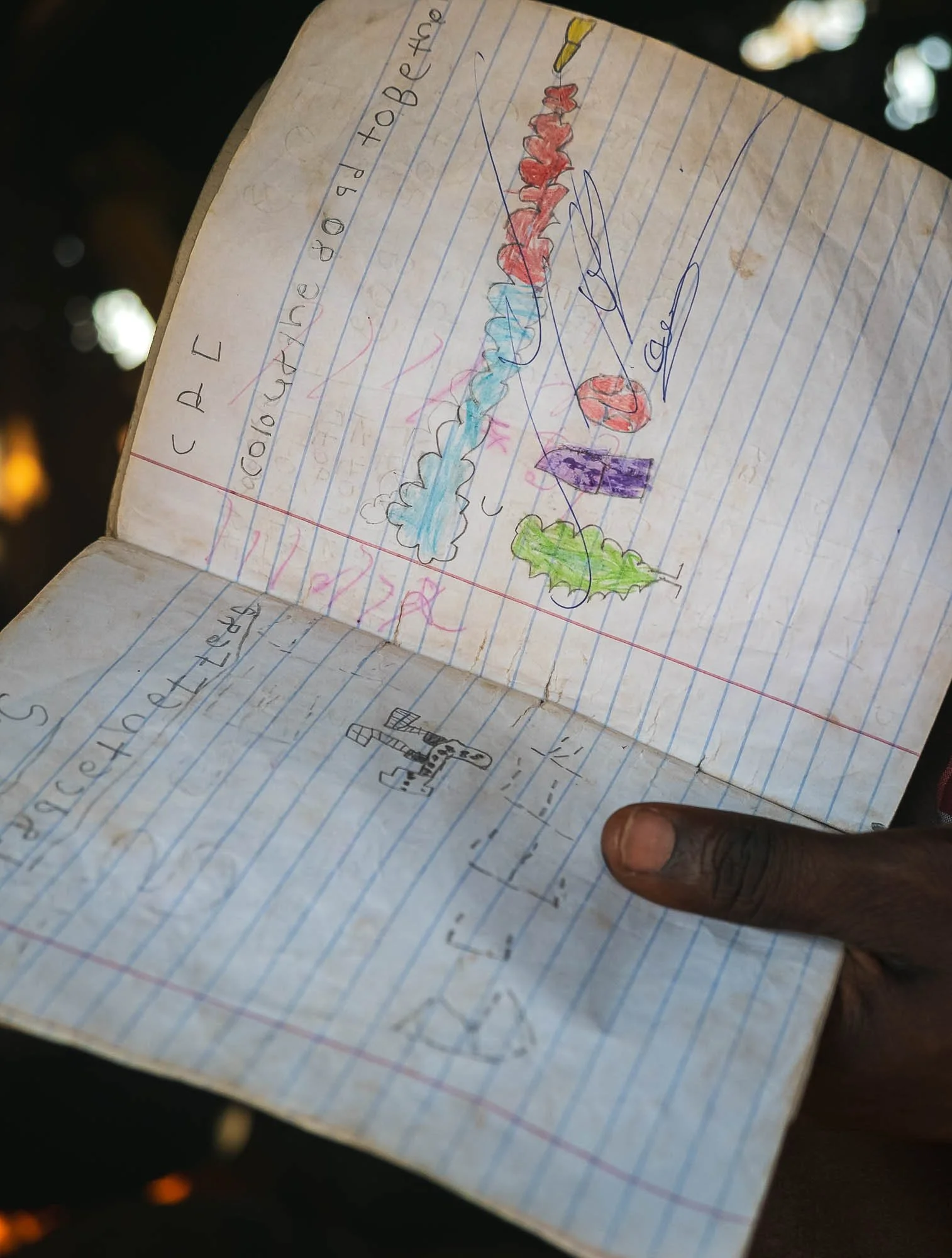
She showed us what her kid has been working on in school. Proximity to schools or churches, such as in this village, is one of the reasons settlements have become more permanent.
Jimmy told us the local school has partly been built by him and a few other people of the community that want to encourage more education.
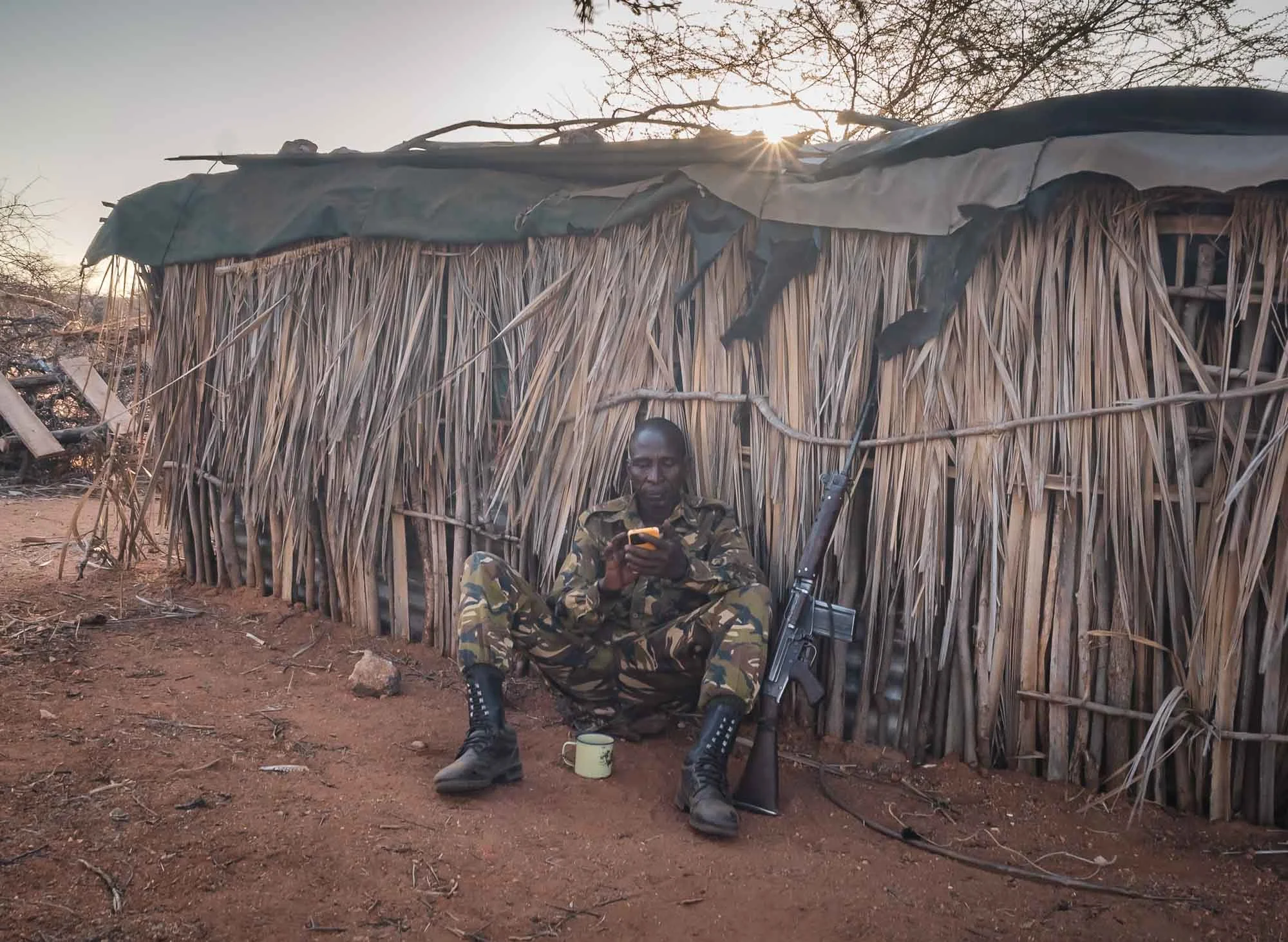
Our ranger companion also took the opportunity for a tea break, and told me a few stories about his experiences in the conservancy. Sera has been a success story of conservation, seeing significant population growth of its rhinos and no poaching since its establishment.
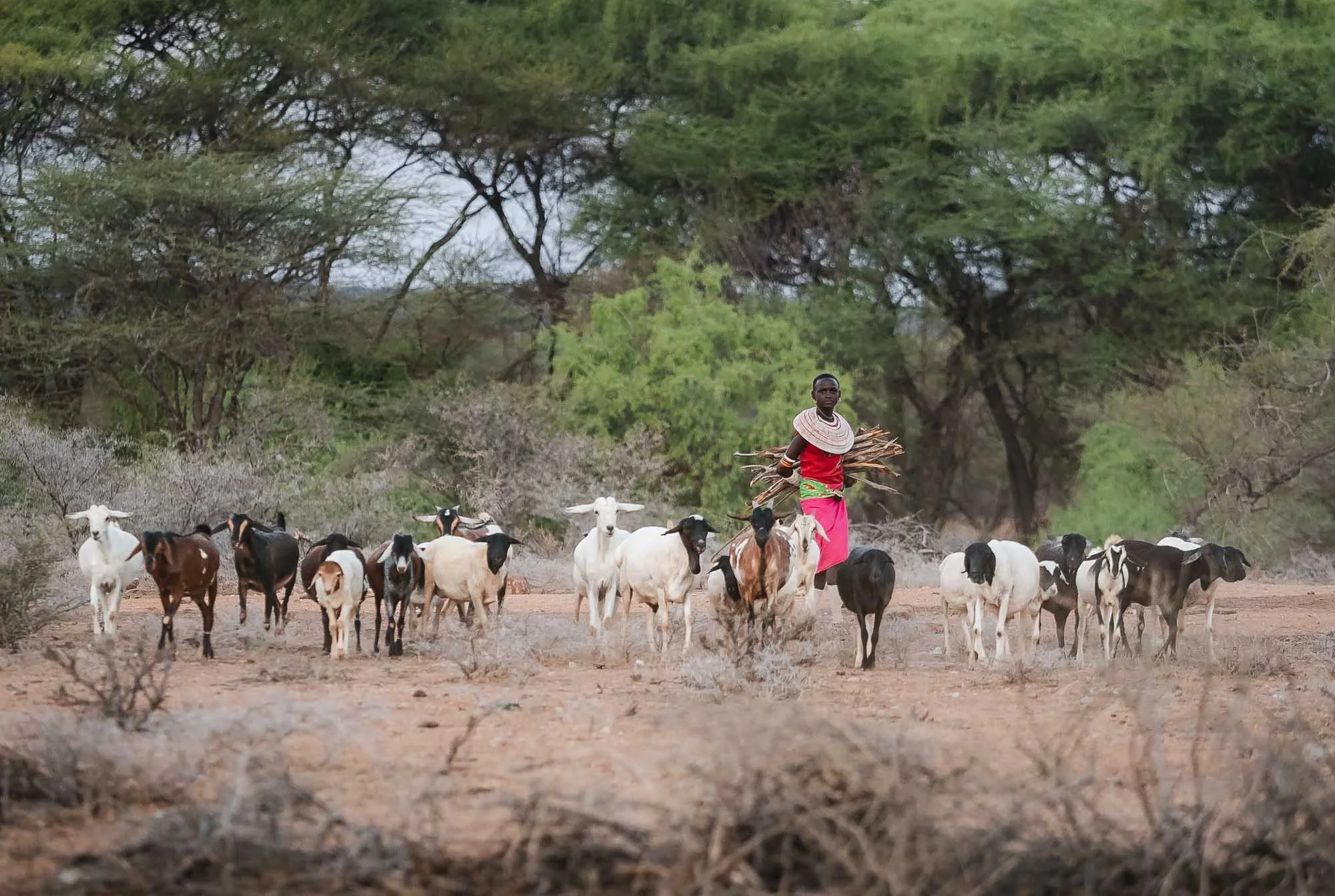
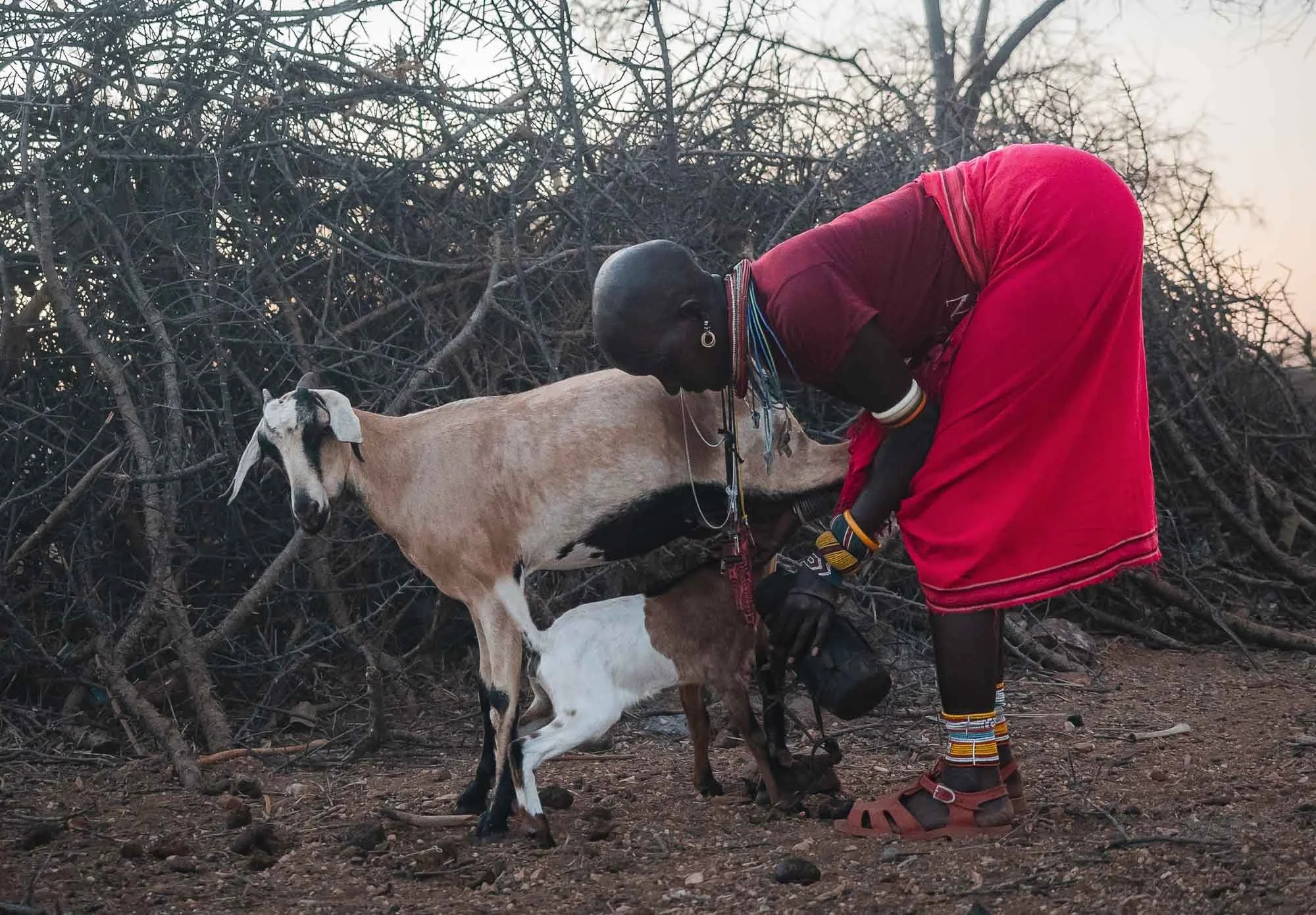
As the day ended, the goat herds were called back to the village, where they would spend the night in fenced enclosures to protect them from predators.
First it was time to milk them though, and some of this milk is used in unexpected ways, as you’ll read about further below.
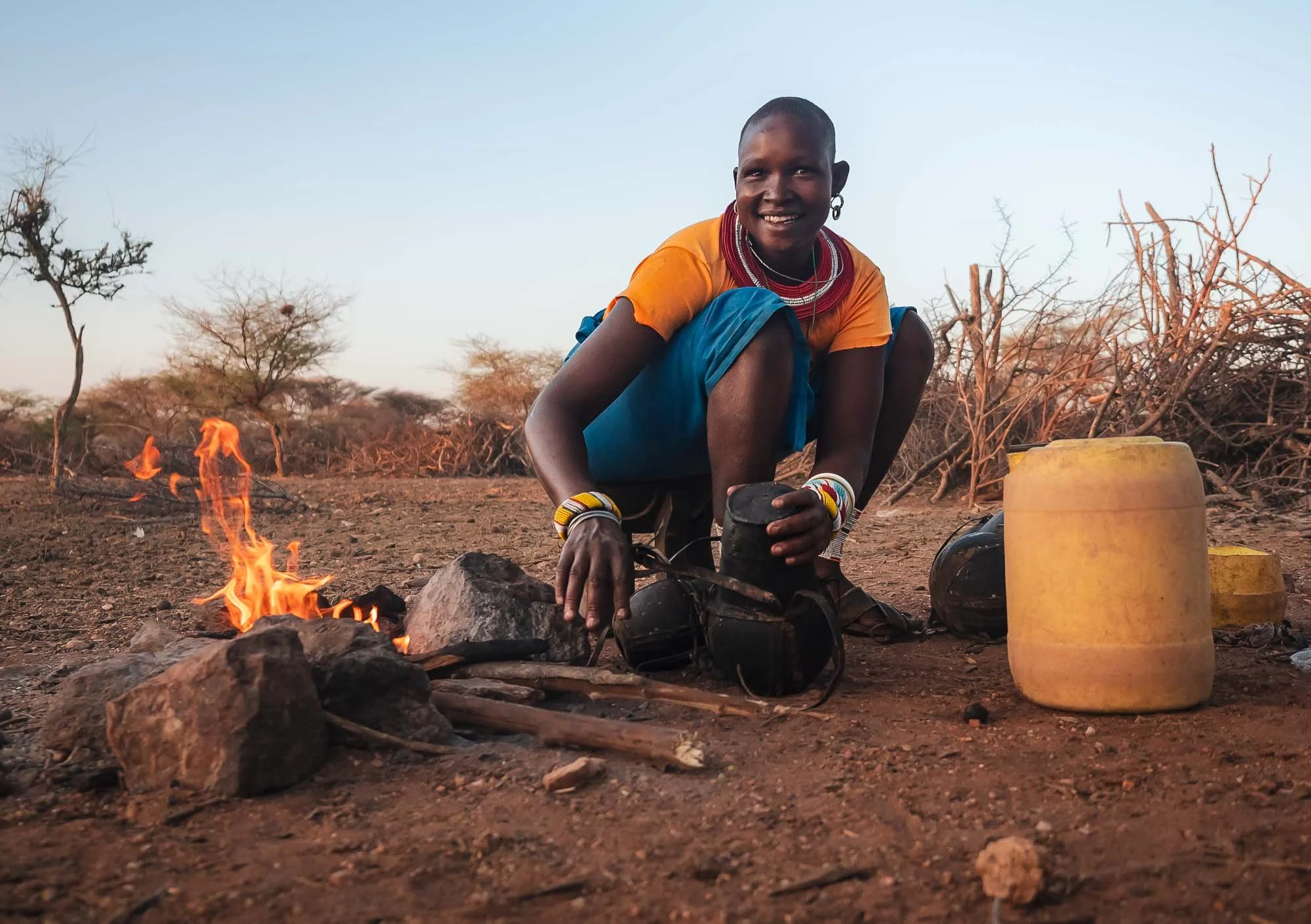
One of the women showed me the cleaning of the traditional wood-carved Samburu milk containers with smoke from burning plants, said to help preserve and flavour the milk.
I wanted to leave a small donation with them as a token of appreciation for letting us into their village, which resulted in an interesting exchange because not all of them could directly understand the value of money - it didn’t seem to play a role in some of their lives.
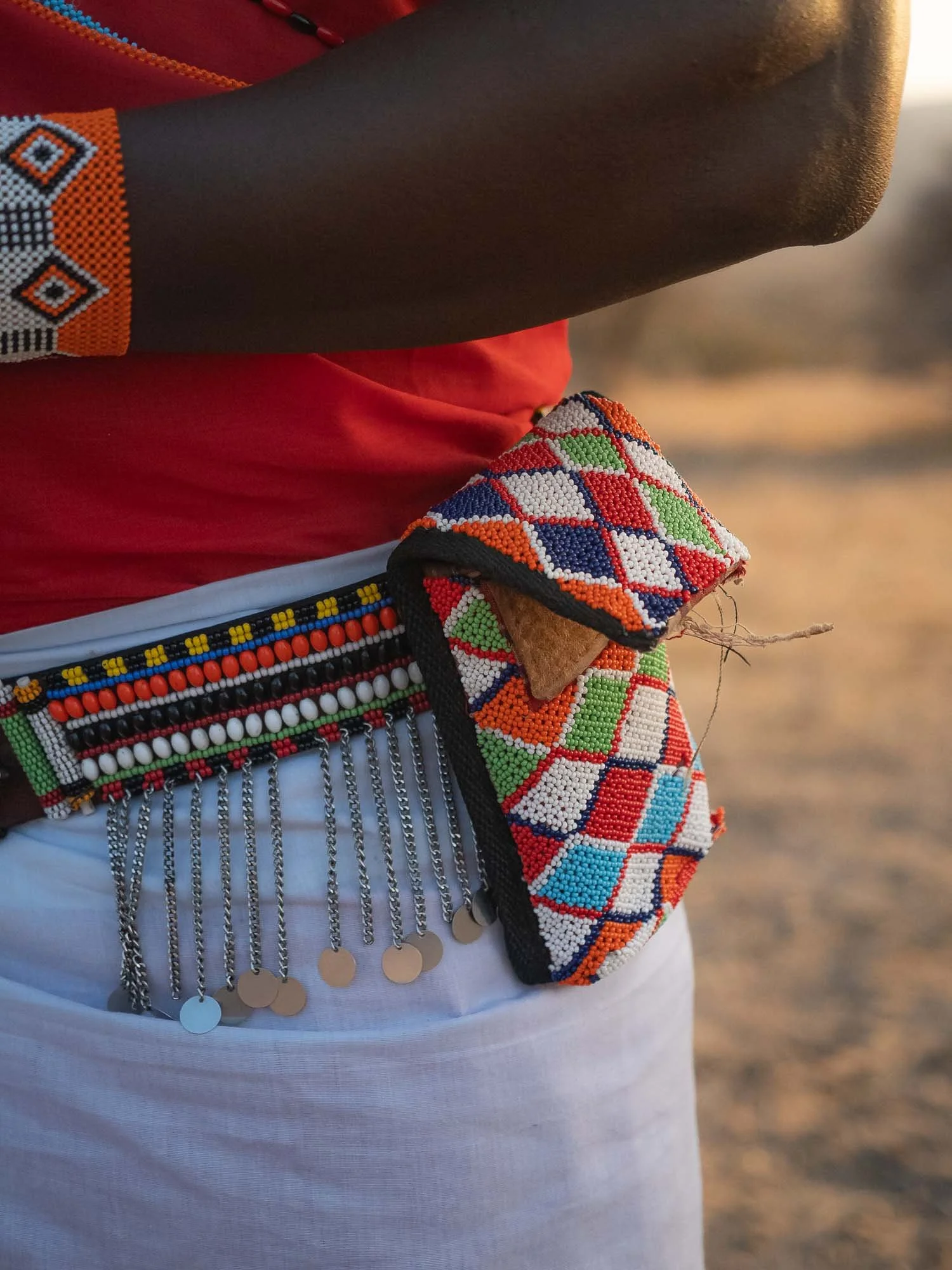
The same can’t be said for Jimmy, he’s bridging the gap between tradition and modernity by putting his orange iPhone 17 Pro in a Samburu-style beaded case on his belt.
Reteti Elephant Sanctuary
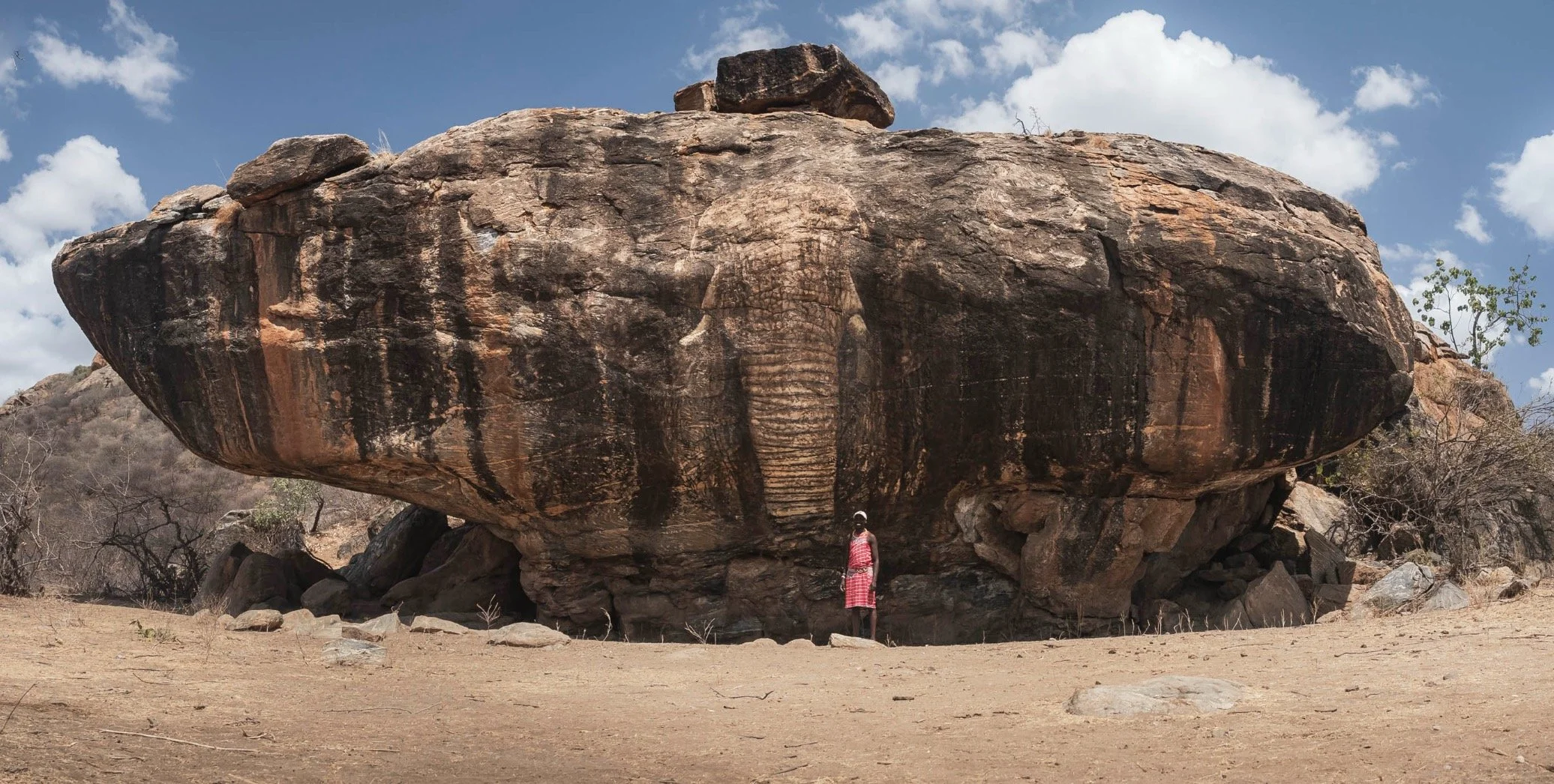
We left Sera behind and headed west into Namunyak conservancy towards Reteti Elephant Sanctuary. Fittingly, the so-called elephant rock lies on the way, a temporary mural painted by a French artist as memorial to the tuskers lost to heavy poaching in Samburu during the 1970s and 1980s. It is said that at this spot the Samburu elders gathered to discuss the creation of the sanctuary.
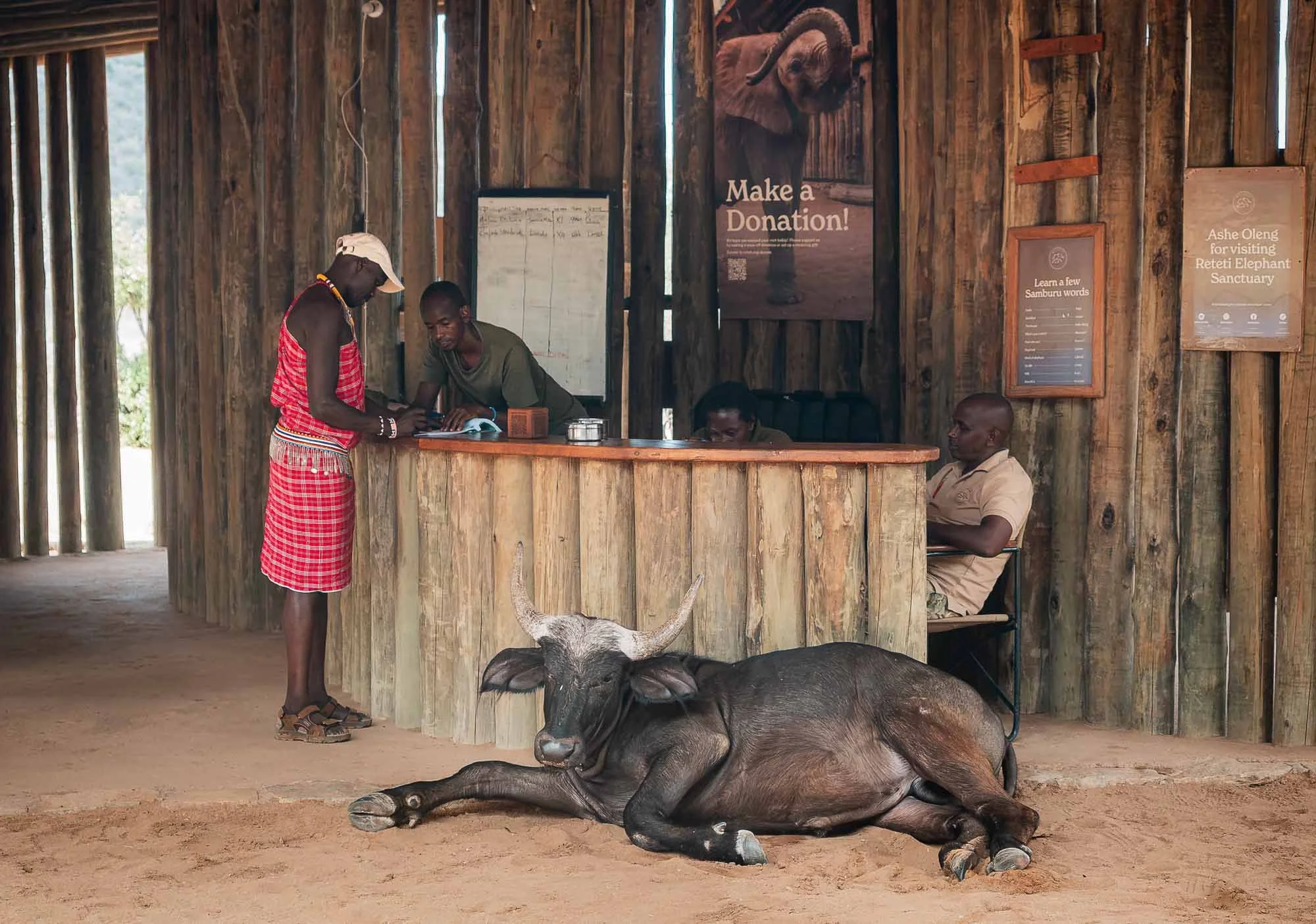
As we arrived, a decidedly non-elephant looking animal occupied the reception. This is a young male rescue buffalo that luckily is used to humans - nevertheless, a little unnerving given that his adult male counterparts are some of the most dangerous animals you can encounter in the wild.
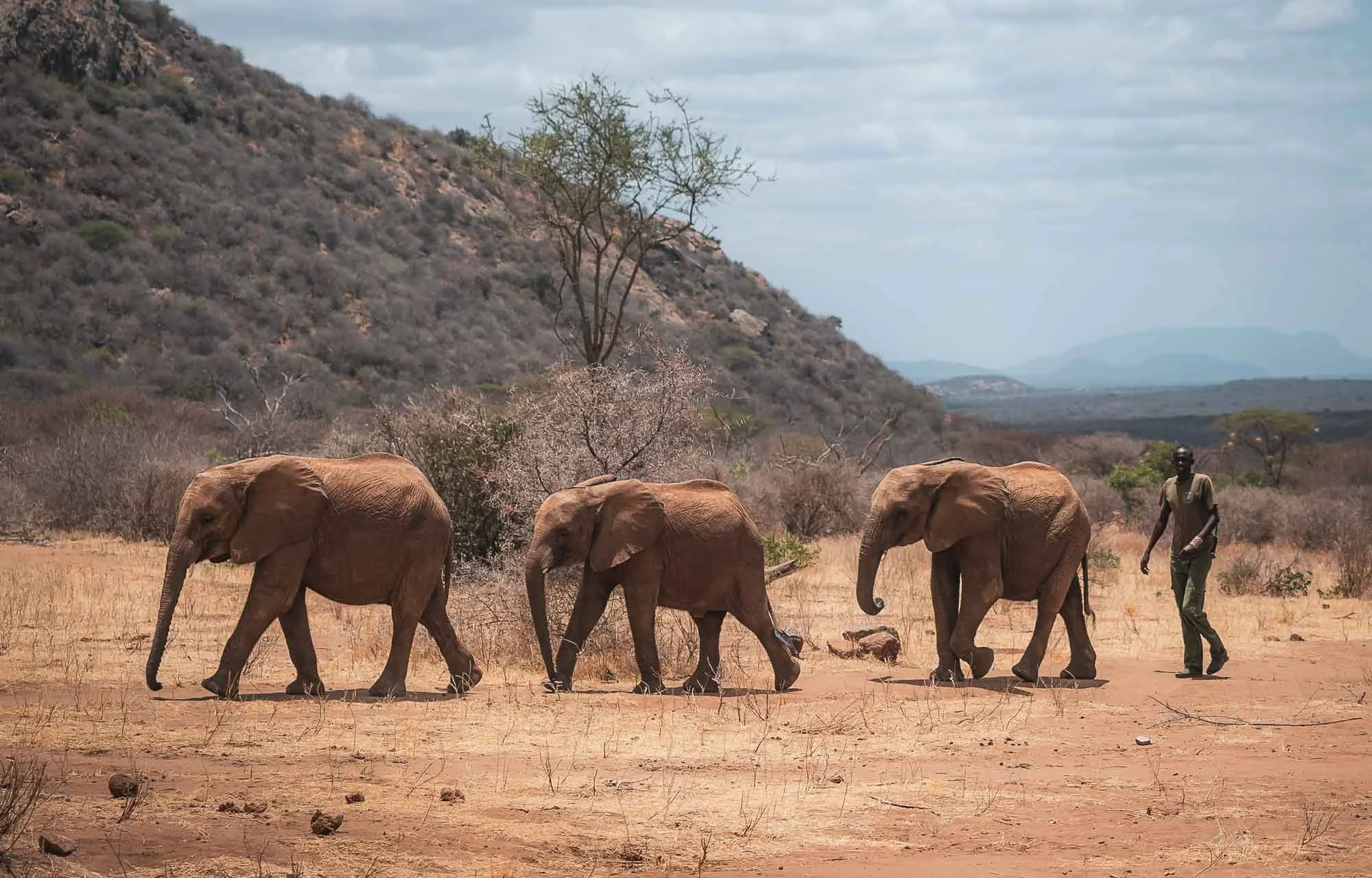
That said, the elephants were not far either. One by one the groups (sorted by age) appeared from their bush walks for meal time.
The sanctuary has rescued over 170 calves since it opened in 2016, and is currently home to around 50 young elephants, all looked after by their Samburu carers - it is completely community-led, but of course relies on donations to finance the cost of operations.
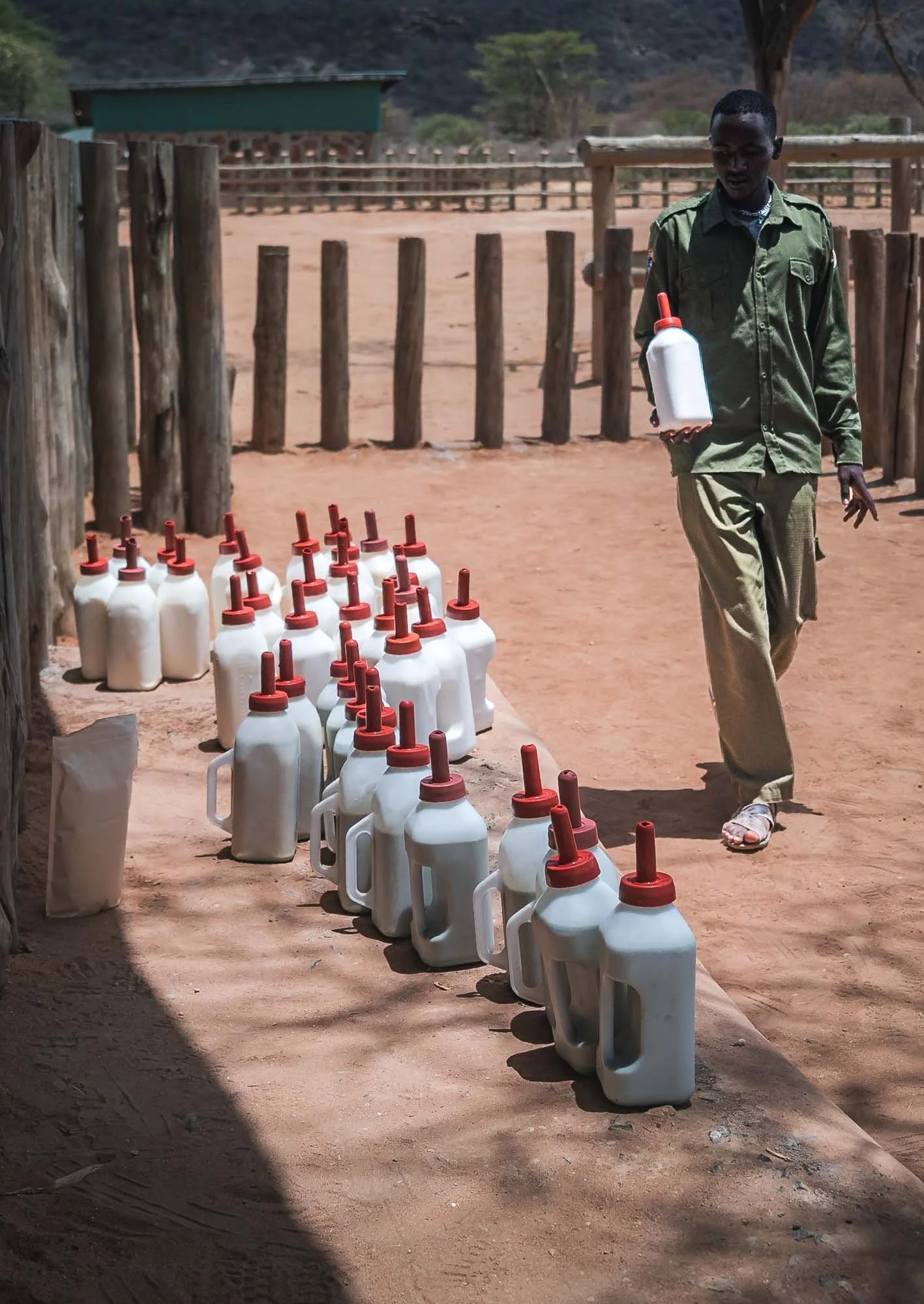
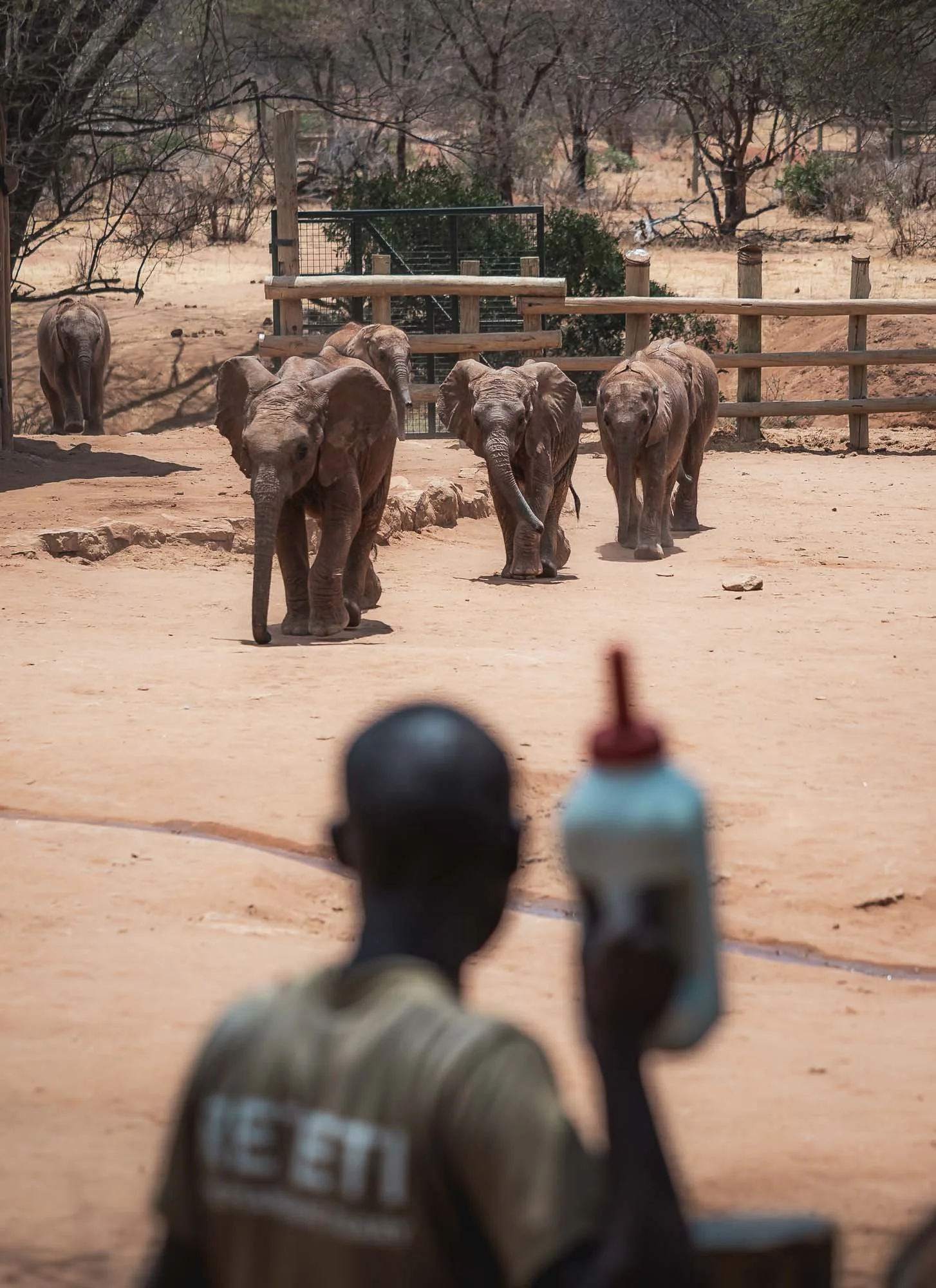
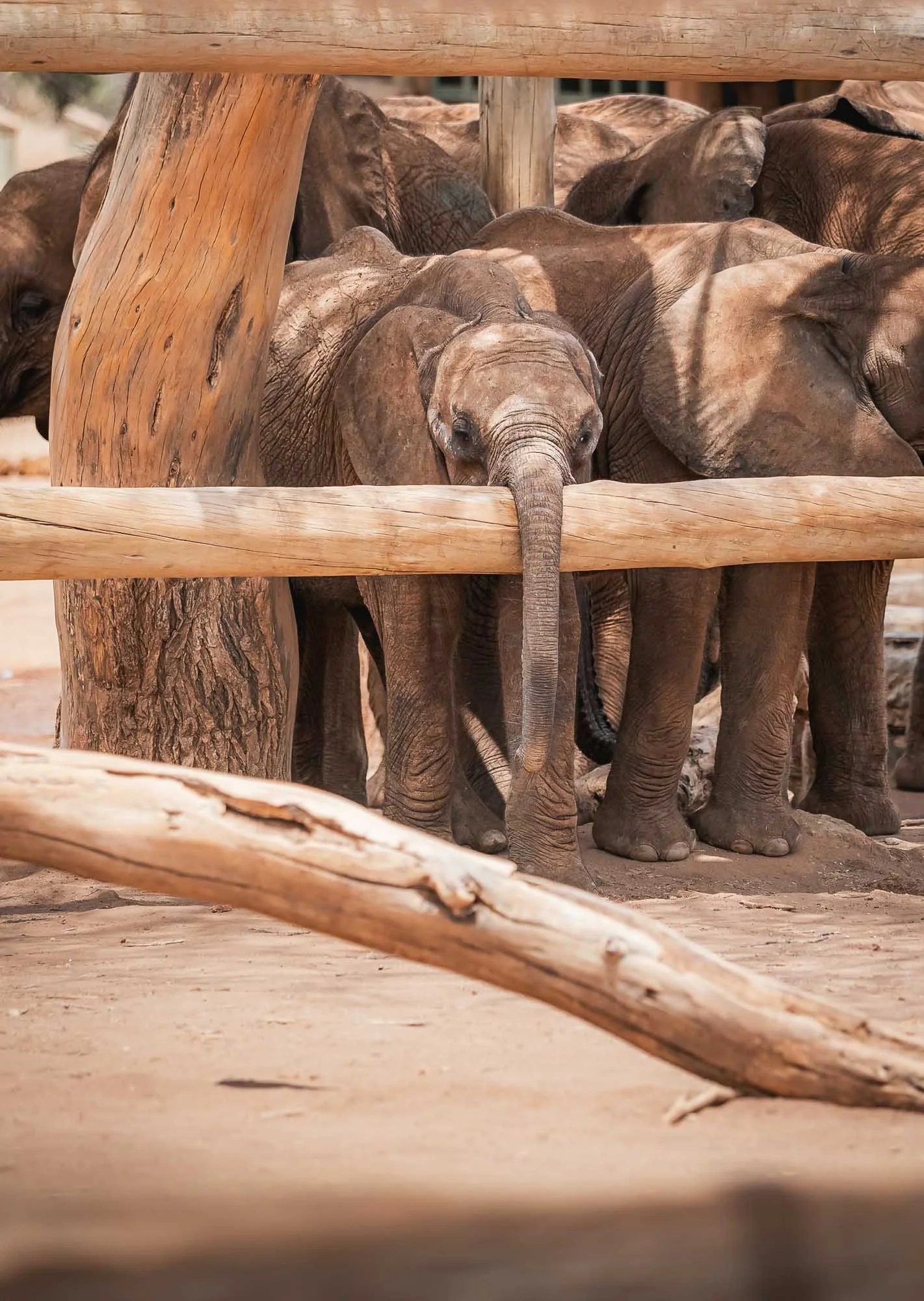
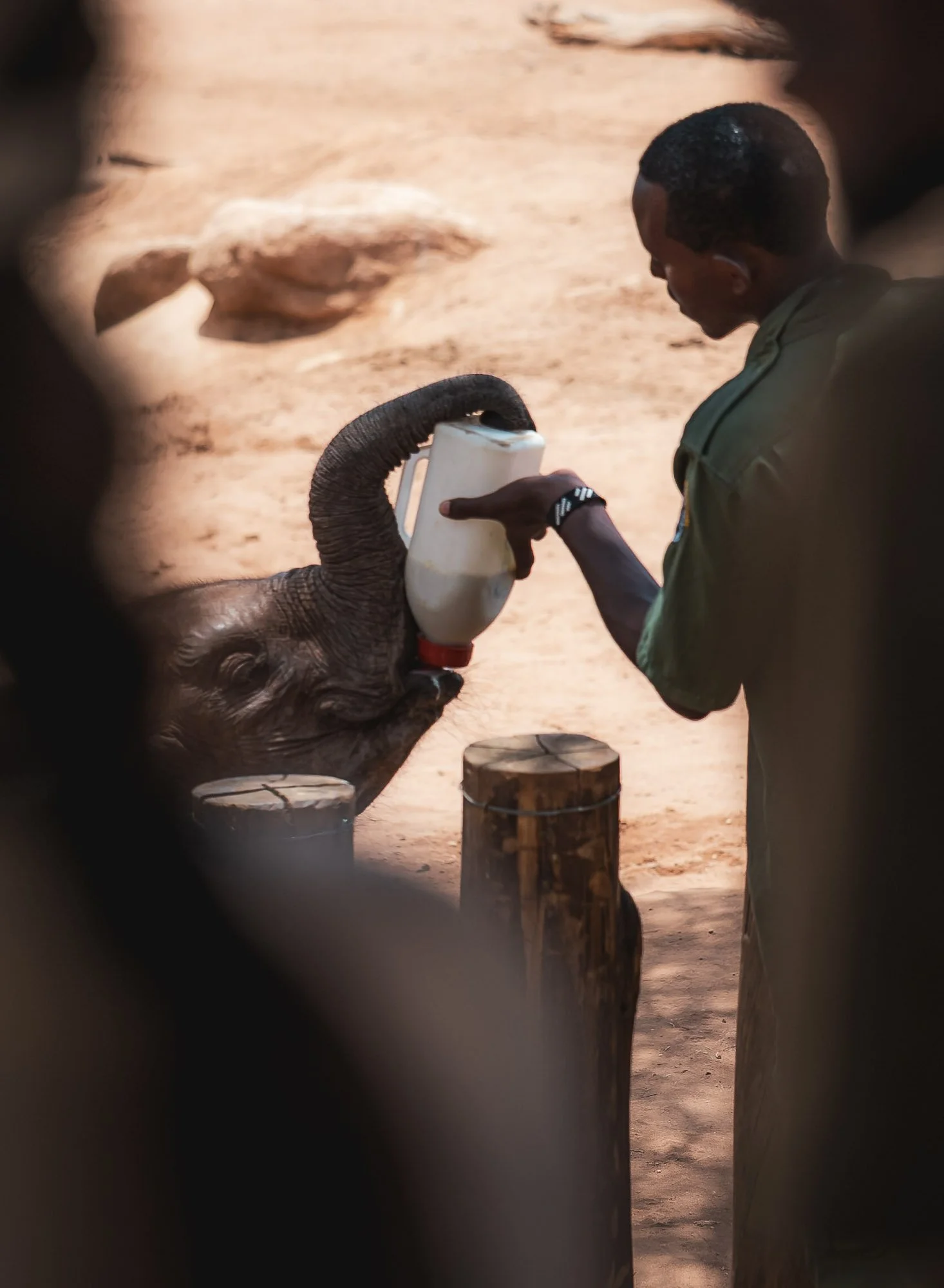
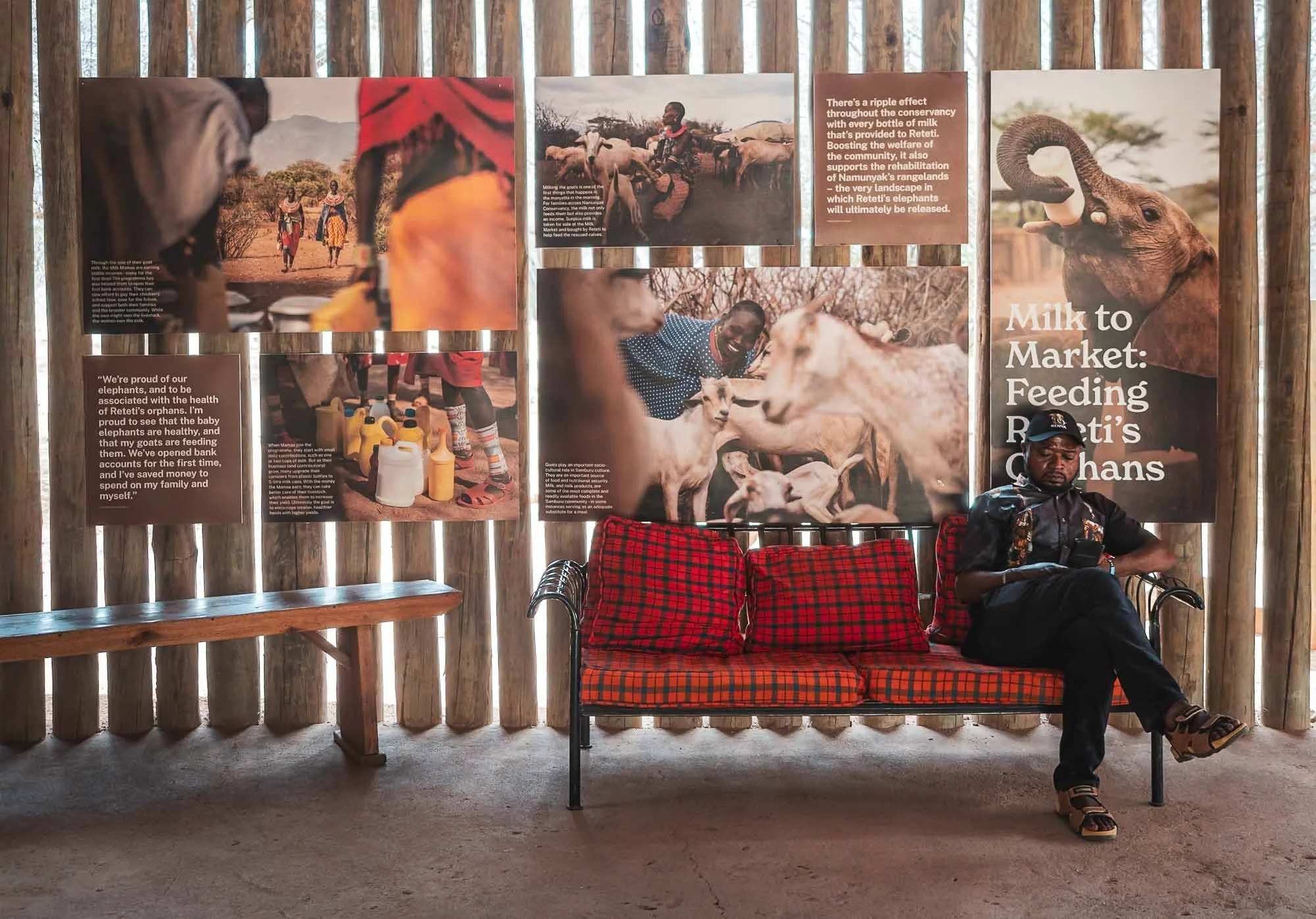
One such cost is feeding, as these calves need milk every 3 hours, 24 hours a day. At Reteti, they found a clever way to incorporate this need into the community with the Milk to Market program: Samburu women improve their income by selling surplus goat milk, which is used as the base for the elephants' specially formulated diet.
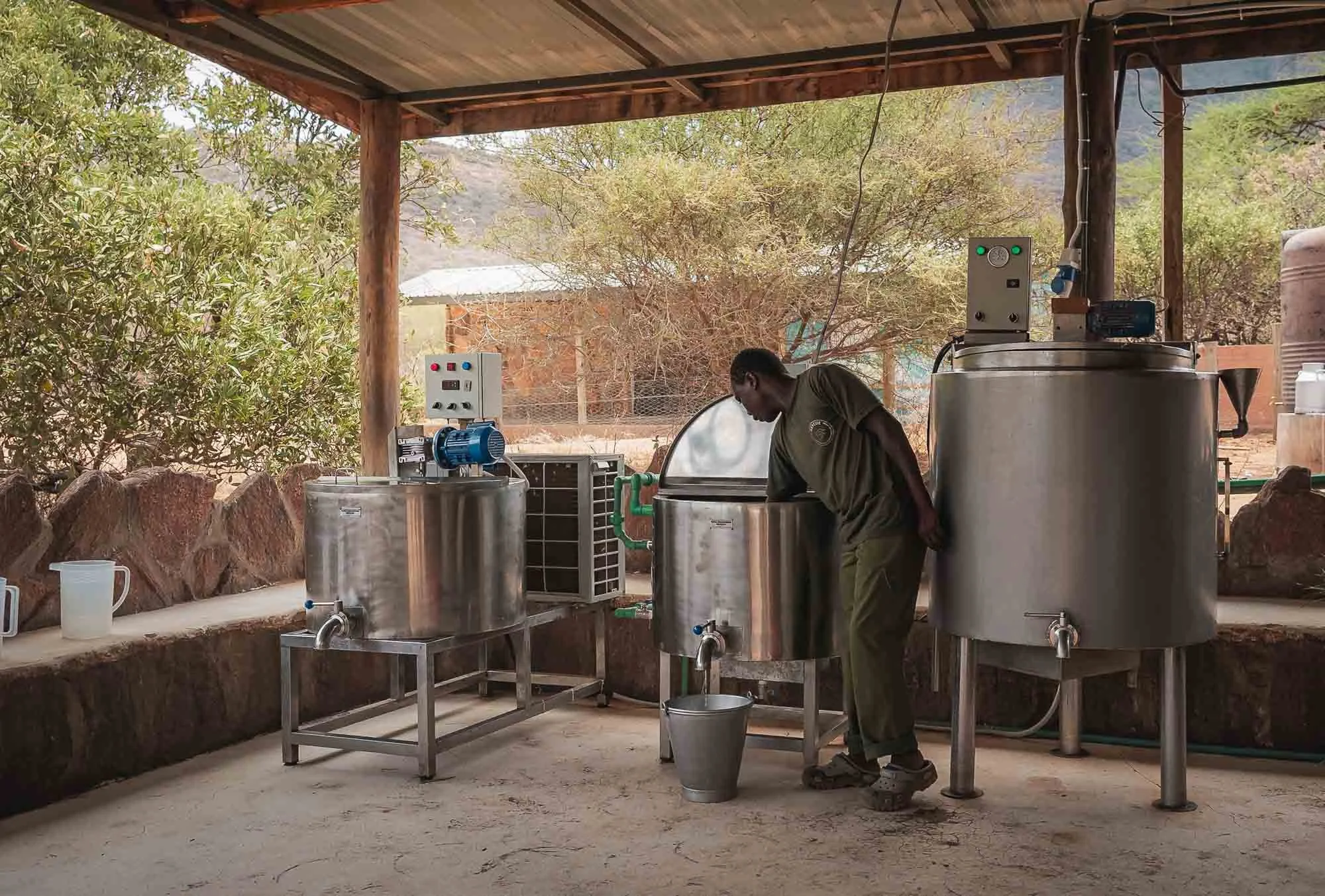
Storing and preparing that amount of milk has become quite an industrial operation.
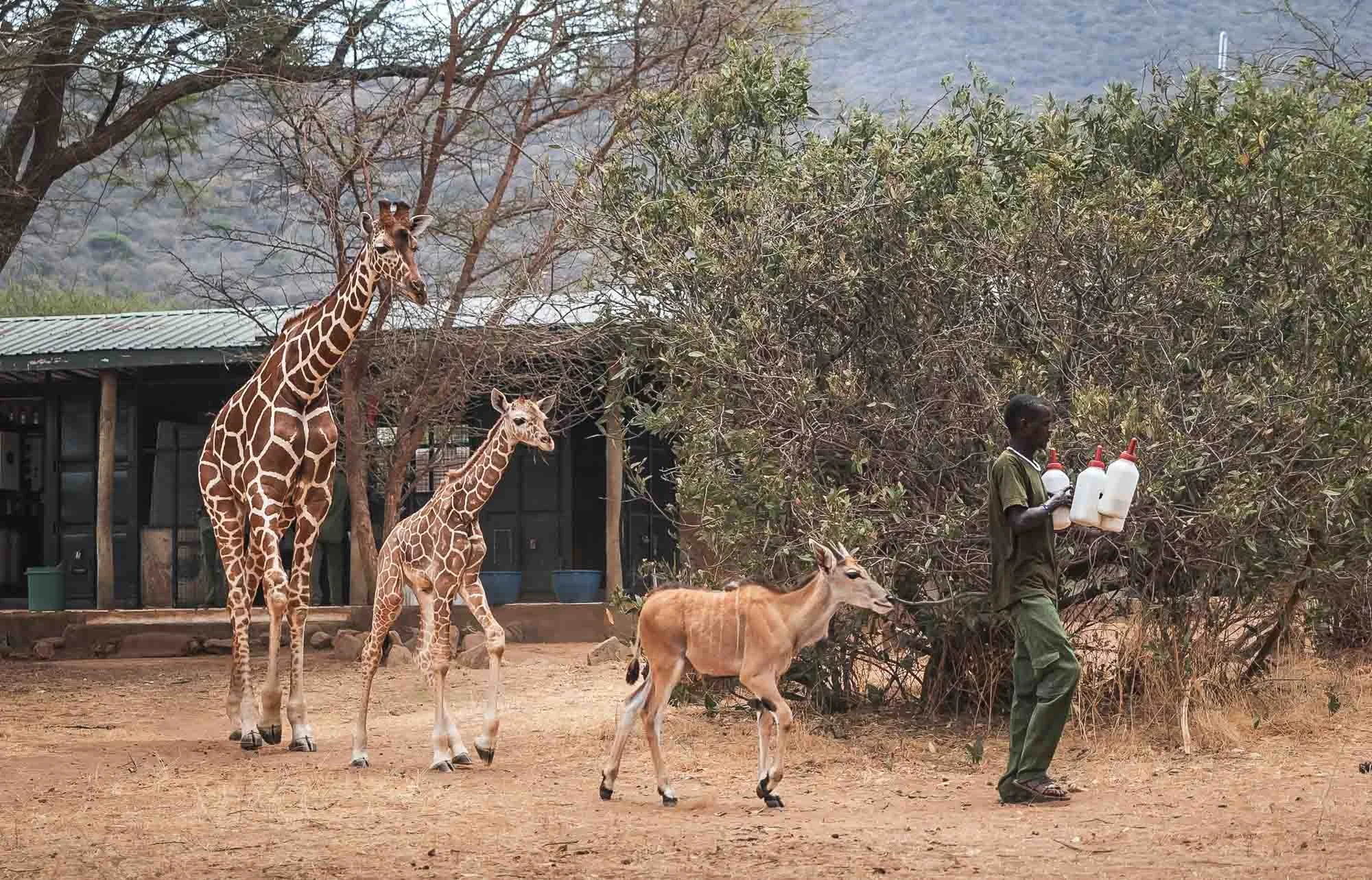
On top of that, it's not only the elephants that want their milk. The sanctuary is home to a few other species, most notably - in terms of their size - a number of giraffe.
But not all of them have reached their impressive 5 meter height of the one seen on the left below: a very young baby had been brought to the sanctuary at just a couple of months old, after its mother abandoned it - not an unusual occurrence with giraffe; they are not the most caring parents.
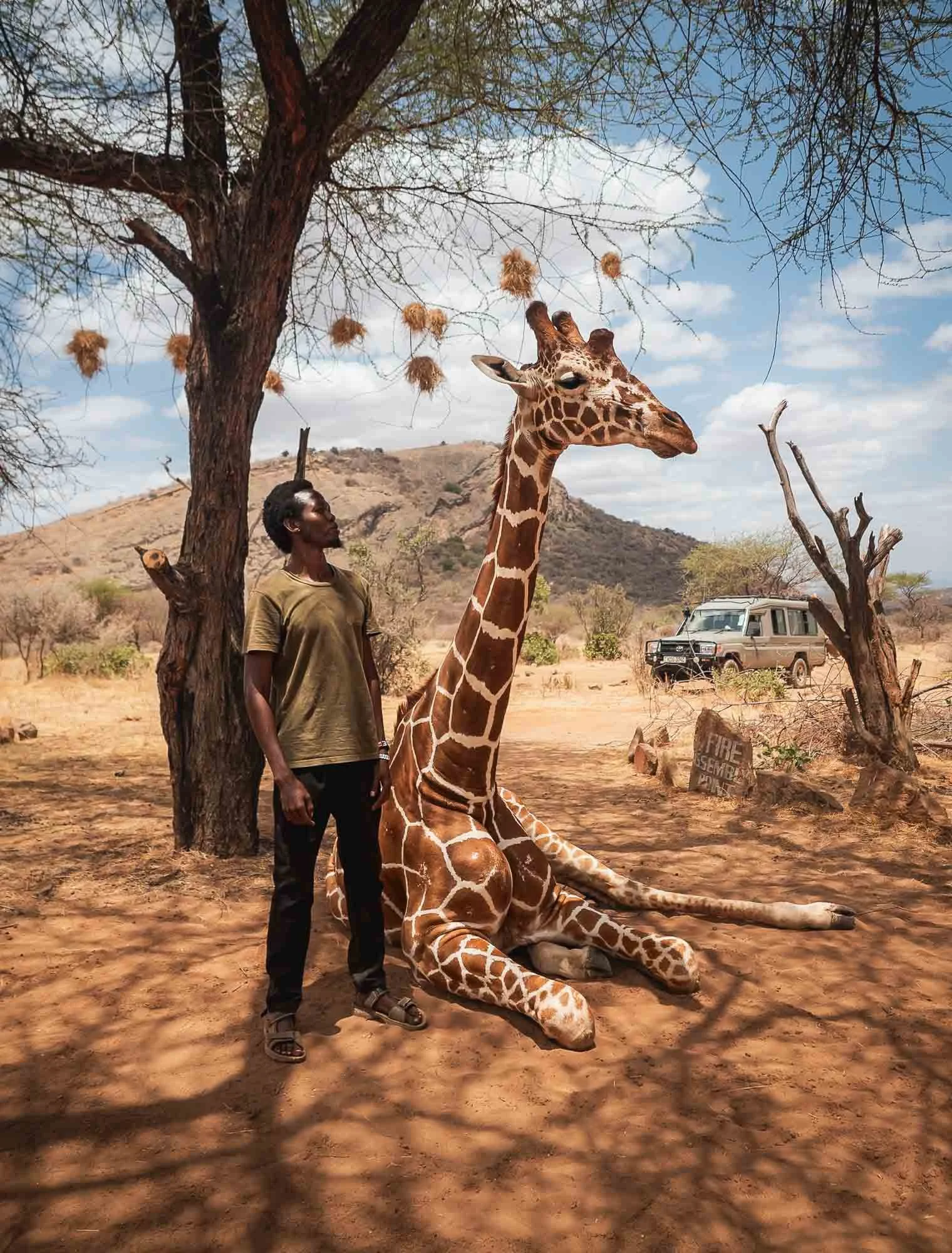
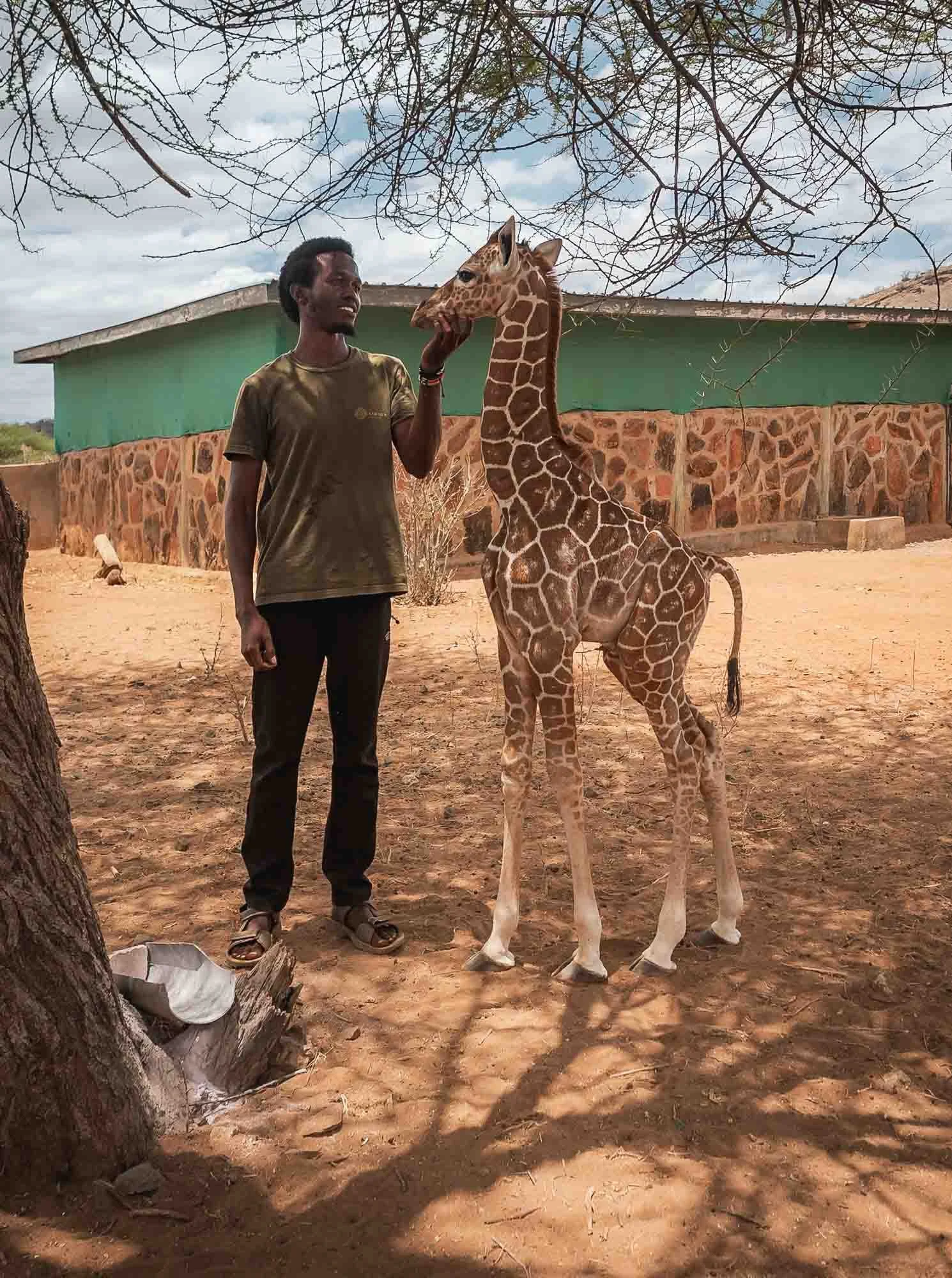
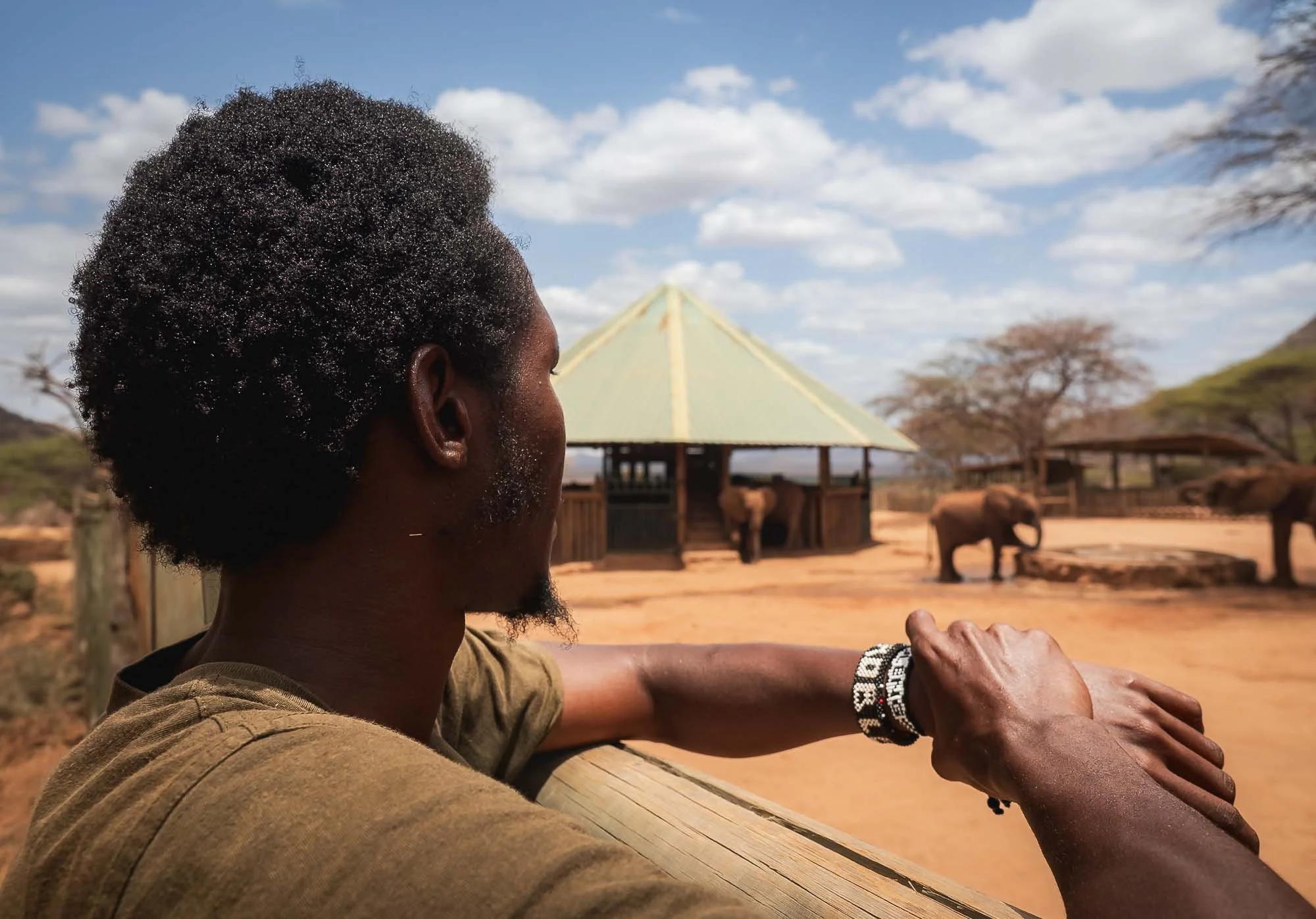
This young keeper named Ibrahim showed us around. He has only been working in the sanctuary for a few weeks, but his passion and care for the animals clearly showed.
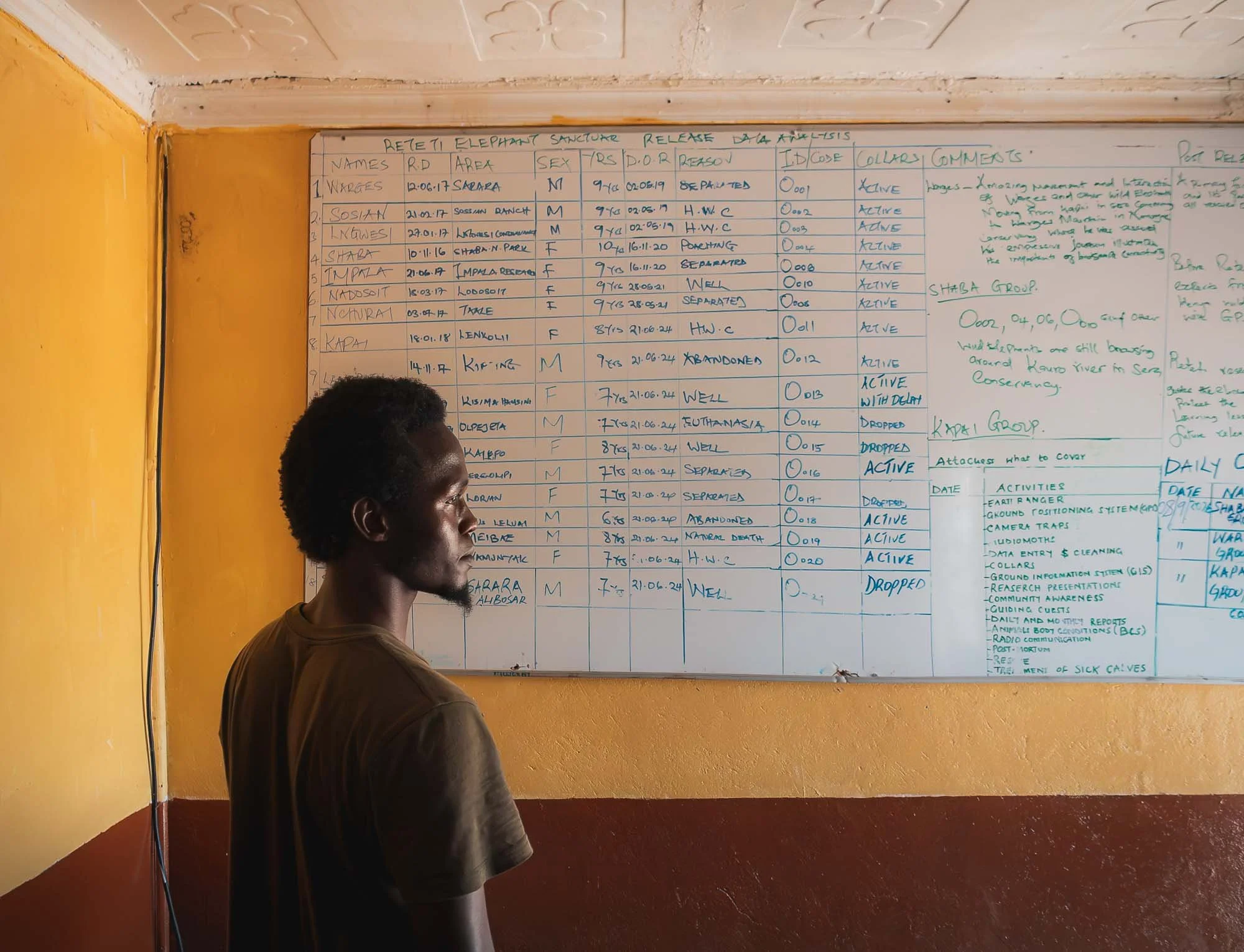
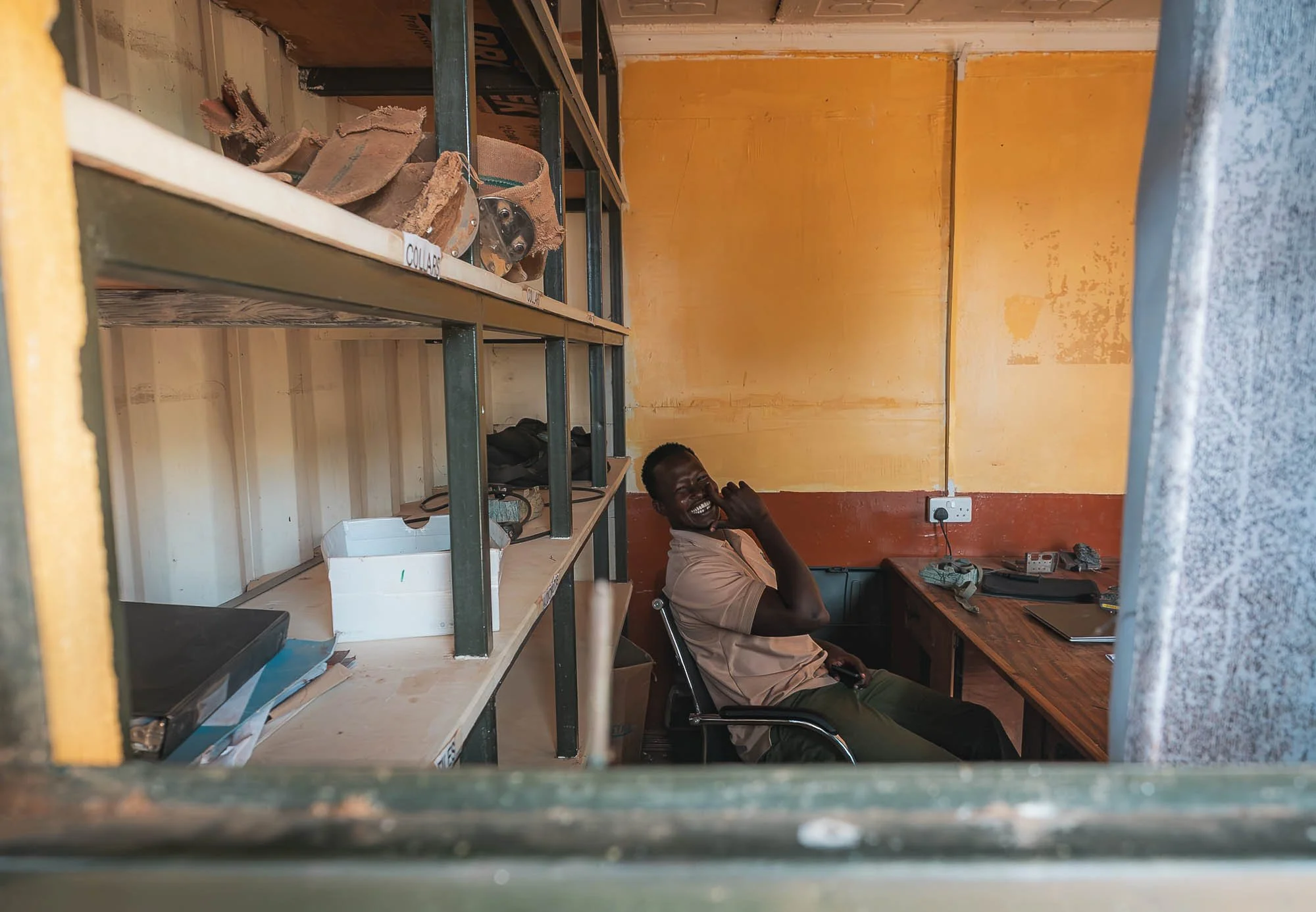
The board in the back office shows the latest group of elephants released back into the wild. A total of 23 have found a new home in the area, and the staff uses collars and trail cameras to observe their development in the wild.
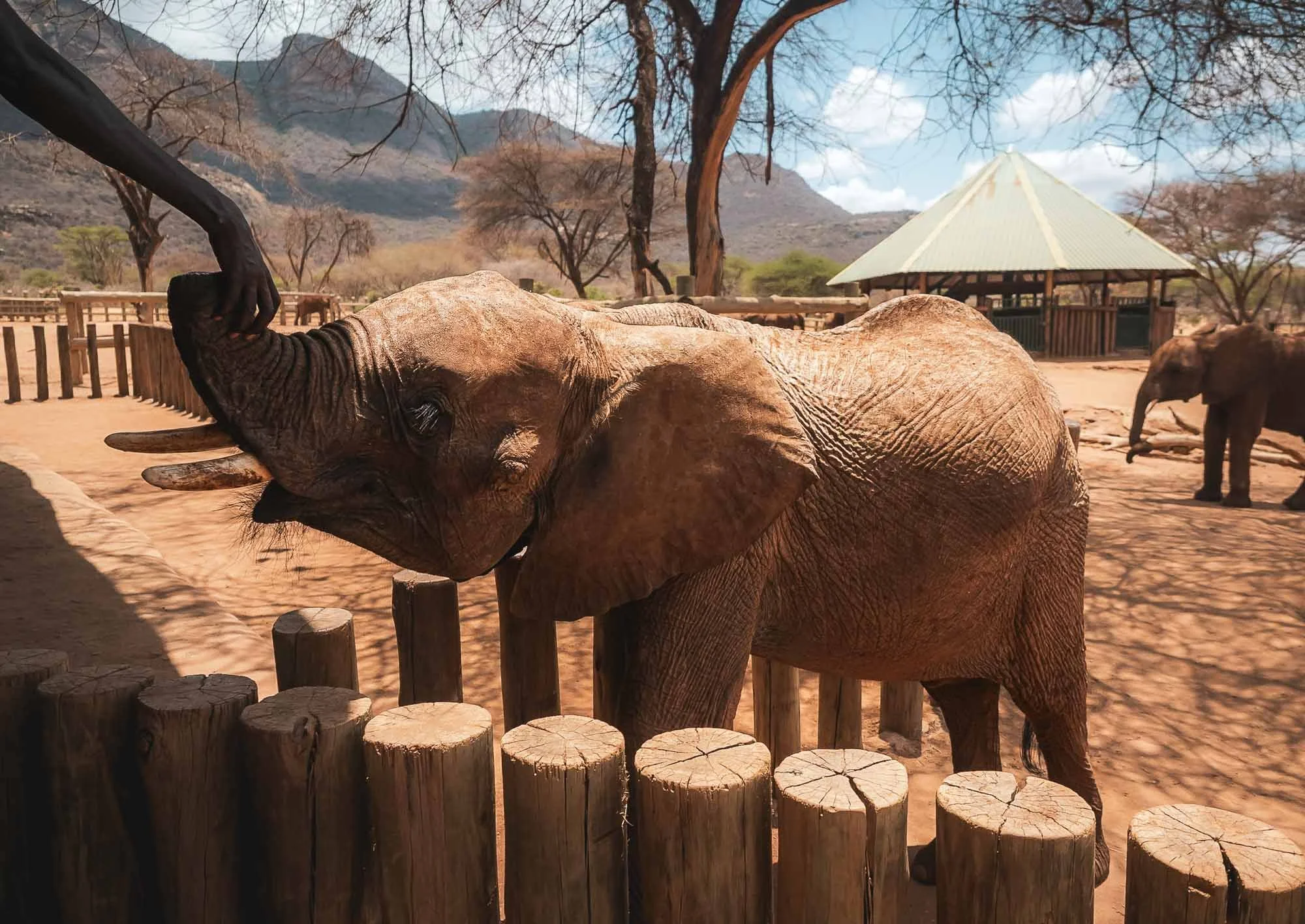
Long’Uro
Every elephant rescue has its own story, but a common reason for them ending up in the sanctuary is when calves fall into the wells to drink water during the dry season and can’t be saved by their herd.
The story of Long’Uro is one such case. He was abandoned in a well and was in a desperate state when rangers found him one night in 2020.
Two thirds of his trunk had been lost to a hyena, and he was barely a month old.
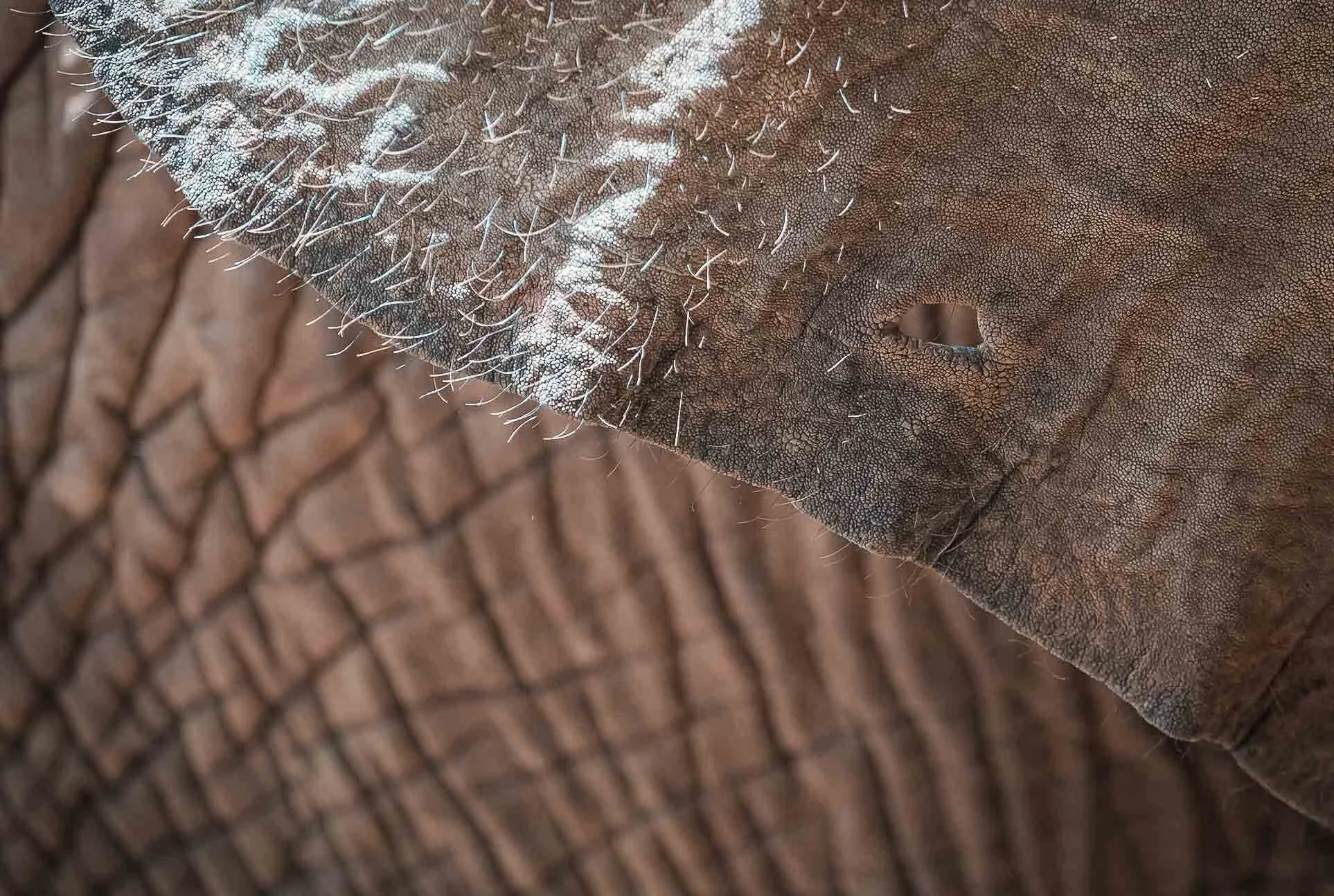
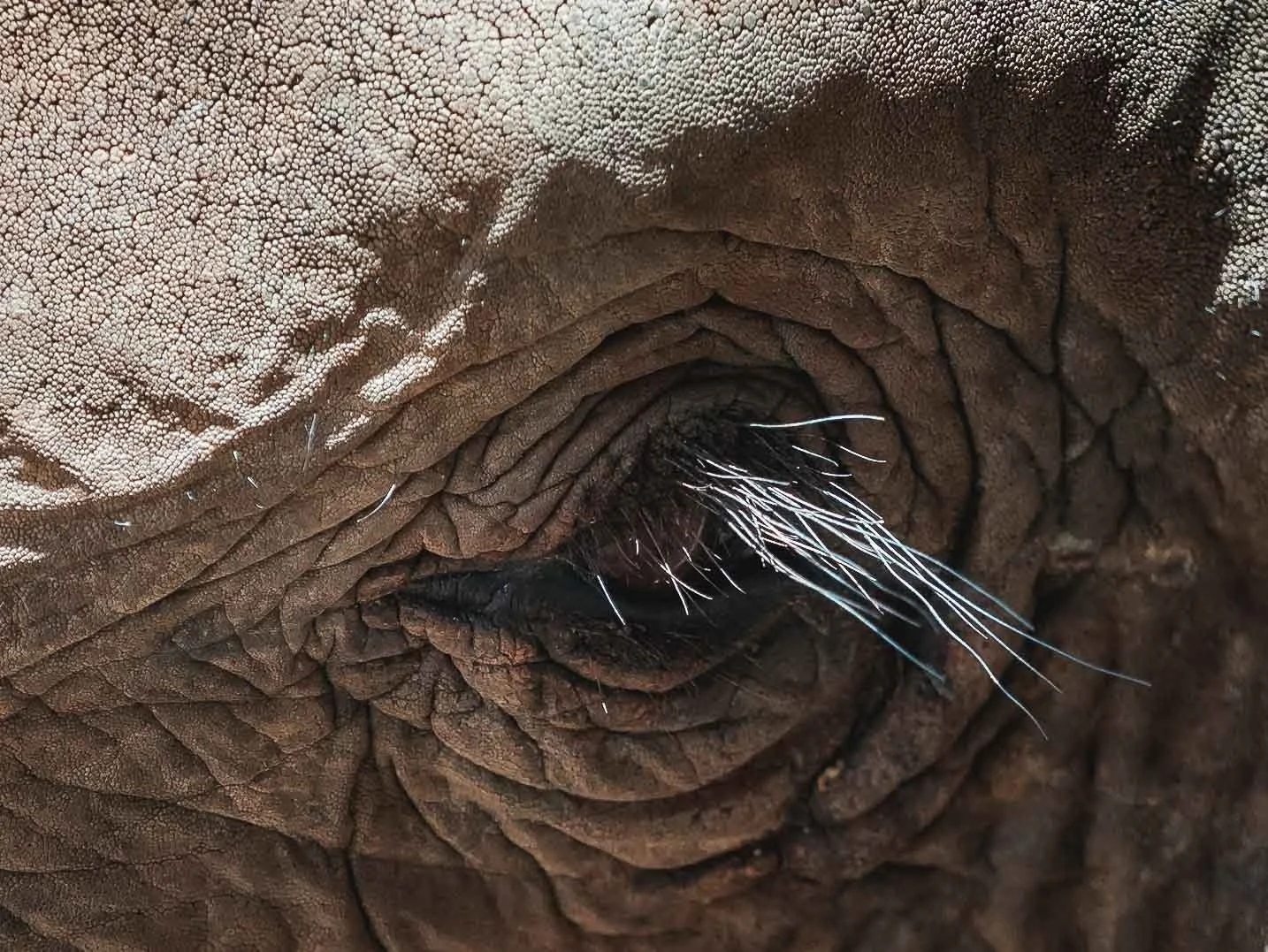
On top of that, he is also blind on his left eye, but showed remarkable resilience and was nursed back to health. He is now under special-needs care, having learnt to adapt his drinking habits and even his socializing, keeping the other elephants on his right side.
Singing Wells Part 2
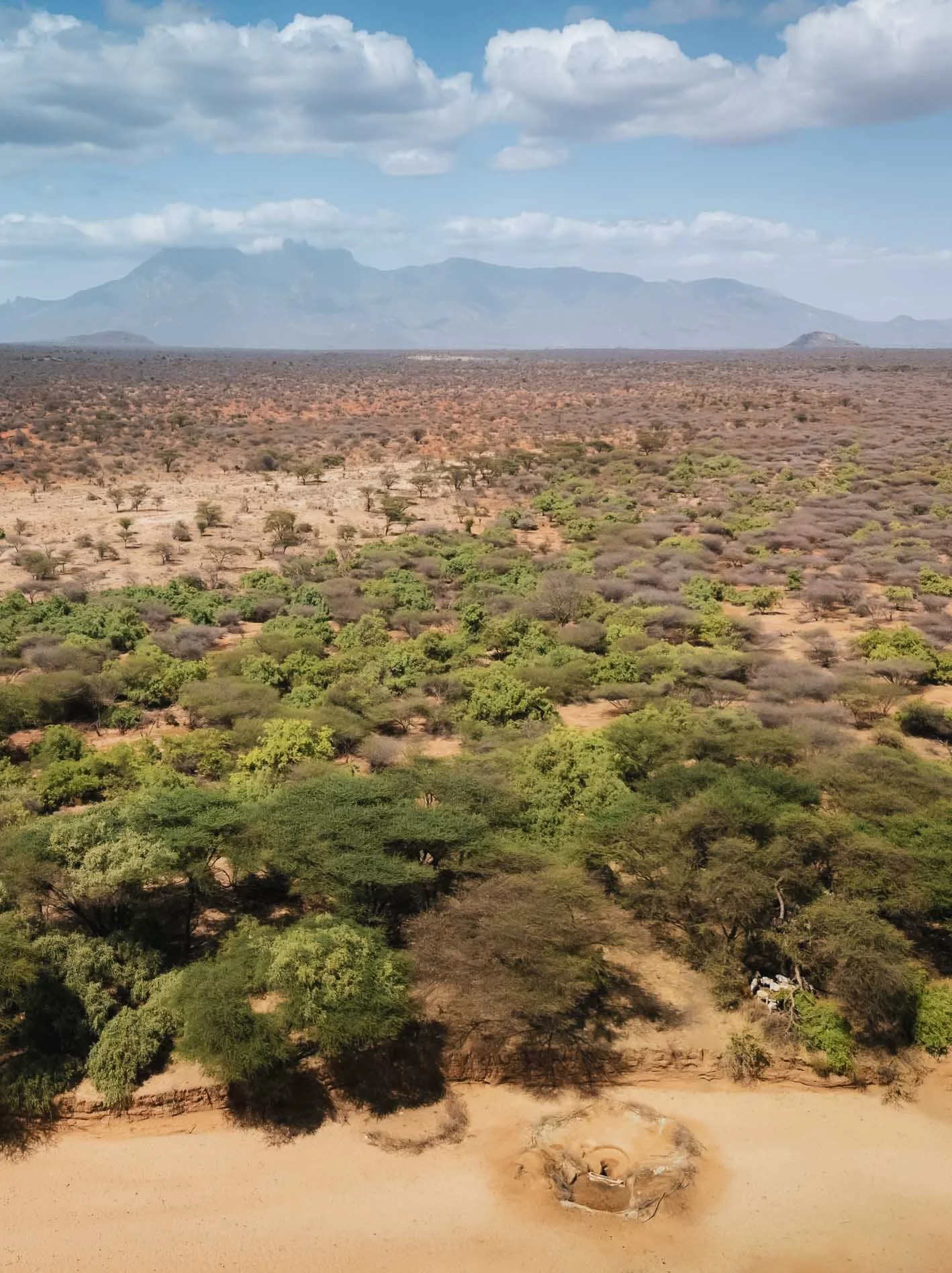
I was keen to take another look at this practice that is so characteristic for the people and landscape here. Not far from the sanctuary, we found another river bed with several wells - an empty one seen here on the bottom.
Photography at the wells can be a tricky subject, and it is not for certain the elders would allow it. In general I’m always a little aware of how intrusive it can be to locals and their routines, and even more so here as the men often take off all their clothes before climbing down the well.
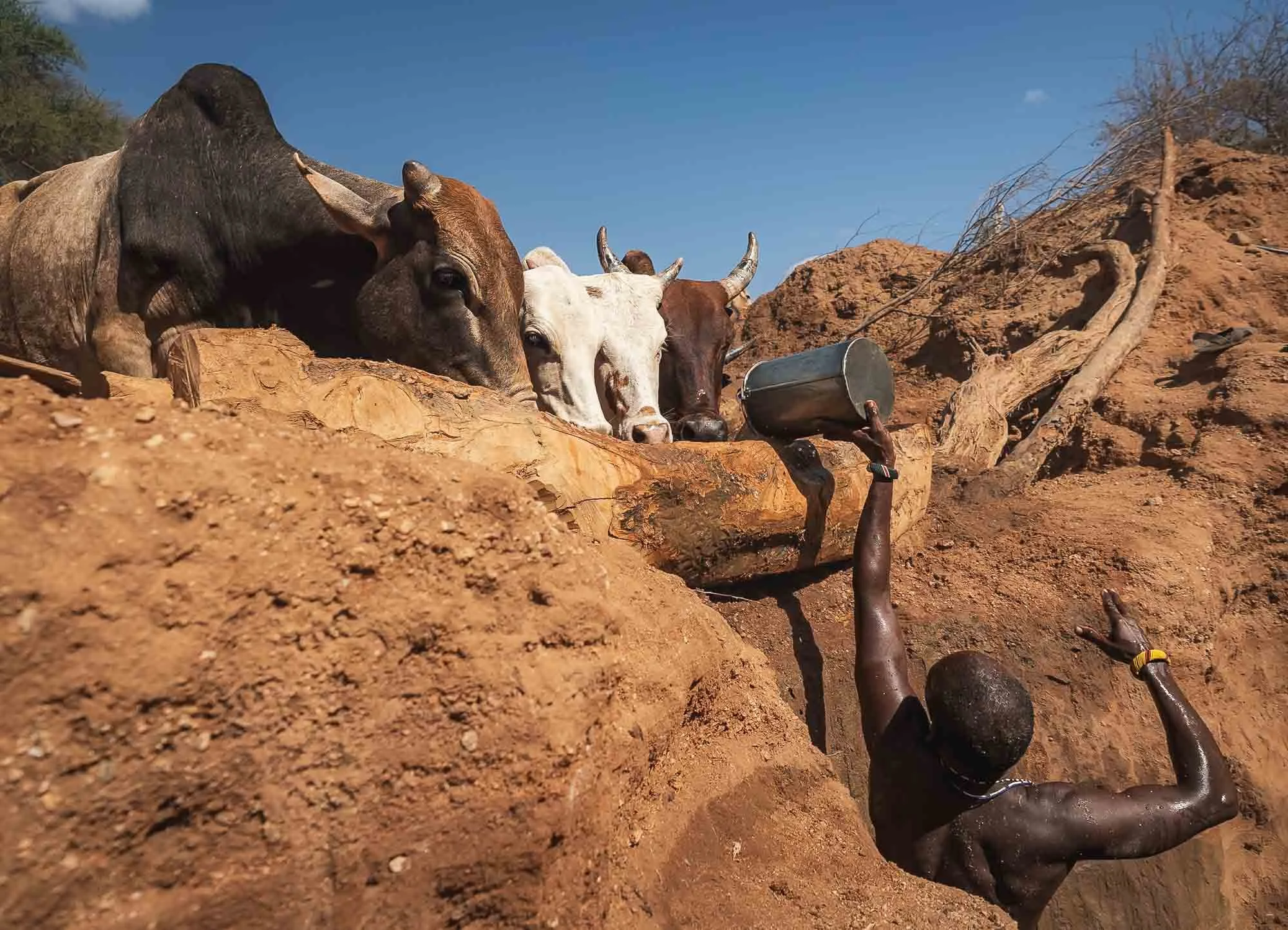
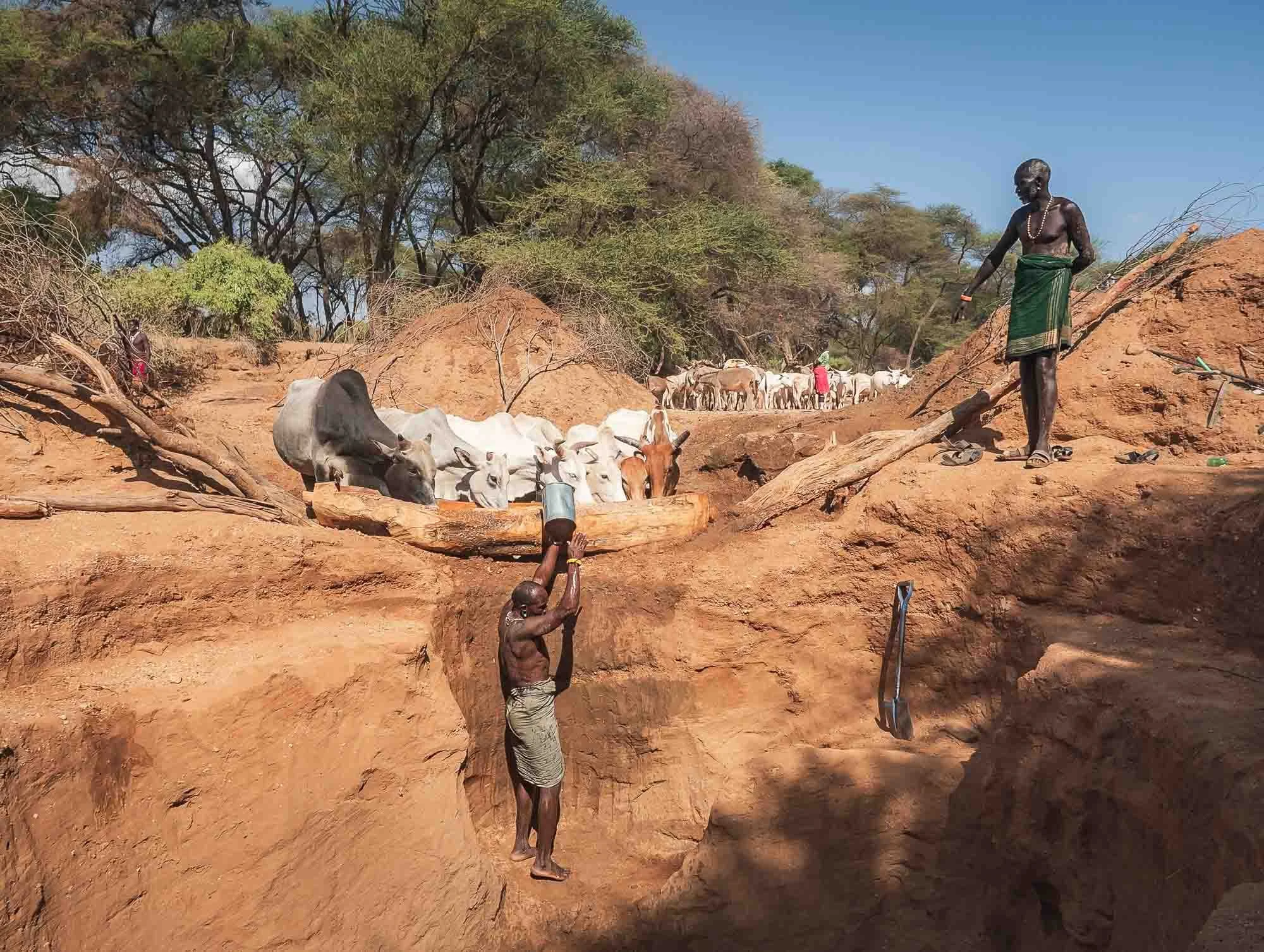
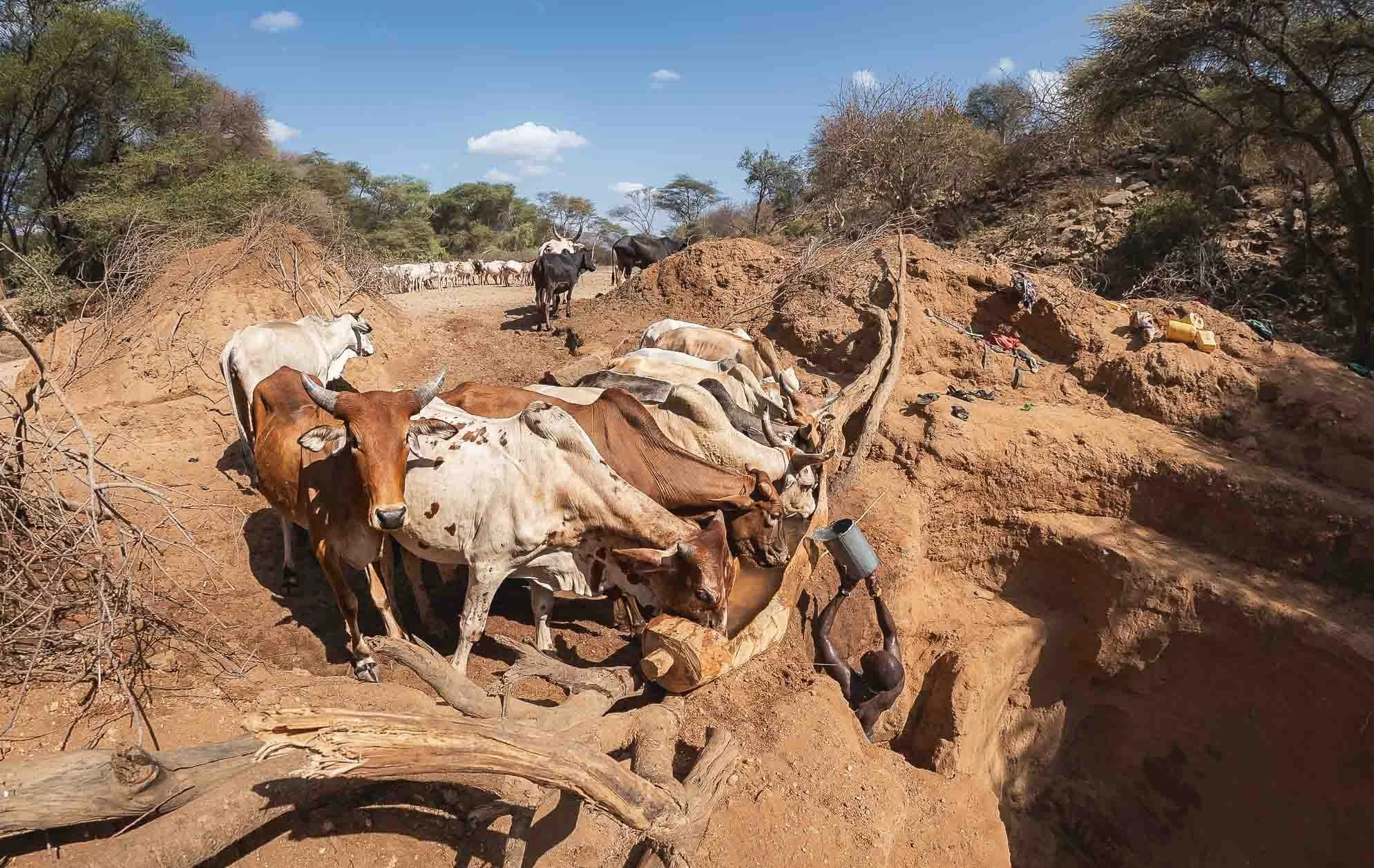
We managed to get permission from a group of men working one of the wells though, and they seemed quite happy and not bothered by us - but they also made sure to put on some clothes…
From our limited discussions and observations, it is clear that water access is one of the key issues people (and animals) face - an obvious conclusion but one that is not addressed easily, as boreholes can be expensive and are not always easy to maintain, and shared access management is a challenge.
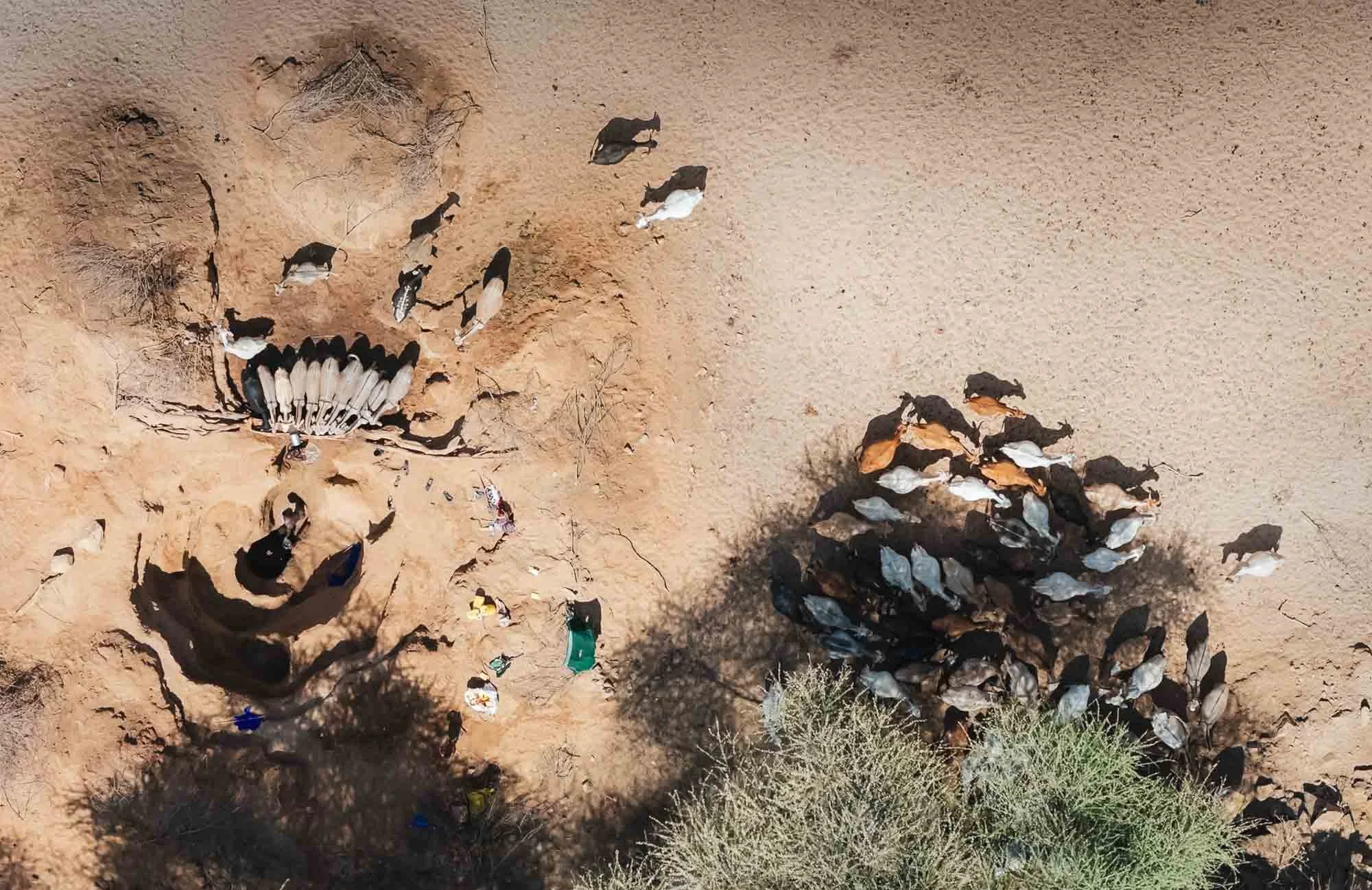
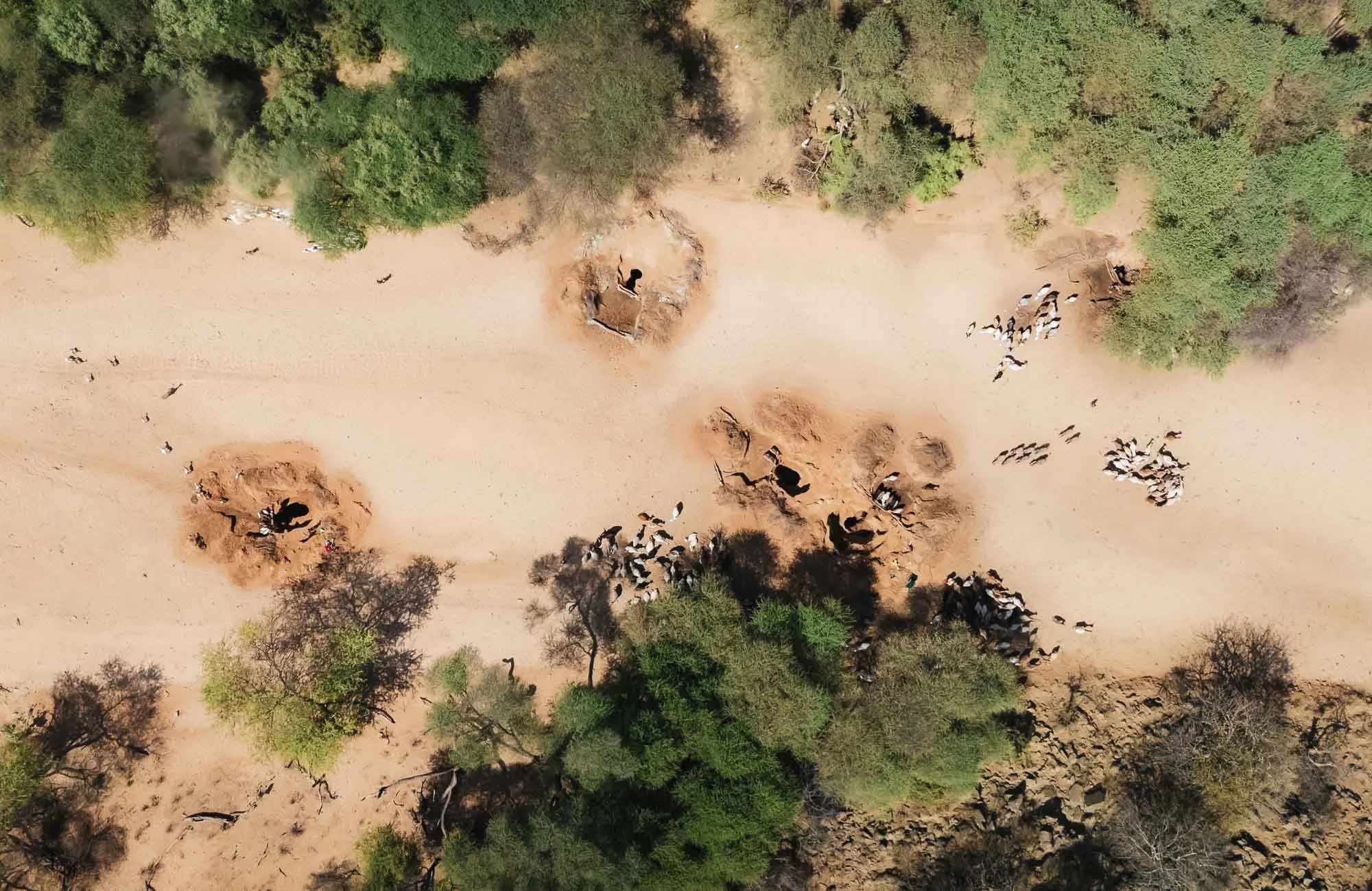
I even had the chance to get some aerial photos, but a few men working the surrounding wells felt a little less comfortable with the drone, so we didn’t push our luck.
The wells can be more than 10 meters deep, which means it takes several men to bring the water up to ground level - if you look closely, you’ll see a third person all the way down. Their rhythmic singing helps them coordinate the activity and is also recognized by the animals, who approach their herders in the well when they hear it - listen to the video.
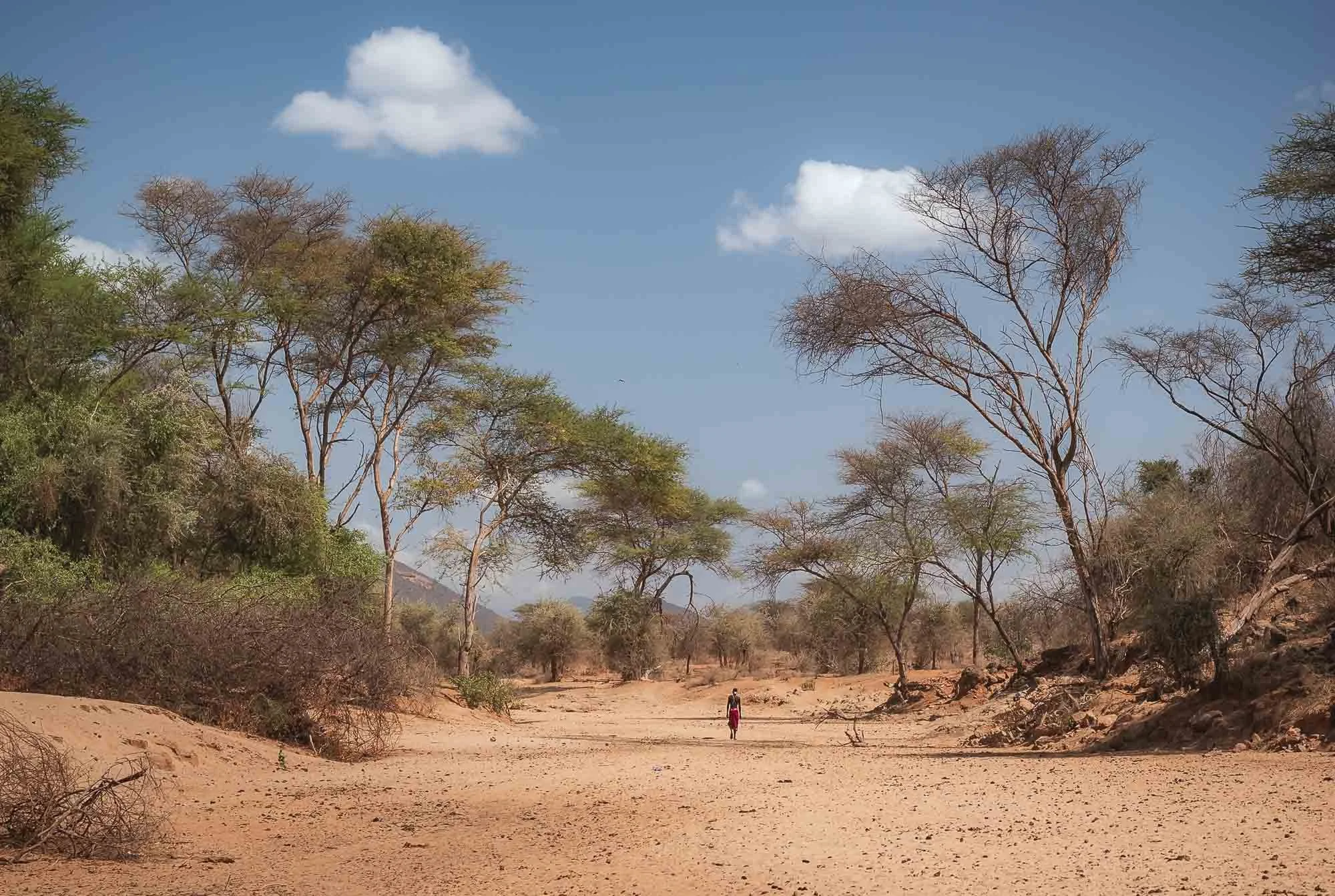
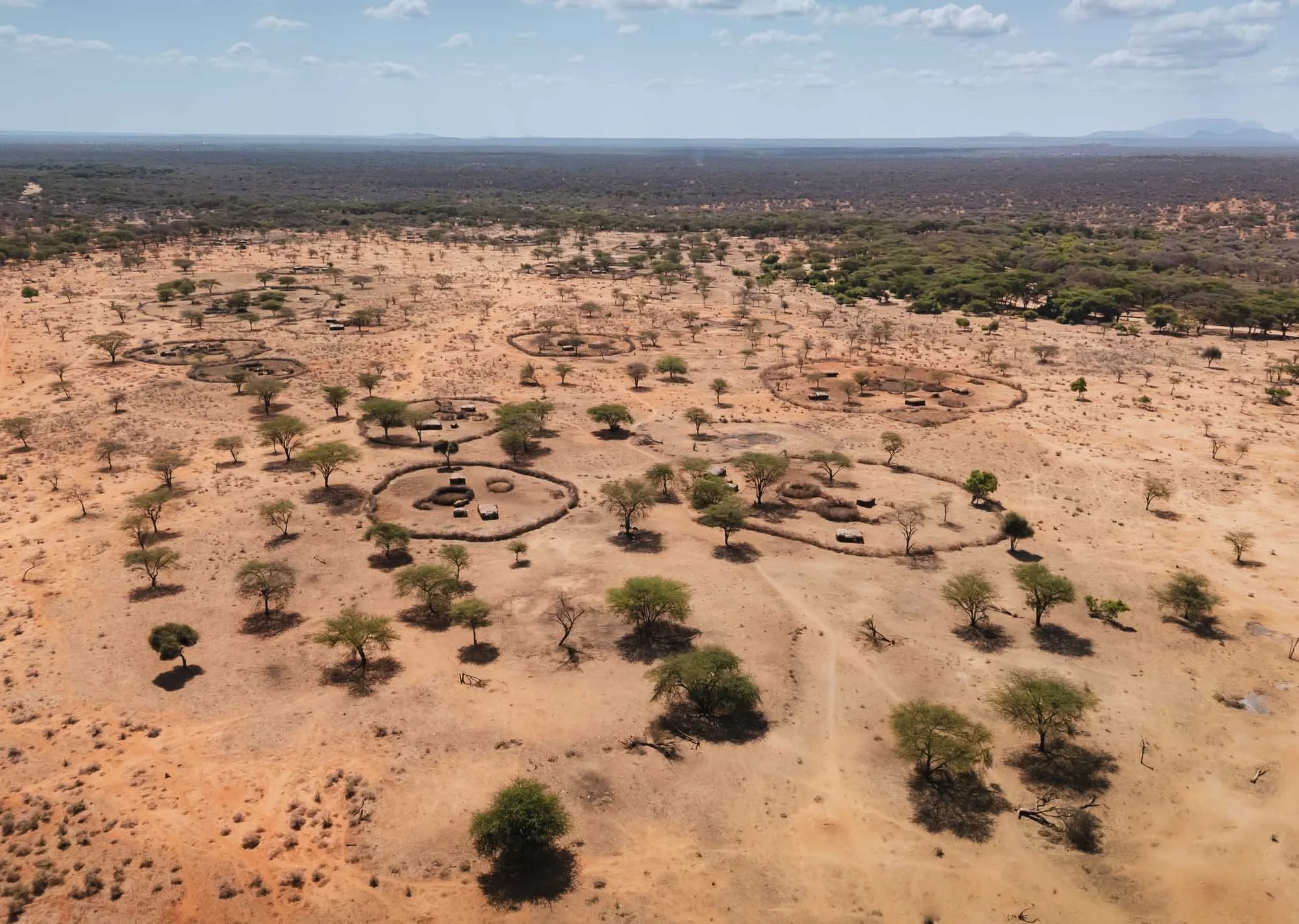
A Samburu walking through the empty riverbed, possibly to one of the characteristic boma-style temporary villages seen in this aerial photo, surrounded by thorny branches that act as deterrent during the night.
The National Reserve
From Reteti, we continued our way south towards Kalama conservancy, which would be home for the next few days, with the occasional drive into Samburu National Reserve.
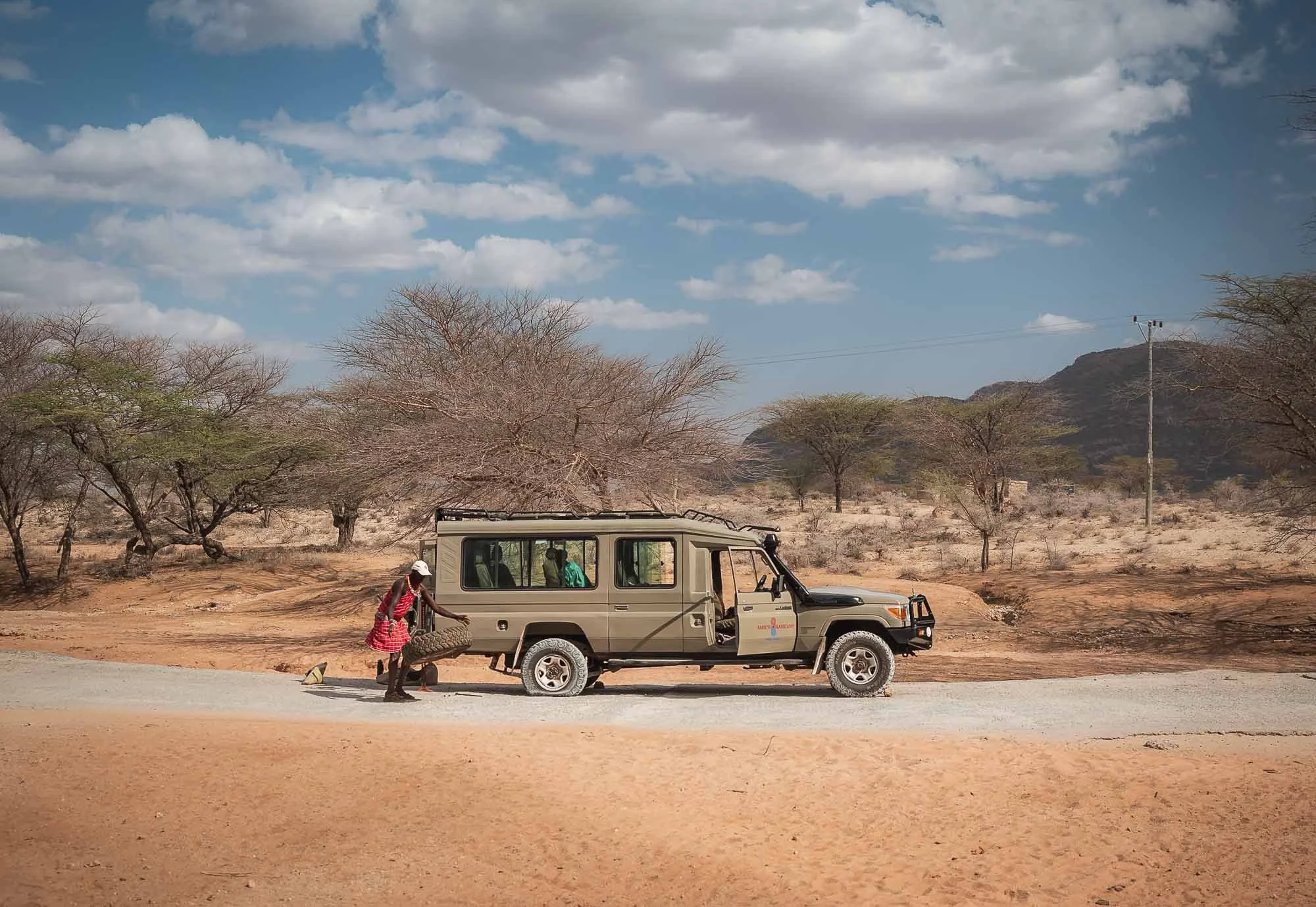
But first, we had to arrive, which proved a bit more difficult than anticipated thanks to a flat tire.
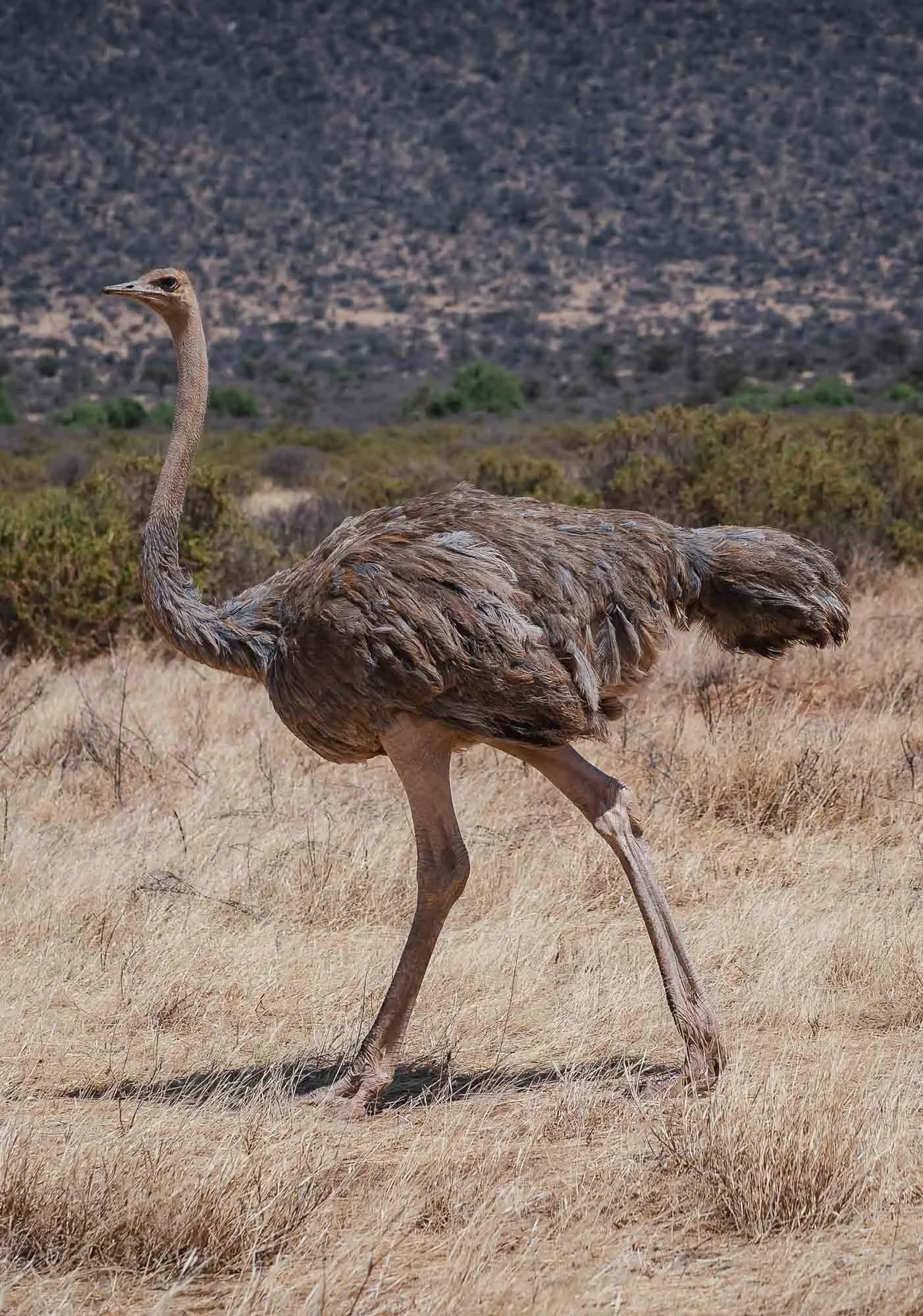
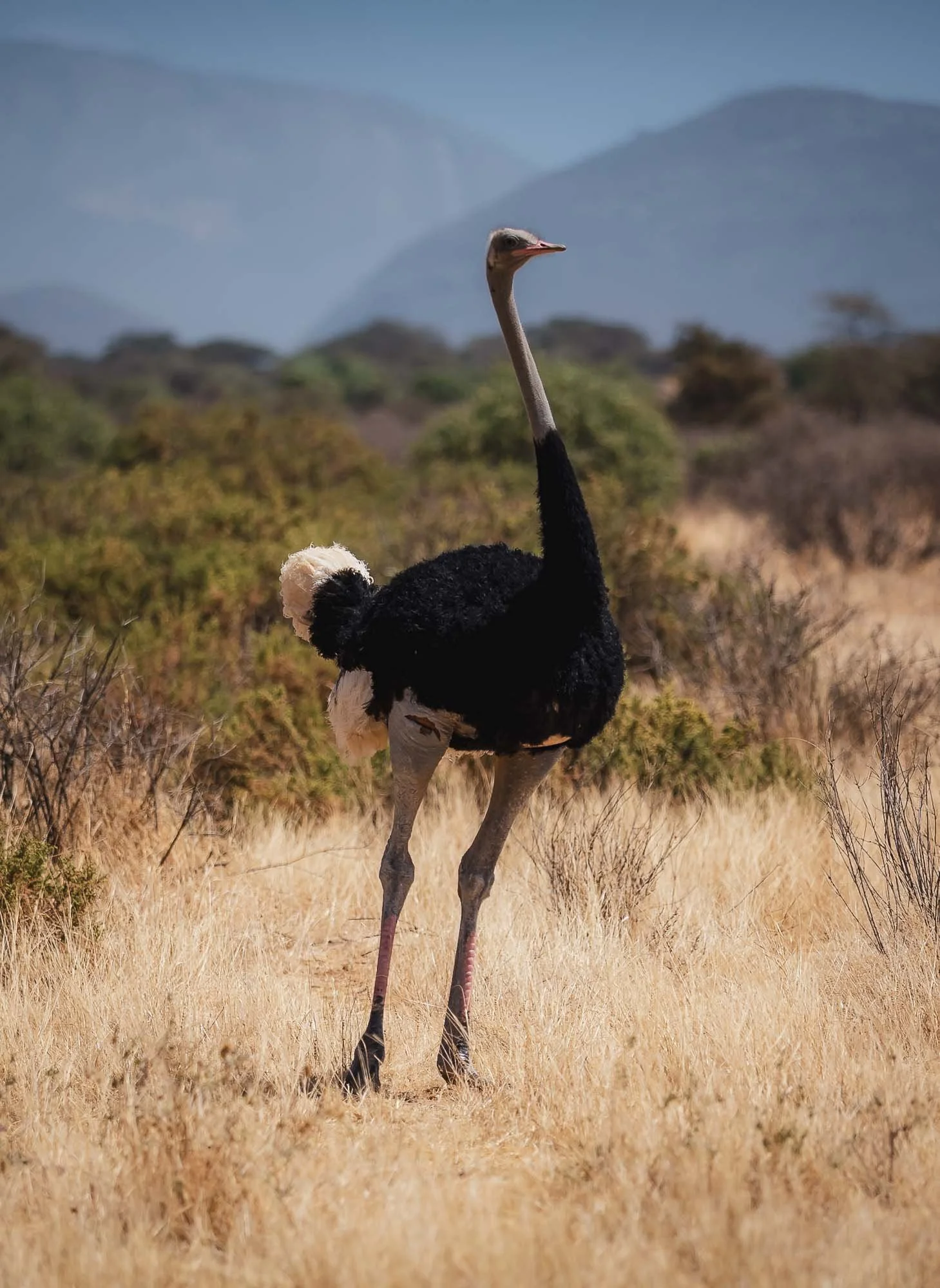
During our first game drive here, we encountered the third of the aforementioned Northern Five: the Somali ostrich. Although these species are also known as the Samburu Special Five, they can be found across a much wider area than the county. Nevertheless, it is probably one of the best places to spot them all.
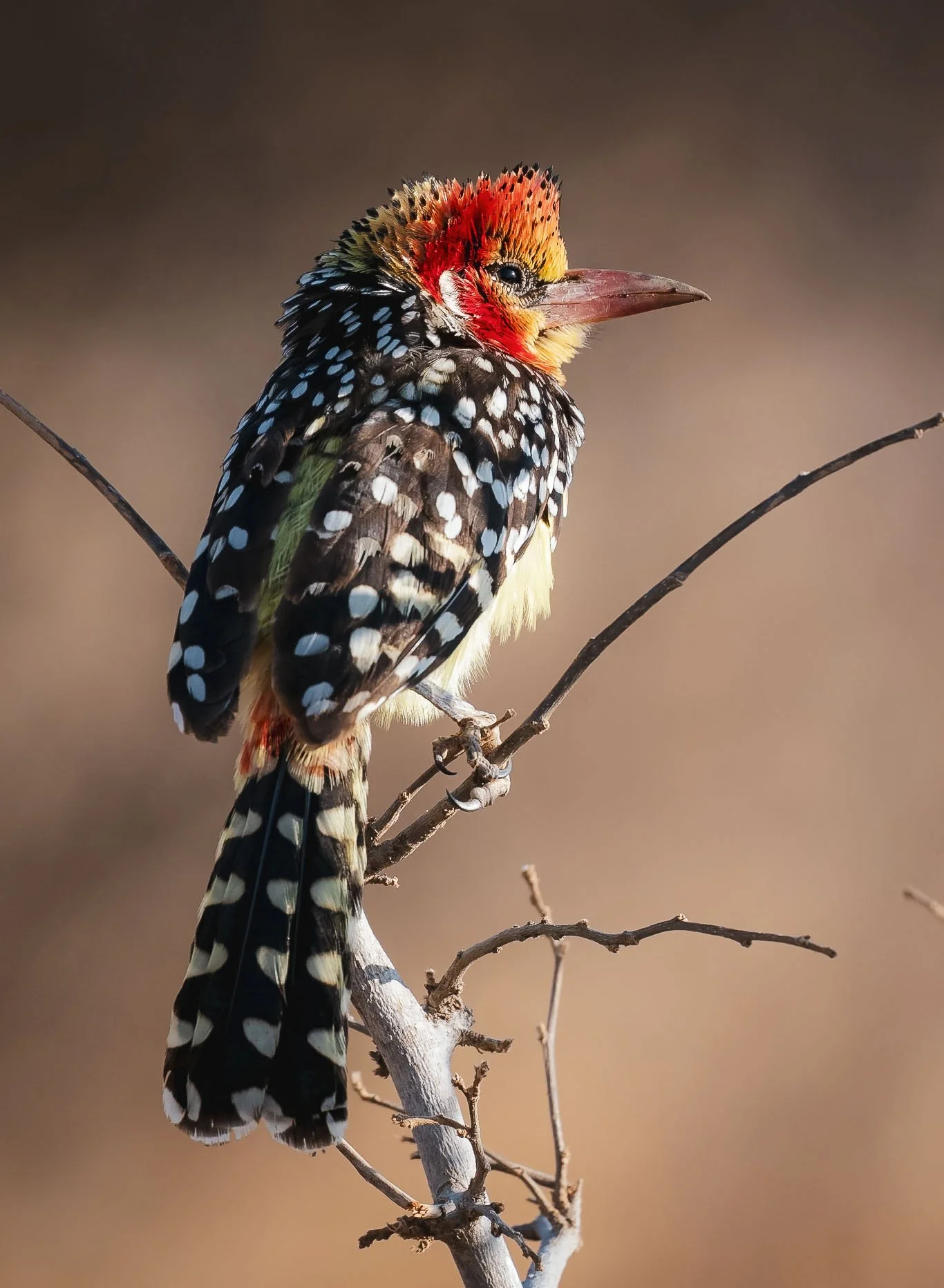
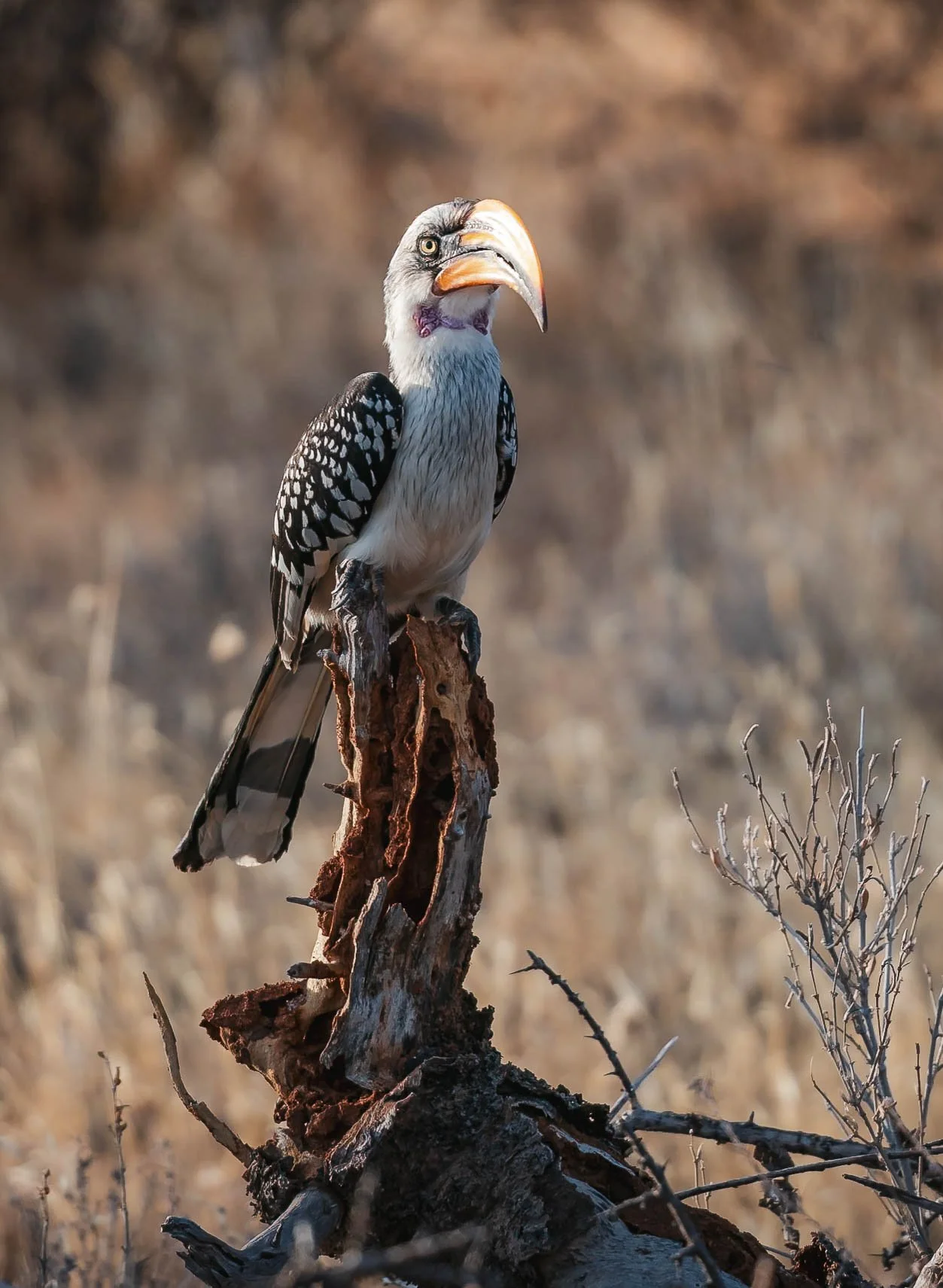
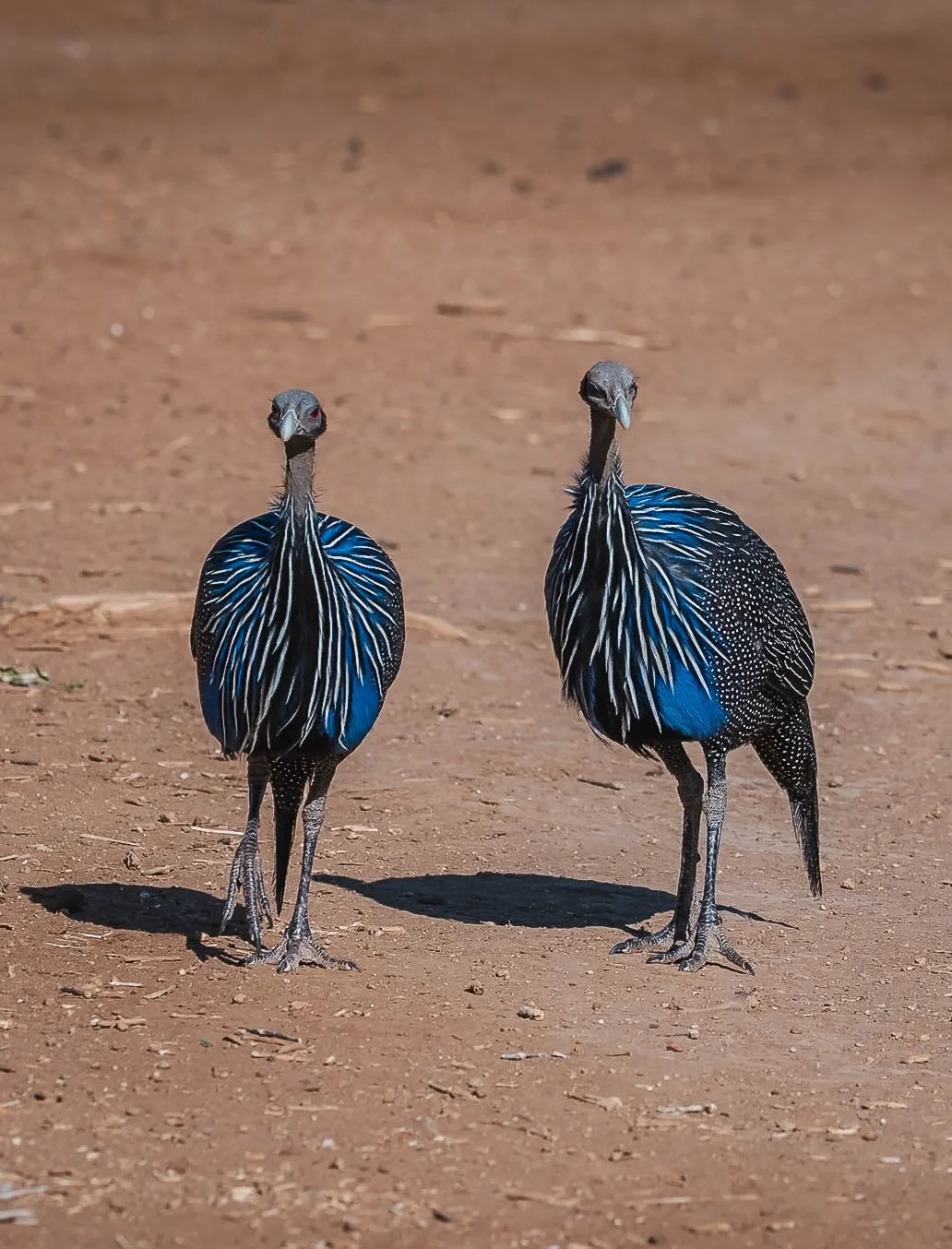
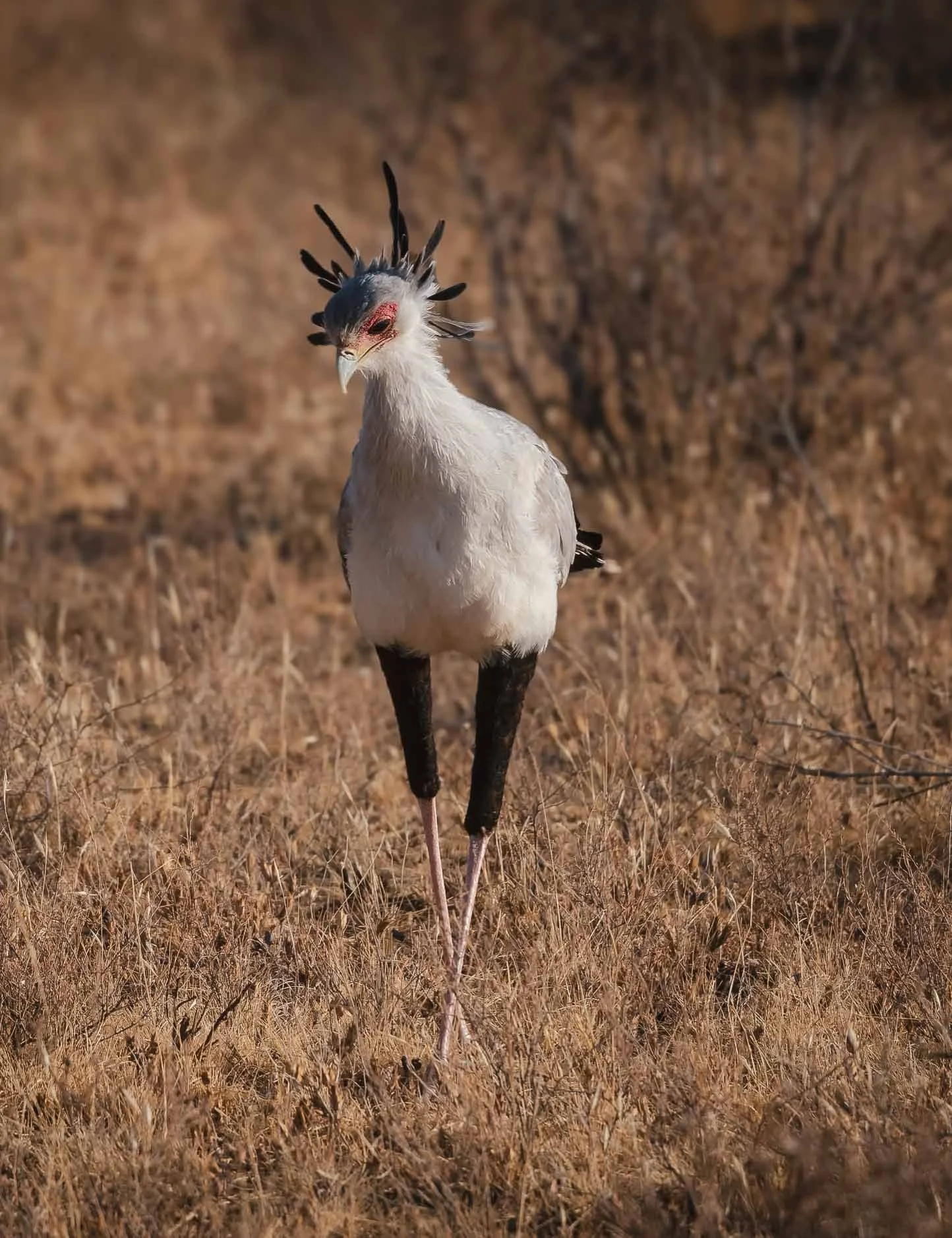
Bird life in Samburu also includes red-and-yellow barbet, yellow-billed hornbill, the vulturine guineafowl, and secretary bird. Once more I’m reminded that birds are essentially modern dinosaurs - just look at them!
The Elephants of Samburu
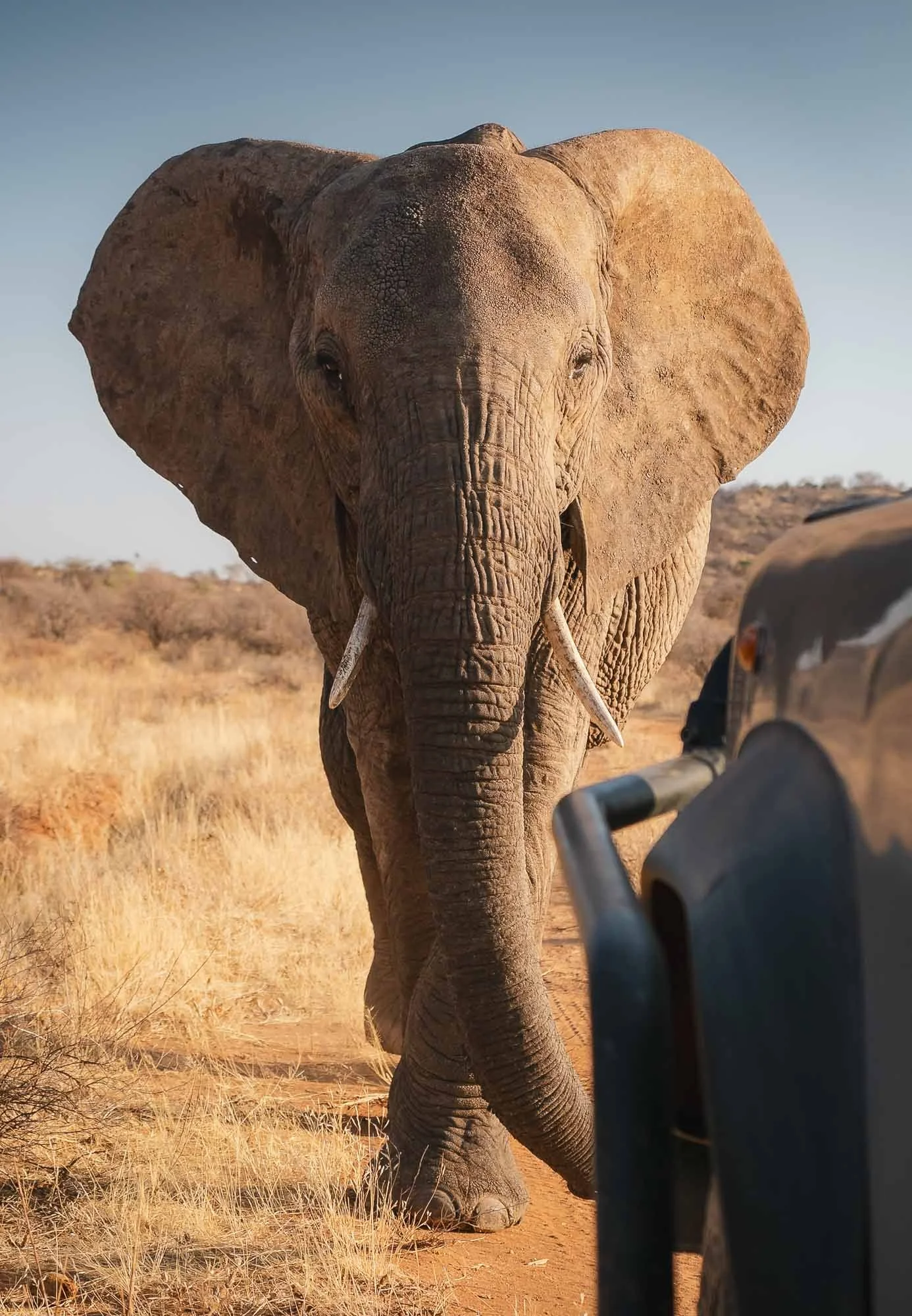
Admittedly though, it’s not birds that would come to mind first when thinking of Samburu. For many people, it’s elephants.
In what reminded me a little bit of Amboseli - one of my favorite places in the world - the herds here are very calm around cars, allowing for beautiful observation and close encounters.
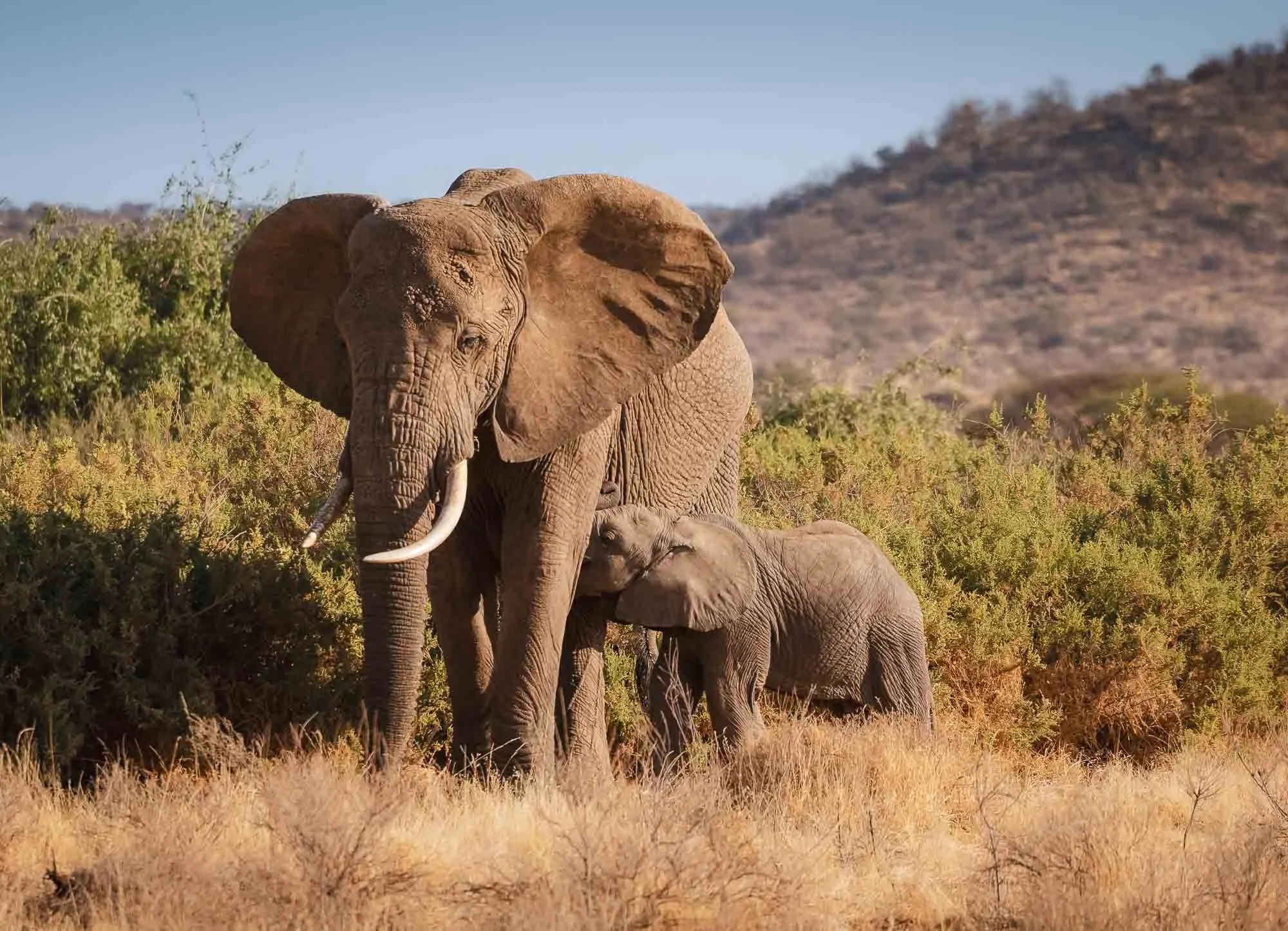
I’ve written about this several times on this blog, but observing elephants in the wild is one of the most soothing things I could imagine.
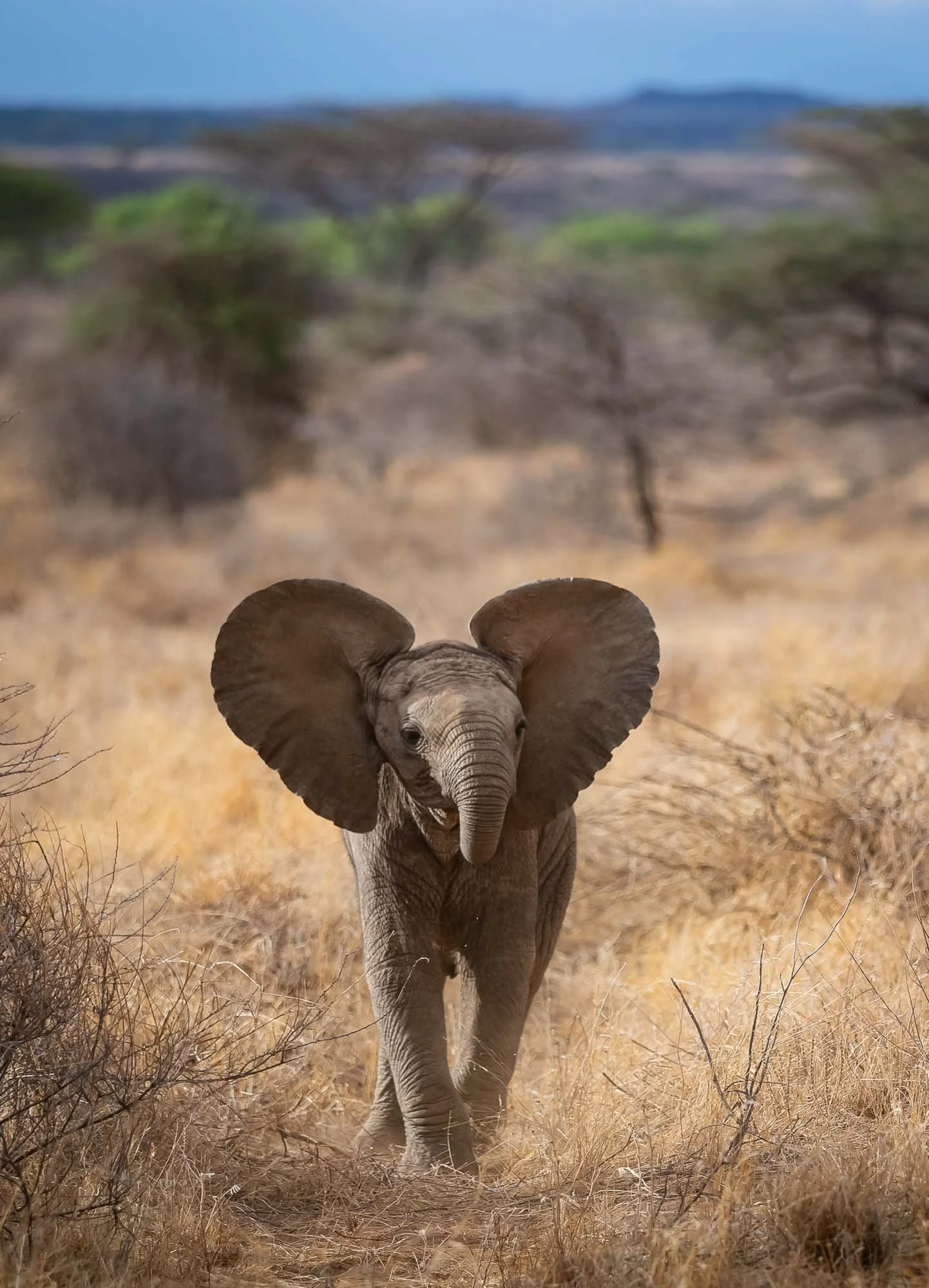
There are almost 3000 elephants in the county, and their claim to fame and part of the reason we actually know this number comes from a conservation organization that has been active here for decades, and whose founder pioneered aerial animal population census methods.
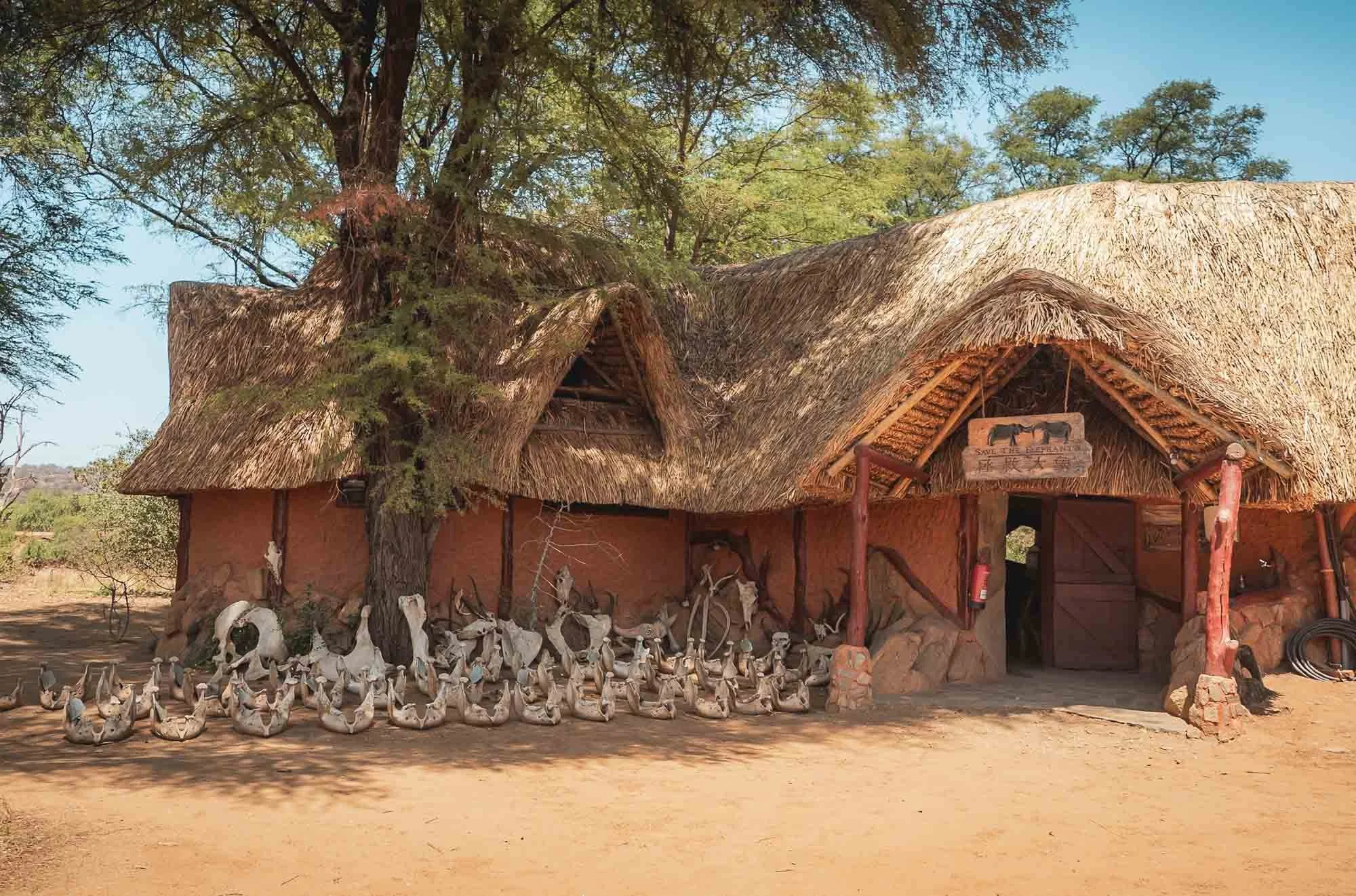
Save the Elephants
The organisation is largely responsible for making this one of the world's best-studied wild elephant populations (perhaps only second to Amboseli), having identified and monitored over 900 individuals since establishing its research station here in 1997.
Of course, I had to visit, having read about the founder, Ian Douglas-Hamilton in Cynthia Moss’ book Elephant Memories and subsequently seen a few related documentaries about his work.
Their primary research camp - the main building seen above with dozens of elephant skulls in front - is home to a small visitor hut that tells some of the stories of the organization, the elephants in the area, and the research and conservation initiatives being run here. Two of their team members also showed us the skulls they collected over the years.
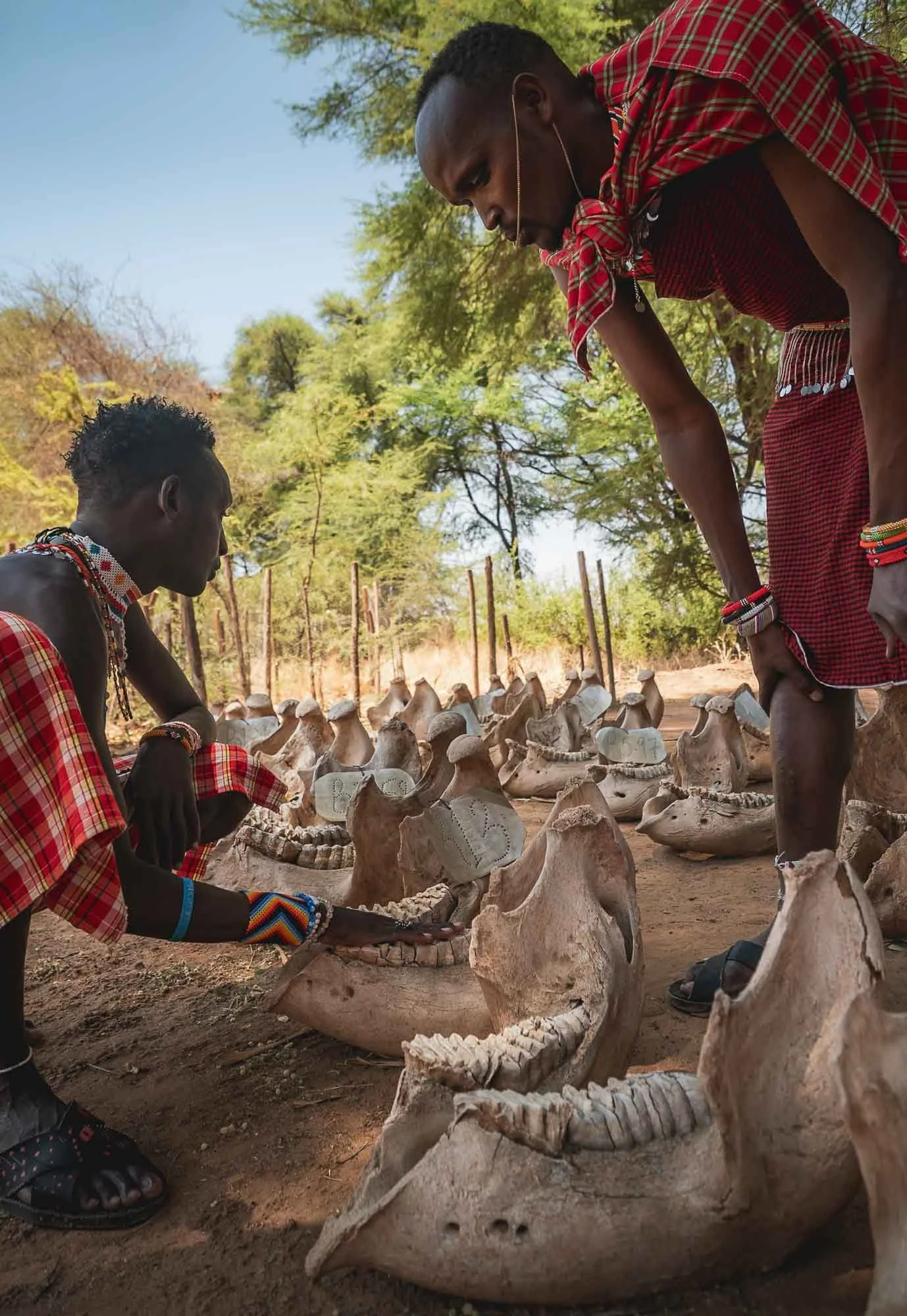
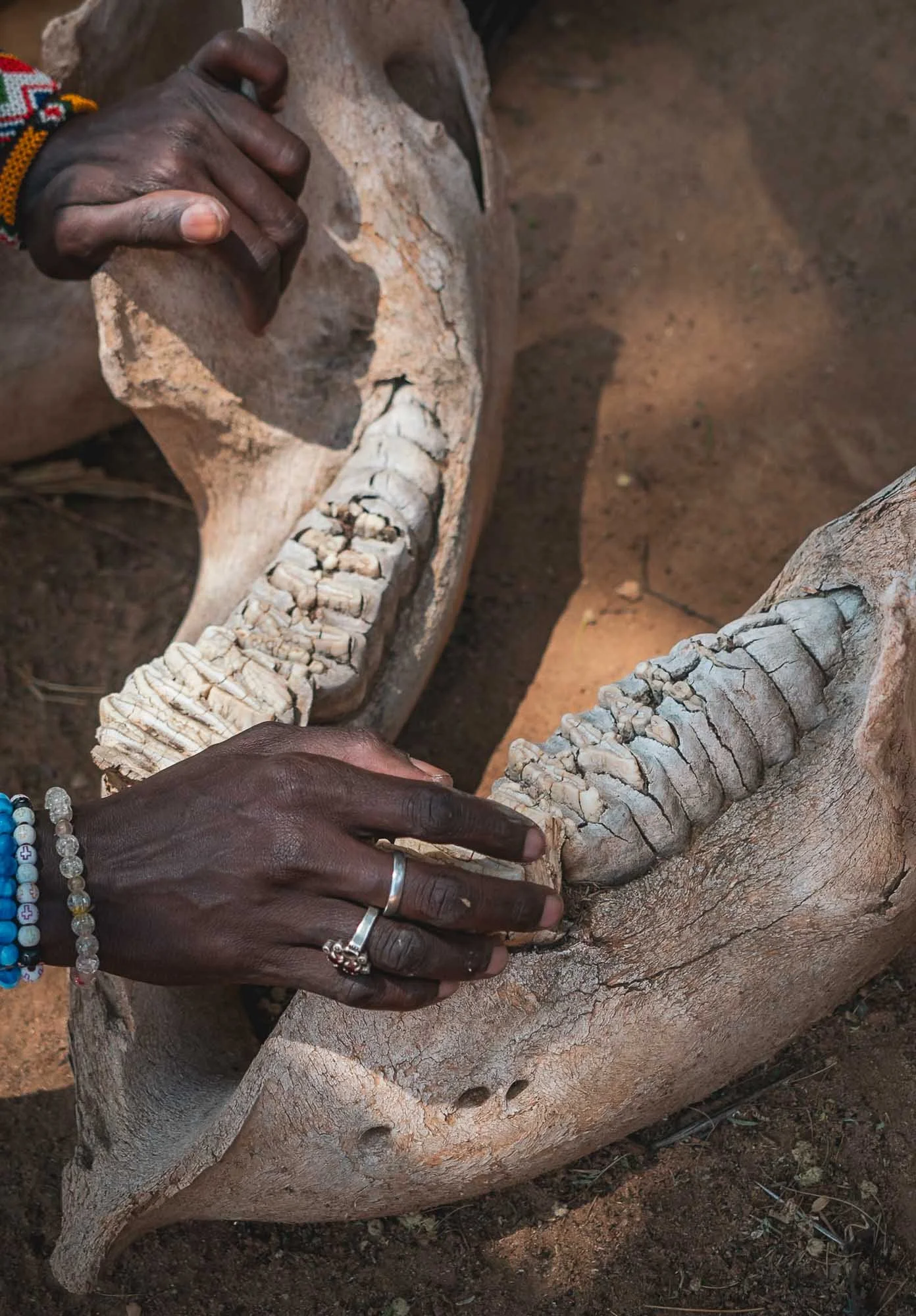
One of the most interesting aspects here are the teeth: Unlike humans, elephants replace their enormous molars up to five times after the first set, with new teeth gradually moving forward from the back of the jaw. Researchers can estimate an elephant's age from the size and wear of these teeth. Eventually, when the final set wears out, older elephants struggle to chew enough food, which can ultimately lead to their death.
At this point, you might ask what happens to the ivory: When elephants die in Kenya, their tusks are collected by the Kenya Wildlife Service to prevent the ivory from entering the illegal trade and poaching in Kenya has declined significantly over the last years. The ivory has been periodically burned - you can visit what’s left of it at a monument in Nairobi National Park, where these burnings sometimes take place.
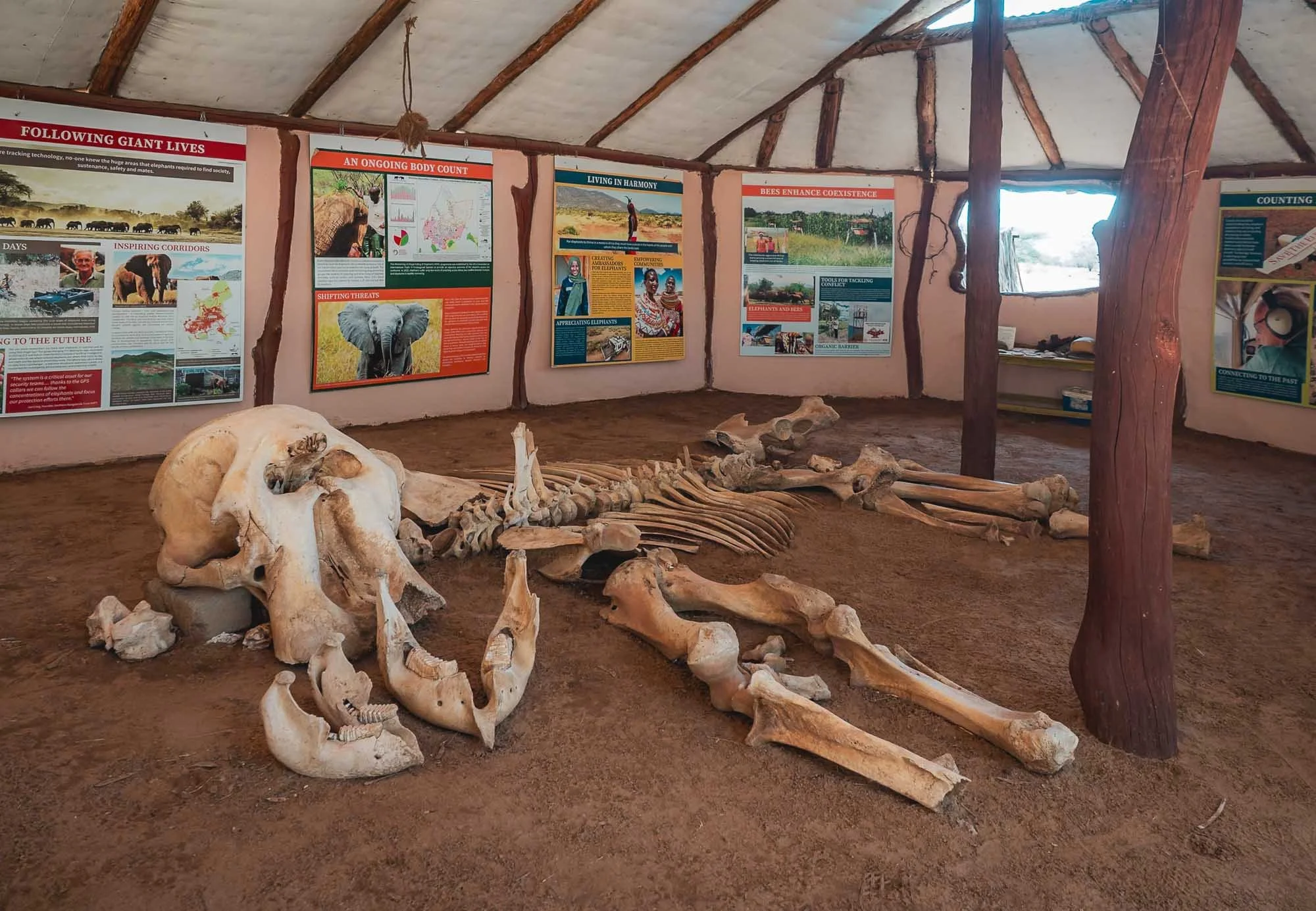
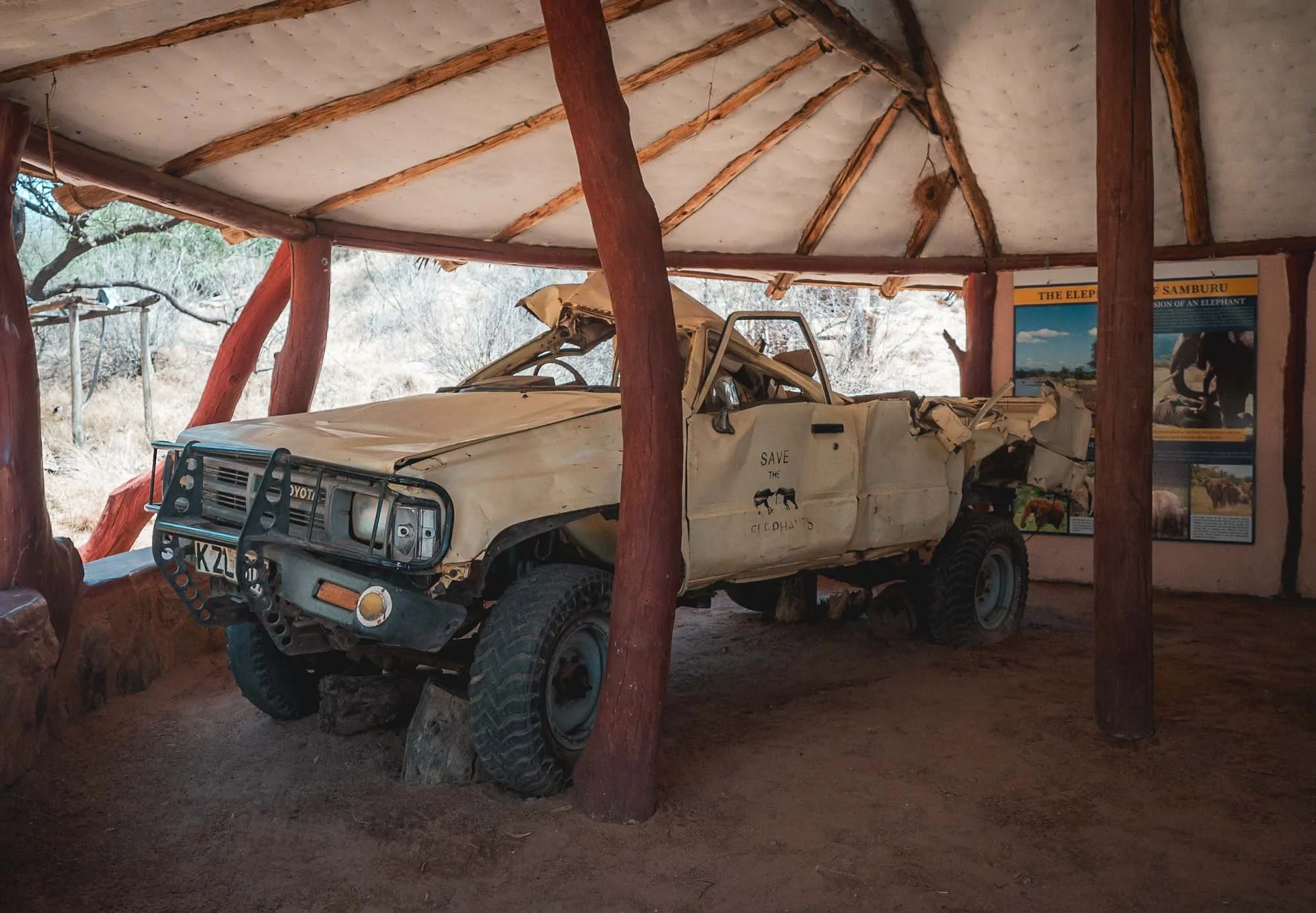
Two other interesting artifacts are this full size elephant skeleton, and a badly damaged Toyota, the result of an elephant attack in May 2002. A large bull named Rommel, agitated after losing a fight with another male, turned on a research vehicle occupied by two scientists. He overturned it twice and punctured the bodywork with his tusks but both researchers escaped with only minor scratches.
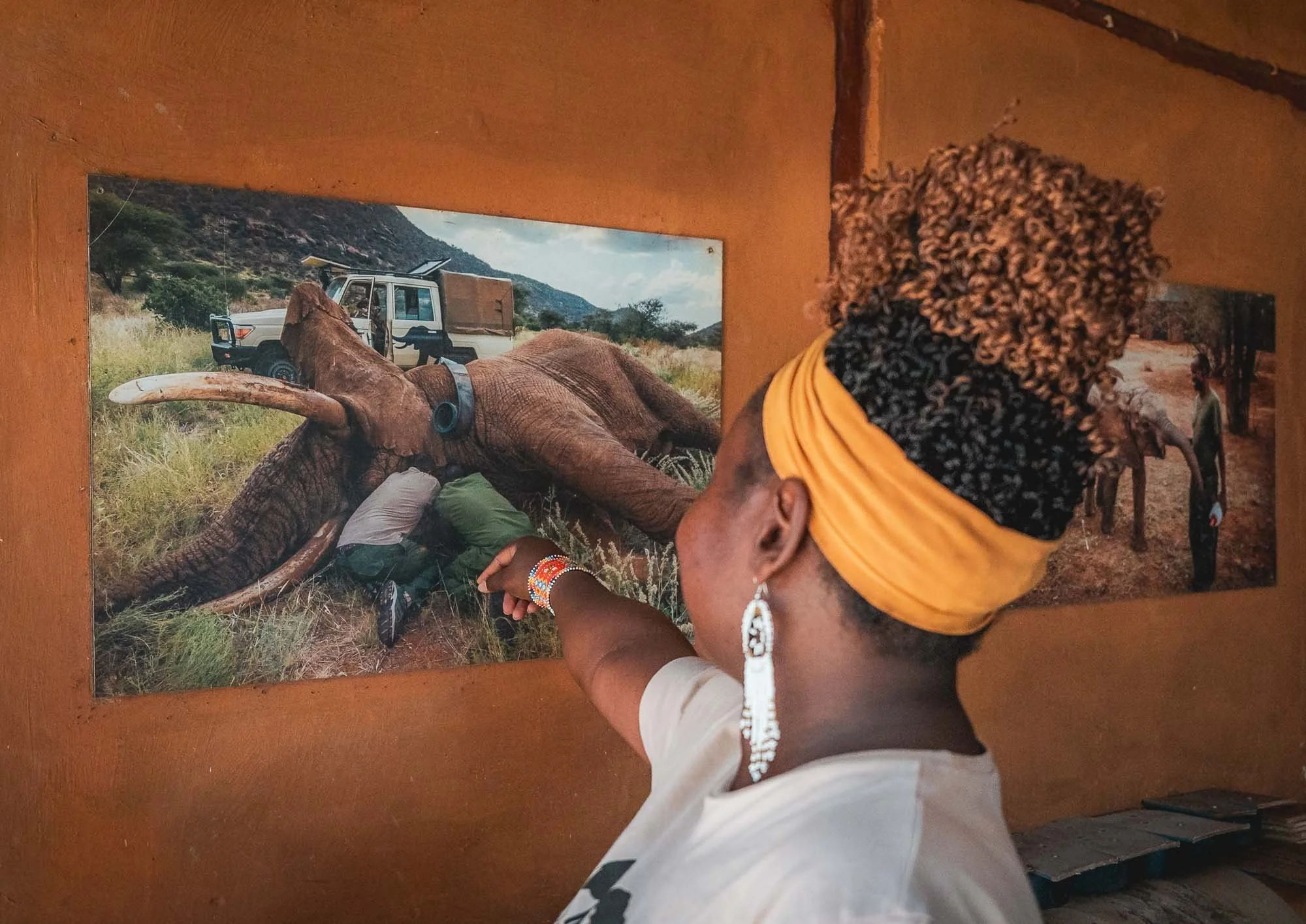
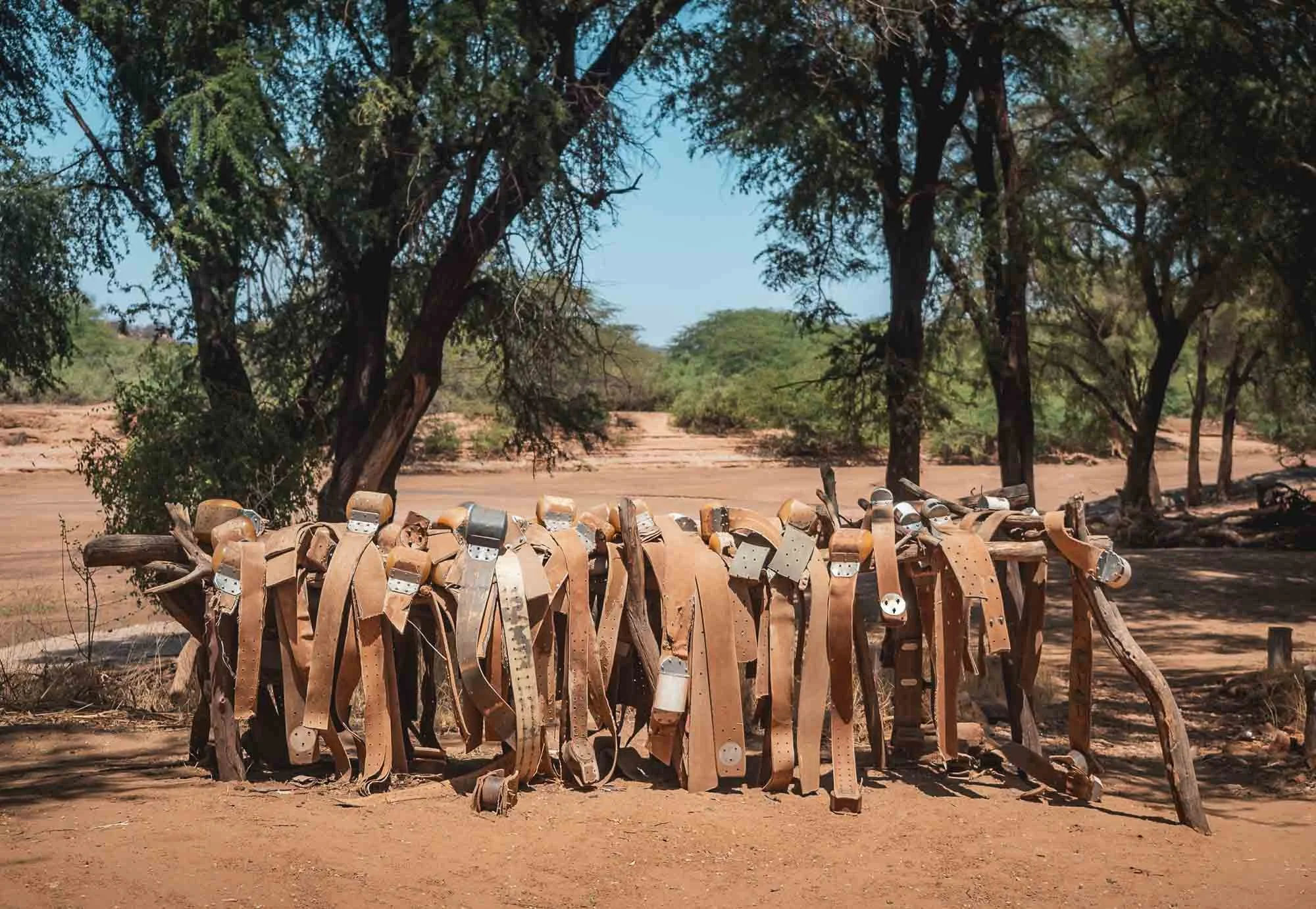
One important activity they conduct here is tracking the movement of elephants to see their behavior, manage migration corridors, and mitigate human-wildlife conflict. Purity is in charge of tracking the elephants they’re monitoring, and showed us both the huge collection of collars they are regularly preparing, and some images of the quite intense process of collaring an elephant.
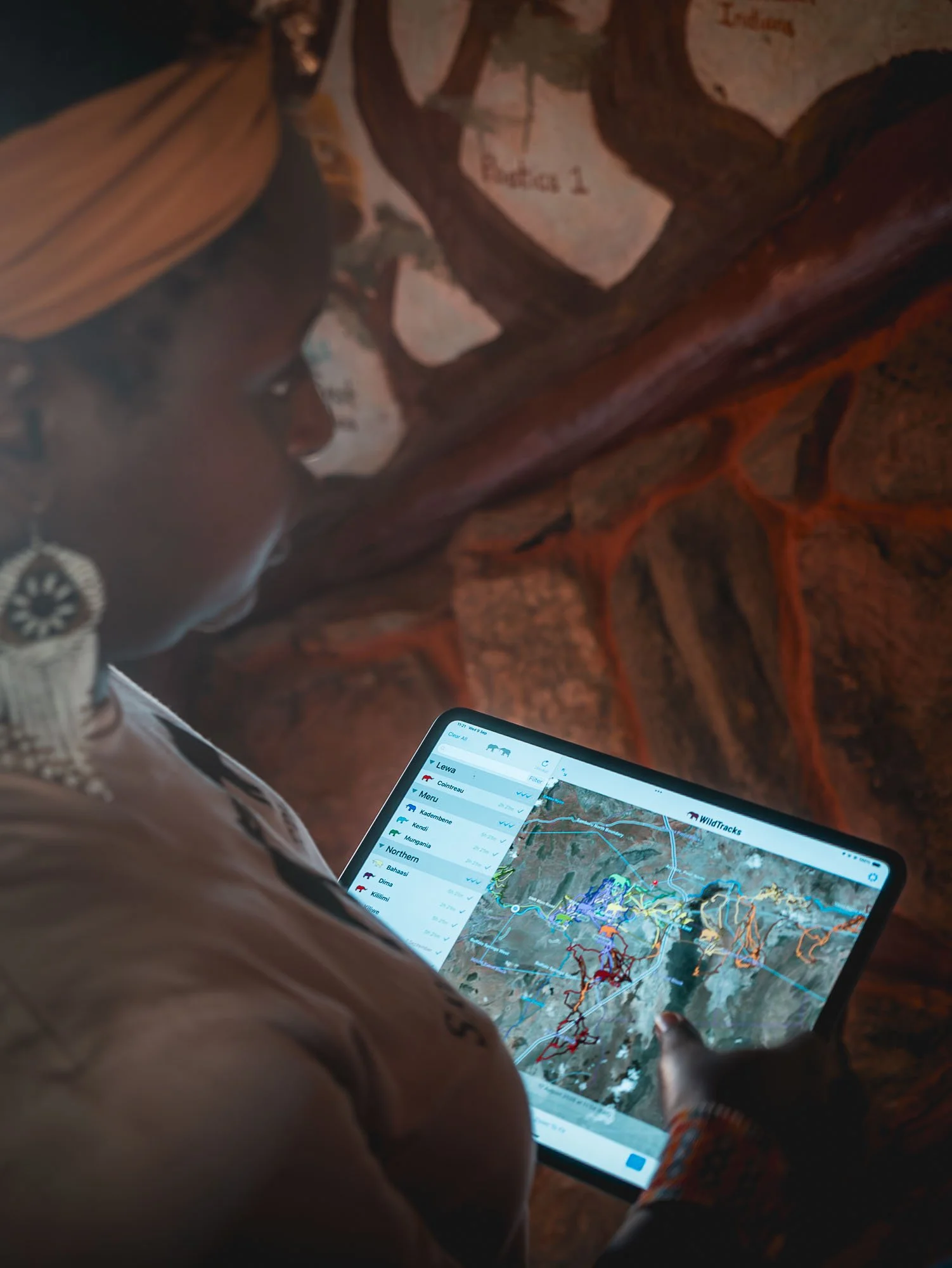
Save the Elephants has been working to document family relationship and movements of the elephants here for nearly three decades. Purity showed us some of the interesting patterns the collared individuals revealed.
Their work goes further than this though: one of the most interesting research activities is the Elephants and Bees project, which takes advantage of the fact that elephants are afraid of honeybees.
By surrounding farmland with beehives, farmers can discourage elephants from entering and destroying their crops and avoid human-wildlife animosity, while also producing honey for additional income.
Ian Douglas-Hamilton passed away in late 2025, but his legacy clearly lives on.
The Ewaso Lions Project
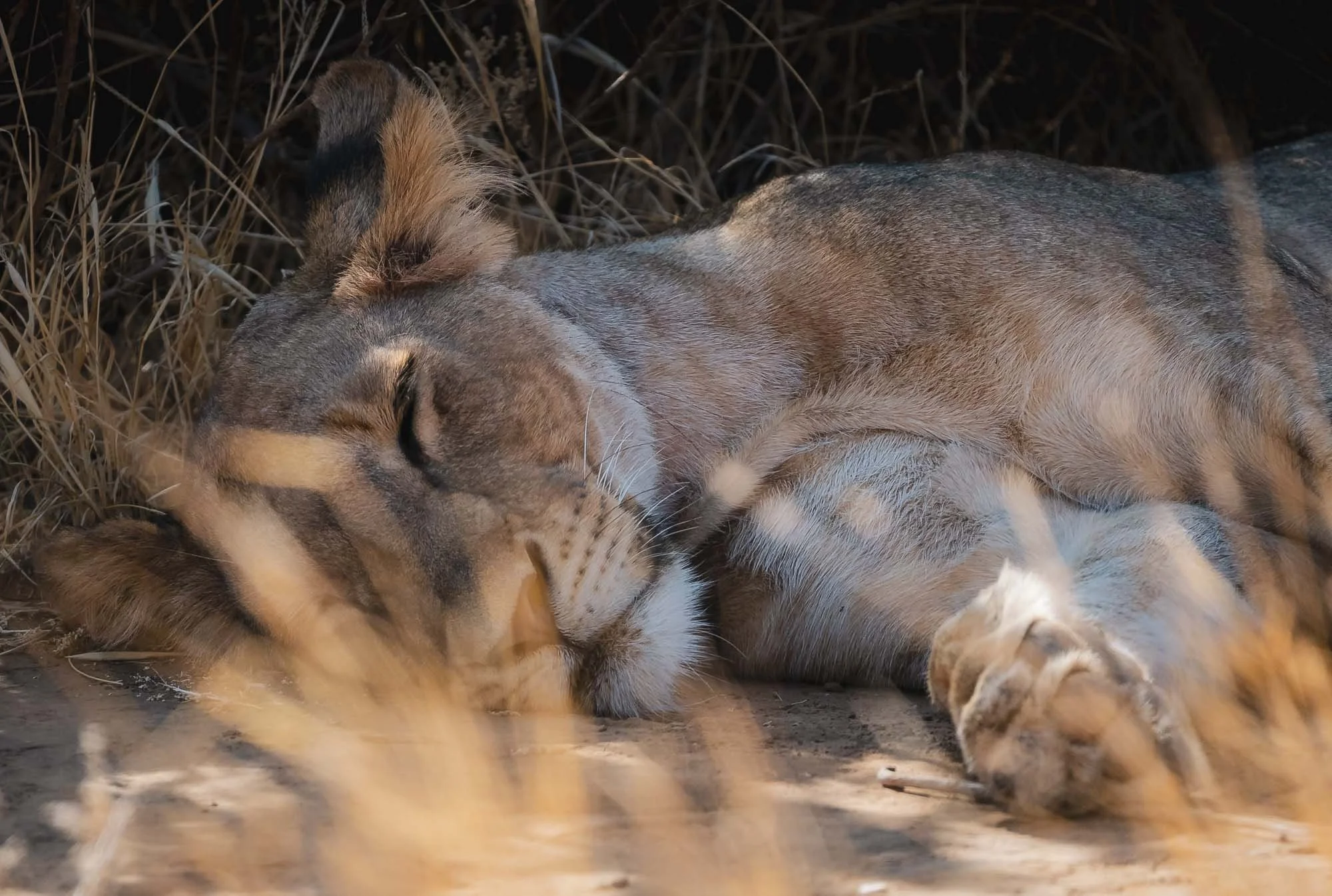
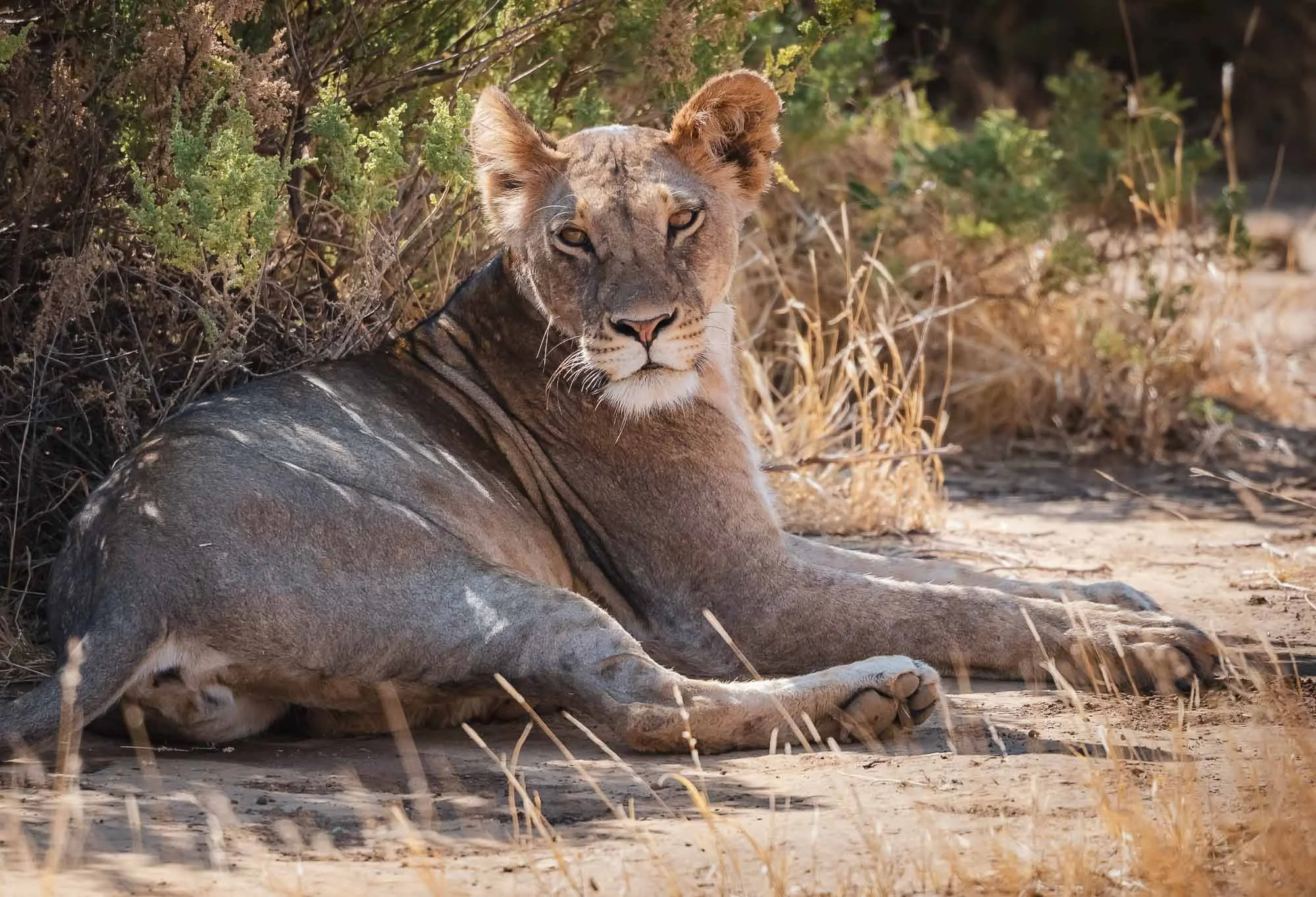
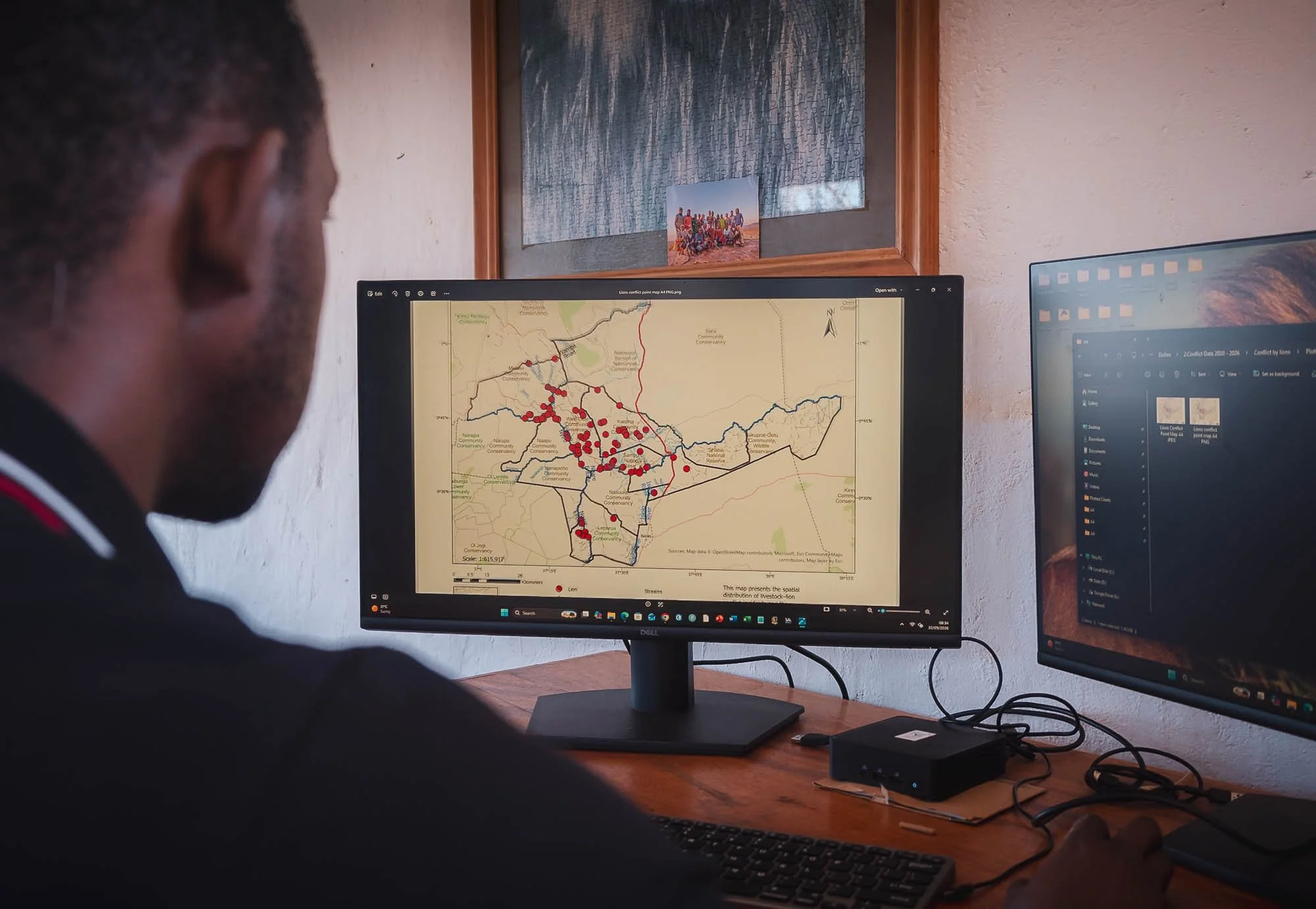
There are several lion prides in the area, and we encountered a few young adults resting in the shade. Another conservation organisation I had the opportunity to visit was Ewaso Lions, founded in 2007 to protect northern Kenya's lions. Its approach focuses on reducing conflict between lions and the Samburu communities, particularly when it comes to the big cats attacking livestock.
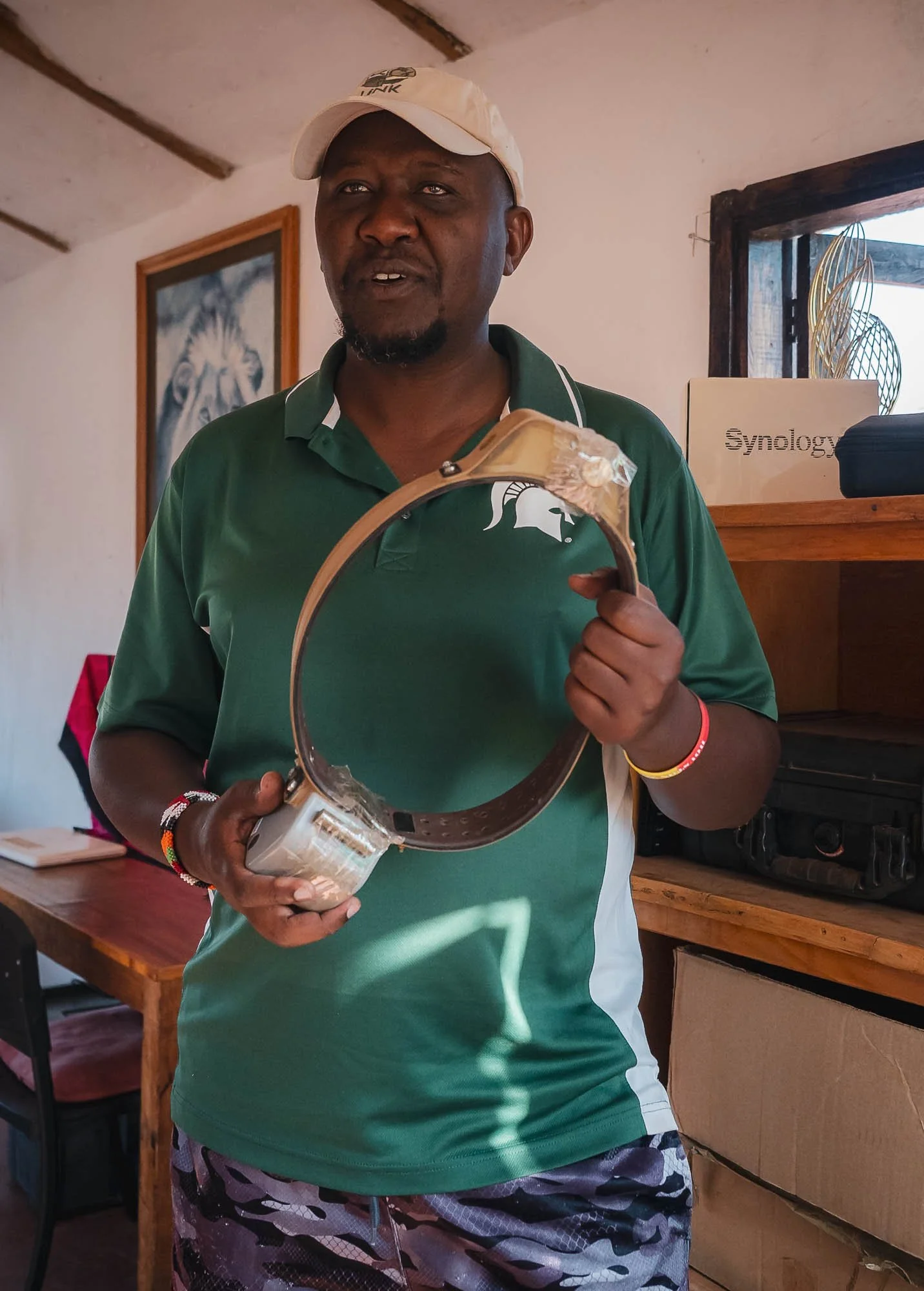
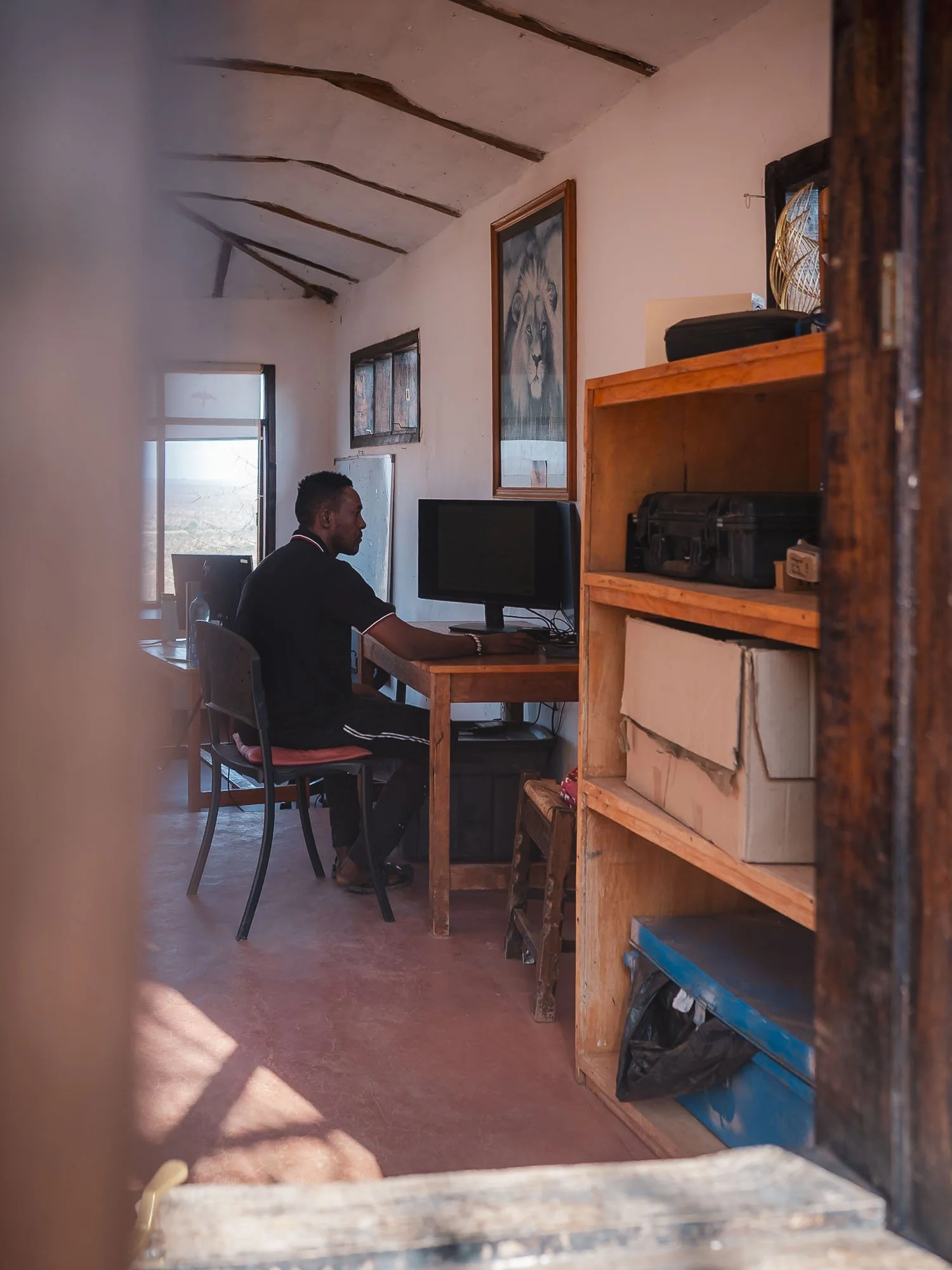
Symon and his team showed me their office and they work they do - just like with elephants, mapping lion movement through collars and thus understanding risk areas that require conflict mitigation is key. Unfortunately these collars are expensive: I was surprised to hear it costs up to USD 5,000 to deploy one. One of the alternative initiatives is called Warrior Watch, which trains local Samburu warriors to monitor lions, warn herders and help prevent retaliatory killings.
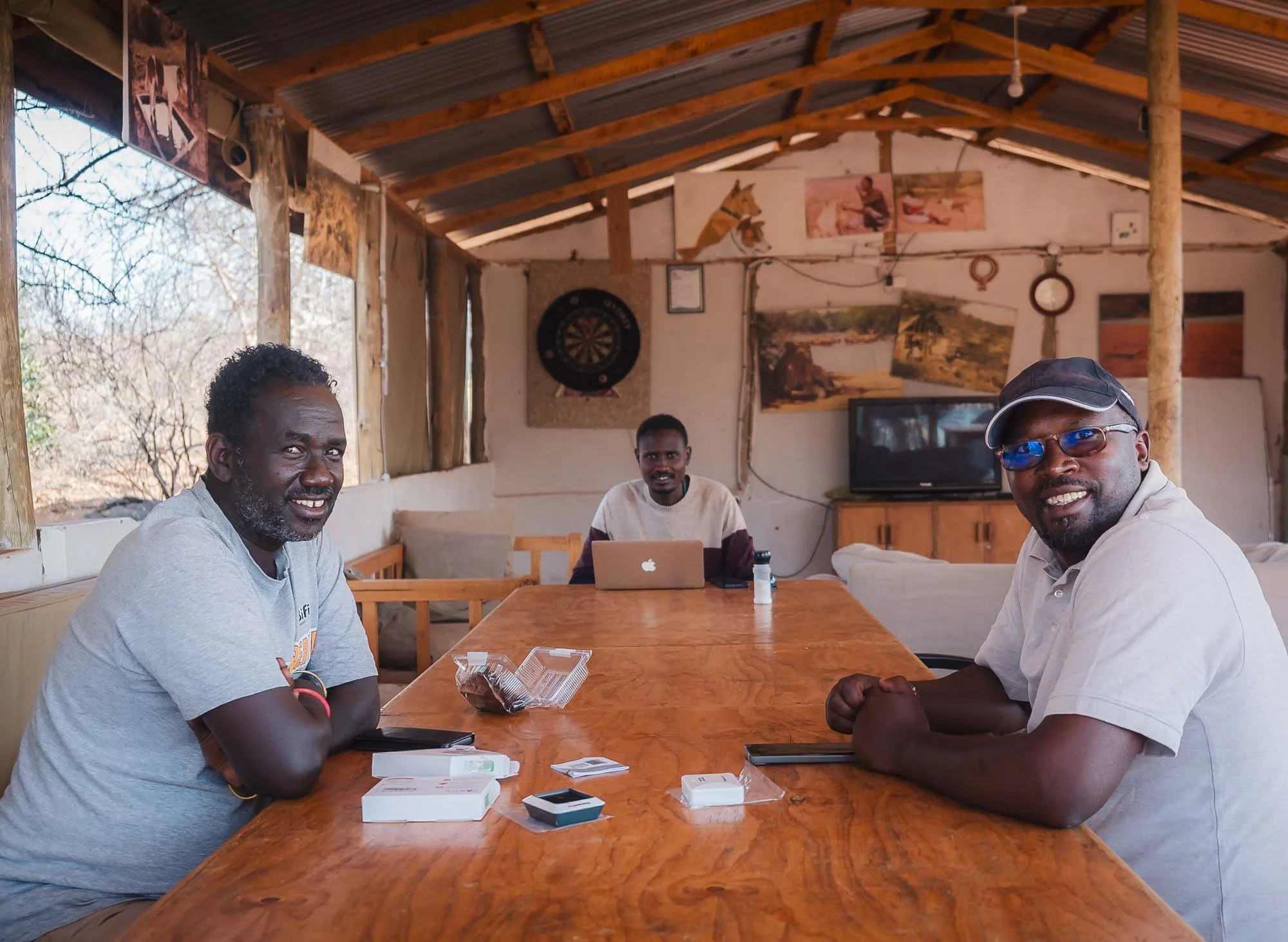
Another unexpected learning I had here was the fact that the team conducts regular dog vaccinations against rabies and canine distemper to prevent these diseases from spreading to wild carnivores such as lions and wild dogs, after an outbreak killed several of the endangered latter species in 2019.
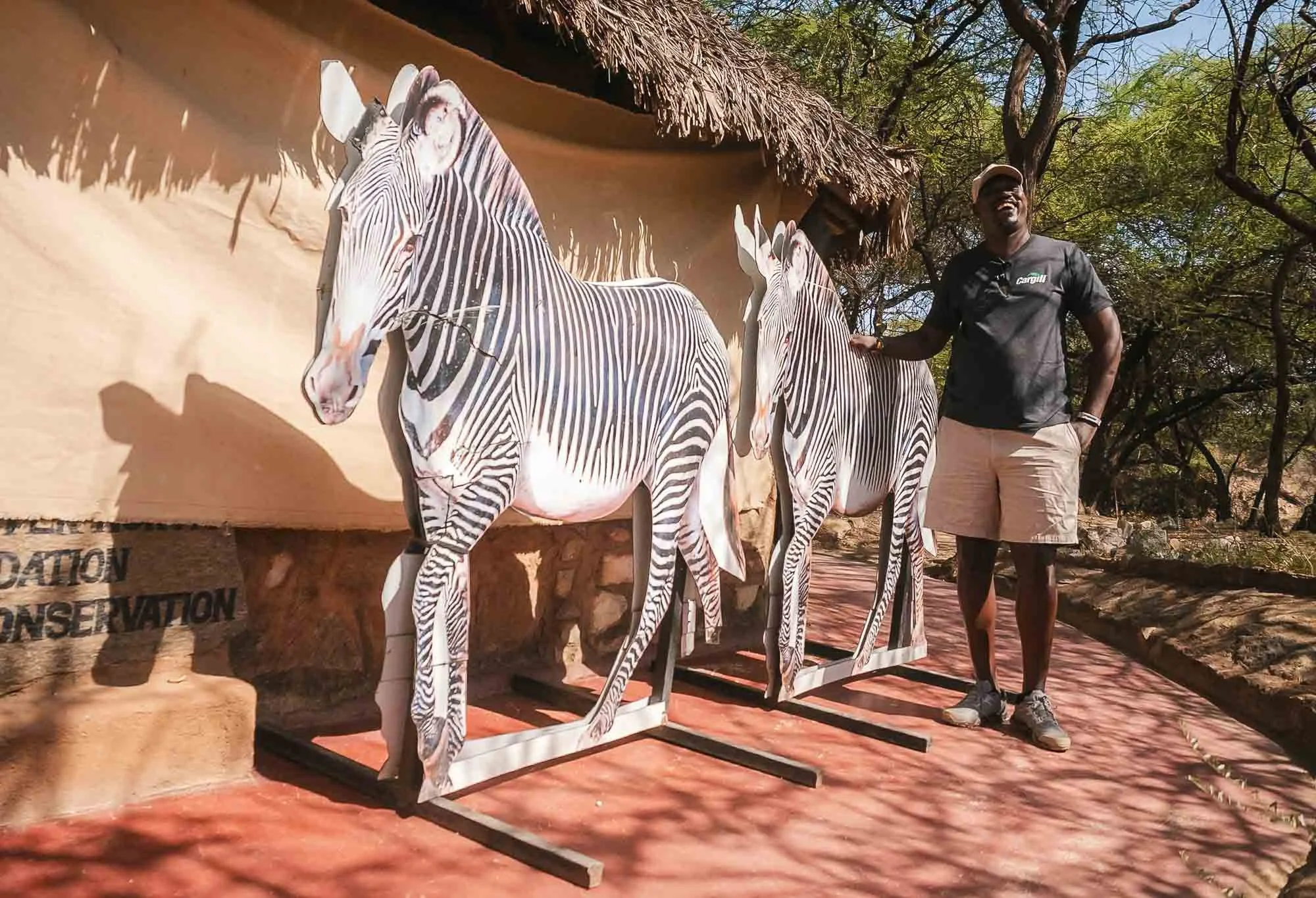
Grevy Zebra Trust
Rounding off my visits to conservation organizations was a stop at the Grevy’s Zebra Trust, where I met the MD, Peter.
They work to protect the around 3,000 Grevy's zebras remaining in the wild. As is often the case, it is synergy with the needs of the local population that has the most impact: working with the communities to restore degraded grasslands through planned grazing and allowing vegetation to recover improves conditions for both livestock and wildlife, and is a key aspect of ensuring this rare equine species can thrive.
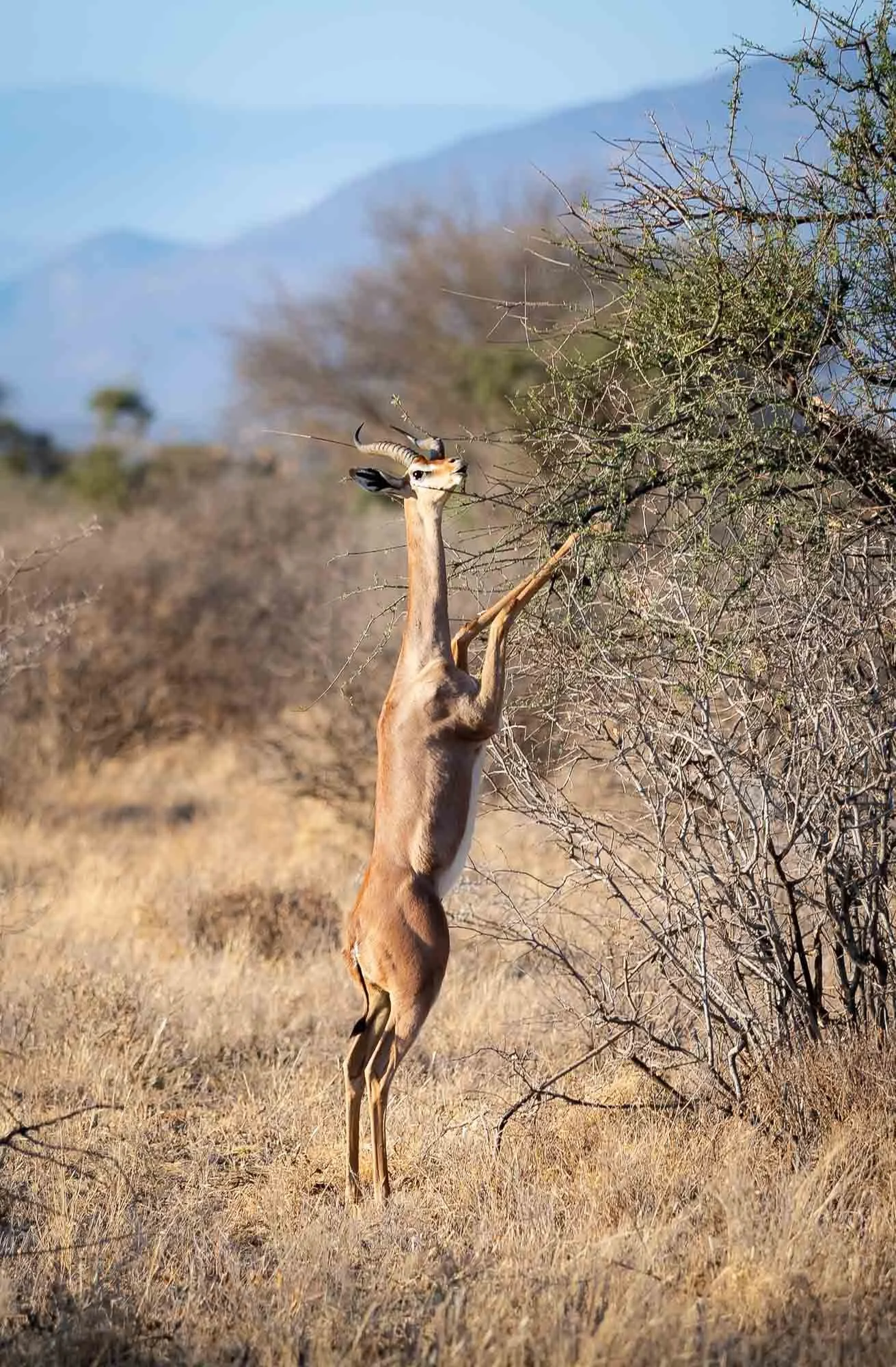
Back in the reserve, the fourth of the Samburu Special Five is seen here: a gerenuk. While not particularly rare in this region (and indeed, I have seen them as far south as Amboseli), they are rather unusual antelopes, also known as giraffe gazelles because of their long necks. They sometimes stand on their hind legs to reach the last green leaves of the dry season…
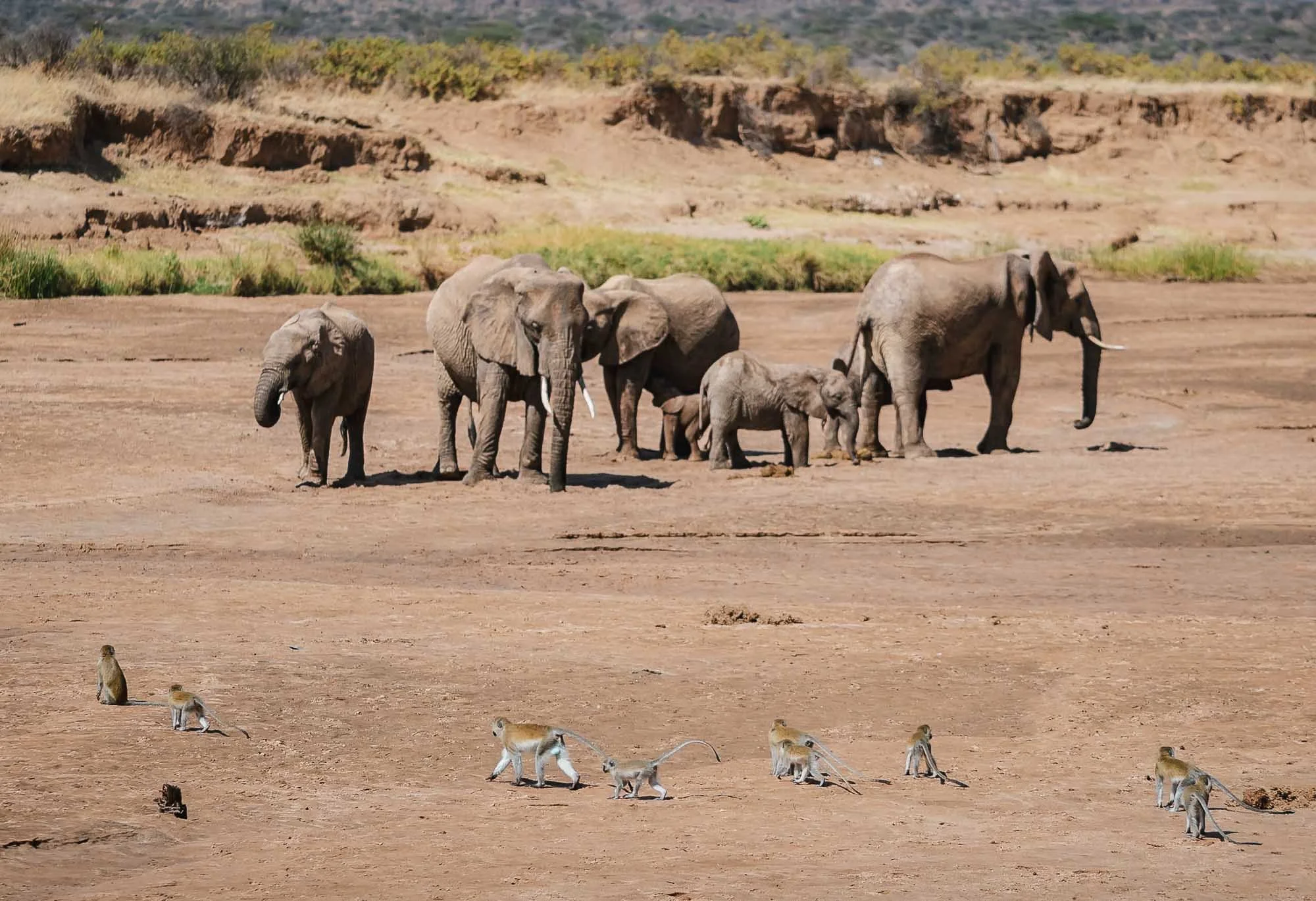
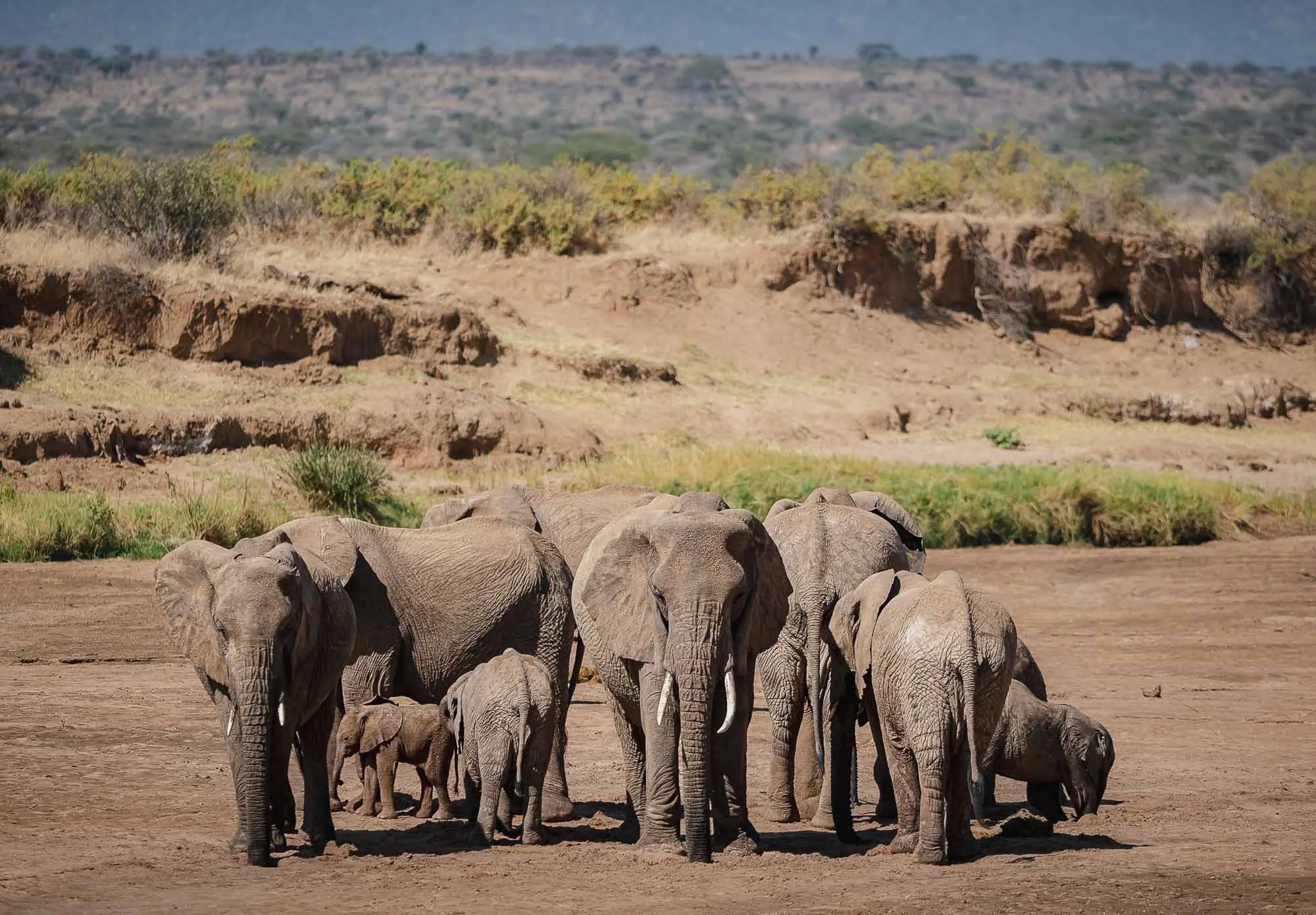
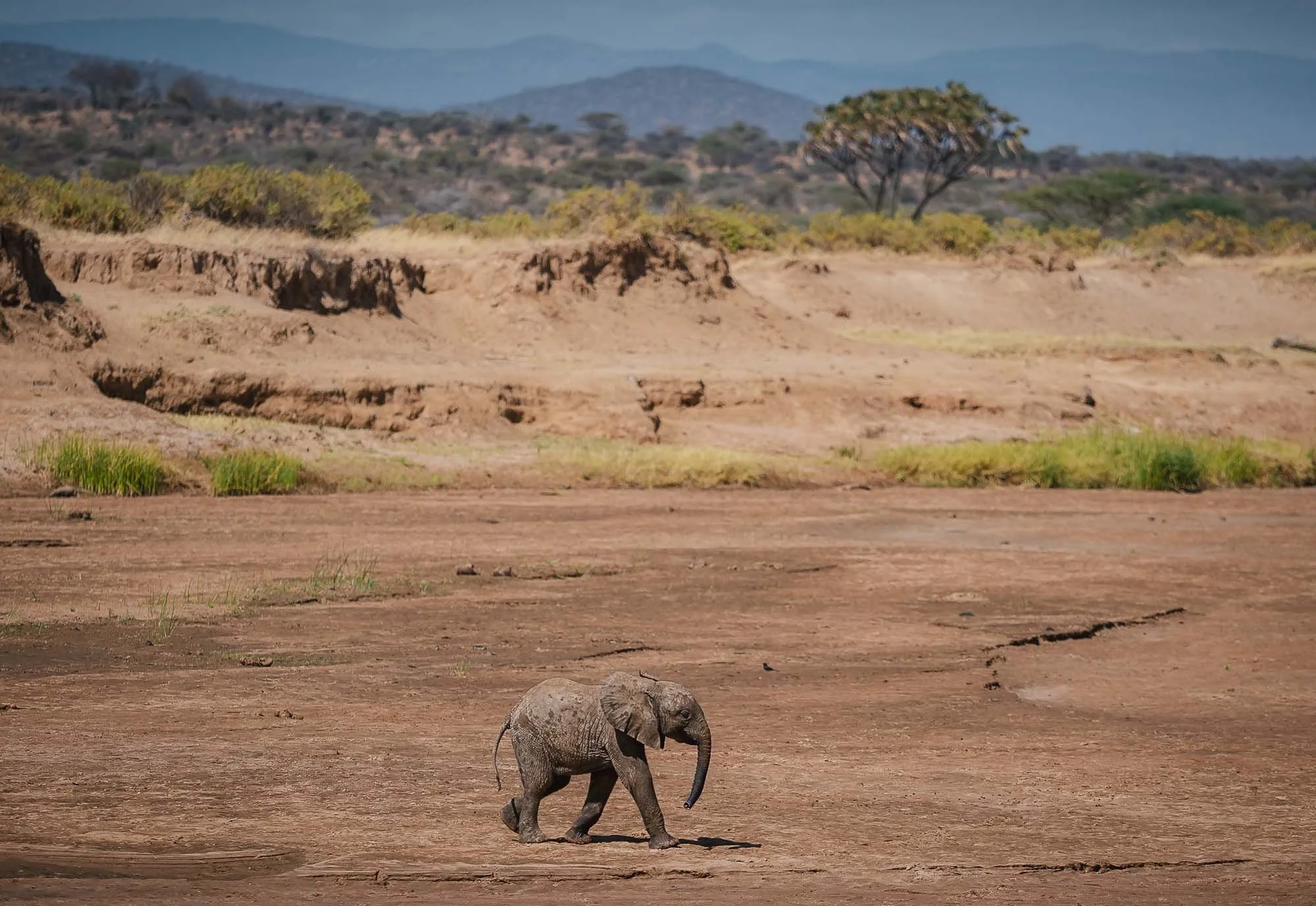
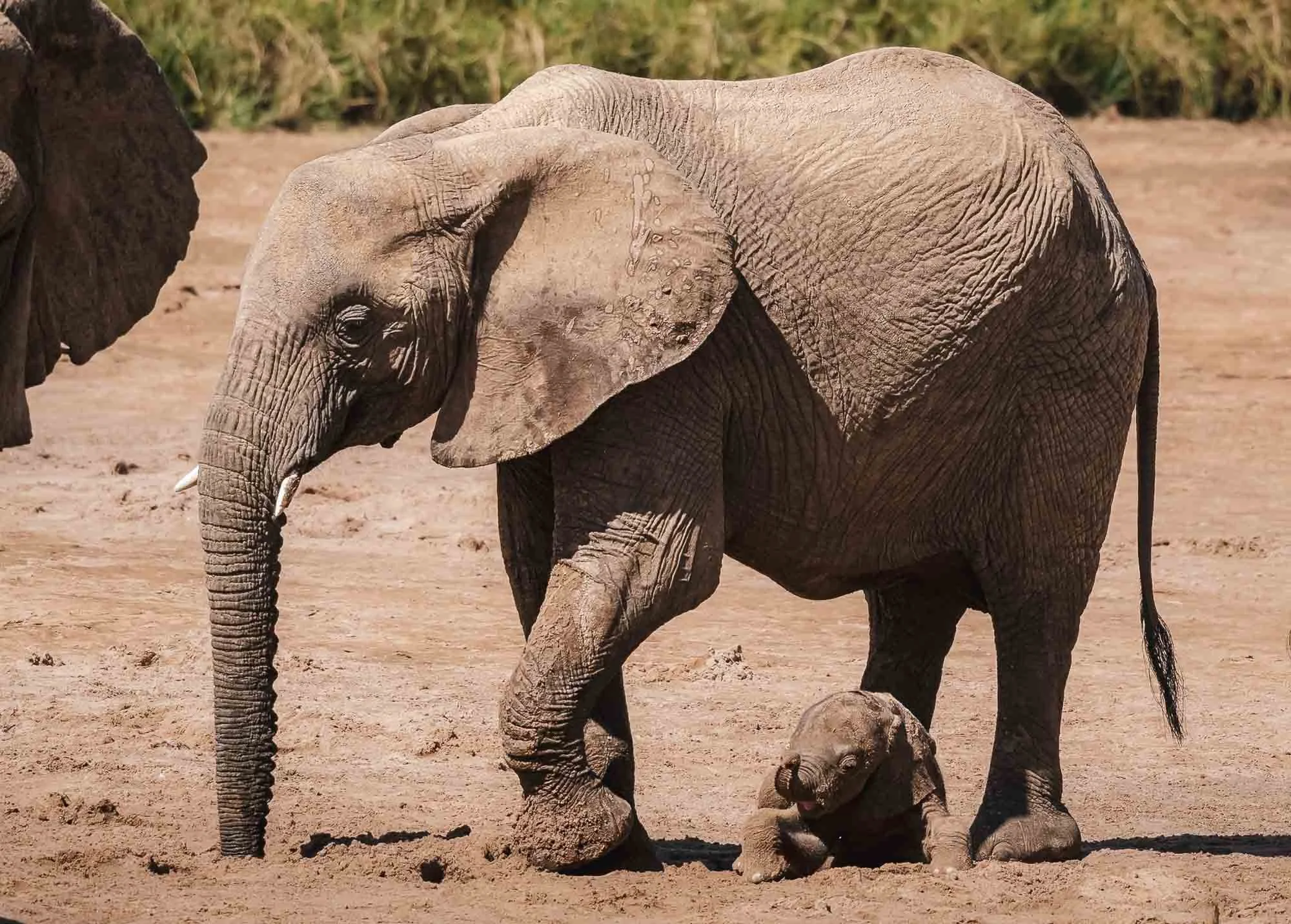
We had another beautiful elephant encounter not far from the camp, with this herd going for a drink in one of the last remaining water sources in the river bed during the midday heat. The youngsters had a lot of fun playing in the mud and carefully eyed a group of velvet monkeys passing in front of them.
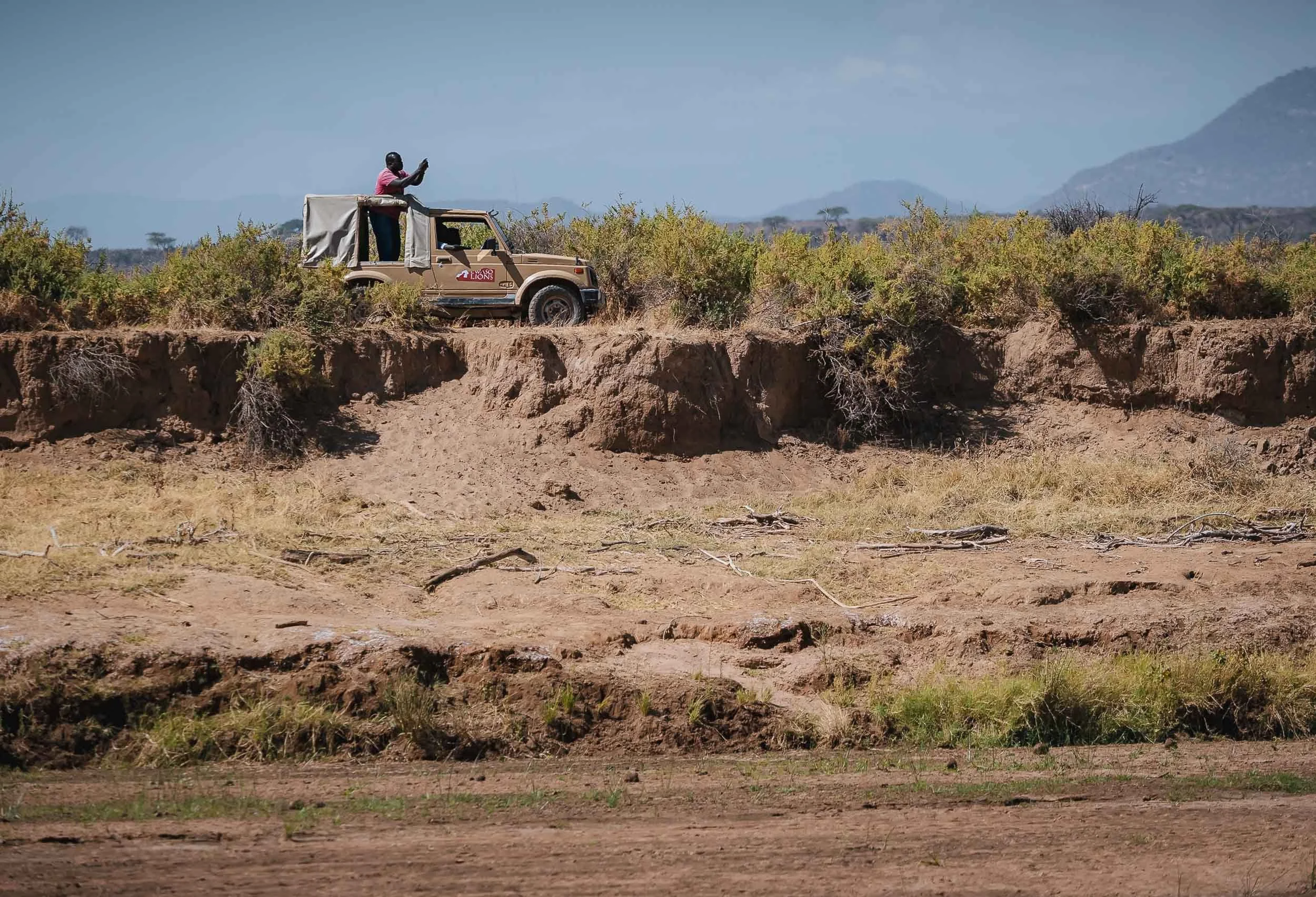
A team of rangers from the Ewaso Lion trust was also on the site, deviating from their target species to observe the herd in the river bed for a while. Told you - it’s soothing.
Leopard Sightings
Other than maybe elephants, no African animal can compete with leopards for me.
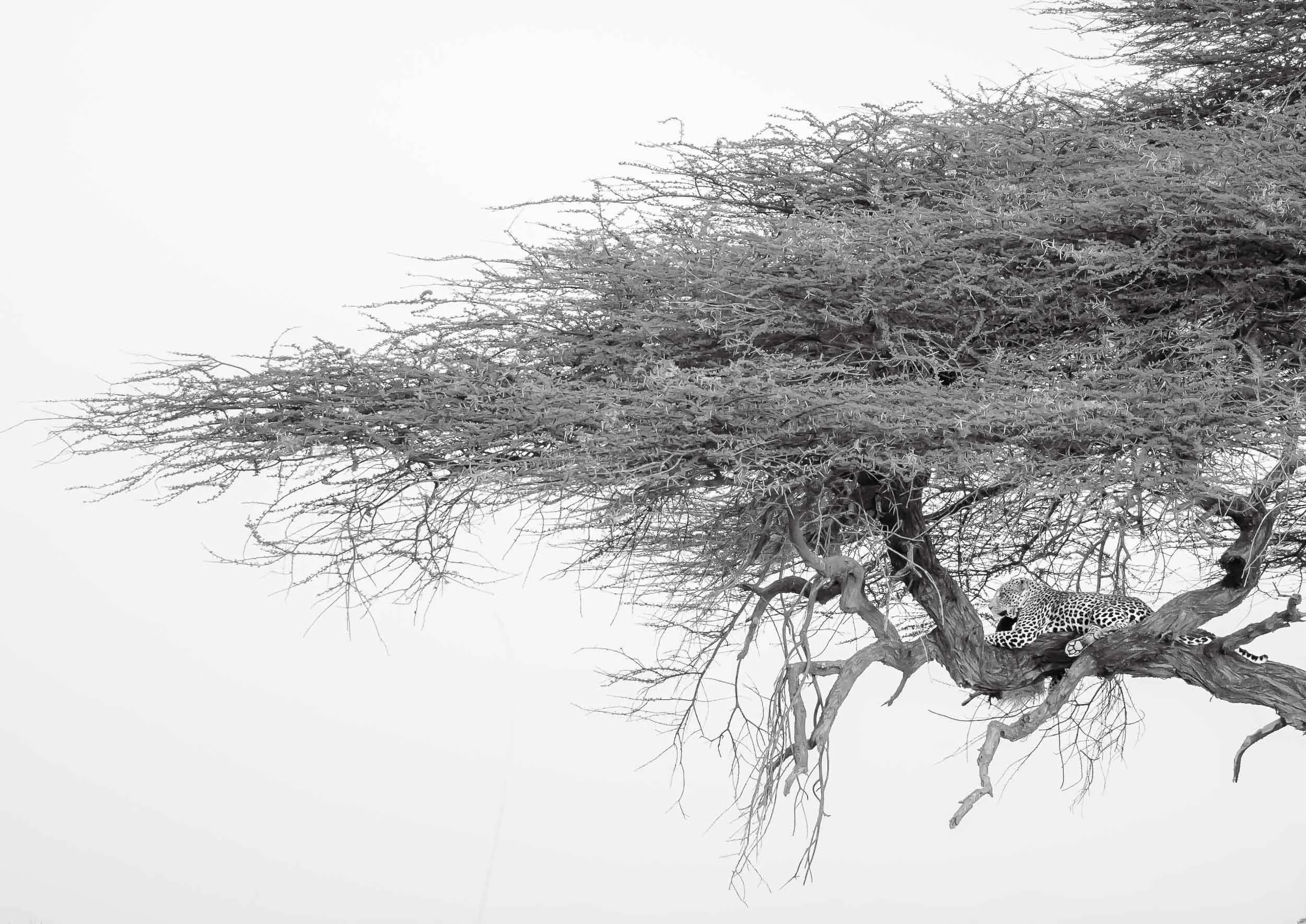
We had two sightings during the trip, one of which gave me this photograph.
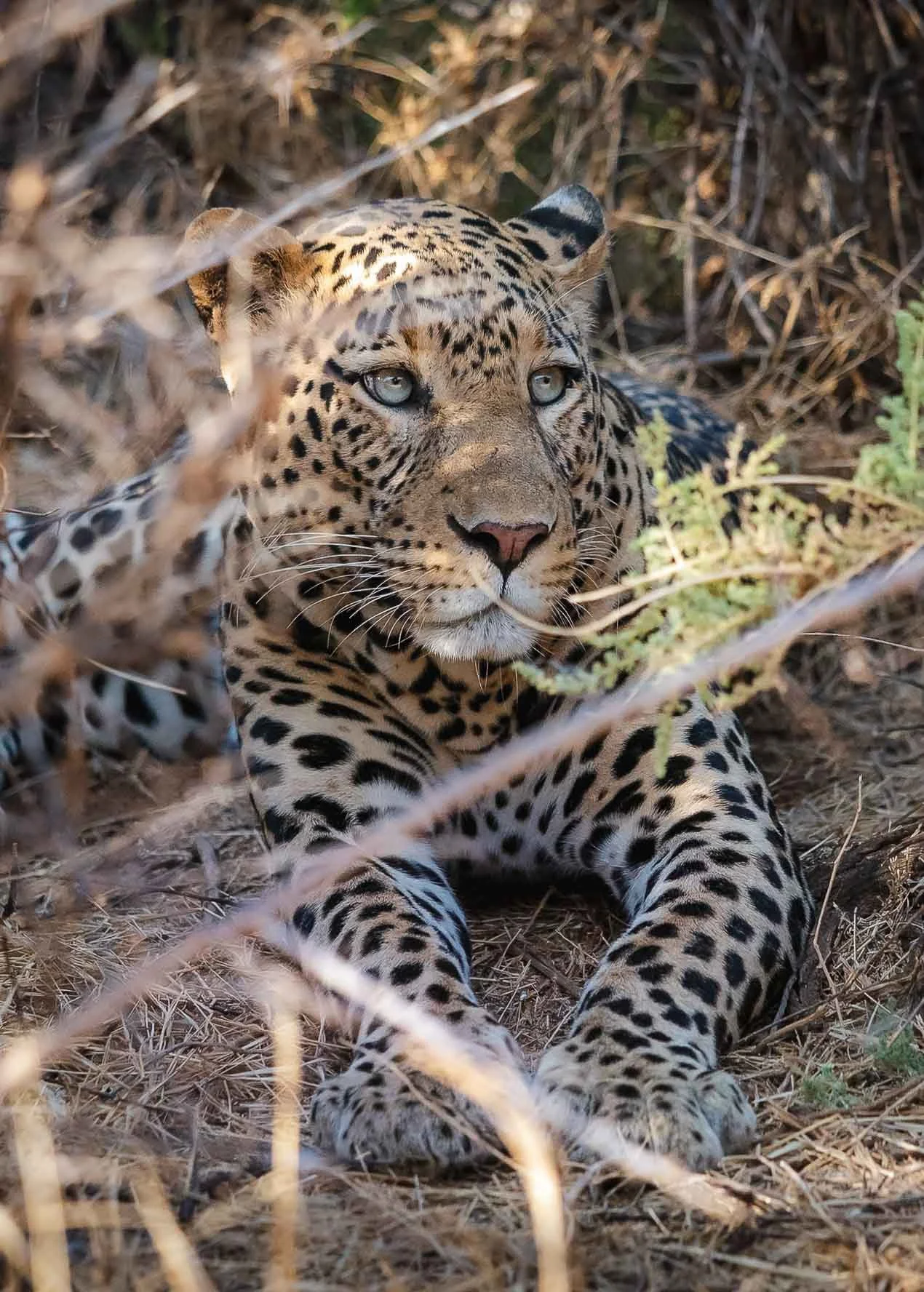
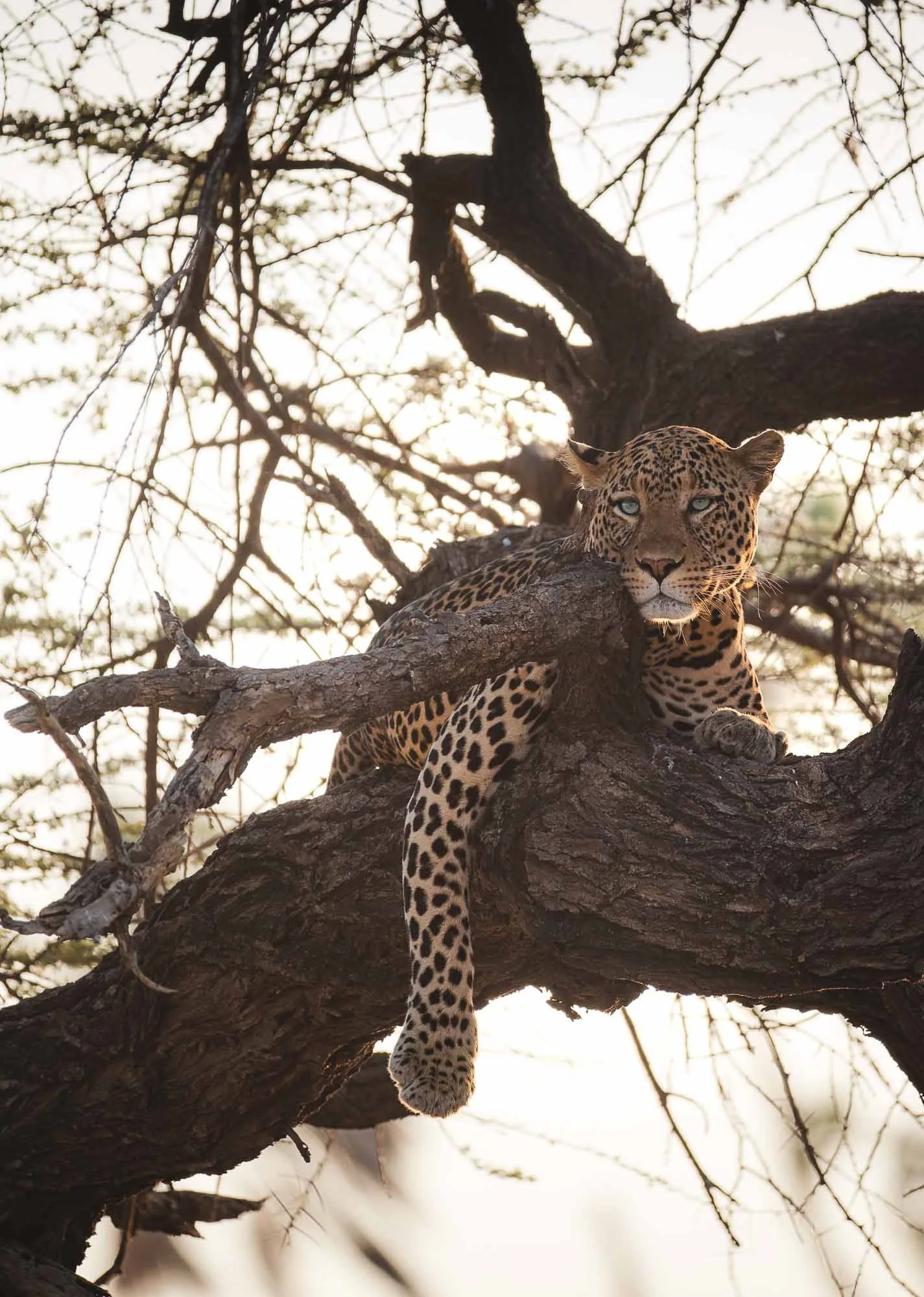
We initially spotted this male on the ground, before he moved through the bush and effortlessly climbed a nearby tree, overlooking his territory.
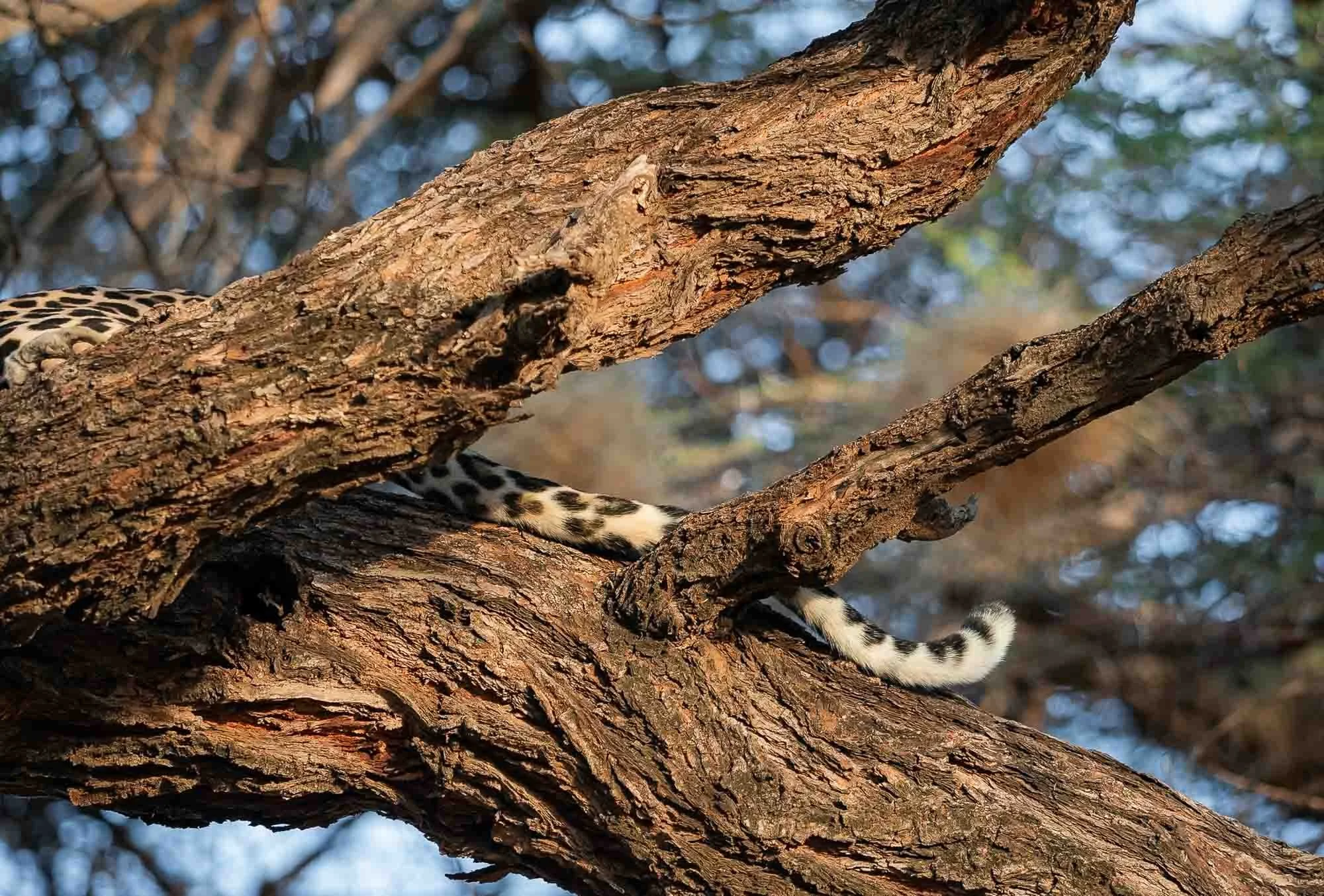
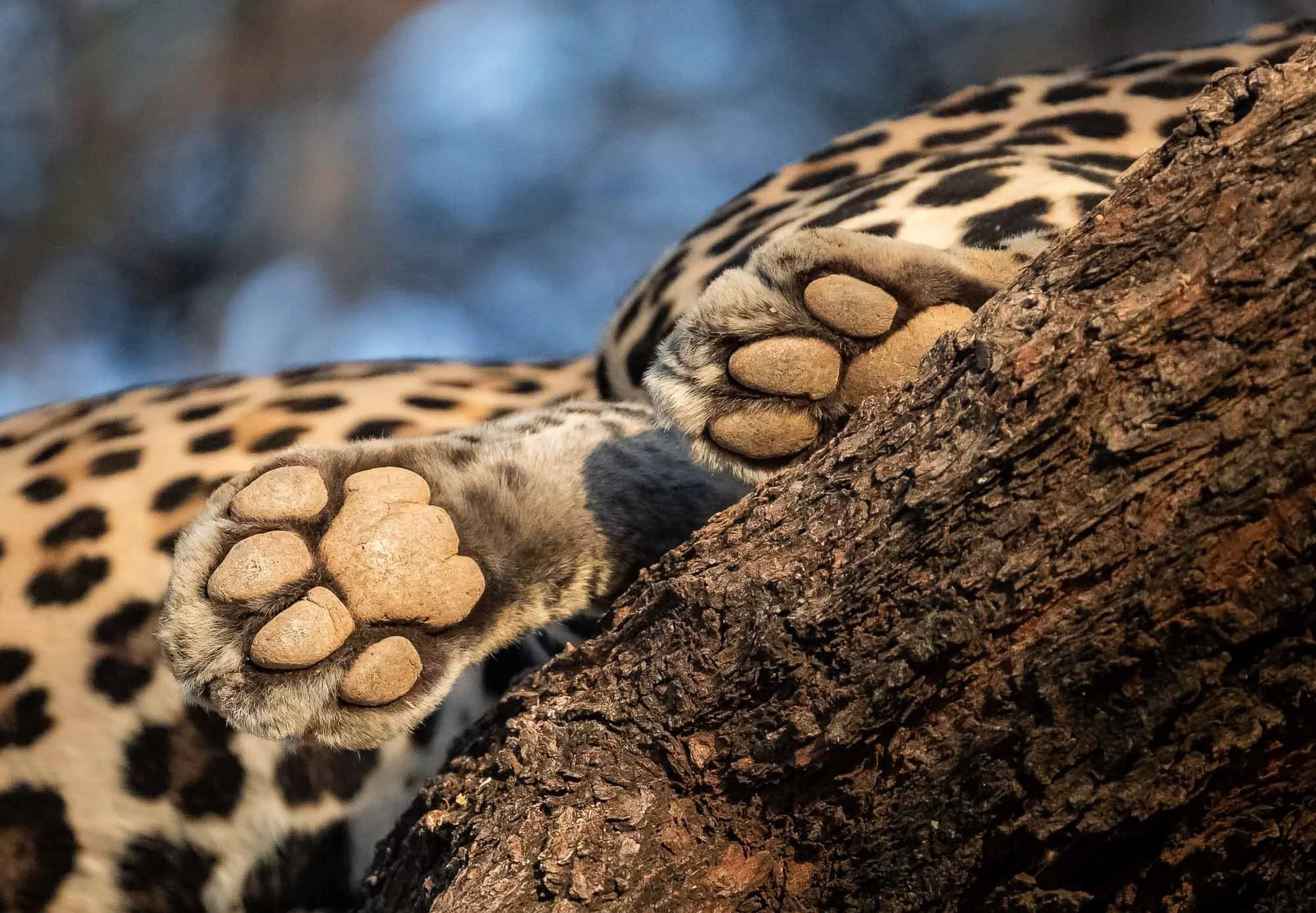
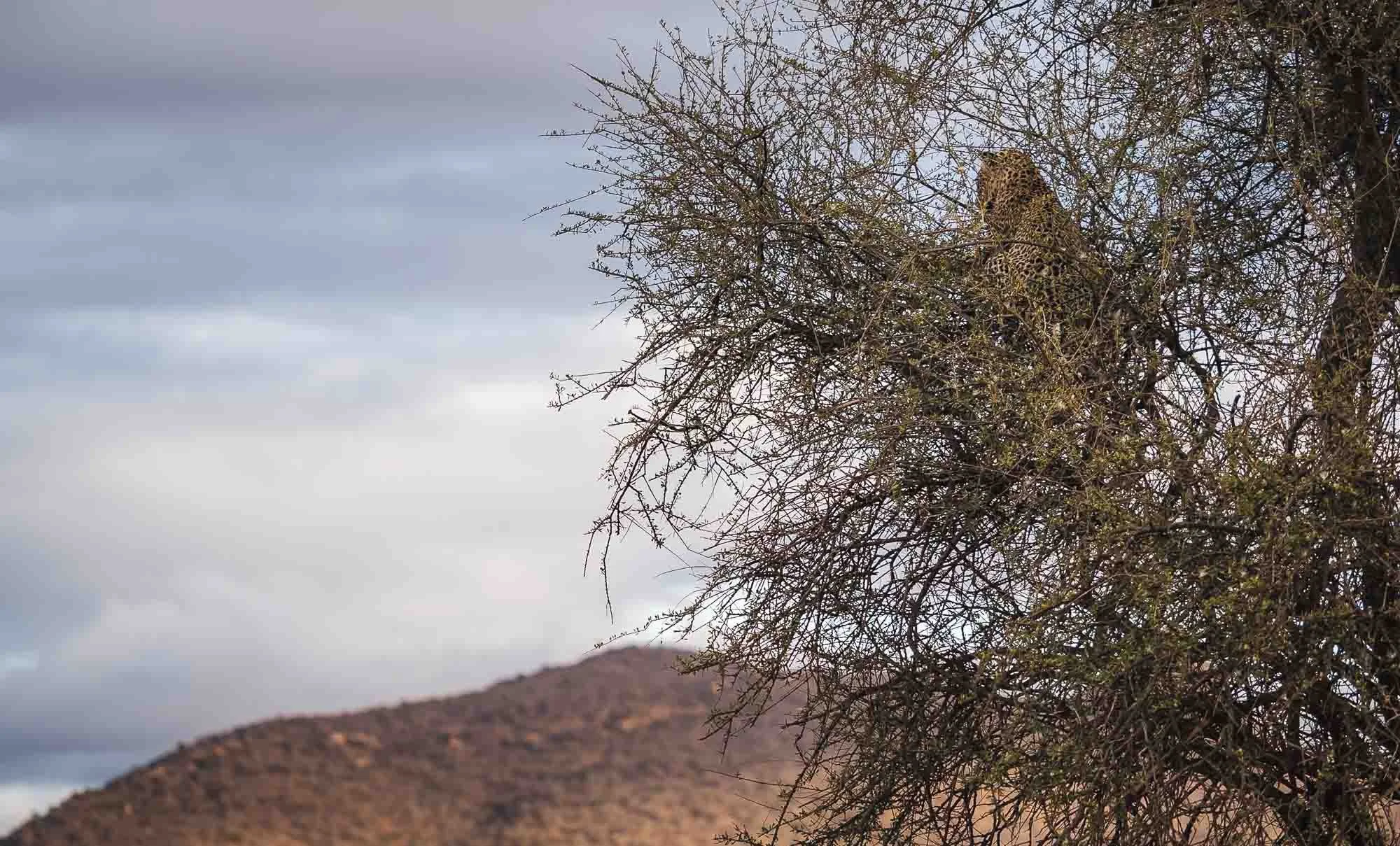
The second sighting also involved a tree, albeit one that was a lot less suitable for leopards: this female had positioned itself in a rather flimsy acacia on the last morning.
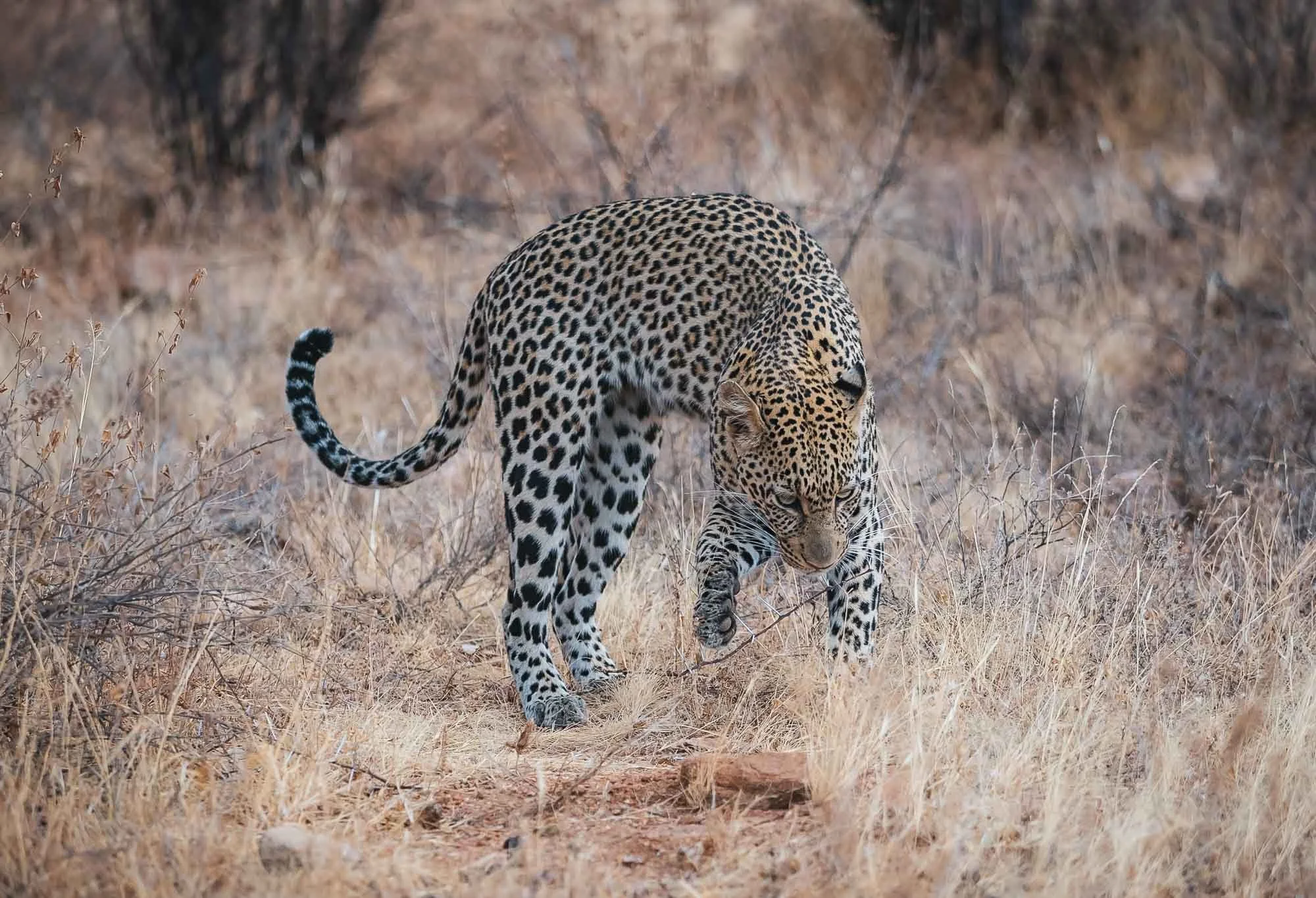
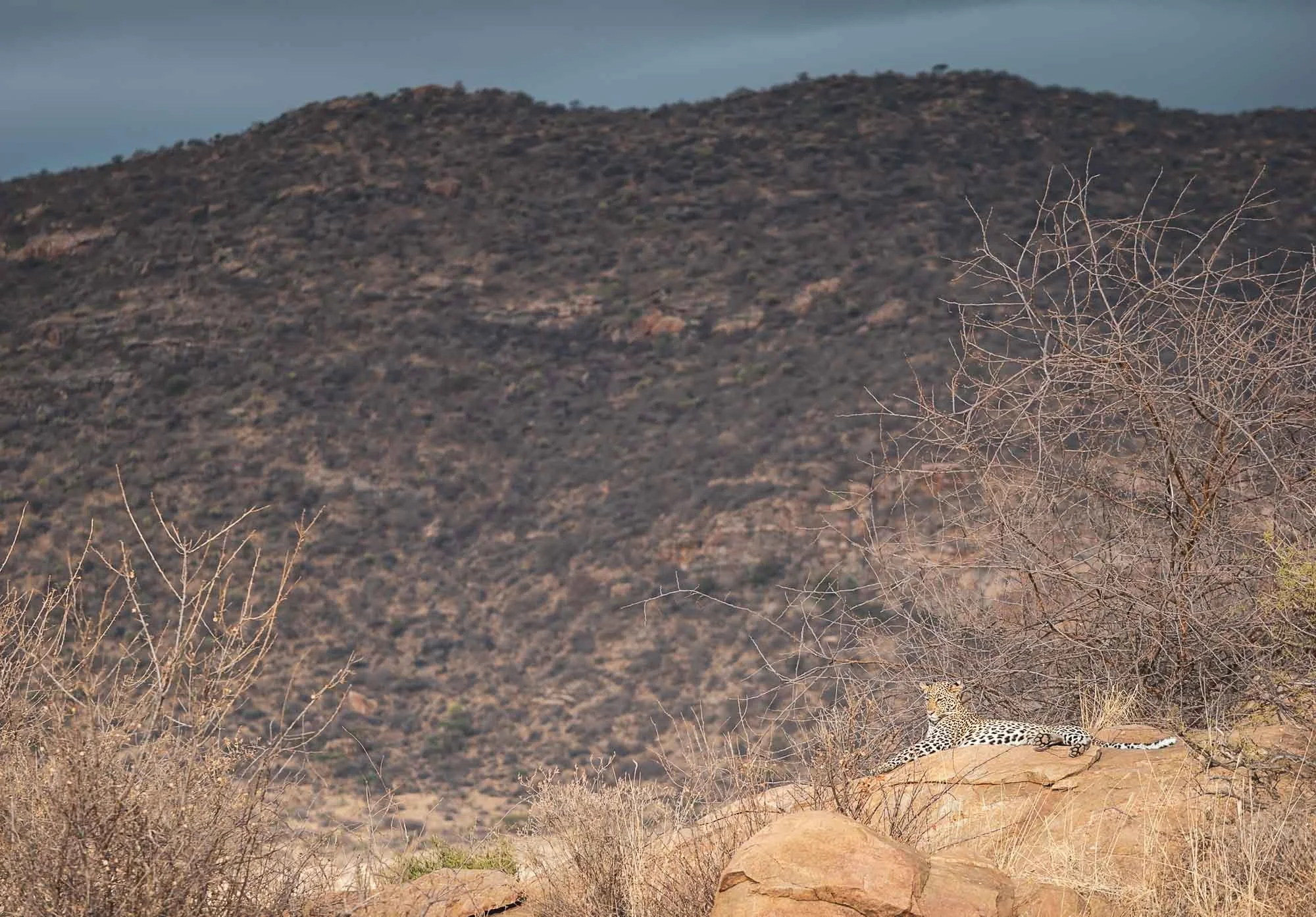
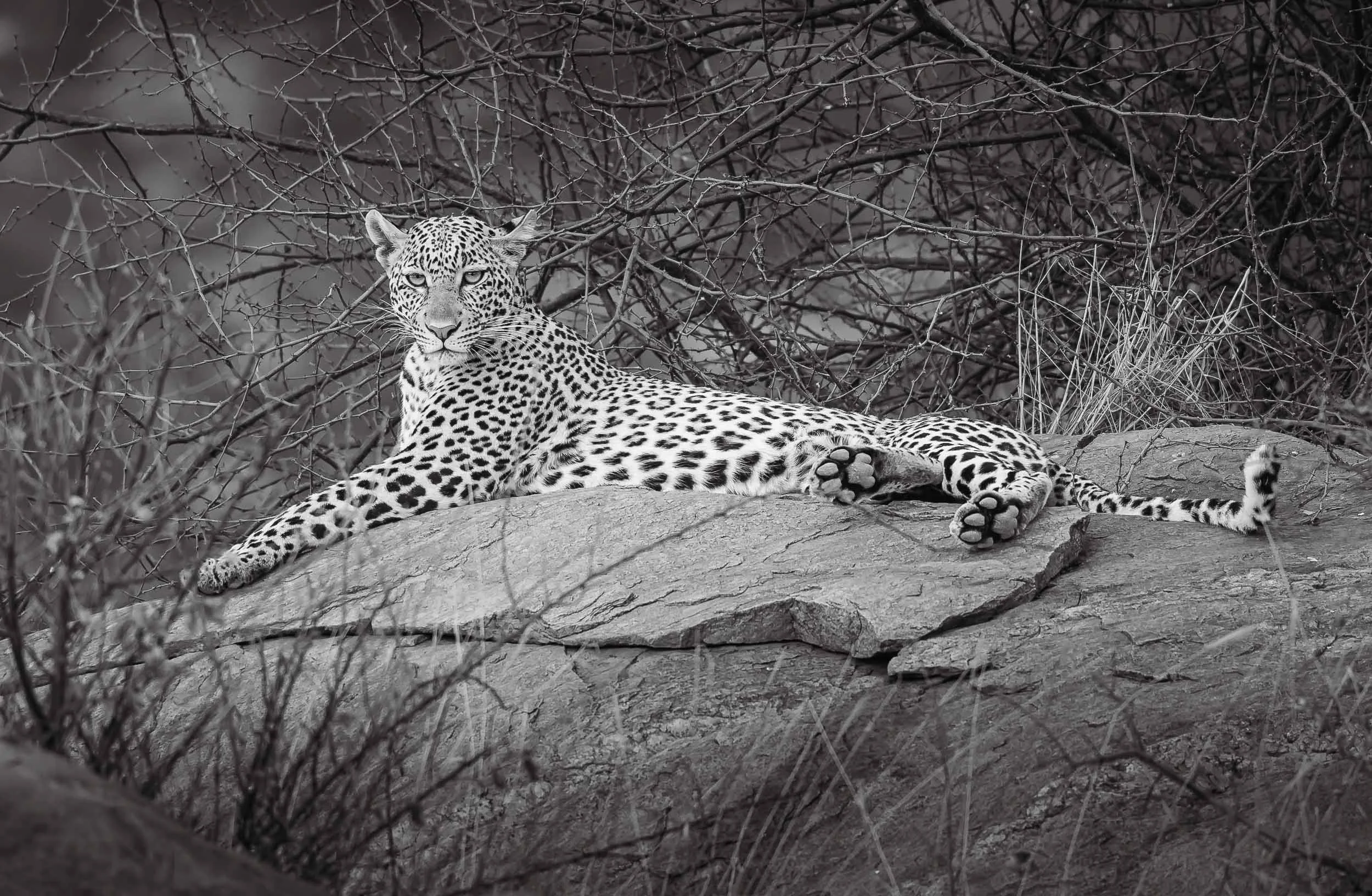
On the way down she managed to get a thorn stuck in her paw, but was able to free herself and took some rest on a small rocky outcrop, posing for this photo as the sun came out.
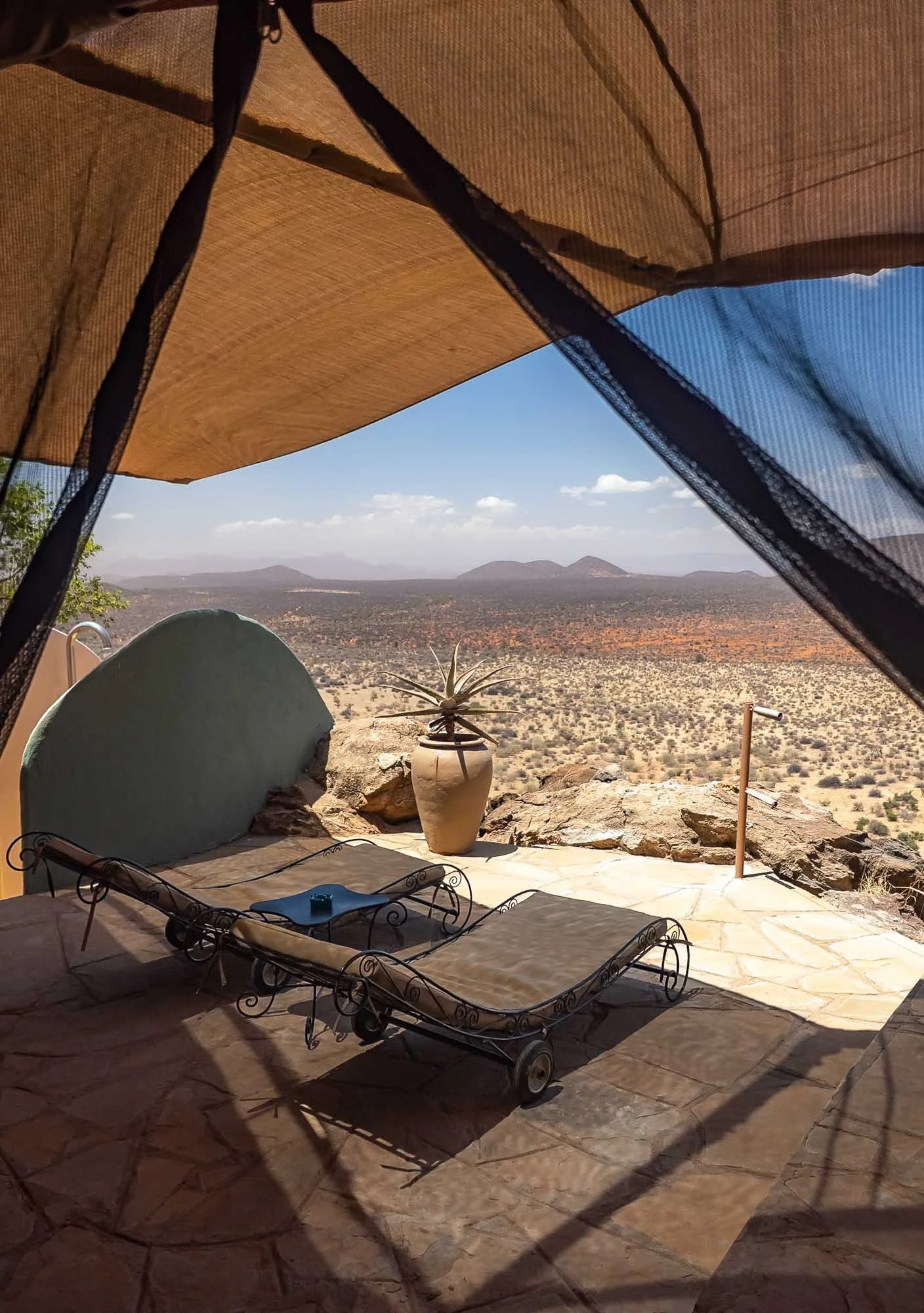
Saruni Samburu
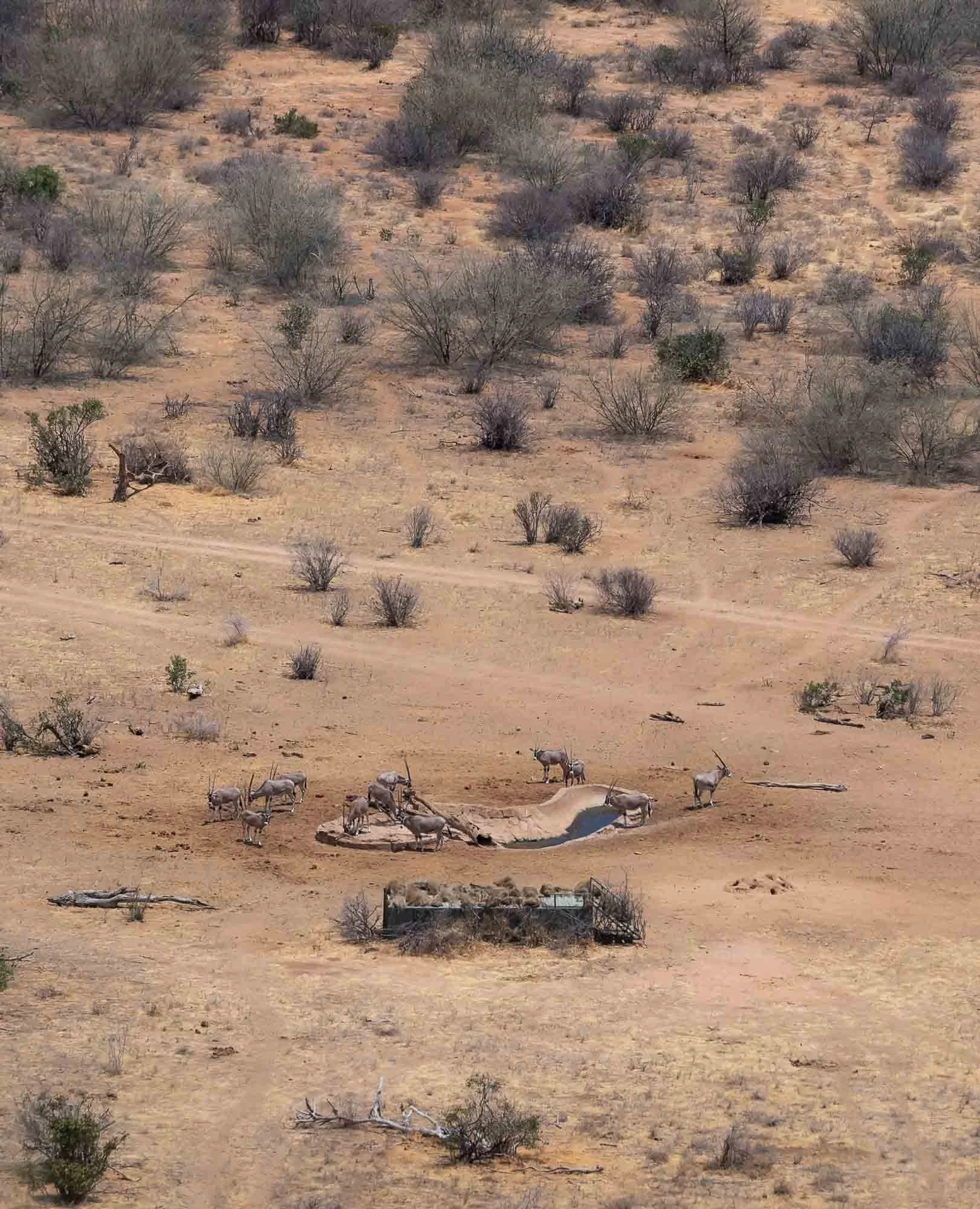
I was lucky to stay in one of the most spectacular lodges in the area: Basecamp Saruni, located on a hilltop and overlooking the Kalama conservancy. The views from the room are unbeatable…
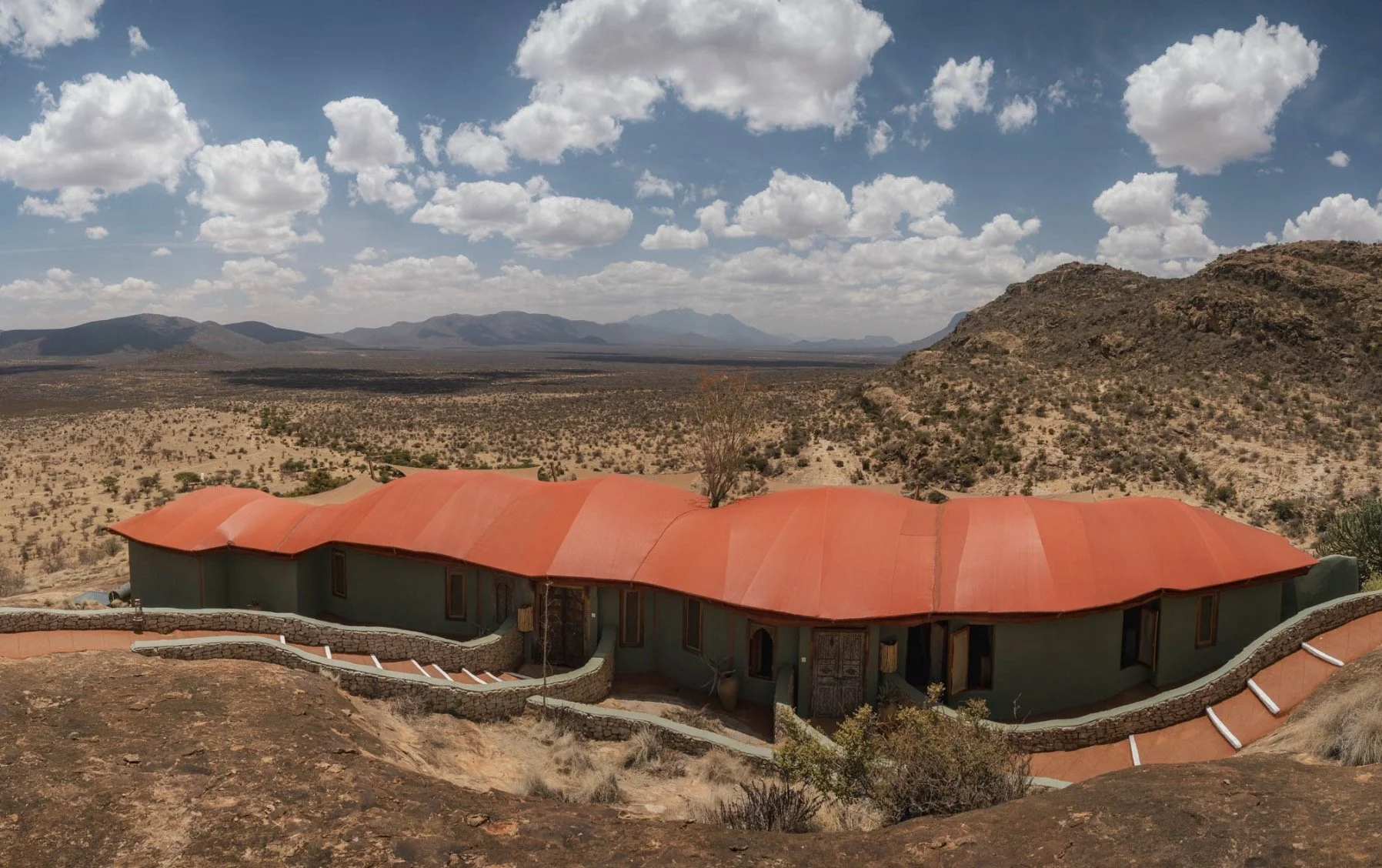
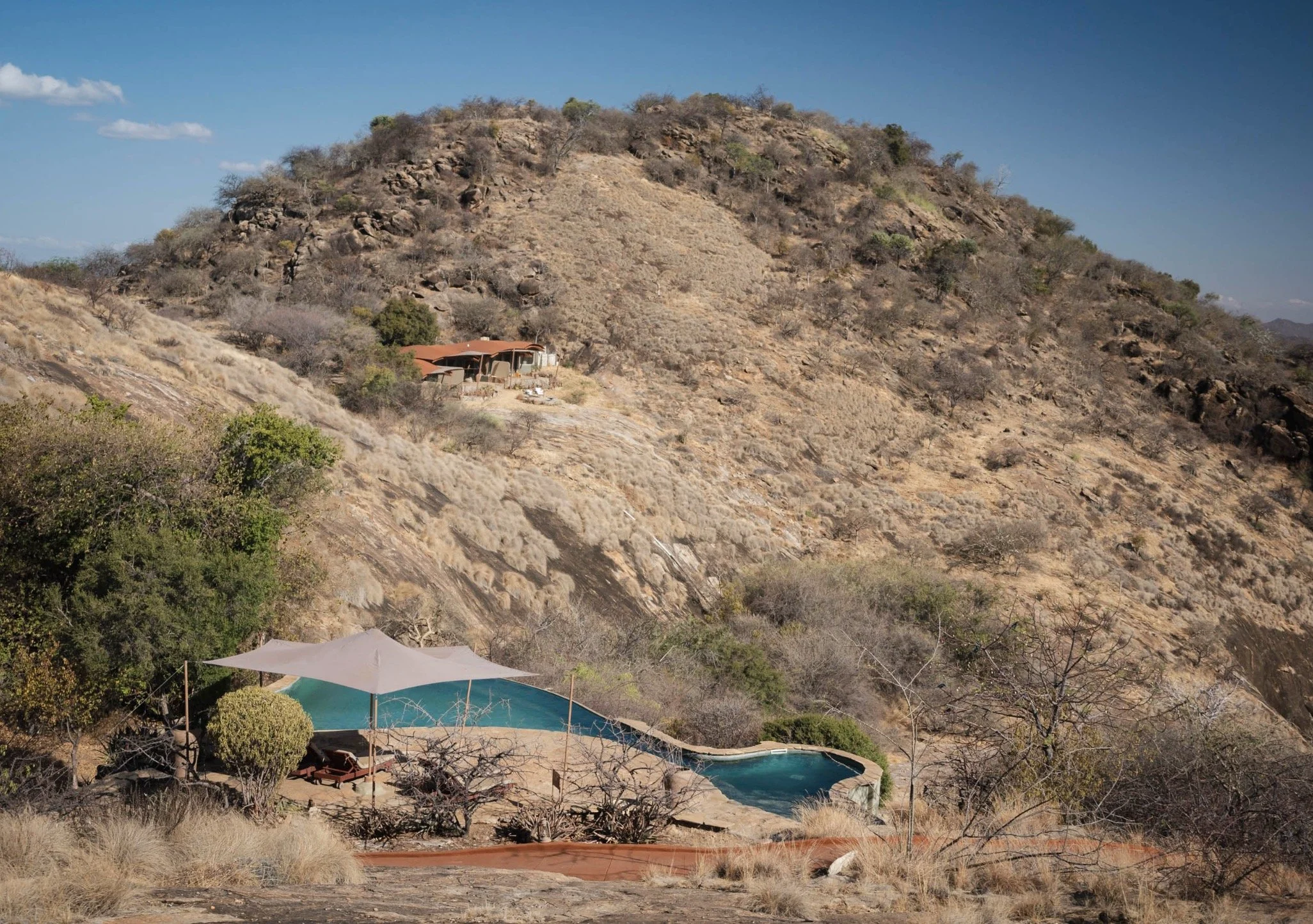
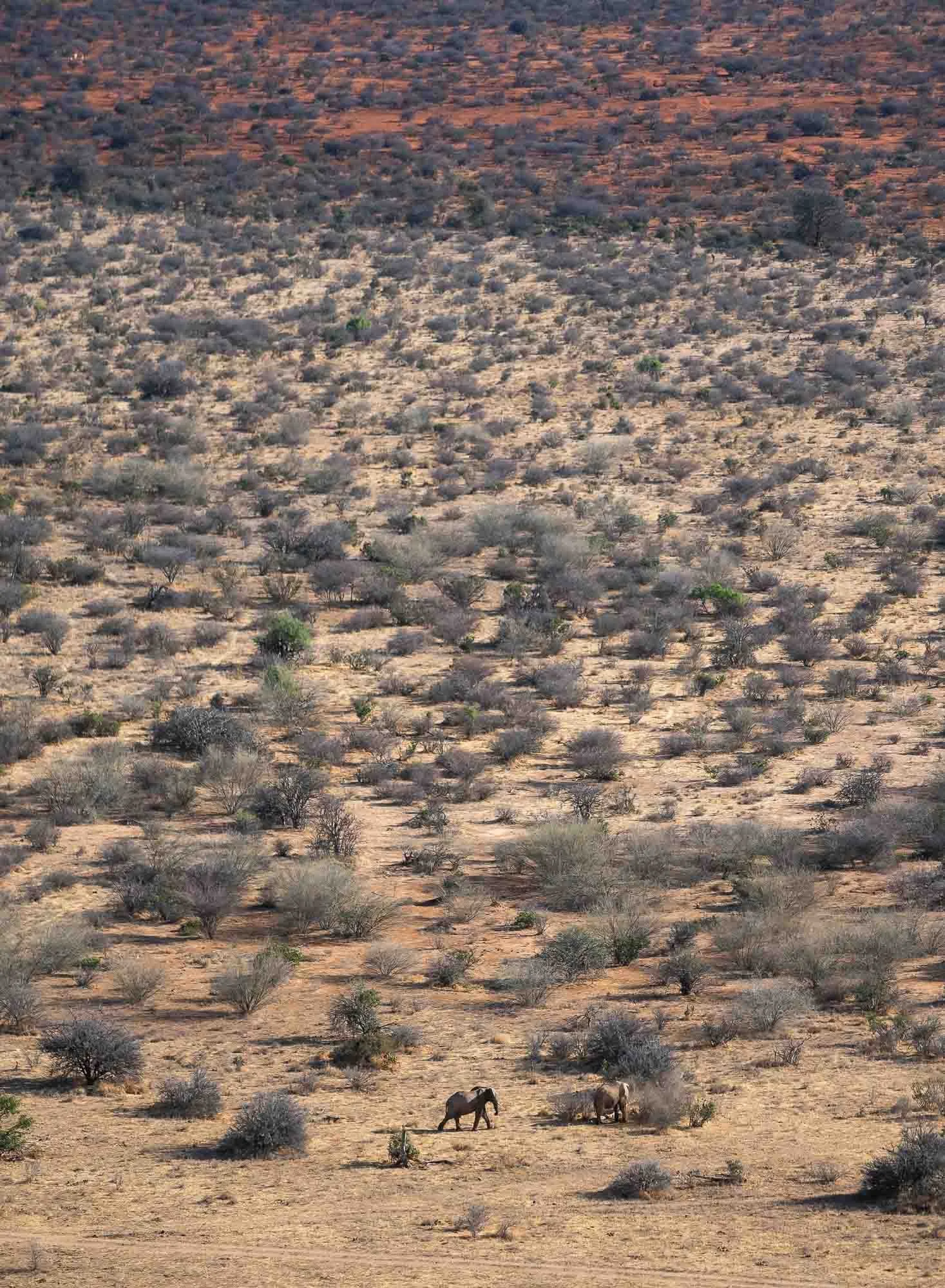
…and if you look carefully, you can spot animals making their way through the dry landscapes such as these two elephants, or enjoying themselves at the artificial waterhole, such as these Beisa Oryx did. They are a specific sub-species of oryx (the Arabian one being one of my favourite animals) and the final species of the Samburu Special Five - all of them ticked off!
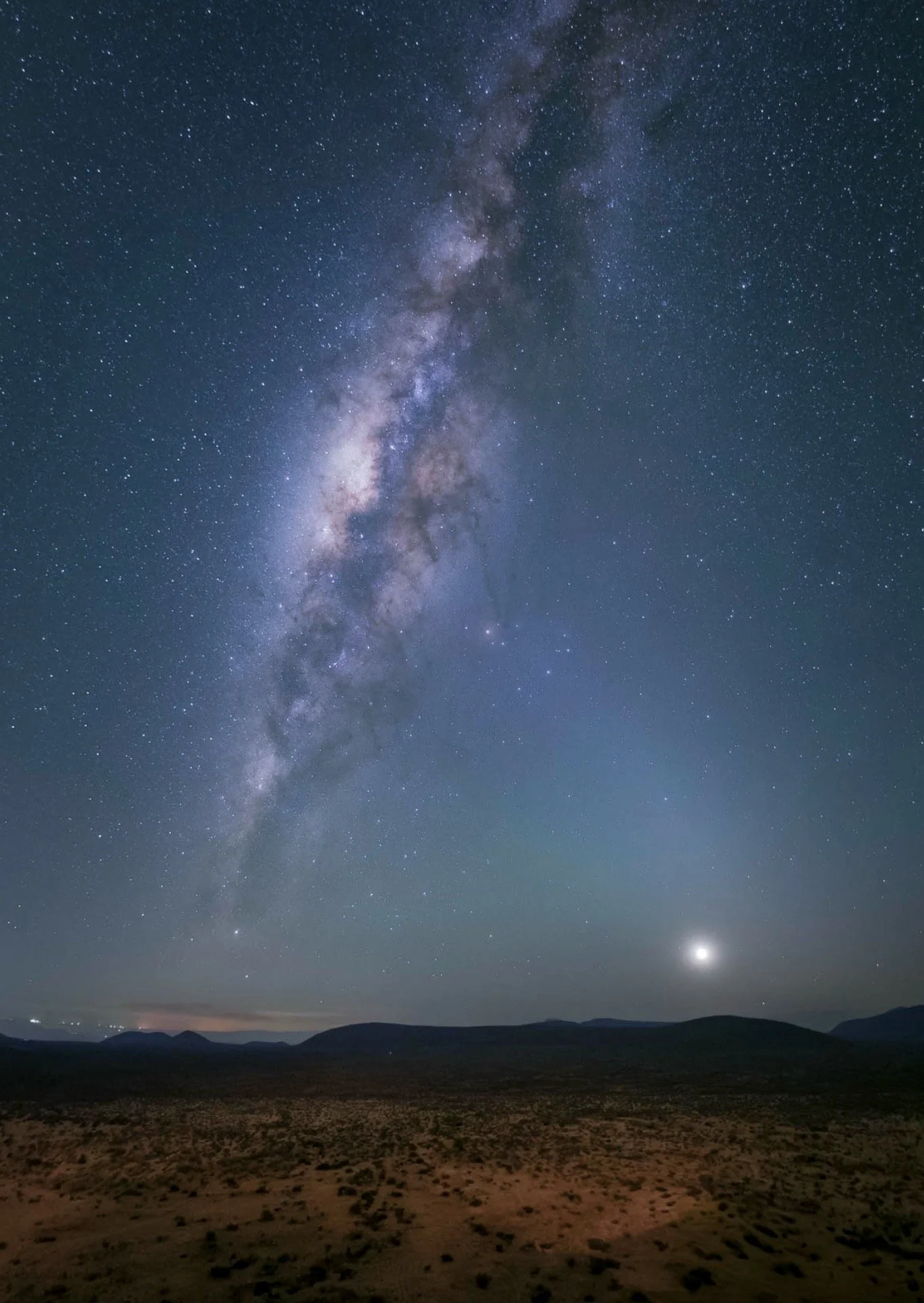
The views are equally impressive at night.
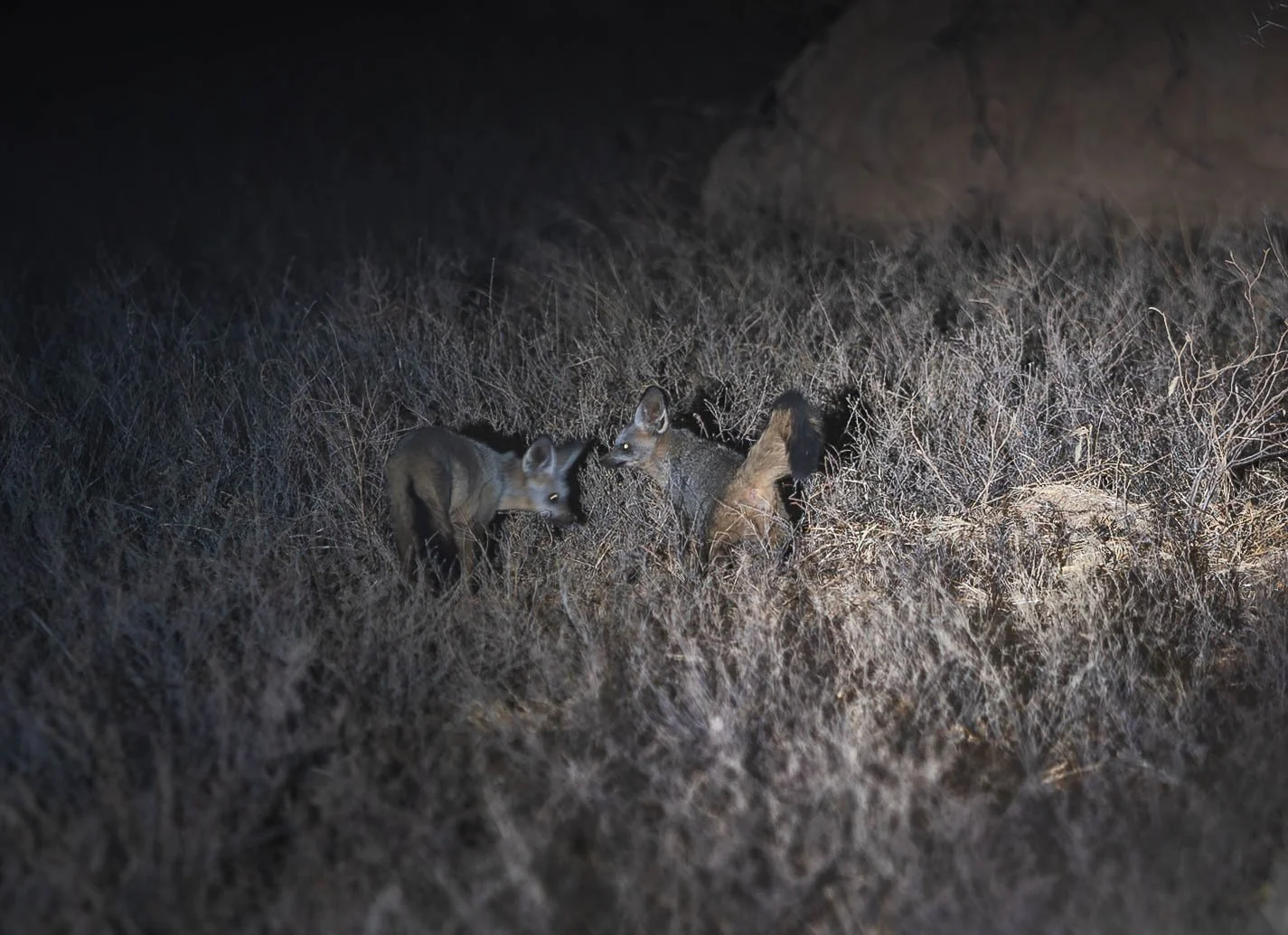
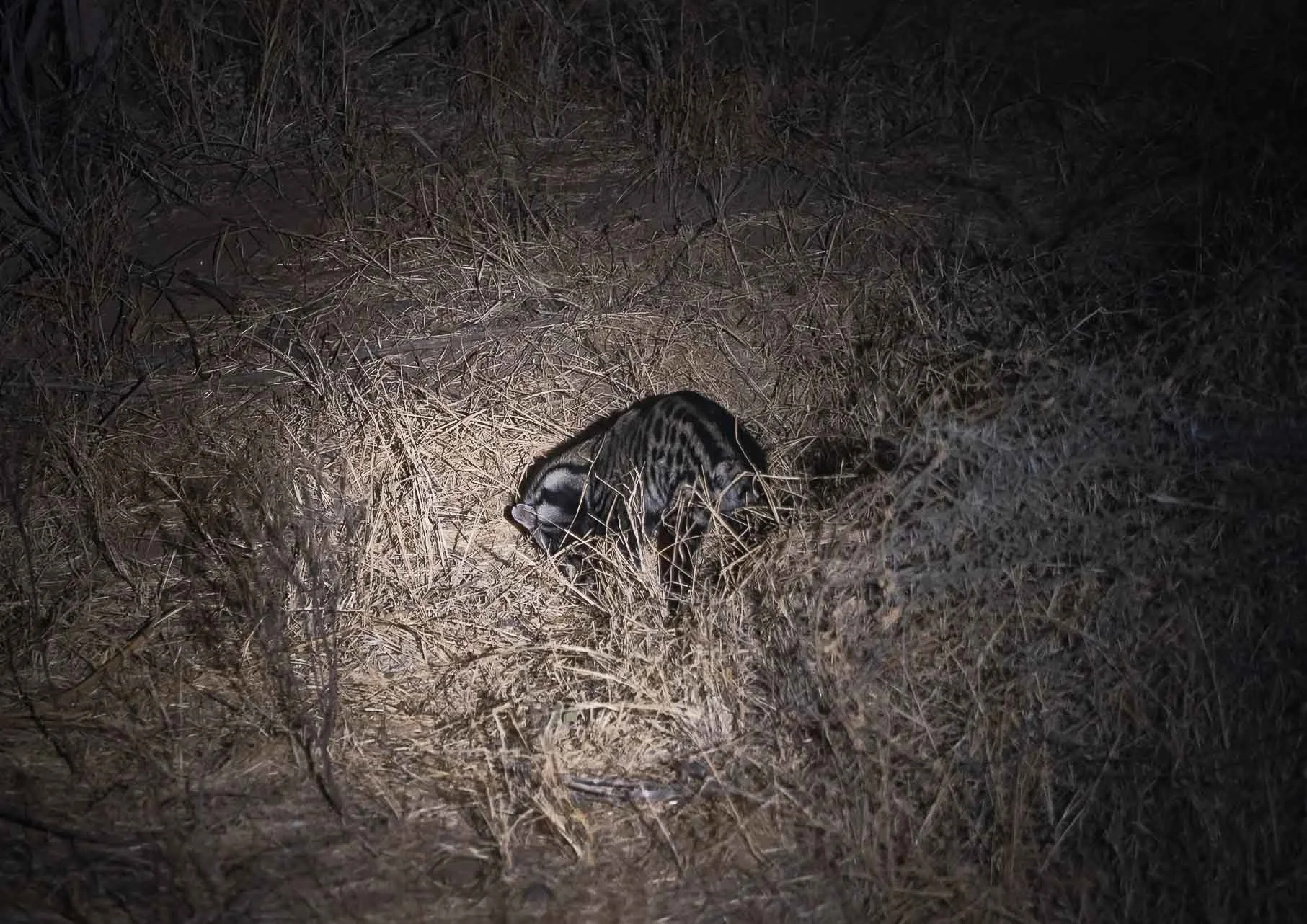
Speaking of which, something I’d always recommend is to do a night drive as well for a chance to see less common animals, such as the bat-eared fox and civet cat seen below, alongside a female lioness very close to camp, and the always-entertaining jackal.
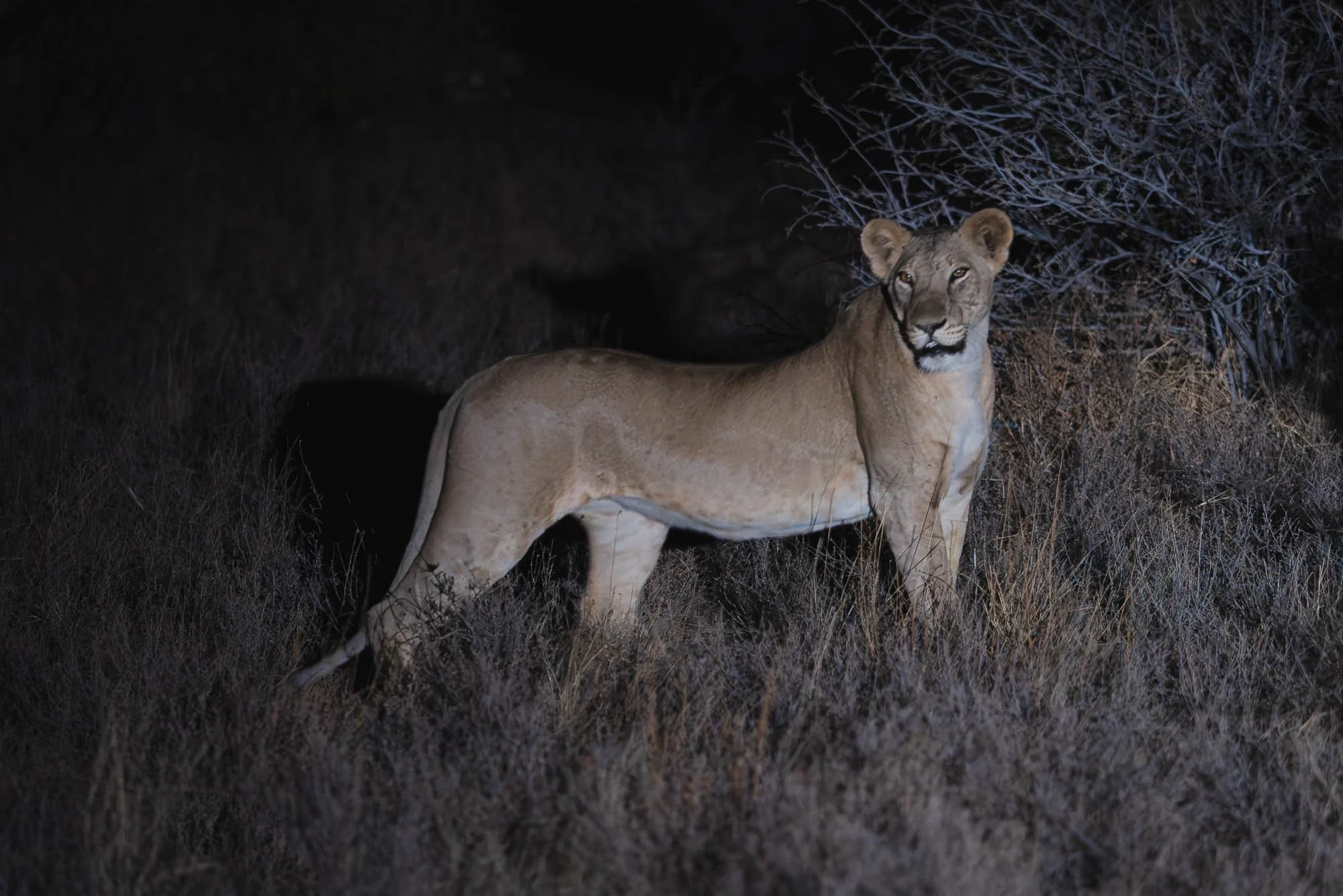
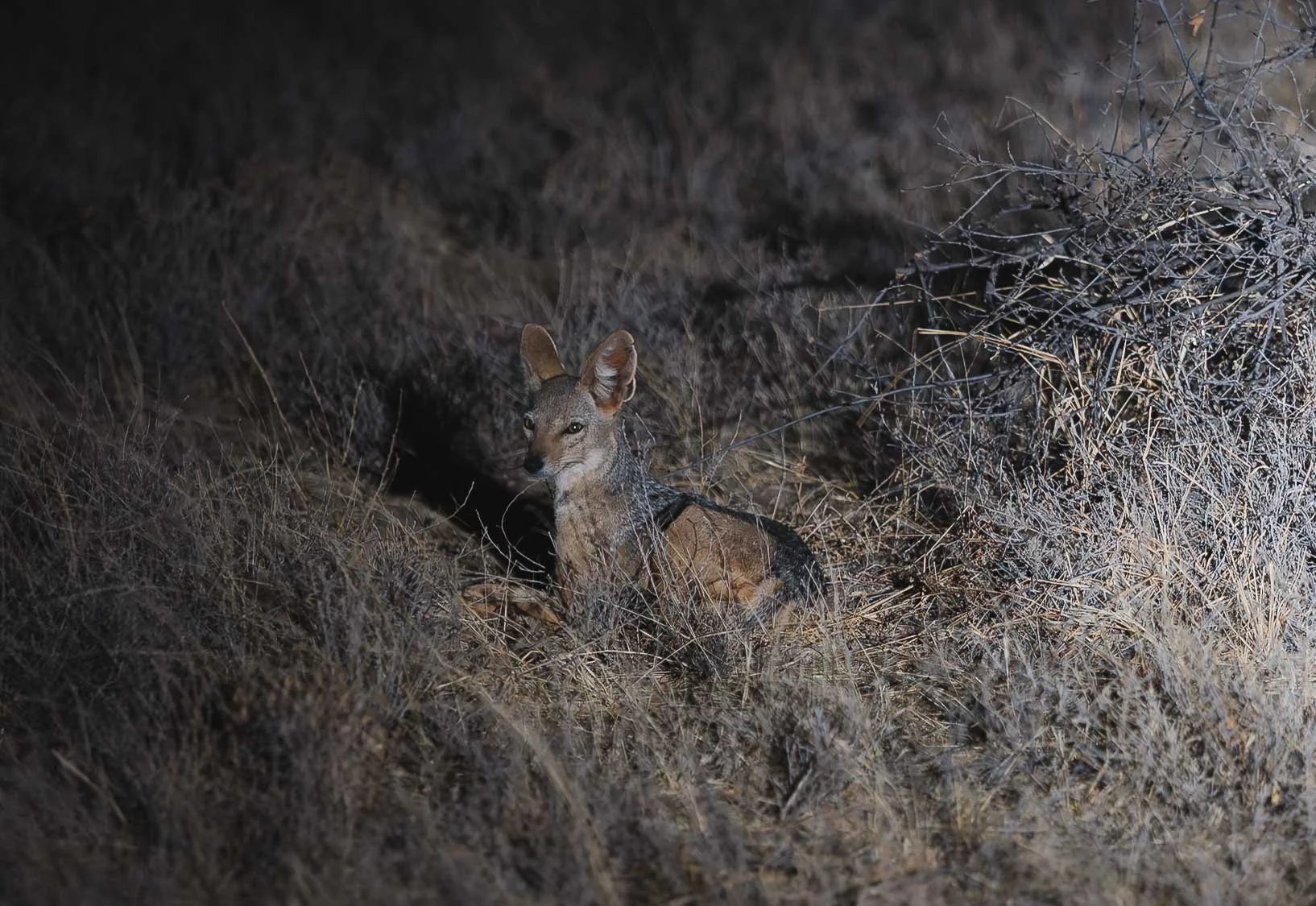
Land of the Warriors
Jimmy overlooking his homeland, and pointing to Mount Ololokwe, a flat-topped mountain rising almost 2,000 metres above the landscape. Considered sacred by the Samburu people, it has traditionally served as a place for prayers and ceremonies. It’s possible to hike the mountain and camp on the plateau - an idea for my next visit. This time, we just spent some time on foot, spotting both evidence of the animals around, and also some human signs…
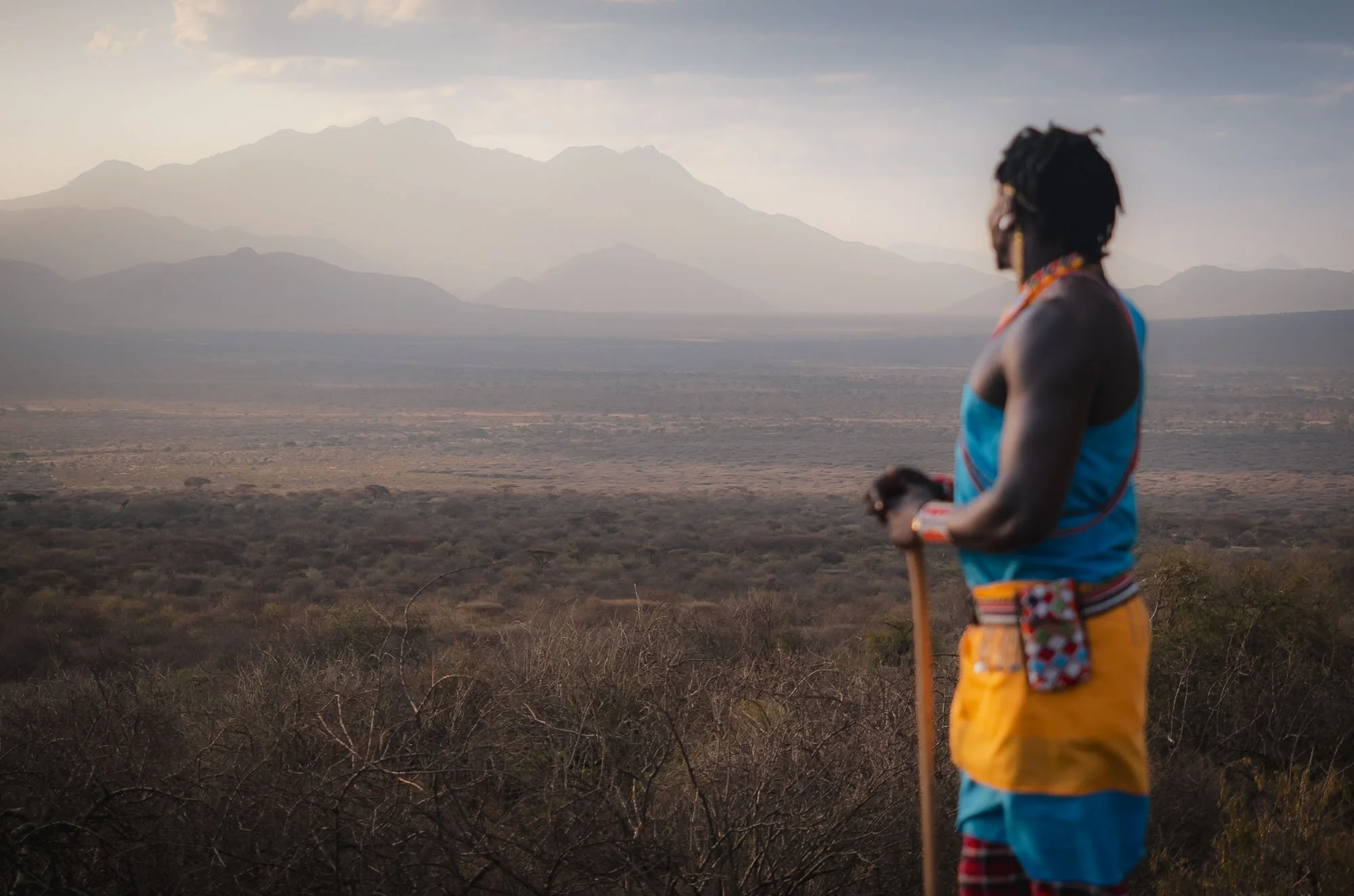
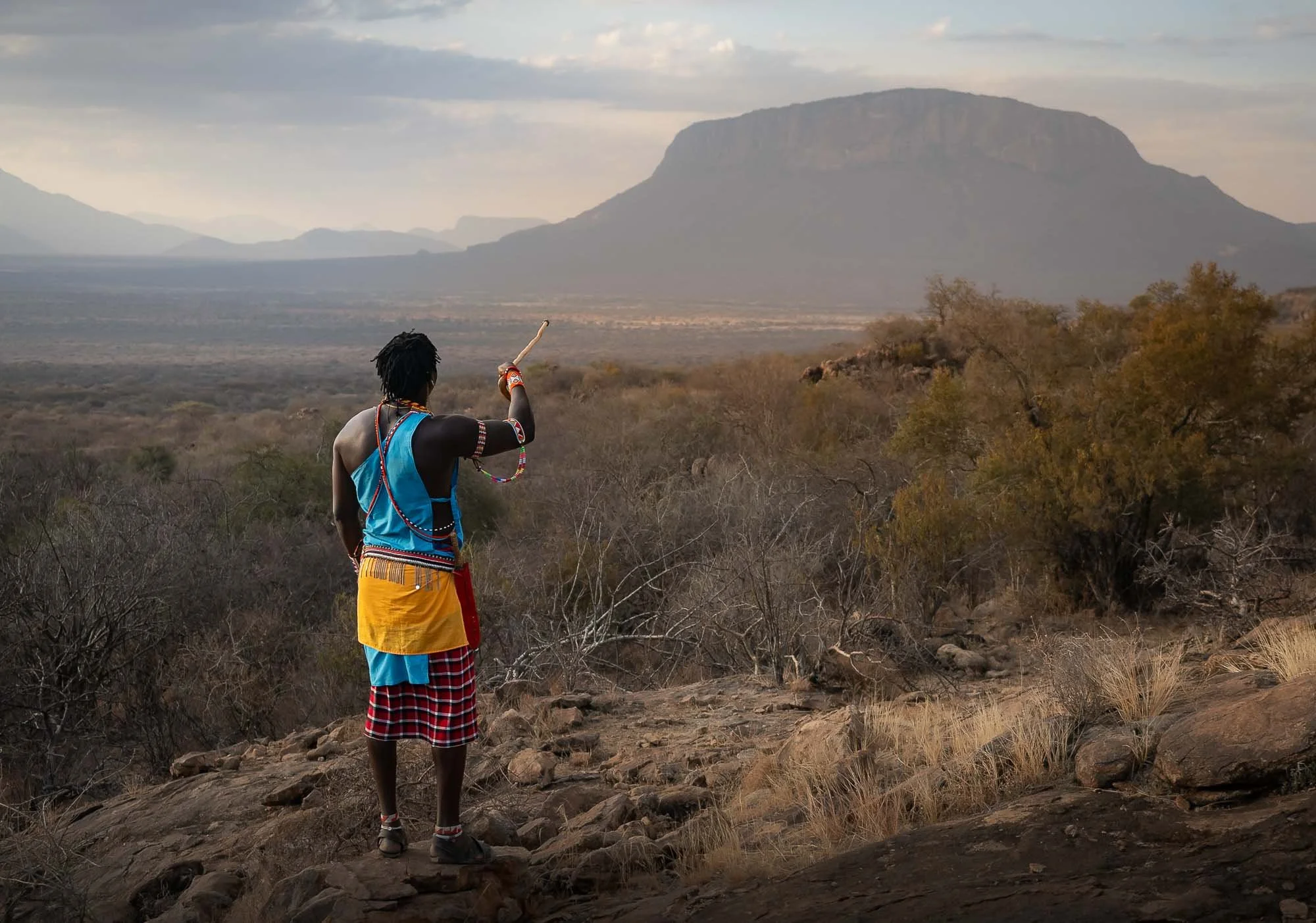
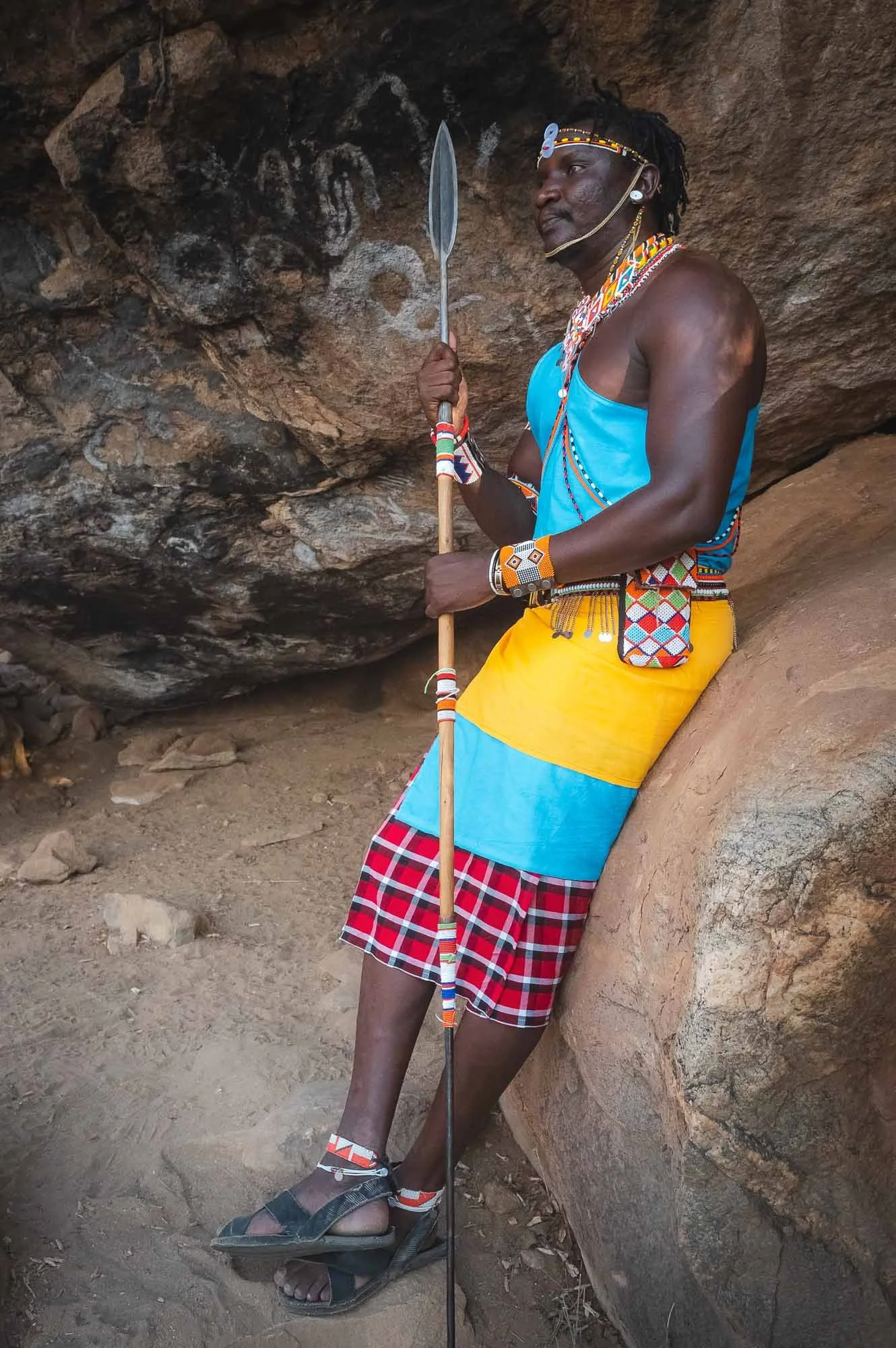
Specifically, the rocky landscape around Kalama hides caves featuring traditional Samburu rock art. The drawings depict people, animals and scenes from everyday life, often created by young warriors (called Moran) during gatherings in the caves.
The warriors are not soldiers in the conventional sense, but young men who have entered this stage of life through an initiation ceremony and become responsible for protecting their communities and livestock.
They eventually transition into elderhood and gain the right to marry and taking on new responsibilities within the community.
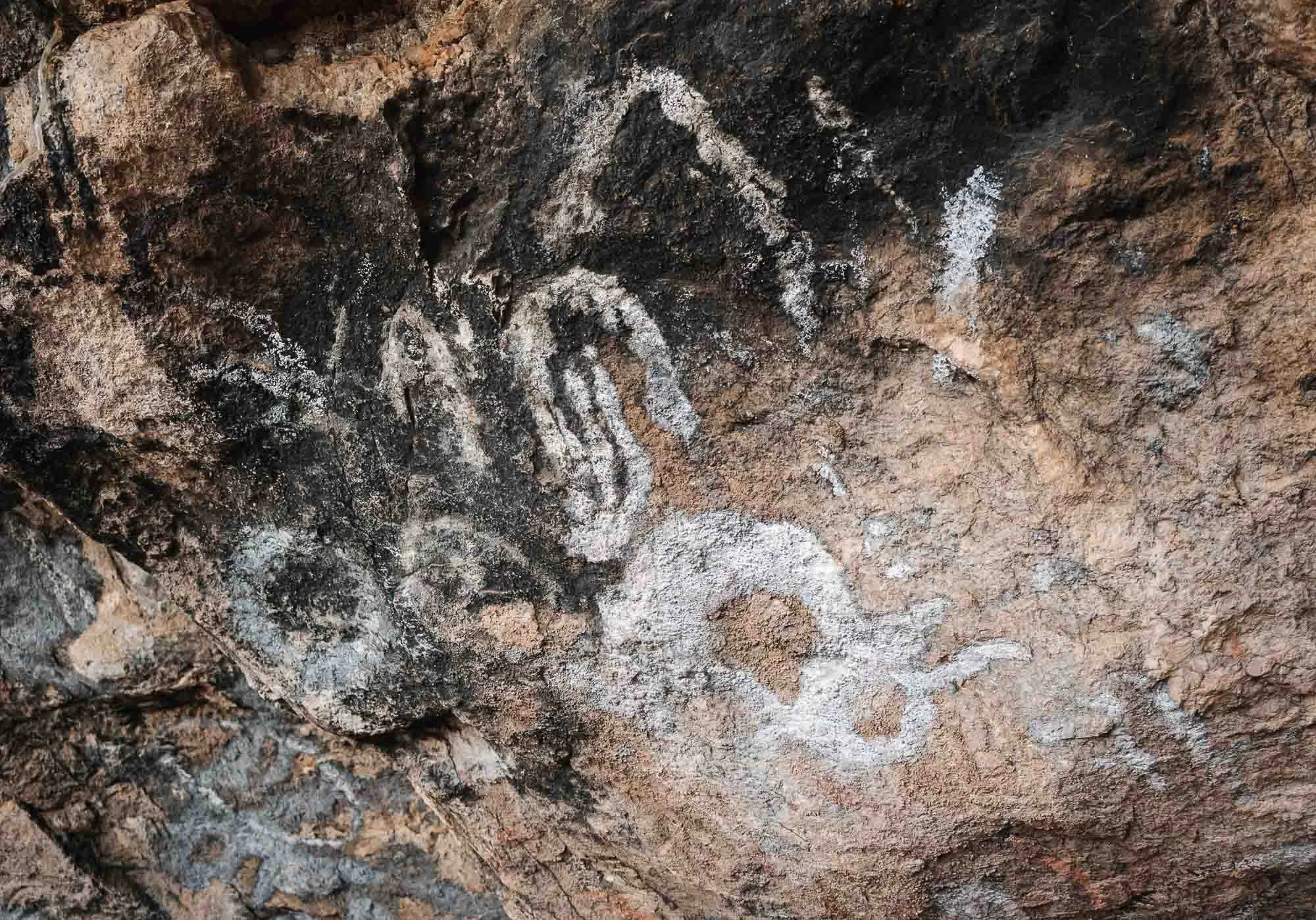
The caves sometimes serve as their temporary shelters, where they gather to rest and cook during this period of their lives.
As such, the drawings are mostly recent, rather than some prehistoric art.
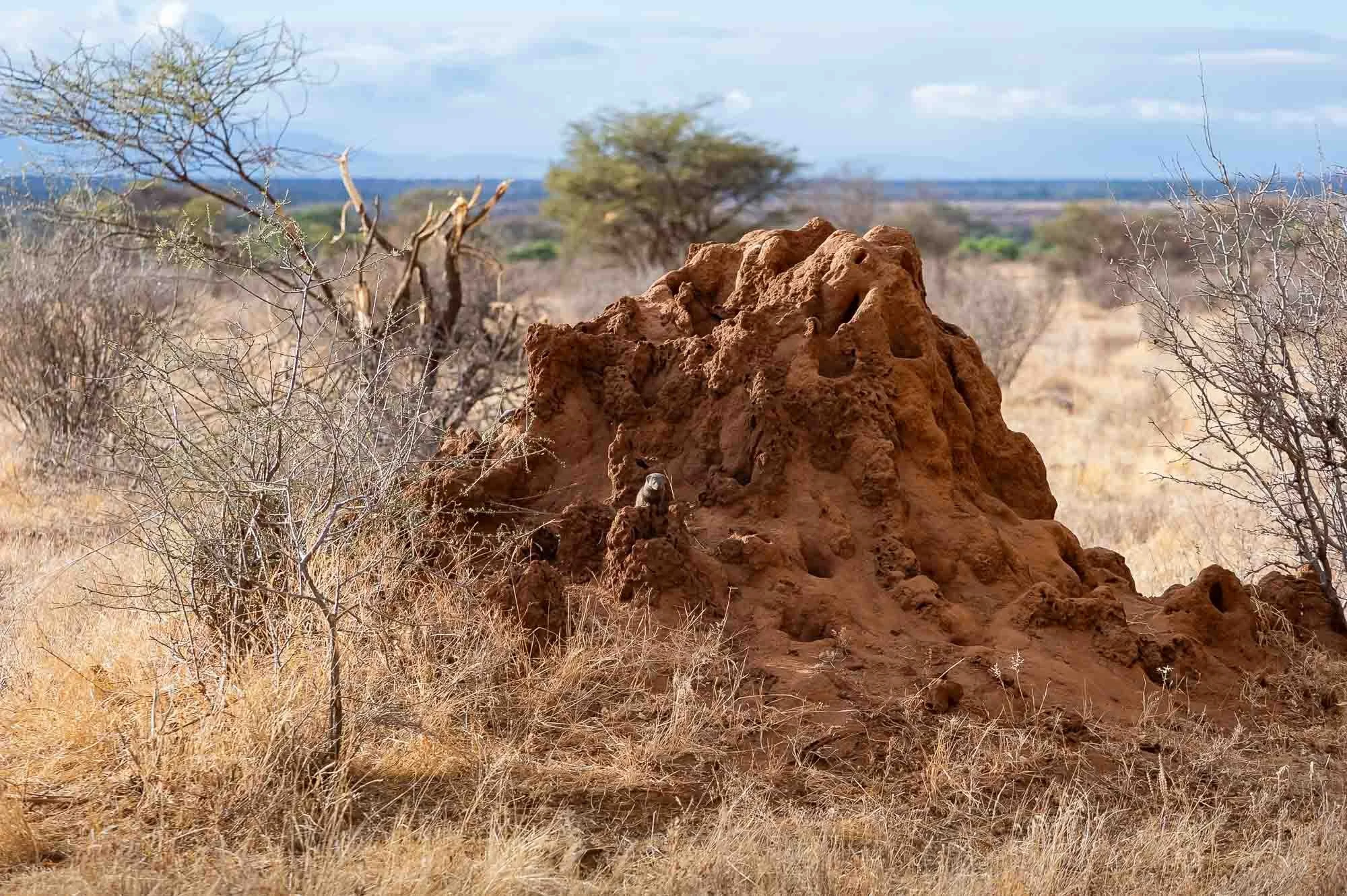
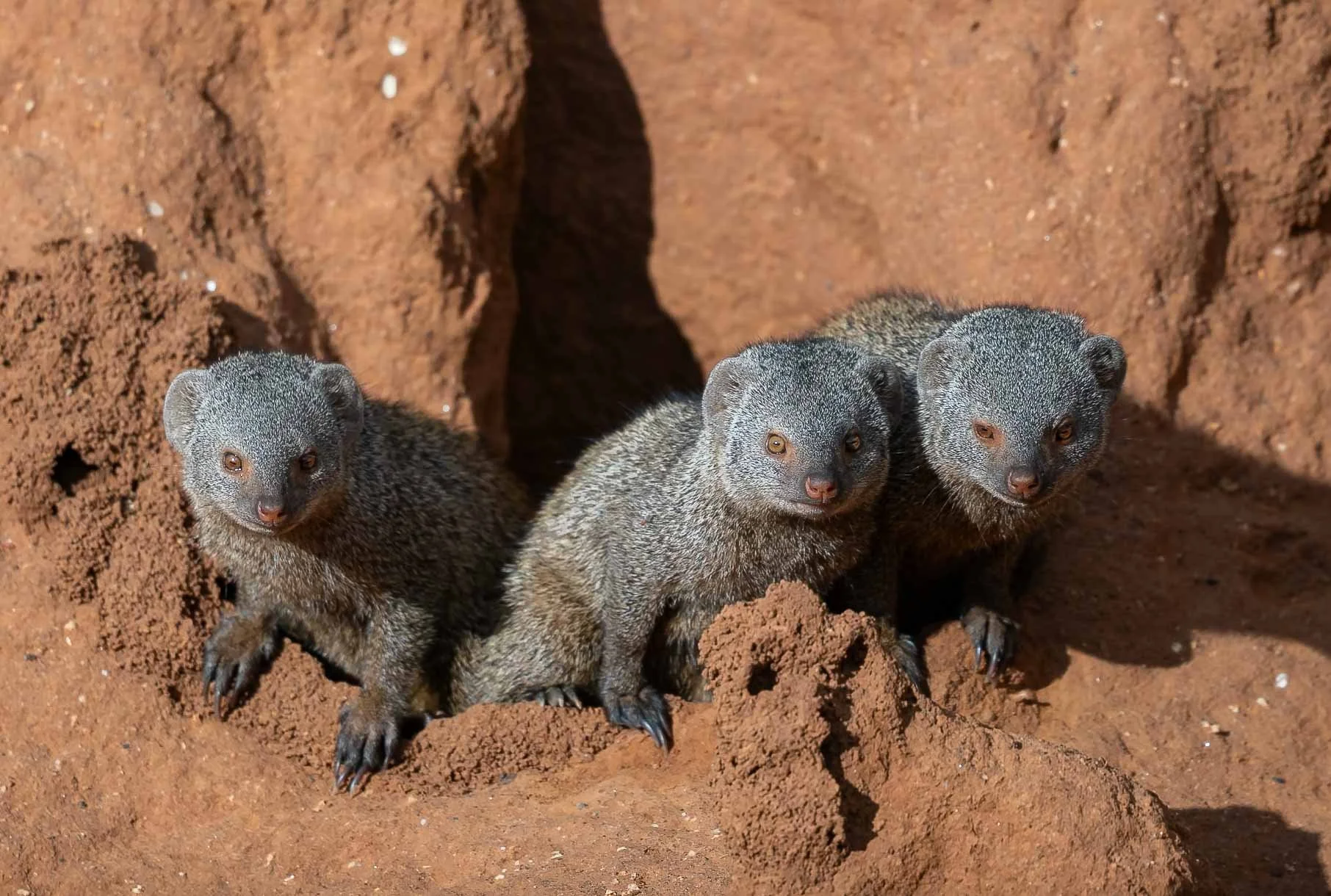
Back in the reserve on our last day, we spotted this group of dwarf mongoose peeking out of an abandoned termite mound they have made their home.
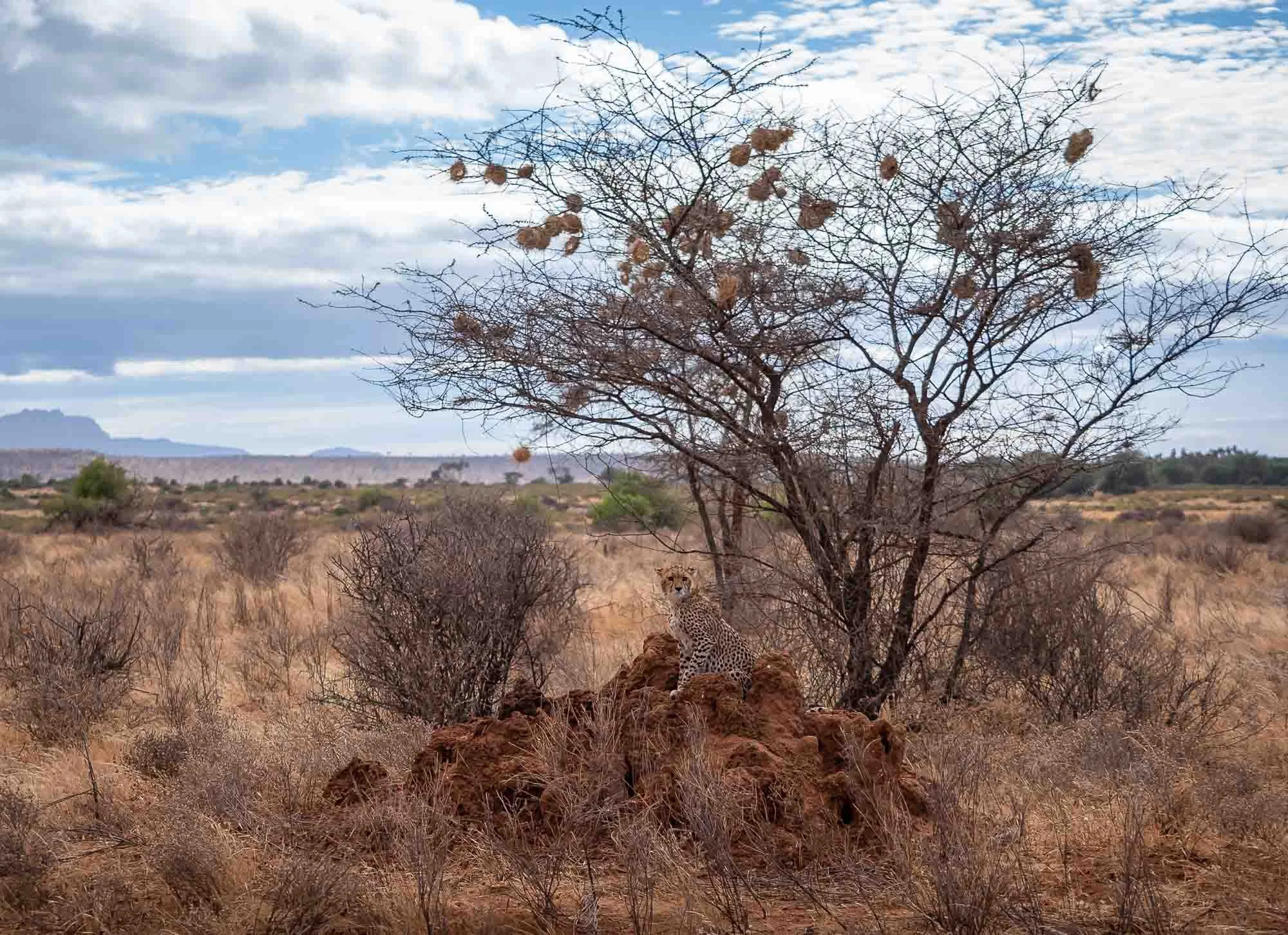
Speaking of termite mounds, another animal that likes to frequent them - albeit for different reasons - is the cheetah. We saw this subadult trying to get a better look over the dry grasslands.
He later joined his mother, which was observing some nearby gazelle, and we had the chance to get a closer look at these beautiful cats. Cheetah are relatively uncommon in Samburu and face threats from habitat fragmentation, declining prey availability and conflict with livestock owners.
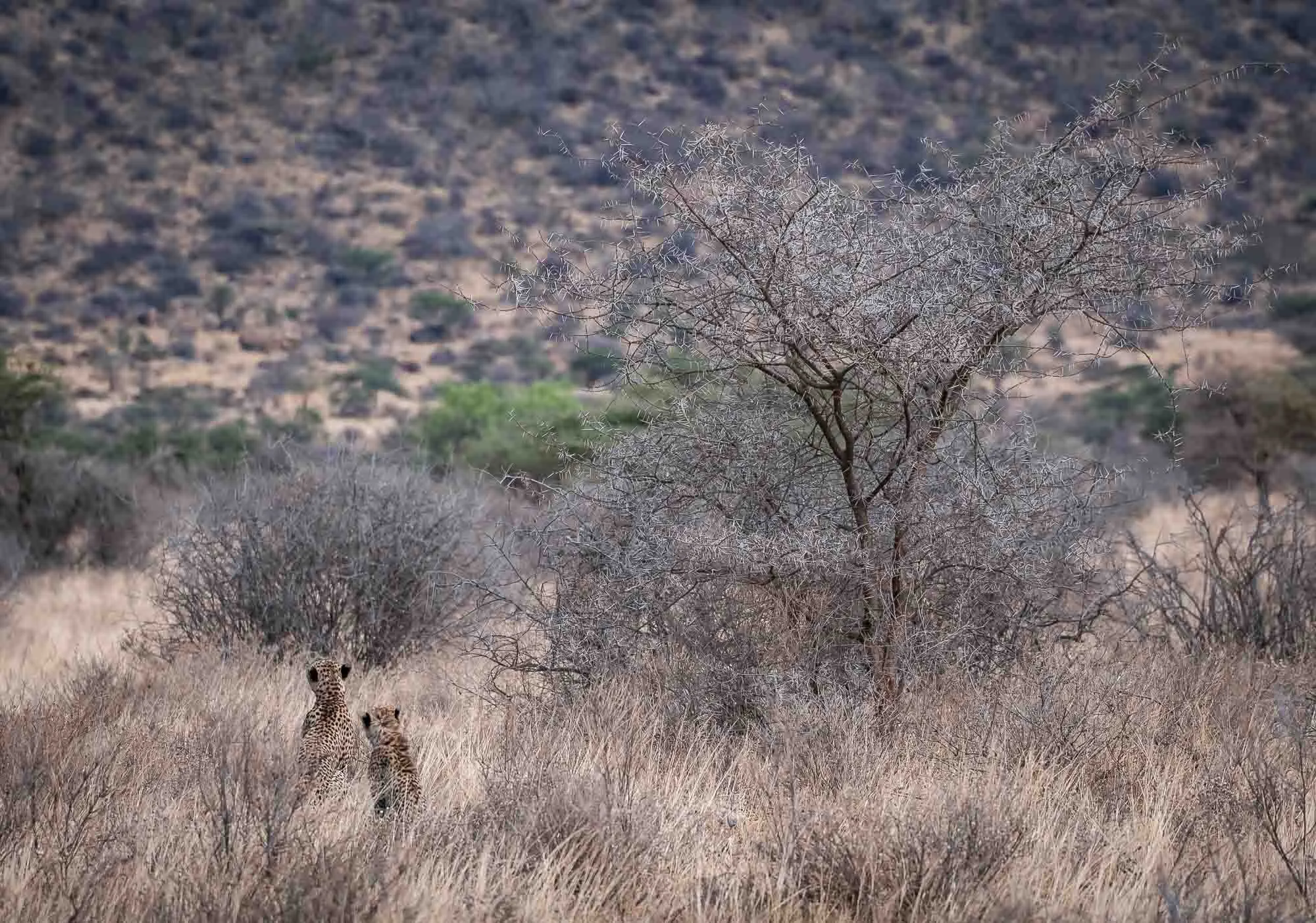
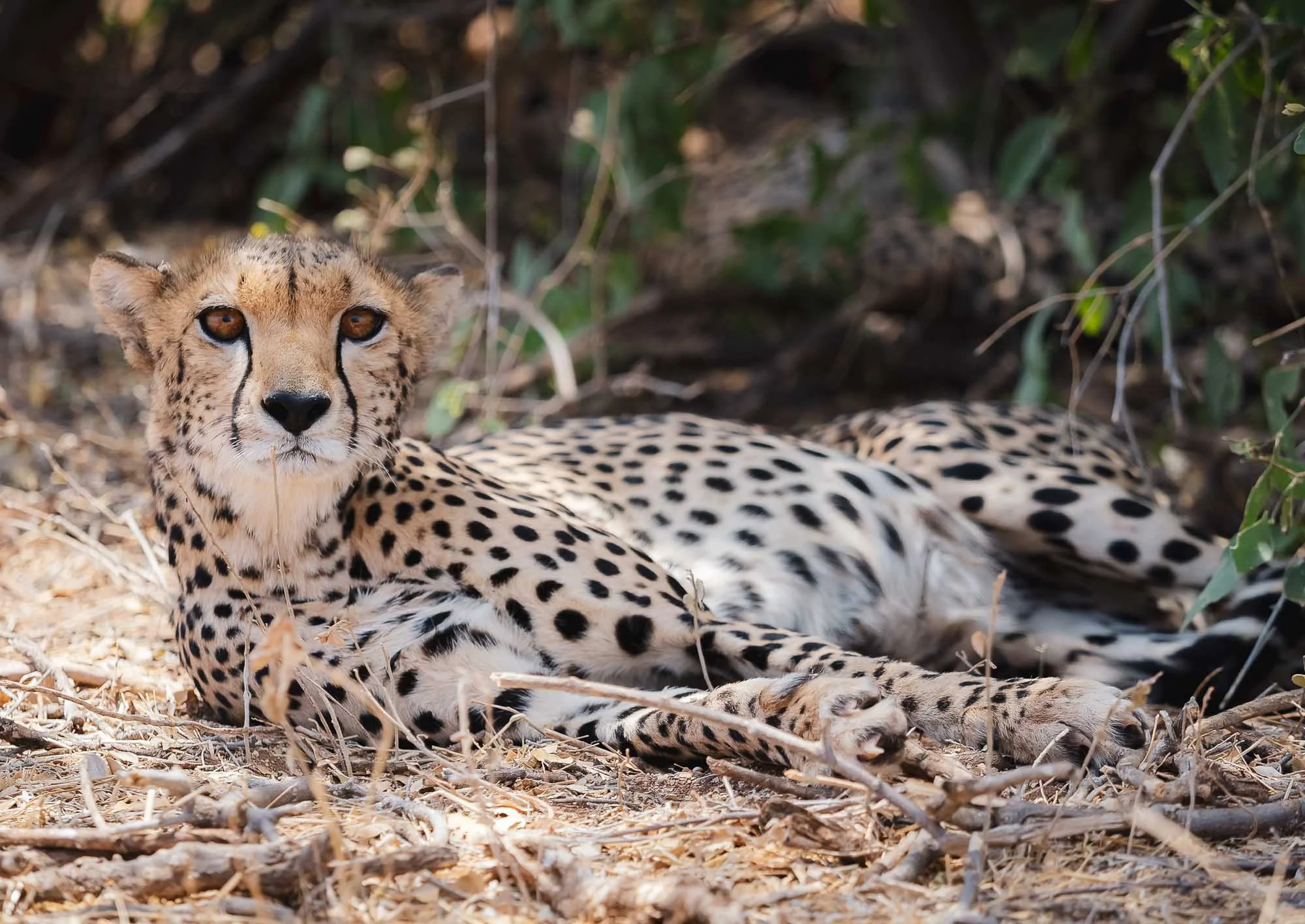
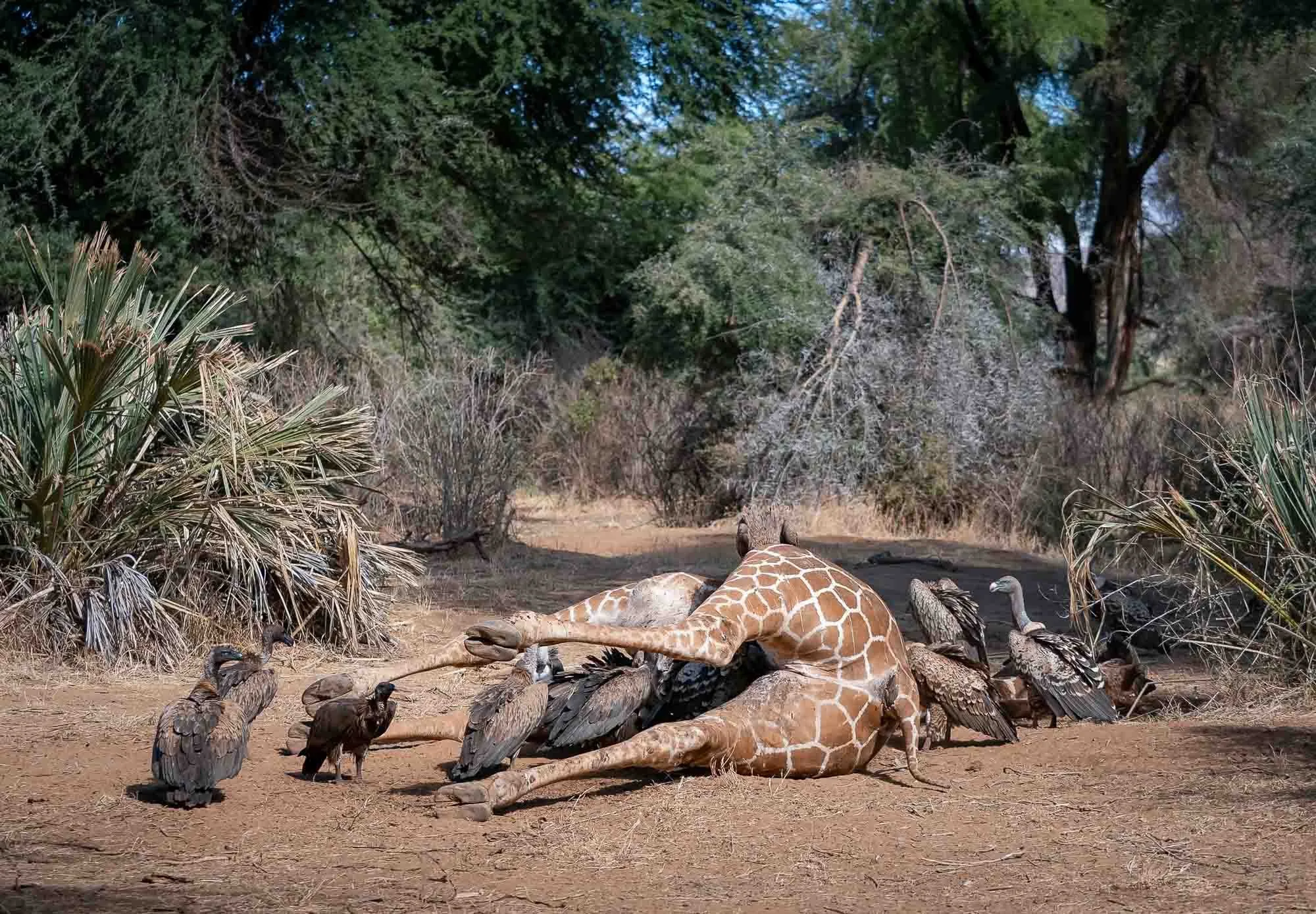
While the cheetah didn’t make any attempts to hunt that day, we found a giraffe carcass not far.
Definitely not within the realms of possibility for cheetah, but we didn’t see lions around either, so maybe this individual died of natural causes.
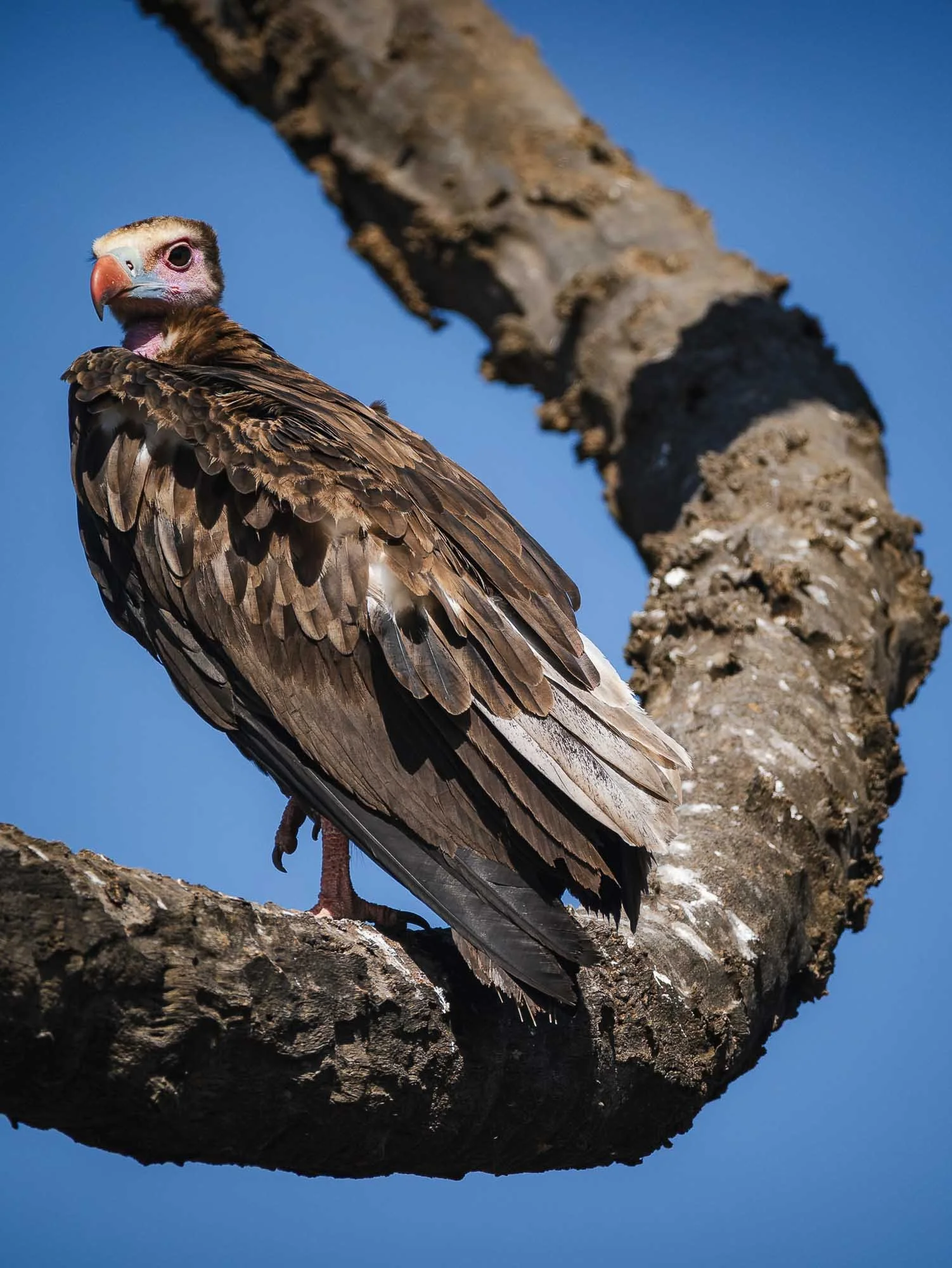
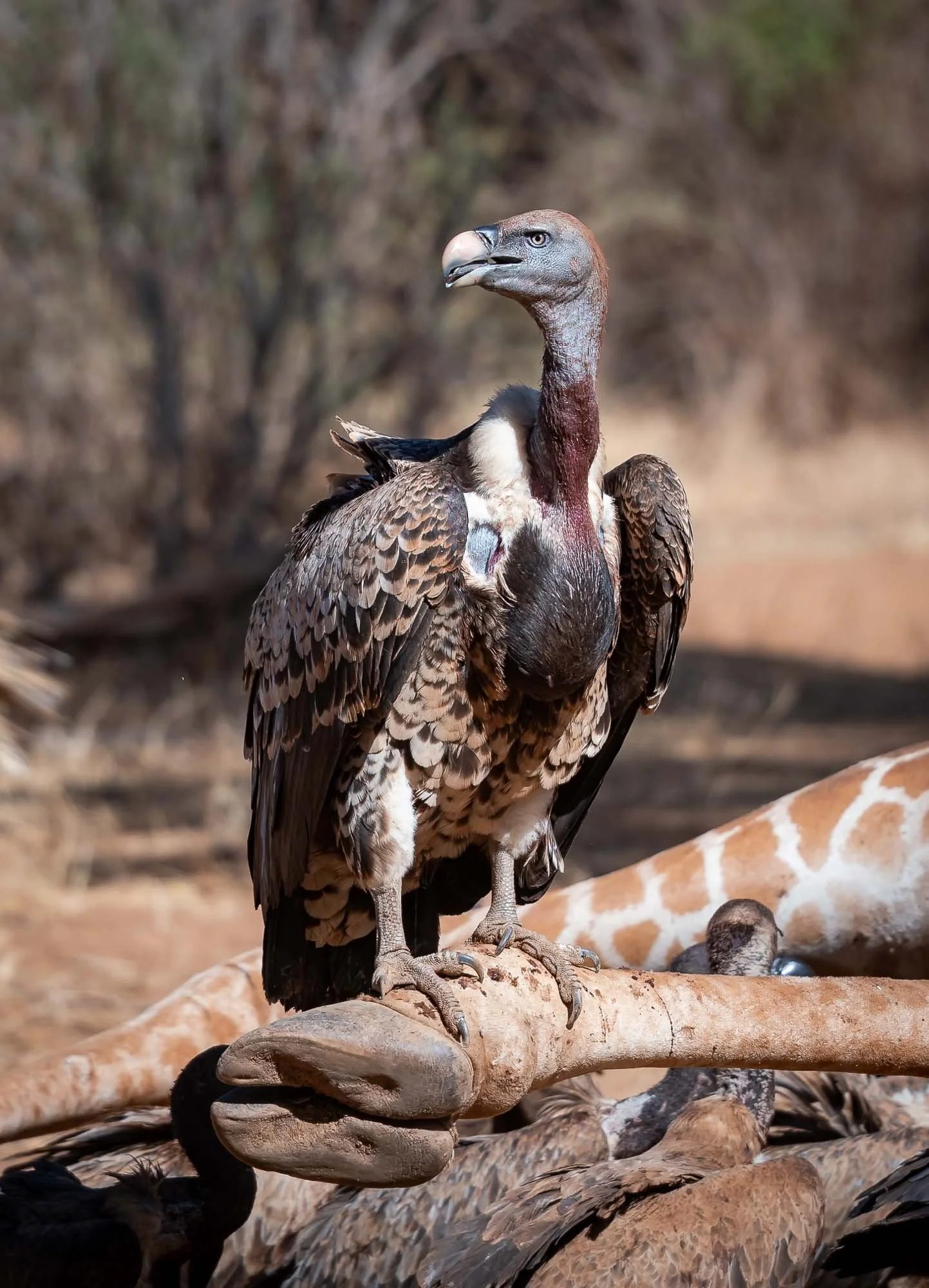
No matter the reason for its demise, vultures can always be found close to a dead animal, acting as clean up crew. In this case, several species were around, among them what I believe are the white-headed (with a rather colorful head in fact) and Rüppell's griffon variants, both critically endangered.
Final Encounters
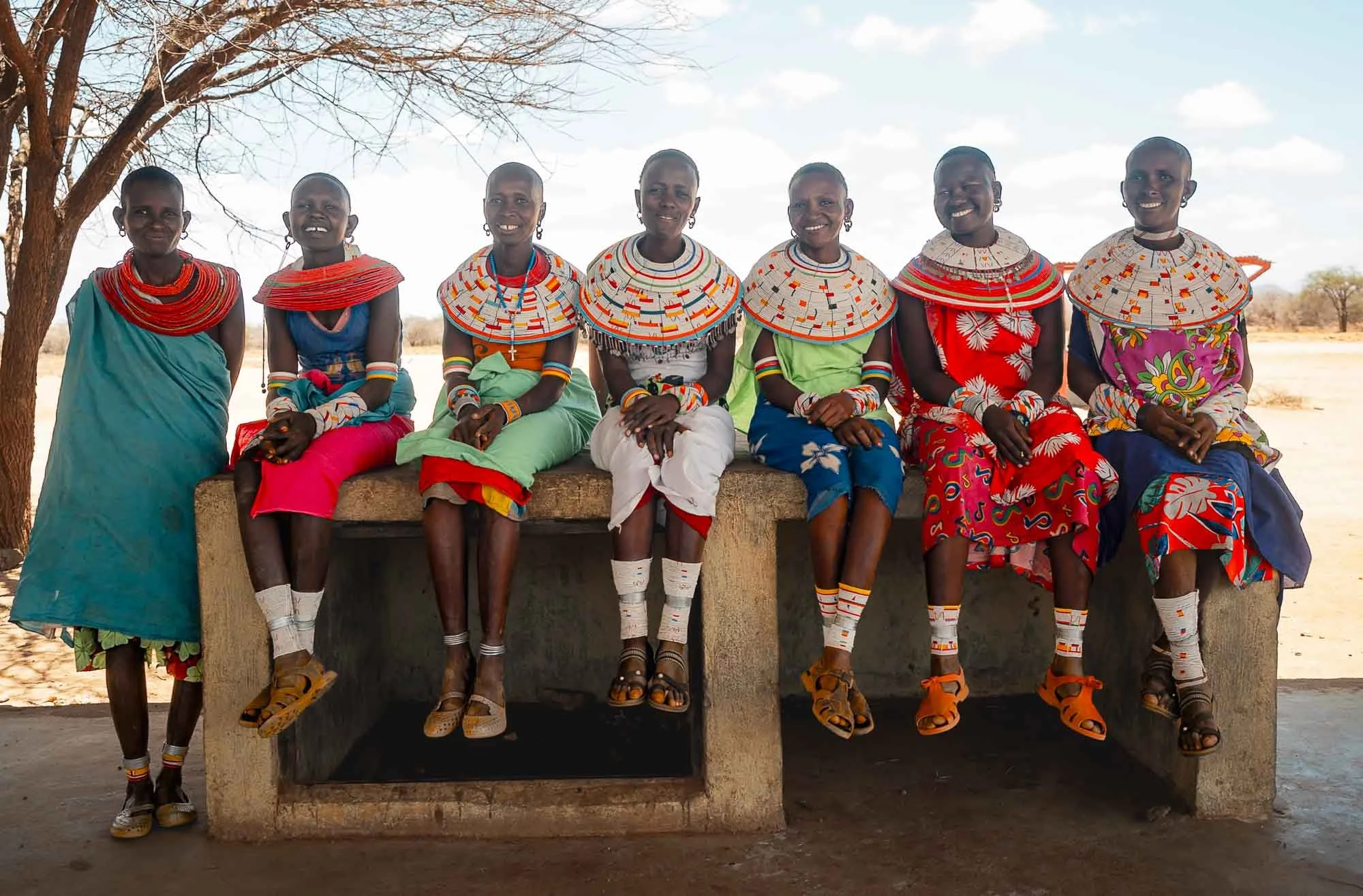
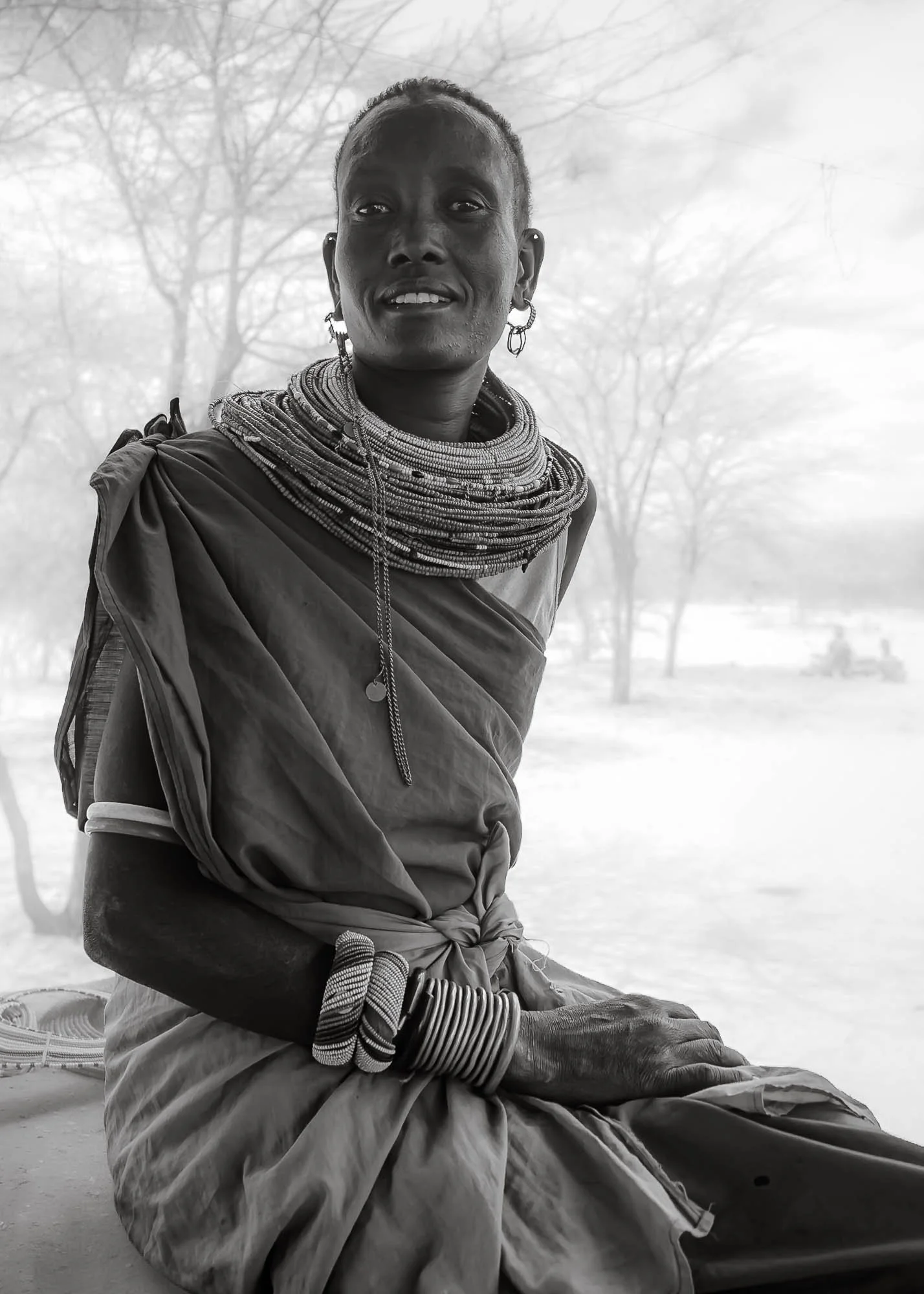
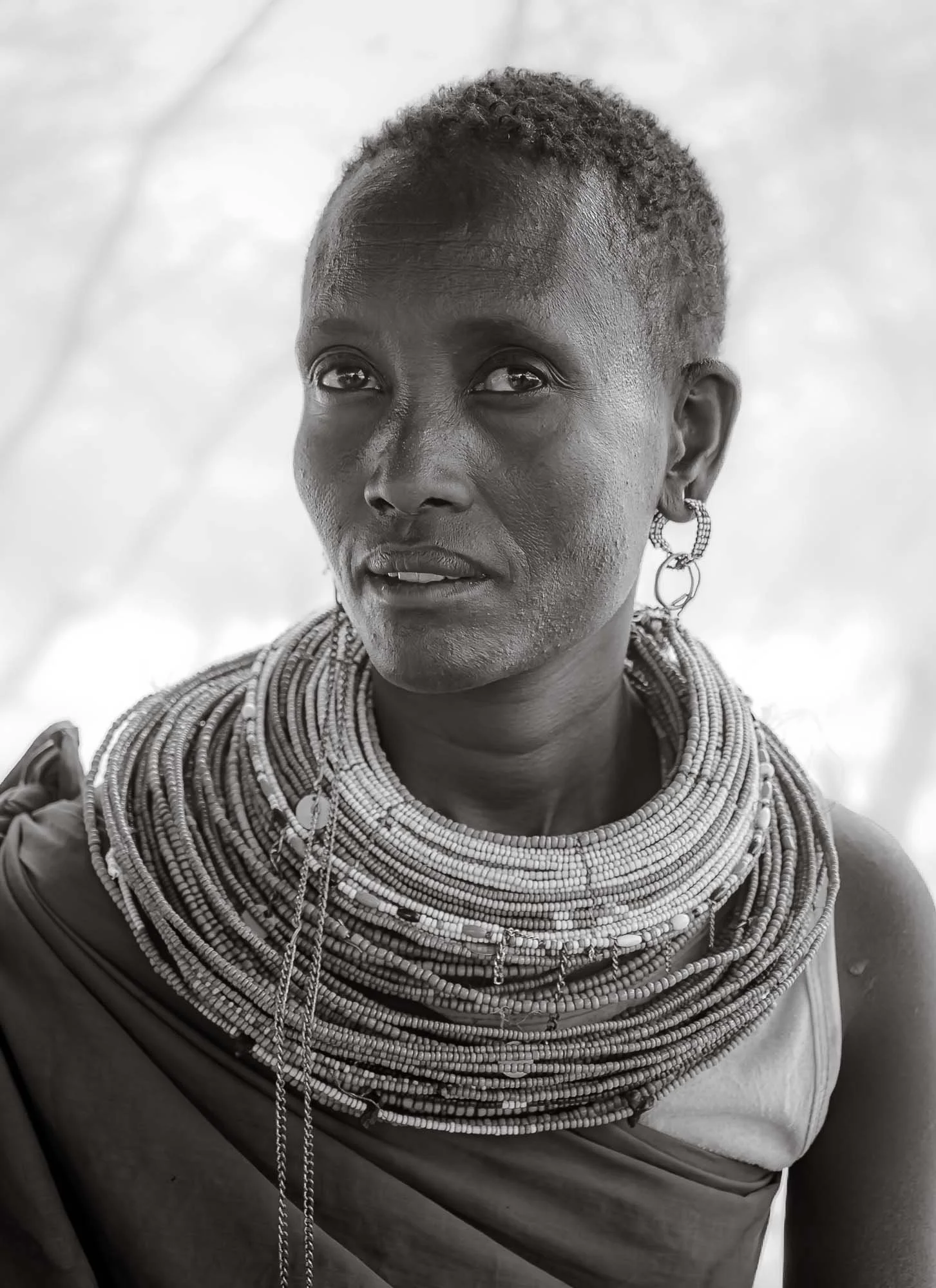
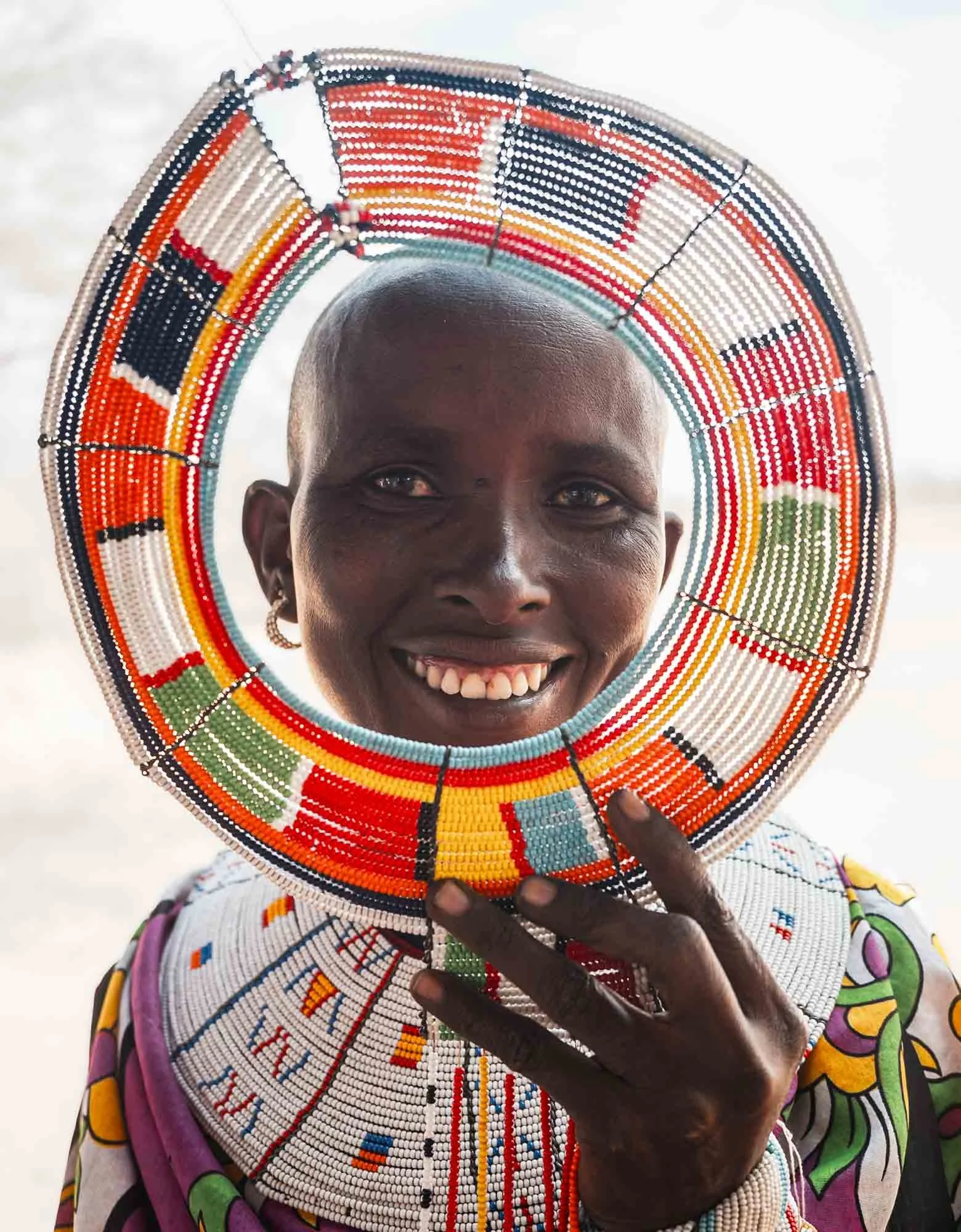
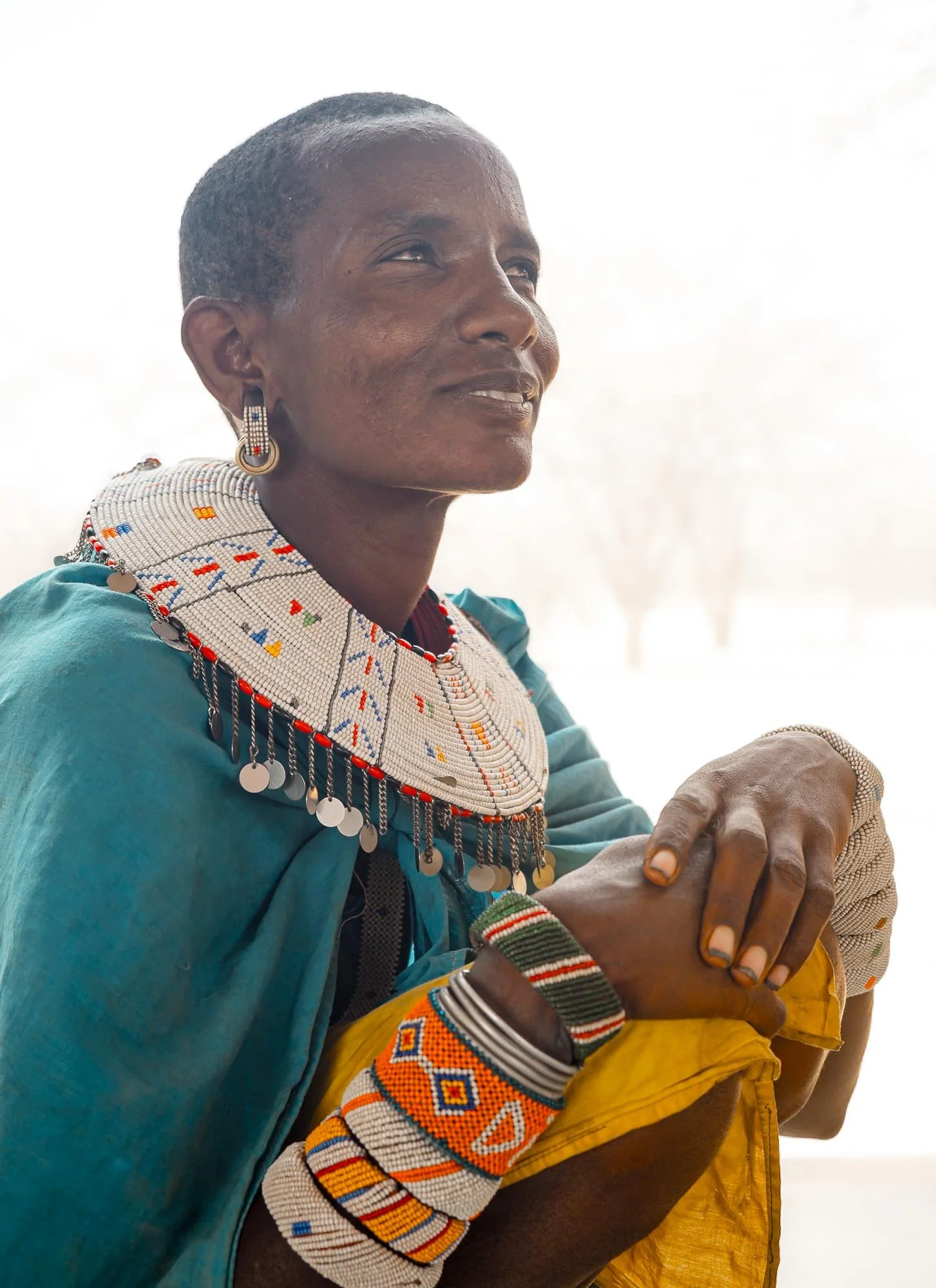
We arrived back at the airstrip early - just in time to see the local Samburu women set up their stands to sell handicrafts to the (at best) few dozen or so passengers arriving and departing each day.
With plenty of time to buy a few souvenirs and chat with the only English-speaking lady that helps the women manage their businesses, I had the chance to take a few portraits that turned into some of my favorite images from the trip.
See you Samburu
The flight back to Nairobi blessed us with a final look over the beautiful landscape and a few more of the characteristic wells on the bottom right in the riverbed - what a place.

One of northern Kenya’s most iconic regions is the Samburu area for its cultural significance, unique animals species, and elephant conservation projects.