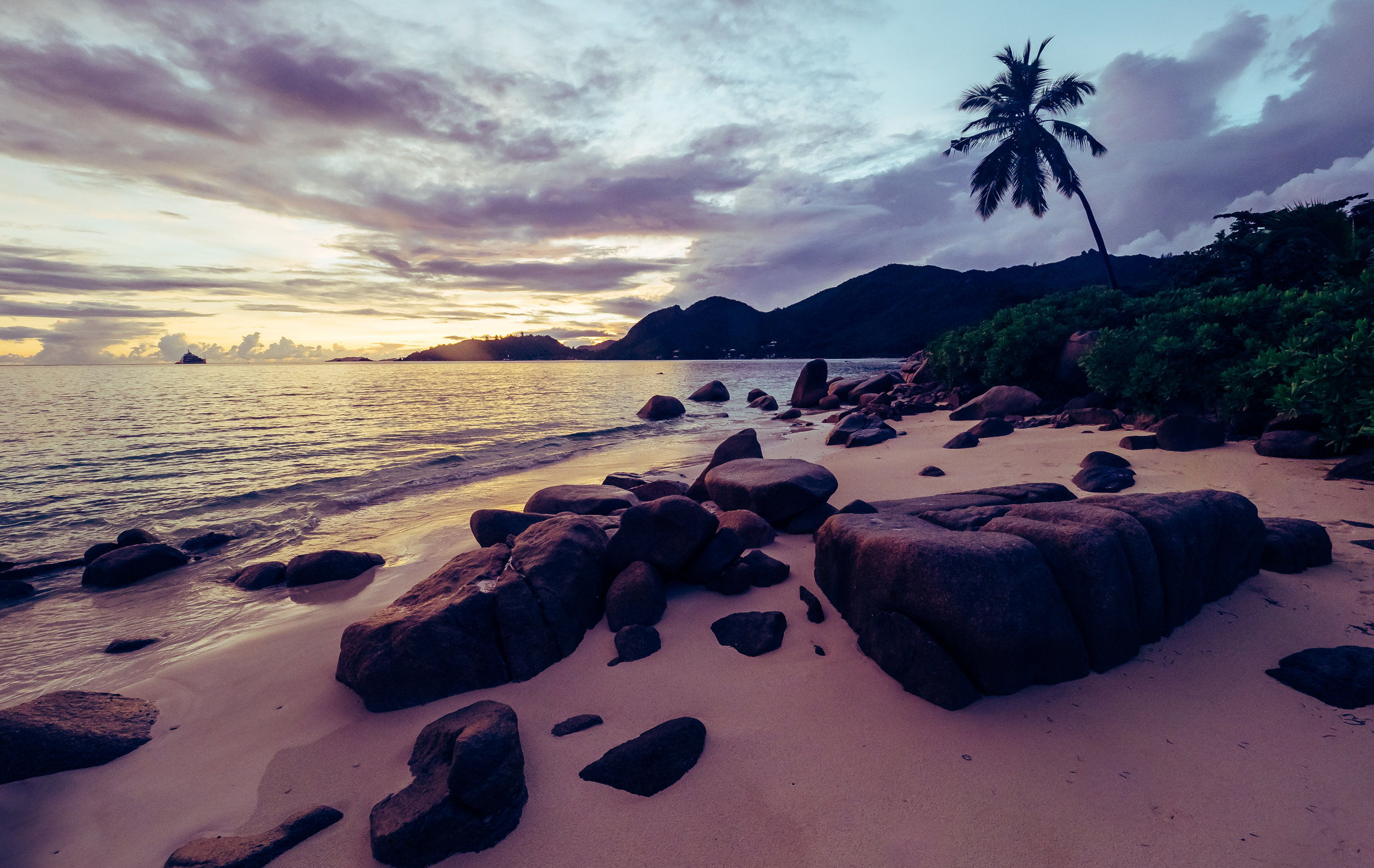
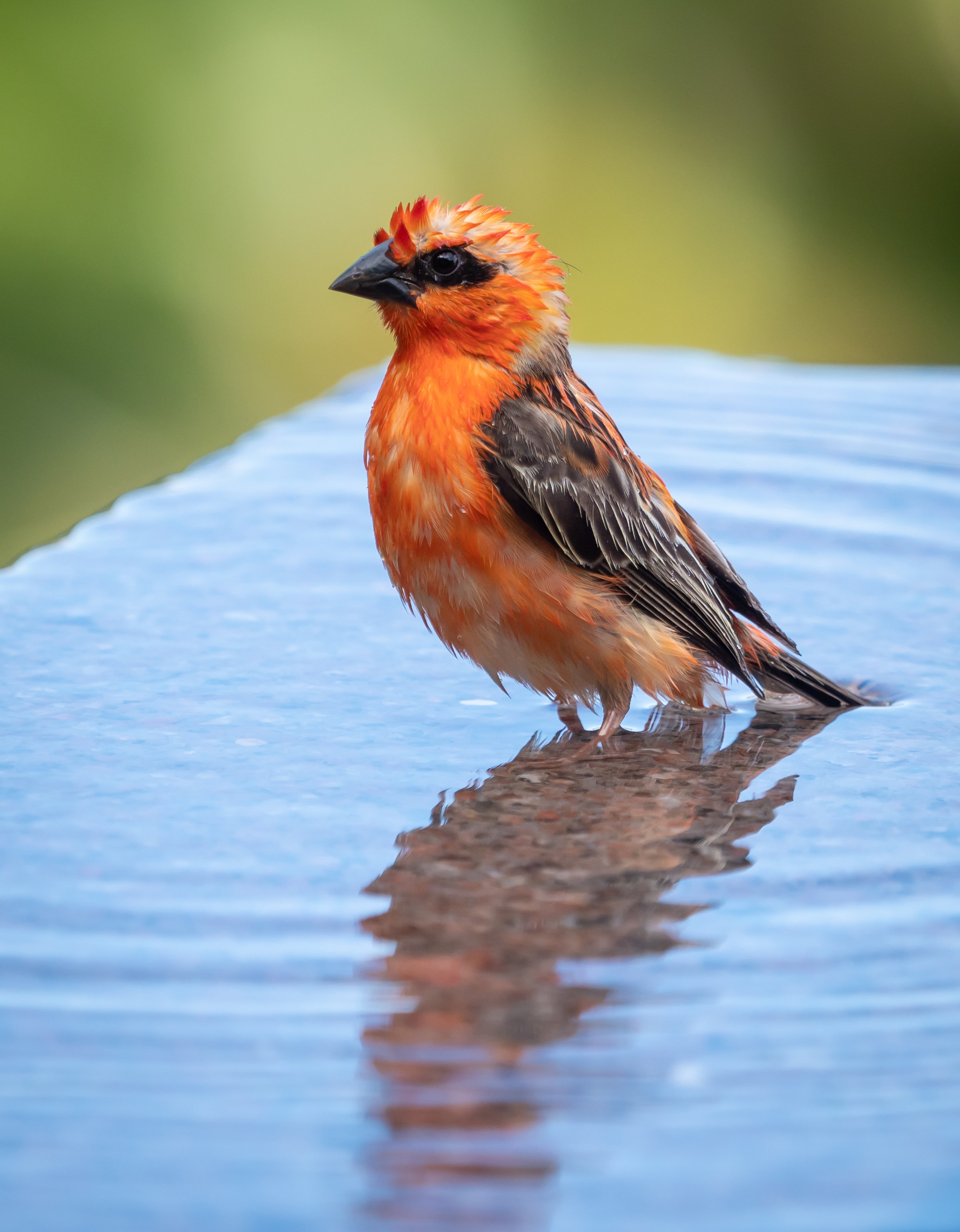
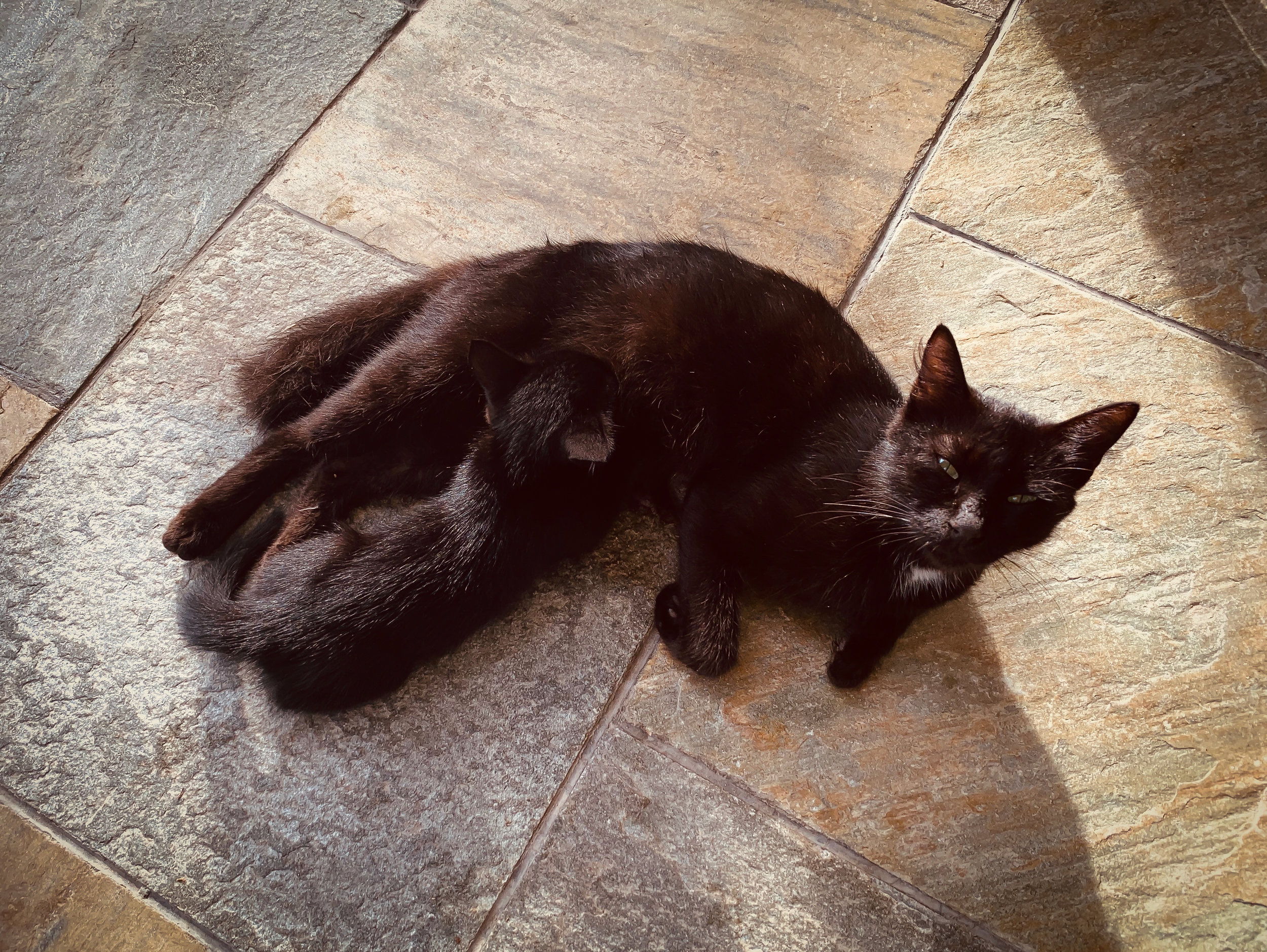
Uganda - From Lakes to Apes
The Republic of Uganda was another East African country on my journey, and it had beautiful lakes, rural villages, savannah landscapes, and a forest that deserved its name on the agenda.
Entebbe and Lake Victoria
I started my trip from Entebbe, a small city south of the country’s capital Kampala, and home to its only international airport (famous for the 1976 hostage situation), but also place of residence and office for the president. Our first mission was to visit Mabamba Swamp on Lake Victoria, to find what they call the “holy grail of birding”: The endangered Shoebill.
Alas, it was not a successful trip beyond a very brief glimpse, but the area was still beautiful and it turns out this would not be the last chance to see this rare animal...
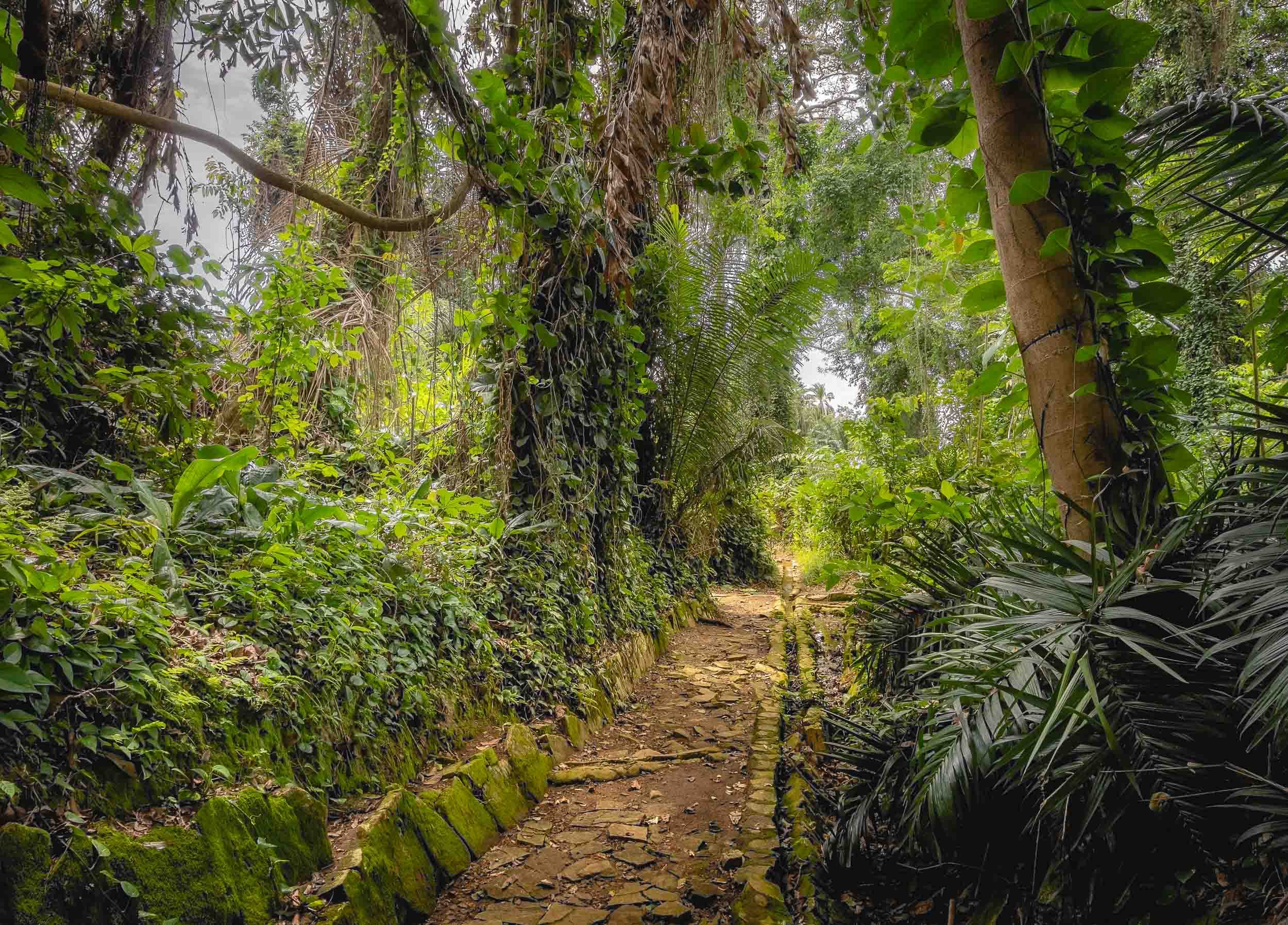
Tarzan’s Home
We also visited Entebbe’s botanical garden, which was started in 1898 and contains both endemic and imported trees, some of them more than 400 years old.
A Walk on the Shore
The park has some beautiful views of Lake Victoria, Africa's largest.
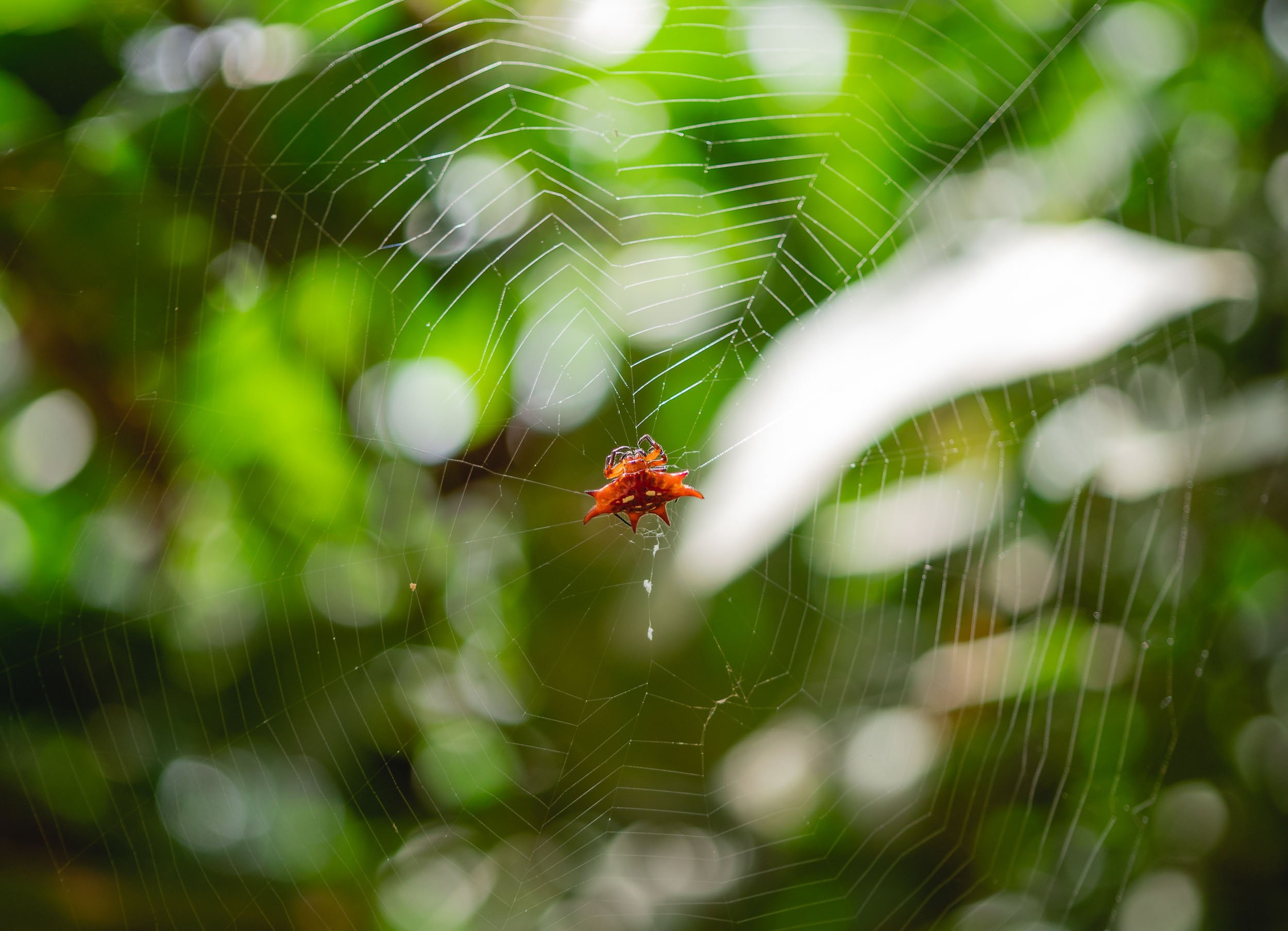
Kite Spider
Found this little guy in the bushes.
Film Set
The park is also home to this peculiar spot: One of the first Tarzan movies was shot here.
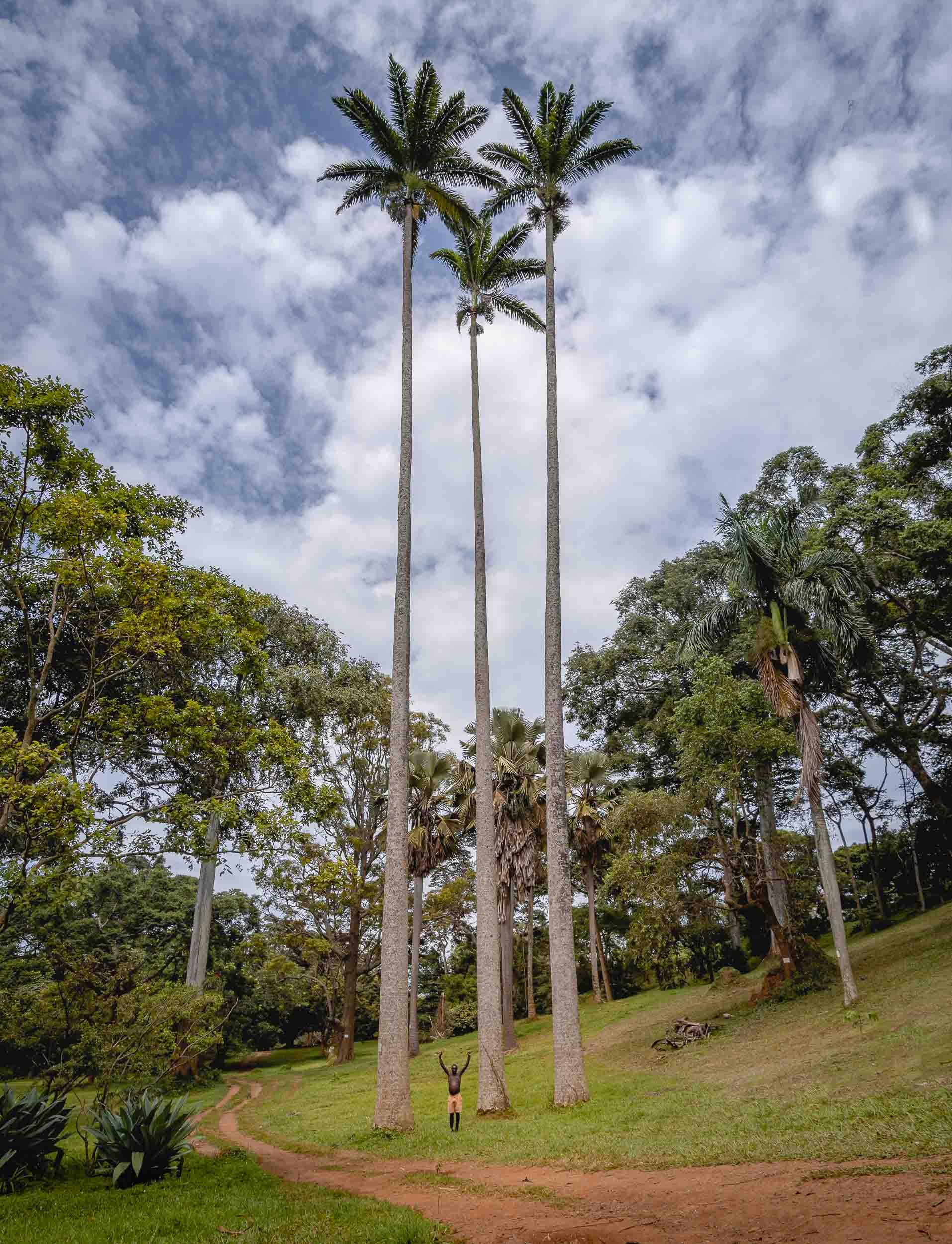
Tall
The tallest palm trees I've ever seen, with my trusty guide showing off his belly for scale.
Punishment Island, and 28 more
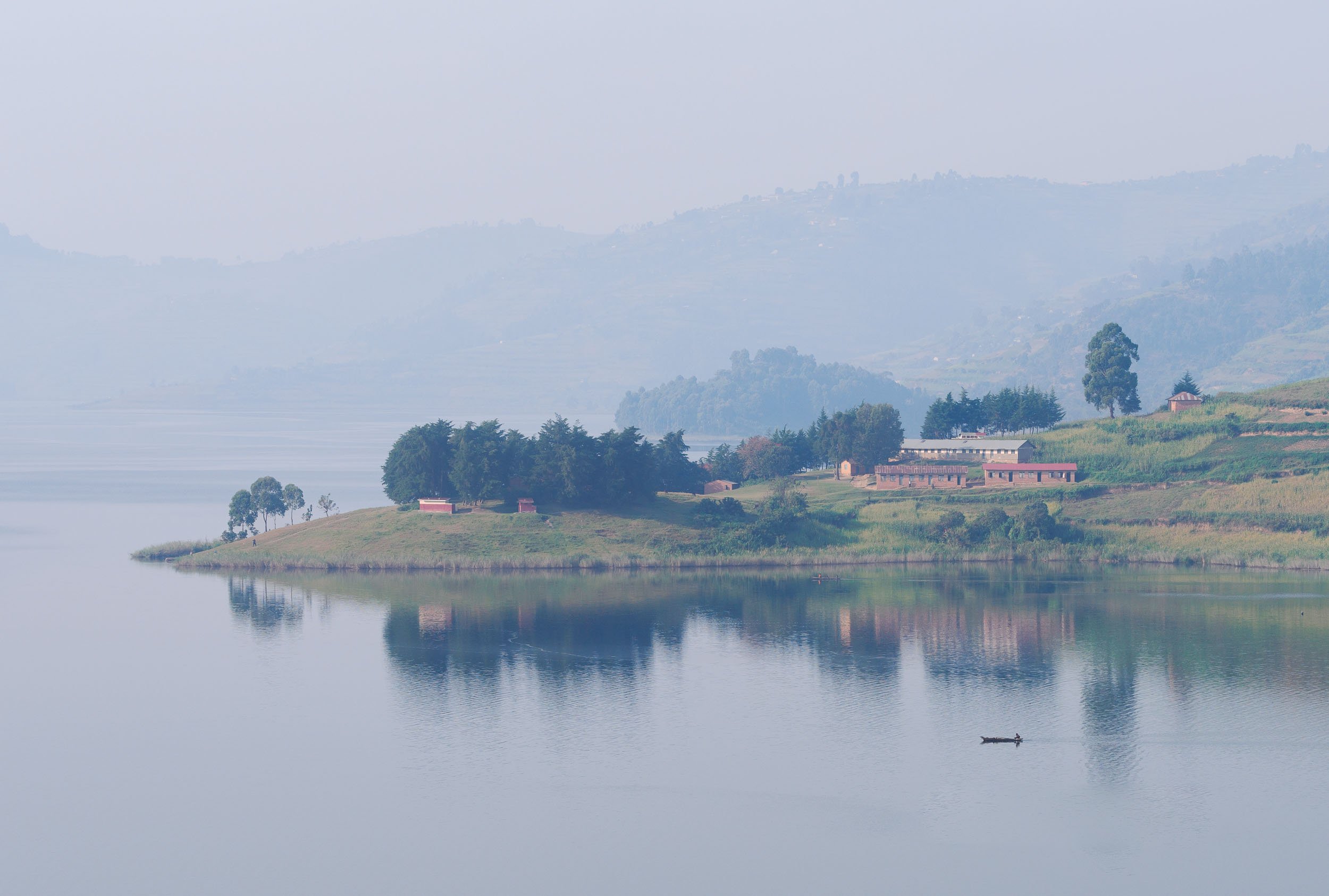
A long drive from Entebbe through the beautiful landscapes and towns of southern Uganda brought us to Lake Bunyonyi, a 46 sqkm lake very close to the border of Rwanda.
Horns for Days
We encountered these surreal looking cows on the way.
Ankole Breed
They are primarily found in Uganda and their horns can grow up to 1.8m long.
Lake Bunyonyi
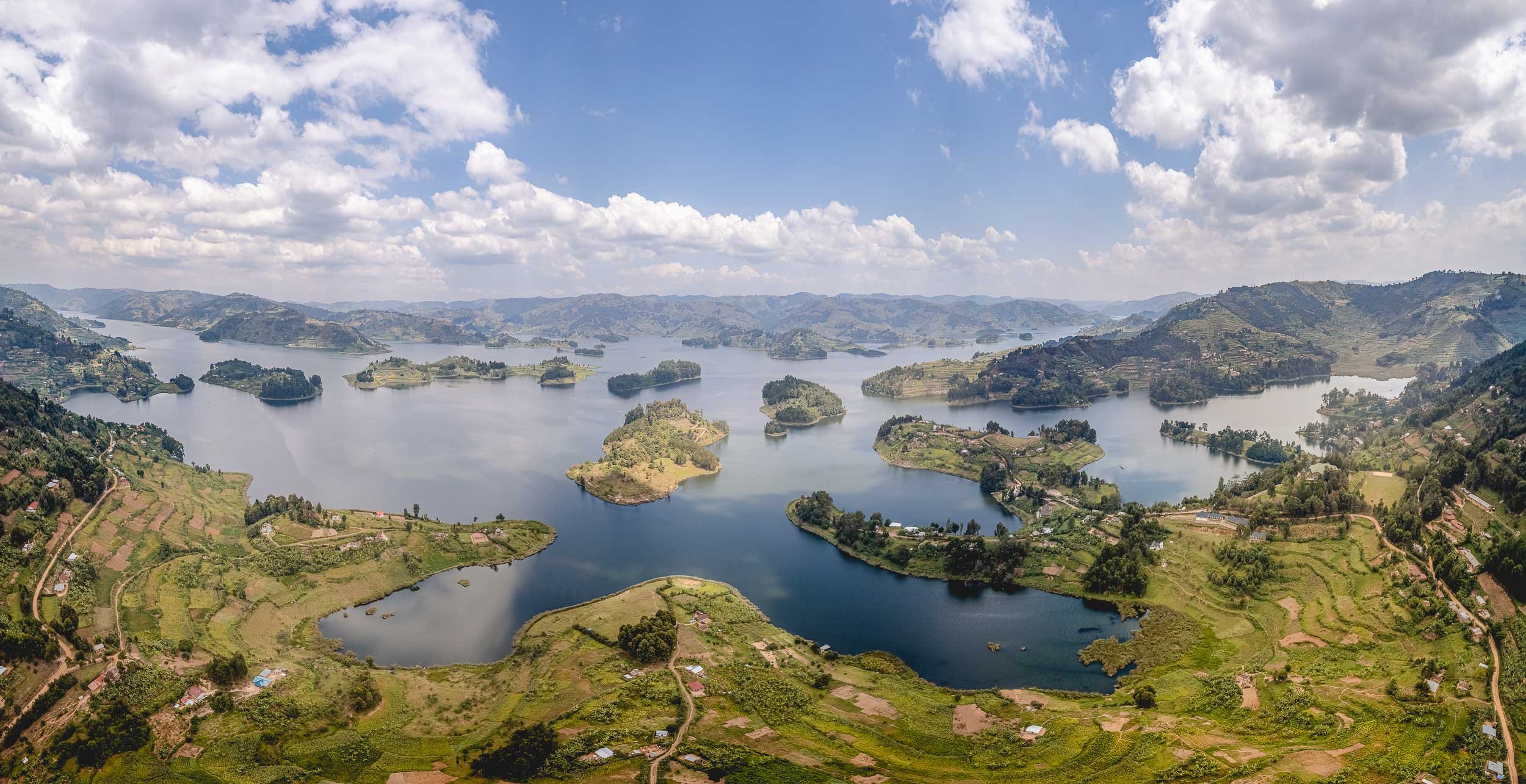
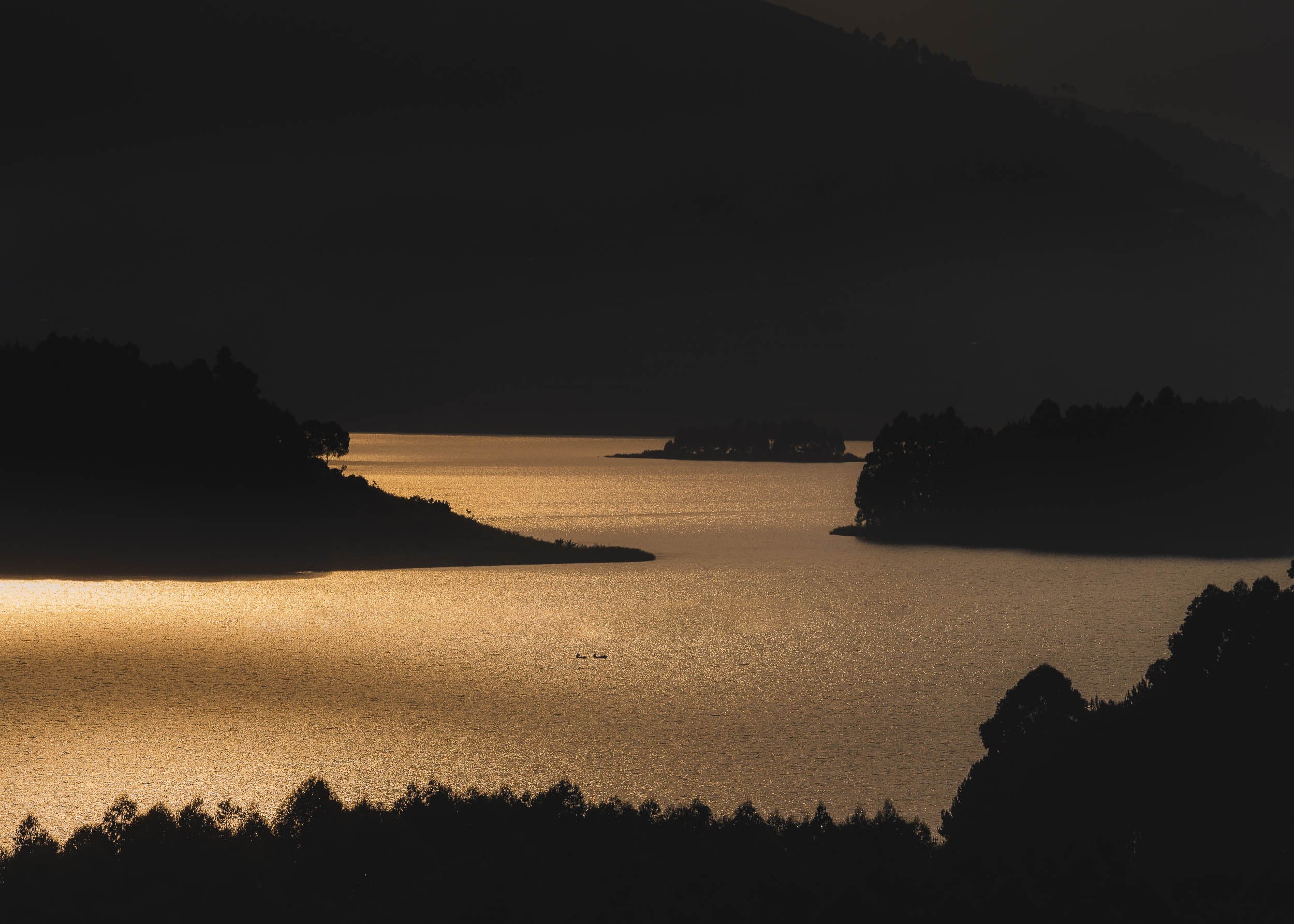
What might be Uganda's most pictoresque lake, and - unlike Lake Victoria - safe and clean to swim in, features 29 islands, some of them with a rather interesting history.
A Flight Above the Lake
Calm
The lake has a very serene and peaceful aura.
Across The Lake
Most of the boats are actually canoes - which was also my mode of transport between some of its islands.
Flower Fields
The surrounding hills feature a few beautiful spots to see the lake's islands from. They hide a less beautiful past though, such as Akampene (or Punishment) island, where unmarried pregnant women were left to starve or die from trying to swim to the shores, up until 70 years ago.
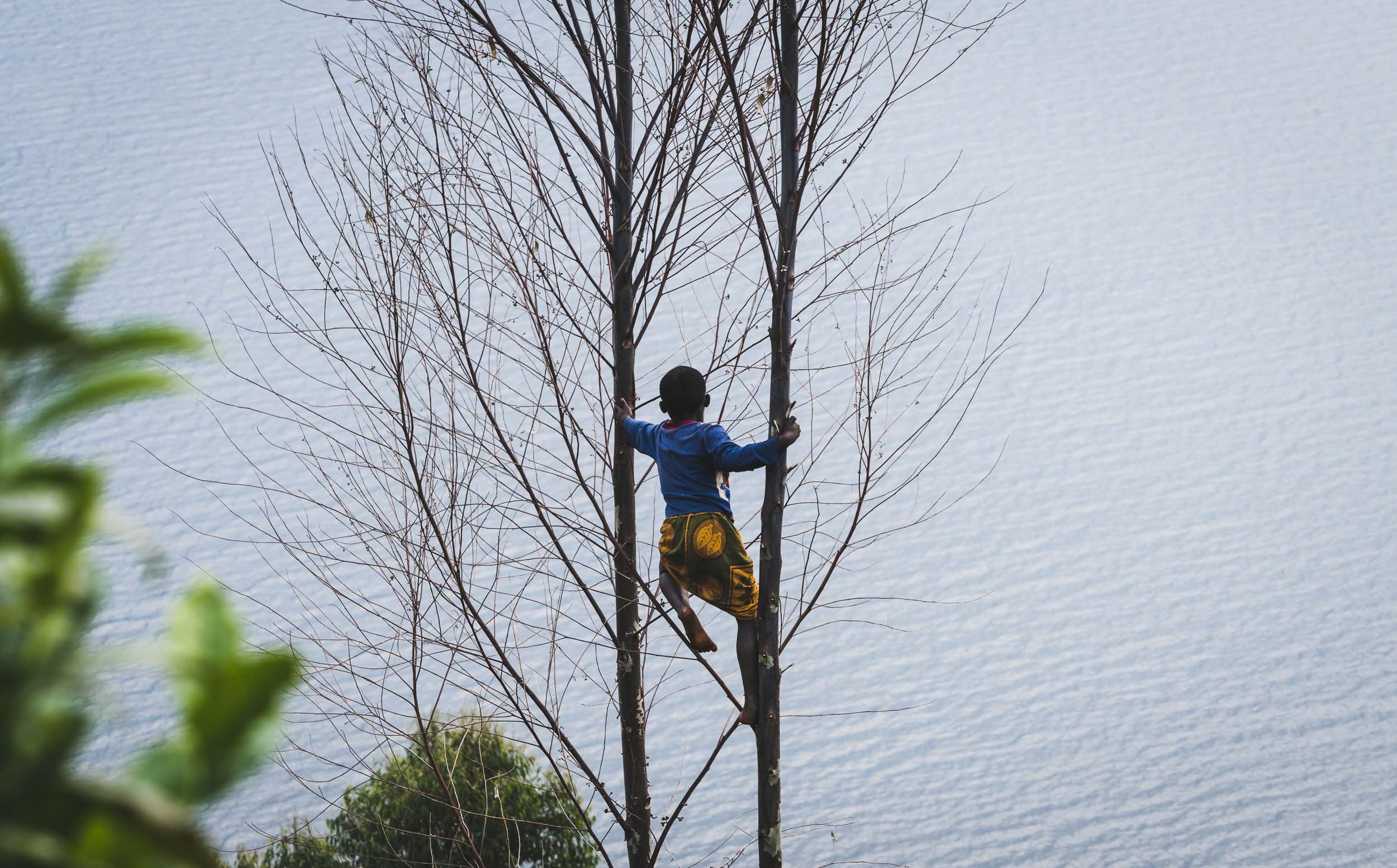
In the Trees
Despite the tourism activty on the lake, life is still traditional. This kid was collecting fire wood from the Eucalyptus trees that have been imported and planted in many areas in this region, as they grow very quickly.
Towards the Impenetrable
After two days at Lake Bunyonyi, it was time to head further west, approaching the border of the Congo. On route, we passed some of Uganda’s beautiful mountainous areas, dominated by farmland and small rural villages.
Our goal was a different one though, bordering the farm land. The Bwindi Impenetrable Forest, and its corresponding National Park. One of the most biologically diverse areas on earth, it is World Heritage Site that truly deserves its name, as I would later find out.
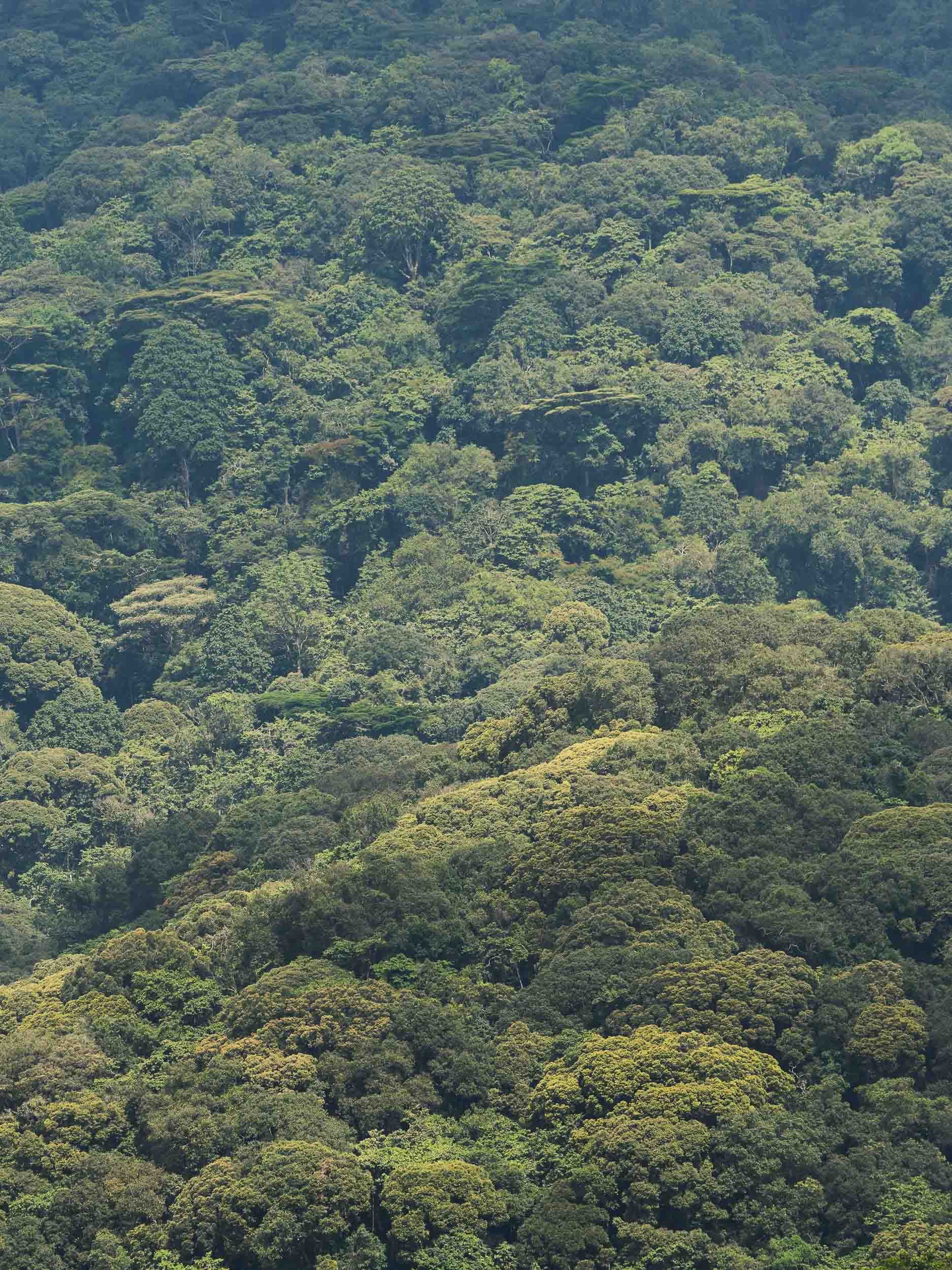
The Forest Canopy
Parts of the forest are accessible - with a guide - through very basic hiking paths, and lead to some beautiful waterfalls, small rivers, and diverse flora and fauna.
The Greatest of the Great Apes
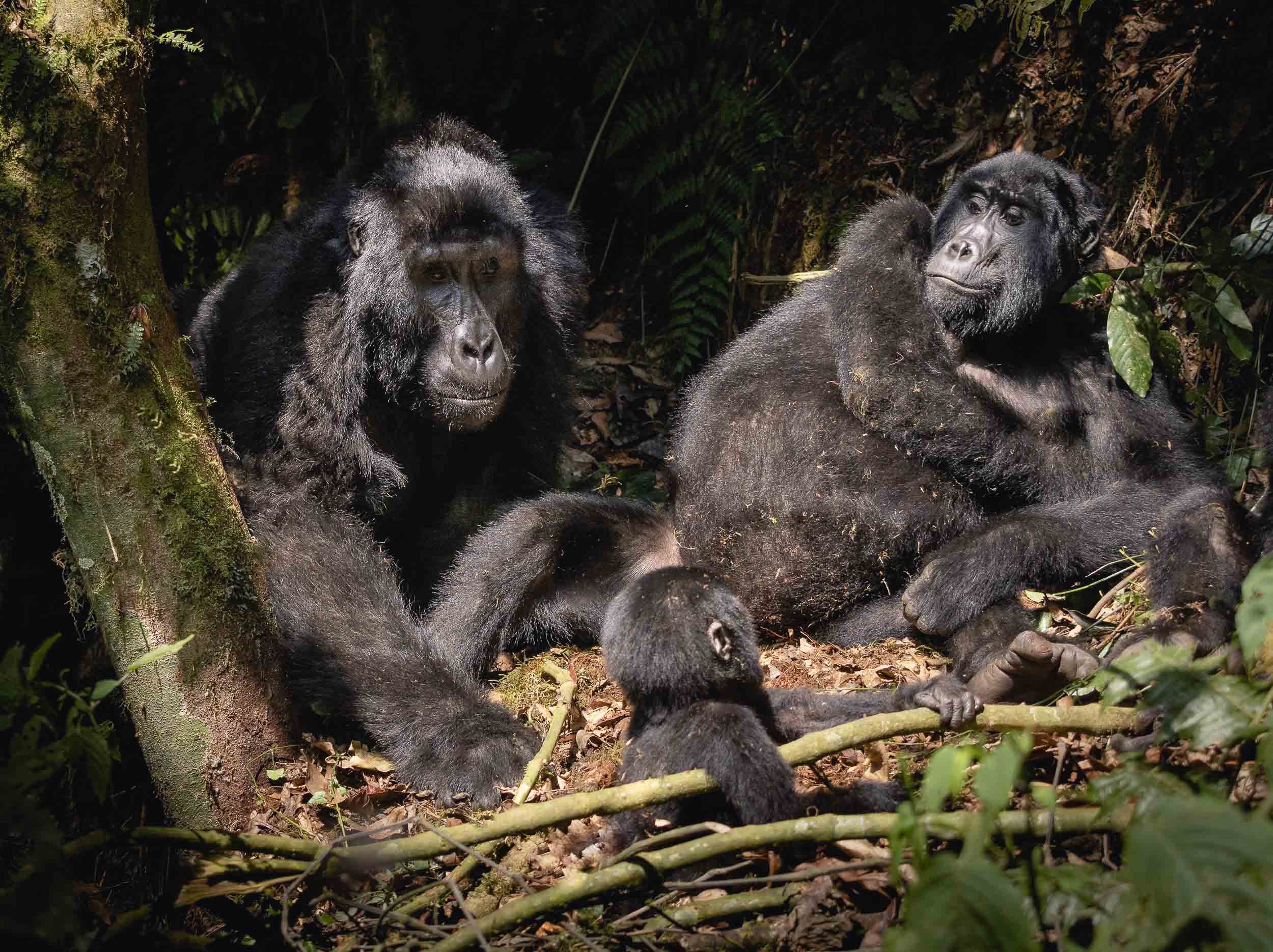
However, the real attraction of the Bwindi Impenetrable forest lies in something much less accessible, and it’s for a reason the meaning of the forest’s name in the local language is “a place full of darkness” . An armed ranger, a guide, and the stamina and shoes to survive several hours of trekking in the thick cover of plants and over muddy ground, climbing slippery and steep slopes, and wading through many small rivers, are all requirements to find the reason most people come here: The Mountain Gorillas.
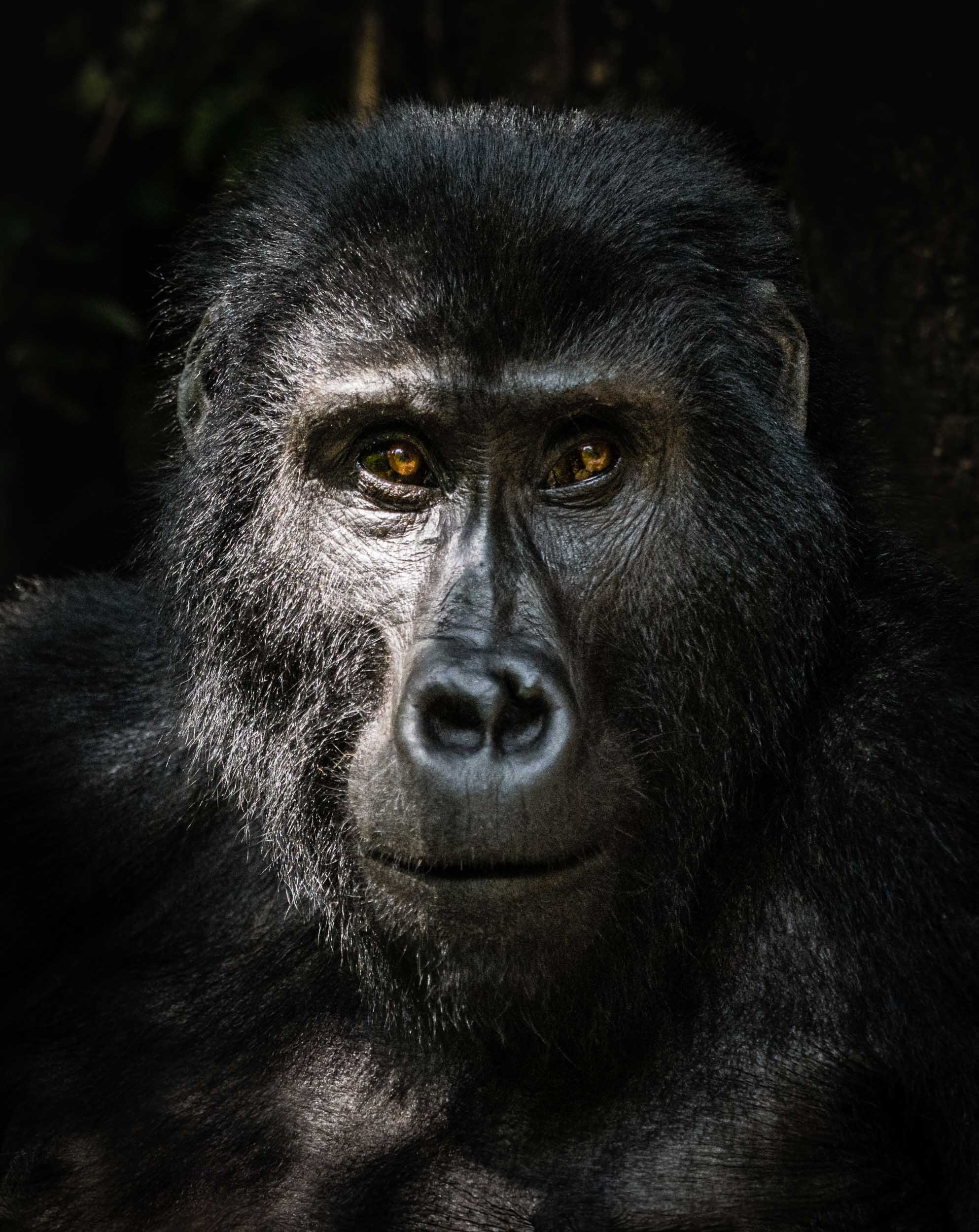
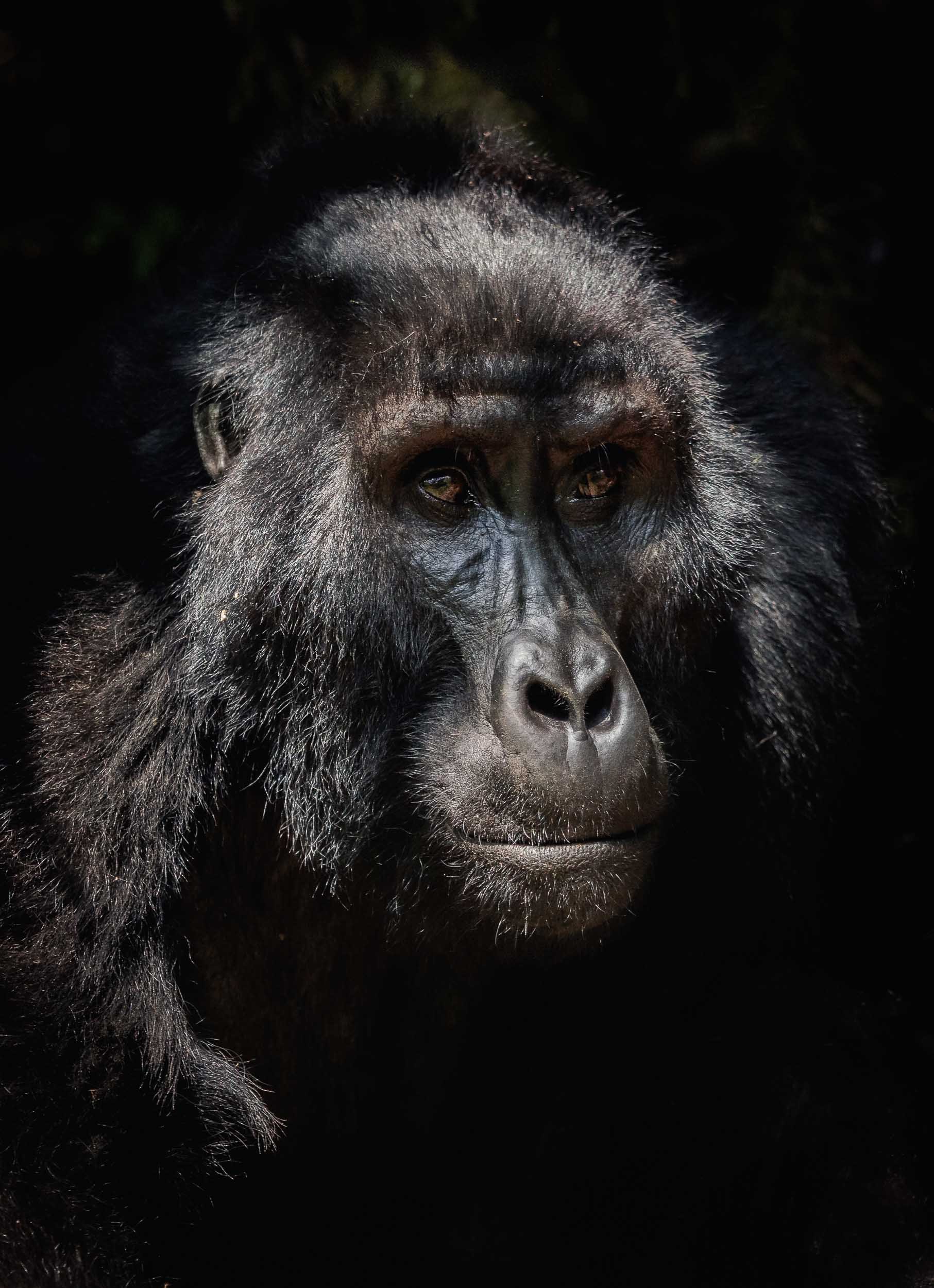
Katoto
One of the adult females of the group I was trekking.
There are only just over 1000 individuals left on earth, living in two populations. One of them makes up about half of the entire species and lives in this forest, broken down into around 50 families. Only 21 of them are habituated, i.e. used to human presence, and can be visited. The one I trekked was the Oruzogo family made up of 17 individuals, led by the dominant silverback Bakwate.
Bakwate
The Dominant Silverback of the family.
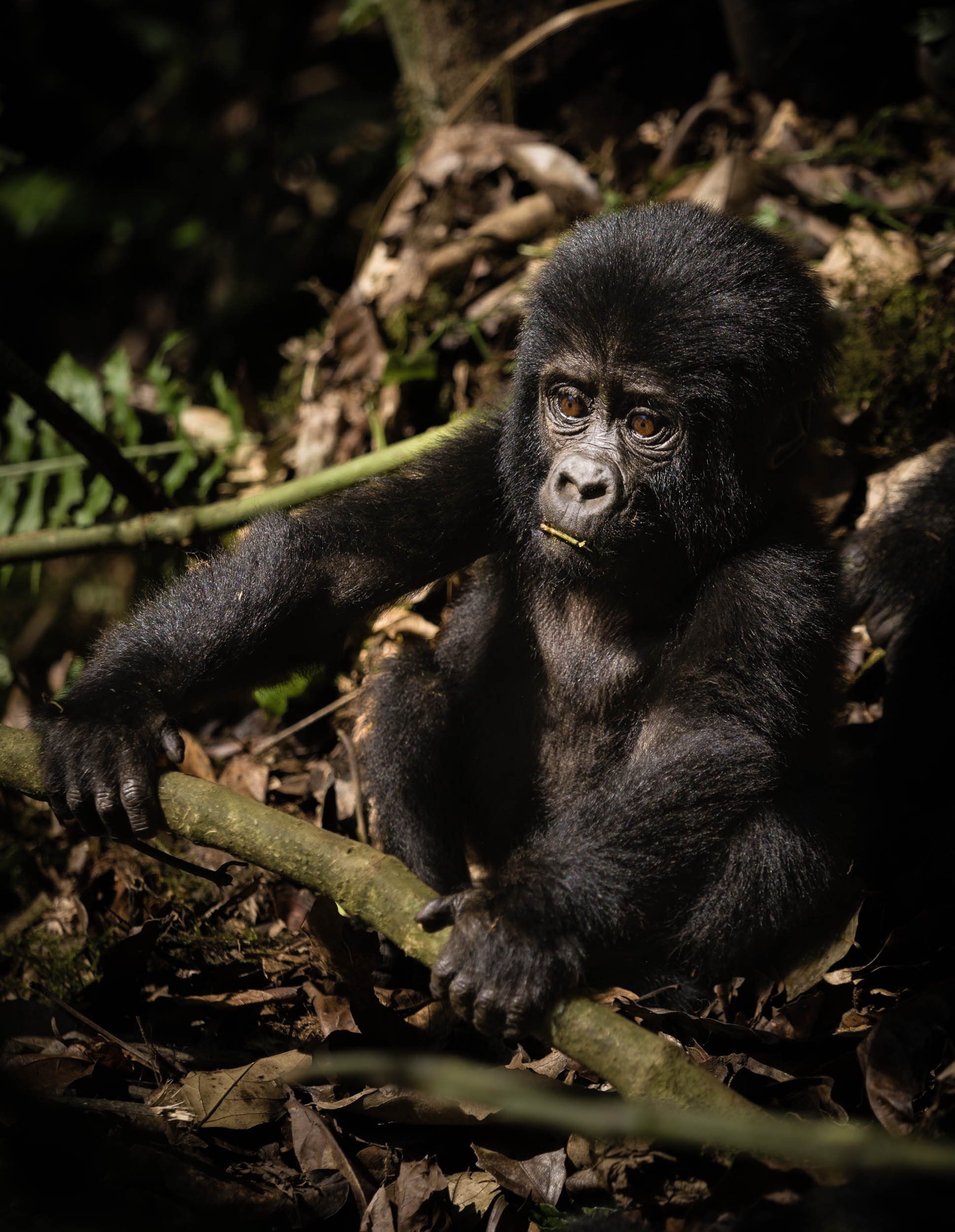
Nom Nom
Mountain Gorillas are largely herbivore and eat up to 20 kg a day.
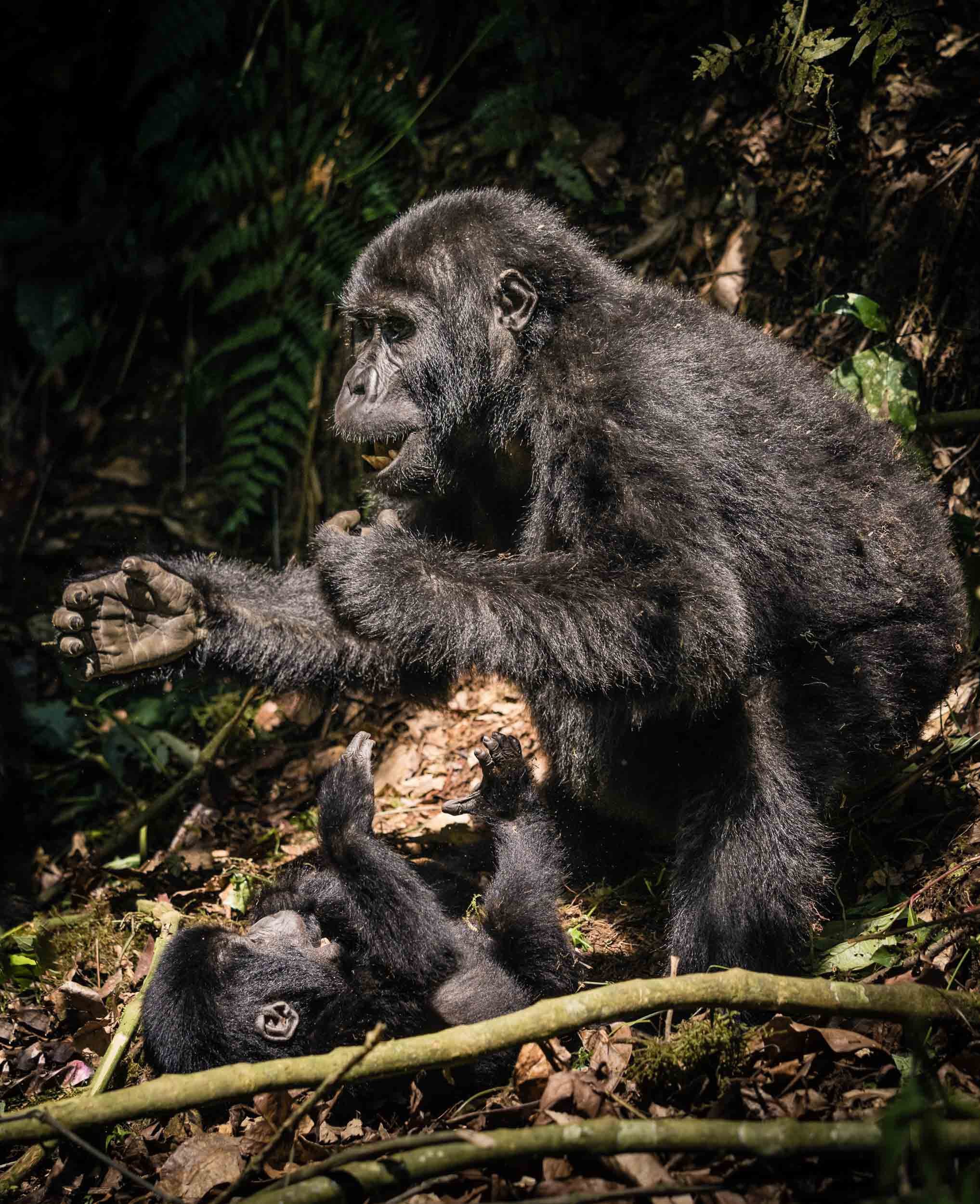
The Young Ones
The Mountain Gorilla population has been increasing over the last decades, thanks to strong conservation efforts. Given that they do not survive in captivity, these efforts are crucial for the species.
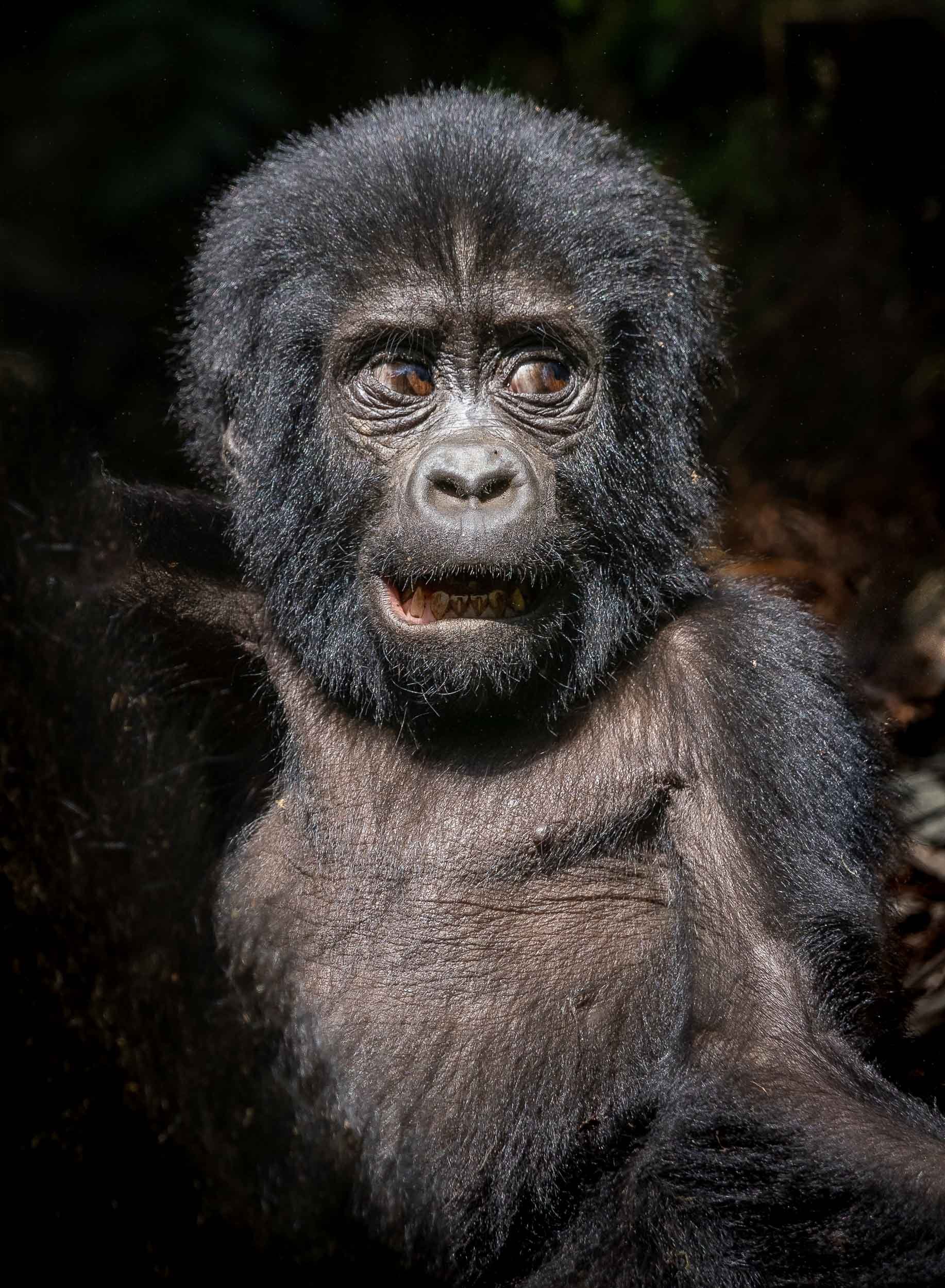
Comical
It's easy to see that they share 98% of their DNA with humans.
Seeing these rare and endangered animals in the wild, and observing their gentle and social behavior for an hour (this is the maximum amount of time you can stay with them) from just a few meters away is an experience that is hard to describe in words or photos.
Buffer Zone
The forest in the background and farming grounds in front. A buffer zone with tea and coffee plantations ensures the Gorillas (which don't like either of them) don't enter other crop fields in search for food.
From Tree Climbing Lions to Gorge Climbing Chimpanzees
Leaving Bwindi with a sad eye, I made my way northwards to the Queen Elizabeth National Park and the Kazinga Channel.
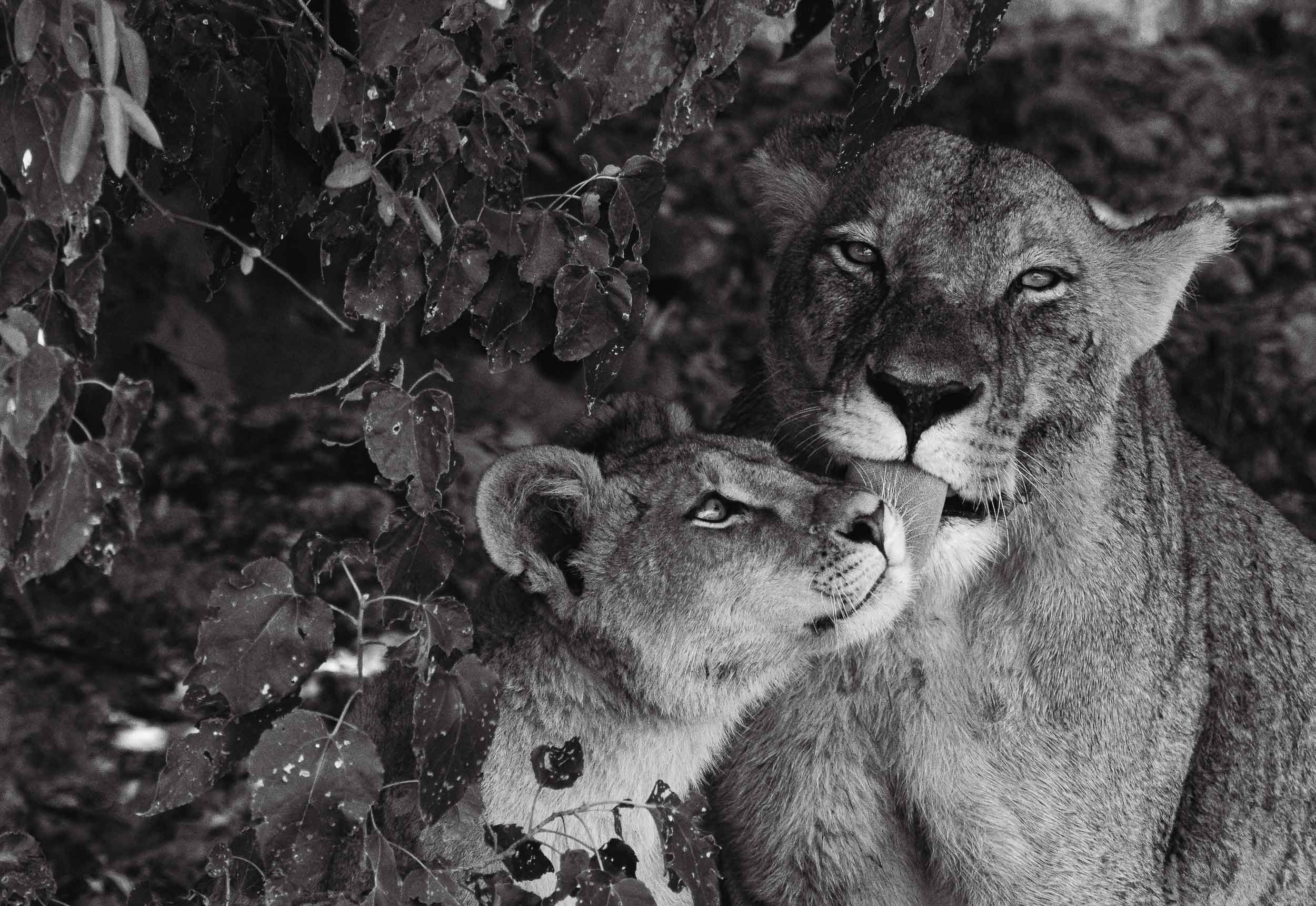
We encountered these young lions in a tree, where they spent the afternoon being lazy. Tree climbing lions are not common, but Queen Elizabeth National Park in Uganda is famous for them. They usually move up for a better view, shade, and to escape insects.
The Infamous Shoebill
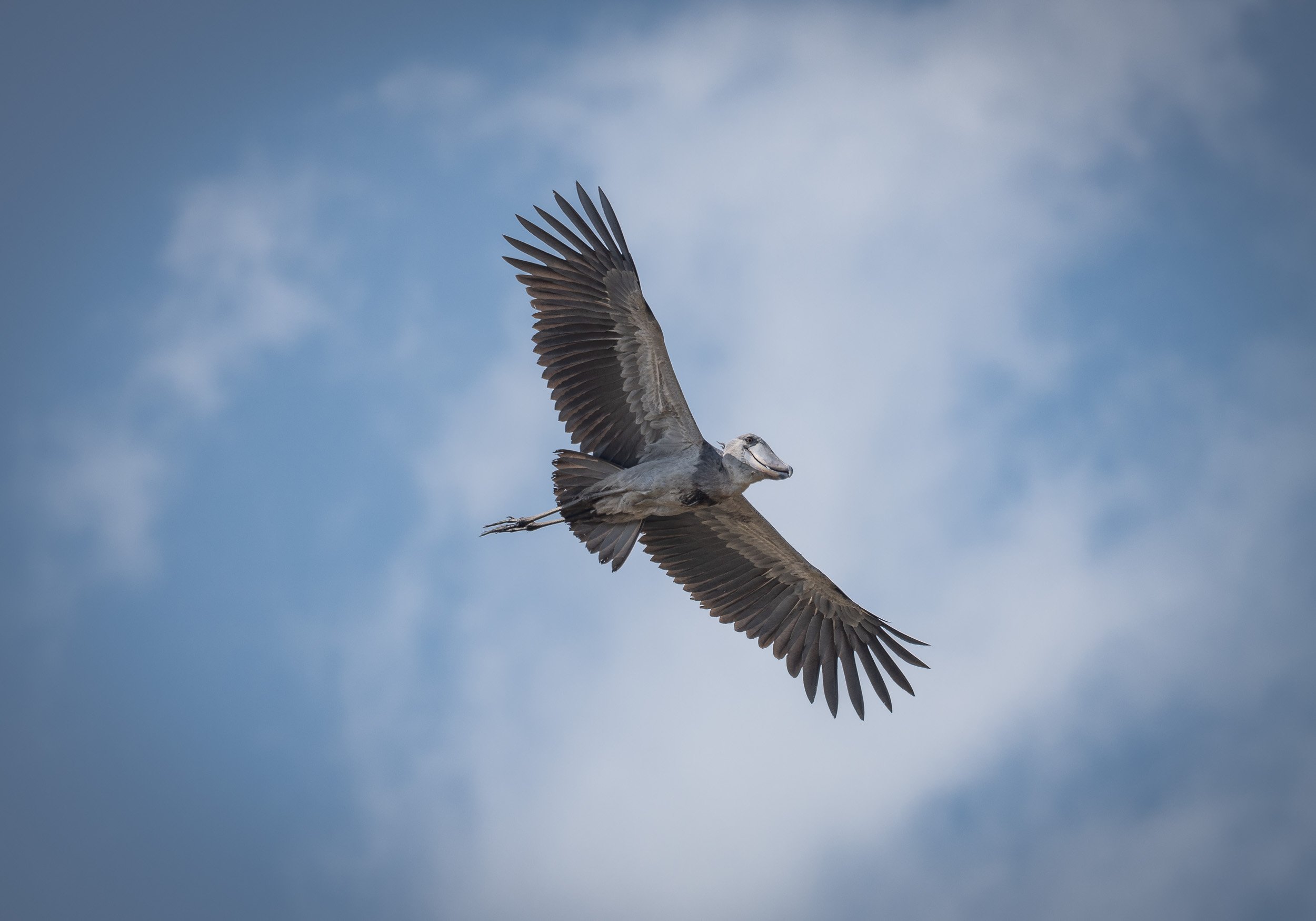
Remember the quest for this elusive bird? Well, after an unsuccessful try in the swamps, the park came through for us. It is home to several of them, and one individual put on a show, even circling above our heads, which is quite rare as these birds are very large and heavy - up to 1.5m in size, weighing 7 kg - and rarely fly long distances. Their peculiar look and the large beak make them appear almost prehistoric - a modern dinosaur!
Vulnerable
There are only between 5000 and 8000 left in the wild, all of them in the swamps in East Africa.
Rarity
They don't often fly, usually walking in the swamps and just taking short flights to their next feeding spot in the same area.
A Cruise on the Channel
Great Apes - The Second Round
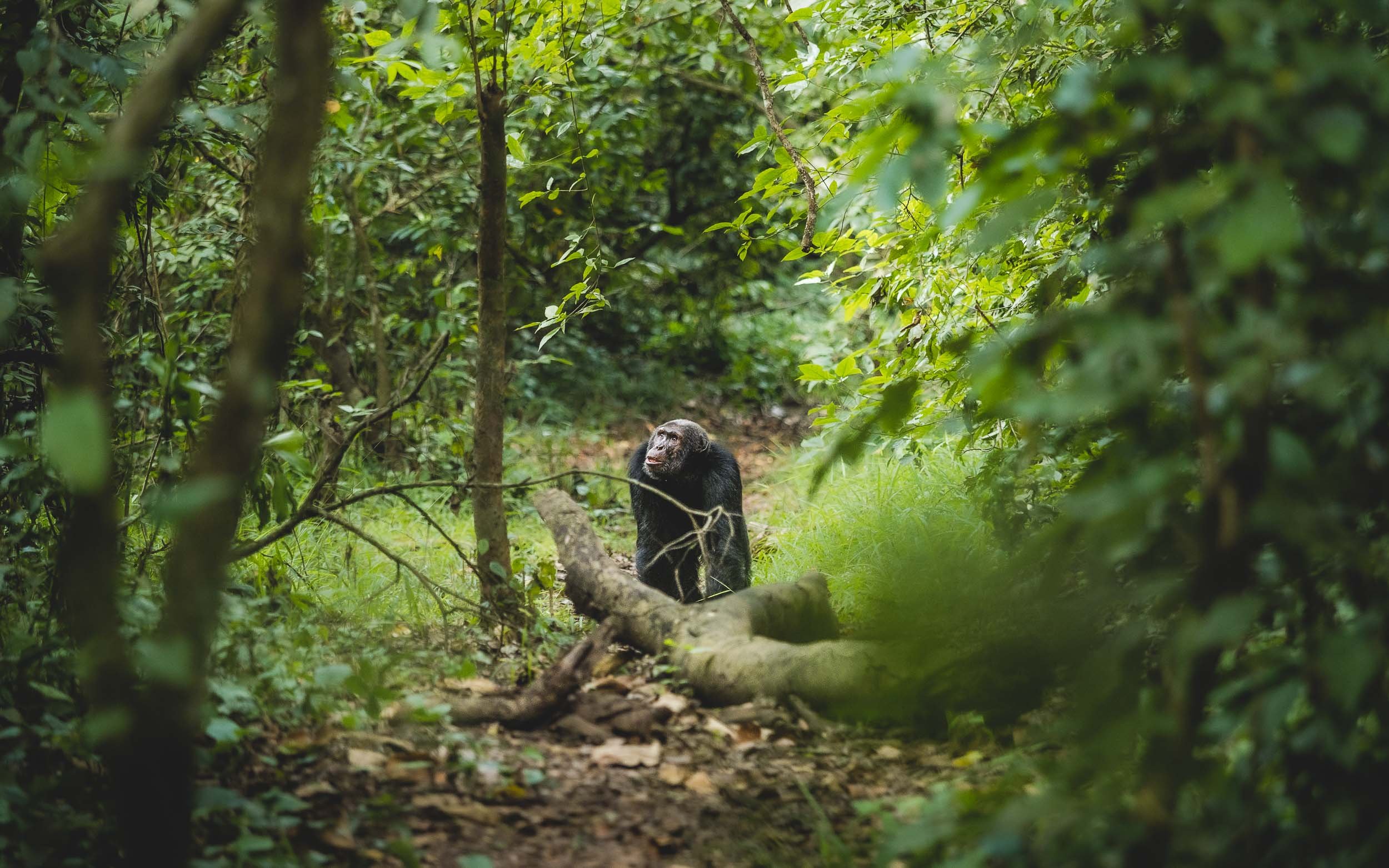
The park is also home to another Great Ape species which can be tracked and observed closely in the wild: Chimpanzees. The location is equally as spectacular as the Bwindi Forest: The Kyambura Gorge.
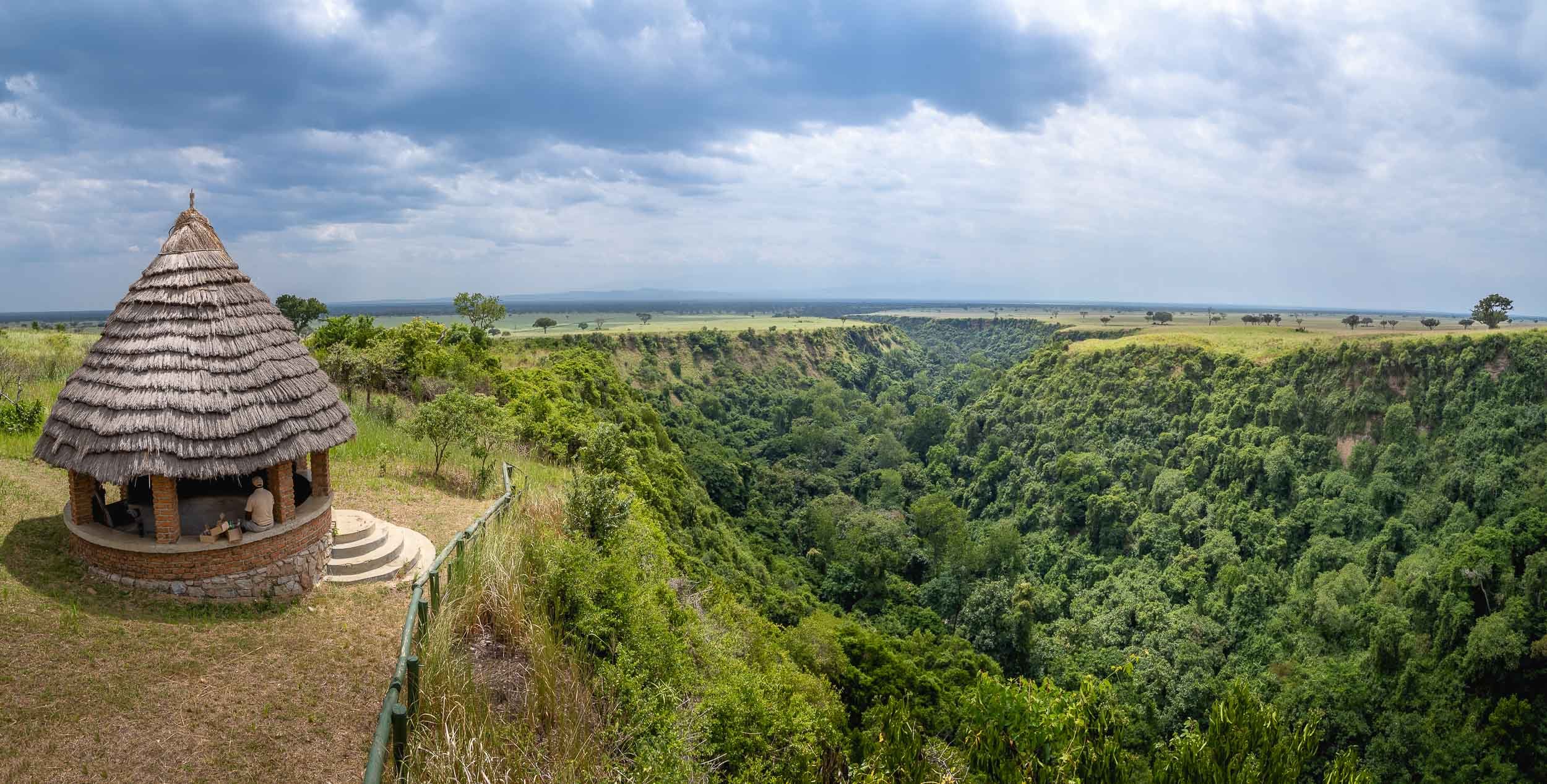
Into The Ground
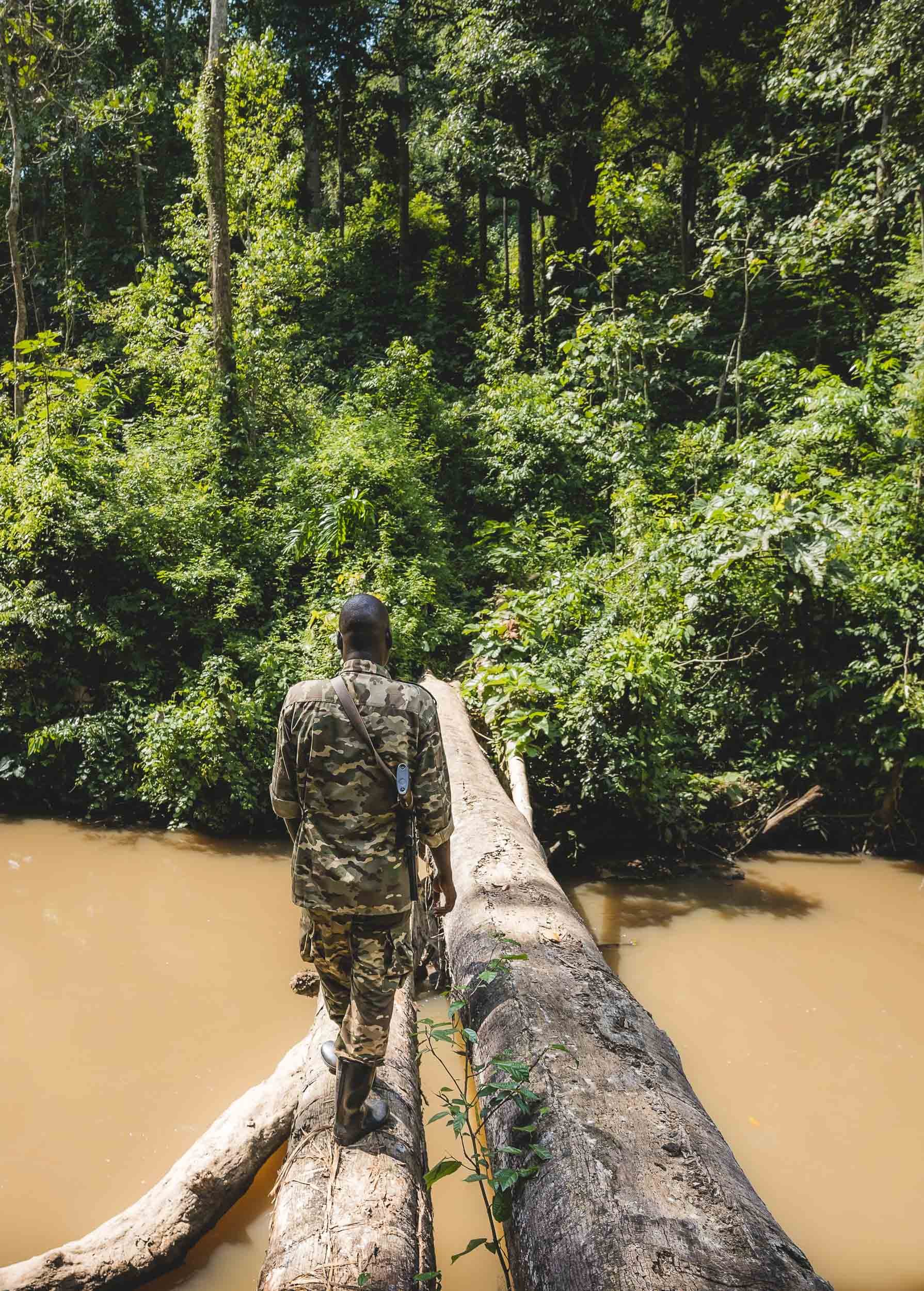
The 11km long gorge is over 100m deep - the river flowing in its middle is the source of water for the underground forest that has grown here like a green slice in the savannah. It’s home to a variety of wildlife, including the habituated Chimpanzee family.
Crossing the Kyambura
We had to climb down the steep slope of the gorge and trekked for over an hour until we finally found them. This rather questionable natural bridge was part of the effort. Success rates are about 80% (to find them that is, not sure about the bridge crossing …)
The First Glimpse
The moment you spot the first Chimpanzee, it's time to put down the walking sticks, as they use tools themselves and may mistake them for weapons.
In the Trees
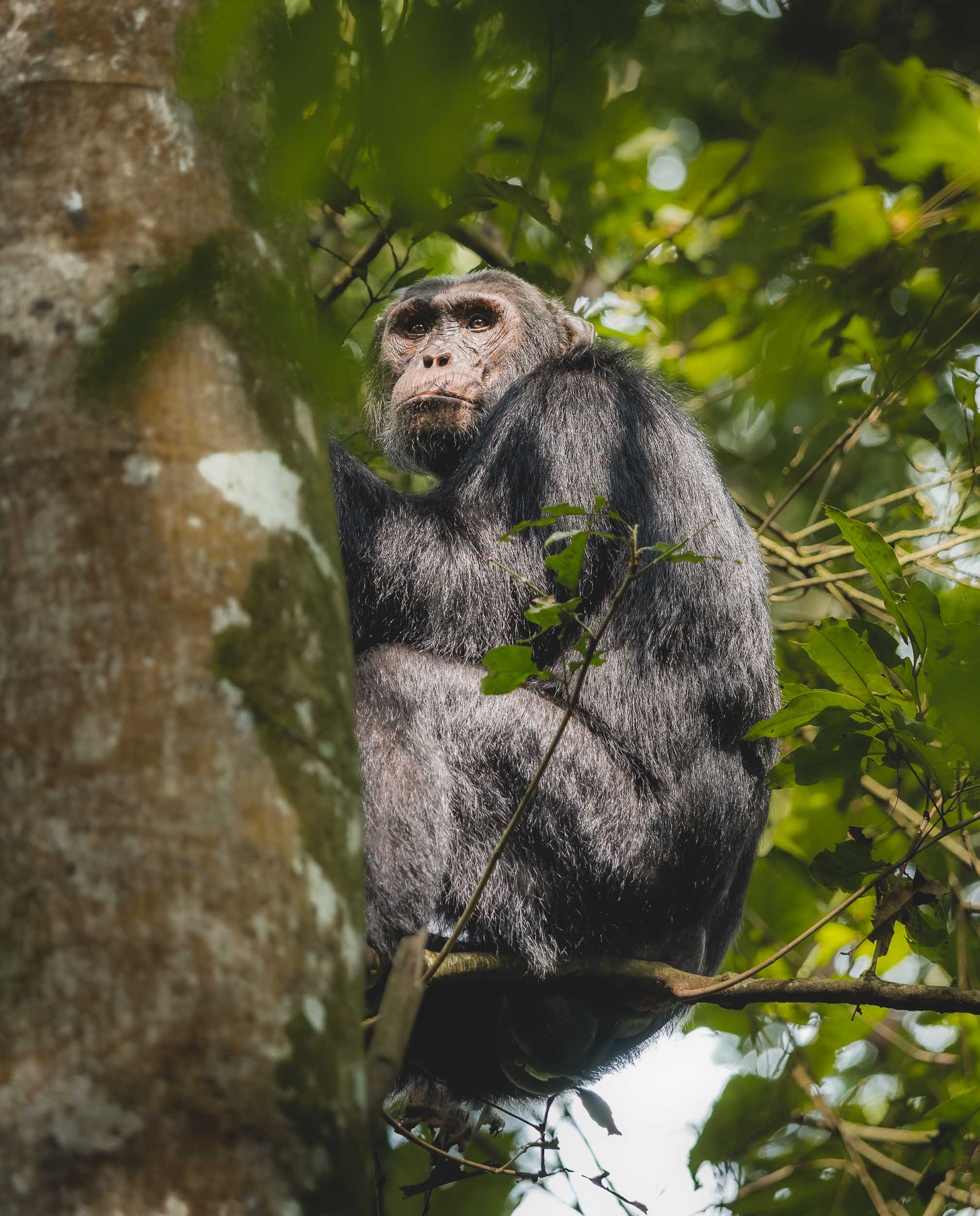
While they are highly adaptable in terms of habitat, Chimpanzees always build their nest in a tree at night, and never use the same tree twice.
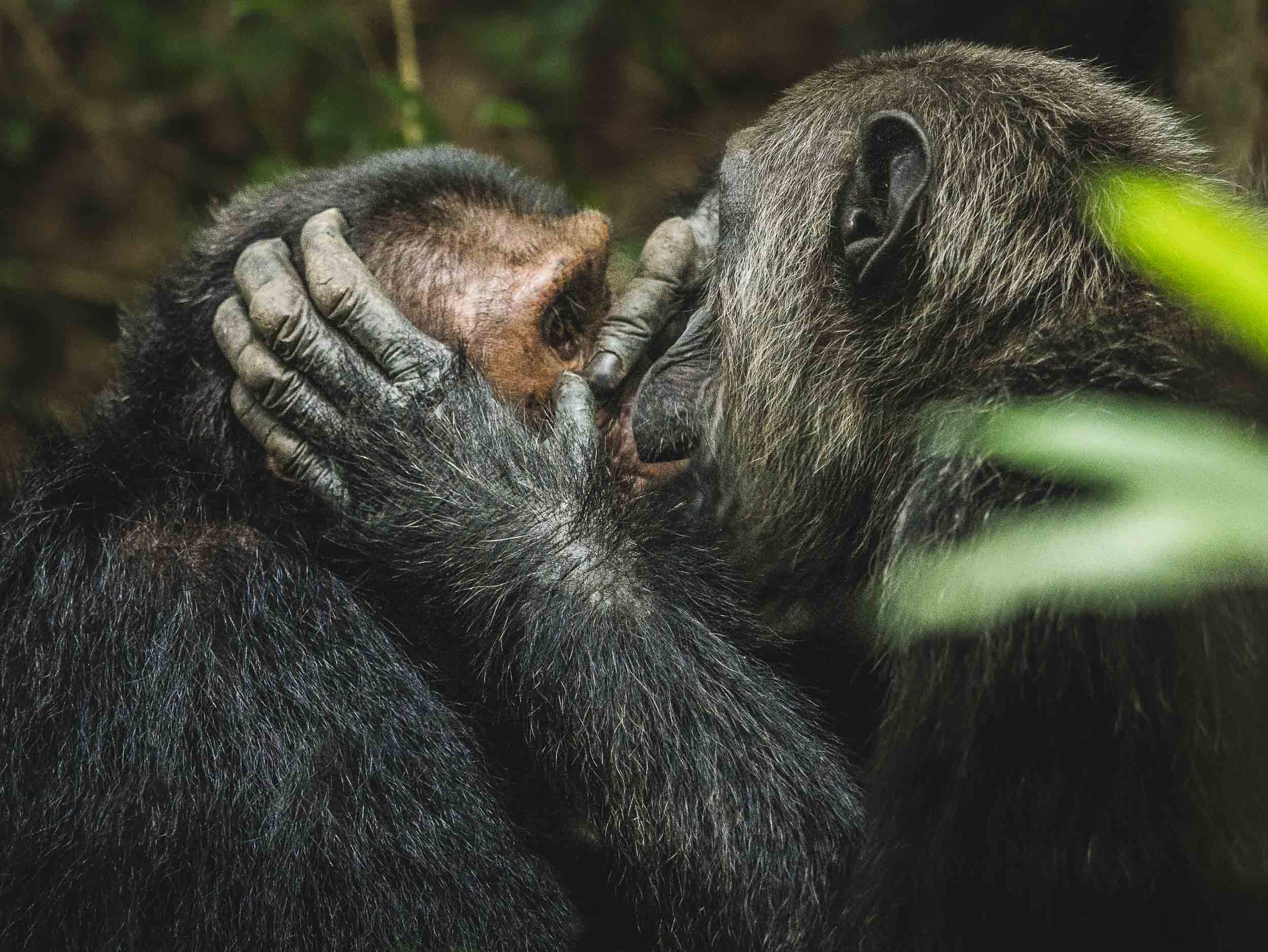
Grooming
The removal of lice and other insects is a common activity in the family.
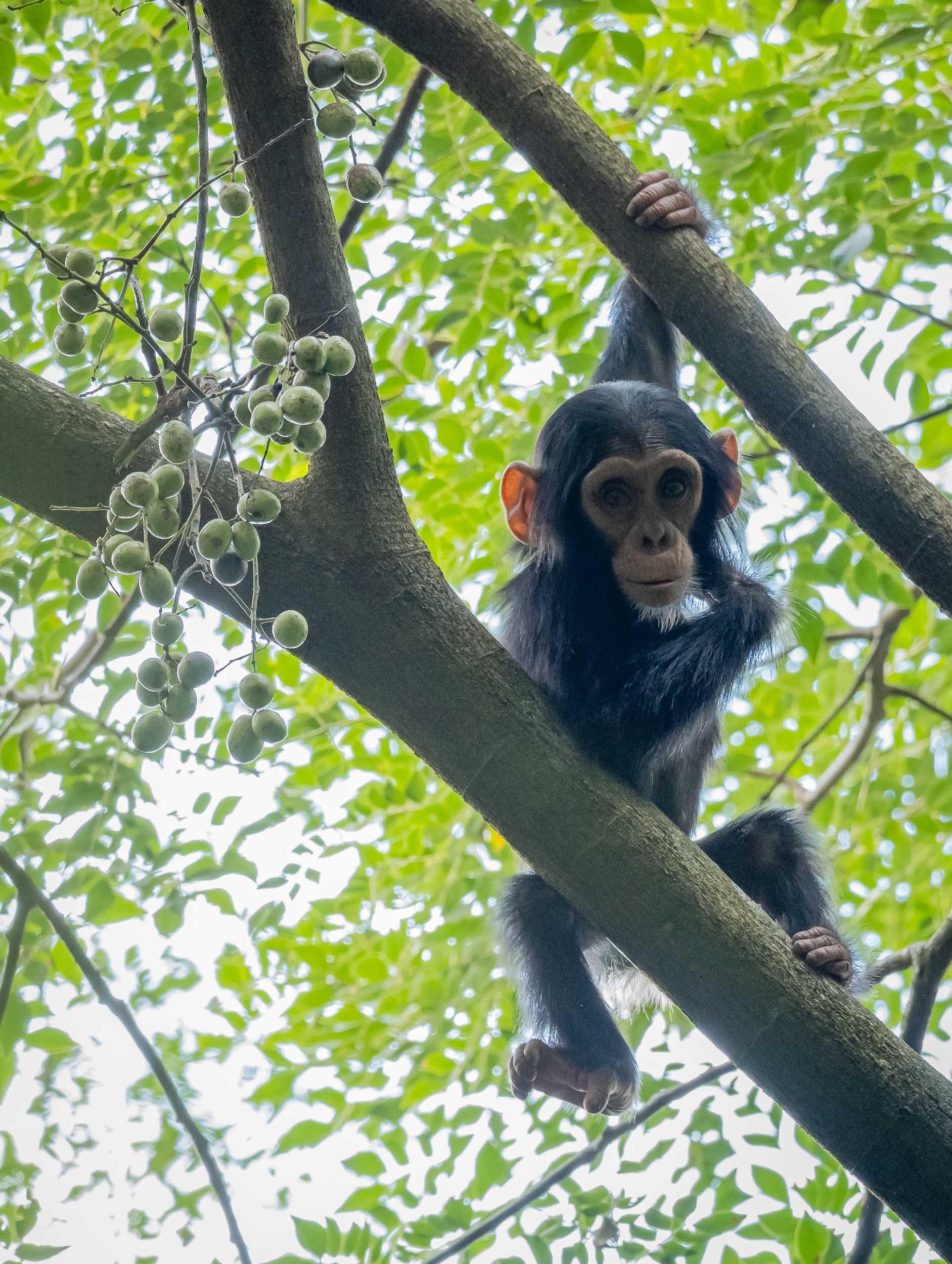
Offspring
Chimpanzees are also endangered, and their population numbers have declined significantly over the last 100 years, with less than 300,000 left in the wild.
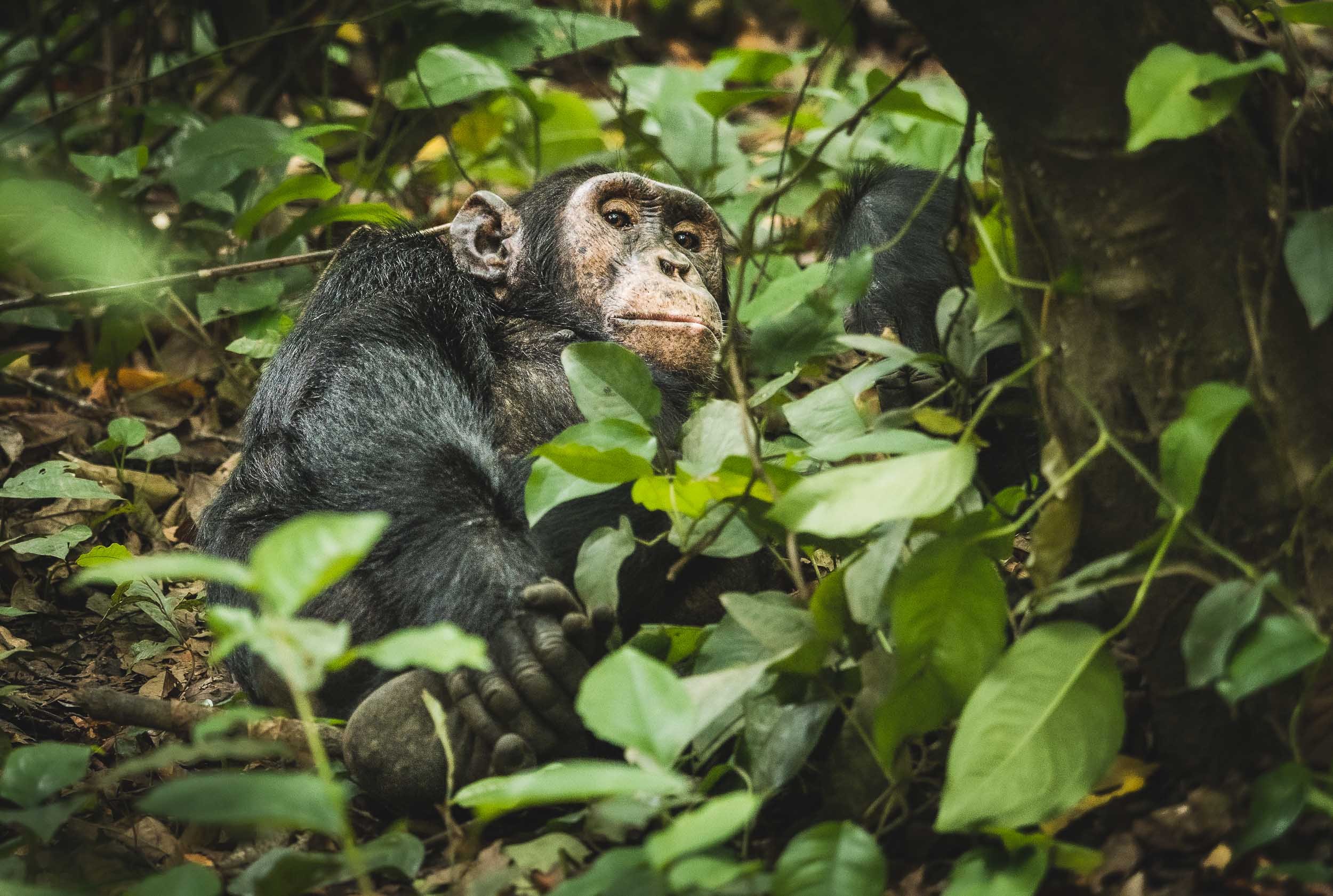
Skeptical
Chimpanzees are highly territorial and protect their area aggressively from other groups. There's only one family in the gorge.
In Danger
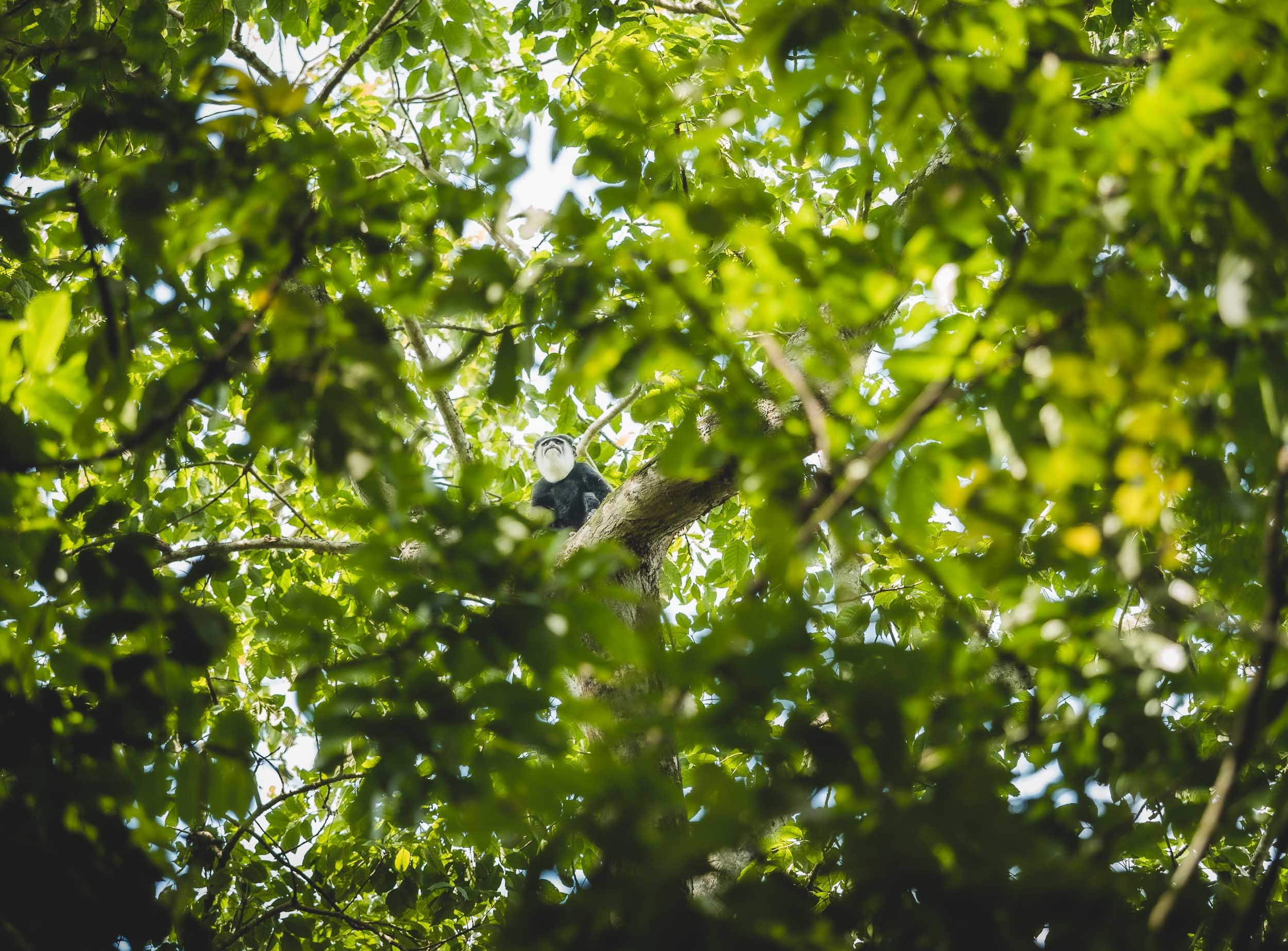
Unlike Gorillas, Chimpanzee diet includes meat - and they don't shy away from hunting other monekys, such as this Colobus monkey while we were observing them.
Alpha
The oldest of the coalition.
While they are both part of the Great Ape family, Chimpanzee observation feels very different from trekking and observing Mountain Gorillas. It’s a very distinct experience that I’m glad I didn’t miss.
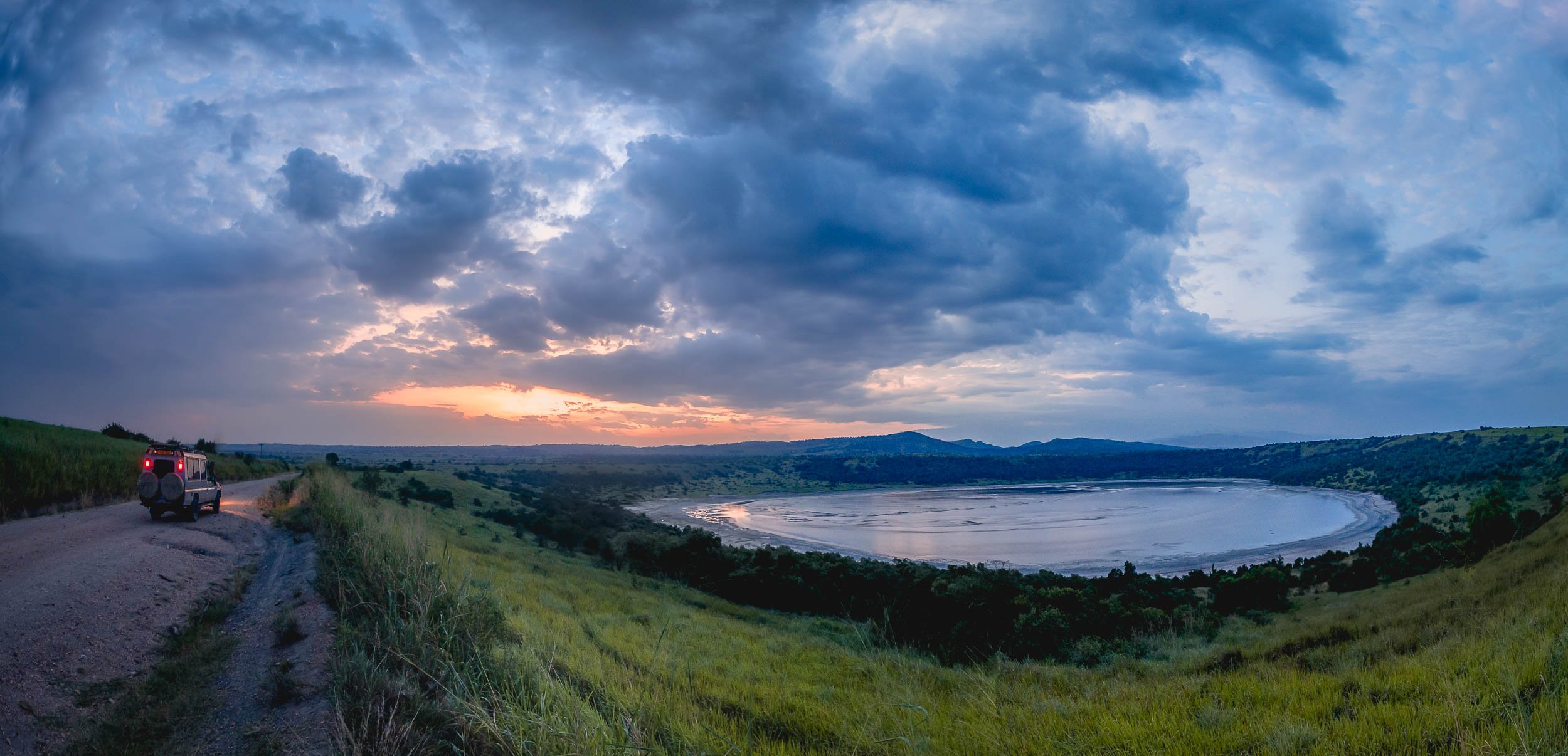
Lake Nyamunuka
On our way back we passed one of the many volcanic crater lakes around the Rwenzoris mountains, still with hints of sulfur in the air.
The End
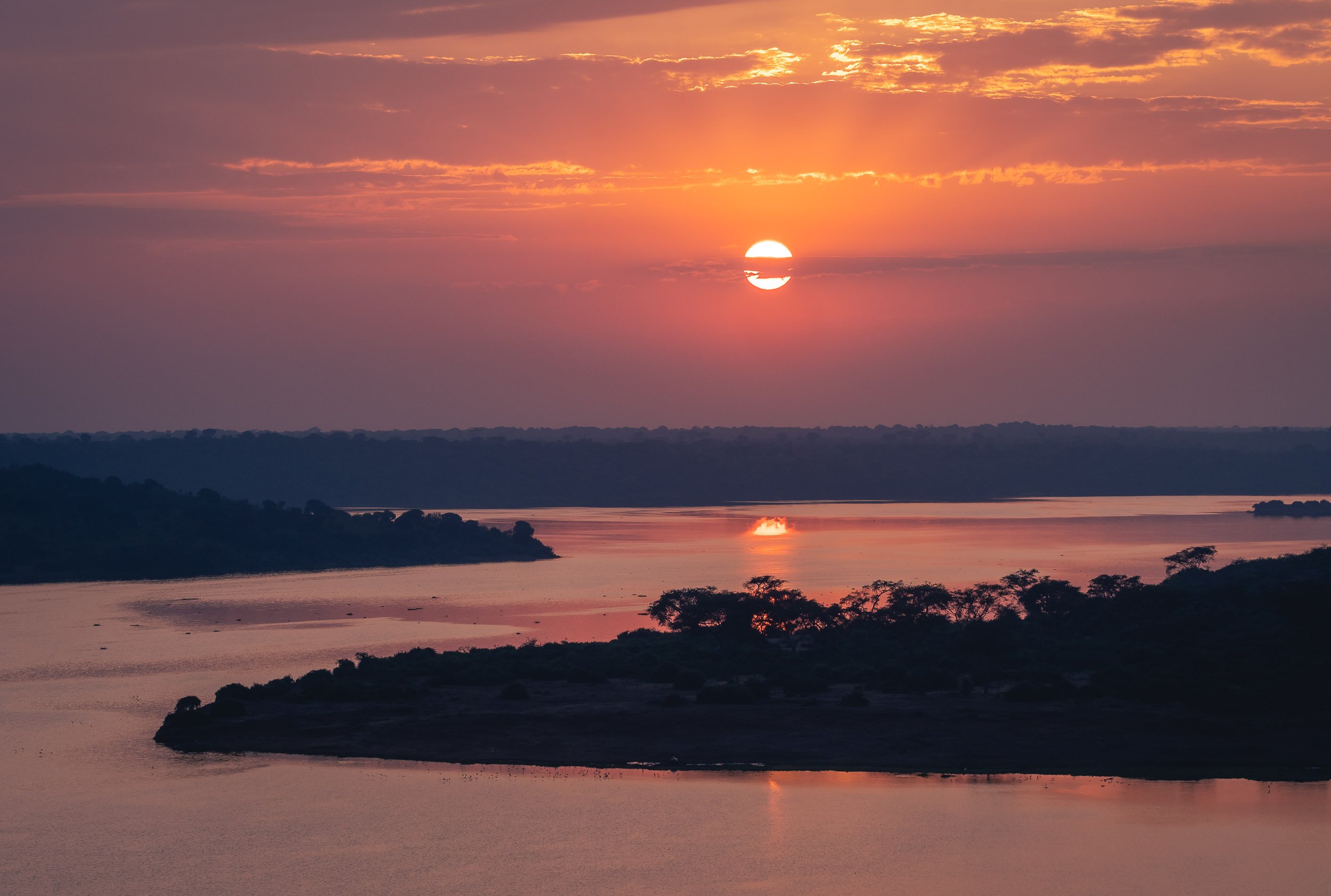
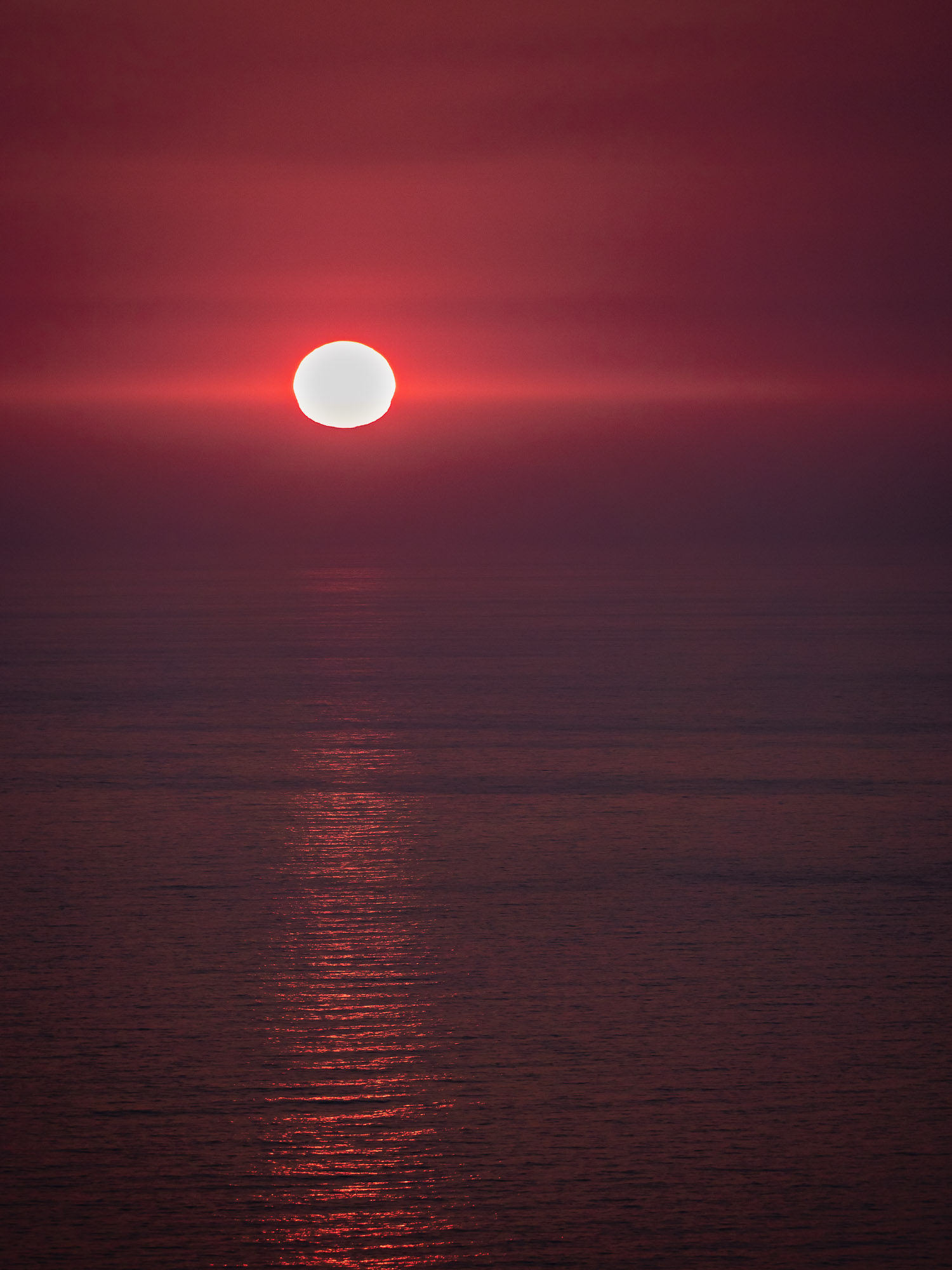
Sunrise over the Kazinga Channel, connecting Lake George and Lake Edward.
Kenya - Giraffe in the City and Gentle Giants
The land of giants, and some the most incredible animal encounters I ever experienced.
My journey through Kenya was a relatively short one, and focused on only two parts of the country: Nairobi and the Amboseli National Park. Despite that, the days here included some of my most memorable moments in Africa - read on to find out what they were.
A Day in Nairobi
Nairobi National Park
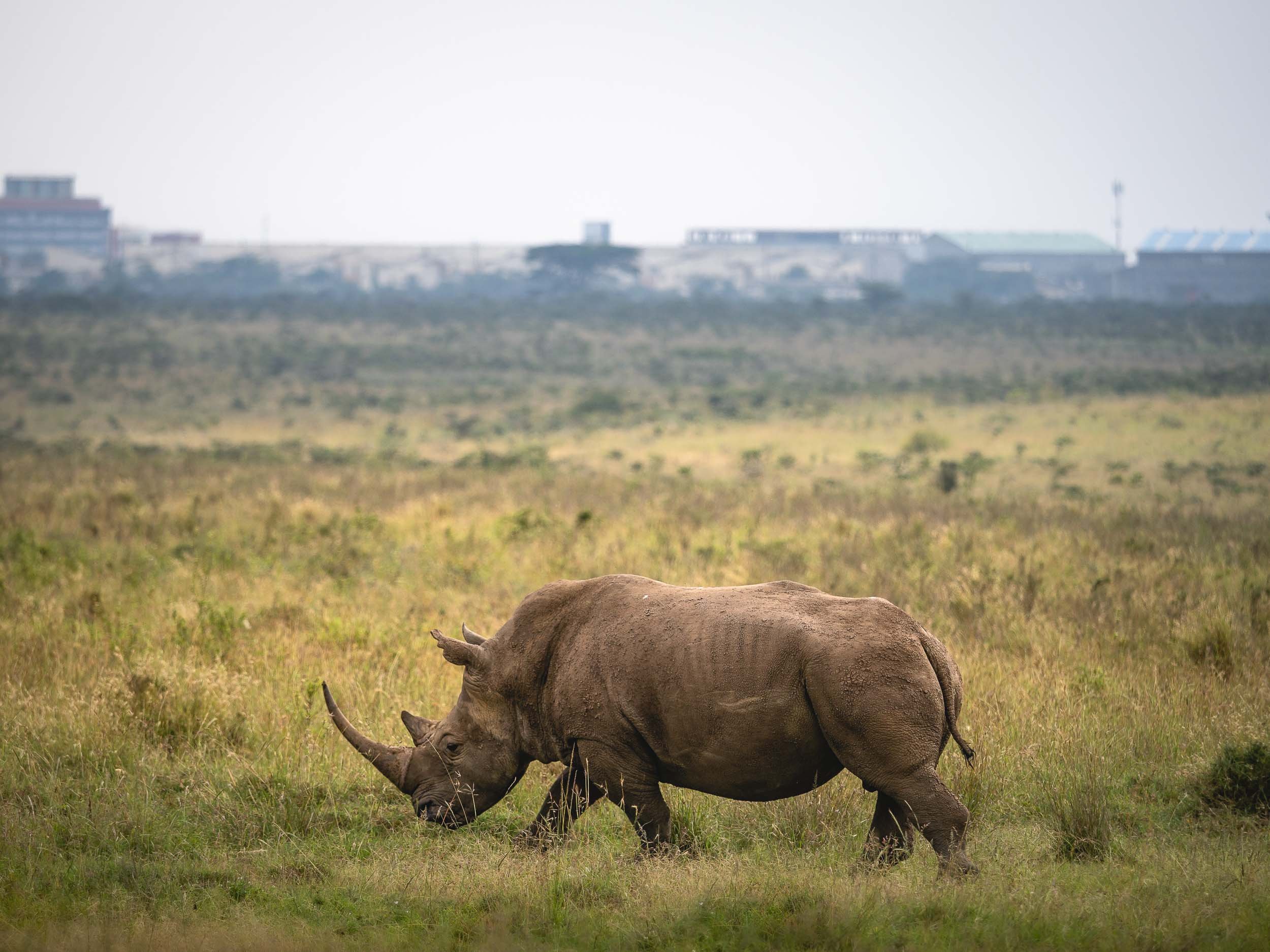
My trip began with a very early morning pickup in order to explore the country’s first game reserve , and the only National Park in the world literally situated within a capital city. The park is fenced on three sides, but the southern border allows migration of animals.
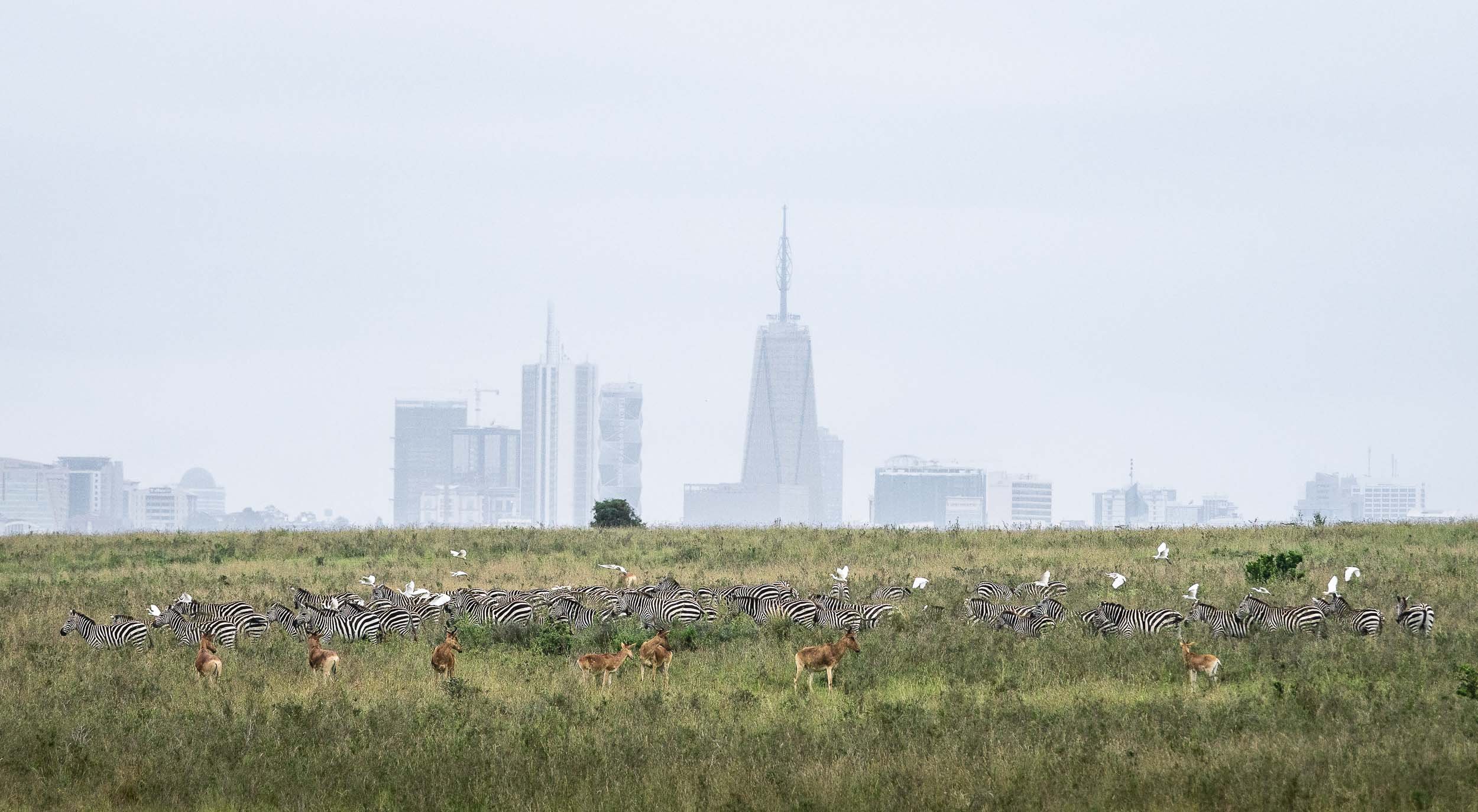
Surreal
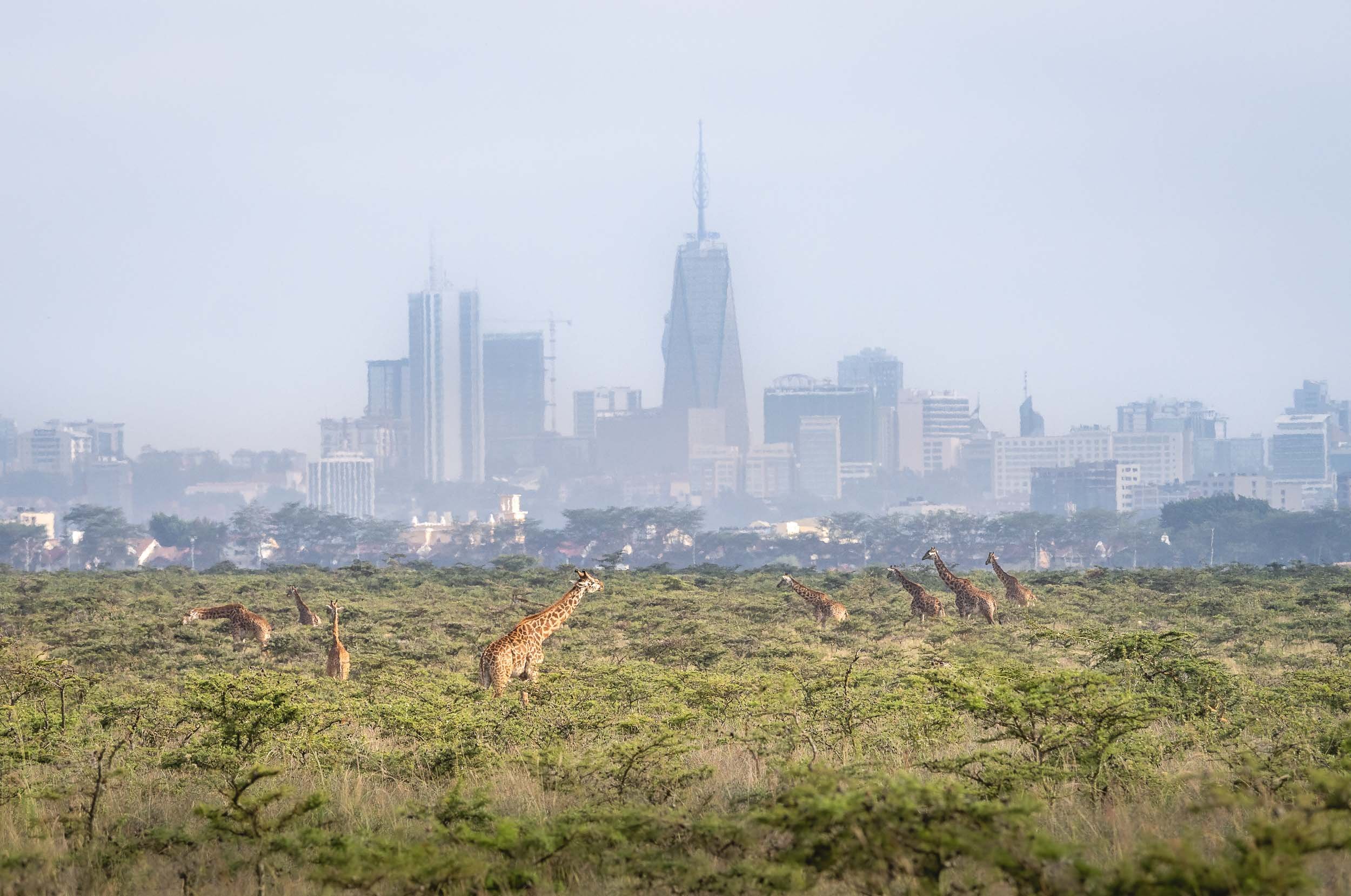
Unfortunately it was not a very clear day, but my goal was to capture some of the iconic animal images with Nairobi's skyline in the background.
Contrasts
Towering Animals vs Towering Buildings.
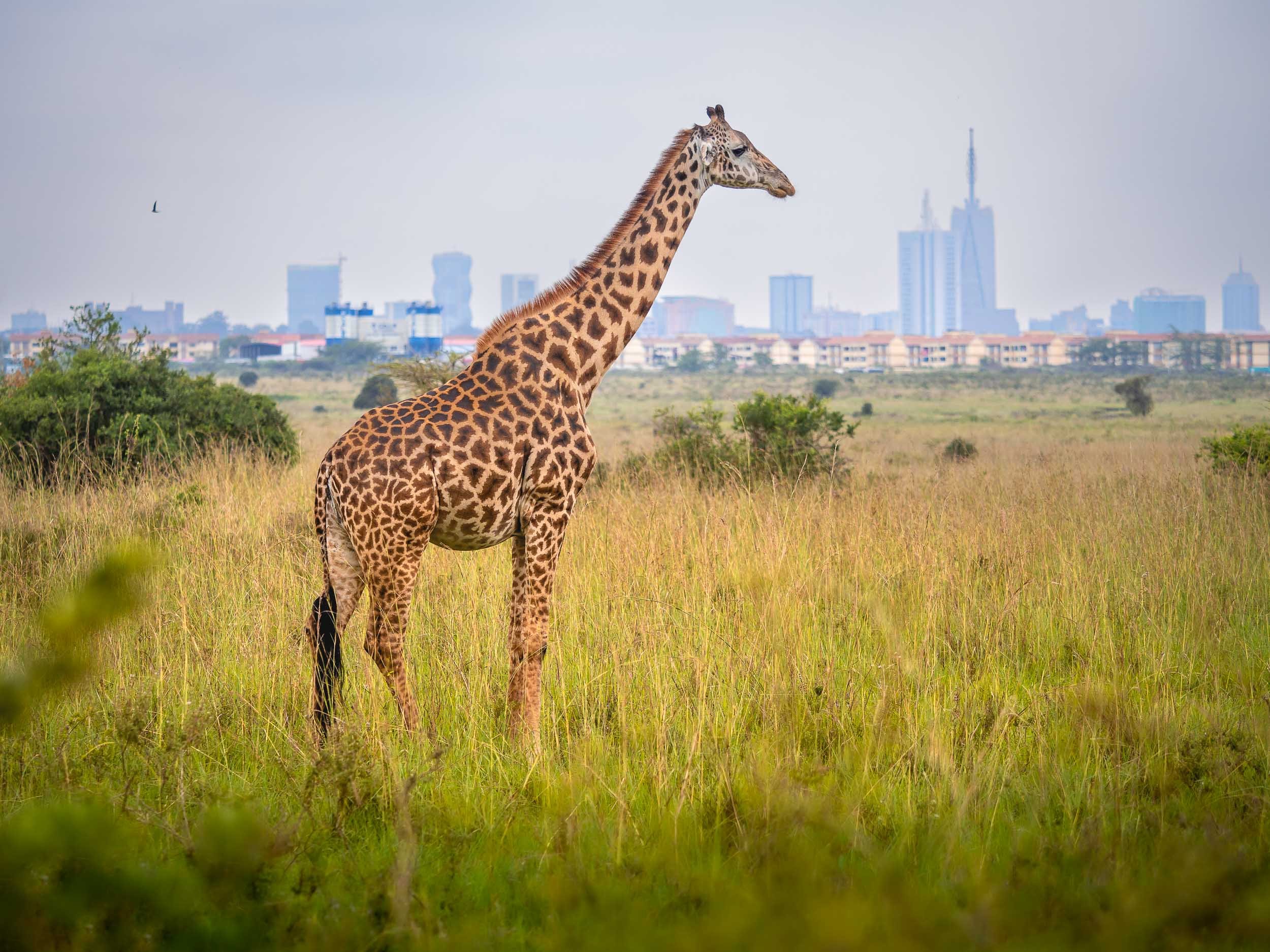
Standing Tall
A giraffe with Nairobi's tallest building, Britam Tower at 195m.
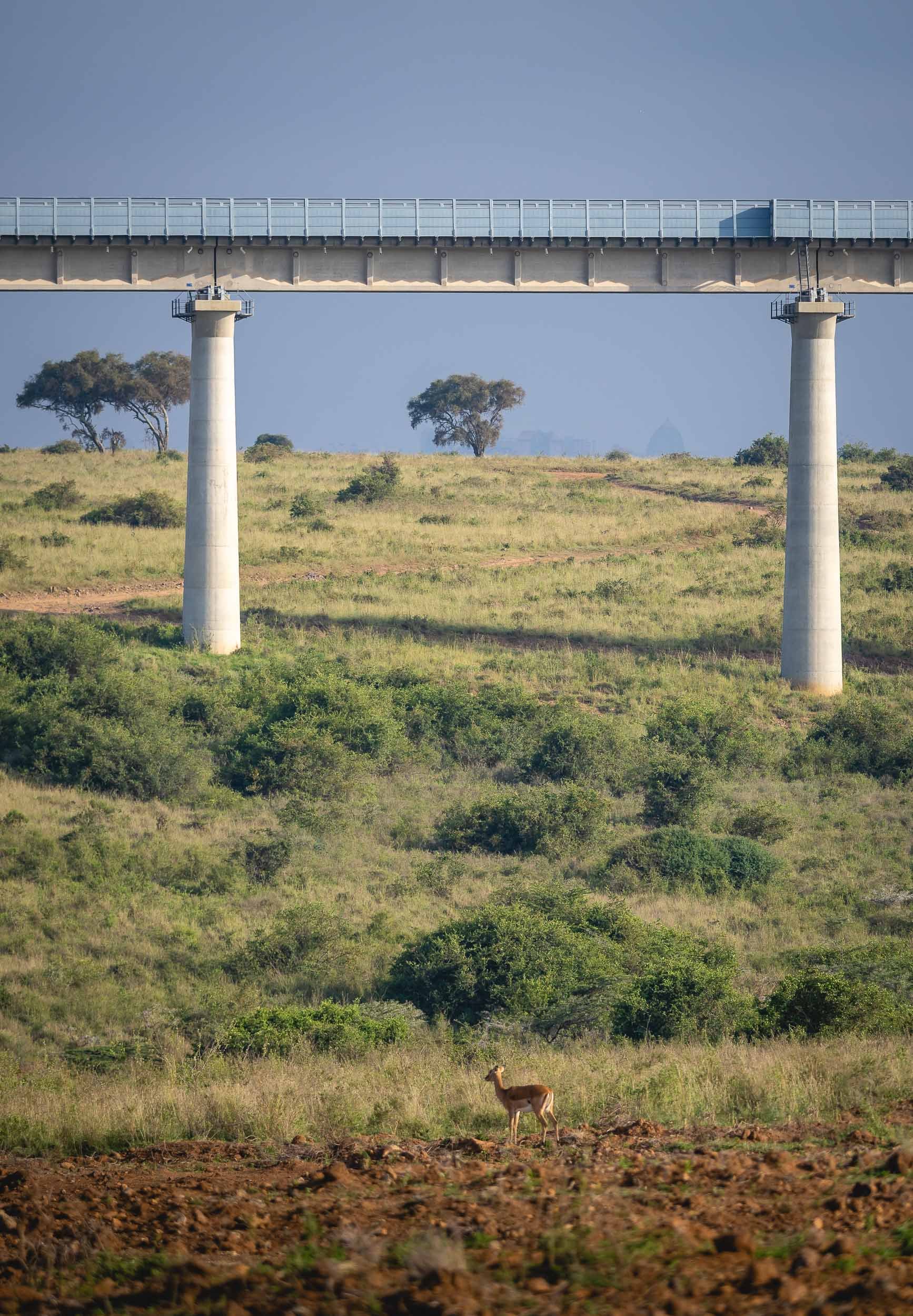
Conflict
The park is negatively affected by increasing human activity, such as this new railroad line crossing it.
Happy Days
It is still home to a large variety of wildlife and one fo the most successful rhino conservation sanctuaries in Kenya.
The Sheldrick Wildlife Trust
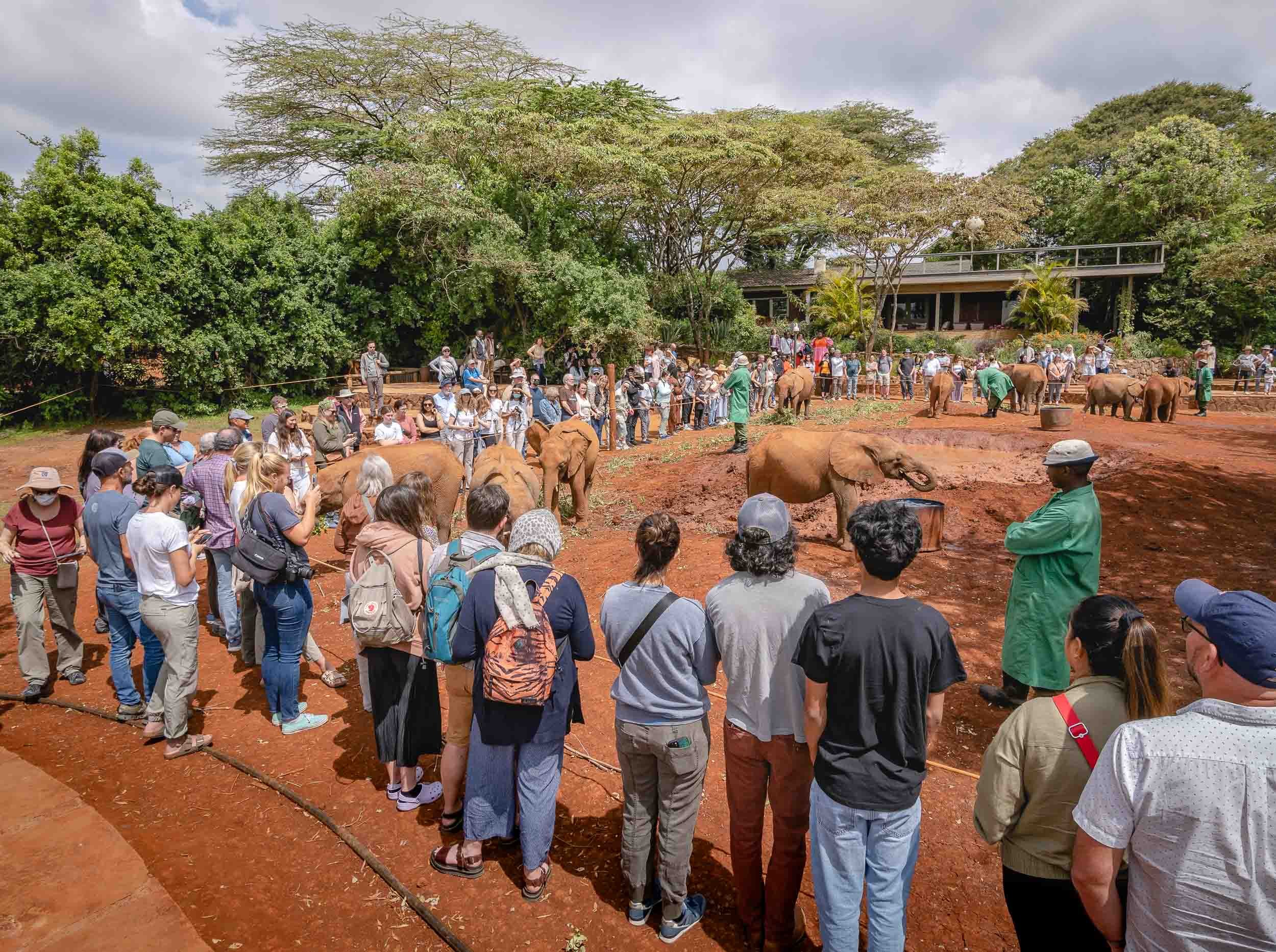
Close to the National Park are the grounds of the SWT, the most successful orphan elephant rescue and rehabilitation program in the world. Aside from taking care of abandoned elephant babies, they do much more though, such as conducting anti-poaching activities, veterinary missions, as well as water relief and community projects. You can learn more here.
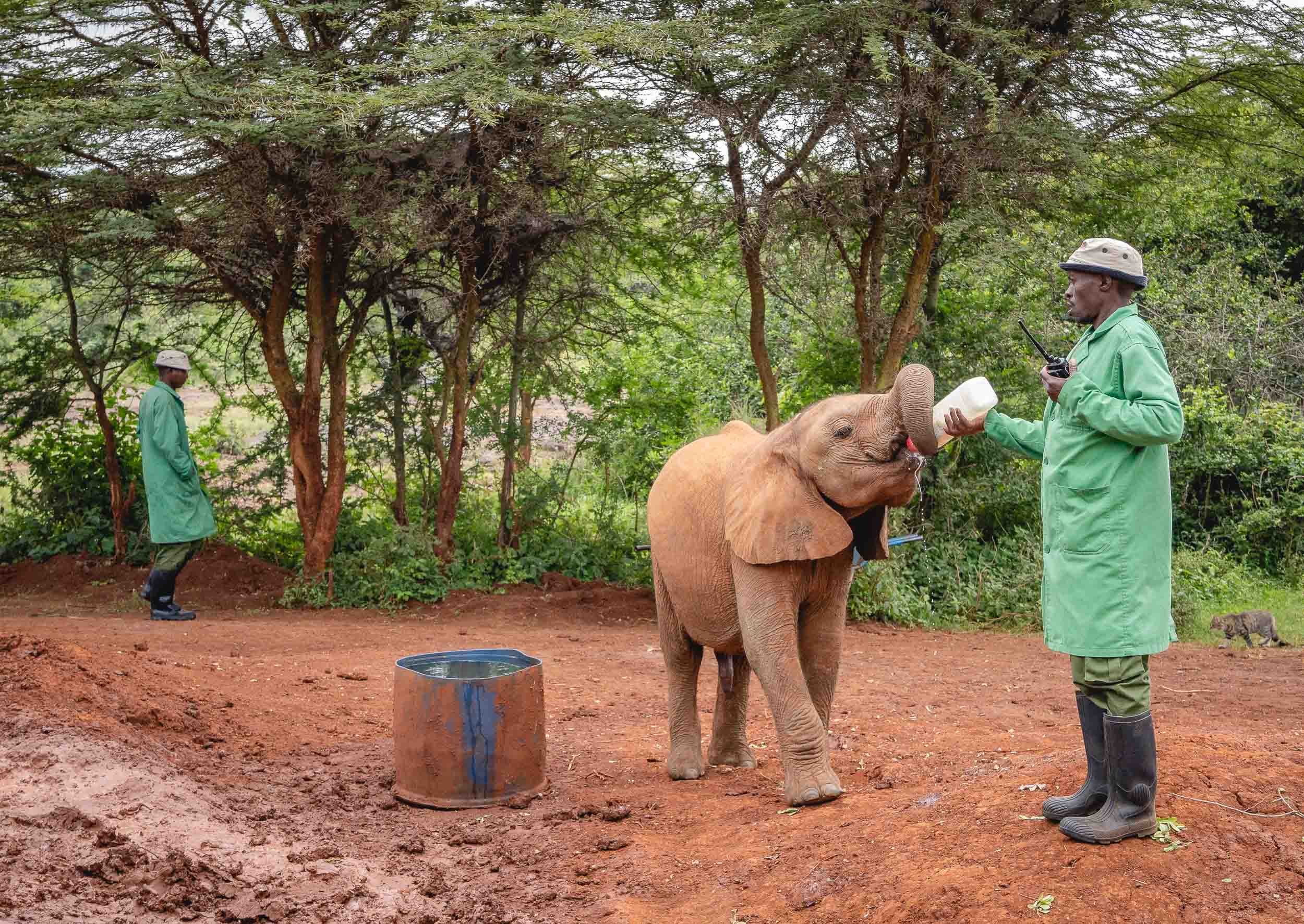
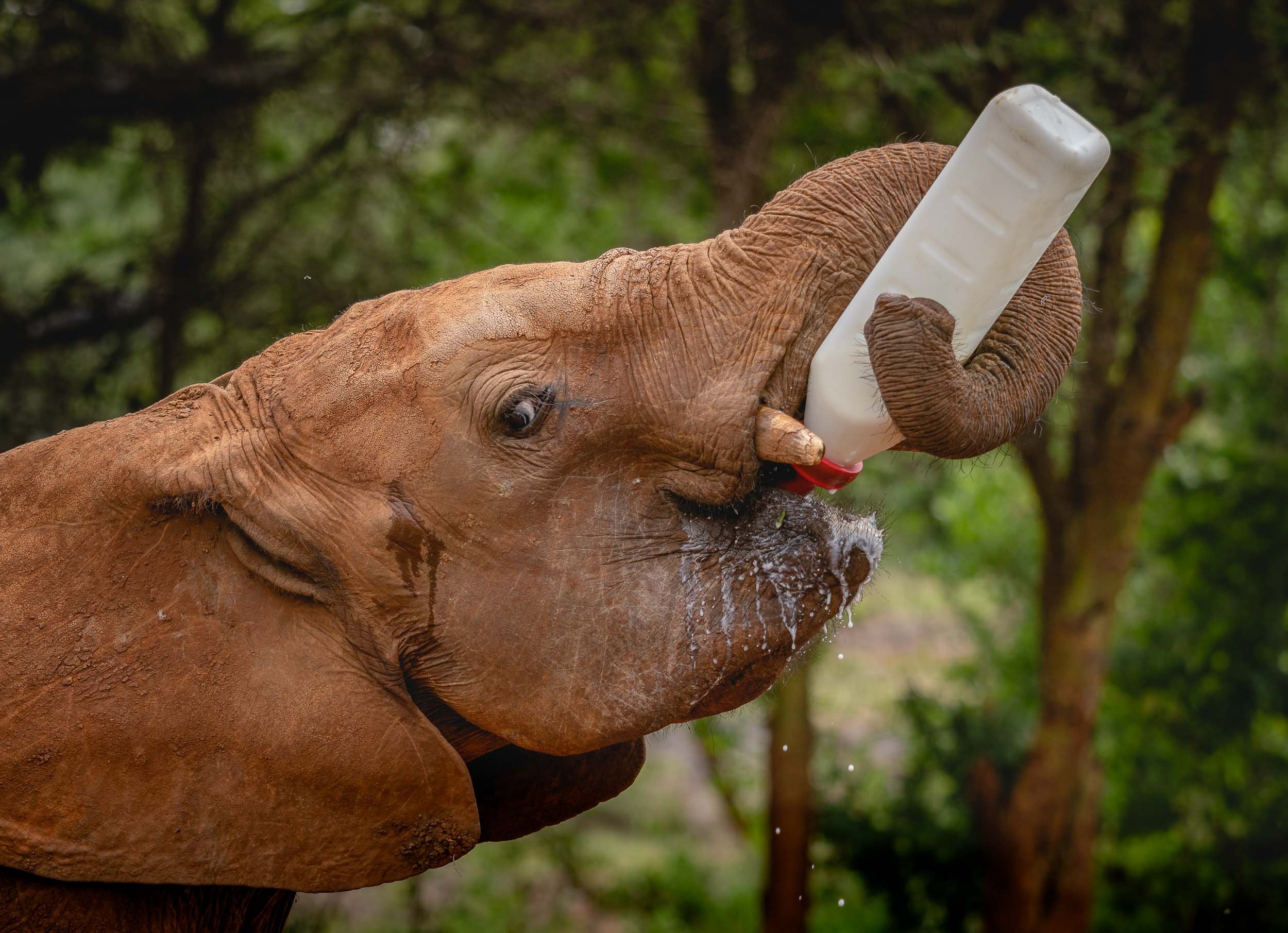
Feeding Time
Its most well known activity remains raising orphaned elephants. If you look very closely, there's someone else in this photo looking for milk.
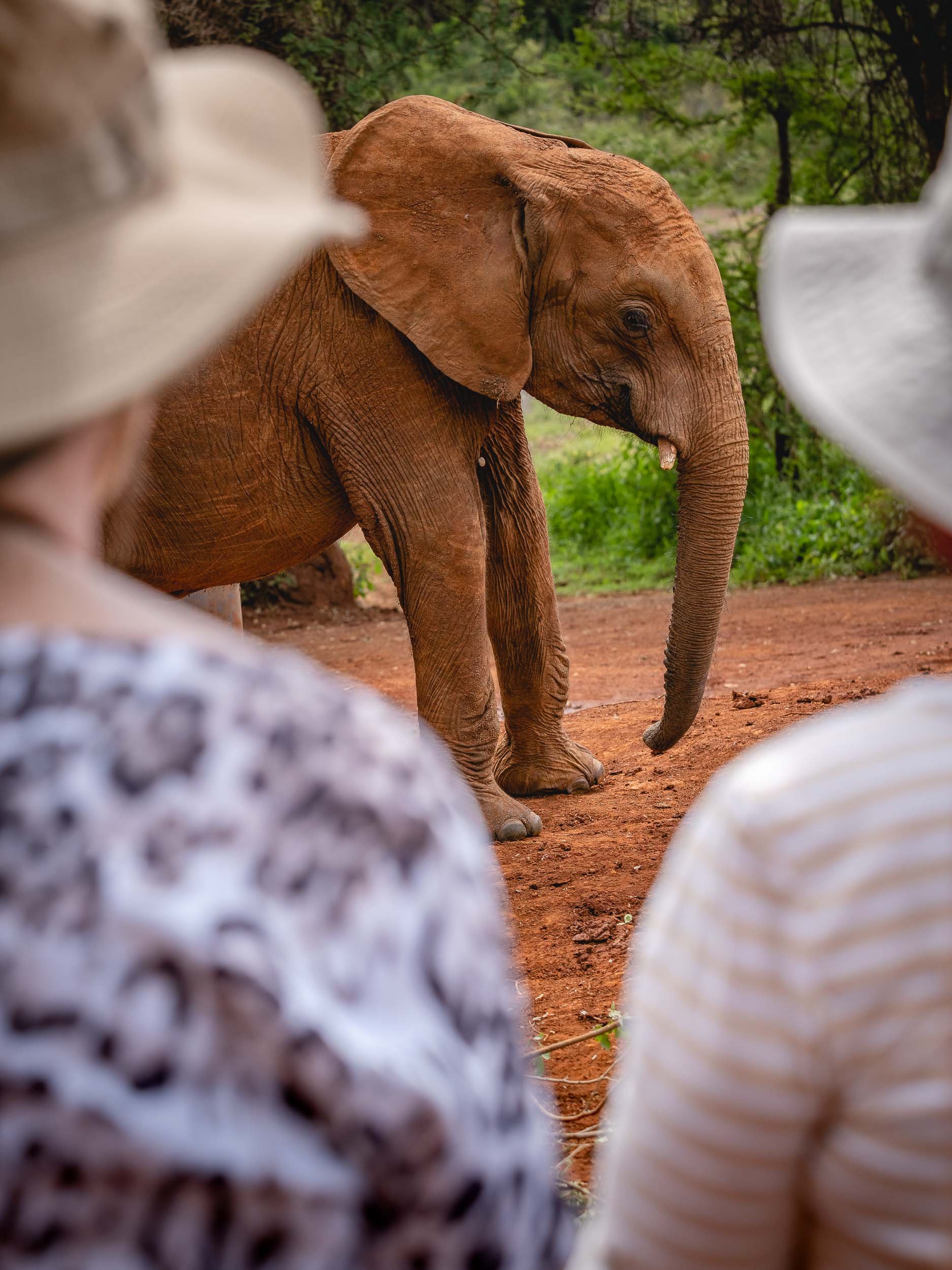
Visiting Time
Once a day visitors can join the elephants for an hour, and it is always a busy affair, requiring you to book early.
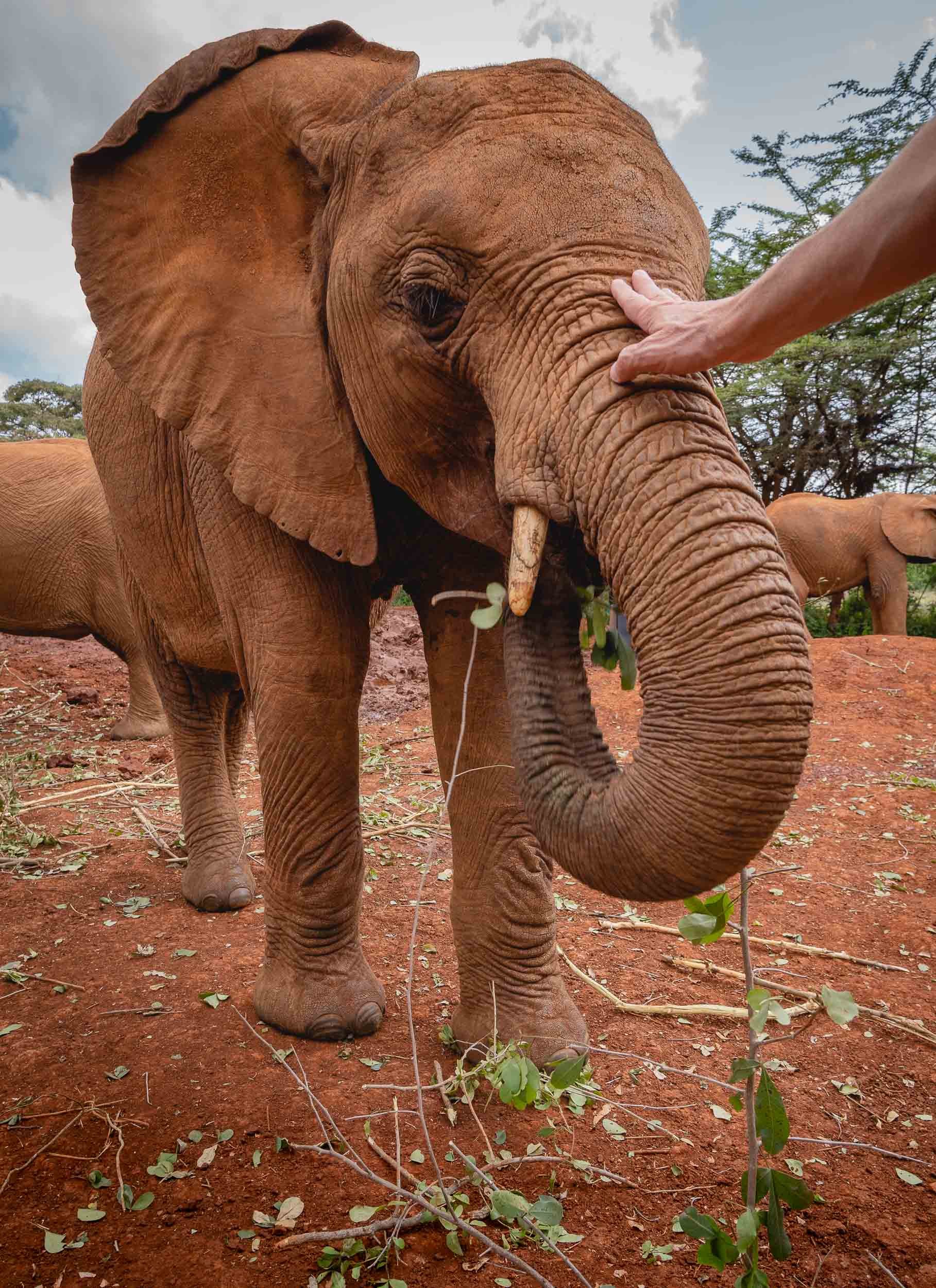
Touching Allowed
Not surprising, given that you might be able to pet a baby elephant.
Messy
Over 20 orphaned elephants are in the sanctuary at the moment.
Adoption
And you can adopt them for a yearly fee to support the (expensive) needs of a baby elephant until they're released back into the wild.
The Giraffe Centre
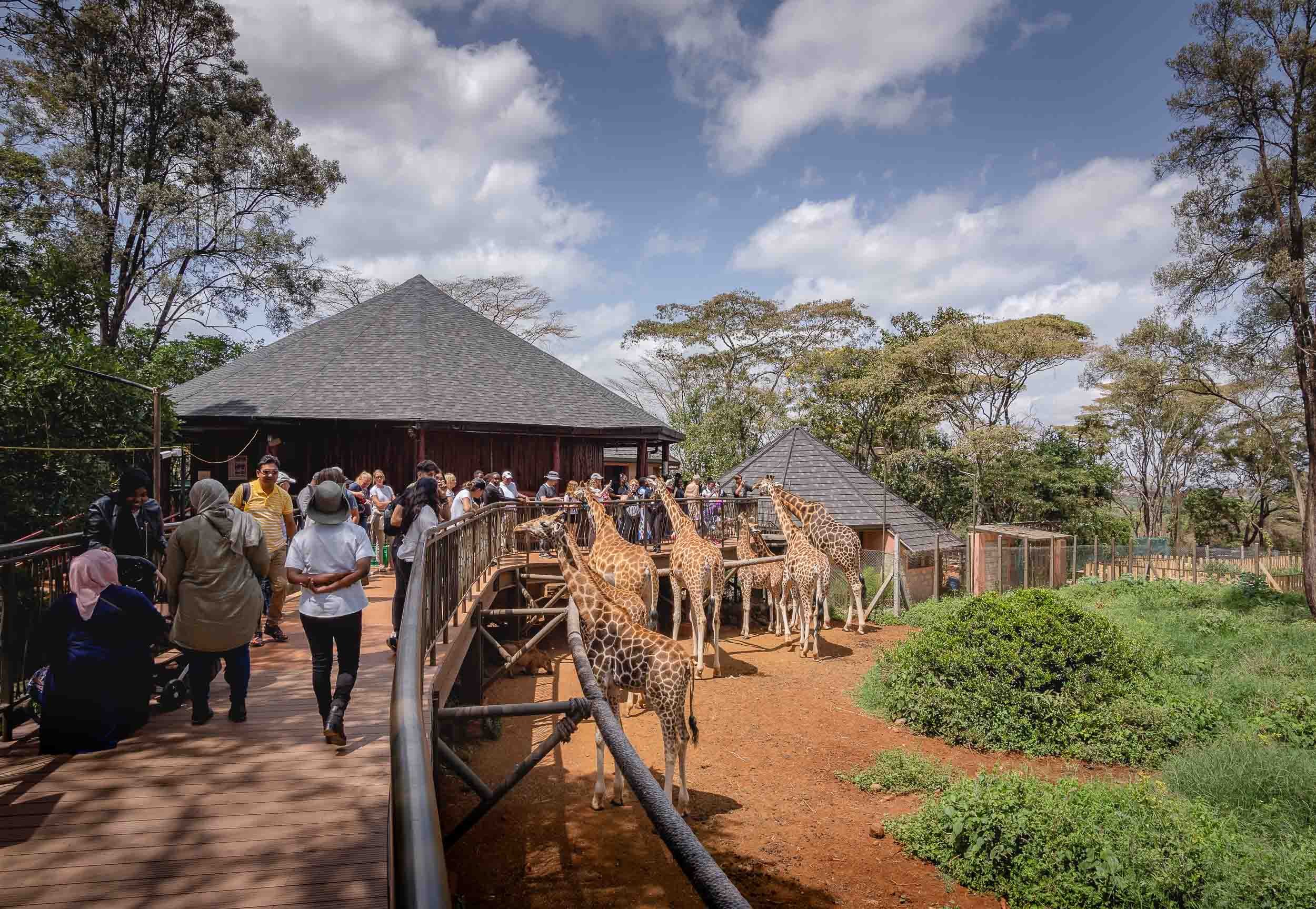
Next on the agenda was a visit to this sanctuary, which began its story in 1979 when Jock and Betty Leslie-Manville set out to save the nearly extinct Rothschild giraffe. In the early 1980s the centre opened to the public and is now home to several of these animals, of which there are only 1200 left in the wild. Learn more here.
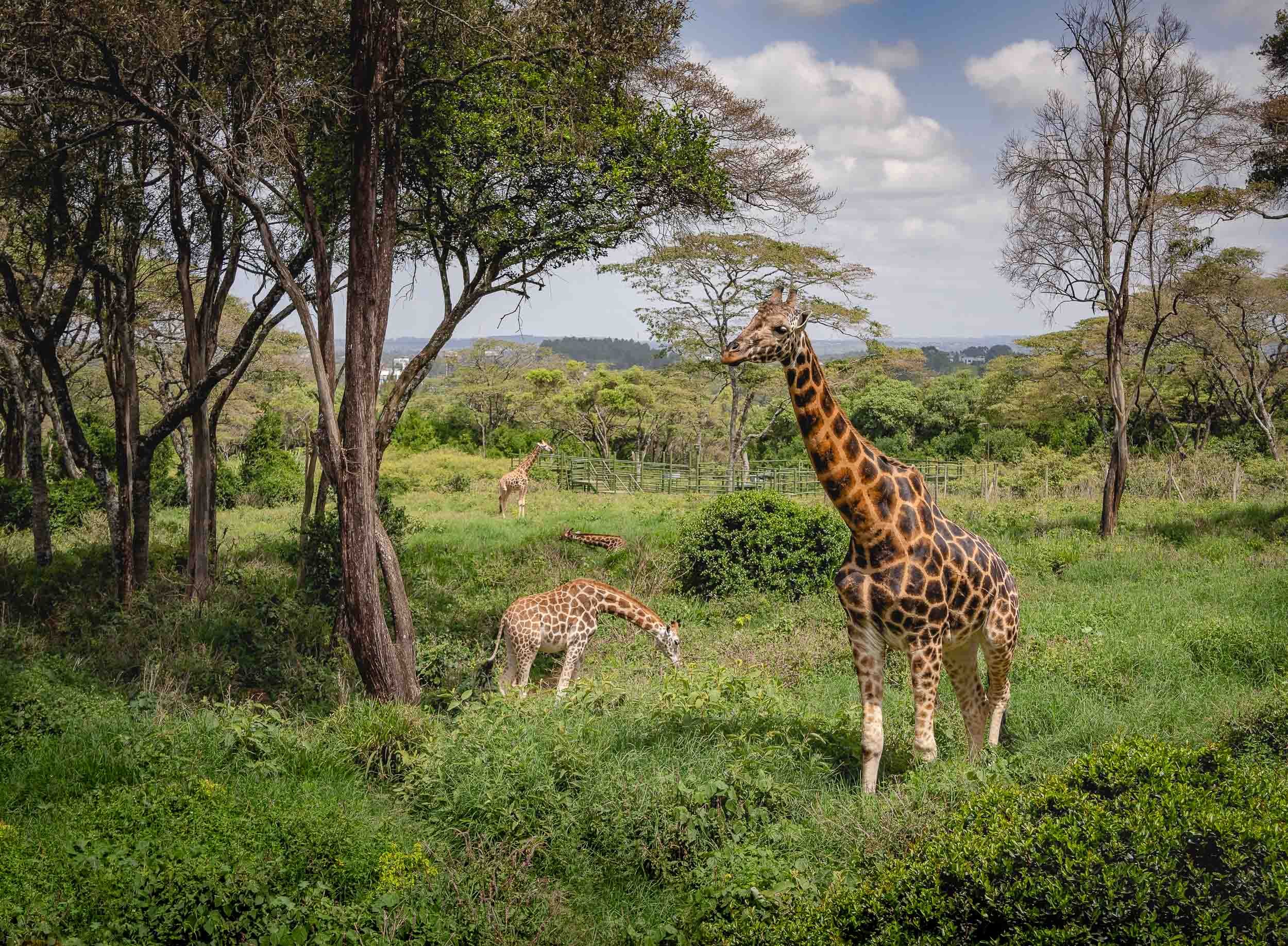
Variety
While there are in fact nine different Giraffe species, the centre is only home to Rothschild Giraffe.
Feeding Area
You get a small bowl with food at the entrance, which you can feed to the Giraffe, assuming they're hungry...
Nom Nom
...which they mostly are.
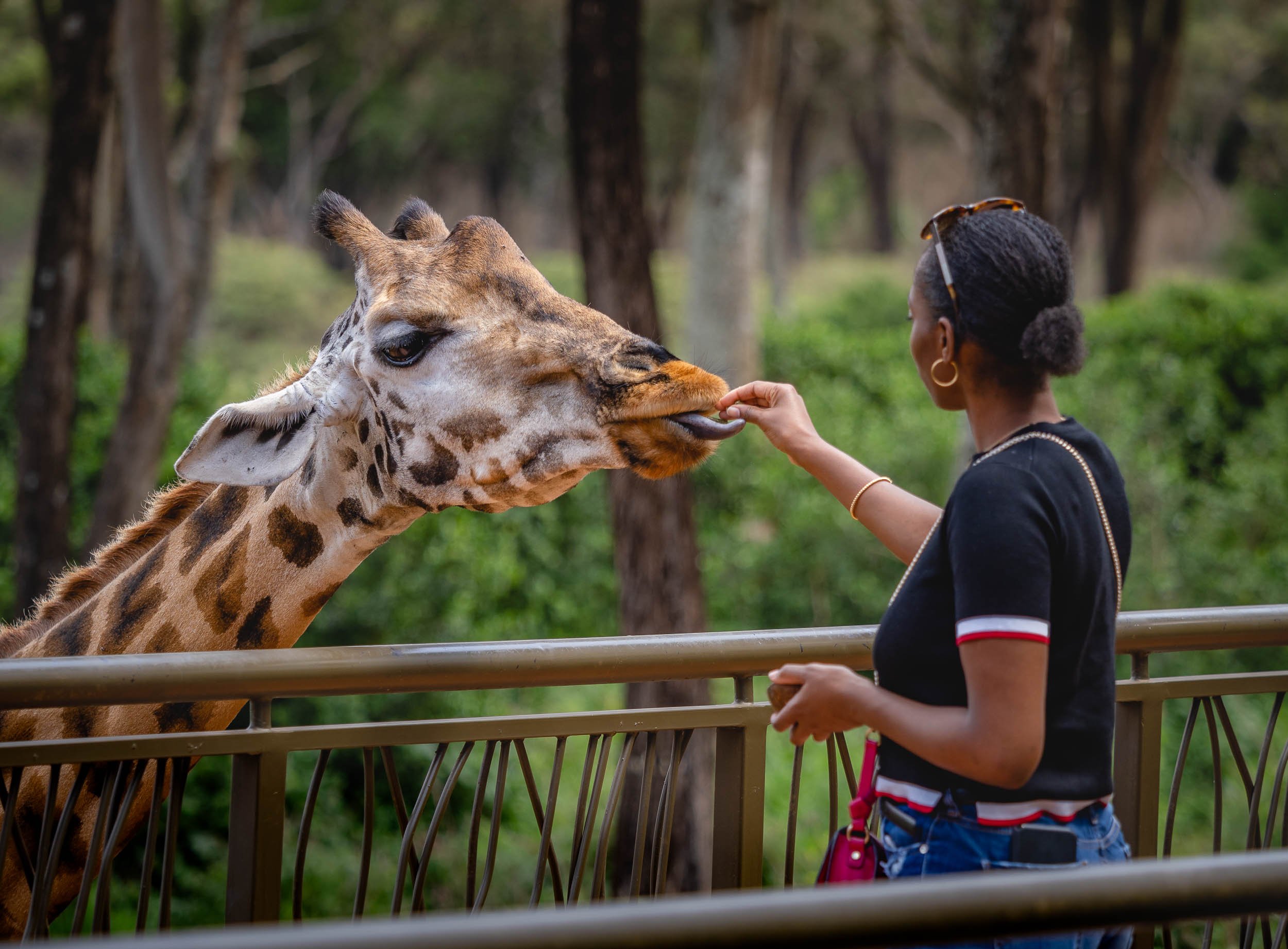
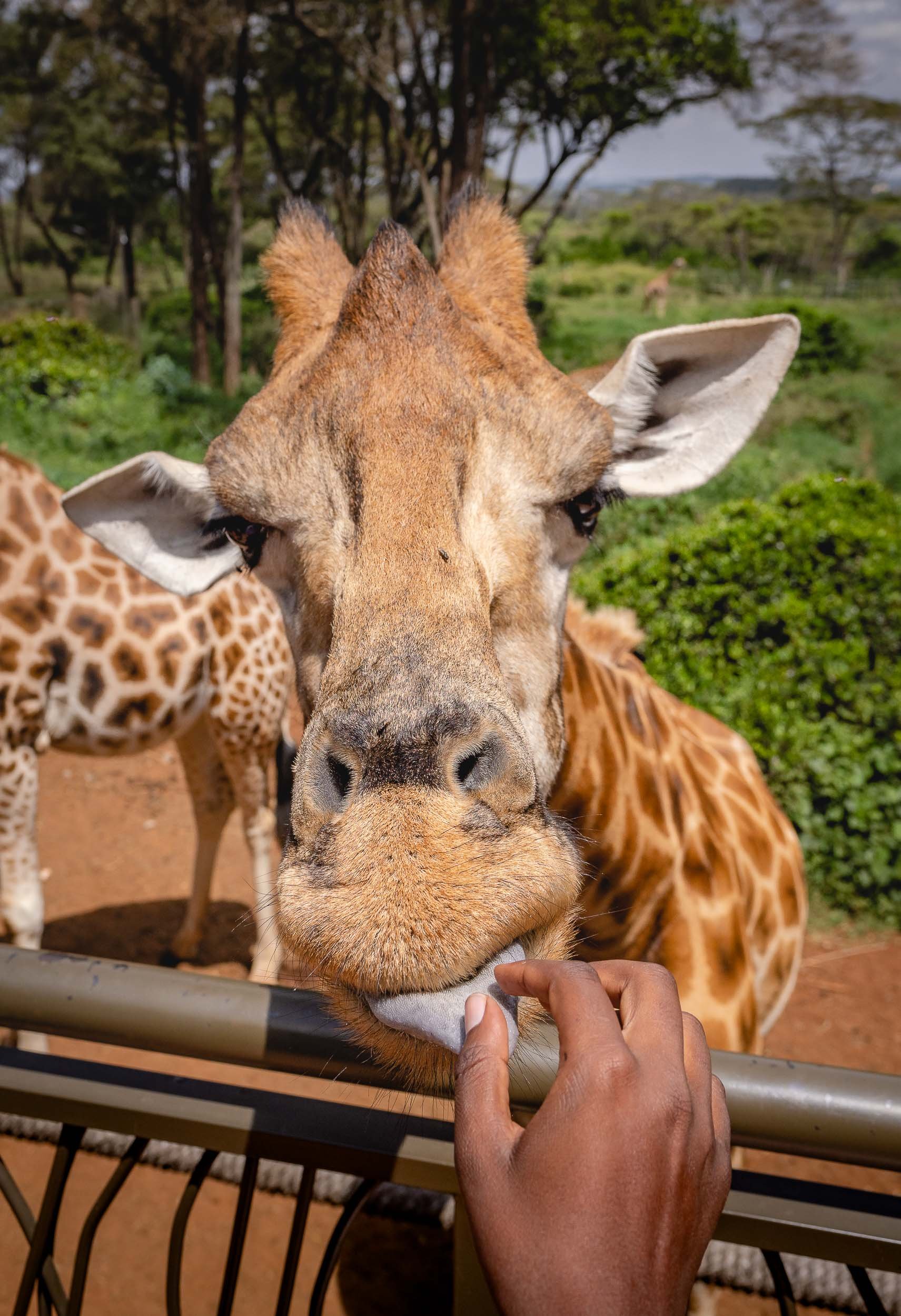
Tongue
Got to watch your fingers, as my guide learnt in this photo.
Unique
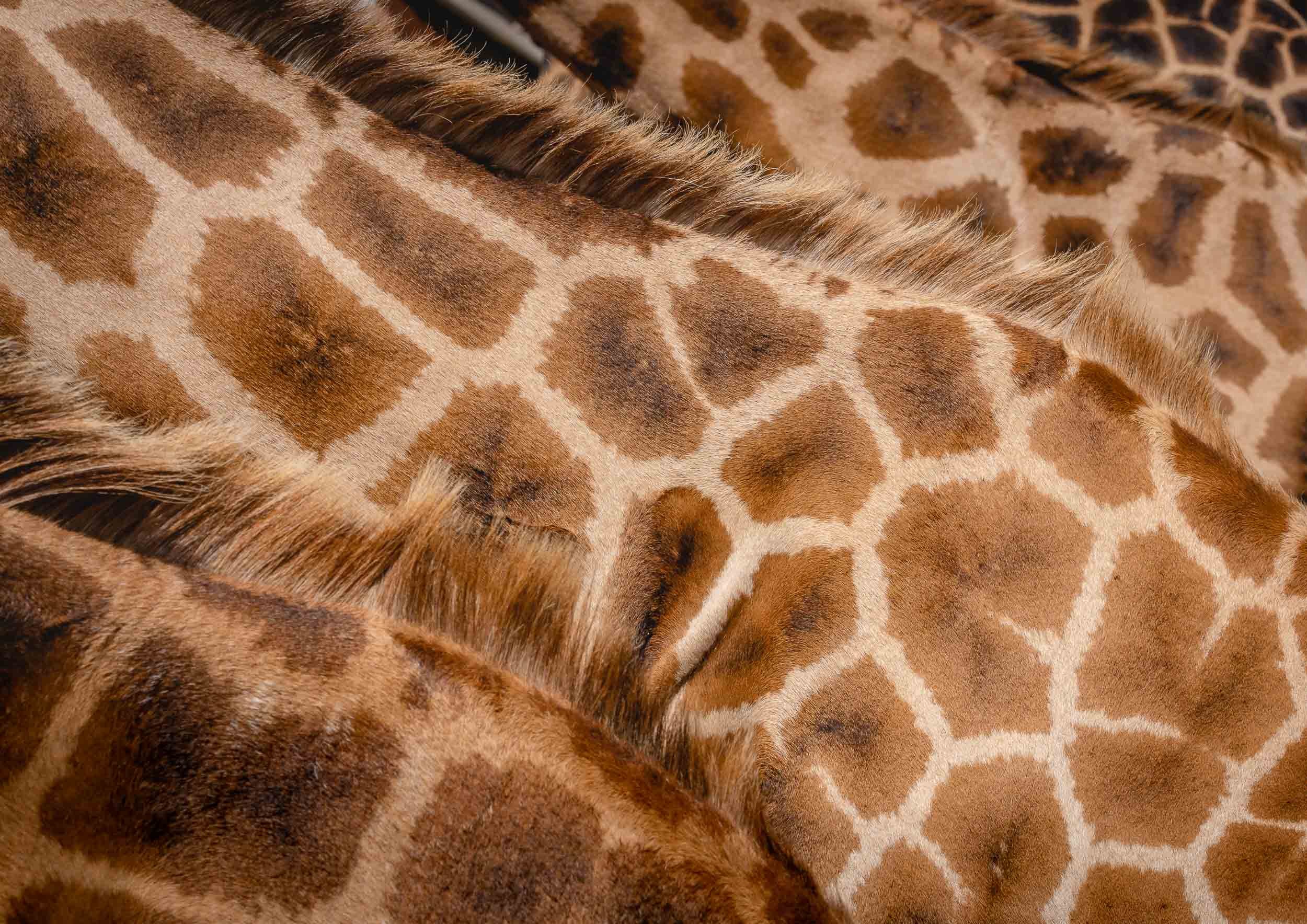
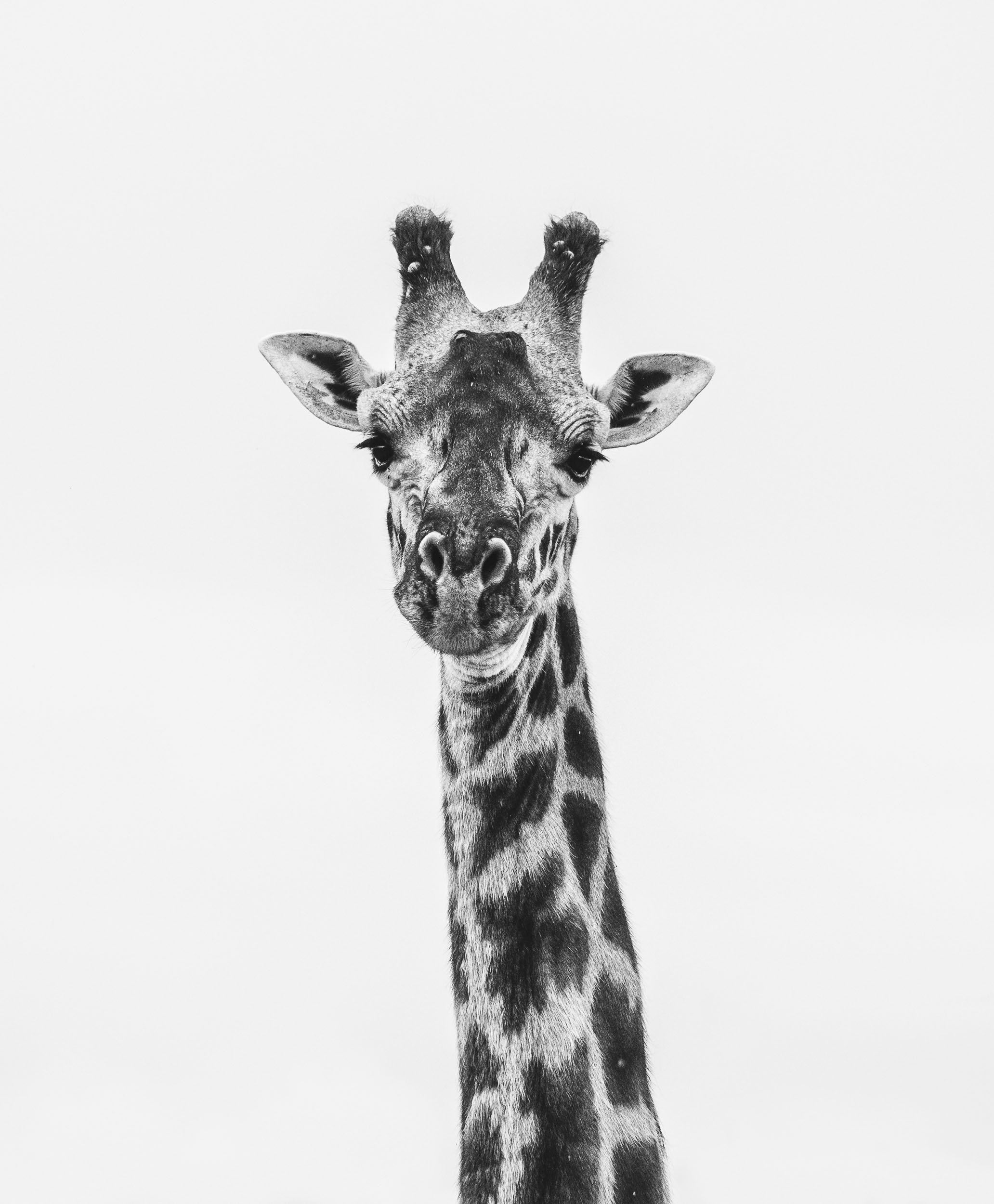
Each Giraffe has a distinct pattern owing to genetics and age.
Giraffe Manor
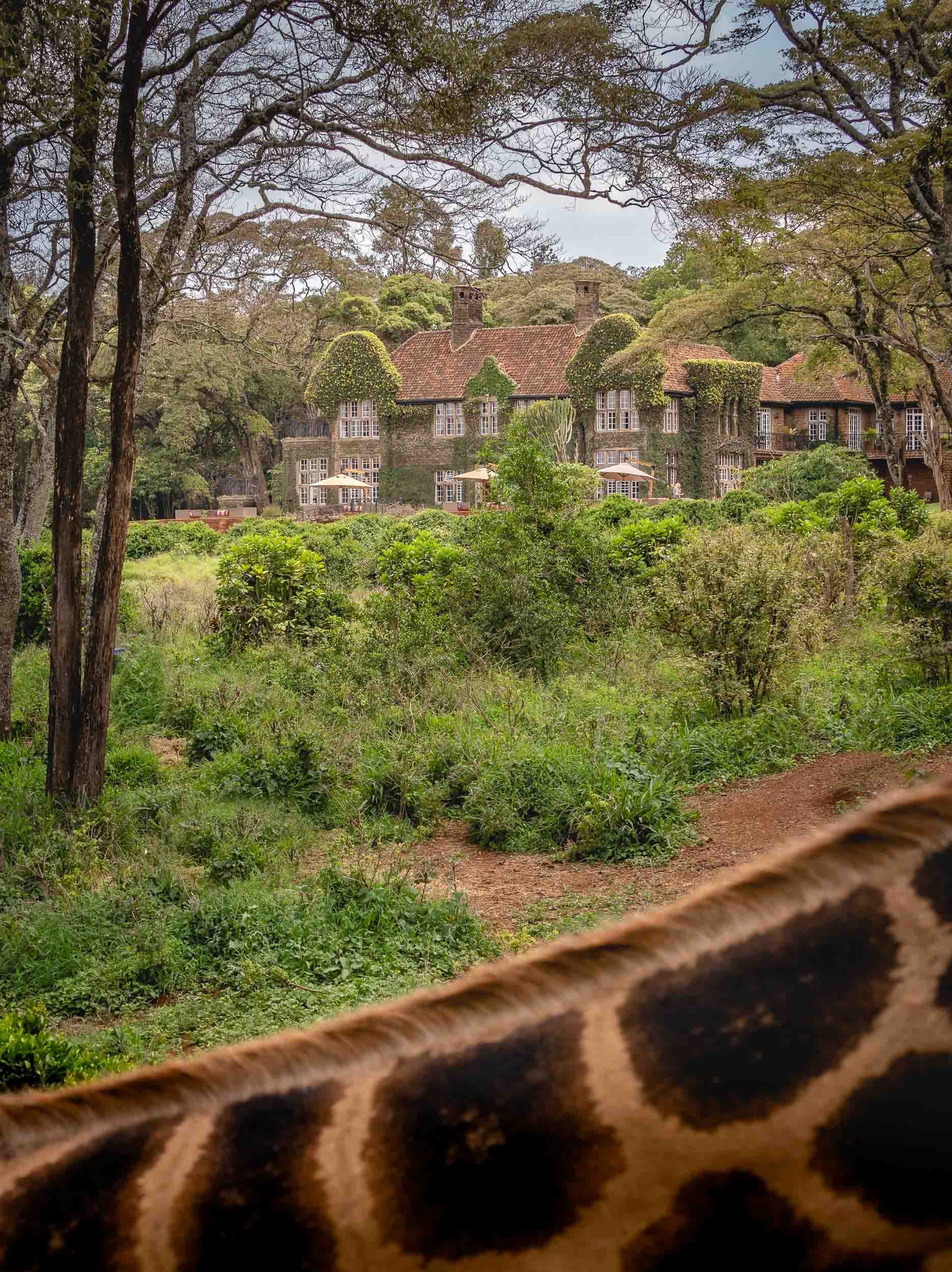
Maybe the most famous attraction in Nairobi, at least on Instagram, is this little hotel that is part of the centre, due to its many viral videos of the Giraffe looking through the window during breakfast time.
Exploring the City
The last few hours of Day 1 in Kenya were spent on a walk through the city, and a view from above.
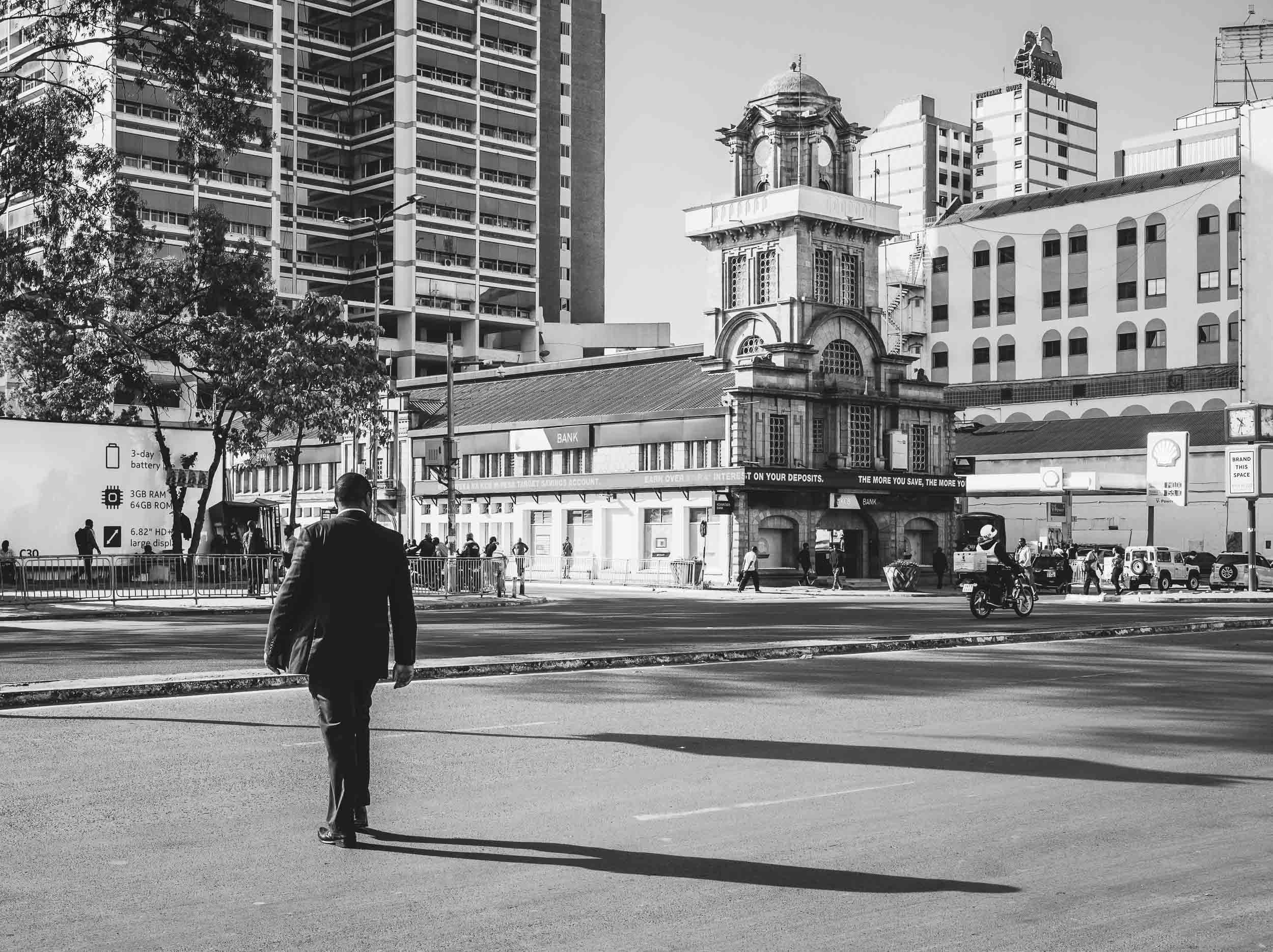
Kipande House
The 1913 building is one of the oldest standing structures in Nairobi and used to be the location where Kenyans were once required to be registered and issued with identity cards.
City Market Building
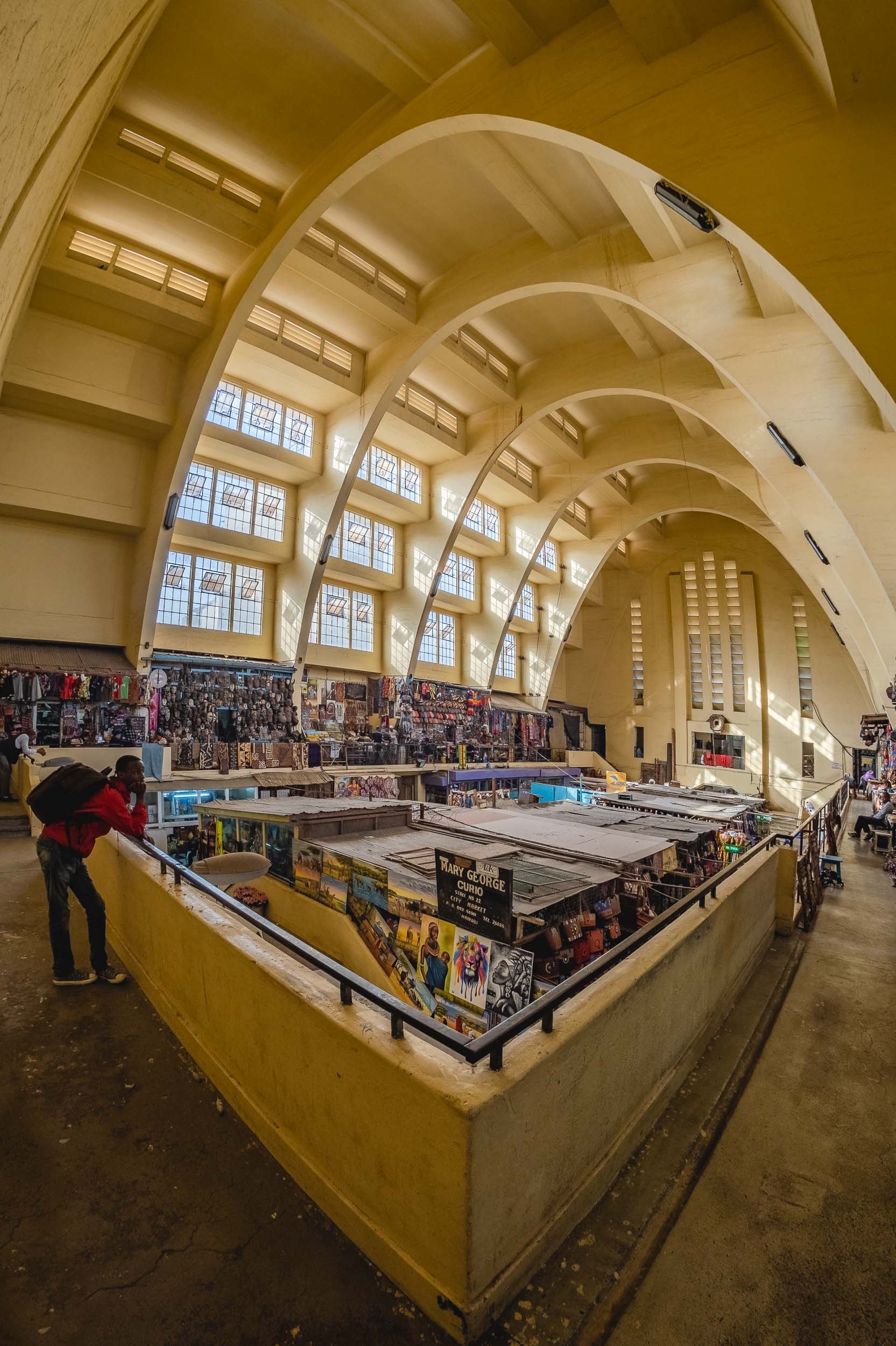
An example of green architecture with provisions for natural light and ventilation in clever arrangement, the building is very similar to London's Lawrence Hall.
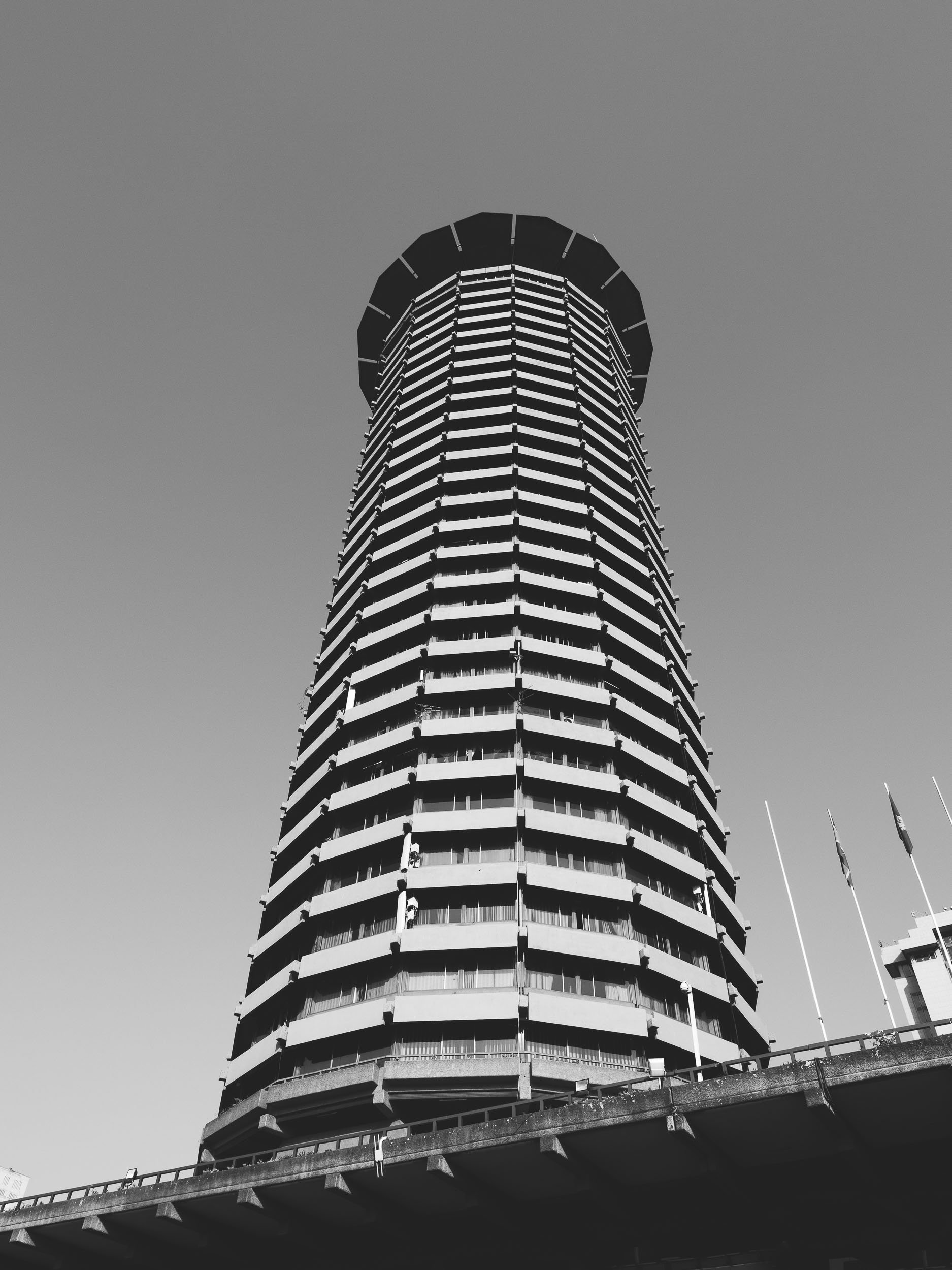
Kenyatta International Conference Centre
Nairobi's previous tallest building has an accessible rooftop, which was obviously on my list for some bird's eye views of the city.
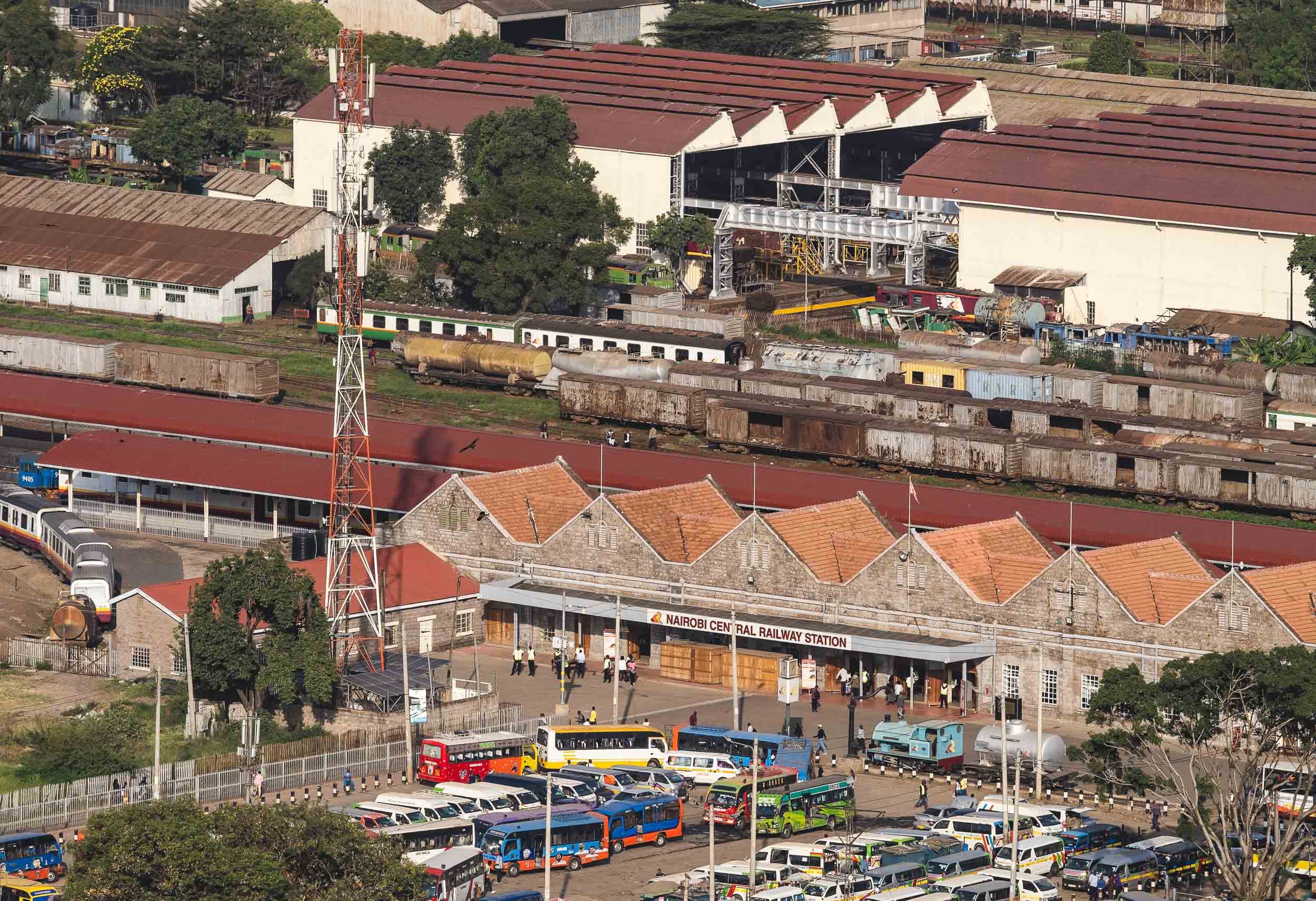
Railroad
The 1899 Nairobi Railway Station, also home to the city's first stone building in 1904. Today, the majority of trains run from the new station outside the city centre.
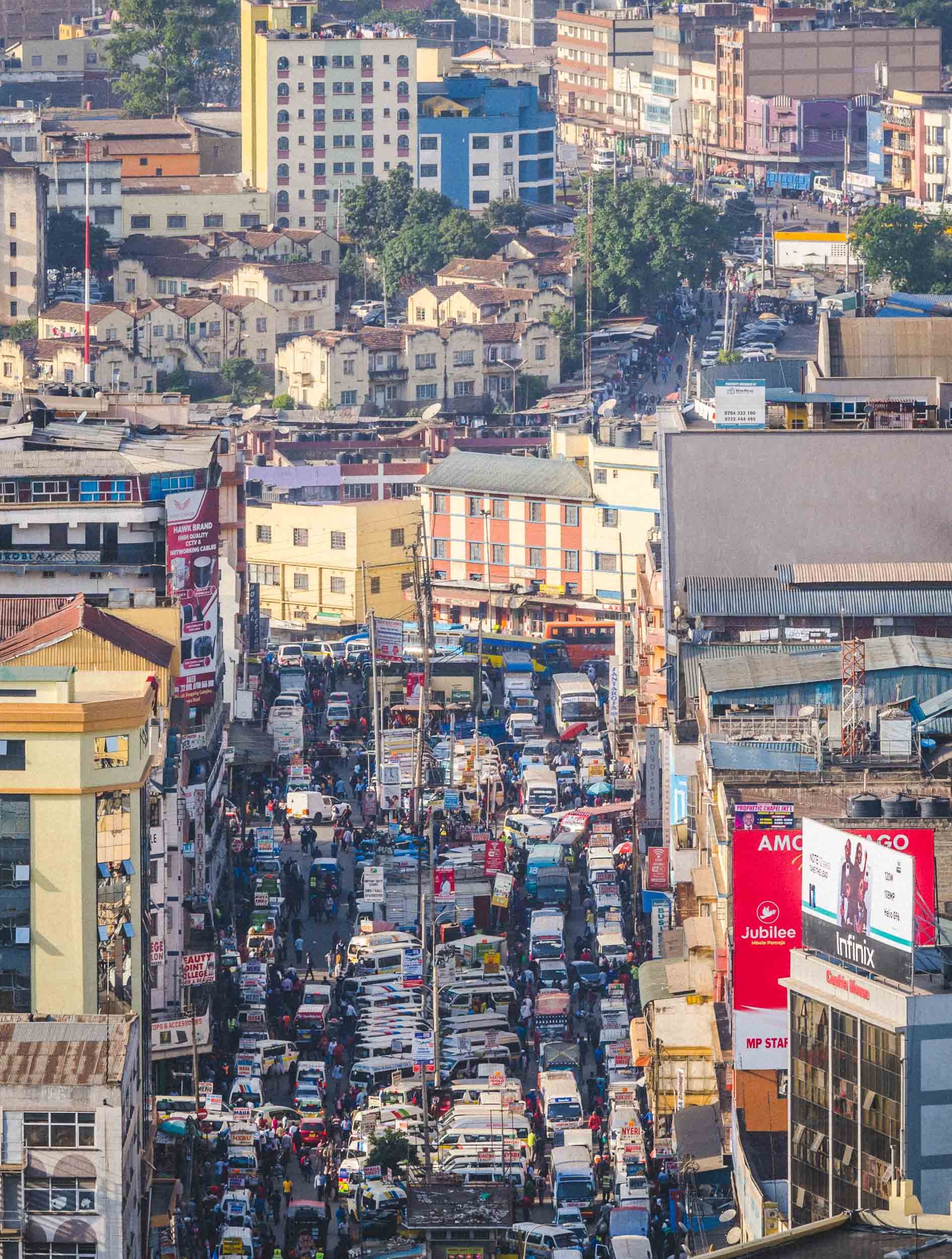
Transport
One of the many public bus hubs in the city, with the typical mini vans.
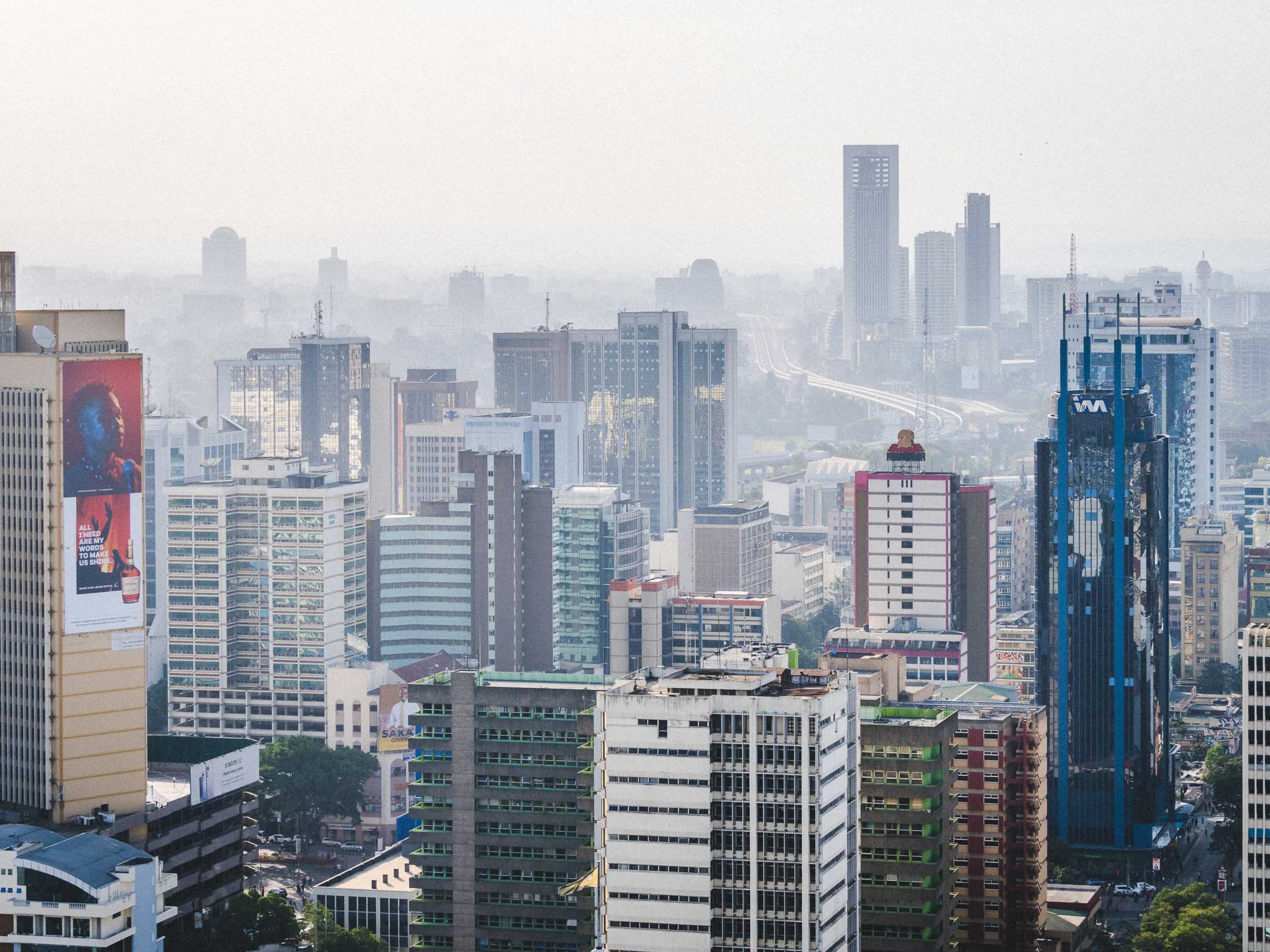
Skyline
Nairobi experienced one of the highest growth rates in Africa, with its metro population reaching more than 10m.
Onwards to Amboseli
After my day in Nairobi, I spent 3 days in the Amboseli National Park. I came for the elephants, and I did find them, but in a way that was much more incredible than I had imagined.
The Kilimanjaro
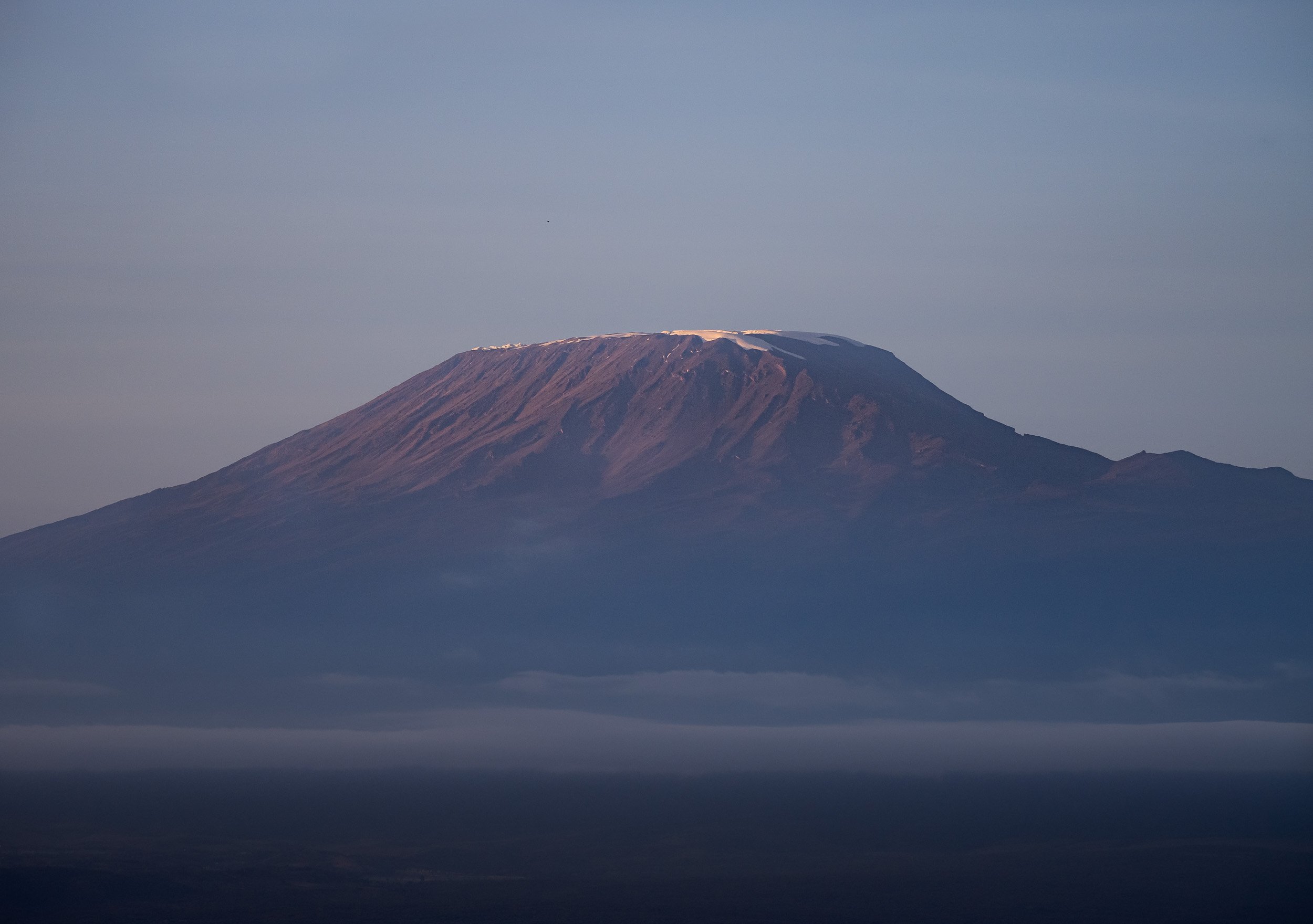
Africa’s tallest mountain and the tallest free standing mountain in the world, with its Kibo peak reaching 5895m, is actually not located in Kenya, but the views from Amboseli are some of the best you can get. That is, assuming the dormant volcano’s highest portions aren’t covered in clouds, as does happen frequently.
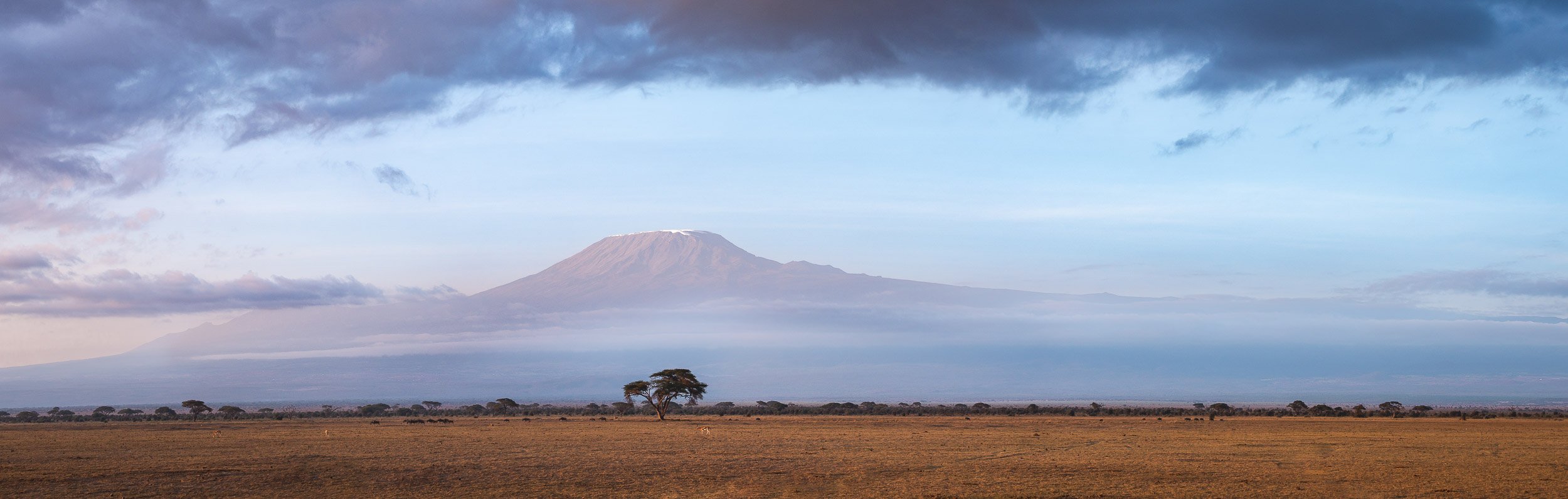
Icey Times
The ice glacier on the tallest peak has gradually receded, and is now less than 2 sqkm. It is estimated that by 2060 no ice will remain on the Kilimanjaro due to global warming.
Gentle Giants
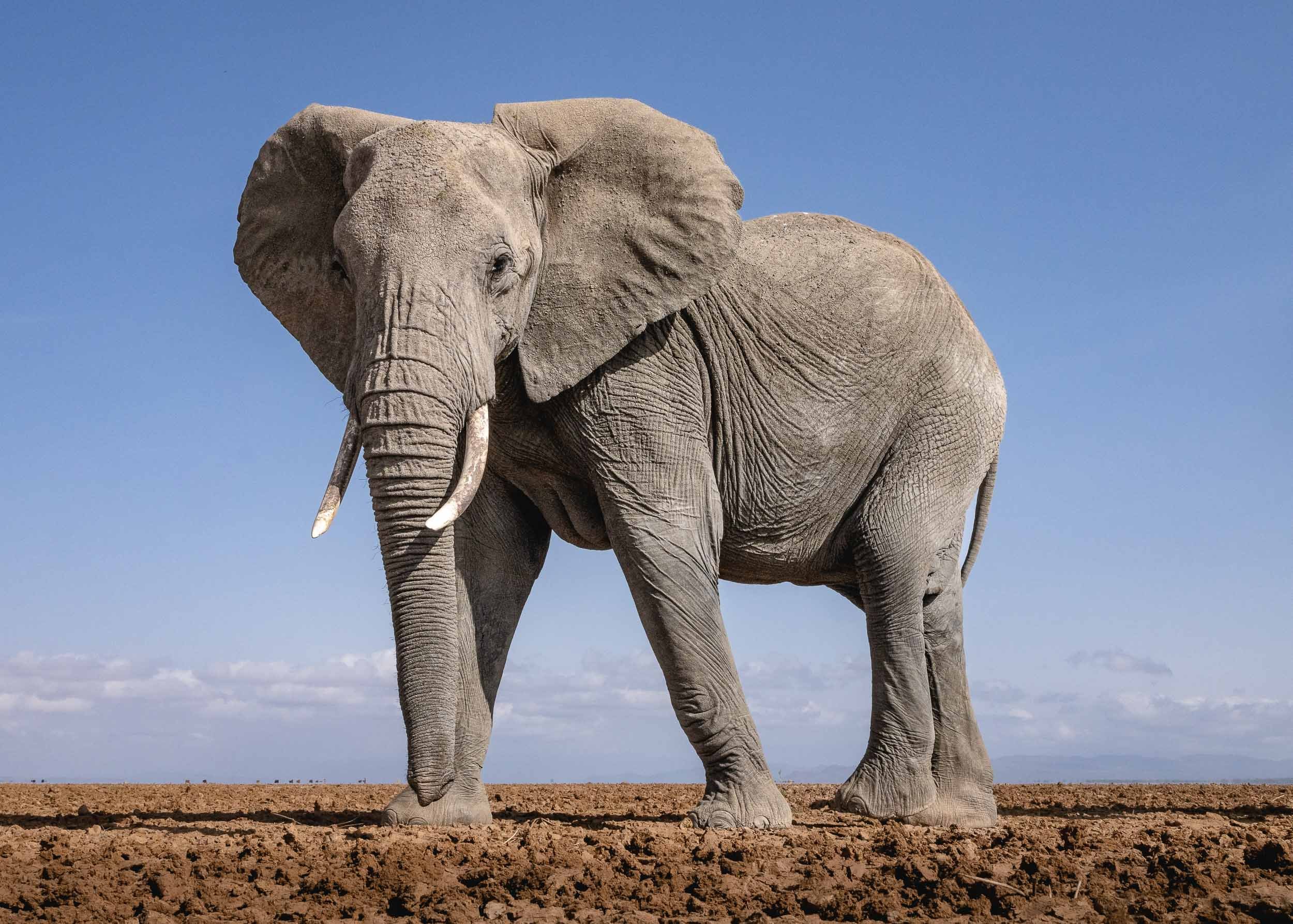
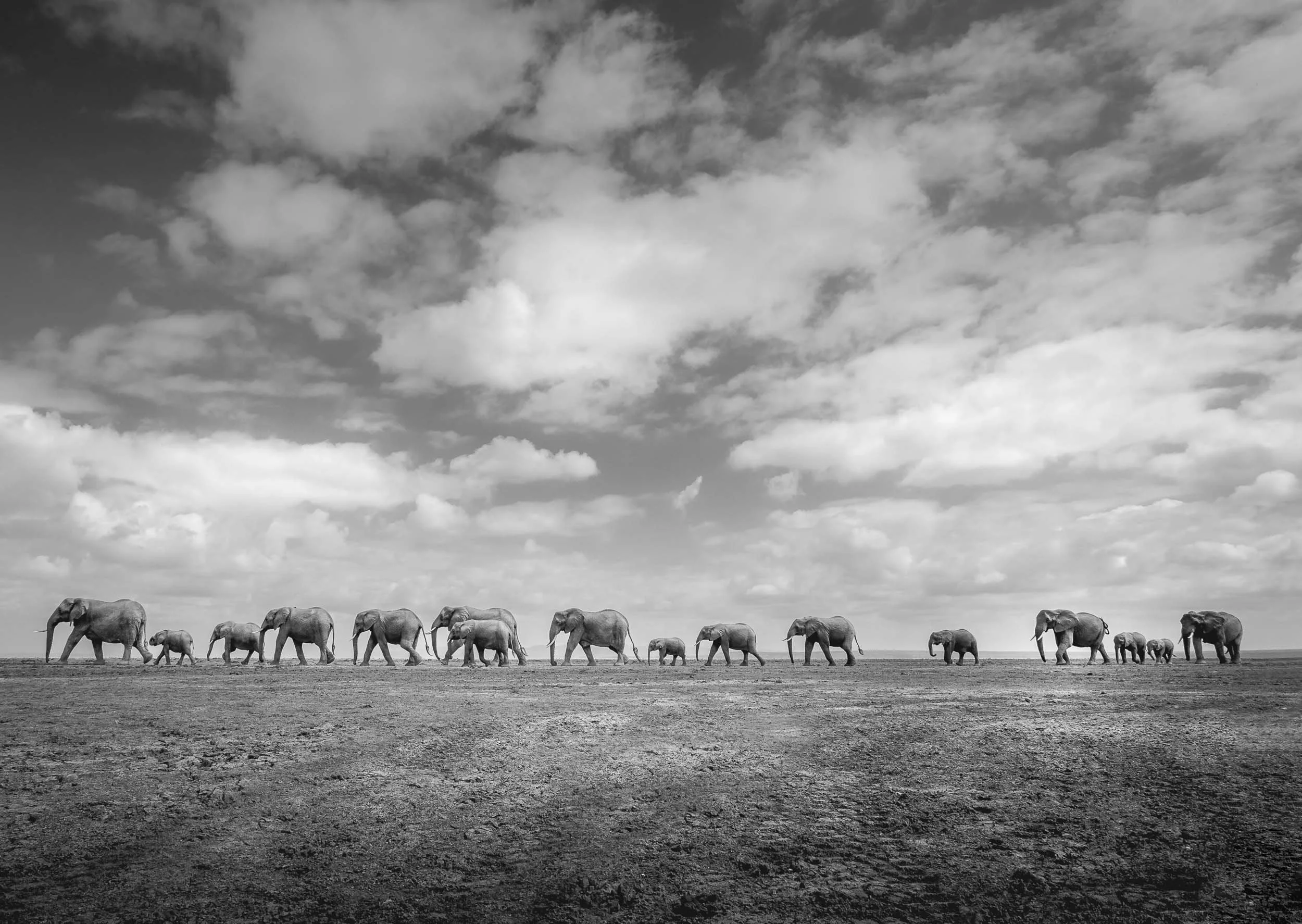
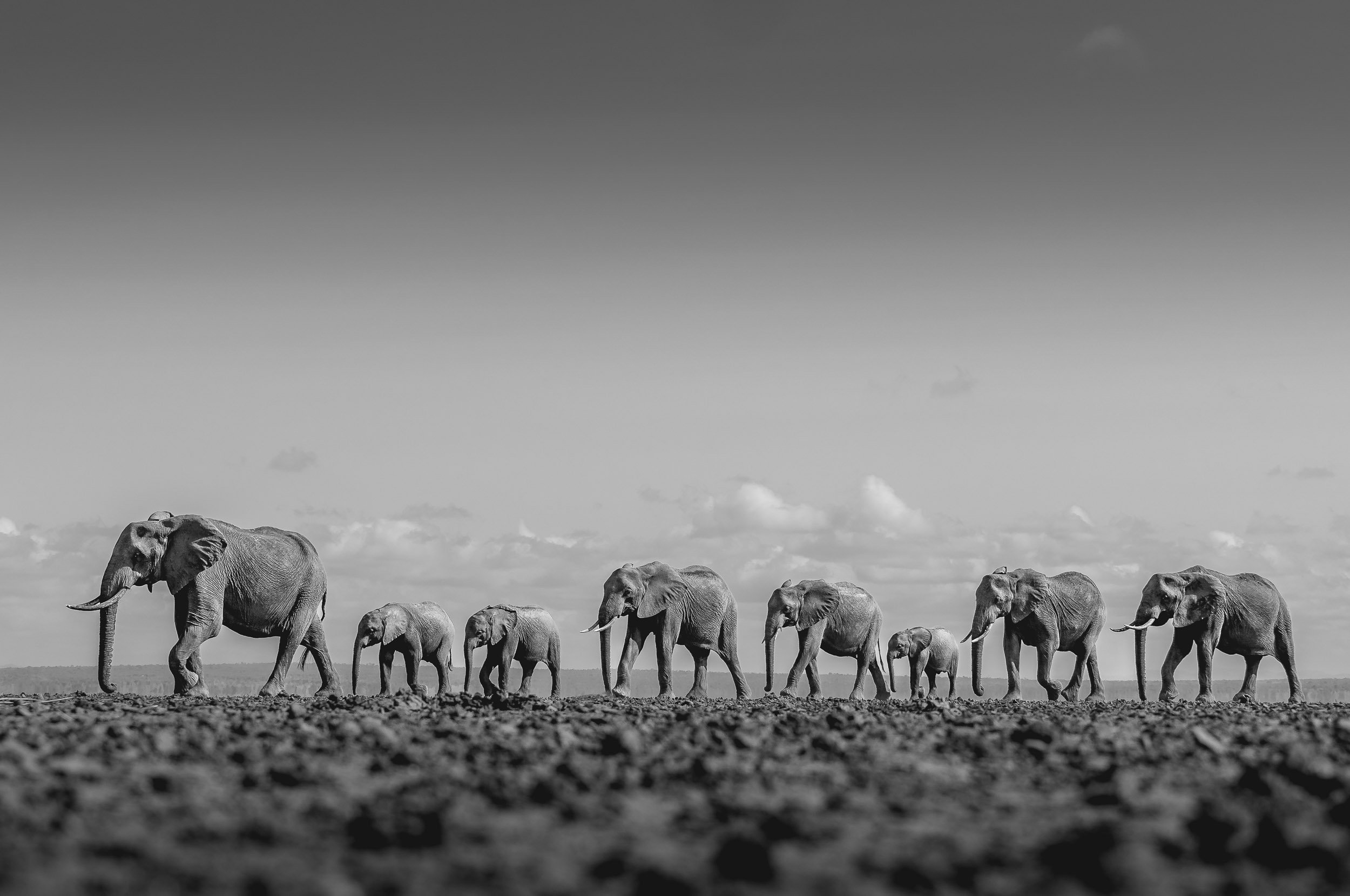
Right after landing at the park’s small airstrip in the morning, my amazing guide Dickson took me into the dry lake bed of Lake Amboseli. This location is home to a daily ritual for large elephant families: They cross it from the forest areas on one side towards the swamp lands on the other. With a bit of patience you can photograph their amazing formations, and if you’re brave enough and have the right guide, you can do so from the ground for that extra special perspective.
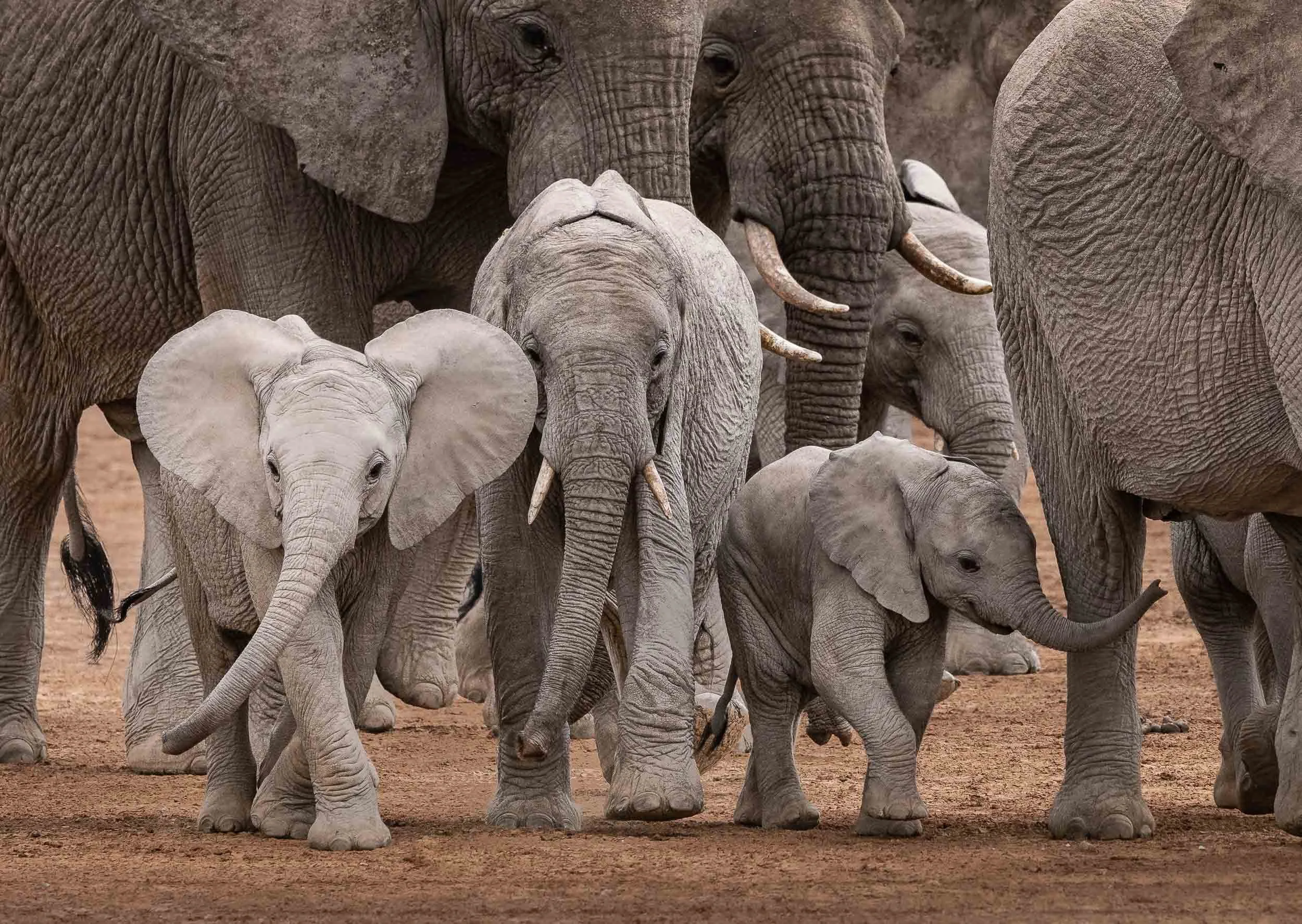
Dry
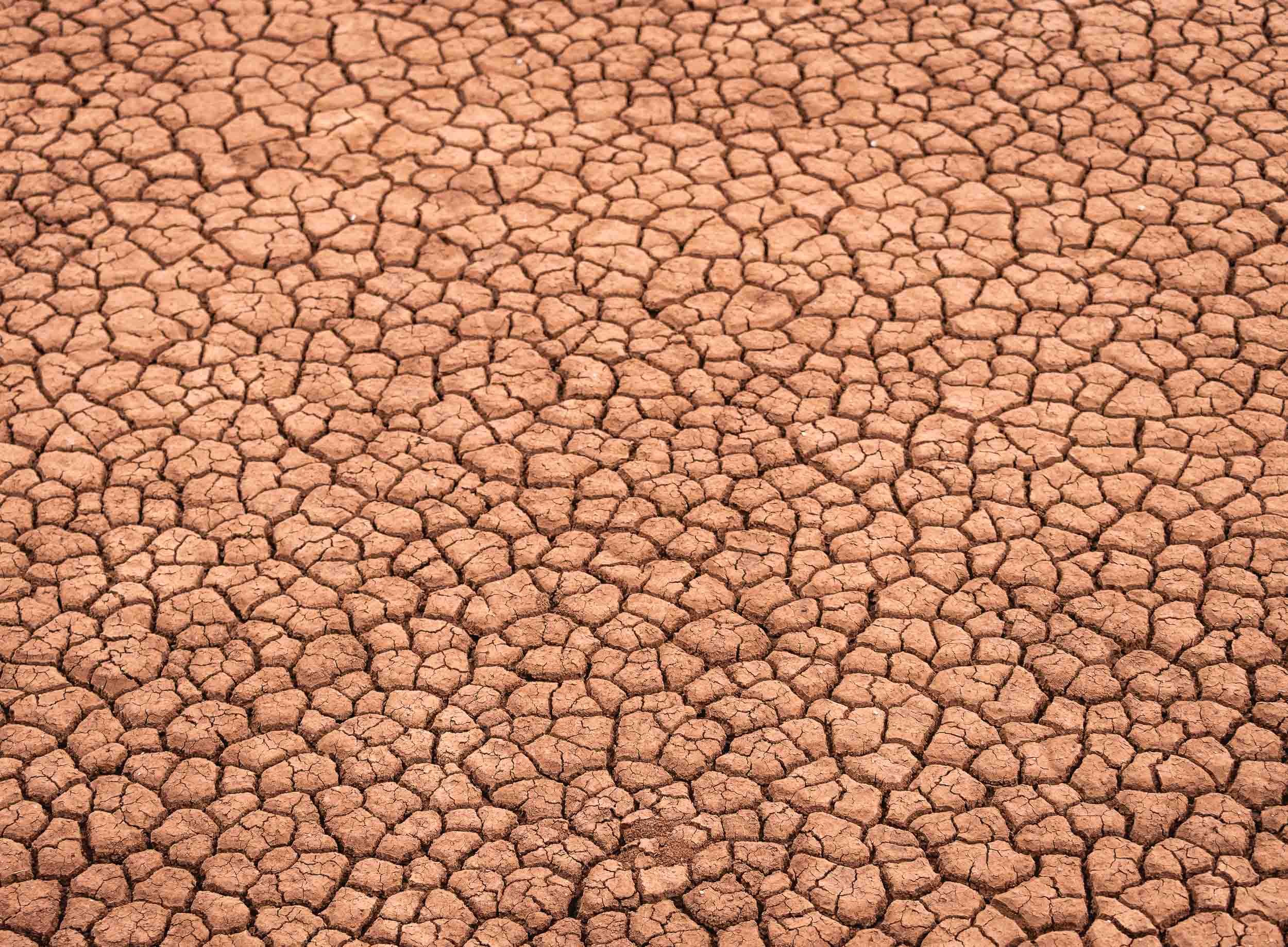
The grounds on the edges of Lake Amboseli, which only carries water during extended rain periods.
Abandoned Lodge
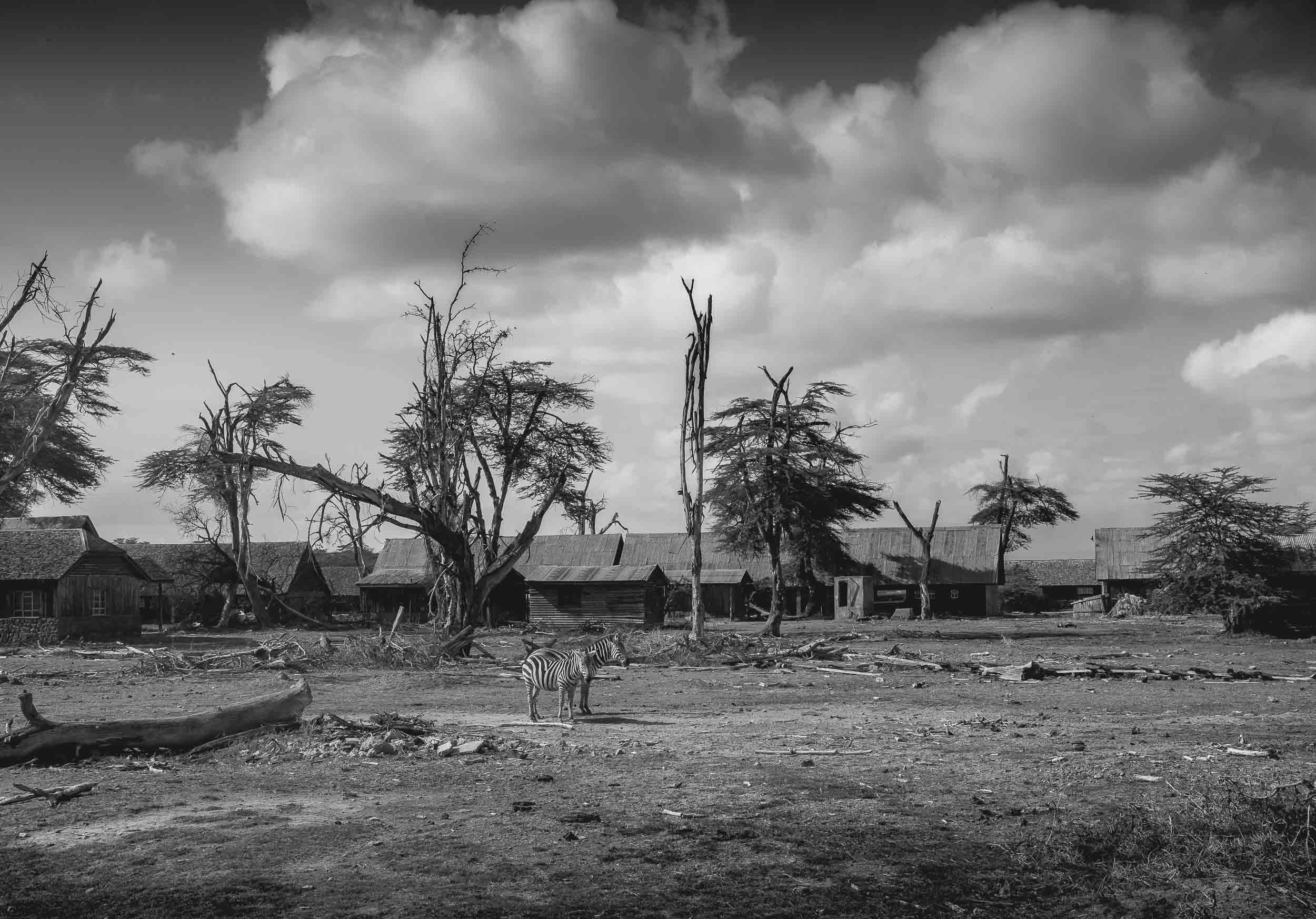
Amboseli is also home to this abandoned lodge, which closed in 2008 and since then makes for some surreal images.
Craig - Africa’s Largest Tusks
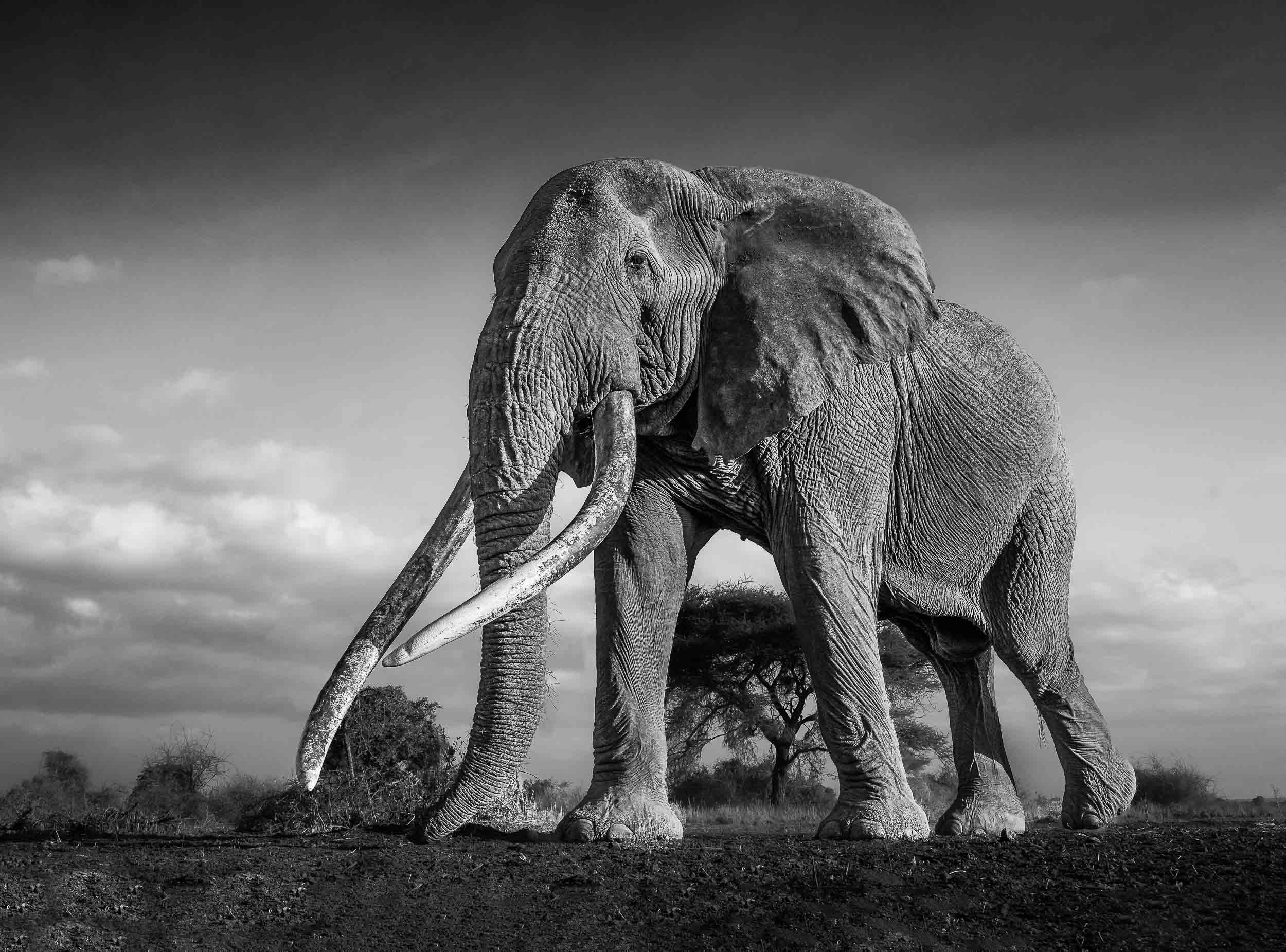
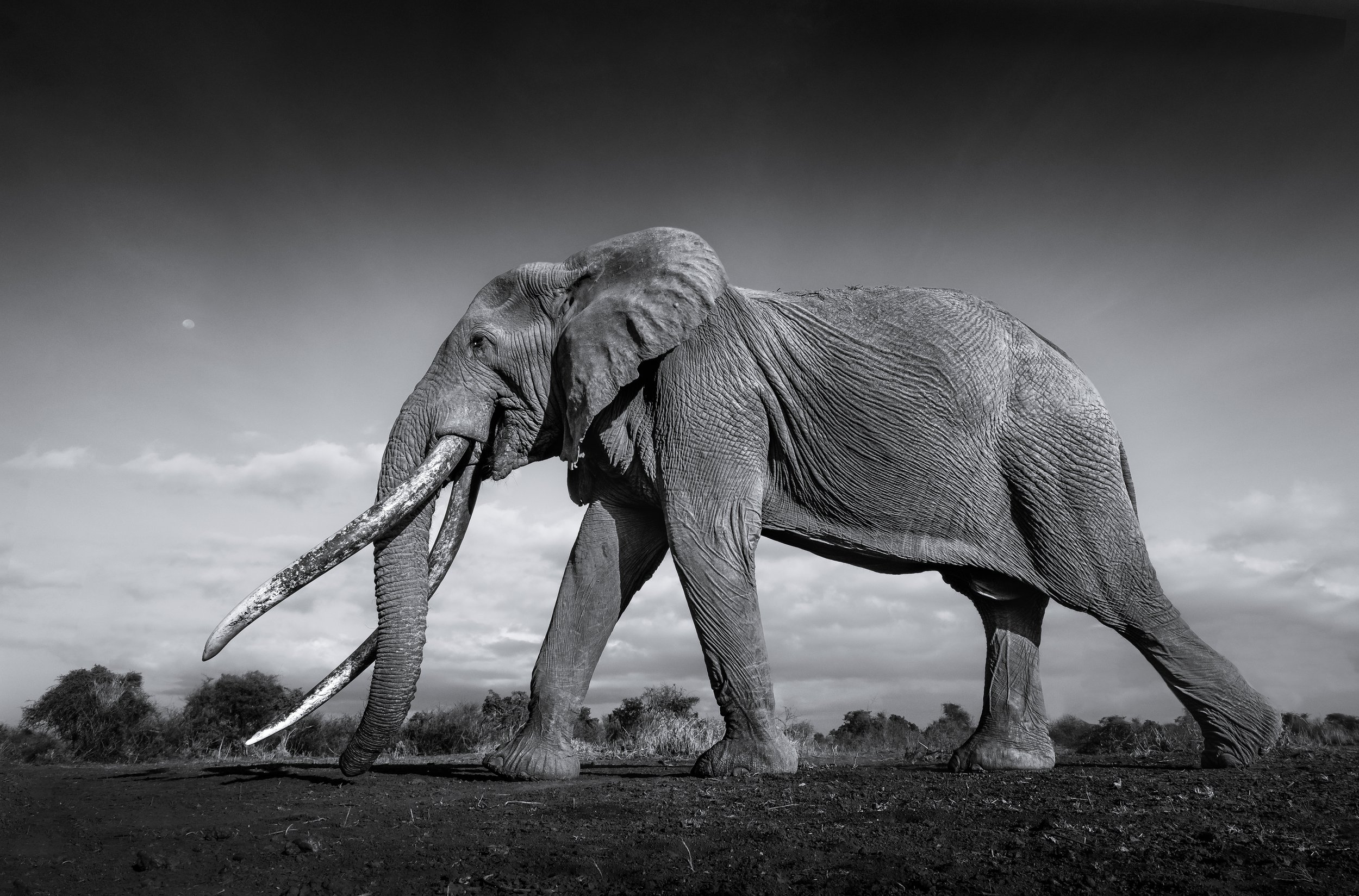
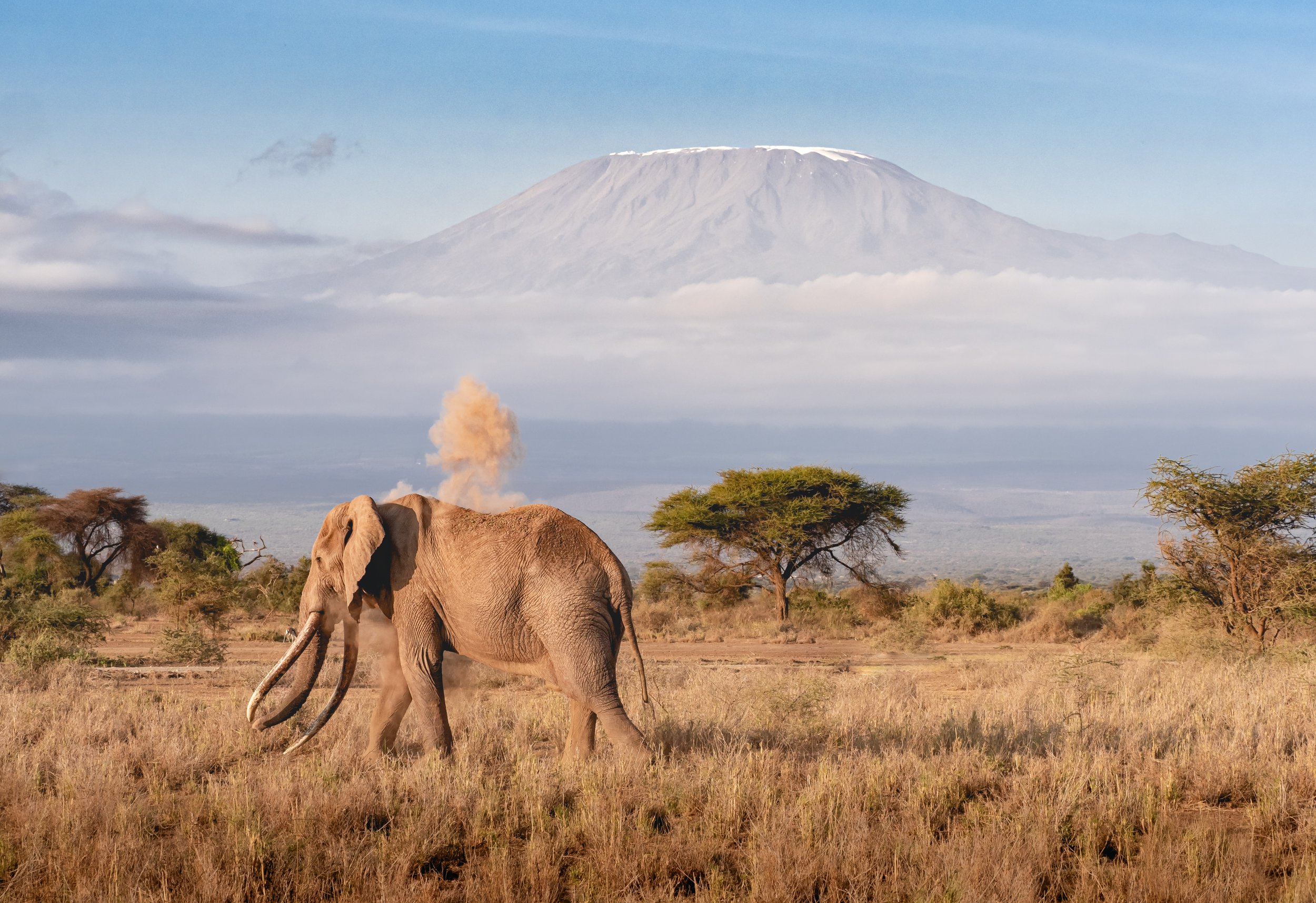
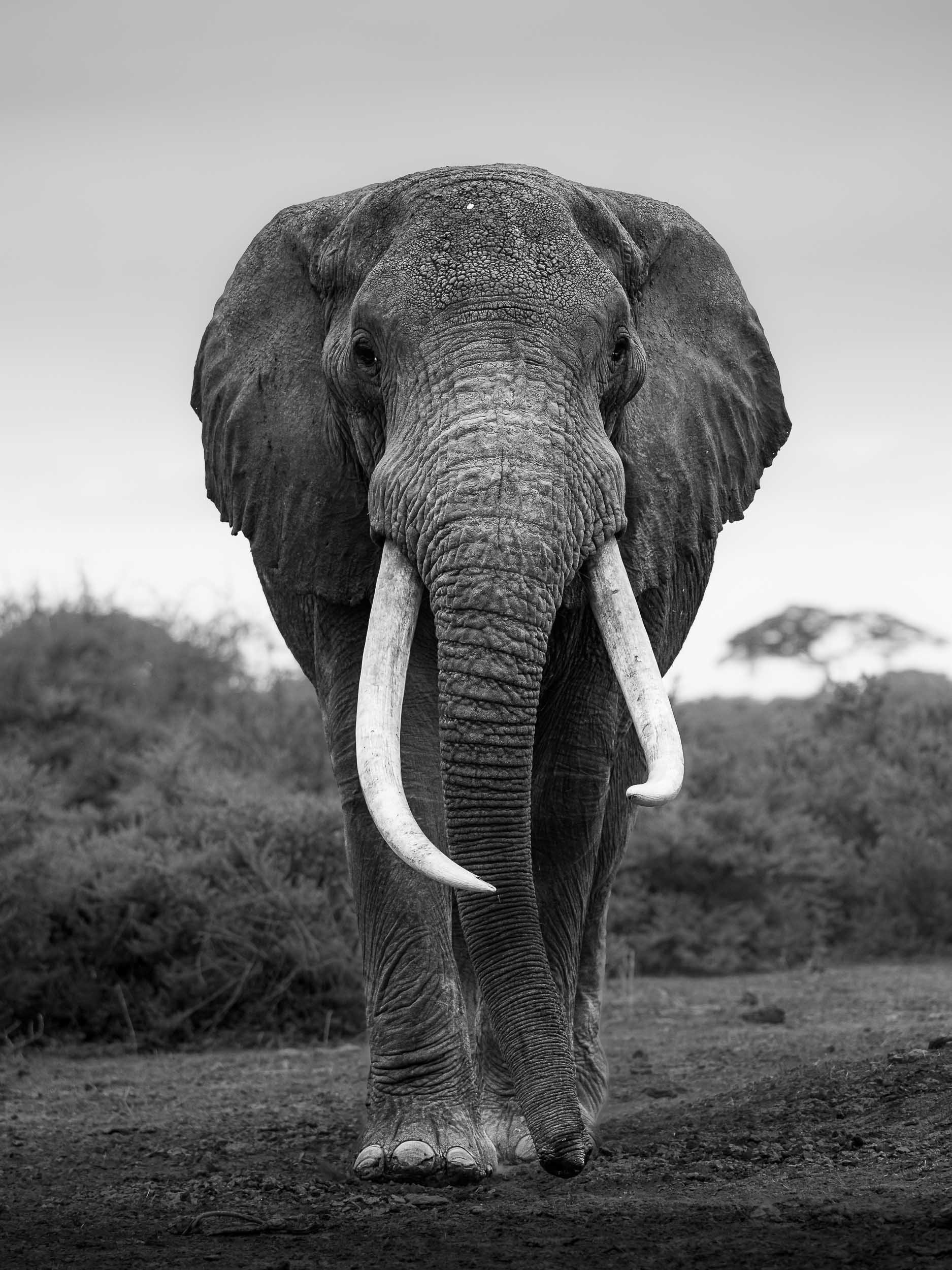
Amboseli and its surrounding areas are also home to a very special kind of elephant: The Super Tuskers. Bulls whose tusks weigh in excess of 100 pounds, often reaching all the way to the ground. There are said to be only just over 20 left on earth, spread between this area of Kenya and the Kruger park in South Africa. The most famous one of them is probably Craig, a 52 year old bull believed to have the largest tusks of any African elephant alive today. When I heard of his existence, seeing and photographing this magnificent creature became the highest priority of my time in Kenya. However, elephants can roam large distances daily, and there are no boundaries stopping them from crossing parks and even countries, as they often venture into Tanzania.
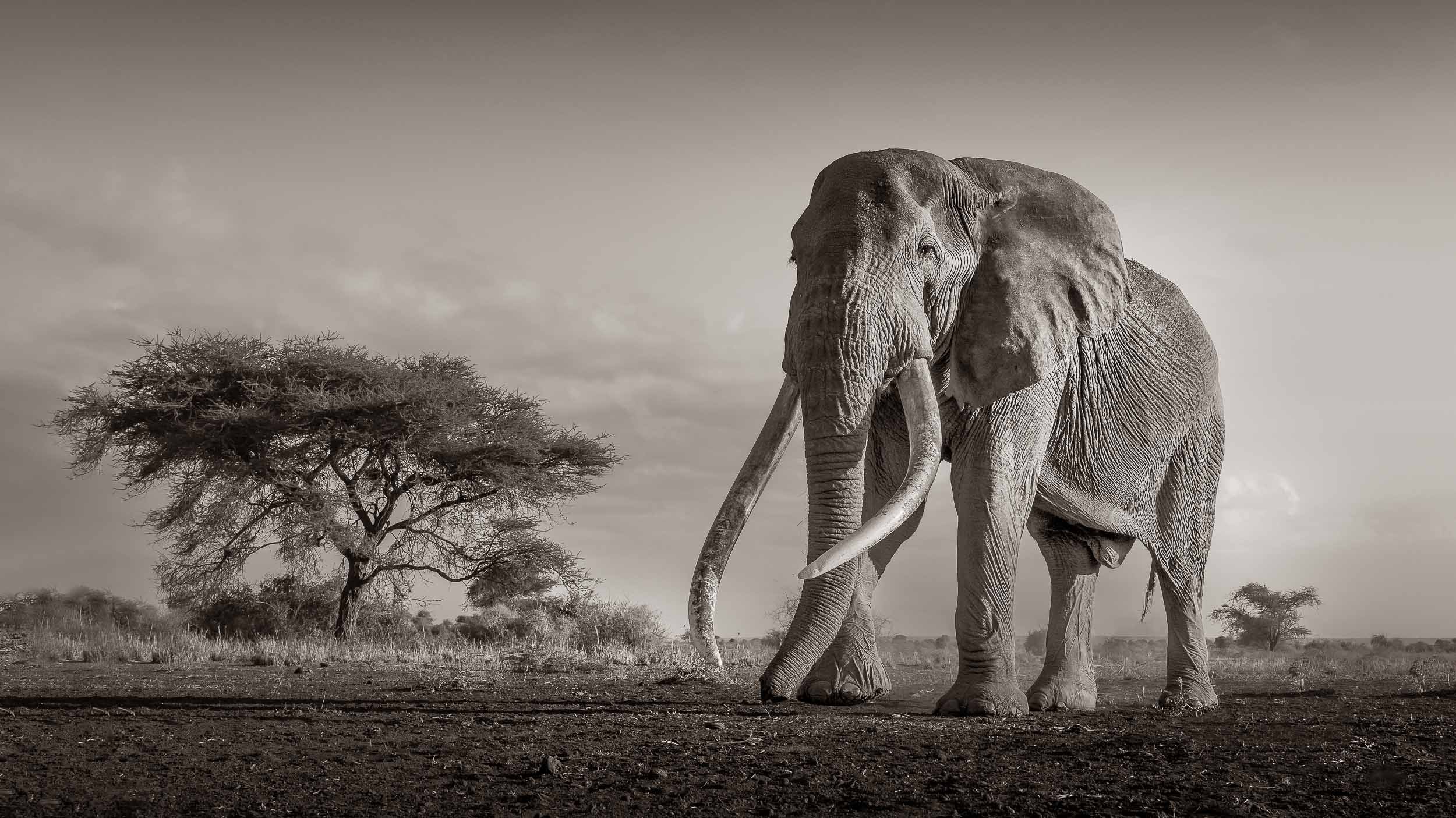
Luckily, an elephant like Craig is closely monitored by the local Maasai population and many rangers in the park, given the high risk of poaching - his tusks are easily worth $25,000 each in their raw form from what I was told. This means with the right network and a little bit of incentive, you may be able to hear of his whereabouts, or at least get a rough idea. For us, this meant a 1 hour drive in the very early morning into the bush to a nearby private concession. It was worth it…
My spot as we found Craig looking for the best trees to feed on, and the resulting photo below.
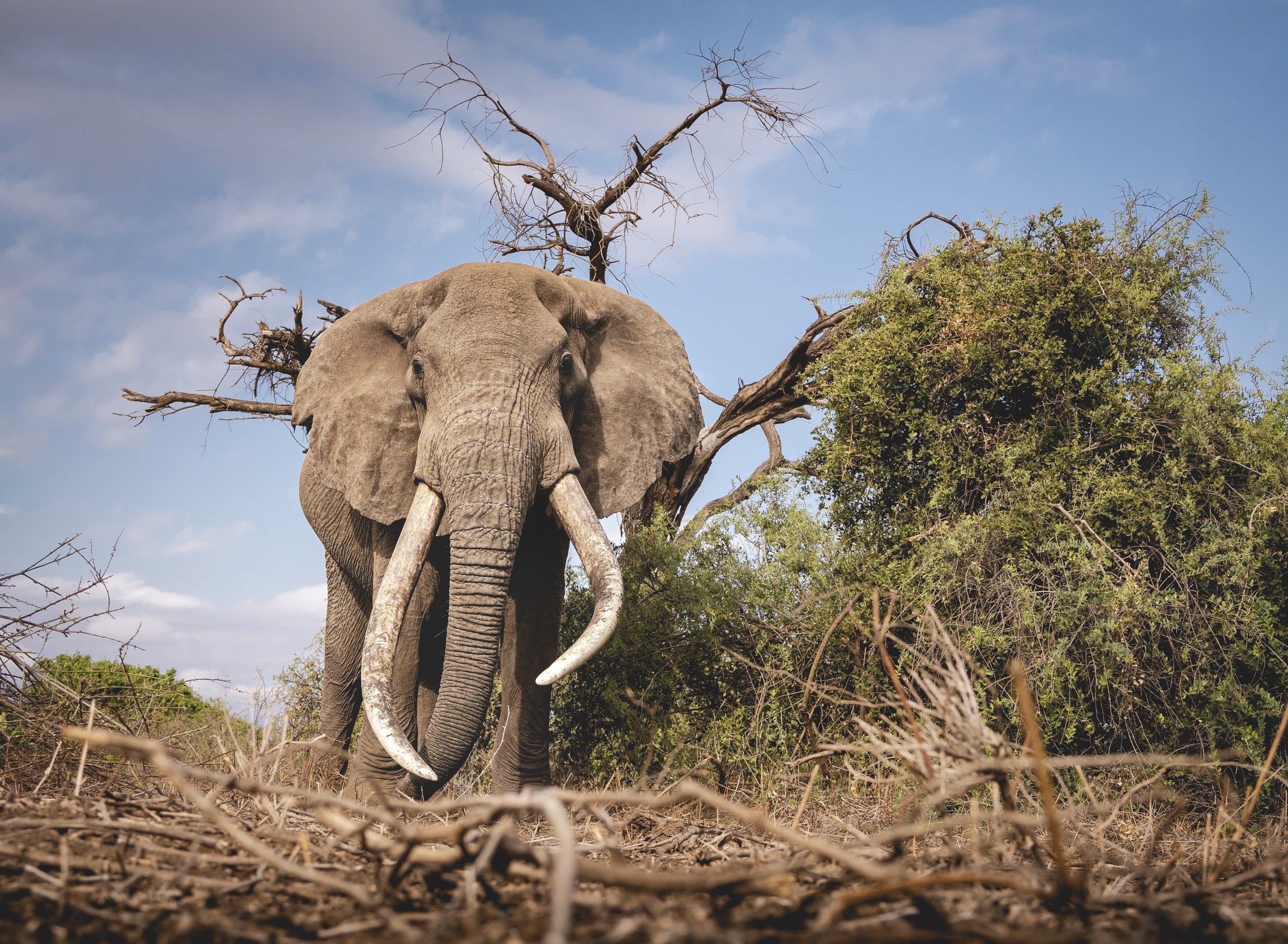
The feeling of sitting on the grass while an elephant of Craig’s size, with his incredibly large tusks scraping the ground, walking by slowly with his calm and majestic demeanor is indescribable and was definitely one of the most memorable experiences of my life.
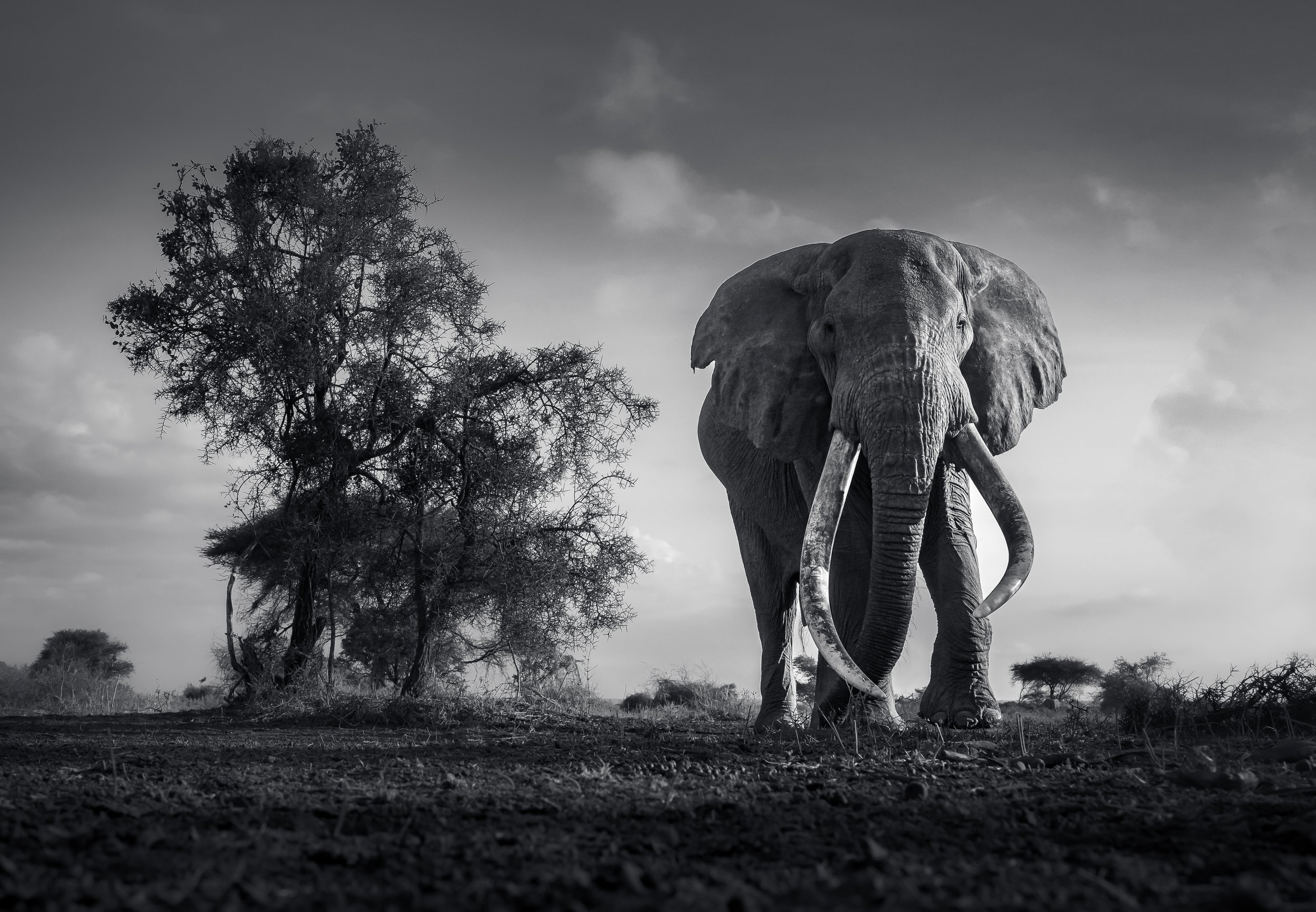
Peaks of Nature
Craig blowing dust as he walks past the Kilimanjaro
A few more Impressions
Granted, not much could top the experience of observing the elephants in Amboseli, but the park is home to beautiful views and a large variety of wildlife.
A Lasting Impact
I’ve certainly had an appreciation for the sheer size and the social behavior of elephants prior to my visit to Amboseli, but this experience has given me a totally new perspective of these gentle giants.
By The Waterhole
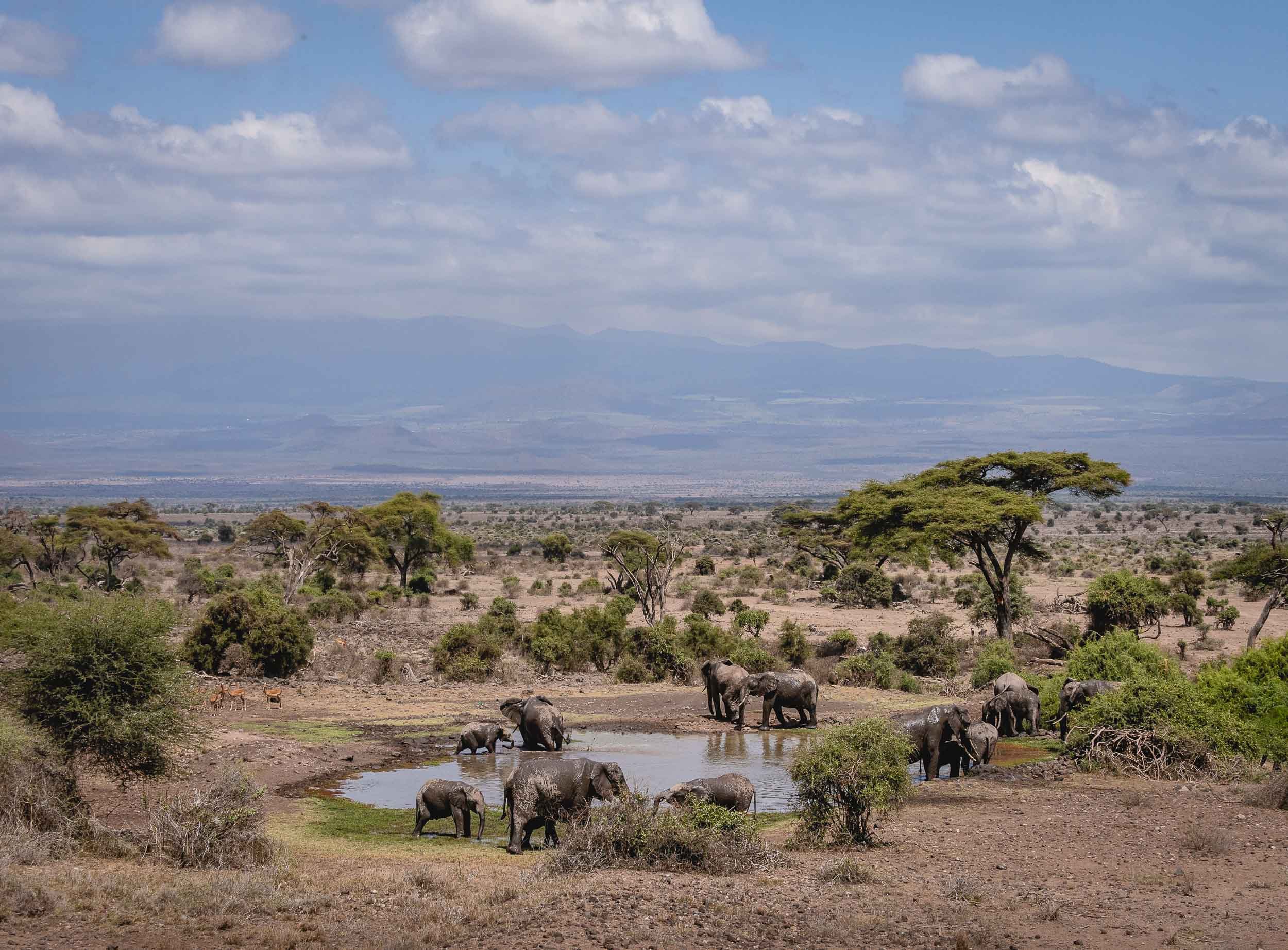
Around midday, elephants sometimes come to drink at the waterhole of the Elewana Tortillis Camp I was staying at, and this can be your lunch view.
Successors
While there are only about 20 Super Tuskers left, a number of bulls are growing to be their successors, such as this big boy called Esau.
Let’s hope that their legacy will live on for a very long time, despite the threats of human poaching and wildlife conflict - you can support their pledge at https://tsavotrust.org
Tanzania - National Parks and the Origins of Humanity
After visiting Zanzibar back in 2016, it was time to add mainland Tanzania to the travel itinerary.
After visiting Zanzibar back in 2016, it was time to add mainland Tanzania to the travel itinerary. Despite visiting Lake Natron and four National Parks as well as some of the country’s most important sites of human history, I still feel there’s a lot left to explore, particularly the lesser known southern parts. Read on for what I did manage to see, which includes incredible landscapes, amazing wildlife sightings from the ground and the air, and some of the most significant places in the development of our species.
The trip started at Kilimanjaro airport, landing with the backdrop of Africa’s tallest mountain around sunrise - as it happens though, the peak is better photographed from the Kenyan side. As they say, you go to Tanzania to climb Kilimanjaro (which I didn’t) and to Kenya to photograph it (which I did). More on that in another blog post…
Kikuletwa Springs
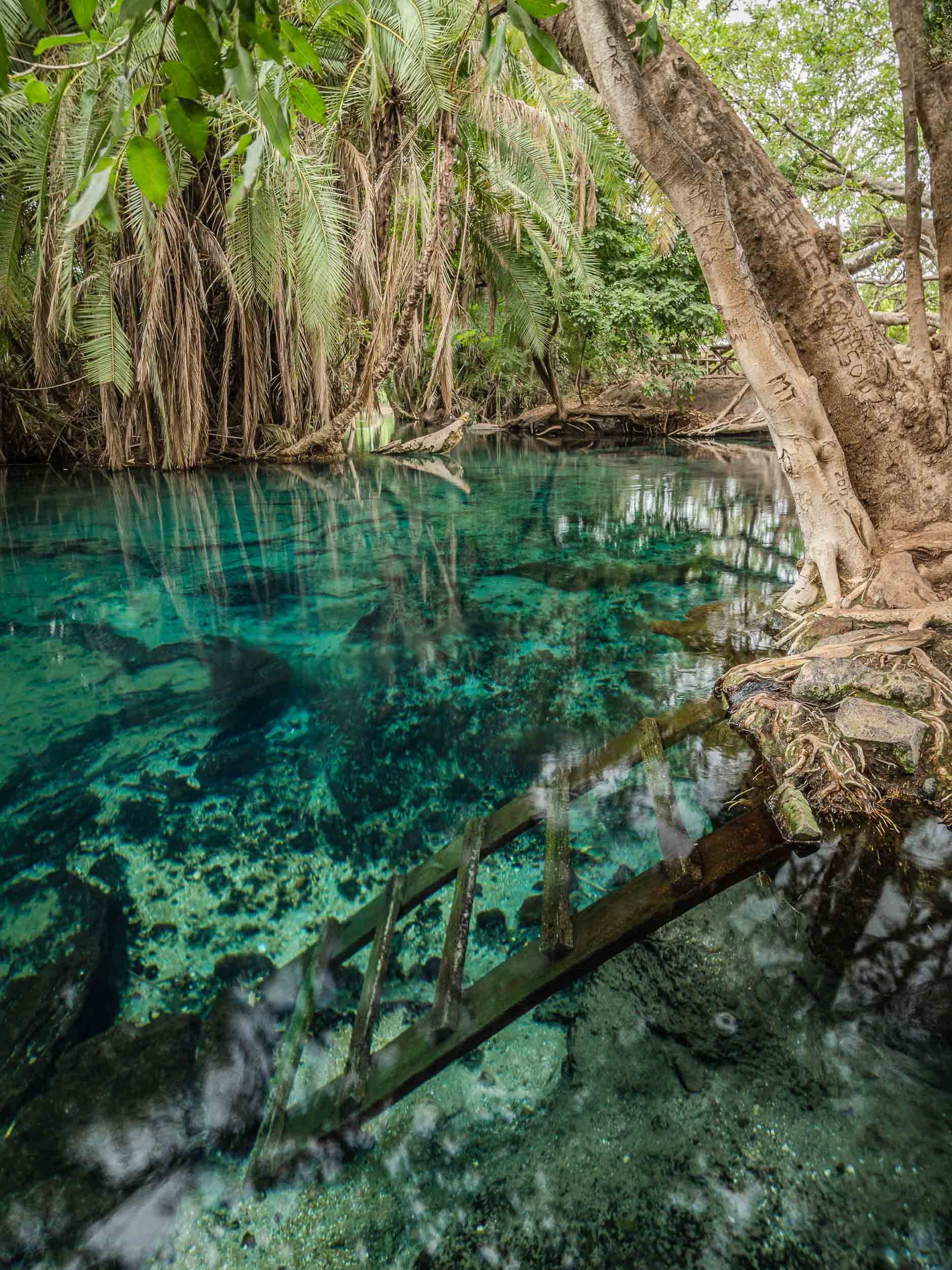
Hence, the first photos I took were of a little unknown gem east of Kilimanjaro: Kikuletwa Springs, a small hot spring which on the morning I visited was luckily also completely empty, resulting in the calm, clear, colorful waters you see below.
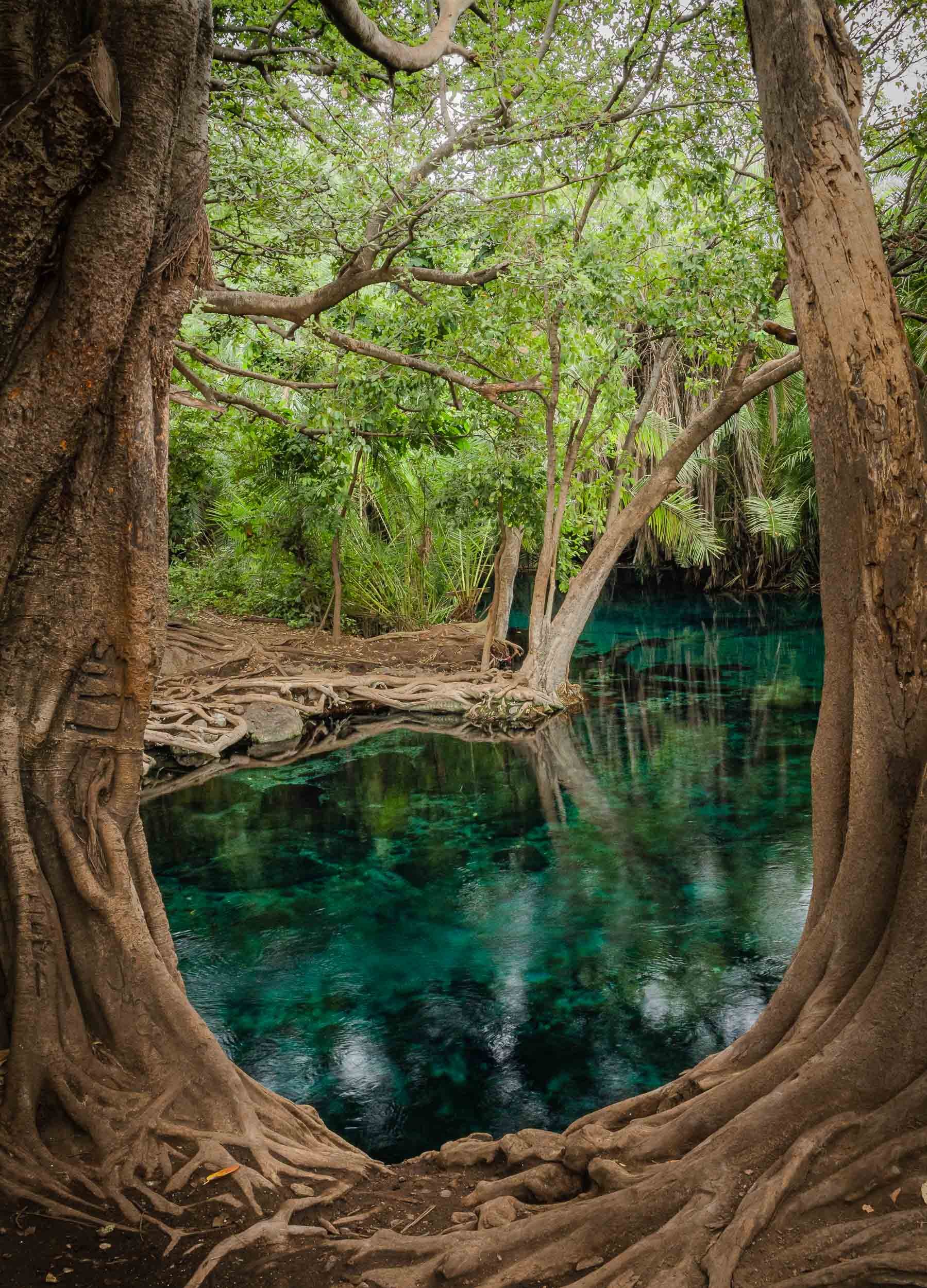
Take a look under water and see what I found…
Lake Natron & The Mountain of God
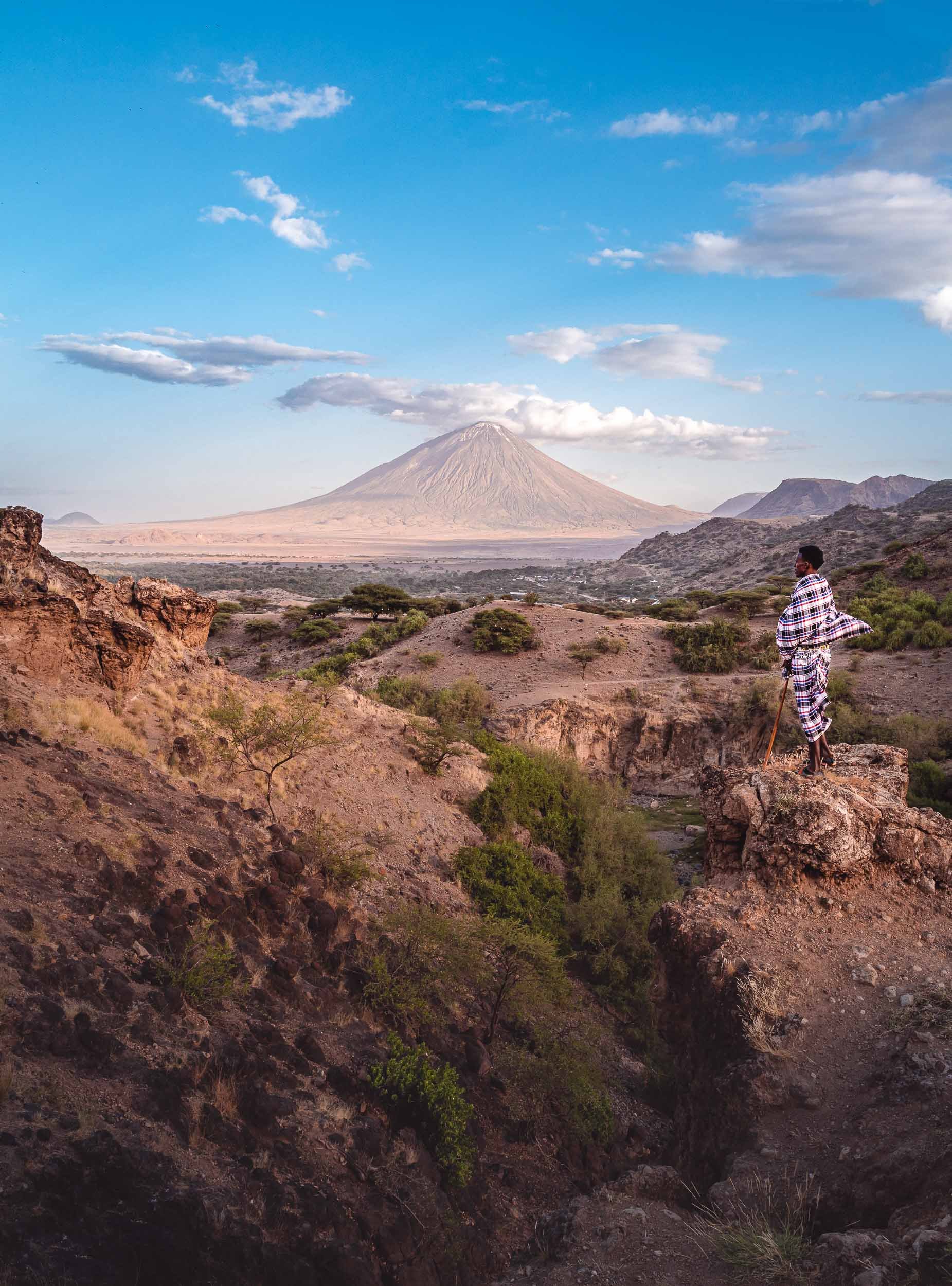
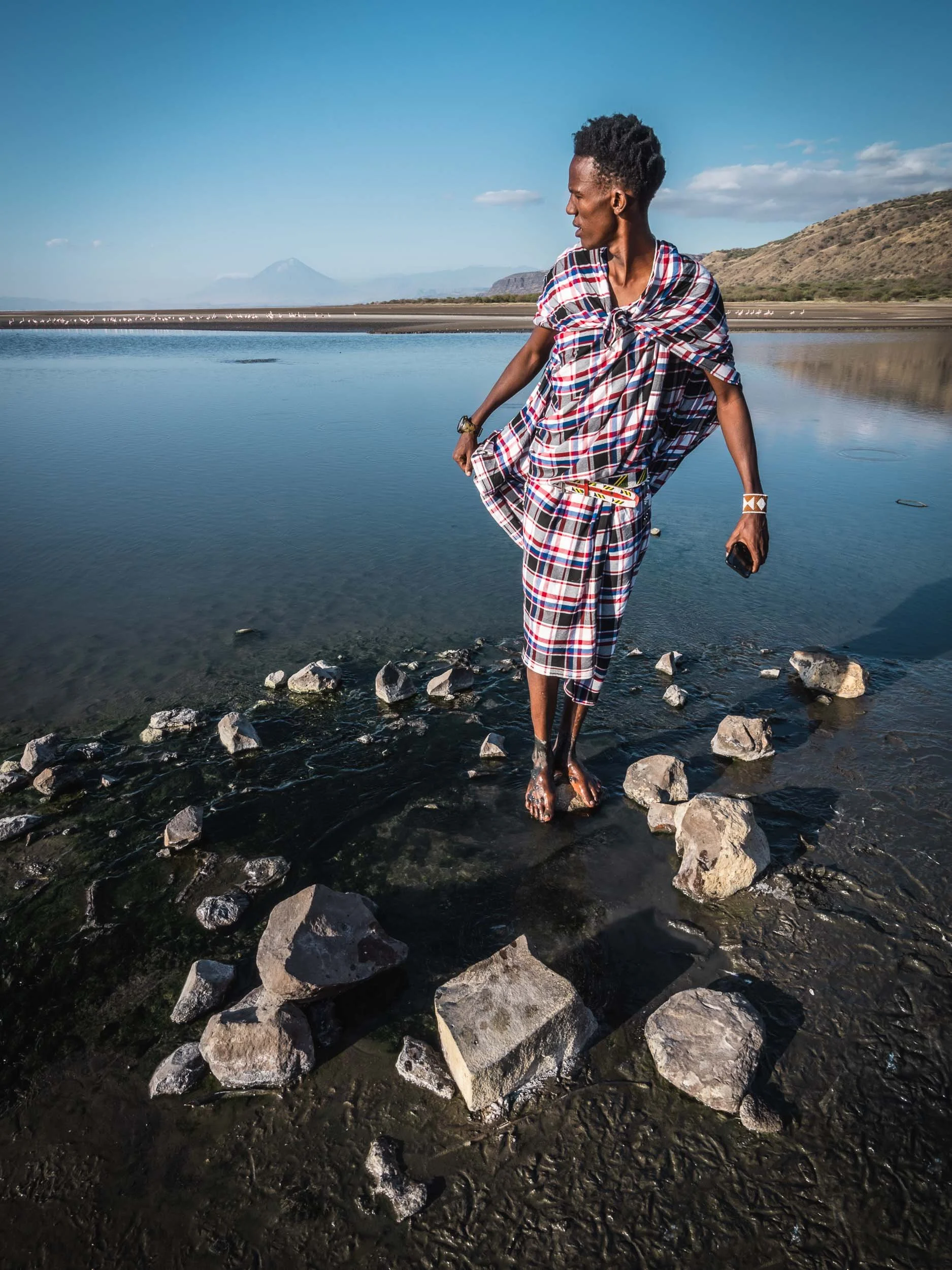
A 6h drive through mostly bumpy dirt roads brought us to Lake Natron by the late afternoon, where I spent 2 days. The area is full of incredible natural wonders to explore, which I did with my great guide Mohammad, and a local Maasai called Mwenga, who was incredibly helpful, knowledgeable and friendly - and became a model for some of my photographs in the process.
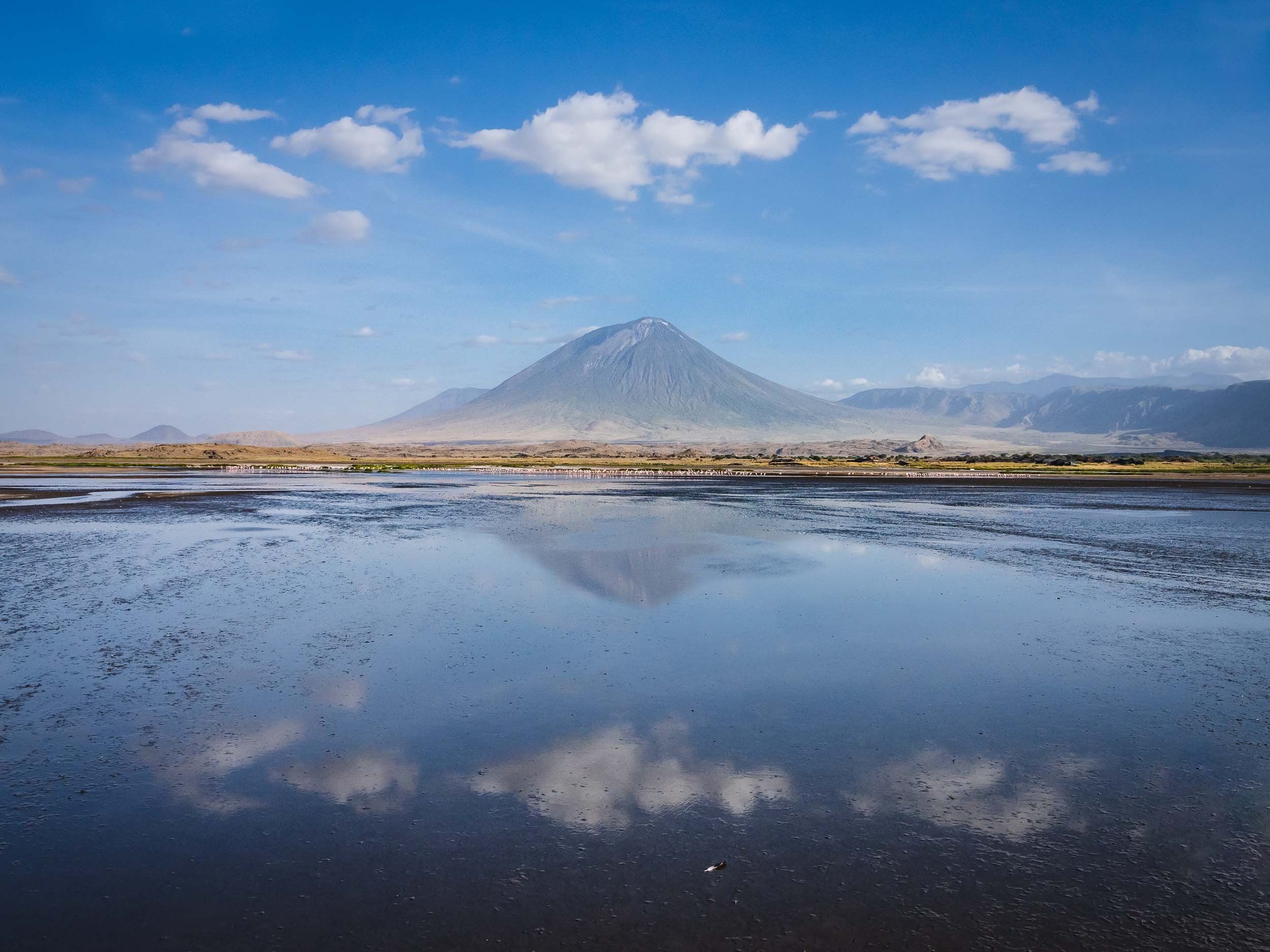
Trifecta
The volcano, Lake Natron, and a flock of flamingos - the three most well known features of the area.
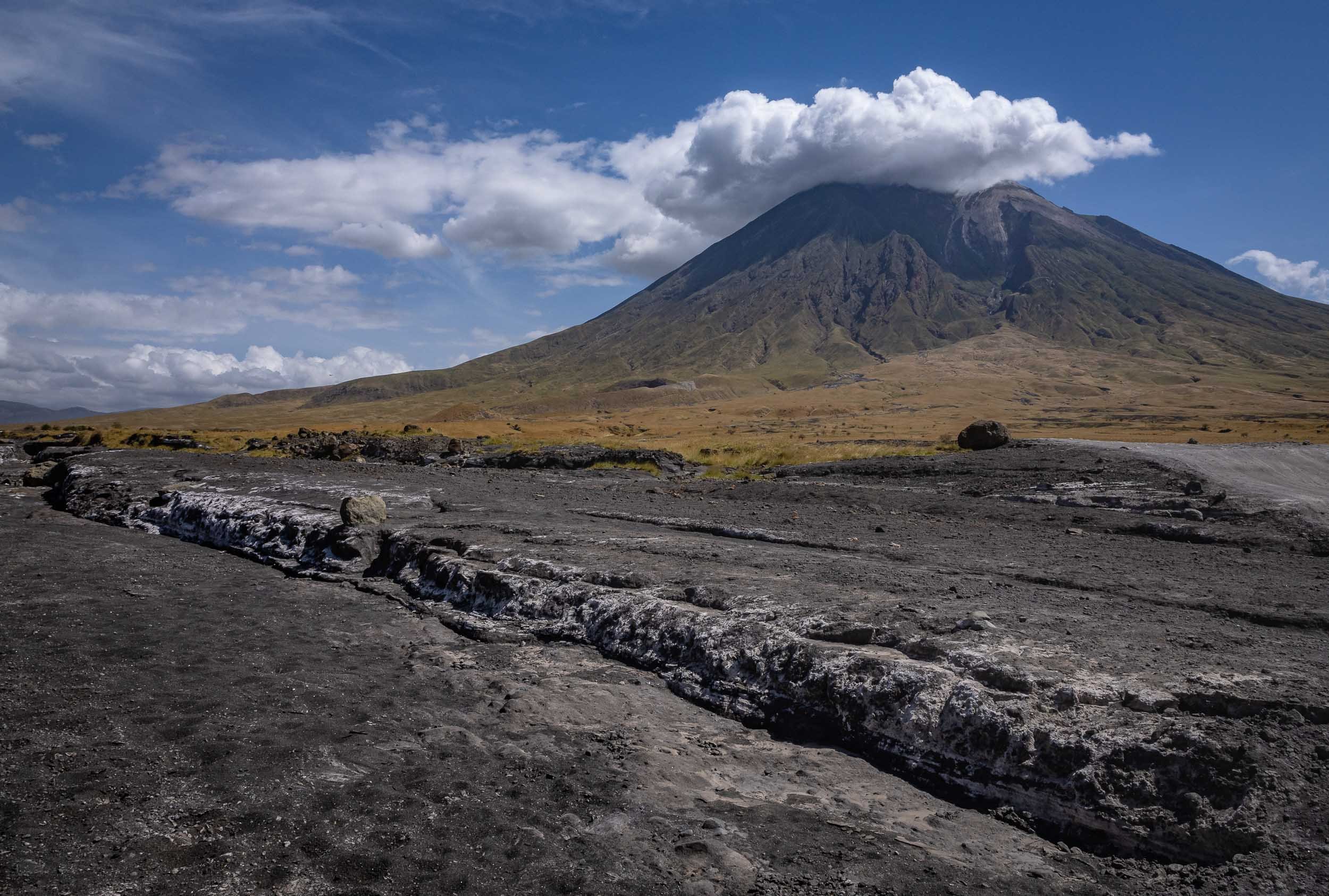
The Ol Doinyo Lengai
It's the only active volcano in the world that produces natrocarbonatite lava. This was instrumental in understanding the geology of earth, and makes for a unique landscape.
Mountain of God
Is the name the Maasai use for Ol Doinyo Lengai.
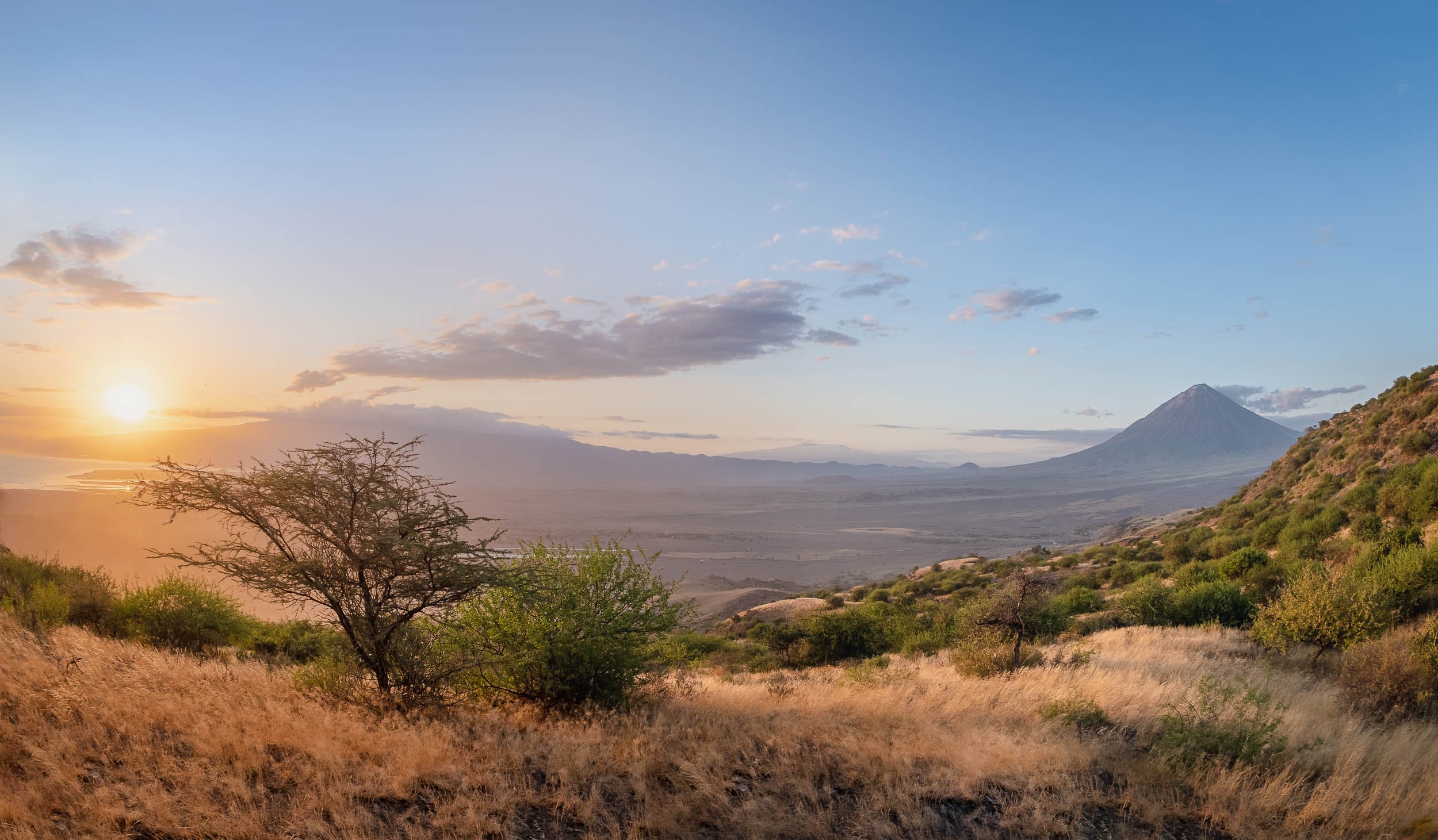
Sunrise Views
A very early hike up the East African Rift, of which the volcanoe is part of, rewards you with these views. The shores of Lake Natron on the left.
The area is also home to the beautiful Ngaresero Waterfalls - a small hike through the canyon rewards you with these views and an optional very wet exploration of a small cave under the waterfall.
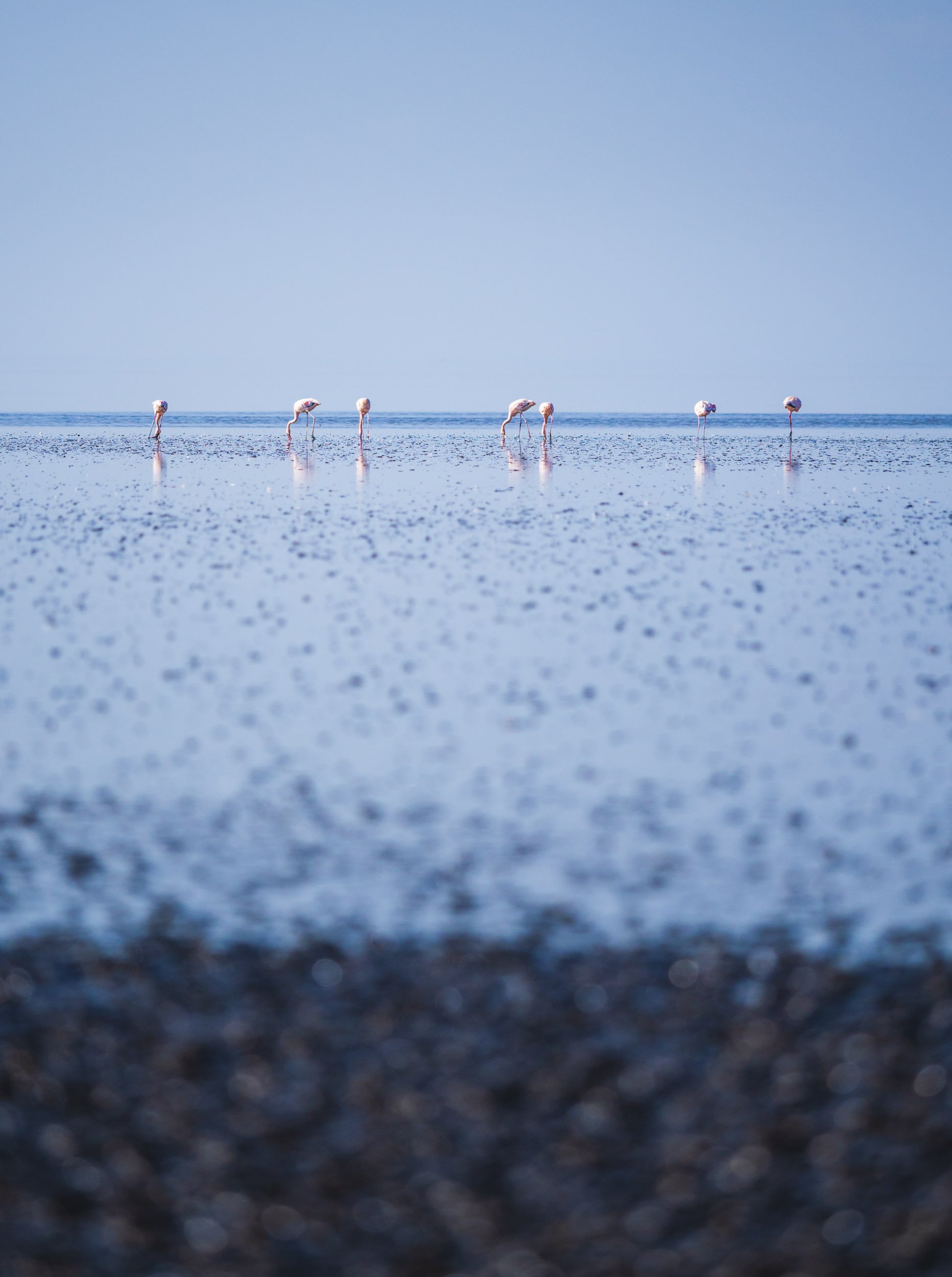
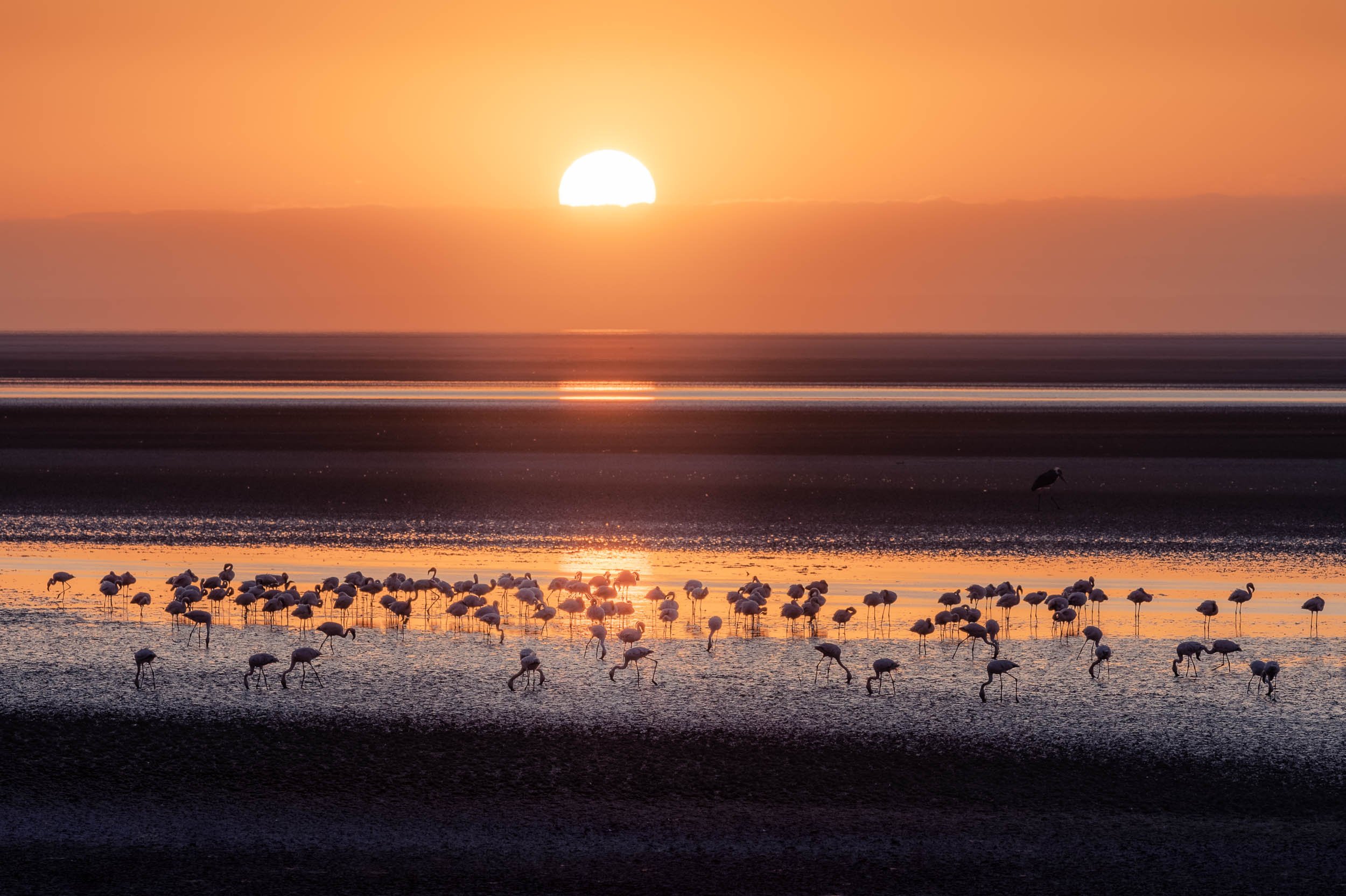
Flamingo Lake with Special Features
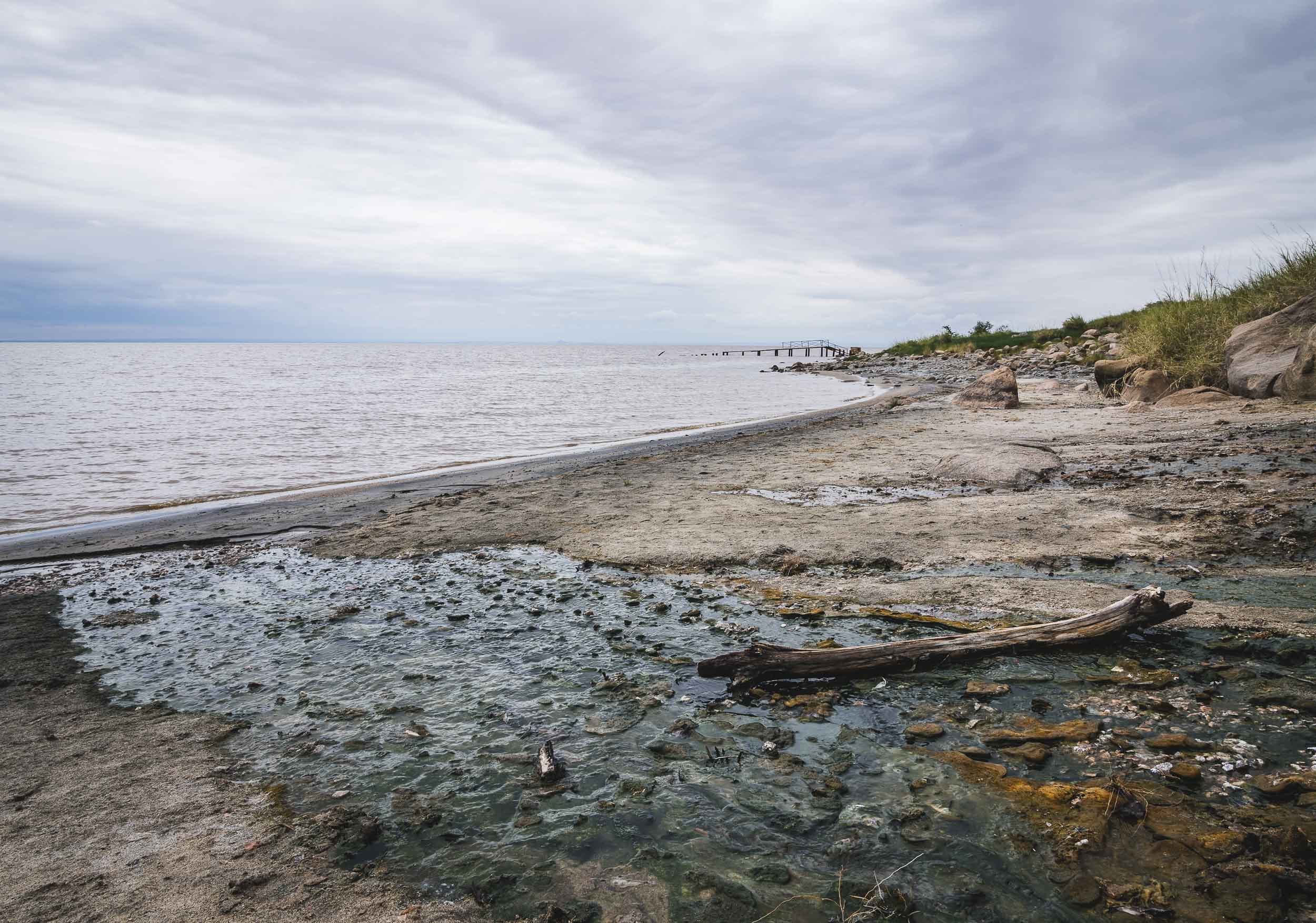
The lake is the only regular breeding area in East Africa for the 2.5 million lesser flamingoes, and also home to Greater Flamingo and many other bird species such as Pelicans. Its high salt content and temperatures up to 60C make it inhospitable for many other animals, including predators, but supports the development of organisms these birds feed on. These organisms are also responsible for the lake’s reddish hues, best seen from space. Despite the lake’s massive size (a maximum of 57 kilometres x 22 kilometres), it is only up to 3m deep.
Human Traces
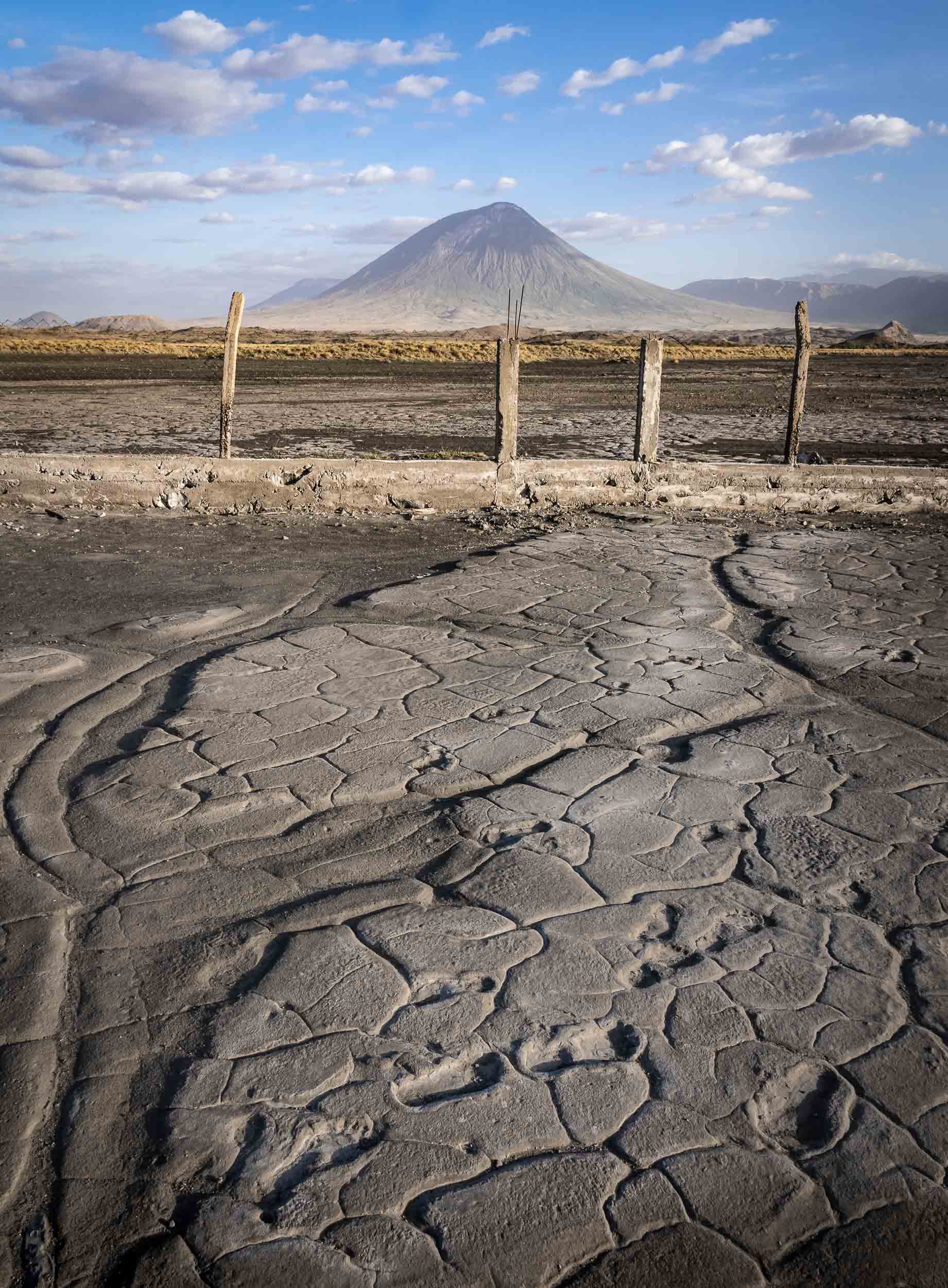
Glimpses of Human History
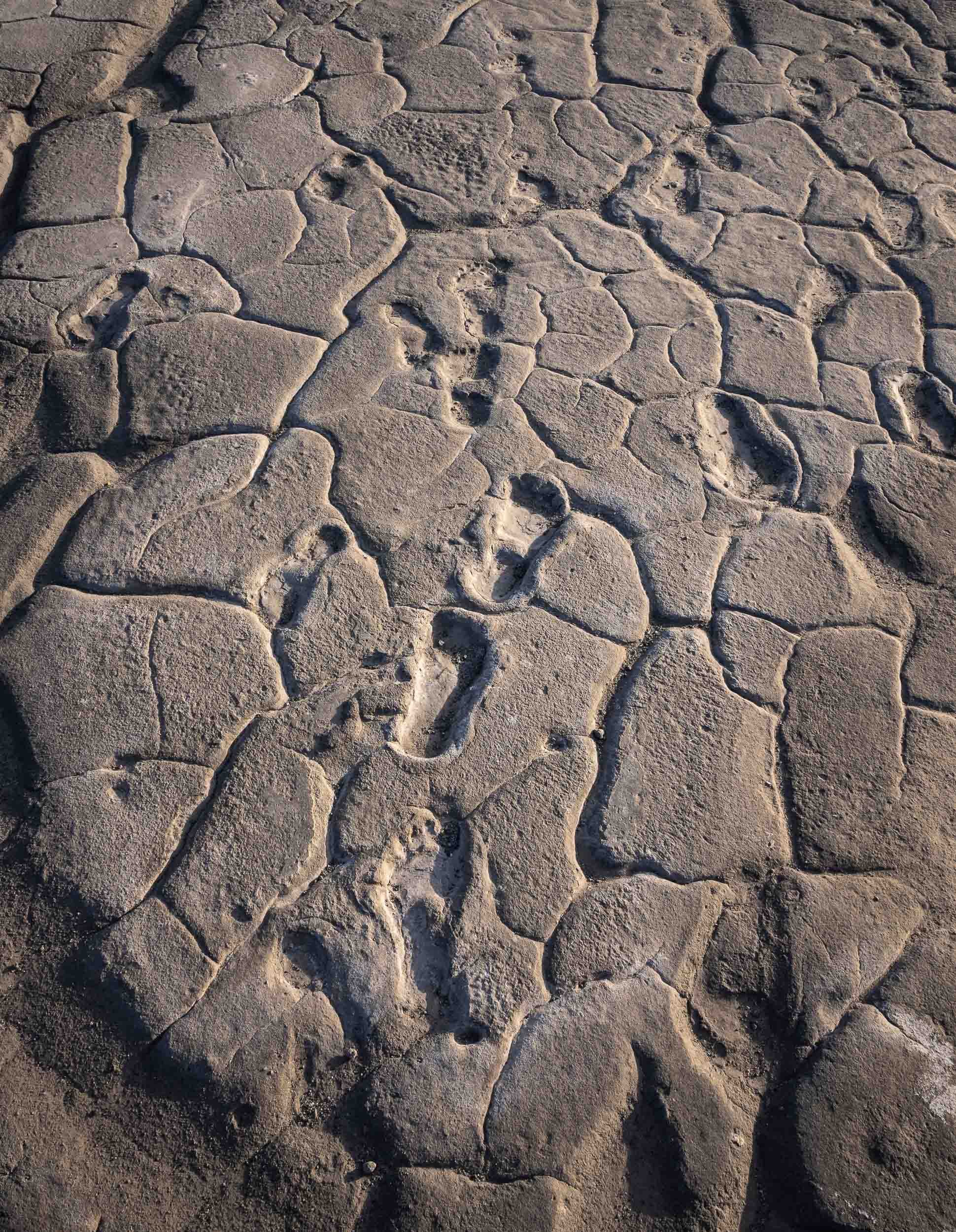
At Lake Natron, I also got a first sight at the incredible historic evidence of human development Tanzania is home to: The Engare Sero footprints, discovered in 2006 by the local people.
Paths
It is the largest human fossil footprint site that has ever been discovered in Africa, preserving over 400 human footprints in the ancient volcanic mudflow, dating from between 6,000 and 19,000 years ago.
Into the Spring
Lake Natron is fed by mineral-rich hot springs - the local Maasai know their locations, and about 1h from camp we found this one after wading through the knee deep mud for about 100m. The water here is literally bath tub hot.
Tanzania’s Wildlife Parks
Arusha was the starting point for the second part of my Tanzania trip, a wildlife photography journey with Andrew Goddard, organized by Guiding the Wild. We started the trip through the country’s parks in the north with Tarangire, followed by Lake Manyara and its national park, and the Ngorongoro crater and region, as well as the Serengeti.
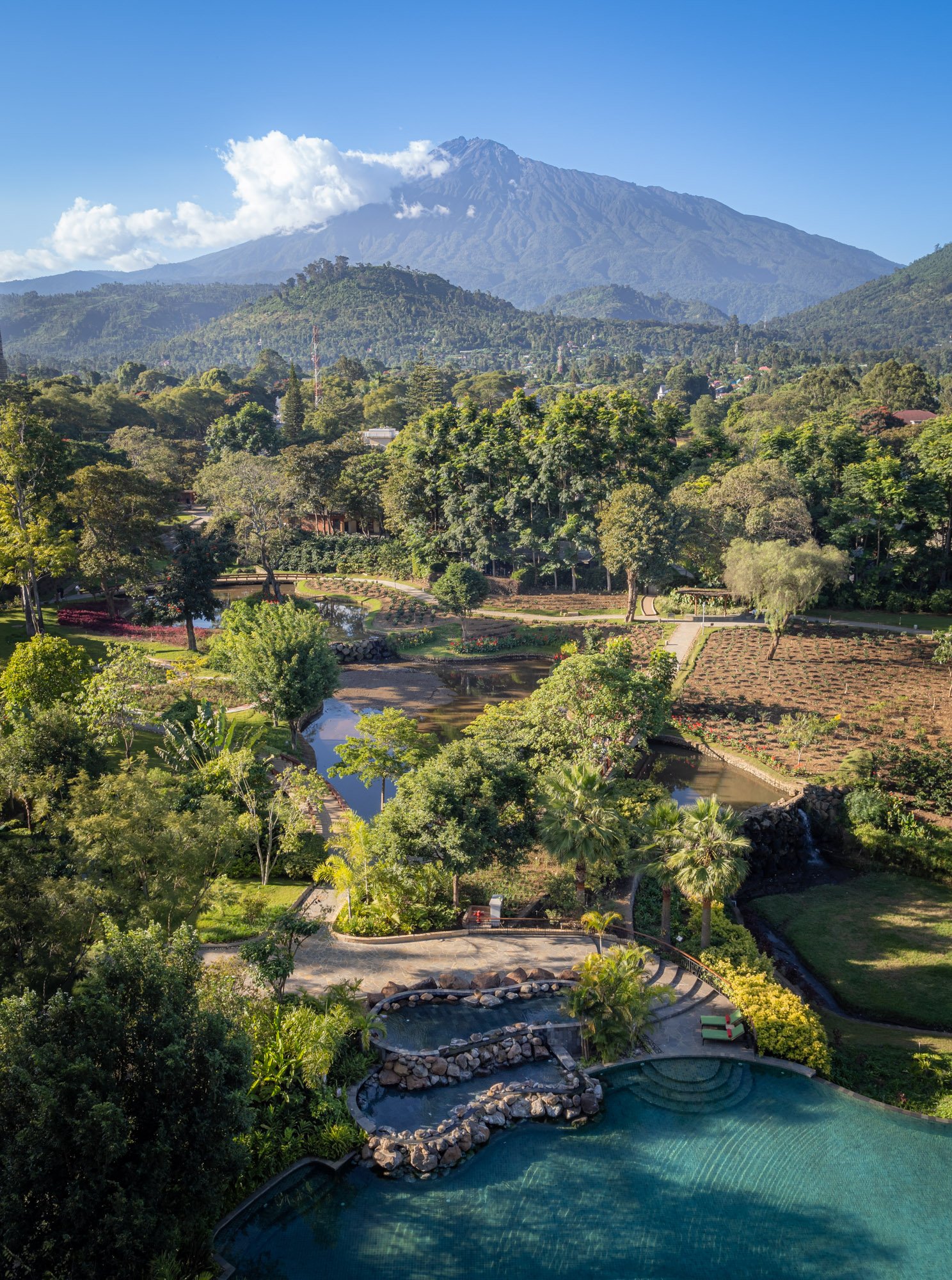
Mount Meru
Tanzania's second tallest mountain seen from the Arusha Gran Melia hotel rooftop.
Tarangire
An afternoon game drive in the park.
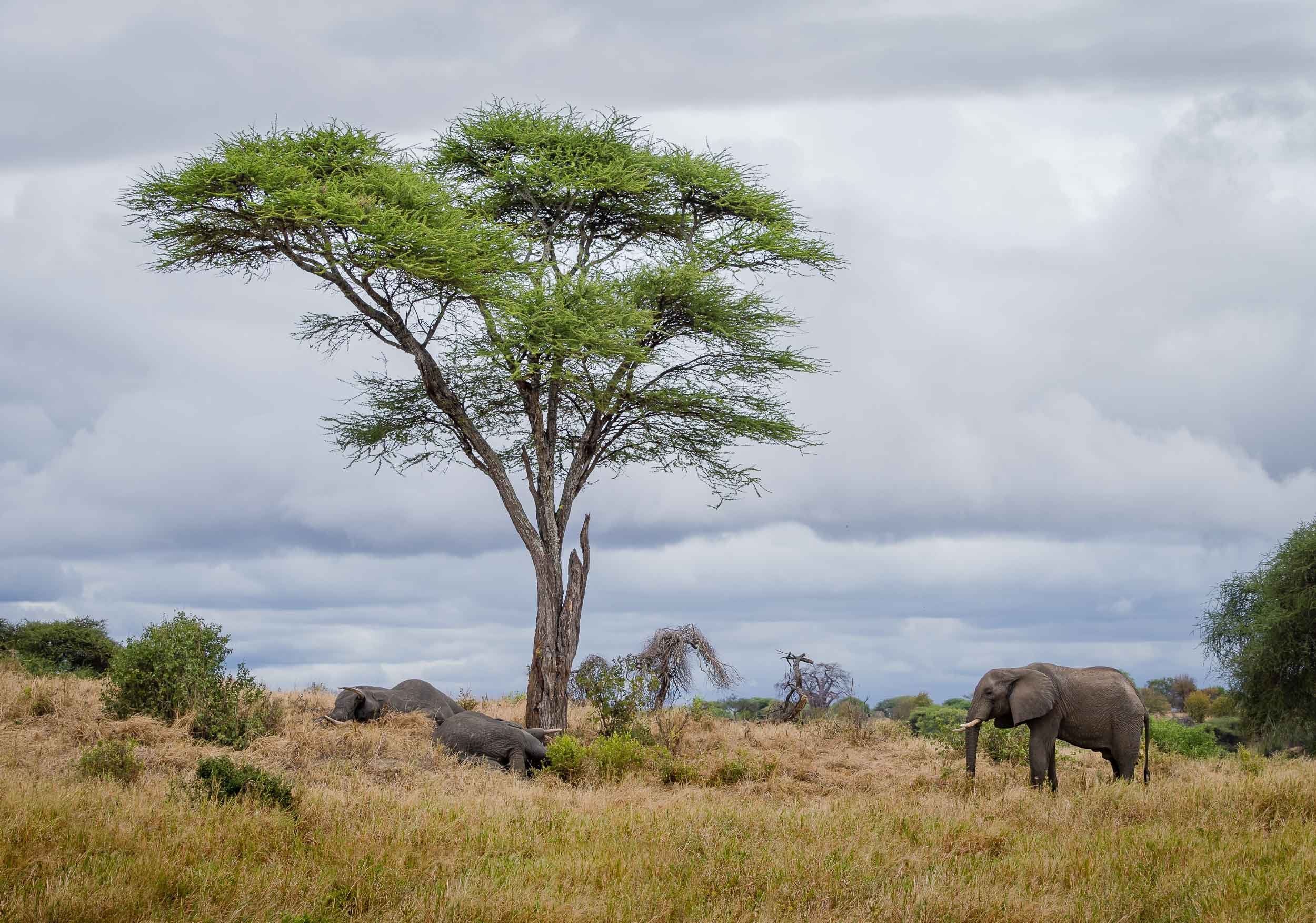
Zzzz
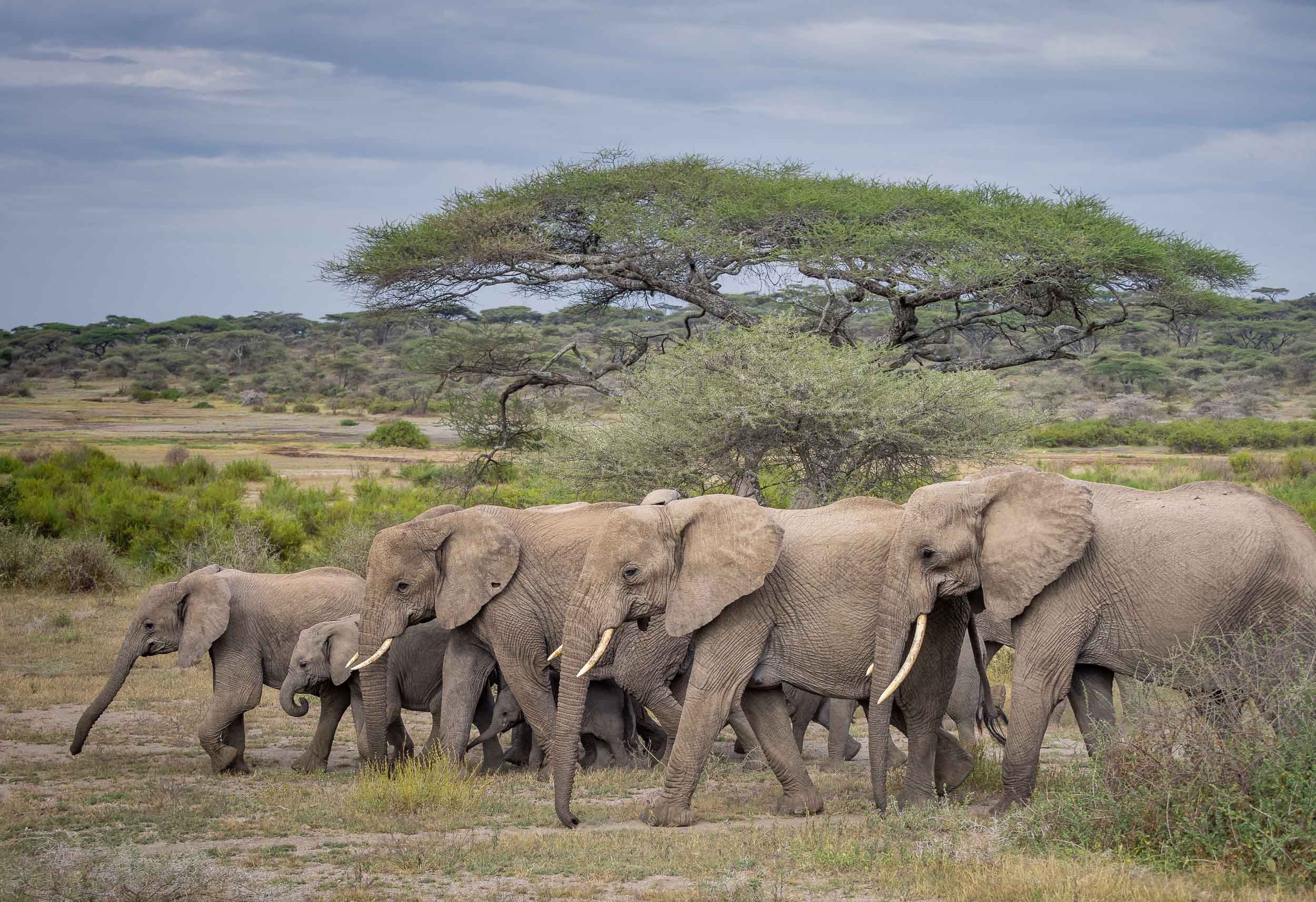
Have you ever seen an elephant sleep? They lie down for 3-4h a day.
Lake Manyara
A walk on the lake followed by a visit to the thick rainforest of the Lake Manyara National Park, both together a UNESCO Biosphere Reserve.
Hot Spring Flow
Similar to Lake Natron, this lake is also partially fed by hot springs, such as this one on its western shores.
In the Branches
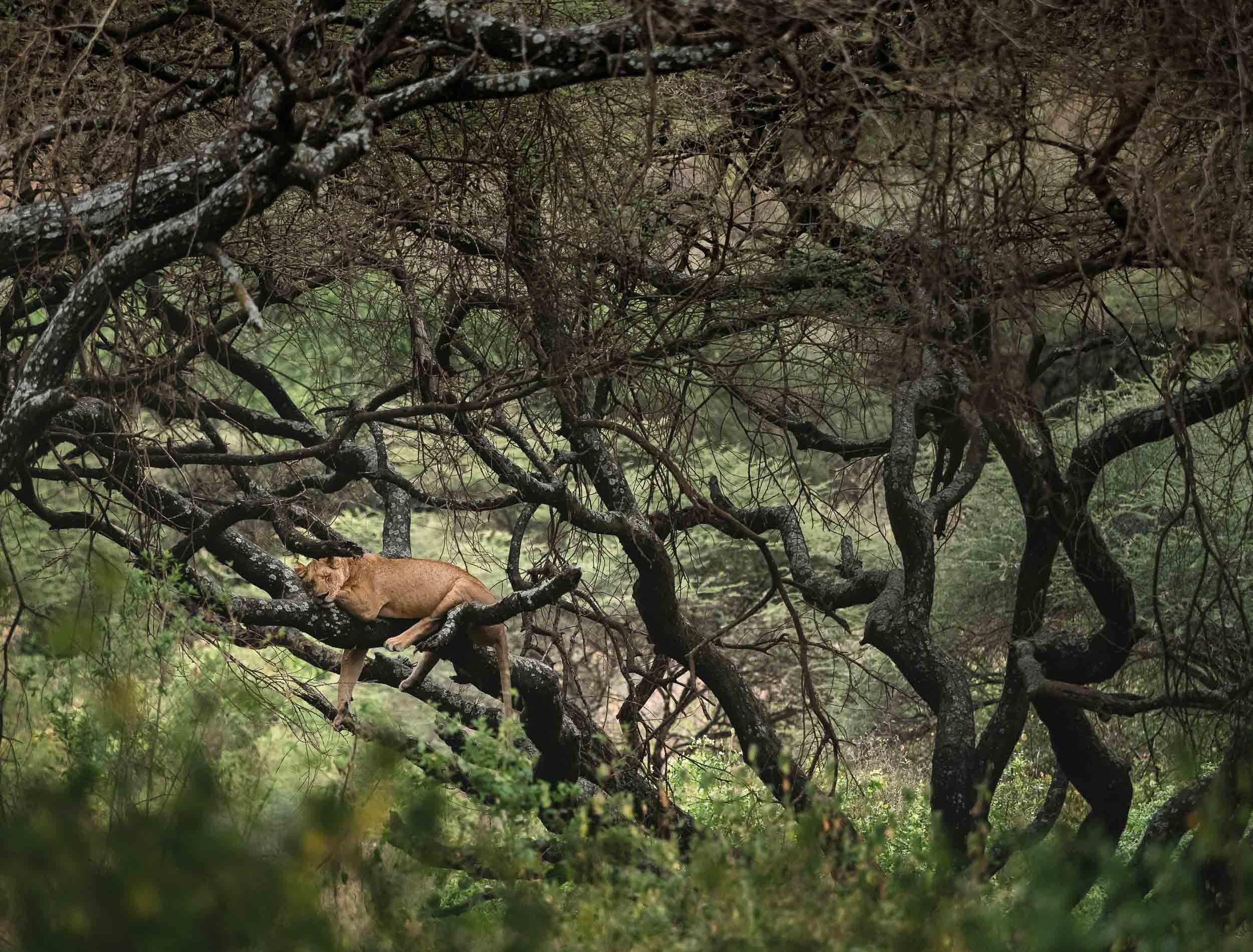
The first - but not last - lion in a tree I saw. A sight Lake Manyara is famous for.
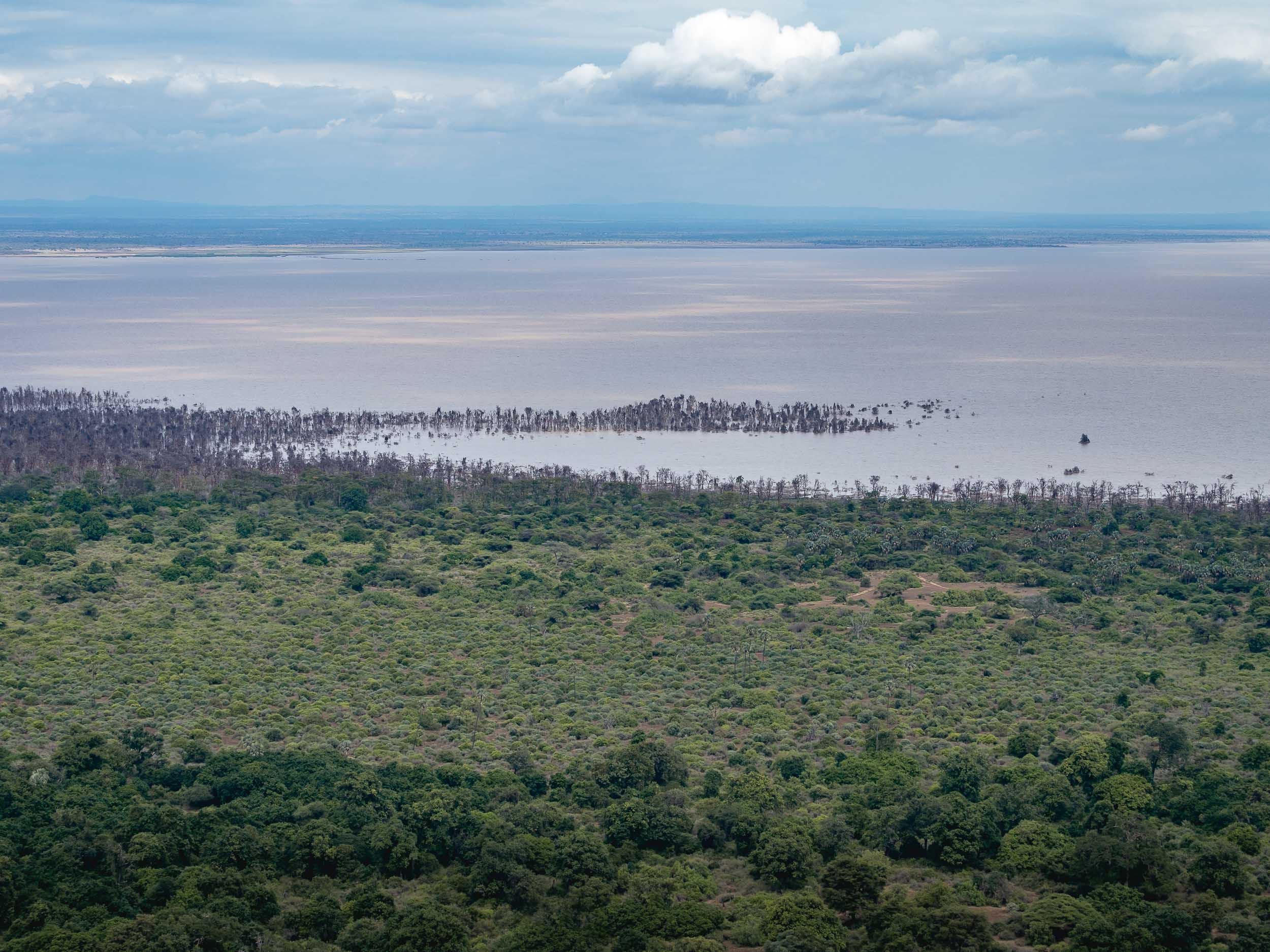
Shores of Death
As the lake rises, its high salinity content makes the flora on the shores suffer, visible here on the road towards the Ngorongoro highlands.
Ngorongoro Conservation Area and its Crater
The highlands and their famous volcano, with the world's largest inactive, intact and unfilled volcanic caldera, were our next destination - a UNESCO World Heritage Site.
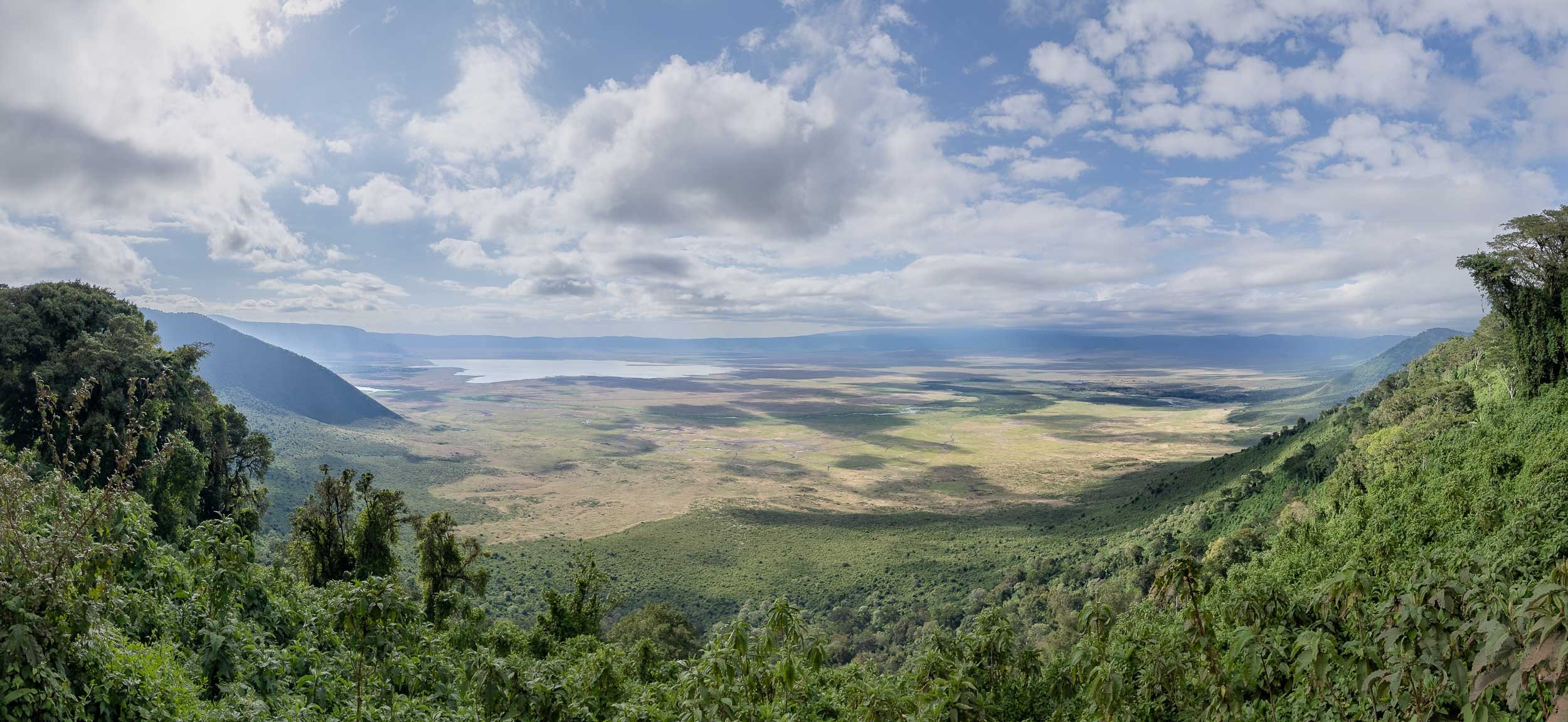
The Ngorongoro Crater
As the clouds cleared up in the afternoon, one of the rim viewpoints is a good spot to appreciate the magnitutde of the caldera and the landscape within, covering over 250 sqkm, including the seasonal salt lake in the center of the crater.
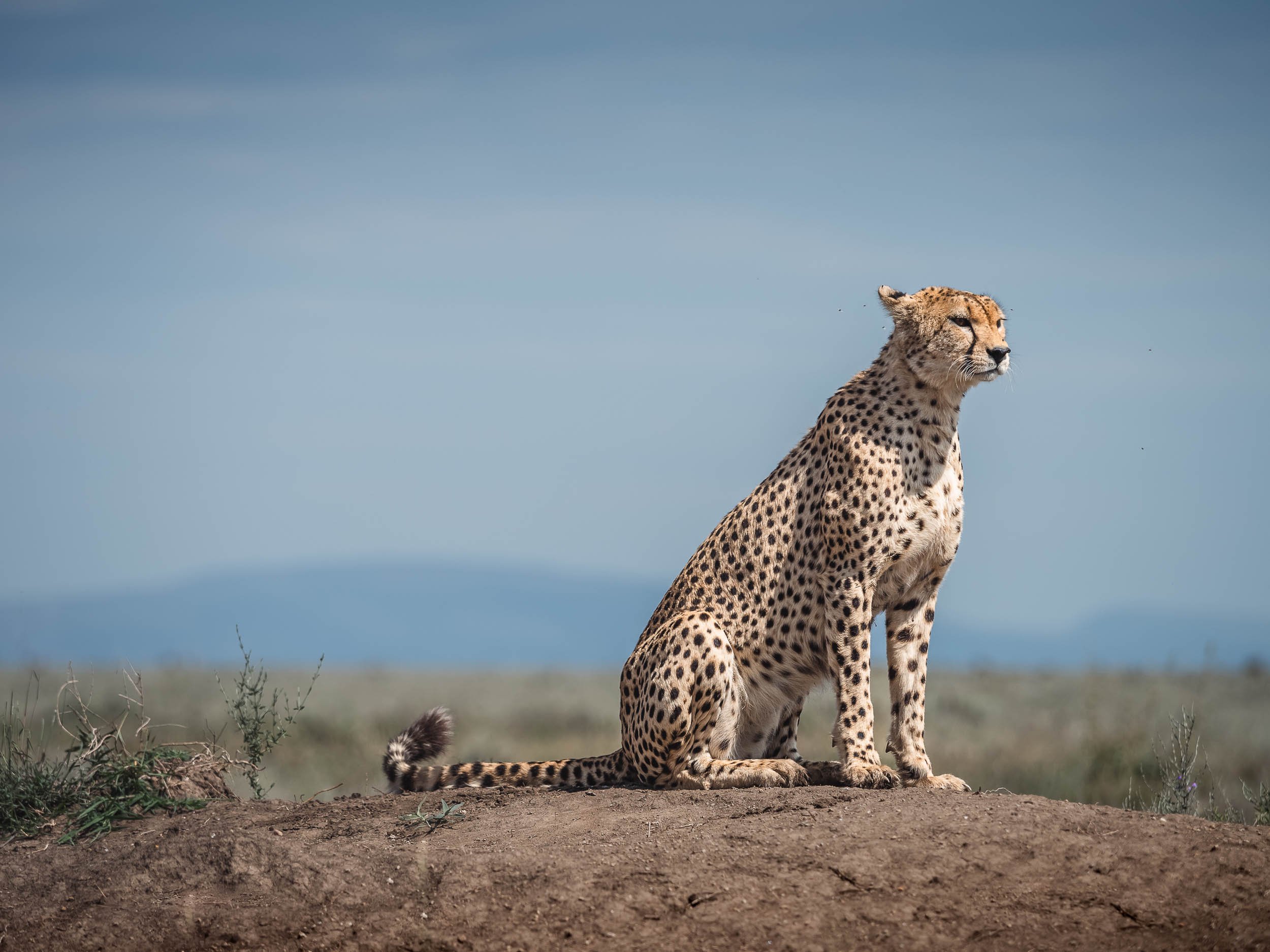
In the Ngorongoro Conservation Area, we encountered this Cheetah mother and her two cubs with a fresh kill near the Ndutu lake. One of the cubs happened to look for some shade under our vehicle for a while, with barely its tail sticking out beside the tire. The mother had a GPS tracker for ongoing research, due to the declining population in the area.
The Seat of Humanity
The Ngornogoro region is also home to Tanzania’s most treasured prehistoric sites, which played an essential role in understanding human evolution. I took some detours from the standard route to reach two such places.
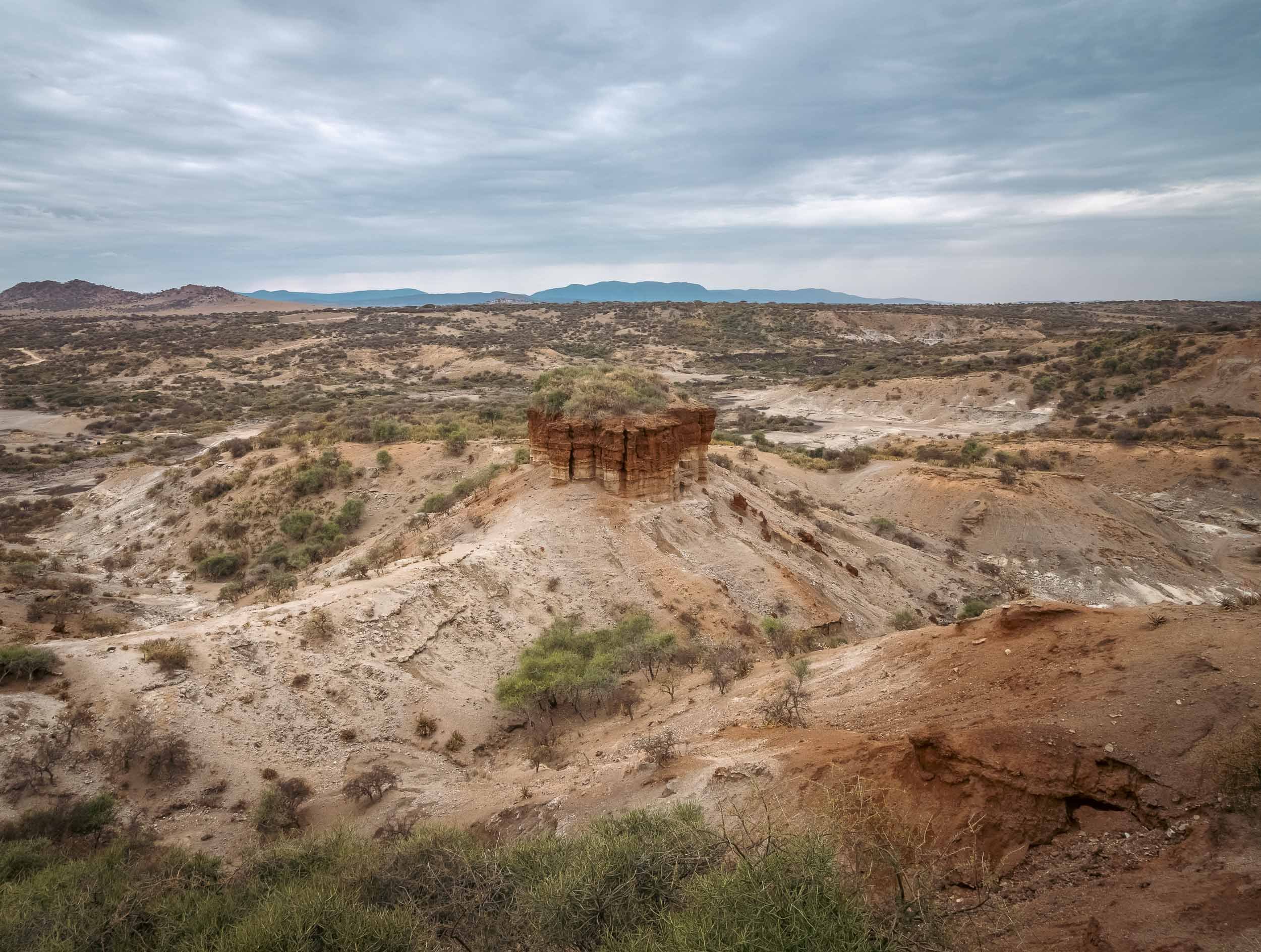
Olduvai Gorge
One of the most important paleoanthropological sites on the globe, this place is home to several geological layers, visible here as different shades of brown in the ground. They revealed human artifacts from over 2m years ago all the way to homo sapiens around 17,000 years ago.
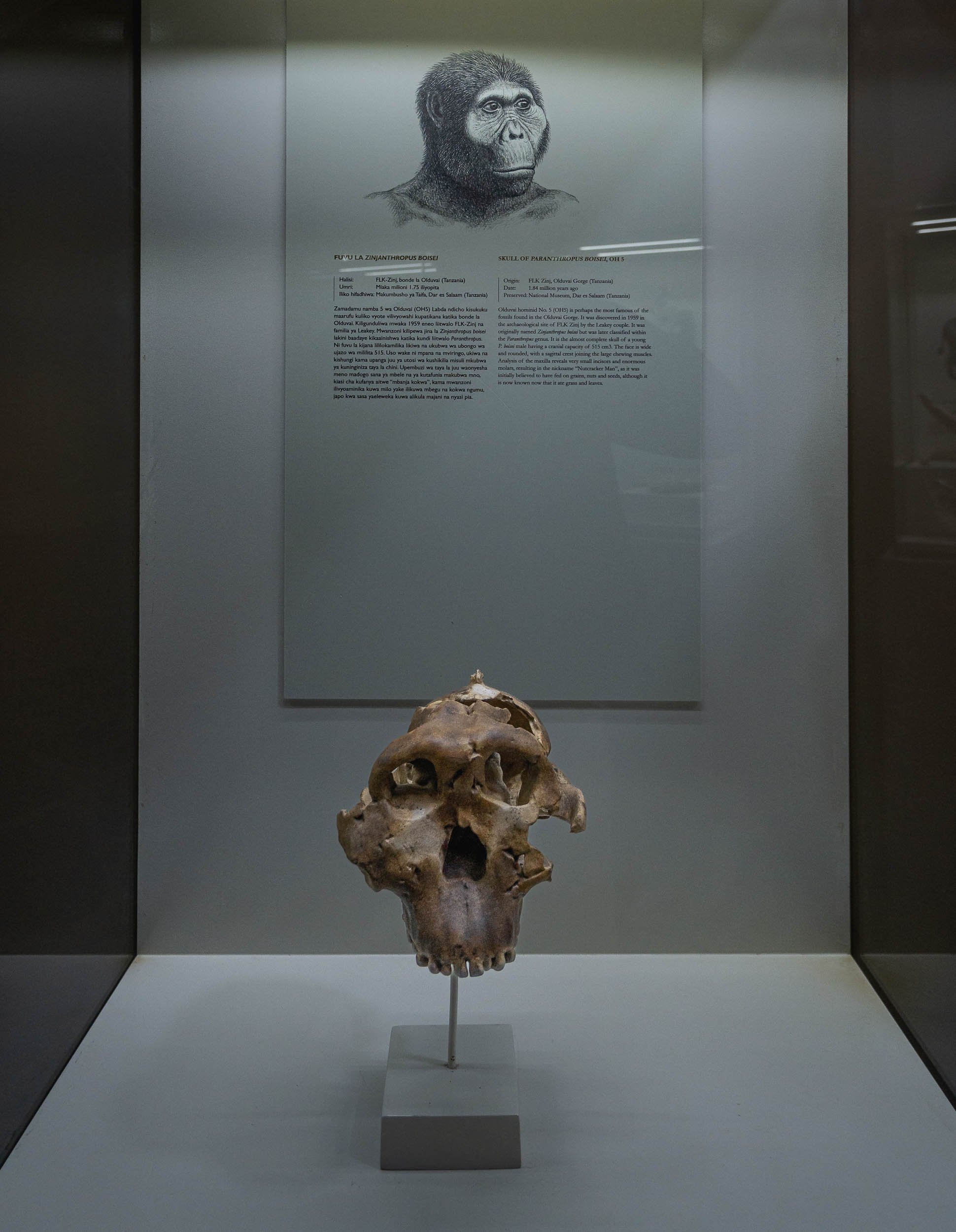
OH5
The site's most famous find is the skull of the holotype of Paranthropus boisei, a parallel species to the homo genus.
Laetoli
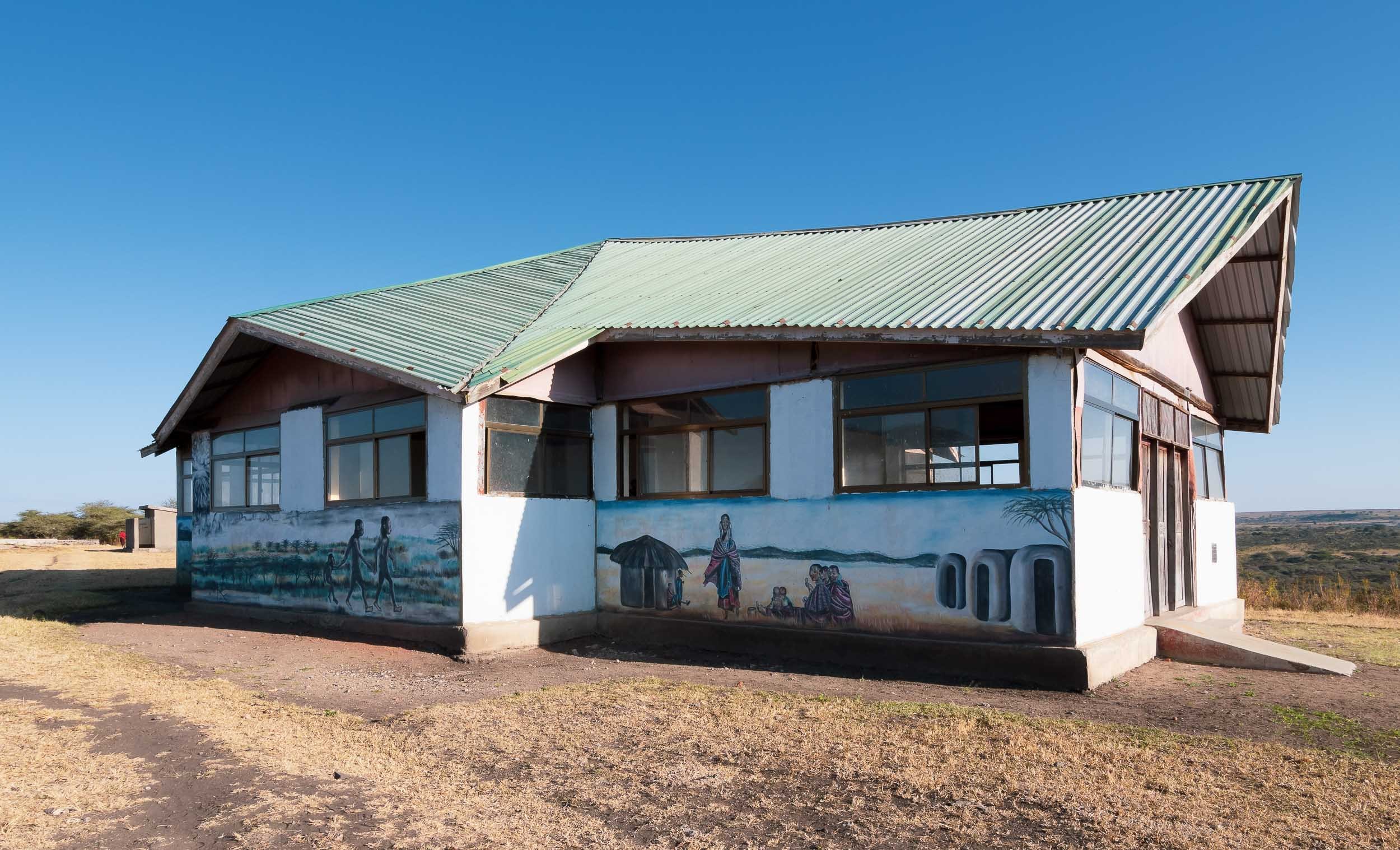
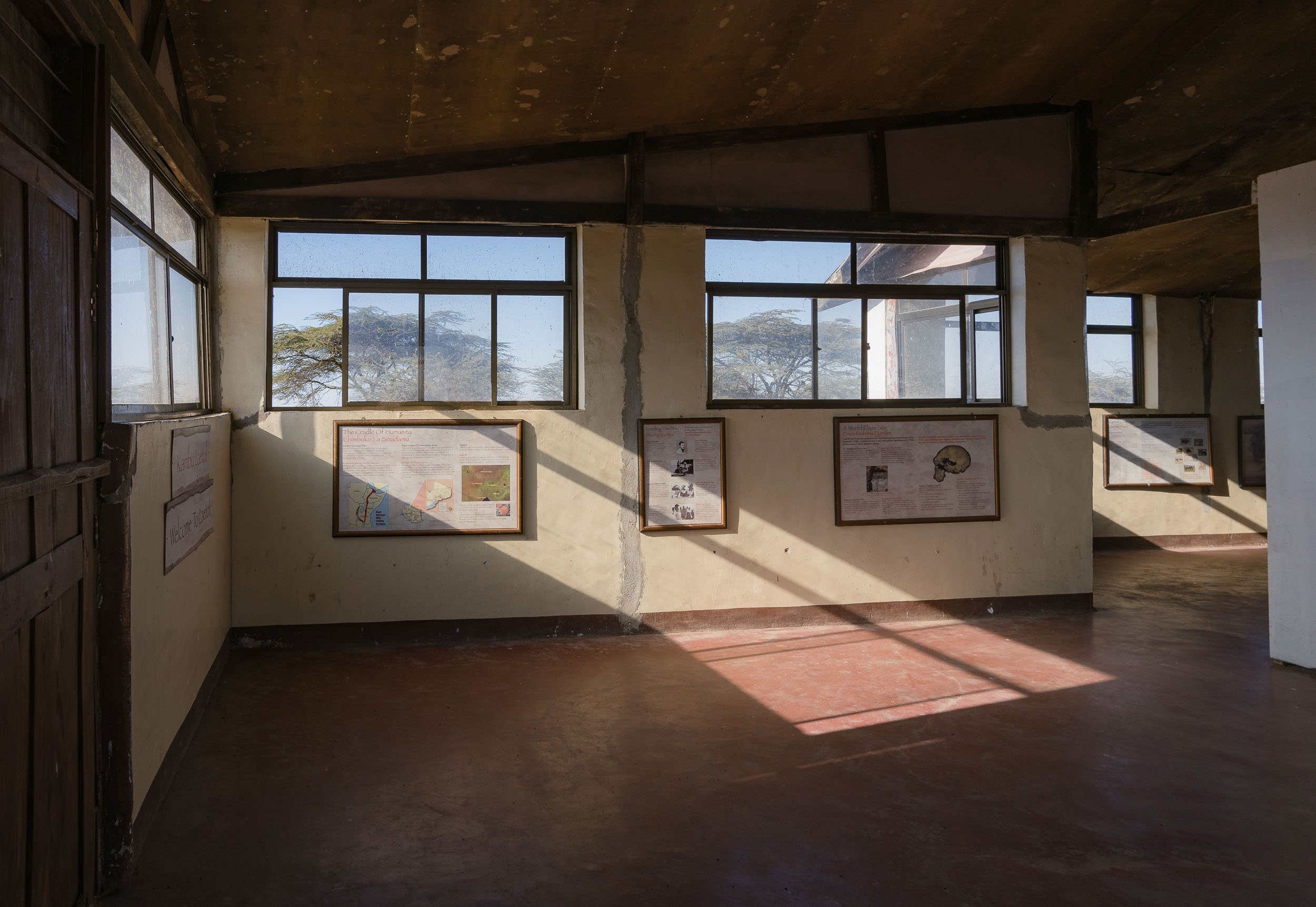
The second site - much more difficult to reach - is a small museum, hardly known (the visitor book page I signed showed about 50 visitors in the last 2 years), but at a location that is one of the most signficiant in prehistoric human development.
Importance
The site is home to the oldest known evidence of humans walking on two legs. Before the discovery of the Laetoli footprints, there was much debate as to which developed first in the human evolutionary time line: a larger brain or bipedalism. The discovery of these footprints settled the issue, proving that the Laetoli hominins were fully bipedal long before the evolution of the modern human brain. They were made by Australopithecus afarensis and are 3.7m years old.
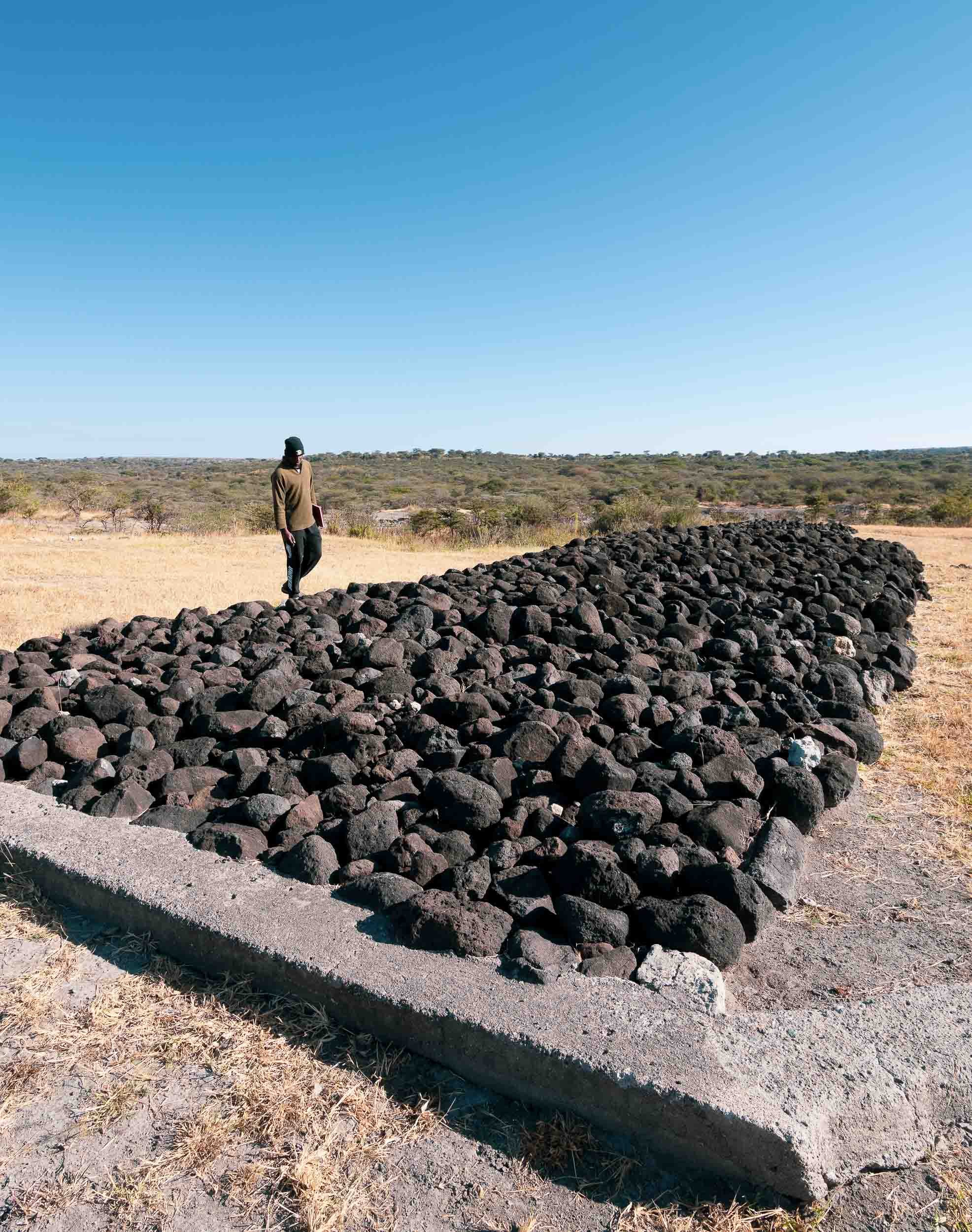
The Footprints...
... are unfortunately not visible, only a cast was made for the museum. They are covered with earth and rocks to prevent erosion, the best method that was within the means of the archeologists working to preserve them.
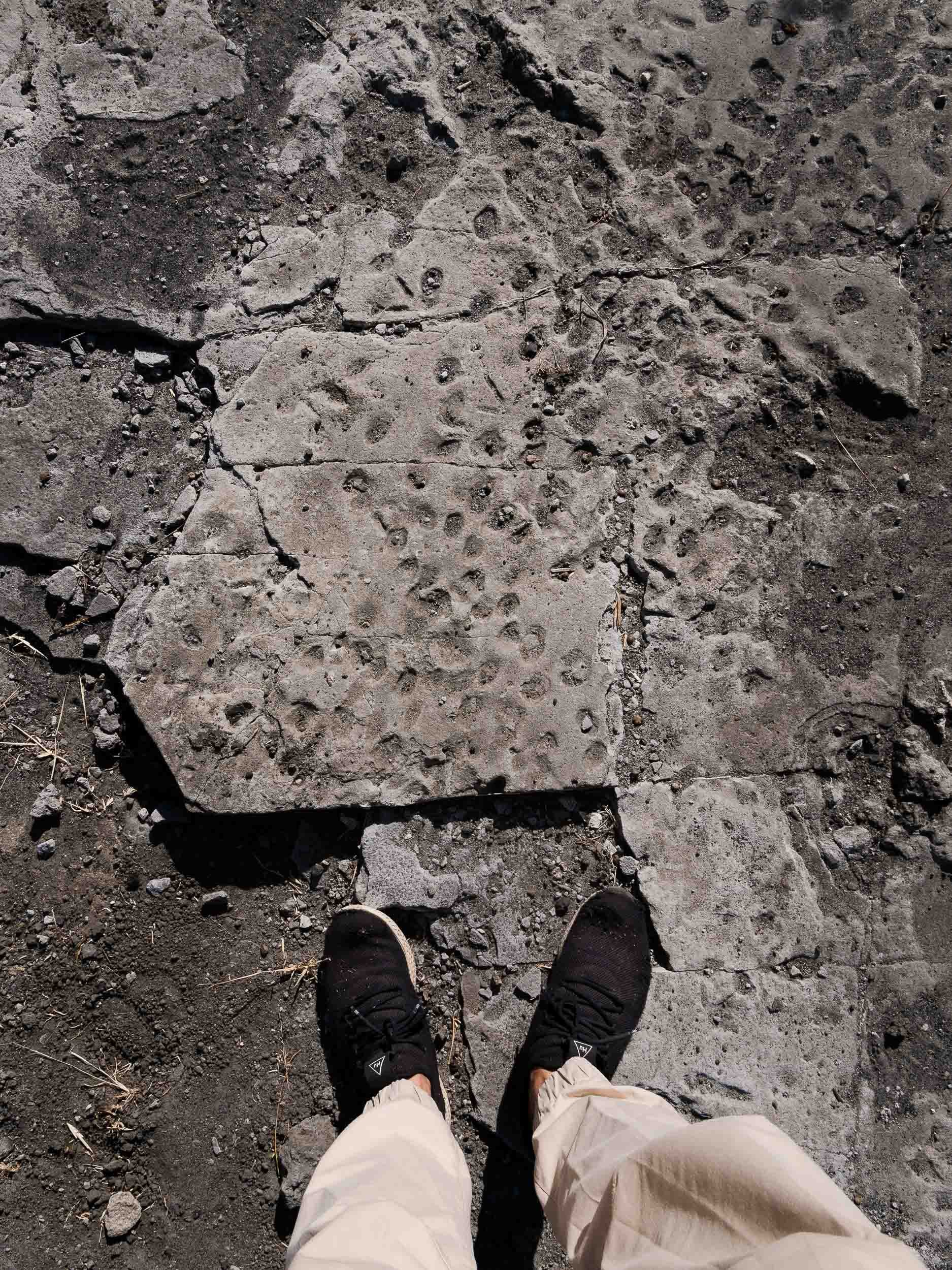
What you can see...
... are prints from the same geological bed (and thus of the same age) made by other mammals, such as these ones by a small antelope.
Discovery
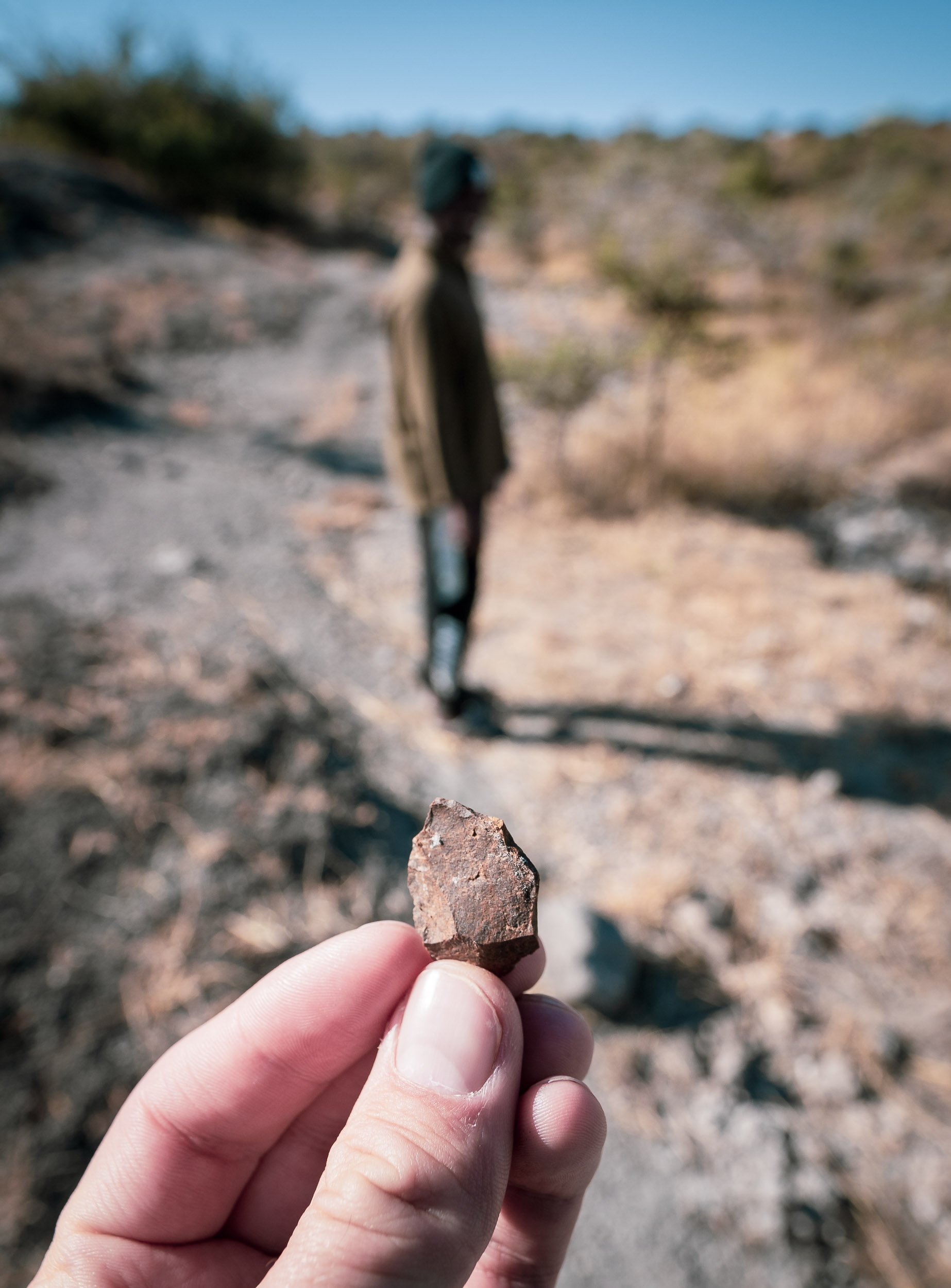
The site is still being researched today - our walking tour with the local ranger brought this little piece to light, a splinter from a tool made by archaeic homo sapiens, possibly around 300,000 years ago during the Middle Stone Age. No one can say where this artifact might be now...
The Serengeti from the Ground - and from Above
A collection of wildlife images from what is maybe the most famous National Park in Africa, covering almost 15,000 sqkm - it is aptly named after the Maasai word siringet, meaning "the place where the land runs on forever".
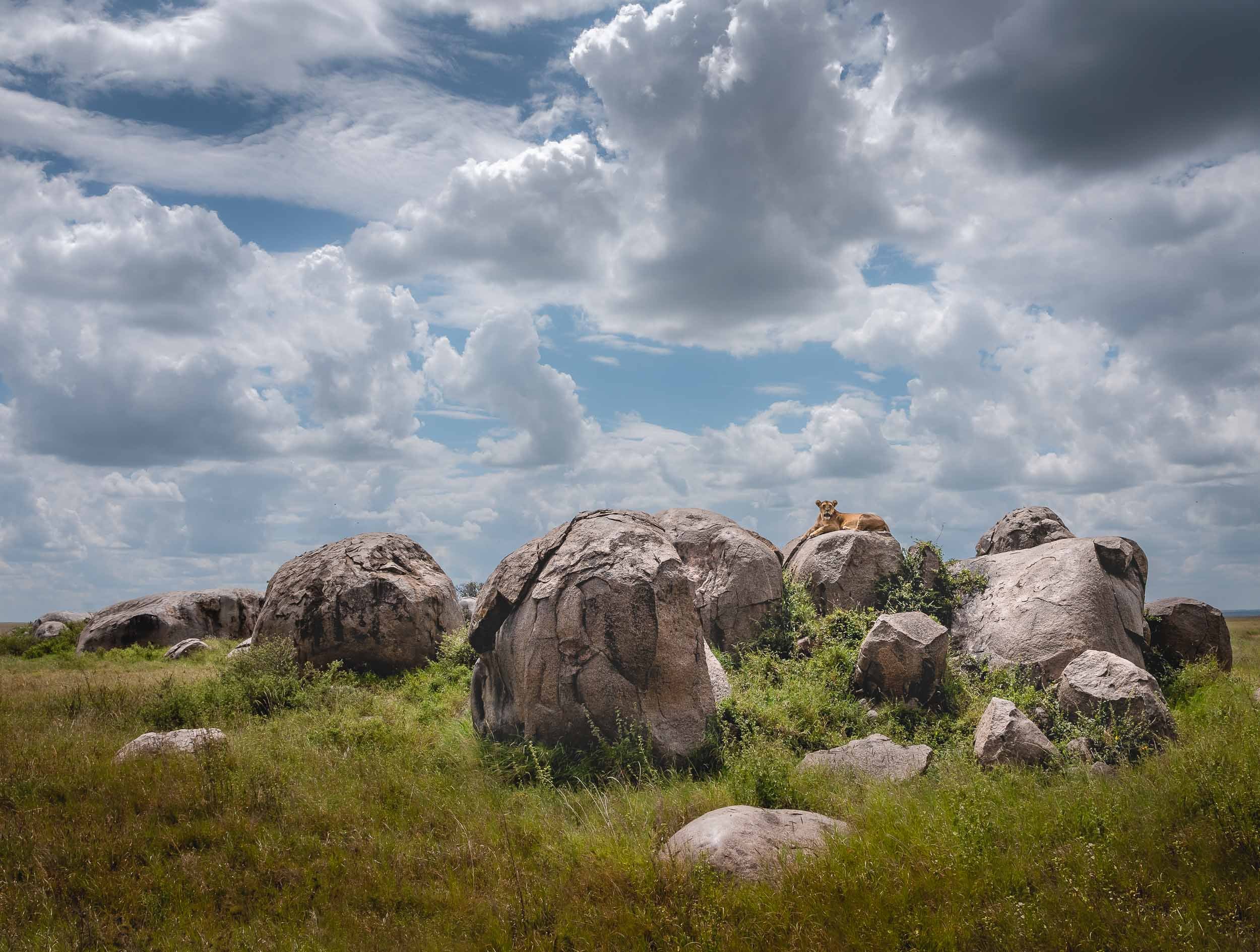
Built by Disney
We found the Lion King rock!
Spotty Rain
Although the rainy season had passed already, occasional showers swept through the savannah from time to time.
Rainbow
And luckily brought a rainbow over our camp with them.
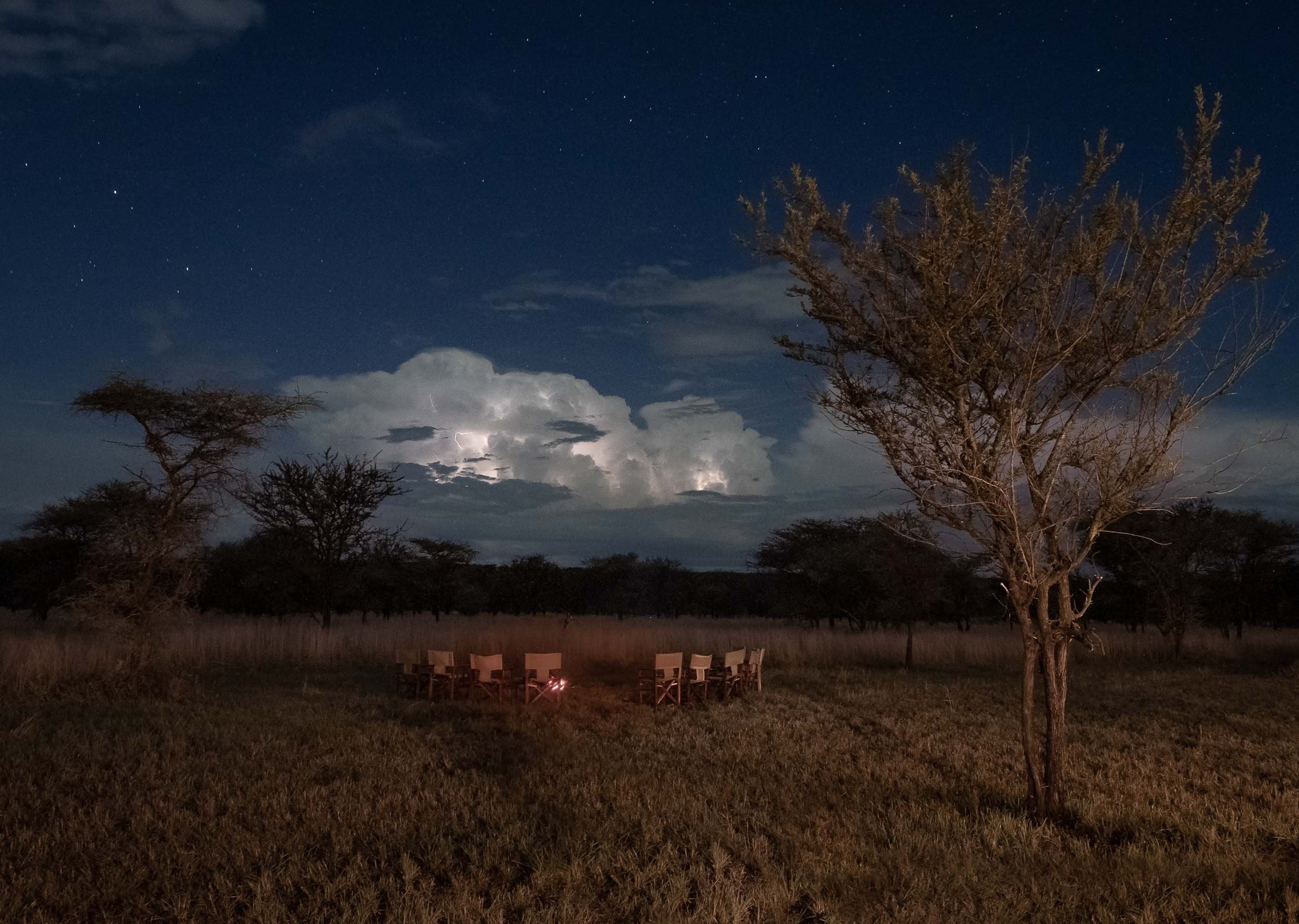
Flashes
Stormy weather continued into the night.
Rare Sight
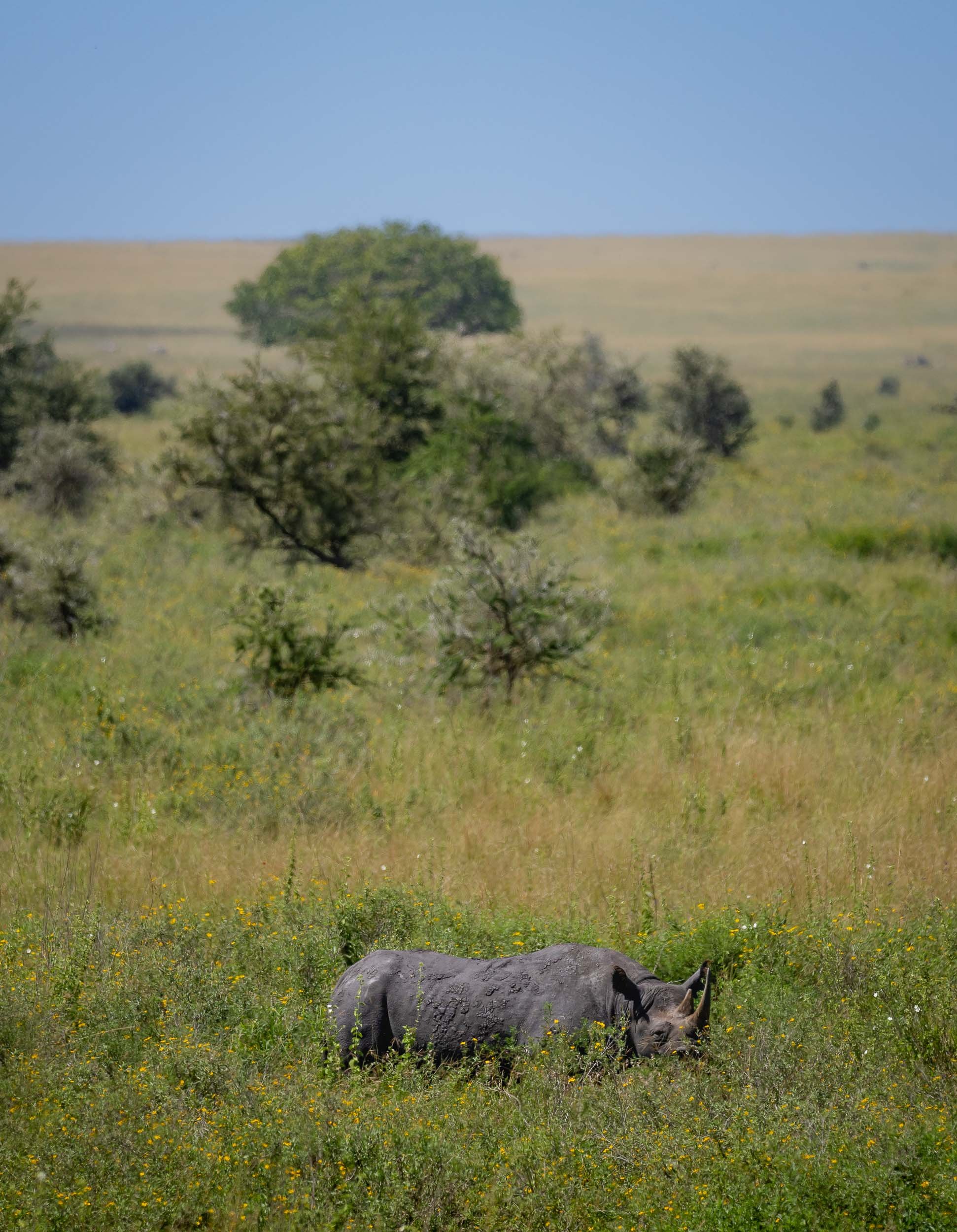
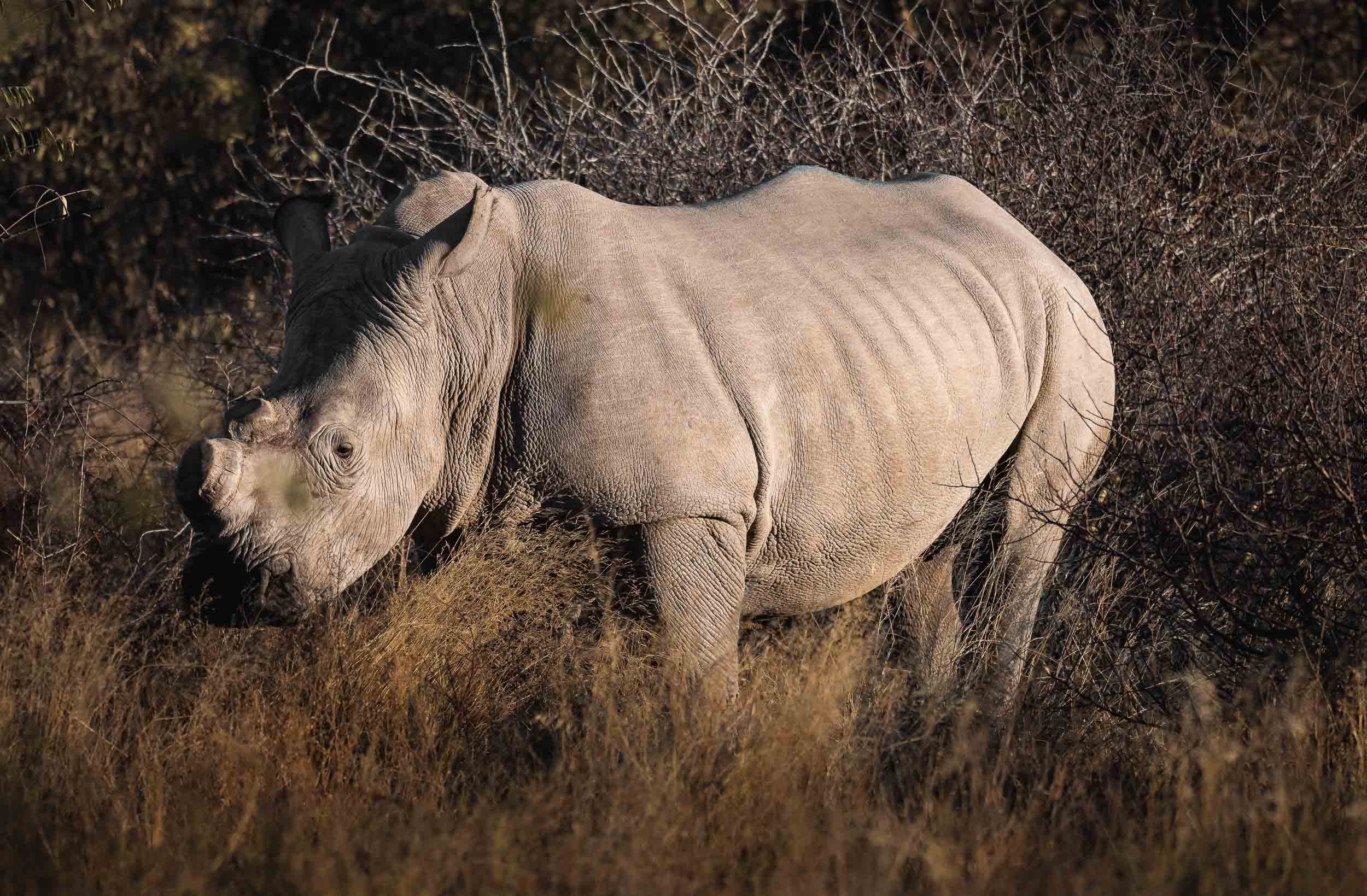
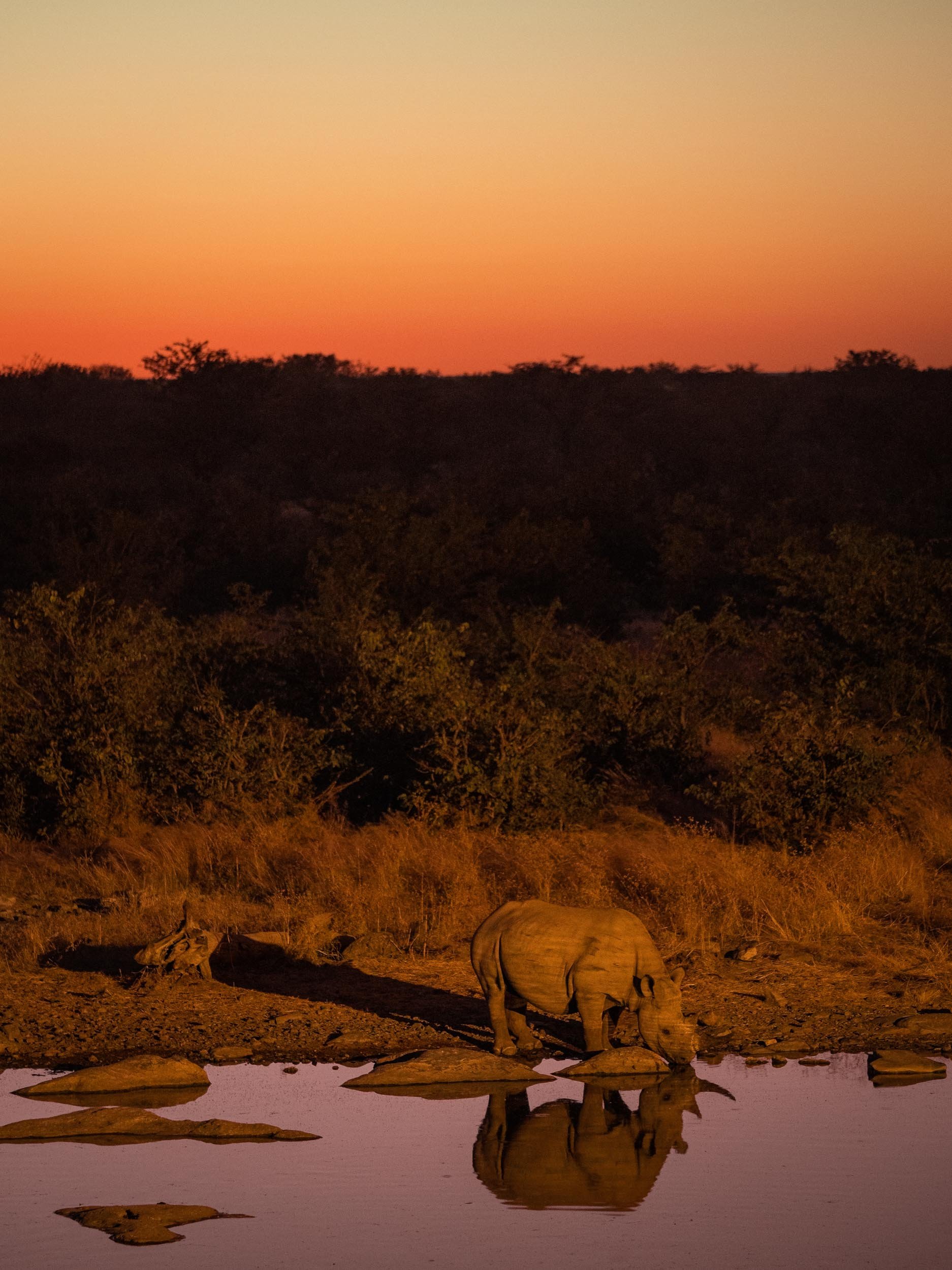
We were also lucky to spot this Rhino - a rare find in the central Serengeti, as even the local guides were excited. It's a sign of conservation success, as this individual had to move to establish a new territory due to the growing presence of Rhino in its original habitat.
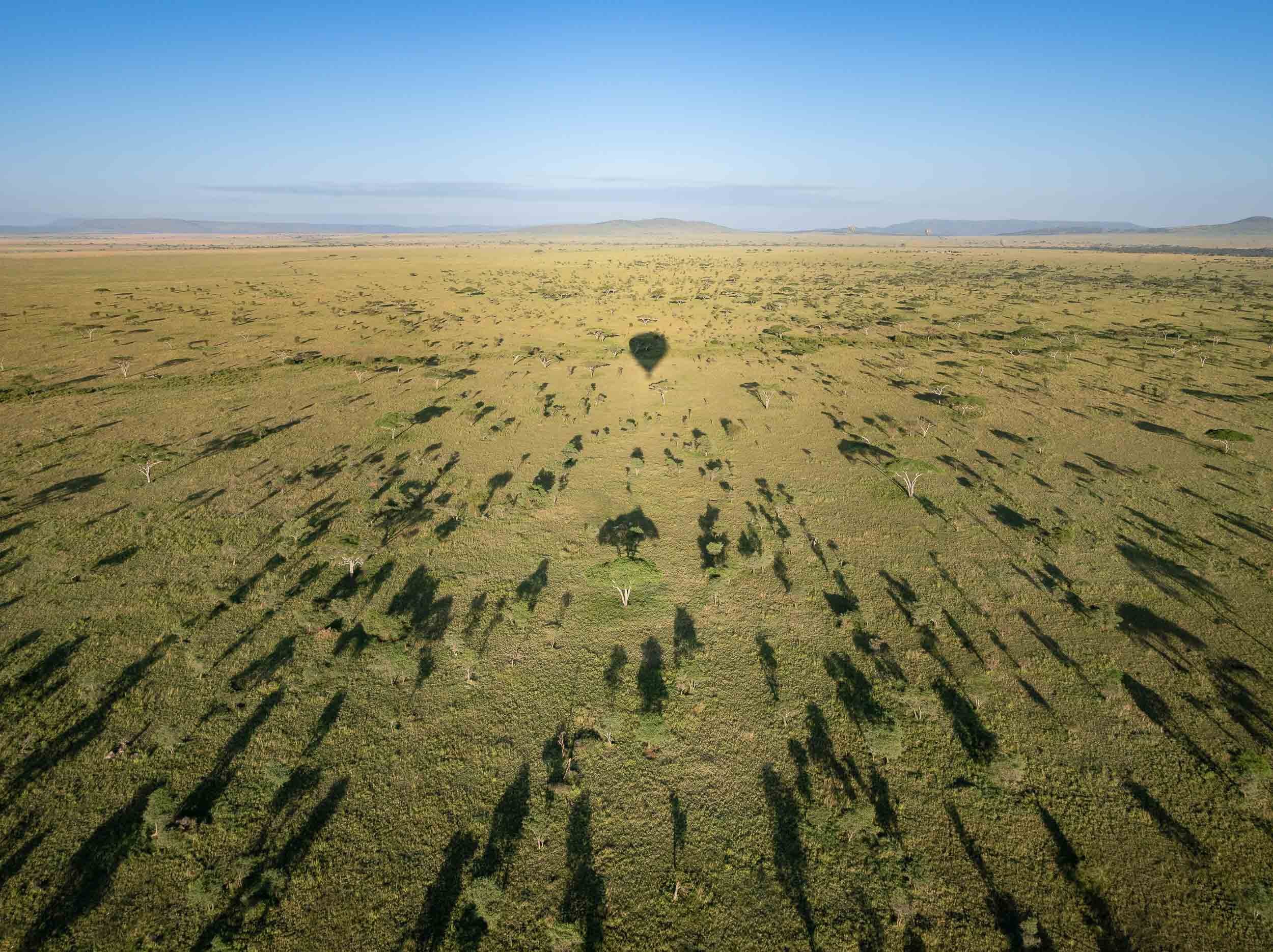
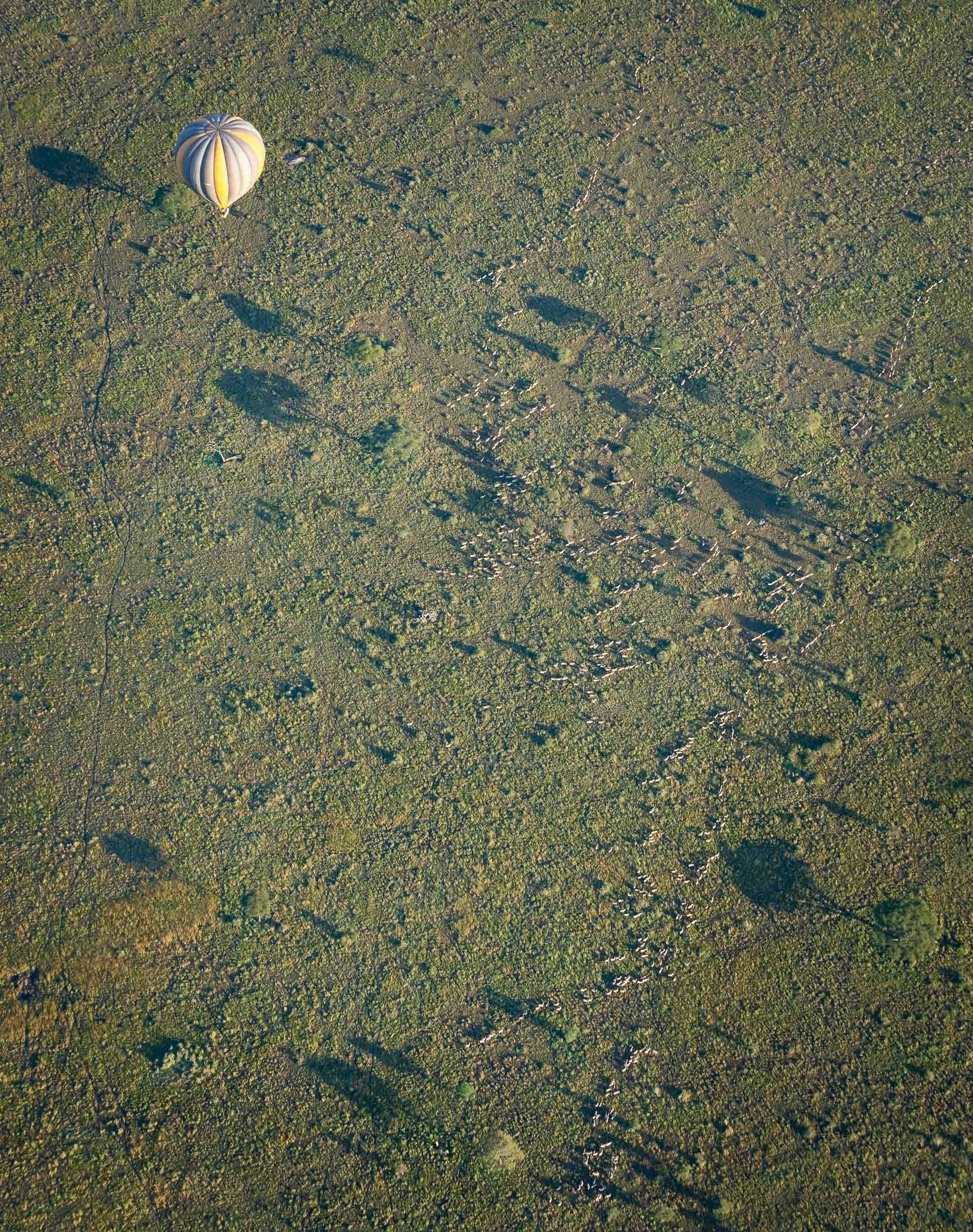
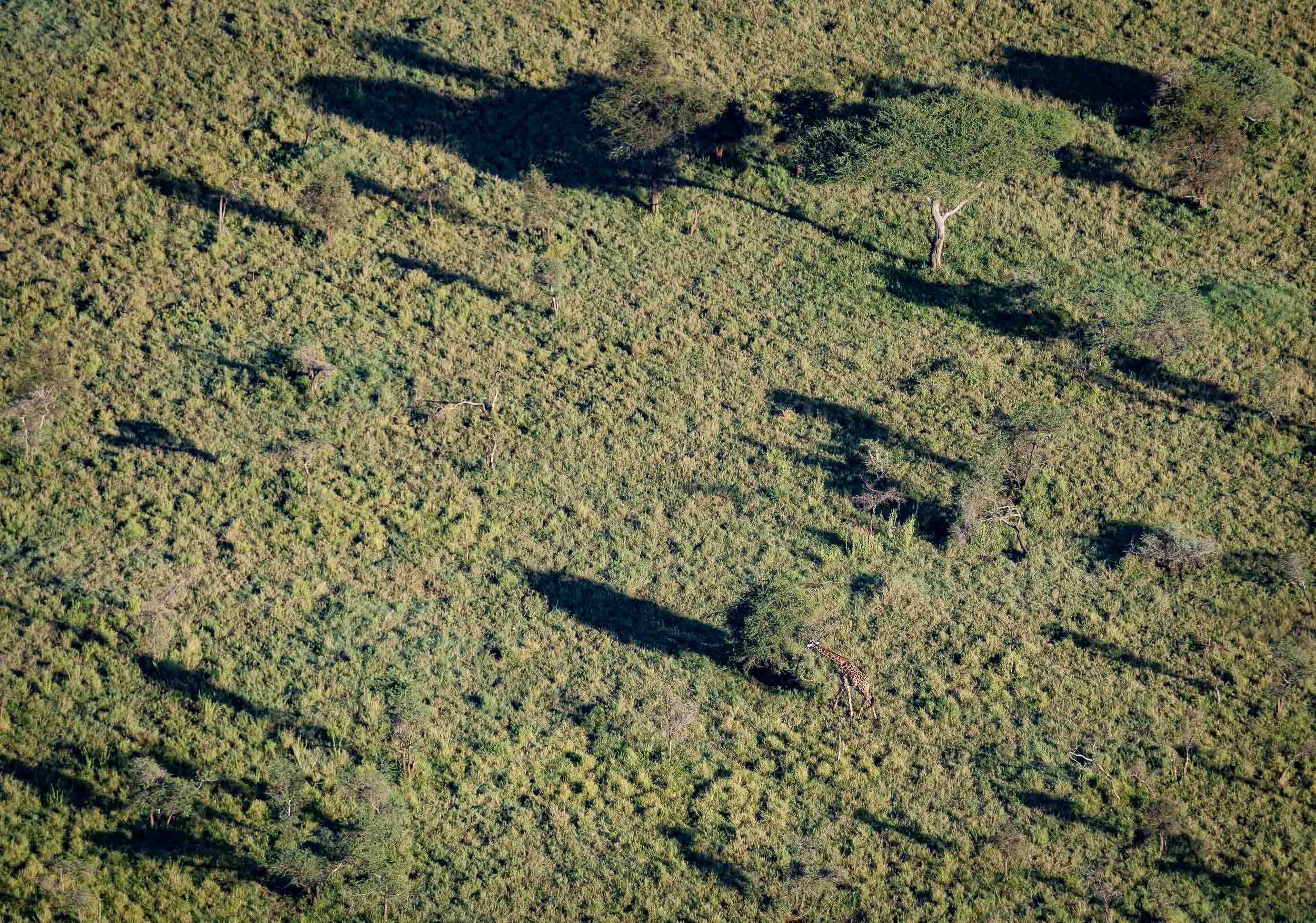
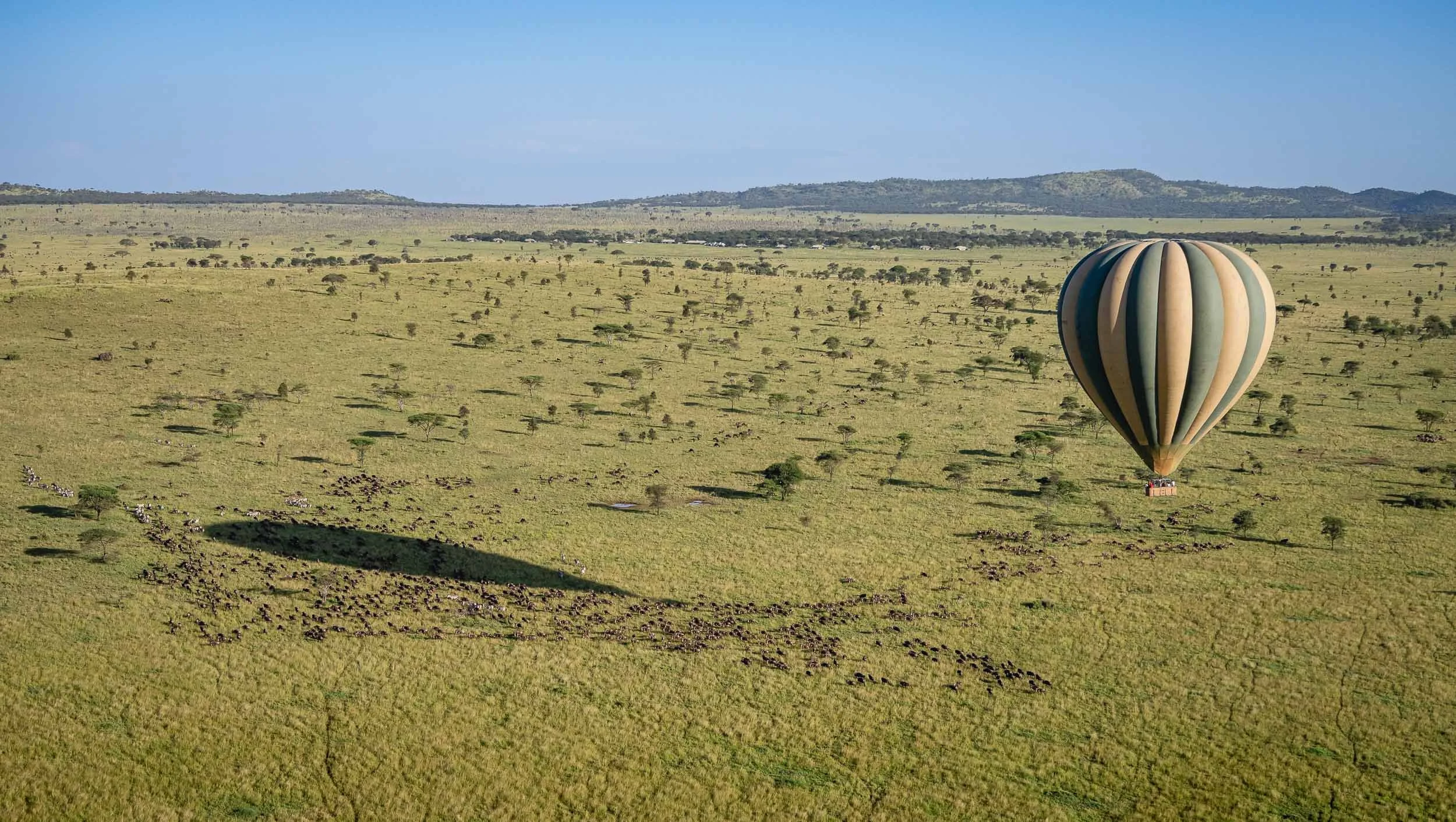
While the Serengeti is impressive from the ground, an aerial view of its vast savannah and many animal herds take things to another level. After a - literally - bumpy start, we had a great balloon flight with Miracle Experience Balloon Safaris.
White Dots
A large herd of Zebra crossed by a second balloon flying this morning.
The Great Migration
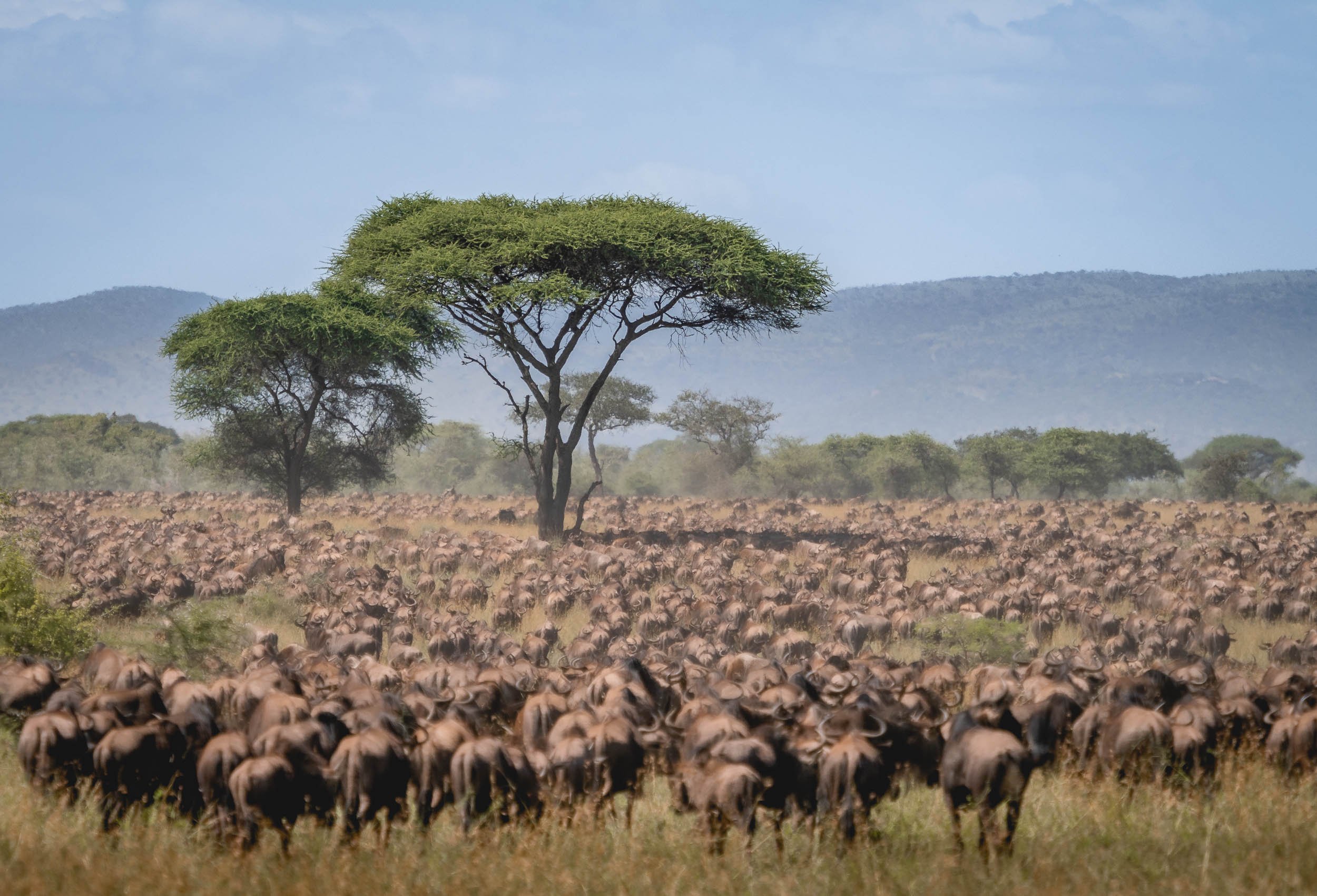
Why we came to the Serengeti: The world’s longest animal migration, with 1.5 million wildebeest and 250,000 zebras following the rains in an 800km circular route every year. We caught it in full swing, with the largest herd we saw approaching 300,000 wildebeest according to our guides - it was an incredible sight difficult to capture in pictures.
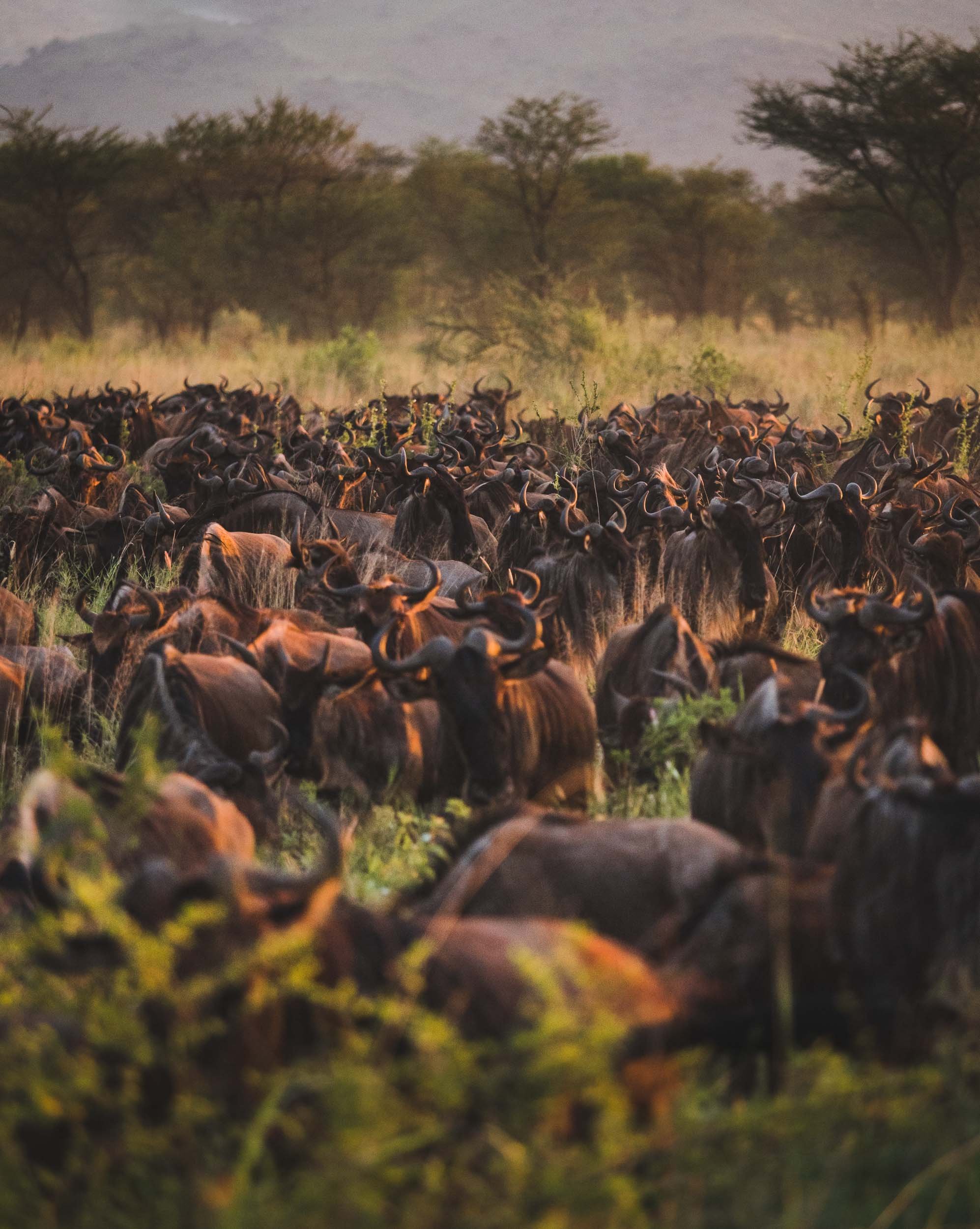
Highway
A group of Wildebeest looking for shade under a lonely tree as the endless train of migrating herds passes by in this long exposure image.
Endless
The largest herd we saw covered the entire horizon - even a panorama like this struggles to capture it all.
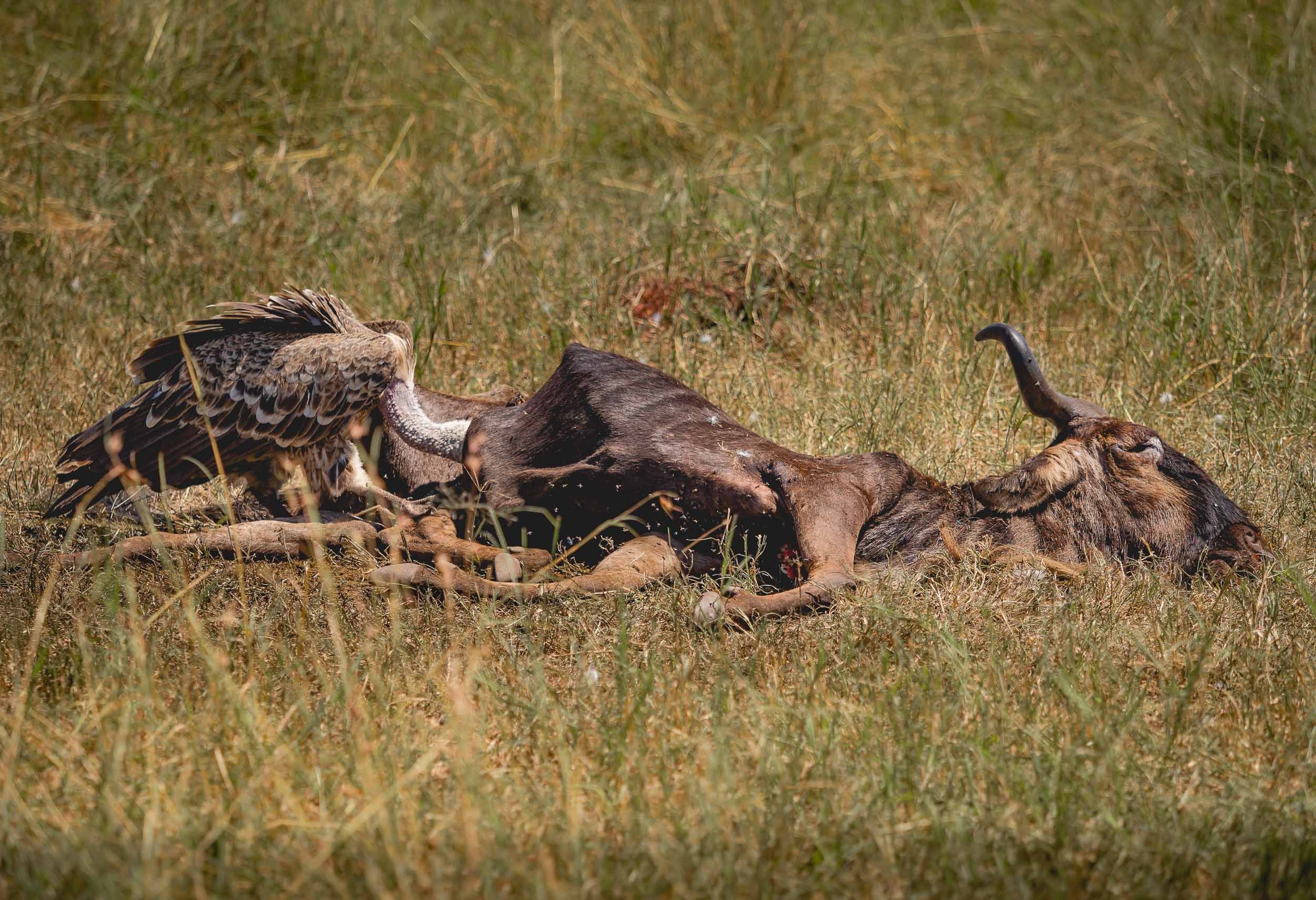
Left Behind
However, not everyone makes it - it’s a long and dangerous journey.
My journey wasn’t as long and dangerous - hopefully still enjoyable to follow along.
Botswana - On The River, Above the Ground, And Under The Stars
My time in this landlocked country on south-western Africa was mainly focused on animal photography.
The third destination I visited during my Africa trip, was Botswana. My time in this landlocked country on south-western Africa was mainly focused on animal photography. Having said that, I could not help sneaking in a few rather unexpected Milky Way photos, read on to find out why that was the case.
This trip was with Pangolin Photo Safaris, specifically their 10 day - 3 location trip, which was well organized and covered a variety of wildlife and landscapes.
The Chobe River
Over the first 3 days in the country, we spent time on a houseboat cruising and mooring along the Chobe river. In fact, we were anchored on the Namibian side, so one could argue that some of these photos show Namibia, and some show Botswana, depending on which side of the shore the animals stood ;).
Elephants in the Water
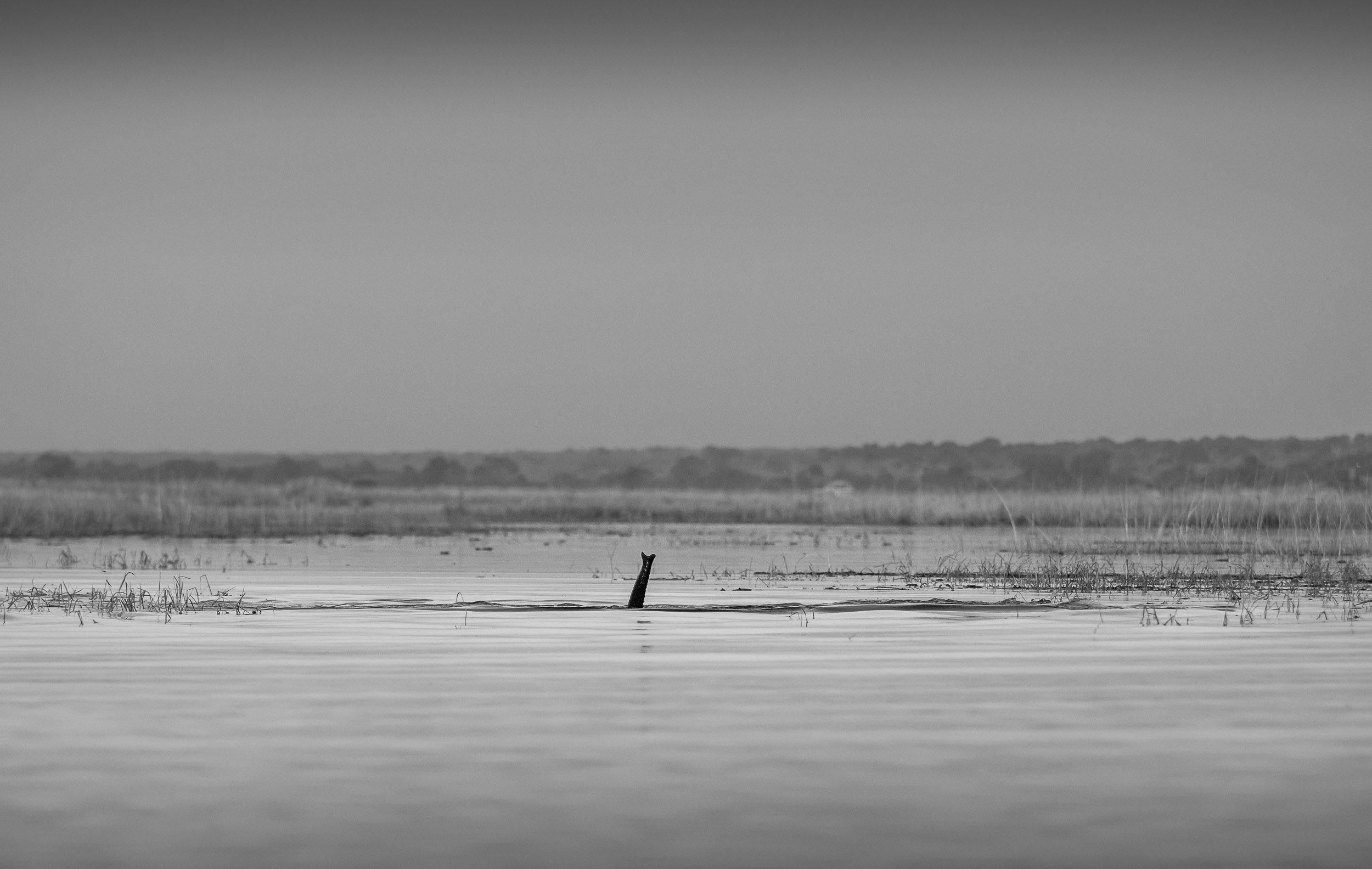
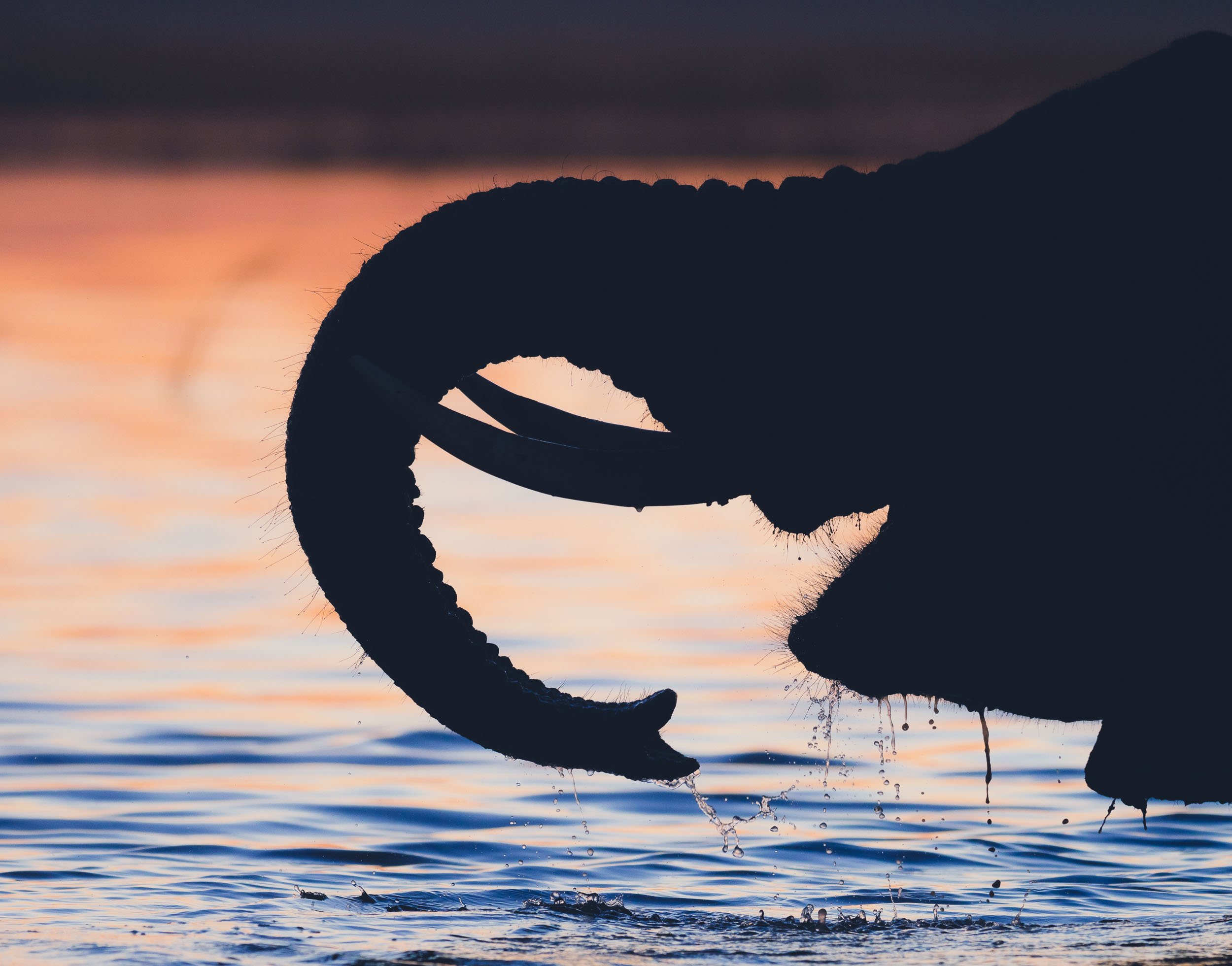
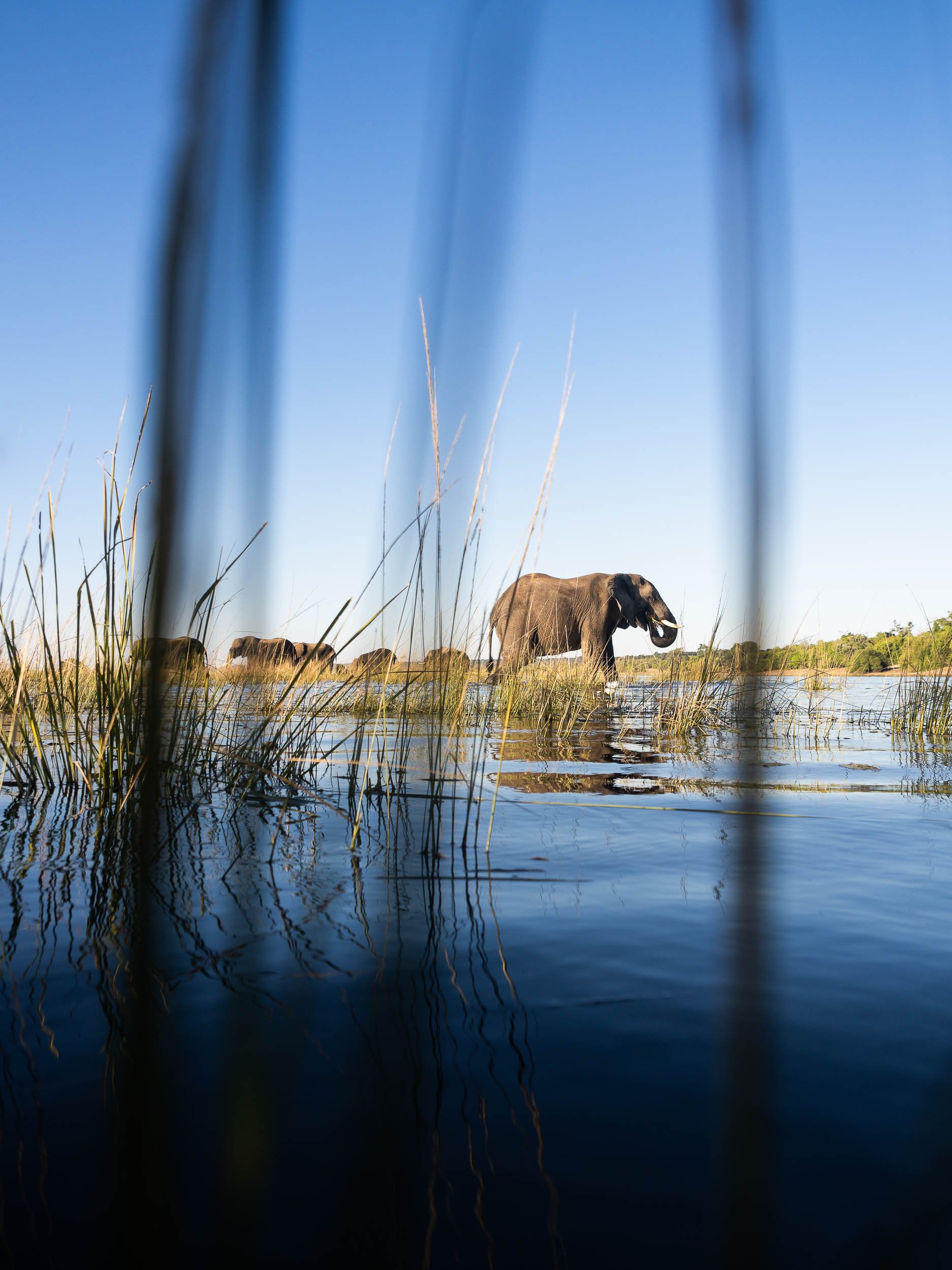
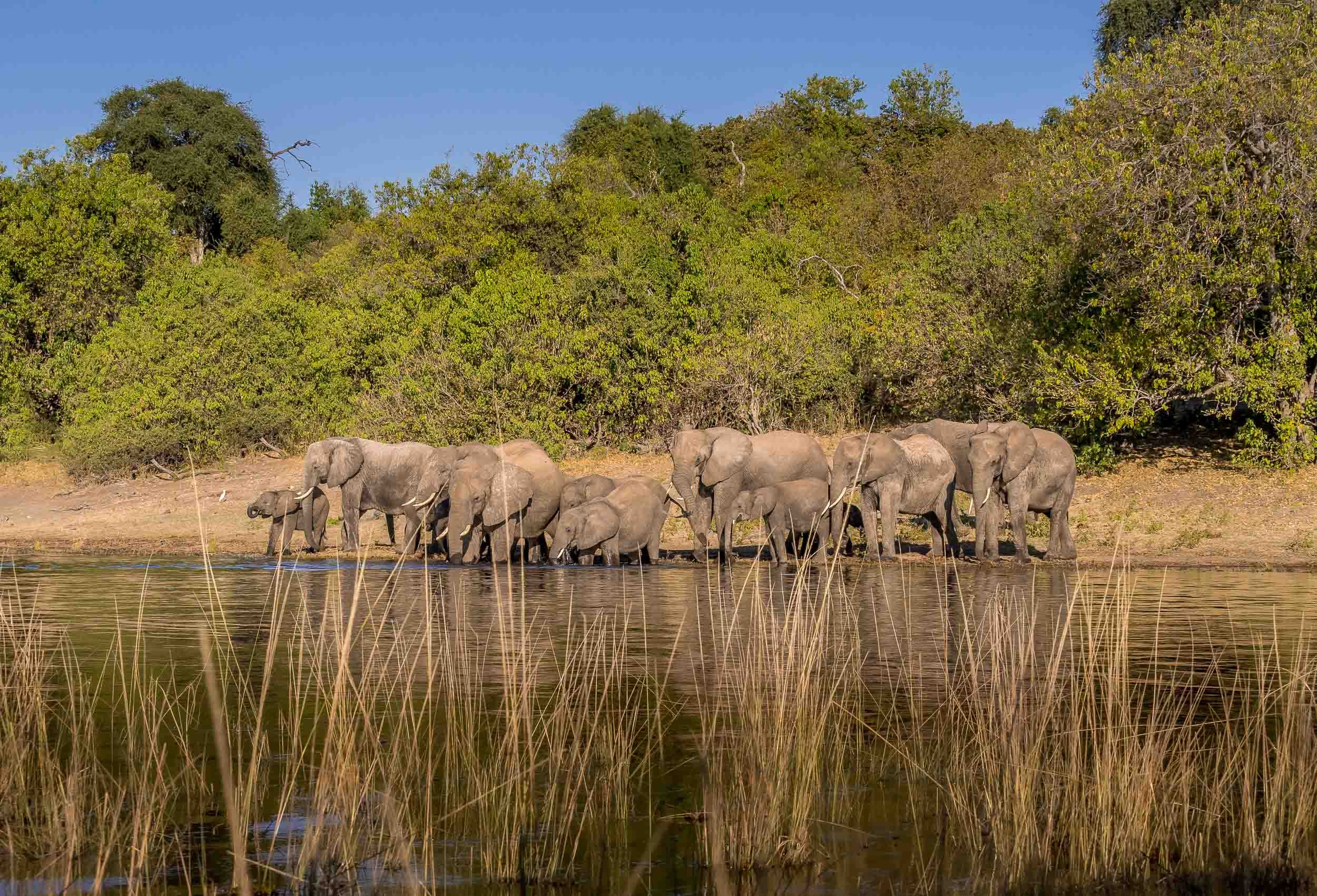
It was the first time I was able to observe elephants in the water, not just bathing and drinking, but properly swimming - in fact, literally under water. The park is widely known for its many elephants. Botswana has the largest elephant population in Africa estimated at over 200,000, to the extent that their presence causes pressure on the environment and other animals, as well as conflict with humans.
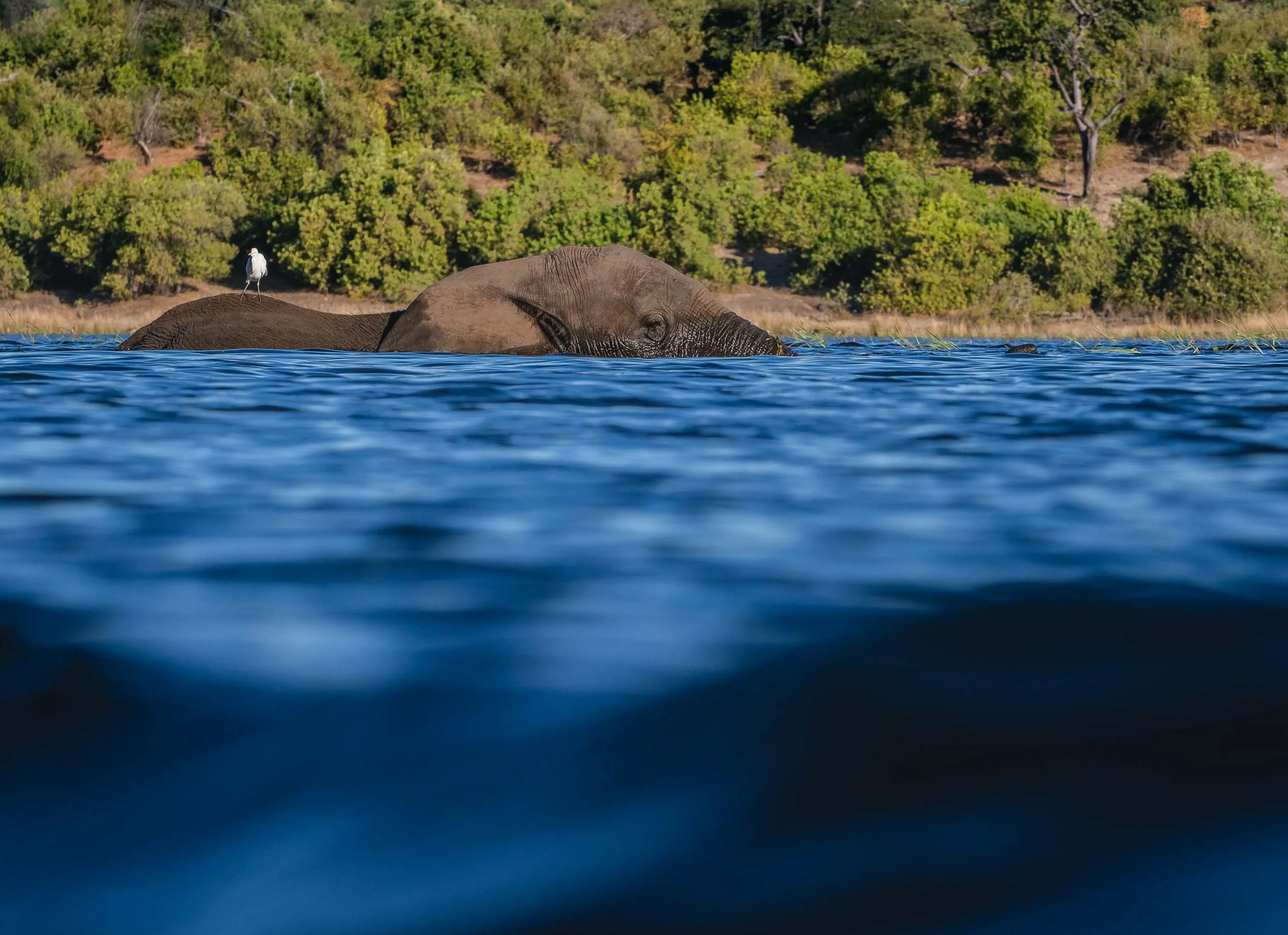
Hippos out of the Water
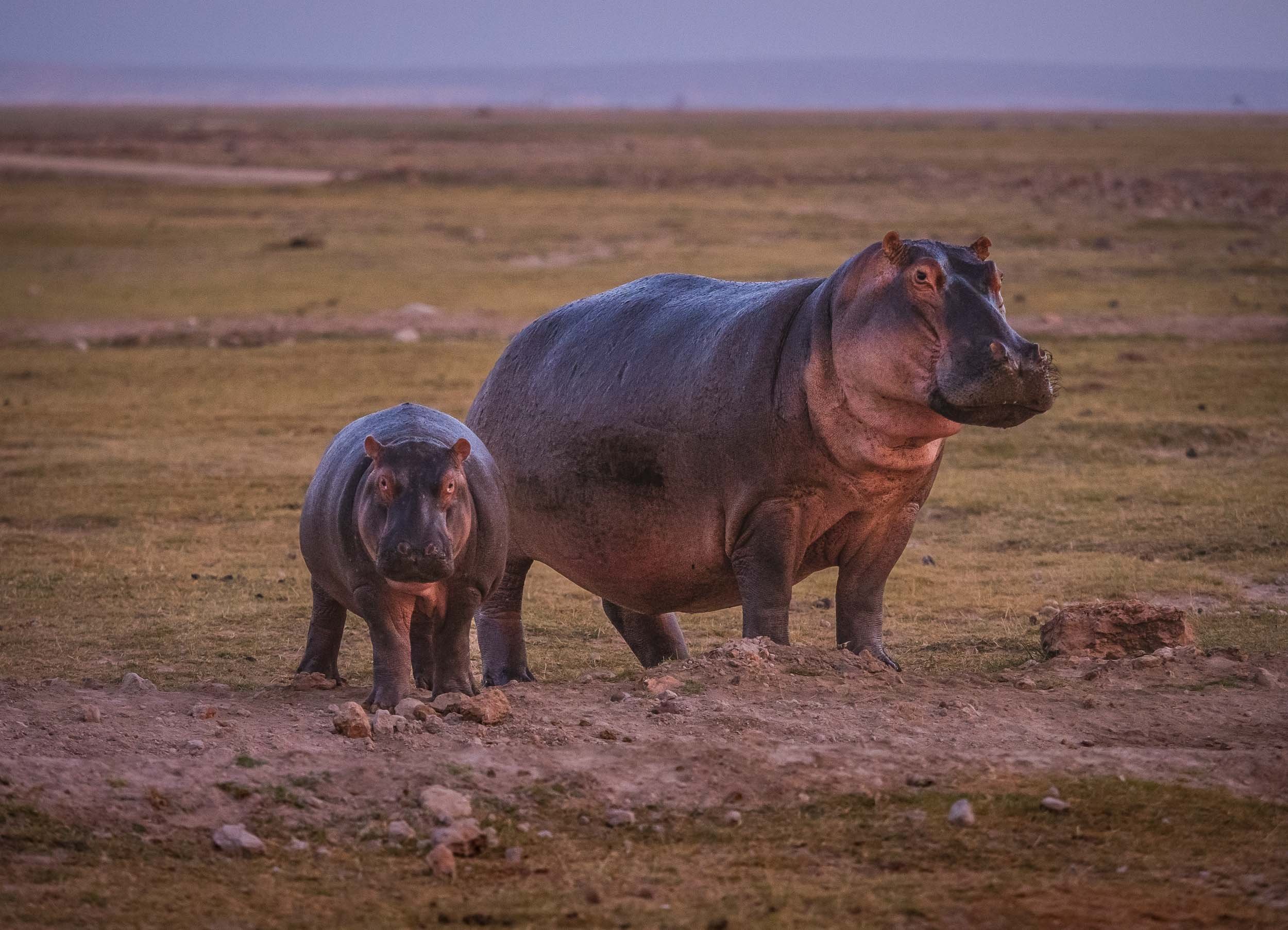
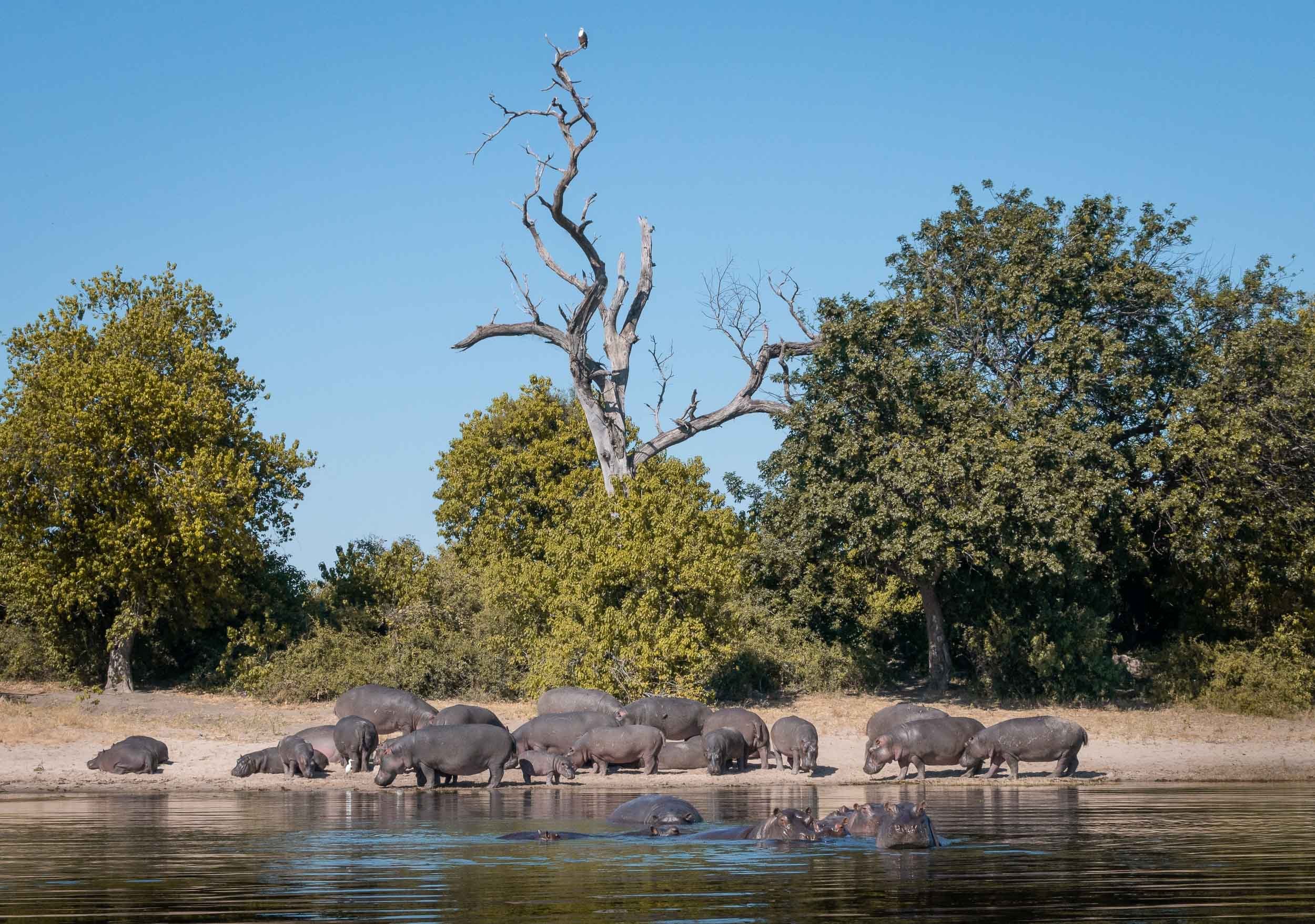
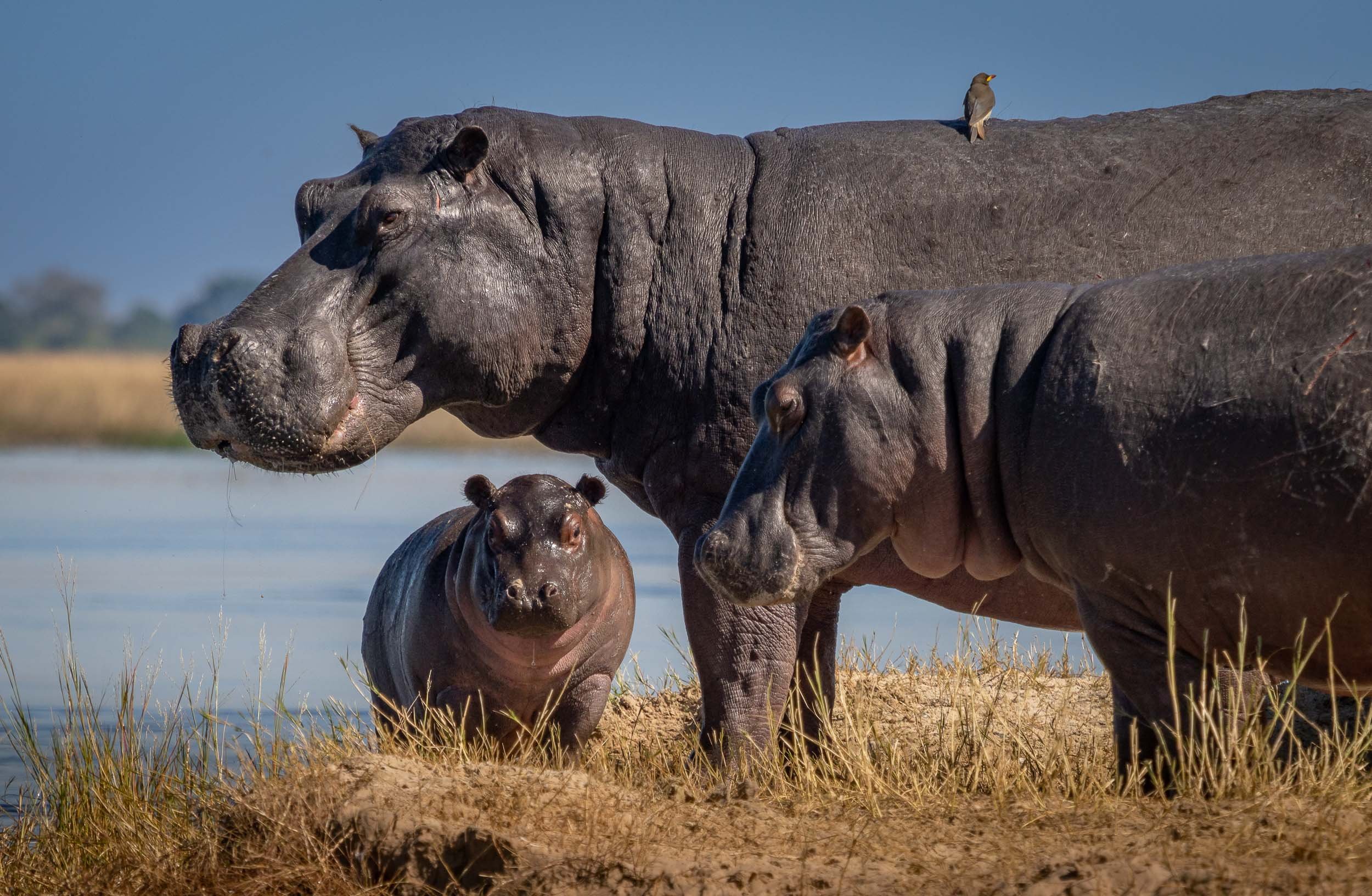
As unsual it was to see elephants swimming, it's equally interesting to observe Hippos on land, although it is quite common to see them grazing. Their movement on land is quite impressive (they run faster than humans) and their pink belly gives them a comical look.
Companion
An Oxpecker and its Hippo family. These birds remove ticks and other parasites from them.
Bird Life
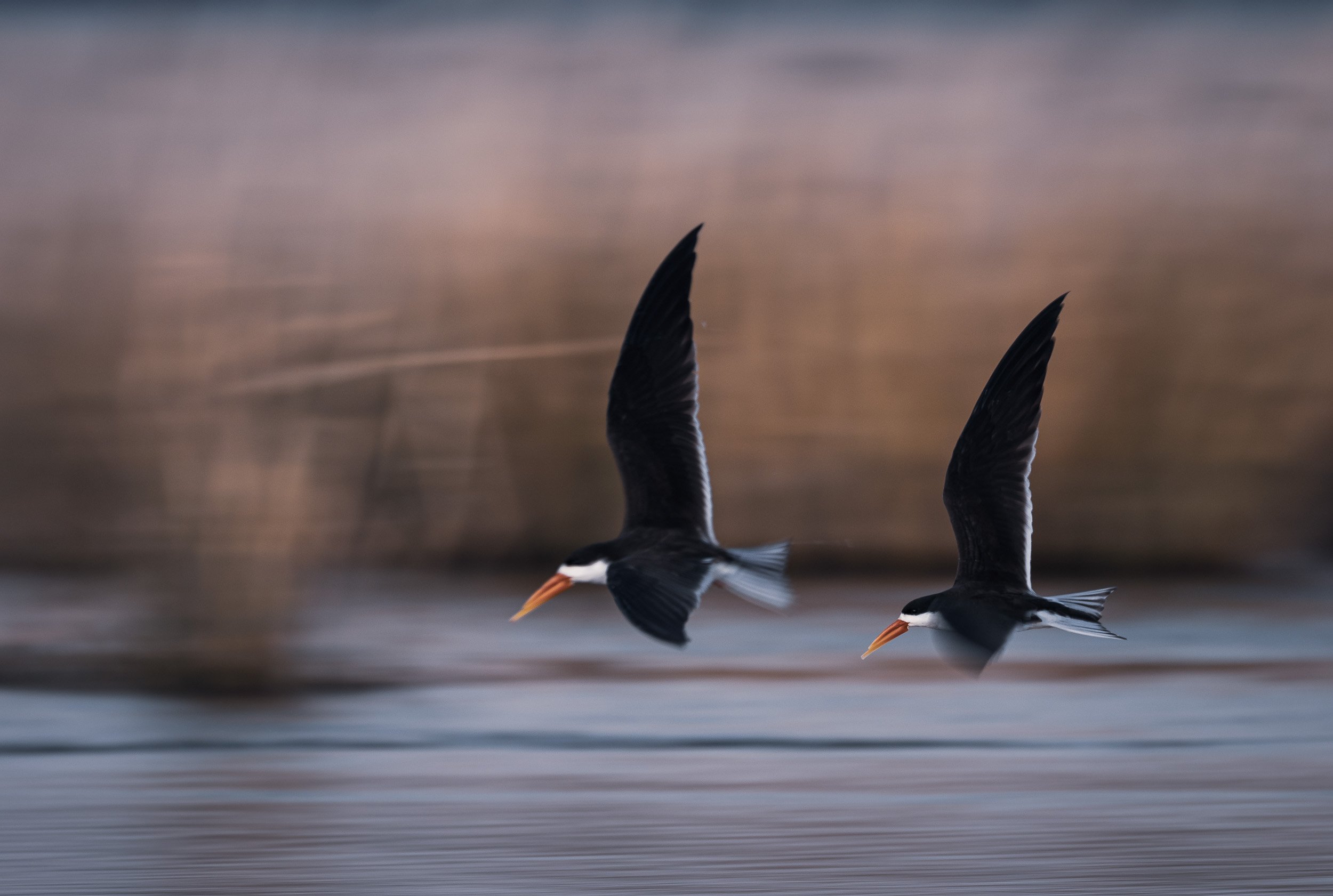
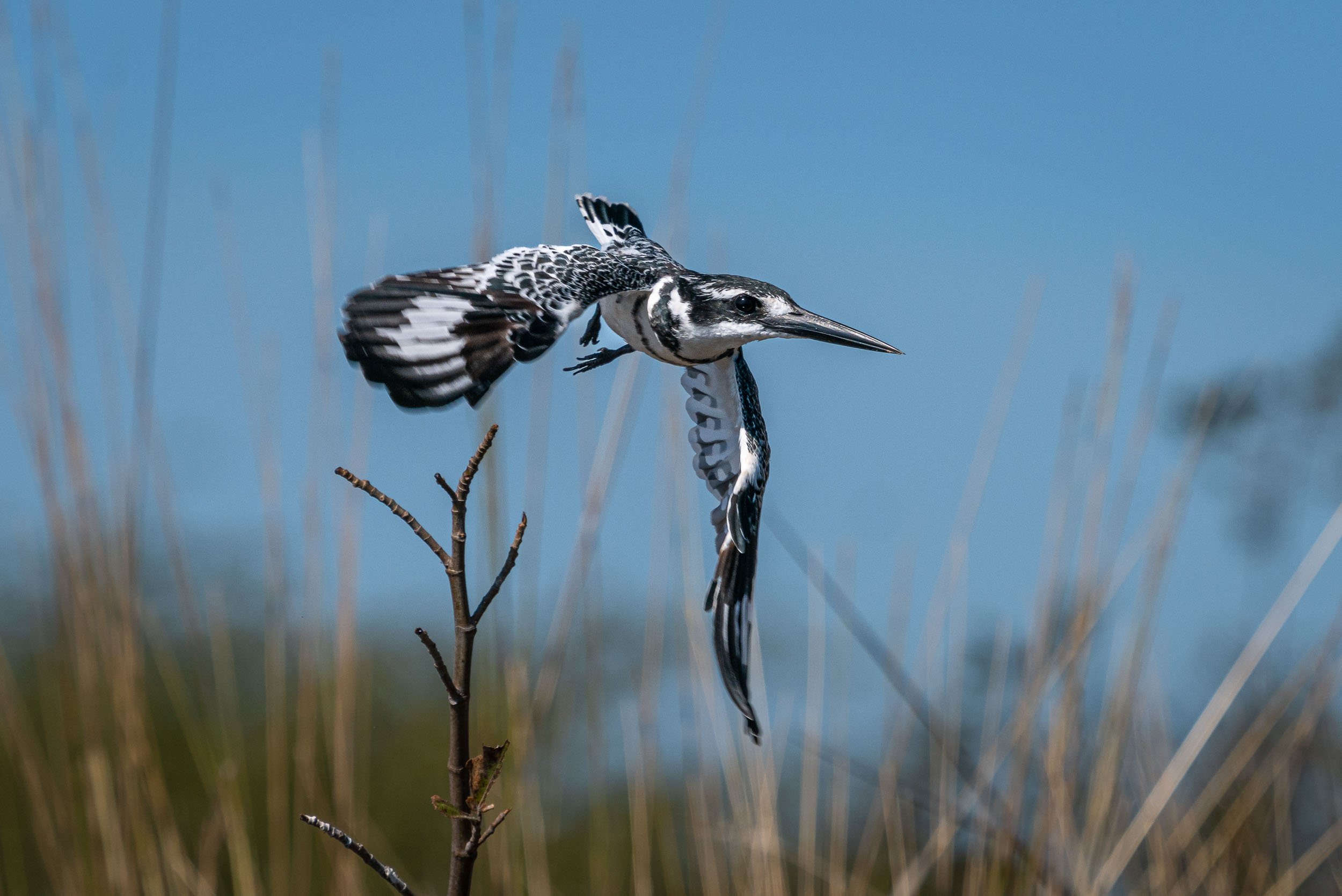
The river has amazing bird life, from Kingfishers, to Fish Eagles, Storks, and Jacanas. Not something I was previously too interested in, but observing their behaviors is intriguing, and trying to catch them in flight is a photographic challenge (which I never shy away from).
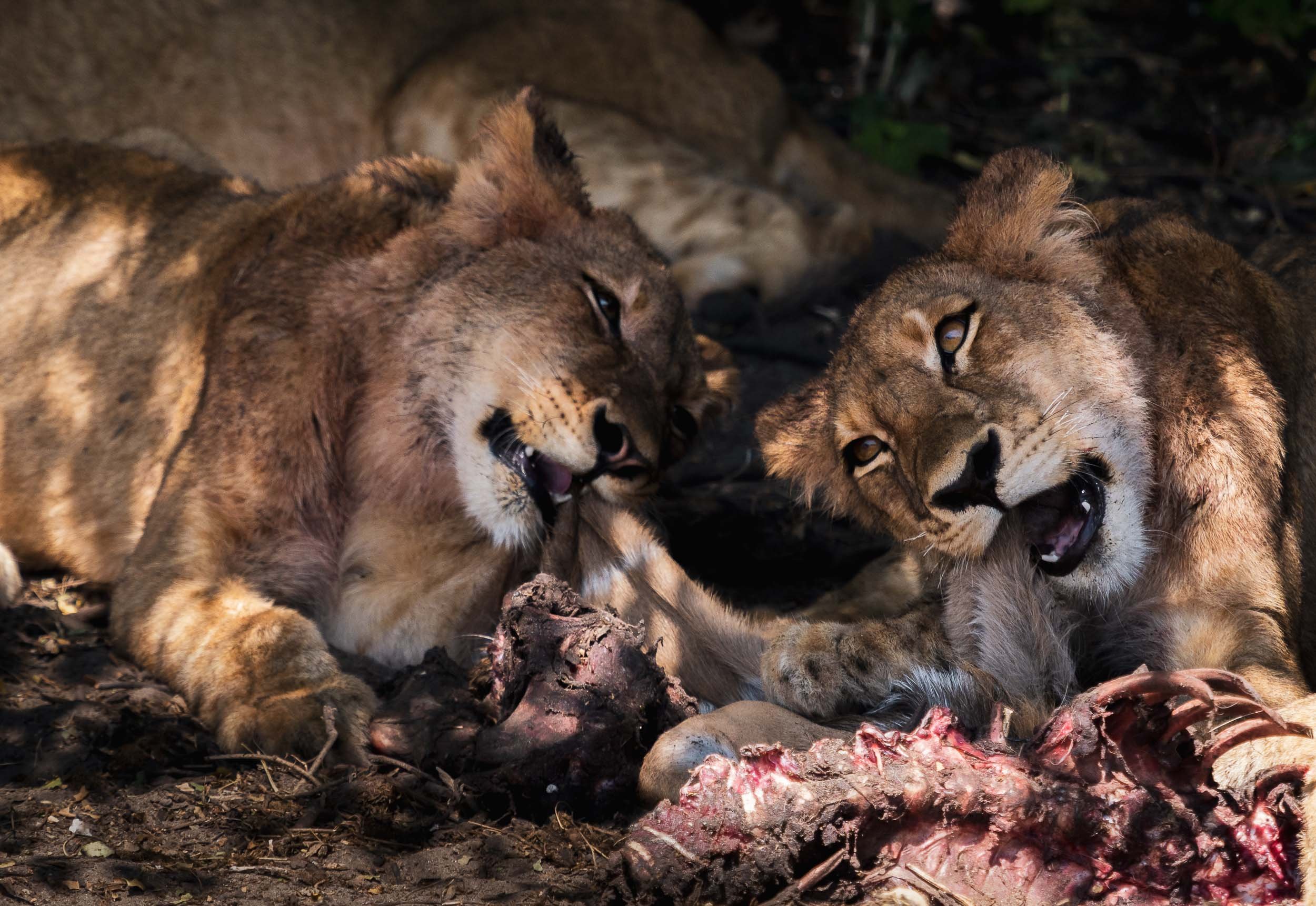
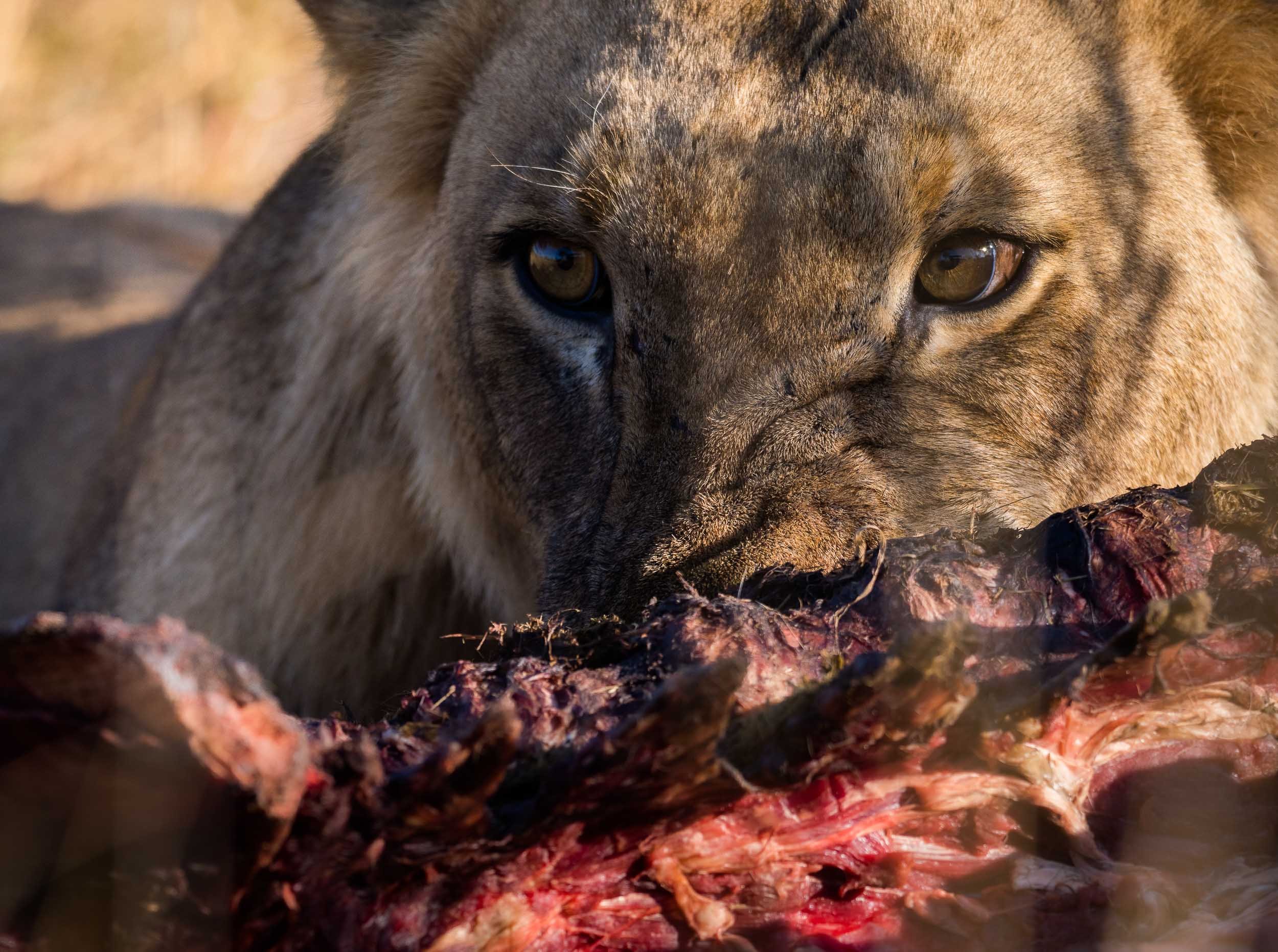
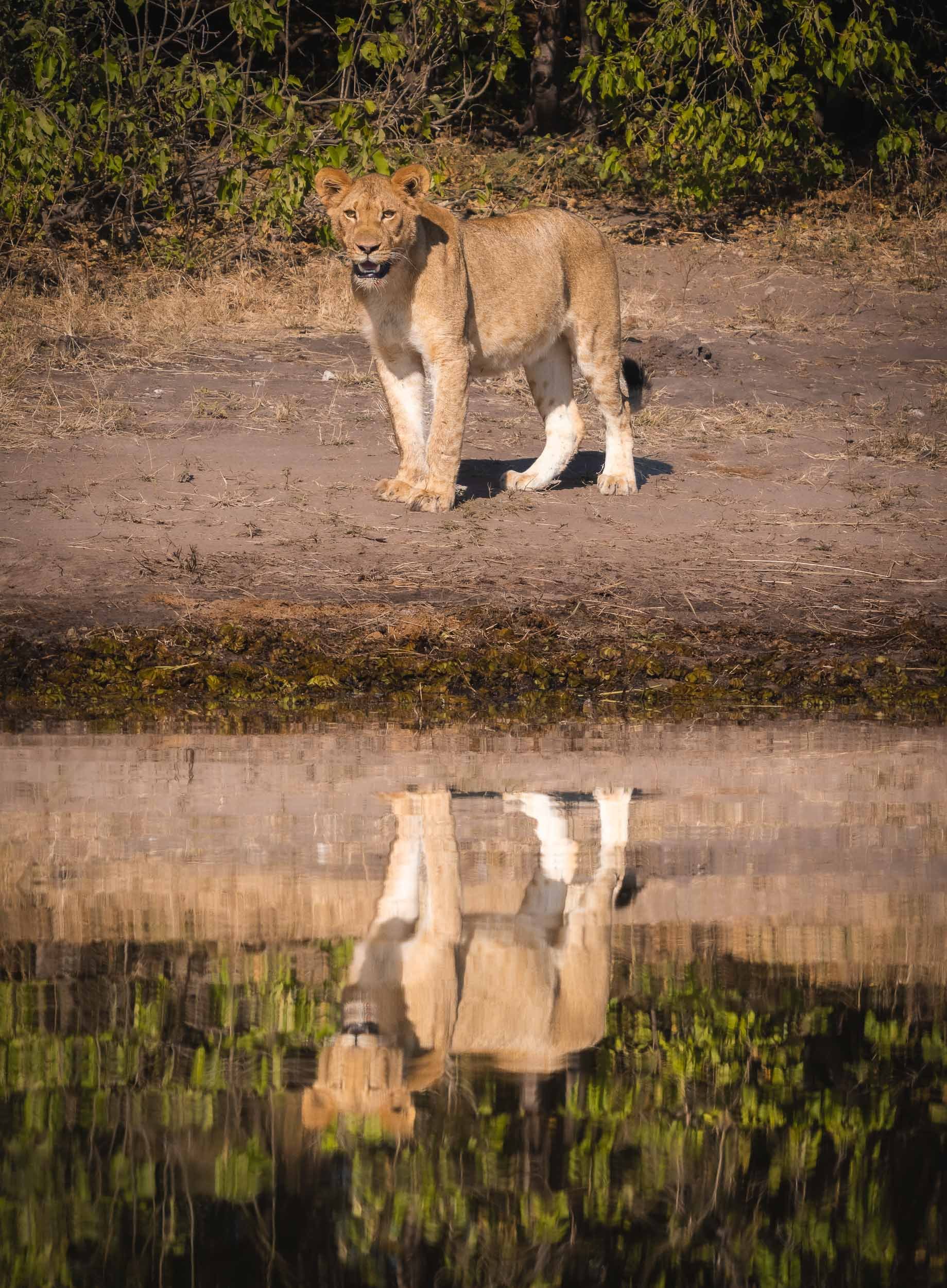
We were also lucky enough to observe some lions with a kill directly under the bushes on the shore.
A few more animals by the water…
The Chobe river is actually the name of the eastern Cuando river, before it flows into the Zambezi. The National Park around it was Botswana’s first, and is its most biologically diverse.
The Selinda Reserve
From Chobe we took a short flight to Selinda, a private concession in the greater Okavango Delta region. The Selinda spillway links the Delta with the Linyanti Swamps, and up until 2009 has been dry for decades. Now, its floodplains and channels have water flowing for many months of the year, becoming a home for wide variety of wildlife.
From Above
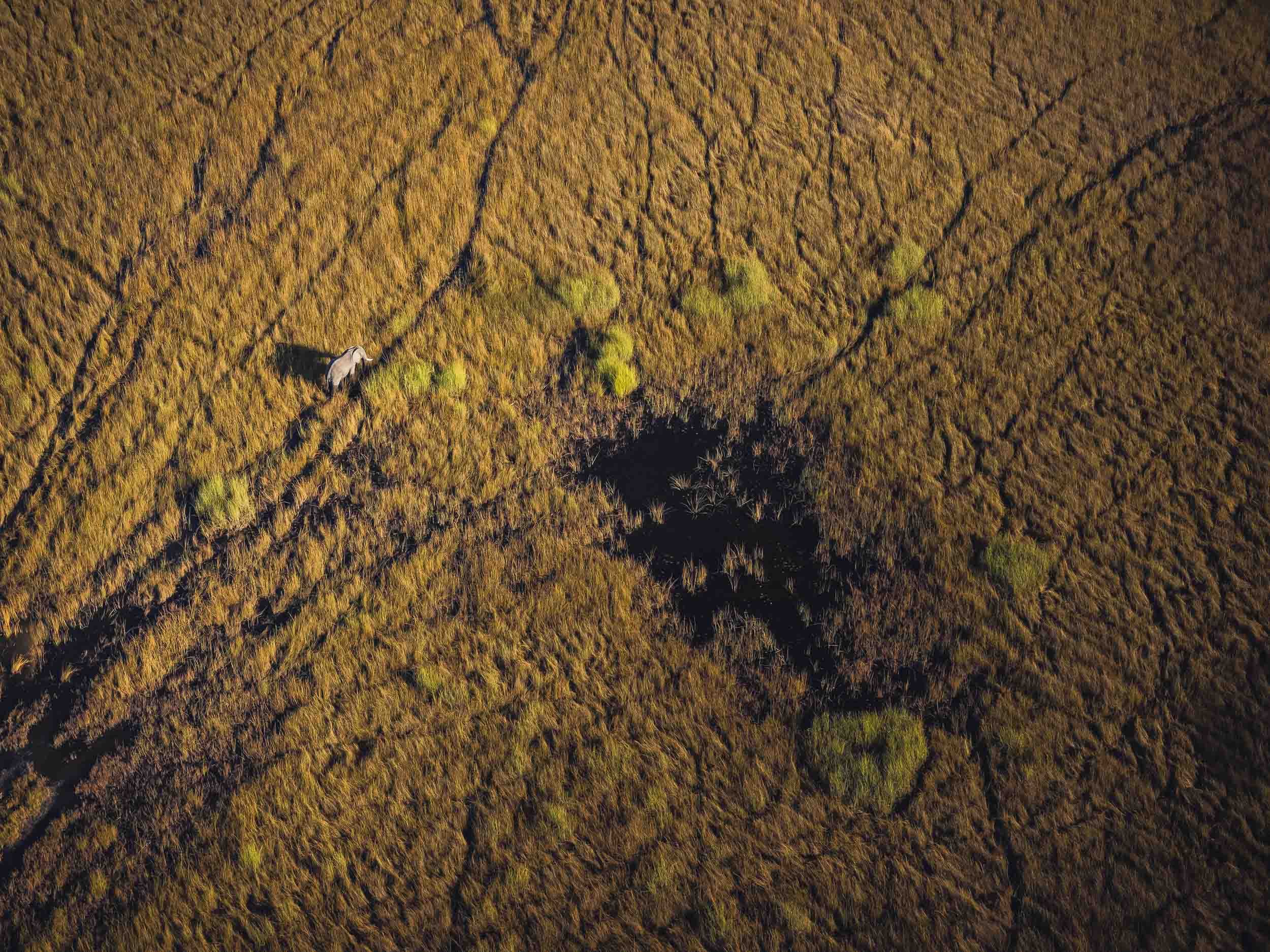
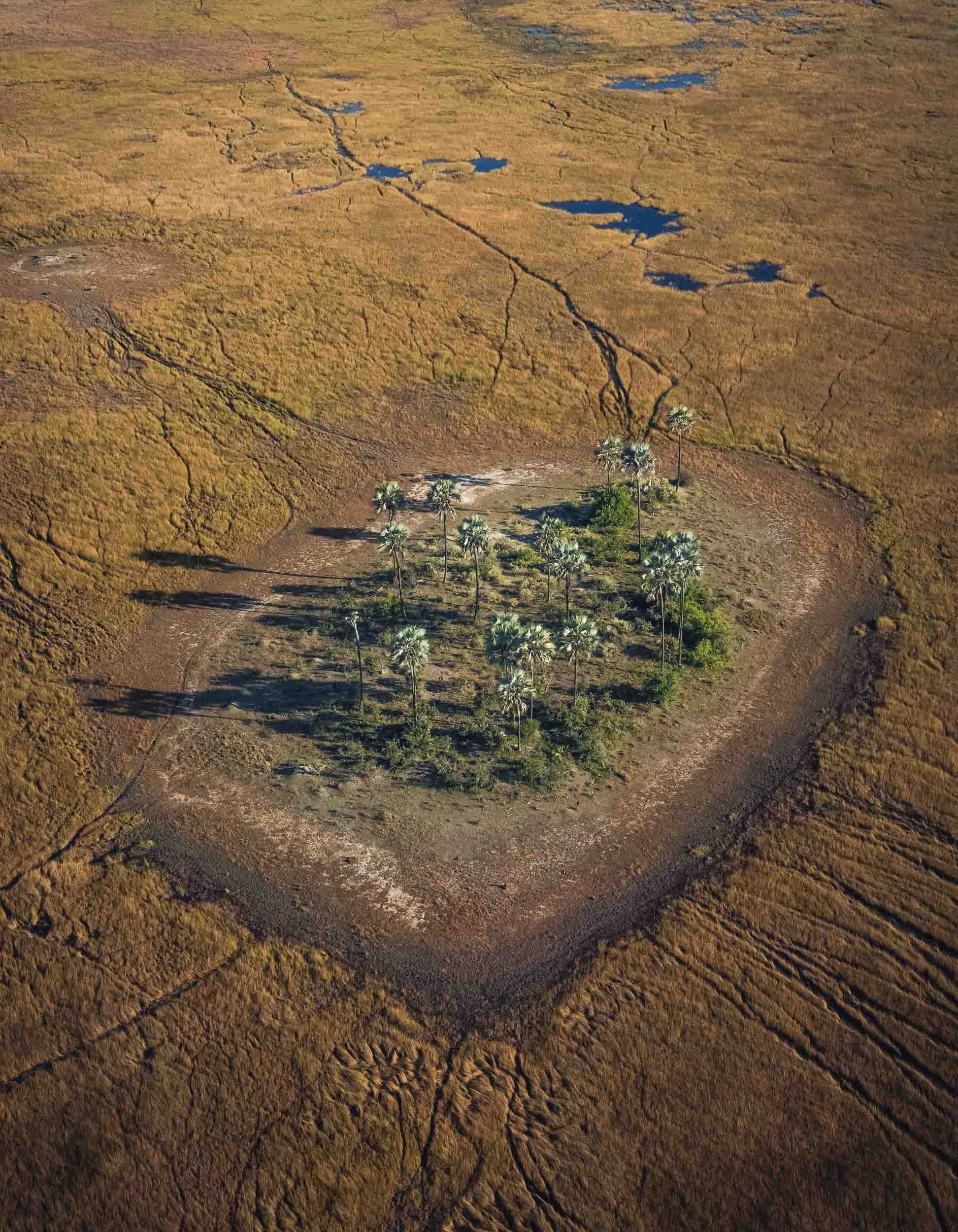
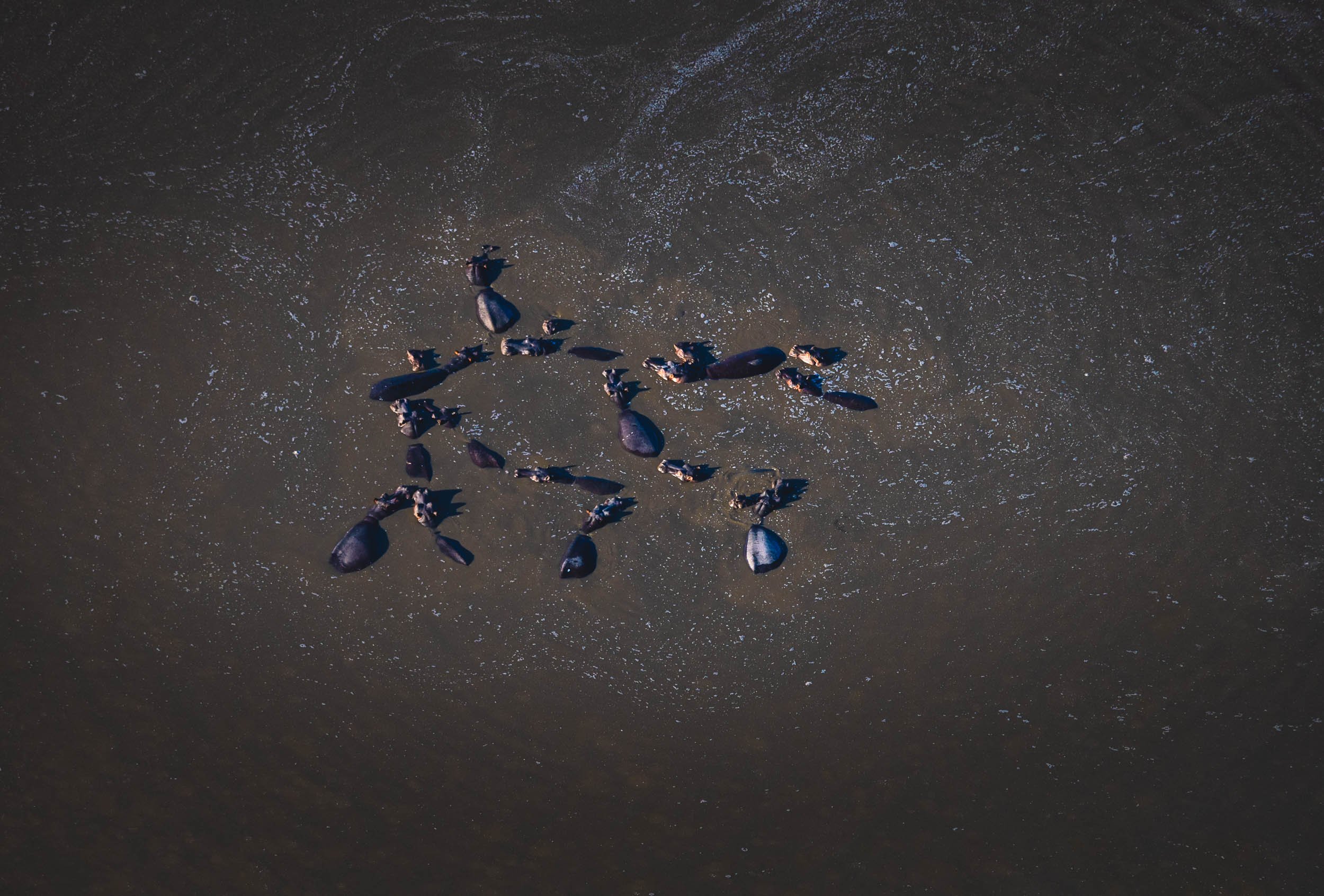
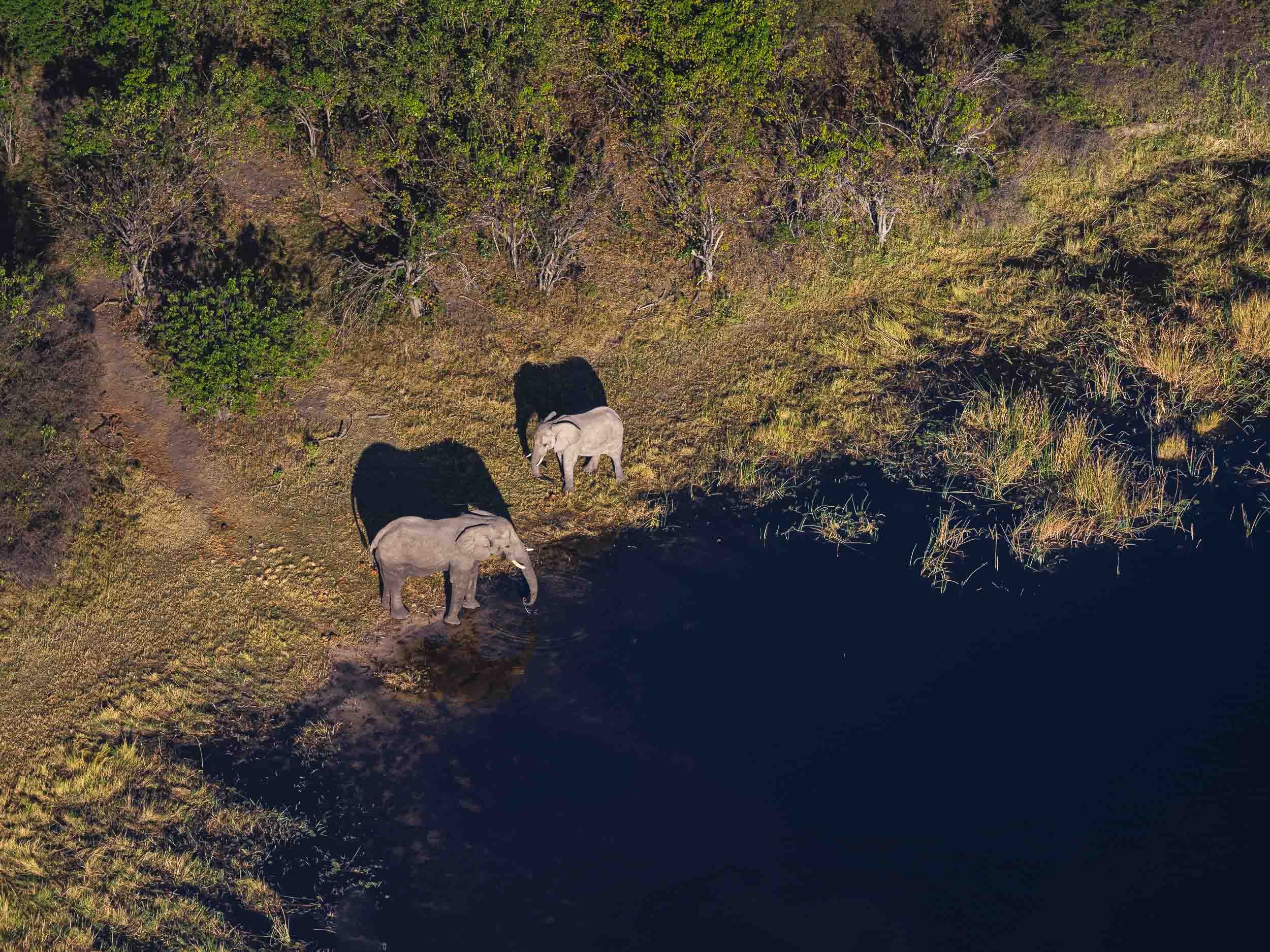
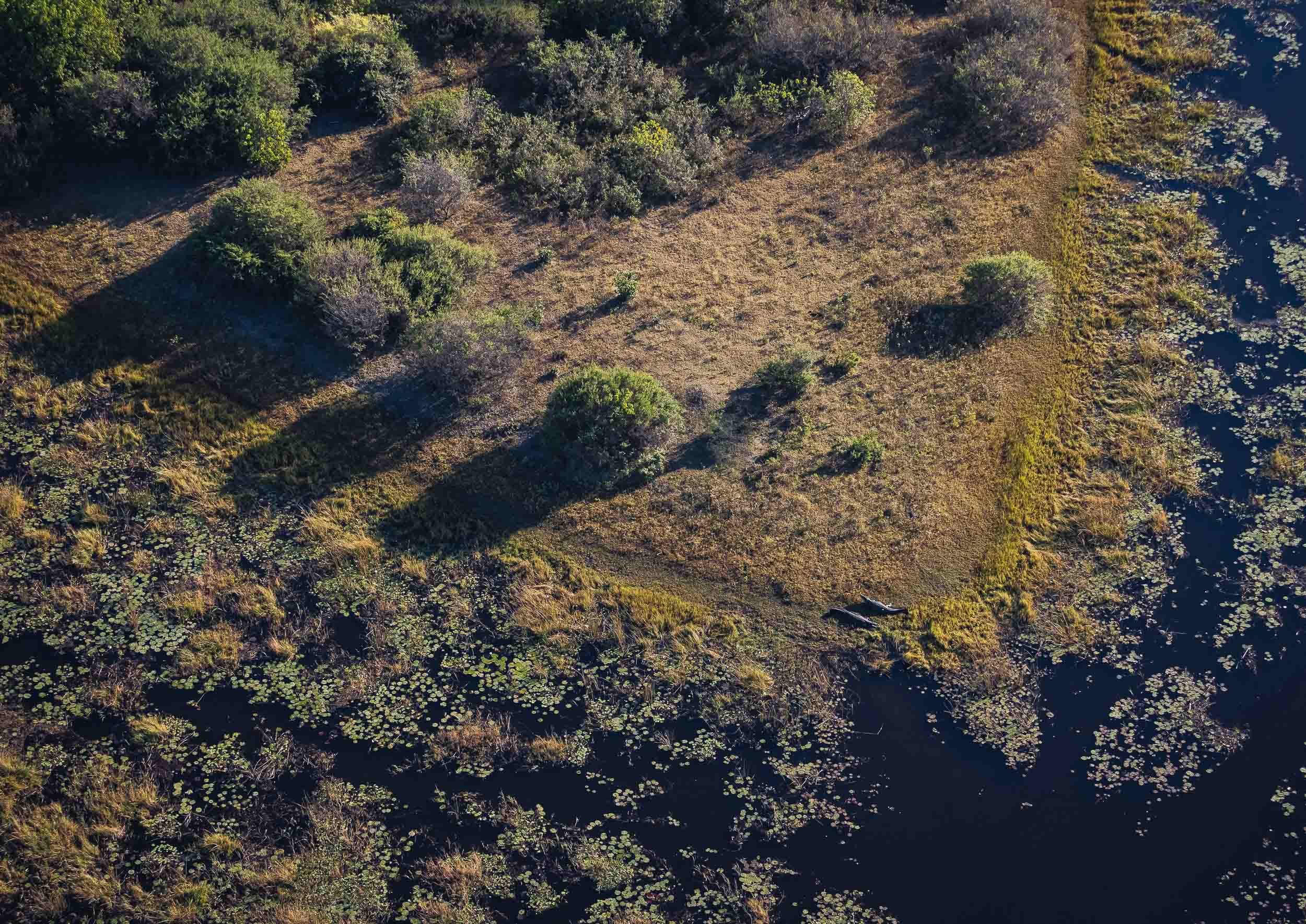
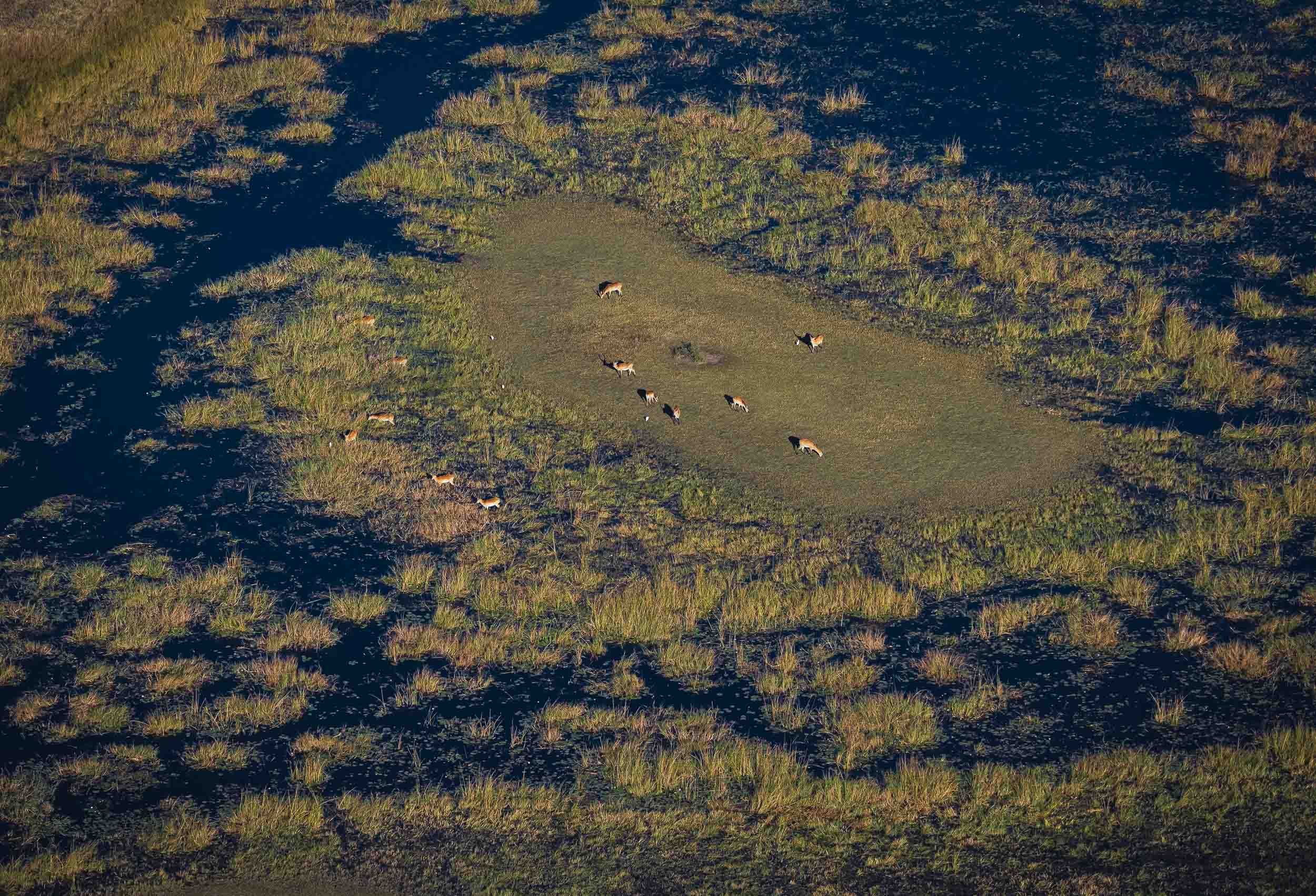
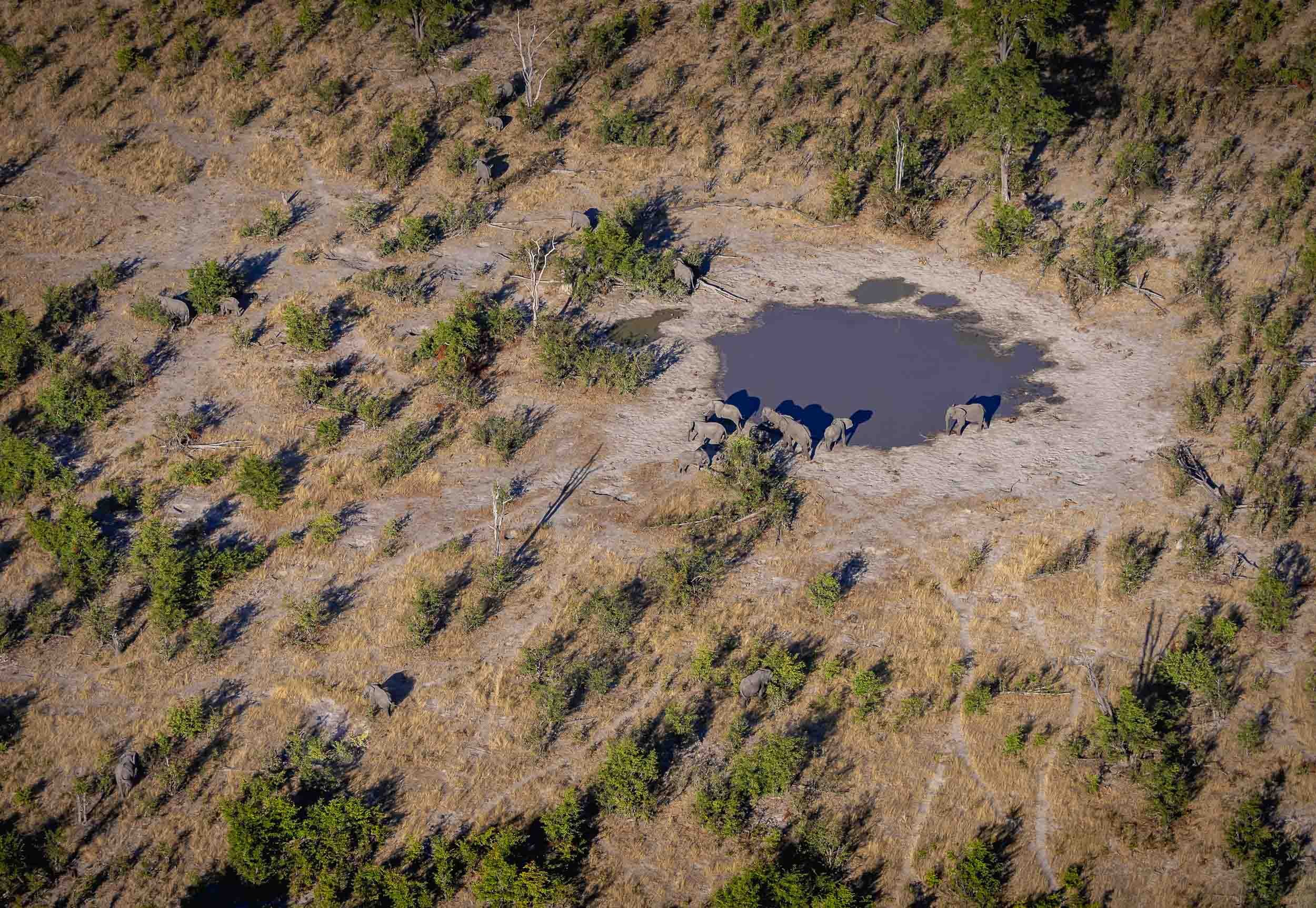
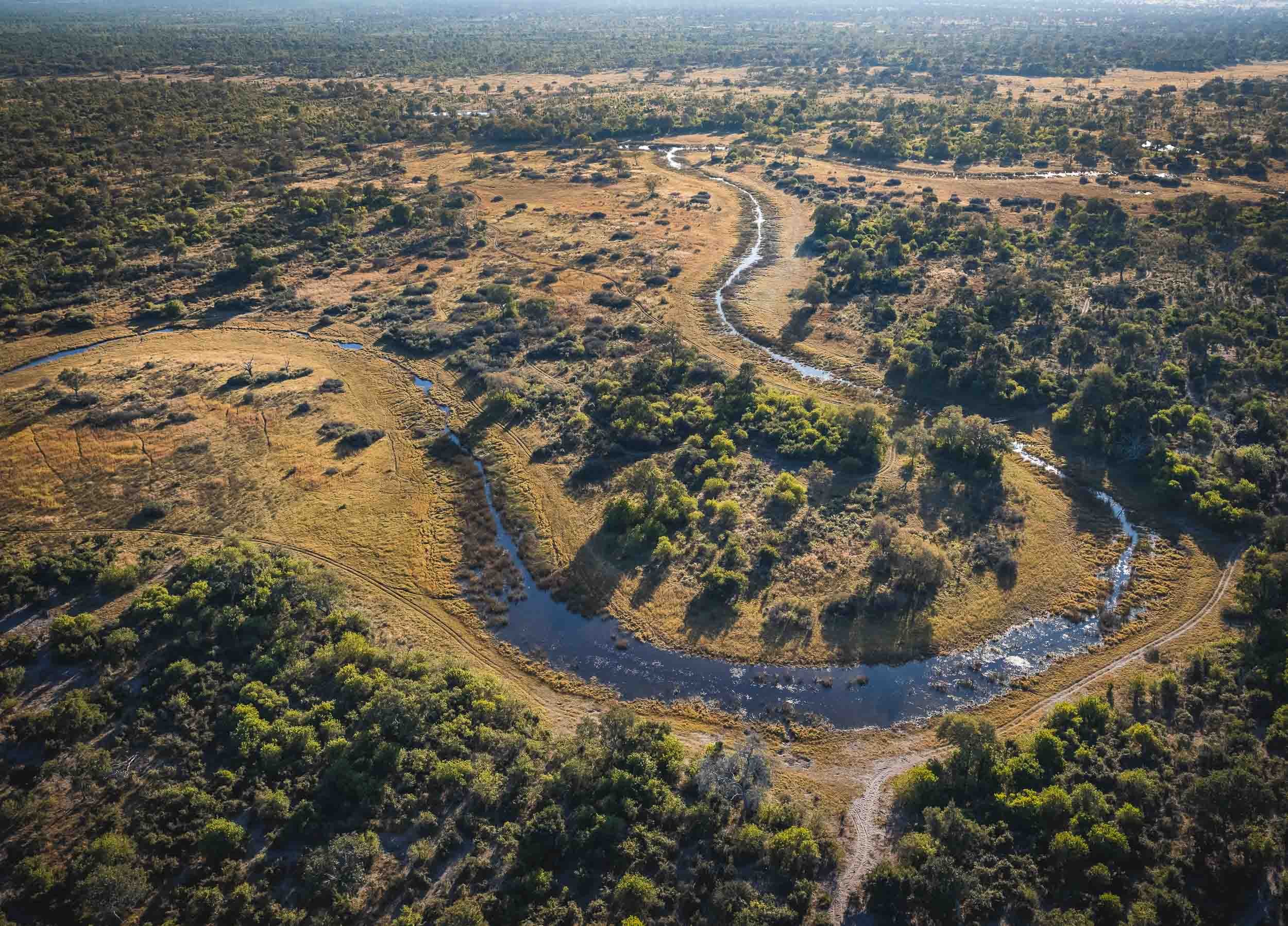
It was a good place for some aerial views, and what’s better for that than a helicopter? A 45min flight above this amazing landscape is the source of these bird’s eye views of elephants, crocodiles, heartbeests, and hippos in their environment.
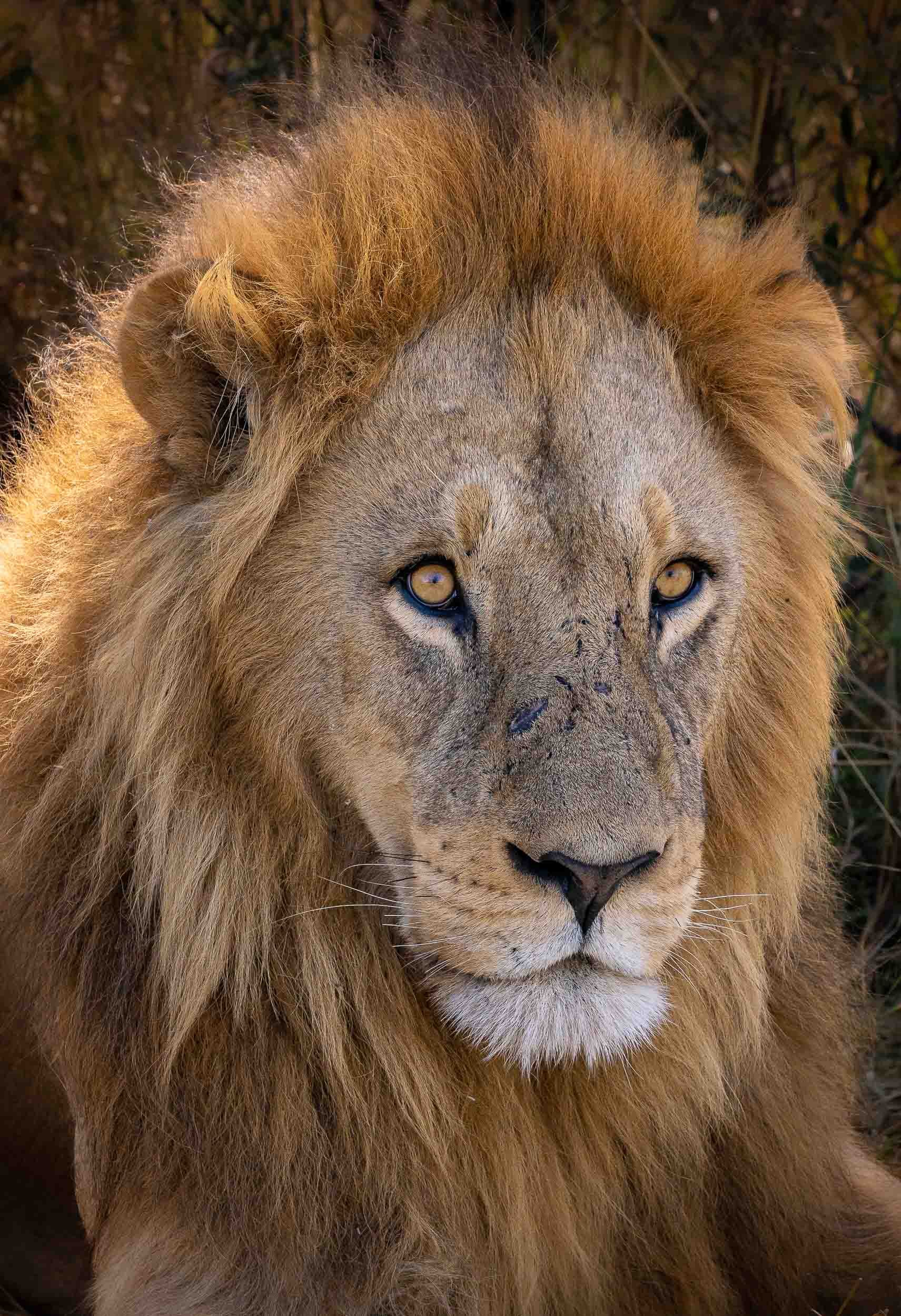
Lions
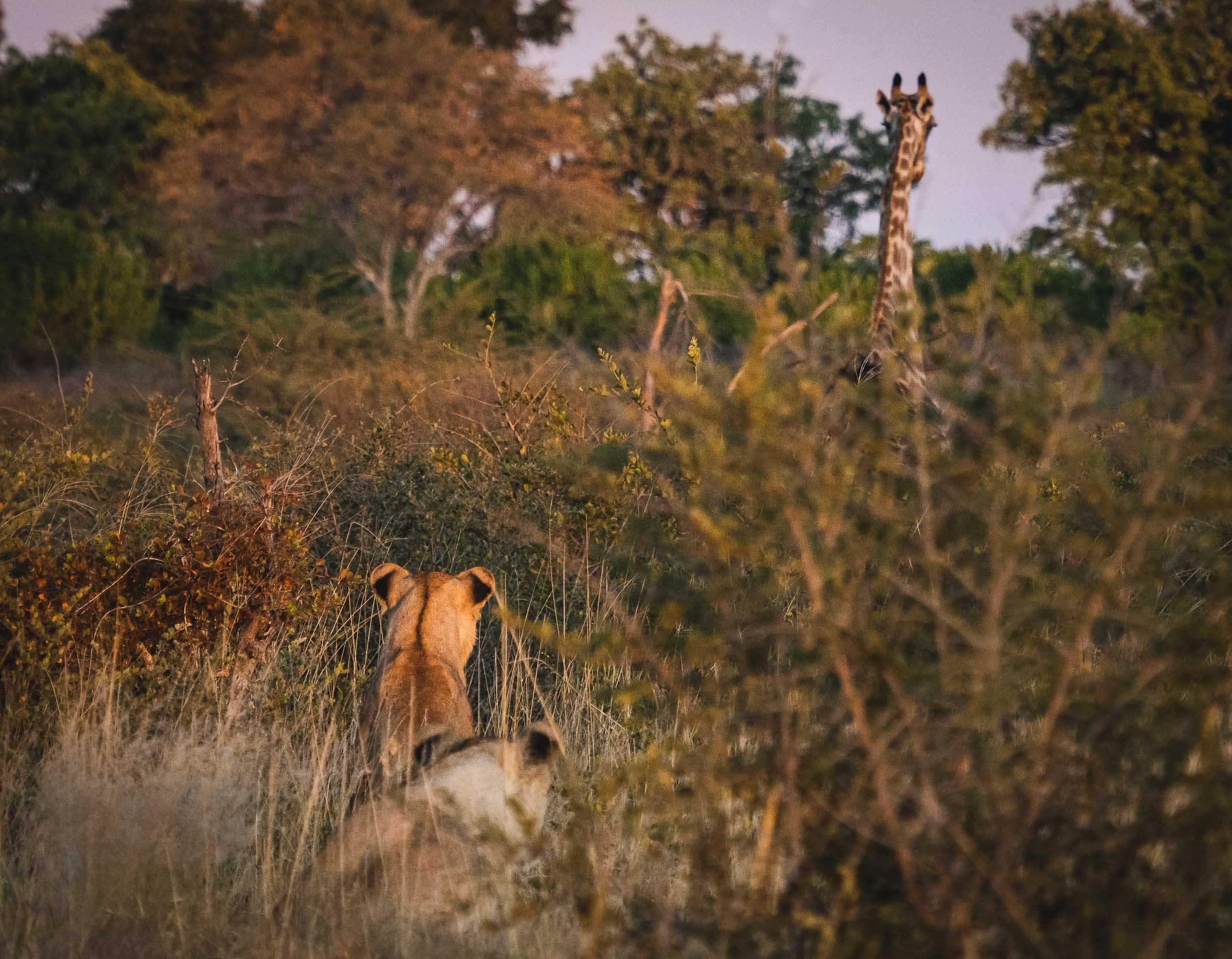
The Prey
We saw a pride of lion stalking this Giraffe the night before…
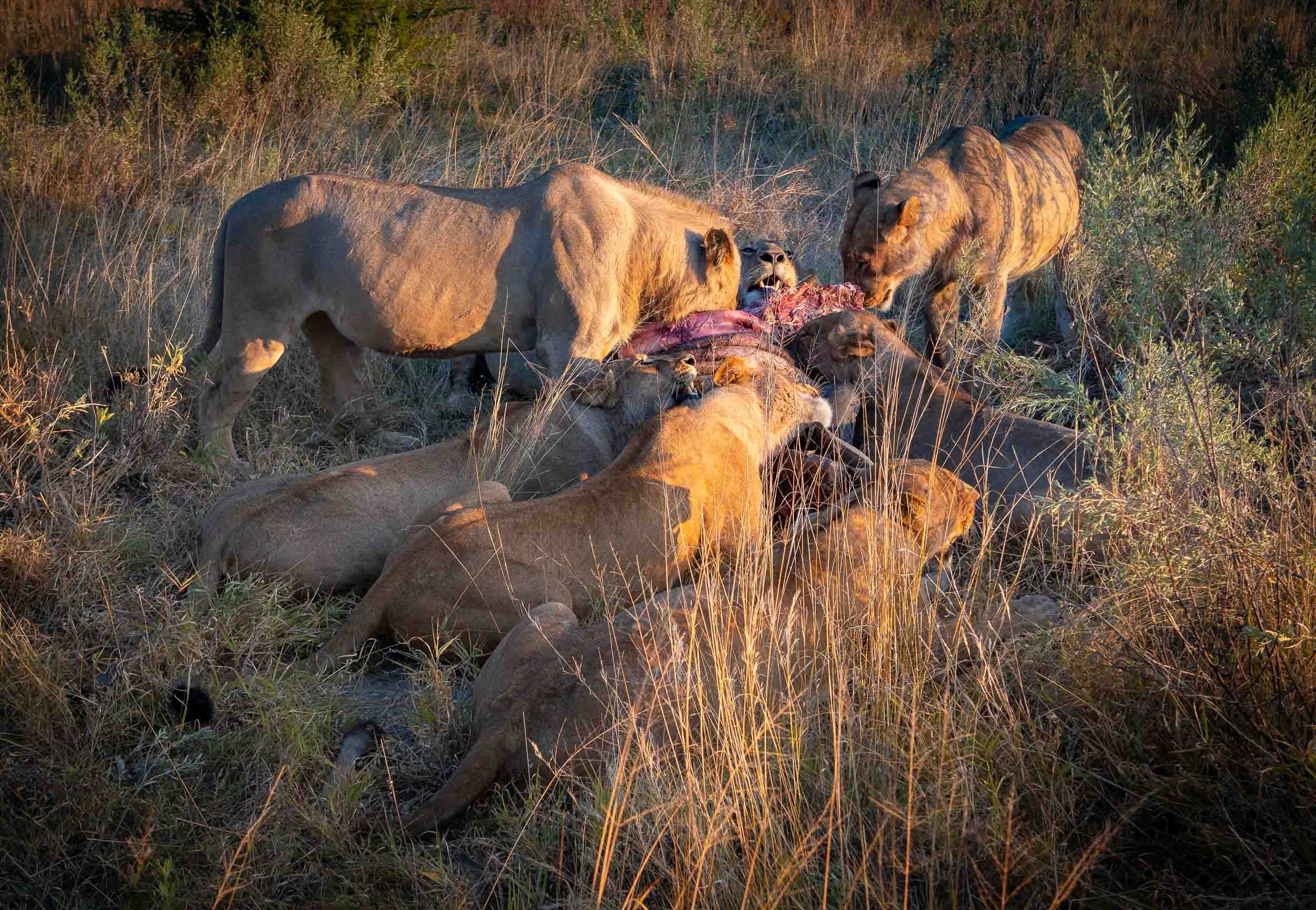
The Kill
…but what they had killed in the end was a Buffalo, as we found out the next morning.
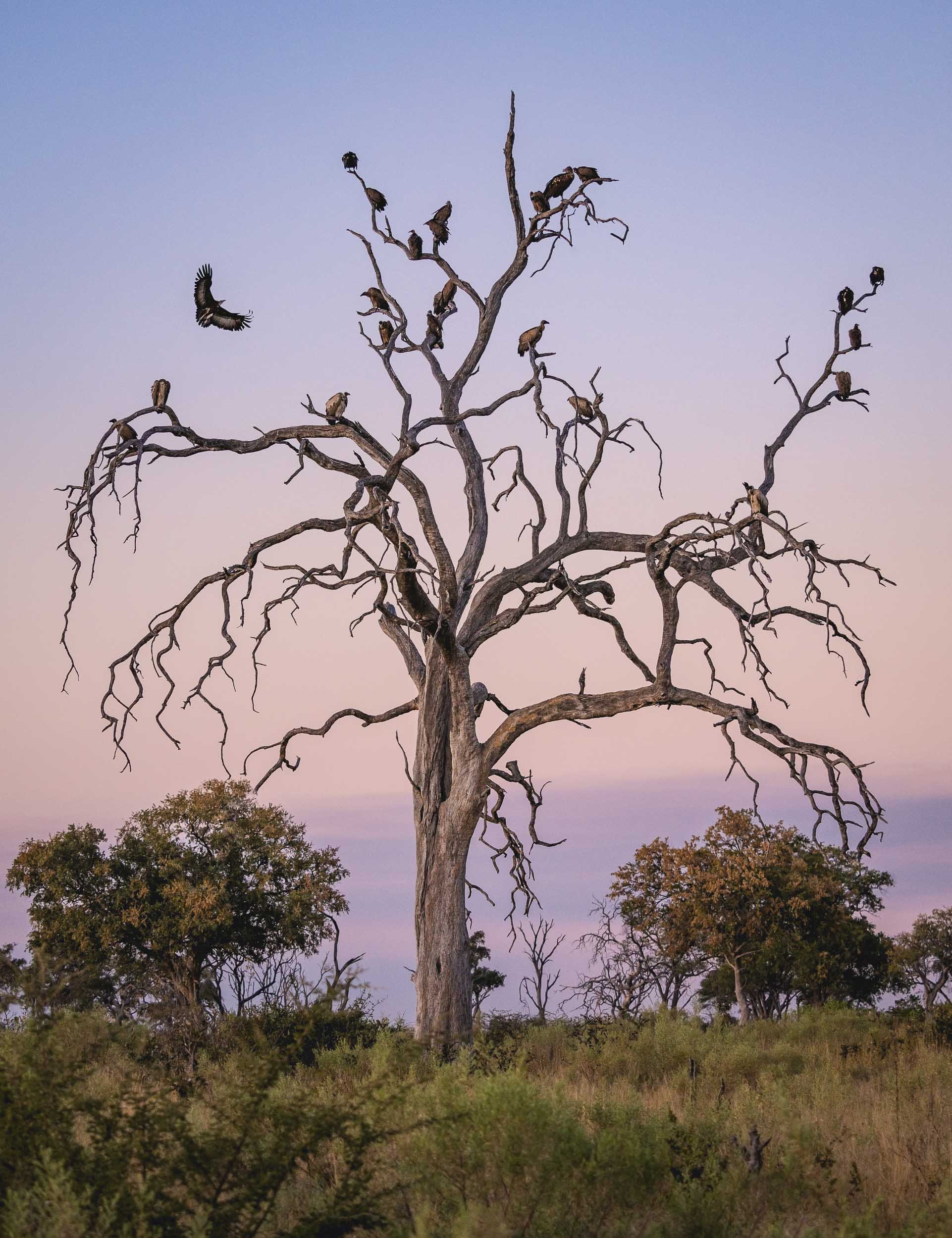
The Gallery
Vultures are never far from a kill. Here they are still watching, but that should change once the Lions and Hyena were done…
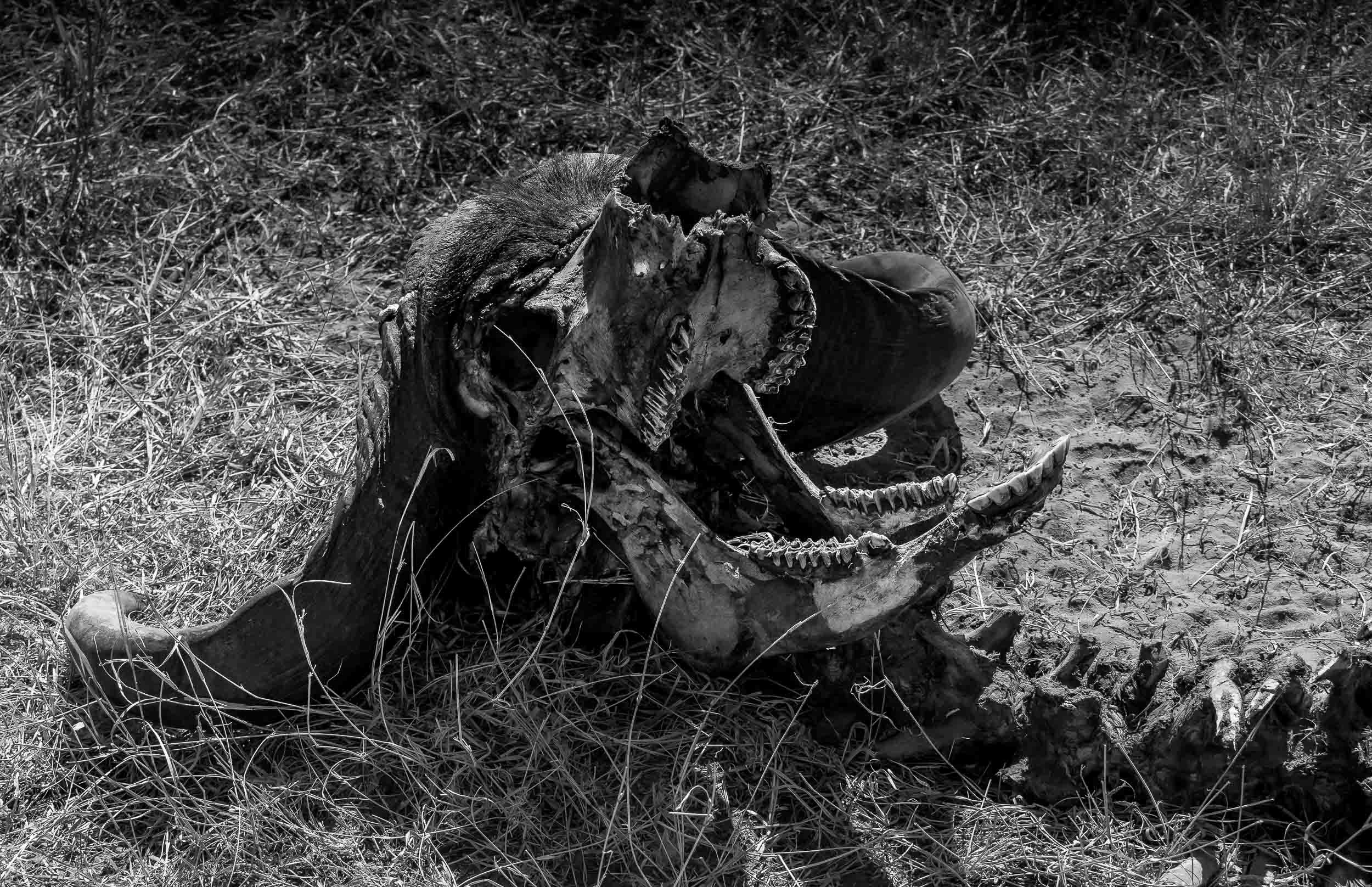
Leftovers
What we found the next morning.
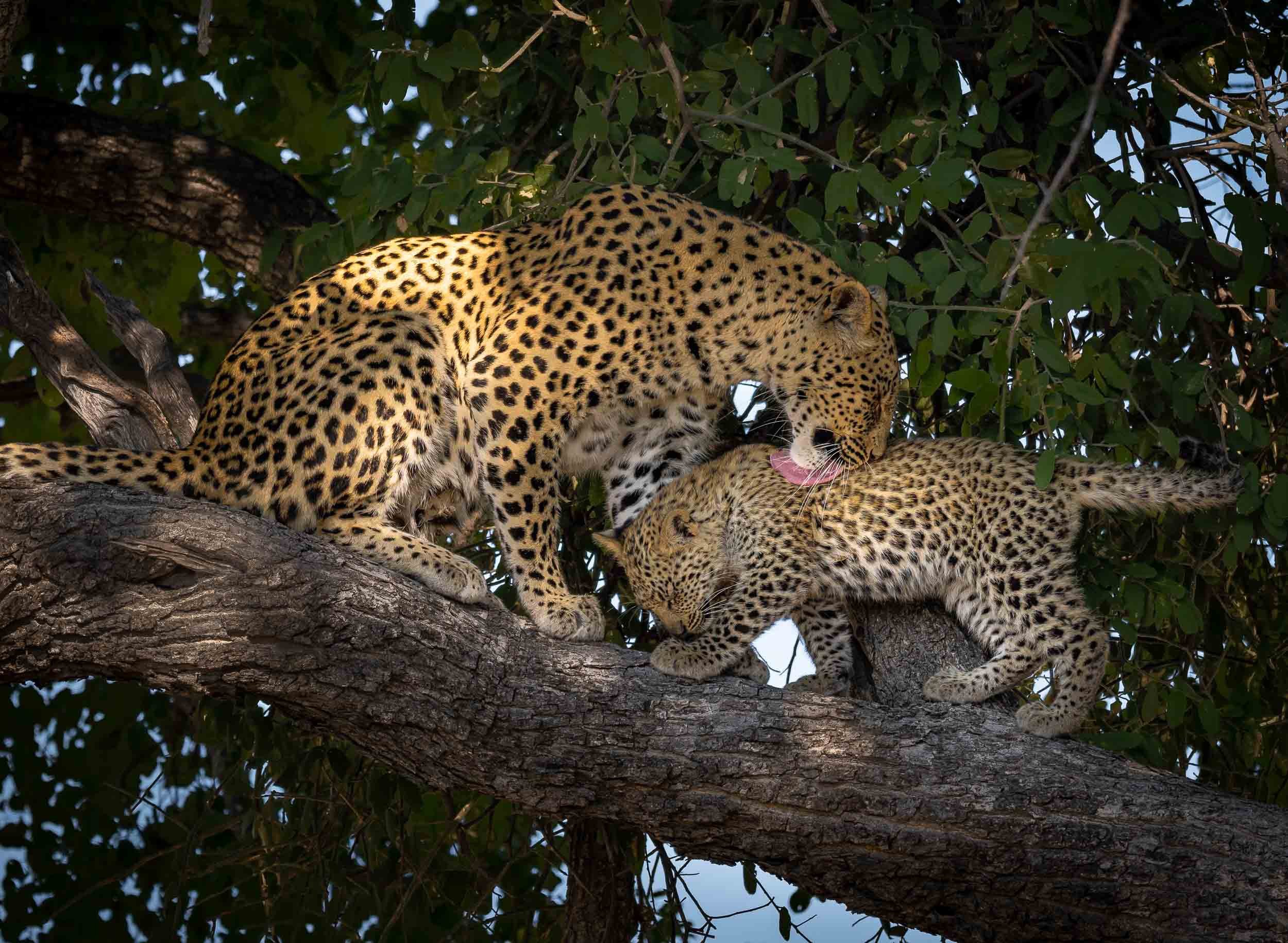
The Leopard
It’s always special to see your favourite animal in the wild, but a sighting like this makes it even more breathtaking. We spent four days, 8 hours a day, looking for this Leopard female and her 3 month old cub. On the very last morning, our guide - Stitcht, who called himself a legend and lived up to it - saw her sitting on a termite mount in the distance. We followed her when she called for her little one, and then climbed a nearby tree. They spent 15 min cuddling and cleaning before she rushed off to try and catch some breakfast, telling her cub to hide in the thick crown of the tree.
Watch them in motion
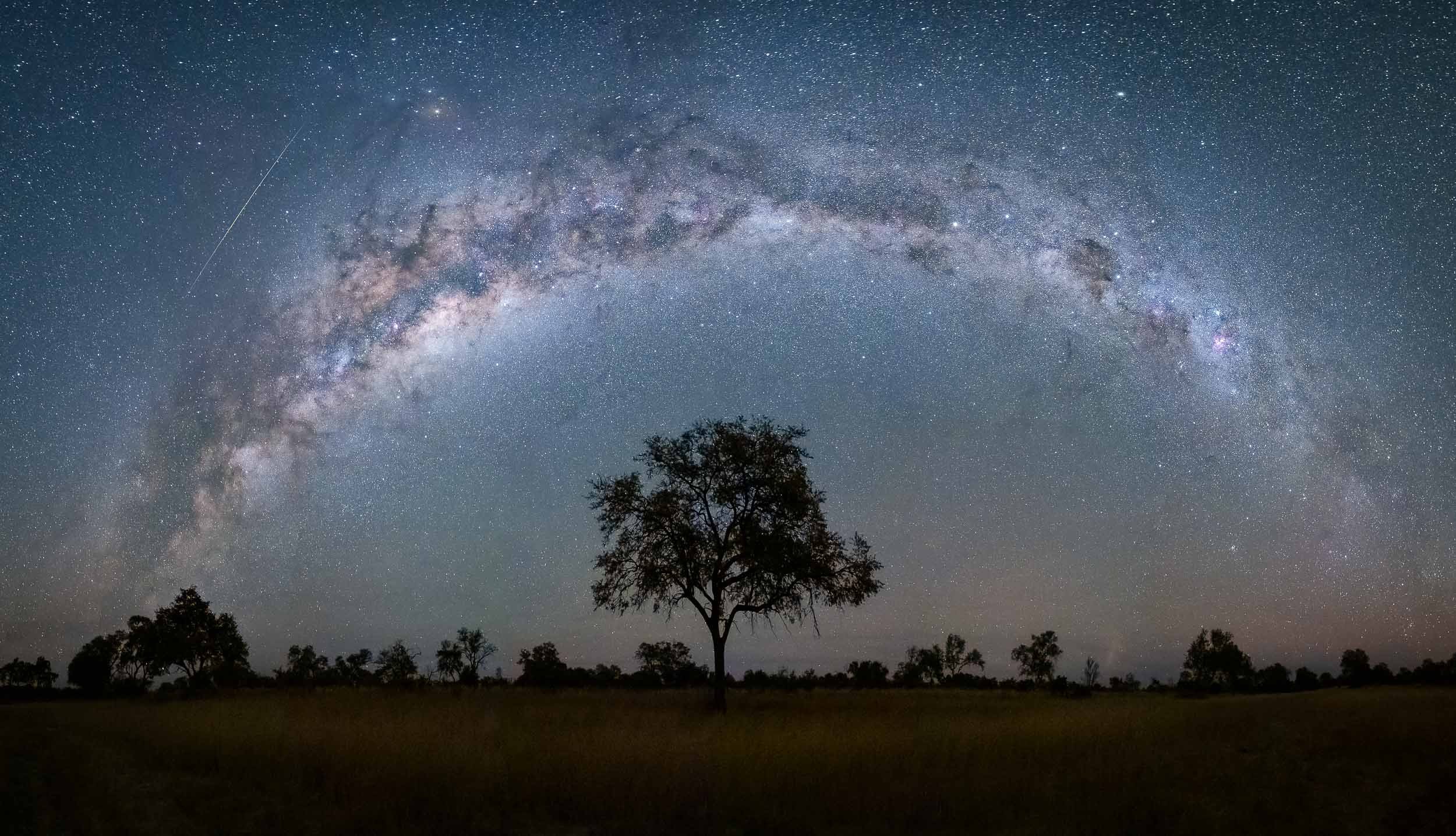
Milky Way with Company
We saw this somewhat lonely tree on our way back to camp after a game drive, and decided it would be a good spot for some night photography. When you're in the bush in Africa, that does come with some disclaimers, as lions, buffalo, and other animals roam around and may not feel to friendly about humans on foot in their territory. Nevertheless we parked the Land Cruiser and switched off the flash lights to start taking this panorama. In the first few minutes, this large meteor shot across the Antares region, but that wasn't the most exciting moment - just a few minutes later, we heard a sound in the tall grass a few metres from us. Flashlights were on in a heartbeat, and four green eyes stared at us. Two Hyena wanted to either see what the excitment was all about, or learn about astrophotograhy. I won't know the answer, as they left once we shone the lights on them.
A few more…
Dinaka
The last stop was in Dinaka, about 100km north of Maun, and bordering the central Kalahari. It’s a dry area this time of the year, but it did have a few special places to photograph from (and sleep in).
Jackals - Always Up To Something
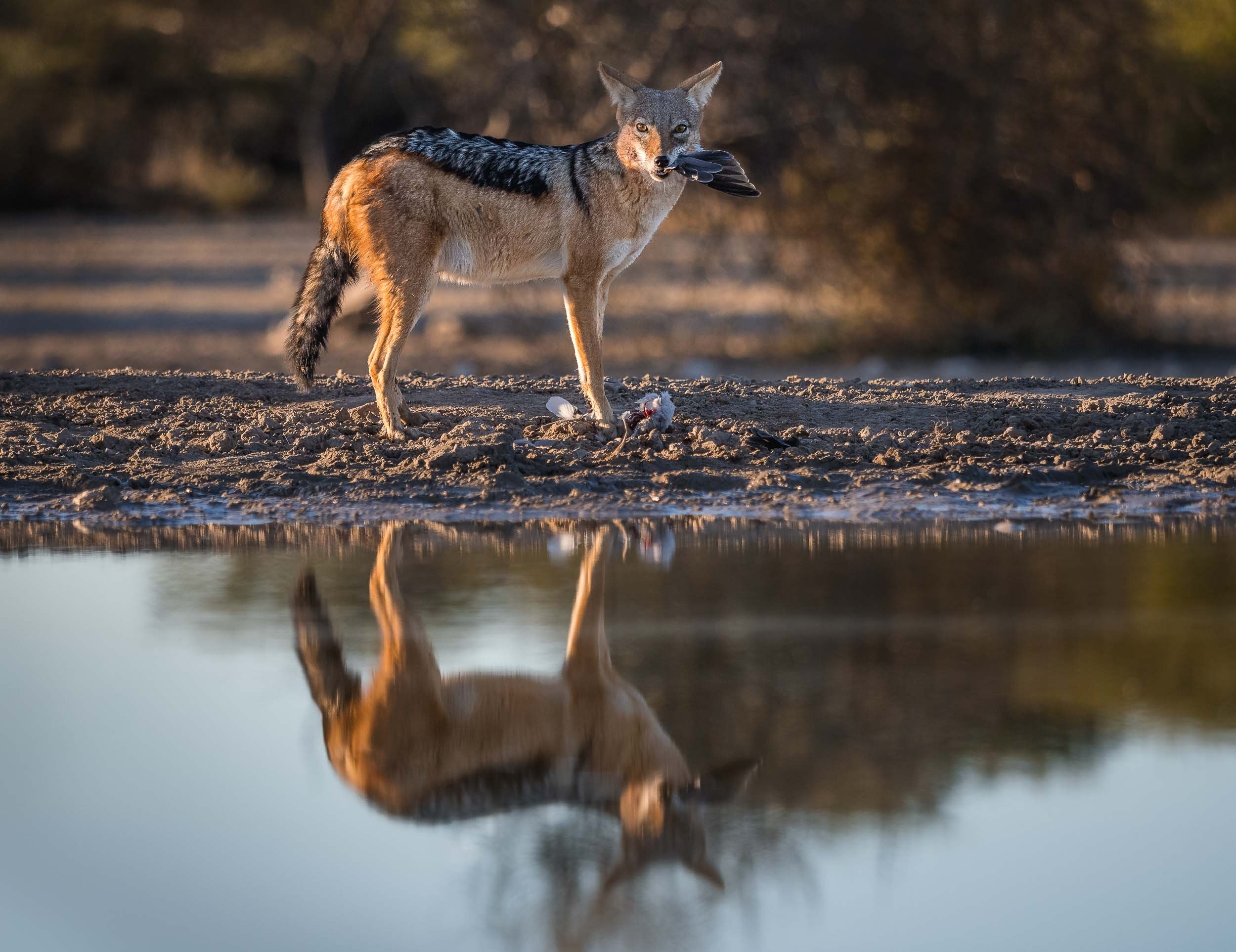
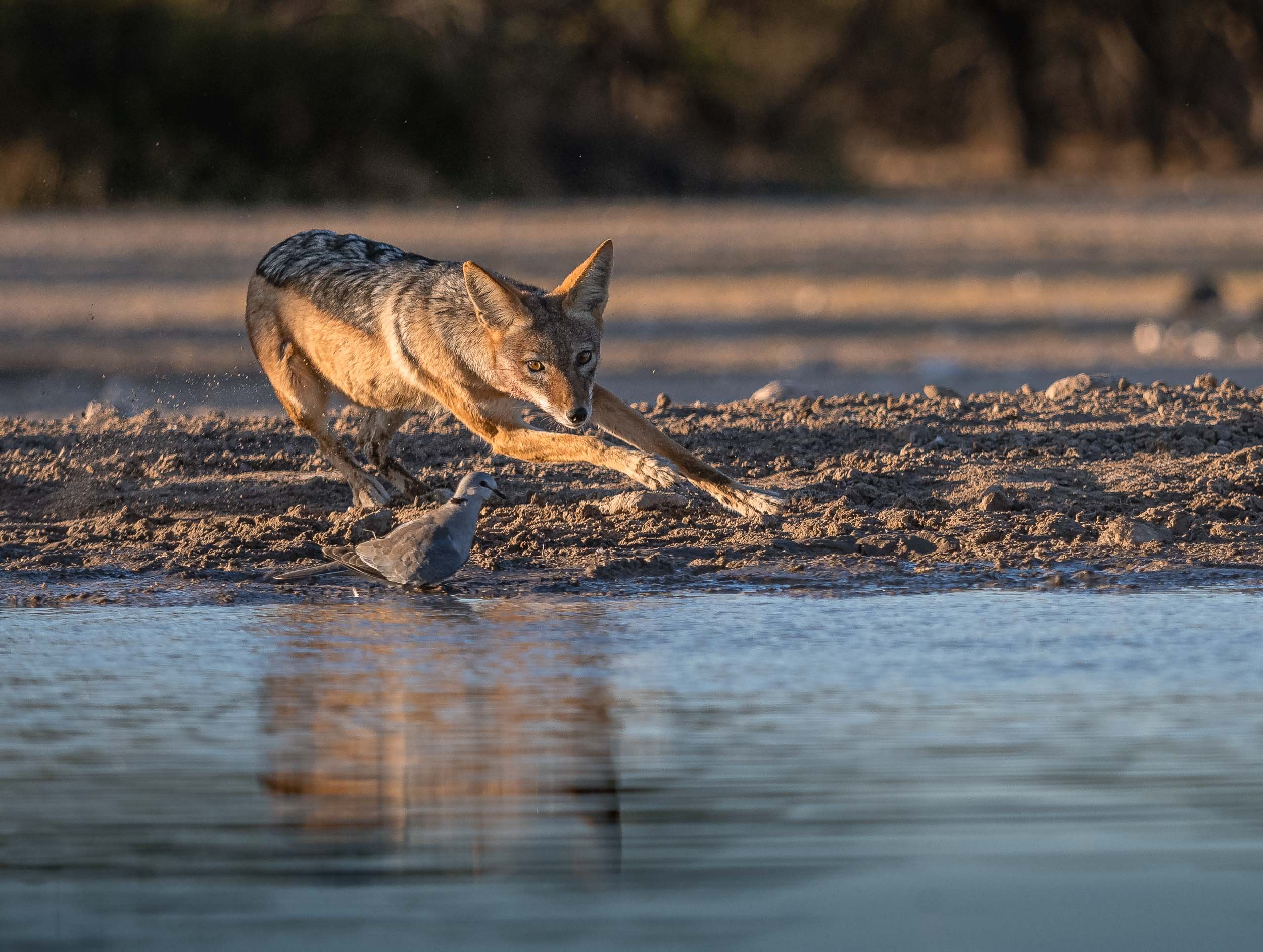
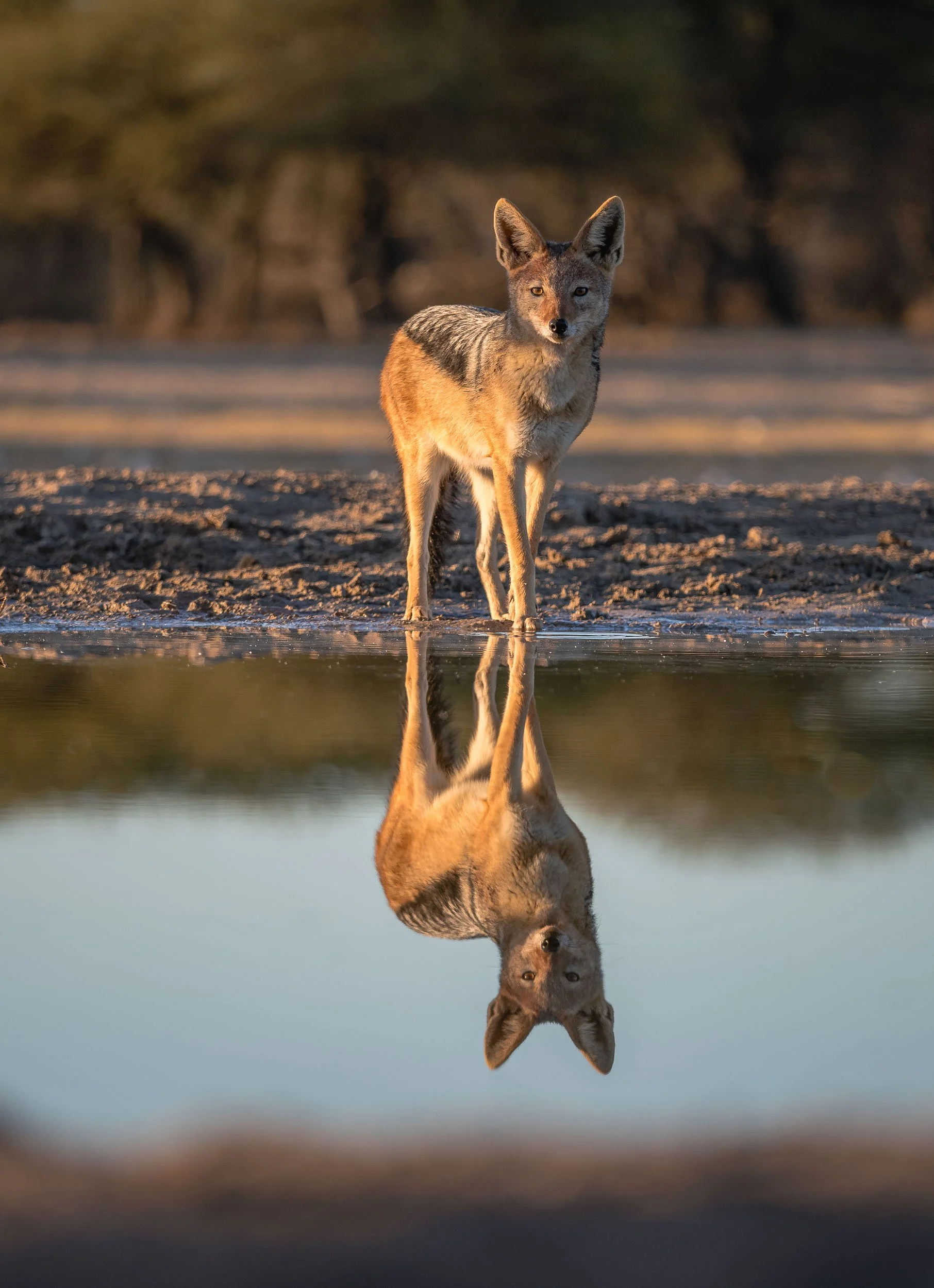
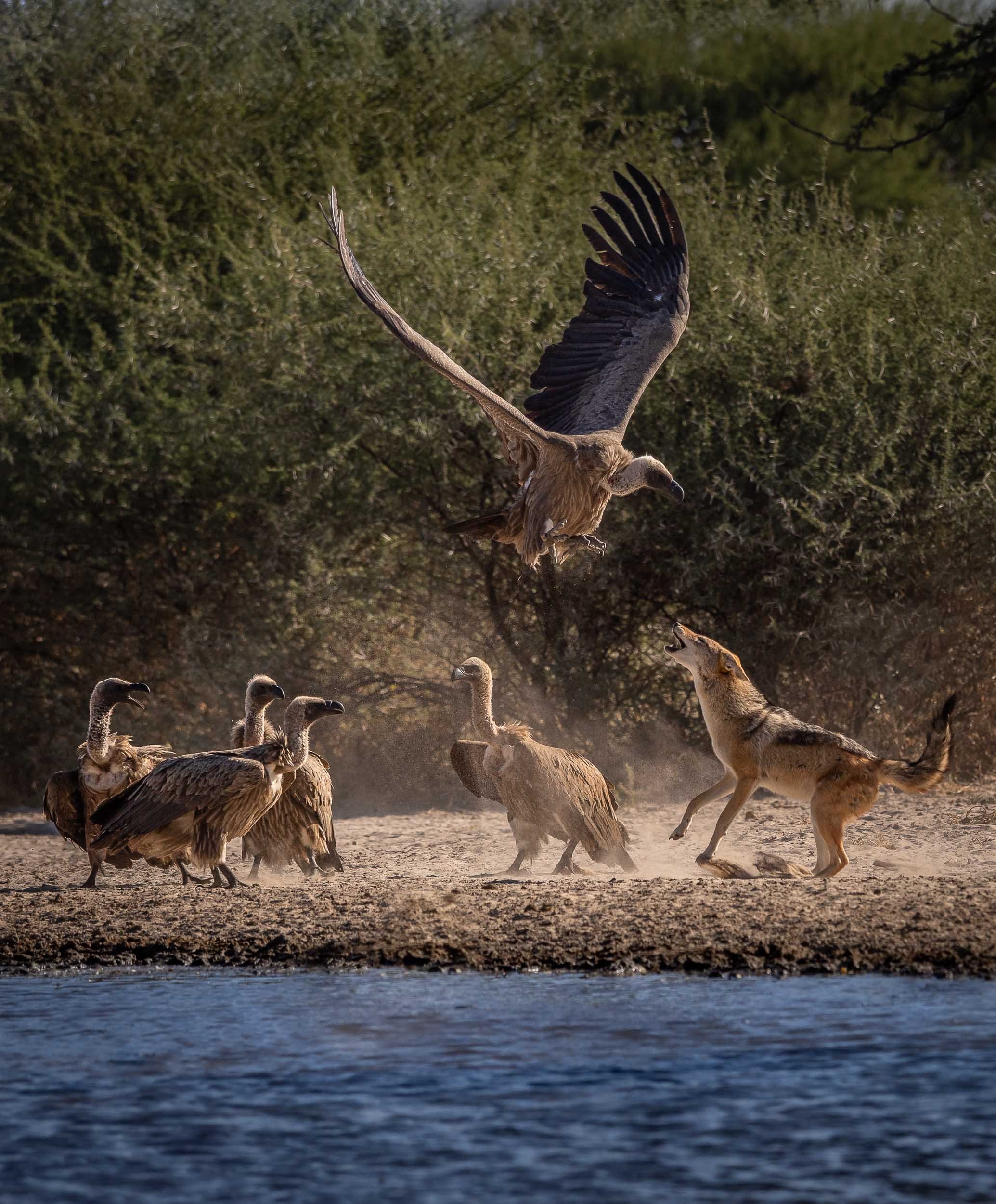
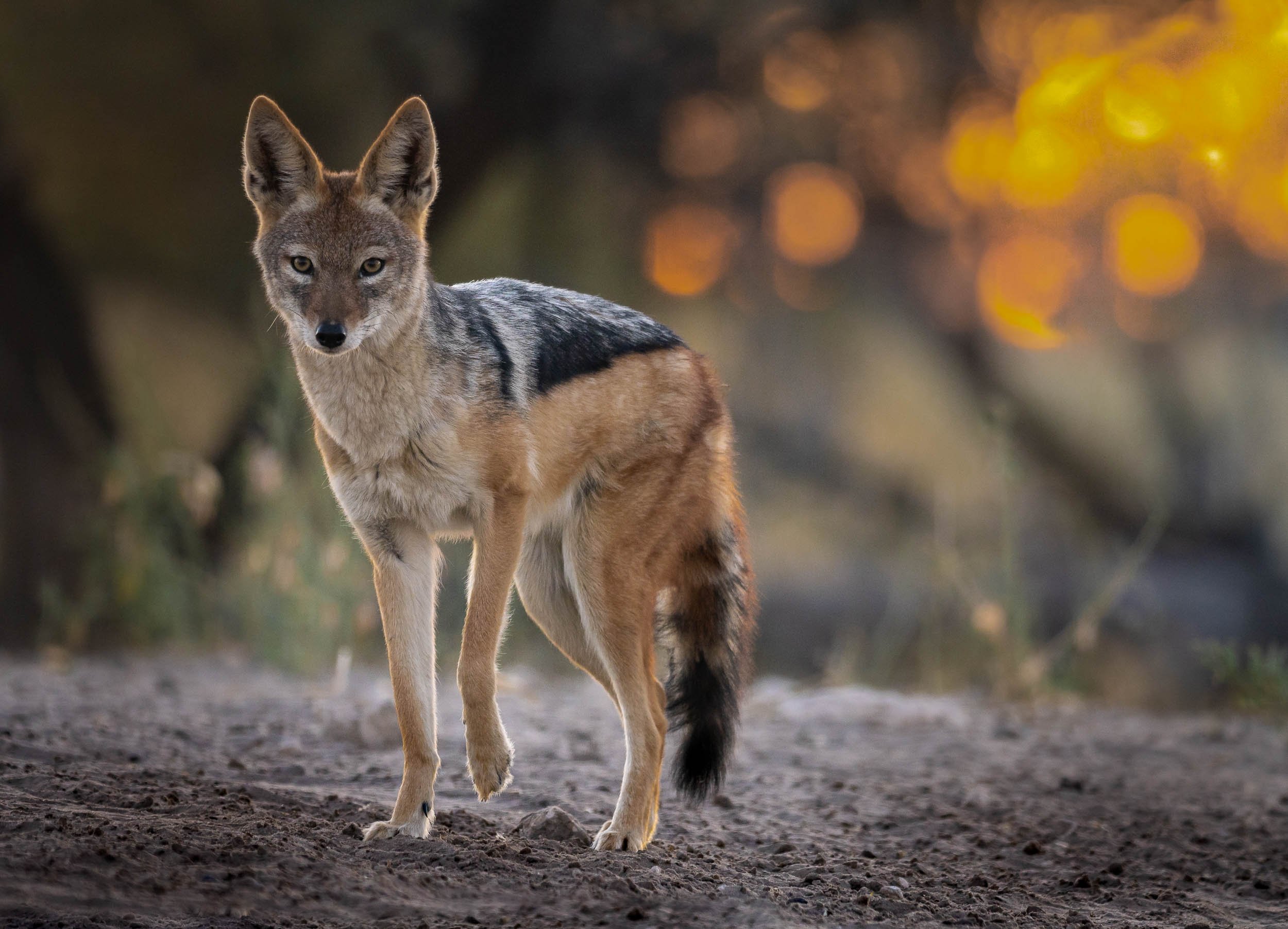
After having observed them for a good amount of time, these mammals have climbed up in a my favorite animal rating list. A constant source of entertainment, and always giving an impression of being up to no good, I’ve seen these mischievous omnivores catch doves, chase away animals much larger than them, and strut around like they are the kings of Africa.
Starry Bedroom
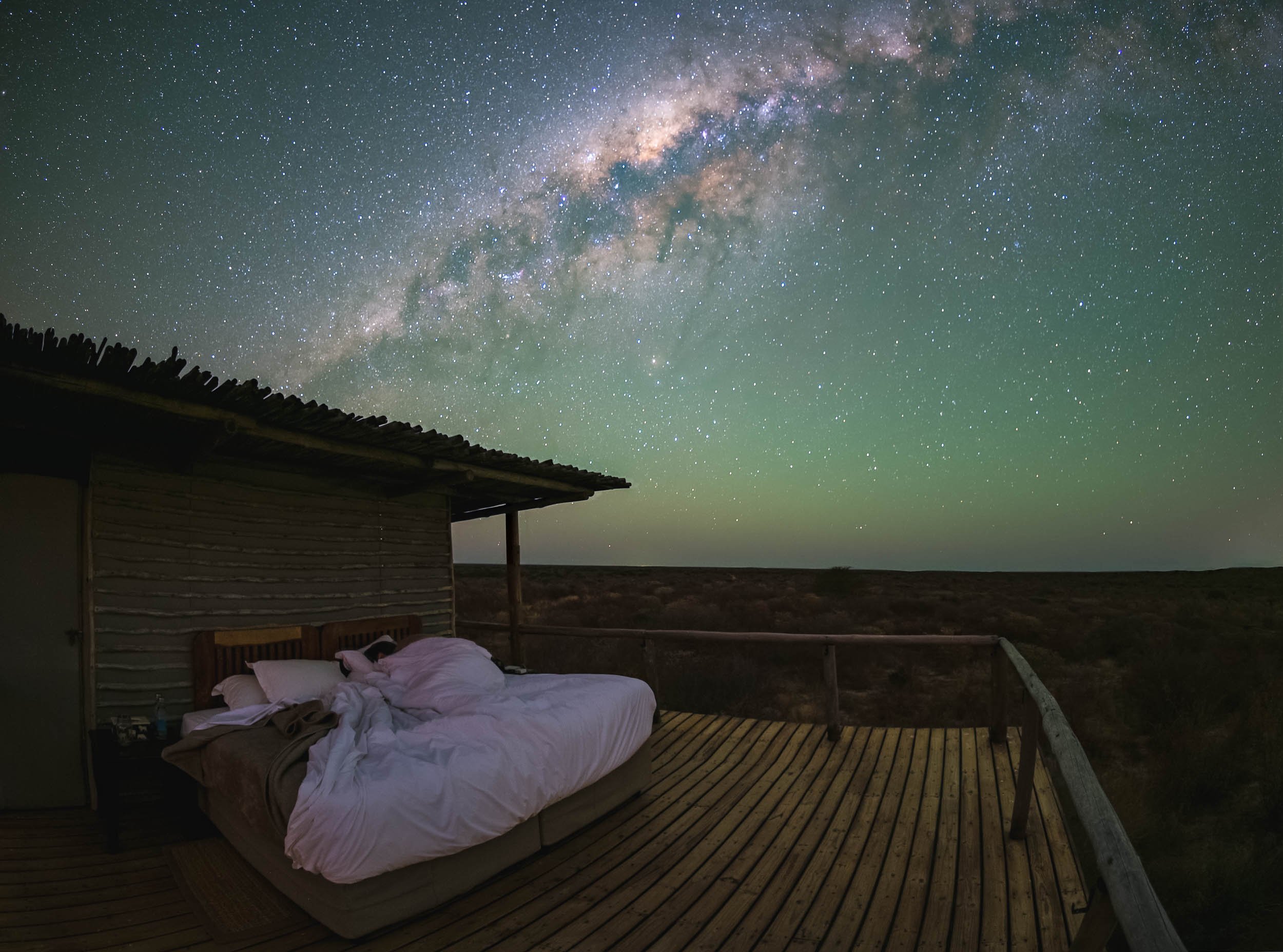
Our lodge offered this special experience: A night under the stars, sleeping on an elevated platform in the bush - an opportunity I couldn’t miss out on, so one evening after dinner, I was dropped off 20min away from the camp to see what it feels like to sleep with a Milky Way view. See below for an impression!
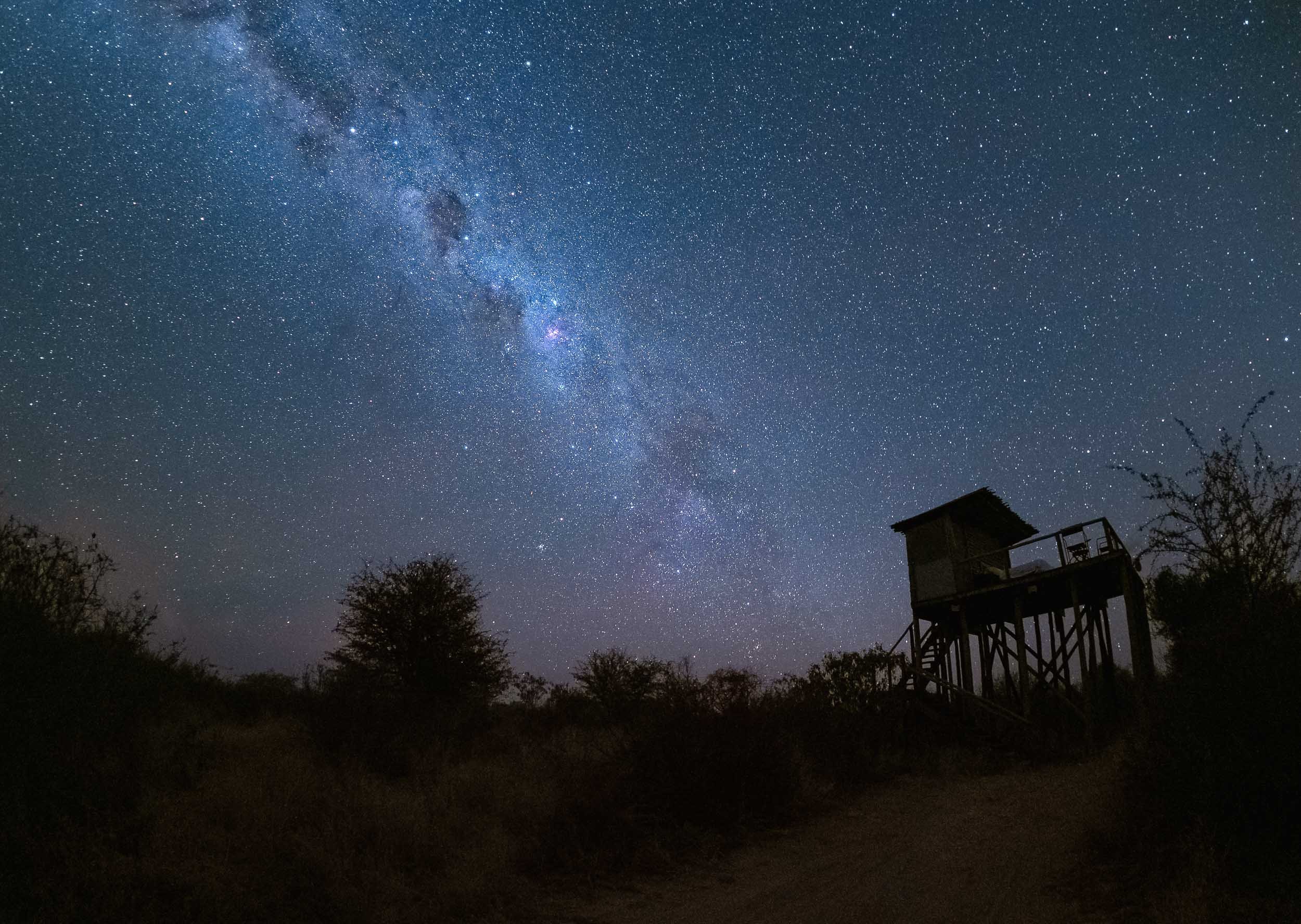
Looking Up
The view from the ground onto the platform, which has a locked staircase and a small electric fence to keep leopards out. The little cabin on the back is the bathroom.
Bed Under The Stars
I admittedly didn't sleep as much as I'd have under a roof, but when you have the chance to watch the Milky Way rise from your bedroom, you don't waste time sleeping. This is a panorama of three rows with 6 images each, to fit the entire arch of our home galaxy into the frame.
The Galaxy is Watching
Even for the few hours I did sleep, I made sure to have a camera set up and capture the rising and setting Milky Way above me. This was shortly before sunrise, as green air glow filled the night sky on the horizon.
Watch Earth in Motion below…
The Waterhole
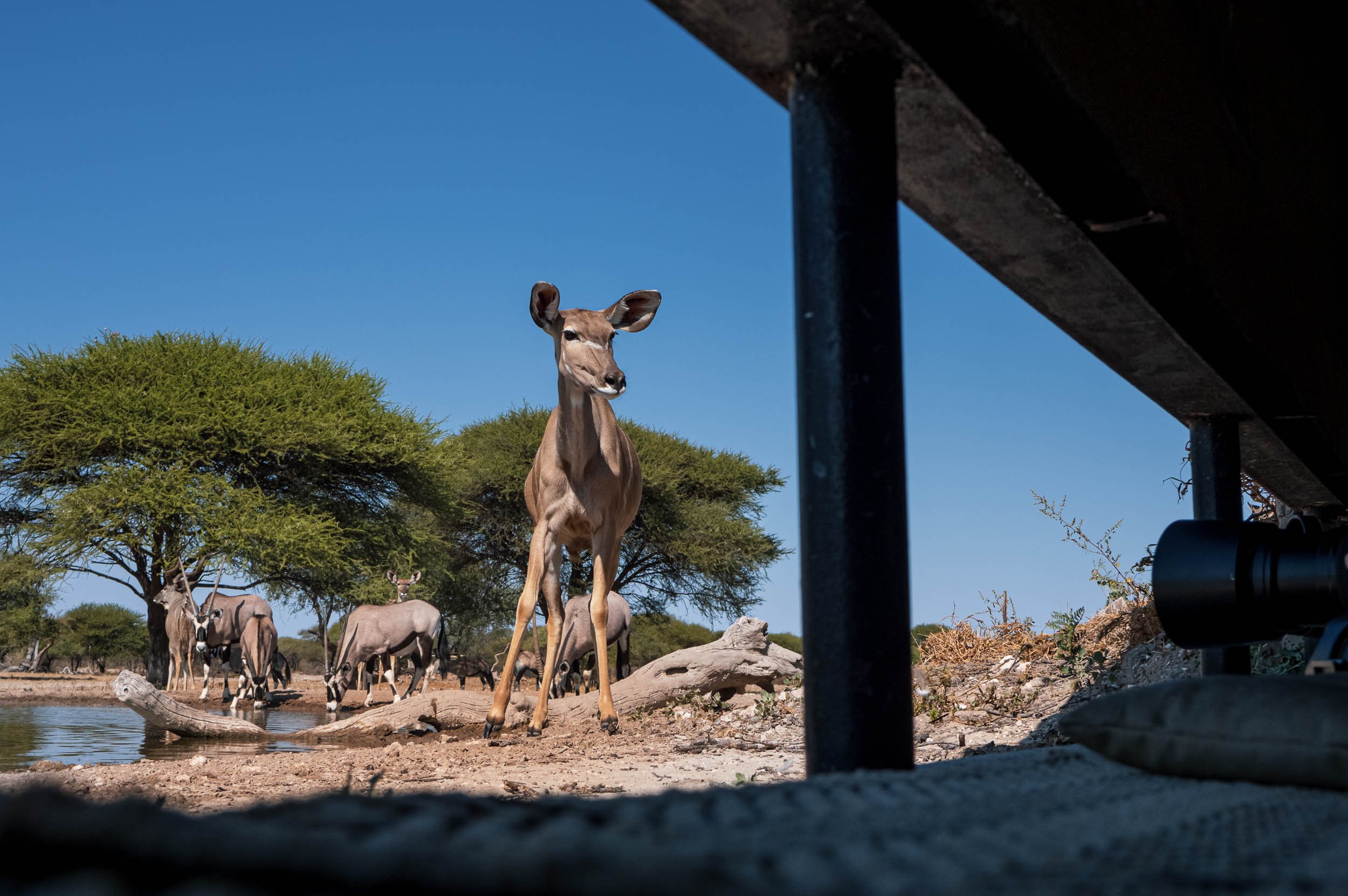
A second special spot is found a bit closer to the ground - in fact, it’s almost underground: A bunker-type hide to view animals up close at the waterhole, for some ground level perspectives. We spent a lot of time here, watching antelopes, giraffe, jackals and many other animals come to drink and interact without being bothered much by our presence.
At Night
Private concessions (as opposed to National Parks) often come with the benefit of being allowed to stay out beyond sunset, opening the way for some nightly discoveries…
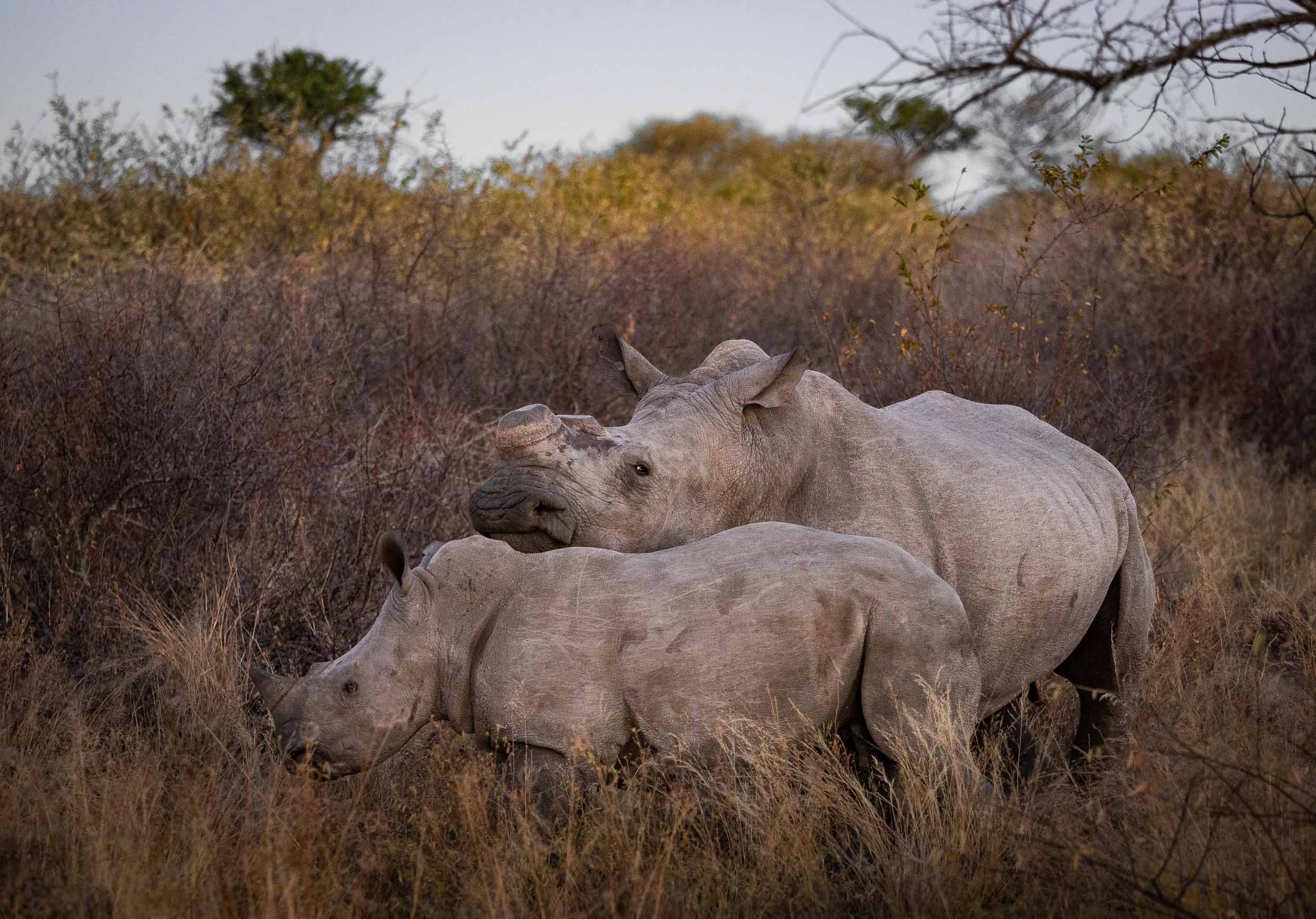
Lastly, the reserve is also home to a population of white rhino, which have been de-horned to deter poachers, a practice that some question in terms of its effectiveness in doing so, as the base is still attractive for the market.
Zimbabwe - Tracking Dinosaurs & Lunar Wonders
The second country of my trip was Zimbabwe - a place which up until planning of this adventure hadn’t really grabbed my attention.
The second country of my trip was Zimbabwe - a place which up until planning of this adventure hadn’t really grabbed my attention. That has definitely changed after spending two weeks in Harare, Mana Pools, Chewore, Kariba, Matusadona and the Victoria Falls. This journey was full of incredible experiences, read on to find out what the country once known as the "Jewel of Africa" had in store.
Harare and some unique rocks
I had one day to spend in the capital city before making my way into the northern parts of the country. A brief tour and looking at one of its most unusual sights was all I could fit in.
The Capital
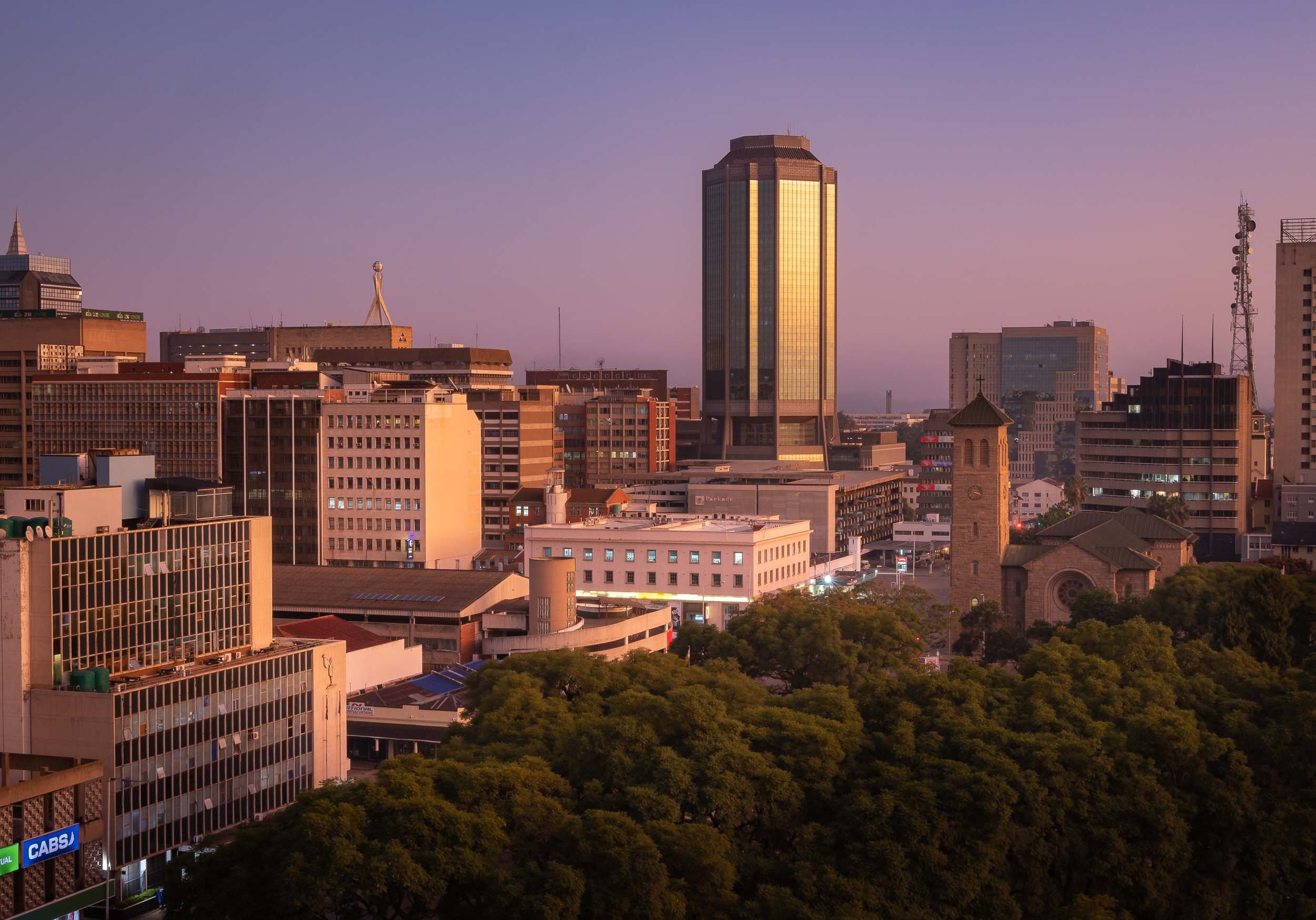
A sunrise view over Harare from the famous Meikles hotel, with the Cathedral of St Mary on the right and the Reserve Bank of Zimbabwe in the centre. It's the country's tallest tower at 120m, and these days undoubtedly a difficult place to be in given the rampant inflation.
Balancing
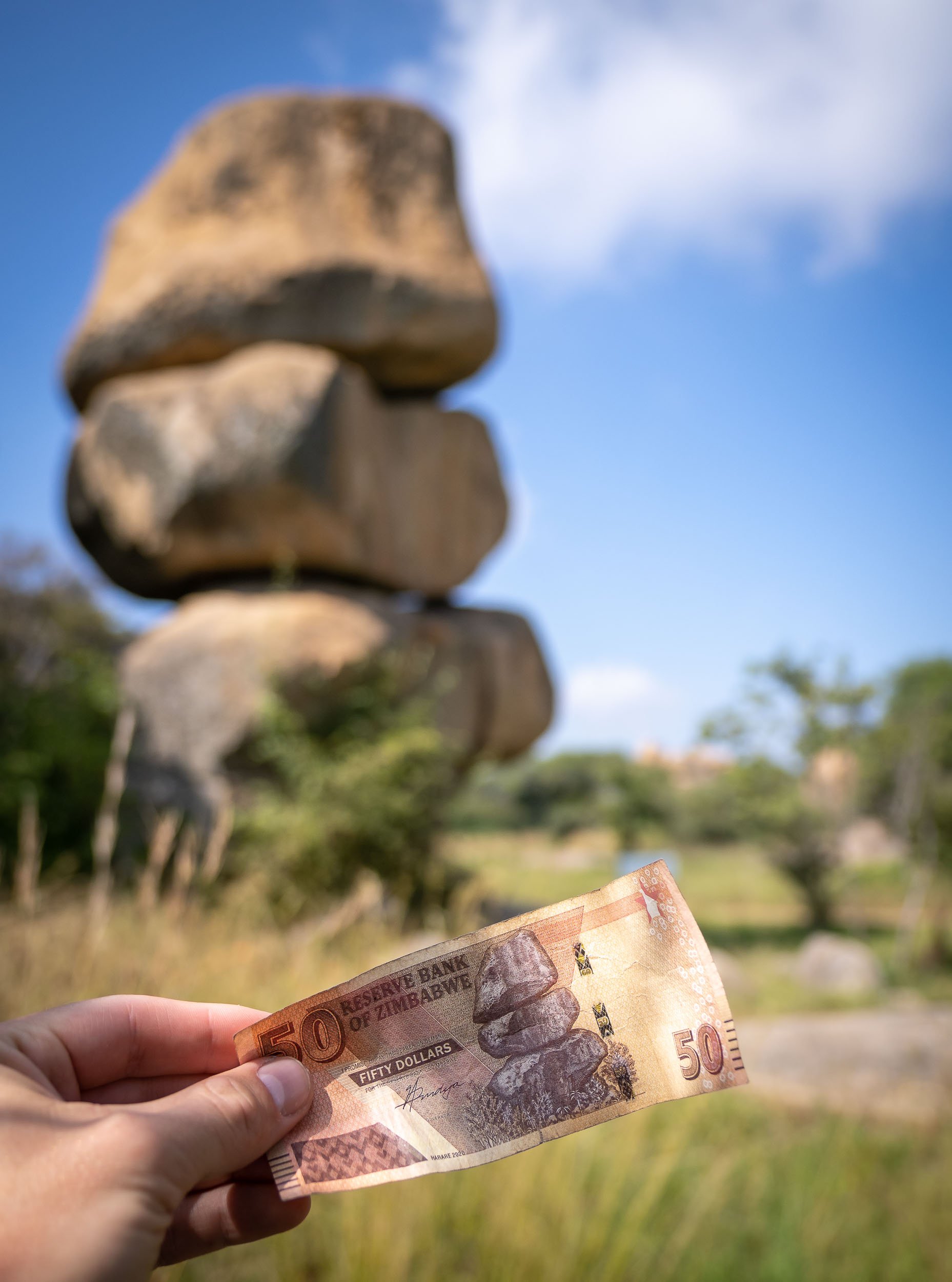
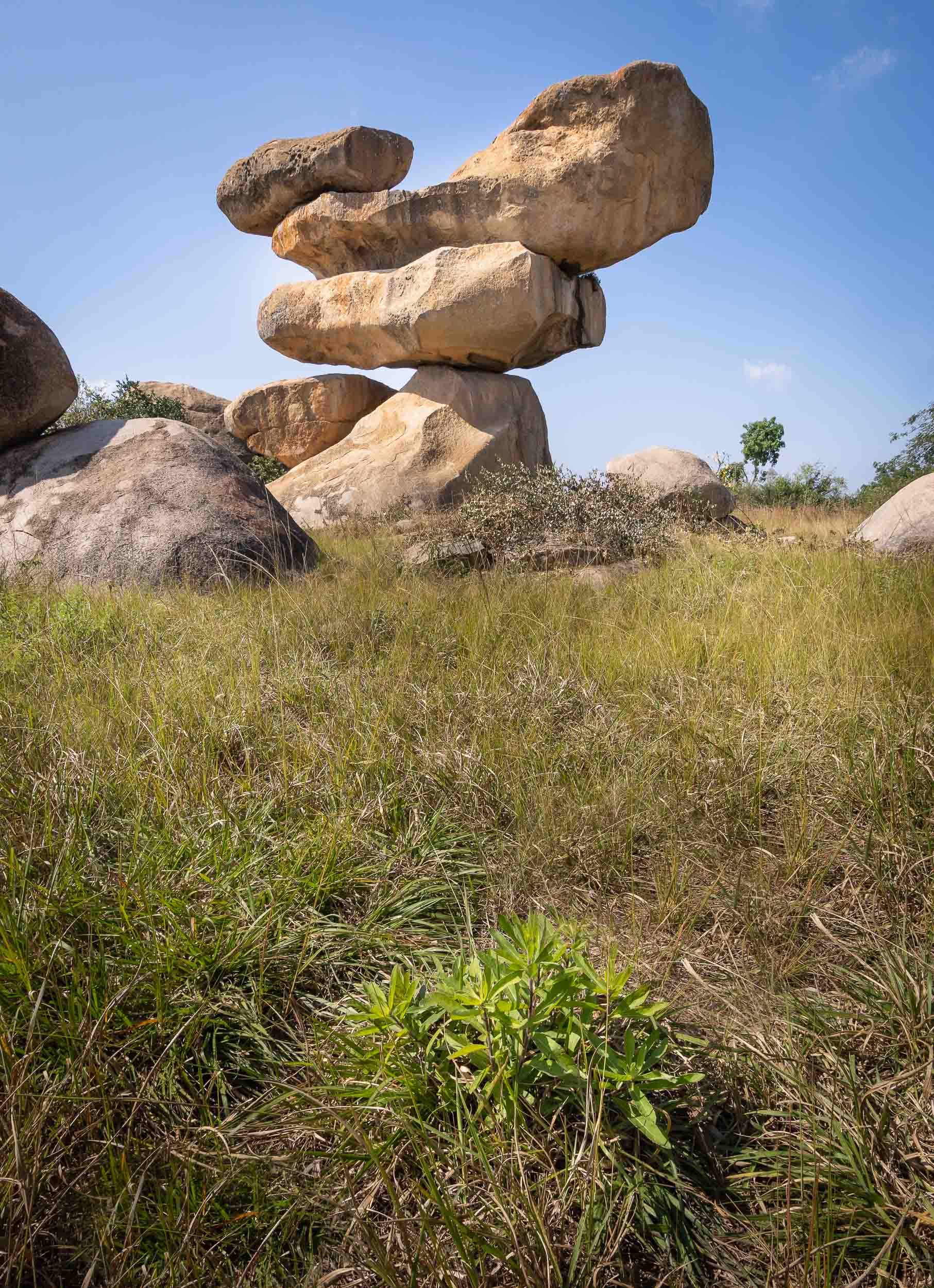
Speaking of money, here is one of Harare's most peculiar sights - the balancing rocks of Epworth, depicted on Zimbabwe's old 50 Dollar notes to symbolise the financial system's strength and reslience. Ironically, the note is worth nothing now.
Steady
The rocks are a natural geomorphological collections of magmatic rock, that look like they've been artificially assembled.
Mana Pools - Wildlife in a different way
I then spent 2 days at Mana Pools National Park in the northern part of the country, bordering the Zambezi river and the Zambian mountains on the other side of its shores. It’s this setting and the fact walking and canoeing are possible here, providing a much more intimate experience than the typical bush game drives, that made this a special place.
Elephants At Moonrise
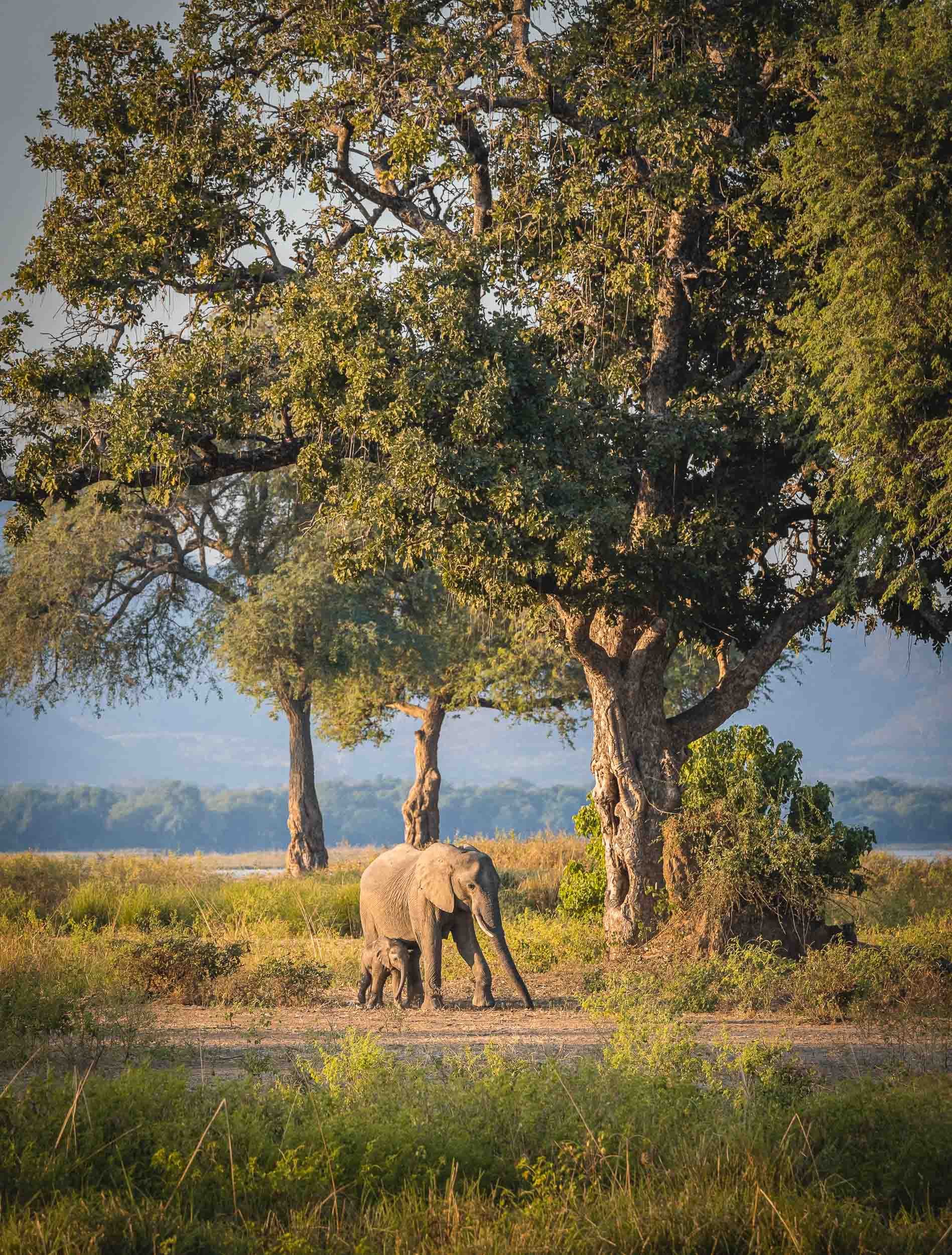
Couldn't resist when I saw our lunar companion come up behind this mother and child pair.
Scenery
The green trees dotted around the Zambesi shores, coupled with open spaces, make for a pictoresque setting.
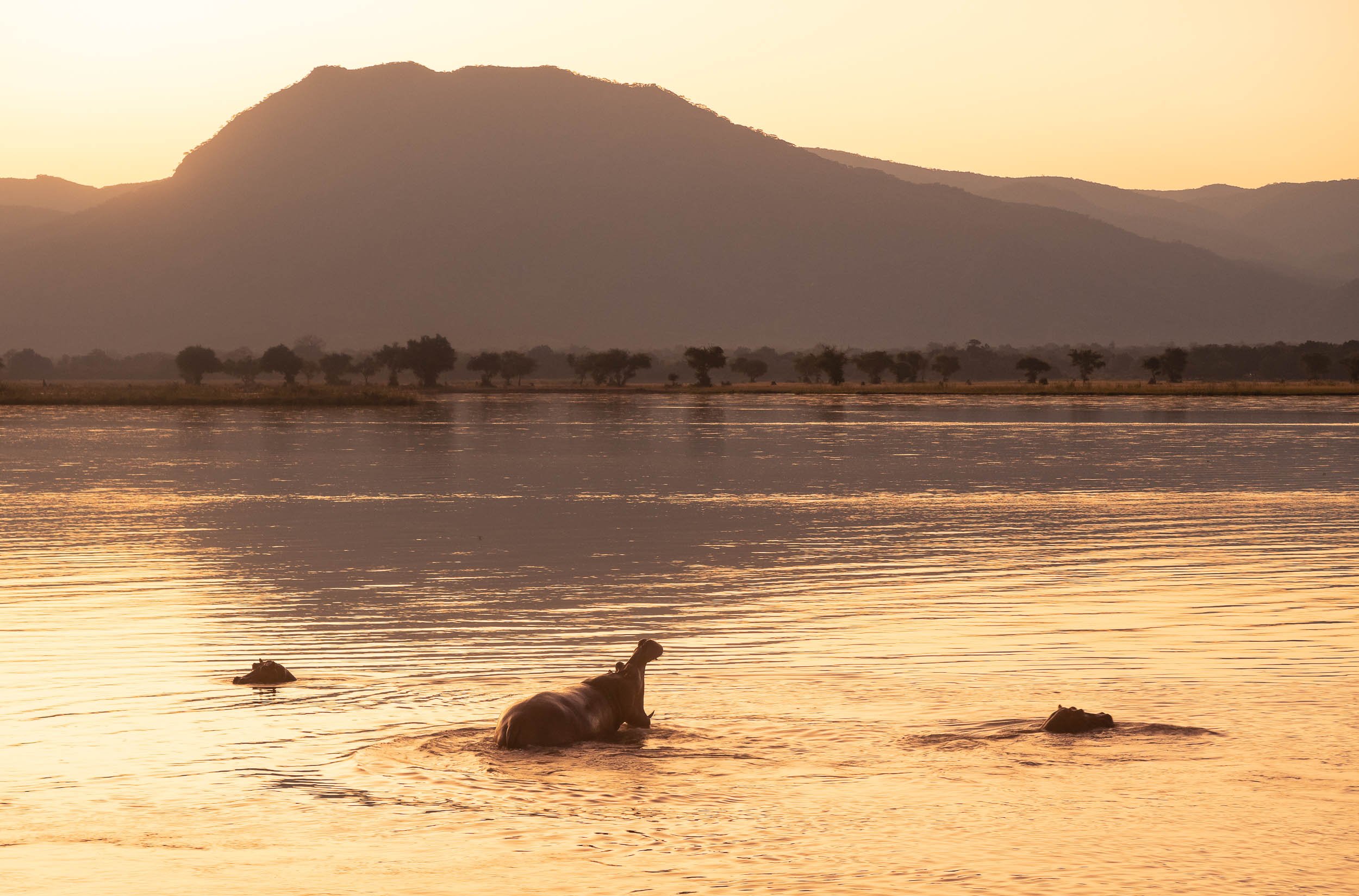
Hippos Galore
A group of Hippo enjoying the evening sun in the Zambesi.
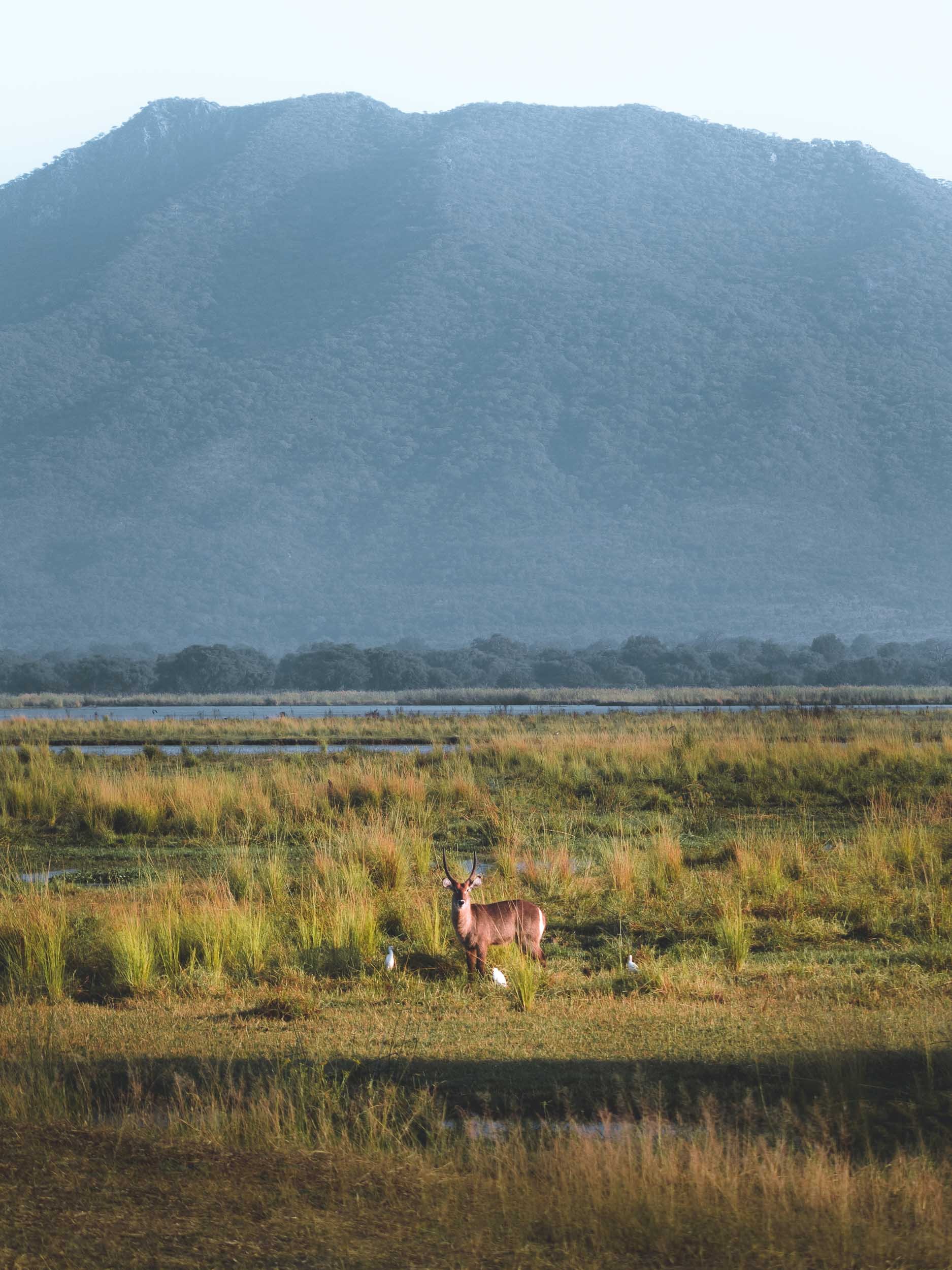
Waterbuck
The Mana Pools National Park is incredibly beautiful, with views of the Zambesia and the Zambian mountains as a backdrop for Africa's iconic anmials.
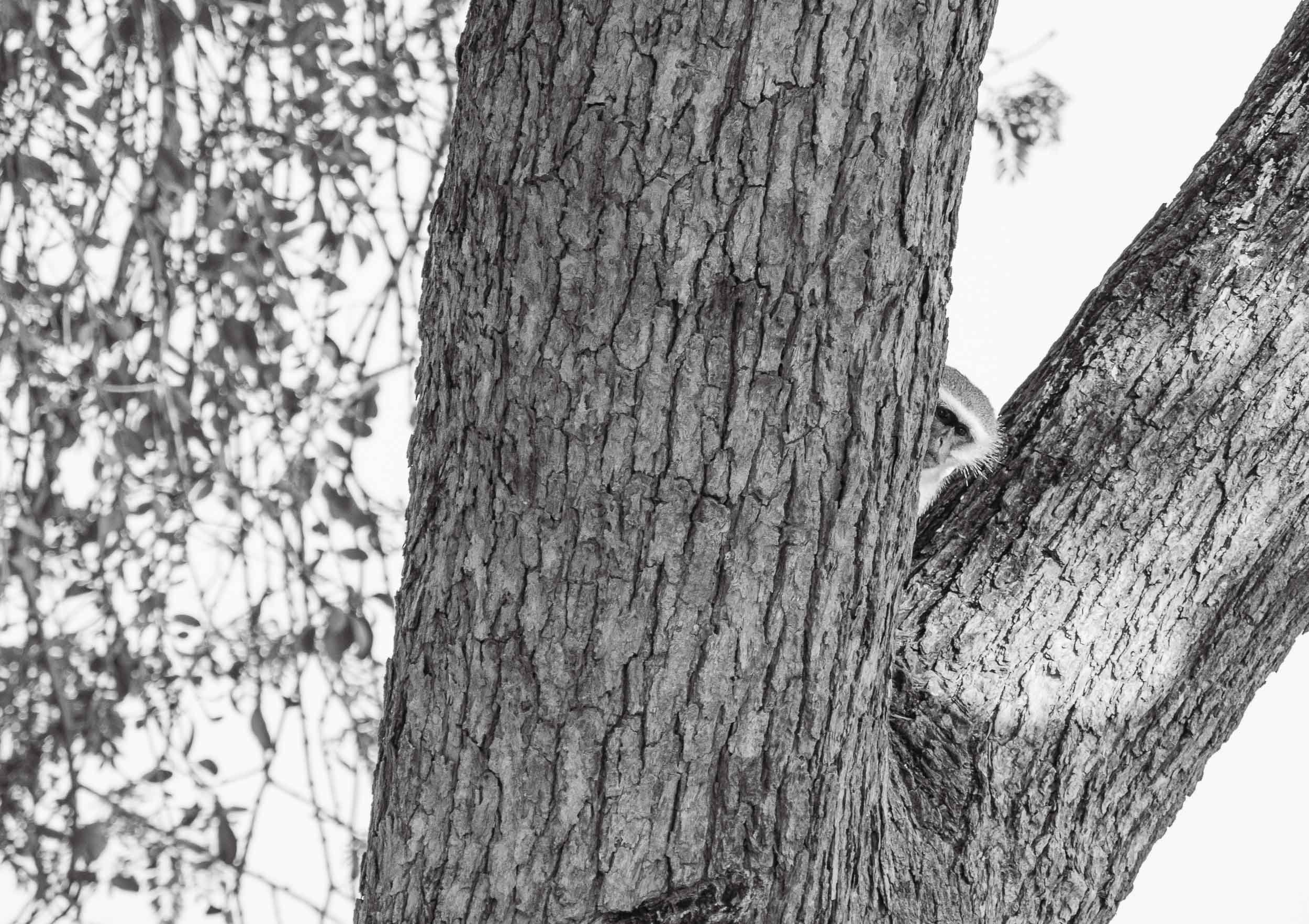
Peek A Boo
This velvet monkey was a little shy when we approached.
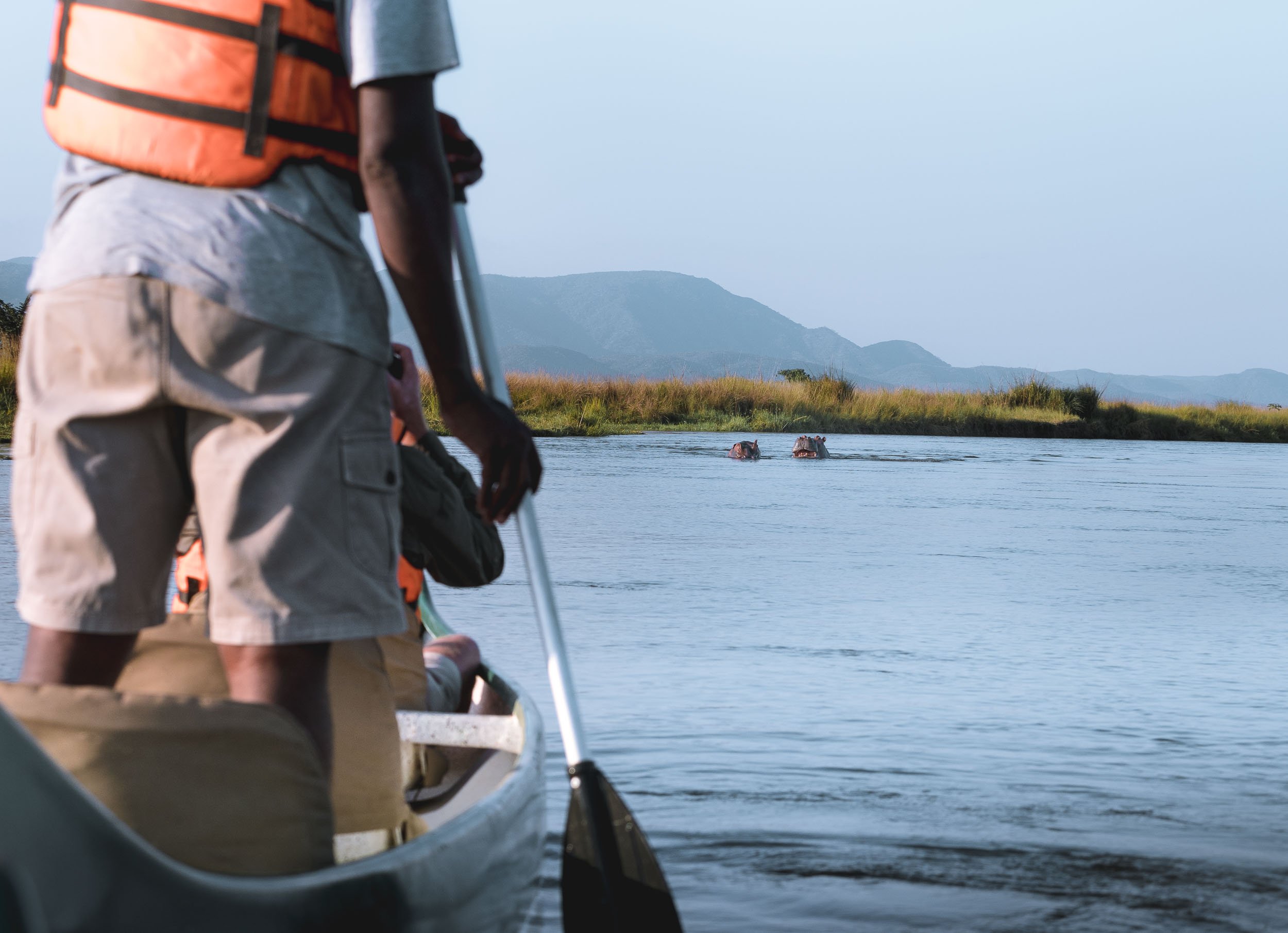
A different view
One of the most amazing activities I've done is canoing on the Zambesi.
Eye Level
It's an incrdibly intimate way to come close to animals, without the noise and destructive nature of the typical Land Cruiser game drive.
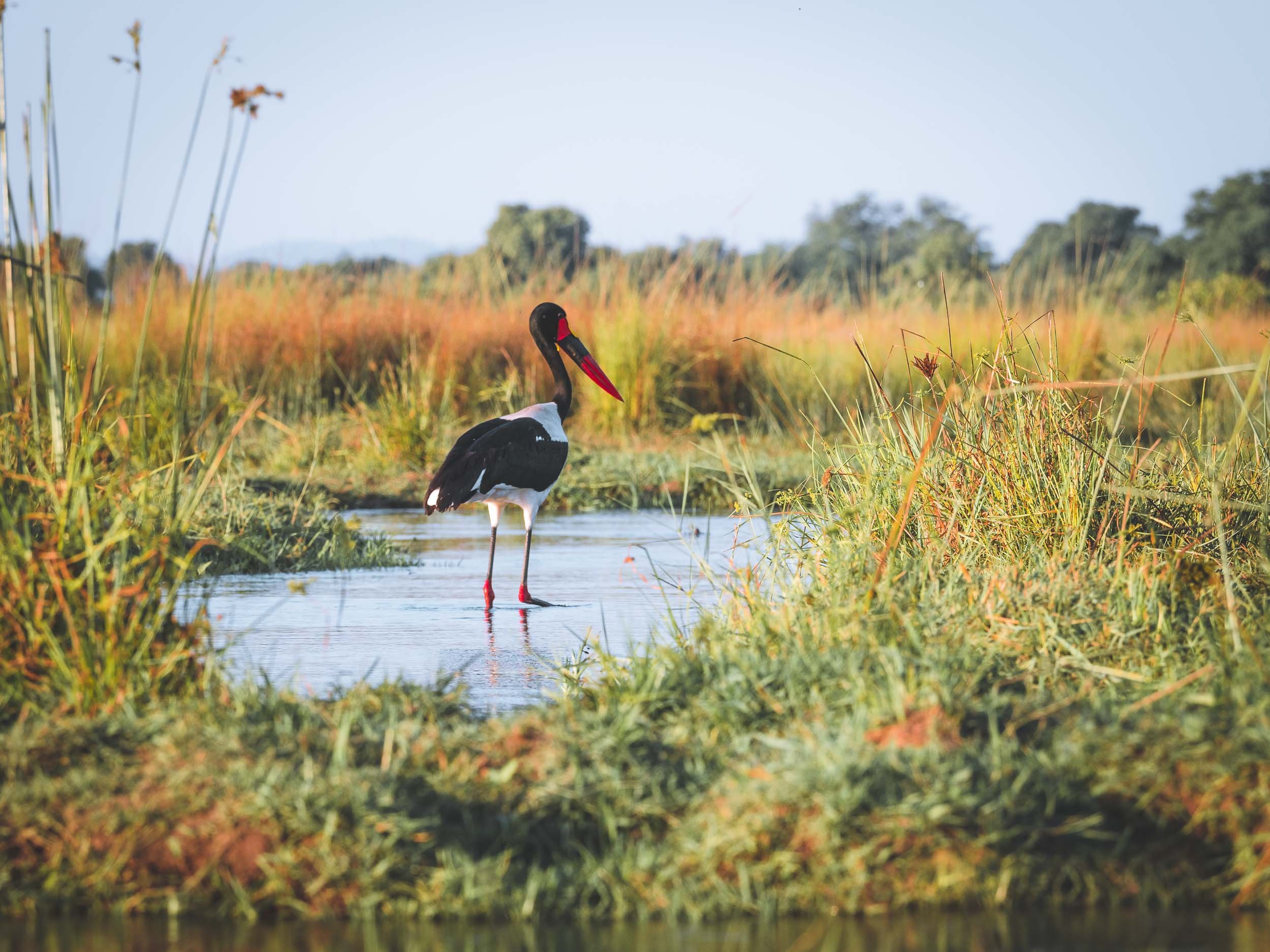
Saddle Billed Stork
Passing this large bird, up to 150cm in length and around 250cm wingspan.
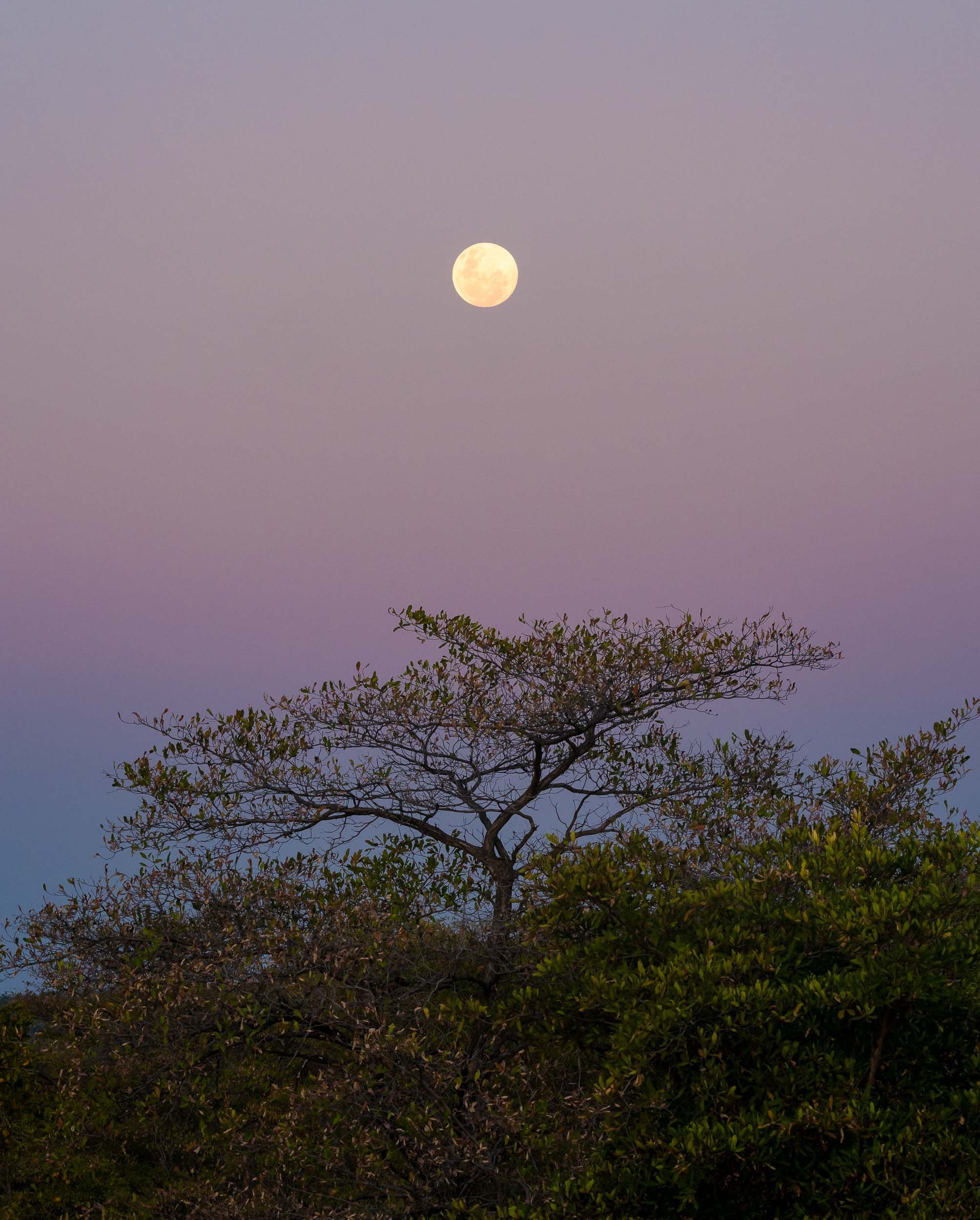
Presenting...
...The moon.
Close Up
When the river carries you, you can't really tell where you might end up.
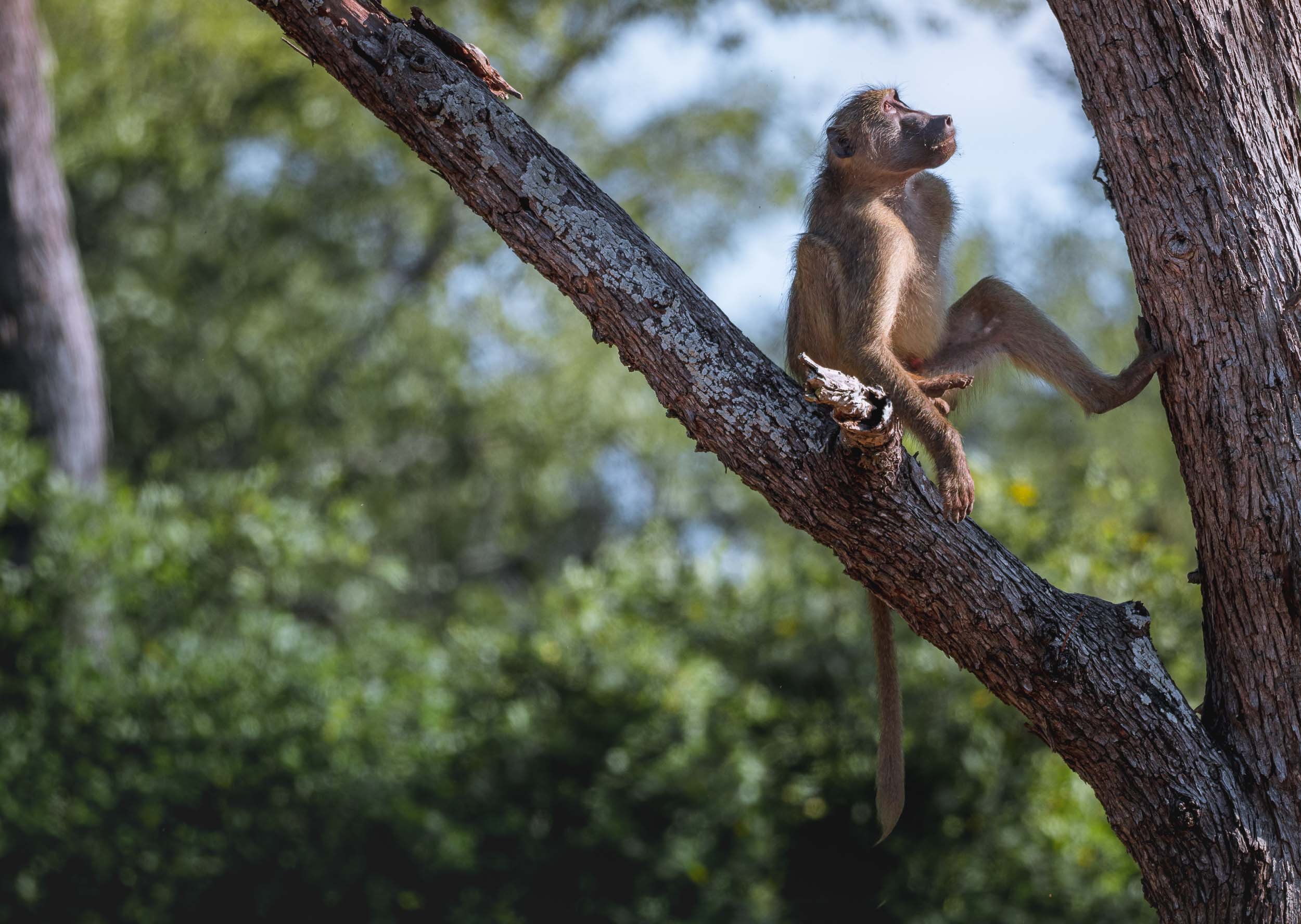
What's Happening
A baboon observing his colleagues higher in the tree.
Chewore - Off the beaten, and onto the Dinosaur track
From Mana Pools, it was a good 4h drive on dusty and bumpy roads in a 1960s land cruiser owned by my wonderful host Louisa to a remote hunting concession - here. Hunting wasn’t the reason I kept annoying quite a few people before being able to come here: In fact, this place has some of the most remote and untouched dinosaur footprints in the world, which triggered my interest. Before that though, the universe had another special sight in store .
Zimbabwean Forests
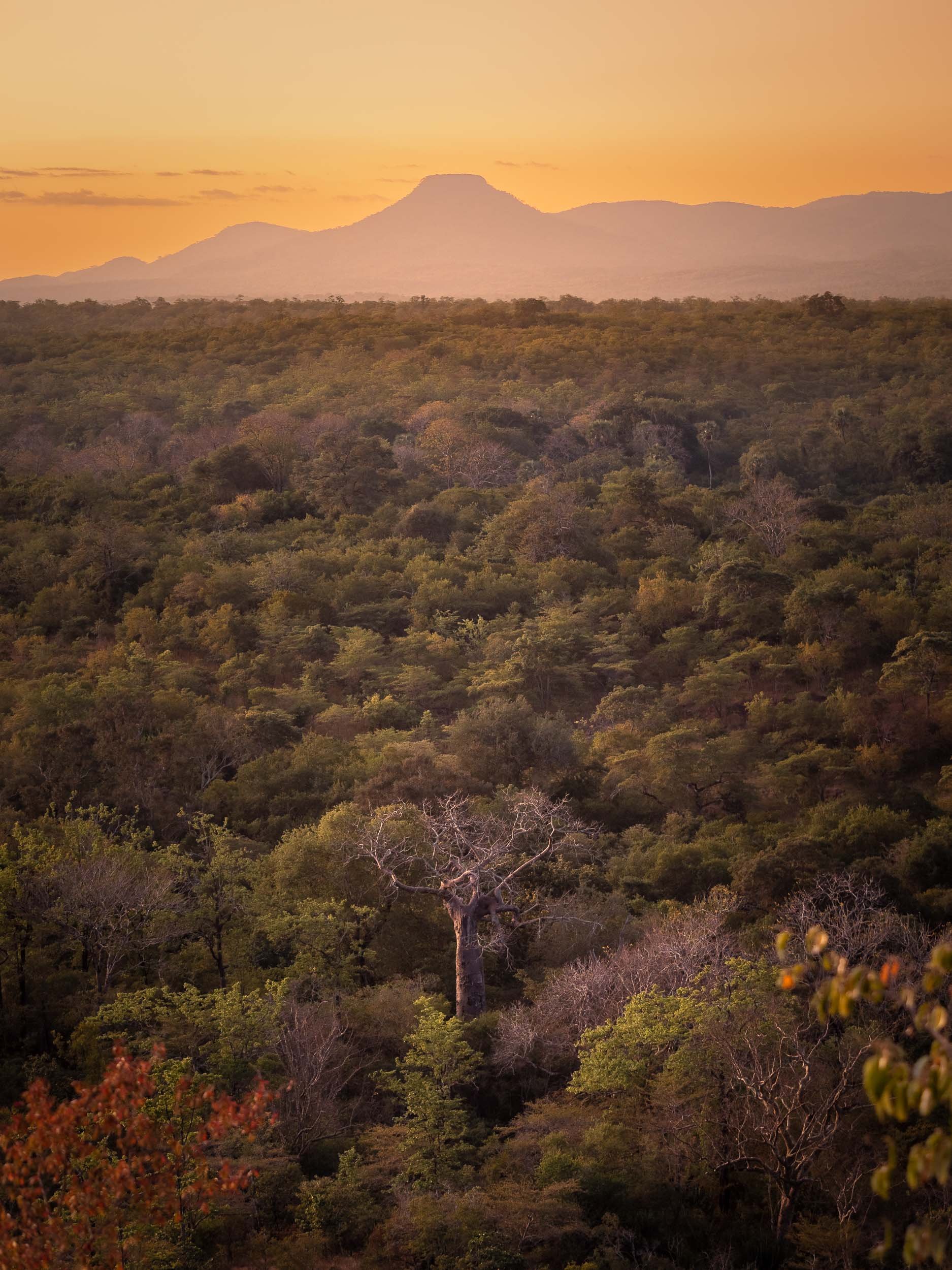
A large baobab tree at sunset, with Zimbabwe's Chirambakadoma mountain and its flat top in the background.
The Lunar Eclipse
My time in Zimbabwe coincided with the a full lunar eclipse on 16th of May, 2022, and luckily our location was just about within the areas of the globe that could experience this rare phenomenon, so I had to find a way to capture it. What a sight it was - and not only that, also an audible experience, as the lions and baboons roared in the background.
Ying
We found a clearing with a good view of both the sun...
Yang
.. and the moon. It was going ot be our spot for the following night.
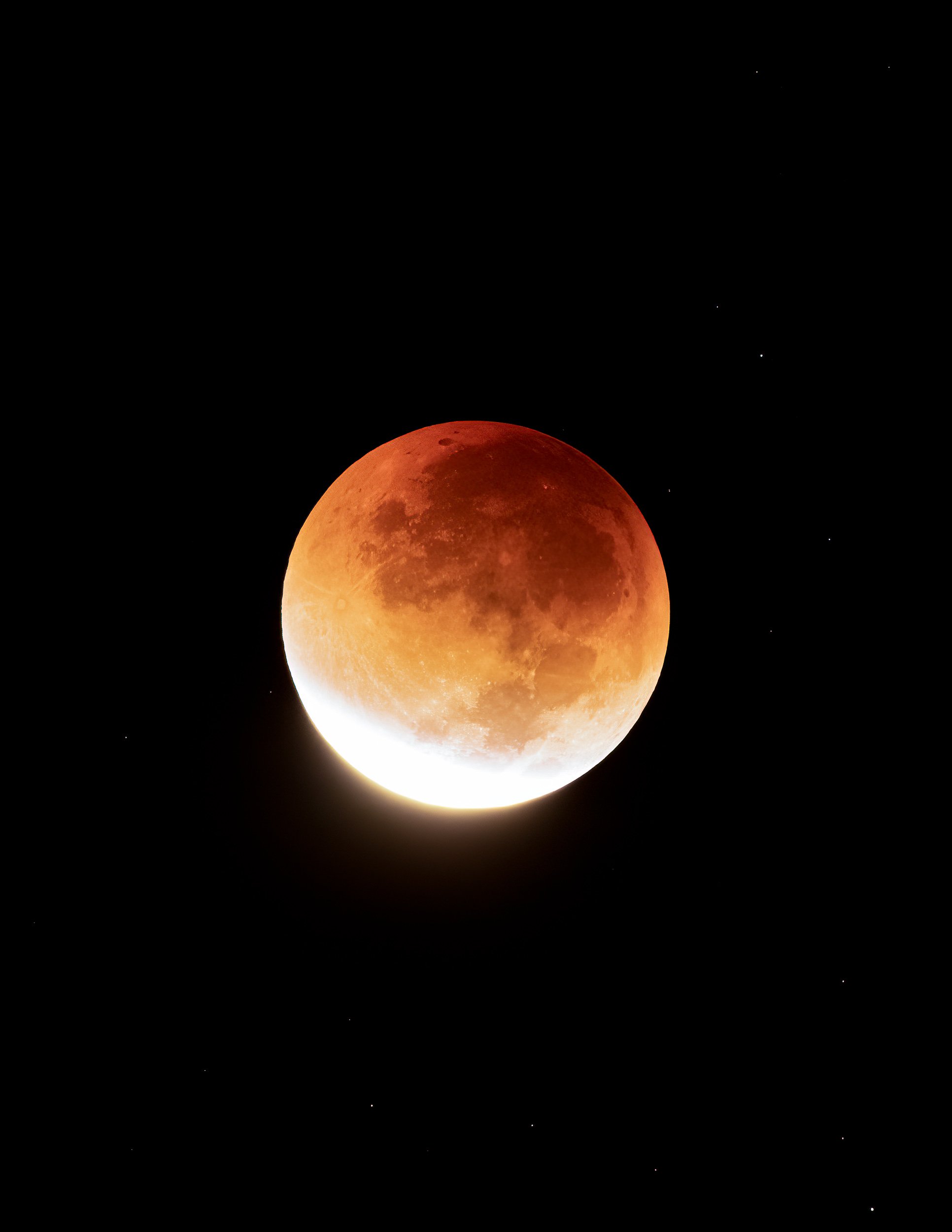
The Blood Moon
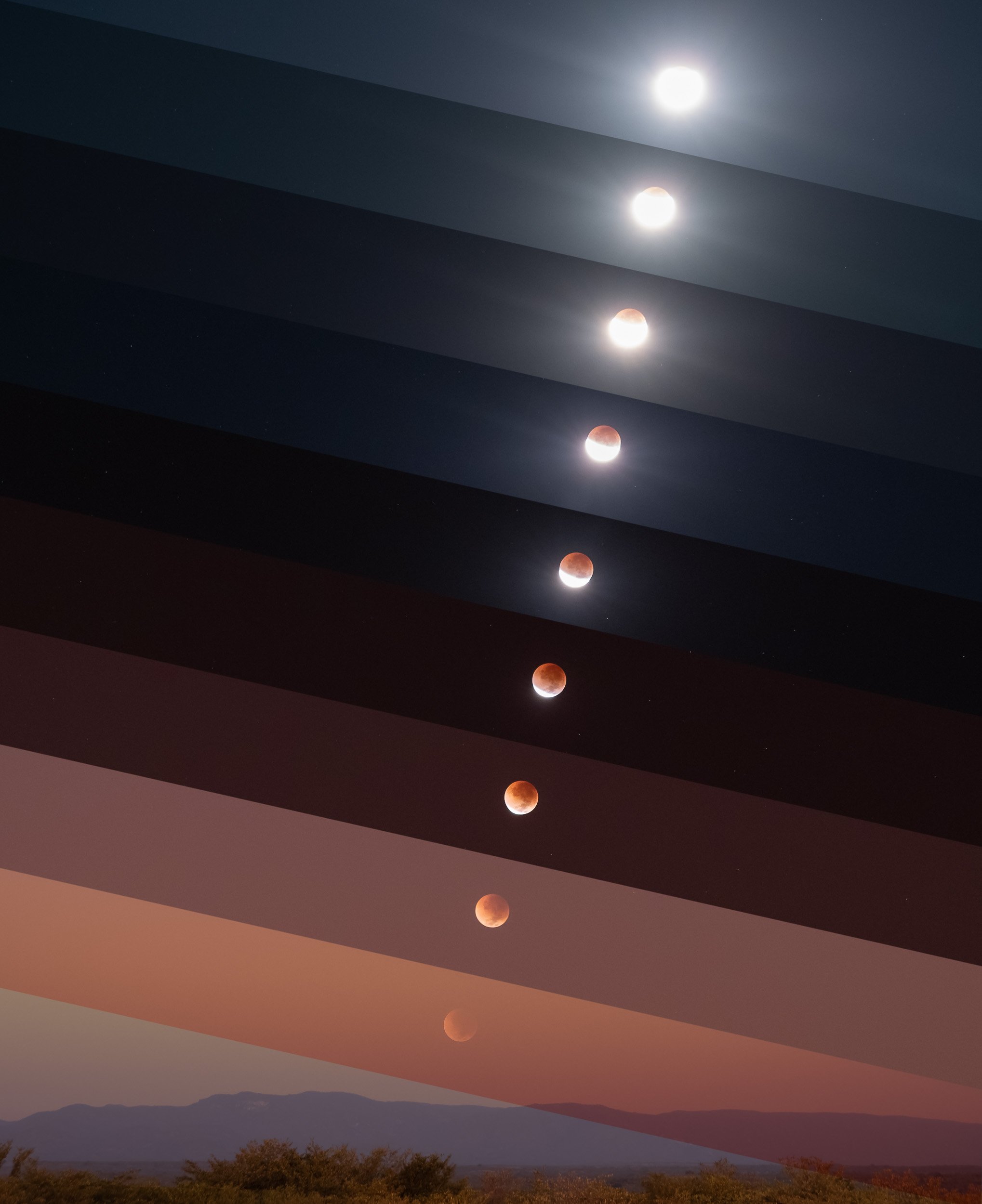
We ventured out at 3am deep into the bush to an elevated clearing to observe the slow progression of the eclipse, culminating just before sunrise. This was taken at 5:29am, with the sun still illuminating a small edge of the moon, while earth cast a shadow on the rest of our luna, glowing red due to the scattered light passing through the atmosphere.
Timeslice
Our earth's shadow started to show itself on the moon's surface from around 3am onwards, until before sunrise when it the totally eclipsed our celestial companion, making it shine truly red. Shortly after, daylight started to creep in as the sun rose on the opposite side, casting an array of colours onto the sky as the moon faded away.
Moments
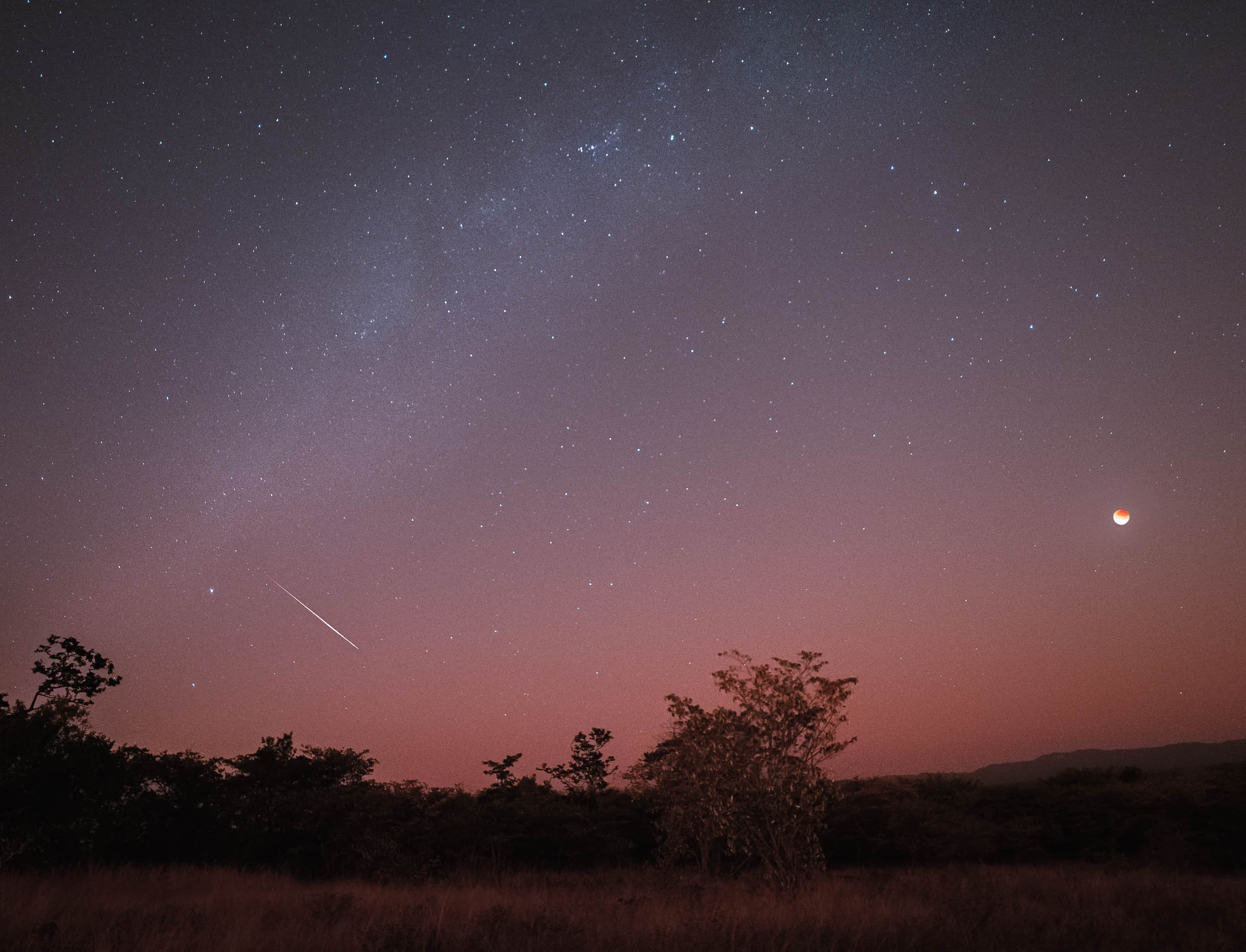
I like it when everything comes together in an image. This is one such photo: The Milky Way and Scorpius star region, the African sunrise, the blood moon, and a meteor all in one frame - it was a lucky moment paired with prepardness that enabled me to capture this.
Here’s a timelapse video of the event, both a wider view from 3am to sunrise, and a close up of the eclipse progression.
The Dinosaur Footprints
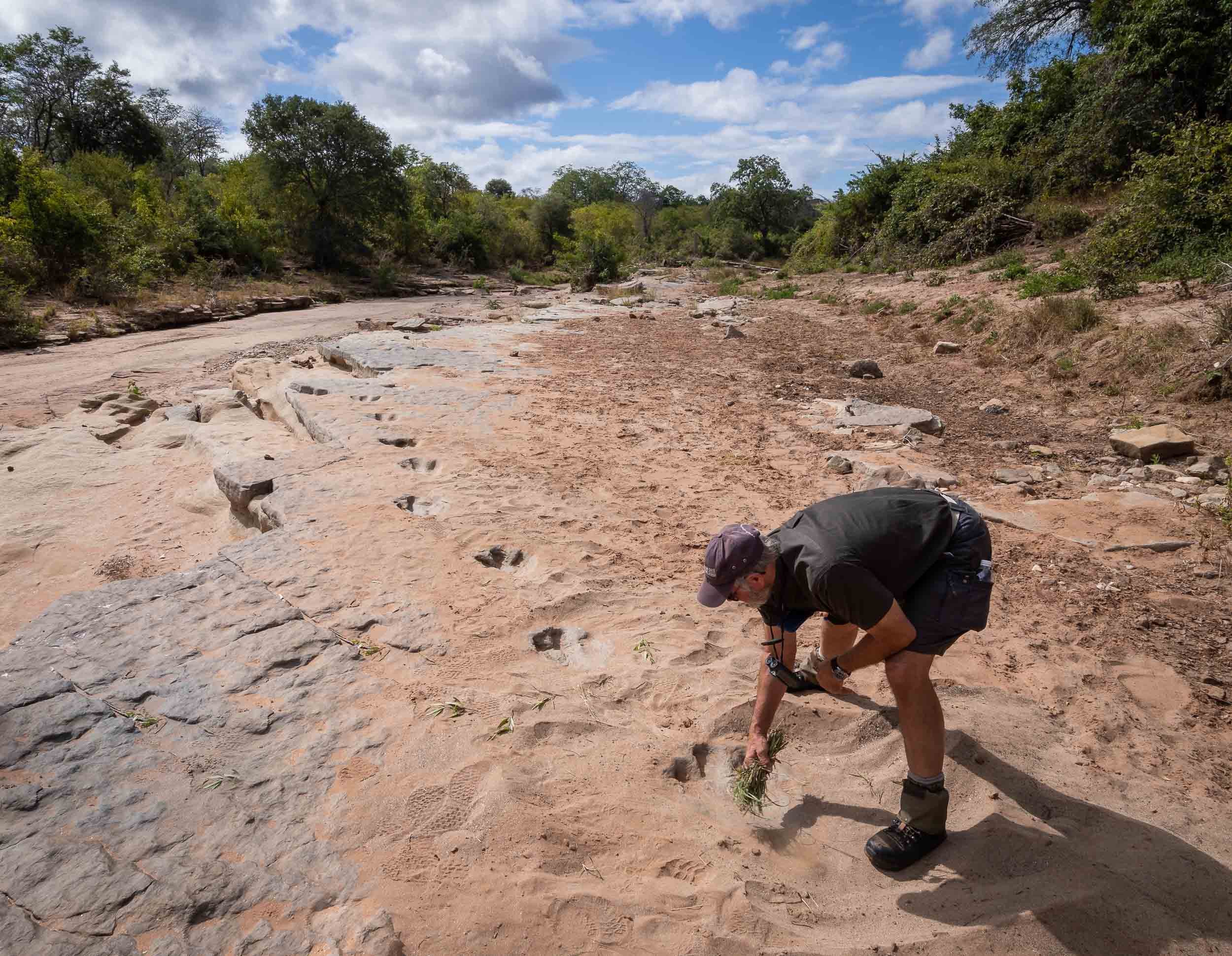
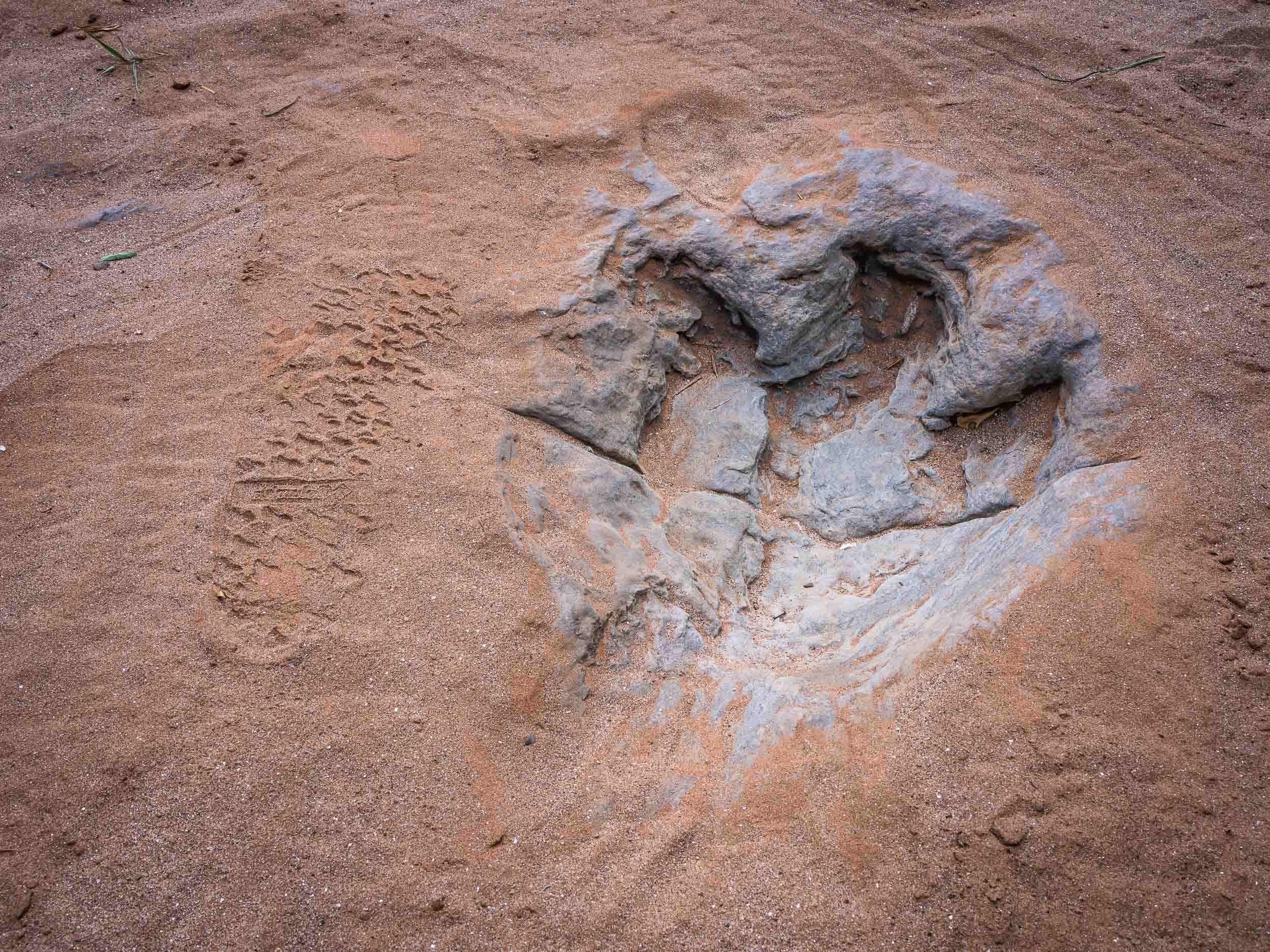
The real reason for venturing this far and deep into the Zimbabwean bush can be found in the next photos. The country and specifically the Chewore area is home to a very special paleontological sight: Dinosaur Footprints from 150 million years ago. It took a large amount of research, planning and nagging to make this happen, but it was definitely worth it and I’m grateful to to everyone who made it possible and was a part of it with all their knowledge, Barry, Louisa and Neil. The owner of the concession estimates only 200 people have ever seen these - 201 now.
The Path
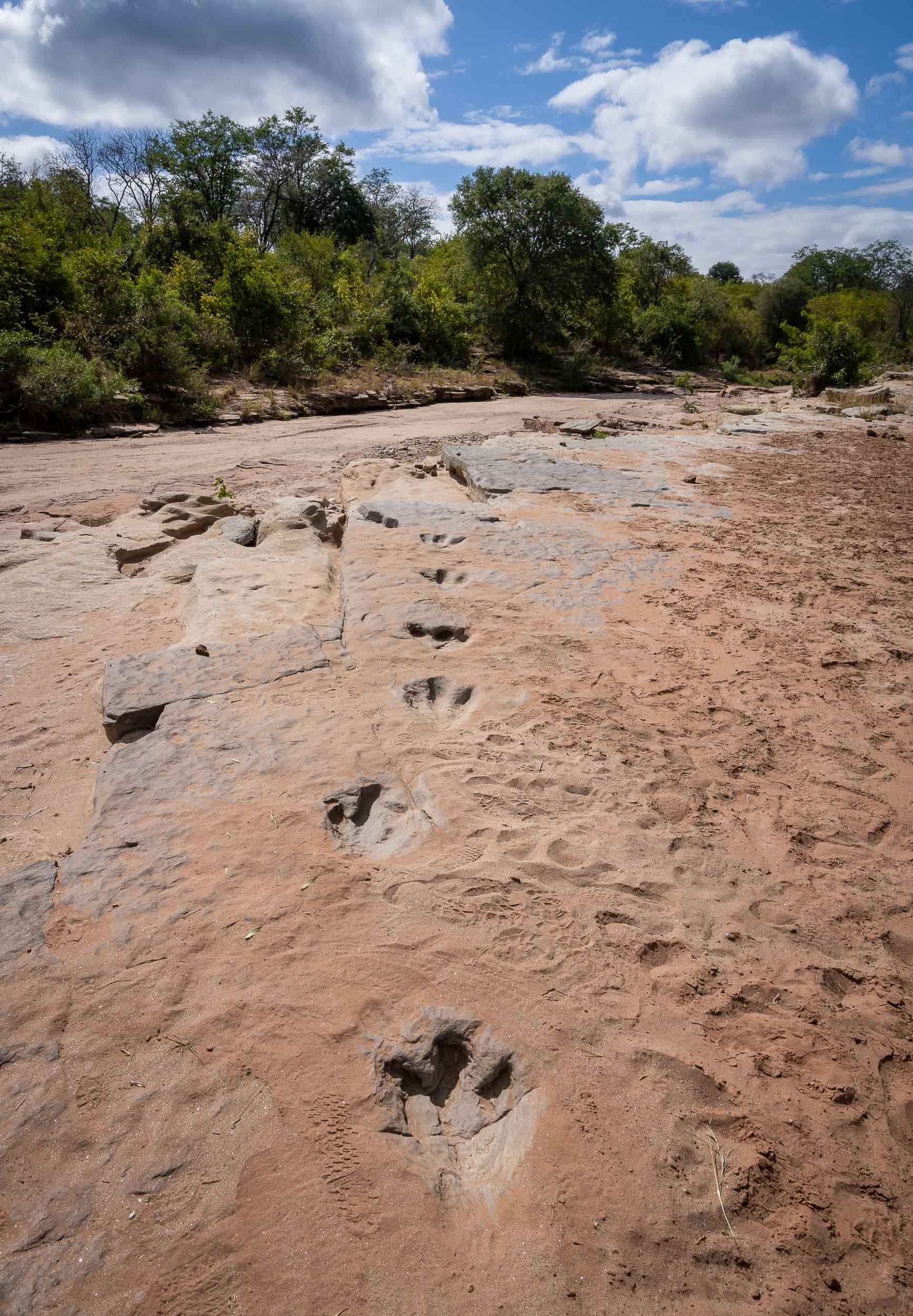
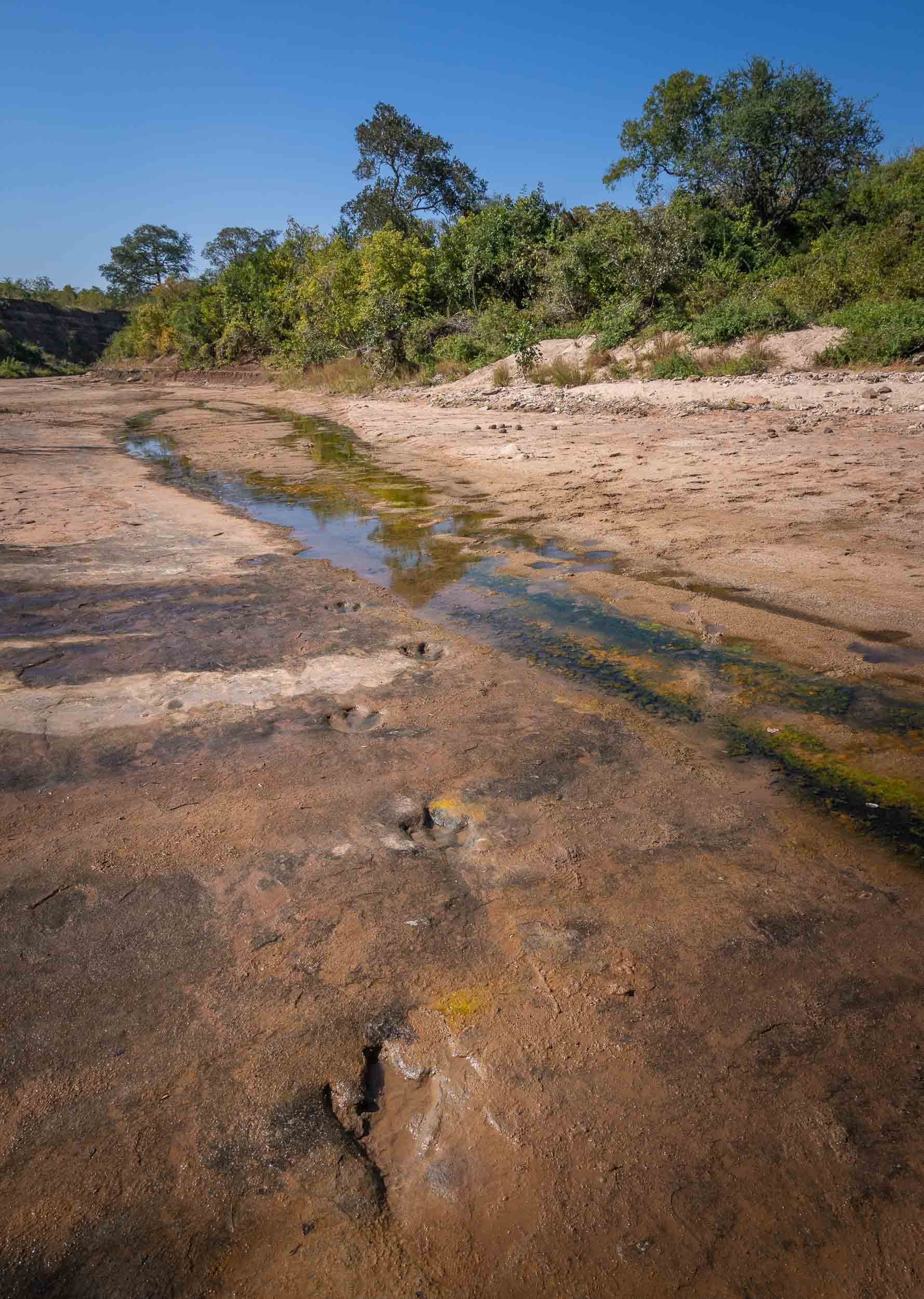
This is the first site of a total of 5 different spots we visited, although there are several more in the area. It's a path of prints running in the Ntumbe River, found in 1984. There are a total of 14 prints, but not all of them might be visible depending on water level, sand, and erosion damage.
Size
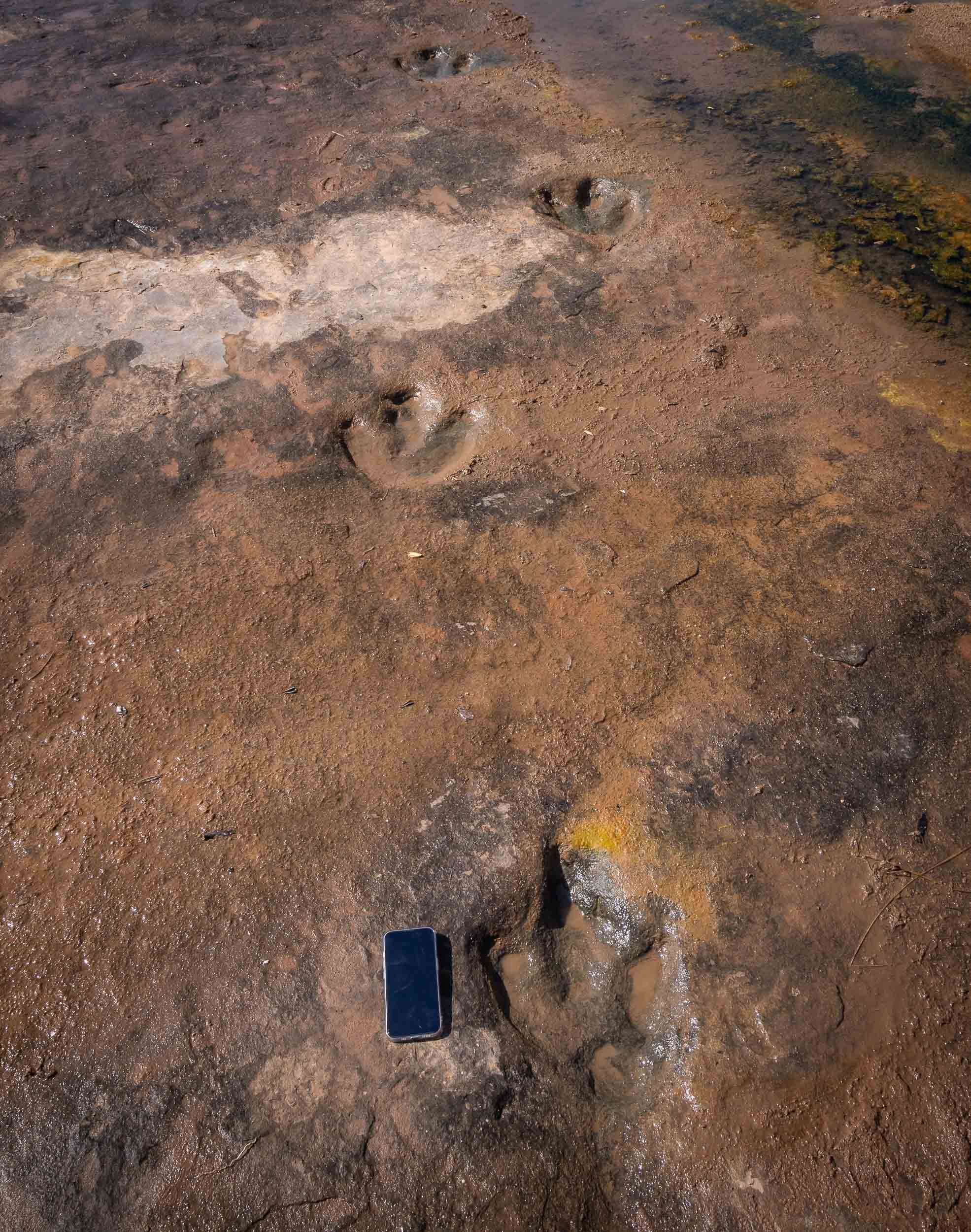
Here are 4 prints next to an iPhone 13 Pro for size comparison. The maker of this print is said to be Allosaurus, ancestor of the T-Rex, and about 12m tall, weighing 1400kg.
Allosaurus
The second site of prints from the same species, 12 prints over 15m.
Cleanup
Some work had to be done by my trusty guides with make shift brooms to free the prints from sand that was brought in by the river during the rains. There is a constant risk these prints might be destroyed by erosion, and whether to move and preserve them or let nature take its course is up for debate.
Size
These prints are slightly bigger than the first set - my footprint for comparison (Size 46 / US 11).
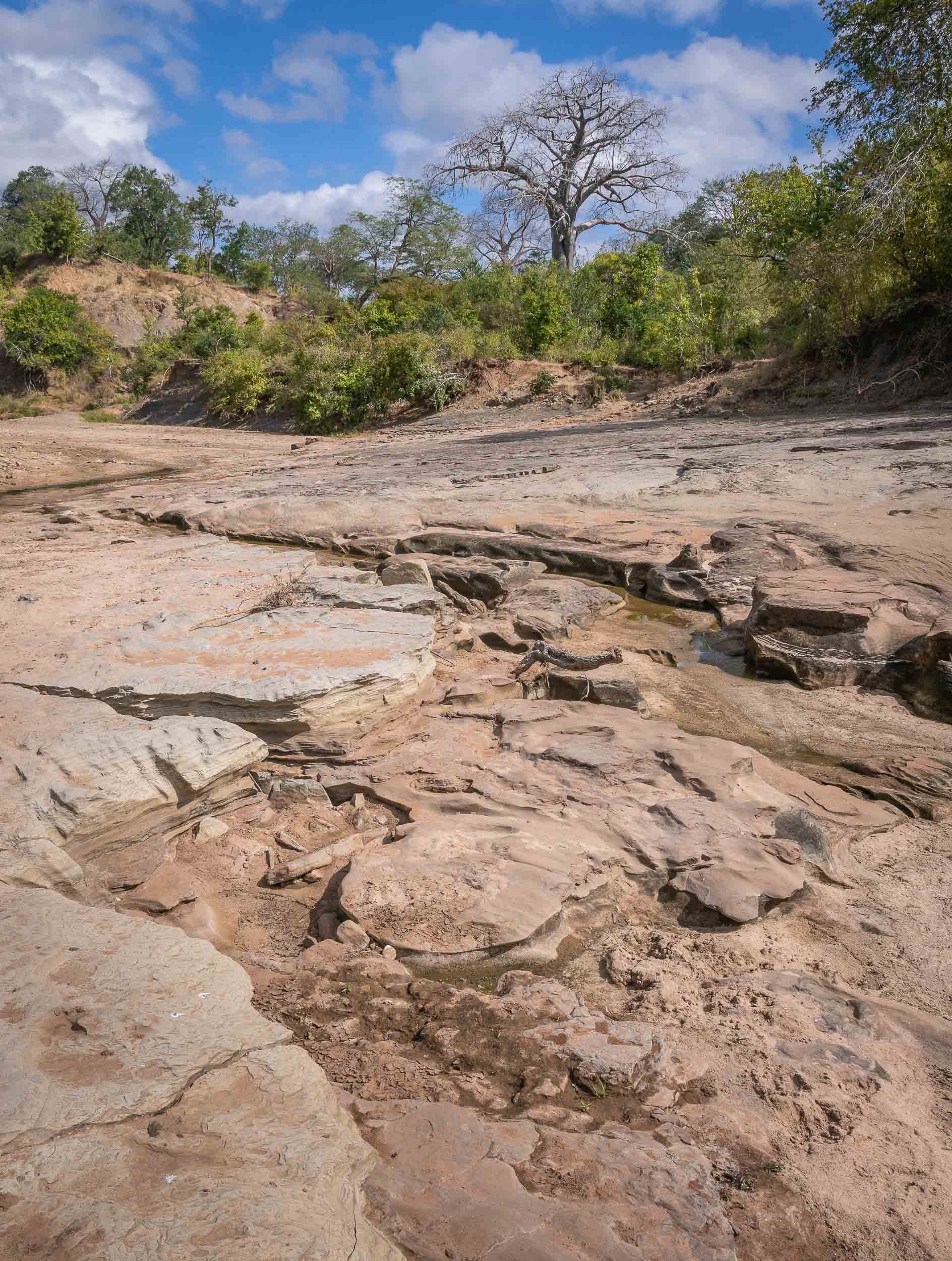
The Ntumbe River Bed
The various layers of sandstone are clearly visible here, with the different beds that make up the source of the prints.
The second culprits
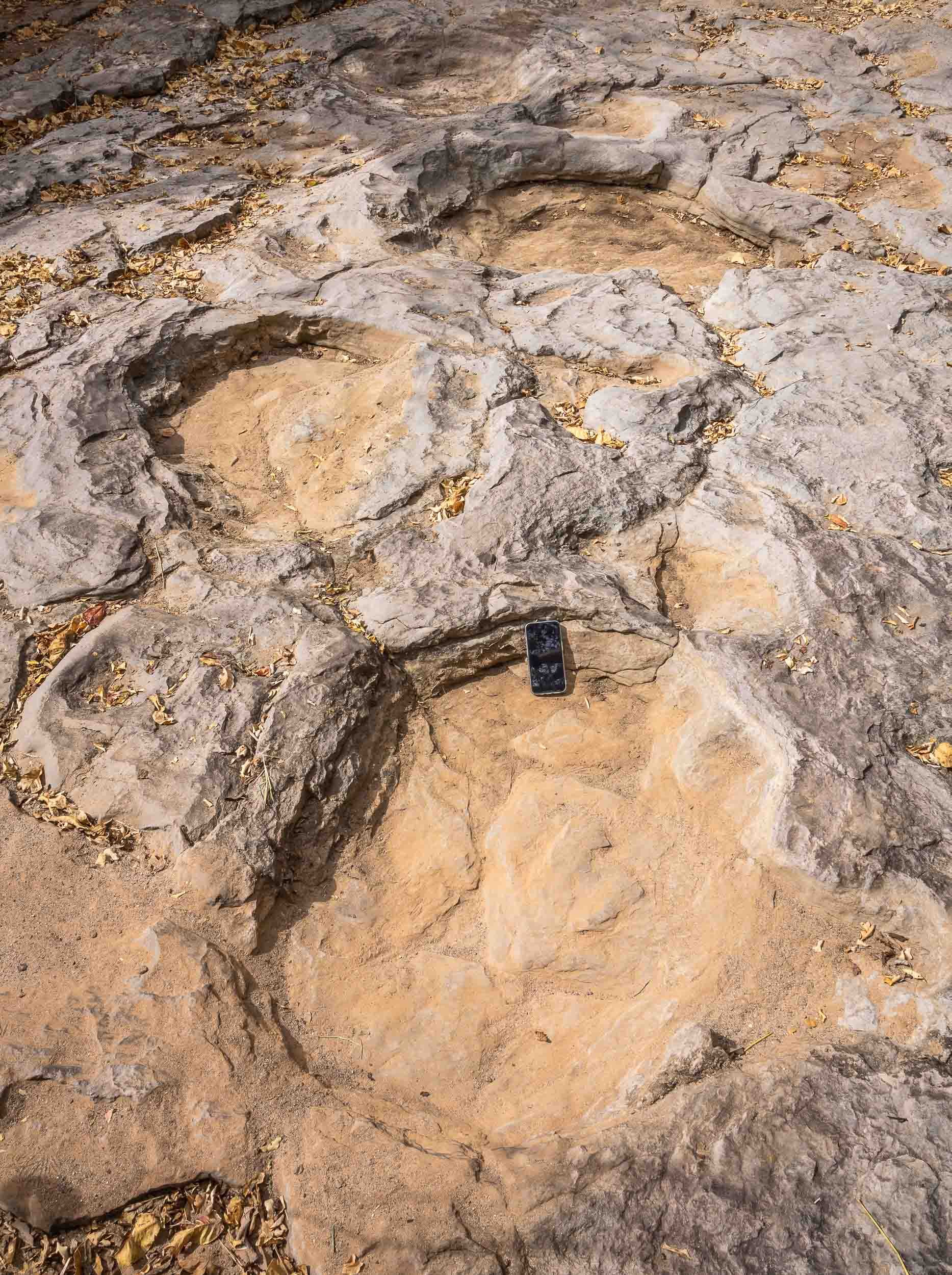
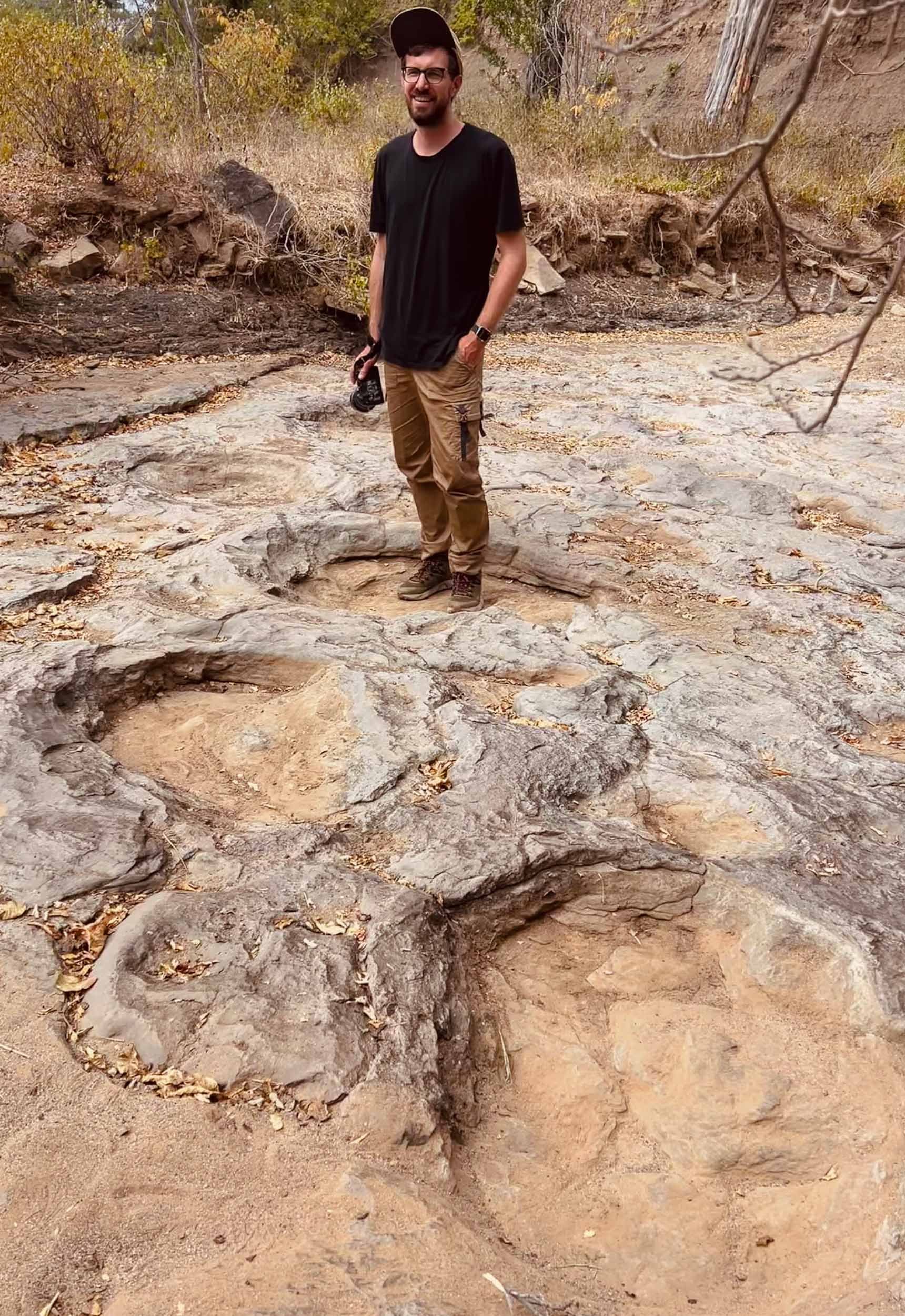
Another species left truly mind-blowing evidence in the area: It's a number of Sauropod prints, almost 1 meter in diameter! My phone for comparison again.
I couldn't resist standing in the footprints of these giants - they were up to 15m tall. If you look closely, the bottom right print shows a crescent shape on top of the actual round foot - a sign of the front legs.
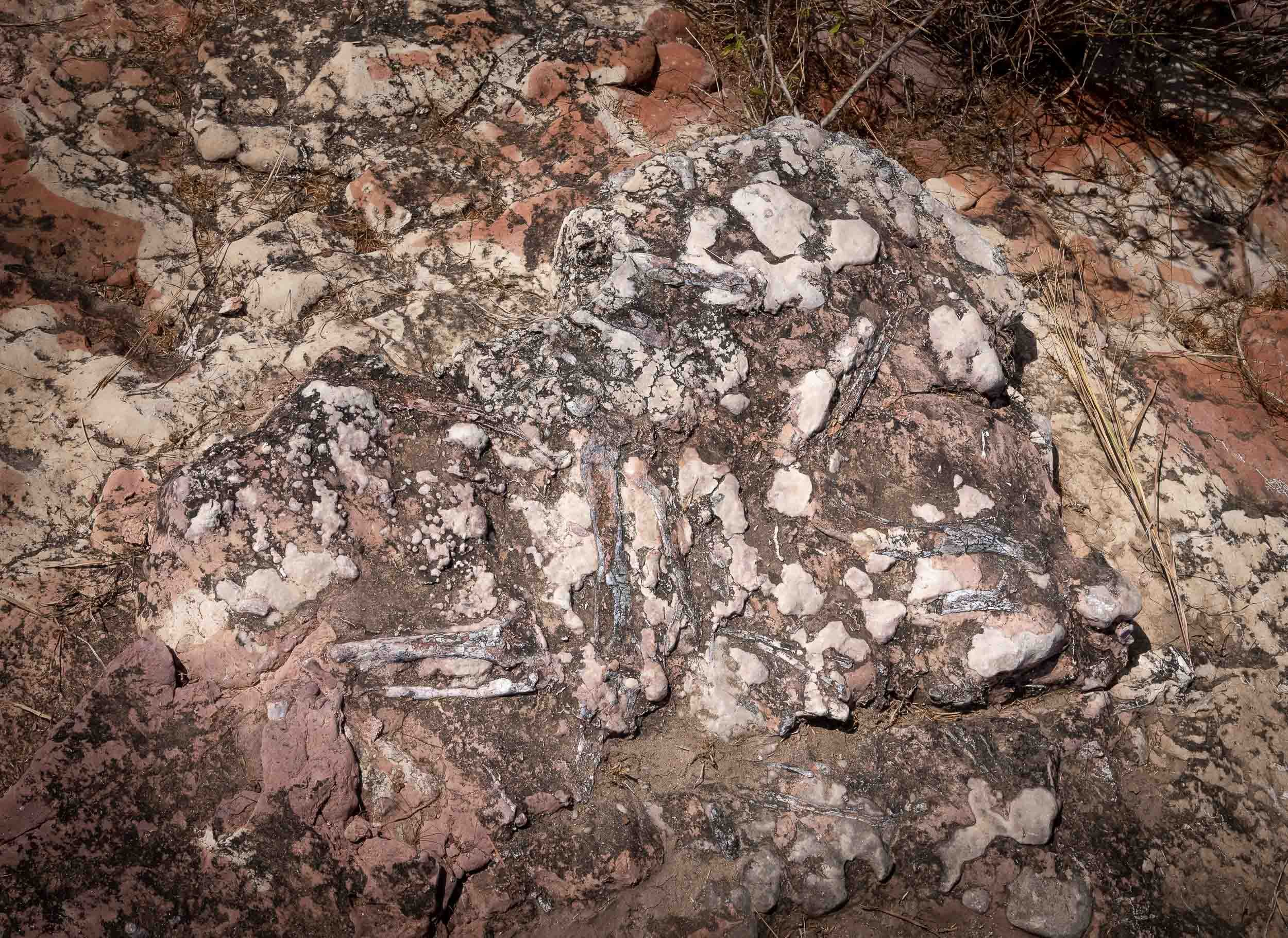
Skeleton
The evidence of a third species we were able to explore is different than the first two: It's a small Massospondylus dinosaur skeleton on its side, with folded joints. Its head is to the left of the image.
Lucky
It's located on top of a small sandstone outcrop in the Angwa River and thus preserved.
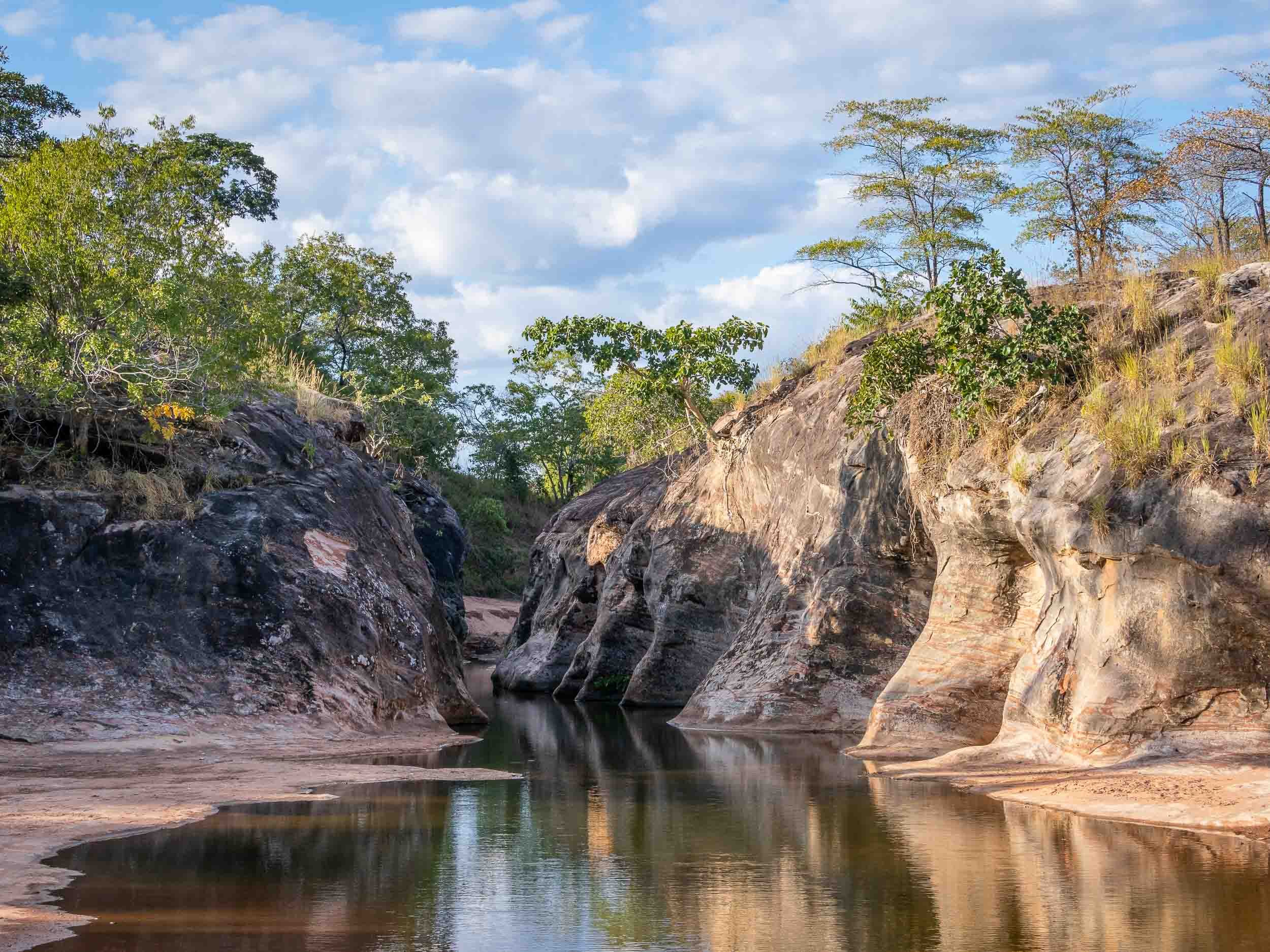
Riverscapes
The landscape around the prints is impressive as well. The water in this canyon is in fact more than 8 metres deep and home to a hippo and a crocodile.
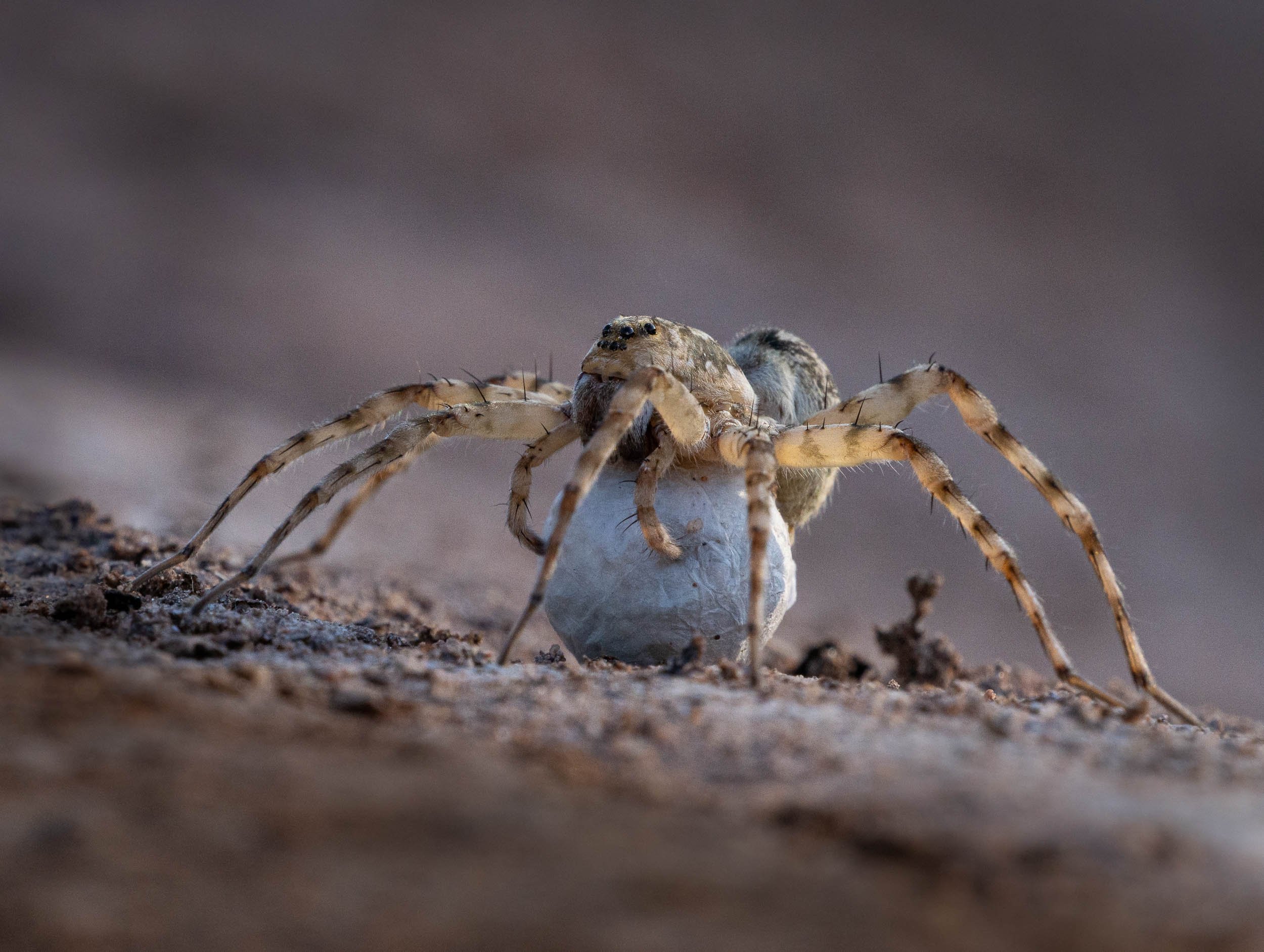
Nursery
A spider of unknown (to me) species carrying its egg sac.
House in the Bush
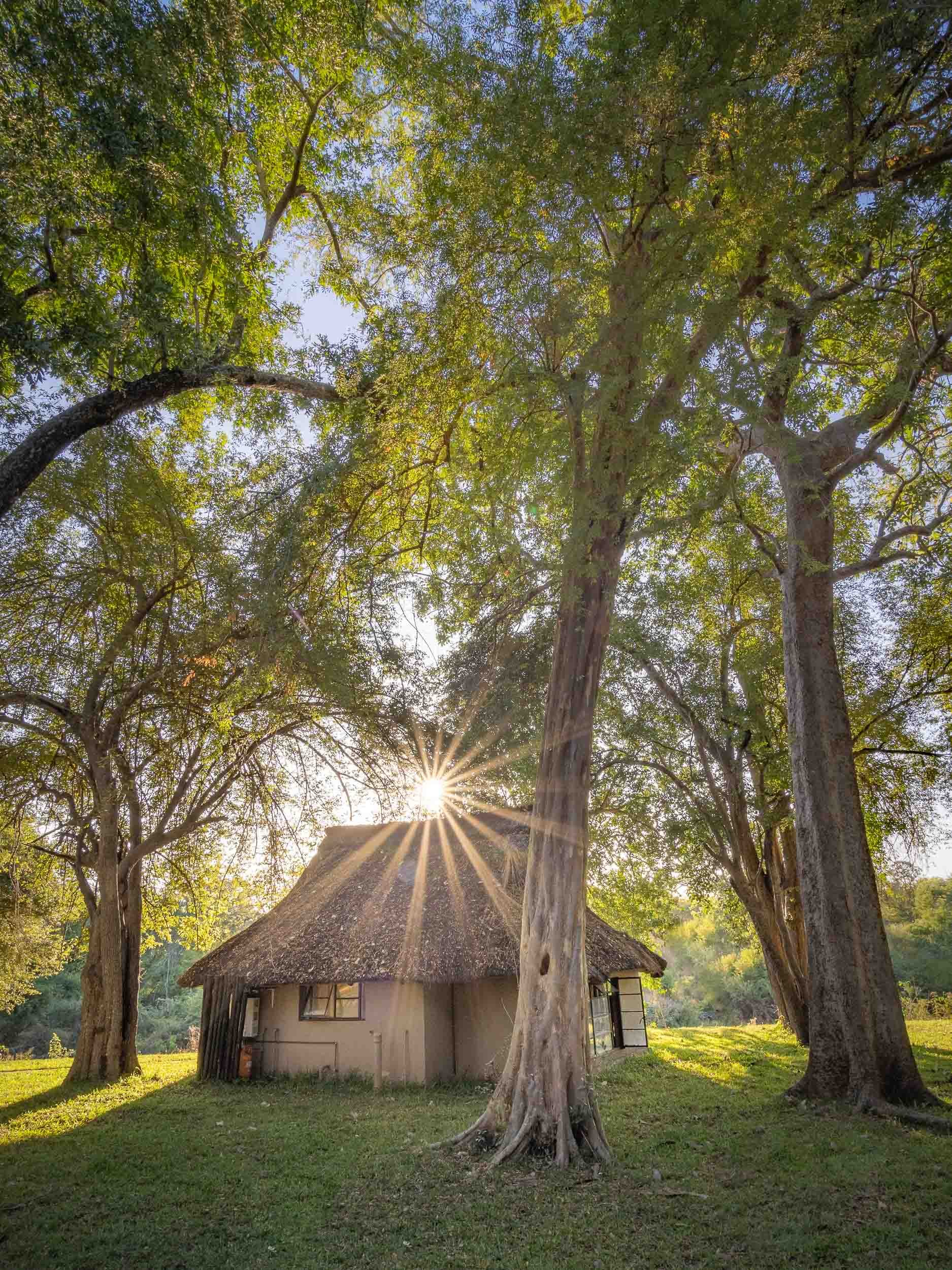
One of the small houses of the camp we stayed at in Chewore.
Lake Kariba and the Matusadona
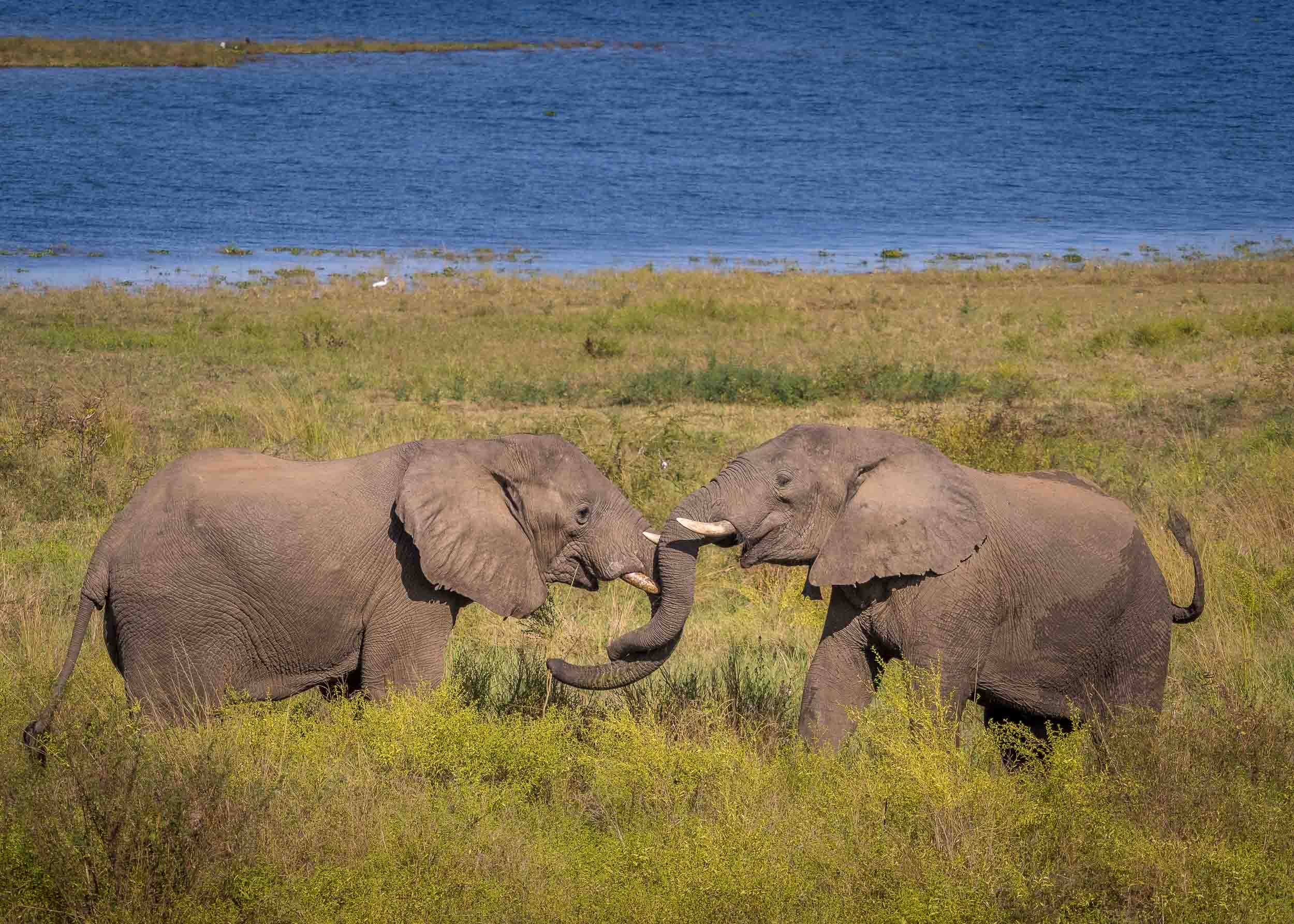
After a long drive, I arrived at Lake Kariba and the Warthogs camp for a few nights on the shores of the world’s largest man-made lake in Musango Safari Camp, both operated independently by incredible people.
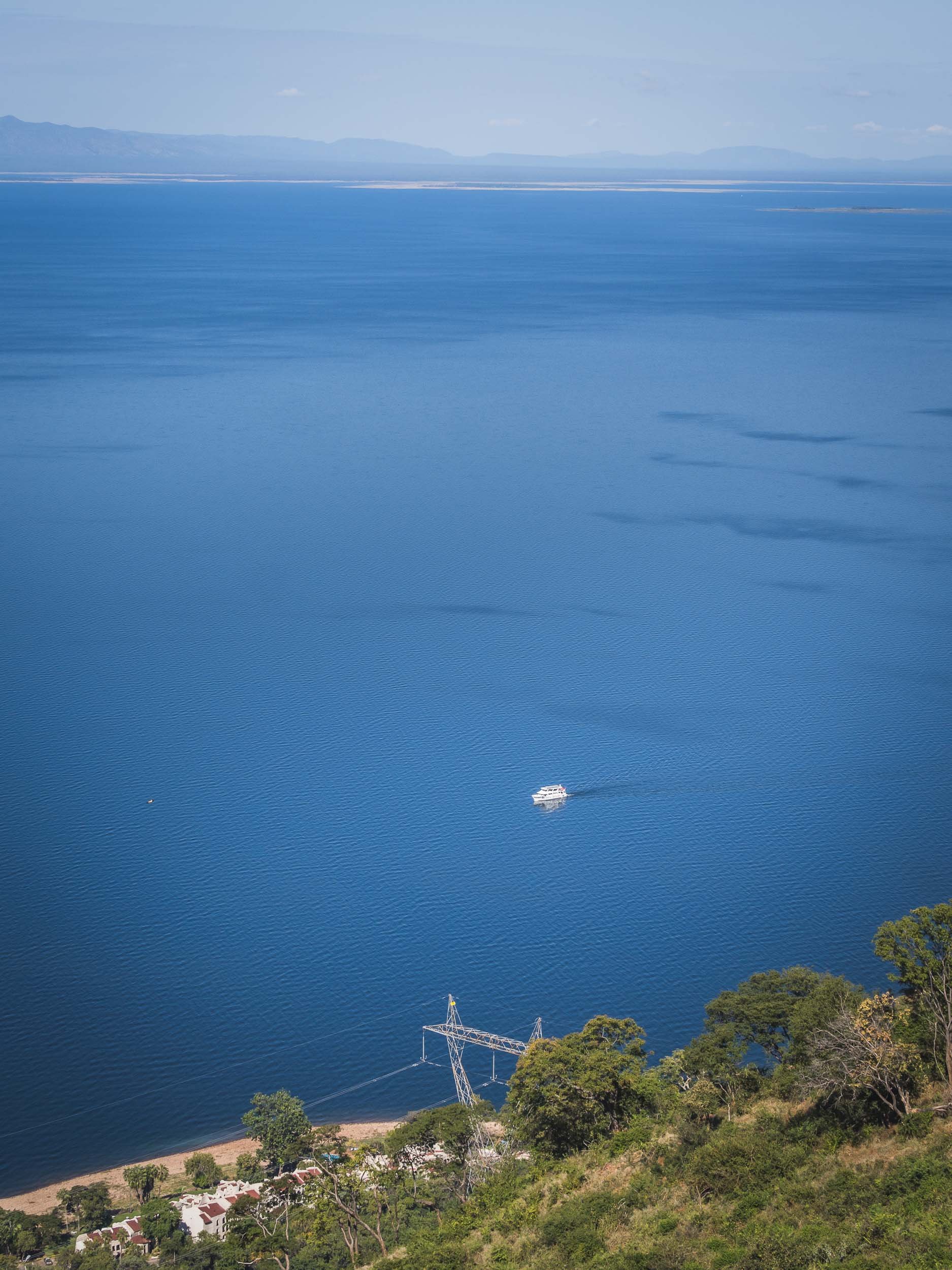
Lake Kariba
The world's largest man-made lake by volume, at 223 x 40km and up to 97m deep.
On the Shores
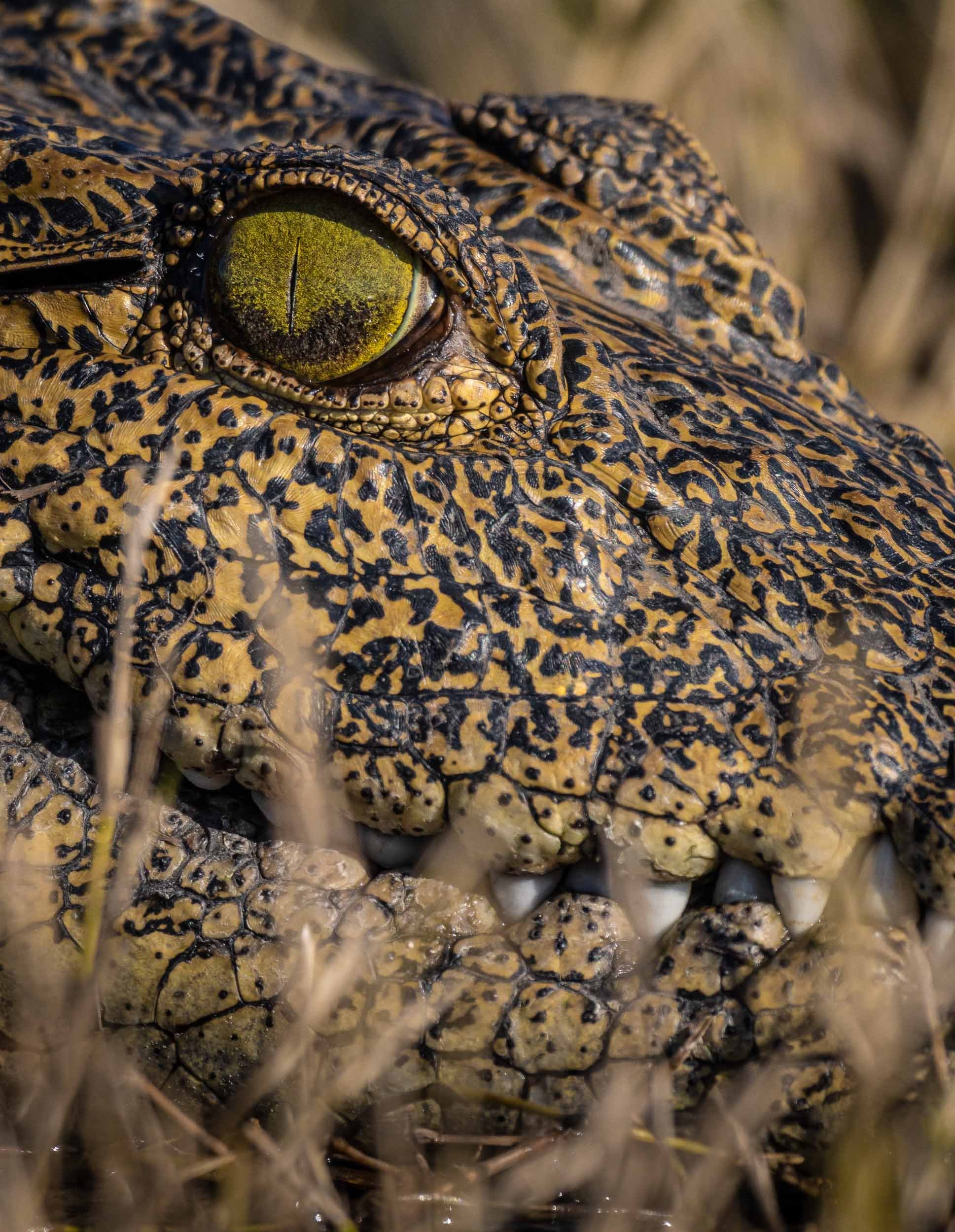
The lake shores are home to many animals, but it's most notorious for its many large crocodiles, that not too rarely have an appetite for humans.
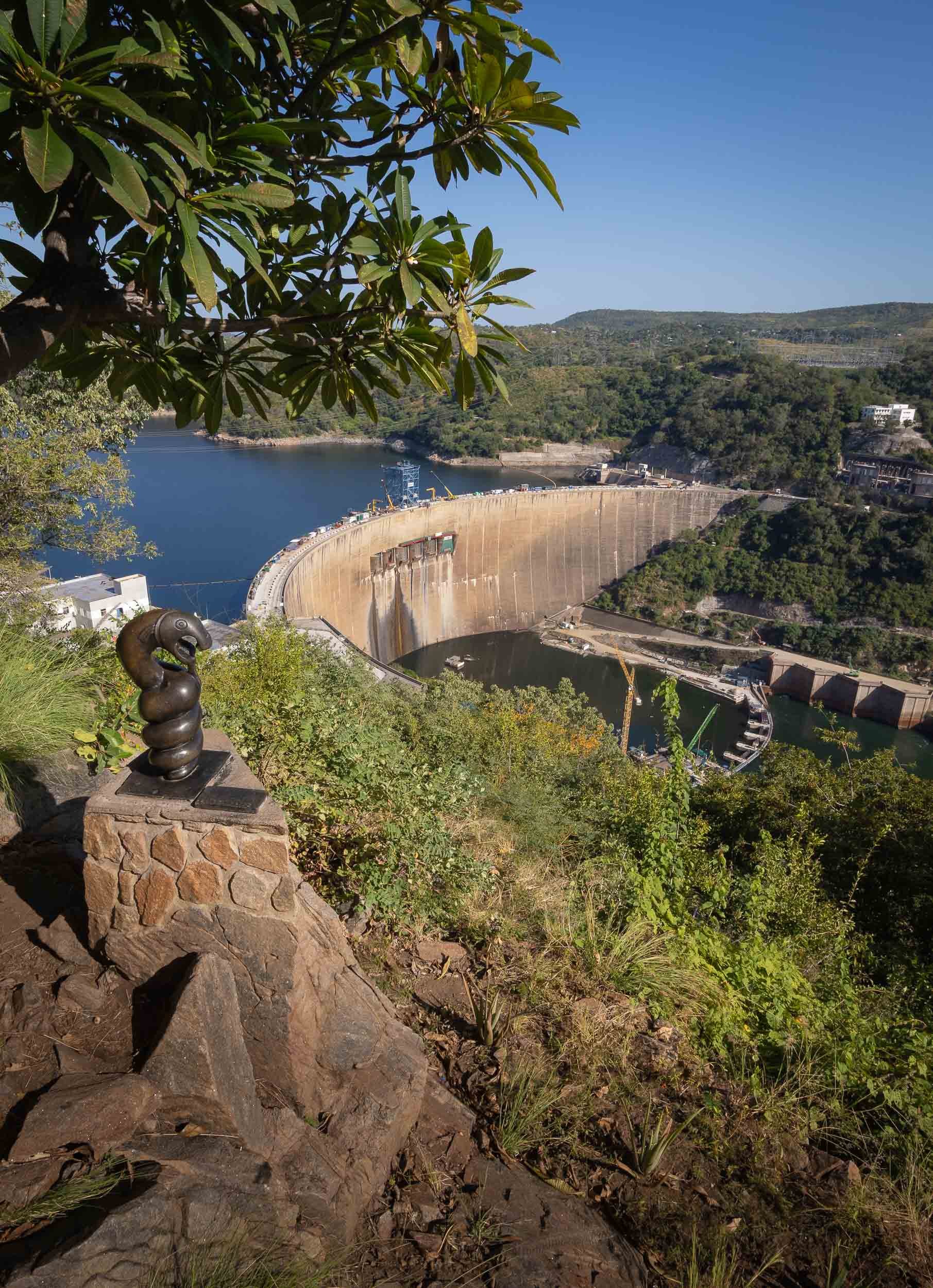
Kariba Dam
The reason for the lake is this dam, opened in 1959 before ZImibabwe (and Zambia on the other side) existed in their current form. The dam is 128m high and large repair works are taking place these days due to some instability. A flooding would be a disaster.
The Zambezi Snake Spirit
The river is said to be guarded by this creature, accordign to the native Tonga people that were displaced during the creation of the lake. The stories associated with it are worth a read.
Following my time in Kariba at Warthogs Bush Camp (Elephants and Zebra visit the small pool there to drink!) I moved across the lake into the Matusadona National Park. An hour boat ride took me to a very unique lodge, called Musango, run by its owners Wendy & Steve.
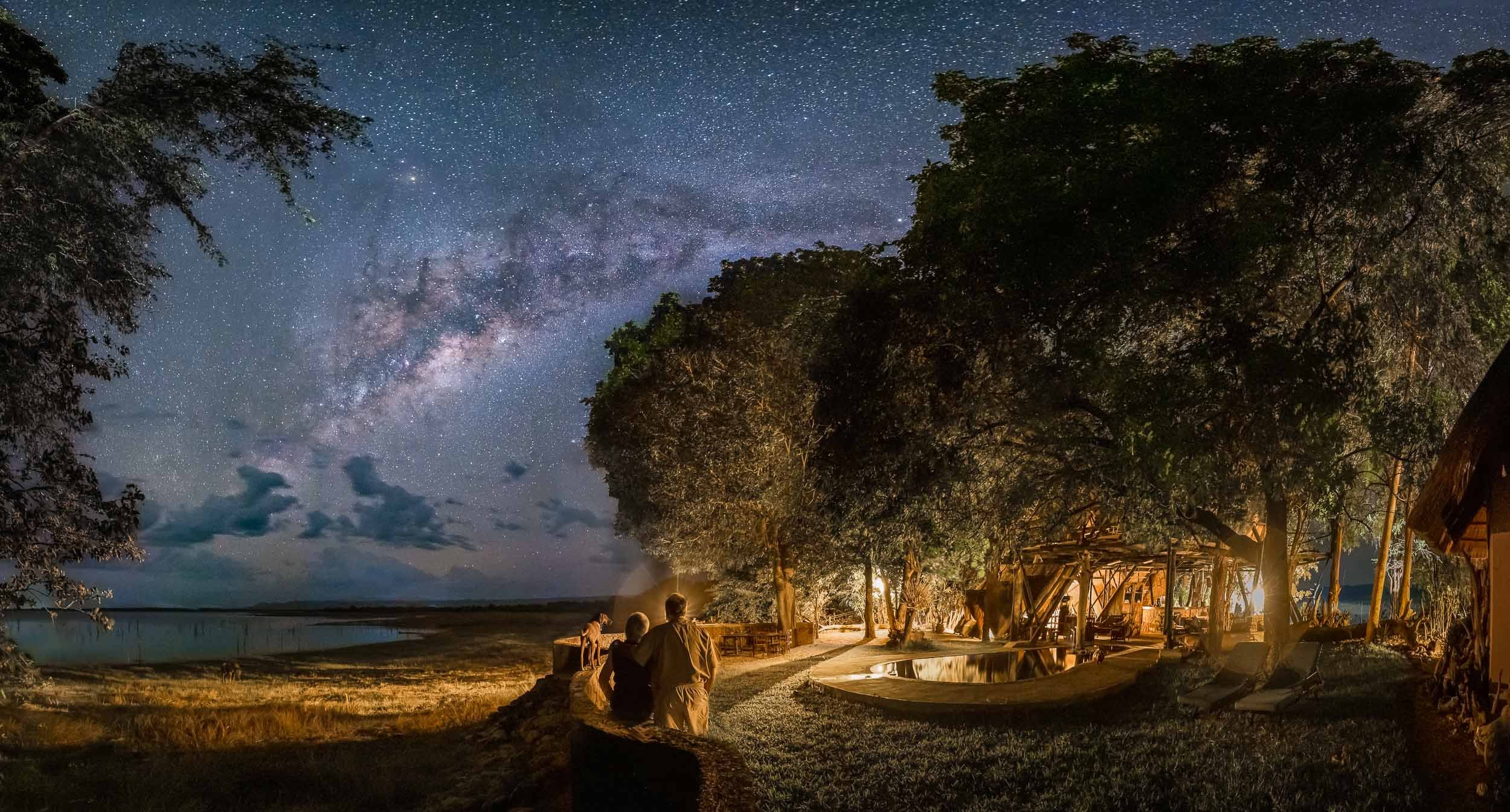
A life's work
When they saw my recent Milky Way photos from Namibia they asked if I could do something for their lodge. No one deserves it more given the passion and knowledge they put into their little paradise, so this is what we came up with! We managed to include their dog as well, and if you look closely, there’s an elephant down by the water shores, and you can see some of the sunken trees in Lake Kariba.
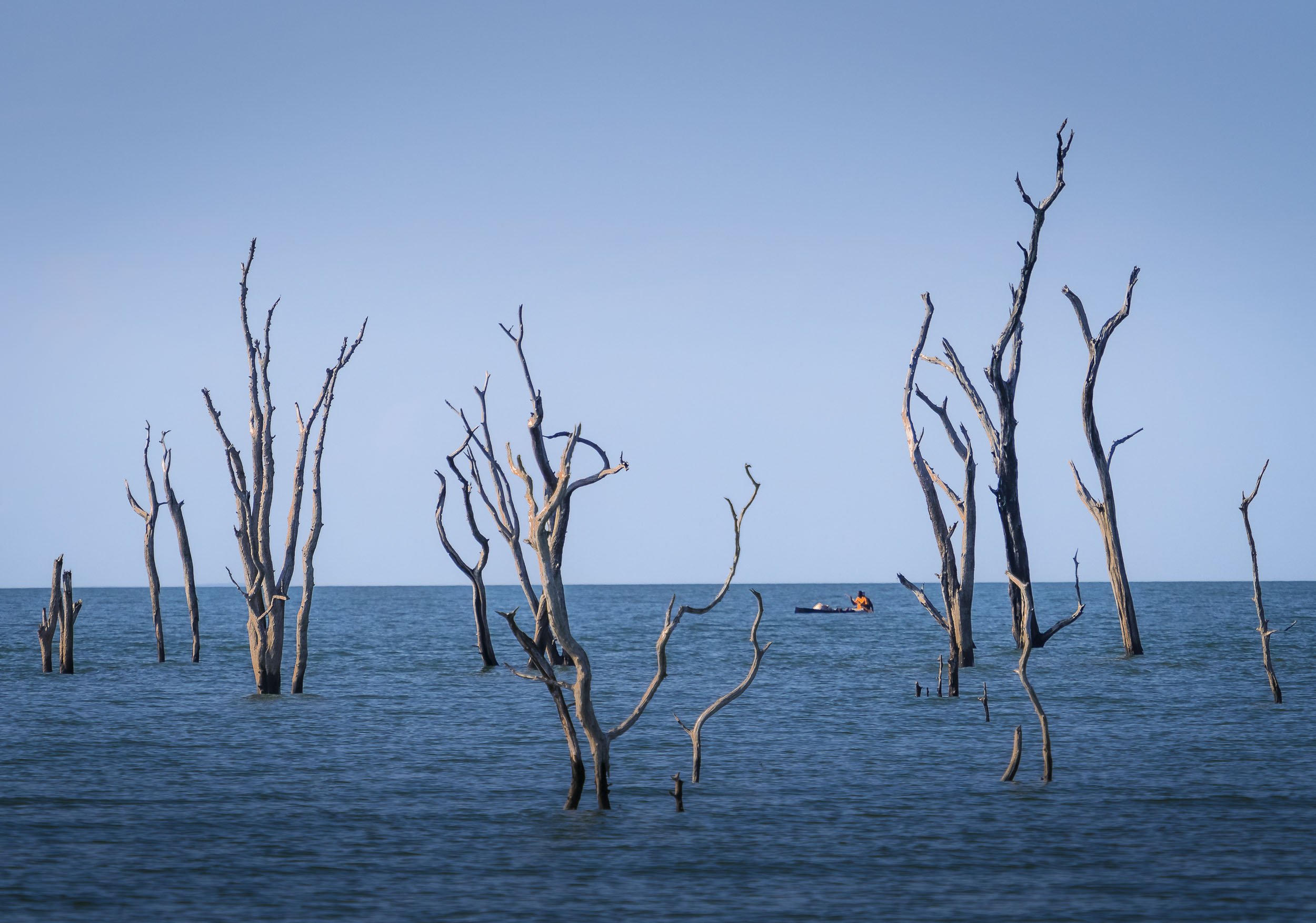
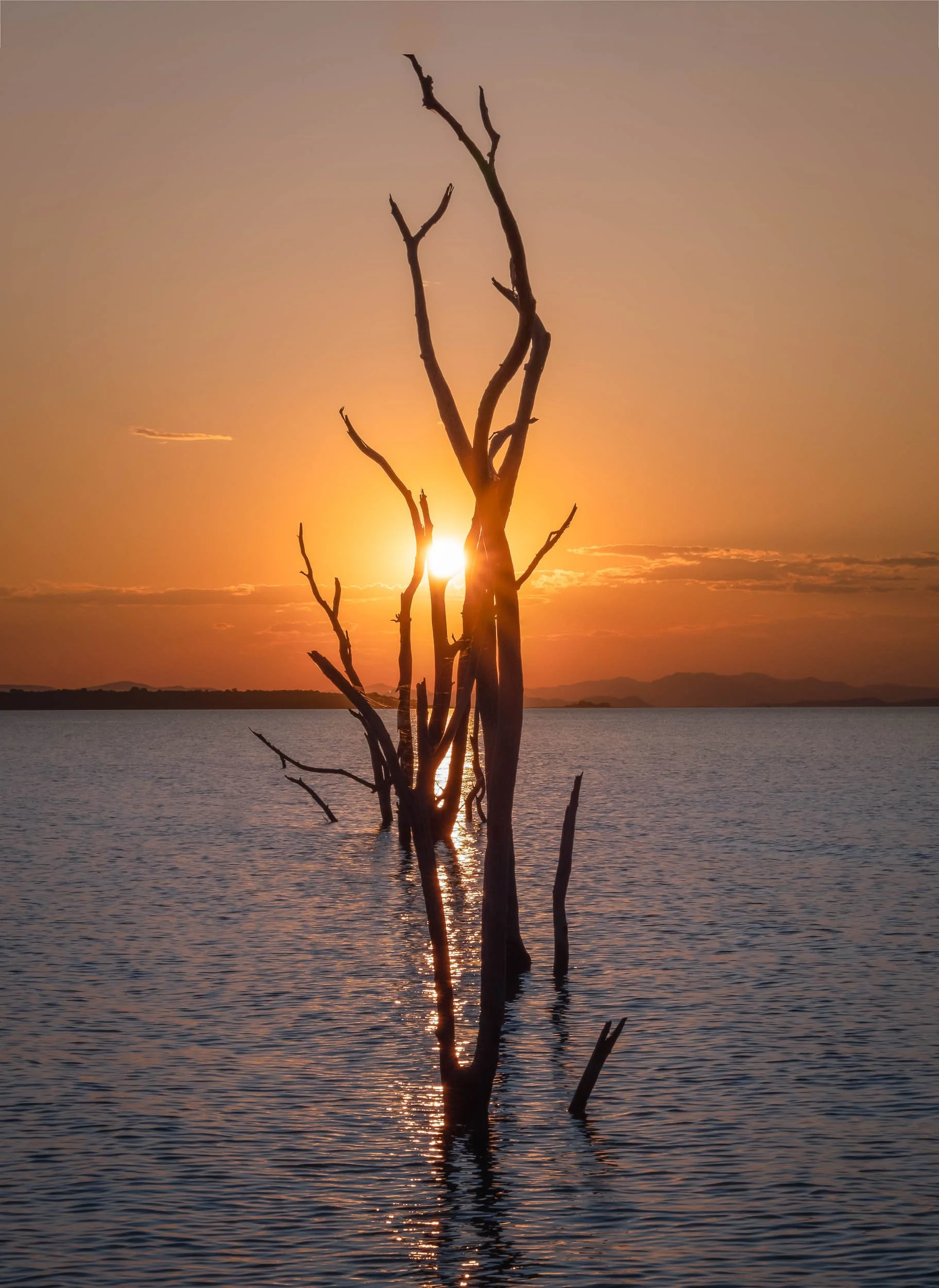
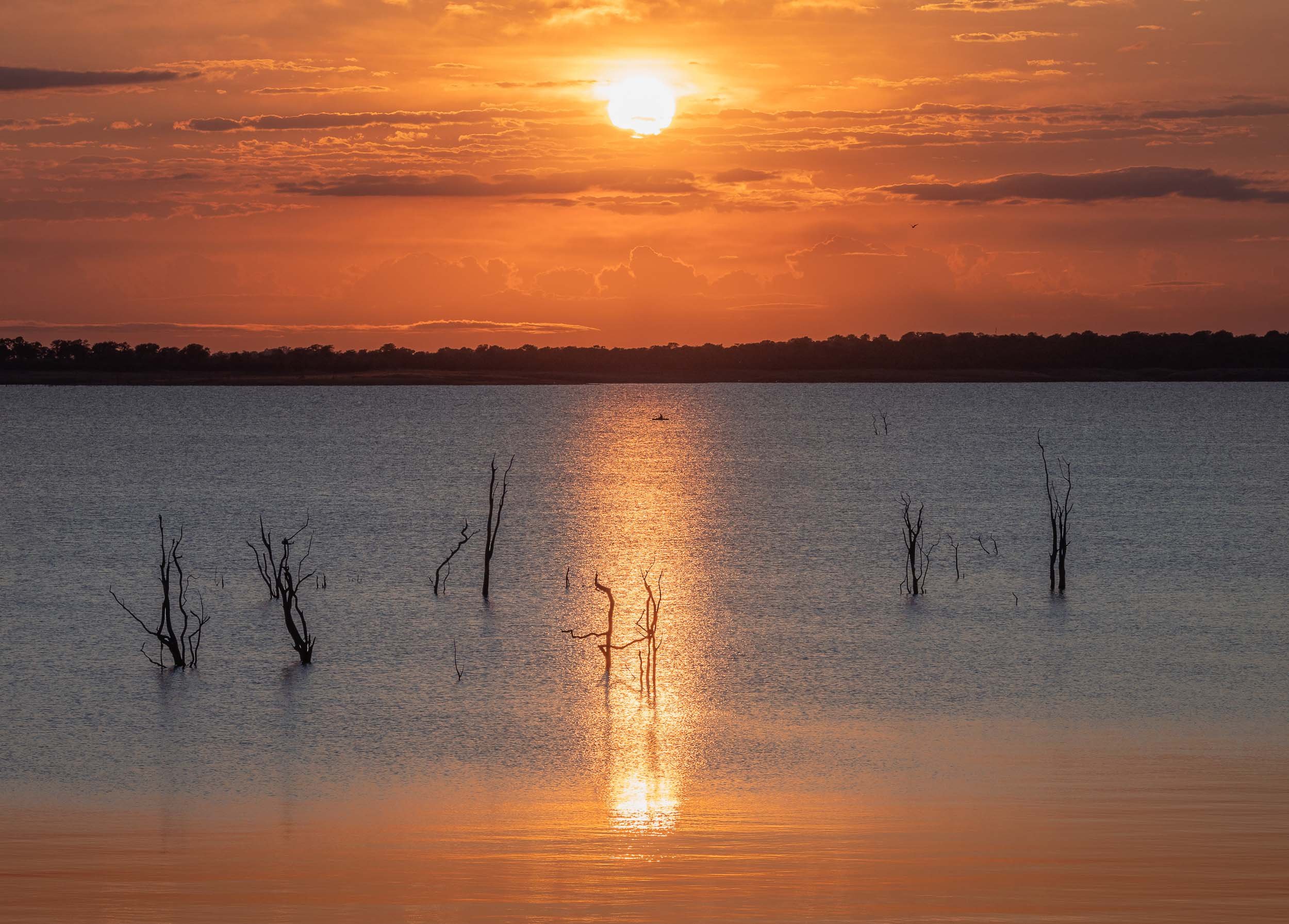
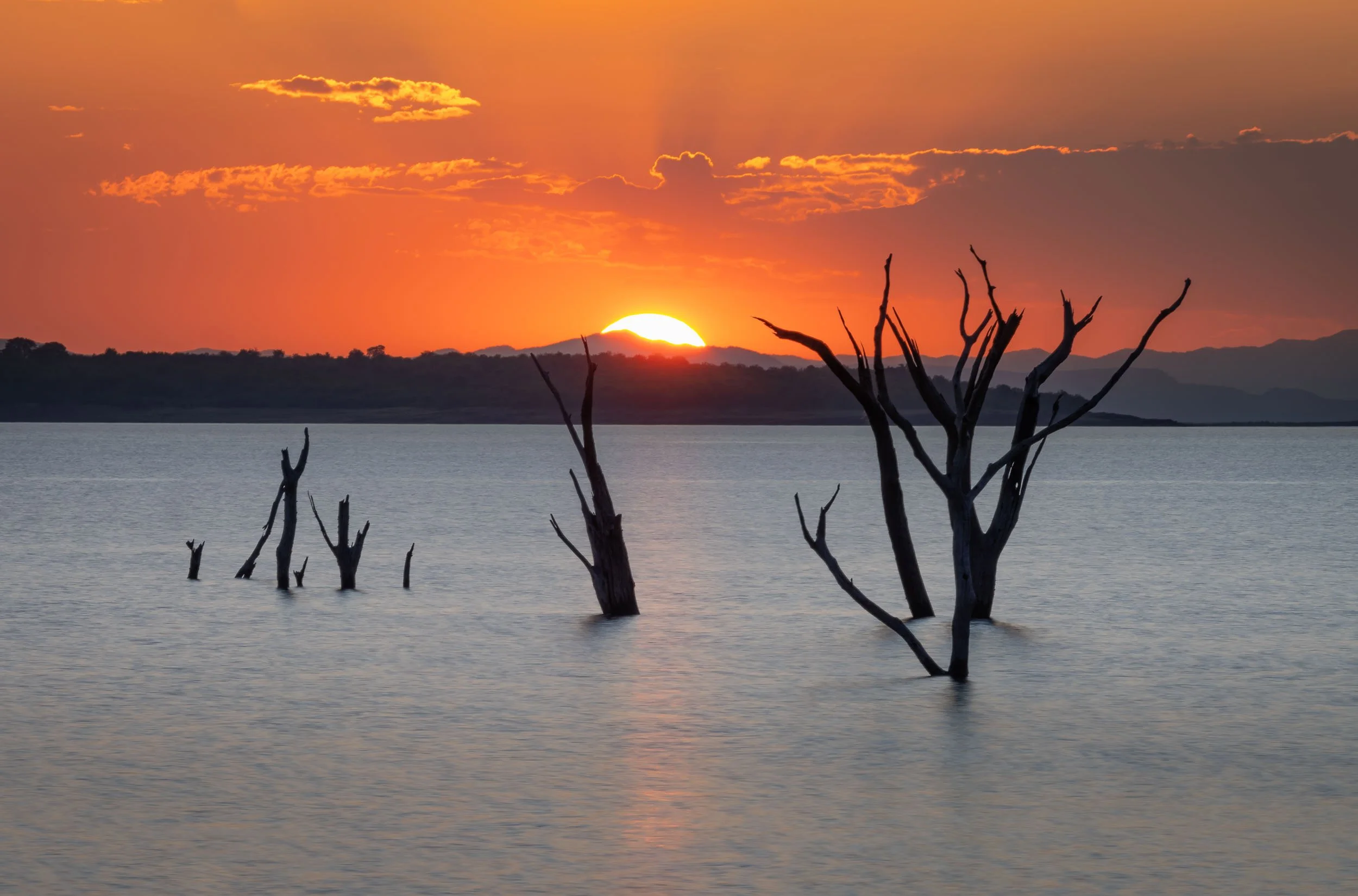
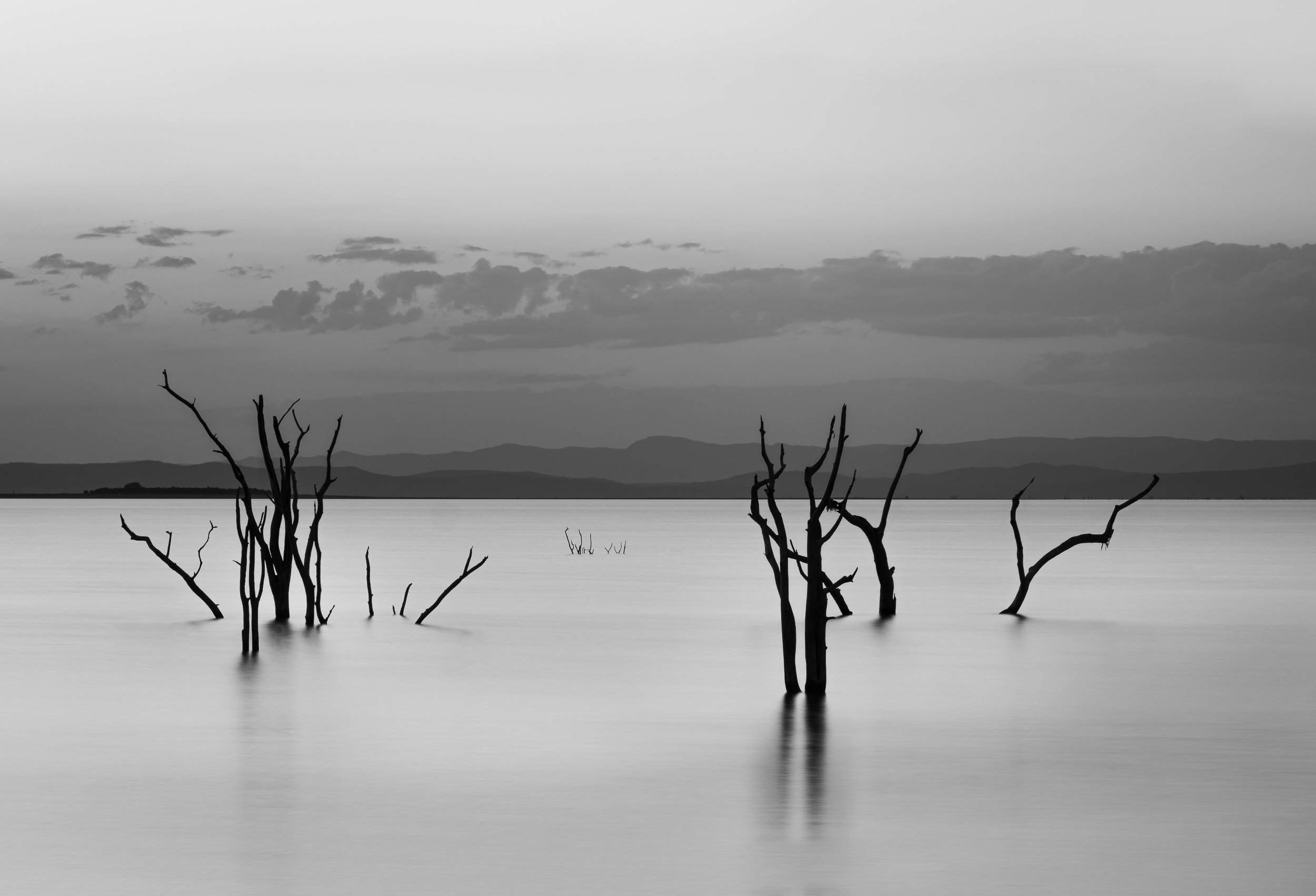
The Sunken Forest
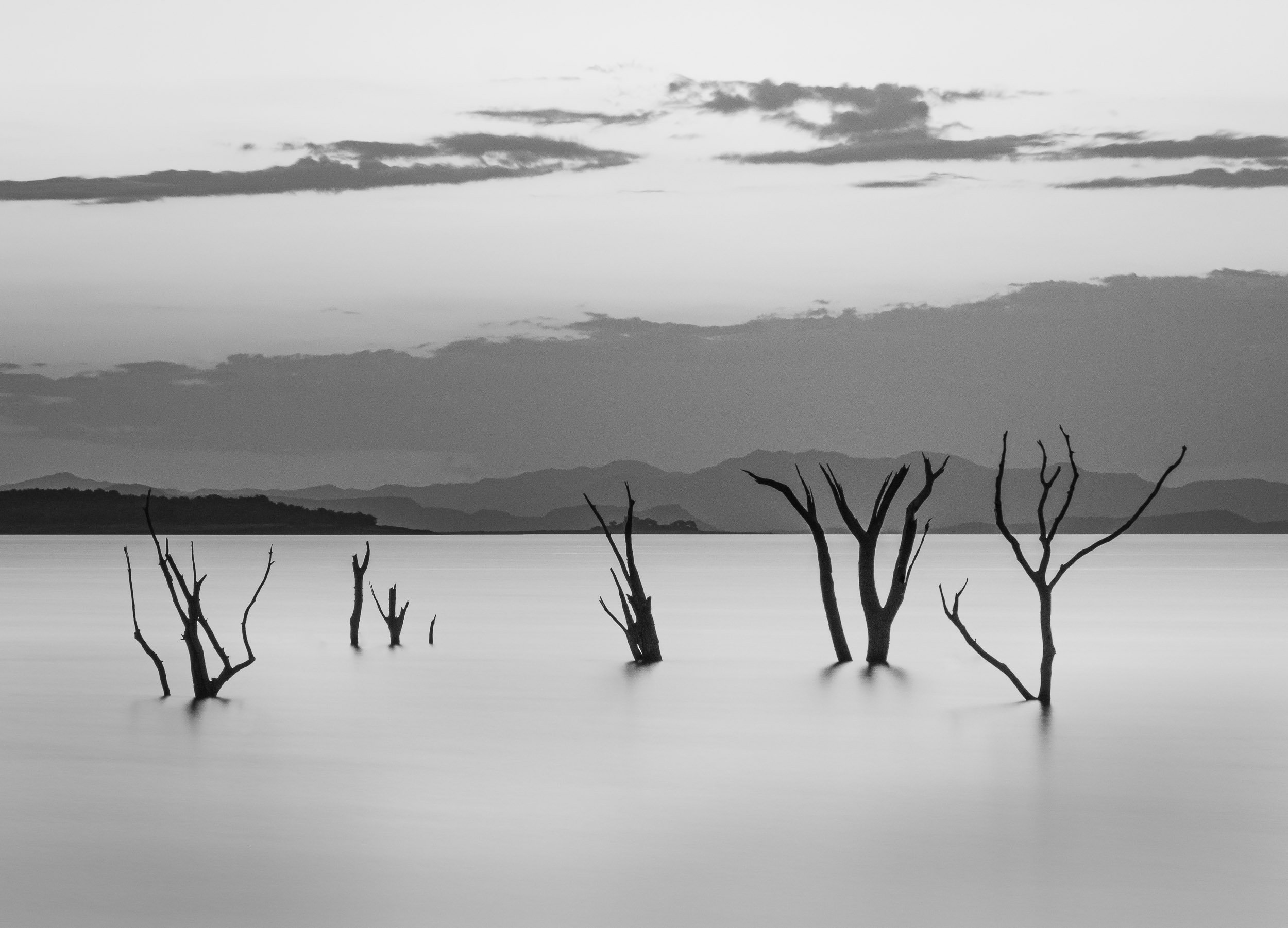
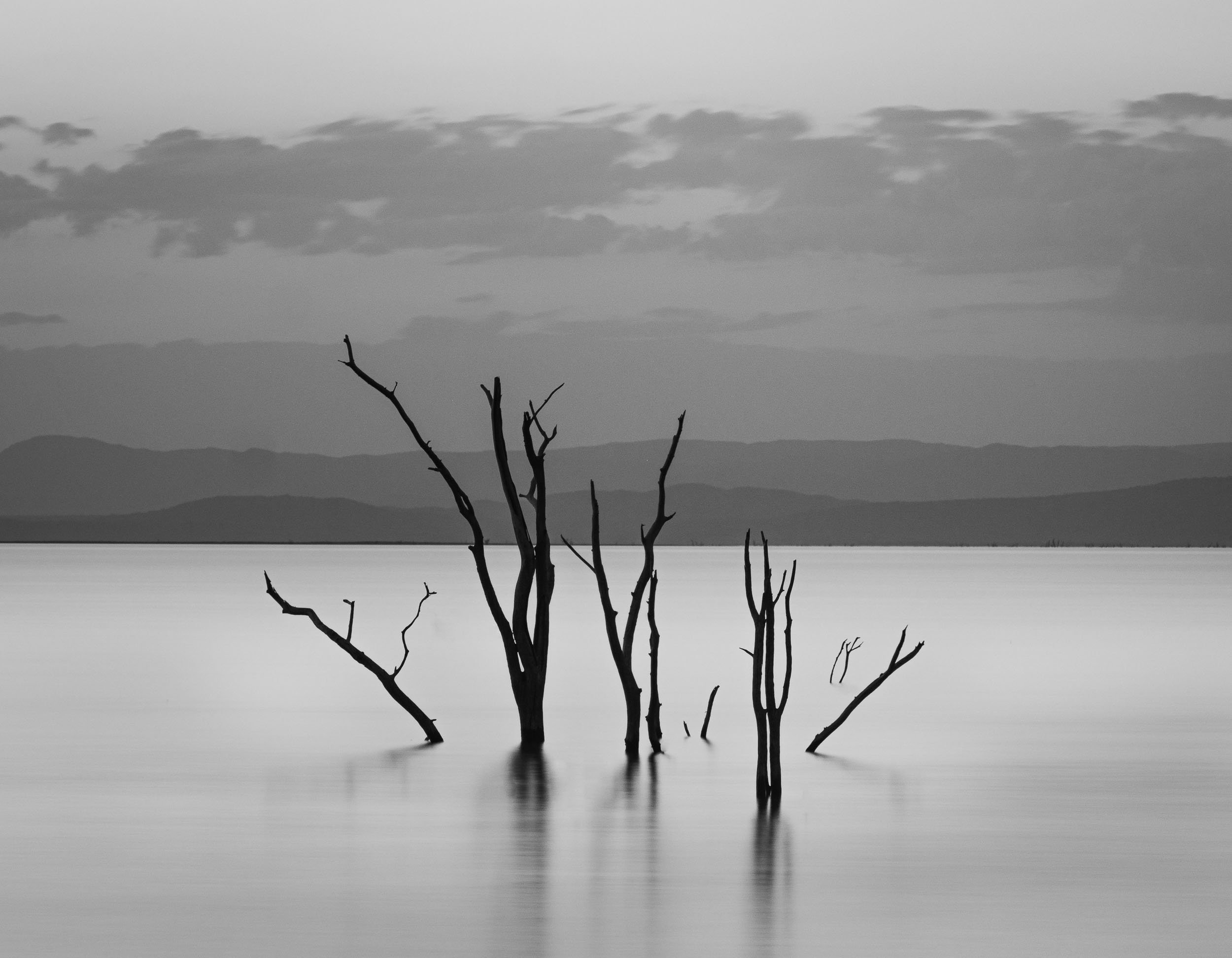
When I arrived at the lake, I saw a few strange sticks in the distance far from the shores. Once crossing the lake, I had the chance to explore them more closely. These petrified trees originally stood on the grounds of the area that has been flooded around 60 years ago, during the construction of Kariba dam. They now serve as a testimony to the impact this huge project had.
Hidden Treasures
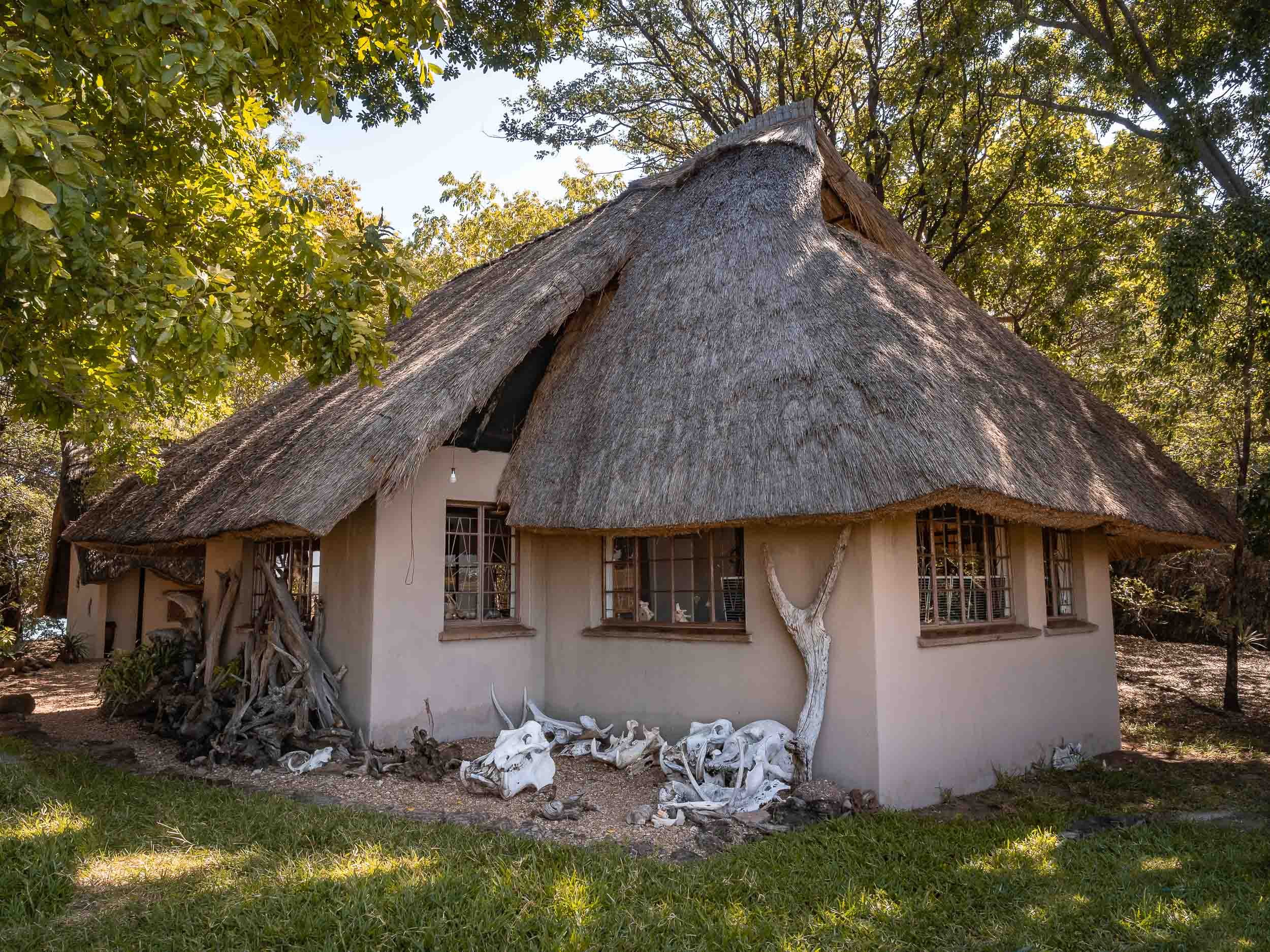
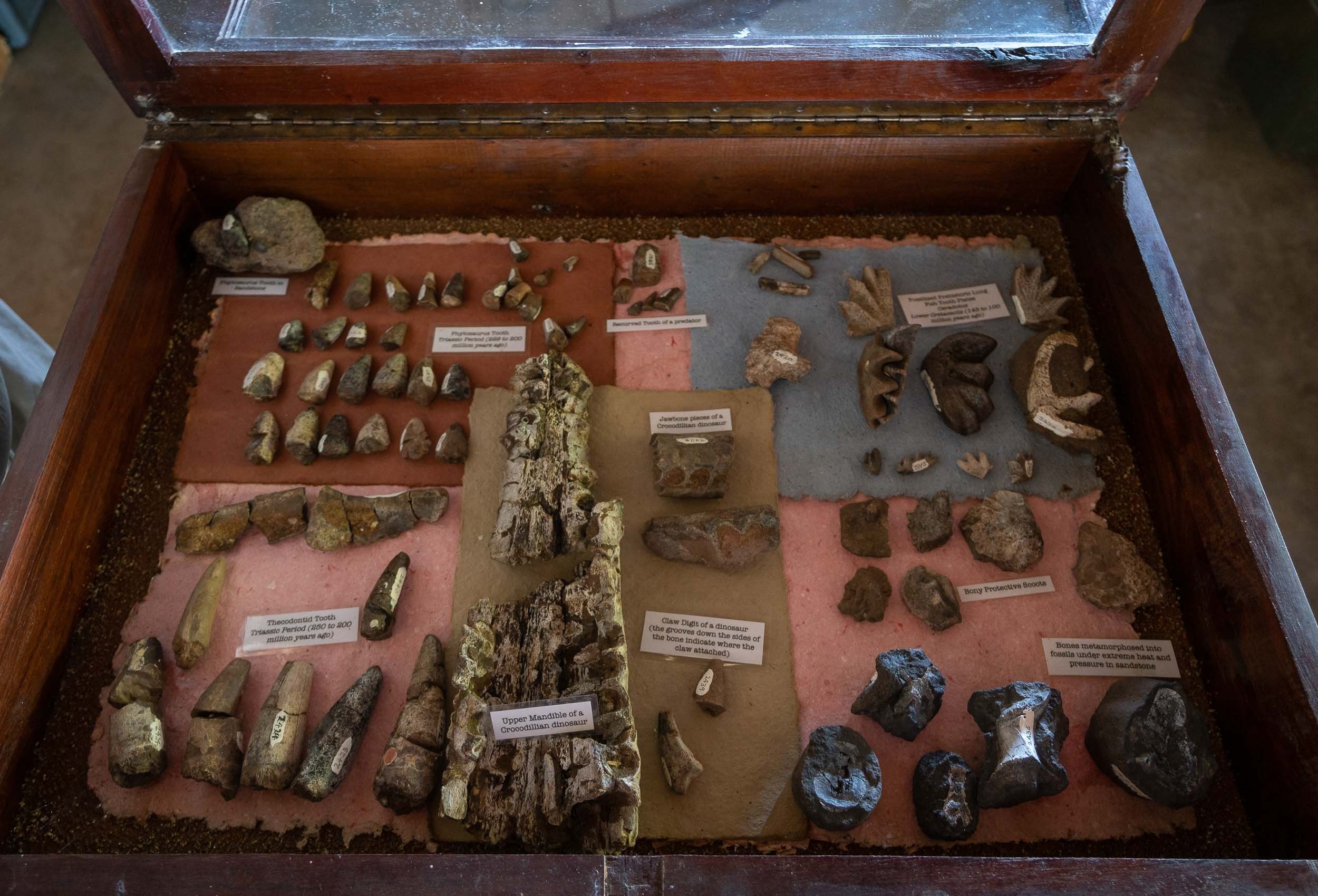
The primary reason I chose Musango for my Lake Kariba stay was Steve's personal collection of incredible historic artifacts, ranging from Stone Age tools to prehistoric dinosaur remains, all exhibited in his little museum at the lodge.
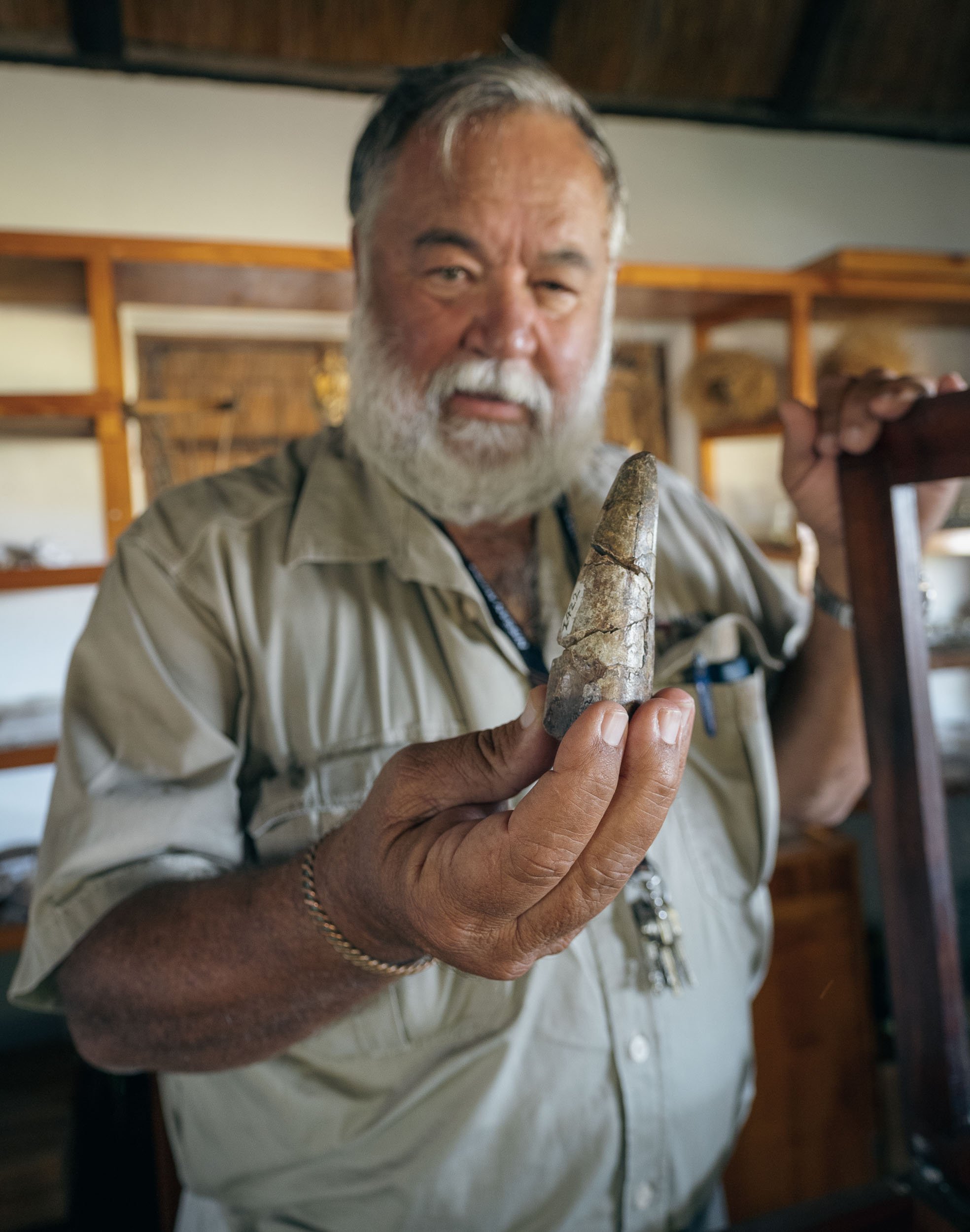
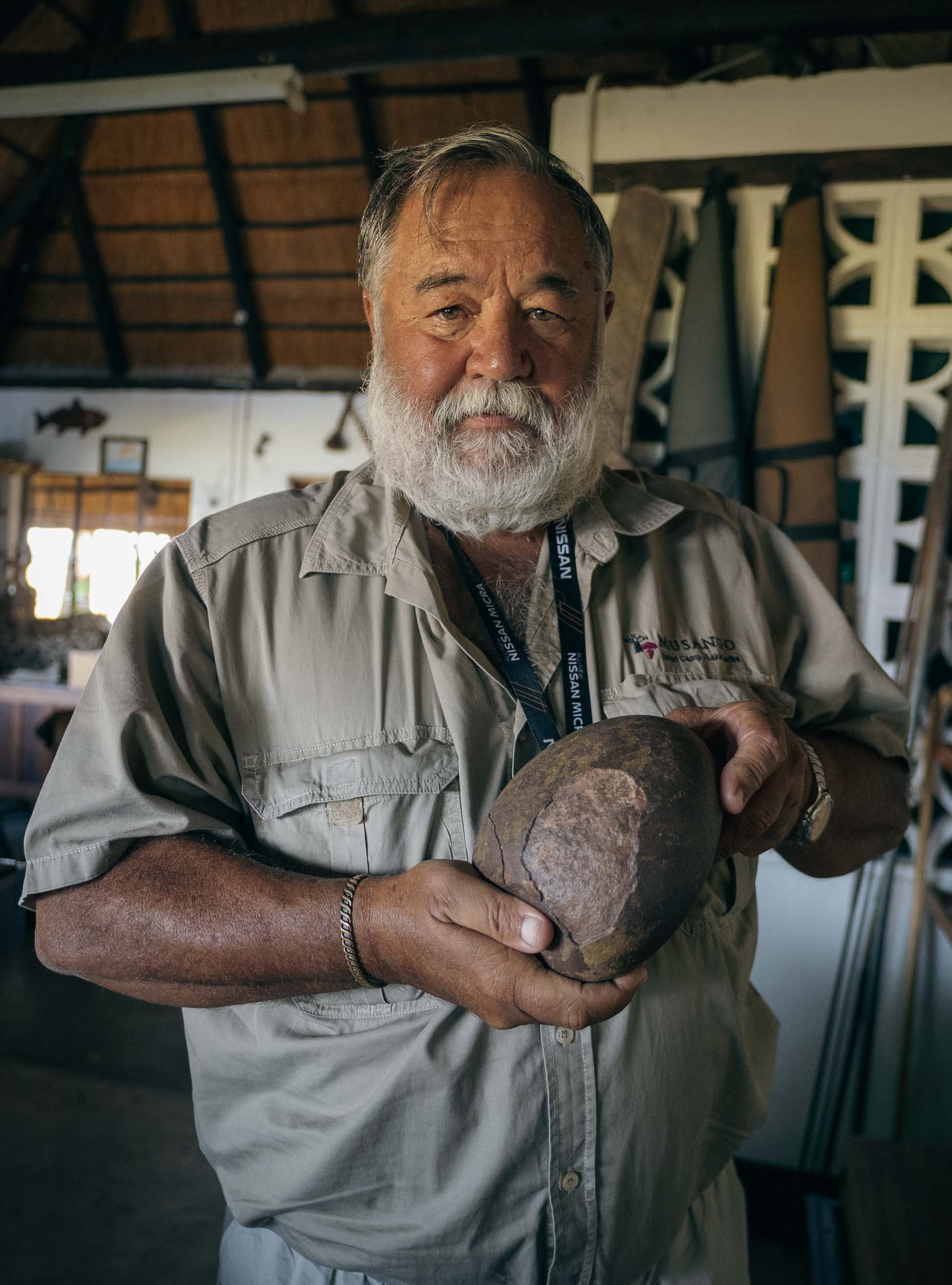
Steve Edwards
And an item from his collection, a dinosaur tooth.
The Collection
Here we have an upper mandible from a 150 million year old Dinosaur, predecessor of our crocodile, and many of its teeth, as well as several other dinosaur bones and fossils.
Believe it?
This is said to be the only dinosaur egg ever found in Zimbabwe, now fossilised.
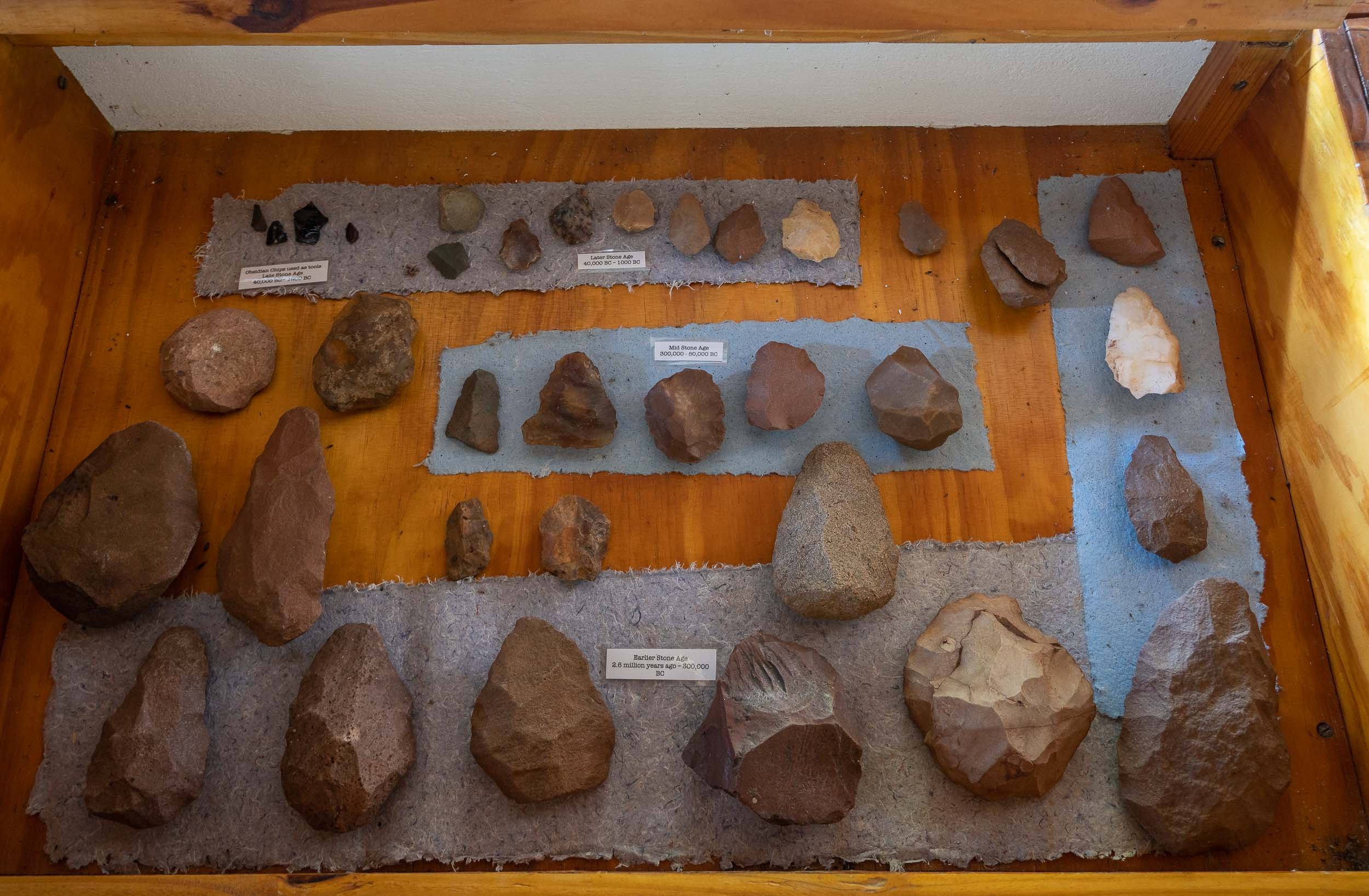
Human Artifacts
Tools from the Stone Age, such as hand axes from 500,000 years ago. You can find these in national museums, or come to Musango for a tour from the finder.
A night at the Falls
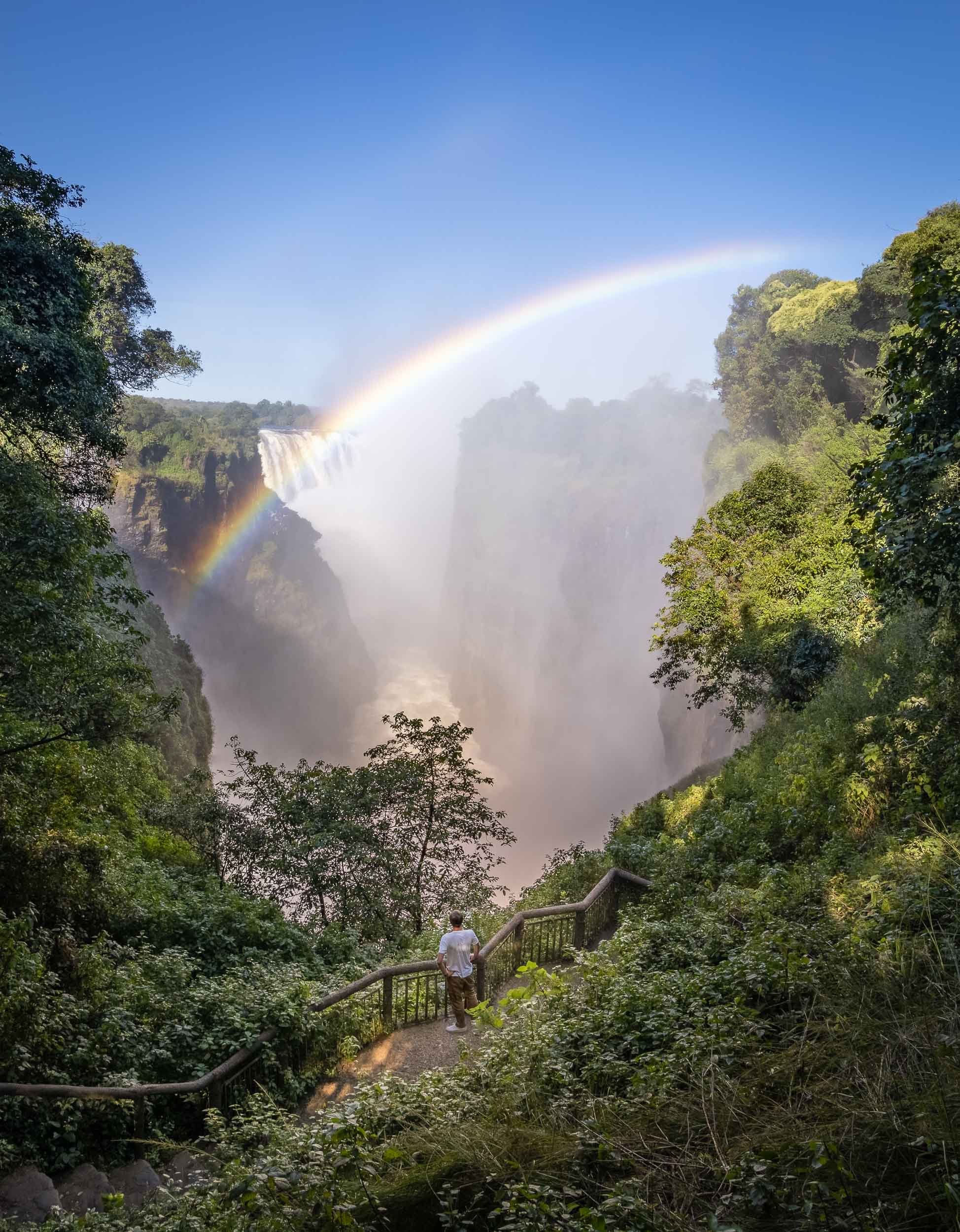
Before moving on to Botswana, I had a night at Victoria Falls, my second visit after having explored the Zambian side back in 2011. It is as fascinating now as it was then, and I’m glad to have seen both sides.
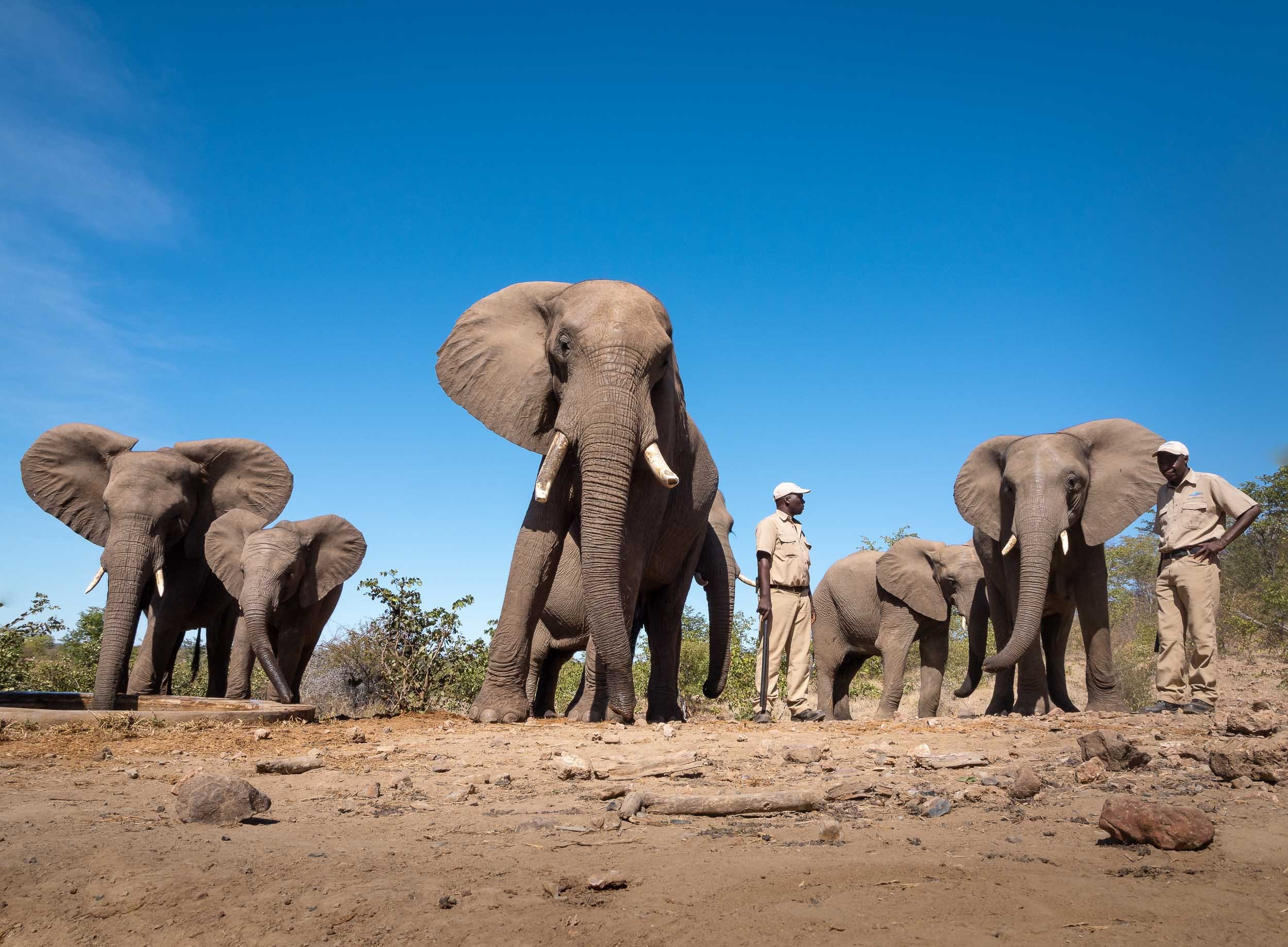
The Elephant Camp
I stayed at the Elephant Camp, a sanctuary for elephants for over 25 years, started during the time of the culling operations in Zimbabwe. An interesting place to get up close and personal with these gentle giants.
Views of the Falls
Put myself in the frame on the western edge of the Victoria falls, looking towards the Zambian side.
Livingstone
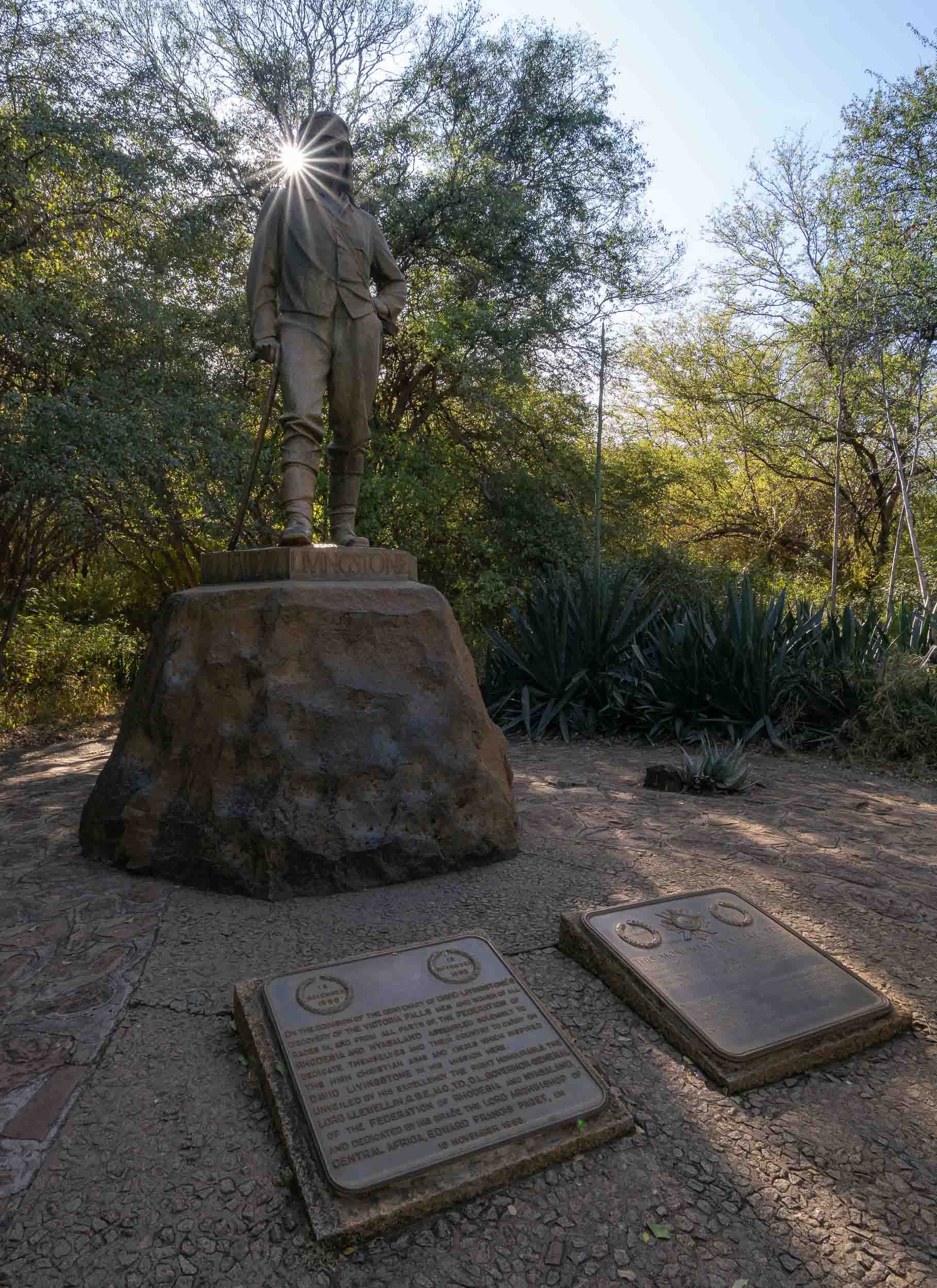
The monument for the so-called discoverer of the Victoria Falls, David Livingstone, a Scottish missionary who reported them in 1855. The city on the Zambian side is named after him, although it's slightly questionable why his name is associated with the falls more so than the many natives who have lived here for centuries and showed them to him...
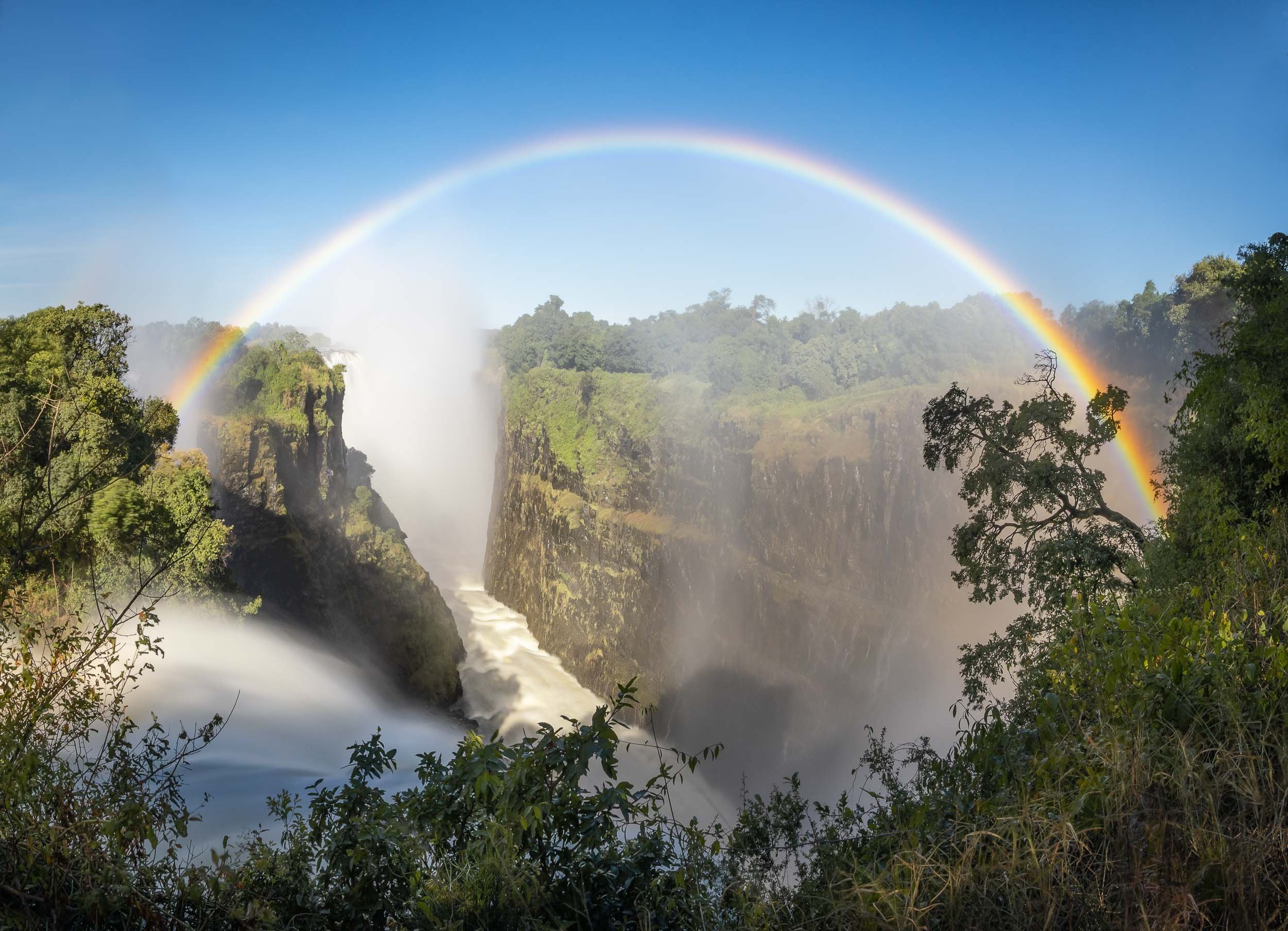
Mosi-oa-Tunya
"The Smoke That Thunders" is the - vrery apt - local name in Sotho language.
World Heritage Site
The Victoria Falls are classified by Unesco, but there has been some debate over the last 15 years due to mismanagement of tourism development in the area.
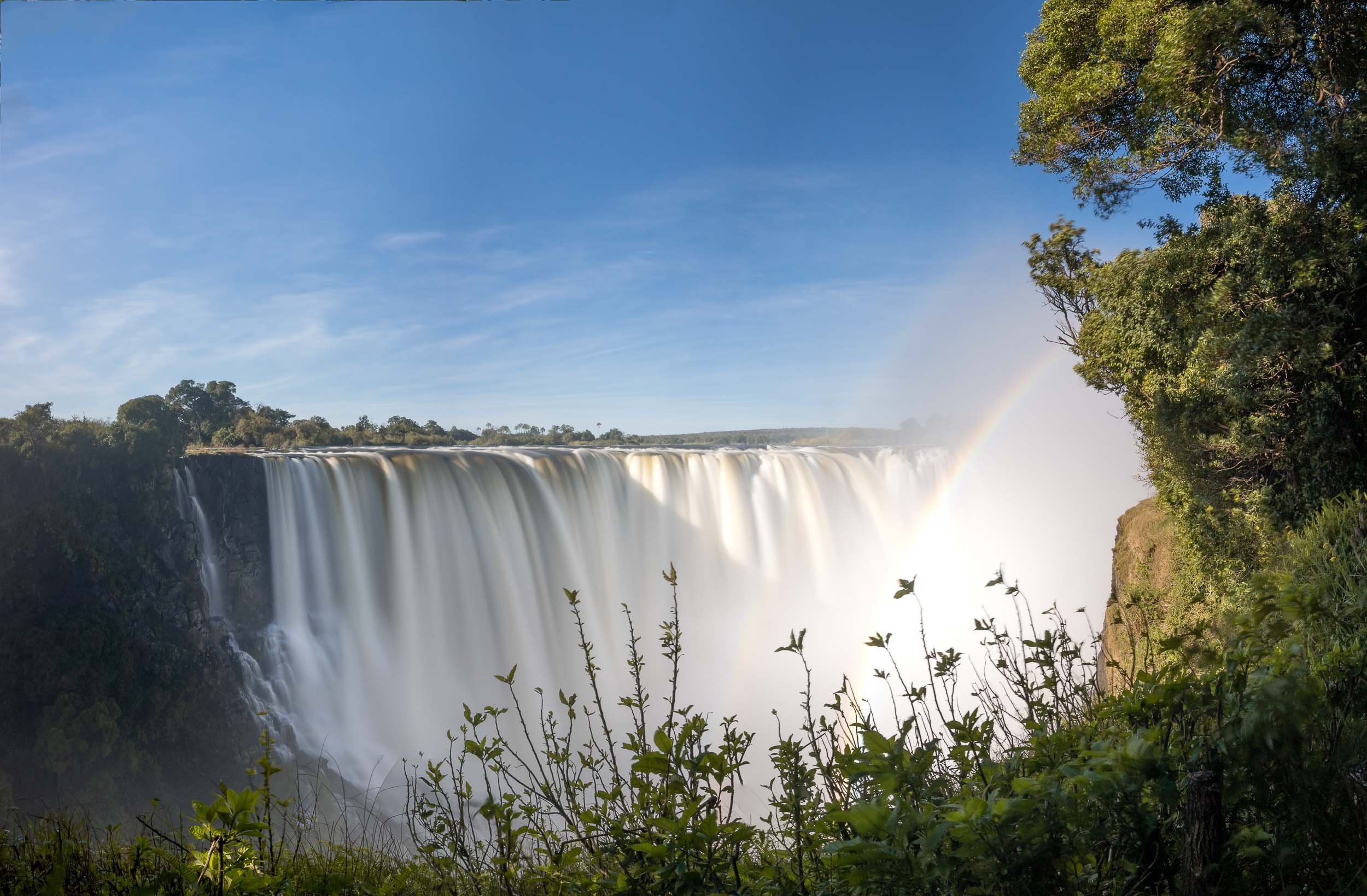
A Sheet of Water
The falls are neither the tallest nor widest, but the combination of more than 1700 metres width and 108 metres height makes them the largest in the world.
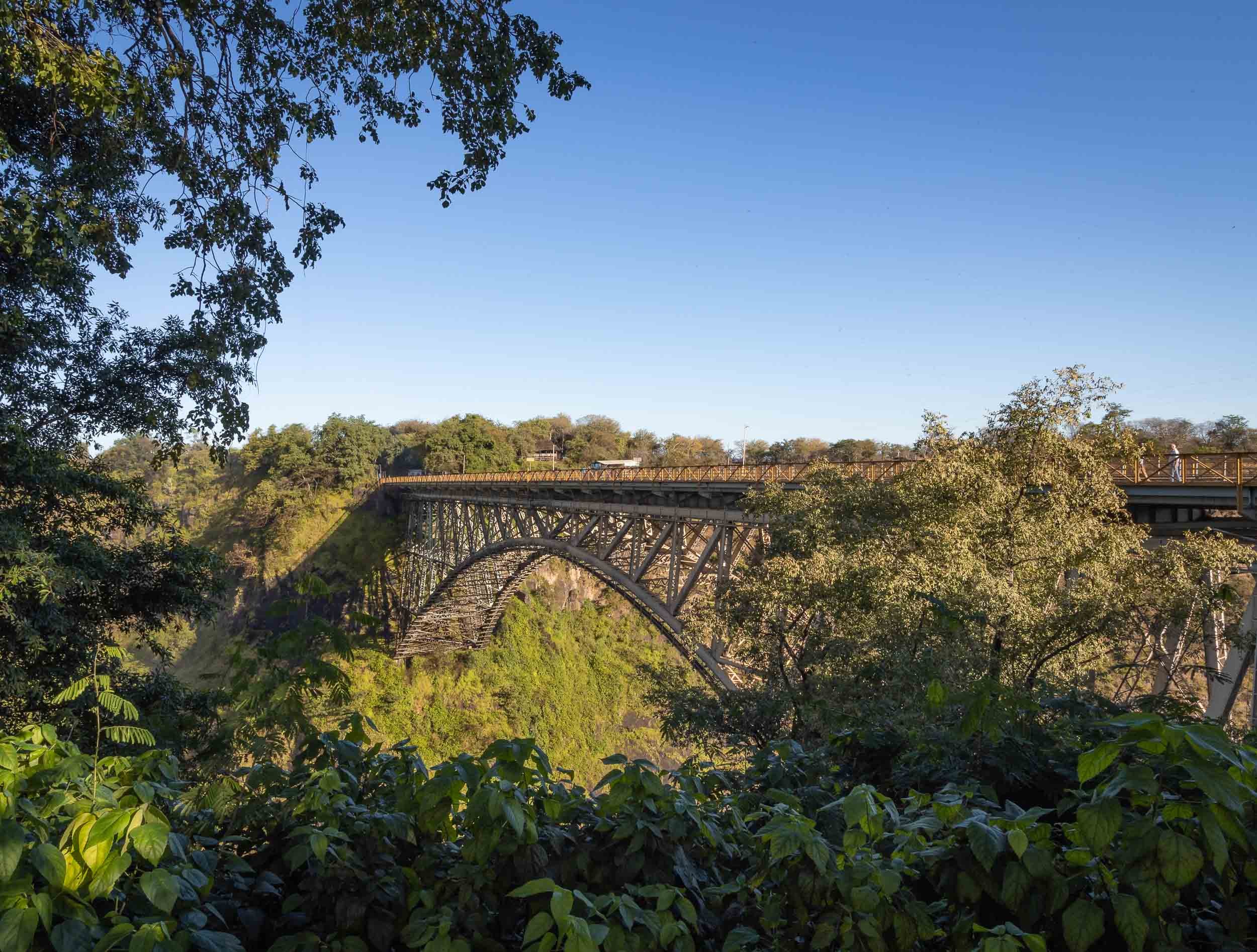
Victoria Falls Bridge
The bridge over the first gorge was built in 1905. The 6 gorges to the east run in a zig zag pattern that represents the falls' previous locations, as they shifted to different positons over many thousands of years. The next and 9th shift will happen over the coming 10,000 years, cutting a new gorge into the basalt.
Wet
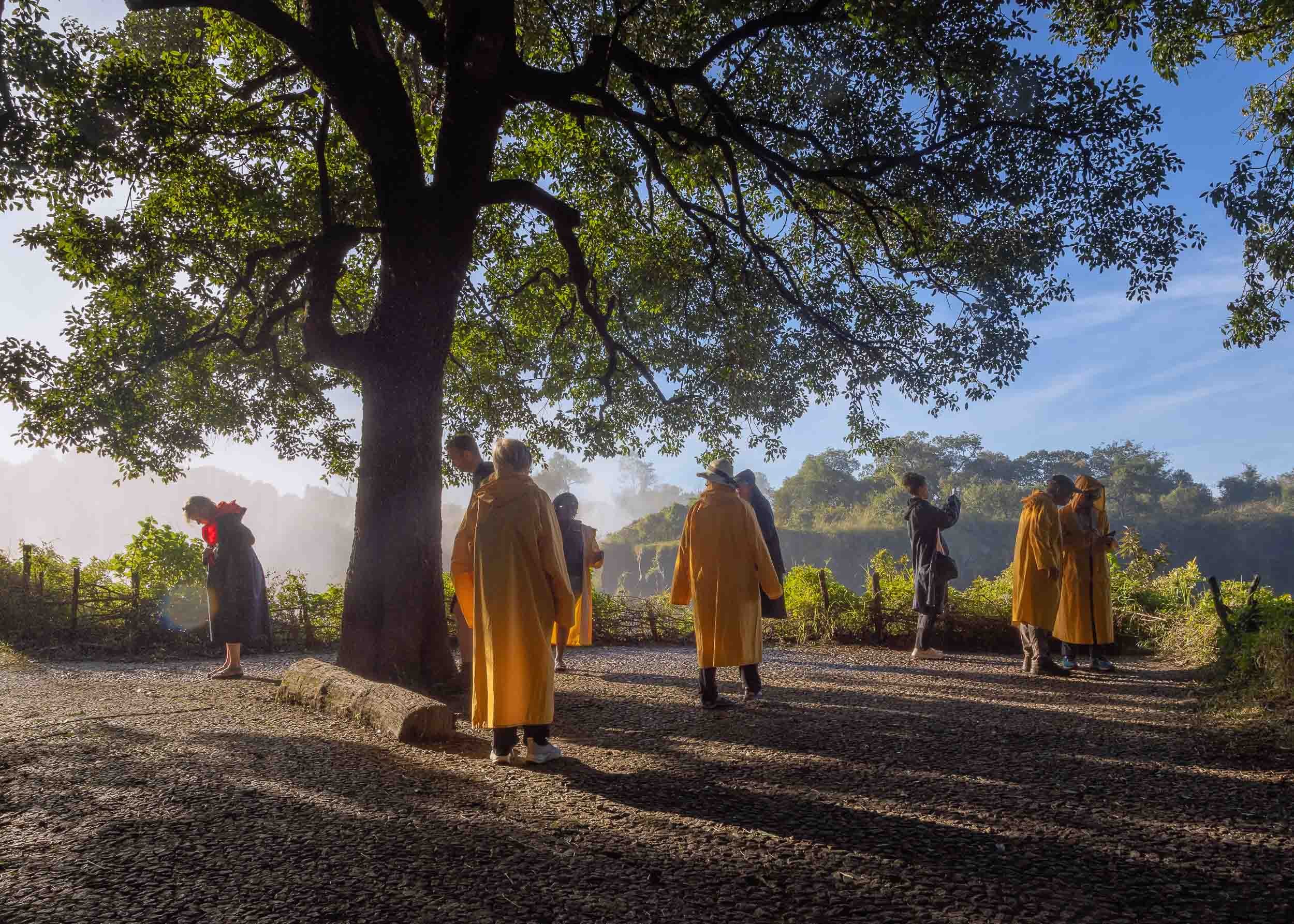
Depending on the wind, the path along the falls can get very very wet, as the cloud of water rains down again after emerging from the gorge.
That brings us to the end of my trip through Zimbabwe!
Namibia - The Most Amazing Night Sky, But So Much More
Namibia was the first destination for my two-month-seven-country Africa trip, and maybe the one I was most excited about.
This part of the journey was organised by https://www.stefanliebermann.de, Sony Ambassador for Germany as a 12 day workshop in collaboration with Richard Morsbach, a local tour guide.
The trip was focused on astrophotography, as Namibia has some of the best dark skies in the world and the Milky Way was visible all night during new moon. We did however also have the opportunity to take some daylight cityscape, sunrise and sunset, wildlife, and landscape images.
Namibia is incredible and definitely a destination I’d come back to. Read on to find out what you can see in this country, and the photos I captured to document it.
You can also head over to my Instagram (www.instagram.com/djflore) and check my Story Highlights for a bit of background info.
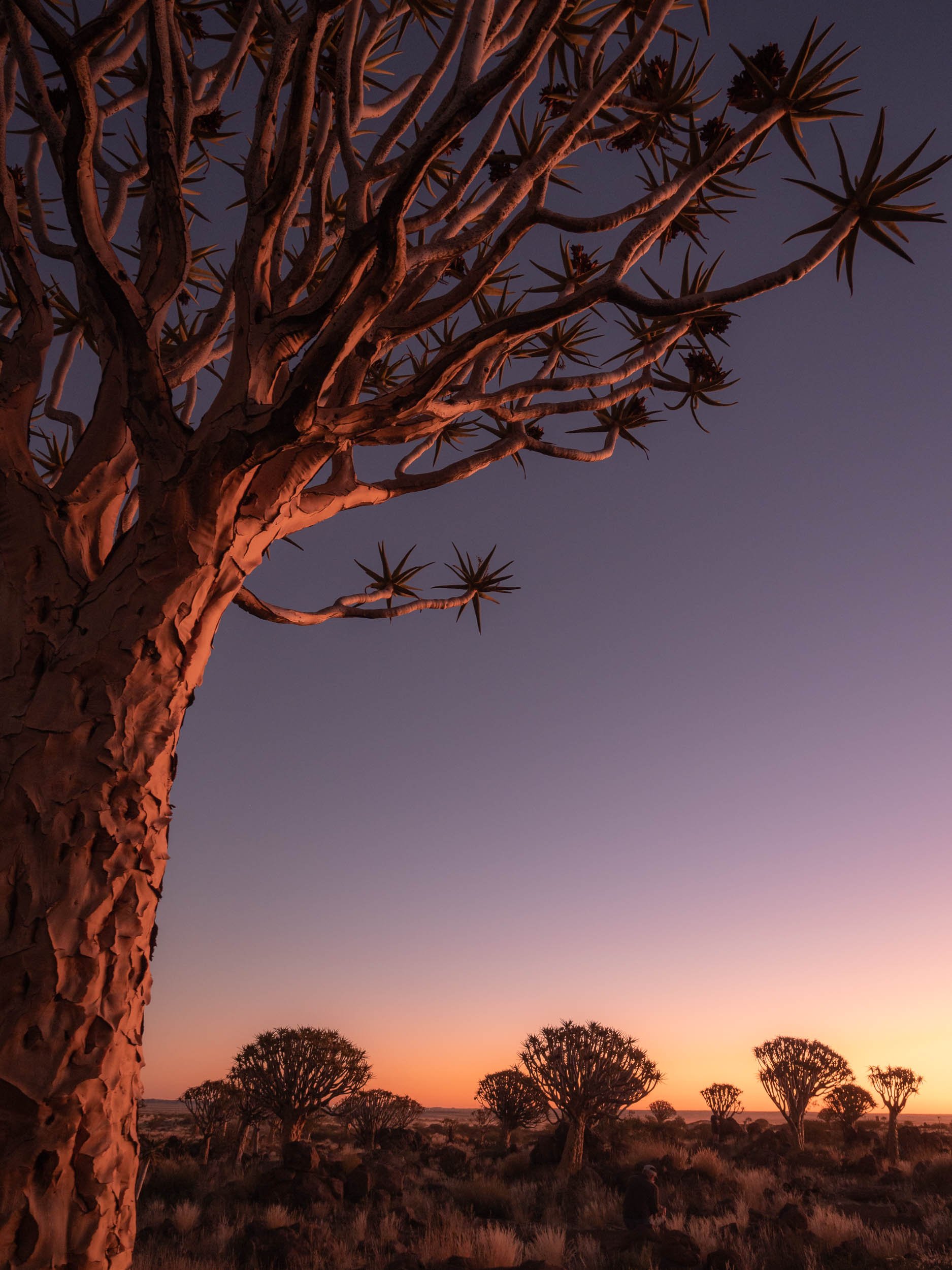
The Quiver Tree Forest
Our first destination after flying into Windhoek was the Quiver Tree Forest, north-east of Keetmanshop, where we arrived just in time for sunset after a 5h drive and lunch break.
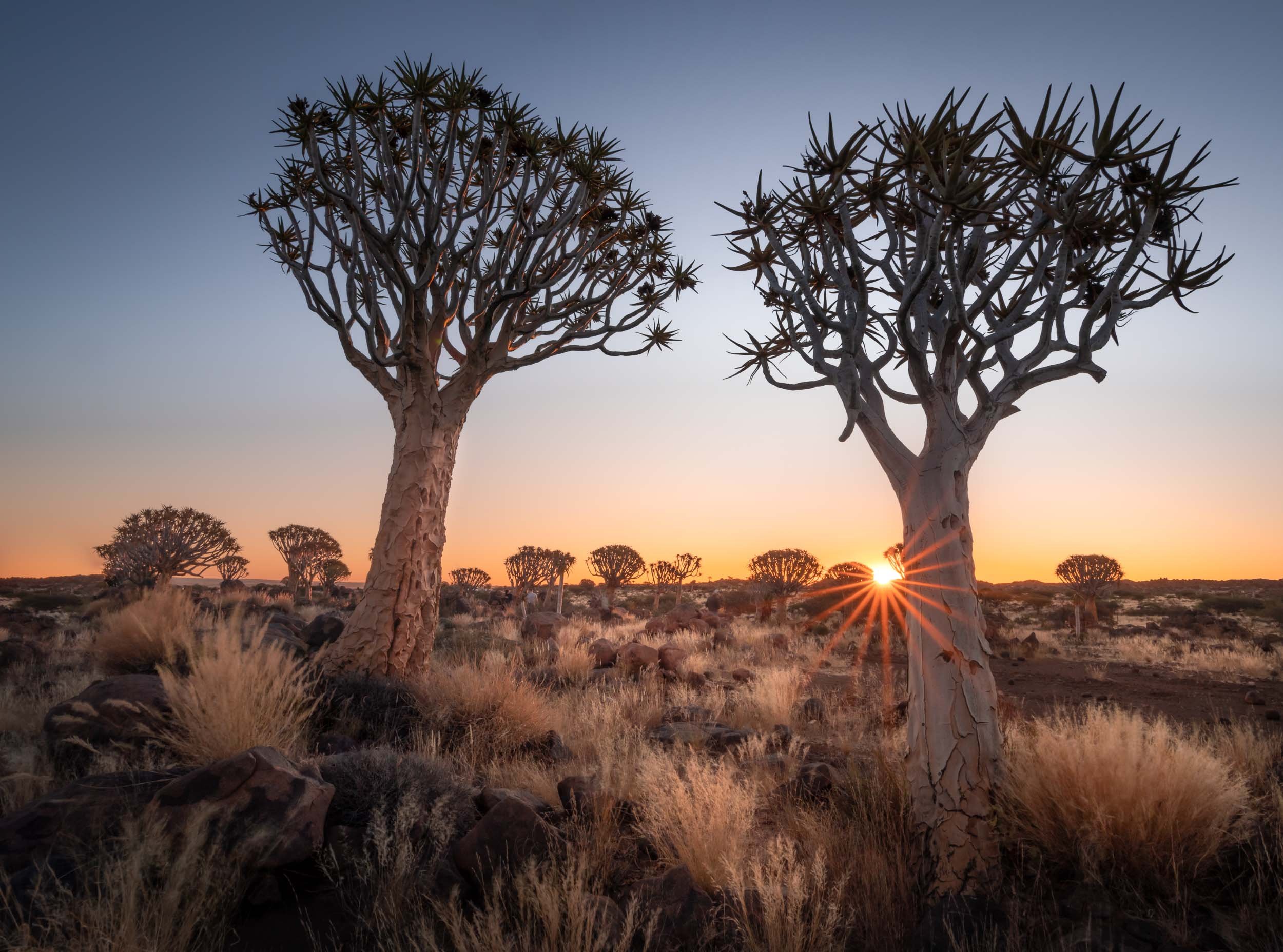
The Quiver Tree Forest
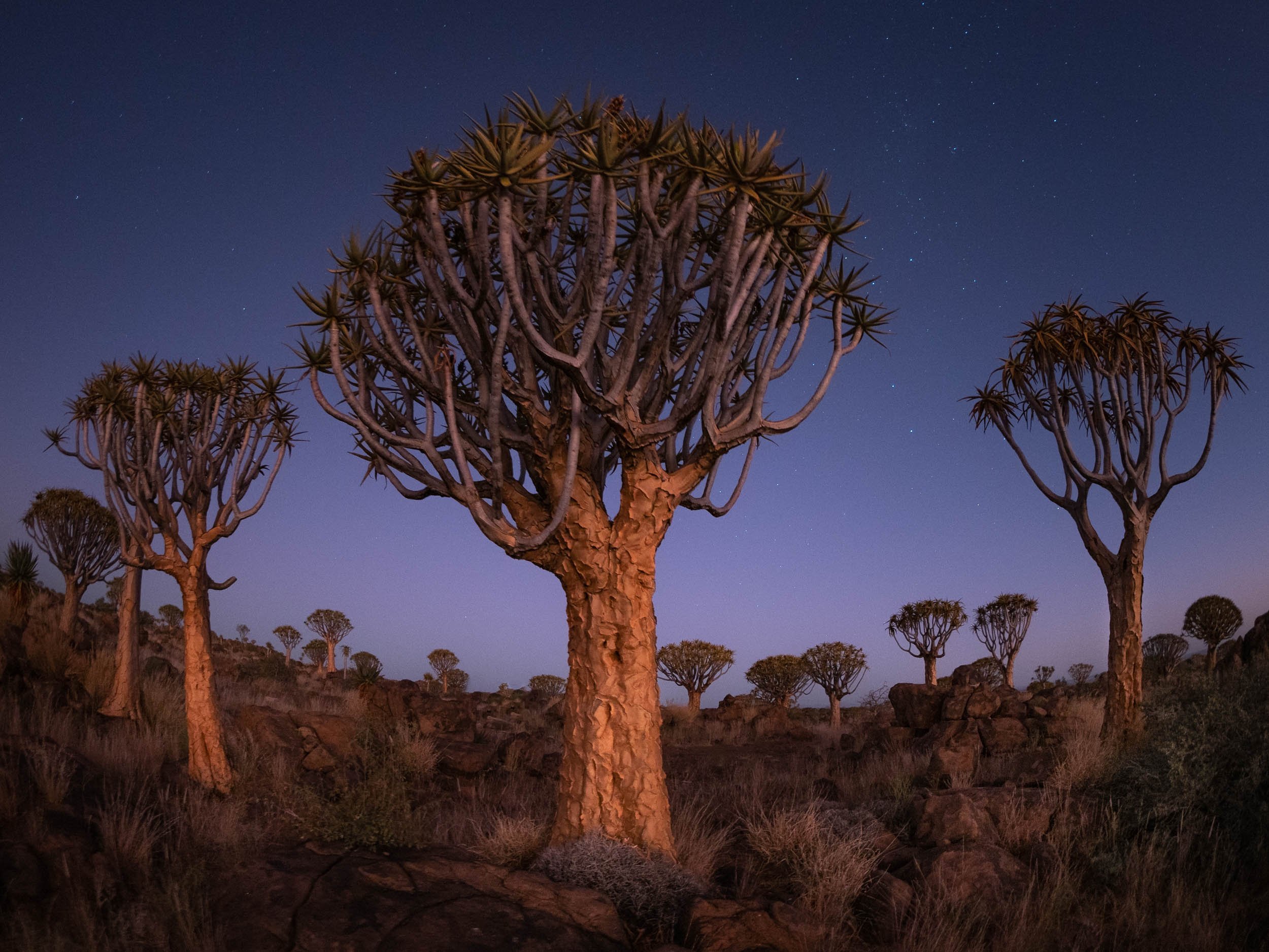
About 250 of these trees have grown here, and it's one of the only forests of this type that occurred naturally.
Kokerboom
This is the original Afrikaans name for them. They are named this way because in the past their wood was used to make quivers.
Fisheye Perspective
The biggest of the lot are about 200-300 years old, and roughly 10m tall.
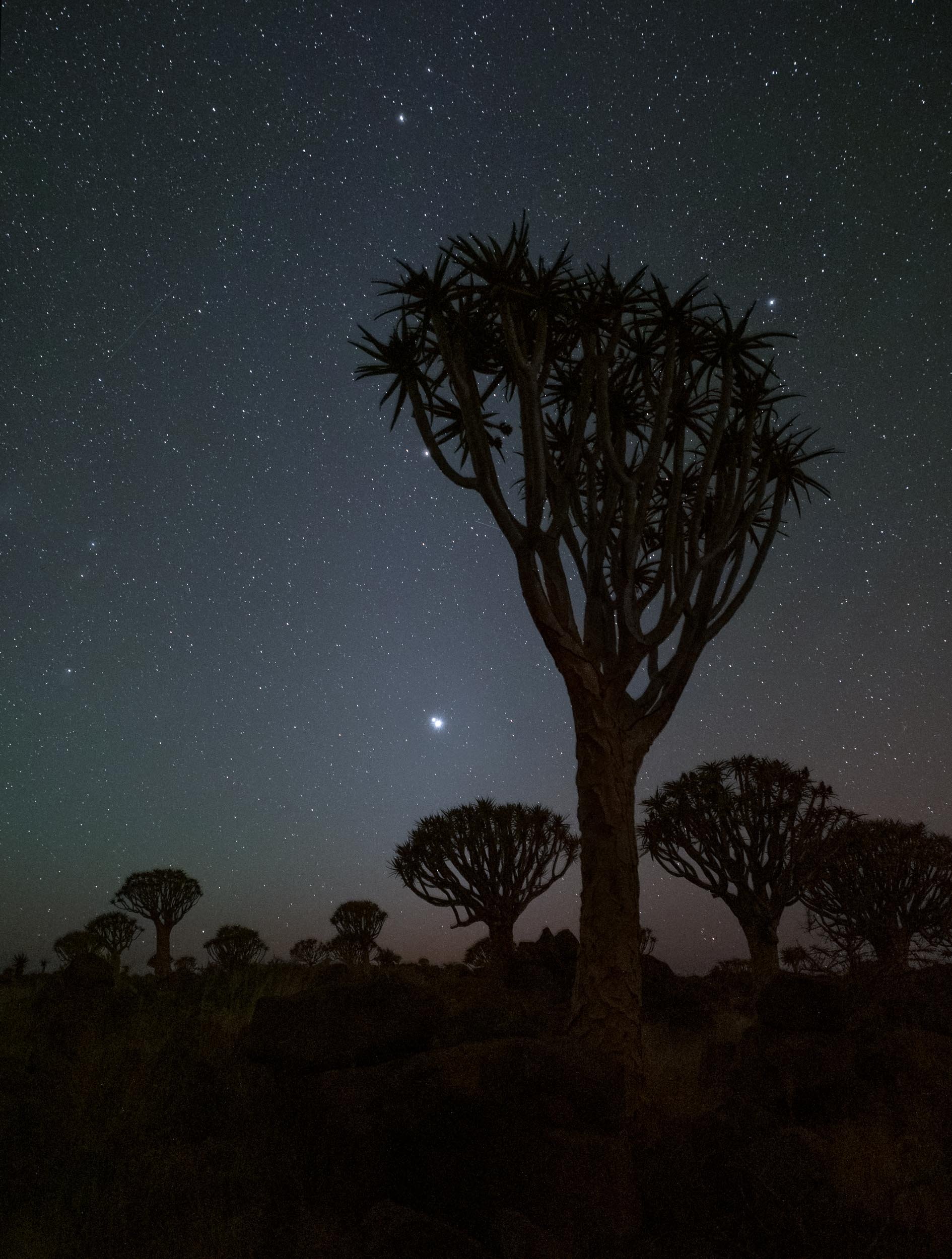
The Milky Way Pano
This is why we came - the dark night skies with very little light pollution, and the arch of our home galaxy rising above the trees. I couldn't resist to get myself into the frame for this scene.
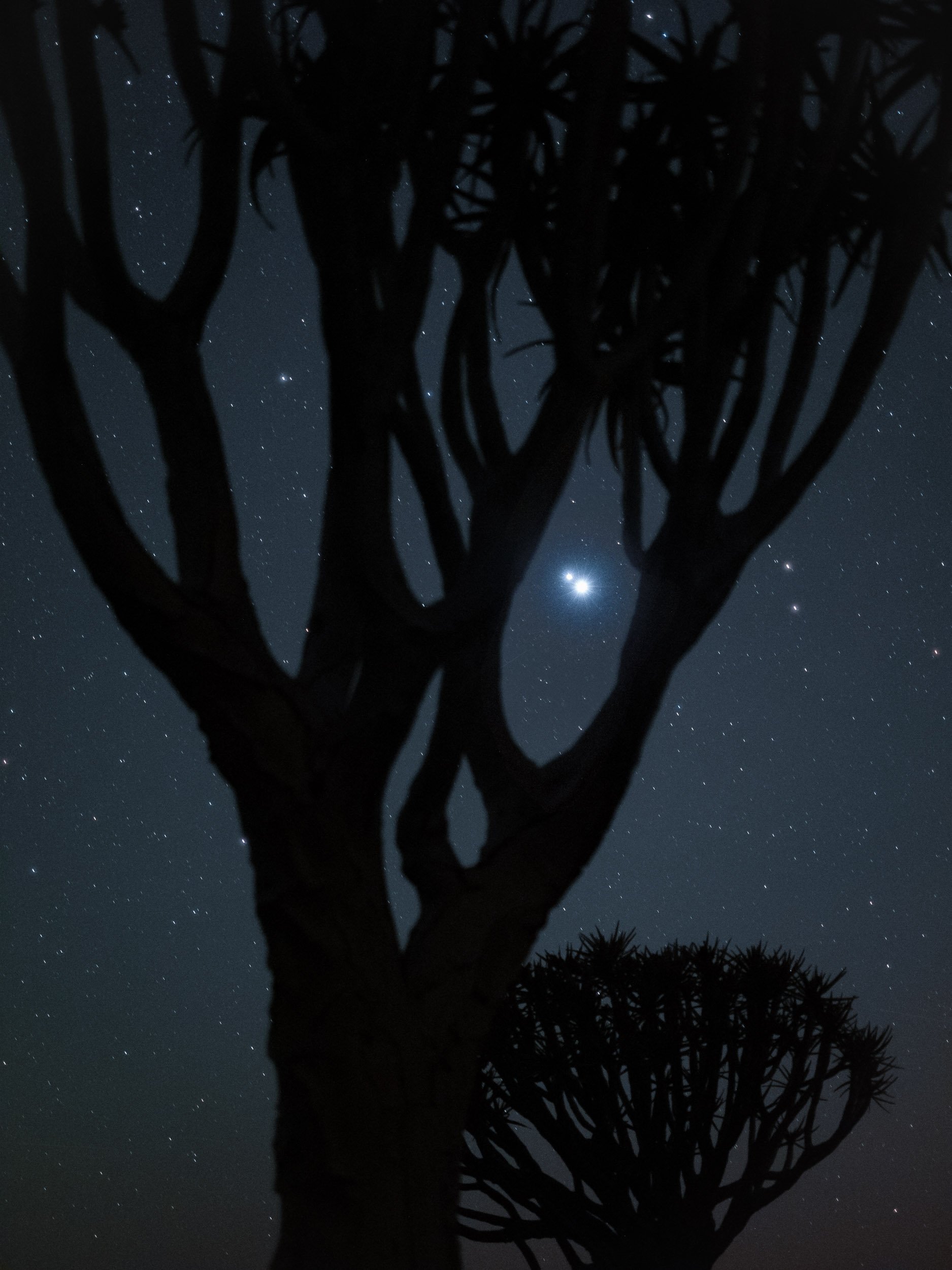
The Conjunction
Many people went to bed to get a few hours of sleep after our Milky Way photos. Yours truly didn’t, of course. I stayed up until sunrise to capture this very special sight: Venus and Jupiter rising just 0.6 degrees apart on the morning of May 1st.
Rare Occurence
This kind of conjunctions happens every few years at best. In reality, the two planets are still almost 700 million kilometres apart of course - perspective is everything.
Sunrise
While I was at it, also managed to capture the sun come behind this pair of trees with a telephoto lens, for that amazing compression effect.
Onwards
After a sunset, night, and sunrise at the Quiver Trees, we moved straight on to the next spot., Fish River Canyon for a night, and then into Lüderitz, one of the country’s most famous towns.
Fish River Canyon
The next day brought us to FIsh River Canyon - Africa's largest. It's 160km long and up to 550m deep in some places. Spot the people for scale.
Gondwana
We stayed close to the Canyon at Gondwana Nature Park, featuring some amazing rock formations, which obviously meant it was time for another Milky Way panorama!
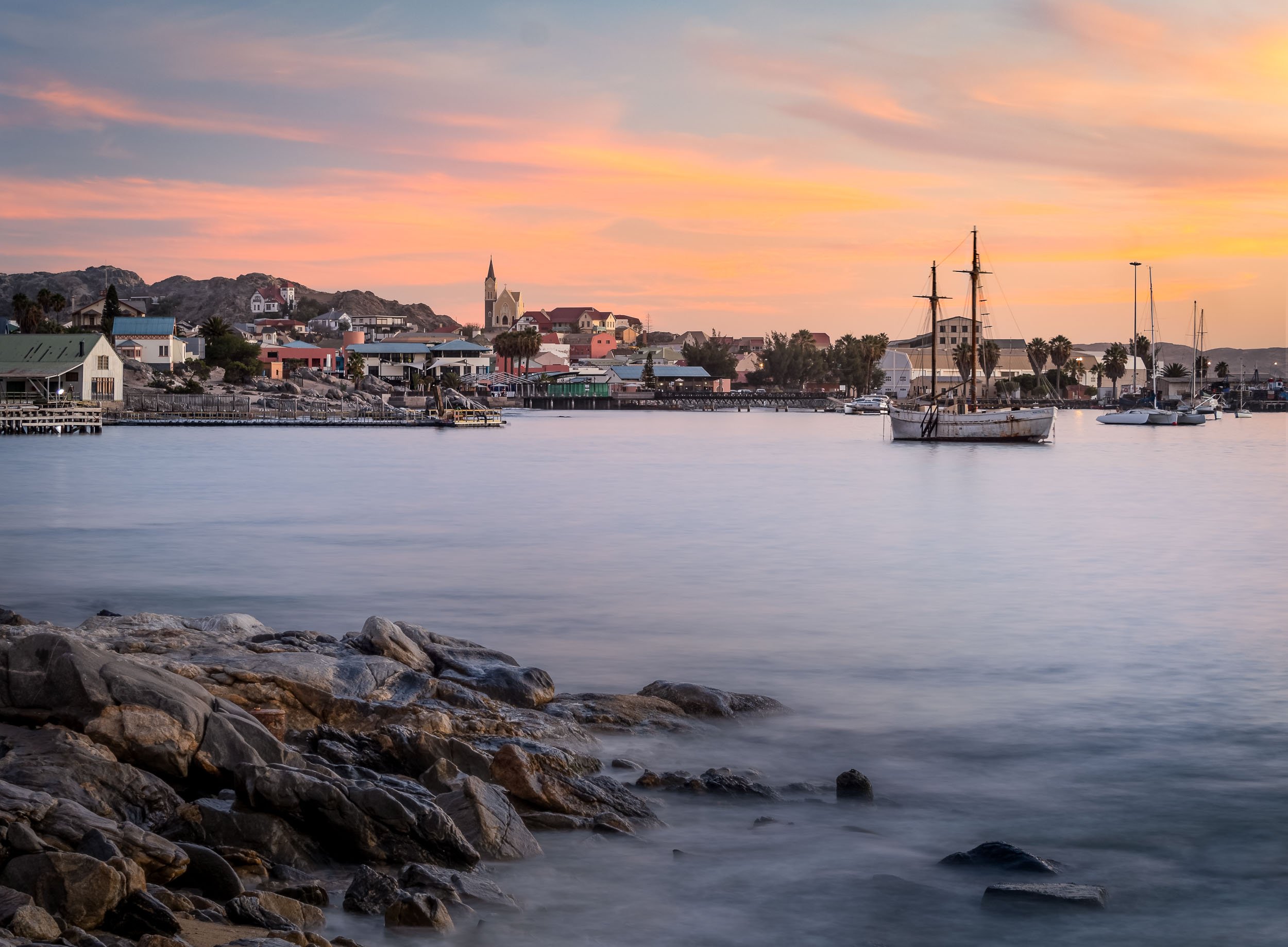
Lüderitz
Sunset over Lüderitz with the Felsenkirche Rock Church) on Diamond Hill, a church in vertical gothic style that opened in 1912 during the diamond rush and is now a national monument.
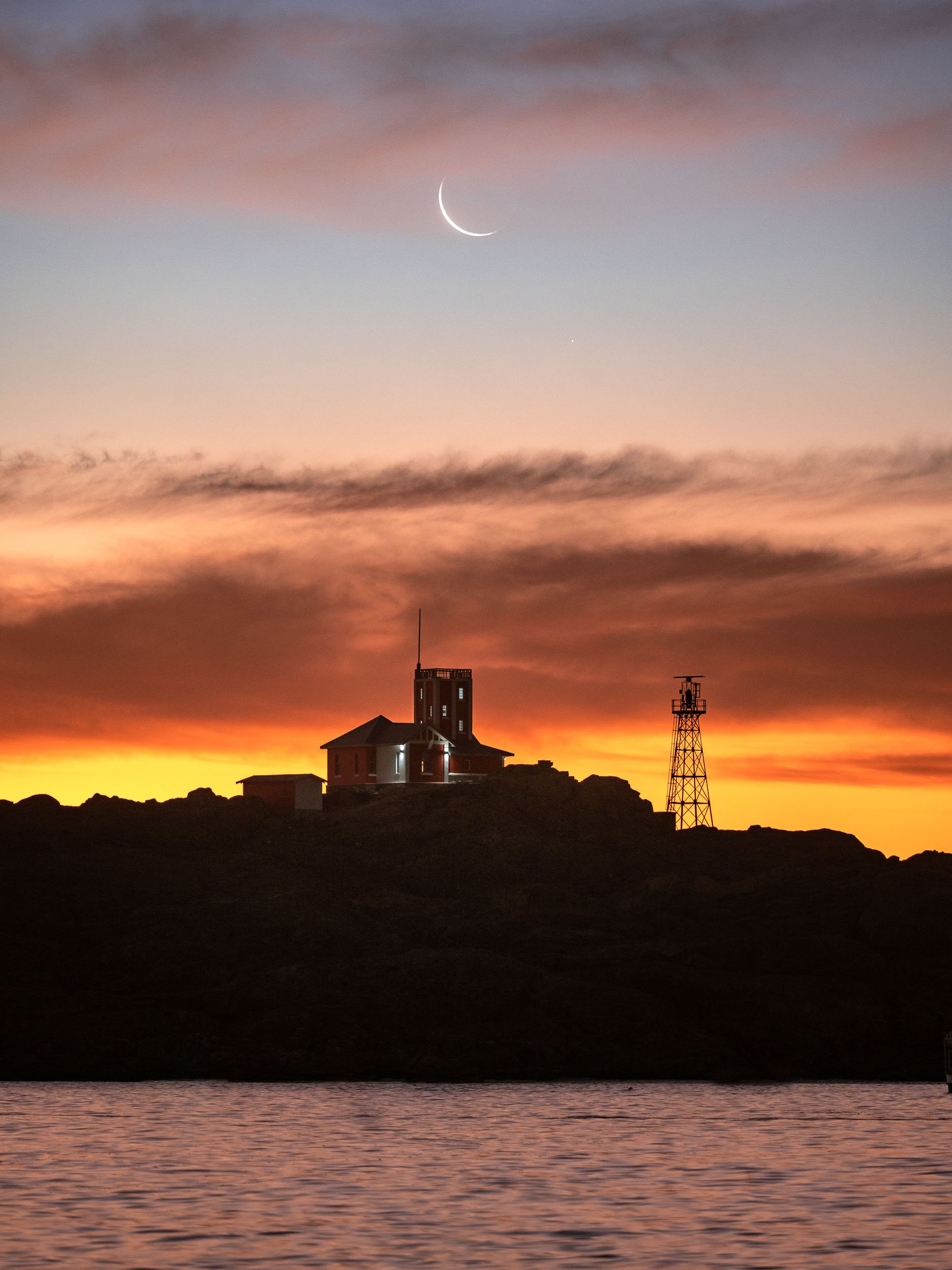
Moonset over the Lighthouse
The small town is twinned with a German city of the same name owing to its colonial heritage.
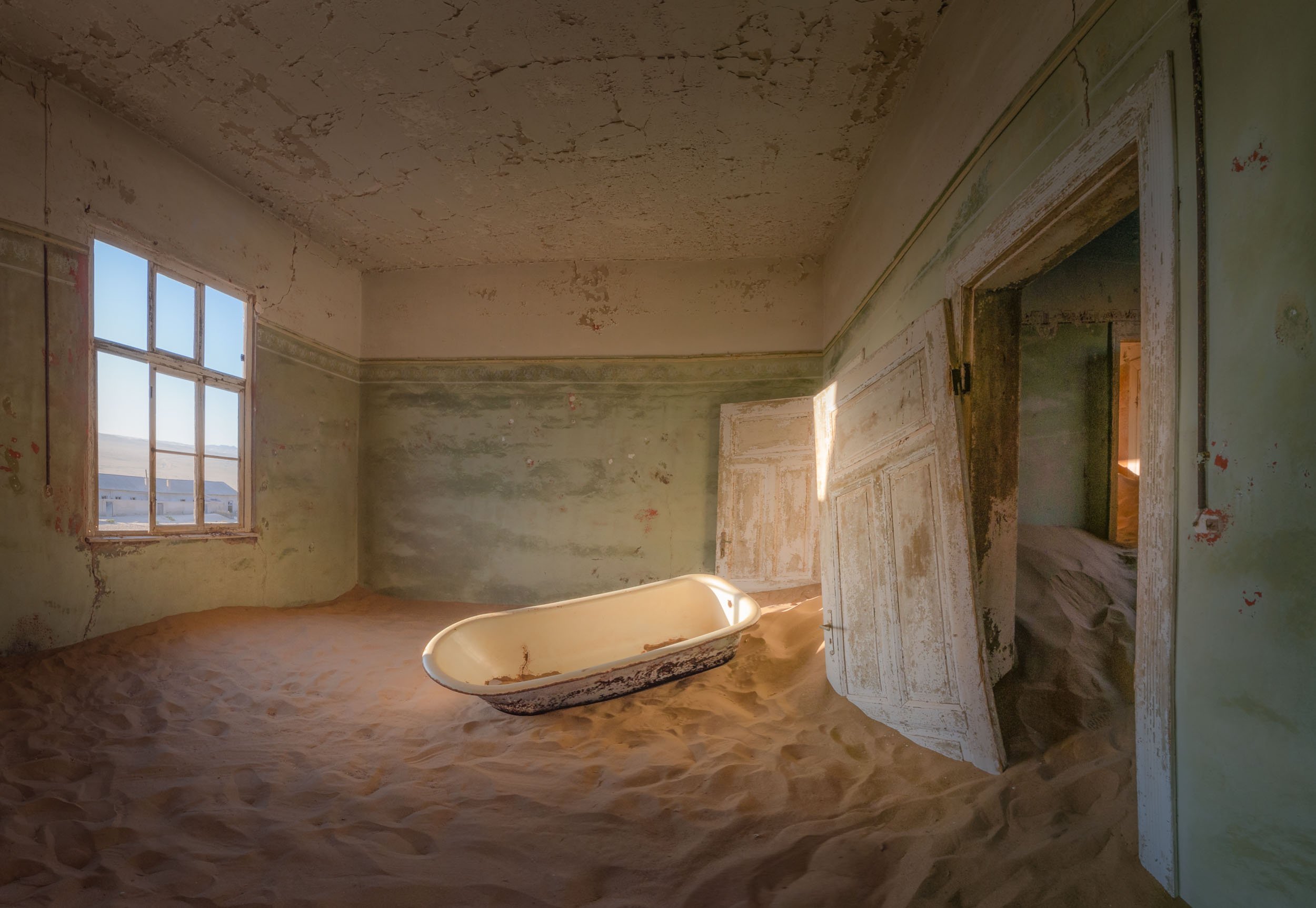
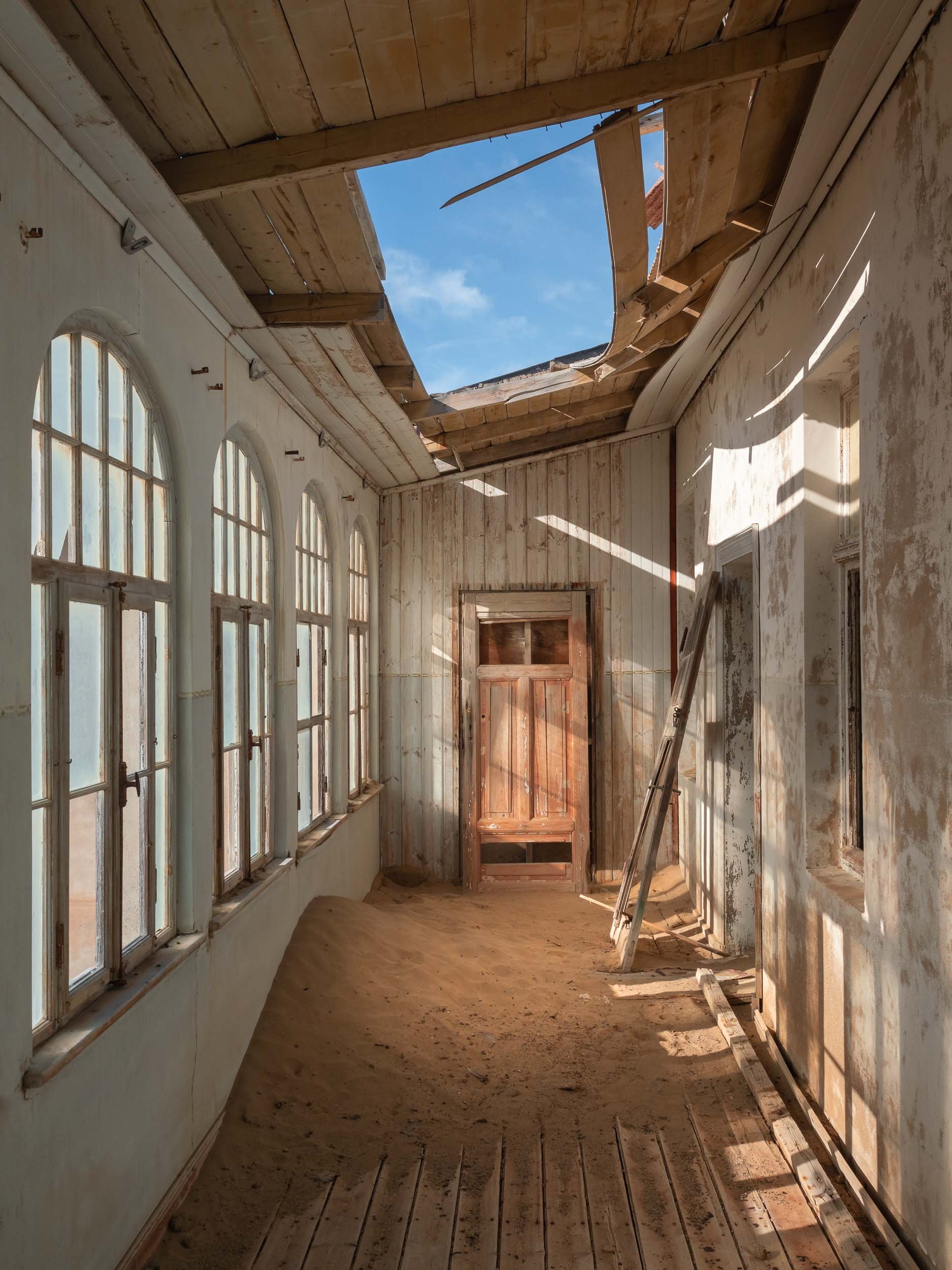
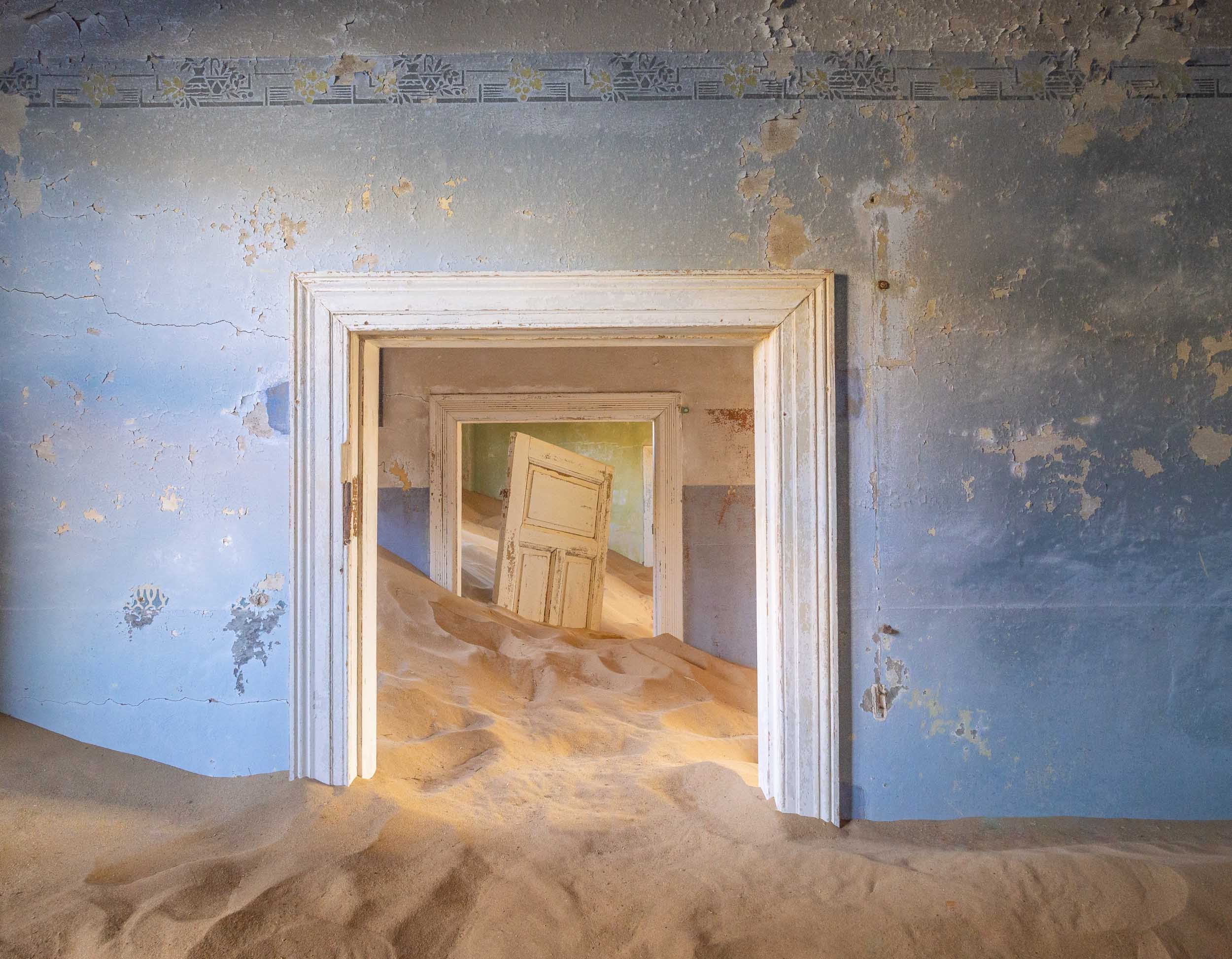
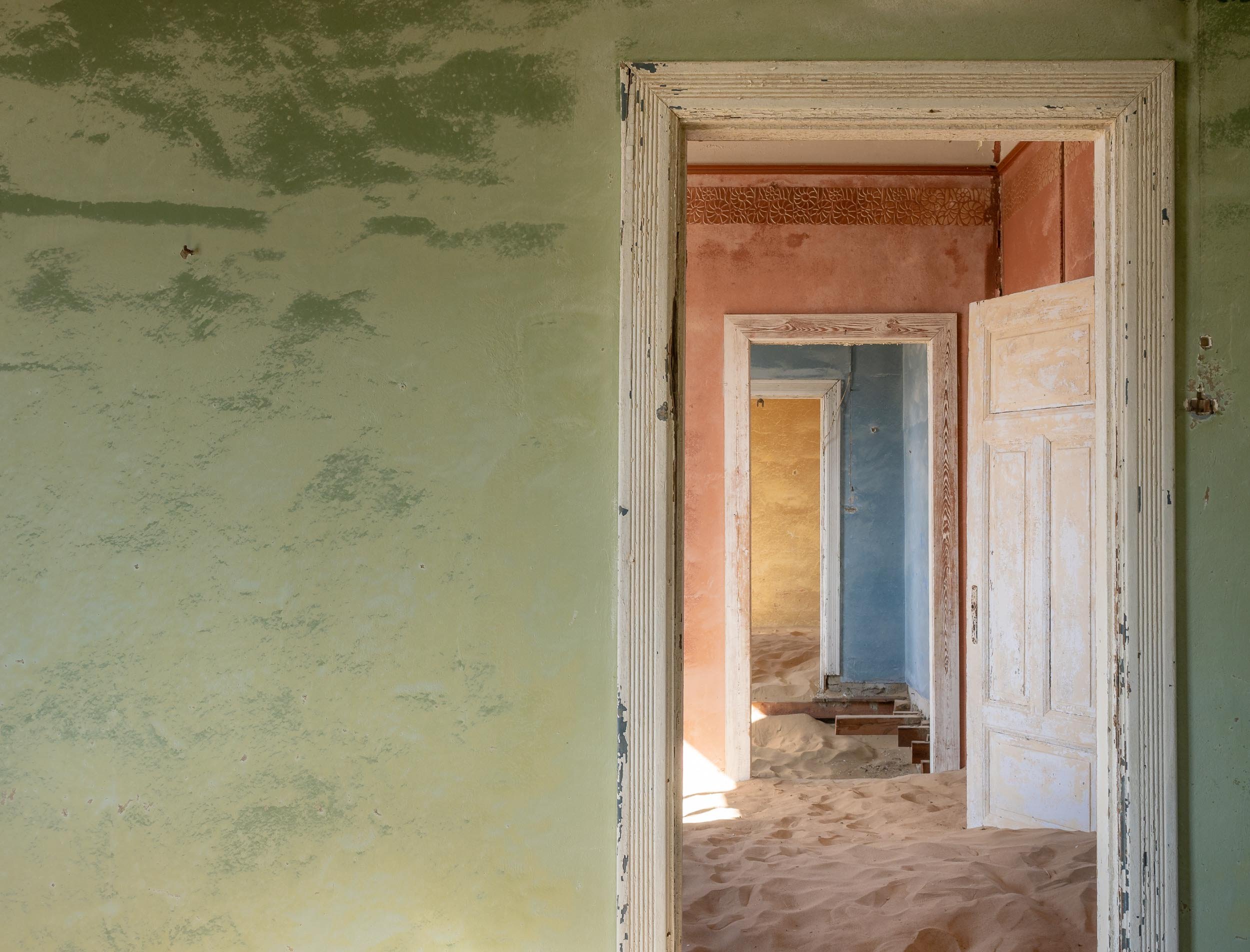
The Abandoned Town of Kolmanskoop
About 10km from Lüderitz you can find one of Namibia’s most popular destinations - a ghost village!
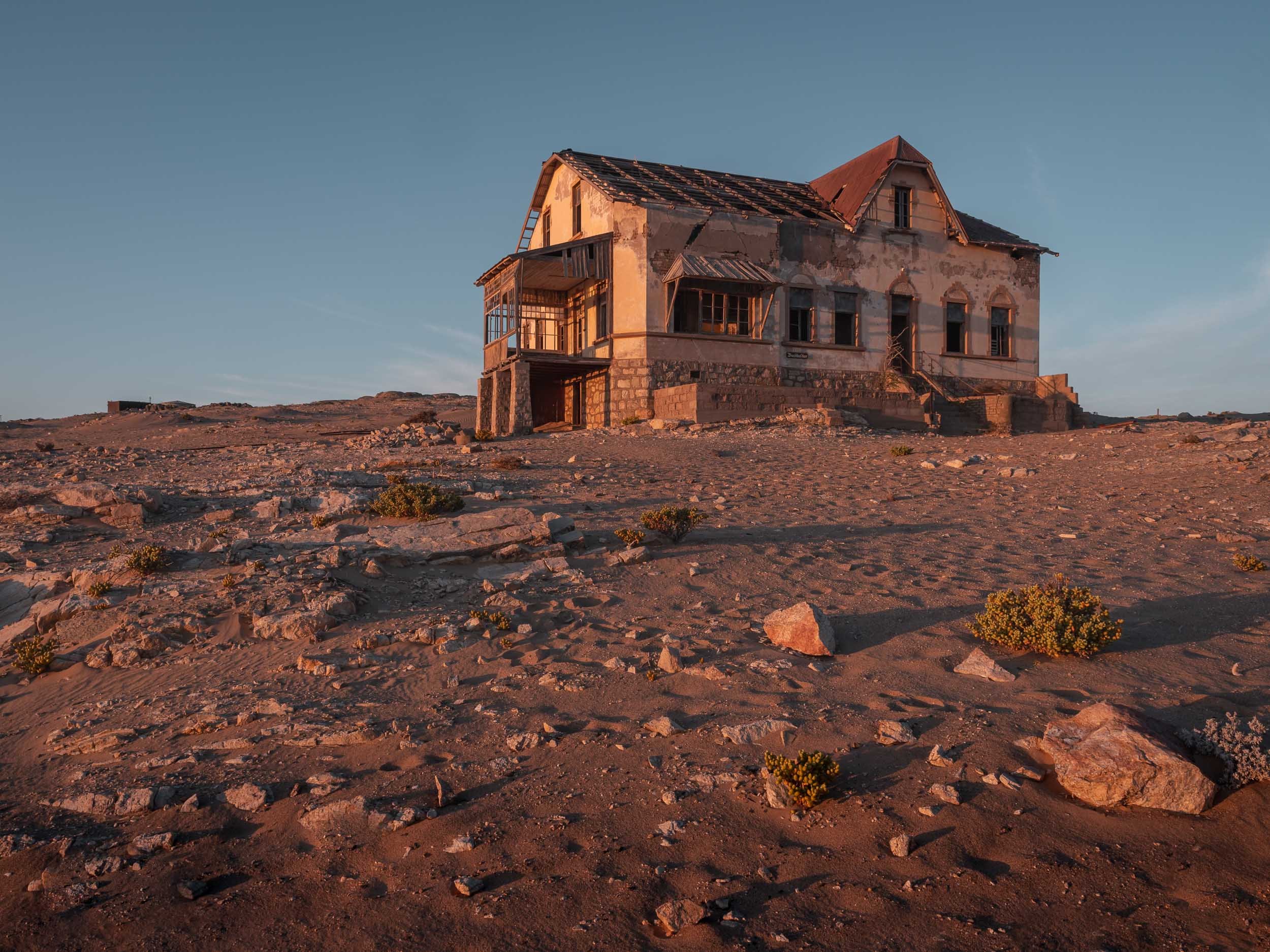
Rich Past
The town was quite well off - the first x-ray-station in the southern hemisphere, as well as the first tram in Africa were located here.
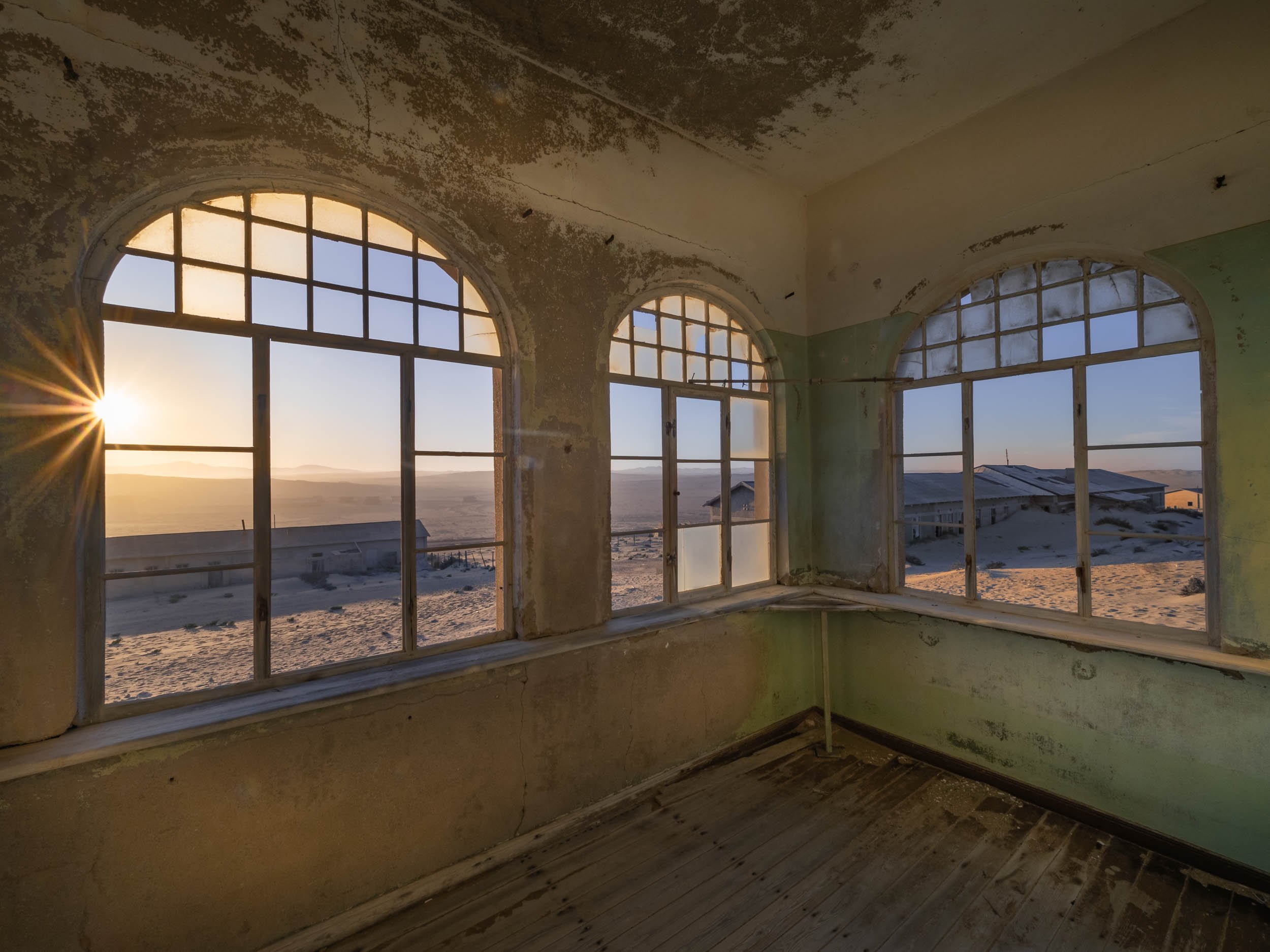
Windows
It was built during the diamond rush in the Namibian desert after 1908, but slowly declining from the 1920s and completely left behind in 1956.
Remnants
You will find one or the other gem when exploring the houses.
Architecture
Most of the village resembles the architectural style of a German town owing to Namibia's colonial past during the diamond rush.
Contrasts
Nowadays, the dunes have taken over and make for an amazing photography playground.
Colours...
...of the Namibian Flag - coincidence?
Onwards to Sossusvlei
After Lüderitz and the abandoned town, our next destination was the famous dunes of the Namib Naukluft National Park a bit further north of the country.
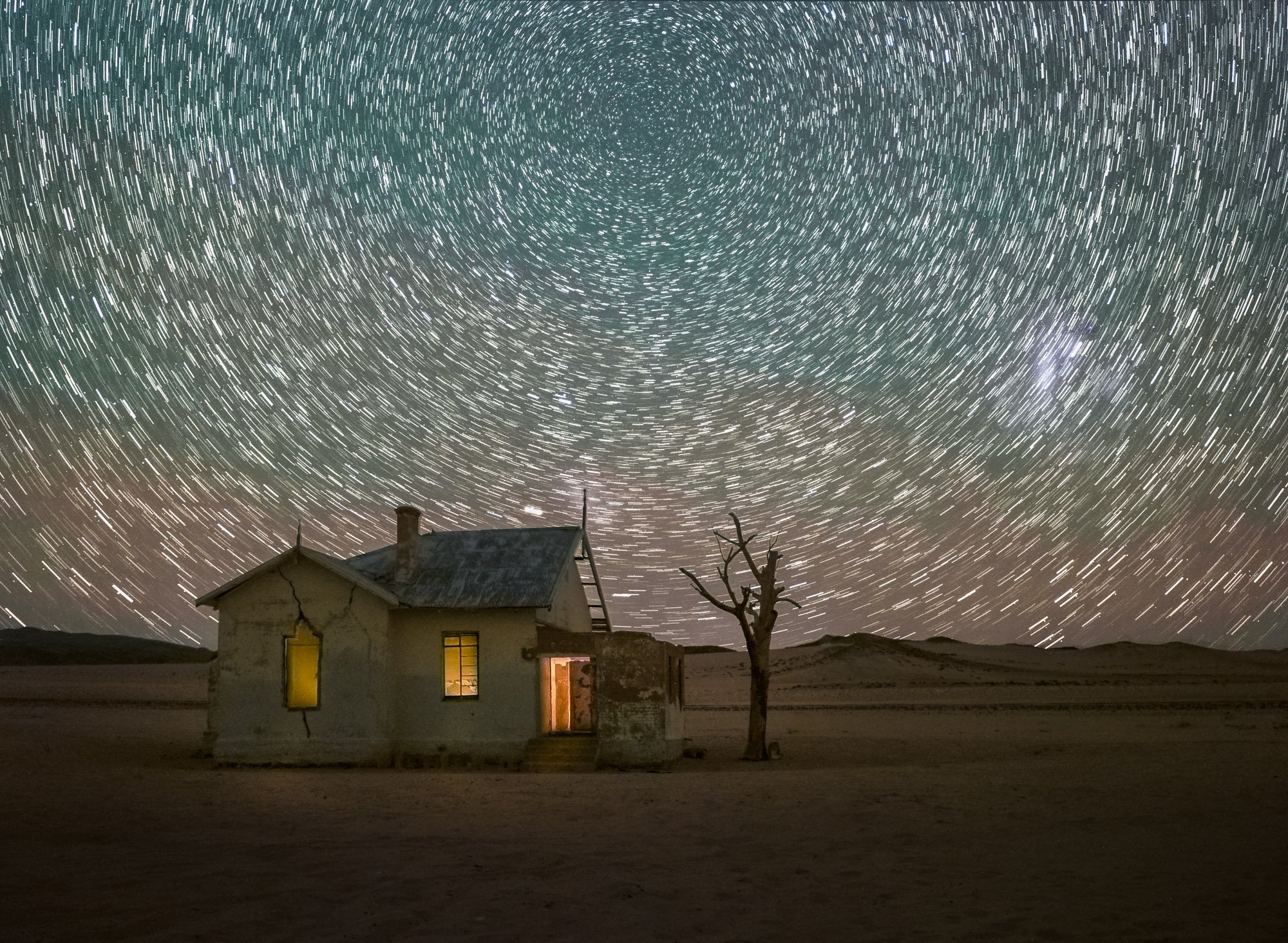
House under the Stars
We went to an abandoned small house near a railroad track to shoot a panorama of the Milky Way, but I had another photo in mind for this as well: A close up view of the house with the Great Magellanic Cloud, a galaxy which is only visible in the Southern Hemisphere and about 150,000 light years from earth. To achieve this perspective I had to reduce my exposure time to avoid the stars streaking, so I shot a lot of images that I planned to stack to avoid excessive noise in the final result. After reviewing the images, I had another idea, which was to turn them into a small star trail exposure of about 10 minute. Since we were pretty much facing exactly south, this created the typical vertigo style effect as the earth rotates, making it appear as though the stars were moving in a circle in the sky. You can see the Great Magellanic Cloud as the white patch on the right side of the image.
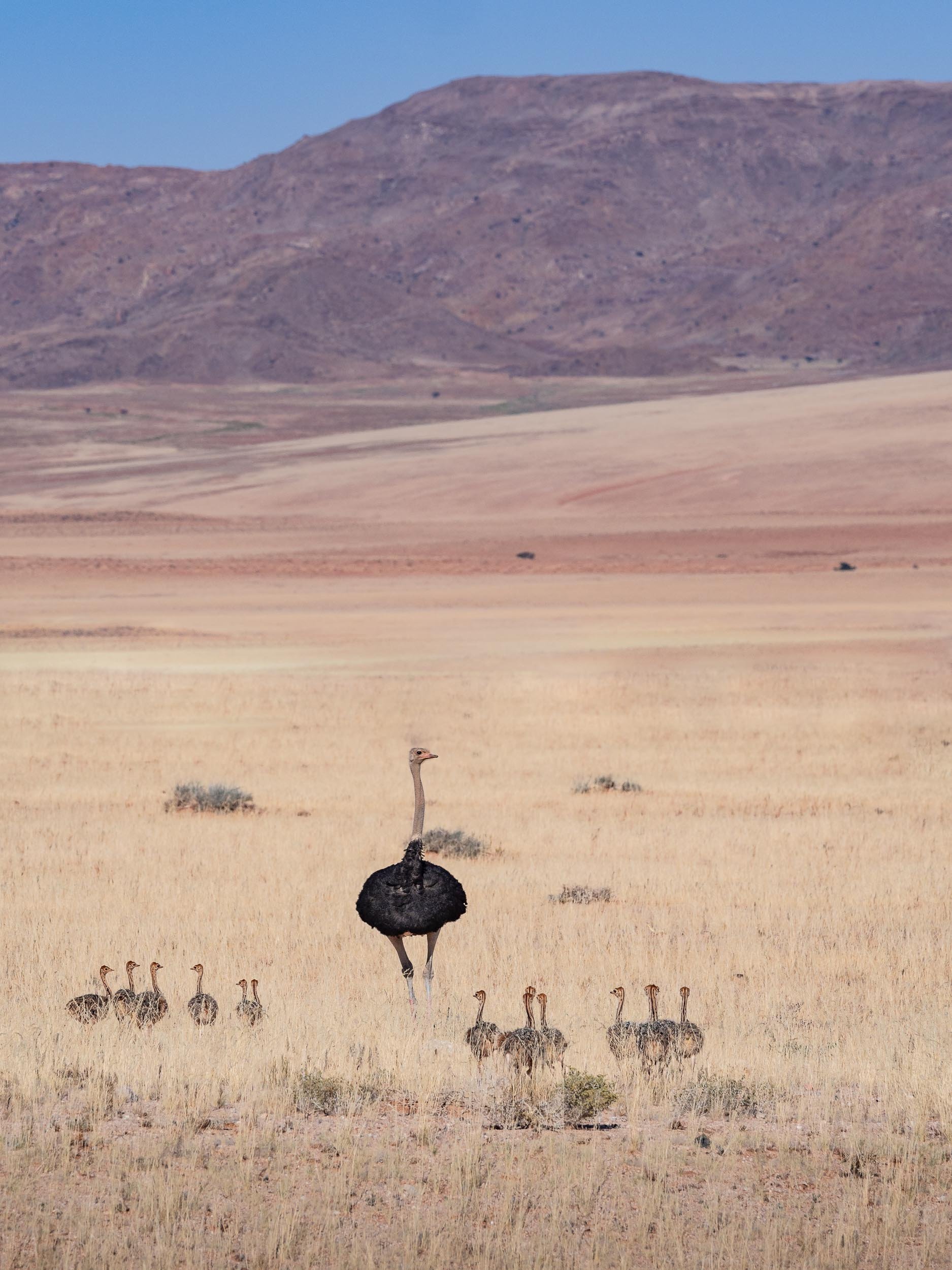
Ostrich Family
On our way to Sossusvlei, we passed through some of the Namibian dry landscapes, encountering this Ostrich and its chicks on the way.
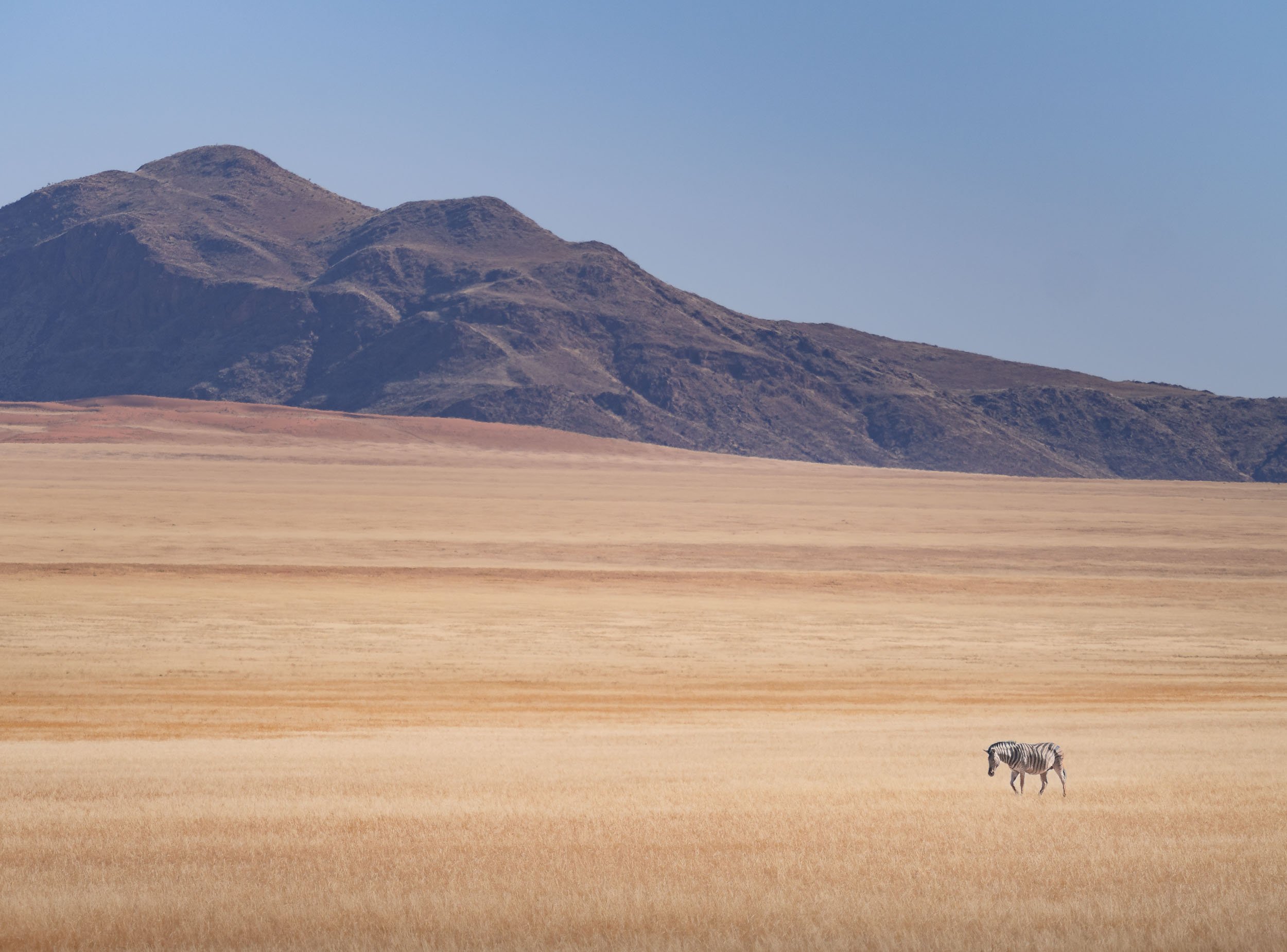
A Lonely Road
As well as this Zebra looking for greener pastures.
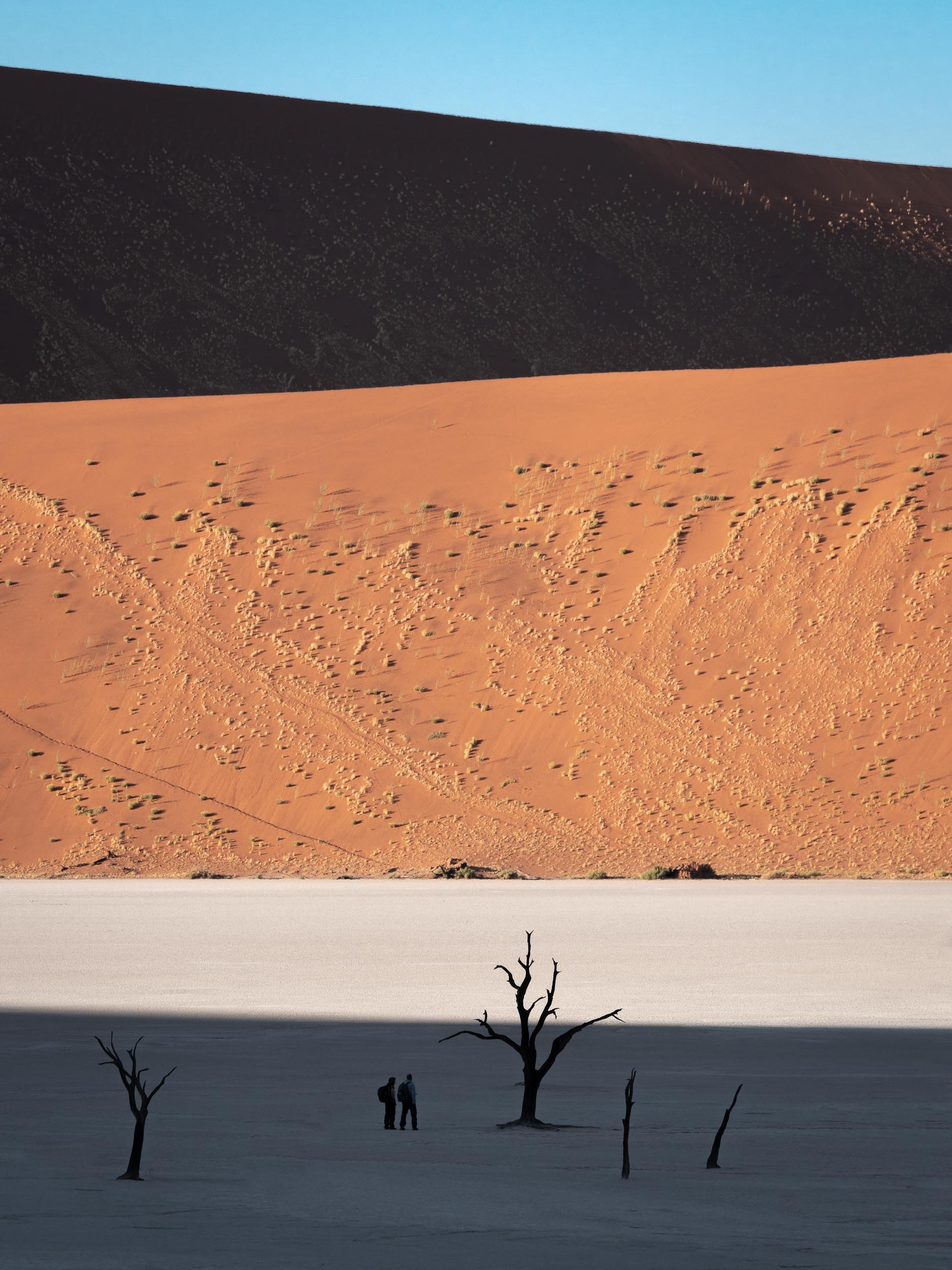
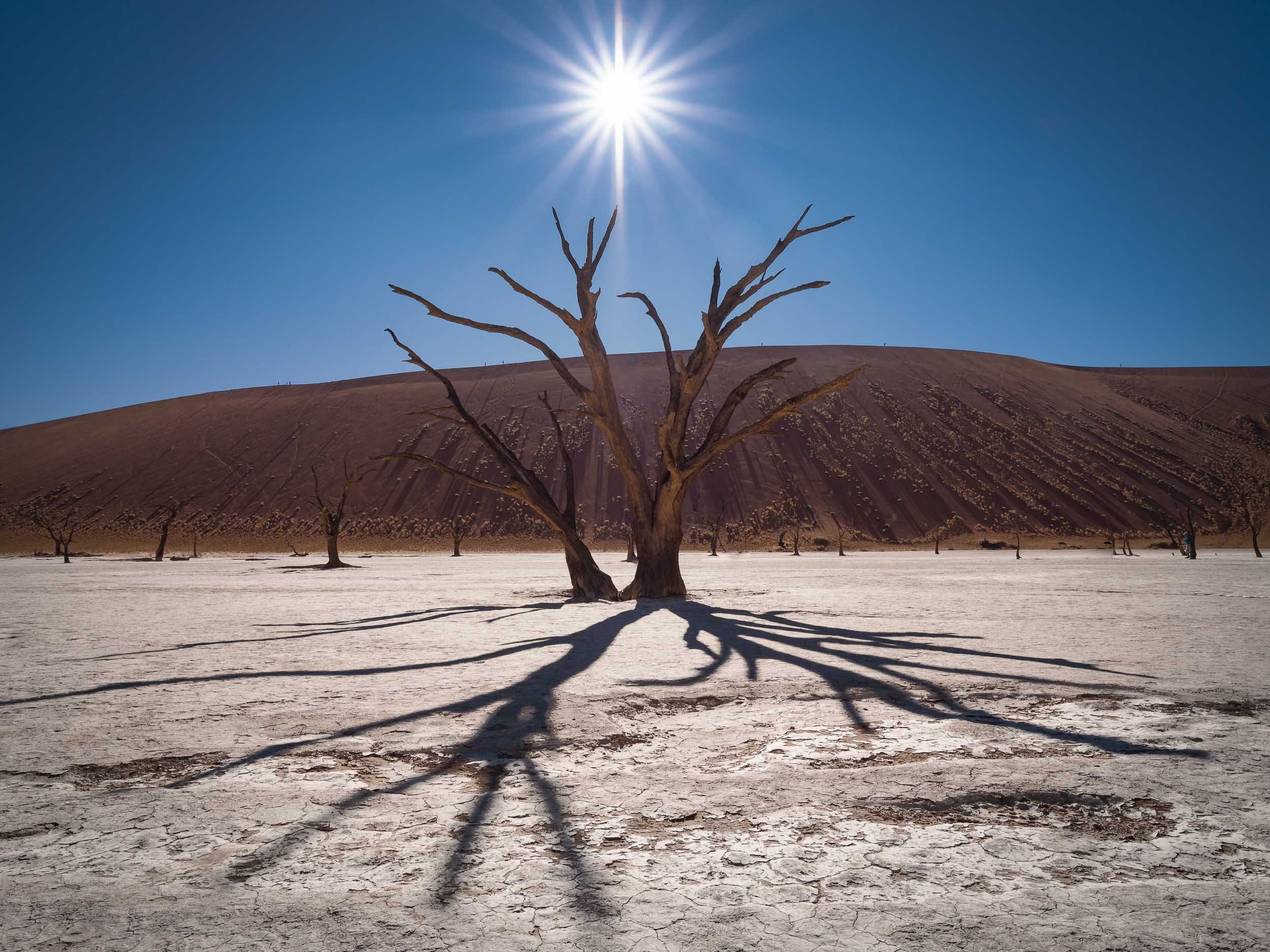
Deadvlei
The incredible Deadvlei clay pan in Sossusvlei, part of the Namib Naukluft National Park. This was definitely one of the places I was most looking forward to explore.
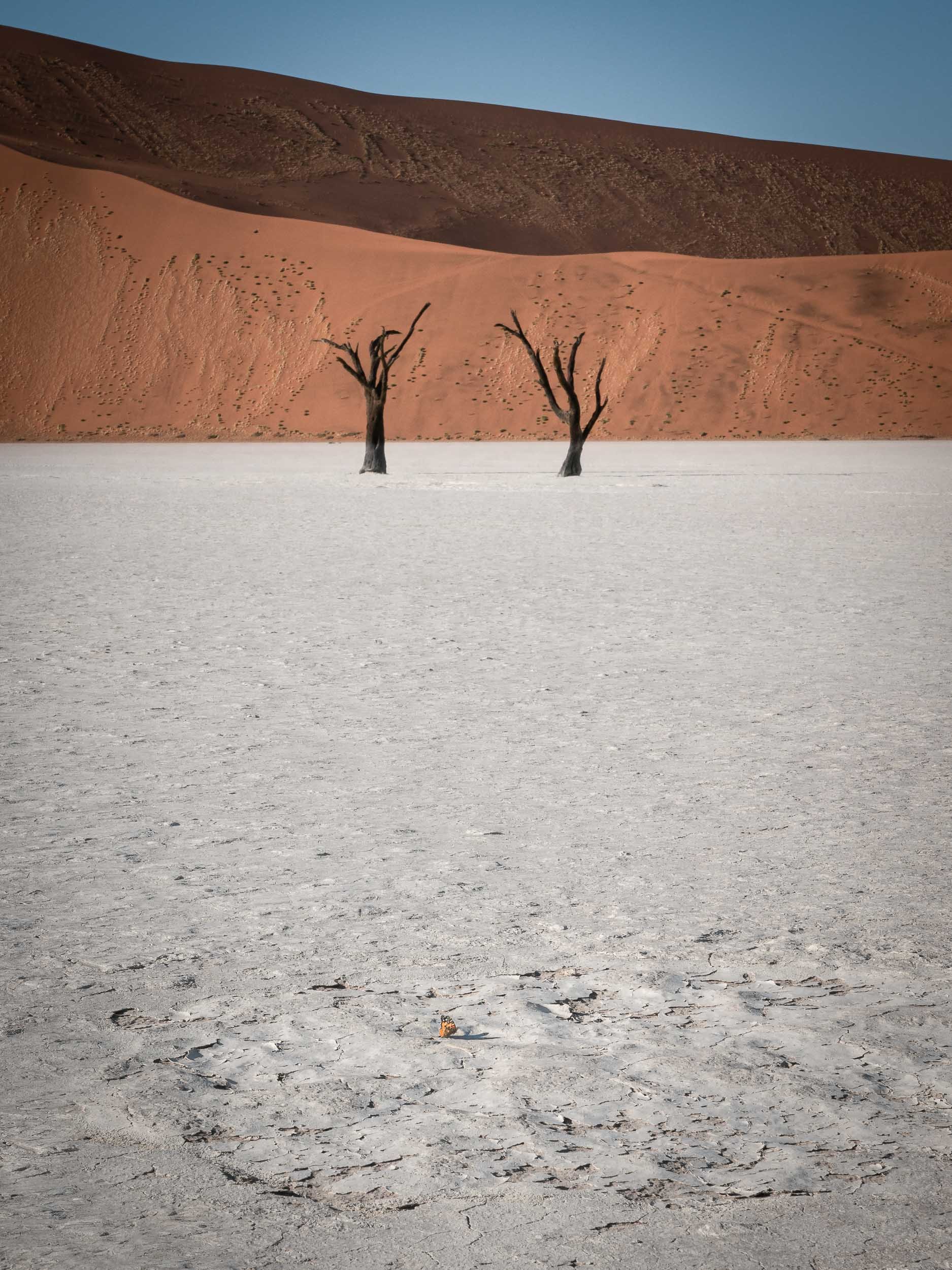
Dead Forest
Deadvlei used to be an oasis with several camelthorn trees until the Tsauchab river that watered it changed its course.
Surreal
These trees are said to have died 700 years ago.
Interplay
The morning light and shadows alongside the white, blue and orange colours create some very unique compostions, used in many films and photographs.
Life
There are still a number of plants and animals that survive in the area. Spot the butterfly.
Sunrise
The best time to visit.
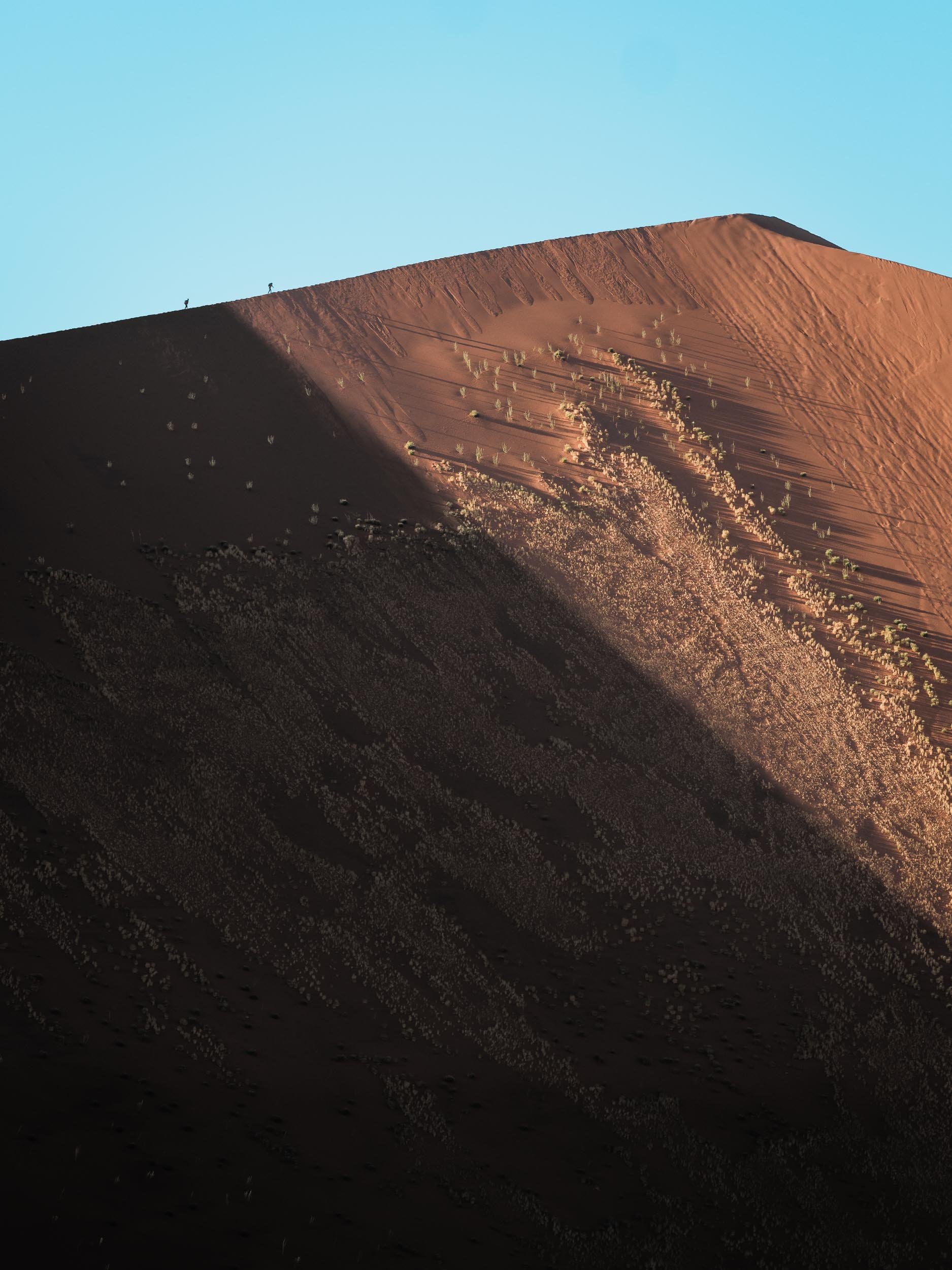
Climbing Big Daddy
The highest dune in the Sossusvlei area, at about 325 meters. Humans for scale.
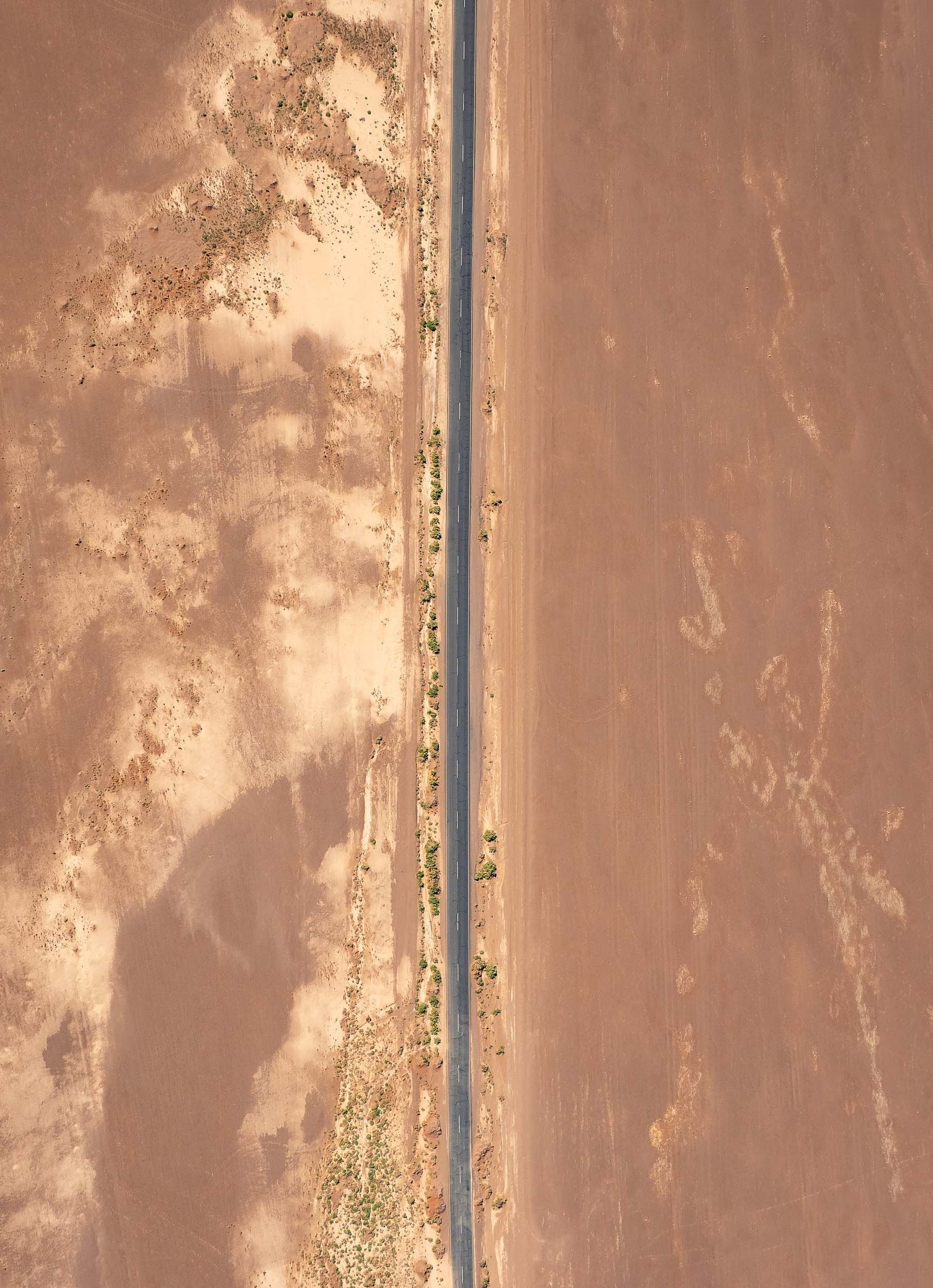
From Above
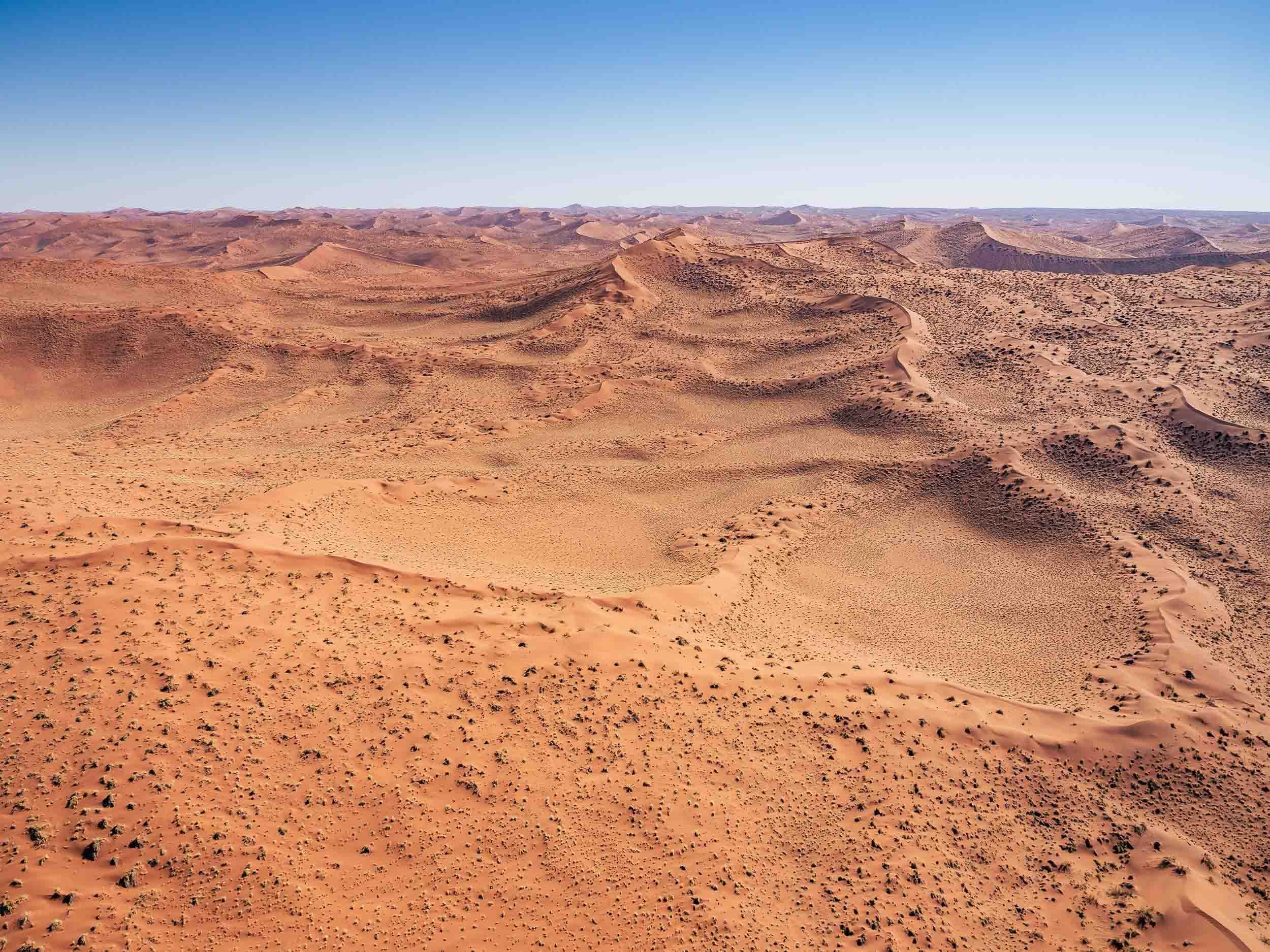
It's an incredible area for a helicopter flight. The road leading into the vleis is visible here - it later turns into a sandy dirt road accessible by 4x4 only.
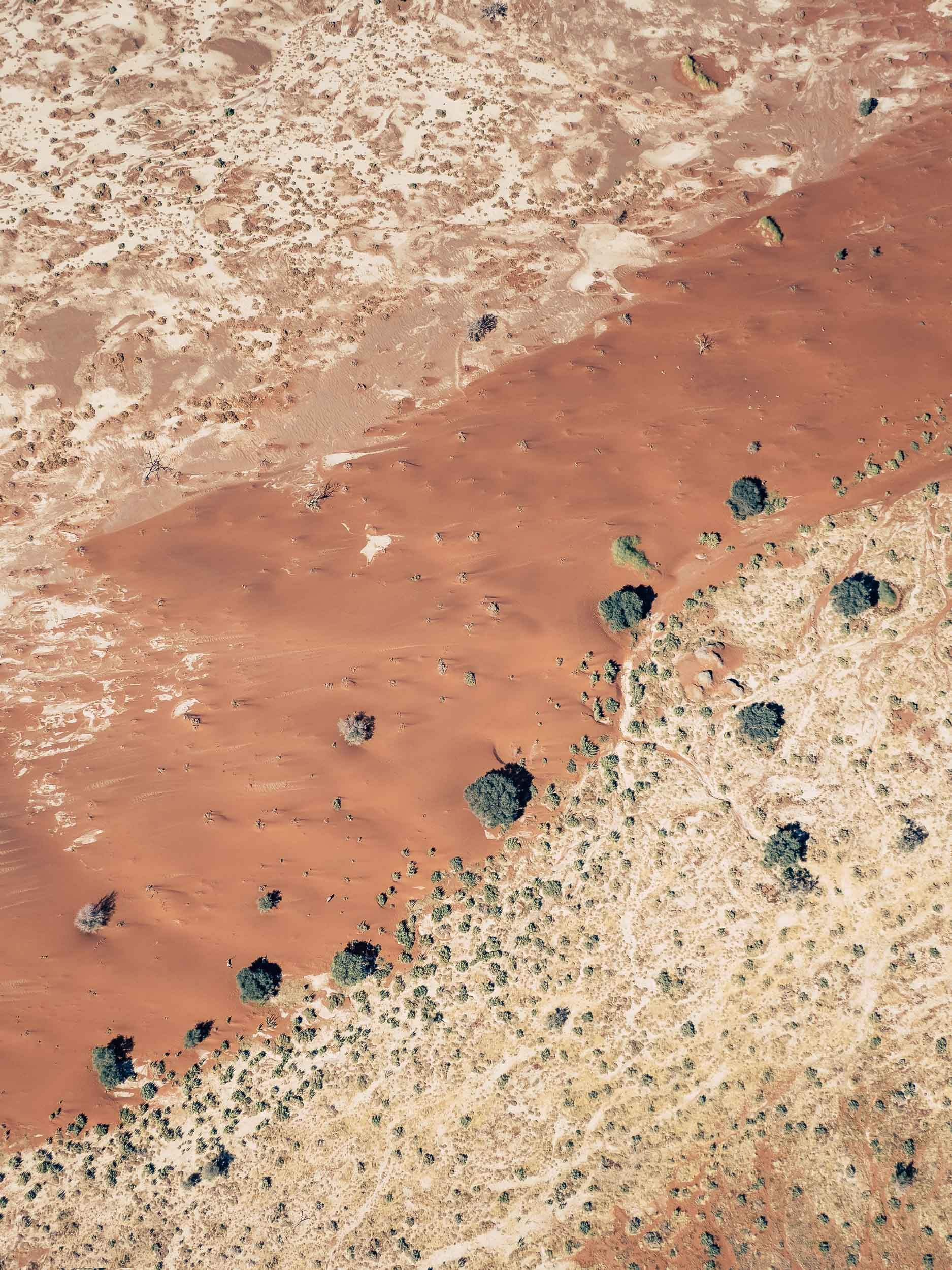
Varied
The diverse patterns of the desert.
Scale
The area is characterized by some of the highest dunes in the world.
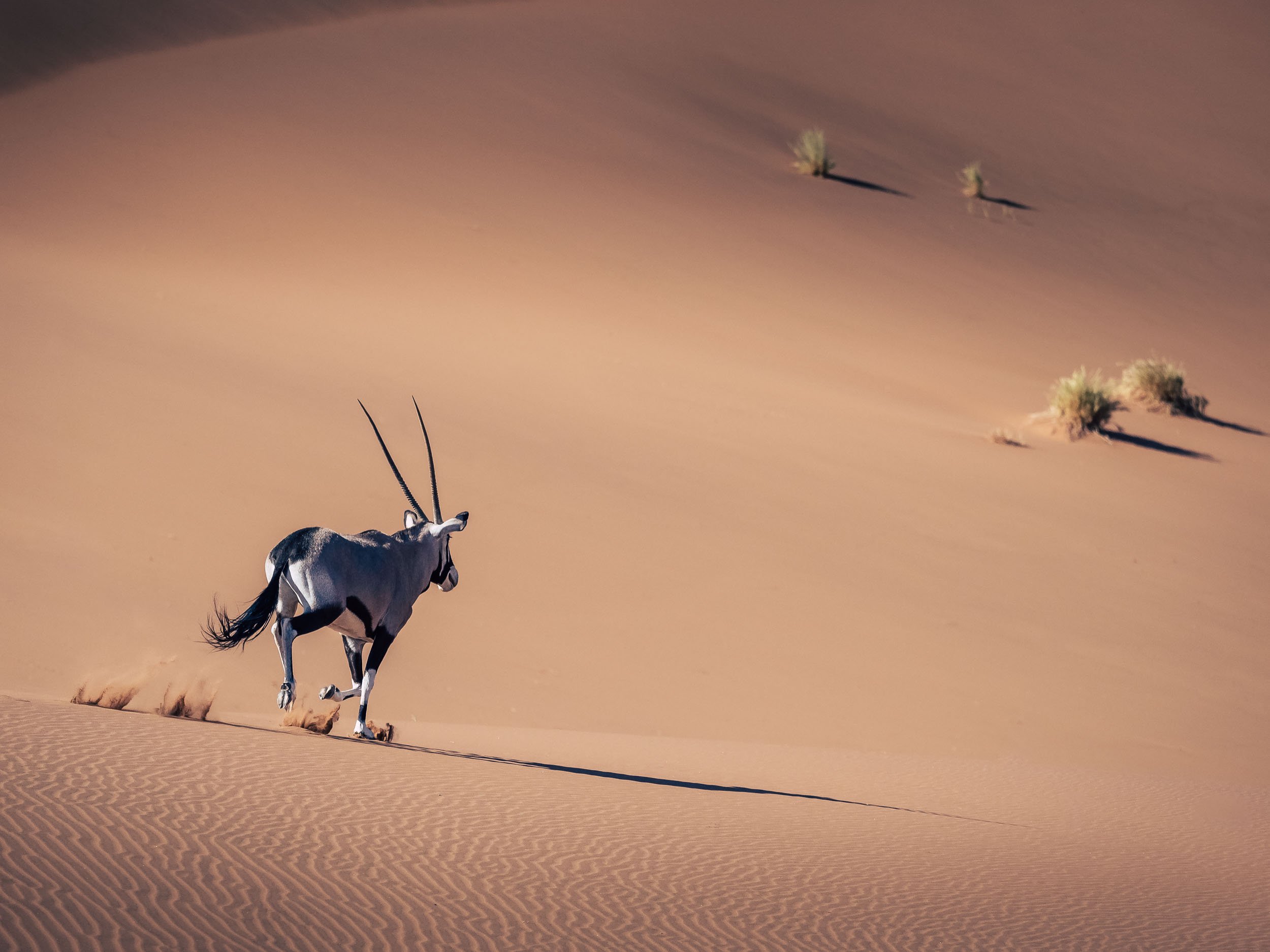
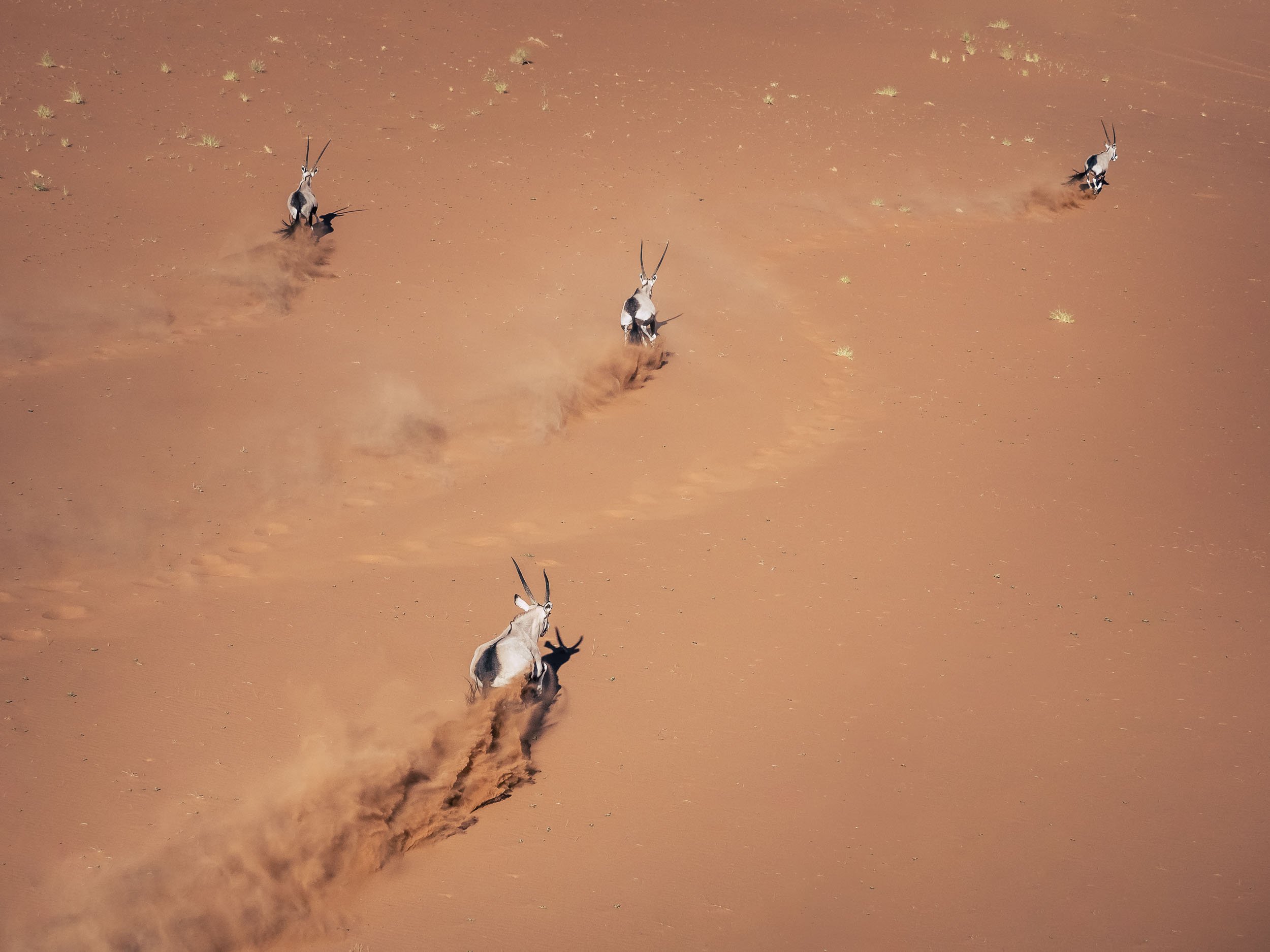
Chasing Oryx
These animals have found ways to survive in the harsh conditions.
Over the Dunes
Observing them traverse the sand with ease is a special sight.
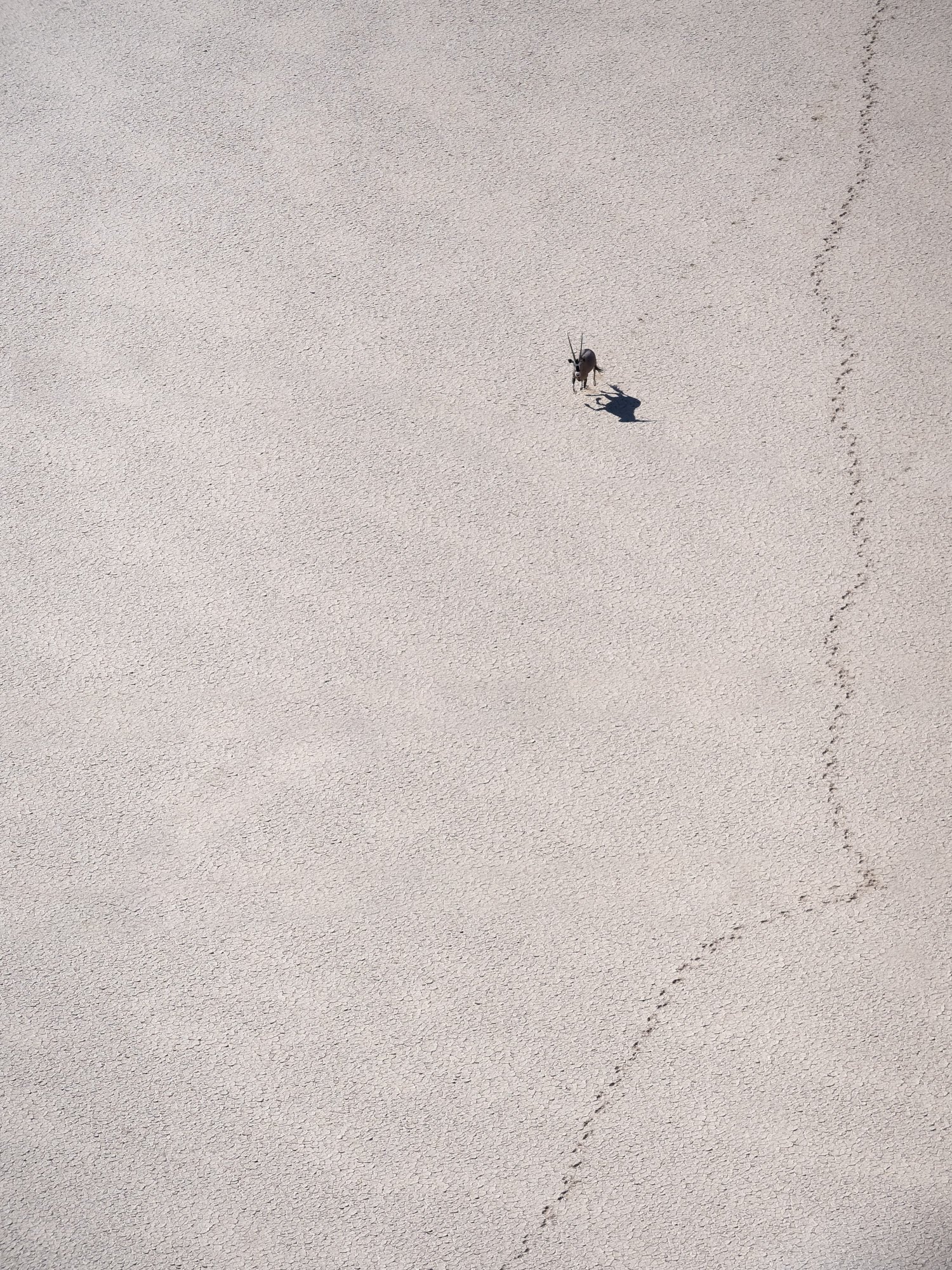
Through the Pan
This lonely Oryx crossed one of the salt pans as we flew over.
Dunes for Days
One of the many dunes one passes as you enter deeper into the Sossusvlei area.
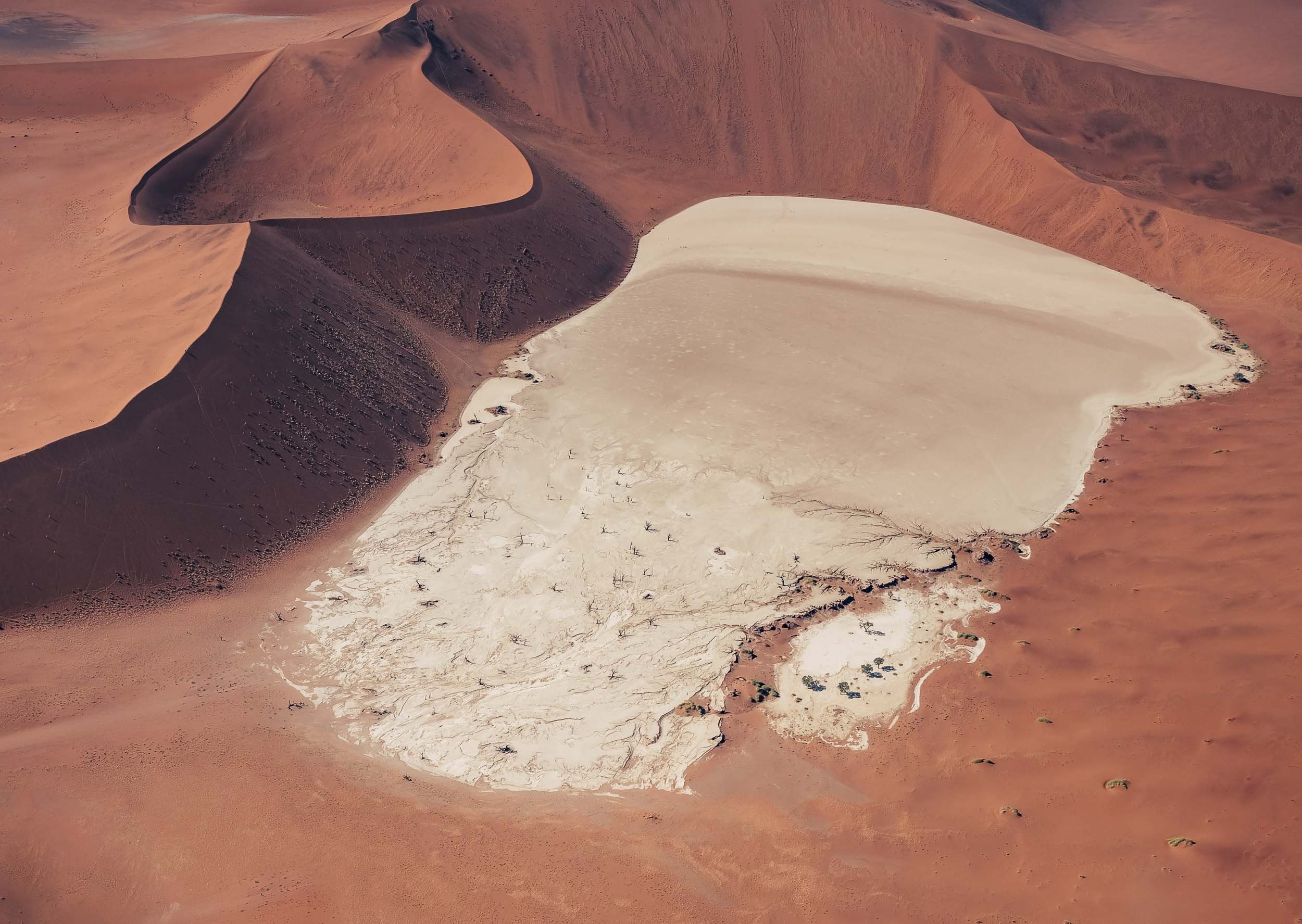
Deadvlei
The Deadvlei pan with its dried up Camel trees mainly visible on the lower end.
The World's Oldest Desert
With an overall area of almost 50,000 sqkm, the Namib-Naukluft National Park is the largest game park in Africa.
Visitors from Afar
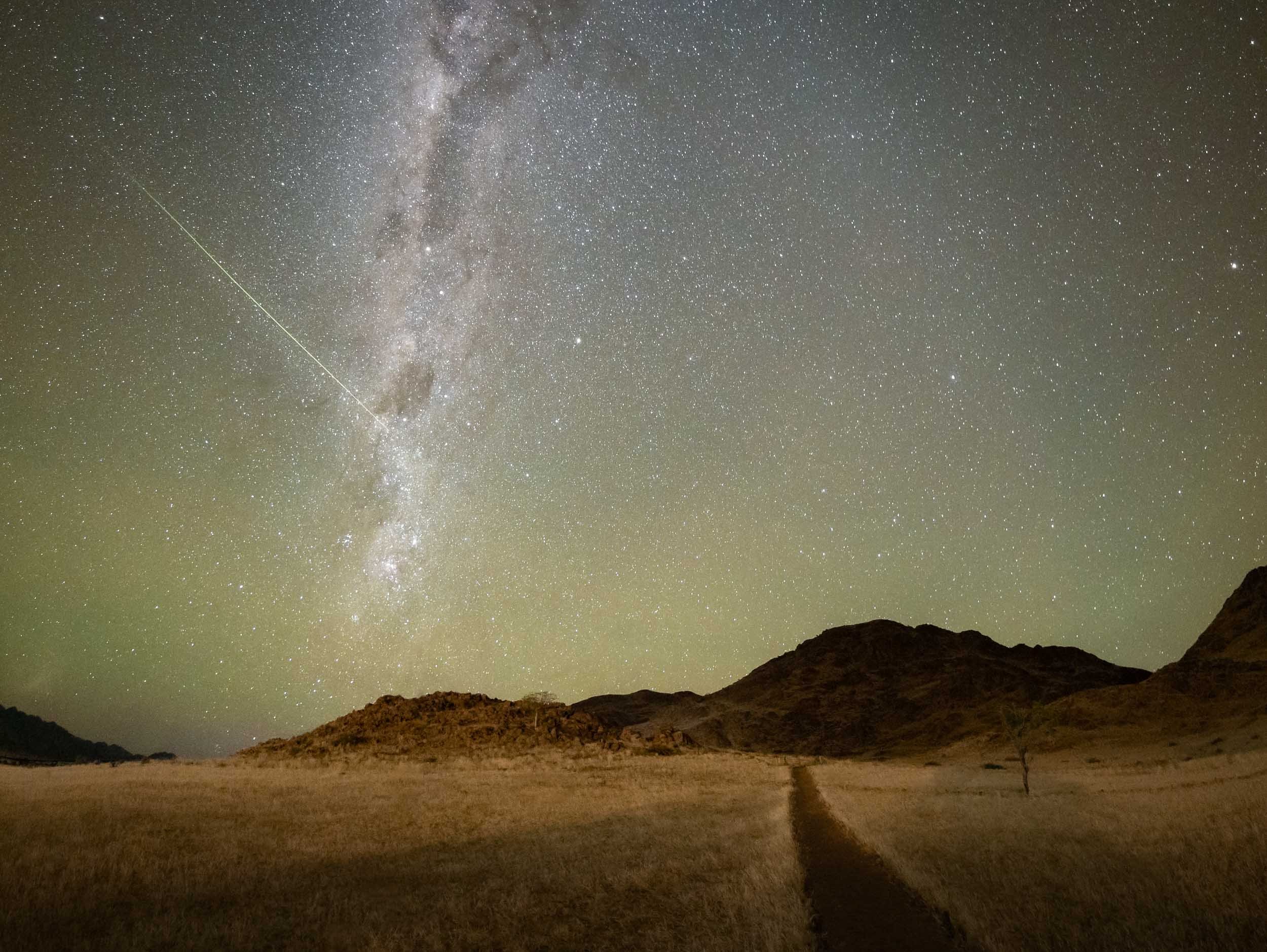
The Eta Aquariids meteor shower was active during new moon when I was in Namibia. I’ve been shooting a lot of Timelapse in the dark skies and was able to capture this green fireball in the early morning hours of May 7th. The green hue on the horizon is from the strong air glow here, and the grass was illuminated by lamps from the lodge we were staying at on the outskirts of the desert area.
Swakopmund
To the northern end of the park lies this small city and its attractions.
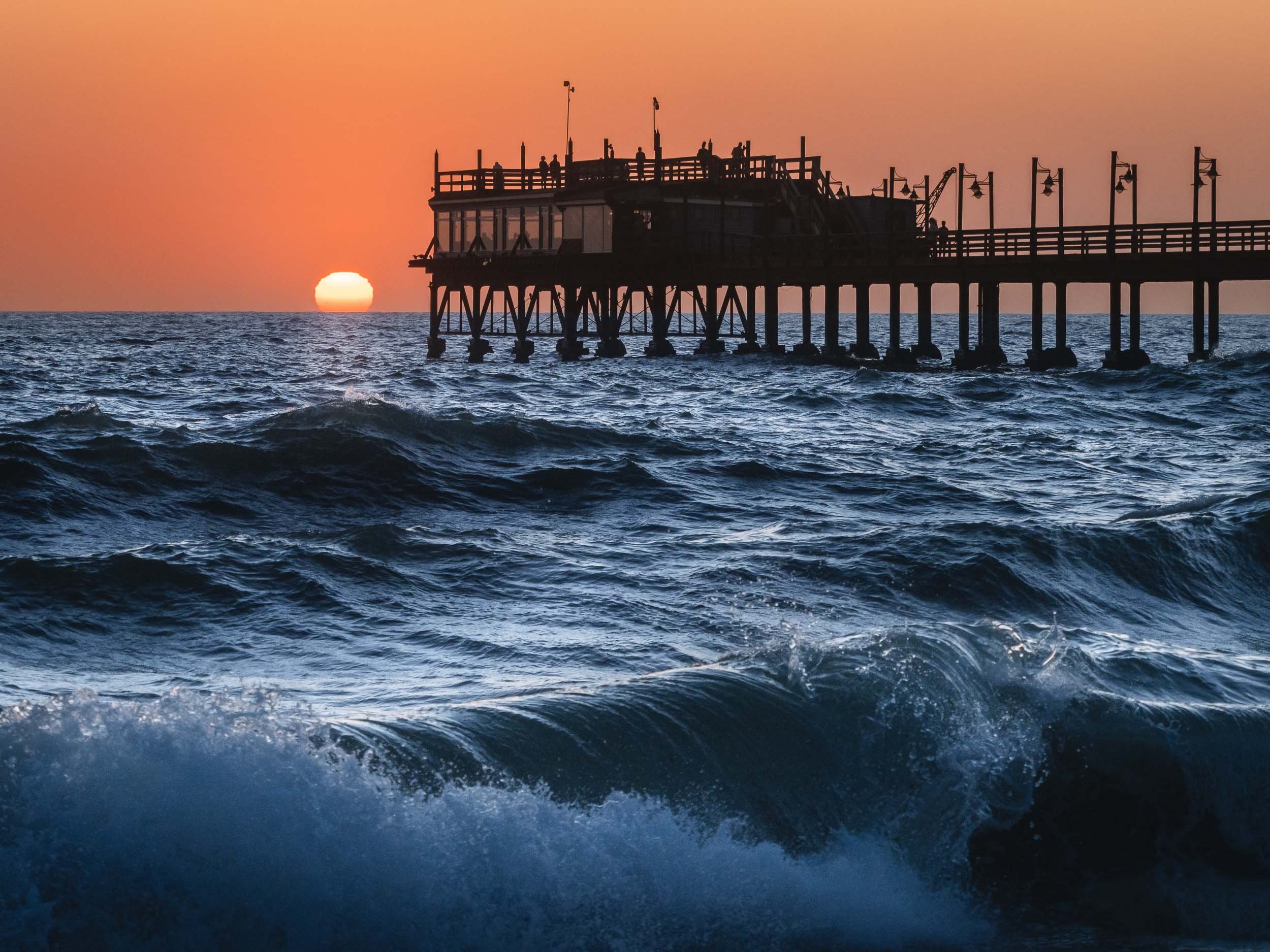
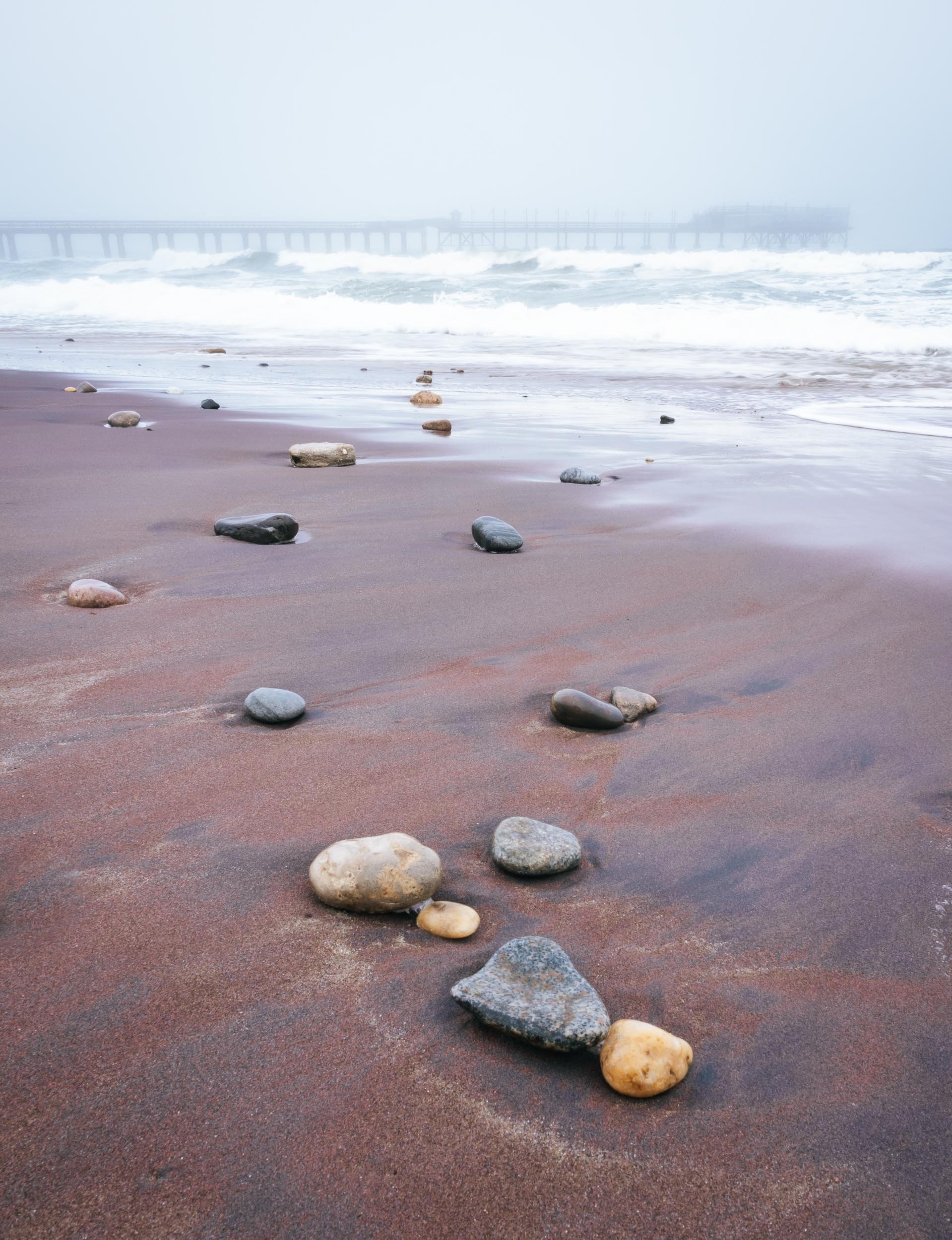
Swakopmund
The Swakopmund pier. The city is home to around 50,000 people and the 4th largest in the country, founded during the German colonial times.
Foggy Morning
A foggy morning in Swakopmund made for a beautiful atmosphere in the town, filled with examples of colonial architecture.
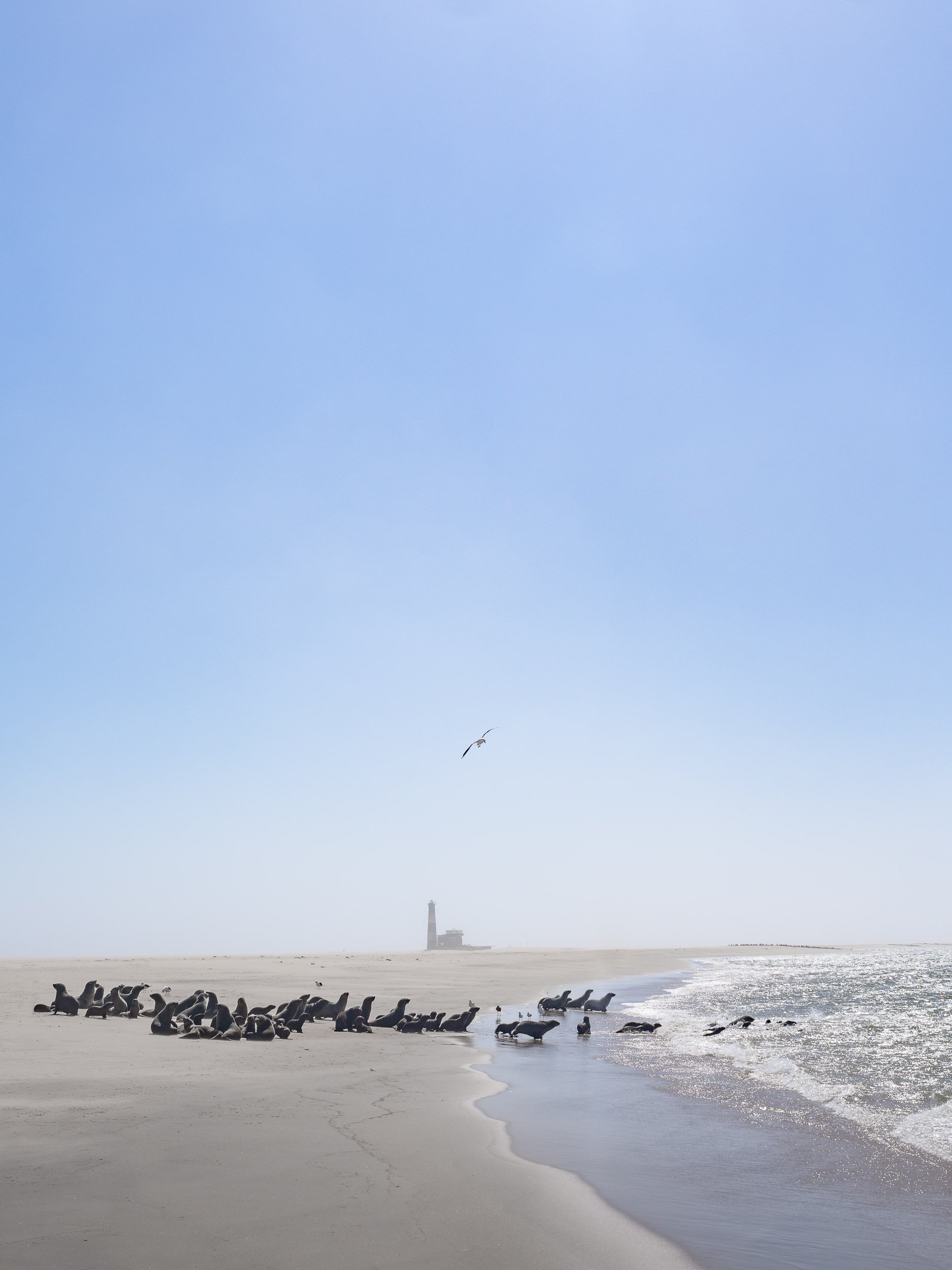
Pelican Point
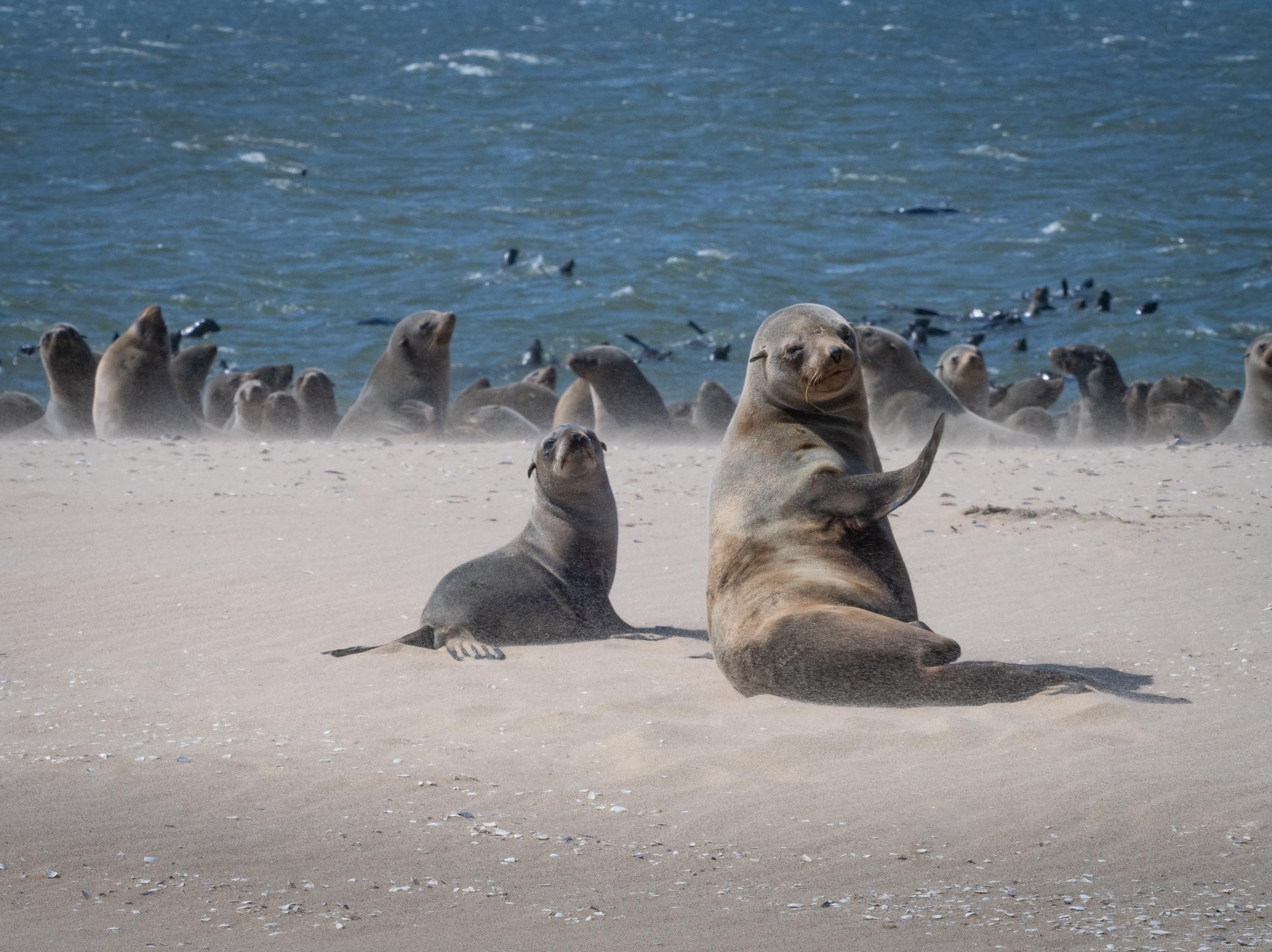
A short boat ride from Walvis Bay lies this little peninsula, home to a large population of sea lions.
Hi
Clearly they're used to tourists taking photos.
Beach Drive
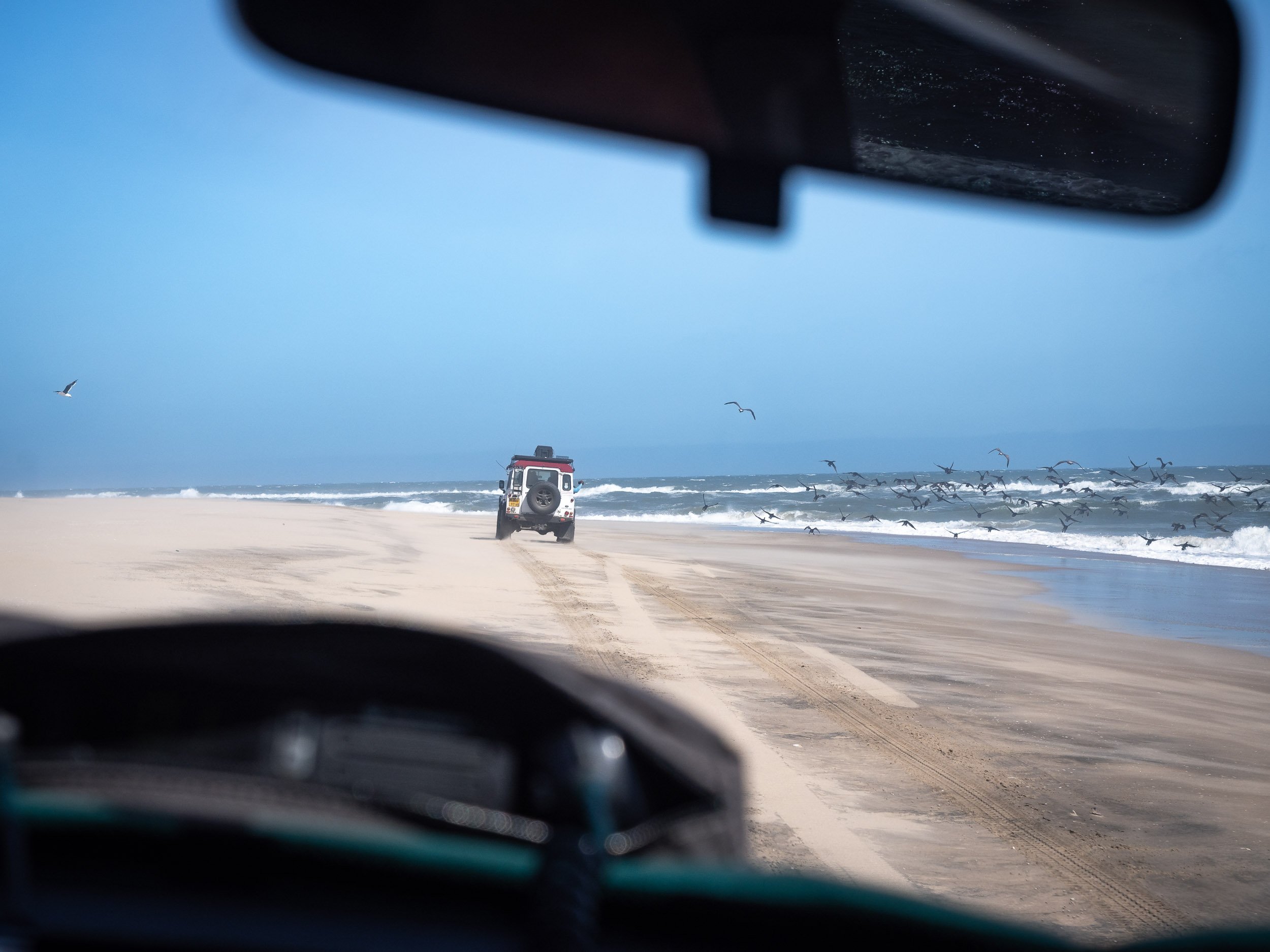
A ride along the beach of Donkey Harbour towards the Sandwich Harbour area.
Where the Dunes Meet the Sea
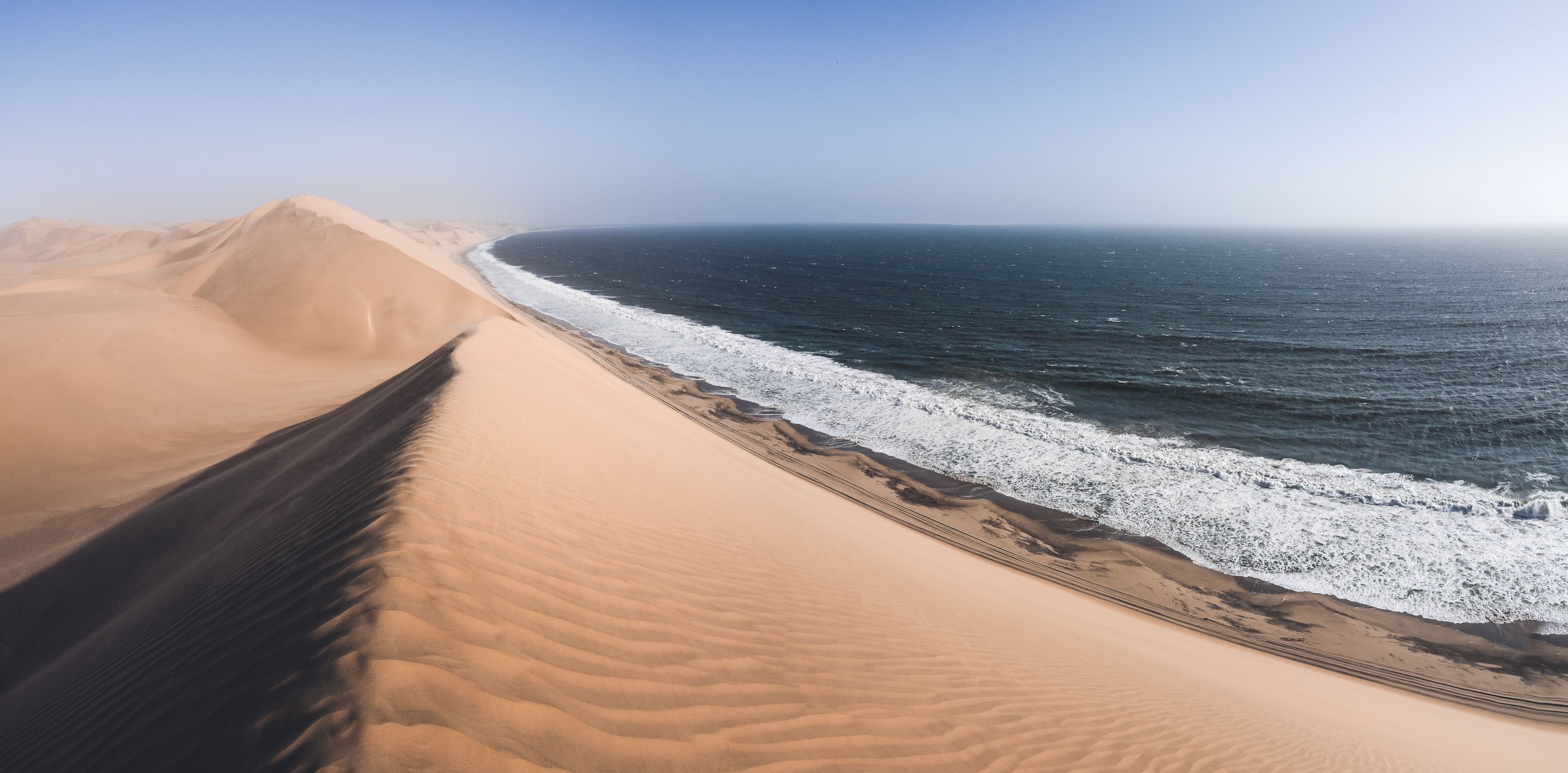
A very unique place in the world, this area is where the Namib Naukluft Park meets the Atlantic Ocean.
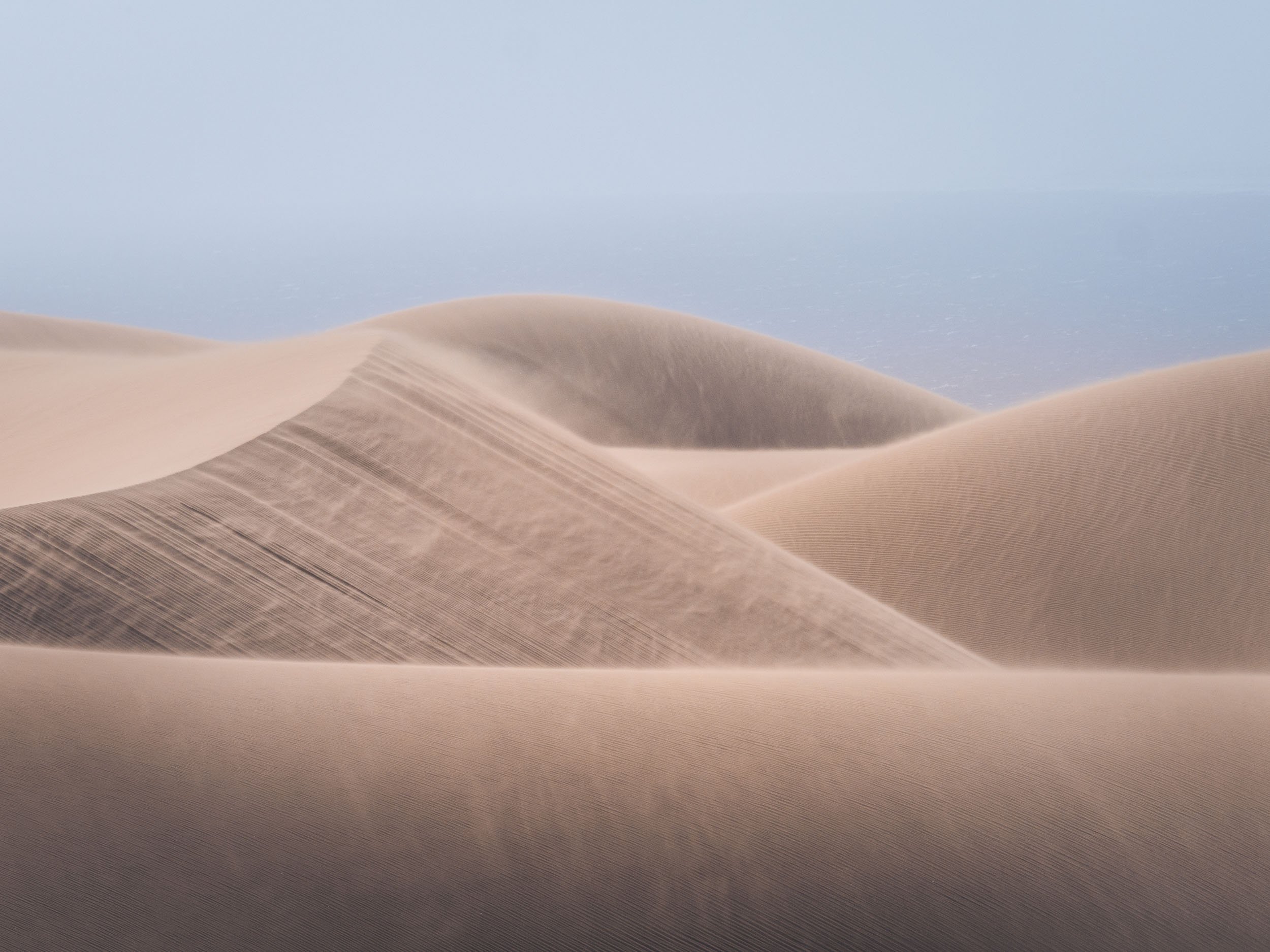
Windy
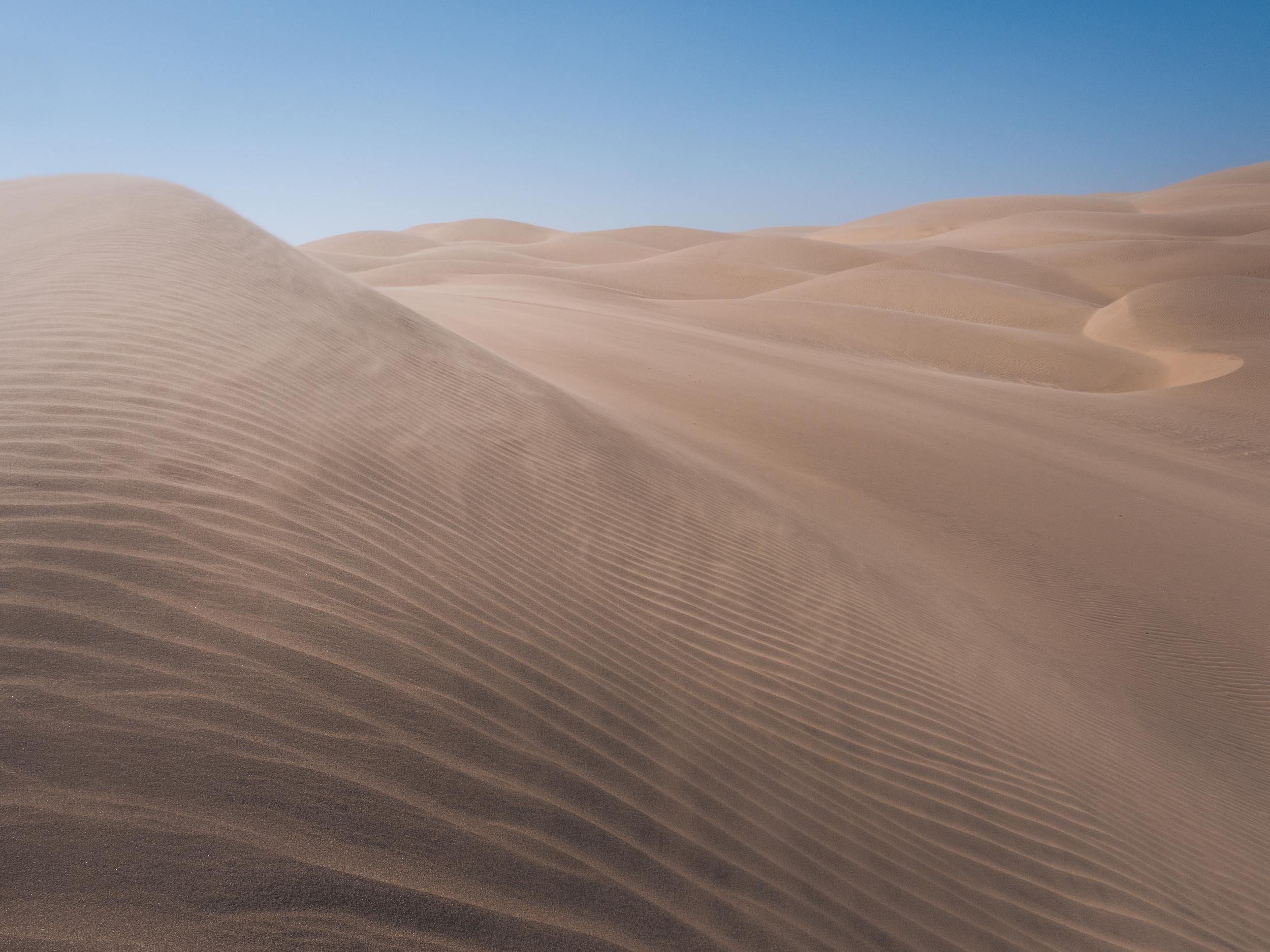
A windy day made for very difficult photography conditions, but beautiful textures and blowing sands.
Dune Bashing
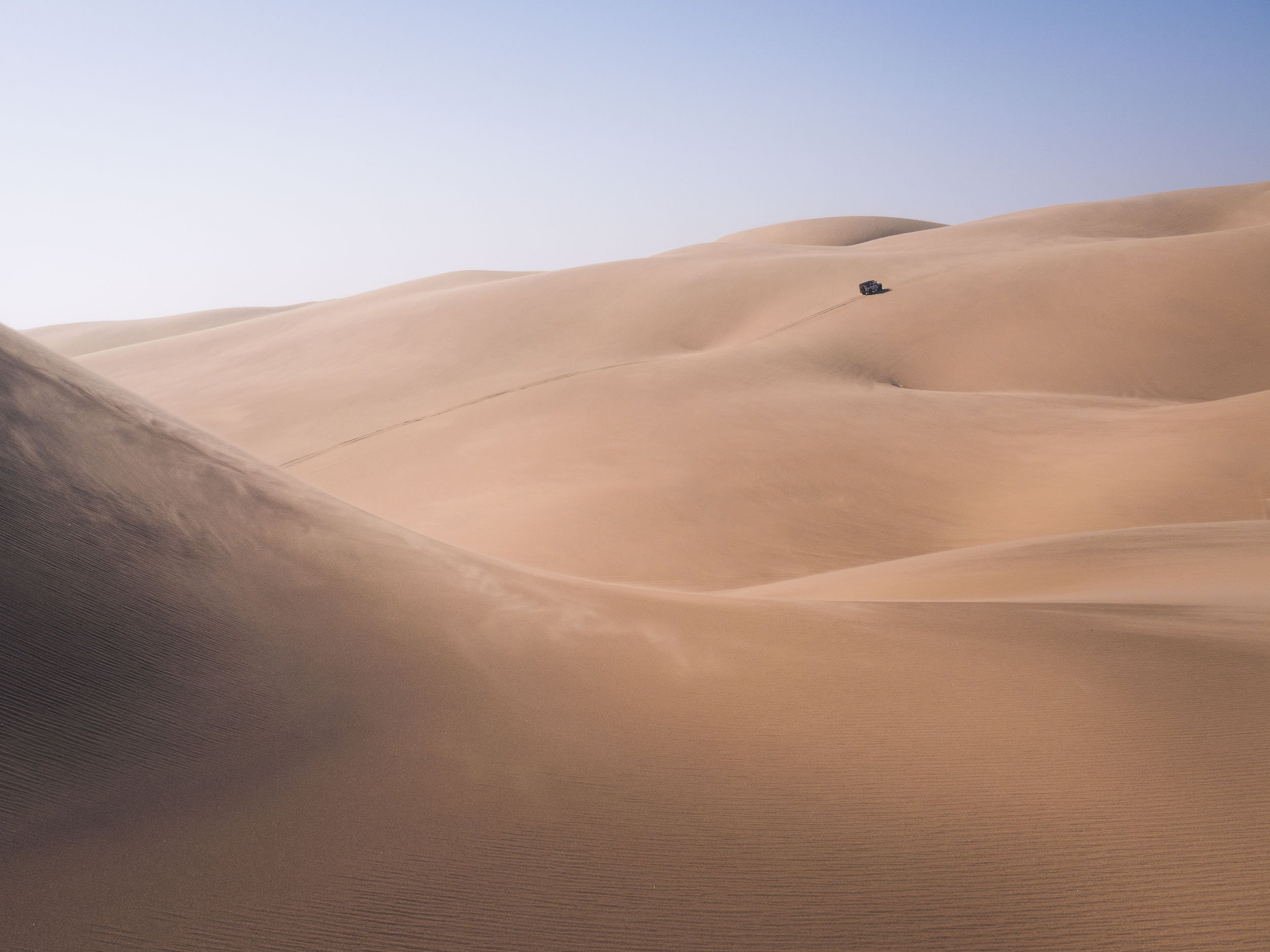
Definitely a fun way to cross the area.
Sand & Sea
And where they come together.
Red Sands
Dark red patches can be found in many areas around the beach here, owing to the mineral composition of the sand.
The Spitzkoppe
or Africa’s Matterhorn, as they call it.
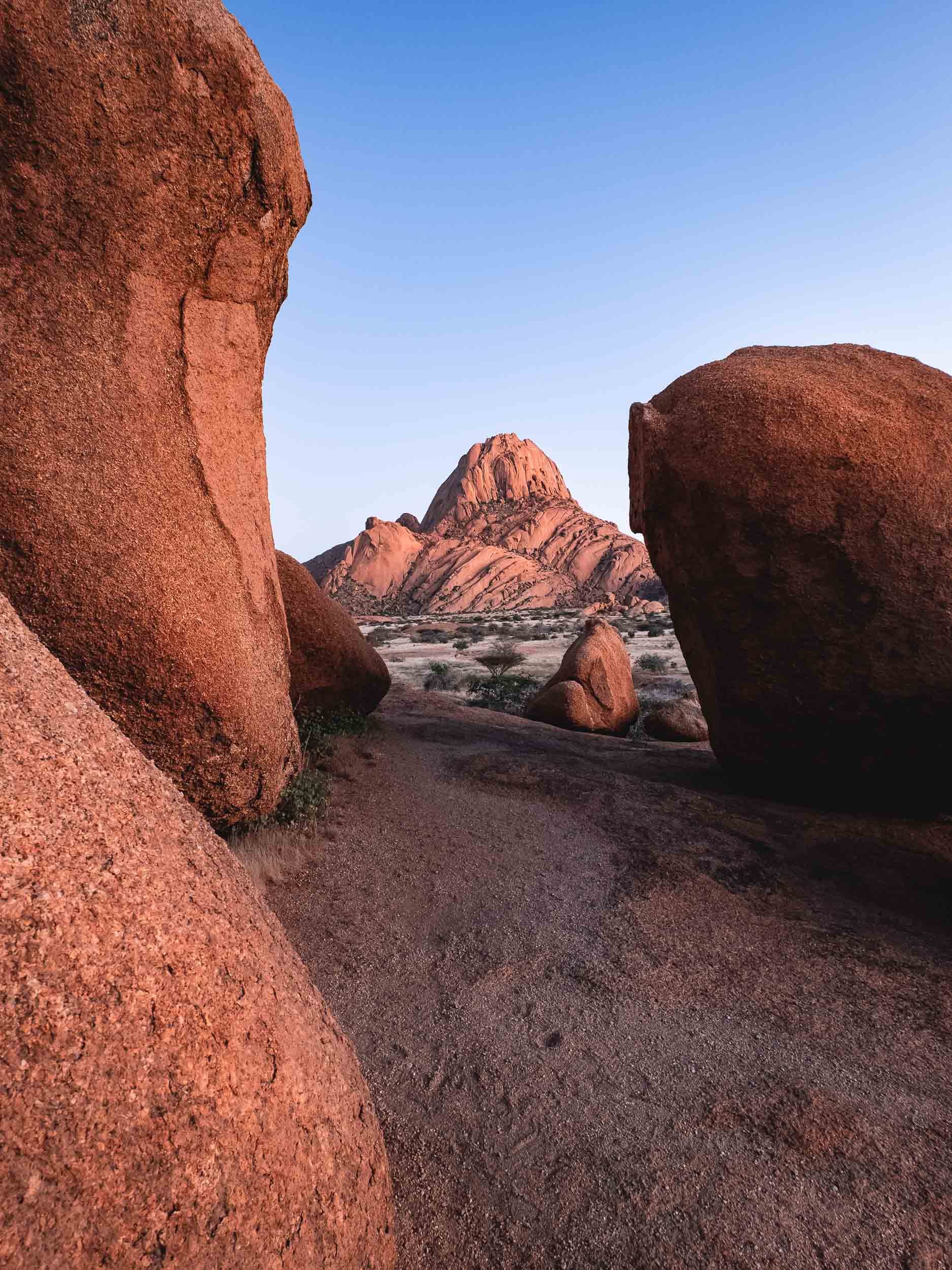
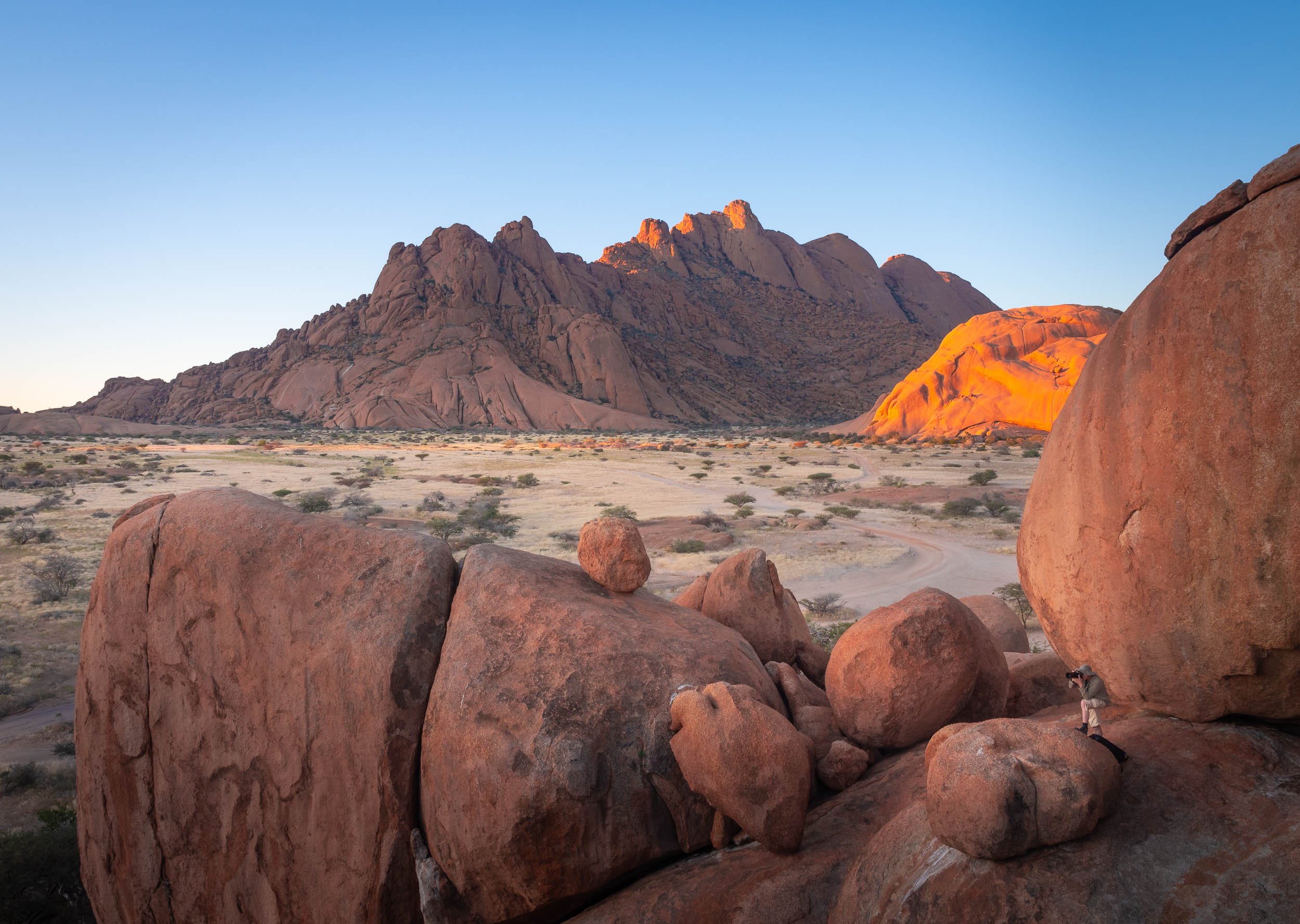
The Spitzkoppe
Namibia's most famous mountain range. The granite is more than 120 million years old and the highest outcrop rises about 1,728 metres above sea level.
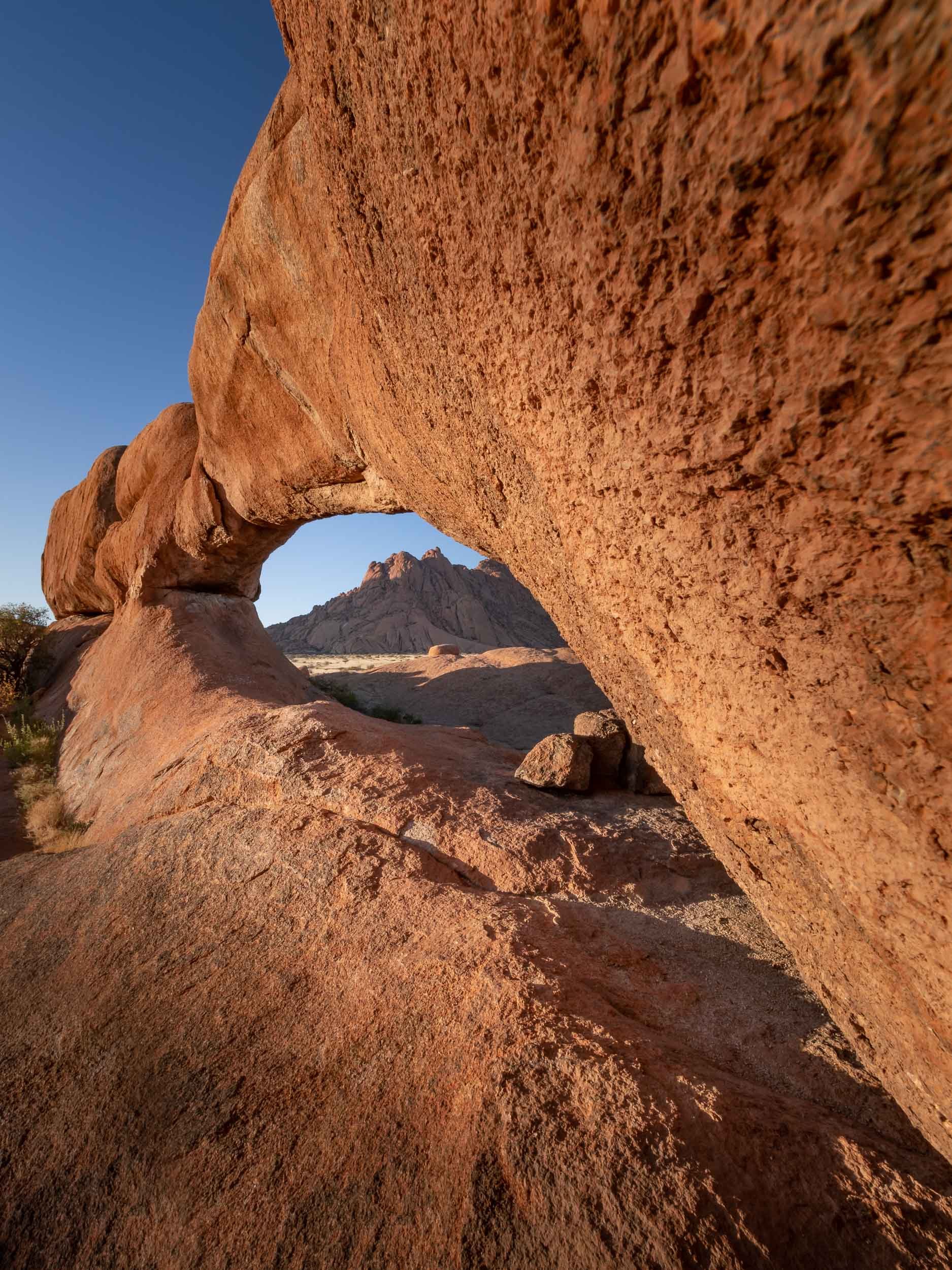
The Arch
The area features amazing formations such as this arch, which makes for some interesting compositions.
Scenery
The Spitzkoppe Mountains were also the filming location for 2001: A Space Odyssey - find the human in the image for scale.
Gate to the Stars
The Milky Way rising across the rock arch formation, illuminated from the back with a small LED light.
Lunar Illumination
The moon shining over the outcrops as the last bit of daylight disappears in the west.
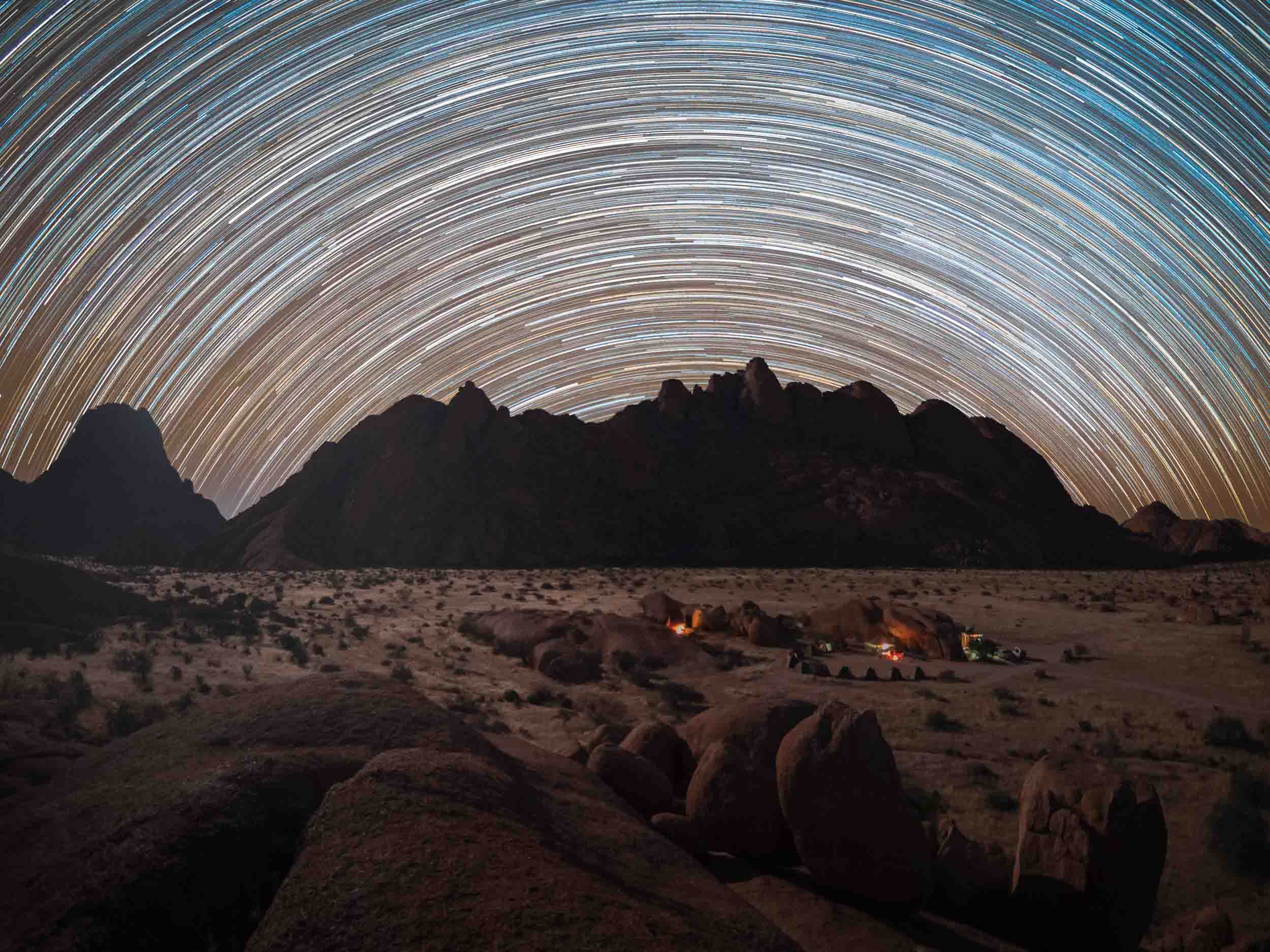
Star Trails
Photographing north over our camp for several hours created these trails as the earth rotates through the universe.
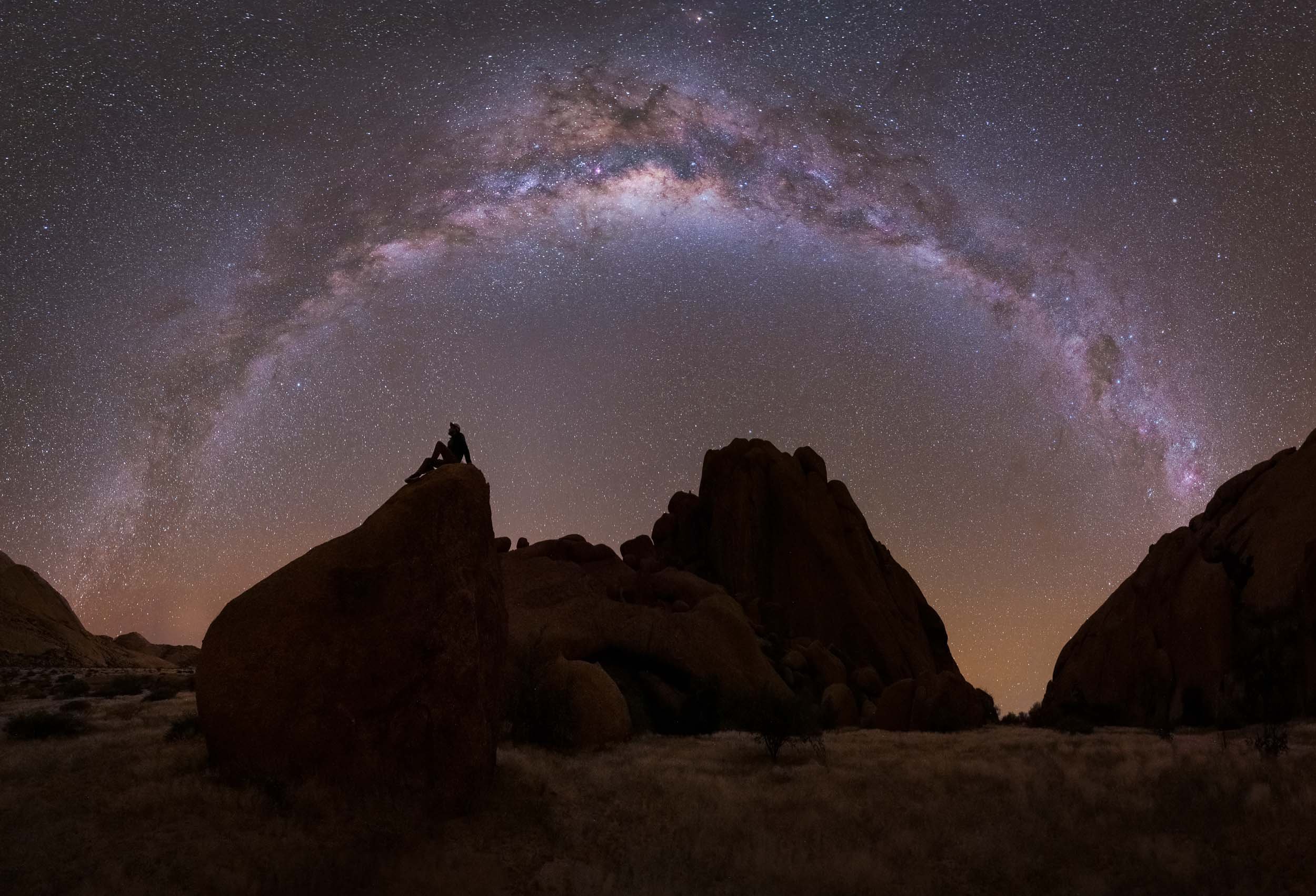
Watching the Stars
I climbed a boulder in the darkness, accompanied by a few questionable insects, after setting my camera on interval shooting to get myself into the frame of this panorama, composed of a total of 18 images.
Etosha National Park
Our last destination was in the northern part of the country for some wildlife viewing.
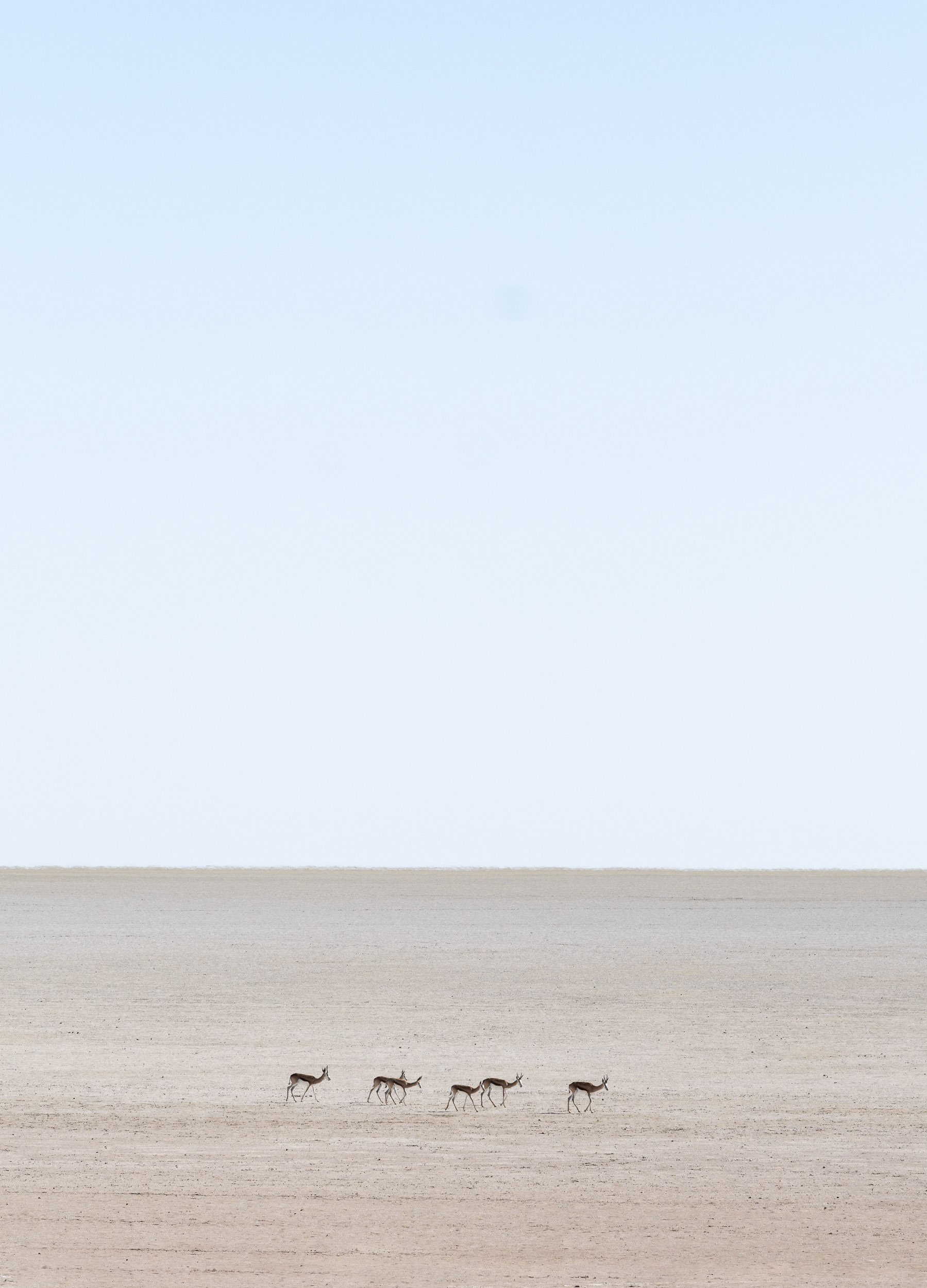
The Etosha Pan
The park is most famous for its 120km dry salt pan running through it, making for interesting contrasts with the savannah and its inhabitants.
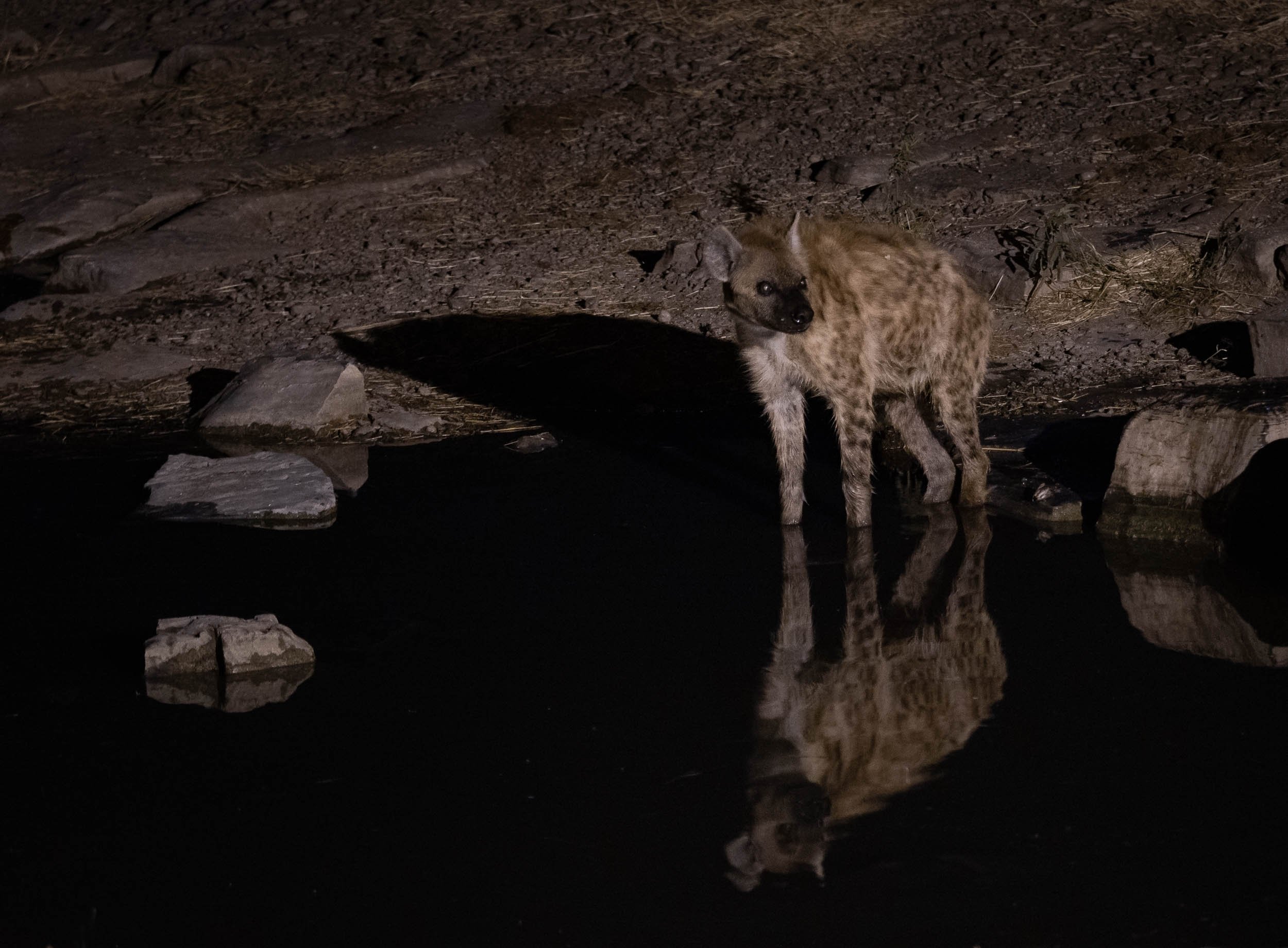
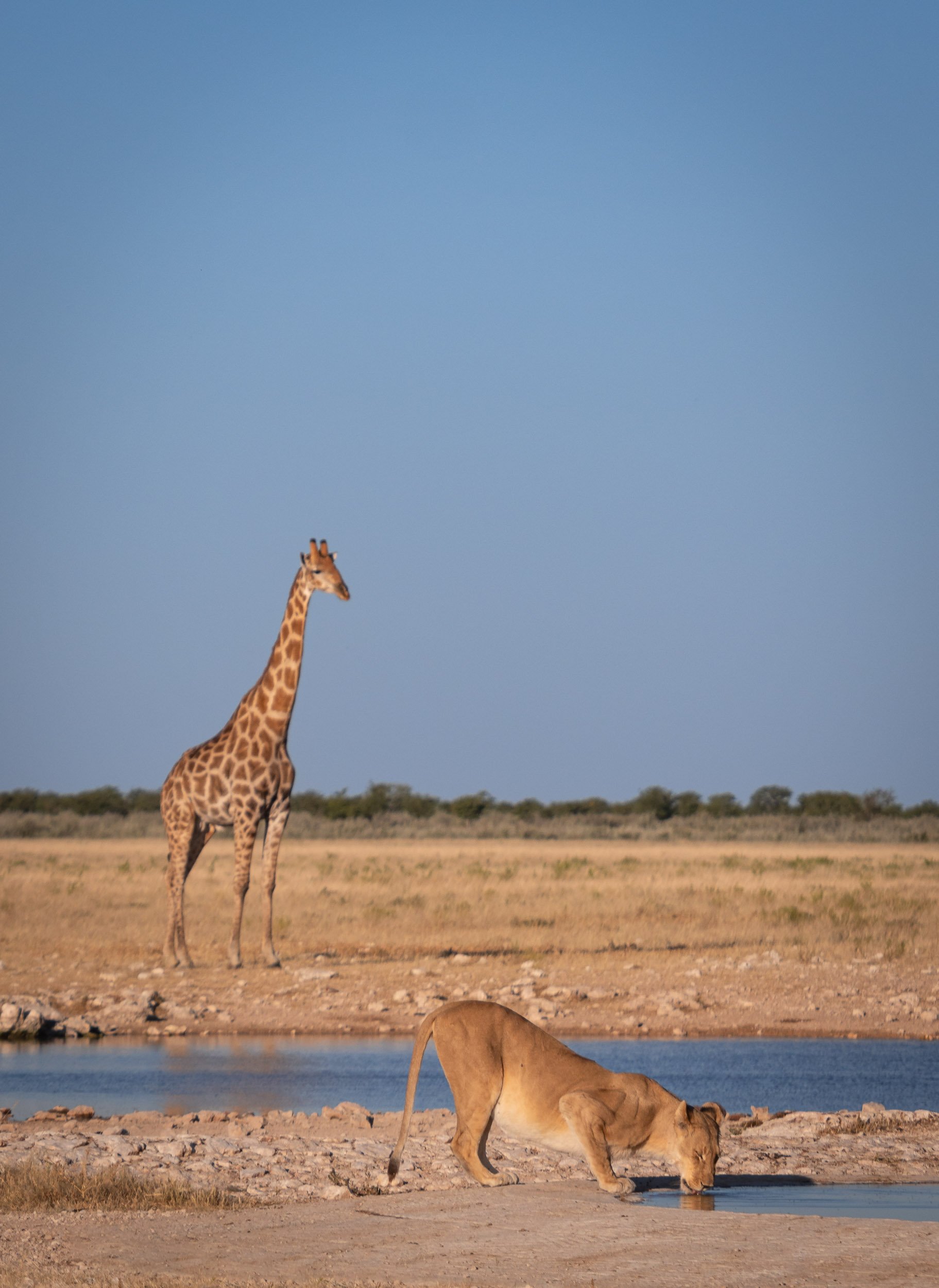
Scroll through the gallery for some of the animals we captured during the 2 days.
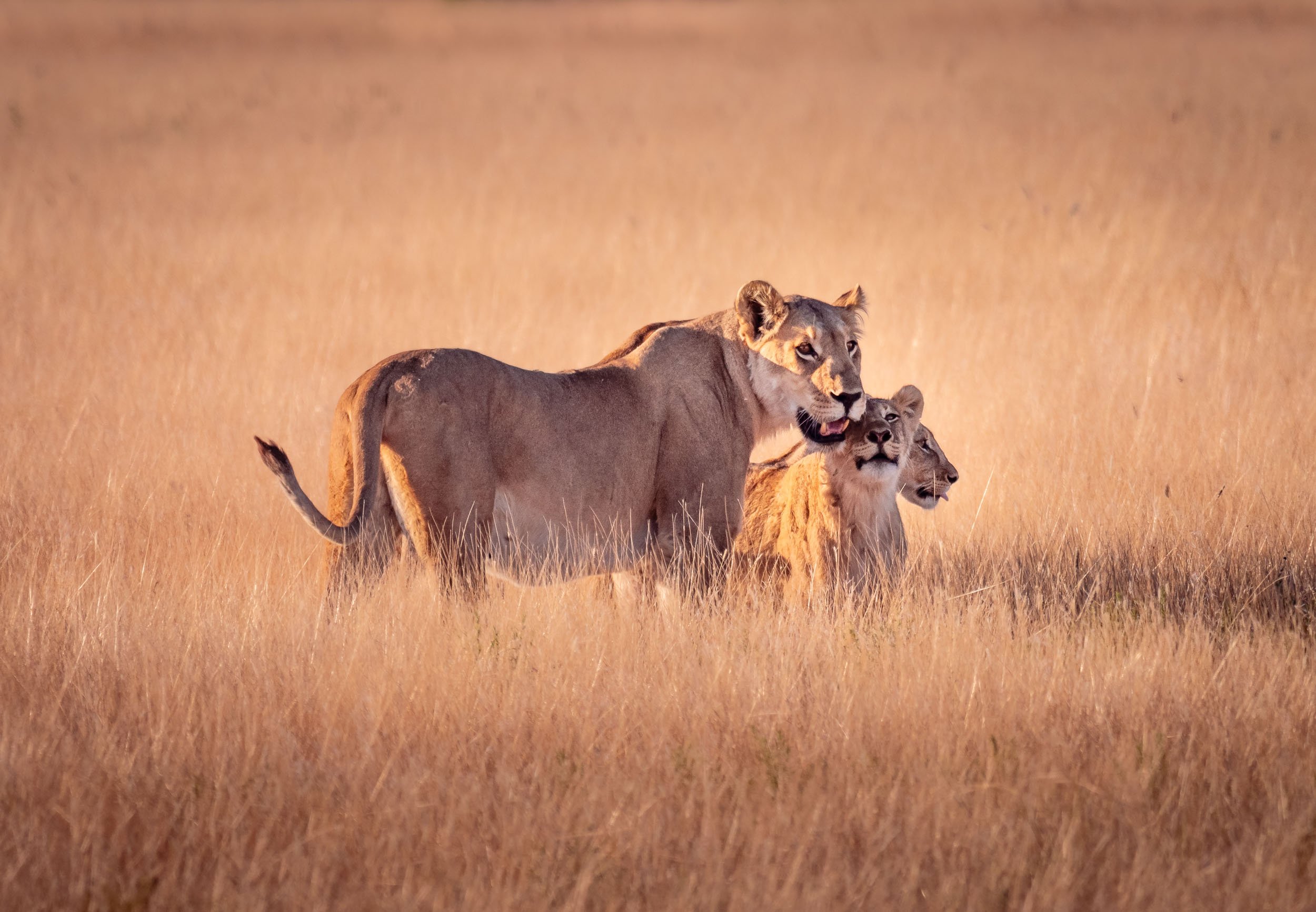
One Last Look at the Moon
Hope you enjoyed this journey of Namibia and its landscapes.
Oman - 7 Days of Authentic Beauty
From Dubai to Muscat and along the coast - an amazing journey of natural beauty, history, architecture, geology and kind people.
In February 2022 I had plans for a trip to India’s Himalayas, with the goal to take photos of the elusive snow leopard. Owing to various Covid restrictions, this idea unfortunately did not materialize, so it was time to look for another destination. One obvious choice was to look no further than a few hundred kilometers towards the Indian Ocean: Oman. Even though I’ve lived in the UAE on / off for 15 years, so far I had only seen the Musandam part of our neighbor country, and had yet to explore its mountain areas, the coastline, and the capital Muscat.
And oh boy did I miss out! The amount of landscapes, history, people, architecture, and activities you can encounter in just a week, all accessible with easy visa regulations (if you’re a GCC resident especially) and within a few hours drive from Dubai, is incredible.
The route took us through the border near Al Ain towards Nizwa, with several stops on the way, before heading up Jebel Akhdar for a couple of nights. From there, onwards to Muscat to explore the city and its surrounding areas, and a day trip southwards along the coast almost until Sur (but not quite) was on the agenda.
Read on to find out about the sights and experiences on the way…
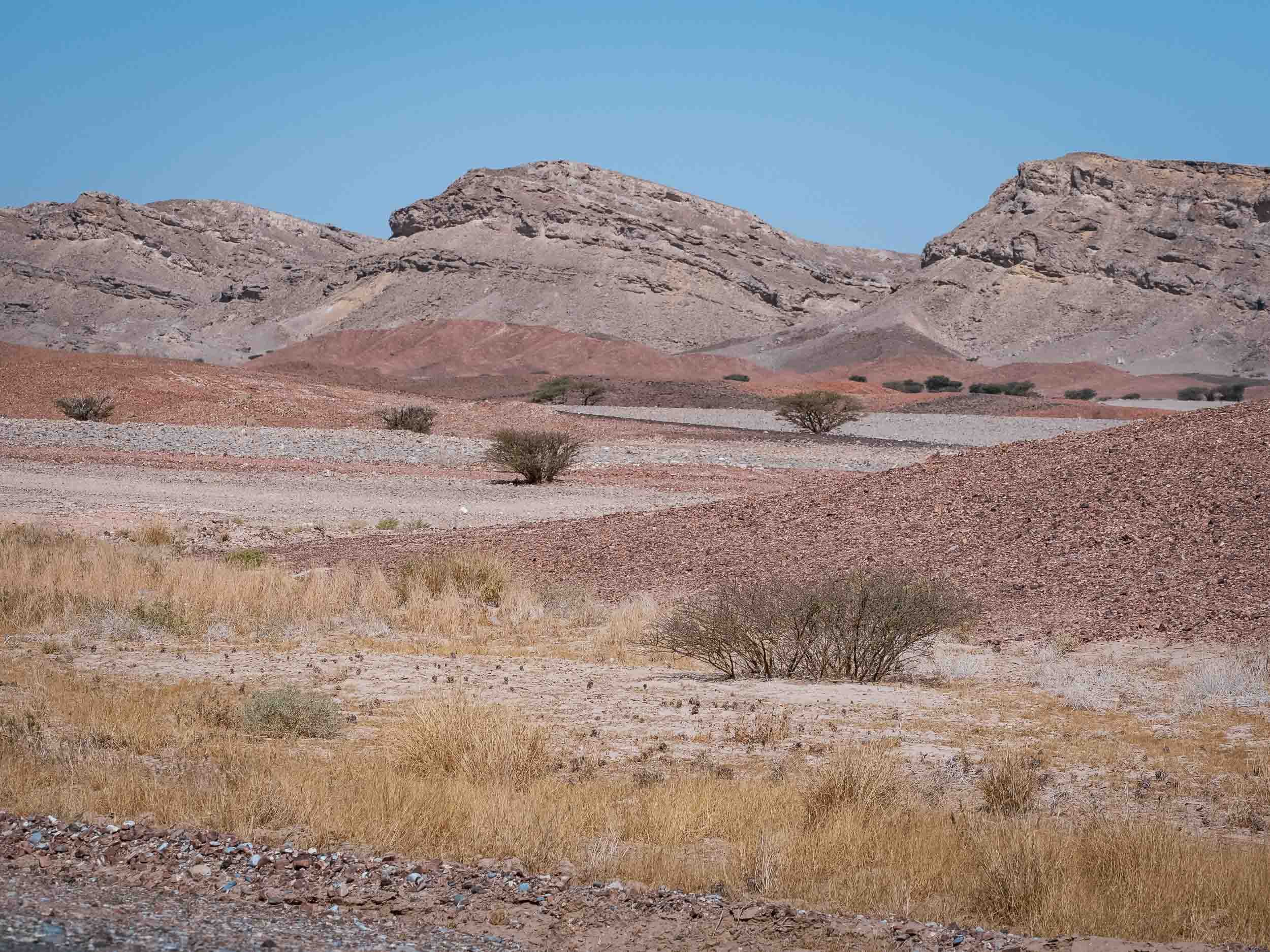
Hajar Colours
The Hajar mountains feature an amazing variety of colours and shades, and their geological significance has been recognised globally - it makes the 6h drive towards Muscat all the more pleasing.
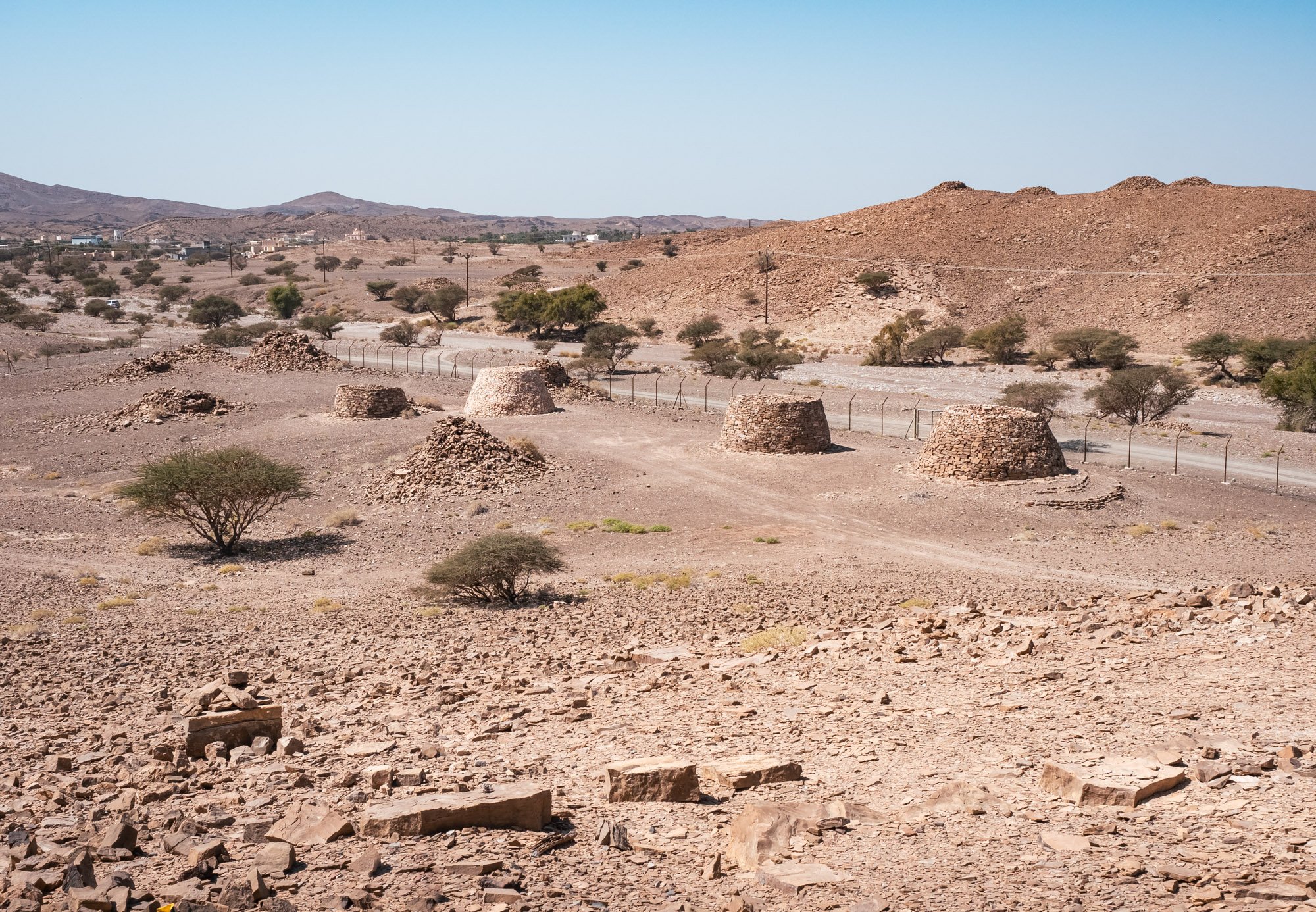
Beehive Tombs of Bat
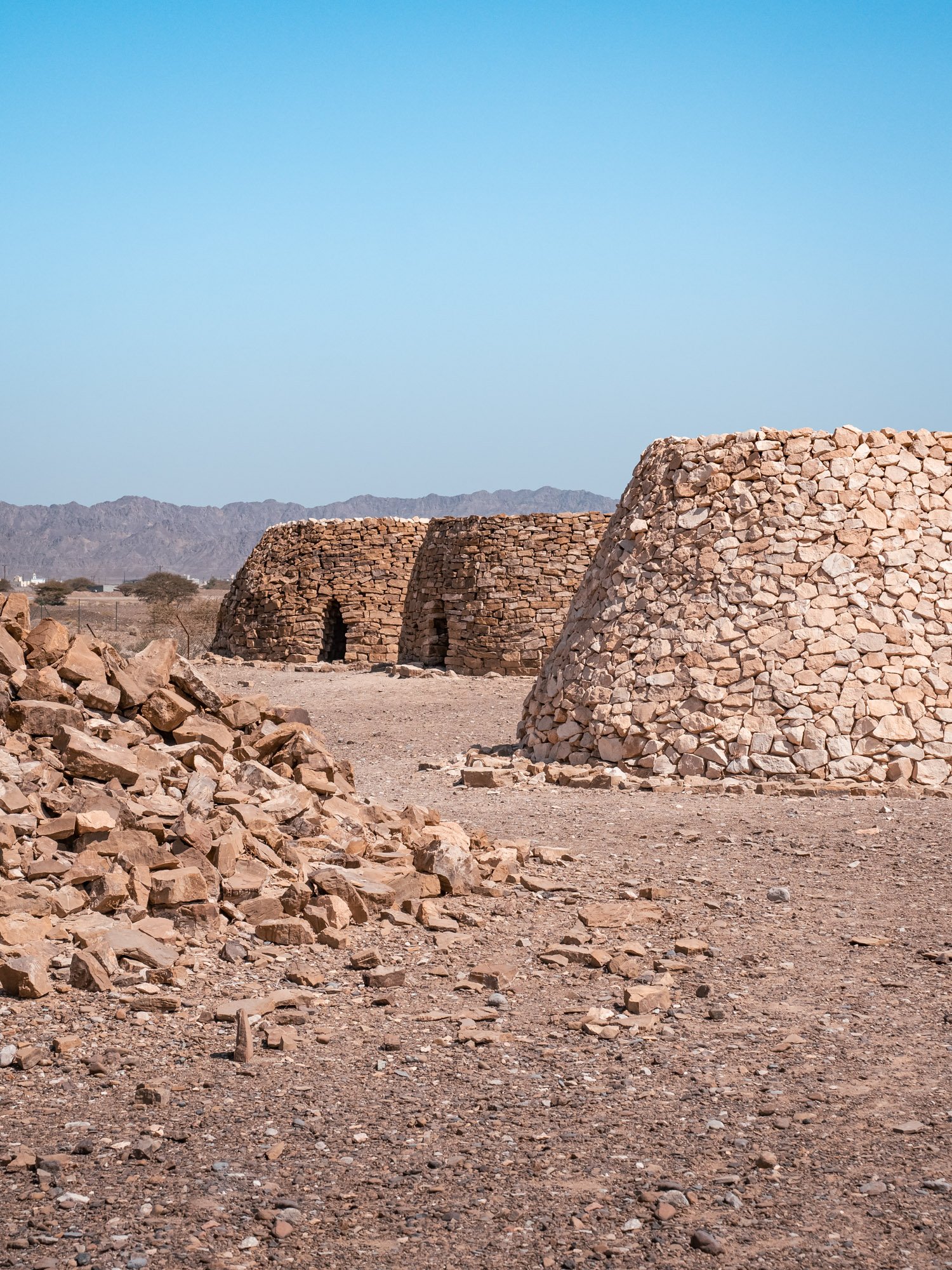
Our first stop were the Beehive tombs of Bat, which are between 4000-5000 years old.
Unesco World Heritage Site
Together with their sister sites in the same region, they form one of the largest protohistoric necropoleis in the world.
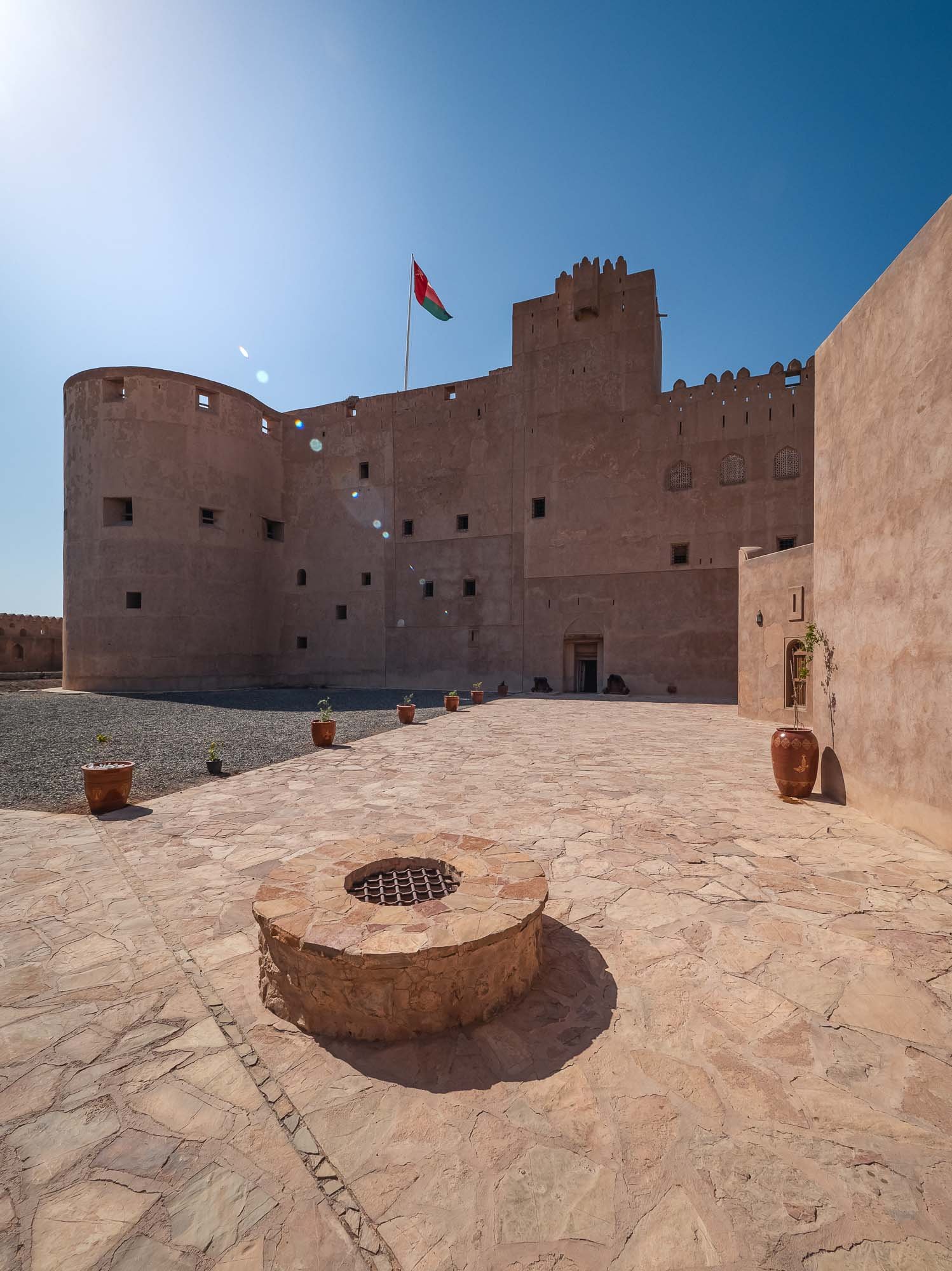
Jabreen Castle
A little further towards Nizwa awaits one of the many castles and forts in the region.
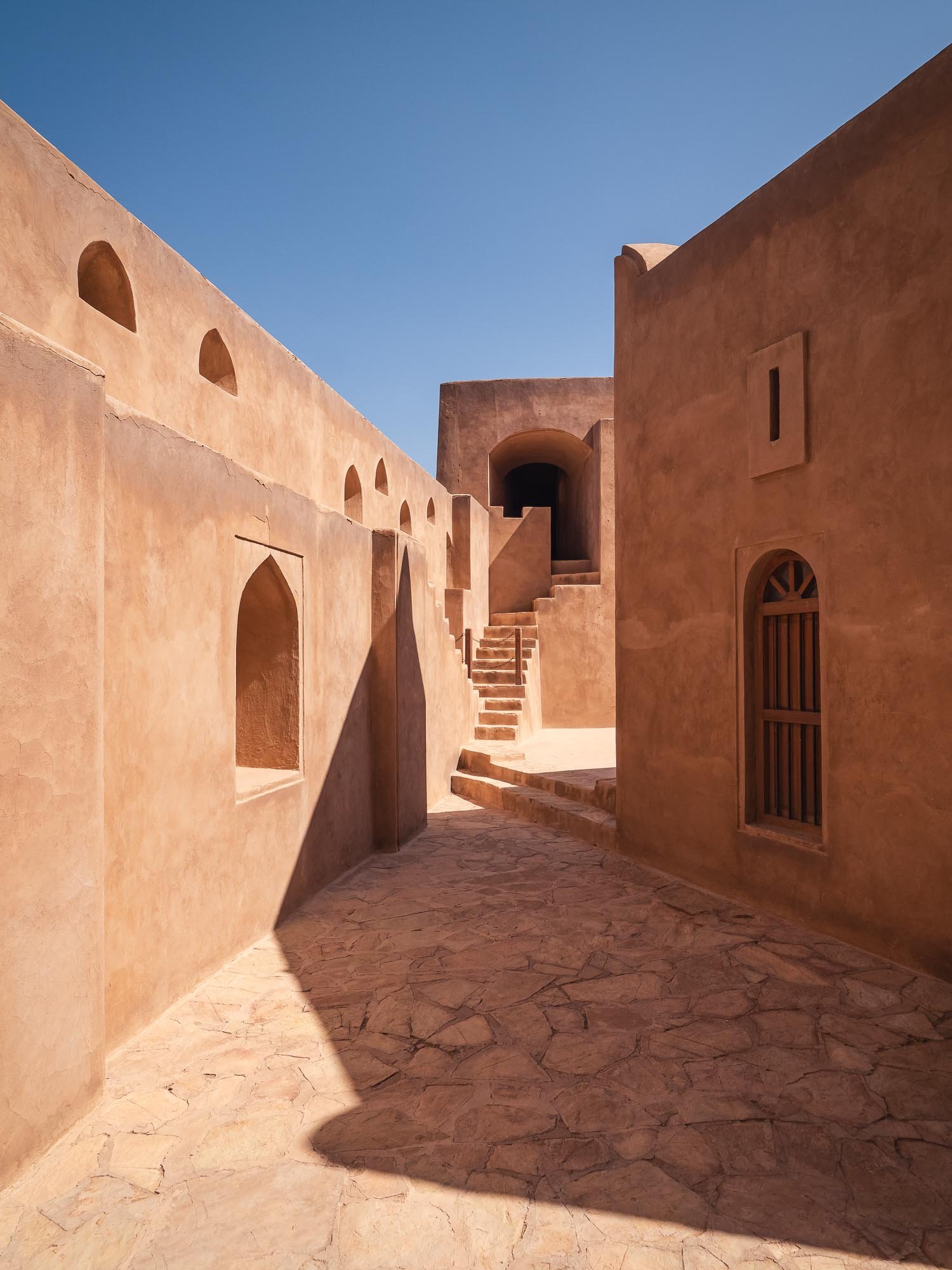
Shapes
This one was arguably my favourite - which says a lot, given the number of forts and castles on this route.
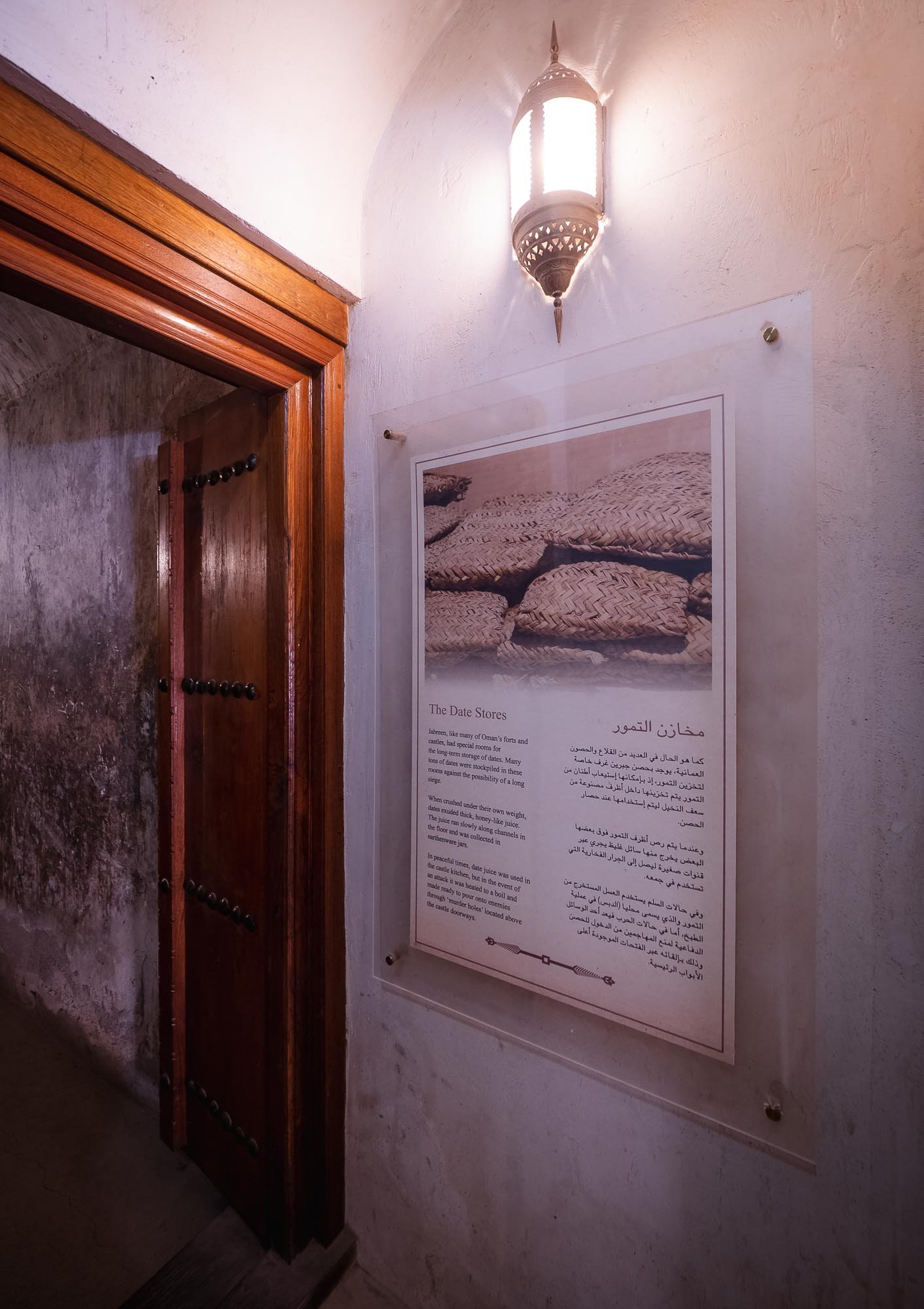
Date Storage
... along with some interesting uses in war times. The castles and forts in Oman feature some clever defense mechanisms you will encounter when exploring them.
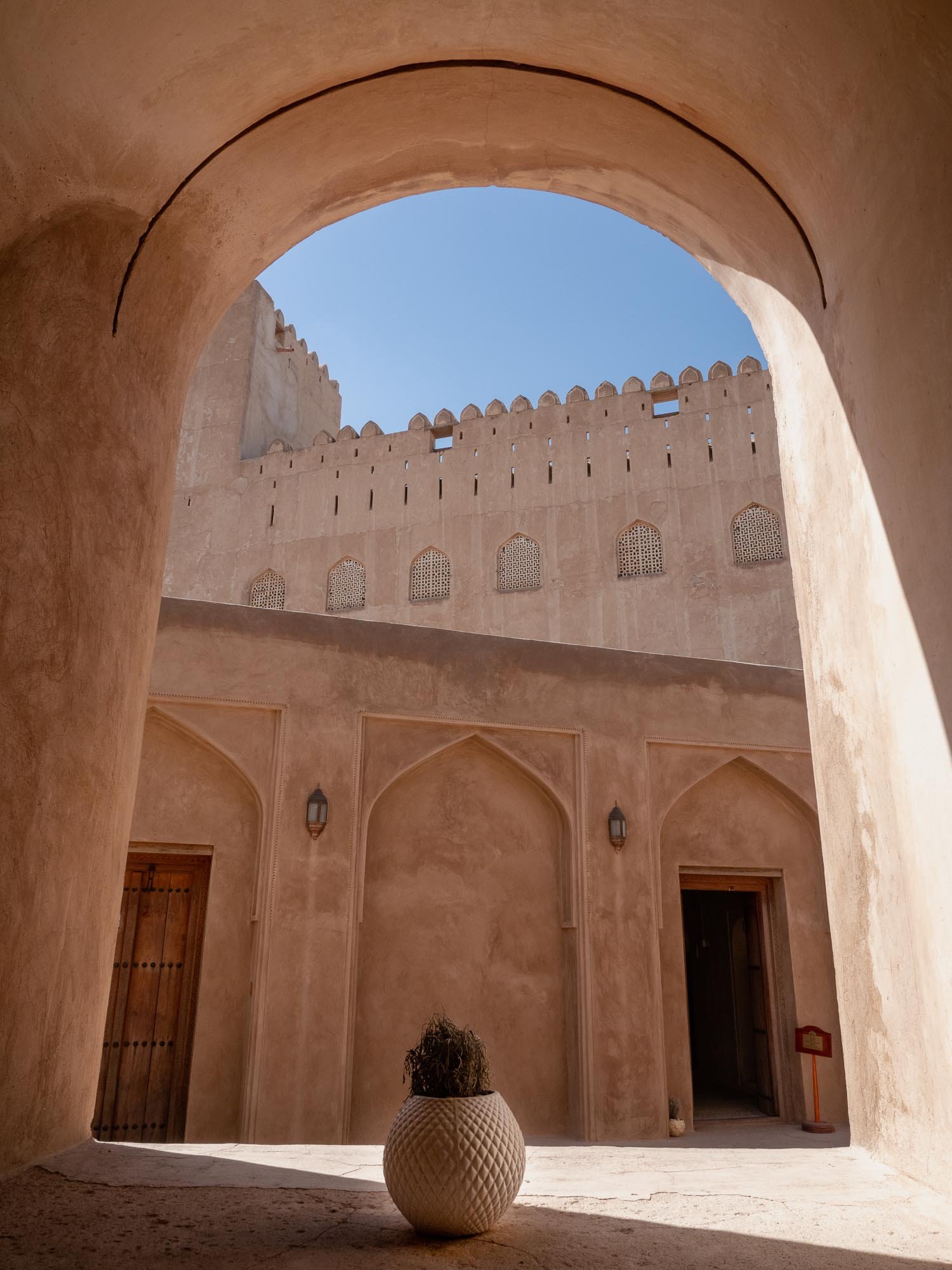
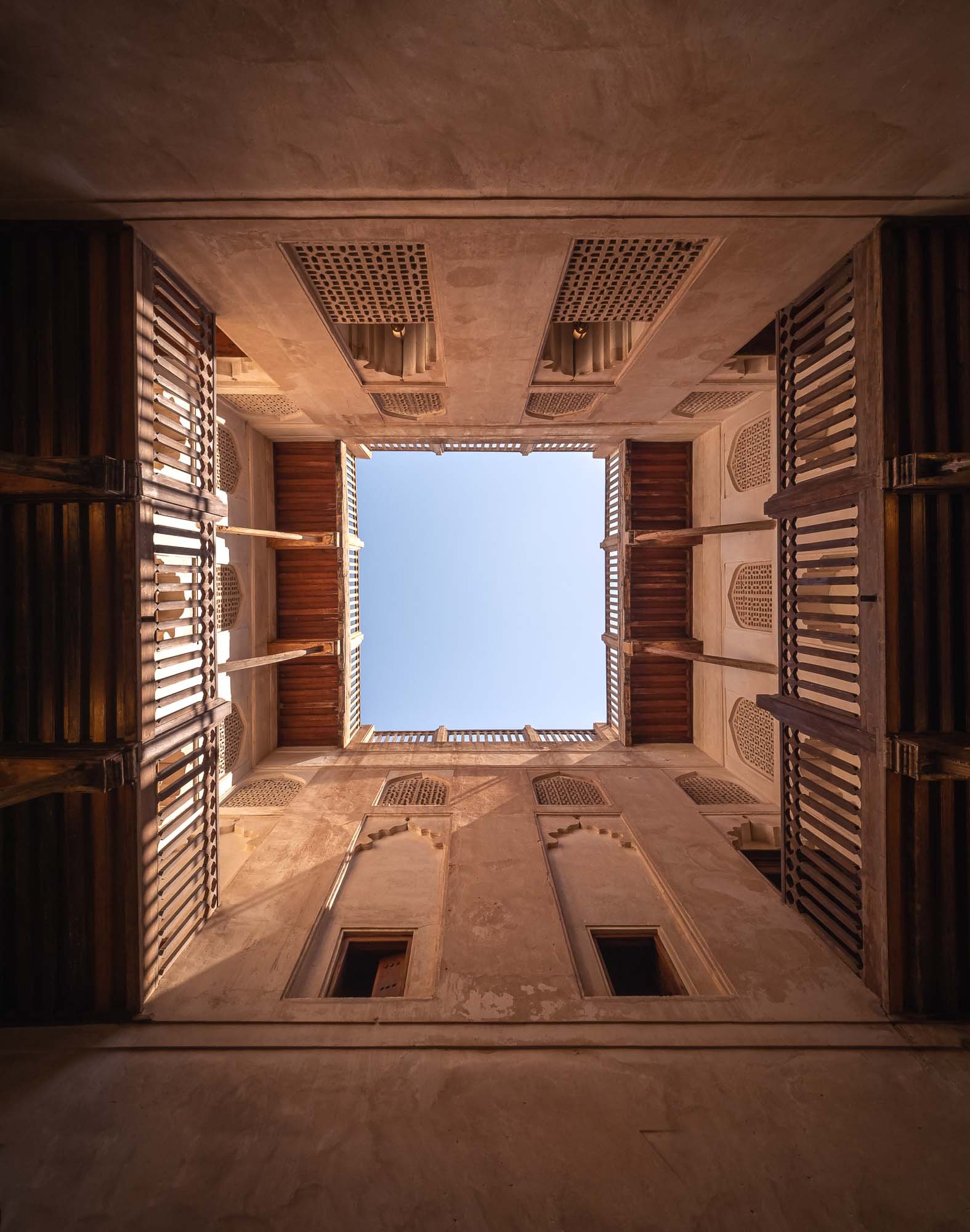
Courtyard
One of the two major courtyards in the castle - this one had its original wooden balconies restored.
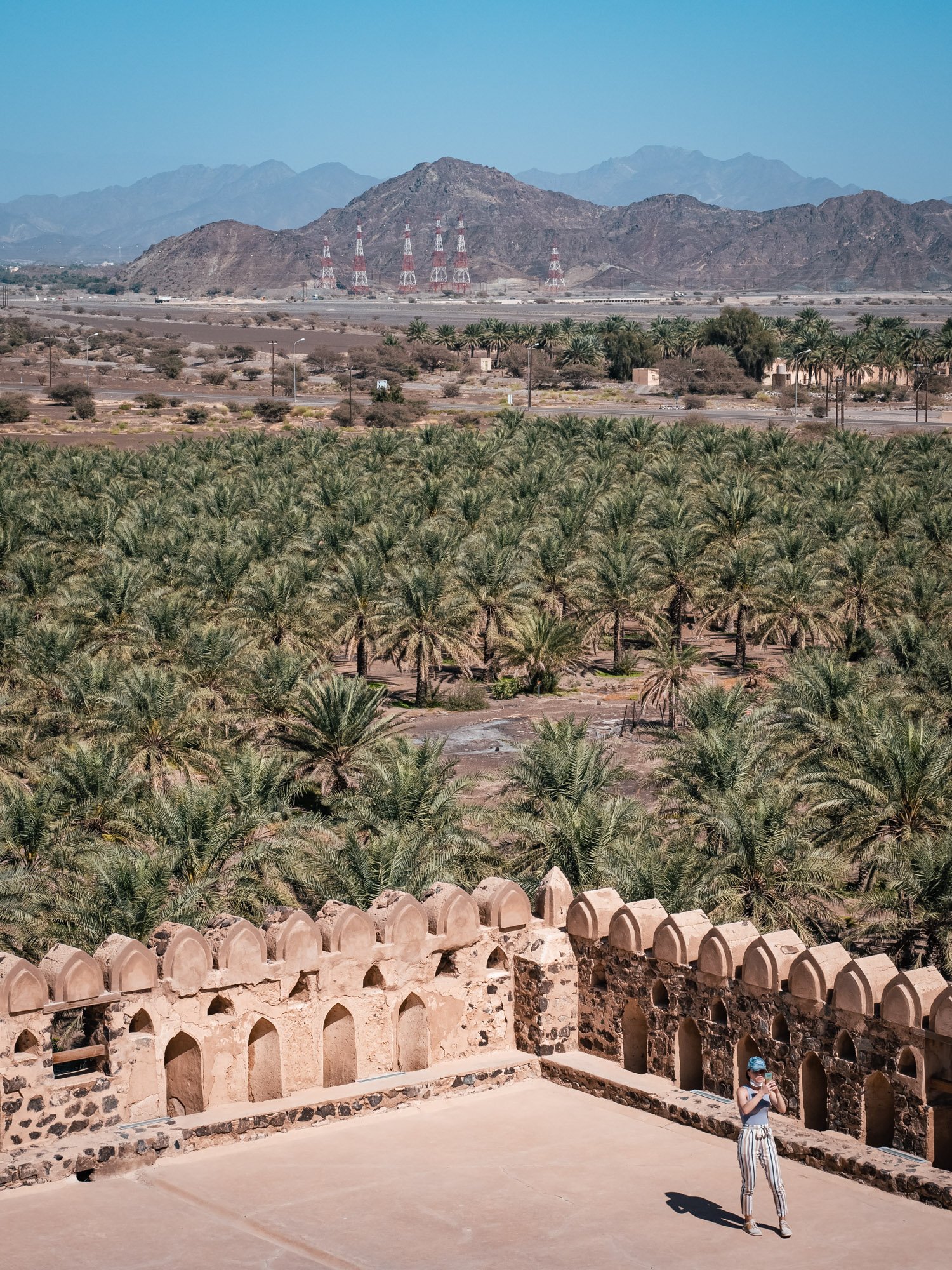
Green surroundings
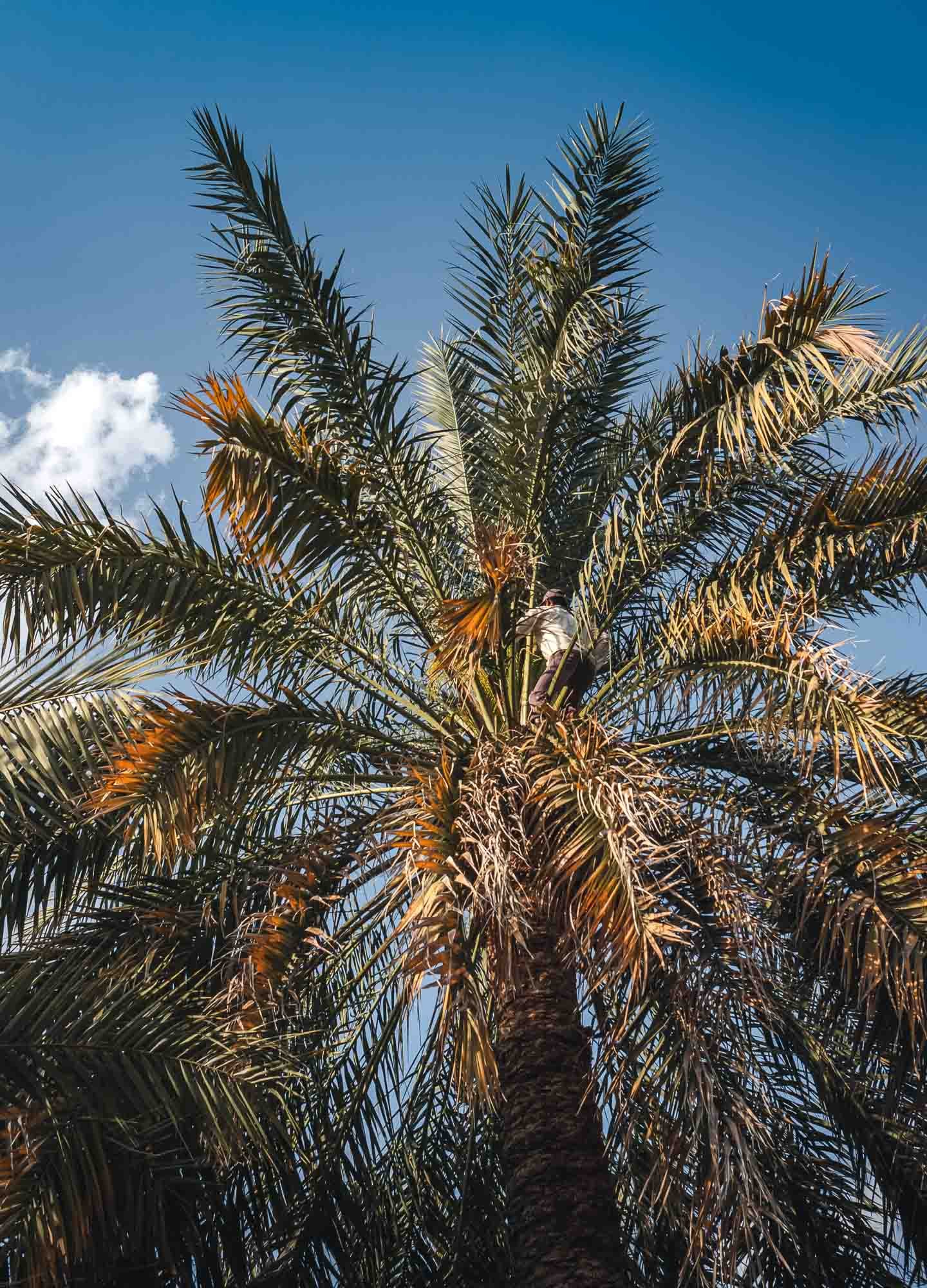
As with most of the cities in this basin of the Hajar mountains, farms and date palms can be found everywhere.
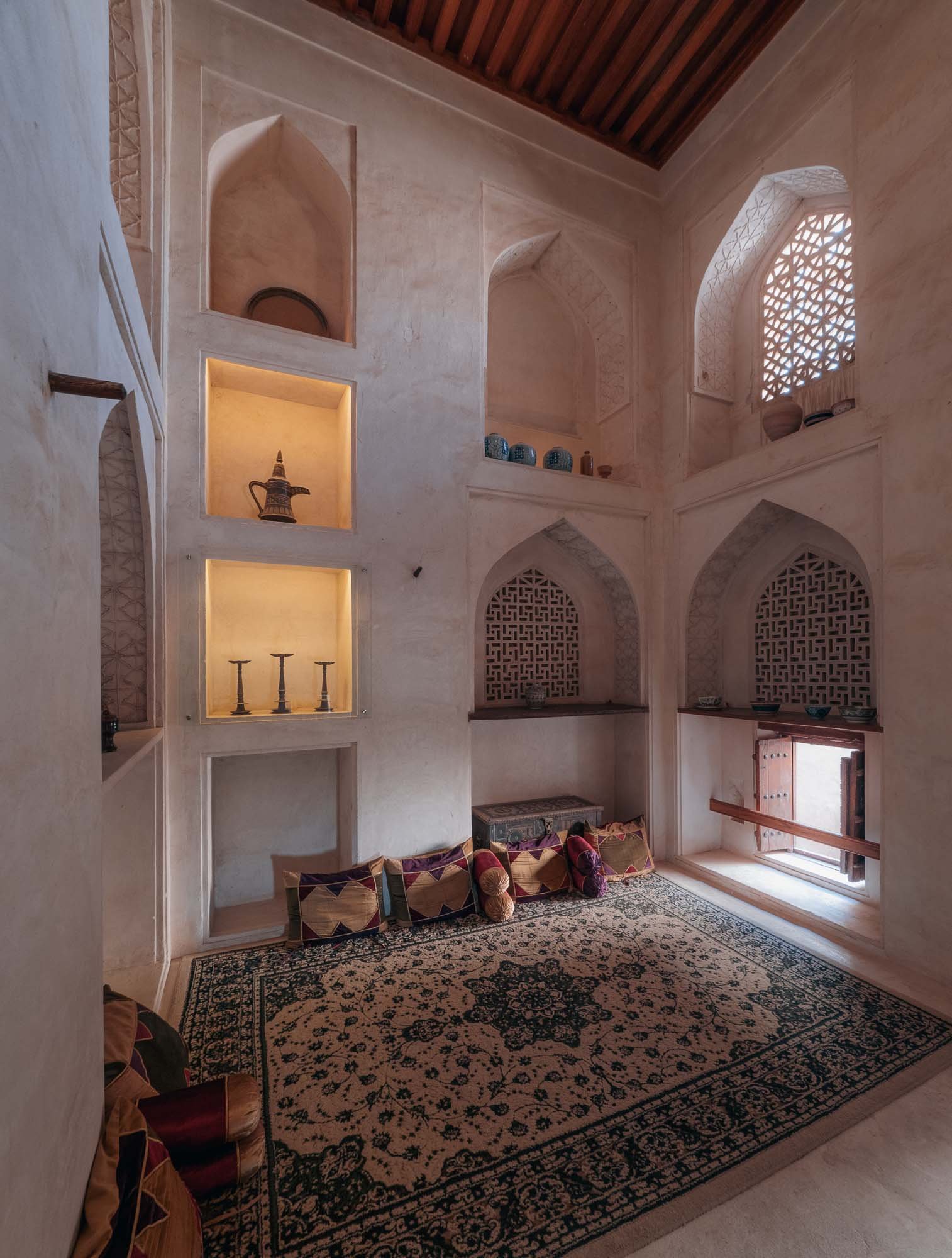
Interior
Some of the rooms have been restored and decorated.
Warm Colours
hiding some of the cruel past of these forts.
Next up, we had planned to visit the ruins of Salut fort, another important archeological site in the area, but were disappointed to find it is currently closed and under development. Check before you go - and avoid getting a flat tire like we did.
Bahla Fort
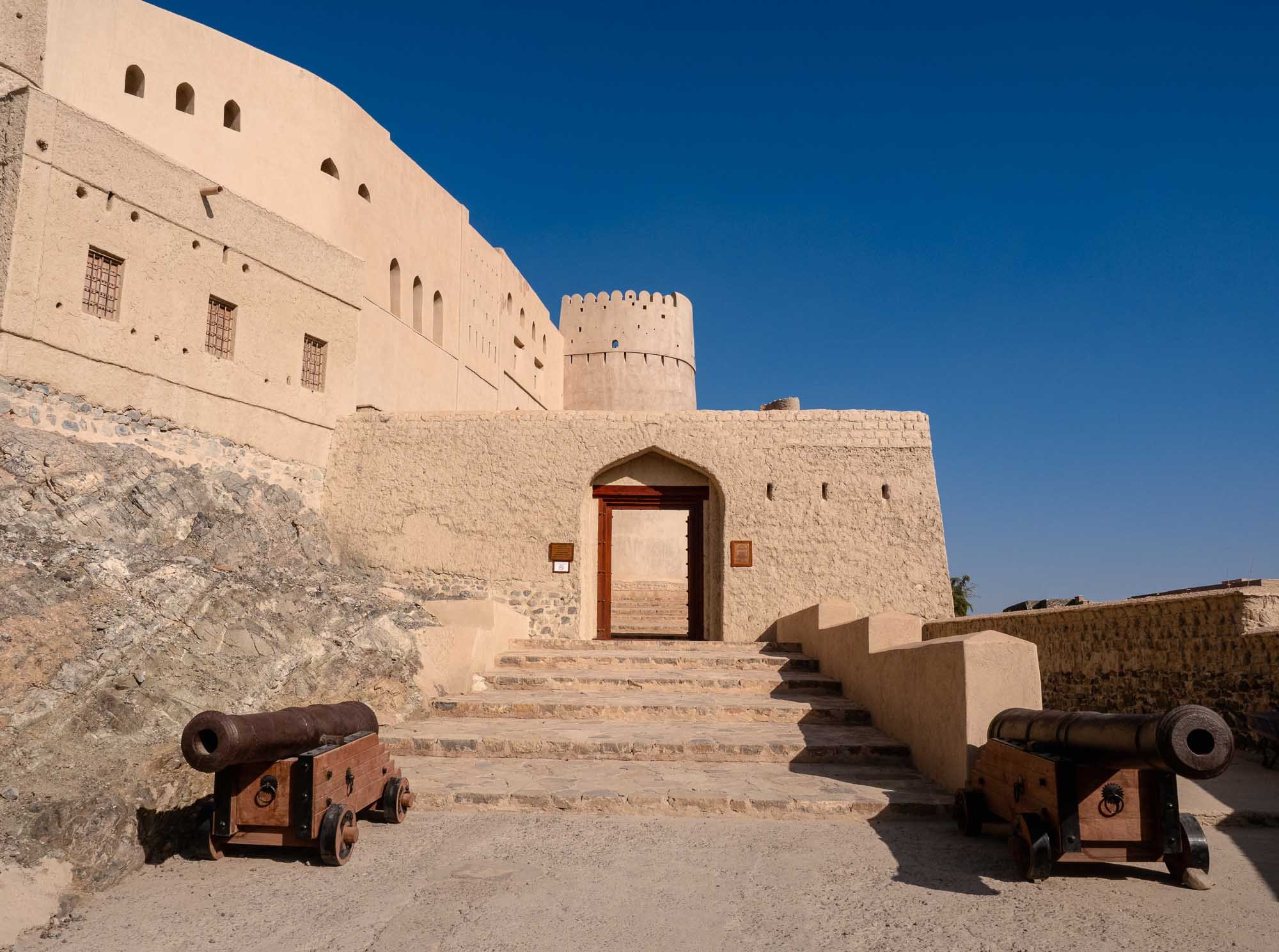
Bahla Fort
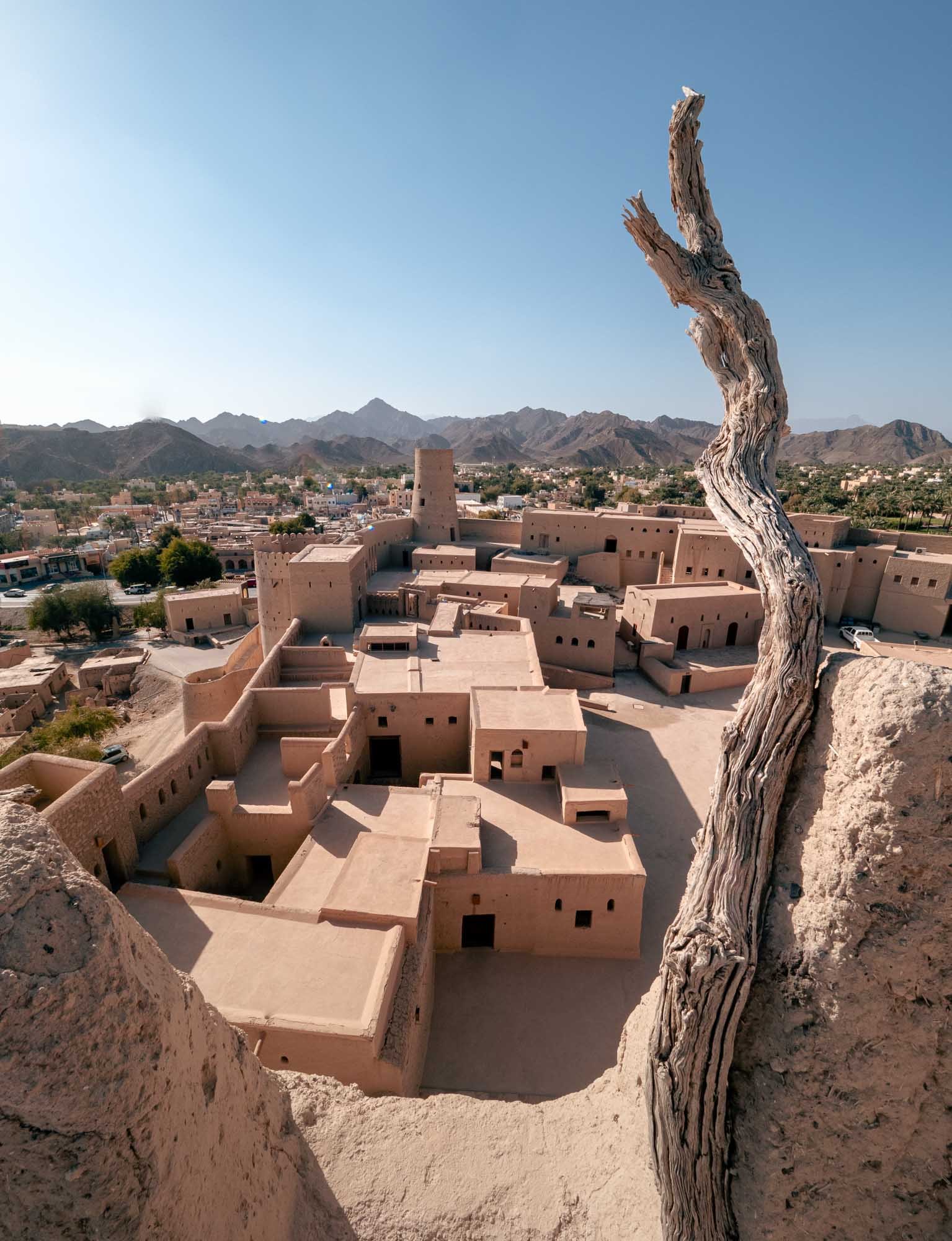
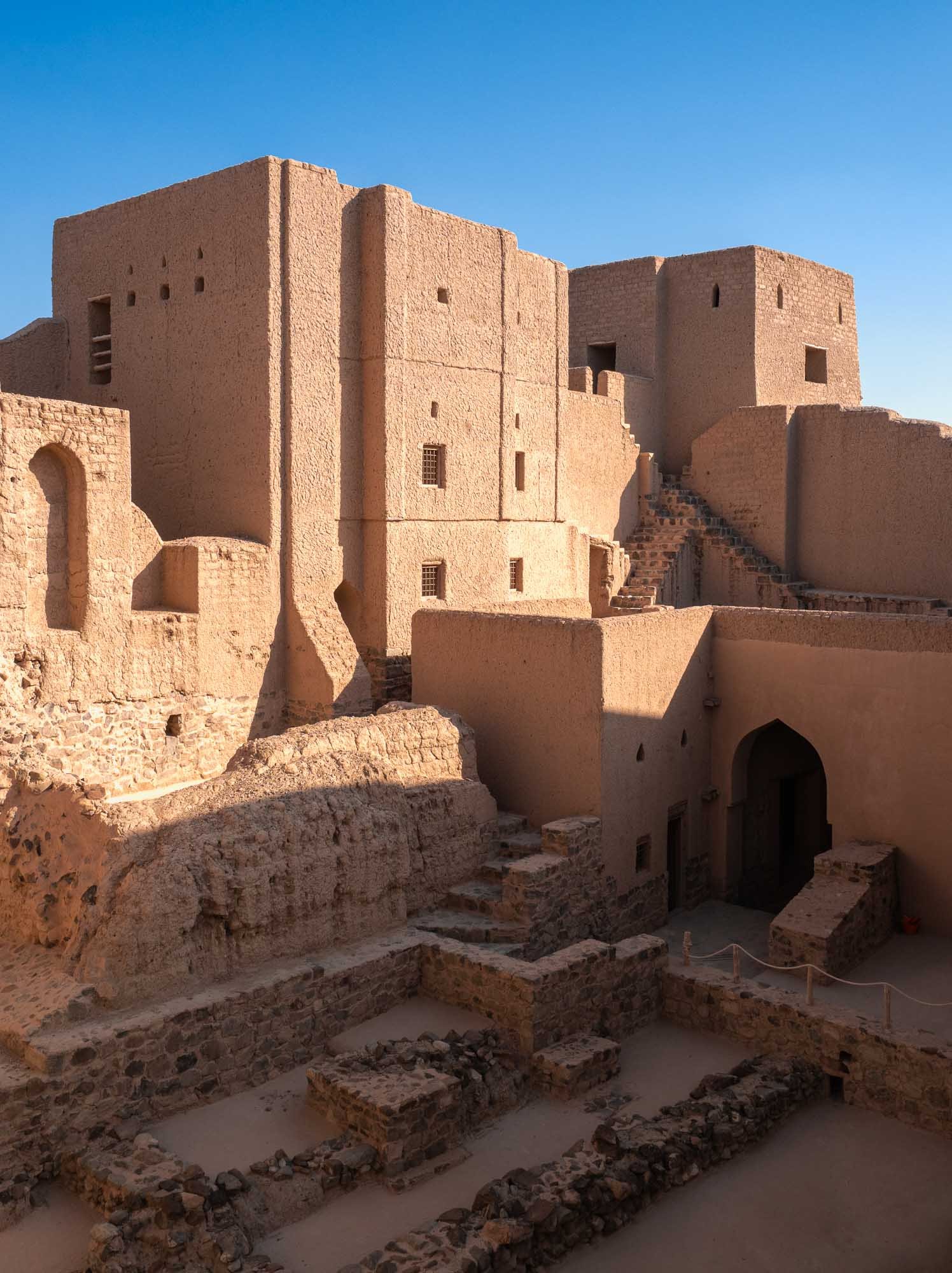
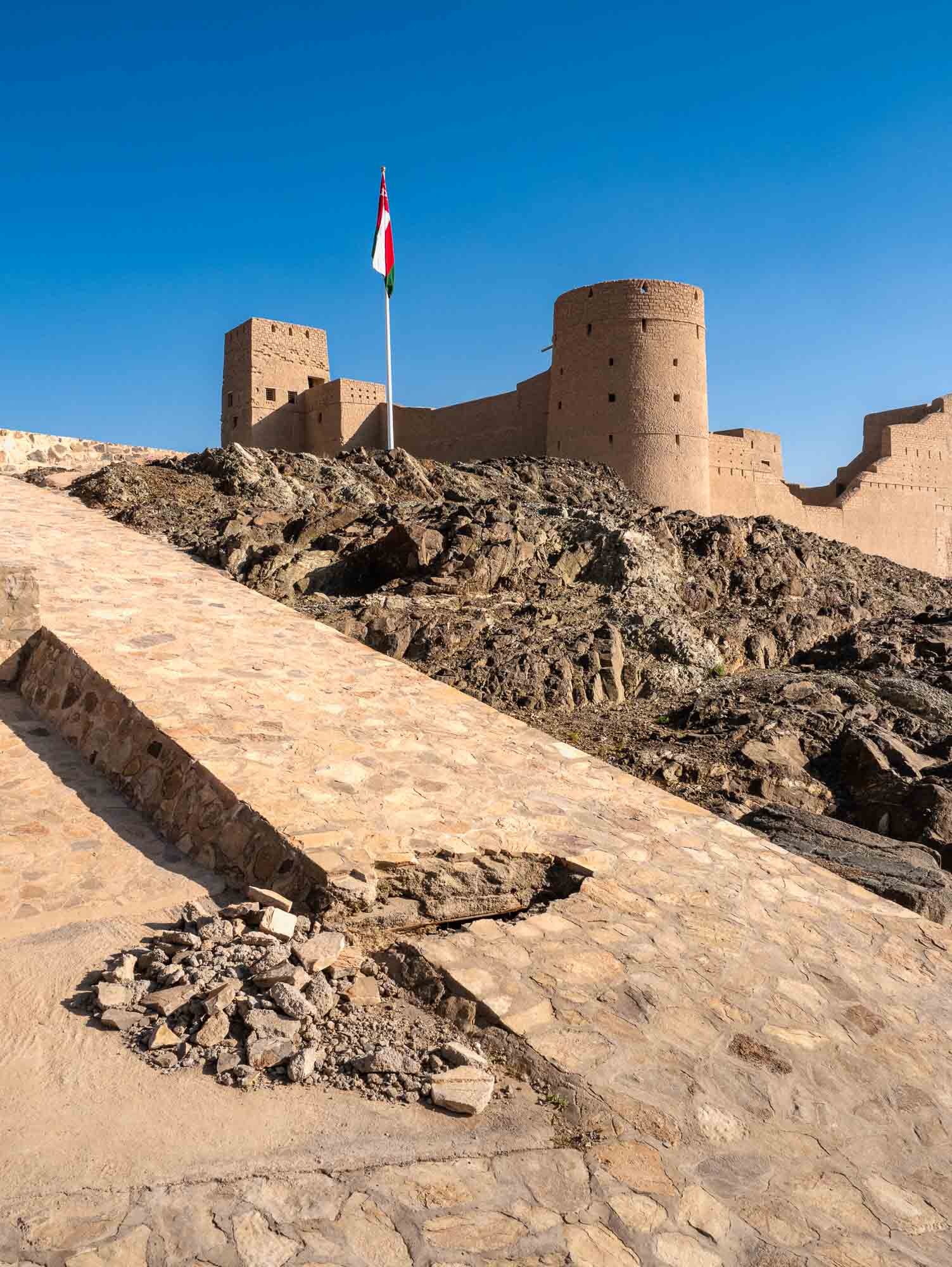
We then made it to Bahla Fort, the country's only UNESCO-listed fort, added in 1987.
Haunted?
This fort is also the subject of many tales of djinns and black magic.
The Real World
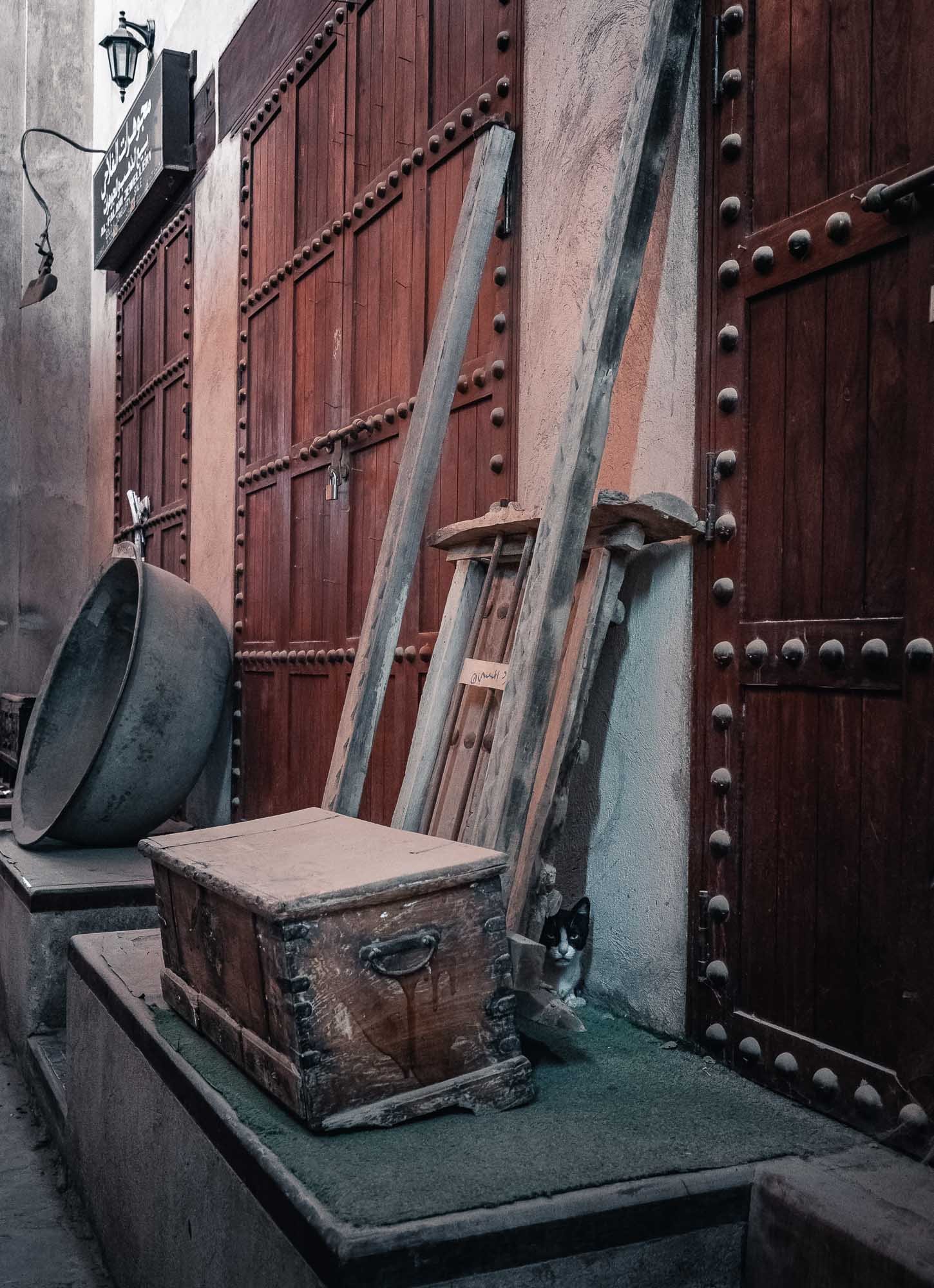
We only encountered beautiful architecture and a cat though (not pictured).
Complex
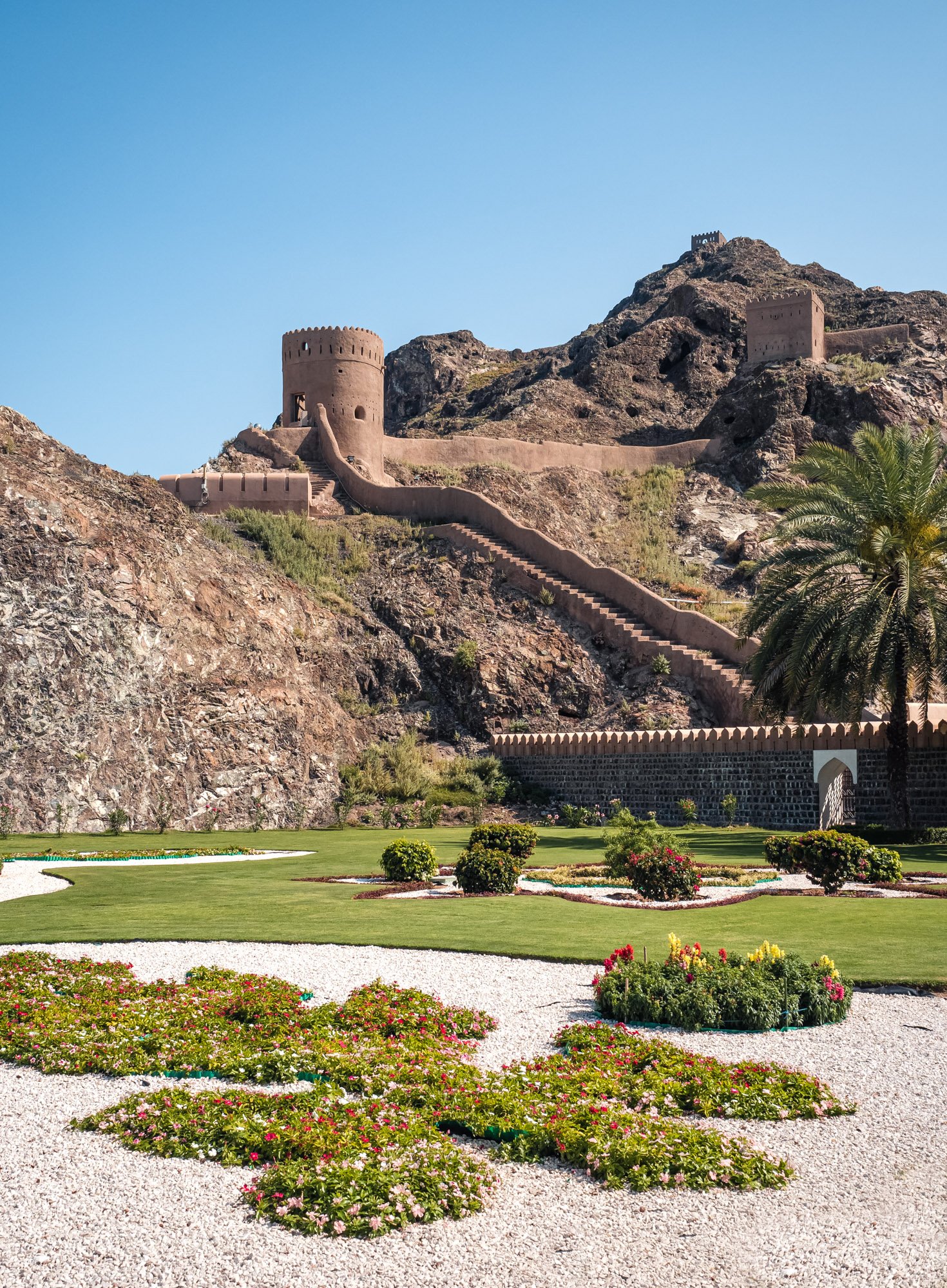
The fort is part of a bigger settlement, including a 13km wall, pieces of which you can still spot in the mountains surrounding it.
Views
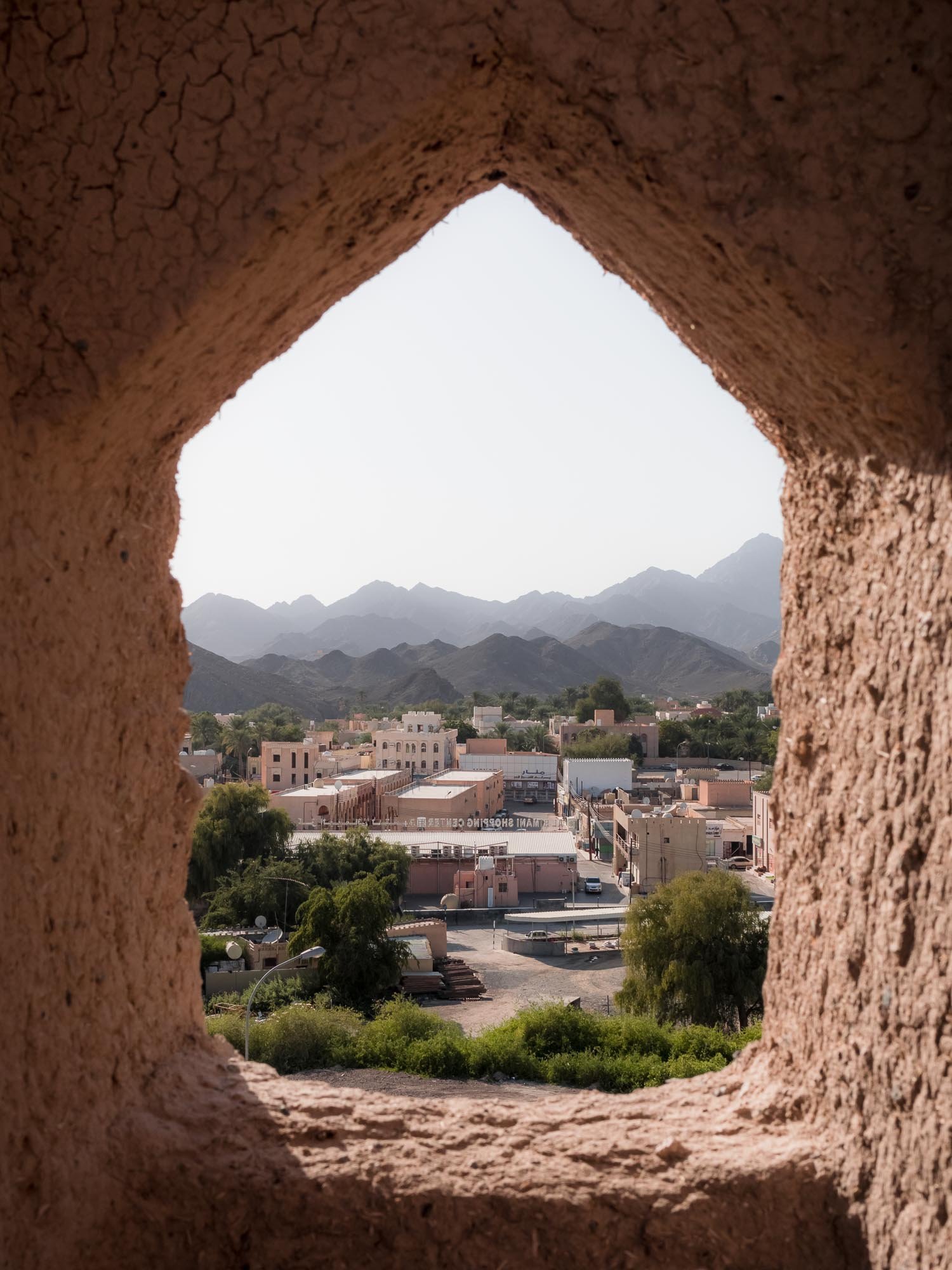
As with all the forts in the area, this one also features beautiful Hajar mountain scenery from its windows.
Restoration
The fort was fully restored in 2012, but there is not a lot of visitor information available, unlike in Jabreen or Nizwa.
From Prayer
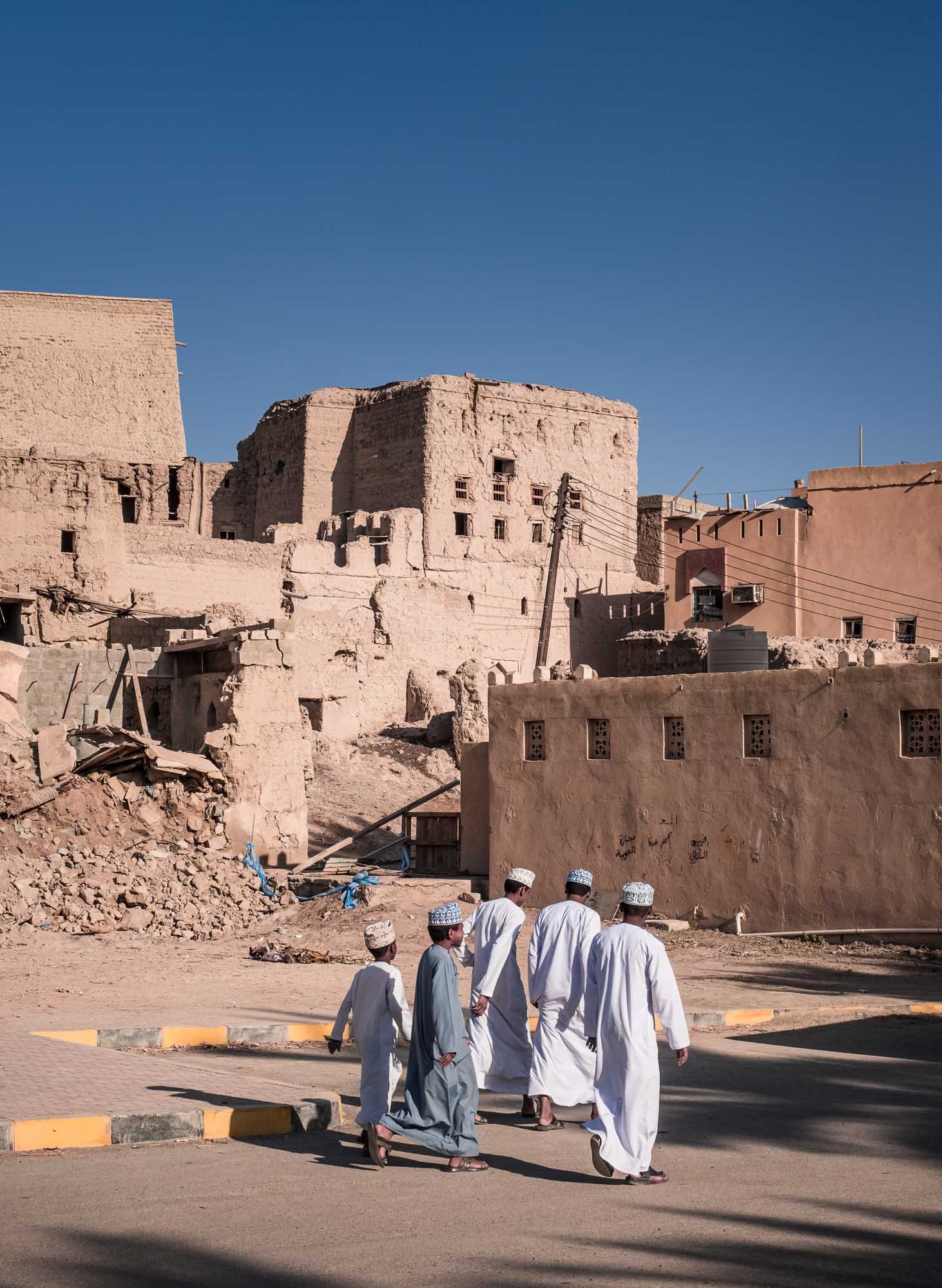
A group of young local men returning from prayer and walking past the abandoned village area surrounding the fort.
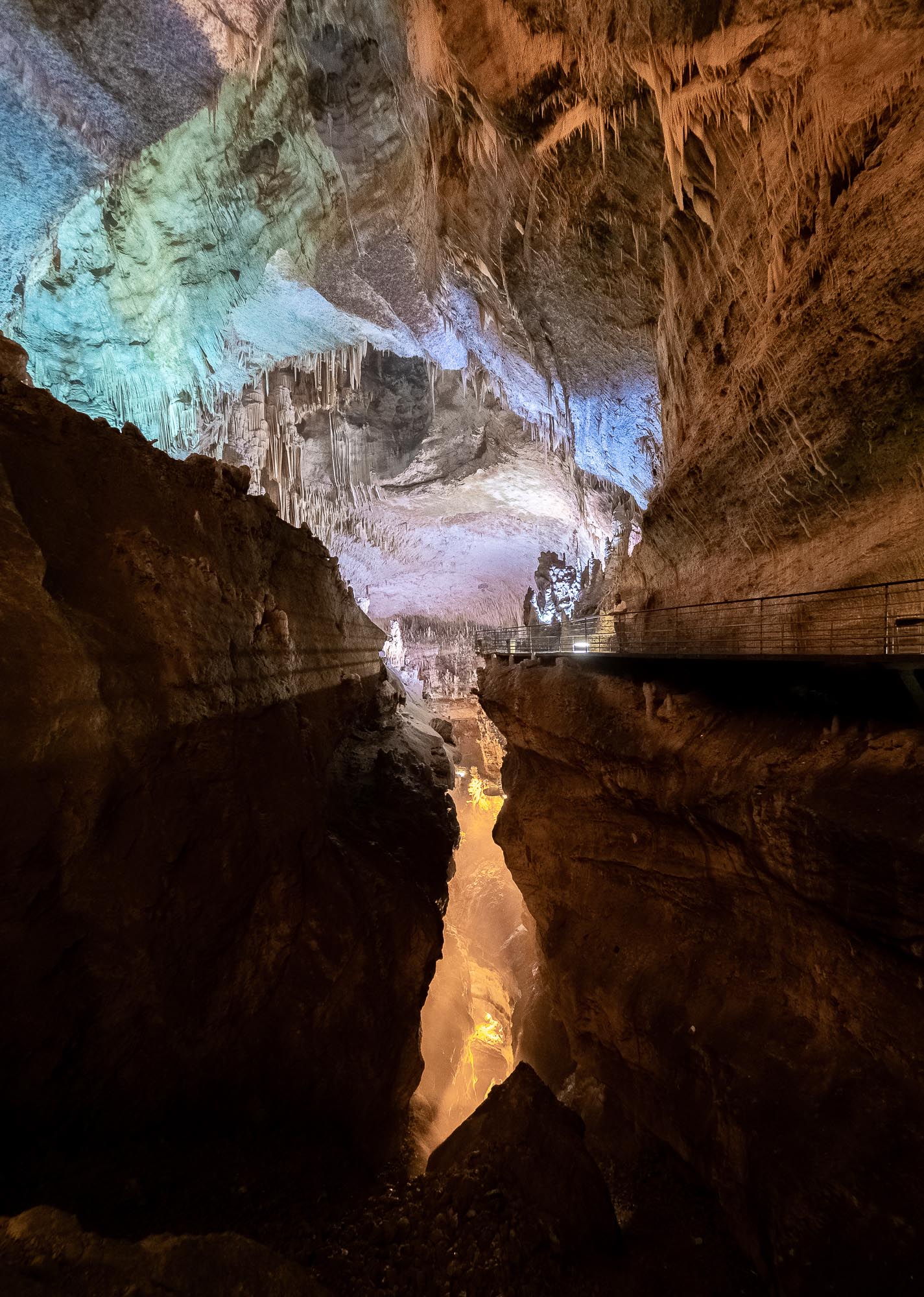
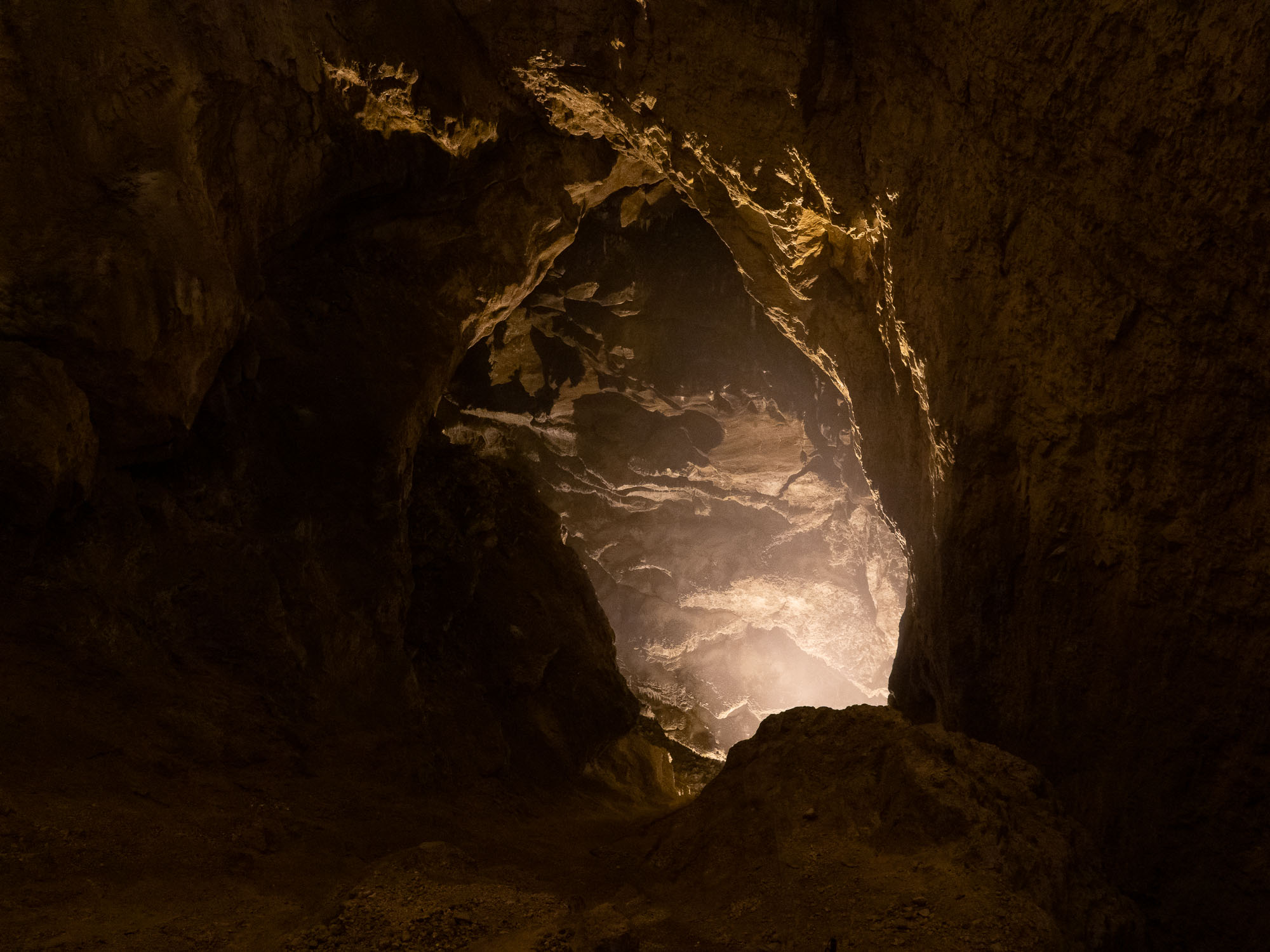
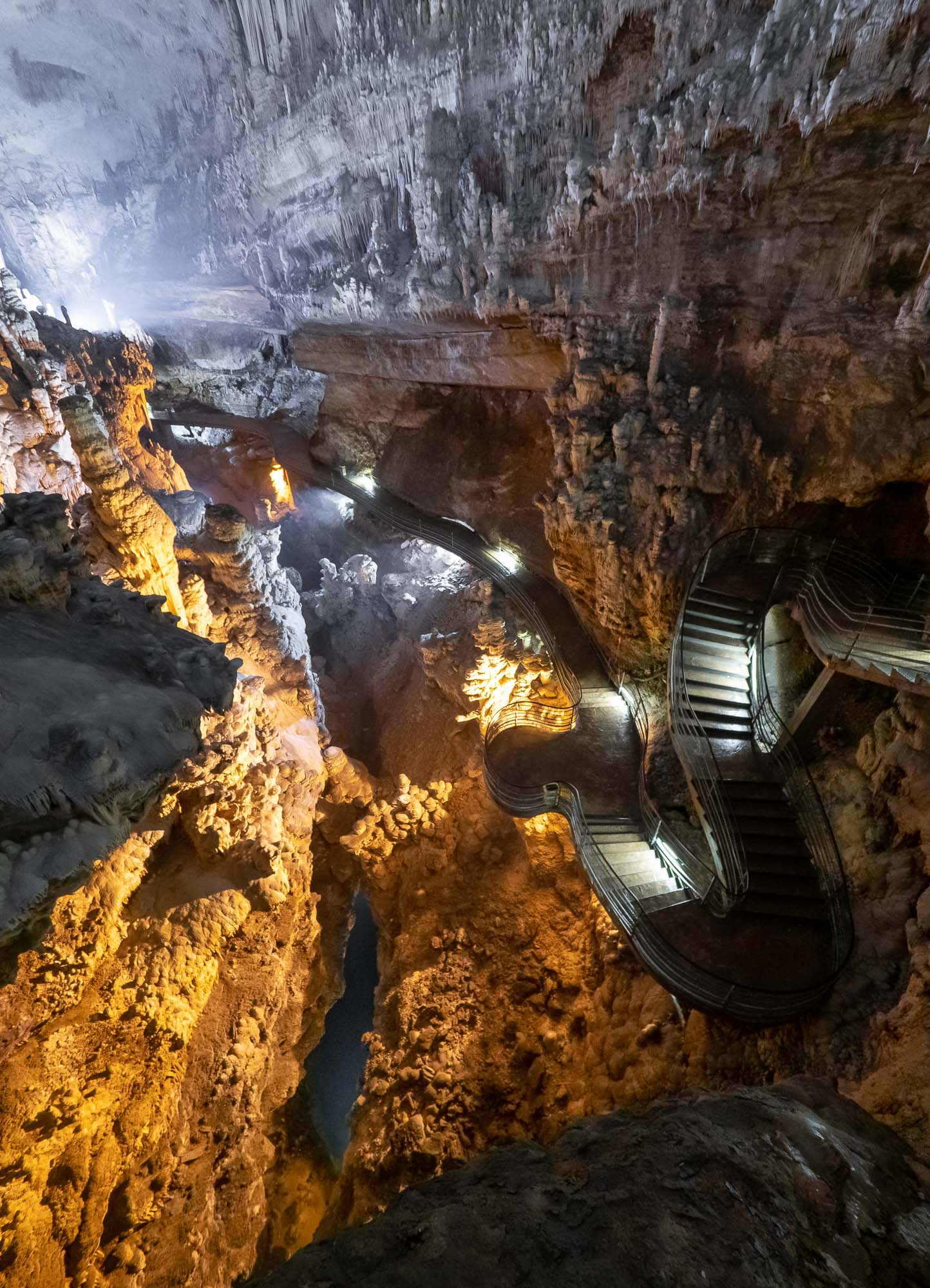
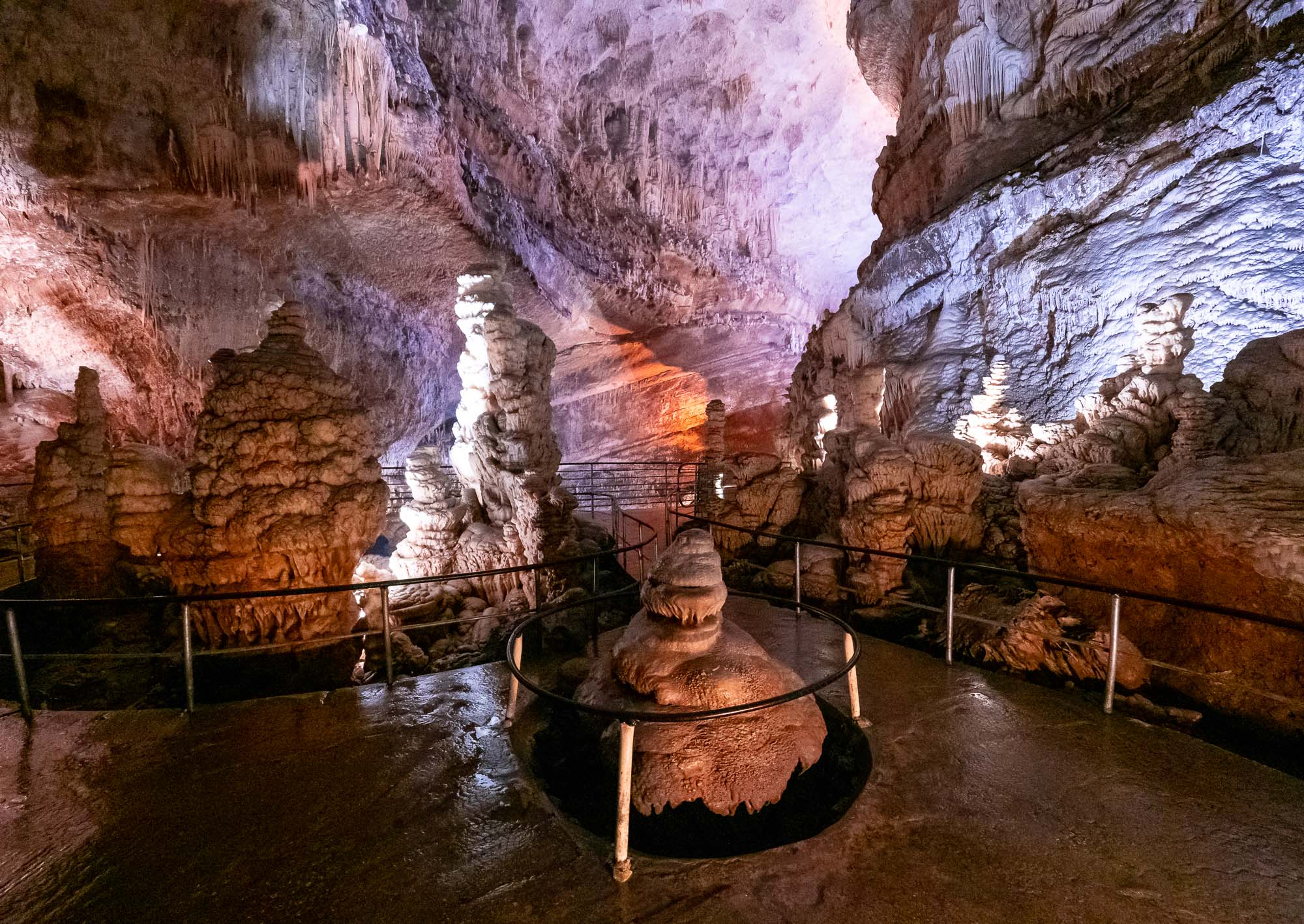
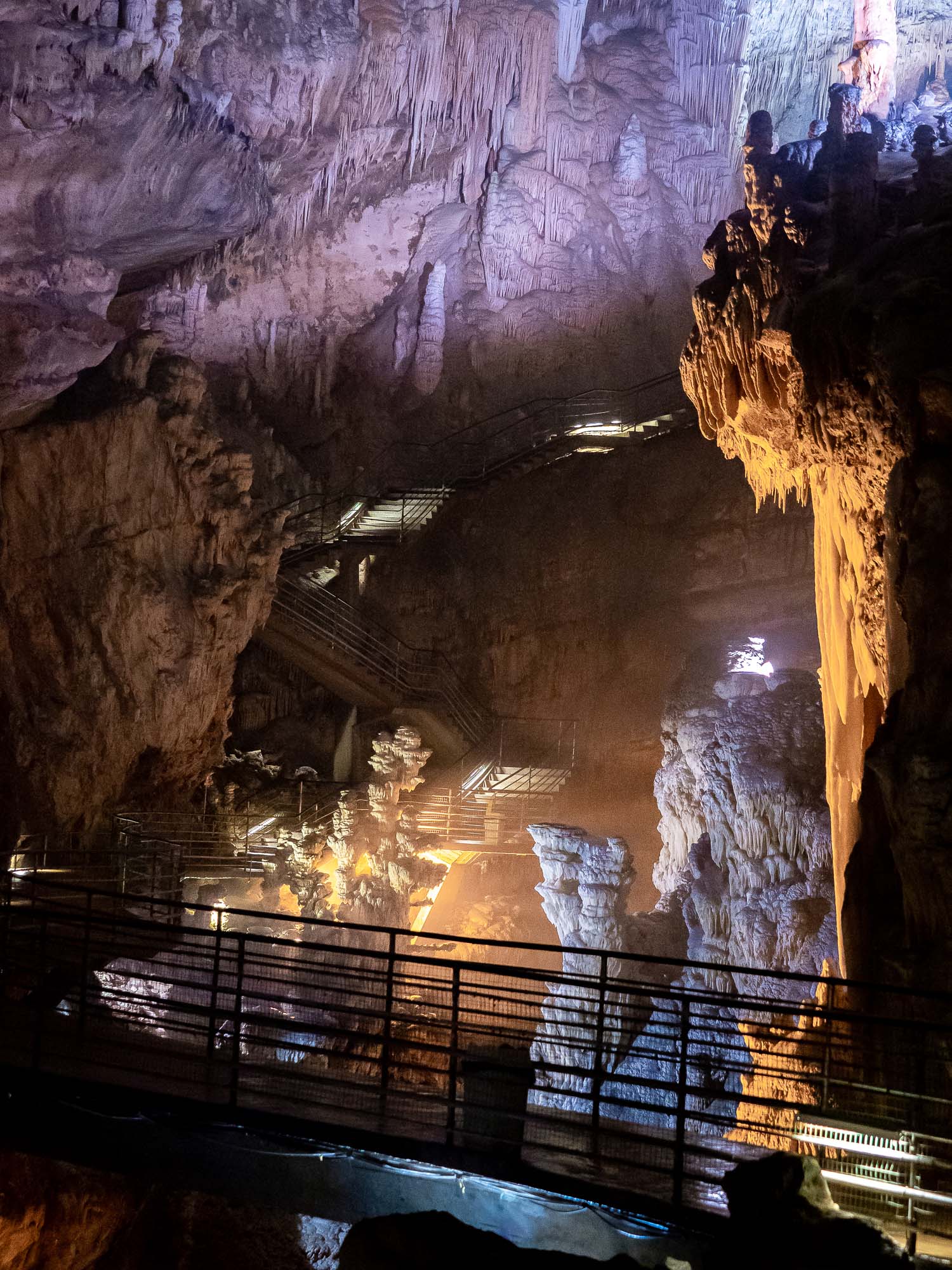
Al Hoota Cave
Hoota Cave
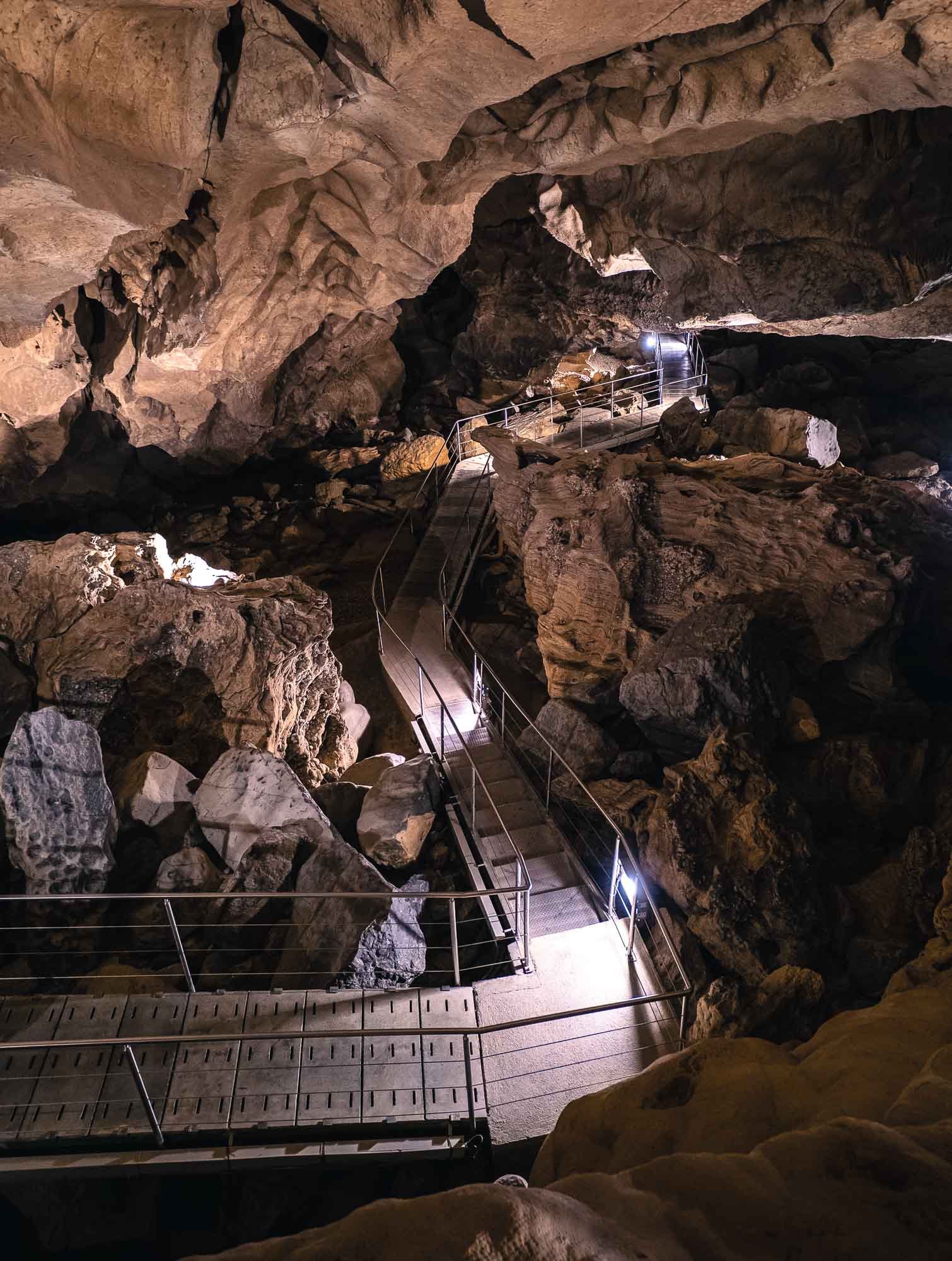
Another 30min further and you reach Hoota Cave, probably the most famous (of many) in Oman.
Accessible
It's the only cave in the country that has been developed for tourism, although you can only access 500m of its total 4km length.
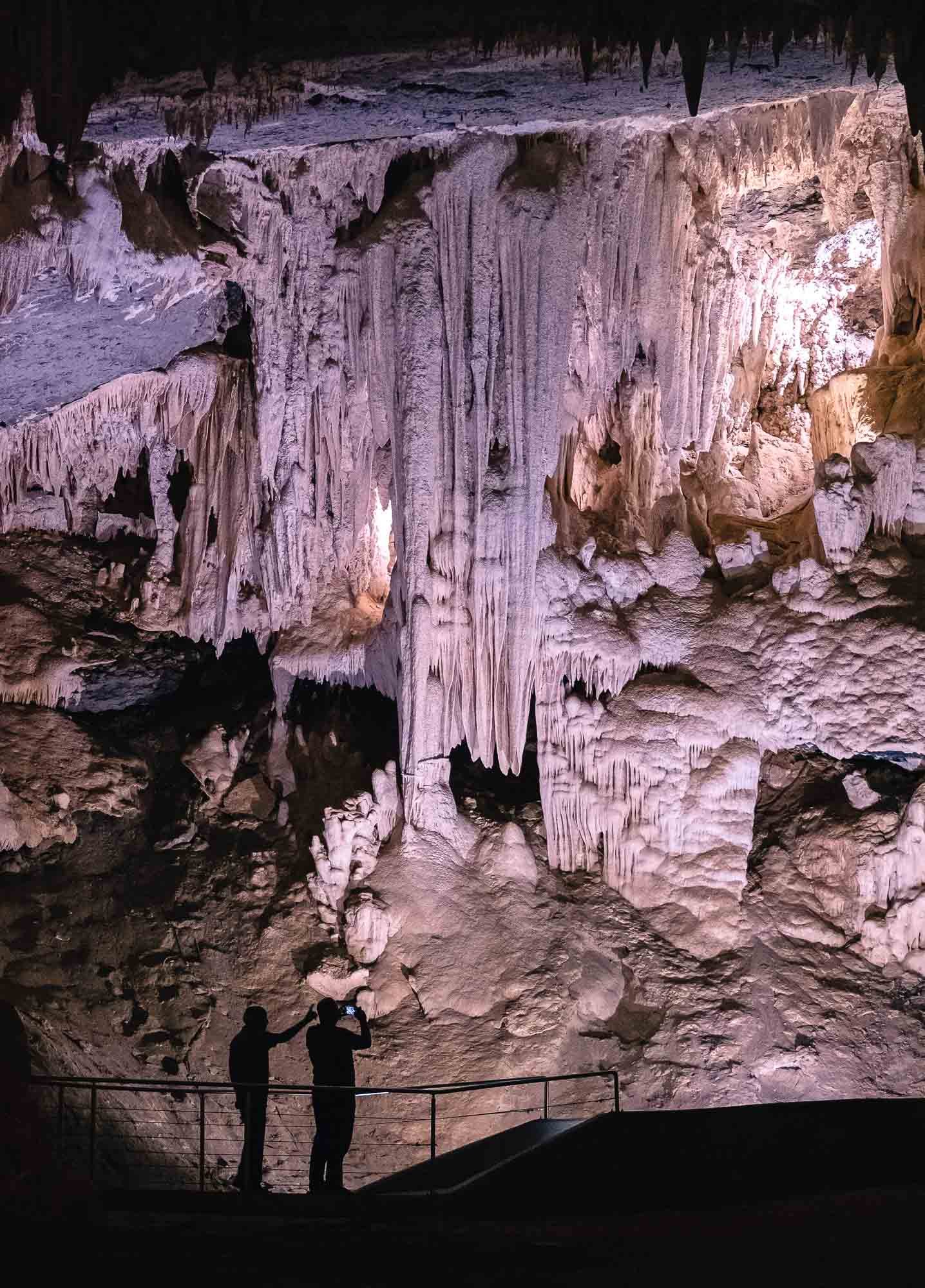
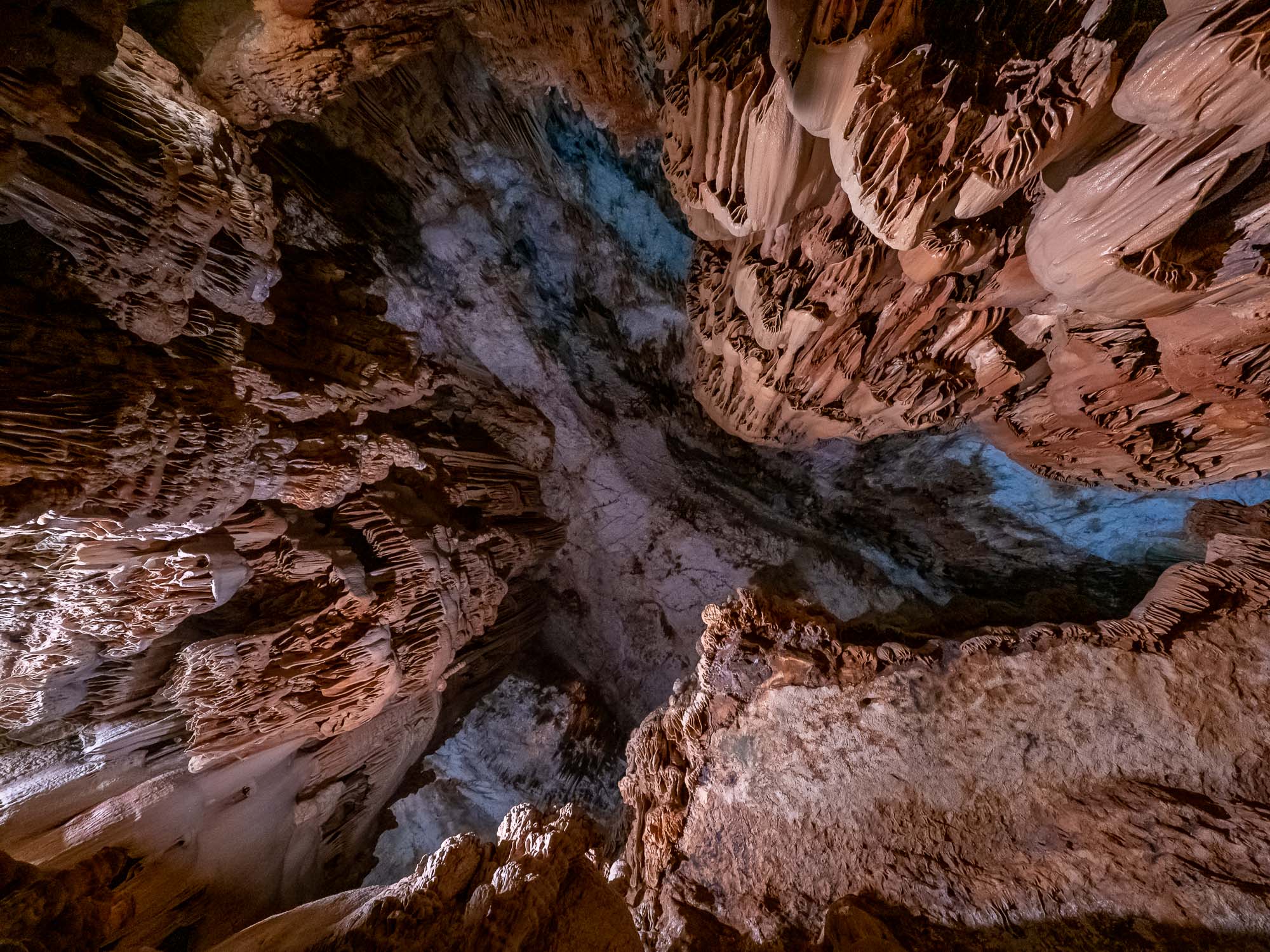
Impressions
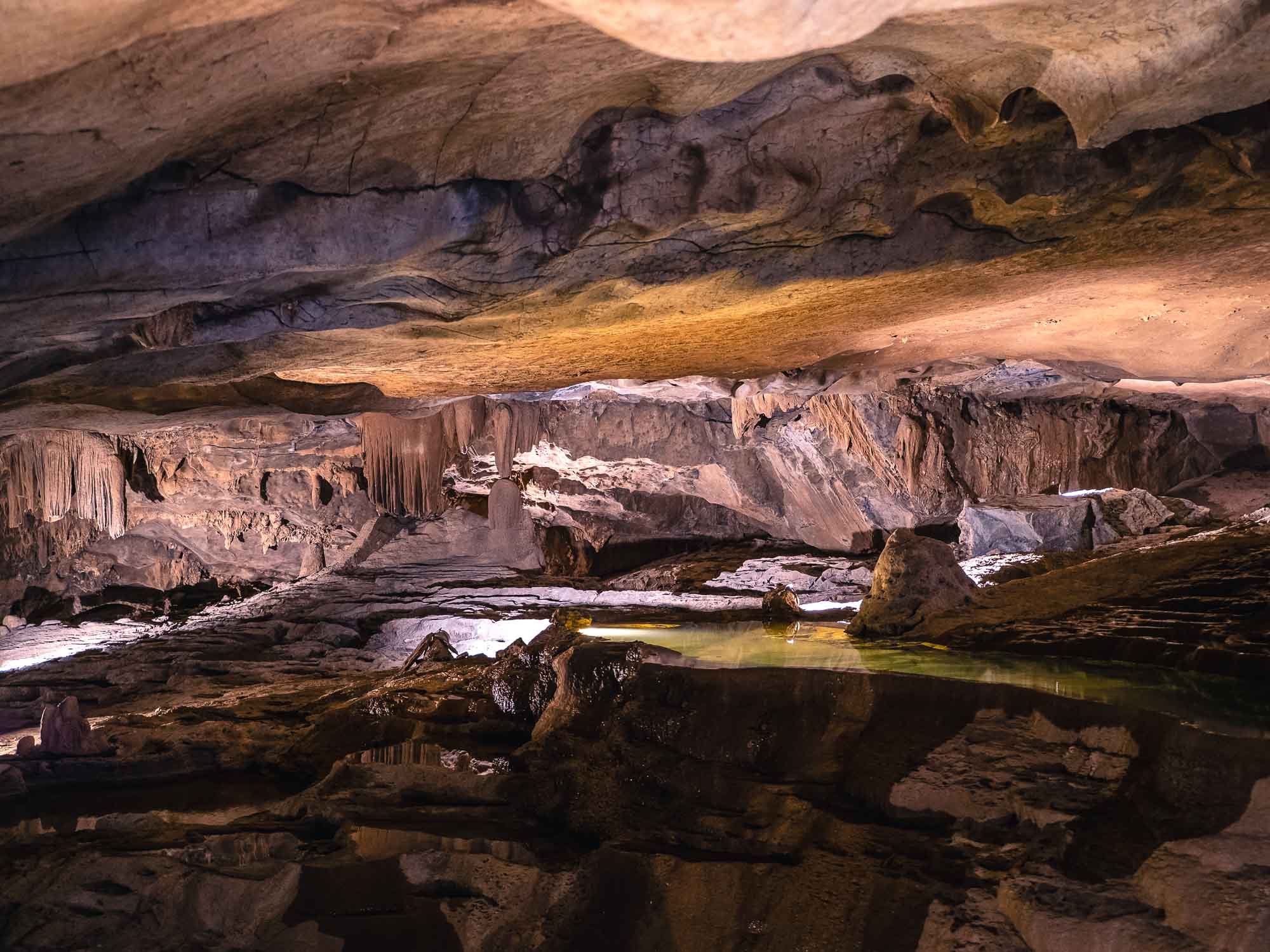
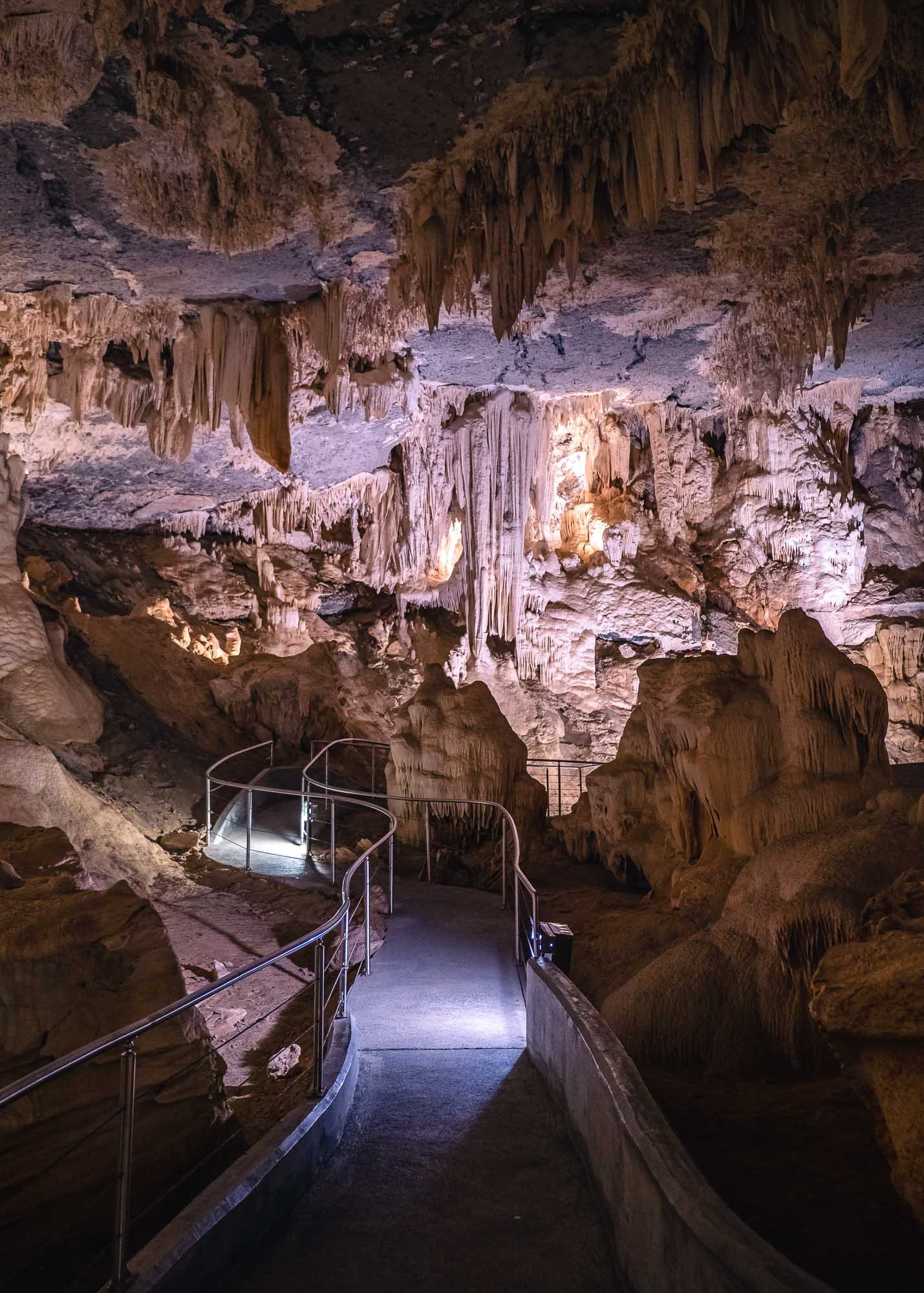
The cave is a nice example of a Karst cave with some stalactites and stalagmites.
Comparison
Having said that, if you've visited some of the large and famous caves around the world, this one may not completely wow you - it's definitely worth the small detour on this route though.
Blind Fish
The cave features year round water, providing a habitat for tiny blind cave fish living in its 4 lakes, one of which is visible below.
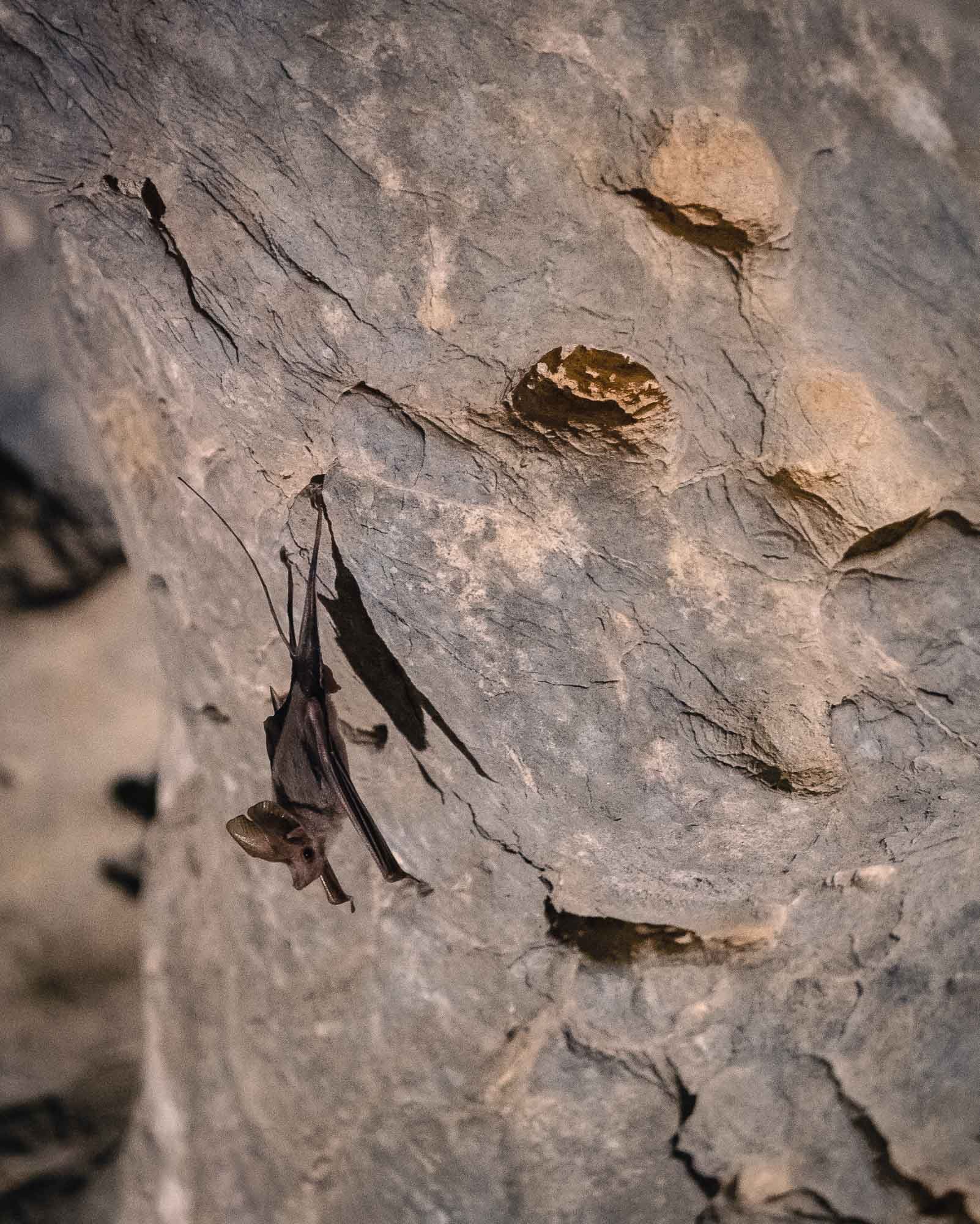
Chilling
...and you get to see some bats hanging from the ceiling.
Nizwa
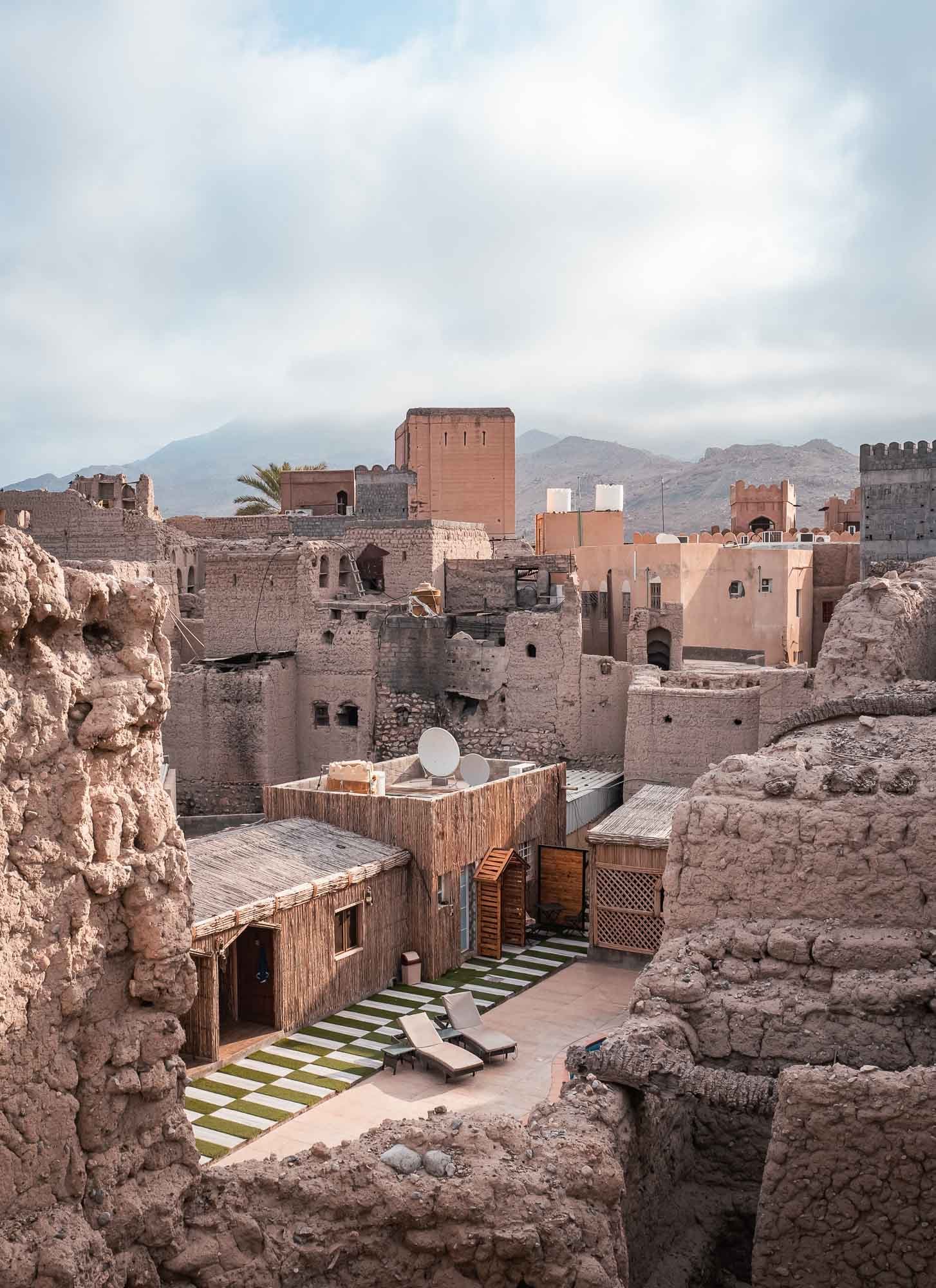
Views of Nizwa
The view from Antique Inn's rooftop in Nizwa, our place for the night.
Former Glory
Nizwa is one of the oldest cities in Oman and was the capital in the 6/7th century.
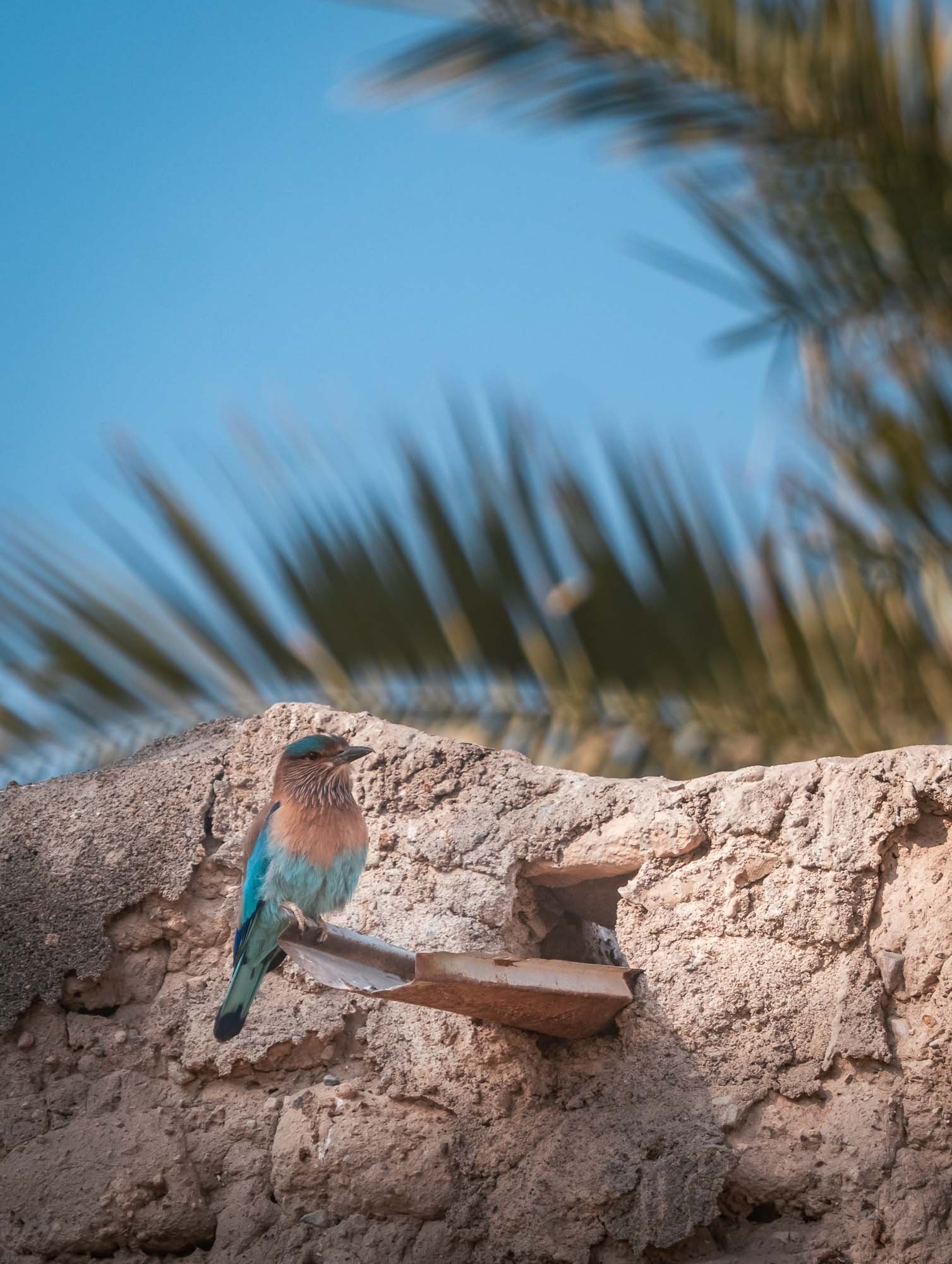
Indian Roller
A very common bird in this area around the farms. Particularly beautiful in flight when it spreads its blue wings.
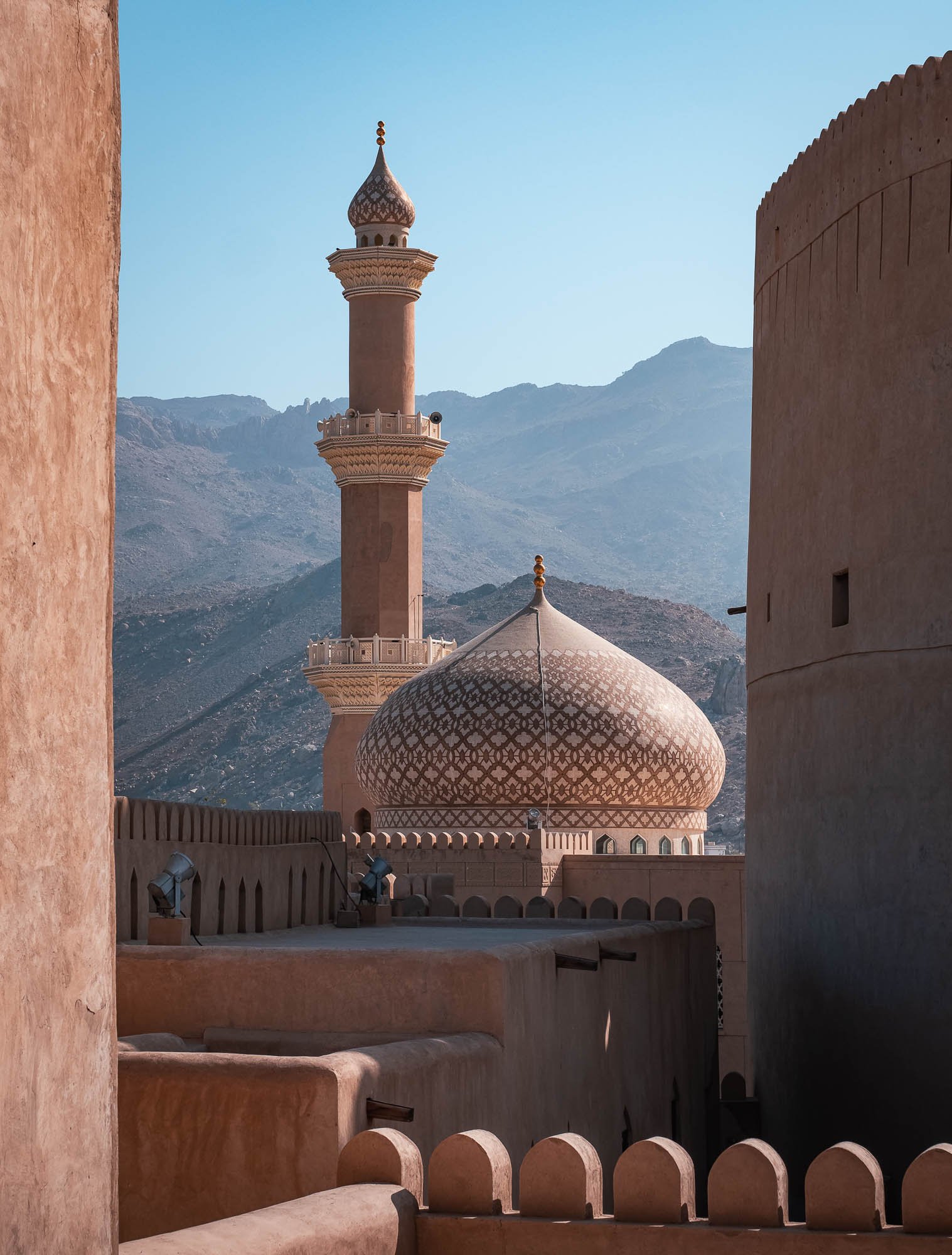
Al Qala'a Mosque
As seen from the fort. Nizwa features some of the oldest mosques in the world.
Fort Views
The fort was built in 1688, and sits above an underground stream.
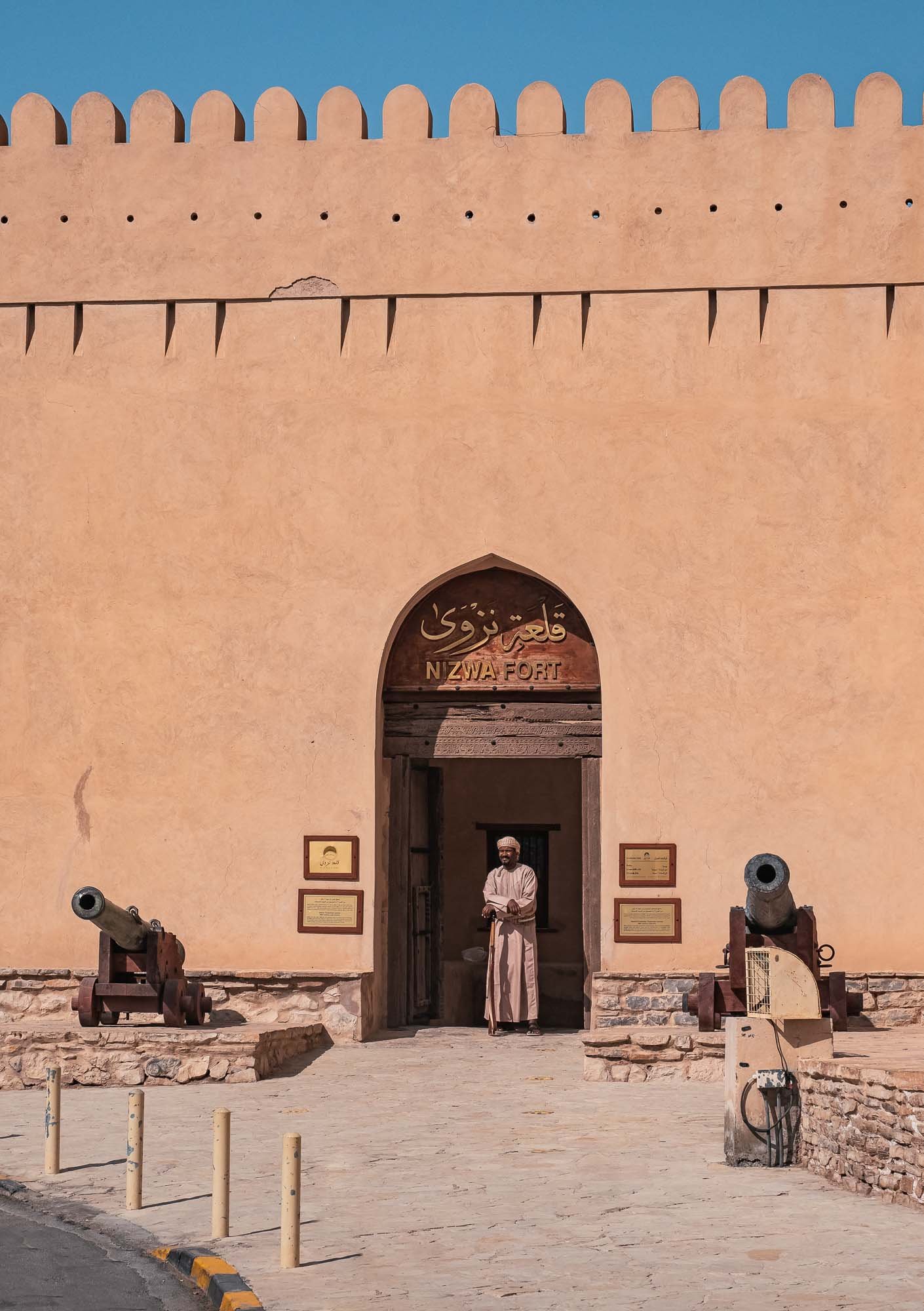
Entrance
The entrance to the fort, coincindentally guarded in this photo for that authentic flair.
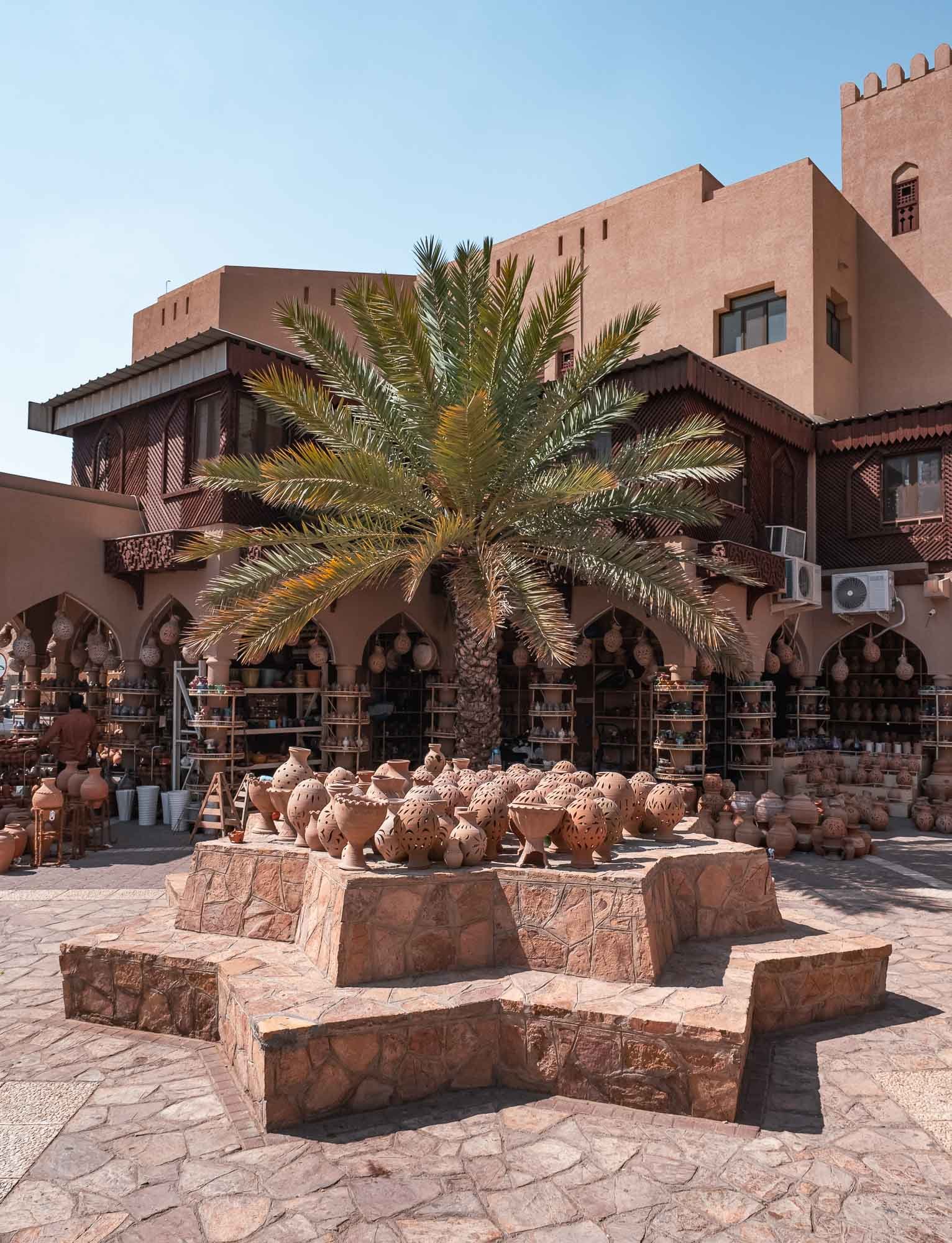
Nizwa Souq
The outside area near the entrance to the souq, selling pottery and other homeware goods.
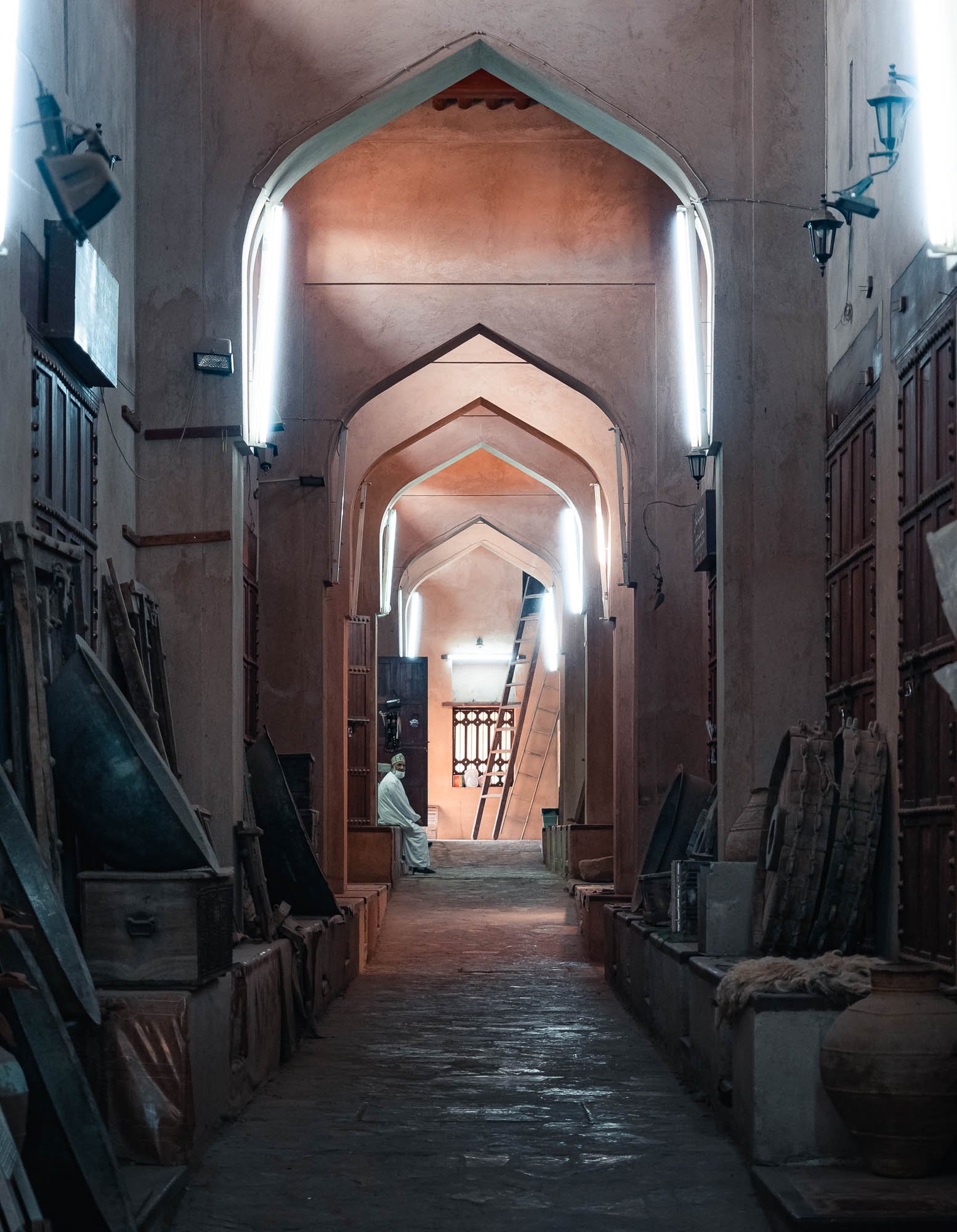
Alleys
While it doesn't look it in this photo, Nizwa Souq is one of the most important and oldest in the country.
Salesman
During our visit, it was primarily occupied by this fellow.
Transport
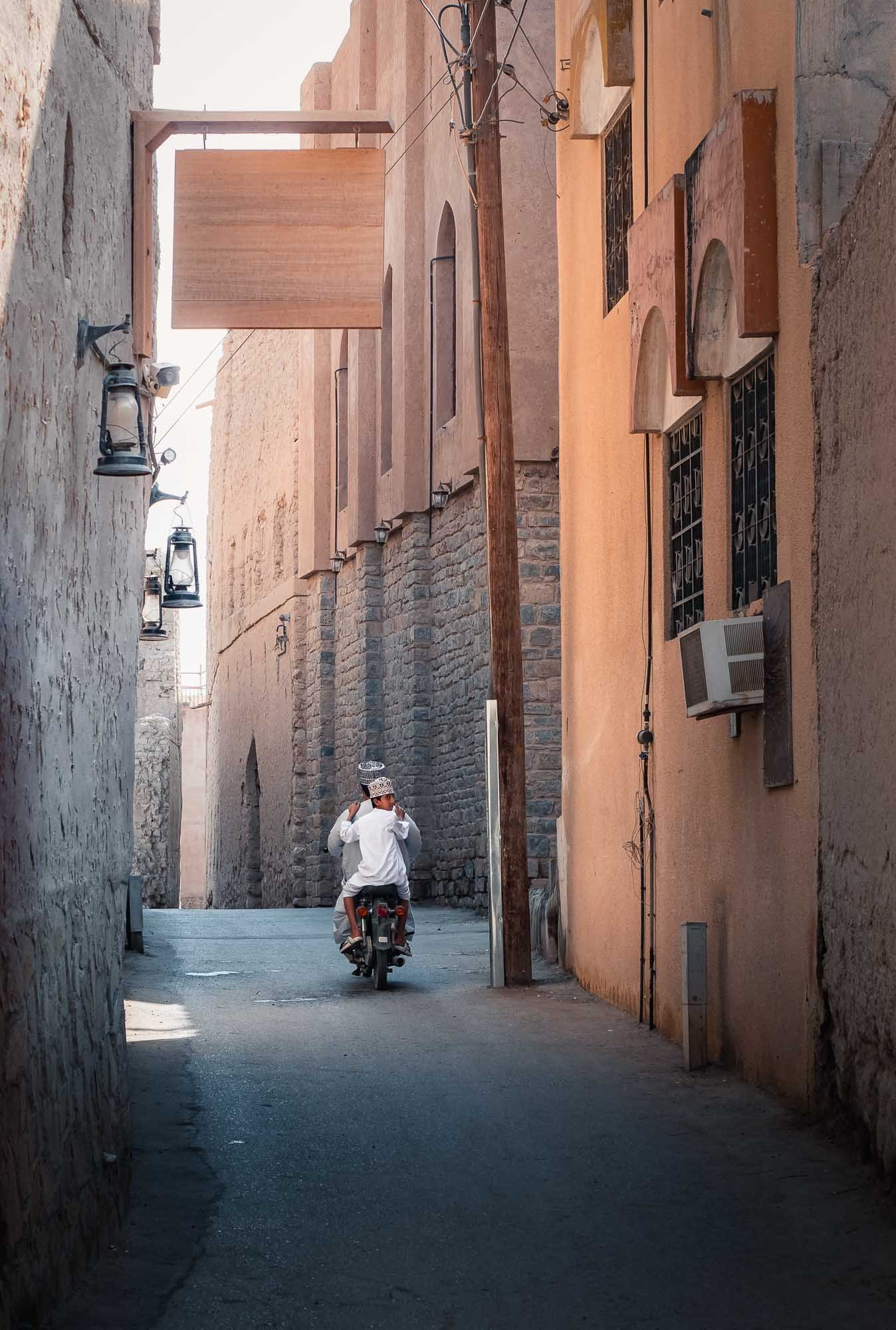
The small tight roads running through the old town are mainly accessible this way.
Old Town
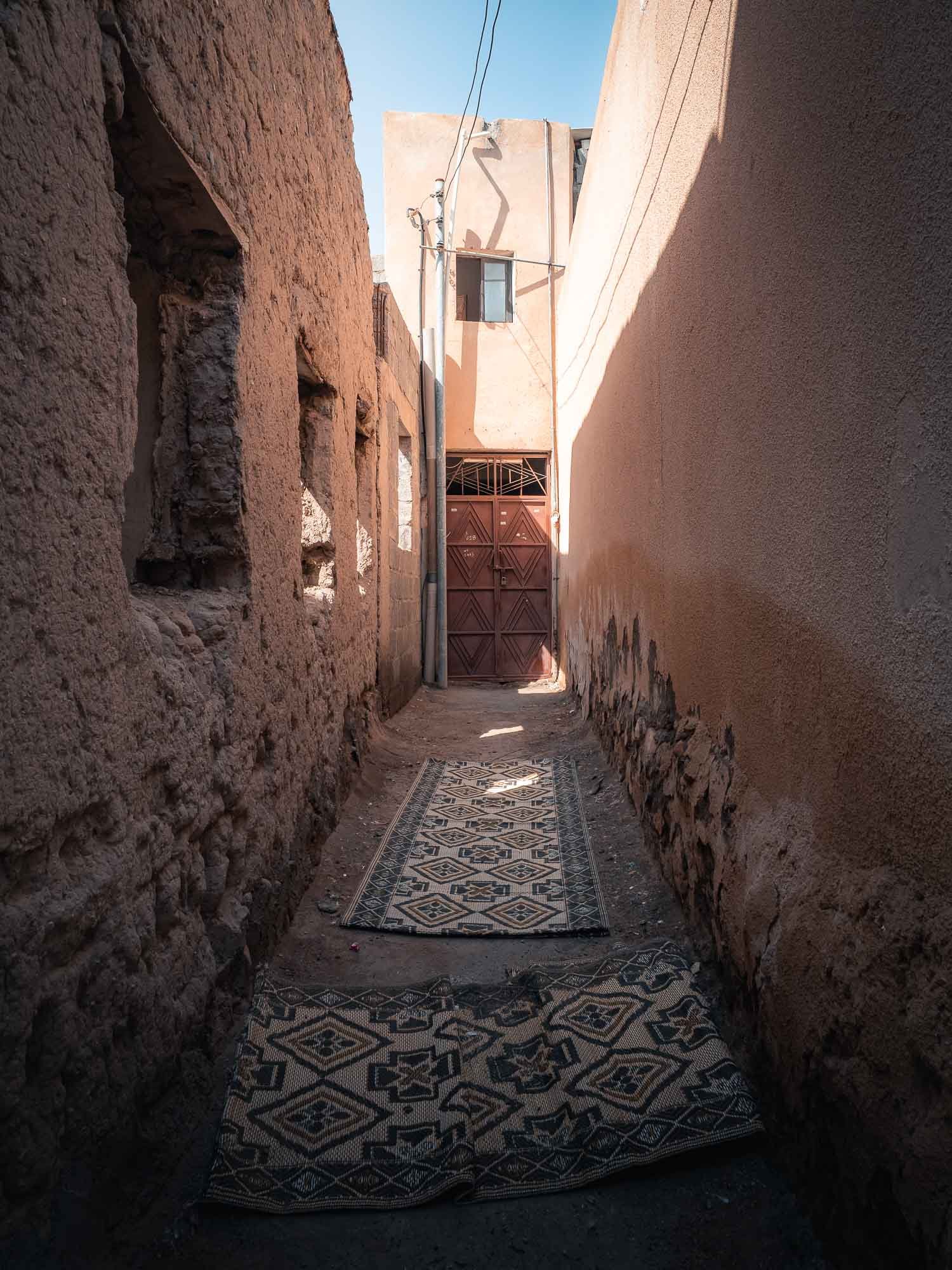
While many of the houses are crumbling and abandoned, some are still occupied.
Grocery Duty
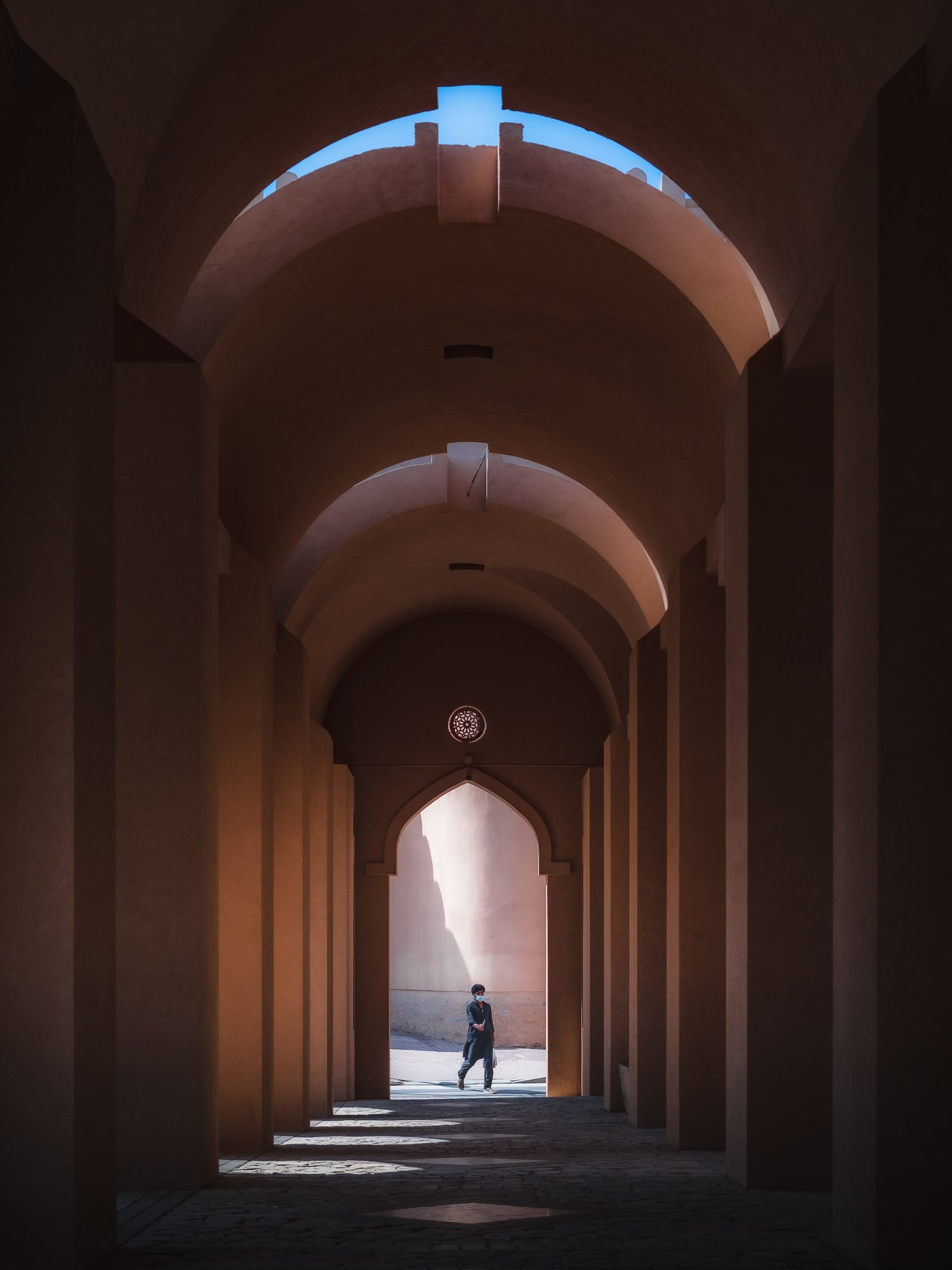
An Omani man passing through the shaded walkways of the market courtyard.
Jebel Akhdar
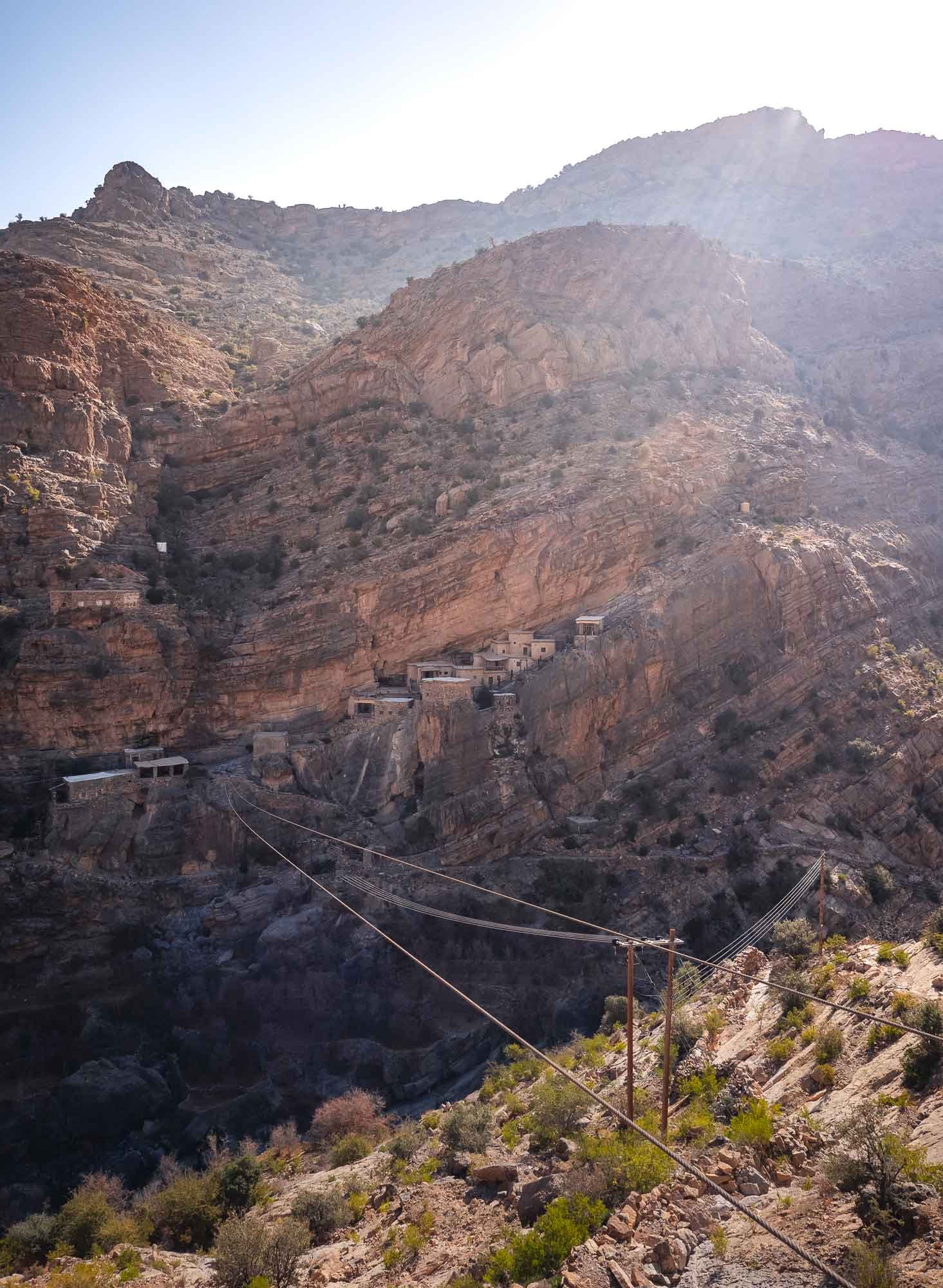
Upwards
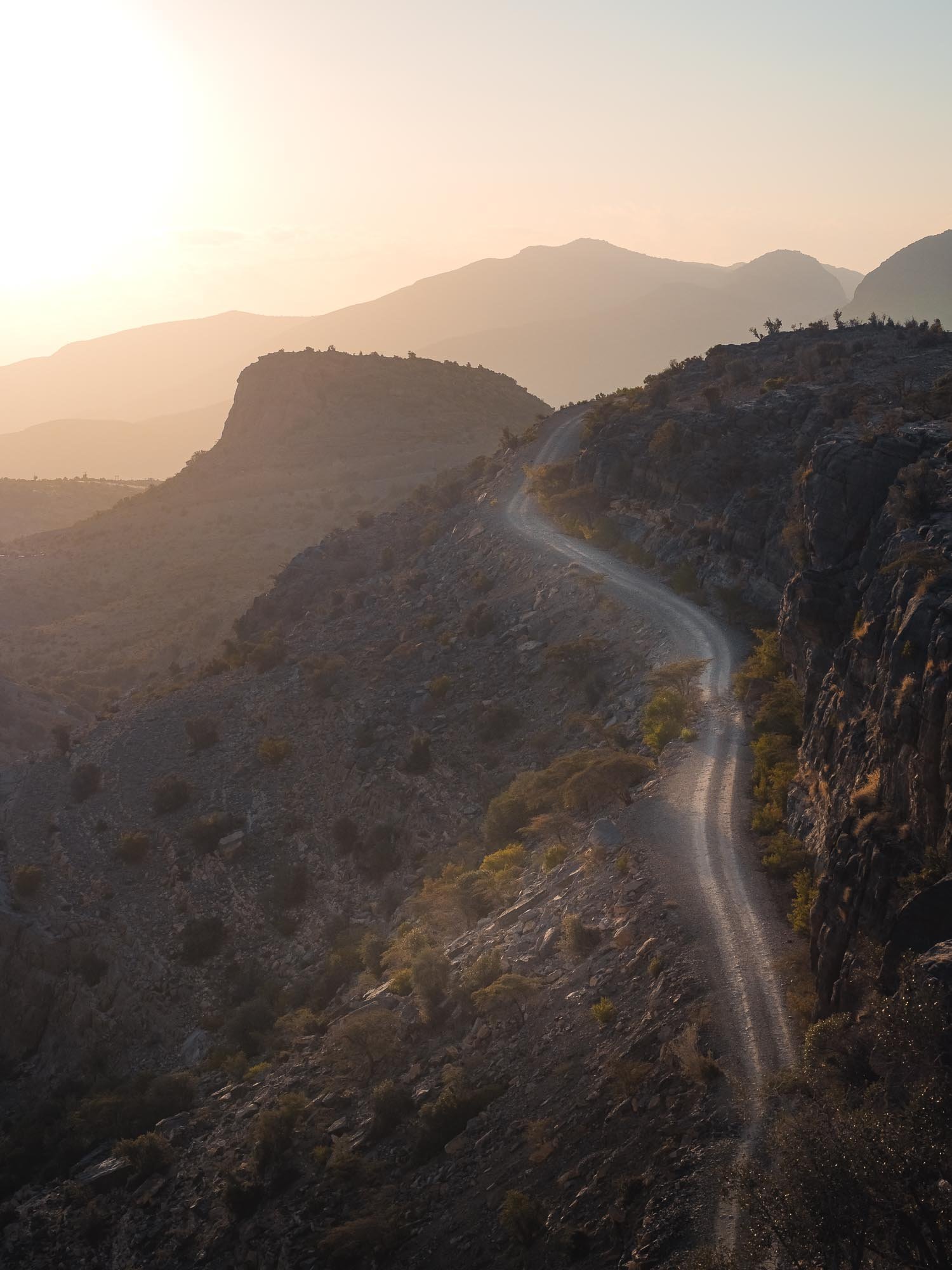
Our next destination was Jebel Akhdar. It's an hour drive into the mountains, to an altitude of more than 2000 meteres. Although the roads are ok (better than in this photo), a 4x4 is required, otherwise you cannot pass the police checkpoint.
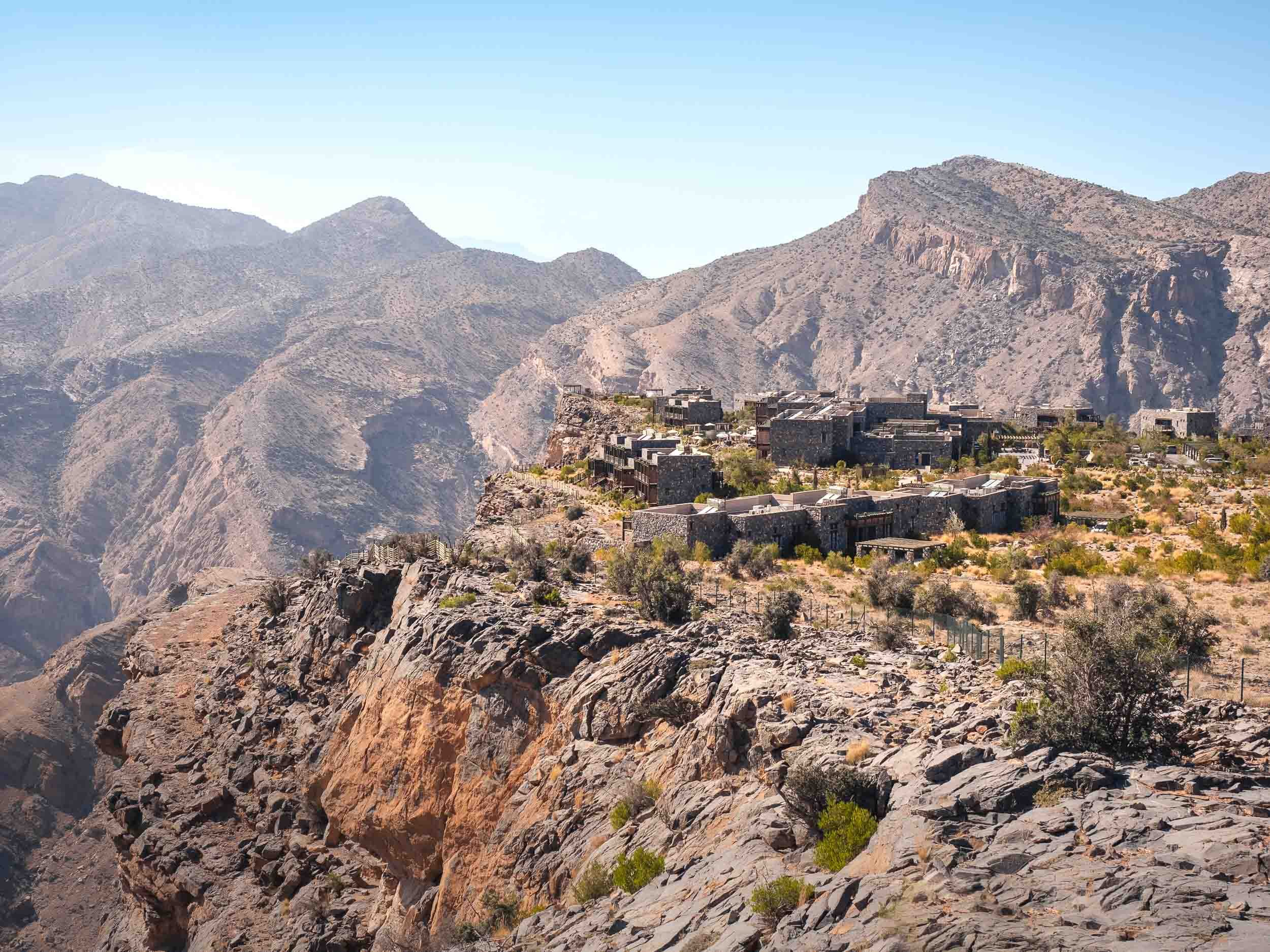
Alila Jabal Akhdar
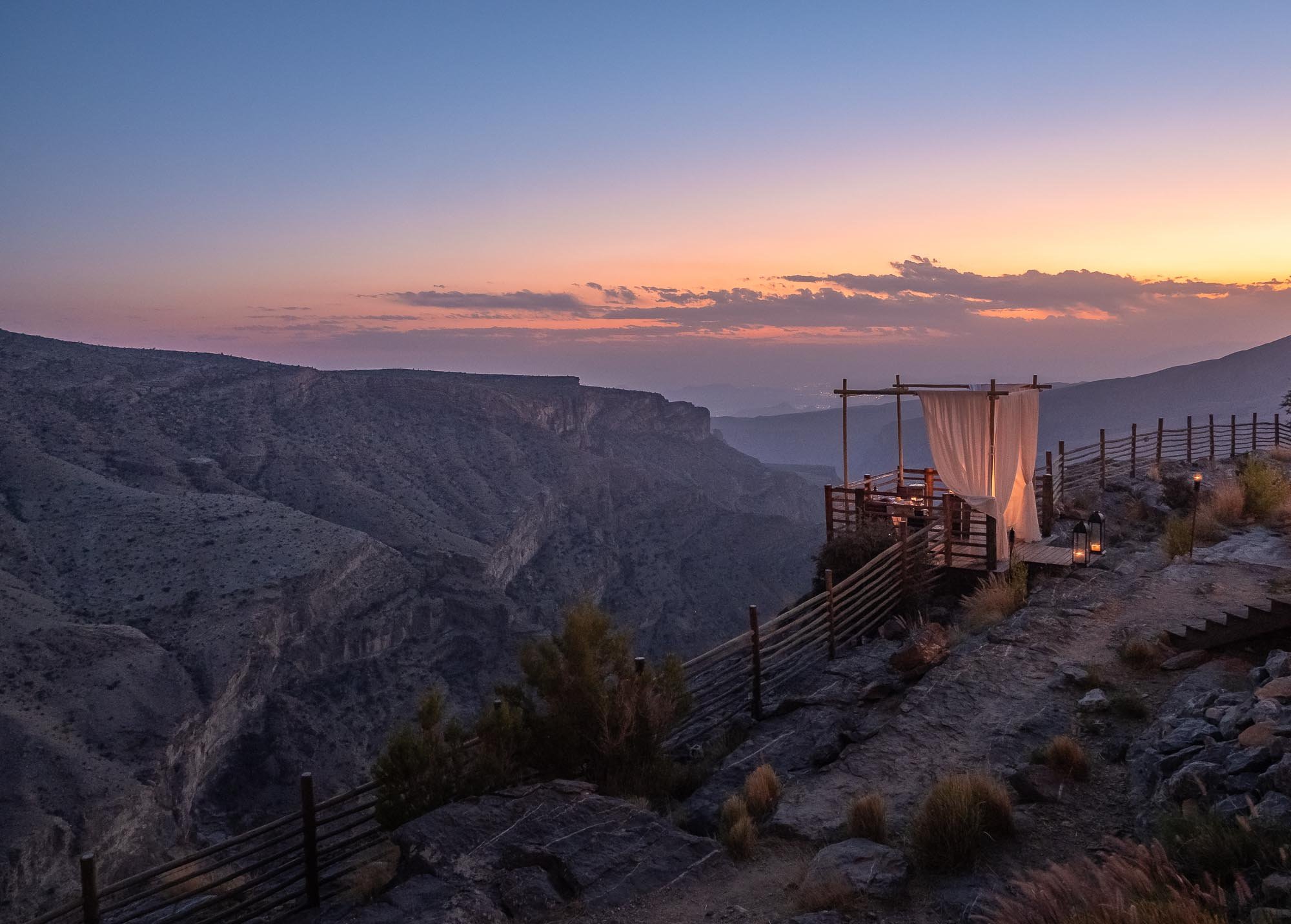
We spent 2 nights in this amazing property, directly on the cliff of the one of the deepest canyons in the Hajar mountains.
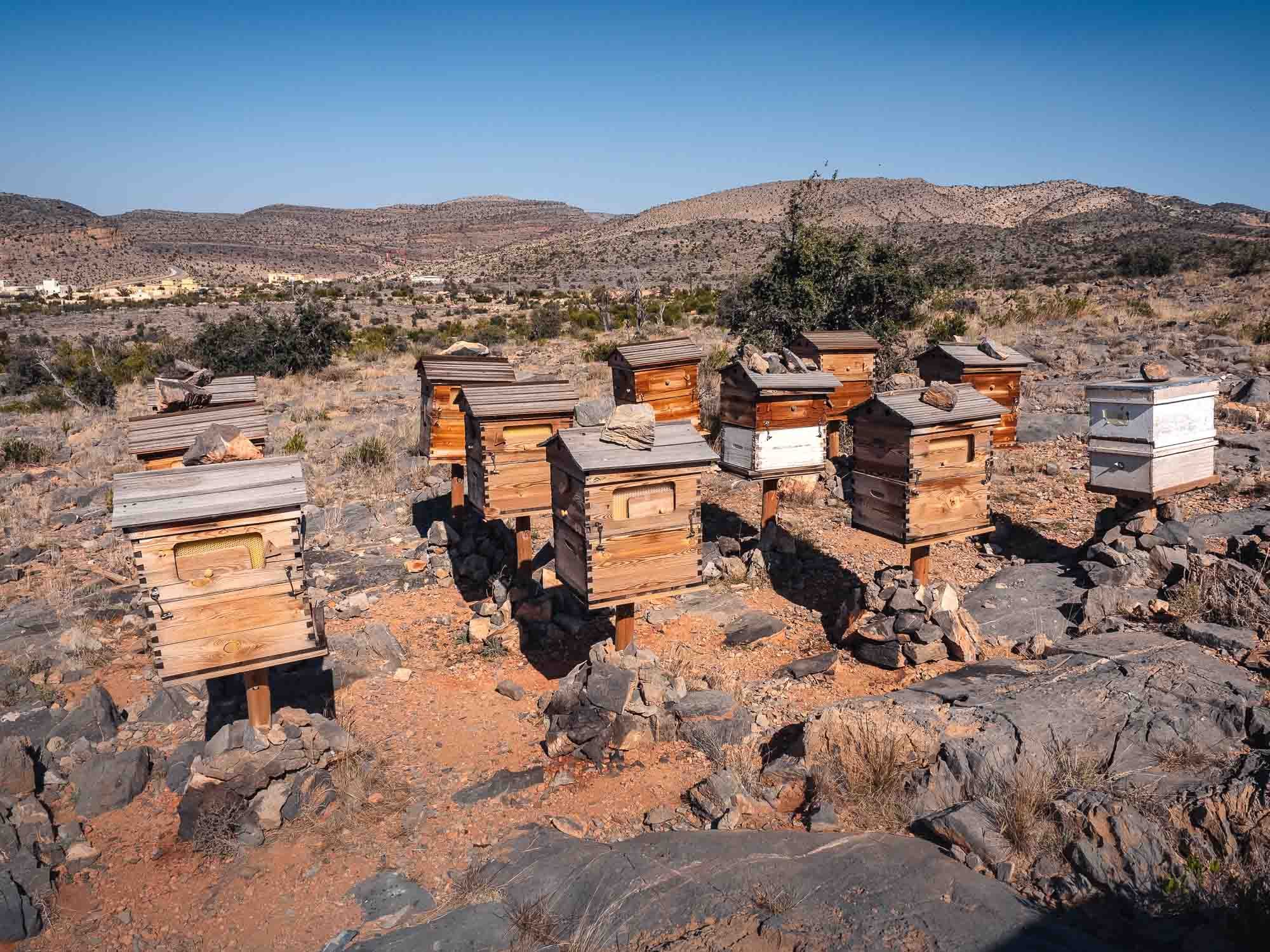
Beehives
The area round the hotel features many hikes, and a small trail directly in the grounds, with several interesting spots such as these beehives.
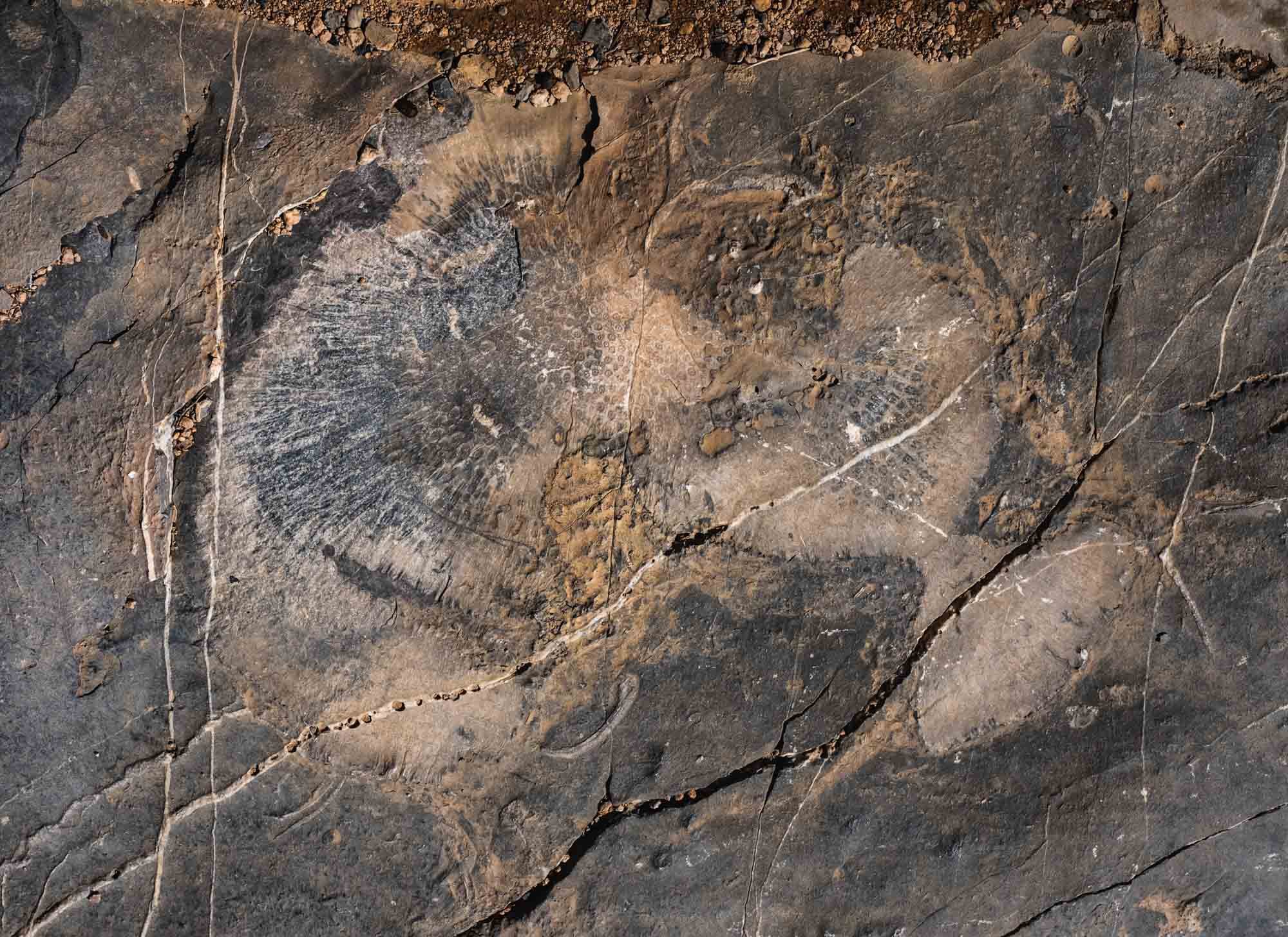
History
You can also find marine fossils everywhere, from millions of years ago when the area was under water.
Visitors
Nowadays, the mountain is home to an abudance of Flora & Fauna - Akhdar literally means "green".
Wadi Walk
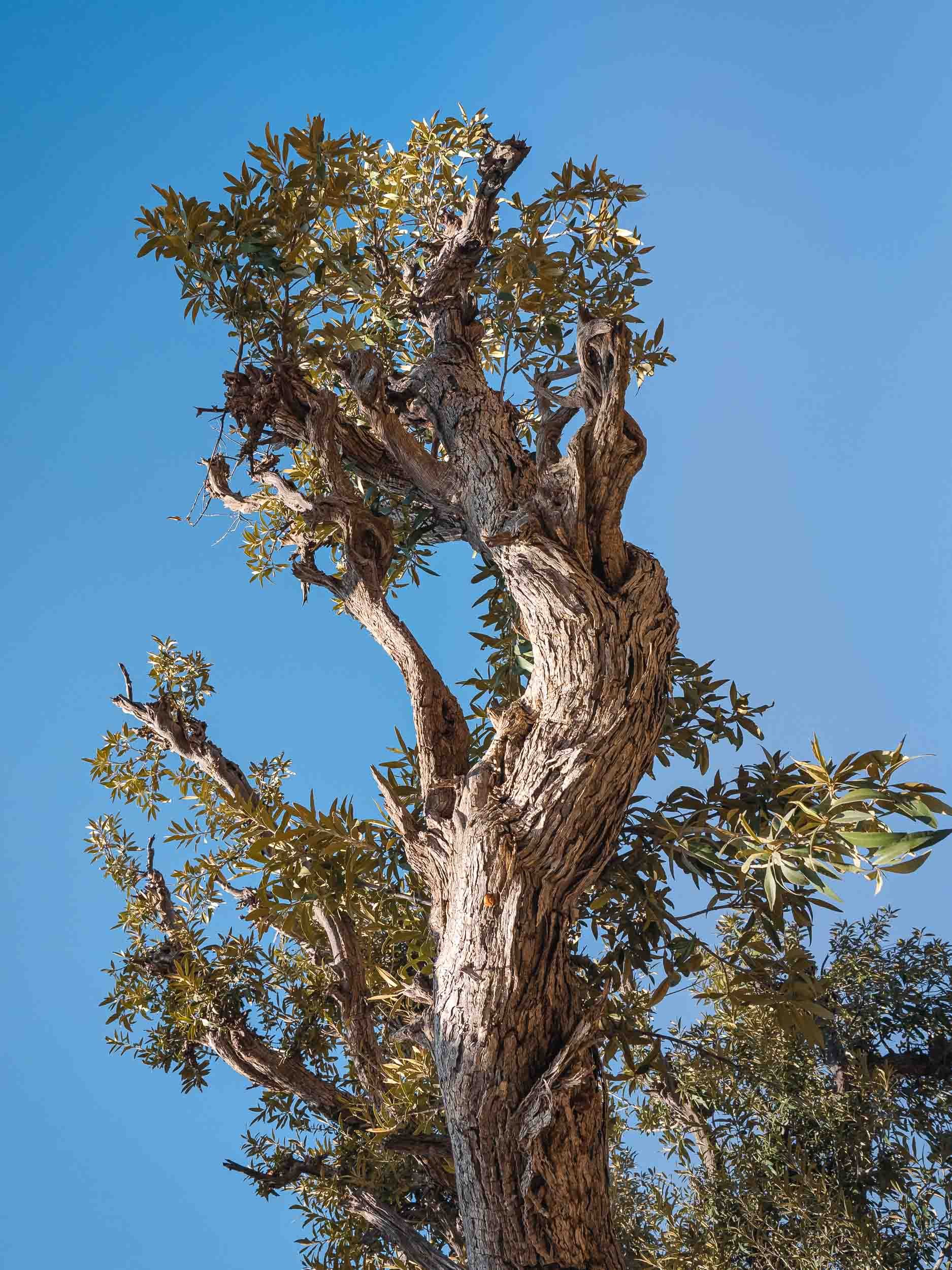
We spent the afternoon on a 4h hike through a nearby Wadi. The variety of trees is particularly interesting, including wild olive trees.
Water Source
The end of the trail brought us to this little dam, occupied primarily by frogs.
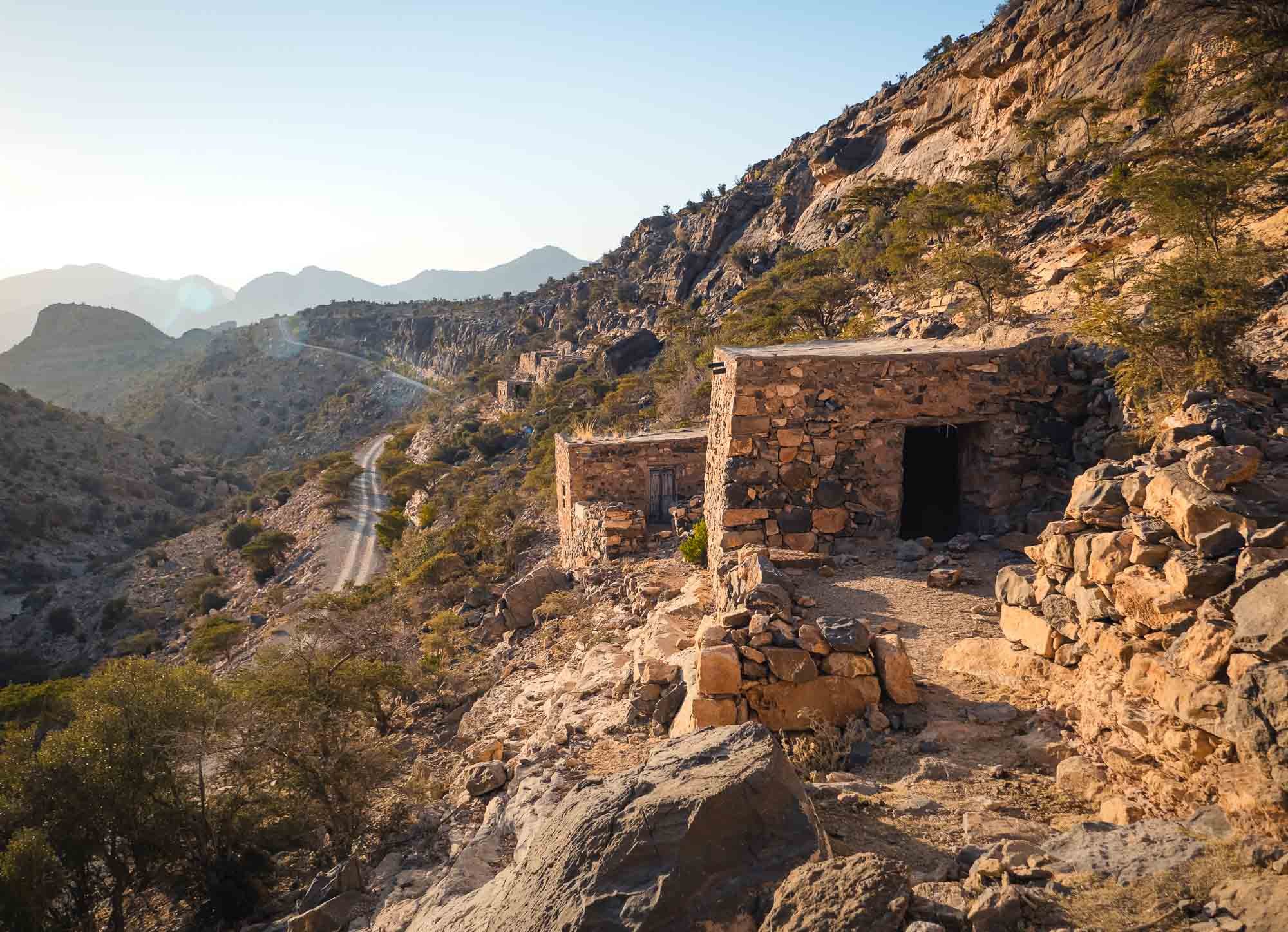
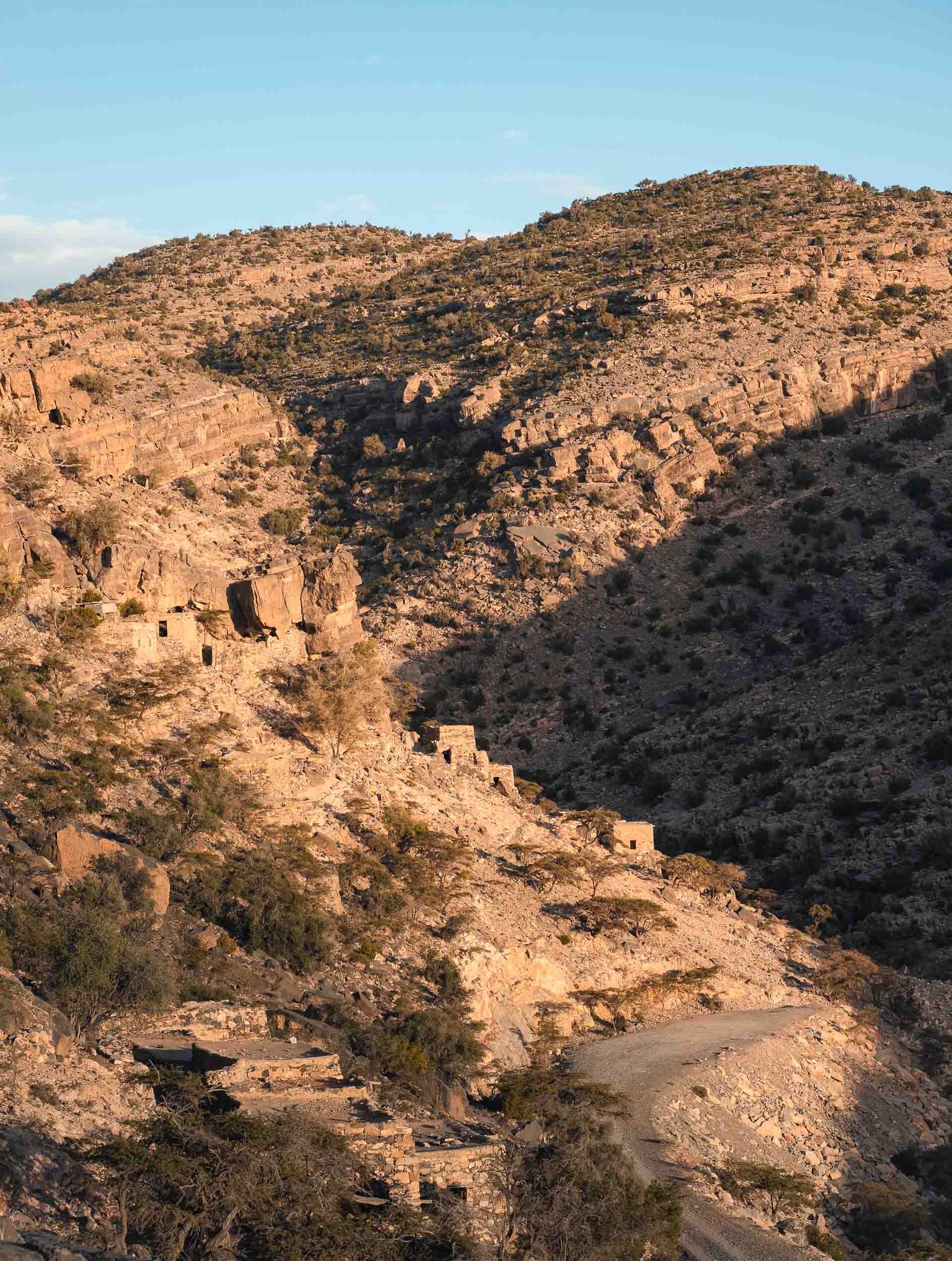
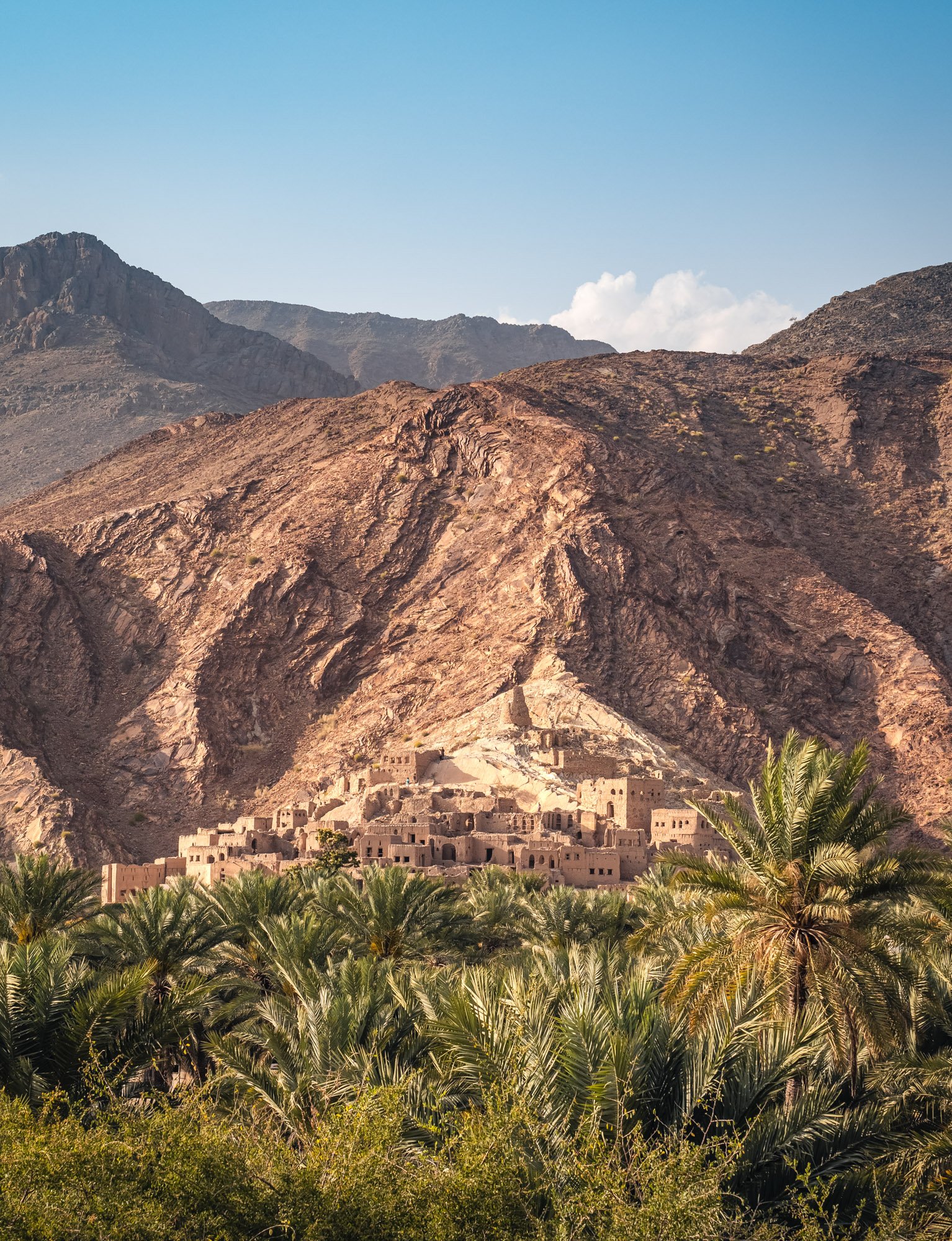
Abandoned
On the way back, we climbed upwards to find the crumbling houses of Sarab, a former village on the slopes of the Wadi.
Illuminated
Sunset was the best time for this trail.
Sunset over Alila
Sometimes the scenery speaks for itself.
Cliff
Not a bad spot for dinner?
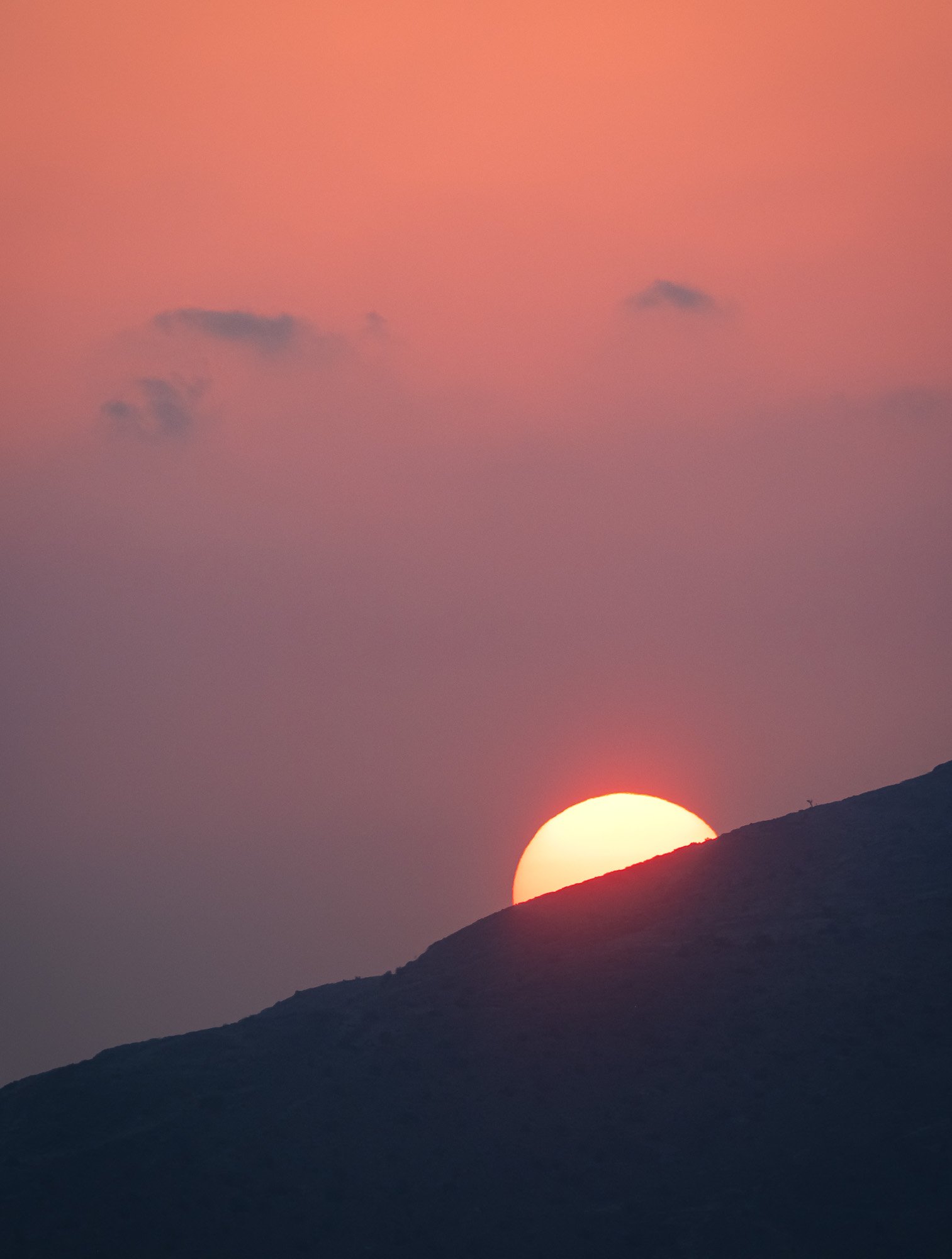
The Day's End
The sun setting behind the Hajar mountains in the distance, next to a little tree.
Via Ferrata
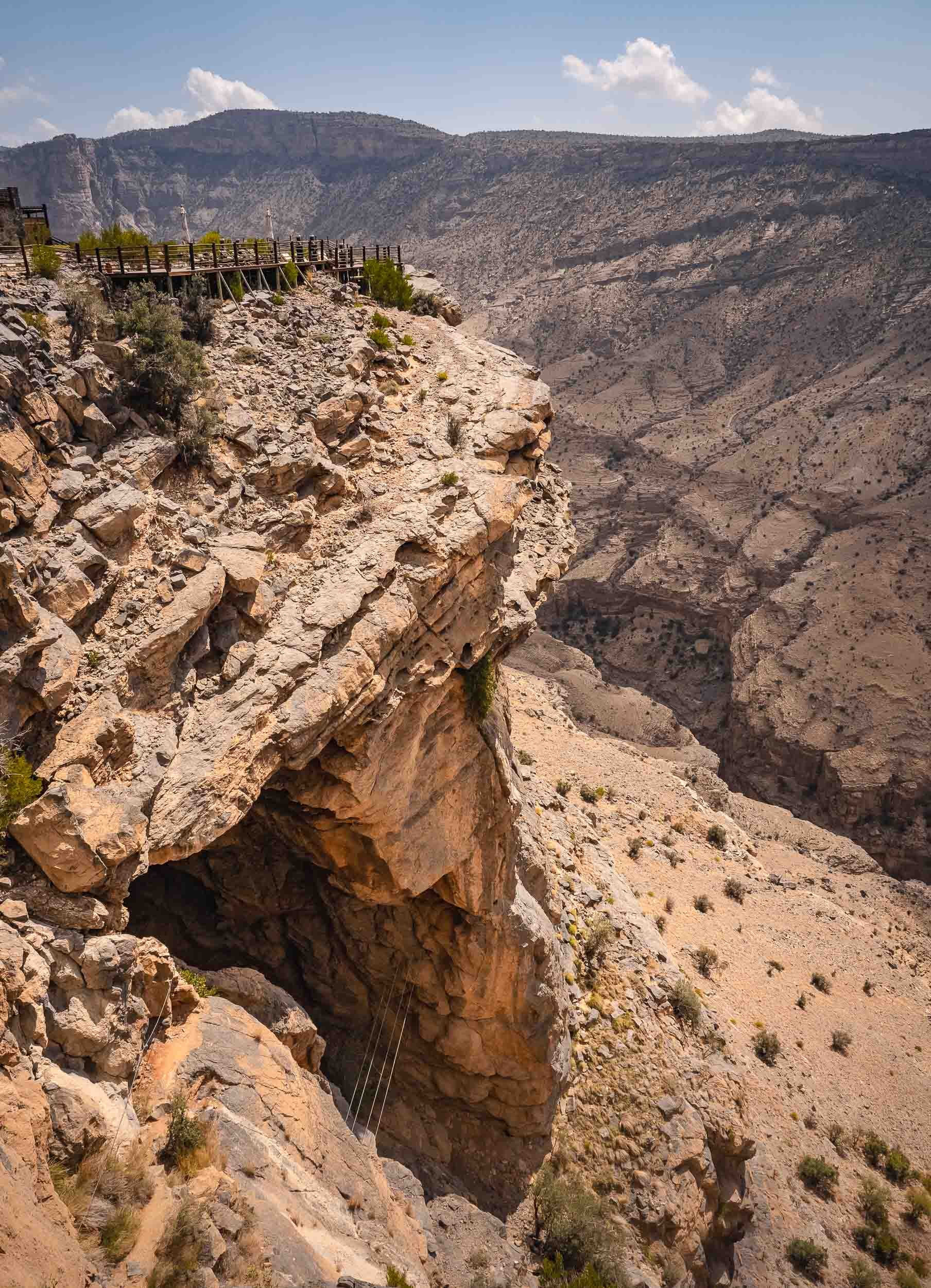
The next morning brought some adventure, as we climbed the via Ferrata, which literally starts at the hotel lobby. You can see the iron rope on the bottom left and the rope bridge across the cave in this image.
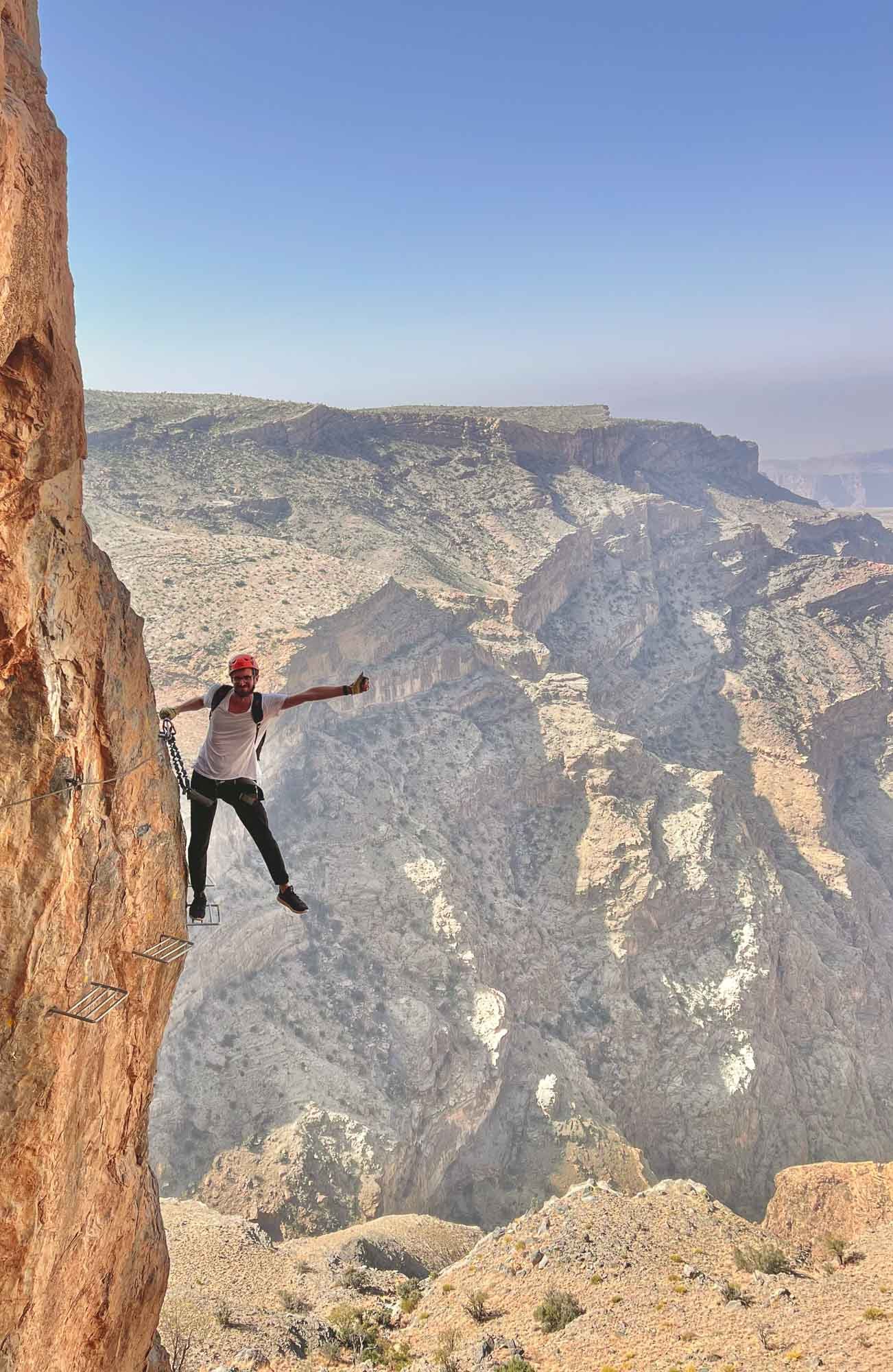
On the Edge
An incredible experience, and definitely recommended.
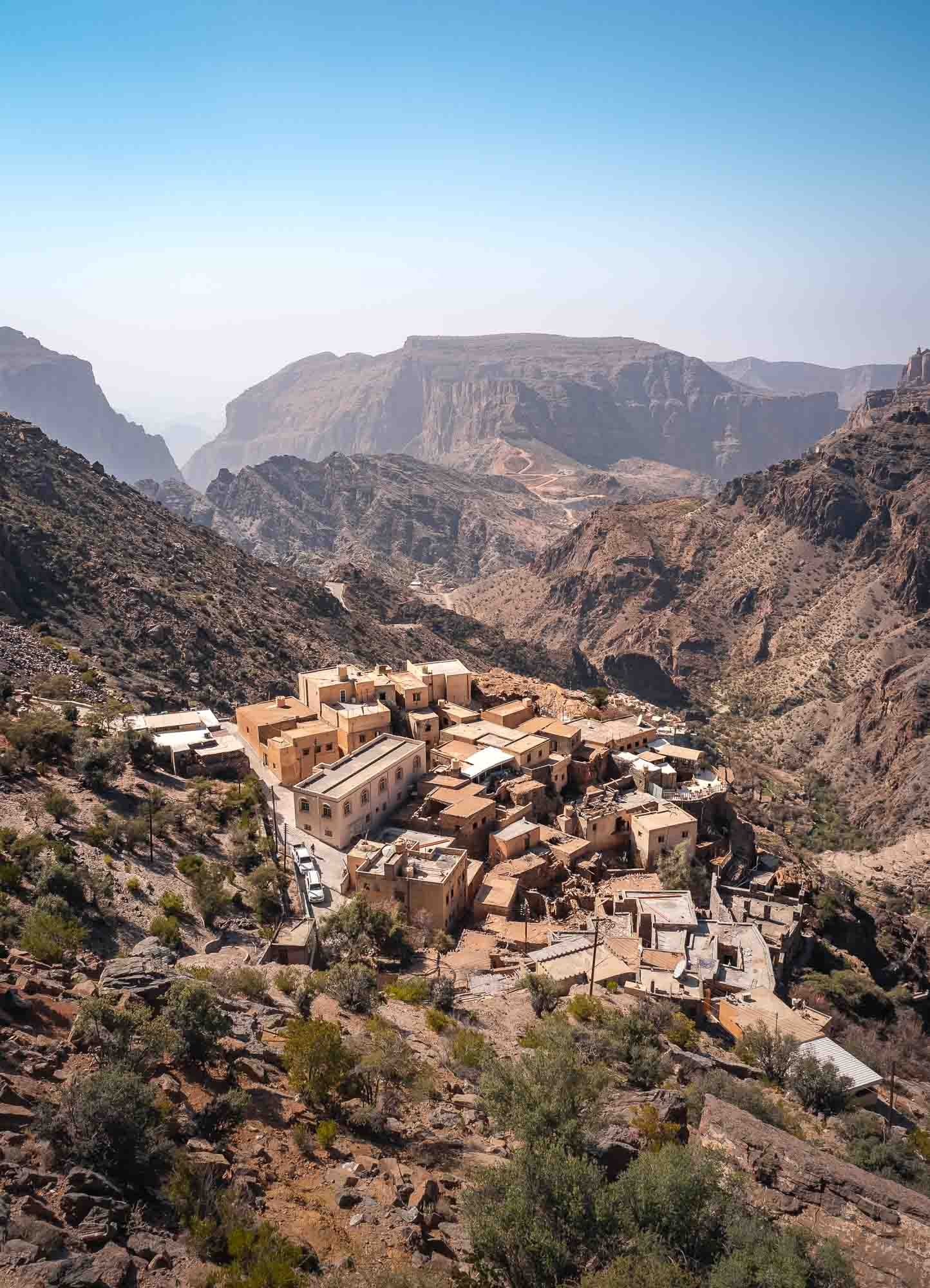
Alsuwjara Village
Our last day at Jabal Akhdar brought us to the cliff guest house, an old village from 500 years ago that is slowly being converted for tourism.
On the Rocks
We were lucky enough to get a tour organised directly by the local Omanis operating the place, who lived in the houses up until a few years ago.
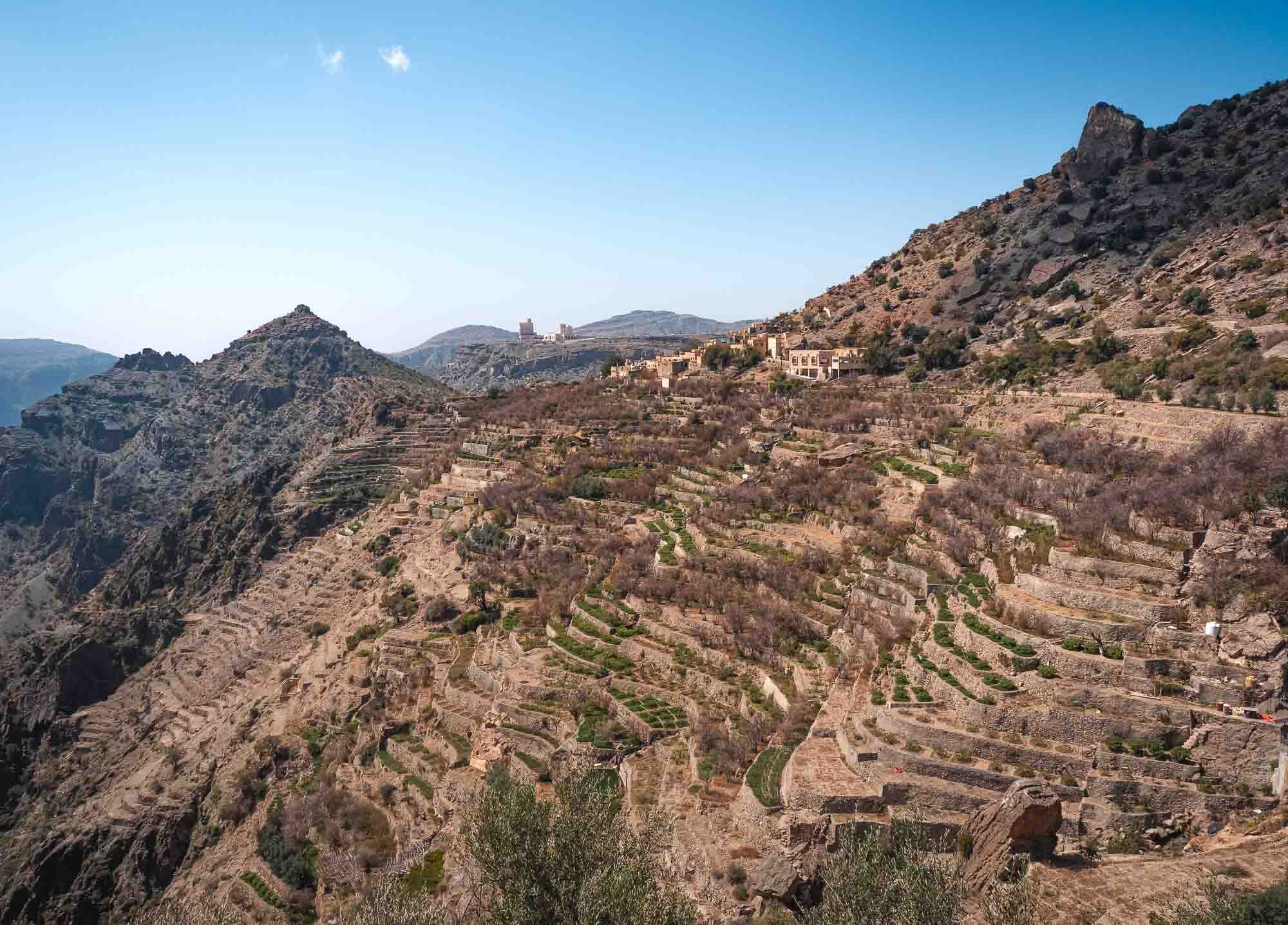
Mountain Villages
We then moved to the towns of Al Aqr, Al Ayn and Ash Shirayjah, famous for their terraced farming, used to grow roses and other crops.
Farming
The terraces used to reach all the way into the wadi, but a lack of water in recent years meant a reduction in usable area. Nevertheless, the entire slope is green during the summer time.
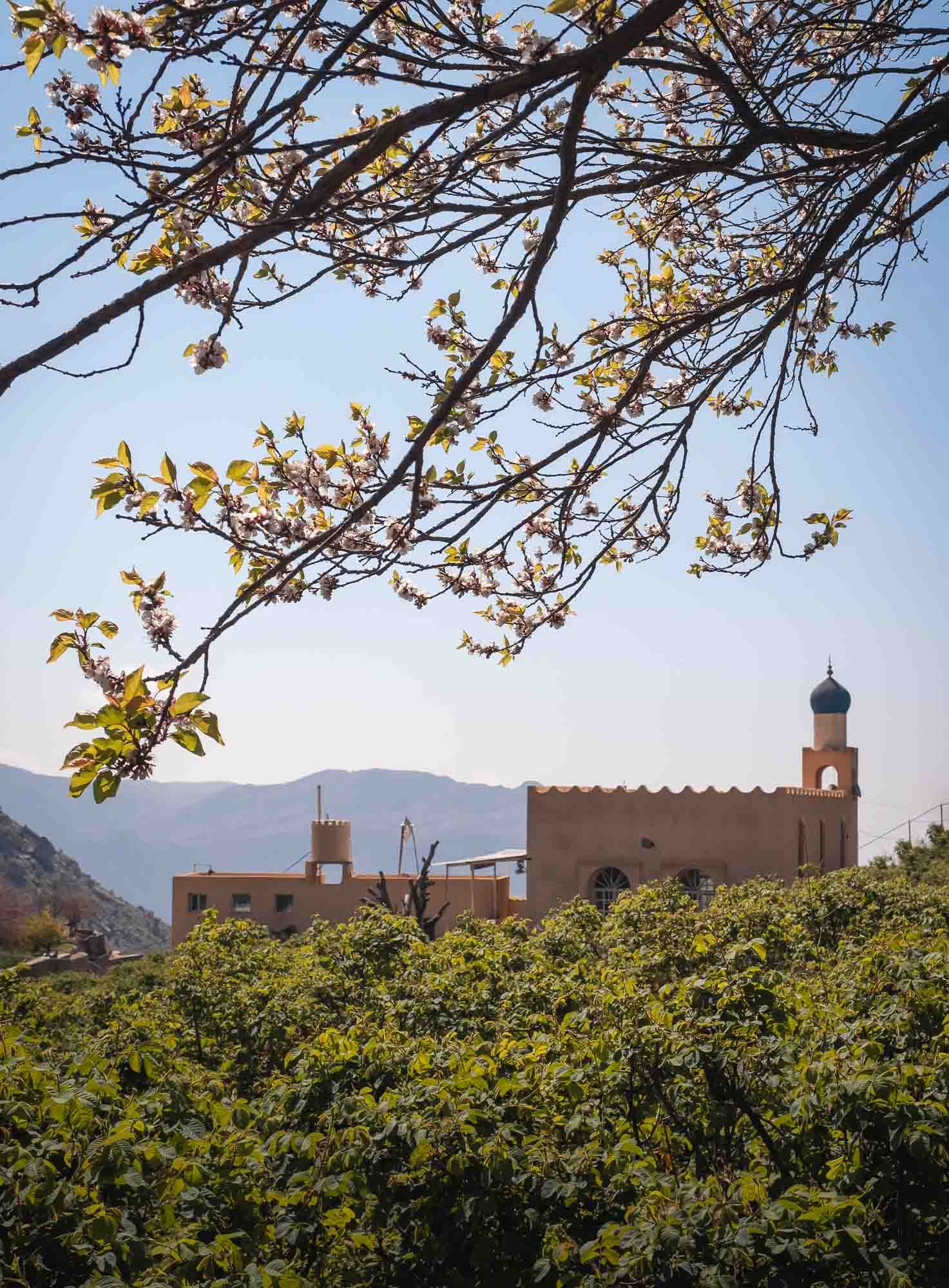
Pomegranate Season
One of the many blooming flowers at the time of our visit. The primary rose season was about to start as well.
Onwards to Muscat
Birkat Al Mouz
This was our next stop on the way from Jebel Akhdar to Muscat.
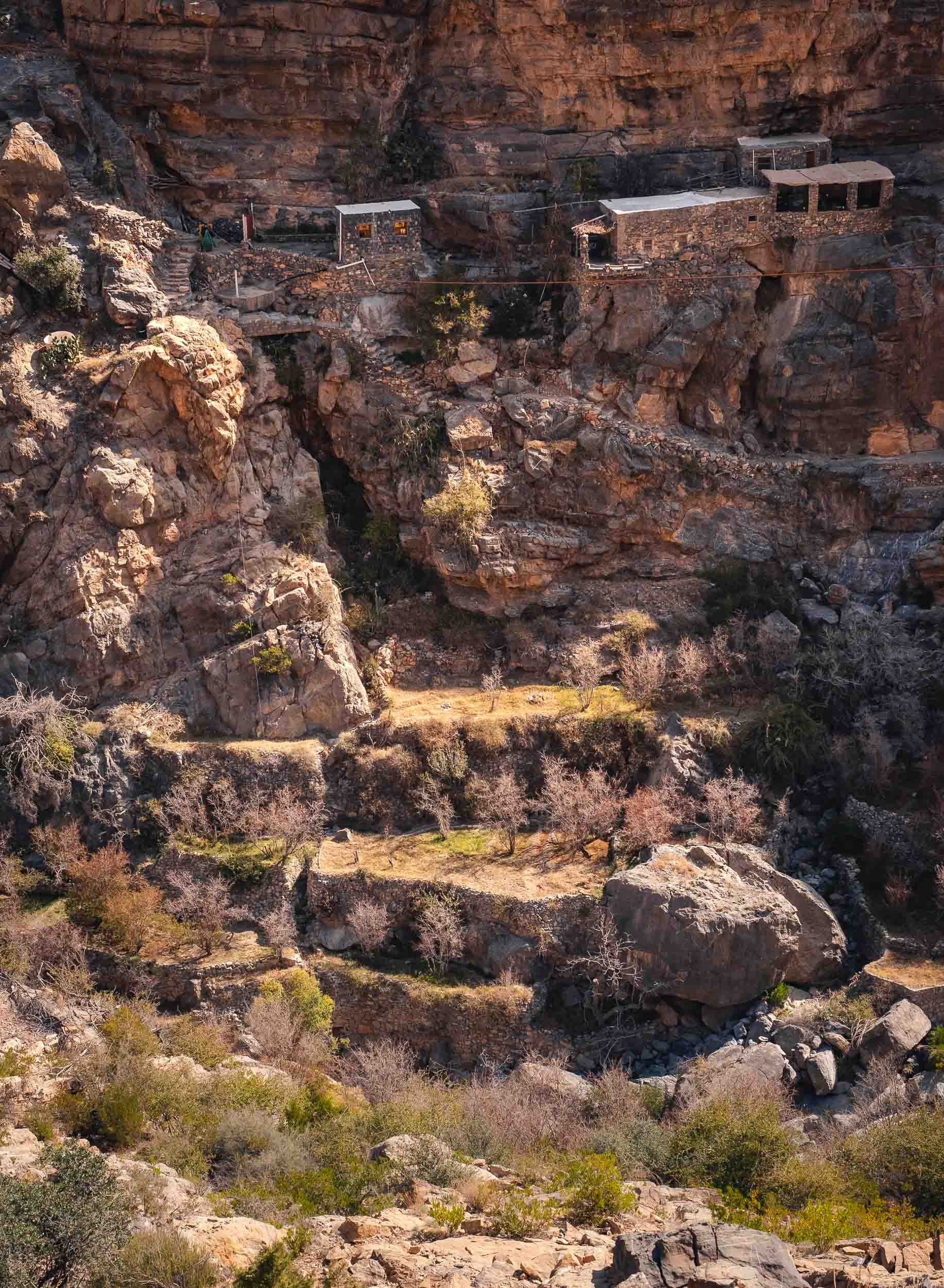
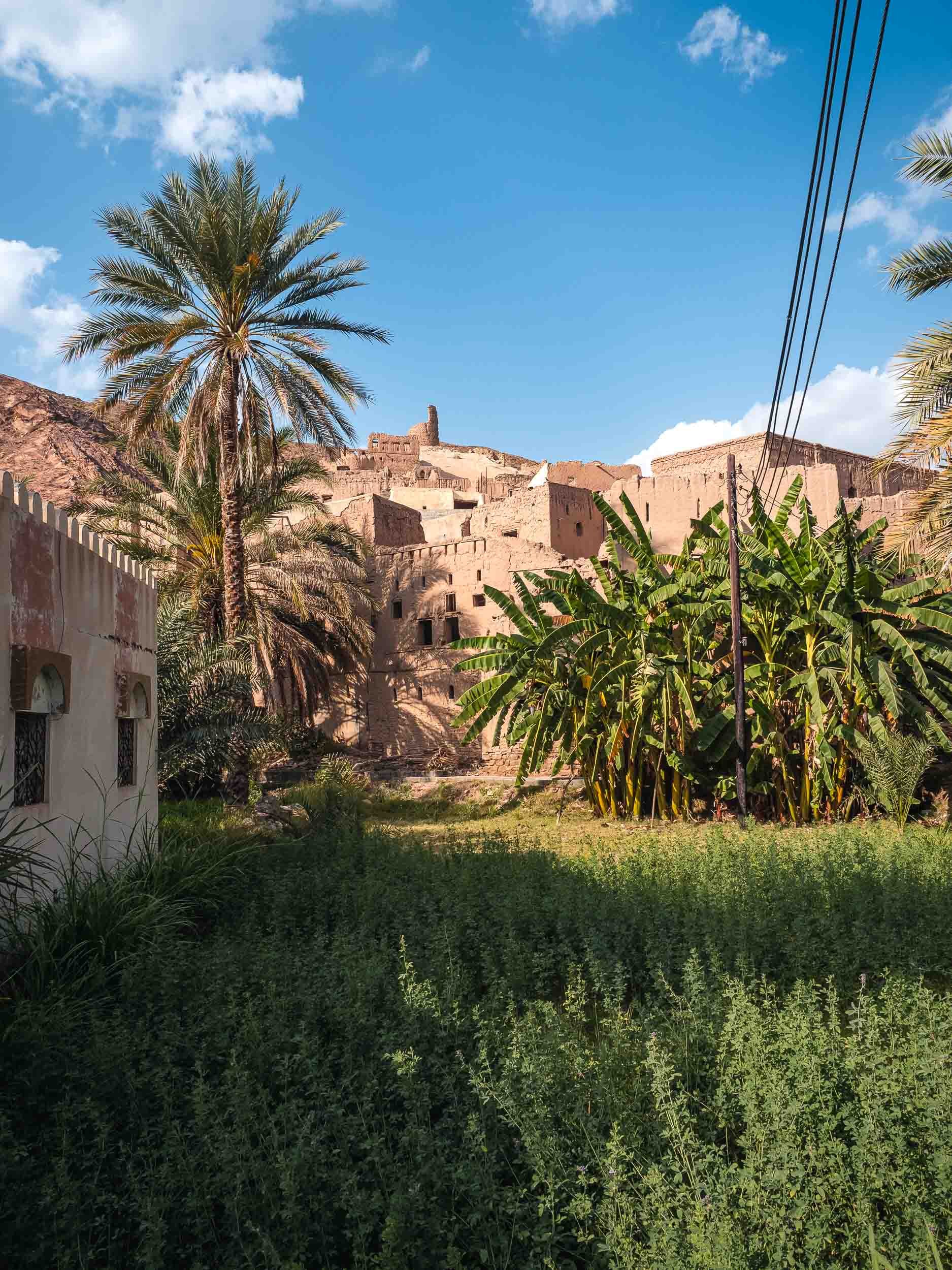
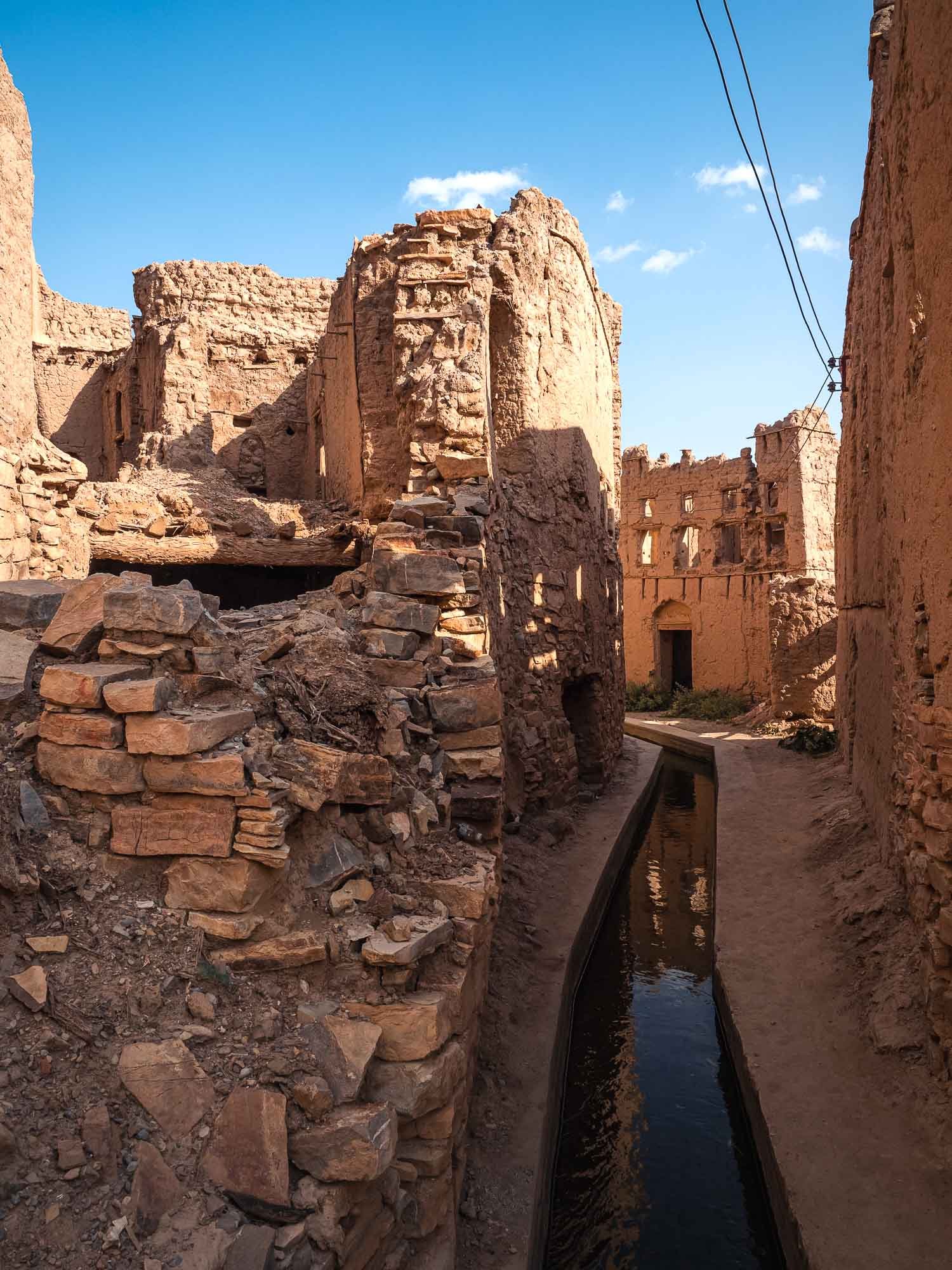
Falaj Al Khatmain
One of the five irrigation systems in Oman listed on the Unesco World Heritage site runs through the abandoned part of town.
The Last Walls
The village contains two such parts, the larger one called Harat Al Sibani.
Banana Pool
That's the meaning of the city's name in Arabic - and the farms surrounding it give away why.
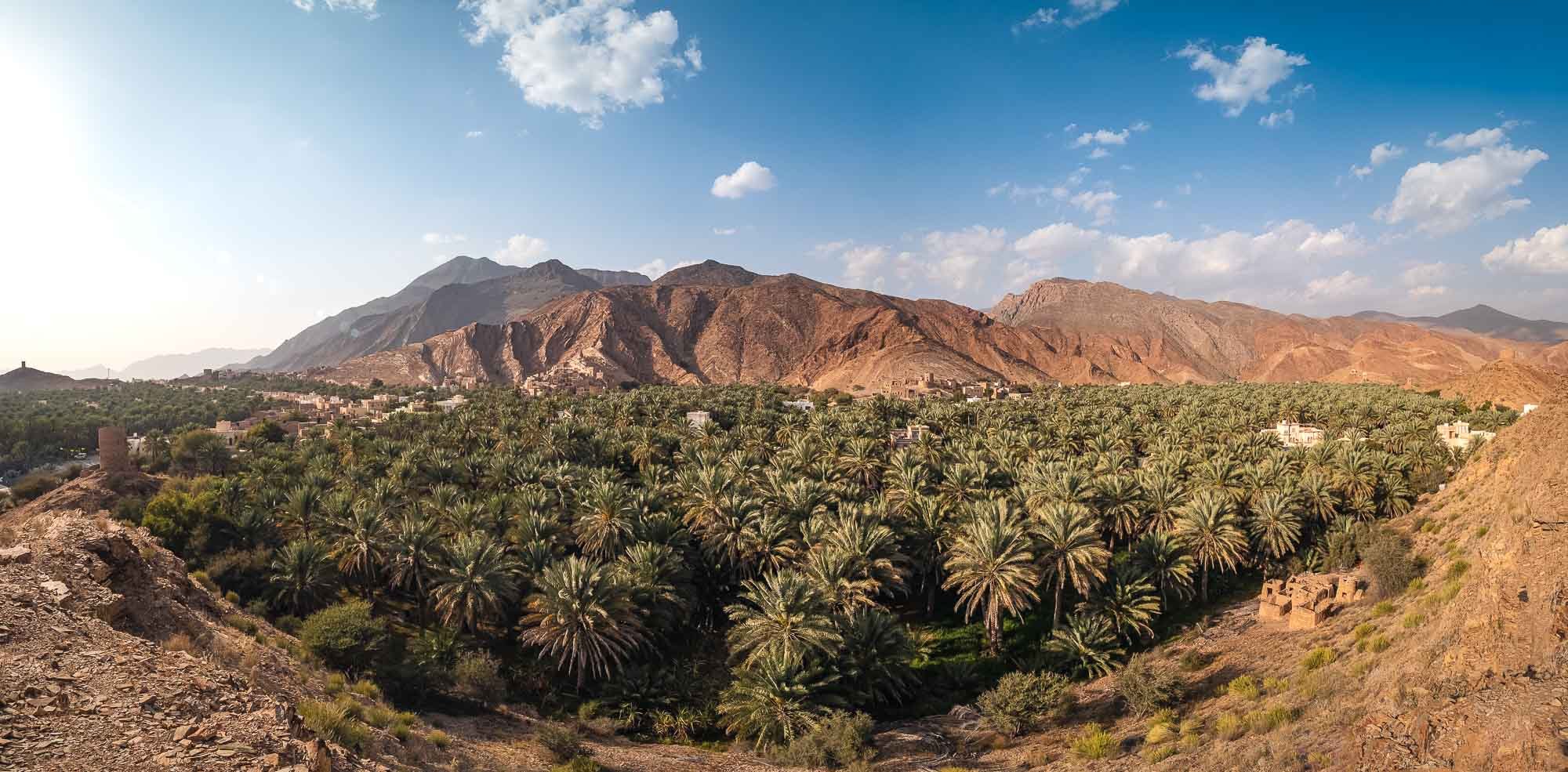
Quintessential Oman
A short climb on the other side of the farms rewards you with this scenery.
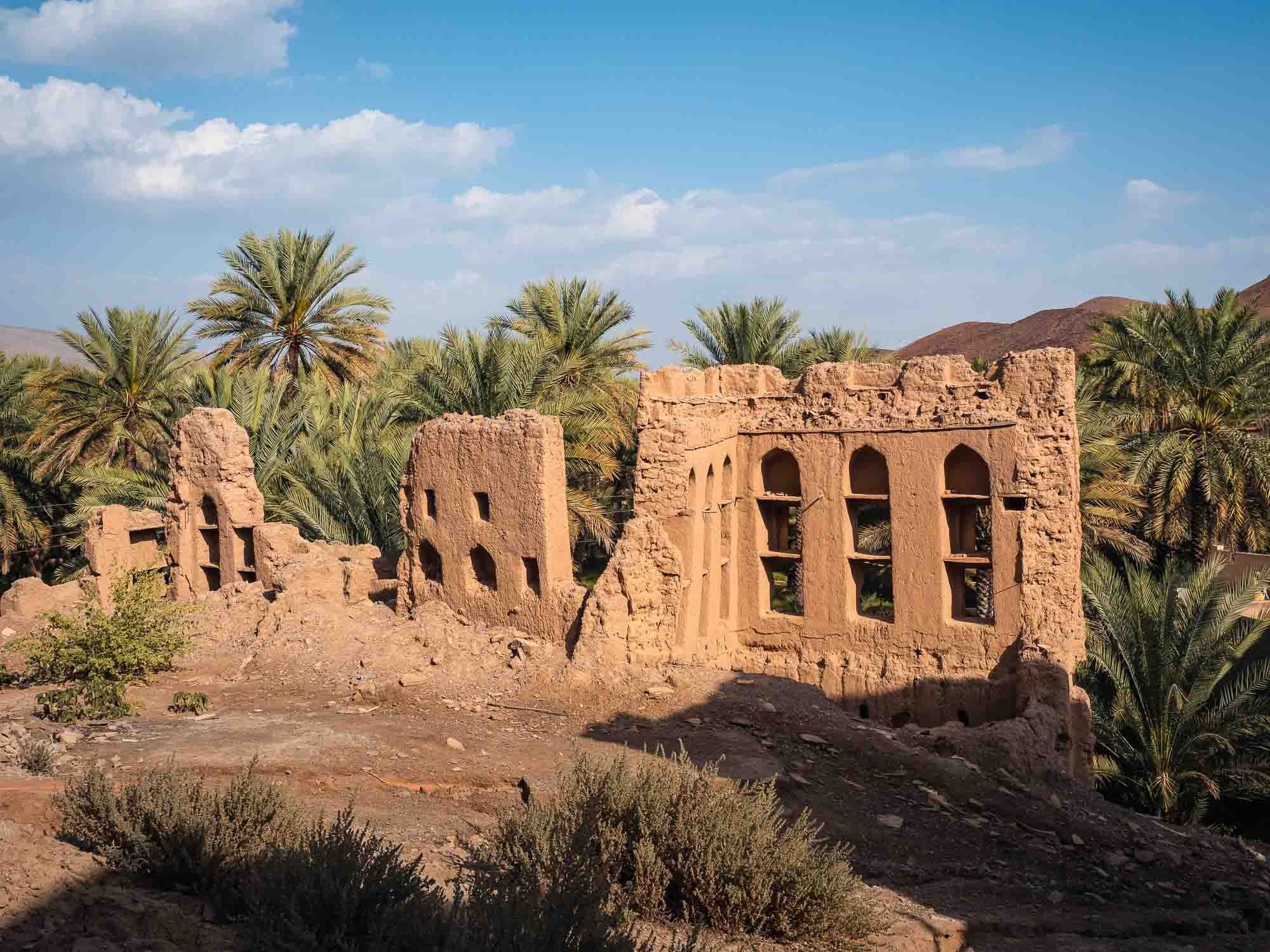
Harat Al Sibani
And this stunning view of the abandoned village.
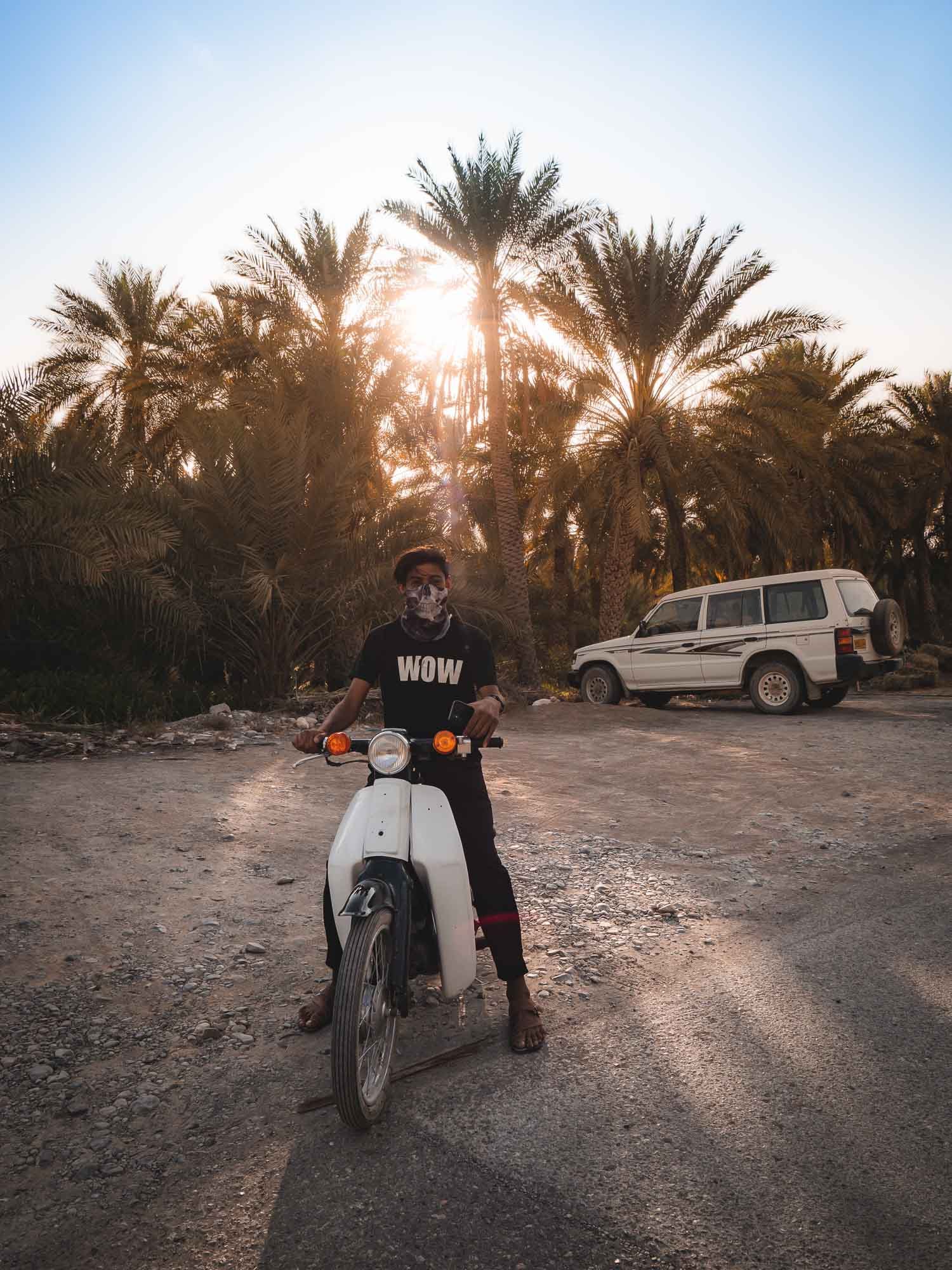
New Friends
Omani people are always curious, polite, and hospitable.
Work In Progress
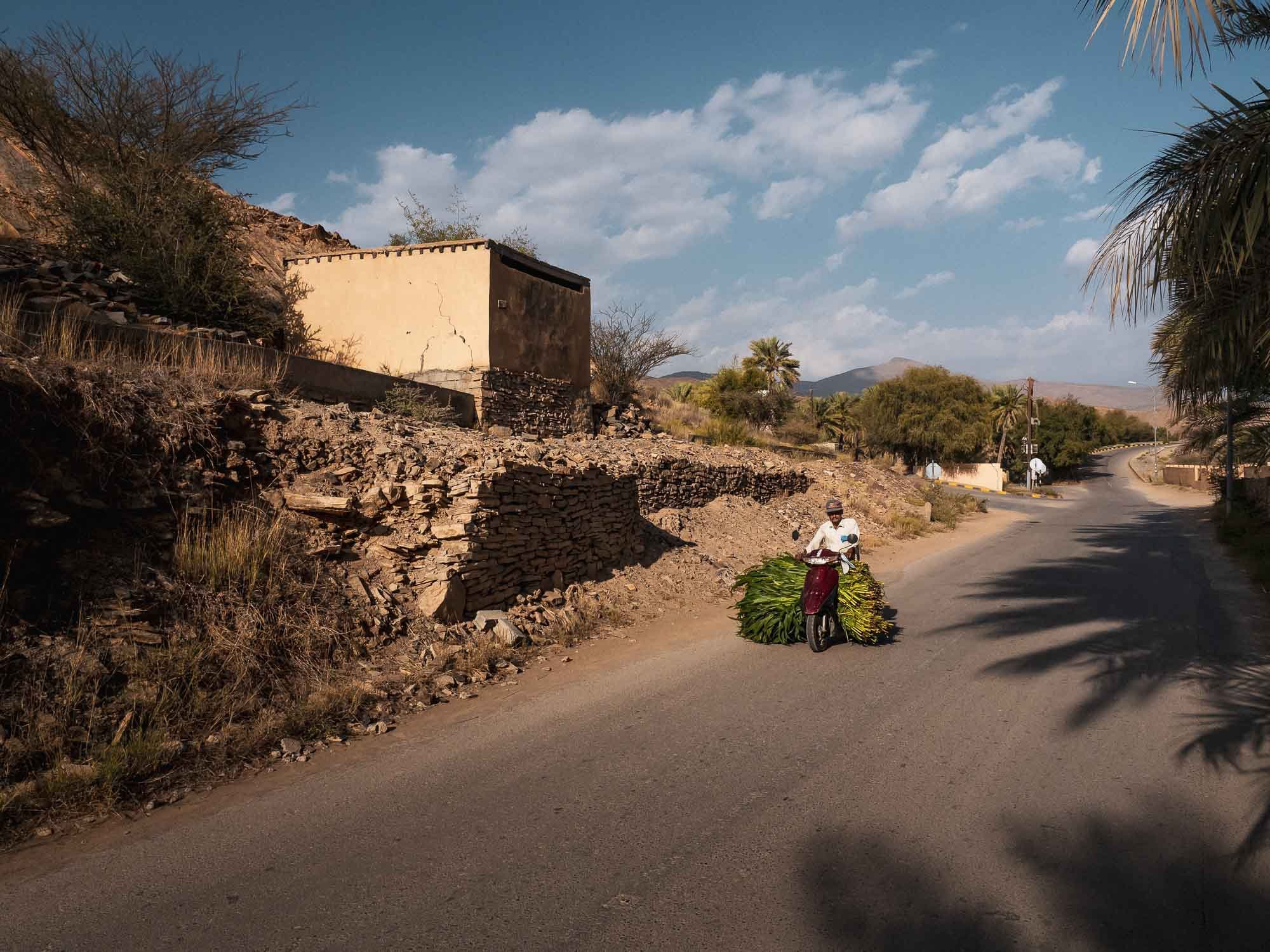
Farming and plantations still make up a large amount of the economy in this area.
Hajar Layers
One kind of shot I can never get enough of.
Samail
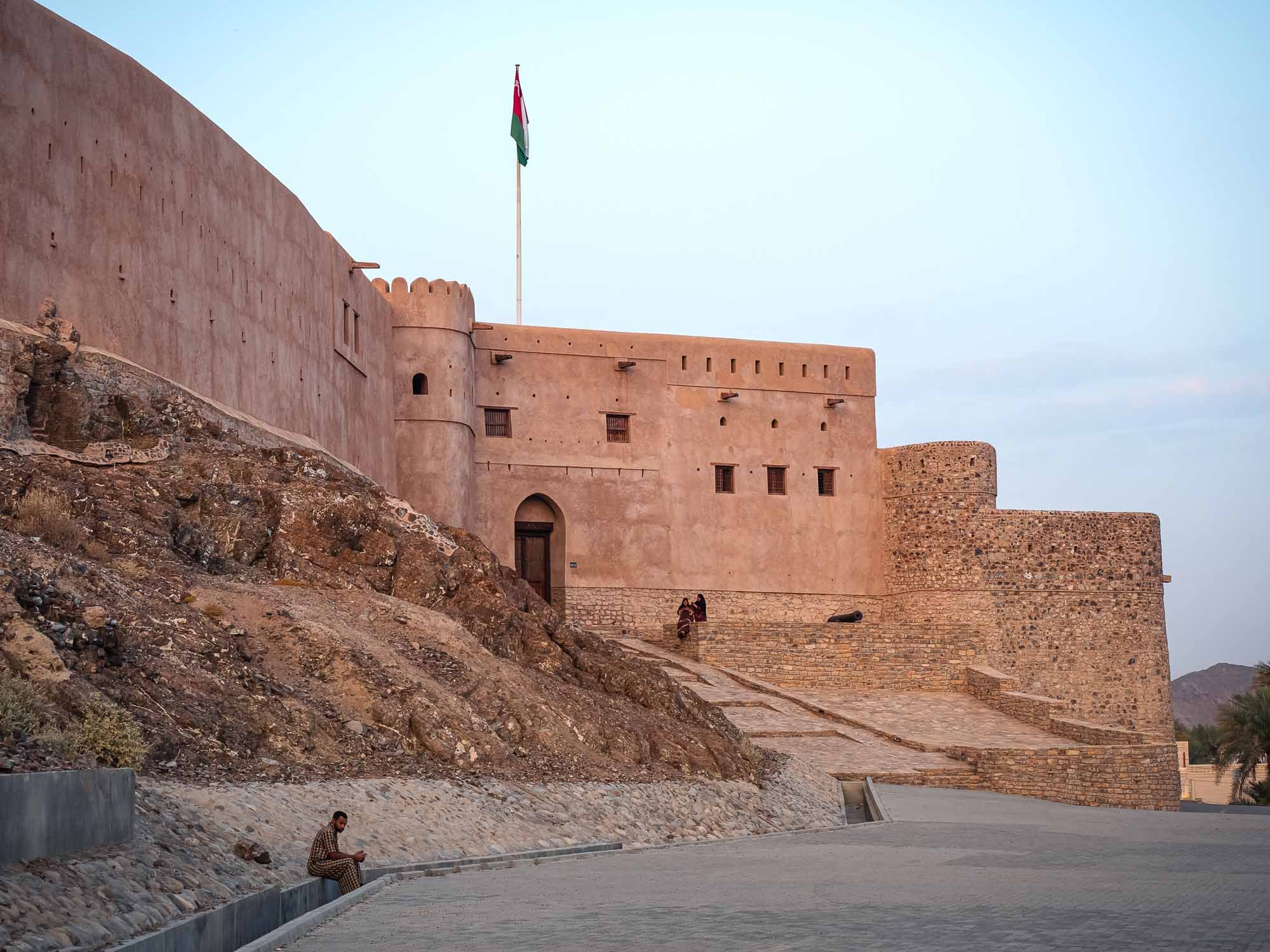
Samail and its fort was our last destination before reaching Muscat - unfortunately we were too late to see it from the inside.
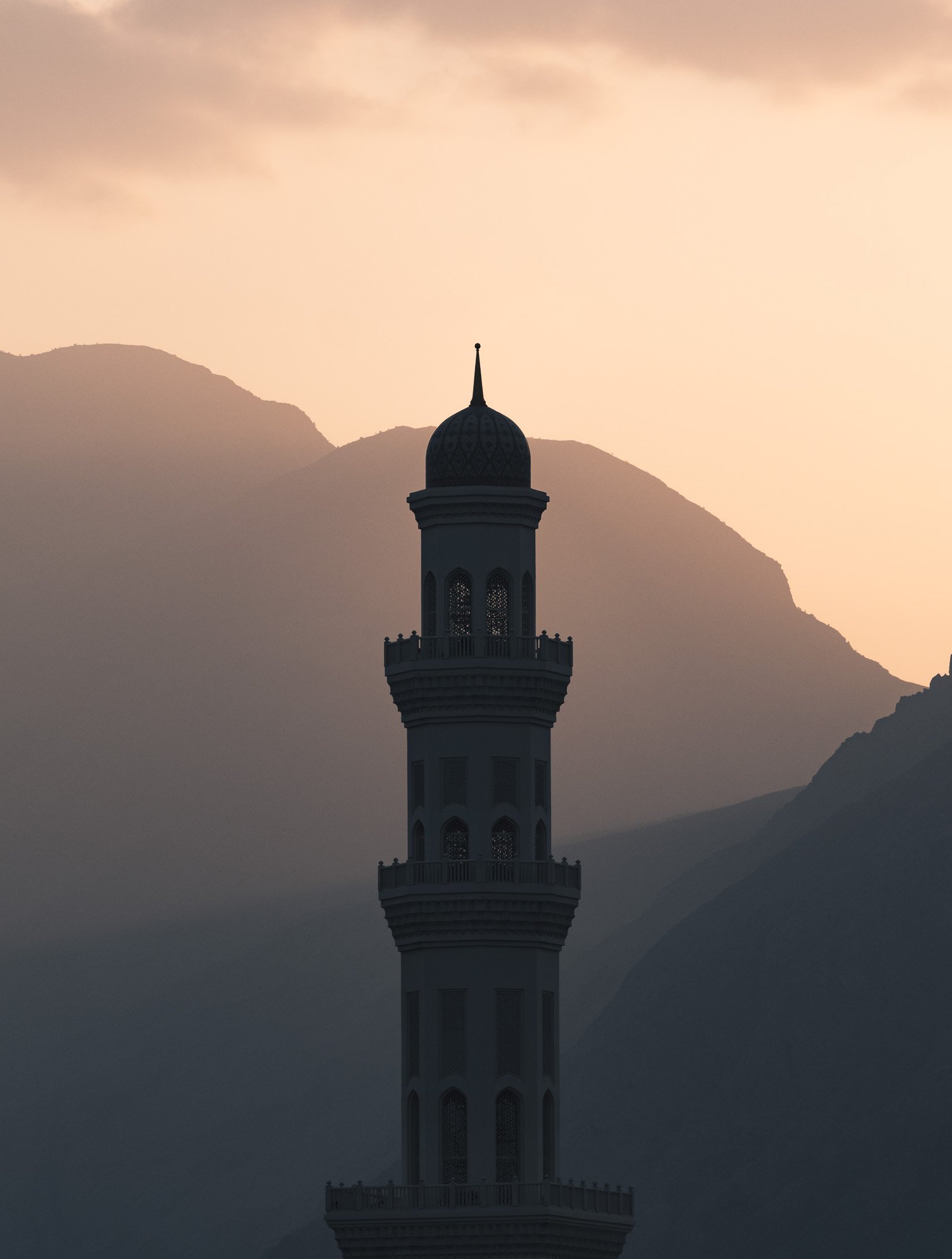
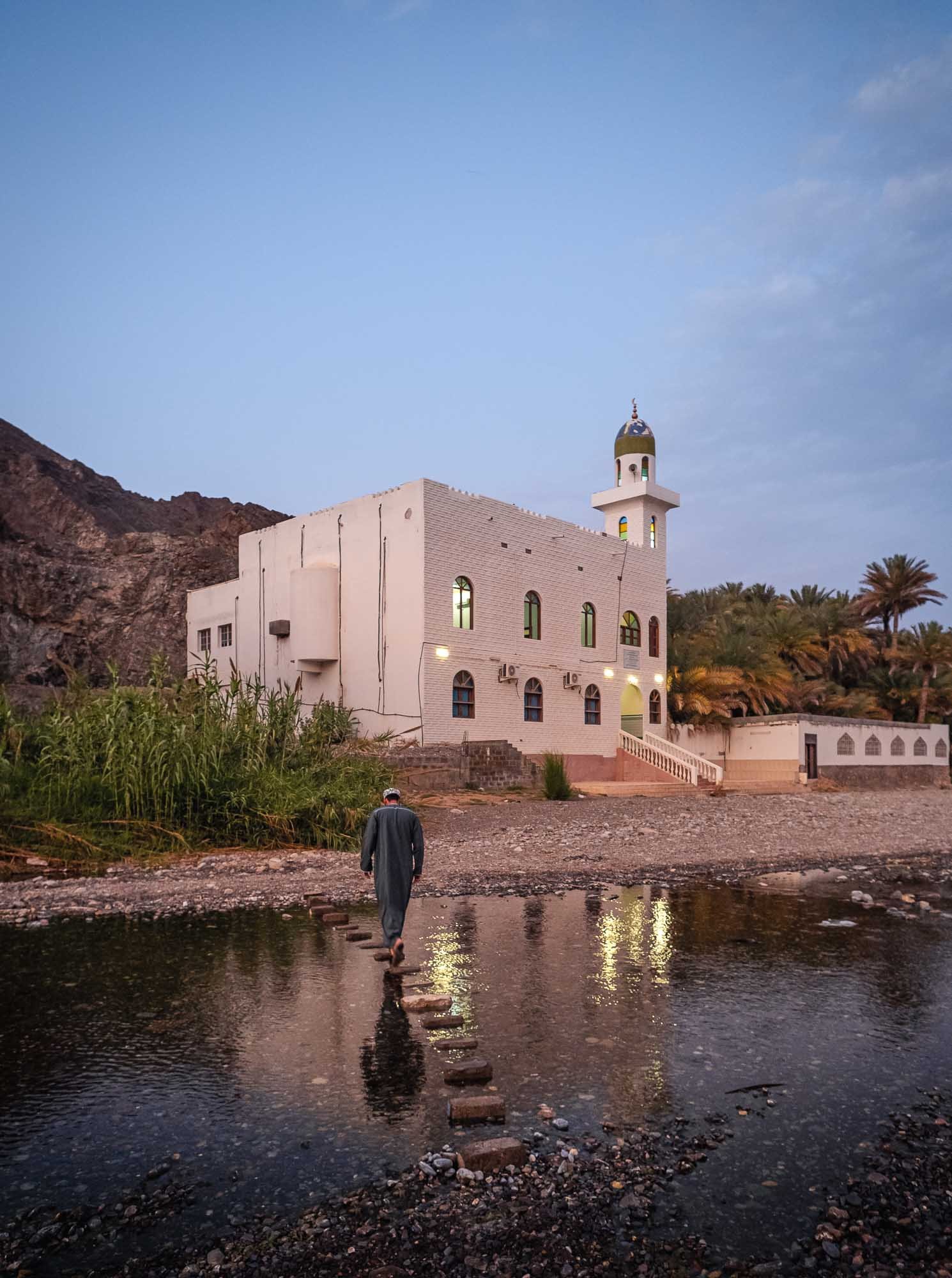
Steps to Prayer
The city is said to feature Oman's oldest mosque from 600 AD - not this one here though, which we found in our search for a good spot to watch the sunset.
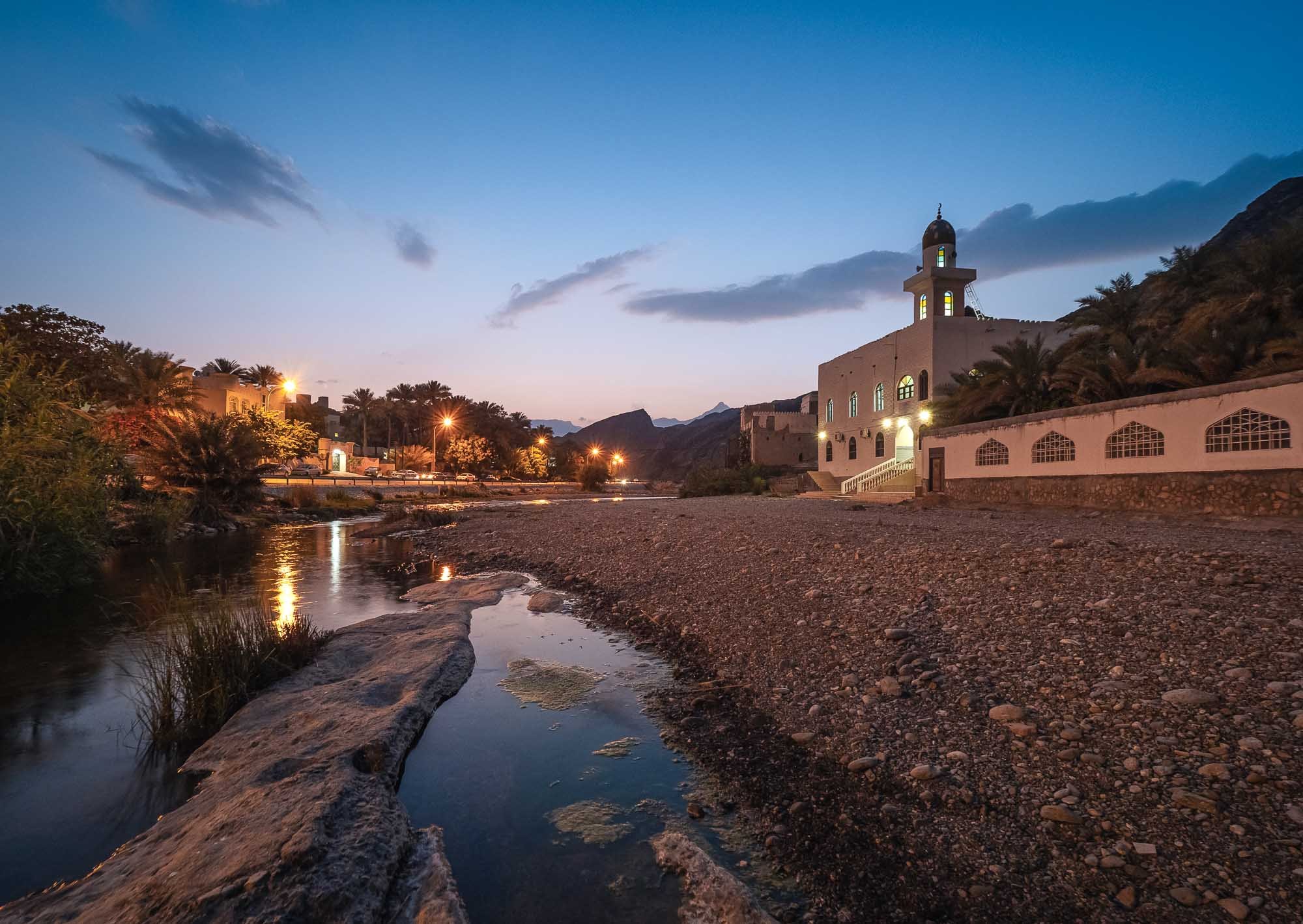
Evening Vibes
The sound of the prayer call and a few lonely frogs accompanied this scenery.
The Capital and its Surroundings
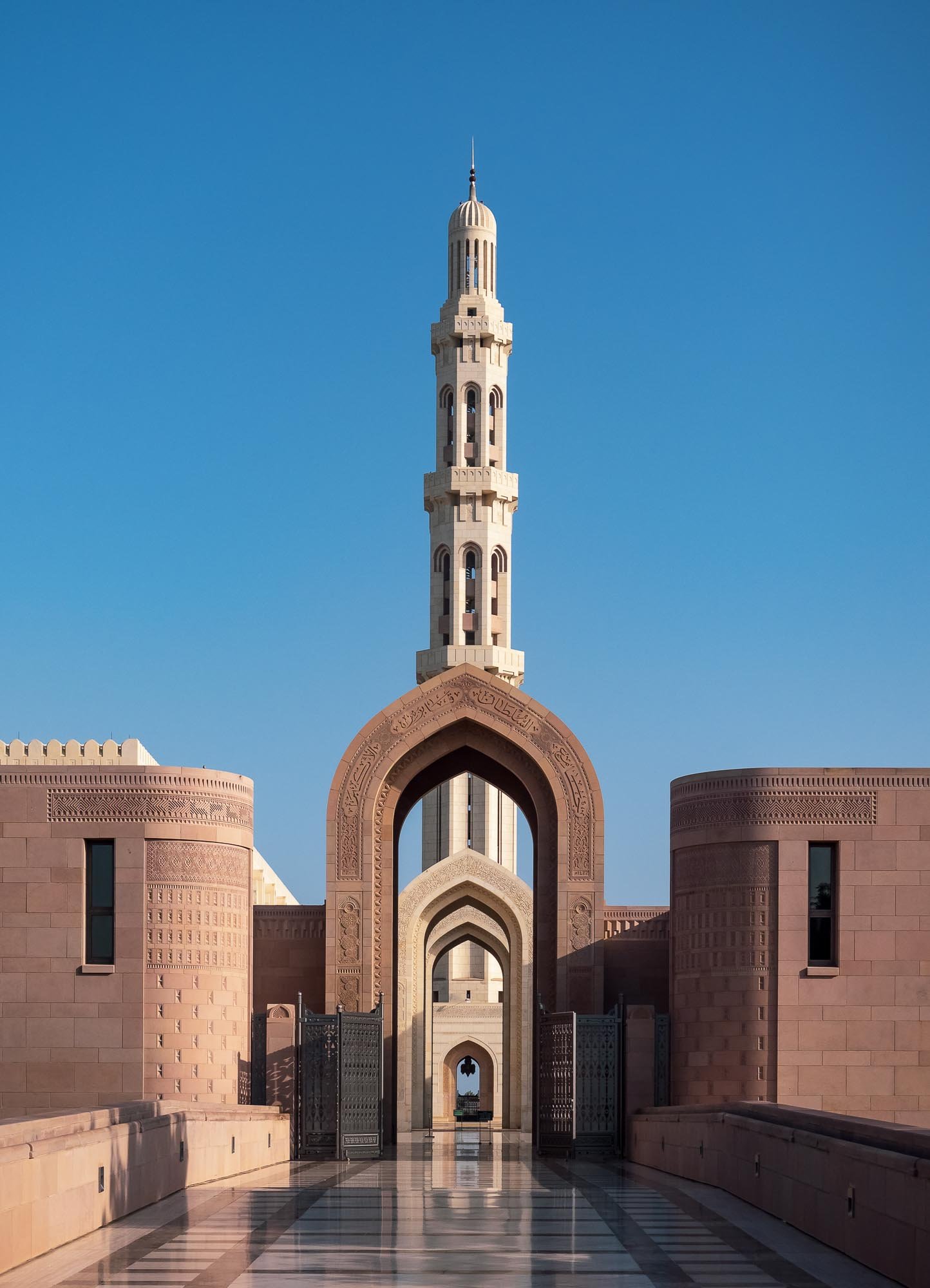
Muscat!
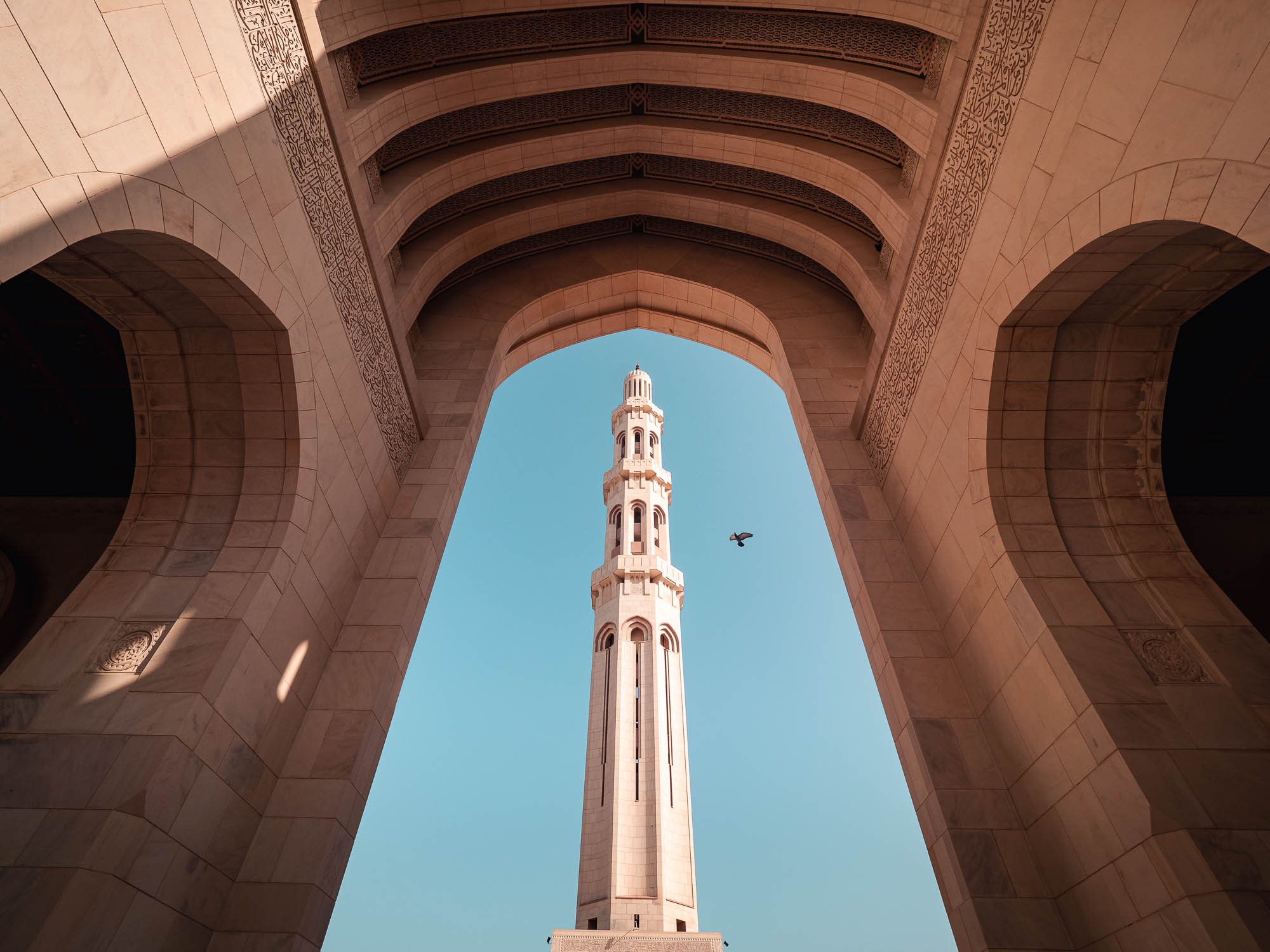
Our first stop in the capital had to be its arguably most famous sight: Sultan Qaboos Grand Mosque.
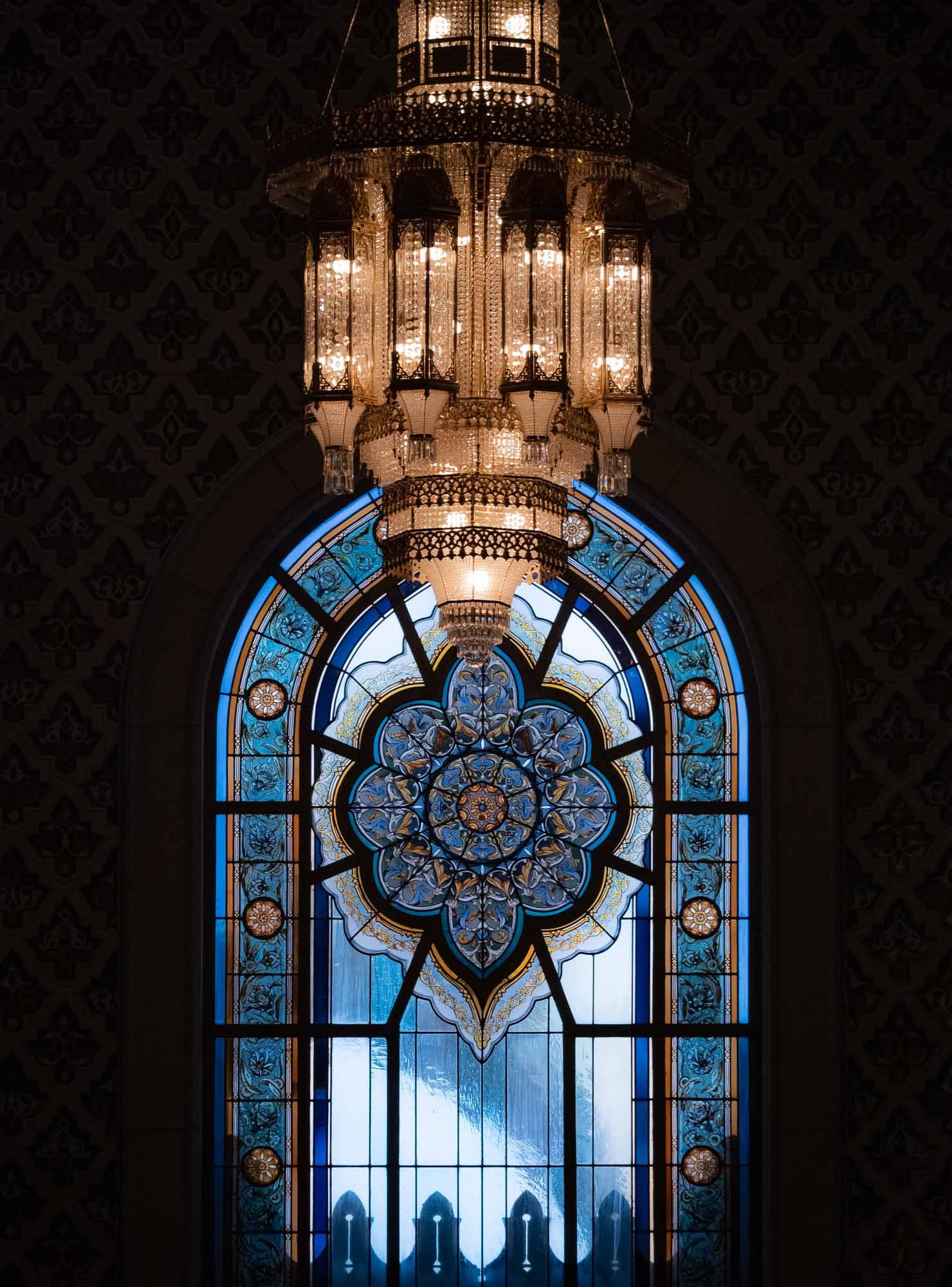
Lighting
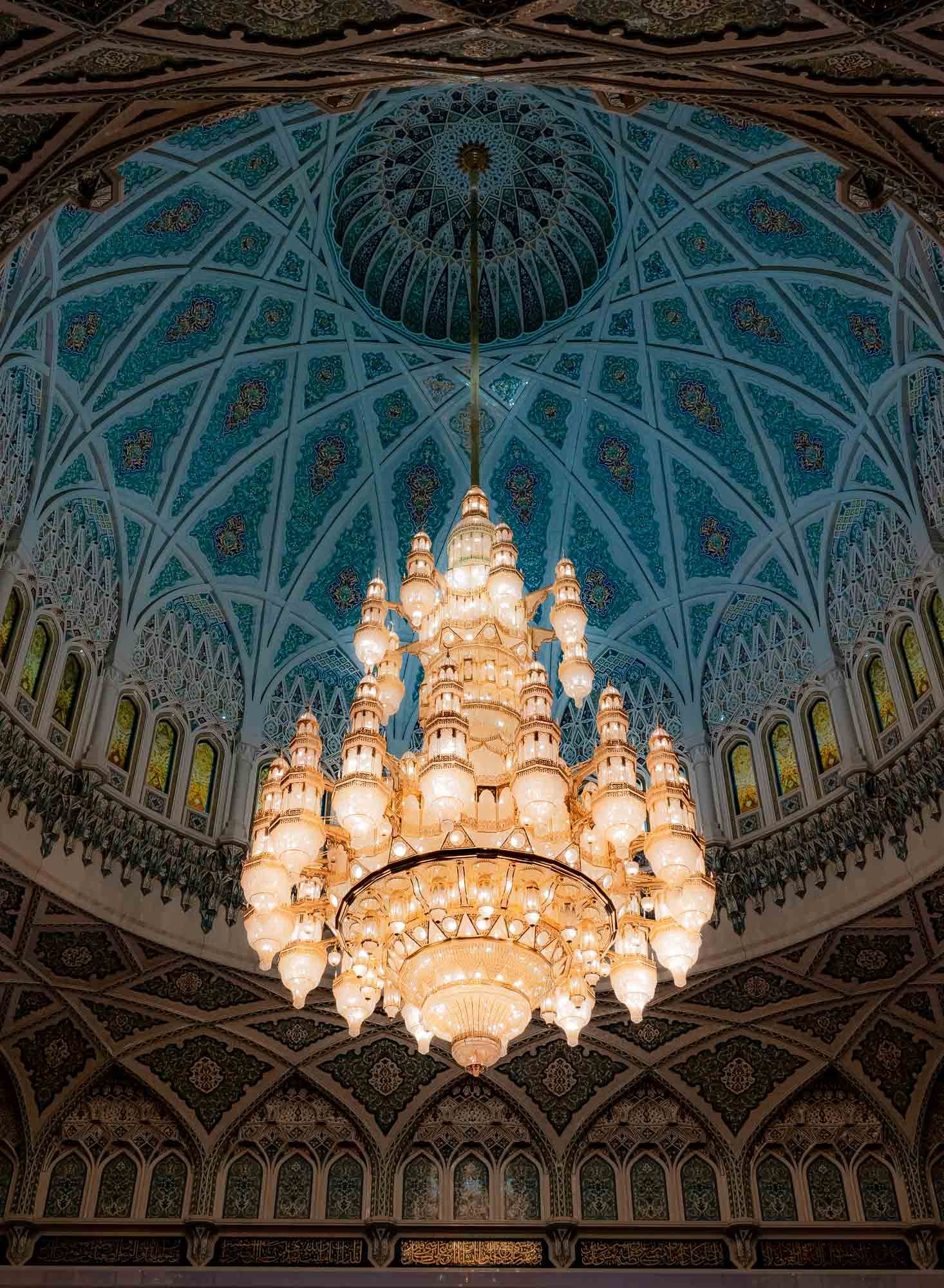
The mosque's primary prayer hall can accommodate 6500 people - its chandelier used to be the largest in the world. The same is true for the carpet, with 1,700,000,000 knots over 4300 sqm. Both have been overtaken by Abu Dhabi's Sheikh Zayed Mosque.
Interior Views
In hindsight my OCD is really annoyed that they chandelier doesn't perfectly line up with the window.
Upwards
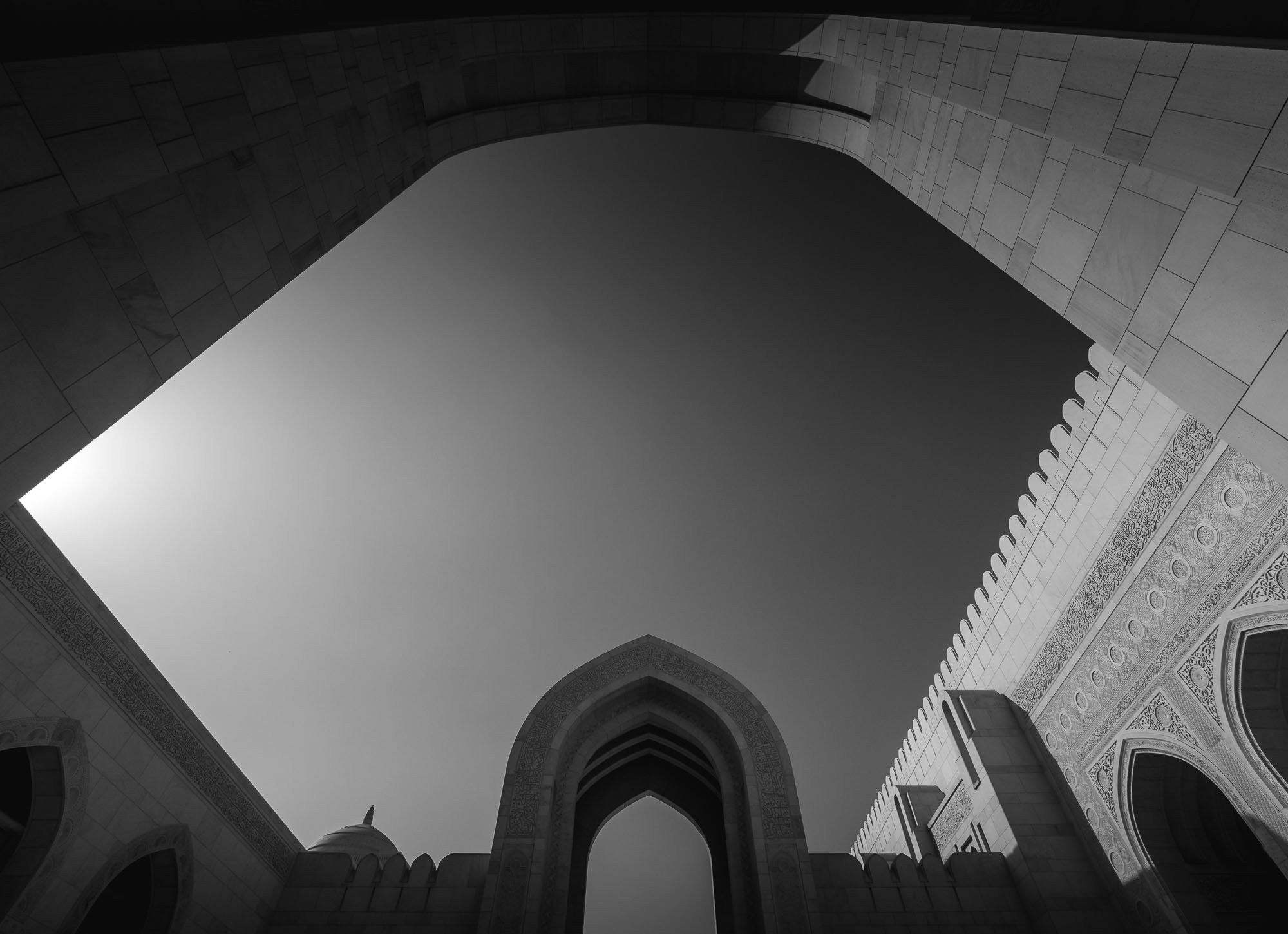
The mosque was inaugurated in 2001, after 7 years of construction.
Materials
It was built from 300,000 tonnes of Indian sandstone.
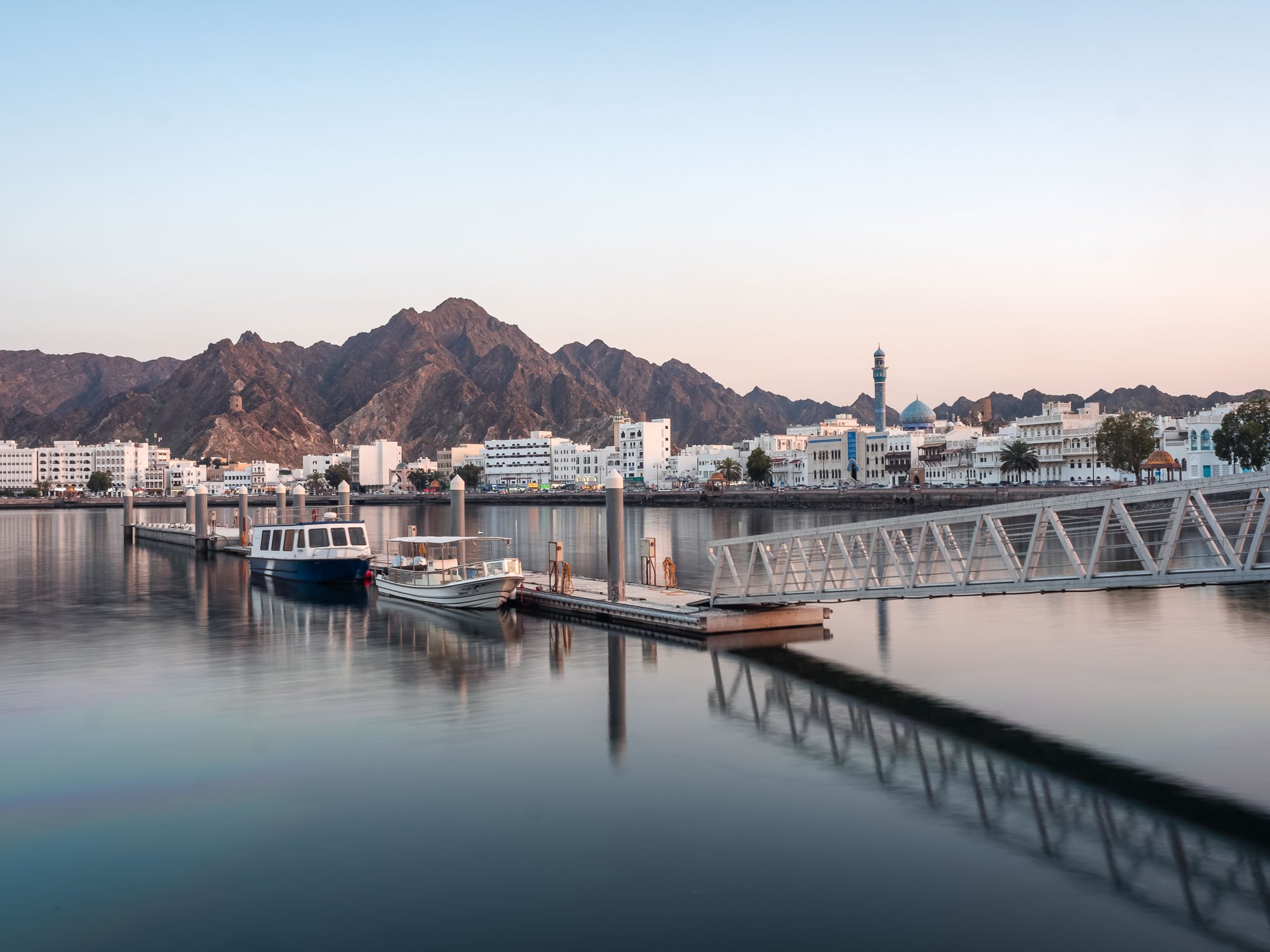
Muttrah Corniche
Our next destination was Muttrah, a trade and seaport city very close to Muscat.
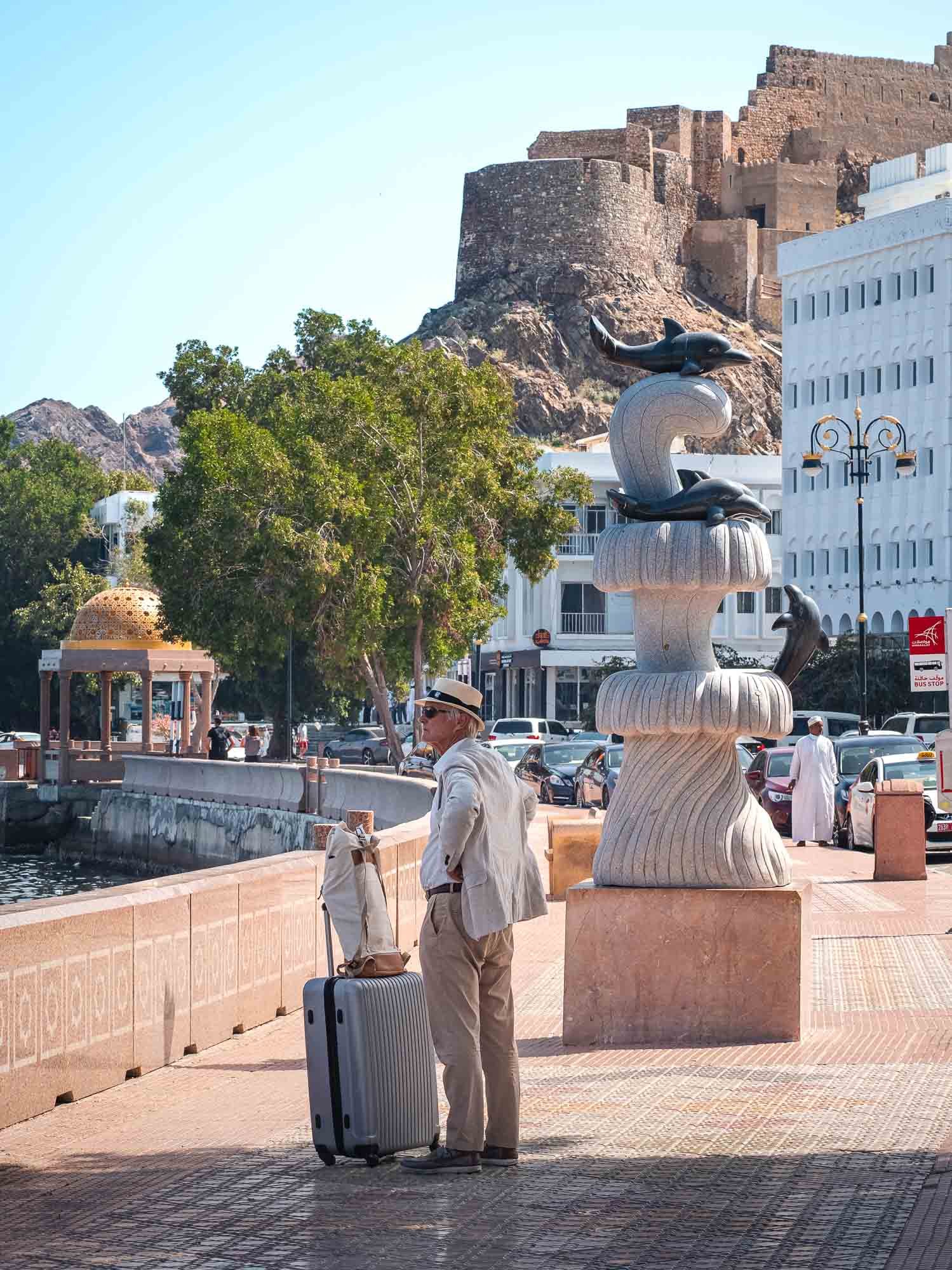
In Style
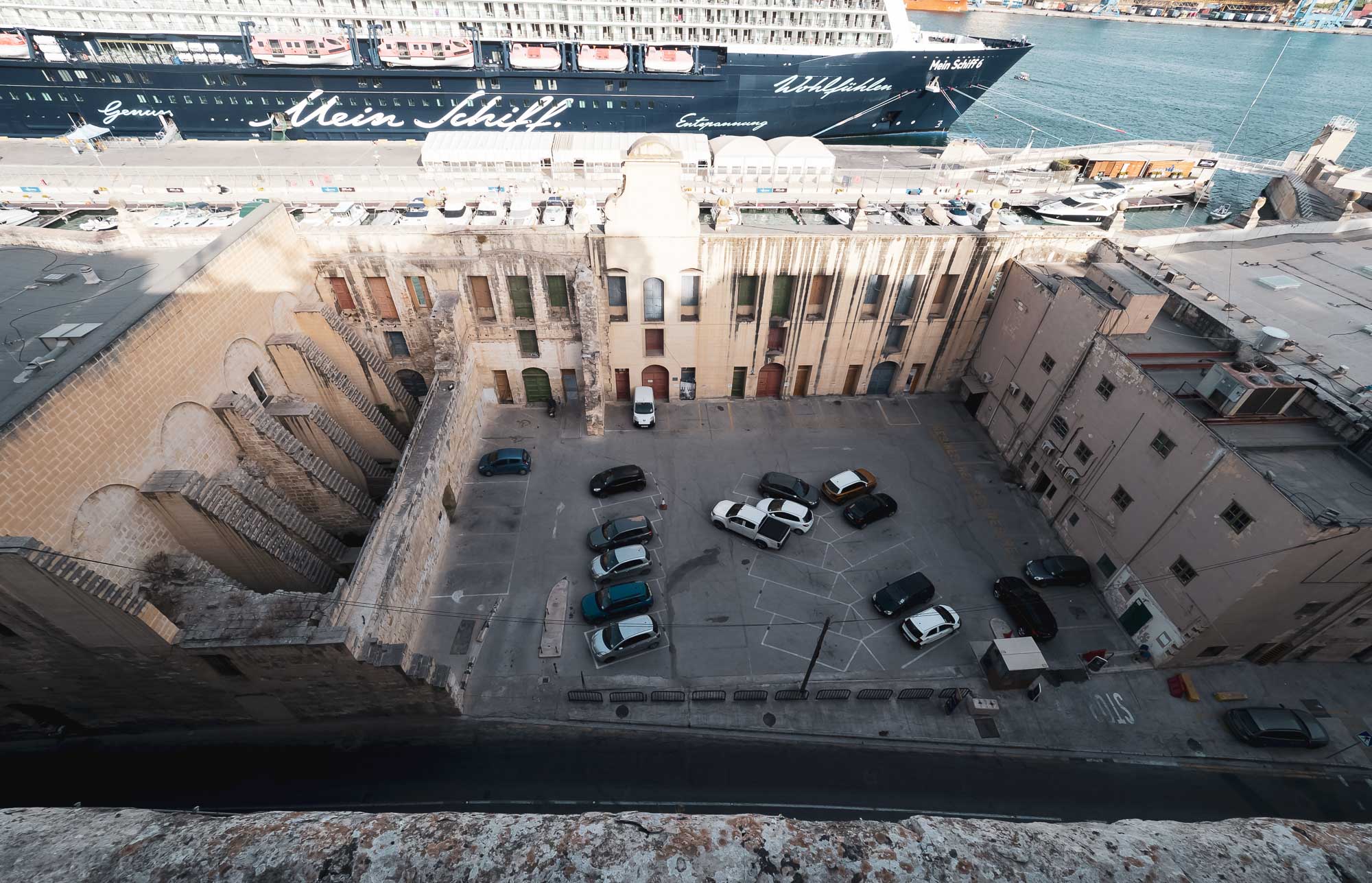
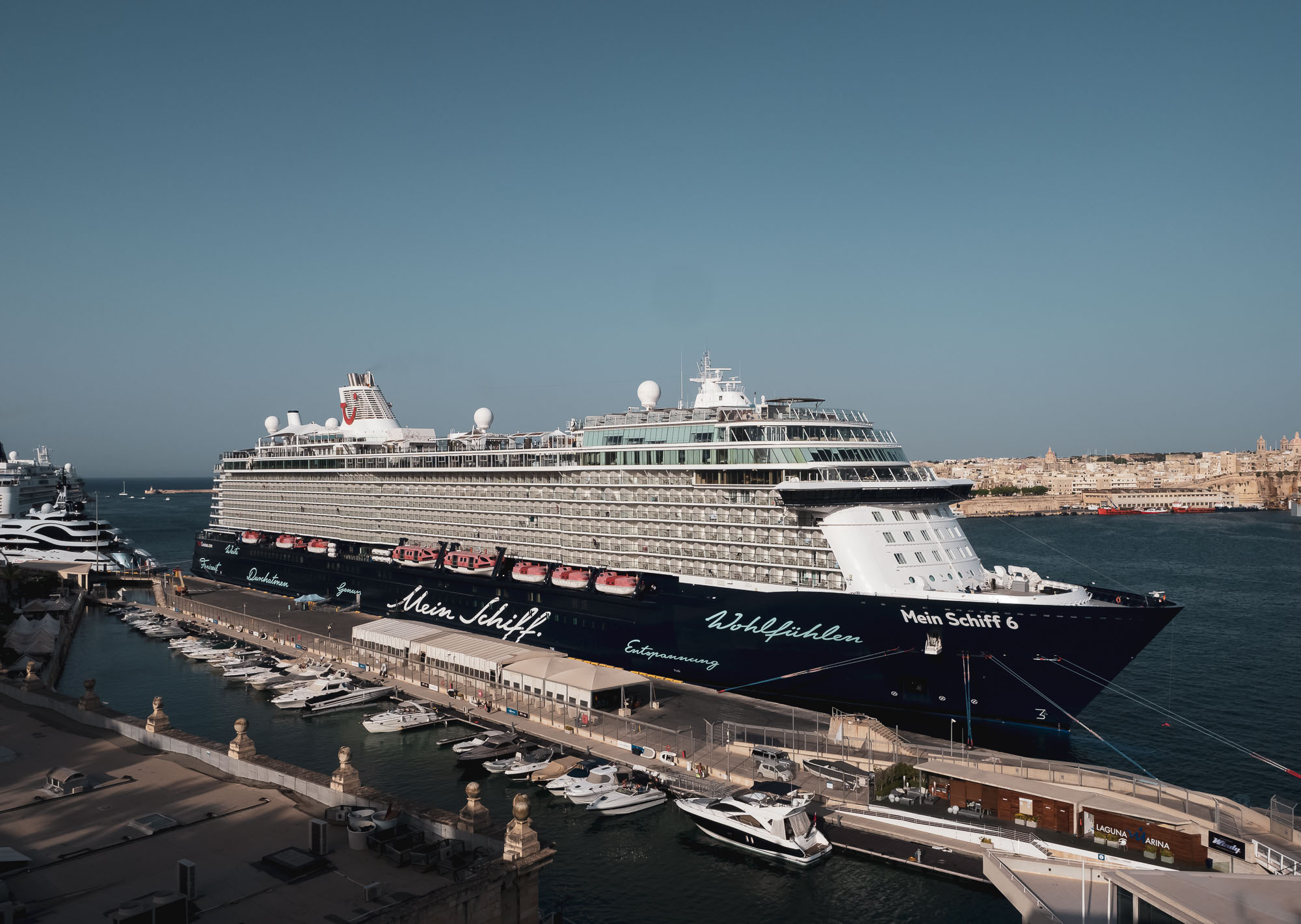
The presence of large cruise ships sometimes brings more sophisticated travellers than us to the town ;)
Juxtaposition
It makes for a nice contrast with the traditional Omani style.
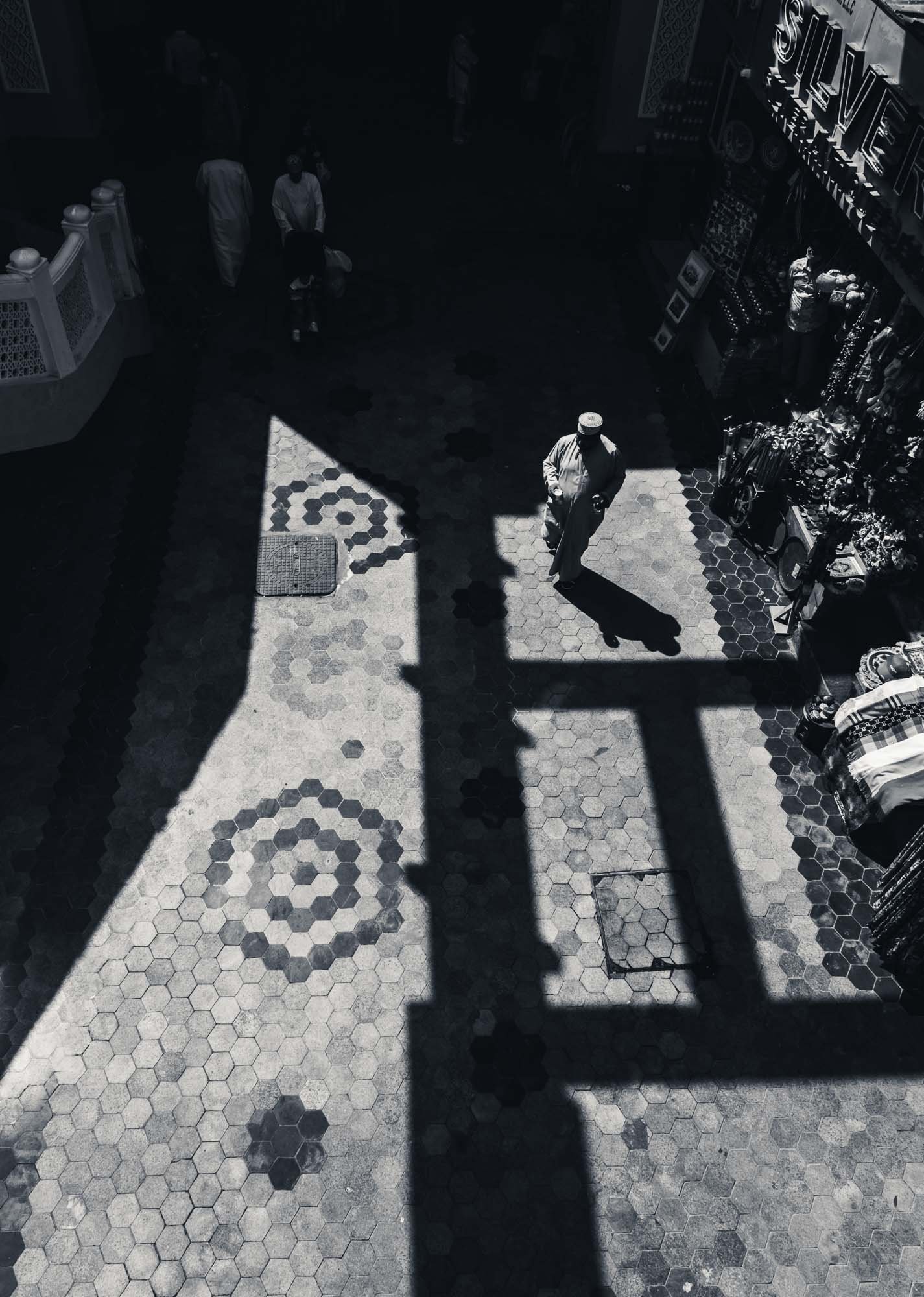
Souq Entrance
The city's souq is one of the most important in Oman, and dates back 200 years.
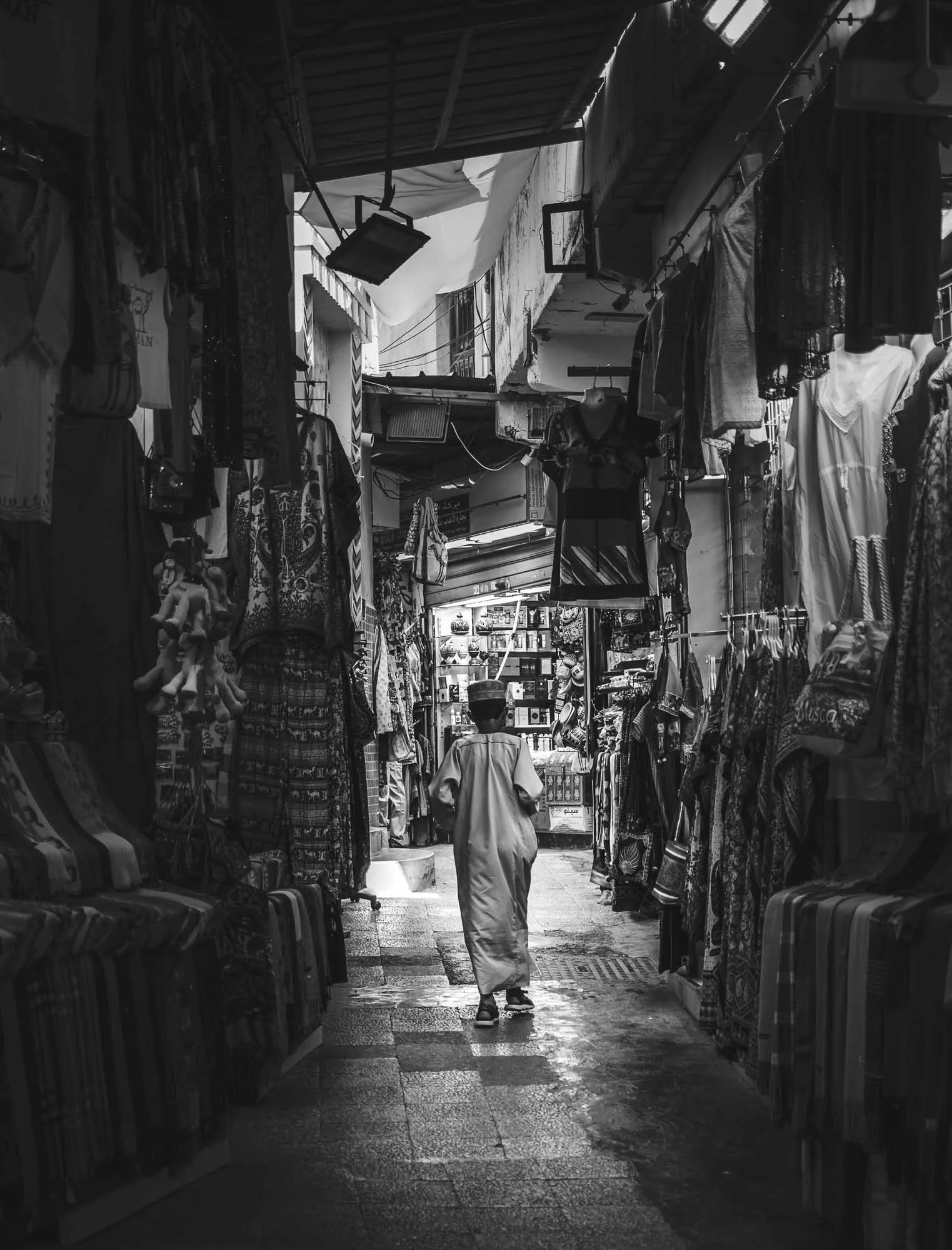
Into the Light
It's nicknamed the "Market of Darkness" due to the roof blocking most of the sunlight even during the day.
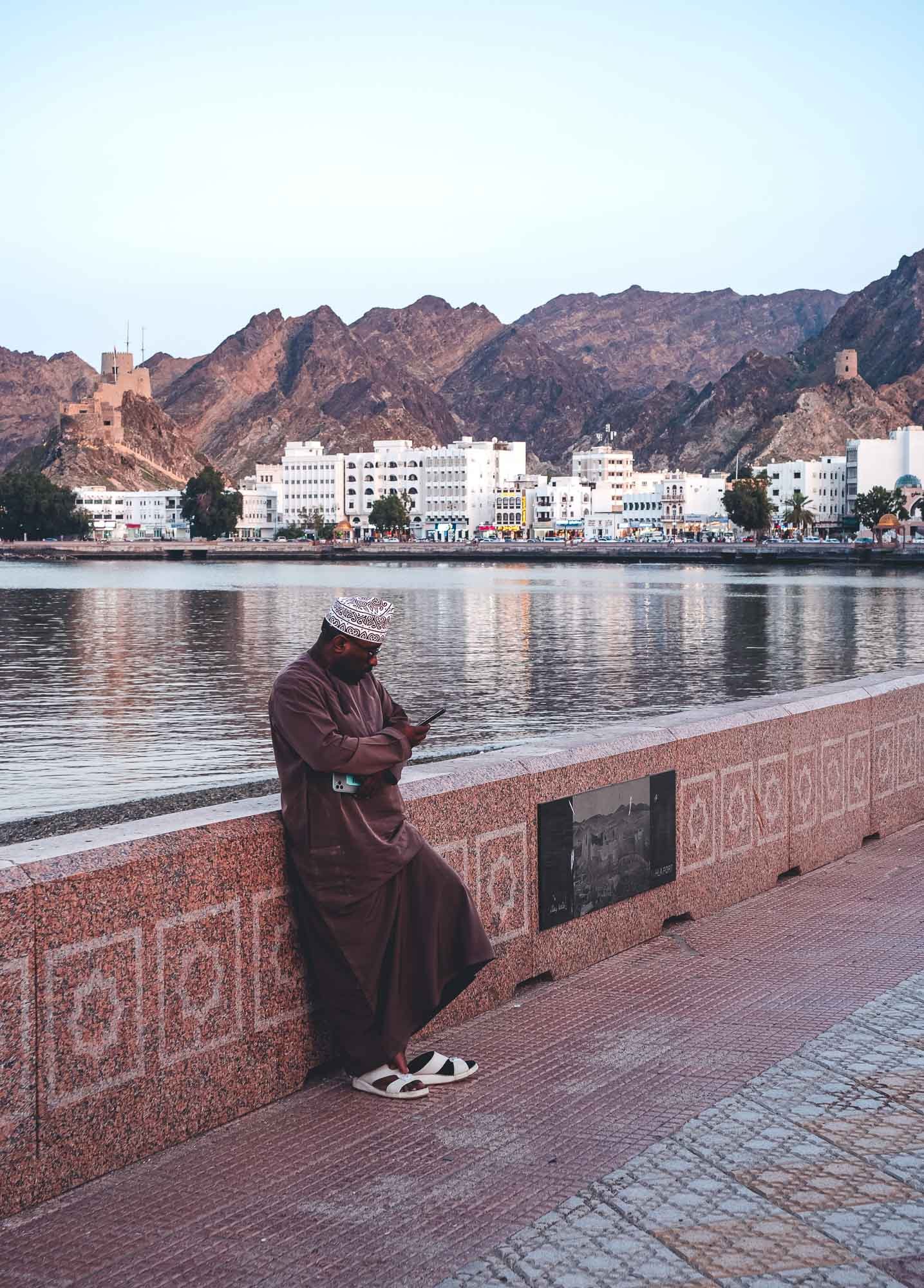
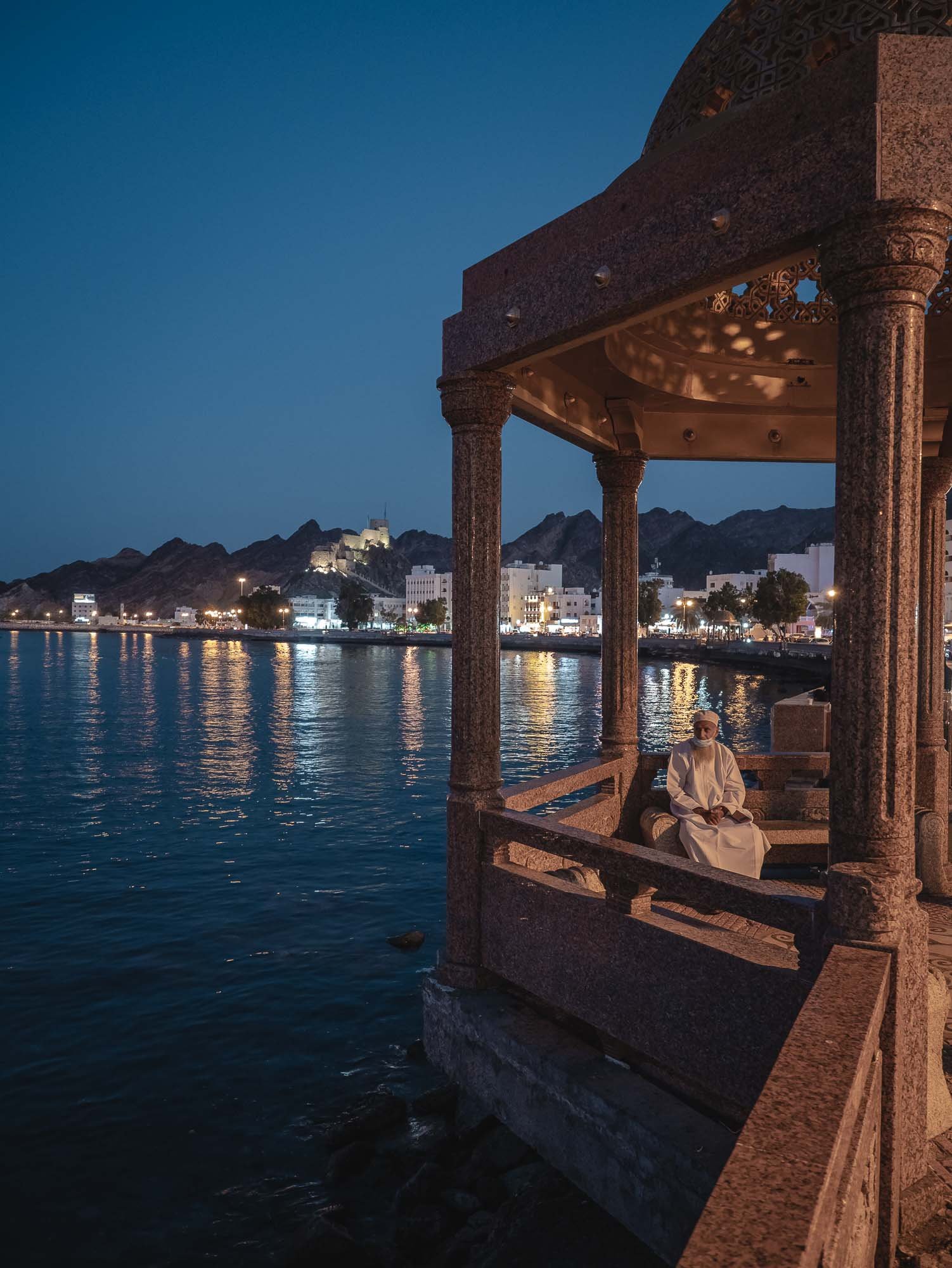
Muttrah
Evening views along the corniche, with the local fort in the distance.
Hiking in the City
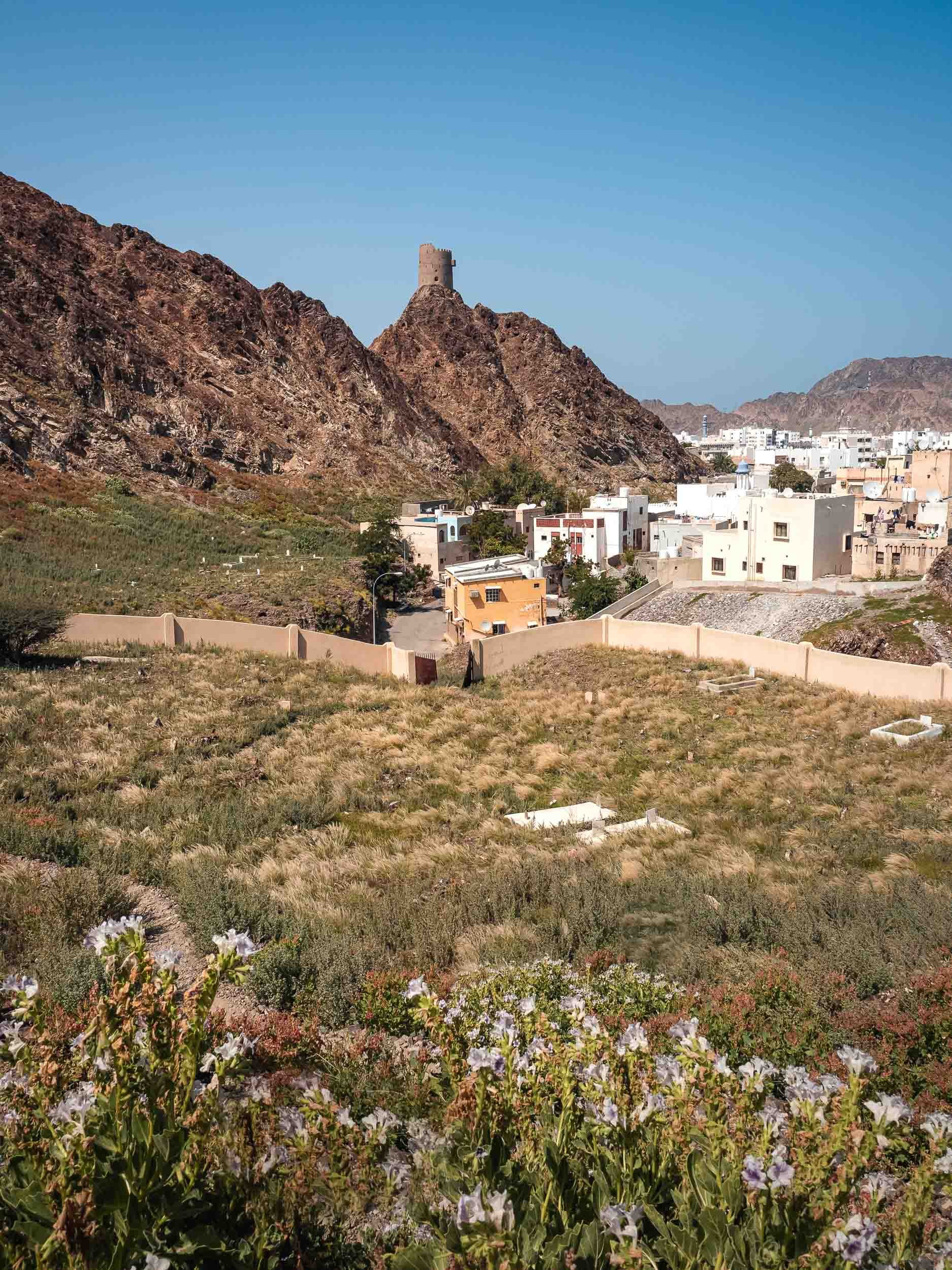
There's a 1h hike from Muttrah to Riyam, crossing green flower fields and a beautiful wadi - in our case filled with water - on the way.
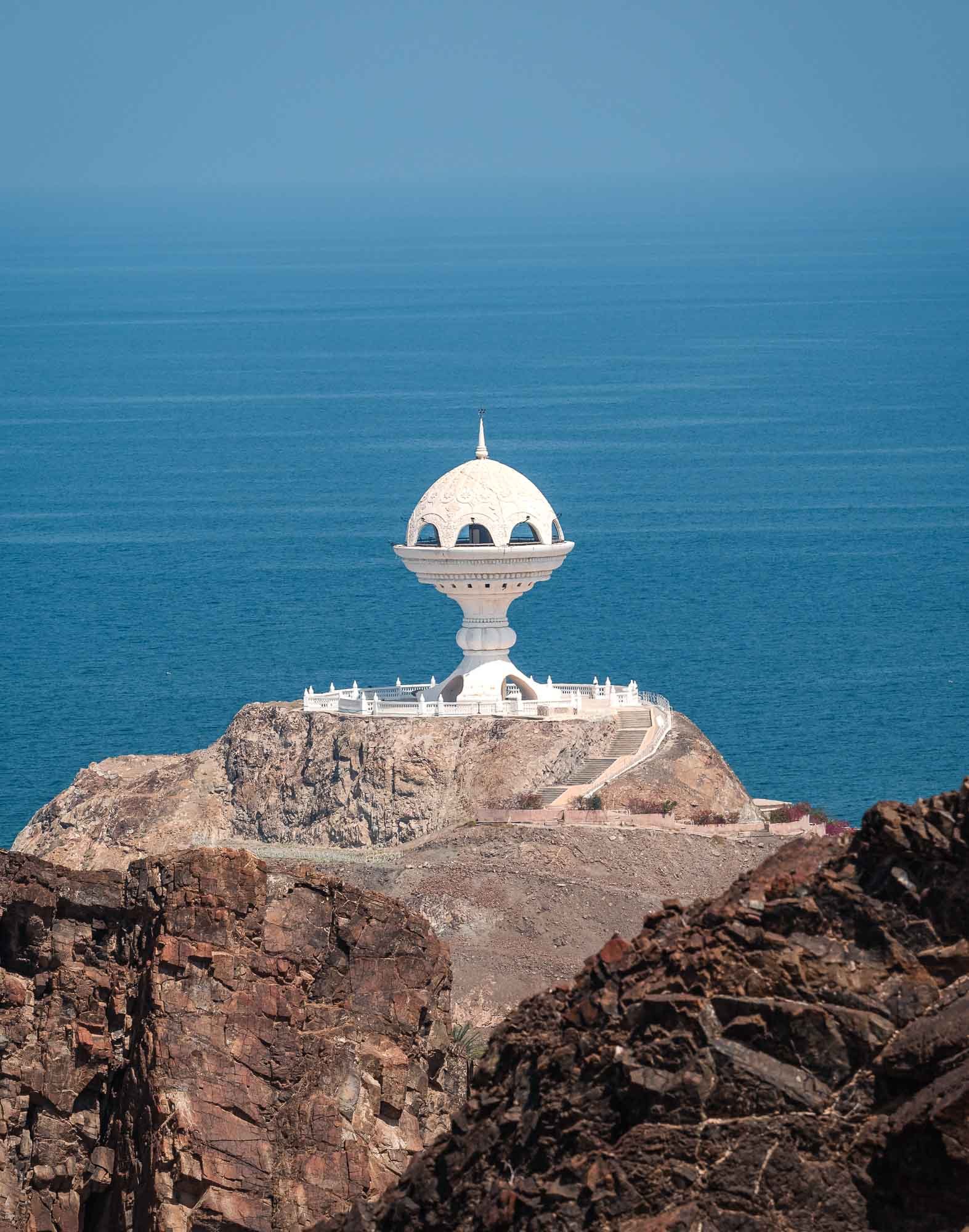
Riyam
At the end of which, you're rewarded with this view of the Riyam Park Monument, often termed as the "giant incense burner" due to its shape.
Old Muscat
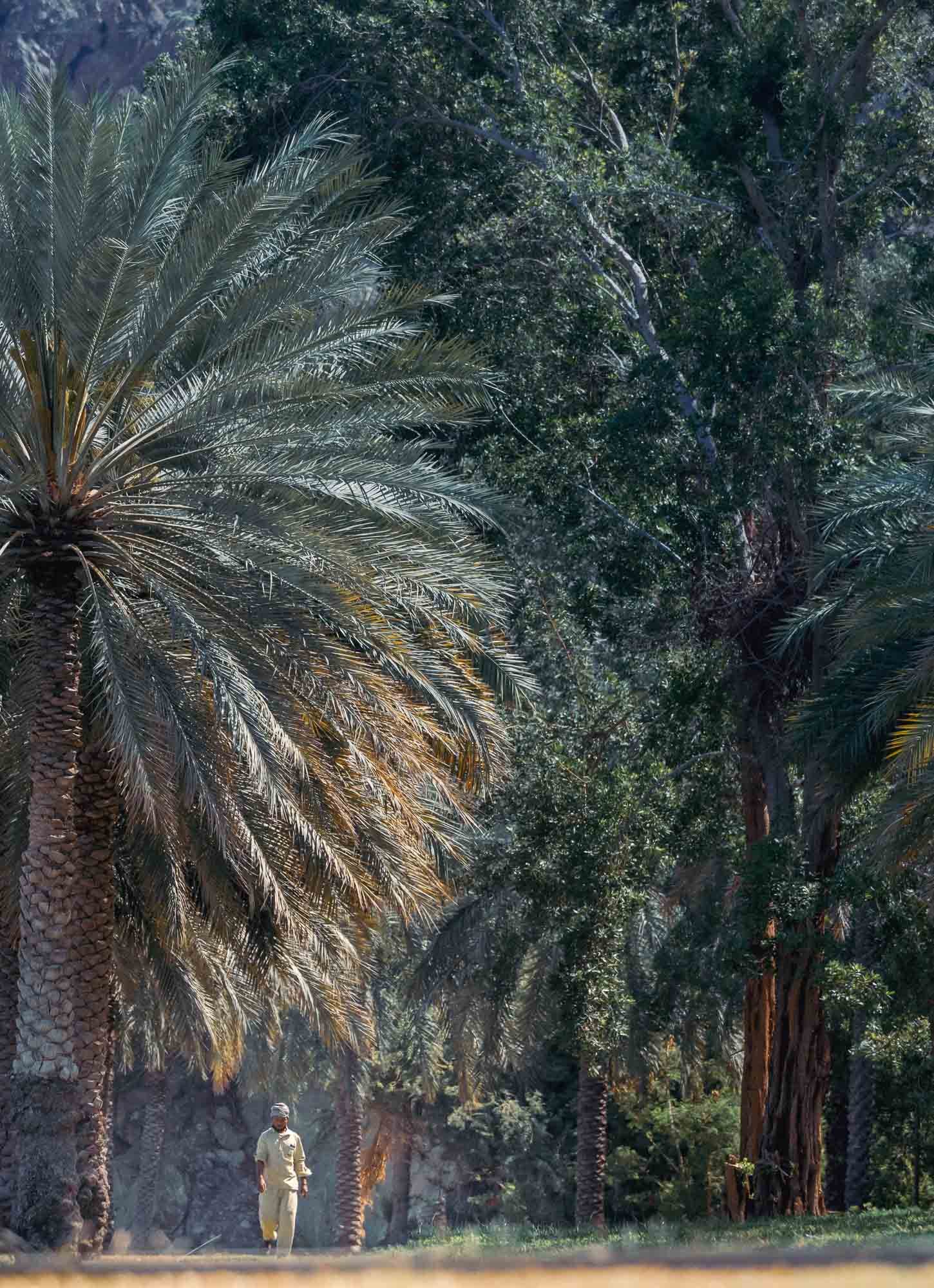
Our next destination was "Old Muscat", the historic part of the city still housing many government institutions. But not before crossing a few more farms on the way, such as this one.
National Musem
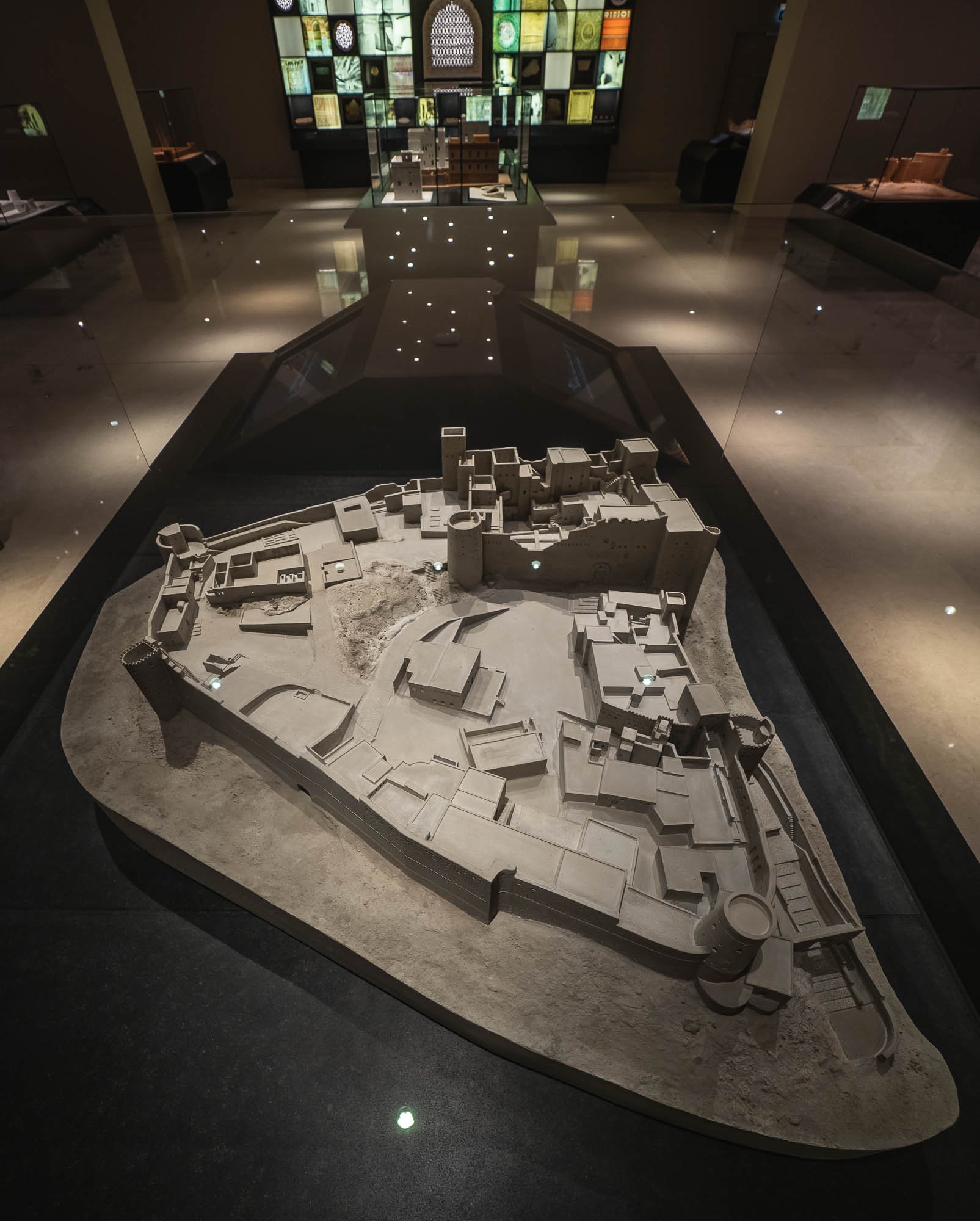
The city is also home to the National Museum, with some interesting exhibits. I often find the history of the Middle East to be completely underrated and possibly overshadowed by its recent development. Humans have set foot here some 400,000 years ago, and there is an incredibly rich and accessible past. Reognise this fort model? It's Bahla!
Jalili Fort
Old Muscat is also home to Al Jalili fort, built by the Portuguese in the 1500s and said to have been used as both a jail & refuge for the Omani royals. This one does not seem open to the public.
Al Bustan
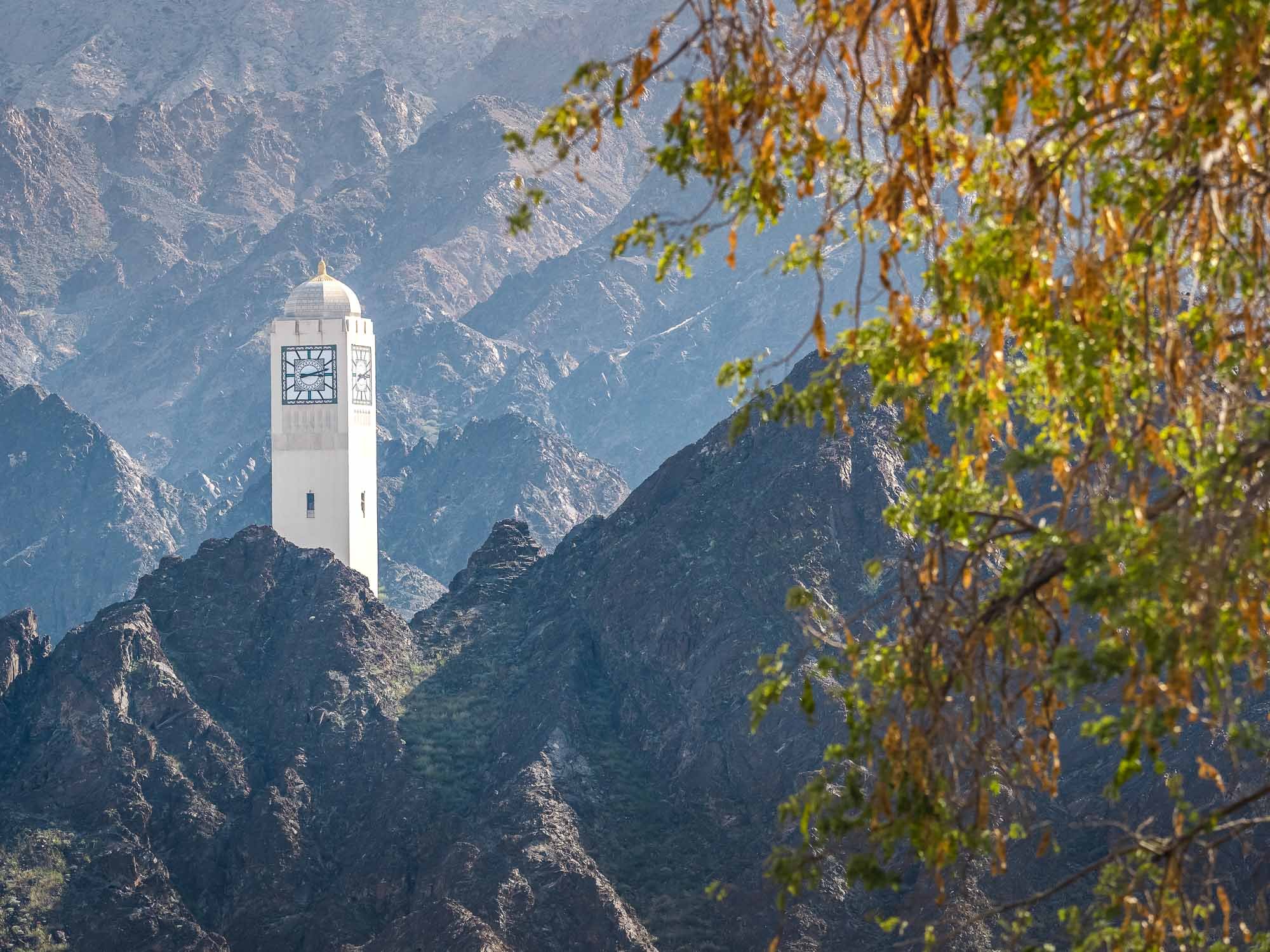
Driving a bit further along the coast brings you to the Al Bustan, home to the famous hotel (also where my grandmother used to stay in the 80s) and the State Council, which is the building this clock tower belongs to.
Qantab
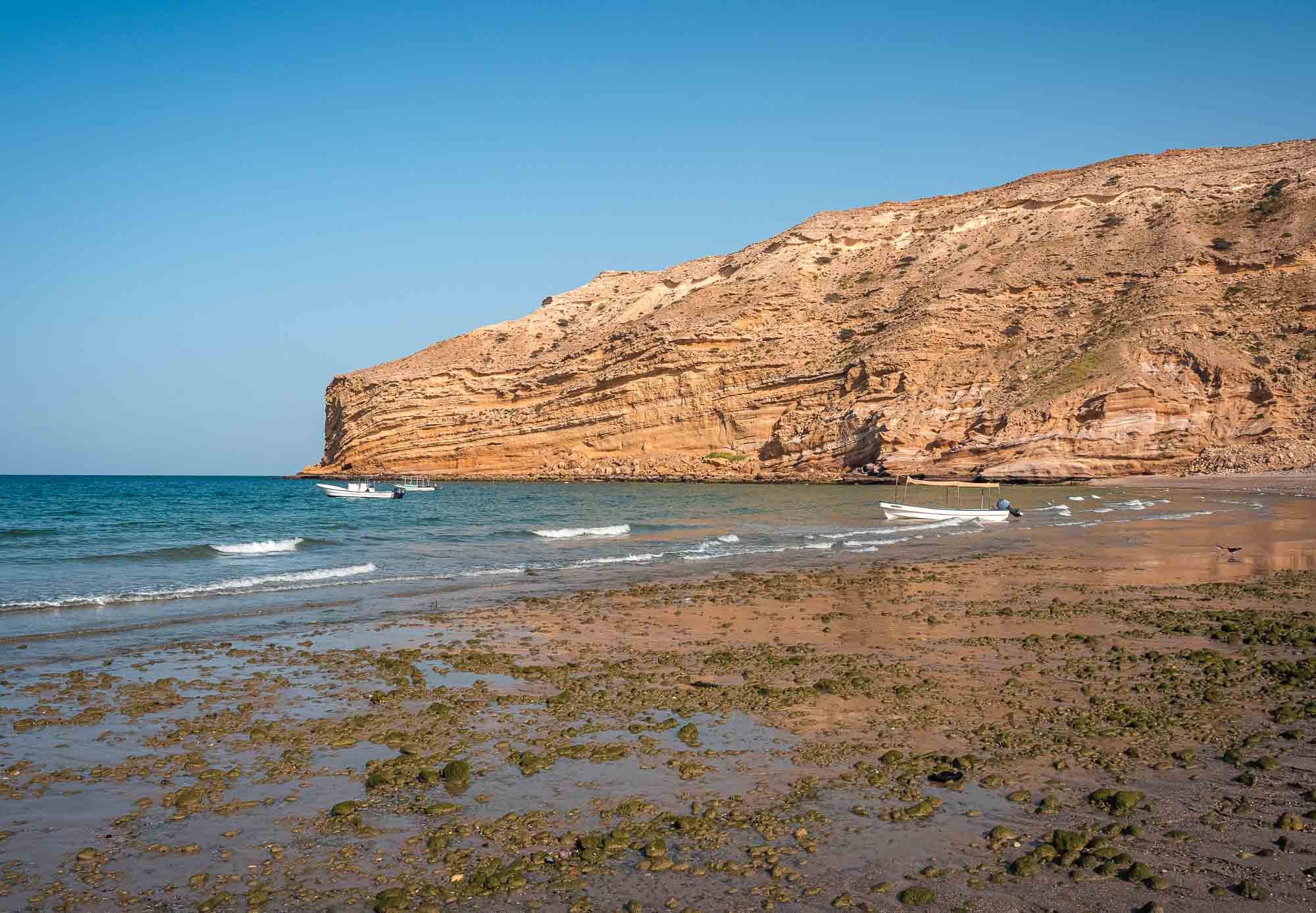
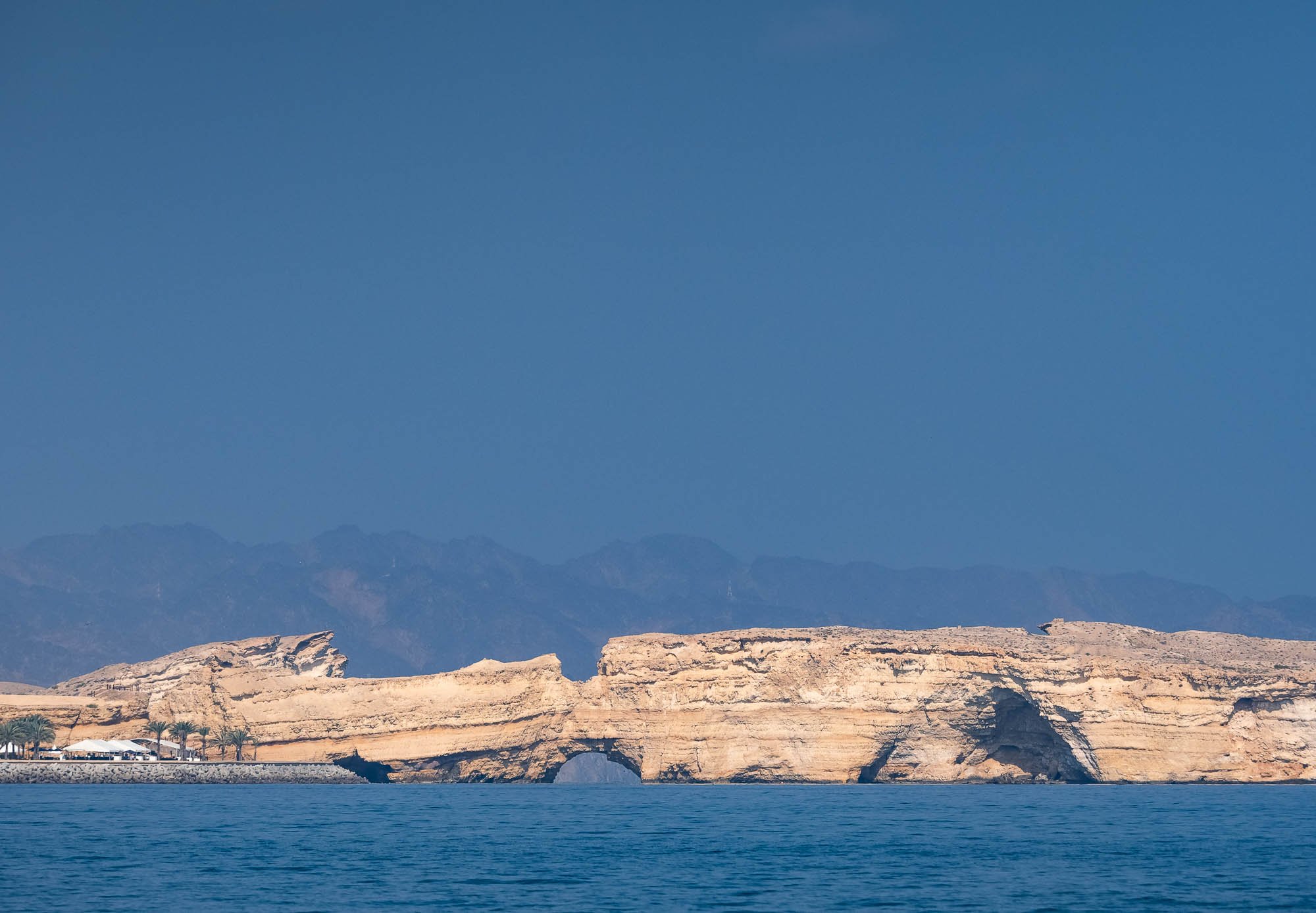
Another few kilometres and you reach Qantab, home to this beauitful beach and a natural stone arch in the sea, which we will see later...
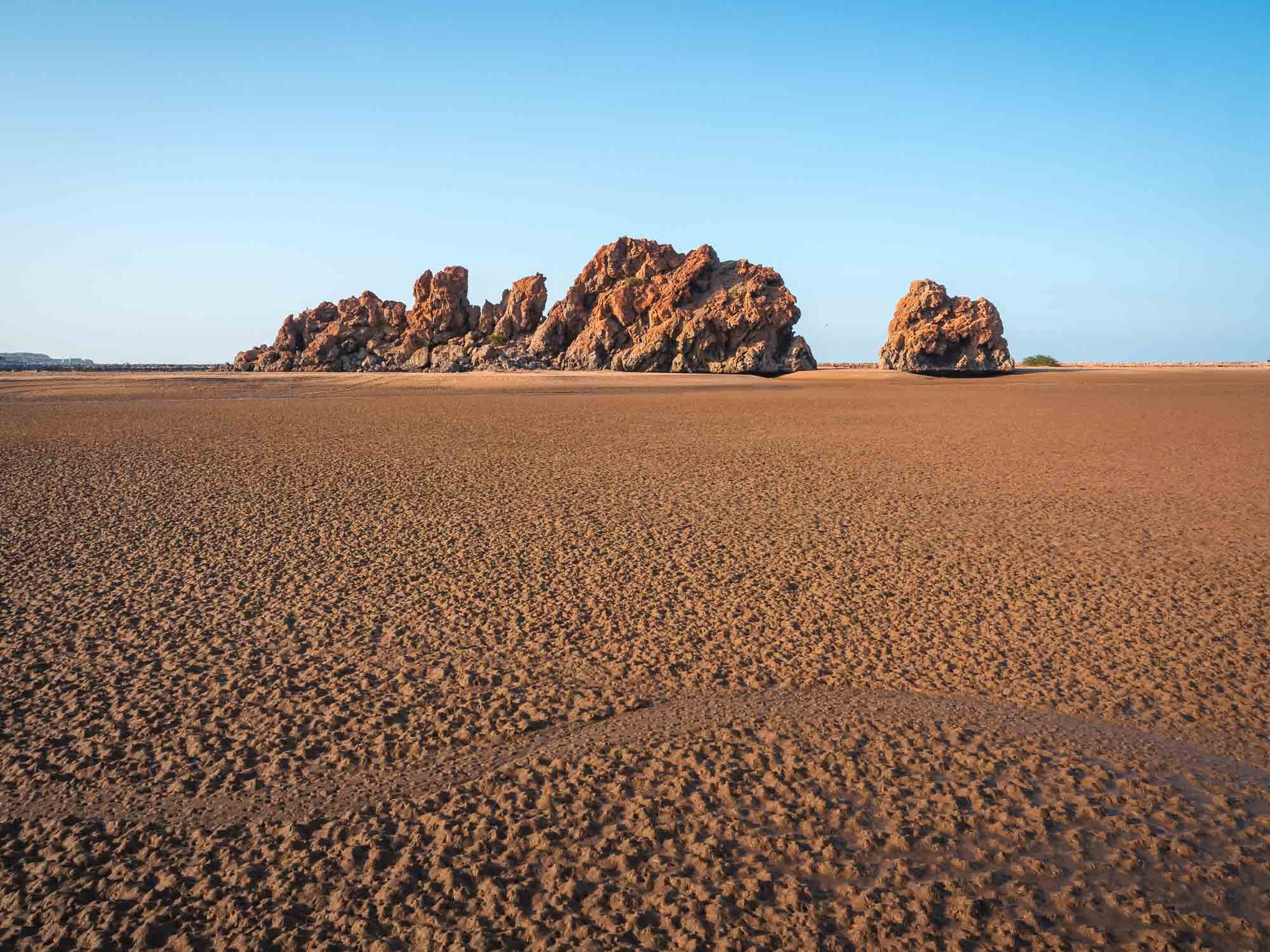
Rock Formation
This formation near Yiti was our last spot for the day, before heading back to Muscat.
Making it Fit
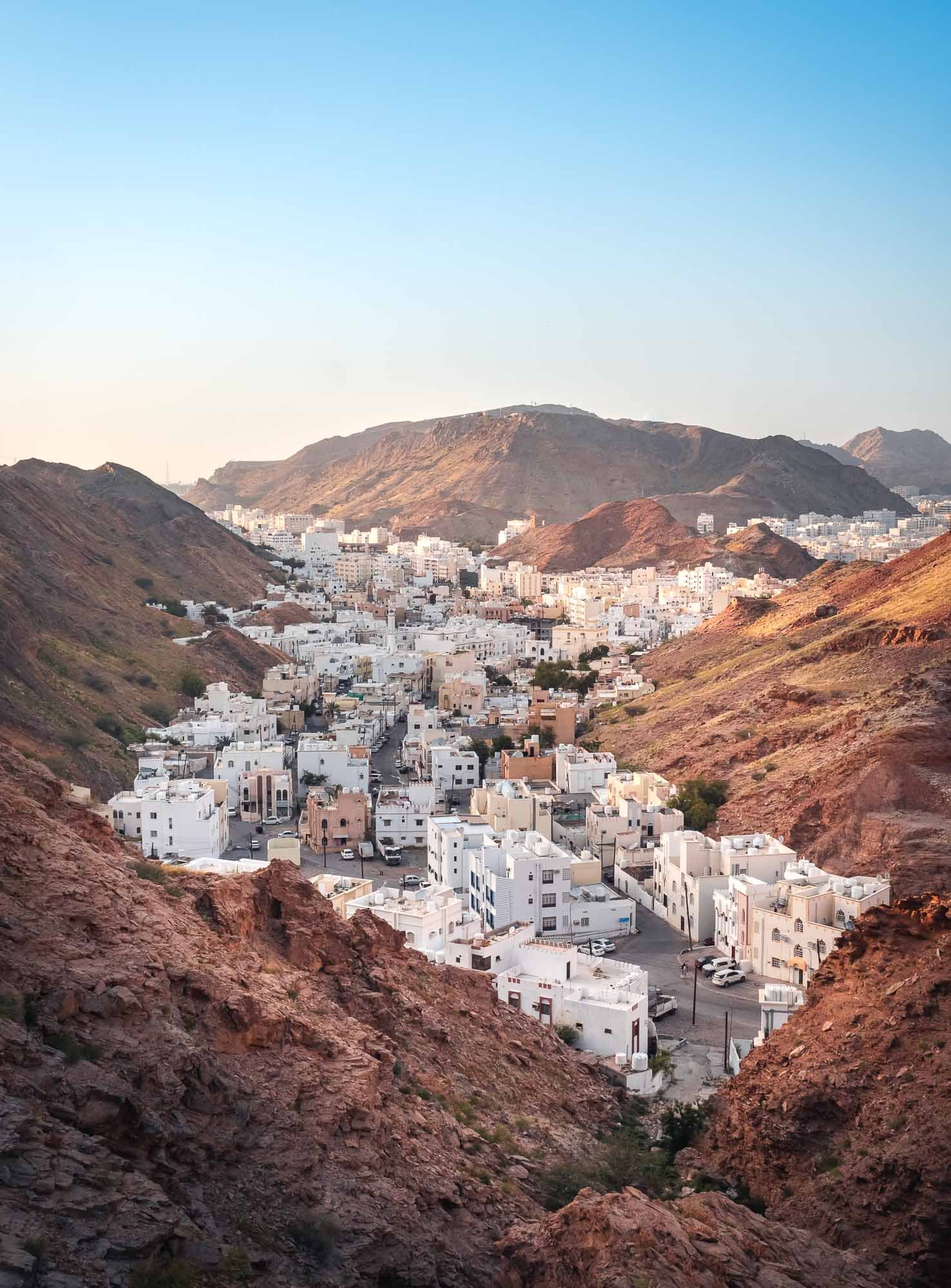
On the way back we stopped at this viewpoint over Hamriya.
Along the Coast
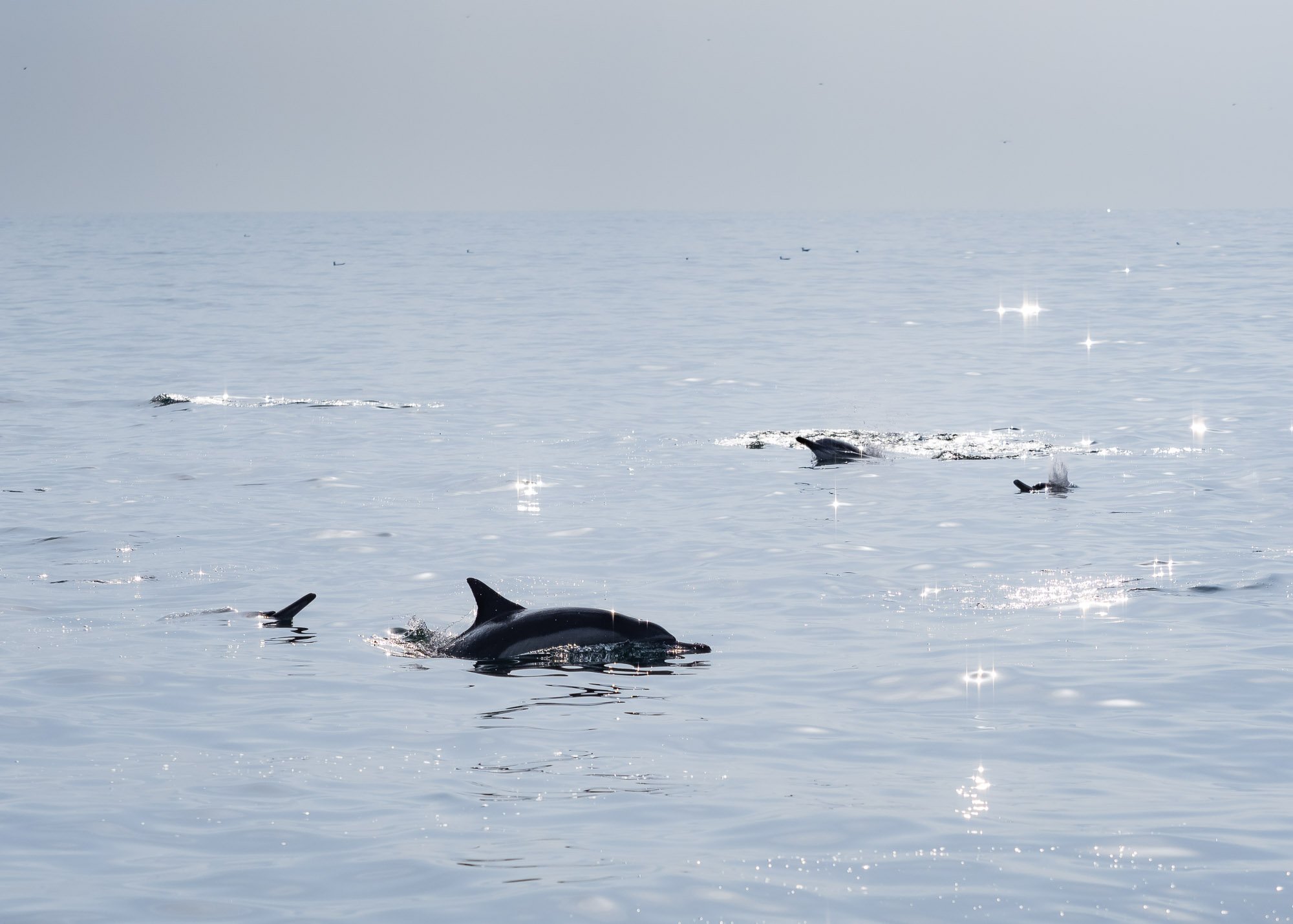
Into the Sea
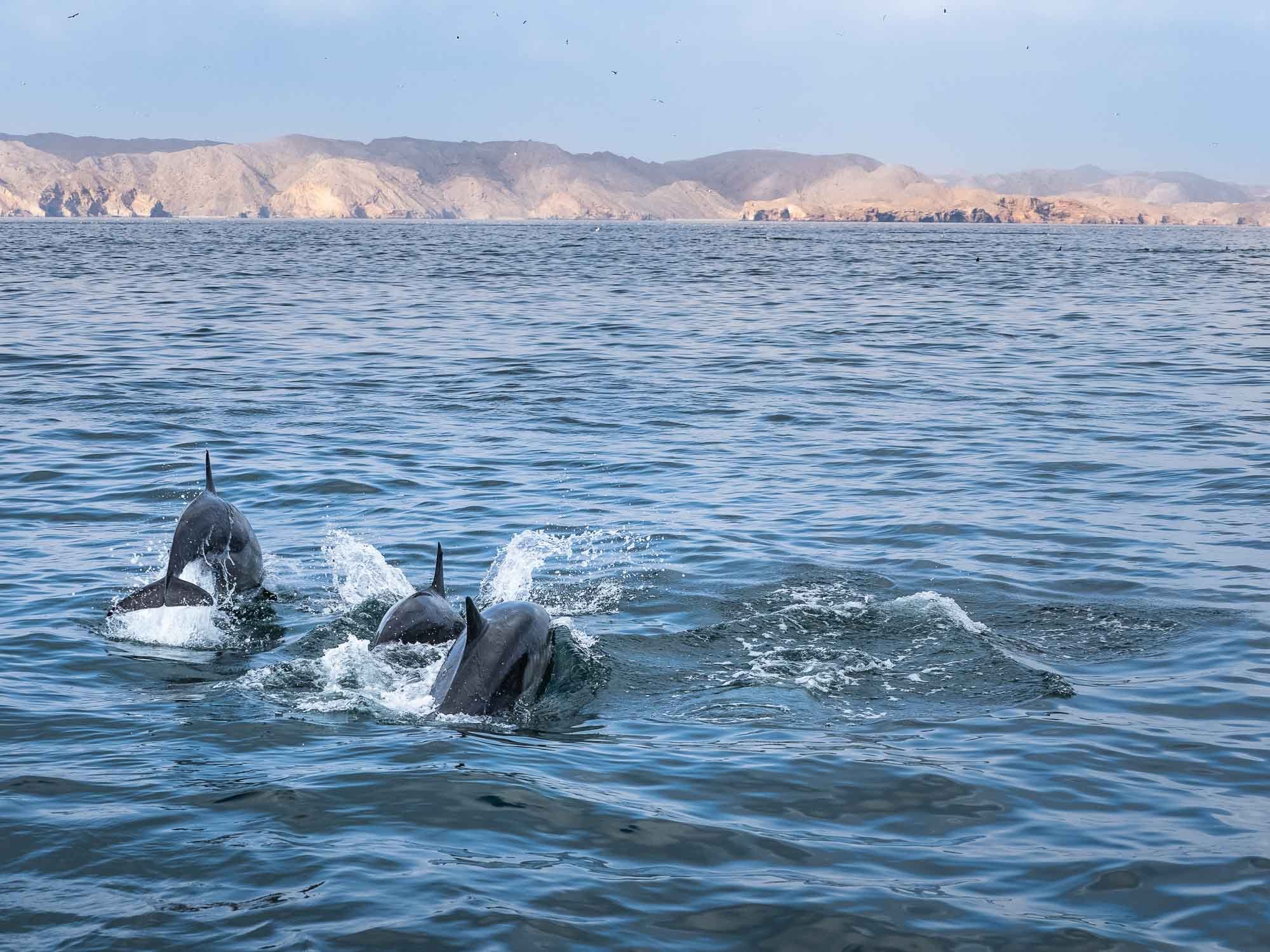
An early morning boat trip the next day rewarded us with this sight - a large pod of dolphins enjoying themselves with the backdrop of the Hajar mountain coastline.
Bottlenose Dolphins
I would estimate the pod was at least 100-200 individuals in size.
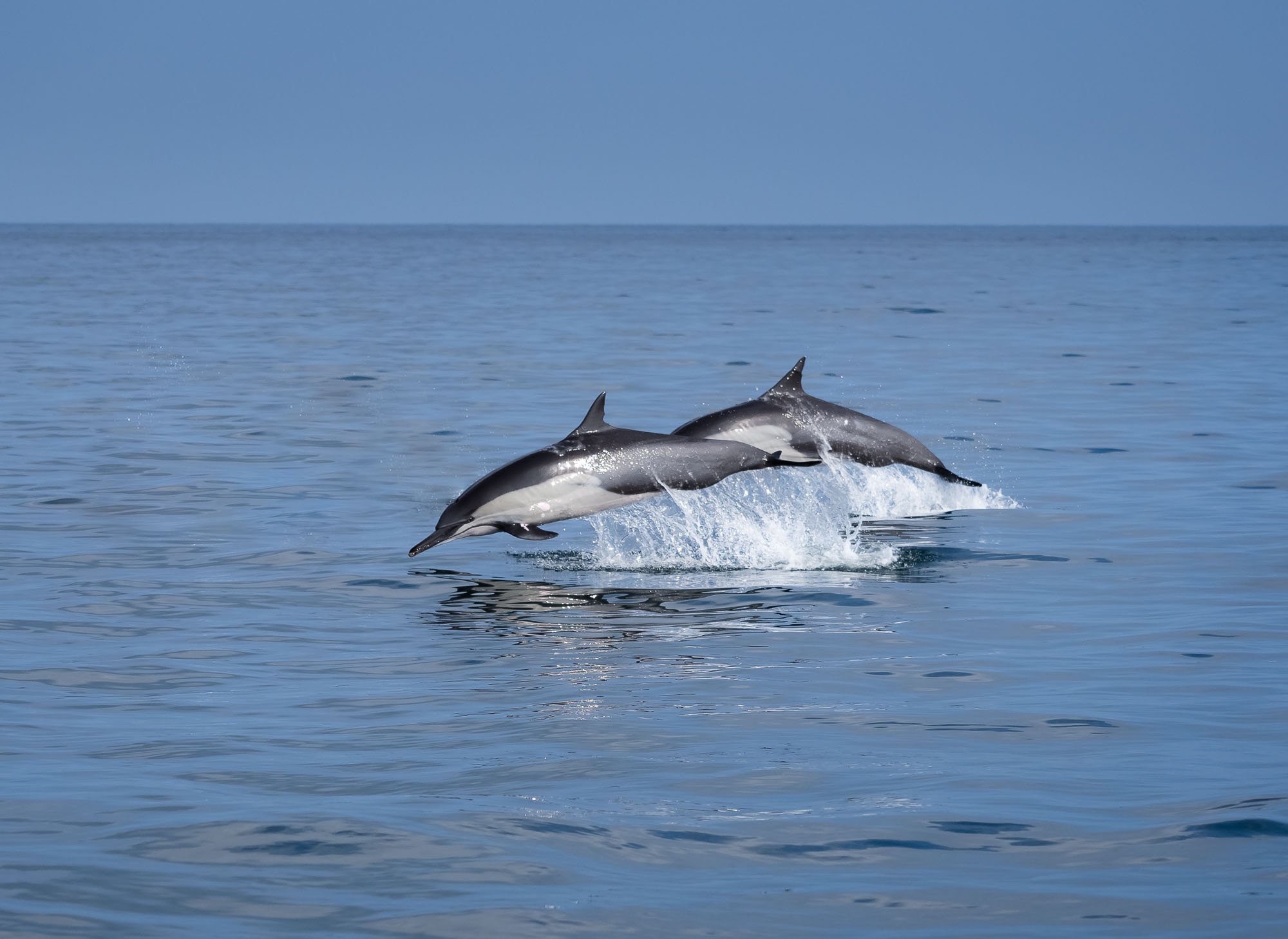
In the Air
They were calm this morning, and so there weren't many opportunities to get a photo like this, but I was able to time one correctly with the help of Olympus' ProCapture feature.
Marine Variety
The Omani Waters are home to turtles, dolphins, and wales at the right time of the year.
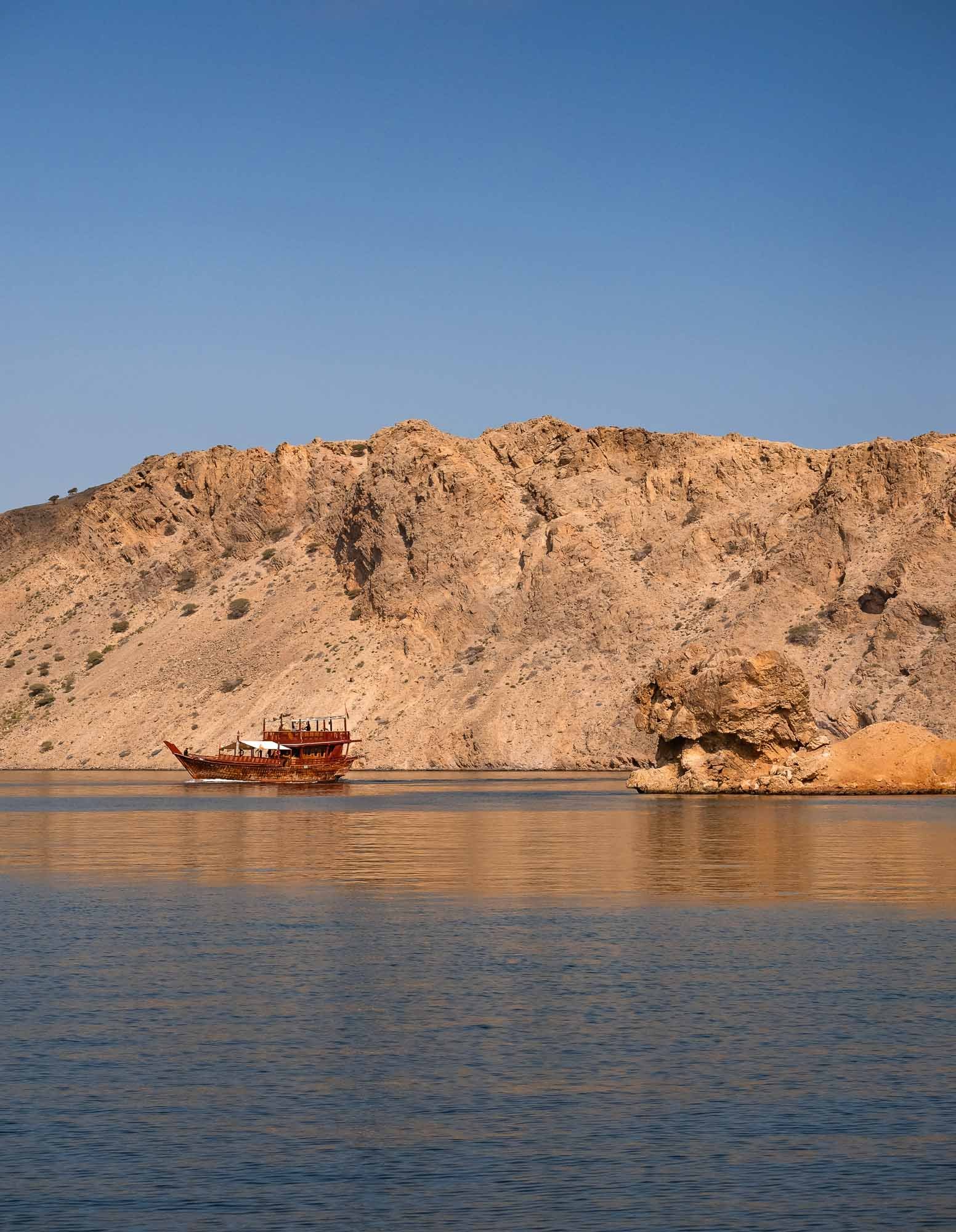
Dhow
A traditional dhow exploring the beautiful coastline.
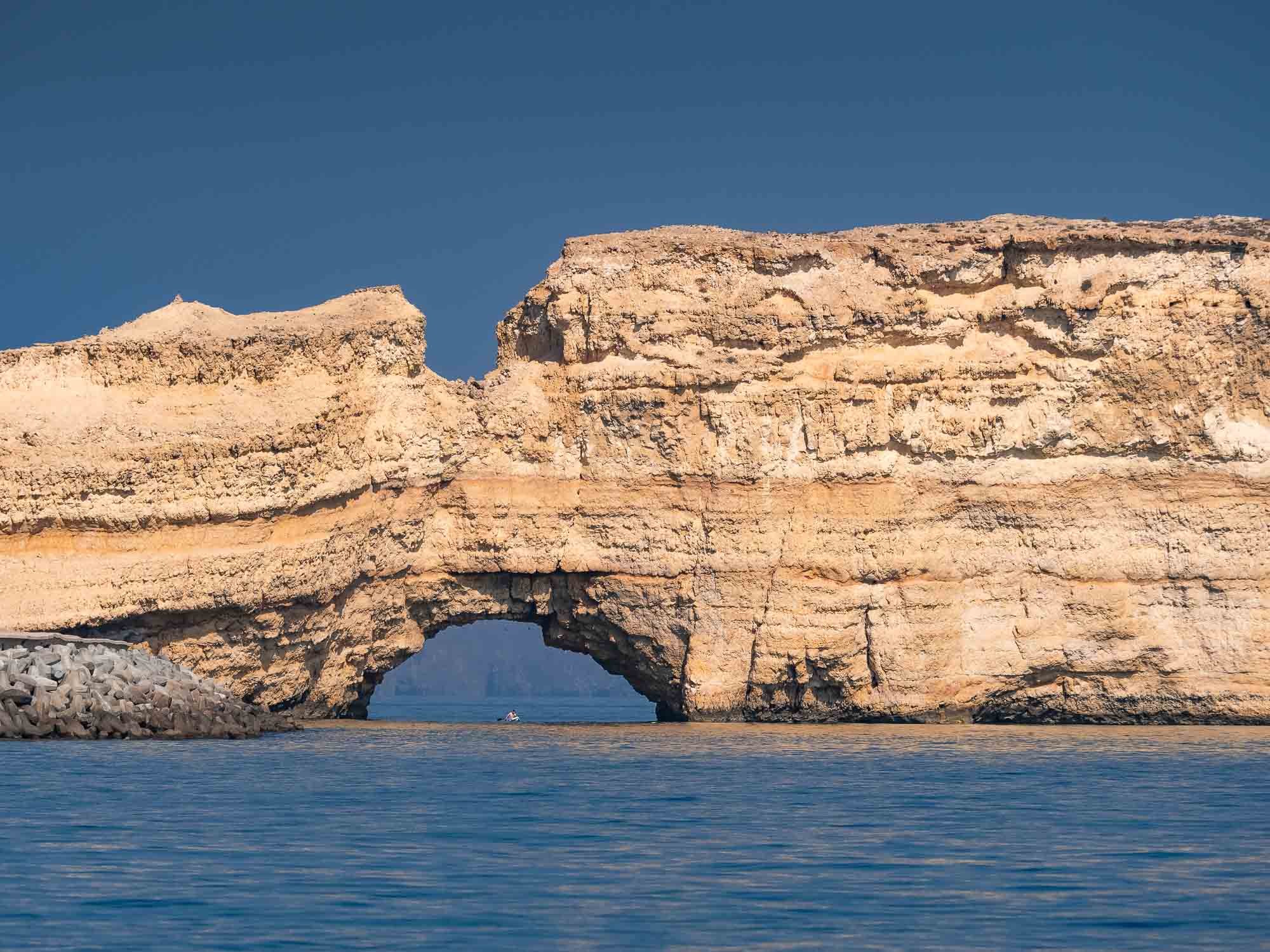
The Natural Arch
We also got to see the aforementioned stone arch near Qantab...
Passage
...with a single explorer on his canoe.
Morning Light
Al Bustan and the State Council buildings from the sea side.
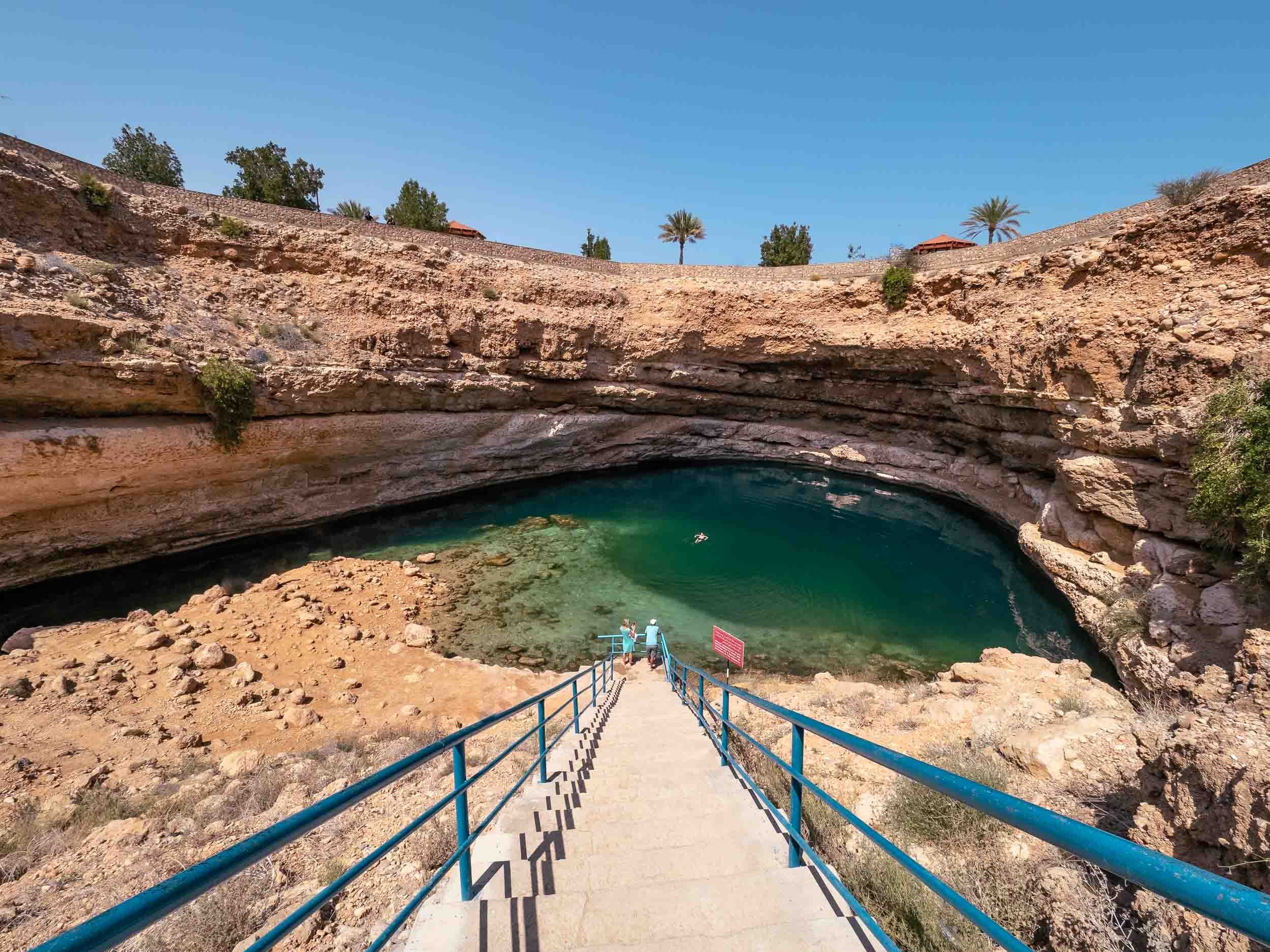
The Way Down
Stairs have been built into it, but I can testify that some people prefer jumping (not me).
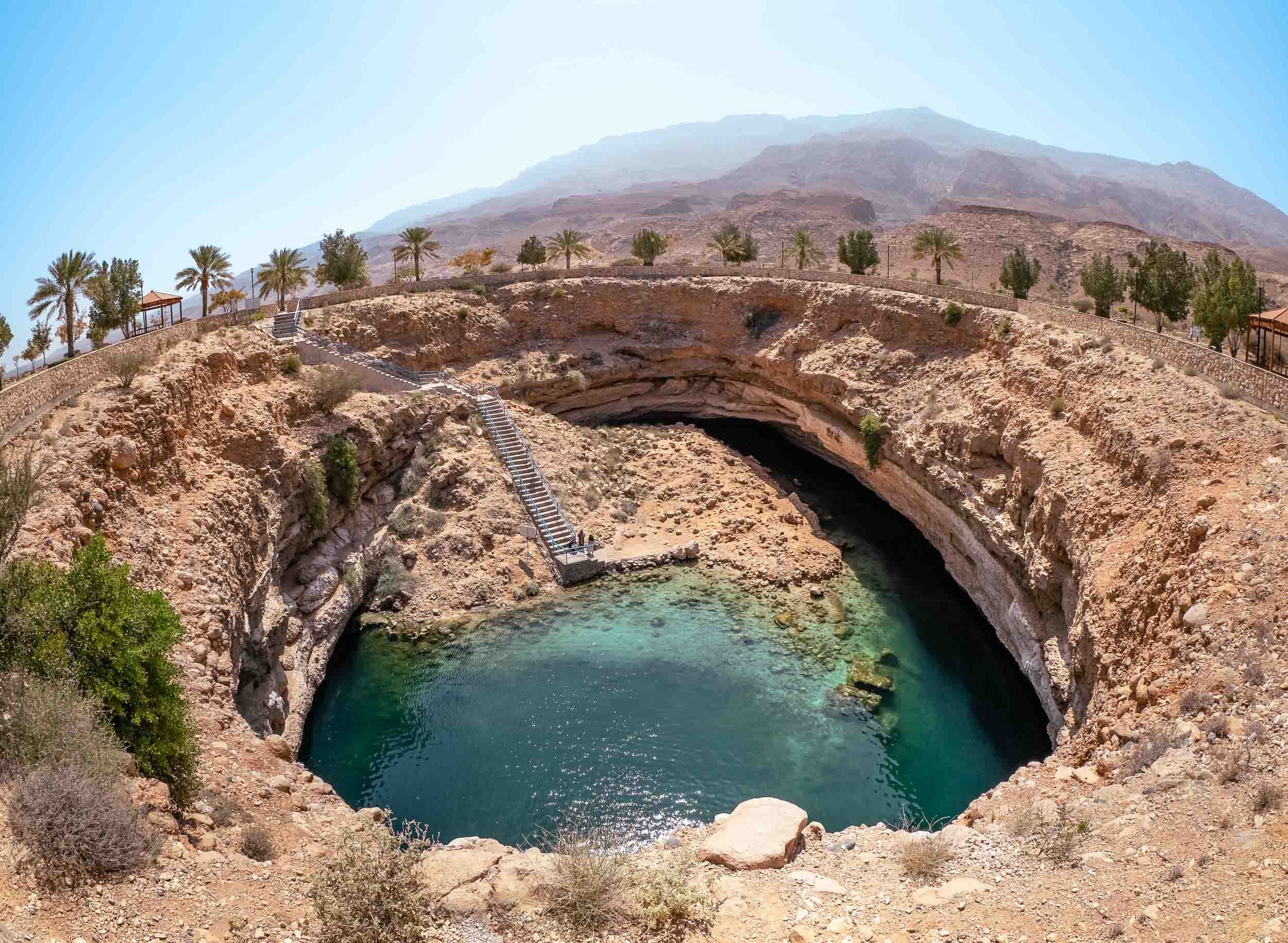
Bimmah Sinkhole
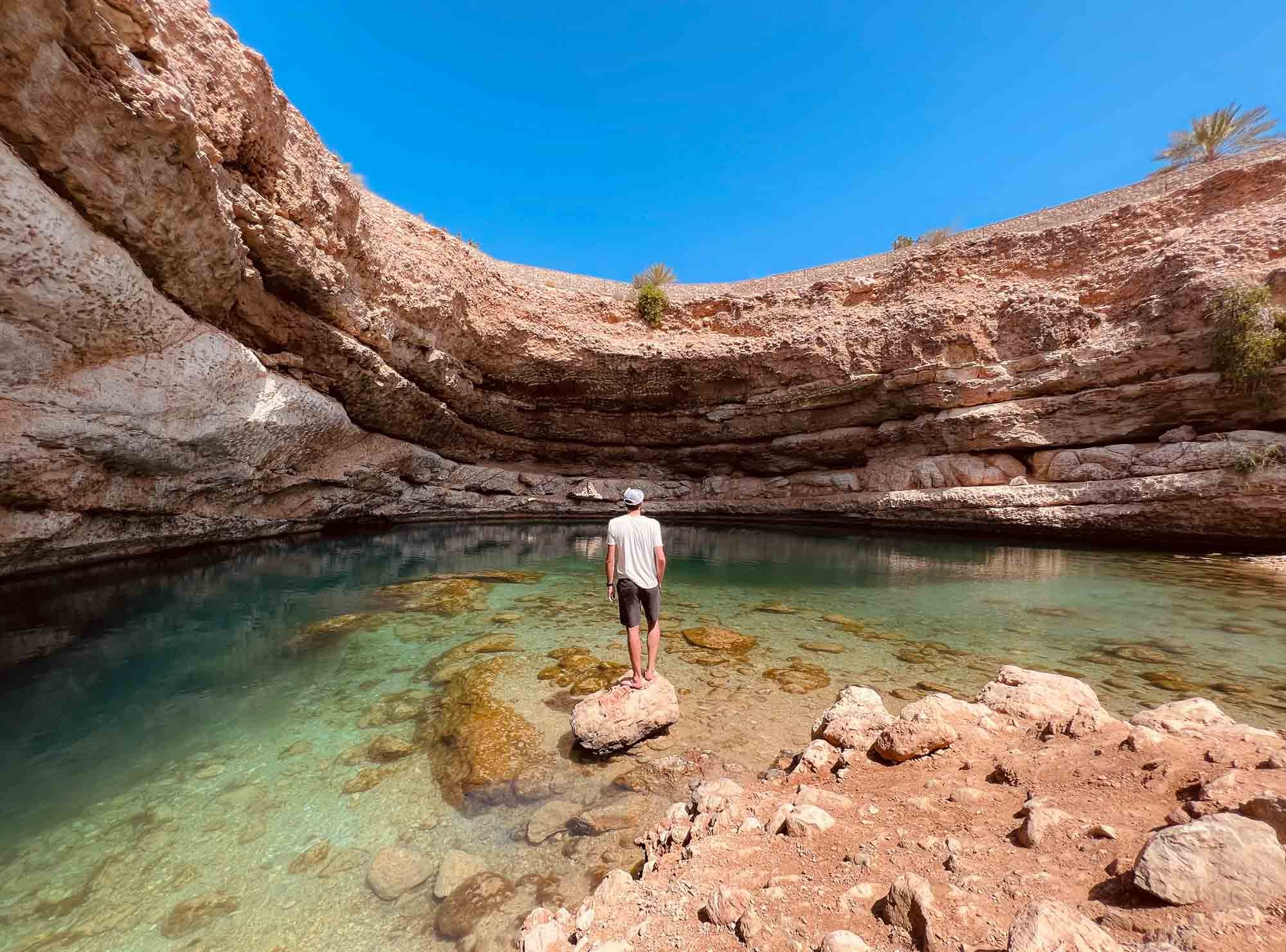
Another incredible spot of natural beauty is this sinkhole near Bimmah, about 100km from Muscat.
Cyrstal Clear
What a spot for a swim - or just hold your feet into the water and be treated to a fish spa.
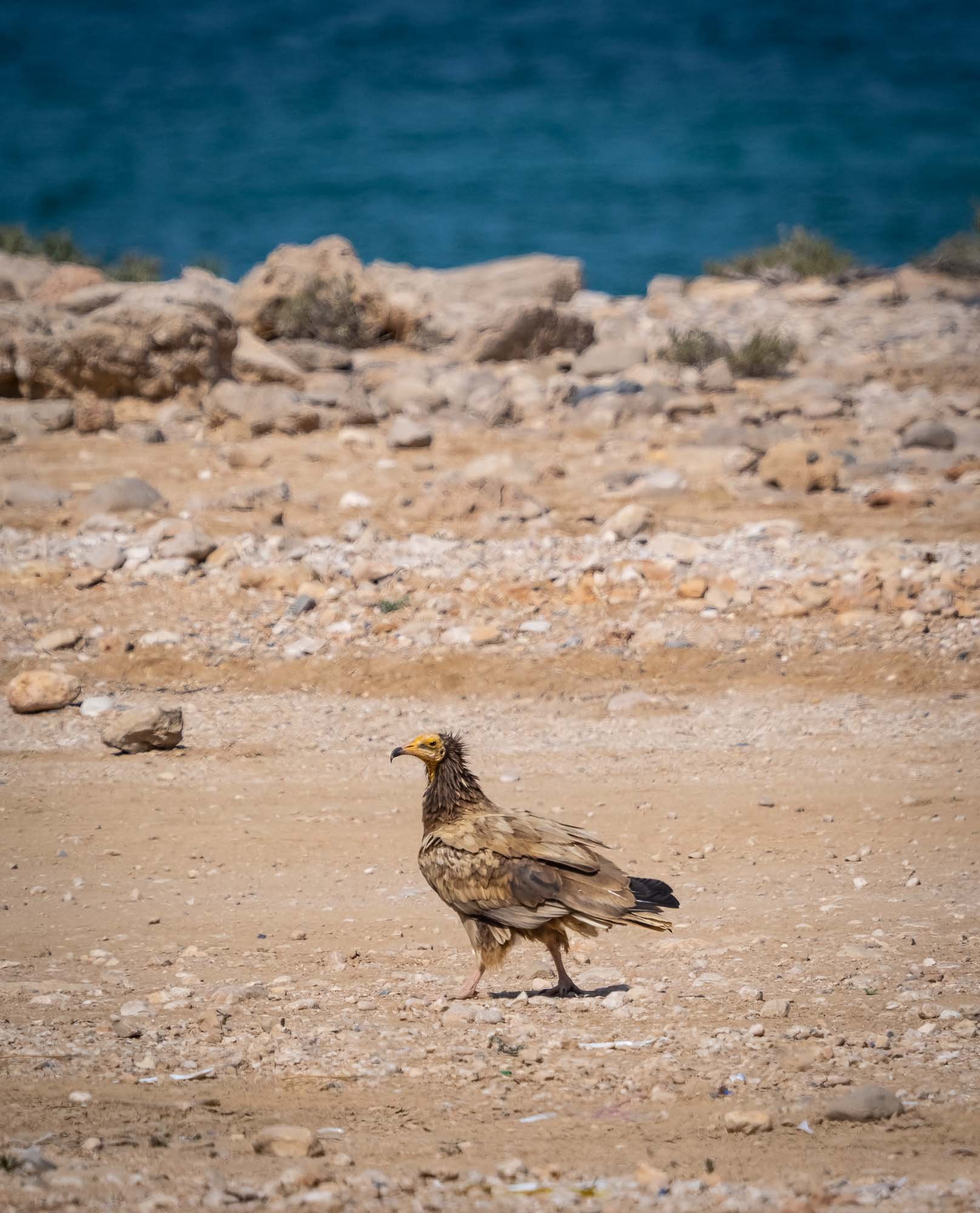
Egyptian Vulture
Spotted this guy on the beach.
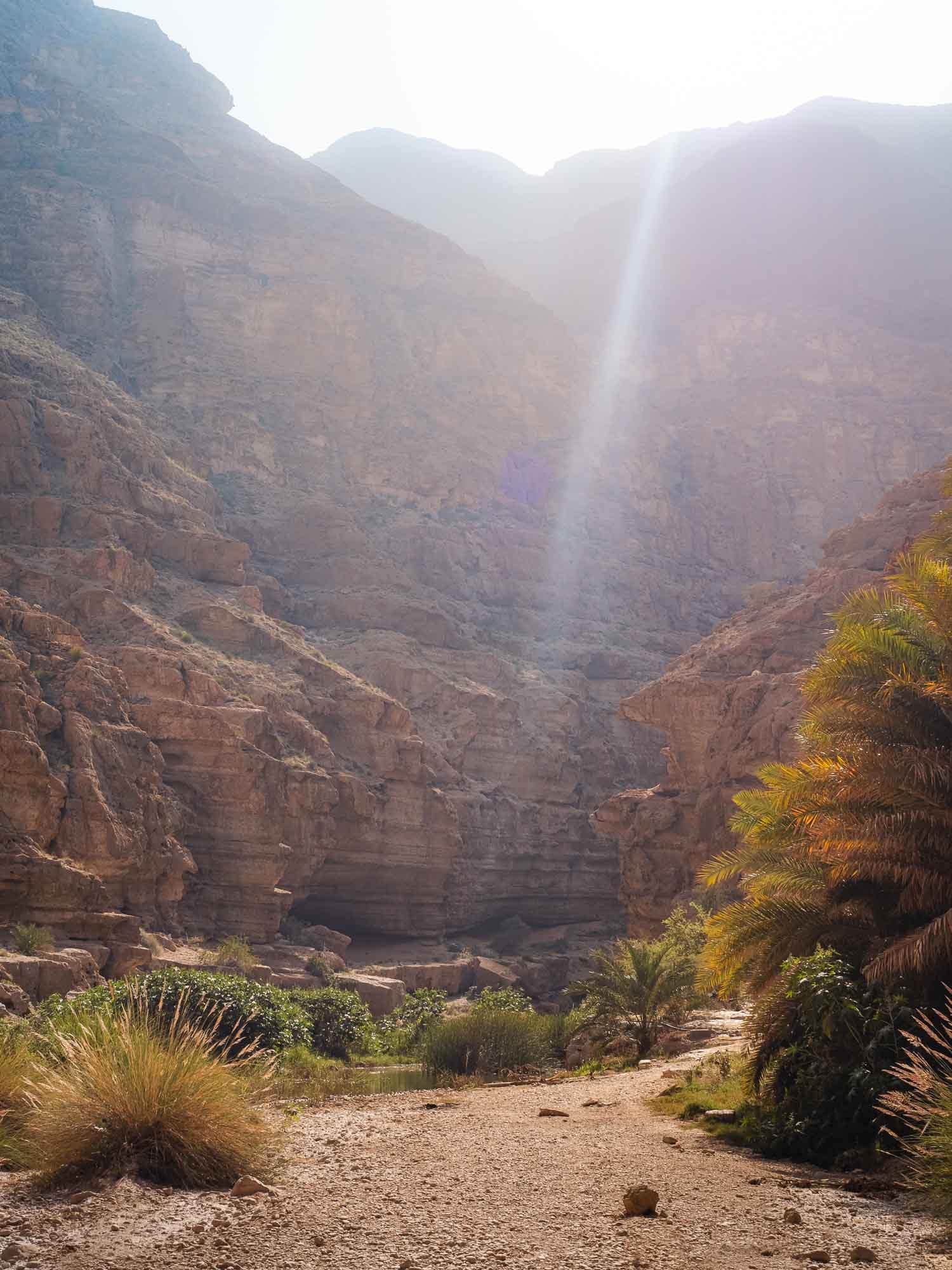
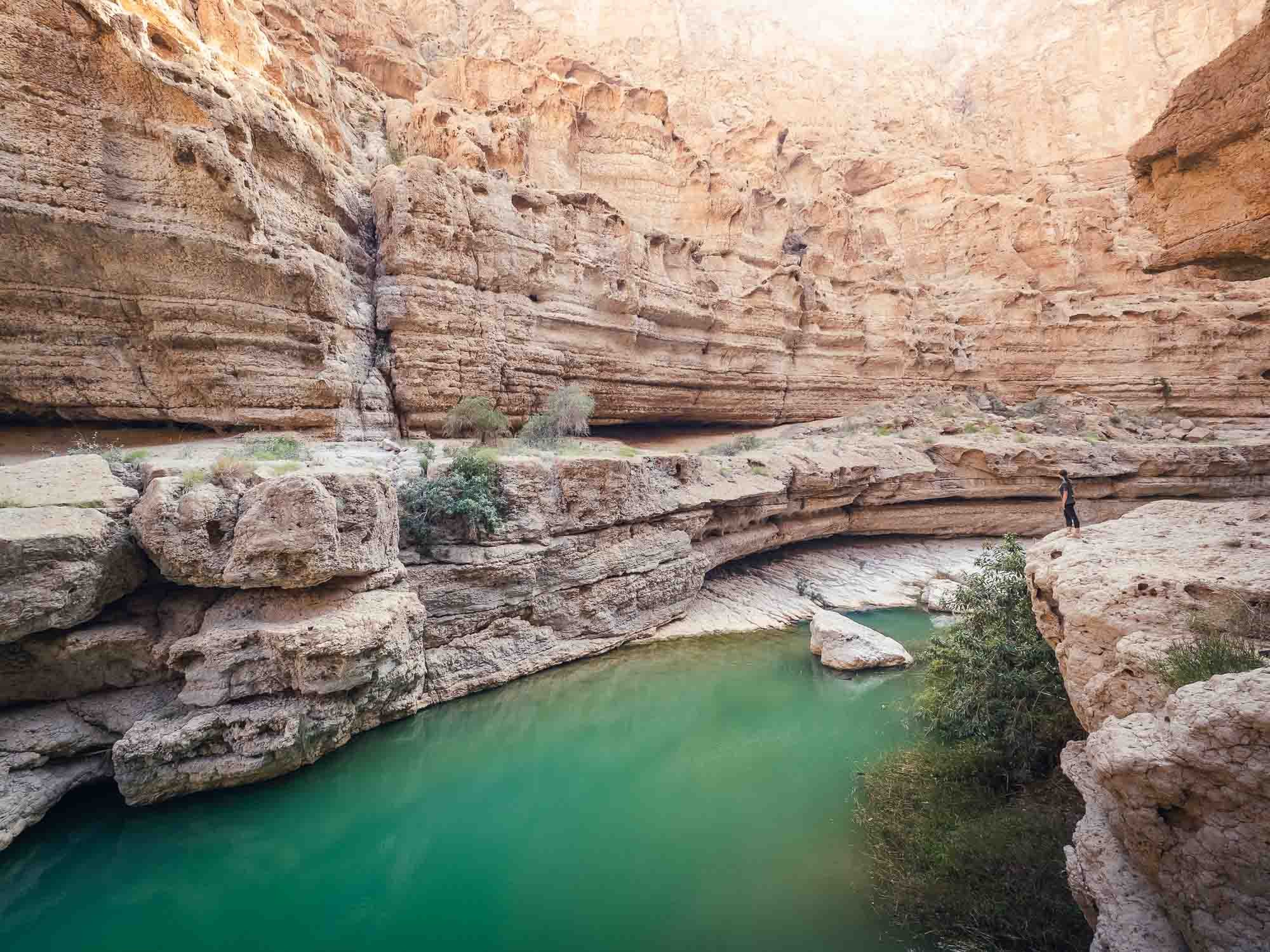
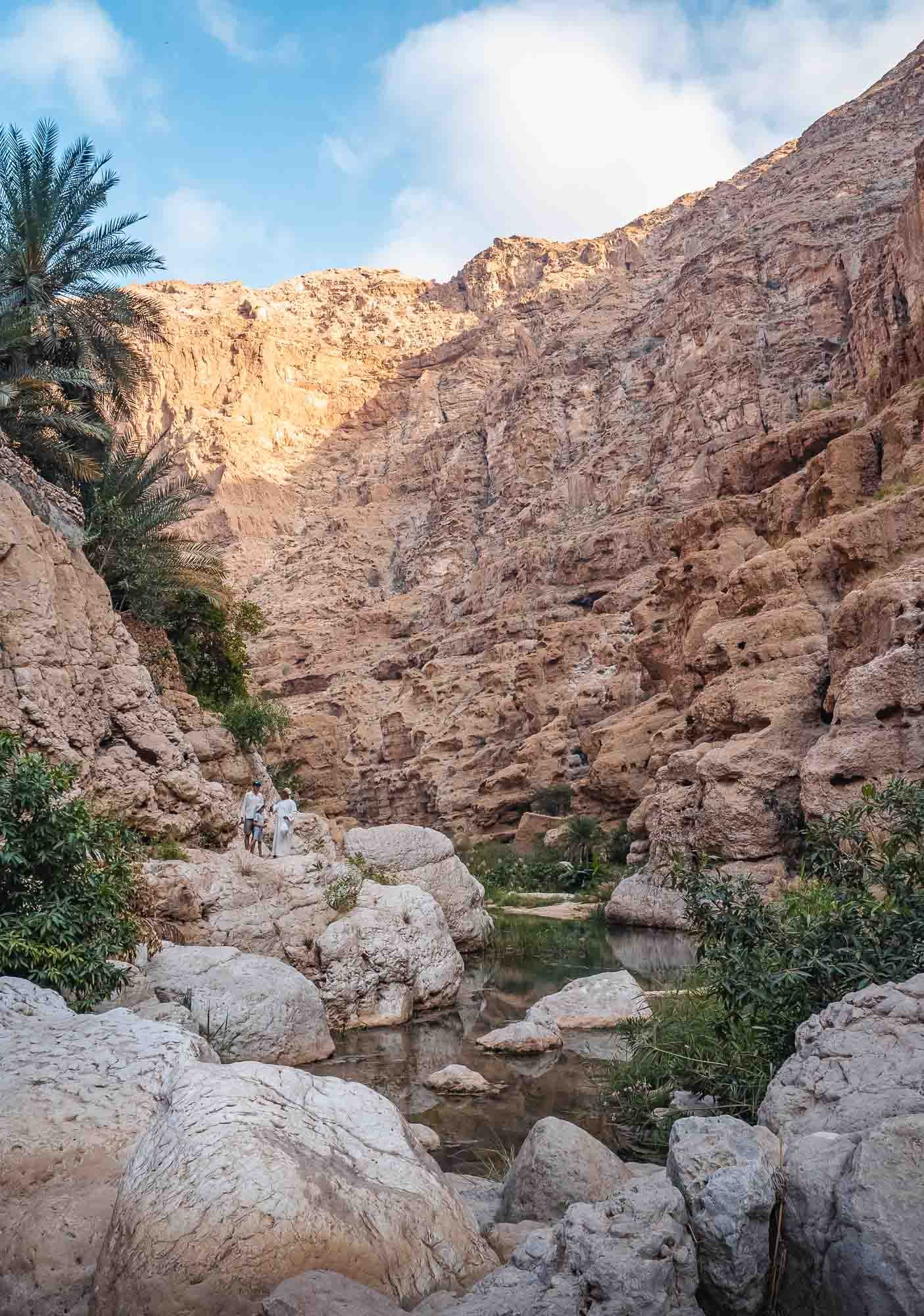
Jurassic Park or Wadi Shab?
Next up, one of the most amazing Wadi's I've seen to date - makes you feel like entering Jurassic Park.
Scale
The size of the canyon and rock formations was amazing.
No Photos
After a 10 minute swim into the Wadi you arrive at a small cave, accessible by a narrow opening that barely fits one's head. No photos for that, got to explore yourself!
Incredible History
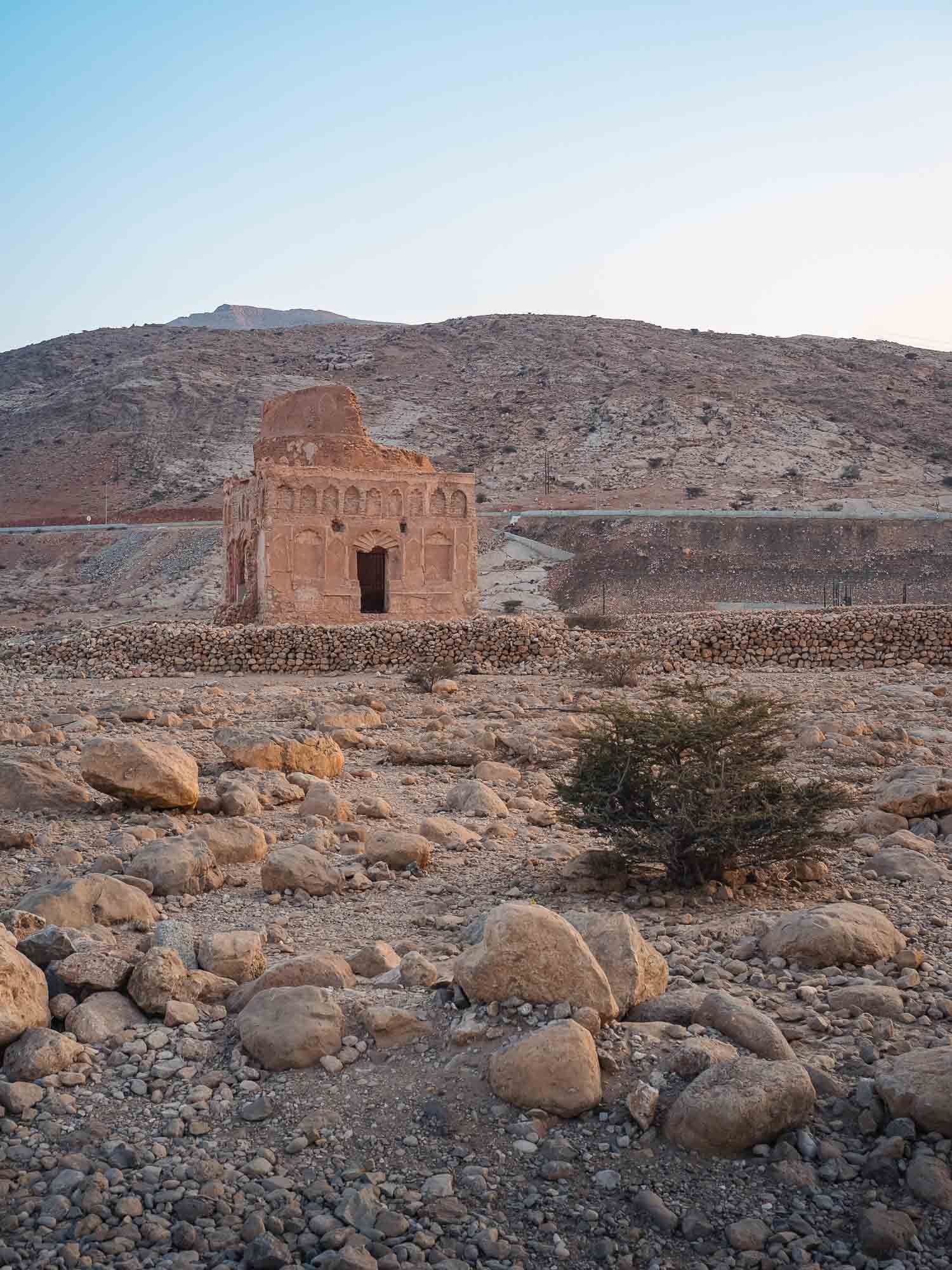
We drove a little further on the coast to see another World Heritage Site: Qalhat. It is unfortunately currently closed, but you can spot its most significant remaining site, the Bibi Maryam mausoleum. This city was visited by Ibn Battuta, Zeng He, and Marco Polo!
Sometimes You Get Lucky
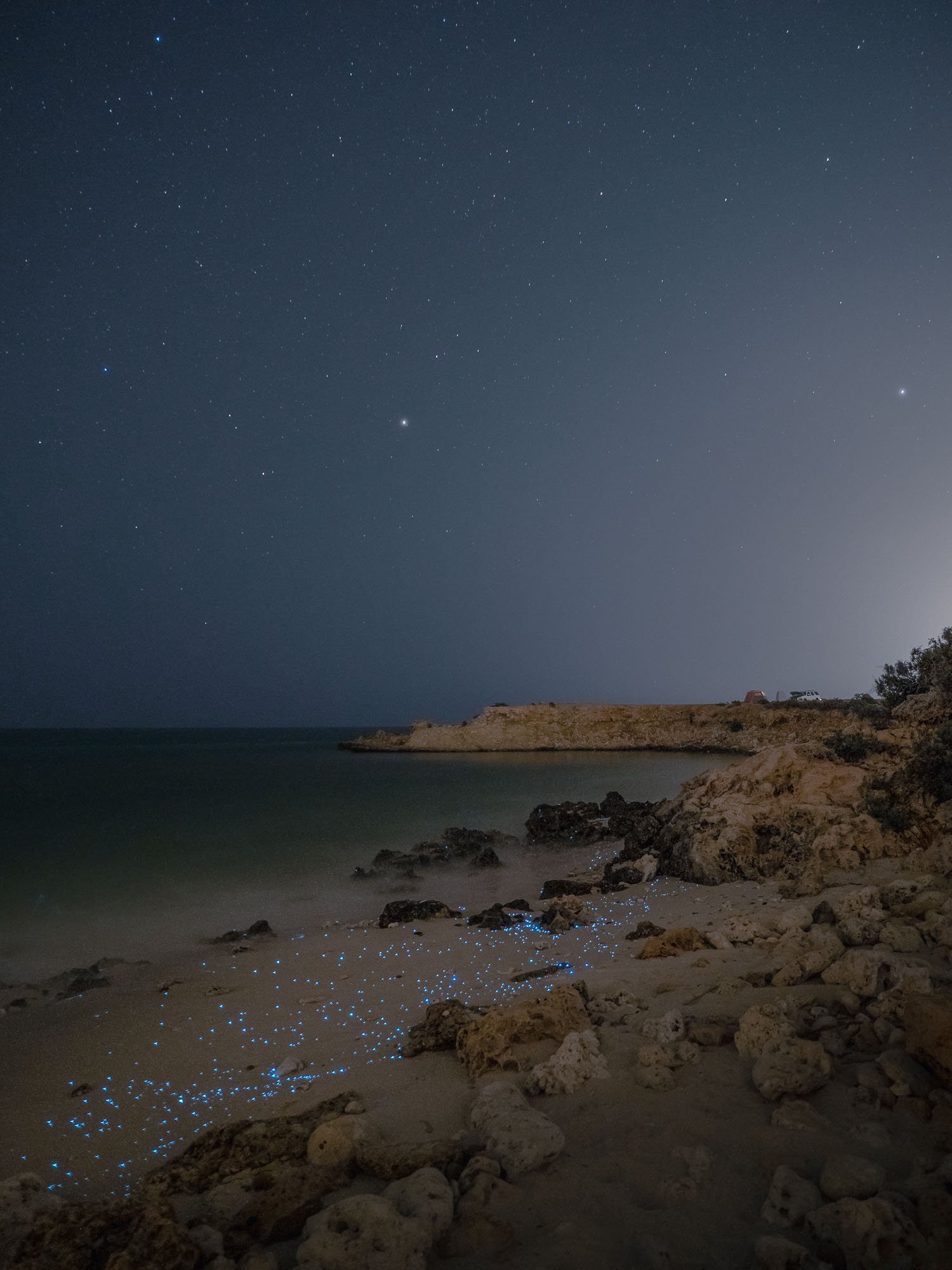
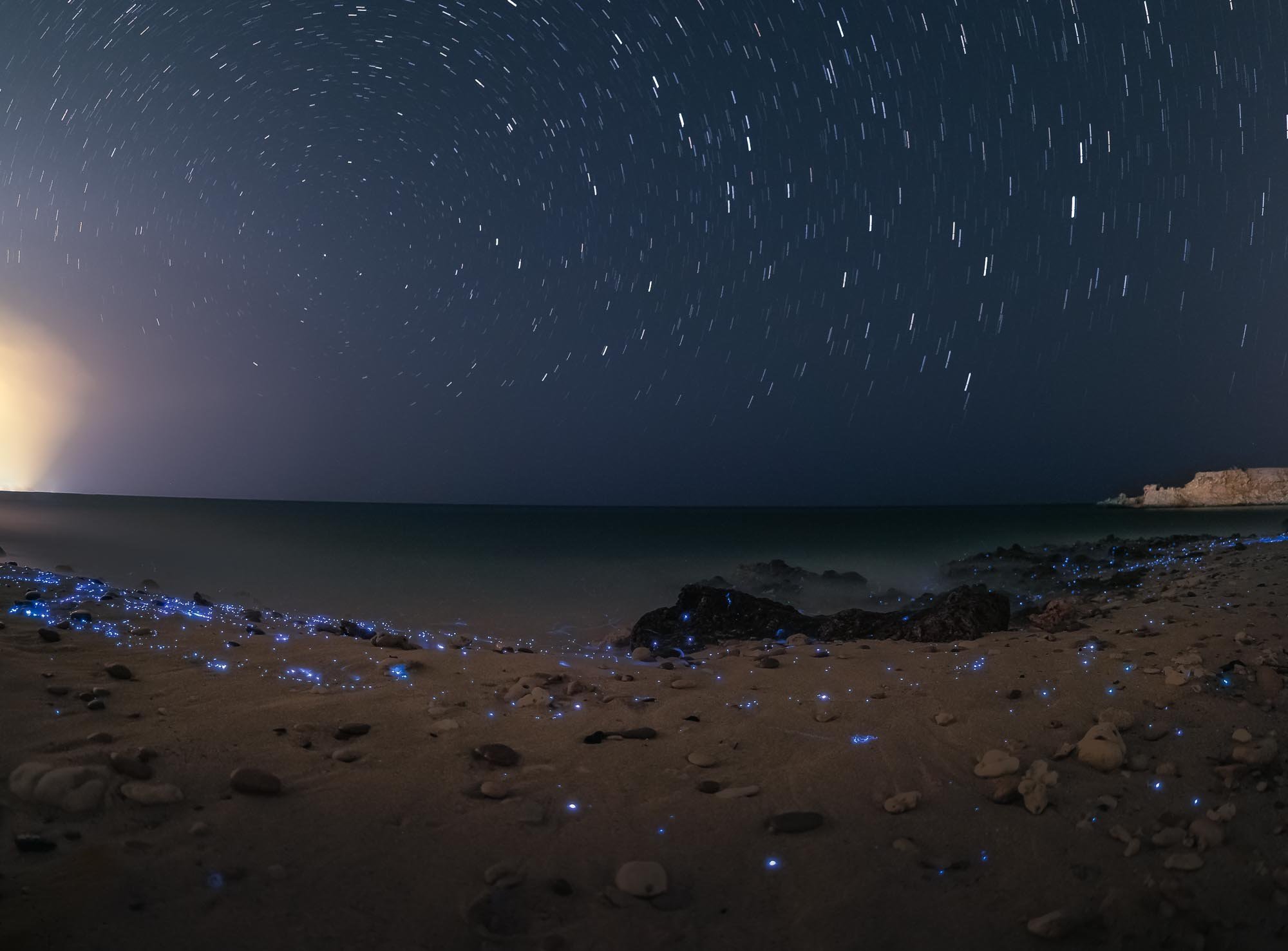
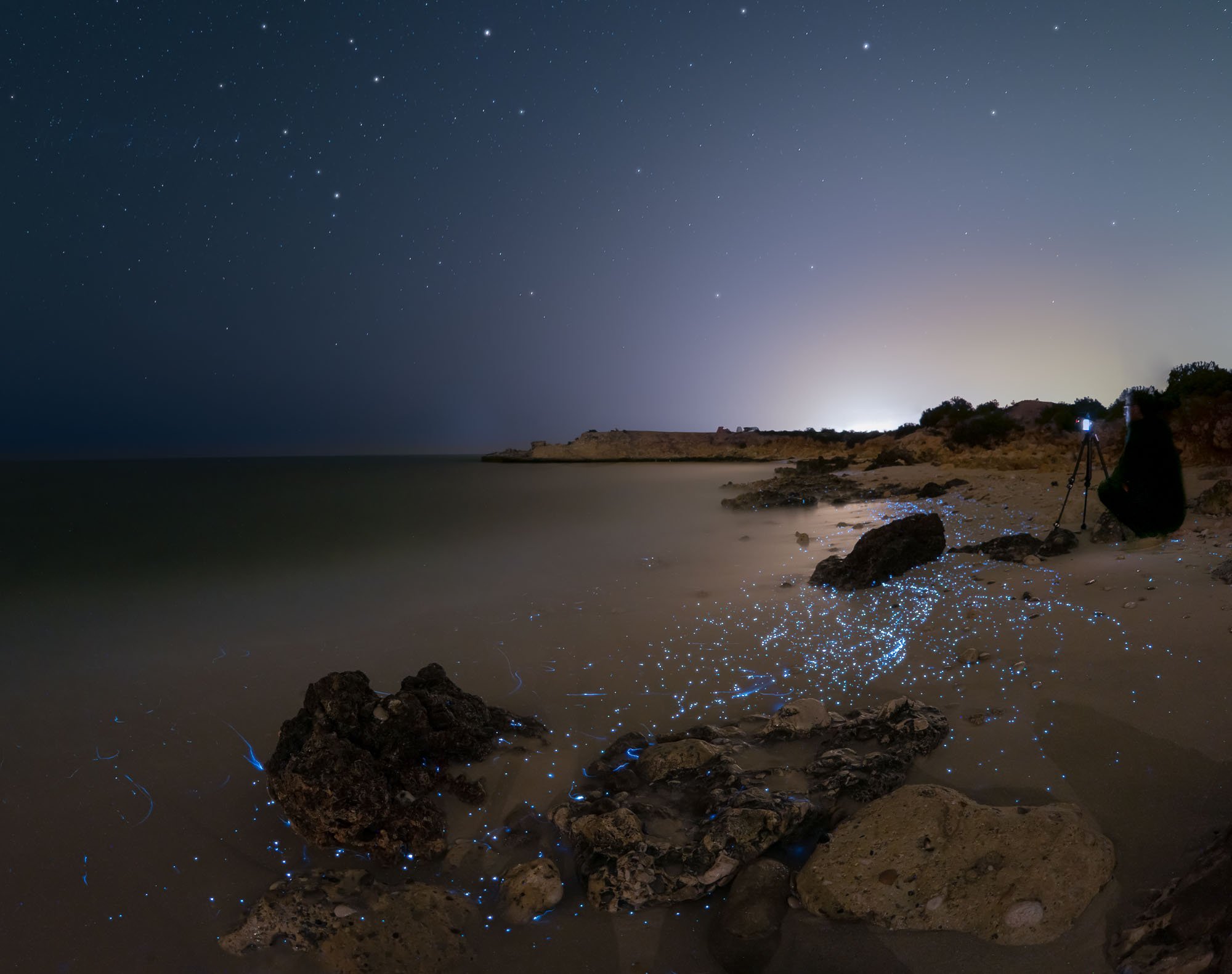
Our plan was to spend the night on the way back to Muscat somewhere on the coast - we knew chances to see the bioluminescent plankton on the beach were next to nothing, but there was always the Milky Way or some deep sky photography...
Natural Wonders
When we explored good locations to set up for the night, our second spot proved to be the golden one, and we spotted little blue dots on the beach and rocks as the waves hit.
Magical
After turning off the flashlight, we saw it for what it really was - the elusive glowing blue bioluminescent phytoplankton. The blue light is produced by energy released from chemical reactions occurring inside these organisms - what a sight.
The Last Day in Muscat
Beach Vibes
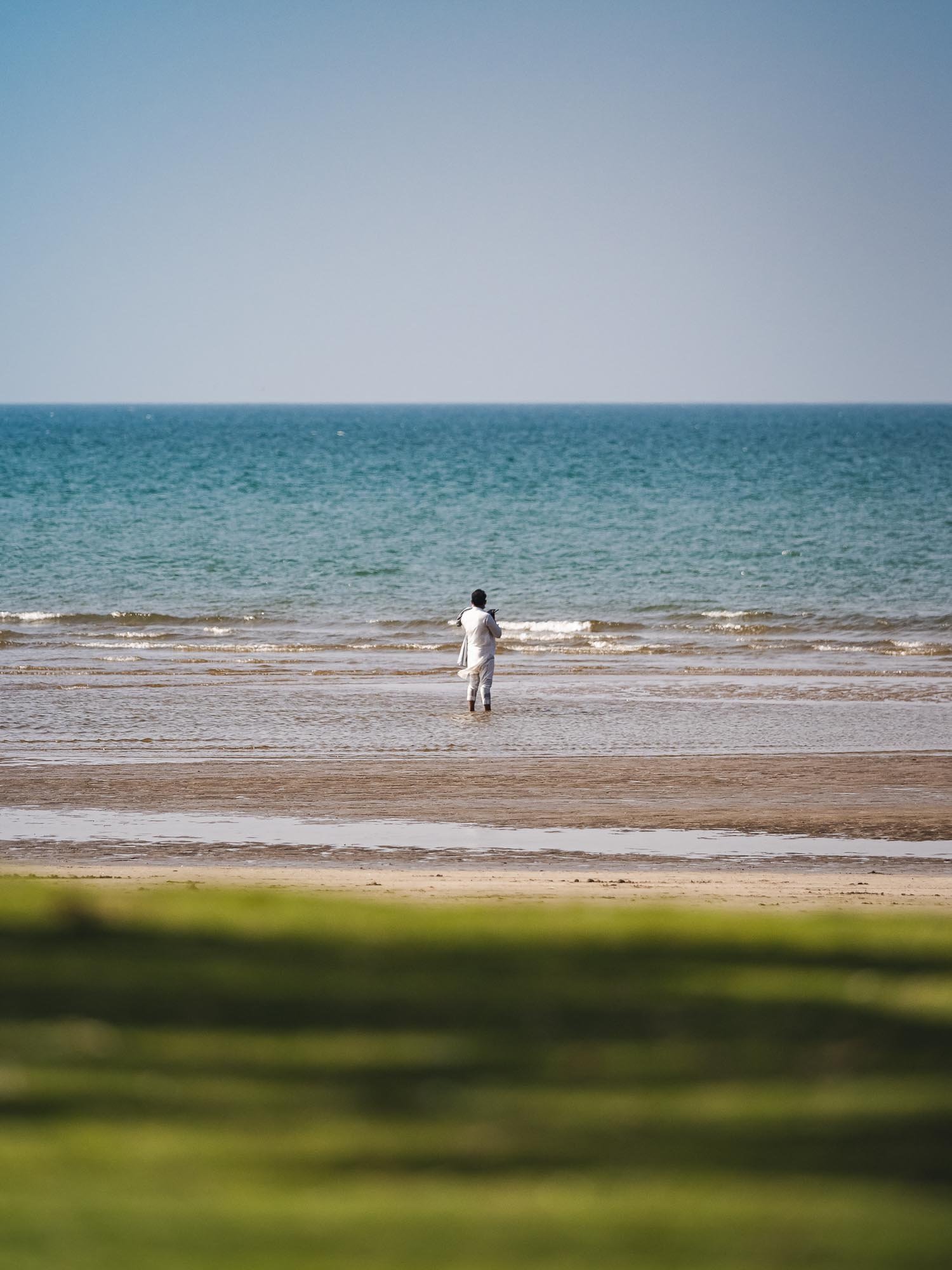
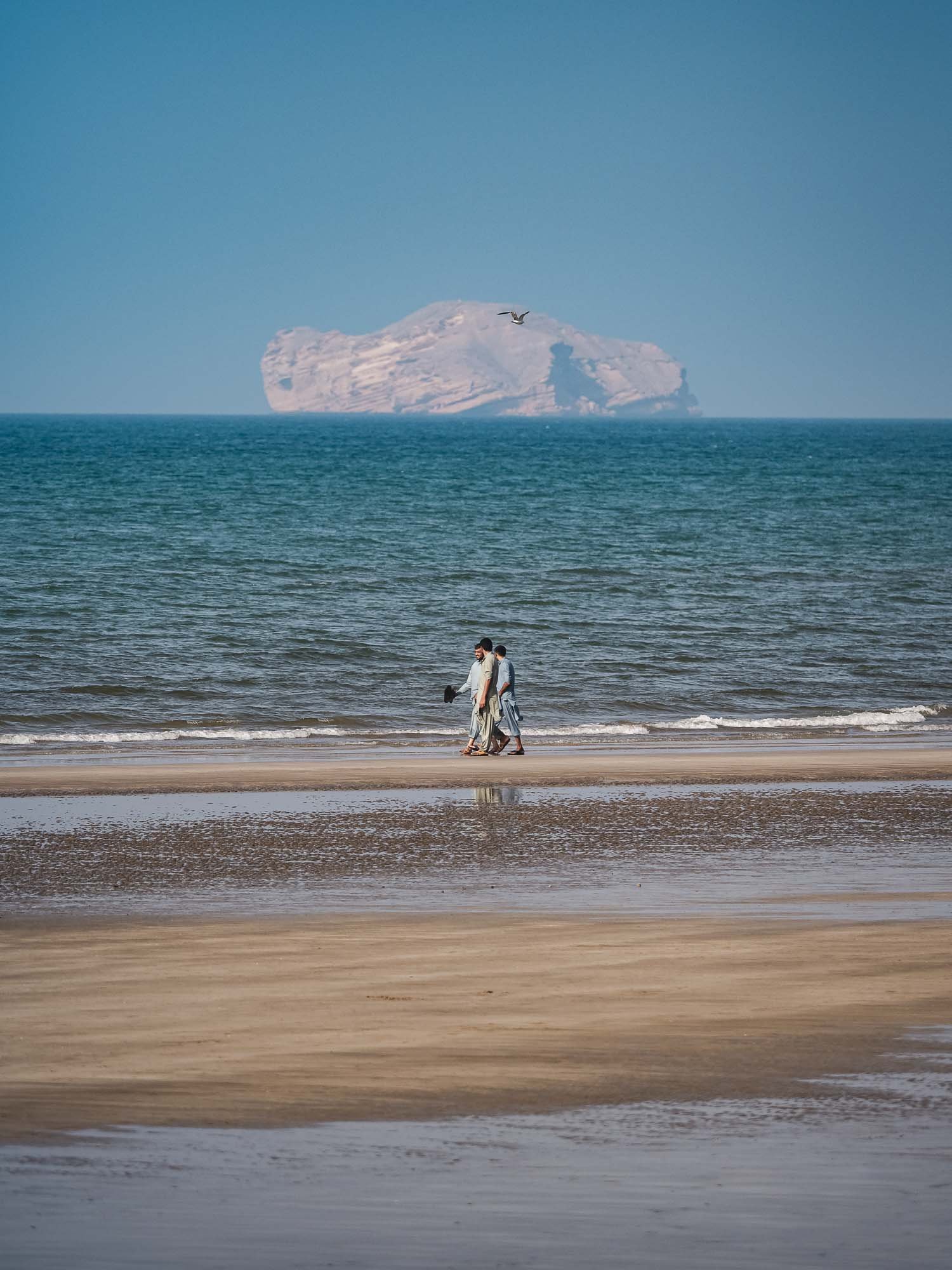
The next day was a later and slower start after the night on the coast, walking on the beaches of Muscat.
Friday Vibes
Oman retains the Friday weekend, so the locals were enjoying the day out.
Postcard Views
All around in Oman!
Qurum Beach
This was taken at the beach near the city's national park.
Nice Day
for a walk alone...
Or
...with friends.
Royal Opera House
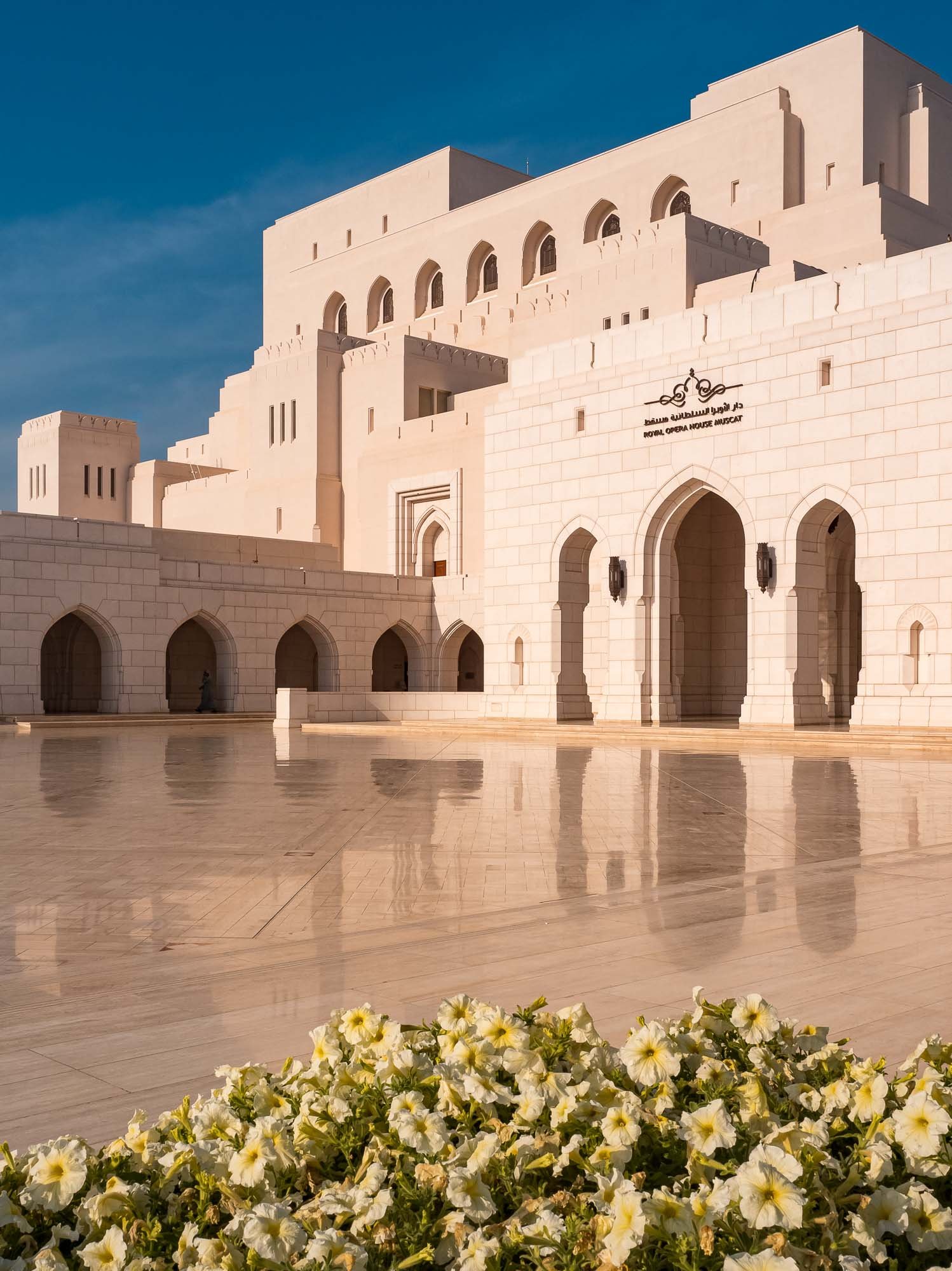
We also visited the Royal Opera House, which opened in 2011 and has seen performances by Plácido Domingo and Andrea Bocelli. Unfortunately the interior wasn't open for visits that day.
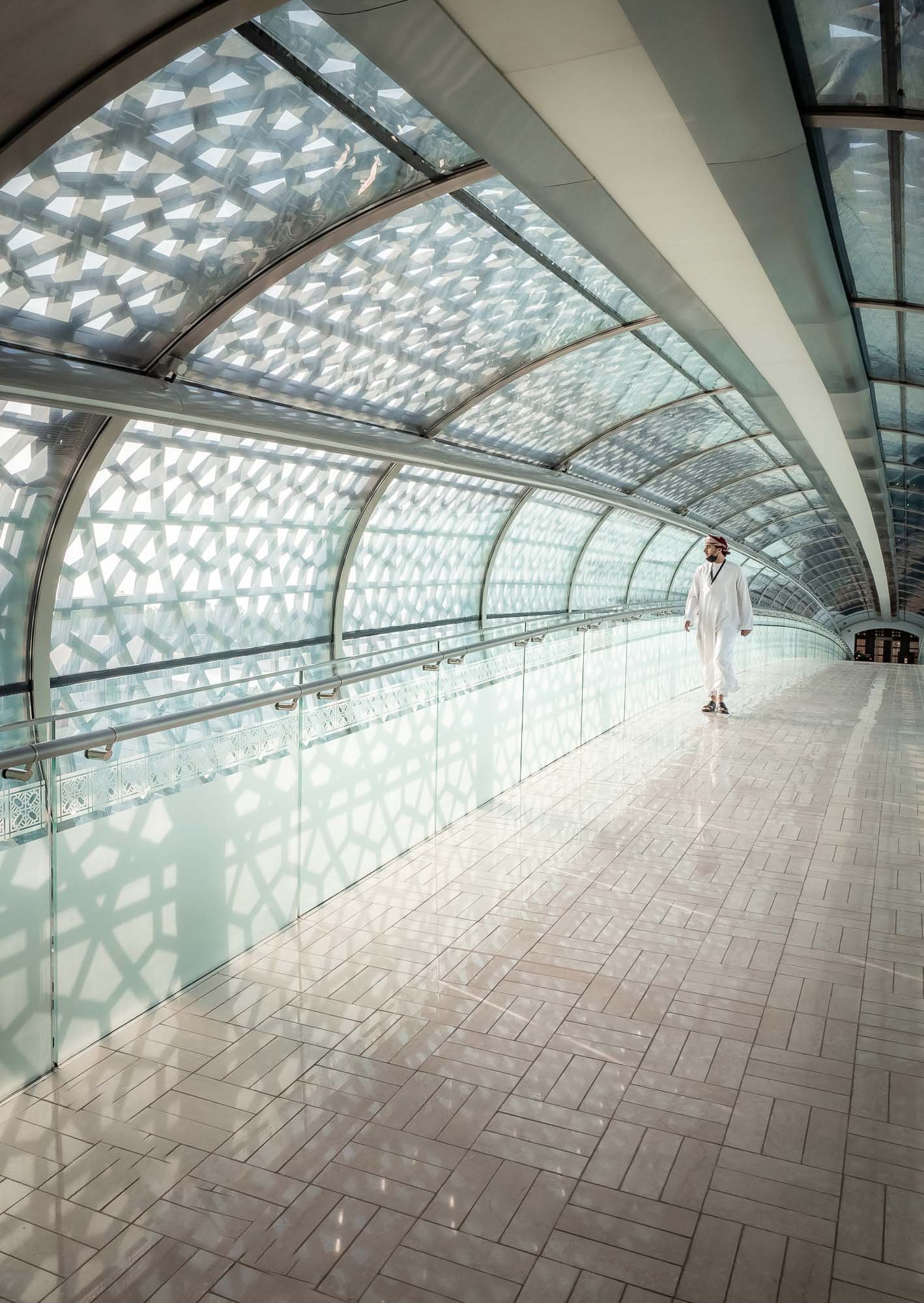
Architecture
It did feature this neat bridge crossing to the House of Musical Arts.
In Flight
Couldn't resist causing a bit of a stir up when we passed Al Bait Mosque.
Golden Hour Vibes
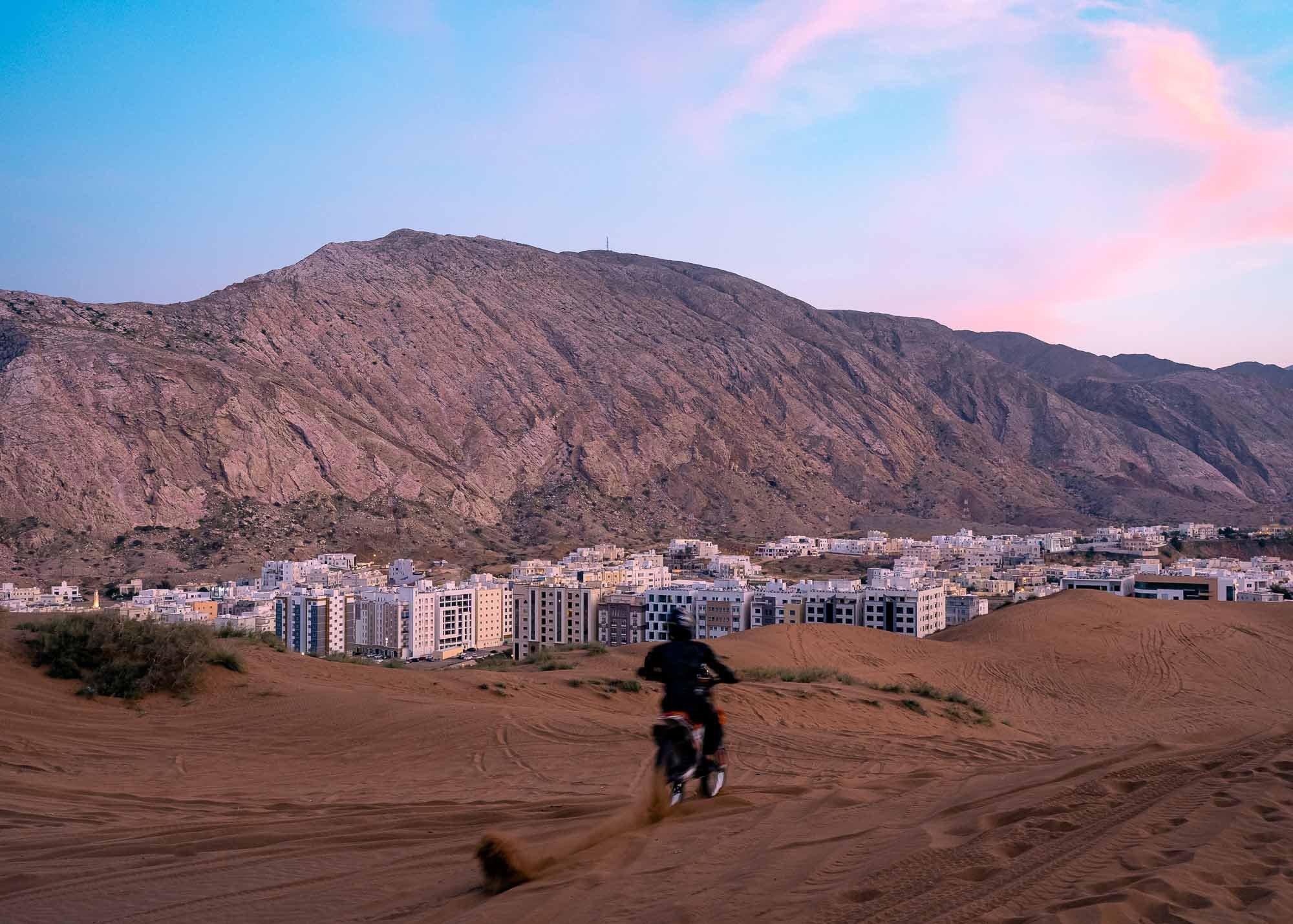
We spent the evening hiking up some dunes in the city for sunset.
Fun Times
We weren't the only ones up there, as a group of people on motorbikes, quads and 4x4s made the most of the evening.
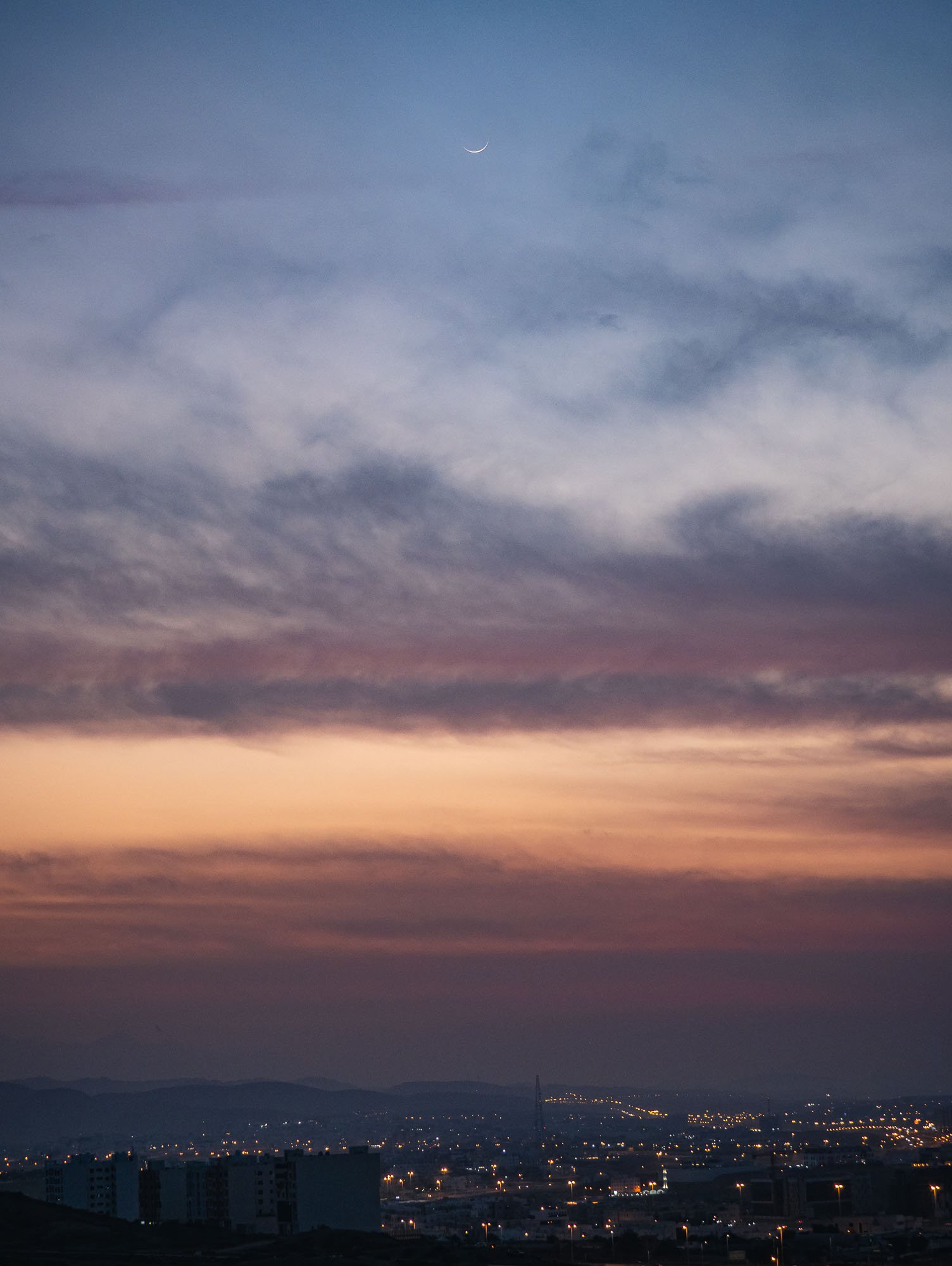
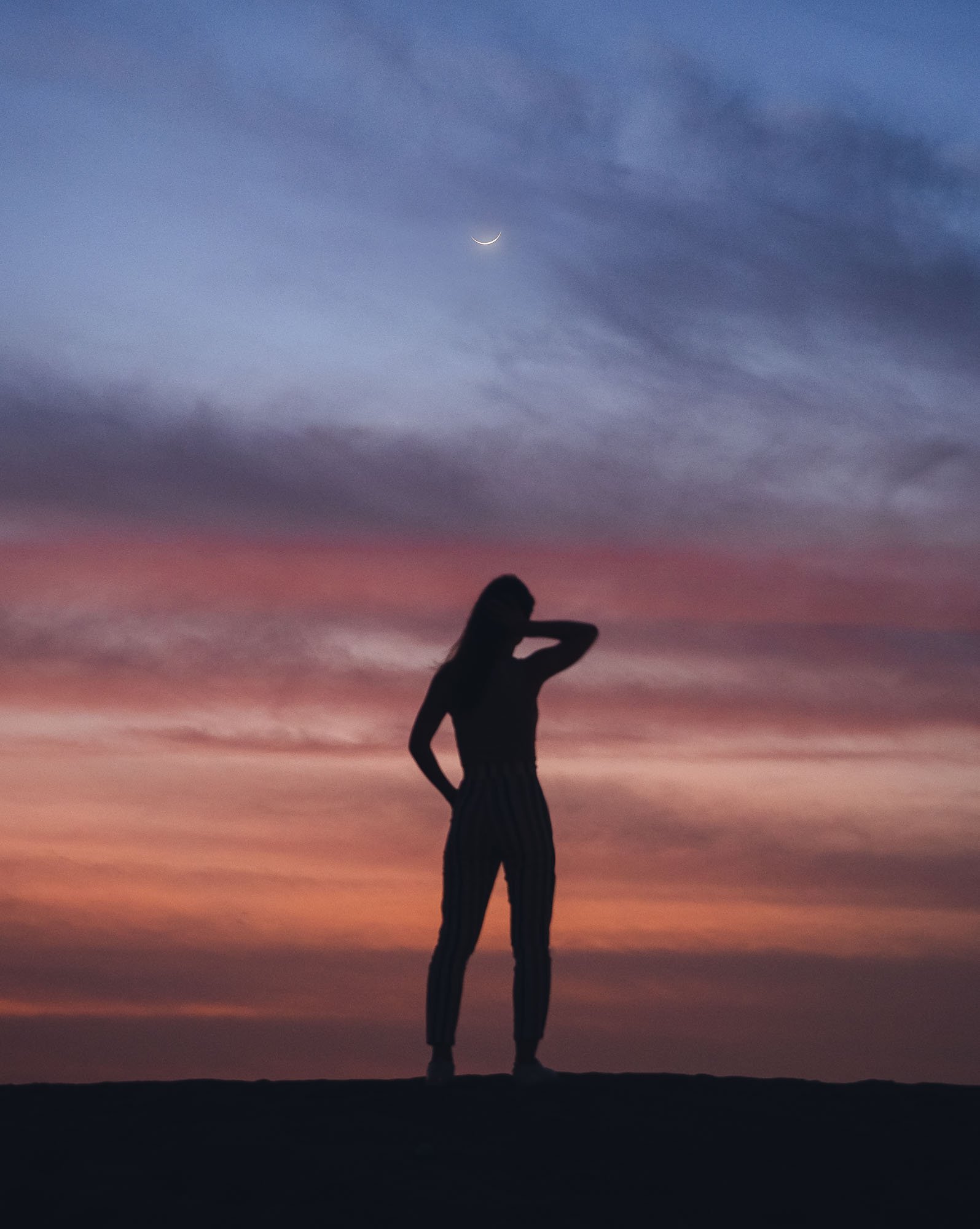
Luna
The moon came out to play as well.
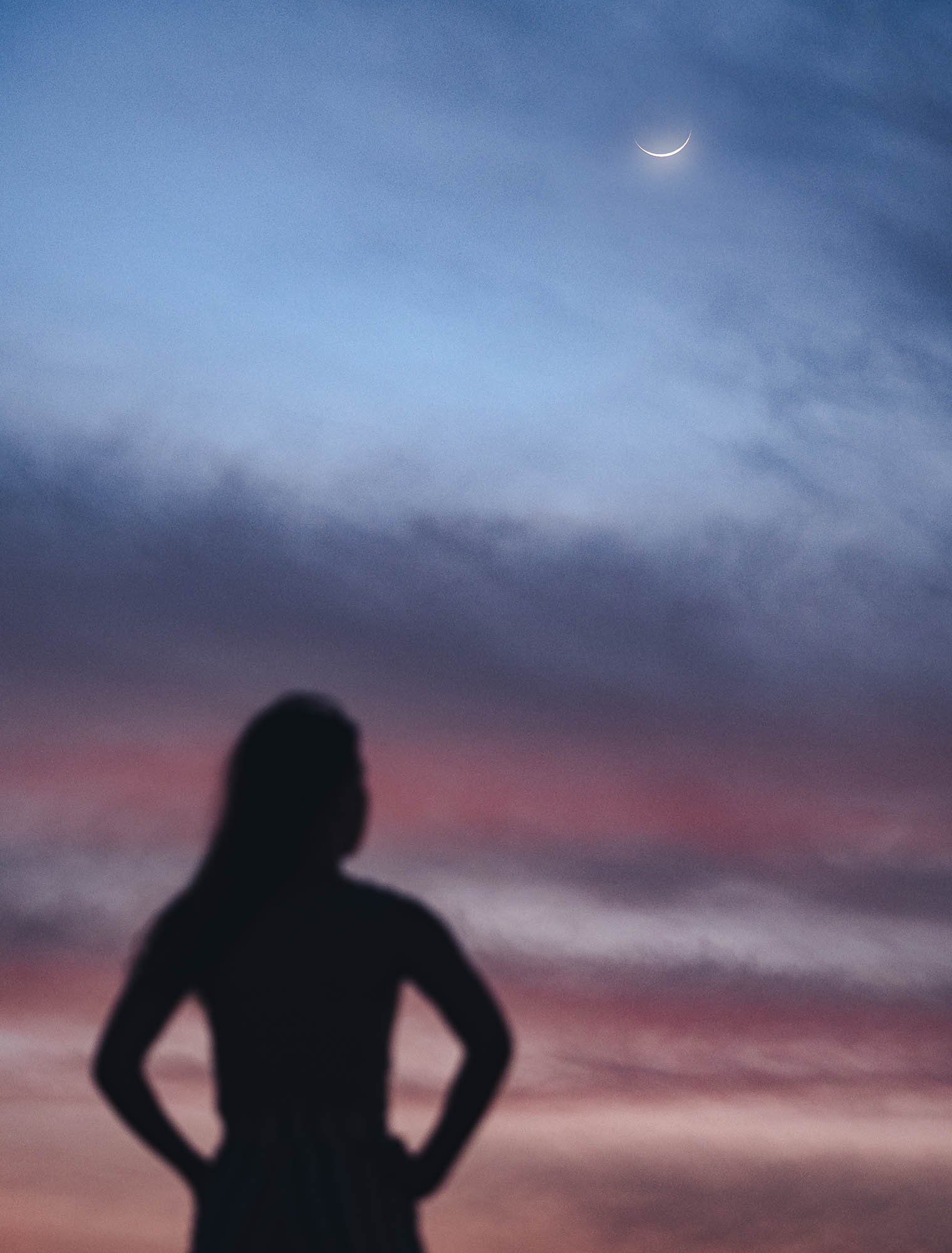
Favourite Subject
Of course I had to play along.
Last Sunset
An appropriate one.
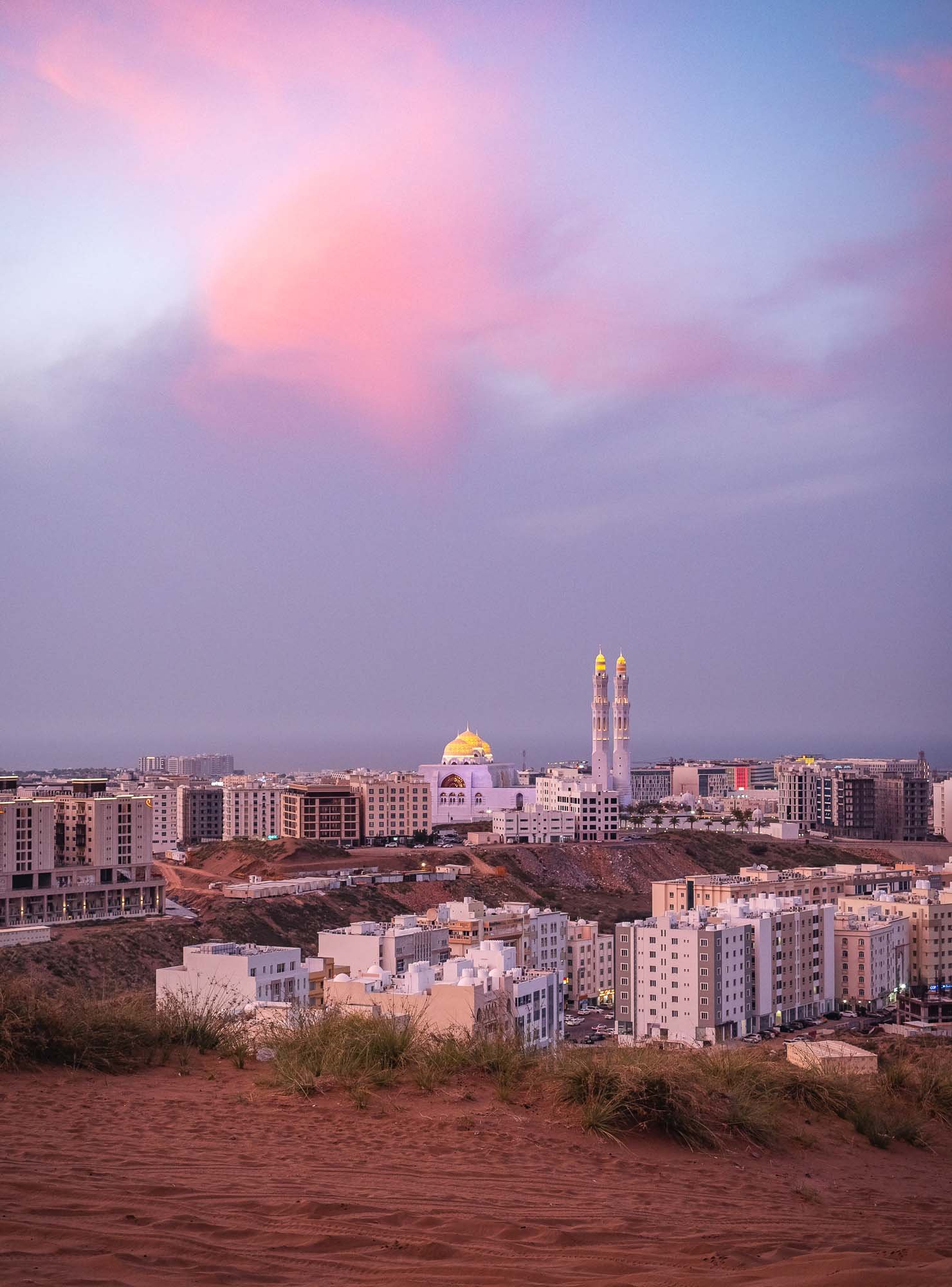
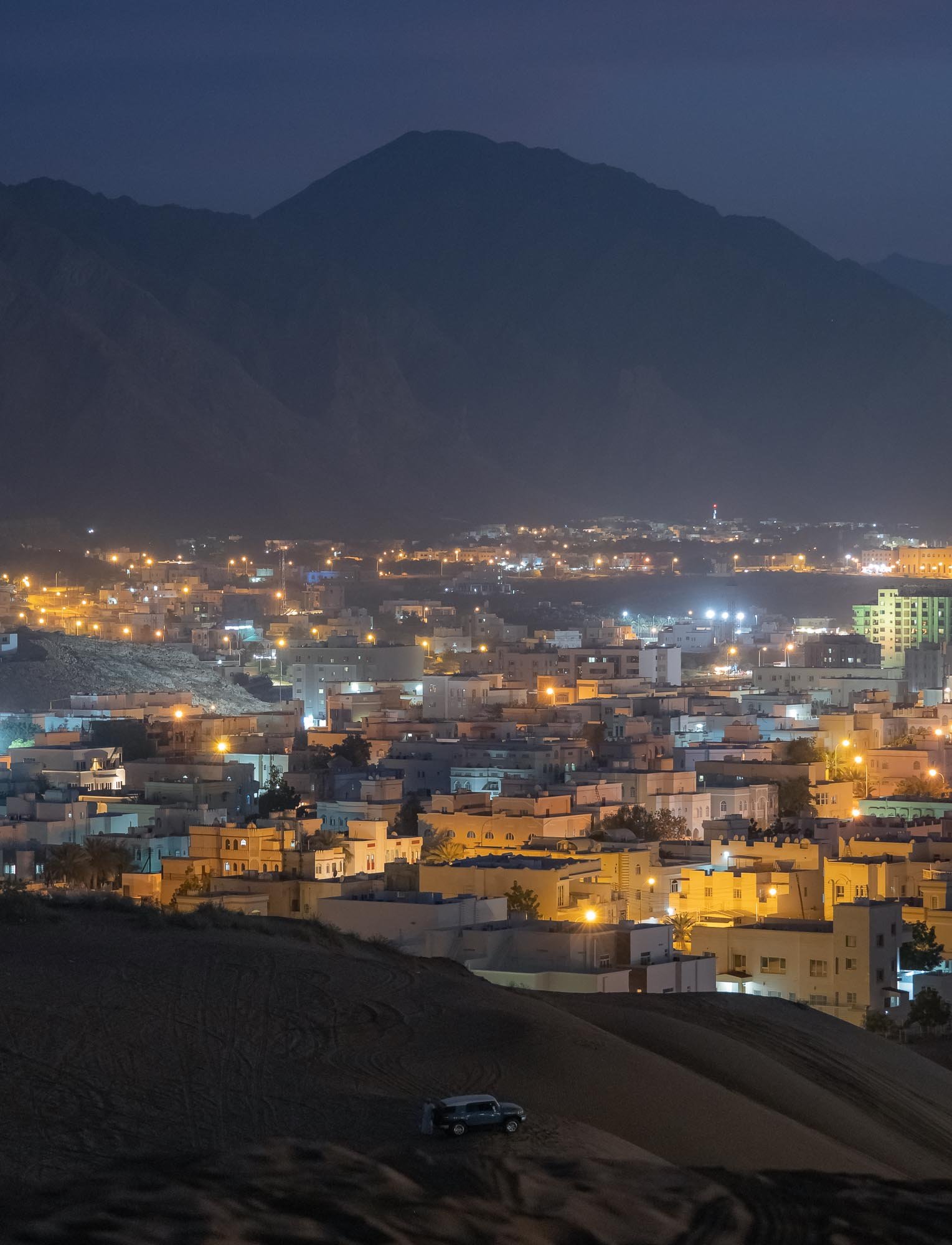
City Lights
The last light of the day disappearing over Muscat.
Back to Dubai
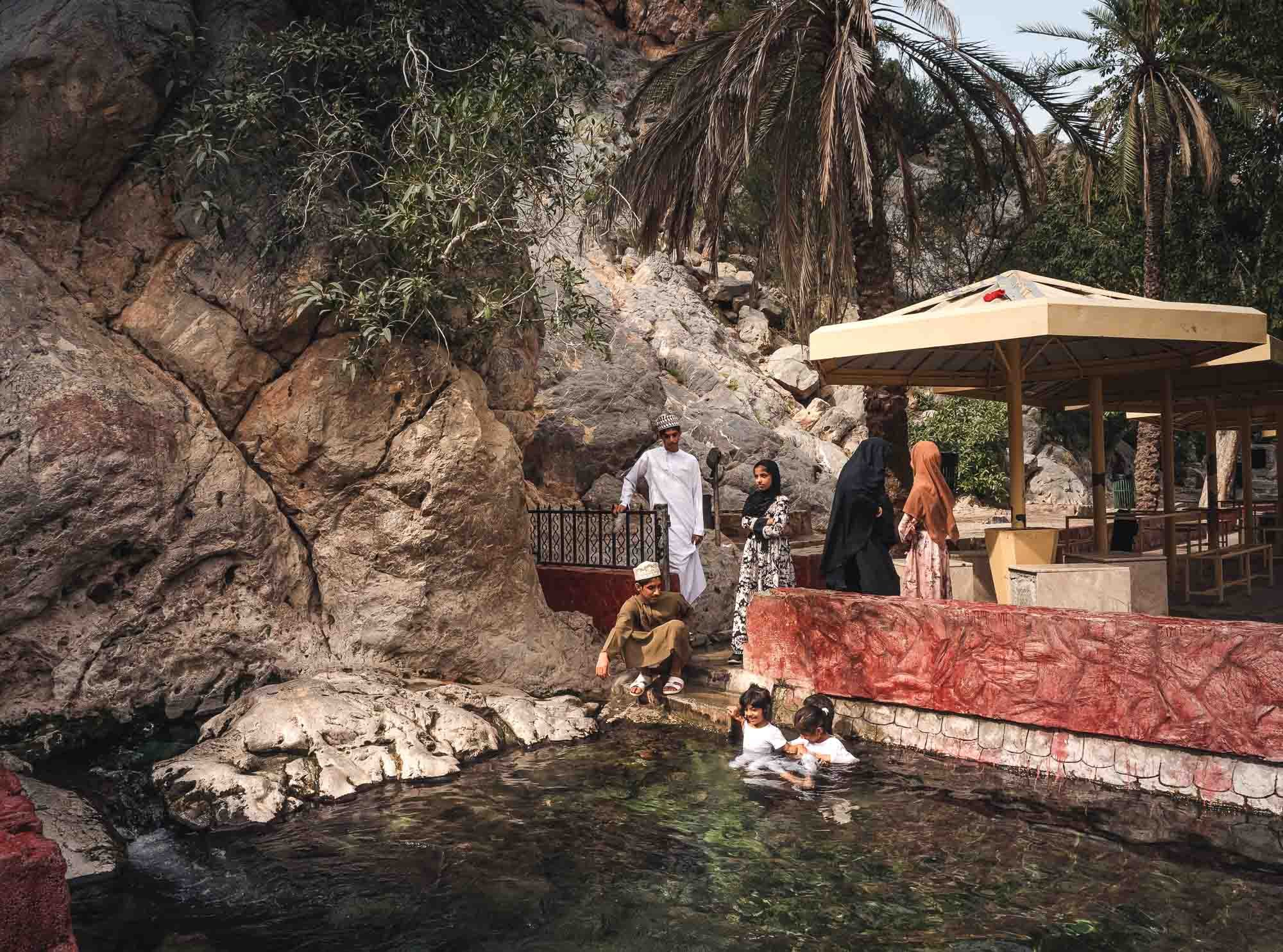
Athawarah Hot Spring
On our way back to Dubai we took a different route, passing by the hot spring of Nakhla. The hot water originating on the bottom left runs directly into the Wadi, keeping it surprisingly warm.
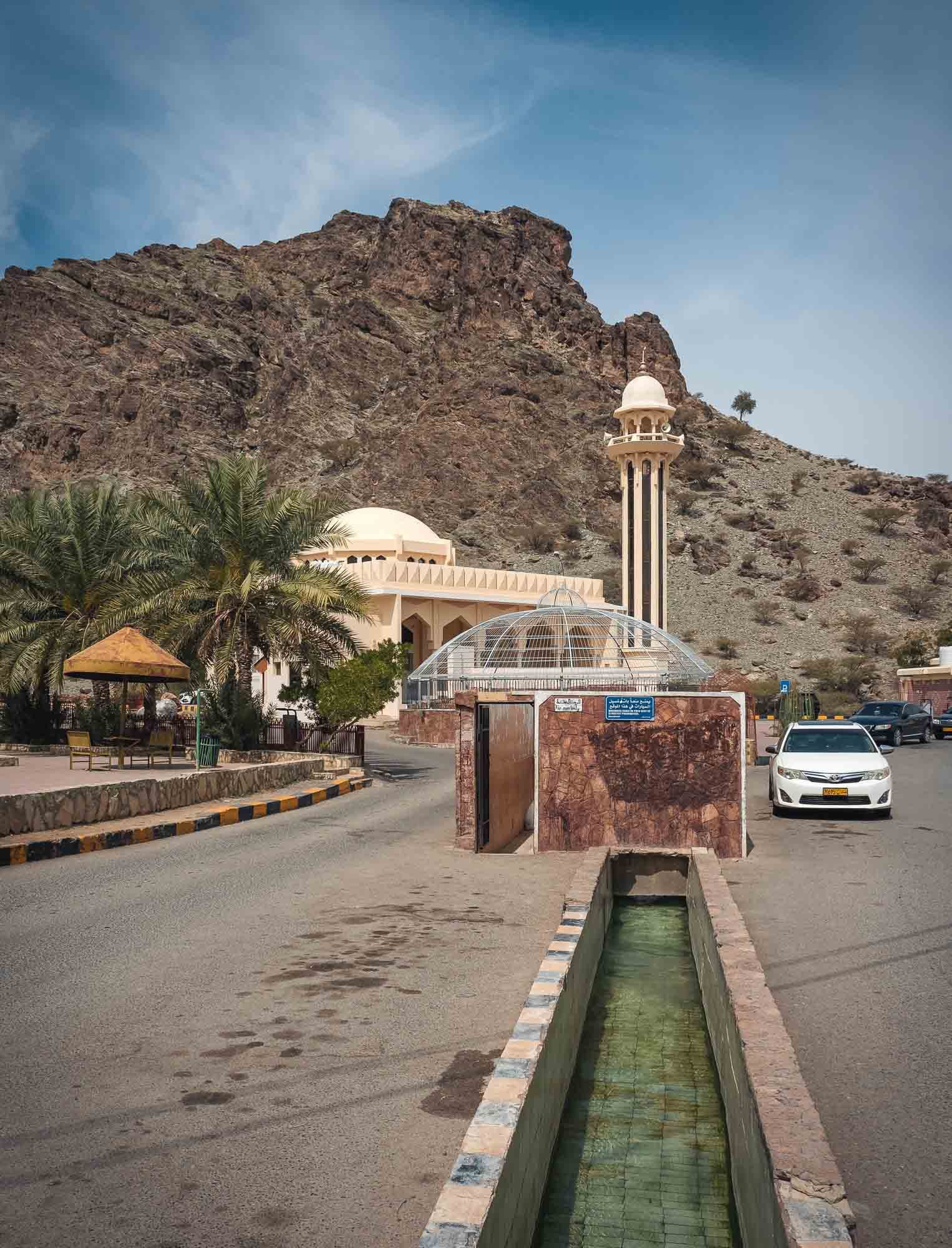
Al Kasfah Hot Spring
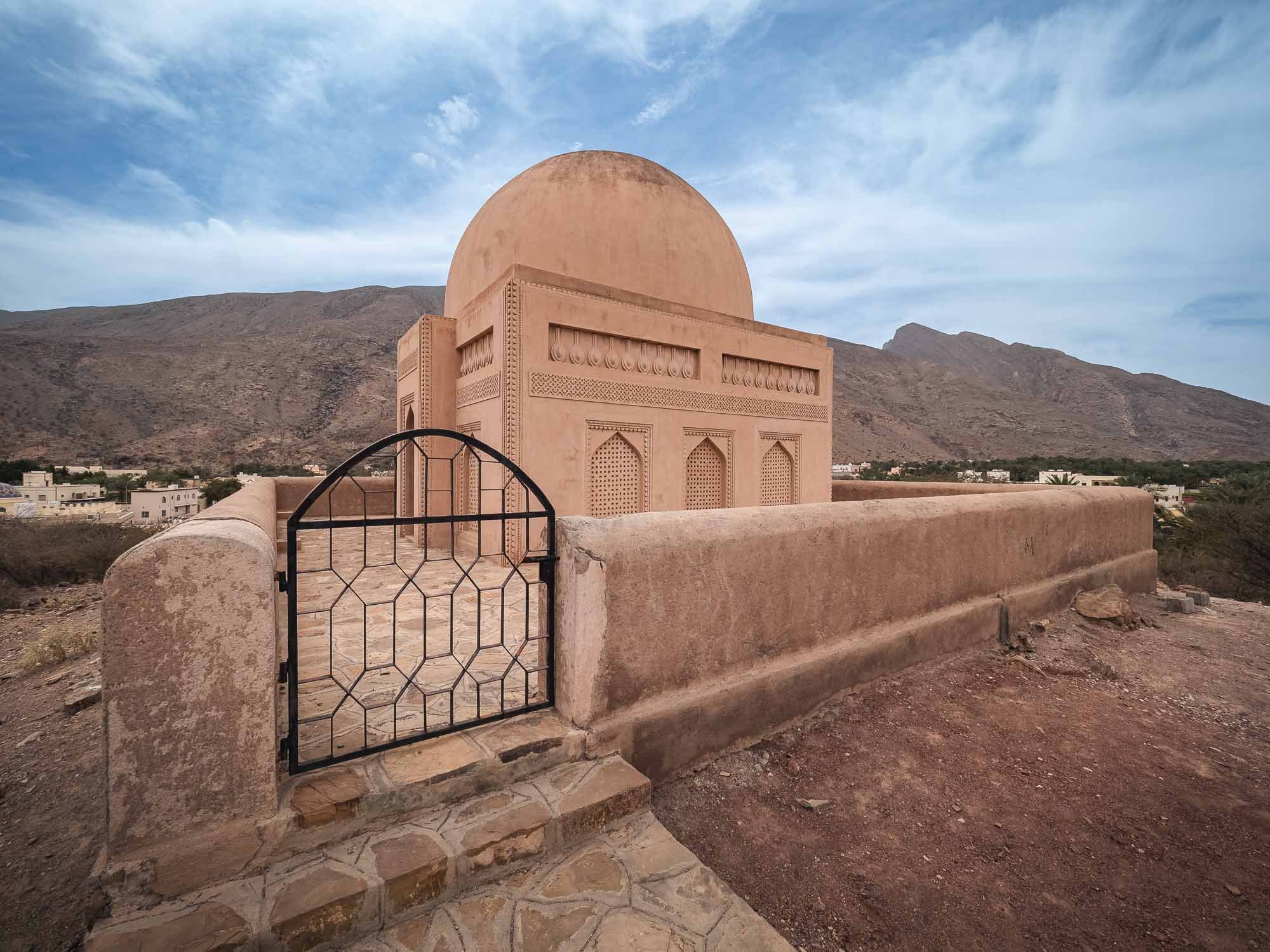
We also stopped in Rustaq at another spring - this one is said to have healing powers owing to the sulphur traces in the water. It originates under the caged dome in the background and then runs in a kind of channel through the streets, with stalls for people to take baths in the water visible in the foreground.
18th Century Tomb
The city is also home to this restored Ibadi tomb of the Imam Ahmad bin Said al-Busaidi, first ruler of Oman of the Al Said dynasty - took me quite a while to find this info, as there are very few signboards around and the Google Maps pin is in Arabic only.
Rustaq Fort
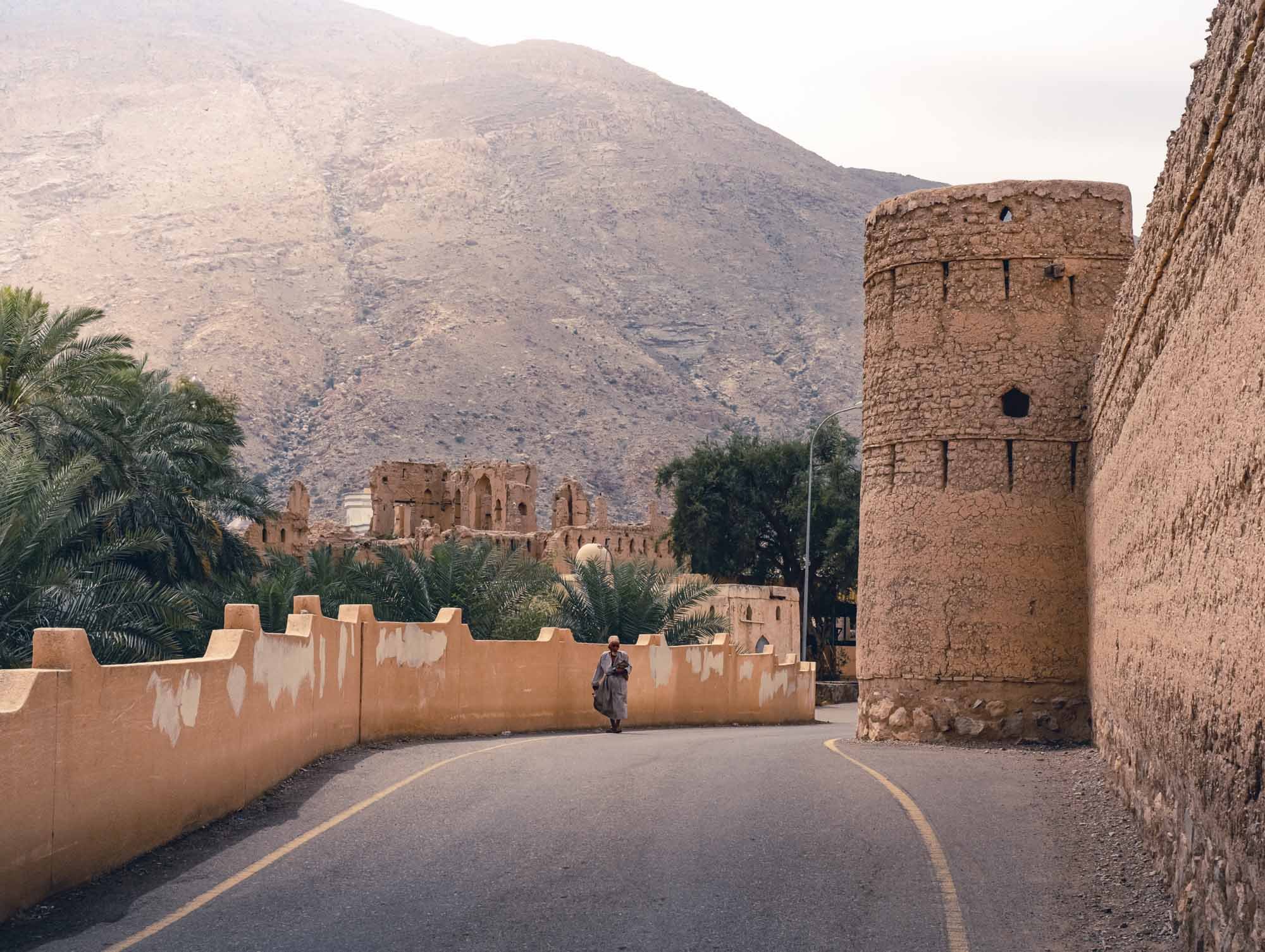
The fort itself is currently closed for maintenance, but its imposing walls are nevertheless impressive.
Transport
We did encounter this fine gentleman who allowed us a quick glimpse into the fort, and then took us to the older parts of the city in this... vehicle, which he imported from China.
Qusra Museum
This was one of the places he showed us, a restored 300 year old family house, now converted and adorned with various artifacts.
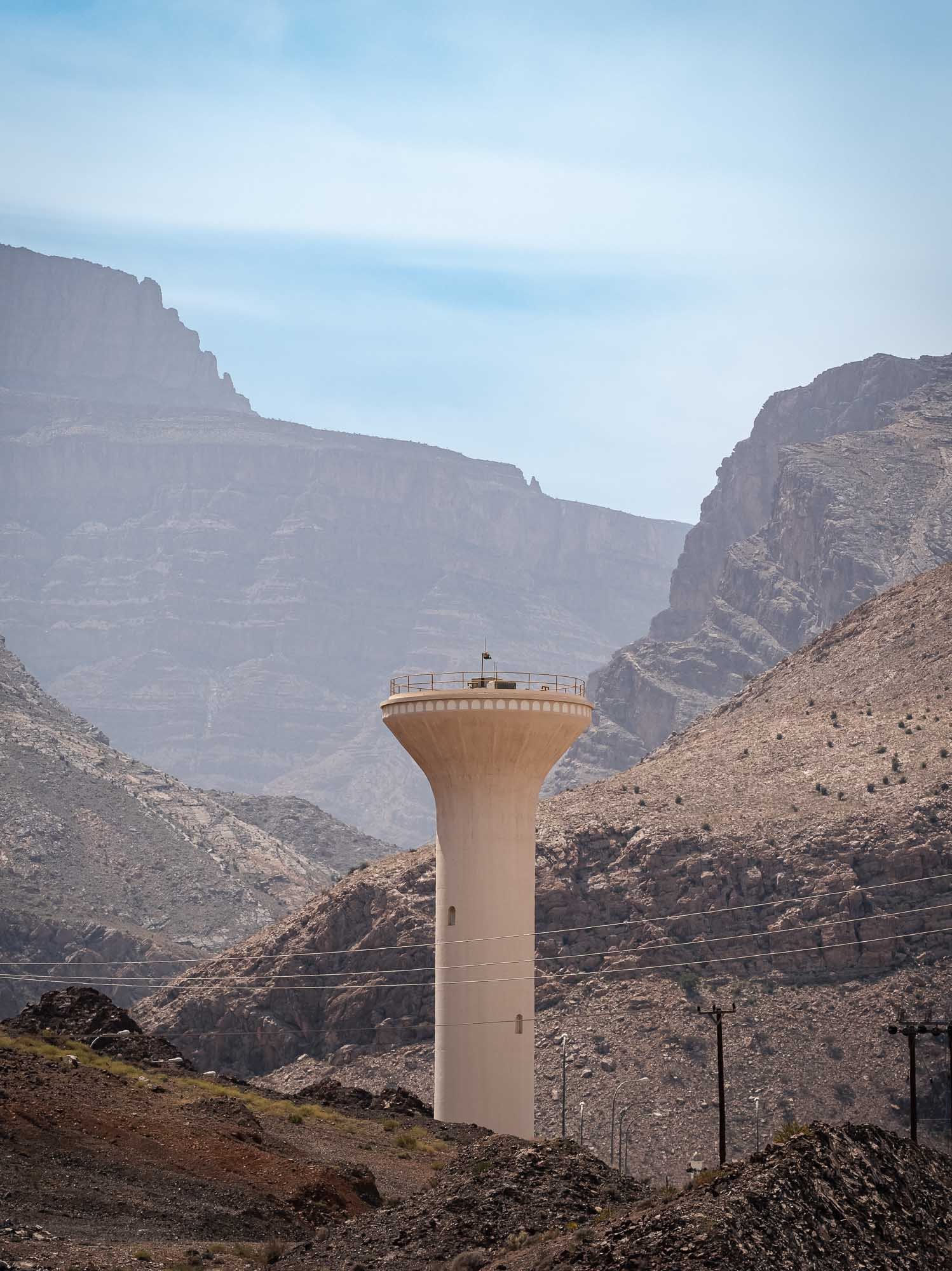
Water Towers
On our way to the final destination. You can find these towers dotted around the landscape, used for storage and to generate pressure.
Framed
Owing to questionable road conditions, we had to take quite a detour, but a few sights on the way made it enjoyable.
Al Ayn Beehive Tombs
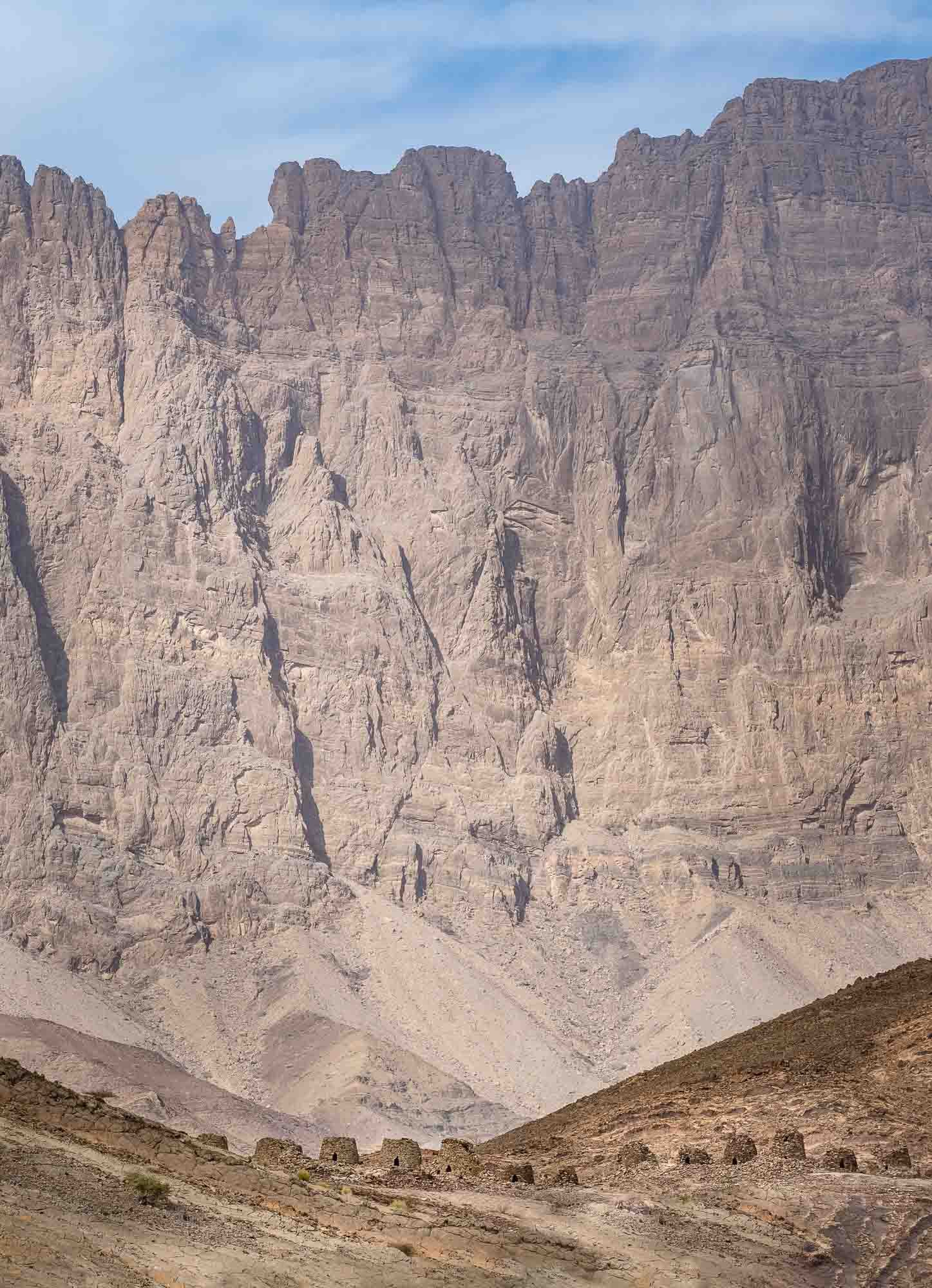
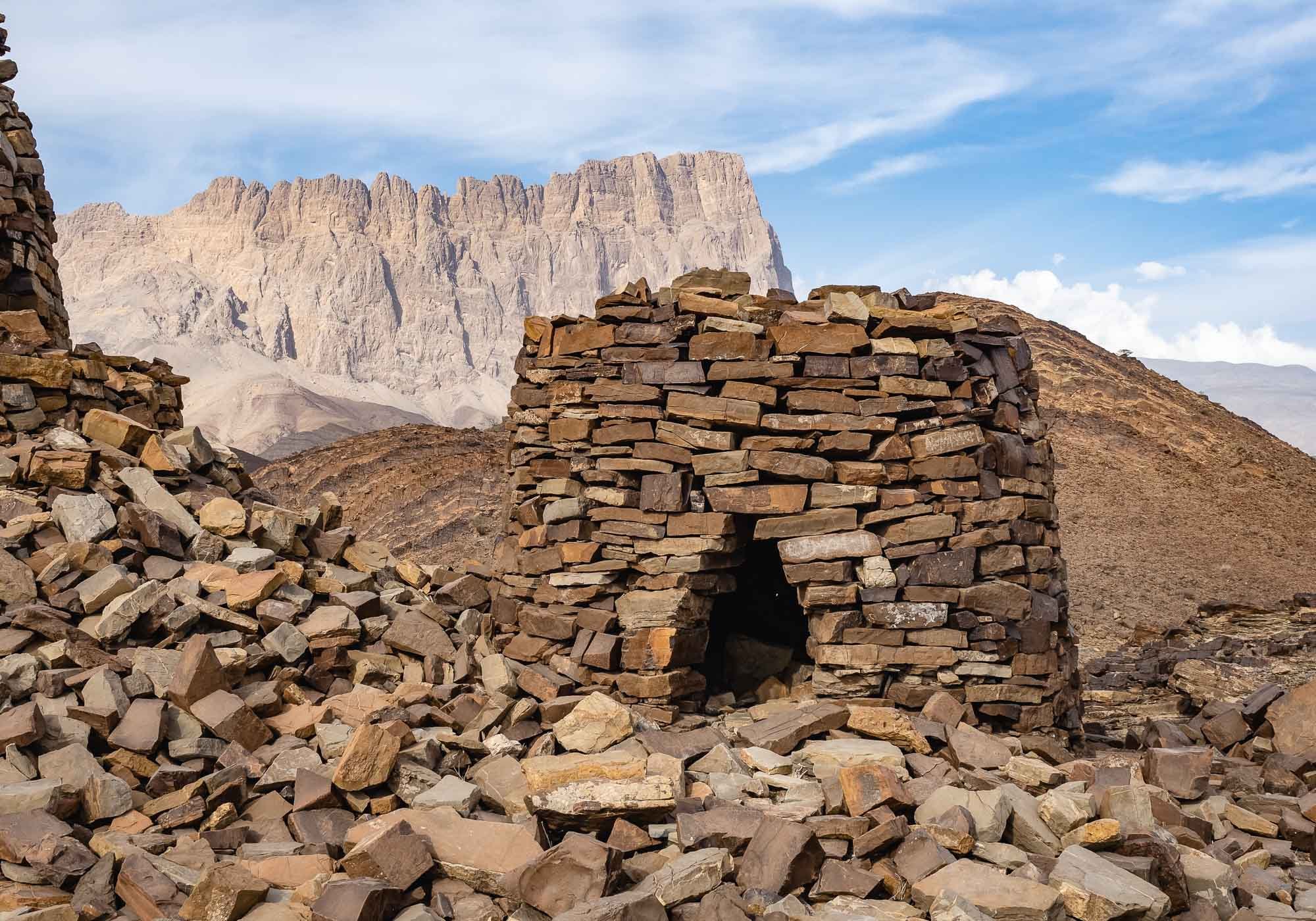
When we finally made it, the scenery was worth it. I had initially failed to add this location to the route on the first day, but really didn't want to miss out after seeing the Beehive Tombs of Bat.
Awe-inspiring
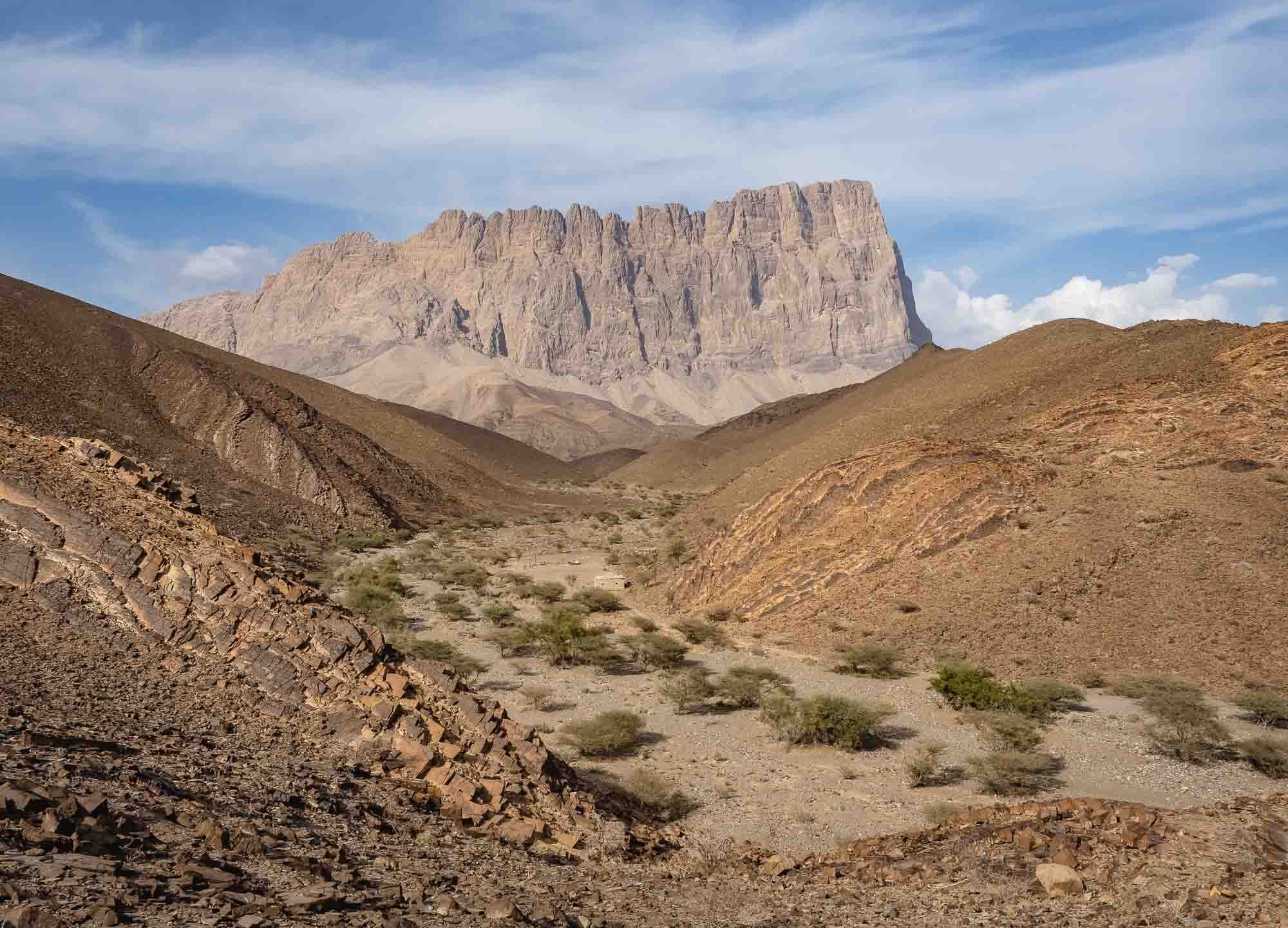
Looking at these 5000 year old tombs with the imposing Jebel Misht in the background was truly amazing.
Jebel Misht
The striking landscape from the hill on which the tombs are located.
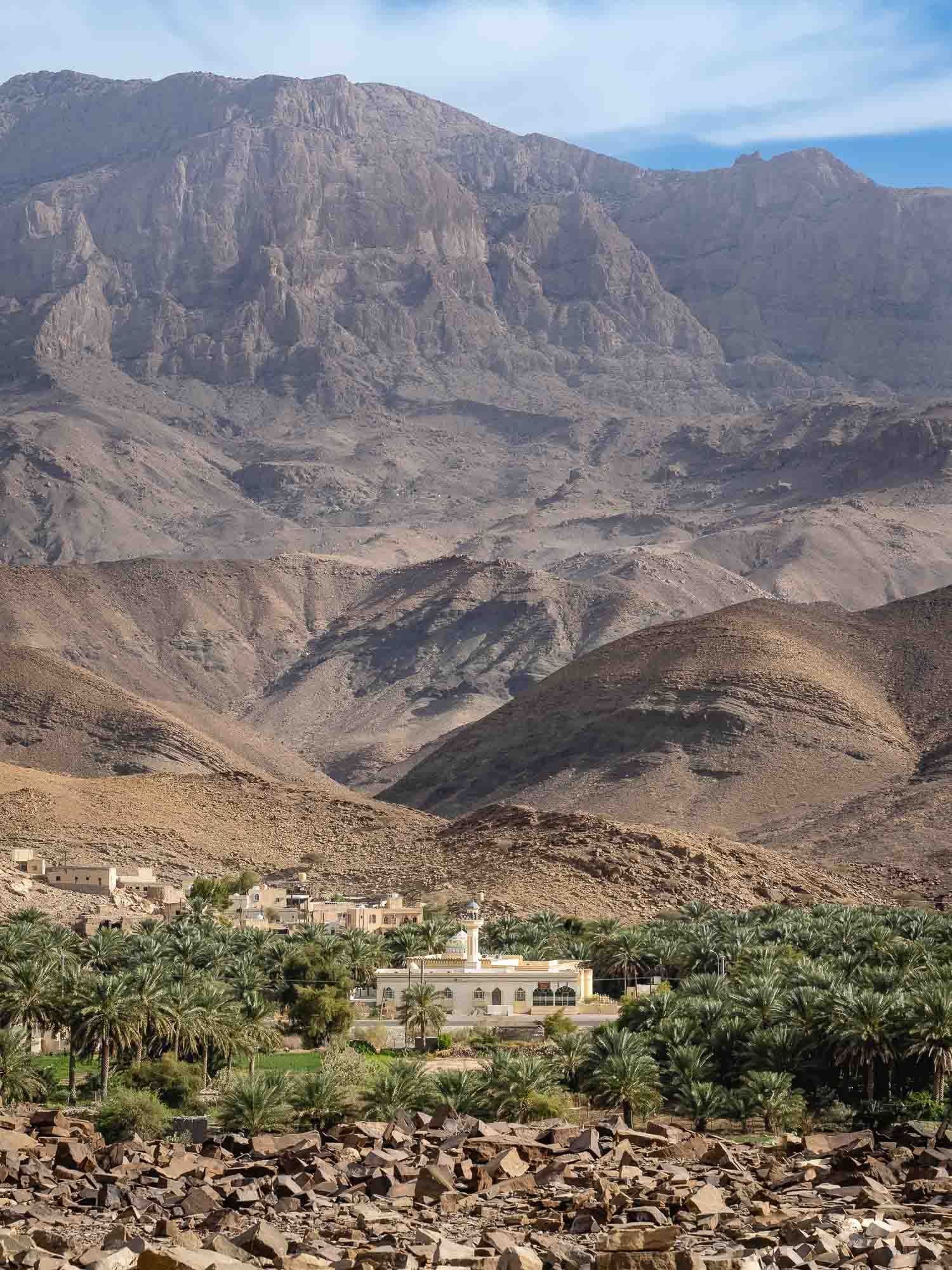
Hajar Views
Looking the other way into the date farm.
World History
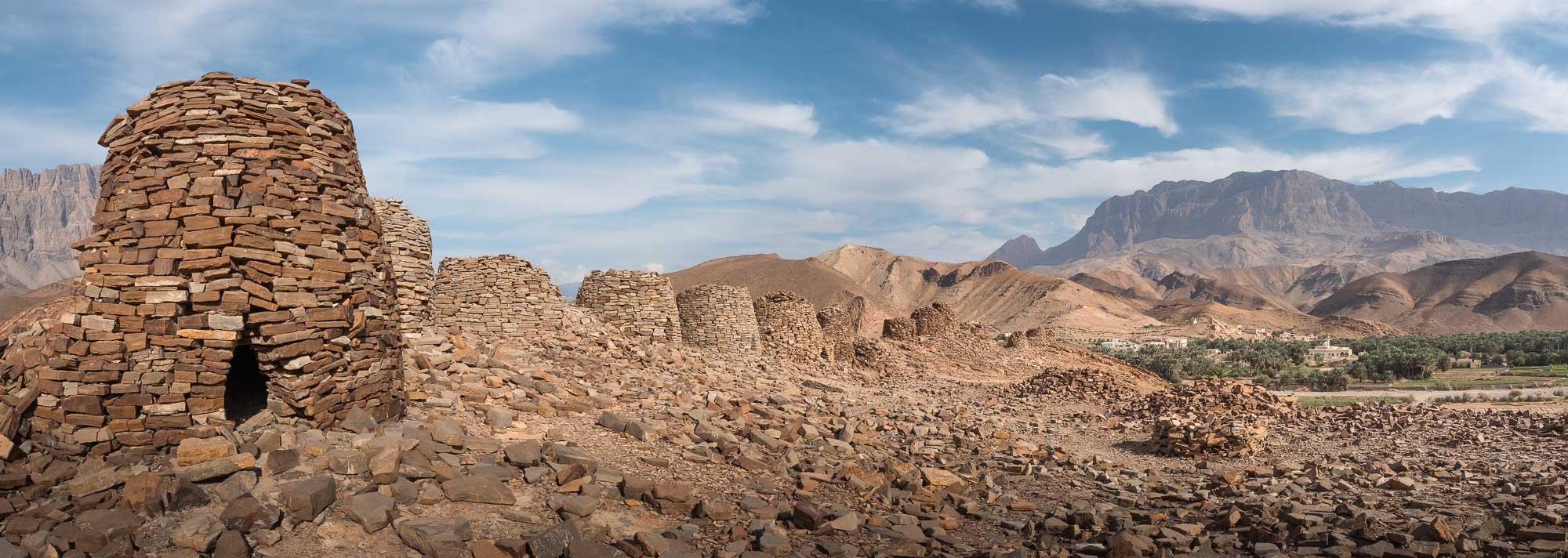
According to Unesco, together with the neighbouring locations, this site forms the most complete collection of settlements and necropolises from the 3rd millennium B.C. in the world. It's almost a bit humbling (and a little concerning for their future) that you can just walk up to these fragile structures with no fences or rails of any kind.
Panoramic View
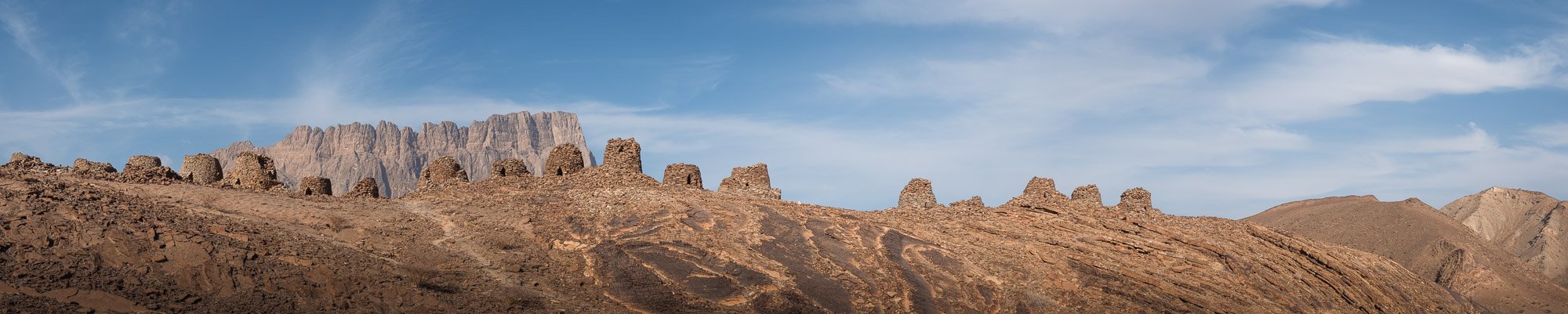
A full view of the site, which features a total of 19 tombs in almost a straight line. A definite highlight for me.
The End
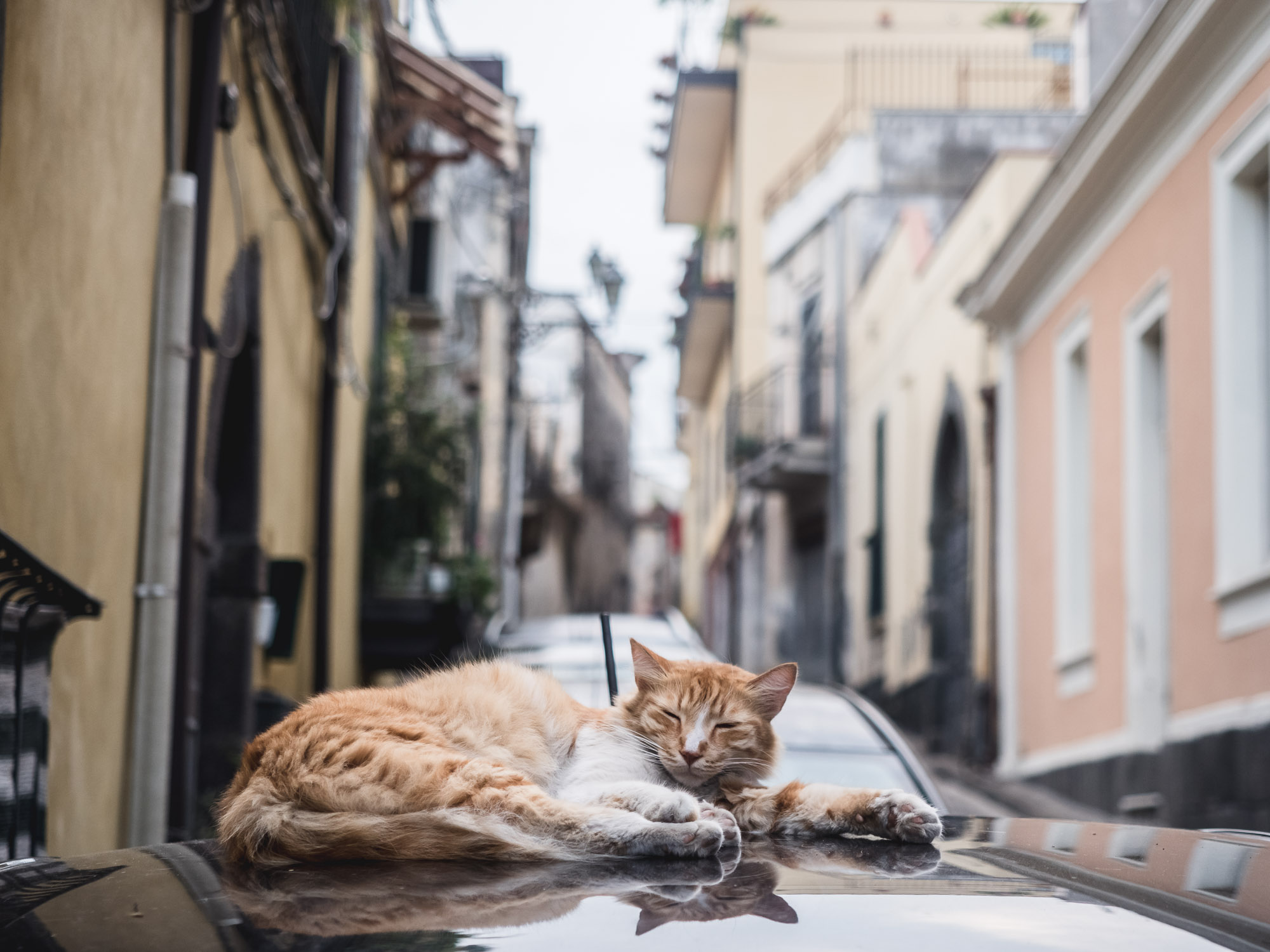
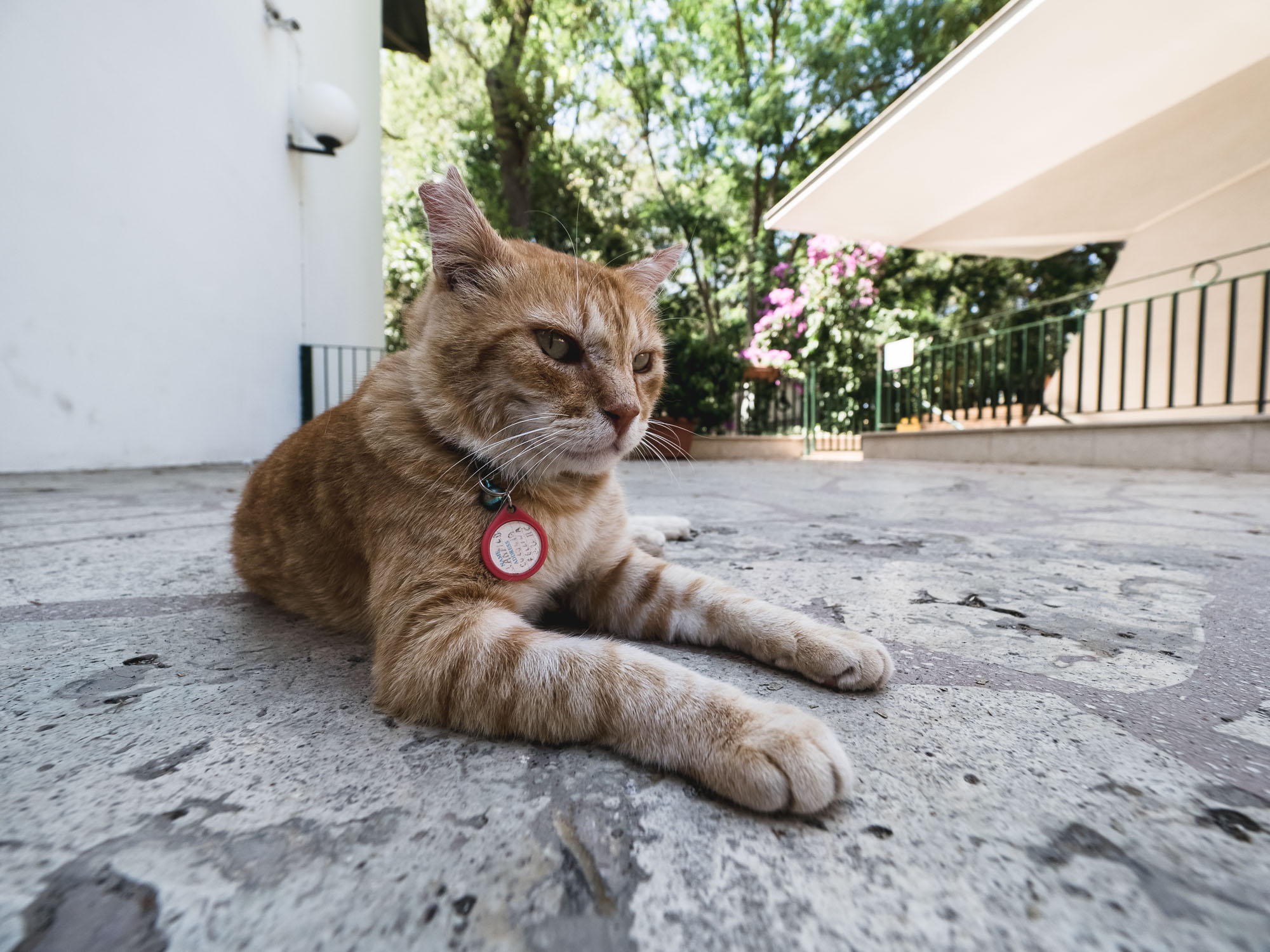
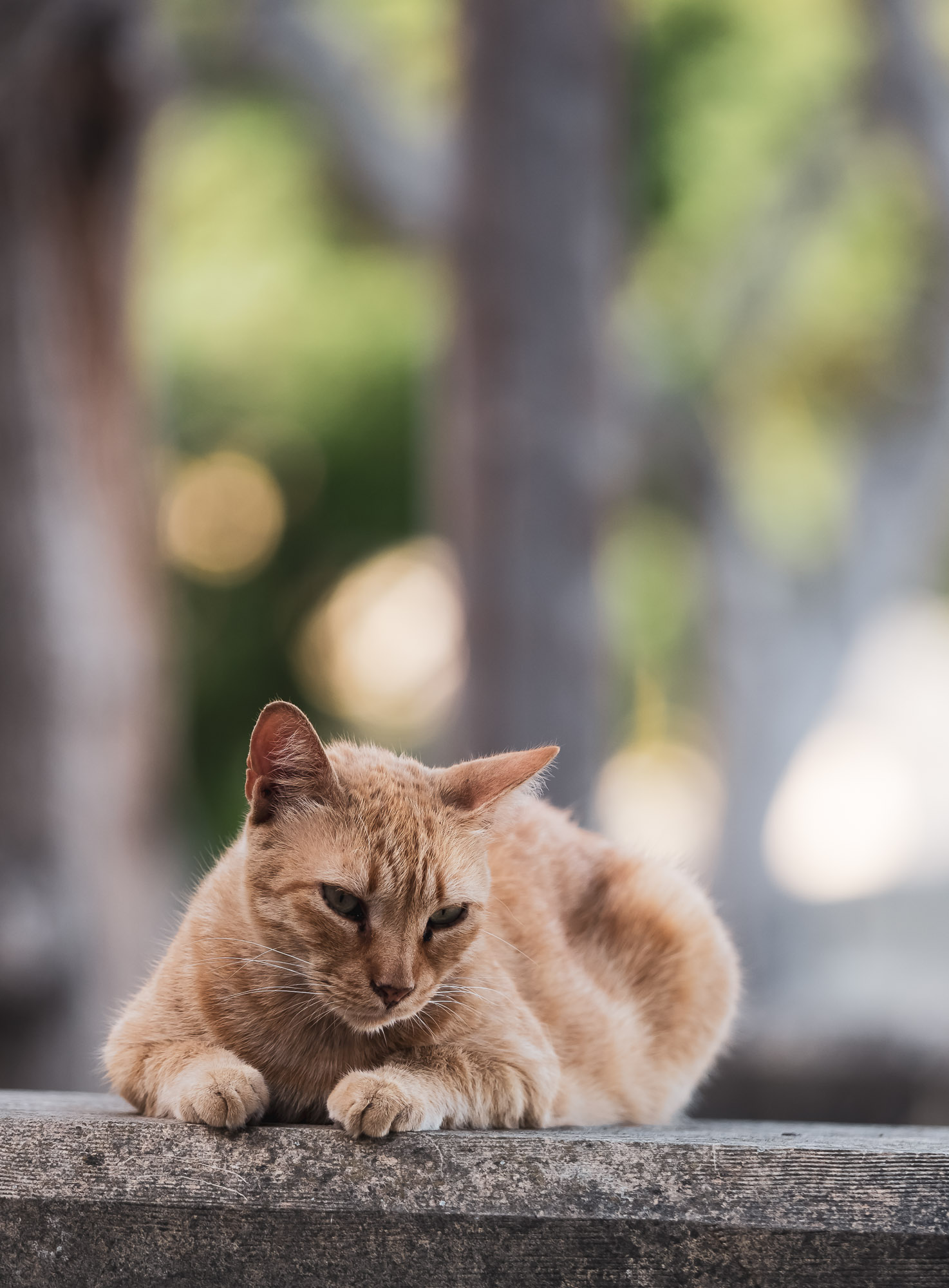
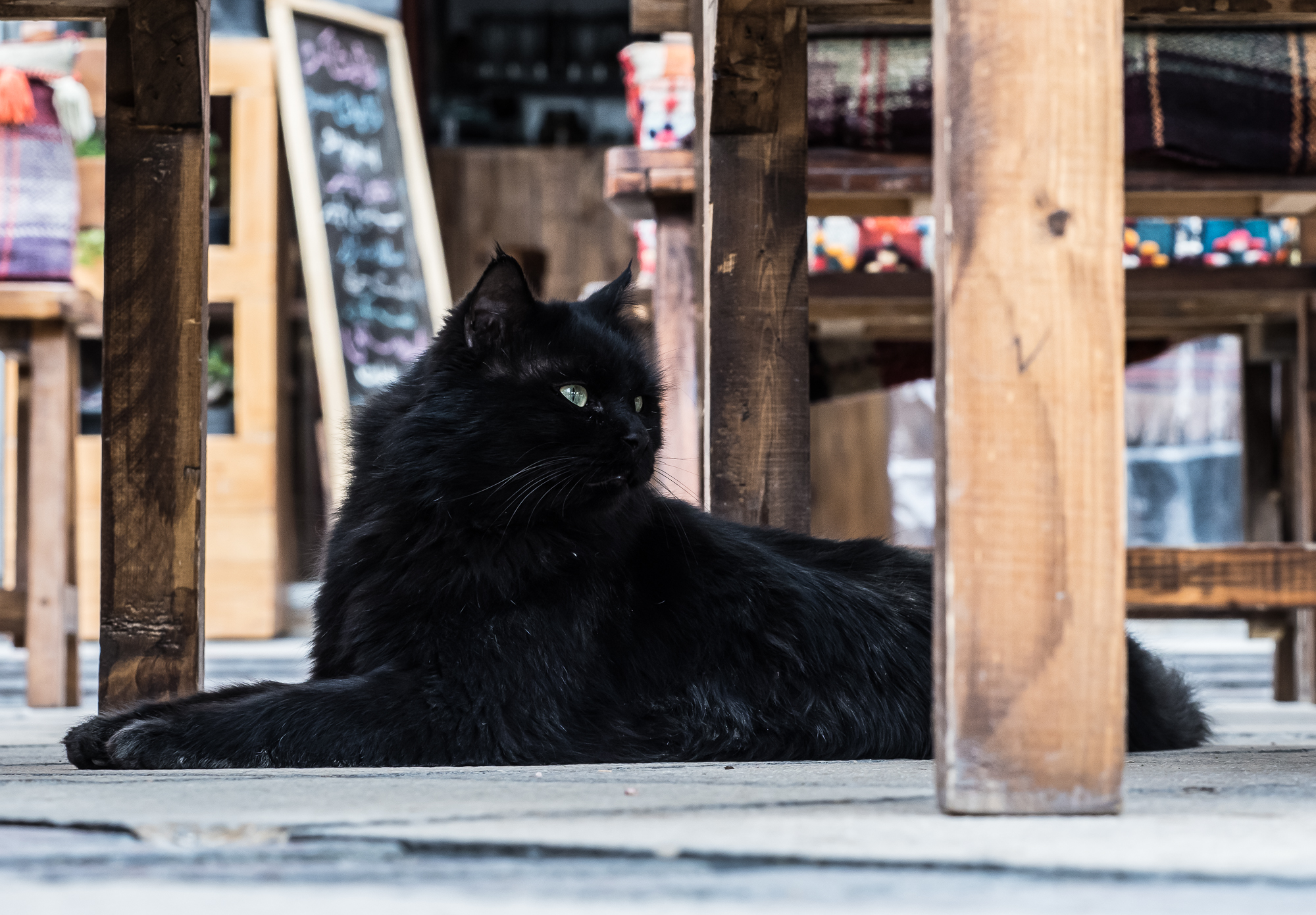
Obligatory cat photo.
I really hope you enjoyed this small documentary series of my trip to Oman. I’ve known about the beauty, geology, and history of the Hajar mountains from exploring the UAE, but Oman really took this to another level. It is probably a good thing for these sites that the country hasn’t had the same level of attention as some other more famous destinations in the Middle East, but on the other hand Oman and its people really deserve to be recognized alongside them. Will definitely come back.
Bosnia & Herzegovina - Polarising Diversity
A late summer weekend brought me to Bosnia & Herzegovina, a relatively small and almost landlocked country in south-east Europe.
A late summer weekend brought me to Bosnia & Herzegovina, a relatively small and almost landlocked country in south-east Europe. The trip took us from the capital, Sarajevo, through the mountain ranges along the river Neretva towards Mostar and its surroundings sights and back. The country features impressive diversity in architecture, culture, and people - owing to its troubled past, which is still evident today - which made for a packed three days of sights, many of them well known, and a few unexpected ones.
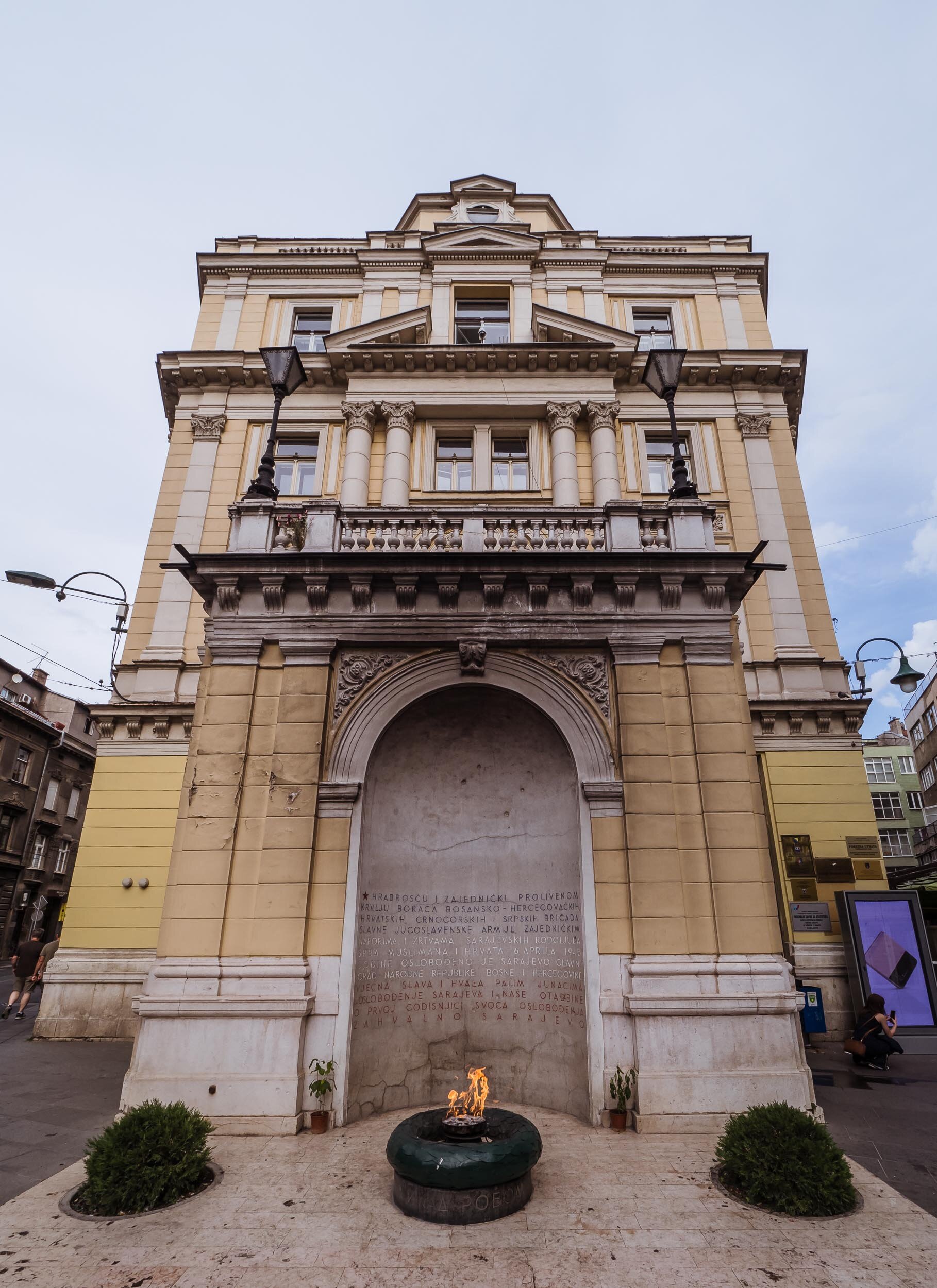
Eternal Flame
A small memorial site in Sarajevo honoring the victims of World War II with an eternal flame & inscription.
Equilibrists
One of the "Equilibrists over the River" statues hanging over the Miljacka river running through the city.
Looping
The "festina lente" pedestiran bridge, meaning "make haste slowly" in Latin.
Miljacka
Another view along the Miljacka river running (very quietly) through Sarajevo, with the famou Latin bridge on the right side.
Souvenirs
One of the many shops selling handmade (or so they say) metal souvenir items.
Artisan at Work
Although in this case I could make sure what I bought was actually handmade.
Kovači Cemetery
A sunset view of one of the largest cemetaries in the city, for soldiers of the Bosnian Army who were killed during the war in the early 90s.
Evidence
Almost 14,000 people were killed during the Siege of Sarajevo, the longest siege of a capital city in the modern history, lasting more than 3 years.
Sunset Layers
Climbing up a little further past the cemetary brings you to one of the most beautiful views of the city.
Low Clouds
Looking east from the same spot provides a very different atmosphere.
Moonrise
As the moon rose, the sun had set on the other side of the city.
The Hum Tower
Named after the hill it is located on, this building is a telecommunication tower located on Mount Hum close by Sarajevo.
Dusk Views
Heading back down into the city along many winding roads, always with at least one minaret in sight.
It is said that there are over 100 mosques in Sarajevo, owing to its muslim history. At the same time, you can find plenty of orthodox churches, cathedrals and synagogues.
Haunting
Passing back along the cemetary, with a haunting atmosphere as the moonlight shone over the many white tombstones.
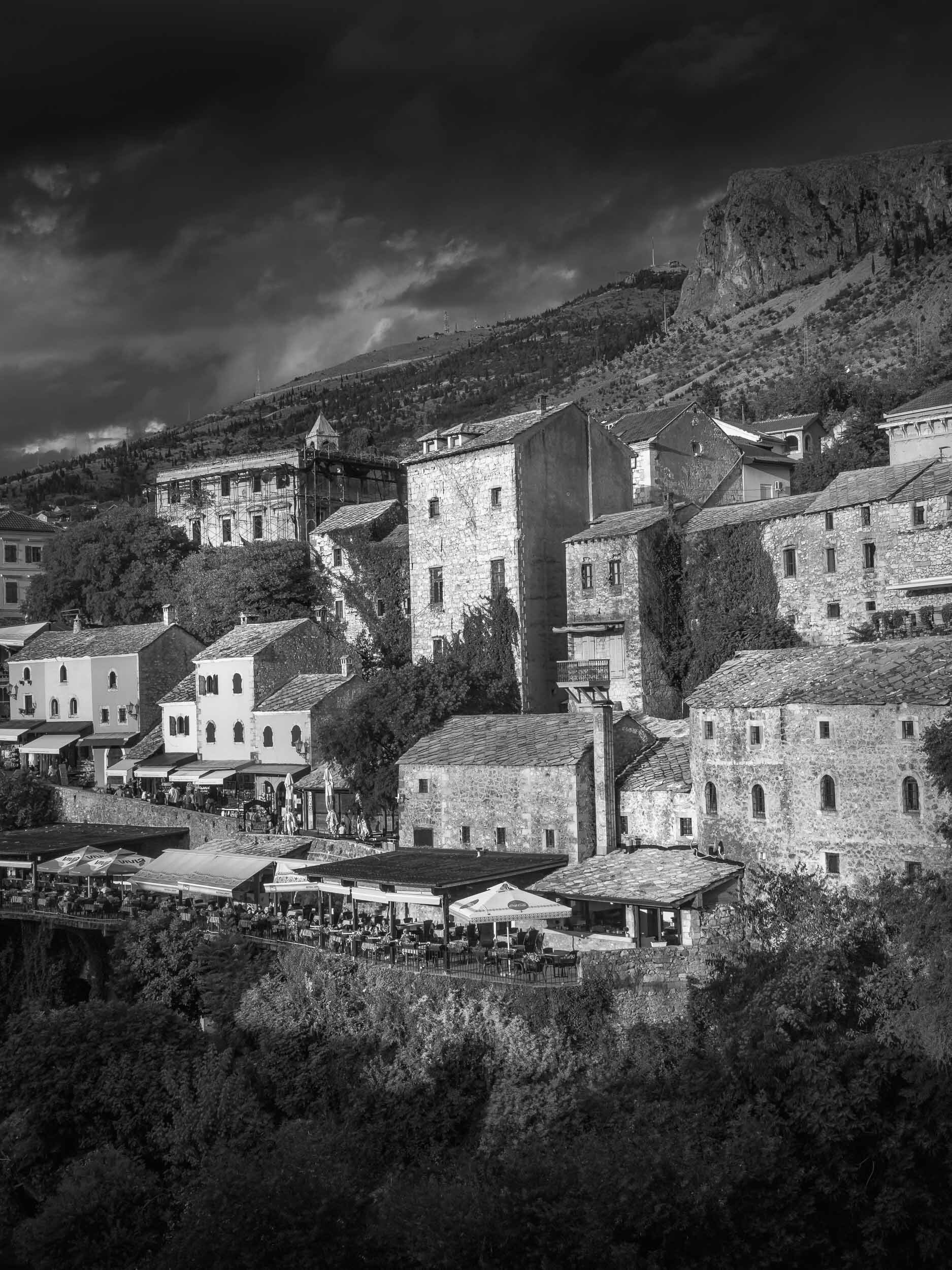
Roses of Sarajevo
One of the many Roses of Sarajevo, red splatters in the ground acting as constant reminders of the tragedies of war.
Gazi Husrev-beg Mosque
The fountain in front of the country's largest mosque and one of the main Ottoman complexes in the Balkans.
Lake Jablanica
Day 2 was the drive towards Mostar, passing some beautiful scenery such as this on the way.
Almost Autumn
The middle of September meant some trees had slowly started to adopt their autumn colours - my favourite season.
Colours
One of the many scenic spots you can find along the roads winding on the side of the Neretva river.
Views
As we went further south, the sky slowly opened up, and the mountain scenery became even more impressive.
Kravica Falls
Before visting Mostar, we went about 25km further to the Kravica waterfalls, a beautiful set of falls around 25m high and ending in a small lake.
Summer Discharge
The falls were at low discharge compared to the early Spring, but still quite impressive and in some ways even more pictoresque.
Swimming
It is allowed to swim in the small lake near the falls, so the location is quite popular during the summer.
Dervish House
Another stop on the way was the Dervish house, a hstoric Sufi monastery built on the impressive cliffs by the water.
Calm
Built in 1520, it was a place of spiritual retreat and reflection - it still feels special today, although there are a lot of restaurants and activities around.
Fortress
Another beatiful spot on the way back towards Mostar, although I wasn't able to find its name anymore.
Žitomislići Monastery
A beautiful Serbian orthodox monastery on the way from Kravica to Mostar.
Colours of Nature
Our last stop before reaching Mostar was this amazing spot of natural beauty, thanks to an innocent Google Maps pin.
Waterfalls
These amazing cascading waterfalls along the Neretva were definitely a highlight.
Close Up
While more impressive from the air, even the ground view was beauitful, although the flow of water was lower this time of the year.
Mostar
Our next destination was Mostar, named after the bridge keepers (mostari) who in the medieval times guarded the Stari Most (Old Bridge) in the centre.
Old Bridge
The bridge was originally opened in 1566, but destroyed during the war in 1993 and then rebuilt from 2001 to 2004.
Looking North
A view towards the Old Town of Mostar on the right, with the Koski Mehmed pasa Mosque.
Old Town
The old town along the gorge of the Neretva river in the evening light.
Below
A view from the sandbanks below the bridge.
Birds & Planes
The minaret of Koski Mehmed pasa Mosque was built in 1617, and is open for visitors.
Interior
The inside of the mosque.
Minaret
It's also possible to walk up the Minaret tower, although I didn't - not sure why in fact.
Stari Most
The bridge seen from the gardens of the mosque at dusk.
Tara Tower
The western tower seen from the bridge, one of the two "bridge keepers"
City Lights
A photo into the small gorge with its many restaurants taken from the crooked bridge, which was actually destroyed during a flood in 2000 but re-built a year later.
Vibes
The evening was spent listen to some beautful music at the Mostar Blues & Rock festival.
Bruce Lee
Yes, there's a Bruce Lee statue in Mostar, and of course we had to find it. Read the Wikipedia article for the hilarious story...
Mostar Peace Bell Tower
The tallest church tower in Mostar offers panoramic views of the city, although I didn't manage to go up this time.
The Crooked Bridge
This small bridge was built before 1558 and is thus ironically older than the Old Bridge. It is said that this small bridge was a prototype for the larger and more famous version.
Vrapcici Mosque
A mosque outside Mostar, one of our first steps on the way back to Sarajevo.
Landscapes
Another beautiful Bosnian landscape, where a small part of the Neretva splits off to one side.
Village Vibes
You might recognise this bridge from earlier. I was keen to get a shot of this little bridge with a train, but was not lucky enough despite being there for an hour.
Reflections
Where the Neretva splits with the Ravancica we found this spot offering amazing reflections in the calm waters.
Favourites
Cloud covered mountains - can't get enough of that.
Konjic
The next city on the way back to Sarajevo was Konjic, with another famous bridge, the Old Stone Bridge from 1682. It was also destroyed - during the second world war - and rebuilt in 2009.
Bridge near Jablanica
Another interesting bridge story - this one was first destroyed as a ruse, then during an acutal attack, and finally for a movie. Its remains are visible here near the memorial complex for the Battle of the Neretva.
Mointain Villages
A small village in the mountains near Sarajevo.
Train
Another spot where I was hoping for a train to pass (which runs from Sarajevo to Mostar) but wasn't lucky.
Railway Bridge
This bridge leads into the tunnel on the earlier photo.
Cable Car
Back in Mostar we took the cable car up to the Trebevic area, which harbous a few amazing secrets...
Bobsleigh Track
But even more interestingly, the remains of the bobsleigh track of the 1984 Winter Olympics, the outline of which is visible in this aerial shot.
Forest Views
For one thing, the amazingly dense forests of coniferous trees.
Ruins
During the war, the track was used as an artillery position by Bosnian Serb forces and fell in disrepair, although most of it is intact, leaving aside the many war wounds...
Restoration
There were plans to restore the track after extensive demining, however as of today the only work on the track is done by Graffiti artists.
Track Views
Walking along the track is a very strange feeling, to imagine this was once an Olympic site, and then a defensive wall during the war.
1984
The odd reference to the Olymics is still visible around the city, such as this one close to the upper cable car station.
City Views
Of course you also get beautiful city views from Trebevic, such as Alifakovac cemetery in the foreground here.
Layers
The view towards the north brings with it some beautiful mountain layers
Rays
Another view towards the mountain ranges surrounding the city during sunset.
Avaz Twist Tower
Sarajevo's most famous skyscraper is this 172m tall building featuring a twisting facade, which opened in 2008.
Lonely
A small house being built on the slopes of a nearby hill.
Sunset
It was a beautiful sunset that evening, with a few stratus clouds wrapping around the sun.
The western view with the Miljacka river slowly disappearing towards where it meets the Bosnia river.
The Approach
Two planes crossing as they fly over Sarajevo.
Forest Moonrise
The full moon coming up above the forest canopy.
Horizons
A wider angle view of the city and its mountain layers beyond, just after sunset. This shows the modern parts, with the Avaz skyscraper and the Hum tower on the right.
Diversity
Spot the different religious landmarks illuminated in this image. While diverse in its people and architecture, the country itself is still deepy divided and unified governance hasn't happened.
Bird's Eye
The final morning was spent on some aerial perspectives to get a better overview of the city, such as this one looking east the old town.
Histories
A top down view of the aforementioned Kovači Cemetery.
Markets
A view of the historic city centre and the 18th century Sebilj fountain in the centre.
Sebilj fountain
A ground view of the Ottoman style wooden fountain from 1753.
Baščaršija
More of the streets surrounding the historic market area.
Gazi Husrev-beg Mosque
The 16th century mosque, the central fountain in front of which we have seen earlier in the series.
Obligatory
The mandatory cat photo of the series - although I took a lot more, there were so many around.
Morning Mood
Low clouds and a moody sky for the last morning walk through the streets.
Alignment
Is still a work in progress for the country.
Moments
A minaret with the Jajce Barracks in the background as a bird soars above.
Tunnel of Hope
Our last stop near the airport was the so called Tunnel of Hope. This was the lifeline for the city of Sarajevo during the Siege.
Remnants
The tunnel building shows what is still evident all around Bosnia & Herzegovnia, both visually and mentally from what I could tell - the scars of the war.
The Bavarian Alps - Blue Skies and Fluffy Clouds
Over the last year I took the chance to photograph a few of the highest peaks of the Alps around my hometown in Bavaria, Germany.
Over the last year I took the chance to photograph a few of the highest (and most accessible - yes I was lazy and mostly used railways and chairlifts to get to the top) peaks around my hometown in Bavaria, Germany. Below is a collection of images from the trips.
Wendelstein
This is one of the highest peaks in the Bavarian Alps, at over 1800m. It features a railway originally built in 1912 on one side, and a cable car on the other, and the top is home to a church, a weather station and an observatory.
Kampenwand
At almost 1700m and an impressive rock formation to top it off, this is a very impressive peak of the Bavarian alps. It features a 12m cross on its peak. A cable car from 1957 takes you close to the top, but the final peak is a steep hike.
Hochries
At just short of 1600m, this is the smallest of the three peaks I’ve visited. It takes a short chairlift and a cable car to reach the top, which offers beautiful views over the valley below. This area is very popular with paragliders.
Luxembourg - Small but Special
In June 2021 I took the opportunity of borders reopening as the Coronavirus situation improved to visit Luxembourg, one of the last countries in Western Europe that I have not yet had the chance to explore
In June 2021 I took the opportunity of borders reopening as the Coronavirus situation improved to visit Luxembourg, one of the last countries in Western Europe that I have not yet had the chance to explore. With less than 1 million people and an area of less than 3000 sq km, it is one of the smallest countries in the world, but at the same time has one of the highest GDP per capita.
Luxembourg features a rich history with many amazing castles dotted around the landscape, and a diverse and multicultural history and presence. Take a look at the photos below to get a glimpse of what I was able to see in 48 hours.
Hohllay Cave
Our first stop was in Berdorf, where you can find a small network of caves created by mining activity.
Man-made
The area was used to create circular millstones until the 19th century, so these are not natural cave structures.
Beaufort Castle
Our second stop was Beaufort Castle, just a short drive away.
11th Century
First built almost 1000 years ago, since 1988 it has been a Luxembourg national monument.
Trees
It is surrounded by a small river and beautiful forest.
Path
An elevated path leads over the grounds.
Grounds
A small lake on the southern side makes for beautiful scenery.
Reflections
Of course, that also means some great reflections.
Upside Down
Did I say great reflections?
Interior
Most of the castle features medieval architecture, but a few Renaissance style extensions were added in the 1600s.
Stairs
The staircases in the central section leading to the different wings.
Larochette
The third stop brought us to Larochette, with another beautiful castle perched above the village. Dating from the 11th century, it was destroyed by fire at the end of the 16th century and has been restored and renovated in the 1970s.
Clouds
After two hours of heavy (and I mean heavy) rain, a few clouds lingered around in the nearby forests as we made our way up to the viewpoint.
Glimpses
The surrounding hills offer a few glimpses towards the castle structure from different angles.
Post Rain
As the heavy rain subsided, the summer greenery of the forest felt twice as intense.
Path
We took them all - in total, we walked for over 40km during the 3 days.
Worth it
Much easier though when the scenery looks like this.
Low Clouds
The post-rain clouds occasionally got stuck in the trees.
Enchanted
Another path through the forest areas surrounding Larochette.
Nightfall
We made our way back to the castle viewpoint just as the lights turned on and the sky darkened.
Commitment
To get these shots took some commitment - specifically a barefoot adventure through 5cm deep ice cold rain water.
Panoramic
A full view of Larochette.
Day 2
We spent our second day in Luxembourg city, the capital and home to around 125,000 people.
Grund
This district of Grund is quite picturesque - even more so when the Alzette river isn't brown owing to the heavy rainfall I would imagine.
Socially Distanced
Religion during Covid.
International
Luxembourg is made up of almost 50% expatriats, and the city itself has an even higher percentage of non-native inhabitants.
The Look
I couldn't get a good cat shot this time, so this pigeon staring at me shall do the job.
Colours
The first impression of the city was a bit quiet and sterile, but it did lighten up as the day progressed and we explored more.
City Greens
The city centre is surrounded by canyons of the Alzette and Pétrusse rivers, filled with large trees, making for some interesting perspectives.
Spots
The canyons are accessible with small parks, bridges and full of small medieval remains.
Adolphe Bridge
This 1900s stone-arch bridge features a hanging walkway underneath, which opened in 2018.
In the Sky
A Cargolux plane - Luxembourg Airport's runway is in direct path of the city.
Pipes
One of my favourite instruments - this is the organ in the 17th century Notre Dame cathedral.
CBD
The Kirchberg district features the city's few skyscrapers, and several EU and other institutions.
Up
What goes up...
Down
... must come down again.
Modernity
This is one of the parts of the capital that feels distinctly modern - that is not the say the rest of the city didn't seem well maintained.
Philharmonie Luxembourg
Designed by Christian de Portzamparc, opened in 2005.
Contrasts
In many ways, one of the most fascinating aspects of the city is how elegantly it fused its medieval history with a modern cityscape, without overpowering it. Here's the Grand Duke Jean Museum of Modern Art with Musée Draï Eechelen in front.
Gold
The Court of Justice of the European Union is housed here.
Church of Saint John
The Church of Saint John in Grund lies directly on the Alzette, and opposite the 11th cenury castle remains, around which the city settlement formed.
Evening Views
The late sunsets meant it took until 10pm to get these blue hour shots of the cityscape along the Alzette.
Nightfall over Luxembourg
It was worth the wait, and the extra 3km walk until we found the spot.
Bourscheid Castle
The last day had two more castles on the agenda. This is Bourscheid castle, some 150 metres above the River Sûre.
Angles
There are three nice view points on the surrounding hills, all giving a slightly different impression of the castle.
1000 years
From a distance it looks well preserved, but up close and inside it's more obvious that it has lost a lot of its original medieval structure.
Yellow
The last viewpoint made for some beautiful contrasts with what I believe are rape seed flowers.
Lonely Trees
Can't resist those.
Perched High
It is situated over 300m above the city, which makes for some dramatic perspectives.
Castle No 4
And the last castle on the list was probably the most famous one - Vianden.
Transformations
The castle was built on the site of an ancient Roman castellum, and dates back almost a thousand years, although it has Gothic and Renaissance sections as well.
Modern Times
The castle played a military role in the second world war Battle of Vianden. It's final restoration was completed in 1990.
Vianden
The town of 1500 people lies on the Our river. It was our last station of the trip.
Slovenian Beauty - Lake Bled & Ljubljana
A two day trip to Slovenia brought us to the picturesque Lake Bled with its famous church island, and the beautiful capital Ljubljana.
While travel restrictions with health and safety requirements are still omnipresent, trips within certain countries in Europe are manageable with the right precautions. A two day trip to Slovenia brought us to the picturesque Lake Bled with its famous church island, and the beautiful capital Ljubljana.
Lake Bled
Our first stop was Lake Bled on the foot of the Karawanks mountain range.
Mountain House
We crossed this wodden house on the hike up to Mala Osojnica, one of the best viewpoints over the lake.
Up
The hike is in fact quite steep - so steep that this staircase was installed near the top.
Mountain Tops
The lake is situated in the Julian Alps range.
Church Tops
The tip of the 53m high tower of the famous church in the lake.
Lake Shores
The colour and clarity of the lake was incredible in the summer light.
Assumption of Mary Church
The famous church on the island in the middle of Lake Bled is a very famous photographic spot.
Views
The ascent to the viewpoint on the southern side of the lake is rewarding.
Trio
Lake Bled, the church island, and the Julian mountains.
Summer Greens
The forest was positively glowing with the greens illuminated by the sun.
Light & Shade
The late afternoon sun shining into the woods.
What's up!
A dragonfly was roaming around a small puddle in the forest.
Baby Frog
The same puddle was also home to this little amphibian - who was surprisingly curious.
Afternoon Rays
The last views of the sun in the forest before it set behind the mountain range.
Layers
Green forests, rocky mointains, blue skies, fluffly clouds - welcome to the Alps.
Waterways
The only way to visit the church is by crossing the lake.
Bled Castle
The castle on the western side seen through some trees on the lake shore.
The Right Way...
... to enjoy the end of a summer day at the lake.
Clarity
Some tree branches under water near the eastern shoreline.
After Sunset
The lake is dotted with patches of water lilies by the shore.
Transport
The traditional transportation to Bled Island is a wooden boat known as a pletna.
Opposite Views
The view over the lake from the other side, looking south from Bled castle.
Cliffs
Looking down from the castle walls.
Bled Castle
The lower courtyard of the oldest castle in Slovenia.
Abandoned
The castle seen with Villa Rikli, an abandoned old house on the shores of the lake.
Villa Rikli
The inside of the building, which is supposed to be renovated and rebuilt. Who can spot the alien like shape on the wall?
Ljubljana
We made it to the capital next, walking along the beautiful promenade of the Ljubljanica river.
Trees
Another defining feature of the city are the skinny tall trees dotted in various places, such as here near St Jakob's church.
Gornji Trg
A row of houses near this famous street in Ljubljana's old town.
St. Nicholas's Cathedral
The roof paintings of the largest church in the city with frescoes by Giuglio Quaglio from the early 18th century.
Window Views
Looking northwards from one of the castle windows, with the pink 17th-century Franciscan church visible at the bottom.
City Panorama
Looking southwards from the castle, you can see St Jakob's church, and on the bottom left the tower of St Florian's church, which - obviously - I tried to visit, but it was unforuntately closed (as Florian's often are).
Slovenian Flag
The country is relatively young, emerging from Yugoslavia in 1991.
Stairs
The double staircase leading up and down the panoramic tower of the castle.
Castle Walls
A couple enjoying the view from the castle walls.
Selfie
My lack of focus skills resulted in this shot.
The Dragon Bridge
The Dragon is the symbol of the city, although the origin of this myth isn't fully clear.
Butchers' Bridge
One of the many bridges attracting tourists in Ljubljana, this one features the all too common padlocks.
Prešeren Square Rain Installation
A sprinker installed 10m above the ground produces a simple but effective focal point for the square, with people enjoying a few refreshing drops in the August sun.
Rainy Portrait
Of course, it also makes for a great Instagram photo, although this girl did ignore her dedicted photographer for this shot.
Instagram Boyfriend
...I'm sure she did get a good photo in the end though.
Raindrops keep falling on my lens...
A boy runs through the rainy installation, illuminated by the afternoon sun.
Ljubljana Rooftops
Anyone knows what this dome is?
Castle Views
The Nebotičnik Skyscraper terrace provides a good 360 degree view of the city.
Shadows
The late sun is the best time for street photography in my view.
Evening Drinks
A view of some of the many promenade restaurants along the river.
Tripe Bridge
Looking towards the 19th-century bridge with 2 adjacent 20th-century footbridges that cross over the Ljubljanica River.
Nice Try
Don't we all wish to be invisible sometimes?
Graffiti with a Heart
Spotted on the Stari Trg street.
Rock 'N' Roll Cat
A vinyl shop in the city centre.
Nightly Walks
A couple walking through the city centre. The city seemed quite young and casual.
Performance
Two women watching a street musician.
Market Scenes
The city has a beautiful market square, which was full of food, produce, and craft stalls on this Friday morning.
Maintenance
Ljubljana is well kept and clean - a pleasant city to walk around.
Bird Attack
Hunger overcomes all fears.
Green Shores
The river walls are covered with greenery, making the city feel quite lush. Definitely recommended for a summer visit.
A Day in Ulm and 768 Steps
Escaping the Dubai summer heat to Germany means there are opportunities to explore my home country, which firstly I didn’t do enough, and secondly is very underrated compared to many of its European neighbors.
Escaping the Dubai summer heat to Germany means there are opportunities to explore my home country, which firstly I didn’t do enough, and secondly is very underrated compared to many of its European neighbors. I’m undoubtedly biased, but particularly the southern part of Germany is full of amazing places to explore. Ulm is one of these places, and its landmark attraction, the tallest church in the world, makes it a must see. Combine that with the chance to meet old friends from Dubai, and it becomes a great day indeed.
Two Germans, and Simon ;)
When the Birds Take Over
One could say this is a consequence of the Coronavirus epidemic, but it also was a Sunday morning.
Ulm Minster
The tallest church in the world at 161.5m.
For now...
...at least until the Sagrada Familia will eventually be completed.
Houses
Some of the houses in Ulm still feature the traditional timbered architecture found in Swabia.
Contrasts
The city is dotted with modern buildings, such as this office and commercial building.
Surroundings
Ulm lies at an interesting geographical location, where the rivers Blau and Iller join the Danube. It was founded in 850, but is now split along the river into Ulm in the state of Baden-Württemberg, and Neu-Ulm (new Ulm) in Bavaria. On a clear day, you can see all the way to the Alps.
View from the Top
The 768 stairs take you all the way to the top, with a 360 degrees view - this is the choir side of the church looking east.
On the Roof
Two kids walking on the roof supporting the spire at the top of the main steeple.
Bells
Small windows in the upper main steeple floors allow a view of the bells, some of which date back all the way to the original construction of the church in the 14th century.
Main Square
Looking down the main square from the staircase leading up the minster.
Sanctuary
The view to the east inside the church - which is not in fact a cathedral.
The Choir
Which, due to the change in plans during the construction phases, is much lower than the nave.
Colours
The original stained glass windows produce beautiful light on the ground.
Glass Patterns
The northern side glass windows are slowly being decorated again after the original ones have been destroyed. While not as intricate as the the traditional style, they allow a glimpse of the houses on the outside which produces interesting changing light patterns.
Visitors
At its peak, the church was able to accommodate 20000 people.
Town Hall
The 1370 town hall building and the public libary opened in 2004 to the left.
On the City Walls
You can stroll along the Danube on top of the city walls, with a glimpse of the beautiful houses on the shore.
Fishermen's Quarter
This area with its canals and old houses is definitely one of the prettiest parts of the city.
Schiefes Haus
Aptly named "The Leaning Hotel" and originally built in 1406, this building now houses 11 rooms to stay at.
Berblinger Tower
This recently opened art installation is dedicated to Albrecht Ludwig Berblinger, who in 1811 wanted to show off his gliding plane construction, but in front of many spectators ended up in the Danube when trying to take flight from a podestal at the shores.
Up
The tower is tilted at 10 degrees and can be walked via 88 steel stairs, providing a panoramic view of the river.
Lonely Stand Up Paddler
So it seems - in fact, the river was full of people either exercising or just relaxing in the river.
Variety
Ulm provides stark contrasts of views, with the traditional houses, the gothic church, and modern buildings such as the glass pyramid library.
Danube Shores
The church seen from the Bavarian side of the Danube.
Water Village
The sunny August weather meant the Danube was full of people enjoying their flotation devices...
Model
A small model of the city next to the Minster shows how much the building stands out from its surroundings.
Sunset Rays
While much of the church is under renovation, some parts shine in all their glory.
Facades
More interesting modernist architecture.
Mask, Phone & Cigarettes
Signs of the times.
The Way Back
An underpass towards the train station.
Sicily - Island of Etna
Another beautiful wedding gave me the opportunity to visit Sicily, exploring Catania, hiking Mount Etna, and wandering through Acireale. Unfortunately three days are definitely not enough for the largest island in the Mediterranean, nevertheless you get a taste for the life across the Strait of Messina.
Sicily from Above
The island is characterised by a tendency of overfarming, and by the clouds hanging over the Etna, often accompanied by a thin layer of dark smoke from the volcano.
For Sale
A salesman with his goods near the main Piazza in Catania.
Piazza San Francesco d'Assisi
A man sitting in front of the Monumento al Cardinale Dusmet in Catania.
Roman Theatre of Catania
The theatre and Odeon were built on a pre-existing Greek structure. The lower part has sunk due to various eruptions and earthquakes, resulting in the city's underground Amenano river running through part of the center area.
Above History
This photo shows how modern houses had been built on top of the structure of the Roman Theatre in the last few hundred years.
Layers
This aerial capture illustrates how the site looked before excavations began and the houses built on top of the amphiteatre were removed. Even today, archeologists still discover additional sections and artifacts below and around the site.
Street Views
The Cathedral of Saint Agatha at the end of Via Giuseppe Garibaldi.
18th Century Violine
On display at the Castello Ursino.
Artifacts
The 13th-century castle features objects from monastery & painted crafts.
Scenery
A street corner in Catania.
Closing Up
The market street after the activities of the day have ceased.
Church of the Abbey of Saint Agatha
The interior of the church with its baroque style, common in Sicily's churches.
Porta Uzeda
The gate from 1695 built in typical Catanian baroque style acts as the entrance to the main Piazza.
Fontana dell'Elefant
The fountain with a Roman statue of an elephant carved from basalt, now the symbol of the city. The origins of the symbolism aren't clearly defined, with several tales competing for the truth...
Roof Structures
The domed roof of the Cathedral of Saint Agatha seen from Church of the Abbey of Saint Agatha's roof.
Fragile
A behind the scene view of the decorative elements of the church shows how intricate some of the work is.
Catania Views
The church allows visitors to climb the roof level, providing a view over Catania with the Etna in the background.
Facade
A woman looking at front of the Basilica della Collegiata from 1768.
Roman Amphiteatre
The 2nd century AD arena was one of the largest in the Roman empire, but only a tenth or so is visible and excavated today.
Via Etna
One of Catania's central roads.
Downwards
A narrow angled street in Catania lined with blossoming trees.
Sunset Skies
The front of the Church of St. Francis of Assisi.
Business
A group of Indian sales men and their starry balloons in front of the Cathedral of St Agatha.
Birds Eye
People walking below the umbrellas hanging above the market street in Catania.
Musical
A singer in Catania's main square.
On the Crater's Edge
A group of people walking at the edge of the 2003 craters.
Landscapes
The base of the Etna features a hilly and relatively barren terrain.
Cold
It was about 20 degrees less than on the ground up at 2800m.
Panorama
The drive up the Etna transitions to an increasingly brown, reddish and black landscape as you come closer to the end of the main road.
2001
The Southern flank of Mount Etna showing lateral cones and flow from the eruption of 2001.
Craters Silvestri of Mount Etna
The two smaller craters near the end of the main road, seen from the third and larger one, are from 1892.
Patches
The only greenery you can find on the lava covered mountainscape as the cable car ascends.
Flora
On the lower craters, there are still occassional bushes of colourful flowers, which slowly disappear as you go higher.
Evidence
Etna is one of the most active volcano's in the world, with plenty of recent evidence.
Transport
The cable car station isn't your last mode of transport - these vehicles take you up another few hundred metres.
In the Clouds
It's rare to have a clear sky around the summit of the Etna.
To the Top
A group on the path to the top summit, which is another 2-3h hike from the end of the 4x4 road. While this is where the active craters are, luck is needed catch a clear day for this hike.
The Summit
The top of mount Etna, engulfed by clouds at 3300 metres. Usually, the early morning (this was around 10:30am) is the best time to catch a clearer glimpse. Note the yellow tone of the sulfur filled sediments.
Cloudy
Patches of clouds also touch the lower summits of the 4x4 landing area, at around 2900m.
Colours
While from afar things appear of a more uniform blackish colour, looking closer at the ground reveals traces of sulfur, iron and more.
Warmth
Even the craters below the summit still have warm soil, once you dig a few centimetres.
A Bumpy Road
The way up is not exactly a highway, and the fine lava sand means the road needs to be flattened regularly.
Entertainment
An old cinema and comedy club in Acireale.
The Real Secrets...
...often lie below the floor of the churches of today, hidden from view unless you spot them through a drain hole, like in the case of this grave.
Ceiling Paintings
The illustrations on the Cathedral of Saint Mary of the Announcement.
Back Views
The roofline of the Cathedral and the Basilica of the Holy Apostles Peter and Paul on the right just behind.
Church Bells
You can climb up a few stairs to the Cathedral of Acireale's bell towers. While they both look identical, the one on the south is from 1655, while the one to the north, is from 1890.
Acireale
The view from the bell tower is unfortunately obstructed by a fence to keep birds out, but you can still see the majestic Etna in the background.
Triumvirat
The third major church in the centre of Acireale is the Basilica Collegiata San Sebastiano.
Procession
A wedding took place in the afternoon at Acireale's main square.
Just Chilling
The obligatory cat photo for this album.
Conversations
Problems with the Mafia or the wife, who knows what the topic may be?
Clarity
The clear waters of the Mediterranean sea engulfe the island.
Coastal Views
The town of Santa Maria La Scala lies at the foot of the cliffs on which Acireale sits.
Meridian
In the Cathedral of Maria Santissima Annunziata is a meridian noon mark designed and built in 1843 by the Danish astronomer Frederik Christian Peters, which I was lucky enough to observe at the exact time it was meant to illustrate.
The Unfinished Church of San Nicol
Just attached to the Monastero dei Benedettini di San Nicolò l'Arena.
Raw
The church feels as raw on the inside as it does from the outside.
Entrance
The staircases for the monastery may as well be host to a Harry Potter movie.
No Passage
Some doors are closed more permanently than others.
Courtyard
The monastery is one of the largest monasteries in Europe and a UNESCO World Heritage Site, but today houses the Department of Humanities of the University of Catania
Bridge
The bridge acting as entrance into the monastery from the back is one of the oldest parts of the building, with lava remains from the 1669 eruption that destroyed a big part of the complex still visible on the left side.
Lebanon - Crossroads of Cultures
In July 2019, a wedding of one my best friends gave me the chance to visit another country in the Middle East: Lebanon. The history of the country and its natural setting result in a truly diversified experience. Assyrian, Hellenistic, Roman, Phoenician, Persian influences are evident throughout the country, which features everything from beaches, green mountains, nightlife, skiing in the winter, and some of the most impressive ancient sites in the world.
In July 2019 a wedding of one my best friends gave me the chance to visit another place in the Middle East: Lebanon. The history of the country and its natural setting result in a truly diversified experience. Assyrian, Hellenistic, Roman, Phoenician, Persian influences are evident throughout the country, which features everything from beaches, green mountains, nightlife, skiing in the winter, and some of the most impressive ancient sites in the world. While there is work to do to improve the traffic situation and general conditions of its major attractions, and the political situation remains challenging, it’s absolutely worth a visit (or two). During the 5 days, I visited Byblos, Harissa, the Jeita Grotto, Baalbek and explored parts of Beirut. Oh, and even passed by the Casino du Liban, once my mum told me my late grandfather and uncle had been there in the 1970s.
Contrasts
The traditional Lebanese house overlooking the Mediterranean sea is situated just next to the ruins of the Byblos castle area.
Artifacts
The museum in the castle features ornaments going back more than 5000 years. Byblos was first occupied in 7-8000 BC, and continuously inhabited since 5000 BC, making it one of the oldest continuously inhabited cities in the world.
Ruins of the Roman City
The rendering on the left shows the eastern entrance to the Roman city, while the real ruins are currently undergoing reconstruction.
Trains
These tracks inside the castle district have not been used in a while - my guess is they were laid to transport stones and rocks during the excavations.
The King's Spring
Once the source of water for the city.
Temple of the Obelisks
Built over 3000 years ago, it was used for religious offerings.
Entrance
Looking towards the Sultan Abdul Majid Mosque, built in the 1600s, at the exit of the Old Souk from the castle.
Open Arms
A local man was happy to have his photo taken.
Preparations
A man - possibly the local Imam - preparing the area in front of the mosque for the Friday prayer.
St John the Baptist Church
The church was originally built during the crusades in the 1100s.
Interior
It isn't always open, but I was lucky to catch a glimpse at the sparse but imposing interior.
The Squad
Obligatory cat photo.
Messages
A door in the historic city quarters of Byblos.
The Fossil Museum
The Lebanese mountains are home to many fossils from up to 100 million years ago, some of which are on display and even for sale in the local museum.
Hiking Trip
I took a few hours to explore the Lebanese mountain ranges, here in the Bentael Nature Reserve.
Greenery
The mountains of Lebanon are home to a wide range of Flora.
St. John’s Chapel
Inside the reserve, you can find this hidden 12th century chapel cut into the rock. This is one of the three caves.
Up
Another one is not reachable by foot, and most likely was used only for shelter.
Beaches
The coast to the south of Byblos.
Byblos Old Souk
At night, the old souk in Byblos turns into a street of bars and entertainment. (Taken on iPhone XS)
Wedding Fun
The primary reason for my visit? The wedding of these two amazing people. NB: Lebanese weddings are crazy.
Historic Quarters
Much of the central part of the city is now filled with restaurants and courtyards.
Bay Views
Moving southwards to Jounieh, and the view from the Harissa mountain area.
Notre Dame du Liban
The statue is a Marian shrine & pilgrimage site for Christians & Muslims alike.
Modern Basilica
The moden cathedral next to the statue has a spare but impressive interior leaning on Brutalist architecture.
Echo
It produces amazing acoustics - I was lucky enough to hear a choir while visiting.
Basilica of Saint Paul
Just a few hundred metres away is the Basilica of Saint Paul, with its impressive mosaic lined walls and roof.
Detail
The decorative features of the illustrations in mosaic are incredible.
Téléphérique
The gondola lift taking you up and down the mountain. Note the manual release mechanism of the gondolas.
Squares
Beirut offers many interesting architectural details.
Crossroads
Lebanon's population is more or less half Christian, half Muslim. Churches are built side by side with Mosques.
Mohammad Al-Amin Mosque
This modern mosque was built in 2008. During its construction, archeologists discovered Roman ruins just next to the site.
Saint Georges Maronite Cathedral
With the Roman ruins of the Beirut downtown area in the foreground.
Ottoman Style
The mosque follows the monumental Ottoman architecture.
Artifacts
A decorated wall somewhere in downtown Beirut.
Bechara El Khoury
Zokak el-Blat was one of the more affluent Beirut areas, and home to many palaces, now abandoned, like this one.
Streets
The rarest thing in Lebanon? A helmet.
Parking
An empty lot between two buildings in Beirut.
Exhibitions
The Beirut souk area features regular exhibitions and events.
Prince Monzer Mosque
Greenly lit at night.
Into the Mountains
We took a trip to Baalbek into eastern Lebanon, which takes you over the central mountain ranges. While sparsely populated these days, parts of it become very busy in the winter when the skiing season kicks in. Yes, you can ski in Lebanon. The white statue of Saint Charbel in the background.
Tents & Huts
Local farmers live in temporary tents up in the mountains.
Unusual Crop
No comment.
Stairs
The stairs leading to the Temple of Jupiter in Baalbek's complex of ancient ruins. It is the largest of the Roman world, but today only a few columns - currently under restoration - remain.
Temple of Bacchus
This second century temple, dedicated to the god of wine, is one of the best preserved ruins of the Roman empire.
Columns
Another view of the temple from the Great Court.
Friends
A local that is selling Roman coins and guidebooks to tourists wanted to be part of my album.
Great Court
The exterior walls of the Great Court. A basilica was later built inside the courtyard.
Bustan al-Khan
The ruins of Heliopolis, as Baalbek was called in Hellenic times, are today some of the most significant in the world. This section, south of the Temple of Jupiter, is a portico with twelve columns.
Stone of the Pregnant Woman
The podium of the temple complex includes 3 stones weighing 800 tons each. Even larger ones, among them this one, were found in the nearby quarry, weighing up to 1800 tons each. The original method of construction remains an archeological mystery, but the quarry was slightly higher than the temple complex, so some form of folling the stones to the site was probably used.
Overview
I hiked up a nearby hill to get an overview of the site. The Temple of Jupiter is visible with the pillars under restoration at the moment, thus covered in scaffolding. The Temple of Bacchus just in front. The entire complex was fortified later under Arabic rule, but not touched much anymore since the 14th century. There is a third temple, the Temple of Venus, not visible here, to the right of the Bacchus temple, as well as the Temple of Mercury, on the same hill this photo was taken from, but very little is left of it. To the very left is Bustan al-Khan.
Sayyida Khawla Mosque
The golden roof makes this mosque hard to miss.
Military Presence
Given the close boarder to Syria, military posts and check points are still omnipresent in this area.
Digging
A team led by a German archeologistc is digging in the area east of the temples, to determine if further excavations would make sense.
Raouche Rocks
These two rocks are probably the most famous of Beirut's landmarks.
The New Lighthouse
While this one opened in 2003, it has been the same family that is responsible for Beirut's nightly guiding light for the past 150 years.
The Old Lighthouse
It was built in the 1920s, but when an influential businessman constructed a taller building in front, a new one closer to shore was needed.
The illustrious M
The BMW M badge seems to be highly coveted in Lebanon, and thus applied generously.
La Maison Rose
Another one of Beirut's abandoned palaces, this one is located directly on the hill on the north western tip of the Ras area. While the door was open, a very official letter posted at the entrance, and the questionable condition of the staircase, didn't quite give me the confidence to walk inside.
Power
Lebanon is famous for its regular power outages. One can only guess as to what may be the reason for such occurences...
Alignment
A bit of planning and the right spot allowed me to get the postcard shot, with the sun setting between the rocks, while a boat of tourists cruises around them.
Flying
A couple watches a plane approaching Beirut's Rafic Hariri International Airport.
Cave
Unbeknownst to the diners above, the coastline in front of the famous rocks features a beautiful cave structure below.
Strange Things
What are they, why are they here, and how did the car get in between them - these and other questions come to mind.
Mini Marina
A small harbour is perched in between the rocky coastline of Beirut.
The Dark Side
One is sometimes tempted to apply a little photoshop and get the perfect photo - but the reality of the site is full of garbage and plastic, as seen here. In general, the country would be well advised to take better care of its beautiful setting.
Jeita Grotto
The small road leading up to the cave is closed for cars - a cable car brings you to the top if you don't want to walk.
No Access
One of the team members of the Grotto's staff waiting for the next group to arrive.
Respect the Grotto
The rules are strict, and phones and cameras are not allowed to be taken inside. Having met and listened to the General Manager of the site who has build and looked after most of the attraction since it reopened after the war in 1995, it was clear that his passion for keeping the attraction in a pristine state is behind the rules, and they seem to be working.
Artworks
The office of the General Manager of the Grotto features paintings of school children as part of a competition. As he explained to me, judges made them draw an outline of the painting on the back while evaluating the submissions, to be sure it was really the children who were responsible for the work.
Opportunity
However, after a brief exchange I was deemed trustworthy enough to visit the Grotto after hours. While I didn't have much time inside, it was an incredible experience, for which I'm very grateful.
Lighting
One of the most impressive feats is the way the Grotto has been lit up by the team, accentuating the shapes, contrasts, and colours, in the right places.
Tunnel
About 50m in, visitors walk through a tunnel connecting the accessible chambers.
Puddles
While there are several spots where the water drips from the ceiling (side note - this is much more amazing if you get a chance to be in the cave in absolute silence like I was) water collects in only a few spots in the Upper Grotto.
Scale
Note the viewing platform on the top left, providing a sense of scale in this photo. The space is enourmous.
Depth
The total length of the two interconnected caves is almost 9km, but not all of it is accessible.
Into The Deep
Looking down into a part of the cave not accessible on the walkway, past the third and tallest chamber with an impressive height of 120m.
River
The underground river that runs into the second ower grotto, provides drinking water to more than 1 million people. You can get a glimpse of it on the bottom center in this photo.
Water
A close up between the tight gaps in the rocks reveals the river, 50m down from the platform.
Walkway
A total of the three chambers are accessible to tourists in the Upper Cave, lined with walkways to avoid damaging the natural environment.
Climb
As you make your way up the 5th or 6th flight of stairs, you truly start to appreciate the size of the chambers.
Upwards
A view upwards in between the karstic limestone rock formations.
Flow Control
Water dams and valves have been set up to control the power of the river out of the grotto.
Classic
There are many old cars in Lebanon, but not many in this condition.
Owner
The owner is visibly proud of his vehicle.
Last Evening
The end of my stay came with a beautiful red sunset and a nice dinner with the people that were the reason for the trip.
Puglia - Italy's South at its Best
A recent wedding invitation gave me the opportunity to explore the south of Italy a bit more, specifically the region of Apulia, or Puglia in the native language. 2 days of driving from Bari through Polignano a Mare, the Grotte di Castellana, Alberobello with its Trulli houses, and the white city of Ostuni gives you a great impression of the typical architecture, food and nature around this part of Italy.
A recent wedding invitation gave me the opportunity to explore the south of Italy a bit more, specifically the region of Apulia, or Puglia in the native language. 2 days of driving from Bari through Polignano a Mare, the Grotte di Castellana, Alberobello with its Trulli houses, and the white city of Ostuni gives you a great impression of the typical architecture, cityscape, and nature around this part of Italy.
Polignano a Mare
One of the most famous towns on the coast of Apulia, with the Lama Monachile, also known as Cala Porto, beach area surrounded by cliffs and houses.
Statua di Domenico Modugno
Famous for the song Nel blu, dipinto di blu - or commonly known as "Volare".
Coast View
The view from the northern cliffs towards the cirty.
Postcard Beach
The city's most famous spot, seen through the rails of the Roman bridge.
Little Church
A tiny church in the older parts of Polignano a Mare.
Up
Looking towards the sky between the tightly built houses.
Cliffs
There are many small balconies and other spots in the city to enjoy these views.
Cityscpe
Typical southern Italy impressions.
Riverbed
What I presume is a riverbed that was once flowing into the sea, and now leads to the famous beach, crossed by the Roman bridge.
Roman Bridge
The aforementioned bridge connecting two parts of the city.
The Adriatic Sea
Beautiful water and good temperatures in July.
Unnatural Cliffs
Built on top the actual limestone rock are the houses framing the famous beach.
Unused
No one has been sitting here in a while.
Don't Come Closer
Obligatory cat photo, as I moved on from Polignano a Mare to the Grotte di Castellana.
Trees
While Dubai does have more greenery than one would expect, you do miss this kind of view from time to time.
Grotte di Castellana
The main cave of the system, which is 3km overall. It's the only one with an opening to the outside, and also the only one you can take photos in.
Stalactites and stalagmites embellish almost every wall in the caves. Humans for scale...
Backward
Looking backward to the main cave as you descend deeper.
Downwards
This is the hole connecting the main cave to the outside world - it's hidden by trees and bushes, but can be viewed directly from the street.
Alberobello
The next stop was Alberobello, famous for its Trullo buildings.
Trullo
The traditional Apulian dry stone hut with its conical roof.
History
Generally thought to be temporary storage or accommodation, these houses have been around for 200 years and more.
Legend
It is said that the houses were made of dry wall so they could be easily dismantled when tax inspectors were in the area, as historically Apulia had high property taxation.
Protected
The area is a UNESCO world heritage site.
Basilica of Saints Cosmas and Damian
The centre of the religious history of the city.
Casa d'Amore
A national monument, named after its former owner, for its role in the victory against the tyranny of the counts in the 18th century.
Conversion
Most of the Trullo houses have been turned into shops, tourist attractions, restaurants and small hotels.
Ostuni Streets
One of the many stairs in the city.
Ostuni
Or aptly nicknamed "The White City"
Interior of Ostuni Cathedral
The ceiling creates an impression of additional space beyond the roof.
Succulent Door
Typical scene with plants framing doors and windows.
Streets of Ostuni
The arched streets are a typical feature of the city.
Just Chilling
The life of a cat.
Narrow
Even for humans, this is a one way street.
Modes of Transport
Not made for anything bigger than a Smart.
Support
The city was remarkably - and pleasantly - quiet. Not sure it would withstand hords of people.
City Walls
The wall surrounding the elevated plateu on which Ostuni's historic centre is located.
Tight
As I said, not much space for anything bigger than a Smart.
Plant Stairs
Even without a door, stairs must be decorated with some plants.
Blossoming
One of the main streets of Ostuni.
Landscape
Views over the Apulian landscape, with its many olive tree fields.
Towards the Sea
A road leading eastwards.
Olive Trees...
It's said that there are over 50 million olive trees in Apulia...
And more Olive Trees
...producing 40% of Italy's olive oil.
Malta - The Intriguing Island
On the way back to Dubai from a wedding in Puglia, I took the chance to stop over on the island of Malta. The small nation in the Mediterranean Sea features rich history, amazing nature, cute cityscapes and more things to see and do than I had expected. Having walked over 50km in just over 3 days, I took a few hundred photos, a short selection is below.
Coastline
The country consists of three major inhabitated islands: Malta. Gozo and Comino.
Courtyard
The interior of the hotel I stayed in, a renovated building in central Valletta.
St John's Co-Cathedral
The nave of one of the most famous cathedrals in Malta, completed in 1577.
Steps
The Steps near the Valletta city gate, designed by Renzo Piano.
Walls
A tree growing in one of the many trenches around Malta's fortified walls.
Cat Cafe
There seems to be a special place for cats in Maltese hearts, as I found a few spots for shelter and food.
Unusual Parking Lot
A parking lot inside the walls remaining of this building.
Contrasts
Huge moden cruise liners, fortified walls, churches, and port cranes all come together. Special mention to whoever came up with the idea of painting this crane like a giraffe.
Mein Schiff
One of the ships of the Mein Schiff fleet from tour operator Tui. The Valletta waterfront is regularly home to large cruise liners.
Cabins
With a capacity of 2500 people, this one is not quite yet up there with the largest in the world.
Feline Friend
One of the beneficiaries of the cat cafe.
Pride
Unusual street crossing.
Judging You
Since 1951 or so...
Backstreets
Malta has an unusual charme - it's clearly old and parts feel run down, but yet not dirty or unsafe.
Waterfront
Looking westwards from Valetta into the harbour. There's quite a lot of cranes in the skyline, the economy is doing well and the government invests in infrastructure.
City Views
The north eastern side of Valetta, with the dome of Our Lady of Mount Carmel church.
Walls
The typical building walls with colorful offset balconies.
Looking out
He did have binoculars just a moment ago.
Street Views
You'll climb and descend a lot of streets in Valletta.
Auberge de Castille
The prime ministers office..
Singers
Amazing guitarist in the streets of Valletta.
Nightlife
While Malta's entertainment district is elsewhere, Valletta's streets were still busy in the evenings.
Chatting
Two girls discussing life's ideosyncracies on the city walls.
Entrance
As with many mediterranean cities, people like to keep plants outside the doors, windows and balconies.
Patterns
A cafe near the Upper Barrakka Gardens.
Stairs
Looking down the stairs of the Barrakka lift, connecing the waterfront with the streets of Valletta.
Yacht
A large yacht passing Senglea and Birgu, two of the cities opposite Valletta.
Senglea
One of the "three cities" on the other side of the harbour, largely unknown, yet equally interesting as Valletta.
Barraka Lift
The aforementioned lift and its stairs, seen from the bottom.
Cul de Sac
A small side street in Senglea.
Game On
Although this football field had a peculiar trapez like shape, it's location on the waterfront is unbeatable.
Lookout
The little tower in Gardjola Gardens provides good views of Valletta - and usually some large cruise liners.
Navigation
This boat is parked high up in the city, with narrow twisting roads - I do wonder how it got up here.
Downwards
Looking from Senglea to the Birgu waterfront.
The Saluting Battery
Up in the Barrakka Gardens.
Fire
At 12 noon and 4pm, one of the cannons is fired daily out of tradition. Having said that, I have a feeling the Maltese like their historic guns and batteries, I did hear regular shots all around. Sidenote: Loving 60 fps high speed mode on the Olympus OMD-EM-1.
Piano
Another great musician playing in the Valletta streets.
Justice
Unfortunately these are not love locks, but a cry for justice for the murder of Daphne Caruana Galizia, one of Malta's leading investigative journalists, assassinated in 2017.
Narrow
While cities built before the 1900s were not made for cars, people adapt - it's rare to see large SUVs in places like Malta.
Finding a Way
A tree growing through a concrete hole in the ground.
Dusk
The bustling city life in the evening.
Vertigo
Roaming around empty side streets in the blue hour.
Exploring
A group of young people discovering the city.
The only light
This taxi took me out to the coast on the south western side of the island, on my hunt for the Milky Way.
Milky Way
Shot about 40min drive outside Valetta at Miġra l-Ferħa.
Moonset
Yes - this is the moon setting, not the sun.
Nightscapes
Probably my favourite shot of the trip, with the moon just disappearing on the horizon, casting a faint light over the landscape, while not overpowering the Milky Way.
Watching the Cosmos
Couldn't quite keep myself still enough on the windy (and steep and tall) coastline. The glow from the left is the airport I believe.
Nighttime
Not so bustling anymore at 2am.
Filfla
The island of Fifla is the southern most point of Malta.
Blue Grotto
One of the most famous attractions in Malta, this is actually a combination of multiple sea caves where water, light and rocks create colourful patterns.
Light & Water.
One such pattern.
Blue Hand
Our boat captain showing us why this cave is said to turn divers blue.
Colours
The spectrum of shades you can spot here is amazing.
Cave Swim
It's possible to swim and dive in the caves.
Radiating
Probably the most intense blue I've seen in the sea.
Downwards
There's a great viewpoint on the road leading towards the small harbour used for the excursions to the Blue Grotto.
Blue Wall
The so called blue wall is one of the most spectacular features of the Maltese coastline.
Framed
Filfla seen through two trees.
Falconry
Surprisingly, Malta has a falconry centre - although this is an Eagle I believe.
Prehistoric
Ħaġar Qim and Mnajdra are among the most ancient religious sites on Earth and over 5000 years old. Protective tents were built over them a few years ago to minise impact of sun, wind and rains.
Chair
I doubt anyone has sat here for a while. The tent over Ħaġar Qim in the background.
Coastal Features
Another beautiful arch on the Maltese coast, not far from the ancient sites.
Mdina
One of my highlights of the visit was Mdina, the former capital, almost 3000 years old.
St. Paul's Cathedral Mdina
The frescoed interior was covered by red clothes - unsure of this is permanet or for a special occasion.
Church of the Annunciation of Our Lady
The dome of the second major church in Mdina.
The Lady in Blue
The streets of Mdina leant themselves for some Instagram snaps...
Domvs Romana
The ruins of this 1st century BCE Roman theatre with the background of Mdina.
Pastizzi
One of the most famous Maltese specialties - indeed, it's delicious.
Inconspicious
Local man enjoying an evening drink in a place serving what is said to be the best Pastizzi in Malta, and doing so 24/7, located in Rabat just outside Mdina.
Mdina
Mdina seen from a distance shows its elevated position.
Family Happiness
Or dinner?
Parade
Officers practicing on St George's square.
Restauration
Stumbled into this little workshop. restoring figures and other parts of the nearby Our Lady of Mount Carmel church.
Our Lady of Mount Carmel church
The interior of the aforementioned church.
Hidden Spot
On my last morning, I discovered this gem - the Teatru Manoel.
Manoel Theatre
Said ot be Europe's third-oldest working theatre, it isn’t as big as it looks here, with only 623 seats.
Work in Progress
This view gives away that the theatre is actually quite small. Note the woman on the bottom right, doing restoration on one of the decorative paintings on the wall.
Minneapolis & "The Quietest Place on Earth"
The yearly trip to HITEC - the world’s largest hospitality technology show - this year brought me to Minneapolis, MN, in the United States.
Since I’m always up for exploring a new place, I couldn’t resist to stay an extra day to make the 26h trip from Dubai a little more worthwhile - and it definitely was!
The yearly trip to HITEC - the world’s largest hospitality technology show - this year brought me to Minneapolis, MN, in the United States.
Since I’m always up for exploring a new place, I couldn’t resist to stay an extra day to make the 26h trip from Dubai a little more worthwhile - and it definitely was!
Minneapolis has a rich history as the milling capital of the US, owing to the Mississippi River running through the city, and is home to a few interesting sights.
As I only had a few hours, I didn’t take my camera along, so all the photos here are shot on iPhone XS.
Bob Dylan
One of Minnesota’s most famous sons has his own mural in Minneapolis. It was commissioned by the buildings owner, and cost $50,000.
Blue Skies
Minneapolis has very cold winters - luckily, June is more pleasant.
River
The city owes a lot of its development to the Mississippi river.
Mill City Museum
The museum pays homage to the milling history of the city, which was a major driver for its economic development.
Damage
In 1878, a spark ignited airborne flour dust within the mill, creating a huge explosion that demolished a big part of the building and killed 18 workers instantly.
Frederick R. Weisman Art Museum
The Frank Gehry-designed building is located just on the river cliffs in the University district.
Crossing the River
Walking over the Stone Arch bridge, which originally opened in 1883.
Leftovers
The mill was rebuilt in 1880 as the largest in the world at the time, and ran until the 1960s. A fire gutted it in 1991, after which it was turned into a museum.
Water Power
Minneapolis developed around Saint Anthony Falls, the highest waterfall on the Mississippi River and a source of power for its early industry.
Revived
A view over the newly rebuilt mill district on the banks of the river, still showing the tunnels leading the water to the underground hydrpower generators.
Westminster Presbyterian Church
The 1897 church is one of many in the city.
Up
Minneapolis is home to a few interesting skyscrapers.
Orfied Laboratories
The studio is located outside the city in an inconspicious building.
Lobby Relicts
The entrance features copies of the recordings that were created in the studio, and even a poster of the movie "A Quiet Place", as the Anechoic Chamber was used to promote the release.
Directional Microphone
An impressive demo of the lab's directional microphone that allows to pinpoint the source and frequency of sound generated in the room.
Research
The lab provides all types of acoustic services, from product design and testing to building material selection and more.
Studio B
Tracks like Funky Town were recorded in this studio. Prince and Bob Dylan made records here as well.
Reverb Rooms
One of the lab's reverb rooms, with the metal plates acting as diffusors.
The Quietest Place on Earth
Until 2015, the Anechoic Chamber in the lab held the guiness world record for the quietest place on earth. I was able to spend 20min in side in total darkness and silence, and it's a humbling experience.
Man of Wisdom
Mike is one of the labs consultants and has worked there for 20 years, accummulating incredible knowledge.
A place that leaves a taste for more - 24 hours in Shiraz, Iran
A short flight from Sharjah took us to beautiful Iran for 24 hours, where we visited the city of Shiraz and the Persepolis. Iran is full of history and culture and its unique rich atmosphere definitely made us keen to come back for more.
A short flight from Sharjah took us to beautiful Iran for 24 hours, where we visited the city of Shiraz and the Persepolis. Iran is full of history and culture and its unique rich atmosphere definitely made us keen to come back.
Umm Al Quwain
The wetlands in the smallest UAE emirate, seen from the plane flying out of Sharjah.
Iran
The rugged mountain area of southern Iran.
Approach
Landing approach in Shiraz.
Maharlu Lake
The seasonal salt lake is famous for turning pink in the summer months due to the red tide algae blooms.
Naqsh-e Rustam
The rock reliefs the Achaemenid and Sassanid periods, part of which date back 1000 B.C, are just a few kilometres from the Persepolis.
Ka'ba-ye Zartosht
The cube of Zoroaster in front of the tombs at the necropolis of Naqsh-e Rustam.
Persepolis
The western walls of the Persepolis. Notice the huge single pieces of stone used to construct the perimeter, with the humans for scale...
The Capital of the Achaemenid Empire
The earliest remains are from 500 BCE.
Ruins of the Apadana
One of the oldest buildings in the Persepolis.
The End
Alexander the Great is said to have destroyed the Persepolis in revenge for the Persian's attacks on Athens.
Overview
An aerial view of the site.
Tomb of Artaxerxes II
King of Persia from 404 BC until his death in 358 BC
Grounded
Some griffin capitals which fell from their columns are kept on the ground now.
Cypress Trees
The 18th-century gardens features beautiful tall cypress trees. The garden is a Unesco World Heriate site.
Eram Garden
A couple posing in front of Qavam House, built almost 150 years ago.
Shopping
A stall outside the Eram Garden.
Old School
Seems there was a time where people made a lot of calls.
The Pull for Knowledge
A statue close to the Tomb of Hafez.
Tomb of Hafez
The memorial site for Shiraz's and probably Persia's most well known poet.
Gardens
The tomb has been expanded with gardens and fountains lined with orange trees in recent years.
The Tomb
It was a busy public holiday weekend and the tomb attracts a lot of local visitors, reading the poet's work at the monument.
Shop
The place to buy the poet's works - crowded! Might be worth a read...
Joining the Master
Several tombs of other artists and poets have been added in surrounding buildings.
Arts and Crafts
Shiraz is a vibrant cultural and artsy city - Jahan Nama Garden is currenty being enhanced with wooden pillars featuring bird sculptures.
Morning Views
Looking out the window into the courtyard in the morning.
Iranian Hospitality
Taha Traditional Hotel in the old city was a good place to stay.
Entrance
The northerly entrance to Shāh-é-Chérāgh Mosque complex, with its beautiful tiles that Iran is famous for.
Devotion
A man kissing the entrance door to the complex.
Facade
The facade has intricate tile and paint work.
Tile glory
The site is full of beautiful tile walls and ceilings.
Passage
The passage way next to the Holy Shrine.
Shahecheragh Holy Shrine
The Shia Muslim mosque was built in the 12th century, although the dome has been re-constructed several times.
Watching
A man sits on the entrance wall of one of the shrines.
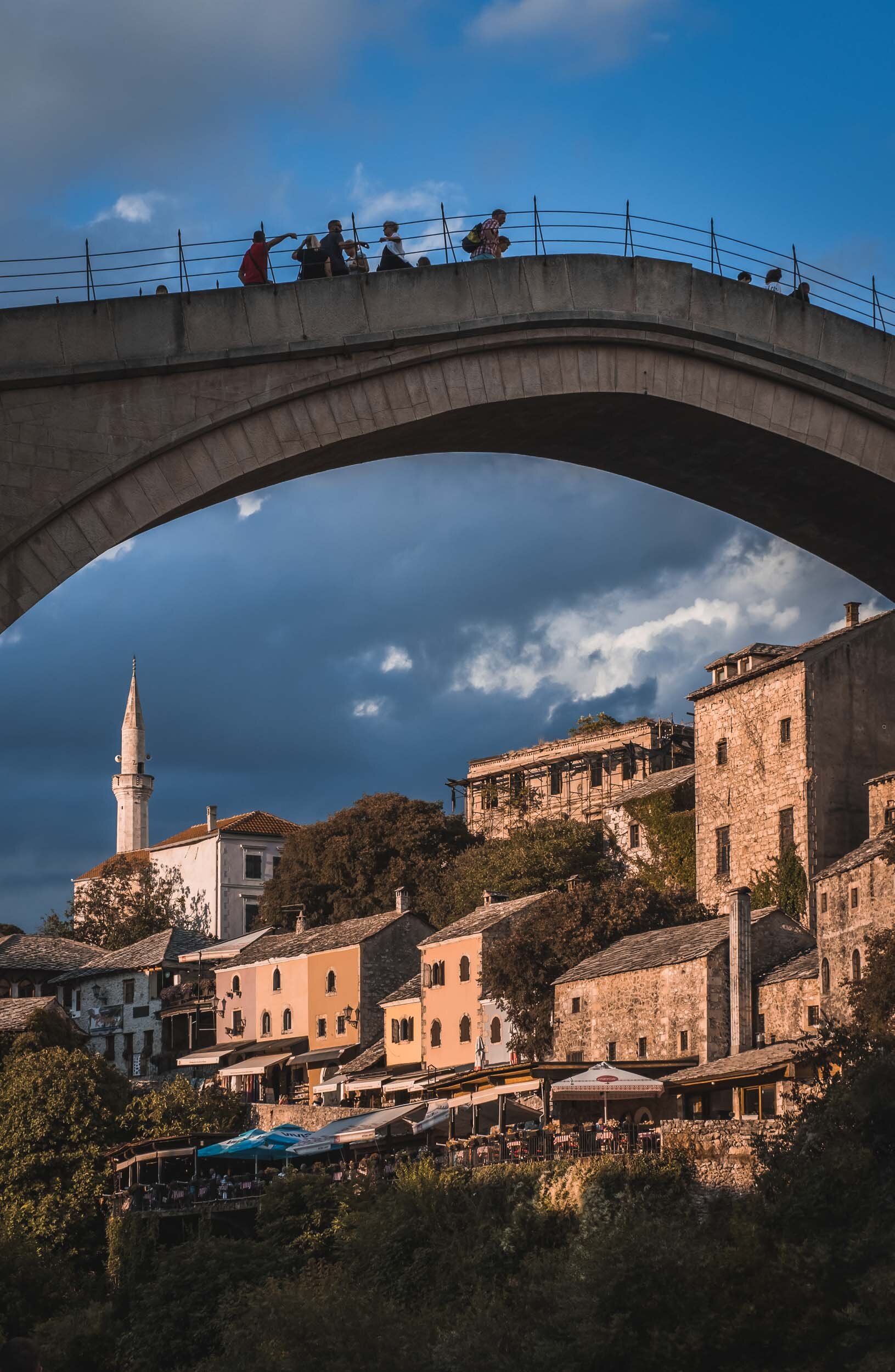
Persian Architecture
Beautiful spots all around.
Quiet
It was a public holiday and many shops were closed and streets less busy than usual.
Pedestrian Area
Shiraz features beautiful public places.
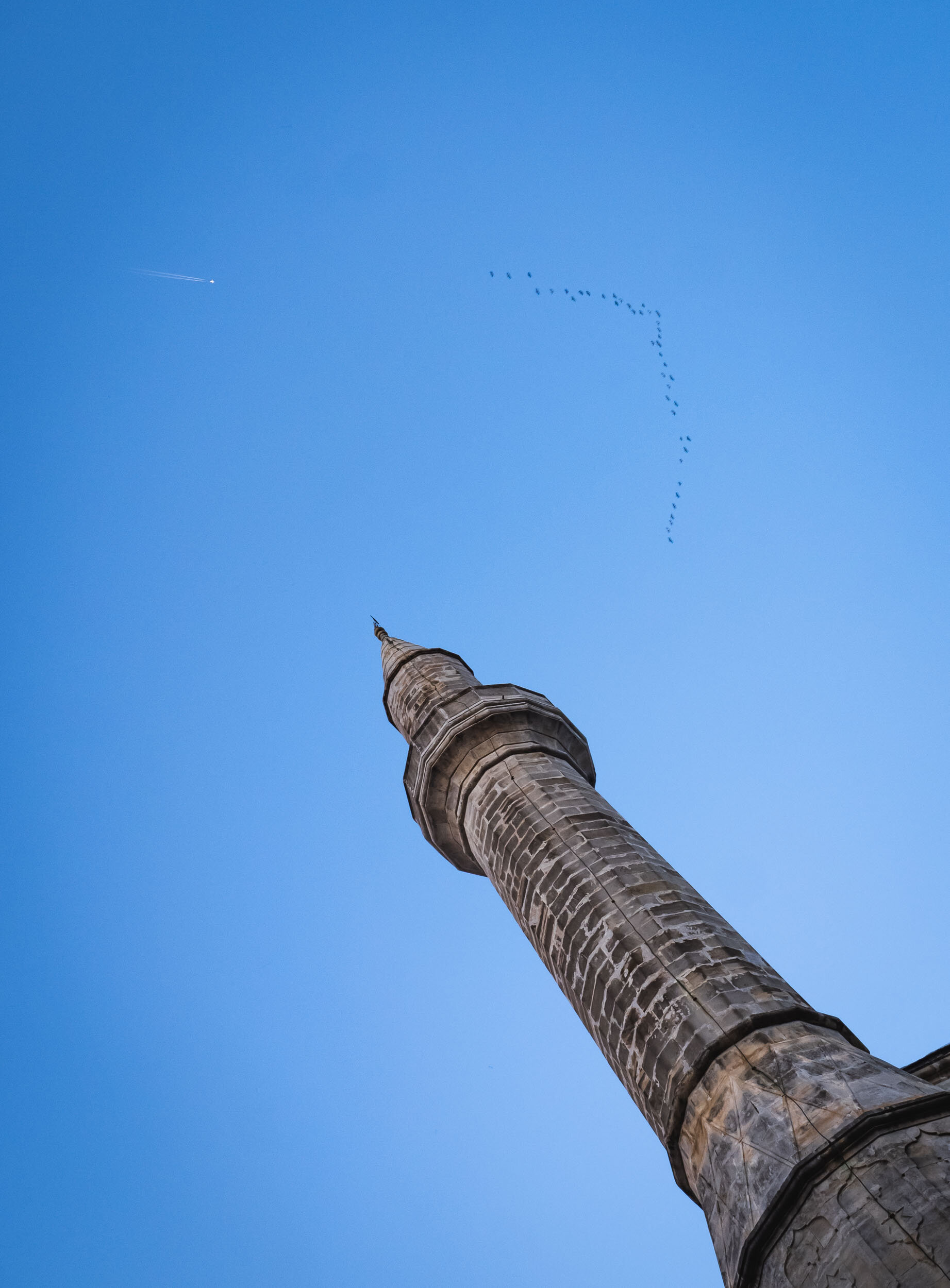
In the Sunshine
A couple enjoying the winter sun rays.
Naranjestan Qavam
A 19th century building with its lush gardens, now housing a museum with archaeological artifacts.
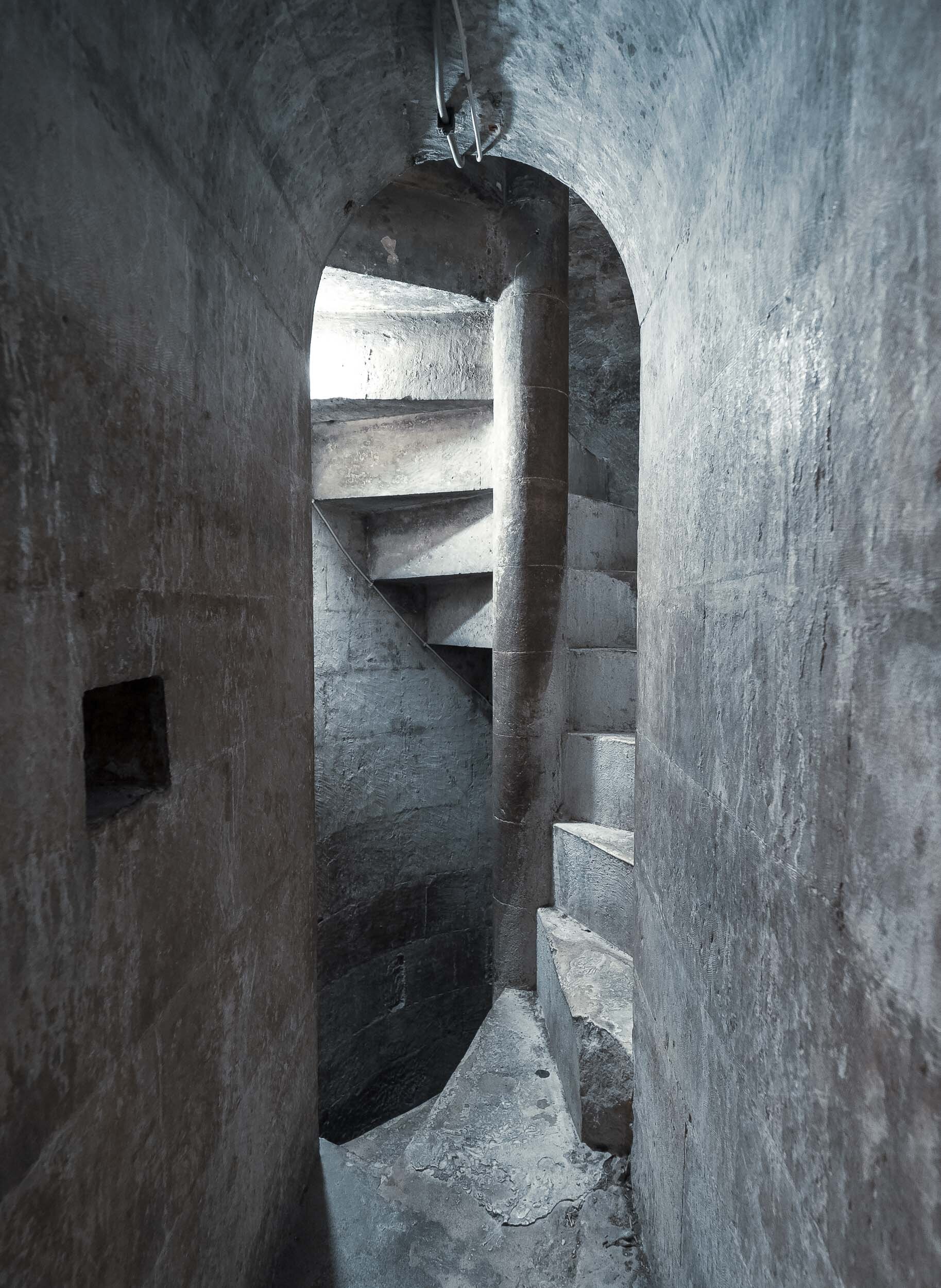
Influences
Many paint and tile works feature European features, such as this church like building.
Colour matching
A woman poses in front of the tile walls of the building.
Interiors
The crystal and mirror features of the porch.
Focal Point
One of the main features of the house.
Carpets
Persian carpets for sale.
Pots
For all your cooking needs.
Delicate Work
Carpet weaving is an essential part of Persian culture and Iranian art.
Smiles
Locals were friendly and welcoming.
Citadel of Kareem Khan
The interior courtyard of the citadel is now lined with orange trees.
Doors
The main building features several rooms connected by wooden doors.
Flexible
The citadel has been a government building, prison, living quarters and museum since it was built 250 years ago.
Glassworks
Some rooms featuring beautiful coloured glass windows.
Baths
Decorated walls lead through the various bathing areas.
Marble & Tiles
The main ḥammām of the citadel.
Leaning Tower
One of the four 14m towers connecting the citadel's walls isn't quite upright anymore.
Weighing as a Service
Warning: Iranian food is amazing.
Birds
Many shops keep birds, which are said to attract luck.
Gatekeeper
Who kindly let me into the building's courtyard.
Gallery House
A building with art and craft galleries in the ancient centre of Shiraz.
Black
Can never miss out on a cat shot.
Vakil Mosque
The entrance to another 18th century mosque, near a beautiful public square.
Laughter
The people of Shiraz are said to work to live, rather than the other way round.
Creative
The city is full of small art installations.
Tiles & Minarets
Another mosque near our hotel.
Alleys
A street in the historical centre.
Martyrdom of Fatima
Fatimah bin Muhammad was the youngest daughter of prophet Muhammad. Her death is commemorated during a public holiday in Iran, following Shia Islam.
Sir Bani Yas Island - Greening the Desert
Bani Yas Island has always been on my UAE To Do List. The island is about a 3,5 hour drive and 30min boat ride from Dubai and lies off the coast of Abu Dhabi in the western region. It’s the largest natural island in the UAE. Its rich history, incredible flora and fauna and the story of how it evolved into a major conservation project truly makes it a globally unique destination.
Peacock Central
One of the more common animals on the island are peacocks - in fact, a ranger told us they are considering to introduce some desert foxes to control the population, as culling is not allowed by law.
Bird Life
Some might say this one could be straight out of Angry Birds.
Gazelle
Probably the second most common animal on the island, after the Peacocks.
Turkey
I guess this is a female turkey, who didn't end up on a Christmas plate.
Desert Rose
With only a few days of rainfall per year, a huge irrigation system taking desalinated water from the shore was implemented over the last decades.
Peacock
Both green and blue types can be found.
Hyraxes
Believe it or not, these animals are closely related to Elephants.
Horns
Of an Arabian Oryx, if I recall correctly. Having seen them in the wild in the desert, these have become some of my favourite animals.
Show Off
Proud of its horns.
Ostrich
A male ostrich, with its pink legs signalling the mating season.
Battles
Two Barbary Sheep (if I am not wrong) measuring their strength.
Resting Deer
Several kind of deer can also be spotted on the island, although we heard they are Cheetah favourites...
Tribute
Workers are said to have planted the UAE's national tree, the Ghaf tree, on top of the mountain in honor of Sheikh Zayed bin Sultan Al Nahyan who started the initiative on the island in 1977.
Hungry
There are only 8500 of the Somali Giraffe in the wild. The island is home to about 30.
Encounters
They are free roaming in the reserve.
Nom Nom
The cheetah had just made a kill before we spotted them.
Rest time
So of course it was time to rest after the meal.
Leftovers
This was what was left of the Gazelle after they were done.
Morning Walk
A guided walking tour through the nature park is the best way to truly get a feeling for the animals.
Conservation
The island is home to many critically endangered or vulnerable species, such as Barbary sheep, and Arabian tahr.
Sunrise Views
Many thousands of animals have been released back into the wild to help local and international conservation efforts.
Giraffe Family
After the last young has been born, male and female giraffes have been seperated on the island to avoid further population growth, as giraffes eat a lot...
Wildlife
More than half the island is made up of the Arabian Wildlife Park, which is home to more than 10,000 free roaming animals.
Under Observation
As we came closer during the walking tour, we were monitored quite intensely...
Car Tracks?
Actually - these are tracks from gazelles walking towards one of the feeding stations, they like to keep in line...
Greenery
Over 3 million trees have been planted on the island over the last 40 years.
Full Moon
Staying during full moon meant nights were bright.
Desert Islands Hotel
The first hotel on the island opened in 2008 and used to be Sheikh Zayed's guest house.
Dinner Time
It's getting cold in the Winter out in the sea, but a fire on the beach and some arabic food makes it more than bearable.
Wadi
The rugged mountain area features some beautiful Wadis which fill with water during (rare) rainy times.
Cemetary
Many animals are said to come here for their last hours.
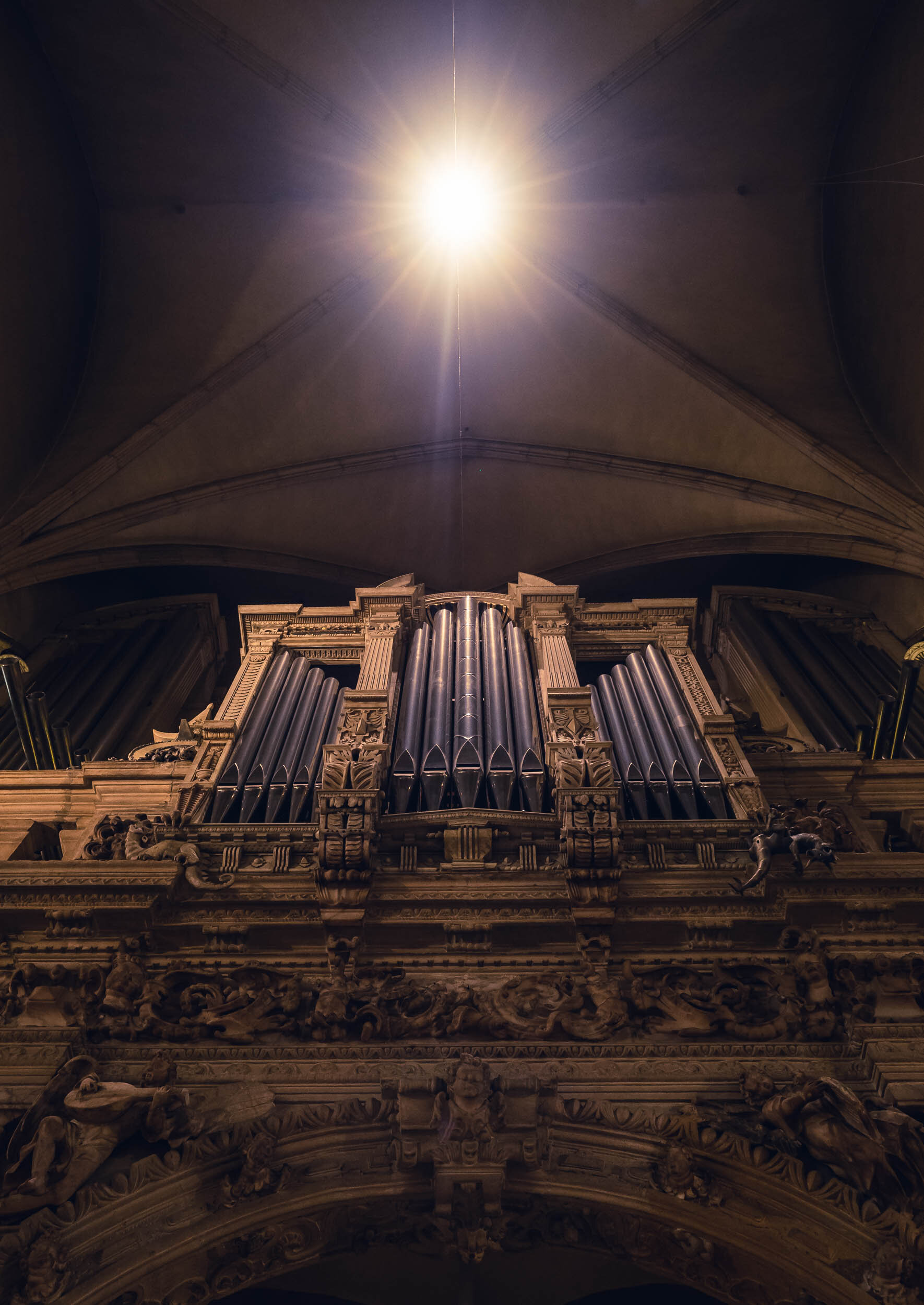
Oxidized Iron
Haematite I believe?
Colourful
Gypsum mixed with iron turn into brown and red colour shades across the rocks.
Barren
The central part of the island has not been planted much, and shows the barren yet beautiful mountainous landscapes.
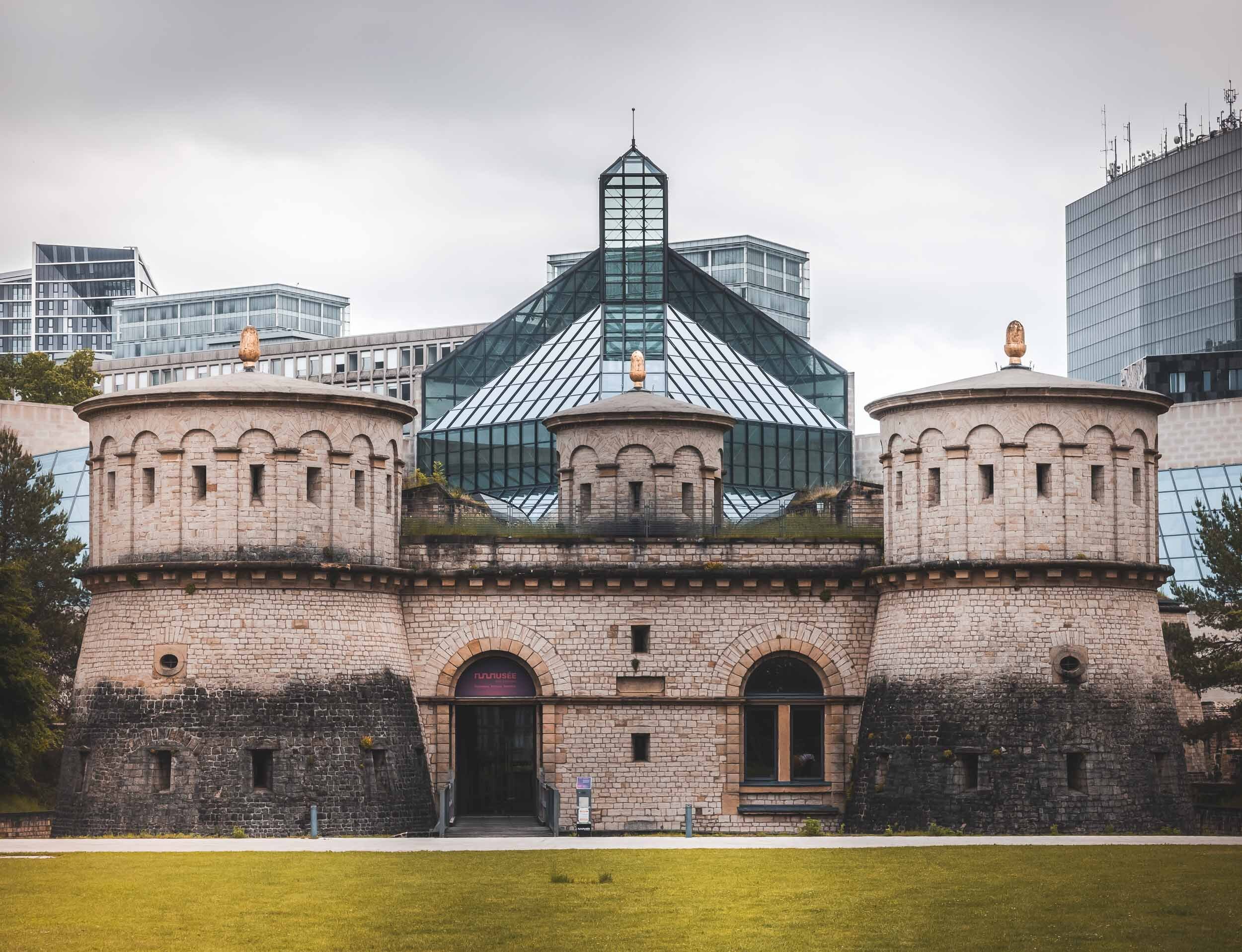
Nature & Culture
Aside from beautiful nature, the island is also home to the UAE's only discovered Christian monastery from around 600 AD - it is currently being renovated and can't be visited though.
The First Rays
Salt and sediments squeezed their way to the surface, creating the patterns in the rock.
Shadow Selfie
Sunrise always makes for the best light.
Green Dot.
Even in this landscape, some plants survive, although very few are naturally occuring.
Exploring
You can explore the island with a 4x4 or also by foot - although at 87sqm it was a lot bigger than I had thought.
Beach Life
The natural variety of the island is amazing.
Hotel Views
The island now has three hotels run by Anantara, with a total of less than 150 rooms. Al Yamm is located on the eastern shores in the mangrove area.
Fattie
Unsure of what kind.
Terrace Viewpoints
The Al Sahel hotel is located towards the centre of the island surrounded by greenery, with gazelles and other animals regularly passing by.
Seychelles - Island Beauty
After my first visit to the Seychelles in 2010, it was time go back for another trip to the Indian Ocean archipelago, this time staying on Praslin island and visiting La Digue, after having seen Mahe and the capital Victoria during my last visit.
Island Paradise
The Seychelles probably represent some of the most stereotypical island beauty features there are.
Island Transport
The best way to get around! We took the trip from Mahe's airport straight to the hotel.
Praslin Island
We stayed on Praslin, the second biggest island of the Seychelles. Its most famous beach - Anse Lazio - in the foreground, seemingly voted one of the Top 5 beaches in the world.
The Raffles
The hotel is located on the north eastern side of Praslin, with its close to 100 villas nestled along the hillside.
Room Views
The Raffles has some gorgeous ocean view villas.
Night Views
The clear skies and lack of light pollution make for good stargazing, but no Milky Way this time of the year.
Tastes Good
Someone must have spilled something here...
Kiln
An old furnace from the early 1900s, now serving as Tortoise home at Raffles hotel.
Giant Tortoise
The Seychelles giant tortoise is clost to extinct in the wild; there is only one large population of more than 100000 in the Aldabra Atoll.
Climbing
Giant tortoises are not made for climbing obstacles, but they can find their way around.
Orientation Issues
Can't say I observed any effort by this misguided tortoise's colleagues to correct the situation.
Warning
The roads aren't in the best condition, but at least there are attempts to make drivers aware.
Out of Order
Temporarily or permanently?
Green Roads
The Seychelles are full of greenery - and not so full of proper roads like this one.
Private
Not sure what the Teddy on top of this sign is meant to represent.
Souvenirs
Didn't manage to visit this souvenir shop.
Anse Lazio
Referred to as one of the Top 5 beaches in the world (don't ask me for sources), I took the 30min walk from the hotel. Worth it? Yes. Top 5? Maybe...
Sunset
The beach doesn't get to see the actual sunset as the sun disappears behind the peninsula to the west, but the view is nice enough.
Fame
Owing to its Top 5 fame, there are always a few boats in the bay and a few dozen people on Anze Lazio.
Inlet
Like many beaches on the island, some water inlets run into the forests from the beach - tides and waves generate some beautiful colours in the process.
Sunset Colors
The typical granite stones in the water make for beautiful scenery on Anse Lazio.
Moon
I was lucky to see the moon rising as the sun was setting, just peaking through the red and purple clouds.
Bat Attack
As sunset approaches, you start to see the large Seychelles fruit bat in the sky - at least half a metre in width.
MS Europa
This cruise ship anchored between Praslin and Curieuse islands for a day.
Islands and Islands
The Seychelles consist of around 115 islands, 45 of which are the typical granite islands the country is known for.
Le Digue Island
We visited Le Digue, which is the third largest of the country's islands with a population of just over 3000. This is the local pizza and burger joint.
Beach Bar
The famous beaches are frequented by quite a number of tourists, and the locals surely have found ways to monetize their presence.
Beach Bliss
Postcard material around every corner.
More Beach Bliss
Did I already meniton the postcard material?
Greenery
The hot and humid climate classifies the island nation as tropical rain forest.
Granite
The country is famous for its granite rocks sprinkled around the beaches, but less than half of its islands actually feature them, the others are coral islands.
Old Cemetary
The old cemetary is an eerie location with the dying tree in the back. Watch for the new (and more colourful) version a few photos down...
Origins
The group of Granitic Seychelles are fragments of the ancient supercontinent Gondwana.
Rocky Religion
90% of the population are Christian, the majority of which roman-catholic.
The Elusive Flycatcher
Sadly, less than 300 are still in existence in the wild, and the island of Le Digue houses most of them, except a few pairs which were moved to another island to preserve the species. It took half an hour of wandering in the nature reserve to spot this male.
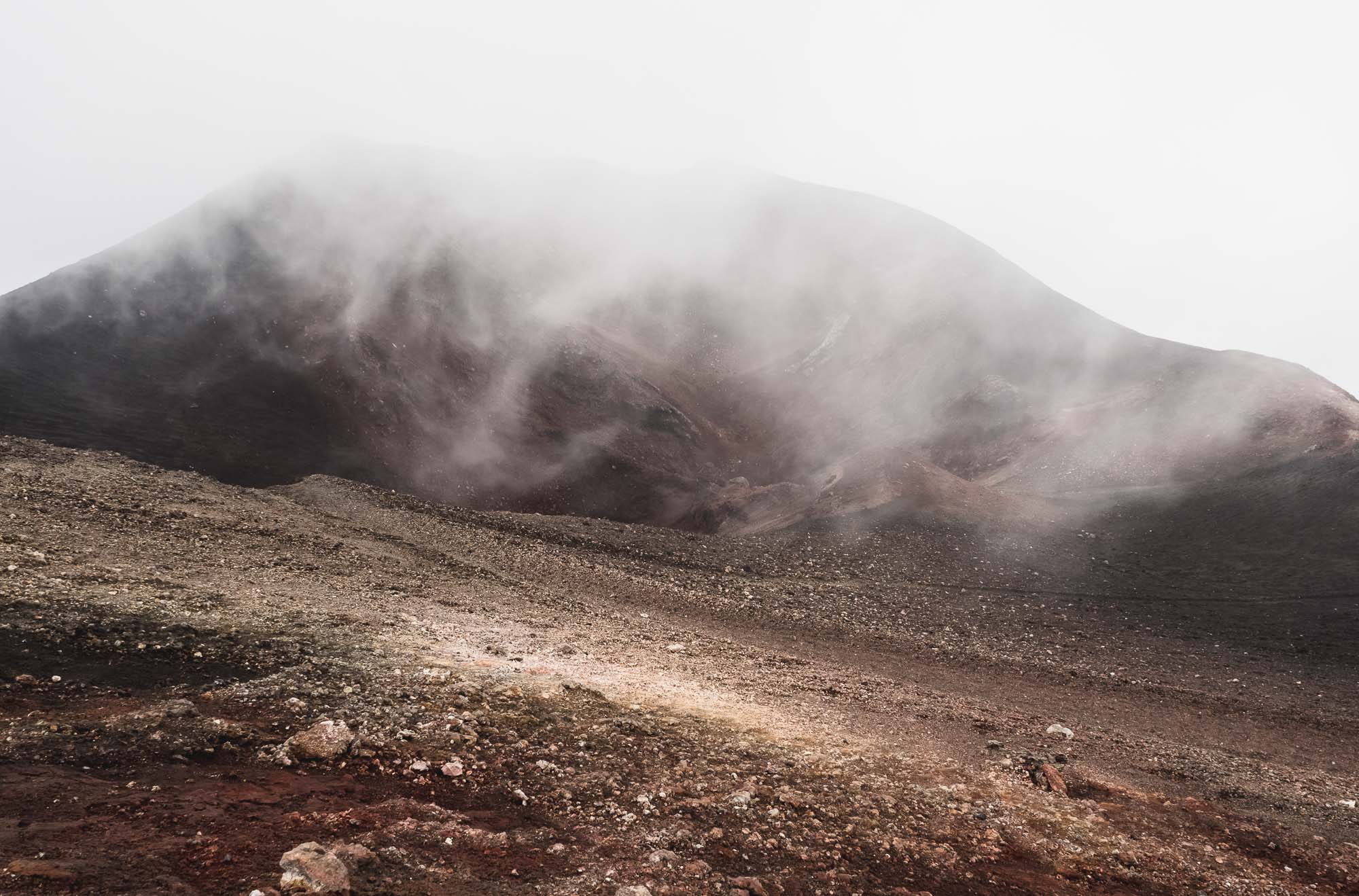
Houses
The island features some beautiful houses of different styles.
Phone Booth
Showing off the lack of football taste that is or was once present on the island...
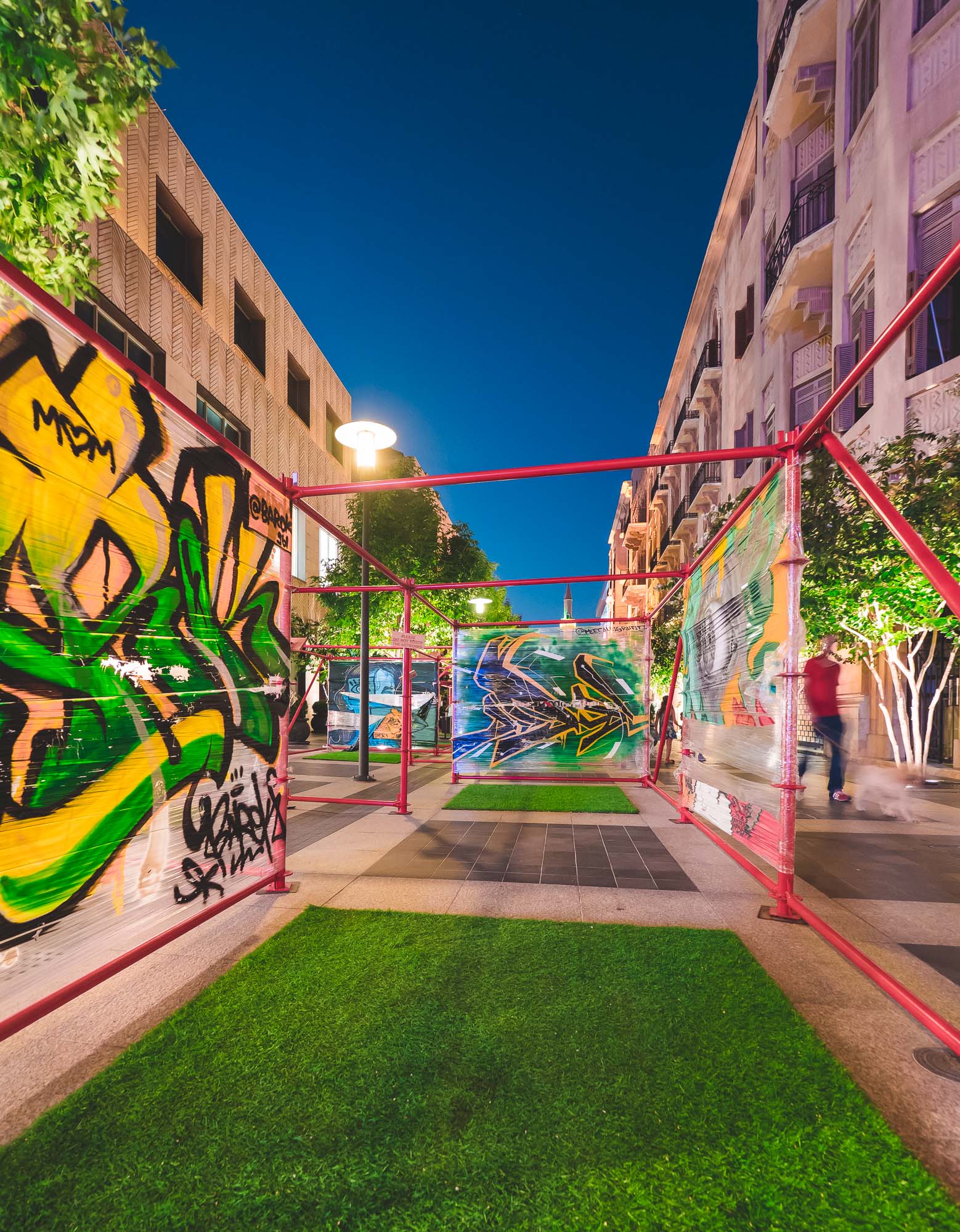
New Cemetary
More colorful for sure, although its worth mentioning these flowers aren't real.
Houses
More of the local architecture.
Island Lifestyle
Stress didn't seem too common.
Fishing Circle
Marine life is abundant and fishing is the largest export of the country.
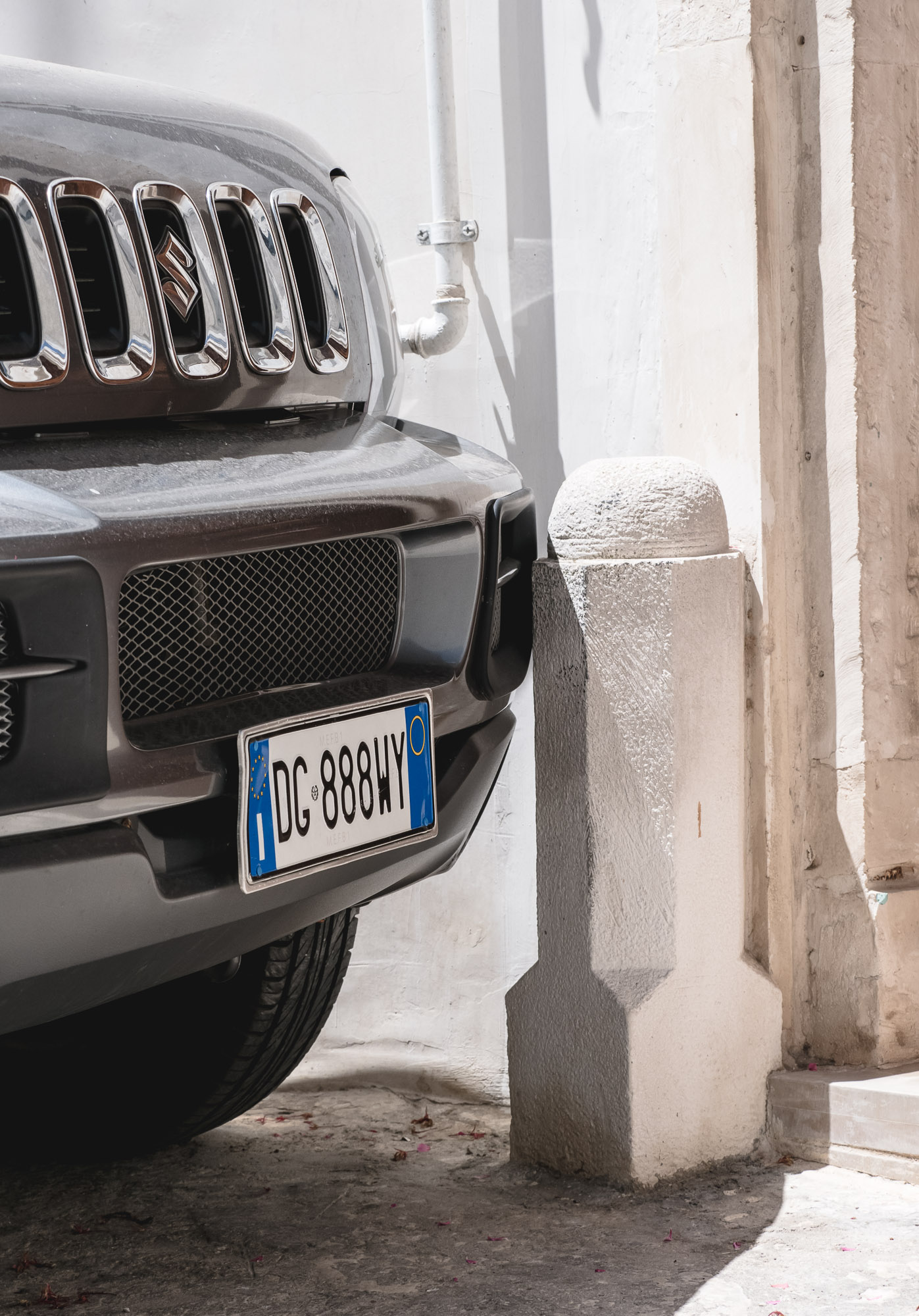
Transport
Given that I have just completed my up to 12m skipper license, I thought it would be a good idea to bring the new boat along.
Yacht
Just kidding, this is mine.
Baby Shark
Small reef sharks live around the rocks until they grow into adults.
Ray
And occasionally, smaller rays also pass by.
Leaping Blenny
Funny little creatures that live on the rocks perching out from the water, walking and jumping with help of their fins if danger approaches. They are able to breath outside of water.
Leaping Blenny - Large version
It's bigger cousin, captured under water with an iPhone XS (as are the few other underwater photographs).
Coral
Some snorkeling around the beach was enough to spot a few beautiful corals.
Coral World
A variety of stony coral colonies.
Marine Flora
I think this is some type of Gorgonian or Sea Fan.
Smile
The most common fish roaming the shallow waters on the beach.
Unknown Fish
Anyone knows the species?
A point of view.
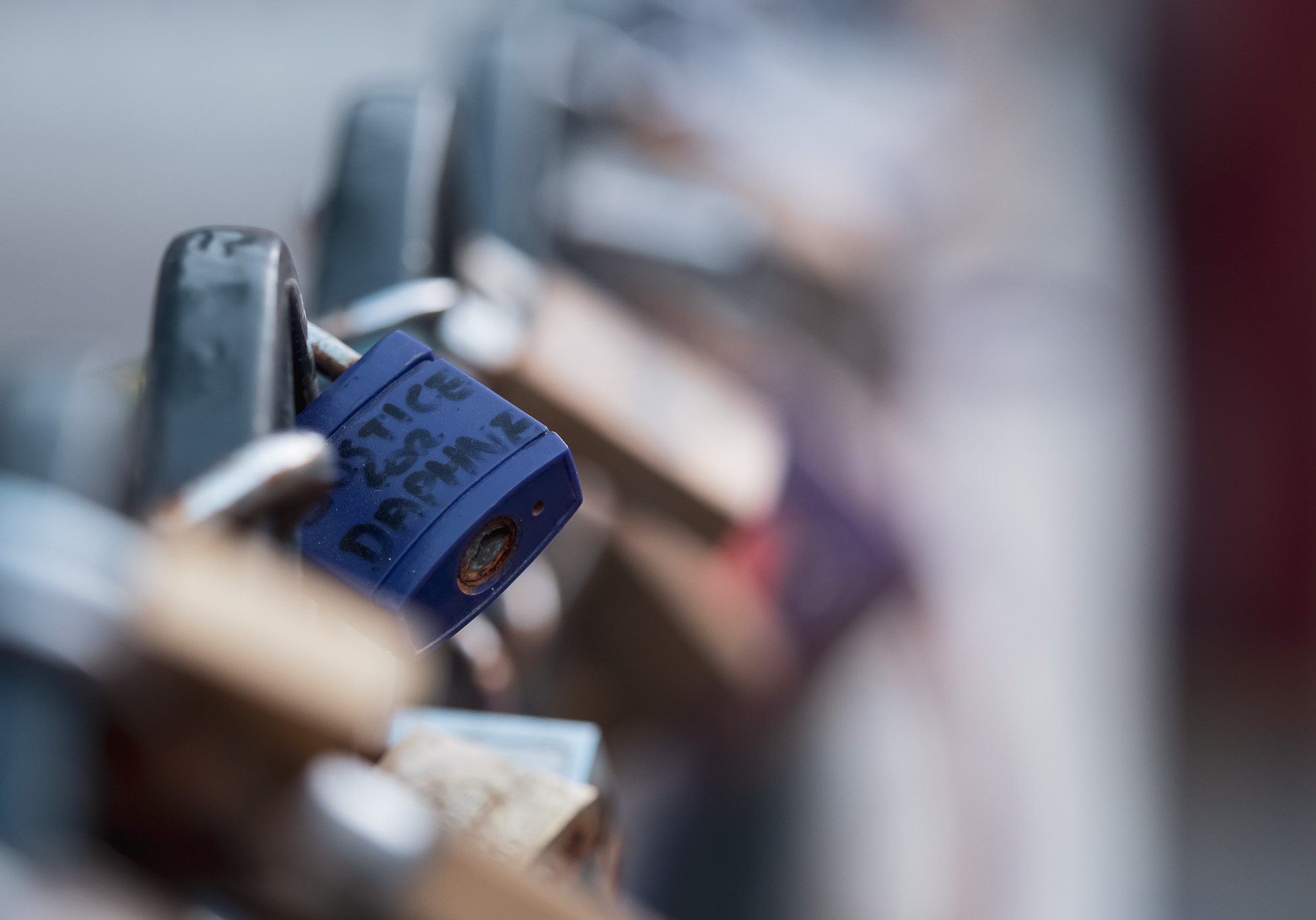
A crystal ball can't always predict the future, but it can give you a different perspective of the present.
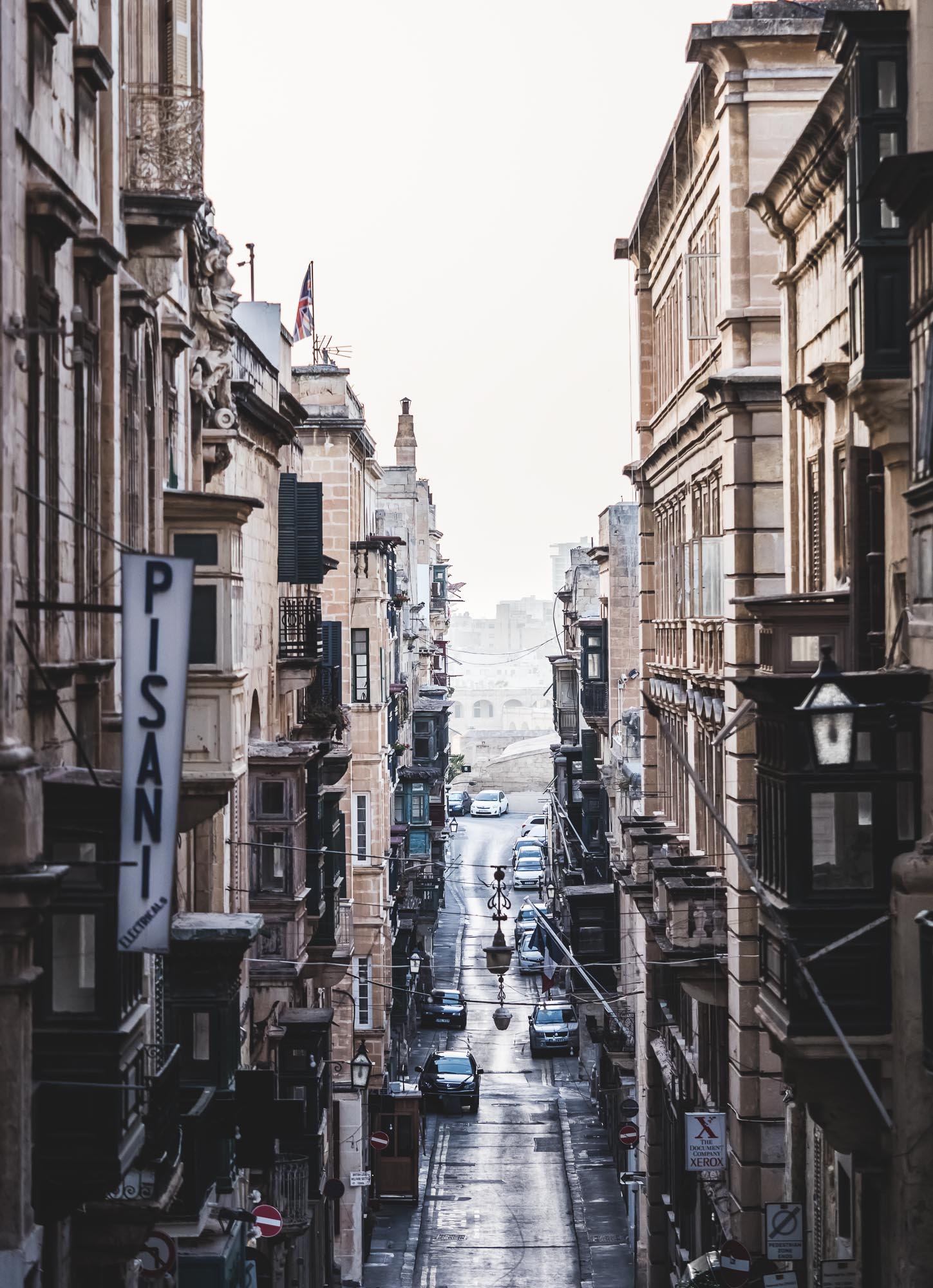
Toys
Glass balls are an interesting tool for photography... if you don't overuse them.
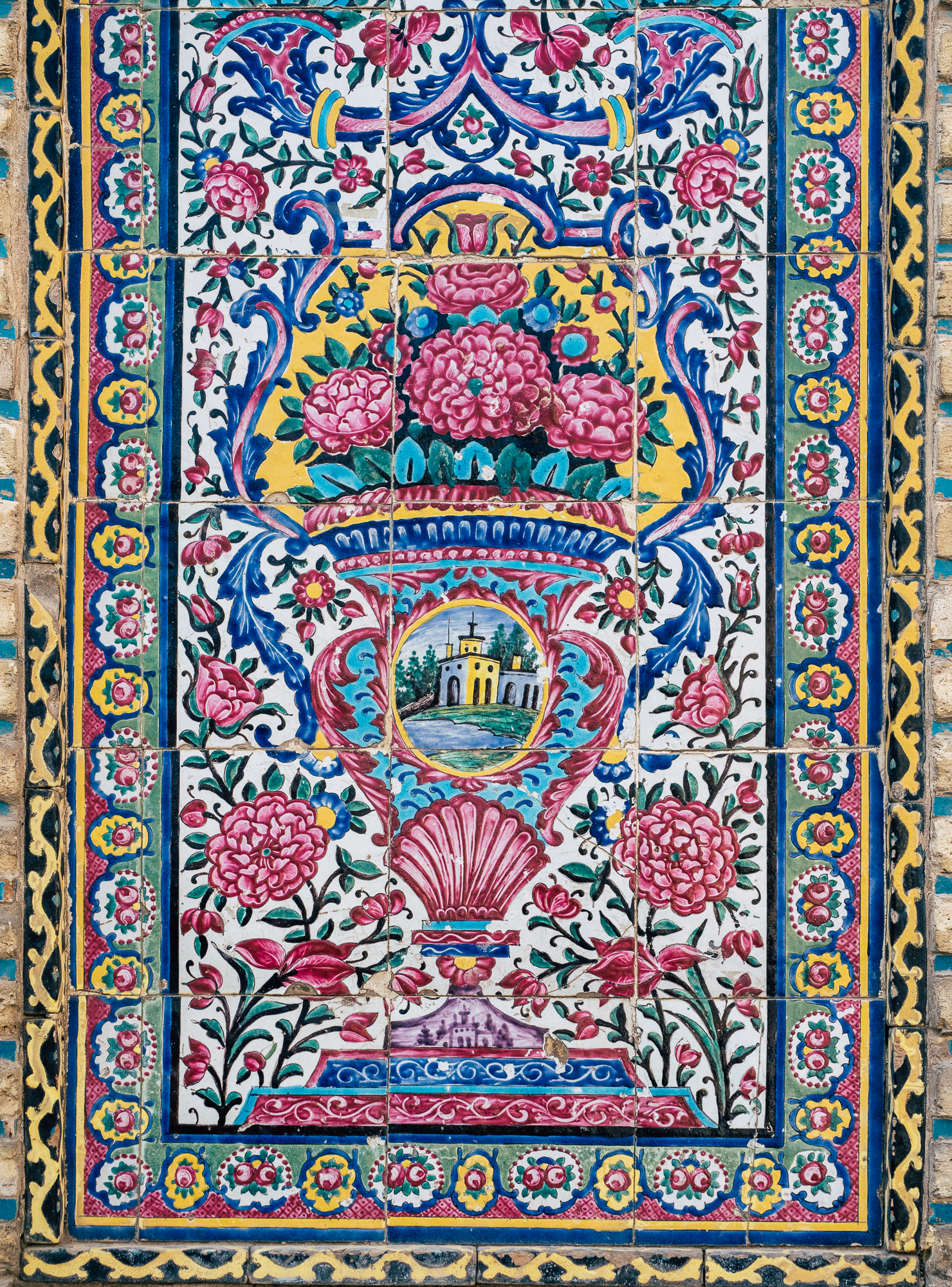
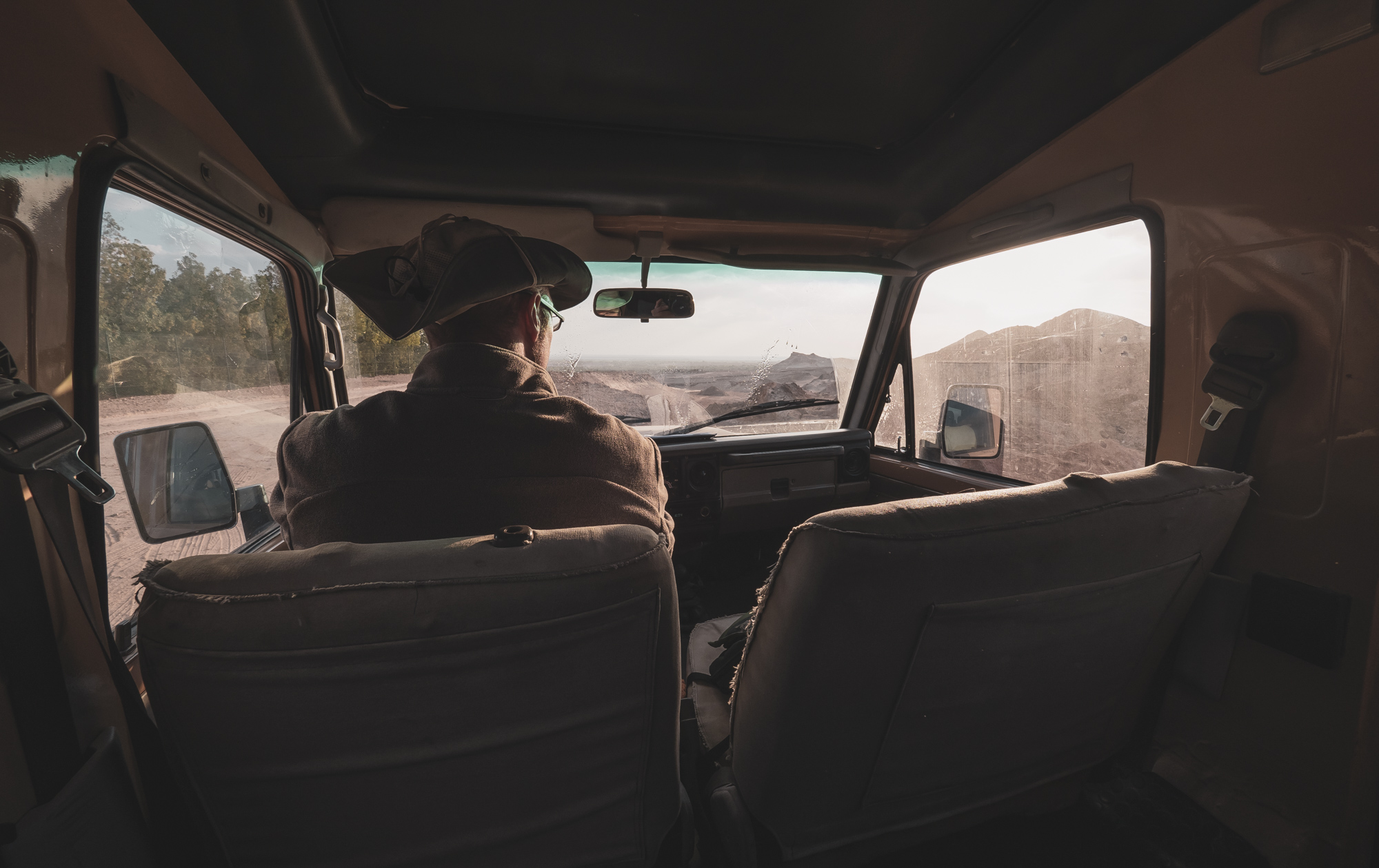
Physics
One point to note - be very careful when using a crystal ball in direct strong sunlight, the refraction can immeditely burn whatever you put the ball on, including your hand...
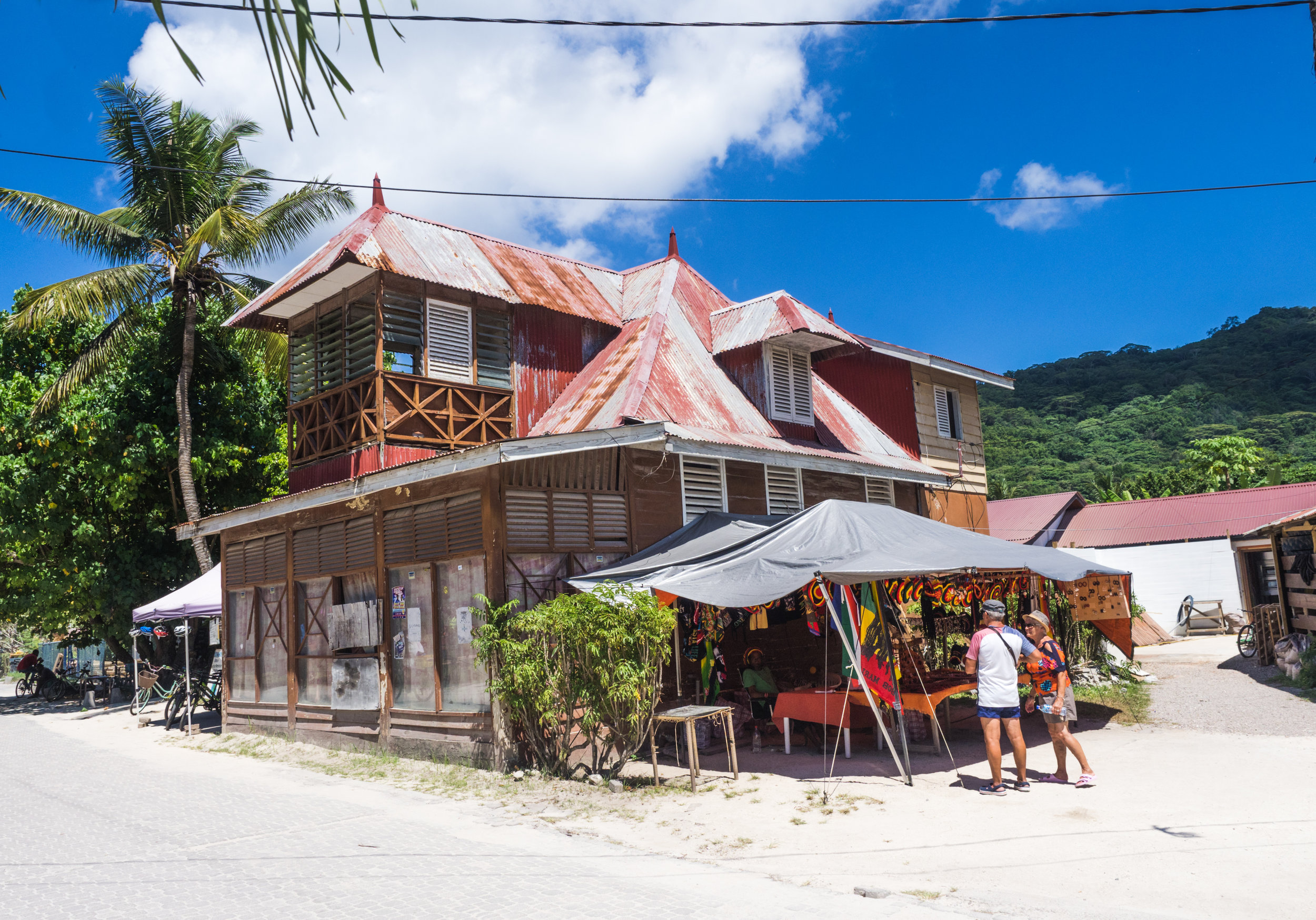
Home in a Hole
A crab village.
Snails
An early morning rain triggered this guy to come out from hiding.
Sunrise
Worth getting up for at 5am.
The Red Fody
A common bird in the Indian Ocean, this one took a bath in the pool.
Feline Friends
Cat photo can't be missing. This mum was hanging out in the hotel grounds with her two kitten.