Nepal Part 1 - Culture of Kathmandu Valley
After my original travel plans had been disrupted by the war in the Middle East, I decided to head to Bhutan, a place that has been on my list for a while, and what better extension than its near neighbor (they do not share a border in fact): Nepal!
Even during my (very short notice) planning, I realised that there would be a lot more to explore here than the country’s famous mountain landscapes, and what was meant to be just a few days slowly turned into a full three weeks.
As a result, this blog would turn out quite extensive, and so I decided to split it into two entries. Even so, I had to cull my photos quite heavily and feel l barely did each place justice, let alone capture everything this country has to offer.
A shoutout goes to Ganshyam, the owner of Tiger Encounter, who organized the whole trip for me - maybe the best operator I worked with, amazing guides, super flexible, always ensuring everything is going to plan. For any type of Nepal trip, please consider them (not sponsored).
Iconic Approach
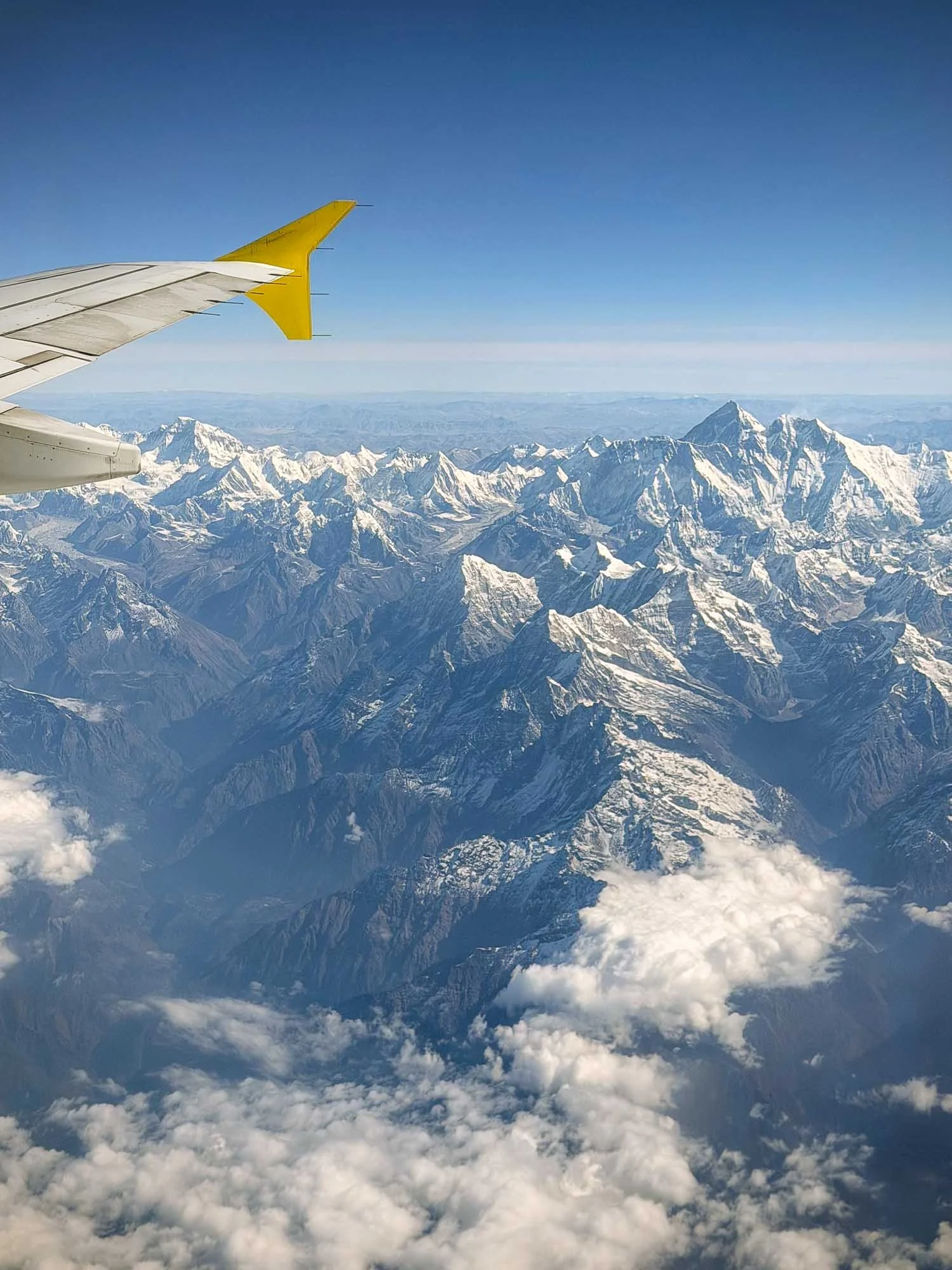
If you arrive in Kathmandu, the country’s capital, from the east, pick a window seat on the right side, and Mount Everest - the world’s tallest mountain - might make an appearance if the weather is clear. Mornings have better chances, and luckily my arrival flight from Bhutan was an early departure.
Everest’s 8,848m peak is (unsurprisingly) the tallest on the right side, with Lhotse and Nuptse just beside.
Kathmandu Valley
This first blog covers a part of Nepal I had originally mainly considered for rest days & stopover while visiting other areas of the country: The Kathmandu Valley. In hindsight, I can’t say those days turned out particularly restful (surprise!), which was completely my own doing - I had underestimated how interesting this area would be. Aside from around 5 million people, the Kathmandu Valley (which extends beyond the actual city) is also home to seven sites that collectively make up a UNESCO World Heritage entry. Many of them are covered here, while the second blog will explore the diversity of the rest of the country.
Swayambhu Stupa
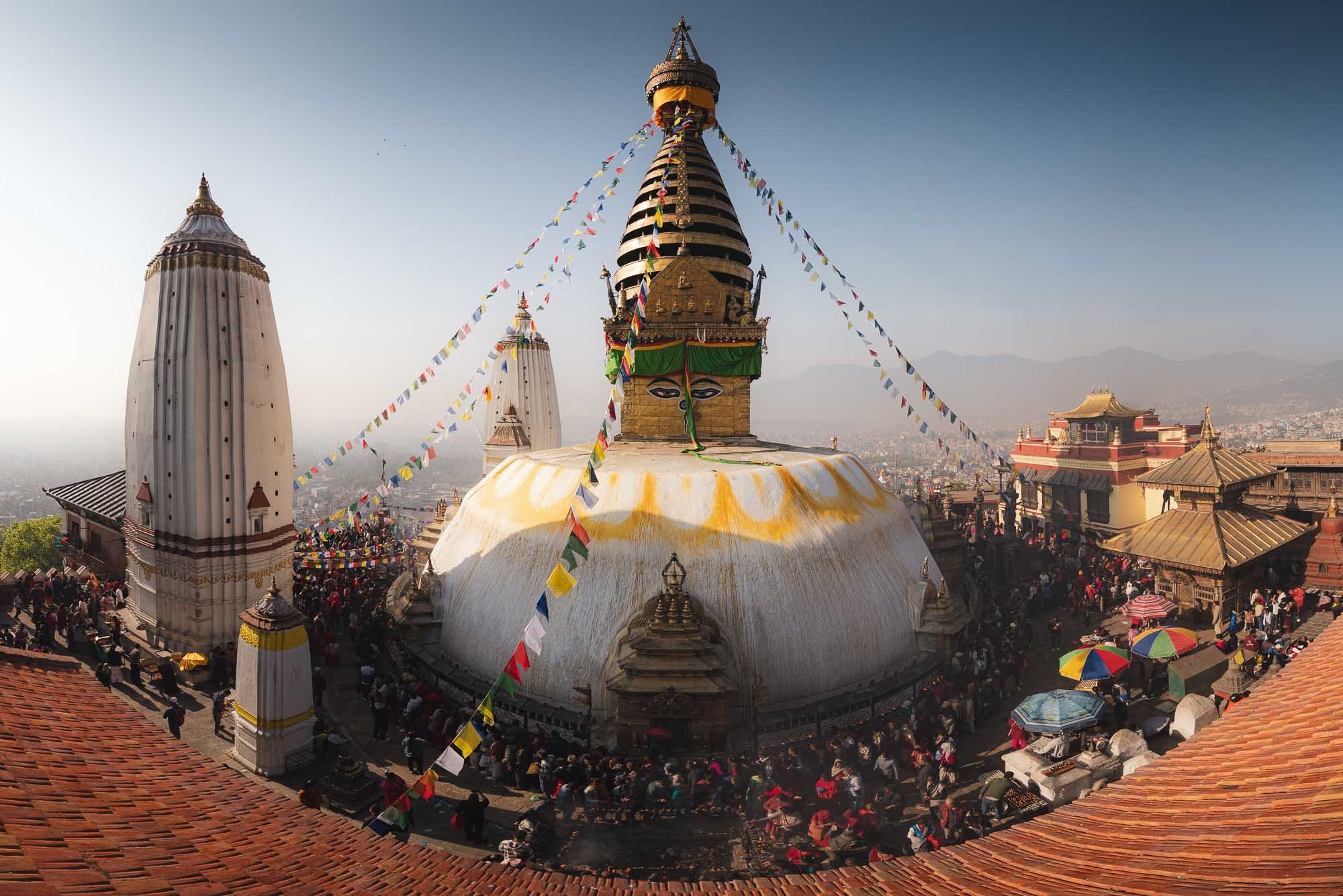
After my arrival, one of the first early morning destinations was this large beautiful stupa situated on a hill overlooking the city, and reachable by climbing a few hundred stairs.
By chance, our visit coincided with the full moon Uposatha, one of Buddhism’s most sacred monthly observance days, making it a busy affair of pilgrims performing kora, the clockwise walk around the stupa while spinning prayer wheels, chanting mantras, and making their offerings.
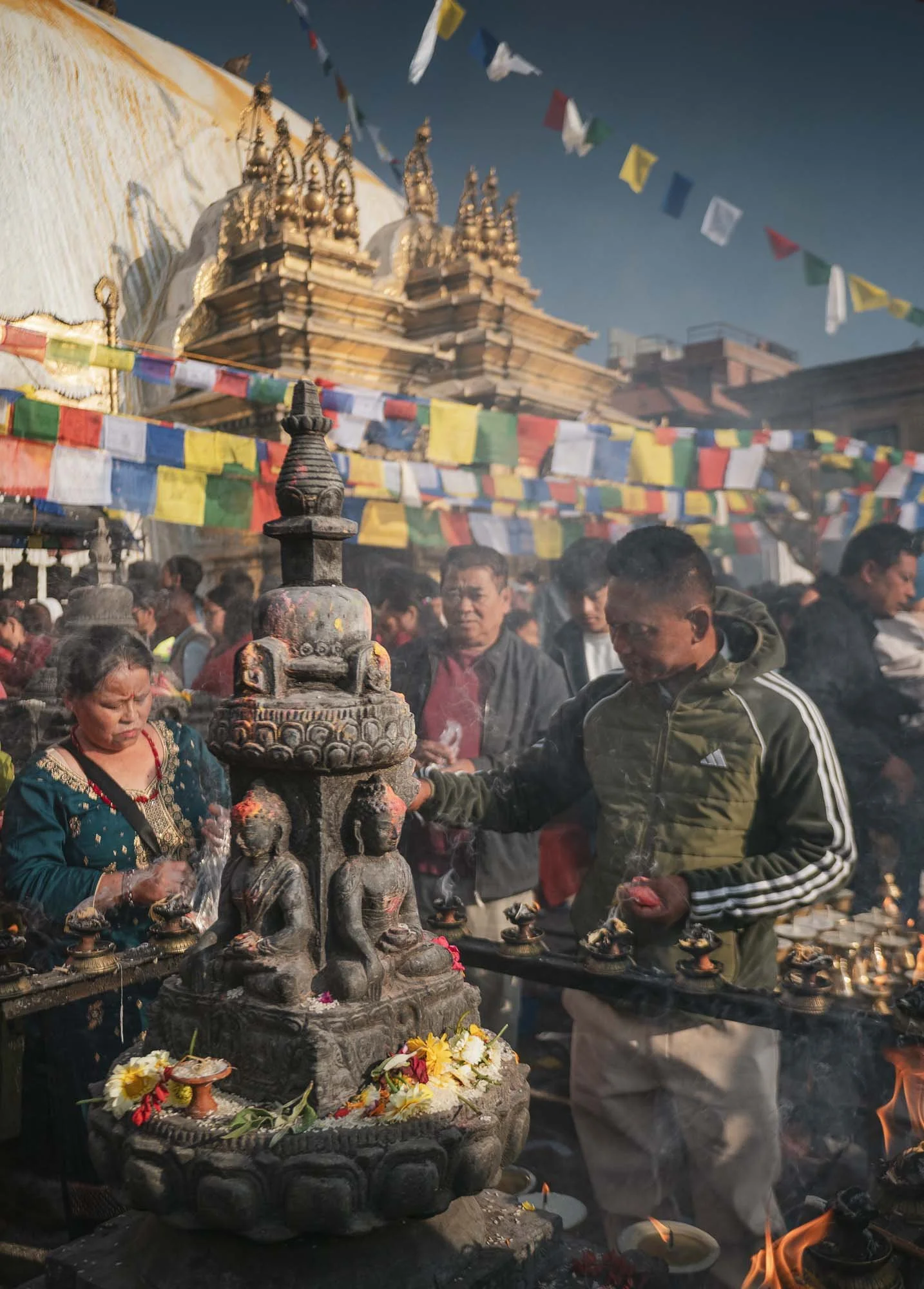
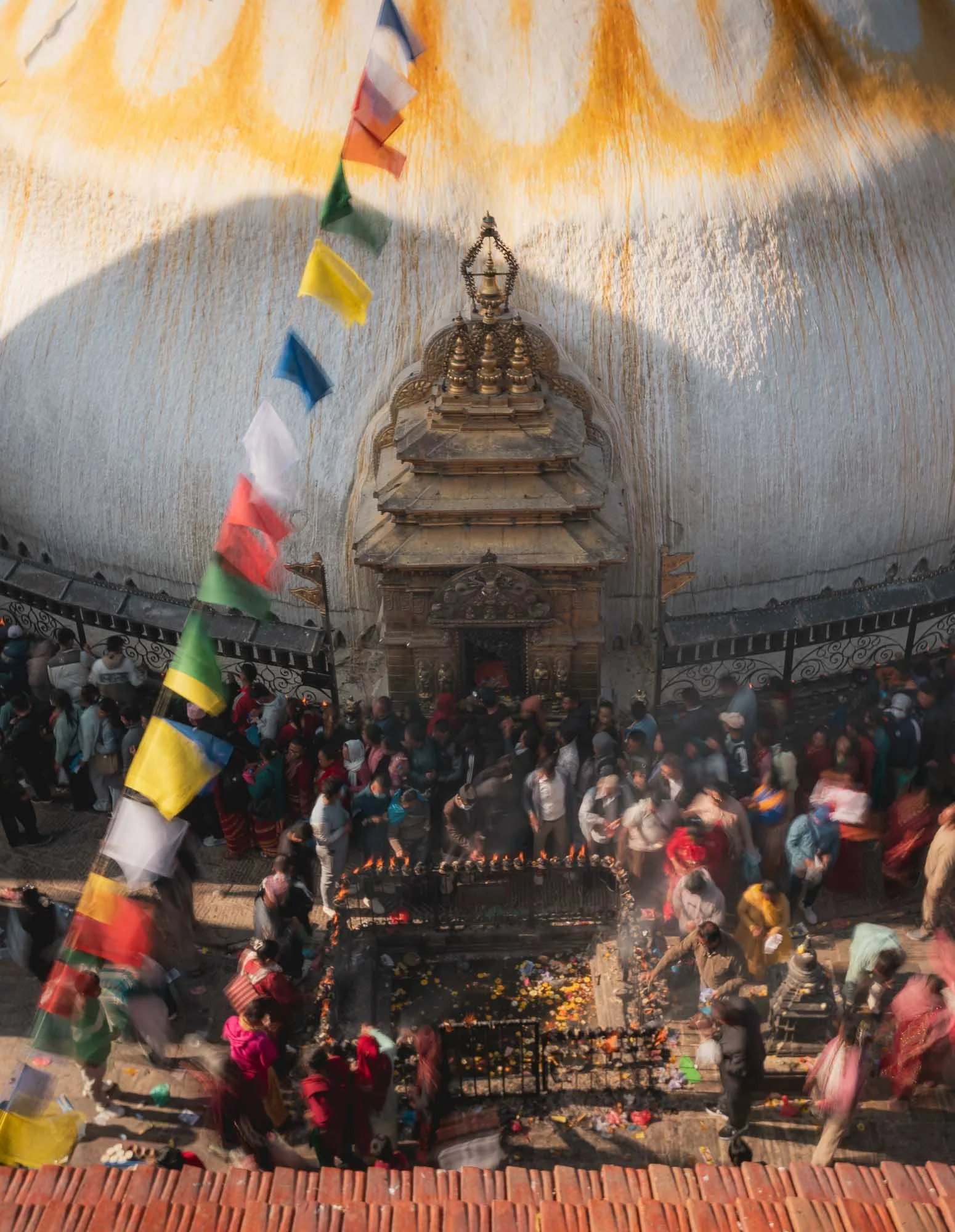
For reasons that became obvious quickly, the stupa is nicknamed “monkey temple”, but it is an ancient pilgrimage place considered the home of the primordial Buddha.
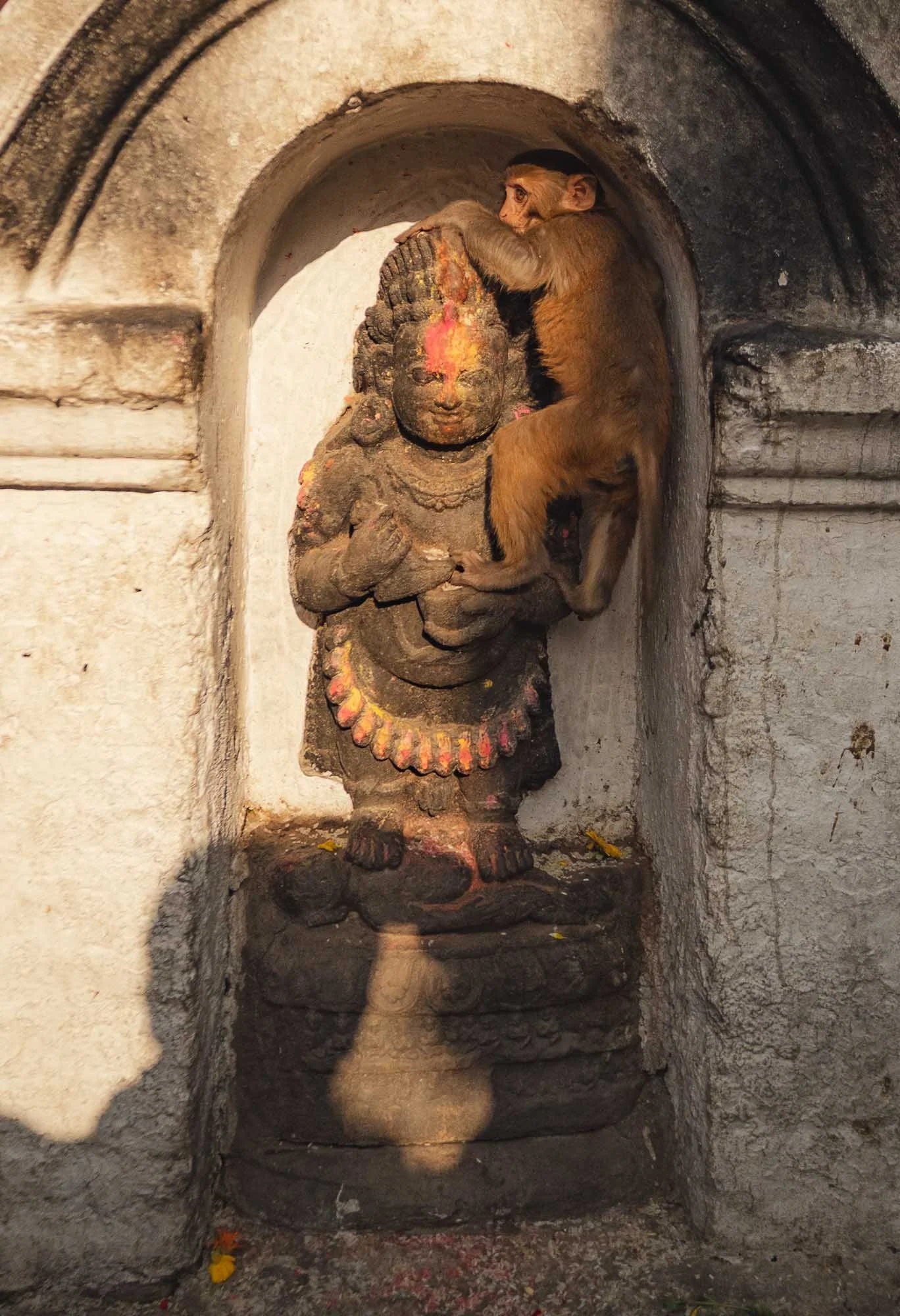
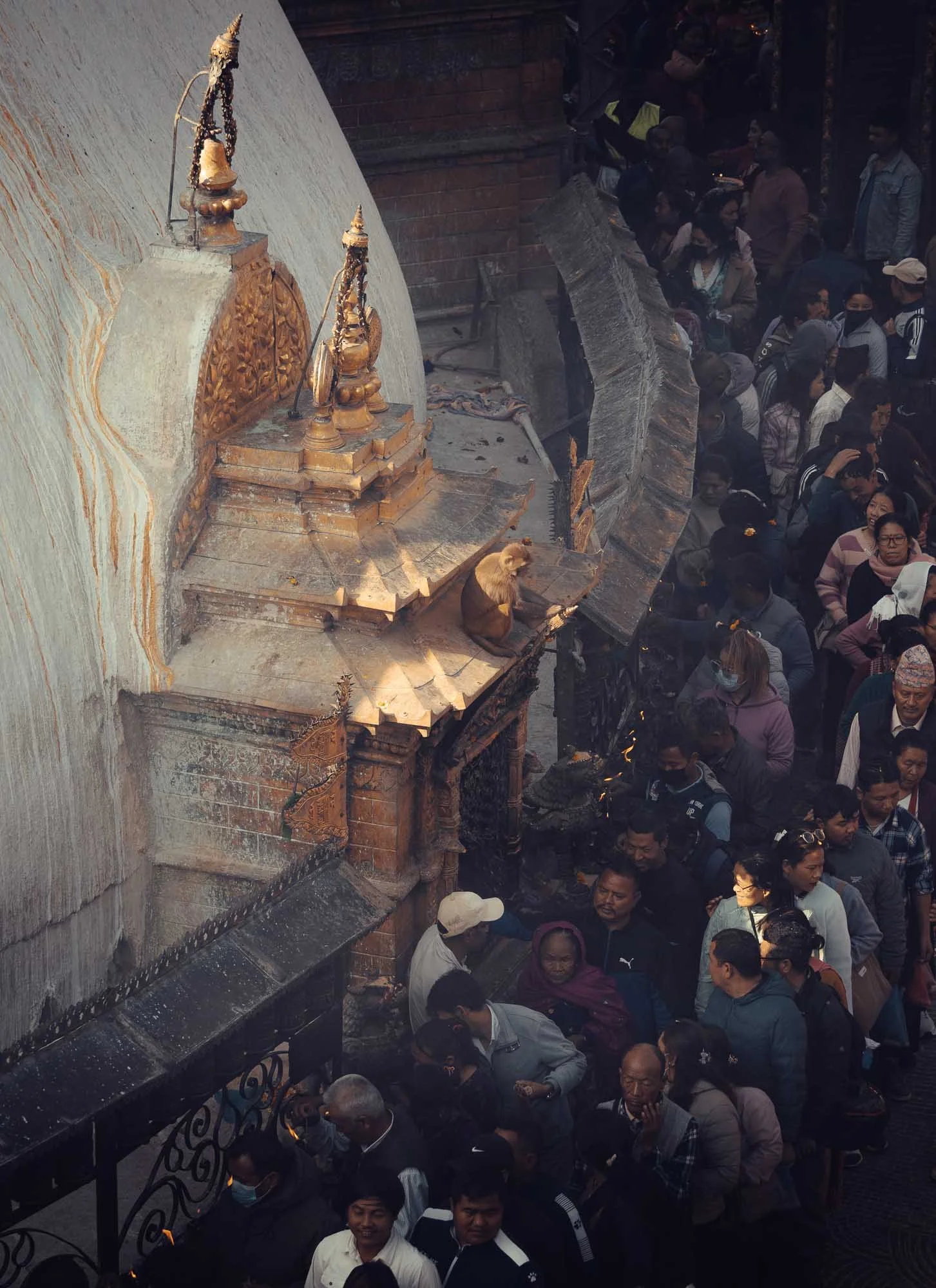
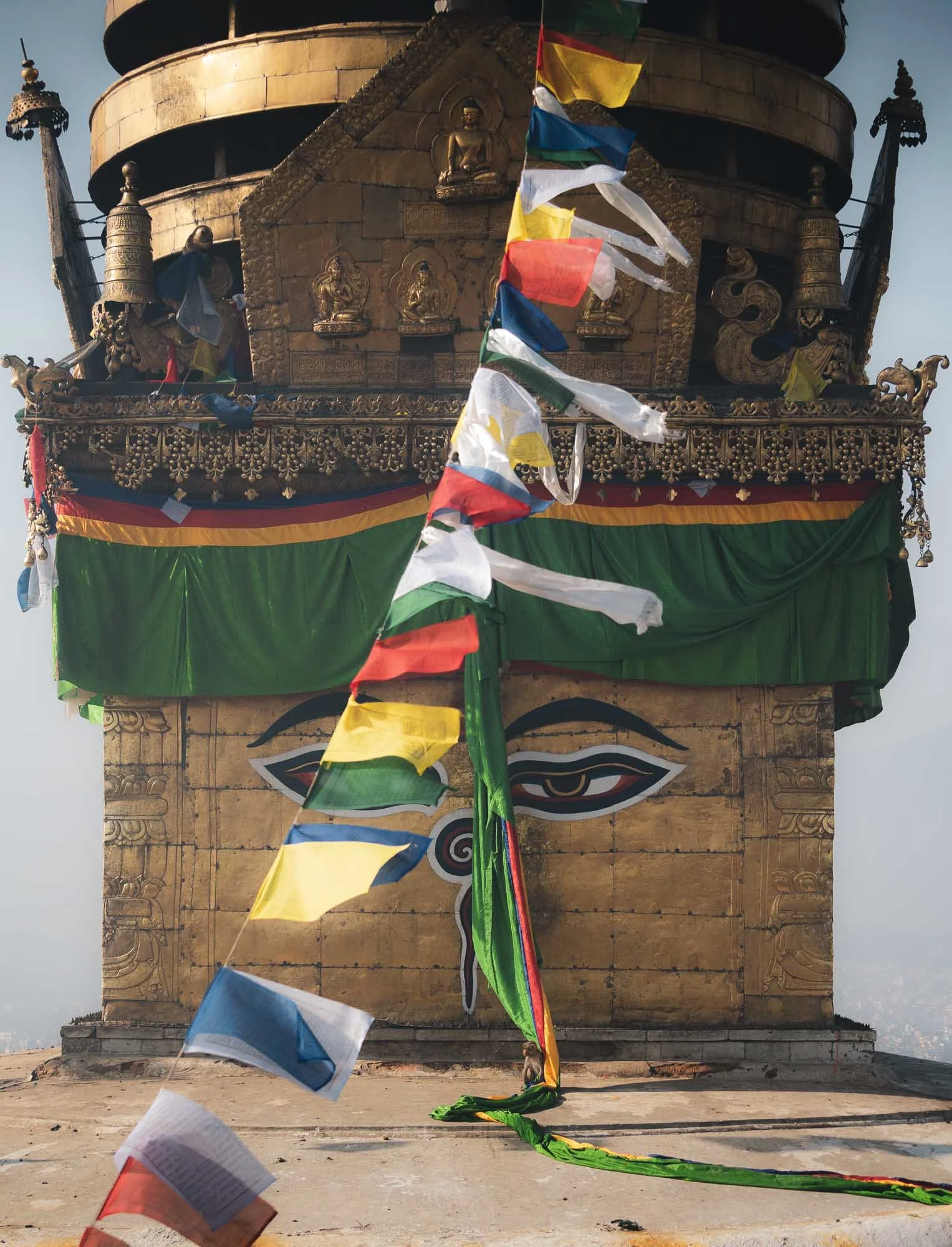
The first recorded stupa on the site was built around the 5th century, but its history seems to go back even further. It was rebuilt several times and underwent major renovation in 2010, where the huge (spot the monkey for scale!) shrine was re-gilded using 20 kg of gold plating.
Unlike much of the surrounding buildings, it survived the devastating 2015 earthquake that heavily affected the whole area largely unscathed.
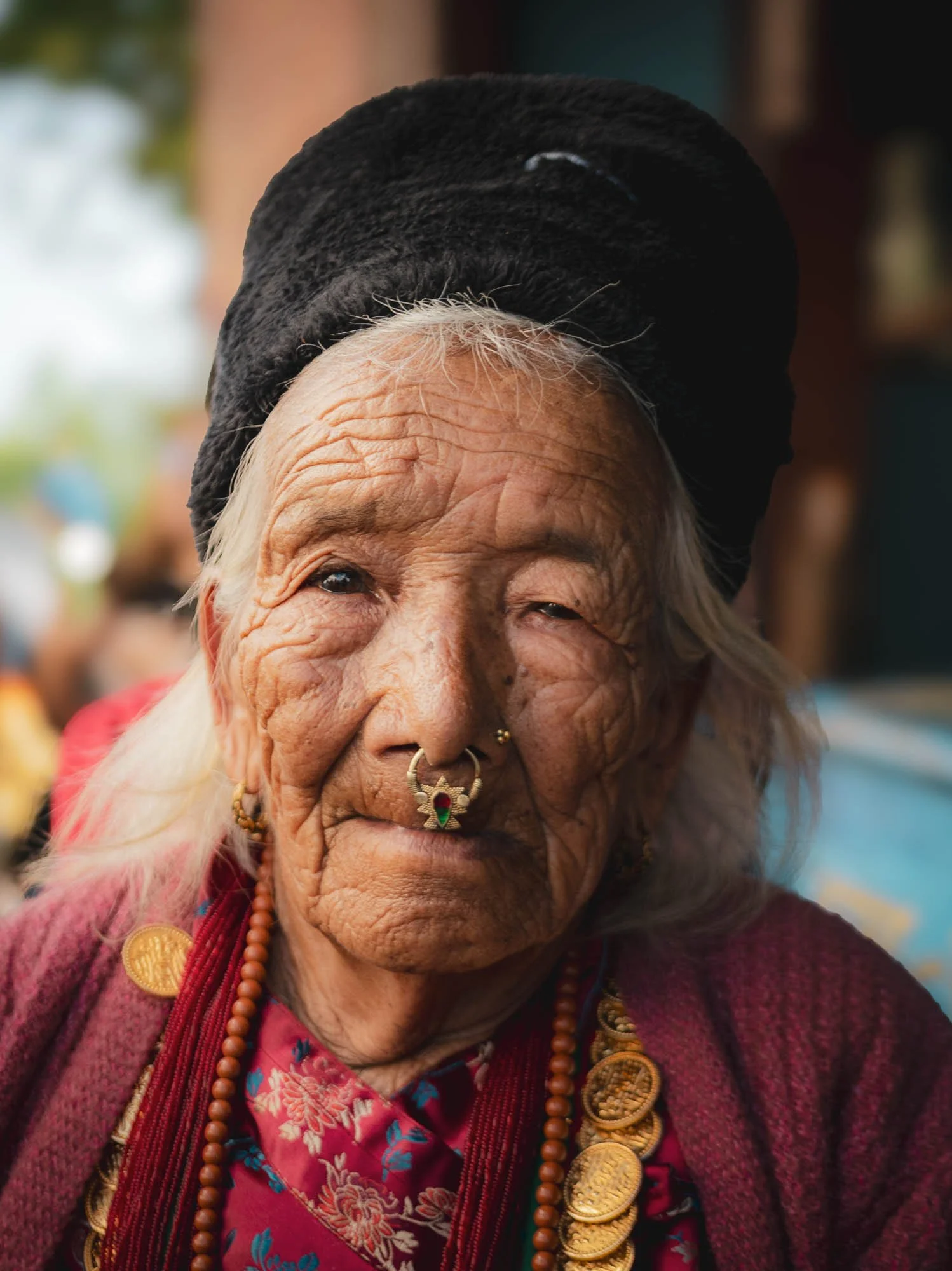
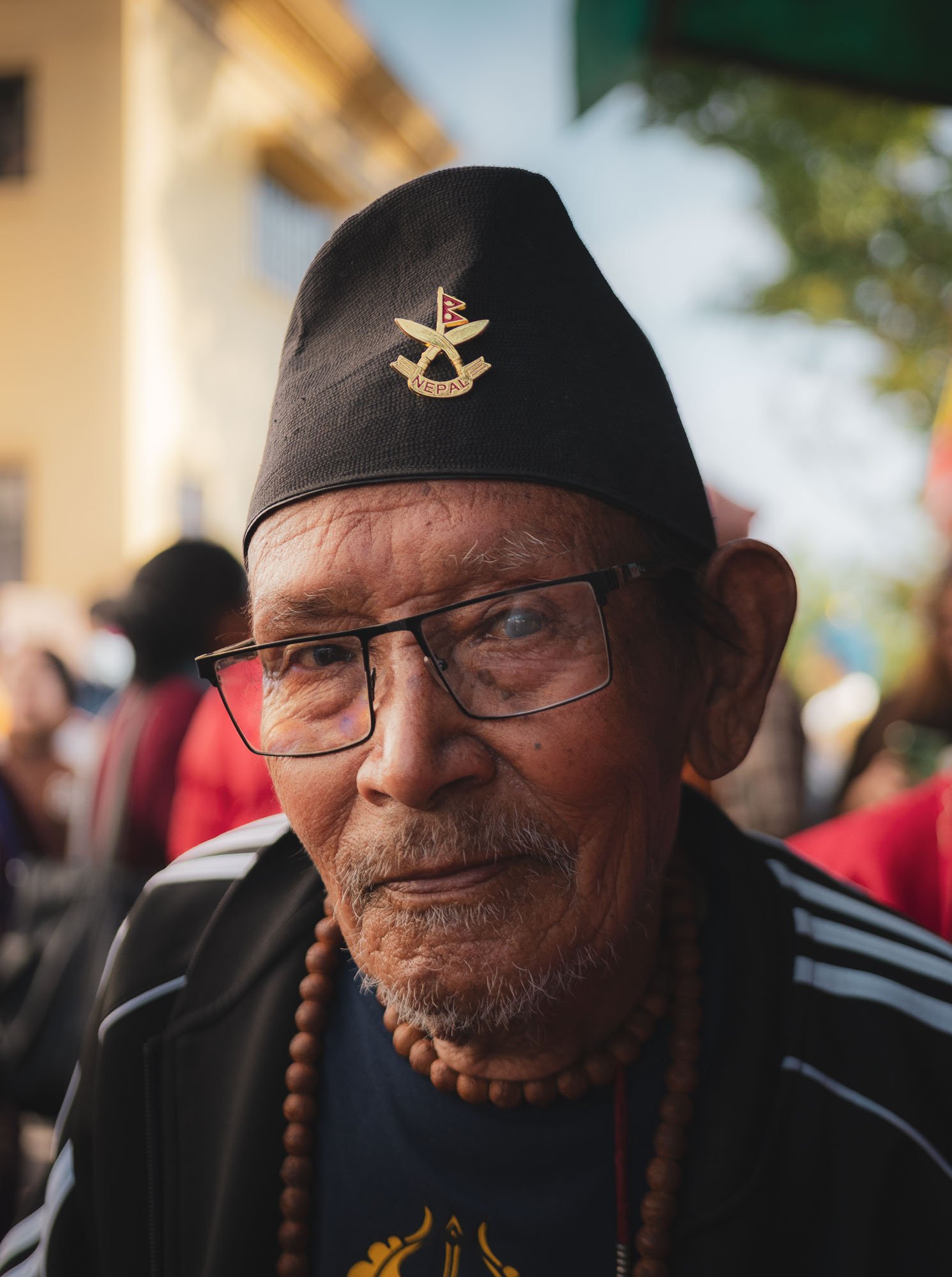
There are over 100 different ethnic groups in Nepal, and a similar amount of active languages, but in this region the Newar people have been the dominant civilisation for hundreds of years. I encountered this elderly couple at the temple and they happily posed for photos. The elaborate gold jewellery and distinctive nose ring might reflect their Newari heritage, but I didn’t get a chance to ask - I was going to have a chance to document parts of the Newari culture a bit later though, read on…
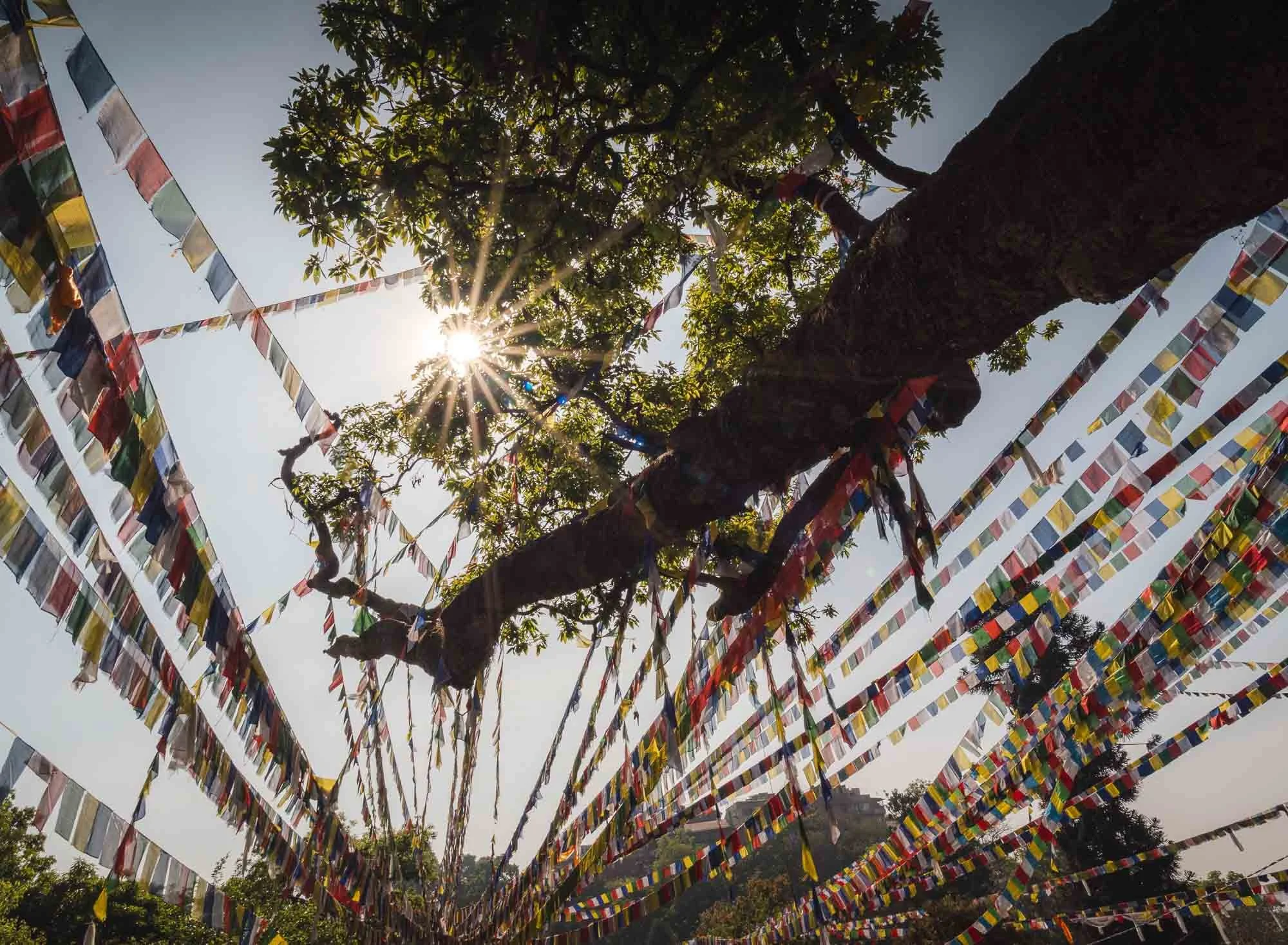
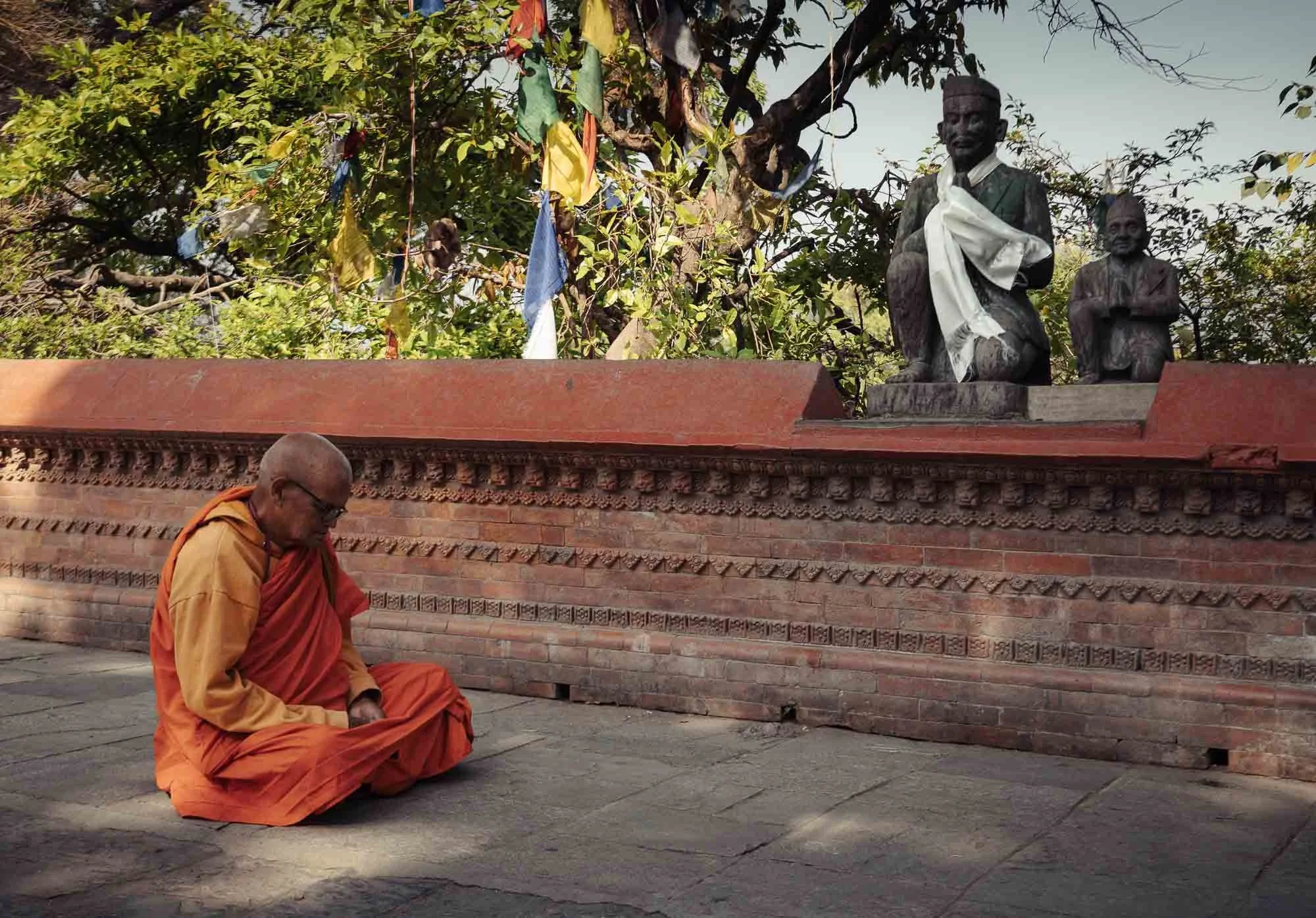
The way down at the back of the hill provides some moments of quiet green relief from the - at least on this day - crowds, sights, smells, and noises around the stupa.
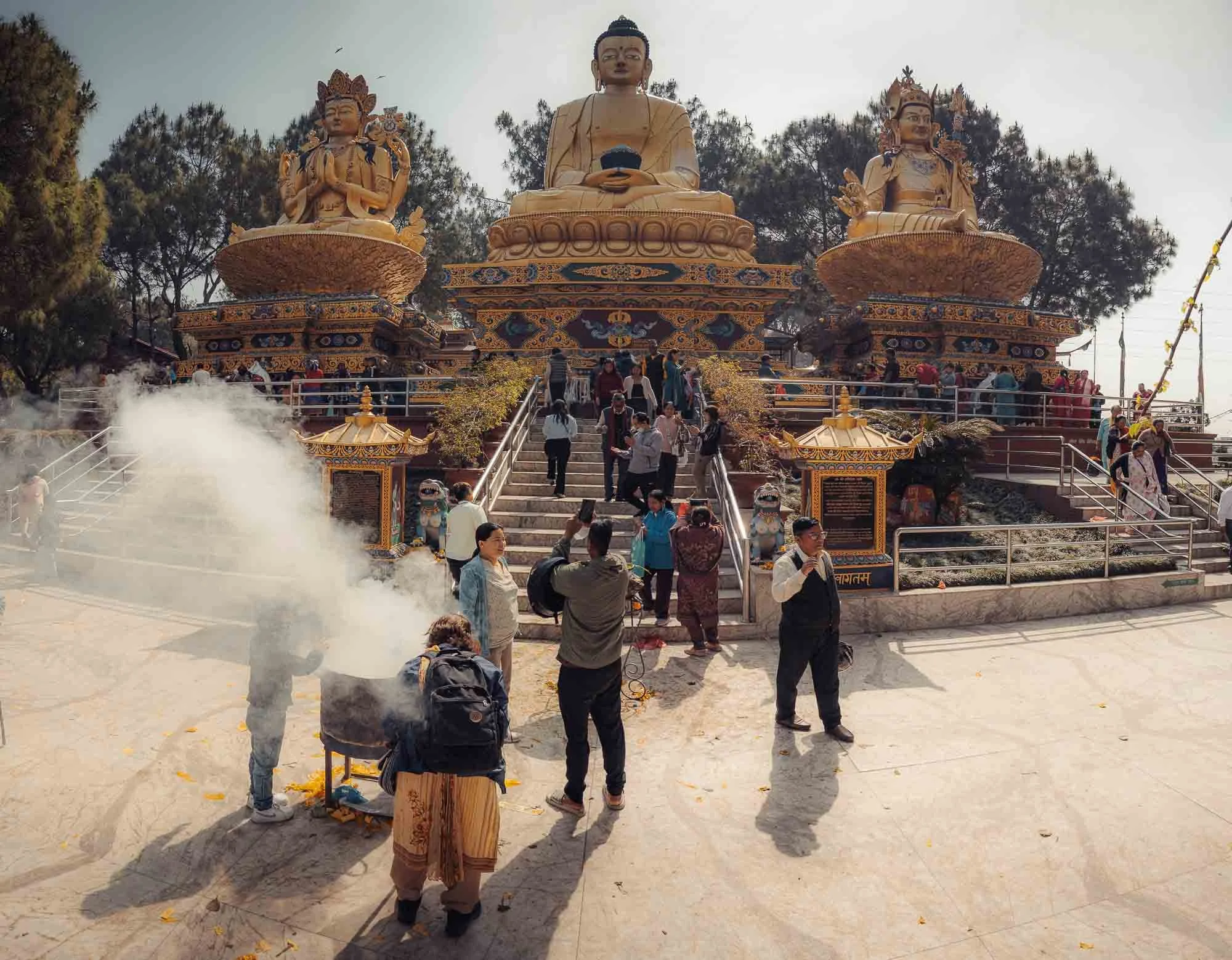
Amideva Buddha Park
At the base of the hill you’ll find more recent statues of three Buddhist masters (one of them Padmasambhava – known as Guru Rinpoche in Bhutan as I had found out a few weeks earlier).
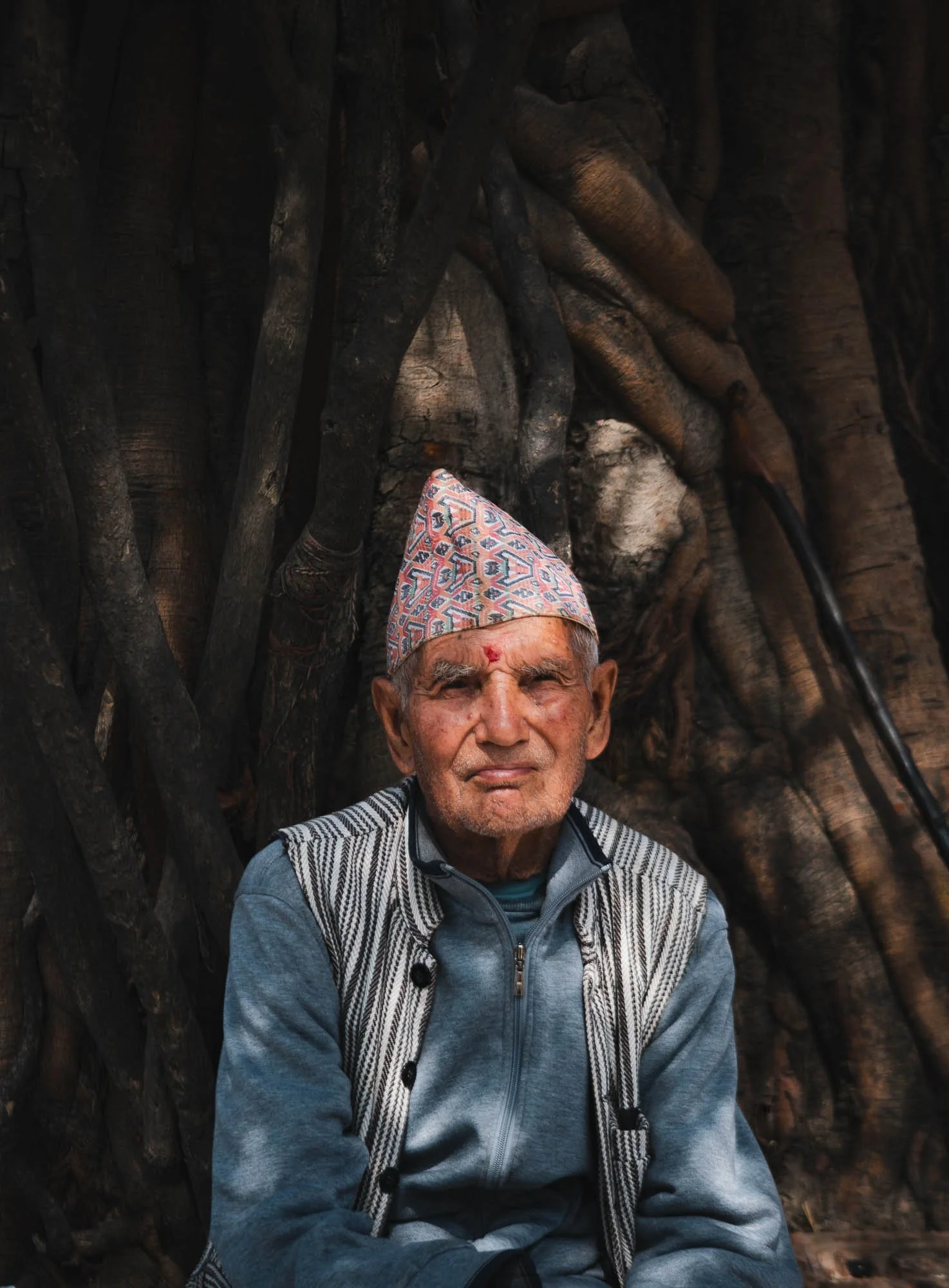
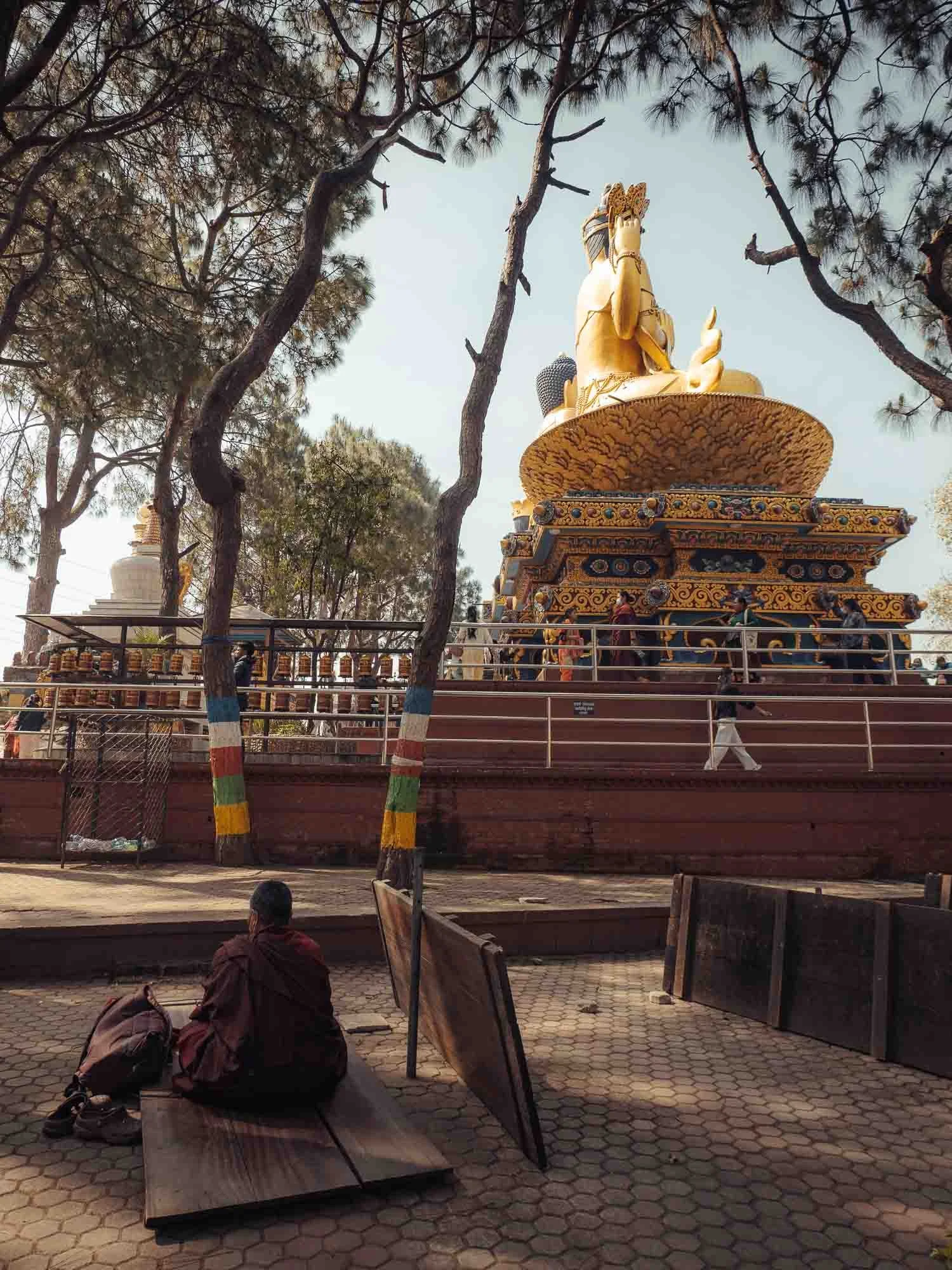
In many pilgrimage sites of Nepal Buddhist and Hindu practices intertwine. Swayambhu plays a major role in Tibetan Buddhism (Vajrayana) - the second largest religion of Nepal - as well as the Newari variant, but is also an important site for Hindus, who make up almost 90% of the country.
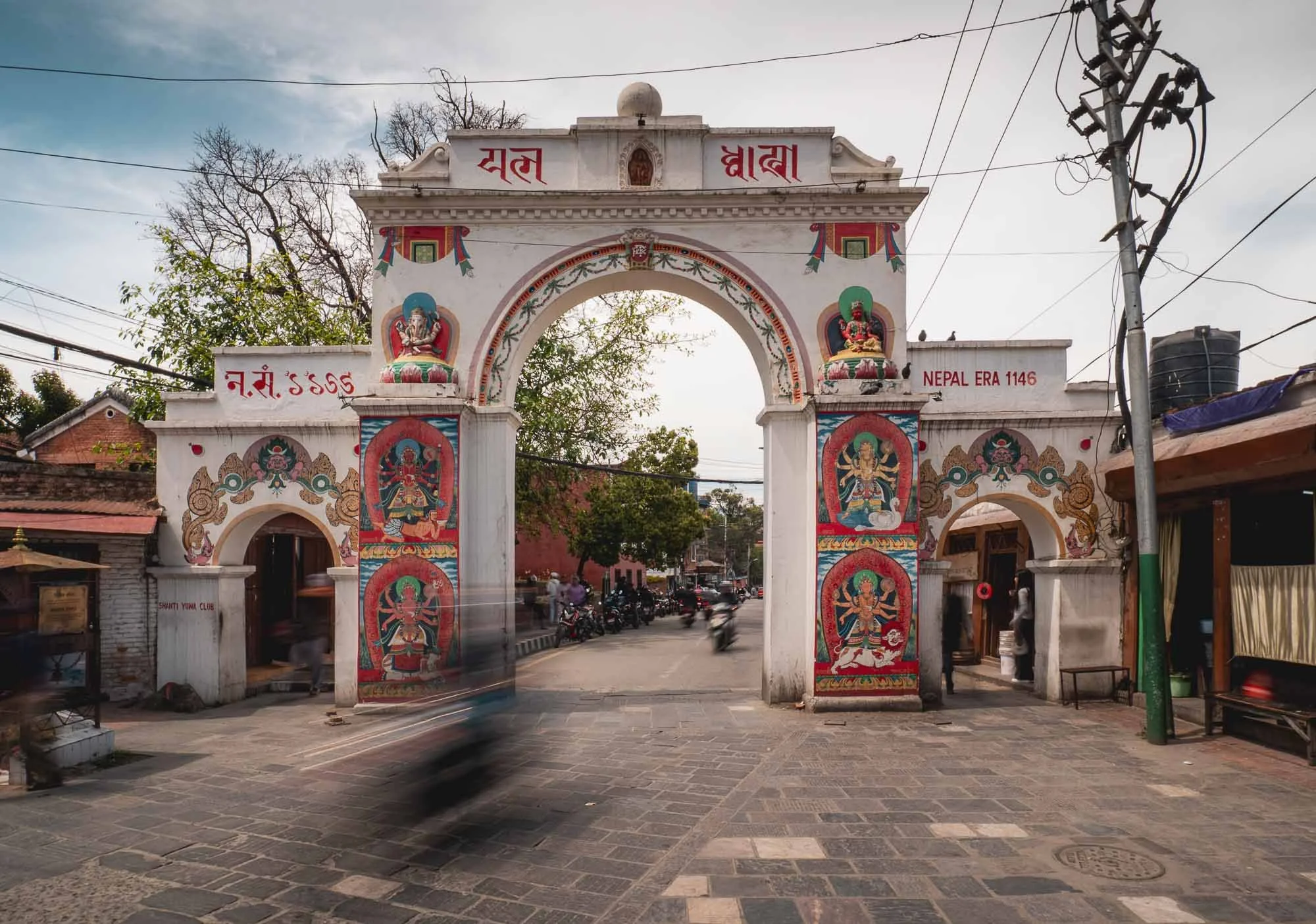
From here we made our way to the city of Patan - in effect, Patan and Kathmandu have converged into a single urban centre separated by the Bagmati river, and only the ceremonial gates like this one will indicate you’re passing from one to the other.
The “Nepal Era 1146” painted on the right refers to the traditional Newari calendar, which began in 879 AD, so it corresponds to 2025–2026.
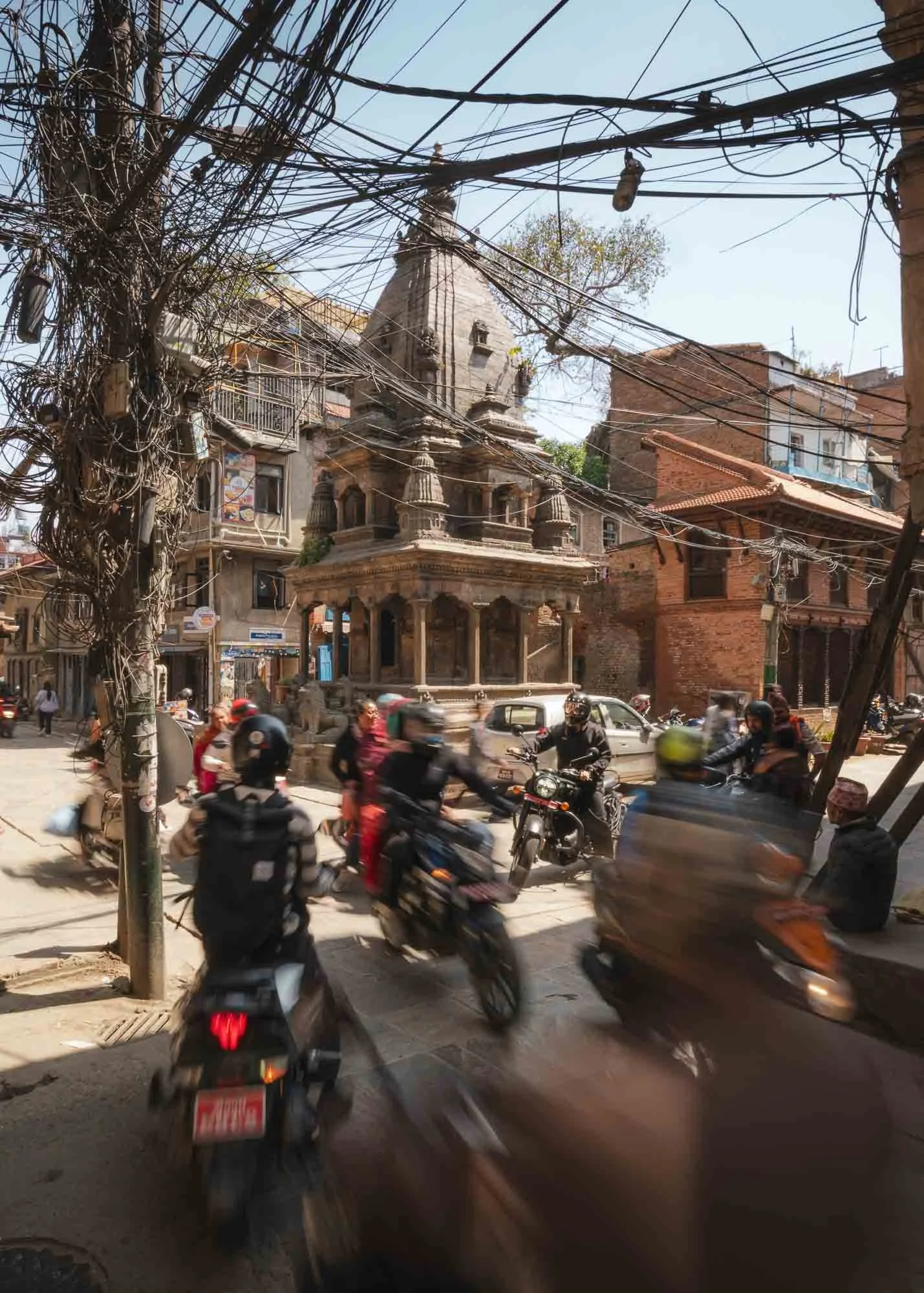
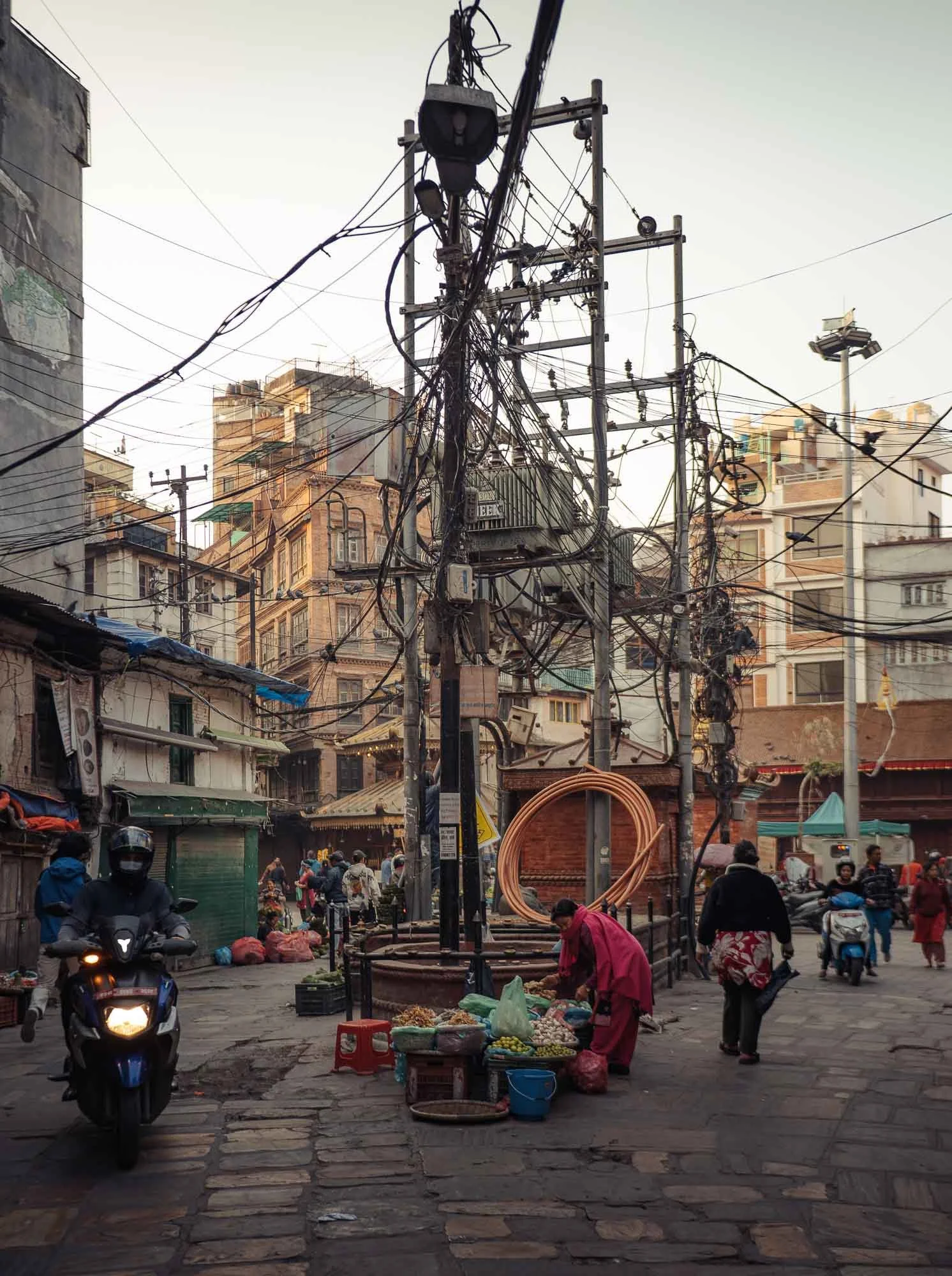
Whether Kathmandu or Patan, the roads can feel chaotic at times: narrow alleys, lots of scooters, power line chaos, the occasional cow, no sidewalks, potholes, informal merchant stalls…I’d find it less enjoyable for the long term, but during a visit walking on foot is a worthwhile experience nonetheless.
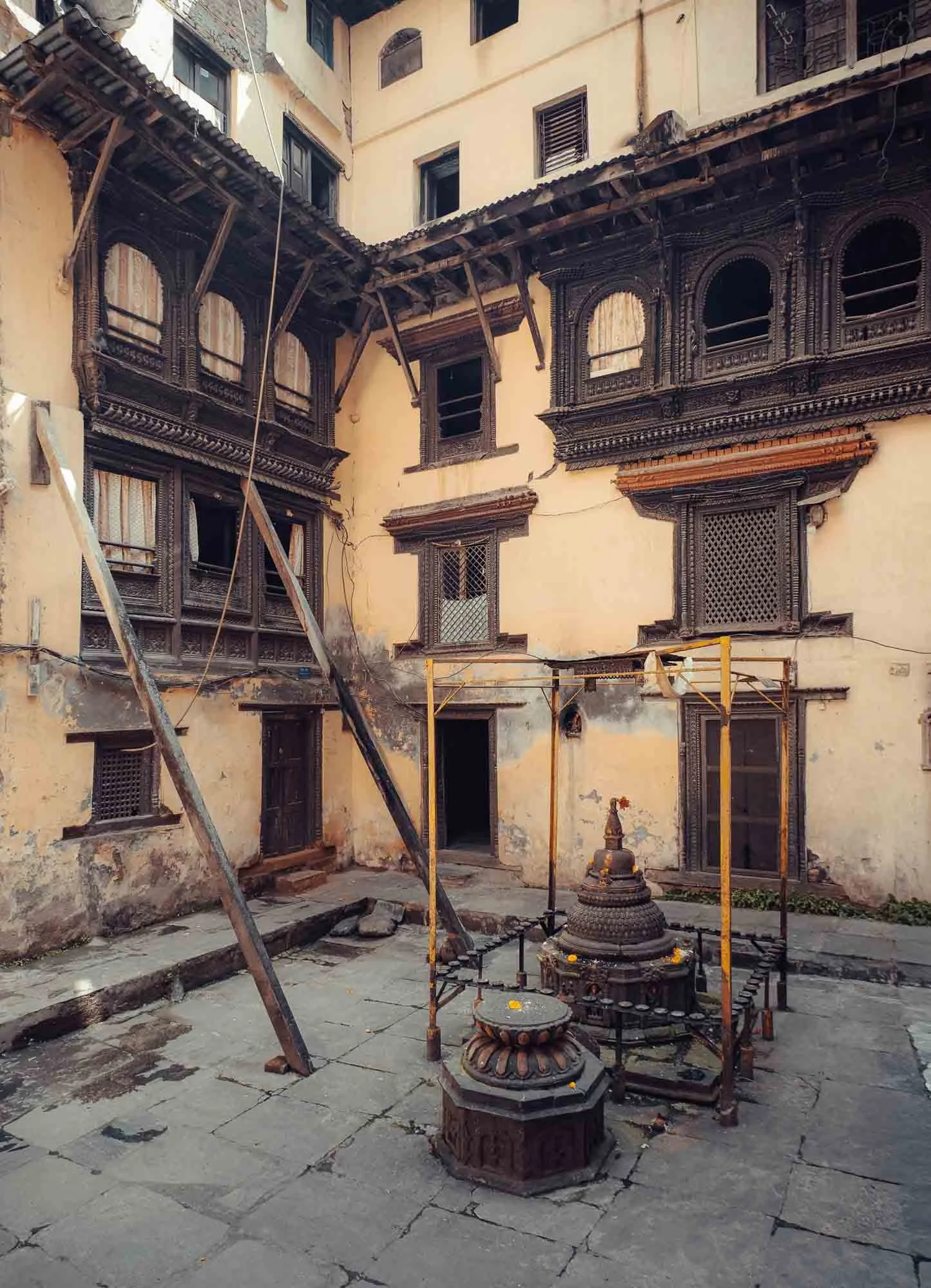
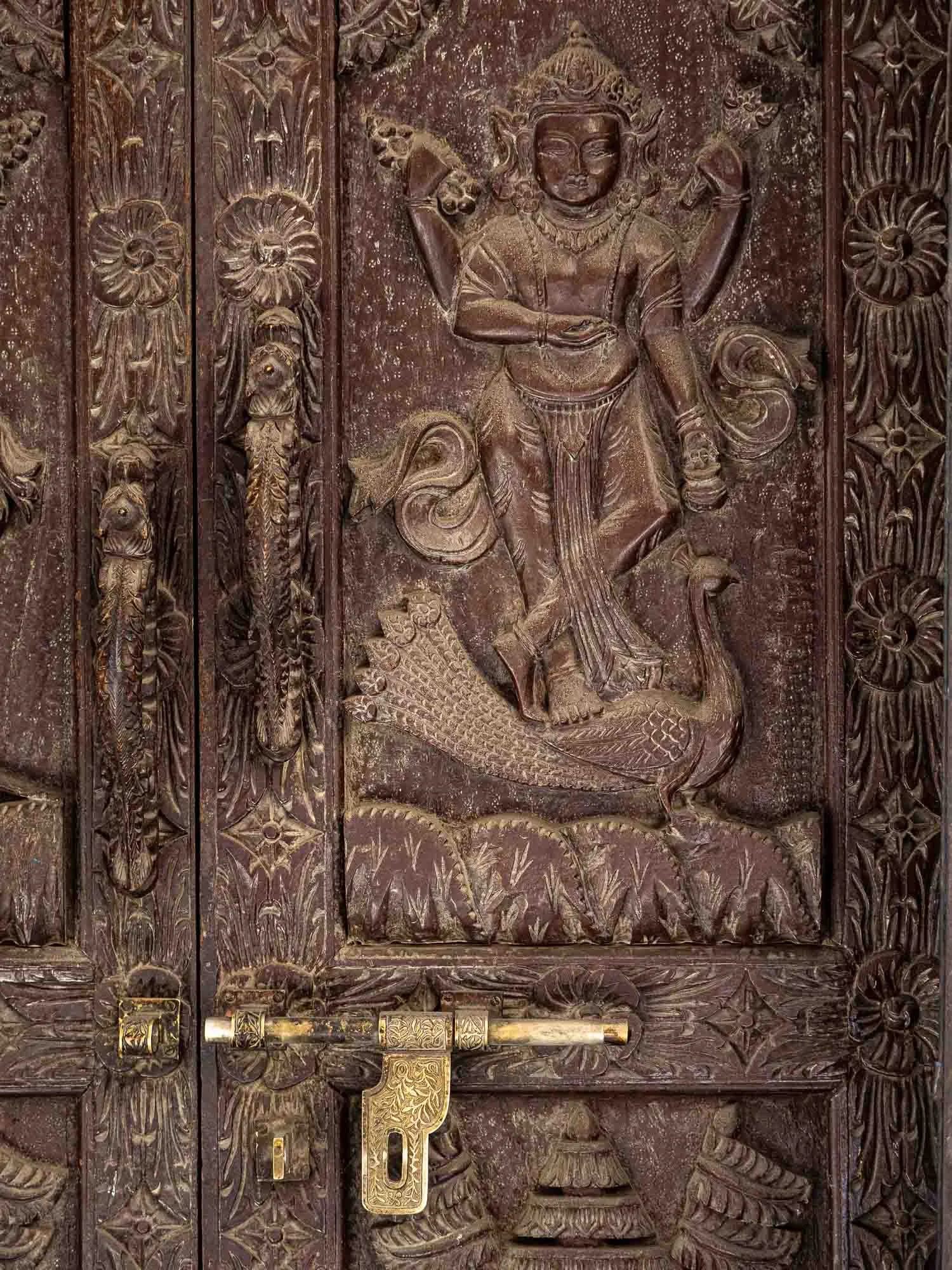
In between the chaos you’ll see amazing temples, and - hidden to the side of many of the small alleys in the city centre - interesting courtyards like this one, with wood-carved balconies that are often hundreds of years old.
They are known as bahals, and were originally built as Buddhist monasteries, but now serve as residential shared spaces - sadly many of them have been heavily damaged during the 2015 earthquake, and building owners often lack the funds to repair them.
The Kumari
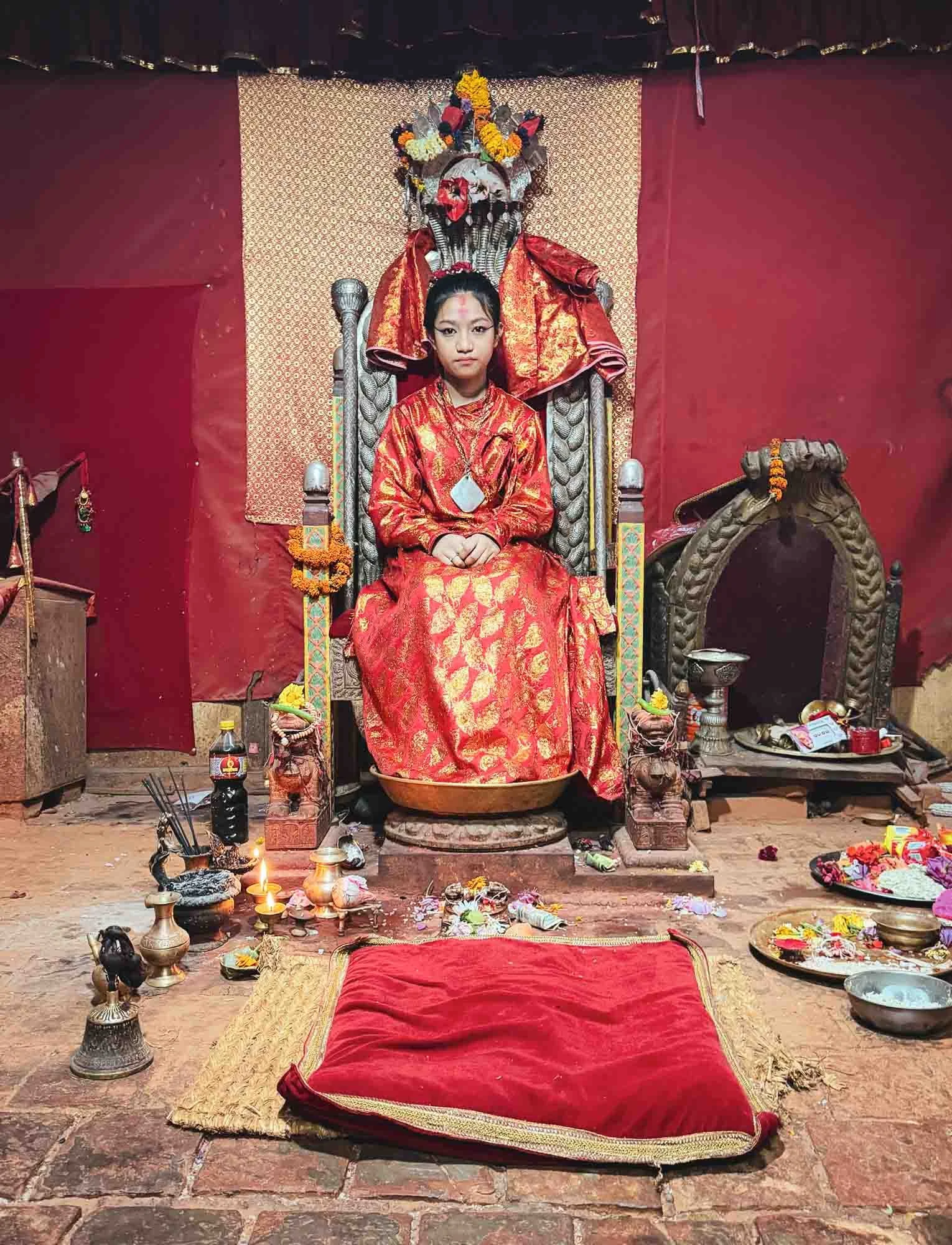
A fitting representation of the intertwined faith are the Kumari, the centuries-old tradition of the so-called Living Goddesses. Chosen from a Buddhist Newar family, she is worshipped by both Hindus and Buddhists as the earthly embodiment of a goddess.
A Kumari is usually picked at around three to five years of age with a rigorous selection process, and occupies the spot until puberty - an interesting way to spend your childhood I imagine.
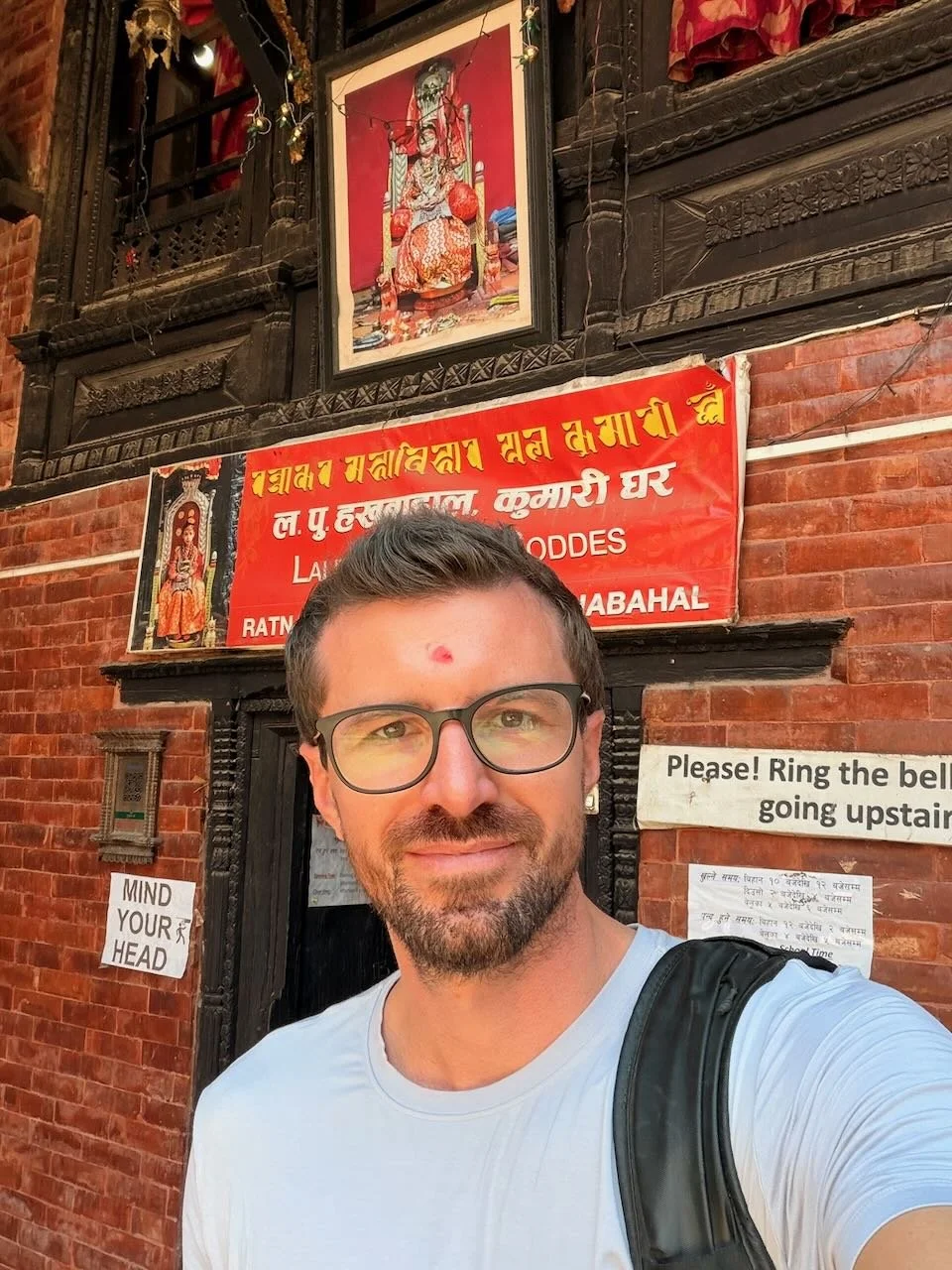
There are several important Kumaris in the Kathmandu valley, and I happen to visit (and be blessed without waiting in a long queue!) the lesser-known version of Patan. She kindly allowed me to take her photo, something that normally isn’t possible, but the guardian saw I was a photographer and encouraged me to use my phone to get a quick picture.
Durbar Square of Patan
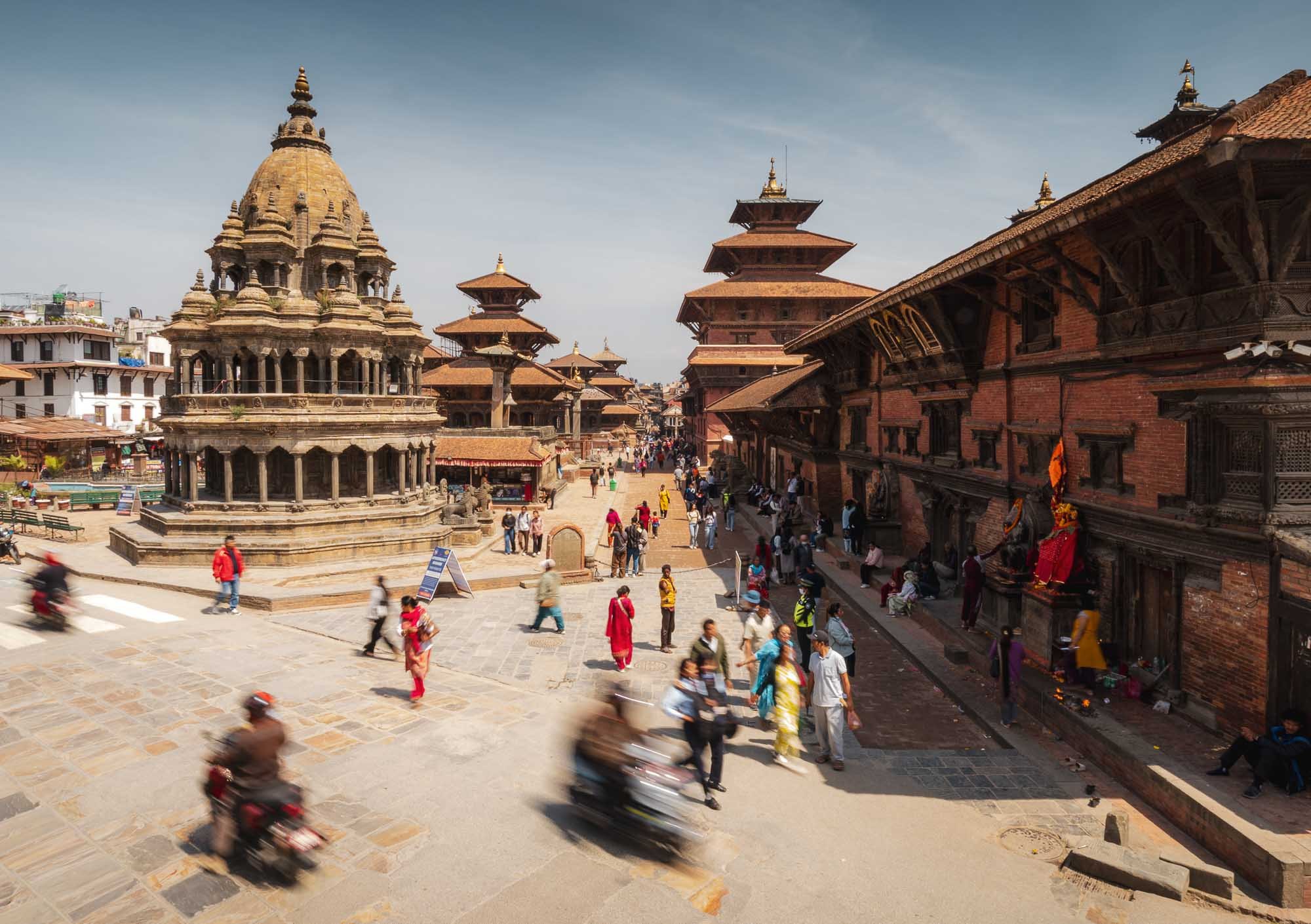
Patan is home to one of the three famous Durbar Squares of the valley, all part of the UNESCO entry.
The phrase translates to ‘Royal Palace Square’ - before Nepal was unified in the 18th century, Kathmandu, Patan and Bhaktapur were independent kingdoms, each centred around its own palace complex.
When Shah, king of nearby Gorkha, looked to widen his reign, he captured all three of them and made Kathmandu the new capital. Nepal remained a kingdom until 2006 when the monarchy lost power, and became a republic in 2008.
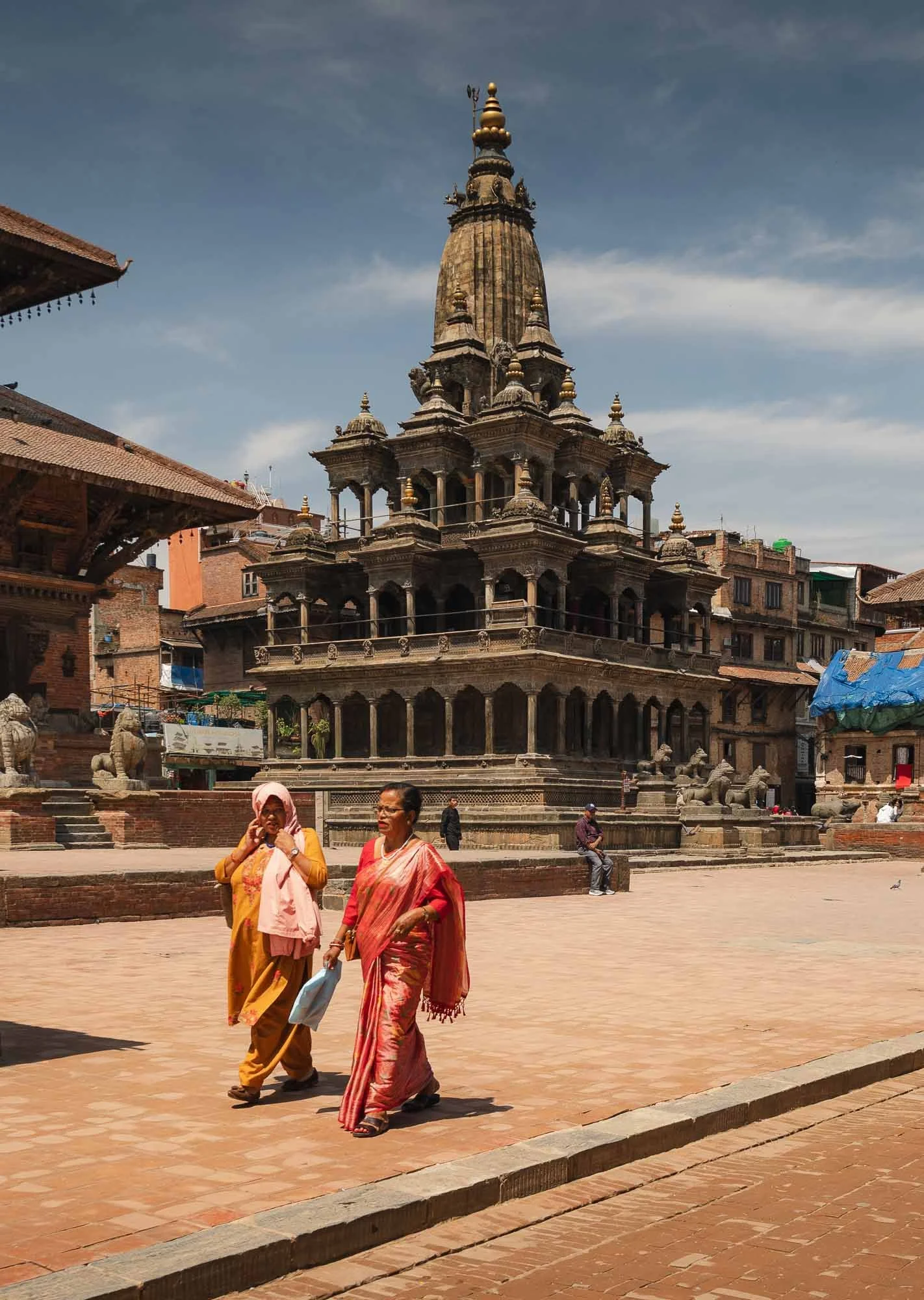
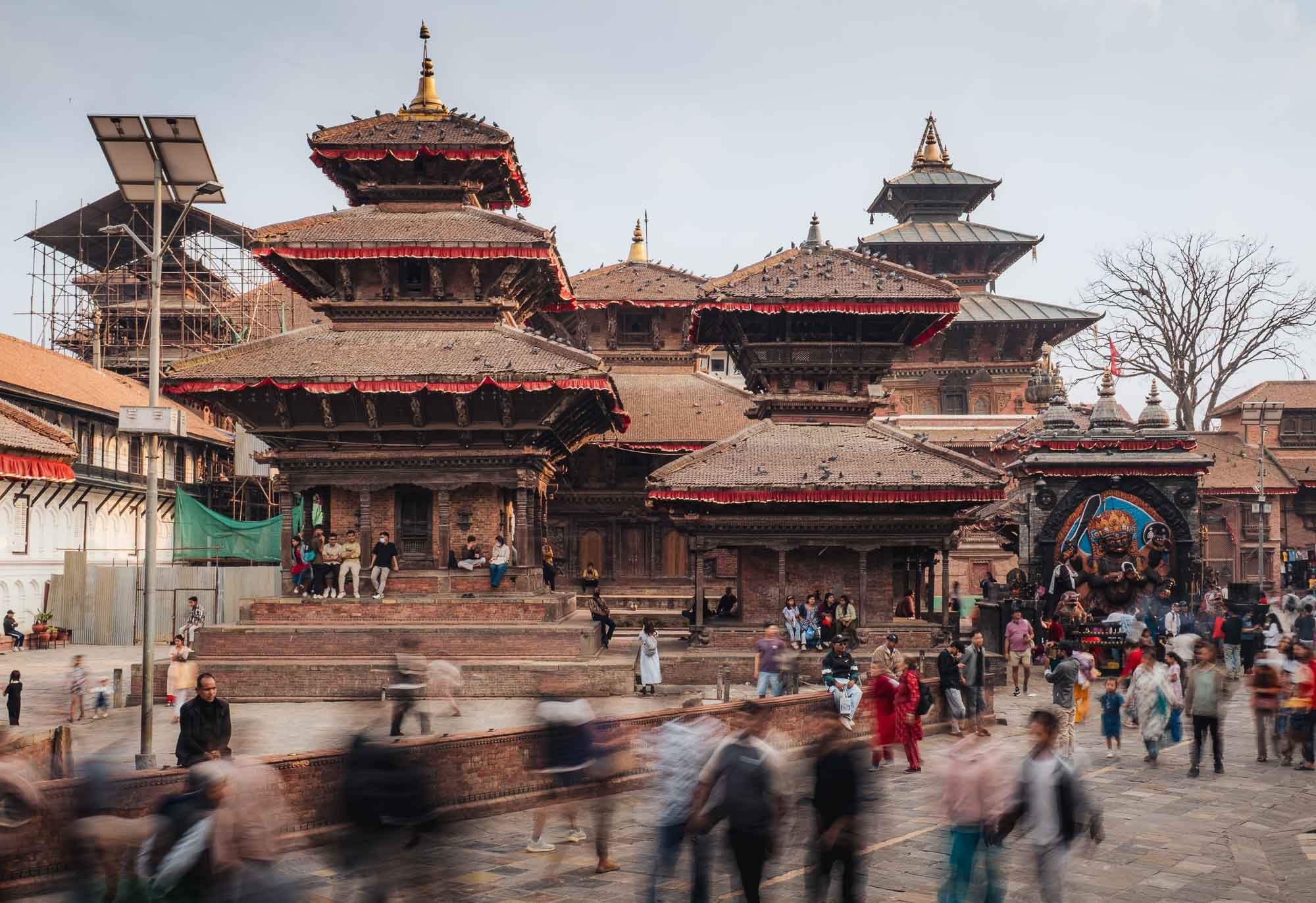
What is particularly interesting in the Durbar Squares is the diverse architectural blend, covering the indigenous Newar pagoda style, Indian Hindu stone temple designs, and the Newar Buddhist monasteries with their courtyards and wooden elements - all three are visible in the above photo.
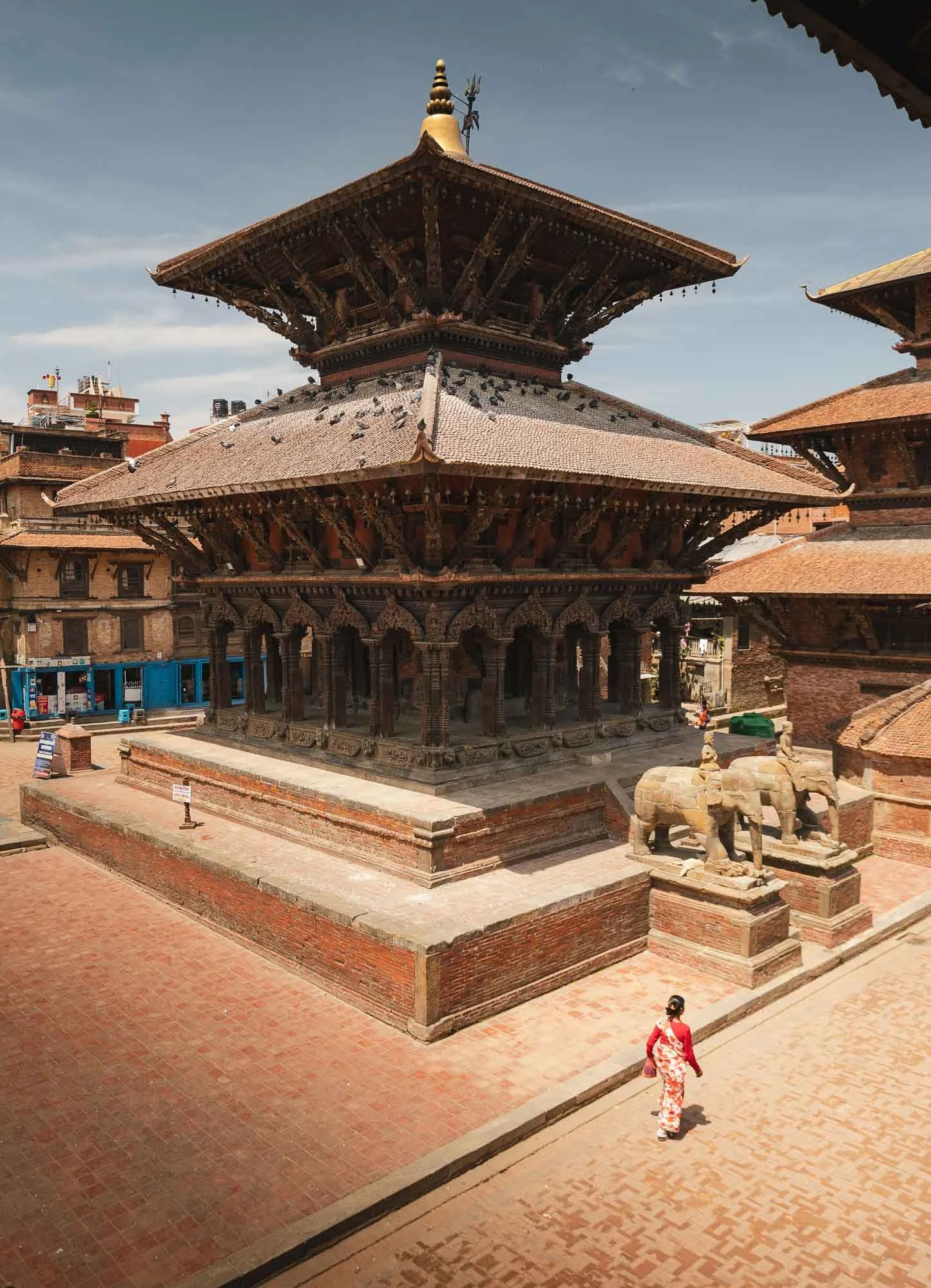
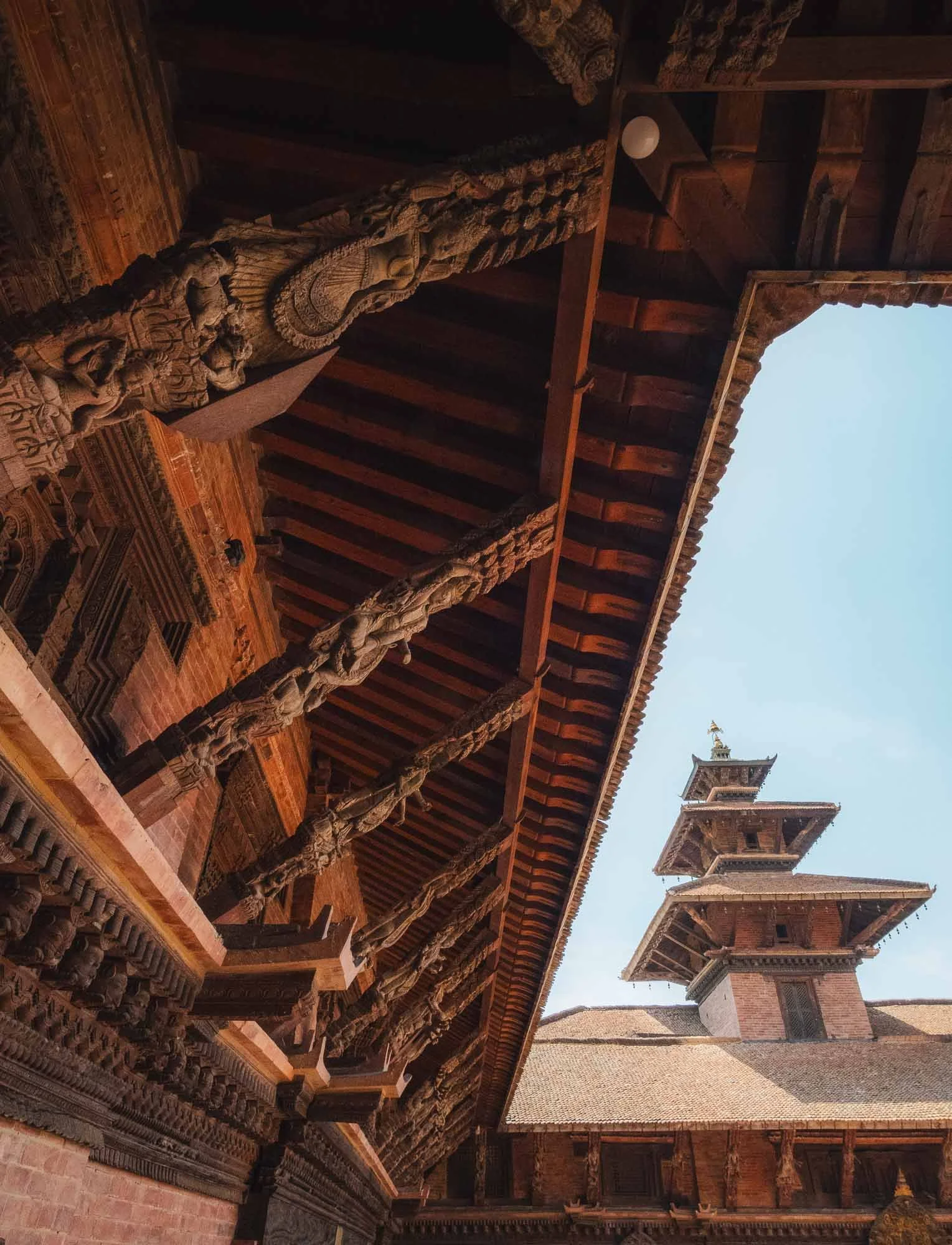
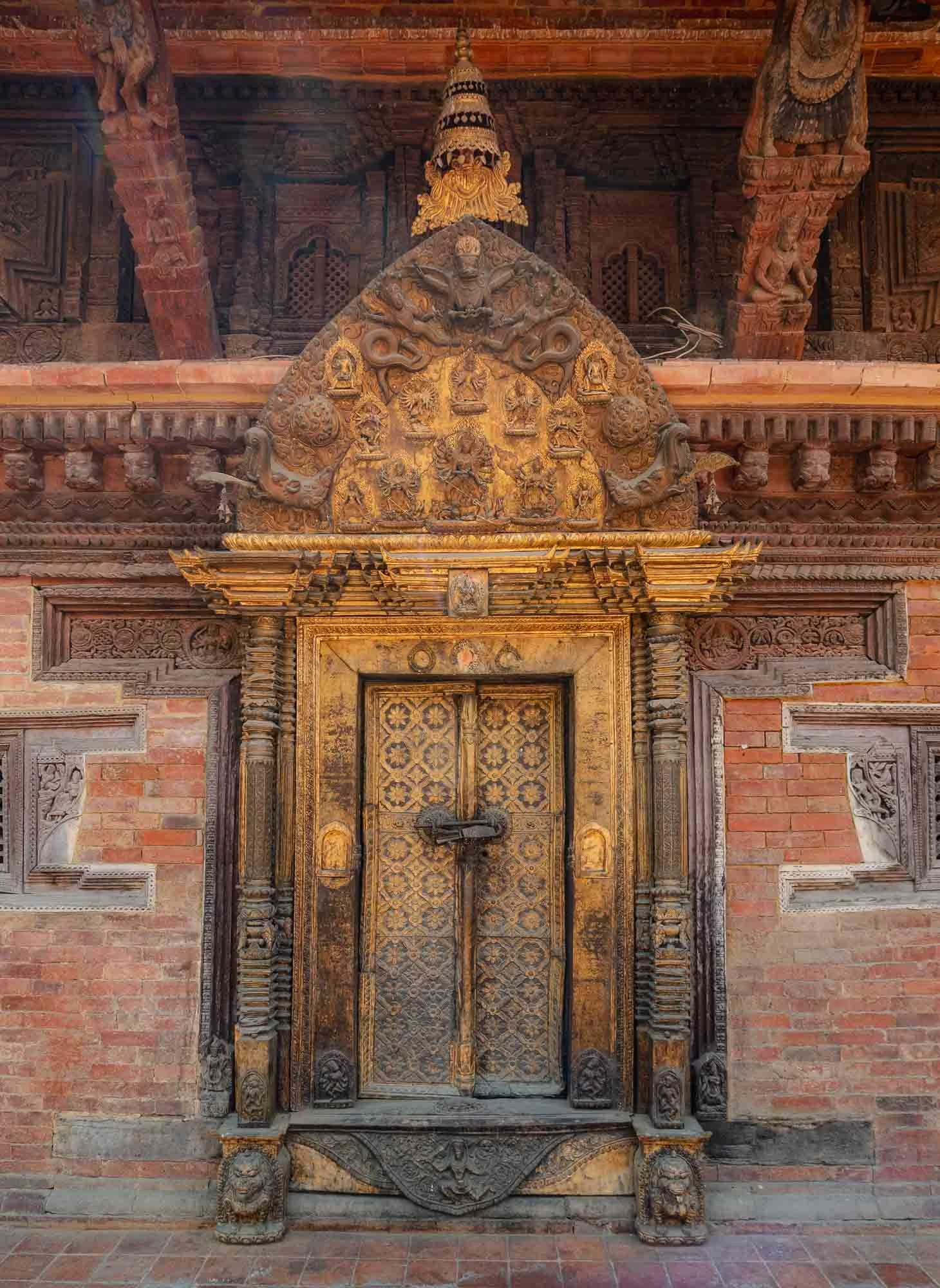
The wooden struts supporting Patan’s pagoda roofs are great examples of Newar craftsmanship; every beam is hand-carved with intricate floral motifs. Even the doorways are works of art, with gilded wood and decorative iconography all around.
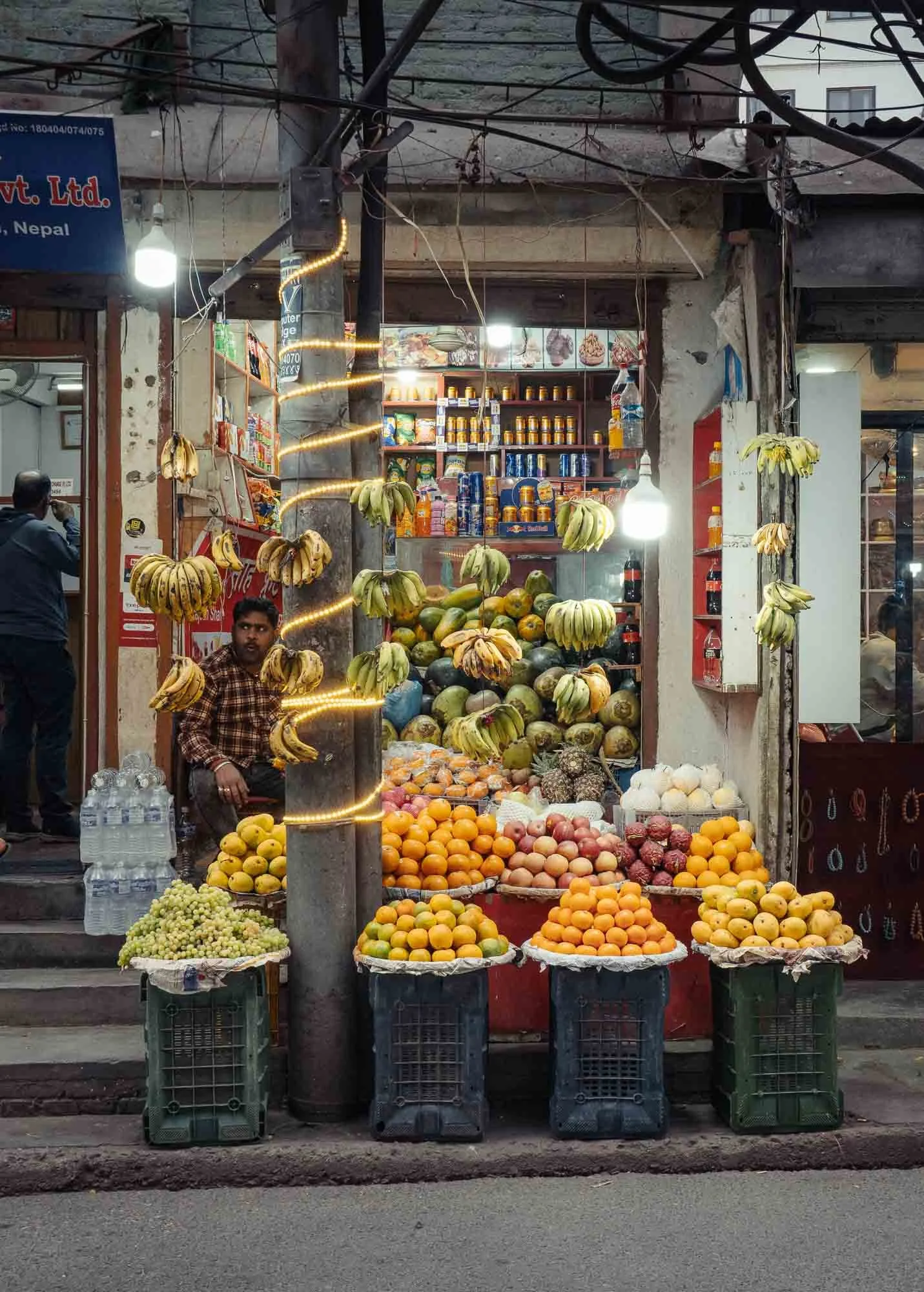
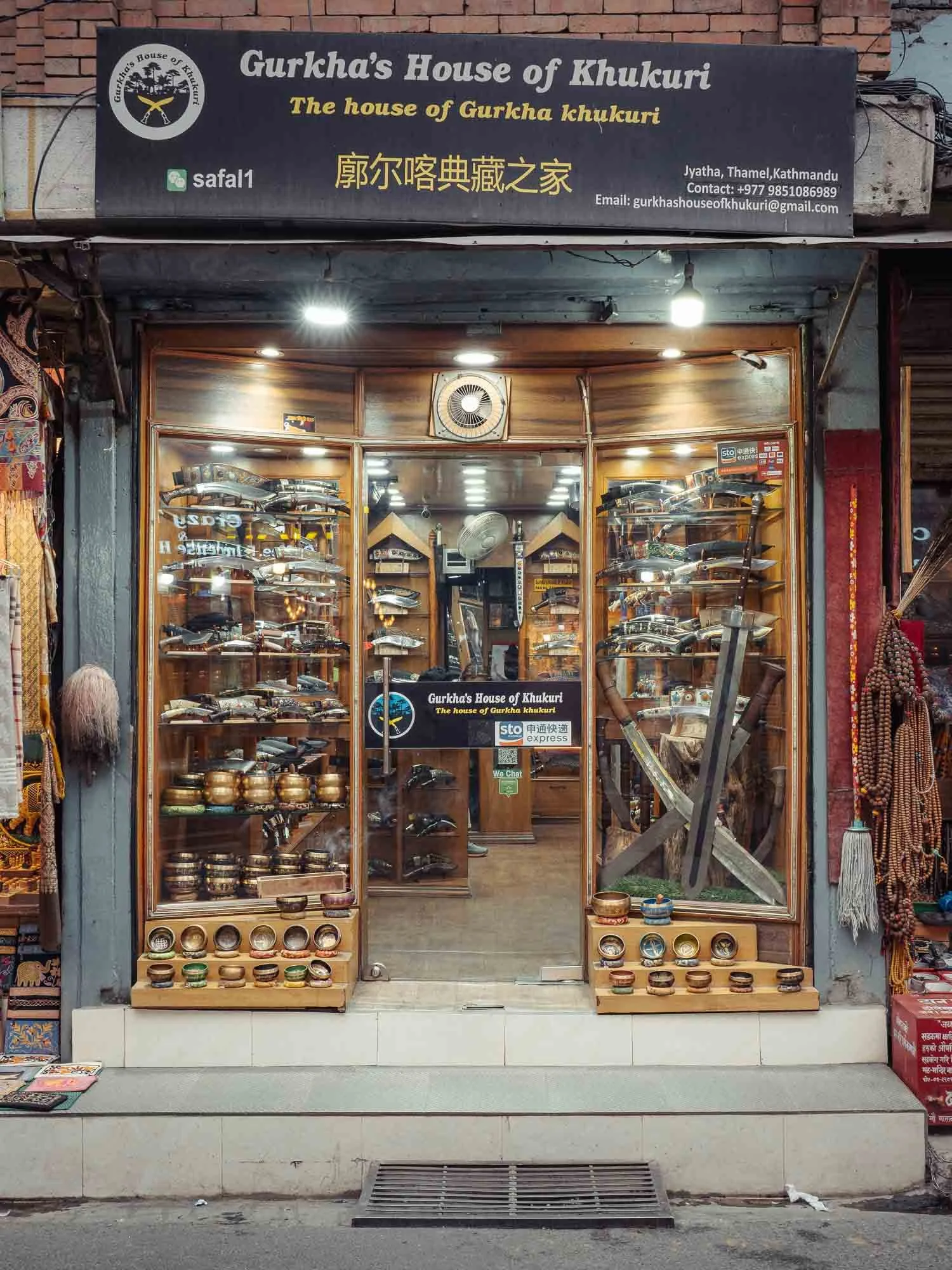
Walking through the alleys occasionally comes with surprises. While you’d expect a fruit vendor, I didn’t really have a sword and knife shop on the radar: the Khukuri is one of Nepal’s most recognisable cultural symbols - the hand-forged forward-curving blade has for centuries been used for farming, ceremonies, and as a weapon.
Kathmandu Durbar Square
The second Durbar Square I visited is in Kathmandu’s city centre. Construction of the original square began in the 3rd century, but many of the current buildings originated around the 16th century - and of course, some had to be rebuilt several times owing to the various earthquakes over the years - restoration work is a constant activity here, as seen on the left side.
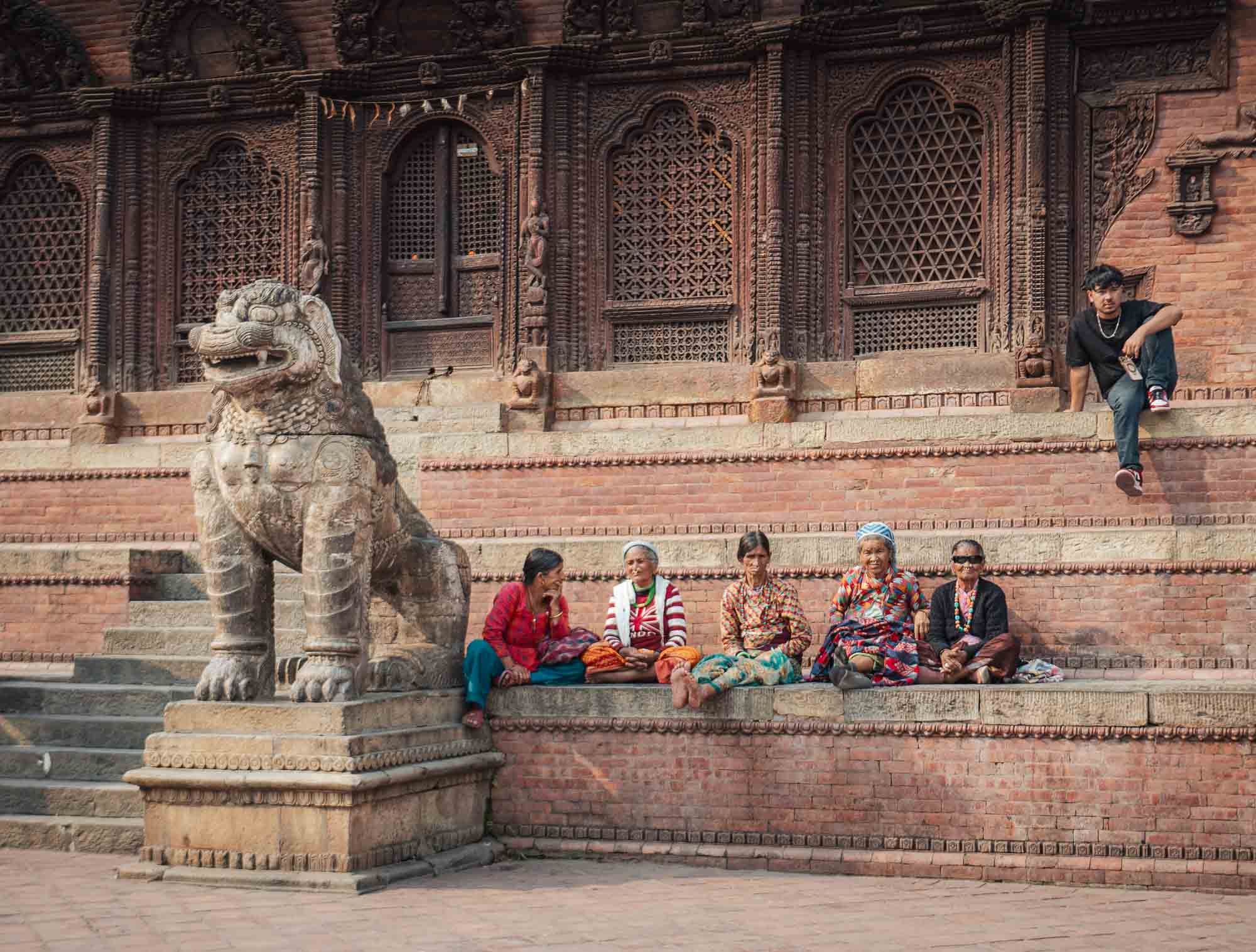
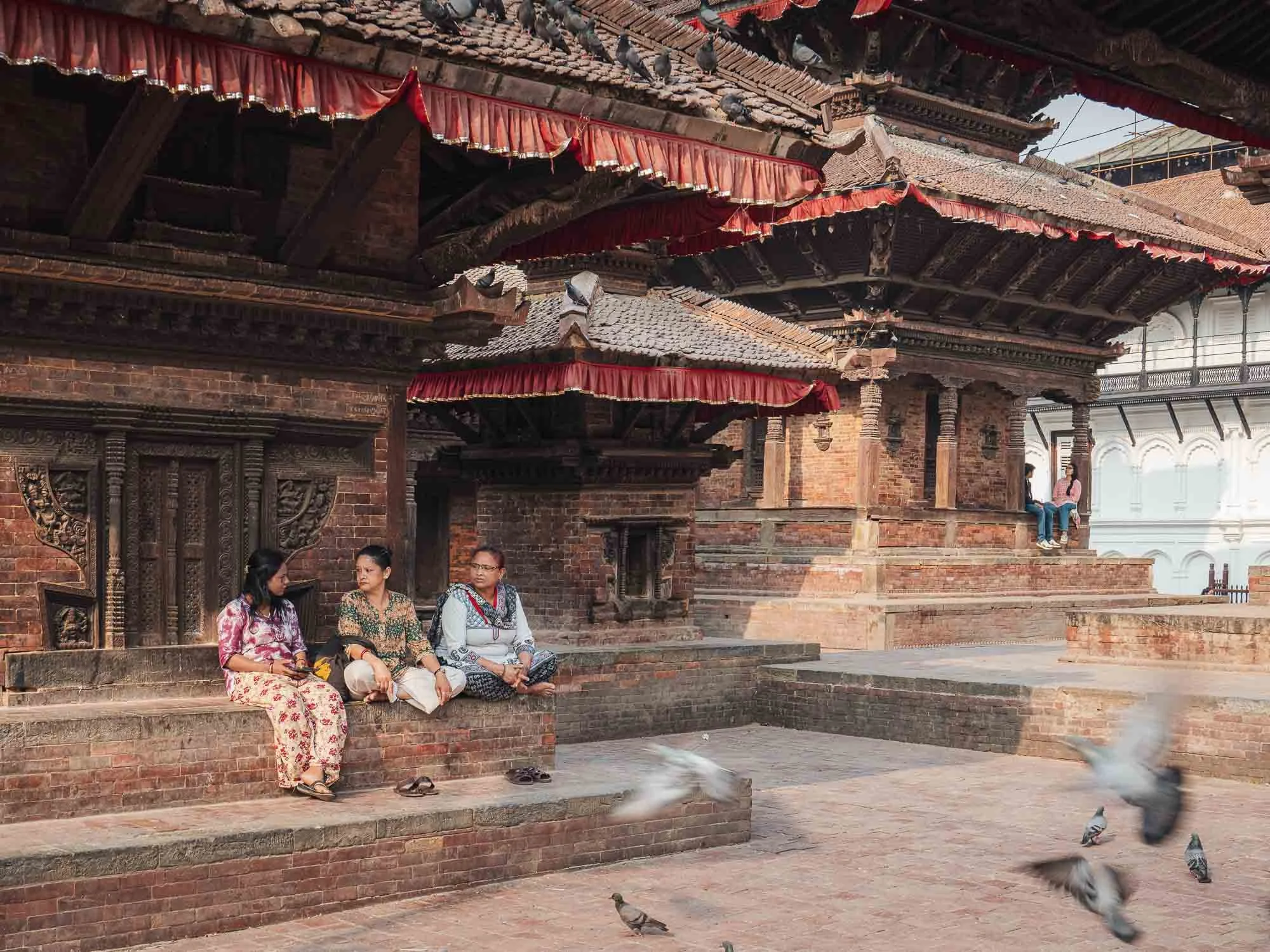
What I found quite interesting is that it’s very common to see people sitting under the shade of the pagodas to rest and chat, or carrying their shopping in between the temples. While these squares hold significant cultural and historic relevance, they are also interwoven into the fabric of regular life - only some sections are fenced or dedicated museums.
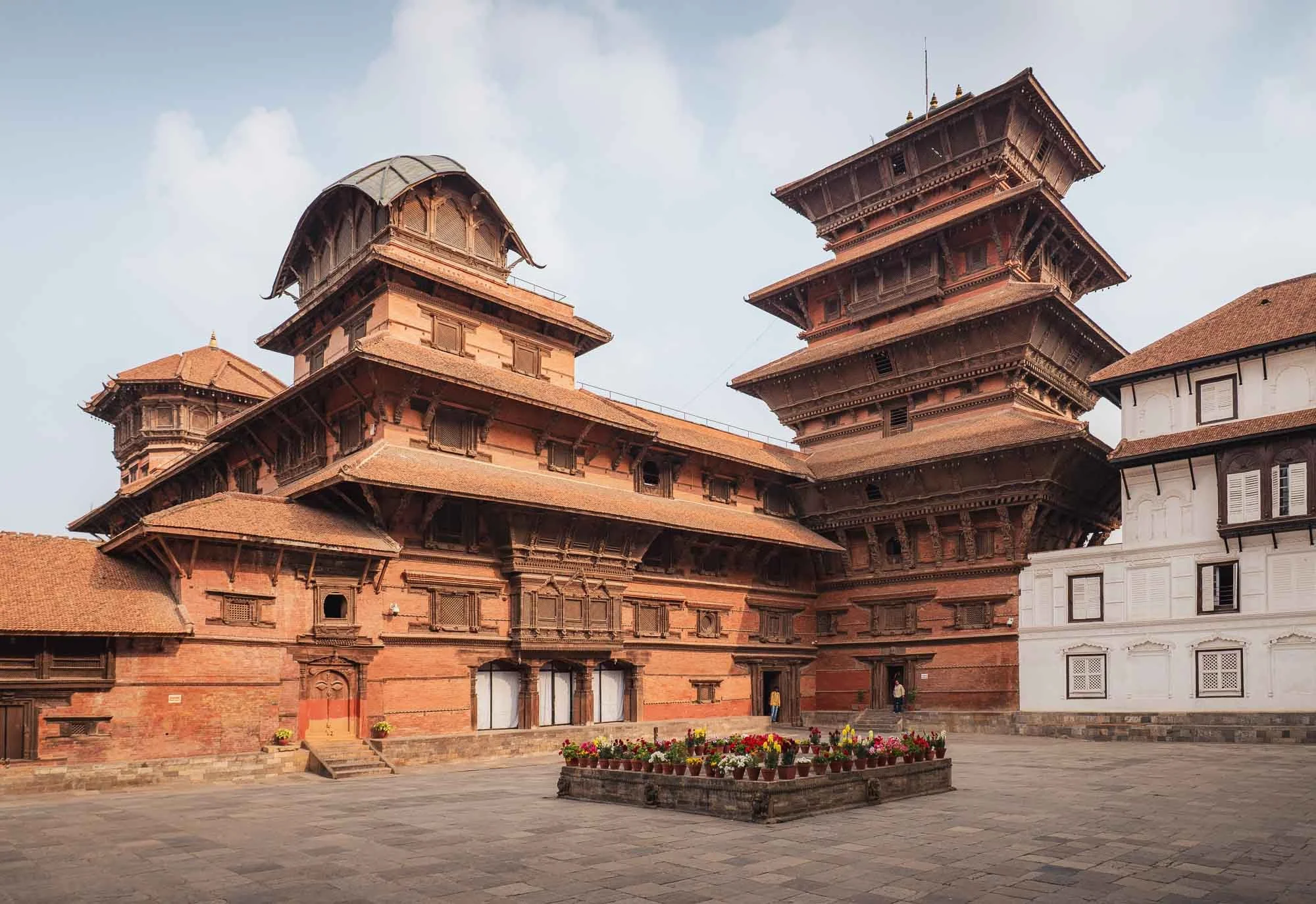
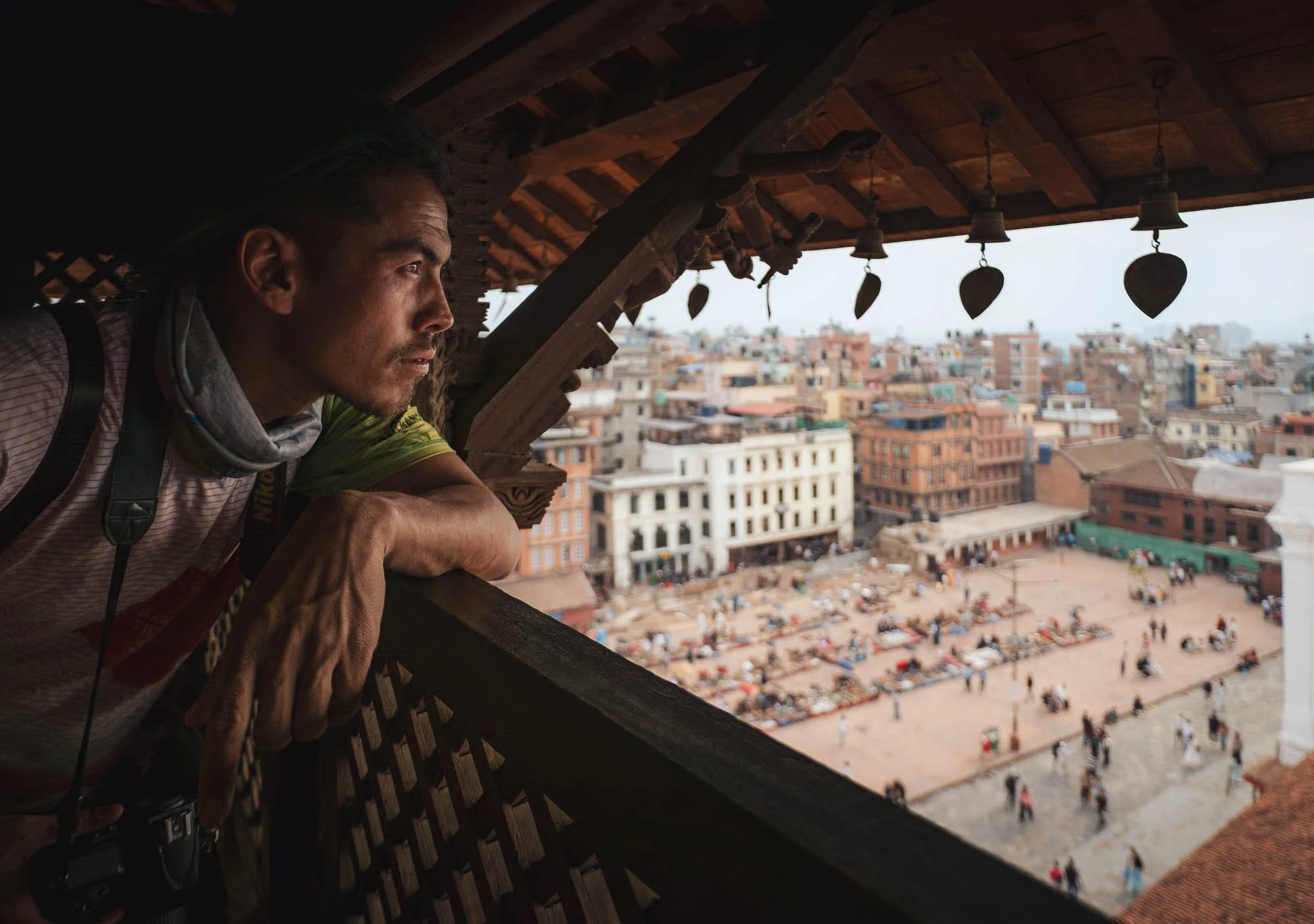
One such museum contains the royal residences seen here, featuring the nine-storey Nautalle Durbar tower, which you can climb up for a view of the nearby public square with its many street vendors - my guide Lhakpa looking out on the right image.
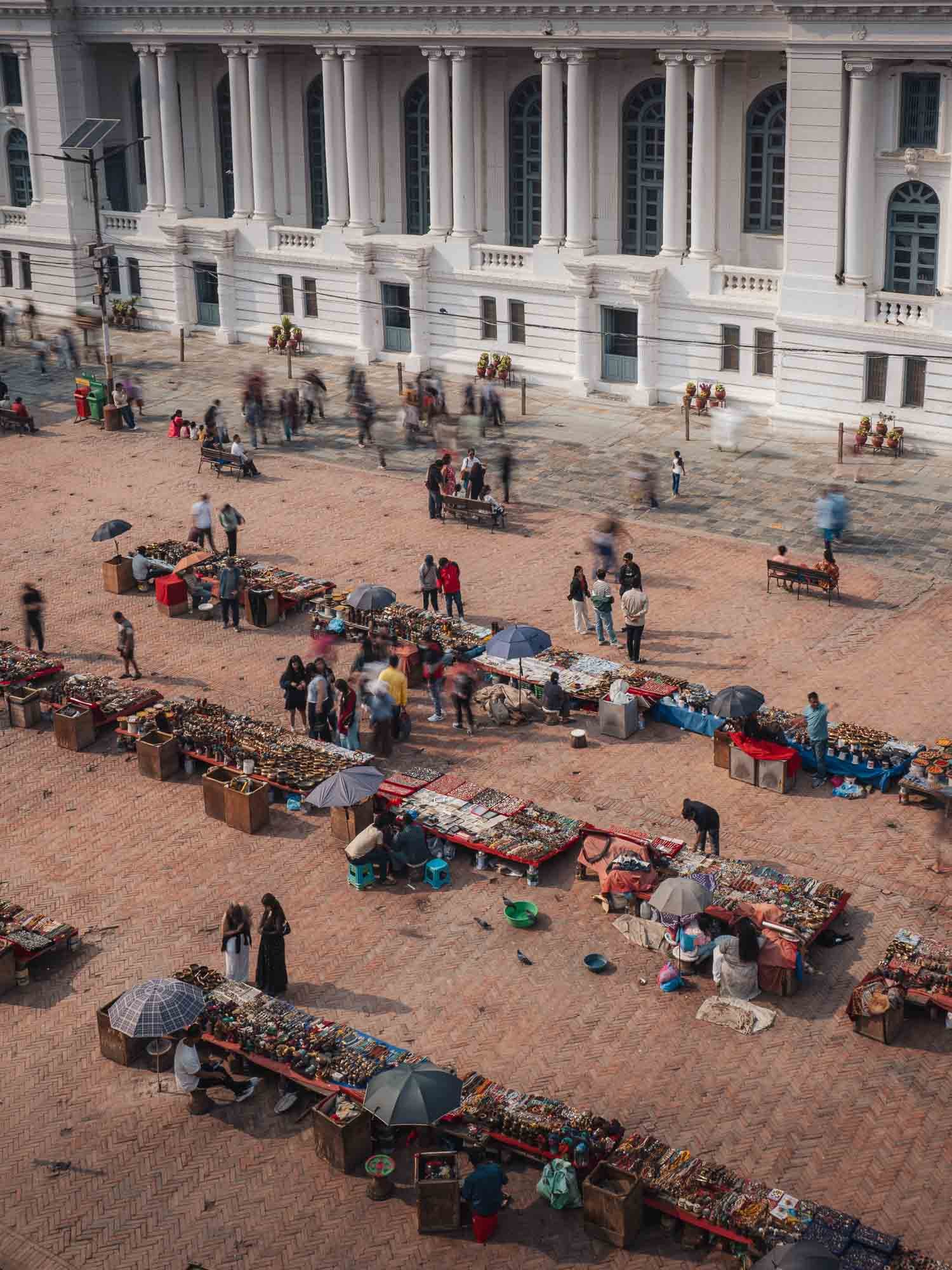
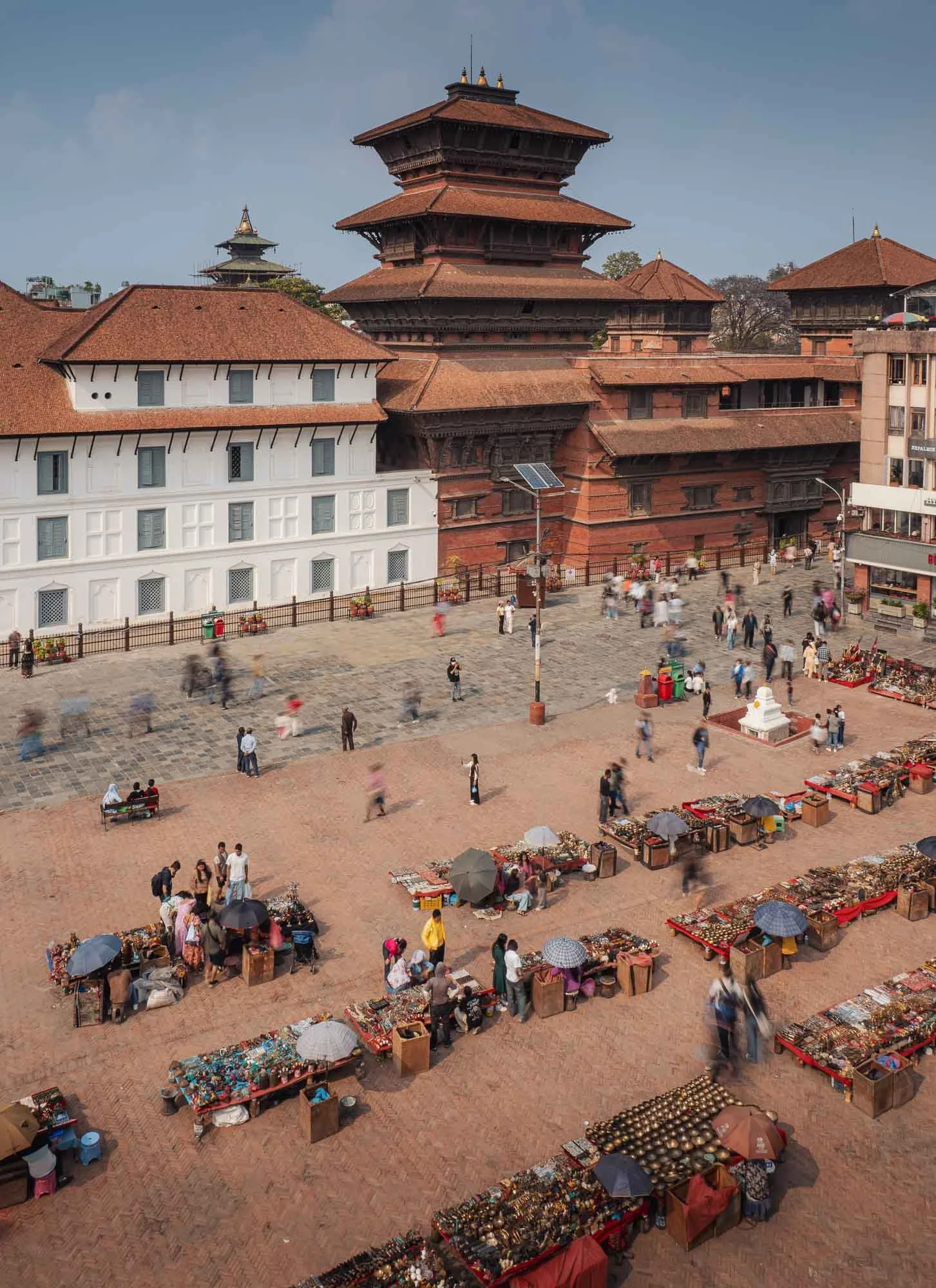
An unexpected sight on the square is the white neoclassical Gaddi Baithak. Built in 1908, it contrasts sharply with the surrounding architecture, as European influences took hold during this period.
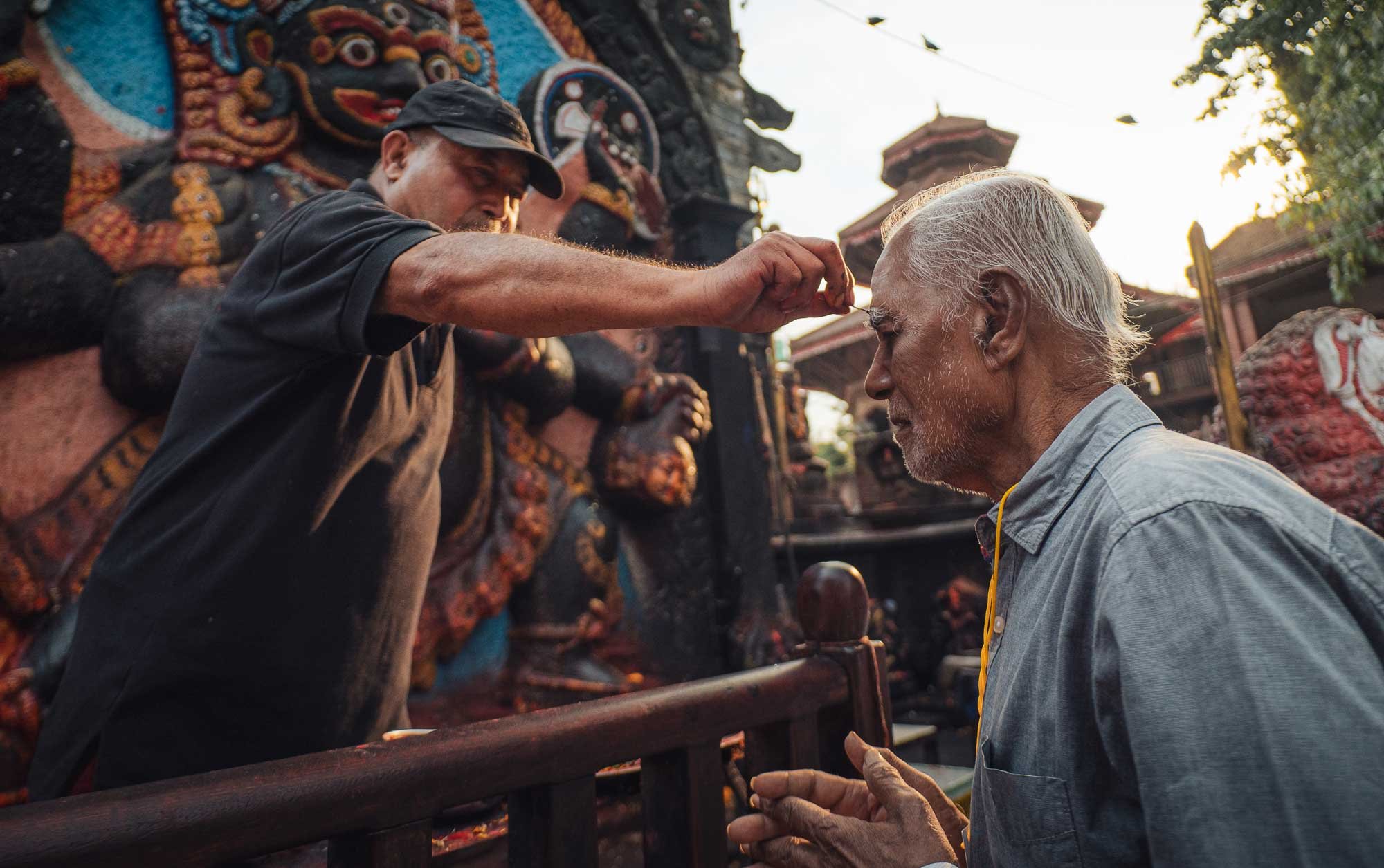
People receiving their blessing at the colourful Hindu Shrine Kaal Bhairav. According to legend it was found at a paddy field and later placed at the Durbar Square by King Pratap Malla, one of the most important figures of pre-unification Kathmandu.
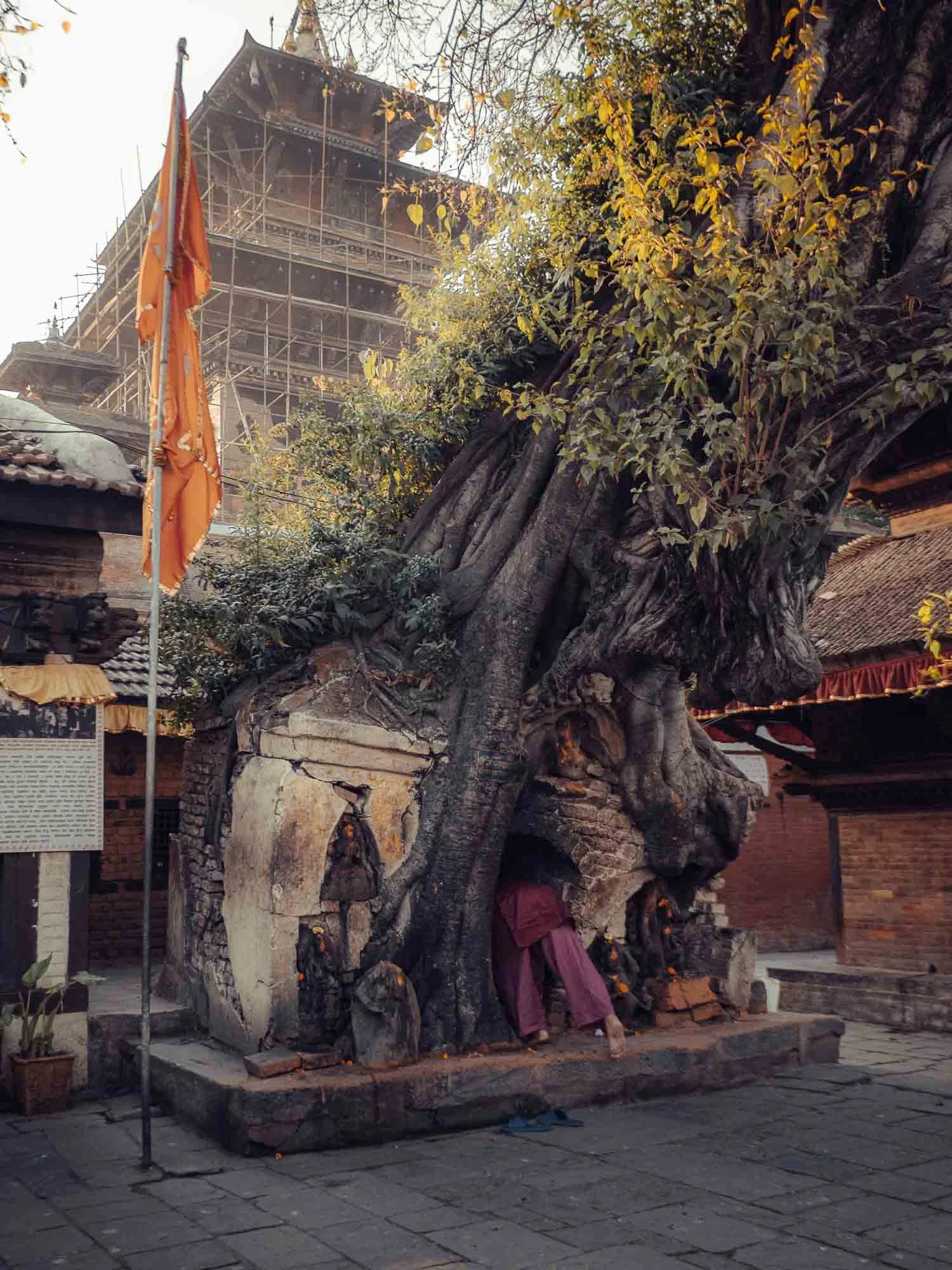
Speaking of temples around the square, one curiosity I discovered is this interesting structure that was either built into a tree or the tree was planted around it (unsure of the sequence), requiring worshippers to become one with nature to access it.
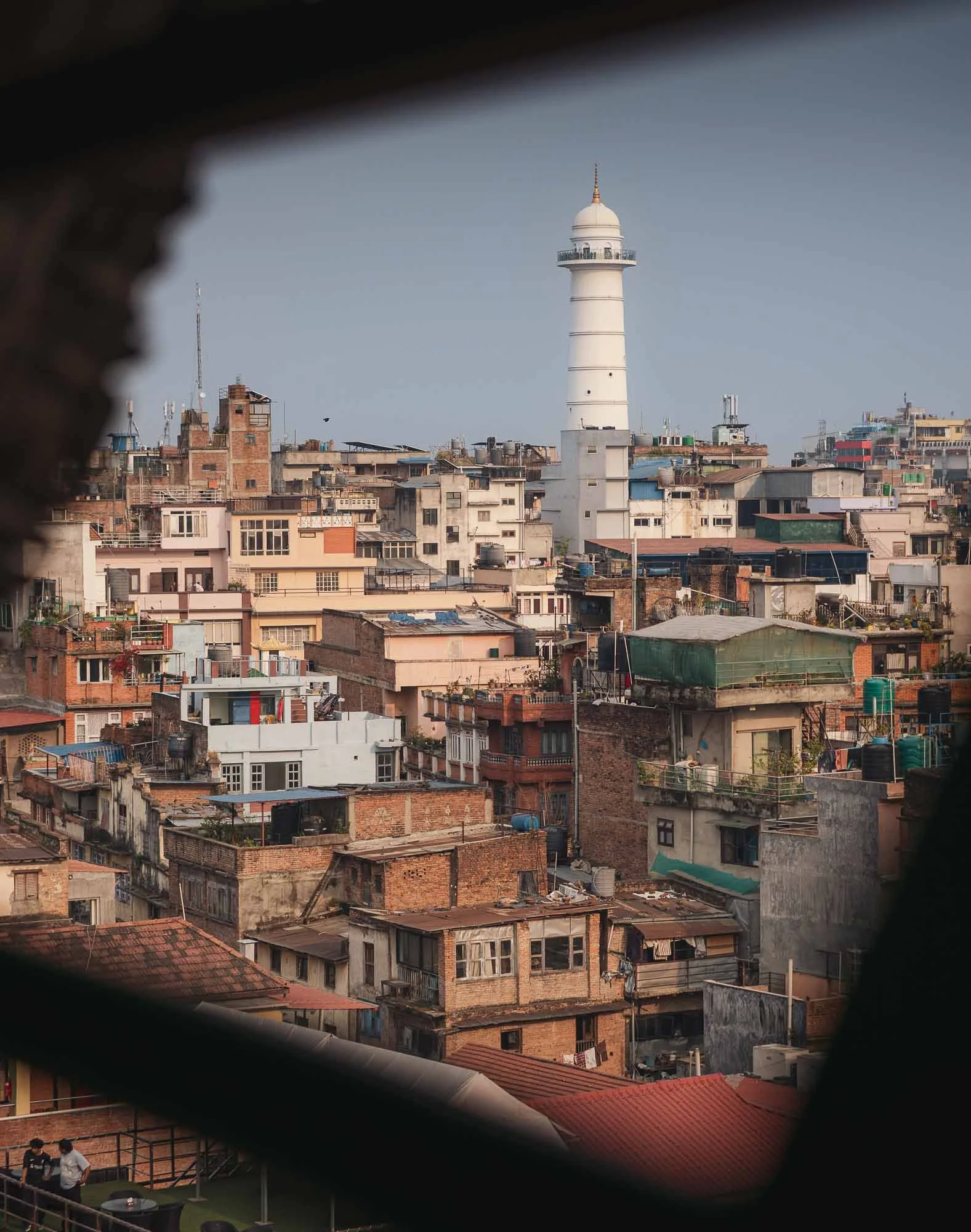
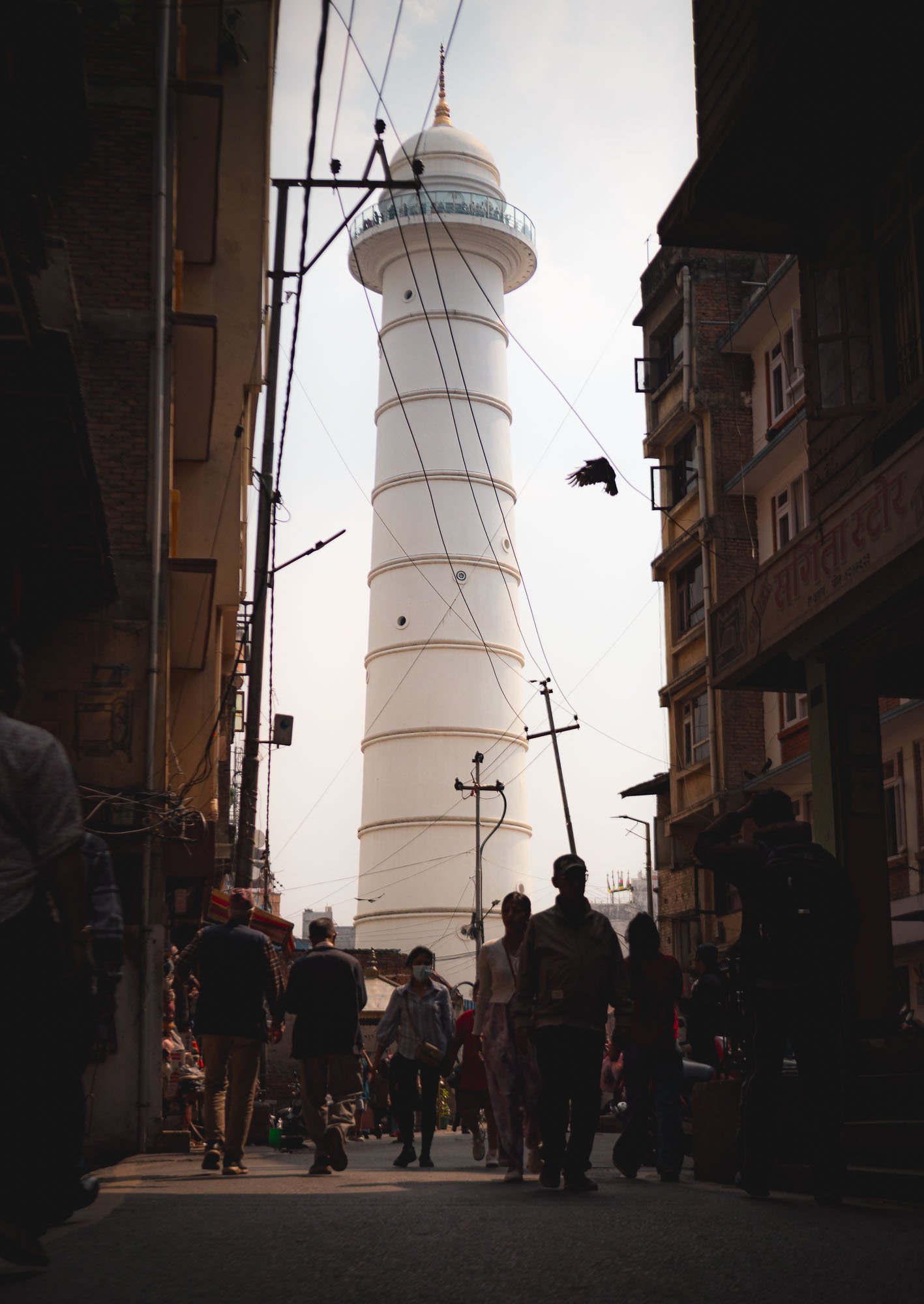
Not far from the square lies the white Dharahara Tower, first built in 1832 as a watchtower but destroyed by the 2015 earthquake (for the second time) before being painstakingly reconstructed. It reopened in 2021 as both a memorial and one of the city’s most recognisable landmarks.
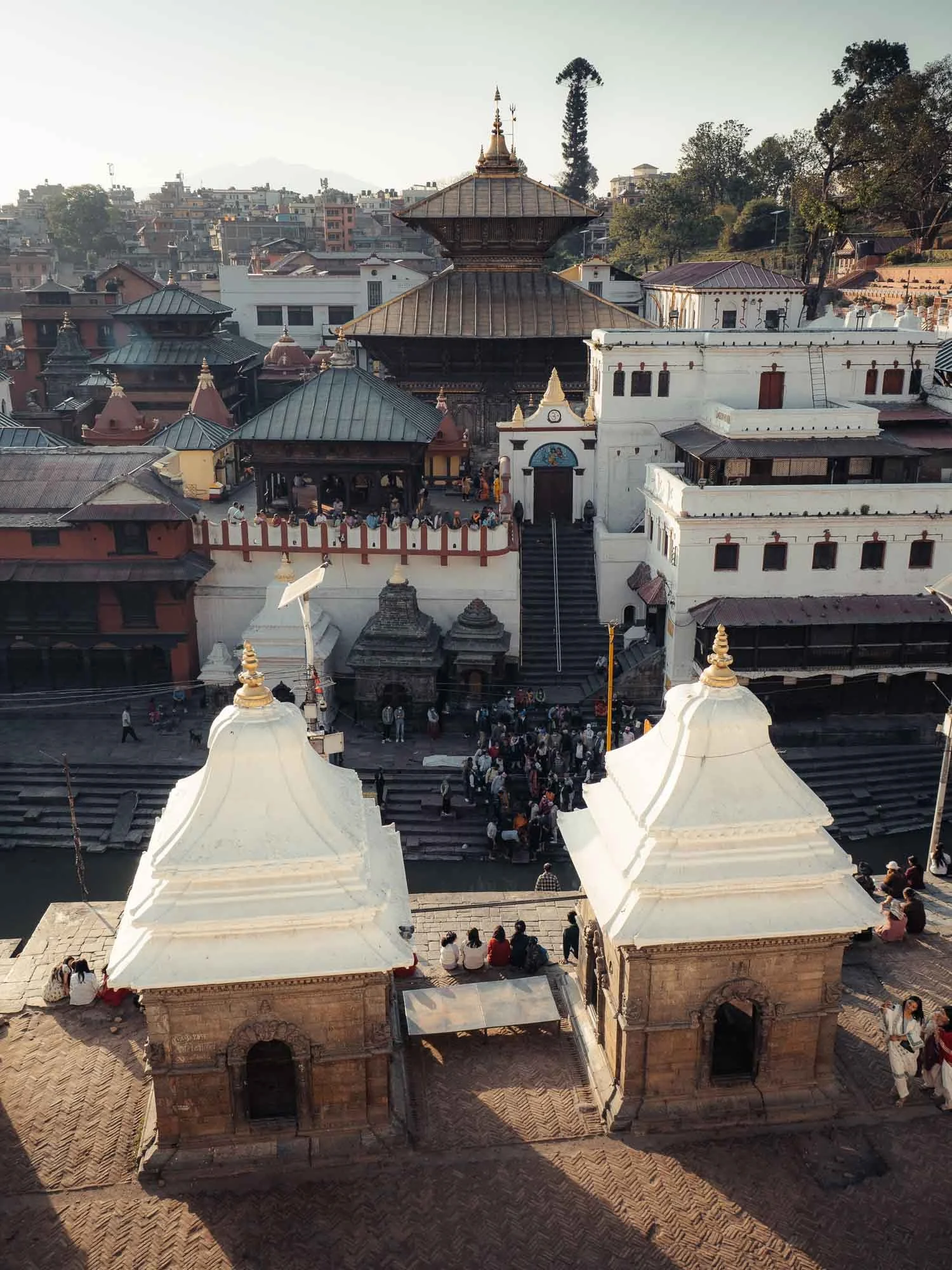
Pashupatinath Temple
Moving on from the Durbar Square, on the banks of the sacred Bagmati River lies the oldest Hindu temple in the city, going back to the fourth century, and now one of the most significant religious complexes in South Asia.
The primary temple structure follows the Newari pagoda style, but the surrounding buildings - excuse my ignorance - seem like an eclectic mix of all kinds of architectural expressions, possibly due to the ongoing expansion and renovation works over many centuries.
The complex covers a huge area, and is one of the holiest pilgrimage sites for Hindus for its association with Shiva, but Buddhists consider the temple sacred as well.
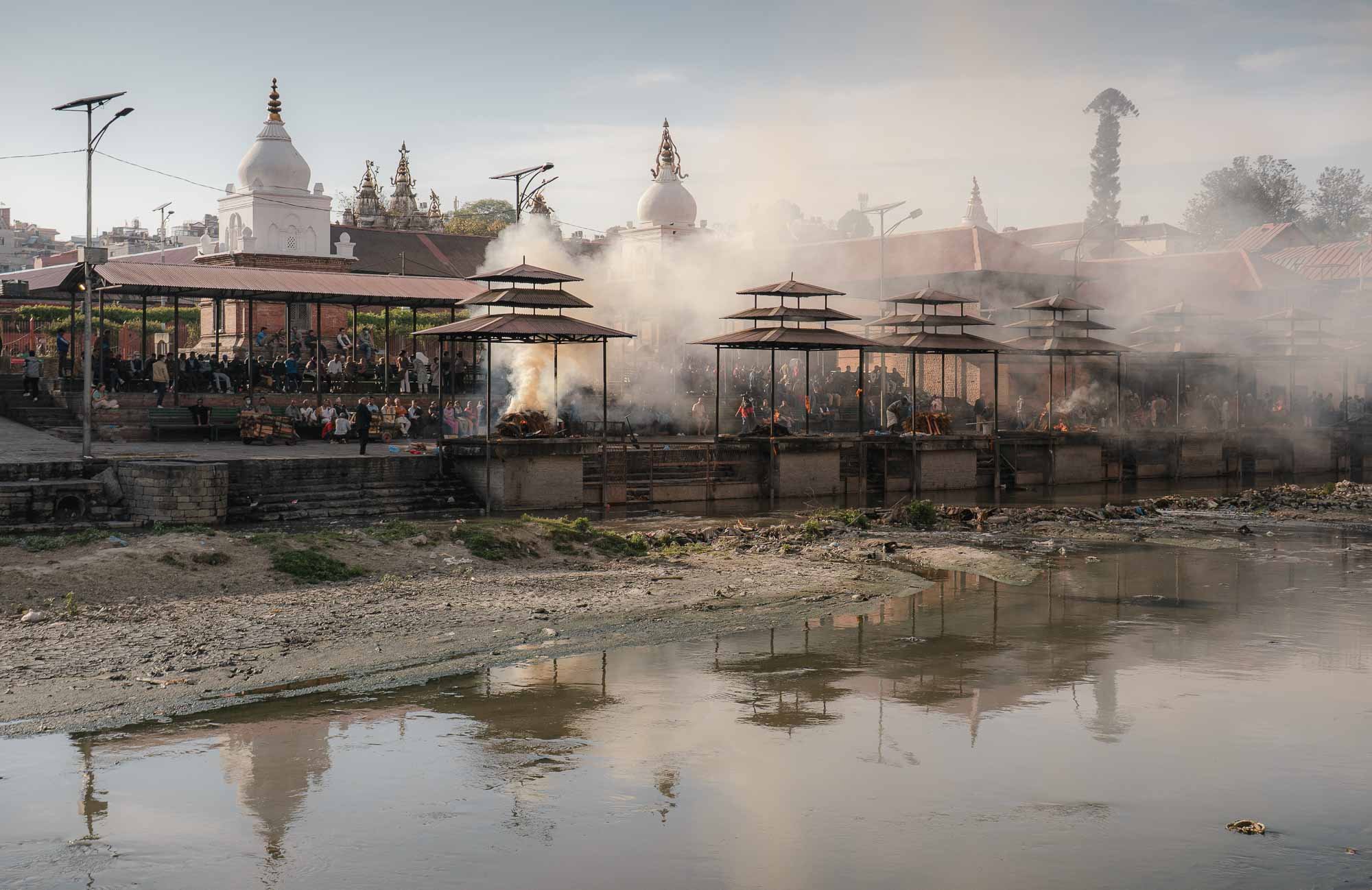
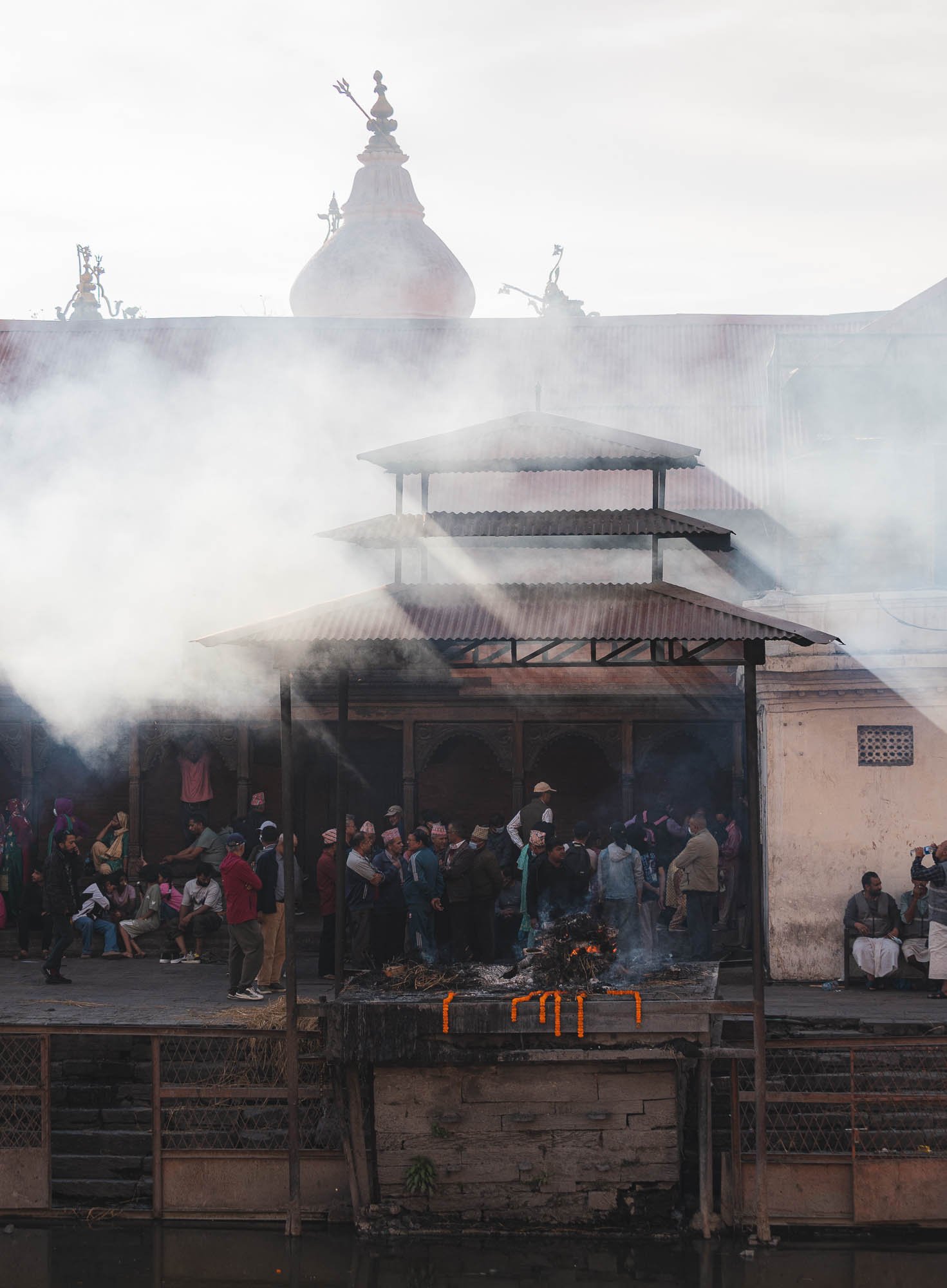
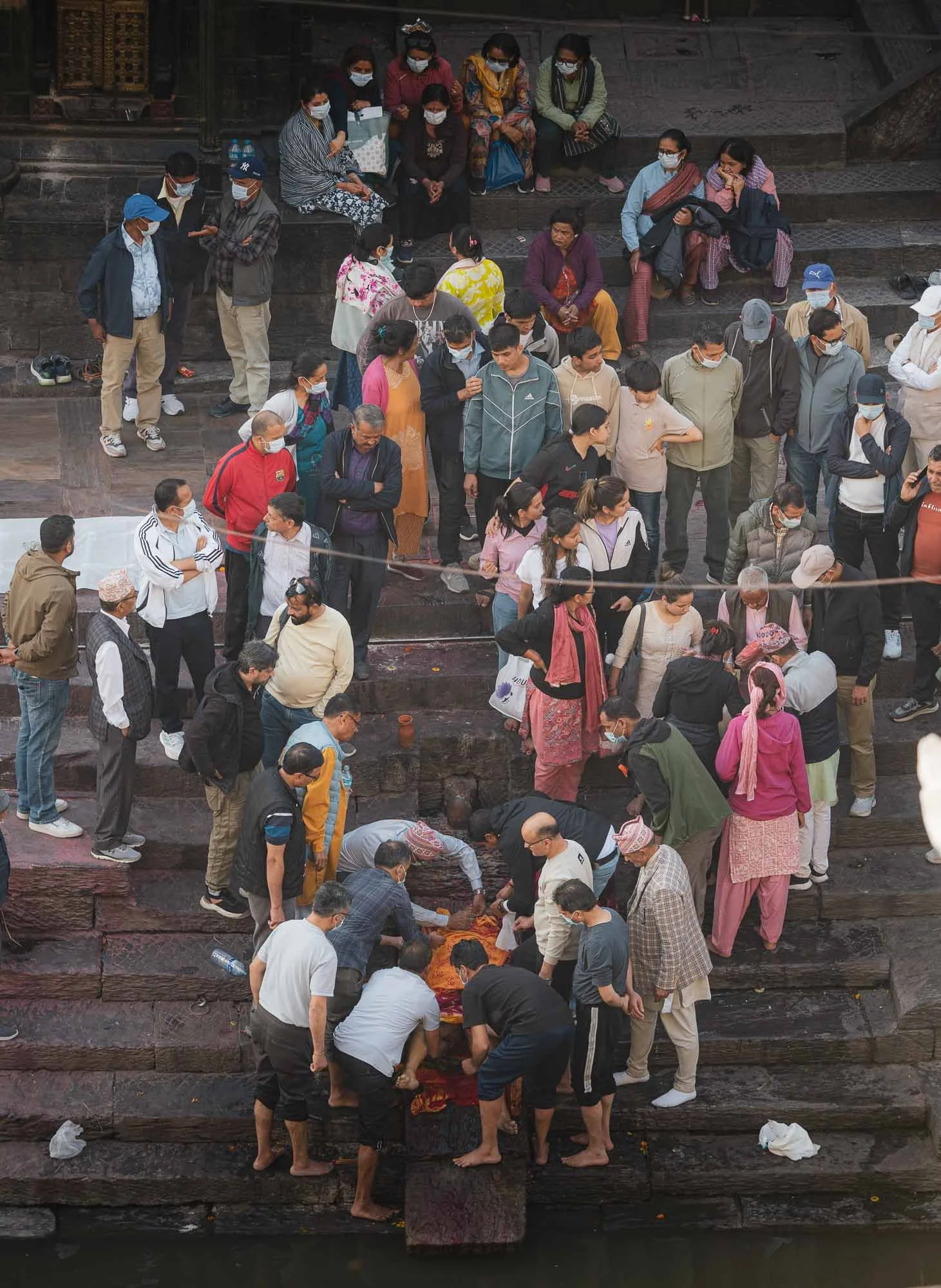
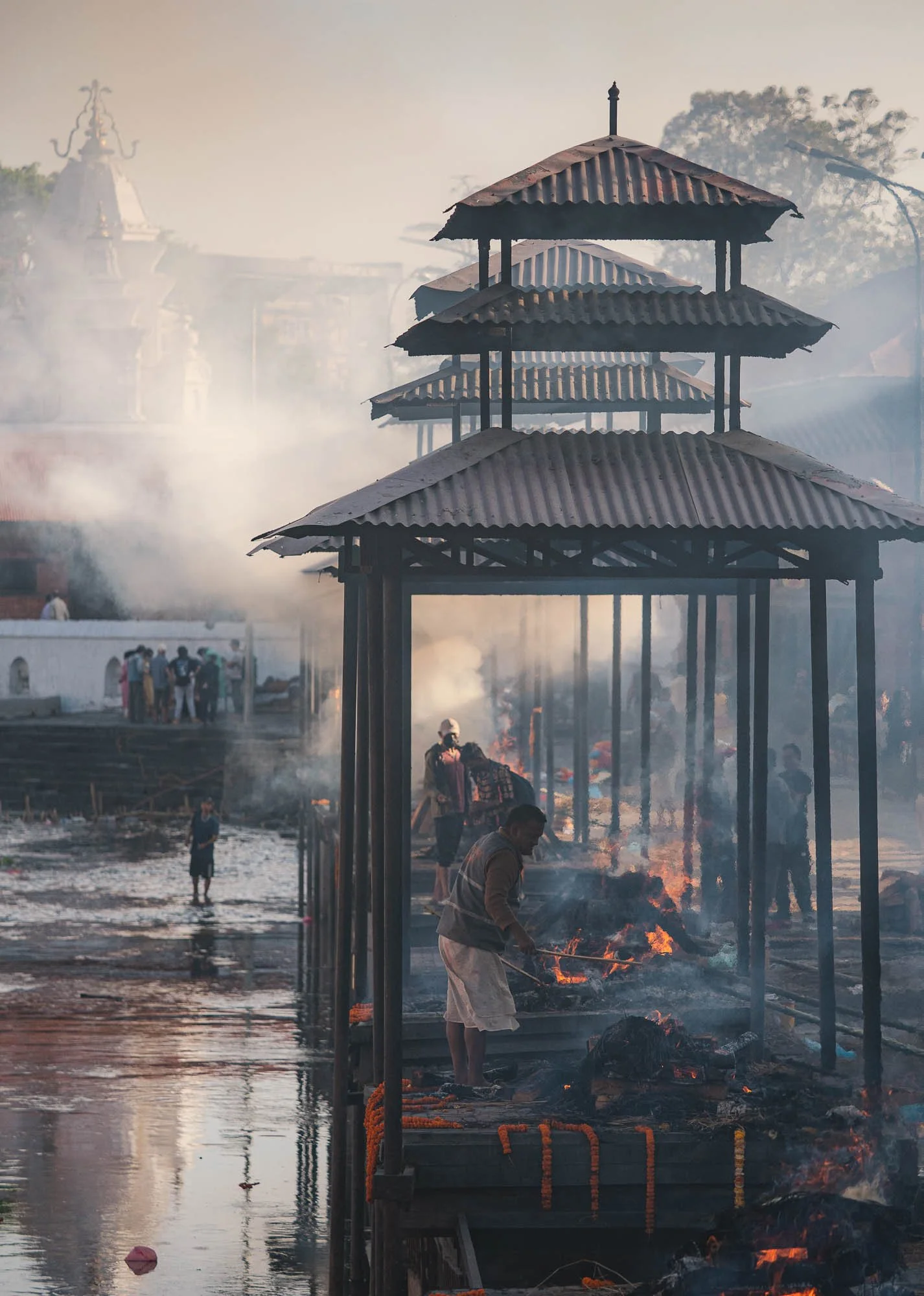
One of its most prominent features are the cremation spots along the river bank, where funeral pyres burn throughout the day. Being cremated here is meant to help the soul on its journey toward liberation, particularly as the Bagmati river finally joins the Ganges, increasing the status of the site.
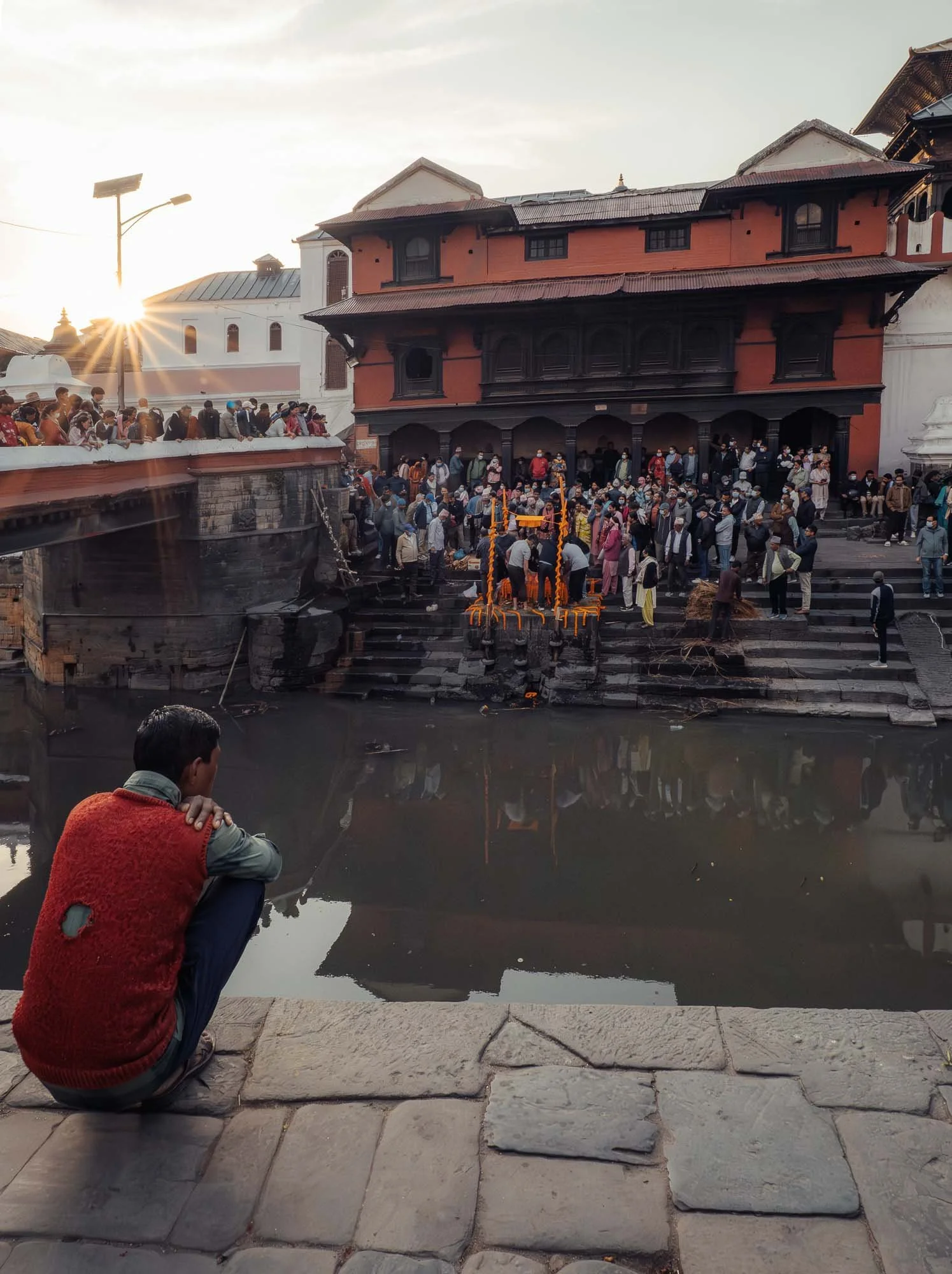
If you're so inclined, it's possible to observe the full process from across the river: starting with preparation such as washing the body and wrapping it in cloth, followed by the purification with river water, placing it on the pyre, final rites and lighting of the body, and cremation before the remains are consigned to the river. It’s an intense spectacle, and the wailing cries of family members of the deceased often echo through the compound.
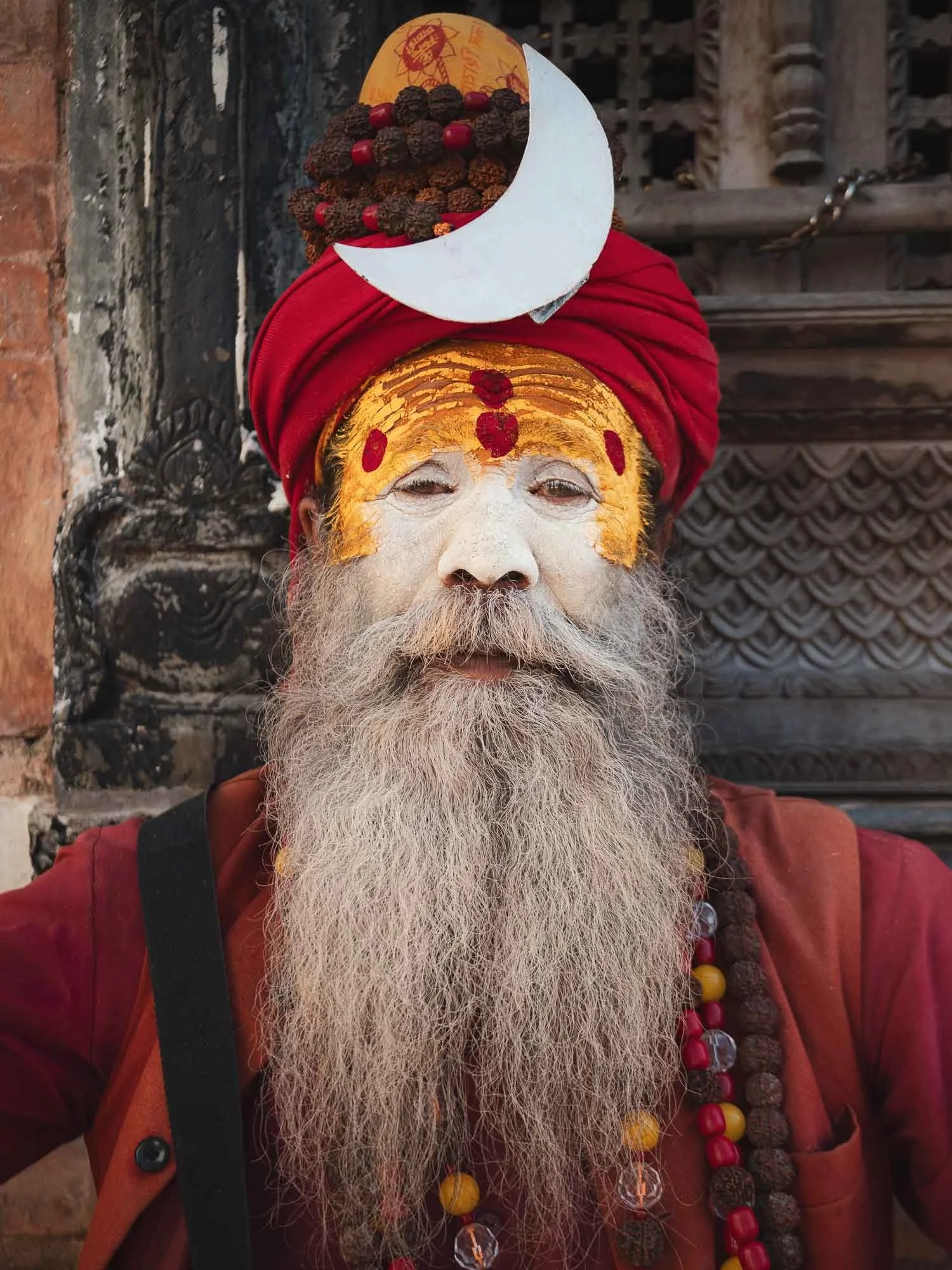
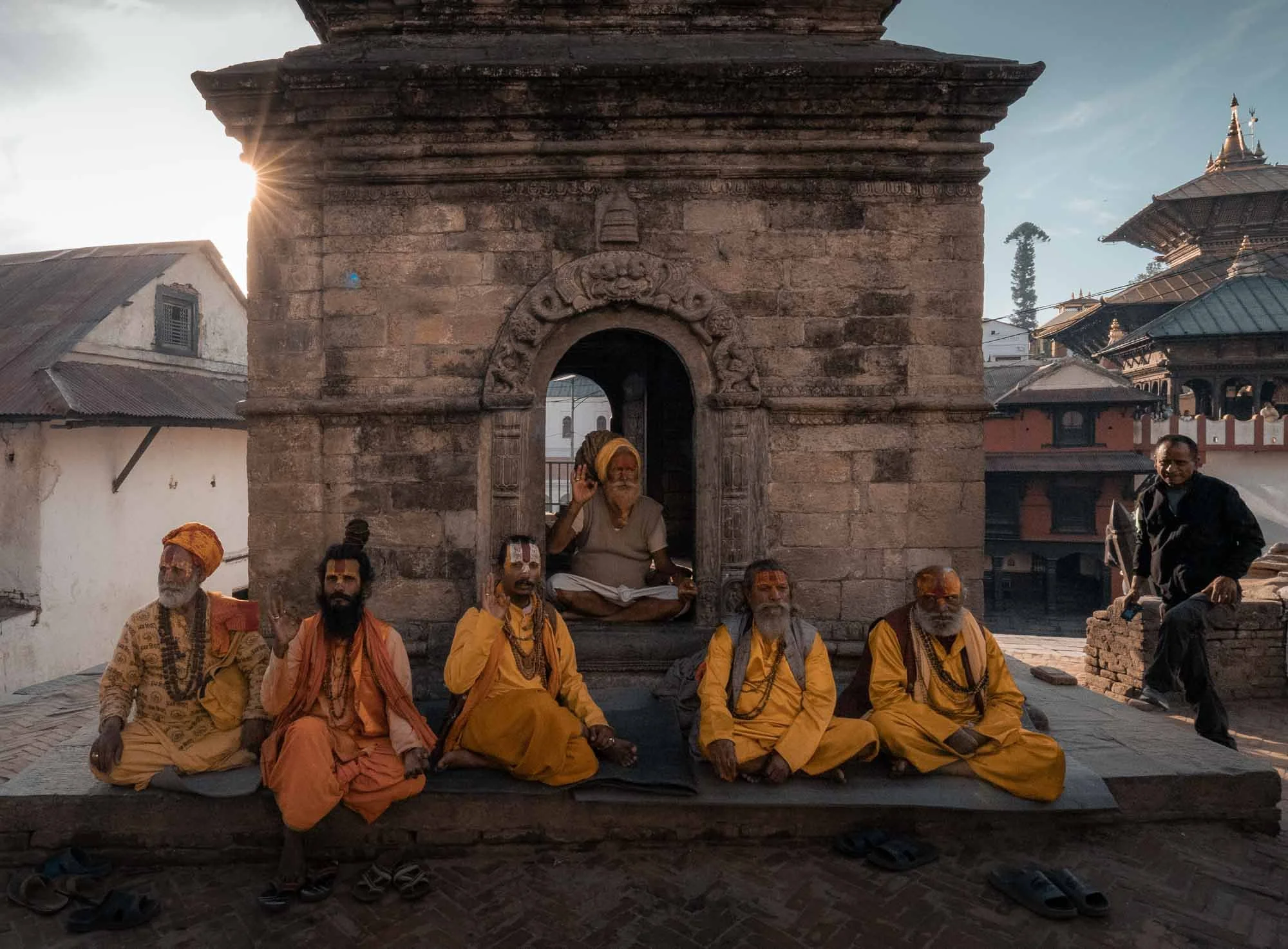
Among Pashupatinath’s temples wander saffron-clad sadhus - Hindu ascetics who have renounced worldly life in search of spiritual liberation (but of course would still appreciate a small donation to pose for your photograph…)
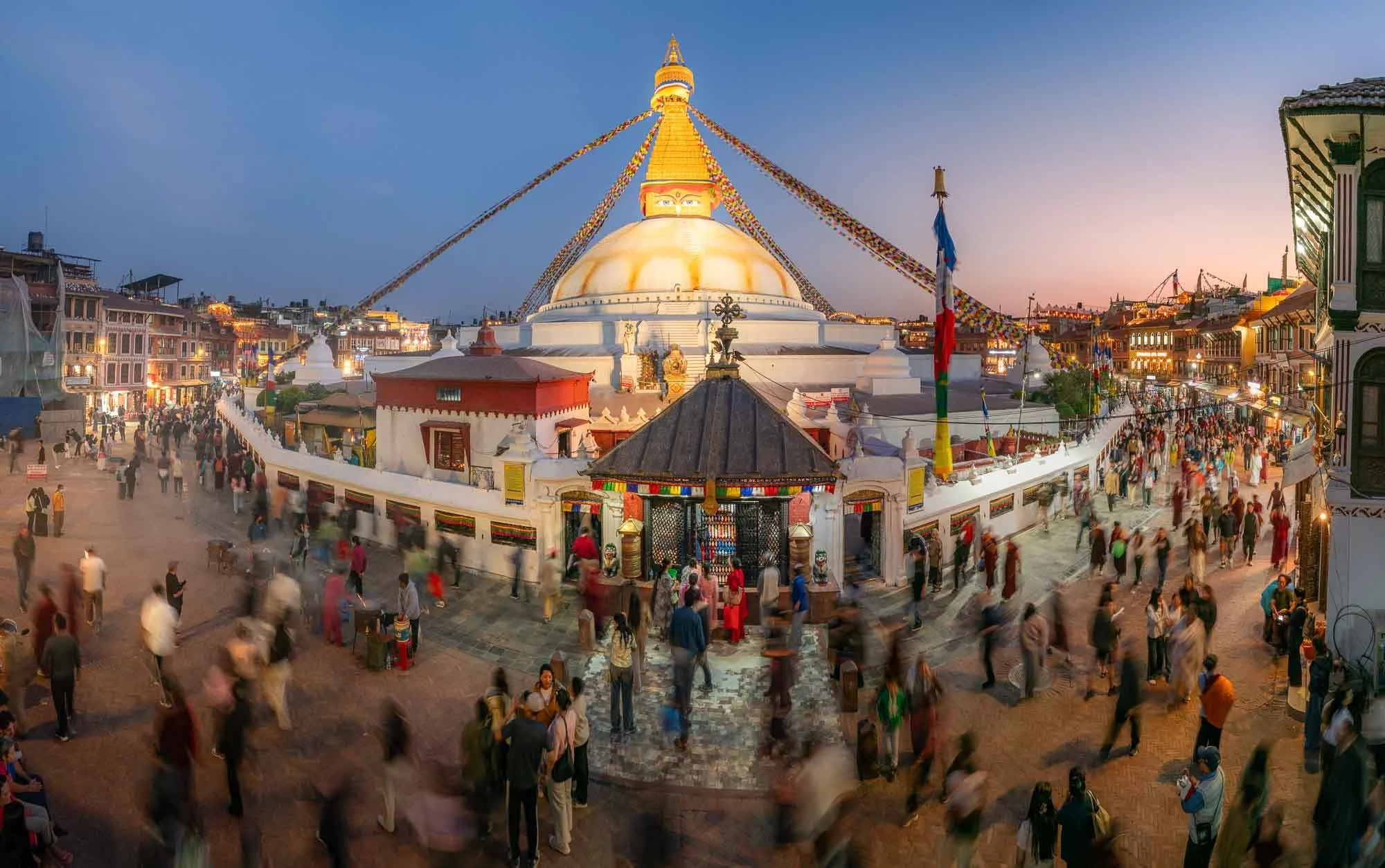
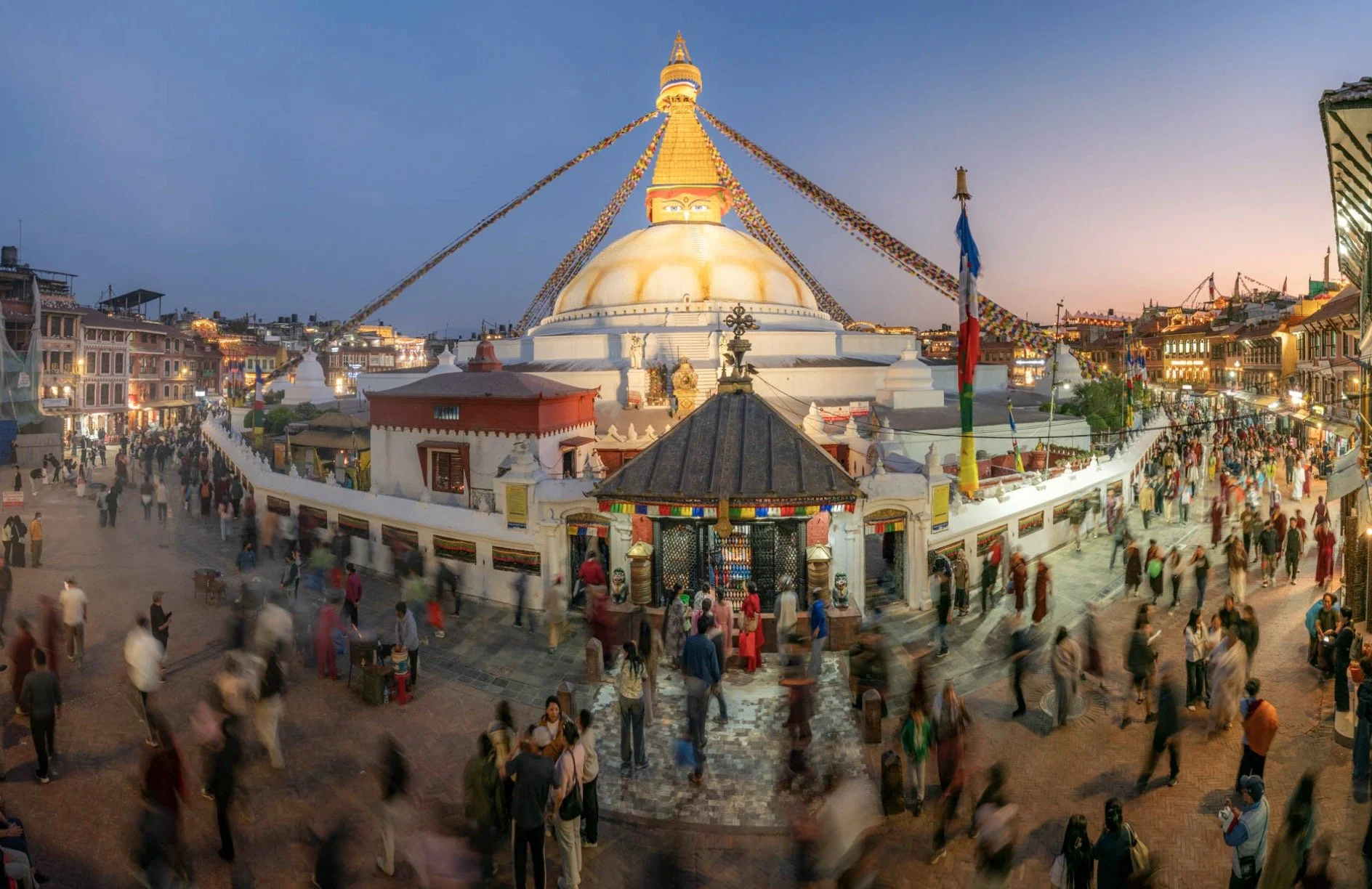
Stupa of Boudhanath
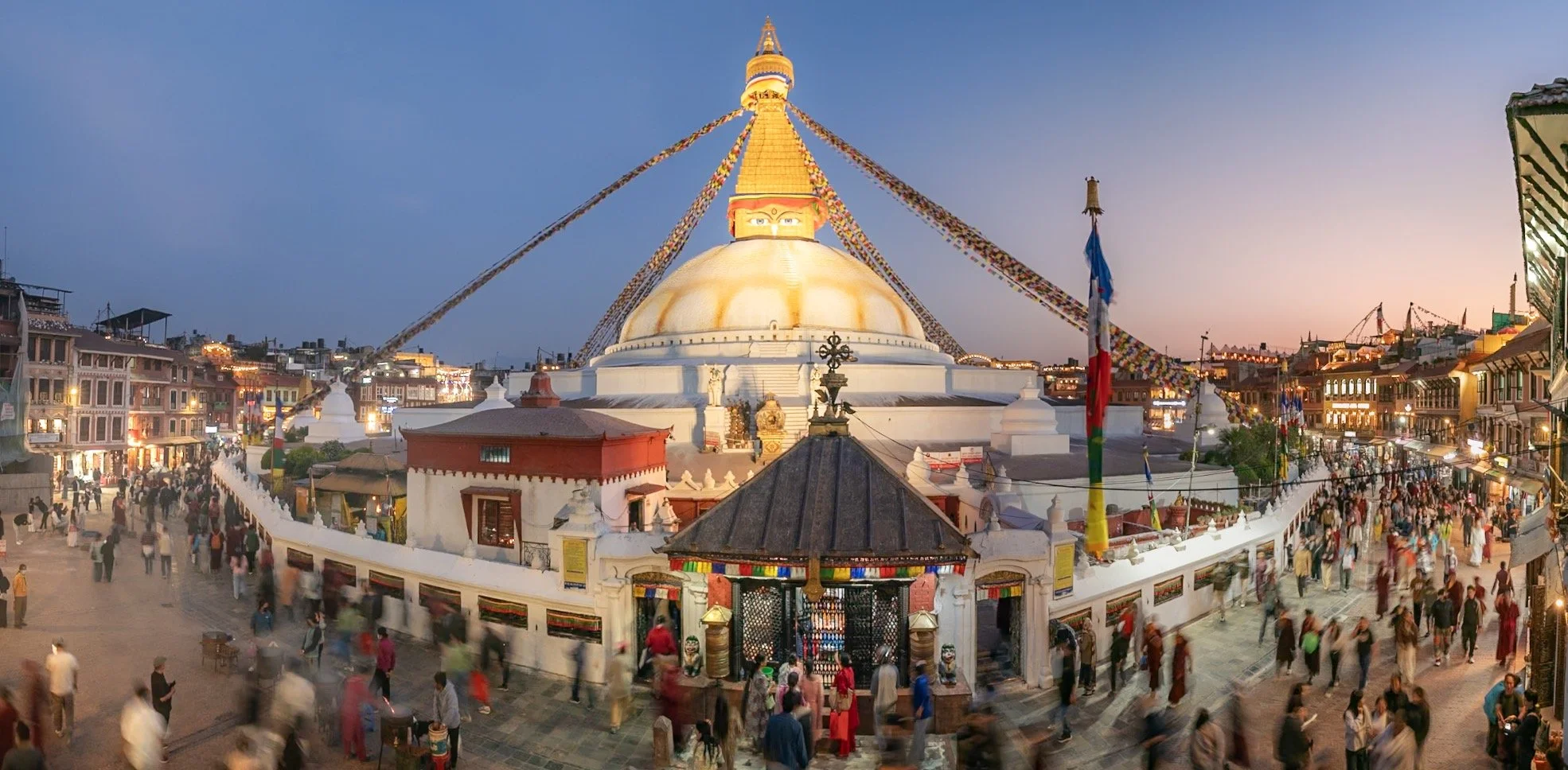
As we moved on I was keen to get a blue hour photo of this amazing stupa - luckily my guide Sushil knew all the possible rooftop spots and after what probably qualified as a sprint and climbing up and few floors, we made it to this one in time, which turned out to be my favourite.
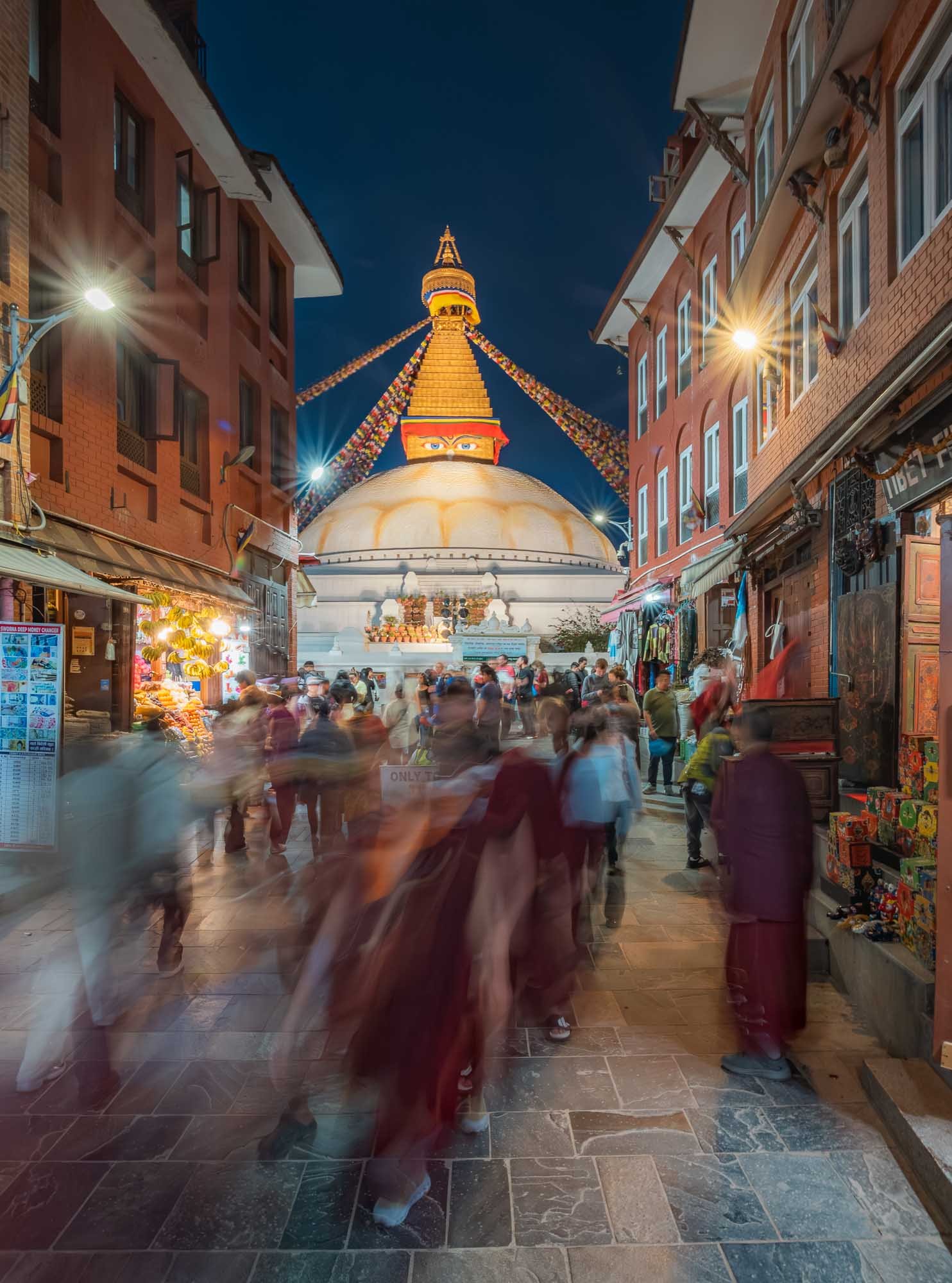
The current structure built in the 14th century is one of the world’s largest Buddhist stupas and was surrounded by rice paddies up until the 1950s, which is difficult to believe now but you’ll find some incredible photos online.
The origins of the site go back much further than that and it is seen as the embodiment of the enlightened mind of all the Buddhas, closely associated with the spread of Tibetan Buddhism.
Taragaon Museum
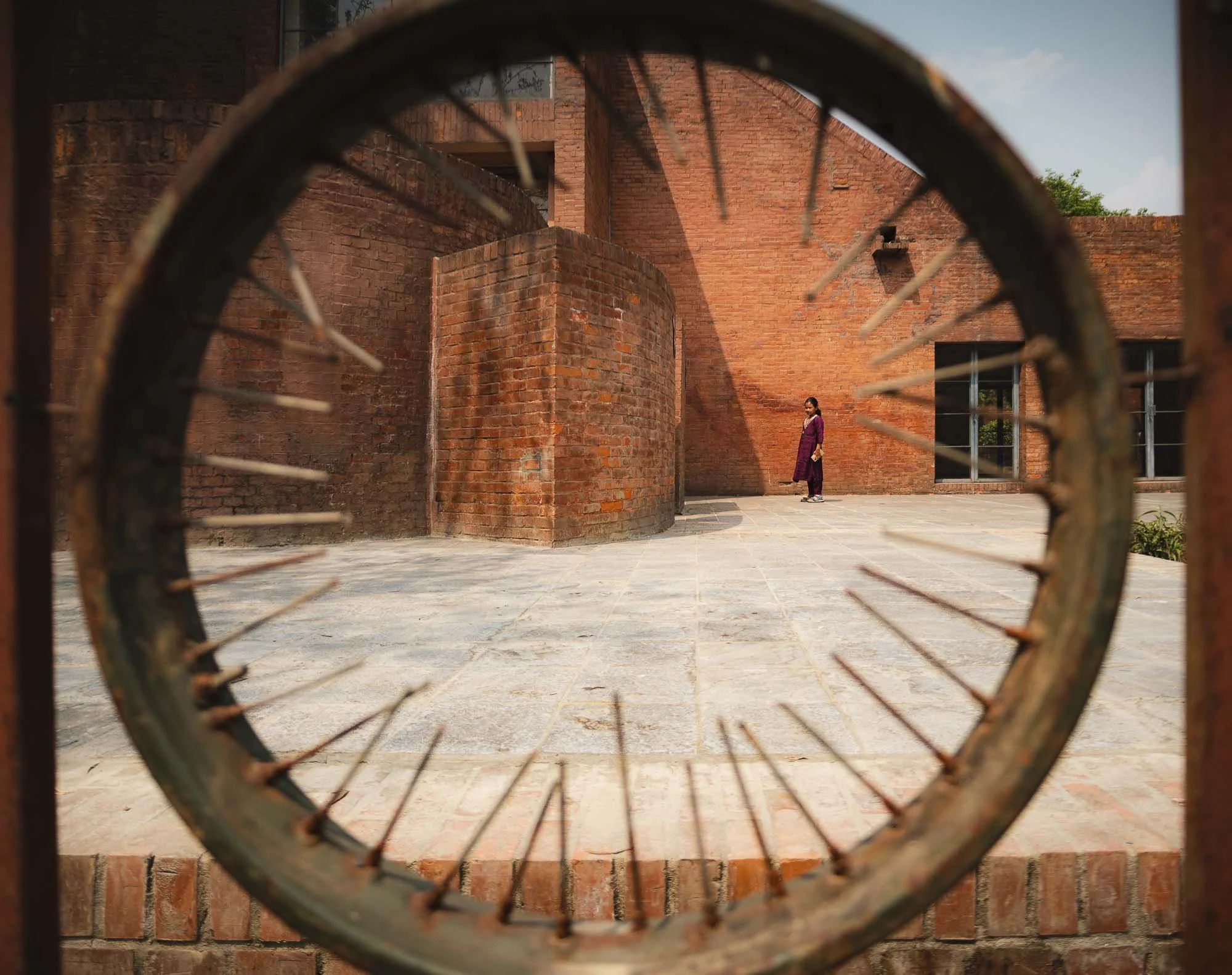
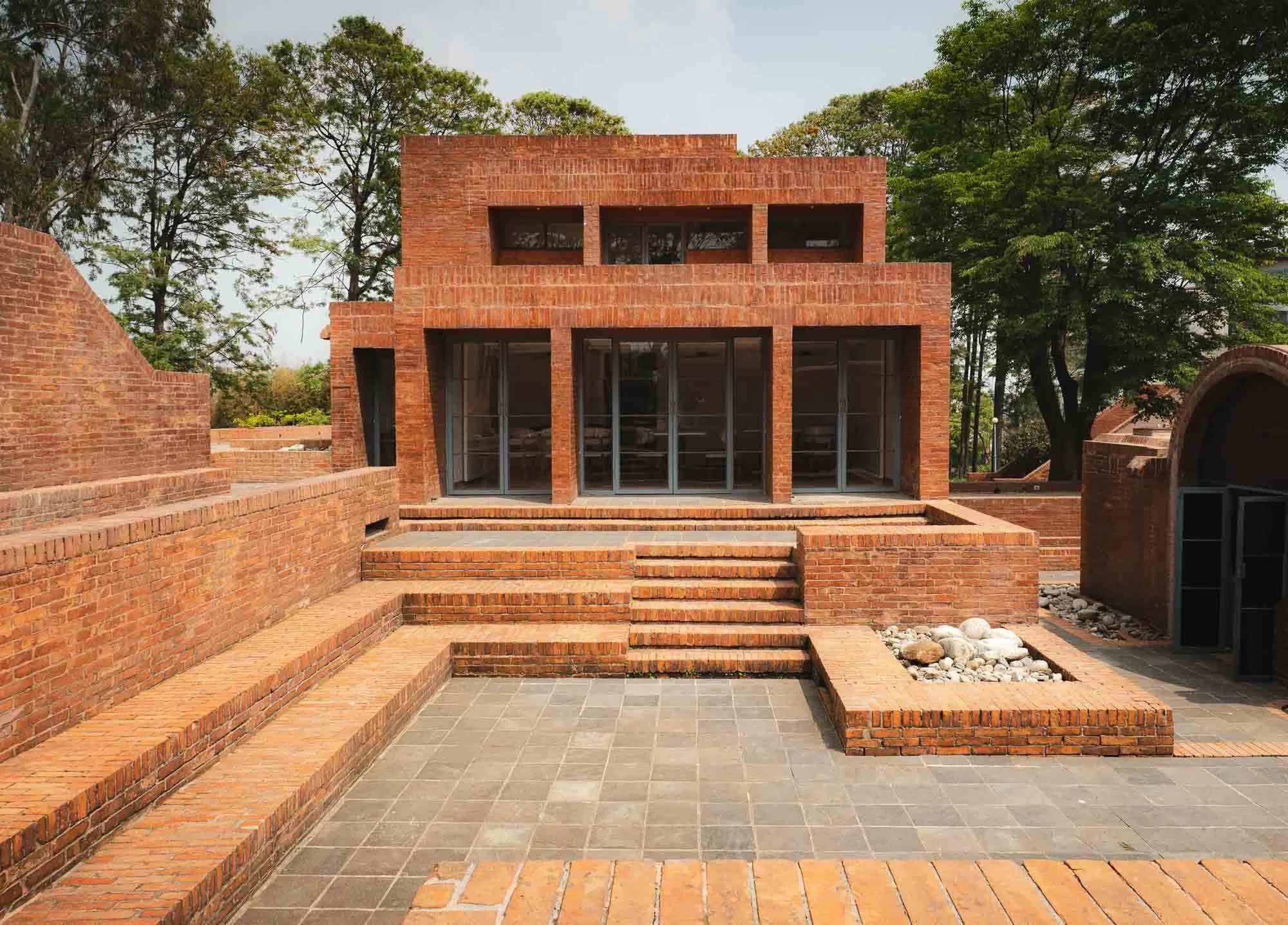
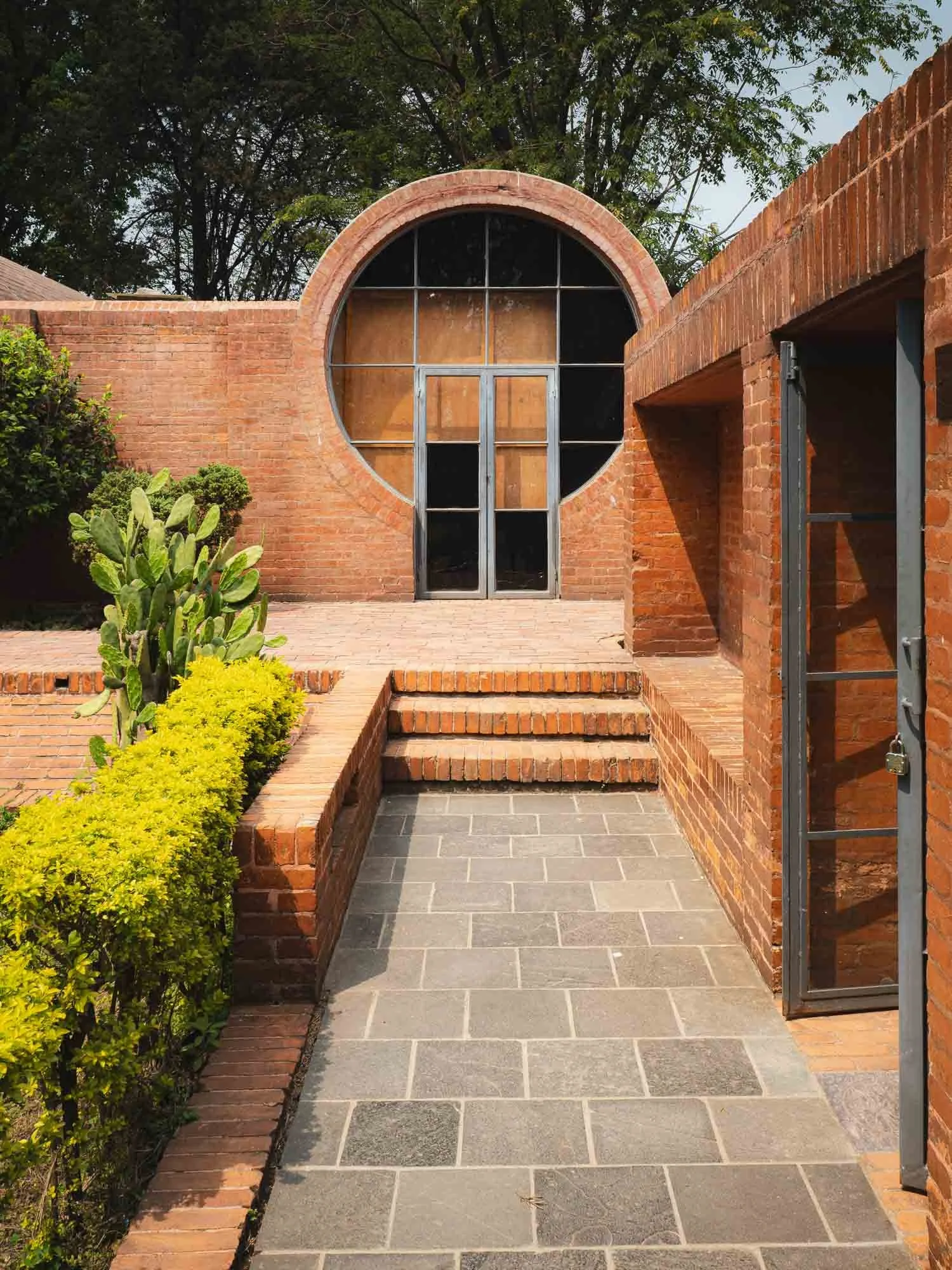
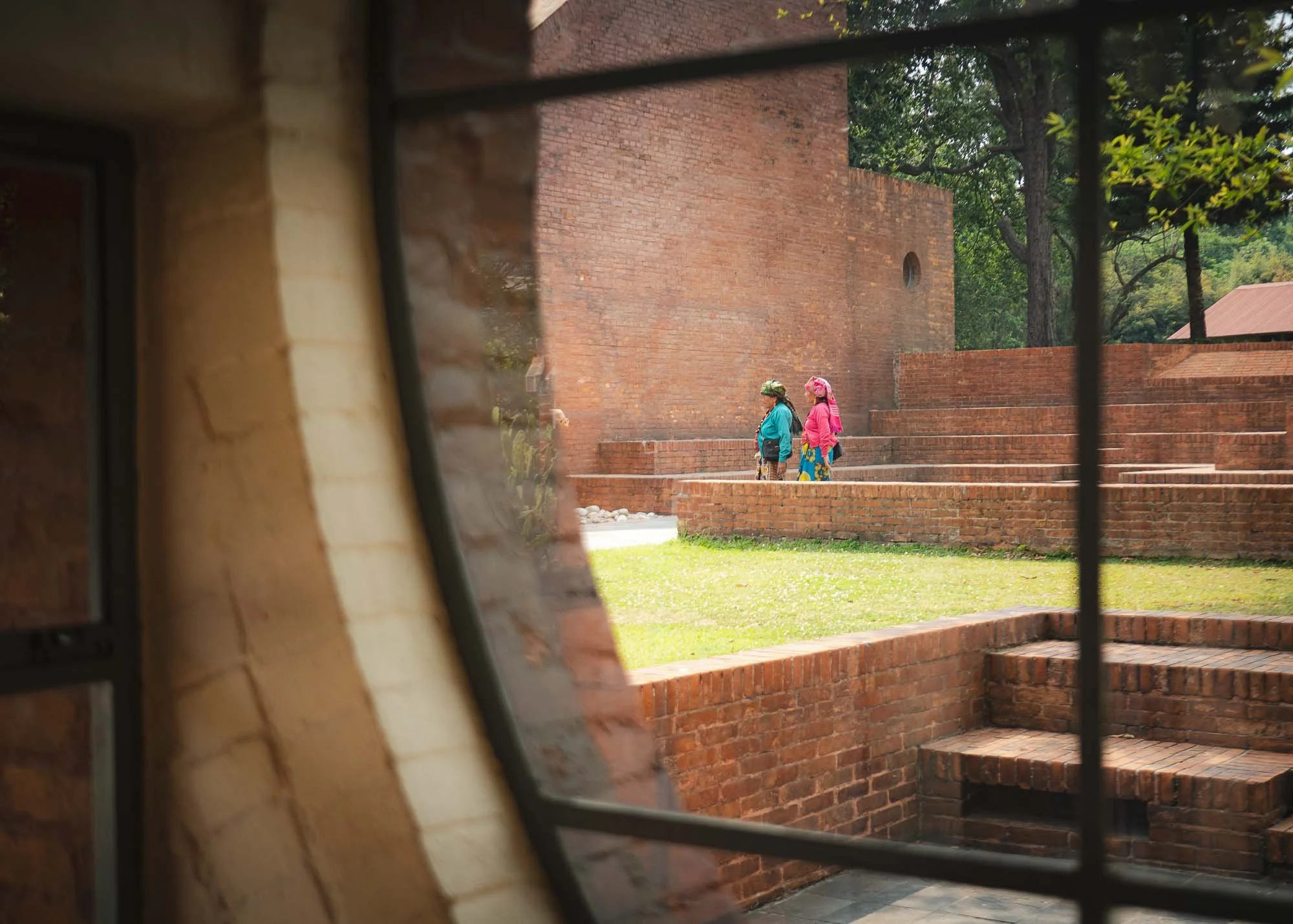
While there are a few examples, Kathmandu isn’t home to a lot of contemporary buildings, or at least not particularly significant ones. One example I wanted to visit is the Taragon museum, featuring a modernist design with traditional Nepali brickwork. It was originally built as accommodation for visiting artists, researchers and UNESCO experts in the 1970s and is home to a number if interesting exhibits and art pieces centred around the early exploration of Nepal.
Bhaktapur
Another place I wanted to see lies just an hour outside the capital: Bhaktapur, maybe one of the most architecturally interesting and well-preserved cities in the country, and also part of the UNESCO complex in the area, significant for its Newar culture.
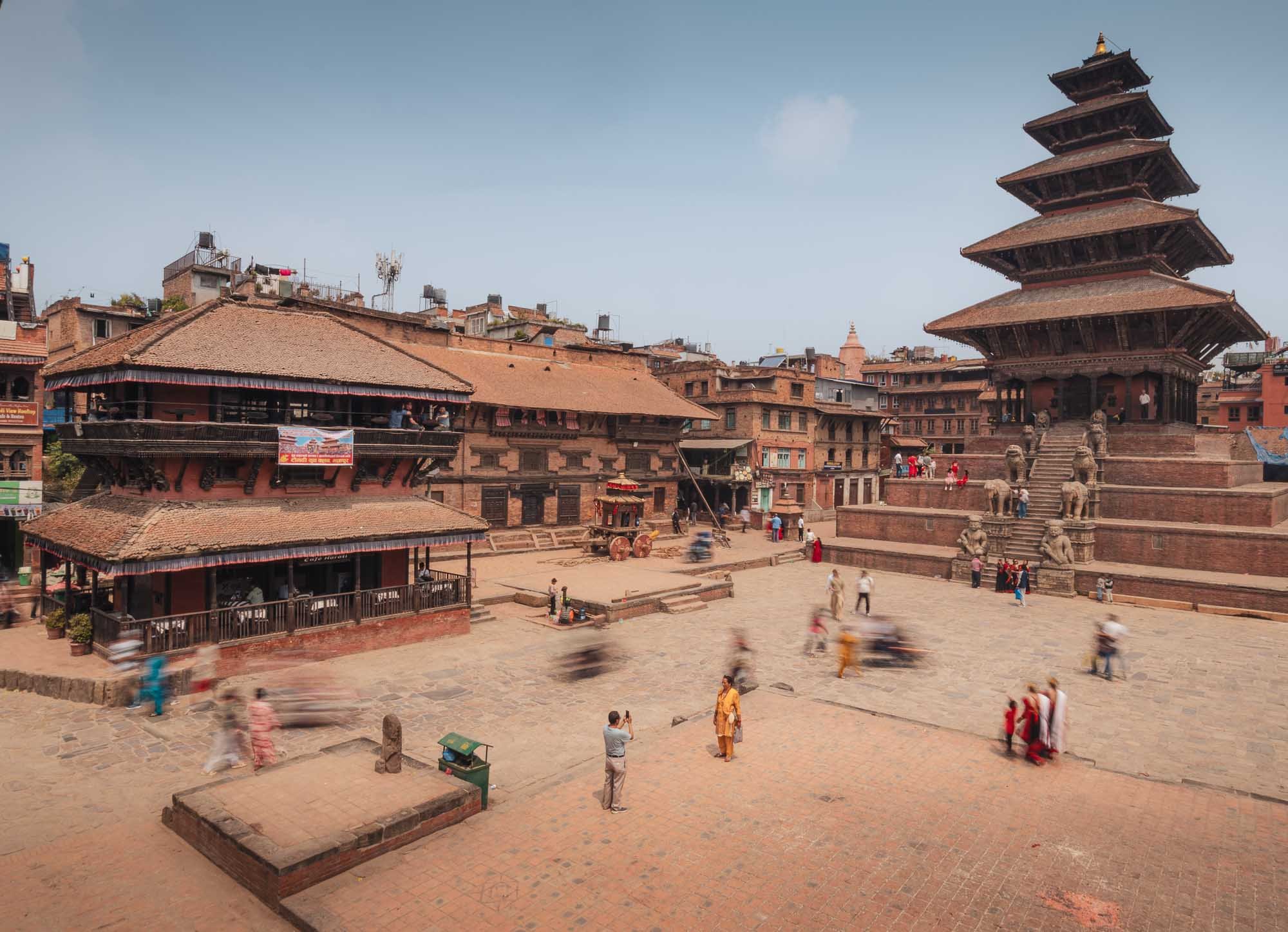
The city’s Durbar Square completes the set of three in the Kathmandu valley - hard to pick a favourite! Once again, the architectural diversity is stunning, and once again looking at images of the destruction from the 2015 earthquake shows the enormous reconstruction effort these historic sites have since undergone to bring them back to their original glory.
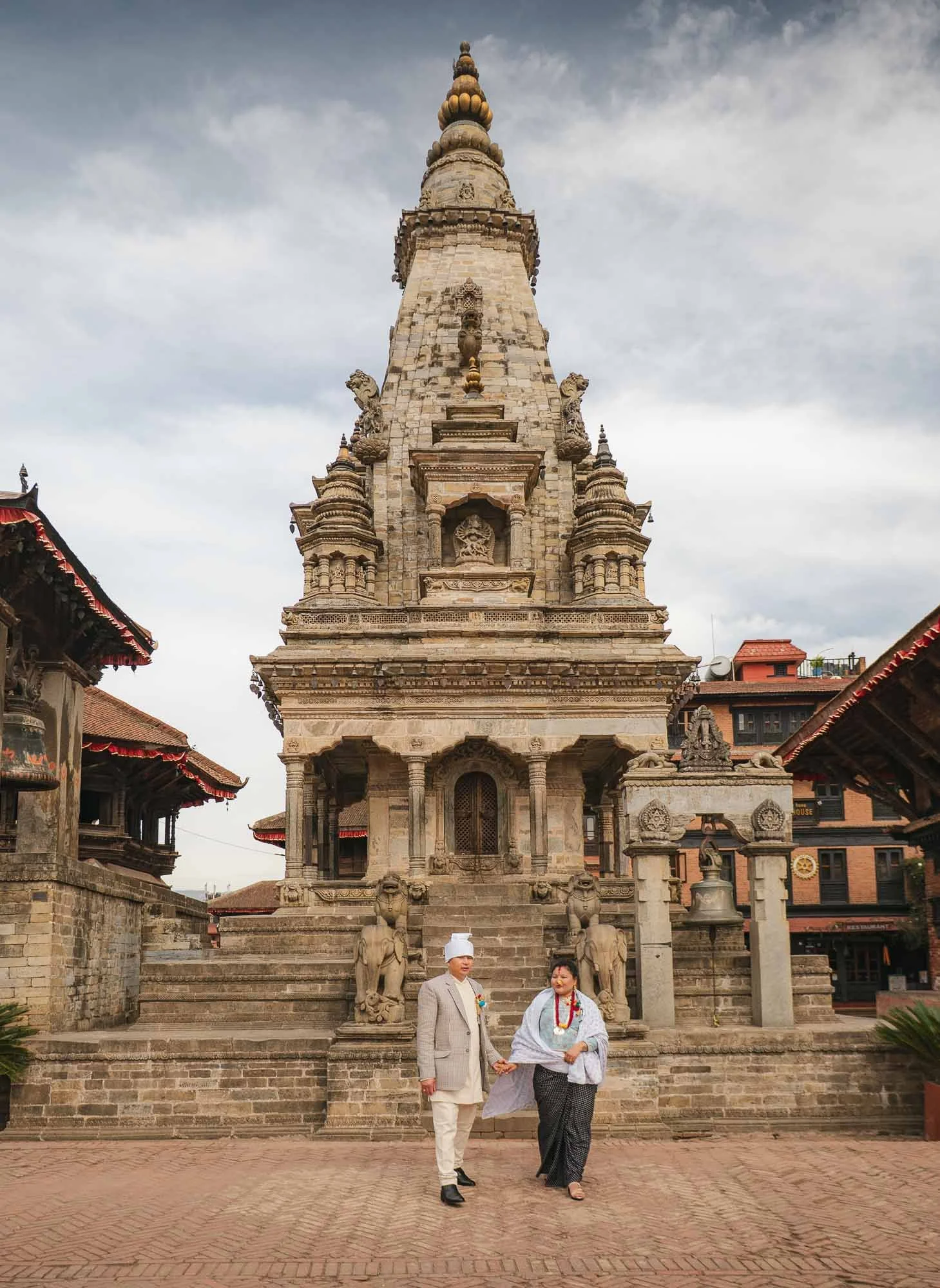
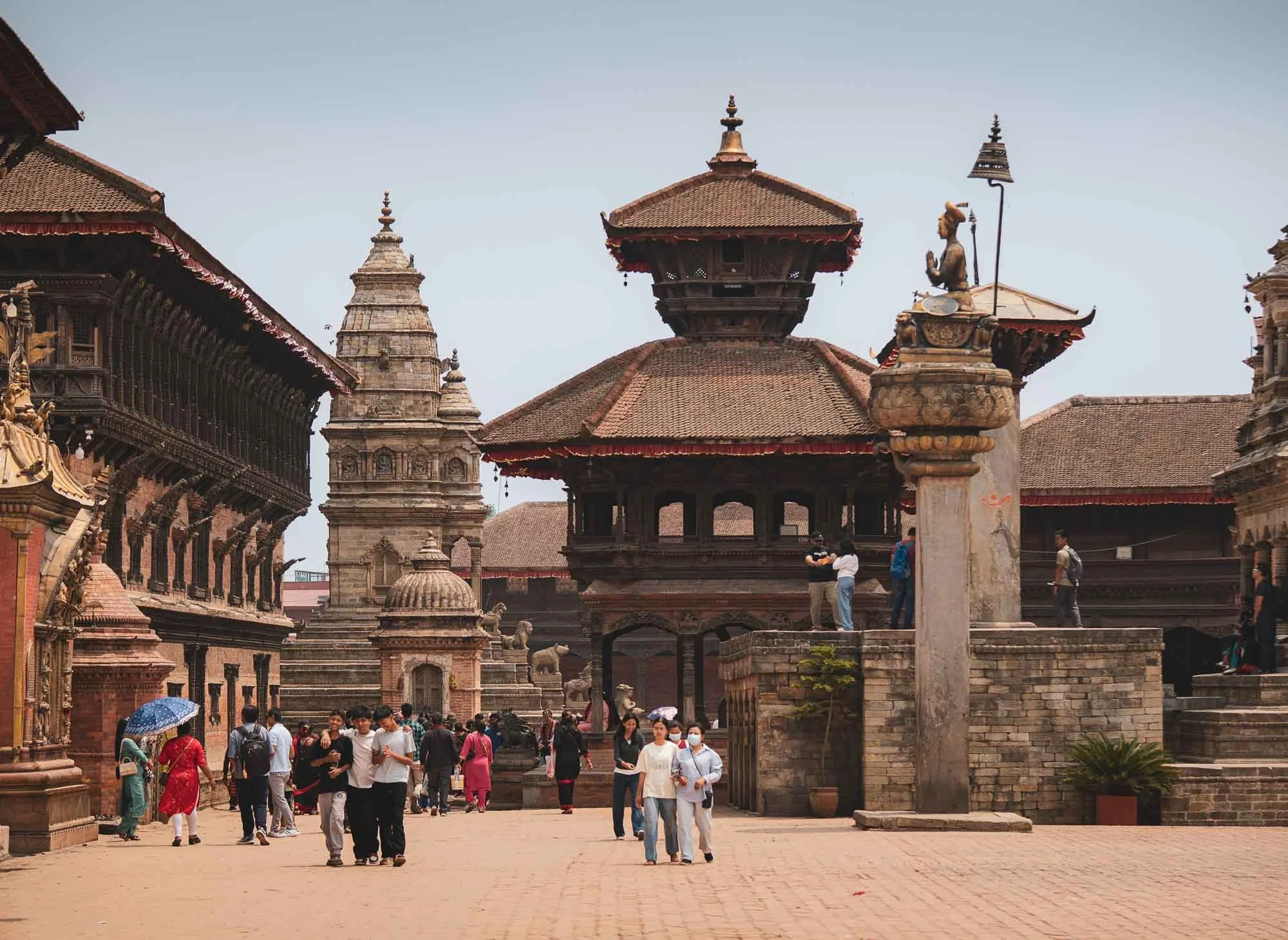
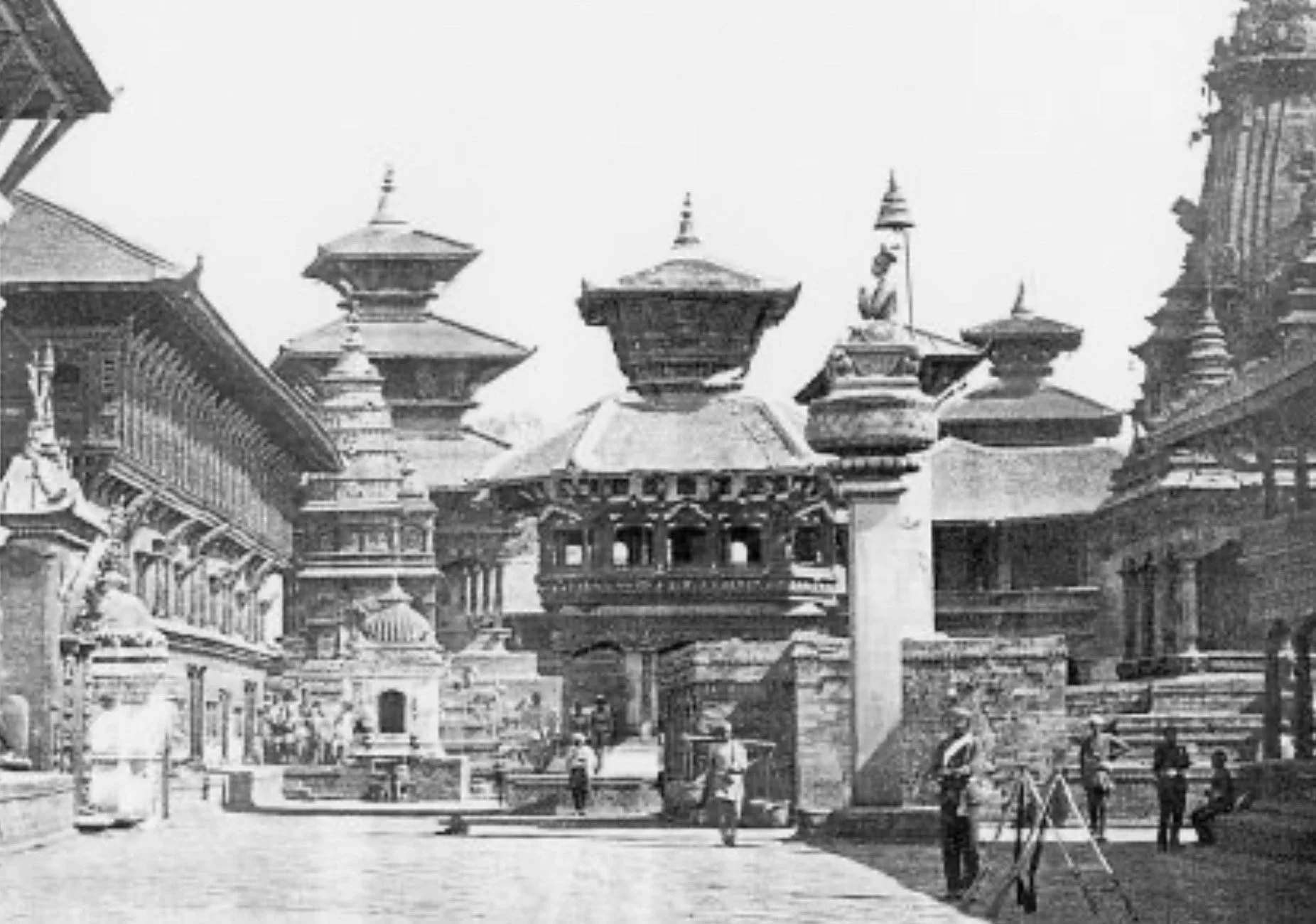
It was by far not the only time significant reconstruction was necessary: in 1833 and 1934 similarly destructive earthquakes destroyed almost the entire square. Through sheer coincidence (or maybe because it’s been a nice angle for the last 100 years) I took a photo with almost the exact composition as a pre-1934 image hosted on Wikipedia that allows to see the difference and similarities since then. Despite best efforts, dozens of important monuments were lost during these earthquakes. The historic royal residence with its palace of fifty-five windows is visible on the left.
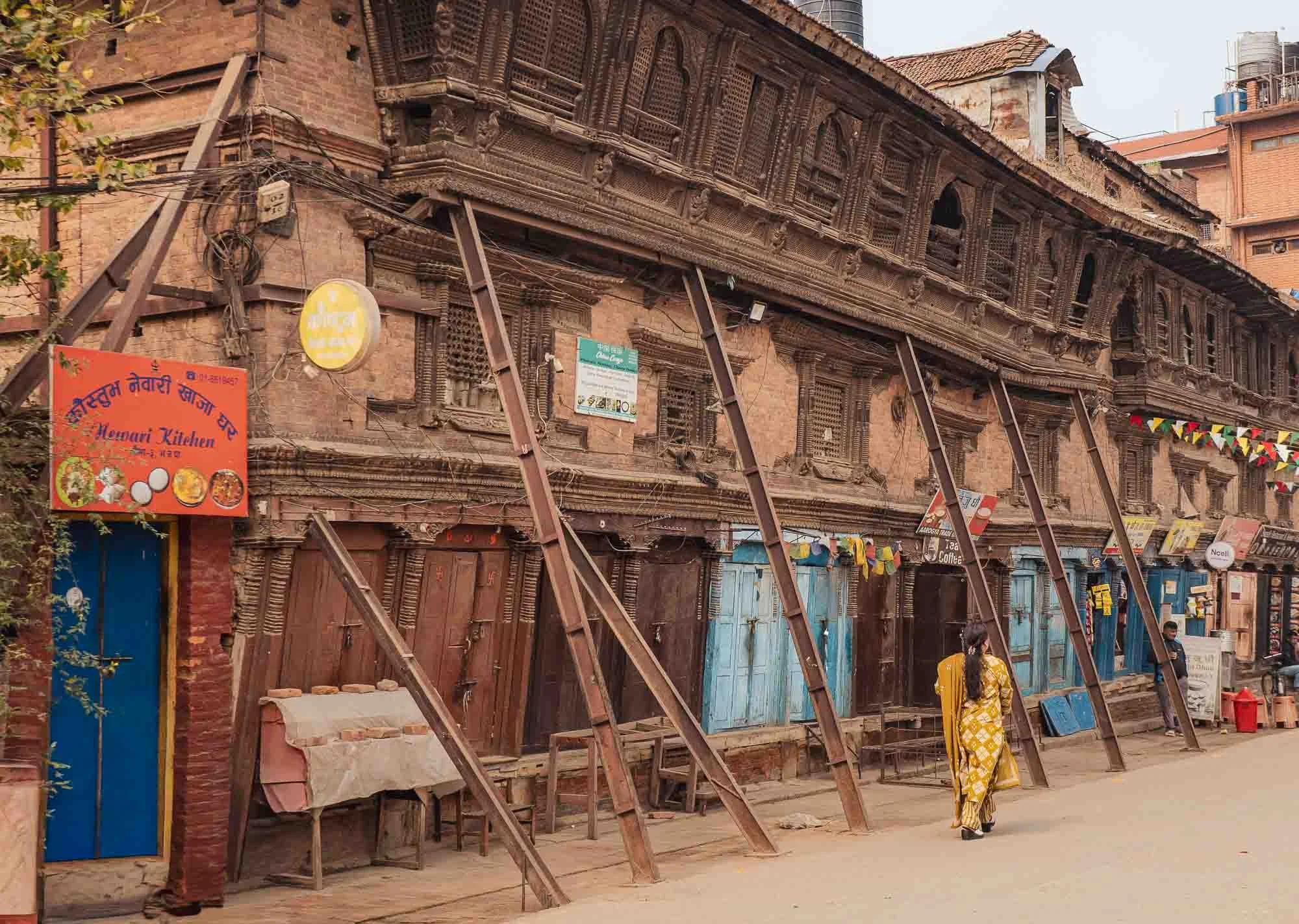
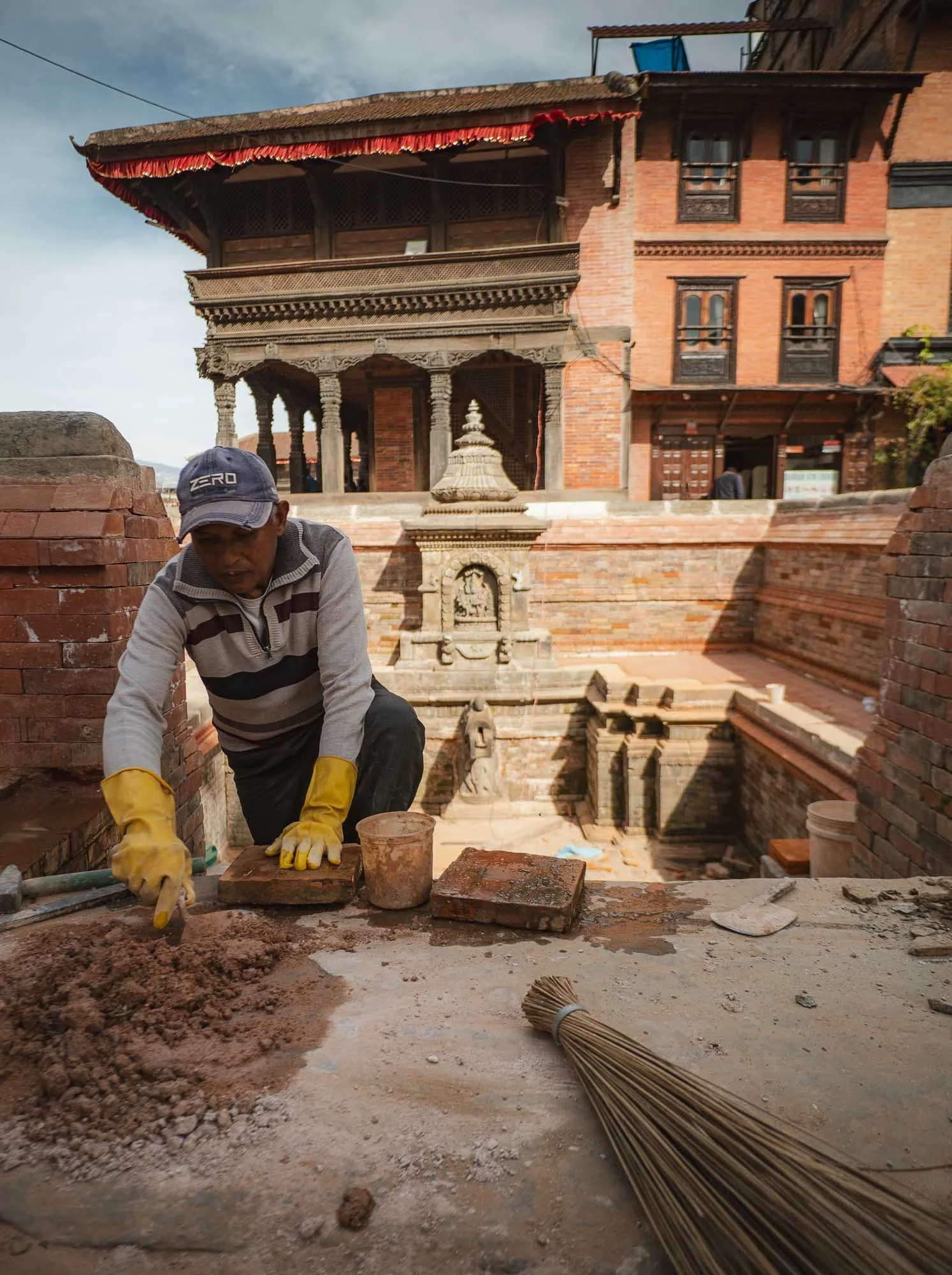
Even today, not every building is in its best state - restoring and preserving these structures is an ongoing effort. Since the 2015 earthquake, restoration has been supported by governments from around the world, with visitor entrance fees also helping to fund ongoing conservation. Most of the work is still carried out by Newar craftsmen using traditional techniques, but sometimes “modern” tools like steel bars have to support their efforts - literally and figuratively.
Pottery Central
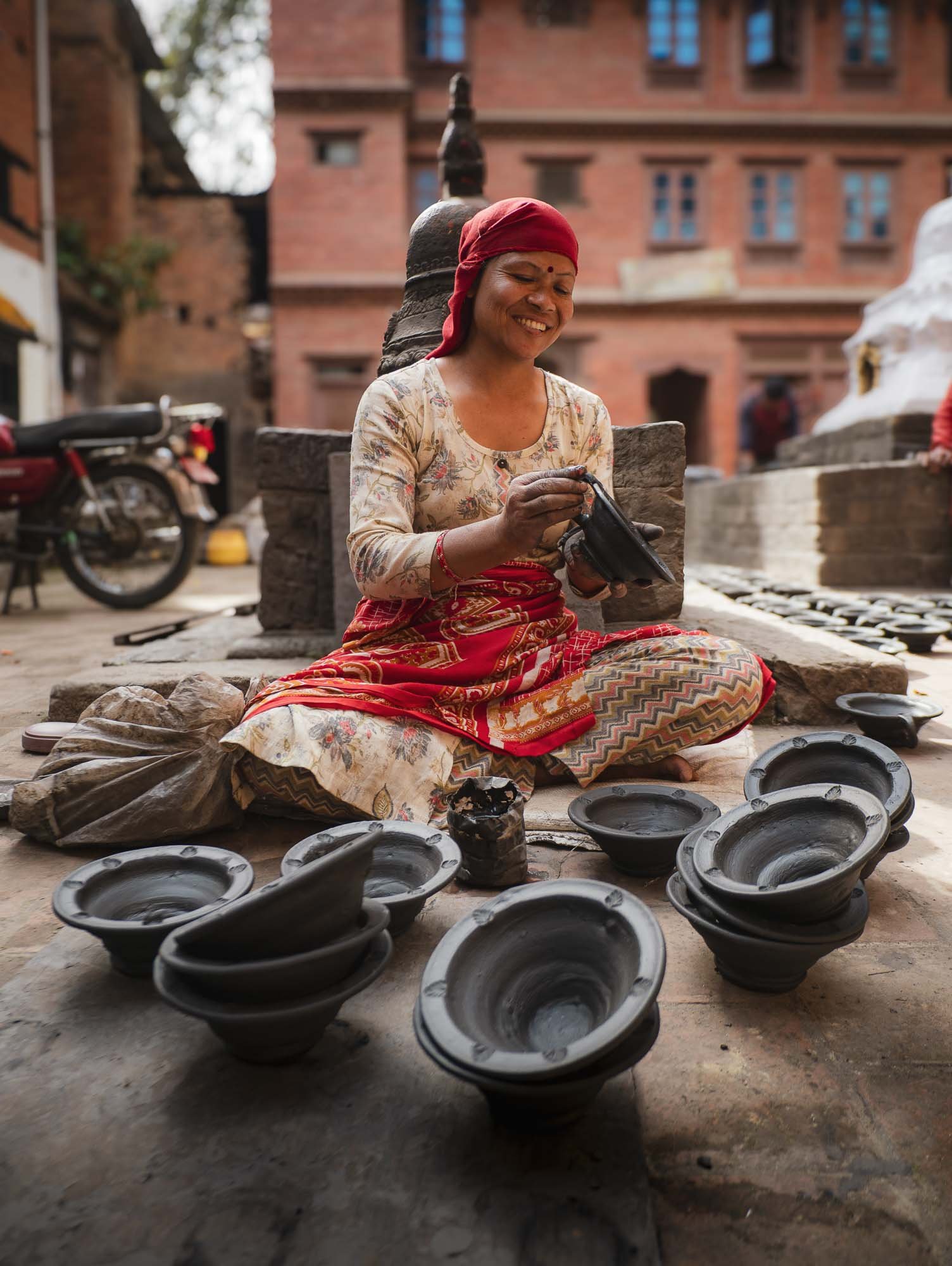
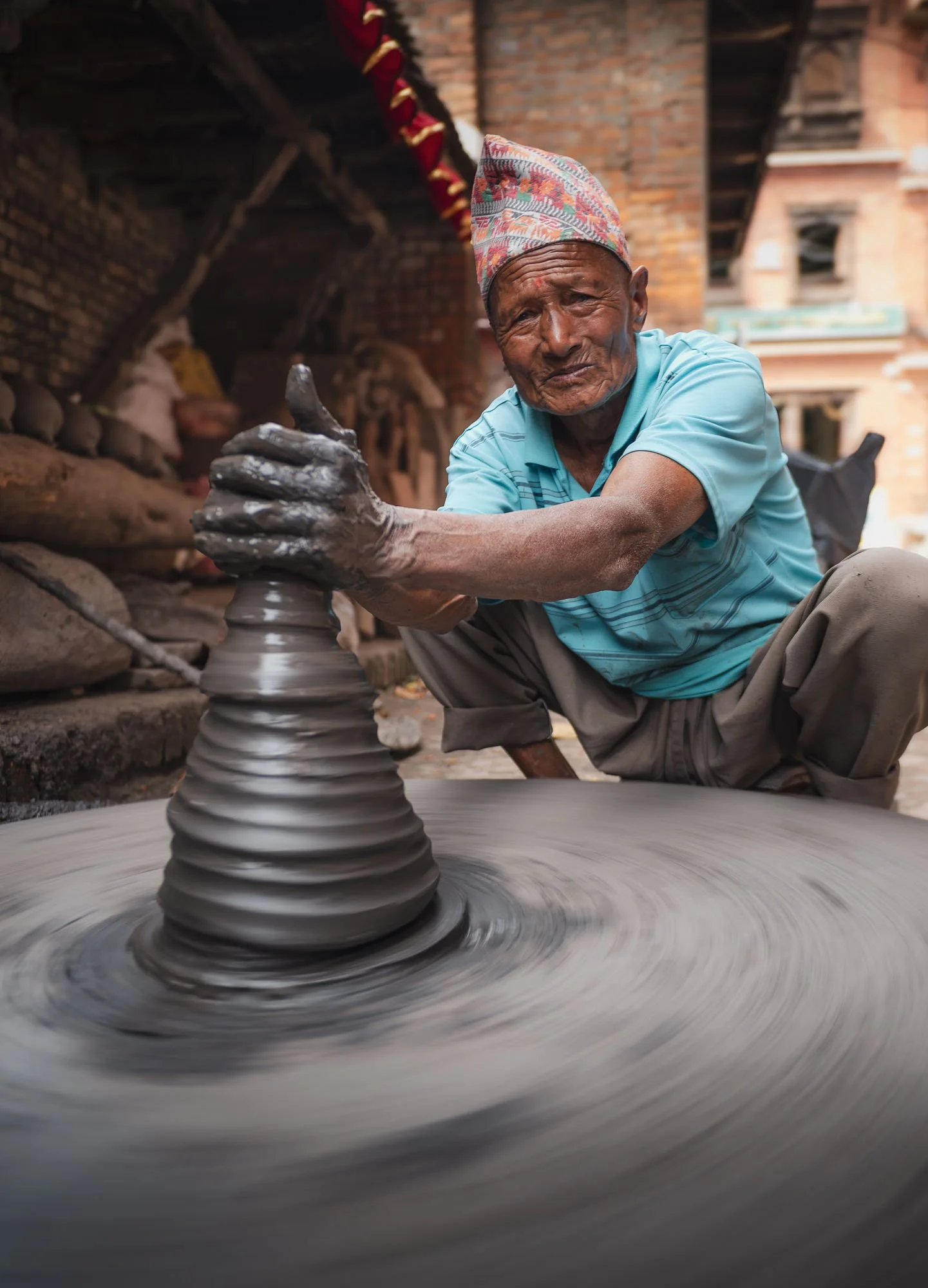
Beyond its architecture, Bakhtapur is also Nepal’s most famous centre for traditional pottery, a craft that has been practised here for centuries by the Newar community.
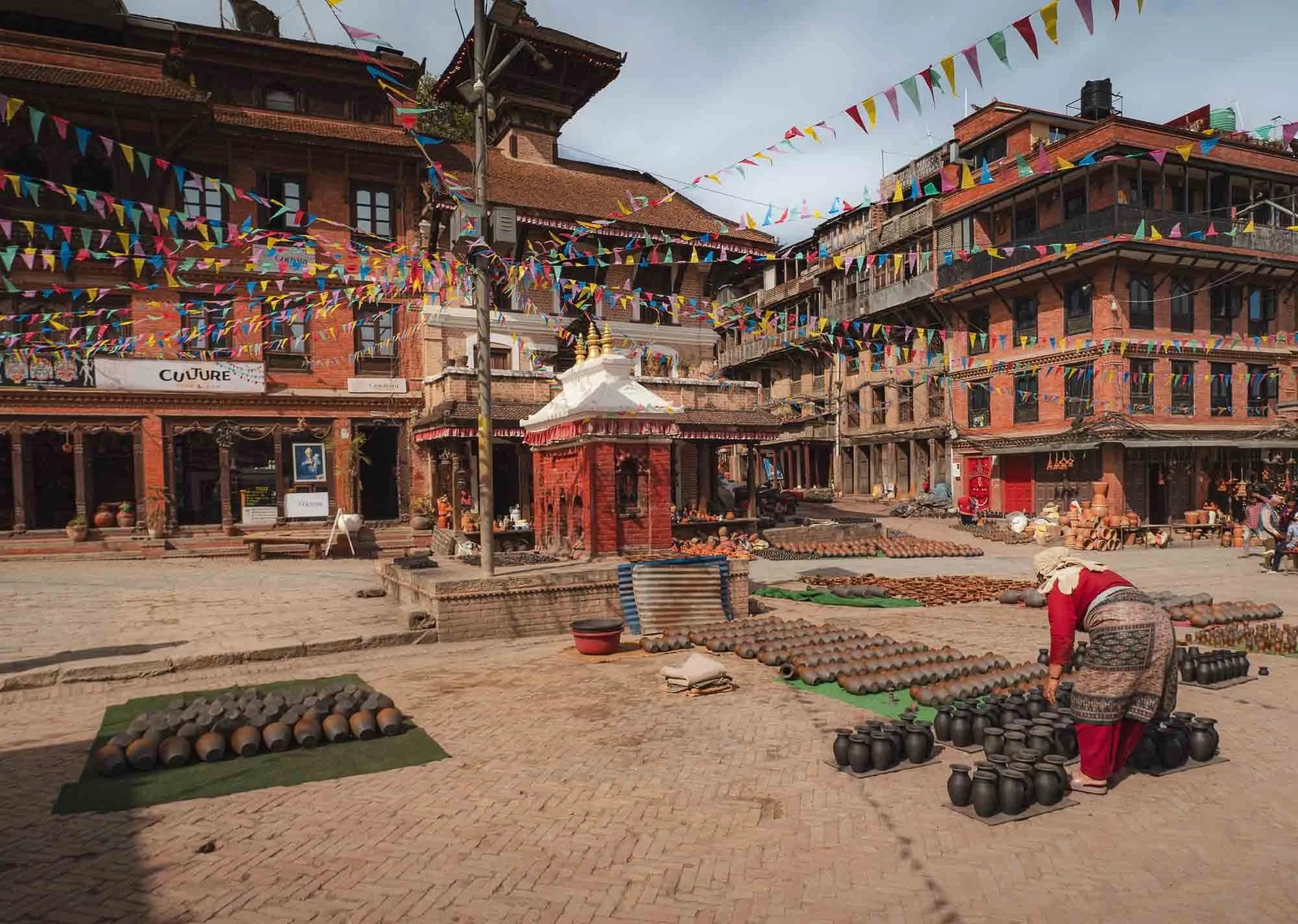
People collect clay from nearby riverbeds, shaping it by hand or on foot-powered wheels, and dry them in the sun before they are placed in large communal kilns and then sold in local shops or exported.
The Peacock Window
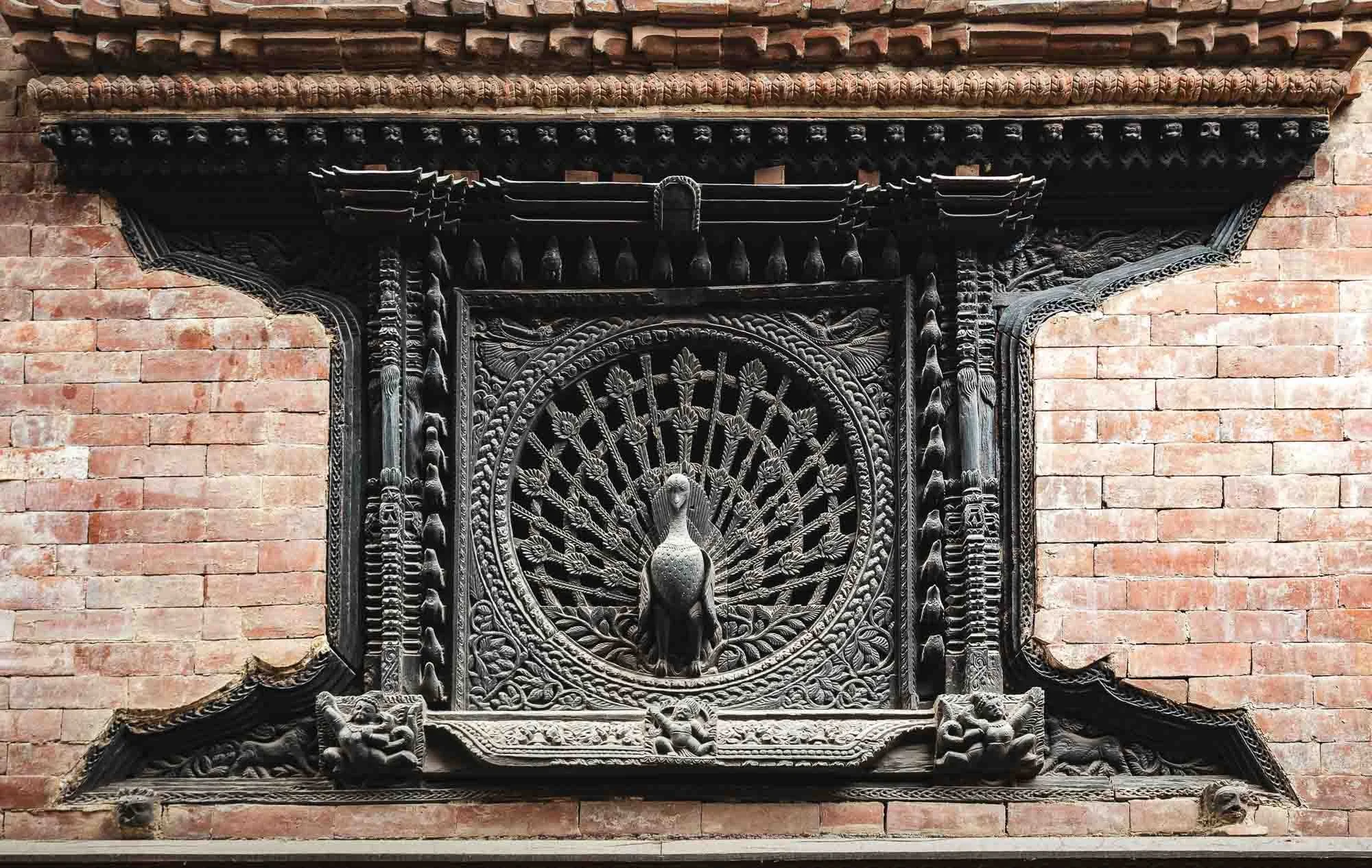
Somewhat hidden within Bhaktapur’s many alleys is the city’s most famous architectural treasure: the Peacock Window. Carved from a single piece of wood in the 15th century, the bird represents purity in Hindu and Buddhist culture.
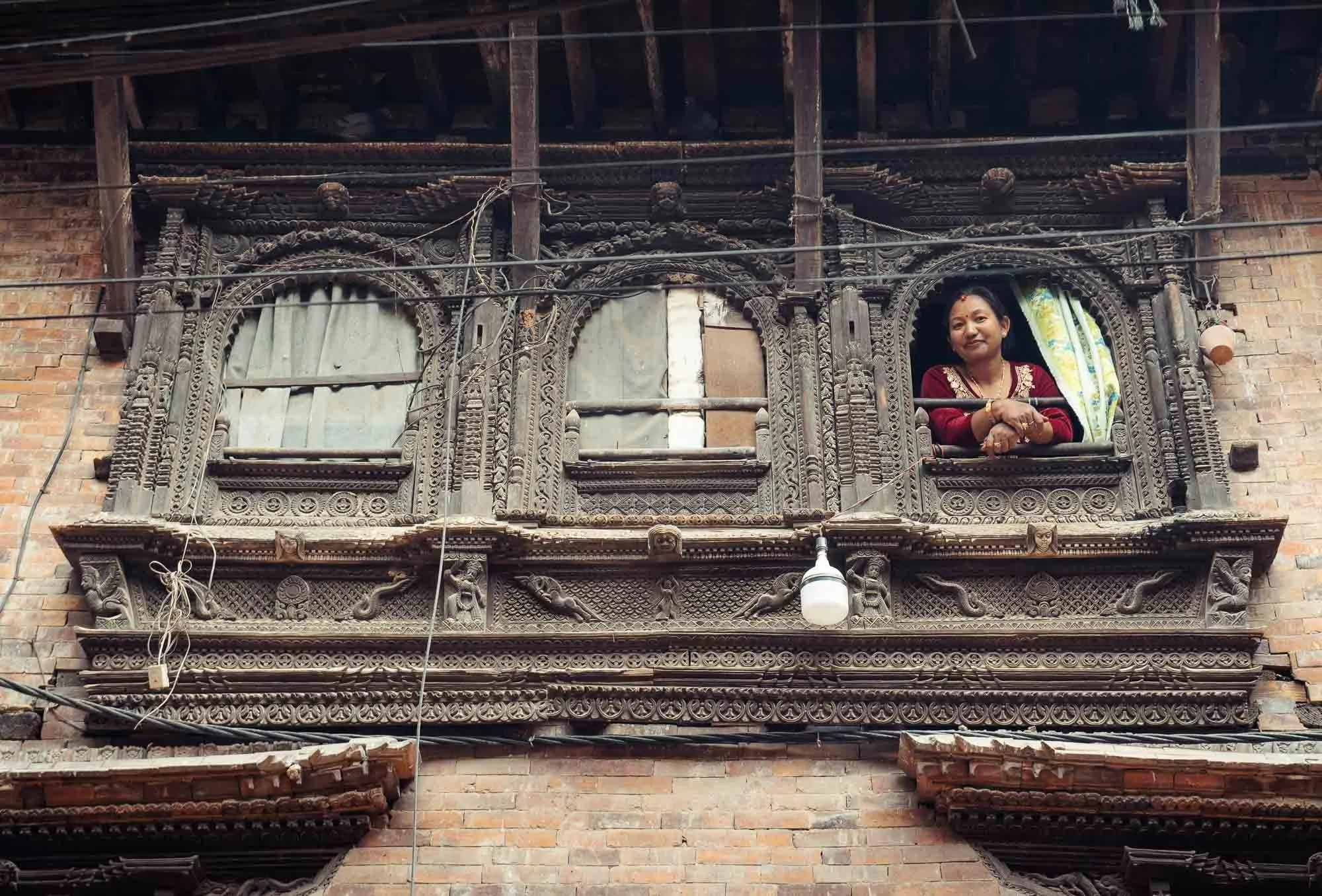
While the peacock window represents the epitome of local wood craftsmanship, there are plenty of other examples to be found all around the city - you can literally look up in any alley and find balconies like this one, very typical of the Newari architecture.
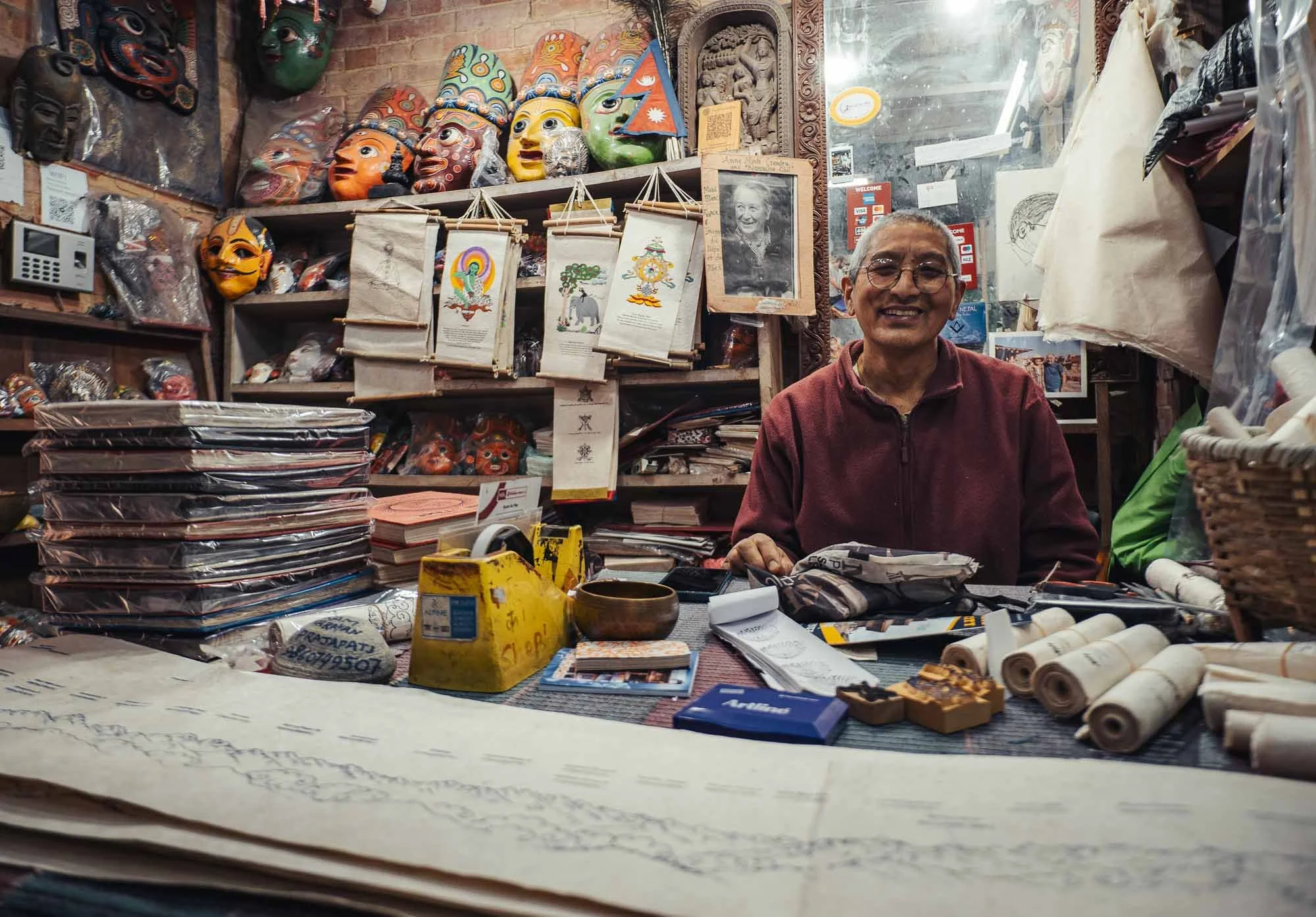
& The Peacock Shop
Just opposite the famous window lies an incredible house behind a very simple entrance. I was lucky to encounter the owner, Ram Narayan Prajapati, who spent decades conserving Nepali heritage, and turned his home into a sanctuary of traditional craft.
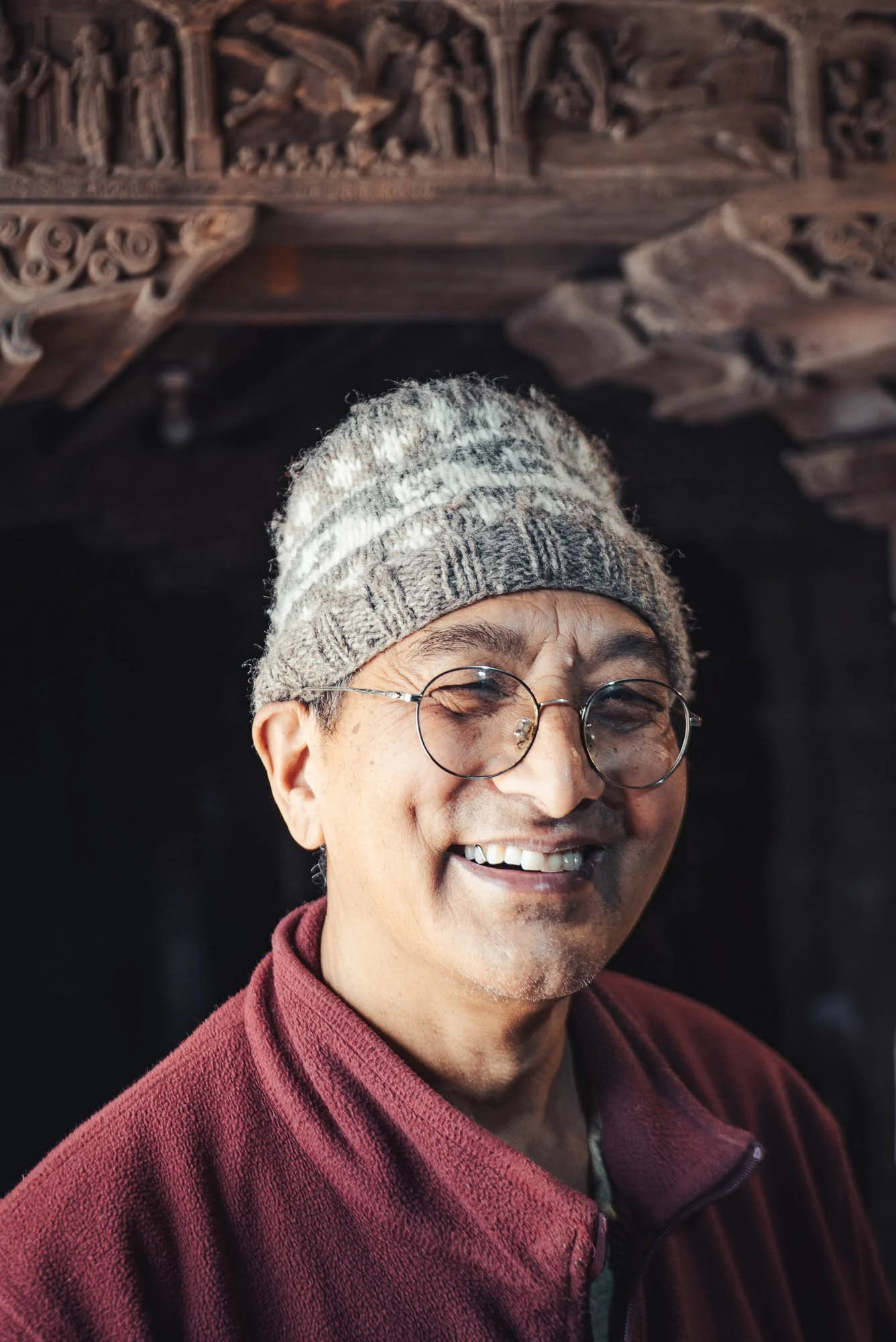
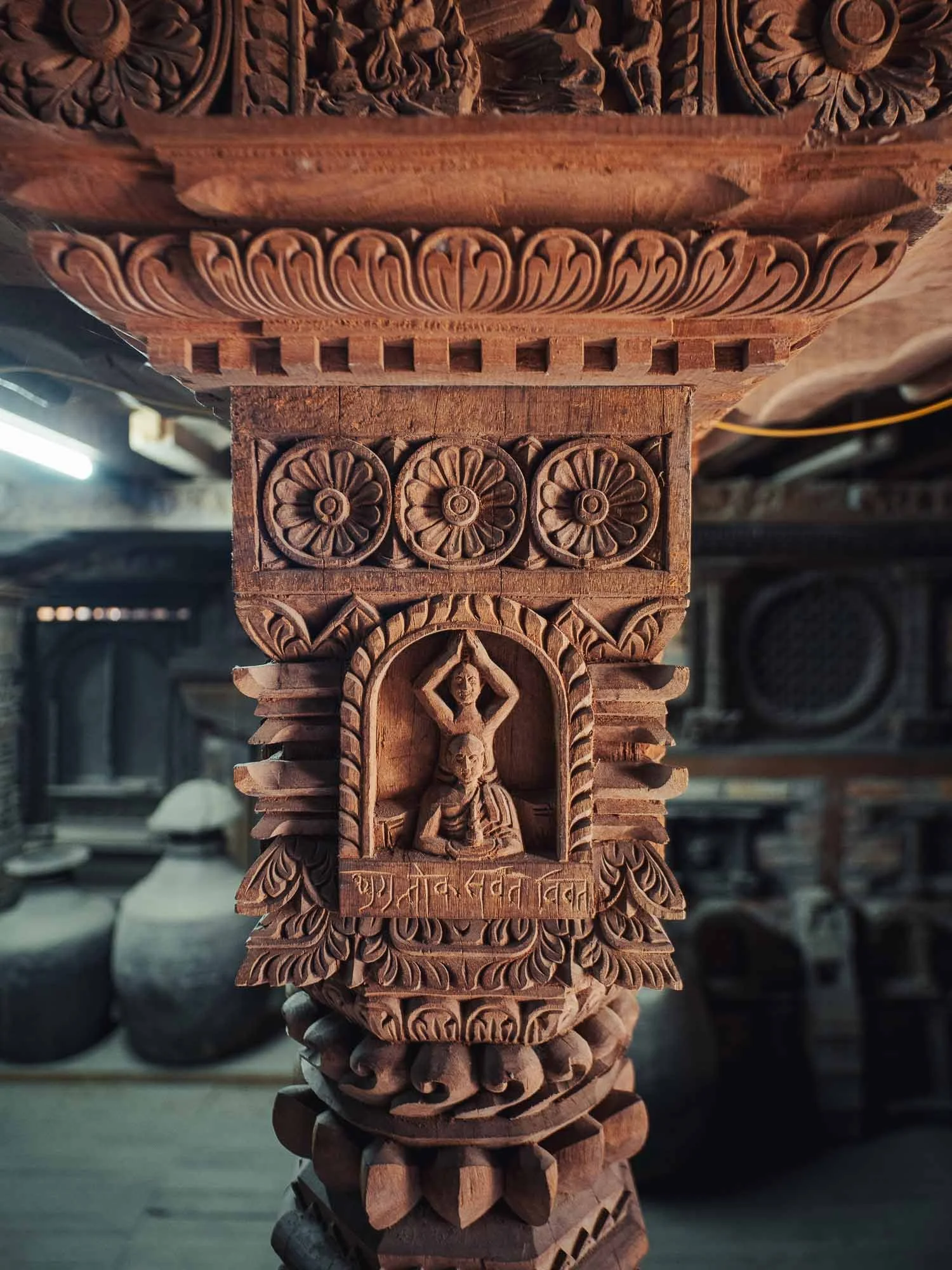
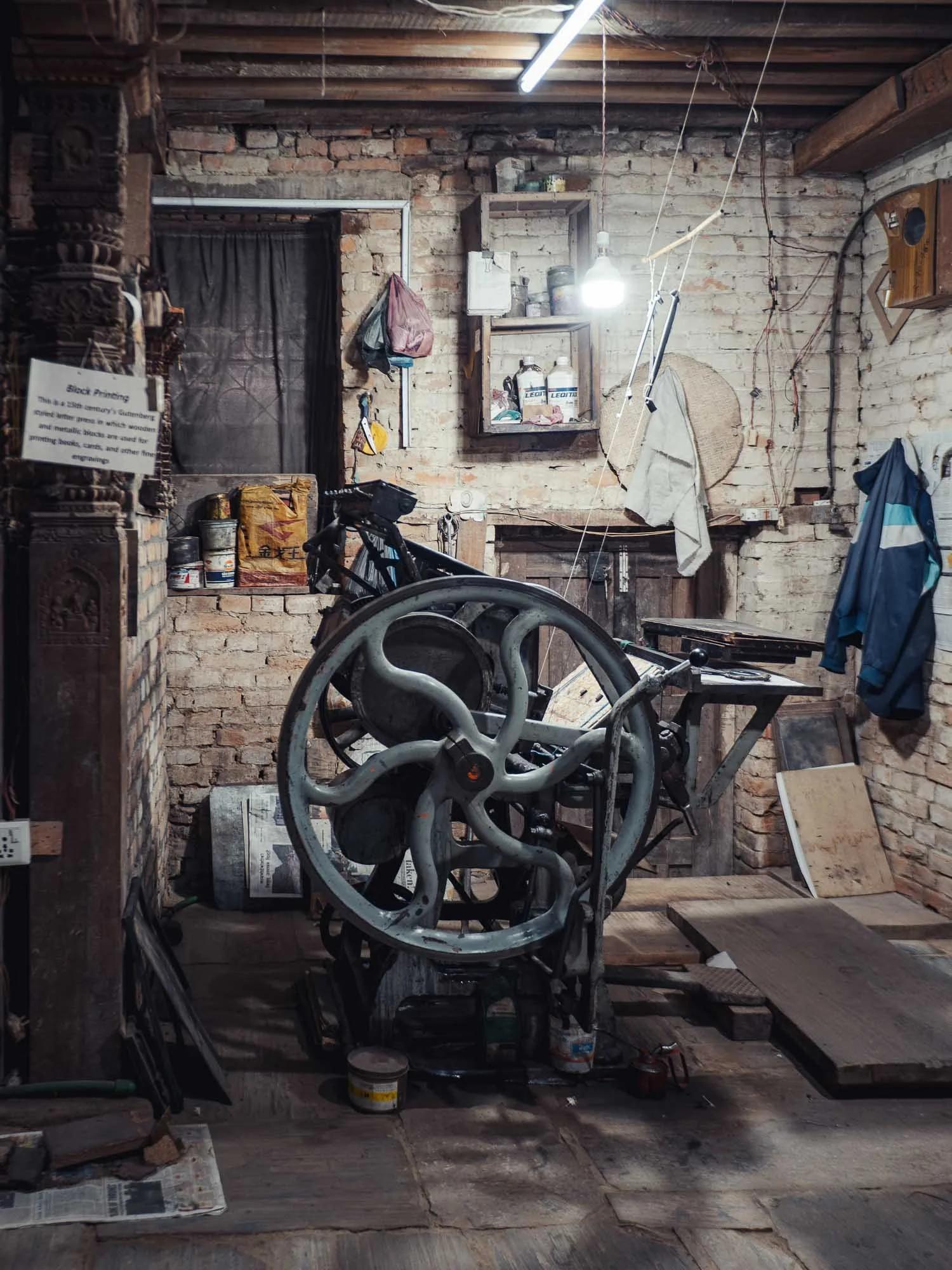
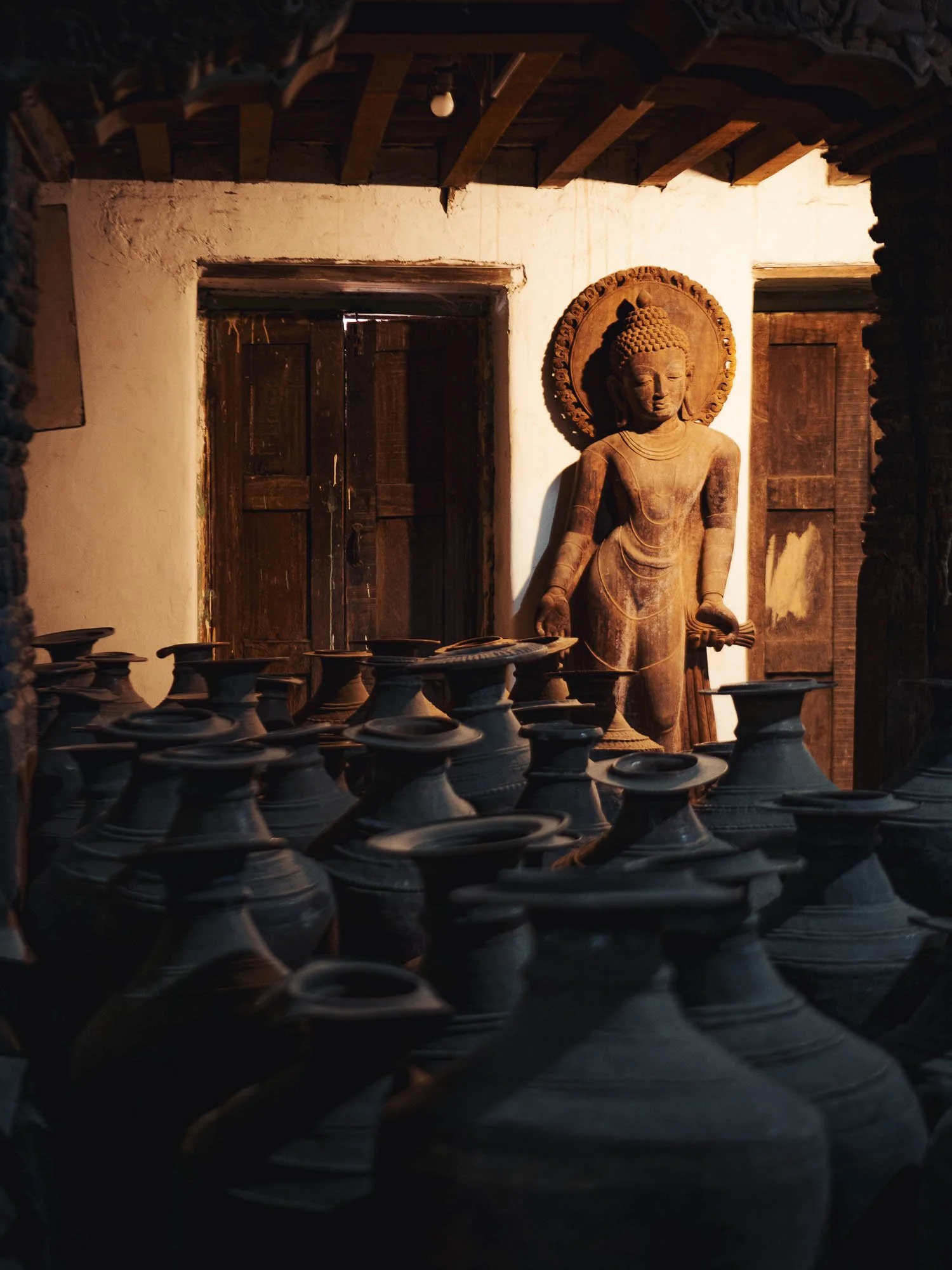
I spent a good hour getting a completely unplanned personal tour through his multi-floor home/factory/shop/storage/museum, where he showed me the 100s of beautifully crafted wooden pillars, the machines he uses to make paper by hand, handwritten books and notes, and so many artifacts of Nepali culture he collected over decades, it was difficult to keep track.
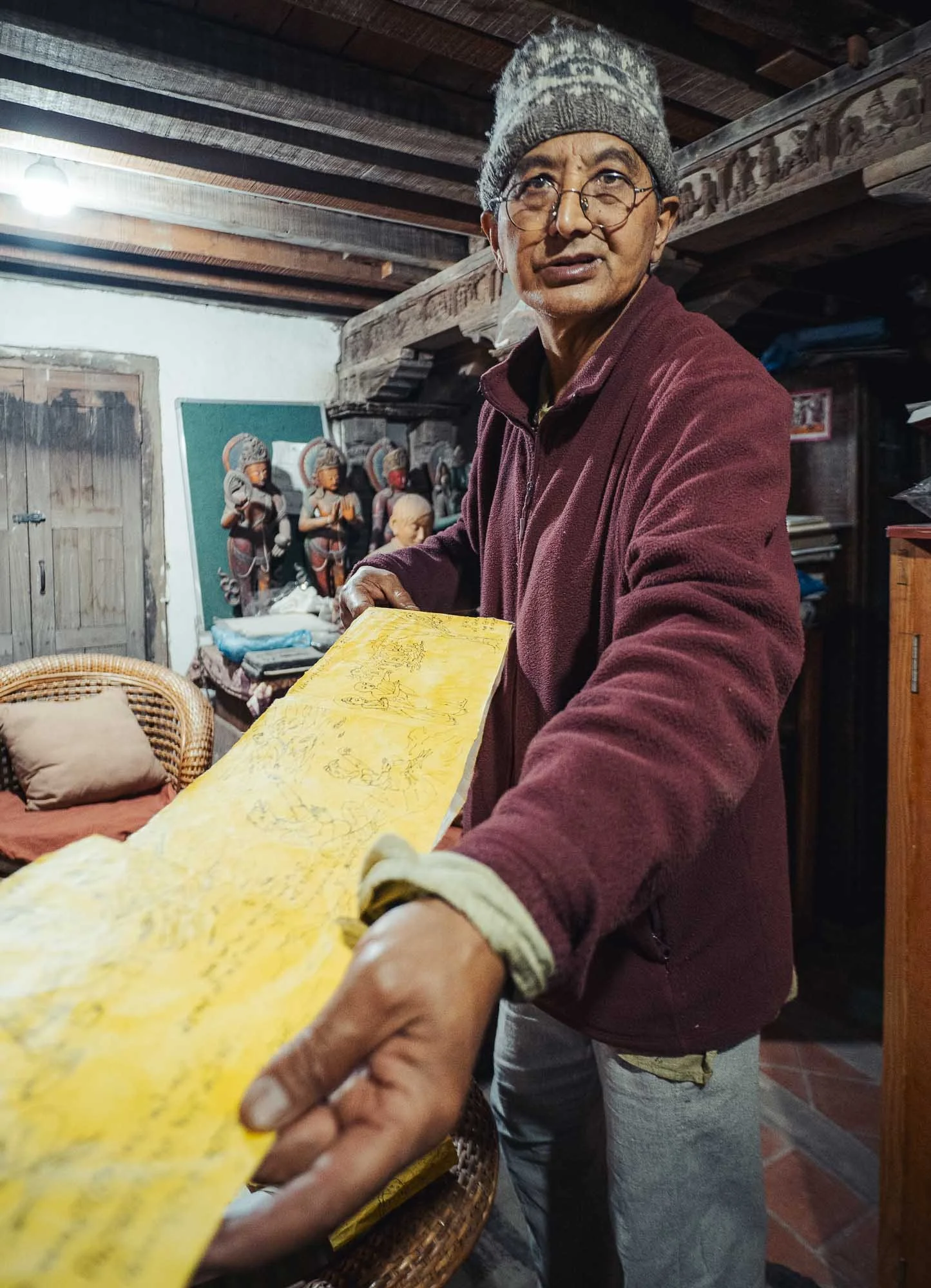
His mixed background of being a craftsman, historian, curator, and writer is an amazing combination, all delivered in such a genuine and humble manner that made this one of my highlights of the trip.
Needless to say, I bought plenty of souvenirs, including some of his paper that I plan to print a few of these images on.
The Hiti Water System
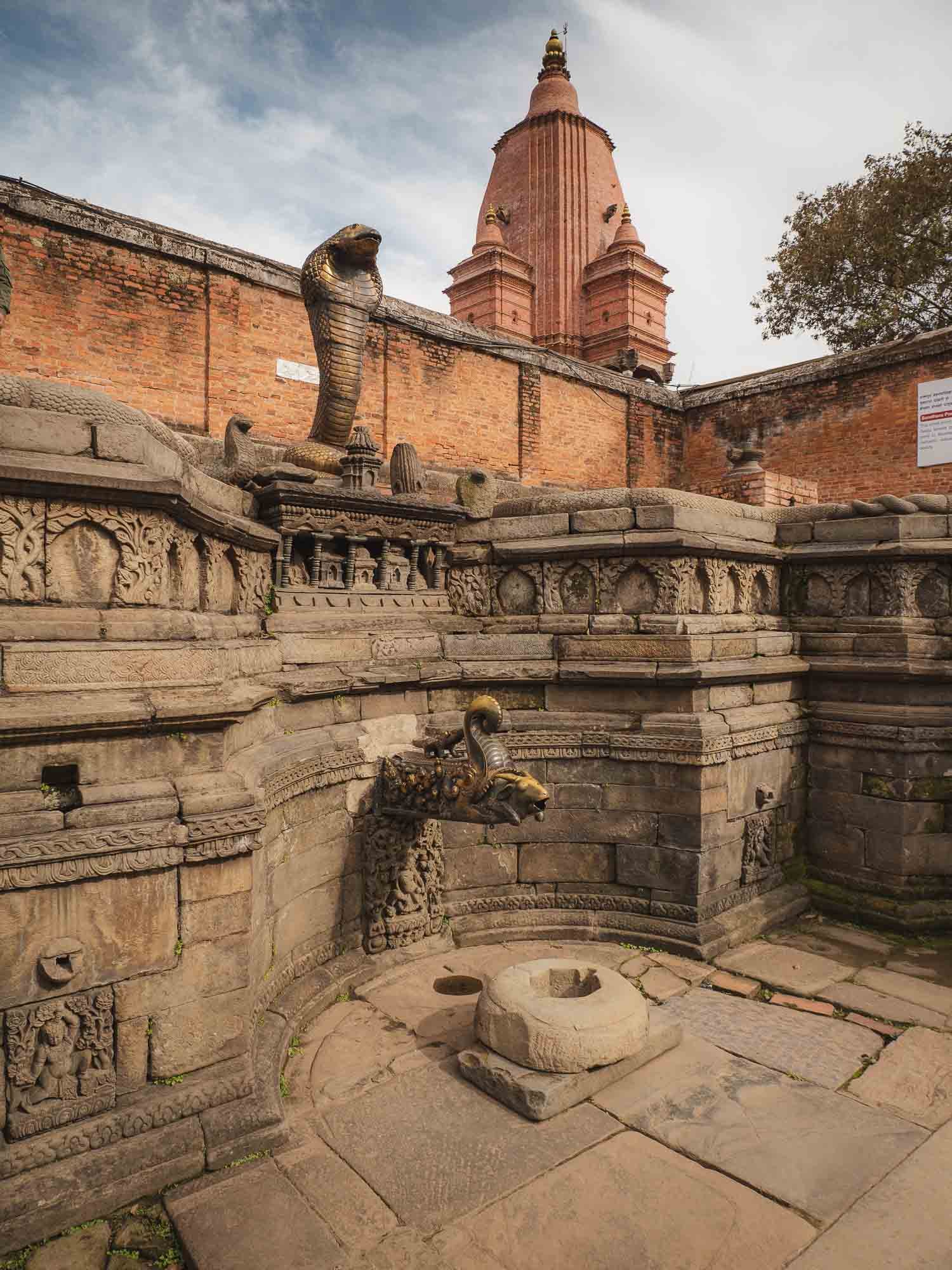
Bhaktapur also features several remnants of the traditional supply system that once provided water from the surrounding hills into the cities of the valley, with its interconnected network of canals, ponds, and spouts acting as a resource in dry times and alleviating excess water pressure caused by the monsoon rains.
Its history began more than 1500 years ago, and although it’s no longer the primary infrastructure today, there are still working examples used by many people on a daily basis dotted around Kathmandu Valley.
I happened to visit the city twice, and this is the result of my only planning mistake: the spectacular Biska Jatra festival took place during my time in the country, and one of its most dramatic celebration happens right here - but on a day where I was a few hundred kilometres away in the mountain forests, looking for a very elusive creature (more on that in the second part of this blog), making me miss the spectacle. A few minor remnants of the festival happen to last (albeit in a much more restrained fashion) for a few days, and I decided it would be worth to go again after my return and catch at least a glimpse of what it is all about.
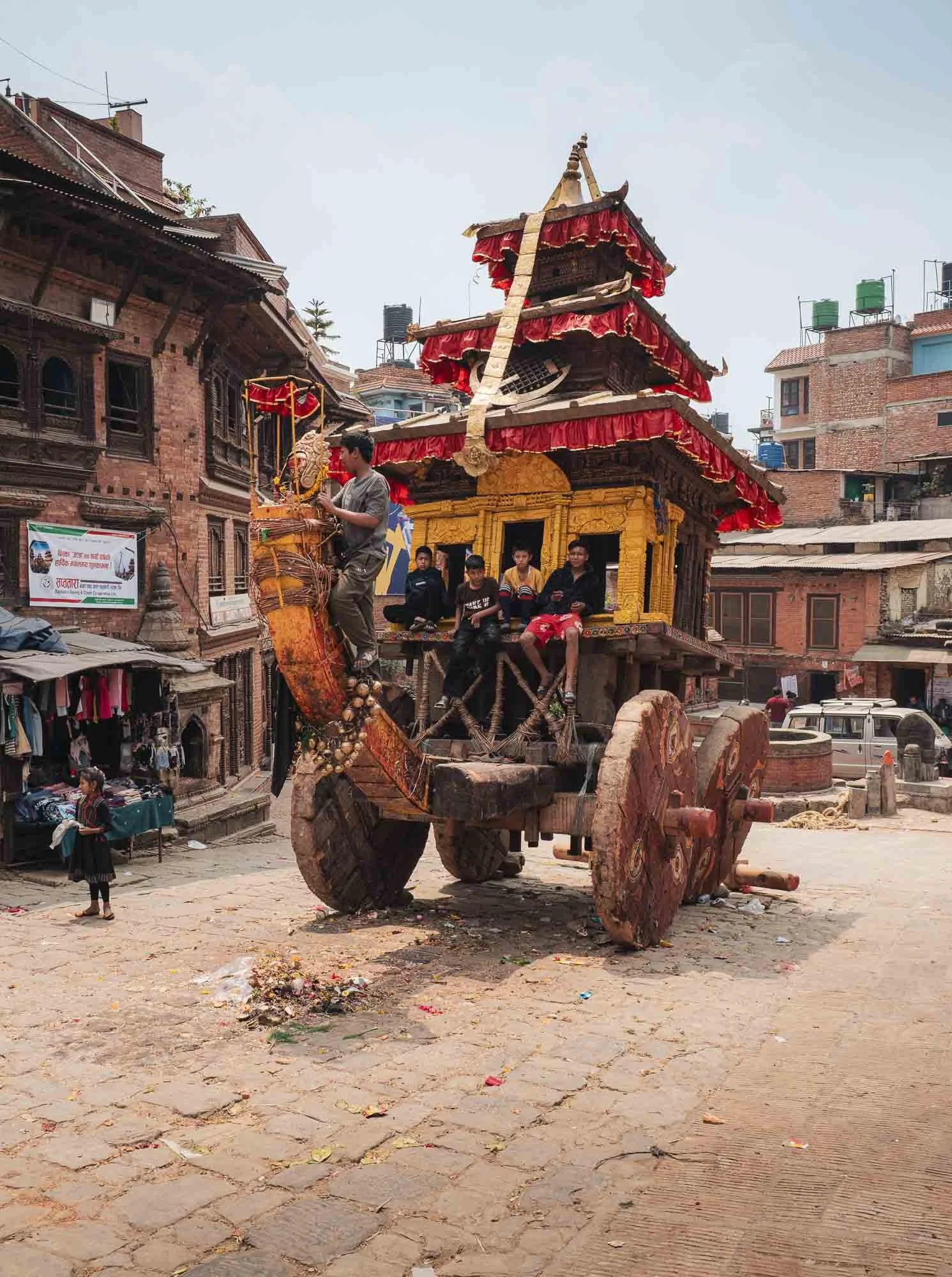
Bisket Jatra marks the beginning of a new year and a new agricultural cycle and celebrates renewal, prosperity and the triumph of good over evil through music, dances, and a few more less obvious rituals: one of its key practices is the chariot procession, where massive wooden carts carrying deities are pulled through Bhaktapur’s narrow streets by hundreds of people, often crashing into each other or surrounding houses (or the people watching).
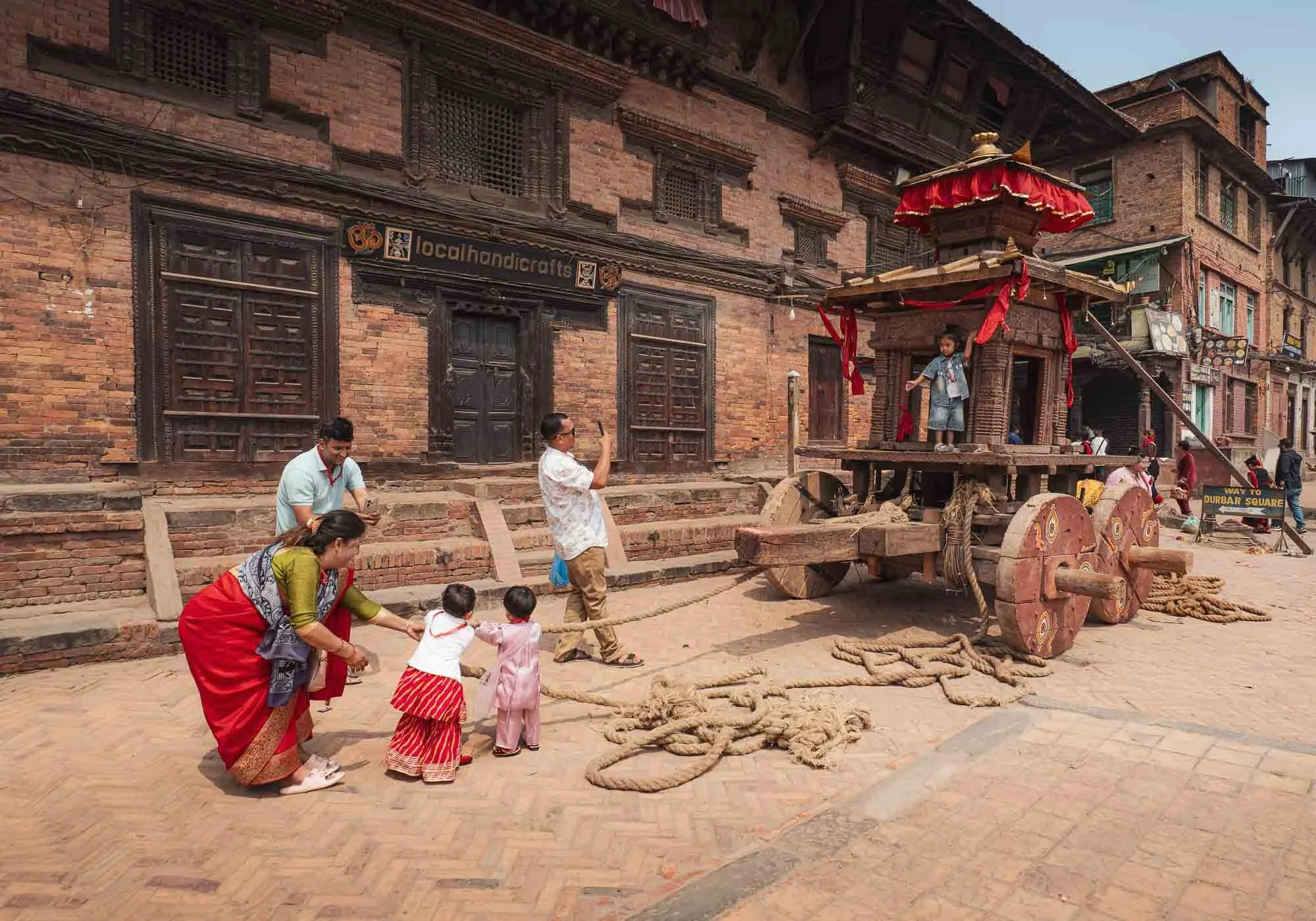
Residents from different parts of the city also compete to pull the chariot in opposite directions in a tug-of-war as a representation of strength and community spirit.
While I missed this part, the chariots were still set up in the streets (looking rather battered) and at least temporarily became playgrounds for the local kids.
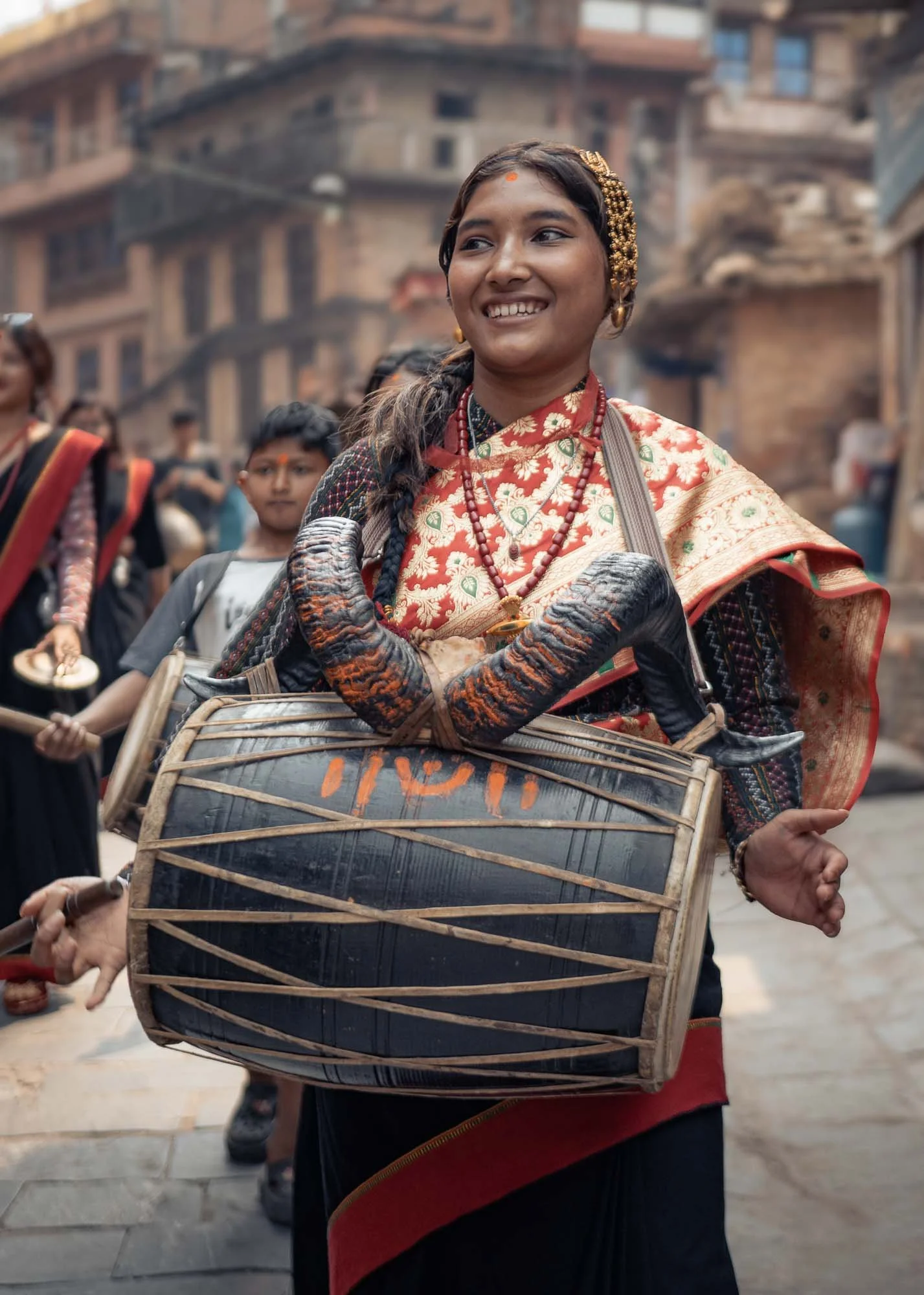
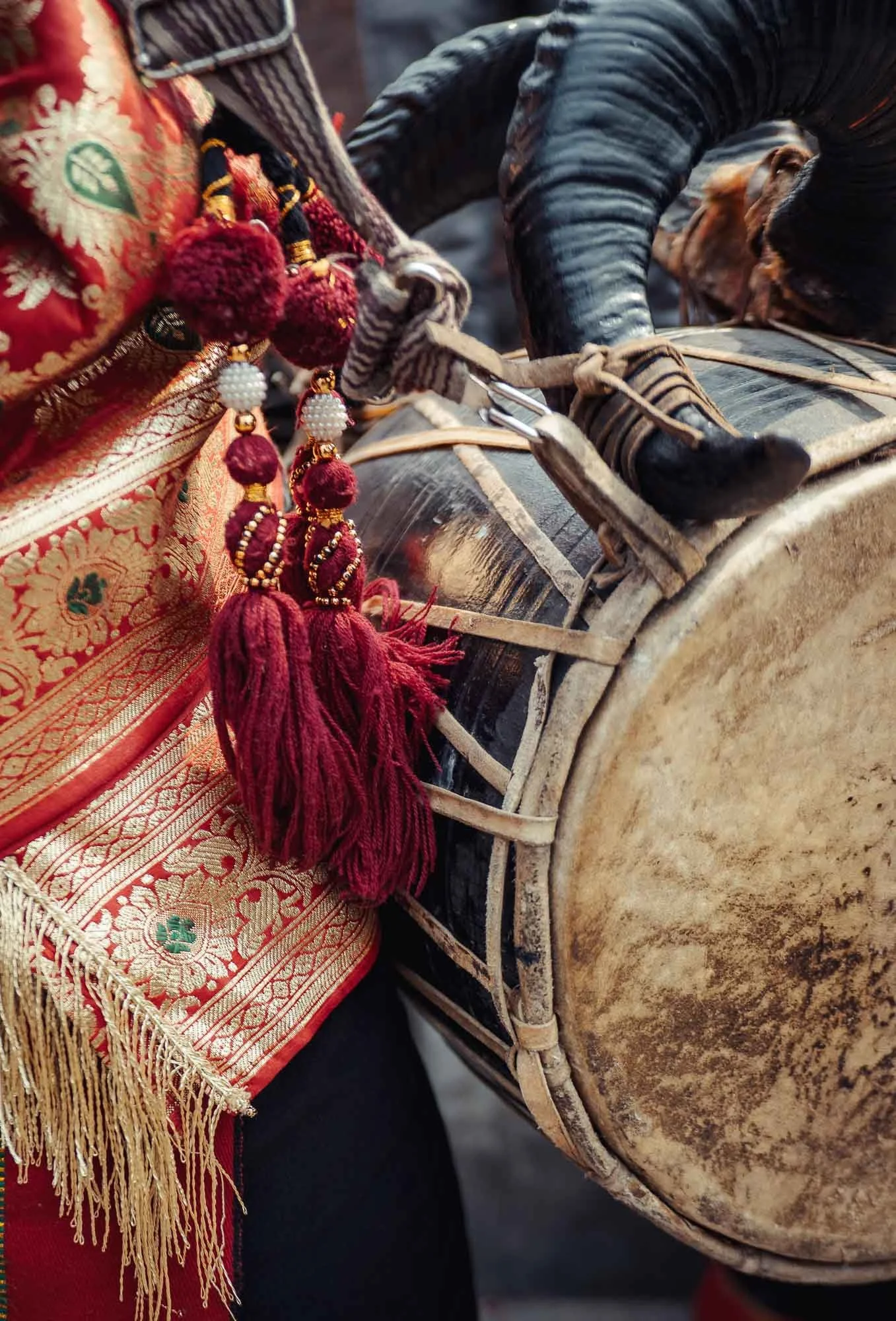
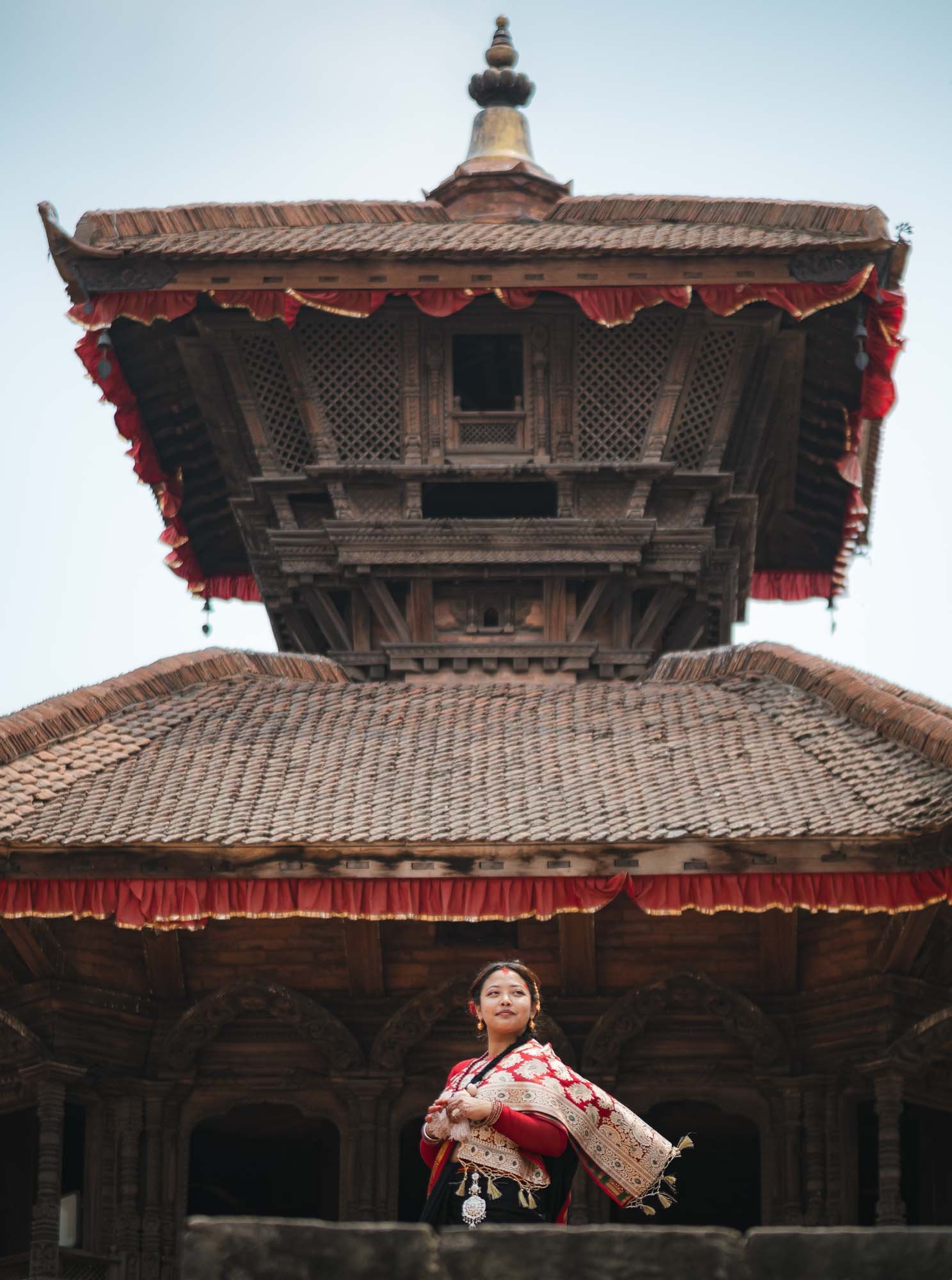
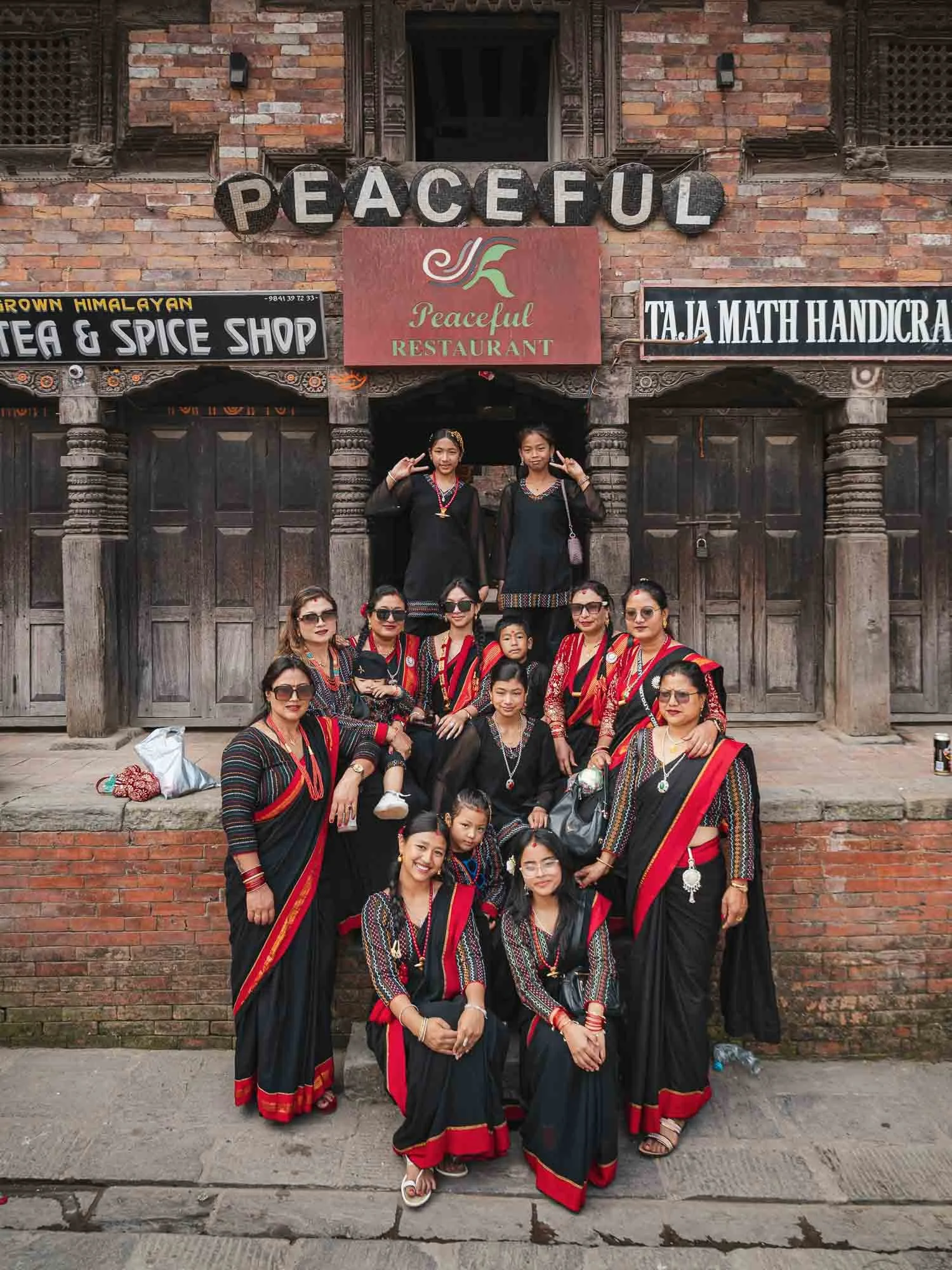
But there were still a few ongoing celebrations, with groups of teenagers wearing traditional Newari outfits and performing on the dhimay drum and other instruments as they wandered through the streets.
Warning ⚠️
But the chariots, singing, instruments, and local dresses were not going to be the only traditions I was able to witness. What follows may not be for everyone so scroll down at your own peril - otherwise, just jump to the end quickly, as this is the last part of this blog…
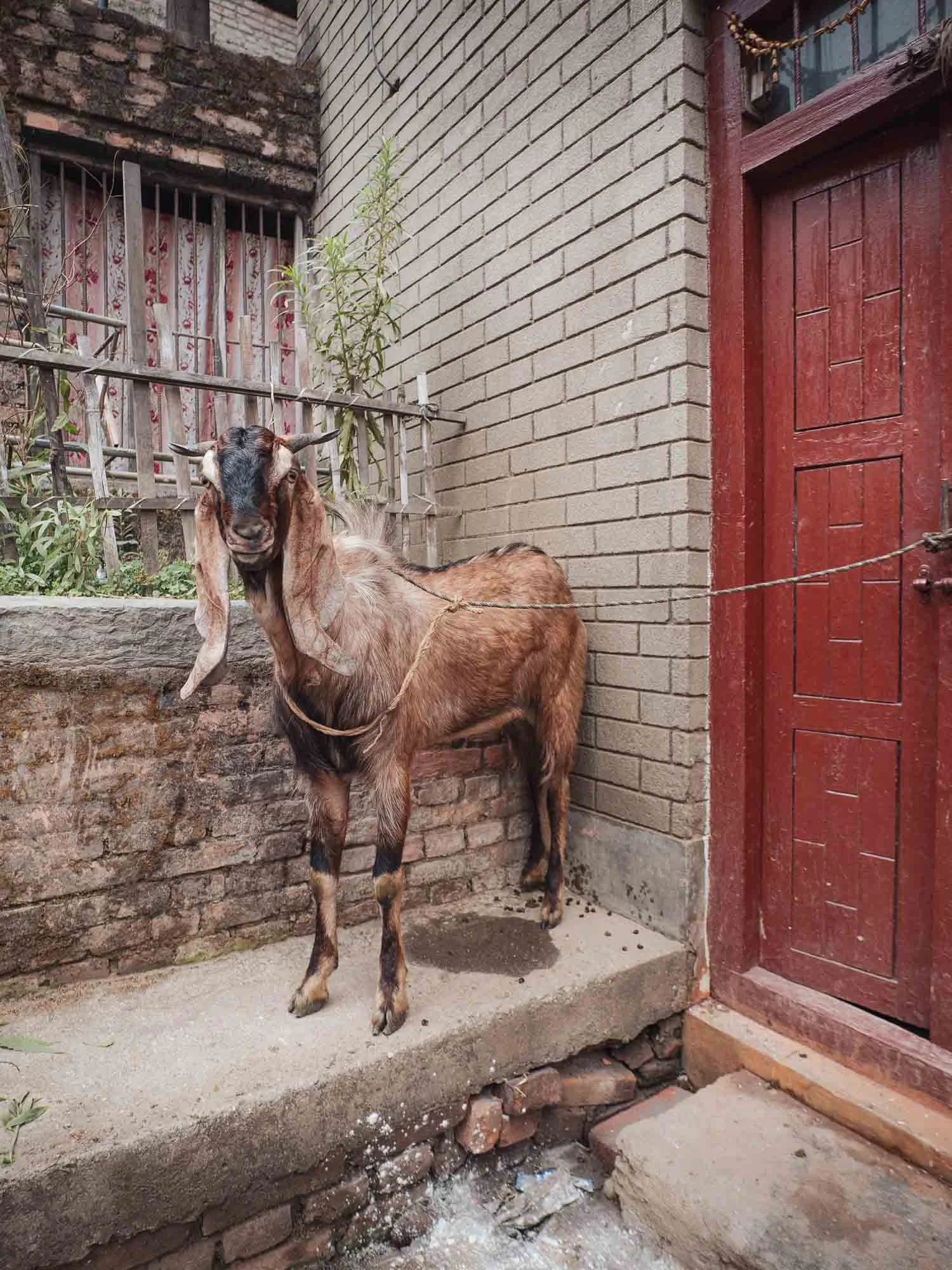
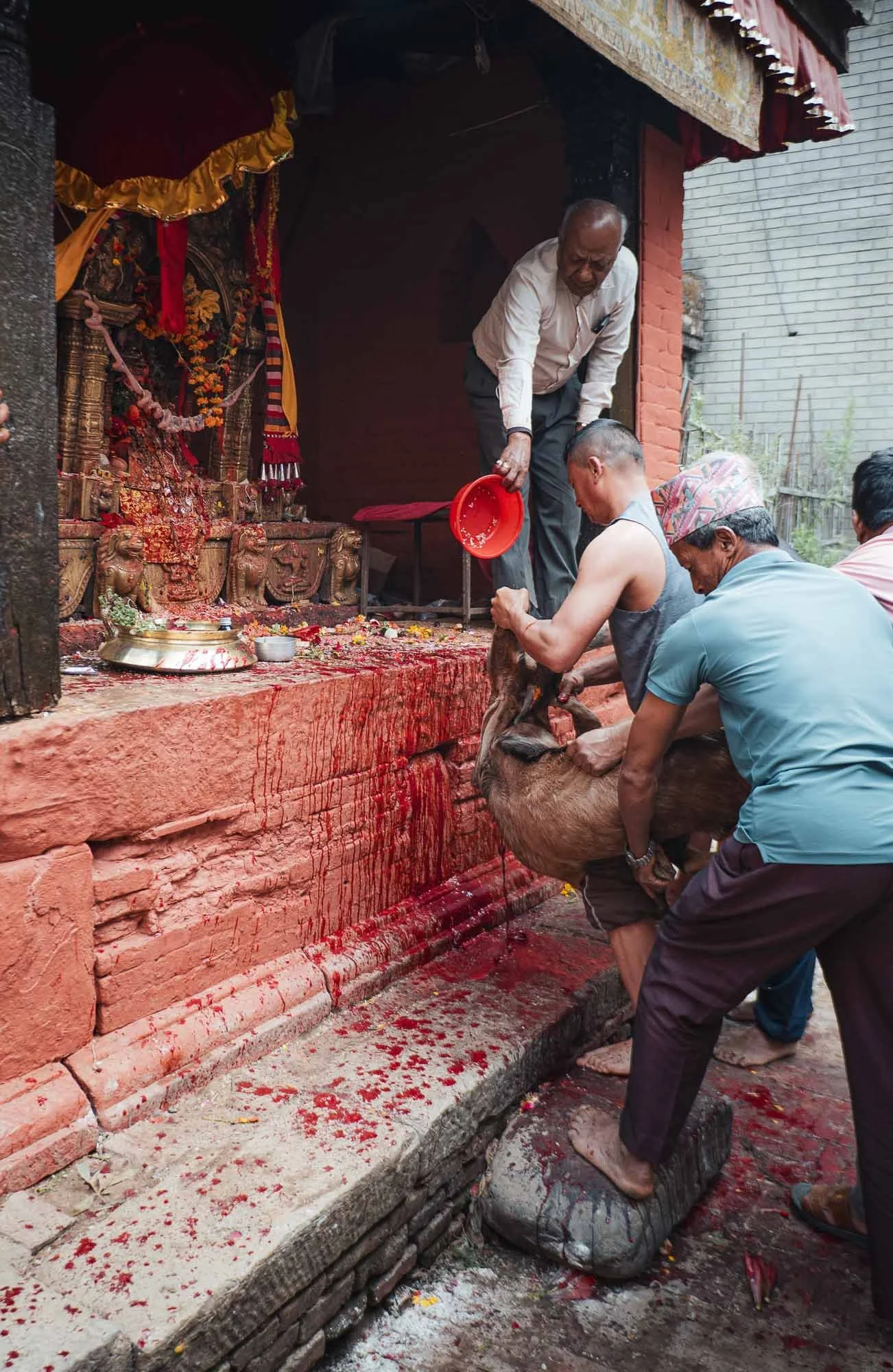
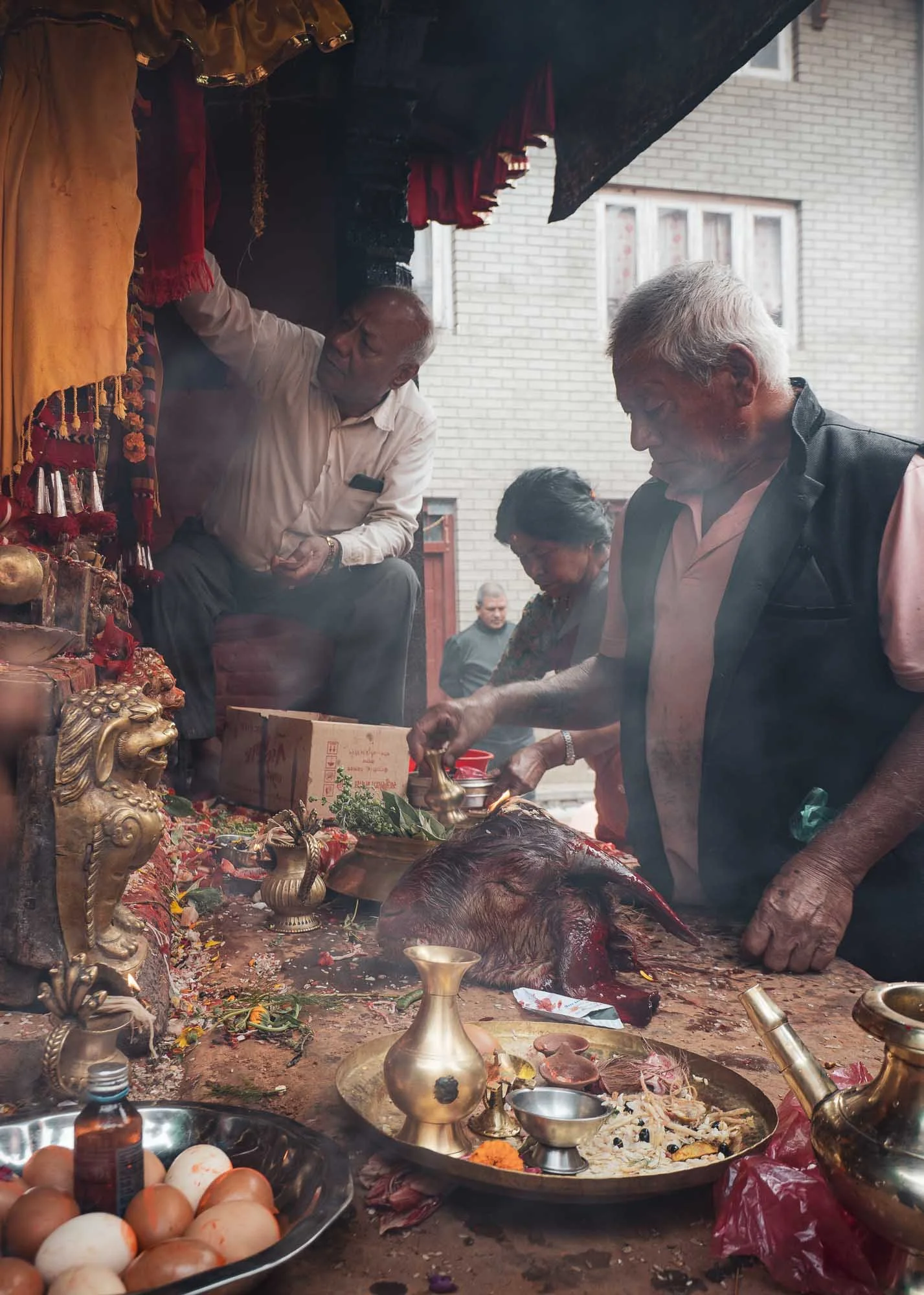
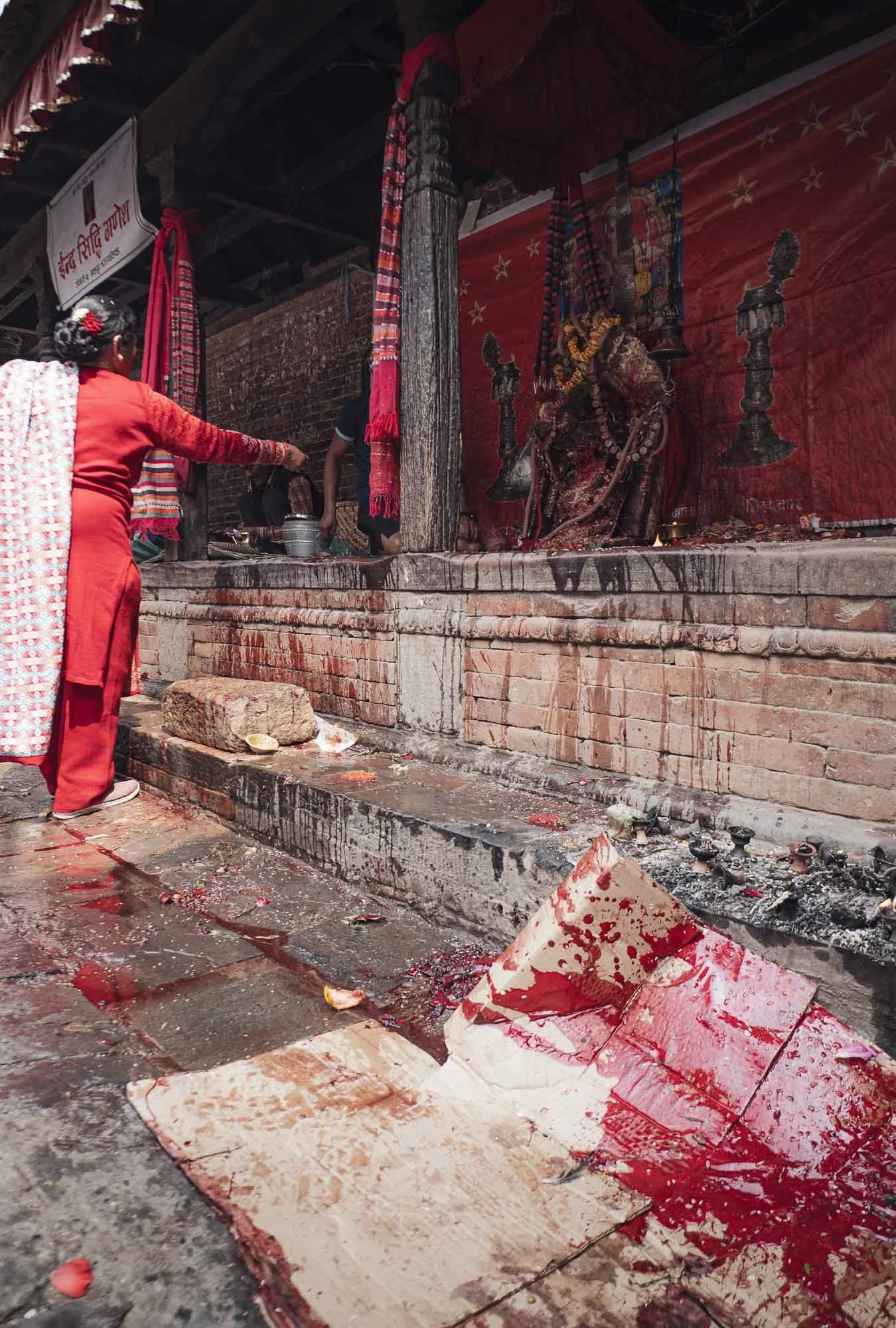
It’s a practice that is probably less familiar to many visitors: goat sacrifice. Conducted at some Hindu temples as an offering to deities, the priest sprinkles the goat with holy water. If and when the animal shook its head, it was taken as a sign that the offering has been accepted, and the animal’s throat is slit and held in a way so the blood squirts over the altar, where its head is later placed as an offering. The meat is shared in the community.
Unsurprisingly, this practice is not without its controversy and seems to be relatively uncommon now. It was the first time I personally observed it - can't say it’s particularly pleasant but I might also be too much of a robot to have a strong reaction…
And that was part one of my Nepal blog - subscribe below to receive updates on the second part of the series, leaving the cultural highlights of the Kathmandu valley behind and exploring Nepal’s wildlife and mountains. Below is a preview, without giving everything away…
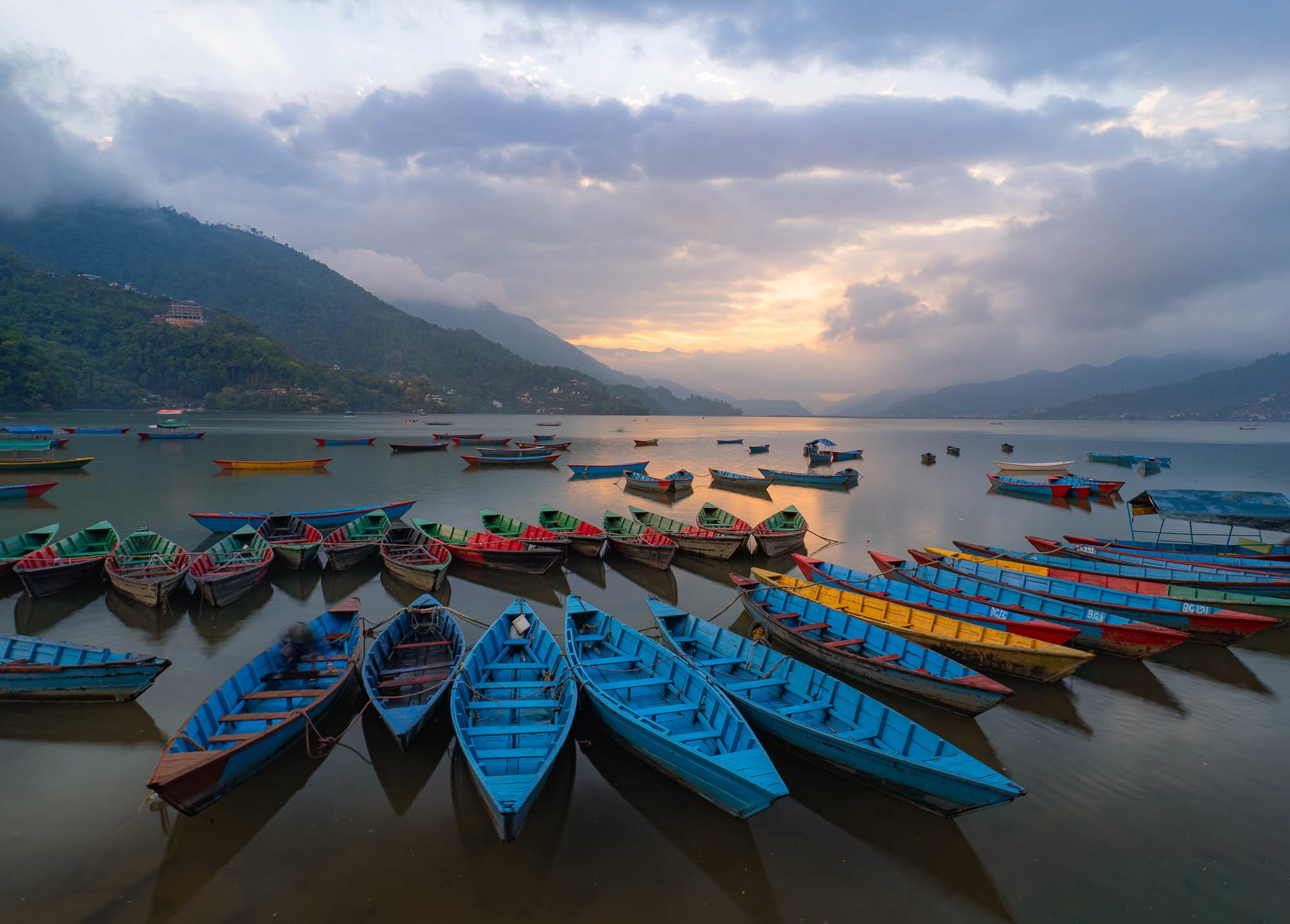
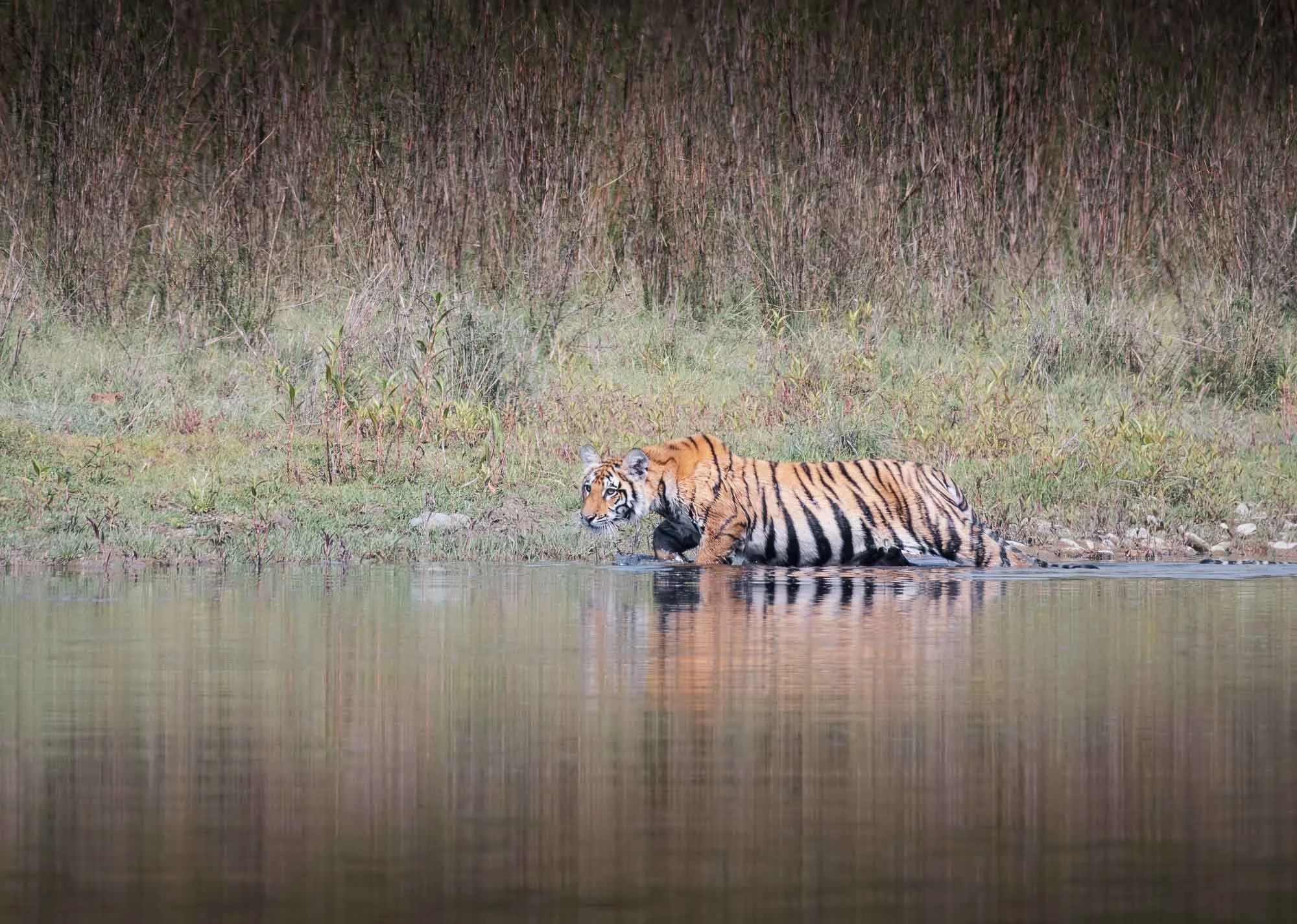
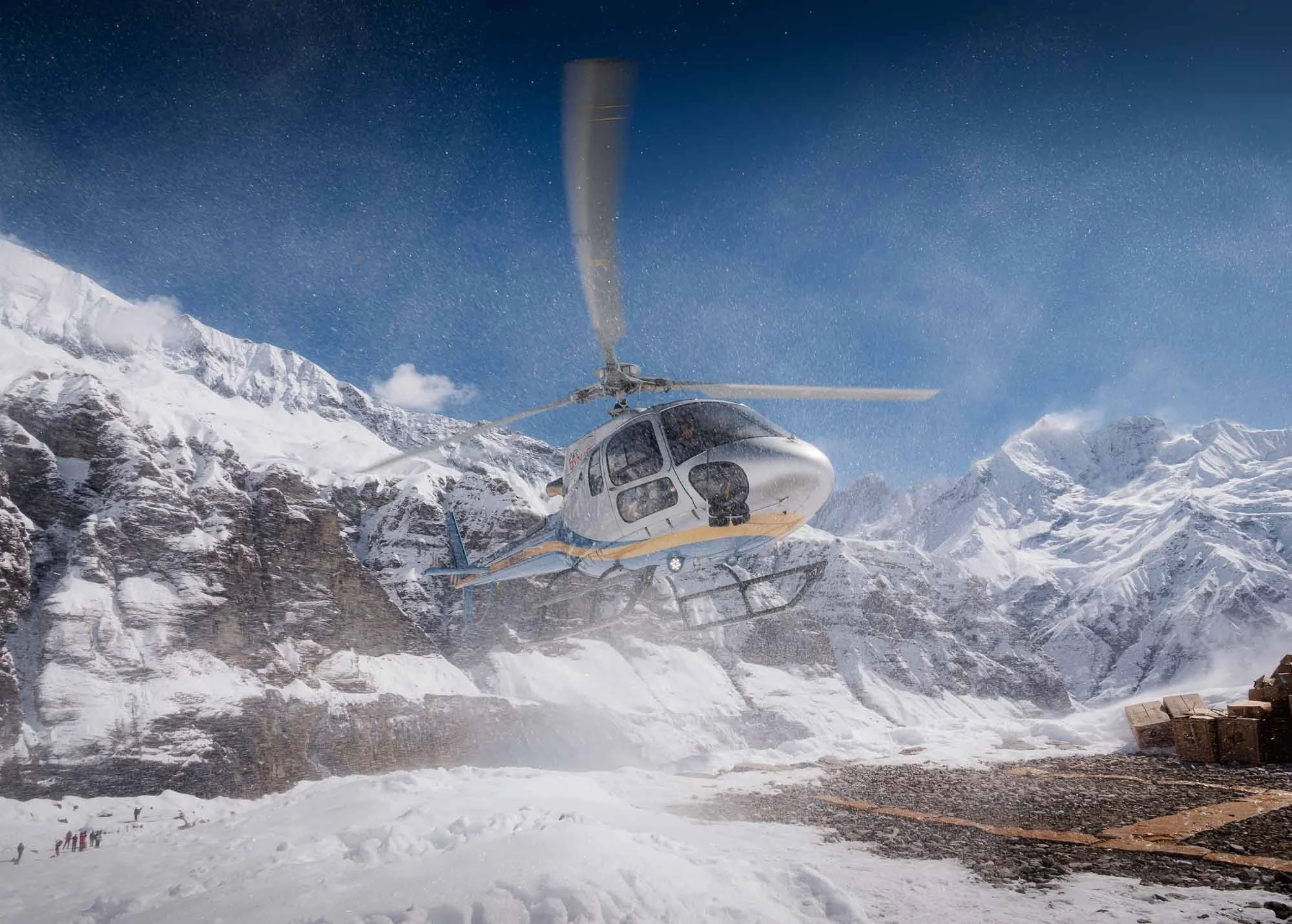
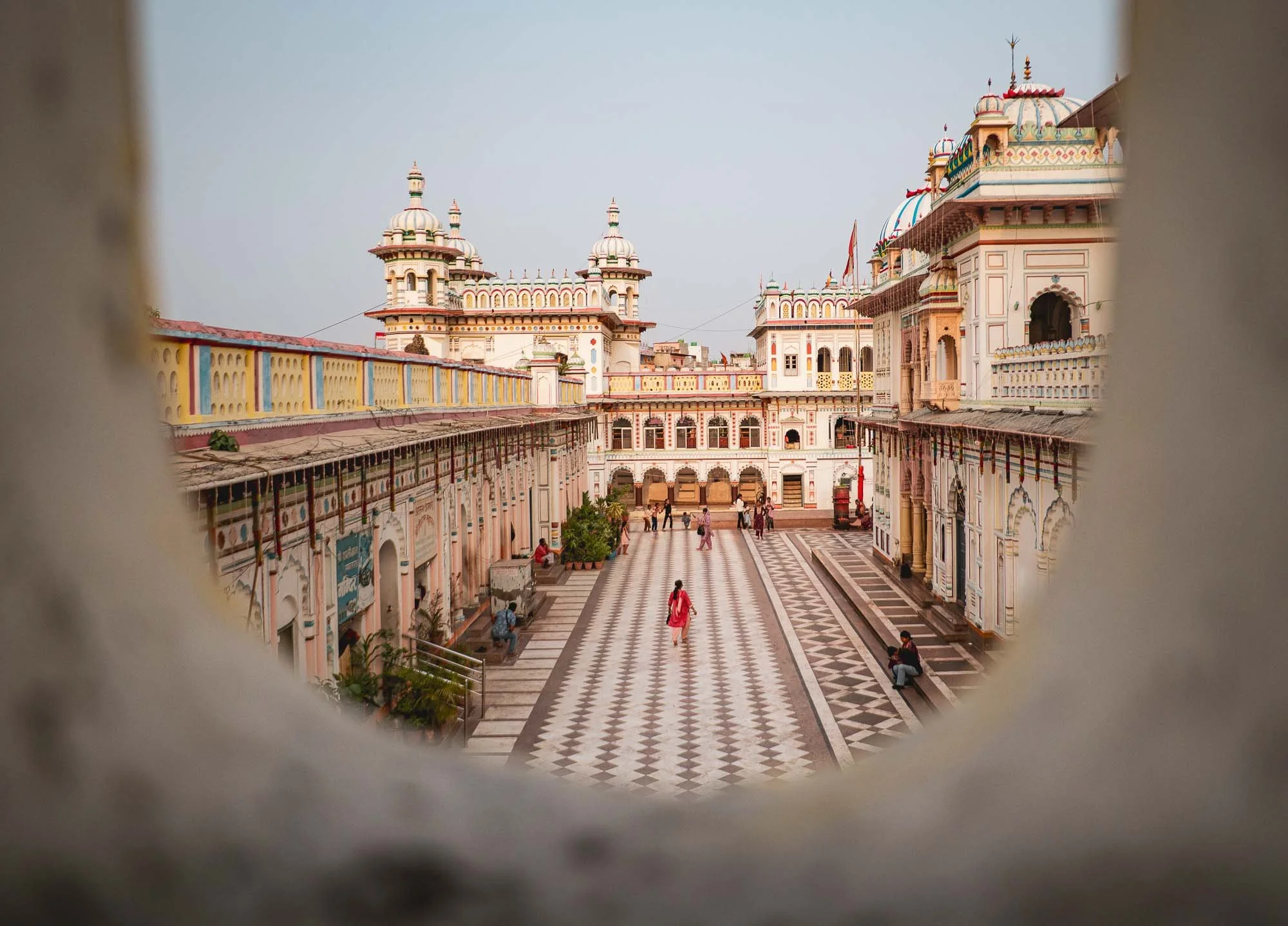
This is the second part of my Nepal blog, leaving the Kathmandu valley and exploring the wildlife of Bardiya, Pokhara’s mountain views, and more.