Nepal Part 2 - Diversity: Wildlife, Mountains, & More
As I alluded to in the first part of my Nepal blog I had such a vast selection of images to cover my time in this diverse country, putting them all in a single post would probably bring Squarespace (the platform I’m using to host this site) to its knees, so I decided to split them into two.
The first post is focused on the culture and architecture of the Kathmandu Valley (well worth seeing) and this is part two, covering everything from sub-tropical temperatures to snowy mountains, from tigers to other elusive creatures, and a few things in between.
Once again, credit goes to Ghanshyam, the owner of Tiger Encounter, who has been instrumental in helping me organise what you’re about to read, and is among the best operators I’ve ever worked with. For any type of Nepal trip, please consider them (not sponsored).
Bardiya National Park 🐅
I initially saw Nepal as an extension of my time in Bhutan, and only had a few ideas of what I wanted to explore, which quickly turned into a fully packed three weeks. From the Kathmandu Valley I made my way to the more remote western lowlands, landing in Nepalgunj, close to the Indian border after a 90 minute domestic flight (with almost no delays - which is not all that common…)
From here, it’s a 3 hour drive to the border of the Bardiya National Park. Why did I come here? It has become one of South Asia’s most rewarding places to search for wild Bengal tigers, so much so that the BBC series Tiger Island was filmed here just a few months before I arrived (and released a couple of months after I left). In fact, I had the chance to spend some time with one of its (human) protagonists, but it was the feline participants that were a bit less willing to cooperate…read on to find out.
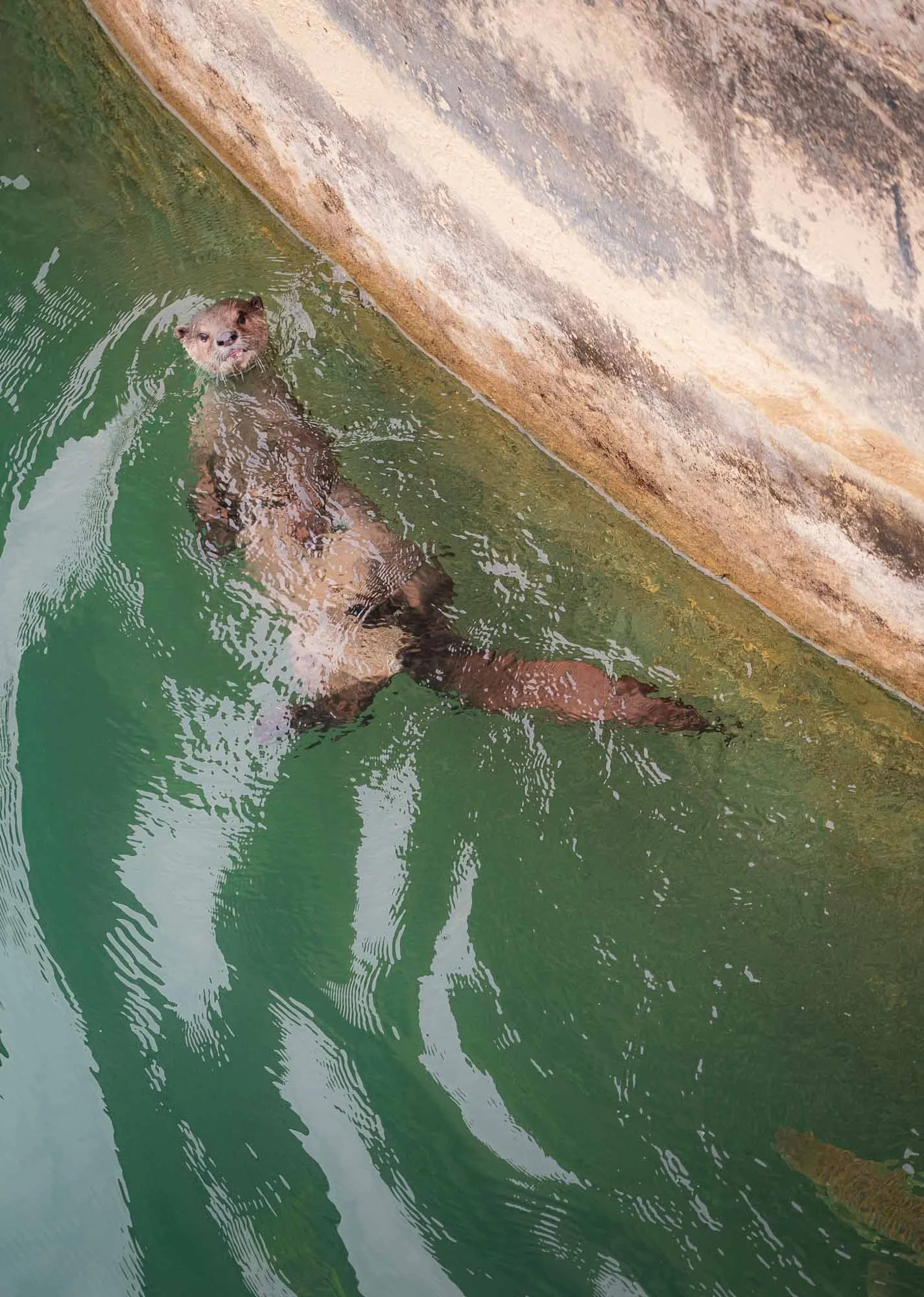
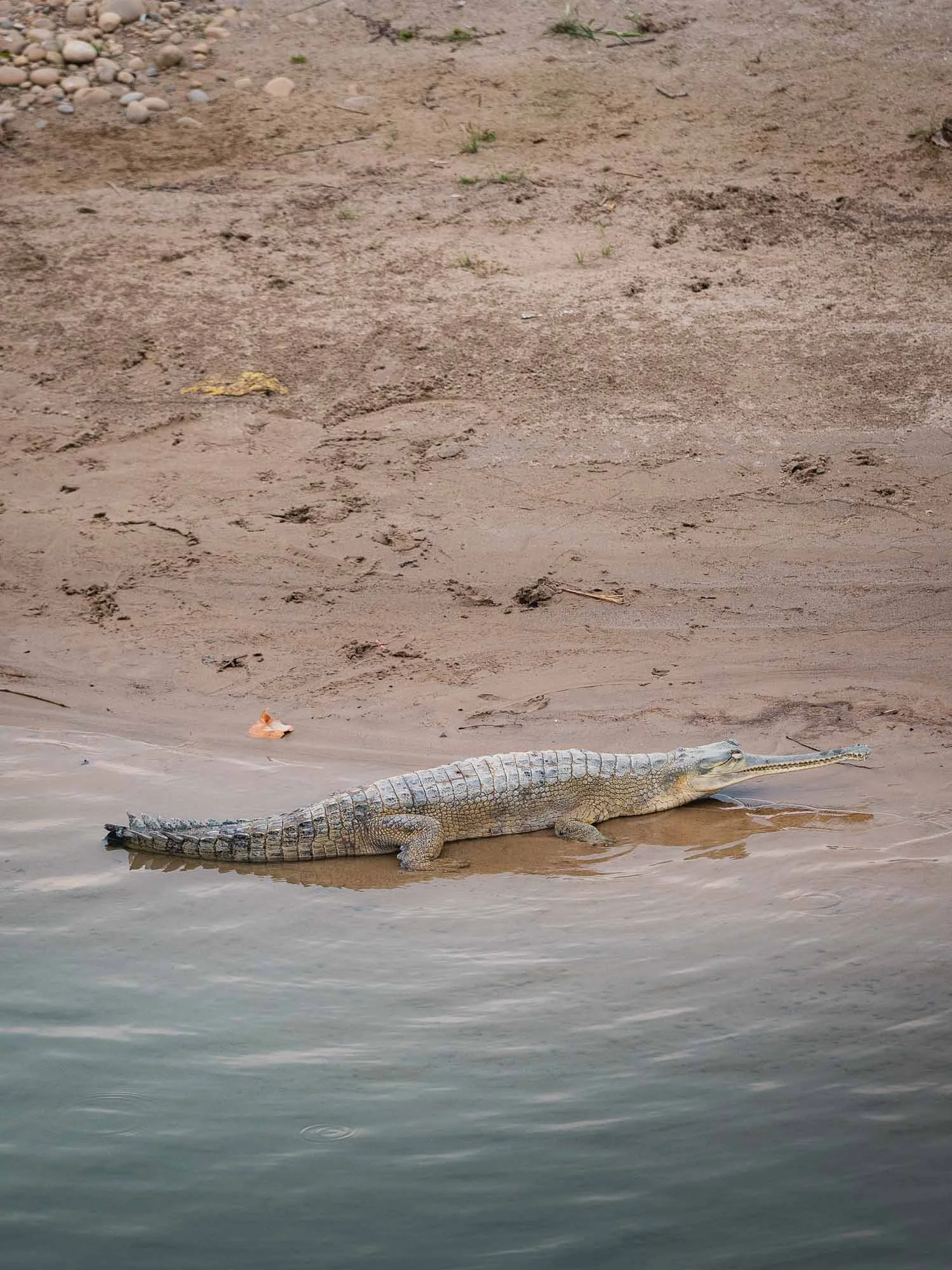
I did have a few encounters of the non-feline kind on the way from the airport towards the park already.
Bardiya is surrounded by a large buffer zone where human development is limited, but a major highway runs right through it - we encountered this otter and the critically endangered Gharial crocodile with its long, narrow snout near a bridge over the Babai River, one of many that runs through the ecosystem. There were once just an estimated 200 of these reptiles left in the wild. Now the number is growing, and Bardiya actually has a breeding program for them, which I would get to visit later.
Community Conservation
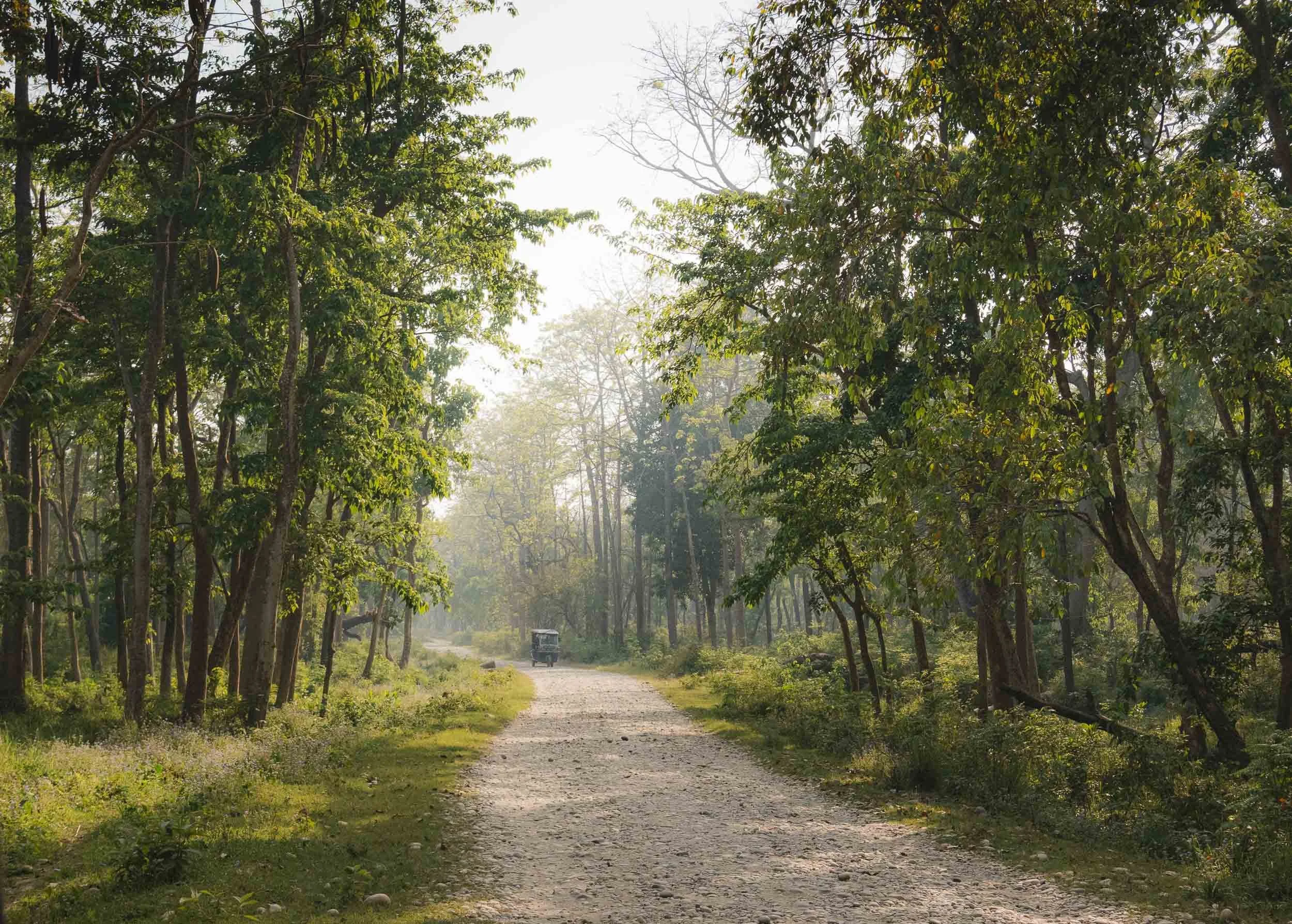
After arriving at a small lodge on the banks of the Girwa river just on the border of the park, we made our way into the community forest, part of the buffer zone where humans and animals coexist - not always happily, as my guide Ram Raj (his nickname is Nana) would explain.
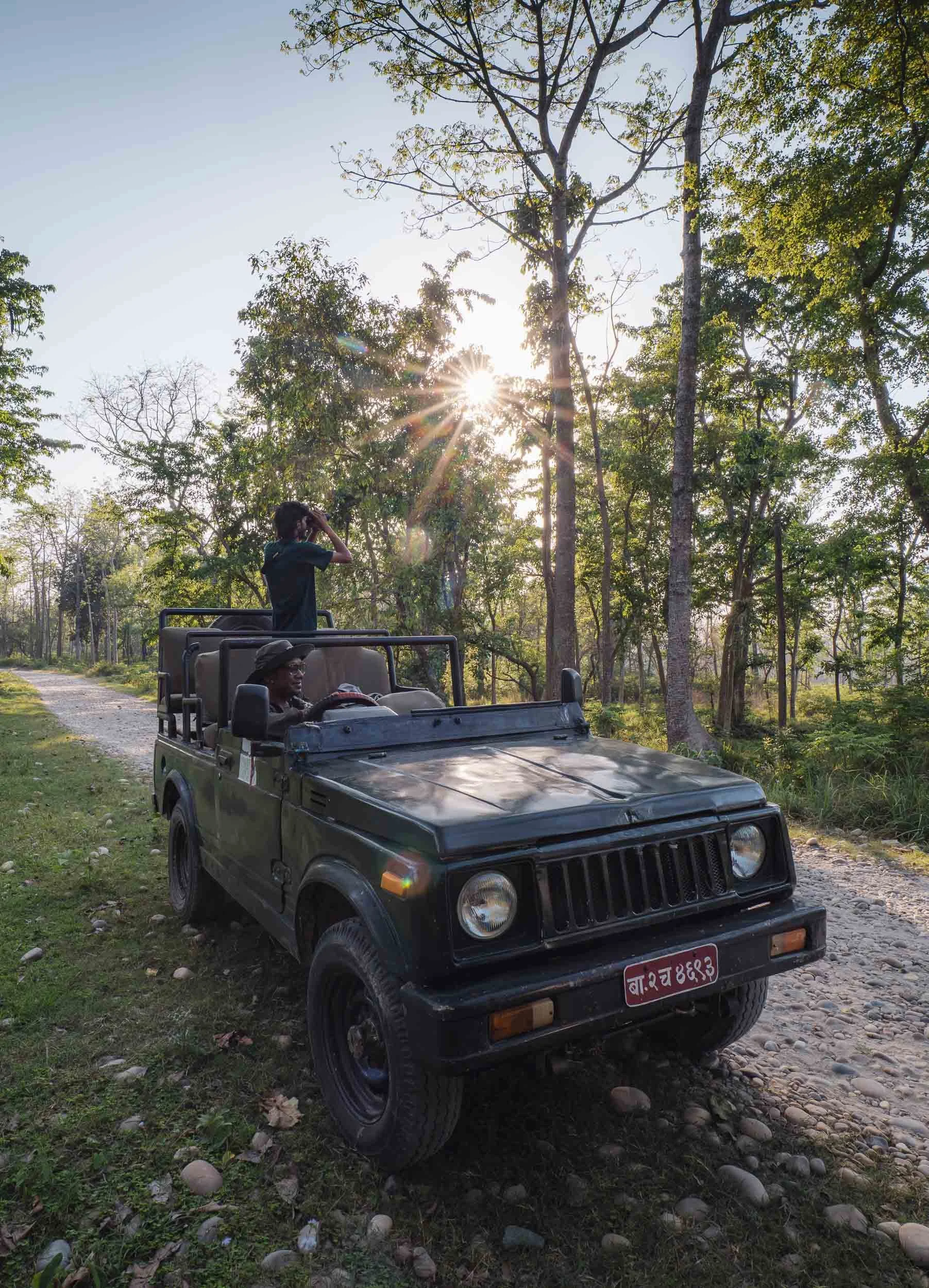
He’s only 24, but grew up in the area and has been involved in its human-wildlife management and conservation efforts since his teenage years. In fact, Nana experienced the challenges first hand: he broke his leg during a motorcycle accident when he encountered an elephant on the road, and his previous house suffered from elephant-related damage regularly, forcing him to abandoned the mud-walled home and move into a concrete structure.
It’s maybe through these encounters he dedicated his life to helping the community engage with wildlife positively, become part of the community-based anti poaching unit (CBAPU). He also has a role in the Rapid Response Team and sleeps with two phones next to his bed, responding to calls from locals whose crops are raided by elephants, to leopards entering village areas, and pythons in people’s living rooms - yep, he showed me pictures.
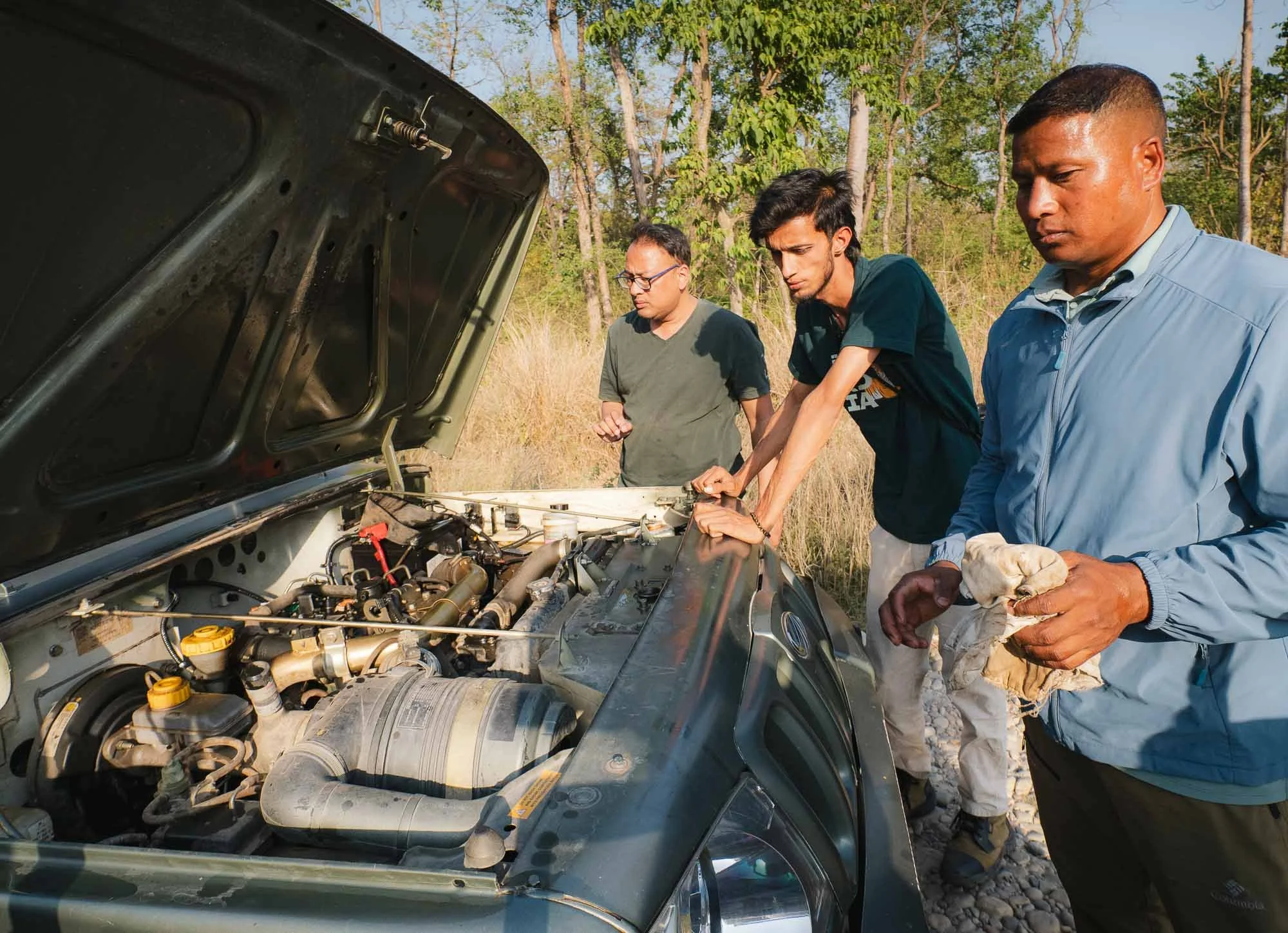
As we drove to the forest hoping for our first wildlife encounter, his helpful spirit became immediately apparent when we came across a jeep that had broken down.
The attempt to get the engine going again remained unsuccessful, and so we moved on after calling in more qualified help.
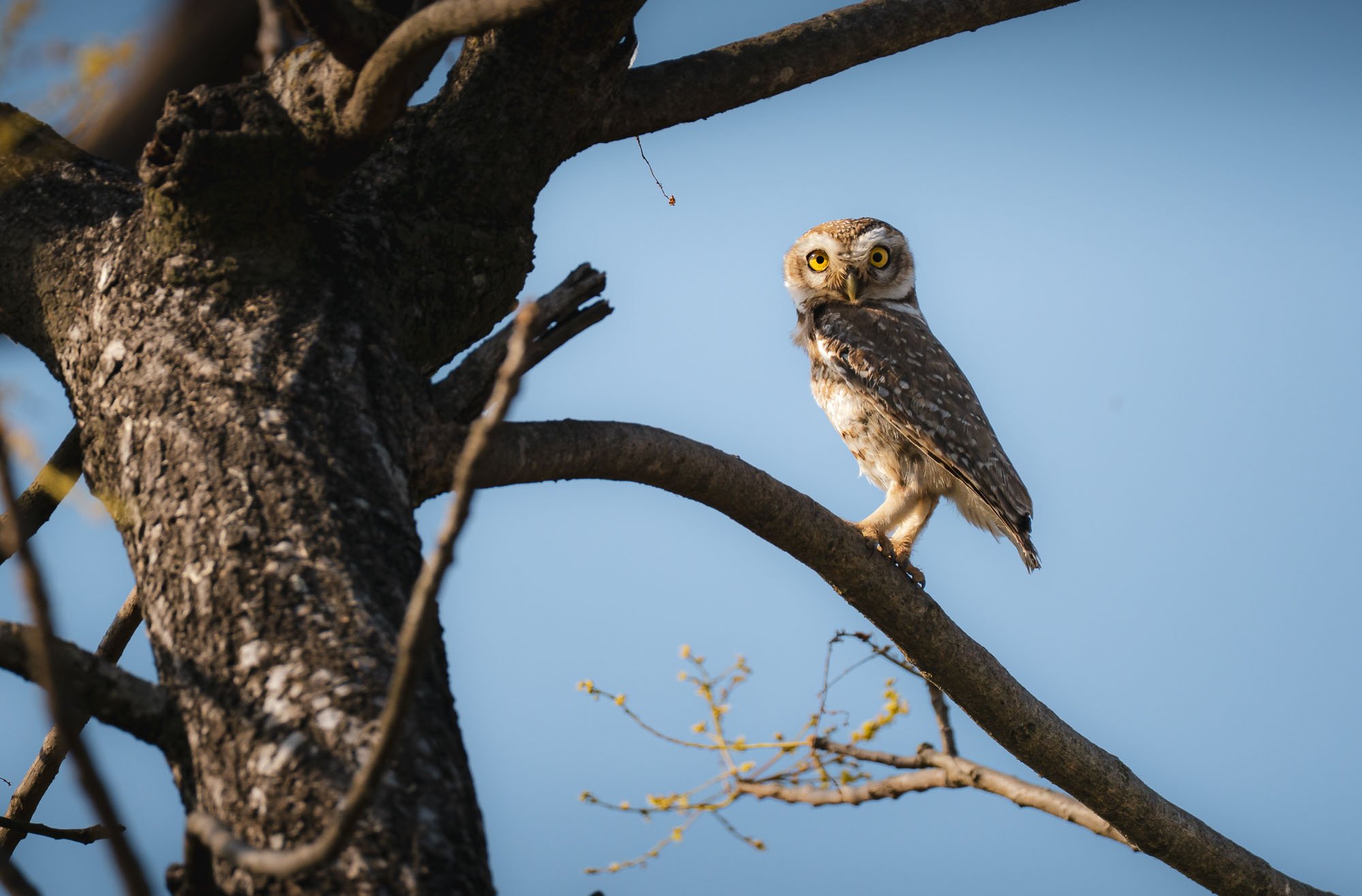
The area is of course home to much more than tigers - for instance, there are over 400 bird species to be found in the park. One of the more charismatic ones we encountered is the Spotted Owlet.
Beyond the birds, Bardiya is also a prime habitat for one-horned rhinoceros, the largest in Asia and a vulnerable species which I’d definitely hoped to see.
There are also a few animals I didn’t really have any hope to encounter due to their rarity, such as the fishing cat (yep, that’s a thing), rusty spotted cat, or the Gangetic dolphin (they are seasonal during the rainy times).
The One-horned Rhino
As we stood by the river bank of the community forest for sunset - a popular tiger crossing spot - Nana got a call that a rhino had been spotted a few hundred metres upstream, and we immediately got moving on foot through the bushes along the bank. Suddenly he stopped abruptly as we came around a curve, turned around and signaled for silence. A two-ton rhino, one of maybe around 4000 left in the wild, stood just 50 metres away, and had clearly noticed us - probably not seen (their eyesight is poor) but smelled and heard.
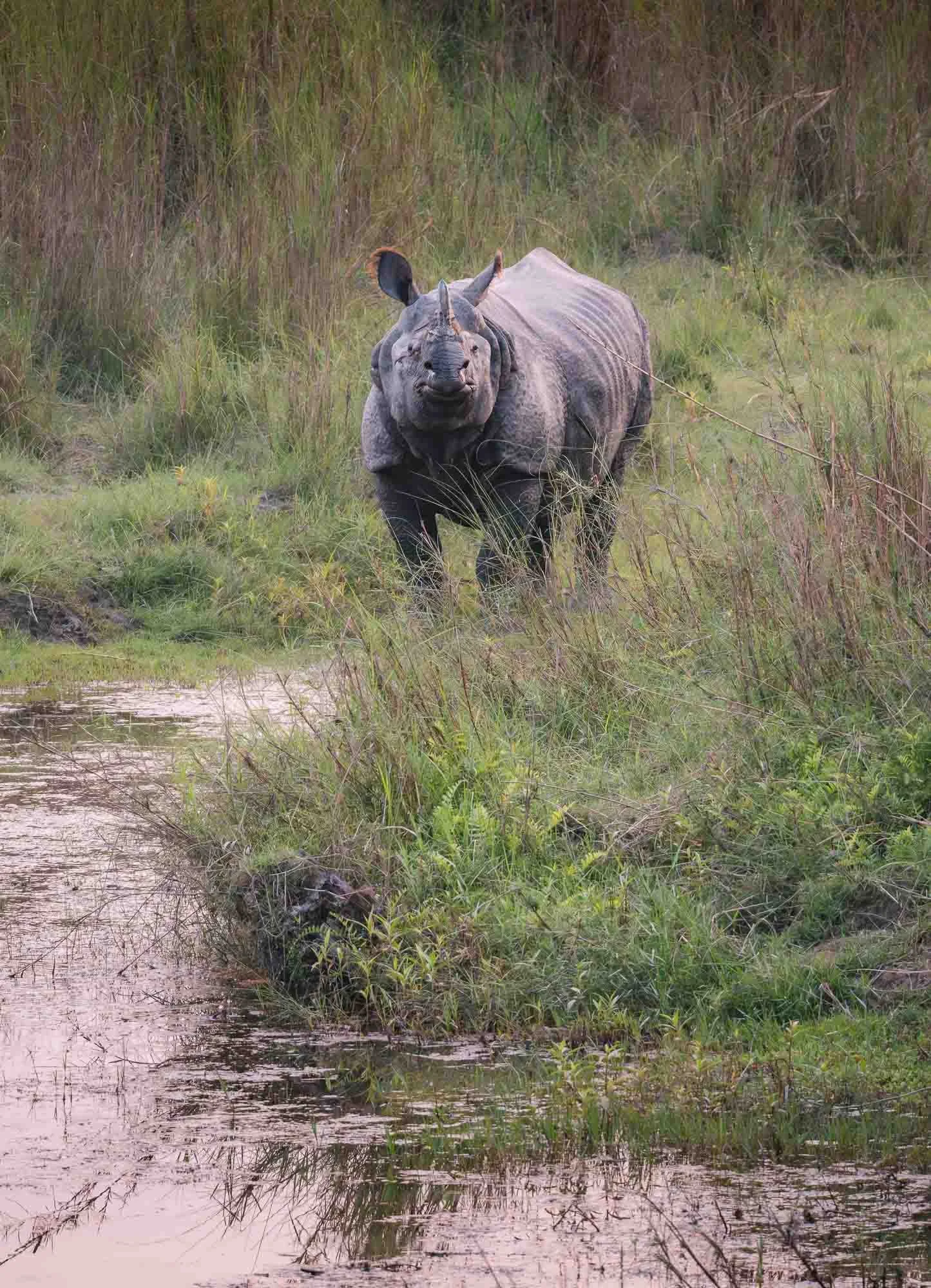
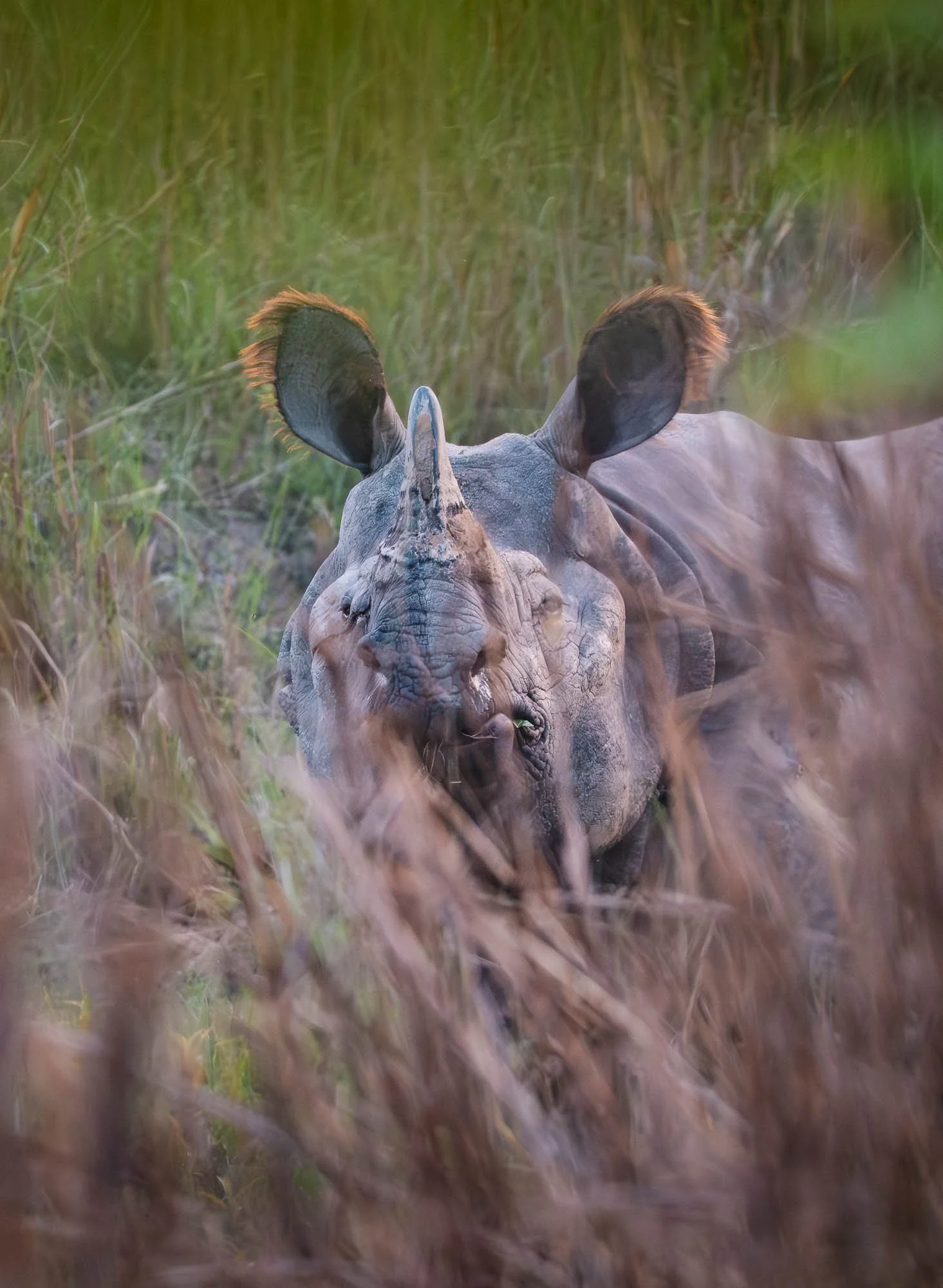
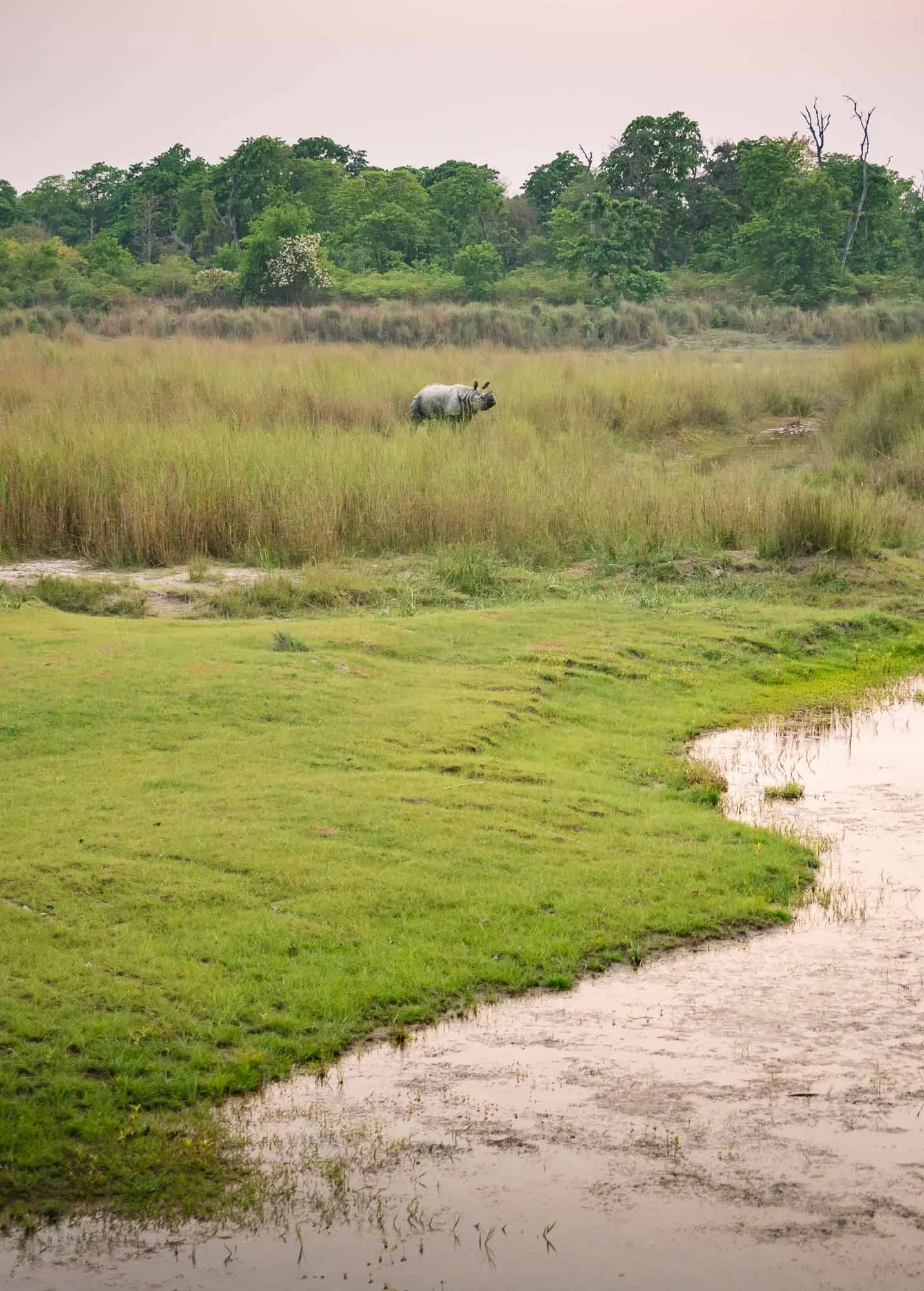
He watched us a for what felt like an eternity, then decided to turn, climb down the bank, and disappear into the thick grass across a small channel, not before giving us another disapproving look for disturbing his evening walk.
What a sighting - there are only said to be fewer than 50 individuals in the park and surrounding areas.
Day 1: success!
Into the National Park
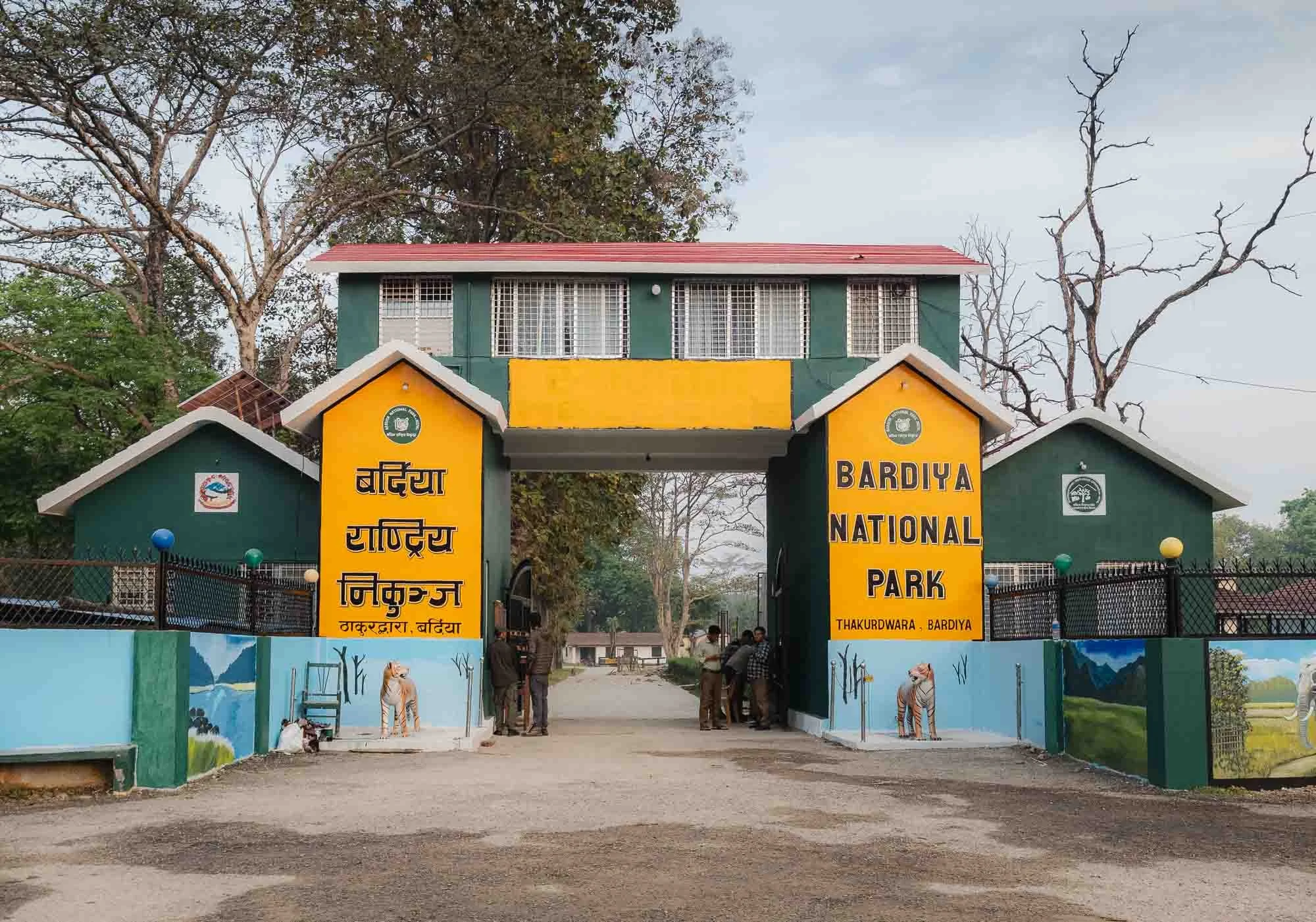
Around sunrise on Day 2 we left the buffer zone behind and entered the actual National Park area of just over 1000 sqkm, established in 1988.
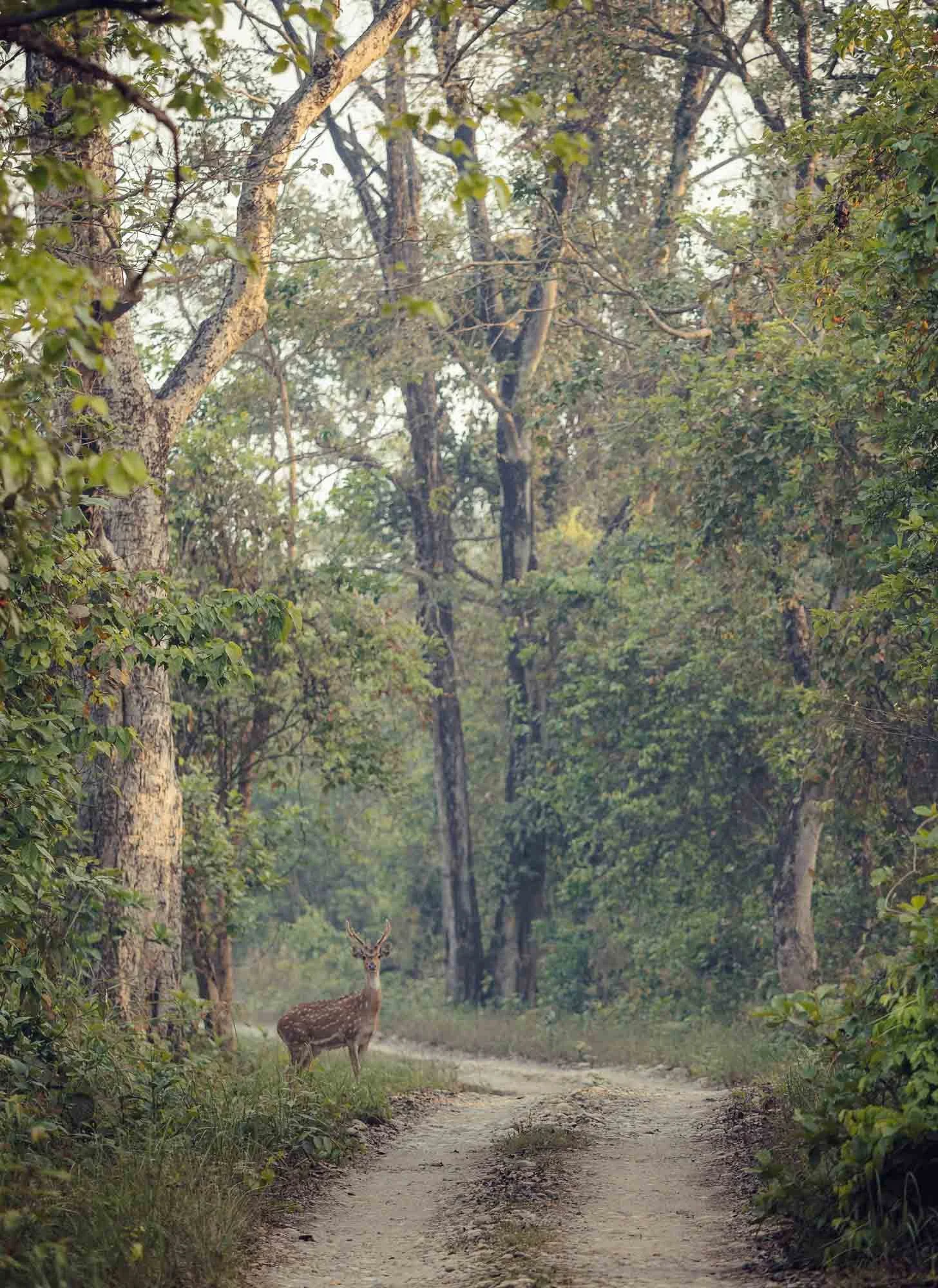
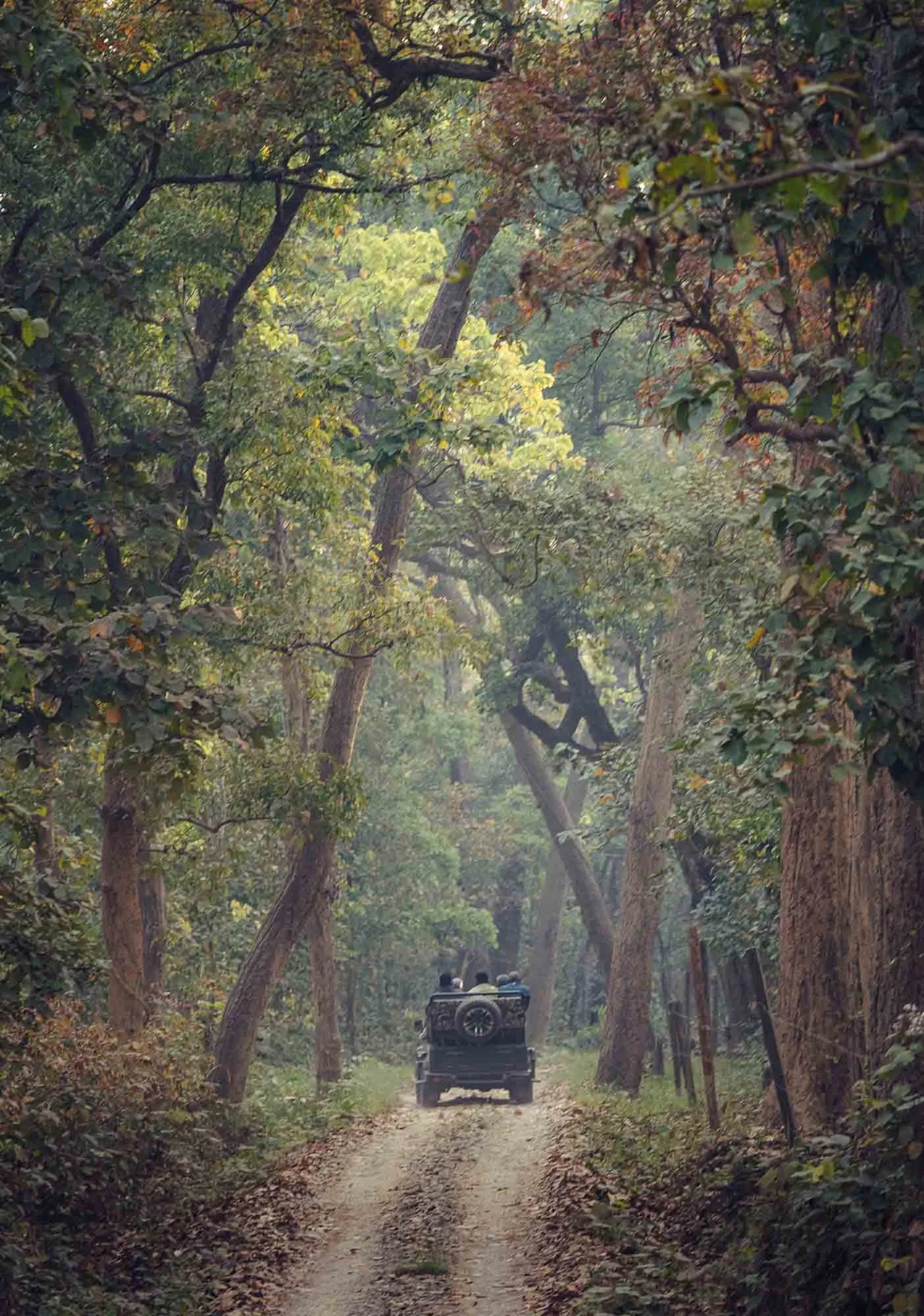
Owing to its rather remote location, it felt significantly less busy than many other parks in South Asia, although the lunch spots or major sightings can of course attract a few jeeps.
Among those sightings are deer: there are five species in the park (prime tiger prey…), the most common one, the spotted deer or Chital, seen here, watching us approach carefully.
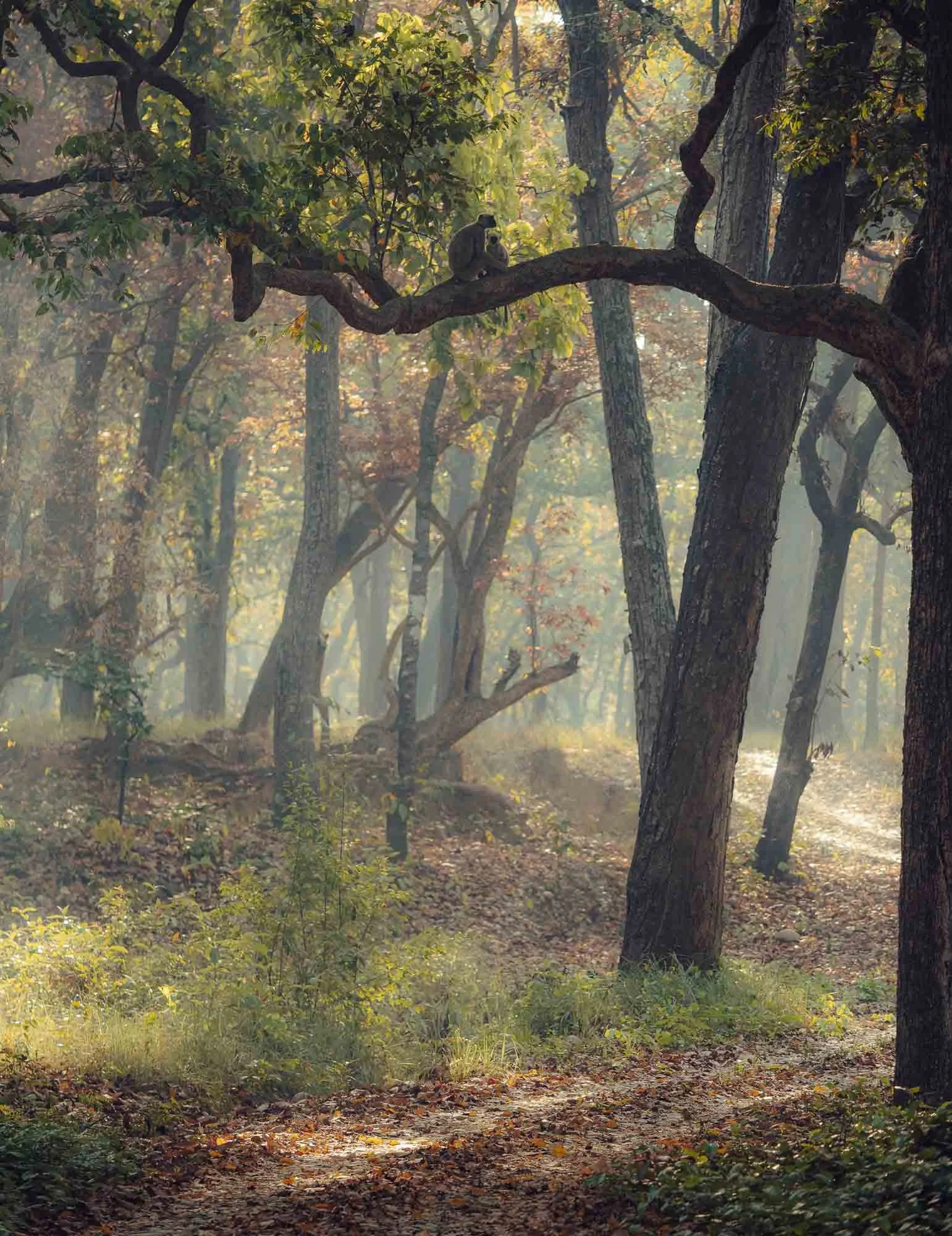
Although the day didn’t bring any major sightings, it’s always enjoyable to observe other forest inhabitants such as these rhesus macaques and listening for their alarm calls that alert other animals - and experienced guides - to the presence of tigers or leopards nearby.
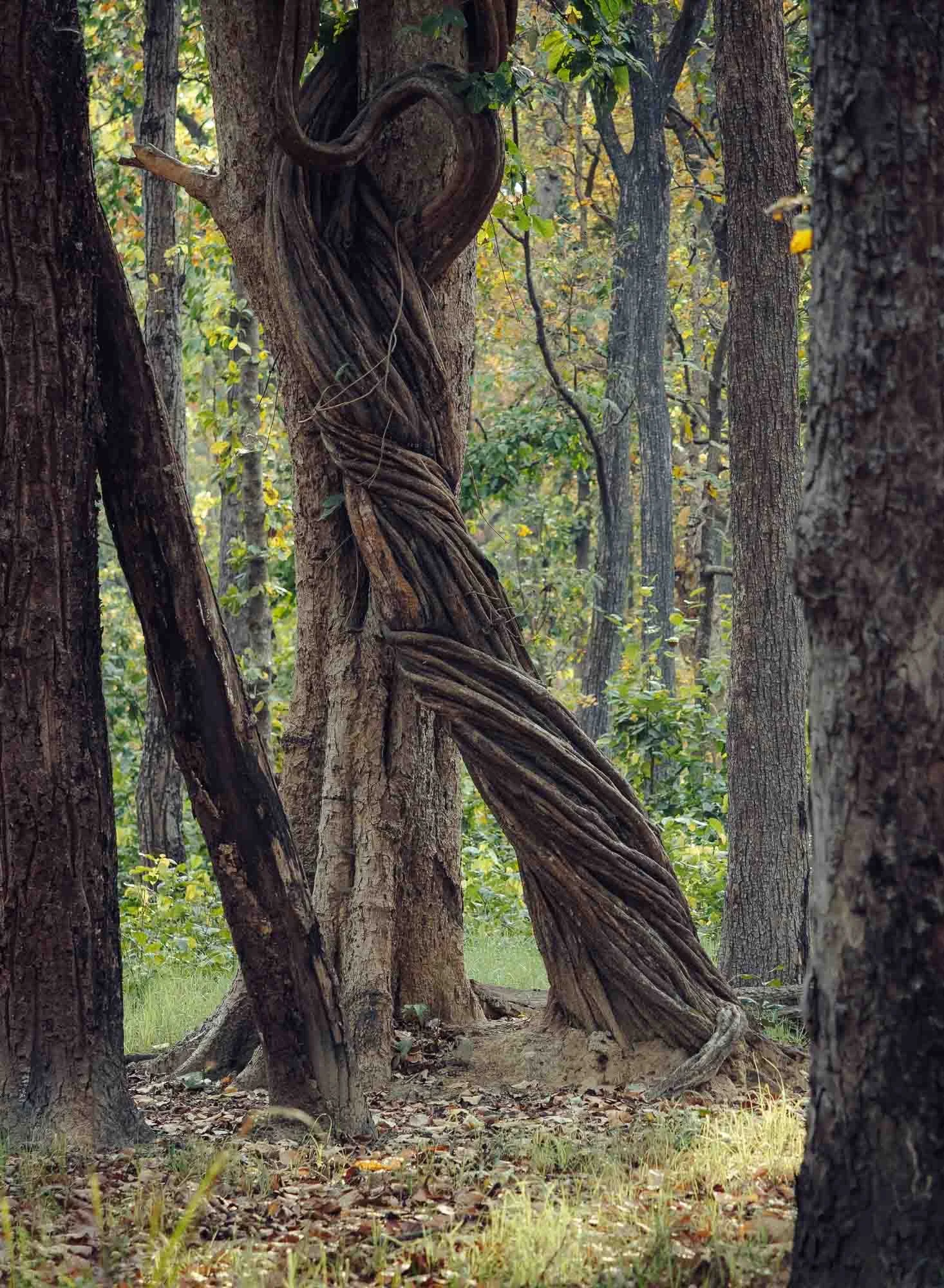
Even the flora is worth a closer look, such as these massive vines, which instead of investing energy in a thick trunk, climb existing trees to reach the canopy - sometimes smothering them in the process and giving the jungle a kind of Indiana Jones vibe.
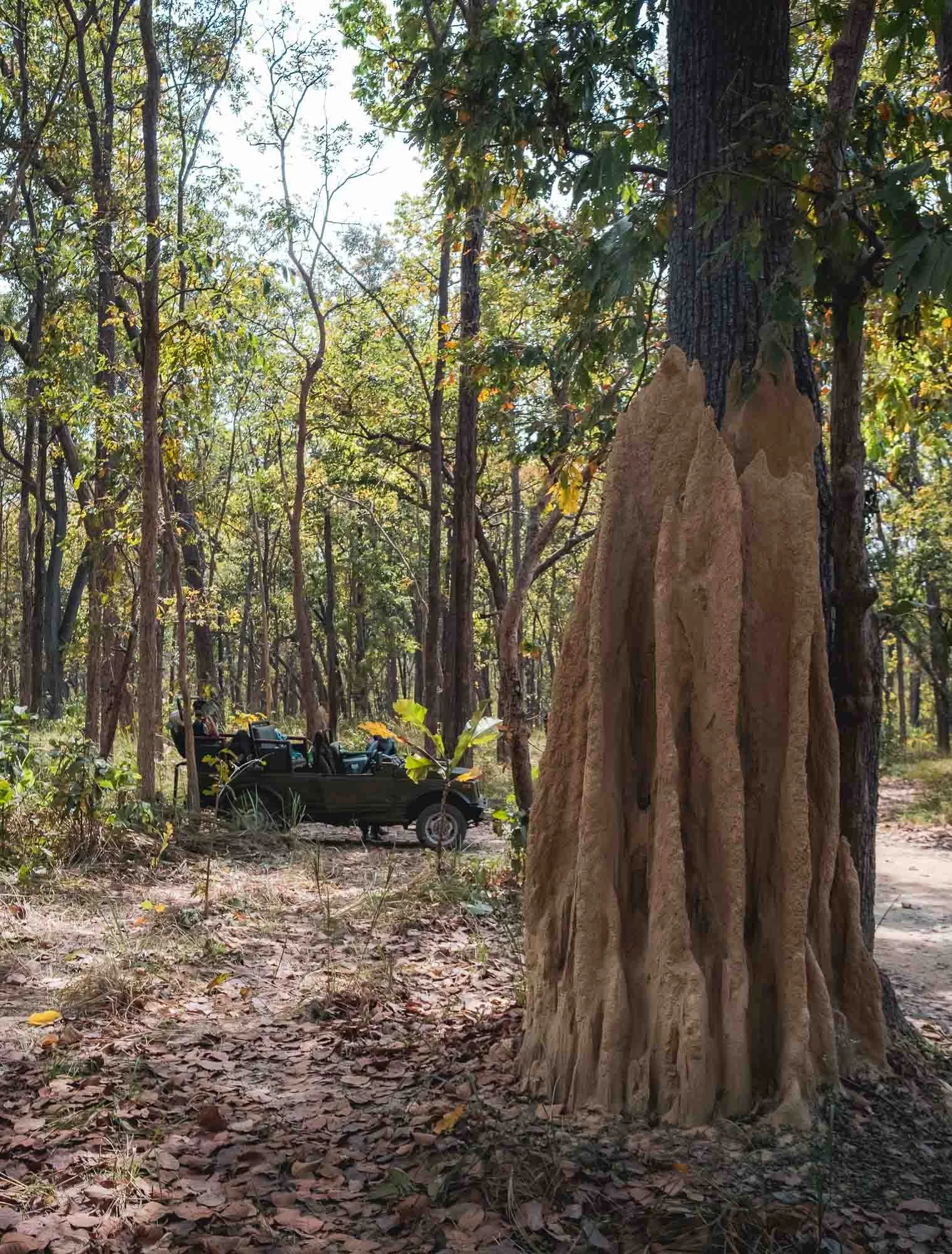
Another interesting forest feature are these huge termite mounds, sometimes in excess of 2 meters tall. They represent the pinnacle of a deep tunnel network constructed over decades by millions of these tiny insects.
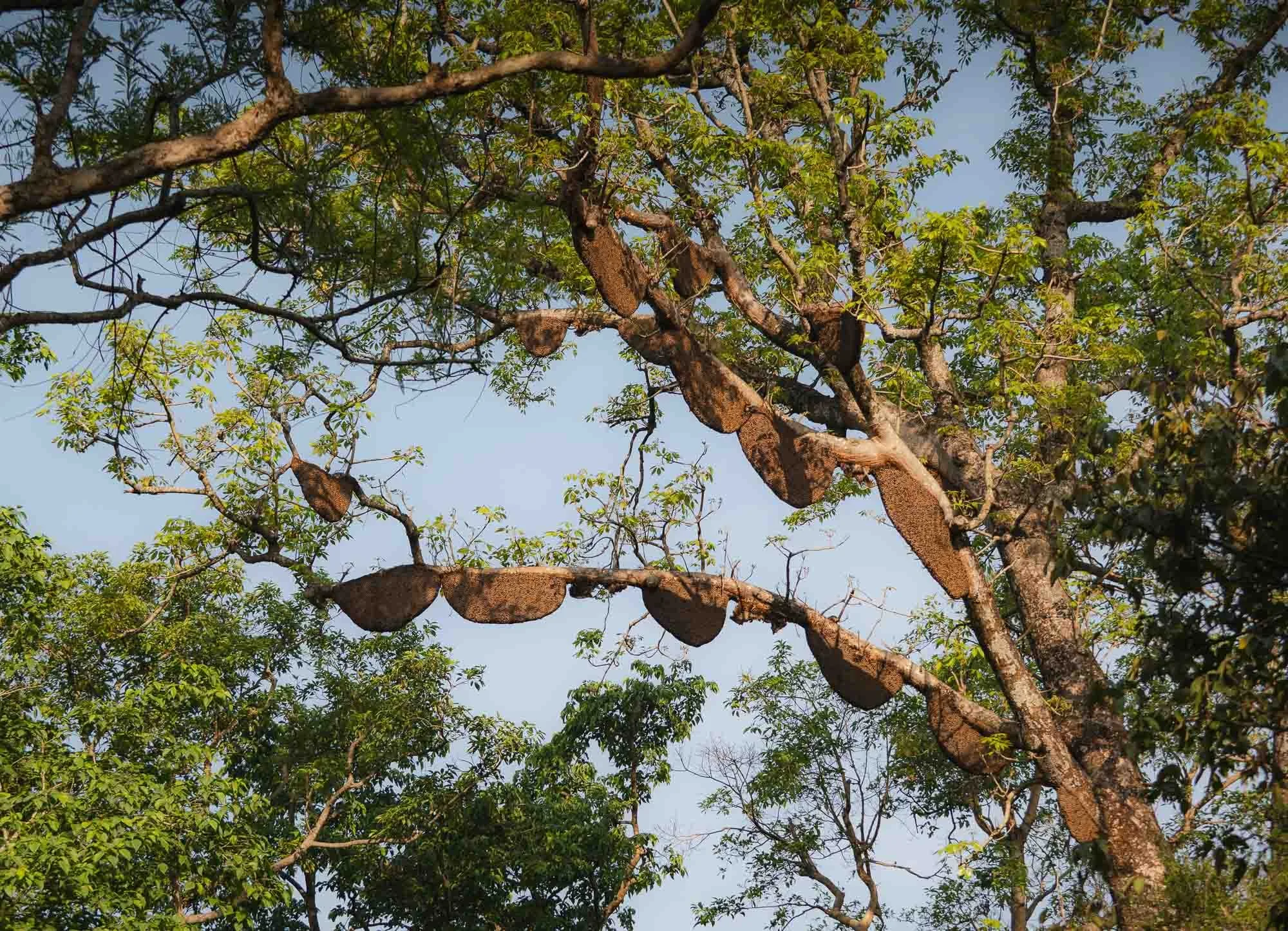
A different tiny insect positions their huge structures a little higher up - giant honeycombs, some more than a metre across, built by the Giant Asian Honey Bee.
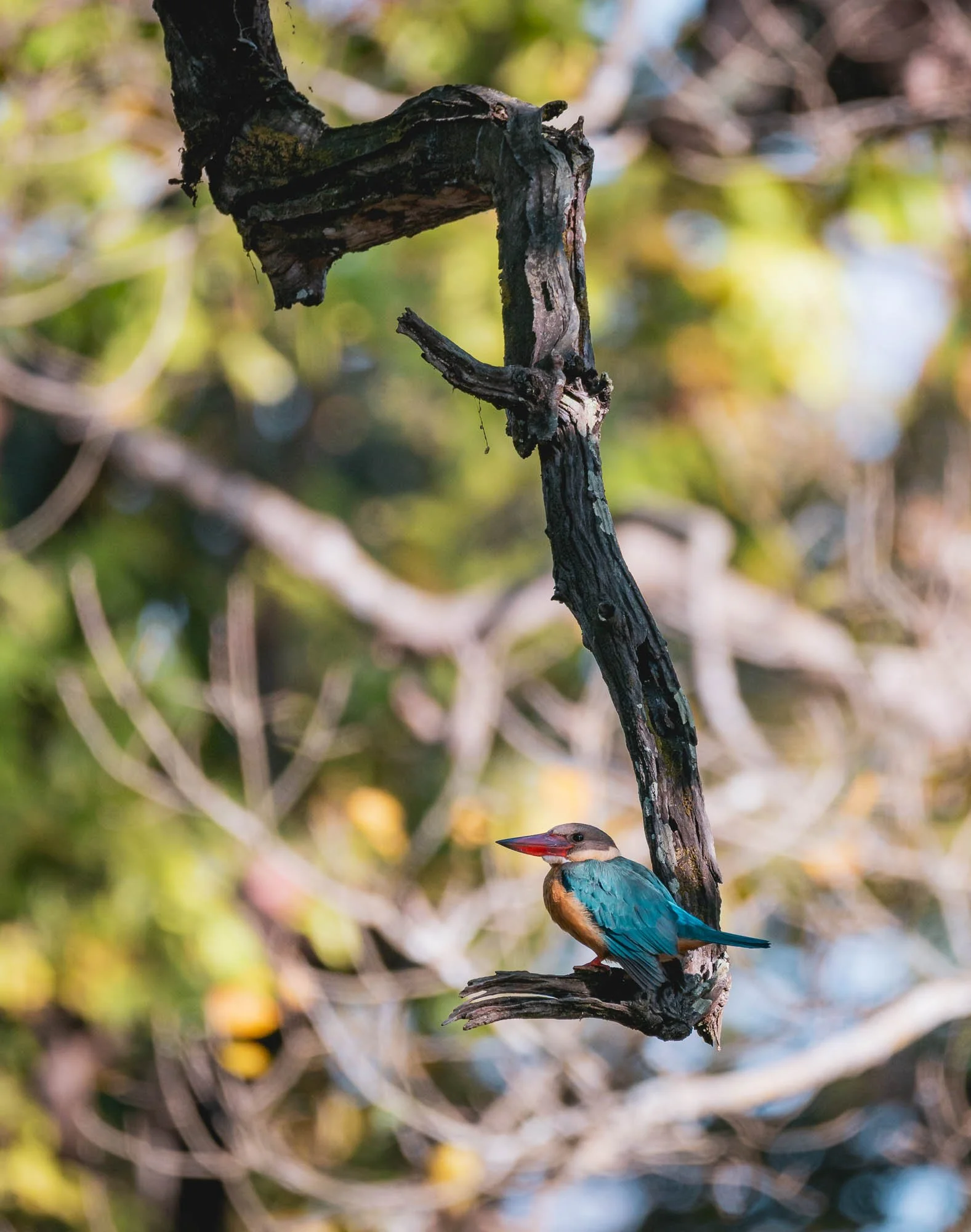
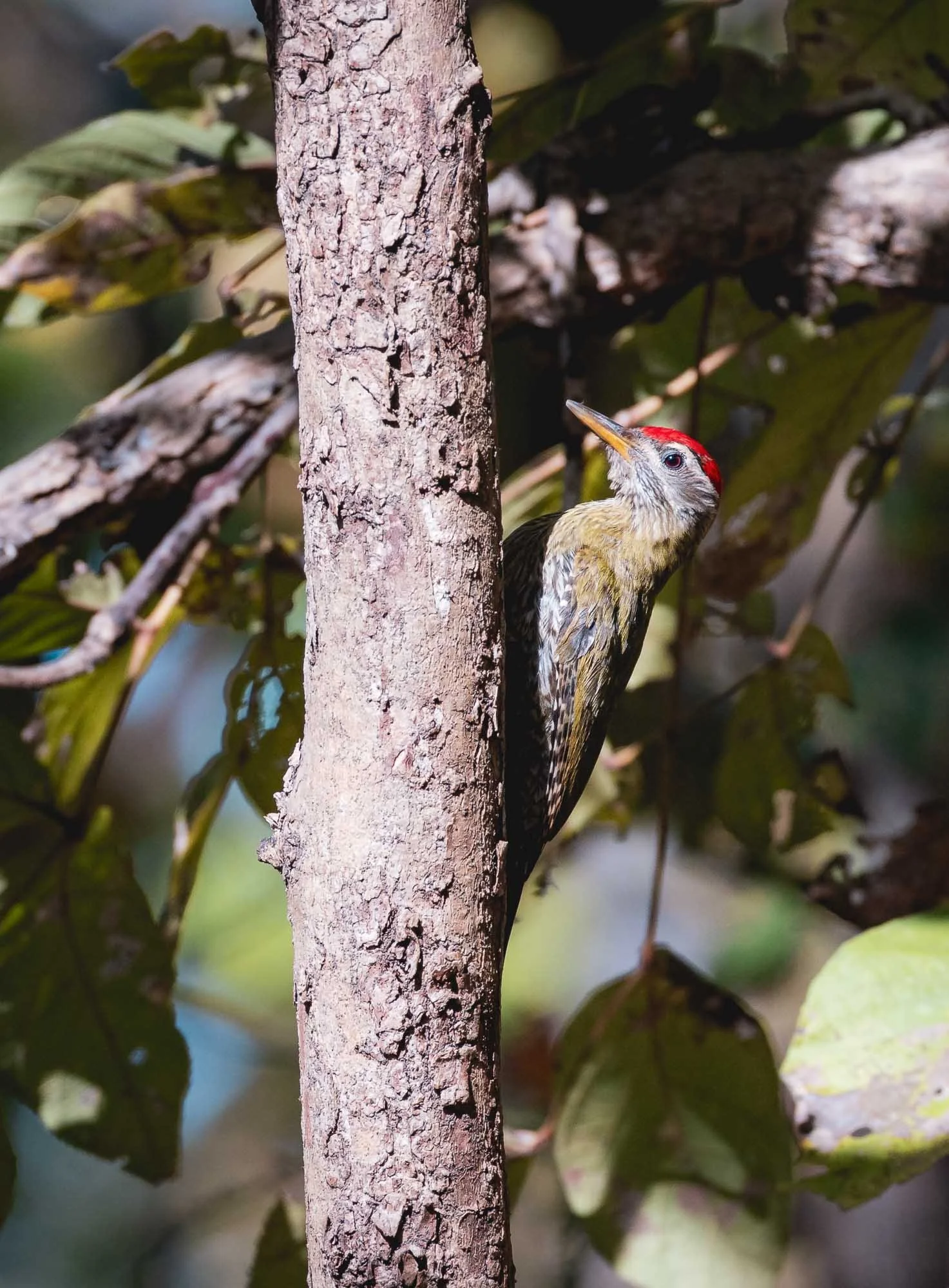
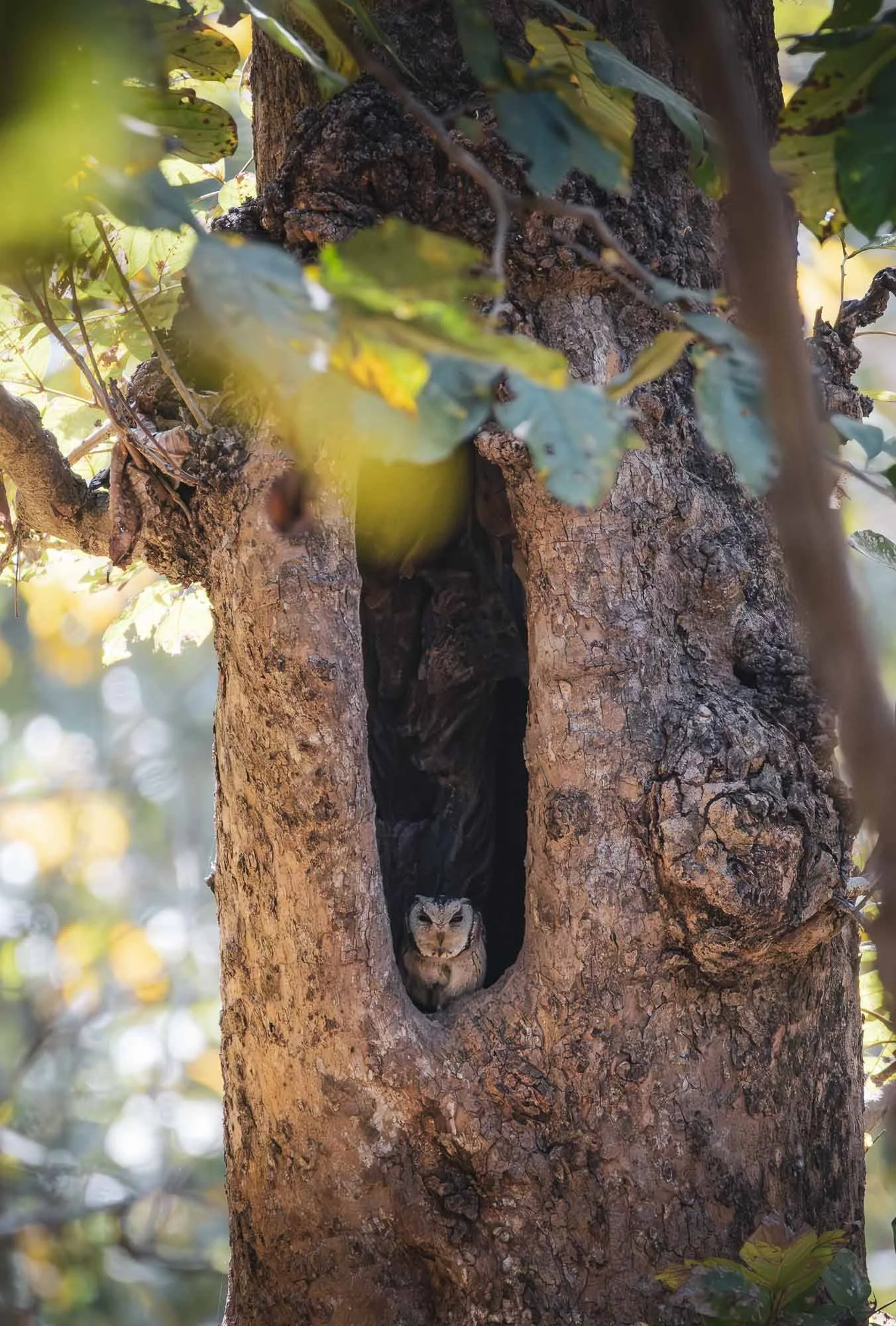
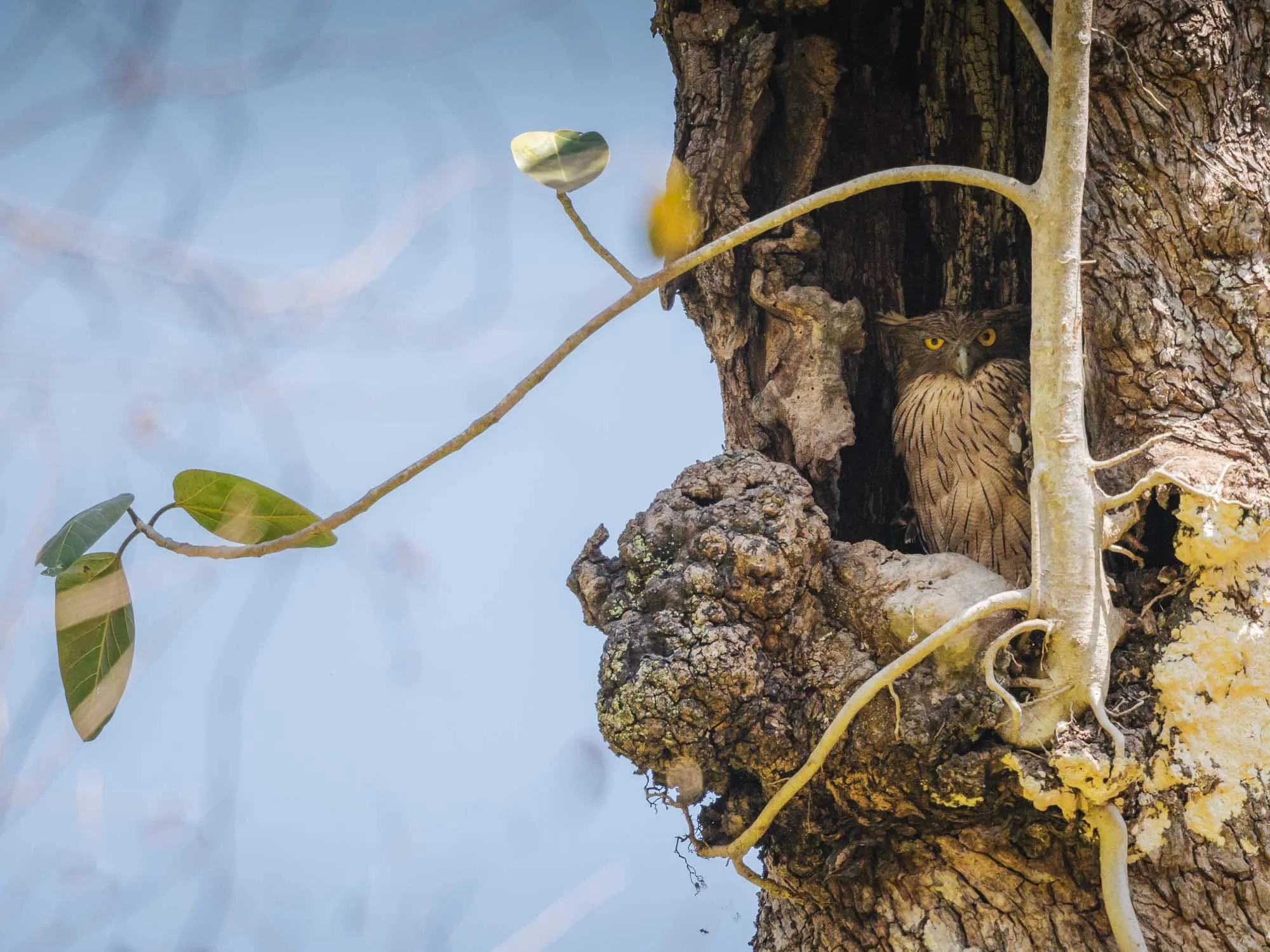
In general, scanning trees often pays off - they’re home to everything from kingfishers, woodpeckers, and what I believe are a collared scope owl and a fish owl. Luckily, my guide for the park was a woman who would miss none of those animals: Sushila. She grew up around the forest and became a guide more than 10 years ago. Evidently, a good one: she worked with the BBC for months to film the aforementioned Tiger Island documentary, helping them track the animals and study their behavior to capture the most interesting scenes. I also got to meet one of her four sisters, who is also a guide in the park, working hard to correct the skewed male / female ratio!
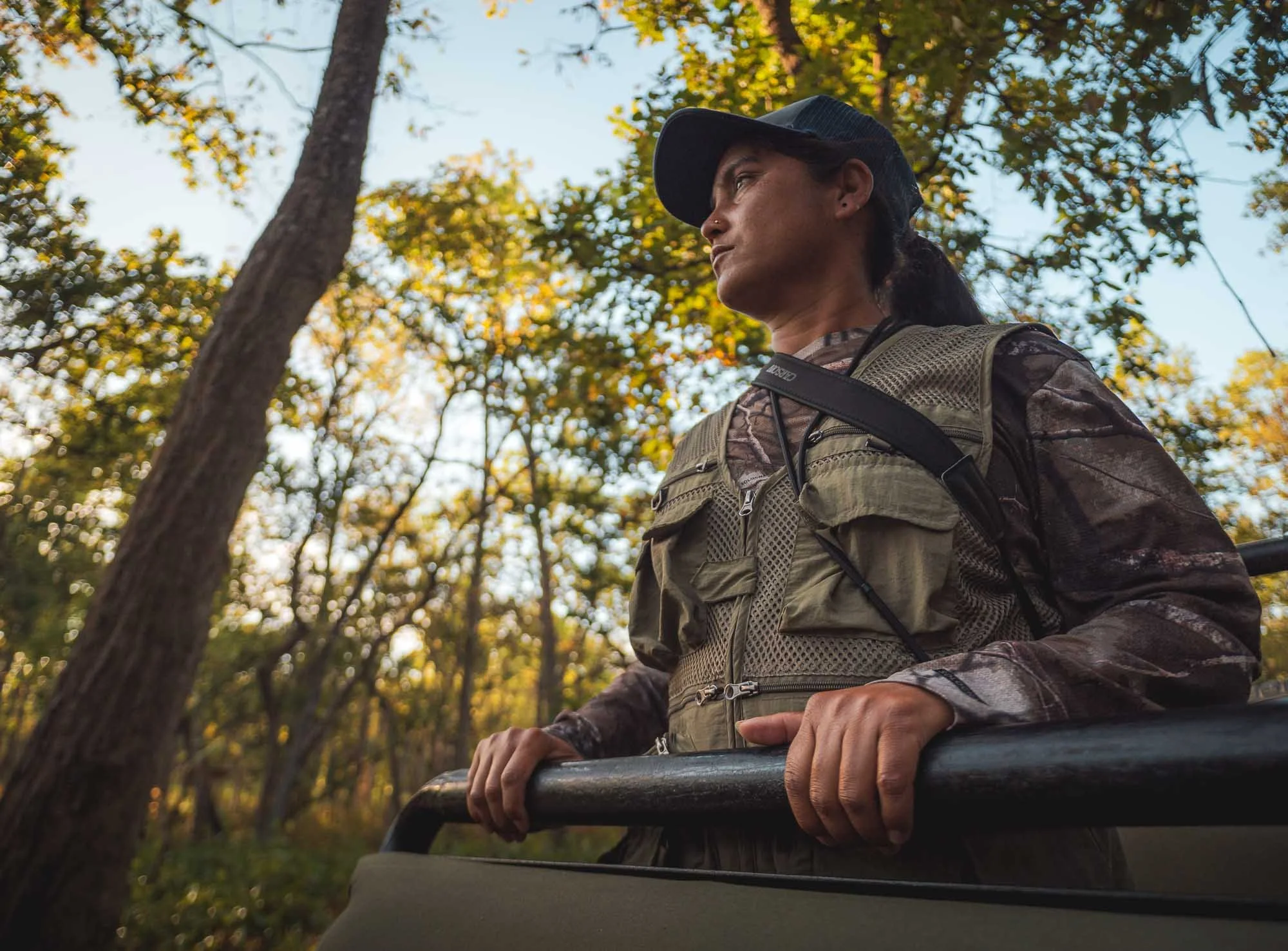
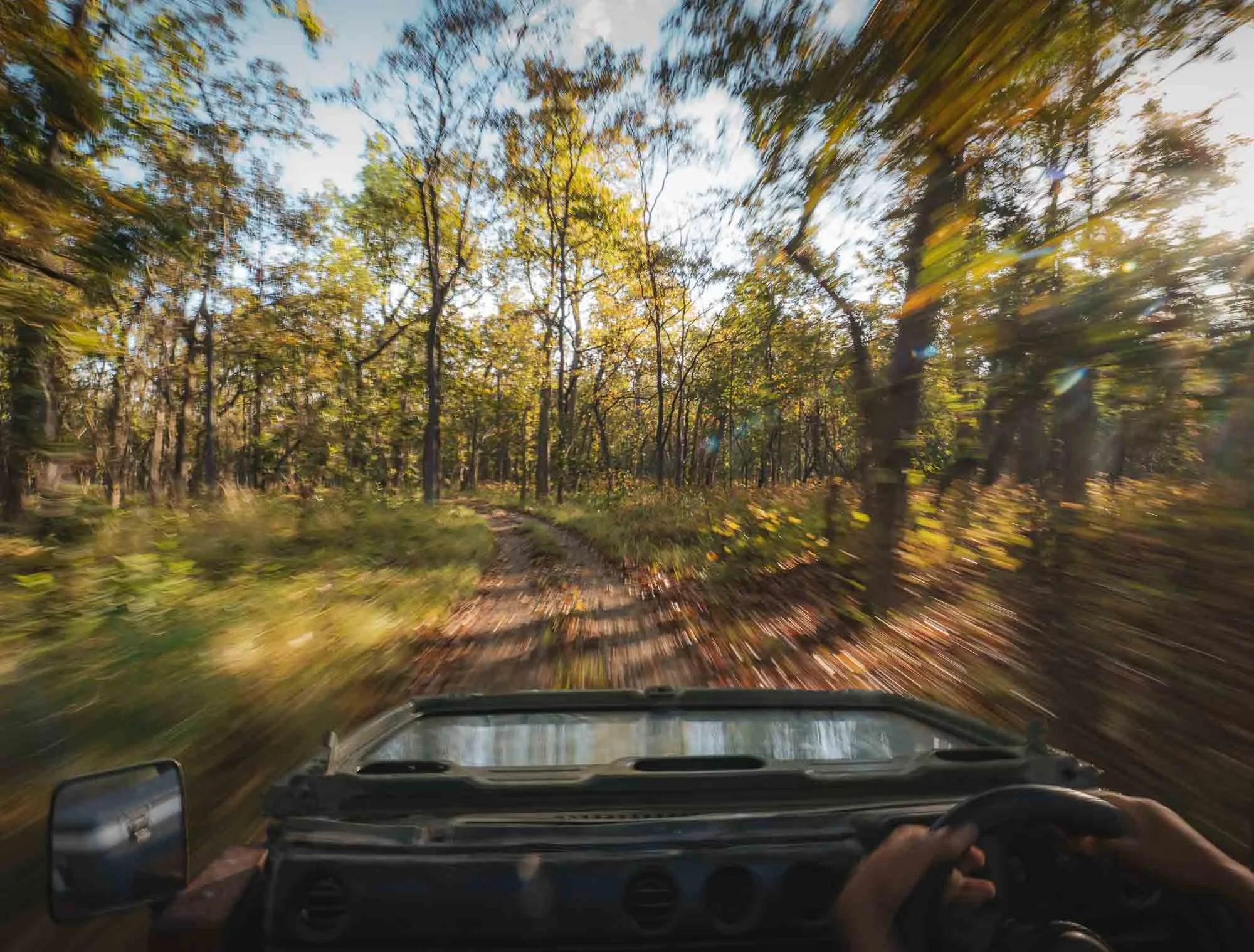
Even with her and our amazing driver Harry, who has been here for 17 years as well and never shied away from pressing on the gas when there were signs of a tiger nearby, spotting these big cats is no easy task. But we did see another large animal that roams these forests…
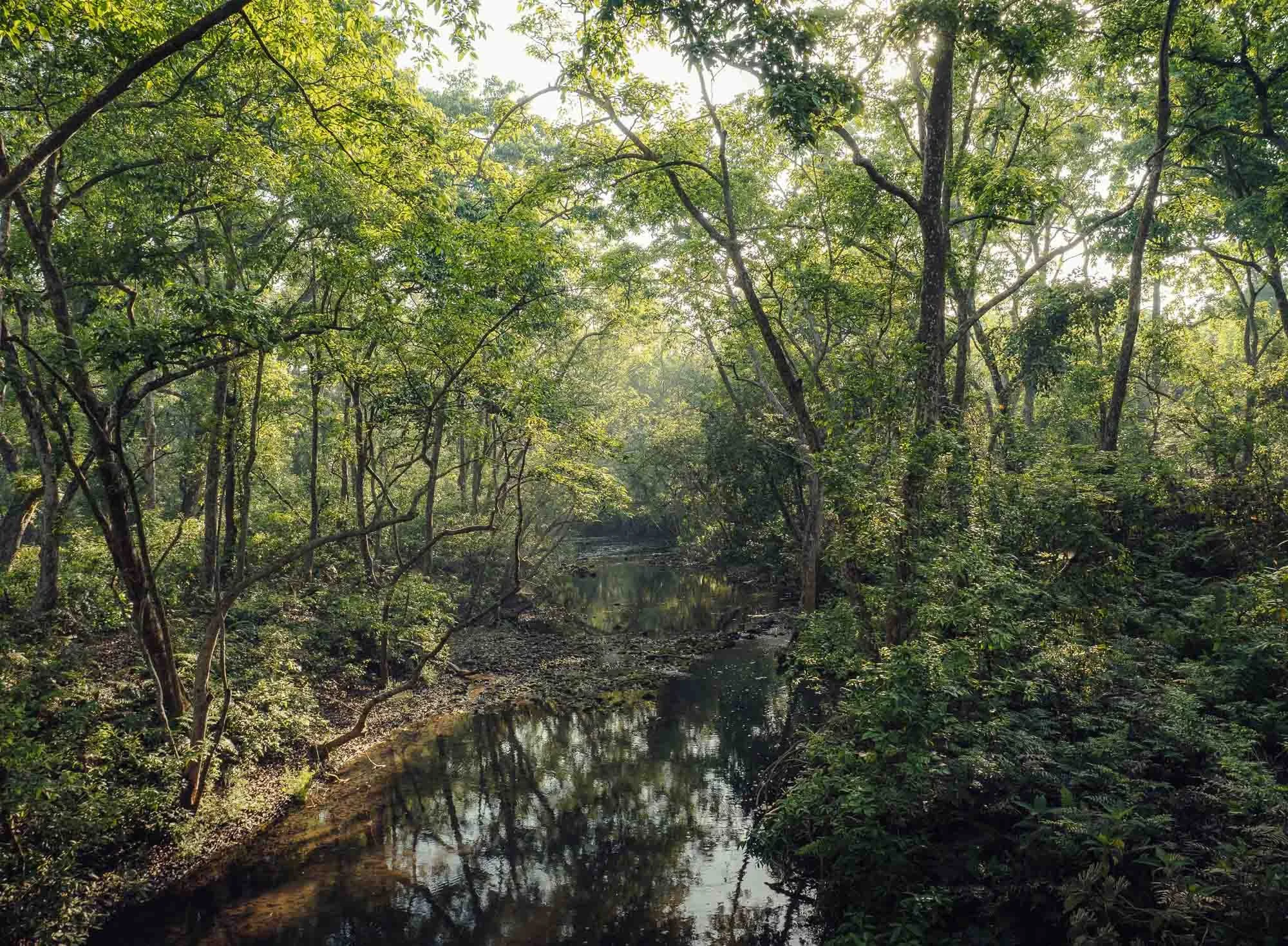
The park is mostly sal forest area, with small parts of grassland, floodplains of the river system, and transition zones. It gets very hot during the dry season, which ends around the time I visited in April, with temperatures over 35C.
During this dry season, several waterholes are filled artificially to provide drinking water for the animals - in fact Nana learnt to be a solar system technician during Covid to help install the pumps required. The water holes provide some of the best opportunities to spot tigers, who rest close to them to cool off during the day. But it’s not only tigers who make use of them.
Asian Elephants
We spotted this herd of endangered Asian elephants roaming the forest, sometimes migrating huge distances in search of food and water. There is a population of around 120 or so in the area. You’d think that animals of this size, let alone a herd of 10+, are easy to spot, but no, in these thick forests even an elephant can hide quite easily.
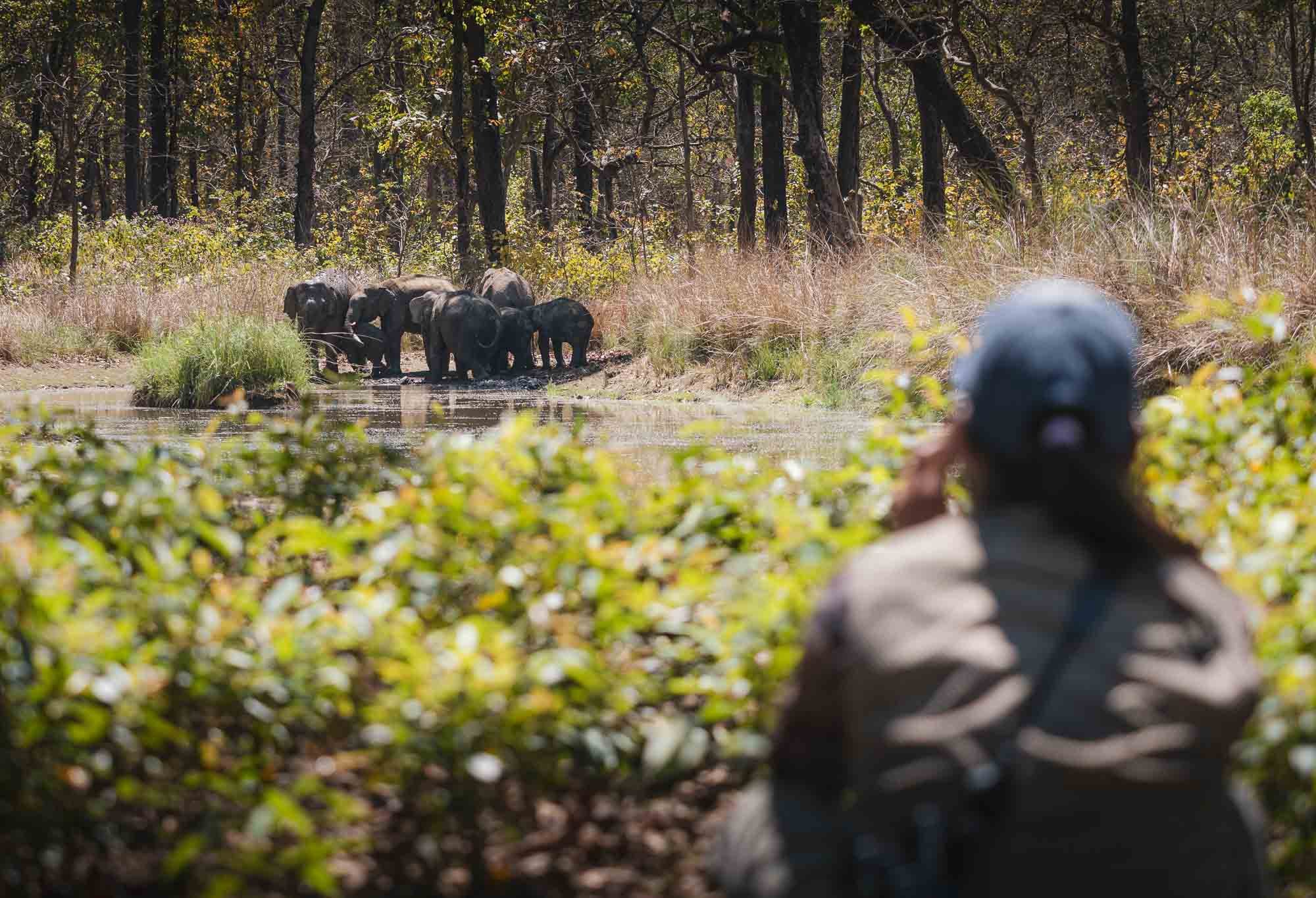
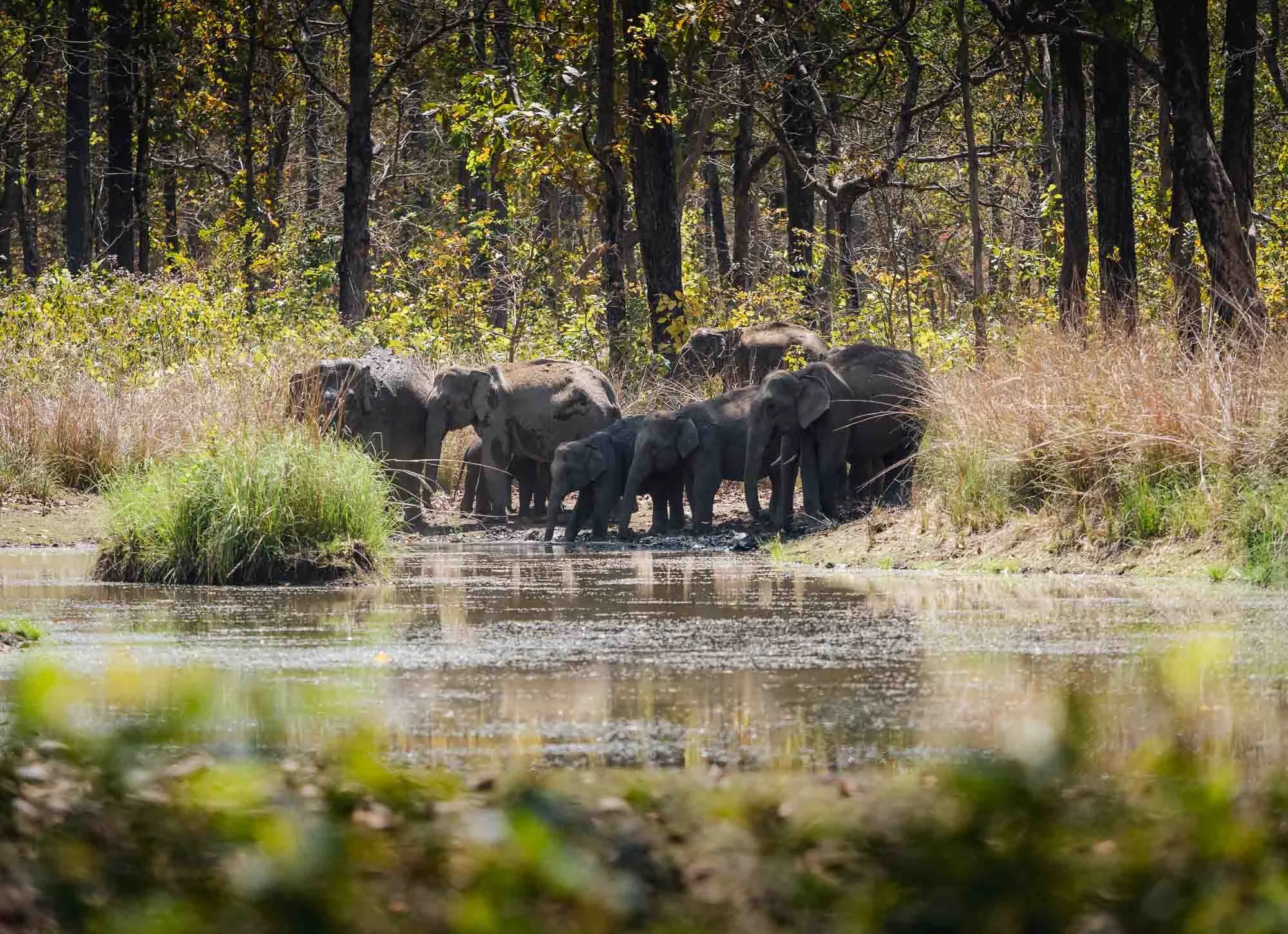
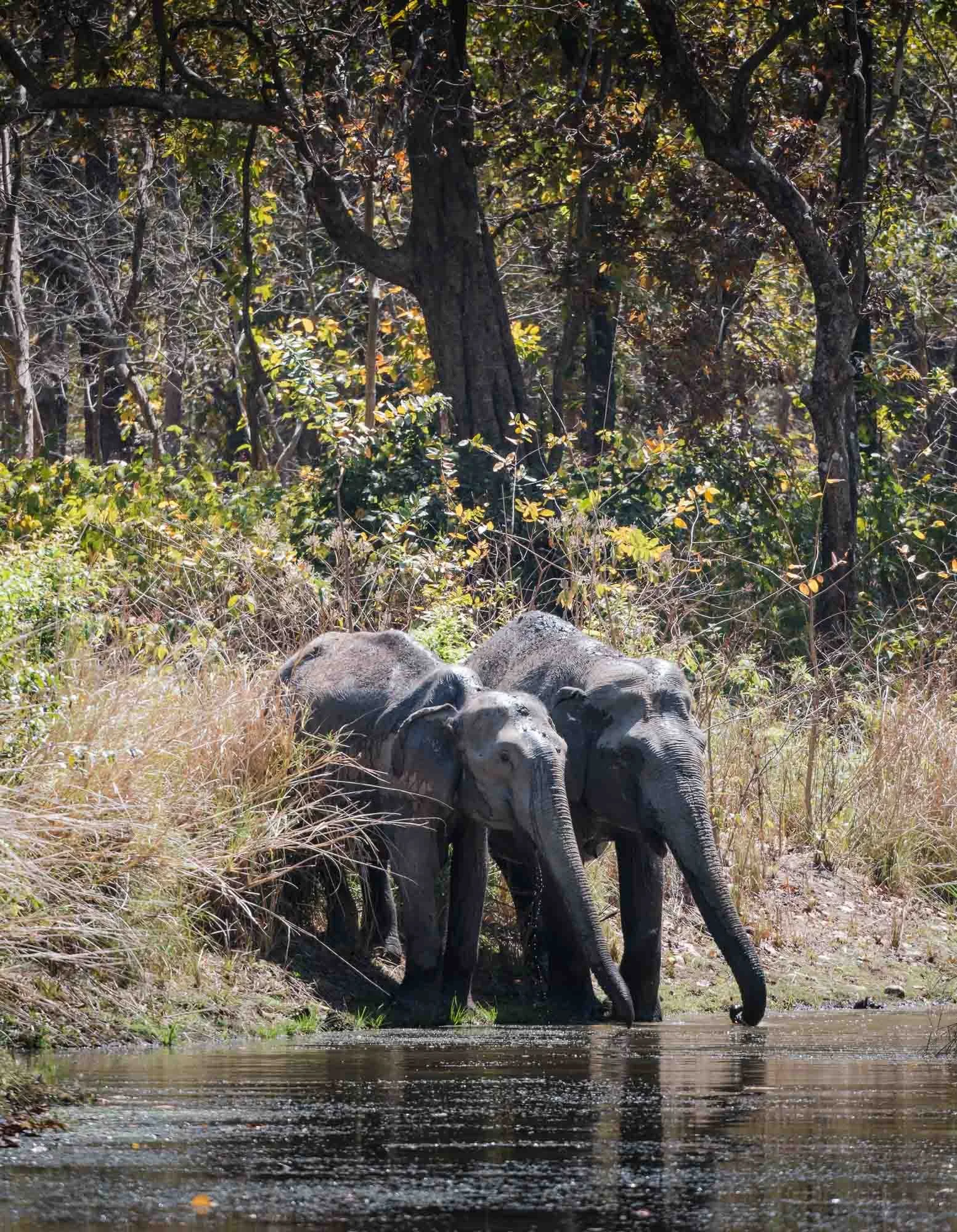
As they come out in the open to drink, you’ll get a chance to have a glimpse at them though. I learnt to appreciate these animals and their social structure and behavior over the years and they became one of my favorite species - although I still have a slight preference for the African variant.
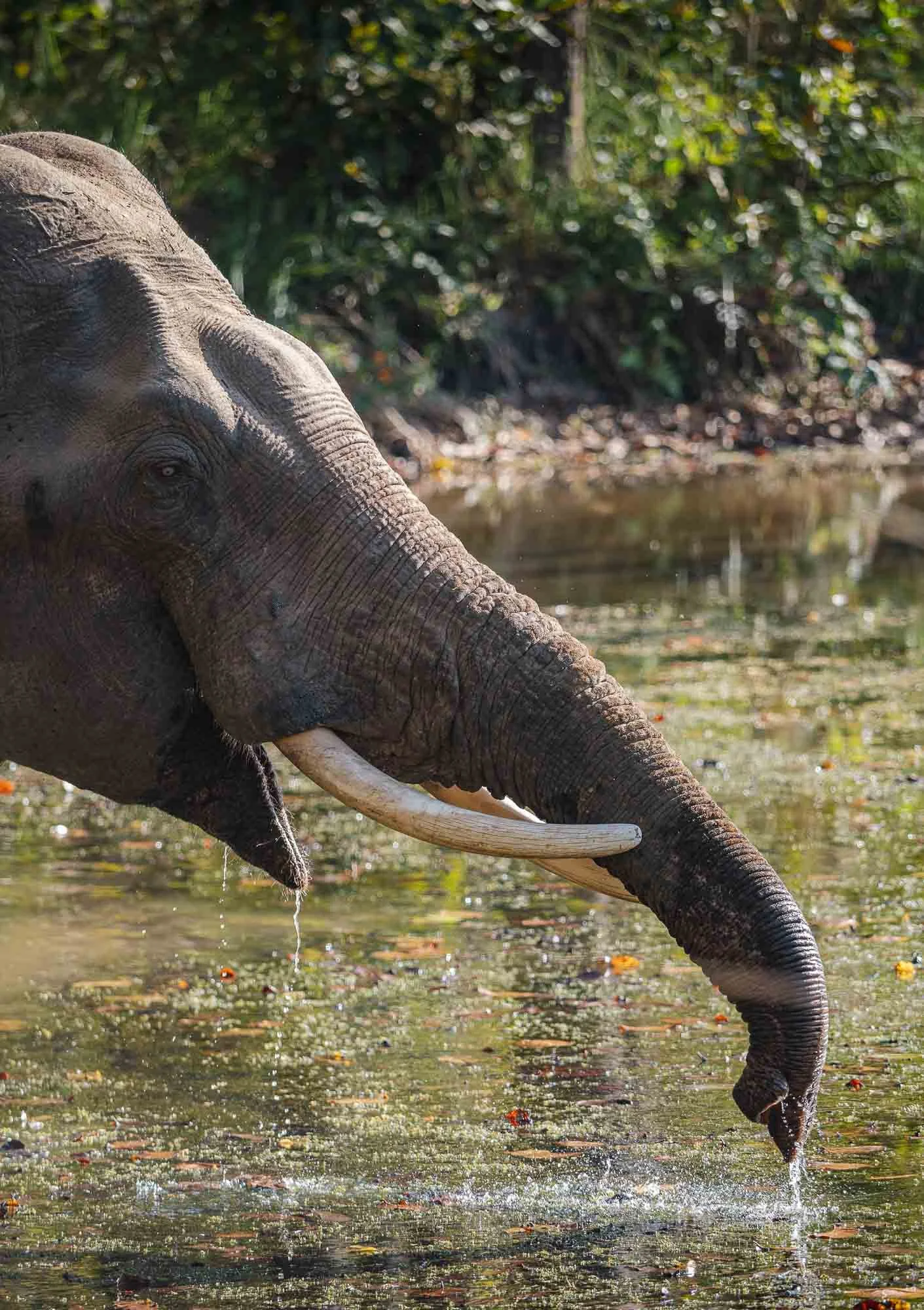
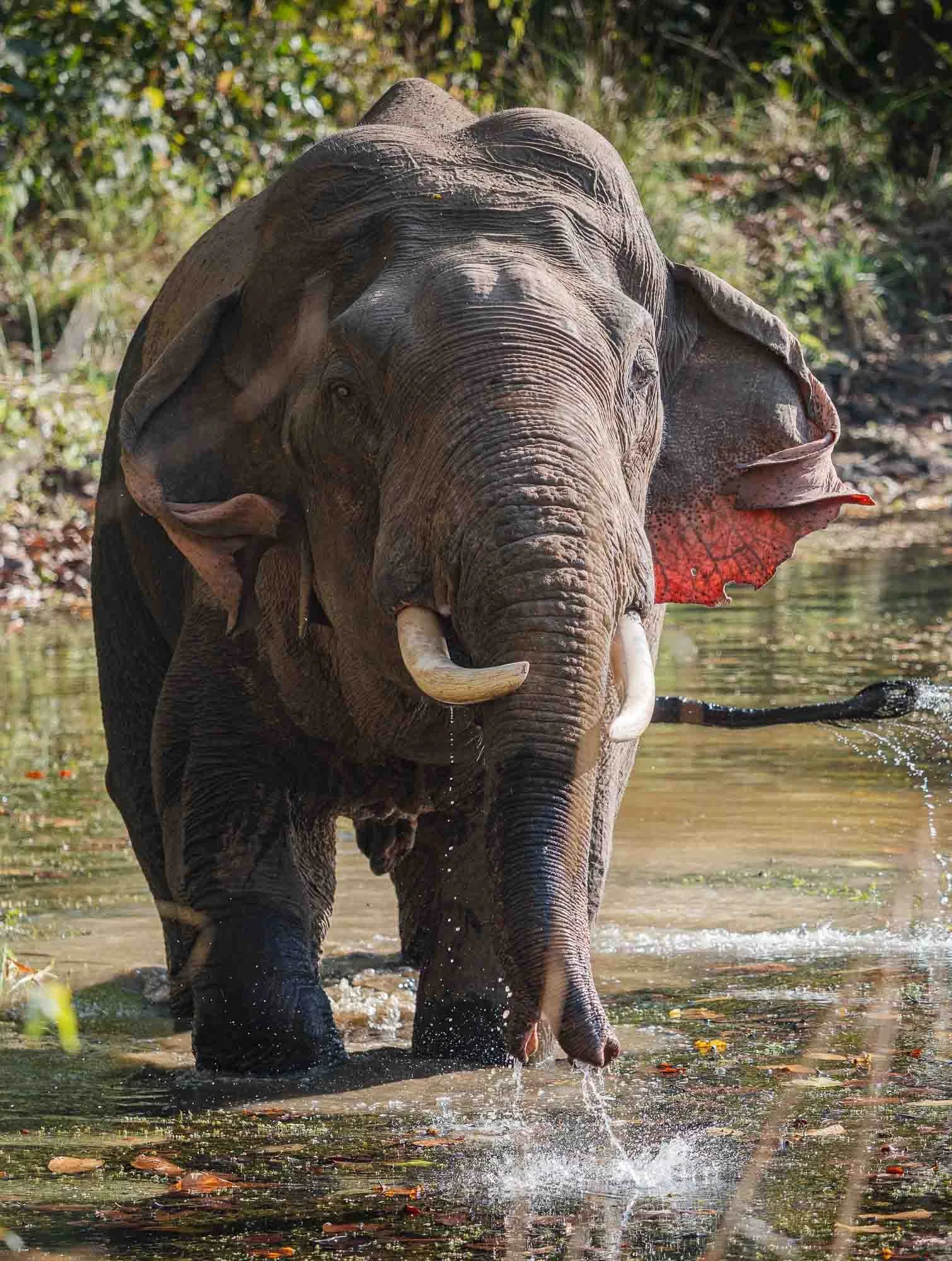
The groups all live in matriarchal herds, while the bulls mostly roam the forest on their own. Just a few hours later, we encountered one at a different waterhole, making sure he got his 150L of daily required intake (and here I struggle to drink 1.5L a day…). In a interesting representation of the role of elephants in human wildlife conflict, Harry refused to turn off the engine as we got closer to him, and felt visibly uncomfortable: elephants are not generally aggressive, but when looking for food they often enter villages and raid crops - reversely, humans walking through the forest areas may startle them, inevitably resulting in conflict.
Risk Reduction
Although for the time in the park Sushila was my guide, Nana gladly took me to another initiative after we returned. It tries to address one of the sources of human wildlife conflicts: people from the village searching for seedlings and young plants in the forest, so that they can use them to start a new harvest season. But every such walk through the thick bushes risks meeting with tigers, elephants, snakes, and other animals that may see humans as a threat, or a meal.
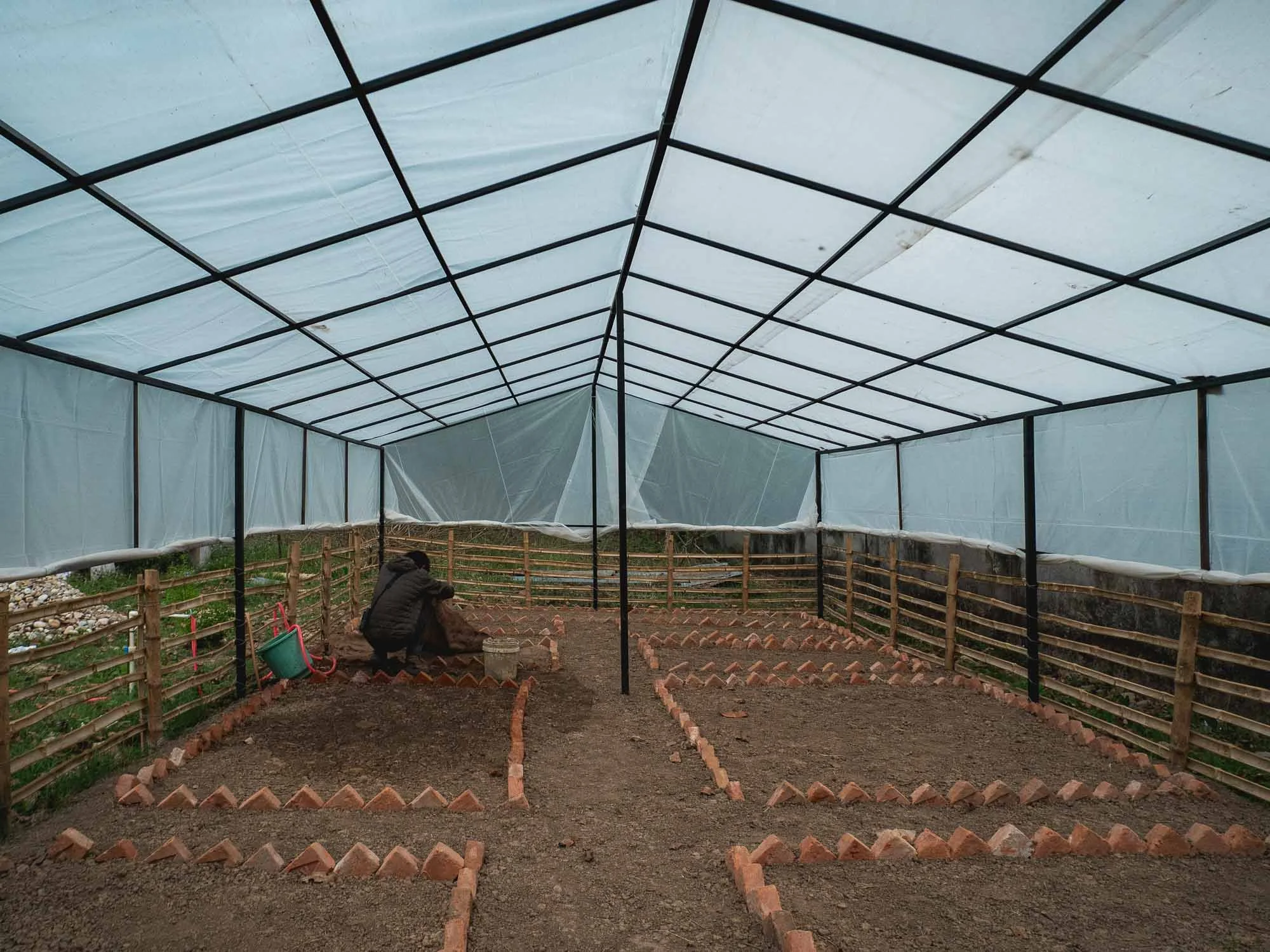
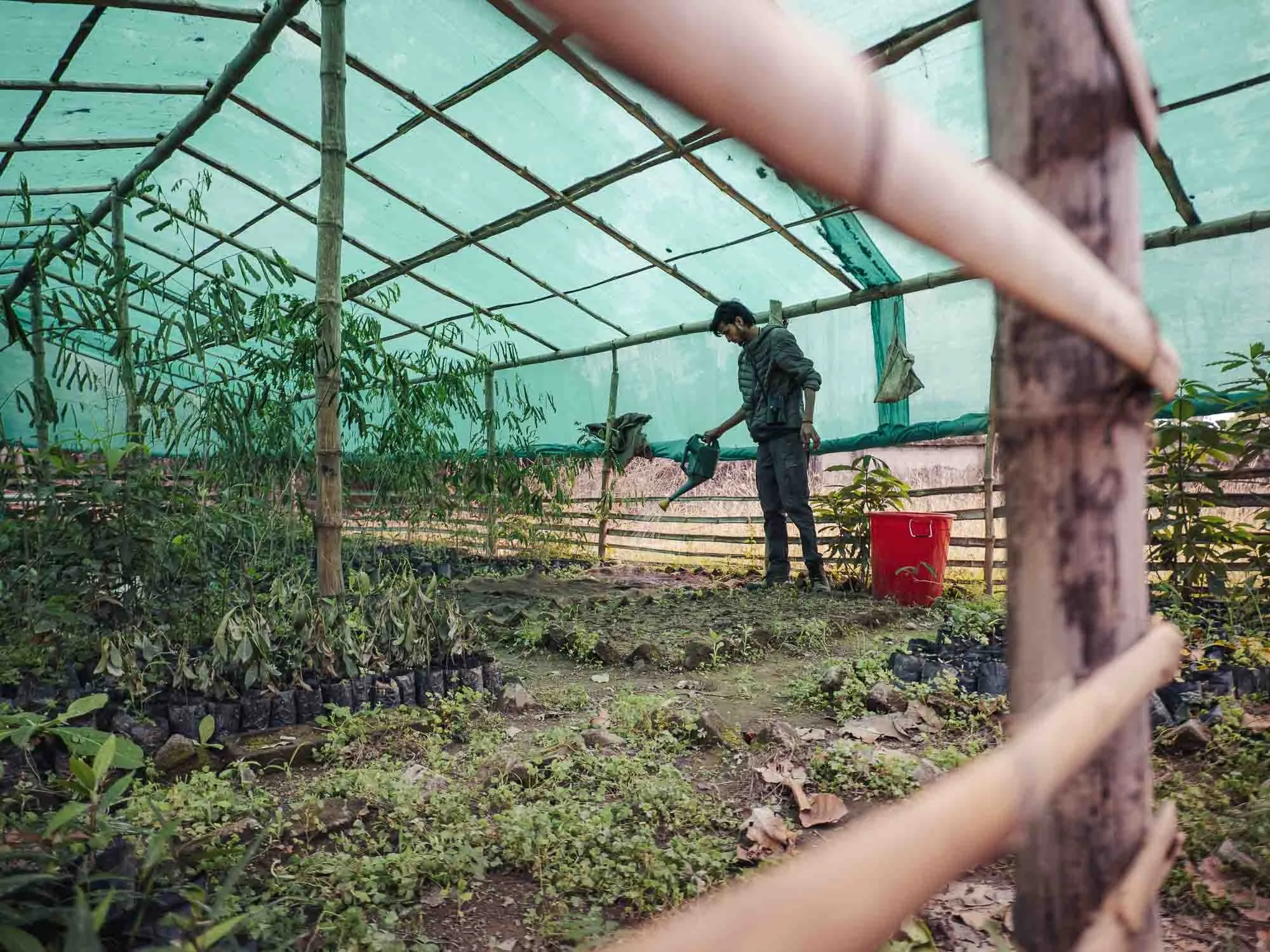
A project he supports was born out of this challenge: planting seedlings in small greenhouses around the community centre, where villagers can come and collect them for free in order to start their agricultural projects, making the forest visits moot and reducing the chance of such encounters.
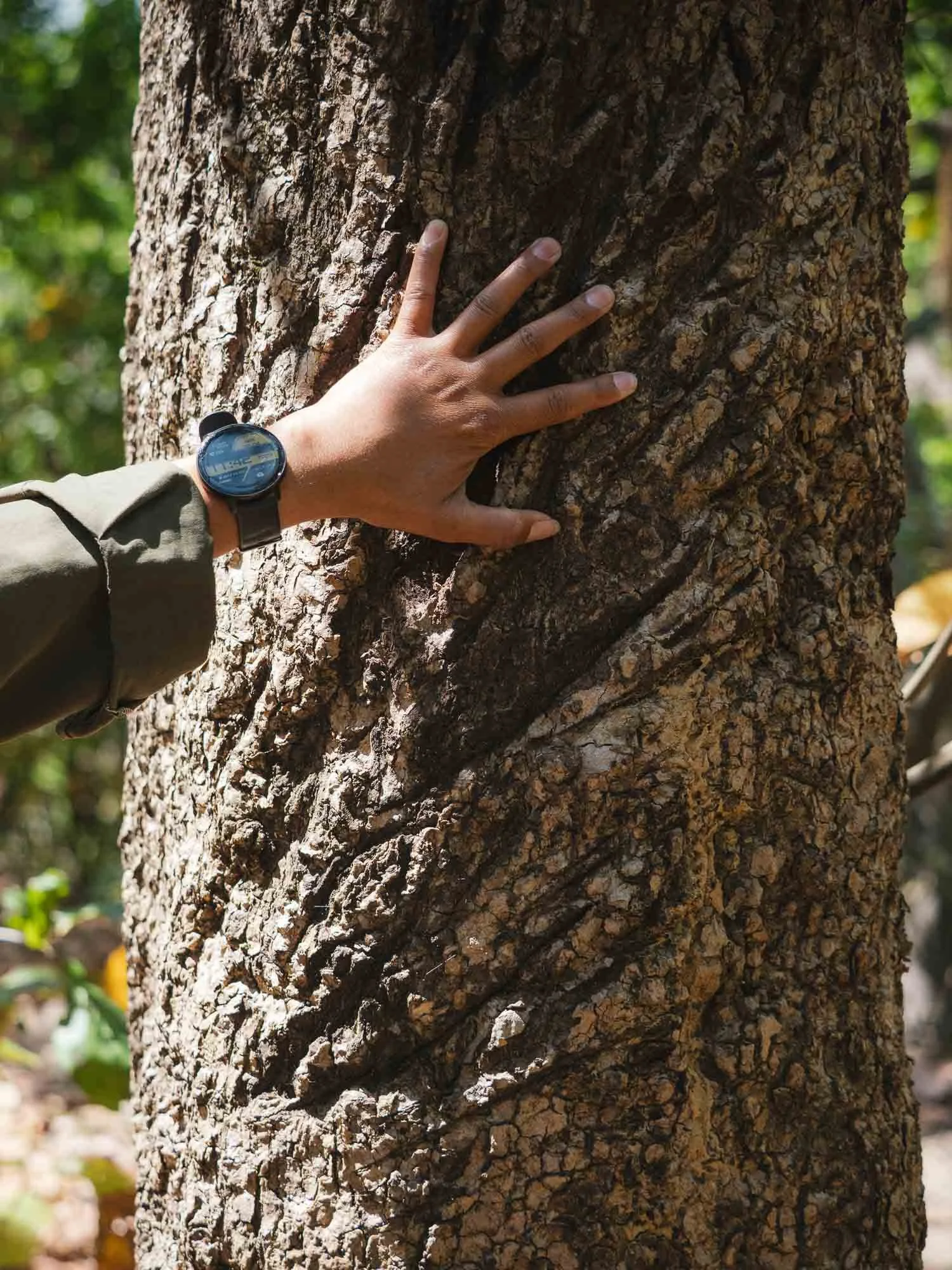
Back in the park, the quest for the tiger continued - it had rained the night before, meaning it was cooler with more water around, reducing our chances to spot a thirsty big cat at a waterhole. We had signs, such as these huge claw marks on a tree by the dirt road, and the occasional deer calling in alarm. But no luck yet. After almost four days of searching with only a day left, I got a little nervous - none of the other guides we asked had seen a tiger in days either.
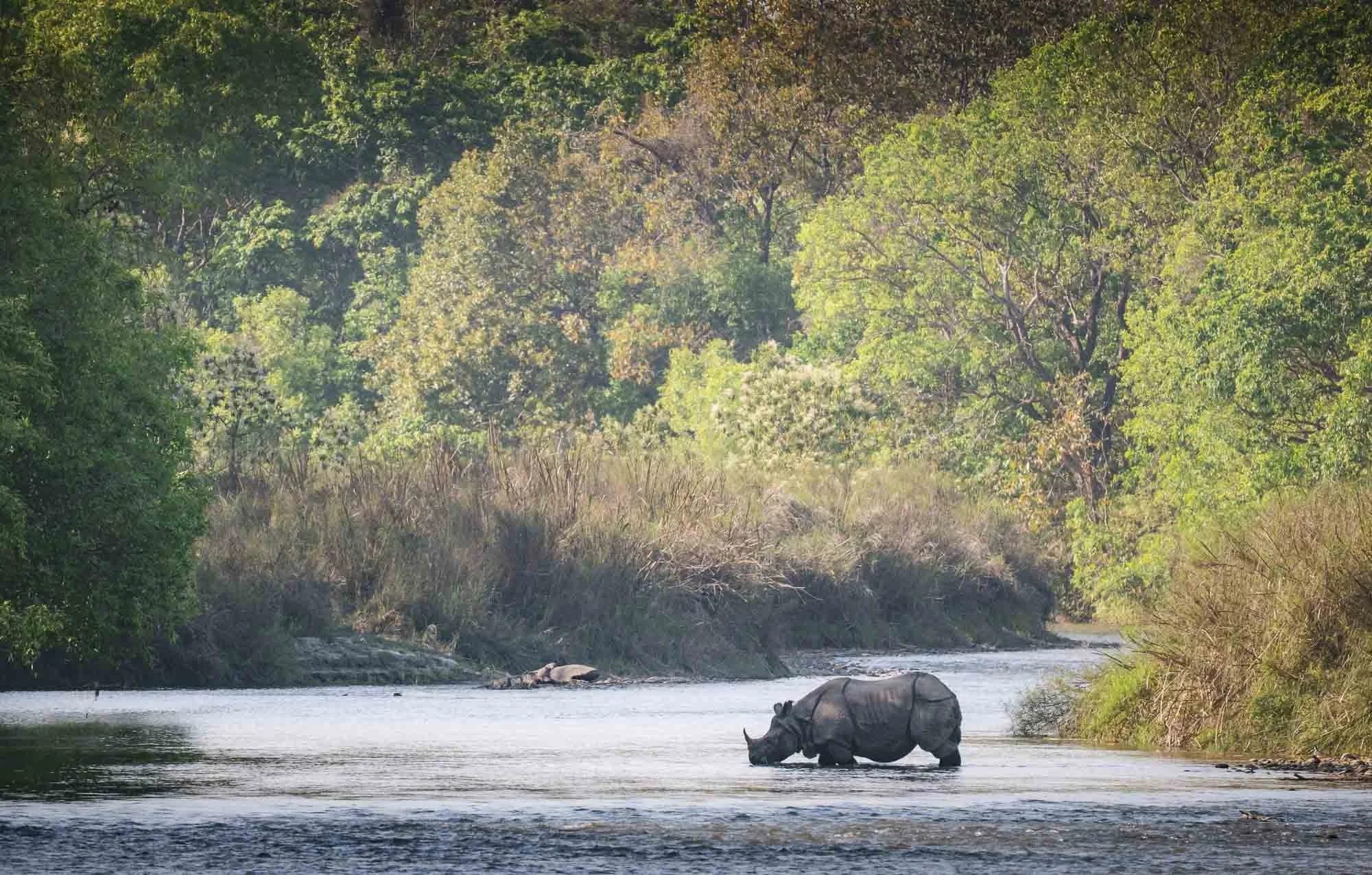
That said, we had another two sightings of rhino, with one crossing the river in the afternoon. Although there are so few of these animals left today, their situation looked a lot more dire 100 years ago, when numbers dropped to low triple digits, making this a conservation success.
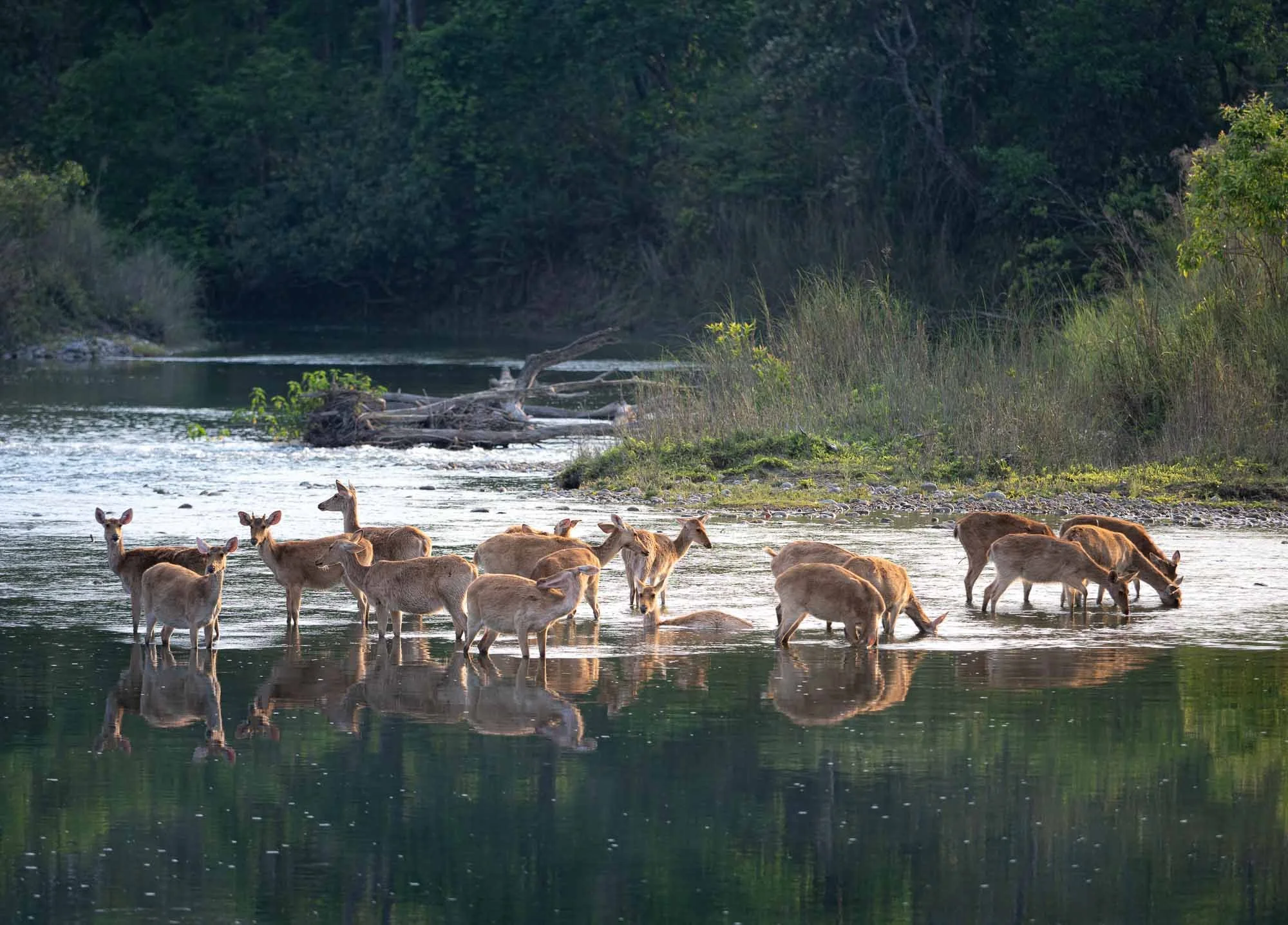
Speaking of animals in the water, as the sun was low on the horizon we encountered this herd of swamp deer (Barasingha) in the river, with some of them literally submerging themselves to cool down.
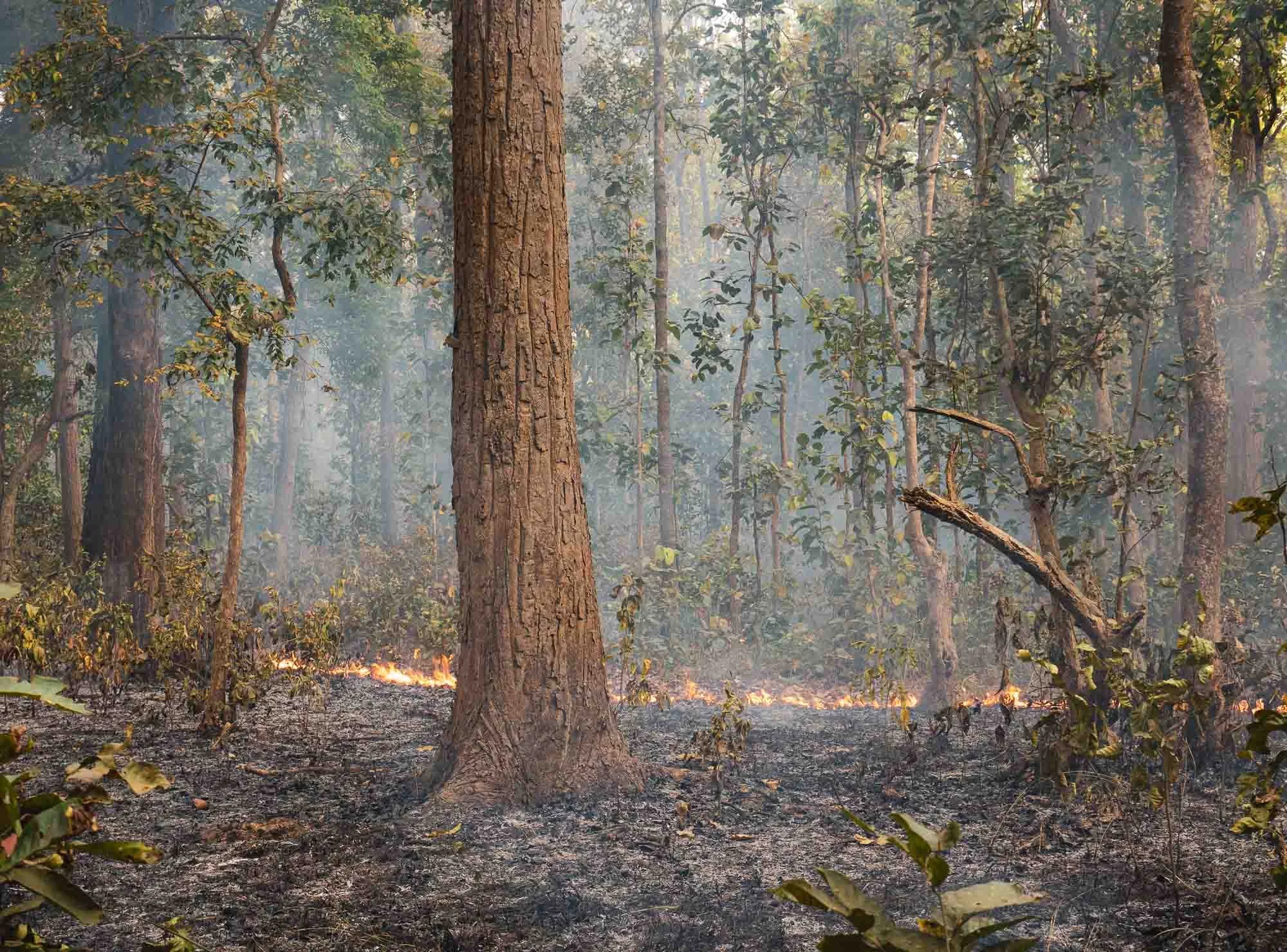
As we left for the day, we got to observe another human intervention characterized by the dry season, aside from the water holes: the controlled burning of dry leaves and lower vegetation. This helps to maintain grasslands, encourages new growth, and reduces the risk of uncontrolled wildfires - so while it may look depressing, it’s a healthy practice. The fires are also slow burning and set in a way that allows escape paths for animals, often using the dirt roads as “boundaries”.
The Last Day
Since the park had not been our lucky territory, we headed back to the community forest, close to the area where we spotted the rhino on day 1.
A small group of people gathered at the river bank after sunrise, hoping a tiger would come out for a drink or to cross the water.
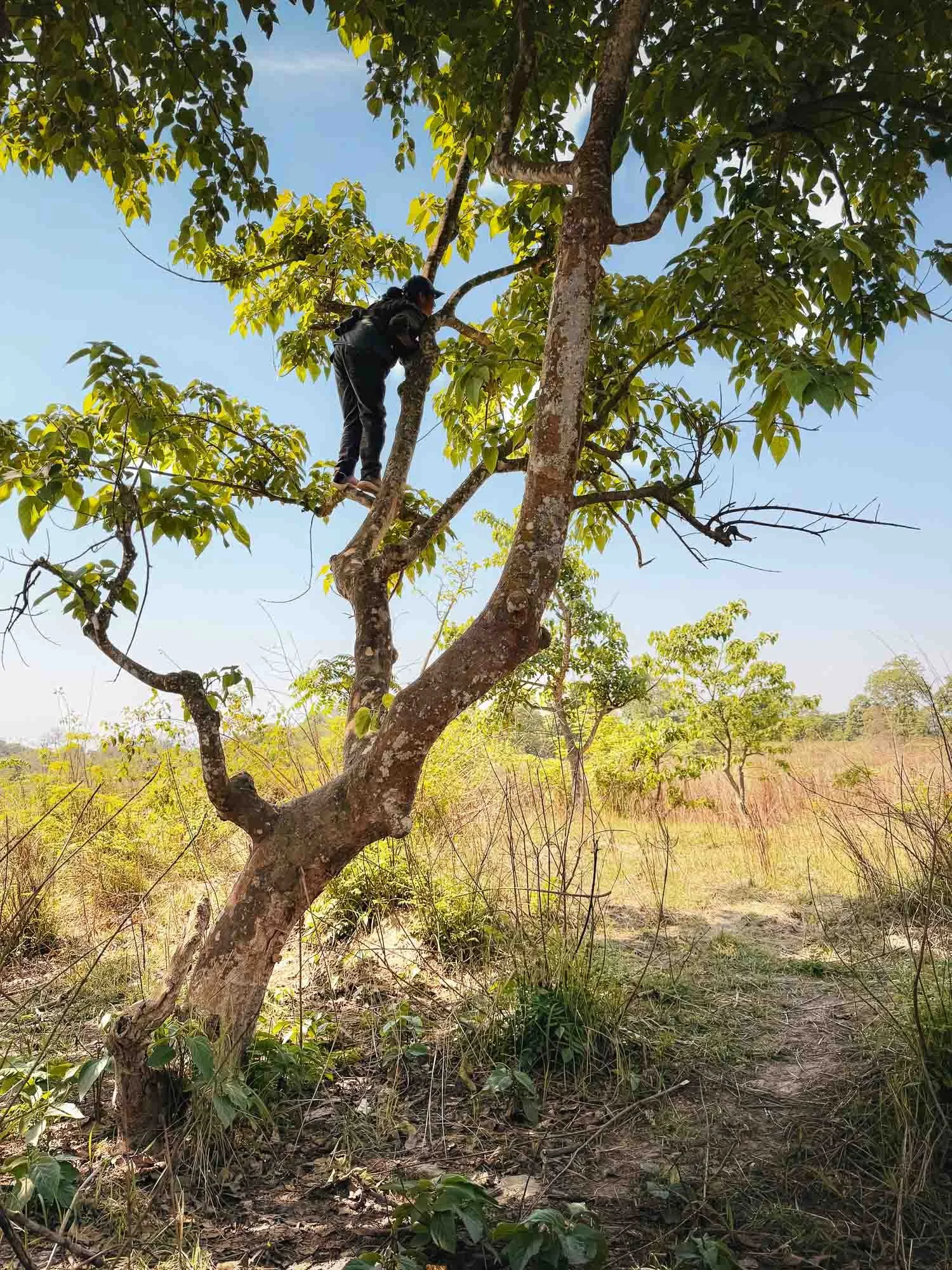
Even Sushila became a little anxious she wouldn’t be able to deliver a tiger in front of my lens, so a higher vantage point was necessary… but this was her area - the opposite bank was the island that gave BBC’s Tiger Island its name. She knew the individual tigers that call this territory their home.
In the background, I had already started thinking about extending my stay by a couple more days, with whatever logistical mess this would come with…
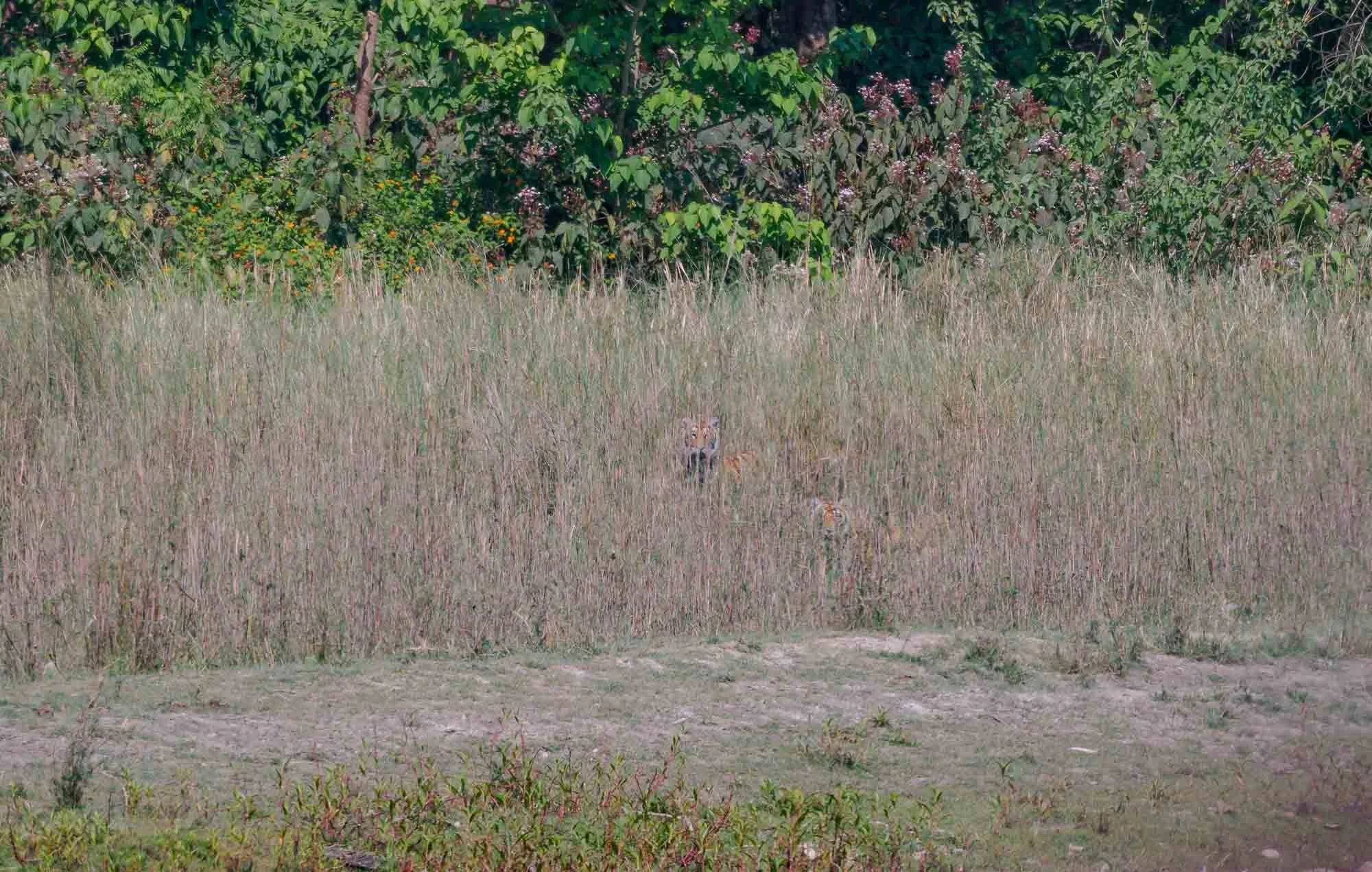
…but it wasn’t necessary. Sushila’s instincts were good, and her eyesight even better.
She spotted two subadult tiger cubs in the distant long grasses on the opposite bank, and quietly called for us to come down to the river.
Crouching and hiding in the grass so they wouldn’t get nervous - unlike the tigers in the busier Indian parks, most of the individuals here are apprehensive around human presence - we got a little closer on foot. And we got lucky - the two tigers went into the water for a quick drink, giving me the chance to get these photos. They had already spotted us and didn’t stick around for long, heading back into the grass after what felt like less than a minute. Nevertheless - mission accomplished, smiles and high-fives!
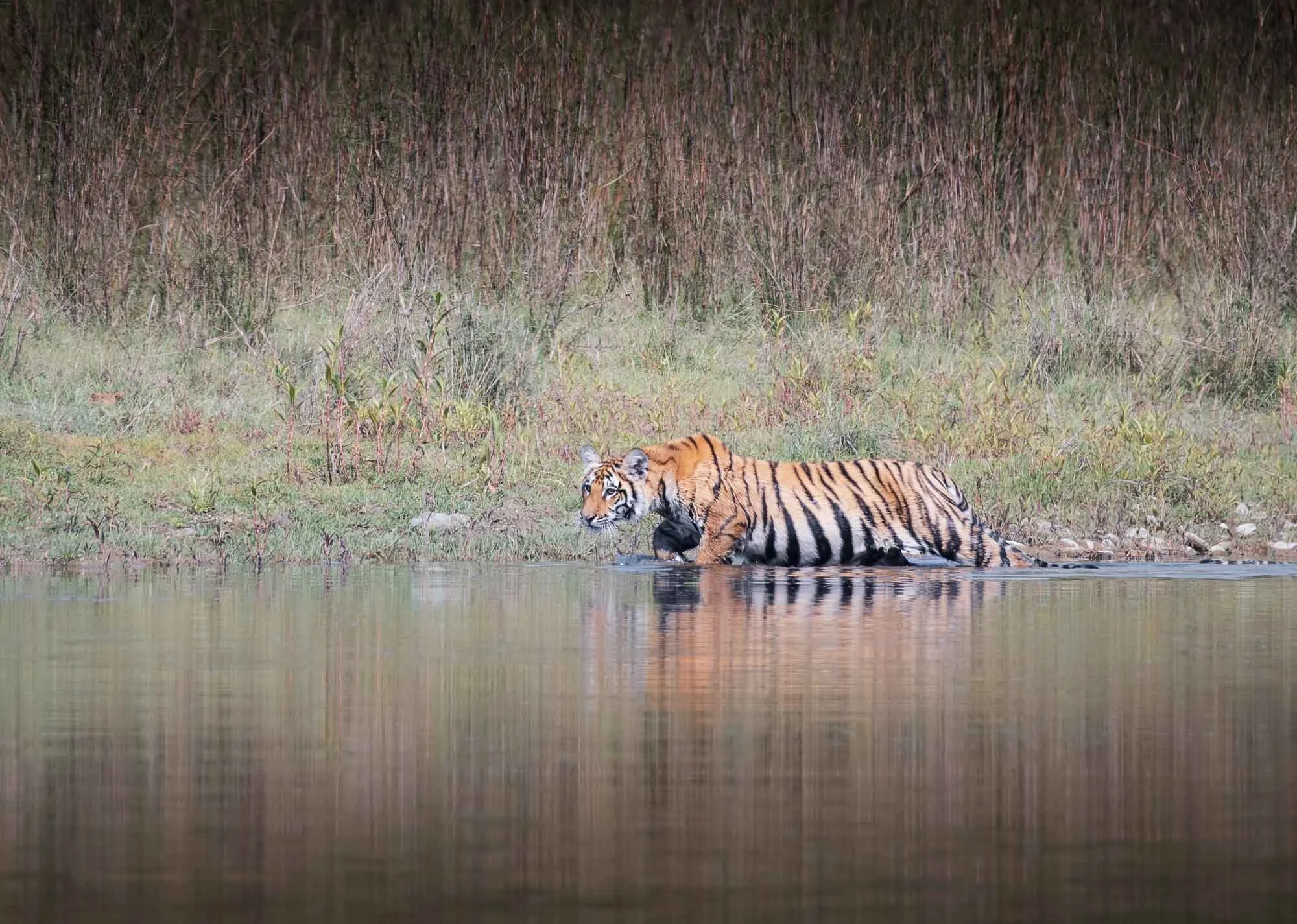
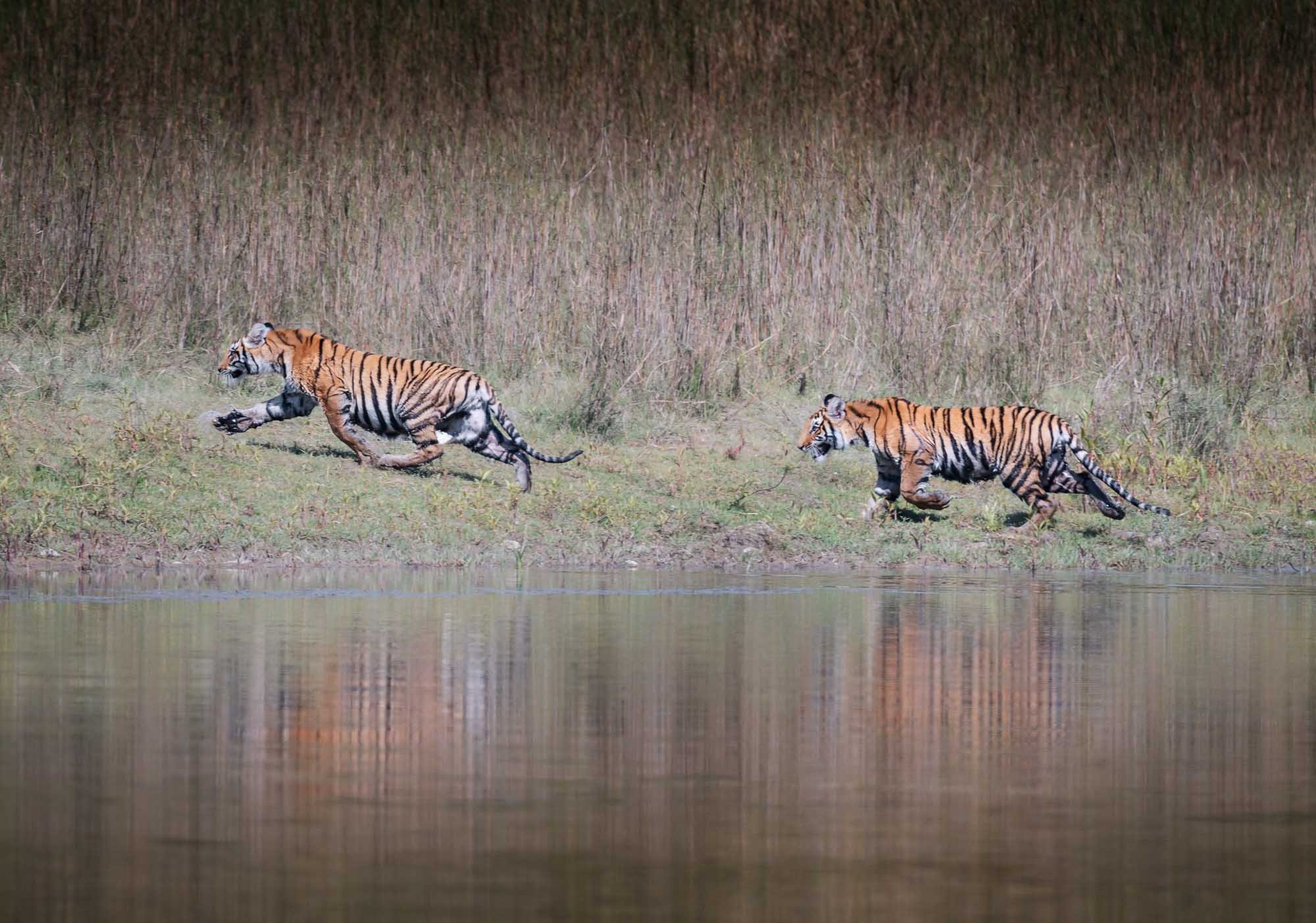
At this point, the rest of the small group decided to head back to the cars and go into the park, but Sushila had other ideas. The mother might be around, and she knew there are a couple of other tigers who regularly cross the river here. So we waited, just her, Harry, and me.
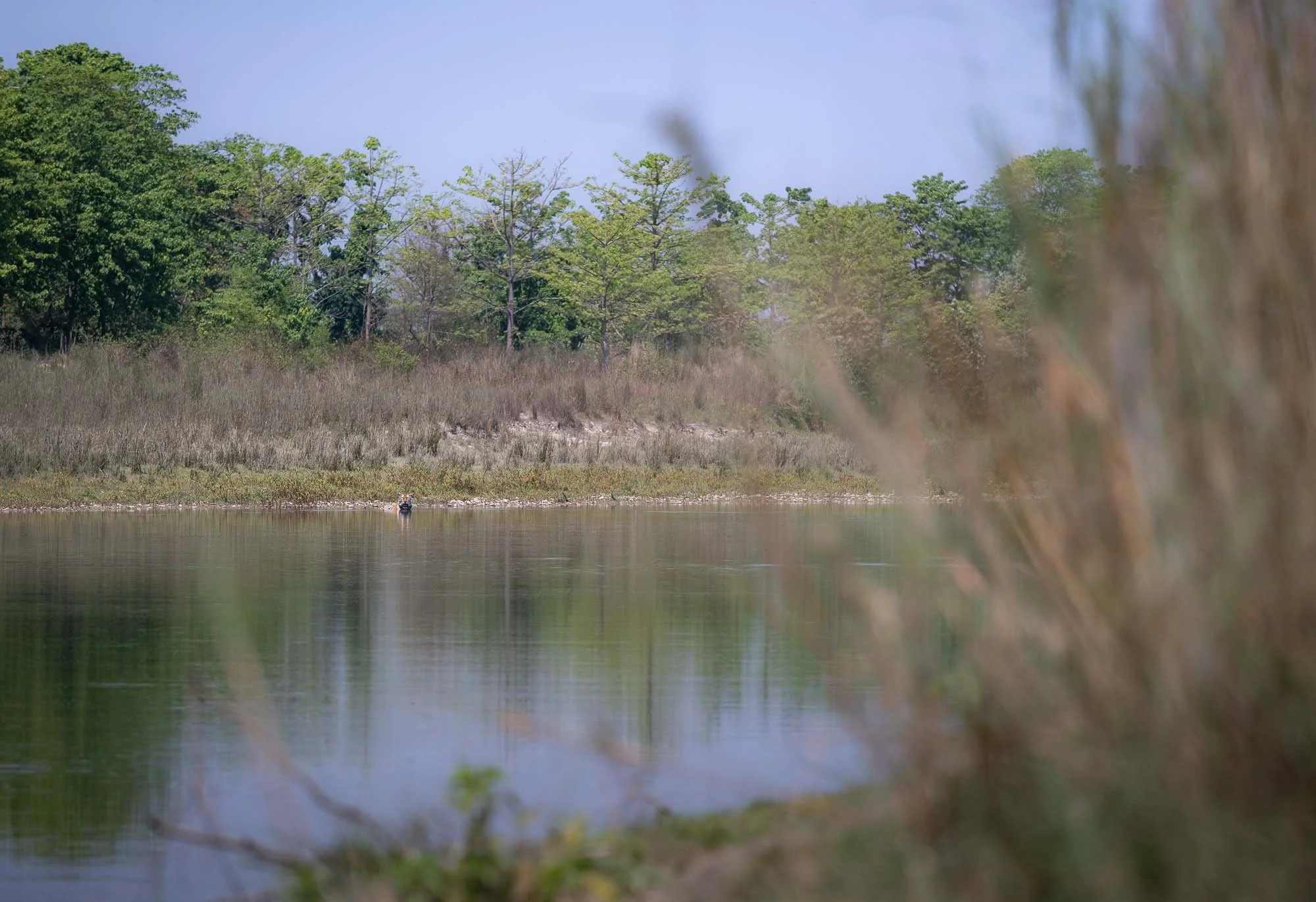
And she was right again. After an hour, a tigress appeared on the other side, once again giving us the chance to observe her as she waded into the river.
Once more, despite our best attempts, she had spotted us, and without much hesitation dove into the water and crossed the river behind a gentle bend, making it impossible for us to keep observing her. While she came to our side of the bank, we suspect she probably disappeared into the thick bushes of the forest quickly, making this another beautiful but brief encounter.
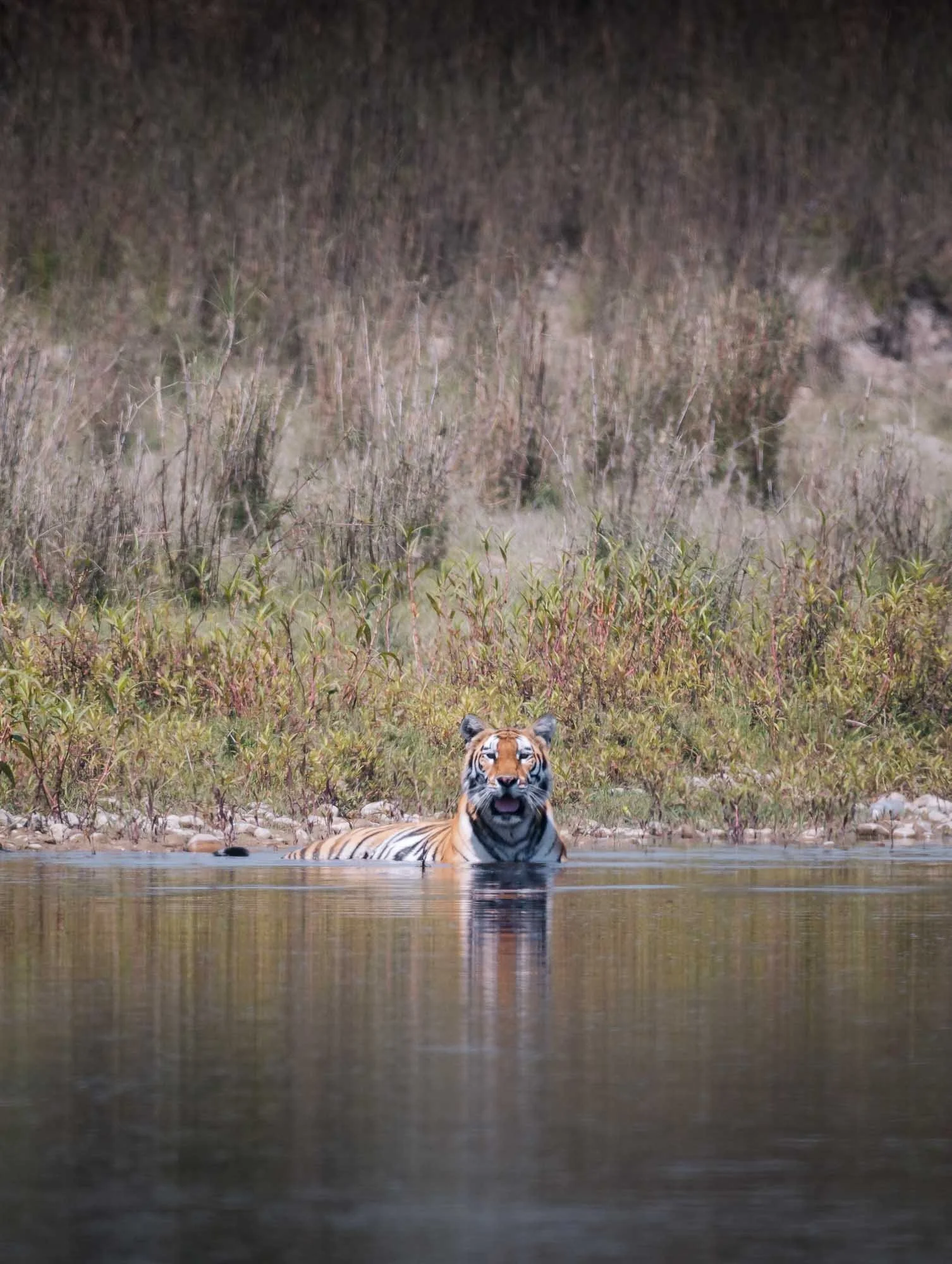
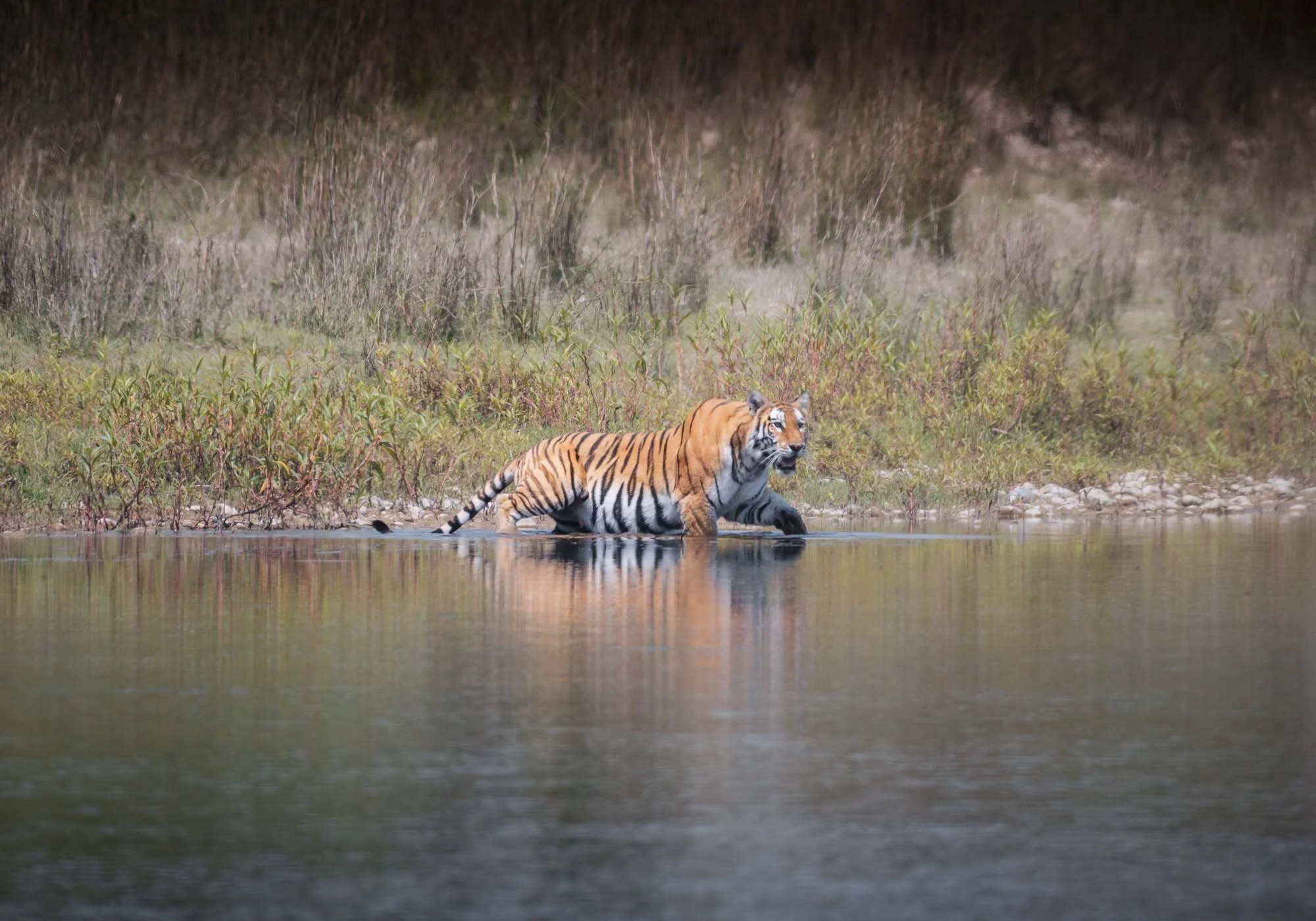
With a sigh of relief and joy we headed back up the river bank. We got a clear view of not just one, but three tigers, a sighting with no one else around, and a moment of these amazing cats swimming in the water - can’t expect much more!
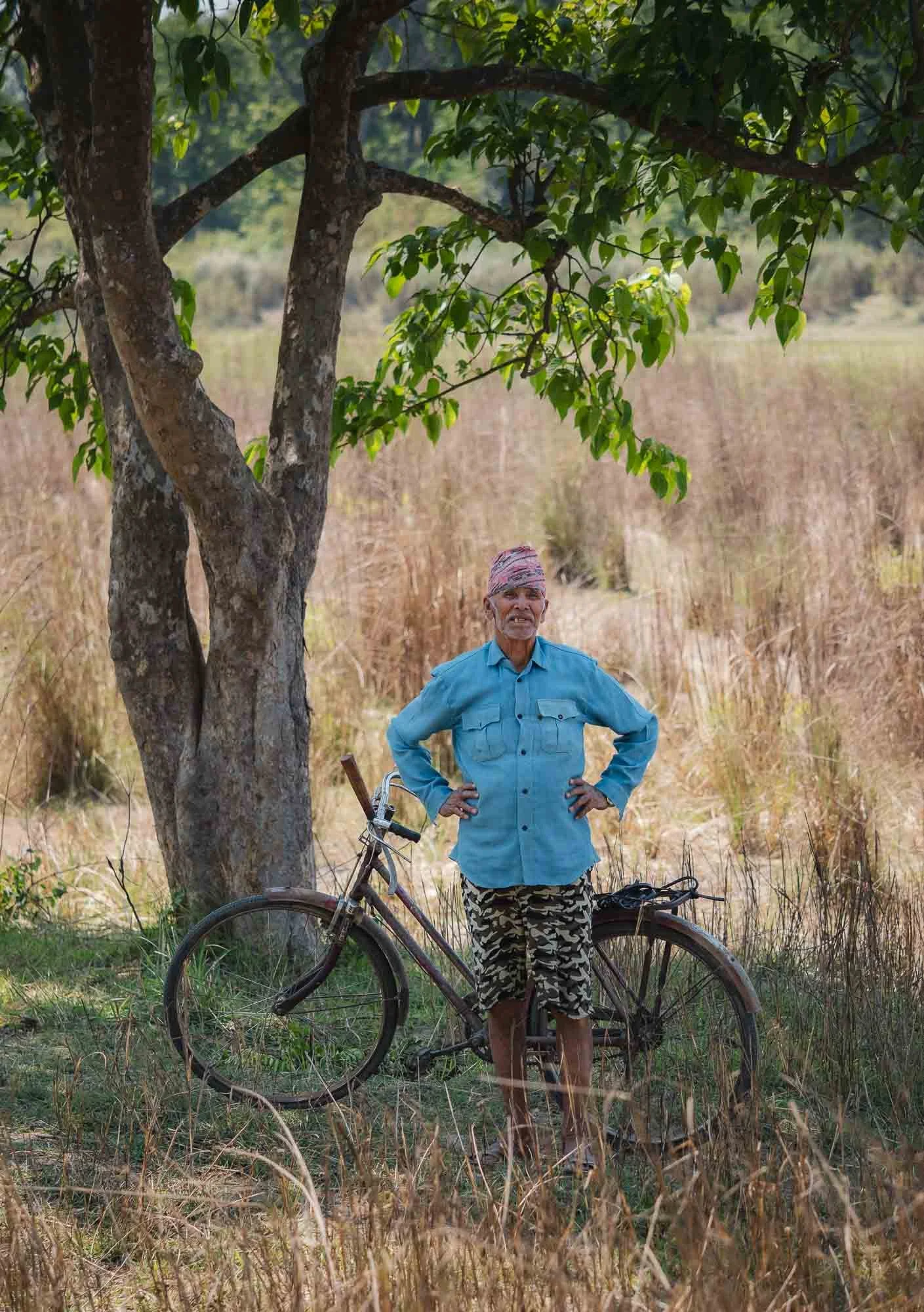
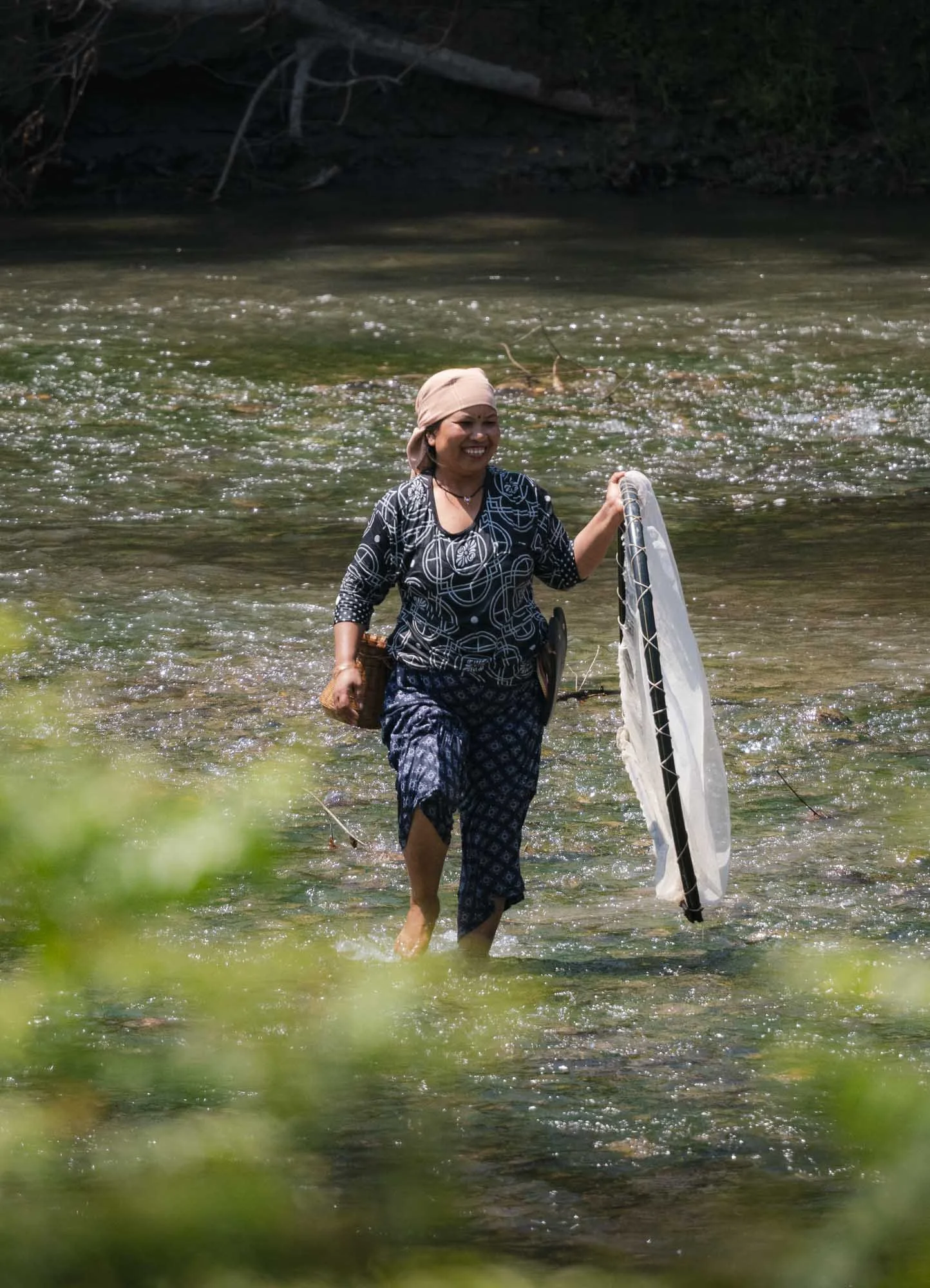
Up on the river bank, I was once again reminded of how closely humans interact with wildlife here - as we walked back, we encountered the man on the left, who was just about to ride his bicycle to the spot where the tigress must have emerged from the river after crossing. When we brought this to his attention, he hesitated for a few seconds, then shrugged his shoulders, and continued his way along the shoreline.
On our way to the park where we planned to head for the afternoon, we passed a few women fishing in the very same river the tigress just swam, a few hundred meters upstream. Normal life in Bardiya, but not without its challenges - in 2021, several tigers killed ten people in and around the park.
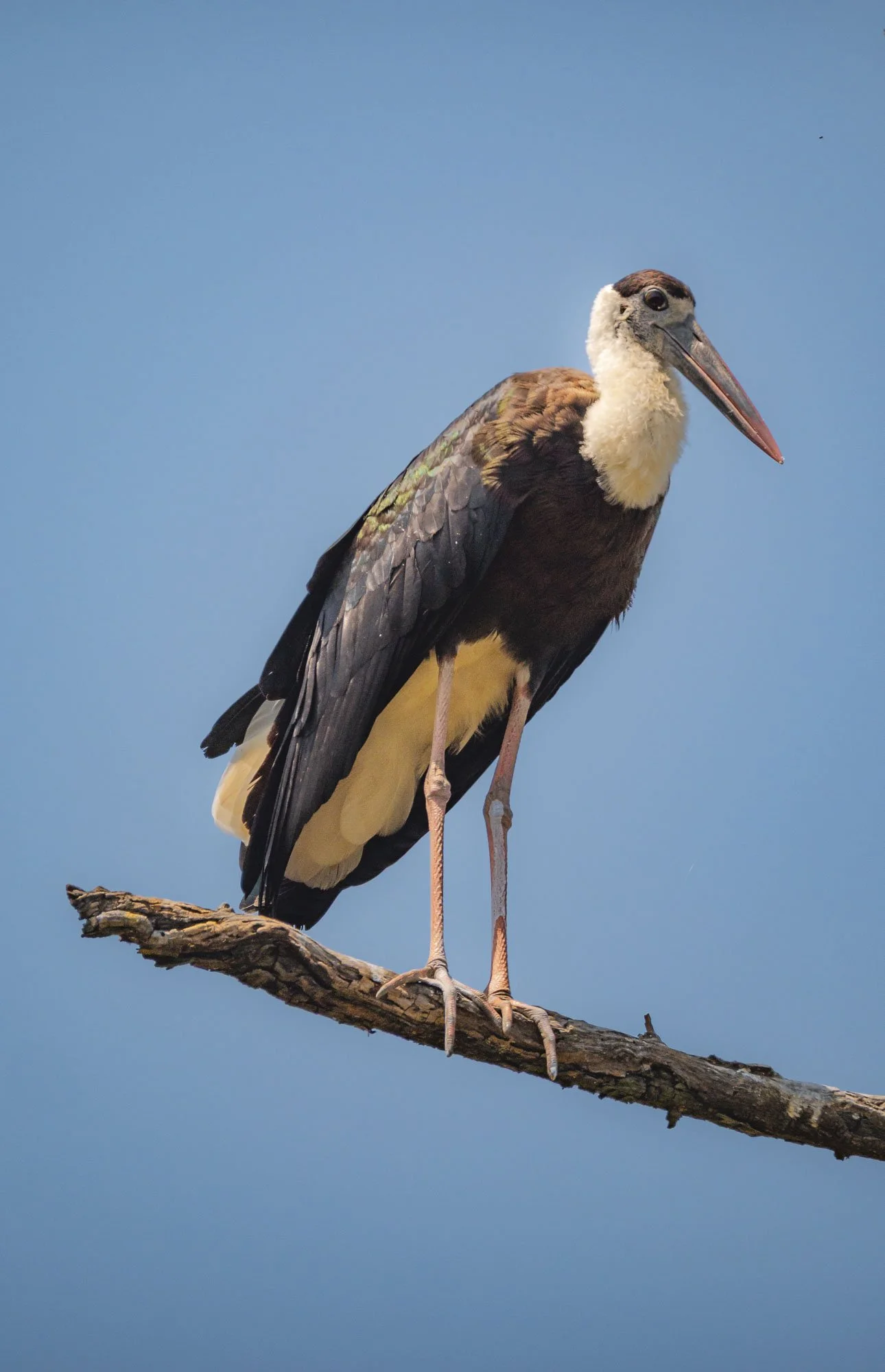
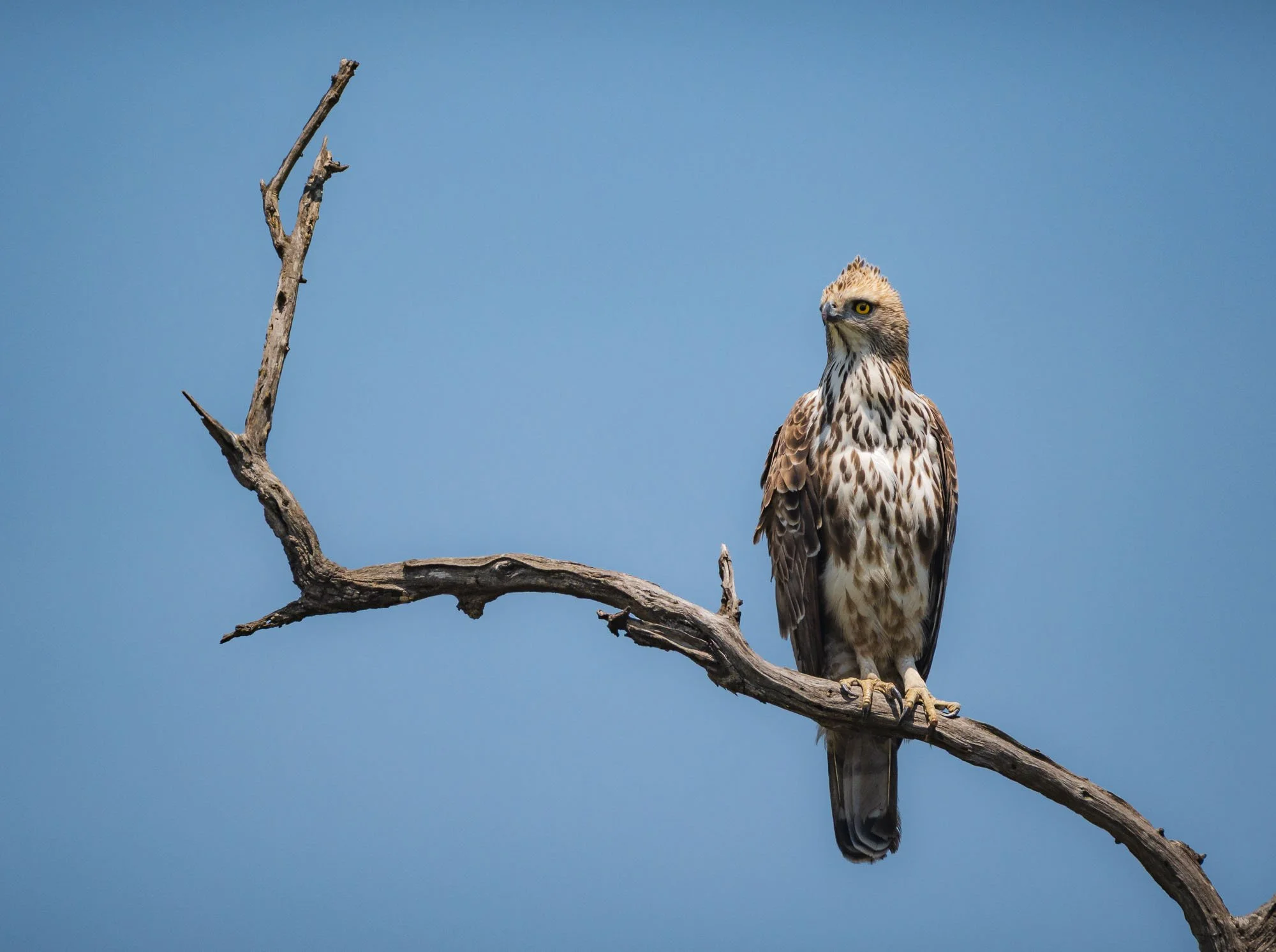
Taking it slow now, we added a few more birds to our sighting list, such as this aptly named but, given the heat, inappropriately dressed, woolly necked stork, and the crested hawk-eagle on the right.
Although our main goal for returning back to the park was in fact visiting the crocodile breeding centre, another guide alerted us to something else: it was at one of the water holes where we would have a third tiger sighting for the day, after seeing none of them for five days. The other jeep had spotted it in the thickets, and it had come out briefly for a drink, and might do so again. Indeed, the young tiger appeared for a brief swim after an hour or so of waiting.
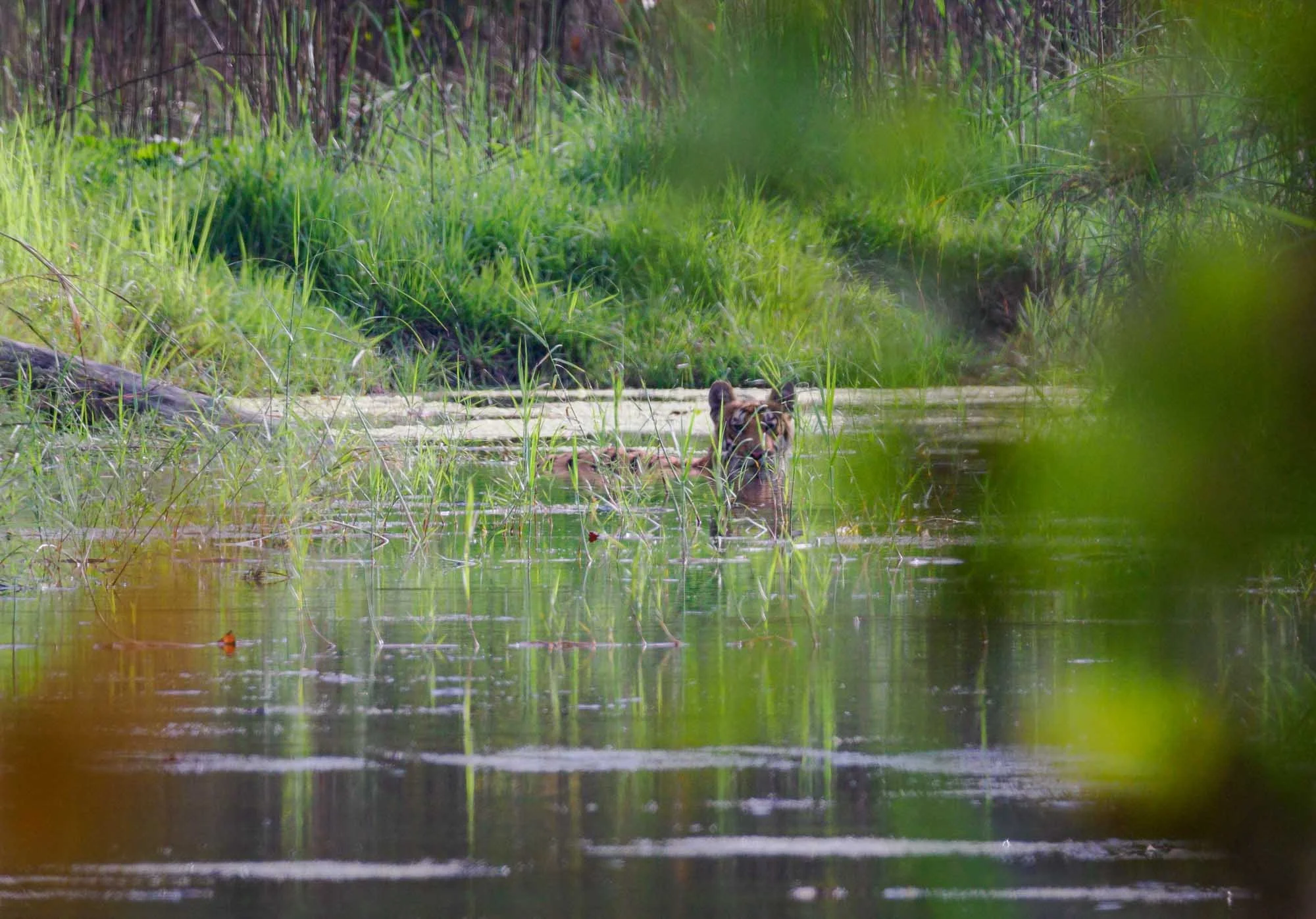
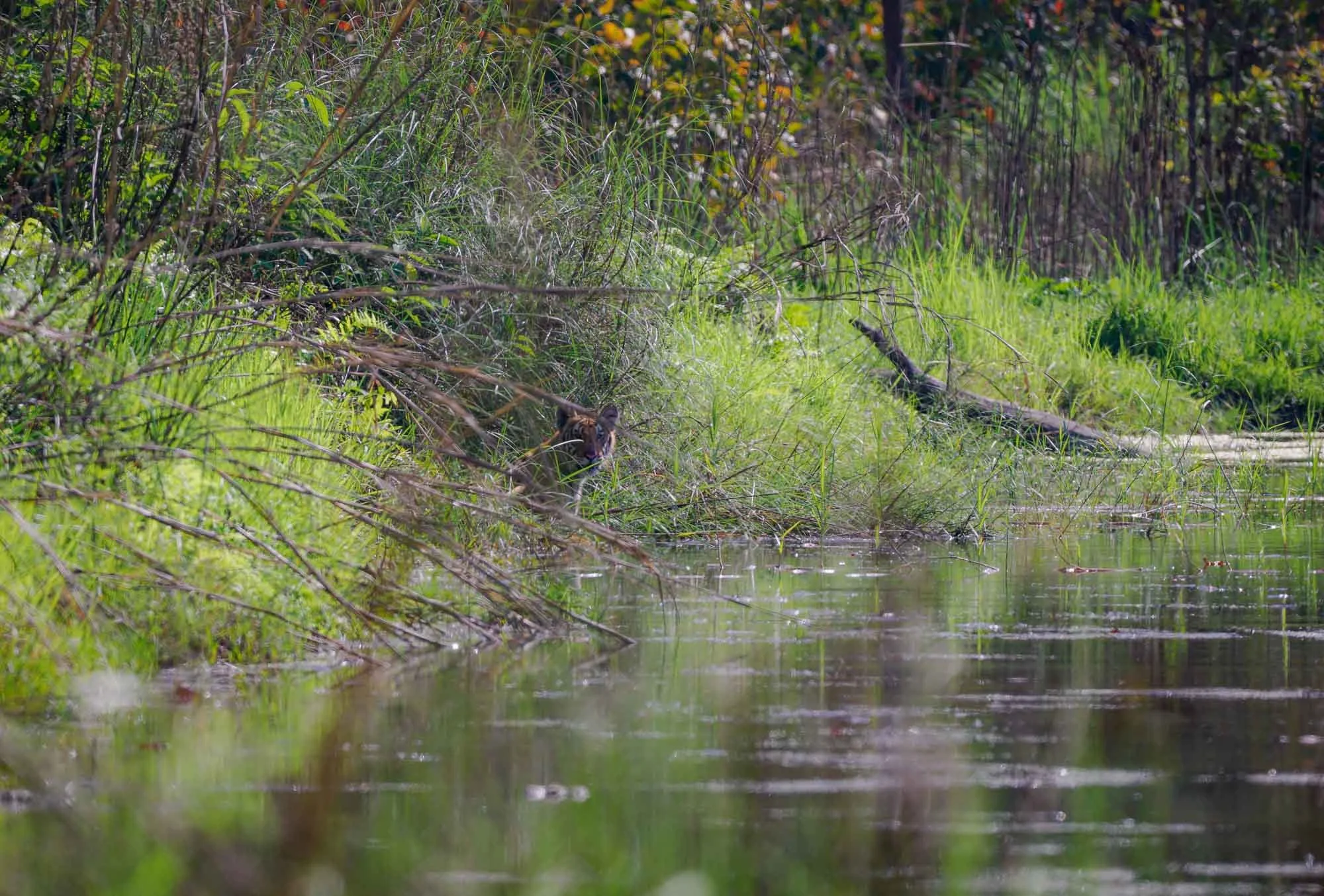
While still beautiful, this was both a more typical and more difficult sighting, for one reason because of the thick vegetation, and secondly because word had spread and five or so jeeps were around, trying to get into a good position, with people scrambling in front of the jeeps and on the seats. That is not necessarily a problem, but when the cub came out, a small frenzy broke out, including someone loudly shouting insults at other people to get out of the way, which of course immediately scared the cat away. One of the less pleasant things you might experience in these kinds of safaris - we left this mess behind, our tiger mission was completed already.
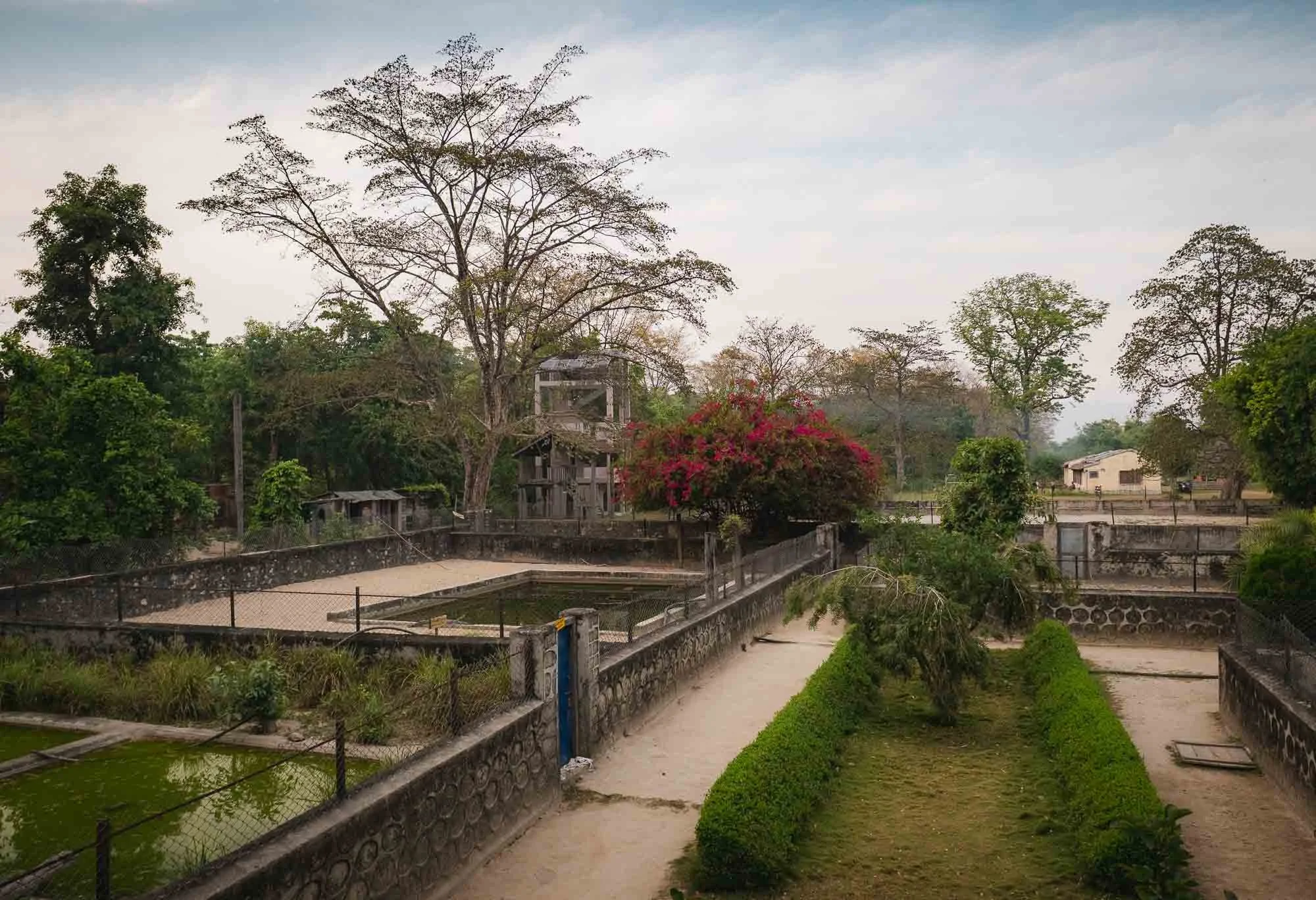
As the sun was setting we arrived back at the entrance of the park, where the crocodile breeding centre is located. It’s a small facility with a number of different ponds, where crocodiles are sorted by age and species. While there are a few more common marsh mugger crocodiles enclosures as well, the focus is on ensuring the hatchlings of the Gharial variant make it to adulthood and are able to survive in the wild once released.
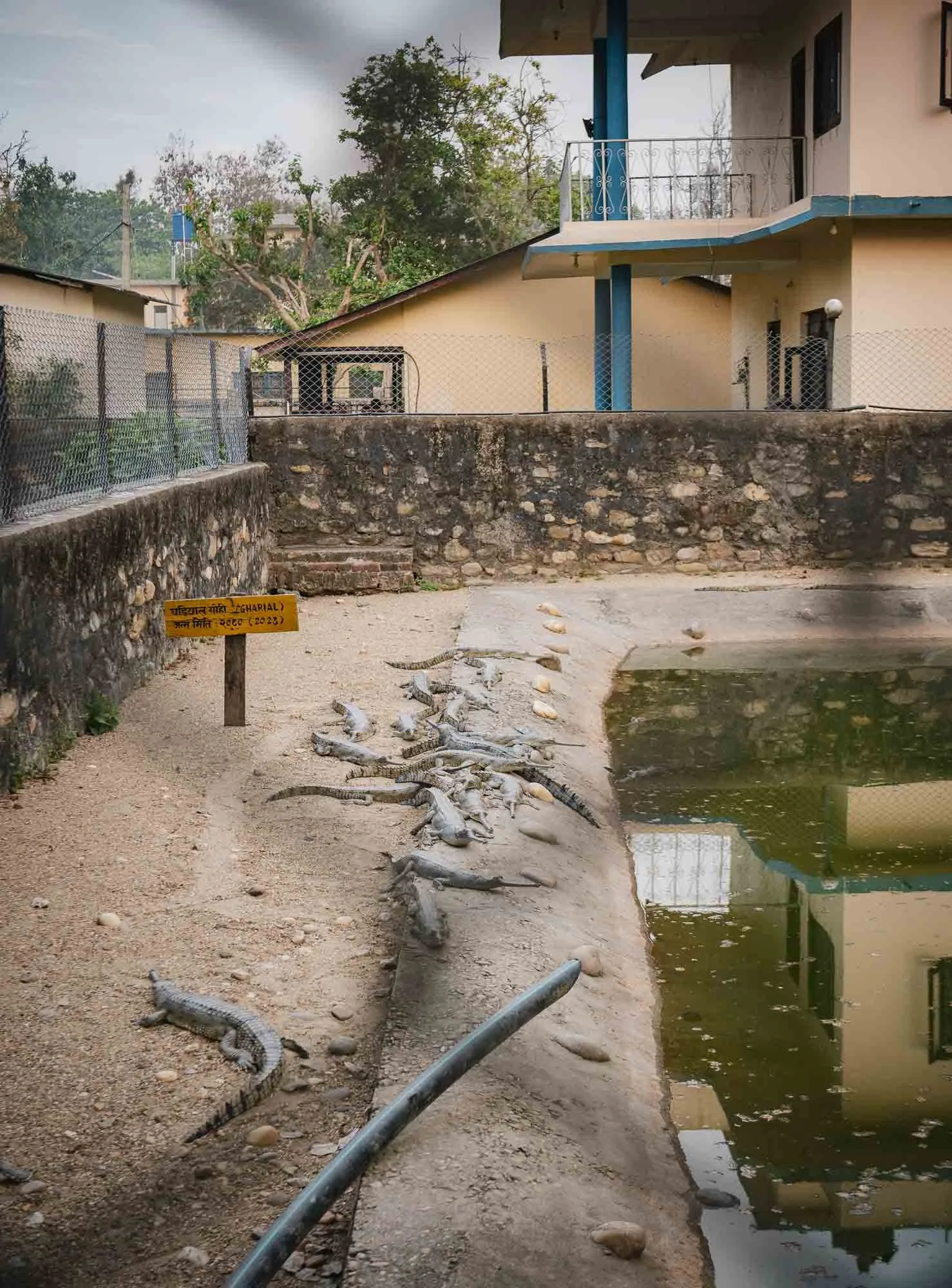
This group is from 2023, so they have a few years to go until they’re ready for the wild at a size that makes them less vulnerable to external threats.
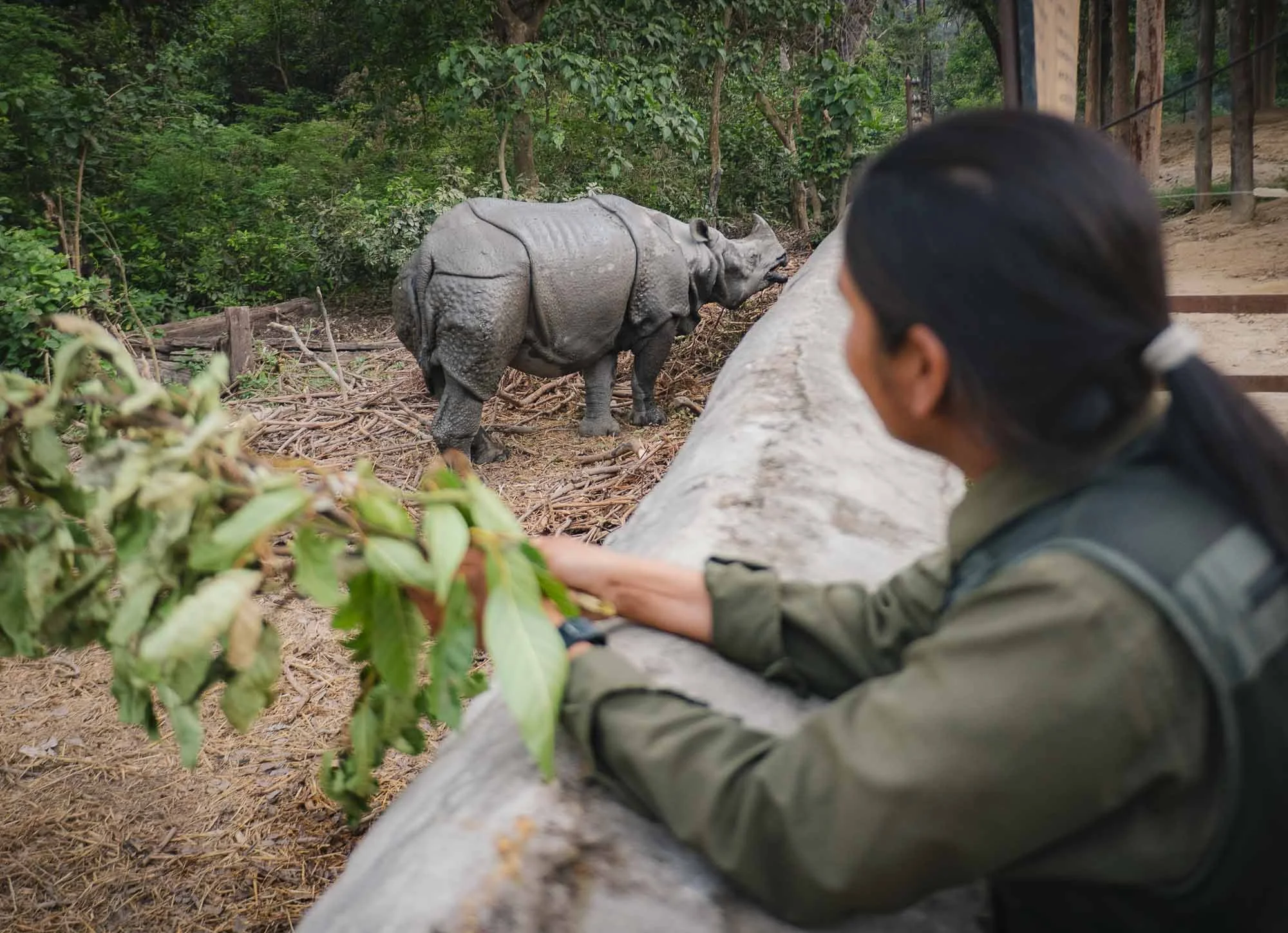
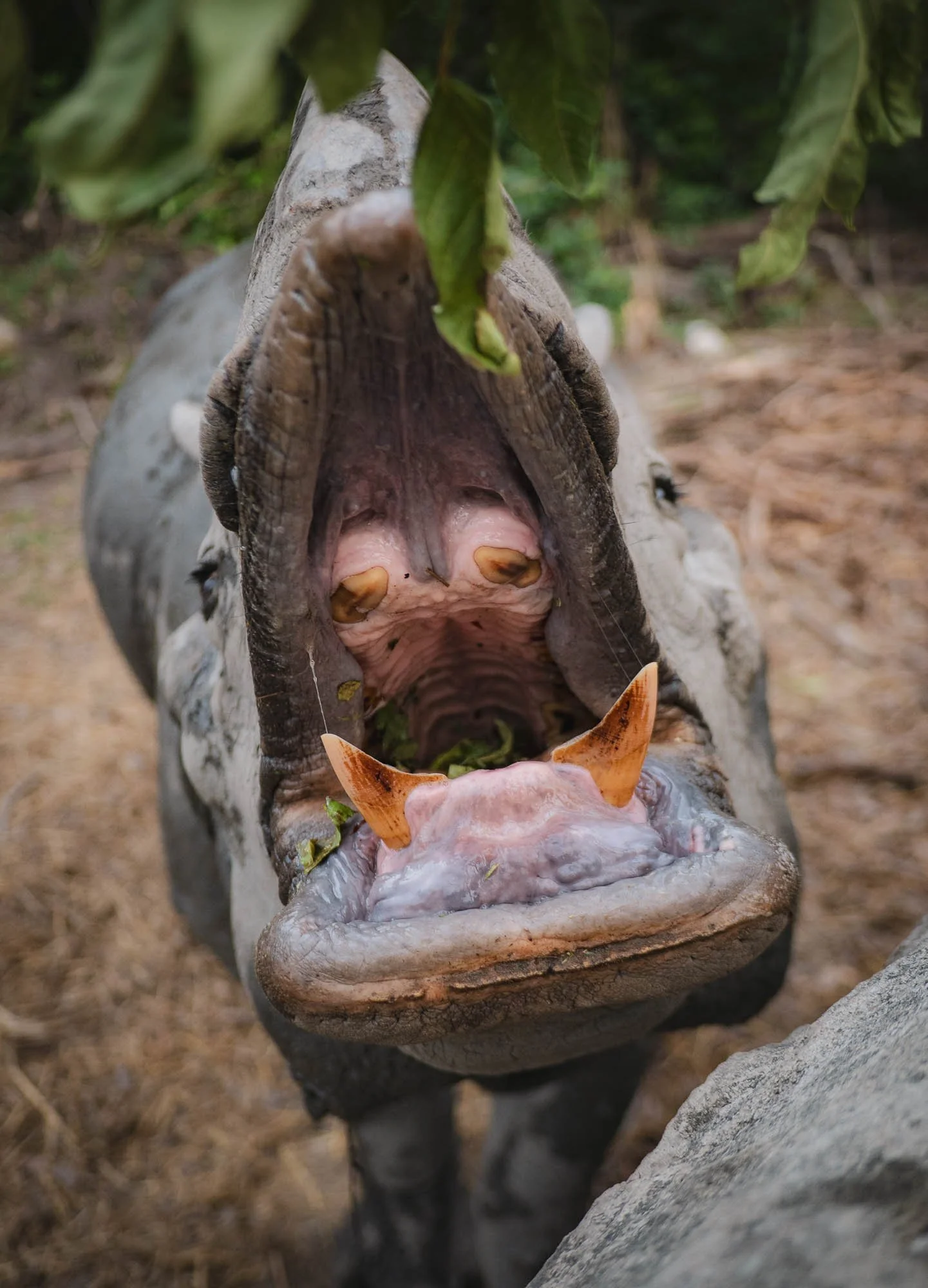
The facility is also home to a rescued rhino that has been kept here in captivity after its mother was killed by poachers - regardless, it was quite receptive to Sushila’s hand feeding. The centre also houses an elephant used for patrolling, and a tiger, kept here because it has become a threat to humans, making its removal from the park necessary.
After a successful day, Nana and I had one more small detour planned on the next morning on our way to the airport: he took me to the park management’s elephant stables, where they keep domesticated elephants, mainly for patrolling and other work in the forest. Since most of the park is inaccessible by vehicle during the monsoon season, this practice has survived for decades until today.
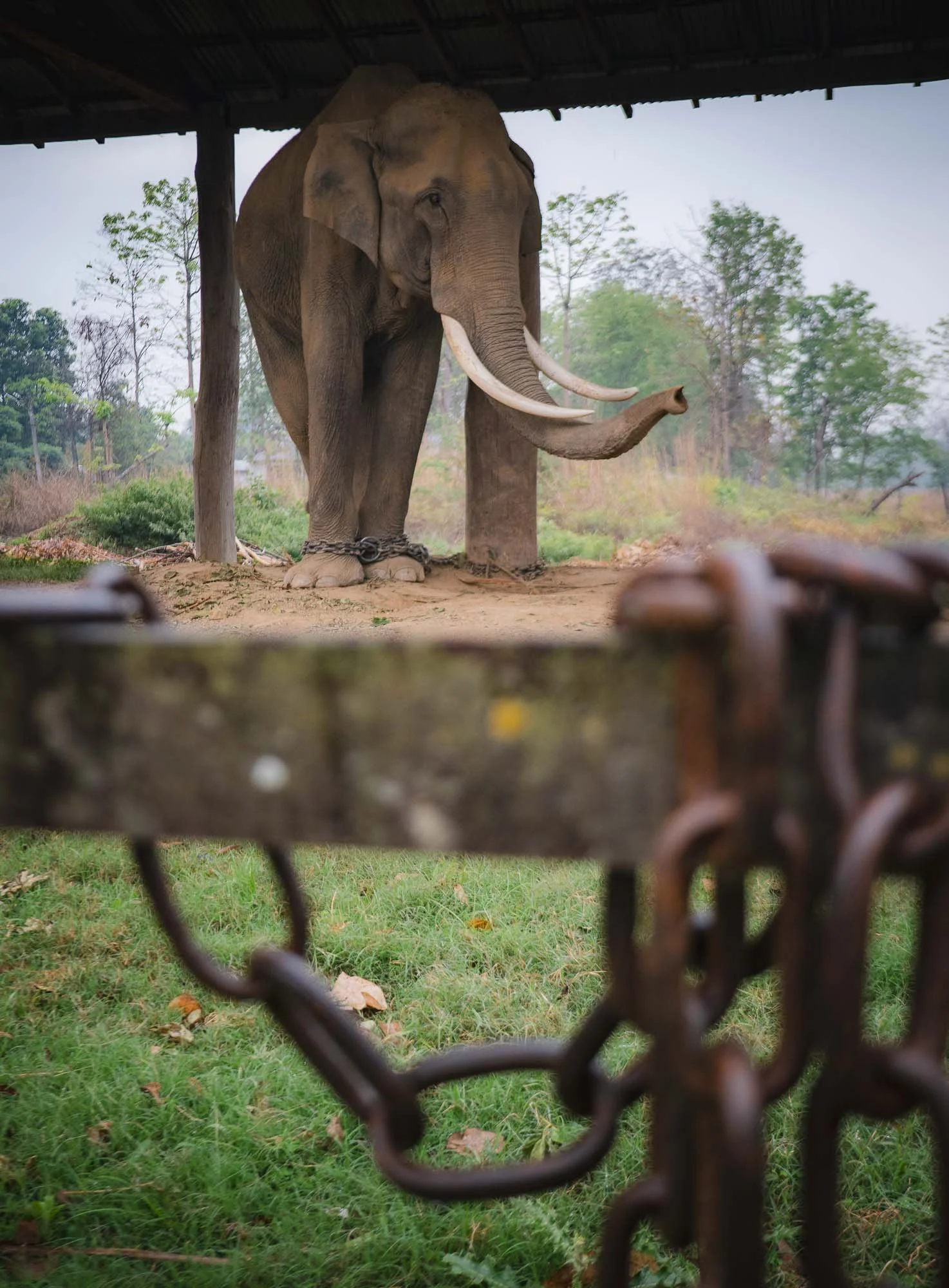
Indeed, Shushila’s father had been an elephant rider and keeper (mahout) for over 25 years in the park before his retirement. Although these elephants have grown up with their human keepers and been around them for years, it is a dangerous job - just a few days before my visit, a mahout was killed by this elephant, who now stands in shackles.
His companions are generally outside foraging in the community forest for most of the day when not being used in the park, but I am unsure of what his fate will be…
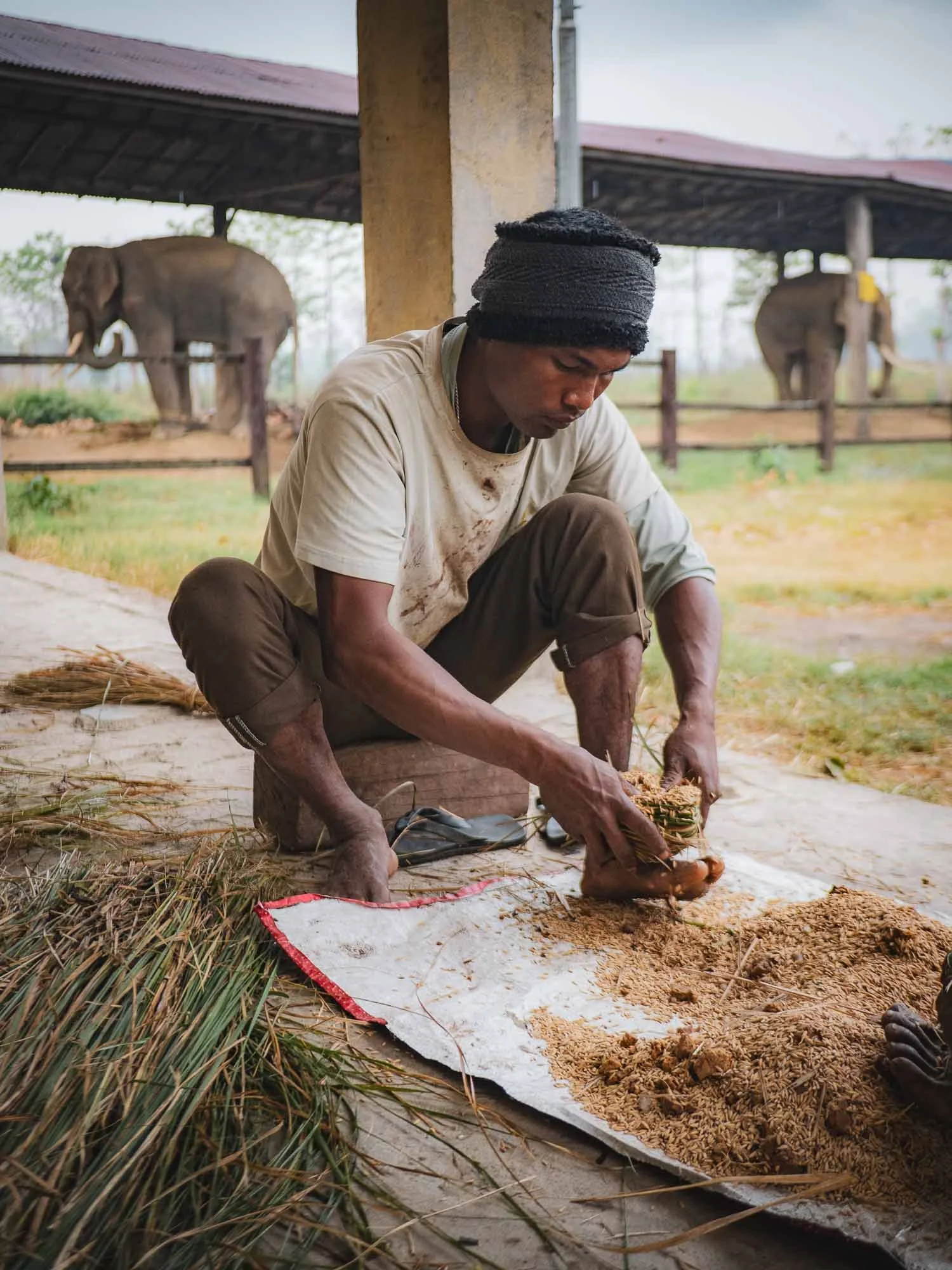
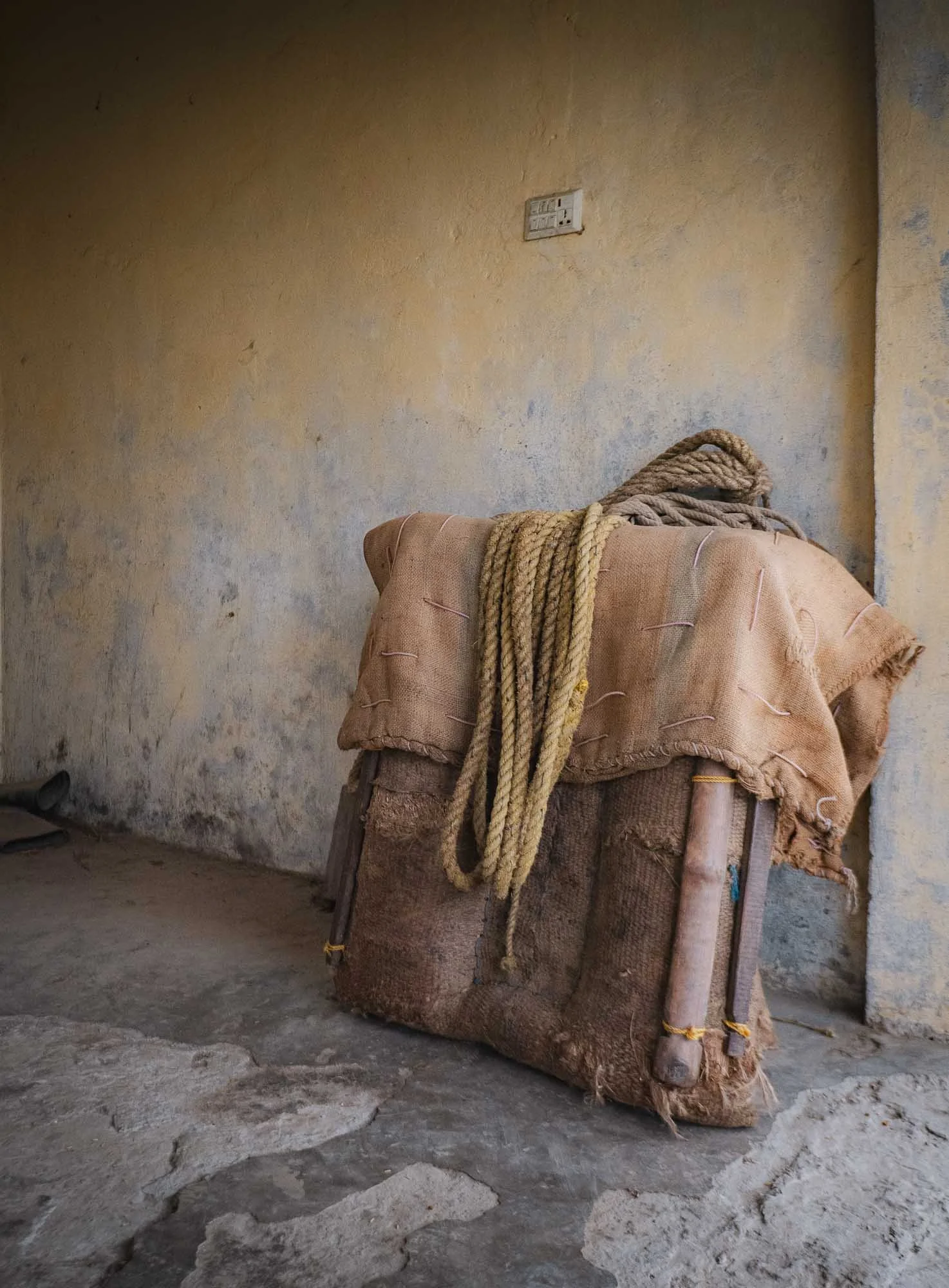
The morning routine of the keepers includes preparing small balls of mixed grains and grasses to feed the elephants during the time they're out on patrol or when they're back in the stables. On the right, parts of the padded saddle element that is used when the elephants transport people, which is still a common practice.
Pokhara - Gateway to the Annapurnas
After Bardiya - and a few hours delay owing to bad weather at the destination - it was time to head back north-east. Less than an hour flight brings you from the subtropical Terai lowlands almost at sea-level to some of the tallest mountain ranges in the world: the Annapurnas. The major city in the region is Pokhara with a population of just over half a million people.
Mountain Museum
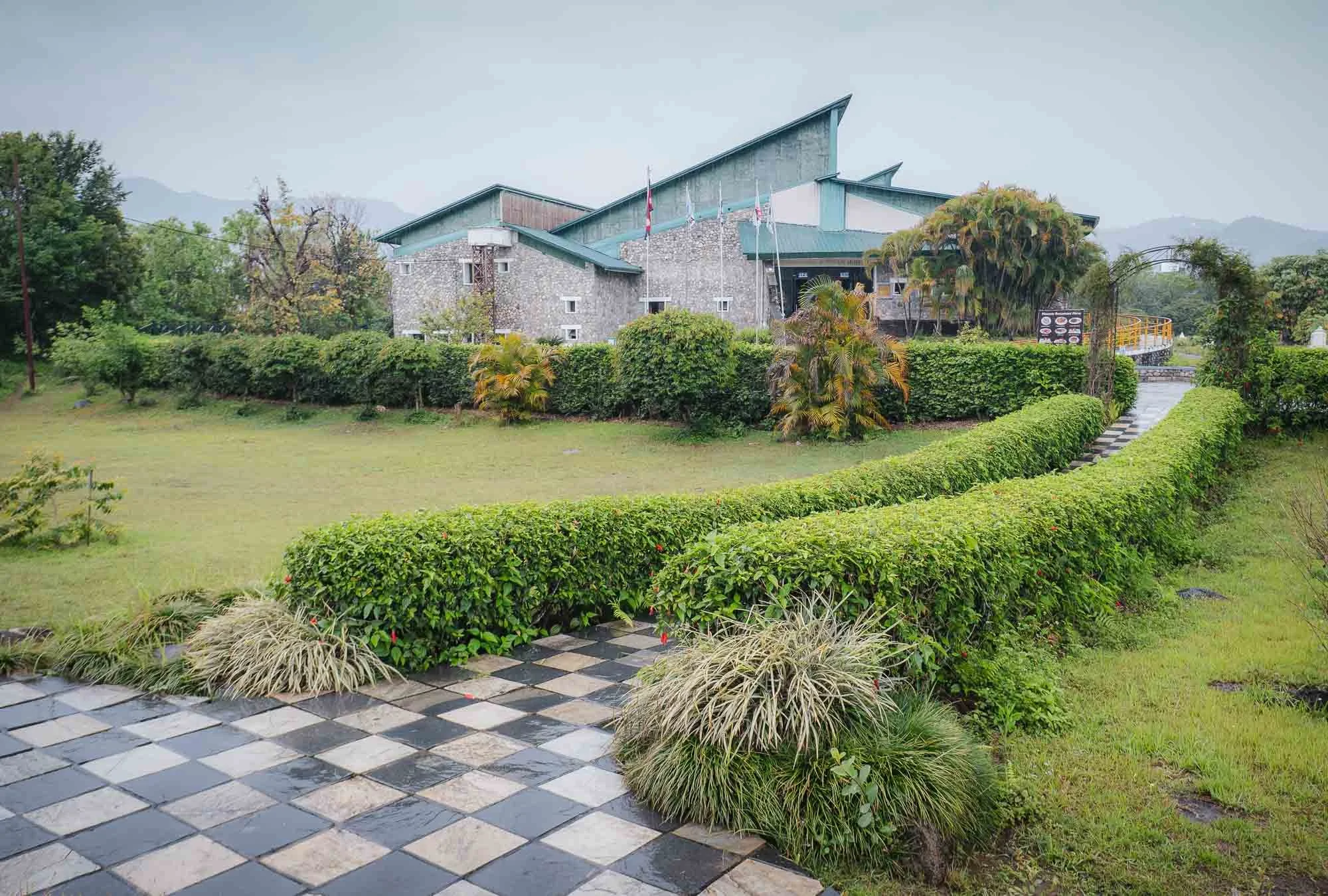
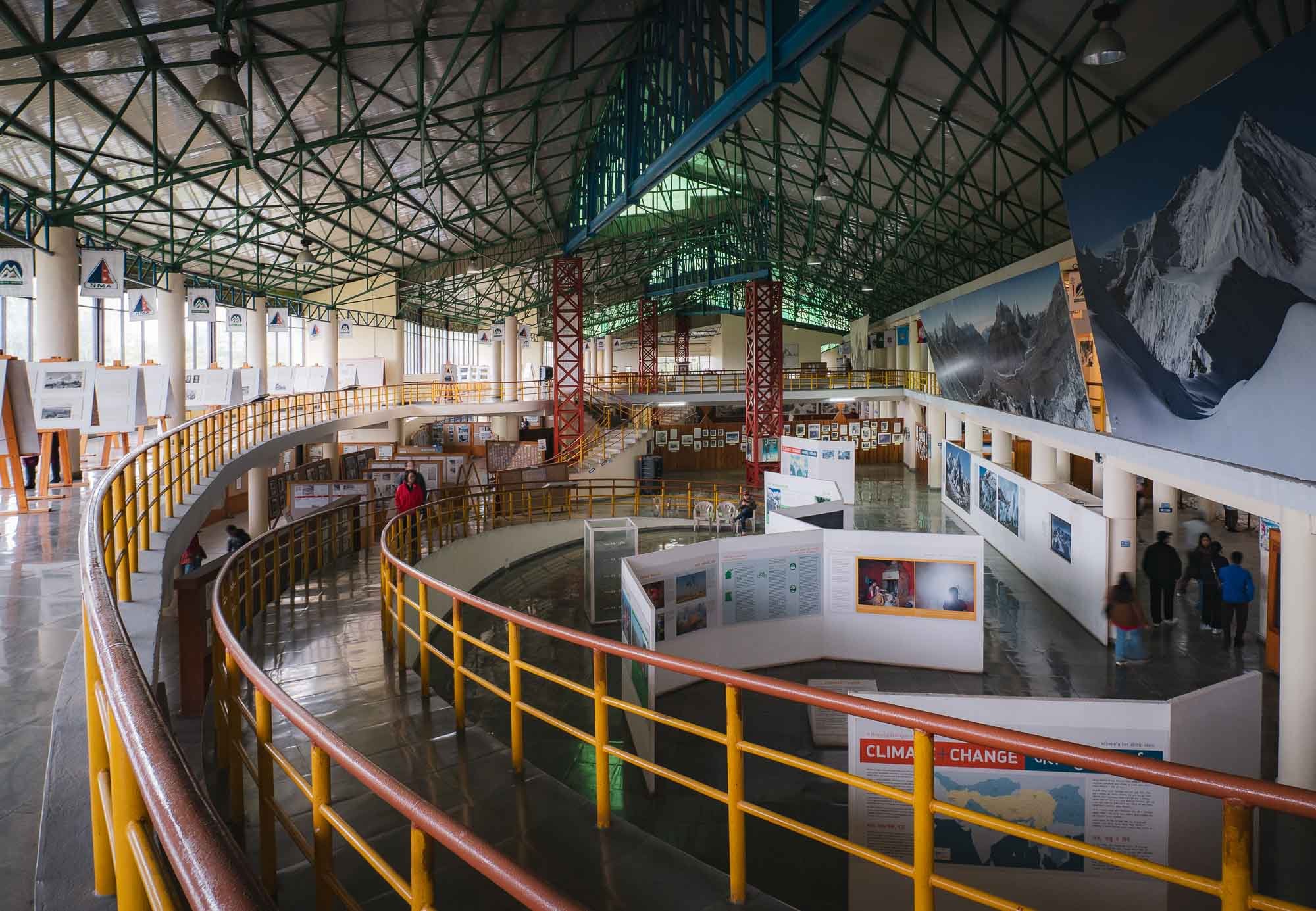
The aforementioned bad weather was a little disruptive to my plans, so we used the rainy afternoon to visit the mountain museum, documenting the history of mountaineering in Nepal and around the globe.
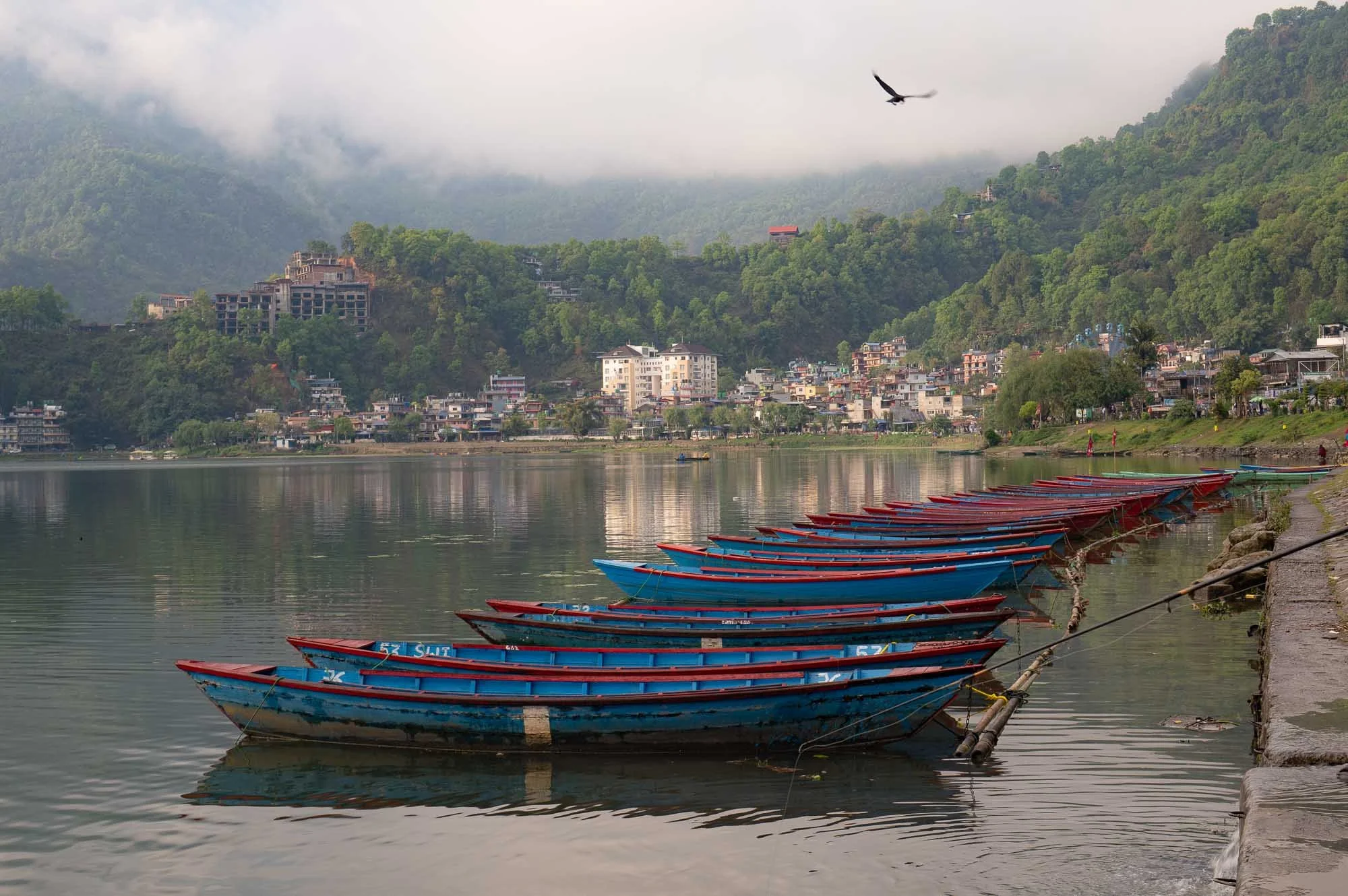
As the conditions improved a little bit in the late evening, I took a stroll from my hotel along the shores of Phewa Lake, one of the main attractions of the area for its beautiful mountain views, boat rides, and boardwalk.
It’s an amazing setting.
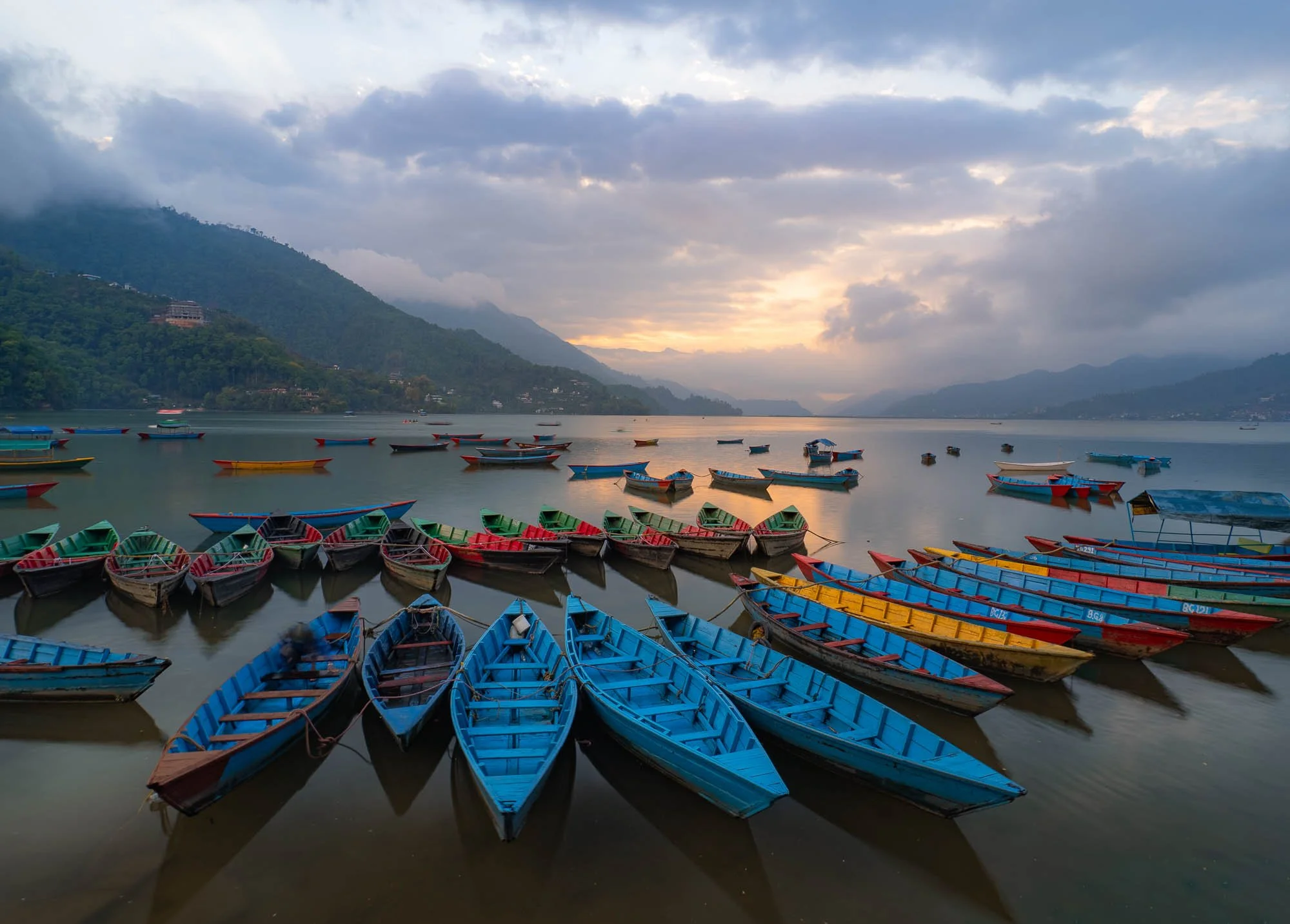
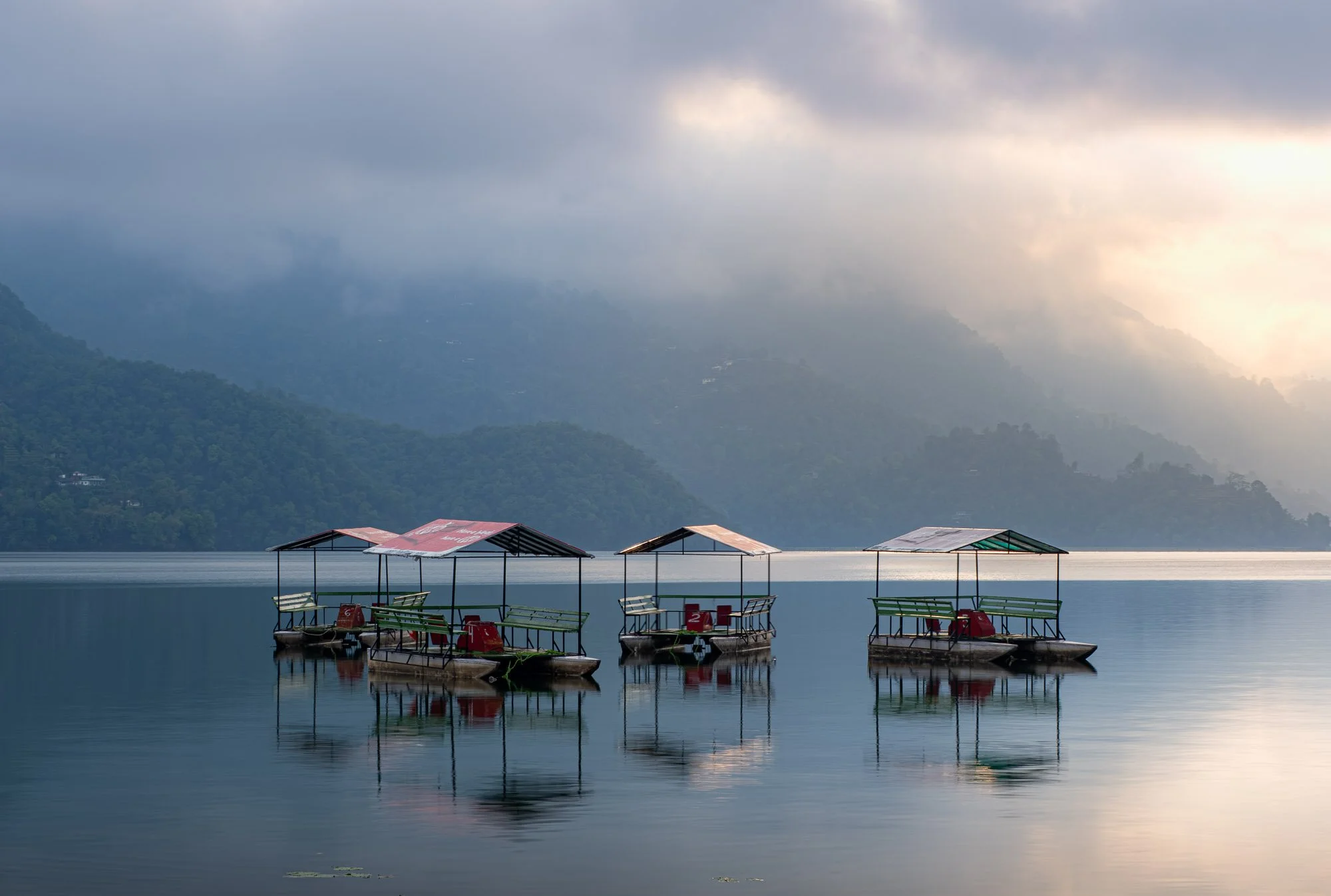
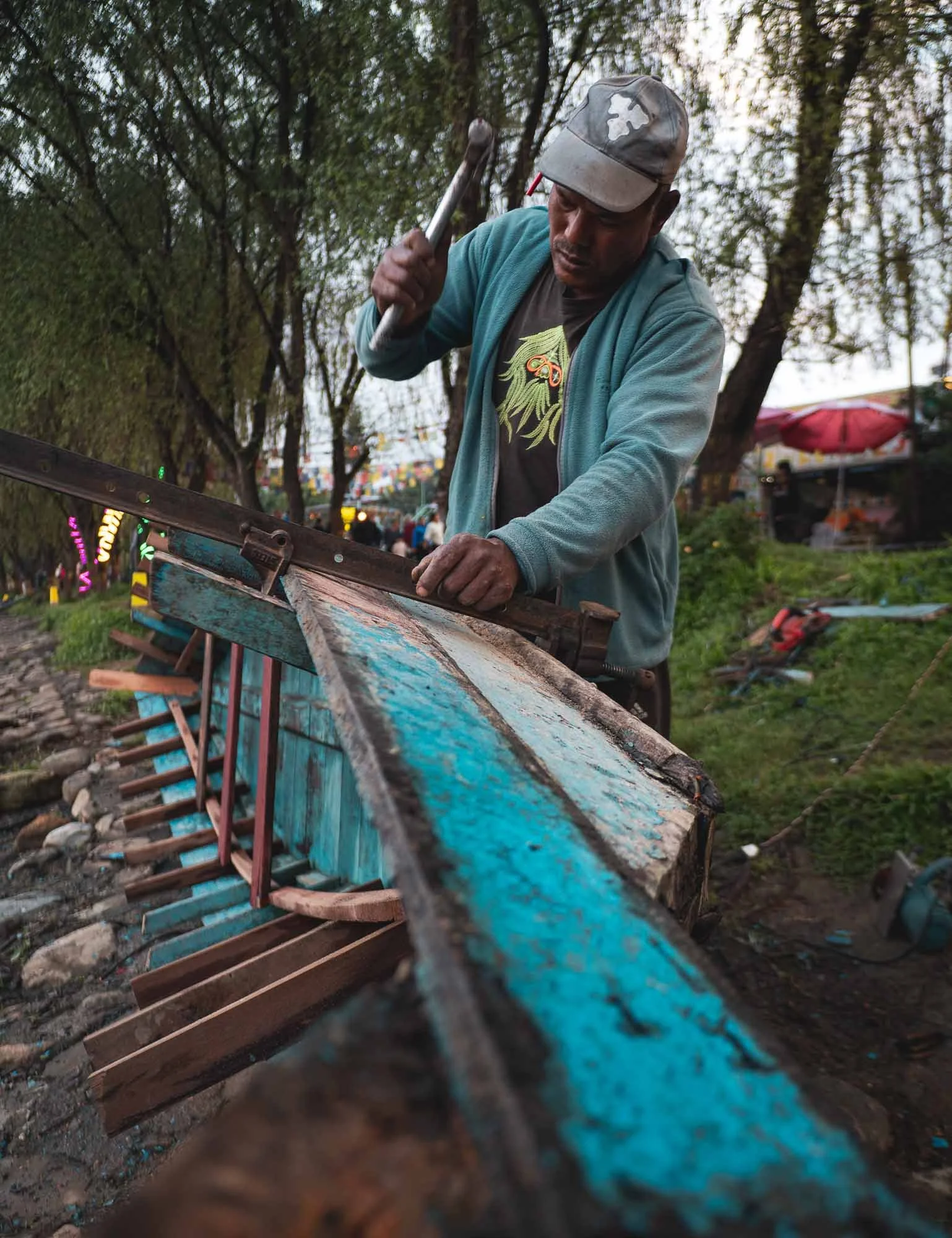
There are hundreds of small non-motorized boats on the lake, many of which are produced and maintained by the local owners along the shoreline.
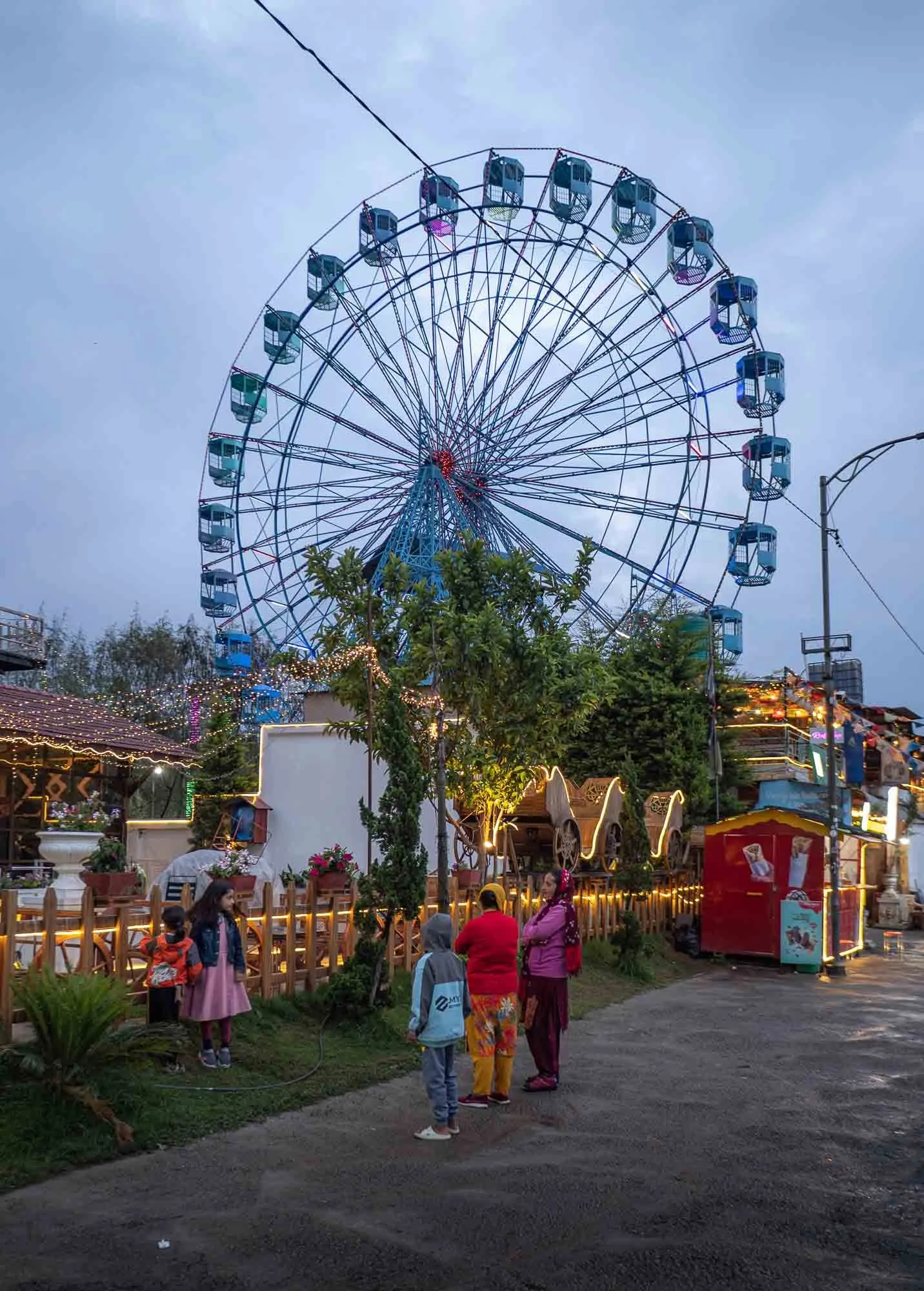
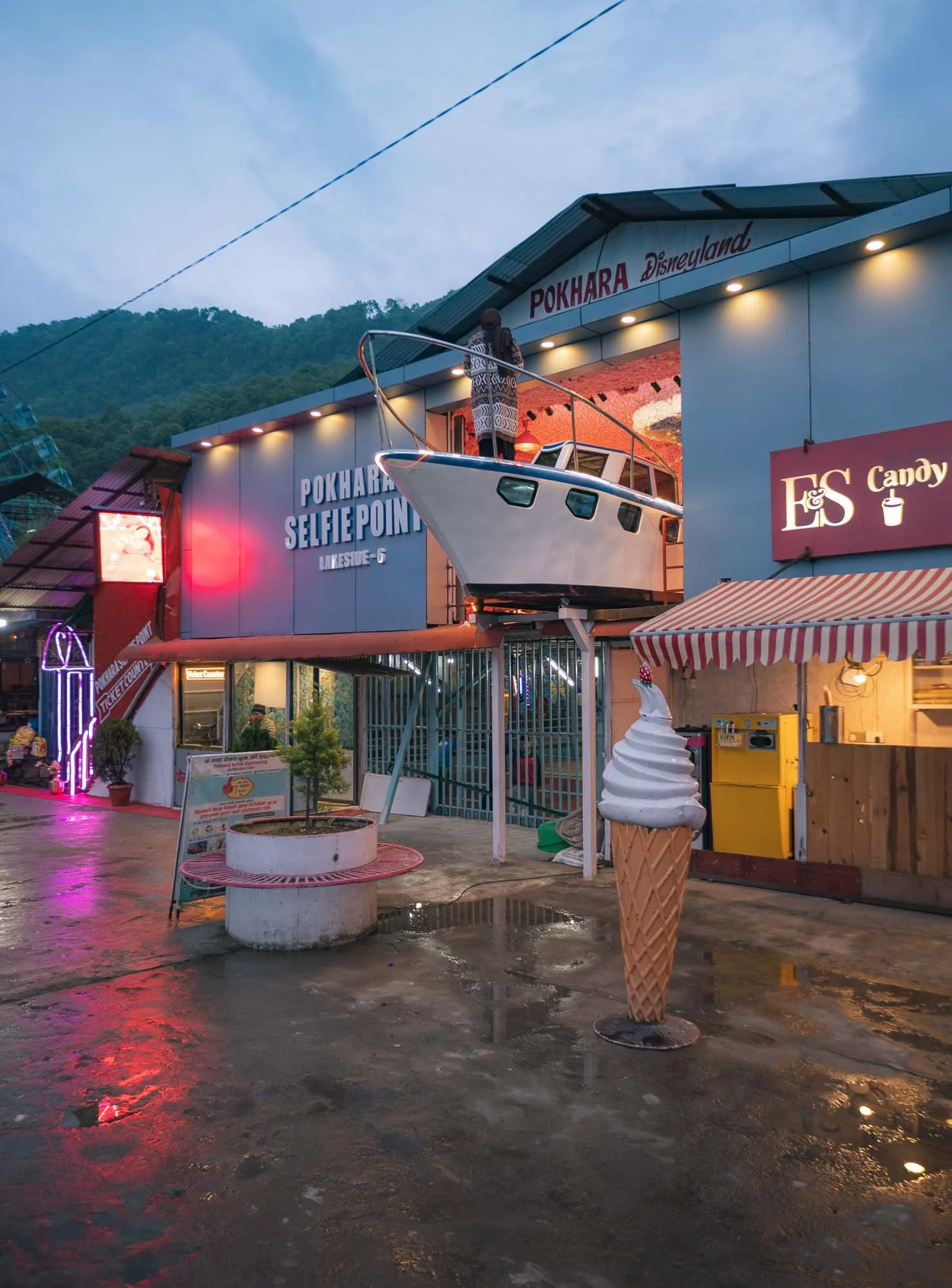
The boardwalk is lined with dozens of restaurants and bars and a few shops, as well as this little theme park which ambitiously called itself the Pokhara Disneyland. Fully licensed, I’m sure.
For the next morning, I had planned a quick helicopter trip to the Annapurna base camp, gateway to 3 of the 10 tallest mountains in the world. The early morning wake up call turned out to be in vain though - as we arrived at the airfield, the helicopter company told me they had to prioritise getting people down from the mountain. Yesterday's bad weather with thick clouds meant they could not fly, and it had caused a backlog of people stuck on the mountain for the night. Alternative plans it is, then.
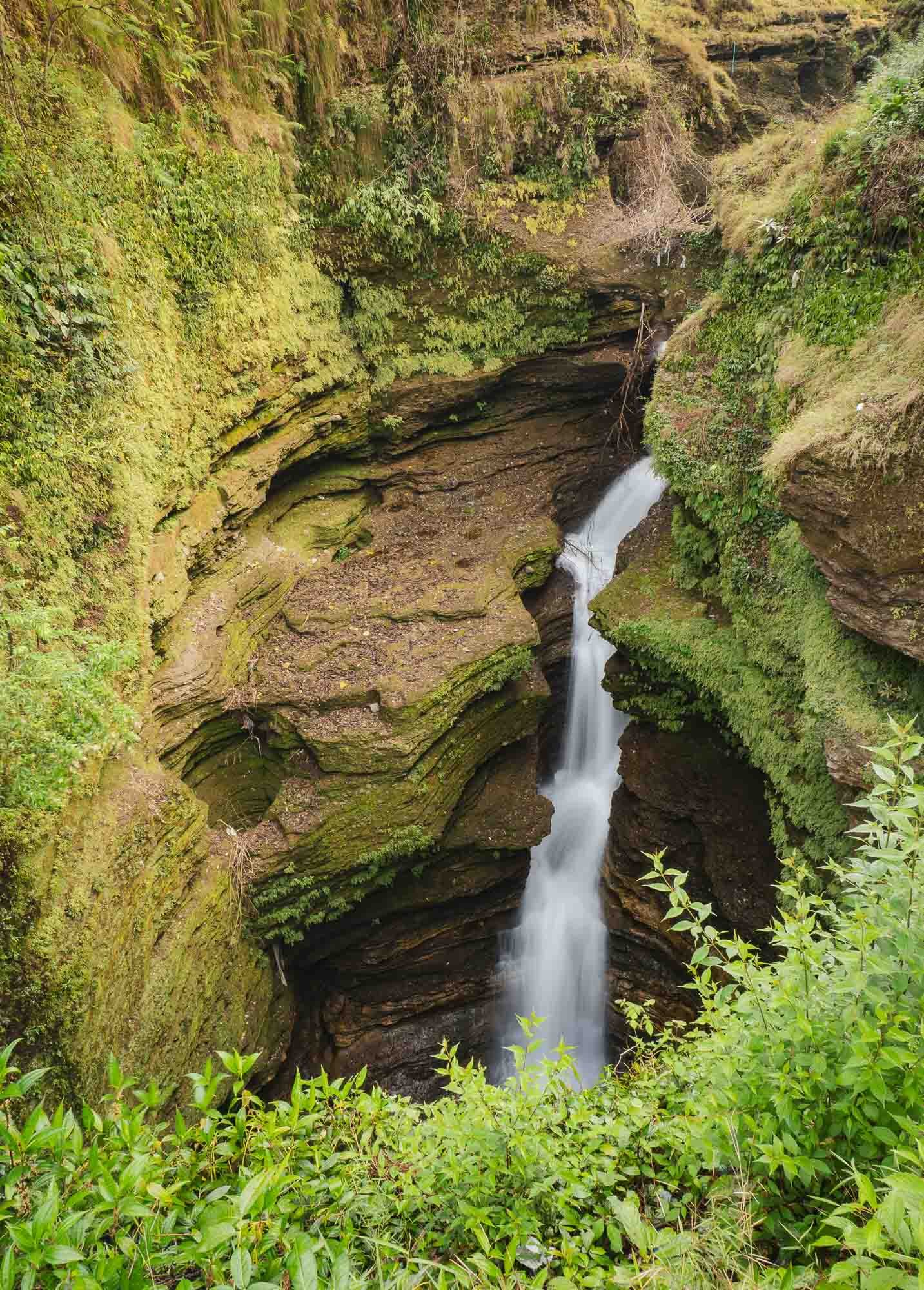
Somewhat hidden but in the middle of the city lies a rather beautiful waterfall and canyon, which, owing to the drier months of the year, felt a little less impressive than some of the photos during the monsoon suggest.
The falls drop around 50 metres into a tunnel, which then runs another 150 metres under one of the city’s main road, only to end up…
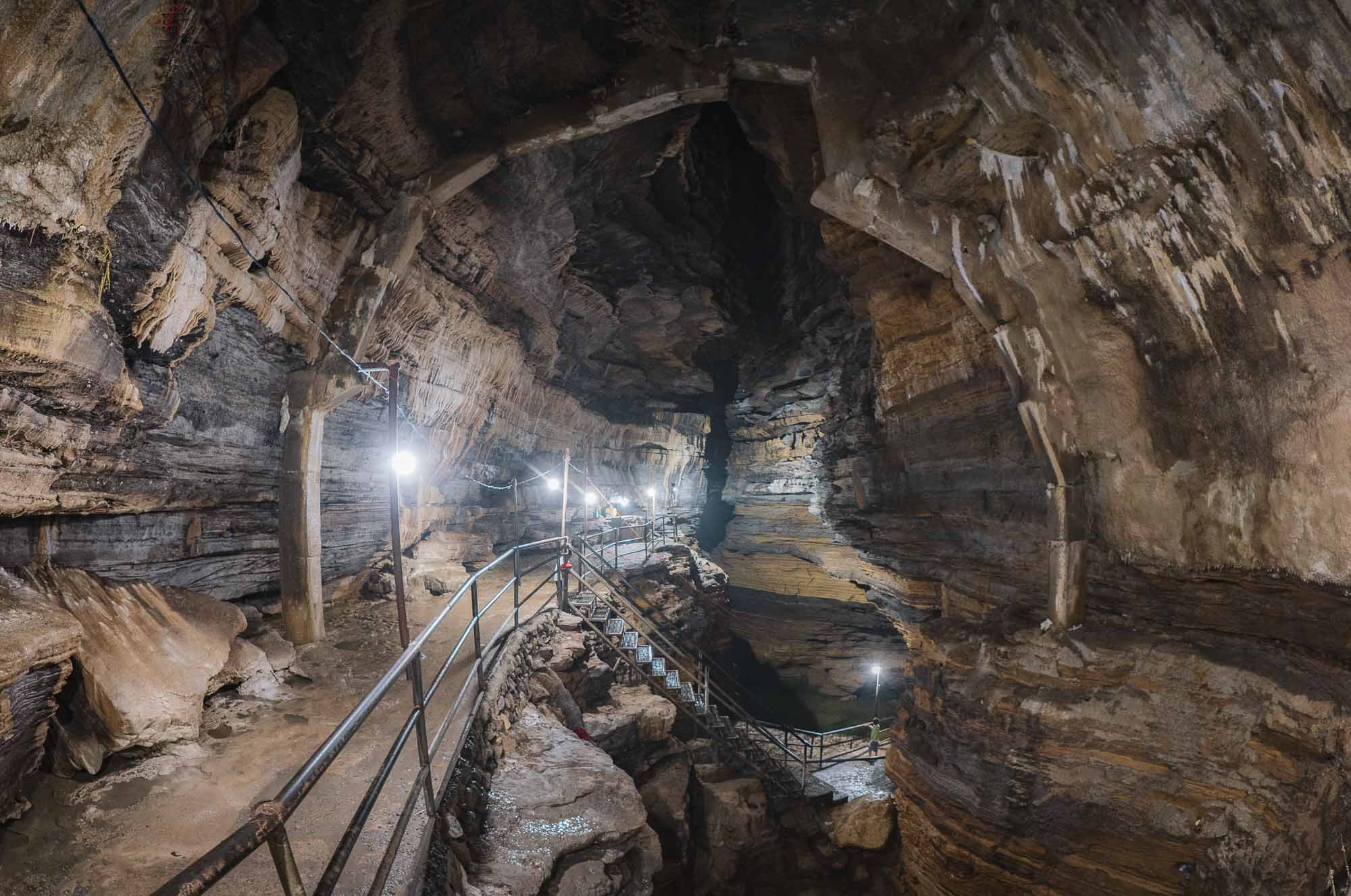
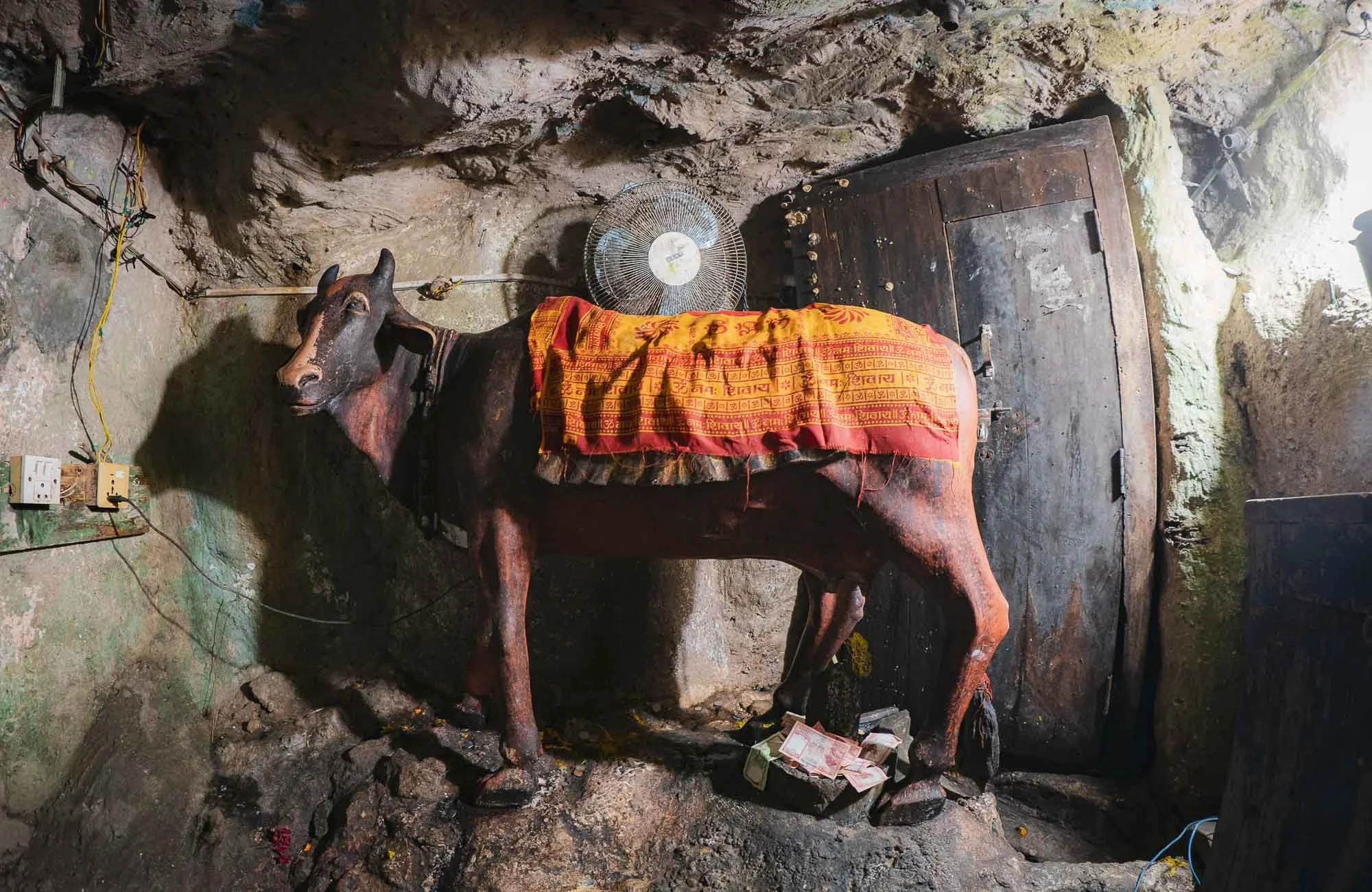
… in an impressive cave, covering a total of 3 kilometers, although only a very small part is accessible. It’s connected to the canyon of the falls on the other side of the road. Maybe unsurprisingly, the cave has a religious meaning today - it is an active pilgrimage site dedicated to Shiva, with Nandi, the bull, serving as its guardian and companion.
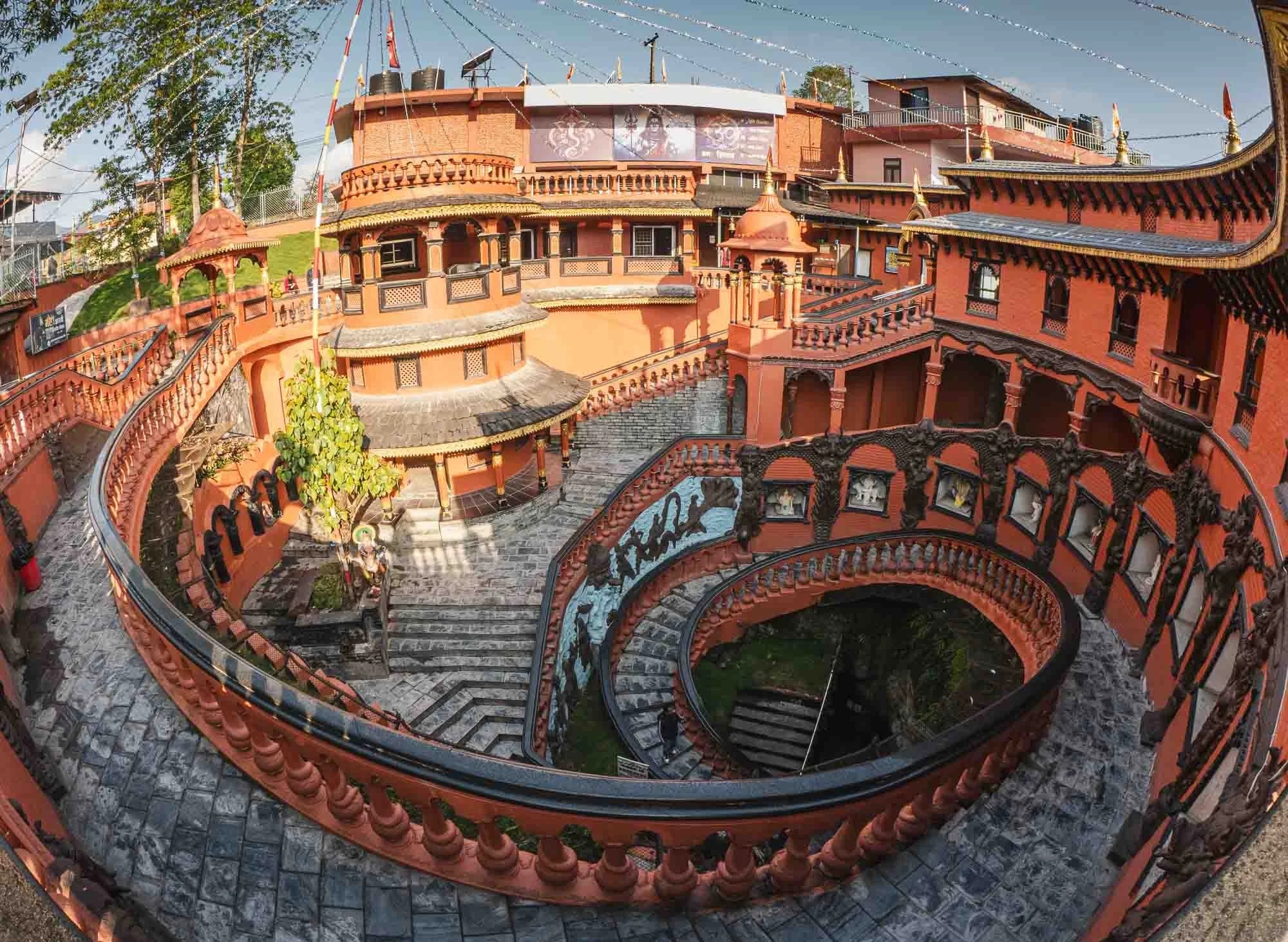
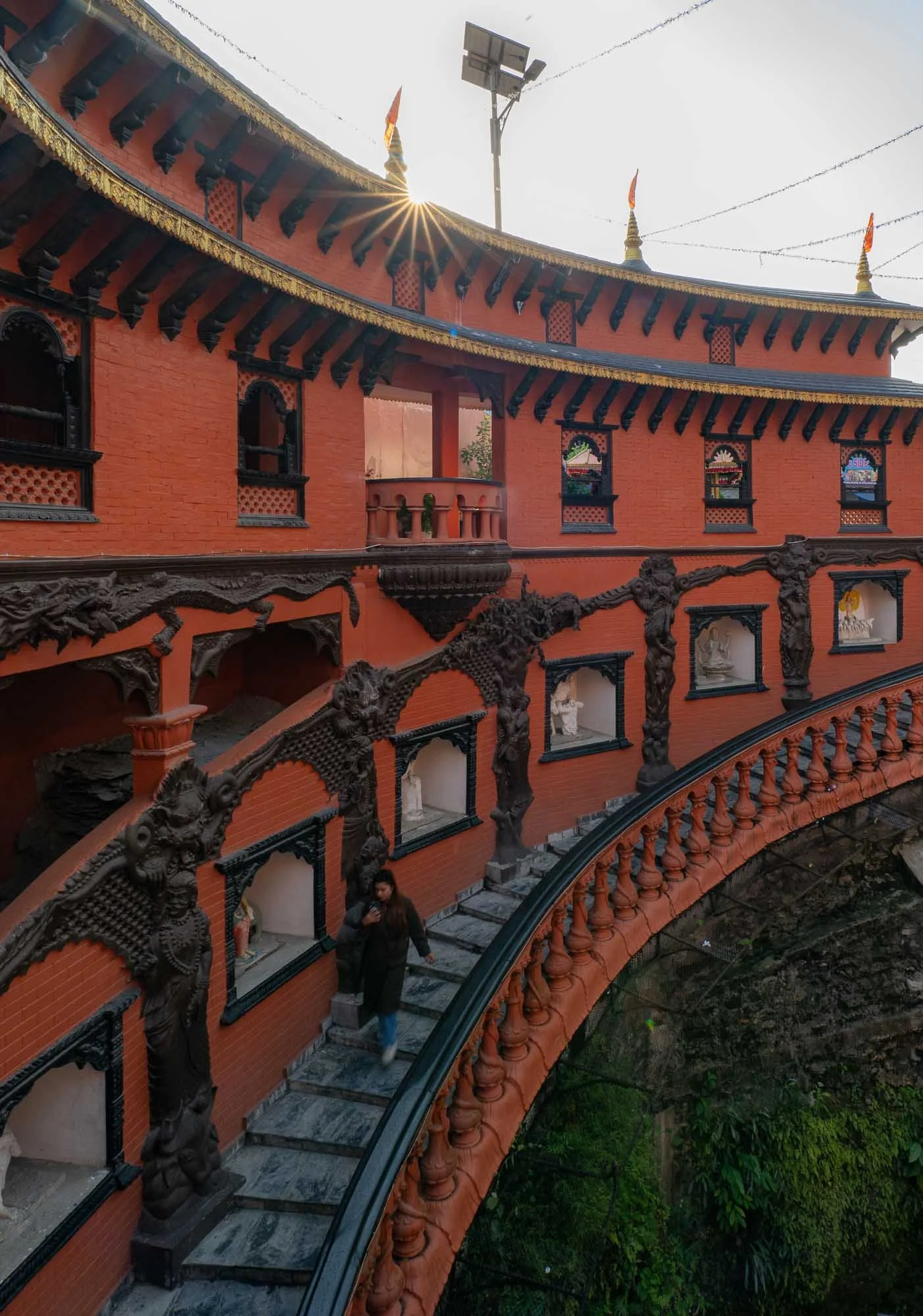
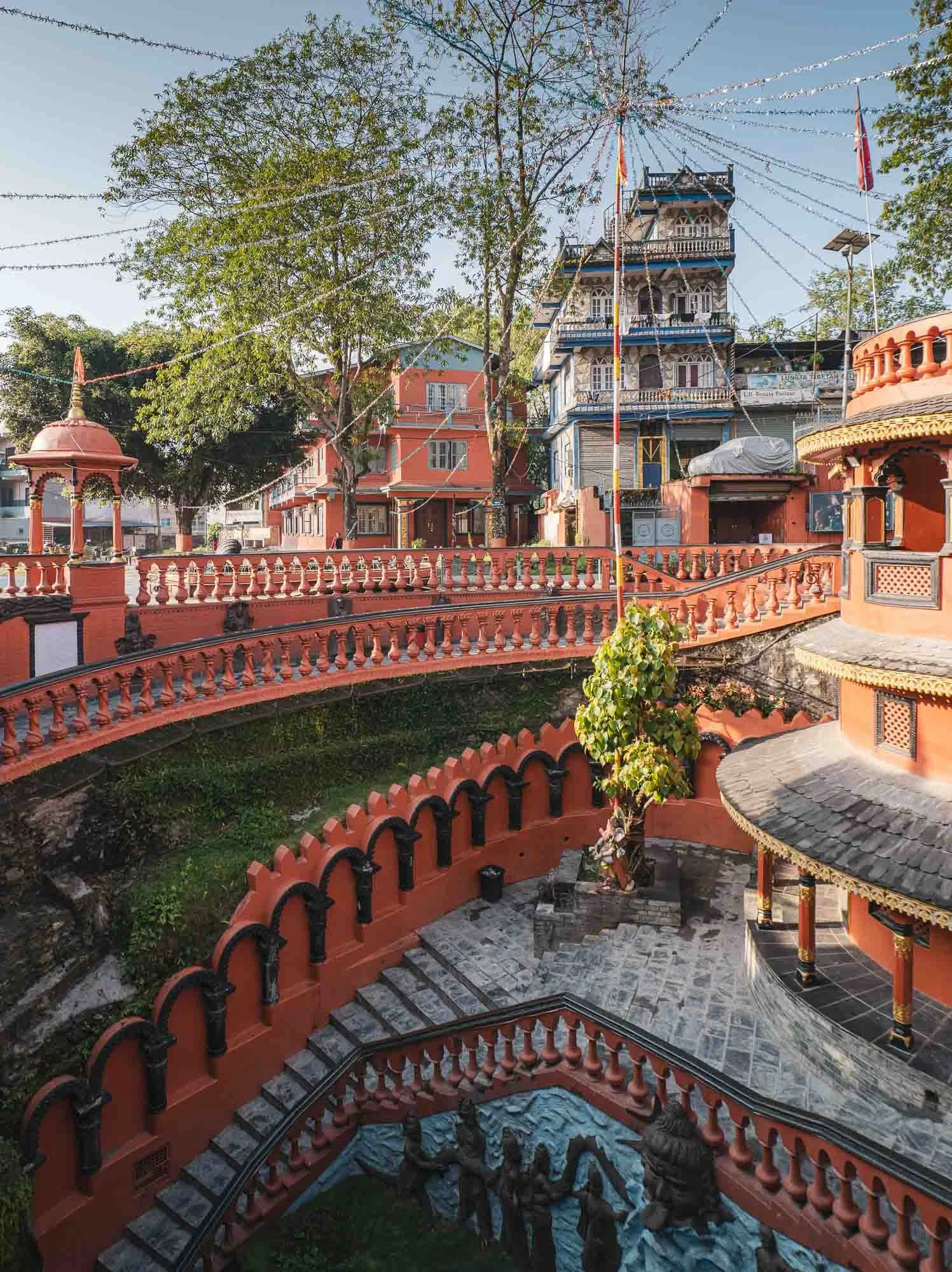
Owing to its religious meaning, the cave has a rather impressive entrance: a huge spiral staircase leading down into the bedrock under the city.
While by itself maybe none of the components of this sight would be particularly noteworthy, it’s the combination of the waterfall and its canyon, the cave, and the above ground temple entrance - all in the middle of the city - that make this quite an unusual place.
The Panorama
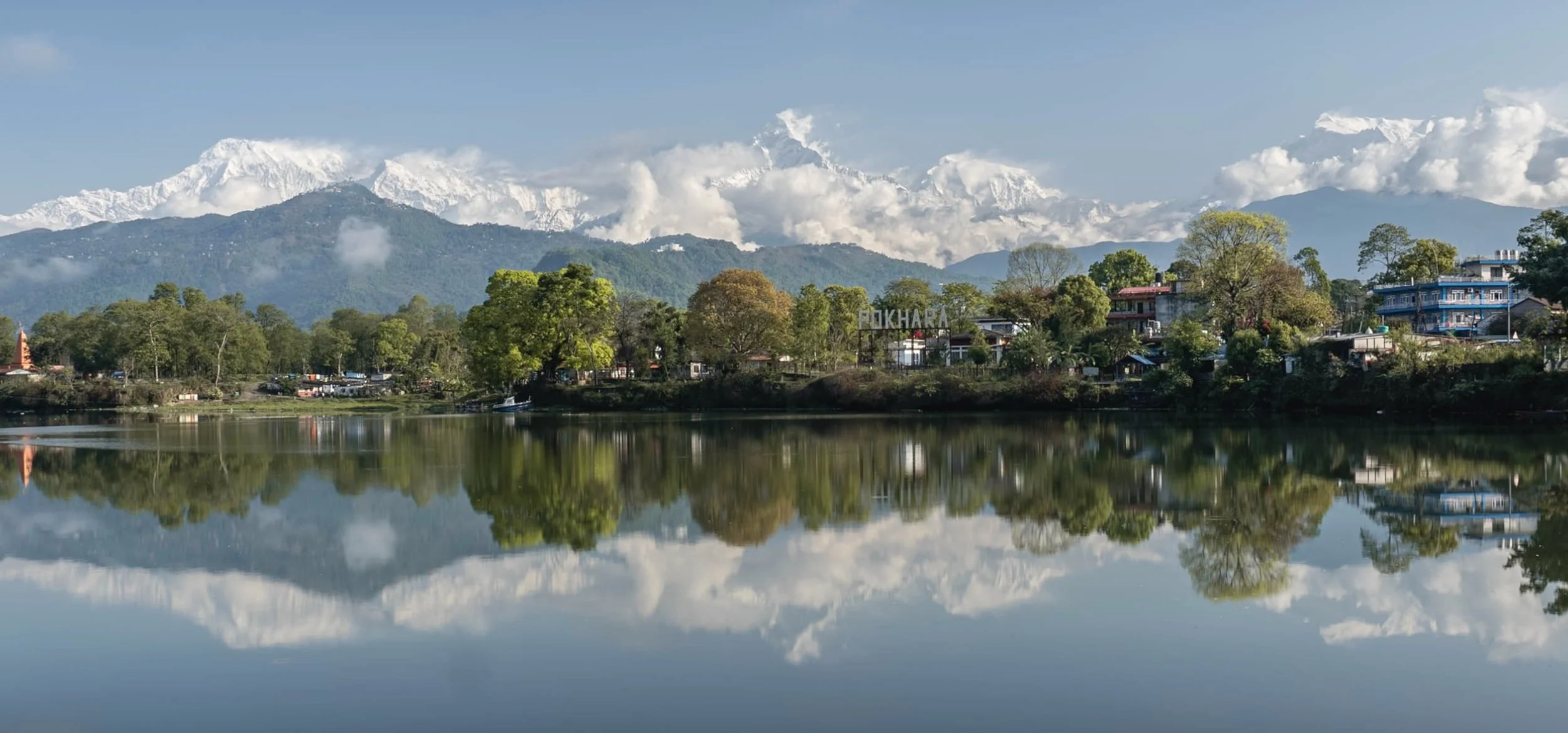
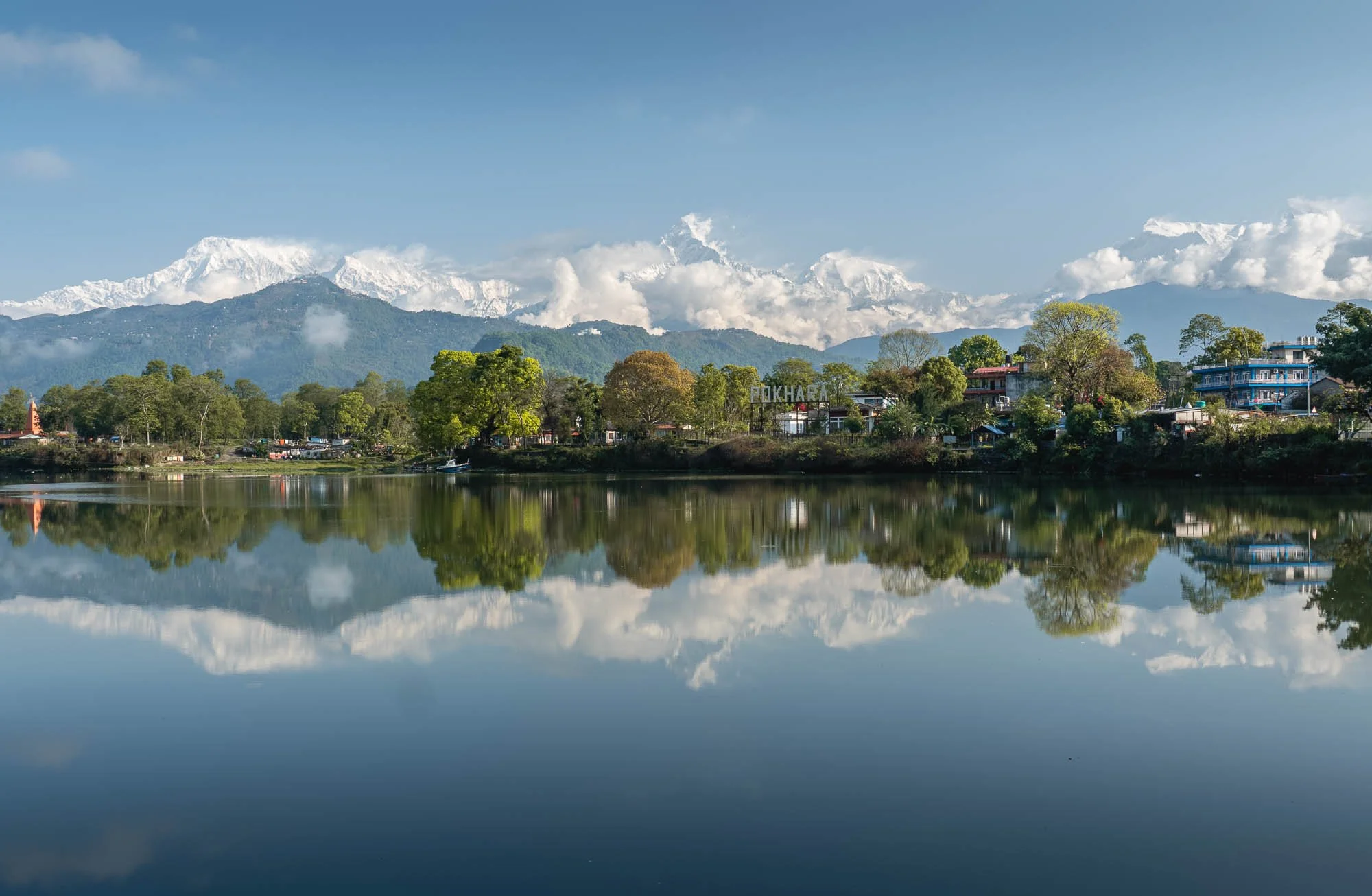
After the messy morning start and the cave, we then made it to what is probably Pokhara’s most beautiful viewpoint, with the massive Himalayan mountain ranges of the Annapurna reflecting in the calm river.
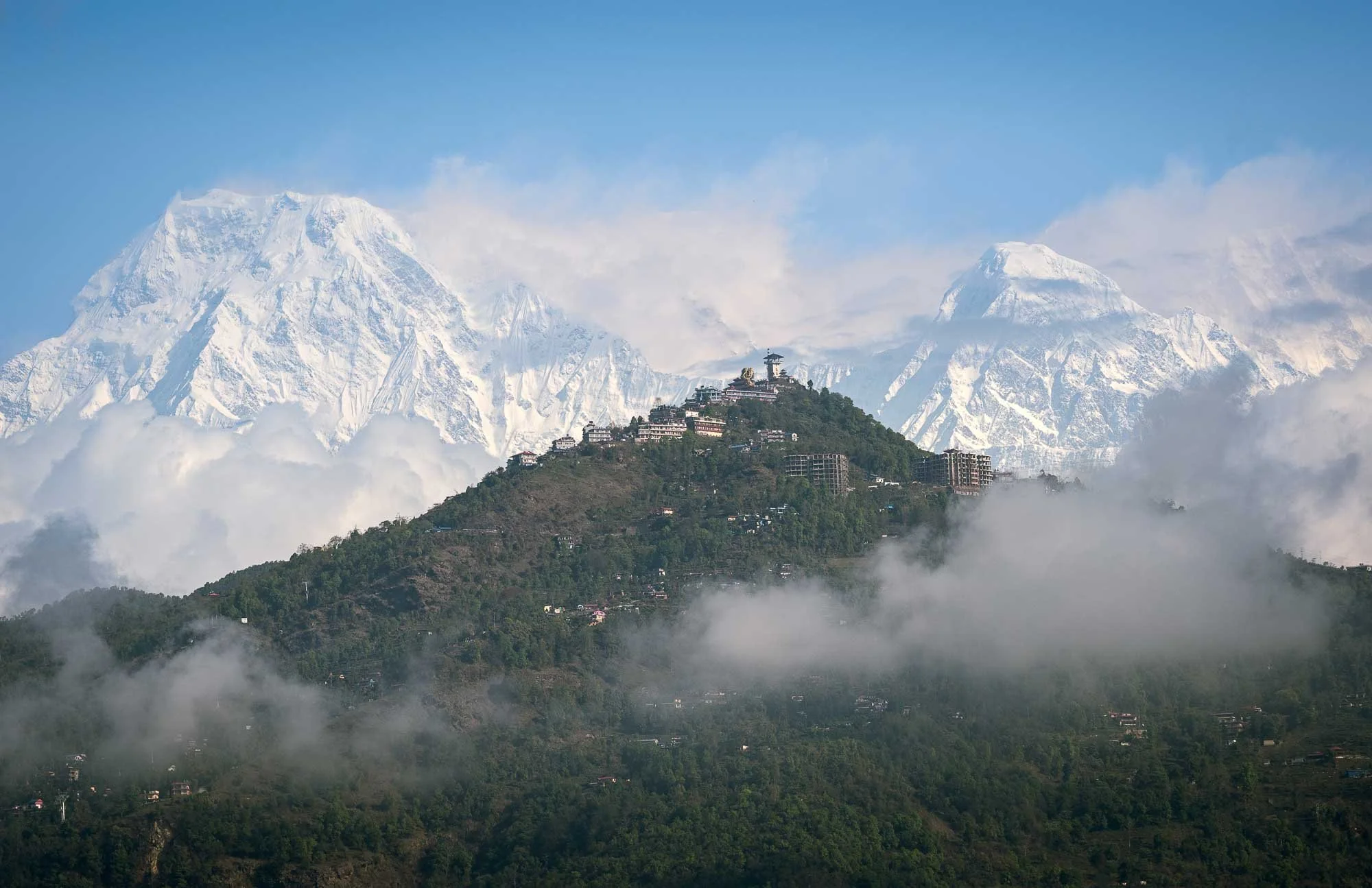
We did so just in time - only a couple of hours later, and the mountains would usually be fully engulfed in clouds during this time of the year - they had already started to form around the peaks and the viewing platform visible here on the opposite side of the lake.
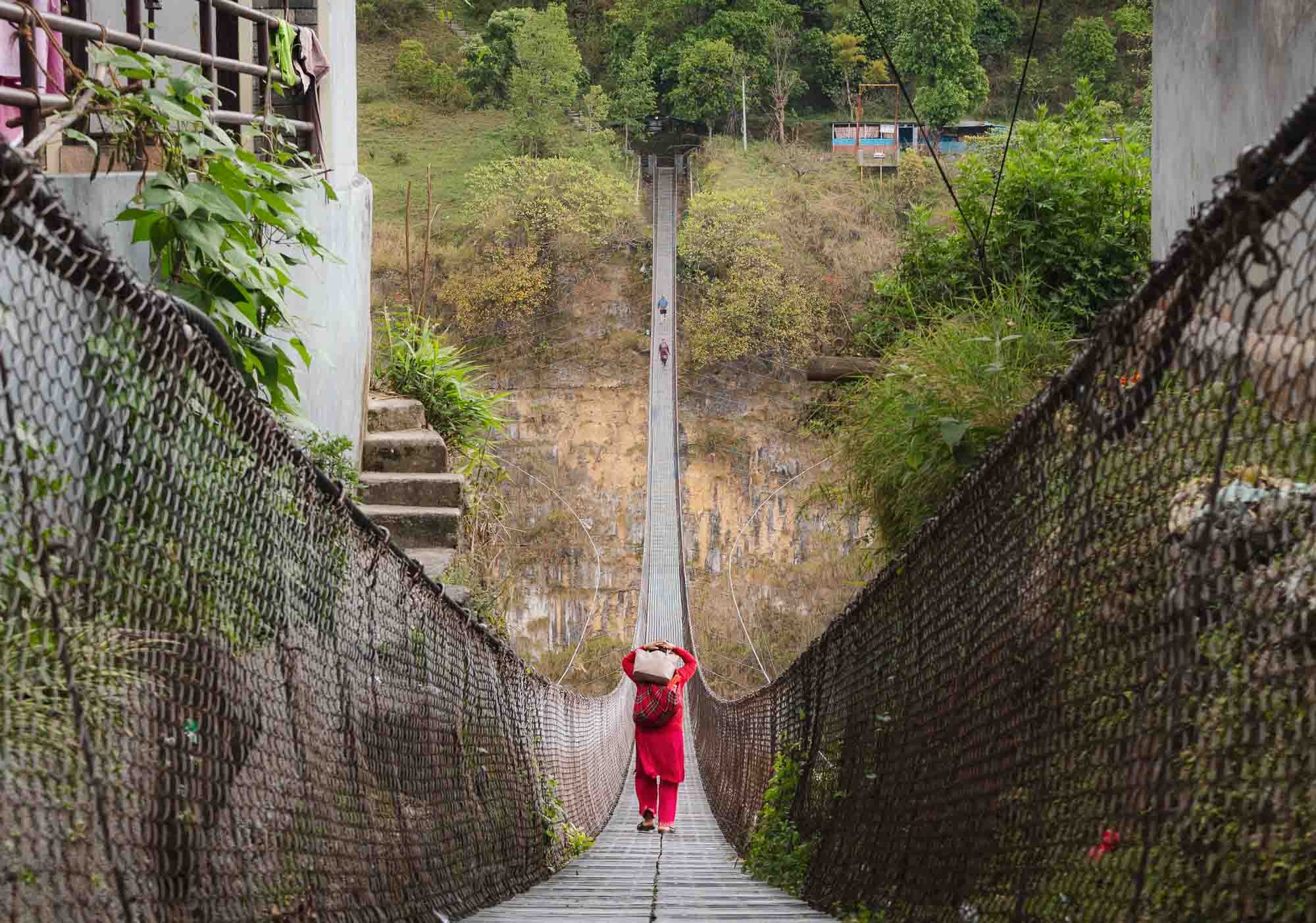
The many rivers and gorges around the area gave rise to a number of suspension bridges used to connect different parts of Pokhara and surrounding settlements, saving people from having to take significant detours by road.
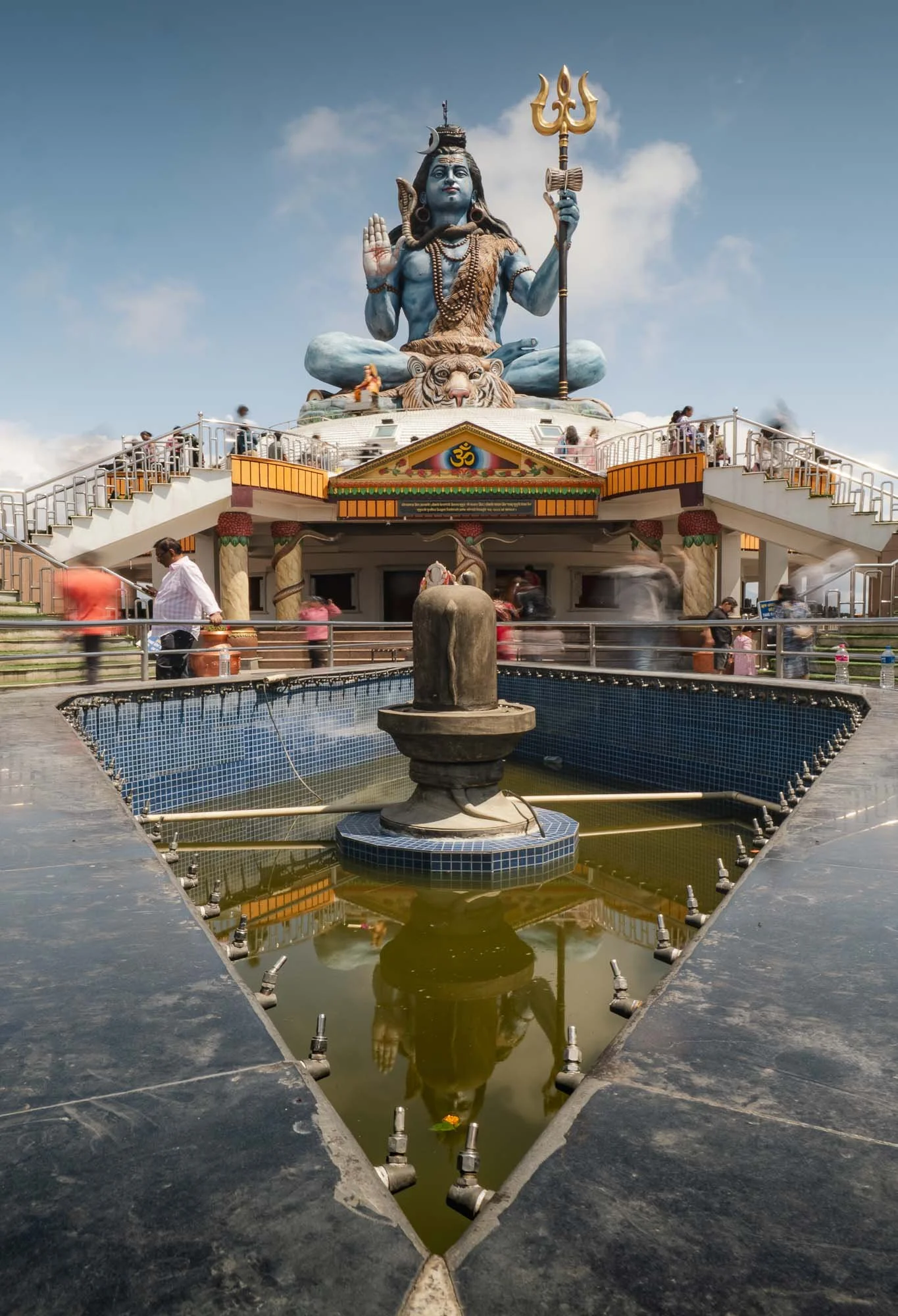
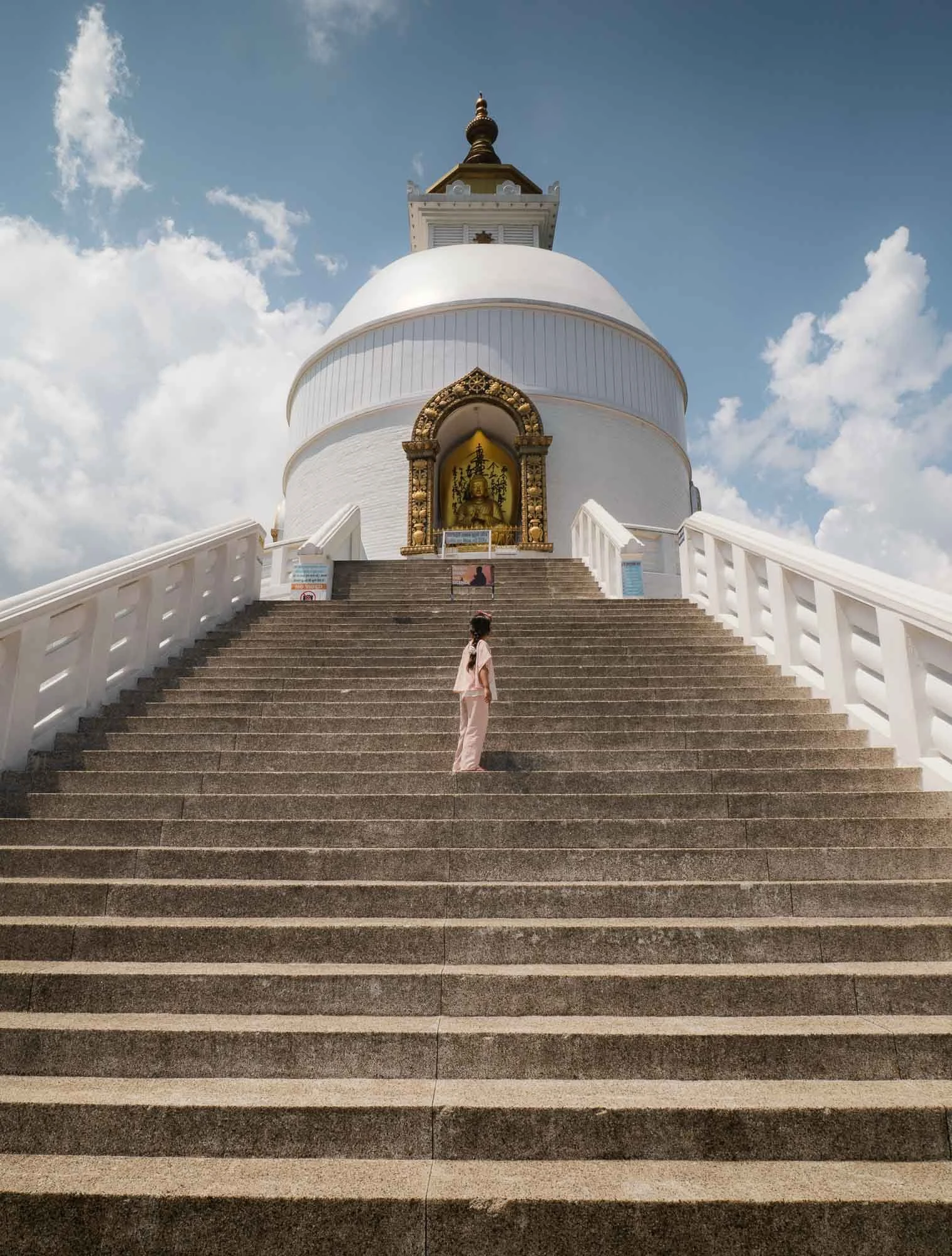
The hills on the southern side of the lake are home to relatively recent interesting temples. The Pumdikot Shiva Statue seen on the left is reachable from the city in about 30 min by car. Beyond its religious significance, the hill also offers nice viewpoints over Pokhara. On the right side is the Shanti Stupa or World Peace Pagoda, one of many around the world which a Japanese Buddhist monk worked to establish in the second half of the 20th century - a 30min hike will get you there from the Shiva statue if you don’t want to drive again.
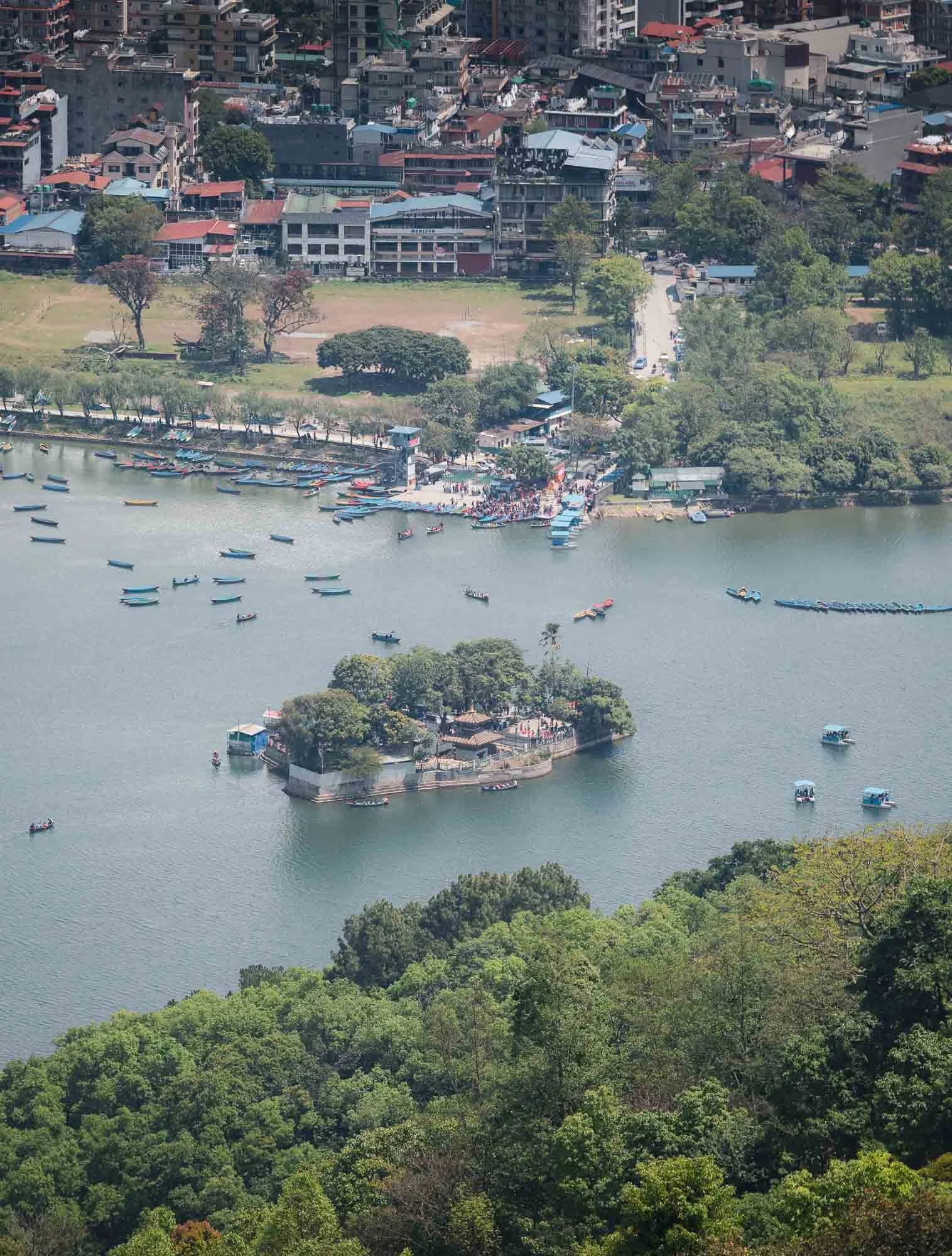
From the hill you’ll also be able to spot the Tal Barahi Temple with its small pagoda, situated on an island in the lake, making it reachable only by boat.
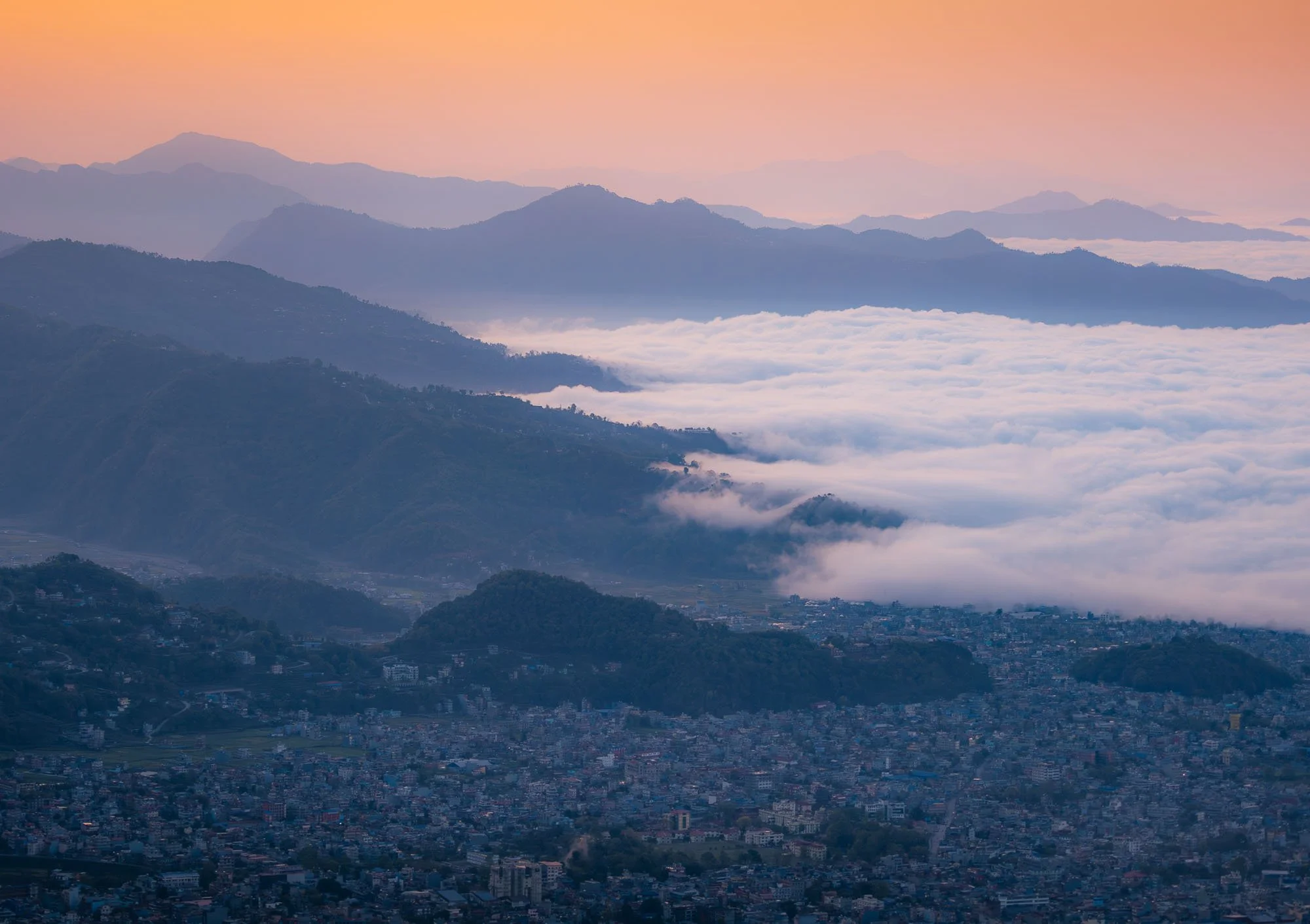
I spent the night in a hotel on the elevated ridges on the opposite side of the lake, known for its views of the mountains. It’s located just next to the viewing platform visible in the earlier images from across the lake. While the sunset was a rainy and cloudy affair, as is expected during this time of the year, the morning brought clear skies over the valley.
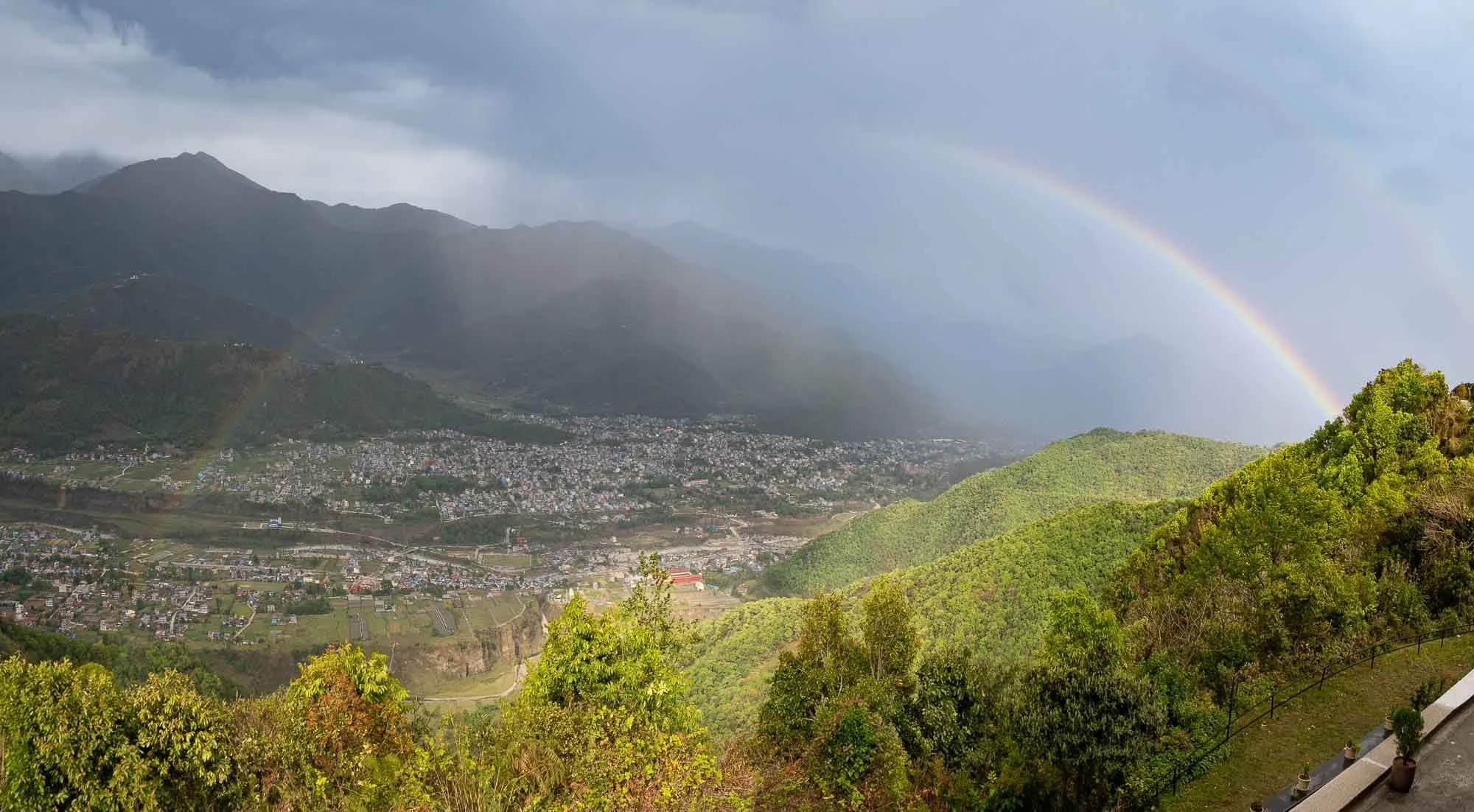
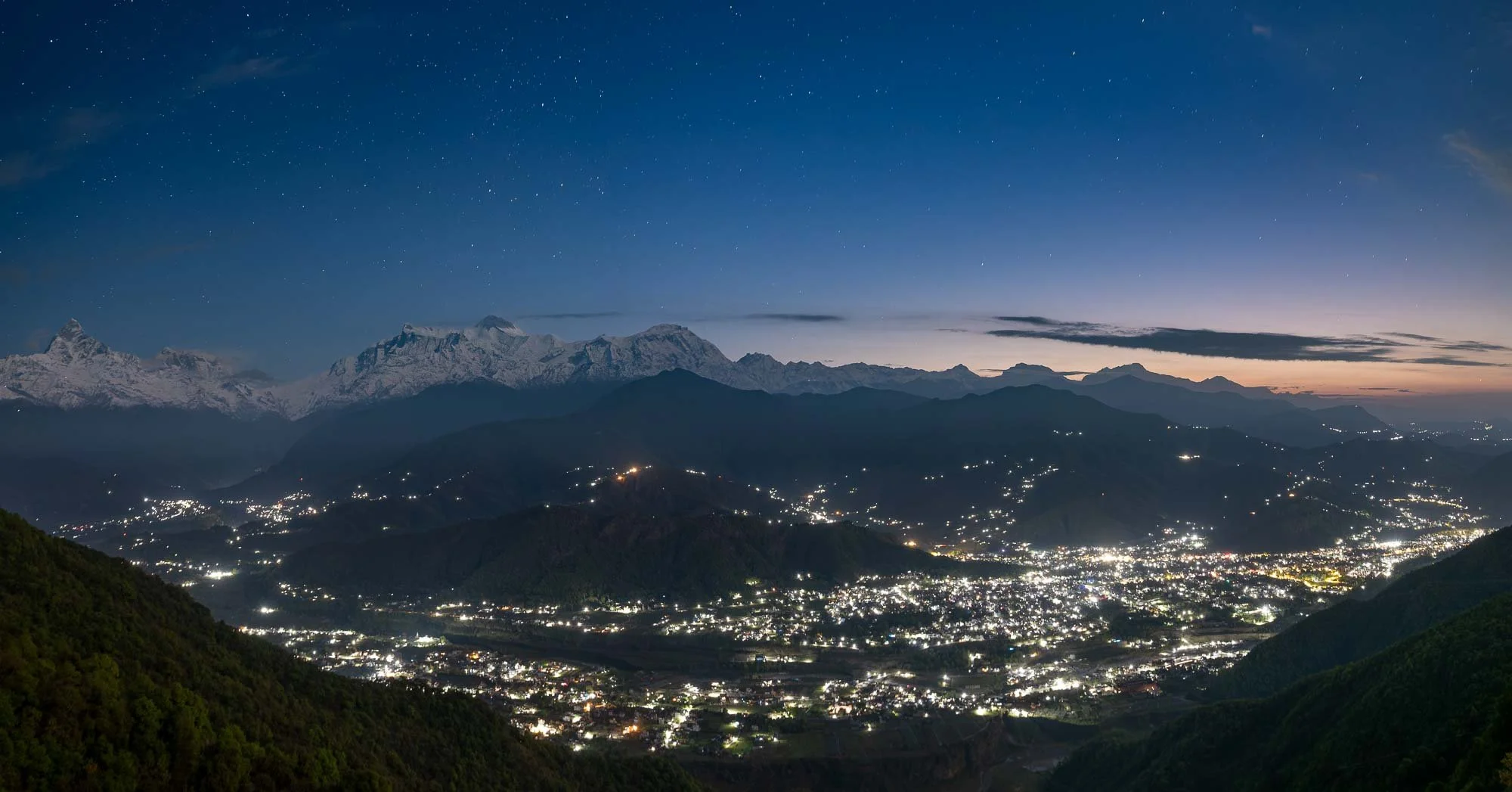
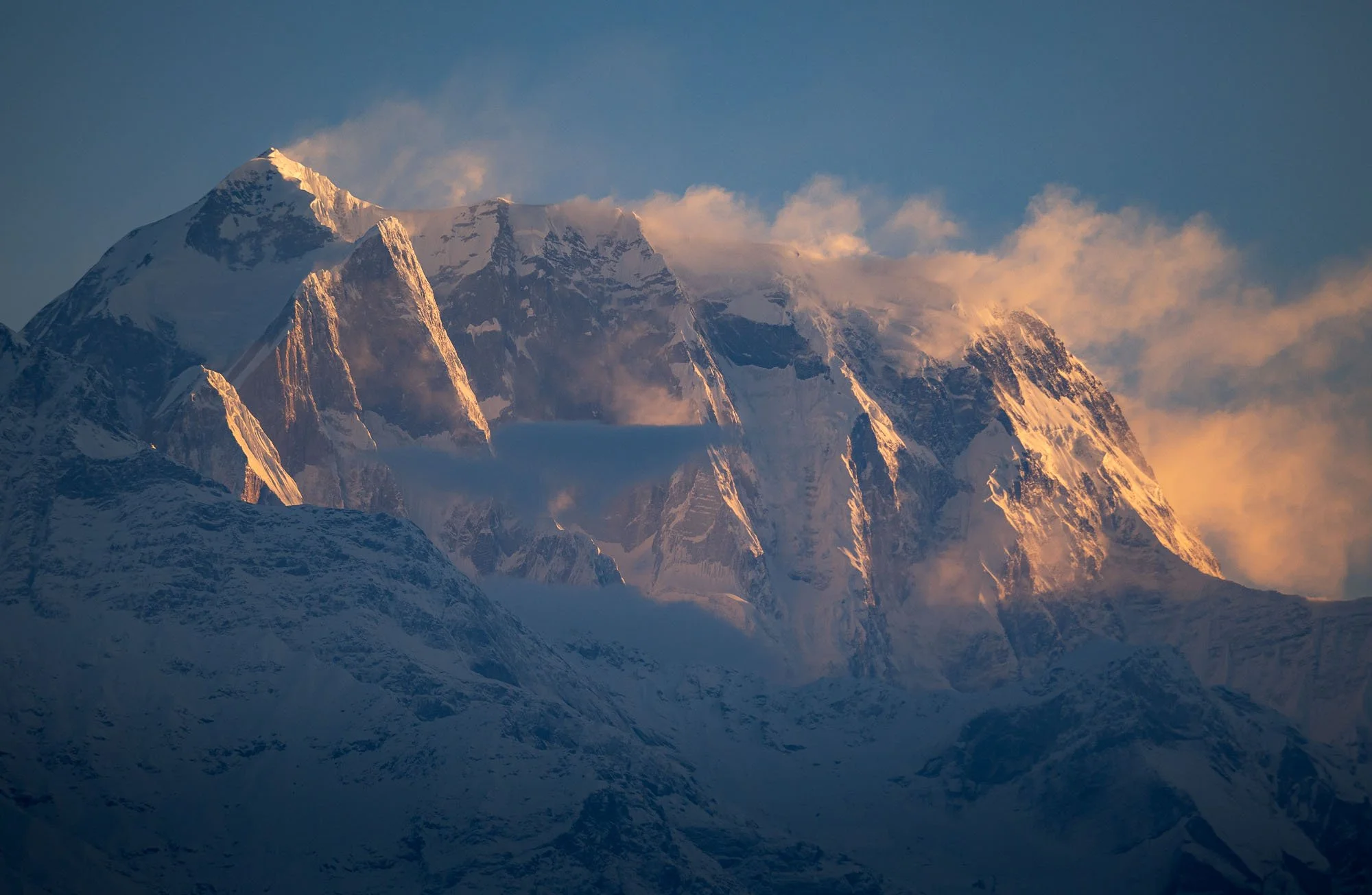
We were on a tight schedule for the reschedule helicopter flight, but I couldn’t resist the conditions and made my driver stop so I could run up the viewing platform as well, completely underestimating the number of steps. It was worth it though: a low layer of clouds slowly crept into the city in the east, and beautiful first light hit the mountain ranges just as I had to get going to not miss the flight.
Annapurna Base Camp
After the quick stop, we arrived at the city airport and got the go-ahead this time. Things still didn’t seem to be smooth, but after over an hour wait I finally got called to the helicopter as some clouds slowly engulfed the mountain tops in the distance.
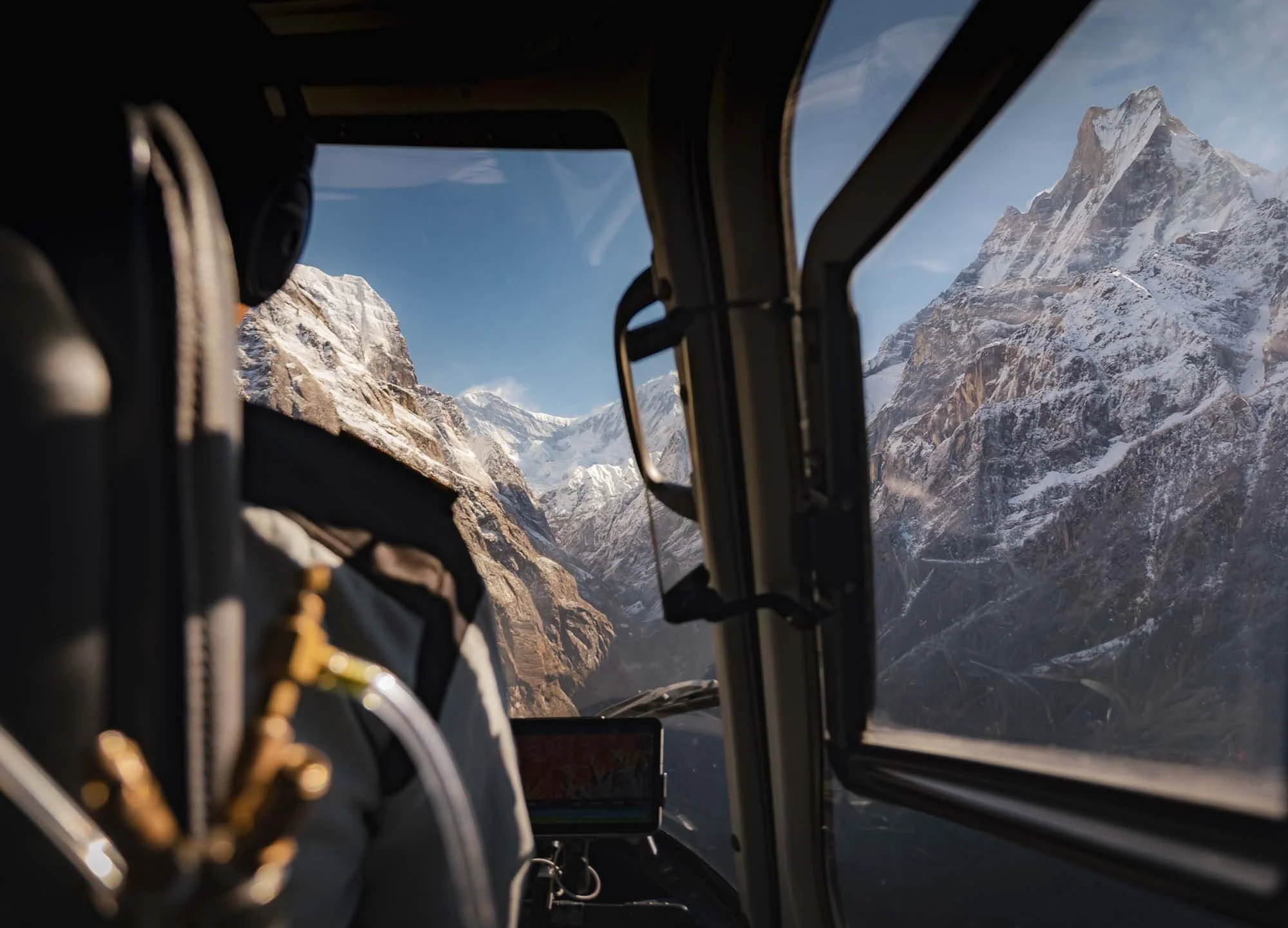
The flight was spectacular and it was obvious why heavy clouds would not allow them to fly: you’re literally sandwiched in between steep cliffs as the helicopter goes deeper into the valley that is home to Annapurna base camp at 4130m. No chance to navigate here without clear visibility.
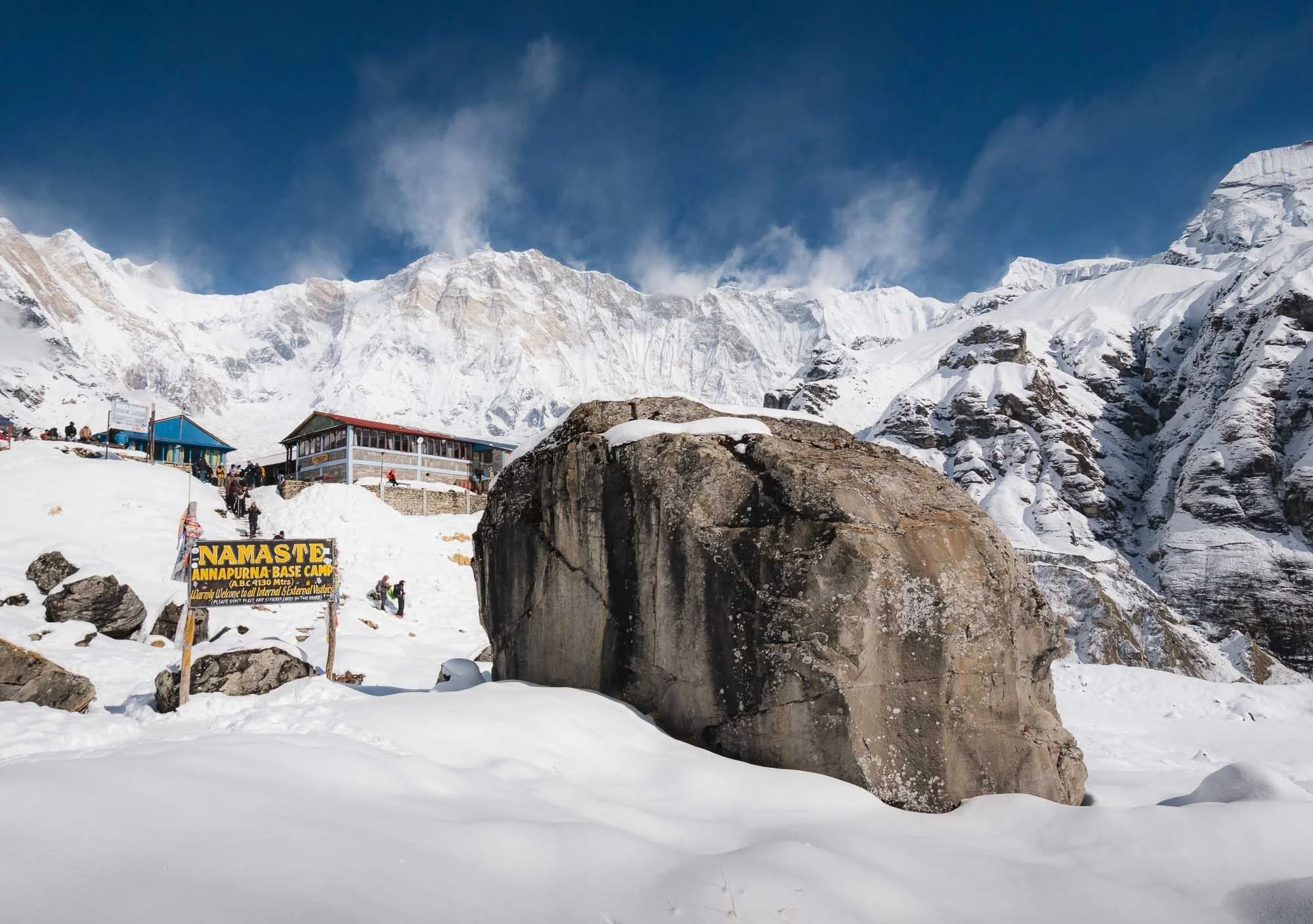
Once there, you’re surrounded by a near-continuous ring of Himalayan peaks rising above 7,000 and 8,000 metres - a 360-degree mountain amphitheater.
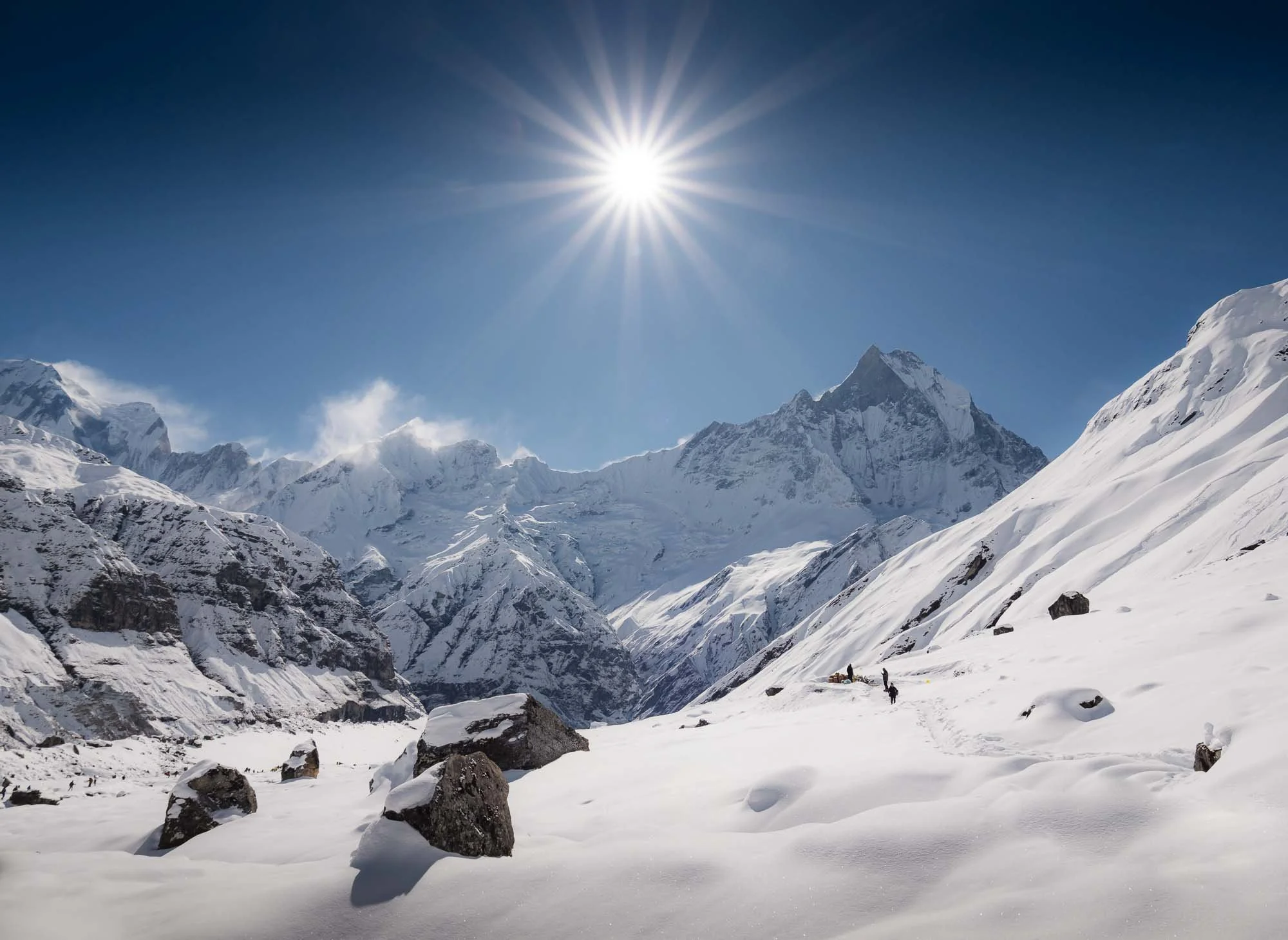
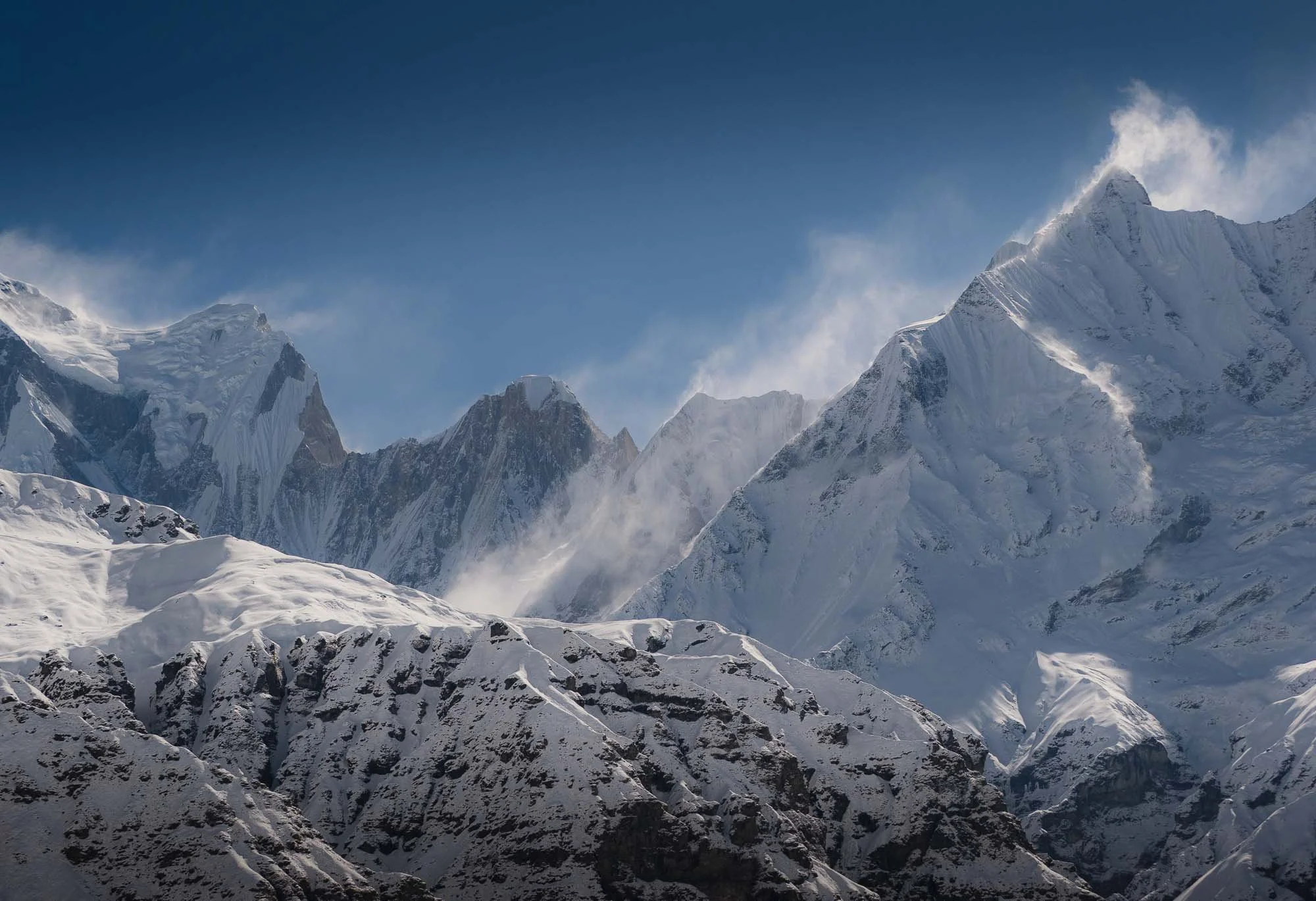
The infamous Machapuchare, also known as Fishtail Mountain, on the eastern side (the snow-less granite peak in the left image) is far from the tallest in the area but its summit has never been reached. It is considered sacred among Hindus for its association with Shiva, and after a British expedition stopped just below the top in 1957, Nepal permanently closed the mountain to climbers, leaving it one of the few major Himalayan peaks whose summit remains untouched.
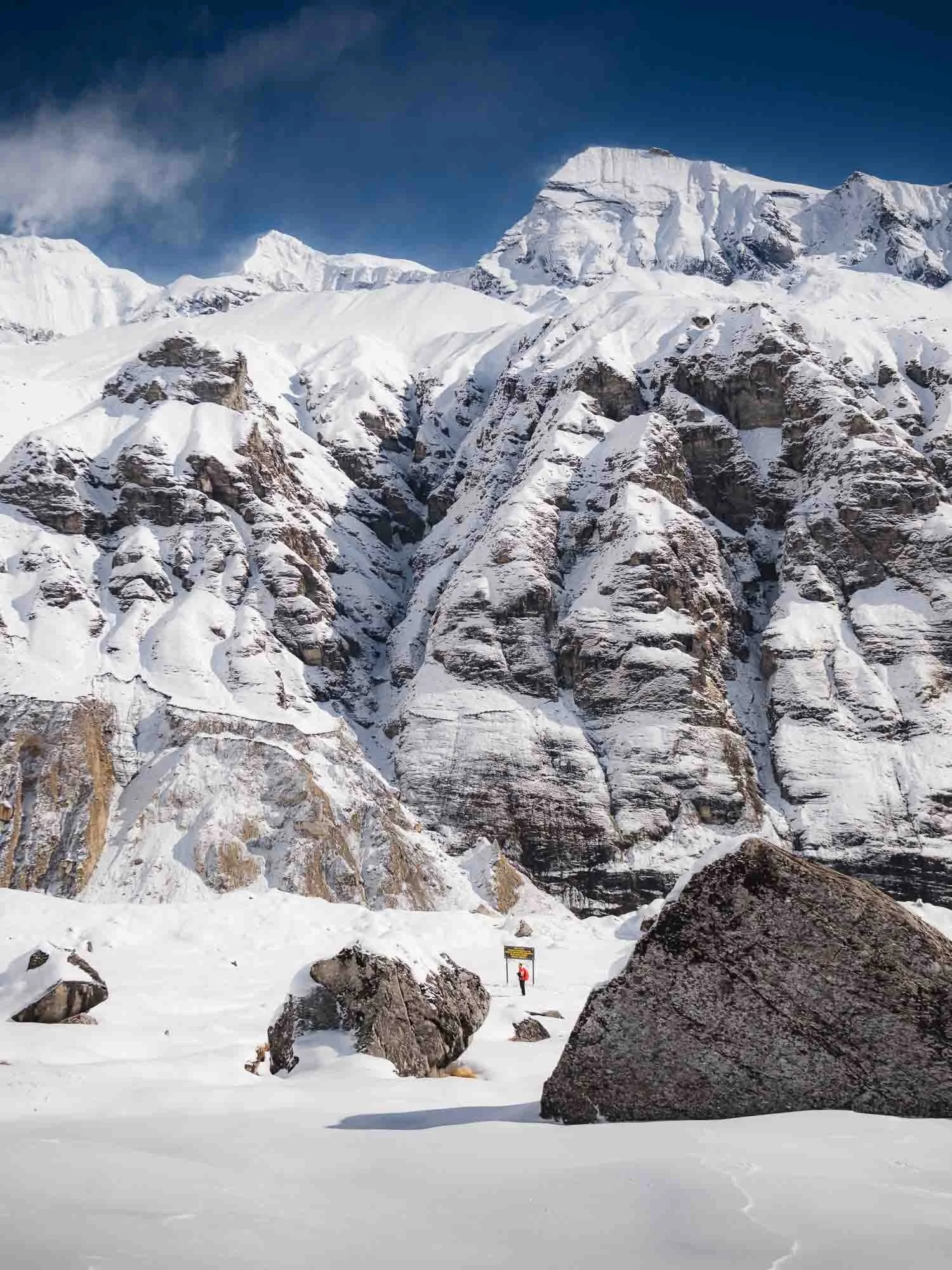
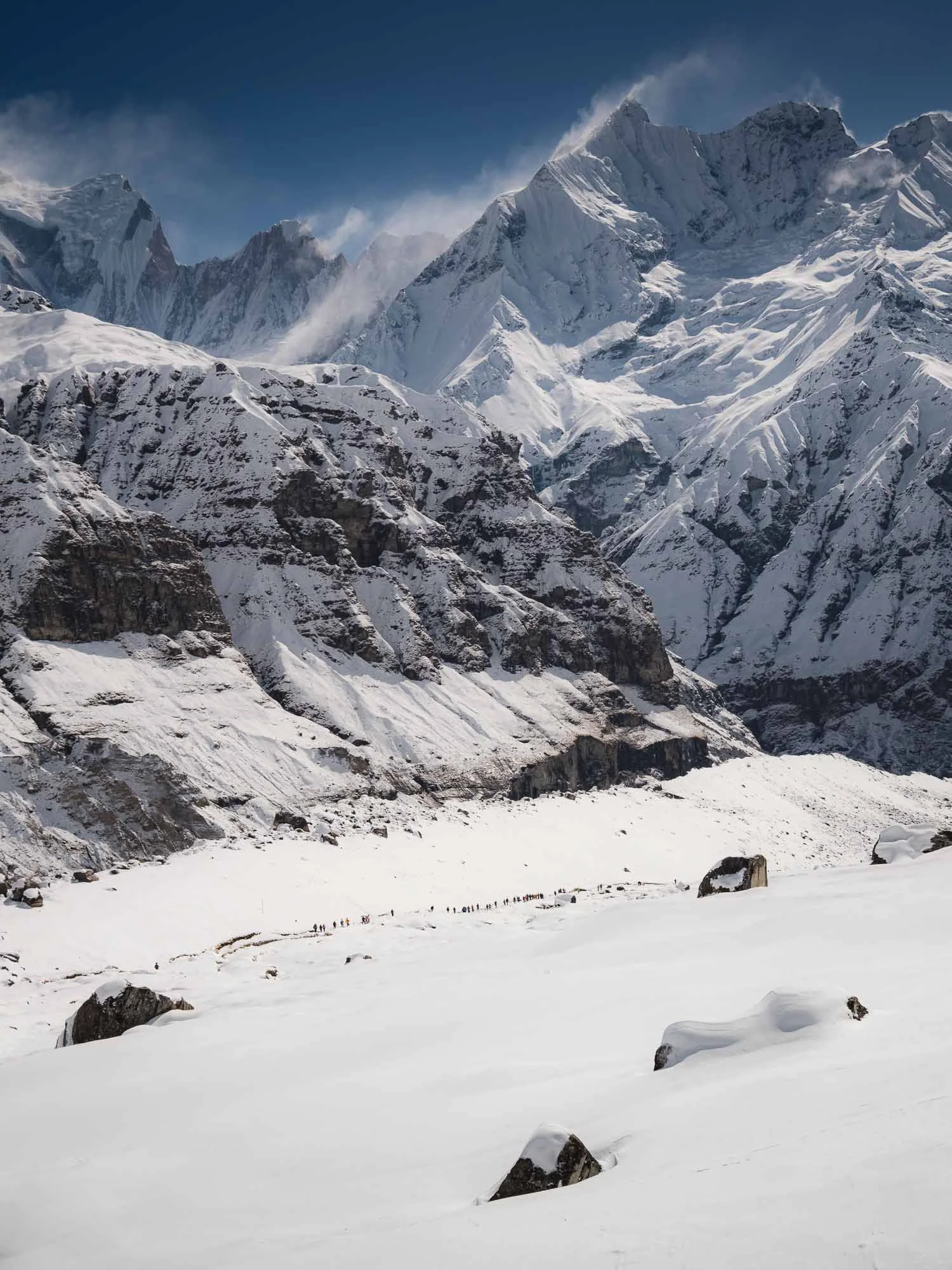
Other parts of the Annapurna sanctuary are more accessible though, with treks in and out lasting 1-2 weeks making it a popular hiking destinations - can you spot the humans in the photos above? While thousands of hikers frequent this route every year, the peaks are a whole different story: Its highest summit, Annapurna I (8,091 m), became the first 8,000-metre mountain ever climbed in 1950 and remains one of the world’s most challenging peaks - its companions Annapurna II to IV and South (not all visible from base camp) are not much easier.
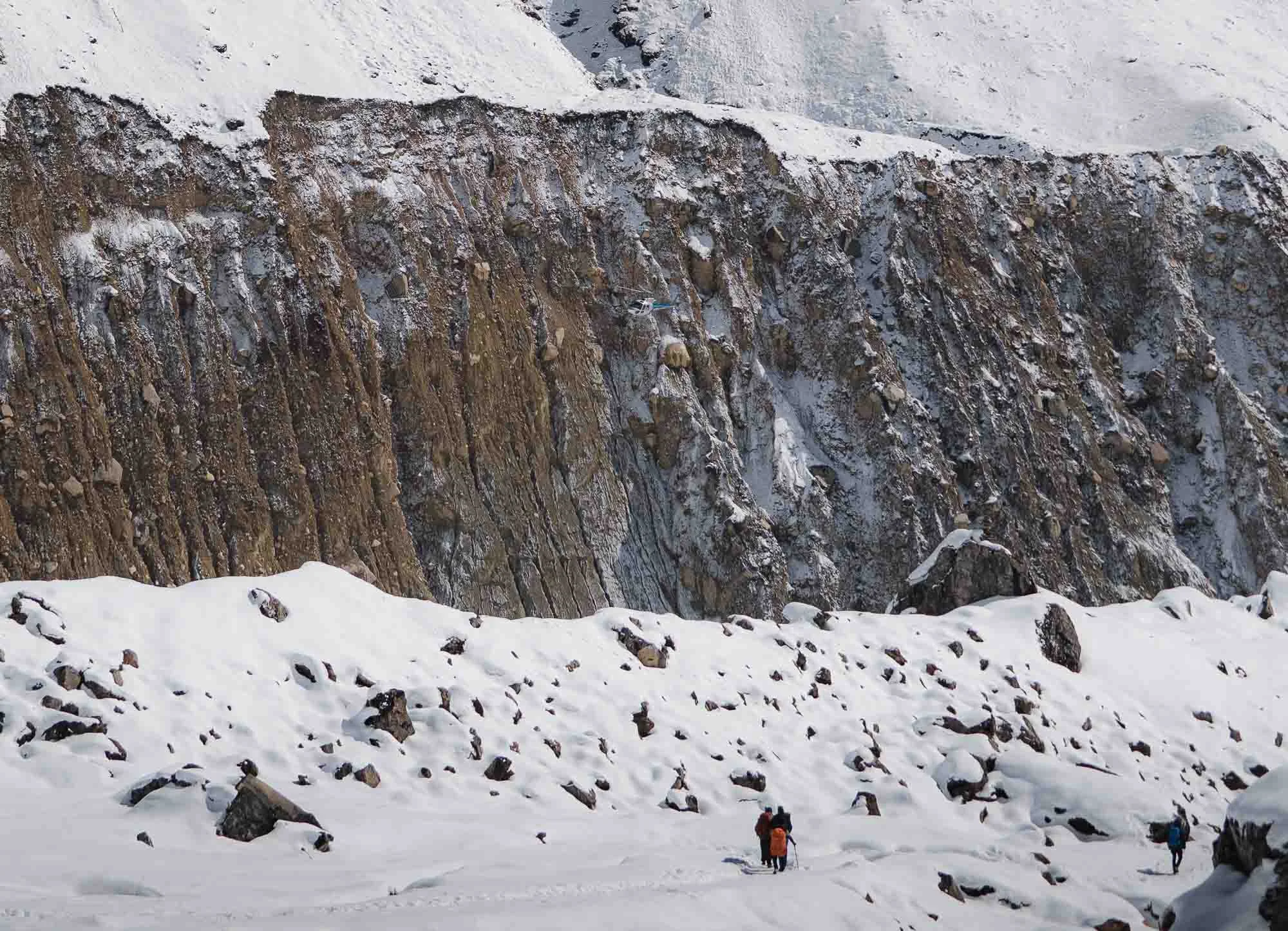
It’s difficult to convey the scale of these massifs, but one attempt is this image - can you make out the helicopter arriving in the distance? Zoom a little, or a little more…
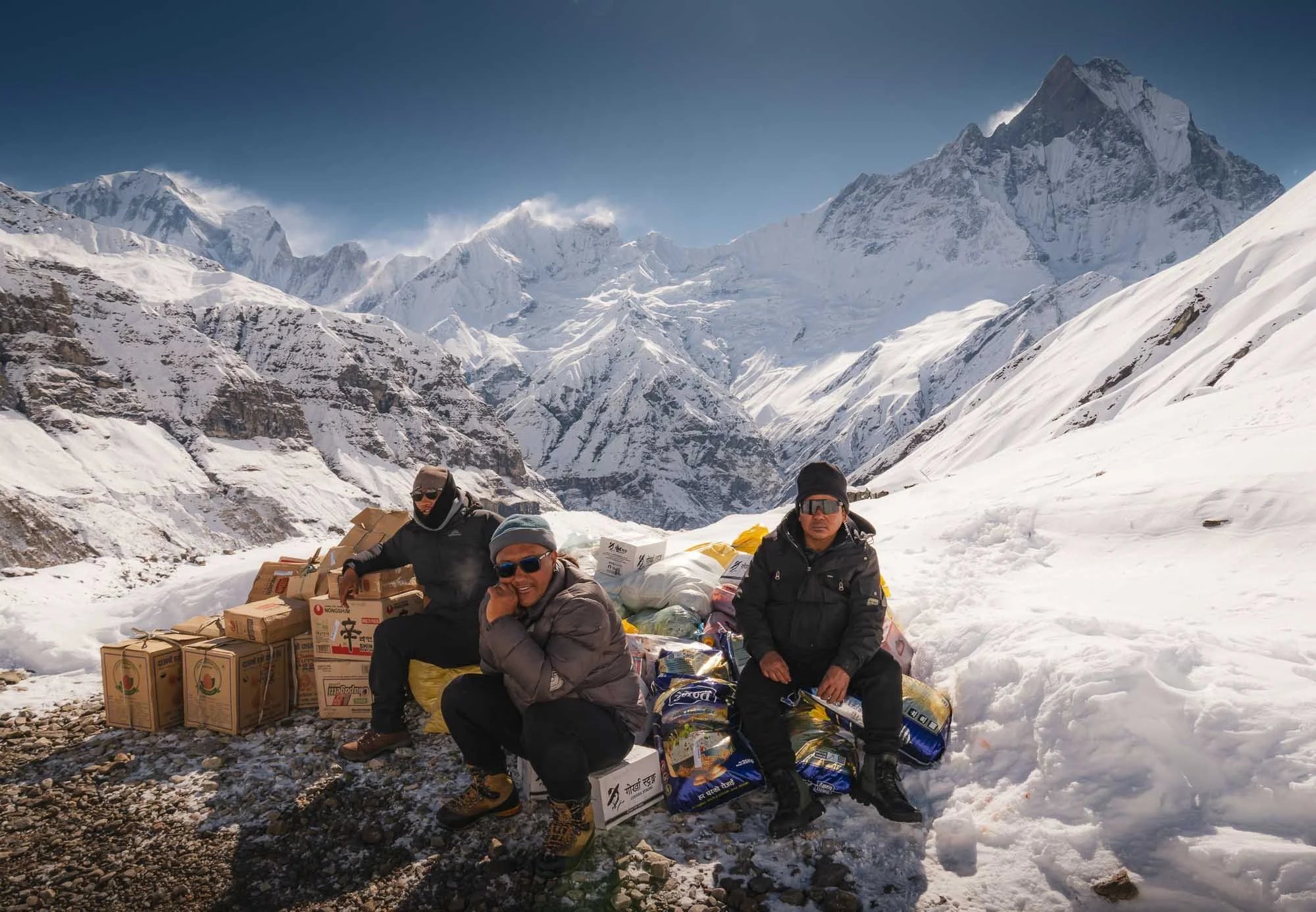
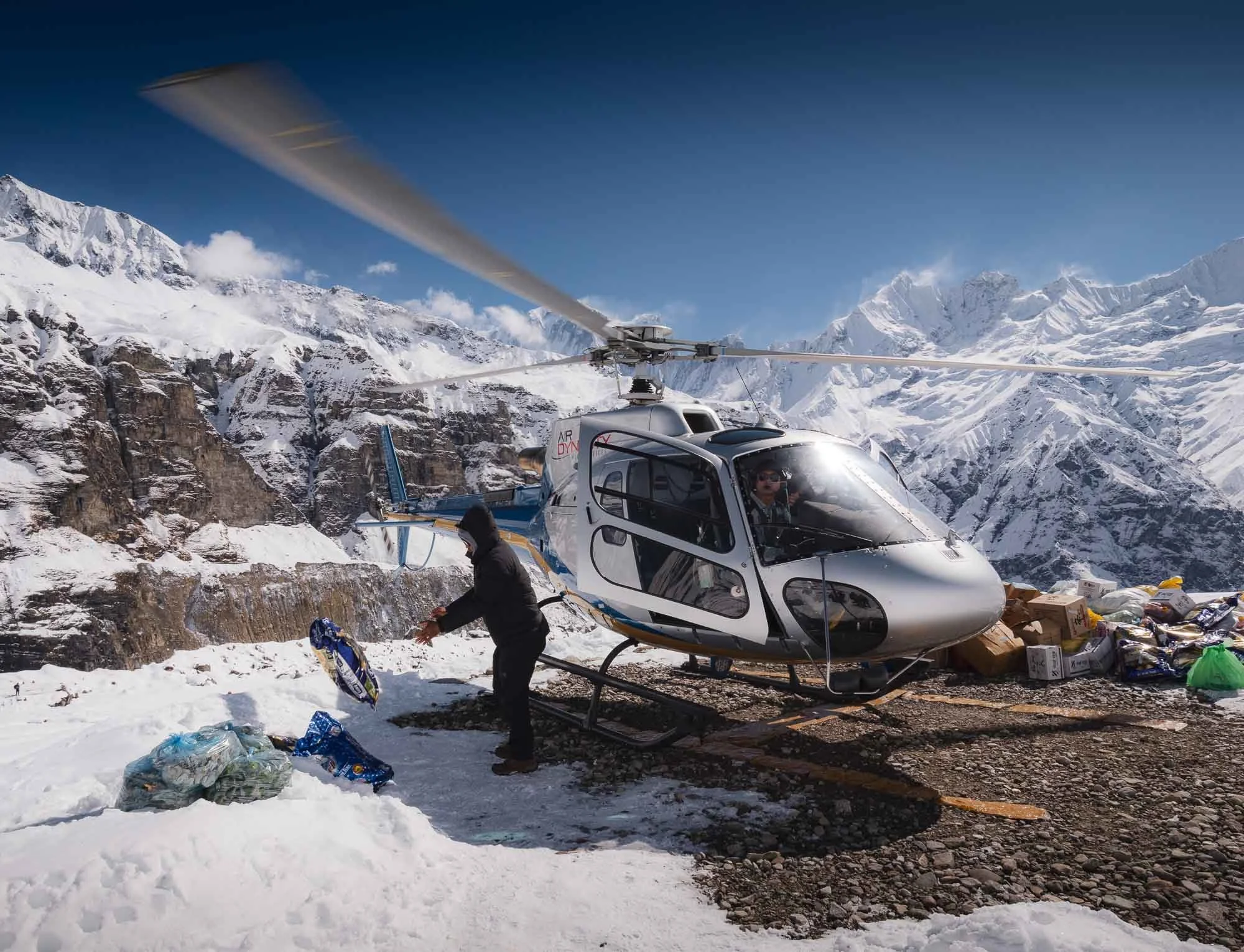
And so after a good hour of looking around - frankly, there is not that much to do other than admiring the views - the helicopter came back to pick me up again, dropping off some supplies for which some of the base camp team eagerly waited, and picking up trash and other items to bring back down.
And I was off to the main airport of the city again, and back to Kathmandu - but just for transit.
In Search of an Elusive Creature
After arriving back at Kathmandu’s domestic terminal in the afternoon, my guide Lhakpa picked me up and we continued straight on by car towards the north-east, taking a good 4h to cover what was a surprisingly short distance. The further you moved away from the capital, the worse the roads got, with regular washouts, less capable cars getting stuck, and the occasional cow and goat traffic. Or destination was the Langtang valley, a well-known trekking destination. Trekking wasn’t what I came for though.
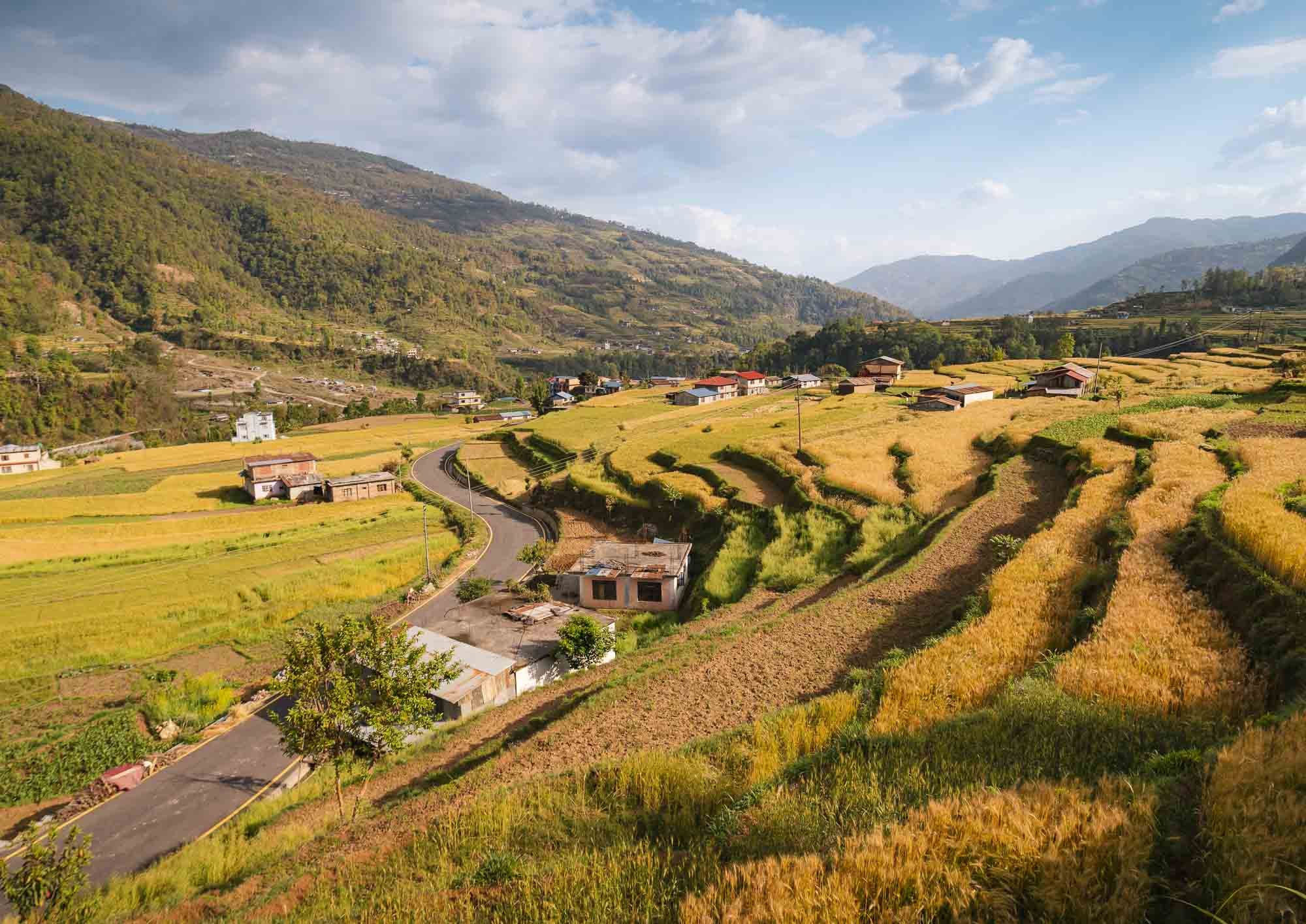
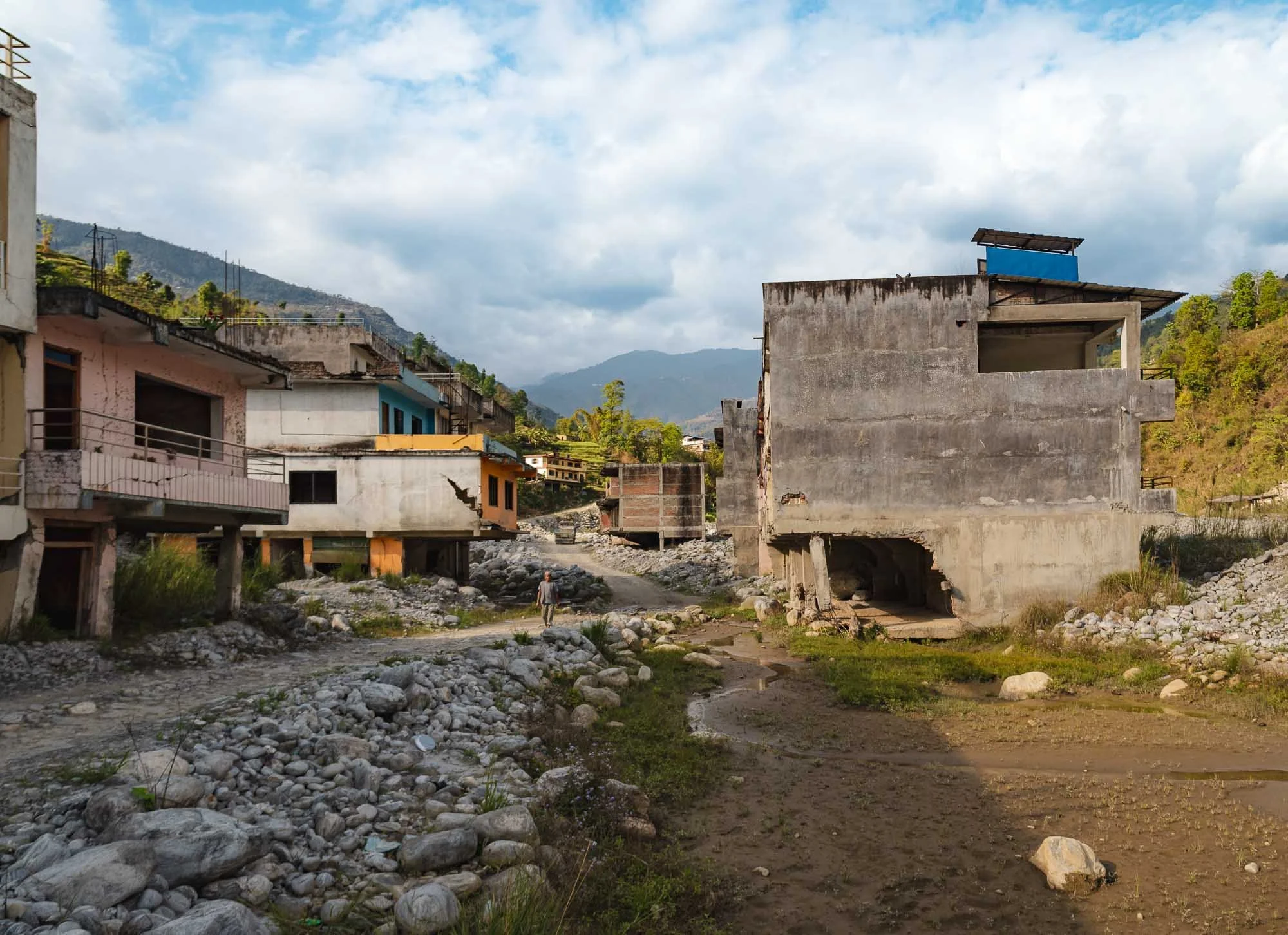
The drive through the valleys and hills was rather beautiful, with small villages and golden rice paddies lining the roads. But it also brought to light some of the destruction of the 2015 earthquake, and several floods that followed since. Many settlements that had been heavily damaged during the earthquake were reconstructed - this time with concrete structures - but as Lhakpa told me people were unwilling to use the opportunity to move away from the river fronts that are prone to flooding, resulting in further catastrophic consequences over the last decade and ultimately many abandoned houses, rendered uninhabitable by mud, rocks, and water.
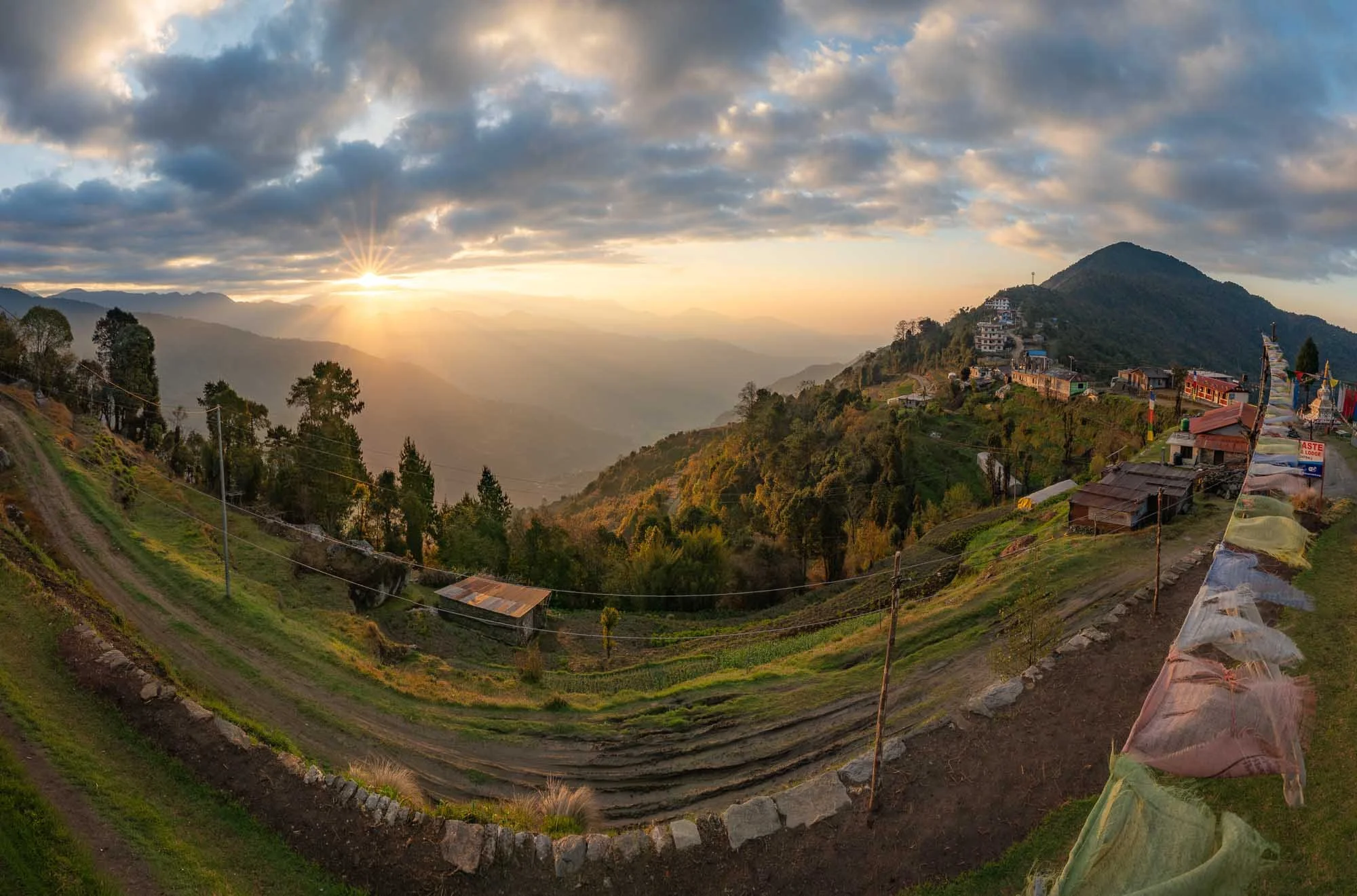
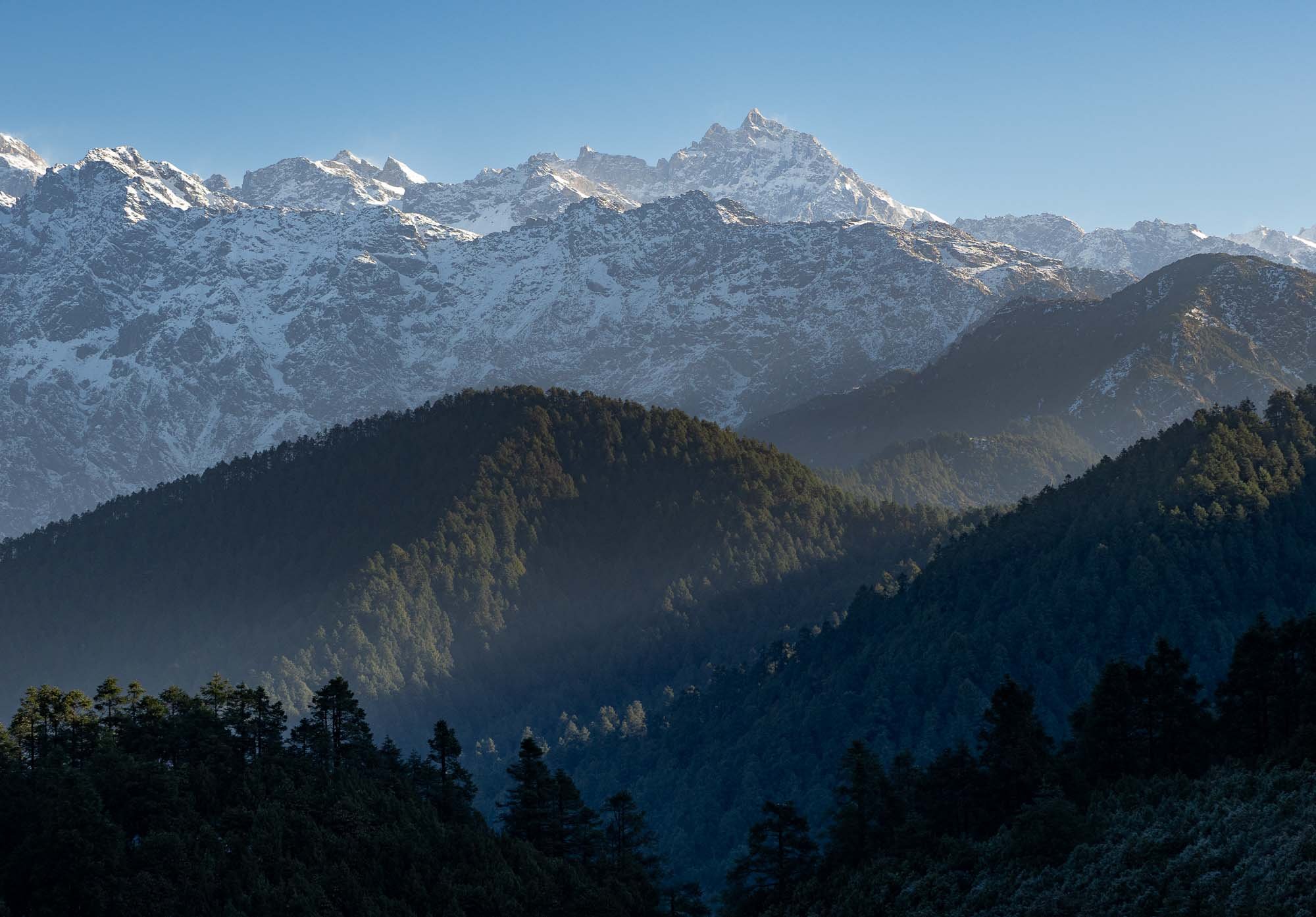
We arrived at our destination, the small mountain village of Kutumsang at around 2500m altitude just around sunset time - although this image is from the beautiful sunrise of the next morning.
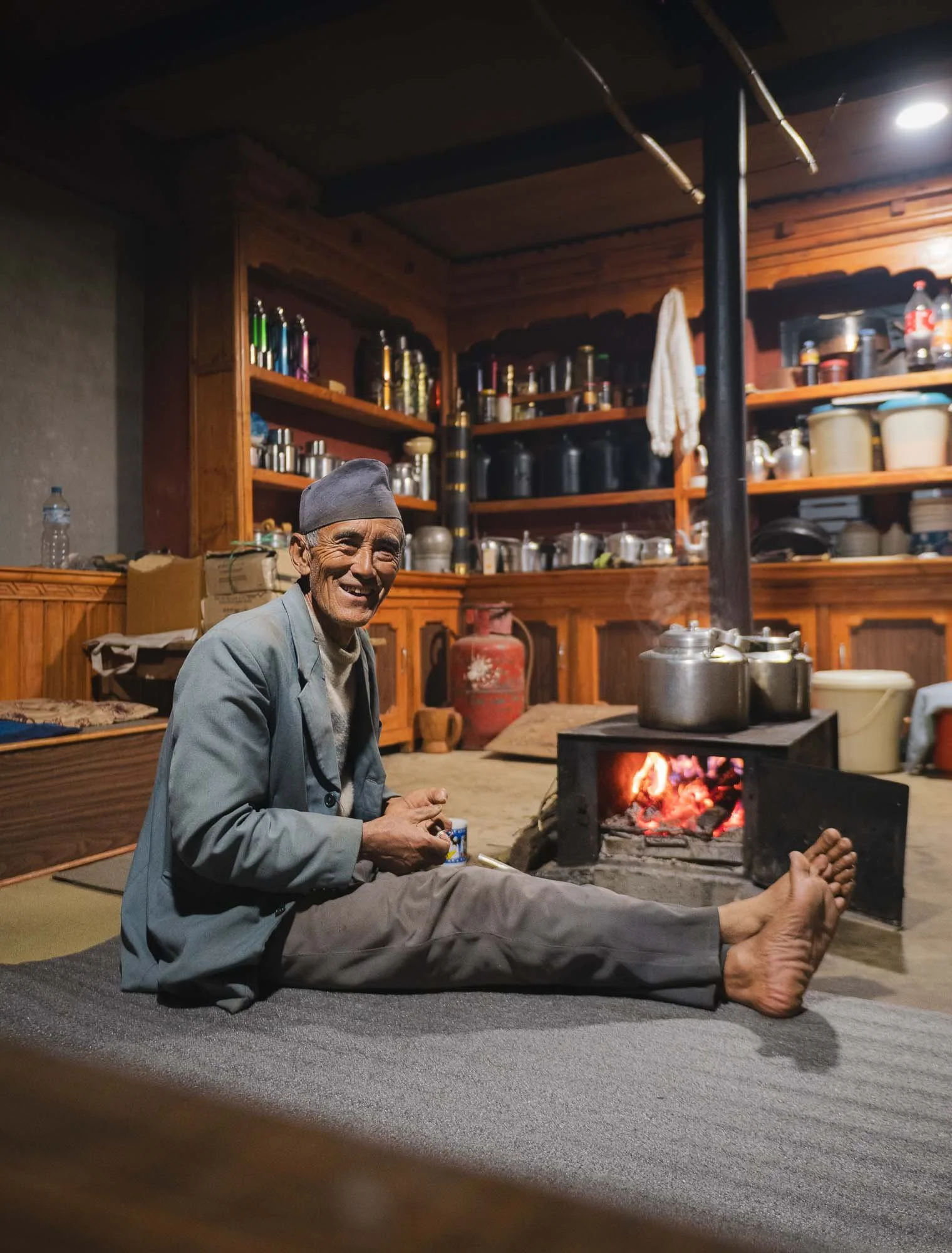
It was quiet. Not many trekkers were around - although it was not a bad time of the year, it had been unusually snowy in the region, and the disruption in the Middle East also caused several people to cancel, from what the owning couple of the tea house told us as we set around the fire place and had dinner. Lakhpa entertained us with a rendition of “Shalala Lala” by the Vengaboys on a very old traditional instrument (not a sentence I was expecting to write in this blog), and we were off to bed - early start tomorrow.
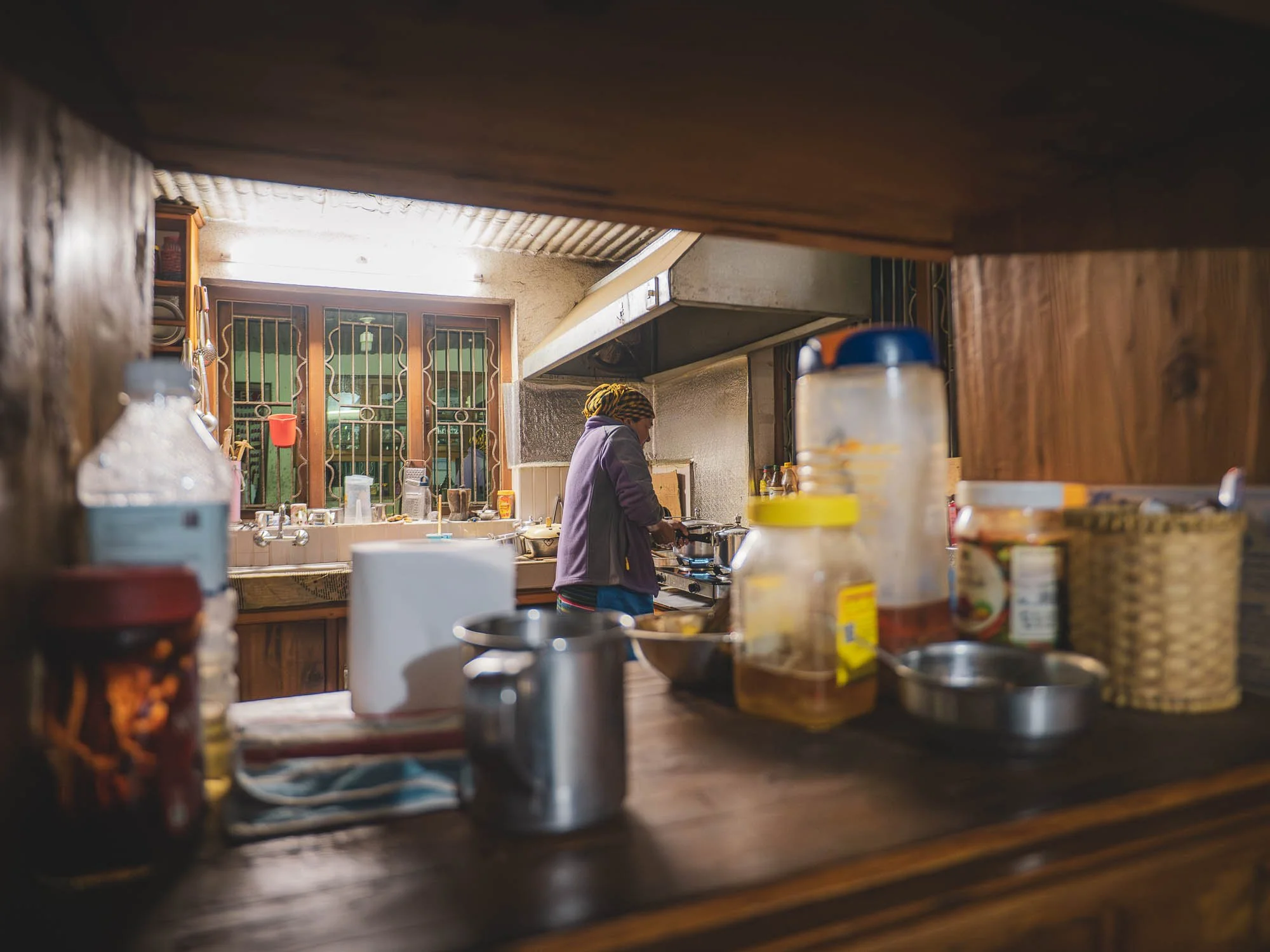
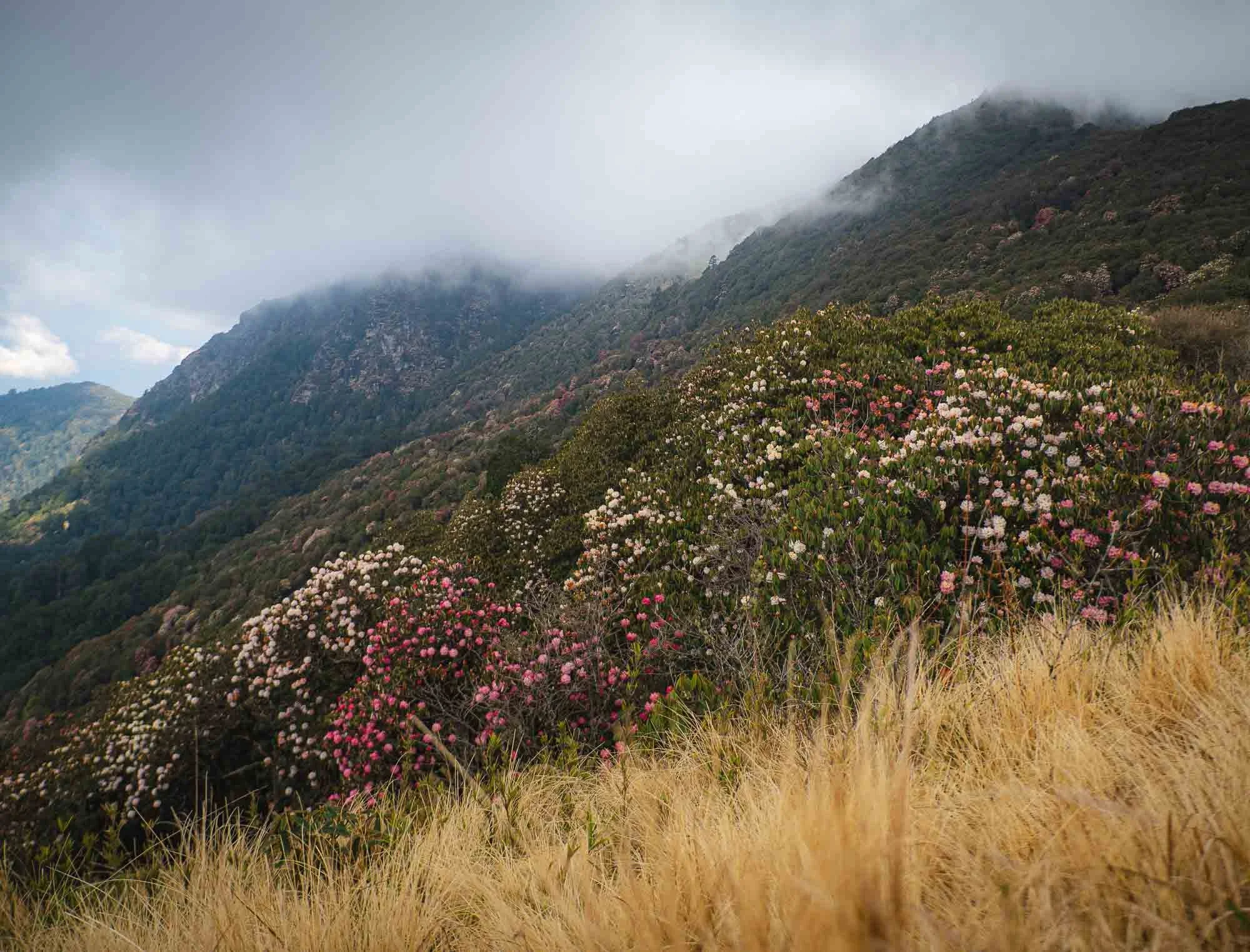
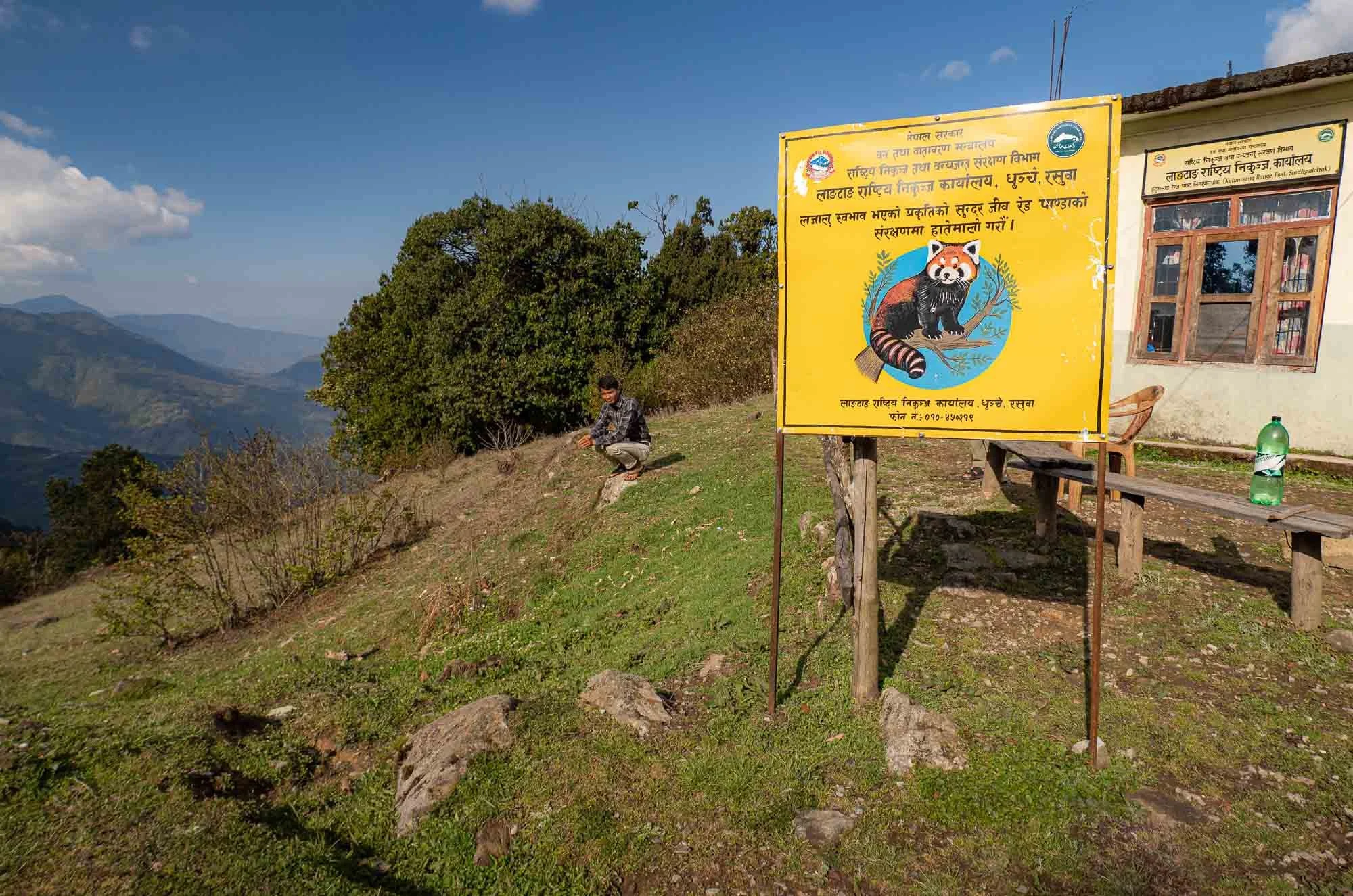
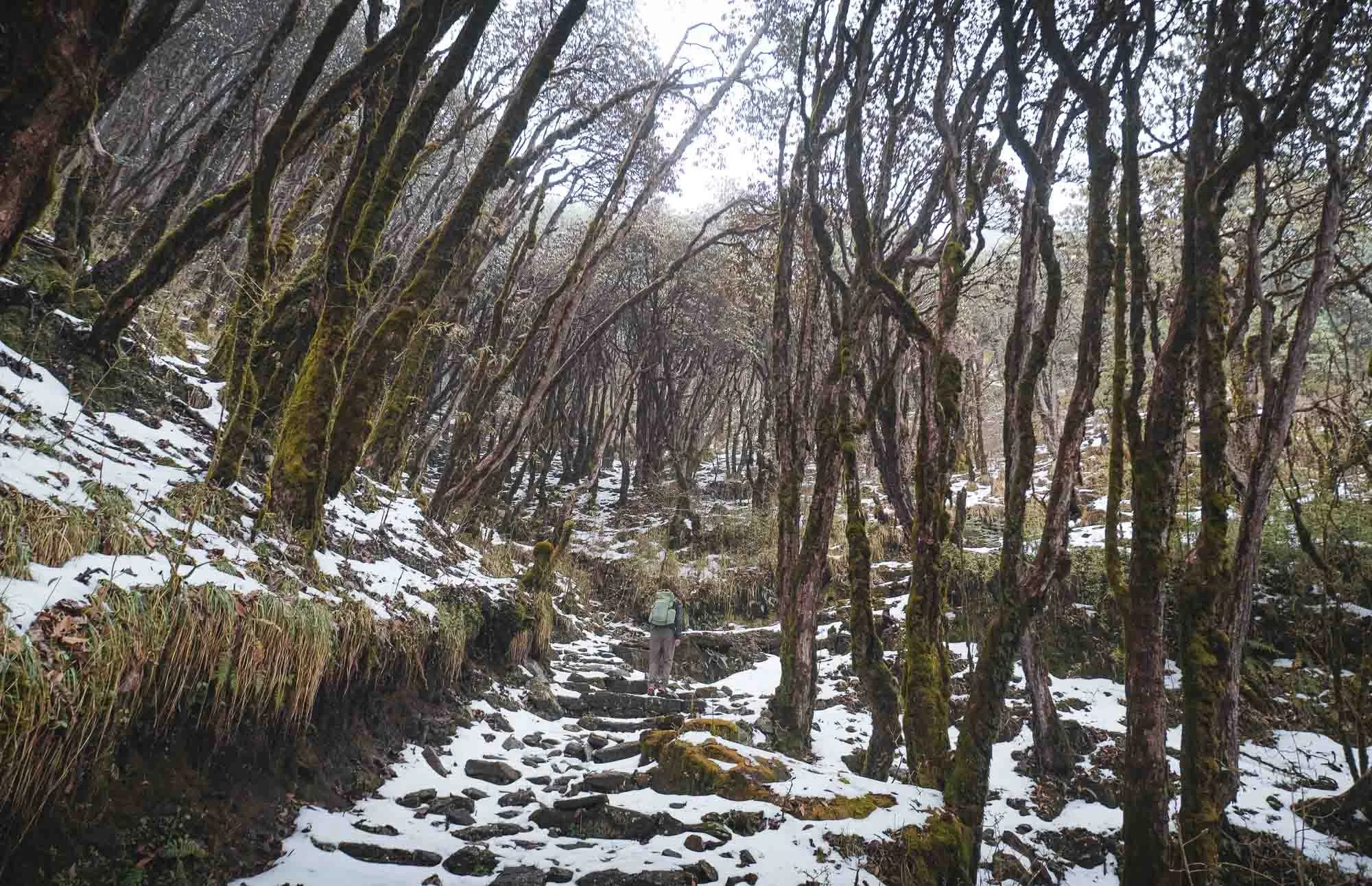
We had a three hour hike ahead, making our way into the Langtang National Park, and passing the beautiful Rhododendron forests in bloom on the way. As we registered at the national park office, the official sign will give you the reason why I made it all the way here: to find a red panda, an endangered small mammal that is native to the Himalayas.
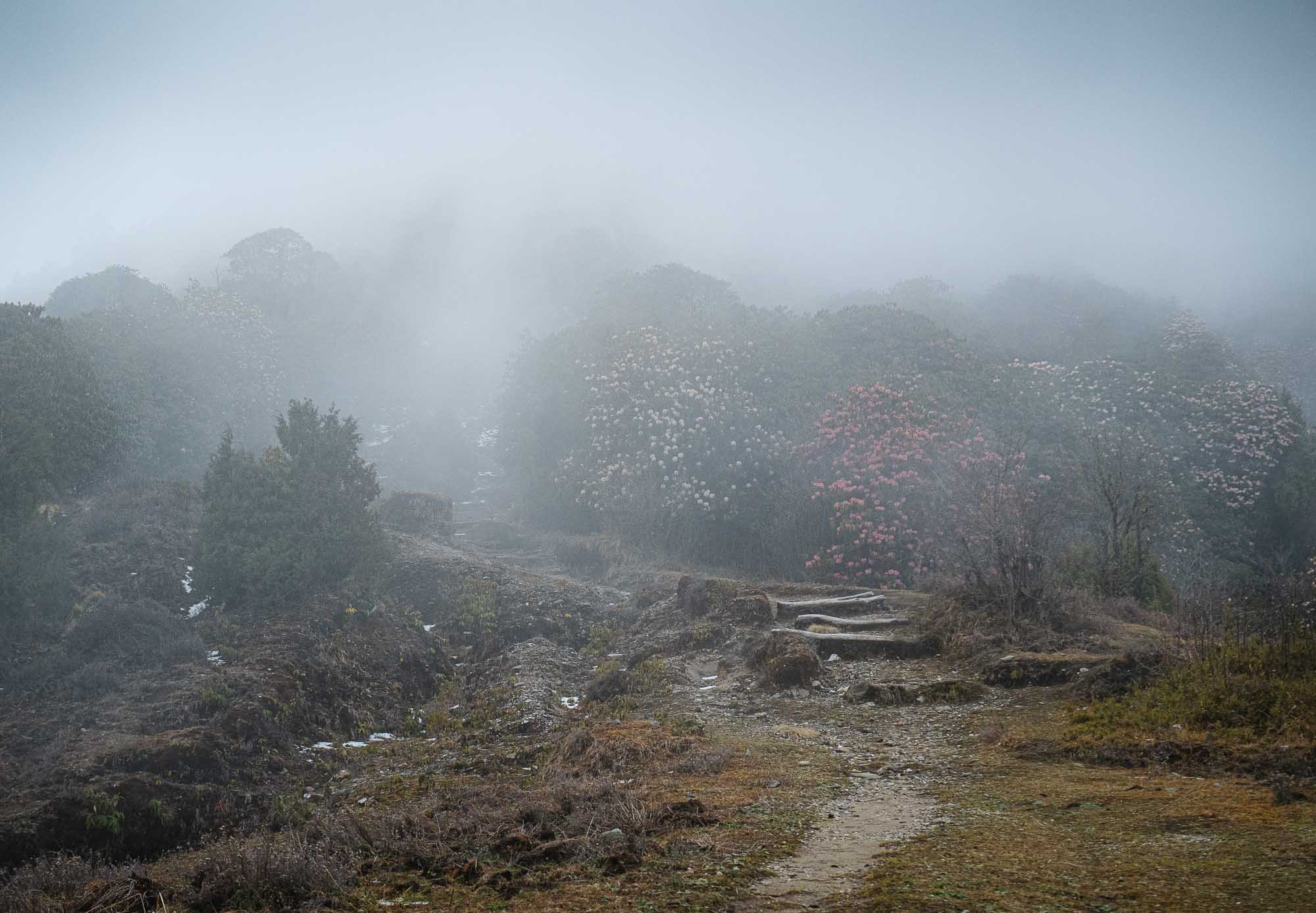
As we have ascended higher the forest slowly disappeared into the clouds, engulfing us in chilly mist, until we reached the snow-covered peaks of the mountain range, approaching our tea house in Mangin Goth at almost 3500m altitude.
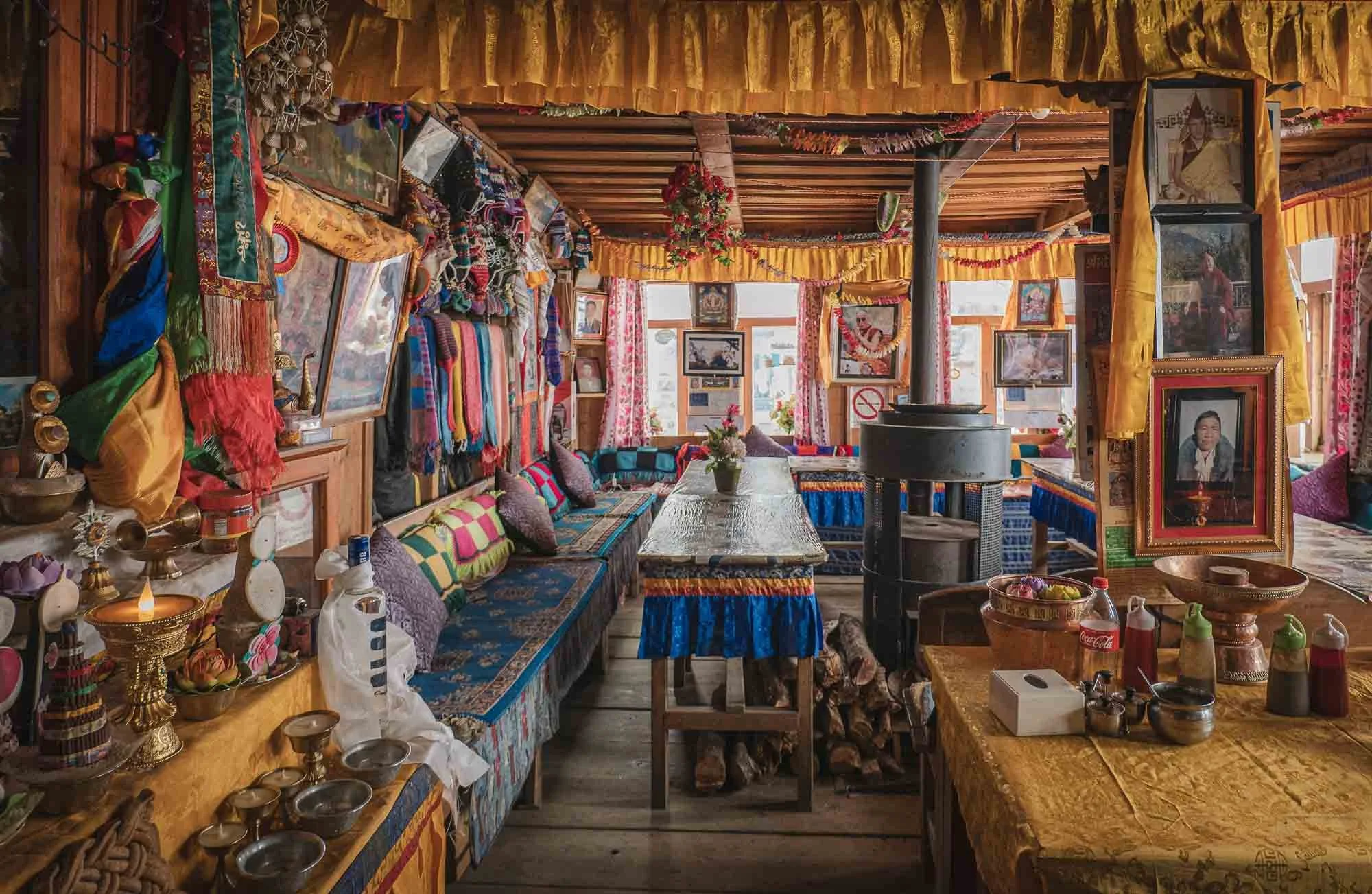
The tea house would be home for the next few days, although we were not planning to spend a lot of time inside.
The goal was to go out every morning and afternoon for several hours to find the elusive red panda. For that, we had to venture off the beaten paths and into the forest.
That's not to say it wasn't a cozy tea house. The owners were amazingly kind and even joined in on our search at times.
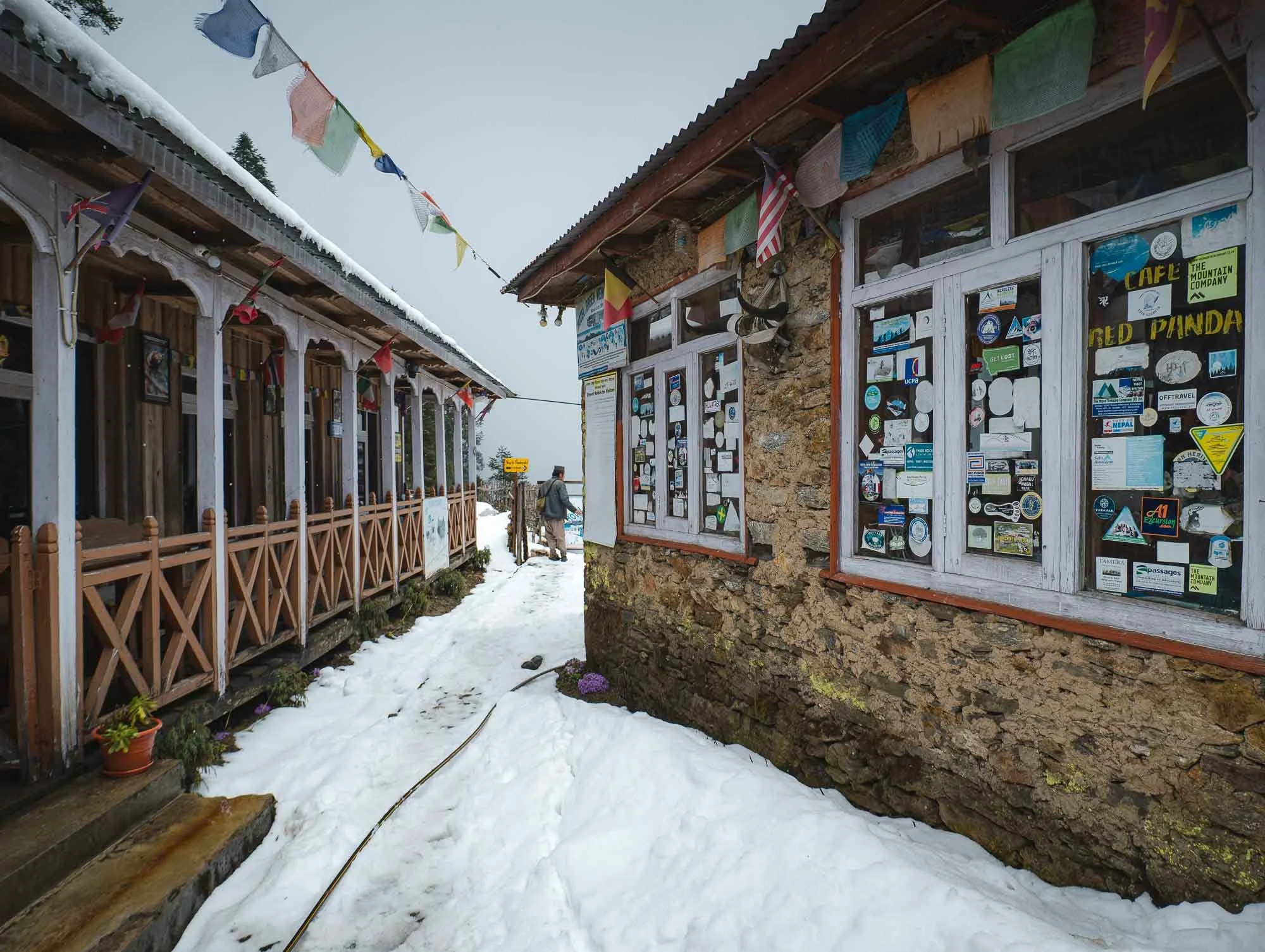
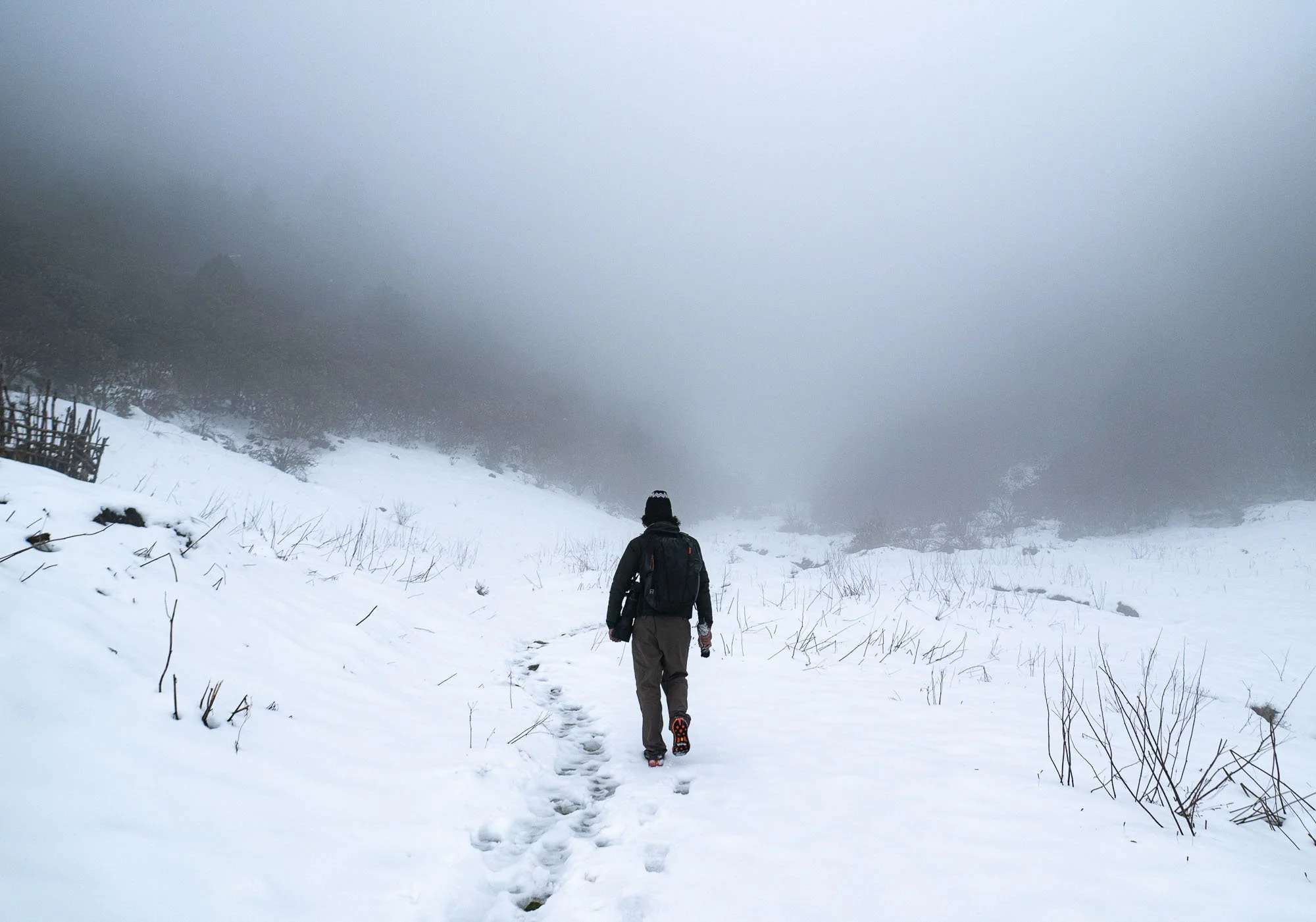
The weather however was less kind - snowy forest floors and clouds made the search challenging, both because it meant every step along the steep slopes was slippery and your shoes were soaking wet after half an hour in deep snow, but also because Lhakpa had predicted that our best chances to spot a panda would be when they are sunbathing in a high tree branch - not exactly promising conditions for that.
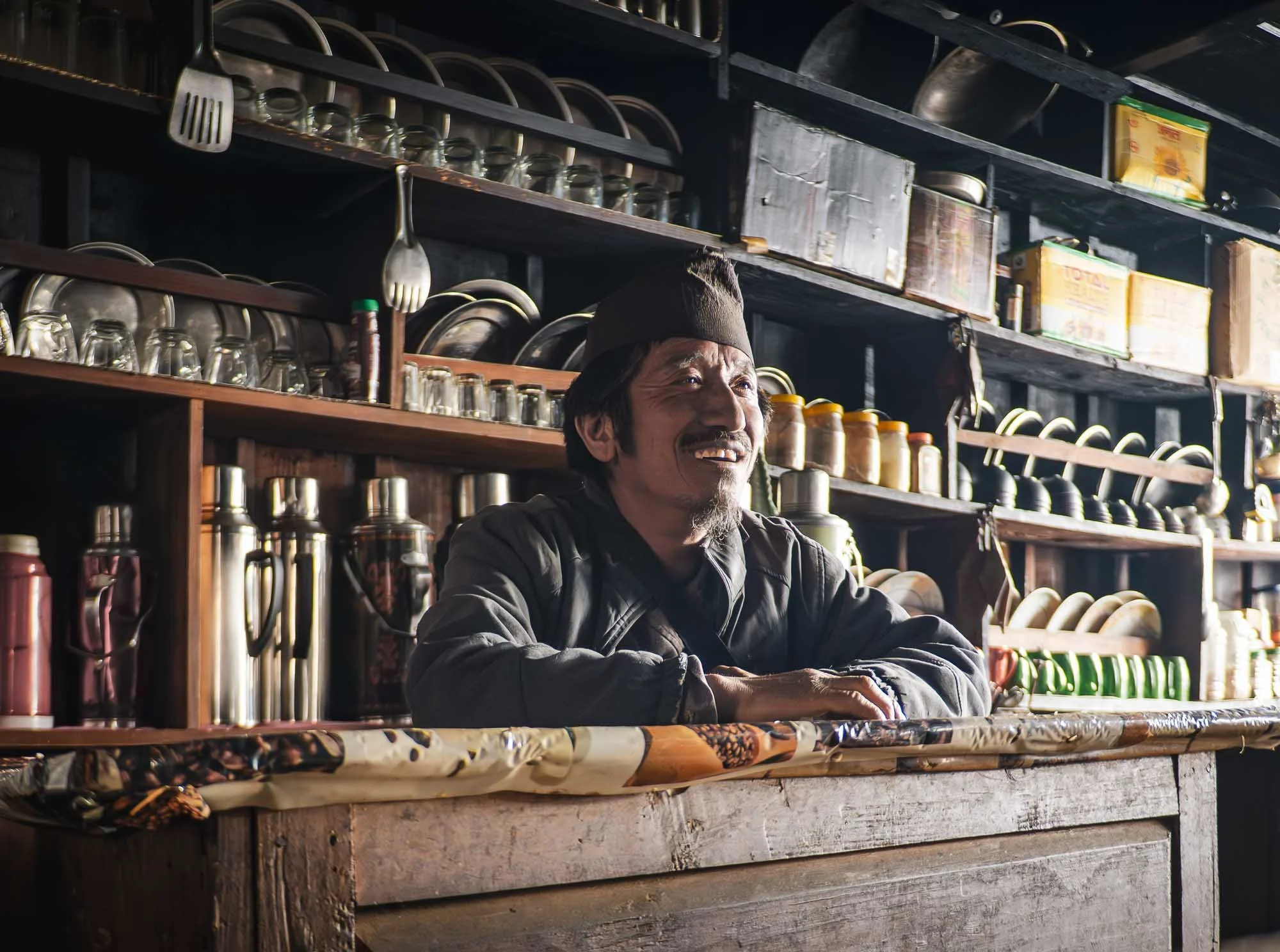
But we had another ace up our sleeves: Karsang, Lhakpa’s uncle (or as I rightly suspected, some kind of distant relative from the village that he called uncle). He has been living in these forests his whole life, and by that I mean not just that he is from a local village, but that he practiced pastoralism, moving his cows and yaks (or their hybrids) through the lands, building small temporary animal pens and a hut to stay in over night for months at a time.
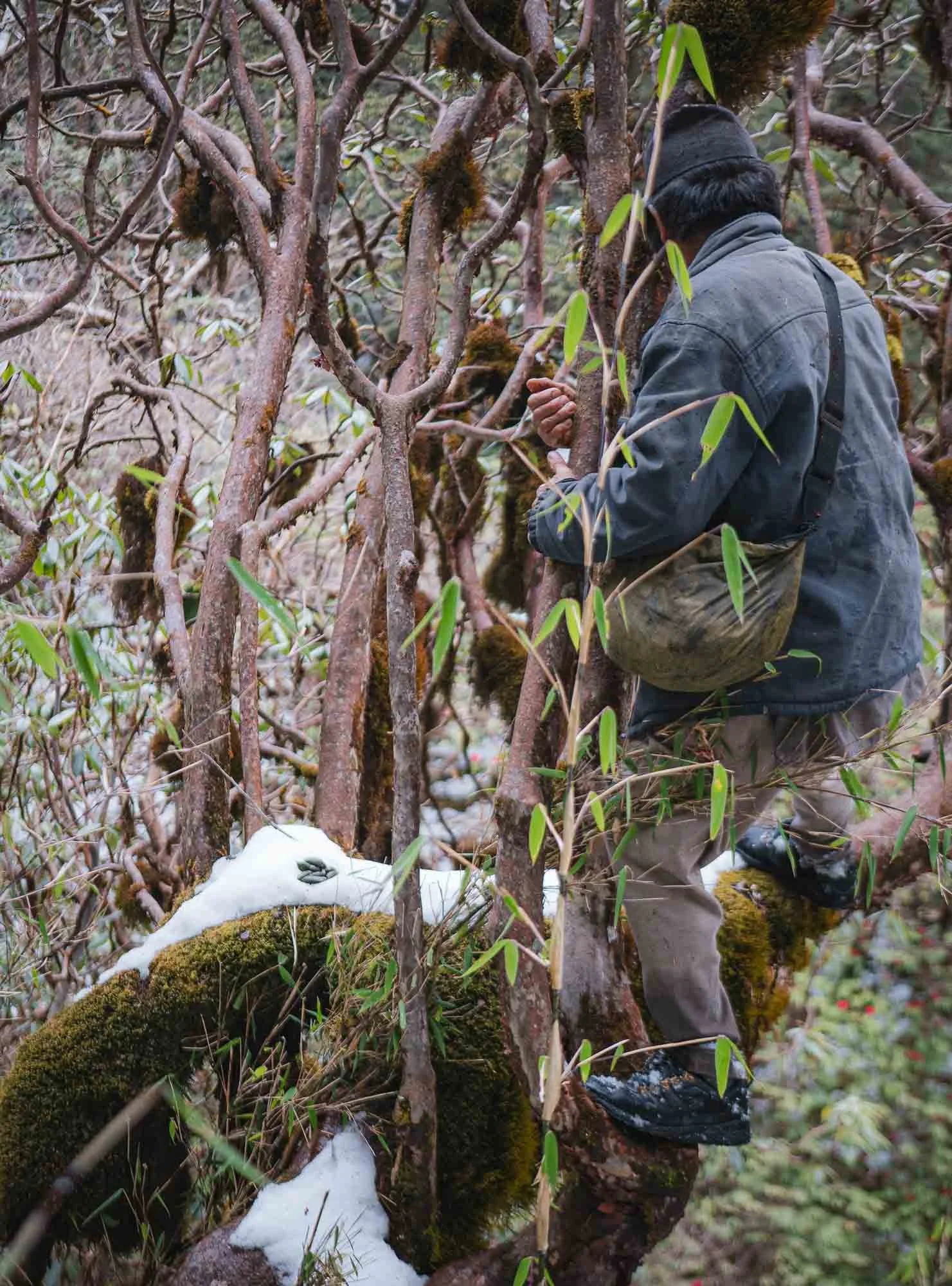
His experience and ability to explore this terrain would come in handy - while I stumbled through the thick vegetation and slid around on the snow-covered forest floor, he was graceful and quick up and down the slopes - and up the trees, if needed.
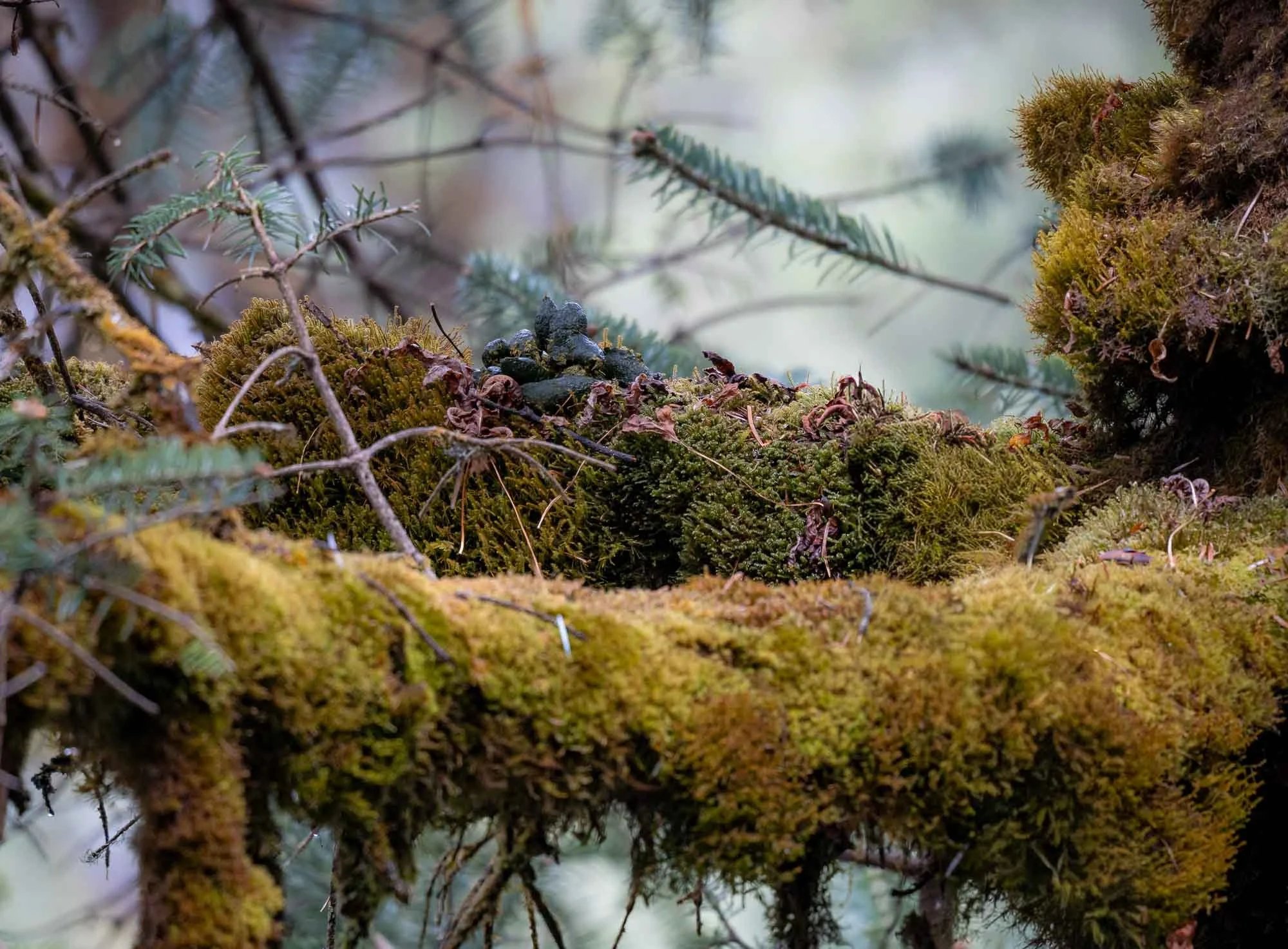
One way to ascertain the presence of these little creatures is looking for what they leave behind, such as the little black excrements here on a thick branch, which may have made for a comfortable red panda bed for the night. Unfortunately, this bed was empty. Well, almost.
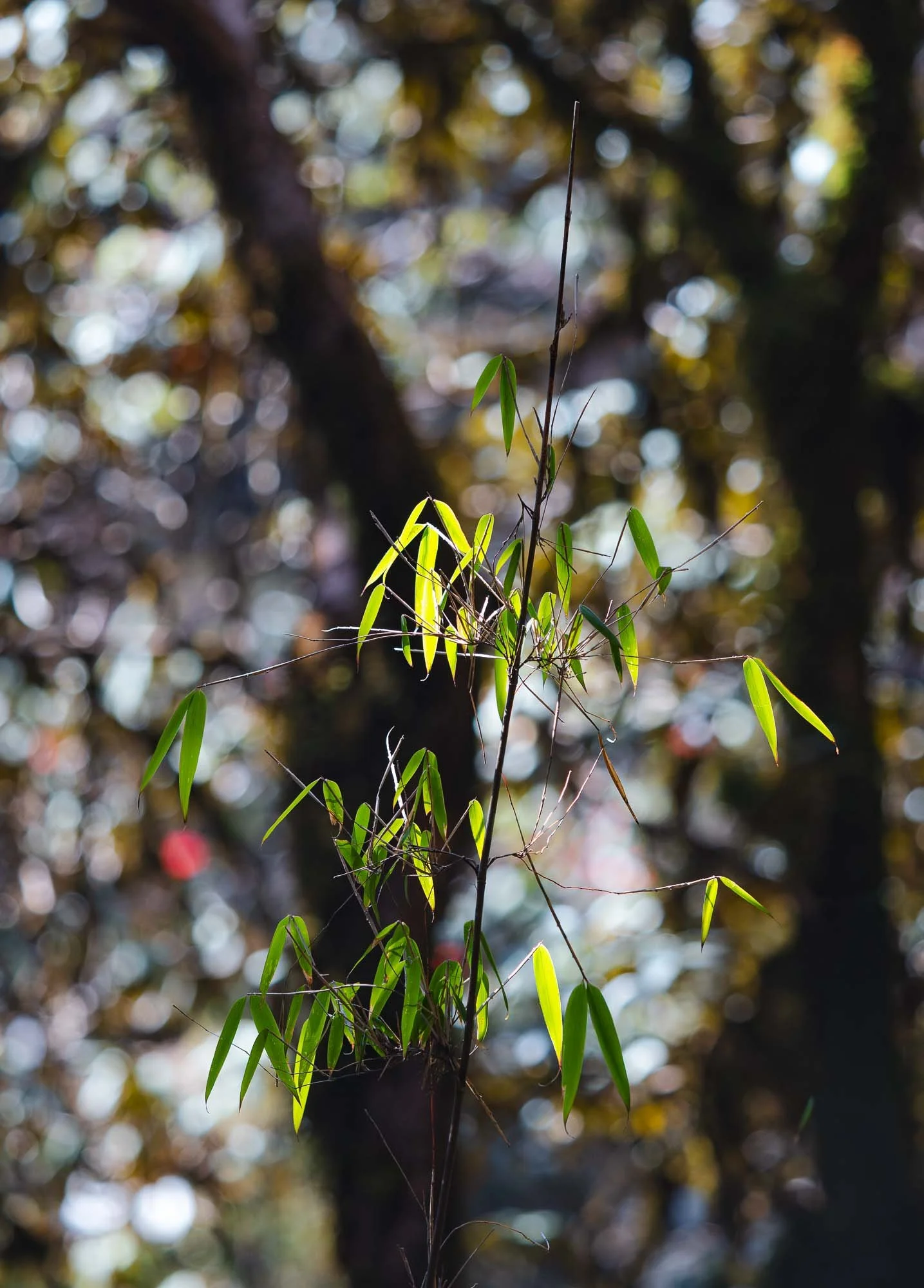
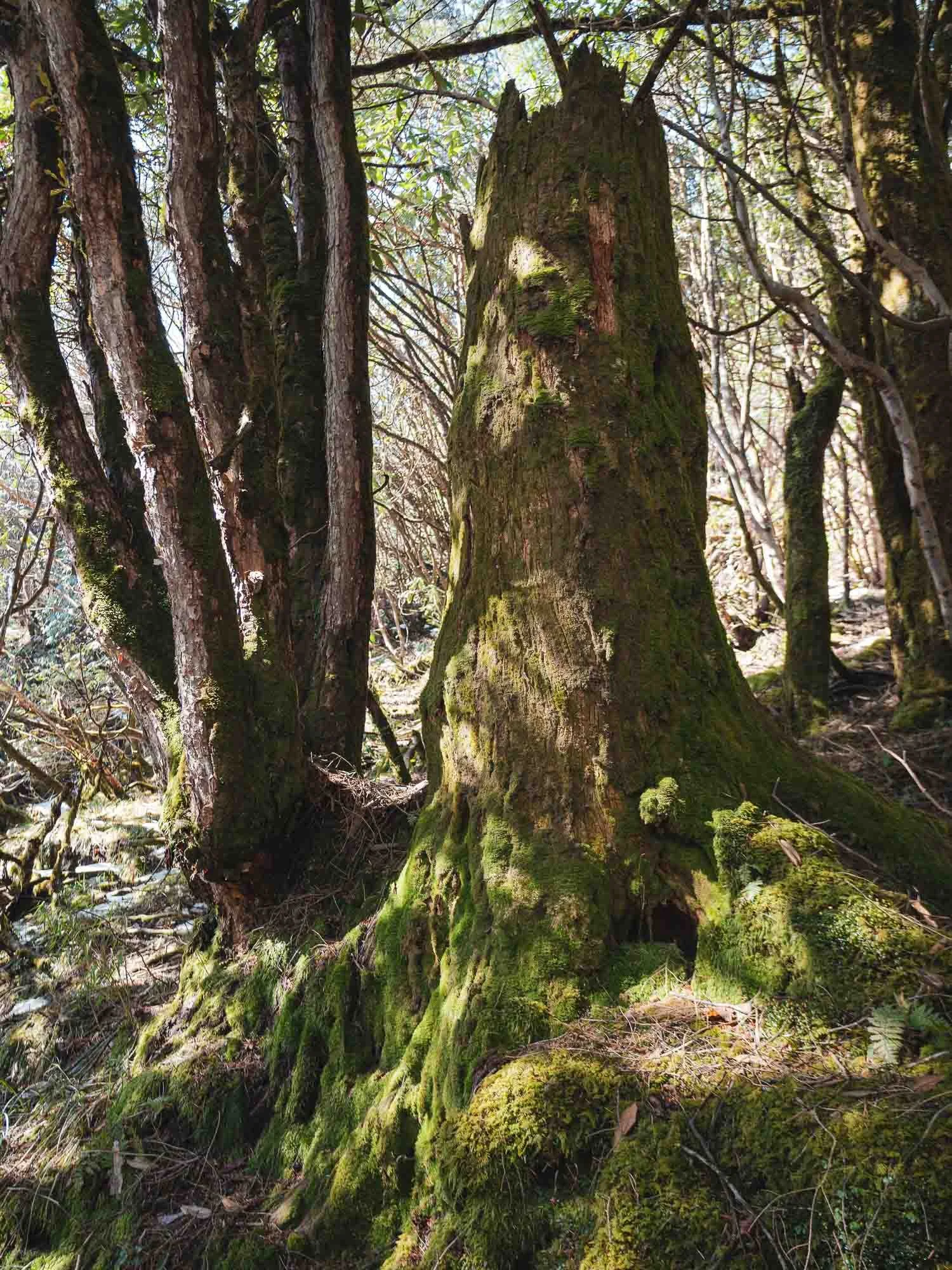
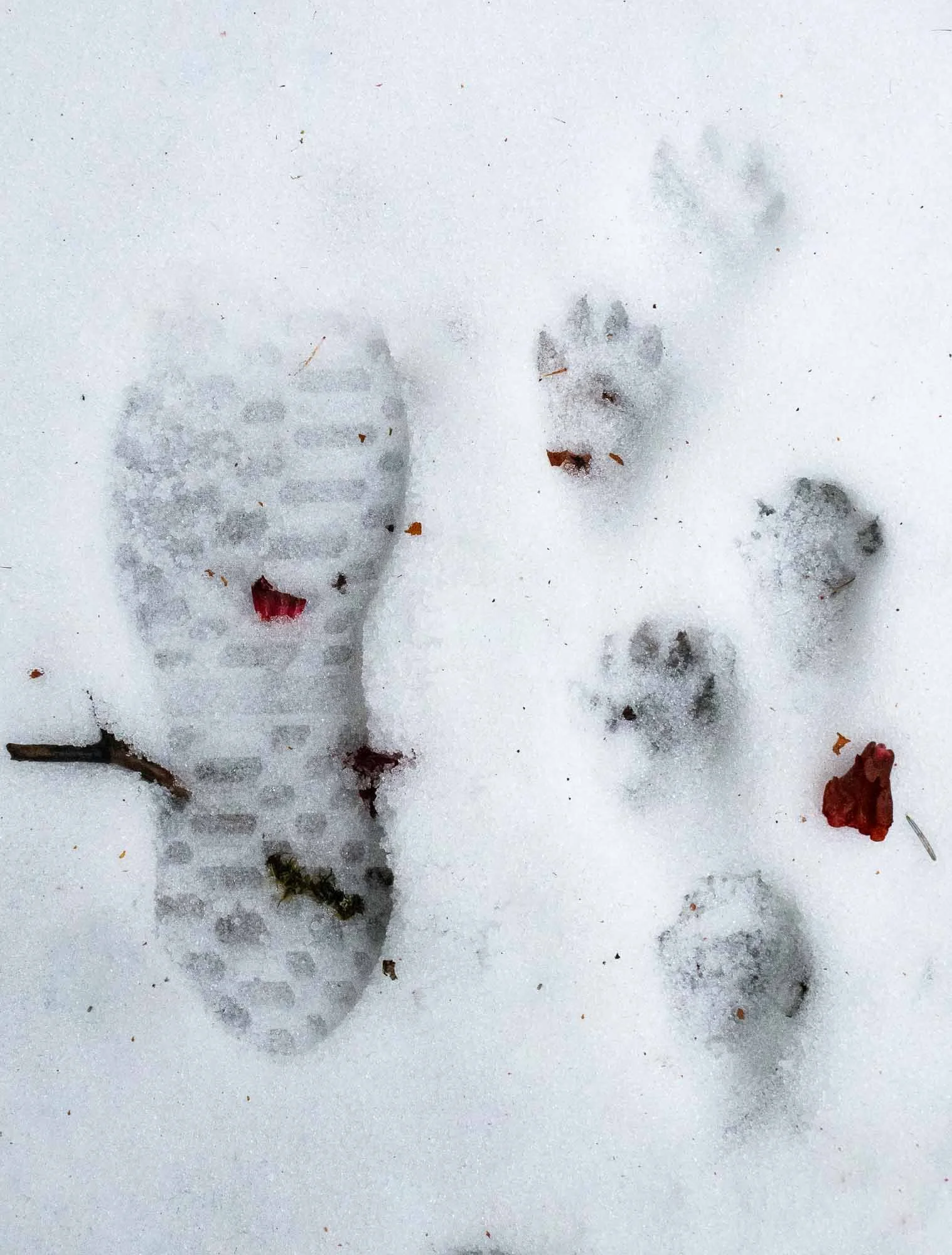
Just like with our tiger search, the evidence for the red panda’s presence was all around - from the bamboo shoots they prefer to eat, the hollow tree trunks the females often use to build their nests, the little piles of poo in the trees, and their prints on the snowy floors, shown here in comparison to my own footprint for size.
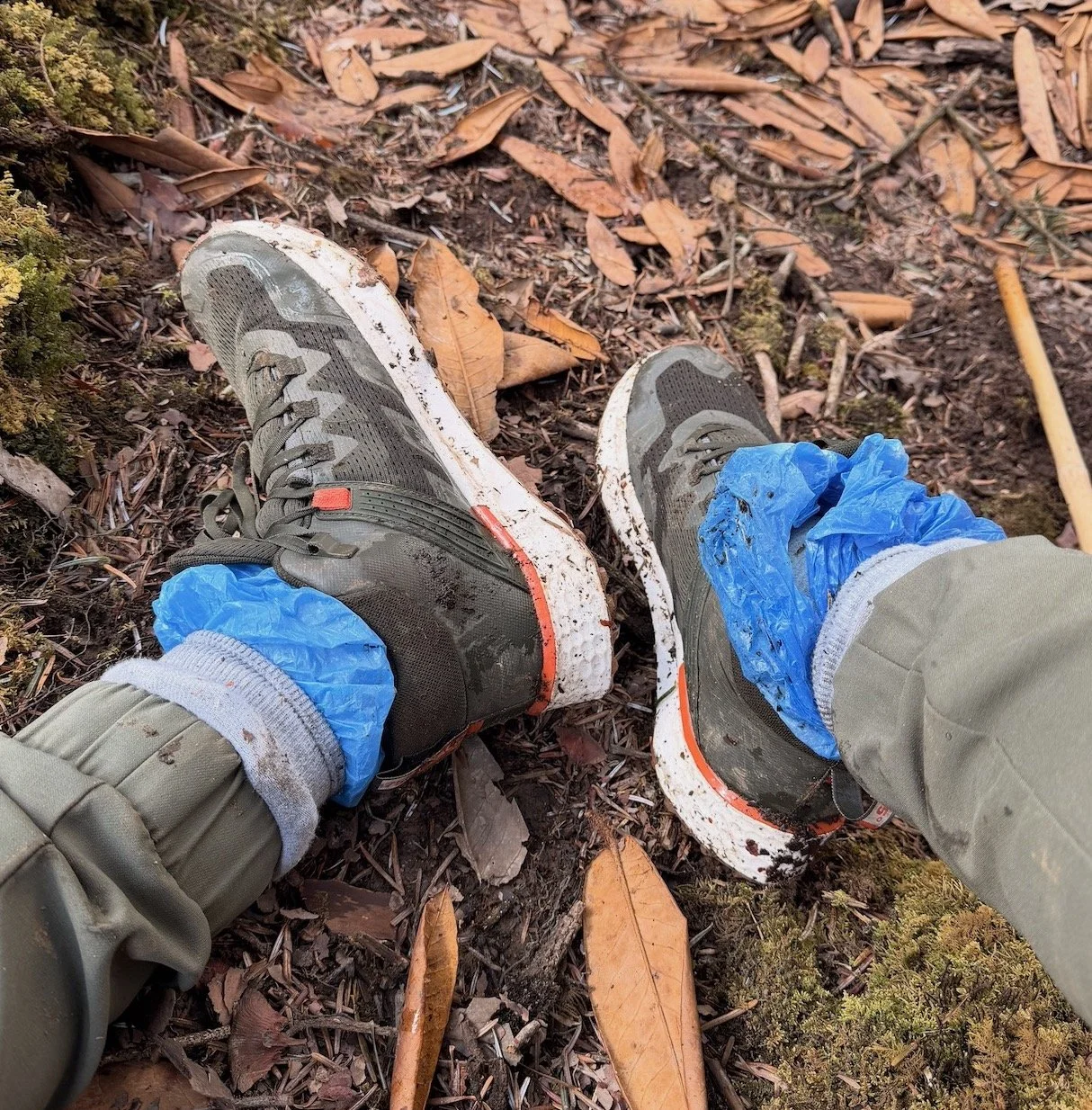
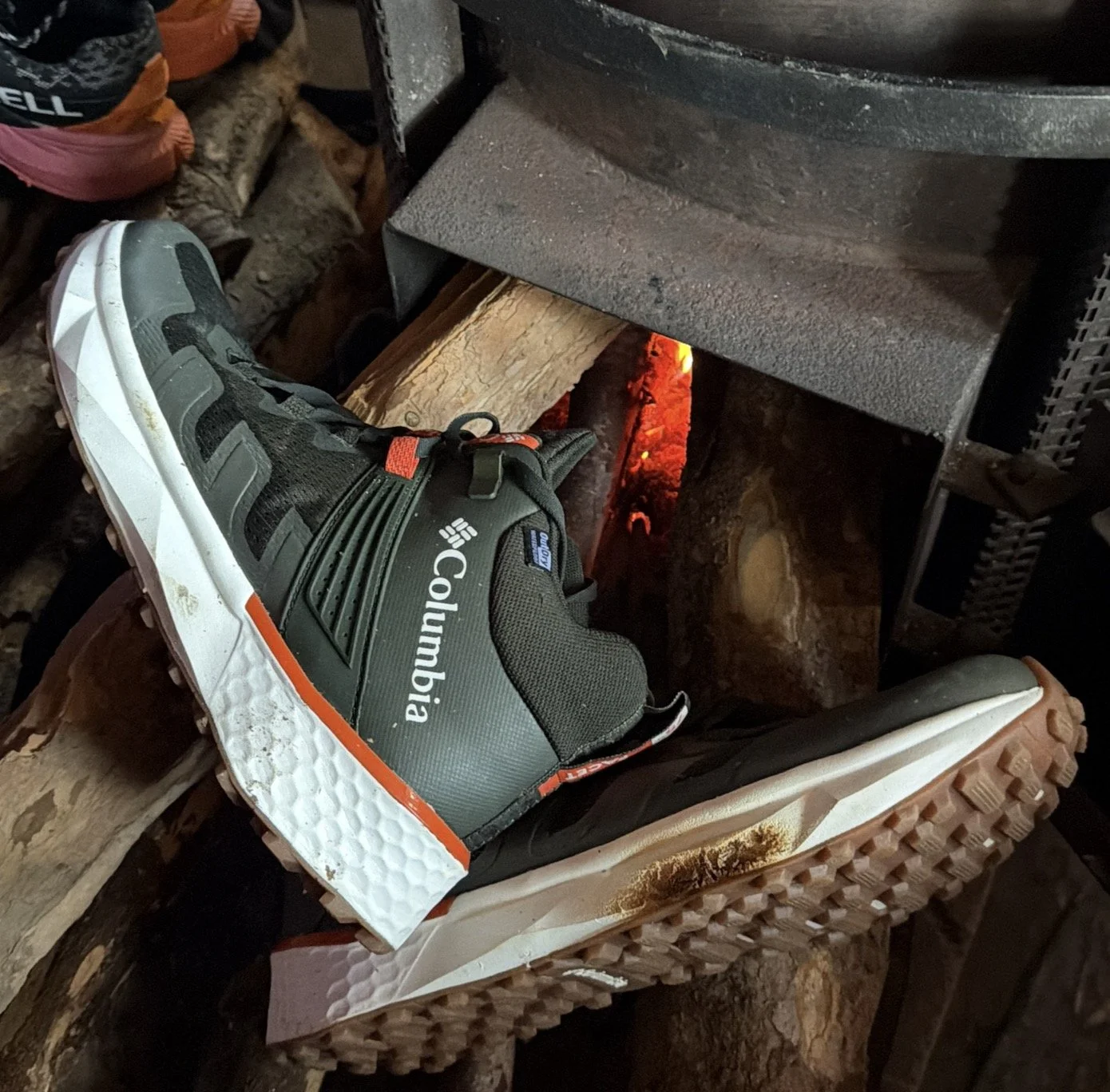
For now though, our search was not successful. As the days went by we found increasingly creative, but effective ways to avoid wet and frozen feet (although I burnt my shoes in the process of drying them by the oven…), but that didn’t quite take away from the growing anxiety that this trip may not end with a success.
Despite that, we seemed to get closer: During one of our searches we had split up to cover more ground, and Karsang called us down a steep ravine to a small river with heavy bamboo vegetation, where he seemingly spotted a red panda foraging on the ground. But by the time Lhakpa and I arrived, it had disappeared.
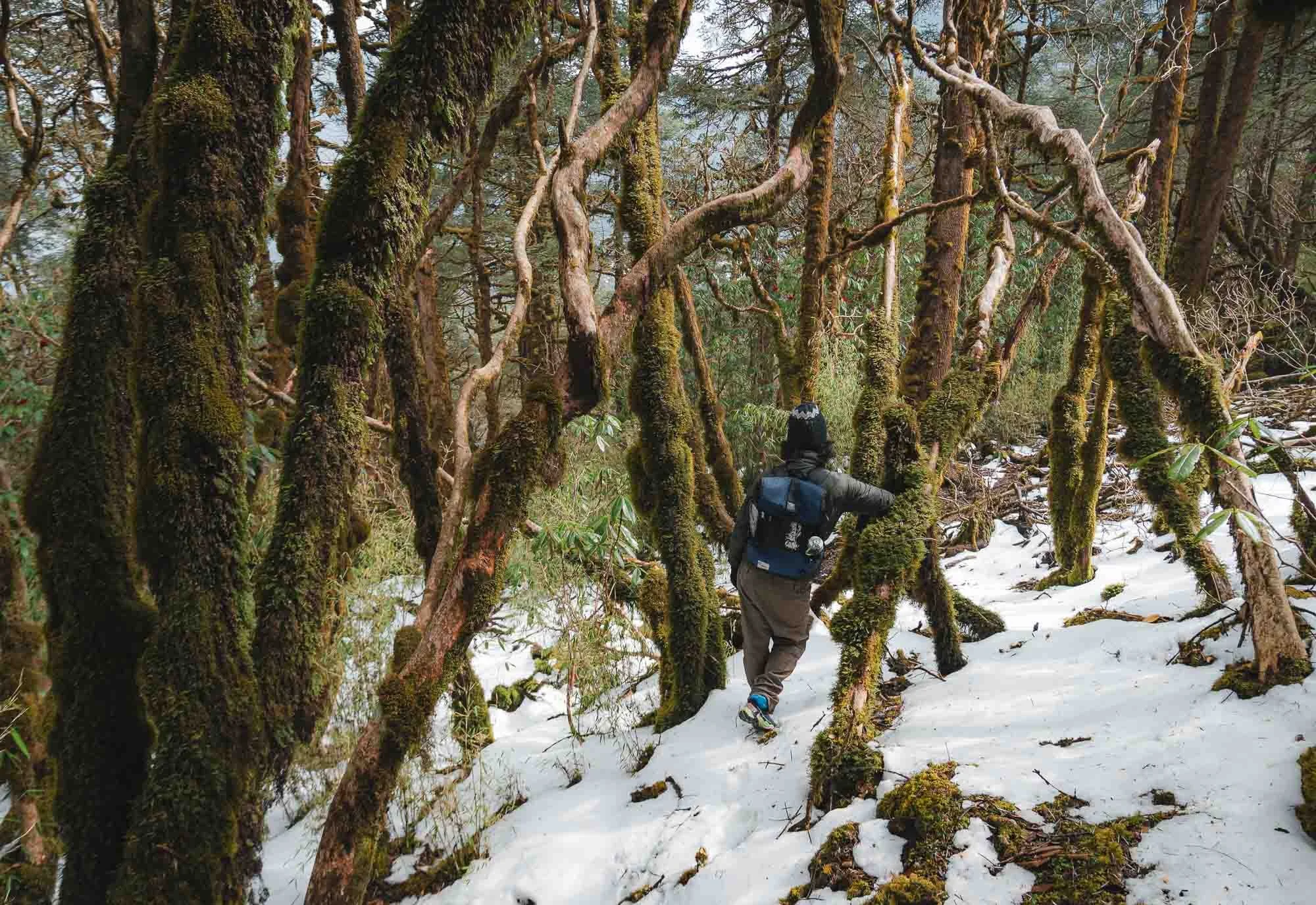
We kept going, but the nightly -5C temperatures without heating, the permanently dirty clothes, freezing cold water and therefore no showers, various scratches all over the body, a torn pair of trousers, ten hours a day carrying a bag of heavy camera equipment up and down the steep slippery forest slopes through thick vegetation… it was all starting to take its toll by the time the last day arrived.
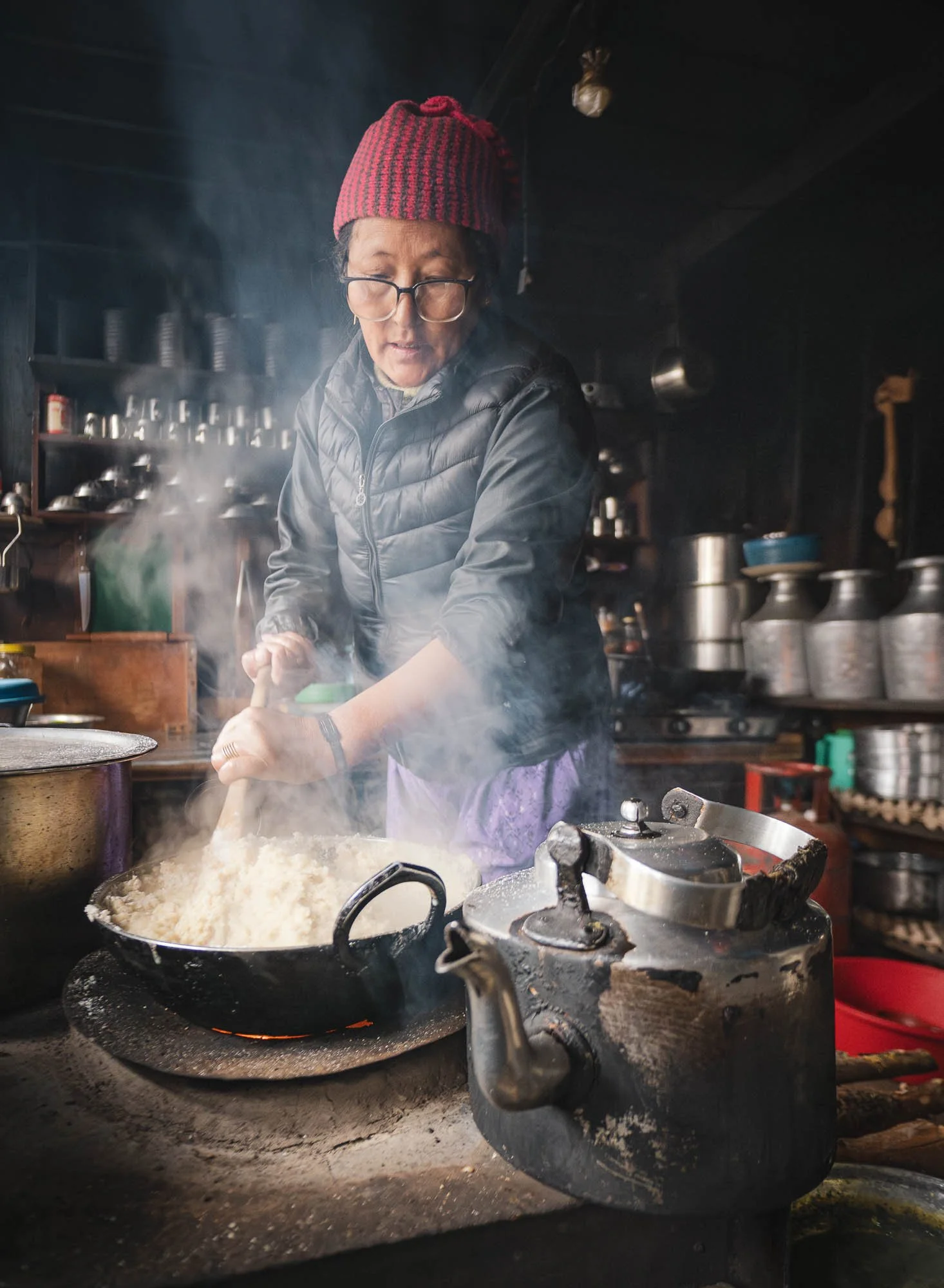
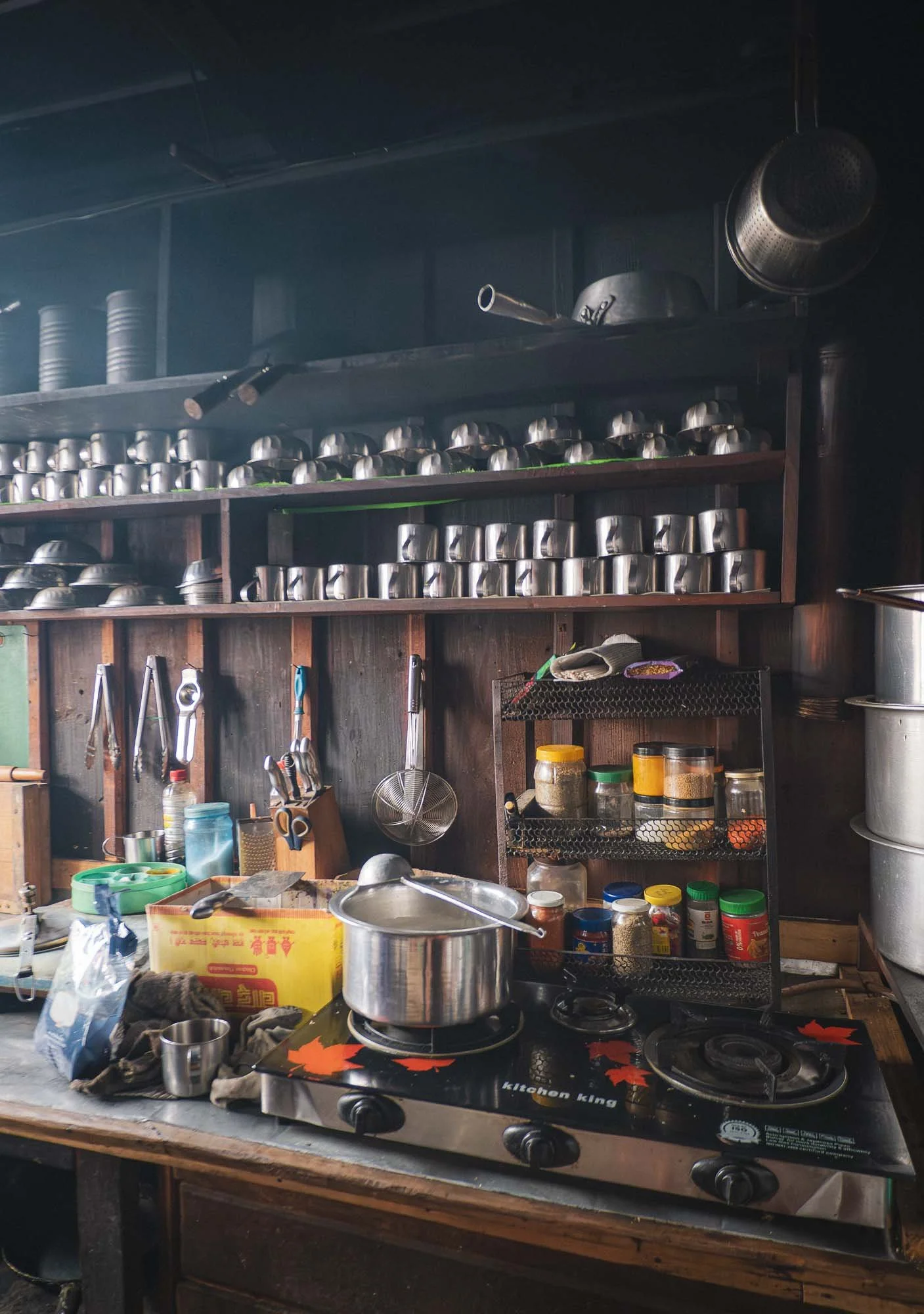
In the meantime, the owner’s wife did her best to keep everyone happy with food and hot tea - spending time near the traditional oven in the kitchen was a welcome distraction and way to stay warm when we were not out in the forest. Once again, there were barely any trekkers around - just a few people stopped by for lunch or a tea break.
The Last Day
As I woke up on the morning of our departure, clear skies greeted us, and we could see the mountains in the distance after what felt like an eternity.
After four unsuccessful days I was getting anxious - these were the last few hours. We had already discussed an extension - but as much as I enjoy a challenge and my guides and hosts were amazing, I wasn't that keen on carrying my camera over the forest slopes while twisting my neck upwards for another day.
Luckily, I didn’t need to. As I sat down for breakfast just after sunrise and got ready to go out, the owner of the tea house stumbled through the door and gesticulated me to get dressed (his English was not quite at a fluent level). He got a call from Lhakpa, who was apparently as anxious as me to make the last day successful and went out early without my knowledge. And what a good choice that was: he had spotted a red panda.
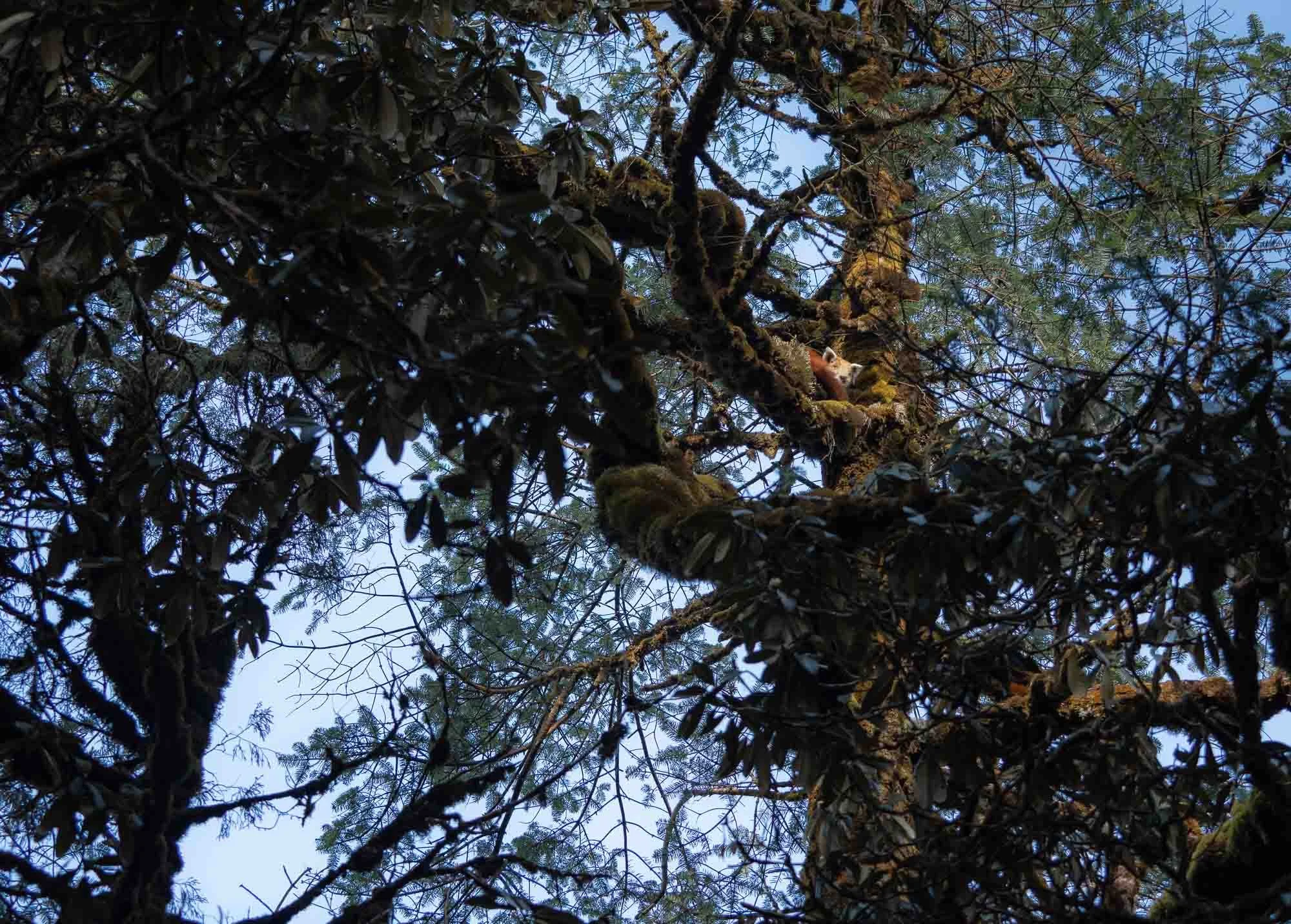
Of course my camera bag was always packed, and this time I didn't really care what I was wearing and whether it was appropriate and would get wet or cold or hot or dirty or torn. We rushed into the forest and down the slopes in a way that it can only be called a miracle that neither of us broke an ankle, and heard Lakhpa whistle in the distance.
He had to leave the spot where he saw the red panda in order to call us, as there was no network in most of the forest. Once we met up we carefully traced back his steps to the area where he had found it - if it was still there.
And it was. As he and his uncle expected, looking up was the way to spot the elusive creature, and indeed the clear skies had helped: it was enjoying the early morning rays of sunshine after mostly cloudy days, high up in the fork of a thick tree branch.
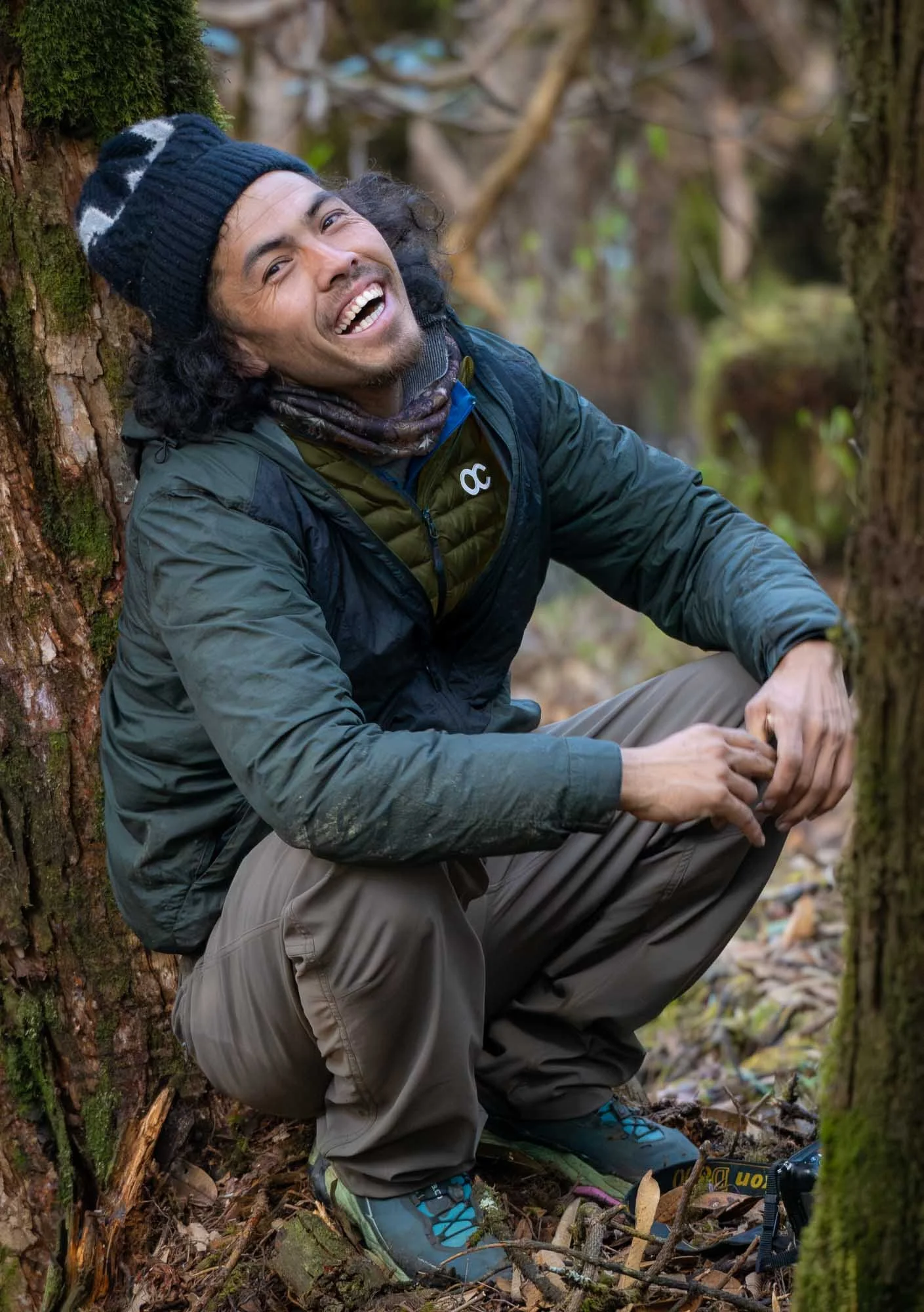
A Happy Guide
No further comment required.
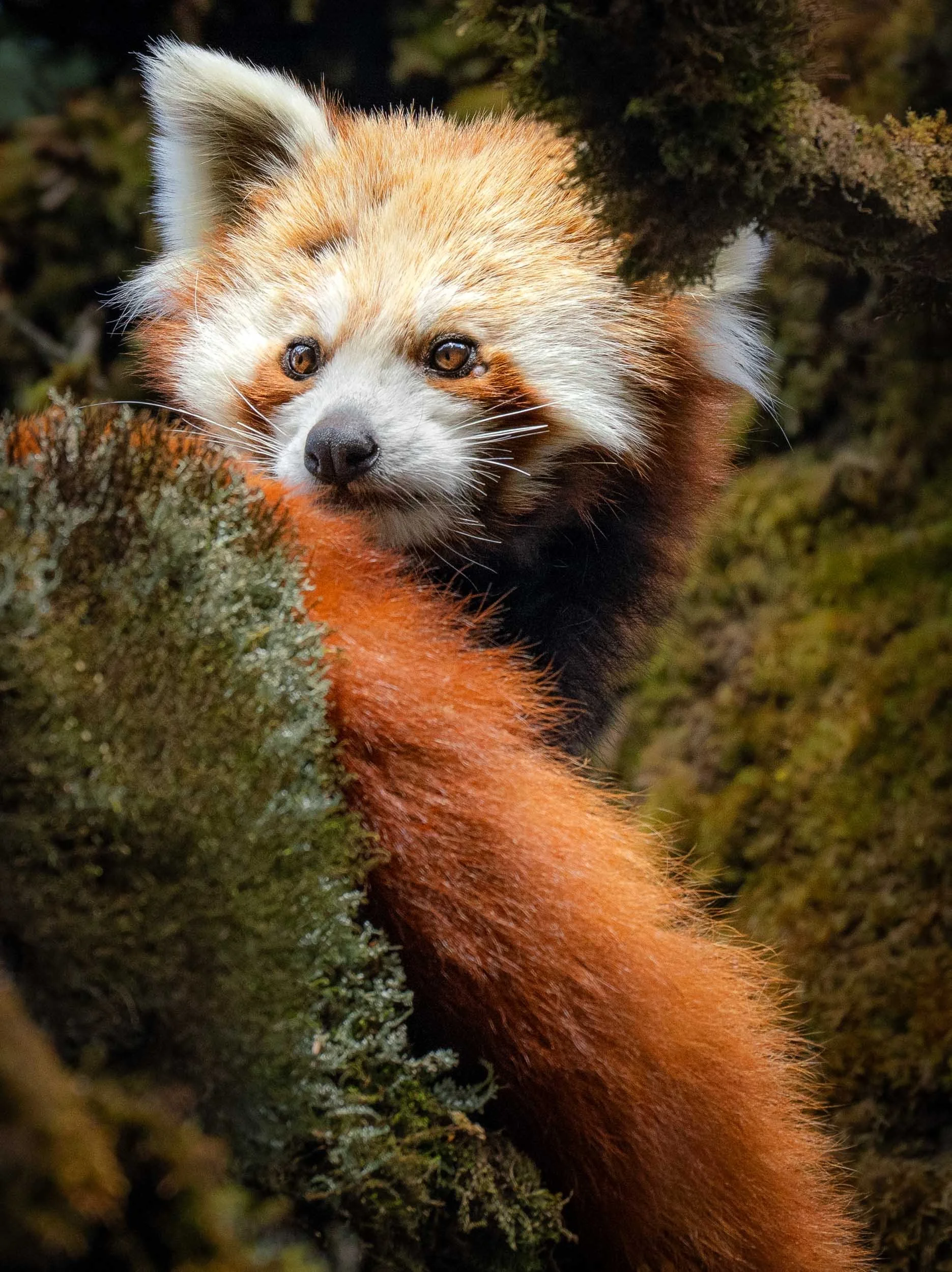
The Red Panda
Despite their name, they are not closely related to the Giant Panda, and thus also not a bear - their place on the evolutionary classification chart has been debated, but they’re more closely related to weasels, skunks, and raccoons.
The remaining estimated 10,000 individuals in the wild live at elevations of around 2,200 - 5,000 meters, covering the Himalayan mountain ranges of Nepal, Bhutan and China, with small populations in India and Myanmar.
Adults measure just over half a meter in body length, but they have a long bushy tail which they use to warm themselves. They are solitary and largely arboreal, primarily coming down to feed and find mates.
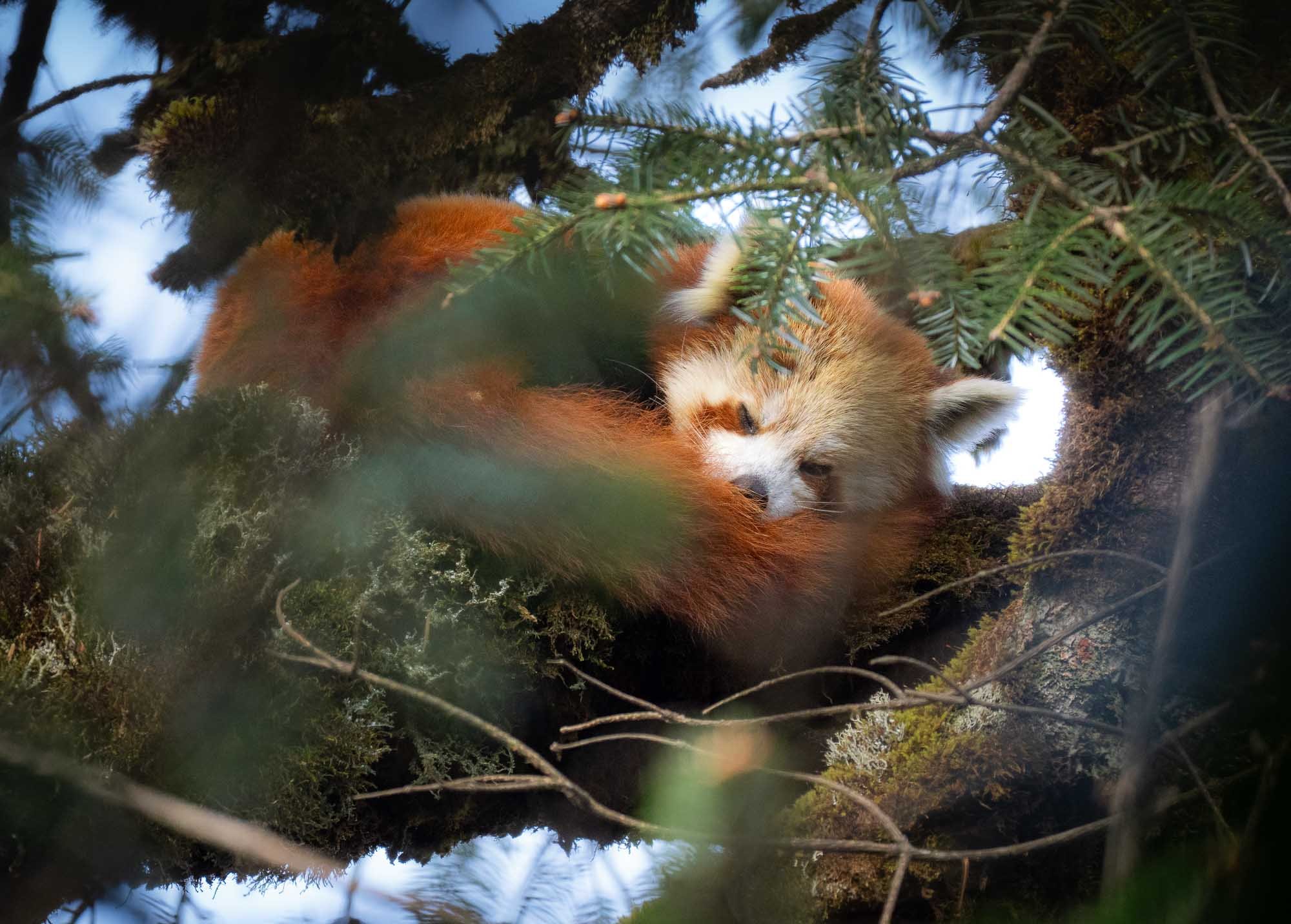
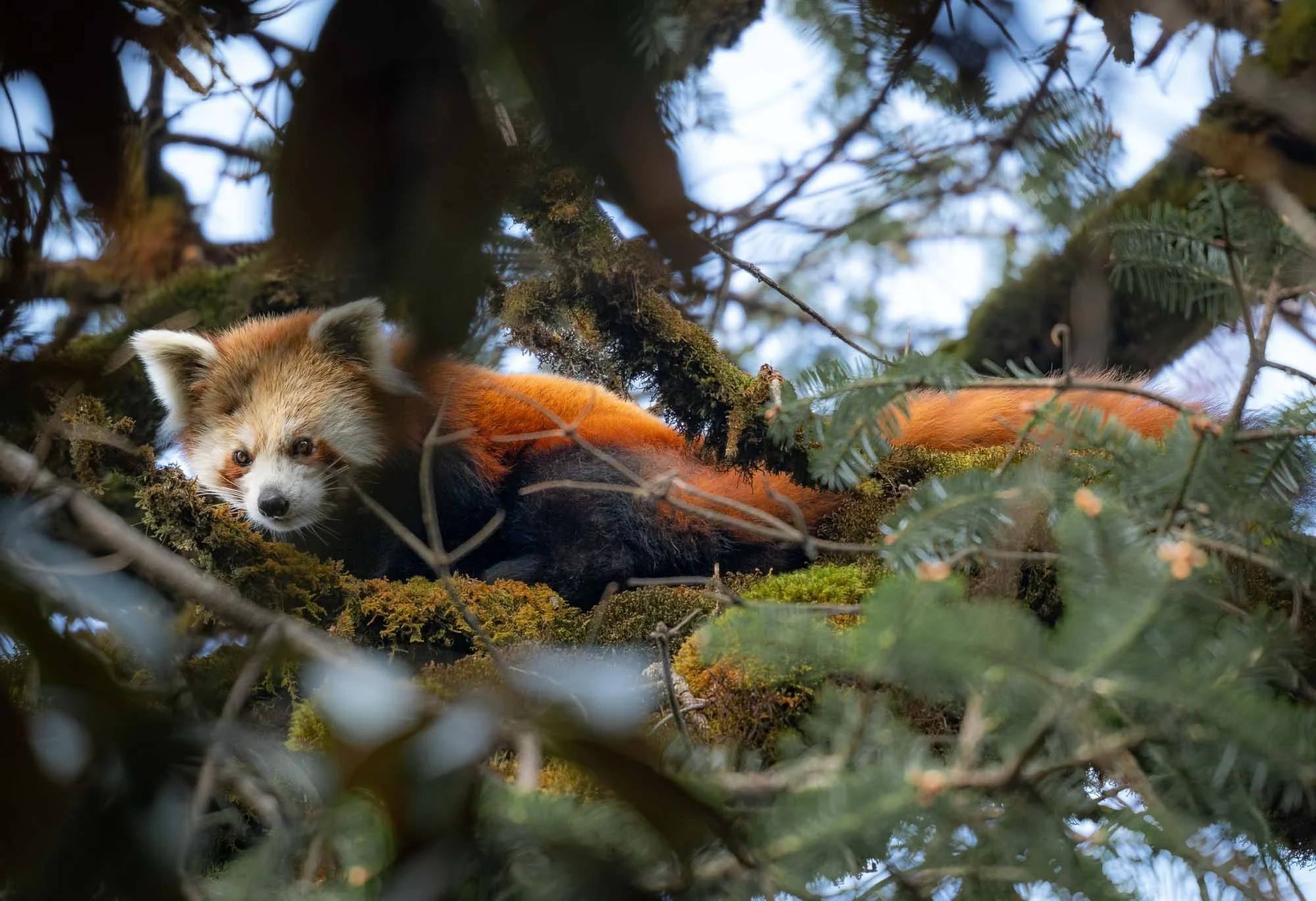
We spent a good hour with this individual, who didn’t seem that bothered by our presence, just occasionally looking down as it heard the leaves and snow crumble under our feet while we tried to find good positions for a photo in between the branches.
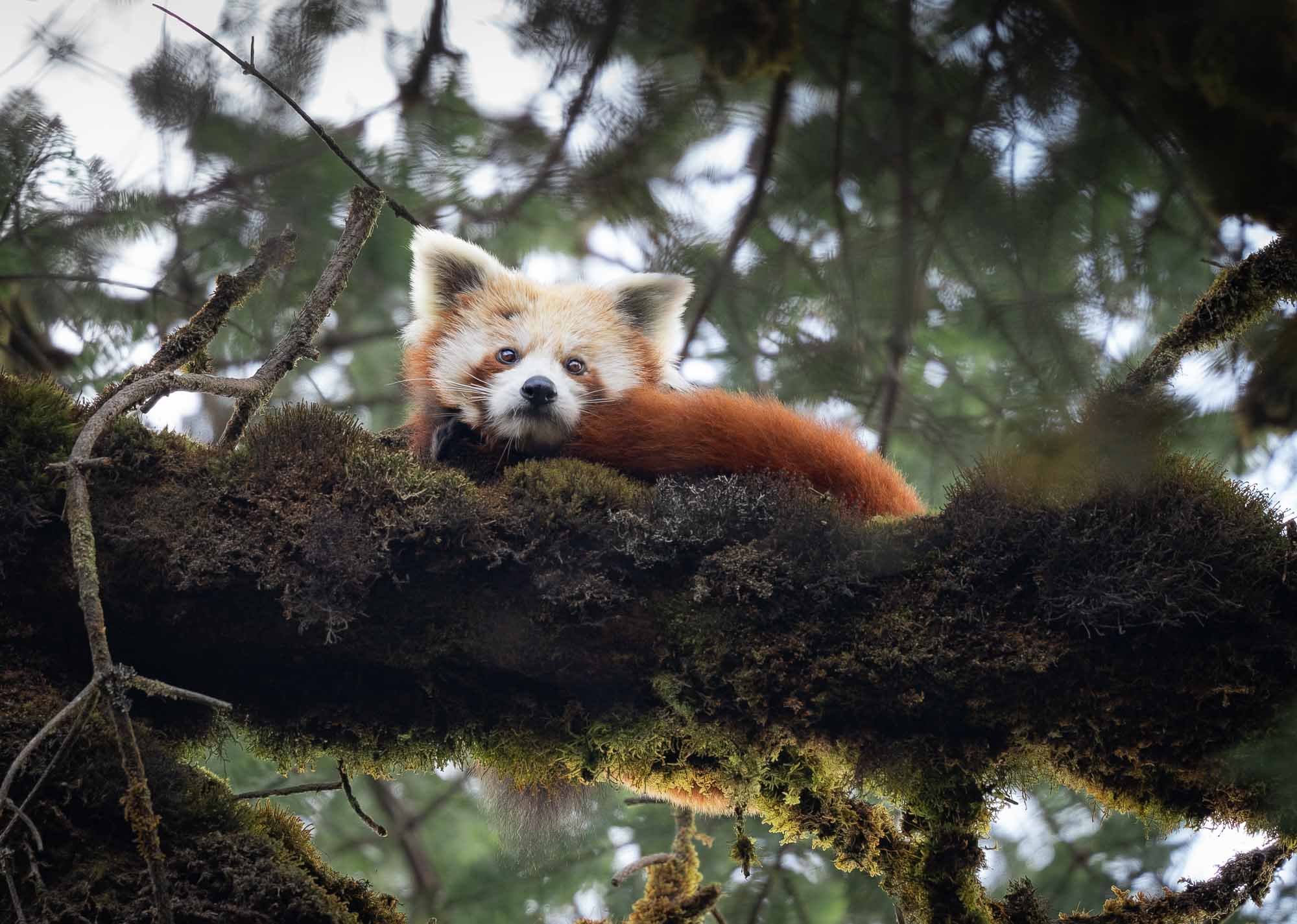
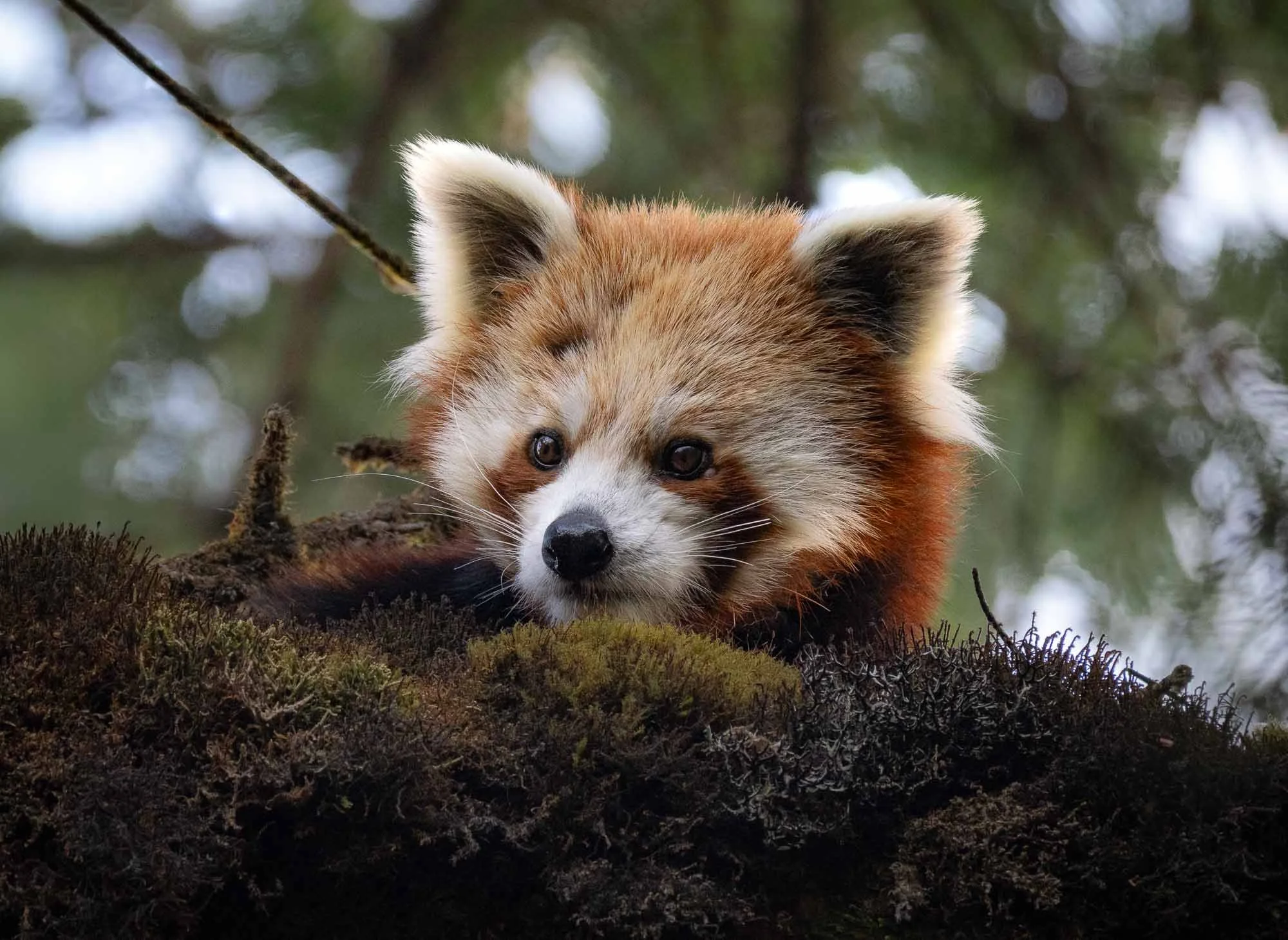
With a cheerful vibe we headed back to the tea house, having finally accomplished our mission. To give you a final idea of this expedition, here’s a quick video of the behind the scenes and the resulting moments with this beautiful red panda.
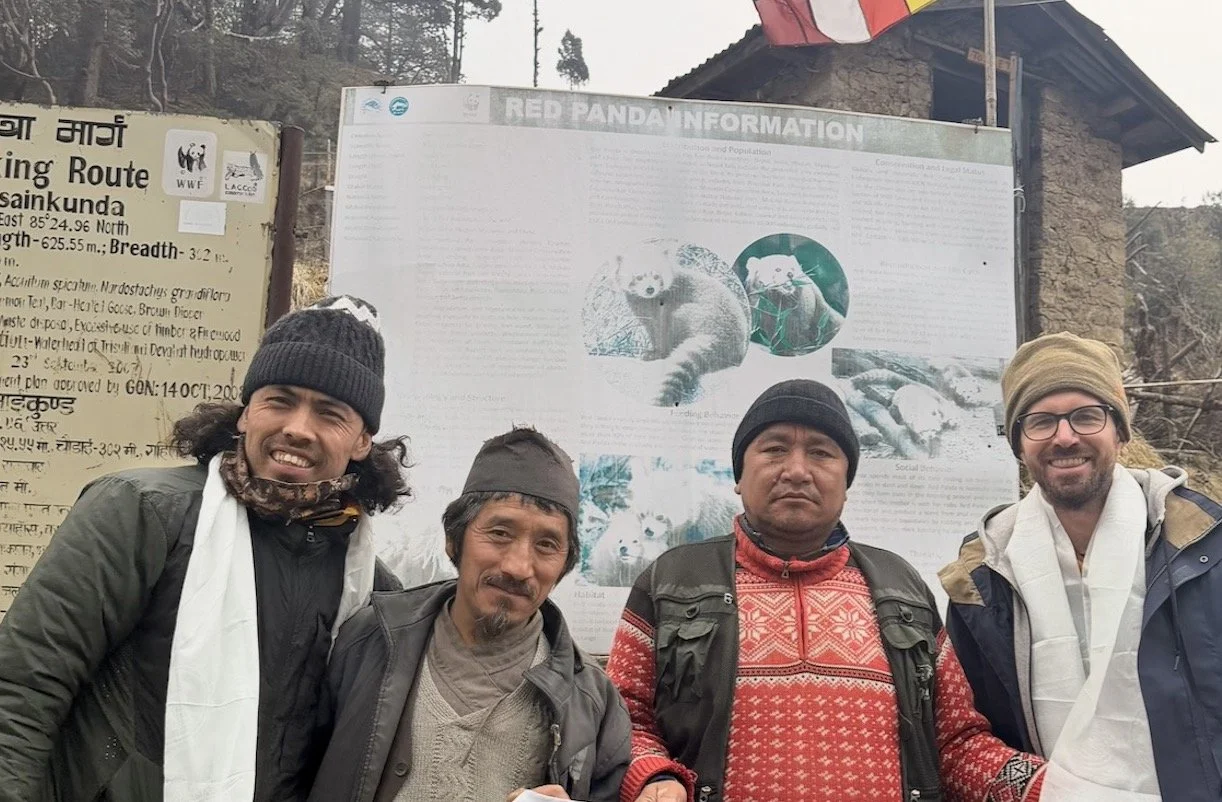
One last group picture with the owner of the tea house before we left to make our way down to the birth-village of Lhakpa and his uncle, where our car would pick us up for the drive back to Kathmandu.
Once more, there is a community aspect to the national park - red panda education and conservation is carried out directly by people like Lhakpa in collaboration with the official channels. Poaching remains a major problem and of course habitat loss is also a threat, despite the fact the species is protected in all its range countries.
Part of the local community-based initiatives include for example the installation of educational signs like these along the trekking routes. Evidently and unsurprisingly, funding is always a problem, making it difficult to replace the fading one here, as Lhakpa shares with a sigh, but not without losing his ever-present smile (especially after our successful sighting).
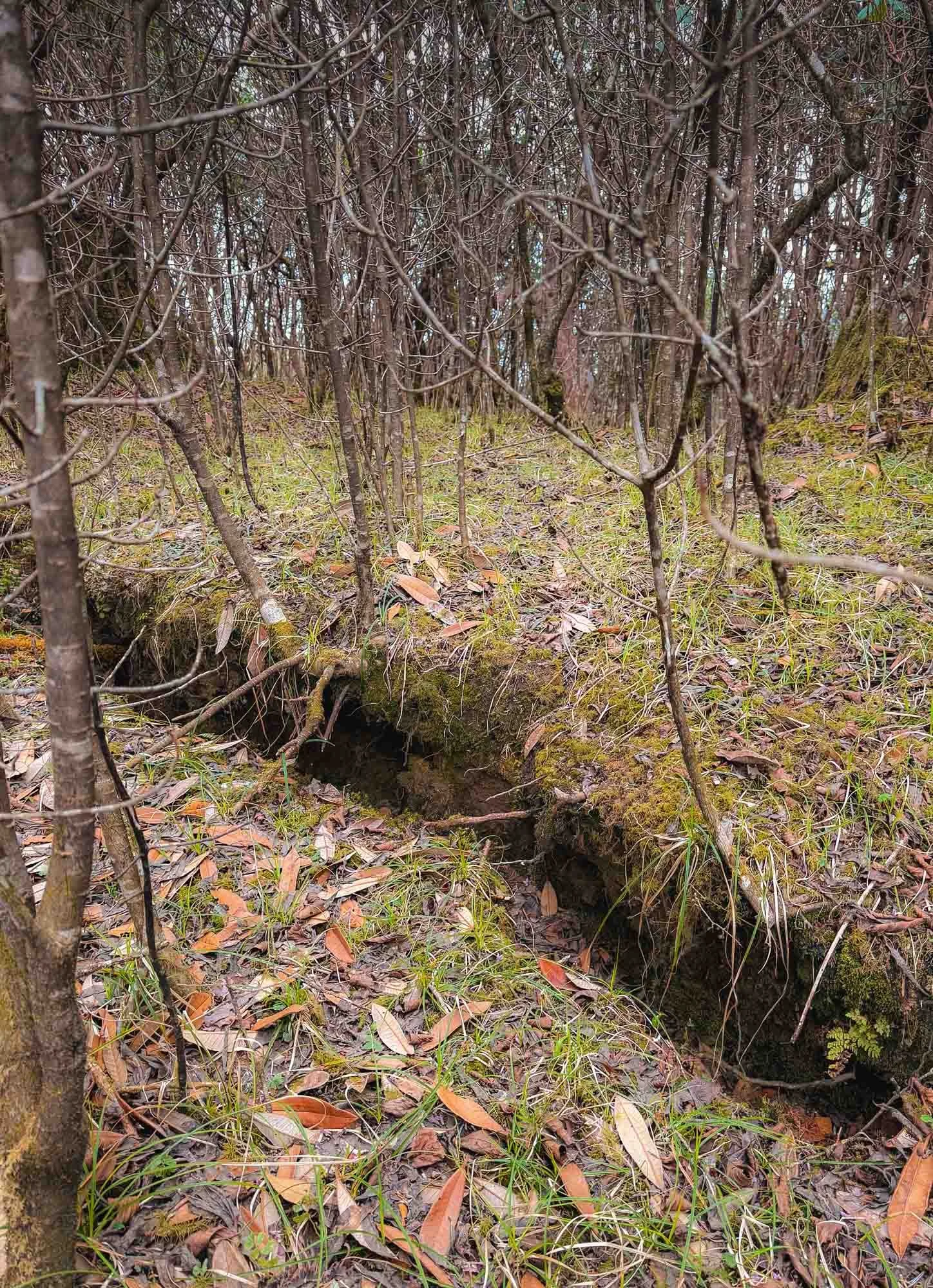
The way down didn’t bring many surprises, other than this interesting crack in the landscape, which appeared during the 2015 earthquake as Karsang pointed out.
A reminder of the disastrous force of nature and the lasting impact on the landscape this catastrophe had.
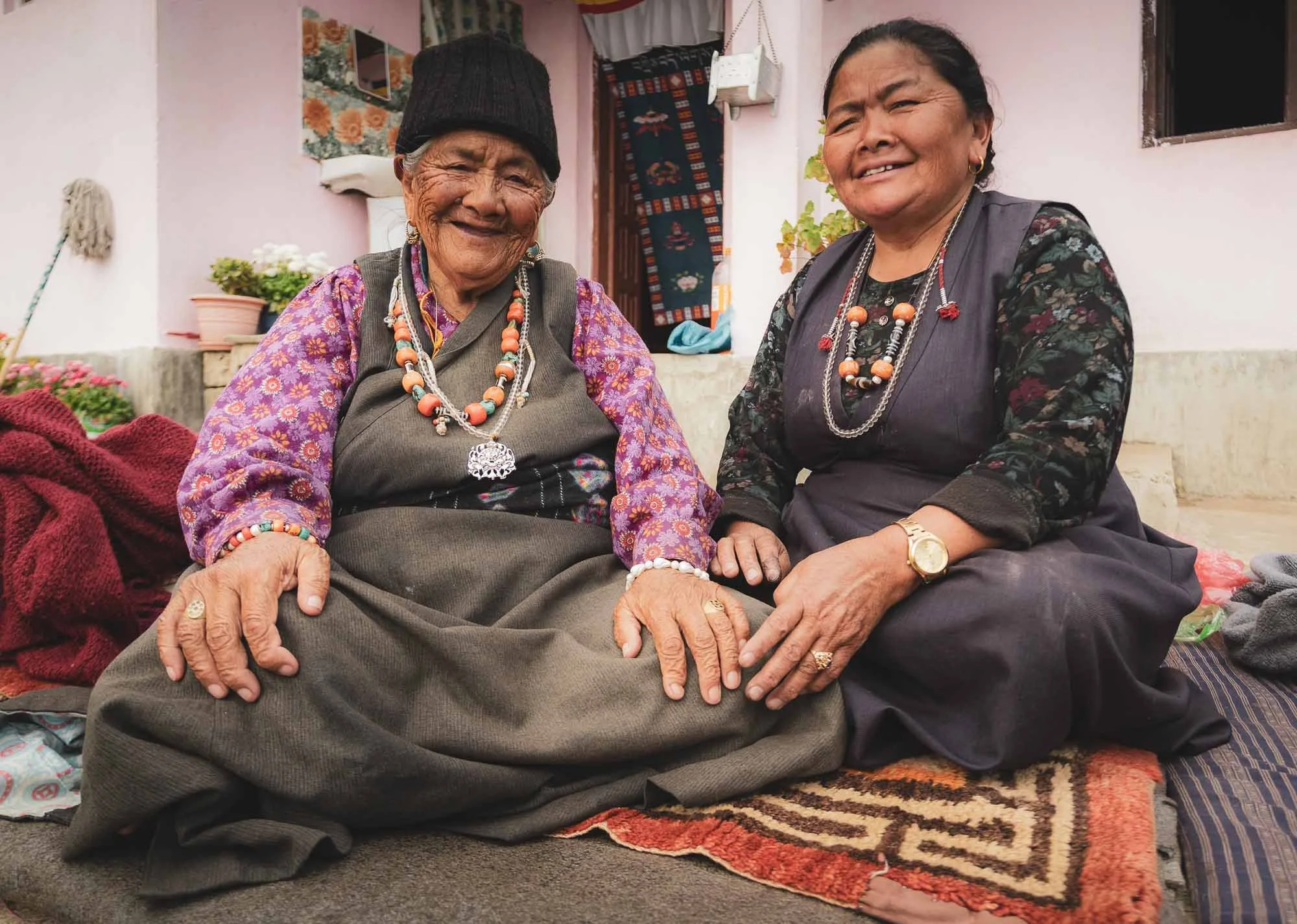
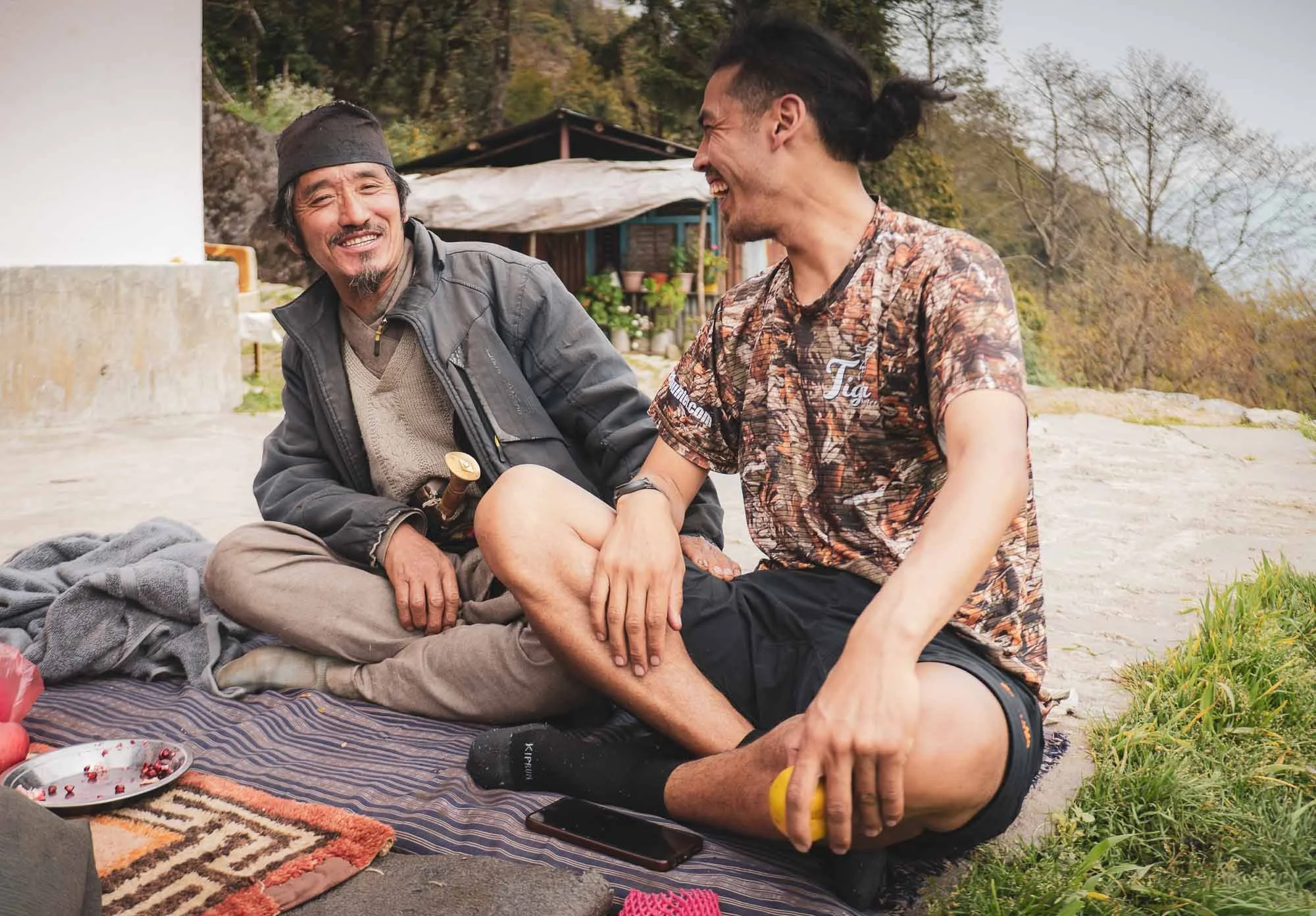
In Lhakpa’s village, I got to meet his aunt and grandma (or so he called them) and we hung out a bit together while waiting for our pickup, which took us down a questionable mountain road.
We dropped off a few villagers that had joined us to head to a nearby wedding which took place that evening, and then finally arrived back in Kathmandu by the evening.
Janakpur
But my time in Kathmandu was short. For the next morning I had one more final destination on the agenda before leaving Nepal: the city of Janakpur, or rather, its most-well known temple. A 45min of domestic flight (with a 2 hour delay) brought me to one of the southern-most and hottest parts of Nepal for a one night stay.
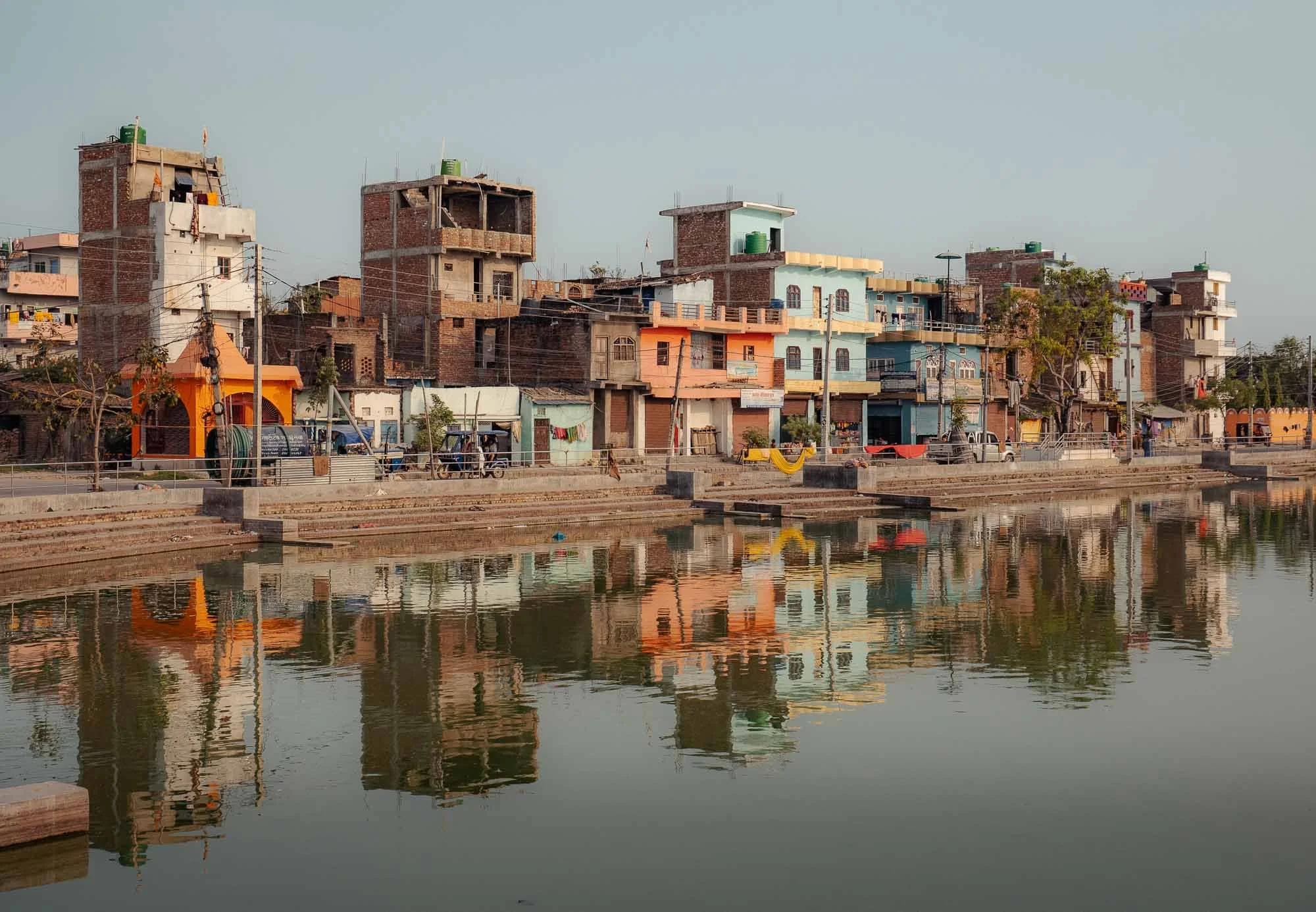
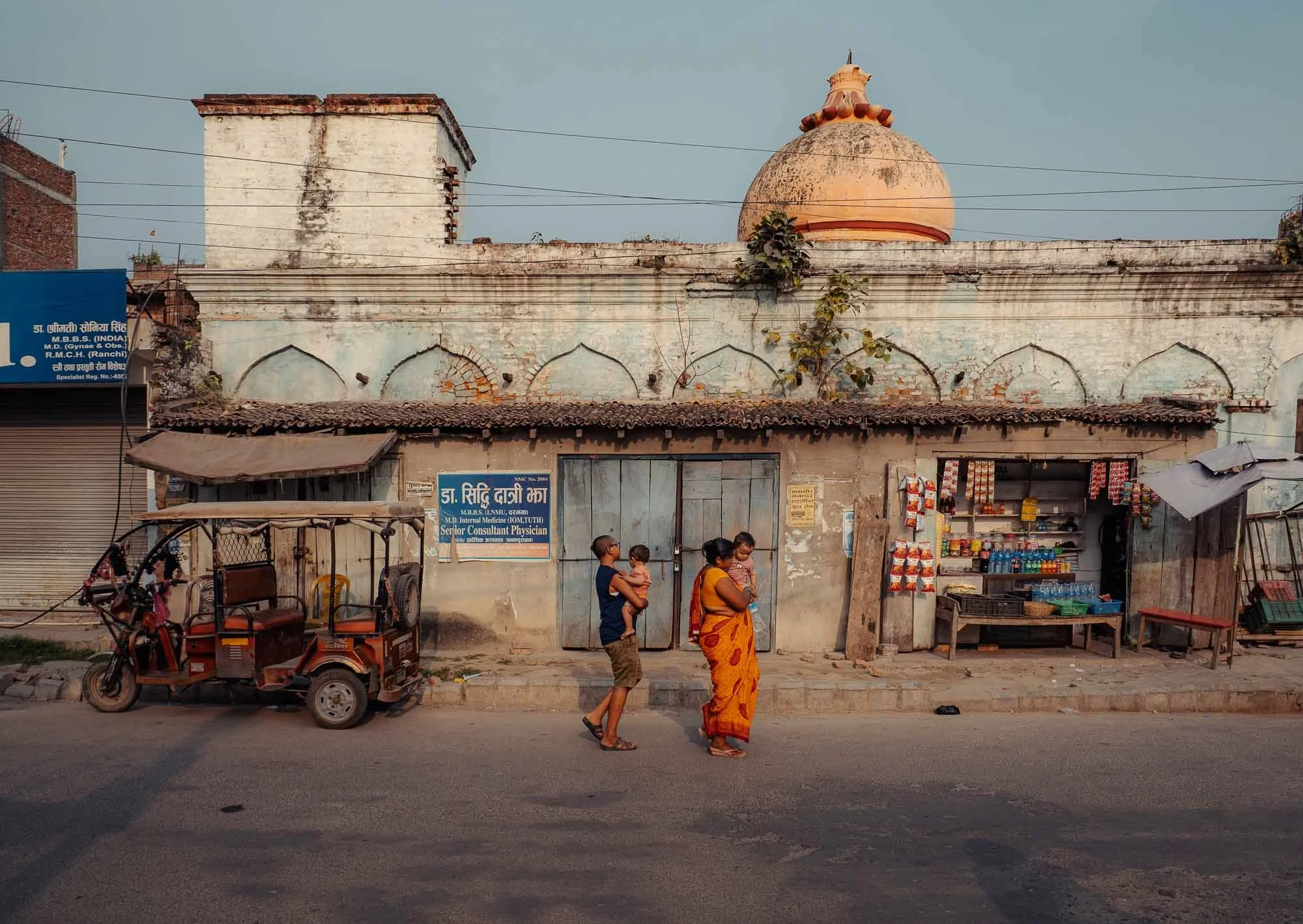
Even in the late afternoon, it was a toasty and humid 35C in the city of around 200,000 people, located less than 50km from the Indian border.
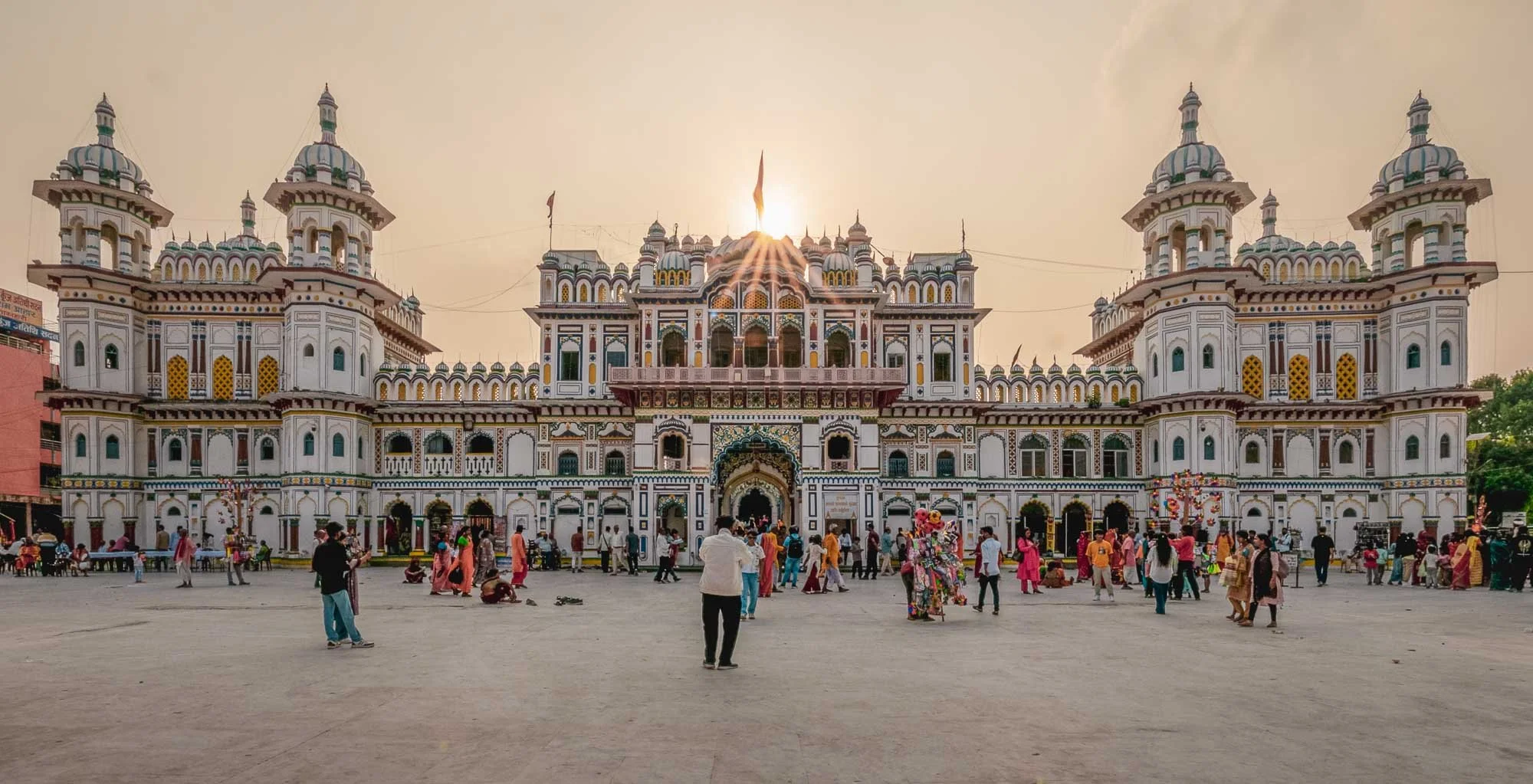
Janaki Mandir
The city is not exactly famous for tourism, or at least not among westerners.
But it does feature one rather interesting attraction: the Janaki Mandir temple, built over 100 years ago.
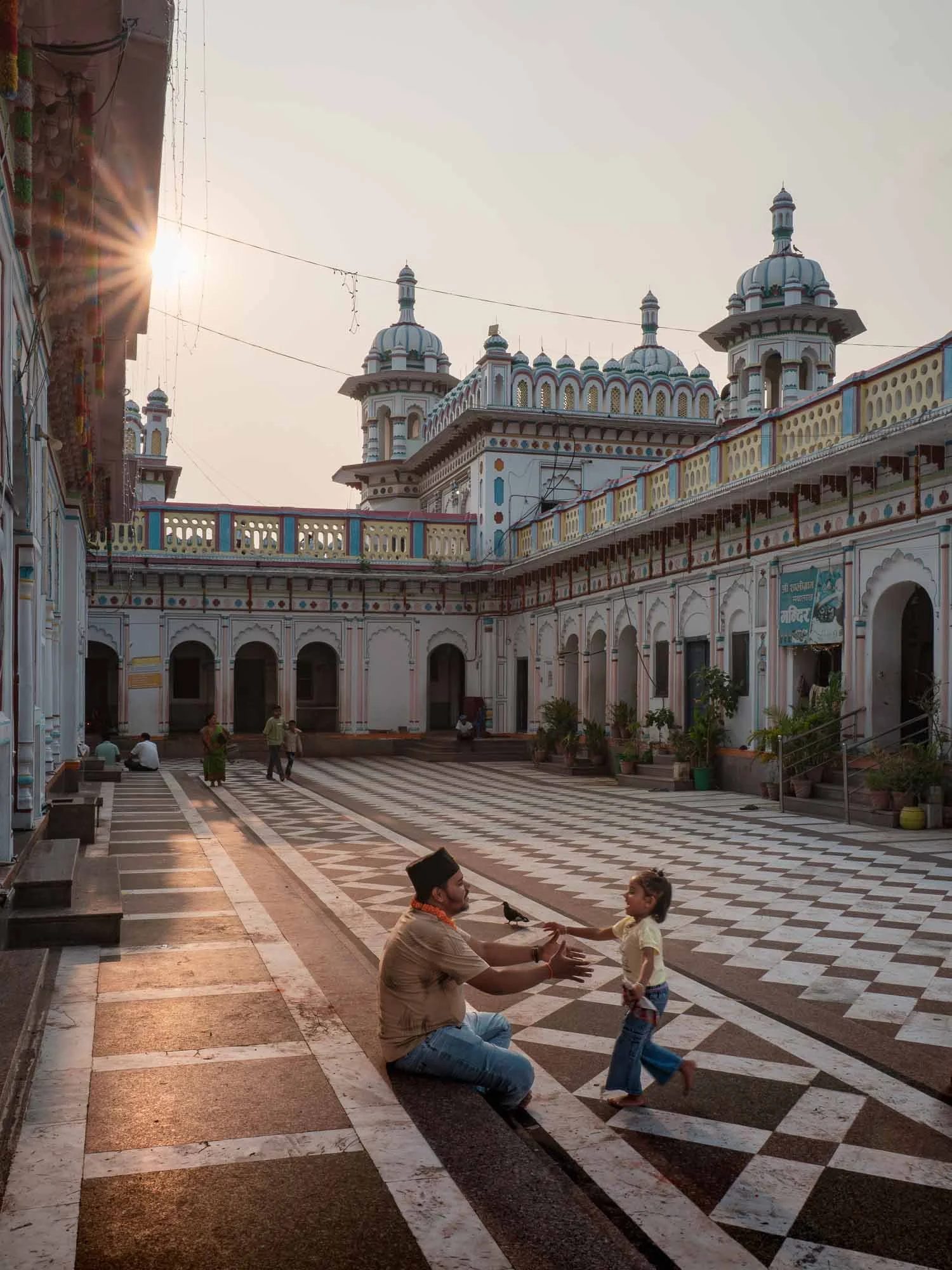
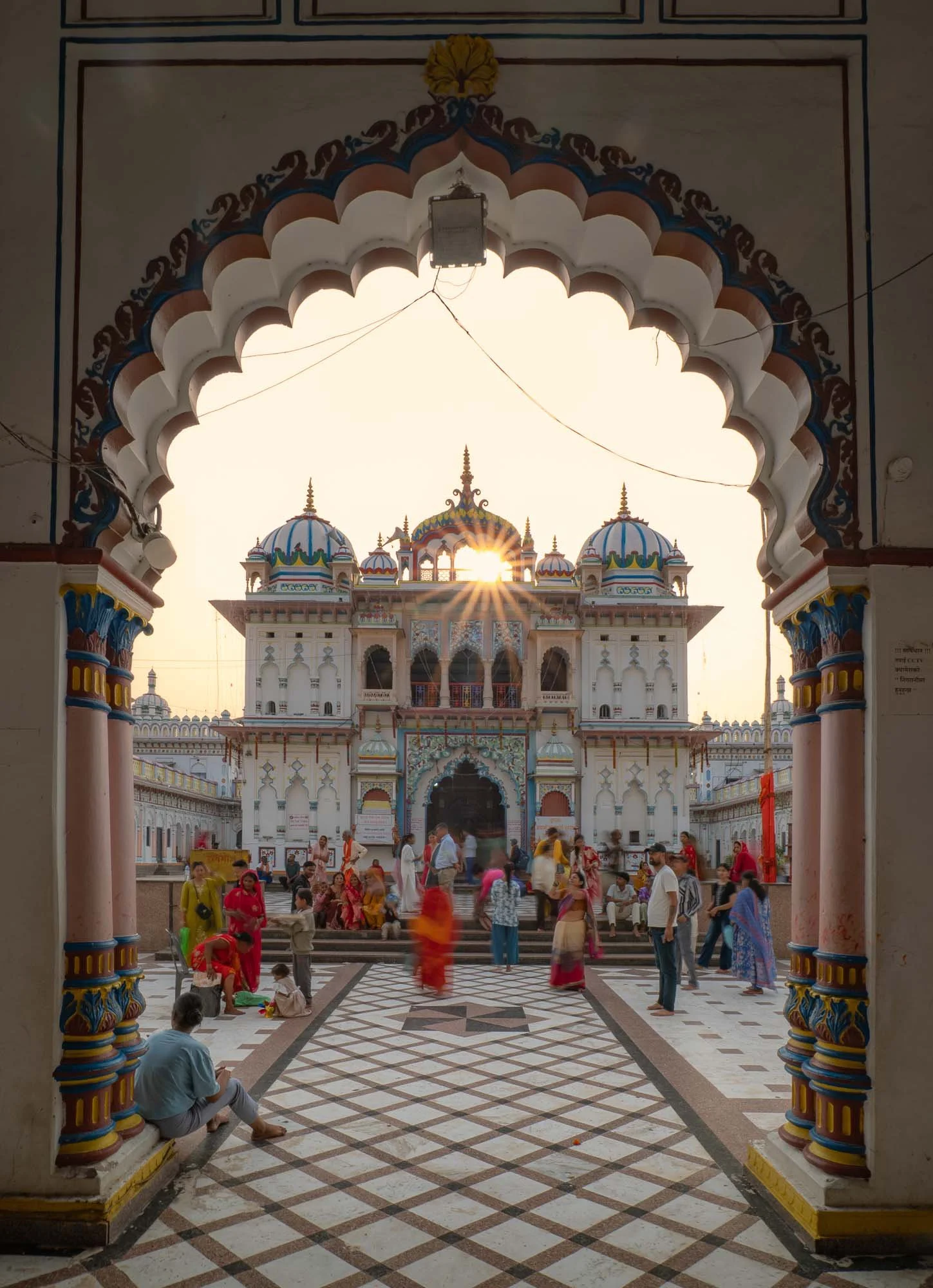
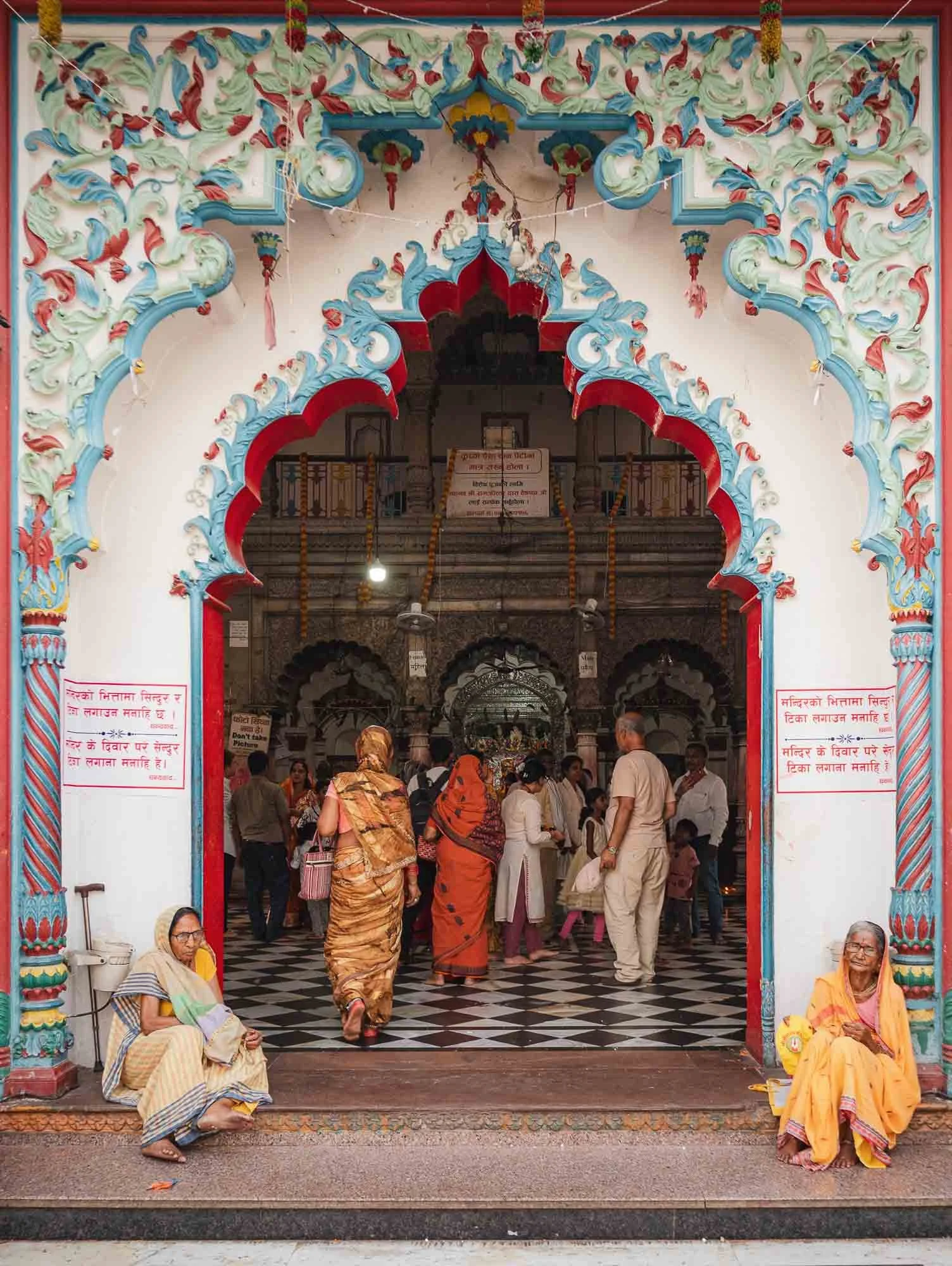
It’s quite different from the traditional Buddhist, Hindu, and Newar temples of Kathmandu, and to my (untrained) eyes represents a kind of architectural amalgam of Hindu, Nepali, and Mughal styles.
The temple is dedicated to the Hindu goddess Sita and built on the spot where the founder of modern Janakpur is said to have found a statue of her in 1657.
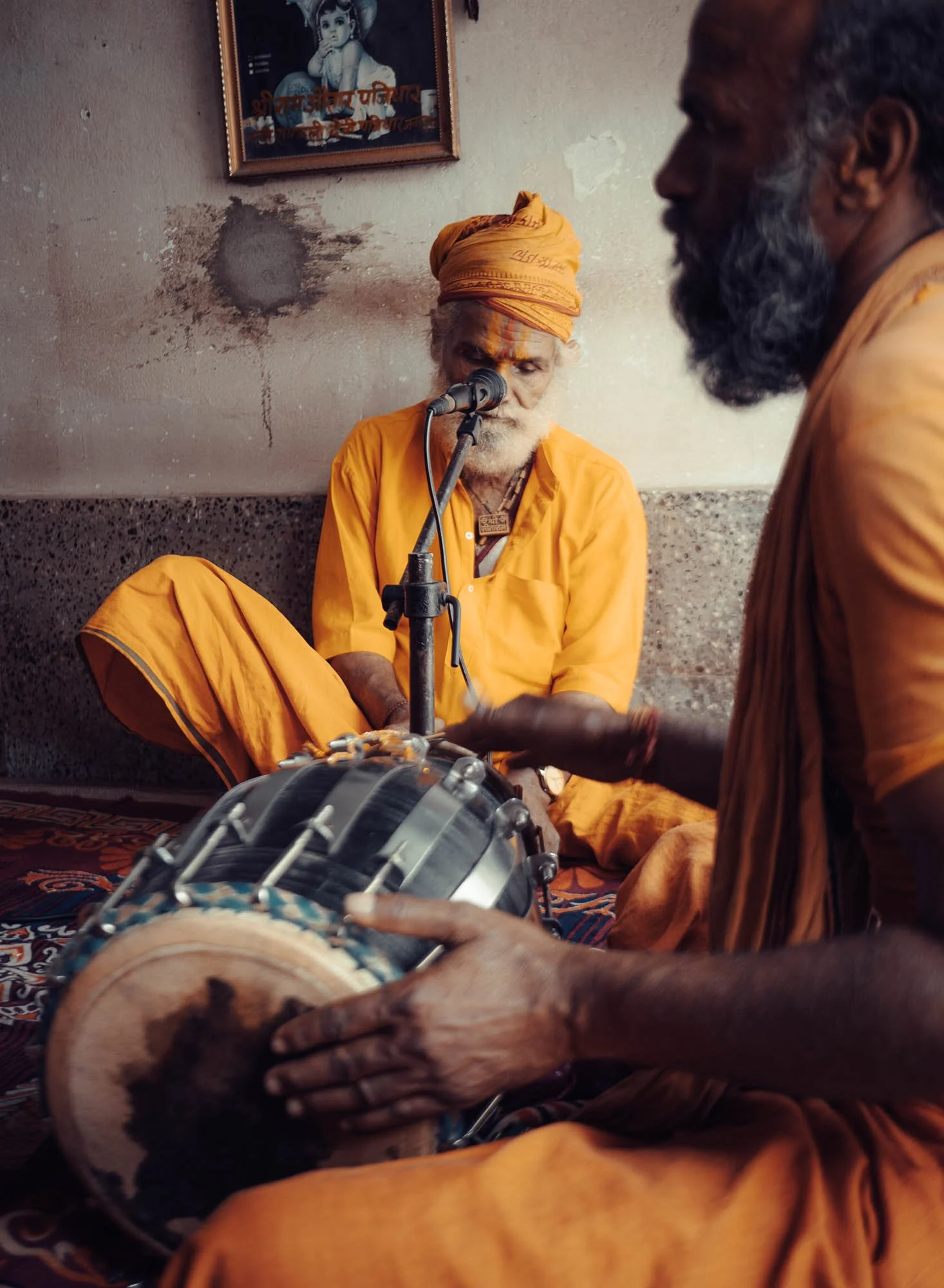
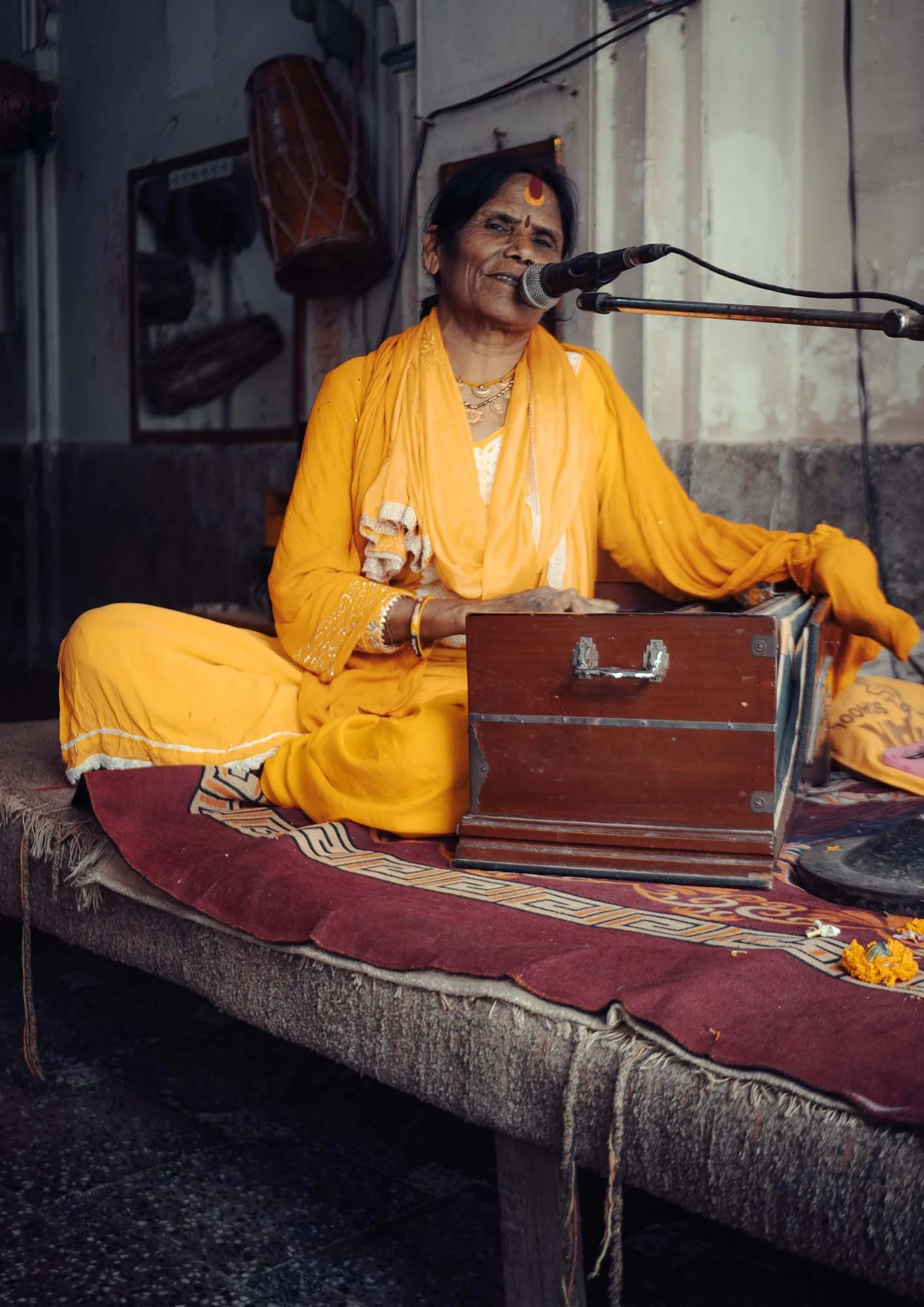
I got to witness the devotional chants by these sadhus inside one of the temple rooms, where they play on traditional instruments as a form of collective prayer and meditation.
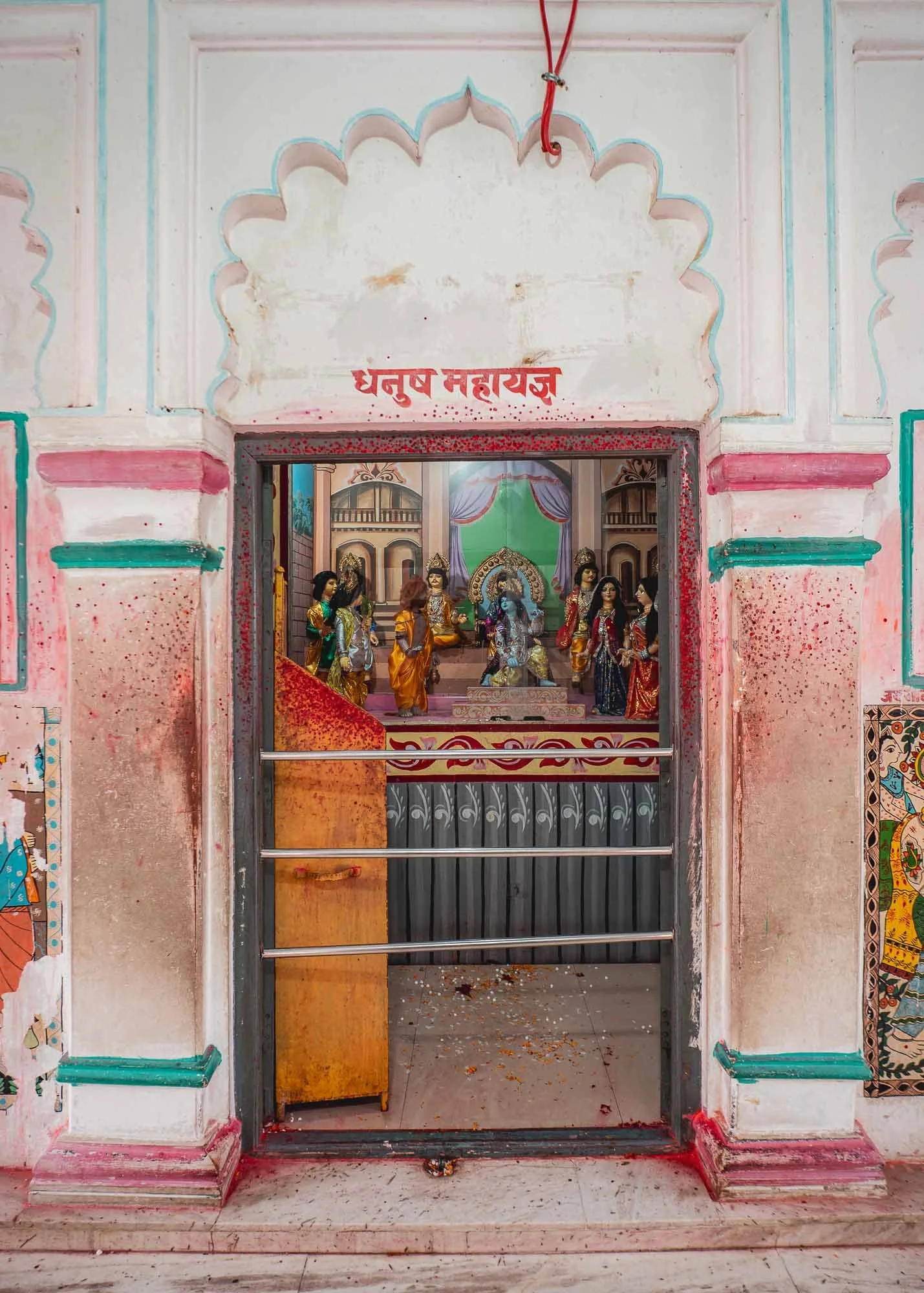
The inside contains several shrines (including a rather odd underground one) and a small central hall, where followers can pray, give offerings, and receive blessings.
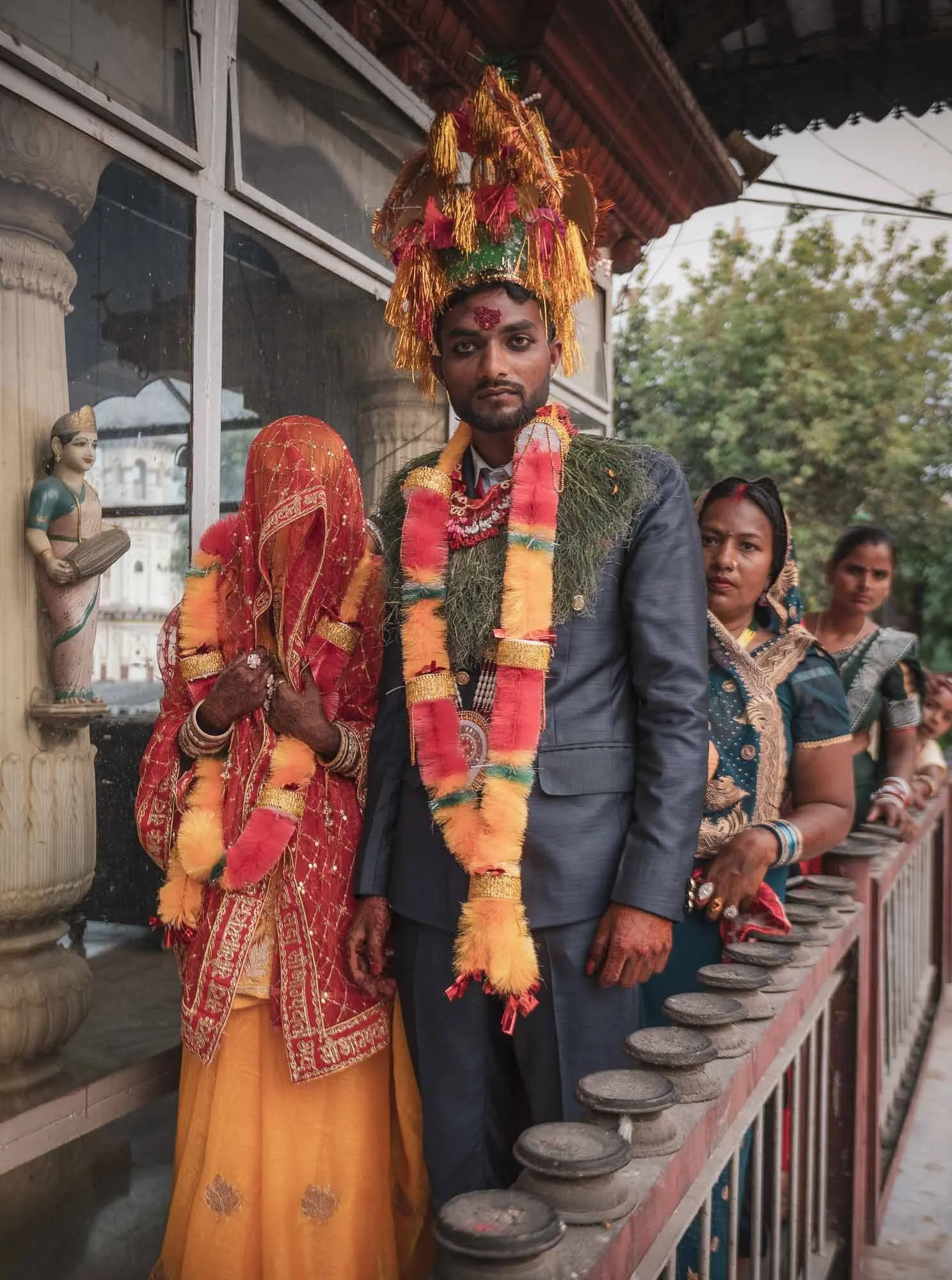
Just beside Janaki Mandir stands the Shree Ram Janaki Biwah Mandap, the ceremonial pavilion marking the legendary wedding of Rama and Sita.
By coincidence I got to witness a wedding ceremony there myself, and was allowed to take this photo of the couple and their families as they made their way around the pavilion.
Aside from the temple, the many small lakes are one of the defining features of the city. More than seventy sacred ponds were once woven into the city’s design, serving as pilgrimage sites, water reservoirs and gathering places. That is partly still true today, but some of them suffer from neglect and are only slowly being restored again.
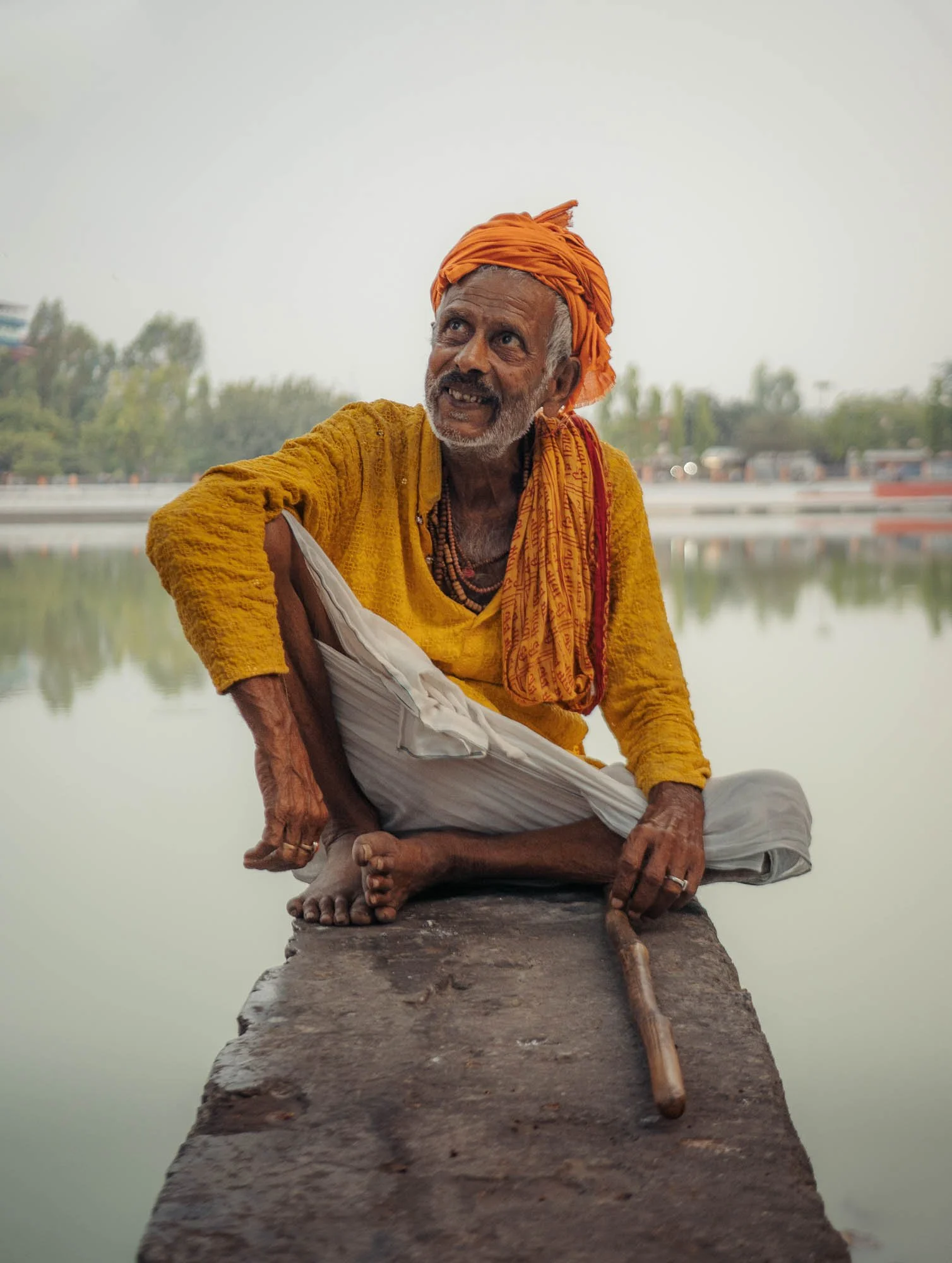
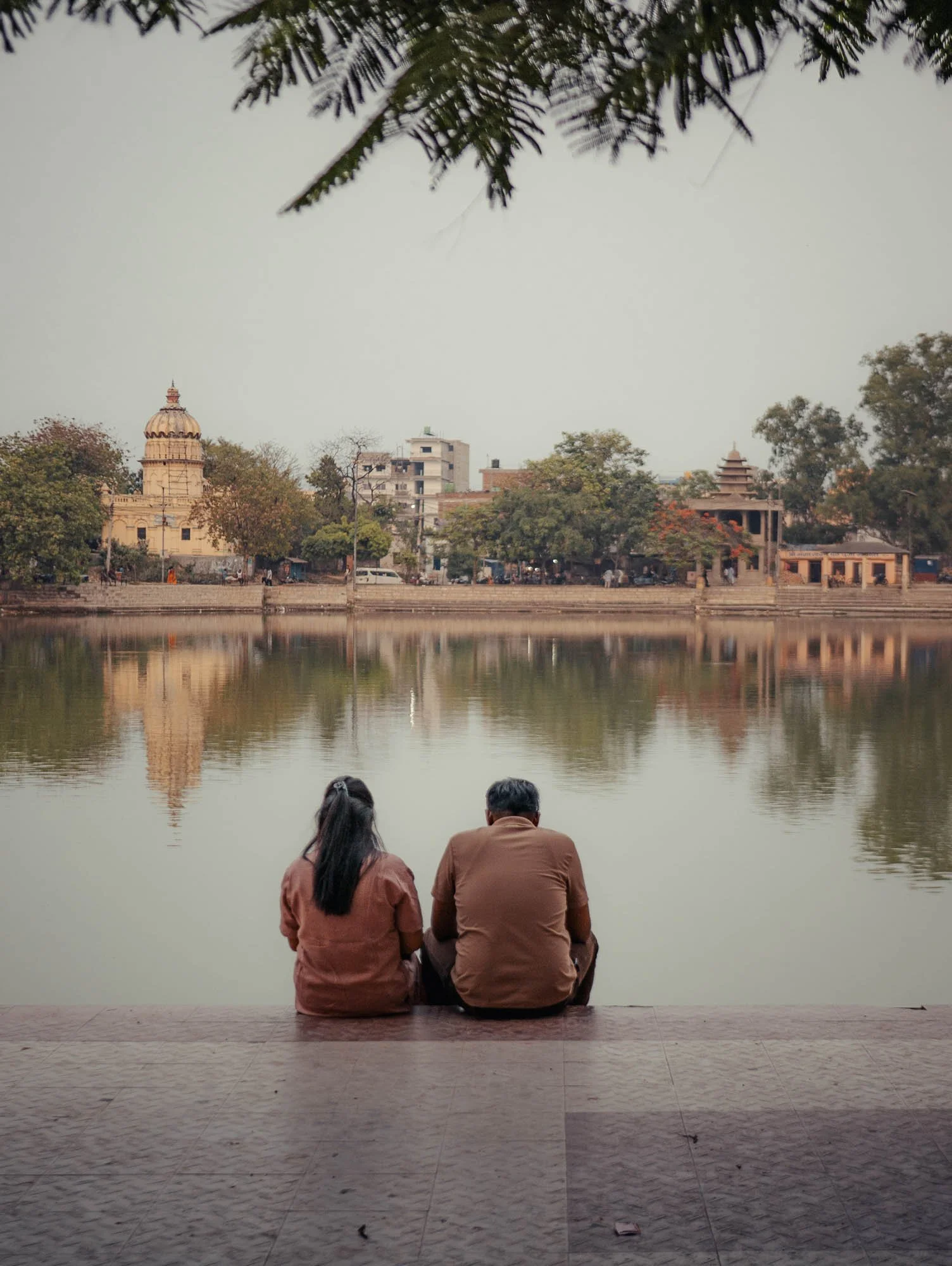
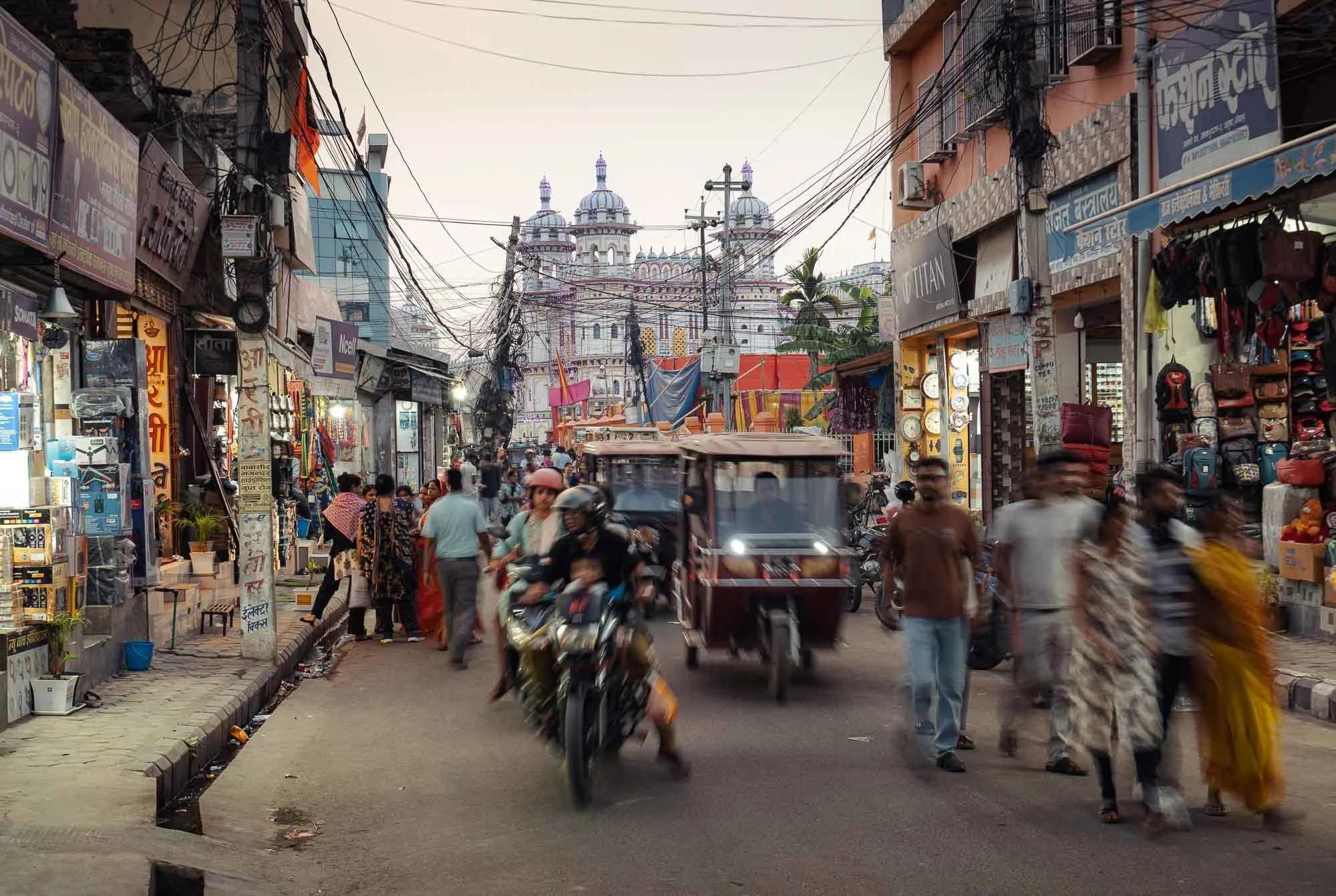
The streets around the city got busier after sunset, and I walked around a bit to get a feeling for the local vibe and the markets.
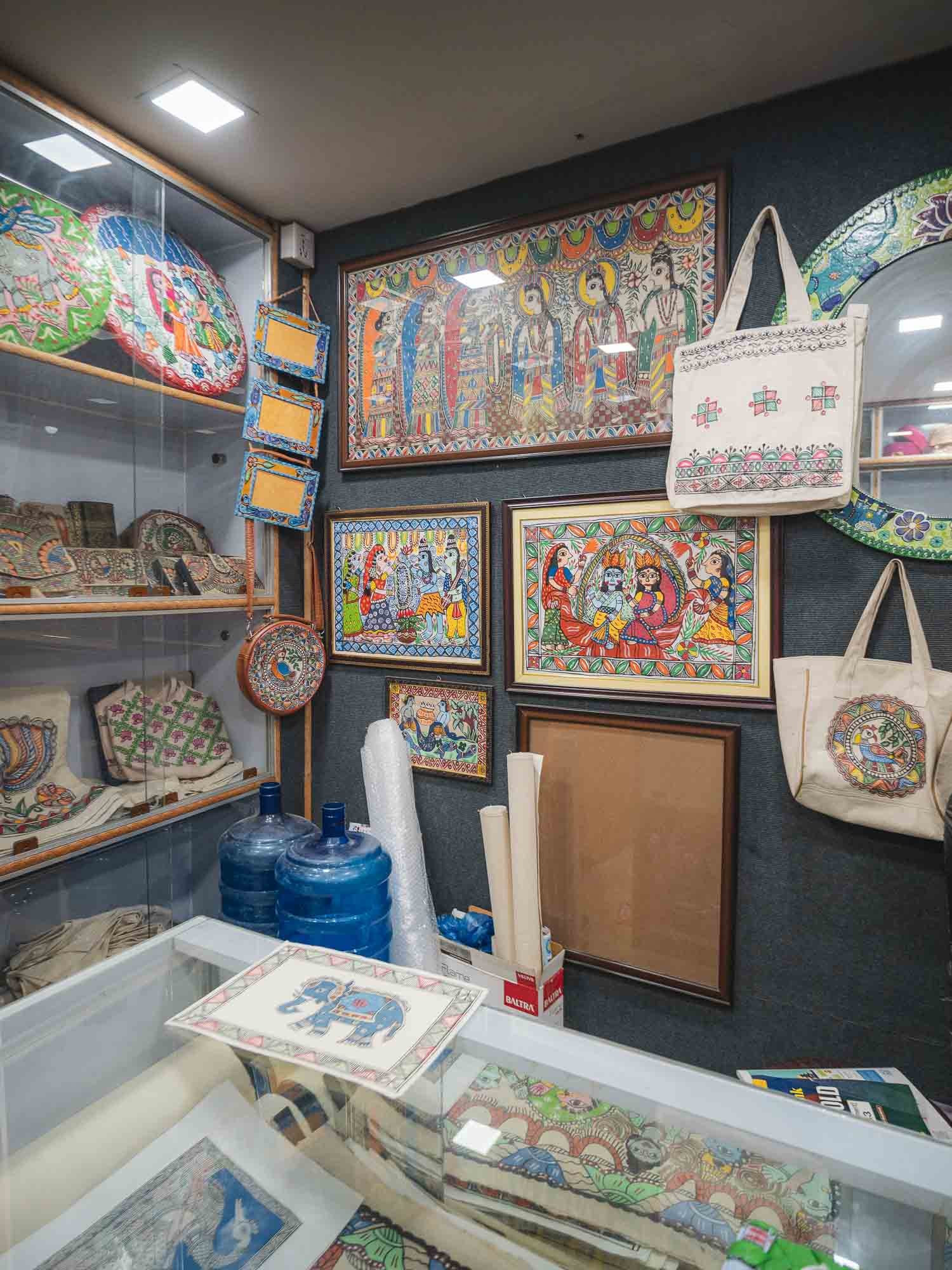
I also came across this store selling local art in the style of the Mithila Kingdom, said to go back 2000 years, making it one of South Asia’s oldest painting traditions.
Strong black outlines, bright colors and dense flat patterns of motifs from daily life characterize the paintings, although they were originally applied to the walls of the city and its houses for celebrations.
Nowadays a nearby Women’s Development Center works to keep the tradition alive, educate local women on the craft and how to turn it into a living.
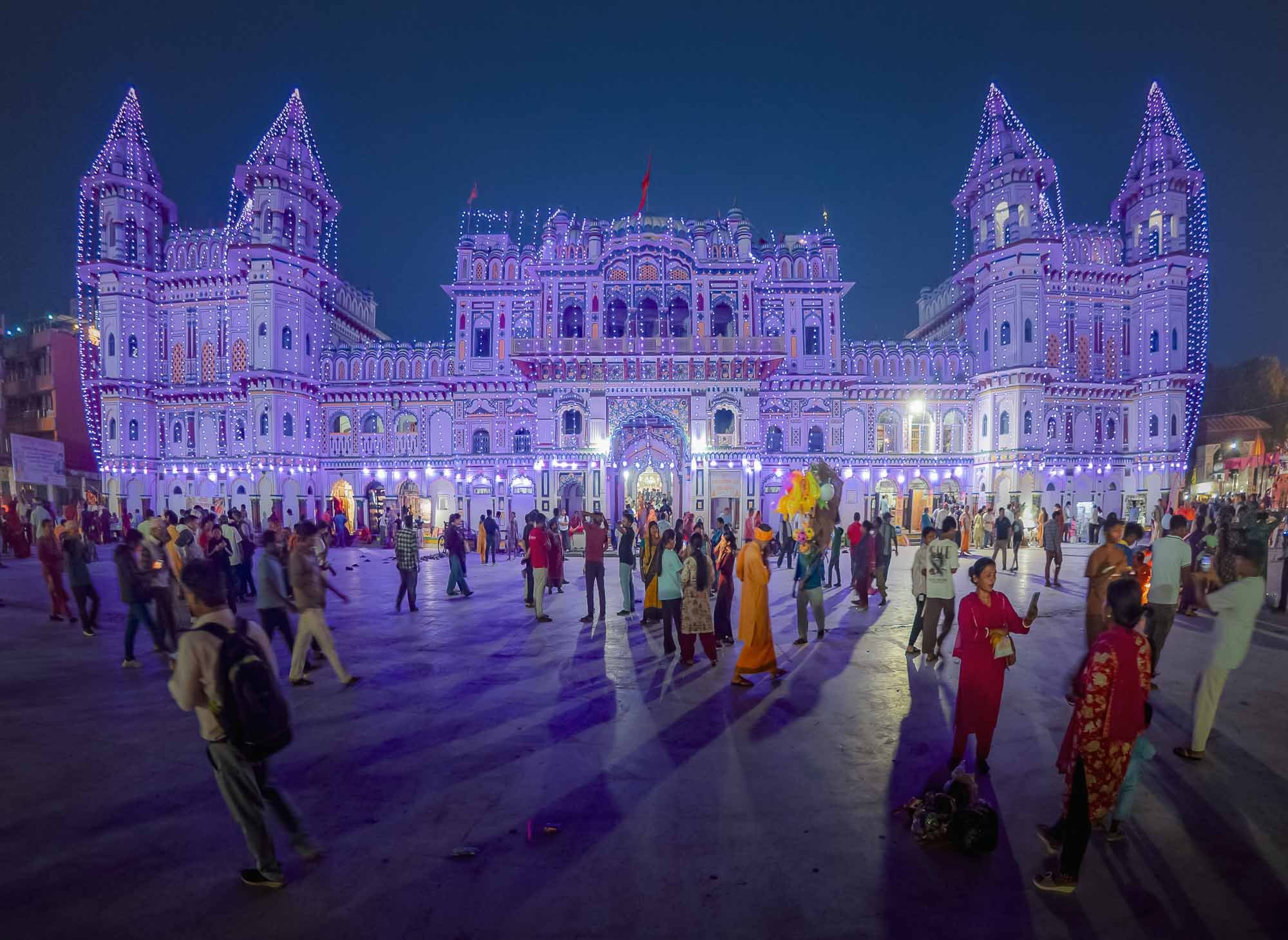
I returned to the temple as the sun had set, when it was fully illuminated by colorful lights - whether tasteful or not shall be up to interpretation.
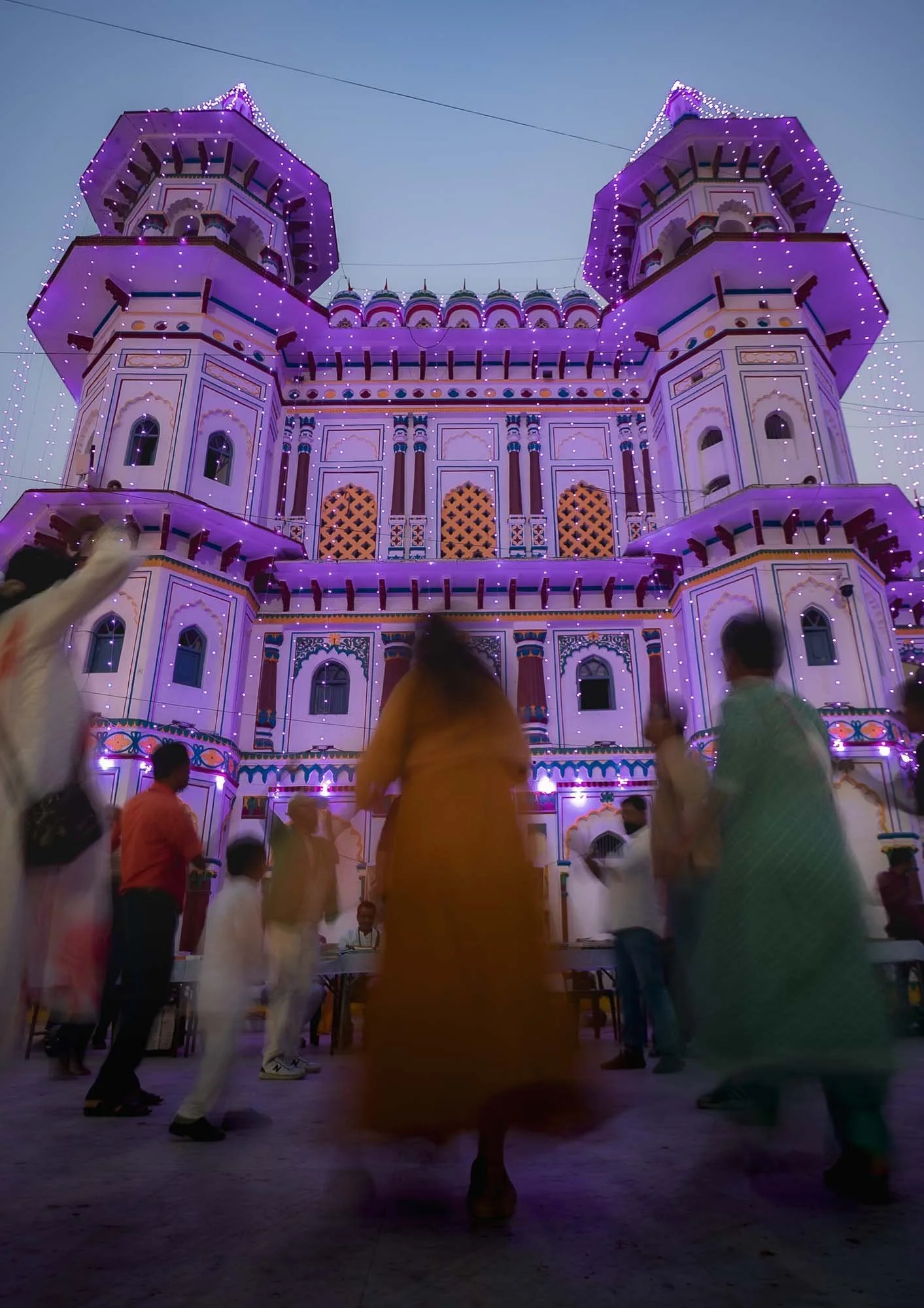
The crowds enjoyed it regardless, and spontaneous dances broke out in the courtyard, with loud music from speakers not meant to be turned up that far.
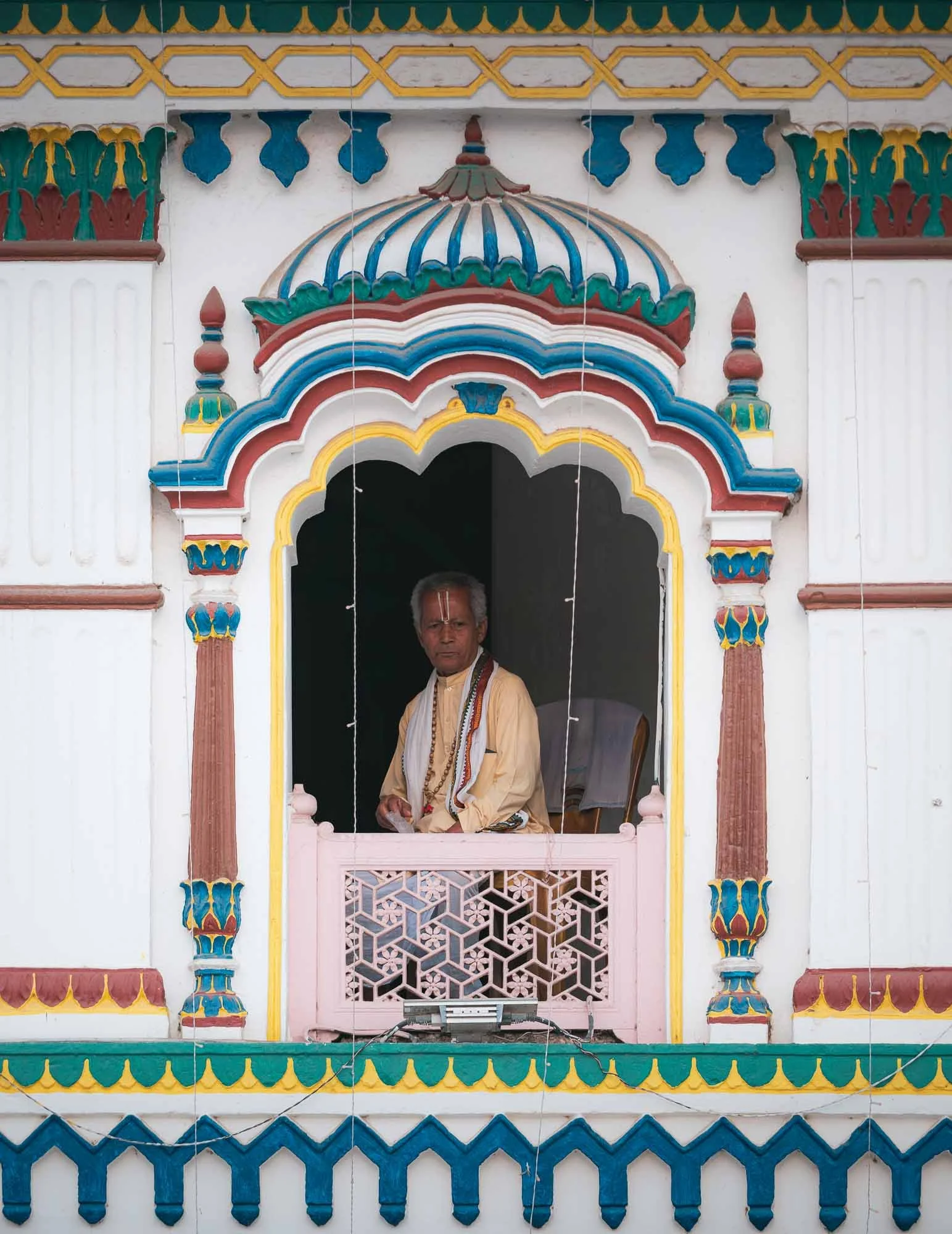
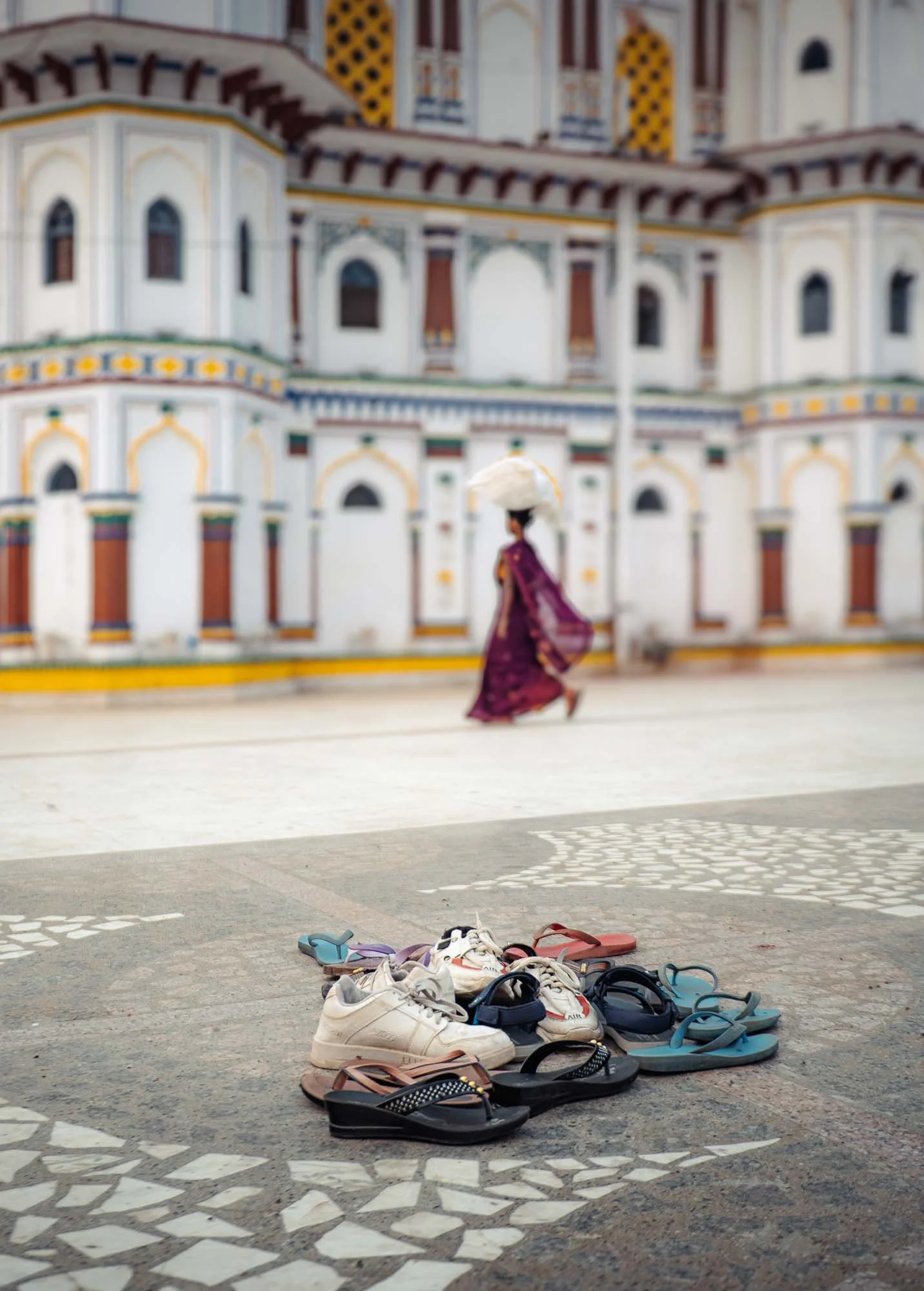
I went back to the temple for another quick visit in the morning, when things were quieter, and a couple of cleaners compiled shoes that were left behind by the worshippers entering the temple the night before. This was also a moment to take a closer look at the details of the structure. While its white stone, marble accents and colourful decoration are impressive, the craftsmanship focuses more on the building’s overall composition than on the elaborate inlay, lattice work or stone carving seen at some of South Asia’s most ornate temples.
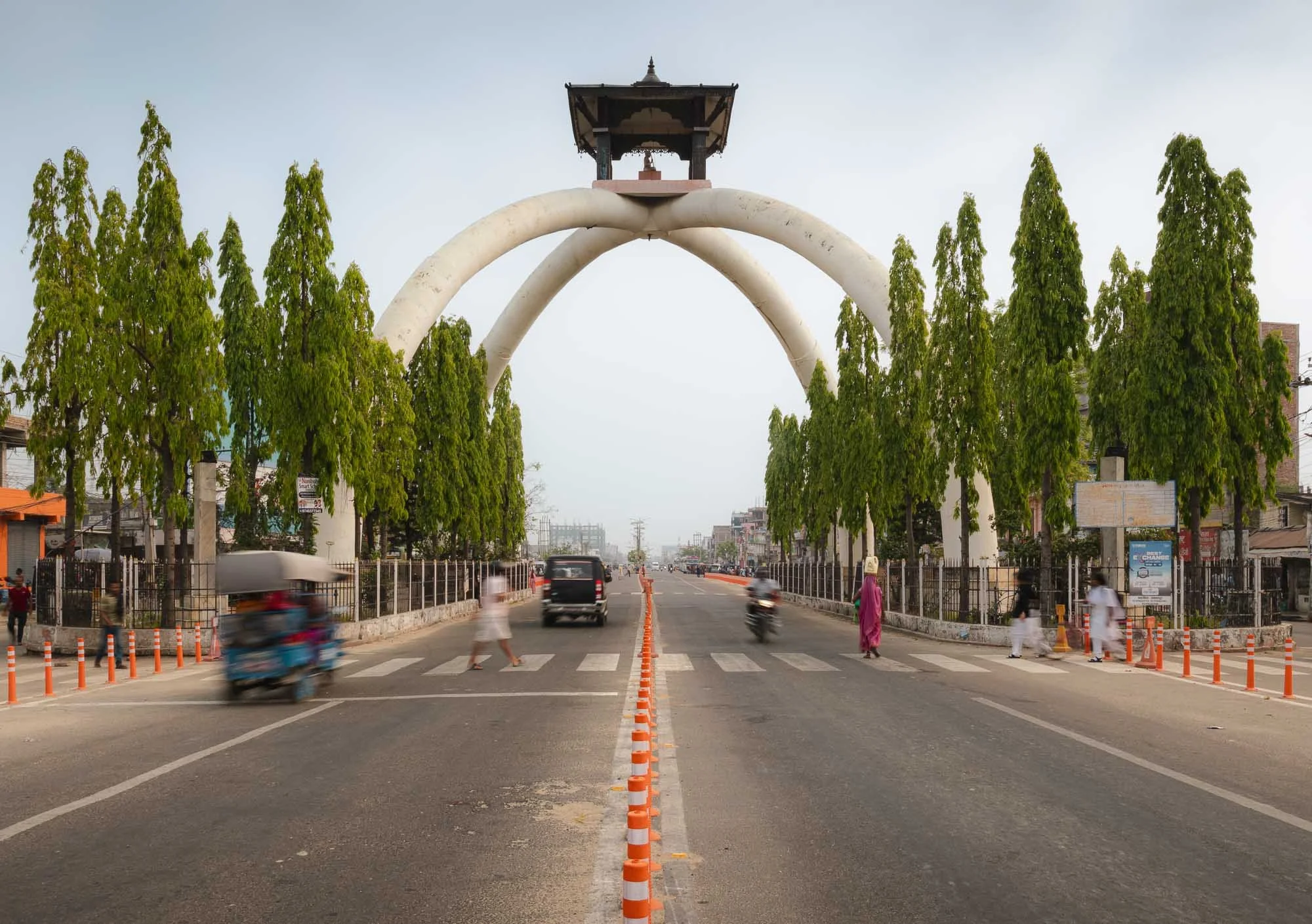
And with a quick visit to the Ramananda Chowk entrance gate to the city - often described locally as the tallest entrance gates in Asia, but I’m unsure as to the veracity of this record - my time in Janakpur ended.
And so did my time in Nepal. Maybe I’m ignorant, but I did not expect this level of diversity, with its mix of architectural styles, cultural richness, landscapes, wildlife, and more. Of course I knew it had more to offer than the Himalayas, but it feels like I barely scratched the surface and I enjoyed my time here more than expected. Another place to add to the growing “would return” list, whether it’s for another visit to Bardiya or the eastern Himalayas to get a glimpse at Everest. Not the summit - I did manage to do Kilimanjaro but that might be as high as I’ll ever go. Probably.
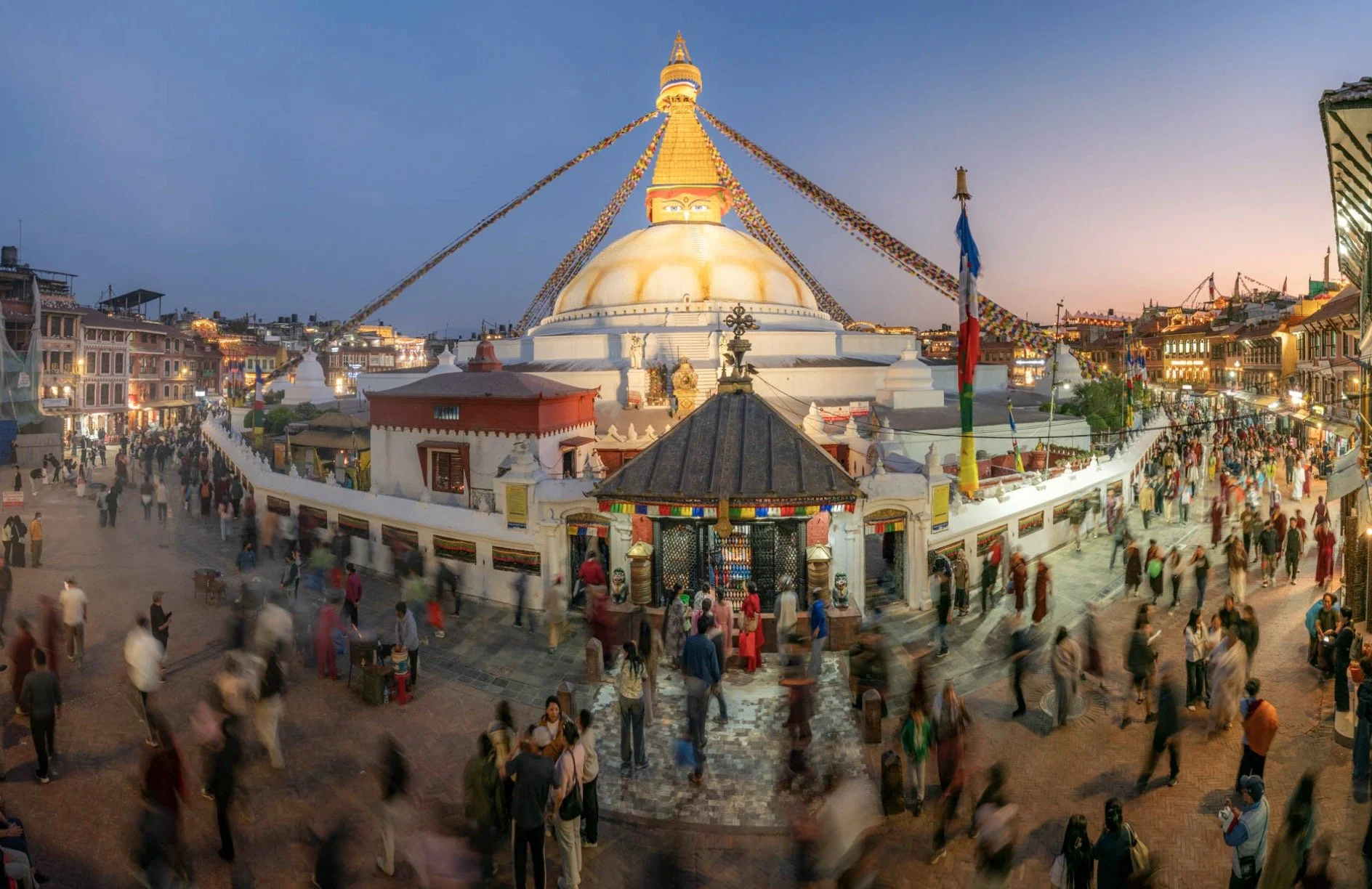
This is the second part of my Nepal blog, leaving the Kathmandu valley and exploring the wildlife of Bardiya, Pokhara’s mountain views, and more.